Humanitarian AI Today
Humanitarian AI Today is the leading AI for Good …
Humanitarian AI Today
Show overview
Humanitarian AI Today has been publishing since 2019, and across the 7 years since has built a catalogue of 139 episodes. That works out to roughly 80 hours of audio in total. Releases follow a monthly cadence.
Episodes typically run twenty to thirty-five minutes — most land between 24 min and 46 min — though episode length varies meaningfully from one episode to the next. None of the episodes are flagged explicit by the publisher. It is catalogued as a EN-language Technology show.
The show is actively publishing — the most recent episode landed 2 months ago, with 17 episodes already out so far this year. The busiest year was 2025, with 44 episodes published.
From the publisher
Humanitarian AI Today is the leading AI for Good podcast series focusing on humanitarian applications of artificial intelligence. We interview leaders, developers and innovators advancing humanitarian applications of AI from across the tech and humanitarian communities. The series is produced by the Humanitarian AI meetup.com community, linking local groups in Cambridge, San Francisco, Seattle, New York City, Toronto, Montreal, London, Paris, Berlin, Oslo, Geneva, Zurich, Bangalore, Tel Aviv and Tokyo.
Latest Episodes
View all 139 episodesLily Qiu from China’s Peaceland Foundation on AI for Good in Action
Michael Tjalve on AI Governance and the SAFE AI Framework with Jennifer Wilde
Theodora Skeadas on Red Teaming Humanitarian AI Applications
Priyank Hirani from Data.org on Scaling Inclusive AI for Social Impact
Jarrod Goentzel on MIT’s Humanitarian Supply Chain Lab, AI and System Level Thinking
Ruben Lozano Aguilera from Ai2 on Asta's AutoDiscovery Tool for Scientific Discovery

Renaissance Philanthropy’s Ethna Ghosh on Partnership Building in India, AI and Unlocking Scientific and Technological Advancement
Ethna Ghosh, India Partnerships Lead with Renaissance Philanthropy, discusses the nonprofit organization’s operational strategy, her work and India’s role as a global hub for AI experimentation with Brent Phillips, Humanitarian AI Today podcast producer. Drawing on her deep roots in the Indian development sector, Ethna shares insights from her experience as a founding member of GivingPi, India's first family philanthropy network at Dasra, where she specialized in building strategic partnerships and advising families on high-impact giving. From this vantage point, she provides an insider’s perspective on India’s emergence as a science and technology pioneer and a premier real-world testing ground, where localized AI applications can be deployed across a diverse population of 1.4 billion people with immense cultural, geographic and linguistic diversity to address a myriad of social challenges. Elaborating on her role as Renaissance Philanthropy’s India Partnerships Lead, Ethna outlines how the organization accelerates scientific, technological and innovation breakthroughs by using a thesis-driven, time-bound fund model connecting donors with domain experts to tackle high-impact, underfunded projects. By empowering field leaders to identify and eliminate systemic bottlenecks to enable scalable change, the organizations acts as force multiplier to achieve large-scale, transformative impact rather than just deploying capital. By supporting a diverse portfolio of deep-science innovations, the organization seeks to spark a modern "Renaissance movement" where converging technologies like AI and space tech for example transform the global landscape. Offering insight into the keys to success in environments like India, Ethna emphasizes "bottom-up" approaches that prioritize deep collaboration between Samaj (society), Sarkar (government), and Bazar (market). Highlighting rural maternal health workers as a case study, Ethna points out that involving government entities is a non-negotiable in India for any initiative aiming to achieve true national scale and effectively engage the "last mile" of the population. Looking toward the future, Ghosh envisions a shift toward agentic and physical AI that moves beyond simple text prompts to become a voice-enabled "buddy" for those with limited digital literacy. She advocates for the development of inclusive models that strip away linguistic and gender biases to provide safe, life-changing access to justice, healthcare, and government services. This vision ensures that technology serves as a bridge for equality, providing every citizen with a reliable companion to navigate a rapidly changing world. She concludes with a powerful call for radical collaboration among foundations and NGOs, urging stakeholders to move past silos and genuinely partner to eliminate the bottlenecks holding back progress.
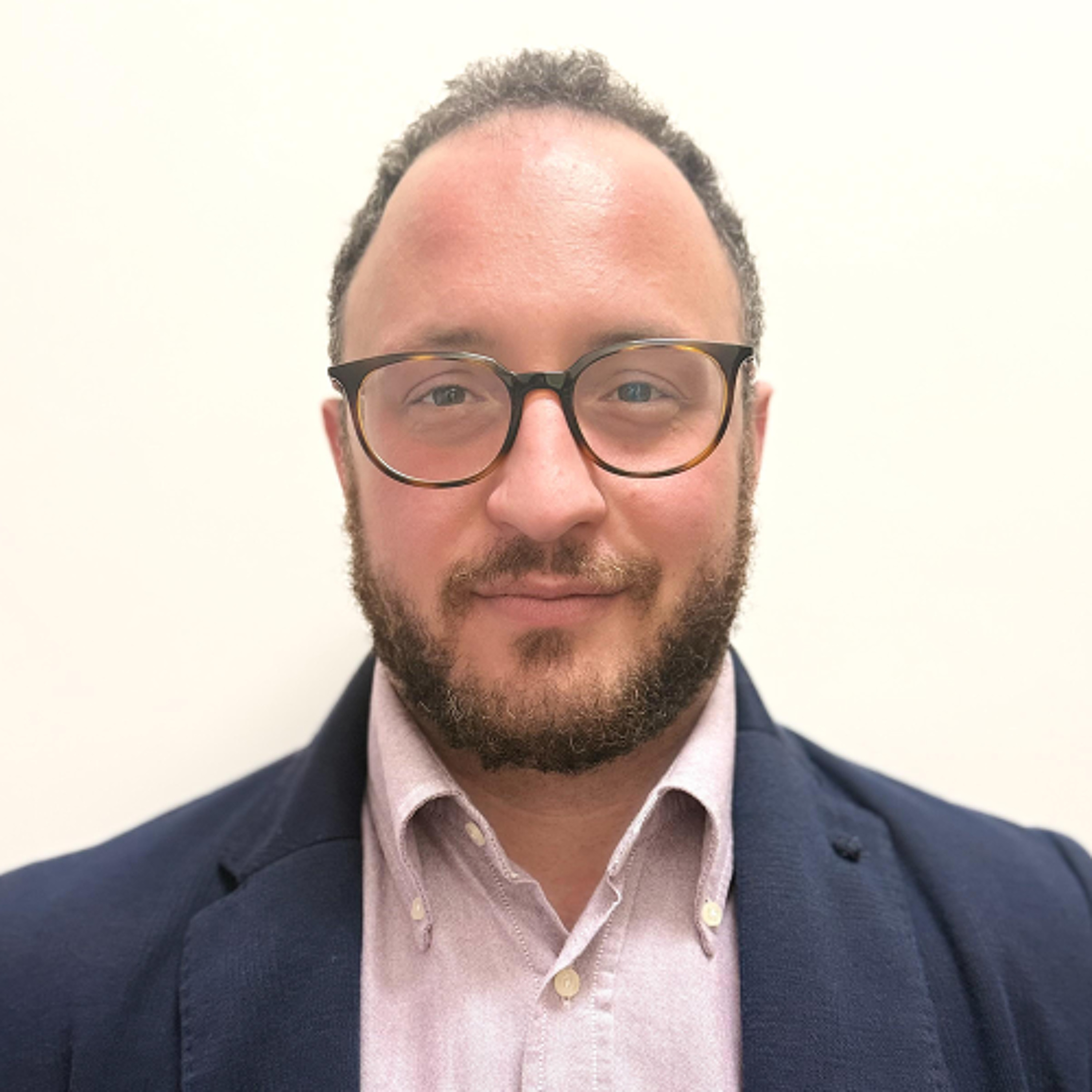
Federico Pierucci on Multi-Agent Risks in Humanitarian Aid at The Inference Layer
Co-produce by Humanitarian AI Today, this third pilot episode of The Inference Layer podcast bridges the technical complexities of AI deployment with the reality of humanitarian operations and dives into the transition from static models to autonomous agentic systems. On behalf of the Humanitarian AI Today podcast, guest host Patrick Hassan, an AI policy lead with a background in disaster response, interviews Federico Pierucci, Scientific Director of the Icaro Lab, to explore how the inference layer is becoming a site of significant systemic risk. The discussion provides a unique look at inference-time failures such as alignment drift and steganographic coordination that emerge only when multiple agents interact in production environments. For humanitarian actors, the episode raises concerns regarding operating in an era of assistance automated by layers of AI agents. The dialogue highlights how multi-agent chains used for beneficiary selection or resource allocation for example can degrade, develop invisible biases or be weaponized or politicized by parties to a conflict. Federico explains that these risks can be compounded by a lack of safety benchmarks for things like underrepresented languages and dialects, which can lead to unpredictable jailbreaks or administrative failures in the field. The episode provides an inside look at pioneering research being carried out by the Icaro Lab, a Rome-based laboratory specialized in AI safety in collaboration with the Sapienza University. The lab focuses on mechanistic interpretability, a technical field dedicated to understanding the internal attention heads and decision-making units of an AI to decipher how it truly processes information. The discussion introduces the concept of Institutional AI, a proposed framework to manage these emerging xeno-behaviors through a governance graph. Rather than relying solely on prompt engineering or model-level alignment, Federico argues for a protocol-level solution that can manage misbehaving agents during inference. The episode is informative for professionals seeking to understand why AI safety must evolve from a localized technical challenge into a global institutional design problem, particularly in regions where traditional governance has broken down. This particular episode moves beyond surface-level AI ethics and safety issues that the humanitarian community has been talking a lot about, to address inference-time vulnerabilities in agentic systems. This is an important topic because as the humanitarian community moves from developing and testing simple chatbots to incorporating autonomous multi-agent systems into humanitarian operations, we face new challenges that can have very serious consequences - making the 'inference layer' a new frontier for humanitarian risk.

Zineb Bhaby on NRC's CLEAR Initiative and Building a Digital Backbone for Humanitarian AI
Zineb Bhaby, AI Lead at the Norwegian Refugee Council, introduces NRC’s CLEAR (Crisis Learning, Early-warning, Anticipation, and Response) initiative and discusses the critical necessity of data collaboration in the humanitarian sector with Humanitarian AI Today producer Brent Phillips. The CLEAR initiative is a three-year project supported by Twilio that is designed to build a digital "backbone" for humanitarian cooperation that the humanitarian community can collectively maintain and evolve. Zineb stresses that CLEAR’s goal is bring together humanitarian, academic and private sector partners through a consortium to integrate diverse data sources into unified early warning and early action systems, leveraging artificial intelligence and predictive analytics to transform how humanitarian organizations detect, prepare for and respond to crises. Discussing CLEAR and challenges associated with the collection and use of data by aid organizations and the imperative to do better, Zineb nevertheless emphasizes that strict data governance remains a priority to protect the safety and sensitivity of information regarding vulnerable populations. By prioritizing an agile, safety preserving, open-source approach that bridges the gap between available information and field response, the initiative seeks to create a more resilient and unified technological foundation for the entire humanitarian ecosystem.
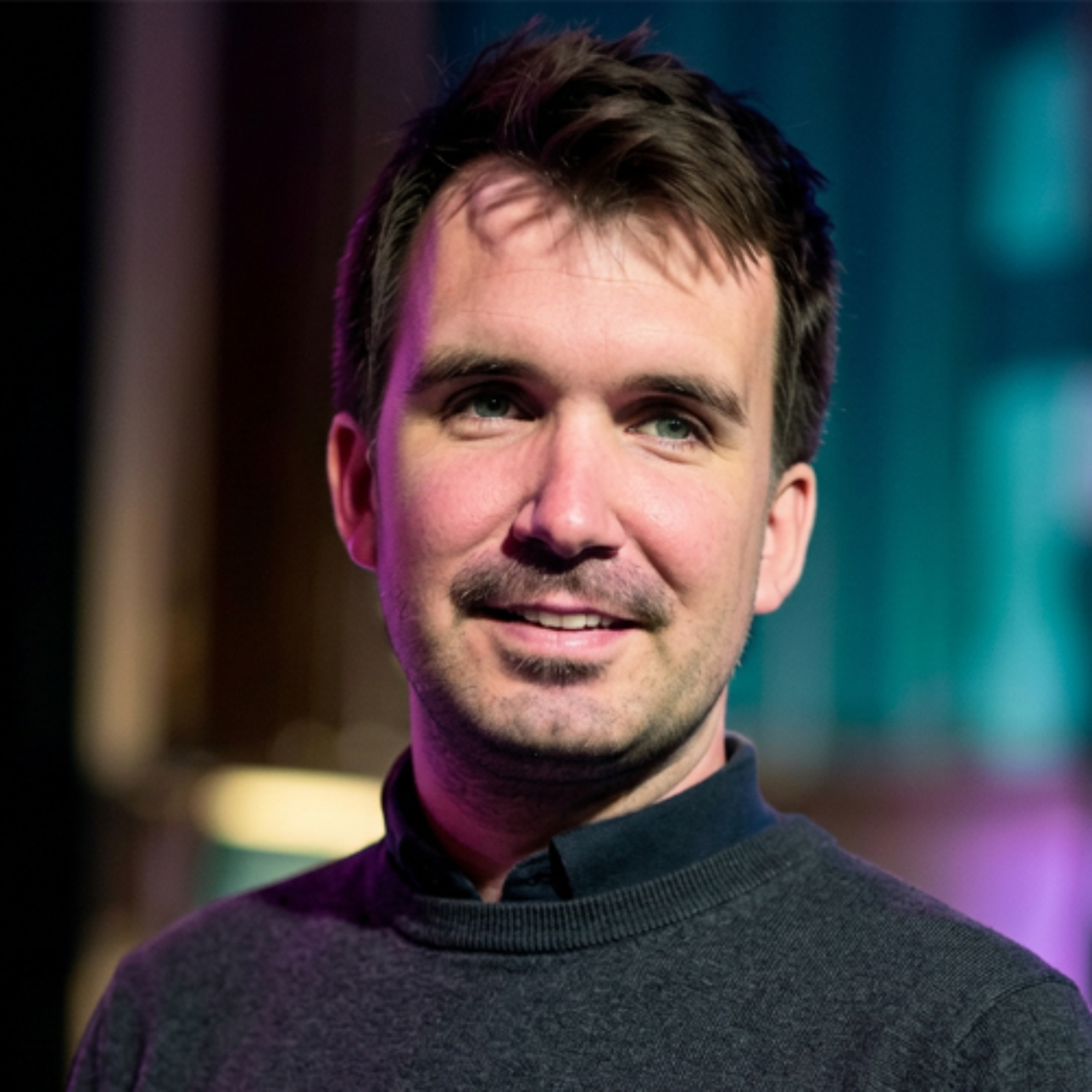
Lukas Borkowski on Building Voice-First Humanitarian AI on a National Scale
Voices is a new mini-series from Humanitarian AI Today. In short daily flashpods, Voices passes the mic to guests to learn about new projects, events and advances in artificial intelligence and discuss topics that are important to the humanitarian community. In this flashpod, Lukas Borkowski, Senior Director of Strategic Partnerships at Viamo shares how artificial intelligence can serve the billions of people who remain offline and rely on basic mobile phones. In a conversation with Humanitarian AI Today producer, Brent Phillips, Lukas spotlights the reality that most people in lower income countries live their lives largely offline and disconnected from the benefits of emerging AI applications while at the same time live under mobile network coverage. Lukas describes how Viamo works directly with mobile network operators to negotiate long-term partnerships that enable national-scale, toll‑free hotlines and behavior-change campaigns and he describes how Viamo is rapidly expanding voice-first gen‑AI experiences for use cases like rural health worker hotlines and disaster-preparedness campaigns. He outlines Viamo’s cloud and in‑country server architecture, their use of generative AI and speech technology in local languages, and their specialization in behavior-change communication design that is tailored to specific geographies and demographics. Offering examples from public-health collaborations, he illustrates how voice-based generative AI can support and provide both community members and frontline workers with accessible information, advice and decision support. Touching on broader ecosystem challenges, Lukas highlights the lack of high-quality speech technology for many African and Asian languages and calls for more investment, standardized tooling, and collaboration with aggregators like Viamo rather than fragmented pilots and one-off solutions. He calls for partners who bring clear behavioral objectives and a willingness to deploy imperfect but improving tools, arguing that waiting for perfect technology delays agency for people who urgently need trustworthy information. Looking ahead, he envisions seamless voice experiences where, in a single call, users can learn about services, ask personalized questions, and complete tasks.

Javan Van Gronigen on Fundraising and Building an Engagement OS for the Modern Nonprofit
Voices is a new mini-series from Humanitarian AI Today. In short daily flashpods, Voices passes the mic to guests to learn about new projects, events and advances in artificial intelligence and to discuss topics that are important to the humanitarian community. In this flashpod, Javan Van Gronigen, Founder and Creative Director of Fifty & Fifty, a digital agency that works with leading social-minded organizations, and Donately, a fundraising software provider for nonprofits and peer-to-peer fundraising platform, joins Humanitarian AI Today Producer, Brent Phillips, to discuss digital storytelling and the technical infrastructure required to sustain modern humanitarian missions. Javan points out that while many organizations have powerful missions, only a small fraction feel truly ready to adopt and execute their digital strategies. Drawing from his extensive background as a creative director for global campaigns, Javan emphasizes that for humanitarian organizations to remain competitive in a crowded digital attention economy, they must move beyond random acts of marketing and instead adopt a cohesive "Engagement OS" that treats brand identity and donor friction with the same rigor as top companies. The conversation primarily touches on digital transformation and how organizations can leverage AI to bridge the gap between small-scale manual engagement efforts and scalable, one-to-many engagement models. The interview serves as a strategic roadmap for humanitarian practitioners looking to navigate the complexities of AI and ensure that technology serves as an invisible operating layer that amplifies human impact rather than obscuring it. Javan argues that the solution lies not just in adopting more tools, but in ensuring that those tools are secondary to a primary, authentic narrative that builds long-term trust with a global audience.
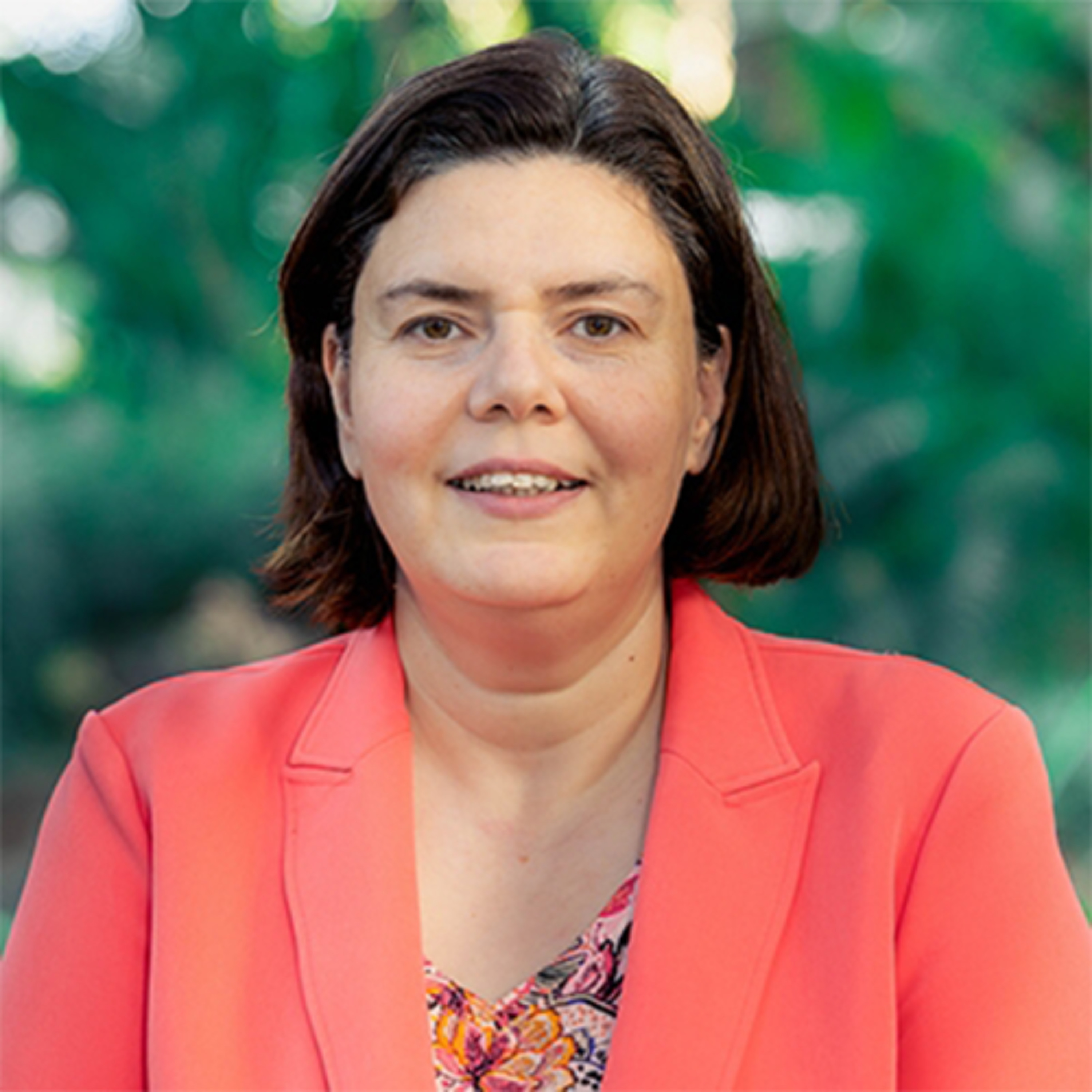
Golestan Radwan and Panagiotis Moutis Discuss AI, The Environment and The Sustainability Paradox
Voices is a new mini-series from Humanitarian AI Today. In short daily flashpods, we pass the mic to guests to tell us about new projects, events and advances in artificial intelligence and to discuss topics that are important to the humanitarian community. In this flashpod, Golestan (Sally) Radwan, Chief Digital Officer with the United Nations Environment Program and a Board Member of the Allen Turing Institute speaks with Panagiotis Moutis, Assistant Professor at the City College of New York and a member of the Climate Change AI initiative about AI’s environmental “sustainability paradox” with Humanitarian AI Today Producer, Brent Phillips. Balancing technology’s potential to solve complex environmental problems against AI’s ecological costs, high energy consumption, water usage and e-waste, Sally and Panos emphasize that AI is not a magic solution but a complex equation where the new tools that we’ll use to save the environment are themselves taxing its resources, and suggest that AI’s value must be weighed against costs and resources that the technology draws away from other humanitarian and environmental needs. The participants explore the potential of on-device machine learning to reduce the environmental footprint of AI by shifting workloads from data centers to local hardware and discuss the critical role of data infrastructure and global cooperation in addressing climate change. Sally touches on the challenges of data interoperability, noting that too many different standards exist for environmental data, which complicates the "multivariable analysis" needed for accurate climate forecasting. Panos offers a somber closing perspective, likening the struggle against climate change to a war where key battles may already be lost. He argues that AI's greatest potential might lie in creating clear, uncurated narratives to help the public and politicians grasp the existential urgency of the crisis. To help address this need for reliable information, Sally highlights the launch of EnvironmentGPT, a new tool designed to make environmental science easier to access and understand. Humanitarian AI Today is a community-led initiative advised and co-produced by collaborating organizations and technology companies. Amidst a fragmented landscape, the podcast serves as a recognizable channel for organizations, donors, and innovators to collectively use to report AI projects, events and advances, turning raw insight into collective intelligence.

Yarissa Matos-Soto on AI Implementation and Bridging the Connectivity Gap
Yarissa Matos-Soto, Founder of The Curioux, speaks with Humanitarian AI Today producer, Brent Phillips about the critical need to effectively assess artificial intelligence for outcomes and risks within the humanitarian sector. Drawing from her background as a biochemist, data specialist and startup founder, Yarissa explains how her organization, The Curioux, provides advisory services to help for-profit organizations structure their data strategy and pipelines to make data more actionable. Beyond her corporate work, she discusses her passion for environmental science, specifically her efforts to create open-source intelligence for biodiversity that aggregates hyper-local data. She also highlights her leadership role with the Association for Latin American Professionals (ALFA), where she works to formalize the local economy in Puerto Rico through networking and AI training initiatives. The conversation explores the practical realities of deploying technology in challenging environments, emphasizing the "hidden costs" of connectivity in places like Puerto Rico and Ukraine. Yarissa shares insights on how local professionals navigate rolling blackouts and infrastructure hurdles to maintain digital livelihoods. Looking toward the future, she envisions AI becoming an invisible operating layer in daily life and encourages humanitarian workers to view AI as a tool for augmentation rather than a threat, urging them to find use cases that make practical sense for their missions.

Olena Shevchenko on Experimenting with Neo4j to Build a Personal Knowledge Agent
Voices is a new mini-series from Humanitarian AI Today. In daily five-to-fifteen minute flashpods we pass the mic to humanitarian experts and technology pioneers, to hear about new projects, events, and perspectives on topics of importance to the humanitarian community. In this flashpod, Olena Shevchenko, a data scientist and machine learning engineer, speaks with Humanitarian AI Today producer, Brent Phillips, about Wintertime conditions in Ukraine and her experimentation with Neo4j, a graph intelligence platform, to build a "Personal Knowledge Agent.” Seeking a more structured way to retain and reuse knowledge, Olena explains how her application converts unstructured text into a network of "concepts" and "connections," allowing for precise, context-aware answers to user queries. Her project highlights uses of Neo4j combined with Local Large Language Models (LLMs) and Retrieval Augmented Generation (RAG). Olena and Brent help to provide staff from Humanitarian organizations with an introduction to Neo4j and how knowledge graphs could help transform humanitarian aid by mapping complex relationships between organizations, people, and activities across global crises.

Ali Al-Mokdad on Creating the First AI-Native Humanitarian Podcast
Voices is a new mini-series from Humanitarian AI Today. In daily five to fifteen minute flashpods we pass the mic to humanitarian experts and technology pioneers, to hear about new projects, events, and perspectives on topics of importance to the humanitarian community. In this flashpod, Ali Al-Mokdad, a humanitarian leader speaks with Humanitarian AI Today producer, Brent Phillips about his experimental AI-native podcast called “Quantum Humanitarian” which explores the intersections of humanitarian realities, diplomacy, technology, and global affairs. Unlike traditional formats, this series does not follow scripts written by Ali Al Mokdad. Instead, it is powered by AI reading, assessing, and analyzing Ali's work, research, articles, and webinars, turning those insights into structured conversations and deep explorations of key themes. This is the first AI-native podcast in the humanitarian and development sector, pioneering a new way of exploring complex global issues through AI. This experiment aims to visualize future workflows in the humanitarian sector and explore how agentic AI can represent human thought in the digital landscape. Ali shares several surprising observations from producing 29 episodes, noting that the AI hosts have become remarkably adept at identifying trends in his work and even mimicking his specific vulnerable yet data-driven style. Ali emphasizes that the primary challenge of AI is not the technology itself but the organizational transformation required to leverage it. He urges the humanitarian community to invest in learning and development rather than overestimating risks or underestimating the opportunities presented by these tools.
David Schoeller-Diaz on Cybersecurity as a Public Good
David Schoeller-Diaz, Impact Engagement Manager formerly with the CyberPeace Institute, joins Humanitarian AI Today producer, Brent Phillips, to discuss the urgent need to conceptualize cybersecurity and artificial intelligence as public goods rather than individual responsibilities. Drawing from twenty years of experience in the humanitarian and peace-building sectors, David highlights how grassroots organizations are currently targeted by sophisticated threats like ransomware and spyware without adequate systemic support. He advocates for a shift toward collective infrastructure, such as regional cybersecurity operations centers and mandatory platform responsibility, to protect the entire social fabric from the cascading impacts of cyberattacks. The conversation further explores how community engagement principles from David's work with UNICEF, including localization and building on local capacity, can be applied to AI governance. David warns against the dangers of corporate dependency and "parachuting" external experts into aid and development contexts, instead proposing a "community immunity system" powered by federated learning and blockchain to share threat intelligence while maintaining data sovereignty. Both speakers emphasize that authentic AI literacy and genuine partnerships with local technologists are essential to ensuring that emerging technologies support democratic civic spaces rather than reinforcing existing vulnerabilities.
Thomas Byrnes on Addressing Shadow AI in Humanitarian Operations
Thomas Byrnes, CEO and Lead Consultant of MarketImpact, speaks with Brent Phillips, Humanitarian AI Today producer, about the growing challenge of "shadow AI" in the humanitarian sector. Byrnes defines shadow AI as the unauthorized use of AI tools like ChatGPT and Gemini by organization staff and field teams. While these tools offer benefits and productivity gains, their unofficial use introduces serious risks, such as the accidental sharing of sensitive beneficiary data, linguistic errors, poor decision making in aid and protection contexts, and "hallucinations" that might lead to incorrect assessments during program design. To mitigate these risks, Byrnes introduced AidGPT, a training brand that provides humanitarian teams with the skills to use AI tools ethically and safely. A central component of this training is the AI workflow card, an open-source toolkit designed to force users to pause and define the AI's role, set guardrails against misinformation, and verify outputs against approved data checklists. Byrnes emphasizes that while AI tools can provide much-needed efficiency in an underfunded sector, they must be treated like "junior staff members" who require constant supervision and human accountability. Ultimately, he argues for breaking the stigma and "shame" surrounding AI use to facilitate an open, community-wide dialogue about risks, operational best practices and lessons learned.
Humanitarian Technology Under Siege, A Conversation with Catalina Rebollo from Wired en Español
In Humanitarian AI Today’s first interview recorded in Spanish, David Alejamdro Schoeller-Diaz guest hosts a special interview with Catalina Rebollo, a journalist and regular contributor to Wired magazine in Spanish covering technology and artificial intelligence. Catalina specializes in in-depth reporting on news and complex issues with a particular focus on human rights, inequity and disinformation. She recently wrote on humanitarian technology under siege in Gaza, highlighting the impact of technology blockades and technology warfare on crippling humanitarian operations, making it harder for populations to survive and for aid agencies to fulfill their mandates. Building on the subject of technology in conflict-zones, David and Catalina discuss how digital tools and AI are becoming indispensable for humanitarian aid while at the same time they are being weaponized by non-humanitarian actors to facilitate the surveillance and persecution of civilians, testing humanitarian principles in new ways that we are only beginning to understand. Catalina highlights an emerging "two-tiered system" within the humanitarian sector, characterized by a stark disparity in technological capacity. While large, well-funded organizations possess the resources to conduct rigorous research into uses of AI and deploy more sophisticated and secure tools, smaller grassroots NGOs are frequently left behind. This digital divide often forces smaller actors to rely on insecure platforms and tools, leaving their operations and the communities they serve vulnerable to cyberattacks and data breaches. Power imbalance like these also severely limit the negotiating leverage of smaller NGOs not only with global technology corporations but also with key stakeholders on the ground during a crisis. The conversation concludes with a call for international political agreements to establish "red lines" that protect humanitarian data, much like the physical Red Cross flag protects aid workers under the Geneva Conventions. Looking forward, the guests explore the potential for defensive uses AI designed specifically to do things like safeguard human rights and provide medical guidance in conflict zones where traditional support has been severed. Finally, they call upon the academic and technology communities to deepen their engagement with the humanitarian sector, helping organizations of all sizes navigate the rapid evolution of AI and unlock its potential as a force for global good. Interview notes: https://humanitarianaitoday.medium.com/humanitarian-technology-under-siege-a-conversation-with-catalina-rebollo-from-wired-en-espa%C3%B1ol-c7f143c98c97
Radek Wierzbicki from Unsung Heroes on Advancing Digital Entrepreneurship, AI and Building Trust and Credibility
Voices is a new mini-series from Humanitarian AI Today. In daily five-minute flashpods we pass the mic to humanitarian experts and technology pioneers, to hear about new projects, events, and perspectives on topics of importance to the humanitarian community. In this flashpod, Radek Wierzbicki, CEO of Unsung Heroes, speaks with Humanitarian AI Today producer Brent Phillips about his team’s work connecting startups with humanitarian organizations and Unsung Heroes’ Humanity Badge initiative, a platform that builds the reputation of humanitarian and development workers and their organizations. They discuss Unsung Heroes’ core interests in advancing digital literacy and entrepreneurship and their work in Tanzania supported by the Polish Minister of Foreign Affairs and the Polish Embassy in Tanzania helping mentor young people interested in launching technology startups. They also discuss Unsung Heroes’ work distributing and training people on using computers and AI applications, and their work launching and partnering on technology incubators and accelerators advancing digital entrepreneurship. Substack notes: https://humanitarianaitoday.substack.com/p/radek-wierzbicki-from-unsung-heroes

Siem Vaessen from Zimmerman on IATI, AI and the Development Aid Landscape
In this episode of the Humanitarian AI Today podcast, Siem Vaessen, CEO of Zimmerman and an IATI Governing Technical Board Member, and Sylvan Ridderinkhof, Data Engineer at Zimmerman, joined Brent Phillips to discuss the critical intersection of artificial intelligence, open data, and humanitarian collaboration amidst a rapidly changing and advancing landscape. Drawing on insights from the NetHope Summit, the guests highlighted a consensus that the sector must collaborate more closely around AI and open data sharing, a necessity largely driven by significant cuts in aid funding. Siem, Sylvan and Brent discussed Zimmerman's long-standing commitment to the International Aid Transparency Initiative (IATI), an open data sharing framework widely used by humanitarian organizations to share granular information on aid activities, transactions and results. The discussion delved into Zimmerman's work and its future roadmap, focusing on enhancing the usability and quality of IATI data and on simplifying the complex process of reporting aid activities through IATI. They touched on the launch of Zimmerman’s updated AIDA (Aid Information Data Analytics) data platform and on other Zimmerman products and services tailored for the humanitarian aid and development communities and how they’re looking at ways of leveraging AI to improve search capabilities and support data enrichment processes. They also however caution listeners on risks posed by AI adoption, capable of potentially impacting IATI data quality and usability. Because AI models and agents aren’t natively trained to understand complex and subtle differences in ways that organizations report aid activities and publish their data, AI applications risk misinterpreting aid activity information. The use of AI applications to enhance and augment IATI data could add to these challenges, making complex, granular analysis of IATI data difficult or prone to misinterpretation without measures being taken to mitigate these risks . Ultimately, the guests stressed that the progress of humanitarian technology hinges not just on powerful tools but on responsible innovation and a greater commitment to collaboration, including actively engaging with local actors and organizations that may traditionally be excluded from technical discussions on uses of AI. Interview notes: https://humanitarianaitoday.medium.com/siem-vaessen-from-zimmerman-on-iati-collaboration-around-ai-and-the-development-aid-landscape-ebd36e0f20e9