
How to Fix the Internet
68 episodes — Page 1 of 2
Privacy's Defenders: Cowboys, Cypherpunks and Visionaries
Bonus Episode: Privacy’s Defender
While How to Fix the Internet is on hiatus, we wanted to share a great conversation with you from earlier this week. EFF Executive Director Cindy Cohn spoke with bestselling novelist, journalist, and EFF Special Advisor Cory Doctorow about Cindy’s new book, “Privacy’s Defender: My Thirty-Year Fight Against Digital Surveillance” (MIT Press). Part memoir, part battle cry, “Privacy’s Defender” is the story of Cindy’s fights alongside the visionaries who looked at the early internet and understood that the legal and political battles over this new technology - the Crypto Wars, the NSA’s dragnet, the FBI gag orders - were really over the future of free speech, privacy, and power for all. This conversation was recorded on Tuesday, March 10 in front of a packed house at San Francisco’s iconic City Lights Bookstore. You can also watch the video on YouTube. For more about the book and Cindy’s national book tour - with stops in places including Seattle, Silicon Valley, Denver, Boston, Ann Arbor, Iowa City, Washington DC and New York City - check out https://www.eff.org/Privacys-Defender And finally, stay tuned to this feed; we’re working on a special podcast series featuring key players and moments from the book!
Introducing EFFector: How Targeted Advertising Gives Your Location to the Government
bonusA new podcast from the Electronic Frontier Foundation: The digital world isn't just a place you visit on your phone. It's the battleground where tomorrow's civil liberties will be won—or lost. Each episode of the EFFector podcast will fill you in on the most important news in digital rights, highlighting key developments in the fight for a world where technology supports freedom, not tyranny. We've all had the unsettling experience of seeing an ad online that reveals just how much advertisers know about our lives. You're right to be disturbed. Those very same online ad systems have been used by the government to warrantlessly track peoples' locations, new reporting has confirmed. In this clip from EFFector, we're talking about how advertising surveillance enables government surveillance. Subscribe to EFFector wherever you get your podcasts.

S6 Ep 10Building and Preserving the Library of Everything
All this season, “How to Fix the Internet” has been focusing on the tools and technology of freedom – and one of the most important tools of freedom is a library. Access to knowledge not only creates an informed populace that democracy requires, but also gives people the tools they need to thrive. And the internet has radically expanded access to knowledge in ways that earlier generations could only have dreamed of – so long as that knowledge is allowed to flow freely.(You can also find this episode on the Internet Archive and on YouTube.) A passionate advocate for public internet access and a successful entrepreneur, Brewster Kahle has spent his life intent on a singular focus: providing universal access to all knowledge. The Internet Archive, which he founded in 1996, now preserves 99+ petabytes of data - the books, Web pages, music, television, government information, and software of our cultural heritage – and works with more than 400 library and university partners to create a digital library that’s accessible to all. The Archive is known for the Wayback Machine, which lets users search the history of almost one trillion web pages. But it also archives images, software, video and audio recordings, documents, and it contains dozens of resources and projects that fill a variety of gaps in cultural, political, and historical knowledge. Kahle joins EFF’s Cindy Cohn and Jason Kelley to discuss how the free flow of knowledge makes all of us more free. In this episode you’ll learn about: The role AI plays in digitizing, preserving, and easing access to all kinds of information How EFF helped the Internet Archive fight off the government’s demand for information about library patrons The importance of building a decentralized, distributed web to finding and preserving information for all Why building revolutionary, world-class libraries like the Internet Archive requires not only money and technology, but also people willing to dedicate their lives to the work How nonprofits are crucial to filling societal gaps left by businesses, governments, and academia Brewster Kahle is the founder and digital librarian of the Internet Archive, which serves millions of people each day and is among the world’s largest libraries. After studying AI at and graduating from the Massachusetts Institute of Technology in 1982, Kahle helped launch the company Thinking Machines, a parallel supercomputer maker. In 1989, he helped create the internet's first publishing system called Wide Area Information Server (WAIS); WAIS Inc. was later sold to AOL. In 1996, Kahle co-founded Alexa Internet, which helps catalog the Web, selling it to Amazon.com in 1999. He is a former member of EFF’s Board of Directors.

S6 Ep 9Protecting Privacy in Your Brain
The human brain might be the grandest computer of all, but in this episode, we talk to two experts who confirm that the ability for tech to decipher thoughts, and perhaps even manipulate them, isn't just around the corner – it's already here. Rapidly advancing "neurotechnology" could offer new ways for people with brain trauma or degenerative diseases to communicate, as the New York Times reported this month, but it also could open the door to abusing the privacy of the most personal data of all: our thoughts. Worse yet, it could allow manipulating how people perceive and process reality, as well as their responses to it – a Pandora’s box of epic proportions. (You can also find this episode on the Internet Archive and on YouTube.) Neuroscientist Rafael Yuste and human rights lawyer Jared Genser are awestruck by both the possibilities and the dangers of neurotechnology. Together they established The Neurorights Foundation, and now they join EFF’s Cindy Cohn and Jason Kelley to discuss how technology is advancing our understanding of what it means to be human, and the solid legal guardrails they're building to protect the privacy of the mind. In this episode you’ll learn about: How to protect people’s mental privacy, agency, and identity while ensuring equal access to the positive aspects of brain augmentation Why neurotechnology regulation needs to be grounded in international human rights Navigating the complex differences between medical and consumer privacy laws The risk that information collected by devices now on the market could be decoded into actual words within just a few years Balancing beneficial innovation with the protection of people’s mental privacy Rafael Yuste is a professor of biological sciences and neuroscience, co-director of the Kavli Institute for Brain Science, and director of the NeuroTechnology Center at Columbia University. He led the group of researchers that first proposed the BRAIN (Brain Research through Advancing Innovative Neurotechnologies) Initiative launched in 2013 by the Obama Administration. Jared Genser is an international human rights lawyer who serves as managing director at Perseus Strategies, renowned for his successes in freeing political prisoners around the world. He’s also the Senior Tech Fellow at Harvard University’s Carr-Ryan Center for Human Right, and he is outside general counsel to The Neurorights Foundation, an international advocacy group he co-founded with Yuste that works to enshrine human rights as a crucial part of the development of neurotechnology.

S6 Ep 8Separating AI Hope from AI Hype
If you believe the hype, artificial intelligence will soon take all our jobs, or solve all our problems, or destroy all boundaries between reality and lies, or help us live forever, or take over the world and exterminate humanity. That’s a pretty wide spectrum, and leaves a lot of people very confused about what exactly AI can and can’t do. In this episode, we’ll help you sort that out: For example, we’ll talk about why even superintelligent AI cannot simply replace humans for most of what we do, nor can it perfect or ruin our world unless we let it.Arvind Narayanan studies the societal impact of digital technologies with a focus on how AI does and doesn’t work, and what it can and can’t do. He believes that if we set aside all the hype, and set the right guardrails around AI’s training and use, it has the potential to be a profoundly empowering and liberating technology. Narayanan joins EFF’s Cindy Cohn and Jason Kelley to discuss how we get to a world in which AI can improve aspects of our lives from education to transportation—if we make some system improvements first—and how AI will likely work in ways that we barely notice but that help us grow and thrive. In this episode you’ll learn about: What it means to be a “techno-optimist” (and NOT the venture capitalist kind) Why we can’t rely on predictive algorithms to make decisions in criminal justice, hiring, lending, and other crucial aspects of people’s lives How large-scale, long-term, controlled studies are needed to determine whether a specific AI application actually lives up to its accuracy promises Why “cheapfakes” tend to be more (or just as) effective than deepfakes in shoring up political support How AI is and isn’t akin to the Industrial Revolution, the advent of electricity, and the development of the assembly line Arvind Narayanan is professor of computer science and director of the Center for Information Technology Policy at Princeton University. Along with Sayash Kapoor, he publishes the AI Snake Oil newsletter, followed by tens of thousands of researchers, policy makers, journalists, and AI enthusiasts; they also have authored “AI Snake Oil: What Artificial Intelligence Can Do, What It Can’t, and How to Tell the Difference” (2024, Princeton University Press). He has studied algorithmic amplification on social media as a visiting senior researcher at Columbia University's Knight First Amendment Institute; co-authored an online a textbook on fairness and machine learning; and led Princeton's Web Transparency and Accountability Project, uncovering how companies collect and use our personal information.
S6 Ep 7Smashing the Tech Oligarchy
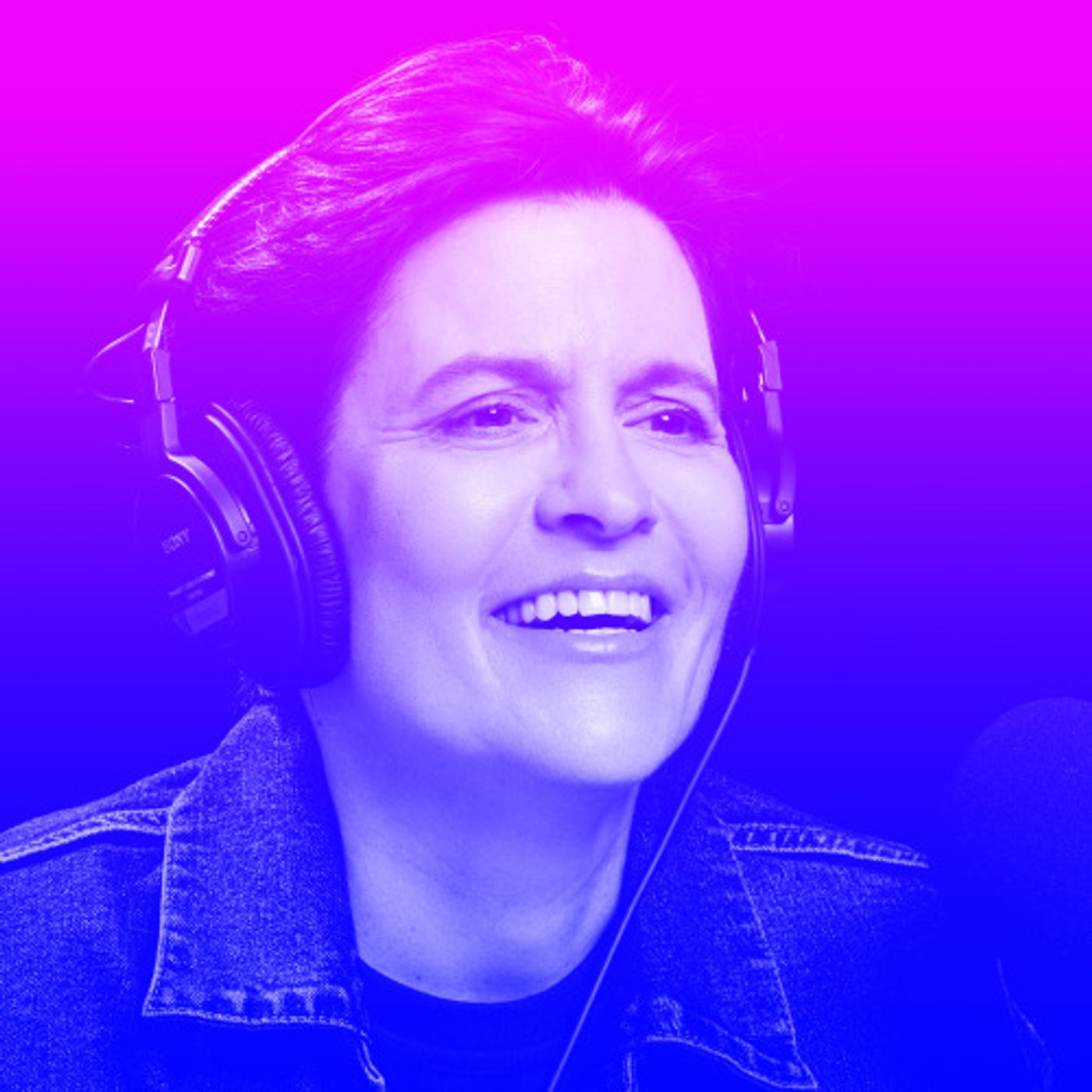
Many of the internet’s thorniest problems can be attributed to the concentration of power in a few corporate hands: the surveillance capitalism that makes it profitable to invade our privacy, the lack of algorithmic transparency that turns artificial intelligence and other tech into impenetrable black boxes, the rent-seeking behavior that seeks to monopolize and mega-monetize an existing market instead of creating new products or markets, and much more. Kara Swisher has been documenting the internet’s titans for almost 30 years through a variety of media outlets and podcasts. She believes that with adequate regulation we can keep people safe online without stifling innovation, and we can have an internet that’s transparent and beneficial for all, not just a collection of fiefdoms run by a handful of homogenous oligarchs. In this episode you’ll learn about: Why it’s so important that tech workers speak out about issues they want to improve and work to create companies that elevate best practices Why completely unconstrained capitalism turns technology into weapons instead of tools How antitrust legislation and enforcement can create a healthier online ecosystem Why AI could either bring abundance for many or make the very rich even richer The small online media outlets still doing groundbreaking independent reporting that challenges the tech oligarchy Kara Swisher is one of the world's foremost tech journalists and critics, and currently hosts two podcasts: On with Kara Swisher and Pivot, the latter co-hosted by New York University Professor Scott Galloway. She's been covering the tech industry since the 1990s for outlets including the Washington Post, the Wall Street Journal, and the New York Times; she is an New York Magazine editor-at-large, a CNN contributor, and cofounder of the tech news sites Recode and All Things Digital. She also has authored several books, including “Burn Book” (Simon & Schuster, 2024) in which she documents the history of Silicon Valley and the tech billionaires who run it.

S6 Ep 6Finding the Joy in Digital Security
Many people approach digital security training with furrowed brows, as an obstacle to overcome. But what if learning to keep your tech safe and secure was consistently playful and fun? People react better to learning, and retain more knowledge, when they're having a good time. It doesn’t mean the topic isn’t serious – it’s just about intentionally approaching a serious topic with joy. That’s how Helen Andromedon approaches her work as a digital security trainer in East Africa. She teaches human rights defenders how to protect themselves online, creating open and welcoming spaces for activists, journalists, and others at risk to ask hard questions and learn how to protect themselves against online threats. She joins EFF’s Cindy Cohn and Jason Kelley to discuss making digital security less complicated, more relevant, and more joyful to real users, and encouraging all women and girls to take online safety into their own hands so that they can feel fully present and invested in the digital world. In this episode you’ll learn about: How the Trump Administration’s shuttering of the United States Agency for International Development (USAID) has led to funding cuts for digital security programs in Africa and around the world, and why she’s still optimistic about the work The importance of helping women feel safe and confident about using online platforms to create positive change in their communities and countries Cultivating a mentorship model in digital security training and other training environments Why diverse input creates training models that are accessible to a wider audience How one size never fits all in digital security solutions, and how Dungeons and Dragons offers lessons to help people retain what they learn Helen Andromedon – a moniker she uses to protect her own security – is a digital security trainer in East Africa who helps human rights defenders learn how to protect themselves and their data online and on their devices. She played a key role in developing the Safe Sisters project, which is a digital security training program for women. She’s also a UX researcher and educator who has worked as a consultant for many organizations across Africa, including the Association for Progressive Communications and the African Women’s Development Fund.

S6 Ep 5Cryptography Makes a Post-Quantum Leap
The cryptography that protects our privacy and security online relies on the fact that even the strongest computers will take essentially forever to do certain tasks, like factoring prime numbers and finding discrete logarithms which are important for RSA encryption, Diffie-Hellman key exchanges, and elliptic curve encryption. But what happens when those problems – and the cryptography they underpin – are no longer infeasible for computers to solve? Will our online defenses collapse? Not if Deirdre Connolly can help it. As a cutting-edge thinker in post-quantum cryptography, Connolly is making sure that the next giant leap forward in computing – quantum machines that use principles of subatomic mechanics to ignore some constraints of classical mathematics and solve complex problems much faster – don’t reduce our digital walls to rubble. Connolly joins EFF’s Cindy Cohn and Jason Kelley to discuss not only how post-quantum cryptography can shore up those existing walls but also help us find entirely new methods of protecting our information. In this episode you’ll learn about: Why we’re not yet sure exactly what quantum computing can do yet, and that’s exactly why we need to think about post-quantum cryptography now What a “Harvest Now, Decrypt Later” attack is, and what’s happening today to defend against itHow cryptographic collaboration, competition, and community are key to exploring a variety of paths to post-quantum resilienceWhy preparing for post-quantum cryptography is and isn’t like fixing the Y2K bugHow the best impact that end users can hope for from post-quantum cryptography is no visible impact at allDon’t worry—you won’t have to know, or learn, any math for this episode! Deidre Connolly is a research and applied cryptographer at Sandbox AQ with particular expertise in post quantum encryption. She also co-hosts the “Security Cryptography Whatever” podcast about modern computer security and cryptography, with a focus on engineering and real-world experiences. Earlier, she was an engineer at the Zcash Foundation – a nonprofit that builds financial privacy infrastructure for the public good – as well as at Brightcove, Akamai, and HubSpot.

S6 Ep 4Securing Journalism on the ‘Data-Greedy’ Internet
Public-interest journalism speaks truth to power, so protecting press freedom is part of protecting democracy. But what does it take to digitally secure journalists’ work in an environment where critics, hackers, oppressive regimes, and others seem to have the free press in their crosshairs? That’s what Harlo Holmes focuses on as Freedom of the Press Foundation’s digital security director. Her team provides training, consulting, security audits, and other support to newsrooms, independent journalists, freelancers, documentary filmmakers – anyone who is making independent journalism in the public interest – so that they can do their jobs more safely and securely. Holmes joins EFF’s Cindy Cohn and Jason Kelley to discuss the tools and techniques that help journalists protect themselves and their sources while keeping the world informed. In this episode you’ll learn about: The importance of protecting online anonymity on an ever-increasingly “data-greedy” internet. How digital security nihilism in the United States compares with regions of the world where oppressive and repressive governance are more common Why compartmentalization can be a simple, easy approach to digital security The need for middleware to provide encryption and other protections that shield sources’ anonymity and journalists’ work product when using corporate data platforms How podcasters, YouTubers, and TikTokers fit into the broad sweep of media history, and need digital protections as well Harlo Holmes is the chief information security officer and director of digital security at Freedom of the Press Foundation. She strives to help individual journalists in various media organizations become confident and effective in securing their communications within their newsrooms, with their sources, and with the public at large. She is a media scholar, software programmer, and activist. Holmes was a regular contributor to the open-source mobile security collective Guardian Project, where she spearheaded the media metadata verification initiative currently empowering ProofMode, Save by OpenArchive, eyeWitness to Atrocities, and others.

S6 Ep 3Why Three is Tor's Magic Number
Many in Silicon Valley, and in U.S. business at large, seem to believe innovation springs only from competition, a race to build the next big thing first, cheaper, better, best. But what if collaboration and community breeds innovation just as well as adversarial competition? Isabela Fernandes believes free, open-source software has helped build the internet, and will be key to improving it for all. As executive director of the Tor Project – the nonprofit behind the decentralized, onion-routing network providing crucial online anonymity to activists and dissidents around the world – she has fought tirelessly for everyone to have private access to an uncensored internet, and Tor has become one of the world's strongest tools for privacy and freedom online. Fernandes joins EFF’s Cindy Cohn and Jason Kelley to discuss the importance of not just accepting technology as it’s given to us, but collaboratively breaking it, tinkering with it, and rebuilding it together until it becomes the technology that we really need to make our world a better place. In this episode you’ll learn about: How the Tor network protects the anonymity of internet users around the world, and why that’s so important Why online privacy is NOT only for “people who have something to hide” The importance of making more websites friendly and accessible to Tor and similar systems How Tor can actually benefit law enforcement How free, open-source software can power economic booms Isabela Fernandes has been executive director of the Tor Project since 2018; she had been a project manager there since 2015. She also has served since 2023 as a board member of both European Digital Rights – an association of civil and human rights organizations aimed at building a people-centered, democratic society – and The Engine Room, a nonprofit that supports social justice movements to use technology and data in safe, responsible and strategic ways, while actively mitigating the vulnerabilities created by digital systems. Earlier, Fernandes worked as a product manager for Twitter; Latin America project manager for North by South, which offered open-source technology integration to companies using expertise of Latin American free software specialists; as a project manager for Brazil’s President, overseeing migration of the IT department to free software; and as a technical advisor to Brazil’s Ministry of Communications, creating and implementing new features and free-software tools for the National Digital Inclusion Program serving 3,500 communities. She’s a former member of the board of the Calyx Institute, an education and research organization devoted to studying, testing and developing and implementing privacy technology and tools to promote free speech, free expression, civic engagement and privacy rights on the internet and in the mobile telephone industry. And she was a cofounder and longtime volunteer with Indymedia Brazil, an independent journalism collective.

S6 Ep 2Love the Internet Before You Hate On It
There’s a weird belief out there that tech critics hate technology. But do movie critics hate movies? Do food critics hate food? No! The most effective, insightful critics do what they do because they love something so deeply that they want to see it made even better. The most effective tech critics have had transformative, positive online experiences, and now unflinchingly call out the surveilled, commodified, enshittified landscape that exists today because they know there has been – and still can be – something better.That’s what drives Molly White’s work. Her criticism of the cryptocurrency and technology industries stems from her conviction that technology should serve human needs rather than mere profits. Whether it’s blockchain or artificial intelligence, she’s interested in making sure the “next big thing” lives up to its hype, and more importantly, to the ideals of participation and democratization that she experienced. She joins EFF’s Cindy Cohn and Jason Kelley to discuss working toward a human-centered internet that gives everyone a sense of control and interaction – open to all in the way that Wikipedia was (and still is) for her and so many others: not just as a static knowledge resource, but as something in which we can all participate.In this episode you’ll learn about:Why blockchain technology has built-in incentives for grift and speculation that overwhelm most of its positive usesHow protecting open-source developers from legal overreach, including in the blockchain world, remains criticalThe vast difference between decentralization of power and decentralization of computeHow Neopets and Wikipedia represent core internet values of community, collaboration, and creativityWhy Wikipedia has been resilient against some of the rhetorical attacks that have bogged down media outlets, but remains vulnerable to certain economic and political pressuresHow the Fediverse and other decentralization and interoperability mechanisms provide hope for the kind of creative independence, self-expression, and social interactivity that everyone deserves Molly White is a researcher, software engineer, and writer who focuses on the cryptocurrency industry, blockchains, web3, and other tech in her independent publication, Citation Needed. She also runs the websites Web3 is Going Just Great, where she highlights examples of how cryptocurrencies, web3 projects, and the industry surrounding them are failing to live up to their promises, and Follow the Crypto, where she tracks cryptocurrency industry spending in U.S. elections. She has volunteered for more than 15 years with Wikipedia, where she serves as an administrator (under the name GorillaWarfare) and functionary, and previously served three terms on the Arbitration Committee. She’s regularly quoted or bylined in news media, speaks at major conferences including South by Southwest and Web Summit; guest lectures at universities including Harvard, MIT, and Stanford; and advises policymakers and regulators around the world.

S6 Ep 1Digital Autonomy for Bodily Autonomy
We all leave digital trails as we navigate the internet – records of what we searched for, what we bought, who we talked to, where we went or want to go in the real world – and those trails usually are owned by the big corporations behind the platforms we use. But what if we valued our digital autonomy the way that we do our bodily autonomy? What if we reclaimed the right to go, read, see, do and be what we wish online as we try to do offline? Moreover, what if we saw digital autonomy and bodily autonomy as two sides of the same coin – inseparable?Kate Bertash wants that digital autonomy for all of us, and she pursues it in many different ways – from teaching abortion providers and activists how to protect themselves online, to helping people stymie the myriad surveillance technologies that watch and follow us in our communities. She joins EFF’s Cindy Cohn and Jason Kelley to discuss how creativity and community can align to center people in the digital world and make us freer both online and offline.In this episode you’ll learn about:Why it’s important for local communities to collaboratively discuss and decide whether and how much they want to be surveilledHow the digital era has blurred the bright line between public and private spacesWhy we can’t surveil ourselves to safetyHow DefCon – America's biggest hacker conference – embodies the ideal that we don’t have to simply accept technology as it’s given to us, but instead can break, tinker with, and rebuild it to meet our needsWhy building community helps us move beyond hopelessness to build and disseminate technology that helps protects everyone’s privacy Kate Bertash works at the intersection of tech, privacy, art, and organizing. She directs the Digital Defense Fund, launched in 2017 to meet the abortion rights and bodily autonomy movements’ increased need for security and technology resources after the 2016 election. This multidisciplinary team of organizers, engineers, designers, abortion fund and practical support volunteers provides digital security evaluations, conducts staff training, maintains a library of go-to resources on reproductive justice and digital privacy, and builds software for abortion access, bodily autonomy, and pro-democracy organizations. Bertash also engages in various multidisciplinary civic tech projects as a project manager, volunteer, activist, and artist; she’s especially interested in ways that artistic methods can interrogate use of AI-driven computer vision, other analytical technologies in surveillance, and related intersections with our civil rights.
Coming Soon: How to Fix the Internet Season Six
trailerNow more than ever, we need to build, reinforce, and protect the tools and technology that support our freedom. EFF’s How to Fix the Internet returns with another season full of forward-looking and hopeful conversations with the smartest and most creative leaders, activists, technologists, policy makers, and thinkers around. People who are working to create a better internet – and world – for all of us.Co-hosts Executive Director Cindy Cohn and Activism Director Jason Kelley will speak with people like journalist Molly White, reproductive rights activist Kate Bertash, press freedom advocate Harlo Holmes, the Tor Project’s Isabela Fernandes and computer scientist and AI skeptic Arvind Narayanan, among many others.
Vote for “How to Fix the Internet” in the Webby Awards People's Voice Competition!
bonusEFF’s “How to Fix the Internet” podcast is a nominee in the Webby Awards 29th Annual People's Voice competition – and we need your support to bring the trophy home! Voting ends on April 17, so if you like what we do here by trying to envision a better digital future—please take a moment to go to eff.org/webby to cast your vote.
Rerelease - Dr. Seuss Warned Us
bonusThis episode was first released on May 2, 2023. Dr. Seuss wrote a story about a Hawtch-Hawtcher Bee-Watcher whose job it is to watch his town’s one lazy bee, because “a bee that is watched will work harder, you see.” But that doesn’t seem to work, so another Hawtch-Hawtcher is assigned to watch the first, and then another to watch the second... until the whole town is watching each other watch a bee. To Federal Trade Commissioner Alvaro Bedoya, the story—which long predates the internet—is a great metaphor for why we must be wary of workplace surveillance, and why we need to strengthen our privacy laws. Bedoya has made a career of studying privacy, trust, and competition, and wishes for a world in which we can do, see, and read what we want, living our lives without being held back by our identity, income, faith, or any other attribute. In that world, all our interactions with technology —from social media to job or mortgage applications—are on a level playing field. Bedoya speaks with EFF’s Cindy Cohn and Jason Kelley about how fixing the internet should allow all people to live their lives with dignity, pride, and purpose. In this episode, you’ll learn about: The nuances of work that “bossware,” employee surveillance technology, can’t catch.Why the Health Insurance Portability Accountability Act (HIPAA) isn’t the privacy panacea you might think it is.Making sure that one-size-fits-all privacy rules don’t backfire against new entrants and small competitors.How antitrust fundamentally is about small competitors and working people, like laborers and farmers, deserving fairness in our economy.Alvaro Bedoya was nominated by President Joe Biden, confirmed by the U.S. Senate, and sworn in May 16, 2022 as a Commissioner of the Federal Trade Commission; his term expires in September 2026. Bedoya was the founding director of the Center on Privacy & Technology at Georgetown University Law Center, where he was also a visiting professor of law. He has been influential in research and policy at the intersection of privacy and civil rights, and co-authored a 2016 report on the use of facial recognition by law enforcement and the risks that it poses. He previously served as the first Chief Counsel to the Senate Judiciary Subcommittee on Privacy, Technology and the Law after its founding in 2011, and as Chief Counsel to former U.S. Sen. Al Franken (D-MN); earlier, he was an associate at the law firm WilmerHale. A naturalized immigrant born in Peru and raised in upstate New York, Bedoya previously co-founded the Esperanza Education Fund, a college scholarship for immigrant students in the District of Columbia, Maryland, and Virginia. He also served on the Board of Directors of the Hispanic Bar Association of the District of Columbia. He graduated summa cum laude from Harvard College and holds a J.D. from Yale Law School, where he served on the Yale Law Journal and received the Paul & Daisy Soros Fellowship for New Americans. This podcast is supported by the Alfred P. Sloan Foundation's Program in Public Understanding of Science and Technology.Music for How to Fix the Internet was created for us by Reed Mathis and Nat Keefe of BeatMower. This podcast is licensed Creative Commons Attribution 4.0 International, and includes the following music licensed Creative Commons Attribution 3.0 Unported by their creators: http://dig.ccmixter.org/files/airtone/64772lostTrack by Airtone (c) copyright 2019 Licensed under a Creative Commons Attribution (3.0) license. http://dig.ccmixter.org/files/airtone/64772 Ft. mwic__________________________________http://dig.ccmixter.org/files/djlang59/59729Probably Shouldn’t by J.Lang (c) copyright 2012 Licensed under a Creative Commons Attribution (3.0) license. Ft: Mr_Yesterday__________________________________http://dig.ccmixter.org/files/airtone/58703CommonGround by airtone (c) copyright 2019 Licensed under a Creative Commons Attribution (3.0) Ft: simonlittlefield

Rerelease - So You Think You're a Critical Thinker
bonusThis episode was first released on March 21, 2023. The promise of the internet was that it would be a tool to melt barriers and aid truth-seekers everywhere. But it feels like polarization has worsened in recent years, and more internet users are being misled into embracing conspiracies and cults. From QAnon to anti-vax screeds to talk of an Illuminati bunker beneath Denver International Airport, Alice Marwick has heard it all. She has spent years researching some dark corners of the online experience: the spread of conspiracy theories and disinformation. She says many people see conspiracy theories as participatory ways to be active in political and social systems from which they feel left out, building upon beliefs they already harbor to weave intricate and entirely false narratives. Marwick speaks with EFF’s Cindy Cohn and Jason Kelley about finding ways to identify and leverage people’s commonalities to stem this flood of disinformation while ensuring that the most marginalized and vulnerable internet users are still empowered to speak out. In this episode you’ll learn about: Why seemingly ludicrous conspiracy theories get so many views and followersHow disinformation is tied to personal identity and feelings of marginalization and disenfranchisementWhen fact-checking does and doesn’t workThinking about online privacy as a political and structural issue rather than something that can be solved by individual action Alice Marwick is director of research at Data & Society. Previously she was an Associate Professor in the Department of Communication and cofounder and Principal Researcher at the Center for Information, Technology and Public Life at the University of North Carolina, Chapel Hill. She researches the social, political, and cultural implications of popular social media technologies. In 2017, she co-authored Media Manipulation and Disinformation Online (Data & Society), a flagship report examining far-right online subcultures’ use of social media to spread disinformation, for which she was named one of Foreign Policy magazine’s 2017 Global Thinkers. She is the author of Status Update: Celebrity, Publicity and Branding in the Social Media Age (Yale 2013), an ethnographic study of the San Francisco tech scene which examines how people seek social status through online visibility, and co-editor of The Sage Handbook of Social Media (Sage 2017). Her forthcoming book, The Private is Political (Yale 2023), examines how the networked nature of online privacy disproportionately impacts marginalized individuals in terms of gender, race, and socio-economic status. She earned a political science and women's studies bachelor's degree from Wellesley College, a Master of Arts in communication from the University of Washington, and a PhD in media, culture and communication from New York University. This podcast is licensed Creative Commons Attribution 4.0 International, and includes the following music licensed Creative Commons Attribution 3.0 Unported by their creators: http://dig.ccmixter.org/files/djlang59/59729Probably Shouldn’t by J.Lang (c) copyright 2012 Licensed under a Creative Commons Attribution (3.0) license. Ft: Mr_Yesterday__________________________________http://dig.ccmixter.org/files/airtone/58703CommonGround by airtone (c) copyright 2019 Licensed under a Creative Commons Attribution (3.0) Ft: simonlittlefield__________________________________Additional beds and alternate theme remixes by Gaëtan Harris

S5 Ep 10Fighting Enshittification
The early internet had a lot of “technological self-determination" — you could opt out of things, protect your privacy, control your experience. The problem was that it took a fair amount of technical skill to exercise that self-determination. But what if it didn’t? What if the benefits of online privacy, security, interoperability, and free speech were more evenly distributed among all internet users?This is the future that award-winning author and EFF Special Advisor Cory Doctorow wants us to fight for. His term “enshittification” — a downward spiral in which online platforms trap users and business customers alike, treating them more and more like commodities while providing less and less value — was selected by the American Dialect Society as its 2023 Word of the Year. But, he tells EFF’s Cindy Cohn and Jason Kelley, enshittification analysis also identifies the forces that used to make companies treat us better, helping us find ways to break the cycle and climb toward a better future.In this episode you’ll learn about: Why “intellectual property” is a misnomer, and how the law has been abused to eliminate protections for societyHow the tech sector’s consolidation into a single lobbying voice helped bulldoze the measures that used to check companies’ worst impulsesWhy recent antitrust actions provide a glimmer of hope that megacompanies can still be forced to do better for usersWhy tech workers’ labor rights are important to the fight for a better internetHow legislative and legal losses can still be opportunities for future changeCory Doctorow is an award-winning science fiction author, activist, journalist and blogger, and a Special Advisor to EFF. He is the editor of Pluralistic and the author of novels including “The Bezzle” (2024), “The Lost Cause” (2023), “Attack Surface” (2020), and “Walkaway” (2017); young adult novels including “Homeland” (2013) and “Little Brother” (2008); and nonfiction books including “The Internet Con: How to Seize the Means of Computation” (2023) and “How to Destroy Surveillance Capitalism” (2021). He is EFF's former European director and co-founded the UK Open Rights Group. Born in Toronto, Canada, he now lives in Los Angeles.

S5 Ep 9AI in Kitopia
Artificial intelligence will neither solve all our problems nor likely destroy the world, but it could help make our lives better if it’s both transparent enough for everyone to understand and available for everyone to use in ways that augment us and advance our goals — not for corporations or government to extract something from us and exert power over us. Imagine a future, for example, in which AI is a readily available tool for helping people communicate across language barriers, or for helping vision- or hearing-impaired people connect better with the world. This is the future that Kit Walsh, EFF’s Director of Artificial Intelligence & Access to Knowledge Legal Projects, and EFF Senior Staff Technologist Jacob Hoffman-Andrews, are working to bring about. They join EFF’s Cindy Cohn and Jason Kelley to discuss how AI shouldn’t be a tool cash in, or to classify people for favor or disfavor, but instead to engage with technology and information in ways that advance us all. In this episode you’ll learn about: The dangers in using AI to determine who law enforcement investigates, who gets housing or mortgages, who gets jobs, and other decisions that affect people’s lives and freedoms. How "moral crumple zones” in technological systems can divert responsibility and accountability from those deploying the tech. Why transparency and openness of AI systems — including training AI on consensually obtained, publicly visible data — is so important to ensure systems are developed without bias and to everyone’s benefit. Why “watermarking” probably isn’t a solution to AI-generated disinformation. Kit Walsh is a senior staff attorney at EFF, serving as Director of Artificial Intelligence & Access to Knowledge Legal Projects. She has worked for years on issues of free speech, net neutrality, copyright, coders' rights, and other issues that relate to freedom of expression and access to knowledge, supporting the rights of political protesters, journalists, remix artists, and technologists to agitate for social change and to express themselves through their stories and ideas. Before joining EFF, Kit led the civil liberties and patent practice areas at the Cyberlaw Clinic, part of Harvard University's Berkman Klein Center for Internet and Society; earlier, she worked at the law firm of Wolf, Greenfield & Sacks, litigating patent, trademark, and copyright cases in courts across the country. Kit holds a J.D. from Harvard Law School and a B.S. in neuroscience from MIT, where she studied brain-computer interfaces and designed cyborgs and artificial bacteria. Jacob Hoffman-Andrews is a senior staff technologist at EFF, where he is lead developer on Let's Encrypt, the free and automated Certificate Authority; he also works on EFF's Encrypt the Web initiative and helps maintain the HTTPS Everywhere browser extension. Before working at EFF, Jacob was on Twitter's anti-spam and security teams. On the security team, he implemented HTTPS-by-default with forward secrecy, key pinning, HSTS, and CSP; on the anti-spam team, he deployed new machine-learned models to detect and block spam in real-time. Earlier, he worked on Google’s maps, transit, and shopping teams.

S5 Ep 8AI on the Artist’s Palette
Collaging, remixing, sampling—art always has been more than the sum of its parts, a synthesis of elements and ideas that produces something new and thought-provoking. Technology has enabled and advanced this enormously, letting us access and manipulate information and images in ways that would’ve been unimaginable just a few decades ago. For Nettrice Gaskins, this is an essential part of the African American experience: The ability to take whatever is at hand—from food to clothes to music to visual art—and combine it with life experience to adapt it into something new and original. She joins EFF’s Cindy Cohn and Jason Kelley to discuss how she takes this approach in applying artificial intelligence to her own artwork, expanding the boundaries of Black artistic thought. In this episode you’ll learn about: Why making art with AI is about much more than just typing a prompt and hitting a button How hip-hop music and culture was an early example of technology changing the state of Black art Why the concept of fair use in intellectual property law is crucial to the artistic process How biases in machine learning training data can affect art Why new tools can never replace the mind of a live, experienced artist Dr. Nettrice R. Gaskins is a digital artist, academic, cultural critic, and advocate of STEAM (science, technology, engineering, arts, and math) fields whose work she explores "techno-vernacular creativity" and Afrofuturism. She teaches, writes, "fabs,” and makes art using algorithms and machine learning. She has taught multimedia, visual art, and computer science with high school students, and now is assistant director of the Lesley STEAM Learning Lab at Lesley University. She was a 2021 Ford Global Fellow, serves as an advisory board member for the School of Literature, Media, and Communication at Georgia Tech, and is the author of “Techno-Vernacular Creativity and Innovation” (2021). She earned a BFA in Computer Graphics with honors from Pratt Institute in 1992; an MFA in Art and Technology from the School of the Art Institute of Chicago in 1994; and a doctorate in Digital Media from Georgia Tech in 2014.MUSIC CREDITSXena's Kiss / Medea's Kiss by mwic (c) copyright 2018 Licensed under a Creative Commons Attribution (3.0) license._________________lostTrack by Airtone (c) copyright 2019 Licensed under a Creative Commons Attribution (3.0) license. Ft. mwic

S5 Ep 7Chronicling Online Communities
From Napster to YouTube, some of the most important and controversial uses of the internet have been about building community: connecting people all over the world who share similar interests, tastes, views, and concerns. Big corporations try to co-opt and control these communities, and politicians often promote scary narratives about technology’s dangerous influences, but users have pushed back against monopoly and rhetoric to find new ways to connect with each other. Alex Winter is a leading documentarian of the evolution of internet communities. He joins EFF’s Cindy Cohn and Jason Kelley to discuss the harms of behavioral advertising, what algorithms can and can’t be blamed for, and promoting the kind of digital literacy that can bring about a better internet—and a better world—for all of us. In this episode you’ll learn about: Debunking the monopolistic myth that communicating and sharing data is theft. Demystifying artificial intelligence so that it’s no longer a “black box” impervious to improvement. Decentralizing and democratizing the internet so more, diverse people can push technology, online communities, and our world forward. Finding a nuanced balance between free speech and harm mitigation in social media. Breaking corporations’ addiction to advertising revenue derived from promoting disinformation. Alex Winter is a director, writer and actor who has worked across film, television and theater. Perhaps best known on screen for “Bill & Ted’s Excellent Adventure” (1989) and its sequels as well as “The Lost Boys” (1987), “Destroy All Neighbors” (2024) and other films, he has directed documentaries including “Downloaded” (2013) about the Napster revolution; “Deep Web” (2015) about the online black market Silk Road and the trial of its creator Ross Ulbricht; “Trust Machine” (2018) about the rise of bitcoin and the blockchain; and “The YouTube Effect” (2022). He also has directed critically acclaimed documentaries about musician Frank Zappa and about the Panama Papers, the biggest global corruption scandal in history and the journalists who worked in secret and at great risk to break the story. Music credits:Perspectives *** by J.Lang (c) copyright 2019 Licensed under a Creative Commons Attribution (3.0) license. Ft: Sackjo22 and Admiral Bob

S5 Ep 6Building a Tactile Internet
Blind and low-vision people have experienced remarkable gains in information literacy because of digital technologies, like being able to access an online library offering more than 1.2 million books that can be translated into text-to-speech or digital Braille. But it can be a lot harder to come by an accessible map of a neighborhood they want to visit, or any simple diagram, due to limited availability of tactile graphics equipment, design inaccessibility, and publishing practices. Chancey Fleet wants a technological future that’s more organically attuned to people’s needs, which requires including people with disabilities in every step of the development and deployment process. She speaks with EFF’s Cindy Cohn and Jason Kelley about building an internet that’s just and useful for all, and why this must include giving blind and low-vision people the discretion to decide when and how to engage artificial intelligence tools to solve accessibility problems and surmount barriers. In this episode you’ll learn about: The importance of creating an internet that’s not text-only, but that incorporates tactile images and other technology to give everyone a richer, more fulfilling experience. Why AI-powered visual description apps still need human auditing. How inclusiveness in tech development is always a work in progress. Why we must prepare people with the self-confidence, literacy, and low-tech skills they need to get everything they can out of even the most optimally designed technology. Making it easier for everyone to travel the two-way street between enjoyment and productivity online. Chancey Fleet’s writing, organizing and advocacy explores how cloud-connected accessibility tools benefit and harm, empower and expose communities of disability. She is the Assistive Technology Coordinator at the New York Public Library’s Andrew Heiskell Braille and Talking Book Library, where she founded and maintains the Dimensions Project, a free open lab for the exploration and creation of accessible images, models and data representations through tactile graphics, 3D models and nonvisual approaches to coding, CAD and “visual” arts. She is a former fellow and current affiliate-in-residence at Data & Society; she is president of the National Federation of the Blind’s Assistive Technology Trainers Division; and she was recognized as a 2017 Library Journal Mover and Shaker. Music credits:Probably Shouldn't by J.Lang (c) copyright 2019 Licensed under a Creative Commons Attribution (3.0) license. Ft: Mr_YesterdaycommonGround by airtone (c) copyright 2018 Licensed under a Creative Commons Attribution Noncommercial (3.0) license.Klaus by Skill_Borrower (c) copyright 2013 Licensed under a Creative Commons Attribution (3.0) license. Ft: Klaus_NeumaierChrome Cactus by Martijn de Boer (NiGiD) (c) copyright 2020 Licensed under a Creative Commons Attribution Noncommercial (3.0) license. Ft: Javolenus

S5 Ep 5Right to Repair Catches the Car
If you buy something—a refrigerator, a car, a tractor, a wheelchair, or a phone—but you can't have the information or parts to fix or modify it, is it really yours? The right to repair movement is based on the belief that you should have the right to use and fix your stuff as you see fit, a philosophy that resonates especially in economically trying times, when people can’t afford to just throw away and replace things. Companies for decades have been tightening their stranglehold on the information and the parts that let owners or independent repair shops fix things, but the pendulum is starting to swing back: New York, Minnesota, California, and Colorado have passed right to repair laws, and it’s on the legislative agenda in dozens of other states. Gay Gordon-Byrne is executive director of The Repair Association, one of the major forces pushing for more and stronger state laws, and for federal reforms as well. She joins EFF’s Cindy Cohn and Jason Kelley to discuss this pivotal moment in the fight for consumers to have the right to products that are repairable and reusable. In this episode you’ll learn about: Why our “planned obsolescence” throwaway culture doesn’t have to be, and shouldn’t be, a technology status quo. The harm done by “parts pairing:” software barriers used by manufacturers to keep people from installing replacement parts. Why one major manufacturer put out a user manual in France, but not in other countries including the United States. How expanded right to repair protections could bring a flood of new local small-business jobs while reducing waste. The power of uniting disparate voices—farmers, drivers, consumers, hackers, and tinkerers—into a single chorus that can’t be ignored. Gay Gordon-Byrne has been executive director of The Repair Association—formerly known as The Digital Right to Repair Coalition—since its founding in 2013, helping lead the fight for the right to repair in Congress and state legislatures. Their credo: If you bought it, you should own it and have the right to use it, modify it, and repair it whenever, wherever, and however you want. Earlier, she had a 40-year career as a vendor, lessor, and used equipment dealer for large commercial IT users; she is the author of "Buying, Supporting and Maintaining Software and Equipment - an IT Manager's Guide to Controlling the Product Lifecycle” (2014), and a Colgate University alumna. MUSIC CREDITSCome Inside by Zep Hurme (c) copyright 2019 Licensed under a Creative Commons Attribution (3.0) license. Ft: snowflakeDrops of H2O ( The Filtered Water Treatment ) by J.Lang (c) copyright 2012 Licensed under a Creative Commons Attribution (3.0) license. Ft: Airtone

S5 Ep 4Anti-Trust/Pro-Internet
Imagine an internet in which economic power is more broadly distributed, so that more people can build and maintain small businesses online to make good livings. In this world, the behavioral advertising that has made the internet into a giant surveillance tool would be banned, so people could share more equally in the riches without surrendering their privacy. That’s the world Tim Wu envisions as he teaches and shapes policy on the revitalization of American antitrust law and the growing power of big tech platforms. He joins EFF’s Cindy Cohn and Jason Kelley to discuss using the law to counterbalance the market’s worst instincts, in order to create an internet focused more on improving people’s lives than on meaningless revenue generation. In this episode you’ll learn about: Getting a better “deal” in trading some of your data for connectedness. Building corporate structures that do a better job of balancing the public good with private profits. Creating a healthier online ecosystem with corporate “quarantines” to prevent a handful of gigantic companies from dominating the entire internet. Nurturing actual innovation of products and services online, not just newer price models. Timothy Wu is the Julius Silver Professor of Law, Science and Technology at Columbia Law School, where he has served on the faculty since 2006. First known for coining the term “net neutrality” in 2002, he served in President Joe Biden’s White House as special assistant to the President for technology and competition policy from 2021 to 2023; he also had worked on competition policy for the National Economic Council during the last year of President Barack Obama’s administration. Earlier, he worked in antitrust enforcement at the Federal Trade Commission and served as enforcement counsel in the New York Attorney General’s Office. His books include “The Curse of Bigness: Antitrust in the New Gilded Age” (2018), "The Attention Merchants: The Epic Scramble to Get Inside Our Heads” (2016), “The Master Switch: The Rise and Fall of Information Empires” (2010), and “Who Controls the Internet? Illusions of a Borderless World” (2006). MUSIC CREDITSPerspectives *** by J.Lang (c) copyright 2019 Licensed under a Creative Commons Attribution (3.0) license. Ft: Sackjo22 and Admiral Bob_________________Warm Vacuum Tube by Admiral Bob (c) copyright 2019 Licensed under a Creative Commons Attribution (3.0) license. Ft: starfrosch

S5 Ep 3About Face (Recognition)
Is your face truly your own, or is it a commodity to be sold, a weapon to be used against you? A company called Clearview AI has scraped the internet to gather (without consent) 30 billion images to support a tool that lets users identify people by picture alone. Though it’s primarily used by law enforcement, should we have to worry that the eavesdropper at the next restaurant table, or the creep who’s bothering you in the bar, or the protestor outside the abortion clinic can surreptitiously snap a pic of you, upload it, and use it to identify you, where you live and work, your social media accounts, and more? New York Times reporter Kashmir Hill has been writing about the intersection of privacy and technology for well over a decade; her book about Clearview AI’s rise and practices was published last fall. She speaks with EFF’s Cindy Cohn and Jason Kelley about how face recognition technology’s rapid evolution may have outpaced ethics and regulations, and where we might go from here. In this episode, you’ll learn about: The difficulty of anticipating how information that you freely share might be used against you as technology advances. How the all-consuming pursuit of “technical sweetness” — the alluring sensation of neatly and functionally solving a puzzle — can blind tech developers to the implications of that tech’s use. The racial biases that were built into many face recognition technologies. How one state's 2008 law has effectively curbed how face recognition technology is used there, perhaps creating a model for other states or Congress to follow. Kashmir Hill is a New York Times tech reporter who writes about the unexpected and sometimes ominous ways technology is changing our lives, particularly when it comes to our privacy. Her book, “Your Face Belongs To Us” (2023), details how Clearview AI gave facial recognition to law enforcement, billionaires, and businesses, threatening to end privacy as we know it. She joined The Times in 2019 after having worked at Gizmodo Media Group, Fusion, Forbes Magazine and Above the Law. Her writing has appeared in The New Yorker and The Washington Post. She has degrees from Duke University and New York University, where she studied journalism. This podcast is licensed Creative Commons Attribution 4.0 International, and includes music licensed Creative Commons Attribution 3.0 Unported by their creators. This episode features:Kalte Ohren by Alex (c) copyright 2019 Licensed under a Creative Commons Attribution (3.0) license. Ft: starfrosch & Jerry SpoonDrops of H2O (The Filtered Water Treatment ) by J.Lang (c) copyright 2012 Licensed under a Creative Commons Attribution (3.0) license. Ft: Airtone

S5 Ep 2"I-Squared" Governance
Imagine a world in which the internet is first and foremost about empowering people, not big corporations and government. In that world, government does “after-action” analyses to make sure its tech regulations are working as intended, recruits experienced technologists as advisors, and enforces real accountability for intelligence and law enforcement programs. Ron Wyden has spent decades working toward that world, first as a congressman and now as Oregon’s senior U.S. Senator. Long among Congress’ most tech-savvy lawmakers, he helped write the law that shaped and protects the internet as we know it, and he has fought tirelessly against warrantless surveillance of Americans’ telecommunications data. Wyden speaks with EFF’s Cindy Cohn and Jason Kelley about his “I squared” —individuals and innovation—legislative approach to foster an internet that benefits everyone. In this episode you’ll learn about: How a lot of the worrisome online content that critics blame on Section 230 is actually protected by the First Amendment Requiring intelligence and law enforcement agencies to get warrants before obtaining Americans’ private telecommunications data Why “foreign” is the most important word in “Foreign Intelligence Surveillance Act” Making government officials understand national security isn’t heightened by reducing privacy Protecting women from having their personal data weaponized against them U.S. Sen. Ron Wyden, D-OR, has served in the Senate since 1996; he was elected to his current six-year term in 2022. He chairs the Senate Finance Committee, and serves on the Energy and Natural Resources Committee, the Budget Committee, and the Select Committee on Intelligence; he also is the lead Senate Democrat on the Joint Committee on Taxation. His relentless defiance of the national security community's abuse of secrecy forced the declassification of the CIA Inspector General's 9/11 report, shut down the controversial Total Information Awareness program, and put a spotlight on both the Bush and Obama administrations’ reliance on "secret law." In 2006 he introduced the first Senate bill on net neutrality, and in 2011 he was the lone Senator to stand against the Stop Online Piracy Act (SOPA) and the PROTECT IP Act (PIPA), ultimately unsuccessful bills that purportedly were aimed at fighting online piracy but that actually would have caused significant harm to the internet. Earlier, he served from 1981 to 1996 in the House of Representatives, where he co-authored Section 230 of the Communications Decency Act of 1996 —the law that protects Americans’ freedom of expression online by protecting the intermediaries we all rely on.

S5 Ep 1Open Source Beats Authoritarianism
What if we thought about democracy as a kind of open-source social technology, in which everyone can see the how and why of policy making, and everyone’s concerns and preferences are elicited in a way that respects each person’s community, dignity, and importance? This is what Audrey Tang has worked toward as Taiwan’s first Digital Minister, a position the free software programmer has held since 2016. She has taken the best of open source and open culture and successfully used them to help reform her country’s government. Tang speaks with EFF’s Cindy Cohn and Jason Kelley about how Taiwan has shown that openness not only works but can outshine more authoritarian competition, wherein governments often lock up data. In this episode you’ll learn about: Using technology including artificial intelligence to help surface our areas of agreement, rather than to identify and exacerbate our differences The “radical transparency” of recording and making public every meeting in which a government official takes part, to shed light on the policy-making process How Taiwan worked with civil society to ensure that no privacy and human rights were traded away for public health and safety during the COVID-19 pandemic Why maintaining credible neutrality from partisan politics and developing strong public and civic digital infrastructure are key to advancing democracy. Audrey Tang has served as Taiwan's first Digital Minister since 2016, by which time she already was known for revitalizing the computer languages Perl and Haskell, as well as for building the online spreadsheet system EtherCalc in collaboration with Dan Bricklin. In the public sector, she served on the Taiwan National Development Council’s open data committee and basic education curriculum committee and led the country’s first e-Rulemaking project. In the private sector, she worked as a consultant with Apple on computational linguistics, with Oxford University Press on crowd lexicography, and with Socialtext on social interaction design. In the social sector, she actively contributes to g0v (“gov zero”), a vibrant community focusing on creating tools for the civil society, with the call to “fork the government.”

Coming Soon: How to Fix the Internet Season Five
trailerWe cannot build a better future unless we can envision it. EFF’s How to Fix the Internet returns with another season full of inspiring conversations with some of the smartest and most interesting people around who are thinking about how to make the internet – and the world – a better place for all of us. Co-hosts Executive Director Cindy Cohn and Activism Director Jason Kelley will speak with people like journalist Kashmir Hill, Taiwan’s minister of digital affairs Audrey Tang, former White House advisor Tim Wu, digital artist Dr. Nettrice Gaskins and actor and filmmaker Alex Winter, among others.It seems like everywhere we turn we see dystopian stories about technology’s impact on our lives and our futures — from tracking-based surveillance capitalism to street level government surveillance to the dominance of a few large platforms choking innovation to the growing pressure by authoritarian governments to control what we see and say — the landscape can feel bleak. Exposing and articulating these problems is important, but so is envisioning and then building a better future. That’s where our podcast comes in.EFF's How to Fix the Internet podcast offers a better way forward. Through curious conversations with some of the leading minds in law and technology, we explore creative solutions to some of today’s biggest tech challenges.
Rerelease: Securing the Vote
bonusThis episode was first published on May 24, 2022.Pam Smith has been working to secure US elections for years, and now as the CEO of Verified Voting, she has some important ideas about the role the internet plays in American democracy. Pam joins Cindy and Danny to explain how elections can be more transparent and more engaging for all.U.S. democracy is at an inflection point, and how we administer and verify our elections is more important than ever. From hanging chads to glitchy touchscreens to partisan disinformation, too many Americans worry that their votes won’t count and that election results aren’t trustworthy. It’s crucial that citizens have well-justified confidence in this pillar of our republic. Technology can provide answers - but that doesn’t mean moving elections online. As president and CEO of the nonpartisan nonprofit Verified Voting, Pamela Smith helps lead the national fight to balance ballot accessibility with ballot security by advocating for paper trails, audits, and transparency wherever and however Americans cast votes. On this episode of How to Fix the Internet, Pamela Smith joins EFF’s Cindy Cohn and Danny O’Brien to discuss hope for the future of democracy and the technology and best practices that will get us there.In this episode you’ll learn about:Why voting online can never be like banking or shopping onlineWhat a “risk-limiting audit” is, and why no election should lack it Whether open-source software could be part of securing our votesWhere to find reliable information about how your elections are conductedPamela Smith, President & CEO of Verified Voting, plays a national leadership role in safeguarding elections and building working alliances between advocates, election officials, and other stakeholders. Pam joined Verified Voting in 2004, and previously served as President from 2007-2017. She is a member of the National Task Force on Election Crises, a diverse cross-partisan group of more than 50 experts whose mission is to prevent and mitigate election crises by urging critical reforms. She provides information and public testimony on election security issues across the nation, including to Congress. Before her work in elections, she was a nonprofit executive for a Hispanic educational organization working on first language literacy and adult learning, and a small business and marketing consultant.This podcast is supported by the Alfred P. Sloan Foundation's Program in Public Understanding of Science and Technology.Music for How to Fix the Internet was created for us by Reed Mathis and Nat Keefe of BeatMower. This podcast is licensed Creative Commons Attribution 4.0 International, and includes the following music licensed Creative Commons Attribution 3.0 Unported by their creators: http://dig.ccmixter.org/files/Skill_Borrower/41751Klaus by Skill_Borrower (c) copyright 2013 Licensed under a Creative Commons Attribution (3.0) license— http://dig.ccmixter.org/files/airtone/58703commonGround by airtone (c) copyright 2018 Licensed under a Creative Commons Attribution Noncommercial (3.0) license. —http://dig.ccmixter.org/files/NiGiD/62475Chrome Cactus by Martijn de Boer (NiGiD) (c) copyright 2020 Licensed under a Creative Commons Attribution Noncommercial (3.0) license.

S4 Ep 10Who Inserted the Creepy?
Writers sit watching a stranger’s search engine terms being typed in real time, a voyeuristic peek into that person’s most private thoughts. A woman lands a dream job at a powerful tech company but uncovers an agenda affecting the lives of all of humanity. An app developer keeps pitching the craziest, most harmful ideas she can imagine but the tech mega-monopoly she works for keeps adopting them, to worldwide delight. The first instance of deep online creepiness actually happened to Dave Eggers almost 30 years ago. The latter two are plots of two of Eggers’ many bestselling novels—“The Circle” and “The Every,” respectively—inspired by the author’s continuing rumination on how much is too much on the internet. He believes we should live intentionally, using technology when it makes sense but otherwise logging off and living an analog, grounded life. Eggers — whose newest novel, “The Eyes and the Impossible,” was published this month — speaks with EFF’s Cindy Cohn and Jason Kelley about why he hates Zoom so much, how and why we get sucked into digital worlds despite our own best interests, and painting the darkest version of our future so that we can steer away from it. In this episode, you’ll learn about: How that three-digit credit score that you keep striving to improve symbolizes a big problem with modern tech. The difficulties of distributing books without using Amazon. Why round-the-clock surveillance by schools, parents, and others can be harmful to kids. The vital importance of letting yourself be bored and unstructured sometimes. Dave Eggers is the bestselling author of his memoir “A Heartbreaking Work of Staggering Genius” (2000) as well as novels including “What Is the What” (2006), “A Hologram for the King” (2012), “The Circle” (2013), and “The Every” (2021); his latest novel, “The Eyes and the Impossible,” was published May 9. He founded the independent publishing company McSweeney’s as well as its namesake daily humor website, and he co-founded 826 Valencia, a nonprofit youth writing center that has inspired over 70 similar organizations worldwide. Eggers is winner of the American Book Award, the Muhammad Ali Humanitarian Award for Education, the Dayton Literary Peace Prize, and the TED Prize, and has been a finalist for the National Book Award, the Pulitzer Prize, and the National Book Critics Circle Award. He is a member of the American Academy of Arts and Letters. This podcast is supported by the Alfred P. Sloan Foundation's Program in Public Understanding of Science and Technology.Music for How to Fix the Internet was created for us by Reed Mathis and Nat Keefe of BeatMower. This podcast is licensed Creative Commons Attribution 4.0 International, and includes the following music licensed Creative Commons Attribution 3.0 Unported by their creators: http://dig.ccmixter.org/files/airtone/58703CommonGround by airtone (c) copyright 2019 Licensed under a Creative Commons Attribution (3.0) Ft: simonlittlefieldAdditional beds and alternate theme remixes by Gaëtan Harris.

S4 Ep 9People with Disabilities are the Original Hackers
People with disabilities were the original hackers. The world can feel closed to them, so they often have had to be self-reliant in how they interact with society. And that creativity and ingenuity is an unappreciated resource. Henry Claypool has been an observer and champion of that resource for decades, both in government and in the nonprofit sector. He’s a national policy expert and consultant specializing in both disability policy and technology policy, particularly where they intersect. He knows real harm can result from misuse of technology, intentionally or not, and people with disabilities frequently end up at the bottom of the list on inclusion. Claypool joins EFF’s Cindy Cohn and Jason Kelley to talk about motivating tech developers to involve disabled people in creating a world where people who function differently have a smooth transition into any forum and can engage with a wide variety of audiences, a seamless inclusion in the full human experience. In this episode, you’ll learn about: How accessibility asks, “Can we knock on the door?” while inclusion says, ”Let’s build a house that already has all of us inside it.” Why affordable broadband programs must include disability-related costs. Why disability inclusion discussions must involve intersectional voices such people of color and the LGBTQI+ community. How algorithms and artificial intelligence used in everything from hiring tools to social services platforms too often produce results skewed against people with disabilities. Henry Claypool is a technology policy consultant and former executive vice president at the American Association of People with Disabilities, which promotes equal opportunity, economic power, independent living and political participation for people with disabilities. He is the former director of the U.S. Health and Human Services Office on Disability and a founding principal deputy administrator of the Administration for Community Living. He was appointed by President Barack Obama to the Federal Commission on Long-Term Care, advising Congress on how long-term care can be better provided and financed for the nation’s older adults and people with disabilities, now and in the future. He is a visiting scientist with the Lurie Center for Disability Policy in the Heller School for Social Policy and Management at Brandeis University, and principal of Claypool Consulting. This podcast is supported by the Alfred P. Sloan Foundation's Program in Public Understanding of Science and Technology.Music for How to Fix the Internet was created for us by Reed Mathis and Nat Keefe of BeatMower. This podcast is licensed Creative Commons Attribution 4.0 International, and includes the following music licensed Creative Commons Attribution 3.0 Unported by their creators: http://dig.ccmixter.org/files/zep_hurme/59681Come Inside by Zep Hurme (c) copyright 2019 Licensed under a Creative Commons Attribution (3.0) license. http://dig.ccmixter.org/files/zep_hurme/59681 Ft: snowflakehttp://dig.ccmixter.org/files/djlang59/37792Drops of H2O ( The Filtered Water Treatment ) by J.Lang (c) copyright 2012 Licensed under a Creative Commons Attribution (3.0) license. Ft: Airtone

S4 Ep 8Dr. Seuss Warned Us
Dr. Seuss wrote a story about a Hawtch-Hawtcher Bee-Watcher whose job it is to watch his town’s one lazy bee, because “a bee that is watched will work harder, you see.” But that doesn’t seem to work, so another Hawtch-Hawtcher is assigned to watch the first, and then another to watch the second... until the whole town is watching each other watch a bee. To Federal Trade Commissioner Alvaro Bedoya, the story—which long predates the internet—is a great metaphor for why we must be wary of workplace surveillance, and why we need to strengthen our privacy laws. Bedoya has made a career of studying privacy, trust, and competition, and wishes for a world in which we can do, see, and read what we want, living our lives without being held back by our identity, income, faith, or any other attribute. In that world, all our interactions with technology —from social media to job or mortgage applications—are on a level playing field. Bedoya speaks with EFF’s Cindy Cohn and Jason Kelley about how fixing the internet should allow all people to live their lives with dignity, pride, and purpose. In this episode, you’ll learn about: The nuances of work that “bossware,” employee surveillance technology, can’t catch. Why the Health Insurance Portability Accountability Act (HIPAA) isn’t the privacy panacea you might think it is. Making sure that one-size-fits-all privacy rules don’t backfire against new entrants and small competitors. How antitrust fundamentally is about small competitors and working people, like laborers and farmers, deserving fairness in our economy. Alvaro Bedoya was nominated by President Joe Biden, confirmed by the U.S. Senate, and sworn in May 16, 2022 as a Commissioner of the Federal Trade Commission; his term expires in September 2026. Bedoya was the founding director of the Center on Privacy & Technology at Georgetown University Law Center, where he was also a visiting professor of law. He has been influential in research and policy at the intersection of privacy and civil rights, and co-authored a 2016 report on the use of facial recognition by law enforcement and the risks that it poses. He previously served as the first Chief Counsel to the Senate Judiciary Subcommittee on Privacy, Technology and the Law after its founding in 2011, and as Chief Counsel to former U.S. Sen. Al Franken (D-MN); earlier, he was an associate at the law firm WilmerHale. A naturalized immigrant born in Peru and raised in upstate New York, Bedoya previously co-founded the Esperanza Education Fund, a college scholarship for immigrant students in the District of Columbia, Maryland, and Virginia. He also served on the Board of Directors of the Hispanic Bar Association of the District of Columbia. He graduated summa cum laude from Harvard College and holds a J.D. from Yale Law School, where he served on the Yale Law Journal and received the Paul & Daisy Soros Fellowship for New Americans. This podcast is supported by the Alfred P. Sloan Foundation's Program in Public Understanding of Science and Technology.Music for How to Fix the Internet was created for us by Reed Mathis and Nat Keefe of BeatMower. This podcast is licensed Creative Commons Attribution 4.0 International, and includes the following music licensed Creative Commons Attribution 3.0 Unported by their creators: http://dig.ccmixter.org/files/airtone/64772lostTrack by Airtone (c) copyright 2019 Licensed under a Creative Commons Attribution (3.0) license. http://dig.ccmixter.org/files/airtone/64772 Ft. mwic__________________________________http://dig.ccmixter.org/files/djlang59/59729Probably Shouldn’t by J.Lang (c) copyright 2012 Licensed under a Creative Commons Attribution (3.0) license. Ft: Mr_Yesterday__________________________________http://dig.ccmixter.org/files/airtone/58703CommonGround by airtone (c) copyright 2019 Licensed under a Creative Commons Attribution (3.0) Ft: simonlittlefield

S4 Ep 7Safer Sex Work Makes a Safer Internet
EAn internet that is safe for sex workers is an internet that is safer for everyone. Though the effects of stigmatization and criminalization run deep, the sex worker community exemplifies how technology can help people reduce harm, share support, and offer experienced analysis to protect each other. But a 2018 federal law purportedly aimed at stopping sex trafficking, FOSTA-SESTA, led to shutdowns of online spaces where sex workers could talk, putting at increased risk some of the very people it was supposed to protect. Public interest technology lawyer Kendra Albert and sex worker, activist, and researcher Danielle Blunt have been fighting for sex workers’ online rights for years. They say that this marginalized group’s experience can be a valuable model for protecting all of our free speech rights, and that holding online platforms legally responsible for user speech can lead to censorship that hurts us all. Albert and Blunt join EFF’s Cindy Cohn and Jason Kelley to talk about the failures of FOSTA-SESTA, the need for encryption to create a safe internet, and how to create cross-movement relationships with other activists for bodily autonomy so that all internet users can continue to build online communities that keep them safe and free. In this episode, you’ll learn about: How criminalization sometimes harms those whom it is meant to protect. How end-to-end encryption goes hand-in-hand with shared community wisdom to protect speech about things that are—or might ever be—criminalized. Viewing community building, mutual aid, and organizing as a kind of technology. The importance of centering those likely to be impacted in conversations about policy solutions. Kendra Albert is a public interest technology lawyer with a special interest in computer security law and freedom of expression. They serve as a clinical instructor at the Cyberlaw Clinic at Harvard Law School, where they teach students to practice law by working with pro bono clients; they also founded and direct the Initiative for a Representative First Amendment. They serve on the boards of the ACLU of Massachusetts and the Tor Project, and provide support as a legal advisor for Hacking//Hustling. They earned a B.H.A. in History and Lighting Design from Carnegie Mellon University and a J.D. from Harvard Law School, cum laude. Danielle Blunt is a sex worker, community organizer, public health researcher and co-founder of Hacking//Hustling, a collective of sex workers and accomplices working at the intersection of tech and social justice to interrupt state surveillance and violence facilitated by technology. Blunt leads community-based participatory research on sex work and equitable access to technology from a public health perspective. She is on the advisory board of the Initiative for a Representative First Amendment; is a Senior Civic Media Fellow at the University of Southern California’s Annenberg Innovation Lab; and was a 2020 recipient of the Electronic Frontier Foundation’s Pioneer Award. This podcast is supported by the Alfred P. Sloan Foundation's Program in Public Understanding of Science and Technology.Music for How to Fix the Internet was created for us by Reed Mathis and Nat Keefe of BeatMower. This podcast is licensed Creative Commons Attribution 4.0 International, and includes the following music licensed Creative Commons Attribution 3.0 Unported by their creators: http://dig.ccmixter.org/files/djlang59/37792Drops of H2O ( The Filtered Water Treatment ) by J.Lang (c) copyright 2012 Licensed under a Creative Commons Attribution (3.0) license. Ft: Airtone__________________________________http://dig.ccmixter.org/files/admiralbob77/59533Warm Vacuum Tube by Admiral Bob (c) copyright 2019 Licensed under a Creative Commons Attribution (3.0) license. Ft: starfroschhttp://dig.ccmixter.org/files/airtone/59721__________________________________reCreation by Airtone (c) copyright 2019 Licensed under a Creative Commons Attribution (3.0) license. http://dig.ccmixter.org/files/airtone/59721 Ft. mwic__________________________________Beatmower - Theme and Extro

S4 Ep 6Losing Until We Win: Realistic Revolution in Science Fiction
EWhen a science-fiction villain is defeated, we often see the heroes take their victory lap and then everyone lives happily ever after. But that’s not how real struggles work: In real life, victories are followed by repairs, rebuilding, and reparations, by analysis and introspection, and often, by new battles. Science-fiction author and science journalist Annalee Newitz knows social change is a neverending process, and revolutions are long and sometimes kind of boring. Their novels and nonfiction books, however, are anything but boring—they write dynamically about the future we actually want and can attain, not an idealized and unattainable daydream. They’re involved in a project called “We Will Rise Again:” an anthology pairing science fiction writers with activists to envision realistically how we can do things better as a neighborhood, a community, or a civilization. Newitz speaks with EFF’s Cindy Cohn and Jason Kelley about depicting true progress as a long-haul endeavor, understanding that failure is part of the process, and creating good law as a form of world-building and improving our future. In this episode, you’ll learn about: Why the Star Wars series “Andor” is a good depiction of the brutal, draining nature of engaging in protracted action against a repressive regime. The nature of the “hopepunk” genre, and how it acknowledges that things are tough and one small victory is not the end of oppression. How alien, animal, and artificial characters in fiction can help us examine and improve upon human relationships and how we use our resources. How re-thinking our allocation and protection of physical and intellectual property could bring about a more just future. Annalee Newitz writes science fiction and nonfiction. Their new novel—“The Terraformers” (2023)—led Scientific American to comment, ‘It’s easy to imagine future generations studying this novel as a primer for how to embrace solutions to the challenges we all face." Their first novel—”Autonomous” (2017)—won the Lambda Literary Award. As a science journalist, they are the author of “Four Lost Cities: A Secret History of the Urban Age” (2021) and “Scatter, Adapt and Remember: How Humans Will Survive a Mass Extinction” (2013), which was a finalist for the LA Times Book Prize in science. They are a writer for the New York Times; have a monthly column in New Scientist; and have been published in The Washington Post, Slate, Popular Science, Ars Technica, The New Yorker, and The Atlantic, among others. They are the co-host of the Hugo Award-winning podcast Our Opinions Are Correct. Previously, they founded io9 and served as editor-in-chief of Gizmodo. This podcast is supported by the Alfred P. Sloan Foundation's Program in Public Understanding of Science and Technology.Music for How to Fix the Internet was created for us by Reed Mathis and Nat Keefe of BeatMower. This podcast is licensed Creative Commons Attribution 4.0 International, and includes the following music licensed Creative Commons Attribution 3.0 Unported by their creators: http://dig.ccmixter.org/files/zep_hurme/59681Come Inside by Zep Hurme (c) copyright 2019 Licensed under a Creative Commons Attribution (3.0) license. http://dig.ccmixter.org/files/zep_hurme/59681 Ft: snowflake__________________________________http://ccmixter.org/files/JeffSpeed68/56377Smokey Eyes by Stefan Kartenberg (c) copyright 2017 Licensed under a Creative Commons Attribution (3.0) license. Ft.: KidJazz__________________________________http://dig.ccmixter.org/files/djlang59/59729Probably Shouldn’t by J.Lang (c) copyright 2012 Licensed under a Creative Commons Attribution (3.0) license. Ft: Mr_Yesterday__________________________________http://dig.ccmixter.org/files/airtone/58703CommonGround by airtone (c) copyright 2019 Licensed under a Creative Commons Attribution (3.0) Ft: simonlittlefield__________________________________Beatmower - Theme and Extro__________________________________Additional beds and alternate theme remixes by Gaëtan Harris

S4 Ep 5So You Think You're a Critical Thinker
The promise of the internet was that it would be a tool to melt barriers and aid truth-seekers everywhere. But it feels like polarization has worsened in recent years, and more internet users are being misled into embracing conspiracies and cults. From QAnon to anti-vax screeds to talk of an Illuminati bunker beneath Denver International Airport, Alice Marwick has heard it all. She has spent years researching some dark corners of the online experience: the spread of conspiracy theories and disinformation. She says many people see conspiracy theories as participatory ways to be active in political and social systems from which they feel left out, building upon beliefs they already harbor to weave intricate and entirely false narratives. Marwick speaks with EFF’s Cindy Cohn and Jason Kelley about finding ways to identify and leverage people’s commonalities to stem this flood of disinformation while ensuring that the most marginalized and vulnerable internet users are still empowered to speak out. In this episode you’ll learn about: Why seemingly ludicrous conspiracy theories get so many views and followers How disinformation is tied to personal identity and feelings of marginalization and disenfranchisement When fact-checking does and doesn’t work Thinking about online privacy as a political and structural issue rather than something that can be solved by individual action Alice Marwick is an Associate Professor in the Department of Communication and cofounder and Principal Researcher at the Center for Information, Technology and Public Life at the University of North Carolina, Chapel Hill. She researches the social, political, and cultural implications of popular social media technologies. In 2017, she co-authored Media Manipulation and Disinformation Online (Data & Society), a flagship report examining far-right online subcultures’ use of social media to spread disinformation, for which she was named one of Foreign Policy magazine’s 2017 Global Thinkers. She is the author of Status Update: Celebrity, Publicity and Branding in the Social Media Age (Yale 2013), an ethnographic study of the San Francisco tech scene which examines how people seek social status through online visibility, and co-editor of The Sage Handbook of Social Media (Sage 2017). Her forthcoming book, The Private is Political (Yale 2023), examines how the networked nature of online privacy disproportionately impacts marginalized individuals in terms of gender, race, and socio-economic status. She earned a political science and women's studies bachelor's degree from Wellesley College, a Master of Arts in communication from the University of Washington, and a PhD in media, culture and communication from New York University. This podcast is licensed Creative Commons Attribution 4.0 International, and includes the following music licensed Creative Commons Attribution 3.0 Unported by their creators: http://dig.ccmixter.org/files/djlang59/59729Probably Shouldn’t by J.Lang (c) copyright 2012 Licensed under a Creative Commons Attribution (3.0) license. Ft: Mr_Yesterday__________________________________http://dig.ccmixter.org/files/airtone/58703CommonGround by airtone (c) copyright 2019 Licensed under a Creative Commons Attribution (3.0) Ft: simonlittlefield__________________________________Additional beds and alternate theme remixes by Gaëtan Harris

S4 Ep 4Making the Invisible Visible
What would the internet look like if it weren't the greatest technology of mass surveillance in the history of mankind? Trevor Paglen wonders about this, and he makes art from it. To Paglen, art is a conversation with the past and the future – artifacts of how the world looks at a certain time and place. In our time and place, it’s a world dogged by digital privacy concerns, and so his art ranges from 19th-century style photos of military drones circling like insects in the Nevada sky, to a museum installation that provides a free wifi hotspot offering anonymized browsing through a Tor network, to deep-sea diving photos of internet cables tapped by the National Security Agency. Paglen speaks with EFF's Cindy Cohn and Jason Kelley about making the invisible visible: creating physical manifestations of the data collection and artificial intelligence that characterize today’s internet so that people can reflect on how to make tomorrow’s internet far better for us all. In this episode you’ll learn about: The blurred edges between art, law, and activism in creating spaces for people to think differently. Exploring the contradictions of technology that is both beautiful and scary. Creating an artistic vocabulary and culture that helps viewers grasp technical and political issues. Changing the attitude that technology is neutral, and instead illuminating and mitigating its impacts on society. Trevor Paglen is an artist whose work spans image-making, sculpture, investigative journalism, writing, engineering, and numerous other disciplines with a focus on mass surveillance, data collection, and artificial intelligence. He has had one-person exhibitions at the Smithsonian Museum of American Art in Washington D.C.; the Carnegie Museum of Art in Pittsburgh; the Fondazione Prada in Milan; the Barbican Centre in London; the Vienna Secession in Vienna; and Protocinema in Istanbul. He has launched an artwork into Earth orbit, contributed research and cinematography to the Academy Award-winning film “Citizenfour,” and created a radioactive public sculpture for the exclusion zone in Fukushima, Japan. The author of several books and numerous articles, he won a 2017 MacArthur Fellowship “genius grant” and holds a B.A. from the University of California at Berkeley, an MFA from the Art Institute of Chicago, and a Ph.D. in Geography from U.C. Berkeley. This podcast is supported by the Alfred P. Sloan Foundation's Program in Public Understanding of Science and Technology.Music for How to Fix the Internet was created for us by Reed Mathis and Nat Keefe of BeatMower. This podcast is licensed Creative Commons Attribution 4.0 International, and includes the following music licensed Creative Commons Attribution 3.0 Unported by their creators: http://dig.ccmixter.org/files/airtone/58703CommonGround by airtone (c) copyright 2019 Licensed under a Creative Commons Attribution (3.0) Ft: simonlittlefieldAdditional beds and alternate theme remixes by Gaëtan HarrisPhoto: Ståle Grut (CC-By-Share-alike)

S4 Ep 3The Right to Imagine Your Own Future
Too often we let the rich and powerful dictate what technology’s future will be, from Mark Zuckerberg’s Metaverse to Elon Musk’s neural implants. But what if we all were empowered to use our voices and perspectives to imagine a better world in which we all can thrive while creating and using technology as we choose? That idea guides Deji Bryce Olukotun’s work both as a critically acclaimed author and as a tech company’s social impact chief. Instead of just envisioning the oligarch-dominated dystopia we fear, he believes speculative fiction can instead paint a picture of healthy, open societies in which all share in technology’s economic bounty. It can also help to free people’s imaginations to envision more competitive, level playing fields. Then we can use those diverse visions to guide policy solutions, from antitrust enforcement to knocking down the laws that stymie innovation. Olukotun speaks with EFF’s Cindy Cohn and Jason Kelley about rejecting the inevitability of the tech future that profit-driven corporate figureheads describe, and choosing instead to exercise the right to imagine our own future and leverage that vision into action.In this episode you’ll learn about: The influence of George W. Bush’s presidency and Silicon Valley’s rapid expansion on Olukotun’s seminal “Nigerians in Space.”The value in envisioning a “post-scarcity” world.Using speculative fiction to more accurately portray the long, complicated arc of civil liberties battles.The importance of stakeholder-based activism in advancing solutions to critical issues from protecting democracy to combating climate change.Deji Bryce Olukotun is the author of two novels and his fiction has appeared in five book collections. His novel “After the Flare” won the 2018 Philip K. Dick special citation and was chosen as one of the best books of 2017 by The Guardian, The Washington Post, Syfy.com, Tor.com, Kirkus Reviews, among others. A former Future Tense Fellow at New America, Olukotun is Head of Social Impact at Sonos, leading the audio technology company’s grantmaking and social activations. He previously worked at the digital rights organization Access Now, where he drove campaigns on fighting internet shutdowns, cybersecurity, and online censorship. Olukotun graduated from Yale College and Stanford Law School, and earned a Master’s in creative writing at the University of Cape Town. If you have any feedback on this episode, please email [email protected]. Please visit the site page at eff.org/pod303 where you’ll find resources – including links to important legal cases and research discussed in the podcast and a full transcript of the audio. Music for How to Fix the Internet was created for us by Reed Mathis and Nat Keefe of BeatMower. This podcast is licensed Creative Commons Attribution 4.0 International, and includes the following music licensed Creative Commons Attribution 3.0 Unported by their creators: http://dig.ccmixter.org/files/djlang59/37792Drops of H2O ( The Filtered Water Treatment ) by J.Lang (c) copyright 2012 Licensed under a Creative Commons Attribution (3.0) license. Ft: Airtonehttp://ccmixter.org/files/NiGiD/62475Chrome Cactus by Martijn DeBoer (c) copyright 2020 Licensed under a Creative Commons Attribution (3.0) license.__________________________________http://ccmixter.org/files/JeffSpeed68/56377Smokey Eyes by Stefan Kartenberg (c) copyright 2017 Licensed under a Creative Commons Attribution (3.0) license. Ft.: KidJazz__________________________________Additional beds and alternate theme remixes by Gaëtan Harris__________________________________

S4 Ep 2When Tech Comes to Town
When a tech company moves to your city, the effects ripple far beyond just the people it employs. It can impact thousands of ancillary jobs – from teachers to nurses to construction workers – as well as the community’s housing, transportation, health care, and other businesses. And too often, these impacts can be negative. Catherine Bracy, co-founder and CEO of the Oakland-based TechEquity Collaborative, has spent her career exploring ways to build a more equitable tech-driven economy. She believes that because the technology sector became a major economic driver at the same time deregulation became politically fashionable, tech companies often didn’t catch the “civic bug” – a sense of responsibility to the communities in which they’re based – in the way that industries of the past might have. Bracy speaks with EFF's Cindy Cohn and Jason Kelley about following the money and changing the regulations that underpin the tech sector so that companies are more inclined to be thoughtful about supporting, not exploiting, the places and people they call home – creating stronger, thriving communities.In this episode you’ll learn about: How the venture capital model of funding contributes to tech’s reticence on civic engagement.How the “platform mentality” affects non-tech workers and their communities.Why the law should treat tech companies the same as other companies, without special carve-out exceptions and exemptions.Why tech workers being well-informed about their companies’ and products’ impacts, as well as taking active roles in their communities, can be a game-changer.Catherine Bracy is a civic technologist and community organizer whose work focuses on the intersection of technology and political and economic inequality. She is the co-founder and CEO of TechEquity Collaborative, an organization based in Oakland, CA, that mobilizes tech workers and companies to advocate for economic equity in our communities. She was previously Code for America’s Senior Director of Partnerships and Ecosystem, where she grew the Brigade program into a network of over 50,000 civic tech volunteers in more than 80 U.S. cities. She also founded Code for All, the global network of Code-for organizations with partners on six continents. During the 2012 election cycle she was Director of Obama for America’s Technology Field Office in San Francisco, the first of its kind in American political history. Earlier, she was administrative director of the Berkman Center for Internet & Society at Harvard Law School. This podcast is supported by the Alfred P. Sloan Foundation's Program in Public Understanding of Science and Technology.If you have any feedback on this episode, please email [email protected]. Please visit the site page at eff.org/pod302 where you’ll find resources – including links to important legal cases and research discussed in the podcast and a full transcript of the audio. Music for How to Fix the Internet was created for us by Reed Mathis and Nat Keefe of BeatMower. This podcast is licensed Creative Commons Attribution 4.0 International, and includes the following music licensed Creative Commons Attribution 3.0 Unported by their creators: http://dig.ccmixter.org/files/admiralbob77/59533Warm Vacuum Tube by Admiral Bob (c) copyright 2019 Licensed under a Creative Commons Attribution (3.0) license. Ft: starfrosch__________________________________http://dig.ccmixter.org/files/airtone/58703CommonGrond by airtone (c) copyright 2019 Licensed under a Creative Commons Attribution (3.0) Ft: simonlittlefield__________________________________http://dig.ccmixter.org/files/djlang59/37792Drops of H2O ( The Filtered Water Treatment ) by J.Lang (c) copyright 2012 Licensed under a Creative Commons Attribution (3.0) license. Ft: Airtone__________________________________Beatmower - Theme, Interstitial (Wonder) and Extro__________________________________Additional beds and alternate theme remixes by Gaëtan Harris

S4 Ep 1Don’t Be Afraid to Poke the Tigers
What can a bustling electronic components bazaar in Shenzhen, China, tell us about building a better technology future? To researcher and hacker Andrew “bunnie” Huang, it symbolizes the boundless motivation, excitement, and innovation that can be unlocked if people have the rights to repair, tinker, and create. Huang believes that to truly unleash innovation that betters everyone, we must replace our current patent and copyright culture with one that truly values making products better, cheaper, and more reliably by encouraging competition around production, quality, and cost optimization. He wants to remind people of the fun, inspiring era when makers didn’t have to live in fear of patent trolls, and to encourage them to demand a return of the “permissionless ecosystem” that nurtured so many great ideas. Huang speaks with EFF's Cindy Cohn and Jason Kelley about how we can have it all – from better phones to cooler drones, from handy medical devices to fun Star Wars fan gadgets – if we’re willing to share ideas and trade short-term profit for long-term advancement. In this episode you’ll learn about: How “rent-seeking behavior” stifles innovation. Why questioning authority and “poking the tigers” of patent law is necessary to move things forward. What China can teach the United States about competitive production that advances creative invention. How uniting hardware and software hackers, fan fiction creators, farmers who want to repair their tractors, and other stakeholders into a single, focused right-to-repair movement could change the future of technology. Andrew “bunnie” Huang is an American security researcher and hardware hacker with a long history in reverse engineering. He's the author of the widely respected 2003 book, “Hacking the Xbox: An Introduction to Reverse Engineering,” and since then he served as a research affiliate for the Massachusetts Institute of Technology Media Lab and as a technical advisor for several hardware startups. EFF awarded him a Pioneer Award in 2012 for his work in hardware hacking, open source, and activism. He’s a native of Kalamazoo, MI, he holds a Ph.D. in electrical engineering from MIT, and he lives in Singapore. If you have any feedback on this episode, please email [email protected]. Please visit the site page at https://eff.org/pod301Find the podcast via RSS, Stitcher, TuneIn, Apple Podcasts, Google Podcasts, and Spotify. You can find an MP3 archive of all our episodes at the Internet Archive. EFF is deeply grateful for the support of the Alfred P. Sloan Foundation's Program in Public Understanding of Science and Technology, without whom this podcast would not be possible.Music for How to Fix the Internet was created for us by Nat Keefe of Beatmower with Reed Mathis. This podcast is licensed Creative Commons Attribution 4.0 International, and includes the following music licensed Creative Commons Attribution 3.0 Unported by their creators: http://dig.ccmixter.org/files/airtone/58703CommonGrond by airtone (c) copyright 2019 Licensed under a Creative Commons Attribution (3.0) Ft: simonlittlefieldhttp://dig.ccmixter.org/files/djlang59/59729Probably Shouldn’t by J.Lang (c) copyright 2012 Licensed under a Creative Commons Attribution (3.0) license. Ft: Mr_YesterdayAdditional beds and alternate theme remixes by Gaëtan Harris

Coming Soon: How to Fix the Internet Season 4
trailerIt seems like everywhere we turn we see dystopian stories about technology’s impact on our lives and our futures — from tracking-based surveillance capitalism to street level government surveillance to the dominance of a few large platforms choking innovation to the growing pressure by authoritarian governments to control what we see and say — the landscape can feel bleak. Exposing and articulating these problems is important, but so is envisioning and then building a better future. That’s where our podcast comes in. EFF's How to Fix the Internet podcast offers a better way forward. Through curious conversations with some of the leading minds in law and technology, we explore creative solutions to some of today’s biggest tech challenges.Find the podcast via RSS, Stitcher, TuneIn, Apple Podcasts, Google Podcasts, and Spotify. You can find an MP3 archive of all our episodes at the Internet Archive. Theme music by Nat Keefe of BeatMower.EFF is deeply grateful for the support of the Alfred P. Sloan Foundation's Program in Public Understanding of Science and Technology, without whom this podcast would not be possible.

S3 Ep 10Wordle and the Web We Need
Where is the internet we were promised? It feels like we’re dominated by megalithic, siloed platforms where users have little or no say over how their data is used and little recourse if they disagree, where direct interaction with users is seen as a bug to be fixed, and where art and creativity are just “content generation.”But take a peek beyond those platforms and you can still find a thriving internet of millions who are empowered to control their own technology, art, and lives. Anil Dash, CEO of Glitch and an EFF board member, says this is where we start reclaiming the internet for individual agency, control, creativity, and connection to culture - especially among society’s most vulnerable and marginalized members.Dash speaks with EFF's Cindy Cohn and Danny O’Brien about building more humane and inclusive technology, and leveraging love of art and culture into grassroots movements for an internet that truly belongs to us all.In this episode you’ll learn about:What past and current social justice movements can teach us about reclaiming the internetThe importance of clearly understanding and describing what we want—and don’t want—from technologyEnergizing people in artistic and fandom communities to become activists for better technologyTech workers’ potential power over what their employers doHow Wordle might be a window into a healthier web.If you have any feedback on this episode, please email [email protected]. Please visit the site page at https://eff.org/pod210 where you’ll find resources – including links to important legal cases and research discussed in the podcast and a full transcript of the audio. This podcast is supported by the Alfred P. Sloan Foundation's Program in Public Understanding of Science and Technology.Music for How to Fix the Internet was created for us by Reed Mathis and Nat Keefe of BeatMower. This podcast is licensed Creative Commons Attribution 4.0 International, and includes the following music licensed Creative Commons Attribution 3.0 Unported by their creators: http://dig.ccmixter.org/files/djlang59/61577Get It - pop mix by J.Lang Feat: AnalogByNature & RJay http://dig.ccmixter.org/files/djlang59/59729Probably Shouldn't by J.Lang http://dig.ccmixter.org/files/JeffSpeed68/56377Smokey Eyes by Stefan Kartenberg http://dig.ccmixter.org/files/airtone/58703commonGround by airtone http://dig.ccmixter.org/files/Skill_Borrower/41751Klaus by Skill_Borrower http://dig.ccmixter.org/files/NiGiD/62475Chrome Cactus by Martijn de Boer (NiGiD)

S3 Ep 9Securing the Vote
U.S. democracy is at an inflection point, and how we administer and verify our elections is more important than ever. From hanging chads to glitchy touchscreens to partisan disinformation, too many Americans worry that their votes won’t count and that election results aren’t trustworthy. It’s crucial that citizens have well-justified confidence in this pillar of our republic.Technology can provide answers - but that doesn’t mean moving elections online. As president and CEO of the nonpartisan nonprofit Verified Voting, Pamela Smith helps lead the national fight to balance ballot accessibility with ballot security by advocating for paper trails, audits, and transparency wherever and however Americans cast votes.On this episode of How to Fix the Internet, Pamela Smith joins EFF’s Cindy Cohn and Danny O’Brien to discuss hope for the future of democracy and the technology and best practices that will get us there.In this episode you’ll learn about:Why voting online can never be like banking or shopping onlineWhat a “risk-limiting audit” is, and why no election should lack itWhether open-source software could be part of securing our votesWhere to find reliable information about how your elections are conductedIf you have any feedback on this episode, please email [email protected]. Please visit the site page at https://eff.org/pod209 where you’ll find resources – including links to important legal cases and research discussed in the podcast and a full transcript of the audio. Pamela Smith, President & CEO of Verified Voting, plays a national leadership role in safeguarding elections and building working alliances between advocates, election officials, and other stakeholders. Pam joined Verified Voting in 2004, and previously served as President from 2007-2017. She is a member of the National Task Force on Election Crises, a diverse cross-partisan group of more than 50 experts whose mission is to prevent and mitigate election crises by urging critical reforms. She provides information and public testimony on election security issues across the nation, including to Congress. Before her work in elections, she was a nonprofit executive for a Hispanic educational organization working on first language literacy and adult learning, and a small business and marketing consultant.This podcast is supported by the Alfred P. Sloan Foundation's Program in Public Understanding of Science and Technology.Music for How to Fix the Internet was created for us by Reed Mathis and Nat Keefe of BeatMower. This podcast is licensed Creative Commons Attribution 4.0 International, and includes the following music licensed Creative Commons Attribution 3.0 Unported by their creators: http://dig.ccmixter.org/files/Skill_Borrower/41751Klaus by Skill_Borrower http://dig.ccmixter.org/files/airtone/58703commonGround by airtonehttp://dig.ccmixter.org/files/NiGiD/62475Chrome Cactus by Martijn de Boer (NiGiD)

S3 Ep 8An AI Hammer in Search of a Nail
It often feels like machine learning experts are running around with a hammer, looking at everything as a potential nail - they have a system that does cool things and is fun to work on, and they go in search of things to use it for. But what if we flip that around and start by working with people in various fields - education, health, or economics, for example - to clearly define societal problems, and then design algorithms providing useful steps to solve them?Rediet Abebe, a researcher and professor of computer science at UC Berkeley, spends a lot of time thinking about how machine learning functions in the real world, and working to make the results of machine learning processes more actionable and more equitable.Abebe joins EFF's Cindy Cohn and Danny O’Brien to discuss how we redefine the machine learning pipeline - from creating a more diverse pool of computer scientists to rethinking how we apply this tech for the betterment of society’s most marginalized and vulnerable - to make real, positive change in people’s lives.In this episode you’ll learn about:The historical problems with the official U.S. poverty measurementHow machine learning can (and can’t) lead to more just verdicts in our criminal courtsHow equitable data sharing practices could help nations and cultures around the worldReconsidering machine learning’s variables to maximize for goals other than commercial profit. If you have any feedback on this episode, please email [email protected]. Please visit the site page at https://eff.org/pod208 where you’ll find resources – including links to important legal cases and research discussed in the podcast and a full transcript of the audio. This podcast is supported by the Alfred P. Sloan Foundation's Program in Public Understanding of Science and Technology.Music for How to Fix the Internet was created for us by Reed Mathis and Nat Keefe of BeatMower. This podcast is licensed Creative Commons Attribution 4.0 International, and includes the following music licensed Creative Commons Attribution 3.0 Unported by their creators: http://dig.ccmixter.org/files/djlang59/59729Probably Shouldn't by J.Langhttp://dig.ccmixter.org/files/Skill_Borrower/41751Klaus by Skill_Borrower http://dig.ccmixter.org/files/airtone/58703commonGround by airtonehttp://dig.ccmixter.org/files/JeffSpeed68/56377Smokey Eyes by Stefan Kartenberg http://dig.ccmixter.org/files/NiGiD/62475Chrome Cactus by Martijn de Boer (NiGiD)

S3 Ep 7The Philosopher King
Computer scientists often build algorithms with a keen focus on “solving the problem,” without considering the larger implications and potential misuses of the technology they’re creating. That’s how we wind up with machine learning that prevents qualified job applicants from advancing, or blocks mortgage applicants from buying homes, or creates miscarriages of justice in parole and other aspects of the criminal justice system.James Mickens—a lifelong hacker, perennial wisecracker, and would-be philosopher-king who also happens to be a Harvard University professor of computer science—says we must educate computer scientists to consider the bigger picture early in their creative process. In a world where much of what we do each day involves computers of one sort or another, the process of creating technology must take into account the society it’s meant to serve, including the most vulnerable.Mickens speaks with EFF's Cindy Cohn and Danny O’Brien about some of the problems inherent in educating computer scientists, and how fixing those problems might help us fix the internet.In this episode you’ll learn about:Why it’s important to include non-engineering voices, from historians and sociologists to people from marginalized communities, in the engineering processThe need to balance paying down our “tech debt” —cleaning up the messy, haphazard systems of yesteryear—with innovating new technologiesHow to embed ethics education within computer engineering curricula so students can identify and overcome challenges before they’re encoded into new systemsFostering transparency about how and by whom your data is used, and for whose profitWhat we can learn from Søren Kierkegaard and Stan Lee about personal responsibility in technology. If you have any feedback on this episode, please email [email protected]. Please visit the site page at https://eff.org/pod207 where you’ll find resources – including links to important legal cases and research discussed in the podcast and a full transcript of the audio. This podcast is supported by the Alfred P. Sloan Foundation's Program in Public Understanding of Science and Technology.Music for How to Fix the Internet was created for us by Reed Mathis and Nat Keefe of BeatMower. This podcast is licensed Creative Commons Attribution 4.0 International, and includes the following music licensed Creative Commons Attribution 3.0 Unported by their creators: http://dig.ccmixter.org/files/djlang59/59729Probably Shouldn't by J.Lang (c) copyright 2019 http://dig.ccmixter.org/files/airtone/58703commonGround by airtone (c) copyright 2018 http://dig.ccmixter.org/files/mwic/58883Xena's Kiss / Medea's Kiss by mwic (c) copyright 2018 http://dig.ccmixter.org/files/Skill_Borrower/41751Klaus by Skill_Borrower (c) copyright 2013 http://dig.ccmixter.org/files/NiGiD/62475Chrome Cactus by Martijn de Boer (NiGiD) (c) copyright 2020

S3 Ep 6Teaching AI to Its' Targets
Too many young people – particularly young people of color – lack enough familiarity or experience with emerging technologies to recognize how artificial intelligence can impact their lives, in either a harmful or an empowering way. Educator Ora Tanner saw this and rededicated her career toward promoting tech literacy and changing how we understand data sharing and surveillance, as well as teaching how AI can be both a dangerous tool and a powerful one for innovation and activism.By now her curricula have touched more than 30,000 students, many of them in her home state of Florida. Tanner also went to bat against the Florida Schools Safety Portal, a project to amass enormous amounts of data about students in an effort to predict and avert school shootings – and a proposal rife with potential biases and abuses.Tanner speaks with EFF's Cindy Cohn and Jason Kelley on teaching young people about the algorithms that surround them, and how they can make themselves heard to build a fairer, brighter tech future.In this episode you’ll learn about:Convincing policymakers that AI and other potentially invasive tech isn’t always the answer to solving public safety problems.Bringing diverse new voices into the dialogue about how AI is designed and used.Creating a culture of searching for truth rather than just accepting whatever information is put on your plate.Empowering disadvantaged communities not only through tech literacy but by teaching informed activism as well.If you have any feedback on this episode, please email [email protected]. Please visit the site page at https://eff.org/pod206 where you’ll find resources – including links to important legal cases and research discussed in the podcast and a full transcript of the audio. This podcast is supported by the Alfred P. Sloan Foundation's Program in Public Understanding of Science and Technology.Music for How to Fix the Internet was created for us by Reed Mathis and Nat Keefe of BeatMower. This podcast is licensed Creative Commons Attribution 4.0 International, and includes the following music licensed Creative Commons Attribution 3.0 Unported by their creators: Meet Me at Phountain by gaetanh (c) copyright 2022 http://ccmixter.org/files/gaetanh/64711Hoedown at the Roundabout by gaetanh (c) copyright 2022 http://ccmixter.org/files/gaetanh/64711JPEG of a Hotdog by gaetanh (c) copyright 2022 http://ccmixter.org/files/gaetanh/64711reCreation by airtone (c) copyright 2019 http://dig.ccmixter.org/files/airtone/59721

S3 Ep 5Making Hope
The joy of tinkering, making, and sharing is part of the human condition. In modern times, this creative freedom too often is stifled by secrecy as a means of monetization - from non-compete laws to quashing people’s right to repair the products they’ve already paid for.Adam Savage—the maker extraordinaire best known from the television shows MythBusters and Savage Builds—is an outspoken advocate for the right to repair, to tinker, and to put creativity and innovation to work in your own garage. He says a fear-based approach to invention, in which everyone thinks secrecy is the path to a big payday, is exhausting and counterproductive.Savage speaks with EFF's Cindy Cohn and Danny O’Brien about creating a world in which we incrementally keep building on each others’ work, keep iterating the old into new, and keep making things better through collaboration.In this episode you’ll learn about:How cosplay symbolizes what’s best about the instincts to make and shareWhy it’s better to live in the Star Trek universe than the Star Wars universeBalancing the desire for profit with wide dissemination of ideas that benefit society and cultureBuilding a movement to encourage more people to be makers - and getting the law out of the wayIf you have any feedback on this episode, please email [email protected]. Please visit the site page at https://eff.org/pod205 where you’ll find resources – including links to important legal cases and research discussed in the podcast and a full transcript of the audio. This podcast is supported by the Alfred P. Sloan Foundation's Program in Public Understanding of Science and Technology.Music for How to Fix the Internet was created for us by Reed Mathis and Nat Keefe of BeatMower. This podcast is licensed Creative Commons Attribution 4.0 International, and includes the following music licensed Creative Commons Attribution 3.0 Unported by their creators: JPEG of a Hotdog by gaetanh http://dig.ccmixter.org/files/gaetanh/6471Tall Glass of Turnip Juice by gaetanh http://dig.ccmixter.org/files/gaetanh/6471Gone for Smokes by gaetanh http://dig.ccmixter.org/files/gaetanh/6471Declan’s Dipsy Doodle by gaetanh http://dig.ccmixter.org/files/gaetanh/6471Whose Hand is That by gaetanh http://dig.ccmixter.org/files/gaetanh/6471

S3 Ep 4Your Tax Dollars at Work
Democracy means allowing everyday people to have their voices heard on public matters involving their communities. One of the goals of civic technology is to allow a more diverse group of people to have input on government affairs through the use of technology and the internet. Beth Noveck, author of Solving Public Problems and Director of the Governance Lab, chats with EFF's Cindy Cohn and Danny O'Brien about how civic technology can enhance people's relationship with the government and help improve their communities.In this episode you’ll learn about:What civic technology is and how it can be used to approach and fix public problems while enhancing the relationship between people and their government.The importance of deciding what problem you are trying to solve before working on a solution.Ways that civic technology can ensure that the government is held accountable for its actions.How we can build civic technology tools to increase inclusion, specifically for those who have been marginalized or previously left out of the conversation.Why civic technology allows for more people to get engaged in their democracy.The good and bad that can come with governments increasing their knowledge of technology.If you have any feedback on this episode, please email [email protected]. Please visit the site page at https://eff.org/pod204 where you’ll find resources – including links to important legal cases and research discussed in the podcast and a full transcript of the audio. This podcast is supported by the Alfred P. Sloan Foundation's Program in Public Understanding of Science and Technology.Music for How to Fix the Internet was created for us by Reed Mathis and Nat Keefe of BeatMower. This podcast is licensed Creative Commons Attribution 4.0 International, and includes the following music licensed Creative Commons Attribution 3.0 Unported by their creators: http://dig.ccmixter.org/files/djlang59/37792Drops of H2O (The Filtered Water Treatment ) by J.Lang Ft: Airtonehttp://dig.ccmixter.org/files/mwic/58883Xena's Kiss / Medea's Kiss by mwic http://dig.ccmixter.org/files/AlexBeroza/59612Kalte Ohren by Alex Ft: starfrosch & Jerry Spoonhttp://dig.ccmixter.org/files/snowflake/59564rr4Come Inside by Snowflake Ft: Starfrosch, Jerry Spoon, Kara Square, spinningmerkabahttp://dig.ccmixter.org/files/zep_hurme/59681Come Inside by Zep Hurme Ft: snowflake

S3 Ep 3Securing the Internet of Things
Today almost everything is connected to the internet - from your coffeemaker to your car to your thermostat. But the “Internet of Things” may not be hardwired for security. Window Snyder, computer security expert and author, joins EFF hosts Cindy Cohn and Danny O’Brien as they delve into the scary insecurities lurking in so many of our modern conveniences—and how we can change policies and tech to improve our security and safety.Window Snyder is the founder and CEO of Thistle Technologies. She’s the former Chief Security Officer of Square, Fastly and Mozilla, and she spent five years at Apple focusing on privacy strategy and features for OS X and iOS. Window is also the co-author of Threat Modeling, a manual for security architecture analysis in software.In this episode, Window explains why malicious hackers might be interested in getting access to your refrigerator, doorbell, or printer. These basic household electronics can be an entry point for attackers to gain access to other sensitive devices on your network. Some of these devices may themselves store sensitive data, like a printer or the camera in a kid’s bedroom. Unfortunately, many internet-connected devices in your home aren’t designed to be easily inspected and reviewed for inappropriate access. That means it can be hard for you to know whether they’ve been compromised.But the answer is not forswearing all connected devices. Window approaches this problem with some optimism for the future. Software companies have learned, after an onslaught of attacks, to prioritize security. And she covers how we can bring the lessons of software security into the world of hardware devices. In this episode, we explain:How it was the hard costs of addressing security vulnerabilities, rather than the sharp stick of regulation, that pushed many tech companies to start prioritizing cybersecurity.The particular threat of devices that are no longer being updated by the companies that originally deployed them, perhaps because that product is no longer produced, or because the company has folded or been sold.Why we should adapt our best current systems for software security, like our processes for updating browsers and operating systems, for securing newly networked devices, like doorbells and refrigerators.Why committing to a year or two of security updates isn’t good enough when it comes to consumer goods like cars and medical technology.Why it’s important for hardware creators to build devices so that they will be able to reliably update the software without “bricking” the device.The challenge of covering the cost of security updates when a user only pays once for the device – and how bundling security updates with new features can entice users to stay updated.This podcast is supported by the Alfred P. Sloan Foundation's Program in Public Understanding of Science and Technology.If you have any feedback on this episode, please email [email protected]. Please visit the site page at eff.org/pod203 where you’ll find resources – including links to important legal cases and research discussed in the podcast and a full transcript of the audio. Music for How to Fix the Internet was created for us by Reed Mathis and Nat Keefe of BeatMower. This podcast is licensed Creative Commons Attribution 4.0 International, and includes the following music licensed Creative Commons Attribution 3.0 Unported by their creators: http://dig.ccmixter.org/files/djlang59/37792Drops of H2O (The Filtered Water Treatment ) by J.Lang Ft: Airtonehttp://dig.ccmixter.org/files/admiralbob77/59533Warm Vacuum Tube by Admiral Bob Ft: starfroschhttp://dig.ccmixter.org/files/mwic/58883Xena's Kiss / Medea's Kiss by mwichttp://dig.ccmixter.org/files/airtone/59721reCreation by airtone

S3 Ep 2Hack to the Future
Like many young people, Zach Latta went to a school that didn't teach any computer classes. But that didn’t stop him from learning everything he could about them and becoming a programmer at a young age. After moving to San Francisco, Zach founded Hack Club, a nonprofit network of high school coding clubs around the world, to help other students find the education and community that he wished he had as a teenager. This week on our podcast, we talk to Zach about the importance of student access to an open internet, why learning to code can increase equity, and how school's online security and the law often stand in the way. We’ll also discuss how computer education can help create the next generation of makers and builders that we need to solve some of society’s biggest problems. In this episode, you’ll learn about:Why schools block some harmless educational content and coding resources, from common sites like Github to “view source” functions on school-issued devicesHow locked down digital systems in schools stop young people from learning about coding and computers, and create equity issues for students who are already marginalizedHow coding and “hack” clubs can empower young people, help them learn self-expression, and find community How pervasive school surveillance undermines trust and limits people’s ability to exercise their rights when they are olderHow young people’s curiosity for how things work online has helped bring us some of the technology we love most If you have any feedback on this episode, please email [email protected]. Please visit the site page at eff.org/pod202 where you’ll find resources – including links to important legal cases and research discussed in the podcast and a full transcript of the audio. This podcast is supported by the Alfred P. Sloan Foundation's Program in Public Understanding of Science and Technology.Music for How to Fix the Internet was created for us by Reed Mathis and Nat Keefe of BeatMower. This podcast is licensed Creative Commons Attribution 4.0 International, and includes the following music licensed Creative Commons Attribution 3.0 Unported by their creators: Warm Vacuum Tube by Admiral Bob (c) copyright 2019 Licensed under a Creative Commons Attribution (3.0) license. http://dig.ccmixter.org/files/admiralbob77/59533 Ft: starfroschDrops of H2O ( The Filtered Water Treatment ) by J.Lang (c) copyright 2012 Licensed under a Creative Commons Attribution (3.0) license. http://dig.ccmixter.org/files/djlang59/37792 Ft: AirtonereCreation by airtone (c) copyright 2019 Licensed under a Creative Commons Attribution (3.0) license. http://dig.ccmixter.org/files/airtone/59721

S3 Ep 1Watching the Watchers
Imagine being detained by armed agents whenever you returned from traveling outside the country. That’s what life became like for Academy Award-winning filmmaker Laura Poitras, who was placed on a terrorist watch-list after she made a documentary critical of the U.S. invasion and occupation of Iraq. Poitras was detained close to 100 times between 2006 and 2012, and border agents routinely copied her notebooks and threatened to take her electronics. It was only after Poitras teamed up with EFF to sue the government that she was able to see evidence of the government’s six-year campaign of spying on her. This week on our podcast, Poitras joins EFF’s Cindy Cohn and Danny O’Brien to talk about her continuing work to uncover spying on journalists, and what we can do to fight back against mass surveillance. In this episode you’ll learn about: What life was like for Poitras when she was placed on a terror watch list and put under FBI surveillanceWhy security is a “team sport,” and what we can all do to protect ourselves as well as more vulnerable peoplePoitras’ new work about the NSO Group, an Israeli spyware company that has been accused of facilitating human rights abuses worldwideWhat legal strategies can be used to push back on mass surveillanceThe role of whistleblowers like Edward Snowden and human rights activists in uncovering spying abuses, and how they can be better protectedThe laws that we need to protect professional journalists and citizen journalists in an age where anyone can record the newsIf you have any feedback on this episode, please email [email protected]. Please visit the site page at https://eff.org/pod201 where you’ll find resources – including links to important legal cases and research discussed in the podcast and a full transcript of the audio. This podcast is supported by the Alfred P. Sloan Foundation's Program in Public Understanding of Science and Technology.Music for How to Fix the Internet was created for us by Reed Mathis and Nat Keefe of BeatMower. This podcast is licensed Creative Commons Attribution 4.0 International, and includes the following music licensed Creative Commons Attribution 3.0 Unported by their creators: Come Inside by Snowflake (c) copyright 2019 Licensed under a Creative Commons Attribution (3.0) license. http://dig.ccmixter.org/files/snowflake/59564 Ft: Starfrosch, Jerry Spoon, Kara Square, spinningmerkaba_____http://dig.ccmixter.org/files/AlexBeroza/59612Kalte Ohren by Alex (c) copyright 2019 Licensed under a Creative Commons Attribution (3.0) license. http://dig.ccmixter.org/files/AlexBeroza/59612 Ft: starfrosch & Jerry Spoon_____http://dig.ccmixter.org/files/zep_hurme/59681Come Inside by Zep Hurme (c) copyright 2019 Licensed under a Creative Commons Attribution (3.0) license. http://dig.ccmixter.org/files/zep_hurme/59681 Ft: snowflake_____http://dig.ccmixter.org/files/djlang59/37792Drops of H2O ( The Filtered Water Treatment ) by J.Lang (c) copyright 2012 Licensed under a Creative Commons Attribution (3.0) license. http://dig.ccmixter.org/files/djlang59/37792 Ft: Airtone