PLAY PODCASTS
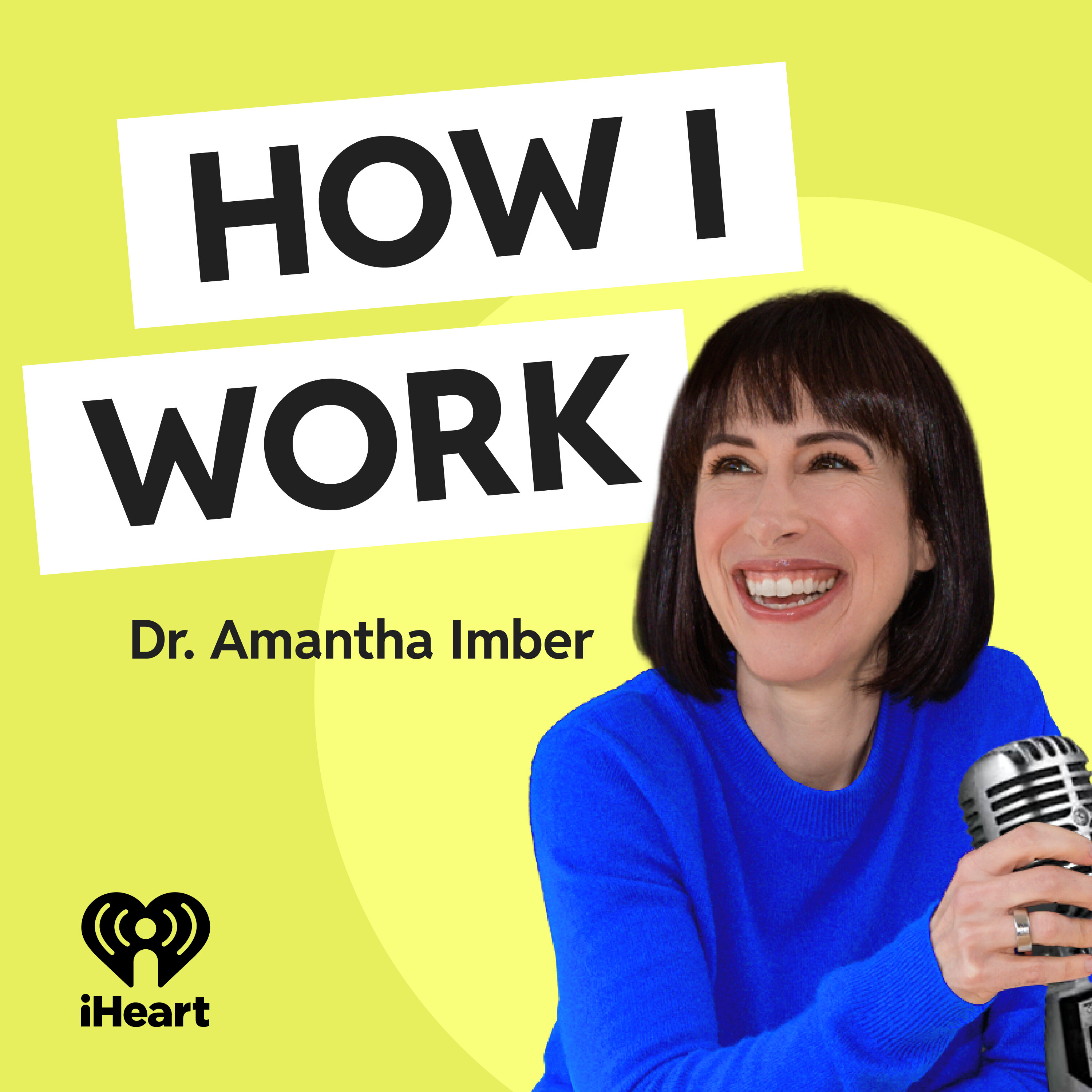
How I Work

How I Work

Have you ever wondered if the worlds leading entrepreneurs, writers, musicians and business people construct their day differently to you?

Amantha Imber

710 episodesEN

Show overview

How I Work has been publishing since 2018, and across the 8 years since has built a catalogue of 710 episodes. That works out to roughly 270 hours of audio in total. Releases follow a several-times-a-week cadence.

Episodes typically run ten to twenty minutes — most land between 7 min and 37 min — with run-times ranging widely across the catalogue. None of the episodes are flagged explicit by the publisher. It is catalogued as a EN-language Education show.

The show is actively publishing — the most recent episode landed 3 days ago, with 34 episodes already out so far this year. Published by Amantha Imber.

Episodes
710
Running
2018–2026 · 8y
Median length
16 min
Cadence
Several per week

From the publisher

You know those annoyingly successful people who seem to have it all figured out? Time to steal their playbook. Organisational psychologist Dr Amantha Imber gets world‑class achievers to spill their secrets - the daily strategies behind their success through to life hacks and productivity hacks they’d rather keep to themselves. We’re talking practical tips for boosting your output (including clever AI tools and shortcuts that’ll make you look like a genius), managing overwhelm without losing your mind, and optimising both work and wellbeing. No motivational fluff. Just battle‑tested tactics from people who’ve cracked the code.

Latest Episodes

View all 710 episodes

How I AI: Agents Explained in 10 Minutes (No Jargon, No Hype)

May 10, 202610 min

Why you feel busy all the time (even when you’re not), with Laura Vanderkam

May 6, 202635 min

Why Most AI Rollouts Fail (And How to Make Sure Yours Doesn't)

May 3, 202630 min

Are you an initiator or a responder? Tom Rath on thriving in the age of AI

Apr 29, 202635 min

What AI capability really looks like in high-performing teams

Apr 26, 202612 min

This is what AI is actually doing to your brain, with Gabriella Rosen Kellerman

Apr 22, 202635 min

The #1 mistake people make with AI

Apr 19, 202612 min

Sabri Suby on video sales letters, and the negotiation mistakes almost everyone makes (Part 2)

Apr 15, 202626 min

Why you need to talk, not type, to your AI

Apr 12, 202616 min

The Subtraction Method: how Sabri Suby protects his time and focus (Part 1)

Apr 8, 202629 min

Our #1 favourite AI tool for meetings

Apr 5, 202611 min

The AI playbook of ELMO Software’s President, Joseph Lyons

Being prepared is one of those things that sounds straightforward until you actually look at a leader's calendar. Back-to-back meetings, a constant stream of reports from different teams, and negotiations that require you to know the full history of a relationship before you've even said hello. The pressure to be across everything is massive. The time to actually get there rarely is. In this episode, I sit down with Joseph Lyons, President of ELMO Software, to talk about how he uses AI in genuinely practical, day-to-day ways. From personalised daily briefs for his exec team to turning a six-hour strategy workshop into clear, actionable outputs, Joe shares how AI is reshaping the way he prepares, thinks, and leads. We also get into how he uses AI to prepare for tough conversations, role play negotiations, and synthesise complex information across teams into something actually useful. If you’re curious about how AI can go beyond simple productivity hacks and genuinely improve the quality of your thinking, this episode is full of practical ideas you can apply straight away. Joe and I discuss: The ELT productivity agent Joe's team built, and how it delivers a personalised daily brief to each exec member every morning via Slack Why Zoom's AI summary wasn't enough for a six-hour strategy workshop, and what Joe used instead How he prepares for negotiations by feeding customer history, contract details, and commercial positions into AI to map out the game theory before the conversation begins Using Claude Voice in the car to think through difficult performance conversations and build a talk track before arriving at the office Why giving AI as much context as possible upfront is the key to getting useful output How Joe is using AI to synthesise reports from five or six different functions into a single, coherent weekly view with clear recommendations Key quotes "It's increasingly becoming my assistant in pretty much everything that I'm doing." "We were really conscious while we were in the meeting, like no one needing to take notes. We would actively talk to the AI and make sure we were clear on capturing actions." Connect with Joe Lyons on LinkedIn and check out ELMO Software at elmosoftware.com.au.   Today's podcast was brought to you by ELMO Software. And they have a gift for you. If you work in HR, this free five-minute assessment is worth your time. ELMO Software's AI Maturity Assessment benchmarks you across two dimensions: whether you have the right foundations in place, and whether AI is actually delivering results. The assessment was built from research with 1,200+ HR leaders across Australia and New Zealand, so you're benchmarking against people navigating the same landscape as you. You'll get a personalised report with where you sit against ANZ peers, your biggest opportunities, and concrete next steps. Basically: it tells you whether your AI investment is paying off (or going nowhere). Take it here.   My latest book The Health Habit is out now. You can order a copy here: https://www.amantha.com/the-health-habit/ Connect with me on the socials: Linkedin (https://www.linkedin.com/in/amanthaimber) Instagram (https://www.instagram.com/amanthai) If you are looking for more tips to improve the way you work and live, I write a weekly newsletter where I share practical and simple to apply tips to improve your life. You can sign up for that at https://amantha-imber.ck.page/subscribe Visit https://www.amantha.com/podcast for full show notes from all episodes. Get in touch at [email protected] Credits: Host: Amantha Imber Sound Engineer: The Podcast ButlerSee omnystudio.com/listener for privacy information.

Apr 1, 202617 min

Stop writing like a robot: ban these AI words and phrases

Download Inventium.ai's anti-AI slop prompt here: https://amantha-imber.kit.com/d5f746bd3e You can always tell when something's been written by AI. The LinkedIn post that opens with "in today's fast-paced world." The article that ends with "it's not about X, it's about Y." Technically fine, but somehow hollow. Like it was written by nobody in particular. The frustrating part is that this can happen even when you're doing the real thinking. You write the ideas, hand it to AI for a cleanup, and it flattens your voice, packs it with em-dashes, and strips out everything that sounded like you. In this How I AI episode, Neo and I get into the specific instructions you can give AI to keep your writing sounding human, and share some of the most overused AI words and phrases worth banning from your prompts entirely. Neo and I cover: Why sounding like AI is a credibility problem, even when you've done the actual thinking and are only using AI to refine and edit your work. The single most important instruction to give AI when asking it to clean up your writing. Why em-dashes are so hard to eliminate from AI output, and the specific phrasing (including pasting in the actual dash character) that gives you the best chance of getting rid of them. Using a ninth-grade reading level as a brief to keep language plain, accessible, and free of jargon. Why it's fine to let AI start a sentence with "and" or "but" occasionally, and which stiff transition words (like "additionally" and "moreover") to ban outright. What "corrective antithesis" is, why AI overuses it, and how to cut it down with a simple instruction and example in your prompt. Amantha's process for building a mega anti-AI slop prompt. How to build your own personal banned-words list, so AI stops using words that don't sound like you. Connect with Neo Aplin on LinkedIn (https://www.linkedin.com/in/neoaplin/) and via inventium.ai (https://inventium.ai), where he leads Inventium's AI training and upskilling work with organisations and teams.   My latest book The Health Habit is out now. You can order a copy here: https://www.amantha.com/the-health-habit/ Connect with me on the socials: Linkedin (https://www.linkedin.com/in/amanthaimber) Instagram (https://www.instagram.com/amanthai) If you are looking for more tips to improve the way you work and live, I write a weekly newsletter where I share practical and simple to apply tips to improve your life. You can sign up for that at https://amantha-imber.ck.page/subscribe Visit https://www.amantha.com/podcast for full show notes from all episodes. Get in touch at [email protected] Credits: Host: Amantha Imber Sound Engineer: Martin ImberSee omnystudio.com/listener for privacy information.

Mar 29, 202619 min

Ask Me Anything with Dr Amantha Imber: Burnout, AI, Productivity & The Biggest Mistakes Knowledge Workers Make

**Record a question for Amantha’s next Ask Me Anything here: https://www.speakpipe.com/howiwork **   It's Ask Me Anything time! I asked listeners of How I Work to send in the biggest challenges they’re facing at work right now: from AI overwhelm to constant meetings to feeling busy but not actually making progress. In this Ask Me Anything episode, I tackle questions like: Why AI is making some people busier, not more productive How to reclaim focus when your day is full of meetings The biggest productivity mistake I see smart people make What actually helps prevent burnout (hint: it’s not yoga at lunchtime) Plus I share practical strategies you can start using immediately — including my LiPS prioritisation strategy, ways we reduce meetings at Inventium, and how to protect your energy at work. If you’ve ever felt overwhelmed, distracted, or stuck in “busy mode”, this episode is for you.   Amantha recommends:  These are a few of the tools we use at Inventium to reduce meetings, communicate more effectively, and get work done faster. Loom: http://loom.com/ Our go-to for async communication. Instead of jumping on a meeting, we’ll record a quick video to share updates, feedback, or walkthroughs. Tella: https://www.tella.tv/ A more polished version of Loom. I use this a lot for client-facing communication – especially when walking through proposals or ideas in a more engaging way. If you’re looking to go beyond just “using AI” and actually start saving time with it, check out Inventium’s latest AI programs for 2026 - designed to help you use AI strategically and creatively in your work. https://www.inventium.ai/     Have a question you want me to answer in the next AMA episode? Reach out via email ([email protected]) or socials – I’d love to hear from you!    My latest book The Health Habit is out now. You can order a copy here: https://www.amantha.com/the-health-habit/   Connect with me on the socials: Linkedin (https://www.linkedin.com/in/amanthaimber)   Instagram (https://www.instagram.com/amanthai)     If you are looking for more tips to improve the way you work and live, I write a weekly newsletter where I share practical and simple to apply tips to improve your life. You can sign up for that at https://amantha-imber.ck.page/subscribe  Visit https://www.amantha.com/podcast for full show notes from all episodes.  Get in touch at [email protected]  Credits:  Host: Amantha Imber  Sound Engineer: Martin Imber See omnystudio.com/listener for privacy information.

Mar 25, 202630 min

How we have automated AI to summarise industry news, trends, and other updates – every single week

That wall of industry newsletters in your inbox isn’t a reading list. It’s a stress list.  You tell yourself you’ll get to them later. You don’t. And the pile keeps growing.  In this How I AI episode, Neo and I explore how to use AI as a structured research assistant. Not just to summarise articles, but to filter signal from noise, prioritise what’s actually relevant to you, and automatically deliver regular briefings so you don’t even have to remember to run the search.  Neo and I cover:  How to give AI the right context so it knows exactly what “new” means to you  Why vague prompts produce vague research – and how to fix that  How to define trusted sources and instruct AI where to search  Structuring your report so it highlights impact, availability and practical relevance  How to ask AI to prioritise credible sources over hype  Setting up scheduled searches in ChatGPT using “schedule this” so reports run weekly or daily  How scheduling works in Copilot and what to know about current limits  Creating sections like quick hits, watch lists and hype watch to make reports easier to scan  Why you should always request links so you can verify and dive deeper    Connect with Neo Aplin on LinkedIn and via inventium.ai, where he leads Inventium’s AI training and upskilling work with organisations and teams.    My latest book The Health Habit is out now. You can order a copy here: https://www.amantha.com/the-health-habit/  Connect with me on the socials: Linkedin (https://www.linkedin.com/in/amanthaimber)  Instagram (https://www.instagram.com/amanthai)  If you are looking for more tips to improve the way you work and live, I write a weekly newsletter where I share practical and simple to apply tips to improve your life. You can sign up for that at https://amantha-imber.ck.page/subscribe  Visit https://www.amantha.com/podcast for full show notes from all episodes.  Get in touch at [email protected]  Credits: Host: Amantha Imber Sound Engineer: Martin Imber See omnystudio.com/listener for privacy information.

Mar 22, 202614 min

Why visualising success might be sabotaging you, with Nir Eyal (Part 2)

Visualising success feels productive. Vision boards, manifesting, picturing the finish line. It gives the sense that you’re moving closer to the goal.  But according to the research, that mental shortcut might actually be working against you.  In Part 2 of this two-parter (listen to Part 1 here), I continue my conversation with behavioural scientist and author Nir Eyal to unpack why. Nir spent six years researching how beliefs shape what we see, feel, and do, and why the stories we tell ourselves can dramatically change our behaviour.  We talk about the surprising power of “failure goals”, why lucky people often manufacture their own luck, and how leaders shape behaviour through the invisible simulations they create at work. Nir also explains why framing matters more than many leaders realise, and why the way you interpret discomfort can completely change how you perform.  And when it comes to visualisation, Nir shares a key insight from elite sport. High-performing athletes aren’t picturing themselves standing on the podium. They’re visualising the moment things get hard, and exactly what they’ll do next.  Nir and I discuss:  Why setting a failure goal can actually increase your chances of success  The study that shows why some people experience themselves as “lucky”  How beliefs shape what we see, feel, and do in everyday life  Why leaders are effectively designing simulations through workplace culture  The powerful role of framing when introducing ideas to teams  The “believe, anticipate, feel, confirm” loop that shapes our experiences  How expectations influence the way we experience products and brands  Why visualising the finish line can reduce motivation  What high-performing athletes actually visualise when preparing to succeed    Key quotes  “Failure without learning is a different story. But as long as you are failing and learning, that is progress.”   “Athletes aren’t visualising the trophy. They’re visualising the obstacles in their way.”   Connect with Nir Eyal on Instagram, X (Twitter), and LinkedIn and his website and check out his latest book Beyond Belief.    My latest book The Health Habit is out now. You can order a copy here: https://www.amantha.com/the-health-habit/  Connect with me on the socials: Linkedin (https://www.linkedin.com/in/amanthaimber)  Instagram (https://www.instagram.com/amanthai)  If you are looking for more tips to improve the way you work and live, I write a weekly newsletter where I share practical and simple to apply tips to improve your life. You can sign up for that at https://amantha-imber.ck.page/subscribe  Visit https://www.amantha.com/podcast for full show notes from all episodes.  Get in touch at [email protected]  Credits: Host: Amantha Imber Sound Engineer: The Podcast Butler See omnystudio.com/listener for privacy information.

Mar 18, 202623 min

How to use AI to prioritise when everything feels urgent

When your to-do list feels endless and everything seems equally urgent, it’s hard to know where to start. The overwhelm doesn’t usually come from one big task. It comes from trying to hold meetings, emails, projects and life admin in your head all at once.  In this How I AI episode, Neo and I walk through practical ways to use AI to help you prioritise when your week feels out of control. Not by magically deleting tasks, but by giving you a clearer structure for deciding what actually matters today.  We share two different approaches – one if your AI isn’t connected to your calendar, and one if it is.  Neo and I cover:  How to use AI for a structured brain dump so everything on your plate is visible in one place  Getting AI to interview you to separate urgent from important, and clarify what really needs attention  Asking AI to estimate how long tasks will take so you can time box more realistically  Using AI to identify the single task that’s causing the most stress – and tackling that first  Why context matters – and how tools like Claude Projects or Copilot Notebooks can help AI understand your work  Using AI to prepare for meetings, cross-reference tasks, and spot work that hasn’t been scheduled  Connect with Neo Aplin on LinkedIn and via inventium.ai, where he leads Inventium’s AI training and upskilling work with organisations and teams.    My latest book The Health Habit is out now. You can order a copy here: https://www.amantha.com/the-health-habit/  Connect with me on the socials: Linkedin (https://www.linkedin.com/in/amanthaimber)  Instagram (https://www.instagram.com/amanthai)  If you are looking for more tips to improve the way you work and live, I write a weekly newsletter where I share practical and simple to apply tips to improve your life. You can sign up for that at https://amantha-imber.ck.page/subscribe  Visit https://www.amantha.com/podcast for full show notes from all episodes.  Get in touch at [email protected]  Credits: Host: Amantha Imber Sound Engineer: Martin Imber See omnystudio.com/listener for privacy information.

Mar 15, 202613 min

Struggling to reach your goals? Nir Eyal explains the beliefs holding you back (Part 1)

What if the biggest obstacle standing between you and the things you want in life isn’t your effort, your discipline, or even your circumstances? What if it’s the beliefs you didn’t realise you were holding.  In Part 1 of a two-part conversation, I sit down with behavioural scientist and bestselling author Nir Eyal to unpack how our hidden beliefs shape what we see, how we feel, and what we do. Nir spent six years researching his latest book Beyond Belief, exploring the science behind how beliefs influence our behaviour and how we can change the ones that are quietly limiting us.  We dive into why rumination feels productive but actually keeps us stuck, why venting about people can reinforce the very stories that make us miserable, and a practical tool called a reality log that helps you see situations more clearly. Nir also shares a powerful technique for questioning beliefs that are causing suffering, using a surprisingly relatable story about a birthday gift for his mum that didn’t go quite as planned.   Nir and I discuss:  The difference between facts, faith, and beliefs and why beliefs are open to change  Why many of our most important life decisions come down to beliefs rather than facts  How rumination feels like problem solving but often reinforces limiting beliefs  The surprisingly effective technique of scheduling “worry time”  How our beliefs shape what we literally perceive in the world  Why venting about people can strengthen negative assumptions rather than resolve them  How a reality log can help you challenge distorted perceptions  A four question technique to examine beliefs that are causing suffering  How collecting a “portfolio of perspectives” can help you reduce emotional reactivity    Key quotes  “Beliefs are tools, not truths.”  “We don’t see the world as it is. We see a simulation of the world shaped by what we already believe.”  Connect with Nir Eyal on Instagram, X (Twitter), and LinkedIn and his website and check out his latest book Beyond Belief.    My latest book The Health Habit is out now. You can order a copy here: https://www.amantha.com/the-health-habit/  Connect with me on the socials: Linkedin (https://www.linkedin.com/in/amanthaimber)  Instagram (https://www.instagram.com/amanthai)  If you are looking for more tips to improve the way you work and live, I write a weekly newsletter where I share practical and simple to apply tips to improve your life. You can sign up for that at https://amantha-imber.ck.page/subscribe  Visit https://www.amantha.com/podcast for full show notes from all episodes.  Get in touch at [email protected]  Credits: Host: Amantha Imber Sound Engineer: The Podcast Butler See omnystudio.com/listener for privacy information.

Mar 11, 202630 min

The One Question Every Leader Should Ask About AI

Rolling out Copilot or ChatGPT and hoping productivity magically improves rarely works. In fact, for many leaders, it creates more confusion, more noise and, in some cases, more work.  In this How I AI episode, Neo and I unpack the single most important question leaders should be asking about AI adoption: how can I help my people be ready for AI? Because bringing AI into your organisation isn’t primarily a technology decision. It’s a people one.  We talk through why simply handing out paid licenses without building capability often backfires, how poor AI use can actually reduce productivity, and the practical steps leaders need to get right from day one.  Neo and I cover:  Why AI adoption fails when leaders treat it as a software rollout instead of a change process  How to clearly articulate the why so people don’t assume AI equals job replacement  Using AI to reduce administrivia and free people up for more meaningful work  Why “it’s intuitive” is a dangerous assumption when it comes to capability building  How untrained use can create AI slop, longer emails and organisational “Chinese whispers”  How searchable knowledge can unlock real productivity gains, and how poor permissions can create real risk  Why training change leads or team leads is critical to embedding AI into real workflows  Connect with Neo Aplin on LinkedIn and via inventium.ai, where he leads Inventium’s AI training and upskilling work with organisations and teams.    My latest book The Health Habit is out now. You can order a copy here: https://www.amantha.com/the-health-habit/  Connect with me on the socials: Linkedin (https://www.linkedin.com/in/amanthaimber)  Instagram (https://www.instagram.com/amanthai)  If you are looking for more tips to improve the way you work and live, I write a weekly newsletter where I share practical and simple to apply tips to improve your life. You can sign up for that at https://amantha-imber.ck.page/subscribe  Visit https://www.amantha.com/podcast for full show notes from all episodes.  Get in touch at [email protected]  Credits: Host: Amantha Imber Sound Engineer: Martin Imber See omnystudio.com/listener for privacy information.

Mar 8, 202612 min

Feel stuck in small talk? Daniel Coyle shares the questions that create real connection.

We all have stories worth telling. Yet most of us decide ours aren’t interesting enough, important enough, or universal enough to share.  In this episode, I’m joined by Daniel Coyle to explore why that instinct is usually wrong. Daniel is the bestselling author of The Talent Code, The Culture Code, and his latest book Flourish. Together, we unpack how Daniel finds and constructs stories that truly pull people in, including the ingredients that make a story compelling and the simple techniques anyone can use to tell better stories.  We also dive into the small, powerful questions that move conversations beyond surface-level small talk, how to build genuine local community through what Daniel calls “yellow doors”, what leaders can learn from a makeshift building at MIT that became an innovation hotspot, and why change so often feels slow before it suddenly blooms.  If you care about deeper connection, stronger culture, and asking better questions, this conversation will give you plenty to think about.   Daniel and I discuss:  The simple structure behind every compelling story  Why great stories begin with a question and how to construct tension and mystery  How to “sandpaper” your stories by removing everything that isn’t essential  The reflective practice Daniel uses to zoom out and see the shape of his life  The specific questions that deepen connection  How to build local community through small habits, daily encounters, and noticing “yellow doors”  Why annoyance is the price of community  The difference between complicated and complex systems, and why that matters for navigating change  What leaders can learn from Building 20 at MIT about agency and the “rule of the beautiful mess”  Why change often happens slowly, then in a surprising bloom  A simple 30-second “council” exercise to reconnect with meaning  Key quotes  “Annoyance is the price of community.”  “Life is not a productivity contest. It’s a moments thing.”  Connect with Daniel Coyle on X (Twitter), and LinkedIn and his website, and check out his latest book Flourish.    My latest book The Health Habit is out now. You can order a copy here: https://www.amantha.com/the-health-habit/  Connect with me on the socials: Linkedin (https://www.linkedin.com/in/amanthaimber)  Instagram (https://www.instagram.com/amanthai)  If you are looking for more tips to improve the way you work and live, I write a weekly newsletter where I share practical and simple to apply tips to improve your life. You can sign up for that at https://amantha-imber.ck.page/subscribe  Visit https://www.amantha.com/podcast for full show notes from all episodes.  Get in touch at [email protected]  Credits: Host: Amantha Imber Sound Engineer: The Podcast Butler See omnystudio.com/listener for privacy information.

Mar 4, 202635 min
2026 Amantha Imber