
How I Doctor with Dr. Graham Walker
102 episodes — Page 1 of 3
If AI Can Prescribe, Who's Liable When It Gets It Wrong? Four Experts Weigh In
Why Can't Good Medical Advice Go Viral? Dr. Mike Evans on Health Communication in the Influencer Era
How Dr. Keith Matheny Turned His Practice's Biggest Headaches Into Businesses, While Still Seeing Patients
Cut Out the Middleman, Keep the Patients: Dr. Chloe Kindred on Building a Direct Primary Care Practice From Zero
These Physicians Explain Why They'd Never Go Back to Being Employed
Medicine Is Headed Toward Semi-Autonomous Care. Are Doctors Ready? With Counsel Health CMO Rishi Khakhkhar
The Physician-Owned Practice That Private Equity Can't Buy With Dr. Bradley Block
Dr. Ari Brown on What Happened to Trust Between Parents and Pediatricians
Dr. Karandeep Singh Doesn’t Trust AI Blindly. That’s Exactly Why UC San Diego Health Trusts Him With It
Running Kaiser's Largest Medical Group Taught Former CEO Dr. Robert Pearl What’s Actually Broken in Healthcare
Dr. Jordan Shlain: Insurance Killed Primary Care, So I Built a Practice Without It
51 of the Top 100 Healthcare Companies Had a Physician Founder: Dr. David Lortscher Explains Why
What Does Good AI in Healthcare Look Like? CHAI CEO Brian Anderson Is Trying to Get Every Hospital in America to Agree
Two Surgeons Explain Why U.S. Healthcare Is So Broken And Can't Be Reformed From Inside, from Wendy Dean's 43cc Podcast
40+ Authors, 9 Specialties, and a Book Written by the Next Generation of Doctors: Emily Leventhal and Rishma Jivan on The Physician's Guide to AI From Offcall and MD+
Your Patient Trusts ChatGPT More Than You Now: The New Yorker's Dr. Dhruv Khullar on Medical Authority in the Age of AI
How Stanford Health Care Is Rethinking What AI Should Actually Do for Clinicians with CIO Dr. Michael Pfeffer
Meet the Doctor Who Went Anonymous to Say What the Rest of Us Can't: The Story of Dr. Orange
Moral Injury Is Why The Best Doctors Are Disappearing with Dr. Wendy Dean
Now Is Not the Time for Silence. Dr. John Whyte on the AMA, AI, and the Stakes for Physicians Right Now
Dr. Rana Awdish Almost Died as a Resident. Now She's Teaching Doctors How to Heal.
Physician VC Dr. John Dayton on What It Takes to Actually Build a Winning Healthcare Startup
Going Independent Doesn't Mean Going It Alone. Dr. Basil Kahwash on Fixing Referrals and Building Physician Networks
Restoring Physician Mental Health and Honoring the Legacy of Dr. Lorna Breen, With Dr. Stefanie Simmons
Why The Pitt Is the Show Every Doctor Needs Right Now, with Dr. Jeremy Faust
Using AI to Accurately Code and Measure Physician Outcomes, With Solventum’s Dr. Travis Bias
S1 Ep 74The AI Conversations Every Physician Should Hear: Highlights from Yann LeCun, Dr. Bob Wachter, and Dr. David Rhew
AI is everywhere right now. In your inbox, your EHR, your hospital's strategic plan, and probably your last three CME credits. But most of what physicians hear about AI is either hype or fear. We think you deserve something better.In this special Best of AI episode, Dr. Graham Walker revisits three conversations that generated the most messages, DMs, and forwarded links from How I Doctor listeners, plus a Physician Spotlight that has nothing to do with AI and everything to do with why physicians need support right now.These guests don't agree on everything. But together they map a path that every physician needs to understand: where AI actually works today, where it falls short, and what's coming next.Featured Episodes & LinksYann LeCun is the ACM Turing Award Laureate, former Chief AI Scientist at Meta, and co-founder of AMI, Advanced Machine Intelligence. Alex LeBrun is a serial entrepreneur, co-founder of NABLA, and CEO of AMI. Listen to Move Over LLMS! AI Legends Yann LeCun and Alex LeBrun Debut AMI Labs' Bold Ambitions for World Models in HealthcareDr. Bob Wachter is Chair of the Department of Medicine at UCSF, author of The Digital Doctor, and author of the new book A Giant Leap: How AI Is Transforming Healthcare and What It Means for Our Future. Listen to What Doctors Get Wrong About AI with Robert Wachter, MDDr. David Rhew is an infectious disease physician and Global Chief Medical Officer at Microsoft, working at the intersection of the world's largest health systems and its largest technology companies. Listen to Where AI in Medicine Is Actually Headed, with Microsoft’s CMO David RhewWhat You'll LearnYann LeCun & Alex LeBrunWhy large language models have a fundamental ceiling and what world models are designed to do insteadWhy 80% accuracy is considered excellent in research and completely unusable in clinical practiceWhat it actually took to build AI tools physicians trust and why every assumption they walked in with was wrongDr. Bob WachterWhy the healthcare system is uniquely positioned to benefit from AI, and uniquely capable of wasting those gains on a faster hamster wheelThe deskilling death spiral: what happens when the AI becomes more reliable than the human checking its workWhat part of medicine Bob believes we should never hand to AI, and whyDr. David RhewWhy AI in medicine isn't one thing, it's a portfolio of tools, and conflating them leads physicians to trust the wrong onesHow retinal screening AI is finding advanced diabetic disease in people who were told everything was fine months earlierWhy the most important physician skill in 2030 will have nothing to do with clinical knowledgeDr. Stefanie SimmonsThe spheres of control, influence, and acceptance and why physicians chronically misestimate which is whichWhy 43 state medical boards have now removed stigmatizing mental health questions, and how to check if yours is one of them🩺 Offcall is more than a platform — it’s a community. Join today!🎧 Subscribe to receive new How I Doctor episodes directly in your feed here: https://episodes.fm/1767429315👨⚕️Follow Dr. Graham Walker onLinkedIn https://www.linkedin.com/in/graham-walker-md/ IG https://www.instagram.com/ubergraham/ Bluesky https://bsky.app/profile/drgrahamwalker.com ✉️ Join our newsletter On/Offcall here https://offcall.beehiiv.com/subscribe 🟧 Follow Offcall on LinkedIn https://www.linkedin.com/company/joinoffcall/ IG https://www.instagram.com/offcalldotcom/ TikTok https://www.tiktok.com/@offcalldotcom
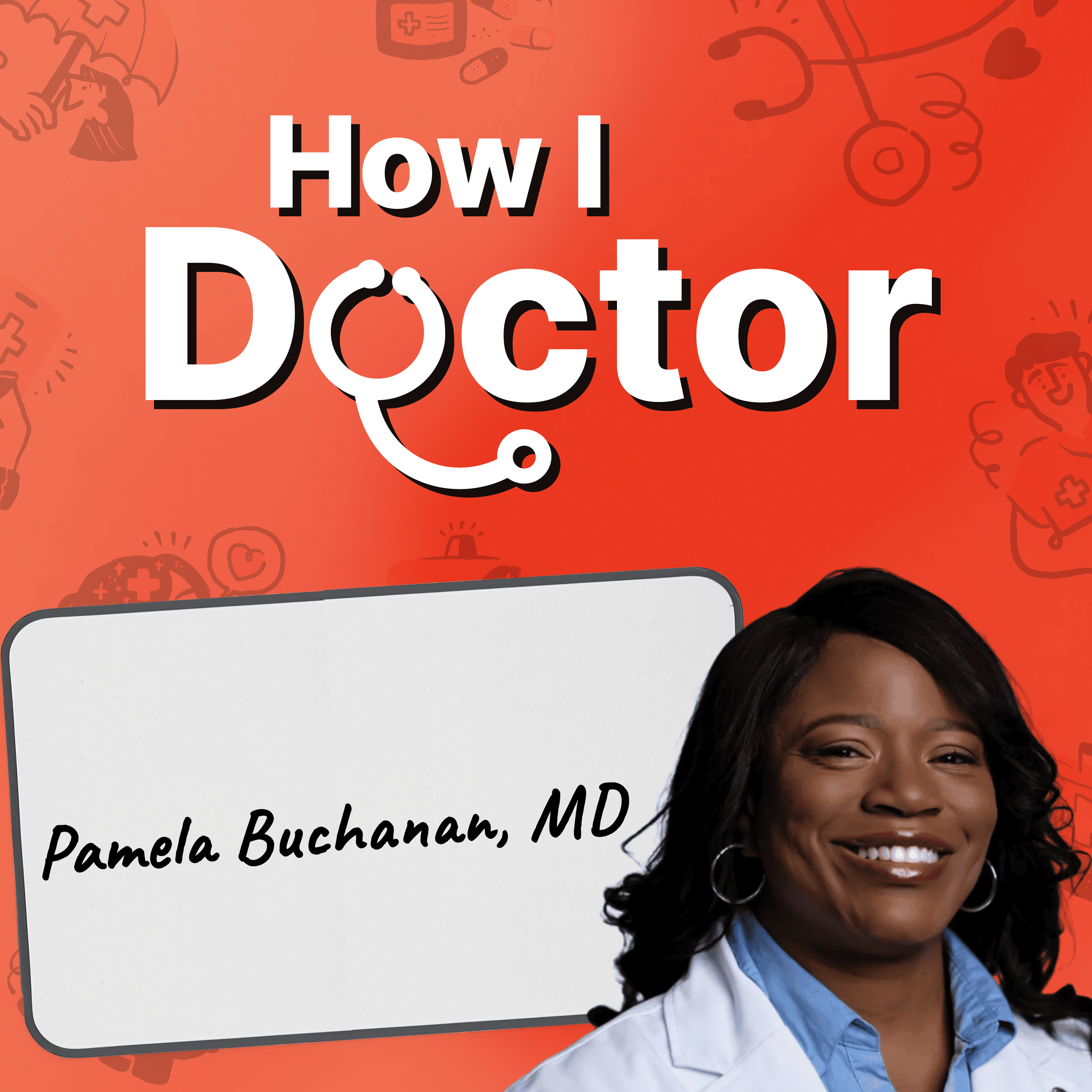
S1 Ep 73The Pay Gap in Medicine Is Real. Dr. Pamela Buchanan Is Done Being Quiet About It
Dr. Pamela Buchanan is an emergency physician, author, founder of Melanated Medicine, and one of the most candid voices in medicine on the things doctors aren't supposed to talk about. In this episode of How I Doctor, Dr. Graham Walker sits down with Pamela to have the conversation most physicians have been trained their entire careers to avoid.What does it actually cost to stay silent about pay? What happens when a colleague throws a stethoscope on the ground and tells you that you're worth more than you're making? What does it feel like to be called the N-word by a patient you treat anyway?Pamela doesn't flinch. She talks about the $100,000 pay gap Black women physicians face even when matched for the same role. She walks through the moment a friend told her to rip up a signed contract — and the $75,000 sign-on bonus that landed in her bank account 48 hours later. She speaks openly about burnout, depression, and the mental health crisis medicine refuses to name. And she makes the case that the silence around all of it isn't accidental.This isn't a conversation about victimhood. It's a diagnosis of a broken system and a blueprint for every physician who's ever stayed quiet too long.What You'll LearnWhy pay transparency in medicine isn't just taboo, and why Pamela believes the silence is intentionalHow two candid conversations with colleagues changed her financial trajectory permanentlyWhat to say, what to ask, and what to refuse when you're sitting across from someone offering you a contractHow racism shows up on shift — not occasionally, but every single day — and what it costs to absorb it aloneWhat Melanated Medicine is, why Pamela built it, and what happens when Black women physicians finally find each otherWhy asking for help — professional, domestic, emotional — is not weakness but math🩺 Offcall is more than a platform — it’s a community. Join today!📝 For a full transcript of this episode click HERE🎧 Subscribe to receive new How I Doctor episodes directly in your feed here: https://episodes.fm/1767429315👨⚕️Follow Dr. Graham Walker onLinkedIn https://www.linkedin.com/in/graham-walker-md/ IG https://www.instagram.com/ubergraham/ Bluesky https://bsky.app/profile/drgrahamwalker.com ✉️ Join our newsletter On/Offcall here https://offcall.beehiiv.com/subscribe 🟧 Follow Offcall on LinkedIn https://www.linkedin.com/company/joinoffcall/ IG https://www.instagram.com/offcalldotcom/ TikTok https://www.tiktok.com/@offcalldotcom
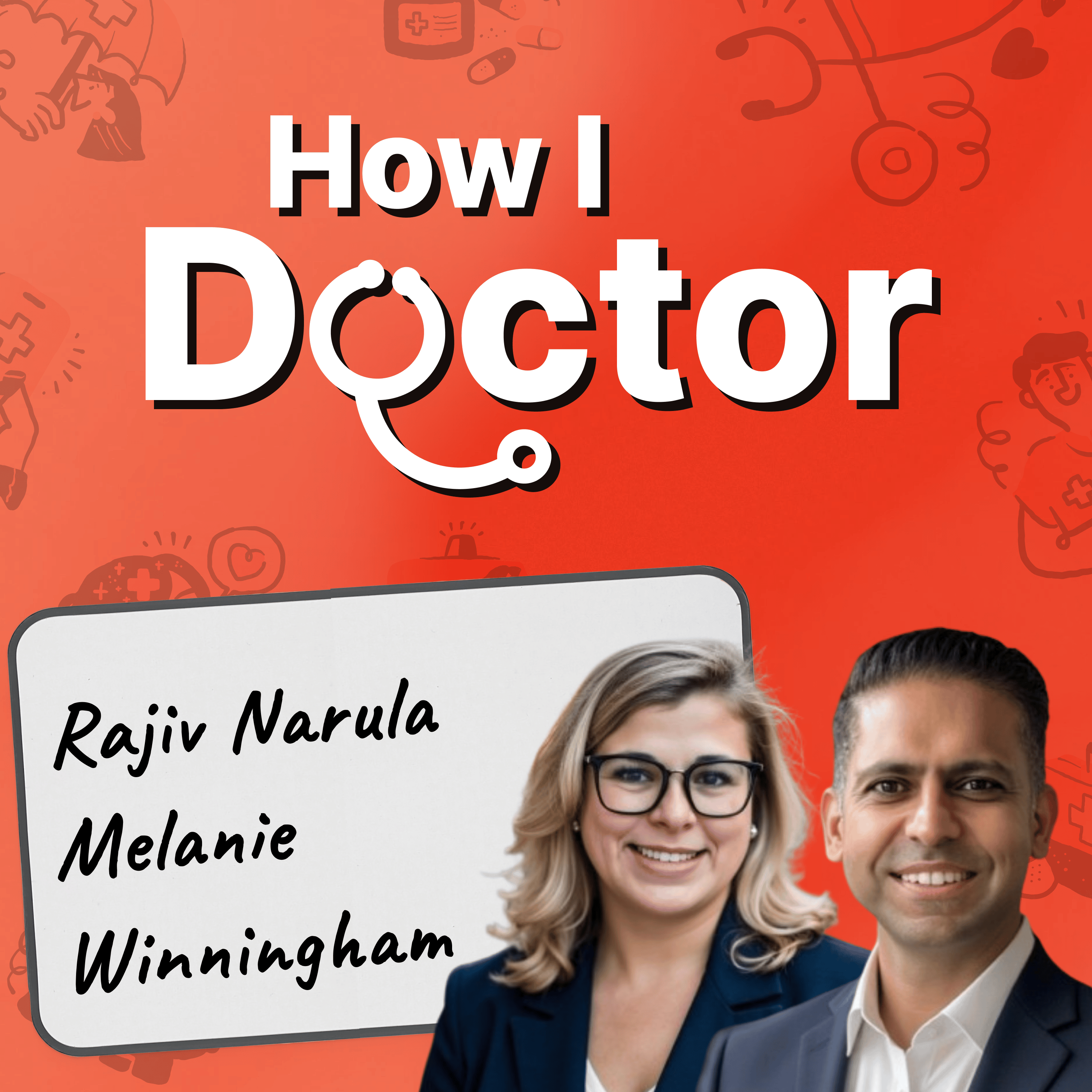
S1 Ep 72Virtual Neurology at Scale: Raj Narula and Melanie Winningham on How Sevaro Is Transforming Rural Stroke Care
Dr. Raj Narula is a vascular neurologist who walked away from a neurointerventional radiology fellowship to build something that could reach thousands of patients instead of one at a time. Dr. Melanie Winningham is a vascular neurologist, medical director of a comprehensive stroke center in Virginia, and VP of Clinical Strategy at Sevaro- someone who has lived the neurology access gap from both sides of it.In this episode of How I Doctor, Dr. Graham Walker sits down with Raj and Melanie to explore one of the most urgent and most invisible crises in American healthcare. What happens when a stroke patient lands in a rural ER at 2 AM and the nearest neurologist is a hundred miles away? For too long, geography has been the single biggest predictor of whether that patient walks out of the hospital. Sevaro was built to change that. This episode gets into what telestroke actually looks like when it's done right. They explain how Sevaro's AI-enabled platform — built by neurologists, for neurologists — puts a board-certified specialist on screen in 45 seconds, eliminates the call center entirely, and follows patients from the acute encounter all the way through rehab and outpatient care.This isn't a pitch for virtual care. It's a clinician's diagnosis of a workforce crisis that isn't getting better and a concrete look at what it takes to build technology that works the way physicians actually practice.If stroke outcomes are going to improve in rural America, it won't be through more neurologists. It will be through smarter infrastructure that makes the ones we have go further.What You'll LearnWhy geography remains the single biggest predictor of stroke outcomes and what it actually takes to close that gap at scale.How Sevaro eliminated the call center entirely and why that single design decision changes everything about the speed and quality of a telestroke consult.What AI is doing inside an acute stroke encounter and where Raj and Melanie draw a hard line between decision support and decision making.Why the neurology workforce crisis is structural and worsening, and how virtual neurology is reshaping who enters the field and why.How keeping patients in their own communities creates a trust loop that improves outcomes over time.Why state licensing requirements are the single regulatory change that would do the most to expand virtual specialty access in rural America.🩺 Offcall is more than a platform — it’s a community. Join today!📝 For a full transcript of this episode click HERE🎧 Subscribe to receive new How I Doctor episodes directly in your feed here: https://episodes.fm/1767429315👨⚕️Follow Dr. Graham Walker onLinkedIn https://www.linkedin.com/in/graham-walker-md/ IG https://www.instagram.com/ubergraham/ Bluesky https://bsky.app/profile/drgrahamwalker.com ✉️ Join our newsletter On/Offcall here https://offcall.beehiiv.com/subscribe 🟧 Follow Offcall on LinkedIn https://www.linkedin.com/company/joinoffcall/ IG https://www.instagram.com/offcalldotcom/ TikTok https://www.tiktok.com/@offcalldotcom
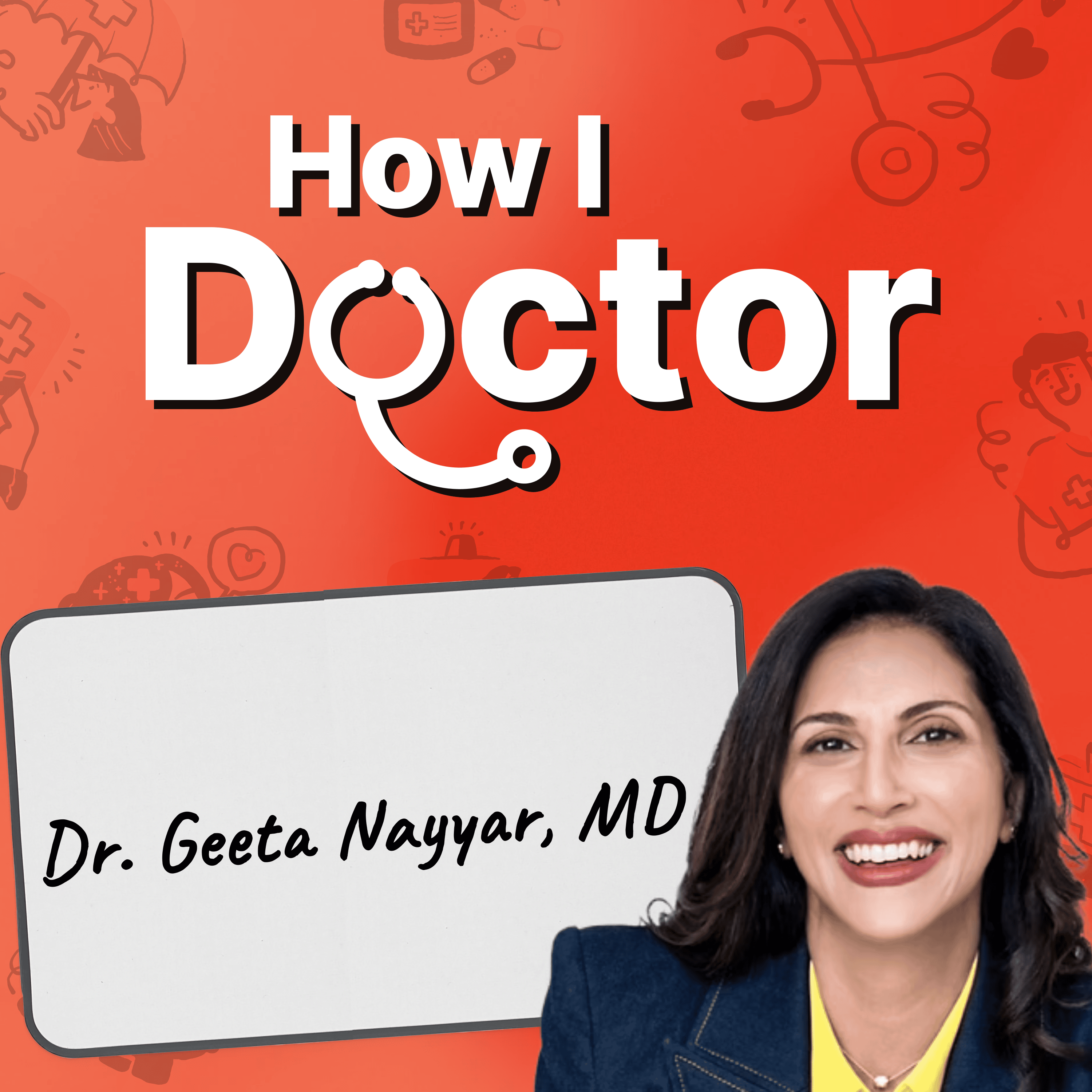
S1 Ep 71How Medical Misinformation Took Over — and What Doctors Can Do to Take It Back w/ Dr. Geeta Nayyar
Medical misinformation isn't a new problem. But somewhere along the way, it stopped being background noise and became the loudest voice in the room.In this episode of How I Doctor, Offcall co-founder Dr. Graham Walker sits down with Dr. Geeta Nayyar a rheumatologist, former Chief Medical Officer at both Salesforce and AT&T, and bestselling author of Dead Wrong. Together they diagnose how medical misinformation went from the fringes of the bell curve to the halls of power, and what physicians can actually do about it.Geeta doesn't come to this conversation as a distant observer. She's spent her career at the intersection of clinical medicine and health tech, advising organizations from the AMA to Fortune 500 companies on how to navigate a healthcare information landscape that has fundamentally broken down.Her perspective is grounded in something personal too. She saved her own mother's life during fellowship by doing what the system failed to do: gathering all the data, laying it out on the floor, and refusing to accept a diagnosis that didn't add up. That experience drove her into rheumatology and eventually into health tech, motivated by a simple question she still hasn't stopped asking: what does the average patient do when they don't have a doctor in the family?That question has never been more urgent. When patients can't get an appointment for six to nine months, they don't wait. They go to TikTok. They follow influencers who are confident, simple, and wrong. And while wellness gurus monetize confusion, hospitals are still telling their physicians they can't mention their institution on social media. Medicine left a vacuum, and the wrong people filled it.This episode is a call to action for every physician who has watched that happen and felt powerless to stop it. Graham and Dr. G make the case that physicians aren't just allowed to take the microphone. They are obligated to! And that the hospitals and health systems who figure that out first won't just be doing the right thing. They'll be winning.What You'll LearnWhy medical misinformation has moved from the fringes to the mainstream and what changed to make it this dangerousHow hospitals' culture of social media silence created the exact vacuum that wellness influencers now ownWhat the business case for physician content actually looks like and why Cleveland Clinic and Kaiser figured it out before everyone elseWhy confidence is not accuracy, and how to help patients tell the differenceThe practical playbook for physicians who want to build a public presence with their hospital's support, not in spite of itResources & Where to Find Dr. Geeta NayyarWebsiteDead WrongLinkedInInstagram
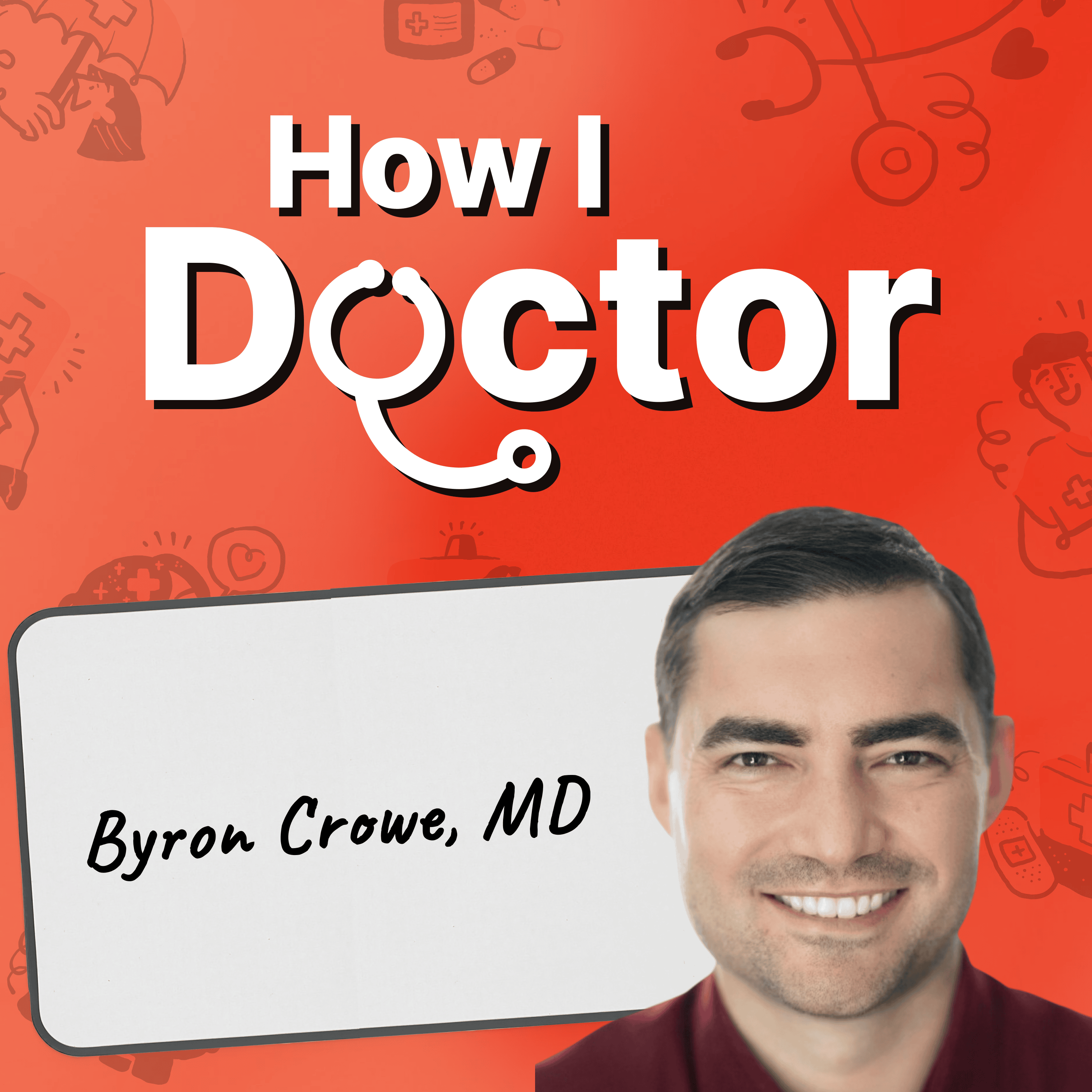
S1 Ep 70Inside the First Autonomous AI Prescription Program in America w/ Doctronic CMO Dr. Byron Crowe
Most physicians see AI as something happening to medicine. Dr. Byron Crowe is one of the few who decided to make it happen himself.In this episode of How I Doctor, Offcall co-founder Dr. Graham Walker sits down with Dr. Byron Crowe — internal medicine physician, former Harvard Medical School faculty, and Chief Medical Officer of Doctronic — to discuss the most provocative development in healthcare AI yet: the nation's first state-approved program allowing AI to autonomously renew prescriptions, currently live in Utah.This episode doesn't traffic in hypotheticals. The program is running right now. And the questions it raises are ones every physician is going to have to answer eventually — whether they're ready or not. Who's responsible when AI gets a prescription wrong? Is the current system it's replacing actually any better? And if AI can handle the routine work, what does that mean for the physicians who've been doing it? Byron has thought harder about these questions than almost anyone in medicine. He's the first author on the Society for General Internal Medicine's position statement on generative AI. He's published peer-reviewed research in JAMA on AI's diagnostic capabilities. And now he's running clinical strategy for a company that calls itself your personal AI doctor — and means it.Byron doesn't come to this conversation to sell the technology. He comes to make the case that the status quo — millions of prescription refills processed via portal clicks with minimal physician review — is already broken, and that AI done right, with graduated autonomy, genuine accountability, and clinicians at the center, is an improvement worth taking seriously. It's a conversation that will challenge what you think you know about where medicine is headed and who gets to decide.What You'll LearnWhat "AI-native care" actually means and why Byron argues it's a fundamentally new care model — not just a faster version of telehealthHow Doctronic's graduated autonomy model works in Utah, from full physician review of every refill to eventual full autonomy with retrospective oversightWhy Byron believes not a single doctor will lose their job to AI — and what "doctor reassignment" actually looks like in practiceWhat "careworthiness" means as a moral standard, and why Byron thinks it matters more than any technical benchmarkWhy most health AI companies make the same fatal mistake when entering clinical medicine — and how Doctronic is trying to avoid itWhere Byron draws the hard line on AI autonomy — and the one place he says AI should never act aloneResources & Where to Find ByronByron's LinkedInByron's Substack: Always On CallDoctronic🩺 Offcall is more than a platform — it’s a community. Join today!📝 For a full transcript of this episode click HERE🎧 Subscribe to receive new How I Doctor episodes directly in your feed here: https://episodes.fm/1767429315👨⚕️Follow Dr. Graham Walker onLinkedIn https://www.linkedin.com/in/graham-walker-md/IG https://www.instagram.com/ubergraham/Bluesky https://bsky.app/profile/drgrahamwalker.com✉️ Join our newsletter On/Offcall here https://offcall.beehiiv.com/subscribe🟧 Follow Offcall onLinkedIn https://www.linkedin.com/company/joinoffcall/IG https://www.instagram.com/offcalldotcom/TikTok https://www.tiktok.com/@offcalldotcom

S1 Ep 6999 Ways to Avoid Death: Lessons from Author and ER Physician Dr. Ashely Alker
Most people spend their entire lives trying not to think about death. Emergency physicians don't have that option.In this episode of How I Doctor, Offcall co-founder Dr. Graham Walker sits down with Dr. Ashely Alker an emergency physician, founder of Meaningful Media, and author of 99 Ways to Die and How to Avoid Them.This episode goes somewhere most medical conversations don't. And that's the point.Because death isn't an abstract concept in the emergency department. It's the patient who never documented their wishes and ended up on a ventilator they never wanted. It's the 19-year-old with undiagnosed Marfan syndrome you catch while suturing a hand. It's the lost patients you carry with you forever.Ashely has been thinking about death since her twenties, when she lost her mother and became the de facto medical translator for a family with no one else to turn to. That personal history, combined with years on the front lines of emergency medicine, is what eventually became a book she wrote for the patients who need it most.This episode is an honest conversation about what emergency medicine teaches you about dying and how that changes the way you live.What You'll LearnWhy ER physicians remember their lost patients more vividly than their greatest saves — and what that means for how we process the emotional weight of the workHow Ashlely thinks about the gap between helping people live longer versus helping them live better, and why the ER is the hardest place to close itWhy storytelling is a clinical skill, and how physicians who don't engage with public communication cede the conversation to people with no trainingWhat writing a book about death taught Ashely about being a better doctor and a more intentional human beingResources & Where to Find Ashely99 Ways to Die and How to Avoid Them — available at Amazon, Barnes & Noble, and independent bookstores everywhereAshely's WebsiteInstagramLinkedIn🩺 Offcall is more than a platform — it’s a community. Join today!📝 For a full transcript of this episode click HERE🎧 Subscribe to receive new How I Doctor episodes directly in your feed here: https://episodes.fm/1767429315👨⚕️Follow Dr. Graham Walker onLinkedIn https://www.linkedin.com/in/graham-walker-md/IG https://www.instagram.com/ubergraham/Bluesky https://bsky.app/profile/drgrahamwalker.com✉️ Join our newsletter On/Offcall here https://offcall.beehiiv.com/subscribe🟧 Follow Offcall onLinkedIn https://www.linkedin.com/company/joinoffcall/IG https://www.instagram.com/offcalldotcom/TikTok https://www.tiktok.com/@offcalldotcom
S1 Ep 68What Will It Take to Actually Build a Quality Healthcare System? NCQA's New CEO Dr. Vivek Garg Has a Plan
Every quality metric shaping your career, your bonus, and your reputation traces back to one nonprofit most physicians have never thought twice about.In this episode of How I Doctor, Offcall co-founder Dr. Graham Walker sits down with Dr. Vivek Garg, the new President and CEO of NCQA - the National Committee for Quality Assurance - and only the second leader in the organization's 36-year history. This episode is unabashedly nerdy. And that's the point.Because the measures you're chasing, the scores you're being judged on, and the bonuses tied to your performance don't come from nowhere. They come from a deliberate two-year long process of evidence review, statistical validation, and independent clinical committee sign-off. It’s a process most physicians have never seen and don't know they can influence.Vivek doesn't come to this conversation to defend the status quo. He's blunt that the current system produces incomplete data, punishes independent practices for lacking the infrastructure of large health systems, and has overused financial incentives as a lever for change. He calls value-based care underappreciated and AI overhyped, and then spends the rest of the conversation explaining exactly where both could actually move the needle.This episode is an honest reckoning with whether we're measuring what actually matters and what it would take to build a system that clinicians trust and patients actually feel.What You'll LearnWhere your HEDIS scores actually come from and the two-year pipeline behind every measure that lands in your workflowWhy the data feeding your quality scores is often incomplete, lagged, and missing critical parts of your patient's clinical pictureHow Goodhart's Law plays out in real clinical practice — and why even well-designed measures can distort the behavior they're trying to assessWhy independent and small practices carry the same reporting burden as large health systems with entire quality departments
S1 Ep 67OB-GYN Influencer: How Doctors Can Find Their Social Media Voice and Fight Wellness Misinformation w/ Dr. Fran
Physicians are making more correcting medical misinformation online than delivering babies.In this episode of How I Doctor, Offcall co-founder Dr. Graham Walker sits down with Dr. Fran Haydanek, better known to millions as Paging Dr. Fran, for an unfiltered conversation about medicine in the algorithm era.Fran is a board-certified OB-GYN, residency faculty member, hospital medical director and a physician creator with more than one million followers across TikTok and Instagram. What began as a simple video correcting breastfeeding misinformation during maternity leave has evolved into a full-scale media operation. One that now generates more income than her clinical practice.But this episode isn’t about clicks. It’s about trust.Together, Graham and Fran examine why patients increasingly turn to influencers instead of physicians and why the medical system itself helped create that vacuum. Fran argues that physicians don’t just compete in this digital ecosystem and that they have an obligation to show up in it.This episode isn’t a defense of influencer culture.It’s a reckoning with where patients actually learn about their health and whether physicians are willing to meet them there.What You’ll LearnWhy patients are turning to TikTok for medical advice and how 15-minute visits contribute to the problemWhat it means for medicine when a practicing OB-GYN earns more correcting misinformation than delivering babiesHow religion and politics uniquely fuel misinformation in women’s healthPractical ways any physician can participate in the digital information ecosystemResources & Where to Find Dr. FranWebsite: https://www.pagingdrfran.com/TikTok: https://www.tiktok.com/@pagingdrfranInstagram: https://www.instagram.com/pagingdrfran

S1 Ep 66Move Over LLMS! AI Legends Yann LeCun and Alex LeBrun Debut AMI Labs' Bold Ambitions for World Models in Healthcare
Yann LeCun is one of the most influential figures in artificial intelligence. Alex LeBrun is the founder of Nabla and newly announced CEO of AMI Labs, a new AI research company he and Yann are building around a bold idea: large language models aren’t enough for medicine.In this special episode of How I Doctor, Dr. Graham Walker sits down in-person with Alex and Yann to explore the next frontier of AI in healthcare - world models. While today’s AI systems excel at predicting the next word, Yann argues that real clinical intelligence requires something deeper: models that can imagine, simulate, and plan.From the limitations of LLMs in high-stakes environments to the concept of building a “patient model” that can predict the consequences of treatment decisions, this episode dives into what it would actually take to build AI that reasons more like a physician. They discuss why documentation was the first breakthrough use case, how 80% accuracy fails in clinical settings, and why reliability, and not hype, will determine who wins in healthcare AI.This isn’t about replacing doctors. It’s about amplifying them.If AI is going to meaningfully change medicine, it won’t be through better chatbots. It will be through systems that understand the world.Watch or Listen🎥 Watch the full video conversation now — exclusively on https://www.offcall.com/learn/podcast/ai-world-models-medicine-yann-lecun-alex-lebrun🔊 Or stream the audio version on your favorite podcast platform.What You’ll LearnHow predicting the next word isn’t the same as clinical reasoning and where LLMs fall short in medicine.What “world models” are and how they differ fundamentally from today’s large language models.Why 80% accuracy isn’t acceptable in healthcare and what reliability really means in clinical AI.Why medical coding may be one of the next frontiers for AI in clinical workflows.How AI assistants could amplify doctors the way a research lab amplifies a professor, by making clinicians smarter, not obsolete.🩺 Offcall is more than a platform — it’s a community. Join today!📝 For a full transcript of this episode click HERE🎧 Subscribe to receive new How I Doctor episodes directly in your feed here: https://episodes.fm/1767429315👨⚕️Follow Dr. Graham Walker onLinkedIn https://www.linkedin.com/in/graham-walker-md/IG https://www.instagram.com/ubergraham/Bluesky https://bsky.app/profile/drgrahamwalker.com✉️ Join our newsletter On/Offcall here https://offcall.beehiiv.com/subscribe🟧 Follow Offcall onLinkedIn https://www.linkedin.com/company/joinoffcall/IG https://www.instagram.com/offcalldotcom/TikTok https://www.tiktok.com/@offcalldotcom

S1 Ep 65The Crisis in Primary Care No One Wants to Own with NEJM’s Lisa Rosenbaum, MD
Primary care sits at the center of medicine and yet no one seems willing to truly own it.In this episode of How I Doctor, Offcall co-founder Dr. Graham Walker sits down with Lisa Rosenbaum, cardiologist and national correspondent for the New England Journal of Medicine, for a wide-ranging conversation about why primary care remains both indispensable and persistently undervalued.🎧 Before you go any further: If this conversation resonates, make sure you also listen to Lisa’s excellent NEJM podcast, Not Otherwise Specified. It’s one of the most honest, intellectually rigorous explorations of modern medicine and this past season focuses deeply on primary care.Lisa has spent the past year reporting on primary care across the country, and what she uncovers isn’t a story about technology gaps or workforce shortages. It’s a story about culture. About respect. About responsibility. Together, Graham and Lisa explore how modern incentives have quietly shifted medicine away from ownership - of patients, of decisions, and of outcomes - and why primary care has absorbed the consequences more than any other specialty.They dig into uncomfortable but essential questions:Why is the specialty that knows patients best paid and respected the least?How did “referral culture” replace continuity?And what happens to trust between doctors, and between doctors and patients when no one is clearly responsible anymore?Lisa argues that the crisis in primary care is not inevitable, and not intractable but only if medicine is willing to confront its own values.This episode isn’t about nostalgia.It’s about deciding what kind of profession medicine wants to be.What You’ll LearnWhy the crisis in primary care is fundamentally about respect and ownership, not technologyHow modern systems discourage physicians from fully “owning” their patientsThe hidden costs of referral culture and fragmented responsibilityWhy restoring autonomy may be essential to saving primary careWhat gives Lisa hope—and why cultural change is still possible in medicineResources & Where to Find LisaLisa Rosenbaum, MD – National Correspondent, New England Journal of MedicineNot Otherwise Specified (NEJM Podcast)🩺 Offcall is more than a platform — it’s a community. Join today!📝 For a full transcript of this episode click HERE🎧 Subscribe to receive new How I Doctor episodes directly in your feed here: https://episodes.fm/1767429315👨⚕️Follow Dr. Graham Walker onLinkedIn https://www.linkedin.com/in/graham-walker-md/IG https://www.instagram.com/ubergraham/Bluesky https://bsky.app/profile/drgrahamwalker.com✉️ Join our newsletter On/Offcall here https://offcall.beehiiv.com/subscribe🟧 Follow Offcall onLinkedIn https://www.linkedin.com/company/joinoffcall/IG https://www.instagram.com/offcalldotcom/TikTok https://www.tiktok.com/@offcalldotcom
S1 Ep 64What Doctors Get Wrong About AI with Robert Wachter, MD
AI has arrived in medicine faster than anyone expected, but speed doesn’t guarantee wisdom.In this episode of How I Doctor, Dr. Graham Walker sits down with Dr. Robert Wachter, chair of medicine at UCSF and one of healthcare’s most trusted voices on technology, to unpack what physicians are getting wrong about AI.Drawing from his new book A Giant Leap, Bob offers a rare, grounded perspective: neither hype nor fear, but informed optimism. Graham and Bob explore de-skilling, trust, medical education, workflow realities, regulation, and the very human question of what happens when clinicians start relying on machines that may eventually outperform them.This is a conversation for doctors who are already using AI, and those who are uneasy about what comes next. Not a manifesto, but a clear-eyed guide to thinking better about AI before it reshapes medicine for us.What You’ll LearnWhy AI can both improve clinical judgment and quietly erode core physician skills at the same time.What AI means for medical education, training, and the future of clinical reasoning.Why trust in AI systems may arrive sooner than we expect, and why that’s both rational and risky.How health systems should think about regulation, guardrails, and local accountability.🔗 Resources & Further ReadingA Giant Leap: How AI Is Transforming Healthcare and What It Means for Our FutureRobert Wachter on SubstackRobert Wachter, MD – UCSF Faculty PagePrevious Book: The Digital Doctor🩺 Offcall is more than a platform — it’s a community. Join today!📝 For a full transcript of this episode click HERE🎧 Subscribe to receive new How I Doctor episodes directly in your feed here: https://episodes.fm/1767429315👨⚕️Follow Dr. Graham Walker onLinkedIn https://www.linkedin.com/in/graham-walker-md/IG https://www.instagram.com/ubergraham/Bluesky https://bsky.app/profile/drgrahamwalker.com✉️ Join our newsletter On/Offcall here https://offcall.beehiiv.com/subscribe🟧 Follow Offcall onLinkedIn https://www.linkedin.com/company/joinoffcall/IG https://www.instagram.com/offcalldotcom/TikTok https://www.tiktok.com/@offcalldotcom
S1 Ep 63Fix the System, Not the Women: Shikha Jain on Why Medicine Is Failing Female Physicians
Medicine is full of people doing the right thing inside systems that reward the wrong work.In this episode of How I Doctor, Offcall co-founder Dr. Graham Walker sits down with Dr. Shikha Jain, a hematologist-oncologist, professor, and founder of Women in Medicine, to discuss why some of the most essential work in medicine happens after hours, off the clock, and without recognition - especially for women physicians.Shikha makes a clear case for why physician distress isn’t a resilience problem, a time-management issue, or a pipeline failure. It’s a systems problem. From RVU-based compensation models that ignore invisible labor, to unpaid committee work that never counts toward promotion, to insurance barriers that put doctors in the crosshairs while profits flow elsewhere, she explains how modern healthcare quietly extracts more from physicians while valuing them less.Together, Graham and Shikha explore how gender expectations shape leadership, why women physicians are “voluntold” into uncompensated work, and how stereotypes around empathy and agreeableness create double standards that follow doctors from the clinic to the boardroom. The conversation closes with practical guidance for change: how physicians can set boundaries without guilt, how institutions can measure the work that actually matters, and how male allies can show up in ways that help rather than harm.This episode isn’t about blaming individuals. It’s about fixing the system so doctors can keep doing the work that brought them to medicine in the first place.What You’ll LearnWhy physician burnout is a structural failure, not a personal oneHow RVU-based compensation undervalues real clinical and cognitive workThe hidden, uncompensated labor disproportionately carried by women physiciansPractical ways physicians and allies can drive meaningful changeLearn More About Shikha & Women in MedicineDr. Shikha Jain: https://shikhajainmd.comWomen in Medicine: https://www.wimedicine.orgWomen in Medicine Summit September 24-26, 2026: https://www.wimedicine.org/summitOncology Overdrive Podcast: https://oncologyoverdrive.com🩺 Offcall is more than a platform — it’s a community. Join today!📝 For a full transcript of this episode click HERE🎧 Subscribe to receive new How I Doctor episodes directly in your feed here: https://episodes.fm/1767429315👨⚕️Follow Dr. Graham Walker onLinkedIn https://www.linkedin.com/in/graham-walker-md/ IG https://www.instagram.com/ubergraham/ Bluesky https://bsky.app/profile/drgrahamwalker.com ✉️ Join our newsletter On/Offcall here https://offcall.beehiiv.com/subscribe 🟧 Follow Offcall on LinkedIn https://www.linkedin.com/company/joinoffcall/ IG https://www.instagram.com/offcalldotcom/ TikTok https://www.tiktok.com/@offcalldotcom
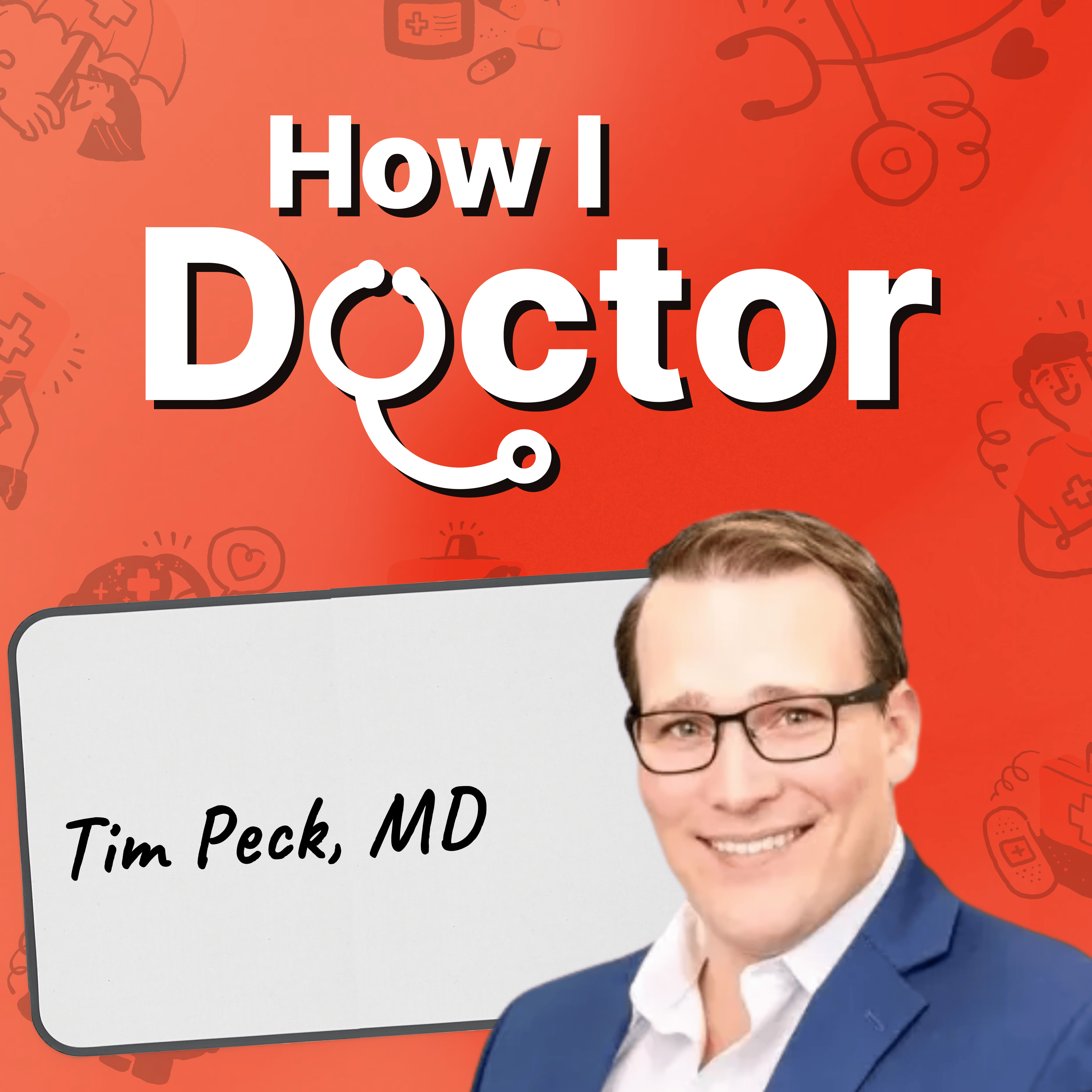
S1 Ep 62ER Doctor Running for Congress Diagnoses How to Fix the U.S. Healthcare System, with Dr. Tim Peck
Tim Peck has spent his career practicing medicine where the system is most fragile. A Harvard-trained emergency physician, healthcare entrepreneur, and frontline clinician in rural America, Tim has worked inside nursing homes, healthcare deserts, and communities shaped by the opioid crisis—places where delays, payment failures, and policy decisions have immediate consequences.In this episode of How I Doctor, Offcall co-founder Dr. Graham Walker sits down with Tim to explore what emergency medicine teaches about leadership, systems failure, and responsibility beyond the bedside. Tim shares why ER doctors are uniquely trained to lead in chaos, how seeing patients too late distorts outcomes, and what he learned by embedding himself in the environments that generate avoidable hospitalizations.The conversation moves beyond ideology into the mechanics of why U.S. healthcare breaks down—from fee-for-service incentives and uninsured rural populations to ambulance shortages and hospital closures that happen quietly, then all at once.This is not a political debate or a campaign pitch. It’s a clinician’s diagnosis of a system under strain—and a candid discussion of what it would take to fix it.What You’ll LearnWhy emergency medicine is one of the most effective forms of leadership trainingWhat changes when doctors see patients earlier instead of downstream in crisisHow rural healthcare deserts form—and what they look like in real timeWhy nursing homes and opioid care expose the deepest system failuresHow payment models shape clinical behavior more than most physicians realize🩺 Offcall is more than a platform — it’s a community. Join today!📝 For a full transcript of this episode click HERE🎧 Subscribe to receive new How I Doctor episodes directly in your feed here: https://episodes.fm/1767429315👨⚕️Follow Dr. Graham Walker onLinkedIn https://www.linkedin.com/in/graham-walker-md/ IG https://www.instagram.com/ubergraham/ Bluesky https://bsky.app/profile/drgrahamwalker.com ✉️ Join our newsletter On/Offcall here https://offcall.beehiiv.com/subscribe 🟧 Follow Offcall on LinkedIn https://www.linkedin.com/company/joinoffcall/ IG https://www.instagram.com/offcalldotcom/ TikTok https://www.tiktok.com/@offcalldotcom

S1 Ep 61Reimagining the Future of Chronic Disease Care, With Cadence CMO Eve Cunningham, MD
Eve Cunningham has spent her career navigating the hard edges of modern medicine from delivering babies and performing gynecologic surgery to leading large health system initiatives and now serving as Chief Medical Officer at Cadence. Along the way, she’s seen firsthand why chronic disease care continues to fail patients despite more data, more technology, and more dashboards than ever before.In this episode of How I Doctor, Graham Walker sits down with Eve to unpack why clinic-based, episodic care is fundamentally mismatched to conditions like heart failure, diabetes, and hypertension. She explains why early efforts at remote patient monitoring fell flat, how change management and not technology has always been the real barrier, and why most health systems struggle to turn insight into action.The conversation moves from the realities of governance-heavy decision-making and physician burnout to what it actually takes to manage patients upstream before they land back in the ICU. Eve also shares the deeply personal connection that drives her work, including how her father’s experience with chronic illness shaped her view of what patients truly need.This is not a tech demo or a sales pitch. It’s a candid discussion about redesigning chronic disease care in a way that works for patients, clinicians, and the realities of modern medicine.What You’ll LearnWhy episodic, visit-based medicine is structurally incapable of managing chronic diseaseWhat early remote patient monitoring efforts got wrong and what has finally made them workHow change management and incentives matter more than technology aloneWhy health systems struggle to act on data, even when the answers are obviousWhat proactive, upstream care looks like when someone is actually accountable🩺 Offcall is more than a platform — it’s a community. Join today!📝 For a full transcript of this episode click HERE🎧 Subscribe to receive new How I Doctor episodes directly in your feed here: https://episodes.fm/1767429315👨⚕️Follow Dr. Graham Walker onLinkedIn https://www.linkedin.com/in/graham-walker-md/IG https://www.instagram.com/ubergraham/Bluesky https://bsky.app/profile/drgrahamwalker.com✉️ Join our newsletter On/Offcall here https://offcall.beehiiv.com/subscribe🟧 Follow Offcall onLinkedIn https://www.linkedin.com/company/joinoffcall/IG https://www.instagram.com/offcalldotcom/TikTok https://www.tiktok.com/@offcalldotcom
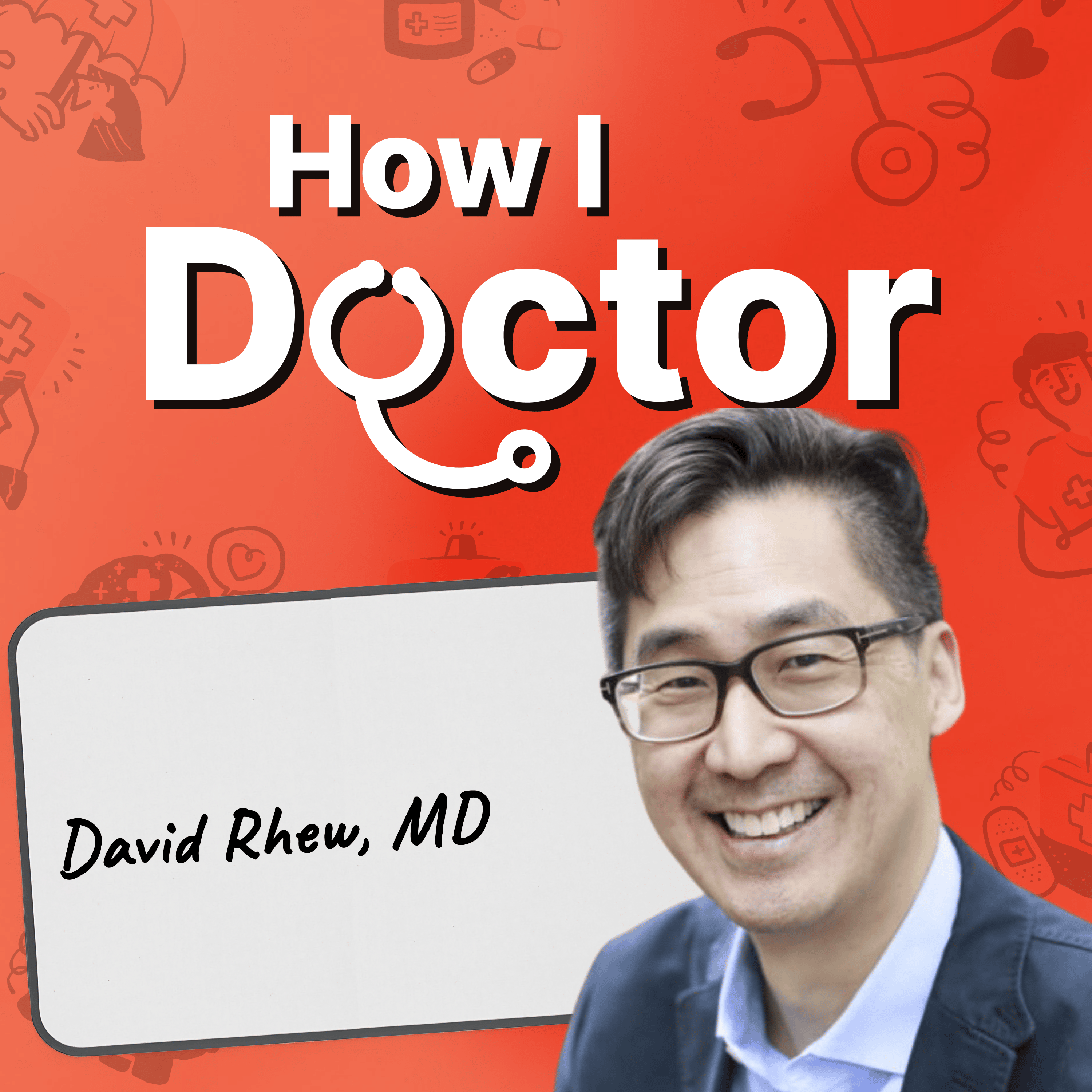
S1 Ep 60Where AI in Medicine Is Actually Headed, with Microsoft’s CMO David Rhew
David Rhew has spent his career at the intersection of frontline medicine and cutting-edge technology. An infectious disease physician by training and now Global Chief Medical Officer at Microsoft, David brings a rare perspective shaped by decades of clinical work, health system leadership, and early research on AI in healthcare.In this episode of How I Doctor, Graham Walker sits down with David to unpack where AI in medicine is actually headed and why so many clinicians feel frustrated despite using these tools every day. David explains why physicians aren’t afraid of AI itself, but of poorly designed systems that remove judgment, overload workflows, and fail to reflect how medicine really works.From agentic AI and ambient documentation to population screening, risk stratification, and resource allocation, the conversation moves beyond buzzwords into the real mechanics of how AI can support better care.David makes the case that AI’s true promise is helping clinicians practice at the top of their license, identify disease earlier, and redesign care around human decision-making rather than administrative burden.This is not a futurist thought experiment or a vendor pitch. It’s a grounded, systems-level look at how AI could meaningfully improve medicine.Explore the Data📊 Want to see how your peers are actually using AI today? Download Offcall’s 2025 Physicians AI Report, featuring insights from over 1,000 physicians on daily AI use, adoption gaps, and what doctors really want from these tools:👉 https://2025-physicians-ai-report.offcall.com/What You’ll LearnWhy the biggest failure of healthcare AI isn’t the technology itself, but how it’s measured, implemented, and governedHow agentic AI with multiple models working together on discrete tasks can outperform single “super models” in complex clinical problemsWhy ambient documentation succeeded by addressing burnout and patient experience, not productivity metricsHow AI-enabled screening and risk stratification can identify high-risk patients long before symptoms appearWhat skills physicians will need in the next decade to apply AI responsibly without losing clinical judgment🩺 Offcall is more than a platform — it’s a community. Join today!📝 For a full transcript of this episode click HERE🎧 Subscribe to receive new How I Doctor episodes directly in your feed here: https://episodes.fm/1767429315👨⚕️Follow Dr. Graham Walker onLinkedIn https://www.linkedin.com/in/graham-walker-md/IG https://www.instagram.com/ubergraham/Bluesky https://bsky.app/profile/drgrahamwalker.com✉️ Join our newsletter On/Offcall here https://offcall.beehiiv.com/subscribe🟧 Follow Offcall onLinkedIn https://www.linkedin.com/company/joinoffcall/IG https://www.instagram.com/offcalldotcom/TikTok https://www.tiktok.com/@offcalldotcom
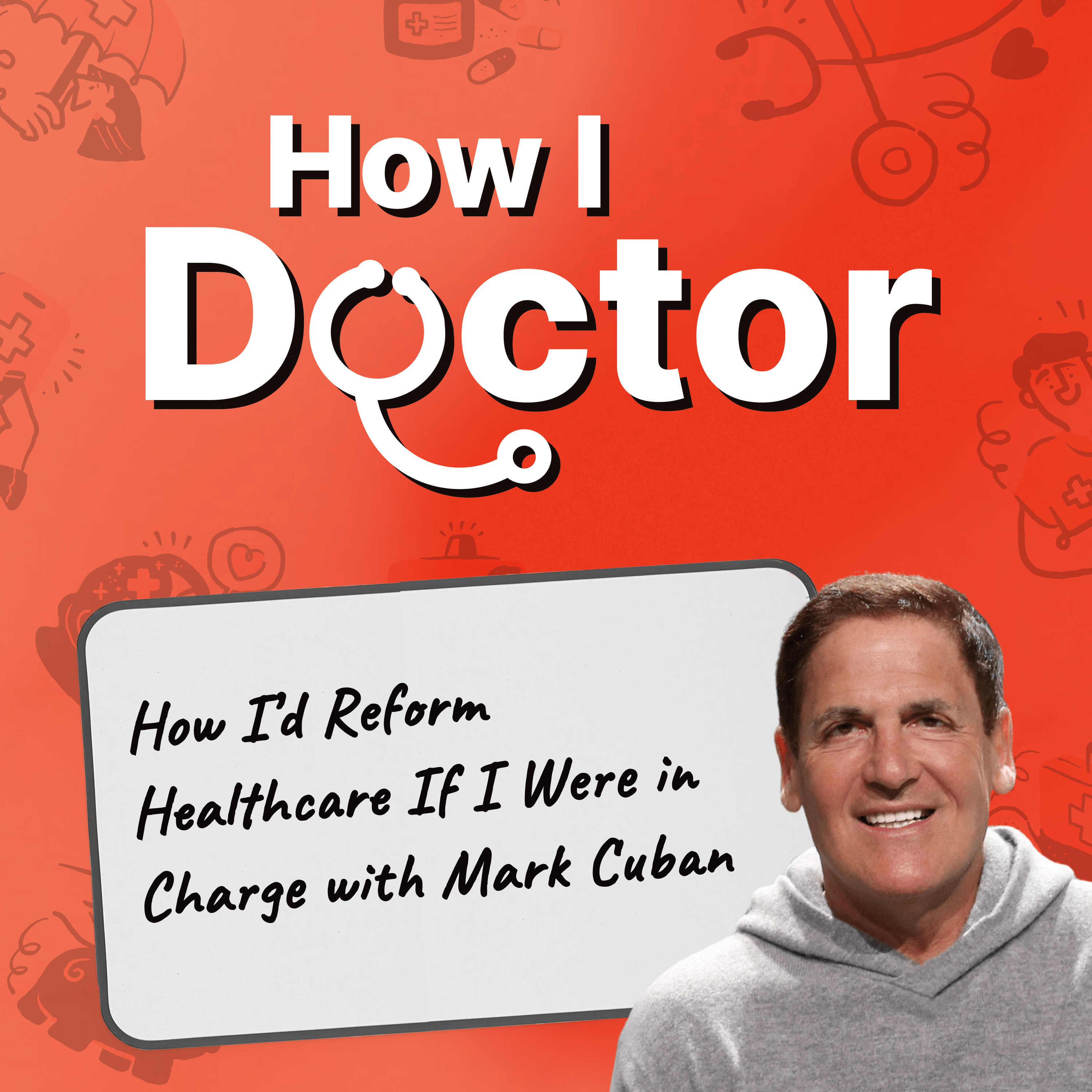
S1 Ep 60Mark Cuban: How I’d Reform Healthcare If I Were in Charge (Re-Release)
bonusMerry Christmas! Today we are re-releasing one of our favorite episode of the year. We'll be back next week with a brand new interview to kickoff 2026. Mark Cuban is a business mogul, the “Shark” every entrepreneur wants to make a deal with, the former owner of the Dallas Mavericks, and, most recently, an online pharmacy CEO. In 2022, Mark co-founded Cost Plus Drugs with the goal of lowering prescription drug prices. The direct-to-consumer company makes generic drugs affordable by cutting pharmacy benefit managers out of the distribution chain. But, once Mark starts talking about tackling the pharmaceutical market, you get the sense he has his sights set on an even bigger goal: reforming the healthcare system at large.Offcall co-founder Graham Walker recently got the chance to interview Mark on How I Doctor, a podcast that explores the lives and careers of physicians who are practicing medicine differently. Mark, of course, is not a physician. But, as Graham notes, “I'm talking to him because I think he actually gives a damn about healthcare, and more importantly, he's doing something about it.”Mark pulls no punches in this episode, and frames American healthcare as a David- and Goliath-style fight between good and bad actors.Physicians are on the good team: “I happen to be a fan of people who save lives and make other people feel better, you know? Call me crazy.”Who’s on the bad team? Anyone trying to game the system and extract money from it for their own benefit — insurance companies, hospitals, private equity firms, and others. “In healthcare, that $4.9 trillion wherever anybody can arbitrage whatever they can out of the system, that's exactly what they are going to do.”With clarity of conviction and a hard-charging spirit, Mark shares his vision for how to fix healthcare.🩺 Offcall is more than a platform — it’s a movement! Join today!https://www.offcall.com/For a full transcript of this episode click HEREhttps://www.offcall.com/learn/podcast/mark-cuban-interview-how-shark-tank-star-and-cost-plus-drugs-ceo-would-fix-healthcareFind all episodes of How I Doctor at offcall.com/podcast or subscribe on your favorite podcast player at https://episodes.fm/1767429315.In this episode, Graham and Mark discuss:04:26 Expanding Medical School Enrollment09:33 Insurance Plan Designs16:27 Insurance Company Tactics20:45 Negotiation Loopholes and Legal Tangles28:04 Healthcare Spending34:53 Transparency and Trust Drive Growth43:37 Unfair Broker Fees49:53 Profitability in Specialized Medical Services55:08 Future of AI-Assisted Healthcare👨⚕️Follow Dr. Graham Walker:LinkedIn https://www.linkedin.com/in/graham-walker-md/IG https://www.instagram.com/ubergraham/Bluesky https://bsky.app/profile/drgrahamwalker.com✉️ Get our On/Offcall email newsletter: https://offcall.beehiiv.com/subscribe🟧 Follow Offcall:LinkedIn https://www.linkedin.com/company/joinoffcall/IG https://www.instagram.com/offcalldotcom/TikTok https://www.tiktok.com/@offcalldotcomMentioned in this episode:This Episode is Sponsored by AbridgeAbridge is the leading AI platform that drafts structured, clinically useful notes at the point of conversationAbridge Sponsor

S1 Ep 59Eric Topol on Why Doctors Shouldn’t Fear AI — And How It Could Finally Fix Our Broken System
Dr. Eric Topol is one of the most influential voices in modern medicine. Founder of the Scripps Research Translational Institute and author of Deep Medicine and Super Agers, Eric has spent decades interrogating medical dogma, calling out hype, and pushing the profession toward evidence, prevention, and humanity.Dr. Graham Walker sits down with Eric for a candid conversation about why physicians shouldn’t fear AI and why when used correctly, it may be one of the most powerful tools we’ve ever had to reduce errors, restore trust, and shift medicine from late-stage treatment to true prevention. From diagnostic error and physician burnout to immune aging, GLP-1s, personalized risk prediction, and the limits of randomized trials, this episode is both a reality check and a roadmap. Eric makes the case that AI’s greatest promise isn’t automation, but rather it’s the ability to see what humans never could, identify risk earlier, and finally decouple aging from chronic disease.This isn’t a hype cycle conversation. It’s a grounded, evidence-based look at how AI could help fix what’s broken in medicine if physicians lead the way.Explore the Data📊 Want to see how your peers are actually using AI today? Download Offcall’s 2025 Physicians AI Report, featuring insights from over 1,000 physicians on daily AI use, adoption gaps, and what doctors really want from these tools:👉 https://2025-physicians-ai-report.offcall.com/What You’ll LearnWhy Eric Topol believes doctors shouldn’t fear AI and why holding it to an impossible standard may be harming patientsHow AI could dramatically reduce diagnostic error and support better clinical judgmentWhy prevention has failed historically and how AI finally makes it possible at scaleThe difference between AI hype and evidence-backed breakthroughs physicians should actually care aboutHow personalized, data-rich medicine may reshape trials, training, and the future role of the physician🩺 Offcall is more than a platform — it’s a community. Join today!📝 For a full transcript of this episode click HERE🎧 Subscribe to receive new How I Doctor episodes directly in your feed here: https://episodes.fm/1767429315👨⚕️Follow Dr. Graham Walker onLinkedIn https://www.linkedin.com/in/graham-walker-md/ IG https://www.instagram.com/ubergraham/ Bluesky https://bsky.app/profile/drgrahamwalker.com ✉️ Join our newsletter On/Offcall here https://offcall.beehiiv.com/subscribe 🟧 Follow Offcall on LinkedIn https://www.linkedin.com/company/joinoffcall/ IG https://www.instagram.com/offcalldotcom/ TikTok https://www.tiktok.com/@offcalldotcom Mentioned in this episode:This Episode is Sponsored by AbridgeAbridge is the leading AI platform that drafts structured, clinically useful notes at the point of conversationAbridge Sponsor
S1 Ep 58What Doctors Really Think About AI: Here Are the Surprising Findings From Offcall’s 2025 Physicians AI Report
AI is already shaping how physicians practice. And for the release of The 2025 Physicians AI Report, Graham is taking a different kind of episode: a deep-dive mailbag where he answers the questions doctors are actually asking about AI, grounded in one of the largest physician surveys of its kind.More than 1,000 physicians were polled in this project, and their answers paint a far more nuanced picture than the headlines suggest. 📊 Yes, two-thirds of physicians already use AI every day. ✅ Yes, the majority believe AI can meaningfully reduce administrative burden. ⚠️ And yes, 81% are frustrated with how their organizations are deploying it. In this episode, Graham walks through those realities one by one.He breaks down why doctors trust AI for documentation but hesitate when it comes to decision support. Why the #1 fear isn’t “AI will replace me,” but rather who will control it. How payers, administrators, and mixed incentives shape the way AI enters clinical workflows. And why physicians may quietly be years ahead of their institutions in actually using the technology day-to-day.He also shares the moments from the report that surprised him most and the “dream tools” physicians wish someone would build already. And he offers a roadmap for healthcare leaders, AI companies, and clinicians about how to prevent AI from becoming the next EHR rollout: deployed to doctors instead of with them.👉 If you want to go deeper, you can download the full dataset and insights in The 2025 Physicians AI Report at https://2025-physicians-ai-report.offcall.com/Whether you’re experimenting with AI every shift or still cautiously watching from the sidelines, this episode offers clarity on where physicians actually stand and where medicine is headed next.What You’ll LearnWhat doctors are really doing with AI right now Two-thirds of physicians already use AI daily, but what exactly are they using it for, and how are they integrating it into their clinical workflows?Why organizational deployment is failing physicians From restrictive policies to unclear guidelines, Graham explains why 81% of doctors are frustrated and what leaders must fix to avoid repeating the mistakes of the EHR era.The #1 fear doctors have about AI and it’s not job loss Physicians overwhelmingly worry about AI falling under payer and administrative control. Graham breaks down the incentives behind that fear.What physicians want from AI companies A clear message to builders: specialty matters. Physicians don’t want “AI for doctors”; they want tools that understand their specific workflows.Why AI adoption is happening with or without institutions Graham explains how grassroots physician use is outpacing formal hospital adoption and what that means for the future of medical practice.Access all findings from The 2025 Physicians AI Report Download the full report, charts, and analysis at https://2025-physicians-ai-report.offcall.com/🩺 Offcall is more than a platform — it’s a community. Join today!📝 For a full transcript of this episode click HERE🎧 Subscribe to receive new How I Doctor episodes directly in your feed here: https://episodes.fm/1767429315👨⚕️Follow Dr. Graham Walker onLinkedIn https://www.linkedin.com/in/graham-walker-md/ IG https://www.instagram.com/ubergraham/ Bluesky https://bsky.app/profile/drgrahamwalker.com ✉️ Join our newsletter On/Offcall here https://offcall.beehiiv.com/subscribe 🟧 Follow Offcall on LinkedIn https://www.linkedin.com/company/joinoffcall/ IG https://www.instagram.com/offcalldotcom/ TikTok https://www.tiktok.com/@offcalldotcom Mentioned in this episode:This Episode is Sponsored by AbridgeAbridge is the leading AI platform that drafts structured, clinically useful notes at the point of conversationAbridge Sponsor
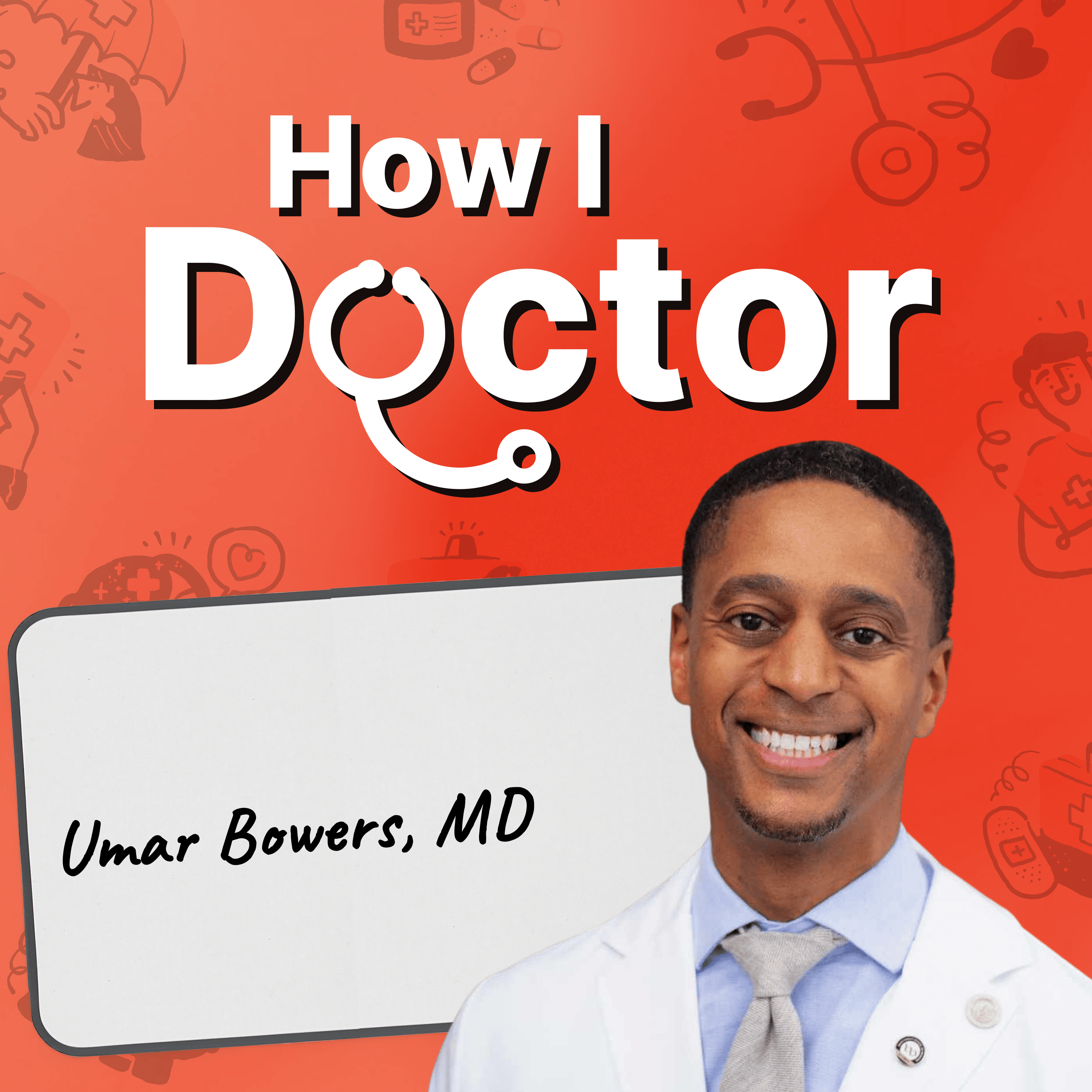
S1 Ep 57The Future of Primary Care Is Independent: How Aledade Helps Doctors Break Free From Employed Medicine with Dr. Umar Bowers and Dan Bowles
Independent primary care isn’t a relic of the past — it’s becoming the future of American medicine. In this episode of How I Doctor, Dr. Graham Walker talks with two leaders helping drive that shift: Dr. Umar Bowers, an internist who left a major health system to build the practice he always envisioned, and Dan Bowles, General Manager of Practice Health at Aledade , the physician-led company enabling thousands of doctors to stay independent, financially stable, and clinically autonomous.Umar shares his personal journey from rising frustration inside a large employed medical group to opening Dawson Medical Group with the support of Aledade. He explains what independence really means, why he had zero fear stepping out of the system, and how value-based care became the engine that allowed his practice to thrive. You can read more of his story in Aledade’s physician success profile or connect with him directly on LinkedIn.Dan offers a rare inside look at why so many doctors feel trapped in employment, what’s driving the national shift back toward physician-led care, and how Aledade’s data, contracting expertise, and ready-made community of independent clinicians help doctors cross the bridge to autonomy instead of trying to swim it alone.This isn’t another story about burnout or bureaucracy, it’s a roadmap for physicians who want their careers, their schedules, and their practices back. Whether you’re considering independent practice or simply want to understand the movement reshaping primary care, this episode shows how doctors are taking back control of the profession, one practice at a time.What You’ll LearnWhy independent primary care is resurging and how value-based care is creating new financial stability for small practices.How Dr. Umar Bowers built his own practice from scratch and why he had zero fear leaving a major health system.What Aledade’s turnkey model actually provides, from startup capital and contracting support to data, workflows, and a nationwide physician community.How doctors can reclaim autonomy, flexibility, and clinical decision-making power without sacrificing income, infrastructure, or patient care.🩺 Offcall is more than a platform — it’s a community. Join today!📝 For a full transcript of this episode click HERE🎧 Subscribe to receive new How I Doctor episodes directly in your feed here: https://episodes.fm/1767429315👨⚕️Follow Dr. Graham Walker onLinkedIn https://www.linkedin.com/in/graham-walker-md/ IG https://www.instagram.com/ubergraham/ Bluesky https://bsky.app/profile/drgrahamwalker.com ✉️ Join our newsletter On/Offcall here https://offcall.beehiiv.com/subscribe 🟧 Follow Offcall on LinkedIn https://www.linkedin.com/company/joinoffcall/ IG https://www.instagram.com/offcalldotcom/ TikTok https://www.tiktok.com/@offcalldotcom Mentioned in this episode:This Episode is Sponsored by AbridgeAbridge is the leading AI platform that drafts structured, clinically useful notes at the point of conversationAbridge Sponsor
S1 Ep 56Thank You, Doctors! A Thanksgiving Highlight Reel from Mark Cuban, Shiv Rao, Danielle Ofri and More
This Thanksgiving, we’re pressing pause on the chaos of clinical life to honor the physicians, nurses, and healthcare workers who keep showing up tired, hopeful, frustrated,and inspired. In this special “Best Of” episode, Dr. Graham Walker revisits five conversations that have sparked the most messages, DMs, forwarded links, and late-night reflection from our listeners. These clips come from leaders who’ve helped all of us re-examine the work, the system, and ourselves:Featured Episodes & LinksDr. Shiv Rao is a cardiologist, entrepreneur, and the CEO and co-founder of Abridge, the physician-founded AI company transforming how clinical conversations become care.Listen to The Physician AI Conversation: How Doctors Can Drive the AI Era in Medicine Forward with Abridge CEO Dr. Shiv RaoDr. Danielle Ofri is an internist at Bellevue Hospital, clinical professor at NYU, and one of the most widely read physician-writers of our time. Listen to Medicine’s Broken Promises: Dr. Danielle Ofri on Greed, Trust, and Why the System Survives on Exploiting CliniciansMark Cuban is a business mogul, the “Shark” every entrepreneur wants to make a deal with, the former owner of the Dallas Mavericks, and, most recently, an online pharmacy CEO.Listen to Mark Cuban: How I’d Reform Healthcare If I Were in ChargeDr. Vineet Arora is the Dean for Medical Education at the University of Chicago and one of the nation’s leading voices on equity, leadership, and physician well-being.Listen to Why Women Physicians Still Earn Less — and What We Can Do About It With Dr. Vineet AroraDr. Ali Chaudhary is an emergency physician, entrepreneur, and one of the leading voices helping doctors reclaim control over their careers.Listen to Breaking Free from W-2 Medicine: The Physician’s Guide to Locum Tenens with Dr. Ali ChaudharyWhat You’ll LearnDr. Shiv RaoWhy AI adoption is accelerating inside health systems faster than anyone expected and how clinicians can shape the guardrails, not get steamrolled by them.Dr. Danielle OfriThe “unbroken chain” of clinicians and why modern healthcare quietly relies on exploiting professionalism to keep the system from collapsing.Mark CubanHow insurance design, pre-auth delays, and underpayment schemes shift financial risk onto physicians while confusing patients — and why it’s not your fault.Dr. Vineet AroraHow women residents fall three months behind in milestone advancement by graduation — and the narrative biases in feedback that fuel the promotion gap.Dr. Ali ChaudharyWhy the traditional W-2 model is structurally unstable — and how locums work can restore autonomy, income stability, and control over your life.🩺 Offcall is more than a platform — it’s a community. Join today!🎧 Subscribe to receive new How I Doctor episodes directly in your feed here: https://episodes.fm/1767429315👨⚕️Follow Dr. Graham Walker onLinkedIn https://www.linkedin.com/in/graham-walker-md/ IG https://www.instagram.com/ubergraham/ Bluesky https://bsky.app/profile/drgrahamwalker.com ✉️ Join our newsletter On/Offcall here https://offcall.beehiiv.com/subscribe 🟧 Follow Offcall on LinkedIn https://www.linkedin.com/company/joinoffcall/ IG https://www.instagram.com/offcalldotcom/ TikTok https://www.tiktok.com/@offcalldotcom
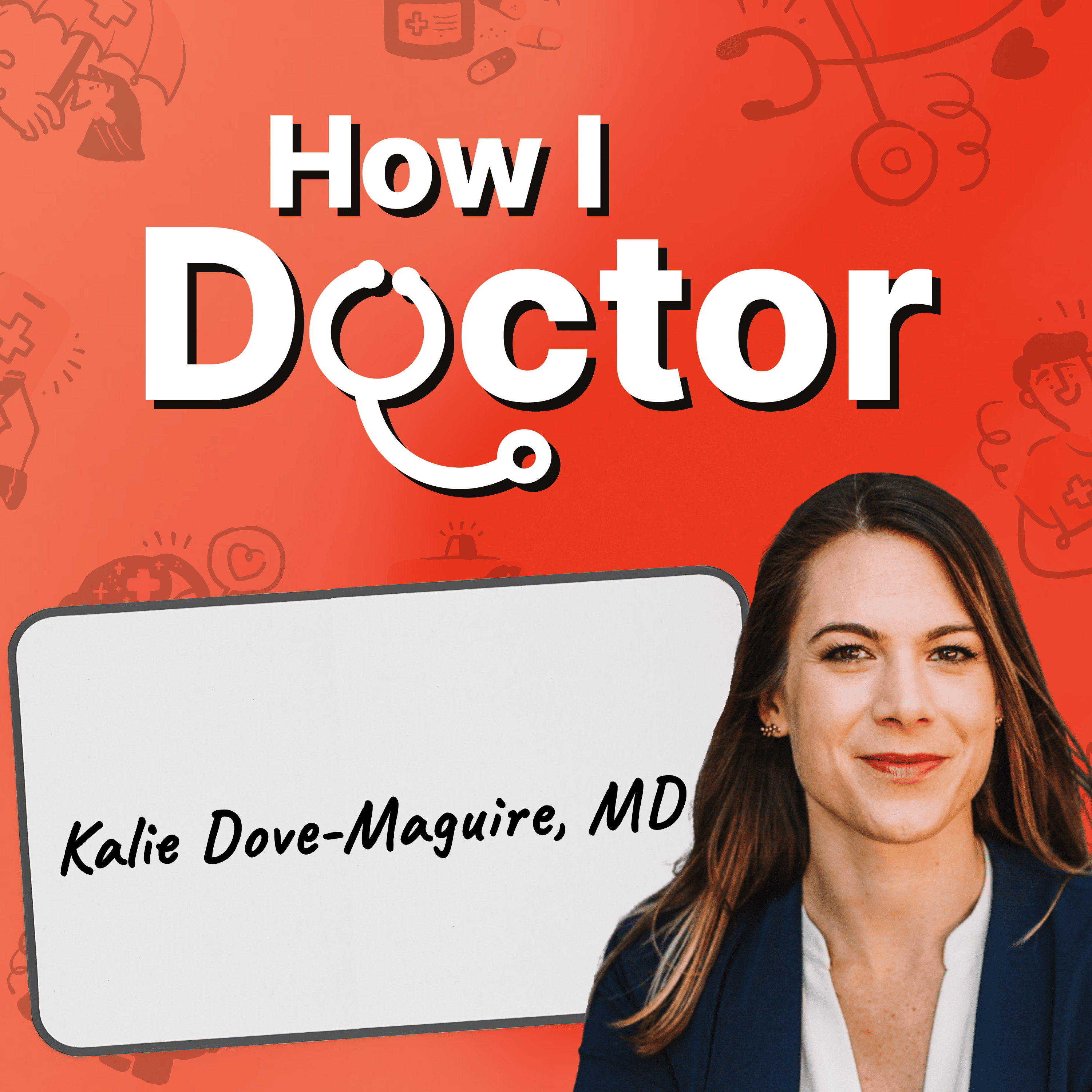
S1 Ep 55Building Decision Support AI That Doctors Truly Love and Trust, with Evidently's Dr. Kalie Dove-Maguire
Dr. Kalie Dove-Maguire is an emergency physician, health-tech leader, and the President and Chief Product Officer at Evidently — a physician-founded company building clinical decision support tools designed to earn trust, not replace judgment. After years on the frontlines, Kalie saw firsthand how critical information gets lost in the noise, how clinicians compensate for broken workflows, and how better tools could prevent avoidable harm. That realization ultimately pushed her from the ER to the product world, where she now designs AI systems that surface the right data, cite their sources, and respect the mental work only clinicians can do.In this episode of How I Doctor host Dr. Graham Walker sits down with Kalie to talk about about why AI must be transparent, why judgment can’t be automated, and what it really takes to create decision support clinicians actually want in their workflow. From the emotional weight of missed findings in residency to shipping software with guardrails, Kalie explains how Evidently approaches trust, verification, and workflow design in a way that empowers physicians.This isn’t just a conversation about AI. It’s a look at how doctors can shape the tools that guide their practice, protect clinical judgment, and help build the next generation of decision support that clinicians rely on.What You’ll LearnWhy clinical decision support fails when it ignores physician judgment — and how Evidently builds tools that do the opposite.How Kalie’s ER experience shaped her approach to product design, safety, and transparency.The difference between predictive models, LLMs, and workflow-level AI — and why lumping them together creates misconceptions.How Evidently “shows its work” by surfacing evidence, matching data to action, and earning clinician trust over time.Practical lessons for physicians considering a transition into tech, entrepreneurship, or product roles.Why the future of AI in medicine is augmentation, not automation — and why the “AI resident” metaphor matters.🩺 Offcall is more than a platform — it’s a community. Join today!📝 For a full transcript of this episode click HERE🎧 Subscribe to receive new How I Doctor episodes directly in your feed here: https://episodes.fm/1767429315👨⚕️Follow Dr. Graham Walker onLinkedIn https://www.linkedin.com/in/graham-walker-md/ IG https://www.instagram.com/ubergraham/ Bluesky https://bsky.app/profile/drgrahamwalker.com ✉️ Join our newsletter On/Offcall here https://offcall.beehiiv.com/subscribe 🟧 Follow Offcall on LinkedIn https://www.linkedin.com/company/joinoffcall/ IG https://www.instagram.com/offcalldotcom/ TikTok https://www.tiktok.com/@offcalldotcom Mentioned in this episode:This Episode is Sponsored by AbridgeAbridge is the leading AI platform that drafts structured, clinically useful notes at the point of conversationAbridge Sponsor
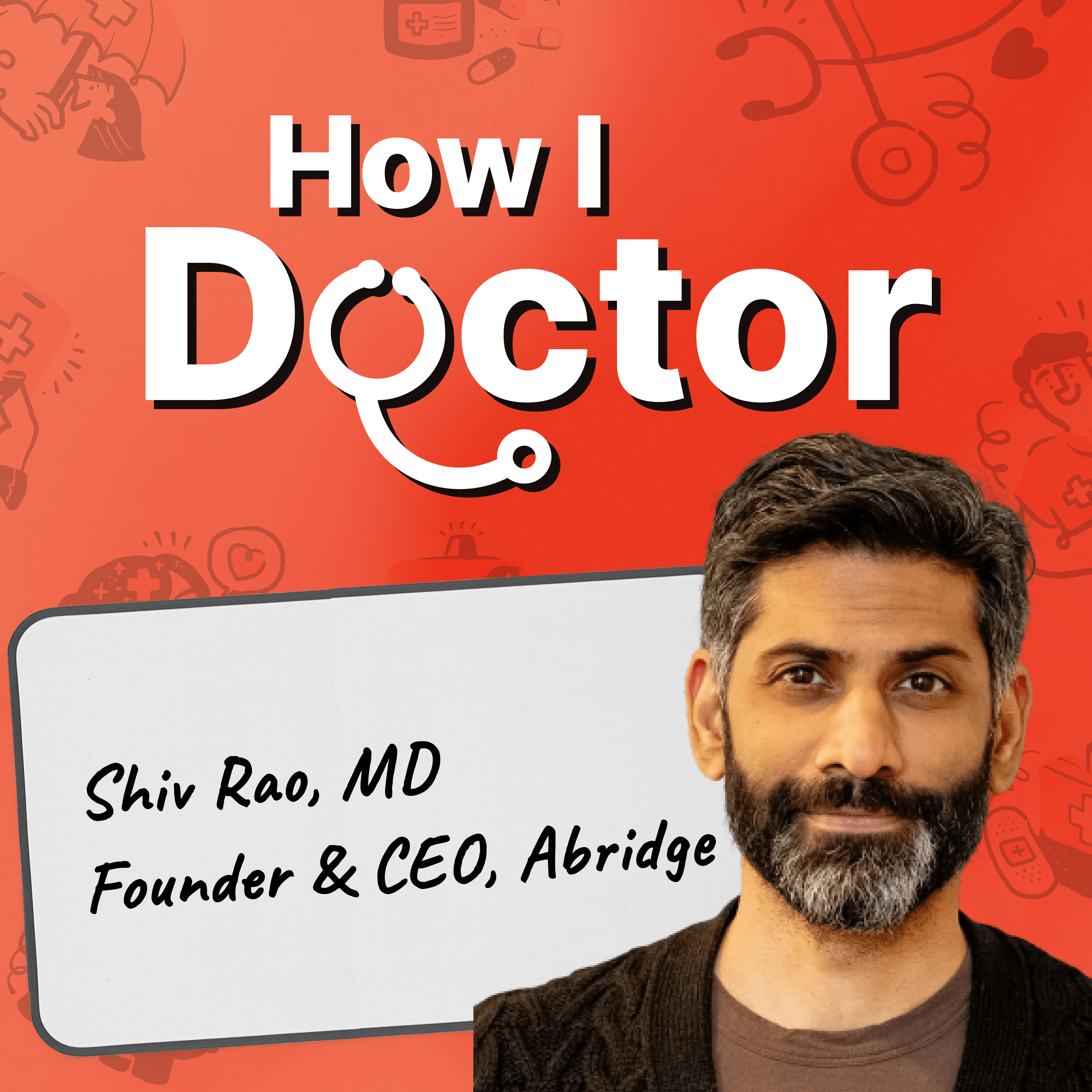
S1 Ep 54The Physician AI Conversation: How Doctors Can Drive the AI Era in Medicine Forward with Abridge CEO Dr. Shiv Rao
Dr. Shiv Rao is a cardiologist, entrepreneur, and the CEO and co-founder of Abridge, the physician-founded AI company transforming how clinical conversations become care. Built on the belief that healthcare is about people, not paperwork, Abridge is now embedded in more than 200 major health systems, processing millions of encounters each week and helping doctors reconnect with the meaning of their work.In this special in-person episode, How I Doctor host Dr. Graham Walker sits down with Shiv for an unfiltered, wide-ranging conversation about the rise of AI in medicine, the moral crisis facing clinicians, and what it truly takes to build technology that serves the physician instead of replacing them.From Abridge’s early days of being dismissed as a “party trick” to its current role in reshaping clinical workflows nationwide, Shiv shares how the company scaled, why it never called itself an “AI scribe,” and how every patient conversation can now fuel better care, fewer clicks, and more connection.This isn’t just another startup story — it’s a blueprint for how doctors can lead the AI movement from the inside.🎥 Watch the full video conversation now — exclusively on offcall.com/learn/podcast/physician-ai-conversation-shiv-rao-abridgeWhat You’ll LearnHow healthcare AI grew from a party trick to becoming an integral part of healthcare infrastructure.How Abridge turns physician-patient conversations into structured clinical data.Shiv’s vision for the future and where the company will go next from a product standpoint.Why Shiv believes physicians must lead the AI movement and not watch from the sidelines.🩺 Offcall is more than a platform — it’s a community. Join today!📝 For a full transcript of this episode click HERE🎧 Subscribe to receive new How I Doctor episodes directly in your feed here: https://episodes.fm/1767429315👨⚕️Follow Dr. Graham Walker onLinkedIn https://www.linkedin.com/in/graham-walker-md/ IG https://www.instagram.com/ubergraham/ Bluesky https://bsky.app/profile/drgrahamwalker.com ✉️ Join our newsletter On/Offcall here https://offcall.beehiiv.com/subscribe 🟧 Follow Offcall on LinkedIn https://www.linkedin.com/company/joinoffcall/ IG https://www.instagram.com/offcalldotcom/ TikTok https://www.tiktok.com/@offcalldotcom Mentioned in this episode:This Episode is Sponsored by AbridgeAbridge is the leading AI platform that drafts structured, clinically useful notes at the point of conversationAbridge Sponsor
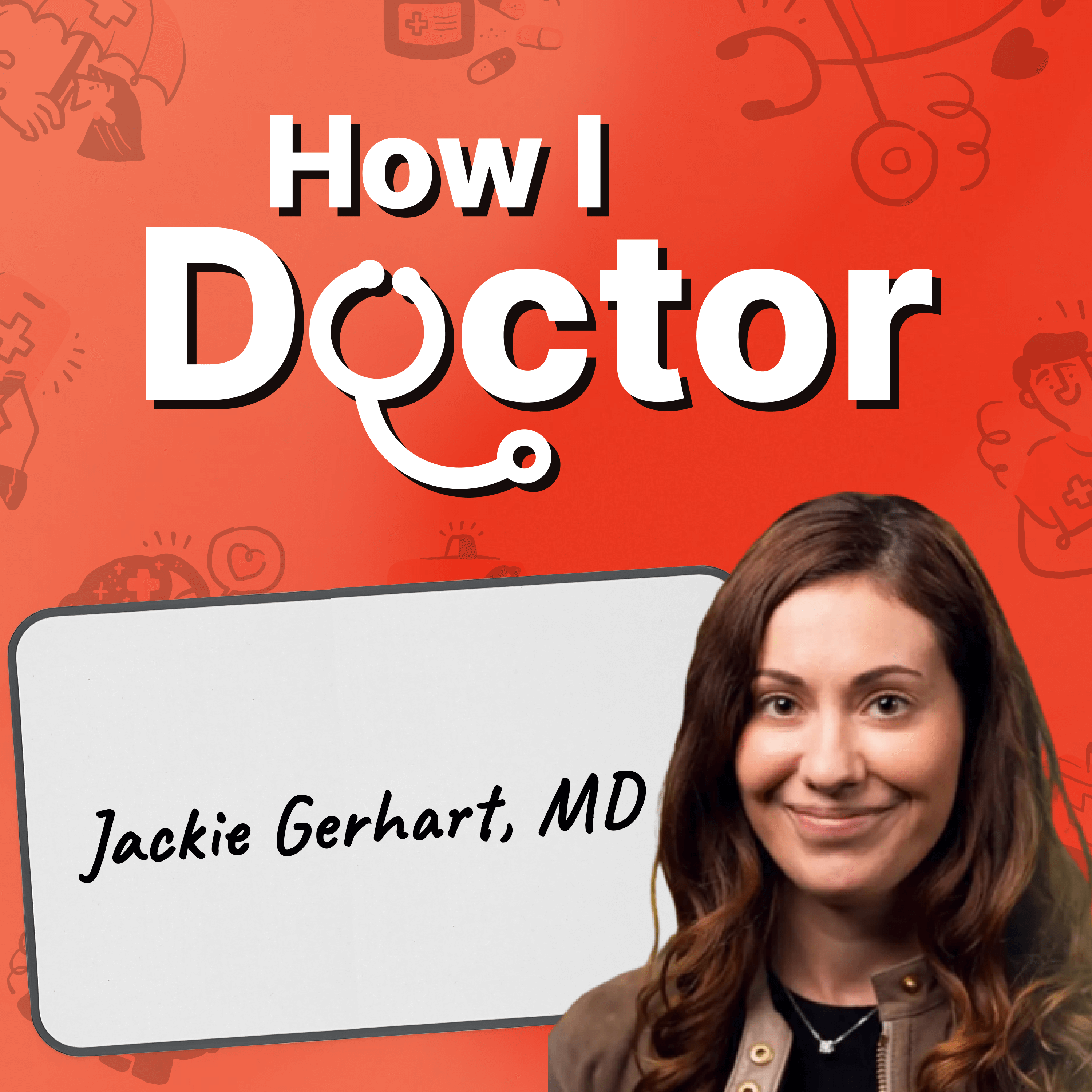
S1 Ep 53A Rare Look Inside Epic's Vision for Physicians' Future With CMO Dr. Jackie Gerhart
Dr. Jackie Gerhart is a family physician, clinical informaticist, and Chief Medical Officer at Epic — the company whose software powers much of American healthcare. From ambient documentation and AI scribes to patient-facing AI assistants like Emmy, Epic is now redefining how data, technology, and the human touch coexist in clinical care. Few physicians have seen this evolution from the inside and even fewer have helped shape it.In this episode of How I Doctor, host Dr. Graham Walker talks with Jackie about Epic’s internal culture, its push to make the EHR invisible, and the company’s next wave of physician-centric innovation. Jackie also opens up about Epic’s development philosophy, the company’s obsessive customer-focus, and why she believes we’re entering the most exciting era in modern medicine, but only if physicians can stay engaged in shaping what comes next.This episode pulls back the curtain on one of healthcare’s most influential companies and offers a grounded look at how Epic envisions the future of practice for the doctors who depend on it every day.What You’ll Learn in This Episode:How Epic’s “software-factory” model enables faster innovation across healthcare.Where many EHR frustrations stem from and how Epic considers what to address.How Epic’s new AI tools, Art and Emmy, aim to reduce friction for both doctors and patients.What “the office visit of the future” could look like – powered by ambient AI with no typing and no mouse.How Epic thinks about collaboration vs. competition with startups like Abridge and partners like Microsoft.Why Dr. Gerhart believes this is the most exciting time to practice medicine in decades.🩺 Offcall is more than a platform — it’s a community. Join today!📝 For a full transcript of this episode click HERE🎧 Subscribe to receive new How I Doctor episodes directly in your feed here: https://episodes.fm/1767429315👨⚕️Follow Dr. Graham Walker onLinkedIn https://www.linkedin.com/in/graham-walker-md/ IG https://www.instagram.com/ubergraham/ Bluesky https://bsky.app/profile/drgrahamwalker.com ✉️ Join our newsletter On/Offcall here https://offcall.beehiiv.com/subscribe 🟧 Follow Offcall on LinkedIn https://www.linkedin.com/company/joinoffcall/ IG https://www.instagram.com/offcalldotcom/ TikTok https://www.tiktok.com/@offcalldotcom Mentioned in this episode:We're releasing a Physicians AI Whitepaper and need your help!Calling all MDs: Help us shape the future of what AI looks like in medicine. Participate Here! https://tally.so/r/n0pxeNThis Episode is Sponsored by AbridgeAbridge is the leading AI platform that drafts structured, clinically useful notes at the point of conversationAbridge Sponsor
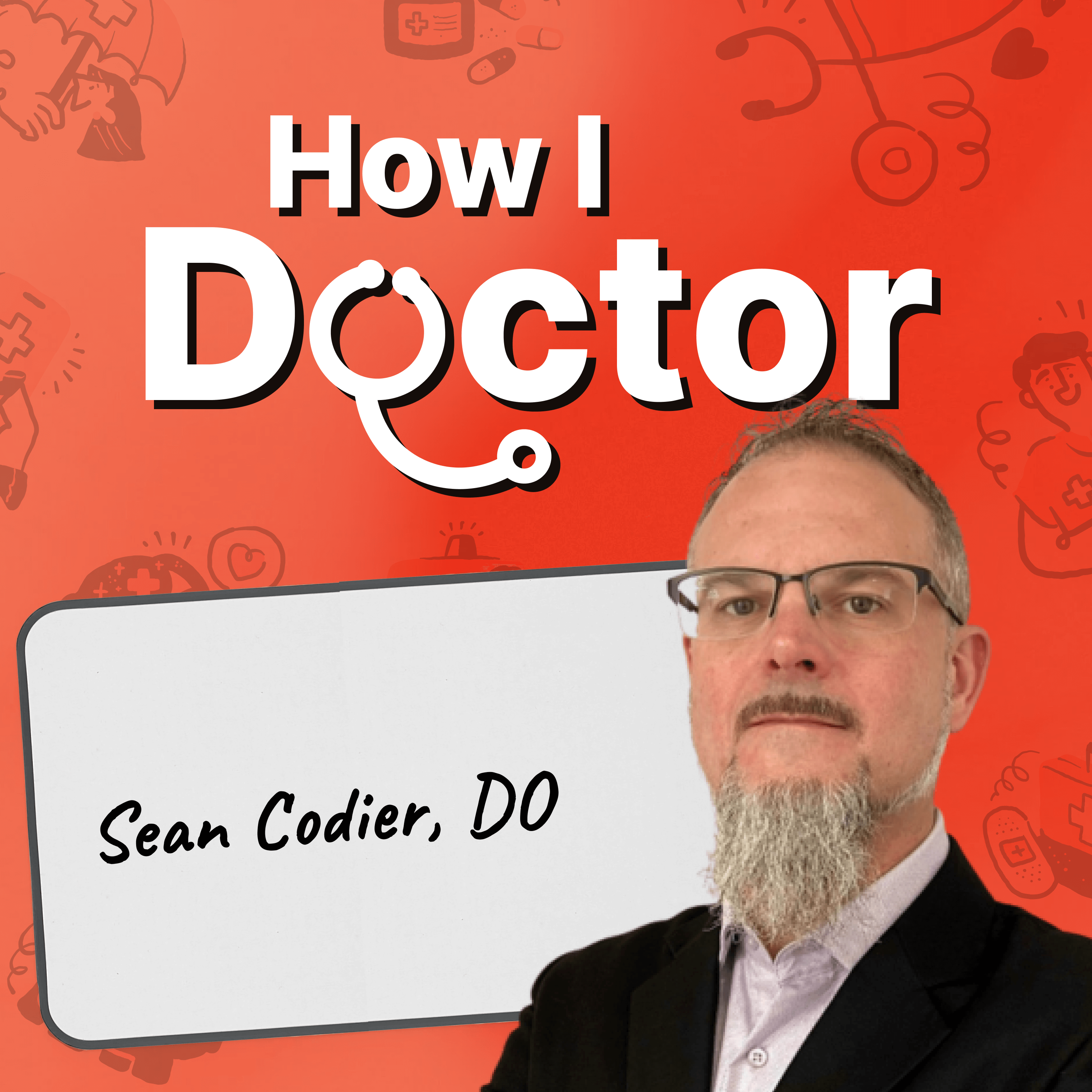
S1 Ep 52Should Doctors Unionize? The Story of Why Physicians at Salem Hospital Joined a Union to Take Back Power with Dr. Sean Codier
We're releasing a Physicians AI Whitepaper and need your help!Calling all MDs: Help us shape the future of what AI looks like in medicine. Participate Here! Dr. Sean Codier is an emergency physician at Salem Hospital within Mass General Brigham and one of the leaders behind the first successful physician unionization effort in the system’s history. What started as frustration over understaffing, overcrowding, and a lack of voice in patient-care decisions grew into a movement that’s now inspiring doctors nationwide to organize for change.In this episode of How I Doctor, Dr. Graham Walker talks with Dr. Codier about why more physicians are turning to unions as their only legal avenue to force real dialogue with hospital leadership. They discuss how the corporatization of medicine has stripped doctors of autonomy, the myths administrators use to discourage organizing, and what it actually looks like to form and run a physician union. Dr. Codier also shares the personal risks, lessons learned, and why he believes reclaiming physicians’ collective voice is essential to protecting both the profession and the patients we serve.This episode is a candid look at how medicine reached this crossroads and asks whether the future of physician advocacy depends on this form of collective power.What You’ll Learn in This Episode:Why more physicians are unionizing and what that process really involves.The biggest myths hospitals spread about unions — and what’s actually true.The personal and professional risks of organizing inside large health systems.Whether unionization is a long-term solution to help physicians reclaim medicine’s moral core.🩺 Offcall is more than a platform — it’s a community. Join today!📝 For a full transcript of this episode click HERE🎧 Subscribe to receive new How I Doctor episodes directly in your feed here: https://episodes.fm/1767429315👨⚕️Follow Dr. Graham Walker onLinkedIn https://www.linkedin.com/in/graham-walker-md/ IG https://www.instagram.com/ubergraham/ Bluesky https://bsky.app/profile/drgrahamwalker.com ✉️ Join our newsletter On/Offcall here https://offcall.beehiiv.com/subscribe 🟧 Follow Offcall on LinkedIn https://www.linkedin.com/company/joinoffcall/ IG https://www.instagram.com/offcalldotcom/ TikTok https://www.tiktok.com/@offcalldotcom Mentioned in this episode:We're releasing a Physicians AI Whitepaper and need your help!Calling all MDs: Help us shape the future of what AI looks like in medicine. Participate Here! https://tally.so/r/n0pxeN