PLAY PODCASTS
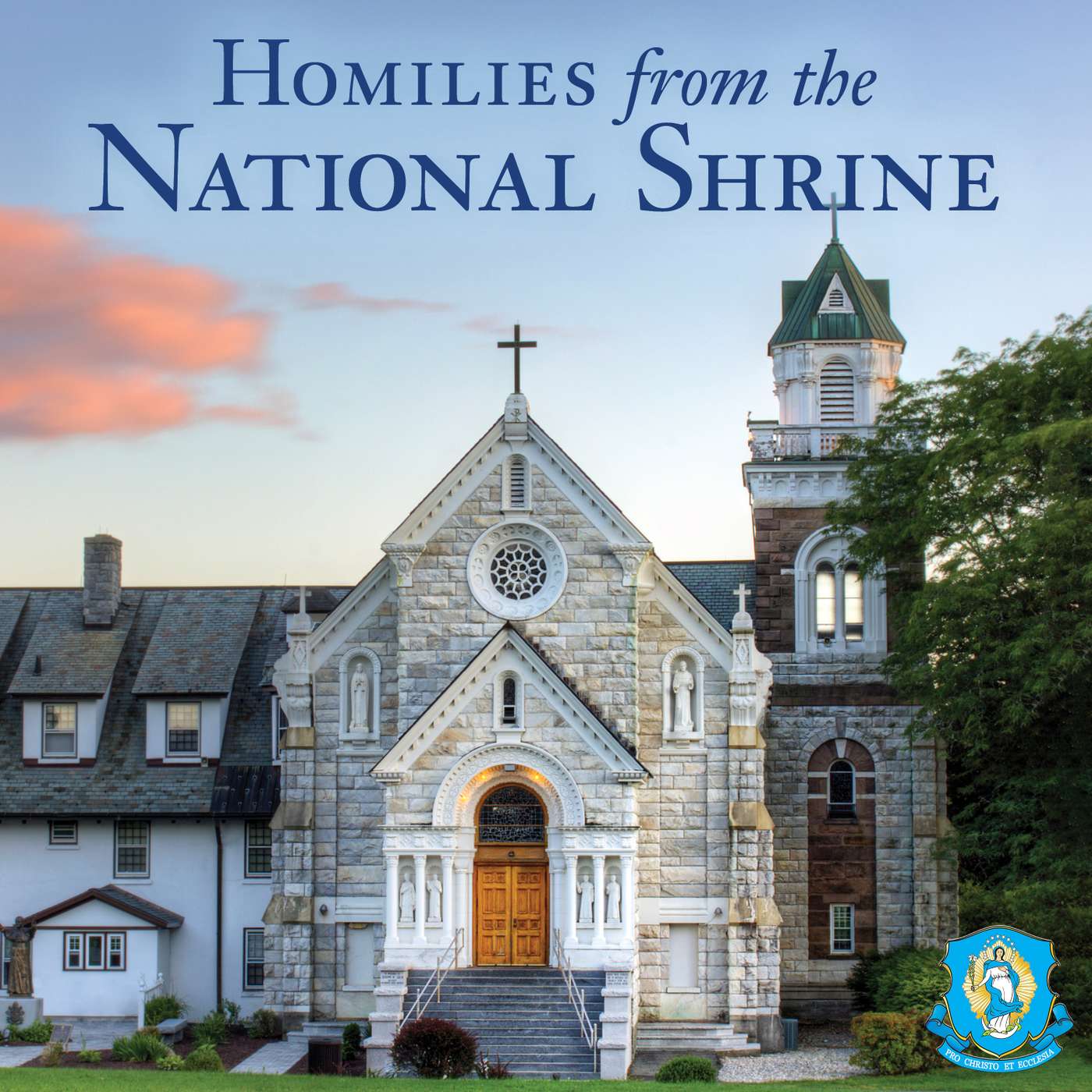
Homilies from the National Shrine

Homilies from the National Shrine

1,822 episodes — Page 1 of 37

Who Can Baptize, When, and Why? - Fr. Chris Alar | 5/12/26

May 12, 202616 min

Islam, Judaism and Christianity: Who's Killing Whom? - Fr. Chris Alar | 5/11/26

May 11, 202617 min

Obeying the Commandments Lead to Complete Joy - Fr. Daniel Klimek | 5/7/26

May 7, 202614 min

The Peace That Overcomes Fear - Fr. Anthony Gramlich | 5/5/26

May 6, 202617 min

The Vine, The Sap, and The Fruit of Suffering - Fr. Anthony Gramlich 5/6/26

May 6, 202617 min

Loving God Through Action and Mercy - Fr. Matthew Tomeny | 5/4/26

May 4, 202619 min

Jesus: The Intelligible Truth of God - Fr. Mark Baron 5/3/26

May 4, 202622 min

The Battle for Truth and Humility - Fr. Anthony Gramlich | 5/2/26

May 4, 202622 min

Work as a Path to Paradise - Fr. Kaz Chwalek | 5/1/26

May 1, 202612 min

God Entrusts Healing to Physicians - Fr. Anthony Gramlich | 4/30/26

Apr 30, 202612 min

Light in the Darkness: A Path to Glory - Fr. Kaz Chwalek | 4/29/29

Apr 29, 202610 min

Hear the Shepherd's Voice Through Mary - Fr. Mark Baron | 4/28/26

Apr 28, 202615 min

Follow the Shepherd - Fr. Matthew Tomeny | 4/27/26

Apr 27, 202615 min

The Action Movie of Salvation - Fr. Anthony Gramlich | 4/25/26

Apr 27, 202613 min

Fall in Love with the Shepherd - Fr. Daniel Klimek | 4/26/26

Apr 27, 202621 min

Love Deserves Maximum Effort - Fr. Daniel Klimek | 4/24/26

Apr 24, 202611 min

Saint George's Lesson on Cherishing Baptism and the Eucharist - Fr. Mattherw Tomeny | 4/23/26

Apr 23, 202611 min

The True Bread That Never Spoils - Fr. Chris Alar | 4/22/26

Apr 22, 202613 min

Abiding Faith in the Bread of Life - Fr. Mark Baron | 4/21/26

Apr 21, 202613 min

The Eucharist Is the Only Way to Live Forever - Fr. Chris Alar | 4/20/26

Apr 20, 202613 min

Why the Mass Is the New Creation - Fr. Chris Alar | 4/19/26

Apr 19, 202617 min

Fear One Thing Only - Fr. Matthew Tomeny | 4/18/26

Apr 18, 202613 min

Don't Ask "Why?" - Fr. Anthony Gramlich | 4/17/26

Apr 17, 202620 min

The Two Reactions to God’s Truth

Apr 16, 202617 min

The Miracle of Confession and Divine Mercy - Fr. Tyler Mentzer | 4/15/26

Apr 15, 202617 min

The Cross: The Only Road to True Joy and Heaven - Fr. Matt Tomeny | 4/14/26

Apr 14, 202610 min

Spiritual Earthquake: A Tsunami of Mercy for a Secular Age - Fr. Joe Roesch | 4/13/26

Apr 13, 20268 min

Don’t Let Your Heart Grow Hard - Fr. David Gunter | 4/11/26

Apr 12, 20268 min

Run to Mercy: From Empty Nets to Overflowing Grace - Fr. Chris Alar, MIC | 4/10/26

Apr 10, 202624 min

The Resurrection Is Not a Symbol — It Is Reality: Fr. Daniel Klimek | 4/9/26

Apr 9, 202612 min

From Head to Heart: Encountering the Risen Lord - Fr. Mark Baron | 4/8/26

Apr 8, 202614 min

Resurrection and Divine Mercy: The Eighth Day Grace - Fr. Chris Alar | 4/7/26

Apr 7, 202610 min

The Empty Tomb: Why Your Faith Is Not in Vain - Fr. Matthew Tomeny | 4/6/26

Apr 6, 202613 min

The Eighth Day: Completing the Easter Mystery - Fr. Chris Alar | 4/5/26

Apr 6, 202623 min

Ep 1761The Reality of Good Friday: Why We Don't Celebrate Mass Today - Fr. Chris Alar | 4/3/26

The readings for this homily: https://bible.usccb.org/bible/readings/040326.cfmThe shift from the shouts of "Hosanna" on Palm Sunday to the cries of "Crucify him" just days later reveals the fickle nature of the human heart and our desperate need for God's mercy. As Fr. Chris Alar, MIC, explains, we have now entered the Easter Triduum, the most holy days of the liturgical year. While Lent technically ended with the Mass of the Lord’'s Supper last night, the Triduum is a unique liturgical season that spans three days but is celebrated as one single, unfolding mystery of Christ's Paschal victory.Today is Good Friday, a day of strict fasting and abstinence. You may notice something striking: There is no Mass today. No consecration takes place. Why? Because on every other day of the year, the Mass is a re-presentation of the sacrifice on Calvary. But today, we do not need a re-presentation; we are present at the reality. The sacrifice happened historically on this day. The hosts we receive at Communion today were consecrated last night in the Upper Room. We are not reenacting the event; we are standing at the foot of the Cross, venerating the instrument of our salvation.Father Chris reminds us that Good Friday is a continuation of Holy Thursday. Last night, the Church entered the Upper Room; today, we walk the path to Calvary. When Jesus cried out, "My God, my God, why have you forsaken me?", He did not mean that the Trinity was broken. Rather, in His humanity, He experienced the profound sense of abandonment that so many of us feel in our deepest suffering. He entered into our darkness so that we would never be truly alone.This day invites us to reflect deeply before venerating the Cross. Do not rush through the ritual. Stop and acknowledge that this wooden beam is the instrument that brought you salvation. It is a public demonstration of your willingness to take up your own cross and follow Him. As we fast while the Bridegroom has been taken away, we prepare our hearts for the Resurrection. ★ Support this podcast ★

Apr 3, 202617 min

Ep 1760The Interior Sacrifice of the Upper Room - Fr. Mark Baron | 4/2/26

The readings for this homily: https://bible.usccb.org/bible/readings/040226-Supper.cfmHoly Thursday marks the beginning of the Triduum, the holiest days of the liturgical year. As Fr. Mark Baron, MIC, explains, this night invites us to enter the mystery of the Upper Room where Jesus instituted the Holy Eucharist and the priesthood. It is a time when the Church pauses to reflect on the gift of self that Christ offered to the Father. Saint Faustina recorded a profound vision from September 1936, where she witnessed Jesus in the Cenacle. She described how, before the consecration, Jesus entered into a mysterious conversation with His Father. At the moment of consecration, love rested, satiated. The sacrifice was fully consummated internally, even before the external destruction of the Cross.Father Mark elaborates that this revelation aligns with the teaching of St. Thomas Aquinas on sacrifice. The interior disposition is the primary aspect of worship. Worship means recognizing worth and offering honor to God. In the Upper Room, Jesus made an act of perfect humility and surrender through His human will. This interior oblation was expressed sacramentally in the bread and wine, and historically on Calvary. They are one complete event. We cannot separate Holy Thursday from Good Friday. The bloody sacrifice on the Cross was the external expression of the interior reality established in the Cenacle.This mystery transforms our understanding of the Mass. When we receive the Eucharist, we do not merely consume food; we become like Christ. He leaves us this model to follow, whether we are priests, brothers, or laypersons. We are called to lay down our lives in service. Father Mark reminds us that this is why it is the most wonderful time of the year. We celebrate the core of our identity and destiny. Praise God for the gift of being Catholic and participating in the sacramental life where we enter the Upper Room. ★ Support this podcast ★

Apr 3, 202617 min

Ep 1759The Real Reason Judas Betrayed Jesus - Fr. Chris Alar | 4/1/26

The readings for this homily: https://bible.usccb.org/bible/readings/040126.cfmWe often imagine Judas Iscariot as a monster from the start, a man whose heart was black with evil from the moment he joined the Twelve. But the Gospel of John reveals a far more terrifying truth: Judas was indistinguishable from the other disciples until the very end. As Fr. Chris Alar, MIC, explains, the betrayal was not a sudden explosion of malice, but a slow, silent erosion of the soul. It was the story of a man who followed Jesus only for what he could get, and when the transaction seemed to become unprofitable, he sold his Master for 30 pieces of silver.hen we compare Judas to Mary of Bethany, the contrast is stark. While Mary lavished expensive oil on Jesus’ feet out of pure love, Judas complained about the “waste,” masking his greed with a feigned concern for the poor. He was not acting out of a desire to serve; he was acting out of a desire for gain. Father Chris identifies this as the root of the sin: the question, “What’s in it for me?” Judas wanted a conquering hero, a political Messiah who would overthrow Rome and secure him a place of power. When Jesus chose the path of humility and the Cross, Judas felt cheated. His anger turned into betrayal.This is the danger that lurks in every one of us. We do not become like Judas overnight. We become like him through the “frog in the pot” effect. We neglect small duties, skip prayer, ignore our families, and justify our petty grievances. As St. Thomas Aquinas taught, virtue and vice are formed by habit. Every choice moves us slightly toward God or slightly away from Him. If we watch our thoughts, our words, and our actions, we see that the path to hell is paved with small compromises. We trade our spiritual birthright for fleeting pleasures, comfort, and pride.Father Chris warns that when we commit mortal sin, we are effectively casting Jesus out of our souls. We are bargaining with the devil, saying, “If I hand over the Son of God, give me pleasure, money, or power.” Just as Judas lost everything for 30 pieces of silver, so too do we risk losing eternity for a moment of worldly satisfaction. The tragedy of Judas is not just that he betrayed Jesus, but that he believed Jesus had nothing to offer him except suffering. He could not see that the Cross was the only path to true glory.How do we avoid this fate? We must shift our prayer from “Lord, what can You give me?” to “Lord, how can I serve You?” We must learn to love God for who He is, not for what He can do for us. This is the highest level of the spiritual life: the unitive way, where we seek only to give God glory. If we catch ourselves asking, “What’s in it for me?” we must stop and repent. We must remember that Jesus is not a means to an end; He is the End. ★ Support this podcast ★

Apr 1, 202615 min

Ep 1758The Hero Behind the Coward: Why Despair is the Greatest Sin - Fr. Chris Alar | 3/31/26

The readings for this homily: https://bible.usccb.org/bible/readings/033126.cfmThe Gospel of John presents a unique and haunting scene at the Last Supper. Unlike the Synoptic Gospels, which focus on the institution of the Eucharist, John zooms in on the tragic figure of Judas Iscariot. As Fr. Chris Alar, MIC, explains, the seating arrangement at that fateful meal was likely U-shaped, placing Judas on Jesus' left—a position of honor. By handing him the morsel of bread, Jesus was offering a final sign of respect and affection, a desperate attempt to reach the heart of a man who had already decided to betray Him.Father Chris draws a sharp distinction between the failures of Peter and Judas. Both men failed Jesus, but their sins stemmed from different roots. Peter’s denial was born of weakness and fear; he was overwhelmed by emotion and the pressure of the moment. Judas, however, acted out of malice. He was angry that Jesus was not the conquering hero he expected, but a meek and humble servant. This anger festered until it turned into a deliberate intent to destroy. The Church teaches that while all sin is grave, sin committed with malice is far more dangerous than sin born of human weakness.The tragedy of Judas was not merely the betrayal itself, but his refusal to accept God’s mercy afterward. According to the Church Fathers and Dante’s Inferno, Judas occupies the deepest circle of hell not because he betrayed Jesus, but because he despaired of forgiveness. He took his own life, convinced that his sin was too great to be forgiven. This is the ultimate warning for us: despair is the sin that closes the door to salvation. Even after betraying the Son of God, Judas could have been saved if he had only turned back to the mercy of the Father.Father Chris reminds us that Jesus sees not only who we are in our brokenness but who we can become. He saw the hero in Peter before the coward emerged. He knows our weaknesses, our fears, and our emotional storms. He does not demand perfection; He demands our willingness to return. If you have stumbled this week, do not fall into the trap of Judas. Do not let shame or fear convince you that you are beyond redemption.As we approach Divine Mercy Sunday on April 12, we are invited to a total redo. This is a day when the ocean of God’s mercy is poured out for those who trust in His goodness. Whether your failures stem from fear, weakness, or a moment of poor judgment, Jesus is waiting to lift you up. He wants to transform your weakness into strength, your fear into courage, and your despair into hope. Do not reject His love. Do not close your heart to His forgiveness. And always say, “Jesus I trust in You.” ★ Support this podcast ★

Mar 31, 202617 min

Ep 1757The Gift of Presence: Consoling the Heart of Jesus - Fr. Daniel Klimek | 3/30/26

The readings for this homily: https://bible.usccb.org/bible/readings/033026.cfmHoly Week is not merely a historical commemoration; it is a sacred invitation to enter the deepest regions of intimacy with Jesus and Mary. As Fr. Daniel Klimek, PhD, powerfully reminds us, this is the week when Jesus gives Himself for the life of the world in total vulnerability. It is the week He institutes the Holy Eucharist and the priesthood, and ultimately, the week He dies to open the gates of Heaven. Yet, amidst the hatred, blasphemy, and violence of the Passion, there were moments of profound mercy. Jesus encountered His Mother, St. Veronica, and St. Simon of Cyrene. These encounters remind us that even in the darkest valley, the Lord allows the light of compassion to shine.The central challenge of this week is a question posed by the homily: Will Jesus see your face on the path of Calvary? Will He receive your embrace? We are called to offer “retroactive consolation.” This profound spiritual truth means that our prayers, sacrifices, and Holy Hours offered today can transcend time and space. They can reach Jesus in the Garden of Gethsemane or Mary at the foot of the Cross, offering them comfort in their moments of greatest agony. When the Angel appeared to strengthen Jesus in the Garden of Gethsemane, part of that consolation was the foreknowledge of your love and your prayers from the 21st century. You can tell Him, “Lord, You do not have to be alone.”Father Daniel urges us to strip away the distractions of the modern age. We must turn off the shining screens, turn away from the false idols of technology, and enter into silence and solitude. This is the time to read the mystical writings in the Church’s heritage, such as the works of St. Bridget of Sweden or of Ven. Mary of Agreda, which provide a vivid window into the sufferings of Christ. These texts are not mere stories; they are spiritual maps leading us into the abyss of divine love. While it is easy to be a friend in good times, true intimacy is forged in the fire of suffering. It is in our participation in and commemoration of the abandonment of Gethsemane and the silence of Calvary that we prove our love.If Lent has felt like a failure, treat Holy Week as a clean slate. Do not let the past weigh you down. Instead, stand in spirit with St. John the Apostle, St. Mary Magdalene, and Our Lady at the foot of the Cross. Offer your presence at Mass, at the foot of the altar (which is the foot of the Cross) as a gift. Let your silence speak louder than words. Jesus waits for you in the Garden; Mary waits for you at the Cross. Do not leave them alone. Your presence is the greatest consolation you can offer to the Sacred Heart of Jesus and the Immaculate Heart of Mary. ★ Support this podcast ★

Mar 30, 202614 min

Ep 1756Palm Sunday: The Triumph of the Cross - Fr. Chris Alar | 3/29/26

The readings for this homily: https://bible.usccb.org/bible/readings/032926.cfmHoly Week begins with a profound paradox that challenges our human understanding of power. On this day, the Church invites us to embrace two names for the same reality: Palm Sunday and Passion Sunday. At first glance, these seem contradictory. One speaks of victory, of a King entering Jerusalem on a donkey, welcomed by crowds waving branches. The other speaks of suffering, of a Servant who will be rejected, tortured, and killed. Yet, as Fr. Chris Alar, MIC, reminds us, these two names are not mutually exclusive; they are deeply complementary. The symbol of victory achieves its true significance only through the lens of suffering. We cannot separate the King from the Cross.Many of us struggle to reconcile the majestic image of Christ the King with the humble reality of the suffering servant. We want the triumph without the trial, the crown without the thorns. But the logic of the Church is wise. The Passion reading is proclaimed in its entirety during this liturgy precisely because it sets the stage for the Resurrection. We must walk through the darkness of Good Friday to reach the light of Easter Sunday. The victory of Christ is not a military conquest achieved by force, but a spiritual triumph won through total self-giving love. He enters our hearts not just as a ruler to be obeyed, but as a Savior who understands our pain.To deepen our reflection on this mystery, Fr. Chris Alar, MIC, shares a powerful vision from the Diary of St. Faustina. In this passage, the saint describes seeing the Lord Jesus nailed to the cross, followed by multitudes of souls crucified like Him. She sees a second group holding their crosses firmly, and a third dragging theirs with discontent. The Lord explains that those who resemble Him most in pain and contempt will resemble Him most in glory. This is the heart of the Christian life. It is not merely about enduring suffering, but about how we accept it. Do we embrace our cross, uniting our struggles with His sacrifice? Or do we drag it behind us, complaining and resisting?The vision reveals a startling detail: among the crucified souls, the most numerous were those of the clergy. This serves as a sobering reminder for all of us, regardless of our vocation. The call to discipleship is a call to take up our cross daily. It is an invitation to transform our suffering into an act of love. When we accept our trials with faith, we participate in the redemptive work of Christ. We become co-redeemers in a small way, offering our pains for the salvation of others. This is the secret of the Divine Mercy message: that God’s grace is sufficient, and our suffering, united with His, becomes a source of life for the world.As we enter this holy week, let us examine our hearts. How are we accepting our crosses? Are we enthroning Jesus as King in the midst of our struggles, or are we trying to avoid the suffering that comes with true discipleship? The path to glory is paved with the stones of sacrifice. Let us not be like those who drag their crosses in discontent, but like those who hold them firmly, knowing that in our weakness, His strength is made perfect. May we find the courage to say yes to God’s will, trusting that the victory of the Resurrection awaits those who remain faithful to the end.For those seeking to grow in this devotion, the Diary of St. Faustina offers profound insights into the mercy of God and the meaning of suffering. Additionally, a deeper understanding of how the sacraments sustain us in our journey can be found in resources on the Understanding the Sacraments. These tools are available to help us navigate the complexities of our faith with greater clarity and hope. ★ Support this podcast ★

Mar 29, 20263 min

Ep 1755One Shepherd, One Fold: The Unity of the Church - Fr. Matthew Tomeny | 3/28/26

The readings for this homily: https://bible.usccb.org/bible/readings/032826.cfmJesus no longer walked about in public, hiding behind the veil because the people of God were not spiritually seeing Him. They were still viewing reality with worldly, materialistic eyes. The chief priests and Pharisees feared that if everyone proclaimed Jesus King, the Romans would crush their nation and take away their land. Ironically, they were partially correct; in 70 A.D., the temple was destroyed, and the Jews were dispersed. Yet, Jesus was offering a way out of this fear by establishing not a worldly kingdom, but a spiritual one that would bring true peace by grafting all nations into the Tree of Jesse.Jesus came to gather the dispersed children of God—not just the Israelites, but all who are predestined for heaven. He established a new Israel, founded not on the twelve tribes of old, but on the twelve Apostles. As seen in Revelation, the walls of the heavenly Jerusalem rest on twelve foundation stones bearing the names of the Apostles. This foundation endures forever. Through the prophet Ezekiel, the Lord promised a new Exodus, gathering His people from all nations to make them one nation with one prince: Christ, the Son of David. He is the one Shepherd for them all.In the Old Testament, when a king left on a mission, he gave his keys to his steward. Jesus gave the keys to the kingdom of heaven to His steward, Peter, the Rock upon which the Church is built. Peter’s successor, the Pope, and the successors of the Apostles, the bishops, continue to shepherd the faithful. There is to be no division. Never again shall there be two nations or two kingdoms. The Church is one, completely united in the Holy Spirit. Just as a soul animates a body, the Holy Spirit unites the many members of the Church. When members are paralyzed by mortal sin, they hang limply, but they can be cured through repentance and confession.Despite this divine design, divisions persist. Since the Protestant Reformation, there have been countless splits. In the United States alone, there are over 1,200 denominations; worldwide, estimates exceed 30,000. Each claims the Holy Spirit guides them, yet the Holy Spirit is not a relativist or schizophrenic. He is the bond of love and truth. True unity requires one form of worship, one set of sacraments, one faith, and one government. Diversity is beautiful, but it must not mean division.We cannot fall into the error of Caiaphas, who viewed things materially. The high priesthood was meant to be for life, yet corruption led to yearly rotations. Jesus wants us to see beyond worldly eyes. He established a new covenant, an everlasting one based on His body and blood. Christ is the new Temple; we are temples of God. God no longer dwells in a geographical location like Jerusalem. The Book of Revelation unveils this new age where God dwells in the Church, the Body of Christ.We must stay within the boat, the Bark of Peter, as we journey to our promised land. Amidst global division, we must remember Our Lady, who kept her children united just as she formed the Body of Christ in her womb. Saint Maximilian Kolbe taught that if we do not want Mary as our mother, we cannot have Christ as our brother. Saint Cyprian of Carthage added that if we want God as our Father, we must have the Church as our mother. May we remain united as one body, diverse yet one, under the one Shepherd who leads us to our one Father in heaven. ★ Support this podcast ★

Mar 28, 202616 min

Ep 1754The Stones We Throw: Denial, Gaslighting, and the Mercy of the Cross - Fr. Mark Baron | 3/27/26

The readings for this homily: https://bible.usccb.org/bible/readings/032726.cfmIn the past two days, the Gospels have revealed the core reason Jesus was nailed on the Cross: our sins. Historically, this unfolded through the conflict between Jesus and the Jewish leaders, particularly the Pharisees and scribes. Yesterday, Jesus declared, "I am," connecting Himself to God’s self-revelation to Moses as existence itself. Today, He reveals an even deeper truth: the mutual indwelling of the Father and the Son. This Trinitarian revelation speaks of an intimate, interpenetrating life where the Father is in the Son, and the Son is in the Father.Yet, the most fascinating aspect of this passage is not the historical conflict between Jesus and the Pharisees leading to the Cross, but the internal battle within the hearts of the Pharisees — and within our own hearts. Jesus faces a defense mechanism of denial. The Pharisees do not deny the miracles He performs; they deny what those miracles point to: His divinity. They see the good works, but refuse to trace them back to the divine cause. This denial stems from a threat to their ego. Jesus, as a greater authority, threatened their status, their livelihood, and their self-perception.When denial fails, the mind moves to rationalization. The Pharisees found a legal reason to reject Jesus: apparent blasphemy. They claimed He was a mere man making Himself equal to God, a crime punishable by death. This is the intellect serving the will to avoid an unwanted reality. hen we do not desire a truth to be real, our will moves our intellect to find a reason to reject it. The Pharisees rationalized their rejection to protect their pride.Next comes projection. The Pharisees took their own internal chaos — pride, resistance, and anger — and projected it onto Jesus. They called Him a blasphemer, transferring their own spiritual blindness onto Him. This is the dynamic of looking at the speck in another’s eye while ignoring the beam in one’s own. By externalizing their internal demons, they could fight an external enemy rather than face their own brokenness. They converted shame into righteous anger, convincing themselves they were right while Jesus was wrong.Finally, we see the modern phenomenon of gaslighting. The Pharisees did not just deny the truth; they tried to make Jesus doubt His own reality. They accused Him of casting out demons by the power of the devil. Gaslighting is not just refusing to see the truth; it is insisting that the one who sees the truth is crazy, unstable, or mistaken. They tried to reshape reality so that Jesus’ miracles were demonic acts. This is a desperate attempt to avoid the shame of facing the truth about oneself.Why does this matter? Because we all carry these defense mechanisms. We are wired to protect our ego, but these mechanisms become exaggerated problems if we remain trapped in them. God became man and died on the Cross to help us cope with our sinful, imperfect souls. We need a healthy image of God — not as a tyrant, but as a source of unconditional mercy. The Divine Mercy Image shows us that God is good and seeks only to heal and restore.This truth gives us the courage to stand spiritually naked before God. We can admit, “Lord, I am a hot mess. I have this problem.” We can submit humbly, knowing God wants to help. We must not get caught in the snare of living like Pharisees. Consider the phrase “my body, my choice” regarding abortion. It is a powerful rationalization that turns the focus of the conversation away from the child and the reality of the situation, justifying an evil by framing it as a right. It is a defense mechanism to avoid the pain of facing the truth. ★ Support this podcast ★

Mar 27, 202622 min

Ep 1753The Binding Love That Never Lets Go - Fr. Tyler Mentzer | 3/26/26

The readings for this homily: https://bible.usccb.org/bible/readings/032626.cfm"You will be my people, and I will be your God." This powerful declaration echoes down through the ages, defining the particular source of God's renewed and redeemed relationship with humanity. It is a covenant of fidelity and everlasting love that the Lord enters into with each of us personally through the grace to have supernatural faith and through the Sacraments. Today, we reflect on this binding promise, starting with the saints honored in our liturgical calendar: Saint Margaret Clitherow, Saint Mathias and companions, and the martyrs of Alexandria. Though unknown to many, they were known perfectly to God, clinging to this covenant until their last breath.Covenant language is found in the story of Abraham, our father in faith. In the first reading, God changes Abram's name to Abraham, meaning “father of a multitude,” signaling a new identity and mission. This covenant was sealed through the terrifying test known as the akedah, the binding of Isaac. Abraham, willing to sacrifice his beloved son, demonstrated a faith that trusted God even when the fulfillment of the promise seemed impossible. He believed that God could raise the dead, a foreshadowing of the resurrection.This ancient binding finds its ultimate fulfillment in Jesus Christ. In the Gospel of John, Jesus reveals His divine identity to the Jews, declaring, “Before Abraham came to be, I AM." He claims the divine name, asserting His unity with the Father. The Jews understood this claim as blasphemy and sought to stone Him, yet the Lord was simply telling the truth. Through the Incarnation, Jesus reveals the true nature of the covenant. Just as Abraham bound his son Isaac to the wood of the altar, so too did God the Father permit His only begotten Son to be nailed to the wood of the Cross.This time, the weapon was not withheld. The sacrifice was completed. God poured out the blood of His Son so that we might have eternal life. This is the final covenant, the New and Eternal Covenant established in Christ. It is not limited to a single nation but extends to every tribe, tongue, and nation. The Catholic Church is the kingdom of Heaven established through this covenantal love, where God binds Himself to us in the Eucharist. Every Mass is a renewal of this bond, where we consume the Body of Christ and become one with Him.The question remains: Do we remember this covenant? Do we recall the vows made at our baptism and confirmation? Sin is essentially forgetting this covenant and acting as though it does not exist, turning to idols instead of to the living God. When we stray, we are called to return to fidelity through the Sacrament of Reconciliation, renewing our love and recommitting to the binding promise. Like the many obscure saints who, though in Heaven, are not canonized or commemorated save on All Saints Day each year, we may not be famous, but if we remain faithful, we are known to God. ★ Support this podcast ★

Mar 26, 202622 min

Ep 1752The Real Death We Should Fear - Fr. David Gunter | 3/26/27

The readings for this homily: https://bible.usccb.org/bible/readings/032526.cfmDeath appears to be the ultimate end for many, yet Jesus reveals a deeper truth that transforms our entire perspective on mortality. In the Gospel of John, we witness the raising of Lazarus, a powerful sign that death is not final for those who believe. Jesus declares Himself as the resurrection and the life, promising that whoever believes in Him will never truly die. This is not merely spiritual metaphor but eternal reality for the baptized Christian.Yet Jesus wept at the tomb of Lazarus, showing His profound compassion for human suffering. He understands our grief because He entered into it fully on the cross, carrying every cross we bear. The shortest verse in Scripture reveals the depth of Christ's humanity and His solidarity with those who mourn. However, the Lord weeps most deeply not over physical death, but over spiritual death—the loss of the soul through mortal sin.At Baptism, we were raised like Lazarus from spiritual death to new life in Christ. We became temples of God, filled with divine life. But when we commit grave sin with full knowledge and deliberate consent, we become spiritually dead again, like the dry bones Ezekiel saw in the field. The tragedy is not that we cannot return, but that we choose to remain bound by sin when Christ offers liberation.The Sacrament of Penance was instituted on Easter Sunday as a sign of this ongoing resurrection. Through Confession, we are untied from the bonds of Satan, sin, and death. Saint Augustine taught that the recreation of our souls through redemption is more majestic than the creation of the universe itself. Every confession is a personal resurrection, a chance to rise again in the Spirit of God.During Lent, the Church enters into a liturgical dying. The Alleluia is buried, flowers are removed, and statues are veiled. On Good Friday, even the Mass is taken from us. Yet from this complete emptiness, life shines through in Christ's Resurrection. We must enter this dying to self through penance, prayer, fasting, and the Sacraments to share in His glory.The “Catechism of the Catholic Church” reminds us that the Church will enter the kingdom only through this final Passover, following her Lord in death and resurrection. Before Christ's Second Coming, the Church must pass through trials that will shake the faith of many. We see confusion and scattering in our time, yet we must not let our faith be shaken. Like Lazarus, even when all seems lost, we can always have hope for resurrection. ★ Support this podcast ★

Mar 25, 20269 min

Ep 1751The Cross: Hidden… Then Revealed - Fr. Matthew Tomeny | 3/24/26

The readings for this homily: https://bible.usccb.org/bible/readings/032426.cfmWhy does the Church cover the crucifix with a veil during Passiontide, just as we draw closer to Good Friday? It seems almost backward. Shouldn’t we be looking more at the Cross, not less? But in her wisdom, the Church teaches us to long for what we so often take for granted.By covering the crucifix, we begin to feel its absence. And when it is finally unveiled on Good Friday, slowly and deliberately, we encounter again — almost as if for the first time — the shocking reality of Christ’s sacrifice. The Cross is not just a symbol. It is the very key to our salvation. As Scripture says, “by His wounds we are healed.”The Cross is not an obstacle to Heaven — it is the obstacle to hell. It is the ladder by which we rise, just as Moses lifted up the bronze serpent so that those who looked upon it in faith might live. In the same way, when we look upon Christ crucified with faith, we acknowledge our sin and trust in His power to save.This is why sacramentals like the crucifix matter. Not as superstition, but as a means to dispose our hearts to grace. When you look at the crucifix, you are not just seeing Christ—you are being seen by Him. His gaze meets yours. His love is personal.If you wonder where God is in your suffering, look at the crucifix. If you wonder how much He loves you, look at the crucifix. If you want to understand your worth, your redemption, your path to Heaven — look at the crucifix.This Lent, don’t just pass by it. Stop. Look. Remain. Because the more you behold the Cross, the more you will understand love — and learn how to live it. ★ Support this podcast ★

Mar 24, 202613 min

Ep 1750Corrupt Leaders, Faithful Souls: The Battle Never Changes - Fr. David Gunter | 3/23/26

The readings for this homily: https://bible.usccb.org/bible/readings/032326.cfmFather David Gunter, MIC, explains that throughout salvation history, the pattern of spiritual combat remains remarkably consistent. The Book of Daniel addresses the difficulties of being a faithful Jew during the Babylonian exile, containing apocalyptic literature that arises when God's holy people suffer severe religious or political oppression. The story of Susanna reveals corrupt leadership in two elders who were shameless womanizers, abusing their position of authority for their own wicked desires. Yet God vindicates the faithful.This same dynamic appears in the Gospel reading where corrupt chief priests and Pharisees use a woman caught in adultery to advance their own wicked agenda. They wanted to discredit Jesus, hoping to incriminate Him if He orders her stoning. Throughout the Bible, the lesson repeats: The battle is always between good and evil, holiness versus godlessness, sanctity and sin. As Proverbs teaches, when the wicked are in authority, transgression increases, but the righteous will look upon their downfall.Despite all that Jesus has done through His death and resurrection, we still see the same kind of evil and corruption in the world. It is a constant abuse of authority that causes tremendous harm. Saint Paul writes about authority in Second Corinthians, stating it is given for building up, not for tearing down. The evil one wants to tear down everything, causing division, fostering hatred, fear, and violence. He tempts and corrupts people in authority to accomplish his works of destruction.On the other hand, the work of the Holy Spirit fosters unity, peace, and love. We have been given the Holy Spirit and can experience His peace in our hearts despite all the horrors in the world. We have modern-day Pharisees who believe themselves to be the spiritual elite. Whenever heresy or error is being taught, we must speak up and defend our Catholic faith.The turmoil in the world is unprecedented. We are witnesses of the strife and suffering of nation against nation, famine, and chaos. But God is always with us. He hears our prayers. If we remain faithful, He will be faithful. The Book of Revelation speaks of the beast making war on the saints, but authority was given to us to tread upon serpents and scorpions and over all the power of the enemy. This is apocalyptic language describing a spiritual battle where we have authority as children of God over the spirits that come against us because we have the power of the Lord Jesus and His name with us.We must pray for the gift of discernment, for all the gifts of the Holy Spirit, and especially pray the Rosary to let our Heavenly Mother guide us in this spiritual battle. ★ Support this podcast ★

Mar 23, 202610 min

Ep 1749The Real Death We Should Fear - Fr. Matthew Tomeny | 3/22/26

The readings for this homily: https://bible.usccb.org/bible/readings/032226.cfmDeath appears to be the ultimate end for many, yet Jesus reveals a deeper truth that transforms our entire perspective on mortality. In the Gospel of John, we witness the raising of Lazarus, a powerful sign that death is not final for those who believe. Jesus declares Himself as the resurrection and the life, promising that whoever believes in Him will never truly die. This is not merely spiritual metaphor but eternal reality for the baptized Christian.Yet Jesus wept at the tomb of Lazarus, showing His profound compassion for human suffering. He understands our grief because He entered into it fully on the cross, carrying every cross we bear. The shortest verse in Scripture reveals the depth of Christ's humanity and His solidarity with those who mourn. However, the Lord weeps most deeply not over physical death, but over spiritual death—the loss of the soul through mortal sin.At baptism, we were raised like Lazarus from spiritual death to new life in Christ. We became temples of God, filled with divine life. But when we commit grave sin with full knowledge and deliberate consent, we become spiritually dead again, like the dry bones Ezekiel saw in the field. The tragedy is not that we cannot return, but that we choose to remain bound by sin when Christ offers liberation.The sacrament of Penance was instituted on Easter Sunday as a sign of this ongoing resurrection. Through confession, we are untied from the bonds of Satan, sin, and death. Saint Augustine taught that the recreation of our souls through redemption is more majestic than the creation of the universe itself. Every confession is a personal resurrection, a chance to rise again in the Spirit of God.During Lent, the Church enters into a liturgical dying. The Alleluia is buried, flowers are removed, and statues are veiled. On Good Friday, even the Mass is taken from us. Yet from this complete emptiness, life shines through in Christ's resurrection. We must enter this dying to self through penance, prayer, fasting, and the sacraments to share in His glory.The Catechism reminds us that the Church will enter the kingdom only through this final Passover, following her Lord in death and resurrection. Before Christ's second coming, the Church must pass through trials that will shake the faith of many. We see confusion and scattering in our time, yet we must not let our faith be shaken. Like Lazarus, even when all seems lost, there is always hope for resurrection.Believe in Him who says, I am the resurrection and the life. Take advantage of the Eucharist to store up spiritual grace. If you are in mortal sin, go to the confessional and be resurrected. The Lord does not want to weep over the loss of your soul. He wants you to live forever. ★ Support this podcast ★

Mar 22, 202619 min

Ep 1748Never Before Has Anyone Spoken Like This Man - Fr. Tyler Mentzer | 3/21/26

The readings for this homily: https://bible.usccb.org/bible/readings/032126.cfmAs we journey through Lent toward Holy Week, the Gospel presents a decisive question to every heart: What do you think of Jesus Christ? The guards sent to arrest Him returned empty-handed, mesmerized by His words. Their testimony remains striking: Never before has anyone spoken like this man.This truth divides humanity even today. Some recognize Jesus as the Prophet foretold by Moses, the one who speaks God's definitive word. Others acknowledge Him as the Christ, though their understanding is often clouded by incomplete knowledge. Still others reject Him outright, driven by pride or a desire to maintain their own power.The religious leaders of the time, tasked with guiding people toward God, found themselves opposing the very source of salvation. They sought to silence truth because it threatened their authority. Yet we find hope in Nicodemus, a ruling council member who dared to speak for justice. His humility and openness to God's Word led to ridicule, yet he remained a witness to the light.Jesus warned He came not to bring peace, but a sword, dividing those who accept truth from those who reject it. Each person must ultimately retreat to their own heart to make a choice for or against Christ. There is no middle ground before eternal truth.If we reject the Word of Christ, we cut ourselves off from life. But if we believe with living faith that translates into action, eternal life dwells within us even now. As St. Faustina taught, the Lord loves a soul that acts on His words. This faith produces the fruits of the Holy Spirit: joy, peace, patience, kindness.In the Eucharist, we encounter God's heart fully present. Here, in the quiet of our hearts, we are invited to make the same choice the guards, the crowd, and the leaders faced. Let go of pride and self-reliance. Confess, repent, and declare belief that Jesus alone has the words of eternal life. Like Peter, we must ask: Lord, to whom shall we go? For only He has the words of eternal life. ★ Support this podcast ★

Mar 22, 202621 min

Ep 1747His Hour Has Not Yet Come - Fr. Mark Baron |3/20/26

The readings for this homily: https://bible.usccb.org/bible/readings/032026.cfmIn the Gospel of John, Jesus goes up to Jerusalem for the Feast of Tabernacles in secret. The Jews were already plotting to kill Him, yet His hour had not yet come. This is the profound truth of this passage: Human plans cannot override divine timing.Father Mark Baron, MIC, reflects on this mystery, exploring the Feast of Tabernacles and its significance. This ancient feast celebrated the end of the harvest and recalled Israel's time in the wilderness, when God provided water and food while they dwelt in tents. It was a feast of thanksgiving and trust.Jesus went to this feast knowing the authorities sought His life. Yet He declared that His hour had not yet come. The death of Jesus does not ultimately happen because of a human plan. It is part of a divine plan. Jesus recognizes He is from God, the Son of God, sent by the Father to lay down His life for our sins, and so He also knows that this is not the time for His Passion and death.A keen sense of Divine Providence, of the times and seasons for the plans and purposes of God, is crucial for Lent. The season is not only about seeking purification from sin. It is also about preparing to celebrate the Paschal Mystery — the Passion, death, and Resurrection of Jesus. We prepare ourselves to celebrate those events that constitute the hour of Jesus.In the first part of Lent, we read about prayer, fasting, and almsgiving. Now we enter a time of readings that speak of how Jesus was led to death. We read about His conflict with religious leadership, whose way of life revolved around the Temple and a form of worship that God had established. Jesus came to fulfill that system.Jesus says He goes to the Cross freely. He lays down His life voluntarily. He chooses when He dies. The Father has planned this from all eternity. Human beings are instruments in this divine drama — some as instruments of death, some as instruments of faithfulness.Just as Jesus' name was on everyone's lips then, the name of Jesus is spoken widely today. But speaking about Jesus does not always mean we understand Him correctly. We must confess Christ is King — a statement of faith, not a political slogan. We cannot be afraid to use that phrase.Man does not determine the second coming of Christ. We do not force God's hand. It is always God's hour, always according to God's plan. Human plans can’t control or “correct” divine timing.Christ is King because He reigns from the Cross, crowned with thorns, acknowledged as King of the Jews by the Roman Empire through Pontius Pilate’s sign posted above His head. Today we ponder some of the events that led Him to that moment where He is lifted up from the earth, conquering the works of the devil, so our hearts can truly be ruled by Jesus. ★ Support this podcast ★

Mar 20, 202618 min

Ep 1746The Hidden Father Who Protects the Church - Fr. Matthew Tomeny | 3/19/26

The readings for this homily: https://bible.usccb.org/bible/readings/031926.cfmHappy St. Joseph's Day! Five years ago marked a historic milestone — the Church's first year ever dedicated to St. Joseph. This is no accident. Though St. Joseph was humbly hidden, he played the most significant role after the Blessed Virgin Mary in assisting Christ's plan of redemption. After Mary, he remains the most significant figure in Christ's plan of salvation for all people.Father Matthew Tomeny, MIC, reflects on this profound truth, exploring how devotion to St. Joseph has grown organically over time, rather like the Church has grown in her devotion to and understanding of the Eucharist. In the last 150 years, the Holy Spirit has moved the Church to develop her teaching about and devotion to St. Joseph. Since the Holy Father’s declaration of St, Joseph as universal patron of the Church in 1870, we have seen encyclicals, religious orders, and shrines dedicated to him. Pope Leo XIII dedicated March to Saint Joseph. In 1955, the Feast of St. Joseph the Worker was added to the calendar. In the 1962 revision of the Roman Missal, St. Joseph was inserted into the Roman Canon. In 2013, Pope Francis added St. Joseph to the rest of the Eucharistic Prayers, as well.Pope Francis also declared a Year of Saint Joseph from Dec. 8, 2020 through Dec. 8, 2021, and consecration to him has grown rapidly. As our Lord tells us in the “Diary of Saint Maria Faustina Kowalska,” God is preparing us for His second coming, giving us the Day of Mercy before the Day of Judgment. With this will come the triumph of the Immaculate Heart, joined to the outpouring of the Holy Spirit.We are living in a time of moral and spiritual famine. The Church must go to St. Joseph, just as Israel went to Joseph in times of famine. Saint Joseph protects the Church from real attacks threatening destruction. During the Holy Family's exile in Egypt, it must have been tempting to think Jesus was not the Messiah. Similarly, when attacks on the Church grow and teachings seem shrouded in darkness, St. Joseph will be there to protect, nourish, and guide us.Saint Joseph is the father of the Mystical Body of Christ. He spiritually feeds, shelters, clothes, educates, protects, and corrects us. Where the St. Joseph Oratory in Montreal, in Canada, stands today, St. Br. Andre attributed countless miracles to St. Joseph's intercession. In our day, Jesus wants the Church to know, love, honor, and seek refuge in St. Joseph.With such poor examples of fatherhood in the world, we desperately need him as a perfect model of paternal love — an earthly icon of God the Father. Saint Joseph is higher than all the patriarchs, higher than all the saints of the New Testament. Unlike St. Peter and St. Paul, he never denied or persecuted Jesus. He is the only one who can say he saved Jesus — the savior of his Savior.May St. Joseph continue to protect the Church and intercede for us to have purity of mind and heart so that, through Mary, Jesus may dwell in the home of our hearts. ★ Support this podcast ★

Mar 19, 202613 min