Homesteady - Stories of Living off the Land
144 episodes — Page 3 of 3

Why You Should Be Planting Fruit Trees and Bushes On Your Homestead
Trees are a generational gift. There is significant symbolism associated with trees. Trees have signified wealth throughout history. Having your own tree meant prosperity. On this episode of Homesteady, we are focusing on fruit trees. In focusing on fruit trees, and planting fruits, we are expanding upon the idea of "bearing fruit" to a discussion of assets and liabilities. Assets put money in your pocket; liabilities take money out of your pocket. Making connections between wealth, a homesteading lifestyle, and the practical steps you can take to leave the rat race, and the hands-on work of raising animals, planting plants, and building infrastructure is part of the Homesteady culture. To this end, we'd like to bring you a quote from the book Rich Dad, Poor Dad. Aust learns the following important lesson: You must know the difference between an asset and a liability. But what does this have to do with fruit trees? It's like planting a tree. You water it for years; then one day it doesn't need you anymore. It's roots are planted deep enough. The tree provides shade for your enjoyment."- Robert Kiyosaki, Rich Dad Poor Dad As homesteaders, we want even more than shade. We want the work we do each year to result in greater and greater yields. Our guest tonight, Dave Hunt of Northeast Edible, shares how his passion for fruit trees and feeding his family better led to planting fruit trees, then to a homestead-based fruit tree business. Learn everything you need to know about how to choose plants, where and when to plant them, and the timeline from planting to having a harvest. Learn everything you need to know about how to choose plants, where and when to plant them, and the timeline from planting to having a harvest. Want more specifics? See Dave's visit to Aust's farm here on YouTube. We would love it if you'd come see the Homesteady Farm! We will be hosting Dave from Northeast Edibles May 6th for a live orchard workshop. If you'd like to come, click here for some more information. If you can't make it, we will be posting the entire thing on our Pioneer page. For just $5/ mo, becoming a Homesteady Pioneer gives you access to members-only video, discount codes, how-tos, and exclusive podcasts. Become a Pioneer today! For regular updates on what we are doing here at Homesteady, join our email list. Just for joining, you'll get our free "21 Steps to self-sufficiency" and access to our "Go Homestead" video course. Getting new orchard equipment? Or are you already an Amazon shopper? We would love if you'd support the podcast through our Amazon affiliate link: www.amsteady.com. Buy whatever you normally buy, and with your purchase, you'll be supporting the podcast with no additional cost to you. Thanks! Join us this upcoming Tuesday on our YouTube Channel or at Prepper Broadcasting at 9 PM EST to be a part of our live taping of our next Homesteady episode on foraging. There will be a Pioneers-only discussion following the taping at 10 PM EST. Learn more about your ad choices. Visit megaphone.fm/adchoices

Escape The Rat Race
What do you think about when you hear, "The Rat Race?" On this episode of Homesteady, we will explore the idea of the "rat race." What is it? And, most importantly, how do you escape it? We will explore these ideas, and give you some steps on how to escape it and live your idea of your ideal life. The term "the rat race" finds its origins in a series of experiments where rats, motivated first by hunger, and then by avoiding pain (behaviorism's operant and classical conditioning for you fellow psychology enthusiasts out there) develop patterns of repetitive behavior based upon the ease or difficulty of attaining the goal set up by the experiment. When we say, "I want to escape the rat race, buy a homestead, and move out to the country," how do we do it? In order to escape the rat race, we need to understand it. Using the aforementioned experiment as a guide, there are essentially four elements to the rat race: The rat The race The stress The reward Let's break down each piece. The Rat. There is scientific proof that humans and rats, despite our obvious physical difference, have a lot in common. (Did you know rats laugh when tickled? Check it out.) Rats have empathy, a sense of humor and fun, and they are able to think about thinking. If we go directly back to our rats in the experiment, these are rats that did not self-select to be lab rats, who were motivated by their stressors to find a solution that relieves their stressors. Sound relatable? We often find ourselves, as humans, in lifestyles we did not choose, being motivated by our own stressors of feeding our families or escaping a painful situation. Unlike the rat, however, we are able to make a plan to change our lives. The Race. What is this race, and how did we enter? What were your dreams when you were in middle school? How about high school? Are you on a path of following your dreams as they have evolved, or have you found yourself placed in a lifestyle that feels like an unnatural fit? What about each part of your lifestyle: does your commute, how you spend your workday, and how your breakdown of hours, work for you? Lastly, are you working to achieve your own goals, or are you advancing someone else's plan? Often, people work long hard hours at jobs they hate, to earn money to buy things they don't need, to impress people they don't like. — Nigel Marsh The Stress. What do we do if we find ourselves acting like a stressed out rat? We often begin our journey by wanting to take care of our families and fulfill our basic needs. Humans do need to eat, and as adults, we often find ourselves with older or younger family members to take care of. However, as we satisfy our basic needs, we often find our need for "more" growing. We stop feeling satisfied by fulfilling our needs for food and shelter and begin to accumulate more materialistic needs for "more." Also, how, like the rats, are we motivated to learn behaviors to avoid pain? Often the pain we want to avoid is psychological as opposed to physical. When we have the "right" jobs and possessions, we do not need to feel the pain of others showing skepticism or disappointment in our choices. Feeling like a "success" is a strong motivator for keeping up with others. We are also often motivated by debt. We go into debt to buy the things we don't need, and are motivated by keeping up with payments to avoid the pain of falling behind financially. The Reward. What is the reward? How do we know when we have found the reward in our own lives? In the rat race, we often find a ladder of career promotions that come with greater efforts and earnings. With more success in a traditional corporate career path, we see individuals with beautiful cars, bigger homes, and more social influence. However, there is always a "next" on this path to happiness. Whatever level of achievement we reach, there will always be a nicer car, a bigger house, or more money. But what if we are just trying to stay away from the "shocks" of life? We live paycheck to paycheck, just getting by, staying ahead, paying our debts. Why did we even sign up for this? Mostly, because public school has taught us to do this, all of our lives. We learned to work for rewards, to do what others told us to do, and the feel the "shocks" of grades. Don't despair! You CAN get out of the rat race. Unlike rats, we can make a difference in our own lives. TODAY: Tell yourself, "I will NOT be a lab rat. I have control over my OWN life." Regardless of your work and life circumstances today, you are able to take steps to develop your own path in life. RECOGNIZE Your own Rat Race. Once you realize what your own "rat race" is, evaluate what works, what doesn't work, and what needs to change. Write down what needs to change, and hold yourself accountable to finding an exit strategy. Maybe this book will help? Avoid Stress. The most common stressor we all share? Debt. Avoid debt if at all possible. Dave Ramsey's book can assist you in evaluating your financial choices. I

How To ACTUALLY Catch Fish
On this episode of Homesteady, Aust will reveal the secrets to actually catch fish when you go fishing. As fishing is something best done with your buddies, Aust has his fishing buddies, Uncle Bourbon, who is a fly fishing guide (find him here), and James, or "Pickles," as his guests on this show to share tips, tricks, and strategy. While there are many types of fish, this episode focuses on fresh water "panfish", specifically bass and trout. ***The Suburban Escapee here: New to fishing? Haven't fished since you were a scout? This cheat sheet of fishing terms will help when you are listening to this episode!*** Truth: "Fishing" is synonymous with "disappointed." Aust shares a story of his childhood fishing with Uncle John. On a bucolic day, planned for fishing under a waterfall, Aust arrives at this special spot to find that the waterfall is completely dried up. However, a couple of things can really change your luck. A little bit of know-how goes a long way. When should you fish? Where should you fish? And what should you use? This episode will cover this, and so much more, so that next time you go fishing, you will actually catch fish. The season, month, and weather greatly affect how many fish you will catch. In the Northeast, Aust and his buddies believe that May is the best fishing month. Particularly for fly fishing, the "hatch" is best in May. The spring is the best time to catch the fish, because the fish start spawning and they are "in the shallows" where even the most novice fisher can catch a fish while standing on the shore. A nice, overcast day will be the most comfortable, and fishing early in the morning or at nightfall are the best times of day for catching fish. Remember this rhyme: If the barometer is risin' on their beds they'll be lyin' If the barometer is droppin' in your boat they'll be hopin' Where do you find the fish? It's often said 80% of the fish can be found in 20% of the water. Where to find the fish is dependent upon what type of fish one is trying to catch, the time of year, and what body of water is being fished. Fish like rocks, docks, shallow points, and downed trees. Fish eat insects, so anywhere insects lay eggs and hatch is a great place to cast your lure. The right fishing gear can greatly improve your chances of catching fish. You need the right size pole, hook, and line to attract your desired fish. Different water conditions, different fish species, and different bodies of water require different gear. Ready to start fishing? We've got a how-to on YouTube showing you exactly what to get. Do you have more questions about fishing? Email Aust at [email protected]. Show us your fishing gear and the fish you catch by tagging your social media posts #iamhomesteady. As we are now recording the podcast LIVE on YouTube and Prepperbroadcasting Tuesday evenings at 9, (join the email list to get the link) we were able to take phone calls from our listeners (and a very special guest!). Our listeners shared their best fish stories and asked advice on how to keep and prepare fish you catch properly for eating, fishing around heavy weeds, and how to best take kids fishing. Did you know we do a Pioneer Only live discussion on the week's topic Tuesday at 10? Become a Pioneer today to receive the Pioneer Only link. For five dollars a month, you get access to exclusive podcast episodes, how-to classes and videos, discount codes, our weekly live Pioneer Discussion, and so much more. Thank you to our sponsors! Support the show without spending an extra dime. Shop Amazon by clicking on www.amsteady.com to do your Amazon shopping, and we receive a referral bonus since Amazon knows we sent you. Use your next bulk toilet paper order- or maybe now you're motivated to order some new fishing supplies?-to support our show. Special Event Alert! We are thrilled to host Dave Hunt of Northeast Edible at the Homesteady Farm May 6, 2017 for an Orchard Planting Workshop. Interested in getting tickets? Join our email list and be the first to know when tickets go on sale. Unable to attend but want all the knowledge? Homesteady Pioneers to get access to an exclusive how-to video from the event. Learn more about your ad choices. Visit megaphone.fm/adchoices
Should You Raise Pastured Pigs On Your Homestead?
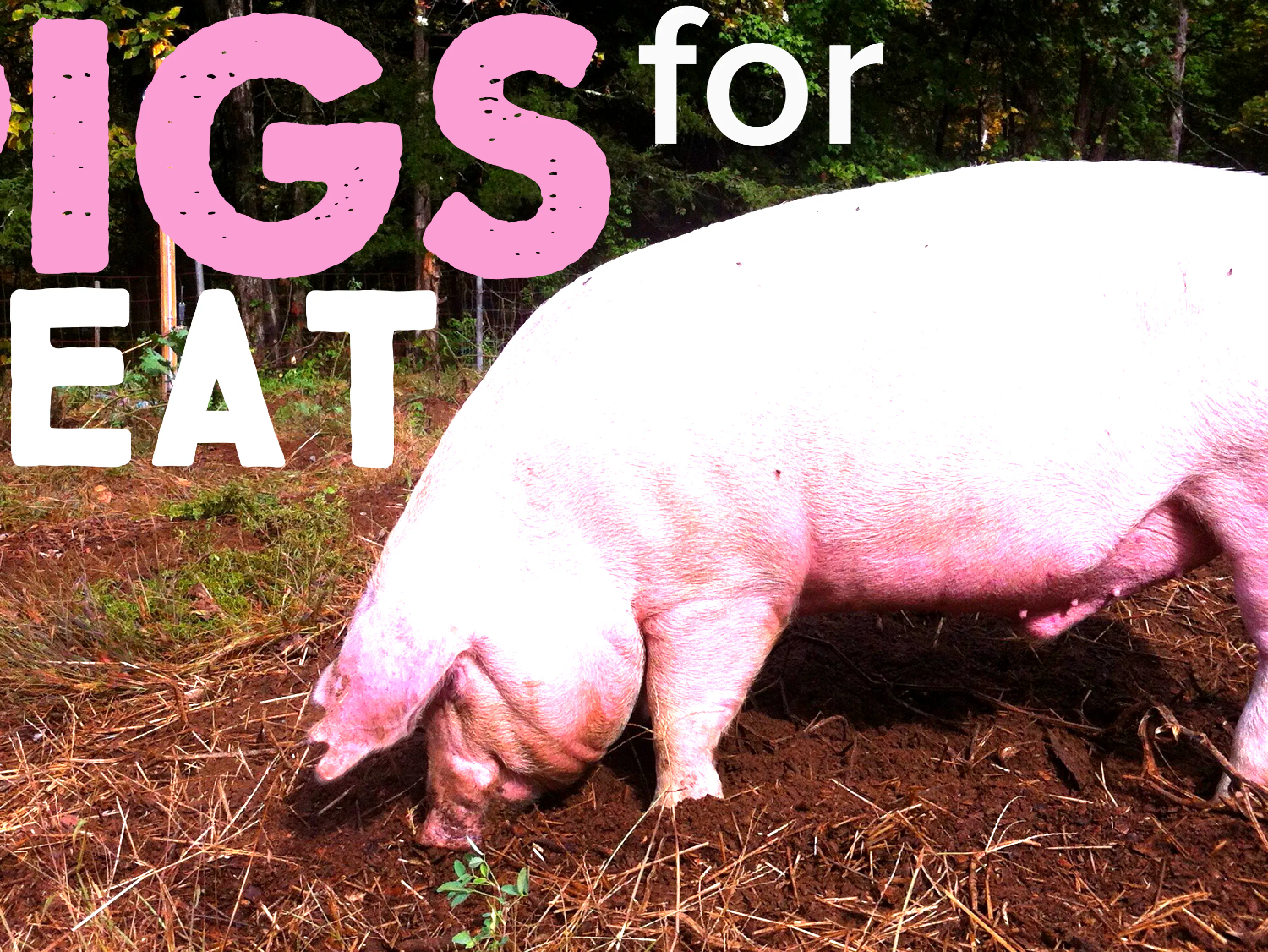
On this episode of Homesteady, we examine the question: Should you get pigs on your Homestead? Aust brings us through history, recounting the trials of General Peter Stuyvesant in New Amsterdam to keeping pigs from destroying the Dutch fort with their rooting. Known as "mortgage lifters" for their dependable moneymaking attributes, Aust has been raising pigs on his homestead for five years, and sells them for his most profitable homestead business. We've discussed pigs many times before, on the blog and on the podcast (here, here, here, here, and here to give you a few.) Now, with experience as a guide, Aust and Mike are able to give detailed information on the financial and practical applications of raising pigs. What is the right kind of homestead for pigs? How do you know if pigs would be a good fit for you? From grass to woods, pigs are versatile and able to flourish in diverse landscapes. However, there are several things to consider before deciding to buy pigs for your property: How far are the neighbors? Even well kept pigs smell like, well, pigs. What are the zoning laws in your town and state regarding pigs? Is your infrastructure appropriate for easily bringing food and water to your pigs? What kind of pigs should you get? How many pigs are a good start? And what should you expect for them to give back to you? (For Accountant Mike, who only needs companionship from a pig, maybe a tea cup pig? Ok.. don't do a Tea Cup.. they are a scam ;) Stay away from rare, expensive breeds like this one. Reach out to local farmers, and buy what is available in your area. (Aust prefers the Yorkshire Landrace Cross.) Start with two and scale up based on your success. It's better to have more demand than supply. Rely on a larger pig farmer to maintain breeder pigs. Buy feeders. Purchase feed. Growing your own feed is not a cost savings unless you raise many pigs. Thomas Dexter, Aust's local source for his Yorkshire Landrace pigs, shares important information on raising pigs, and the care it takes to raise and maintain breeder pigs year round. Are pigs profitable? Listen to Accountant Mike do the cost breakdown to see if pigs are the "mortgage lifters" Aust wants them to be. On our next episode we are discussing fishing! Want to be part of next week's podcast? At 9:00 PM EST Tuesday on the Homesteady YouTube Channel and at the Prepperbroadcasting Network we are live! Not able to join us live but want to share your own fish story? Call 657-223-3276 to leave us a voicemail and you may hear your story on the air. Pioneers get an exclusive after show where you are able to chat with Aust and Accountant Mike about your specific questions. Not a Pioneer? Become one today for exclusive access to discounts, podcasts, how-tos, and more. A special thanks to our new sound engineer, Allyson Holley, who has been mixing the Homesteady Podcast since we've gone weekly. We couldn't do it without you! Thank you to our sponsors! Try Hello Fresh for fresh, delicious, perfectly portioned ingredients that even the most novice cook can turn into delicious meals. Enter promo Code "Homesteady30" for $30 off first week of delivery. I (the Suburban Escapee) love Hello Fresh. My family (including the kids!) still ask for the Mediterranean Meatballs on the regular. Their fresh, sustainably raised and sourced meats and produce are a delicious way to integrate healthy, easy meals into your week. Need to shop for some new products for your homestead? Or would it just be easier to have your toilet paper delivered? No matter what you buy, clicking on www.amsteady.com to make your Amazon purchases helps support the show through no cost to you. Learn more about your ad choices. Visit megaphone.fm/adchoices

Practical Preparedness - Being ready for survival through the everyday emergencies that we are most likely to face.
Sometimes we find ourselves playing a game of “what if” in the world of homesteading and prepping. What if the grid went down? What if there was another world war? What if there was a pandemic? These games of what if can be a fun mental exercise. But the reality is that these disasters will probably not ever happen to us. BUT… That does not mean we will not experience disasters in our life. We absolutely will experience disasters. The disasters that will happen to us may not harm as many people as a WWIII or Global Pandemic. But they have the same ability to ruin our own life, and maybe those around us. What is the disaster that WILL happen to you? It could be… A loss of a Job A Health emergency (You or a loved one) A local natural disaster (depending on where you live) These disasters actually happen all the time, and to all of us. The truth is that someday you or a close loved one will absolutely experience one of these 3 disasters, if not all of them. Are you ready? Not for the Zombies or Plagues… But for the day your handed a pink slip? The day your child is rushed to the Emergency Room? The day you need to evacuate from an approaching hurricane? This week our family experienced an emergency. My 8 month old was rushed to the emergency room, and hours later to a second hospital for an emergency surgery. All this, at the same time a major blizzard was headed our way. We learned some very real lessons on Emergency Preparedness, and we want to share them with you. Join us for a discussion about prepping for the disasters that WILL happen to you, and learn all about Family Emergency Planning, Go Bags, and Basic Preparedness. We will tell our story, and then be joined by J.J. Johnson from the popular Youtube Channel Reality Survival https://www.youtube.com/user/RealitySurvival to discuss how to get the basic preparedness covered for the disaster that will happen to you. Go to Listen and Chat This Tuesday 9pm/Est. 6pm/Pt Visit Homesteady… See all we do at www.thisishomesteady.com Get access to the Pioneers Only library by becoming a Homesteady Pioneer HERE! https://www.thisishomesteady.com/head-west-become-pioneer/ Learn more about your ad choices. Visit megaphone.fm/adchoices

Is owning a Family Cow "Worth It?"
Since the very first episode of Homesteady, we have been asking the question: IS THIS WORTH IT? Will the investment of your time, money, and energy into your latest homesteading endeavor give you a return? And how do we measure these returns: financially, emotionally, in terms of gains in personal health and nutrition, or more broadly in relation to overall environmental sustainability? On this episode of Homesteady, we take an in-depth look on our LIVE YouTube stream to examine, even more closely, The Family Cow. In a Homesteady first, Emily, our guest for tonight, was invited onto the show after she sent Aust an email highlighting the missed points on the first family cow episode. Emily OWNS a family cow and Aust and Accountant Mike engage her tonight in a live discussion, fueled by viewer questions, to truly examine the family cow from every angle. Emily lives in mid-Missouri on three acres, with a small garden, chickens, three farm cats, and a family cow. Emily knew two years prior to even purchasing her homestead that cows "spoke to her." Their calm nature and her affinity for butter made the acquisition of Caroline Faith, Emily's first year heifer, an inevitability. After extensive preparation through self-directed education via classes (like these ones), blogs, books, and farm visits, Emily and her husband procured their farm and are now immersed in cow ownership. Being a new cow owner has come with its challenges. Emily reflects on her challenges and mistakes with the insight that regardless of her preparation and research, experience brings it all together. Emily met challenges almost immediately when her cow caught shipping pneumonia on her way to the farm. The level of sustainability a cow offers to a family is substantial. This is the hardest part of cow ownership to put a price tag on. Aust and Accountant Mike based their first breakdown on raw milk consumption. Would it be cheaper to have a cow than to purchase gallons of raw milk? In her letter to Aust, Emily focused on the missing pieces of this argument: what about the other dairy products that are produced with milk? The savings on producing these products at home needed to be compared with the prices paid for artisan products at your local grocery store or specialty shop. Emily also compares the prices of fertilizer compared to obtaining compost and fertilizer by collecting the cow poop. All the other livestock can eat sour milk as supplemental feed, like these pig farmers do. Is Accountant Mike Convinced? Reflecting on all the factors previously considered, and adding in the additional points brought up by Emily, Accountant Mike is forced to reconsider. Are you a Pioneer? For only $5/mo, in addition to all the incredible Pioneer-only podcasts, interviews, and classes, we are now offering a Pioneer-Only Aftershow. At 10:00 EST on Tuesday nights, enjoy a live forum with Aust, Accountant Mike, and the special guest of this week's livestream. Head over and become a pioneer today! Thank you to our sponsors for making Homesteady possible! You can support us by using this link to shop on Amazon: www.amsteady.com. Without any extra expenditure on your part, you can use this link to make your regular purchases on Amazon, and a small percentage of your purchase will support the podcast. Thanks to our friends at Prepper Broadcasting for streaming our Tuesday night live show. Learn more about your ad choices. Visit megaphone.fm/adchoices

Raising Meat Chickens - Pastured Poultry... Is it Profitable?
Meat Chickens are a great gateway animal into raising your own meat and becoming, overall, more sustainable. On this episode of Homesteady, we revisit chicken ownership. As we examine homestead chickens closer, we have to wonder: are chickens a "gateway animal?" Does buying chickens lead to more chickens, then to pigs, goats, sheep, and even (perhaps) a cow? John Suscovich from the Growings Farms Podcast and Farm Marketing Solutions became a full-time farmer. But First: We've got some changes happening on Homesteady! We are going weekly! For the next two months, we are going to broadcast weekly. We are hosting a LIVE SHOW at 9:00 PM EST, every week, live with Accountant Mike. Watch us on YouTube, on the Homesteady Channel, or on Prepperbroadcasting.com. Today is our first time using our YouTube live-stream from last Tuesday evening! Did you know we will be live AGAIN this and EVERY Thursday event at 9:00 PM EST Cornish Crosses' were Aust's first meat bird. Purchased at Tractor Supply Co, and treated more as pets, it was a very different experience at the beginning. Aust is able to reflect by re-reading an old Homesteady blog post on how his perception of raising chickens for meat has changed with experience. Now, Aust raises pastured pork along with meat chickens, and that pork is one of the most profitable of his homestead endeavors. For Aust and Kendra, meat chickens were a gateway to raising pastured pigs; for John, chickens were the gateway into a career. John and his wife both wanted to farm; but they didn't own any land. Not only that, they had been homeless for two years, embarking on a cross-country bike trip across the United States. After touring farms and craft breweries, they knew that living on the farm was the life for them. But, John had a fascination with chickens, and knew how to process meat birds. Becoming a pastured poultry farmer seemed the next logical step. NO money, NO job, NO land; John saw only opportunities. The broad decision of going into agriculture was passion-based...but it had to work on a spreadsheet before it was going to work on the field. John went door to door until he had accumulated several offers from landowners with hay fields he could use to begin his chicken business. He used chicken tractors to develop a mobile pastured chicken business. John started with Joel Salatin's chicken tractor design, and then...innovated. He designed a custom chicken tractor to meet his own needs. With a background in technical theater design, John was able to parlay his skills into his ideal chicken tractor. (See! EVEN THEATER can help on your homestead journey!) As John was selling chickens, people started to ask, "Where did you get those chicken tractors?" and another arm to his business was born. Chickens for meat are great for a homesteader. Their infrastructure is mobile, they are affordable, they only take eight weeks to mature to processing if you use Cornish Cross chickens, and they are a very manageable animal. Running two or three groups of ten chickens will fertilize your lawn and fill your freezer. John has progressed from leasing open land to now running Camps Road Farm. He has diversified to not only raise chickens, but grows hops for his on-farm brewery and an apple orchard for his off-farm distillery. There are two great resources John shares with us. The pastured poultry packet breaks down the process from purchase to processing. And of course the plans for his chicken tractor. If you'd like to build a John Suscovich chicken tractor, you can buy his book here. Homesteady Pioneers get ten percent off! Log into the discount section of the pioneer library. You can see the extended version of this podcast- an hour and a half long video- in the pioneer library. You can do this. But what will you need to make the leap? And what about the butchering? You know, when the time comes to "process" the bird. While it is possible to process the chickens yourself, you are looking at a significant time commitment. At the very least, get a Power Plucker to help you pluck the feathers off the chickens. What does Accountant Mike have to say? Is there a large enough profit margin? Does it get a thumbs up? Listen to find out. With this being the THIRD Homesteady chicken episode, there is lots of material in our pioneer library about egg laying chickens, and now meat birds. Inspired after this episode to start with meat birds? John's books, the power plucker, and so much more have discount codes available in the Pioneer portal. We are a growing internet community! You can follow Aust on Instagram at @homesteadyshow and Alexia, The Suburban Escapee, at @suburbanescapee. Tag your homesteading posts with #iamhomesteady and we will find you and see what you are up to, as well as connect with other homesteaders and fans of the show. Do your Amazon shopping through the www.amsteady.com link and benefit the podcast! Learn more about your ad choices. Visit megaphone.fm/adchoices

The Family Cow - Should We Get One?
On this episode of Homesteady, Kendra and Aust pack up the family and record on location at Local Farm-, a dairy farm in Cornwall, Connecticut. The reason for the trip? Kendra and Aust are interviewing cows and farmers to figure out for themselves: Is a family cow a good fit for our homestead? Debra Tyler, the dairy farmer of Local Farm, compares a relationship with a cow to a marriage. "Somebody I used to milk with said milking cows is worse than being married...and I say, there are good marriages out there, and a lot of advantages to good marriages. And there are a lot of advantages to the needs of a cow." As Aust concurs, it makes sense to "court" a cow, the way you would court a partner, as becoming the owner of a cow affects every aspect of daily life on the homestead. Deb shares with us,"My main focus is getting people and cows together." With this mission, Deb has opened her farm to interested cow owners. Twice yearly, she runs workshops on what the lifestyle of a family cow is like. She also offers other opportunities to individuals and groups on her farm, such as milking and tours, by appointment. Not ready for a family cow? Even buying milk from a local farm can facilitate a lifestyle change. Deb has noticed amongst her customers, picking up weekly gallons of raw milk leads to the creation of family rituals; separating the cream, making butter, and spending time on the farm each week. She says she finds families spending more time together, and more time at home, when they embrace any part of the "cow lifestyle." Aust and Kendra are particularly interested in a Miniature Jersey Cow. This is the type of cow Deb breeds on her farm. These cows are more expensive to purchase, as they are a specialty breed, but they hold several advantages over a full-sized cow. As they are five to ten inches shorter than the standard Jersey cow, they take up less space, and require less feed. They produce, on average, one to one and half gallons of milk per day, which is a useable amount for a family of four or more people. It is possible to feed them exclusively on grass and hay, which saves on the cost of purchasing grain for a larger cow. While owning a cow is a big time and financial commitment, Debra, Kendra, and Aust are quick to note the priceless intangibles of cow ownership. Taking care of an animal such as a cow necessitates a family to develop a rhythm, as cows need to be milked regularly both to maintain their milk production and for their own comfort. In families with children, cows provide "meaningful" chores, as it is immediately evident to children the effect care taking has a on a cow. Will Aust and Kendra commit to a family cow? It appears they are still in the courting stage ;) Want more Homesteady? Are you a Pioneer yet? If not, with spring just around the corner, now is an AMAZING time to become a Pioneer! Membership is only $5 per month, and gives you access to free classes, tutorials, and extended podcasts on sheep, hunting, and more. Join today! Another great option is to join our mailing list, where you will be the FIRST to receive updates on new podcasts, live web events, our YouTube Channel (we are live streaming our new ducklings!), and so much more. Learn more about your ad choices. Visit megaphone.fm/adchoices

UPDATE: We're NOT selling the farm...
On this episode of Homesteady, Kendra and Aust sit down together (with their adorable baby!) to talk about the change in their plans to sell their farm, and their exciting new plans for 2017. Why were Aust and Kendra going to sell the farm? Where Aust and Kendra live in Connecticut, land is very expensive. In selling the farm and traveling, they were hoping to find a larger homestead in a more affordable part of the country. A large homestead would allow hunting on the property, increased permaculture practices, and the ability to further diversify the homestead. With the intent of traveling and moving, Kendra and Aust worked hard to ready the house and the farm. They made repairs, had a tag sale to minimize their belongings, and sold their sheep and goats. They listed the house with a realtor. BUT. Life happens. Family circumstances have changed, and Kendra and Aust now see themselves in Connecticut, near family, for a few more years. A cross-country trip is still in the works, but the house won't be sold. The HOMESTEADING BUG Caught Kendra and Aust (again). The chick catalogues came. The seed catalogues came. And they realized: they have brand new ideas for 2017. On Learning Lessons... Many discouraging events occurred on the homestead in 2016. However, Aust and Kendra are encouraging: If you learn from the mistakes, then they are ok. Don't treat it like it's the 'end all' to your endeavors. Make plans for this year based on last' years's lessons. Infrastructure is the homestead priority for 2017, and this is going to be THE YEAR to work on it. Aust and Kendra are committed: THIS is the year they are going to learn to farm together. As a team, they are going to work to balance their needs for form and function. Focusing on infrastructure has Kendra and Aust asking themselves: What works on the homestead? What doesn't work? What can we improve upon? While they admit replacing hinges isn't as exciting as getting new livestock, they have made a commitment to spend two-thirds of their time working on much-needed repairs to the homestead, as opposed to taking care of livestock. Big Projects for the 2017 Season: A new poultry house A new pig house A new road (You'll see Austin run an excavator!) Purchasing a livestock trailer And don't worry- Kendra and Aust will still have livestock. In addition to the big projects, Aust is going to continue to do pig farming and raise six feeder pigs, in addition, Aust and Kendra will be raising forty meat birds for their own consumption. Each of the Martin children are having their own special project on the farm. As homeschoolers, raising the animals and having a small business as part of their education. 2017 is going to be THE YEAR on the farm, as Aust and Kendra draw on their five years of experience to homestead better than ever before. Do you want to see the Homesteady Improvement Projects as they develop? Subscribe to our YouTube Channel! We have a new way you can support the podcast! Use this link anytime you shop on Amazon: www.amsteady.com The podcast will get support, at no cost to you, no matter what you buy! Do you live in or near Connecticut? Sign up to the Homesteady email list, as we will be hosting workshops as we make these infrastructure improvements on the homestead. Caught the homesteading bug yourself? Join our Pioneer Program and have access to exclusive podcasts, homesteading courses, and so much more, for only $5 a month. Learn more about your ad choices. Visit megaphone.fm/adchoices

How To Farm or Homestead When You Have No Extra Money
“It doesn’t matter where you start: you can find acres of diamonds no matter where you are at.” Are you excited for this new year? Or are you thinking, "This year, I want to REALLY homestead, but I don't have the money." Your concern is valid. Growing a farm- or farm business- does require money. So how do you do it if you don’t have any money? On this episode of Homesteady, we look at the steps it takes to walk away from a "typical" job and responsibly take charge of your finances- and your life. John Pugliano, of The Wealthsteading Podcast, and owner of Investable wealth, LLC, currently runs, "independent investment advisory firm that specializes in helping clients build wealth with active portfolio management." John’s clients start with an investment portfolio of $250,000 to invest. Oh wait, you don’t have an extra $250K hanging around? Here's a secret: John didn't start out that way either. "To me, wealth means freedom."-John Pugliano, The Wealthsteading Podcast In our first interview, John shares with us his Seven Lessons to Building Wealth. Lesson One: It doesn't matter where you start. John comes from Western Pennsylvania- mining country. My father passed away when I was six months old, passed away unexpectedly of an annurism. Learned a very important lesson from his dad: Find value wherever you are. In many ways, I was a slow starter, but at the same time I was constantly improving myself and building my wealth. It doesn't matter where your start from, as long as long as you start at that point and move and advance from there. Lesson Two: Identifying what wealth actually is. "My perception of wealth is that wealth is just an extension of your life. You are trading your time for money and the reason you build wealth is so you have more control over your time." John shares that when you have investments, you are really building "time in reserve." The goal is not to be rich in money, but to be able to enjoy your passions in life while maintaining your responsibilities- to care for yourself, your family and loved ones. Lesson Three: Don't Believe the Myth "The 'ah-ha' moment came for me when I was about 35," John shares with us, "instinctually I knew wealth was built by having a business." We are often taught that the way to build wealth is to attain advanced levels of education and procure a while-collar job. This path, and these jobs, are closely associated with financial security. The source of the myth for John started with schooling and his mom. But all around him, he saw individuals in the neighborhood he grew up with their own businesses and his definition of wealth: having what you need, and the freedom of time. "The 'ah-ha' moment came for me when I was about 35," John shares with us, "instinctually I knew wealth was built by having a business." We are often taught that the way to build wealth is to attain advanced levels of education and procure a while-collar job. This path, and these jobs, are closely associated with financial security. The source of the myth for John started with schooling and his mom. But all around him, he saw individuals in the neighborhood he grew up with their own businesses and his definition of wealth: having what you need, and the freedom of time. When John looked around his corporate environment, he didn't see wealth. He saw consumption, and he saw individuals stuck always reaching for more. Do you see yourself in this description? Fear not, there is a way out. The Millionaire Next Door is an inspirational story about individuals who developed true wealth by finding their own path, developing their own business, and are financially independent. Which brings us to the next lesson. Lesson Four: Saving Money is Just as Important as Making It Instead of investing increases in income in more lavish expenditures, put that money in the bank and use it to pay down existing debt. Lesson Five: Don't Quit Your Day Job Use it to fund your side hustle. John continued on his corporate path in his career. He needed to continue to support his family. But he began to work harder at developing a money-making hobby into a money making-business. For John, trading stocks was both fun and lucrative. He built his skills and his knowledge while continuing at his corporate job. He invested his increased earnings at his existing job towards building his own business. Lesson Six: Monetize what you enjoy doing. As a homesteading podcast, most of the businesses that immediately come to mind to Aust have to do with selling homesteading products. However, as Aust shares with us, his homesteading led not a giant pork business, but instead to an online marketing business, which includes podcasting and video production. Following your interests leads to an exponential growth in opportunities. If you enjoy your "side job," you will want to keep going when the going gets tough. Lesson Seven: The Opportunities Will Come. We all want to get rich quick, and find success overnight. However, this rarely,
Homesteaders On the Road
Homesteading – On the Go! “Seeing you don’t object, I’ve decided to go see the West. Are there any homesteaders amongst us who haven’t found inspiration in Laura Ingalls Wilder’s Little House Series? As you know from our last podcast, Aust and Kendra are packing up the four kids and taking them West. Like the Ingalls family, they are looking for greener pastures. The desire to hit the road. What motivates this? Is homesteading so challenging that after awhile, everyone wants to quit? We realized many listeners were forlorn after learning we were selling the homestead to travel- “First Justin Rhodes (and wife Rebecca) and Dirtpatch Heaven (Julianne and John), now you guys-doesn’t anybody just want to keep farming?” Instead of ignoring this question, we figured we would attack it head on. There seems to be a common thread amongst homestead families. They want to give their families the best, but they can’t afford to when just starting off. So, to save a little money, they decide to do a few things themselves. One thing leads to another. Once this journey, all these families grew their homesteads, meeting challenge after challenge. They have collected a wealth of knowledge. Each of these families problem-solved their way down different paths. “Lifestyle Business” is a catchword these days, mostly invoking images of an individual earning money by producing content on the internet. After Lyme disease waylaid Justin Rhodes, he was forced to learn new ways to homestead and earn an income. His path led him to taking up permaculture, and making daily YouTube videos. John and Julianne found themselves in a precarious financial situation. With necessity always being the mother of invention, Julianne decided to go onto YouTube and share the day to day of her homestead. The ads that ran on her videos brought in the extra income that was so desperately needed to change the family’s situation. One thing that Justin and Rebecca, the folks at Dirtpatch Heaven, and Aust and Kendra at Homesteady all experienced is that once they developed internet content to support their homesteading business, they simultaneously began to do more on their homesteads than ever before. As you grow your homestead, one thing in your life decreases- the ability to travel. With crops and livestock needing constant care and attention, traveling goes on the back burner. For John and Julianne, a severe back injury for John changed the course of their homesteading journey. As his day job as a delivery driver became un-doable, a new opportunity presenting itself. As they looked at their finances, they decided that “van life”- or life on the road in a motor home- was the solution. With a generous gift of a motor home from a neighbor, they were on their way. Justin and Rebecca didn’t have to make a drastic change in their life, but an opportunity arose. They decided it was time to go on an adventure. So- are Justin and Rebecca, Julianne and John, and Aust…quitters? Justin and his wife, Rebecca, and Julianne and John of Dirtpatch Heaven, and Aust and Kendra want to travel to share their love of homesteading, not to quit! Travel allows them to share all of the skills they have learned, and tell the stories of their experiences. They want to visit other homesteaders and learn new skills, all while seeing new places. Is the personality of the homesteader to always strive to move forward and seek new challenges? For all you “Little House” fans out there, you know that Pa Ingalls moved the family multiple times, until Ma finally put an end to his insatiable wanderlust. The take-away? Homesteaders want to live free. So what IS going to happen to Homesteady? Don’t worry, the podcast will continue. You can also follow our adventures on the Homesteady YouTube Channel. What about the Pioneer Program? Are you a Pioneer? Do you want access to master classes by experts about orchards, food preservation, and so much more? We are having a sale- Pioneer membership is usually $5/mo, but for the month of December we are selling a year long membership for only $40. Thats only $3.30/mo! Click here to become a Pioneer today! Thanks to our new sponsor, Audible.com. Go to Audible.com/trynow for a free 30 day trial of Audible, and support Homesteady while listening to a good book. Want to have us Visit your Homestead while we are on the road? CLICK HERE to fill out our invitation form. Learn more about your ad choices. Visit megaphone.fm/adchoices

How To Make Money Raising Goats on the Homestead
Goats can earn you an income on your homestead! Find out how in Part 2 of our Goat episode of the Homesteady podcast, brought to you by www.thisishomesteady.com . In this episode we talk to Brittany Colebush, from BCB Shepherdess http://brittanycolebush.com/ Brittany shares with us how she has turned her love of being a shepherdess into a great business. Then we enjoy listening to Accountant Mike break down the numbers and see whether or not he gives goat farming a "thumbs up". Find out if he does in this episode of Homesteady. Brought to you by the Homesteady Pioneers. Homesteady Pioneers gain access to the pioneer library, full of exclusive pioneers only podcasts and videos. Become a Pioneer HERE: https://www.thisishomesteady.com/head-west-become-pioneer/ Learn more about your ad choices. Visit megaphone.fm/adchoices

Big Announcements from Homesteady
In this quick episode we share some announcements with you! We have a tag sale coming up soon on the farm, come by and say hi! We also have a new project in the works, head on over to www.thisishomesteady.com to sign up to our email list and receive the news when our new project goes live! Learn more about your ad choices. Visit megaphone.fm/adchoices

How Livestock and Rotational Grazing (with the help of moveable fencing) Can Save the Planet...
Imagine you are watching majestic lions hunting their prey on the edge of the Kalahari Desert in Zimbabwe. These beautiful animals roam in packs, looking for vulnerable prey. Traversing wide, open spaces, the predators and their prey keep each other in balance. On this episode of Homesteady, Aust introduces us to the work of Allan Savory, of The Savory Institute. Allan grew up in Zimbabwe, and regularly saw lions, elephants, and many other species while assisting his father in surveying the Hwange Game Reserve. "My father made it impossible not to love the bush. By the time I left high school I could not imagine spending my life anywhere else." Alan pursued a degree in ecology, and his life's work is preventing desertification. Alan takes us through history, highlighting the fact that preserving our natural resources is necessary not only for our survival, but for maintaining a peaceful coexistence between nations. Again and again, wars have ensued over resources; gold, spices, oil. Imagine if the world was in a race for water. Land that has succumbed to desertification can no longer hold water to support plant life. EVEN WHEN IT RAINS. Alan shares with us that as homesteaders, we can truly be part of the solution. People blamed livestock and overgrazing. The thought was the the livestock ate all the plants, and the bare land then resulted in desertification. However, Alan noticed that within wild herd, such as zebra, wildebeest, elk, or bison, the animals rotated through the land naturally. Wild herd animals graze in large, tightly compacted groups. This led "Slowly," says Alan, "The murky picture became clearer. The healthiest land I had seen was always associated with the largest herds." On the grasslands, large, tightly compacted groups of prey animals were naturally rotated by the predators who were consistently were a few steps behind, waiting for an animal to break from the herd for their next meal. As the predators closed in, the herd would move, staying a step or two ahead of danger. After the herd had moved on, the land, fed by urine and dung of the animals, and enriched by trampled vegetation, would spring back, fertilized by its encounter with the animals. Rotational grazing, which seeks to mimics the natural movement of wild herds, is a solution to the prevention of desertification. "In the United States," Allan reports, "millions of cattle are fed grain in a fossil fuel based factory production system while so much of the land in the western half of the country is desertifying due to too few livestock." The majority of livestock is raised in feedlots, where animal waste, instead of fertilizing the ground, becomes toxic waste in need of disposal. Allan encouraged farmers in Africa to adopt rotational grazing, even making a bet with the Rhodesian Minister of Agriculture that his methods could produce healthy land and support twice the amount of livestock in the current amount of space. Learn the whole story in this book, The Grazing Revolution. Rotational grazing is heavily managed. It requires a planning, investment in equipment, and consistent monitoring. There are many practical applications for rotational grazing for farmers. Farmers who plant crops on fields that are first heavily grazed by cattle have reported seeing 2-5 times previous yields. But does it get Accountant Mike's seal of approval? This debate actually originated on our episode To sheep or not to sheep, during which Aust pitches grazing sheep over buying a new lawnmower. Accountant Mike gives rotational grazing the thumbs up! For the first time, Aust took Accountant Mike's advice, bought sheep, and, after trying to take a few shortcuts, took the leap into electric moveable fencing with help from Stephanie from Premier1 Supplies. Stephanie from Premier1 Supplies uses moveable electric fencing to practice rotational grazing. She and her husband returned to his family farm to make a go at raising livestock after her father-in-law passed. With she and her husband both working off-farm jobs to continue to support their dream, Stephanie and her husband are able to move 100 head of cattle every weekend. She explains the many benefits of moveable electric fencing to meet the changing needs of her herd. This product is an important part of the history of Premier1. The company evolved from a sheep farm to a farm equipment company based upon the founder's use of moveable electric fencing from England spreading in popularity amongst farmers in his area. Intrigued by rotational grazing? Want to try it on your homestead? Plan carefully to accurately assess your needs! A solar powered energizer unit, electric netting, and a grounding rods complete a circuit that will give your livestock a little zing if they push their grazing boundaries. The amount and types of fencing, with different options available, runs between $230-$600 for a small homesteading herd. The time commitment per week for moving the fencing? Approximately 45-90 minutes. As
Chickens 101 - Eggs, Coops, Breeds, Meat, Feeders and Fencing and Much More!
Are you thinking about making the leap into backyard chickens? Or maybe adding some new breeds to your current flock? Maybe you want to start a small farm business, selling meat, and want to know the right breeds to start with? In this episode of Homesteady we share with you a sneak peak of the Go Homestead! Course, letting you listen to the entire lesson on chickens. Learn about the Pros and Cons, equipment needed, best breeds, and more! And visit www.thisishomesteady.com to sign up for the free video course. We also make a big announcement in this episode about a change to the Pioneer Program. Become a Pioneer at https://www.thisishomesteady.com/head-west-become-pioneer/ Learn more about your ad choices. Visit megaphone.fm/adchoices

Homesteady LIVE Q and A - May 23, 2016
How much land do I need to homestead? What is the best breed of pig to raise? When is a goat episode of Homesteady coming out? Are these the questions that keep you up at night? We hope not! But you can learn the answers to them. Check out the special Homesteady Live Episode! This was our first time ever Live Streaming an episode. We answered your questions, submitted before the show, and asked live on air! Enjoy sitting with Accountant Mike, and Aust, and listening to the Q and A. This episode was brought to you by www.premier1supplies.com and www.growjourney.com Join us for the next live recording by becoming a Homesteady Pioneer at www.thisishomesteady.com. Learn more about your ad choices. Visit megaphone.fm/adchoices
How To Start Homesteading
How do I start Homesteading? Ever ask yourself that? We have an answer for you.... On your mark...get set...GO! What do these words actually mean? It means to find your lane, get in your position, and then off to the finish line. What's your finish line? Are you on your mark? Can you see your own finish line? In this episode of Honesteady, we are focusing on the stories of people who made homesteading happen. What's stopping you? Whatever the roadblocks are, today's episode is going to help you bust through those barriers. We're also trying a new set-up with this write-up. In the past, links to our guests, our sponsors, additional information, and products we love have been interspersed throughout the write-up. This time, there will be a list of links at the end of the post. Let us know what you think! On your mark... Marianne Our first guest, Mary Anne, is from Norway. Despite a 24/7 on-call job, Mary Ann draws on her Norwegian heritage and the stubbornness she attributes to it to motivate her to follow her own path. She weaves the story of her journey by sharing with us her family's shepherding past, her father's hobby farm, and her own connection to the wind, the beach, and the rich farmland she grew up with. "It's in my blood," she tells us, "You bend your neck, and walk towards that wind." Mary Anne channeled her Viking stubbornness and sense of ethics and ingenuity to go, full-steam ahead, on her own path. When her job moved her across the Atlantic to America, she got to the point where she realized focusing exclusively on work wasn't really living. For Mary Anne, finding that work-life balance meant bringing animals into her life. "There were parts of me I loved using that I couldn't really use in my daily job. I was feeling lacking not being able to use those parts of me." Mary Anne encourages us to fit our passions into our existing routine. It is hard work, and it takes time. The key is, YOU HAVE TO START. Even if you wake up one hour earlier each day to feed chickens or water the garden, it's necessary to start somewhere. What is holding you back? Identify your homesteading challenge and walk against the wind. Need help getting started? We are in the production stage of a Ready...set...go! homesteading class. And did we mention it will be free? Become a test pilot and sign up on the big yellow button on our homepage now. Sign up for the email list to be notified about the release of this new course! Cody from Wranglerstar "There was only one four letter word in our family growing up. And that was 'can't'." Cody, or the Wranglerstar Youtube Channel, shares with us the "figure it out" mentality he was raised with that led him down his homesteading path. After starting small businesses throughout high school, he graduated from high school and bought himself an excavator. With a huge monthly payment, he was highly motivated to take on work, and made a name for himself for taking on the toughest jobs. Cody realized through his work in construction that he took good craftsmanship seriously. Cody encourages us to do our best work, even if no one will ever see it. We should be proud of the work we do. Cody introduces us to the concept of the "makers mark," where each craftsperson had a mark they put on their products to identify everything they make. Tradespeople throughout history used their own personal marks to identify their products from the others in the marketplace. Cody's own journey is full of risks. He became a firefighter, and started his own online business selling auto parts. He had a successful business, and his dream home. His wife was making a six-figure income. They would work six days a week and drop their son off at his grandparent's house each day. One day, Cody came across a book written by a man who quit his high-income job and moved to an off-grid homestead in Montana. After visiting this homestead, Cody and his wife decided to walk away from their lifestyle and move into the wilderness. "We were rowing in the same direction,"Cody says, "And together we made it happen." The values Cody holds dear make him feel that even though his bank account is smaller, he has much more. He values that 100% of all his efforts directly benefit his family. Cody and his wife are now able to work entirely on their homestead, with their son, and live debt-free. Every day, they inspire others to take a look at their lives, and see where they can make changes. "If the deep end isn't the right spot for you-that's ok." Cody shares that he started with a 4"x8" garden bed. His wife learned to can. Everyone starts somewhere. You don't need to buy 60 acres to start homesteading. So where are you right now? Are you feeling the motivation to make a change? Don't let the feeling pass you buy. Get set.... Make the decision to walk against the wind. Sit down with a pen and paper. List exactly what you want. What is your personal definition of success? How can you adjust your life to steer it towards your vision? T

Ducks - ducklings, brooding, the mess and the eggs - and answering the big question.. Have you been Abduckted?
Have you ever brought a duck INSIDE your house to live? Do you have ridiculously cutesy names for every one of your ducks? Do you refer to yourself as a duck person? Then you've been AB-DUCK-TED. Ducks. How could anyone resist adding adorable, fuzzy, ducklings to their poultry flock? Whether for meat or for eggs, ducklings are pretty adorable. But...ducks grow up. Into messy, smelly, adult ducks, who need water and an overall wet place to live. Aust's short experience at his homestead with ducks has prompted him to give ducks a firm thumbs down. Or has it? In this episode of Homesteady, we sit with Aust's friends Lauren and Joe or "Pac-man," and hear the story of Little Foot Farm, and their "Ab-duck-tion". Despite warnings to the contrary from Aust and Kendra...Lauren and Joe are Duck People. The are passionate about their ducks at Little Foot Farm, and have some sage advice to get the most enjoyment out of your ducks. If you're deciding to get ducks, prepare. Things turn out much, much better. Don't just jump in! Lauren and Joe tell us how if you set up the appropriate housing and environment for the ducks, there are very good reasons to enjoy ducks and the value they add to your homestead. Little Foot Farm is on Instagram. Are you a duck person? Share your picture with them, and hashtag it #schmuckswithducks A big shout out to Square Globe Studios for their help with the segment with Lauren and Joe! Check them out here. Sometimes this ab-duck-tion process begins with fair warning. Other times this ab-duck-tion can happen suddenly... out of nowhere. Roy Sharp is a ski bum, a professional chef, a Homesteady pioneer...and a duck person. The head "Ducklehead" of The Ducklehead Ranch, his duck farm, to be exact. He happened to live on a farm the day a duck was unexpectedly was left by the front door of his restaurant job. "Ruby" came home with Roy...and the ab-duck-tion was completed. Want to follow the current happenings on The Ducklehead Ranch? Visit them on Facebook! Are these duck enthusiasts changing your mind about ducks yet? Not convinced? Are you concerned with having access to very high quality food? Nutritionally, duck eggs are a more nutritious food than chicken eggs. Denise from Core Nutrition shared these compelling duck egg facts: Duck eggs improve your ph. They are full of Iron. 4 mL per serving! These eggs have anti-inflammatory properties, including nutrients like choline Allergies! Can't eat chicken eggs? Duck eggs may be an option for you. Learn more about Denise and hear approach to health eating at mycorenutrition.net, and receive bonus duck egg frittata recipe if you sign up for the email list! Ab-duck-tion stories are not all the spontaneous love stories we've presented so far. Some people really do plan out their duck acquisition! Aaron and Susan von Frank from Grow Journey, one of our Homesteady partners, love their ducks. (See a picture of them with one of their feathered friends right here!) At Tyrant Farms, they researched ducks for six months before adding them to their livestock. After their research, they have found that ducks are both excellent producers and wonderful pets. They share their top four reasons to add ducks to your homestead: At Tyrant Farms, they see a duck as "A Small dog that poops eggs." Who wouldn't want that? Tyrant Farms has a fantastic blog with an entire duck archive, where you are able to benefit from their research and experience. Find the duck archive here! Don't forget to check out the GrowJourney Tip of the Month! But do the profits of ducks cover the "bills?" What does Accountant Mike have to say? Accountant Mike is unswayed by cuteness or mess. It's all about the profit. Are the profits there? Step out of the way, chickens, because Accountant Mike's money is with the ducks! This Tyrant Farms infographic lays out the facts for the Ducks vs. Chicken debate. From the Suburban Escapee Despite the fact that this episode could be called "Ducks: A Love Story," I am still resisting ab-duck-tion. I am slightly swayed by the nutritional and flavor accolades of the duck egg, but overall, I am not convinced. I laughed out loud when Lauren admitted in her interview with Pac that she didn't like animals. I don't like animals, either, and having stinky, smelly ducks does not appeal to me. I have a current rule about animal acquisition and my family: nothing that needs its poop cleaned up can come live inside or our home or in our yard while I still have a child in diapers. I have chickens, and cleaning up after the chickens is easy. The Country Boy wants ALL the animals, and has tried to sell me on ducks numerous times. This episode left out what is, to me, the major deterrent of ducks: the water. If you have to build a pond, this comes with major financial, maintenance, and drainage implications. Creating a body of water also requires you to check in with your homeowners insurance policy as well, as you will likely need to add coverage. Do you have ducks? Did you

The Epilogue - Just One More
SPOILER ALERT: If you haven't heard the prologue to this episode:Emergency on the Farm, Just One More, we highly suggest you stop and listen to this episode first. It's about an hour, and highly emotional, so don't forget those tissues! Thank you, listeners, for your support regarding the loss of Boone. We were, and continue to be, profoundly moved by your outpouring of empathy. Your stories of the beloved companion animals you have lost help heal the hole in our own heart. We are heartened by how many of you told us that you have made changes on your own properties- reducing and eliminating your own use of poisons-in honor of Boone. This is why we shared Boone's story. You have shared these stories with the #forboone Hashtag. PLEASE, keep doing so. It makes his loss continue to have meaning for us and others. On the podcast, we share parts of several of your stories- of your much-loved pets, of the changes you've made on your properties. Our hearts are so grateful for this podcast community. As you may remember, I was able to get a spot put on the waiting list of Three Cedar's Retrievers list for JUST ONE MORE puppy sired by the same parents as Boone. How did this selection process go for us? Watch this video to find out. It will be the cutest thing you see all day. With the help of Jack's matchmaking skills, we selected "Socks" to come home with us to the farm. Or maybe, "Socks" picked us. To be honest, it was hard to get a new puppy while still grieving Boone's loss. But we moved forward and started to build a spot in our family for our puppy. All purebred animals are registered, with a an official name. We re-named Socks "Bones" for his call name, a name that honored Boone. His official name? Three Cedars Boone's Little Brother. After earning the nickname Lazy Bones, for his marked lack of interest in any training activities, Bone matured into an eager retriever. Which will it be? This one? Hmm... Seems to like us... Yep. That face. THAT face... Hansome pup Winston Churchill Bones. #forboone More than that, he has filled the hole next to me, and has become my new best friend. This episode of Homesteady really highlighted how this podcast engenders community. Want to be a bigger part of this community? Become a Pioneer today! Learn more about your ad choices. Visit megaphone.fm/adchoices

Bears in the Dark Woods
In this Episode of the Homesteady Campfire, we listen to a tale of dark woods, big bears, and a Woman who decided to try to feed her family by hunting a large black bear. Robin Follette decided one morning that she wanted a change in life. She had been a Market Farmer for years. She knew the importance of raising and harvesting your own food. But she wanted to take farm to table lifestyle one step further. She wanted to learn to hunt. Her Father was a hunter, and she remembered as a young girl all the boys leaving for hunt camp. Girls were not allowed to hunt. Now, as she realized her daughter was about to Graduate, and her life was going to be changing. She figured it was the perfect time to take on a new life challenge. She was going to learn to hunt. Years later, she still had no success in the field. Close calls, and some scary interactions with bears and moose, but no meat in the freezer. One day a 400 Lb Boar began showing up on Robins Game Camera. This bear was frequenting her spot, often. Robin Decided that this was the bear she was going to take home. The average bear taken in Maine weighs under 200 lbs. This was a special bear, and it would feed Robin's family for a long time. Sitting in her treestand one evening she hears the loud sound of a bear crashing through the woods. Its no doubt a big bear, Robin thought, because of how much noise it was making. The Bear steps out into the clearing, and Robin realizes its not the bear she was hunting. Its a much smaller bear. And its wounded. What is the right thing to do? She knows the Big Bear is coming, he often visits this spot. But this bear is badly wounded and suffering. She has one Bear tag, and if she uses it on the wounded bear, her hunt for the year is over. But the little bear is suffering, and will most likely starve over the winter. Listen to the story and learn what decision Robin made. Learn more about your ad choices. Visit megaphone.fm/adchoices

Honey, Bees, and Should a Homesteading Family Try Beekeeping?
The Most Important Thing in becoming a future beekeeper is to have a fascination with bees. In this episode of Honesteady, we meet Beekeeper or "beek" Dane Strickland of RJS Beefarm. Dane is truly fascinated with bees. Dane was introduced to the power of bees when severe asthma symptoms prompted his children's pediatrician to suggest a daily spoonful of dark honey as a remedy for the allergies triggering his son's asthma attacks. When his son showed improvement on his dark honey regimine, Dane dove into research to understand how honey could be responsible. Personal Fulfillment. Satisfying Curisoty. All good reasons to get into beekeeping. But of course, let's not forget...HONEY. Dane tells us that honey is a syrup generated 100% by the bees. It is primarily nectar from living plants. Dane is committed to chemical-free beekeeping. This means that his honey is all-natural, only composed of the nectar made by his bees from what they consume in their natural environent. The health benefits from natural honey come from the small amounts of natural pollen particles found in minimally filtered honey. This is why some people do experience desensitization from their allergies when ingesting local dark honey. While the benefits of local honey has been found to benefit some people in treatment of their allergies, this information is certainly not to be taken as or in lieu of advice from your medical professional. Dane himself shares that his son experienced relief from this remedy; his daughter did not experience great results. There is a big difference between processed honey and local honey. Dane enlightens us to the fact that commercially processed honey uses pumps and filters in order to produce a product with "flow" for commercial container. This is why your favorite honey bear shaped bottle is able to pour a smooth stream through the spout. Consumers mistakenly believe that sugar crystals signal honey that has "gone bad." Local, raw honey retains the original enzymes from the nectar produced by the bees. The commercial process of heating the honey to 160 degrees kills the enzymes and dissipates the flavor. The main difference between local honey and commercial honey is that different colors, flavors, and textures between hives. These changes are made by the differences in the bees' diet. The district, intense flavors of local raw honey is what has made honey a preferred sweetener for centuries. Each jar of local honey tells a story about the bees who made it, and beekeepers who are supporting the bees. Dane alerts us to the fact that our bee population is in danger. Bees are credited with 22-25% of the pollination of plants that produce our food supply. Even if you don't see yourself as a beekeeper, you can choose to maintain your outdoor space in a bee-friendly way, by avoiding chemicals and pesticides that are harmful to bees. Now, do you want to become a beekeeper? Dane lets us in on the three essentials to becoming a beekeeper: a beehive, tools and protective gear, and of course, BEES! Dane also shares start-up cost estimates, and sets realistic expectations for a beginning beekeeper. In three years, Dane thinks you can break even on the initial investment by selling honey! Making your own honey and keeping bees is deeply satisfying, which is important to the Homesteady idealist...but do the dollars make sense to Accountant Mike? Accountant Mike takes everything into account and breaks down the numbers- stings, time spent tending the hive, and time spent making honey. Does it get a financial thumbs-up, or does fascination with bees have to be its own reward? Need a little more information on beekeeping before you take the plunge? Homesteady Pioneers have access to a Pioneer-Only Intro to Beekeeping podcast! Not a Pioneer? Join here! Want to start your own honey business? (Or any other business?) Get on the early warning list for the next Homesteady Launchpad Business Course, and get your own thumbs up or thumbs down, along with practical tips and know-how from Aust and Accountant Mike. Learn more about your ad choices. Visit megaphone.fm/adchoices
How To Own Your Dream Farm - Featuring Grant Woods
"Close your eyes. I want you to imagine your dream farm...What do you see?" In this episode of Homesteady, Aust talks to two individuals in different stages of their journeys to the ultimate destination: The Dream Farm. You-yes, YOU! can go from owning nothing, to finding stepping stones towards the perfect spot for reaching your own homesteading goals. Stepping Stone 1: A Mission for what type of Property YOU want. The Proving Grounds is one example of stepping stones leading to a dream property come true. Grant Woods, a wildlife biologist who lives in 2000 acres in the Ozark Mountains in Missouri, documents and teachers others successful land management techniques through his web series and website, GrowingDeer.tv. Grant's "mission" was to manage his land for the optimal growth of both plants and animals, while enabling him to spend more time with his family. Grant's land is called "The Proving Grounds" because with it, he has proven that his land management techniques lead to successful, bountiful results. Stepping Stone 2: Don't wait! Start now. Practice. "If ever a person has looked at their life as a series of stepping stones laid out in front of them on the way to that big 'ol lake full of bass, that's Alexia." Not everyone owns 2000 acres of land. In his interview with Alexia Johnstone, The Suburban Escapee, Alexia talks about taking one small step at a time. A self-proclaimed "anxious achiever," Alexia urges the burgeoning homesteader to set a series of small goals, each with a result that is rewarding. Achievable goals allow us to build towards bigger goals by feeding our self-confidence with small successes. Wherever you live, whatever your life right now, PRACTICE the skills that will lead you towards your homesteading goals. Stepping Stone 3: The Property Search. Grant, Alexia and Aust all reflect on how jumping for the first piece of land they saw, or right to a giant farm, wasn't the right choice for their families, due to location, cost, or size. While Grant is already there, Aust and Alexia are both in different spots on their journeys to their Dream Property. After listening to this episode, are you motivated to learn more about land management, sustainability, and achievable goals on your way to owning your own Dream Property? Then join us this February for #iamhomesteady. We are so excited to bring you bees, bears and more in this four-episode month! In February's #iamhomesteady special, we will be encouraging you to become a Pioneer. If 50 new Pioneers sign up to the program this month, we will host a celebration episode, a live Q and A with Aust and Accountant Mike. All Pioneers will be invited, and we will share that episode with the entire Homesteady Audience. Sign Up Here to become a Pioneer! Also, share the show with #iamhomesteady to win a subscription to Grow Journey! From the Suburban Escapee Hey everyone! It was lots of fun to be part of the podcast this month. I am so excited to have the opportunity to share the journey my family and I have embarked on to be more Homesteady. Want to amaze your friends with homemade tomato sauce? Here is the recipe, as promised. Nonna's Basic Tomato Sauce Ingredients: 2- 28 oz cans of crushed tomatoes 1-2 fresh tomatoes, if you can find good ones. Otherwise, leave them out. 2 cloves of garlic 1/2 small onion 1/4 cup olive oil (enough to cover the bottom of a soup pot) 1 tablespoon of Italian Seasoning Blend, OR 1/4 Tablespoon dried oregano 3/4 Tablespoon dried basil Garlic Salt or Garlic Powder, to taste Salt and Pepper to taste A soup pot or dutch oven To Make: If using, chop the 1-2 fresh tomatoes and blend them in the blender. Put aside. Coat the bottom of a soup pot or dutch oven with olive oil. Turn the heat to low to slowly warm up the oil. While the oil is warming up, chop the onion into thin strips and throw them in. Cook 2-5 minutes, until translucent, but not brown. Peel the two cloves of garlic and put them in whole. Let cook about a minute with the onions, and then pour in the two cans of tomatoes, and the blended fresh tomatoes, if using, and stir. Sprinkle in the herbs. Stir again. Taste the sauce and add salt and pepper to please your own palate. If the sauce seems overly acidic, garlic salt or garlic powder can take the edge off. If you use garlic salt, be aware that you probably won't need much regular salt. Add small amounts at a time- you can always add more, but you can't take it out! Partially cover and let simmer on low for 20 minutes. Stir every 3-5 minutes to prevent a burnt spot on the bottom. Then the sauce is done, it should nicely coat the back of a spoon. This makes enough sauce for 6-8 servings of pasta. Notes: If you are an experienced cook, feel free to vary the herbs. Rosemary, parsley, and thyme also are nice in this sauce. Fresh herbs work well too. If you use plain stewed frozen garden tomatoes or home-canned tomatoes, blend the tomatoes before pouring them into the sauce. I have found that you need to length

The Chickens and the Egg... Can you Make Money Selling Farm Fresh Eggs? Chickens, Eggs, and Homestead Business
In this episode Aust and Accountant Mike revisit the subject of Farm Fresh Eggs.... Raising chickens on your homestead can't save you money, but can it earn you some? Find out! This Episode was brought to you by our Partner Grow Journey, Join their Gardening Tip of the Month Email List here! Want to sart a Homestead Business? Our Homestead Business Class is coming to help you do that! Join the Early Warning List In this episode Aust and Accountant Mike revisit the subject of Farm Fresh Eggs.... The Ritz Carlton of Coops! Do egg-laying chickens save a homesteader money? Accountant Mike said, "Not worth it!" in this previous episode. But what if you sell the eggs produced by your flock? Does that income equal the time, money, and energy from raising chickens? We interview John from The Growing Farms Podcast to find out on this episode of Homesteady. Want more chicken tips? Dr. Michael Darre from the University of Connecticut, chicken specialist, may home some answers for you. Want to learn more about farms and finance? The Farm Finance Project gives you an insider view on the workings of 12 small-scale farms. John's extended interview giving his own chicken tips is available in the Pioneer Library. Pioneers also have access to an audio chicken raising class in the Pioneer Library. Join now! Motivated and educated enough about chickens to build your own chicken tractor? Click here checkout John's Plans. (BTW... it's an affiliate link) Check out Homesteady on YouTube for great videos about many homesteading topics, including this one on How to Get Your Chickens to Lay More Eggs in the Winter. The Suburban Escapee- Tales from Raising Roosters Farm Do you see that fancy, $400 coop posted up there? That is NOT what my backyard chicken coop looks like. This is the "Budget Coop:" And it cost us MAYBE $100. In fact, this is the Budget Coop 2.0. Version 1.0 consisted of the lifted roof part you see on the left being made of free pallets buried into the ground like a fence with chicken wire over the top. The part on the left is actually a chicken tractor a friend of ours gifted us when they moved. We call it "the extension." As you can see, I really do have backyard chickens- the coop abuts my shed, and that's my house in the background. Before I gloat about my Budget Coop, however, I have to admit: Accountant Mike has a point. Over the last 18 months, we have brought home and fed, at one time or another, no fewer than 18 chickens. We currently have five. One of them lays eggs. I am not great with numbers, but even I know the math on that one does not work out. What happened to the other THIRTEEN CHICKENS? I could go on for days, but here is a short list: Raccoon (The Country Boy threw it like an Olympic hammer out of the coop.) Neighborhood husky attack Free-range gone amiss (did you know baby chicks can climb into the undercarriage of your car?) Hawk And finally...Roosters. We have had so many roosters I have re-named our home "Raising Roosters Farm." To continue to justify the expense of backyard chickens, we have stuck to a few budgeting tips: We get free chickens from the Spencer Fair. If you want free chickens, I suggest contacting your local 4-H chapter to see if chicks will be bred for the purpose of an agricultural fair or other educational venue. Free chicks could be yours! Source free building materials to build your coop. We had to buy the wood for the frame and the screws. Everything else was gifted from leftover projects of friends and family. Chicken poop and eggs shells are great fertilizer! We save money on gardening expenses this way. In fact, I challenge Accountant Mike to calculate, pound for pound, how much I would have spent on compost and fertilizer for my garden if I didn't have chickens. Chickens can eat all household plant-based table scraps. In New England, when my compost pile is frozen, my chickens eat all my vegetable scraps and peelings, saving them from the trash. We dispatch the roosters. Or give them away. But most have gone to the "Soup Pot." However, it's not completely about the money. There are, however, as Accountant Mike's mom said, intangible benefits to owning chickens. Rather than getting chickens to replace our children, we got chickens for our children. My oldest daughter is a chicken whisperer, and she is the one that is able to hold, pet, catch, and herd the chickens. The chickens have brought us more than eggs. My children have learned about where food comes from. They have learned to take care of another creature. They have learned about predators and death from the chickens. They have learned to be "calm and confident" when they approach animals, and to gage the effect of their presence. For me personally, it's all about the taste. Farm fresh eggs are MUCH better than a "big ag" egg. I am an eggs over easy aficionado, and recently ate eggs at a popular chain restaurant. Spoiled by months of rich, delicious yolks, I nearly spit out my toast as my tongue met the insipid,

Lost. A Wilderness Survival Podcast Story
In this Episode of the Homesteady Campfire, we meet Aust's friend "Sweet Lou", and hear his story of survival in the wilderness. A true "city boy" Sweet Lou and his friend Jonathan pick Mount Washington, located in the White Mountains of New Hampshire, as their first ever overnight backpacking trip. Use Coupon Code "homesteady" at checkout for 10% off your Leatherman Purchase Not only is Mount Washington the highest peak on the Eastern seaboard, it's also, according to Gear Junky, the eighth most dangerous mountain in the WORLD. How do Sweet Lou and Jonathan fare? Follow along Sweet Lou's trip on his Instagram Feed: @lfvision_ and join us around the Homesteady Campfire (I would suggest with a nice hot pouch of chicken a la king) for this comedy of errors on the mountain with the world's most dangerous weather! Special Guests Heather and Josh Weigh in As you know, normally we end the show with Accountant Mike giving the ceremonial "thumbs up" or down to the topic. Since this weeks topic was about hiking and wilderness survival, we decided to bring in some experts. Heather and Josh breakdown Luis' performance on the mountain. Does he pass their test? Hear more from our guests at The First 40 Miles Podcast. But Wait! There's More! A Leatherman is a true friend in the wilderness. We are pleased to announce that we are hosting a giveaway! Subscribe to our email list and be entered to win a Leatherman knife! Click to Join the Email List to win a Leatherman Knife! From the Suburban Escapee I wish I was sitting with all of you, literally around a campfire, listening to this story. I don't want to post spoilers, but let me tell you: I was literally freaking out while listening to the tale of Sweet Lou's adventure. I laughed, I yelled at the podcast, and I nervously bit my nails while waiting to see how things were going to turn out for the intrepid adventurers. Also, I make EPIC s'mores. Wilderness backpacking is more than a simple walk through the woods. The amount of preparation, training, skills, and gear that is necessary varies depending upon you who speak to, and where you are going; but going to the eighth most dangerous mountain in the world for your first overnight is generally not recommended. That being said: I wanted to share my favorite fire-starting tip with all of you, from my very first camping trip. Which coincidentally, also happened in the White Mountains of New Hampshire, at Crawford Notch State Park. At nineteen, I had never been camping before. When I told my parents I was going camping with my then boyfriend and a group of friends, their response was, "Why?" My parents are not fans of "roughing it," and while we certainly spent long days outside as kids, those days ended with showers and beds. My then boyfriend and his best friend were accomplished Boy Scouts. They spent the drive up to the park bragging about past campfires; how big, how hot, how much wood they gathered. When the time came to make a fire for the evening, they went and bought wood at the ranger station, came back, and proceeded to build a fire. If only tall tales could fuel an actual fire. Boy Scouts or not, that thing would NOT light. After about thirty minutes of fruitless effort, they decided that the only solution was lighter fluid. The boys piled into the car and took off for the nearest gas station. My two friends and I (one of them my own longest-standing friend) stood around the un-lit fire and watched the car drive away. "You guys," I said, all my freshman anthropology classes on my mind, "Cavemen made fire. This cannot possibly be that hard. I mean, we have a lighter." "They didn't put enough tinder," said my oldest friend, a seasoned camper, who had watched the proceedings with quiet amusement, "We need something that will smolder and get really hot." We started going through our bags of food and supplies. I pulled out a tube of the greasiest item I found in my backpack. "What about these?" The boys returned an hour later, stunned to find us sitting and snacking around a roaring fire. "How did you do that? Did someone help you?" We looked at each other and started laughing. "Would you like a Pringle?" I offered, "Not only are they delicious, but they make a great fire starter." It's hardly a Man vs. Wild moment, but that small success from my first campout remains one of my favorite camping memories. Now, go join the email list and win a knife to help you create your own campfire! Alexia - The Suburban Escapee Learn more about your ad choices. Visit megaphone.fm/adchoices

SHORT: Pigs 101 - How to select good a good breed for your farm, who to buy pigs from, what to feed them, how to move them, and MORE homesteading goodness!
In this in depth short episode of Homesteady, we dive into the details of raising pastured pigs. We interview Tom Dexter, a man that has been raising pigs for decades. He shares his insights on how to buy the right pigs for your farm. He discusses breeds, feeding, and pig care. We also share an announcement regarding the Homesteady Pioneer Library! Learn more about your ad choices. Visit megaphone.fm/adchoices

To Sheep or Not To Sheep - An in depth look at farming with grass fed sheep, lamb, raising meat on pasture, and if it is a good idea for someone who is small scale farming or homesteading
A broken lawn mover has led Aust to ponder...should he buy a new ride-on lawnmower? Or pass over a new machine and invest in some sheep to eat the lawn? Aust pulls out all the stops and brings in Accountant Mike to develop a comprehensive pro/con list to investigate this completely new venture for the homestead. Have you ever thought about the ways lawnmowers are dangerous? And we all know from the last episode the downside of growing useless grass. Sheep, however, cannot simply be parked in the shed once they're done dining. They require food in the winter, when the lawns of New England are covered in snow, medical attention, and shelter. As opposed to lawnmowers, when they are fully grown, they can be butchered and either sold or served for dinner. There is also the possibility of shearing sheep and selling wool. Do these ventures create a profit that make sheep a good business decision? Accountant Mike and Aust battle it out: To mow or not to mow? Do the numbers add up in favor of sheep?Find out on Part 1 of this FIRST serialized episode of Homesteady! Know a lot about lawn mowers, but nothing about sheep? Aust shares his entire conversation with Susan Napotnik about selecting the perfect breed of sheep here on the Pioneer sheep episode. Not a Pioneer? Join here. P.S.: Did you know Accountant Mike is a reality star? From the Suburban Escapee: I began to write an reflection of this episode where I waxed poetic about lawns, livestock, and this episode of Curious George. (Which, yes, is about goats, but it's relevant.) I mean, I'm from the suburbs. Is there anything more suburban than lawnmowers? The backbone of this episode, however, isn't so much about the topic itself, or the debate of Animal vs. Machine. This is the first time we have Aust step out from behind the curtain of his homestead in a particularly vulnerable position: as a newbie. Despite his success in other areas of his homestead, many of which have been shared on the podcast, Aust is revealing that decisions on the farm aren't made in a vacuum. They are made after hours of research, consulting with experienced mentors, and running numbers about the cost of any new venture vs. any possible revenue. Decision-making is an art and a science. In my own life, with a family, a job, and multiple interests, needs, and dreams, learning to make decisions has become a necessary skill. A biography of my early adulthood could be called "The Consequences of the Poorly Thought Out Choices." In trying to reverse that trend, the Country Boy and I have grown more cautious and methodical. After living in the city, we found a town where we could afford enough land (not a farm, just a big yard) to start experimenting with homesteading. After two seasons of growing plants based upon capricious wants (see here for how that turned out), we finally began to do research to inform ourselves on the best possible way to grow the vegetables and plants we want and enjoy. This year, we have purchased a Community-Supported Agriculture (CSA) farmshare with two goals in mind: increase the variety of vegetables in our freezer, and meet local farmers to begin the make the relationships that could possibly gain us a few mentors for our homestead journey. And yet, despite the careful mathematical calculations of profit margins, and scientific research on varieties and methods, and the technical ins and out of any pursuit, there is also that most incalculable of all variables: passion. Regardless of how much logical, financial, or any other type of sense any decision makes, without passion to fuel the effort, I truly believe success is limited. I believe that passion is what largely fuels this community. Passion for eating whole, fresh food. Passion for the outdoors. Passion for animals, hard work, and being a "maker" as opposed to strictly a consumer. Making smart, well-researched decisions is what allows us to pursue our particular passion in a sustainable, fiscally responsible way. Rather than listening to this episode and thinking "wow, I should look into livestock," I urge you all to take away the larger message and ask yourself: What is ONE decision I can make to further my passion? Add to our blog community by sharing that step in the comments! A special thanks to our partner: RJS Bee Farm. Pioneers get 10% off beekeeping equipment. Raising chickens? Our sponsor The Power Plucker will make your life easier. Save 20 days of your life you would otherwise spend plucking chickens! Learn more about your ad choices. Visit megaphone.fm/adchoices
Special Announcement and The Story Behind Rocketman... And his Bow and Arrow!
In this episode of Homesteady, there are 2 special announcements, PLUS we interview The Rocketman, an archer who spends his time hunting whitetail deer with a bow and arrow. His first chance at a whitetail deer lead to a long and difficult tracking job. And a new nickname... Learn more about your ad choices. Visit megaphone.fm/adchoices
Learn to Hunt the Whitetail Deer - Wild Harvest
Learning to Hunt Alone is Hard In this episode of Homesteady, we discussed learning to hunt, and how many mistakes one can make when learning without a mentor. Aust learned to hunt by trial and error for his first few years, spooking many a deer his first year. One November afternoon, after still hunting for the good part of the morning, Aust sat down for lunch, making a rookie move of sitting on his butt, when suddenly a big buck arrived, catching him unprepared and off guard. Lessons learned the hard way finally brought Aust to a point where now he harvests multiple deer each year, filling his freezers. Venison is awesome Deer hunting is challenging, but the rewards are great. Venison is a flavor filled meat, with a wide range of uses. One deer can provide a hunter with Steaks Chops Roasts Sausage Burger And when prepared right, venison can pass even the most anti hunters palate. Wild Harvest: Whitetail Deer 101 Course Homesteady is preparing to launch the Wild Harvest Whitetail Deer Course. This course will teach the beginning hunter all the essential knowledge needed for a new hunter to prepare for, and succeed in his first year of hunting. The course will cover: Introduction to Whitetails and Hunting Hunting and Treestand Safety Equipment - What do you really need to kill a deer? Practice to Succeed Land Acquisition- Tricks for gaining access to private land for hunting Scouting and Strategy Tracking and Recovery Field Dressing, Butchering, and Preserving the Harvest Cooking Delicious Meals This class will be a series of live webinars, with a Q and A at the end of each session. Our goal is to be able to answer all of the questions you might have, so to make this possible, there will be limited availability. The first day the course goes for sale there will be a early bird discount. Sign up for the warning email list so that you can get first shot at the class and early bird discount before it sells out! Get The First Shot Feed Your Family a Wild Harvest! Learn more about your ad choices. Visit megaphone.fm/adchoices

Father Knows Best... Sometimes - A Homesteady Campfire story of a father and son on a hunt together
In this episode, we hear the story of Korby Taylor and his nine-year-old son, Hudson, as they set out to hunt wild turkey. Hudson, at nine an already experienced wild turkey hunter, has set his sites on a "Tom", or fully grown male wild turkey. Kolby and Hudson's adventure unfolds as the best laid turkey hunt plans go awry. The bond between father and son is tested as they take a leap of faith to save the hunt. Like what you heard? Here's more: Korby Taylor has his own podcast! Check it out here. If you are a member of the Homesteady Pioneers, he's also posted a "Turkey Hunting 101" podcast in our member's only library. Not a pioneer yet? Become a pioneer today! Interested in learning more about wild turkeys? My life as a wild turkey has the in-depth information you are looking for. Learn more about your ad choices. Visit megaphone.fm/adchoices

A year of Homesteady - Fishing, Gardening, Chickens, fishing, hunting, all things sustainability!
On our 1 year aniversary of the Homesteady shows first episode, we take a look back at some of the stories and events that have made Homesteady. We discus fishing stories, talk about chickens and canning, and reflect on the year in Homesteading that the Homesteady show has brought you. We share a Gift with the listeners too... Learn more about your ad choices. Visit megaphone.fm/adchoices

Emergency on the Farm - "Just One More"
There is something that could be on your farm that has the power to kill. You may not even remember that you own it. You may not realize how dangerous it is. We didnt realize when we purchased it 4 years ago, and then forgot about it. Until our Labrador Retriever puppy found it. Listen to hear this warning tale. Learn more about your ad choices. Visit megaphone.fm/adchoices

Baking Bread... White, Wheat, and Sourdough, and does It Save Money?
Fresh Baked Bread.... It is so delicious! But it requires work and dedication! Is a homesteader looking to spend his time wisely going to decide that making a fresh loaf is a worthwile endeavor...? Or could time be better spent on the farm doing something other than baking? Find out in this episode of Homesteady, as we talk about the history of bread, how to bake, sourdoughs, celiacs, and everything else to do with our daily bread! Learn more about your ad choices. Visit megaphone.fm/adchoices

A family, A Tradition and The Elk Hunt of a Lifetime - Pioneering a Tradition
A father who comes from a long line of hunters takes his daughter on a elk hunt. The spend the day following a set of tracks, calling, and chasing a good size bull elk. When he finaly steps out into the clearing, its all in Abbey's hands to make history. This story was shared with us by Rae Elliot. You can see all of her work at raeelliotbooks.com and listen to her science fiction podcast Fractured in iTunes. To hear the behind the scenes episode, where we discuss hunting and the making of the score for this story, become a Homesteady Pioneer! Learn more about your ad choices. Visit megaphone.fm/adchoices

SHORT: Homestead Planning for a year of Sustainability!
Winter is the slowest time on the homestead. Not as many animals to take care of. Not as many plants to check on. Nows the time to plan for a better year come spring! In this episode we discuss planning ahead On the Farm In the Home(stead) and Outside in the Forests and Streams Wether you want to grow more veggies, or havest a deer this season, NOW is the time to start preparing for a year of sustainability! Learn more about your ad choices. Visit megaphone.fm/adchoices
Campfire: Pioneers - Homesteaders who decide to jump into adventure, for a life of self sufficiency!
In this episode of the Homesteady Campfire, (a homesteading story show) we listen to the stories of individuals who homesteaded and farmed. Some who left the city to move to the country, and some who left their farm and headed to the city. First we will hear the story of the Food Cyclist John Suscovich. John lived in the city, had a great job with the Howard Stern Show, and was well ahead in his life and career. Then, he decided to leave it all... Find out why in this episode of Homesteady. Our next story is about a family of homesteaders from a Farm in Italy. When the sounds of promise in the new world become to much to ignore, they left the farm and moved to Brooklyn New York. But the farmer spirit stayed strong in their bones. Enjoy these stories, and stay tuned for a very importiant announcement regarding the Homesteady Pioneers... Learn more about your ad choices. Visit megaphone.fm/adchoices

SHORT: Make Money Farming- 3 ways homesteaders can save and earn money from a small farm
Farming is a great way to make some money doing what you love. This is your year to start. In this episode, we talk about 3 ways that backyard farming can help you have more money! Save on your food expenses Save on taxes Earn you money through sales Learn more about your ad choices. Visit megaphone.fm/adchoices

SHORT: Hunting the Rut, the whitetail deers breeding season, a time when the woods are filled with BIG BUCKS!
Every year the woods explode with activity... The deer enter the RUT. What is is? How can it help you hunting? And... A special HOMESTEADY Announcemnt! Click HERE to find out what it is! Learn more about your ad choices. Visit megaphone.fm/adchoices

Campfire: Fishing in Rhode Island's Salt Ponds... and Telling an outdoors story: fishing, striped bass, skunked,
Join us at the Homesteady Campfire: a compilation of stories in the outdoors. In this new kind of episode, Campfire, the crew of Homesteady, Austin, Mike, and the rest, take you on their annual trip to Rhode Island. On this annual trip, they wake each day long before sunrise, and head out into the salt ponds to try to catch keeper sized stripped bass or fluke. Facing tough fishing conditions, the crew begins to wear on each other, and wear out! Listen as they tell this tale, and at the same time, teach you how to come up to the campfire and share your own story, whether it has a happy ending or not... Learn more about your ad choices. Visit megaphone.fm/adchoices

Egg Laying Chickens, farm fresh eggs, the economics of an egg, hens, roosters, and raising chicks on a homestead
Chickens... They are the "gateway" animal. That's how our farm started. It seems every homesteader and wannabe farmer starts with a flock of hens. But should they be? Do egg layers make financial sense in a world of $2 per dozen eggs? Listen to this months episode to find out! Learn more about your ad choices. Visit megaphone.fm/adchoices

SHORT: Farming chickens, pigs, and hunting... How homesteaders can stop buying meat from the supermarket
3 years ago I stopped buying meat. Woa... Woa... Easy. I didn't become a vegetarian. Far from it. In fact, Meatless Monday would cost me more than it would save me. Here is how I get my family of 5 (... Ok, one is a baby...) enough meat for a year, without ever buying it from the supermarket. Learn more about your ad choices. Visit megaphone.fm/adchoices

SHORT: Pastured pigs on your homestead or farm, fencing, feeding, grassfed, pork, pasture to plate, piglets, hogs, from piglet to market
How to pasture pigs... the easy way. Don't have 100 acres? Don't want to bother with electric fencing? Can't spend all day supervising your pig herd? Ya, me either! In this episode we discuss how to raise grassfed pork, without all the hastle. All you need is 2 paddocks and a call. Listen to find out the secret to easy pig farming. Learn more about your ad choices. Visit megaphone.fm/adchoices

Picking Berries, blueberries, raspberries, strawberries, making jam and canning
Fresh Blueberries, Raspberries and Strawberries... Theres nothing quite as good, except maybe homemade berry jam! This month on Homesteady, PYO- Pick Your Own... Who doesn't want to do that? When your in the supermarket buying apples, you know your squeezing em' to see which is best... so why not skip the middle man! Go right to the farm that grows them and pick your own fruit at that perfect moment! This Month were discussing PYO Berries. June is prime strawberry season, July brings in the blueberries and raspberries! (and thats just the tip of the iceberg). And the fun doesn't stop with picking, when you bring home that goodness, you can make Jams, Jellies, and Preserves to last all year! Make Jam! Learn more about your ad choices. Visit megaphone.fm/adchoices

Fishing, Bass, bluefish, trout, stripers, and how to limit out on opening day
This month on Homesteady we talk fishing! How did I get hooked on fishing because of the one that got away? What is the best way to catch, clean and cook trout? Does Acountant Mike think fishing is a good way to put food on the table? Find out... Listen to this months episode of Homesteady! In this Episode... How to catch, clean and cook your dinner. Accountant Mike likes to fish! The story of a fish named O'Henry. Learn more about your ad choices. Visit megaphone.fm/adchoices

Container Gardening, herbs, tomatoes, pots and raised beds
Container Gardening. In this episode, we discuss the best way to start growing your own food. You will learn how to start a container garden, or raised bed, and what it will cost you up front, as well as what you will earn from it. Enjoy the freshest food around... From your own backyard! Learn more about your ad choices. Visit megaphone.fm/adchoices