
Home Care Hindsight
88 episodes — Page 1 of 2
The Two Jobs I Wish I'd Focused On Sooner – Chuck Bailey
The Leadership Mistake That Created Most of My Team Problems — Jeremy Meng
Pulling Back the Curtain on Riverside Home Care's Strategic Exit — JM Simmonds, Michelle Simmonds & Alex Veach
Everyday AI. How Nick Bonitatibus Is Approaching AI in His Business (and Yours Too) — Nick Bonitatibus
How I Stopped Being the On-Call Bottleneck and Let AI Handle the Chaos — Lisa Hall
The 2026 Recruiting Playbook: Less No-Shows and More Conversations — Rachel Gartner
How I Stopped Leading Without Understanding Myself and Started Building Teams That Actually Worked — Tiffany Dutcher
How I Stopped Ignoring Management and Started Empowering My Team — Emily Isbell
How I Stopped Building a Practice and Built a Company Instead — Stephen Tweed
Quality over Quantity - How the Right Referral Sources Make All The Difference in Home Care – Sarah Barker
How I Stopped Fearing the Payer Mix and Scaled Referral Volume — Steven Gonzalez

Ep 78How I Stopped Saving Everyone and Saved My Agency — Bob Roth
Bob Roth, co-founder and managing partner of Cypress Home Care Solutions, joins host David Knack to discuss the painful mistake that nearly sank his agency: letting empathy override good business sense. After building a successful home care brand in Arizona, Bob recounts how he held onto a toxic C-suite leader for too long because of compassion, leading to a 20-person turnover in just three years. In this candid re-release, Bob reveals how his greatest strength (being a caring, compassionate person) is also his greatest weakness. He shares why home care owners must fire fast even when it hurts, how he rebooted Cypress from 18 to 157 caregivers in under a year, and why he believes the term "non-medical" is holding the industry back. Bob also offers hard truths about Medicare Advantage, the new GUIDE program, and why you should stop feeding discharge planners lunch. Lesson Takeaways: 1. Kindness Without Boundaries Hurts Your Team: Empathy is an asset, but tolerating underperformance from a trusted leader because you "feel bad" leads to a mass exodus of good staff. You can't save everyone without sinking the ship. 2. Reframe What You Are, Not What You Aren't: Calling our trade "non-medical" or "non-skilled" tells the world what we are not. We provide "in home supportive care services." To get a seat at the healthcare table, we must act and speak like medical partners. 3. Don't Fish in the Wrong Pond (Acute Care): It is a waste of time and money to feed hospital discharge planners if you are a private-pay agency. 9 out of 10 people leaving the hospital cannot afford private care. Fish where the fish are: trust officers, foundations, and families who can pay. 4. Innovate or Become Obsolete: Post-COVID, caregivers won't come to you. You have to go to them. Using machine learning (AI) for credentialing and virtual interviewing cuts hiring time from a month to 4 days. If you stay static, you will be in the rearview mirror. Timestamps: 01:20 – Bob's accidental start: From Gatorade and Michael Jordan to caregiving 03:35 – Redefining the industry: Why "non-medical" is a losing label 04:30 – The ice cream break: Cookies and cream vs. S'mores 05:48 – The surprising summer job as a beach lifeguard in Delaware 07:46 – The big mistake: A 20-person turnover in three years 11:38 – The toxic C-suite leader and the nine-month payout 14:33 – Strength and weakness being the same thing 15:32 – Fixing the mistake by bringing in younger leadership 15:51 – What's totally overrated in home care right now 20:27 – The "told you so" moment on Medicare Advantage 21:28 – Running a business with Medicare Advantage reimbursement 23:10 – How many respite hours dementia families actually need 26:14 – The stupid mistake: Wasting money feeding hospital planners 30:38 – How Cypress rebooted from 18 to 157 caregivers 39:25 – How to connect with Bob Roth Quotes: David Knack: "Your greatest strength is that you're a caring, compassionate person, but your greatest weakness is that you're a caring, compassionate person." Bob Roth: "I look back at that and I wouldn't do it any differently... except I thought I would get a different response from this individual. You have to do what's right for the business, not right for humanity." Bob Roth: "We are the Rodney Dangerfield of the healthcare continuum. We get no respect. If you call our industry non-medical, you're not going to get a seat at the table." Bob Roth: "If I stayed the way we were in 2019, I probably wouldn't be here today. You need to innovate. You need to collaborate. If you stay static, you're going to be obsolete." Resources: 1. Connect with Bob Roth on LinkedIn: https://www.linkedin.com/in/bob-roth-b131b0/ 2. Learn more about Cypress Home Care Solutions: https://www.cypresshomecare.com/ 3. Email Bob directly: [email protected] 4. Read Bob's article on innovation in HomeCare Magazine 5. Connect with David Knack on LinkedIn: https://www.linkedin.com/in/david-knack/ 6. Powered by Zingage: https://zingage.com 7. Watch this episode on Zingage's YouTube: https://www.youtube.com/@Zingage

Ep 77How I Stopped Hiding My Wins and Started Branding Myself — Nancy Gillette
Nancy Gillette, Chief Growth Officer at Pocket RN, joins host David Knack to discuss her career-defining mistake: never promoting herself or building a personal brand despite accomplishing extraordinary things. With over 20 years in home care and home health, Nancy opens up about how she quietly won for two decades, letting her companies' successes overshadow her own contributions, and how that limited the opportunities that came her way. The conversation dives deep into the groundbreaking CMS GUIDE program (Guiding an Improved Dementia Experience), which Nancy has scaled to over 2,000 provider locations across all 50 states since July 2025. She explains how GUIDE offers families 72 hours of free respite care through Medicare, creating a game-changing partnership model where home care agencies can participate without dealing with Medicare compliance. Nancy also shares why home care must shift from being staunchly non-medical to embracing collaborative healthcare partnerships, the importance of storytelling over generic brags, and why not all referrals are created equal when building a sustainable business. Lesson Takeaways: 1. Your Wins Don't Market Themselves: Quietly winning feels safe, but it limits opportunities. People need to know what you've accomplished to connect you with the right roles, partnerships, and platforms. Share your agency's impact on families, not just generic brags about quality. 2. GUIDE Is Home Care's First Medicare Breakthrough: Medicare's GUIDE program represents a seismic shift, recognizing home care's value for the first time with 72 free respite hours annually for dementia patients. This is home care's opportunity to prove outcomes and unlock future value-based care programs. 3. Tell Specific Stories, Not Generic Claims: Anyone can say they have the best caregivers. Real impact comes from specific client stories that demonstrate how your training and approach solved actual problems. One detailed story beats a hundred vague promises about quality care. 4. Not All Referrals Build Sustainable Growth: Hospice clients cycle quickly, creating a hamster wheel of constant replacement. Focus on dementia and Parkinson's clients who need escalating care over time. Sticky clients with progressive conditions create predictable, sustainable revenue streams. 5. Move Beyond Non-Medical to Become Healthcare Partners: Home care's future requires embracing non-medical interventions within scope of practice. Teaching caregivers about low-salt diets for CHF patients or reinforcing PT exercises prevents hospitalizations and positions home care as true healthcare collaborators. Timestamps: 00:00 – Introduction and overview of Pocket RN's virtual nursing model 01:49 – What is the GUIDE program and how does it work? 06:37 – The big mistake: Never promoting myself or building my brand 09:16 – Building a national network: 0 to 2,000 locations since July 2025 12:22 – The power of specific storytelling over generic brags 14:50 – Why GUIDE represents a seismic shift for home care and Medicare 18:03 – Teaching caregivers non-medical interventions to prevent hospitalizations 21:53 – The little mistake: Chasing the wrong kinds of referrals 25:00 – Staying connected to impact to prevent compassion fatigue 28:21 – Recent win: GUIDE creating 24/7 private pay referrals for partners Quotes: Nancy Gillette: "I really never promoted myself. I didn't try to brand myself as the engine behind the growth. I used to always want to sort of quietly win. Opportunities present themselves when people know what you have done and accomplished." Nancy Gillette: "You can teach anyone anything about this business. You can't make people care about someone else's mother. Either you care or you don't, and you can't fake that. You can feel when people are trying to help you." Nancy Gillette: "People used to look me straight in the eye and say home care is not healthcare. And I used to say, boy are you wrong. Medicare putting any dollars at all into home care is a seismic shift." David Knack: "Get super specific about your brags. Somebody may not have the exact same situation, but they can relate to it. That specificity, even though it's not exactly what they're looking at, is way better than saying we work with lots of clients." Resources: 1. Connect with Nancy Gillette on LinkedIn: https://www.linkedin.com/in/nancy-gillette-b15487183/ 2. Learn more about Pocket RN: https://www.pocketrn.com/ 3. Home Care Agencies - Partner with Pocket RN: [email protected] 4. Families - Learn about GUIDE: [email protected] 5. Connect with David Knack on LinkedIn: https://www.linkedin.com/in/david-knack/ 6. Powered by Zingage: https://zingage.com 7. Watch this episode on Zingage's YouTube: https://www.youtube.com/@Zingage
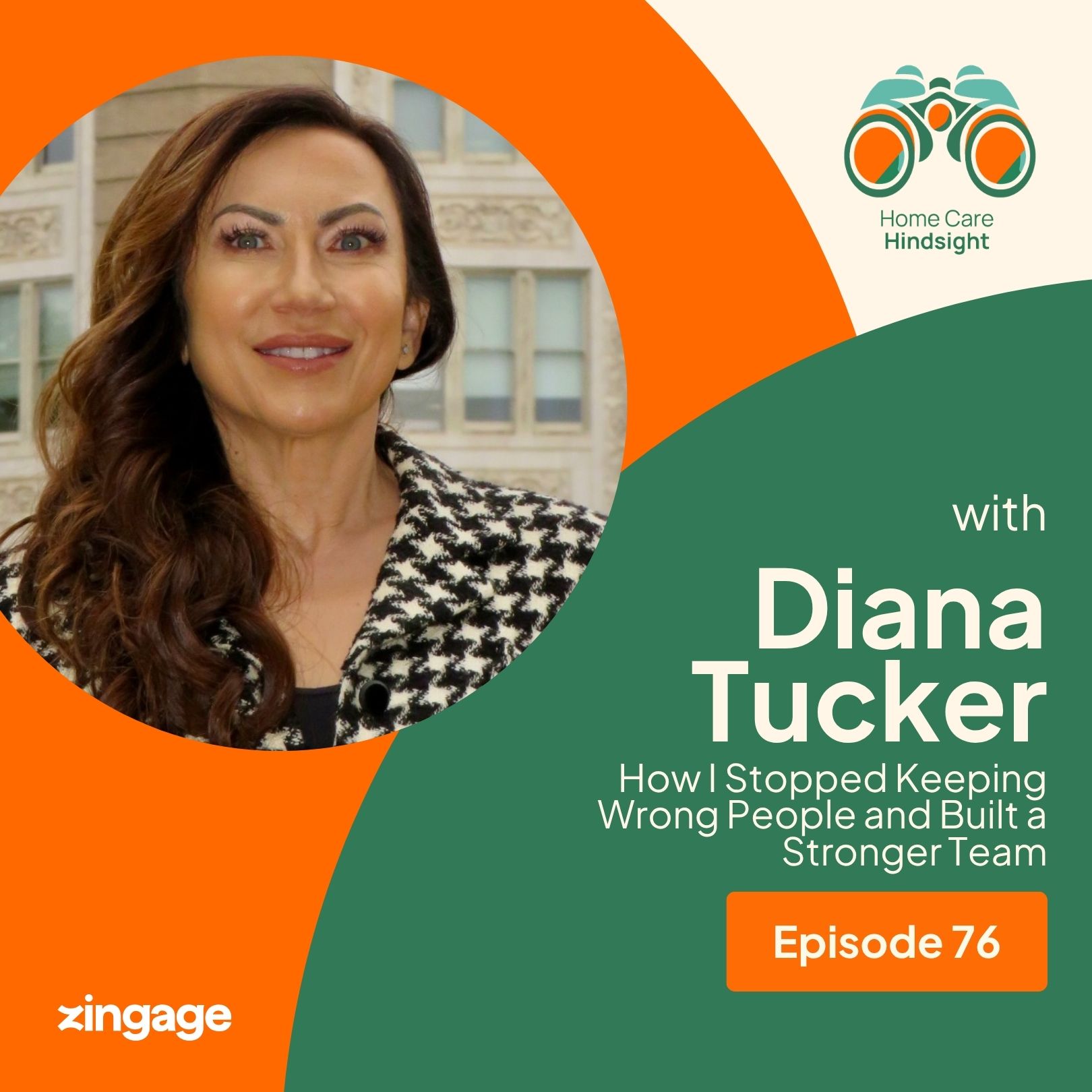
Ep 76How I Stopped Keeping Wrong People and Built a Stronger Team — Diana Tucker
Diana Tucker, co-founder and President of Private Home Care, joins host David Knack to share the hard-learned lesson that reshaped how she leads her multi-state home care company. After 11 years of growth from St. Louis into Illinois and Kansas, Diana opens up about her biggest mistake: tolerating underperformance for too long because people were kind, loyal, or simply because she didn't want to disrupt the team. Diana reveals how she learned that kindness without accountability isn't compassion, it's complacency, and how this realization transformed her approach to team building. The conversation explores the nuanced challenges of acquisitions, why Private Home Care prioritizes caregiver experience as the foundation of client care, and how Diana's Background on hospitality management shaped her service-first philosophy. She also discusses implementing predictive AI sensors in homes, why trying to be the hero in every situation burns out owners and disempowers teams, and how technology like Zingage's Riley helps maintain consistent caregiver engagement. Lesson Takeaways: 1. Kindness Without Accountability Is Complacency: Tolerating underperformance because someone is nice or has tenure isn't compassion. In home care, keeping the wrong person in the wrong role impacts client wellbeing. Honor people for their contributions, but don't let nostalgia shape your future. 2. Not Every A-to-B Player Gets You to C: Team members who excelled at getting you from startup to stability may not be the right fit for scaling. Recognize when someone's season with your company has ended and empower them to find a better fit elsewhere. 3. Put Caregivers First, Client Care Follows: Your caregivers are your product in home care. When they feel supported, engaged, and valued, they provide better care. Invest in above-industry wages, benefits, training, and systems that keep them connected to your team. 4. Stop Being the Hero in Every Situation: Jumping in to solve every scheduling issue, caregiver conflict, or anxious family call creates bottlenecks and burns you out. Teach your team how to solve problems without you so your business becomes calmer and your clients get better care. 5. Know Your Acquisitions Before You Buy: The best acquisitions happen when you already know and trust the sellers. Misaligned expectations with unfamiliar owners can lead to challenging transitions. Strong relationships and shared values create seamless integrations that retain both staff and clients. Timestamps: 00:00 – Introduction to Diana Tucker and Private Home Care's AI innovation 04:18 – The big mistake: Tolerating underperformance for too long 06:42 – When team members outgrow their roles in scaling companies 09:32 – Building a team culture, not just a family 12:25 – Acquisition lessons: Chicago versus St. Louis experiences 16:38 – What's underrated: How caregivers feel about their jobs 20:13 – Diana's hospitality background and the customer-is-always-right philosophy 22:23 – The little mistake: Trying to be the hero in every situation 25:06 – Creating caregiver stability through AI and consistent engagement 30:41 – Recent win: 11-year caregivers still showing up with smiles Quotes: Diana Tucker: "I held onto people because they were kind, or they had been with us from the start. But in home care, keeping the wrong person in the wrong role isn't just a business risk. It impacts the wellbeing of our clients." Diana Tucker: "I had to accept that kindness without accountability isn't compassion, it's complacency. Now I lead with a different philosophy: Honor people for the part they played in your journey, but don't let nostalgia shape your future." Diana Tucker: "We have to put caregivers first. When they're supported, they would provide better care for our clients. Sometimes if you just help someone very little bit when they need it most, that goes long way." David Knack: "Sometimes your team members may feel threatened or unhappy at first, but in the long run they would understand that now I can do my job better because I'm not doing someone else's job as well." Resources: 1. Connect with Diana Tucker on LinkedIn: https://www.linkedin.com/in/dianatuckerphc/ 2. Learn more about Private Home Care: https://privatehomecare.com/ 3. Connect with David Knack on LinkedIn: https://www.linkedin.com/in/david-knack/ 4. Powered by Zingage: https://zingage.com 5. Watch this episode on Zingage's YouTube: https://www.youtube.com/@Zingage

Ep 75The $19 Million HR Mistake (And Why Arbitration is Your Flood Insurance) — Angelo Spinola
Angelo Spinola, the "attorney for the home care industry" at Polsinelli, joins host David Knack for a candid conversation about the legal landmines buried in the home care business. A former caregiver himself, Angelo brings a unique, empathetic perspective to the complex web of regulations that providers face. He reveals why compliance isn't just about avoiding lawsuits, it's about protecting your enterprise value, your freedom, and the business you've worked so hard to build. Angelo breaks down the biggest blind spots he sees, from the explosion of city and state-specific laws (like domestic worker bills of rights) to the often-misunderstood reach of HIPAA and anti-kickback statutes in private pay settings. He shares a staggering story of a $19 million lawsuit triggered by a simple HR clerical error, underscoring the critical importance of having a properly implemented arbitration agreement. He also offers a realistic look at the current enforcement landscape, including aggressive DOJ investigations and what providers can expect from the shifting regulatory winds on AI and the companionship exemption. Lesson Takeaways: 1. The home care industry is a "flood zone" for litigation. A legally sound, well-executed arbitration agreement is your flood insurance. It forces individual claims instead of devastating class actions, protecting you from catastrophic, business-ending settlements. 2. Don't wait for a lawsuit, investigation, or sale to uncover your problems. Being proactive about compliance is exponentially cheaper than the reactive "strip-down and rebuild" phase, which can decimate your company's valuation and lead to massive escrows or holdbacks during an M&A transaction. 3. New laws, especially industry-specific ones like wage transparency or domestic worker bills of rights, are often "strict liability." A plaintiff's lawyer can easily scan job postings for non-compliance and build a class action, turning a simple oversight into a six or seven-figure headache. 4. Just because "everyone is doing it" doesn't make it legal. Angelo recounts the $300 million pay-per-visit case, where an industry-wide operational norm was fundamentally non-compliant, creating a massive, unforeseen liability for major providers. 5. Don't get distracted by the latest tech. Identify your single biggest operational struggle: retention, scheduling, travel time, and then find the AI tool specifically designed to solve that problem. Adoption and real ROI depend on solving a tangible pain point. Timestamps: 00:00 – Welcome to Home Care Hindsight by Zingage 01:18 – From caregiver to legal advocate: Angelo's origin story 03:06 – The shifting regulatory landscape: Companionship exemption and state laws 05:28 – The nightmare of city and municipality-level compliance 06:32 – How Polsinelli tracks the "hodgepodge" of local laws 07:44 – AI in home care: Opportunity, hype, and the regulatory whiplash 10:25 – Why AI won't replace caregivers, but will make them more efficient 12:00 – Tailoring solutions to the unique dysfunction of every agency 13:10 – The "shiny toy" syndrome: Solving a problem vs. buying a gadget 14:44 – The biggest mistake: The "me too" mentality and ignoring "flood insurance" 16:00 – The three ways providers find Angelo (and only one of them is good) 18:00 – How compliance risk destroys enterprise value in an M&A deal 20:41 – The $300 million case: When an industry-wide practice becomes a liability 22:04 – A modern horror story: The FBI visit, jail time, and cooperating the wrong way 25:03 – "Monopoly money": How potential liability impacts your sale price 28:43 – Blind spots: Fraud, HIPAA in private pay, and "gotcha" claims 31:26 – Industry-specific laws (like Philadelphia's) that fly under the radar 33:27 – Practical advice for small providers without a legal budget 34:14 – The #1 defense tool: A properly implemented arbitration agreement 35:17 – The $19 million mistake: A single wrong email and a class action nightmare 38:15 – Angelo's final plug: Why industry-specific counsel matters Quotes: Angelo Spinola: "The home care industry is a flood zone. And if you're living in a flood zone, you need flood insurance. The argument isn't, 'well, I haven't seen it flood yet.'" Angelo Spinola: "When you find a problem in diligence, you see these assessments... 'For $40 million of potential exposure.' As a litigator, we're not paying $40 million. But that potential becomes 'funny money' used to change your deal price or create massive holdbacks." David Knack: "Every home care agency is dysfunctional in its own way." Resources: 1. Connect with Angelo Spinola on LinkedIn: https://www.linkedin.com/in/angelospinola/ 2. Learn more about Polsinelli's Home Care Practice: https://www.polsinelli.com/health-care 3. Connect with David Knack on LinkedIn: https://www.linkedin.com/in/david-knack/ 4. Powered by Zingage: https://zingage.com 5. Watch this episode on Zingage's YouTube: https://www.youtube.com/@Zingage

Ep 74How I Stopped Chasing Activity Metrics and Started Teaching Referral Partners Instead — Melanie Stover
Melanie Stover, founder of Home Care Sales and the only OT-led sales training firm focused on home health, hospice, and in-home care, joins host David Knack to break down one of the most persistent mistakes in the industry: confusing activity with productivity. Melanie explains why many agencies hire a marketer, hand them a territory, and expect referrals to magically appear without giving them a real strategy. Instead of focusing on high-volume sales calls and generic pitches, Melanie advocates for "diagnosis-based selling," a method that teaches sales reps to speak the language of clinicians and connect their services directly to patient needs. She shares how this approach transforms referral conversations from brochure-dropping visits into meaningful discussions about care outcomes. Along the way, Melanie recounts a pivotal mistake early in her career that revealed how overlooked non-medical home care often is within larger healthcare organizations, and how better integration across the care continuum can unlock referrals that should have existed all along. David and Melanie also explore why educational marketing beats "donuts and brochures," the surprising effectiveness of highly targeted referral strategies, and how the best marketers build a handful of deep partnerships instead of chasing hundreds of accounts. Lesson Takeaways: 1. Activity doesn't equal Productivity: Many agencies push reps to complete dozens of sales calls per week, but without a clear message or strategy those visits rarely convert into referrals. 2. Speak the Clinician's Language: Referral partners think in diagnoses and patient outcomes. When sales reps frame conversations around specific conditions and care plans, it becomes easier for clinicians to connect patients to services. 3. Education Beats Brochures: The most effective marketers bring useful insights, such as how home care supports specific diagnoses, rather than generic lists of services. 4. Focus on the Right Accounts: The best marketers don't chase hundreds of referral sources. Instead, they build deep relationships with a small group of high-quality partners who consistently refer appropriate clients. 5. Integrate the Continuum of Care: Many healthcare systems fail to connect home health, hospice, and non-medical home care teams. When those relationships are aligned, referral opportunities multiply. Timestamps: 00:00 – Welcome to Home Care Hindsight 01:14 – David introduces the episode and mentions the Anthropic webinar 02:00 – Meet Melanie Stover and her OT-led sales training approach 03:08 – The common mistake: Hiring a salesperson and "throwing them a zip code" 04:47 – Diagnosis-based selling: Speaking the clinician's language 06:26 – Why salespeople must control and guide the conversation 08:37 – Melanie's background as a clinician and how it shaped her sales philosophy 09:55 – Creating a structured sales process for home care 11:00 – Turning referral conversations into discussions about care outcomes 12:12 – Why clinicians often overlook non-medical home care 13:40 – The "big mistake" that shaped Melanie's perspective on the industry 14:14 – Discovering an overlooked home care division during consulting work 16:24 – What leaders can do to ensure home care gets referrals 17:56 – Why sister companies often fail to refer to each other 19:21 – The care access problem in home care 20:25 – The most overrated metric in the industry: activity 22:28 – Why brochure-and-donut marketing doesn't work 22:51 – The "lazy but effective" marketer strategy 24:29 – How the best reps focus on a small number of high-value accounts Quotes: Melanie Stover: "Owners will hire a salesperson, throw them a zip code, and call it a strategy." Melanie Stover: "Activity doesn't mean productivity. We've seen reps doing 60 sales calls a week and their census is going down." Melanie Stover: "When you speak the language of clinicians, you can reach into their caseloads and connect patients to the care they need." Melanie Stover: "Referral partners don't need another home care company—they need someone who can help them solve problems." David Knack: "If you get specific about who you help, referral partners actually widen their lens of who you might be a good fit for." Resources: 1. Watch the Anthropic + Zingage webinar: https://anthropic.ondemand.goldcast.io/on-demand/034e5271-8c4f-41f6-947d-0d3b18878425 2. Connect with Melanie Stover on LinkedIn: https://www.linkedin.com/in/melaniestoverot/ 3. Learn more about Home Care Sales: https://www.homecaresales.com 4. Home Care Sales on LinkedIn: https://www.linkedin.com/company/homecaresales/ 5. Connect with David Knack on LinkedIn: https://www.linkedin.com/in/david-knack/ 6. Powered by Zingage: https://zingage.com 7. Watch this episode on Zingage's YouTube: https://www.youtube.com/@Zingage

Ep 73How I Stopped Trying to Do Everything and Built a Leadership Team Instead — Sandi McCann
Sandi McCann, founder of HomeCare of the Rockies and now an EOS implementer, joins host David Knack to share her journey from burnout to building a business that could thrive without her. Sandi opens up about her biggest mistake as a founder: trying to do everything herself for nearly a decade holding onto control out of perfectionism and fear, until she physically, emotionally, and spiritually burned out. She explains how implementing EOS (Entrepreneurial Operating System) helped her fall back in love with her business and ultimately prepared it for sale in 2021. But the sale brought an unexpected identity crisis: "Who am I when I'm not running a business?" Sandi walks through her post-exit journey of self-discovery, coaching, and ultimately becoming an EOS implementer herself. The conversation covers the underrated power of discernment when adopting new tools, why owners must know themselves before they can lead others, and the non-negotiable need for strong sales, operations, and finance functions working together. Sandi also shares how a 136-line-item P&L became a strategic asset for grants, banking, and eventually selling her company. Lesson Takeaways: 1. Know Thyself First: You can't lead effectively if you don't understand your strengths, energy drains, and natural tendencies. Self-awareness is the foundation of sustainable leadership. 2. Fill the Gaps Deliberately: Every business needs strong sales, operations, and finance functions. If you're not strong in an area, hire someone who is—don't just power through. 3. An Operating System Provides Scaffolding: Tools like EOS give owners and leadership teams a framework to delegate effectively, communicate clearly, and grow without chaos. 4. Discernment Beats Shiny Objects: Before adopting any new tool or solution, ask: What problem are we solving? What's our highest need right now? Layering on tools without focus creates incomplete solutions. 5. Clean Financials Are a Strategic Asset: Detailed, well-organized P&L statements unlock grants, build banker confidence, attract buyers, and reveal insights about retention, training ROI, and operational efficiency. Timestamps: 00:00 – Welcome to Home Care Hindsight Podcast by Zingage 01:40 – Introducing Sandi McCann: Founder, coach, EOS implementer 02:10 – Building Home Care of the Rockies: "I should have been an entrepreneur all along" 03:00 – The identity shift after selling: "Who am I when I'm not running a business?" 05:00 – The people who helped her figure out what's next 06:40 – Sandi's big mistake: Trying to do everything herself 08:50 – The toll it took: Burnout, police calls, and walking out of yoga to crises 09:40 – How EOS helped her fall back in love with the business 10:10 – Why she finally sold: "I was done" 11:30 – What prevented delegation: Control, perfectionism, and fear 12:20 – Advice for new owners: Know yourself and fill the gaps 14:50 – The three functions every business needs: Sales, operations, finance 16:10 – Underrated industry practice: Discernment when adopting new tools 18:00 – The trap of layering on tools without solving core problems 19:00 – David on incomplete solutions: "Bridges that don't reach both sides" 22:30 – The scheduler problem: Why AI can't replace human nuance yet 24:00 – A little mistake owners make: Ignoring profitability in pursuit of growth 26:30 – How weak operations undermines sales 28:00 – The power of a 136-line-item P&L 30:00 – Using financial data to win grants and attract buyers 33:00 – A recent win: Watching a team member grow into confident leadership 35:00 – Sandi's plug: Run your business on an operating system 35:45 – How to connect with Sandi Quotes: Sandi McCann: "The big mistake was just trying to carry too much. It's unsustainable for any one human, especially for things that don't give me energy." Sandi McCann: "Know thyself. You can't be all things to all people. And then fill in the gaps with what you don't have." Sandi McCann: "What's undervalued in home care is discernment. Owners are layering on tools but not running any of them really well." Sandi McCann: "If you're not in warrior shape, your people know. They see you, and they go everywhere you go." Resources: 1. Connect with Sandi McCann on LinkedIn: https://www.linkedin.com/in/sandimccann/ 2. Sandi with EOS: https://implementer.eosworldwide.com/sandi-mccann/ 3. Connect with David Knack on LinkedIn: https://www.linkedin.com/in/david-knack/ 4. Powered by Zingage: https://zingage.com 5. Watch this episode on Zingage's YouTube: https://www.youtube.com/@Zingage

Ep 72How I Stopped Being the Bottleneck and Built a Team of Heroes Instead — Sara Wilson
In this episode of Home Care Hindsight, David Knack sits down with Sara Wilson, CEO and President of Home Assist Health, to discuss her lifelong journey in home care and the biggest lesson she's learned while scaling her organization. Sara shares her unique origin story, raised in the industry as her parents helped establish one of Arizona's first Medicaid waiver agencies, and how she eventually found her way back to the family business after a brief stint in corporate America. The conversation pivots to the core mistake that many successful founders make: holding on too tightly. Sara openly discusses her identity as an "organic growth entrepreneur" and how her need to be involved in every detail became a liability as the company grew. She explains the difference between being the "hero" in the early stages and creating "heroes" on her team during the growth stage. They explore the vulnerability required to let go, the importance of hiring people who are better than you, and how data-driven dashboards can provide the confidence needed to step back and let your team run. Lesson Takeaways: 1. In the early stages of a company, being deeply involved in everything is necessary. However, to scale, you must transition from being the sole problem-solver to developing your team to hold the strings for the organization. This builds capacity and prevents you from becoming the bottleneck. 2. The belief that it's "faster to do it myself" is a trap. While it might be true in the short term, it caps the team's growth and creates a culture of dependency. Long-term success requires the patience to delegate and develop others, even if it's slower initially. 3. It can be vulnerable to hand over responsibilities that have become part of your identity, especially when someone else might do them better. True leadership requires the humility to say, "It's not about being perfect, it's about building something that doesn't require you to be perfect." 4. Implementing performance dashboards at the individual, department, and corporate levels provides objective facts. Seeing that key metrics are trending in the right direction gives leaders the peace of mind and confidence to let go and trust their team's execution. 5. While financial metrics like census and gross margin are essential for business health, they shouldn't define your value. True success is measured by impact metrics: client satisfaction, hospitalization rates, employee retention, and continuity of care. This focus keeps the organization rooted in its purpose, not just a transaction. Timestamps: 00:00 - Welcome to Home Care Hindsight powered by Zingage 01:45 - Sara's origin story: Growing up in the industry during the 1980s 03:30 - Leaving for corporate America and realizing she felt like a "cog in a wheel" 04:15 - Finding her way back and falling in love with home care professionally 06:30 - Connecting the dots: How human communication drives outcomes in home care 07:10 - The big mistake: Being a founder who over-functions and caps growth 08:55 - The three reasons we hold on: Speed, ego, and vulnerability 10:55 - The lesson: "Early stage, be the hero. Growth stage, create heroes." 11:55 - The constant challenge of stepping back and letting new programs grow 13:55 - A playbook for transition: Using revenue triggers to hire and build teams 17:10 - What's overrated in home care: Default metrics like hours and census 18:15 - What's underrated: Outcome data and the true impact on community and health systems 22:20 - The little mistake: Leaders getting in their own way by forgetting their purpose 23:35 - Practical tactic: Using data-driven decision making to find peace and let go 24:40 - Celebrating wins: Using dashboards to incentivize both quantitative and qualitative success 26:05 - What Sara is proud of lately: Achieving CHAP accreditation for home health Quotes: Sara Wilson: "Being very honest... I had to stay close to everything early on and that was necessary. But it becomes a liability at scale. It's founder over-functioning, and at some point you have to let go." Sara Wilson: "It's faster to do it myself… But what if somebody comes in and they can do it better? It requires some humility to say it's not about being perfect." Sara Wilson: "We need to know our margins, but they shouldn't define our value. What should define our value is the impact we're having in our communities and in the lives that we're touching." Sara Wilson: "If we swing too heavily into efficiency and we swing too far away from the people, we're not able to effectively engage our workforce. If we become a transactional industry, we're going to get a transactional workforce, not a compassionate, purpose-driven workforce." Resources: 1. Connect with Sara Wilson on LinkedIn: https://www.linkedin.com/in/sara-wilson-85095266/ 2. Home Assist Health Website: https://homeassisthealth.org/ 3. Connect with David Knack on LinkedIn: https://www.linkedin.com/in/david-knack/ 4. Powered by Zingage: https://zing

Ep 71Home Care Hindsight Book Club #1 - The Coaching Habit
In this special solo episode and inaugural "book club" format, David Knack shares his journey from problem-solver to coach as his team at Zingage grows from one person to six. Facing the transition from customer-facing sales to internal leadership, David opens up about his struggle with being the "smartest guy in the room" and how The Coaching Habit by Michael Bungay Stanier transformed his approach. David walks through the seven essential questions that replaced his advice-giving habit with curiosity-driven leadership. He reveals why rhetorical questions disguised as coaching actually create the same dependency problems as direct advice, how silence became his most powerful tool, and why ending every one-on-one with "what was most useful for you?" unlocks strategic thinking in his team. This episode delivers practical frameworks for home care leaders navigating the shift from doing the work to leading the people who do the work. Lesson Takeaways: 1. Stay Curious Just a Little Bit Longer: Resist the urge to jump into problem-solving mode. Ask one more question than feels comfortable, then embrace the silence. This builds team capacity and reduces your role as the "hit by a bus" problem. 2. Kill Your Rhetorical Questions: Replace "have you tried..." with "what's the real challenge here for you?" to transform fake coaching into real development. Rhetorical questions are just advice with a question mark at the end. 3. Make Help Requests Bounded: Ask "how can I help?" to get specific, limited requests instead of taking on five new tasks. This maximizes team ownership while minimizing what lands on your plate as a leader. 4. End with Action and Reflection: Close every one-on-one with "what was most useful for you?" and "what's one action you'll take this week?" This builds strategic thinking habits and ensures conversations translate to results. 5. Understand What They Really Want: Ask "what do you want?" to uncover intrinsic motivation. This creates alignment between personal priorities and role expectations, preventing burnout and boosting performance across your team. Timestamps: 00:00 - Introduction: A new book club format for Home Care Hindsight 03:13 - The shift from revenue-generating time to internal leadership 06:09 - Creating cycles of dependence and the "hit by a bus" problem 09:35 - The seven questions that transform your leadership approach 12:24 - What's the real challenge here for you? Understanding the heart of issues 15:01 - What do you want? Emily Isbell's story about promoting caregivers 18:55 - If you're saying yes to this, what are you saying no to? 21:09 - Practical applications: End every one-on-one with reflection and action Quotes: David Knack: "There's an immediate dopamine hit that comes with having somebody bring you a problem and making that problem go away pretty quickly. But it's more work on my plate and creates this cycle of dependence." David Knack: "Often I find myself saying, what if we [insert solution], or have you tried [insert solution]. I'm creating the same problem, but it's just kind of wrapped in a slightly different dressing." David Knack: "Advice is overrated. Curiosity is underrated. As soon as I feel like I've understood the situation enough, I give advice. That's not the best way to help my team grow and be really effective." Resources: 1. The Coaching Habit by Michael Bungay Stanier: https://www.amazon.com/Coaching-Habit-Less-Change-Forever/dp/0978440749 2. Connect with David Knack on LinkedIn: https://www.linkedin.com/in/david-knack/ 3. Powered by Zingage: https://zingage.com 4. Watch this episode on Zingage's YouTube: https://www.youtube.com/@Zingage

Ep 70The Broken Applicant Experience & Why Software Isn't a Magic Pill — Yvan Castilloux
Yvan Castilloux, Co-founder and CEO of Augusta.care joins host David Knack to discuss the fundamental challenges of recruiting in home care. Starting his journey in 2022, Yvan shares how discovering the "broken" applicant experience where half of potentially good candidates are confused and disengaged. This phenomenon motivated him to build solutions. He argues that solving home care's staffing problem requires aligning people, process, and technology, and debunks the myth of software as a "magic pill." The conversation dives into the critical need for sales and recruiting alignment, the surprising burnout rate among back-office staff (recruiters and schedulers), and why geographic and demographic focus is a superpower for agencies. Yvan also reflects on his biggest career mistake of reacting to every customer request instead of asking the right questions to build a unified solution, a lesson he now applies to help agencies hone their focus. Lesson Takeaways: 1. Fix the Broken Applicant Experience: Up to half of applicants are confused by generic job posts and agency messaging. Providing clear, specific information about the agency and the client match early in the process is key to engaging quality candidates. 2. Align Sales and Recruiting Strategically: Recruiting starts when sales begins. Agencies must align where they find clients with where they can successfully recruit caregivers, or risk constant fulfillment stress and recruiter burnout. 3. Embrace Focus as a Superpower: Trying to be everything to everyone dilutes effectiveness. Successful agencies consciously focus on a specific geography, client type (e.g., private pay), or caregiver demographic (e.g., students) and build their marketing and operations around it. 4. Software is a Tool, Not a Silver Bullet: Technology and AI enable automation but cannot replace the human-centric processes of home care. Success requires linking software to aligned internal operations. 5. Cross-Functional Insight Reduces Burnout: High turnover in back-office roles like scheduling is often due to burnout from inefficient, siloed processes. Enabling collaboration and data sharing between recruiters, schedulers, and sales creates a more sustainable and effective workflow. Timestamps: 00:00 – Introduction to the home care staffing challenge 01:10 – Welcome to Home Care Hindsight by Zingage 02:15 – The biggest surprise: How broken the applicant experience is 03:00 – Why caregivers are confused and how to fix it 04:10 – The importance of caregiver-client matching ("like dating") 09:10 – Reassessing strategy when you can't recruit in a sales area 10:10 – Yvan's Big Mistake: Reacting to customers instead of focusing 11:25 – A lesson from tech: Building too many tracking features 13:15 – Asking "why" to build unified solutions (The Ferrari vs. Cadillac example) 14:45 – Overrated in Home Care: Software as a magic pill 15:25 – Technology requires aligned people and processes to work 18:45 – The importance of implementation and onboarding for tech 18:55 – A Small Mistake to Quit: Lack of strategic focus 23:25 – Moving from a turnover metric to optimizing the employee journey 24:45 – The surprising problem of back-office (recruiter/scheduler) turnover 25:30 – Burnout from misalignment and inefficient processes 26:15 – Empowering collaboration between recruiters and schedulers 28:40 – A Recent Win: Evolving from a point solution to a core staffing partner 29:05 – Closing advice: Implement one change that can help your business Quotes: Yvan Castilloux: "Solving a problem in home care is both people and technology. Link both together and you'll find a solution." Yvan Castilloux: "AI is helping us do more automation, but it's not a magic pill. Like everybody says, AI will replace workers and so on. It's not gonna happen anytime soon." Yvan Castilloux: "If you're a home care agency, a caregiver is like a product… you want to build the right product for the audience you're targeting, but you also want the sales team to understand where the product fits the best." David Knack: "There are no silver bullets for this industry… it's something that's really complicated." Resources: 1. Connect with Yvan Castilloux LinkedIn: https://www.linkedin.com/in/yvancastilloux/ 2. Learn more about Augusta.care: https://www.augusta.care/ 3. Connect with David Knack on LinkedIn: https://www.linkedin.com/in/david-knack/ 4. Powered by Zingage: https://zingage.com 5. Watch this episode on Zingage's YouTube: https://www.youtube.com/@Zingage
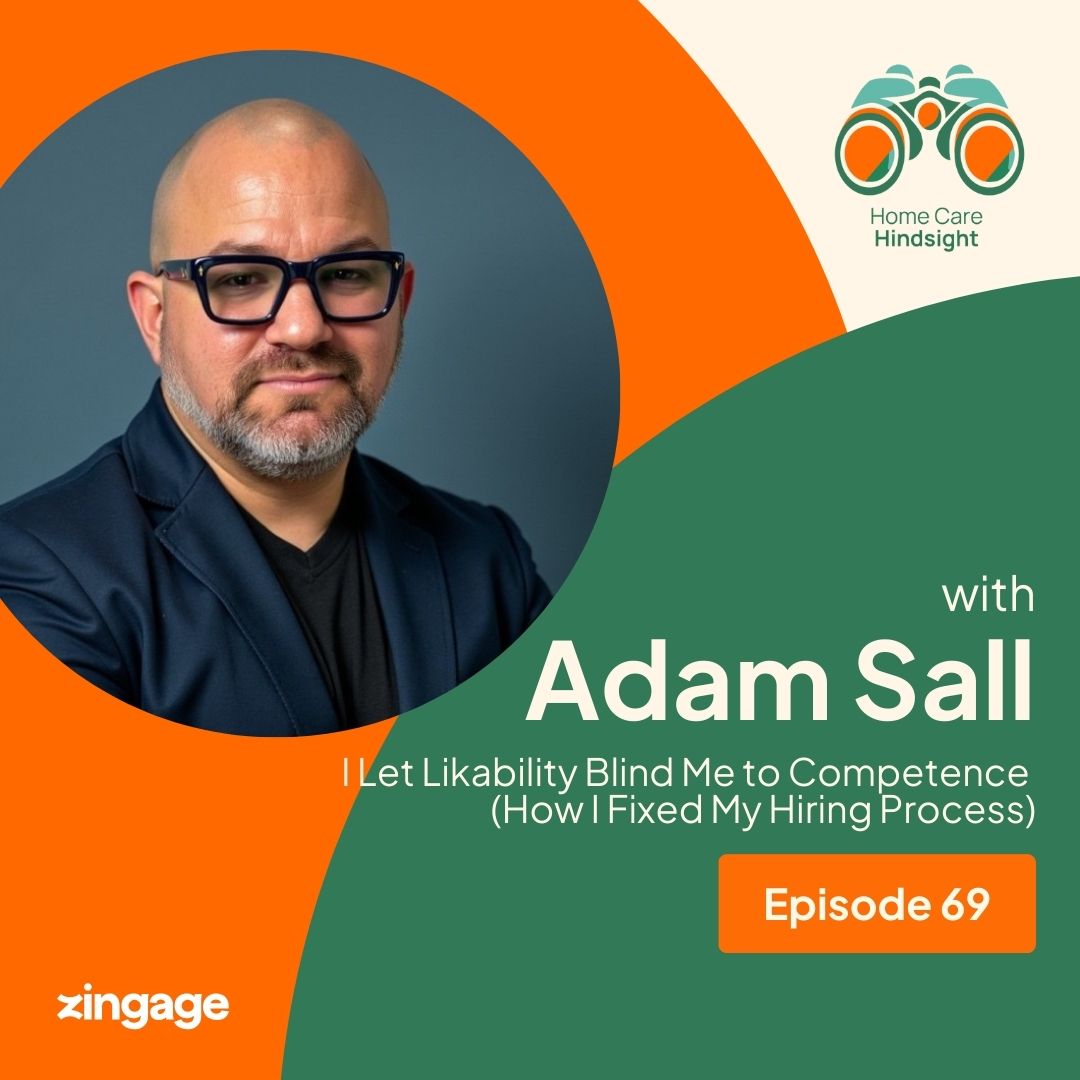
Ep 69I Let Likability Blind Me to Competence (How I Fixed My Hiring Process) — Adam Sall
Adam Sall, President and Co-founder of Advantage Pointe Home Care, joins host David Knack to discuss how his agency transitioned from traditional private duty care to becoming a vital partner for value-based healthcare entities. Drawing from his background on Wall Street, Adam explains the mechanics of risk-sharing models like MSOs and ACOs and how home care can save these organizations millions by preventing unnecessary 911 calls and hospitalizations. Adam opens up about his biggest mistake; being a "terrible interviewer" who let personal likability cloud his judgment and how he empowered an expert HR team to prioritize competence over "shooting the breeze." The conversation also explores Adam's philosophy on "sacrificing margin" to pay caregivers more, the implementation of a company-wide revenue share plan, and the critical art of having a real human conversation with staff rather than treating them like widgets. Lesson Takeaways: 1. Know Your Blind Spots in Hiring: Being a "people person" can lead to poor hiring decisions based on likability rather than skill. Trust specialized HR teams to use methodical processes to ensure the right fit. 2. Bridge the "Post-Acute" Gap: Value-based entities (MSOs/ACOs) often lack a mechanism to intervene in the home. Home care provides the "functional block" that prevents $18,000 hospitalizations for as little as $144 in triage care. 3. Align Incentives Through Revenue Sharing: Implementing a revenue share for the entire organization, from receptionists to operations, ensures everyone is invested in the quality of the "match" between caregiver and client. 4. Sacrifice Margin for Quality: Protecting margins at the expense of caregiver pay is a common industry blind spot. Charging more to pay caregivers better attracts higher-quality talent and supports retention. 5. Move from "Speaking At" to "Conversing With": Simply reading a list of patient requirements to a caregiver isn't a conversation. True engagement involves checking in on their day and vetting their specific comfort level with tasks like colostomy bag care or heavy transfers. Timestamps: 00:00 – Welcome to Home Care Hindsight by Zingage 01:25 – Introduction to Adam Sall and Advantage Pointe Home Care 01:54 – From Wall Street to Healthcare: The personal story behind the agency 03:32 – Transitioning into value-based care and care navigation 04:46 – Remedial Healthcare: Explaining ACOs vs. MSOs and risk-sharing 07:23 – The pitch: Using data to prove the value of home care to MSOs 08:49 – Real-world example: A $144 intervention vs. an $18,000 hospital bill 10:02 – Adam's Big Mistake: Being a "terrible interviewer" 11:58 – Building a methodical hiring process and stepping back from the final say 14:54 – Underrated practice: Sacrificing margin to attract better caregivers 17:24 – Creating a revenue share plan for the entire administrative team 21:14 – A common small mistake: Speaking at caregivers instead of having a conversation 25:03 – Personal values: How Adam's father influenced his leadership style 26:43 – A recent win: Scaling value-based success into Georgia, Texas, and Nevada 27:50 – Closing advice for healthcare leaders: Focus on the home Quotes: Adam Sall: "Skill and competence has to trump just me liking you as a person." Adam Sall: "You have to be willing to sacrifice margin to attract and retain a higher quality caregiver." Adam Sall: "If you don't know about what's happening post-acute... you're gonna get your clock cleaned by people who do have an in-home strategy." David Knack: "Home care is a very simple solution to a really complicated set of problems." Resources: 1. Connect with Adam Sall on LinkedIn: https://www.linkedin.com/in/adam-sall-01461856/ 2. Learn more about Advantage Pointe Home Care: https://www.advantagepointehomecare.com/ 3. Connect with David Knack on LinkedIn: https://www.linkedin.com/in/david-knack/ 4. Powered by Zingage: https://zingage.com 5. Watch this episode on Zingage's YouTube: https://www.youtube.com/@Zingage
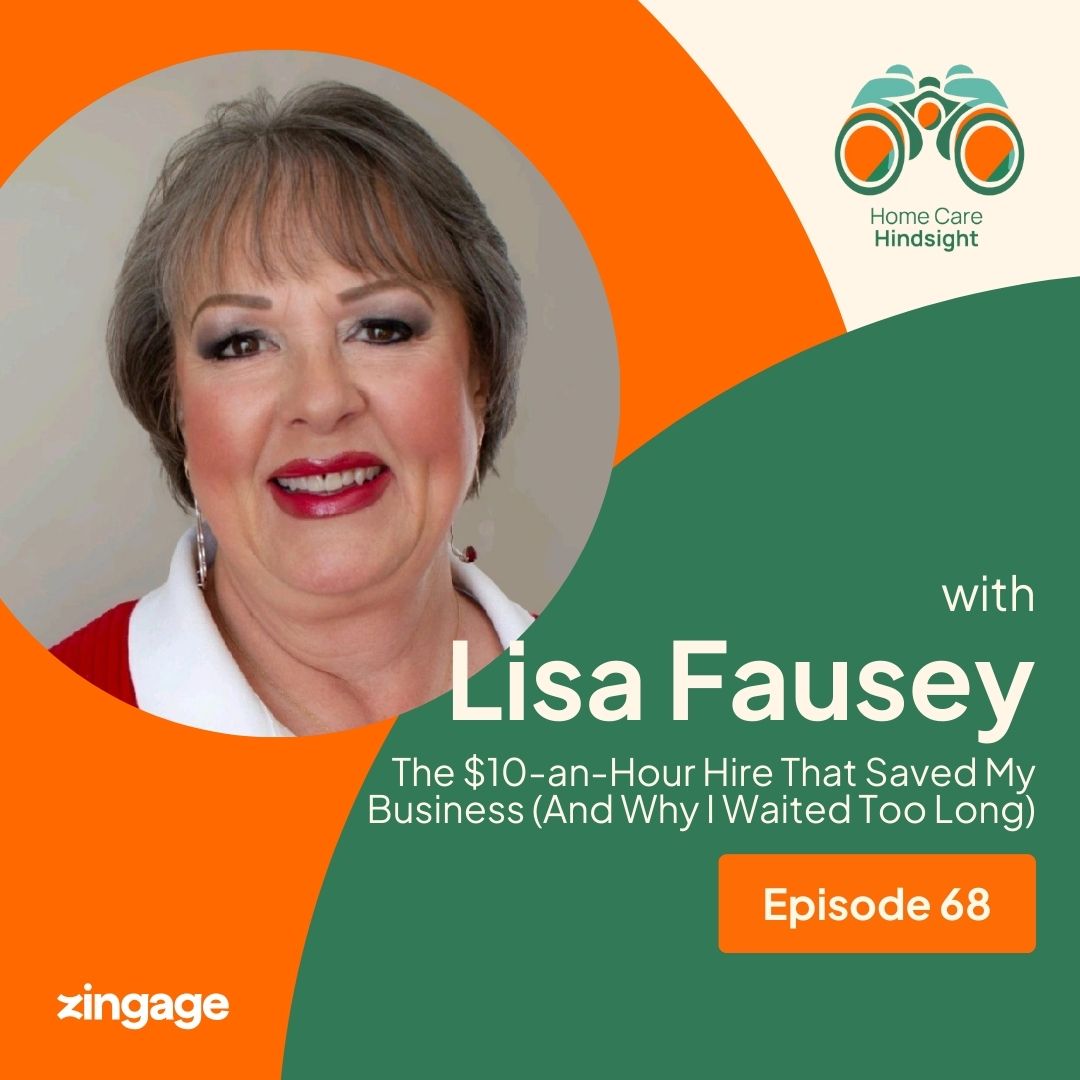
Ep 68The $10-an-Hour Hire That Saved My Business (And Why I Waited Too Long) — Lisa Fausey
Lisa Fausey, owner of 3 Home Helpers Home Care franchises, joins host David Knack to discuss her employee-centric approach to building a thriving home care business. Lisa shares how she shifted her focus from simply driving revenue to creating a culture where caregivers feel valued, heard, and supported. She opens up about her biggest early mistake, waiting over a year to hire her first office employee, and how overcoming that fear transformed her business and personal sanity. Lisa dives into the underrated power of "liberal leave" over traditional PTO, the importance of voluntary benefits for part-time caregivers, and why tracking the right KPIs like starts of care and overtime is essential for sustainable growth. She also explains how tools like Zingage help strengthen caregiver engagement and connection in a distributed workforce. The conversation highlights the tangible results of investing in people: stronger retention, a vibrant company culture, and a business that runs smoothly even when the owner steps away. Lesson Takeaways: 1. Hire Before You're Drowning: Don't let fear of spending stop you from hiring help. Delegating administrative tasks early frees you to focus on growth and prevents burnout. 2. Culture Is a Competitive Advantage: An employee-centric approach, listening, supporting, and investing in your team, differentiates you in a tight labor market and drives retention. 3. Liberal Leave Builds Trust: Offering flexible, responsibly managed time off can be more valued by staff than traditional PTO and reduces administrative complexity. 4. Track the Right KPIs, Not All of Them: Focus on actionable metrics like billable hours, starts of care, and overtime. These reflect real business health and growth more than vanity numbers. 5. Benefits Matter, Even for Part-Timers: Voluntary benefits like 401(k) matching, dental, and vision show caregivers they're valued and help build long-term financial security. Timestamps: 00:00 – Introduction to Lisa Fausey and Home Helpers Home Care 01:15 – Lisa's "why": Building a business to empower employees 02:30 – How an employee-centric culture sets her apart 04:00 – Using Zingage to engage and connect with caregivers 05:05 – How to successfully roll out an engagement platform 06:10 – Lisa's biggest mistake: Waiting too long to hire help 09:10 – The breaking point: "I was ready to give the franchise back" 10:20 – Hiring her first employee and scaling past 150–200 hours/week 11:40 – What made her first hire successful: Training and trust 13:00 – Learning from a bad hire: The importance of cultural fit 15:00 – Underrated industry practices: Liberal leave & voluntary benefits 17:45 – Most valuable benefit: Company-matched 401(k) 18:50 – A benefit that failed: Virtual health plans 20:05 – Caregiver dress code and professionalism standards 21:00 – The small mistake owners make: Not tracking KPIs 22:15 – Which KPIs matter most: Hours, starts of care, overtime 24:50 – A recent win: Revitalized company culture and holiday party success 28:10 – Closing thoughts Quotes: Lisa Fausey: "The main reason I opened this business was the ability to employ people and help change their lives." Lisa Fausey: "Don't wait. Hire as soon as you can. I was so afraid to spend money that wasn't generating money, and it almost cost me the business." Lisa Fausey: "If you don't track your numbers, you're just flying by the seat of your pants." David Knack: "Starts of care is a metric you can't hide from. It tells you if you're really growing or just deepening care with existing clients." Resources: 1. Connect with Lisa Fausey on LinkedIn: https://www.linkedin.com/in/lisafausey/ 2. Learn more about Home Helpers Home Care: https://www.homehelpershomecare.com/ 3. Connect with David Knack on LinkedIn: https://www.linkedin.com/in/david-knack/ 4. Powered by Zingage: https://zingage.com 5. Watch this episode on Zingage's YouTube: https://www.youtube.com/@Zingage

Ep 67Don't Copy-Paste Your Growth Strategy (And Other Lessons From Scaling Into NYC) — Mordechai Wolhendler
Mordechai Wolhendler, CEO of GlattHealth Consulting Group and co-founder of the Home Care Show, joins host David Knack to discuss the complexities of scaling a home care business across different regions and the hard lessons learned along the way. Mordechai shares his experience expanding an agency from upstate New York into New York City, revealing how assumptions about "copy-paste" growth can lead to major operational and cultural missteps. He breaks down the stark differences in regulations, reimbursement models, caregiver pay, and even communication styles between markets, emphasizing that what works in one region may fail in another. The conversation explores the "why factor" in decision-making, the importance of understanding local demographics, and how the right supervisor can transform an underperforming employee into a star. Mordechai also highlights the upcoming Home Care Show in Miami, Florida, an event designed for multi-state operators and growing agencies, and reflects on the value of taking time for self-care, even in a demanding industry. Lesson Takeaways: 1. Growth Isn't Copy-Paste: Each market has unique regulations, reimbursement structures, and cultural dynamics. What works in one region may not translate to another. Research and adaptation are key. 2. Understand the "Why Factor": Whether dealing with employees, clients, or sellers, digging into the underlying motivations behind decisions can shape better outcomes and deal structures. 3. The Right Fit Can Change Everything: An employee's performance can dramatically shift under different leadership. Don't underestimate the impact of supervisor-employee alignment. 4. Local Knowledge Drives Success: To truly serve a community, you must understand its demographics, cultures, and daily rhythms, sometimes block by block. 5. Invest in Yourself, Too: As a leader, taking time for self-care (whether it's laser eye surgery or simply setting boundaries) is essential for sustained performance and well-being. Timestamps: 00:00 – Introduction to Mordechai Wolhendler and his background in home care 01:15 – Overview of Health Consulting Group's services: startups, growth, M&A 02:35 – Common projects: state reporting, grants, and regulatory compliance 03:30 – The "building permit" analogy for home care licensure 04:15 – Announcing the Home Care Show in Miami (Feb 17–18) 05:00 – The origin and vision behind the Home Care Show 06:25 – Mordechai's biggest mistake: assuming NYC expansion would be "copy-paste" 07:50 – How regulations and business models differ in NYC vs. upstate NY 09:40 – Reimbursement challenges in a Medicaid-heavy, volume-driven market 11:00 – Cultural and communication differences in NYC 12:00 – How they adapted: finding a niche and differentiating in a saturated market 13:30 – The importance of understanding local demographics and cultures 14:40 – Underrated in home care: the "why factor" 16:25 – How to dig beyond surface-level answers to uncover real motivations 18:10 – The challenge of working with human beings as your "product" 19:50 – A small mistake owners make: blaming yourself for employee underperformance 21:10 – Setting clear KPIs and knowing when to let go of a "good" employee 22:10 – Balancing "hire slow, fire fast" with employee growth potential 23:40 – How the right supervisor can turn a struggling employee into a top performer 25:00 – The disparity between hiring office staff vs. caregivers 26:30 – The difficulty of predicting caregiver reliability and fit 28:10 – A recent win: successfully scaling the Home Care Show to a two-day event 29:20 – Personal win: scheduling laser eye surgery consultation after years of hesitation 30:45 – Plug: The Home Care Show in Miami FL for multi-state and growth-focused operators 31:05 – Closing remarks Quotes: Mordechai Wolhendler: "A mistake is only a mistake if you don't learn anything." Mordechai Wolhendler: "New York City is a volume game. Outside of the city, even in the rest of the state, you don't have that the same way." Mordechai Wolhendler: "The 'why factor' is something people don't look at enough. Understanding why someone wants to sell their agency completely alters the deal structure." David Knack: "Sometimes you can copy-paste, but not always. You have to be ready to go back to the drawing board." Mordechai Wolhendler: "We often don't give ourselves enough time to ourselves. Taking care of yourself is something we need to do more of." Resources: 1. Connect with Mordechai Wolhendler on LinkedIn: https://www.linkedin.com/in/mordechai-wolhendler-353b63a2/ 2. Connect with David Knack on LinkedIn: https://www.linkedin.com/in/david-knack/ 3. Powered by Zingage: https://zingage.com 4. Watch this episode on Zingage's YouTube: https://www.youtube.com/@Zingage
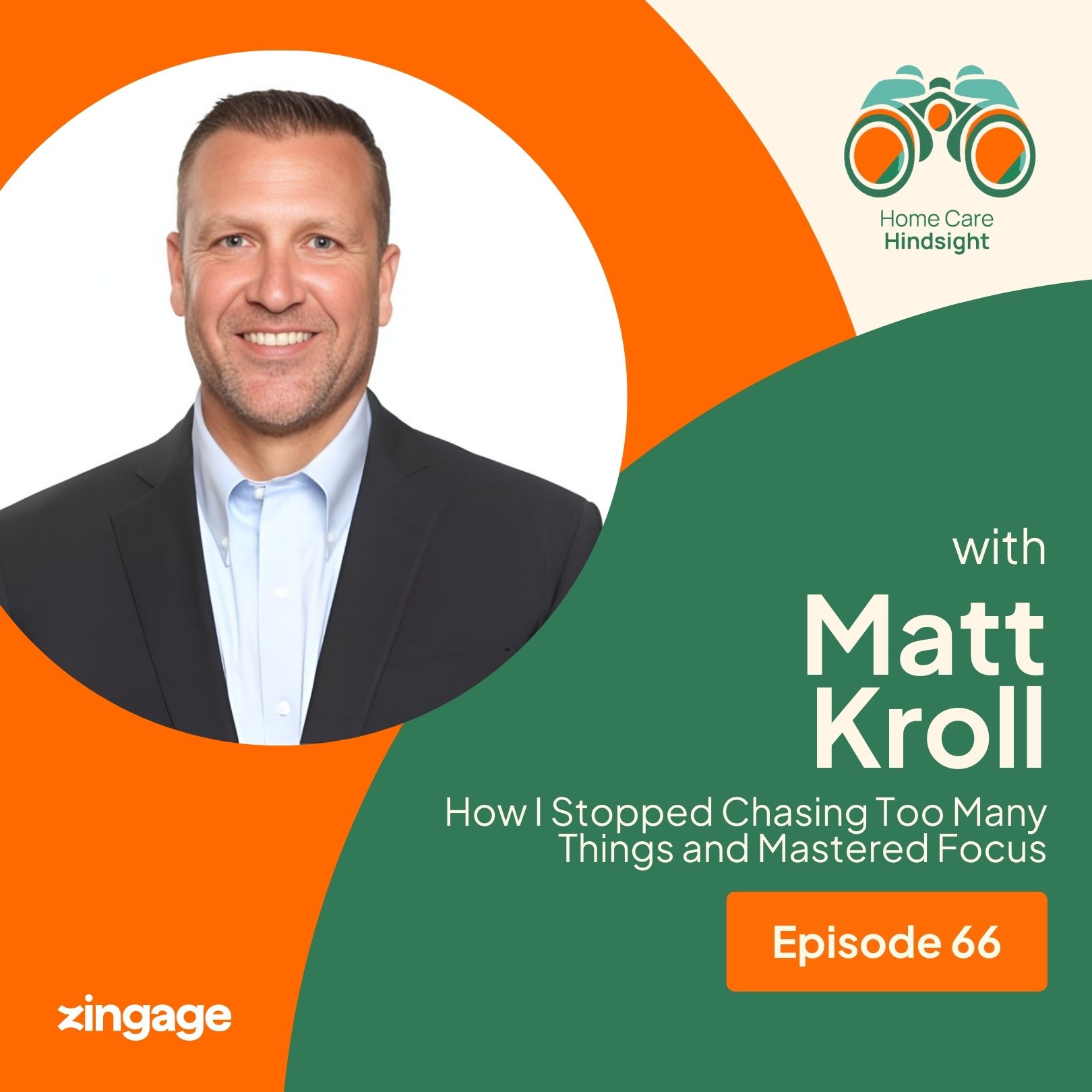
Ep 66How I Stopped Chasing Too Many Things and Mastered Focus — Matt Kroll
Matt Kroll, President of Personal Care Services at Bayada Home Health Care, joins host David Knack for a deep dive into the lessons from his 25-year career. Matt opens up about his biggest strategic mistake: trying to launch and manage too many different service lines at once in a search for an "easy way out," which diluted focus and resources. He explains how learning to master one thing before diversifying became the key to successfully scaling operations across over 100 offices. Matt shares Bayada's relentless focus on caregiver recognition, wages, and career advancement as their cultural north star. The conversation delves into the critical balance between investing in caregivers and maintaining financial health, the underrated need for the home care industry to embrace healthcare outcomes and data, and how Bayada is using predictive AI models to prevent hospitalizations and improve care. Lesson Takeaways: 1. Master One Thing Before You Diversify: The temptation to add new services when one gets challenging is strong, but it dilutes focus. True success comes from building excellence and infrastructure in one core service before expanding. 2. Link Short-Term Actions to Long-Term Vision: Avoid the exhausting cycle of week-to-week reactivity. Build business rhythms that connect daily and weekly metrics to quarterly and annual goals to create proactive, sustainable momentum. 3. Invest in Quality and Support, Not Just Wages: While competitive pay is crucial, caregivers and families deeply value consistent, reliable support. Investing in quality supervision and being present for your team builds loyalty and better care outcomes. 4. Embrace Data as a Healthcare Partner: To secure our place in the healthcare ecosystem, we must move beyond satisfaction metrics. Tracking and improving clinical outcomes like falls and hospitalizations demonstrates our value to payers and referral sources. 5. "Embrace the Chaos" with Consistent Execution: Private pay home care is inherently volatile. The key isn't controlling every discharge or admission, but maintaining consistent marketing, admissions, and quality efforts over the long term, like running a marathon. Timestamps: 00:00 - The privilege of care and what hooked Matt for 25 years 04:43 - The alternate path: Wall Street and the importance of relationships 06:50 - Bayada's cultural markers: Recognition, wages, and caregiver advancement 08:40 - The financial equation: Investing in caregivers while maintaining margins 11:30 - The big mistake: Trying to do too many things at once 14:25 - How to thoughtfully diversify payer sources (Medicaid vs. Private Pay) 16:40 - The underrated thing: Embracing our role in the healthcare ecosystem 18:20 - The metrics that matter: Tracking falls, hospitalizations, and ER visits 21:30 - Using predictive AI and care data to prevent adverse events 26:45 - Managing at scale: Building business rhythms beyond week-to-week volatility 29:50 - The little mistake: Managing week-to-week instead of long-term 32:15 - The importance of betting on quality and supervision 35:10 - A recent win: Using data to drive a new "Enhanced Quality of Care" model 37:45 - What to plug: Getting involved with industry advocacy Quotes: Matt Kroll: "I think what I learned is... the need to have a plan to be really good at one thing before you start trying to do multiple things." Matt Kroll: "Quality isn't just about going out and supervising to make sure things are done right. It's about being there when the caregivers and when the families need you." David Knack: "If all we are as a home care agency is a staffing company, it's gonna be really hard to compete... If you are finding other ways to add value... you make their life so many multiples better." David Knack: "You've got to stop being the 'hit by a bus' problems in our own businesses. It's gotta get out of our brains... thanks to the innovations of AI, you can systematize that knowledge." Resources: 1. Connect with Matt Kroll on LinkedIn: https://www.linkedin.com/in/matt-kroll/ 2. Learn more about Bayada Home Health Care: https://www.bayada.com/ 3. Get involved with the Home Care Association of America (HCAOA): https://www.hcaoa.org/ 4. Connect with David Knack on LinkedIn: https://www.linkedin.com/in/david-knack/ 5. Powered by Zingage: https://zingage.com 6. Watch this episode on Zingage's YouTube: https://www.youtube.com/@Zingage

Ep 65How I Stopped Caring About "Tech" And Focused On What Works — Shauna Sweeney
Shauna Sweeney, founder and CEO of Tender Care, joins host David Knack to discuss the pivotal mistake that reshaped her approach to building technology for families navigating aging and care. Shauna, a former Facebook executive who entered the care space while caring for her father with Alzheimer's, opens up about how she initially overlooked a simple, physical solution, the Tender ID, because it didn't fit the "tech founder" mold. She shares how clinging to the vision of a complex, all-in-one digital platform delayed solving a critical, immediate need: giving first responders instant access to vital health information during emergencies. Shauna explains why "letting what a founder is supposed to look like get in the way of actually solving the problem" was a costly error, and how embracing a tangible, QR-based tool unlocked rapid adoption and real impact. The conversation explores the underrated power of video for home care marketing, the small mistake of ignoring online reputation, and how the industry must adapt to a more tech-savvy, time-starved family decision-maker. Shauna also shares exciting news about journalist Lisa Ling joining Tender Care as Chief Caregiver Advocate to amplify stories of care. Lesson Takeaways: 1. Problems Need Solutions, Not Your Ego: Don't let preconceived notions of what a "tech company" or "founder" should be stop you from building what the market clearly needs. If a simple, tangible solution works, build it, even if it's not the sleek software you envisioned. 2. Control What You Can Promise: Before building complex integrations reliant on other systems, start with solutions you can fully control and deliver flawlessly. This builds trust and allows you to make and keep clear promises to your users. 3. Show Your Humanity on Video: Home care is built on trust and human connection. Underutilized video is a powerful tool to let families see the compassionate, real people behind your agency. Authenticity beats polished production every time. 4. Tend Your Digital Reputation: A single unanswered negative review can undermine years of trust-building. Proactively manage your online presence; it's a small task with a massive impact on a family's decision to choose you. 5. Competition is Heating Up, Differentiate: As demand grows, so does competition. Compete on quality, trust, and hyper-local, personalized relationships. Big agencies must learn to "stay big but feel small" to win. Timestamps: 00:00 – Introduction to Shauna Sweeney and Tender Care's mission 02:10 – Shauna's background: From Facebook to family caregiver 05:30 – The recurring mistake: Ignoring market signal for a physical product 08:45 – The "Tender ID": A simple QR code that replaces the Vial of Life 11:13 – How the ID triggers emergency alerts and stabilizes families 16:10 – Letting founder ego block the right solution 20:18 – The most underrated tool in home care: Authentic video marketing 25:22 – The little mistake: Neglecting your online review reputation 28:09 – The future of home care: Tech-savvy buyers and hyper-local trust 33:20 – A recent win: Lisa Ling joins Tender Care as Chief Caregiver Advocate 35:07 – How to get Tender IDs for your clients and join the trusted network Quotes: Shauna Sweeney: "My big mistake was letting the better of what one is supposed to look like when solving a problem, get in the way of actually solving the problem. As soon as we actually built these [Tender IDs], they started to go. It's the classic story of the fish jumping into the boat." Shauna Sweeney: "Every day you have to choose to be in service of the solution more than your ego. You have to want to solve the problem more than you want to look cool." David Knack: "If all we are as a home care agency is a staffing company, it's gonna be really hard to compete... If you are finding other ways to add value, to provide useful resources... it doesn't matter that you cost 20% more, you make their life so many multiples better that they'll pay it." David Knack: "Families are gonna fall in love with you. You just have to go out there and let them." Resources: 1. Connect with Shauna Sweeney on LinkedIn: https://www.linkedin.com/in/shaunas/ 2. Learn more about Tender Care and the Tender ID: https://trytendercare.com/ 3. Apply to join the Tender Care Trusted Network: https://trytendercare.com/join-the-network/ 4. Connect with David Knack on LinkedIn: https://www.linkedin.com/in/david-knack/ 5. Powered by Zingage: https://zingage.com 6. Watch this episode on Zingage's YouTube: https://www.youtube.com/@Zingage
Ep 64My Fear of Risks Slowed My Career Down — Michelle Cone
Michelle Cone, SVP of Industry Engagement at HomeWell Franchising, joins host David Knack for a conversation that spans from marathon running to mission-driven leadership. Michelle opens up about the career mistake that shaped her trajectory: playing it safe early on and not taking enough risks. She explains how saying "yes" to an unfamiliar role in home care as an inexperienced mom became the turning point that led to a 27-year career. Michelle dives into the underrated core of home care: delivering exceptional quality care as the ultimate growth engine. She unpacks why a strong intake process is a make-or-break function, how to avoid common pitfalls that waste time and trust, and why the industry's shift toward value-based care means every agency must pay attention to CMS and healthcare ecosystem changes, even if they're private-pay. The conversation also explores how to use AI and automation to free up time for human connection, why the best caregivers don't want to work with "bozos," and how to build a culture where mission drives every operational decision. Lesson Takeaways: 1. Take the Leap Before You Feel Ready: Waiting for the perfect moment or full confidence can cost you career-defining opportunities. Often, the best growth comes from saying "yes" and stretching into the unknown. 2. Quality Care is Your Best Marketing: Your first client and the quality of care you deliver set the tone for everything; caregiver recruitment, retention, client satisfaction, and community reputation. Start small, excel, and let the results speak. 3. Master the Intake Conversation: A great intake process isn't about selling, it's about listening, educating, and qualifying. By understanding a caller's real needs and fears, you build trust whether they become a client or not. 4. Automate the Robotic, Humanize the Relational: Use technology to handle administrative tasks so your team can focus on what matters: in-person introductions, caregiver support, and building trust with clients and families. 5. Pay Attention to the Healthcare Ecosystem: Even if you're private-pay, changes in CMS, Medicaid, and hospital-at-home models impact your referral sources and market opportunities. Ignoring these shifts is a strategic mistake. Timestamps: 00:00 – The loneliness of caregiving and the need for human connection 02:10 – Introducing Michelle Cone and her role at HomeWell Franchising 05:30 – The mistake of avoiding risk early in her career 08:45 – How a scheduling coordinator job changed her life 11:20 – Why self-awareness and team diversity drive success 14:50 – The most underrated thing in home care: exceptional quality care 18:10 – Why your best caregivers don't want to work with "bozos" 21:45 – The shiny object trap: AI, tech, and keeping the human touch 24:30 – How a solid intake process transforms conversion and trust 30:15 – Turning lost leads into future clients with education and empathy 34:00 – Michelle's recent win: Record franchise growth at HomeWell 36:20 – How to connect with HomeWell and explore franchising Quotes: Michelle Cone: "I wish in my earlier career I would've taken more risks. You're building confidence, you're becoming a subject matter expert, and we all face imposter syndrome. Take the jump and then stretch." Michelle Cone: "Your greatest asset starts with your very first client and providing exceptional care to that client. Great quality client care is your greatest acquisition tool; for clients, for caregivers, for retention." David Knack: "Your best caregivers don't want to work with inconsistent caregivers or bad hires. If they feel like they're the only ones who care, they'll wonder if they're in the right organization." David Knack: "The question is: what parts of the scheduler role can we automate to prevent them from being stuck in the office and instead allow them to be in clients' homes doing introductions?" Resources: 1. Learn more about HomeWell Franchising: https://homewellfranchising.com/ 2. Find a HomeWell agency near you: https://homewellcares.com/ 3. Connect with Michelle Cone on LinkedIn: https://www.linkedin.com/in/michelle-cone-748378127/ 4. Connect with David Knack on LinkedIn: https://www.linkedin.com/in/david-knack/ 5. Powered by Zingage: https://zingage.com 6. Watch this episode on Zingage's YouTube: https://www.youtube.com/@Zingage
Ep 63My Misaligned Entrepreneurship Approach Burned Me Out — Jessica Nobles
Jessica Nobles, co-founder of Home Care Ops, joins host David Knack for a powerful conversation about the two mistakes that have defined her 20-year journey in home care. Jessica opens up about the entrepreneurial identity crisis that left her burned out and unfulfilled, living as an "empire builder" when she's truly a "lifestyle entrepreneur." She reveals how this misalignment drained her joy and impacted her team, and shares the framework to help every business owner define their own path to success. The conversation then dives into the tactical hiring mistake she's made "over and over and over again": bringing people onto the team without a clear onboarding plan. Jessica unpacks her "P.O.I.N.T." system, a practical, step-by-step method to get any new hire integrated, confident, and productive in their first six weeks. She also shares the three pillars of a thriving team culture, why "there's no such thing as a difficult conversation, only one that was waited too long to have," and how to use AI to escape the "hit-by-a-bus" problem of institutional knowledge. Lesson Takeaways: 1. Know Your Entrepreneurial Type: Success isn't one-size-fits-all. Define whether you're a Lifestyle Entrepreneur (building for freedom/fulfillment), an Empire Builder (focused on growth and scale), or a Serial Entrepreneur (pursuing multiple ventures). Aligning your business with your true type prevents burnout and creates lasting satisfaction. 2. Prepare the Soil Before You Plant: Never hire someone before you're ready. Create a "P.O.I.N.T." plan (Plan, Outcome, Intent, Next Steps, Team/Timeline) for their first 14 days and six weeks. This saves time, money, and frustration, and sets the new hire—and your business—up for success. 3. Build on Three Pillars: Foster a culture of transparent communication, clear & defined expectations, and supportive accountability. When these are in place, trust grows, performance improves, and difficult conversations become proactive check-ins. 4. Delegate the "80%" to Gain Momentum: Let go of perfection. If your team can accomplish 80% of a task as well as you can, delegate it. This moves you from reactive maintenance to strategic momentum, freeing you to scale instead of just surviving. 5. Separate Your Identity from Your Business: Your worth is not defined by your revenue or hours delivered. To avoid burnout and lead sustainably, consciously separate who you are from what your business does, and anchor your sense of success in your personal priorities and impact. Timestamps:00:00 - Introduction to Jessica Nobles and Home Care Ops 01:58 - The patterns of success: strategic planning and empowered delegation 04:16 - Moving from reactive maintenance to proactive momentum 05:32 - David's "big mistake" question 06:12 - The entrepreneurial mistake: Living as the wrong type of founder 09:48 - The three entrepreneurial types: Lifestyle, Empire Builder, and Serial 11:26 - Chasing external milestones vs. finding internal fulfillment 13:32 - Redefining success around life priorities, not just business metrics 16:18 - The tactical mistake: Hiring before you're ready 20:22 - The "P.O.I.N.T." framework for successful onboarding 23:08 - "New level, same devil"—why hiring mistakes repeat at every stage 26:53 - The three pillars to prevent hiring failures 29:42 - Why waiting creates "difficult" conversations 31:38 - Balancing supportive accountability vs. micromanagement 34:02 - Systems and processes enable true delegation and scale 37:30 - Using AI to document institutional knowledge and build SOPs 40:12 - A recent win: Taking a sabbatical thanks to a self-sustaining executive team 42:07 - Plug: The Home Care Owners Community and how to connect Quotes:Jessica Nobles: "I lived for 20 years in the cycle of trying to be this empire builder… and I found myself at a place of intense burnout. I was very unfulfilled. I was speaking on stages and people were like, 'Oh, she's so great,' but internally, I was very disconnected from my internal vision." Jessica Nobles: "When it comes to growth, it's usually the same mistakes that I see people making over and over and over again. And when you're getting ready to hire someone, really sit down and put together a plan to get that new hire on point. It'll save you tons of time, tons of money, tons of frustration." David Knack: "You are not gonna arrive at a point in time where all of a sudden you feel fulfilled in your business because of some kind of external milestone… that's emotional work you as an entrepreneur and a leader have to do inside yourself." David Knack: "We've gotta stop being the 'hit by a bus' problems in our own businesses. It's gotta get out of our brains… thanks to the innovations of AI, you can reformat that into whatever version you want it to be on the back end." Resources: 1. Connect with Jessica Nobles on LinkedIn: https://www.linkedin.com/in/jessicanobles/ 2. Learn more about Home Care Ops: https://homecareops.com/ 3. Join the Home Care Owners Communi
Ep 62I Trusted Passion Over Process and It Broke My Business – Kristen Duell
Kristen Duell, founder of Momentum Healthcare and Technology Consulting, joins host David Knack for a raw conversation about the recurring mistake that has shaped her entire leadership journey: believing that shared passion and purpose are enough to run a successful business. Kristen opens up about the "black eyes and kidney punches" she's endured from moving too fast and trusting that others shared her standards of integrity, without first establishing clear structure and alignment. She explains why "momentum without tension is chaos" and how this hard-won lesson is now the core philosophy of her consulting firm. The conversation dives into the underrated power of emotional intelligence in an A.I.-obsessed world, the critical need for intentional internal communication, and how to evaluate new technology with a life-or-death lens. Kristen also shares the inspiring story behind her non-profit, Ideal for Healthcare, and its mission to create upward mobility and visibility for women in the industry. Lesson Takeaways: 1. Structure Fuels Passion: A shared mission and great culture are not enough to protect a business. You must combine them with clear operating systems, defined expectations, and organizational alignment to execute and grow effectively. 2. Don't abandon emotion when using A.I.: In the rush to adopt artificial intelligence, don't overlook Emotional & Adaptive Intelligence. The best leaders understand different perspectives and practice critical thinking and empathy. 3. Market to Your Internal Team: Invest the same level of effort in internal storytelling and communication as you do in external marketing. Reminding your team why their work matters is a powerful driver of retention and satisfaction. 4. Evaluate Tech with a Human Lens: Before implementing any new technology, ask the tough questions: How will it perform in a life-or-death situation? What is the human impact on clients and caregivers? If it doesn't serve them well, it's not the right solution. 5. Busyness Does Not Equal Success: Stop equating exhaustion with achievement. Make strategic time for the important work, or you risk burnout and a business that can't sustain itself. Timestamps: 00:00 - Introduction to Kristen Duell and her accidental entrepreneurship 02:45 - The inspiration behind Momentum Healthcare & Technology Consulting 08:12 - David's "big mistake" question: What is your recurring failure? 11:13 - The core mistake: Believing passion and purpose are enough to protect a business 13:30 - Why "Momentum without tension is chaos" 16:10 - Balancing high-speed growth with necessary structure and clarity 17:02 - The most underrated thing in home care: Emotional & Adaptive Intelligence 19:42 - The danger of equating busyness with success 20:18 - The influx of Venture Capital and A.I. in home care: Exciting vs. concerning trends 25:22 - The critical question to ask before implementing any new technology 26:52 - The little mistake: Neglecting intentional internal communication 29:10 - Why you need to "market" your mission to your employees 32:37 - A recent win: Helping a billion-dollar organization simplify its tech stack 35:46 - The story behind Ideal for Healthcare and its mission 39:33 - How to get involved with the Ideal for Healthcare community Quotes: Kristen Duel: "I've actually learned that structure and clarity and alignment are just as critical at the heart of really being able to execute and grow within an organization or to execute the mission and vision of a business." Kristen Duel: "Somewhere along the line, we started equating exhaustion with success. And that's really just a dangerous place to live. I've lived it, and I can tell you it doesn't end well." David Knack: "It doesn't matter how fast you're going if you're not going in the right direction. And it doesn't matter how fast you're going if you can't control it." David Knack: "There is a customer in the business and that is the employee, and it is somebody's job to think about how to continually market and sell the business to the people who already signed up to work here." Resources: 1. Connect with Kristen Duell on LinkedIn: https://www.linkedin.com/in/kristenpenfold/ 2. Learn more about Momentum Healthcare and Technology Consulting: https://momentumhtconsulting.com/ 3. Learn more about Ideal for Healthcare: http://www.ideal4healthcare.com 4. Connect with David Knack on LinkedIn: https://www.linkedin.com/in/david-knack/ 5. Powered by Zingage: https://zingage.com 6. Watch Episode on Zingage's YouTube: https://www.youtube.com/@Zingage

Ep 61My Failed Acquisition Pushed Me To Do More Due Diligence – Kevin Smith
Kevin Smith, CEO of Best of Care, joins host David Knack to pull back the curtain on a splashy but failed acquisition that taught him a brutal lesson about due diligence. Kevin opens up about buying an adult day health program's home care arm, a deal that made perfect sense on paper but fell apart at the seams, resulting in a massive revenue shortfall. He reflects on the costly mistake of relying too heavily on his relationship-driven "gut" for a process that required forensic analysis, and how the timing—closing the deal the day before his first child was born—added immense personal pressure. Kevin shares how this "abject failure" became the foundation for his subsequent successful acquisitions and offers hard-won wisdom on hiring, the trap of seeking the "perfect" candidate, and why the industry's obsession with the "10,000 hours per week" milestone is overrated. The discussion offers actionable advice on building a resilient, multi-service company that prioritizes its people. Lesson Takeaways: 1. Due Diligence Over Gut Feeling: A strategic acquisition requires meticulous, data-driven verification. Relying solely on a good relationship or a "vibe" can lead to catastrophic financial and operational failure. 2. Hire for Potential, Not Perfection: Letting the "perfect" candidate be the enemy of the "good" one leads to hiring paralysis. Often, the candidate with 80% of the skills but great potential outperforms the theoretical perfect fit. 3. Celebrate Milestones, But Keep Momentum: Industry benchmarks like "10,000 hours per week" are arbitrary. While it's good to celebrate wins, a true leader is always focused on the next strategic goal to maintain growth and morale. 4. Build a Culture That Supports Real Life: Fostering a company culture that actively supports employees' lives outside of work is a powerful driver of loyalty and retention. 5. Don't Over-Invest in Low-Impact Marketing: A functional website and basic presence are essential, but over-engineering brochures and web copy is a poor use of energy. Home care is a trust and relationship business; focus your efforts there. Timestamps: 00:00 - Introduction to Kevin Smith and Best of Care's 44-year history 02:45 - The synergy between Medicaid expertise and a private pay senior living model 08:12 - David's "big mistake" question: What went wrong? 08:37 - The story of the failed adult day health home care acquisition 10:15 - The perfect storm: Closing the deal the day before becoming a parent 11:01 - The aftermath: Retaining only 30% of the expected revenue 12:13 - The key lesson: Applying extreme due diligence to future, successful acquisitions 13:47 - Kevin's "gut feel" approach and when it fails 14:27 - Hiring mistakes: Why the 80% candidate often beats the 100% candidate 16:40 - The most overrated thing in home care: The "10,000 hours per week" milestone 19:32 - The next big goal: One million service hours 21:29 - The leadership challenge of always moving to "what's next" 22:41 - The reward of building a coaching tree and developing leaders from within 23:45 - How a millennial leadership team fosters a culture of work-life balance 25:13 - The little mistake: Overthinking your website and marketing materials 27:50 - A recent win: The successful integration of diversified service lines 29:04 - A deep dive into the move management business and its synergy with home care 32:08 - What to plug: Best of Care's holistic suite of services for senior living communities Quotes: Kevin Smith: "When you fail in life, that's how you learn. You don't learn when you win, you learn when you fail, and when you fail, fail hard. And we failed really hard on that." Kevin Smith: "The common denominator... is the lack of treating caregivers as family members of your company. They are the lifeline of your organization to grow." David Knack: "I have a hypothesis... you strike me as somebody who, gut is a really strong asset for you, that a lot of times you make decisions based on feel and it goes well." David Knack: "The purpose of a website is, does this business exist or not?... This is a relationship business. This is a trust business. This is a referral business." Resources: 1. Connect with Kevin Smith on LinkedIn: https://www.linkedin.com/in/kevin-smith-04755422/ 2. Learn more about Best of Care on their website: https://www.bestofcareinc.com/ 3. Connect with David Knack on LinkedIn: https://www.linkedin.com/in/david-knack/ 4. Powered by Zingage: https://zingage.com 5. Watch Episode on Zingage's YouTube: https://www.youtube.com/@Zingage

Ep 60On Death and Dying in Home Care Part 2 – Gabrielle Pumpian and Nicole Soares
Gabrielle Pumpian returns, joined by death doula and end-of-life consultant Nicole Soares, for a profound conversation about the one thing every home care agency deals with but few are prepared for: death. They explore a common operational mistake: failing to align a caregiver's duties with a client's core values, leading to disengagement and a reduced schedule. Nicole shares her powerful personal journey that led her to become a "one-stop death shop," while Gabby reflects on the costly mindset of viewing a client's passing primarily as a revenue loss. The discussion offers actionable advice on preparing caregivers for end-of-life care, creating true partnerships with hospice, and building a company culture that sees death not as a failure, but as a sacred, honored part of life. Lesson Takeaways: 1. Align Care with Client Values, Not Just Tasks: A client's well-being is tied to their passions. Failing to connect care with what brings them joy can lead to client dissatisfaction and reduced hours. 2. Reframe Death from a Loss to an Honor: Shift the internal mindset from seeing a client's passing as a revenue hit to recognizing it as a sacred event your team is privileged to support. 3. Your Caregivers Need to Process Grief: Create safe spaces and rituals for caregivers to express emotion and process grief after a client dies. This is critical for their well-being and retention. 4. Forge Deep Partnerships, Not Shallow Referrals: A true partnership with hospice or a death doula involves joint training and shared values, not just exchanging business cards. 5. Identify and Empower Your "Death Liaison": Not everyone is comfortable with end-of-life conversations. Identify a team member who excels in this area and empower them to be the specialist and emotional support point person. Timestamps: 00:01 - Introduction to a unique episode on death, dying, and home care 02:18 - What is a death doula? Nicole Sos explains her role as a "one-stop death shop" 05:35 - David on America's death-averse culture and its link to senior loneliness 06:12 - Nicole's personal catalyst: The accident that put her in charge of her best friend's life-and-death decisions 09:41 - The critical gap in advanced directives: Why having a document doesn't guarantee your wishes are followed 13:45 - Gabby's challenge: Should home care agencies make advanced planning a standard part of their assessment? 17:08 - Gabby's journey from avoidance to leaning into conversations about mortality 21:00 - The "inconvenient truth": Confronting the gut reaction of revenue loss when a client passes 24:49 - Nicole's experience: When a hospice provider's policies conflict with a client's desire to end suffering 28:30 - How to practically and emotionally equip caregivers for a client's final days 31:47 - A powerful success story: Matching a client with a water aerobics-loving caregiver to restore joy and purpose 34:20 - Tapping into an untapped resource: Leveraging the cultural strengths of your caregiver team 35:15 - A simple, high-impact cultural practice: Implementing a daily 10-minute team meditation 37:51 - The power of ritual: Creating meaningful ways to honor clients who have passed away 43:00 - The non-negotiable: Creating safe spaces for caregivers to express emotion and process grief 44:44 - The leadership imperative: Framing end-of-life care as a gift and an honor, not a burden 46:30 - How to identify and empower a "death liaison" on your team to lead with heart and expertise Quotes: Nicole Soares: "I realized I could hold space for people that are dying and that I'm very deeply committed to helping people have good deaths... it was because I didn't get that when I needed it." Gabrielle Pumpian: "When you hear that you've lost two 24/7 clients... when you hear that two people have died, that makes it really difficult to then be able to support your caregivers. Ask them questions, pause, help them understand grief." Nicole Soares: "I really challenge caregivers and these home care companies to really look at what is a client's value and how do we align with that." David Knack: "What a gift that our people are in this business where they get to stand in the gap where family is not able to be there." Resources: 1. Connect with Gabrielle Pumpian on LinkedIn: https://www.linkedin.com/in/gpumpian/ 2. Connect with Nicole Soares on LinkedIn: https://www.linkedin.com/in/nicole-soares-420bb27/ 3. Learn more about Nicole's services on her website, Eco Love Transitions: https://www.ecolovetransitions.com/ 4. Connect with David Knack on LinkedIn: https://www.linkedin.com/in/david-knack/ 5. Powered by Zingage: https://zingage.com 6. Watch Episode on Zingage's YouTube: https://www.youtube.com/@Zingage
Ep 59On Death and Dying in Home Care Part 1 – Gabrielle Pumpian and Nicole Soares
Gabrielle Pumpian returns, joined by death doula and end-of-life consultant Nicole Soares, for a profound conversation about the one thing every home care agency deals with but few are prepared for: death. They explore a common operational mistake: failing to align a caregiver's duties with a client's core values, leading to disengagement and a reduced schedule. Nicole shares her powerful personal journey that led her to become a "one-stop death shop," while Gabby reflects on the costly mindset of viewing a client's passing primarily as a revenue loss. The discussion offers actionable advice on preparing caregivers for end-of-life care, creating true partnerships with hospice, and building a company culture that sees death not as a failure, but as a sacred, honored part of life. Lesson Takeaways: 1. Align Care with Client Values, Not Just Tasks: A client's well-being is tied to their passions. Failing to connect care with what brings them joy can lead to client dissatisfaction and reduced hours. 2. Reframe Death from a Loss to an Honor: Shift the internal mindset from seeing a client's passing as a revenue hit to recognizing it as a sacred event your team is privileged to support. 3. Your Caregivers Need to Process Grief: Create safe spaces and rituals for caregivers to express emotion and process grief after a client dies. This is critical for their well-being and retention. 4. Forge Deep Partnerships, Not Shallow Referrals: A true partnership with hospice or a death doula involves joint training and shared values, not just exchanging business cards. 5. Identify and Empower Your "Death Liaison": Not everyone is comfortable with end-of-life conversations. Identify a team member who excels in this area and empower them to be the specialist and emotional support point person. Timestamps: 00:01 - Introduction to a unique episode on death, dying, and home care 02:18 - What is a death doula? Nicole Sos explains her role as a "one-stop death shop" 05:35 - David on America's death-averse culture and its link to senior loneliness 06:12 - Nicole's personal catalyst: The accident that put her in charge of her best friend's life-and-death decisions 09:41 - The critical gap in advanced directives: Why having a document doesn't guarantee your wishes are followed 13:45 - Gabby's challenge: Should home care agencies make advanced planning a standard part of their assessment? 17:08 - Gabby's journey from avoidance to leaning into conversations about mortality 21:00 - The "inconvenient truth": Confronting the gut reaction of revenue loss when a client passes 24:49 - Nicole's experience: When a hospice provider's policies conflict with a client's desire to end suffering 28:30 - How to practically and emotionally equip caregivers for a client's final days 31:47 - A powerful success story: Matching a client with a water aerobics-loving caregiver to restore joy and purpose 34:20 - Tapping into an untapped resource: Leveraging the cultural strengths of your caregiver team 35:15 - A simple, high-impact cultural practice: Implementing a daily 10-minute team meditation 37:51 - The power of ritual: Creating meaningful ways to honor clients who have passed away 43:00 - The non-negotiable: Creating safe spaces for caregivers to express emotion and process grief 44:44 - The leadership imperative: Framing end-of-life care as a gift and an honor, not a burden 46:30 - How to identify and empower a "death liaison" on your team to lead with heart and expertise Quotes: Nicole Soares: "I realized I could hold space for people that are dying and that I'm very deeply committed to helping people have good deaths... it was because I didn't get that when I needed it." Gabrielle Pumpian: "When you hear that you've lost two 24/7 clients... when you hear that two people have died, that makes it really difficult to then be able to support your caregivers. Ask them questions, pause, help them understand grief." Nicole Soares: "I really challenge caregivers and these home care companies to really look at what is a client's value and how do we align with that." David Knack: "What a gift that our people are in this business where they get to stand in the gap where family is not able to be there." Resources: 1. Connect with Gabrielle Pumpian on LinkedIn: https://www.linkedin.com/in/gpumpian/ 2. Connect with Nicole Soares on LinkedIn: https://www.linkedin.com/in/nicole-soares-420bb27/ 3. Learn more about Nicole's services on her website, Eco Love Transitions: https://www.ecolovetransitions.com/ 4. Connect with David Knack on LinkedIn: https://www.linkedin.com/in/david-knack/ 5. Powered by Zingage: https://zingage.com 6. Watch Episode on Zingage's YouTube: https://www.youtube.com/@Zingage
Ep 58The "Frankenstein's Monster" Team That Forced a Culture-First Fix – Victor Hunt
Victor Hunt, the passionate CEO and co-founder of Zingage, joins host David Knack for a long-awaited conversation. Victor opens up about the critical hiring mistake from his first startup: prioritizing raw technical skill over team cohesion and culture fit, a misstep that almost broke the company. He explains why this "Frankenstein's monster" approach to building a team fails and how it informed his "culture-first" philosophy at Zingage. Victor shares the only two traits he now looks for in every hire and dives into the underrated genius of home care owners, who are often overwhelmed by operational burdens instead of leveraging their deep expertise. The conversation also covers how to create "synthetic capacity" for your team, the power of focusing your energy on high-impact human connections (like in-person client introductions), and the simple mindset shift that can make your business and your life 10 times better. Lesson Takeaways: 1. Culture Over Credentials: A team of brilliant individuals who don't work well together will fail. Prioritize culture fit and shared mission over a flawless resume. 2. Hire for Care and Grit: The two non-negotiable traits for Zingage, and arguably for any home care business, are: genuinely caring about the mission, deep desire to win for the people who depend on you 3. Your Expertise is Underrated: Home care owners possess a deep, underappreciated understanding of the care continuum. The challenge isn't your knowledge; it's having the bandwidth to act on it consistently. 4. Automate the Tedious, Empower the Human: Use technology to offload administrative chores (scheduling, compliance, EVV tracking) so your best people can focus on what only they can do: build trust and create magical human connections. 5. Zoom Out to Your "Why": If you're constantly buried in details, you'll burn out. Regularly reconnect with your original "why." This reframes challenges and helps you deploy your energy on the most impactful activities, like nurturing referral partners and ensuring stellar client-caregiver relationships. Timestamps: 00:00 - The pressure of running a home care agency 01:16 - Introducing Victor Hunt, CEO of Zingage 02:45 - Victor's "passionate" reason for entering home care tech 04:12 - The story of the emergency call for a New Jersey agency 07:48 - David's "loaded question": What was your big mistake? 08:55 - The "Frankenstein's monster" mistake of hiring for skill, not culture 11:22 - The two essential traits Victor now hires for 13:07 - Why home care owners are smarter than they think 16:31 - The concept of "synthetic capacity" and getting leaner 19:54 - The most underrated thing in home care: the owner's expertise 22:15 - A simple, high-impact fix: Doing in-person introductions 24:38 - The little mistake that costs owners their energy 26:52 - Rapid fire: Letting your team take a workout class guilt-free 29:21 - Victor's recent win: Defining Zingage's culture manifesto 32:08 - What to plug: Zingage Operator for back-office relief 33:40 - Connect with Victor Hunt and work with Zingage Quotes: Victor Hunt: "We're not building Frankenstein's monster of a bunch of different appendages that all look nice independently, but don't really do well together." Victor Hunt: "If your whole team is burnt out... If they can't go and get a meal because they're taking three different calls... What are we doing here?" Victor Hunt: "The underrated aspect of this is that this is an industry that is extremely humane. These people have such deep expertise, and they underrate themselves." David Knack: "The cumulative impact of not having done [an in-person introduction] you can just start to see the degrading of trust between your clients and your caregivers and your staff." Resources: 1. Connect with Victor Hunt on LinkedIn: https://www.linkedin.com/in/victor-c-hunt/ 2. Connect with David Knack on LinkedIn: https://www.linkedin.com/in/david-knack/ 3. Powered by Zingage: https://zingage.com 4. Watch Episode on Zingage's YouTube: https://www.youtube.com/@Zingage
Ep 57The $10,000 Mistake That Forged a Stronger Partnership – John "Moz" Mozdzien
John "Moz" Mozdzien, a Navy veteran and co-founder of Veterans First, joins host David Knack to share a costly hiring mistake—but not of a person. He "hired" a flawed understanding of VA benefits, leading to a $10,000 loss on his company's very first case. He opens up about the specific rule regarding surviving spouses that they misunderstood and how this "hard fail" became the foundation for a 99.9% approval rate today. Moz reflects on how the crisis forged an unbreakable bond with his business partner, built on pre-existing trust. The conversation also covers the underrated power of genuine listening, the mission to serve veterans and their families, and why treating your caregivers like family is the ultimate key to growth. Lesson Takeaways: 1. Vet Your Assumptions, Not Just People: A hiring mistake can be about a flawed process or understanding. Always double-check the fine print, especially with complex systems like VA benefits. 2. Partnerships Are Forged in Failure: A business partnership built on pre-existing friendship and trust can withstand early, costly failures that would break other companies. 3. Fail Hard to Learn Hard: Your biggest, most expensive mistakes often contain the most valuable, business-defining lessons that pave the way for future success. 4. Your Caregivers Are Your Lifeline: The way you support, pay, and treat your caregivers is the single biggest indicator of your company's health and its ability to grow. 5. Listen More Than You Speak: Check your ego at the door. Surround yourself with people smarter than you and practice genuine listening to understand, not just to reply. Timestamps: 00:01 - Introduction of John "Moz" Mozdzien and his home care journey with Veterans First 02:28 - The mission of Veterans First and the overlooked "non-service connected pension" benefit 05:34 - Moz's big mistake: Misunderstanding a key VA rule, leading to a $10,000 loss 07:15 - The moment of realizing the error and the reaction from his business partner 08:14 - How a foundation of trust allowed the partnership to survive the failure 09:49 - Moz's philosophy on listening, ego, and filling a room with smarter people 14:11 - Underrated industry practice: Home care as a proactive service 16:02 - The critical role of companionship in combating loneliness 17:45 - A simple, high-impact tip: Conducting in-person caregiver-client introductions 19:27 - Going the extra mile: The power of visiting a hospitalized client 22:13 - The common little mistake: Failing to treat caregivers like family 26:07 - A story about building unwavering caregiver loyalty through trust 28:08 - Win of the week: Veterans First is expanding to Los Angeles 29:25 - Moz on overcoming imposter syndrome by focusing on others 30:45 - How to connect with Veterans First and what makes an ideal partner Quotes: John Mozdzien: "When you fail in life, that's how you learn. You don't learn when you win, you learn when you fail, and when you fail, fail hard. And we failed really hard on that." John Mozdzien: "If you fill a room with individuals that are smarter than you, you bring down egos and you listen more than you speak, incredible things happen." John Mozdzien: "The common denominator... is the lack of treating caregivers as family members of your company. They are the lifeline of your organization to grow." David Knack: "The little things are the everythings. An in-person introduction is an easy way to deliver value to everybody in the situation." Resources: 1. Veterans First: https://www.veteransfirst.us/ 2. Connect with John "Moz" Mozdzien on LinkedIn: https://www.linkedin.com/in/john-moz-mozdzien-8190823b/ 3. Connect with David Knack on LinkedIn: https://www.linkedin.com/in/david-knack/ 4. Powered by Zingage: https://zingage.com 5. Watch Episode on Zingage's YouTube: https://www.youtube.com/@Zingage
Ep 56Hiring the Wrong Person Taught Me About Building a Better Team – Becky Reel
In this re-released episode of Home Care Hindsight, host David Knack sits down with Becky Reel, founder and CEO of Reel Home Care Consulting and former owner of a top-rated home care agency. In their conversation from 2024, Becky vulnerably shares the story of her biggest hiring mistake: bringing her nanny into the office during COVID-19. She details how she overlooked numerous red flags, which led to a toxic work environment and significant business disruption. From this experience, she learned invaluable lessons about the importance of thorough reference checks, truly listening to her team, and the critical difference between "checking in" and "checking on" your employees. The conversation also covers underrated business practices, such as the power of professionally responding to all online reviews, good and bad, to humanize your agency and build trust. Becky emphasizes that the key to caregiver retention isn't just money, but human connection and proactive support. Lesson Takeaways: 1. Dig Deeper When Hiring: Always conduct thorough reference checks, even for people you know personally. Pay attention to red flags in their work history and personal interactions. 2. Check On Your Team, Not Just In: Move beyond tactical updates in one-on-ones. Ask how your team is really doing and how they are getting along with colleagues to uncover issues early. 3. Humanize Your Business Online: Respond to all reviews—positive and negative. A professional, empathetic response to criticism can build more trust than a perfect 5-star rating. 4. Listen to the Cues: Caregiver turnover often has early warning signs. Proactively check on their needs, availability, and challenges instead of waiting for them to quit. 5. Plan Your Exit Early: If you want to sell your business someday, start planning years in advance. Brokers will want 3-5 years of solid growth data, so the time to build value is now. Timestamps: 00:00 - Introduction: Becky Reel's home care journey and successful exit 02:30 - Becky's current obsession: The emotional connection of live music 06:00 - The big mistake: Hiring her nanny and ignoring the red flags 09:45 - The aftermath: A toxic office environment and a hostile work environment claim 12:10 - Hindsight: The specific red flags that were missed 16:25 - The fixes: Improving reference checks and deepening one-on-ones 21:00 - Underrated Practice: The power of responding to online reviews 26:17 - A little mistake with a big impact: Not listening to caregiver cues 31:00 - Win of the Week: Helping a long-time agency owner step out of her comfort zone 33:45 - Home Care Hot Take: Overlooked referral sources, reducing turnover, and exit planning Quotes: Becky Reel: "I ignored so many red flags because I trusted her. But hiring someone you know personally isn't always the right move for your business." Becky Reel: "I truly believe the key to retention is humanizing what we're doing and connecting with our caregivers on a level that they feel supported." David Knack: "At the end of the day, home care is a people business. If you're not connecting with your team, it's going to hurt in the long run." Becky Reel: "If you care, if you have good customer service and you're doing this for the right reason, there is no reason why your agency would not be successful." Resources: 1. Reel Home Care Consulting: https://reelhomecareconsulting.com/ 2. Connect with Becky Reel on LinkedIn: https://www.linkedin.com/in/beckyreel 3. Connect with David Knack on LinkedIn: https://www.linkedin.com/in/david-knack/ 4. Powered by Zingage: https://zingage.com 5. Watch Episode on Zingage's YouTube: https://www.youtube.com/@Zingage
Ep 55Stop Waiting for January: Strategic Growth Planning – Steve "The Hurricane" Weiss
In this returning episode of Home Care Hindsight, host David Knack is joined by Steve "The Hurricane" Weiss, founder of Home Care Evolution. Together, they dive into how home care agencies can finish 2025 strong and hit the ground running in 2026. Steve emphasizes the importance of using September–October to audit your business, tighten referral relationships, and prepare for seasonal surges (like elective surgeries leading to more home care referrals). He shares how to create an orthopedic specialty program to stand out from competitors and walks through the patient journey for better outcomes and higher revenue. The conversation shifts to goal setting, with Steve explaining the difference between bad (vague) goals and SMART, measurable ones — including a real-world success story of a client who achieved a 50/50 payer mix and increased billable hours by 20%. Finally, Steve and David discuss how to grow VA service lines responsibly, avoid overreliance on government payers, and improve caregiver retention by focusing on higher-hour "total care" clients. Lesson Takeaways: 1. Plan Now, Not in January: The best time to plan for 2026 is now. Use October to audit your last 12 months, set SMART goals, and identify the tools and support you'll need to hit them. 2. Focus on Total-Care Clients: Caregiver retention improves when you prioritize clients with 40+ hours per week. This creates stable, full-time work that caregivers stay for. 3. Be "Five-Mile Famous": You don't need a huge marketing budget—just consistent local presence. Network weekly, host lunch-and-learns, and build referral relationships within your community. 4. Morale Matters: Invest in your office team with regular morale-building activities. A strong internal culture trickles down to caregivers and clients. 5. Decide and Execute: Indecision is a growth killer. Research, sleep on it, then commit—even a wrong decision is better than no decision at all. Timestamps: 00:00 - Introduction: Steve "The Hurricane" Weiss returns to the show 02:30 - The summer slump is over: How to hit the ground running this fall 05:00 - The Q4 opportunity: Why elective surgeries spike and how to prepare 07:15 - Building a specialty program for orthopedic patients 09:45 - The caregiver's role: From PT appointments to at-home exercises 12:10 - Steve's planning mantra: Why you should plan for 2026 now 16:25 - A lesson from the UK: The power of diversifying your payer mix 19:15 - Growing your VA line wisely (and why 20% is the sweet spot) 22:05 - The caregiver retention secret: Focus on "total-care" clients 26:30 - Advice for new owners stuck in the recruitment/scheduling cycle 31:00 - How to be "Five-Mile Famous" in your local market 33:45 - An inspiring client story: Scaling after two heart attacks 38:10 - The "hot list" system for keeping caregivers engaged 41:00 - The office culture fix: Why morale-building is non-negotiable 42:15 - The #1 thing holding owners back: Indecisiveness 43:50 - Steve's win: Invitation to the Home Care Millionaires Bootcamp Quotes: Steve Weiss: "You can recover from a wrong decision, but you'll never recover—and you'll never grow—if you don't make a decision at all." Steve Weiss: "Be five-mile famous. You don't need to know everyone in the world—just everyone who can send you a patient." David Knack: "You've got to create a little FOMO with your caregivers. Share the success others are having so they want to be next." Steve Weiss: "If you want to grow strong, make sure your office staff culture is strong. It trickles down to everyone." Resources: 1. Home Care Evolution: https://homecareevolution.com/ 2. Connect with Steve "The Hurricane" Weiss on LinkedIn: https://www.linkedin.com/in/steve-hurricane-weiss-13996b2/ 3. Connect with David Knack on LinkedIn: https://www.linkedin.com/in/david-knack/ 4. Powered by Zingage: https://zingage.com 5. Watch Episode on Zingage's YouTube: https://www.youtube.com/@Zingage 6. Home Care Millionaires Bootcamp (Houston, Nov 19-21): https://homecareevolution.com/houston-2025-boot-camp-page/
Ep 54The $100,000 Partnership Mistake I Was Too Stubborn to Quit – Clayton Foutch
In this episode of Home Care Hindsight, host David Knack is joined by Clayton Foutch, a home care veteran and founder with over 18 years in the industry. Clay opens up about the costly mistake of stubbornly pursuing a major partnership that was a poor strategic fit for his company's "Four Seasons" vision. He shares how his refusal to listen to his team and cut losses earlier resulted in a significant financial and reputational hit. Clay also dives into the importance of revenue diversification for stability, the collaborative nature of the home care industry, and how to thoughtfully integrate new technology without losing sight of your core mission: serving caregivers and clients. Lesson Takeaways: 1. Know Your "Lemon Meringue": Identify your core business which is the thing you do best, and avoid cluttering it with distracting "knick-knacks" (like ill-fitting partnerships) that drain resources. 2. Diversify Your Revenue Streams Early: Relying on a single referral source (like skilled nursing facilities) makes your business vulnerable. Explore concierge care, veterans' programs, and other payer mixes before a crisis forces you to. 3. Surround Yourself with Contrarians: Your biggest weakness might be your own stubbornness. Build a team of trusted, objective advisors (like Clay's partner Jeff) who aren't afraid to tell you when your "kid is ugly." 4. Embrace Mistakes as Tuition: View business missteps not as failures, but as paid education. This mindset shift allows for quicker pivots and reduces the emotional cost of being wrong. 5. Lead with Humility Through Change: When implementing new technology or processes, be honest with your team that you don't have all the answers. Frame it as a collaborative journey to better serve clients and caregivers, and be willing to backtrack if you take a wrong turn. Timestamps: 00:00 - Introduction and Clay's background in home care 04:30 - The story of the "Australian pirate" secret shopper call 11:10 - Clay's biggest mistake: The stubborn pursuit of a costly, misaligned partnership 16:45 - The "Lemon Meringue" lesson from The Profit that sparked a pivot 20:15 - How to evaluate partnerships against your core mission and values 25:30 - Underrated or Overrated? Balancing tech innovation with the human element of care 33:00 - The critical need for revenue diversification (and the mistake of not having it) 39:00 - A small mistake owners make: Trying to do everything themselves instead of delegating 43:30 - What Clay is most excited about now: Mentoring other entrepreneurs in the franchise network 46:45 - The importance of finding mentors and building a personal "board of directors" 51:20 - Clayton shares two of his recent successes and the reason behind them Quotes: Clay: "I get so dug in on maybe not being wrong that I just kept persevering and persevering on trying to make this work... It cost us a ton of money, really reputation." Clay: "Having some diversification in revenue is really important because things do change. My entire business was built on walking into skilled nursing facilities... and then in one minute that ended." Clay: "I'm not afraid to just say like, I don't know. I'm not afraid to say I need help. I think when you share that with your team... you can genuinely be humble." David Knack: "We don't have good change management muscles in this industry... because we move so fast every day, reacting and putting out fires." Resources: 1. Home Matters Caregiving: https://homematters.com/ 2. Connect with Clayton Foutch on LinkedIn: https://www.linkedin.com/in/clayton-foutch 3. Connect with David Knack on LinkedIn: https://www.linkedin.com/in/david-knack/ 4. Powered by Zingage: https://zingage.com 5. Watch Episode on Zingage's YouTube: https://www.youtube.com/@Zingage
Ep 53What I Wish Every Home Care Owner Knew – Steven Gonzales
In this episode of Home Care Hindsight, host David Knack is joined by Steven Gonzales, CEO of HealthView Home Health & Hospice, to demystify the world of home health. Steven breaks down the core function of home health, its role in the care continuum post-hospital discharge, and the critical financial challenges driven by payer mix and Medicare Advantage. He shares invaluable insights on how home care agencies can become essential partners by understanding clinical needs, tracking client payer data, and focusing on true care coordination. Steven also looks to the future, discussing the exciting potential of AI and personalized medicine to transform patient outcomes and free up caregivers to focus on human connection. Lesson Takeaways: 1. Home Health's Core Role: The primary goal is to help patients recover after a hospital discharge through skilled nursing and therapy, with success measured by preventing rehospitalizations. 2. Payer Mix is Everything: The biggest challenge isn't getting referrals—it's profitability. Declining reimbursement rates, especially from Medicare Advantage plans, force agencies to be highly selective about which patients they can accept without losing money. 3. Become a Data-Driven Partner: Home care agencies can stand out by tracking their clients' insurance (payer mix) and proactively presenting this data to potential home health partners to see if a business relationship is even feasible. 4. You Are the Eyes and Ears: Non-medical home care is a powerful tool for preventing hospitalizations. The key is to be "woven into the care plan" and act as an early warning system for changes in condition, communicating effectively with clinical partners. 5. The Future is Personalized: Advancements in AI and technology will lead to more personalized medicine and customized software solutions, freeing up professionals to focus on the human elements of care and coordination. Timestamps: 00:00 - Introduction to the "Home Health 101" series and Steven Gonzales 02:30 - Steven's journey from non-medical home care to leading a post-acute continuum company 05:00 - How HealthView differentiates itself through culture in a competitive nursing market 09:15 - The day-to-day of home health: Who gets referred, from where, and why 12:45 - The real challenge: It's a payer mix problem, not a referral problem 18:20 - Why Medicare Advantage plans are squeezing home health margins 22:30 - The metrics that matter: Hospitalization, rehospitalization, and proving value to health systems 28:50 - The critical gap home care can fill in the care continuum 33:40 - How home care providers should approach partnerships with data in hand 38:00 - The exciting future of personalized medicine and AI in home-based care Quotes: Steven Gonzales: "There's such a demand for home health... but it's not a referral problem, it's really a payer mix problem." Steven Gonzales: "Home care [is] such a pivotal part of preventing hospitalizations as long as... they're weaved into the care plan. They're the eyes and ears." David Knack: "Something to give is something that... takes very little extra work. Just make it part of the intake process." Steven Gonzales: "The reason computers were built was for us to go do life... Freeing up people's time so they can... do the human stuff really well is what I think is pretty cool." Resources: 1. HealthView Home Health & Hospice: https://healthviewhomehealth.com/ 2. Connect with Steven Gonzales on LinkedIn: https://www.linkedin.com/in/stevegonzalez/ 3. Connect with David Knack on LinkedIn: https://www.linkedin.com/in/david-knack/ 4. Powered by Zingage: https://zingage.com 5. Watch Episode on Zingage's YouTube: https://www.youtube.com/@Zingage
Ep 52I Wasted Hiring 7 Salespeople Before I Got It Right – Gregg Mazza
In this episode of Home Care Hindsight, host David Knack welcomes Gregg Mazza, former home care agency owner and current coach to home care entrepreneurs. Gregg shares his journey from building a successful agency from scratch to selling it and now helping other owners avoid the pitfalls he experienced. He opens up about his biggest mistake: hiring seven salespeople who failed before he finally cracked the code on building a sales team that drives growth. Gregg emphasizes the importance of hiring for traits over industry experience, implementing clear systems, and holding teams accountable. He also discusses the dangers of "no-one-can-do-it-better-than-me-itis" and how empowering your team can free you to focus on strategic growth. Lesson Takeaways: 1. Hire for Traits, Not Just Experience: Look for drive, resilience, and heart—these are often more important than industry background. 2. Build Systems, Not Dependencies: Document your sales and operational processes so anyone can step in and succeed. 3. Delegate to Scale: You can't grow if you're the bottleneck. Trust your team, empower them, and hold them accountable. 4. Let Go of Perfection: Good enough often is. Focus on progress, not perfection, and build feedback loops to maintain quality. 5. Trust Your Gut: If a hire isn't working, don't wait. Cut ties early to save time, money, and stress. Timestamps: 00:00 - Introduction to Gregg Mazza 02:00 - Gregg's journey from home care owner to coach 07:20 - The burnout trap: Why owners get stuck in the weeds 11:30 - The sales hiring nightmare: 7 fails before success 18:40 - The 3 keys to sales hiring: Right person, system, accountability 22:15 - Why "good customer service" isn't a differentiator 27:50 - The disease of "I can do it better myself" 32:10 - How to break the open-door policy habit 36:45 - Gregg's win: Trusting his gut to fire fast 40:00 - Plug: Gregg's mastermind group for growth-minded owners Quotes: Gregg Mazza: "I hired 7 salespeople who failed before I got it right. I wasted over $200,000—but I didn't give up." David Knack: "If you're the bottleneck, you can't scale. It's that simple." Gregg Mazza: "Hire the hunter with a heart. Drive and compassion aren't mutually exclusive." Gregg Mazza: "No-one-can-do-it-better-than-me-itis is a rampant disease in small business. It will keep you stuck." Resources: 1. Gregg Mazza's Mastermind Group: https://homecarebreakthrough.com/ 2. Connect with Gregg Mazza on LinkedIn: https://www.linkedin.com/in/gregg-mazza 3. Connect with David Knack on LinkedIn: https://www.linkedin.com/in/david-knack 4. Powered by Zingage: https://zingage.com 5. Watch Episode on Zingage's YouTube: https://www.youtube.com/@Zingage
Ep 51Find Someone 2-3 Years Ahead of You (Here's Why) – Lucas Carroll
In this episode of Home Care Hindsight, host David Knack sits down with Lucas Carroll, CEO of The Business of Senior Care. Lucas specializes in guiding home care startups, change of ownerships, and expansions through the complex world of state licensing and compliance. He shares his unexpected journey from law school dropout to becoming a key resource in the home care industry. Lucas dives into a significant opportunity for agencies: diversifying into private duty nursing to retain clients, offer premium services, and increase revenue. He also emphasizes the profound value of building relationships, even with competitors, and the importance of seeking mentorship from those just a few years ahead in their journey. Lesson Takeaways: 1. Explore Private Duty Nursing: There's a growing niche between non-medical home care and full home health. Offering services like medication setup, injections, or wound care privately can be a significant revenue driver and client retention tool. 2. Your Network is a Lifeline: Actively build relationships with other agency owners. They can be collaborators, not just competitors, providing support when you're short-staffed or need advice. 3. Leverage Your Experience: Don't overlook starting a business in the industry you know best. Your existing knowledge and network are invaluable assets. 4. Delegate to Accelerate: The biggest bottleneck for many owners is trying to do everything themselves. Identify the highest and best use of your time (often sales and marketing) and delegate or outsource the rest. 5. Learn from Those Ahead: Find mentors who are 2-3 years ahead of you. Their recent mistakes and lessons learned are a shortcut to avoiding frustration and saving time and energy. Timestamps: 00:00 - Welcome to Home Care Hindsight 02:12 - Introduction to Lucas Carroll and The Business of Senior Care 02:41 - Diversifying service lines and payer sources 03:59 - The opportunity in private duty nursing 07:40 - Lucas on being a middle child and his personality 09:22 - The big mistake: Not leveraging his home care experience sooner 12:14 - The moment the idea clicked: A call from the health department 14:59 - The emotional journey of a new home care owner 17:08 - The entrepreneur's constant doubt: "Have I made a mistake?" 18:46 - The most underrated thing in home care: Relationship building 22:53 - A small mistake with big impact: Trying to do everything yourself 26:28 - A recent win: Helping agencies expand into private duty nursing Quotes: Lucas Carroll: "If you can talk to somebody who's two to three years ahead of where you want to be... they usually are like, man, I made so many mistakes. I would do this... and you just save yourself frustration, time, energy." Lucas Carroll: "Why can't I leverage the experience and expertise and the mentors and the knowledge that I gained throughout this home care journey?" Lucas Carroll: "The true value [is] in relationship building in the industry... developing relationships with other home care agencies who could be considered competitors." David Knack: "Home care does not attract people who are looking to delegate by virtue of who they are as people... The buck stops with me. I'm gonna take care of it." Resources: 1. The Business of Senior Care: https://thebusinessofseniorcare.com/ 2. The Business of Senior Care on LinkedIn: https://www.linkedin.com/company/the-business-of-senior-care/ 3. Lucas Carroll on LinkedIn: https://www.linkedin.com/in/lucascarroll/ 4. Connect with David Knack on LinkedIn: https://www.linkedin.com/in/david-knack/ 5. Connect with Zingage on LinkedIn: https://www.linkedin.com/company/zingage/ 6. Powered by Zingage: https://zingage.com/ 7. Watch Episode on Zingage's YouTube: https://www.youtube.com/@Zingage
Ep 50The Two Jobs I Wish I'd Focused On Sooner – Chuck Bailey
In this episode of Home Care Hindsight, host David Knack welcomes Chuck Bailey, founder and CEO of True North Holdings, to discuss the realities of being a small business owner in the home care industry. With decades of experience as a corporate executive, franchisee, franchisor, and now a service provider to franchisees, Chuck shares invaluable insights on the challenges of entrepreneurship, the importance of financial discipline, and the two critical roles every business owner must master: driving revenue and building a team. He also reflects on his biggest mistake: trying to control everything, and how learning to delegate and trust his team transformed his business. Lesson Takeaways: 1. The Two Core Responsibilities of an Owner: Focus on driving revenue and building your team. Everything else can be delegated or outsourced. 2. Avoid Overcontrol: Holding onto tasks too tightly limits growth. Delegate early and trust your team to execute, even if their methods differ from yours. 3. Financial Cadence is Key: Regularly review your finances, regardless of whether you're struggling or thriving. Consistency in financial oversight prevents surprises and fuels growth. 4. Hire for Vision Alignment: Prioritize hiring bright, adaptable people who understand and embody your mission, rather than just industry experience. 5. AI as a Tool, Not a Miracle: While AI can enhance consistency and efficiency, it requires training and alignment with your business's core values to be effective. Timestamps: 02:24 - The challenges of being a small business owner in home care 07:25 - Chuck's biggest mistake: Trying to control everything 12:44 - The importance of mission and vision in team building 19:18 - Financial cadence: Why it's critical for business success 24:41 - Overrated in home care: Exotic marketing solutions 29:50 - The role of AI in home care and maintaining message consistency 34:31 - A small mistake with big consequences: Delegating sales too soon 40:41 - Chuck's win of the week: Launching My Franchise Bookkeeper Quotes: Chuck Bailey: "The two jobs of a business owner are to drive revenue and build the team. Everything else can be outsourced." David Knack: "The rub of leadership is holding the vision tightly but the execution loosely." Chuck Bailey: "People buy from people who care. That's the foundation of home care." Chuck Bailey: "80% of AI is crap. The 20% that works can change your business—if you train it right." Resources: 1. Chuck Bailey on LinkedIn: https://www.linkedin.com/in/charlesbailey/ 2. True North Holdings on LinkedIn: https://www.linkedin.com/company/true-north-holdings/ 3. True North Holdings website: https://www.true-north-holdings.com/ 4. My Franchise Bookkeeper: https://www.linkedin.com/company/myfranchisebookkeeper/ 5. Connect with David Knack on LinkedIn: https://www.linkedin.com/in/david-knack/ 6. Connect with Zingage on LinkedIn: https://www.linkedin.com/company/zingage/ 7. Powered by Zingage: https://zingage.com/ 8. Watch Episode on Zingage's YouTube: https://www.youtube.com/@Zingage
Ep 49Stop Thinking Like a Manager when You're an Owner – Emily Isbell
In this episode of Home Care Hindsight, host David Knack sits down with Emily Isbell, founder of EI and Company, to discuss her impressive journey from caregiver at 19 to a successful home care consultant and bestselling author. They talk about Emily's early career, the evolution of her business, and the release of her book, 'The 24/7 Solution.' Emily shares valuable insights on correcting mistakes, the importance of consistently executing strategies, and the necessity of looking for talent within your existing workforce. They also explore the challenges of maintaining emotional maturity in a high-stakes industry like home care. Lesson Takeaways: 1. When mistakes happen, own them, apologize, and work to make things right rather than focusing on defending your actions. 2. Stick to your systems and execute consistently, even when challenges arise. This is essential for long-term success. 3. Look for leadership potential in your caregivers. With the right mentorship, they can become powerful contributors to your business. 4. Base your decisions on hard data, not emotional reactions, to ensure sustainable growth and success. Timestamps: 00:00 - Introduction to Emily Isbell and her home care journey 04:29 - Emily's "What if?" career: Owning a gym for competitive gymnastics 07:34 - The cigarette mistake: A cringe-worthy moment from Emily's caregiving days 13:00 - Emily's key takeaway: "It's about making right, not being right" 16:37 - The importance of consistent execution in the home care industry 25:00 - Promoting from within: Emily's philosophy on caregiver development 34:31 - Big vs. small mistakes: Thinking like an owner, not a manager 40:41 - Emily's win of the week: Growing client businesses by 60% in six months Quotes: Emily Isbell: "It's not about being right; it's about making right. That's how you build trust in this industry." David Knack: "An urgent problem in home care is also an important one, which makes it crucial to respond with emotional maturity." Emily Isbell: "I would not be here today if someone hadn't believed in promoting caregivers from within." Emily Isbell: "Data over dopamine—that's how we keep the business growing without being reactive to every little challenge." Resources: 1. Emily Isbell on LinkedIn: https://www.linkedin.com/in/emilyisbellcofounder/ 2. Emily's Book: The 24/7 Solution: Proven Strategies for Home Care Business Leaders: https://www.amazon.com/24-Solution-Strategies-Business-Leaders/dp/B0D35QD7HT 3. EI and Company: https://emilyisbellco.com/ 4. EI and Company on LinkedIn: https://www.linkedin.com/company/emilyisbellco/about/ 5. Connect with David Knack on LinkedIn: https://www.linkedin.com/in/david-knack/ 6. Connect with Zingage on LinkedIn: https://www.linkedin.com/company/zingage/ 7. Powered by Zingage: https://zingage.com/ 8. Watch Episode on Zingage's YouTube: https://www.youtube.com/@Zingage
Ep 48Why I Stopped Trying to Lead Alone – Guy Tommasi
In this episode of Home Care Hindsight, host David Knack welcomes Guy Tommasi, a seasoned leader in the home care industry with over 25 years of experience. Guy shares his journey from hospital care to pioneering innovative, data-driven strategies in non-medical home care. He takes us to a discussion of the importance of differentiating your agency by aligning with stakeholders' needs, leveraging data to demonstrate outcomes, and the pitfalls of overemphasizing "scaling" as a measure of success. Guy also highlights the transformative power of collaboration, both within teams and with clinical partners, and why home care agencies should seize opportunities in higher-acuity care. Lesson Takeaways: 1. Success is Defined by You: Don't let external benchmarks like "scaling" dictate your agency's success. Focus on what aligns with your goals and values. 2. Speak Your Stakeholders' Language: To stand out in a competitive market, translate your services into outcomes that matter to referral sources, such as reduced hospital readmissions and improved patient satisfaction. 3. Empower Your Team: Leadership isn't about making all the decisions—it's about involving your team, fostering ownership, and trusting them to drive innovation. 4. Don't Assume Clinical Programs Aren't for You: Non-medical home care agencies can play a critical role in value-based care and hospital-at-home programs. Challenge assumptions and explore new revenue streams. Timestamps: 00:00 - Welcome to Home Care Hindsight 02:10 - The competitive landscape of Connecticut's home care market 04:35 - How data became a differentiator for Guy's agency 08:28 - The power of speaking stakeholders' language 12:19 - Overcoming the "private pay" objection with referral sources 16:39 - Guy's "Neuralizer" moment: The 2004 Yankees-Red Sox World Series 19:48 - The big mistake: Trying to lead alone instead of empowering the team 25:00 - A team success story: How a supervisor transformed their data program 29:47 - Why "scaling" is overrated in home care 33:25 - The problem with calling caregivers "unskilled" 36:24 - The mistake of leaving clinical opportunities on the table 42:10 - Guy's proudest moment: Helping an agency join a hospital-at-home program 45:00 - Final plug: Home care's strategic role in the future of healthcare Quotes: Guy Tommasi: "Success is what you feel it is. Don't let the word 'scale' intimidate you or dictate whether you're successful or not." David Knack: "An urgent problem in home care is also an important one, which makes it crucial to respond with emotional maturity." Guy Tommasi: "Don't assume because something is 'clinical' that it's not for you. 80% of health outcomes are non-medical—that's our space." Guy Tommasi: "Leadership isn't about dragging people along—it's about directing their energy and letting them own the results." Resources: 1. Guy Tommasi on LinkedIn: https://www.linkedin.com/in/guy-tommasi-a0a4bb18/ 2. Corcoran Consulting Group LLC: https://www.corcoranconsultants.com/ 3. Corcoran Consulting Group LLC on LinkedIn: https://www.linkedin.com/company/corcoranconsultinggroup-llc/ 4. Connect with David Knack on LinkedIn: https://www.linkedin.com/in/david-knack/ 5. Connect with Zingage on LinkedIn: https://www.linkedin.com/company/zingage/ 6. Powered by Zingage: https://zingage.com/ 7. Watch Episode on Zingage's YouTube: https://www.youtube.com/@Zingage
Ep 47Blind Optimism Cost Me Two Years (Here's How We Fixed It) — Randy Platt & Rodney Burris
Randy Platt and Rodney Burris, co-founders of Care Partners, reveal how blind optimism and over-reliance on culture nearly derailed their home care startup, and the pivotal shifts that turned their $0M mistake into 40% growth. In this transparent conversation, the duo unpacks their early missteps: from chasing unrealistic budgets to hiring for "culture fit" over performance. Discover how they transformed their partnership through radical transparency ("no barnacles"), why EQ now trumps IQ in their hiring, and the surprising metric that proves their team's resilience. From solving healthcare fragmentation to measuring the unmeasurable (like caregiver impact on family stress), Randy and Rodney share hard-won lessons on building a company where love, empathy, and execution coexist. In This Episode, You'll Discover: 1. The $0M mistake: How Rodney's blind optimism burned 30 months of runway (and the team hack that fixed it). 2. Culture vs. performance: Why Randy's "over-architected" hiring approach backfired—and the balance that works now. 3. The "no barnacles" rule: How radical partnership transparency prevents startup collapse. 4. EQ > IQ: Why they hire passionate novices over jaded experts. 50 The unmeasurable win: How caregivers reduce family anxiety (and why it's their secret sauce). Lesson Takeaways: 1. Optimism needs guardrails: Involve your team in budgeting to spot blind spots. 2. Culture isn't enough: Pair empathy with clear performance expectations. 3. Partnerships thrive on vulnerability: Know everything about your co-founder's weaknesses. 4. Hire for grit, not just fit: Passionate learners outperform experienced skeptics. 5. Human connection > tech: AI can't replace the caregiver's role as "the thread through a patient's life." Timestamps: 00:00 - Welcome to Home Care Hindsight 01:48 - Meet Randy & Rodney: Care Partners' origin story 03:26 - Their big vision: Reducing healthcare fragmentation 06:06 - Rodney's mistake: Blind optimism in budgeting 10:00 - The windshield moment: Overestimating referral timelines 13:57 - Randy's mistake: Over-indexing on culture in hiring 16:58 - Why EQ beats IQ in team building 20:00 - The "no barnacles" partnership strategy 25:10 - Measuring caregiver impact beyond metrics 30:06 - Little mistakes: Cash reserves & peer mentorship 35:20 - Proudest win: Team-led expansion & Inc. 5000 recognition 38:12 - How to connect with Care Partners Quotes: "Blind optimism is like driving 100mph without seeing the windshields coming." — Rodney Burris "Human connection is the lifeblood of home care—no bot can replace it." — Randy Platt "90% of 50/50 partnerships fail. 'No barnacles' saved ours." — Rodney Burris "Cash is king. Add 20% to your budget—you'll need it." — Randy Platt "CEOs are the loneliest people. Find a peer mentor." — Randy Platt Resources: 1. Randy Platt on LinkedIn: https://www.linkedin.com/in/randyplatt/ 2. Rodney Burris on LinkedIn: https://www.linkedin.com/in/rodney-burris-bba75491/ 3. Care Partners Website: https://carepartners.us/ 4. Connect with David Knack on LinkedIn: https://www.linkedin.com/in/david-knack/ 5. Connect with Zingage on LinkedIn: https://www.linkedin.com/company/zingage/ 6. Powered by Zingage: https://zingage.com/ 7. Watch Episode on Zingage's YouTube: https://www.youtube.com/@Zingage
Ep 45Don't Forget Owner Involved Employee Recognition (like I did) – Rachel Gartner
In this episode of Home Care Hindsight, host David Knack interviews Rachel Gartner, founder and CEO of Carework. They discuss Rachel's life in rural South Georgia as an Army wife and mother, her passion for hiring military spouses, and the unique challenges in the home care recruitment industry. Rachel shares insights on building effective systems for employee recognition, managing rapid company growth, and the importance of maintaining a caregiver-first mindset. They explore the difficulties of balancing recruitment intentions with execution and the significance of analyzing recruitment metrics. The episode concludes with Rachel's thoughts on overrated and underrated recruitment strategies, the benefits of a strong referral program, and simplifying the hiring process. Lesson Takeaways: 1. Scaling employee recognition requires both intention and properly built systems to ensure no one falls through the cracks. 2. Having a defined and consistent recruiting process is more effective than constantly chasing flashy new recruiting strategies. 3. Owners and leaders need to be mindful of their language and attitudes about caregivers, as it sets the tone for the entire organization. 4. Referral programs are a highly effective yet often underutilized source of quality candidates and should be funded appropriately based on cost-per-hire metrics. Timestamps: 00:00 - Welcome to Home Care Hindsight 01:03 - Introduction to Rachel Gartner's mission as a military spouse through Carework 07:21 - A lesson from Rachel's dad and her big mistake realized after reading employee feedback 14:00 - Discussing how Rachel built a system to acknowledge every caregiver's hard work and spotting company problems through surveys 23:00 - Overrated vs. Underrated: Rachel's take about how to improve recruiting strategies 29:08 - How complaining about caregivers influence a whole team and Carework's newest case study 35:13 - Home Care Hot Take: Rachel's valuable knowledge about hiring caregiver candidates Quotes: Rachel Gartner: "When I do fail or make a big mistake, I go, well, you know what? At least I know I'm trying really hard." David Knack: "Our best caregivers never get to hear from us because we know we can rely on them and they're out of sight, out of mind." Rachel Gartner: "I will challenge people on bad practices. But there's so much doom and gloom out there that actually is really not helpful for agencies that want to grow. That I try to be very clear of like, it is possible and it can work and it can be really fun and rewarding." Resources: 1. Carework on LinkedIn: https://www.linkedin.com/company/careworkus 2. Sign in to Carework: https://www.careworkus.com/ 3. Case Study about a 25% Cut of Caregiver Turnover: https://www.careworkus.com/post/case-study-how-home-helpers-of-lansdale-cut-caregiver-turnover-by-25 4. Connect with David Knack on LinkedIn: https://www.linkedin.com/in/david-knack/ 5. Connect with Zingage on LinkedIn: https://www.linkedin.com/company/zingage/ 6. Powered by Zingage: https://zingage.com/ 7. Watch Episode on Zingage's YouTube: https://www.youtube.com/@Zingage
Ep 44I Wasted Two Years on the Wrong Thing (Here's How I Pivoted) — John Soltys
John Soltys, founder of Project Senior Care, shares his hard-won lessons from wasting two years (and resources) on an overcomplicated tech vision—and how a pivot to caregiver training and mentorship unlocked explosive growth. In this raw conversation, John reveals how his "big idea" mentality almost sank the business, why 96% of seniors fall into an unaffordable care gap, and the partnerships now helping agencies serve everyone—regardless of income. From rebuilding trust with his team to rethinking caregiver recruitment (hint: stop recycling the same hires), John breaks down the "no one left behind" approach that's transforming referrals, discharge planning, and even veteran care access. In This Episode, You'll Discover: 1. The $2M mistake: Why John ignored expert advice (and how it burned his runway). 2. The "middle 96%" problem: Solving care for seniors who aren't poor enough for Medicaid or rich enough for private pay. 3. How Project Senior Care's mentor program turns stagnant leads into high-conversion clients. 4. Why caregiver academies should target new talent pools (not just industry veterans). 5. The nonprofit partnerships that now let agencies say: "We can help anyone." Lesson Takeaways: 1. Focus beats complexity: Start with one "gear" of your vision, then scale. 2. Farm, don't just hunt: Invest in long-term relationships, not just crisis-mode referrals. 3. Reputation is more valuable than revenue: Agencies that help all families (even non-paying ones) build unstoppable trust. 4. Recruit for passion, not experience: Train caregivers who see this as a career—not a side gig. 5. Listen to your team (and experts): Emotional detachment saves startups from "ugly baby" blind spots. Timestamps: 00:00 - Welcome to Home Care Hindsight 01:15 - John's entrepreneurial journey & Project Senior Care's mission 03:00 - The "middle 96%" crisis: Seniors who can't afford care 06:10 - John's $2M mistake: Overbuilding tech instead of focusing 09:55 - The pivot that saved the business: Caregiver academy & mentor programs 13:30 - Why most agencies recycle caregivers (and how to find new talent) 16:45 - The problem with traditional referral sources 20:00 - "No one left behind": Partnering with nonprofits to serve all families 25:10 - How the mentor program transforms stagnant leads 28:40 - Little mistakes that sink agencies (and how to fix them) 32:50 - John's proudest win: Expanding resources for veterans and low-income seniors 35:20 - How to join Project Senior Care's mentor program Quotes: "I wasted two years of runway because I thought I was the smartest guy in the room." — John Soltys "96% of seniors aren't poor enough for Medicaid or rich enough for private pay. That's our sweet spot." — John Soltys "Stop hiring the same caregivers working for five agencies. Find people who see this as a career." — John Soltys "Farm, don't just hunt. If you're not planting, you're stuck on a treadmill." — John Soltys "The power of saying, 'Send me everyone—not just the ones who can pay.'" — John Soltys Resources: 1. John Soltys on LinkedIn: https://www.linkedin.com/in/johnasoltys/ 2. Project Senior Care: https://www.projectseniorcare.org/ 3. Connect with David Knack on LinkedIn: https://www.linkedin.com/in/david-knack/ 4. Connect with Zingage on LinkedIn: https://www.linkedin.com/company/zingage/ 5. Powered by Zingage: https://zingage.com/ 6. Watch Episode on Zingage's YouTube: https://www.youtube.com/@Zingage

Ep 43I Overcomplicated Medicare Advantage (And Found a Simple Fix That Worked) — Fady Sahhar
Fady Sahhar, a disability advocate and home care strategist with decades of experience, unveils how Medicare Advantage is reshaping home care—and why agencies must rethink caregiver training to thrive. In this eye-opening conversation with host David Knack, Fady shares: Why 750+ Medicare Advantage plans now cover home care (and how to tap into this growing market). The "lifetime value" mindset shift that turns clients into long-term partners. How peer coaching solves EVV resistance and caregiver retention challenges. Fady also reveals common cultural blindspots when expanding into new markets, the underrated power of back-office customer service, and why "nothing about us without us" should guide every disability interaction. In This Episode, You'll Discover: Medicare Advantage 101: Reimbursement rates, local plan strategies, and why home care beats home health for post-discharge recovery. The "Wheelchair Lesson": How to interact with clients with disabilities (hint: sit down first). Rural vs. Urban Care: Why training must adapt to community rhythms—not just policies. Peer Coaching Magic: How top caregivers can train teams better than supervisors. Data = Negotiation Power: What payers really want from home care agencies in value-based contracts. Lesson Takeaways: Medicare Advantage is a gateway. Reimbursement sits between Medicaid and private pay—but the real value is in lead generation and proving outcomes. Train caregivers as local experts. Your processes stay consistent, but training must reflect community needs. Peer coaches over policy manuals. Let star caregivers demonstrate EVV or crisis response—it's 10x more effective. Track client health like a CRM. Preventing UTIs or hospitalizations is your leverage with payers. "Nothing about us without us." Involve clients with disabilities in designing their care. Timestamps: 00:00 – Welcome to Home Care Hindsight 01:50 – Fady's intro: Wheelchair user, quadri-lingual, and advocate 03:10 – How to interact with clients with disabilities (the "pull up a chair" rule) 05:25 – Medicare Advantage's home care boom: 750+ plans and counting 08:30 – Why home care beats home health for post-discharge recovery 12:15 – Fady's biggest mistake: Treating all clients as homogeneous 16:40 – Rural vs. urban care: Why training must adapt to local culture 20:50 – Peer coaching: How star caregivers can train teams (EVV success story) 25:30 – Underrated #1: Back-office customer service as a differentiator 29:45 – Underrated #2: Proving outcomes to payers (data = $$$) 33:20 – Little mistake: Ignoring client lifetime value (and how to fix it) 36:00 – Fady's proudest win: Agencies embracing value-based care 38:10 – Final thoughts: Plugging The VBP Blog and Dual Eligible HQ Quotes: "If you're standing next to someone in a wheelchair, pull up a chair. Talk to them—not their companion." — Fady Sahhar "Medicare Advantage plans don't need a nurse to help someone get dressed. They need a caregiver at half the cost." — Fady Sahhar "Peer coaches make EVV adoption feel like help—not surveillance." — Fady Sahhar "Your caregivers are your eyes and ears. Train them to spot UTIs before ER visits happen." — Fady Sahhar Resources: Connect with Fady Sahhar on LinkedIn: https://www.linkedin.com/in/fadysahhar/ ProVantaCare Website: https://provantacare.com/ The Value-Based Payment Blog: www.theVBPblog.com Dual Eligible HQ: www.DualEligibleHQ.com Connect with David Knack on LinkedIn: https://www.linkedin.com/in/david-knack/ Connect with Zingage on LinkedIn: https://www.linkedin.com/company/zingage/ Powered by Zingage: https://zingage.com/ Watch Episode on Zingage's YouTube: https://www.youtube.com/@Zingage
Ep 42How My Control Freak Tendencies Almost Sank My Deals (And What Fixed It) — Bruce Vanderlaan
Bruce Vanderlaan, seasoned investment banker and home care M&A expert, reveals how control-freak tendencies can sabotage agency growth, and why letting go is the key to unlocking real value. In this candid conversation with host David Knack, Bruce shares hard-won lessons from decades of guiding home care owners through exits, including: The financial metrics buyers actually care about (and why "too profitable" can be a red flag). How over-control devalues your agency—and how to fix it. The surprising role of culture in maximizing your sale price. Bruce also dives into common mistakes owners make when preparing to sell, the underrated power of industry conferences, and why "hiring people to leave" might be the best culture strategy you've never tried. In This Episode, You'll Discover: The "sweet spot" for profitability—why 15% EBITDA is ideal (and why 25% scares buyers). Control vs. value—how micromanaging tanks your agency's sale price. The 4-6 month exit roadmap—what to organize now to avoid last-minute chaos. Culture as a financial asset—why buyers pay more for teams that thrive without the owner. Little mistakes with big consequences—like skipping conferences or neglecting sales pipelines. Lesson Takeaways: Your agency's value hinges on independence. If it can't run without you, buyers will pay less. Mindfulness over micromanagement. Train yourself to delegate like you'd train for a marathon. "Too profitable" is a warning sign. Sustainable systems beat heroics every time. Conferences are cheat codes. Relationships and knowledge there accelerate growth. Start exit prep early. Bank statements, compliance docs, and org charts matter now. Timestamps: 00:00 – Welcome to Home Care Hindsight 01:15 – Bruce's unconventional intro: "Lawyer, teacher, teamster, farmhand" 02:45 – Why buyers care about how you grew (not just revenue) 05:04 – The golden financial benchmarks: 50% gross margin, 15% EBITDA 07:30 – Bruce's biggest mistake: "I was a control freak—here's how it backfired" 10:40 – How to delegate like a pro (even if it feels impossible) 14:15 – "The business thrived when I got out of the way" – real-client story 17:00 – Underrated #1: Culture that encourages employees to leave (but they stay) 19:25 – Underrated #2: Sales pipelines (why "sales cures all ills") 22:10 – Little mistake #1: Skipping conferences (and how to fix it) 24:50 – Little mistake #2: Disorganized exits (the 4-6 month reality check) 28:30 – Blind spots in exit prep: Financials, compliance, and "recreated" legal docs 33:45 – Bruce's proudest win: Guiding agencies through crises to successful exits 35:15 – Final thoughts: Plugging the mission of home care Quotes: "If it's all you, the value is much lower. Buyers pay for replicable systems." — Bruce Vanderlaan "Sales cures all ills—but you have to staff the growth." — Bruce Vanderlaan "The best culture I've seen? Hire people expecting them to leave… then they stay." — Bruce Vanderlaan "Agency owners: You're not just building a business. You're building an asset." — Bruce Vanderlaan Resources: Bruce Vanderlaan on LinkedIn: https://www.linkedin.com/in/bruce-vanderlaan-35974861/ Mertz Taggart: https://www.mertztaggart.com/ Connect with David Knack on LinkedIn: https://www.linkedin.com/in/david-knack/ Connect with Zingage on LinkedIn: https://www.linkedin.com/company/zingage/ Powered by Zingage: https://zingage.com/ Watch Episode on Zingage's YouTube: https://www.youtube.com/@Zingage
Ep 41Exclusivity Almost Killed Our Culture — Jensen Jones
Jensen Jones, CEO of Home Care CEO, opens up about the surprising mindset shift that reshaped his entire business model from an "exclusive" high-revenue think tank to a values-driven, mission-aligned community. In this candid conversation, Jensen and host David Knack explore how aligning personal values with business decisions can radically improve culture, retention, and growth. Jensen reflects on how his father's illness helped define his core values and how he now helps agencies scale without losing their humanity. He reveals the dangers of over-customizing roles, why playbooks prevent burnout, and why culture, not revenue, is the most accurate measure of success. In this episode, you'll discover: 1. How exclusivity undermined his mission and what he did to fix it. 2. The "playbook" system that makes tribal knowledge scalable. 3. Why caregivers should be your biggest fans (and how to make it happen). 4. How defining roles instead of people avoids disaster. 5. Why agencies growing on paper might actually be stuck. Lesson Takeaways: 1. Define your culture first and then align everything else. 2. Exclusivity creates silos; accessibility builds connection. 3. You can't scale around unicorns. Build roles, not people. 4. Retention isn't just a strategy. It's a reflection of values lived daily. 5. Revenue without culture is just noise. Growth starts from within. Timestamps: 00:00 – Welcome to Home Care Hindsight 01:25 – Meet Jensen Jones & his core values 05:25 – The story of his father's illness & realignment 07:22 – Why exclusivity clashed with his mission 10:40 – Scaling relationships across revenue groups 14:52 – Turning members into the face of Home Care CEO 15:15 – How peer groups amplify values and ideas 18:02 – Culture that makes you want to work there 17:30 – Caregiver-first culture in action (with a flat tire) 22:07 – Screening for values during hiring 23:26 – Why top-line revenue is overrated 26:30 – Defining scalable roles, not just people 29:46 – Don't punish your producers—manage bandwidth 31:34 – The value of team-created playbooks 32:24 – Playbooks as culture and training tools 36:33 – Using the org chart to plan your future team 37:36 – Hiring for the agency you want, not just the one you have 38:01 – Recent wins: Member growth, new groups, and impact 39:55 – Final thoughts & how to connect with Jensen Quotes: 1. "I don't want to be the face of Home Care CEO. Our members are the face. Let's amplify their voices." — Jensen Jones 2. "Culture isn't on the wall—it's what people repeat, live, and use to make decisions." — Jensen Jones 3. "We're not scaling unicorns—we're scaling systems." — Jensen Jones 4. "Revenue's up, but census is flat? That's not growth. That's inflation." — Jensen Jones Resources: 1. Jensen Jones on LinkedIn: https://www.linkedin.com/in/jensenjones/ 2. Home Care CEO's website: https://www.homecareceo.com/about-us/ 3. HOMECAREceo Forum Community: https://www.linkedin.com/groups/3273154/ 4. Connect with David Knack on LinkedIn: https://www.linkedin.com/in/david-knack/ 5. Connect with Zingage on LinkedIn: https://www.linkedin.com/company/zingage/ 6. Powered by Zingage: https://zingage.com/ 7. Watch Episode on Zingage's YouTube: https://www.youtube.com/@Zingage
Ep 40How Chasing Growth Nearly Broke My Business (And the Process That Saved It) — Dr. Greg Sanchez Jr.
Dr. Greg Sanchez, a former pharmaceutical scientist turned Home Instead franchise owner, shares how rapid growth nearly derailed his business, and the policies that saved it. From evacuating bedbound clients during wildfires to securing $400K in training grants, Greg reveals how to scale without sacrificing stability. Learn why overtime below 2% is possible, how to hire schedulers who thrive on chaos, and why the "gray market" of private caregivers threatens the industry. In this episode, you'll discover: 1. The hidden costs of growing "at all costs" and how to avoid bankruptcy. 2. Why wildfires exposed the fragility of caregiver housing (and how it impacts retention). 3. A simple policy change that reduced overtime from 15% to under 2%. 4. The "puzzle solver" trait that makes schedulers successful and how to spot it. 5. Why private caregivers pose legal risks to families and how agencies can educate clients. Lesson Takeaways: 1. Sustainable growth over rapid growth: Infrastructure matters more than revenue milestones. 2. Policies prevent burnout: Document processes (like overtime allocation) to protect margins and morale. 3. Disasters reveal gaps: Housing and transportation barriers for caregivers are business risks. 4. Educate on the "gray market": Private caregivers may cost less upfront but carry legal and quality risks. 5. Grants fuel workforce development: Partner with nonprofits and unemployment offices to fund training. Timestamps: 00:00 - Welcome to Home Care Hindsight 01:23 - Dr. Greg Sanchez's Background: From Pharma to Home Care 04:20 - Wildfire Crisis: Evacuating Clients & Caregiver Housing Challenges 11:00 - The Big Mistake: Growth Without Sustainability 16:30 - How Policy Changes Slashed Overtime from 15% to 2% 20:35 - Hiring Schedulers: Look for "Puzzle Solvers" & Over-Communicators 23:55 - The Overlooked Threat: Risks of the Caregiver Gray Market 27:40 - Little Mistake: Assuming Your Team Understands (Without Verification) 32:03 - Sales vs. Operations: How Cross-Training Aligns Teams 35:10 - Interdepartmental Collaboration: Breaking Down Silos 38:20 - Proud Moment: Securing $400K in Workforce Grants 40:00 - How to Find Grant Opportunities (Start with Your Unemployment Office) 42:55 - Plug: Home Care Association of America's National Conference Quotes: 1. "Cancer is uncontrolled growth. Going from $1M to $5M without infrastructure is a house of cards." — David Knack 2. "Sustainable growth through innovation—without that caveat, we'd repeat our mistakes." — Dr. Greg Sanchez 3. "The gray market gambles with families' legacies. We need to educate on the risks." — Dr. Greg Sanchez 4. "Hire schedulers who love puzzles. The job is a dynamic puzzle where pieces keep disappearing." — Dr. Greg Sanchez 5. "Trust but verify: Assume nothing when communicating expectations." — Dr. Greg Sanchez Resources: 1. Dr. Greg Sanchez Jr. on LinkedIn: https://www.linkedin.com/in/greg-sanchez-ph-d-4003a6162/ 2. Home Instead Pasadena: https://www.homeinstead.com/home-care/usa/ca/pasadena/479/home-instead-about-us/ 3. California Department of Aging Grants: https://www.aging.ca.gov/ 4. Home Care Association of America: https://www.hcaoa.org/ 5. Connect with David Knack on LinkedIn: https://www.linkedin.com/in/david-knack/ 6. Connect with Zingage on LinkedIn: https://www.linkedin.com/company/zingage/ 7. Powered by Zingage: https://zingage.com/ 8. Watch Episode on Zingage's YouTube: https://www.youtube.com/@Zingage
Ep 39Metrics Made Me Blind: The Culture Lesson That Saved My Business — John Bennett
John Bennett, CEO of DLEM Holdings, reveals how his obsession with data nearly stalled his multi-agency empire—until one accidental escape room outing reignited growth. In this heartfelt episode, John shares how culture saved his business, what he learned from six acquisitions (including one that led to an FBI raid), and the systems that allow his team to thrive across five states. From team rituals and storytelling to onboarding playbooks and Zingage gamification, John maps out how he's scaling connections without losing control. In this episode, you'll discover: 1. The three types of home care companies—and why only one survives. 2. Why metrics without mission lead to burnout (and the celebration that proved it). 3. A 450-person picnic and the powerful phrase on the back of their shirts. 4. What really happens after an acquisition—and why one agency shut down after 3 years. 5. The two things every leader must prioritize: process or people. Lesson Takeaways: 1. Culture creates momentum—and momentum drives growth. 2. "No margin, no mission": If you can't track it, you can't sustain it. 3. Build scalable culture through rituals (like story-sharing, food, and gamification). 4. Delegate with structure: document what's in your head, or you'll stay the bottleneck. 5. Growth doesn't happen because of metrics—it happens because people feel seen. Timestamps: 00:00 - Welcome to Home Care Hindsight 01:30 - Introduction & John Bennett's Background 03:20 - Addressing Death and Dying in Home Care 06:13 - How Different Companies Leverage Metrics for Impact 08:35 - Balancing Mission & Financial Savvy 10:10 - "Tell Us Your Story" Podcast Idea 13:15 - Overemphasis on Metrics & Neglecting Culture 16:39 - Quantifying Culture: Retention & Satisfaction 19:58 - Strategies for Employee Engagement 25:15 - The Importance of Caregiving 28:57 - Zingage & Caregiver Engagement Tech 29:36 - Mergers & Acquisitions Realities 35:48 - Delegation & Lessons from Acquisitions 36:30 - People vs. Processes in Business Expansion 39:46 - Documented Procedures & Scalability 42:05 - Financial Clarity & Long-Term Planning 43:30 - Adapting to Industry Shifts 43:45 - Finding Joy & Fulfillment in Leadership 44:58 - Final Thoughts & Future Outlook Quotes: 1. "Culture created our momentum—and momentum created our growth." — John Bennett 2. "We celebrate care. On the front of the shirt: our company. On the back? 'We do important work.'" — John Bennett 3. "You either need great people or great processes. If you're a control freak like me, you'd better build the latter." — John Bennett 4. "Acquiring an agency is like buying a house—you don't see the leaky basement until after closing." — John Bennett 5. "Metrics won't matter if people hate working for you." — David Knack Resources: 1. John Bennett on LinkedIn: https://www.linkedin.com/in/johnbennett88/ 2. DLEM Holdings on LinkedIn: https://www.linkedin.com/company/dlem-holdings/ 3. DLEM Holdings on Facebook: https://www.facebook.com/profile.php?id=61556161327165 4. Connect with David Knack on LinkedIn: https://www.linkedin.com/in/david-knack/ 5. Connect with Zingage on LinkedIn: https://www.linkedin.com/company/zingage/ 6. Powered by Zingage: https://zingage.com/ 7. Watch Episode on Zingage's YouTube: https://www.youtube.com/@Zingage