
HistoryExtra podcast
2,686 episodes — Page 4 of 54
Ep 2499The devastating Jewish revolt against the Roman empire
It was under the rule of the infamous emperor Nero that the Great Revolt, the first of the Jewish-Roman wars, began, sparking many decades of continuous conflict. Speaking to James Osborne, historian and author Barry Strauss traces the story, following the the fate of the Jewish rebels and the legacy of the conflict. Learn more about your ad choices. Visit podcastchoices.com/adchoices
Ep 2498Culture and conflict: a historical tour of Dublin
Ireland's capital may be famous today for its nightlife and literature, but it has experienced more than its fair share of conflict and oppression alongside periods of great cultural and religious flourishing. To mark St Patrick's Day, we're revisiting an episode of our History’s Greatest Cities series, in which journalist and travel writer Paul Bloomfield is joined by historian Gillian O'Brien to chart Dublin’s remarkable story. ----- HISTORY'S GREATEST CITIES The new series of History's Greatest Cities launches next week, featuring expert historical insights into locations including Siena, Vienna and Kyoto. For more information and to catch up on past episodes, visit: https://play.megaphone.fm/c5cztjplrk-auflexxavta Learn more about your ad choices. Visit podcastchoices.com/adchoices
Ep 2497How Rasputin helped doom the Romanovs
The life of Grigori Rasputin, the Siberian peasant healer who wielded influence over the family of Russia’s last tsar, has fascinated the world for more than a century. Historian Antony Beevor speaks to Danny Bird about the man behind the myth and rumour, charting Rasputin’s humble origins in Siberia, his hold over Nicholas II and Alexandra, and his dramatic assassination at the hands of the imperial couple’s own relatives. Learn more about your ad choices. Visit podcastchoices.com/adchoices

Ep 2496Elizabeth I: a woman in a man’s world
By 1559, Elizabeth I had secured the crown – but holding on to power would prove far more challenging. In this second episode of our four-part Sunday Series on the Tudor monarch, Rachel Dinning is joined by historian Nicola Tallis to explore Elizabeth’s early reign, from her coronation and the urgent task of stabilising a divided kingdom to the pressures of ruling as a female monarch in a deeply patriarchal society. They also examine the influential figures who shaped her court and the high-stakes marriage negotiations that helped forge the enduring image of the ‘Virgin Queen’. ––––– GO BEYOND THE PODCAST Want to know more about Elizabeth I and her remarkable reign? Rachel Dinning rounds up essential reading from the HistoryExtra archive that explores Elizabeth's early life, rise to power, court intrigues, and the legacy that made her one of history's most iconic monarchs: https://bit.ly/4qfjCiO Learn more about your ad choices. Visit podcastchoices.com/adchoices
Ep 2495Life on the mean streets of 19th-century London
What can Charlie Chaplin's life tell us about the experiences of poor working-class people in 19th- and early 20th-century London? Quite a lot, it turns out. Speaking to Charlotte Vosper, author and historian Jacqueline Riding reveals the world of poverty, tragedy and joy that played out in the streets of Lambeth and Walworth – and how Chaplin can help us uncover other, less-well known stories. ----- GO BEYOND THE PODCAST To learn more about the life and times of Charlie Chaplin, don't miss Rob Baker's HistoryExtra article exploring Chaplin's return to London as a famous film star after the First World War: https://bit.ly/4jyvQRJ Learn more about your ad choices. Visit podcastchoices.com/adchoices
Ep 2494Trailblazers and troublemakers: women who made French history
Have women been relegated to the footnotes of French history? Katherine Pangonis – whose latest book is A History of France in 21 Women – tells Charlotte Vosper about why their stories have been pushed to the sidelines, and highlights some of the pioneering personalities who deserve to be better known. ----- GO BEYOND THE PODCAST For more on change-making historical women from Katherine Pangonis, you can read all about the formidable queens who ruled and fought in medieval Jerusalem in this HistoryExtra article: https://bit.ly/4jvr0Vi Learn more about your ad choices. Visit podcastchoices.com/adchoices
Ep 2493Vladimir Lenin: life of the week
Few people had as much impact on the course of the 20th century as Vladimir Lenin – from his years as an émigré across the capitals of western Europe, to his role in the October Revolution of 1917 and the inception of the world’s first self-described ‘socialist’ state. In this episode, historian Lara Douds speaks to Danny Bird about the revolutionary leader, from his radical theories and his elevation in some quarters to a saintlike figure, to his contested legacy in Putin’s Russia and around the world. Learn more about your ad choices. Visit podcastchoices.com/adchoices
Ep 2492Why Britons rejected fascism in the 1930s
The 1920s and 30s were golden decades for extremism. Across Europe, dictators including Hitler, Stalin and Mussolini goose-stepped their way into power, but in Britain, it was a different story. Here, in conversation with Spencer Mizen, Alwyn Turner explains why – with a little help from the football pools, the Women's Institute and the Lambeth Walk – parliamentary democracy reigned supreme. ----- GO BEYOND THE PODCAST If you'd like to hear more from Alwyn, you can listen to him discuss 1950s Britain on the HistoryExtra podcast: https://bit.ly/4qaQWra Learn more about your ad choices. Visit podcastchoices.com/adchoices

Ep 2491Young Elizabeth I: the making of a queen
Elizabeth I is one of history's most iconic monarchs, but her path to the throne was anything but secure. In this first episode of our four-part Sunday Series on the 16th-century royal, Rachel Dinning is joined by historian Nicola Tallis to explore Elizabeth’s turbulent early years – from the execution of her mother, Anne Boleyn, to the political and personal dangers she faced as she navigated childhood, illegitimacy, and the treacherous Tudor succession. Together, they uncover how these formative experiences helped shape the woman who would become a formidable queen. –––– GO BEYOND THE PODCAST Want to know more about Elizabeth I and her remarkable reign? Rachel Dinning rounds up essential reading from the HistoryExtra archive that explores Elizabeth's early life, rise to power, and the legacy that made her one of England’s most iconic monarchs: https://bit.ly/4qfjCiO Learn more about your ad choices. Visit podcastchoices.com/adchoices
Ep 2490A poetic history of England
How can you do justice to the story of 1,300 years of English history? Through verse, according to cultural historian Catherine Clarke – whose latest book is A History of England in 25 Poems. She takes Lauren Good on a poetic journey through time, exploring how it could be used for spiritual uplift and social change – and how it can offer uniquely human insights into key moments in history. Learn more about your ad choices. Visit podcastchoices.com/adchoices
Ep 2489The hidden history behind Mount Rushmore
Mount Rushmore is one of the most iconic images in US history – but its story is far more complex and controversial than that of a simple sculpture. In this episode, historian Matthew Davis joins Elinor Evans to discuss his latest book, A Biography of a Mountain, which delves into the layers of myth and meaning behind the granite. Davis explains how the Black Hills – sacred to the Lakota Nation – were seized in violation of treaties, and how sculptor Gutzon Borglum, a man with ties to the Ku Klux Klan, came to carve the faces of four presidents on to a mountainside. Learn more about your ad choices. Visit podcastchoices.com/adchoices
Ep 2488Juana Inés de la Cruz: life of the week
She led “a life that really, in many ways, shouldn't have been possible”. So says historian Paul Gillingham of Juana Inés de la Cruz. This 17th-century polymath and nun challenged a host of social conventions – earning, through her extraordinary books and poems, a place in the pantheon of great Mexican literary figures. Here, in conversation with Spencer Mizen, Paul discusses the life of a woman he describes as "the Spanish Shakespeare". ----- GO BEYOND THE PODCAST If you'd like to learn more about the people who have shaped Mexico over the past 500 years, then why not listen to Spencer Mizen's conversation with Paul Gillingham on the history of Mexico – from the conquistadors to the cartels. You'll find that in our archive: https://bit.ly/4rv6R4H Learn more about your ad choices. Visit podcastchoices.com/adchoices
Ep 2487The forgotten wars that redefined Europe
While the crusades raged across the Holy Land in the southern Levant, the kingdoms of central and northern Europe were engaged in their own battle to extend Christendom. Speaking to James Osborne, Aleks Pluskowski details how and when the Baltic crusades – or Northern crusades – began, and examines their links to the broader crusading culture of the Middle Ages. ----- GO BEYOND THE PODCAST To learn more about the medieval history of central and eastern Europe, listen to our episode on the role of the Rus people in the formation of the lands that are now Ukraine, Belarus, and Russia: https://bit.ly/4k7dF68 Learn more about your ad choices. Visit podcastchoices.com/adchoices
Ep 2486Does Magna Carta matter today?
Politicians invoke it, activists wield it, and legal thinkers debate what it can offer the modern world. But what does Magna Carta really mean today? In this fourth and final episode of HistoryExtra's Sunday Series on the charter, Emily Briffett and historian Nicholas Vincent consider its long afterlife, tracing how a narrow medieval settlement morphed into a document that still speaks to ongoing struggles about power, justice and freedom. ––––– GO BEYOND THE PODCAST If you’re curious to learn more about Magna Carta and the world in which it originated, Emily Briffett has put together some essential reading, listening and viewing from the HistoryExtra archive to help deepen your understanding: https://bit.ly/3ZMTReR Learn more about your ad choices. Visit podcastchoices.com/adchoices
Ep 2485Slavery in the Islamic world
Slavery in the Islamic world has a diverse and controversial history. Speaking to Emily Briffett, historian and journalist Justin Marozzi explores some of the stories at the heart of his latest book Captives and Companions, tracing networks of enslavement that stretched from sub-Saharan Africa to Central Asia. He reveals how people who were enslaved became soldiers, labourers, concubines and courtiers, and considers what this complex history tells us about power, faith and human experience across the centuries. ----- GO BEYOND THE PODCAST To find out more about the history of slavery, catch up with this episode of the HistoryExtra podcast in which historian Claire Taylor explores the realities of slave trading along the medieval Silk Road: https://bit.ly/40itSfu Learn more about your ad choices. Visit podcastchoices.com/adchoices
Ep 2484The real women behind Europe's greatest legends
National icons aren’t born – they’re engineered. But how were historical figures such as Joan of Arc and Isabella of Castile transformed into political symbols, their real lives lost beneath centuries of myth-making? In this episode of the HistoryExtra podcast, Janina Ramirez tells Danny Bird about some of the women – from Byzantine empresses to religious fanatics and revolutionary martyrs – that have been elevated to such pedestals, and how these legends are created, re-created and repurposed for nationalist mythologies. Learn more about your ad choices. Visit podcastchoices.com/adchoices
Ep 2483Thomas Edison: life of the week
Widely remembered as the ultimate American inventor, Edison’s greatest talent may have been for self-promotion. In this episode, historian Iwan Morus speaks to Elinor Evans about how Edison built a brand around invention, clashed with rivals including Nikola Tesla, and exploited the press to secure his legacy – even when the science involved wasn’t all his own. ----- GO BEYOND THE PODCAST To find out more about the ‘current war’ between Edison, Tesla and Westinghouse, head to: https://bit.ly/4q3xUTB. And to listen to Iwan's interview about Nikola Tesla, visit: https://bit.ly/45yU7S3 Learn more about your ad choices. Visit podcastchoices.com/adchoices
Ep 2482Following the footsteps of a WW2 prisoner of war
Captured in Libya, imprisoned in Italy, and twice an escapee: historian Malcolm Gaskill's great-uncle Ralph's experiences of the Second World War were certainly dramatic. Yet he left behind little more than a few photos, a wartime memoir, and a few stories filtered through family legend. But through years of research, travel and a unique partnership with an Italian historian, Gaskill has pieced together a story of quiet courage and unexpected connections. Here, in conversation with Elinor Evans, he discusses the resulting book, The Glass Mountain, and the challenges of telling such histories. Learn more about your ad choices. Visit podcastchoices.com/adchoices
Ep 2481Magna Carta: why didn't King John keep his word?
As King John was poised to press his seal into the wax of a document whose impact would reverberate for centuries, did he understand the ramifications it would have? And what were the chances he would keep his word? In this penultimate episode of HistoryExtra's Sunday Series on Magna Carta, Emily Briffett and historian Nicholas Vincent follow the tumultuous events of the years immediately after 1215, from war to negotiation. ––––– GO BEYOND THE PODCAST If you’re curious to learn more about Magna Carta and the world in which it originated, Emily Briffett has put together some essential reading, listening and viewing from the HistoryExtra archive to help deepen your understanding: https://bit.ly/3ZMTReR Learn more about your ad choices. Visit podcastchoices.com/adchoices
Ep 2480How to be a Victorian
The Victorian period was a time of great economic, cultural and technological change. But what was it like to actually live through it? Speaking to Isabel King, author Jamie Camplin – whose latest book is Being Victorian – charts the highs and lows of the era, from the lasting legacy of the 1851 Great Exhibition to what today's society can learn from the 19th century. ----- GO BEYOND THE PODCAST To find out more about the significant changes that took place in the Victorian period, don't miss our HistoryExtra Academy course on Victorian Britain, with historian Ruth Goodman: https://bit.ly/3NEj6xi Learn more about your ad choices. Visit podcastchoices.com/adchoices
Ep 2479"The streets will run with blood!": the uprising that shook Victorian Britain
In 1838, a 6ft Cornishman going by the name of Sir William Courtenay led an insurrection in rural Kent. Courtenay claimed he was Jesus Christ – and a lot of people believed him. And when those supporters clashed with troops at Bossenden Wood, the result was carnage. Here, in conversation with Spencer Mizen, Ian Breckon describes the last battle fought on English soil and considers what it tells us about Victorian Britain. ----- GO BEYOND THE PODCAST Don't miss the new HistoryExtra podcast series History's Greatest Battles, back for a new run exploring the Wars of the Roses. For more details, click here: https://play.megaphone.fm/nl_id4hhr2s5izmxcjam3g Learn more about your ad choices. Visit podcastchoices.com/adchoices
Ep 2478Pocahontas: life of the week
Pocahontas's life is shrouded in myth – but how much of that lore is true? Speaking to Emily Briffett, historian Camilla Townsend brings us face to face with the real Pocahontas, revealing how she acted as a diplomatic bridge in a fragile encounter with English colonists – and considering the way in which her legacy still shapes our view of American history. ----- GO BEYOND THE PODCAST The story of Native American societies decimated by European arrival is a familiar one. But, while undoubtedly important, that’s only one part of the story. In this podcast episode, Kathleen DuVal looks back at 1,000 years of Native American history to uncover a rich, complex picture of North America's Indigenous people: https://bit.ly/49UZg9M. Learn more about your ad choices. Visit podcastchoices.com/adchoices
Ep 2477The ruthless revolution that made Britain great
The spinning jenny and steam power may be the textbook markers of the Industrial Revolution – but Edmond Smith argues the story starts earlier, and runs much deeper. In this conversation with Elinor Evans, he traces the threads of industrialisation from sheep pastures to global markets, revealing how British economic power was built on innovation – but also empire, slavery, and ruthless ambition. ----- GO BEYOND THE PODCAST Curious to go beyond what you learned in the school classroom? Find out more about the Industrial Revolution at https://bit.ly/49H4YMe2 Learn more about your ad choices. Visit podcastchoices.com/adchoices
Ep 2476The Magna Carta myth
Magna Carta may be associated today with power, liberty and freedom – but those weren’t quite the concerns back in 1215. So what did the barons really demand of King John? And what can this document tell us about the lives of people in medieval England? In this second episode of HistoryExtra's Sunday Series on Magna Carta, Emily Briffett and historian Nicholas Vincent delve into the archive to uncover the real charter – and reveal why it’s not quite the liberty manifesto of legend. ––––– GO BEYOND THE PODCAST If you’re curious to learn more about Magna Carta and the world in which it originated, Emily Briffett has put together some essential reading, listening and viewing from the HistoryExtra archive to help deepen your understanding: https://bit.ly/3ZMTReR Learn more about your ad choices. Visit podcastchoices.com/adchoices
Ep 2475Terrible puns and filthy limericks: the Victorian sense of humour
EQueen Victoria was – so legend has it – famously 'not amused'. But, as Dr Bob Nicholson reveals in this episode of the HistoryExtra podcast, the long-lived queen did have a sense of humour – as did her subjects. Speaking with David Musgrove, Bob explores what made people laugh in the 19th century. Please note: this episode contains some very strong language and adult humour. ----- GO BEYOND THE PODCAST Want to delve further into the stranger side of Victorian life? Listen to our series on the life of 19th-century circus showman, animal wrangler, and long-distance wheelbarrow pedestrian Bob Carlisle in our podcast series, The Tiger Tamer who Went to Sea: https://bit.ly/4qBaCFH. Learn more about your ad choices. Visit podcastchoices.com/adchoices
Ep 2474What your hands say about you – according to history
What do your hands reveal about you? Historian Alison Bashford joins Elinor Evans to explore the extraordinary history of how people have interpreted the human hand. From ancient divination to cutting-edge medical diagnostics, her book Decoding the Hand reveals how palm reading once sat at the centre, not the fringes, of science. In this episode, she explains how hands were used to predict character, diagnose disease, and even identify criminals – and why they still hold such symbolic power today. Learn more about your ad choices. Visit podcastchoices.com/adchoices
Ep 2473Thomas More: life of the week
Thomas More is best remembered as a martyr and a saint, but the circumstances of his death were just one facet of his controversial life. Historian and biographer Dr Joanne Paul speaks to Kev Lochun about More's many faces: the Lord Chancellor who refused to yield to Henry VIII; the writer who gave us Utopia, and the zealot who believed heretics deserved to be burned. Yet, she argues, he was none of these things of in isolation, but instead a complicated man whose life has lessons for us today. ----- GO BEYOND THE PODCAST Thomas More's Utopia is considered one of the most influential pieces of political philosophy today, but how did his contemporaries see it? Joanne Paul considers that thorny question for HistoryExtra: https://bit.ly/49IOYt6. Learn more about your ad choices. Visit podcastchoices.com/adchoices
Ep 2472Going on strike in ancient Rome
Strikes and unions may seem like modern inventions, but they’ve existed for much longer than many of us realise. Historian Sarah E Bond talks to Jon Bauckham about how people in ancient Rome challenged authority and withheld their labour – from disgruntled mint workers to rebellious charioteers. Learn more about your ad choices. Visit podcastchoices.com/adchoices
Ep 2471Magna Carta: king v barons
In the early 13th century, England was a kingdom under pressure, as the challenges posed by King John’s reign had left the realm restless. By 1215, tensions had reached boiling point. What began as isolated grumblings among nobles soon evolved into an organised challenge to royal authority – all building up to a showdown at Runnymede in 1215. In this first episode of HistoryExtra's Sunday Series on Magna Carta, Emily Briffett is joined by Nicholas Vincent to explore how John's disastrous reign set the stage for the charter. ––––– GO BEYOND THE PODCAST Want to learn more about Magna Carta and the world in which it originated? Emily Briffett has put together some essential reading, listening and viewing from the HistoryExtra archive to help deepen your understanding: https://bit.ly/3ZMTReR Learn more about your ad choices. Visit podcastchoices.com/adchoices
Ep 2470Untold LGBTQ stories of the National Trust
In 1895, when the National Trust was founded, homosexual acts of ‘gross indecency’ were still illegal in Britain. And yet, as Michael Hall reveals in his new book, A Queer Inheritance: Alternative Histories in the National Trust, the organisation had queer connections from its very earliest days. Charlotte Vosper caught up with Michael to learn more about how those connections developed throughout the 20th century. Take back your personal data with Incogni! Use code hepod at the link below and get 60% off annual plans: https://incogni.com/hepod Learn more about your ad choices. Visit podcastchoices.com/adchoices
Ep 2469Why Greenwich is the home of time
Why is a small observatory in south east London so important to the story of how we tell the time? Speaking to Elinor Evans, Emily Akkermans, Curator of Time at the Royal Museums Greenwich, shares the history behind Greenwich Mean Time (GMT). From 17th-century efforts to solve the 'longitude problem' at sea, to the red 'time ball' that still drops at 1pm each day, this episode uncovers how Britain’s maritime ambitions, royal patronage and scientific ingenuity turned Greenwich into the beating heart of global timekeeping. Learn more about your ad choices. Visit podcastchoices.com/adchoices
Ep 2468James Gillray: life of the week
James Gillray was one of Georgian Britain’s most ruthless satirists, using his prints to mock kings, politicians and generals, turning politics into popular entertainment. From the print shops of London, he reduced figures such as Napoleon to objects of ridicule while capturing the humour and anxieties of an age shaped by revolution and war. Historian Alice Loxton speaks to Rachel Dinning about Gillray’s world, the crucial role of his publisher Hannah Humphrey, and why his imagery still underpins modern political cartoons. ----- GO BEYOND THE PODCASTAlice hosts HistoryExtra Academy’s The World of the Georgians, which explores Gillray’s art and what it reveals about Georgian society. Find out more here: https://bit.ly/46b8YSTAnd don't miss our live Q&A with Alice Loxton and HistoryExtra's Lauren Good at 7pm on Wednesday 4 February on Instagram. Follow us at @historyextra for more information. Learn more about your ad choices. Visit podcastchoices.com/adchoices
Ep 2467Churchill and de Gaulle: a strange relationship
After France fell in 1940, it was Charles de Gaulle who led the Free French forces against Nazi Germany and Vichy France. From the moment he assumed that position, de Gaulle was locked into a relationship with British prime minister Winston Churchill. The two men are the subject of the latest book by Professor Richard Vinen, The Last Titans, and here, in conversation with James Osborne, he shares his insights into the two men, their relationship, and their lasting impact. Learn more about your ad choices. Visit podcastchoices.com/adchoices
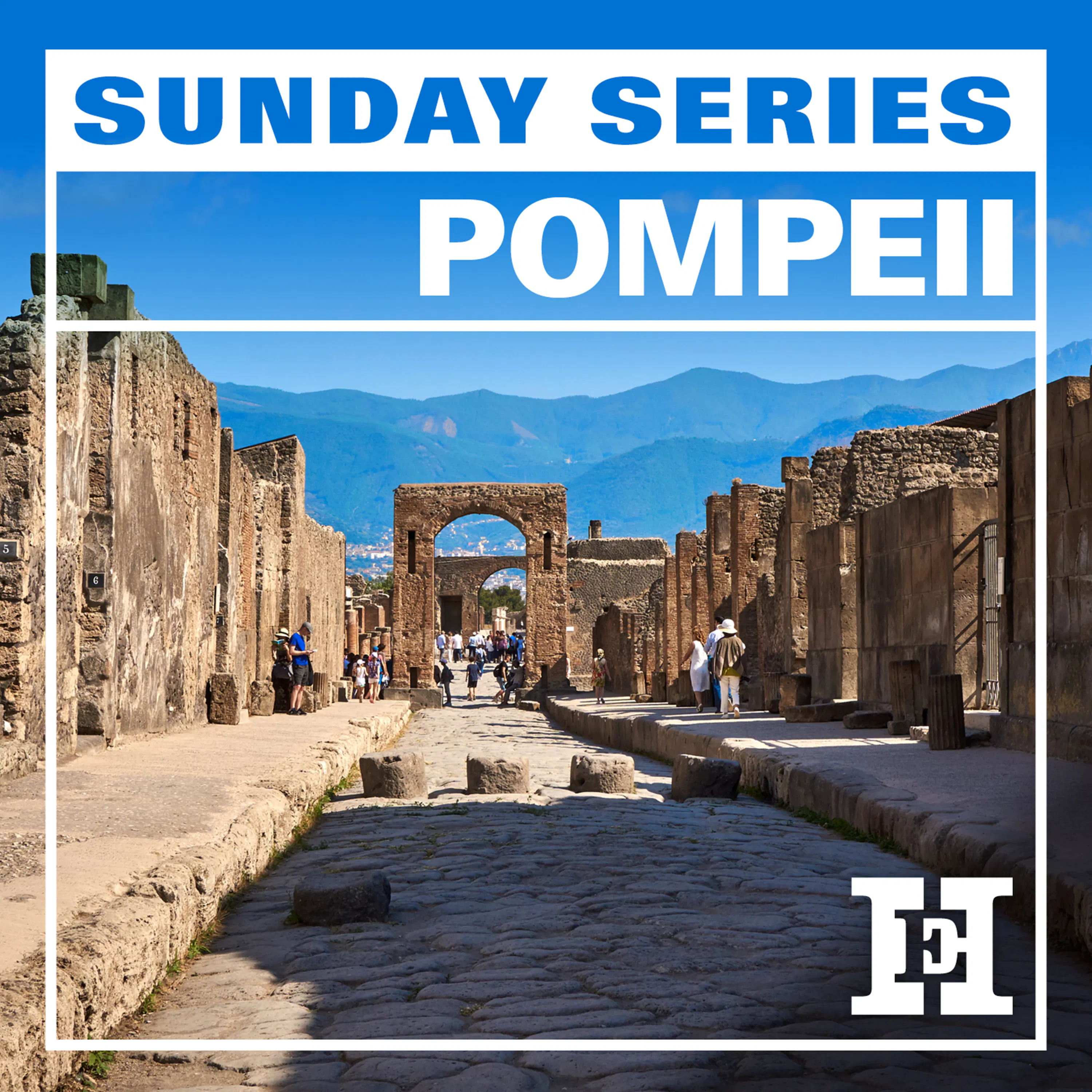
Ep 2466Why Pompeii's tragedy still captivates us today
When the cities of Pompeii and Herculaneum were buried by ash spewed out of Vesuvius in AD 79, so too were their inhabitants, frozen in the moment of their deaths. In the final episode of our four-part series, Kev Lochun is joined by historian Dr Jess Venner to discuss the myriad legacies of Pompeii. They explore the dangers of imprinting stories on mortal remains, the Pompeiian propensity for erotic art – and why, centuries on, Pompeii still echoes through the ages. ––––– GO BEYOND THE PODCAST Want to know more about the story of Pompeii? HistoryExtra's Kev Lochun has curated a selection of essential reading from the HistoryExtra and BBC History Magazine archive to help you explore the story of the cataclysm, the Roman way of life and the nature of the Roman empire: https://bit.ly/4bjYKmE Learn more about your ad choices. Visit podcastchoices.com/adchoices
Ep 2465The United States and Latin America: a turbulent history
Has the United States always seen Latin America as its ‘backyard’? And when did influence tip into intervention? In this episode, Danny Bird is joined by Yale University's Greg Grandin to explore the long, turbulent history of US–Latin American relations, from westward expansion and early regime change to gunboat diplomacy, corporate empires and the Cold War ---- GO BEYOND THE PODCAST Don't miss our new podcast series History Behind the Headlines: Briefing, in which we task expert historians with bringing you the history you need to make sense of the headlines – in five minutes or less: https://play.megaphone.fm/p6xgtqh2tfwkyptbmlp4vw Take back your personal data with Incogni! Use code hepod at the link below and get 60% off annual plans: hhttps://incogni.com/hepod Learn more about your ad choices. Visit podcastchoices.com/adchoices
Ep 2464History's most mysterious manuscripts
What do exploding bats and amphibious galleons have in common? They're both fascinating features of some of the world's most mysterious manuscripts, as revealed by journalist and author Garry J Shaw in his book, Cryptic. From Hildegard of Bingen’s secret language to the hoaxes of Renaissance Spain, and from John Dee’s angelic communications to the peculiar Voynich Manuscript, Shaw unravels the allure and enigma of texts shrouded in secrecy. Take back your personal data with Incogni! Use code hepod at the link below and get 60% off annual plans: https://incogni.com/hepod Learn more about your ad choices. Visit podcastchoices.com/adchoices
Ep 2463Francisco Franco: life of the week
Emerging in the early 20th century as Europe's youngest general since Napoleon Bonaparte, Francisco Franco was destined to make waves. But how did this uncharismatic reactionary become Spain’s dictator, dominating the country for nearly four decades? Danny Bird speaks to journalist Giles Tremlett about the life of the man who continues to haunt Spain more than 50 years after his death in 1975. Learn more about your ad choices. Visit podcastchoices.com/adchoices
Ep 2462How grim was life on Hitler's U-boats?
"Statistically, they were on a suicide mission." That's Roger Moorhouse's assessment of the odds facing Hitler's U-boat crews in the final years of the Second World War. Speaking with Spencer Mizen, Roger relates the story of these missions from the German perspective – a tale encompassing scurvy, sleep deprivation, terror and acts of astonishing kindness. (Ad) Roger Moorhouse is the author of Wolfpack: Inside Hitler's U-boat War (William Collins, 2025). Buy it now from Waterstones: https://go.skimresources.com?id=71026X1535947&xcust=historyextra-social-histboty&xs=1&url=https%3A%2F%2Fwww.waterstones.com%2Fbook%2Fwolfpack%2Froger-moorhouse%2F9780008644895. Learn more about your ad choices. Visit podcastchoices.com/adchoices
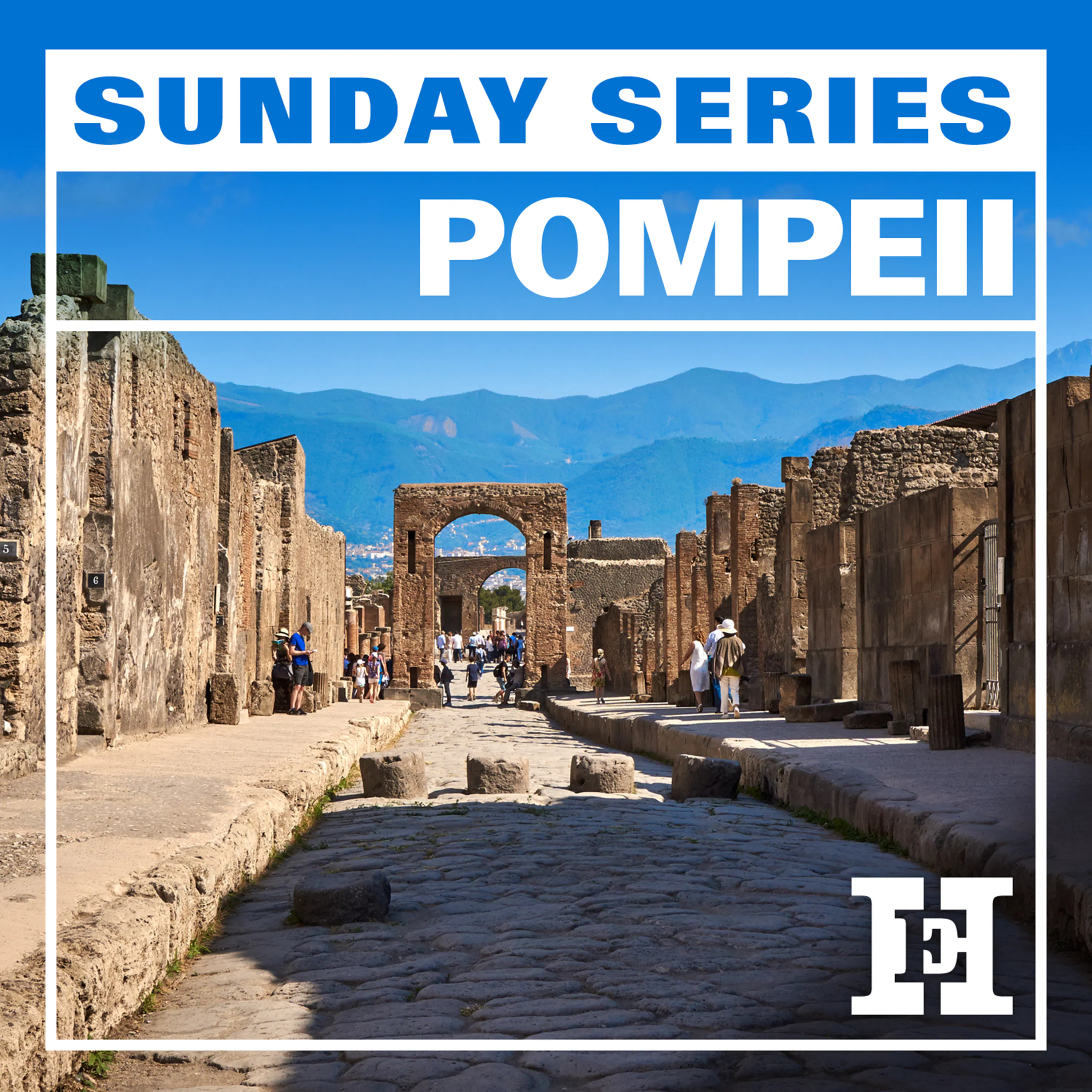
Ep 2461How ancient Pompeii was rediscovered
The buried Roman city of Pompeii was ‘discovered’ in the 16th century, but was it ever lost? In this penultimate episode of our four-part series, Kev Lochun speaks with historian Dr Jess Venner about the years between destruction and excavation. How did the beleaguered Roman emperor Titus react to the disaster and the refugee crisis that followed? Why was no attempt made to resettle and rebuild? And how did the city become the archeological marvel we know it as today? ––––– GO BEYOND THE PODCAST Want to know more about the story of Pompeii? HistoryExtra's Kev Lochun has curated a selection of essential reading from the HistoryExtra and BBC History Magazine archive to help you explore the story of the cataclysm, the Roman way of life and the nature of the Roman empire: https://bit.ly/4bjYKmE Learn more about your ad choices. Visit podcastchoices.com/adchoices
Ep 2460Why Belgian agents risked their lives spying for Britain
In the chaotic opening months of the First World War, Britain's intelligence services were desperate to learn where the Germans would attack next. Enter the White Lady. As historian Helen Fry lays out in her new book, this courageous network of Belgian civilians began spying on German troops from behind enemy lines – and, in the process, changed the course of the war. Here, in conversation with Spencer Mizen, Helen tells an extraordinary story of massacres, drug dealing, double-crossing and secret messages encased in potatoes. ----- GO BEYOND THE PODCAST For more on spycraft in the Second World War, don't miss our interview with Helen Fry on the ingenious British intelligence operation to bug German prisoners during the conflict: https://bit.ly/459WzOG Learn more about your ad choices. Visit podcastchoices.com/adchoices
Ep 2459How tanks redefined warfare
From the mud-churned battlefields of the First World War to the high-stakes clashes of the Cold War, the tank has shaped the course of conflict like no other machine. In this episode, Emily Briffett is joined by Mark Urban, as he reveals the dramatic evolution of armoured warfare through its iconic vehicles – and the engineers, commanders and crews who drove them into the history books. Learn more about your ad choices. Visit podcastchoices.com/adchoices
Ep 2458Robert McNamara: life of the week
Robert McNamara is best remembered as a key architect of the Vietnam War, a man who pushed for military escalation as thousands died on all sides of the conflict. In this episode of the HistoryExtra podcast, historians William and Philip Taubman speak with Elinor Evans about their landmark biography of one of the most powerful and controversial men in American history. Drawing on newly uncovered material, including Jackie Kennedy’s personal letters and a secret Pentagon aide’s diary, they reveal the inner world of a man who was often blamed for escalating the Vietnam War – while privately longing to end it. ––––– GO BEYOND THE PODCAST Don't miss our podcast series on the Cuban Missile Crisis, in which Bill Taubman joined a panel of experts to tell Elinor Evans about a pivotal 13 days that saw diplomatic tensions escalate in a world on the brink of nuclear disaster. All four episodes are available now: https://bit.ly/45TLykN. ––––– (Ad) William and Philip Taubman are the authors of McNamara at War: A New History (WW Norton & Co, 2025). Buy it now from Waterstones: http://www.awin1.com/cread.php?awinmid=2400&awinaffid=489797&p=https%3A%2F%2Fwww.waterstones.com%2Fbook%2Fmcnamara-at-war%2Fwilliam-taubman%2Fphilip-taubman%2F9781324007166&clickref=historyextra-social-histboty. Learn more about your ad choices. Visit podcastchoices.com/adchoices
Ep 2457The road to the Holocaust
In his latest book, The Hitler Years: Holocaust 1933–1945, Frank McDonough offers a heart-rending year-by-year narrative of the Nazis' escalating persecution of the Jews – from Hitler's rise to power to the death camps. Here, in conversation with Spencer Mizen, Frank describes how a campaign of intimidation on the streets of Germany evolved into genocide. Learn more about your ad choices. Visit podcastchoices.com/adchoices
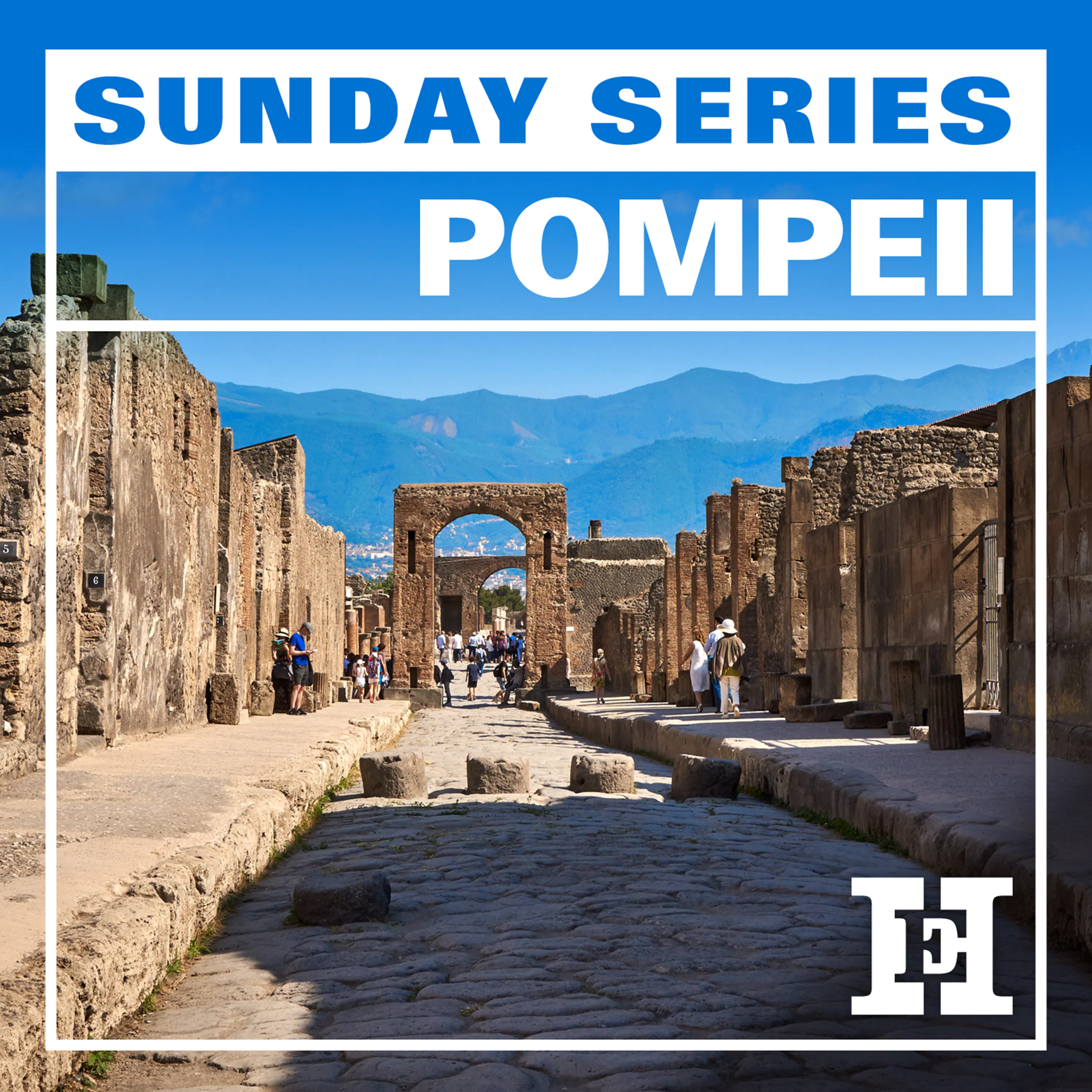
Ep 2456The final days of Pompeii
The Roman towns of Pompeii and Herculaneum were wiped off the map within 24 hours of Vesuvius erupting, buried under volcanic debris that would entomb them for centuries. In this second episode of our four-part series, Kev Lochun is joined by historian Dr Jess Venner to explore the cataclysm with the help of the experiences of two men: Roman statesman Pliny the Elder, who sailed into danger never to return, and his nephew Pliny the Younger, whose letters provide the only known eyewitness account of the disaster. ––––– GO BEYOND THE PODCAST Want to know more about the story of Pompeii? HistoryExtra's Kev Lochun has curated a selection of essential reading from the HistoryExtra and BBC History Magazine archive to help you explore the story of the cataclysm, the Roman way of life and the nature of the Roman empire: https://bit.ly/4bjYKmE Learn more about your ad choices. Visit podcastchoices.com/adchoices
Ep 2455Life in the Luftwaffe during the Battle of Britain
In the eyes of a German fighter pilot in the skies over English Channel in 1940, the Battle of Britain was as much a struggle of human endurance as it was of strategy and skill. Speaking to Emily Briffett, aviation historian Dr Victoria Taylor takes us inside the mind of the Luftwaffe, revealing the experiences of pilots, ground crews and support personnel as they faced the perils of aerial combat, the brutal pressure of Nazi ideology, and the relentless intensity demanded of them by those in command. Learn more about your ad choices. Visit podcastchoices.com/adchoices
Ep 2454The hidden history of US immigration detention
The roots of immigration detention in the US stretch back over a century. Speaking to Elinor Evans, historian Brianna Nofil explores how the US built a vast migrant detention regime. From jailing Chinese migrants in 1900s upstate New York to the private prison boom of the 1980s and beyond, she explores why detention remains a defining and deeply contested feature of American immigration policy. Learn more about your ad choices. Visit podcastchoices.com/adchoices
Ep 2453Emperor Hirohito: life of the week
While most of the other surviving Axis leaders were put on trial following the end of the Second World War, Japan's Emperor Hirohito never faced justice and, instead, continued to reign until his death in 1989. Debate continues about how far he was personally responsible for Japanese aggression in the 1930s and 40s, and in today's Life of the Week episode, Dr Christopher Harding guides Rob Attar through those arguments – and explores Hirohito's role in Japan's hugely successful postwar transition. Learn more about your ad choices. Visit podcastchoices.com/adchoices
Ep 2452Secrets of the Romans' spectacular success
How did a muddy settlement on the banks of the river Tiber grow into the greatest empire the world had ever seen? Who was the more diabolical: Caligula or Nero? And was there really such a thing as Pax Romana? Speaking with Spencer Mizen, Edward Watts answers some of the most intriguing questions about this extraordinary culture – and considers just how Rome rose to dominate the ancient world. Learn more about your ad choices. Visit podcastchoices.com/adchoices
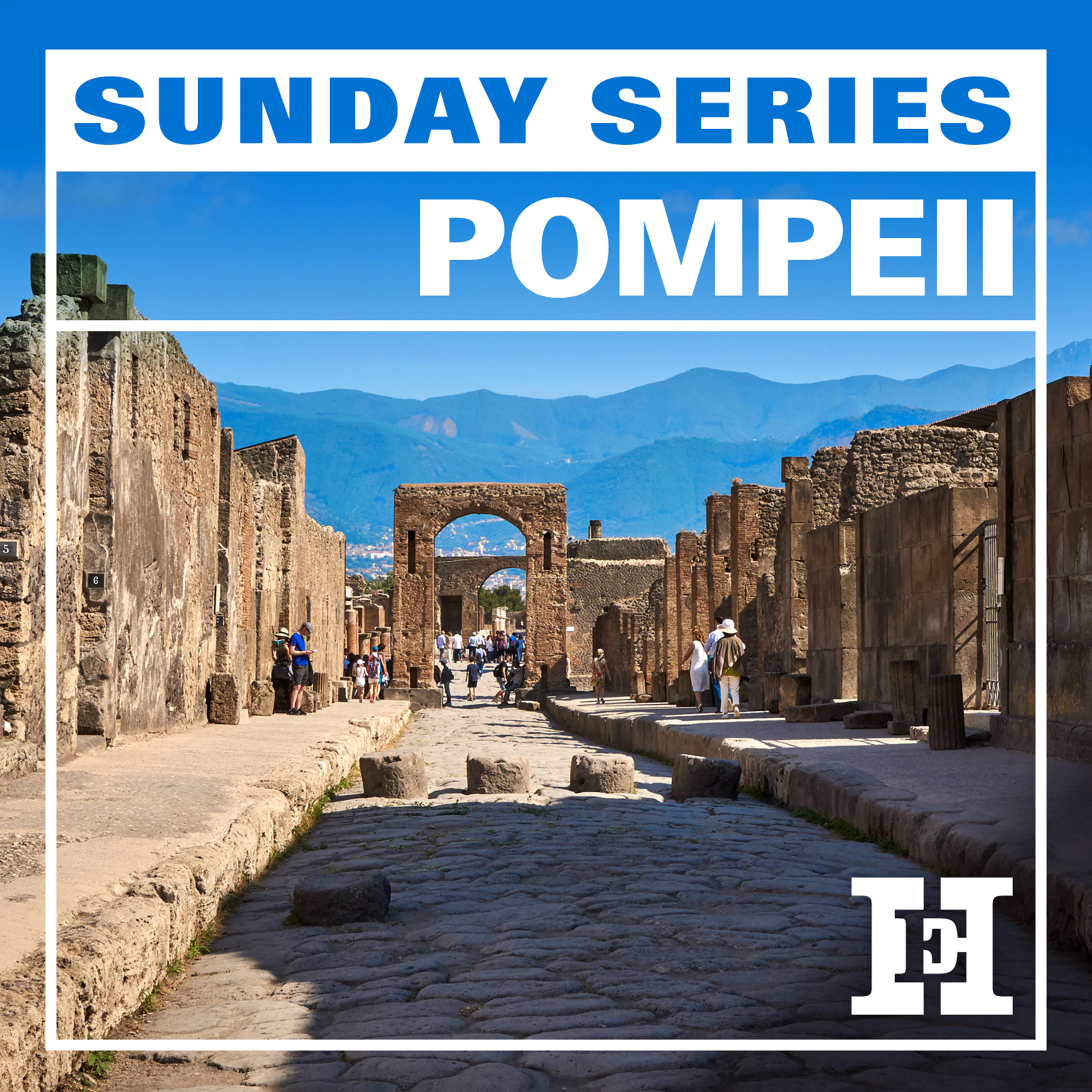
Ep 2451Before the volcano: life in ancient Pompeii
In AD 79, Pompeii and Herculaneum were subsumed by the eruption of Vesuvius, buried and preserved under metres of volcanic ash. Today, they are among the most famous ruins of the ancient world – and in this four-part Sunday Series, we’ll be exploring their secrets. In this first episode, historian Dr Jess Venner guides Kev Lochun through daily life in Pompeii and Herculaneum. They explore the myths surrounding the ‘mountain’, why pomegranates mean we can’t precisely date the disaster and how – implausible as it may seem today – the residents of these Roman cities had no idea they were living in the shadow of death. ––––– GO BEYOND THE PODCAST Want to know more about the story of Pompeii? HistoryExtra's Kev Lochun has curated a selection of essential reading from the HistoryExtra and BBC History Magazine archive to help you explore the story of the cataclysm, the Roman way of life and the nature of the Roman empire: https://bit.ly/4bjYKmE Learn more about your ad choices. Visit podcastchoices.com/adchoices
Ep 2450How do you solve a problem like Napoleon?
In the aftermath of the Napoleonic Wars, it fell to Britain to maintain the balance of power in continental Europe – but how could a small island manage such a task? How could it prevent the rise of another tricorned tyrant? That's the subject of Andrew Lambert's sweeping new book No More Napoleons. Speaking to Kev Lochun, he explains how Britain helped maintain peace in Europe without the need for huge armies, why Belgium was so important to maintaining stability on the continent, and why the idea of ‘Britannia Rules the Waves’ continues to be relevant today. Learn more about your ad choices. Visit podcastchoices.com/adchoices