History Unplugged Podcast
1,129 episodes — Page 6 of 23
The Months Leading up to the Civil War That Inflamed North-South Tensions from Animosity to Murderous Hatred
On November 6, 1860, Abraham Lincoln became the fluky victor in a tight race for president. The country was bitterly at odds; Southern radicals were moving ever closer to dividing the Union, with one state after another seceding and Lincoln powerless to stop them. Slavery fueled the conflict, but somehow the passions of North and South came to focus on a lonely federal fortress in Charleston Harbor: Fort Sumter.In today’s episode I’m speaking to Erik Larson, author of “The Demon of Unrest: A Saga of Hubris, Heartbreak, and Heroism at the Dawn of the Civil War. “ We analyze the chaotic months between Lincoln’s election and the Confederacy’s shelling of Sumter—a period marked by tragic errors and miscommunications, enflamed egos and craven ambitions, personal tragedies and betrayals. Lincoln himself wrote that the trials of these five months were “so great that, could I have anticipated them, I would not have believed it possible to survive them.”At the heart of this narrative are Major Robert Anderson, Sumter’s commander and a former slave owner sympathetic to the South but loyal to the Union; Edmund Ruffin, a vain and bloodthirsty radical who stirs secessionist ardor at every opportunity; and Mary Boykin Chesnut, wife of a prominent planter, conflicted over both marriage and slavery and seeing parallels between both. In the middle of it all is the overwhelmed Lincoln, battling with his duplicitous Secretary of State, William Seward, as he tries desperately to avert a war that he fears is inevitable—one that will eventually kill 750,000 Americans.Drawing on diaries, secret communiques, slave ledgers, and plantation records, Larson gives us a political horror story that captures the forces that led America to the brink—a dark reminder that we often don’t see a cataclysm coming until it’s too late.See omnystudio.com/listener for privacy information.
LSD’s Origins in Nazi Germany Brain-Washing Experiments, the CIA’s MKUltra Program, and the Dawn of the Psychedelic Age
LSD has been banned in the United States for decades and became a Schedule 1 Controlled Substance in 1970, but it has experienced a resurgence among Silicon Valley entrepreneurs to overcome mental roadblocks and psychiatrists running tests to use it as a treatment for addiction, PTSD, and other mental illnesses. But what few know is that LSD has its origins in Nazi Germany.The drug was developed in Switzerland in 1943 and quickly acquired and militarized by the Third Reich. The Nazis coopted LSD for their mind control military research—research that the US was desperate to acquire. This research birthed MKUltra, the CIA's notorious brainwashing and psychological torture program during the 1950s and 1960s.Today’s guest is Norman Ohler, author of “Tripped: Nazi Germany, the CIA, and the Dawn of the Psychedelic Age.” We discuss:· How the history of LSD is interwoven with that of the Cold War and its arms race, and how the US government’s introduction to LSD through Nazi research influenced much of the federal government’s early attitudes around it· How, in addition to LSD’s militarized misconception from the Nazis, there were other areasof US drug policy influenced by the Third Reich for over half a century· How psychedelic research was marginalized and stigmatized for so long by prohibition and the War on Drugs, and how high the hurdles remain today for approval of psychedelic medicine, despite the opportunities—rather than dangers—they representSee omnystudio.com/listener for privacy information.
How Duke Ellington and Other Jazzmen Became America’s First Globally Famous Musicians
The first globally famous American musicians weren’t part of the 50s rock wave that included Elvis Pressly or Chuck Berry. They were three 3 jazzmen who orchestrated the chords that throb at the soul of twentieth-century America: Duke Ellington, Louis Armstrong, and Count Basie.While their music is well-known, their background stories aren’t. Duke Ellington was the grandson of slaves whose composing, piano playing, and band leading transcended category. Louis Daniel Armstrong was born in a New Orleans slum so tough it was called The Battlefield and, at age seven, got his first musical instrument, a ten-cent tin horn that drew buyers to his rag-peddling wagon and set him on the road to elevating jazz into a pulsating force for spontaneity and freedom. William James Basie was son of a coachman and laundress who dreamed of escaping every time the traveling carnival swept into town, and who finally engineered his getaway with help from Fats Waller.To explore their stories is today’s guest, Larry Tye, author of “The Jazz Men: How Duke Ellington, Louis Armstrong, and Count Basie Transformed America.See omnystudio.com/listener for privacy information.
Why America Could Have a Presidential Succession Crisis
America has an unmatched record when it comes to the peaceful transfer of power. According to legal scholar Roy E. Brownell II, however, our country is not that far off from a presidential succession crisis.In this preview of an episode of "This American President," hosted by Richard Lim, Brownell covers the history of presidential succession and the flaws in the current system.See omnystudio.com/listener for privacy information.
Dunkirk from the German Perspective
The British evacuation from the beaches of the small French port town of Dunkirk is one of the iconic moments of military history. The battle has captured the popular imagination through LIFE magazine photo spreads, the fiction of Ian McEwan and, of course, Christopher Nolan's hugely successful Hollywood blockbuster. But what is the German view of this stunning Allied escape? We are exploring that with today’s guest, Robert Kershaw, author of Dünkirchen 1940: The German View of Dunkirk. We look at what went wrong for the Germans at Dunkirk.As supreme military commander, Hitler had seemingly achieved a miracle after the swift capitulation of Holland and Belgium, but with just seven kilometers before the panzers captured Dunkirk – the only port through which the trapped British Expeditionary force might escape – they came to a shuddering stop. Only a detailed interpretation of the German perspective – historically lacking to date – can provide answers as to why.SponsorsGet Exclusive NordVPN deal here → https://nordvpn.com/historyunplugged It’s risk-free with Nord’s 30-day money-back guarantee!"See omnystudio.com/listener for privacy information.
The Global Manhunt For The Confederate Ship That Sunk Union Supply Vessels, From the Caribbean to the South Pacific
Naval warfare is an overlooked factor of the Civil War, but it was a vitally important part of overall strategy for North and South, especially from the perspective of the Union, which used naval blockages from the Gulf of Mexico and Mississippi River to deny critical resources to the Confederacy, forcing them the ultimately surrender.But the naval war was about much more than blockages. One Confederate ship managed to harass Union supply lines around the globe and sink dozens of merchant vessels. Its fate was sealed on June 19, 1864, after a fourteen-month chase that culminated in one of the most dramatic naval battles in history.The dreaded Confederate raider Alabama faced the Union warship Kearsarge in an all-or-nothing fight to the death, and the outcome would effectively end the threat of the Confederacy on the high seas. To talk about this story is historian Tom Clavin, author of the new book To the Uttermost Ends of the Earth: The Epic Hunt for the South's Most Feared Ship―and the Greatest Sea Battle of the Civil War.We look at historically overlooked Civil War players, including John Winslow, captain of the USS Kearsarge, as well as Raphael Semmes, captain of the CSS Alabama. Readers will sail aboard the Kearsarge as Winslow embarks for Europe with a set of simple orders from the secretary of the navy: "Travel to the uttermost ends of the earth, if necessary, to find and destroy the Alabama." Winslow pursued Semmes in a spectacular fourteen-month chase over international waters, culminating in what would become the climactic sea battle of the Civil War.SponsorsGet Exclusive NordVPN deal here → https://nordvpn.com/historyunplugged It’s risk-free with Nord’s 30-day money-back guarantee!"See omnystudio.com/listener for privacy information.
Which Statues Should We Take Down? How To Fairly Judge Historical Figures by Today’s Standards
In the United States, questions of how we celebrate – or condemn – leaders in the past have never been more contentious. In 2017, a statue of Robert E. Lee was removed – leading to a race riot and terrorist attack. But in 2020, statues of George Washington, Thomas Jefferson, Christopher Columbus, and even Ulysses S. Grant were defaced or toppled. All of this comes to the question of how we judge the past. When are the morals and ethics of people born centuries earlier excusable for the conditions of their birth, and when are they universally condemnable? What separates a Thomas Jefferson from an Emperor Nero?To discuss this incredibly challenging topic is someone perhaps nobody better qualified: Dr. Victor Davis Hanson. He is an emeritus classics professor and author of books on the Peloponnesian War or assessing the ancient world’s best military leader. He was also awarded the National Humanities Medal in 2007 and was a presidential appointee in 2007–2008 on the American Battle Monuments Commission.We discuss the following:•Times when American’s feared the removal of Jefferson or Theodore Roosevelt statues in 2021 (or their toppling in riots). But we have also celebrated statue removal, such as the removal of Saddam Hussein’s statues after the fall of his regime in 2003 or the removal of Marx/Lenin Statues in Eastern Europe in 1991. What is the difference?•The criteria for a community to remove a statue in a healthy way•How we judge those of the past and determine that some character flaws are due to their times of birth, while other character flaws are universally condemnable – Essentially, what makes a slave-owning Jefferson a product of his time while, say, a Nero, is universally understood as cruel•The dangers of canceling anyone who doesn’t meet our 21st century standards; conversely, the dangers of slavish worship of them•Who deserves more statues todaySee omnystudio.com/listener for privacy information.
The 160-Minute Race to Save the Titanic
One hundred and sixty minutes. That is all the time rescuers would have before the largest ship in the world slipped beneath the icy Atlantic. There was amazing heroism and astounding incompetence against the backdrop of the most advanced ship in history sinking by inches with luminaries from all over the world. It is a story of a network of wireless operators on land and sea who desperately sent messages back and forth across the dark frozen North Atlantic to mount a rescue mission. More than twenty-eight ships would be involved in the rescue of Titanic survivors along with four different countries.At the heart of the rescue are two young Marconi operators, Jack Phillips 25 and Harold Bride 22, tapping furiously and sending electromagnetic waves into the black night as the room they sat in slanted toward the icy depths and not stopping until the bone numbing water was around their ankles. Then they plunged into the water after coordinating the largest rescue operation the maritime world had ever seen and thereby saving 710 people by their efforts.The race to save the largest ship in the world from certain death would reveal both heroes and villains. It would begin at 11:40 PM on April 14, when the iceberg was struck and would end at 2:20 AM April 15, when her lights blinked out and left 1500 people thrashing in 25-degree water. Although the race to save Titanic survivors would stretch on beyond this, most people in the water would die, but the amazing thing is that of the 2229 people, 710 did not and this was the success of the Titanic rescue effort.We see the Titanic as a great tragedy but a third of the people were rescued and the only reason every man, woman, and child did not succumb to the cold depths is due to Jack Phillips and Harold McBride in an insulated telegraph room known as the Silent Room. These two men tapping out CQD and SOS distress codes while the ship took on water at the rate of 400 tons per minute from a three-hundred-foot gash would inaugurate the most extensive rescue operation in maritime history using the cutting-edge technology of the time, wireless.To talk about this race against time is frequent guest Bill Hazelgrove, author of the new book One Hundred and Sixty Minutes: The Race to Save the RMS Titanic.See omnystudio.com/listener for privacy information.
Vikings Went Everywhere in the Middle Ages, From Baghdad to Constantinople to….. Oklahoma?
Scandinavia has always been a world apart. For millennia Norwegians, Danes, Finns, and Swedes lived a remote and rugged existence among the fjords and peaks of the land of the midnight sun. But when they finally left their homeland in search of opportunity, these wanderers—including the most famous, the Vikings—would reshape Europe and beyond. Their ingenuity, daring, resiliency, and loyalty to family and community would propel them to the gates of Rome, the steppes of Russia, the courts of Constantinople, and the castles of England and Ireland. But nowhere would they leave a deeper mark than across the Atlantic, where the Vikings’ legacy would become the American Dream.Today’s guest Arthur Herman, author of The Viking Heart, discusses this historical narrative but matches it with cutting-edge archaeological discoveries and DNA research to trace the epic story of this remarkable and diverse people (despite myths of racial purity misappropriated by groups like Nazi ethnographers). He shows how the Scandinavian experience has universal meaning, and how we can still be inspired by their indomitable spirit and the strength of their community bonds, much needed in our deeply polarized society today.See omnystudio.com/listener for privacy information.
The 15-Hour Work Week Was Standard For Nearly All of History. What Happened?
There’s nothing in human DNA that makes the 40-hour workweek a biological necessity. In fact, for much of human history, 15 hours of work a week was the standard, followed by leisure time with family and fellow tribe members, telling stories, painting, dancing, and everything else. Work was a means to an end, and nothing else.So what happened? Why does work today define who we are? It determines our status, and dictates how, where, and with whom we spend most of our time. It mediates our self-worth and molds our values. But are we hard-wired to work as hard as we do? Did our Stone Age ancestors also live to work and work to live? And what might a world where work plays a far less important role look like?To answer these questions, today’s guest James Suzman, author of Work: A Deep History, from the Stone Age to the Age of Robots charts a grand history of "work" from the origins of life on Earth to our ever more automated present, challenging some of our deepest assumptions about who we are. Drawing insights from anthropology, archaeology, evolutionary biology, zoology, physics, and economics, he shows that while we have evolved to find joy meaning and purpose in work, for most of human history our ancestors worked far less and thought very differently about work than we do now. He demonstrates how our contemporary culture of work has its roots in the agricultural revolution ten thousand years ago. Our sense of what it is to be human was transformed by the transition from foraging to food production, and, later, our migration to cities. Since then, our relationships with one another and with our environments, and even our sense of the passage of time, have not been the same.Arguing that we are in the midst of a similarly transformative point in history, Suzman argues that automation might revolutionize our relationship with work and in doing so usher in a more sustainable and equitable future for our world.See omnystudio.com/listener for privacy information.

Pancho Villa’s 1916 Raid on New Mexico: The Pearl Harbor Bombing of Its Time
Before 9/11, before Pearl Harbor, another unsuspected foreign attack on the United States shocked the nation and forever altered the course of history. In 1916, Pancho Villa, a guerrilla fighter who commanded an ever-changing force of conscripts in northern Mexico, attached a border town in New Mexico. It was a raid that angered Americans, and President Woodrow Wilson ordered the Punitive Expedition in which the US Army invaded Mexico and defeated General Villa's troops, but failed to capture him. This event may have been the catalyst for America’s entry into World War One and permanently altered U.S.-Mexican border policy.Jeff Guinn, author of the new book "War on the Border," joins us to discuss this critically important event in American history. The “Punitive Expedition” was launched in retaliation under Pershing’s command and brought together the Army, National Guard, and the Texas Rangers—who were little more than organized vigilantes. The American expedition was the last action by the legendary African-American “Buffalo Soldiers.” It was also the first time the Army used automobiles and trucks, which were of limited value in Mexico, a country with no paved roads or gas stations. Curtiss Jenny airplanes did reconnaissance, another first. One era of warfare was coming to a close as another was beginning. But despite some bloody encounters, the Punitive Expedition eventually withdrew without capturing Villa.Although the bloodshed has ended, the US-Mexico border remains as vexed and volatile an issue as ever.See omnystudio.com/listener for privacy information.

A Radical Abolitionist Youth Movement Consumed America in 1860, Elected Lincoln, Then Disappeared Completely
At the start of the 1860 presidential campaign, a handful of fired-up young Northerners appeared as bodyguards to defend anti-slavery stump speakers from frequent attacks. The group called themselves the Wide Awakes. Soon, hundreds of thousands of young white and black men, and a number of women, were organizing boisterous, uniformed, torch-bearing brigades of their own. These Wide Awakes—mostly working-class Americans in their twenties—became one of the largest, most spectacular, and most influential political movements in our history. To some, it demonstrated the power of a rising majority to push back against slavery. To others, it looked like a paramilitary force training to invade the South.Today’s guest, Jon Grinspan (author of “Wide Awake: The Forgotten Force That Elected Lincoln and Spurred the Civil War”) examines how exactly our nation crossed the threshold from a political campaign into a war. We look at the precarious relationship between violent rhetoric and violent actions.See omnystudio.com/listener for privacy information.
Socrates May Have Been Executed For Revealing Secrets of Athens’ Religious Rituals
The influence of the ancient Greek philosopher Socrates has been profound. Even today, over two thousand years after his death, he remains one of the most renowned humans to have ever lived—and his death remains one of the greatest unsolved mysteries. There is another side to this story: impiety, lack of reverence for the gods, was a religious crime. From the perspective of the religious authorities of the time, the charge of impiety against Socrates was warranted. The priests did not tolerate scrutiny, even in the form of philosophical critique. To understand what happened and how it happened, we have to come to terms with the motives of the priests, and as importantly, Socrates’ motives in provoking them. His trial is perhaps first, but not last, great battle between philosophy and religion.To explore this mystery is today’s guest, Matt Gatton, author of “The Shadows of Socrates.”See omnystudio.com/listener for privacy information.

The Age of Discovery Through American-Indian Eyes
A millennium ago, North American cities rivaled urban centers around the world in size. So, when Europeans arrived in the sixteenth century, they encountered societies they did not understand, having developed differently from their own, and whose power they often underestimated. And no civilization came to a halt when a few wandering explorers arrived, even when the strangers came well-armed.To explore this overlooked history is today’s guest, Kathleen DuVal, author of “Native Nations.” For centuries after these first encounters, Indigenous people maintained an upper hand and used Europeans in pursuit of their own interests. In Native Nations, we see how Mohawks closely controlled trade with the Dutch--and influenced global markets--and how Quapaws manipulated French colonists.Power dynamics shifted after the American Revolution, but Indigenous people continued to control the majority of the continent. Shawnee brothers Tecumseh and Tenskwatawa forged new alliances and encouraged a controversial new definition of Native identity to attempt to wall off U.S. ambitions. The Cherokees created new institutions to assert their sovereignty on the global stage, and the Kiowas used their preponderance of power in the west to regulate the passage of white settlers across their territory.See omnystudio.com/listener for privacy information.

A Short History of the Sioux Wars (1862-1890)
War, Conflict, Victory & Defeat. These are all aspects of life that some may have to face. This was true for the various groups of the Sioux Tribes. On today's bonus episode from "Key Battles of American History" join host James Early as he discusses the multiple wars that took place between 1862-1890, collectively known as "The Sioux Wars"See omnystudio.com/listener for privacy information.
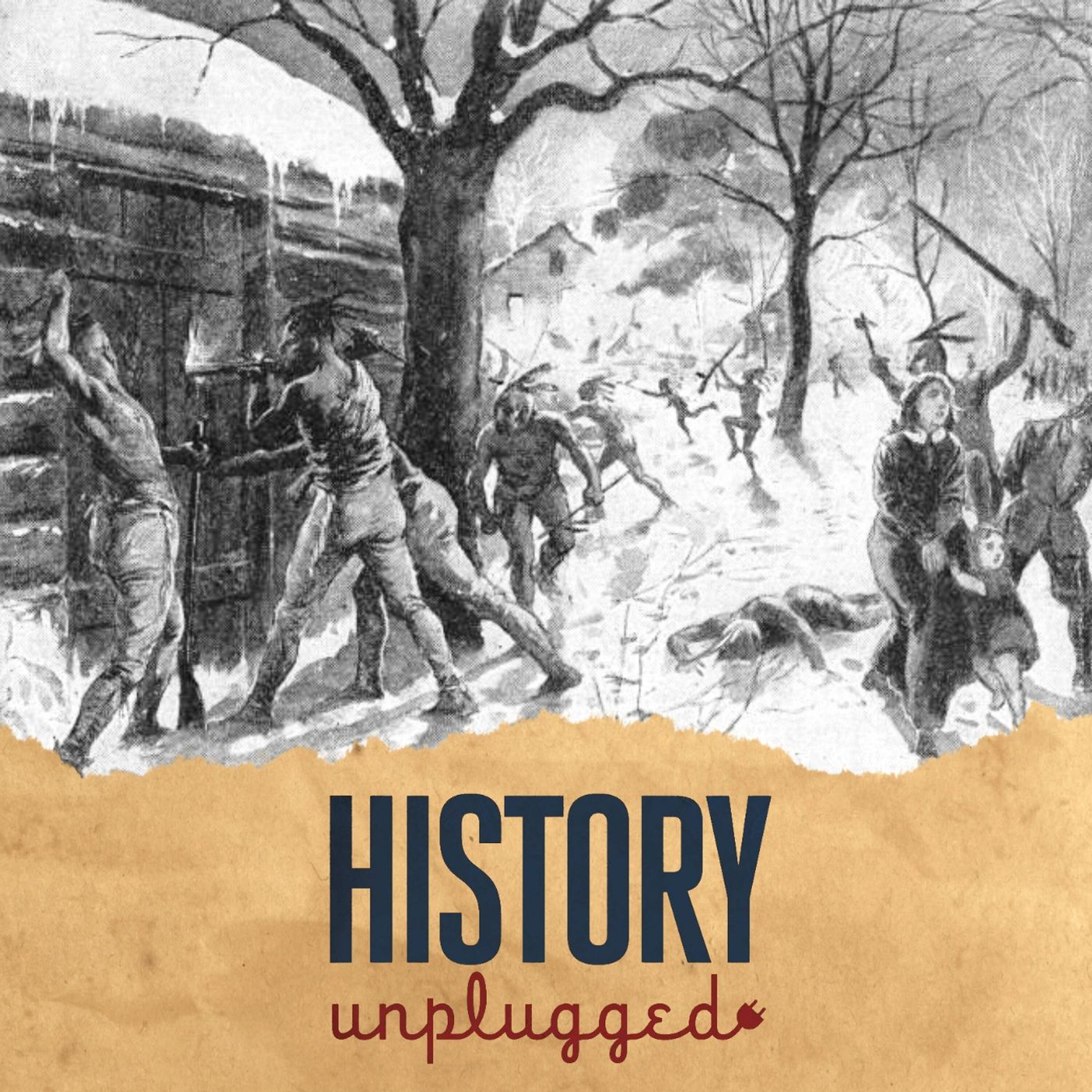
The Deerfield Massacre: The Infamous 1704 Indian Raid That Left Hundreds Dead and More Captured
In an obscure village in western Massachusetts, there lies what once was the most revered but now totally forgotten relic from the history of early New England—the massive, tomahawk-scarred door that came to symbolize the notorious Deerfield Massacre. This impregnable barricade—known to early Americans as “The Old Indian Door”—constructed from double-thick planks of Massachusetts oak and studded with hand-wrought iron nails to repel the flailing tomahawk blades of several attacking native tribes, is the sole surviving artifact from the most dramatic moment in colonial American history: Leap Year, February 29, 1704, a cold, snowy night when hundreds of native Americans and their French allies swept down upon an isolated frontier outpost and ruthlessly slaughtered its inhabitants.The sacking of Deerfield led to one of the greatest sagas of adventure, survival, sacrifice, family, honor, and faith ever told in North America. 112 survivors, including their fearless minister, the Reverand John Williams, were captured and led on a 300-mile forced march north, into enemy territory in Canada. Any captive who faltered or became too weak to continue the journey—including Williams’s own wife and one of his children—fell under the knife or tomahawk.Survivors of the march willed themselves to live and endured captivity. Ransomed by the King of England’s royal governor of Massachusetts, the captives later returned home to Deerfield, rebuilt their town and, for the rest of their lives, told the incredible tale. The memoir of Rev. Williams, The Redeemed Captive, became the first bestselling book in American history and published a few years after his liberation, it remains a literary classic.To discuss this event is today’s guest, James Swanson, author of “The Deerfield Massacre: A Surprise Attack, a Forced March, and the Fight for Survival in Early America.”See omnystudio.com/listener for privacy information.

The Dangerous and Thrilling Life of a 19th-Century Whaler
In mid-nineteenth century New England, Robert Armstrong was a young man with the world at his feet. His family was wealthy and gave him the opportunity to attend the nation’s first dental school. But Armstrong threw his future away, drinking himself into oblivion. Devoured by guilt and shame, in December 1849 he sold his dental instruments, his watch, and everything he possessed, and signed on for a whaling voyage leaving New Bedford for the South Pacific.His story was re-discovered when his great great grandson (Alex Brash) found a manuscript buried at the bottom of an old leather trunk, under a child’s dancing shoes and a grandfather’s WWI paraphernalia. Brash, today’s guest, re-published the account as “Whaler at Twilight,” the story of an American whaler who embarked on a harrowing adventure in the mid-nineteenth century in search of absolution and redemption. Decades later, Armstrong wrote an eloquent autobiographical account based on the logbooks he kept, chronicling his thrilling, gritty experiences during ten years away, including encounters with other whalers, beachcombers, Peruvian villagers, Pacific islanders, Maori warriors in New Zealand, cannibals on Fiji, and the impacts of American Expansionism. He also recounted his struggles with drink, his quest for God,In mid-nineteenth century New England, Robert Armstrong was a young man with the world at his feet. His family was wealthy and gave him the opportunity to attend the nation’s first dental school. But Armstrong threw his future away, drinking himself into oblivion. Devoured by guilt and shame, in December 1849 he sold his dental instruments, his watch, and everything he possessed, and signed on for a whaling voyage leaving New Bedford for the South Pacific.His story was re-discovered when his great great grandson (Alex Brash) found a manuscript buried at the bottom of an old leather trunk, under a child’s dancing shoes and a grandfather’s WWI paraphernalia. Brash, today’s guest, re-published the account as “Whaler at Twilight,” the story of an American whaler who embarked on a harrowing adventure in the mid-nineteenth century in search of absolution and redemption. Decades later, Armstrong wrote an eloquent autobiographical account based on the logbooks he kept, chronicling his thrilling, gritty experiences during ten years away, including encounters with other whalers, beachcombers, Peruvian villagers, Pacific islanders, Maori warriors in New Zealand, cannibals on Fiji, and the impacts of American Expansionism. He also recounted his struggles with drink, his quest for God,See omnystudio.com/listener for privacy information.
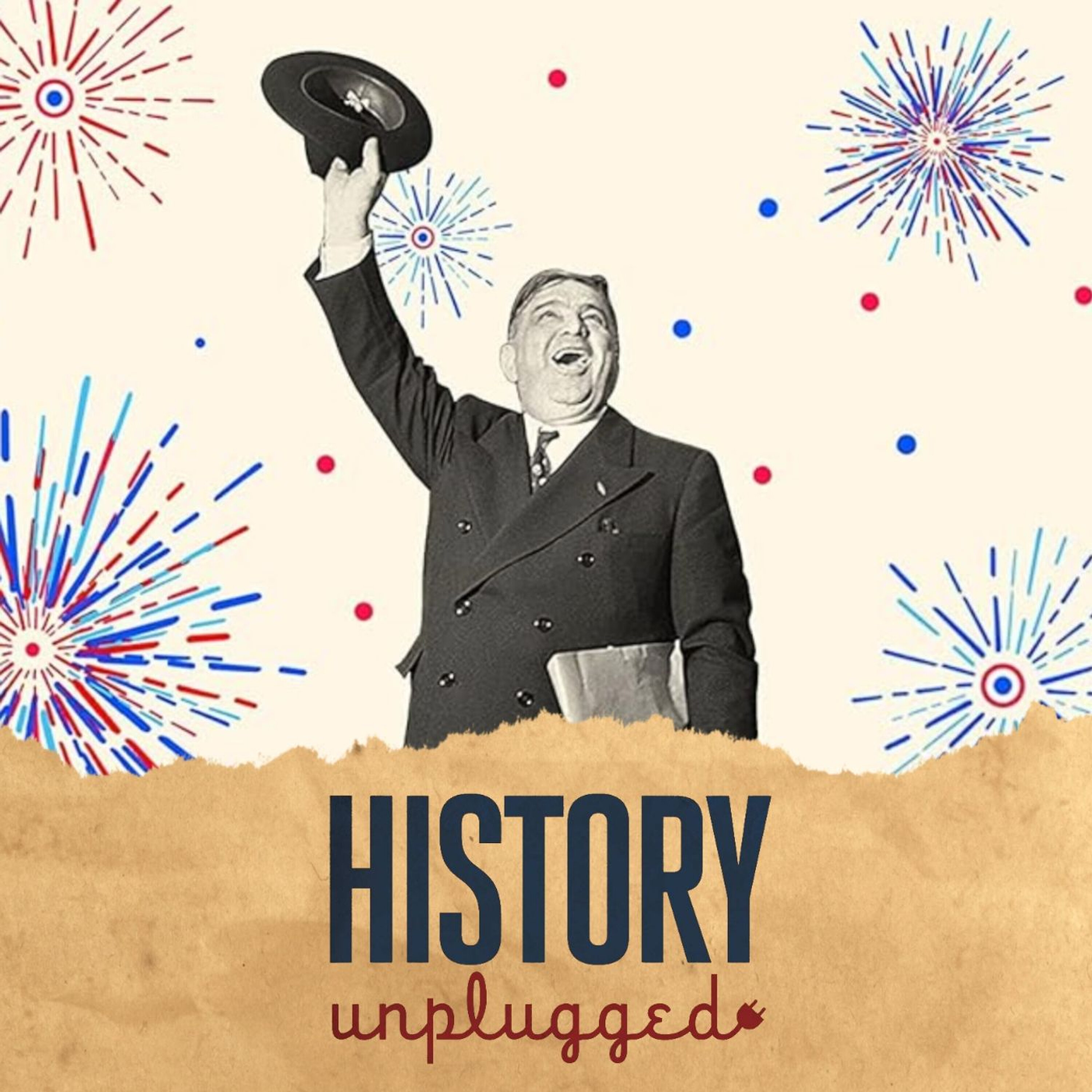
Fiorello LaGuardia: Immigrant Son and Ellis Island Interpreter Who Became America’s Mayor
Fiorello LaGuardia was one of the twentieth century’s most colorful politicians―a 5’2’’ ball of energy who led New York as major during the Depression and World War Two, charming the media during press conference and fighting the dirty machine politics of the city. He was also quintessentially American: the son of Italian immigrants, who rose in society through sheer will and chutzpah.La Guardia made an unsuccessful attempt to enlist during the Spanish-American War. Following that, he served in two U.S. consulates in Europe from 1901 to 1906, and later worked as an interpreter at Ellis Island from 1907 to 1910. Strongly disapproving of corrupt Tammany Hall, his charisma and appeal to minority groups led to victories in districts that were traditionally Democratic. From 1923 to 1933, La Guardia gained national prominence in the House of Representatives, aligning himself with reformers and progressives. In the 1933 mayoral race, Franklin Roosevelt saw La Guardia as a potential ally who could collaborate across party lines. From there he took on the New York mayor’s office with gusto.Today’s guest is Terry Golway, author of “I Never Did Like Politics: How Fiorello La Guardia Became America's Mayor, and Why He Still Matters.”See omnystudio.com/listener for privacy information.

How the West Tried and Failed to Stop the Russian Revolution
The Allied Intervention into the Russian Civil War remains one of the most ambitious yet least talked about military ventures of the 20th century. Coinciding with the end of the first World War, some 180,000 troops from several countries including the United States, the United Kingdom, France, Japan, Italy, Greece, Poland, and Romania, among others, were sent to fight alongside Russian “Whites” against the Red Army.Despite one victory for the Allied troops – independence for the Latvians and the Estonians – the two-year long attempt at reversing the 1917 Russian Revolution ended in humiliating defeat. To explore this crucial event of the early 20th century is today’s guest, Anna Reid, author of “A Nasty Little War: The Western Intervention into the Russian Civil War.”What was originally aimed to prevent Germany from exploiting the power vacuum in Eastern Europe left by the Russian Revolution ultimately morphed into the Allies’ gamble to destroy Communist ideology. It was a mixture of good intentions and self-delusion, flag-waving and empty promises, cover-ups, exaggerations, and downright lies from politicians.See omnystudio.com/listener for privacy information.
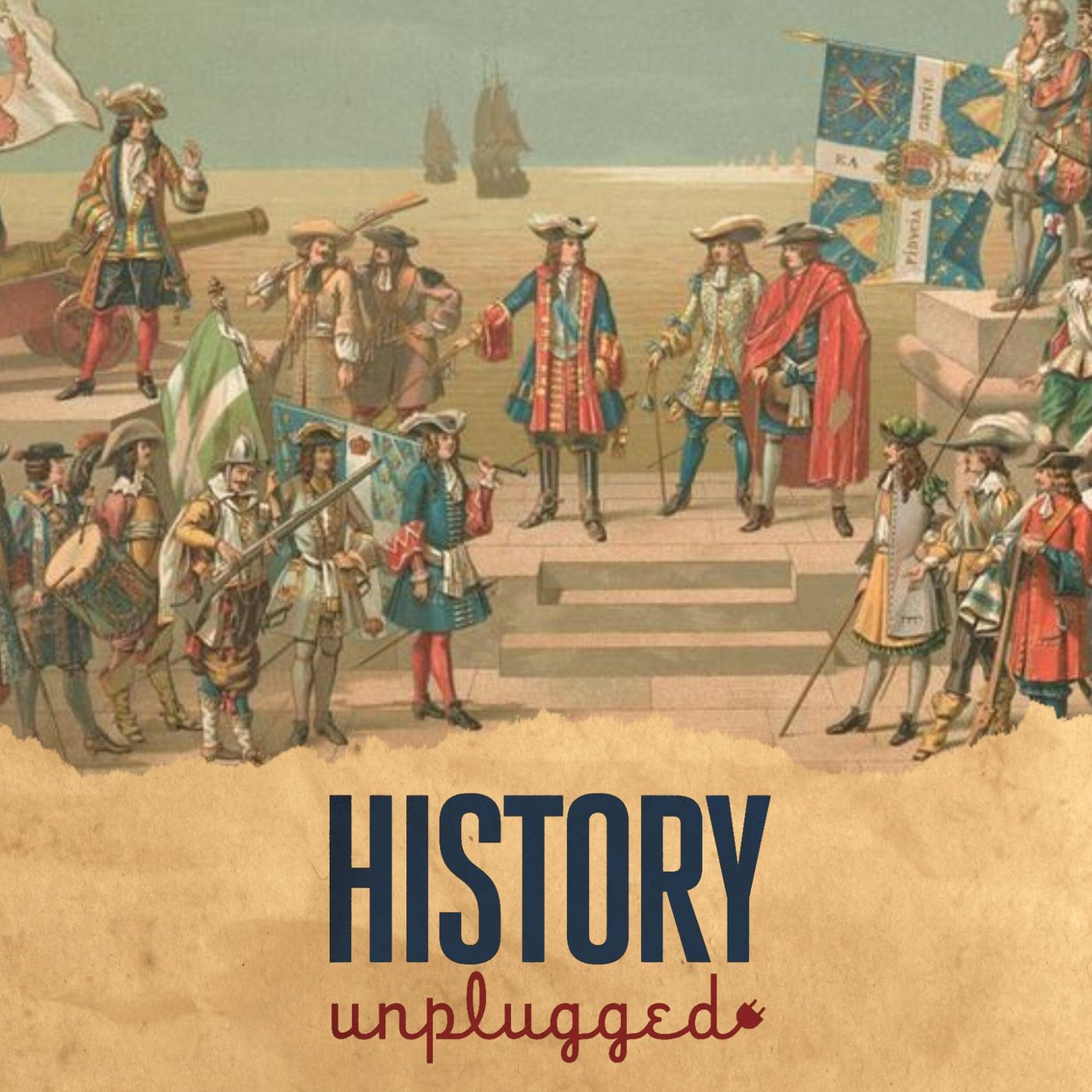
Kings Were Inevitable and Untouchable Until They Suddenly Weren’t After a Few 1700s Revolutions
At the turn of the nineteenth century, two waves of revolutions swept the Atlantic world, disrupting the social order and ushering in a new democratic-republican experiment whose effects rippled across continents and centuries. The first wave of revolutions in the late 1700s (which included the much-celebrated American and French Revolutions and the revolt against slavery in Saint Domingue/Haiti) succeeded in disrupting existing political structures. But it wasn’t until the second wave of revolutionaries came to maturity in the early 1800s—imbued with a passion for social mobility and a knack for political organizing—that these new forms of political life took durable shape, from the states of independent Haiti and Spanish America to the post-revolutionary governments that arose during and after Napoleon’s long reign over early nineteenth-century Europe.Today’s guest is Nathan Perl-Rosenthal, author of “The Age of Revolutions and the Generations Who Made It.” We look at familiar figures like John Adams and little-known yet pivotal actors such as Marie Bunel, a confidant of Toussaint Louverture in the Haitian Revolution. Monarchies topple and are resurrected, republics emerge and find their footings, and a new social order of mobility upends the previous hierarchical system of rigid social classes. We see that one generation’s fledgling successes allowed their successors to fulfill the promise of a new world order.See omnystudio.com/listener for privacy information.
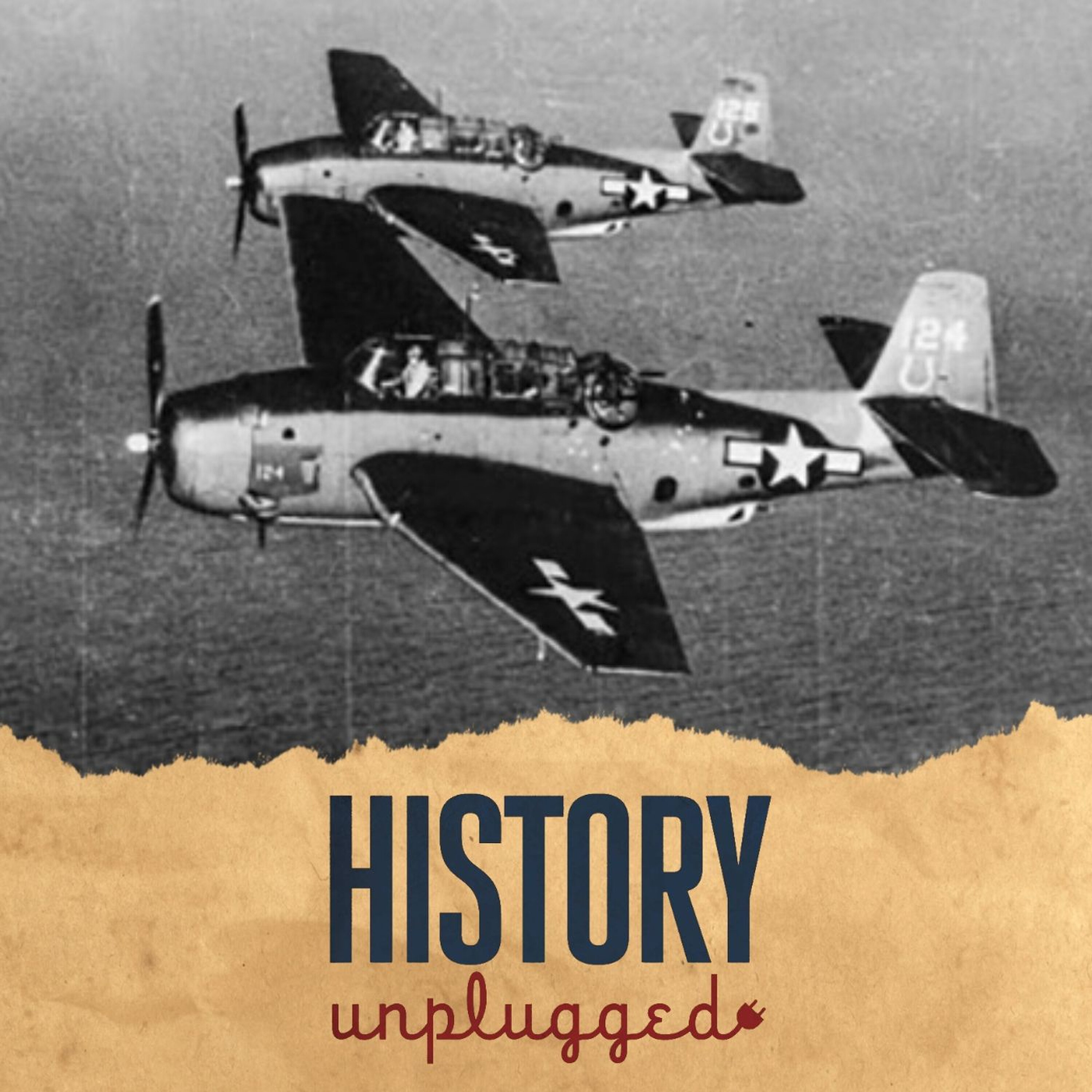
The Fall Of Japanese-held Hong Kong in January 1945
Commander John Lamade started the war in 1941 a nervous pilot of an antiquated biplane. Just over three years later he was in the cockpit of a cutting-edge Hellcat about to lead a strike force of 80 aircraft through the turbulent skies above the South China Sea. His target: Hong Kong. As a storm of antiaircraft fire darkened the sky, watching from below was POW Ray Jones. For three long years he and his fellow prisoners had endured near starvation conditions in a Japanese internment camp. Did these American aircraft, he wondered, herald freedom?Today’s guest is Steven Bailey, and he discovered that much of the story of the U.S. Navy airstrikes on Japanese-held Hong Kong during the final year of World War II had never been told despite being an important step on the march toward Japan. Operation Gratitude involved nearly 100 U.S. Navy warships and close to a thousand planes. Bailey is the author of “Target Hong Kong,” and we look at the air raids through the experiences of seven men whose lives intersected at Hong Kong in January 1945: Commander John D. Lamade, five of his fellow U.S. Navy pilots and the POW Ray Jones.See omnystudio.com/listener for privacy information.
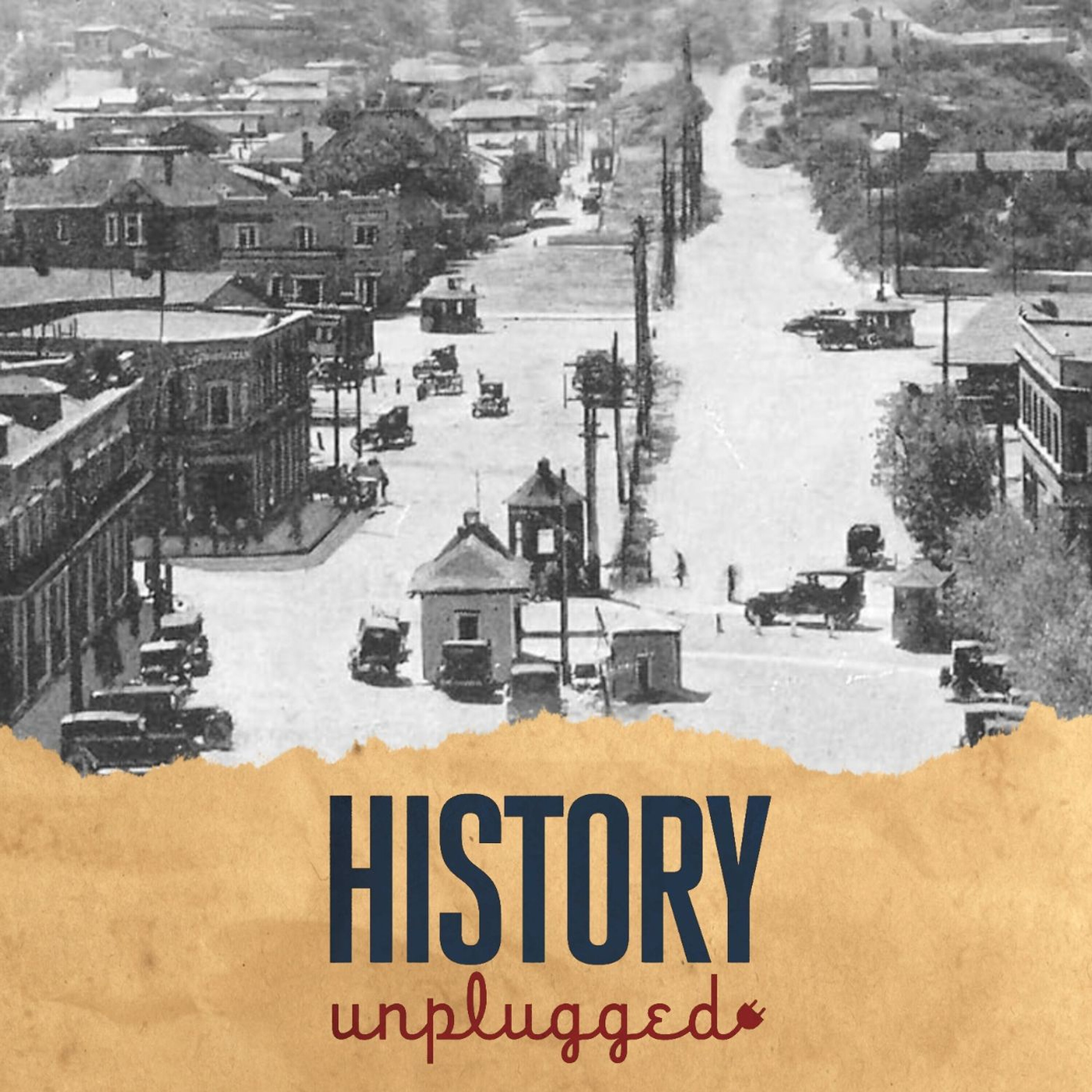
WW1 German Spies Infiltrated America and Attempted to Start a Race War
On January 30, 1918, a young man “with the appearance of a well-educated, debonair foreigner” arrived at the U.S. customs station in Nogales, Arizona, located on the border with Mexico. After politely informing the customs inspector that he had come to complete his draft registration questionnaire and meet a friend in San Francisco, he was approved to cross the border into the United States. Lothar Witzke, the most dangerous German agent in the western hemisphere had reached his destination. His assignment: launch a campaign of sabotage, insurrection, and murder to destabilize the American home front.The terror campaign would be devastating - unless it could be stopped by U.S. counterintelligence.The Witzke mission was the intelligence game played at its highest level - a plan for destruction on a massive scale, violent insurrection, and assassination, complete with master spies and double agents, diabolical sabotage devices, secret codes, and invisible ink.To look at these forgotten elements of German sabotage and assassination plots in the United States during World War One is today’s guest, Bill Mills, author of “Agents of the Iron Cross.”See omnystudio.com/listener for privacy information.

The Air Battles of the 1945 Eastern Front Forged Air Force Doctrines of the Cold War
The last months of World War II on the Eastern Front saw a ferocious fight between two very different air forces. Soviet Air Force (VVS) Commander-in-Chief Alexander Novikov assembled 7,500 aircraft in three powerful air armies to support the final assault on Berlin. The Luftwaffe employed some of its most advanced weapons including the Me 262 jet and Mistel remotely guided bomb aircraft.To discuss this overlooked part of World War 2 is today’s guest William Hiestand, author of “Eastern Front 1945: Triumph of the Soviet Air Force.” We discuss the aerial capacities of the SSV, the Luftwaffe, and specific battles that laid the groundwork for Cold War air force doctrine.See omnystudio.com/listener for privacy information.
The First Pre-Columbian Explorers to Reach North America
Have you ever wondered if there was a group to reach North America before Christopher Columbus? Find out more in today's bonus episode from another Parthenon podcast "History of North America." Join host Mark Vinet as he discusses the search for the first non-indigenous explorers to reach the North American continent prior to Christopher Columbus’ 1492 voyage. If you like what you hear, subscribe to "History of North America" on Apple or Spotify and look for it on Parthenonpodcast.comSee omnystudio.com/listener for privacy information.
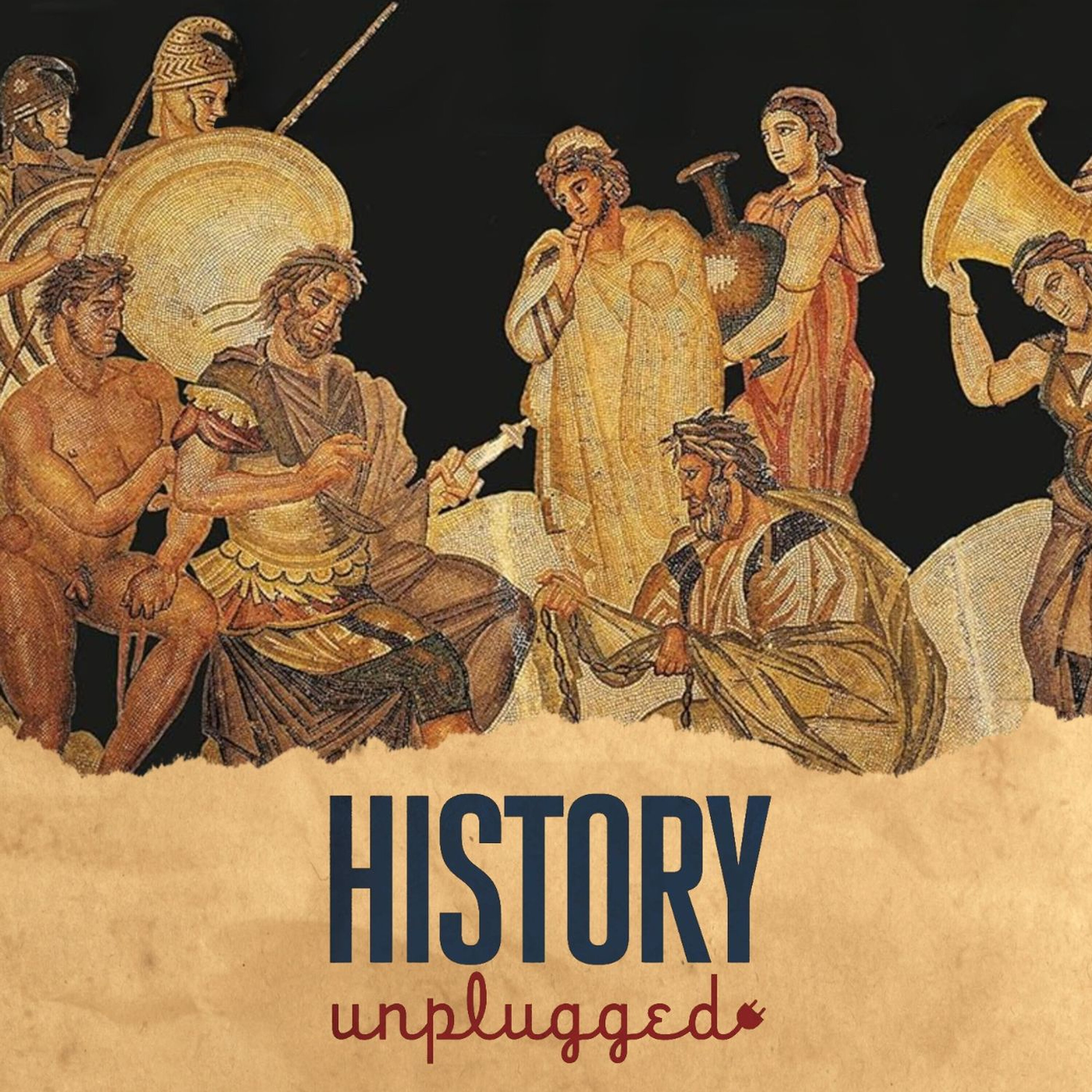
A Classicist Believes that Homer Directly Dictated the Iliad, and Was Also an Excellent Horseman
The Iliad is the world’s greatest epic poem—heroic battle and divine fate set against the Trojan War. Its beauty and profound bleakness are intensely moving, but great questions remain: Where, how, and when was it composed and why does it endure? To explore these questions is today’s guest, Robin Lane Fox, a scholar and teacher of Homer for over 40 years. He’s the author of “Homer and His Iliad” and he addresses these questions, drawing on a lifelong love and engagement with the poem. He argues that the poem is the result of the genius and single oral poet, Homer, and that the poem may have been performed even earlier than previously supposed a place, a date, and a method for its composition—subjects of ongoing controversy. Lane Fox considers hallmarks of the poem; its values, implicit and explicit; its characters; its women; its gods; and even its horses.See omnystudio.com/listener for privacy information.
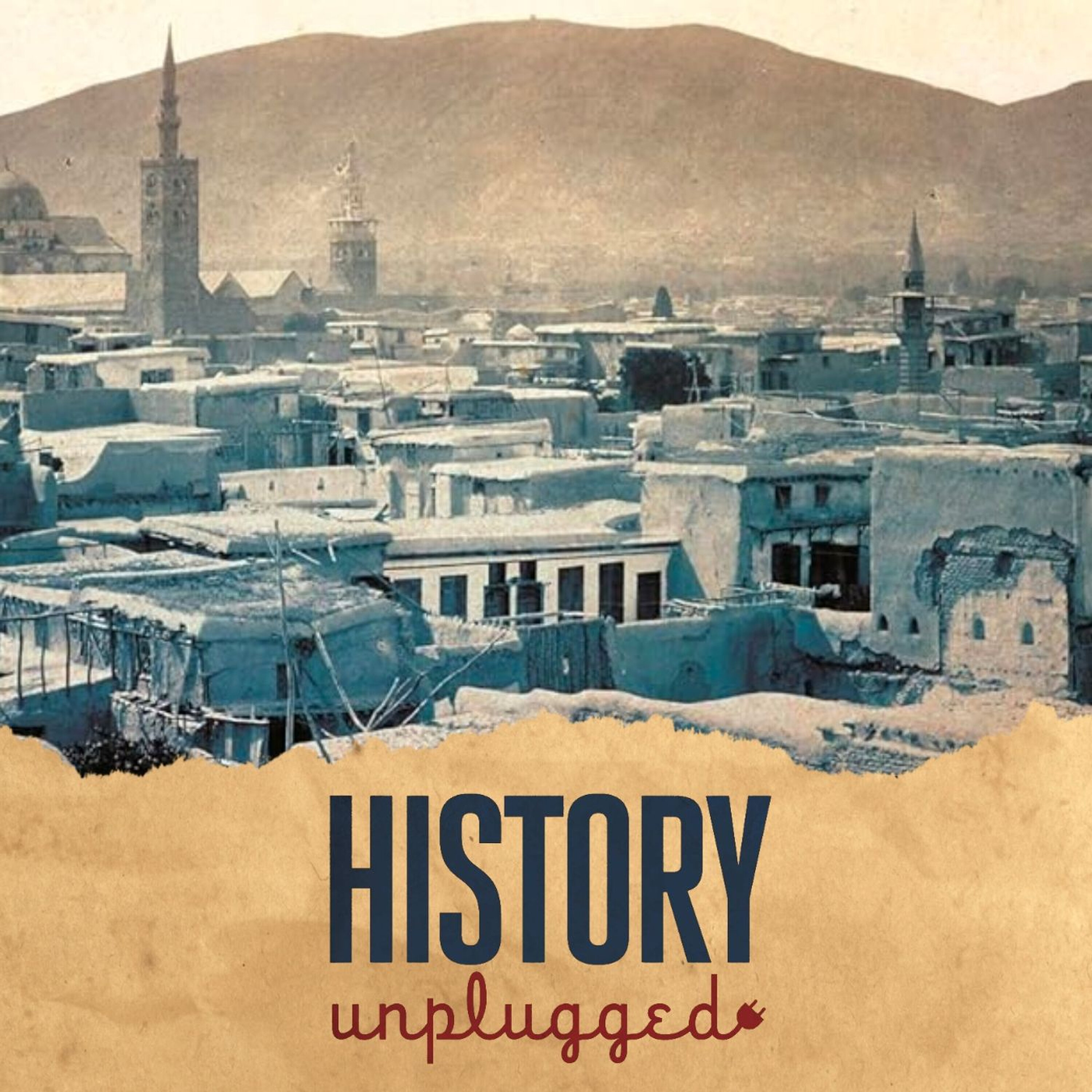
In 1860, Damascus Nearly Committed Genocide Against Christians. How Did it Pull Back?
On July 9, 1860, a violent mob swept through the Christian quarters of Damascus. For eight days, violence raged, leaving 5,000 Christians dead, thousands of shops looted, and churches, houses, and monasteries razed. The sudden and ferocious outbreak shocked the world, leaving Syrian Christians vulnerable and fearing renewed violence. Rogan is today’s guest, and author of “The Damascus Events: The 1860 Massacre and the Making of the Modern Middle East.” Drawn from never-before-seen eyewitness accounts of the Damascus Events, Rogan tells the story of how a peaceful multicultural city came to be engulfed in slaughter. He traces how rising tensions between Muslim and Christian communities led some to regard extermination as a reasonable solution. Rogan also narrates the wake of this disaster, and how the Ottoman government moved quickly to retake control of the city, end the violence, and reintegrate Christians into the community. These efforts to rebuild Damascus proved successful, preserving peace for the next 150 years until 2011.Although history does not offer a road map for solving contemporary problems, it does illustrate the depths of possibility.See omnystudio.com/listener for privacy information.
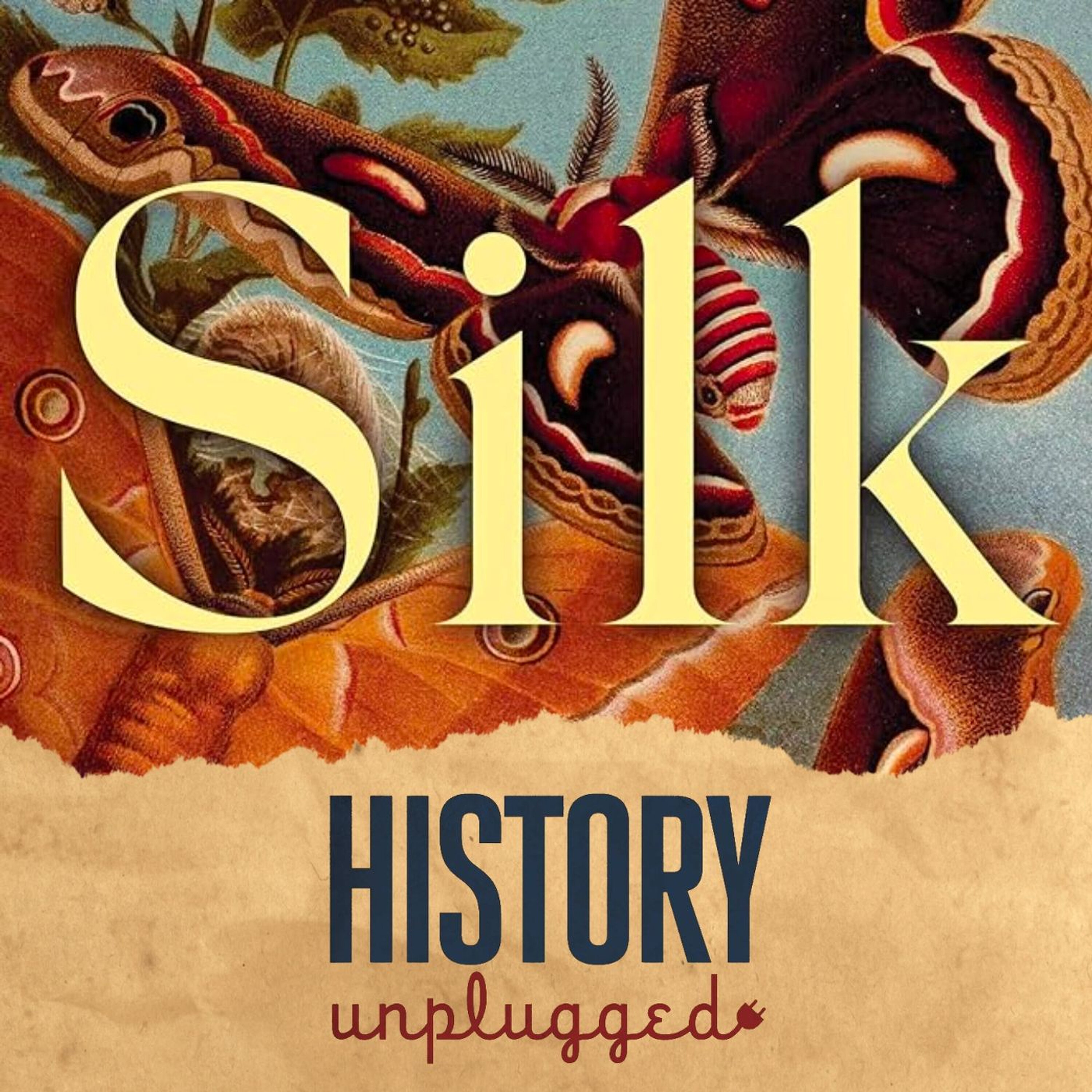
Silk: The History of a Fabric That Was Civilization’s First Burial Cloth, Body Armor, and Much More
Silk—prized for its lightness, luminosity, and beauty—is also one of the strongest biological materials ever known. More than a century ago, it was used to make the first bulletproof vest, and yet science has barely even begun to tap its potential. As the technologies it has inspired—from sutures to pharmaceuticals, replacement body parts to holograms—continue to be developed in laboratories around the world, they are now also beginning to offer an alternative to such modern materials as plastics.But it’s history goes much further back, Starting with 1,000 years ago, as caravans crossed Eurasia to transport silk from China to Europe; and at least as far back as 6,000 years, when silk was first used in funeral rituals.Today’s guest is Aarathi Prasad, author of “Silk: A World History.” She wrote a cultural and biological history from the origins and ancient routes of silk to the biologists who learned the secrets of silk-producing animals, manipulating the habitats and physiologies of moths, spiders, and mollusks. Because there is more than one silk, there is more than one story of silk. More than one road, more than one people who discovered it, and wove its threads.See omnystudio.com/listener for privacy information.

Frank Lloyd Wrong – When America’s Greatest Architect Created His Masterpiece While Written-Off as a Has-Been
Nobody blossomed late in life like Frank Lloyd Wright. He was written off as a has-been by middle age after a promising start. Between 1909 and 1929, Wright’s career was marked by personal turmoil and a roller coaster of career-related ups and downs. In these years, before he completed the buildings, we know him for today, Wright’s career was so far gone that most critics had written him off as a product of the 19th century.But to everyone’s surprise, after the Great Depression, Wright, now in his seventies, emerged from total career chaos to create one of America’s greatest icons. From this time forward, his career surged, so much so that one third of all his buildings were constructed during the last 20 years of his life.An oft-overlooked aspect of his life is that the Great Depression played a key role in Wright's resurgence. The Depression disrupted the practice of architecture substantially, to the extent that most architects of the 1920s simply closed up shop. Unwilling to give up, Wright instead figured out ways to practice architecture during the Depression without building any buildings. And, the choices he made during this period gave rise directly to the American icon, Fallingwater. In the end, Wright stands alone as the only “big name” architect to survive the Depression years.Today’s guest is Catherine Zipf, author of “Frank Lloyd Wright’s Fallingwater: American Architecture in the Depression Era.” We explore Wright's career at its lowest moment, the years of the Great Depression, before his comeback as America's greatest architect.See omnystudio.com/listener for privacy information.
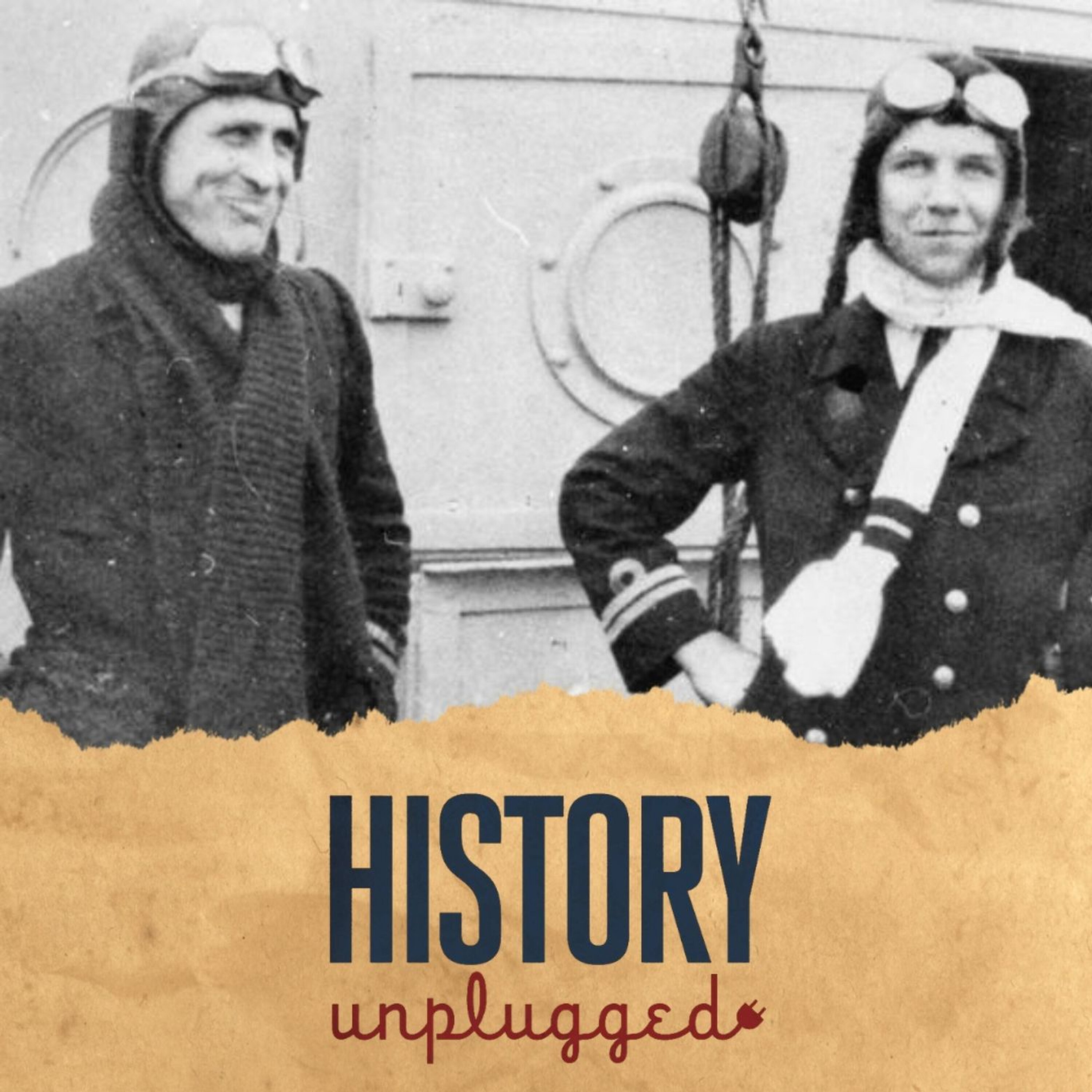
Frederick Rutland, Britain’s Most Beloved WW1 Pilot, Became a Spy for Imperial Japan
Frederick Rutland was an accomplished aviator, British WWI war hero, and real-life James Bond. He was the first pilot to take off and land a plane on a ship, a decorated warrior for his feats of bravery and rescue, was trusted by the admirals of the Royal Navy, had a succession of aeronautical inventions, and designed the first modern aircraft carrier. He was perhaps the most famous early twentieth-century naval aviator.Despite all of this, and due mostly to class politics, Rutland was not promoted in the new Royal Air Force in the wake of WWI. This ignominy led the disgruntled Rutland to become a spy for the Japanese government. Plied with riches and given a salary ten times the highest-paid admiral, shuttled between Los Angeles and Tokyo where he lived in large mansions in both Beverly Hills and Yokohama, and insinuating himself into both LA high society and Japan’s high command,Rutland would go on to contribute to the Japanese navy with both strategic and technical intelligence. This included scouting trips to Pearl Harbor, investigations of military preparedness, and aircraft technology. All this while living a double life, frequenting private California clubs and hosting lavish affairs for Hollywood stars and military dignitaries in his mansion on the Los Angeles Bird Streets.Supported by recently declassified FBI files and by incorporating unique and rare research through MI5 and Japanese Naval archives that few English speakers have access to, today’s guest, Ronald Drabkin, pieced together this story in his new book “Beverly Hills Spy: The Double-Agent War Hero Who Helped Japan Attack Pearl Harbor.”See omnystudio.com/listener for privacy information.
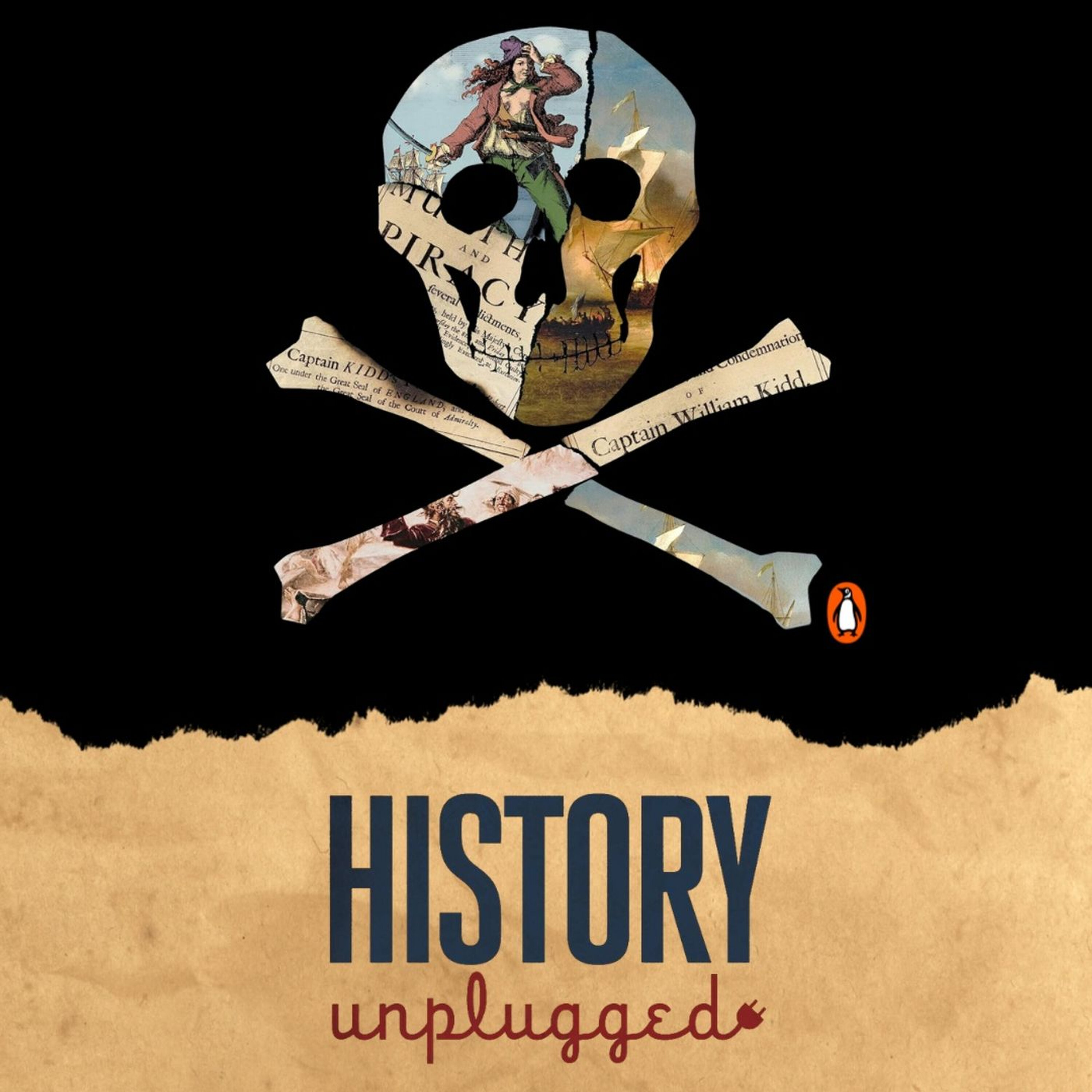
The Rise and Fall of the Global Age of Piracy (17-19th Centuries)
Piracy didn’t spring into existence in the 18th century Caribbean. It has existed as long as there has been commercial shipping and people to steal the goods. There were medieval pirates. Vikings loved robbing ships in the Baltic and North Seas. The Romans dealt with pirates in the Mediterranean, and the Greeks and Carthaginians before them. Pirates are as much part of history as armies, taxes, and temples. Why do we associate pirates with one specific time and place in the 18th century Caribbean with eye patches and peg legs?Today’s guest is Katherine Howe, author of “The Penguin Book of Pirates.” We go behind the eye patches, the peg legs, and the skull and crossbones of the Jolly Roger and into the no-man’s-land of piracy that is rife with paradoxes and plot twists We look at real maritime marauders like the infamous Blackbeard; the pirates who inspired Jack Sparrow in Pirates of the Caribbean,Stede Bonnet in Max’s Our Flag Means Death, and the Dread Pirate Roberts in The Princess Bride; the egalitarian multi-ethnic and multilingual crews that became enmeshed in historical horrors like the slave trade; and lesser-known but no less formidable women pirates, many of whom disguised themselves as men.See omnystudio.com/listener for privacy information.
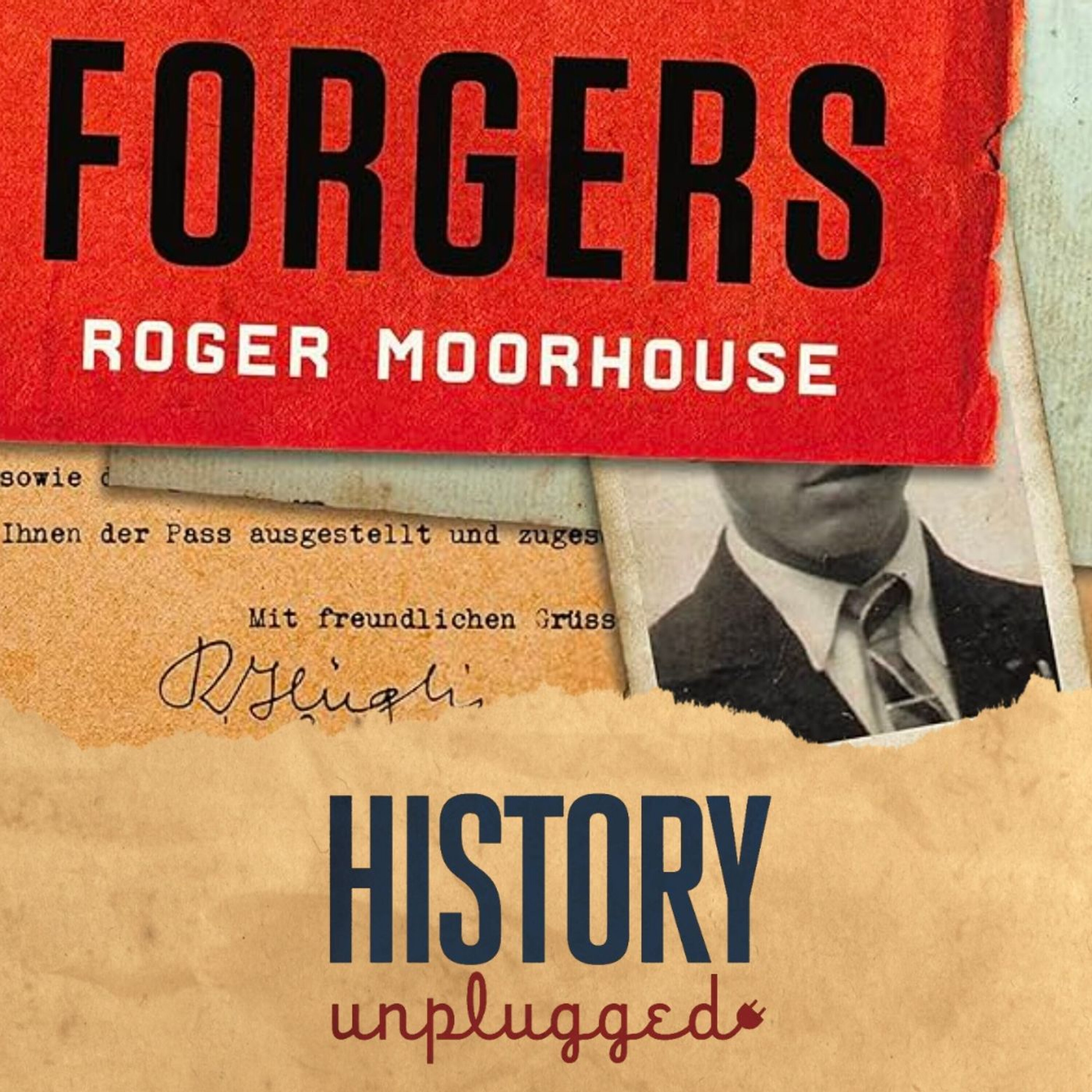
A WW2 Polish Diplomat Forged Thousands of Paraguayan Passports to Save Jews from the Holocaust
Between 1940 and 1943, Polish diplomats based in Bern, Switzerland, engaged in a remarkable – and until now, almost completely untold – humanitarian operation. This operation was one of the largest actions to aid Jews of the entire war and far eclipsed the better-known efforts of Oskar Schindler. In concert with two Jewish activists, these diplomats masterminded a systematic program of forging documents for Latin American countries that were smuggled into occupied Europe, in an attempt to save the lives of thousands of Jews facing extermination in the Holocaust.Today’s guest is Roger Moorhouse, author of “The Forgers: The Forgotten Story of the Holocaust’s Most Audacious Rescue Operation.” We look at the heroism of a group of ordinary men whose actions were part of a wider story of the Polish Underground resistance.See omnystudio.com/listener for privacy information.
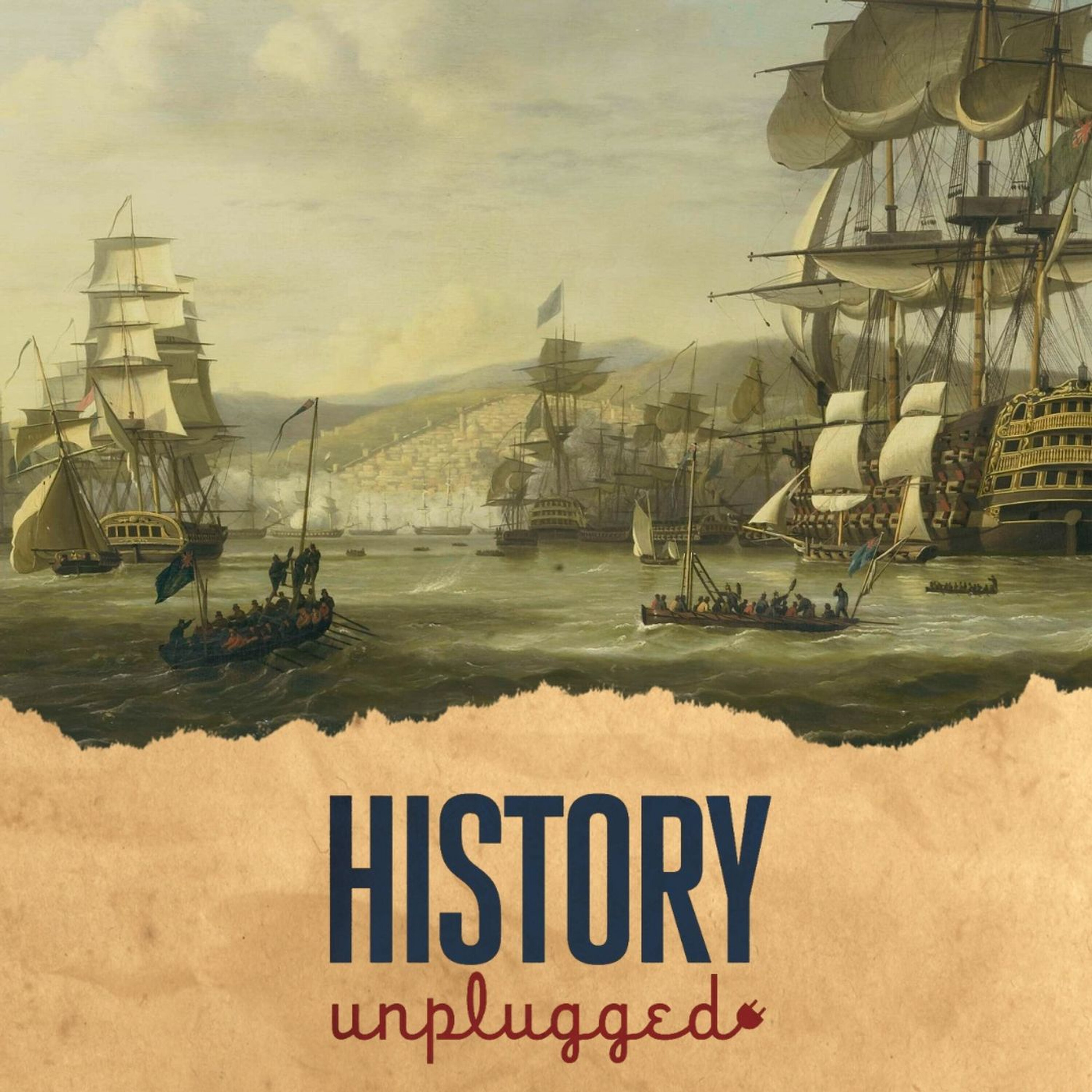
Stories From Captives on The Last Slave Ship to America
The Clotilda was the last slave ship to land on American soil, docked in Mobile Bay, Alabama, in July 1860—more than half a century after the passage of a federal law banning the importation of slaves, and nine months before the beginning of the Civil War. Five of its passengers, ranging in age from two to nineteen when kidnapped, died between 1922 and 1940.Today’s guest is Hannah Durkin, author of “Survivors of the Clotilda: The Lost Stories of the Last Captives of the American Slave Trade.” We follow their lives from their kidnappings in what is modern-day Benin through a terrifying 45-day journey across the Middle Passage; from the subsequent sale of the ship’s 110 African men, women, and children in slavery across Alabama to the dawn of the Civil Rights movement in Selma; from the foundation of an all-black African Town (later Africatown) in Northern Mobile—an inspiration for writers of the Harlem Renaissance, including Zora Neale Hurston—to the foundation of Gee’s Bend Quilters Collective—a black artistic circle whose cultural influence remains enormous.See omnystudio.com/listener for privacy information.
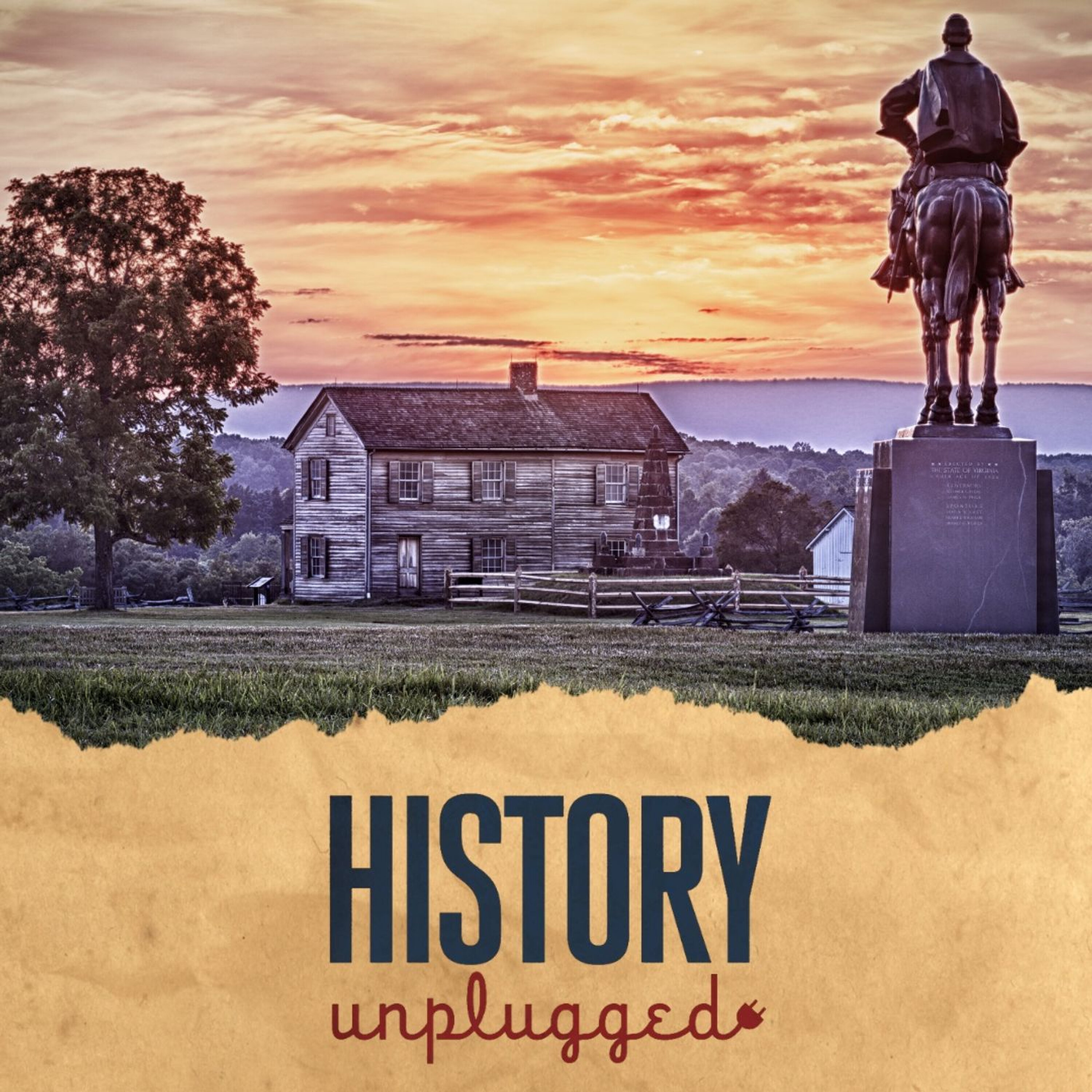
Was Union Support in the Confederacy Actually Widespread? The Alabamans Who Fought for Sherman Say 'Yes'
As the popular narrative goes, the Civil War was won when courageous Yankees triumphed over the South. But an aspect of the war that has remained little-known for 160 years is the Alabamian Union soldiers who played a decisive role in the Civil War, only to be scrubbed from the history books. One such group was the First Alabama Calvary, formed in 1862. It went on raids that destroyed Confederate communications and also marched with Sherman’s forces across the South. They aided the fall of Vicksburg and the burning of Atlanta.Today’s guest is Howell Raines, author of “Silent Cavalry: How Union Soldiers from Alabama Helped Sherman Burn Atlanta—and Then Got Written Out of History.” As Raines has pieced together, Union General William Tecumseh Sherman’s decisive effort to burn Atlanta was facilitated by an unsung regiment of 2,066 yeoman farmers and former slaves from Alabama—including at least one member of Raines’s own family.So why have the best-known Civil War historians, including Ken Burns and Shelby Foote, given only passing – or no – attention to this regiment of southerners who chose to fight for the North – a regiment that General Sherman hailed as one of the finest in the Union? We explore this question through an account of Alabama’s Mountain Unionists and their exploits, along with investigating why they and others like them were excised from the historical record.See omnystudio.com/listener for privacy information.
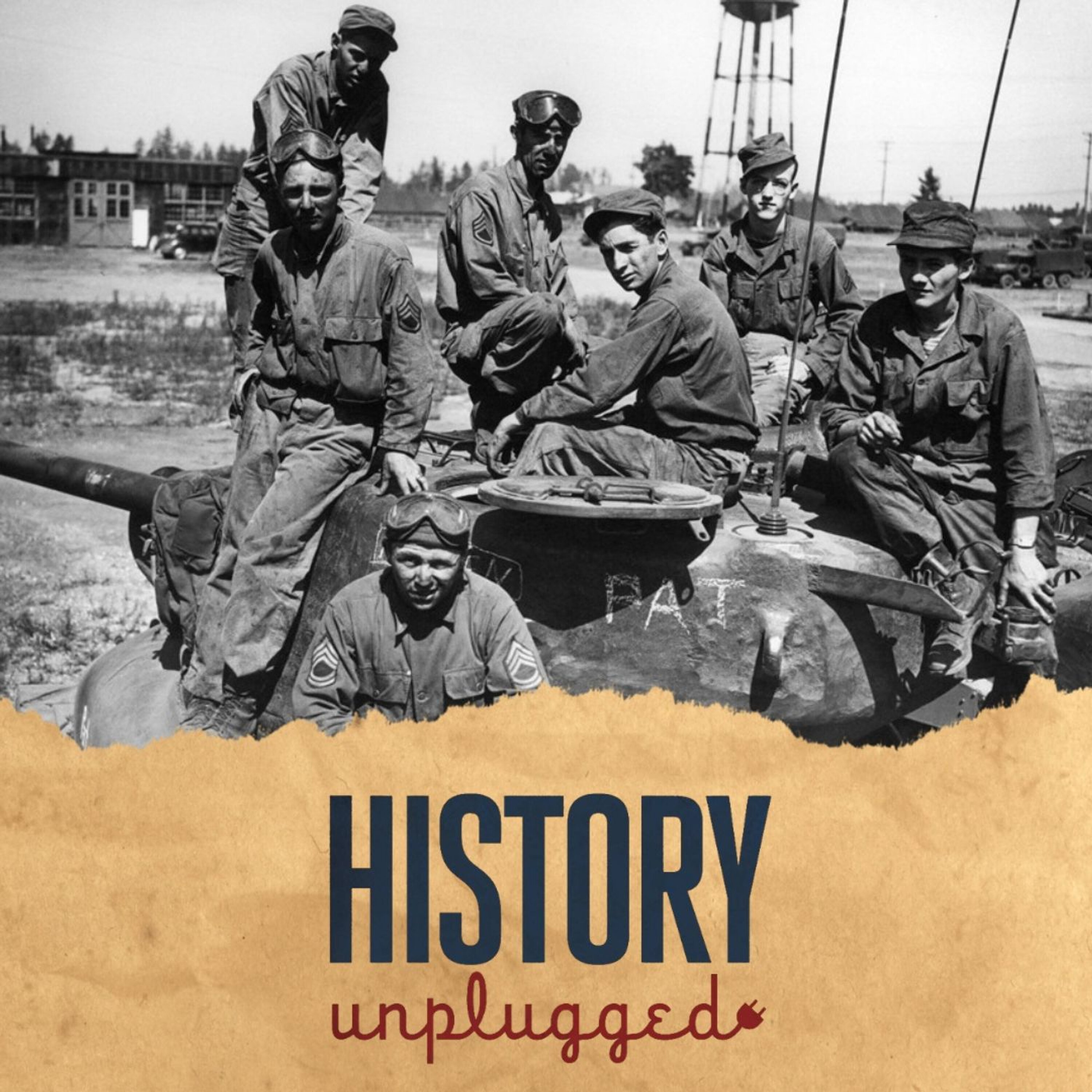
The Heroes, Legends, and Liars Who Fought in WW2
Veterans of World War 2 are called the Greatest Generation for their uncommon courage and self-determination. Whether this descriptor is true or part of America’s self-mythologizing during the 20th century is a challenging question, one that Andrew Biggio, a veteran of the wars in Iraq and Afghanistan, worked to answer.Biggio found that many were brave, but they were all ordinary men who also shared in humanity’s weaknesses and flaws while responding to the call of duty. Biggio is today’s guest and author of “The Rifle 2: Back to the Battlefield.” He shares first-person accounts from the last of the soldiers, sailors, airmen, and Marines who fought the most dreadful war in history.The idea for his first book “The Rifle” was simple: travel across the country with a 1945 M1 Garand, the basic U.S. fighting rifle of World War II, ask combat veterans of that war to sign it, and listen carefully as the sight, touch, and feel of that rifle evoke a flood of memories and emotions. In this follow-up book, Andrew Biggio once again reveals the astonishing effect his M1 Garand had on the old warriors who held it.See omnystudio.com/listener for privacy information.
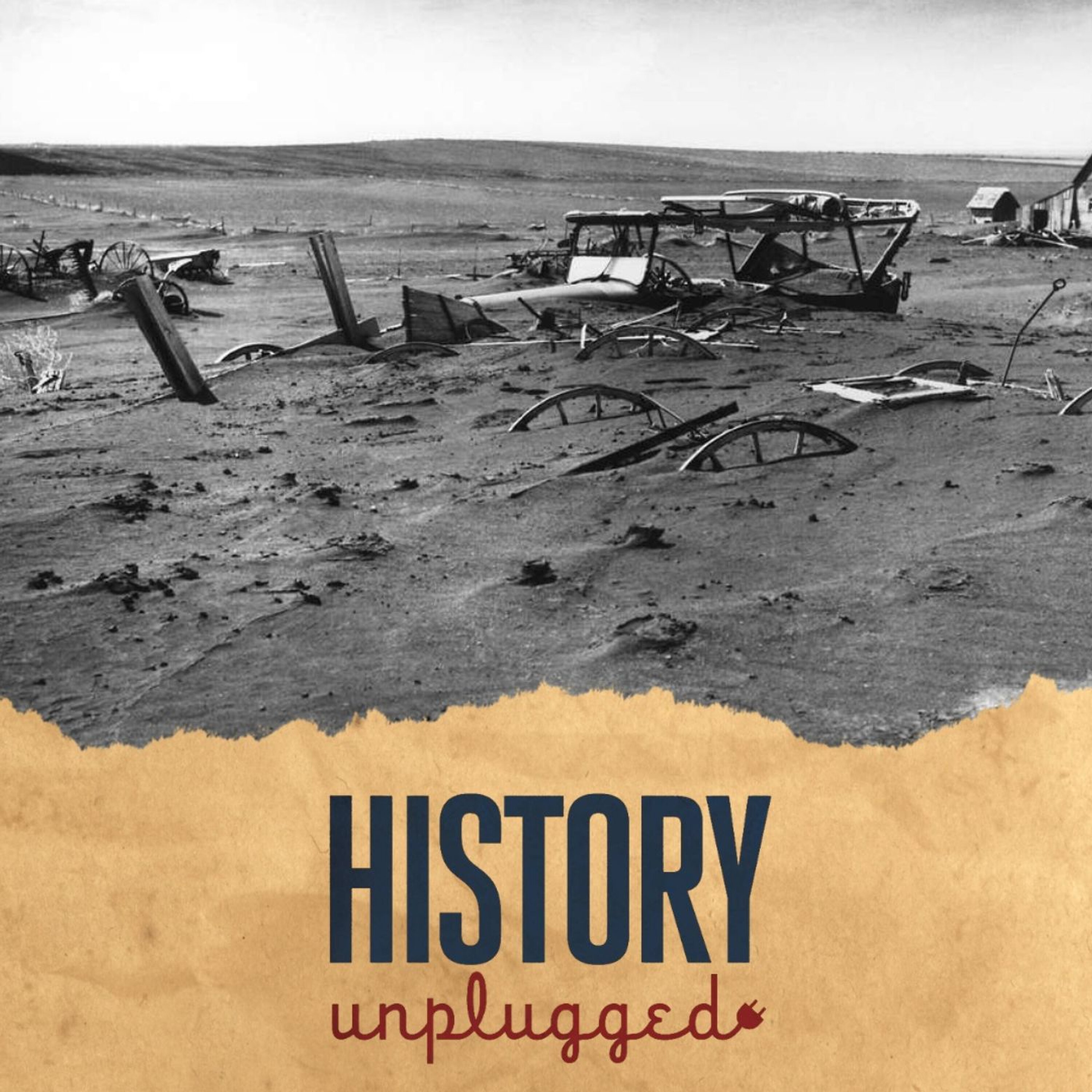
Turning Okies Into New Dealers: How 1930s Technocrats Pushed Progressivism on Dust Bowl Refugees in Federal Farm Camps
In the midst of the Great Depression, punished by crippling drought and deepening poverty, hundreds of thousands of families left the Great Plains and the Southwest to look for work in California’s rich agricultural valleys. In response to the scene of destitute white families living in filthy shelters built of cardboard, twigs, and refuse, reform-minded New Deal officials built a series of camps to provide them with shelter and community.Today’s guest is Jonathan Ebel, author of “From Dust They Came: Government Camps and the Religion of Reform in New Deal California.” We look at the religious dynamics in and around migratory farm labor camps in agricultural California established and operated by the Resettlement Administration and the Farm Security Administration. Ebel makes the case that the camps served as mission sites for the conversion of migrants to more modern ways of living and believing. Though the ideas of virtuous citizenship put forward by the camp administrators were framed as secular, they rested on a foundation of Protestantism. At the same time, many of the migrants were themselves conservative or charismatic Protestants who had other ideas for how their religion intended them to be.By looking at the camps as missionary spaces, Ebel shows that this New Deal program was animated both by humanitarian concern and by the belief that these poor, white migrants and their religious practices were unfit for life in a modernized, secular world.See omnystudio.com/listener for privacy information.

Whistle-Stop Tours: When Trains Ruled American Presidential Elections
For nearly two centuries, the beating heart of electoral politics was on the back of a train. William Jennings Bryan spoke to an estimated 5 million people from a train car in his 1896 presidential campaign. Yet memories of the pivotal role campaign trains played in American elections fade with the passing of each generation. Also forgotten are the stories documented by the reporters who traveled with hundreds of whistle-stopping politicians including Franklin Roosevelt, Harry Truman, Dwight Eisenhower, and Ronald Reagan.Today’s guest is Edward Segal, author of “Whistle-Stop Politics: Campaign Trains and the Reporters Who Covered Them.” Campaign trains were an American invention that enabled politicians to connect with as many voters as possible in the country’s largest cities and smallest towns.See omnystudio.com/listener for privacy information.

The Jewish Bankers Who Built Wall Street, Financed the American Century, and Spawned Countless Conspiracy Theories
Joseph Seligman arrived in the United States in 1837, with the equivalent of $100 sewn into the lining of his pants. Then came the Lehman brothers, who would open a general store in Montgomery, Alabama. Not far behind were Solomon Loeb and Marcus Goldman, among the “Forty-Eighters” fleeing a Germany that had relegated Jews to an underclass.These industrious immigrants would soon go from peddling trinkets and buying up shopkeepers’ IOUs to forming what would become some of the largest investment banks in the world—Goldman Sachs, Kuhn Loeb, Lehman Brothers, J. & W. Seligman & Co. They would clash and collaborate with J. P. Morgan, E. H. Harriman, Jay Gould, and other famed tycoons of the era. And their firms would help to transform the United States from a debtor nation into a financial superpower, capitalizing American industry and underwriting some of the twentieth century’s quintessential companies, like General Motors, Macy’s, and Sears. Along the way, they would shape the destiny not just of American finance but of the millions of Eastern European Jews who spilled off steamships in New York Harbor in the early 1900s, including Daniel Schulman’s paternal grandparents.Today’s guest is Dan Schulman, author of “The Money Kings: The Epic Story of the Jewish Immigrants Who Transformed Wall Street and Shaped Modern America.” We trace the interconnected origin stories of these financial dynasties from the Gilded Age to the Civil War, World War I, and the Zionist movement that tested both their burgeoning empires and their identities as Americans, Germans, and Jews.See omnystudio.com/listener for privacy information.
The Ghost Army of World War 2
In the summer of 1944, a handpicked group of young GIs—including such future luminaries such as Bill Blass, Ellsworth Kelly, Arthur Singer, Victor Dowd, Art Kane, and Jack Masey—landed in France to conduct a secret mission. From Normandy to the Rhine, the 1,100 men of the 23rd Headquarters Special Troops, known as the Ghost Army, conjured up phony convoys, phantom divisions, and make-believe headquarters to fool the enemy about the strength and location of American units. Every move they made was top secret and their story was hushed up for decades after the war's end.The unit’s official US Army history noted that “its complement was more theatri¬cal than military,” and “It was like a traveling road show that went up and down the front lines impersonating the real fighting outfits.” They pulled off twenty-one differ¬ent deceptions and are credited with saving thousands of lives through stagecraft and sleight of hand. They threw themselves into their impersonations, sometimes setting up phony command posts and masquerading as generals. They frequently put themselves in danger, suffering casualties as a consequence. After holding Patton’s line along the Moselle, they barely escaped capture by the Germans in the Battle of the Bulge, and in March 1945 they performed their most dazzling deception, misleading the Germans about where two American divi¬sions would cross the Rhine River.To explore the story of this forgotten subterfuge is today’s guest, Rick Beyer, author of “The Ghost Army of World War II: How One Top-Secret Unit Deceived the Enemy with Inflatable Tanks, Sound Effects, and Other Audacious Fakery.” We look at how a traveling road show of artists wielding imagination, paint, and bravado saved thousands of American lives.See omnystudio.com/listener for privacy information.
How Free Time Transformed From Strolls Through Aristocratic Gardens to Doomscrolling on TikTok
Free time, one of life’s most important commodities, often feels unfulfilling. But why? And how did leisure activities transition from strolling in the park for hours to “doomscrolling” on social media for thirty minutes?Despite the promise of modern industrialization, many people experience both a scarcity of free time and a disappointment in it. Here to explain why this is today’s guest Gary Cross, author of “Free Time: The History of an Elusive Ideal.” We discuss a broad historical explanation of why our affluent society does not afford more time away from work and why that time is often unsatisfying.We begin with a survey of the past 250 years to understand the roots of our conception of free time and its use. By the end of the nineteenth century, a common expectation was that industrial innovations would lead to a progressive reduction of work time and a subsequent rise in free time devoted to self-development and social engagement. However, despite significant changes in the early twentieth century, both goals were frustrated, thus leading to the contemporary dilemma.Cross touches on leisure of all kinds, from peasant festivals and aristocratic pleasure gardens to amusement parks, movie theaters and organized sports to internet surfing, and even the use of alcohol and drugs. This wide-ranging cultural and social history explores the industrial-era origins of our modern obsession with work and productivity, but also the historical efforts to liberate time from work and cultivate free time for culture.See omnystudio.com/listener for privacy information.
Everyday Life In a War Zone: How To Live For Years With Air Raid Sirens and Tanks in the Street
What goes through the mind of a mother who must send her child to school across a minefield or the men who belong to groups of volunteer body collectors? When living in a warzone, such questions become part of the daily calculus of life. This is an everyday form of war that included provisioning fighters with military equipment they purchased themselves, smuggling insulin, and cutting ties to former friends.Today’s guest is Greta Uehling, author of “Everyday War: The Conflict Over Donbas, Ukraine.” She explored these questions by researching Donbas, Ukraine, where an armed conflict over the region began in 2014 and continues to today. Uehling engaged with the lives of ordinary people living in and around Donbas and showed how conventional understandings of war are incomplete. She found that rather than nonstop air raid sirens, humans are able to forge a sense of normalcy in the most abnormal conditions.See omnystudio.com/listener for privacy information.
Behind the Bulldog: Winston Churchill's Public Image vs. Private Reality, Based on Those Who Knew Him
Winston Churchill remains one of the most revered figures of the twentieth century, his name a byword for courageous leadership. But the Churchill we know today is a mixture of history and myth, authored by the man himself. Today’s guest, David Reynolds, author of “Mirrors of Greatness: Churchill and the Leaders Who Shaped Him,” re-evaluates Churchill’s life by viewing it through the eyes of his allies and adversaries, even his own family, revealing Churchill’s lifelong struggle to overcome his political failures and his evolving grasp of what “greatness” truly entailed. Through his dealings with Adolf Hitler and Neville Chamberlain, we follow Churchill’s triumphant campaign against Nazi Germany. But we also see a Churchill whose misjudgments of allies and rivals like Roosevelt, Stalin, Gandhi, and Clement Attlee blinded him to the British Empire’s waning dominance on the world stage and to the rising popularity of a postimperial, socialist vision of Great Britain at home.See omnystudio.com/listener for privacy information.
American Anarchy of the Early 1900s and The First U.S. War Against Domestic Extremists
In the early twentieth century, anarchists like Emma Goldman and Alexander Berkman championed a radical vision of a world without states, laws, or private property. Militant and sometimes violent, anarchists were heroes to many working-class immigrants. But to many others, anarchism was a terrifyingly foreign ideology. Determined to crush it, government officials launched a decades-long “war on anarchy,” a brutal program of spying, censorship, and deportation that set the foundations of the modern surveillance state. The lawyers who came to the anarchists’ defense advanced groundbreaking arguments for free speech and due process, inspiring the emergence of the civil liberties movement.Today’s guest is Michael Willrich, author of “American Anarchy: The Epic Struggle between Immigrant Radicals and the US Government at the Dawn of the Twentieth Century.” We look at this tumultuous era and parallels with contemporary society.See omnystudio.com/listener for privacy information.
Why Armies Stopped Burning Libraries and Weaponized Them Instead
Books are often seen as “victims” of combat. When the flames of warfare turn libraries to ashes, we grieve this loss as an immense human and cultural tragedy. But that’s not the complete picture. Books were used in war across the twentieth century—both as agents for peace and as weapons. On one hand, books represent solace and solidarity for troops and prisoners of war desperate for reading materials. On the other hand, books have also been engines of warfare, mobilizing troops, spreading ideologies, and disseminating scientific innovation. With accounts that span from ancient Rome to the Cold War, from Uncle Tom’s Cabin to Mao’s Little Red Book, Pettegree demonstrates how books have shaped societies at war—for both good and ill.Today’s guest is Andrew Pettegree, author of “The Book at War: How Reading Shaped Conflict and Conflict Shaped Reading.” We explore the weaponization of the publishing industry, the mechanics of mass-scale censorship, and why the Soviets Hated Ian Fleming.See omnystudio.com/listener for privacy information.
Shining Light on the British Dark Ages: Anglo-Saxon Warfare, 400-1070
In a country fragmented by Roman withdrawal during the 5th century, theemployment of Germanic mercenaries by local rulers in Anglo-Saxon Britain wascommonplace. These mercenaries became settlers, forcing Romano-Britishcommunities into Wales and the West Country. Against a background of spreadingChristianity, the struggles of rival British and Anglo-Saxon kingdoms were exploited bythe Vikings, but eventually contained by the Anglo-Saxon king, Alfred of Wessex. Hisdescendants unified the country during the 10th century, however, subsequent weakrule saw its 25-year incorporation into a Danish empire before it finally fell to theNorman invasion of 1066.Scholars of the early Church have long known that the term ‘Dark Ages’ for the 5th to11th centuries in Britain refers only to a lack of written sources, and gives a falseimpression of material culture. The Anglo-Saxon warrior elite were equipped withmagnificent armour, influenced by the cultures of the late Romans, the ScandinavianVendel people, the Frankish Merovingians, Carolingians and Ottonians, and also theVikings.Today’s guest is Stephen Pollington, author of ”Anglo-Saxon Kings and Warlords AD 400-1070.” We look at the kings and warlords of the time with latest archaeological research.See omnystudio.com/listener for privacy information.
The Last Ship From Hamburg: How Russian Jews Escaped Death on the Eve of World War I
For a 30-year period, from the 1880s to World War I, 2.5 million Jews, fleeing discrimination and violence in their homelands of Eastern Europe, arrived in the United States. Many sailed on steamships from Hamburg.This mass exodus was facilitated by three businessmen whose involvement in the Jewish-American narrative has been largely forgotten: Jacob Schiff, the managing partner of the investment bank Kuhn, Loeb & Company, who used his immense wealth to help Jews to leave Europe; Albert Ballin, managing director of the Hamburg-American Line, who created a transportation network of trains and steamships to carry them across continents and an ocean; and J. P. Morgan, mastermind of the International Mercantile Marine (I.M.M.) trust, who tried to monopolize the lucrative steamship business. Though their goals were often contradictory, together they made possible a migration that spared millions from persecution.Today’s guest is Steven Ujifusa, author of “The Last Ships From Hamburg: Business, Rivalry, and The Race to Save Russia’s Jews on the Eve of World War I.” His great-grandparents were part of this immigrant group, and he describes how they moved from the shtetls of Russia and the ports of Hamburg to the mansions of New York’s Upper East Side. We explore how debates on immigration have changed from the 1880s to today, and what it takes for the interests of billionaires and the interests of society’s poorest members to align.See omnystudio.com/listener for privacy information.
James Longstreet: The Confederate General Who Defied The South And Was Scapegoated for Its Loss
During the Civil War, Gen. James Longstreet was one of the Confederacy’s most beloved generals. Southerners called him “Lee’s Warhorse” and considered him a pillar of the war effort, largely responsible for victories at Second Bull Run, Fredericksburg, and Chickamauga.But after the war Longstreet moved to New Orleans, where he dramatically changed course. He supported black voting and joined the newly elected, integrated postwar government in Louisiana. When white supremacists took up arms to oust that government, Longstreet, leading the interracial state militia, did battle against former Confederates. His defiance ignited a firestorm of controversy, as white Southerners branded him a race traitor and blamed him retroactively for the South’s defeat in the Civil War.Today’s guest is Elizabeth Varon, author of “Longstreet: The Confederate General Who Defied the South.” We consider why although Longstreet was one of the highest-ranking Confederate generals, he has never been commemorated with statues or other memorials in the South because of his involvement in the Republican Party and rejecting the Lost Cause mythology. We also look at his second life as a statesman, serving in such positions as ambassador to the Ottoman Empire.See omnystudio.com/listener for privacy information.
The Septuagint – It Really is Greek to Me
The Septuagint is the most important translations you’ve never heard of. In this episode of the 10th Anniversary of the History of the Papacy series, Steve Guerra and his special guest Garry Stevens lay out the basics of the Septuagint translation of the Old Testament. They talk about the issues of translation and the process of translation.Learn more about the History of Papacy and subscribe:Apple Podcasts: https://apple.co/3td44ES Spotify: https://open.spotify.com/show/7DelfggbL0Au4e3aUyWDaS?si=6ffaacda2ddc4d9bSee omnystudio.com/listener for privacy information.
Benedict Arnold Was America’s Greatest Hero Before He Became Its Worst Villain
Benedict Arnold committed treason— for more than two centuries, that’s all that most Americans have known about him.Yet Arnold was much more than a turncoat—his achievements during the early years of the Revolutionary War defined him as the most successful soldier of the era.Today’s guest is Jack Kelly, author of “God Save Benedict Arnold: The True Story of America’s Most Hated Man.” We look at Arnold’s rush of audacious feats—his capture of Fort Ticonderoga, his Maine mountain expedition to attack Quebec, the famous artillery brawl at Valcour Island, the turning-point battle at Saratoga—that laid the groundwork for our independence.Arnold was a superb leader, a brilliant tactician, a supremely courageous military officer. He was also imperfect, disloyal, villainous. One of the most paradoxical characters in American history, and one of the most interesting.See omnystudio.com/listener for privacy information.
The Sacking of Rome in 410: Caused By Sclerotic Bureaucrats or Unassimilated Barbarians?
It took little more than a single generation for the centuries-old Roman Empire to fall. In those critical decades, while Christians and pagans, legions and barbarians, generals and politicians squabbled over dwindling scraps of power, two men – former comrades on the battlefield – rose to prominence on opposite sides of the great game of empire.Roman general Flavius Stilicho, the man behind the Roman throne, dedicated himself to restoring imperial glory, only to find himself struggling for his life against political foes. Alaric, King of the Goths, desired to be a friend of Rome, was betrayed by it, and given no choice but to become its enemy. Battling each other to a standstill, these two warriors ultimately overcame their differences in order to save the empire from enemies on all sides. And when Stilicho fell, Alaric took vengeance on Rome, sacking it in 410, triggering the ultimate downfall of the Western Empire.To discuss this critical decade in Western history is Don Hollway, author of “At the Gates of Rome: The Fall of the Eternal City, AD 410.”See omnystudio.com/listener for privacy information.
How Scientists Learned to Stop Deuling With Each Other (Literally) and Start Cooperating
Scientists have always been rivals—for priority, prizes, and positions within science, and for fame and funding. This can be seen when Newton and Leibniz fought over who invented calculus (and the former destroyed the reputation of the latter), or Tycho Brahe losing part of his nose in a duel with his third cousin over a differing opinion on a mathematical formula, or when Thomas Edison publicly electrocuted animals to prove Nikola Tesla’s alternating current was dangerous. Yet, scientific rivals must co-operate in order for progress to be made, especially on massive projects that require international teams. But how?Today’s guest, Lorraine Daston, author of Rivals: How Scientists Learned to Cooperate,” guides us through a few major efforts of scientific collaboration over the ages, including the creation of the map of the stars and the Cloud Atlas, both of which we still use today.See omnystudio.com/listener for privacy information.