HISTORY This Week
353 episodes — Page 1 of 8
Audubon’s Birds Come Home to Roost
The Freemasons Get Away With Murder (Probably)
Free preview: The Real Blackbeard (HTW+)
How Did Nixon Fumble the First TV Debate?
From History's Greatest Mysteries: The Ark of the Covenant
The Man Who Taught America to Fear Fat
The Uprising: Why the Peasants Loved Their King (w/ Paul Greengrass and Dan Jones)
Saladin at the Gates of Jerusalem
Blindspot: The Road to 9/11
9/11: Rescue on the Water
The Radium Girls Fight Back
Free preview: How Las Vegas Made America a Gambling Nation (HTW+)
Did Homer Write the Odyssey? (Was He Even Real?)
The Wire That Connected the World
The French Monarchy Falls in a Day
Arsenic, Adultery, and an American on Trial
Fall Out (Finale)
Washington: Hero of the Revolution, from The Rest is History
Ben Franklin Gets Fired
From First America: "Merciless Indian Savages"
The Forgotten Father of Air Conditioning
The *Other* Declaration of Independence (Part II)
Extended Interview: Ken Burns on the American Revolution (HTW+ Preview)
The *Other* Declaration of Independence (Part I)
A Mob Boss Starts A Movement
Reconstruction: The Unfinished Promise – Prologue
Malcolm Gladwell on Reconstruction’s Unfinished Questions
Why the Crusades Became Cool Again
How Higgins and His Boats Won the War
WWII with Tom Hanks (Episode 1 – The Beginning)
The Secretary of War Who Feared the Bomb
Bonnie and Clyde’s Final Ride
The Berlin Airlift and the Birth of the New World Order (Part 2)
Introducing: Family Lore
Surviving the Mad Propagandist of Nazi Berlin (Part 1)
Parting the Desert Between Two Seas
One Eco-Arson After Another: The Earth Liberation Front
Jefferson’s Trade War Shuts Down America
A Good, Not Great Lake (from Points North)
Oil Fields, Bags of Cash, a Presidency Exposed

S7 Ep 6William Parker’s War on Slave Catchers
April 3, 1851. A man who escaped slavery is grabbed off the streets of Boston and thrown into a carriage. He fights back, shouting to the crowd, but it doesn’t matter. Under a new federal law, even the North isn’t safe. The Fugitive Slave Act has turned cities like Boston into hunting grounds. Freedom seekers are being captured, and ordinary citizens are being forced to help. But across the North, resistance is growing. In Pennsylvania, a man named William Parker is building a network to fight back. When slavecatchers come to his door, that resistance explodes into violence. How did one law push the country dramatically closer to war? And what happens when the people targeted by this law refuse to surrender? Special thanks to Dr. Iris Leigh Barnes, director of the Hosanna School Museum; Christy Coleman, public historian and museum executive; Kellie Carter Jackson, chair of the Africana Studies Department at Wellesley College; and Jamahl Wimberley, who provided the voice of William Parker. Get in touch: [email protected] Follow on Instagram: @historythisweekpodcast Follow on Facebook: HISTORY This Week Podcast To stay updated: http://historythisweekpodcast.com To learn more about listener data and our privacy practices visit: https://www.audacyinc.com/privacy-policy Learn more about your ad choices. Visit https://podcastchoices.com/adchoices
S7 Ep 5The First Robot
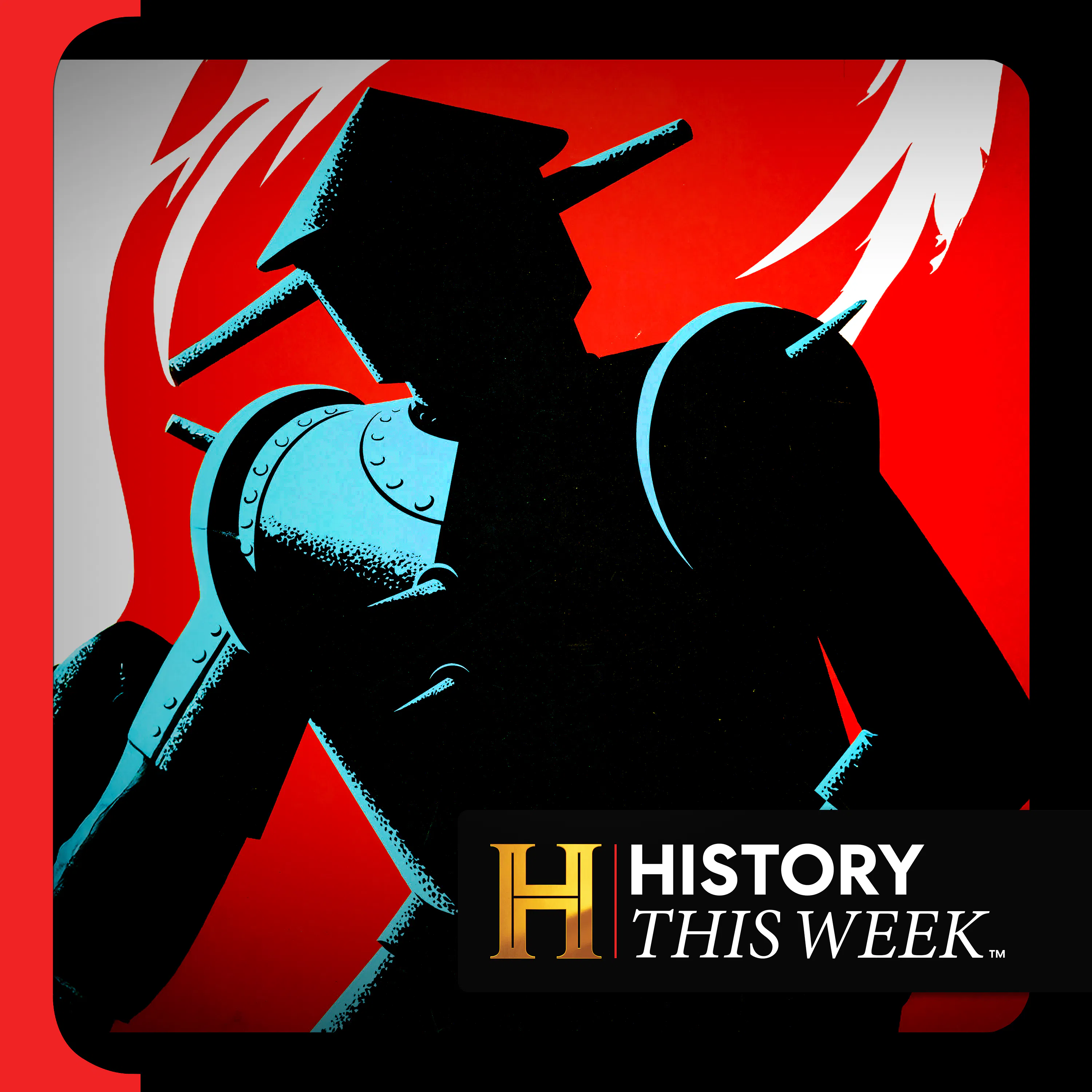
March 29th, 1923. A new play opens in Berlin, and quietly changes the future. Onstage are workers who never tire, never complain, and never stop. They’re faster, stronger, and more efficient than humans in every way. They’re called robots. A sci-fi play born out of war and industrialization sparks a global obsession and a lasting fear. Because from the very beginning, the robot wasn’t just a technological breakthrough. It was a rebellion waiting to happen. How did a playwright invent the robot? Why did his idea spread so quickly? And what does it reveal about the way we think about the future of science? Special thanks to Dennis Jerz, Professor of English and Media at Seton Hill University; John Jordan, author of Robots; and Jitke Cejkova, editor of R.U.R. and the Vision of Artificial Life. Get in touch: [email protected] Follow on Instagram: @historythisweekpodcast Follow on Facebook: HISTORY This Week Podcast To stay updated: http://historythisweekpodcast.com To learn more about listener data and our privacy practices visit: https://www.audacyinc.com/privacy-policy Learn more about your ad choices. Visit https://podcastchoices.com/adchoices

S7 Ep 4HTW Live: Busting the Myths of Irish Immigration — Recorded at the Tenement Museum
March 18, 1879. A crowd gathers around an indoor track in Brooklyn, NY, as an Irish immigrant named Bartholomew O’Donnell attempts a strange feat: walking 80 miles in 26 hours. Newspapers claim he’s eighty years old. Lap after lap, he circles the track: smoking a pipe, sipping hot tea, and pushing through the night. O’Donnell came to New York thirty years earlier, fleeing the Great Potato Famine. Like many Irish immigrants, he spent decades doing manual labor and trying to get ahead in a city that often viewed newcomers with suspicion. For generations, stories like his shaped how historians understood famine-era Irish immigrants. In this special live episode recorded at the Tenement Museum ahead of St. Patrick’s Day, Sally speaks with historian Tyler Anbinder, author of Plentiful Country: The Great Potato Famine and the Making of Irish New York, about what new research reveals about the lives of Irish immigrants in America, and what their story can tell us about immigration today. Get in touch: [email protected] Follow on Instagram: @historythisweekpodcast Follow on Facebook: HISTORY This Week Podcast To stay updated: http://historythisweekpodcast.com To learn more about listener data and our privacy practices visit: https://www.audacyinc.com/privacy-policy Learn more about your ad choices. Visit https://podcastchoices.com/adchoices
From Radio Diaries: Orson Welles and the Blind Soldier
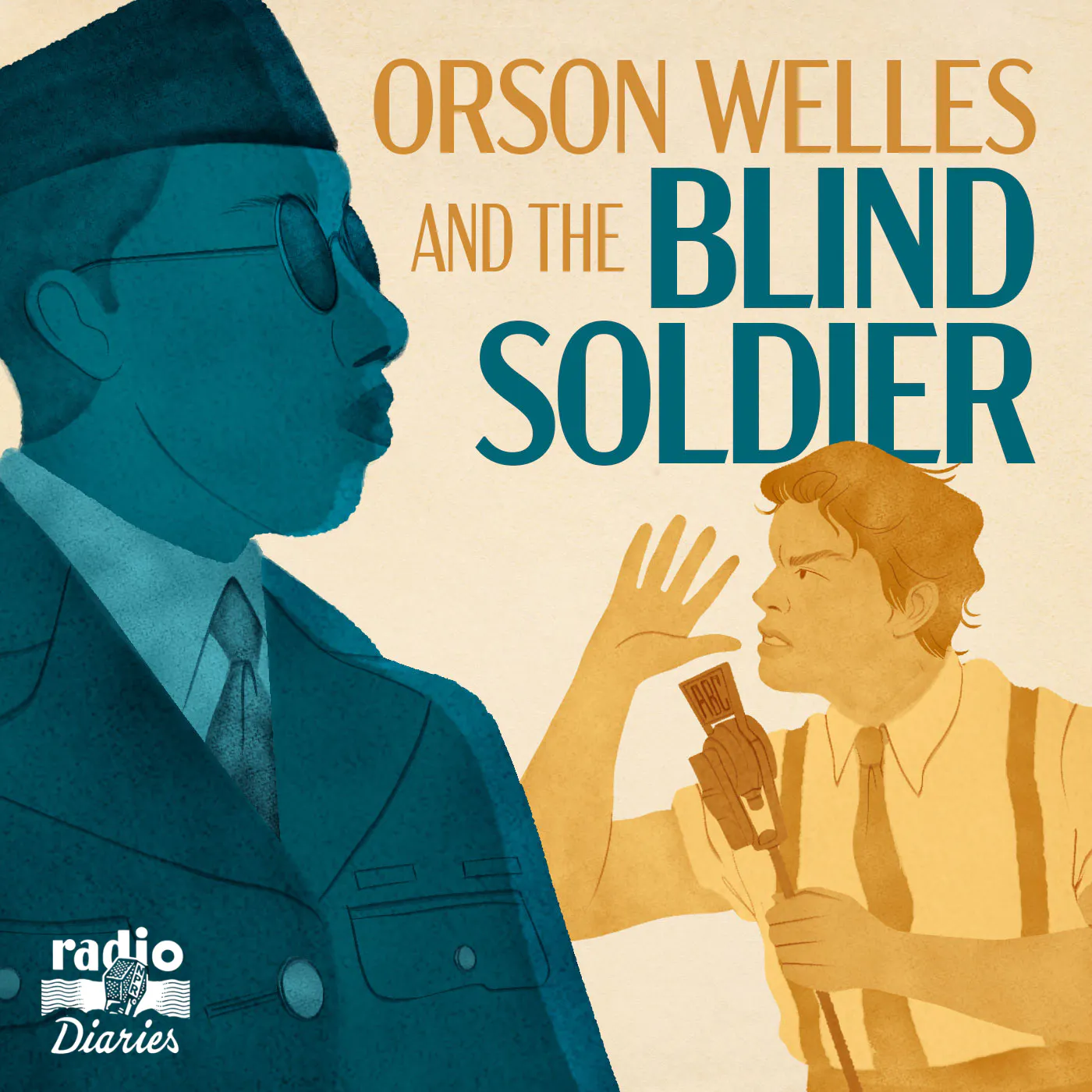
bonusWhy did Orson Welles take on a murder mystery? Listen for yourself. This week, we're sharing a special preview of Orson Welles and the Blind Soldier from the podcast Radio Diaries. In this series, we learn how Welles used his platform to shed light on a crime in a small, southern town. A crime that became a spark for the budding Civil Rights movement. For more, visit radiodiaries.org To learn more about listener data and our privacy practices visit: https://www.audacyinc.com/privacy-policy Learn more about your ad choices. Visit https://podcastchoices.com/adchoices
Axis Sally’s Nazi Radio
March 10, 1949. Defendant Mildred Gillars arrives at a courthouse to hear her verdict. To trial-watchers, she’s known as Axis Sally—the American woman who broadcast Nazi propaganda from Berlin during World War II. In taunting tones, she spent years pushing anti-Semitic and anti-Allies messages aimed at weakening the morale of American soldiers. But Gillars insists that she’s misunderstood, even innocent. That she’s an artist, she loves her country, and was forced to do what she did… or die. How did a struggling actress from Maine become a potent weapon of the Nazis? And is there a way to understand the choices that she made? Special thanks to our guests, Richard Lucas, author of Axis Sally: The American Voice of Nazi Germany, and Michael Flamm, professor of history at Ohio Wesleyan University. Thanks also to the Veterans History Project at the Library of Congress. ** This episode originally aired March 6, 2023. Get in touch: [email protected] Follow on Instagram: @historythisweekpodcast Follow on Facebook: HISTORY This Week Podcast To stay updated: http://historythisweekpodcast.com To learn more about listener data and our privacy practices visit: https://www.audacyinc.com/privacy-policy Learn more about your ad choices. Visit https://podcastchoices.com/adchoices

S7 Ep 3Stalin Is Dead! | Сталин мертв!
March 5, 1953. The Premier of the Soviet Union, Joseph Stalin, is on his deathbed, and he’s turning blue. At the end of his life, Stalin is surrounded by his closest advisors, but these comrades aren’t hoping for his quick recovery. For days, they’ve been sneaking away from their vigil, plotting. The moment Stalin’s heart stops, they leap into action. What happens when a tyrant falls? And what role did the inner circle play in bringing an end to Stalin? Special thanks to our guest, Sheila Fitzpatrick, historian and author of The Death of Stalin. -- Get in touch: [email protected] Follow on Instagram: @historythisweekpodcast Follow on Facebook: HISTORY This Week Podcast To stay updated: http://historythisweekpodcast.com To learn more about listener data and our privacy practices visit: https://www.audacyinc.com/privacy-policy Learn more about your ad choices. Visit https://podcastchoices.com/adchoices

S7 Ep 2Disneyland on a Deadline
March 1, 1951. Two Texas horse trainers sit down to lunch with Walt Disney. They assume he wants to use their animals in a movie. Instead, Walt leans in and tells them about something that doesn’t exist yet. Not a carnival. Not an amusement park. Something movie-like in the real world. And if he’s going to build it, he’ll need horses. At that moment, Disneyland is just an idea in Walt’s head. But within a few years, he’ll clear 160 acres of orange groves in Anaheim and attempt to build that dream in barely twelve months. The budget will balloon. The rivers will drain into the soil. The rides will be welded together overnight. And Walt will stake his company — and his personal fortune — on opening the gates on time. Why was Disneyland such a gamble? And how did Walt essentially invent a whole new form of live entertainment? Special thanks to our guests: Leslie Iwerks, director of Disneyland Handcrafted; Mark Catalina, producer of Disneyland Handcrafted; Becky Cline, director of the Walt Disney Archives; and Tom Fitzgerald, chief storytelling executive and senior creative executive at Walt Disney Imagineering. Get in touch: [email protected] Follow on Instagram: @historythisweekpodcast Follow on Facebook: HISTORY This Week Podcast To stay updated: http://historythisweekpodcast.com To learn more about listener data and our privacy practices visit: https://www.audacyinc.com/privacy-policy Learn more about your ad choices. Visit https://podcastchoices.com/adchoices
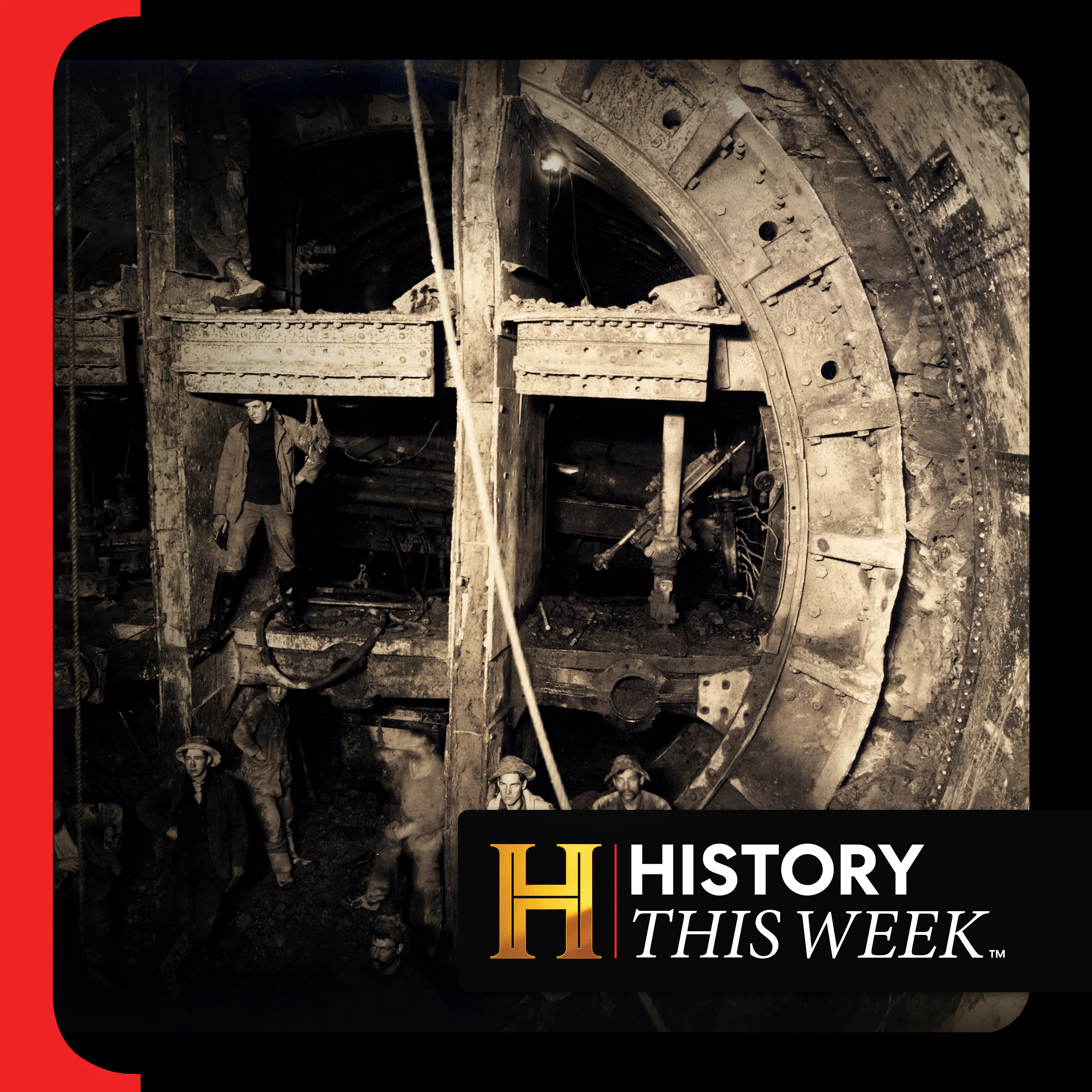
S7 Ep 1How To Dig a Train Tunnel Under the Hudson River
February 14, 1905. A stick of dynamite detonates under the Hudson River — and the ground above swallows a locomotive whole. It's the latest setback in an audacious plan to tunnel beneath the river and bring trains into Manhattan. The Pennsylvania Railroad is the largest corporation in the world, but the goopy riverbed keeps fighting back. How did they finally make it across? And why are these 115-year-old tunnels still the most critical infrastructure in America today? Special thanks to our guests: Polly Desjarlais, content and research manager at the New York Transit Museum; Jill Jonnes, author of Conquering Gotham: A Gilded Age Epic: The Construction of Penn Station and Its Tunnels; and Andy Sparberg, former LIRR manager, transit historian, and author of From a Nickel to a Token: The Journey from Board of Transportation to MTA. -- Get in touch: [email protected] Follow on Instagram: @historythisweekpodcast Follow on Facebook: HISTORY This Week Podcast To stay updated: http://historythisweekpodcast.com To learn more about listener data and our privacy practices visit: https://www.audacyinc.com/privacy-policy Learn more about your ad choices. Visit https://podcastchoices.com/adchoices

Trailer: HTW Season Premiere This Monday!
HISTORY This Week will return with new episodes this Monday, February 16th, with a story about the most vital train tunnels in the United States. The North River Tunnels—their formal name—connect New Jersey to Penn Station in New York City, carrying 200,000 passengers every day. These tunnels underneath the Hudson are now over 115 years old, and are in desperate need of repair. The tunnel rehabilitation effort will be the largest infrastructure project in the country. It’s just getting underway, but now, the funding has been tied up in a political battle between the Trump Administration, Amtrak, and the states of New York and New Jersey. The stakes could not be higher. If these tunnels were to fail, up to 20% of U.S. GDP could be at risk. In this episode, we will unpack just how difficult it was to dig these tunnels in the first place. One man, Pennsylvania Railroad President Alexander Cassatt, was determined to build this critical rail connection, ultimately linking the entire Eastern Seaboard via train for the first time, using engineering methods that had never been tried before. If he failed, his corporation—the largest in the world at the time—would have been doomed. 🎧 Stay tuned this Monday, February 16th, for the full story. To learn more about listener data and our privacy practices visit: https://www.audacyinc.com/privacy-policy Learn more about your ad choices. Visit https://podcastchoices.com/adchoices

Shut Out of the Majors, They Created Their Own
Feb 13, 1920. For over thirty years, Black baseball players have been locked out of the major leagues. So on this day in Kansas City, Rube Foster, a former pitcher and now a team owner, is trying to make his own league just for Black players. He has gathered owners of other Black baseball teams, who currently play each other in one-off matchups or face independent teams in random games around the country. But Foster wants them to get organized, and soon, the Negro National League would be born. But up to this point, how did Black baseball survive after segregation became the unofficial policy of the major leagues? And how did Black players, owners, and managers join together to create something that no baseball fan could ignore? Special thanks to our guests, Phil S. Dixon, author and Negro Leagues researcher; and Bob Kendrick, President of the Negro Leagues Baseball Museum in Kansas City, MO. ** This episode originally aired Feb 7, 2022. Get in touch: [email protected] Follow on Instagram: @historythisweekpodcast Follow on Facebook: HISTORY This Week Podcast To stay updated: http://historythisweekpodcast.com To learn more about listener data and our privacy practices visit: https://www.audacyinc.com/privacy-policy Learn more about your ad choices. Visit https://podcastchoices.com/adchoices