
Heisenbook 2.0
470 episodes — Page 7 of 10
Star Wars: Aftermath Book 1 (Unabridged)
The second Death Star has been destroyed, the emperor killed, and Darth Vader struck down. Devastating blows against the Empire and major victories for the Rebel Alliance. But the battle for freedom is far from over. As the Empire reels from its critical defeats at the Battle of Endor, the Rebel Alliance - now a fledgling New Republic - presses its advantage by hunting down the enemy's scattered forces before they can regroup and retaliate. But above the remote planet Akiva, an ominous show of the enemy's strength is unfolding. Out on a lone reconnaissance mission, pilot Wedge Antilles watches Imperial star destroyers gather like birds of prey circling for a kill, but he's taken captive before he can report back to the New Republic leaders. Meanwhile, on the planet's surface, former Rebel fighter Norra Wexley has returned to her native world - war weary, ready to reunite with her estranged son, and eager to build a new life in some distant place. But when Norra intercepts Wedge Antilles' urgent distress call, she realizes her time as a freedom fighter is not yet over. What she doesn't know is just how close the enemy is - or how decisive and dangerous her new mission will be. Determined to preserve the Empire's power, the surviving imperial elite are converging on Akiva for a top-secret emergency summit - to consolidate their forces and rally for a counterstrike. But they haven't reckoned on Norra and her newfound allies - her technical genius son, a Zabrak bounty hunter, and a reprobate Imperial defector - who are prepared to do whatever they must to end the Empire's oppressive reign once and for all.
Age of Myth Book One of The Legends of the First Empire [Graphic Audio] (Unabridged) Part 2 of 2
Michael J. Sullivan's trailblazing career began with the breakout success of his Riyria series: full-bodied, spellbinding fantasy adventures whose imaginative scope and sympathetic characters won a devoted readership and comparisons to fantasy masters Brandon Sanderson, Scott Lynch, and J.R.R. Tolkien himself. Now Age of Myth inaugurates an original five-book series. Since time immemorial, humans have worshipped the gods they call Fhrey, truly a race apart: invincible in battle, masters of magic, and seemingly immortal. But when a god falls to a human blade, the balance of power between humans and those they thought were gods changes forever. Now only a few stand between humankind and annihilation: Raithe, reluctant to embrace his destiny as the God Killer; Suri, a young seer burdened by signs of impending doom; and Persephone, who must overcome personal tragedy to lead her people. The Age of Myth is over. The time of rebellion has begun.
Age of Myth Book One of The Legends of the First Empire [Graphic Audio] (Unabridged) Part 1 of 2
Michael J. Sullivan's trailblazing career began with the breakout success of his Riyria series: full-bodied, spellbinding fantasy adventures whose imaginative scope and sympathetic characters won a devoted readership and comparisons to fantasy masters Brandon Sanderson, Scott Lynch, and J.R.R. Tolkien himself. Now Age of Myth inaugurates an original five-book series. Since time immemorial, humans have worshipped the gods they call Fhrey, truly a race apart: invincible in battle, masters of magic, and seemingly immortal. But when a god falls to a human blade, the balance of power between humans and those they thought were gods changes forever. Now only a few stand between humankind and annihilation: Raithe, reluctant to embrace his destiny as the God Killer; Suri, a young seer burdened by signs of impending doom; and Persephone, who must overcome personal tragedy to lead her people. The Age of Myth is over. The time of rebellion has begun.
FAA Part 107 Drone Exam AudioLearn Complete Audio Review for the Remote Pilot Certification Exam
http://download.audible.com/product_related_docs/BK_ACX0_121049.pdf Developed by experienced professors and professionally narrated for easy listening, this course is a valuable tool when preparing for your Part 107 exam. The audio is focused and high-yield, covering the most important topics you need to know to succeed on the test. The material is accurate, up-to-date, and broken down into bite-sized chapters. There are quizzes and key takeaways sections following each chapter to review questions commonly tested and drive home key points. In this course, we will cover the following: Anatomy of a drone Important aviation terminology and concepts Overview of the general knowledge test The application process for remote-pilot certification Weather concepts and aviation weather reporting The effect of weather on small unmanned craft Part 107 operational limitations for small unmanned aircraft Pilot health and well-being Risk assessment and aeronautical decision-making We have also included a follow-along PDF manual containing all the graphs, charts, figures, and formulas we'll be reviewing in the audio.
TGC The First Amendment and You What Everyone Should Know
A mere 45 words, the First Amendment to the Constitution stands as a pillar of our democracy and has had an incalculable influence on the development of human freedom in the United States and the Western world. To study the First Amendment is to learn something about the meaning of America and who "We the People" are - and to see the significant and far-reaching cultural implications of this fundamental constitutional provisions.These twelve practical lectures offer a guide to understanding the protections and limitations implied by the First Amendment. You'll learn what and whom it protects, and why it matters to you personally. You'll consider questions of how we define speech, the meaning of "religion," and when the state can interfere with your rights. You'll also explore the questions courts and citizens will be grappling with for years to come: How does the First Amendment apply to the Internet? Does the First Amendment apply to video games? Should new communication technologies make courts reconsider well-settled rules? Is social media subject to existing principles, to new ones, or to none at all? Throughout these lectures, Professor Finn returns to a fundamental theme: What the First Amendment protects is largely a function of why it protects it-the why being America's commitment to democracy and liberty. In pursuit of these ideals, courts have often placed a higher value on political speech, although no such distinction is made in the Constitution. You'll examine numerous landmark Supreme Court decisions, including Citizens United v. Federal Election Commission.
TGC Privacy, Property, and Free Speech Law and the Constitution in the 21st Century
Although the courts have struggled to balance the interests of individuals, businesses, and law enforcement, the proliferation of intrusive new technologies puts many of our presumed freedoms in legal limbo. For instance, it's not hard to envision a day when websites such as Facebook or Google Maps introduce a feature that allows real-time tracking of anyone you want, based on face-recognition software and ubiquitous live video feeds. Does this scenario sound like an unconstitutional invasion of privacy? These 24 eye-opening lectures immerse you in the Constitution, the courts, and the post-9/11 Internet era that the designers of our legal system could scarcely have imagined. Professor Rosen explains the most pressing legal issues of the modern day and asks how the framers of the U.S. Constitution and the Bill of Rights would have reacted to aspects of the modern life such as full-body scans, cell phone surveillance, and privacy in cloud servers. Called "the nation's most widely read and influential legal commentator" by the Los Angeles Times, Professor Rosen is renowned for his ability to bring legal issues alive - to put real faces and human drama behind the technical issues that cloud many legal discussions. Here he asks how you would decide particular cases about liberty and privacy. You'll come away with a more informed opinion about whether modern life gives even the most innocent among us reason to worry.
TGC Practicing Mindfulness An Introduction to Meditation
Meditation - the technique of mental focusing for enhanced awareness and self-mastery - offers deep and lasting benefits for mental functioning and emotional health, as well as for physical health and well-being. This practice is closely related to "mindfulness," which Professor Muesse defines as "a deliberate way of paying attention to what is occurring within oneself as it is happening. It is the process of attentively observing your experience as it unfolds, without judgment or evaluation." "Meditation," he adds, "refers to certain exercises that can be used to enlarge and refine mindfulness." Meditation cultivates mindfulness by training you to develop deep attention to the present moment, allowing the mind to become settled and centered. These 24 detailed lectures teach you the principles and techniques of sitting meditation, the related practice of walking meditation, and the highly beneficial use of meditative awareness in many important activities, including eating and driving. You will also learn how to use the skills of meditation in working with thoughts and emotional states, in deepening sensory awareness of the body, and in becoming deeply attentive to the operation of your mind. You'll come away with a solid basis for your own meditation practice and for bringing meditation's remarkable and empowering benefits to every aspect of your life.
TGC The Addictive Brain
Addiction is a problem that affects everyone - even if we haven't experienced addiction ourselves, we all know someone who has. Unfortunately many sources of information about addiction seem inaccessible or irrelevant because they present vague or false science, they present accurate science in an excessively complicated way, or they are more moralistic than informative. Addiction is sometimes viewed as a failure of character or will or morality. But neuroscience offers a very different picture - one that can inform how we, as individuals and as a society, treat addicts and the problems caused by addiction. These 12 eye-opening lectures will show you that addiction is a scientifically understandable problem that has its origins in neurobiology and genetics. The Addictive Brain is a fair and balanced investigation of addiction, backed by hard science and behavioral science. Most of us have probably seen the old antidrug commercial in which an actor compares your brain on drugs to an egg sizzling in a hot frying pan. That's a powerful image, but it doesn't tell us what actually happens when drugs enter your body and interact with neurochemical processes. Professor Polk gives you a comprehensive but concise survey of addiction and the major drugs of abuse, highlighting the differing neurological effects of stimulants, opioids, and more. He also delves into the world of behavioral addictions, such as gambling and compulsive video gaming, which, neurologically, operate very similarly to drug addiction. This course will clearly and compassionately inform you on what addiction means scientifically, socially, and behaviorally.
Norse Mythology (Unabridged)
Introducing an instant classic - master storyteller Neil Gaiman presents a dazzling version of the great Norse myths. Neil Gaiman has long been inspired by ancient mythology in creating the fantastical realms of his fiction. Now he turns his attention back to the source, presenting a bravura rendition of the great northern tales. In Norse Mythology, Gaiman fashions primeval stories into a novelistic arc that begins with the genesis of the legendary nine worlds; delves into the exploits of the deities, dwarves, and giants; and culminates in Ragnarok, the twilight of the gods and the rebirth of a new time and people. Gaiman stays true to the myths while vividly reincarnating Odin, the highest of the high, wise, daring, and cunning; Thor, Odin's son, incredibly strong yet not the wisest of gods; and Loki, the son of a giant, a trickster and unsurpassable manipulator. From Gaiman's deft and witty prose emerge the gods with their fiercely competitive natures, their susceptibility to being duped and to duping others, and their tendency to let passion ignite their actions, making these long-ago myths breathe pungent life again.
TGC The Era of the Crusades Part 2 of 2
What were the forces that led to one of history's most protracted and legendary periods of conflict? How did they affect the three great civilizations that participated in them? And, ultimately, why did they end and what did they accomplish? In these 36 lectures, you'll look at the "big picture" of the Crusades as an ongoing period of conflict involving Western Christendom (we would now call it Western Europe), the Byzantine Empire, and the Muslim world. From this perspective, you'll study the complex but absorbing causes of the Crusades, which include the many political, cultural, and economic changes in Western Europe after the fall of the Roman Empire. You'll examine the Crusades in terms of the specific military campaigns-the eight "canonical" Crusades that took place from 1095-1291-proclaimed to retake Jerusalem and the Holy Land from Muslim hands and return them to Christendom. You'll consider the immediate circumstances-the leaders, purposes, key battles, and degrees of success or failure-surrounding these often-monumental expeditions. You'll also explore a wide variety of misperceptions and long-debated questions about the Crusades: Did the popes preach the Crusades as a way to increase their personal power and authority? Why did the members of the Fourth Crusade decide to sack Constantinople, turning the Crusades from Christian against "infidel" to Christian against Christian? Taken together, these historically rich lectures are an opportunity to appreciate fully how Western Civilization changed in many profound ways during the Crusading era.
TGC The Era of the Crusades Part 1 of 2
What were the forces that led to one of history's most protracted and legendary periods of conflict? How did they affect the three great civilizations that participated in them? And, ultimately, why did they end and what did they accomplish? In these 36 lectures, you'll look at the "big picture" of the Crusades as an ongoing period of conflict involving Western Christendom (we would now call it Western Europe), the Byzantine Empire, and the Muslim world. From this perspective, you'll study the complex but absorbing causes of the Crusades, which include the many political, cultural, and economic changes in Western Europe after the fall of the Roman Empire. You'll examine the Crusades in terms of the specific military campaigns-the eight "canonical" Crusades that took place from 1095-1291-proclaimed to retake Jerusalem and the Holy Land from Muslim hands and return them to Christendom. You'll consider the immediate circumstances-the leaders, purposes, key battles, and degrees of success or failure-surrounding these often-monumental expeditions. You'll also explore a wide variety of misperceptions and long-debated questions about the Crusades: Did the popes preach the Crusades as a way to increase their personal power and authority? Why did the members of the Fourth Crusade decide to sack Constantinople, turning the Crusades from Christian against "infidel" to Christian against Christian? Taken together, these historically rich lectures are an opportunity to appreciate fully how Western Civilization changed in many profound ways during the Crusading era.
TGC The Late Middle Ages
The Late Middle Ages - the two centuries from c. 1300 to c. 1500 - might seem like a distant era, but students of history are still trying to reach a consensus about how it should be interpreted. Was it an era of calamity or rebirth? Was it still clearly medieval or the period in which humanity took its first decisive steps into modernity? These 24 provocative lectures introduce you to the age's major events, personalities, and developments, and arms you with the essentials you need to form your own ideas about this age of extremes - an age that, according to Professor Daileader, "experiences disasters and tragedies of such magnitude that those who survive them cannot remember the like, and doubt that subsequent generations will be capable of believing their descriptions. "You'll look at the Black Death, the carnage of frequent wars, and the religious turmoil we associate with the Middle Ages." But you'll also look at the beginning of the intellectual and cultural movement known as Humanism, which planted the seeds of modernity. Humanism's precepts, which hearkened back to the moral inspiration inherent in classical artistic values, humans have an enormous capacity for goodness, for creativity, even for the achievement of happiness. But these were hardly the only forces that tug modern-day historians in multiple directions. The Middle Ages was also a period when the persisting legacy of knights, serfs, and castles coexisted with the cannons and muskets newly made possible by gunpowder. With so many contradictions, it's no wonder that historians have differed widely on how to judge this era-debating even when it ended and modernity began.
TGC The High Middle Ages
At the dawn of the last millennium in the year 1000, Europe was one of the world's more stagnant regions - an economically undeveloped, intellectually derivative, and geopolitically passive backwater, with illiteracy, starvation, and disease the norm for almost everyone. Yet only three centuries later, all of this had changed. A newly invigorated cluster of European societies had revived city life, spawned new spiritual and intellectual movements and educational institutions, and had begun, for reasons both sacred and profane, to expand at the expense of neighbors who traditionally had expanded at Europe's expense. This series of 24 lectures, filled with memorable detail, examines how and why Europeans achieved this stunning turnaround. By its conclusion, you will be able to describe and analyze the social, intellectual, religious, and political transformations that set into motion this midsummer epoch of the medieval world - an epoch you will come to know very well through Professor Daileader's vivid descriptions and examinations of its people, including the warrior aristocracy of knights, castellans, counts, and dukes; free and unfree peasants; and townspeople, both artisans and merchants; its vibrant stirrings of religion and intellect, including monastic life and charismatic figures like Francis of Assisi and Thomas Aquinas; the lives of those outside the religious mainstream, especially heretics and Jews; and its major political developments and events, including the First Crusade, the Norman Conquest of England, and the granting of the Magna Carta.
TGC The Early Middle Ages
The Early Middle Ages - the years from A.D. 650 to 1000 - were crucial to Europe's future social and political development. These 24 lectures trace a journey from Scandinavia across northern and central Europe to the farthest reaches of the Byzantine and Islamic empires, providing an exciting new look an era often simply called the "Dark Ages." Given the period's dismal reputation and its temporal remoteness from the 21st century, you'll be surprised to learn about some of the most challenging questions historians have ever had to tackle: Why did the Roman Empire fall? Why did the ancient world give way to the medieval world? Why did Christian monotheism become the dominant religion in Europe? You'll meet some of the era's exciting figures, such as St. Augustine and Justinian, and you'll consider the extent to which the historical realities of King Arthur and Charlemagne match up to the legends that have become attached to their names. You'll also look at the era's effect on the Vikings, the rise of the Carolingians, and the golden age of Islamic rule in Spain. Professor Daileader also explores the contrasting historical theories offered by two extremely influential historians: Edward Gibbon, the English author of the monumental The History of the Decline and Fall of the Roman Empire, whose explanations closely followed those of the Roman moralists of the 4th and 5th centuries; and Henri Pirenne, the Belgian thinker who injected a newfound emphasis on social and especially economic factors into the analysis of history. You'll see why the era belies its reputation as dark and dismal, but you'll come away with a new appreciation for this once-lost era.
TGC Turning Points in Medieval History
For an accurate picture of how the political, social, and religious structure of present-day Europe came to be - and even why we're speaking English today - studying the key events between the years 500 and 1500 is of critical import. These 24 gripping lectures deliver an unparalleled look at these moments that profoundly changed the arc of history, and they weave the era's vast array of disparate events into an interconnected tapestry that illuminates why nothing exists in a vacuum. Among the events you'll experience: the moment in 711 A.D. when Tariq ibn Zayid conquered Spain and created the unusually tolerant society of Al-Andalus; the 1152 marriage between Eleanor of Aquitaine and Henry Plantagenet, which led to the Hundred Years' War and the War of the Roses; and the composition of Fibonacci's Liber Abaci in 1202, which transformed the medieval world of business, banking, and commerce. These are just three of the many turning points in the history of medieval Europe that prove the Middle Ages were far from "dark." Throughout these lectures, you'll investigate events, such as the Norman conquest of England in 1066, where the impact was immediate and tangible. In others, like the Great Schism between the Eastern and Western churches, the importance was not recognized for years; some developments had effects so gradual that their significance can only be recognized from the vantage point of history. Methodical and meticulous in its approach to a labyrinthine age, these lectures will help you understand why the West's transition from the classical to the early modern was a fluid, ongoing process rather than the result of a single pivotal moment.
TGC The Story of Medieval England From King Arthur to the Tudor Conquest Part 2 of 2
These 36 lectures tell the remarkable story of a tumultuous thousand-year period in the history of England. Dominated by war, conquest, and the struggle to balance the stability brought by royal power with the rights of the governed, it was a period that put into place the foundation of much of the world we know today. As you journey through this largely chronological narrative - occasionally interrupted for lecture-long explorations of specific topics - you'll see key themes emerge, including the assimilation of successive waves of invaders, the tense relationship between kings and the nobility, and the constant battles over money and taxation. And because so much of history is driven by specific individuals and not just historical circumstance, each lecture is rich in intimate portraits that reveal those individuals at the key moments of their historical destiny, including Alfred the Great, William the Conqueror, Eleanor of Aquitaine, and John Wycliffe.The result is a lecture series that winds up being not only informative but deeply entertaining, with each lecture drawing you in with its own particular fascinations, including a probing look at the scope of the Black Death, a realistic examination of the legends of both King Arthur and Robin Hood, a riveting description of the Battle of Bosworth Field, and a discussion of the surprisingly nuanced penalties of the early Germanic law codes. These lectures consistently deliver a fresh level of understanding about medieval England, its rulers and subjects, and their significance for the world we live in today. The chain of theme and event that links our world to theirs will never be clearer, rewarding every moment you spend with this series.
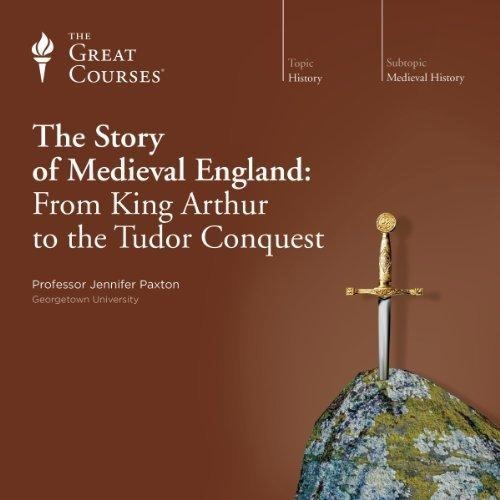
TGC The Story of Medieval England From King Arthur to the Tudor Conquest Part 1 of 2
These 36 lectures tell the remarkable story of a tumultuous thousand-year period in the history of England. Dominated by war, conquest, and the struggle to balance the stability brought by royal power with the rights of the governed, it was a period that put into place the foundation of much of the world we know today. As you journey through this largely chronological narrative - occasionally interrupted for lecture-long explorations of specific topics - you'll see key themes emerge, including the assimilation of successive waves of invaders, the tense relationship between kings and the nobility, and the constant battles over money and taxation. And because so much of history is driven by specific individuals and not just historical circumstance, each lecture is rich in intimate portraits that reveal those individuals at the key moments of their historical destiny, including Alfred the Great, William the Conqueror, Eleanor of Aquitaine, and John Wycliffe.The result is a lecture series that winds up being not only informative but deeply entertaining, with each lecture drawing you in with its own particular fascinations, including a probing look at the scope of the Black Death, a realistic examination of the legends of both King Arthur and Robin Hood, a riveting description of the Battle of Bosworth Field, and a discussion of the surprisingly nuanced penalties of the early Germanic law codes. These lectures consistently deliver a fresh level of understanding about medieval England, its rulers and subjects, and their significance for the world we live in today. The chain of theme and event that links our world to theirs will never be clearer, rewarding every moment you spend with this series.
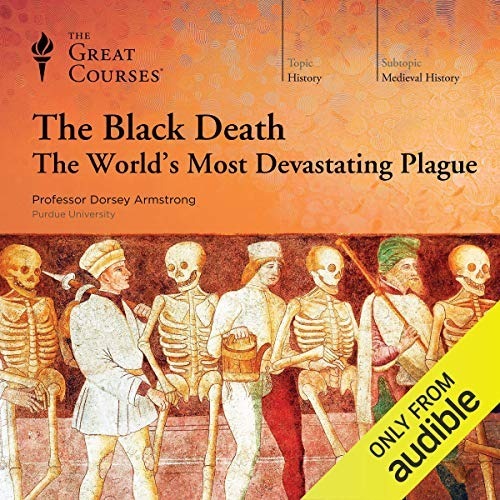
TGC The Black Death The World's Most Devastating Plague
Many of us know the Black Death as a catastrophic event of the medieval world. But the Black Death was arguably the most significant event in Western history, profoundly affecting every aspect of human life, from the economic and social to the political, religious, and cultural. In its wake the plague left a world that was utterly changed, forever altering the traditional structure of European societies and forcing a rethinking of every single system of Western civilization: food production and trade, the church, political institutions, law, art, and more. In large measure, by the profundity of the changes it brought, the Black Death produced the modern world we live in today. While the story of the Black Death is one of destruction and loss, its breathtaking scope and effects make it one of the most compelling and deeply intriguing episodes in human history. Understanding the remarkable unfolding of the plague and its aftermath provides a highly revealing window not only on the medieval world but also on the forces that brought about the Renaissance, the Protestant Reformation, and modernity itself. Speaking to the full magnitude of this world-changing historical moment, The Black Death: The World's Most Devastating Plague, taught by celebrated medievalist Dorsey Armstrong of Purdue University, takes you on an unforgettable excursion into the time period of the plague, its full human repercussions, and its transformative effects on European civilization. In 24 richly absorbing lectures, you'll follow the path of the epidemic in its complete trajectory across medieval Europe. Majestic in scope and remarkable in detail, this course goes to the heart of one of Western history's most catalytic and galvanizing moments, the effects of which gave us the modern world.
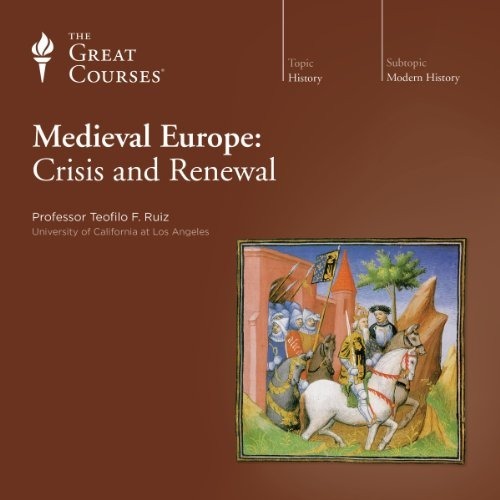
TGC Medieval Europe Crisis and Renewal
The Middle Ages harshly tested every aspect of human perseverance, imagination, and survival. Living conditions were squalid for almost everyone except the ruling elite, and most of the riches of Western culture were preserved in monasteries and on other continents. And into this setting came widespread famines, prolonged wars, and plagues that marked Europe's late medieval period as one of the most harrowing in recorded history. But Europe was not broken by these crises. Instead, it renewed itself and spawned fundamental artistic, religious, romantic, and political ideas that continue to shape our world to this day. This series of 16 engrossing lectures transports you to 14th-century Europe to experience a hero's tale of cultural trial, suffering, and triumph. It guides you through 200 years of stunning transformations in how people viewed themselves, how they worshiped, and their relationship to land and country, addressing key concepts that include national boundaries, church-state separation, individuality, and sovereignty - all of which find root in the medieval world. The series is divided into three main sections that provide you a framework for understanding medieval society through detailed descriptions of what life was like for peasants, merchants, and monarchs; show you how this rigid but well-entrenched social structure was shaken to the core by crises like the Hundred Years War and the Black Death, and let you experience the glorious renewal that followed, including the spread of Renaissance ideas and styles; the creation of the modern nation in Castile, France, and England; the "rediscovery" of Plato, and the far-reaching voyages of discovery.
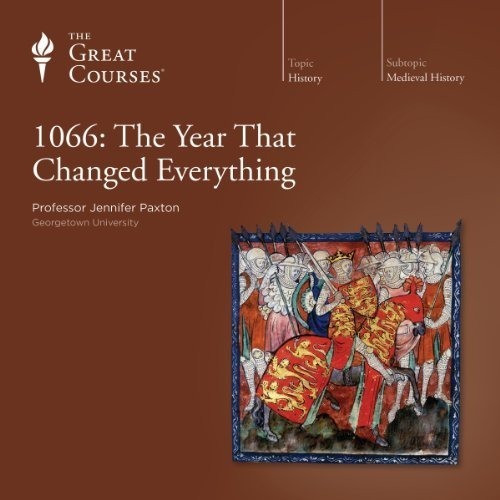
TGC 1066 The Year That Changed Everything
With this exciting and historically rich six-lecture course, experience for yourself the drama of this dynamic year in medieval history, centered on the landmark Norman Conquest. Taking you from the shores of Scandinavia and France to the battlefields of the English countryside, these lectures will plunge you into a world of fierce Viking warriors, powerful noble families, politically charged marriages, tense succession crises, epic military invasions, and much more. Your journey starts in the 10th and early 11th centuries, when power in England and Normandy was very much up for grabs - and when the small island nation was under continuous assault from Viking forces. Professor Paxton helps you gain a solid grasp of the complex political alliances and shifting relationships between figures such as Emma of Normandy, Cnut, and Edward the Confessor. She also recounts for you the two seminal battles that pitted England against the Scandinavians and the Normans: the Battle of Stamford Bridge and the Battle of Hastings. Throughout the lectures, Dr. Paxton opens your eyes to continued debates and controversies over this year and offers her own take on the Norman Conquest's enduring legacy and the fascinating results of this epic clash. By exploring the year 1066 – what led up to it, what happened during that fateful year, and what changed as a result - you'll gain a sharper perspective and a greater understanding of everything that would come afterward.
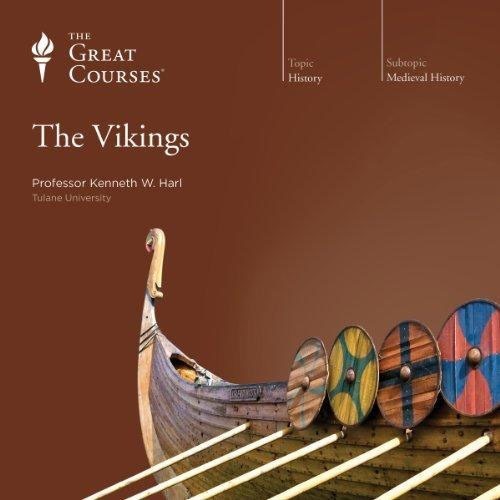
TGC The Vikings Part 2 of 2
As raiders and explorers, the Vikings played a decisive role in the formation of Latin Christendom, and particularly of western Europe. Now, in a series of 36 vivid lectures by an honored teacher and classical scholar, you have the opportunity to understand this remarkable race as never before, studying the Vikings not only as warriors, but in all of the other roles in which they were equally extraordinary - merchants, artists, kings, raiders, seafarers, shipbuilders, and creators of a remarkable literature of myths and sagas. Professor Harl draws insights from an astonishing array of sources: The Russian Primary Chronicle (a Slavic text from medieval Kiev), 13th-century Icelandic poems and sagas, Byzantine accounts, Arab geographies, annals of Irish monks who faced Viking raids, Roman reports, and scores of other firsthand contemporary documents. Among the topics you'll explore are the profound influence of the Norse gods and heroes on Viking culture and the Vikings' extraordinary accomplishments as explorers and settlers in Iceland, Greenland, and Vinland. And with the help of archaeological findings, you'll learn to analyze Viking ship burials, rune stones and runic inscriptions, Viking wood carving, jewelry, sculpture, and metalwork. By the end of the series, you'll have a new understanding of what it meant to be a Viking and a richer appreciation of this remarkable race - a people who truly defined the history of Europe, and whose brave, adventurous, and creative spirit still survives today.
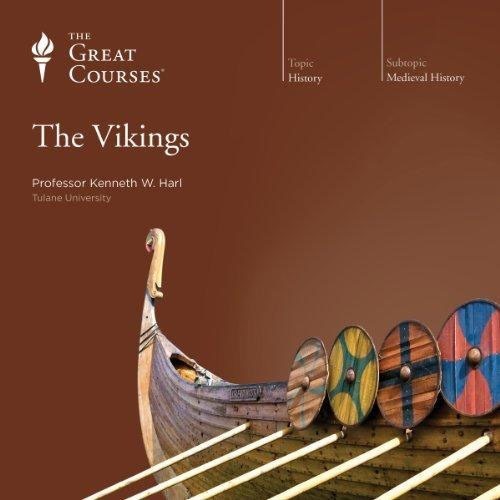
TGC The Vikings Part 1 of 2
As raiders and explorers, the Vikings played a decisive role in the formation of Latin Christendom, and particularly of western Europe. Now, in a series of 36 vivid lectures by an honored teacher and classical scholar, you have the opportunity to understand this remarkable race as never before, studying the Vikings not only as warriors, but in all of the other roles in which they were equally extraordinary - merchants, artists, kings, raiders, seafarers, shipbuilders, and creators of a remarkable literature of myths and sagas. Professor Harl draws insights from an astonishing array of sources: The Russian Primary Chronicle (a Slavic text from medieval Kiev), 13th-century Icelandic poems and sagas, Byzantine accounts, Arab geographies, annals of Irish monks who faced Viking raids, Roman reports, and scores of other firsthand contemporary documents. Among the topics you'll explore are the profound influence of the Norse gods and heroes on Viking culture and the Vikings' extraordinary accomplishments as explorers and settlers in Iceland, Greenland, and Vinland. And with the help of archaeological findings, you'll learn to analyze Viking ship burials, rune stones and runic inscriptions, Viking wood carving, jewelry, sculpture, and metalwork. By the end of the series, you'll have a new understanding of what it meant to be a Viking and a richer appreciation of this remarkable race - a people who truly defined the history of Europe, and whose brave, adventurous, and creative spirit still survives today.
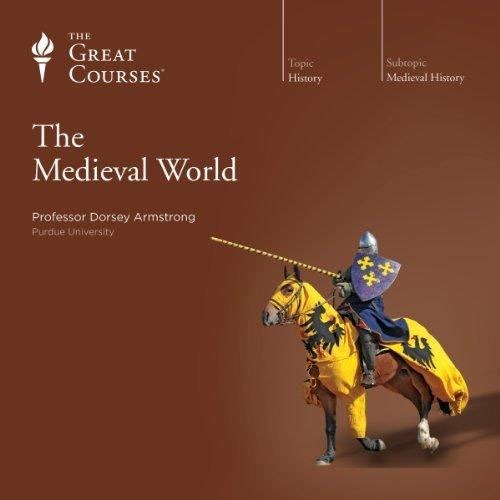
TGC The Medieval World Part 2 of 2
Far from being a time of darkness, the Middle Ages was an essential period in the grand narrative of Western history. But what was it like to actually live in those extraordinary times? Now you can find out. These 36 lectures provide a different perspective on the society and culture of the Middle Ages - one that entrenches you in the daily human experience of living during this underappreciated era. Drawing on history, literature, the arts, technology, and science, these lectures will deepen the way you understand not only the Middle Ages but everything that came afterward: From the Renaissance, to the Enlightenment, to your own world. Filled with amazing insights, this series brings you closer than ever before to life as it was lived and felt. You'll meet the likes of William Caxton, England's first printer who not only printed and distributed a variety of works but also often had to translate them himself; learn about Hugh of Payns and the role of his Knights Templar - organized for the protection of pilgrims traveling to Jerusalem - in the creation of the first modern bank; see how communities dealt with marriage in a time when the church had not yet drawn this institution into its orbit; and much more. Rich with information and period detail (including revealing examples of medieval literature from the English, French, Norse, Icelandic, and Italian worlds), these lectures will dramatically increase your understanding of how lives in the Middle Ages were really lived.
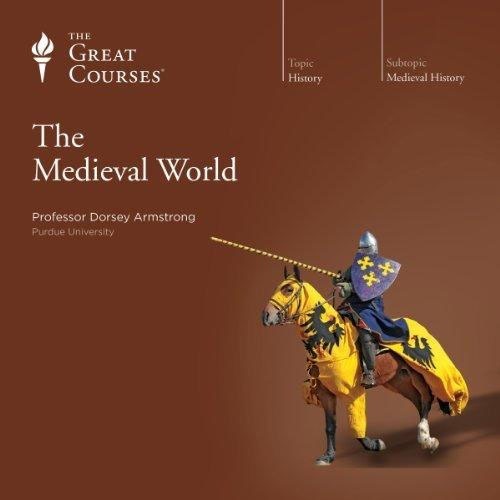
TGC The Medieval World Part 1 of 2
Far from being a time of darkness, the Middle Ages was an essential period in the grand narrative of Western history. But what was it like to actually live in those extraordinary times? Now you can find out. These 36 lectures provide a different perspective on the society and culture of the Middle Ages - one that entrenches you in the daily human experience of living during this underappreciated era. Drawing on history, literature, the arts, technology, and science, these lectures will deepen the way you understand not only the Middle Ages but everything that came afterward: From the Renaissance, to the Enlightenment, to your own world. Filled with amazing insights, this series brings you closer than ever before to life as it was lived and felt. You'll meet the likes of William Caxton, England's first printer who not only printed and distributed a variety of works but also often had to translate them himself; learn about Hugh of Payns and the role of his Knights Templar - organized for the protection of pilgrims traveling to Jerusalem - in the creation of the first modern bank; see how communities dealt with marriage in a time when the church had not yet drawn this institution into its orbit; and much more. Rich with information and period detail (including revealing examples of medieval literature from the English, French, Norse, Icelandic, and Italian worlds), these lectures will dramatically increase your understanding of how lives in the Middle Ages were really lived.
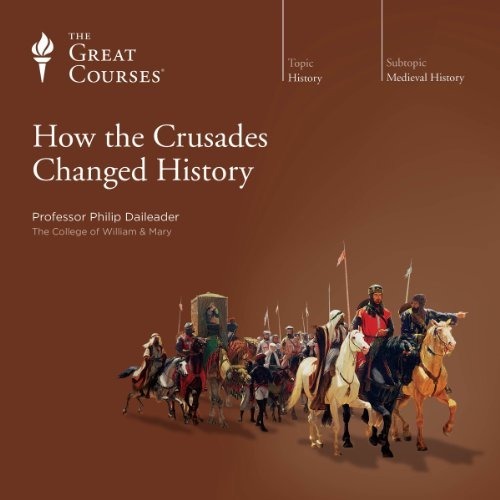
TGC How the Crusades Changed History
Centuries have passed since the last crusader knight laid down his sword, but the Crusades continue to hold sway over our world. Because the Crusades have been so consequential to history, it's essential to understand the context, motivations, and preconditions of these dramatic military campaigns. In doing so, you'll not only get a fresher understanding of the Crusades, you'll discover surprising truths about why (and how) they were fought. More than just an enriching recount of events, this series of 24 lectures is an intellectually rewarding exploration of how the Crusades shaped the medieval world and laid the seeds for our own. Plunging you into the series of Crusades to the Holy Land and elsewhere - from the calling of the First Crusade in 1095 to the collapse of the Kingdom of Jerusalem, in 1291 - Professor Daileader's lectures are filled with eye-opening insights and gripping stories that will help you reach your own conclusions about just how important these centuries of warfare were to the story of human civilization.
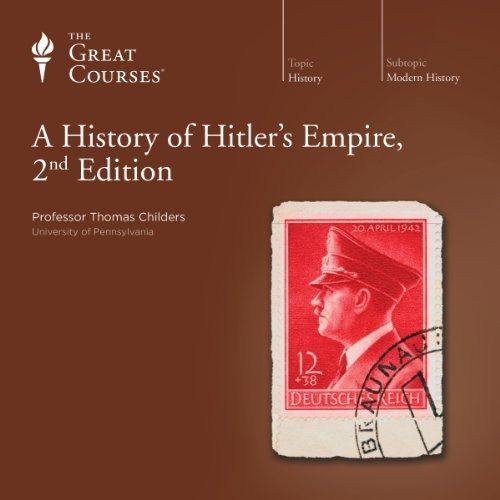
TGC A History of Hitlers Empire, 2nd Edition
Know thy enemy. That's what the wisdom of history teaches us. And Adolf Hitler was surely the greatest enemy ever faced by modern civilization. Over half a century later, the horror, fascination, and questions still linger: How could a man like Hitler and a movement like Nazism come to power in 20th-century Germany – an industrially developed country with a highly educated population? How were the Nazis able to establish the foundations of a totalitarian regime in such a short time and hurl all of Europe - and the world - into a devastating war that would consume so many millions of lives? Professor Childers has designed this gripping 12-lecture course to shed light on these and other questions that have plagued generations. You'll start by looking at the catastrophic impact World War I had on Germany, and how the war and the humiliating Treaty of Versailles crippled the Weimar Republic. From there, you'll turn to the Third Reich – Nazism in power – with an investigation of how Hitler and his henchmen systematically and ruthlessly broke resistance, taking over the major institutions of state power and creating a totalitarian system of terror, propaganda, and pervasive regimentation. You'll also examine Hitler's foreign policy between 1933 and 1939, and discover how and why he puzzled the world by entering into an accommodation with his deadly enemy, Stalin, on the eve of World War II. In the final lectures, you'll focus on Hitler's war against the Jews from Mein Kampf to Auschwitz, dissecting the horrifying racial ideas of the Nazis and the policies adopted to transform those ideas into reality. Finally, you'll learn how Hitler's evil empire was destroyed by Allied might.
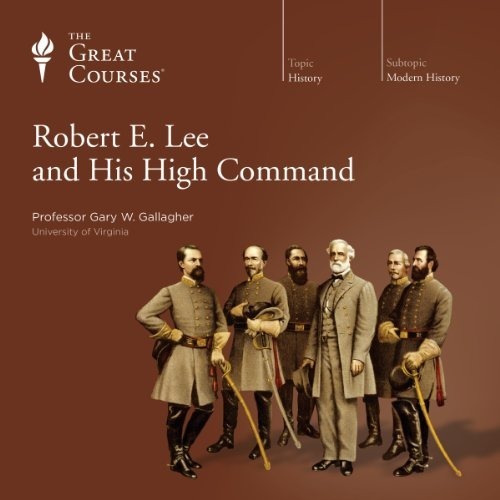
TGC Robert E. Lee and His High Command
Few events have captivated students of American history like the Civil War. Its most striking personalities seem somehow outsized, magnified beyond the ability of books or even legend to contain them. And few among those personalities have ever held our attention like General Robert Edward Lee. With his Army of Northern Virginia, Lee came to embody the cause of the Confederacy itself, inspiring a commitment from troops and civilians that eventually overshadowed even those given to its political leaders and institutions. This riveting series of 24 lectures from one of the nation's most respected Civil War historians explains how this came to pass, and how - in a war that produced no other successful Confederate armies - this amazing leader was able to create and inspire an army whose achievements resonated not only across the Confederacy but also throughout the North and in foreign capitals like London and Paris. You'll learn what Lee was actually like, and gain insights into his ideas about strategy and tactics. You'll grasp how battlefield events influenced public opinion on the home fronts of both the Union and the Confederacy. And, most of all, you'll grasp how crucial Lee's choices in forming his high command were to the war's events and outcome. These lectures have been designed to appeal to everyone who wants to understand more about the Civil War and why it unfolded as it did, whether your interest is in the strategy and tactics underlying its major battles or in the broader context within which those battles took place.
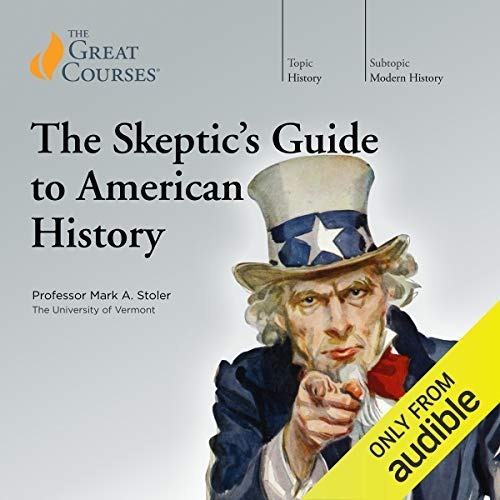
TGC The Skeptics Guide to American History
To take a skeptical approach to American history is not to dabble in imaginative conspiracy theories; rather, it's to reframe your understanding of this great nation's past and actually strengthen your appreciation for what makes American history such a fascinating chapter in the larger story of Western civilization. And in this bold 24-lecture series, you can do just that. Travel back in time and examine many commonly held myths and half-truths about American history and prompt yourself to think about what really happened in the nation's past - as opposed to what many believe happened. These lectures demonstrate how reconsidering some of the most popular notions of U.S. history can yield new (and sometimes startlingly different) interpretations of political, social, economic, and military events. But more than just debunking commonly accepted accounts, you'll be able to replace these misconceptions with insightful truths. Exploring both America's history and the verdicts that have been rendered about some of its most enduring figures - including George Washington, John Adams, Woodrow Wilson, Franklin Delano Roosevelt, and many others - these lectures investigate a wide-ranging list of questions. What impact did other nations have on the American Revolution? Has George Washington always been revered as president? Do we now understand the true blunders in America's Vietnam policies and tactics? In exploring these and other questions, these lectures prove themselves to be a delightful intellectual experience that will allow you to rethink not just the facts of U.S. history, but also their meaning.
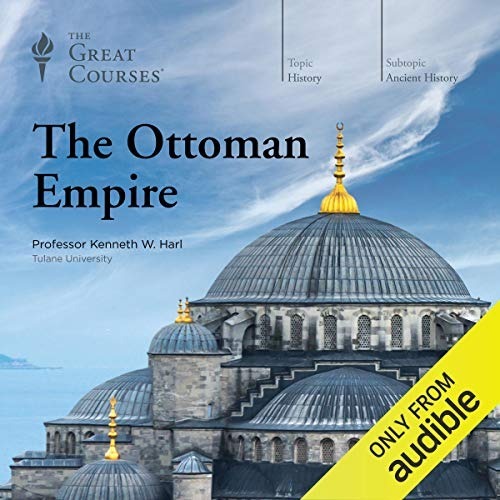
TGC The Ottoman Empire Part 2 of 2
By understanding the dramatic story of the Ottoman Empire - from its early years as a collection of raiders and conquerors to its undeniable power in the 15th and 16th centuries to its catastrophic collapse in the wreckage of the First World War - one can better grasp the current complexities of the Middle East. Over the course of these 36 enlightening lectures, investigate over 600 years of history that covers the nature of Ottoman identity, the achievements of the Sultan's court, and stories of confrontation and cooperation with the West. Befitting a story of such epic scope and grandeur, every lecture is a treasure trove of historical insights into the people, events, themes, and locales responsible for shaping the story of this often-overlooked empire. You'll cover everything from Rumi, the whirling dervishes, and the importance of the sultan's grand viziers to the wars of Sultan Suleiman I, the shadowy politics of the Committee of Union and Progress, and the birth of the Turkish Republic under Kemal Atatürk. Welcome to a fascinating story of the triumph and tragedy, war and peace, intellectual progress and civil insurrection of a great empire that, for all its glory and grandeur, has left an important legacy that will shape the future of the Balkan nation-states, the Turkish Republic, and the Arab world - and those of us in the West as well.
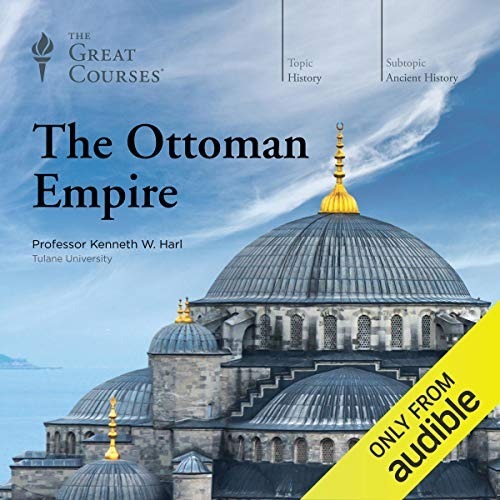
TGC The Ottoman Empire Part 1 of 2
By understanding the dramatic story of the Ottoman Empire - from its early years as a collection of raiders and conquerors to its undeniable power in the 15th and 16th centuries to its catastrophic collapse in the wreckage of the First World War - one can better grasp the current complexities of the Middle East. Over the course of these 36 enlightening lectures, investigate over 600 years of history that covers the nature of Ottoman identity, the achievements of the Sultan's court, and stories of confrontation and cooperation with the West. Befitting a story of such epic scope and grandeur, every lecture is a treasure trove of historical insights into the people, events, themes, and locales responsible for shaping the story of this often-overlooked empire. You'll cover everything from Rumi, the whirling dervishes, and the importance of the sultan's grand viziers to the wars of Sultan Suleiman I, the shadowy politics of the Committee of Union and Progress, and the birth of the Turkish Republic under Kemal Atatürk. Welcome to a fascinating story of the triumph and tragedy, war and peace, intellectual progress and civil insurrection of a great empire that, for all its glory and grandeur, has left an important legacy that will shape the future of the Balkan nation-states, the Turkish Republic, and the Arab world - and those of us in the West as well.
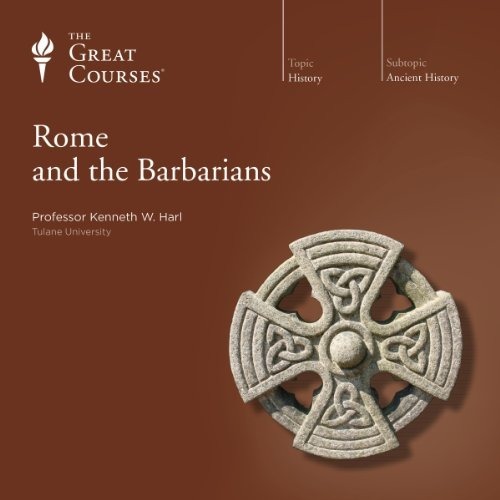
TGC Rome and the Barbarians Part 2 of 2
The history of the Romans as they advanced the frontiers of Classical civilization is often told as a story of warfare and conquest - the mighty legions encountering the "barbarians." But this only tells one side of the story. Who were the Celts, Goths, Huns, and Persians met by the Romans as they marched north and east? What were the political, military, and social institutions that made Rome so stable, allowing its power to be wielded against these different cultures for nearly three centuries? What role did those institutions themselves play in assimilating barbarian peoples? These 36 engaging lectures tell the story of the complex relationship between each of these native peoples and their Roman conquerors as they intermarried, exchanged ideas and mores, and, in the ensuing provincial Roman cultures, formed the basis of Western European civilization. You'll study the institutions that made Rome so extraordinary, as well as the extraordinary figures - both Roman and barbarian - whose names have been familiar to us for so long. You'll learn about Augustus, Constantine I, Diocletian, Gaius Julius Caesar, Nero, Attila the Hun, as well as a myriad of figures whose names are less familiar to us. But these lectures deliver far more than personal snapshots, as compelling as those may be. Professor Harl brings to life the institutions that shaped both Rome and her relationship with, and assimilation of, the barbarians at her constantly expanding frontiers. You'll come away with a new appreciation of how our Western world came to be and detailed knowledge about the individuals from royalty to "barbarian" who played key roles in that process.
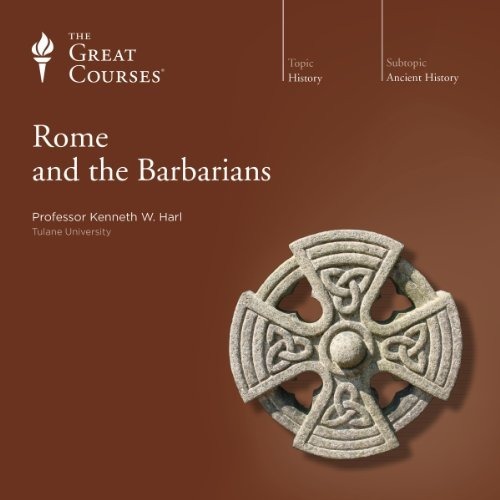
TGC Rome and the Barbarians Part 1 of 2
The history of the Romans as they advanced the frontiers of Classical civilization is often told as a story of warfare and conquest - the mighty legions encountering the "barbarians." But this only tells one side of the story. Who were the Celts, Goths, Huns, and Persians met by the Romans as they marched north and east? What were the political, military, and social institutions that made Rome so stable, allowing its power to be wielded against these different cultures for nearly three centuries? What role did those institutions themselves play in assimilating barbarian peoples? These 36 engaging lectures tell the story of the complex relationship between each of these native peoples and their Roman conquerors as they intermarried, exchanged ideas and mores, and, in the ensuing provincial Roman cultures, formed the basis of Western European civilization. You'll study the institutions that made Rome so extraordinary, as well as the extraordinary figures - both Roman and barbarian - whose names have been familiar to us for so long. You'll learn about Augustus, Constantine I, Diocletian, Gaius Julius Caesar, Nero, Attila the Hun, as well as a myriad of figures whose names are less familiar to us. But these lectures deliver far more than personal snapshots, as compelling as those may be. Professor Harl brings to life the institutions that shaped both Rome and her relationship with, and assimilation of, the barbarians at her constantly expanding frontiers. You'll come away with a new appreciation of how our Western world came to be and detailed knowledge about the individuals from royalty to "barbarian" who played key roles in that process.
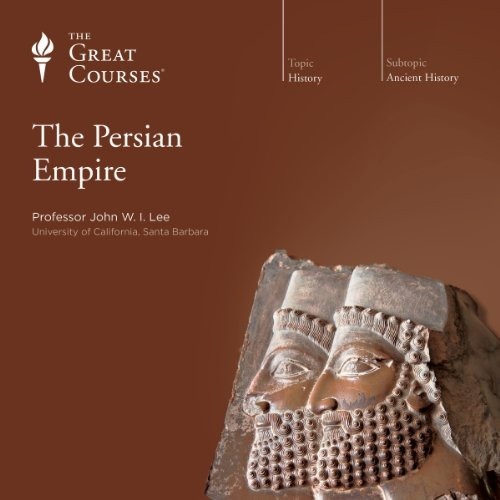
TGC The Persian Empire
For the past 2,500 years, we've heard about the Persian Empire as a decadent civilization run by despots, the villains who lost the Battle of Marathon and supplied the fodder for bad guys in literature and film. But it turns out this image is inaccurate. As recent scholarship shows, the Persian Empire was arguably the world's first global power- a diverse, multicultural empire with flourishing businesses and people on the move. The key is to look at the Persian Empire from the Persian's perspective. Over the span of 24 fascinating lectures, you'll take on the role of a history detective to discover the truth about this grand civilization. You'll discover the key to the empire's success lay in its greatest rulers, each of whom played a critical role in shaping and strengthening a civilization we still remember today. But while the great kings were administering justice or waging wars, everyday Persians were just as important to the success of the empire. You'll also learn about the empire's efficient communications network; the Persian economy and the workers and entrepreneurs who supported it; the role of women in the empire, especially the influence of royal women; and the daily cultural exchanges between the diverse peoples of the empire. Professor Lee shows you a whole new history of the ancient world - a perspective largely unknown even by students of history. These lectures capture the people, the strength, the rise and the downfall of this great empire, revealing the complexity behind centuries of a previously one-sided history. Take this opportunity to complete your understanding of the ancient world and discover the humanity of the ancient Persians.
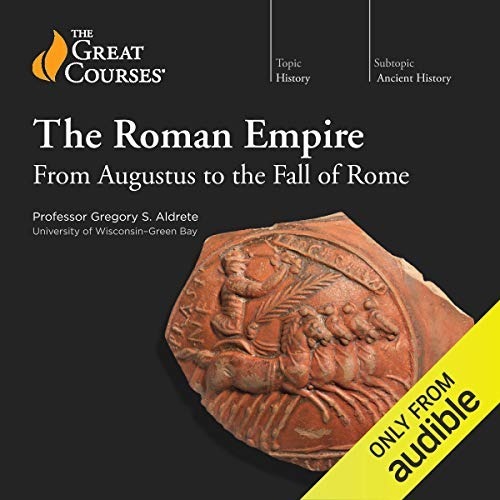
TGC The Roman Empire From Augustus to the Fall of Rome
When Octavian, who took the title of Augustus as the first emperor of Rome, defeated Mark Antony to become the sole ruler of the Roman world, it was a major turning point in Western civilization. Not only did his decades-long rule completely transform the old Roman Republic into the Roman Empire, but it also profoundly shaped the culture and history of our world today. The Roman Empire: From Augustus to the Fall of Rome traces this breathtaking history from the empire’s foundation by Augustus to its Golden Age in the 2nd century CE through a series of ever-worsening crises until its ultimate disintegration. Taught by acclaimed Professor Gregory S. Aldrete of the University of Wisconsin-Green Bay, these 24 captivating lectures offer you the chance to experience this story like never before, incorporating the latest historical insights that challenge our previous notions of Rome’s decline. You’ll examine the major events and familiar figures of the Roman Empire, including: The political innovations of Augustus The mental instability and cruel acts of Caligula and Nero Writers such as Ovid, Horace, and Virgil The stoic philosophy of Marcus Aurelius Constantine’s startling conversion to Christianity You’ll also look beyond the famous figures and delve deeply into the lives of ordinary Roman citizens. You’ll hear the messages they left on tombstones or scribbled on walls as graffiti; examine what life was really like for average city-dwellers and the hazards they faced every day; spend a day at Rome’s spectacular public entertainments, such as gladiator games and chariot races; and explore some of the city’s marvelous architectural and engineering works, including the Pantheon and the aqueducts. We cannot truly understand ourselves unless we comprehend the vital influences of Rome on the modern world - and the lessons the empire can still teach us. The Roman Empire: From Augustus to the Fall of Rome is an excellent guide to one of the most important periods in world history.
TGC The Peloponnesian War Part 2 of 2
The Peloponnesian War pitted Athens and its allies against a league of city-states headed by Sparta. The ancient Greek historian Thucydides captured this drama with matchless insight in his classic eyewitness account of what was arguably the greatest war in the history of the world up to that time. These 36 half-hour lectures draw on Thucydides' classic account as well as other ancient sources to give you a full picture of the Greek world in uneasy peace and then all-out war in the late 5th century B.C. Professor Harl plunges you into the thick of politics, military strategy, economics, and technology. You will feel the ancient Greek world come alive as you explore the war debates at Athens and Sparta, the devastating plagues that swept through Athens, the Revolt of Mytilene, the Battle of Pylos, the disastrous Athenian and Spartan expedition to Sicily against Spartan allies. You'll experience the thick of action and consider lively scholarly debates that continue to this day. Unlike earlier great wars, the Peloponnesian War was not a conflict between kings, but between citizens from different city-states who shared the same language, gods, and festivals. Citizen assemblies decided questions of war - voting on their own fates, since they were the ones who had to do the fighting. One of the most remarkable aspects of this era is that culture flourished side-by-side with the politics of war - that, even as Athenian citizens were honoring Aristophanes' mocking antiwar play, The Acharnians, by giving it first prize in a drama competition, they were debating with equal ardor whether to continue the war, and deciding overwhelmingly to do so.
TGC The Peloponnesian War Part 1 of 2
The Peloponnesian War pitted Athens and its allies against a league of city-states headed by Sparta. The ancient Greek historian Thucydides captured this drama with matchless insight in his classic eyewitness account of what was arguably the greatest war in the history of the world up to that time. These 36 half-hour lectures draw on Thucydides' classic account as well as other ancient sources to give you a full picture of the Greek world in uneasy peace and then all-out war in the late 5th century B.C. Professor Harl plunges you into the thick of politics, military strategy, economics, and technology. You will feel the ancient Greek world come alive as you explore the war debates at Athens and Sparta, the devastating plagues that swept through Athens, the Revolt of Mytilene, the Battle of Pylos, the disastrous Athenian and Spartan expedition to Sicily against Spartan allies. You'll experience the thick of action and consider lively scholarly debates that continue to this day. Unlike earlier great wars, the Peloponnesian War was not a conflict between kings, but between citizens from different city-states who shared the same language, gods, and festivals. Citizen assemblies decided questions of war - voting on their own fates, since they were the ones who had to do the fighting. One of the most remarkable aspects of this era is that culture flourished side-by-side with the politics of war - that, even as Athenian citizens were honoring Aristophanes' mocking antiwar play, The Acharnians, by giving it first prize in a drama competition, they were debating with equal ardor whether to continue the war, and deciding overwhelmingly to do so.
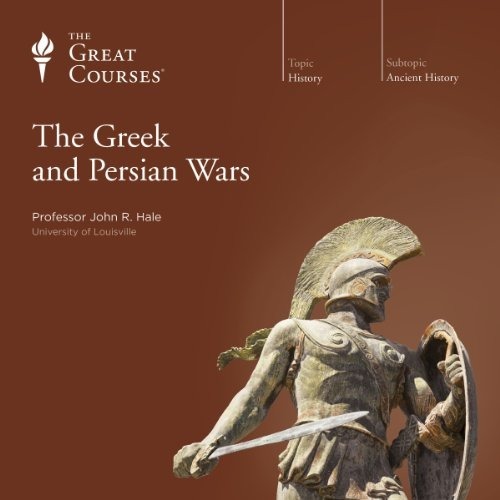
TGC The Greek and Persian Wars
Spanning more than two centuries, the Greek and Persian wars forged a new world order, sparking developments in battle strategy, naval technology, world exploration, and art and culture that impact the world even today. These 24 lectures are your opportunity to survey this globe-spanning conflict and see the human experience behind some of the most remarkable episodes in ancient history. Look beyond the infamous story of King Leonidas and his famed "300" and uncover the people and the world of the ancient Greeks and Persians. The clash of these two great cultures helped spark some of the most important cultural events in the history of the world: the chronicles of Herodotus, Thucydides, and Xenophon; the dramas of Aeschylus; and Greece's remarkable invention of democracy. An expert on methods of ancient warfare, Professor Hale offers rare insights into how each skirmish was lost and won. You'll meet the great Greek and Persian leaders, and compare the war technologies they pioneered. But Professor Hale offers more than just textbook descriptions. An accomplished archaeologist, he provides rare and valuable insights gleaned from years of fieldwork, including an analysis of the landscape of the battlefield of Marathon and modern archaeological surveys of the ground where Xerxes and his engineers dug an 80-foot-wide canal across an Aegean cape. It's a perspective on history you'll find virtually nowhere else. Bringing together both sides of the story - Greek and Persian - Professor Hale creates a complex and informative account of this world-changing era.
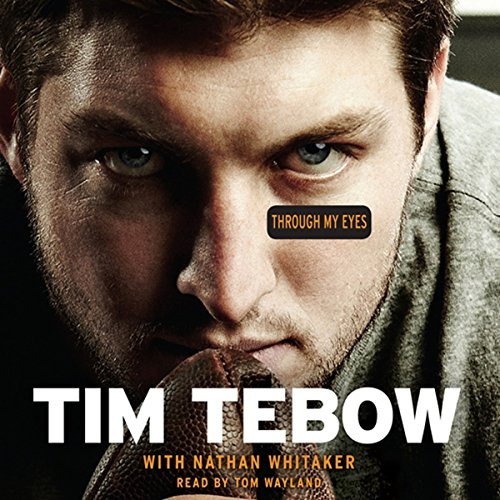
Through My Eyes
Over the course of the last five years, Tim Tebow has established himself as one of the greatest quarterbacks in the history of college football and a top prospect in the NFL. During that time, he amassed an unparalleled resume - winning two BCS national championships; becoming the first sophomore in NCAA history to win the Heisman trophy; and in the face of massive public scrutiny, being drafted in the first round of the NFL draft by the Denver Broncos. Now, in Through My Eyes, Tebow brings listeners everywhere an inspirational memoir about life as he chose to live it, revealing how his faith and family values, combined with his relentless will to succeed, have molded him into the person that he is today. As the son of Christian missionaries, Tebow has a unique story to tell - from the circumstances of his birth, to his home-schooled roots, to his record-setting collegiate football career with the Florida Gators and everything else that took place in between. At every step, Tebow's life has defied convention and expectation. While aspects of his life have been well-documented, the stories have always been filtered through the opinions and words of others. Through My Eyes is his passionate, firsthand, never-before-told account of how it all really happened.
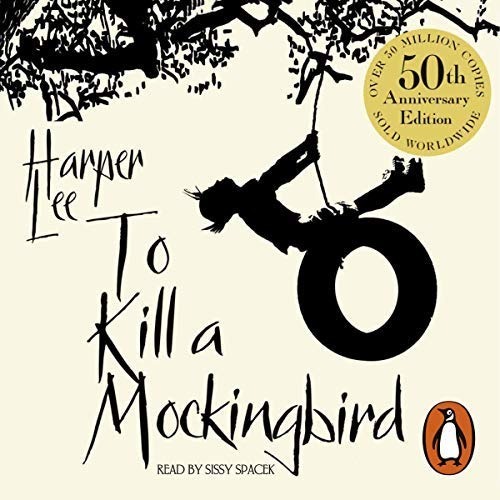
To Kill a Mockingbird
'Shoot all the bluejays you want, if you can hit 'em, but remember it's a sin to kill a mockingbird.' A lawyer's advice to his children as he defends the real mockingbird of Harper Lee's classic novel - a black man charged with the rape of a white girl. Through the young eyes of Scout and Jem Finch, Harper Lee explores with exuberant humour the irrationality of adult attitudes to race and class in the Deep South of the '30s. The conscience of a town steeped in prejudice, violence, and hypocrisy is pricked by the stamina of one man's struggle for justice. But the weight of history will tolerate only so much. To Kill a Mockingbird is a coming-of-age story, an antiracist novel, a historical drama of the Great Depression and a sublime example of the Southern writing tradition. Out now as an unabridged audiobook, narrated by Sissy Spacek.
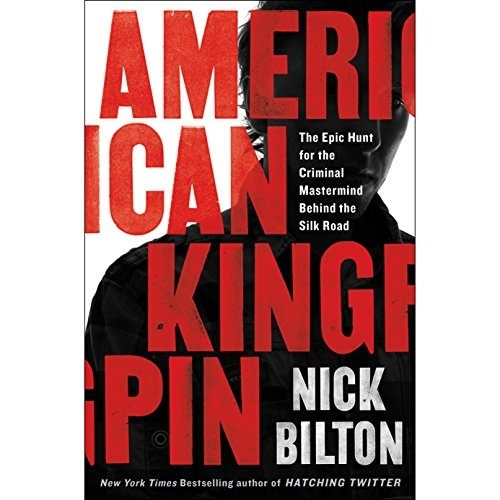
American Kingpin The Epic Hunt for the Criminal Mastermind Behind the Silk Road (Unabridged)
The unbelievable true story of the man who built a billion-dollar online drug empire from his bedroom - and almost got away with it In 2011, a 26-year-old libertarian programmer named Ross Ulbricht launched the ultimate free market: the Silk Road, a clandestine website hosted on the Dark Web where anyone could trade anything - drugs, hacking software, forged passports, counterfeit cash, poisons - free of the government's watchful eye. It wasn't long before the media got wind of the new website where anyone - not just teenagers and weed dealers but terrorists and black hat hackers - could buy and sell contraband detection-free. Spurred by a public outcry, the federal government launched an epic two-year manhunt for the site's elusive proprietor, with no leads, no witnesses, and no clear jurisdiction. All the investigators knew was that whoever was running the site called himself the Dread Pirate Roberts. The Silk Road quickly ballooned into a $1.2 billion enterprise, and Ross embraced his new role as kingpin. He enlisted a loyal crew of allies in high and low places, all as addicted to the danger and thrill of running an illegal marketplace as their customers were to the heroin they sold. Through his network he got wind of the target on his back and took drastic steps to protect himself - including ordering a hit on a former employee. As Ross made plans to disappear forever, the feds raced against the clock to catch a man they weren't sure even existed, searching for a needle in the haystack of the global Internet. Drawing on exclusive access to key players and two billion digital words and images Ross left behind, Vanity Fair correspondent and New York Times best-selling author Nick Bilton offers a tale filled with twists and turns, lucky breaks, and unbelievable close calls. It's a story of the boy next door's ambition gone criminal, spurred on by the clash between the new world of libertarian-leaning, anonymous, decentralized web advocates and the old world of government control, order, and the rule of law. Filled with unforgettable characters and capped by an astonishing climax, American Kingpin might be dismissed as too outrageous for fiction. But it's all too real.
The Mueller Report The Findings of the Special Counsel Investigation Part 4 of 4
PDF: https://adbl.co/2JMflDL The wait is over. After a two-year investigation, the results of The Mueller Report have been released to the public. Now listen to an audio version of one of the most talked about government documents in history. These are the redacted findings of Special Counsel Robert Mueller and his team, which was tasked with investigating Russian interference in the 2016 United States elections, including exploring any links or coordination between President Donald J. Trump's 2016 presidential campaign and the Russian government. Audible has a history of recording and distributing public documents. This includes The 9/11 Commission Report, The Starr Report, and Pope Francis' encyclical letter on climate change and inequality, Encyclical Letter Laudato Si' of the Holy Father Francis: On Care for Our Common Home. Editorial notes: This audio recording identifies the sections of The Mueller Report that have been redacted by the Office of the Attorney General. When the narrators reach a section of the report that has been redacted, they will give one of the four reasons for a redaction that is specified in the report. Those reasons are the following: Grand Jury, Harm to Ongoing Matter, Investigative Technique, Personal Privacy. To aid the listener’s comprehension of the report, we have recorded footnotes that contain secondary pieces of information, which provide additional context to the events described. Finally, references to US Code, federal regulations, court cases and other legal and technical documents have been adjusted for brevity and listener clarity. We are providing a downloadable PDF for a full and complete reference. This file can be accessed in your Library section along with the audio.
The Mueller Report The Findings of the Special Counsel Investigation Part 3 of 4
PDF: https://adbl.co/2JMflDL The wait is over. After a two-year investigation, the results of The Mueller Report have been released to the public. Now listen to an audio version of one of the most talked about government documents in history. These are the redacted findings of Special Counsel Robert Mueller and his team, which was tasked with investigating Russian interference in the 2016 United States elections, including exploring any links or coordination between President Donald J. Trump's 2016 presidential campaign and the Russian government. Audible has a history of recording and distributing public documents. This includes The 9/11 Commission Report, The Starr Report, and Pope Francis' encyclical letter on climate change and inequality, Encyclical Letter Laudato Si' of the Holy Father Francis: On Care for Our Common Home. Editorial notes: This audio recording identifies the sections of The Mueller Report that have been redacted by the Office of the Attorney General. When the narrators reach a section of the report that has been redacted, they will give one of the four reasons for a redaction that is specified in the report. Those reasons are the following: Grand Jury, Harm to Ongoing Matter, Investigative Technique, Personal Privacy. To aid the listener’s comprehension of the report, we have recorded footnotes that contain secondary pieces of information, which provide additional context to the events described. Finally, references to US Code, federal regulations, court cases and other legal and technical documents have been adjusted for brevity and listener clarity. We are providing a downloadable PDF for a full and complete reference. This file can be accessed in your Library section along with the audio.
The Mueller Report The Findings of the Special Counsel Investigation Part 2 of 4
PDF: https://adbl.co/2JMflDL The wait is over. After a two-year investigation, the results of The Mueller Report have been released to the public. Now listen to an audio version of one of the most talked about government documents in history. These are the redacted findings of Special Counsel Robert Mueller and his team, which was tasked with investigating Russian interference in the 2016 United States elections, including exploring any links or coordination between President Donald J. Trump's 2016 presidential campaign and the Russian government. Audible has a history of recording and distributing public documents. This includes The 9/11 Commission Report, The Starr Report, and Pope Francis' encyclical letter on climate change and inequality, Encyclical Letter Laudato Si' of the Holy Father Francis: On Care for Our Common Home. Editorial notes: This audio recording identifies the sections of The Mueller Report that have been redacted by the Office of the Attorney General. When the narrators reach a section of the report that has been redacted, they will give one of the four reasons for a redaction that is specified in the report. Those reasons are the following: Grand Jury, Harm to Ongoing Matter, Investigative Technique, Personal Privacy. To aid the listener’s comprehension of the report, we have recorded footnotes that contain secondary pieces of information, which provide additional context to the events described. Finally, references to US Code, federal regulations, court cases and other legal and technical documents have been adjusted for brevity and listener clarity. We are providing a downloadable PDF for a full and complete reference. This file can be accessed in your Library section along with the audio.
The Mueller Report The Findings of the Special Counsel Investigation Part 1 of 4
PDF: https://adbl.co/2JMflDL The wait is over. After a two-year investigation, the results of The Mueller Report have been released to the public. Now listen to an audio version of one of the most talked about government documents in history. These are the redacted findings of Special Counsel Robert Mueller and his team, which was tasked with investigating Russian interference in the 2016 United States elections, including exploring any links or coordination between President Donald J. Trump's 2016 presidential campaign and the Russian government. Audible has a history of recording and distributing public documents. This includes The 9/11 Commission Report, The Starr Report, and Pope Francis' encyclical letter on climate change and inequality, Encyclical Letter Laudato Si' of the Holy Father Francis: On Care for Our Common Home. Editorial notes: This audio recording identifies the sections of The Mueller Report that have been redacted by the Office of the Attorney General. When the narrators reach a section of the report that has been redacted, they will give one of the four reasons for a redaction that is specified in the report. Those reasons are the following: Grand Jury, Harm to Ongoing Matter, Investigative Technique, Personal Privacy. To aid the listener’s comprehension of the report, we have recorded footnotes that contain secondary pieces of information, which provide additional context to the events described. Finally, references to US Code, federal regulations, court cases and other legal and technical documents have been adjusted for brevity and listener clarity. We are providing a downloadable PDF for a full and complete reference. This file can be accessed in your Library section along with the audio.
Leadership Strategy and Tactics Field Manual Part 2 of 2
This program is read by the author. The ultimate guide on leadership from the number-one New York Times best-selling coauthor of Extreme Ownership. In the military, a field manual provides instructions in simple, clear, step-by-step language to help soldiers complete their mission. In the civilian sector, books offer information on everything from fixing a leaky faucet to developing an effective workout program to cooking a good steak. But what if you are promoted into a new position leading your former peers? What if you don’t get selected for the leadership position you wanted? How do you overcome imposter syndrome when you aren’t sure you should be leading? As a leader, how do you judiciously dole out punishment? What about reward? How do you build trust with your both your superiors and your subordinates? How do you deliver truthful criticism up and down the chain of command in a tactful and positive way? These are all questions about leadership - the most complex of all human endeavors. And while there are books out there that provide solid leadership principles, books like Extreme Ownership and The Dichotomy of Leadership, there is no leadership field manual that provides a direct, situational, pragmatic how-to guide that anyone can instantly put to use. Until now. Leadership Strategy and Tactics explains how to take leadership theory, quickly translate that theory into applicable strategy, and then put leadership into action at a tactical level. This audiobook is the solution that leaders at every level need - not just to understand the leadership game but also how to play the leadership game and win it.
Leadership Strategy and Tactics Field Manual Part 1 of 2
This program is read by the author. The ultimate guide on leadership from the number-one New York Times best-selling coauthor of Extreme Ownership. In the military, a field manual provides instructions in simple, clear, step-by-step language to help soldiers complete their mission. In the civilian sector, books offer information on everything from fixing a leaky faucet to developing an effective workout program to cooking a good steak. But what if you are promoted into a new position leading your former peers? What if you don’t get selected for the leadership position you wanted? How do you overcome imposter syndrome when you aren’t sure you should be leading? As a leader, how do you judiciously dole out punishment? What about reward? How do you build trust with your both your superiors and your subordinates? How do you deliver truthful criticism up and down the chain of command in a tactful and positive way? These are all questions about leadership - the most complex of all human endeavors. And while there are books out there that provide solid leadership principles, books like Extreme Ownership and The Dichotomy of Leadership, there is no leadership field manual that provides a direct, situational, pragmatic how-to guide that anyone can instantly put to use. Until now. Leadership Strategy and Tactics explains how to take leadership theory, quickly translate that theory into applicable strategy, and then put leadership into action at a tactical level. This audiobook is the solution that leaders at every level need - not just to understand the leadership game but also how to play the leadership game and win it.
The Dichotomy of Leadership Balancing the Challenges of Extreme Ownership to Lead and Win
The importance of balance as a leader by the number-one New York Times best-selling authors of Extreme Ownership. Every leader must be ready and willing to take charge, to make hard, crucial calls for the good of the team and the mission. Something much more difficult to understand is that in order to be a good leader, one must also be a good follower. This is a dichotomy - a Dichotomy of Leadership. It is, as authors Jocko Willink and Leif Babin explained in their best-selling first audiobook, Extreme Ownership, “Simple, Not Easy”. Now, in The Dichotomy of Leadership, the authors explain the power inherent in the recognition of the fine line that leaders must walk, balancing between two seemingly opposite inclinations. It is with the knowledge and understanding of this balance that a leader can most effectively lead, accomplish the mission, and achieve the goal of every leader and every team: victory. Using examples from the authors' combat and training experience in the SEAL Teams and then showing how each lesson applies to business and in life, Willink and Babin reveal how the use of seemingly opposite principles - leading and following, focusing and detaching, being both aggressive and prudent - require skill, awareness, understanding, and dexterity, all attributes that can be honed. These dichotomies are inherent in many of the concepts introduced in Extreme Ownership and integral to their proper implementation and effectiveness. Dichotomy is essential listening for anyone looking to lead and win.
Extreme Ownership How U.S. Navy SEALs Lead and Win (Unabridged)
In Extreme Ownership, Jocko Willink and Leif Babin share hard-hitting, Navy SEAL combat stories that translate into lessons for business and life. Jocko and Leif served together in SEAL Task Unit Bruiser, the most highly decorated Special Operations unit from the war in Iraq. Through those difficult months of sustained combat, Jocko, Leif and their SEAL brothers learned that leadership - at every level - is the most important thing on the battlefield. Now they teach these same leadership principles to companies throughout the business world that want to build their own high-performance, winning teams. Extreme Ownership explains the SEAL leadership concepts crucial to accomplishing the most difficult missions in combat and how to apply them to any group, team, or organization. It provides the reader with Jocko and Leif's formula for success: the mindset and guiding principles that enable SEAL combat units to achieve extraordinary results. It demonstrates how to apply these directly to business and life to likewise achieve victory. Take Extreme Ownership. Lead and win.
Dare to Lead Brave Work. Tough Conversations. Whole Hearts.
Named one of the best books of the year by Bloomberg. Leadership is not about titles, status, and wielding power. A leader is anyone who takes responsibility for recognizing the potential in people and ideas and has the courage to develop that potential. When we dare to lead, we don’t pretend to have the right answers; we stay curious and ask the right questions. We don’t see power as finite and hoard it; we know that power becomes infinite when we share it with others. We don’t avoid difficult conversations and situations; we lean into vulnerability when it's necessary to do good work. But daring leadership in a culture that’s defined by scarcity, fear, and uncertainty requires skill-building around traits that are deeply and uniquely human. The irony is that we’re choosing not to invest in developing the hearts and minds of leaders at the exact same time as we’re scrambling to figure out what we have to offer that machines and AI can’t do better and faster. What can we do better? Empathy, connection, and courage, to start. Brené Brown has spent the past two decades studying the emotions and experiences that give meaning to our lives, and the past seven years working with transformative leaders and teams spanning the globe. She found that leaders in organizations ranging from small entrepreneurial startups and family-owned businesses to nonprofits, civic organizations, and Fortune 50 companies all ask the same question: How do you cultivate braver, more daring leaders, and how do you embed the value of courage in your culture? In this new audiobook, Brown uses research, stories, and examples to answer these questions in the no-BS style that millions have come to expect and love. Brown writes, “One of the most important findings of my career is that daring leadership is a collection of four skill sets that are 100 percent teachable, observable, and measurable. It’s learning and unlearning that requires brave work, tough conversations, and showing up with your whole heart. Easy? No. Because choosing courage over comfort is not always our default. Worth it? Always. We want to be brave with our lives and our work. It’s why we’re here.” Whether you’ve read Daring Greatly and Rising Strong or you’re new to Brené Brown’s work, this audiobook is for anyone who wants to step up and into brave leadership.
Never Split the Difference Negotiating as if Your Life Depended on It
A former international hostage negotiator for the FBI offers a new field-tested approach to high-stakes negotiations - whether in the boardroom or at home. After a stint policing the rough streets of Kansas City, Missouri, Chris Voss joined the FBI, where his career as a hostage negotiator brought him face-to-face with a range of criminals, including bank robbers and terrorists. Reaching the pinnacle of his profession, he became the FBI's lead international kidnapping negotiator. Never Split the Difference takes you inside the world of high-stakes negotiations and into Voss' head, revealing the skills that helped him and his colleagues succeed where it mattered most: in saving lives. In this practical guide, he shares the nine effective principles - counterintuitive tactics and strategies - you, too, can use to become more persuasive in both your professional and personal lives. Life is a series of negotiations you should be prepared for: buying a car, negotiating a salary, buying a home, renegotiating rent, deliberating with your partner. Taking emotional intelligence and intuition to the next level, Never Split the Difference gives you the competitive edge in any discussion.