Health Unchained Podcast
133 episodes — Page 3 of 3

Ep. 33: Medical Career Management w Hashgraph - John T. Hartigan (CEO Intiva Health)
John Hartigan, CEO of Intiva Health. At Intiva Health, he is leading their go-to market strategy and will be speaking to us today about his company’s use of Hashgraph protocol. He has over 25 years of experience developing successful early-stage startups and strategic partnerships with many Fortune 500 companies, including Comcast, Fiat Chrysler, Dish, and DHL. Show Notes •John's journey as an early entrepreneur •What drives you to the healthcare industry? •Intiva Health is a free career and credentials management platform for medical professionals and administrators who have to communicate those credentials back and forth with the faciilites and other stakeholders (insurance, labs, etc.) •What is Hedera Hashgraph and how is it different from the term blockchain or DLT? https://www.hedera.com/ •Why are you using Hashgraph in Intiva Health? •Management of Digital notarization of medical credentialing packages •Why is provider credentialing data a good use case for blockchain? •Data sharing Comparison – Intiva (job markets and continued education marketplace) vs. ProCredEx (data marketplace model) •What is Intiva's business model? •What are the incentives for facilities to verify credentials the first time on your platform? •What are the biggest barriers to DLT adoption? •Credentialing Joint Commission: https://www.jointcommission.org/ahc_credentialing_privileging_tips/ •Who are your company partners and major customers? American Heart and Stroke Associations are partners with Intiva •Who are the nodes in the Intiva hashgraph DLT? How does the gossip protocol work in on your platform? •The social network for Medical Professionals: https://www.doximity.com •Can you describe your technology stack? SalesForce / Hashgraph •Future strategy to enter credentials business in different industries •Gamification of Intiva using tokens •How can Intiva improve telehealth adoption? •Trends in healthcare/blockchain industry •Outlook for 2019 and beyond •Favorite businessperson/researcher/scientist in history or now? •Recommended reading or resource to learn more: 7 Habits of Highly Effective People Related Episode: https://soundcloud.com/healthunchained/ep31-provider-credentialing-anthony-begando-ceo-procredex News Corner: Walmart recently announced that it has joined the MediLedger project, a consortium of organizations making pharmaceutical supply chains more transparent and decentralized. Other members include Pfizer, McKesson, AmerisourceBergen, and Cardinal Health. Health and wellness accounted for $35 B of US sales in 2018 (about 10% of company’s total sales). The consortium is led by blockchain firm Chronicled in San Francisco. They plan to kick off a pilot project with the FDA this month in June 2019. Mediledger’s main focus is the verification of drugs that are returned to be resold (an amount worth for over $6B in the industry). The challenge of this project will be the fact that Walmart will need to be more transparent about its inventory and supply chain. https://www.coindesk.com/walmart-joins-pharmaceutical-tracking-blockchain-consortium-mediledger https://www.mediledger.com/ Health Unchained Links Website: healthunchained.org Telegram: t.me/healthunchained Twitter: twitter.com/Healthunchaind Udemy Blockchain/Healthcare Course (Promo Code DOGUM2019): https://www.udemy.com/blockchain-and-healthcare/?couponCode=DOGUM2019 Subscribe to the Beyond Blocks Newsletter by Robert Miller: http://beyondblocks.bertcmiller.com/

Ep. 32: Semi-Autonomous Health Insurance - Cyrus Maaghul (CEO of HCX Pay)
Cyrus Maaghul has led the development of many technology companies and has worked at the Blockchain incubator at fidelity investments in Boston. In 2014, he started PointNurse to connect patients and nurses on a virtual platform. In 2017, he founded HealthCombix (HCX Pay), a next generation platform that intends to deploy autonomous business models powering financial, insurance, and healthcare solutions for unprecedented human condition improvement. He’s been involved with developing technology solutions for IBM, Deloitte, and Citibank. HCX Pay Homepage: https://www.hcxpay.io/ •Cyrus's background and various startup experiences in digital payments, international advising for Dept. of Defense •Entry into Healthcare Industry by almost buying a home health company •State of Health Insurance oHow/when/why was insurance in the healthcare system started in the USA? oWar influenced the introduction of Center of Medicare and Medicaid Services oParametric Insurance oImportance of Agency and Transparency •How did you first hear about blockchain technology? •What is the vision for HealthCombix and HCX Pay? Why did you start it? •Why is insurance a good use case for blockchain? •Smart contracts can replace traditional insurance companies •HCX company oWho are your company partners and major customers? oCan you describe your technology stack? oWhat products are currently available or being developed? oWhat are the advantages and disadvantages of basing your company in the Central American country of Belize? oPrivacy Network is derivative of Monero oProduct Roadmap •Blockchain adoption and awareness in healthcare oWhat are the biggest barriers to adoption? oWhat does it mean when people say blockchain can provide more trust? •Decentralized Technology policy discussions opublic vs. private networks oImportance of community oimportance of privacy •Were there any events or announcements in the healthcare/blockchain space that was very unexpected or surprising to you? Why? •Outlook for 2019 and beyond •Interesting blockchain projects – Dero (not “Nero” as incorrectly stated in the podcast) is a DAG-based privacy layer one network with smart contracts built in https://dero.io/ •Fire question - What is the most important technology in the past 500 years? Electricity IOT technology - If you had to have micro chip implanted in your body, where would you choose to have it implanted? •Most impactful book you've read – A New Earth by Eckhart Tolle Health Unchained New Corner: JPMorgan has recently announced its plan to acquire InstaMed, a 15 year old medical payments technology firm that makes paying for a hospital bill easier by using an InstaMed app. In Spring of 2019, InstaMed introduced a blockchain prototype for revenue cycle transactions and payments. InstaMed’s platform connects consumer, providers, and payers and it focusing on eliminating paper, improving finainical experience, and reducing costs to collect payments. The acquisition is reported to be over a whopping $500 million. Bill Marvin, CEO and cofounder of InstaMed said, “blockchain is something we’re both passionate about” when speaking about the sale to JPMorgan. InstaMed will continue its operations in Philadelphia and Newport Beach, CA. https://www.healthcarefinancenews.com/news/jpmorgan-chase-acquire-payments-technology-company-instamed Health Unchained Links Website: healthunchained.org Telegram: t.me/healthunchained Twitter: twitter.com/Healthunchaind Udemy Blockchain/Healthcare Course (Promo Code DOGUM2019): https://www.udemy.com/blockchain-and-healthcare/?couponCode=DOGUM2019 Beyond Blocks Weekly Newsletter: http://beyondblocks.bertcmiller.com/

Ep. 31: Faster, Better Provider Credentialing – Anthony Begando – (CEO ProCredEx)
Anthony Begando, CEO of Professional Credentials Exchange has started and ran many tech companies and has been in the credentialing solutions business for decades. Anthony ran Military Credentialing Solutions from 2008-2016, that company was awarded the Surgeon General’s Excalibur award in 2010 for work it did for the Army National Guard. In this episode, he articulately explains the benefits of an exchange for provider credentialing data. Eventually, he envisions his company will offer all industries with a marketplace to acquire professional credentialing requirements more quickly than existing traditional methods of verifying that a professional job applicants claimed credentials are in fact true and have been validated. Show Notes •Introduction of Anthony's background in healthcare Technology •Military contracts in early 2000s •Blockchains for Physician Credentialing by Intel’s John Sotos and David Houlding https://simplecore.intel.com/itpeernetwork/wp-content/uploads/sites/38/2017/05/Intel_Blockchain_Application_Note2.pdf •Vision for Professional Credentials Exchange? How did you start it? •Why is provider credentialing data a good use case for blockchain? •Traditional provider credentialing can take up to 6 months and lost opportunity costs of up to $600-900k for each hire •Why ProCredEx? oExpedite practitioner onboarding cycle time oReduce revenue forfeitures oProvide timely updates to practitioner data and accurate directory data oSimplify the credential gathering and verification process oEliminate redundant work, while improving coordination and concurrency of data •Primary and secondary verification data sources •Credentials Verification Market Pricing •Provider Credentialing for Telehealth •ProCredEx announced partners – Texas Hospital Association, Spectrum Health, Accenture (NYSE: ACN), The Hardenbergh Group, HealthLink Dimensions, WellCare Health Plans, Inc. (NYSE: WCG), Anthem’s National Government Services •Blockchain adoption and awareness in healthcare •What does it mean when people say blockchain can provide more trust? •What is ProCredEx's business model? •Transaction performance and scalability is critical for ProCredEx’s use case •Practitioner controls access to their information, securely and privately •How can ProCredEx affect the traditional credentialing workflow of a health system? •What are the biggest barriers to adoption? •What is the critical mass tipping point for mainstream adoption? •Were there any events or announcements in the healthcare/blockchain space that was very unexpected or surprising to you? Why? News Corner- Hu.manity.co acquires Betterpath On April 30, 2019, BetterPath, a 4 year old organization based in Brooklyn, NY and featured on my show (episode 23 with CEO Mat Sinderbrand) announced that it had been acquired by a company called hu-manity.co. They are planning to combine with Betterpath’s suite of health data technologies to unlock some of the 80% of healthcare data that is currently not available to patients, providers, or clinical researchers. Matt will join hu-manity.co as Senior Vice president, Chief product officer, and as a member of their board of directors. Hu-manity.co has creating buzz around the concept the 31st human right, legal ownership of personal data. The united nations’s universal declariation of human rights currently consists of a preamble and thirty articles, when do you think the right to own your own data will become the 31st? https://www.businesswire.com/news/home/20190430005283/en/Hu-manity.co-Acquires-Betterpath-Health-Empowering-Patients-Access https://en.wikipedia.org/wiki/Universal_Declaration_of_Human_Rights Health Unchained Links Website: healthunchained.org Telegram: t.me/healthunchained Twitter: twitter.com/Healthunchaind Udemy Blockchain/Healthcare Course ($125 off with HEALTHUNCHAINED coupon): www.udemy.com/blockchain-and-hea…uponCode=DOGUM2019

Ep. 28: Reaching Nirvana in Healthcare - Pradeep Goel (CEO Solve.Care)
Pradeep Goel has a vast amount of experience in the Health IT and insurance space, leading companies like Dakota imaging, Engagepoint Inc, and now Solve.Care. Solve.Care is building a comprehensive healthcare platform with a blockchain based architecture. Solve.Care has recently announced an important partnership with Lyft which we talk about in the episode. We speak about the many different aspects of healthcare benefits administration and how blockchain can disrupt the current healthcare system. Solve.Care Links Website: https://Solve.care YouTube: https://www.youtube.com/channel/UCt75sklUcLfwYjTrn4asOBA Telegram: https://t.me/SolveCare Email: [email protected] Show Notes •Pradeep’s initial entry into health insurance claims working in the mailroom in the basement of Noridian Mutual Insurance company. •“Healthcare is a team sport, it is never an individual sport” •Delivering the right level of care - Balancing overutilization of healthcare services vs being too restrictive •As someone who has seen healthcare from a consumer, insurance, US government, employer, 3rd party admin, clinical, and HIE perspective, which experience influenced the founding of Solve.Care the most? •How did you first hear about blockchain technology? •What is the vision for Solve.Care? Why did you start it? •Peer-to-peer interactions between patients and providers •Can you describe your software products? oCare.wallet - Our personal healthcare administrator for individuals and providers; houses Care.Cards and Care.Coins that automatically sync in real time with other linked wallets. oCare.Cards - Purpose built applications that reside in the Care.Wallet and that are downloaded from Care.Marketplace. oCare.Coin - Intelligent programmable payment token used to pay providers. Offers incredible flexibility in managing accountability and transparency and validating proof of service. oCare.Vault - built to bridge on-chain and off-chain storage in a manner that is compliant with all applicable laws governing patient privacy, data security and consents. oCare.Protocol uses Blockchain and smart contracts to define and encapsulate relationships between any two stakeholders (e.g. patient-doctor, patient-insurer). •How can Solve.Care improve telehealth adoption? •Who are your company partners and major users? •What metrics are being measured to track the progress of the Arizona Care Network project? •Can you share the milestones you hope to reach related to the recent Lyft partnership? •Lyft ride cards will be distributed to members as a managed benefit •Scheduled transportation is an obvious use case (i.e. dialysis appointments) •Has regulation stifled or improved innovation in the blockchain/healthcare space? •What are the advantages and disadvantages of being an Estonia-based company? •Can you describe your technology stack? •Were there any events or announcements in the healthcare/blockchain space that was very unexpected or surprising to you? •If it’s not too personal, what would you consider to be your biggest mistake? •Favorite businessperson/researcher/scientist in history or now? Bill Gates and Warren Buffet •"Blockchain is a technology that can help you redefine how people interact with, rely upon, and transact with each other. It will make us rethink of how we live. " News Corner: https://blog.oceanprotocol.com/improving-diagnosis-and-treatment-for-parkinsons-sufferers-with-data-and-ai-c8a706f50739 In March 2019, a Singapore based non-profit foundation called Ocean Protocol, announced a partnership with health AI/IOT company, ConnectedLife which is collecting wearables motion data from patients as part of a clinical study with the National neuroscience institute in Singapore. Health Unchained Info Follow my twitter.com/Healthunchaind Telegram: t.me/healthunchained Udemy Blockchain/Healthcare Course ($125 off with HEALTHUNCHAINED coupon): www.udemy.com/blockchain-and-hea…de=HEALTHUNCHAINED

Ep. 30: Patient No-Shows and Surveys - Dr. Steve Chung (CEO Healthereum)
Dr. Steve Chung, CEO of Healthereum, is a busy urologic surgeon in Chicago but also has lots of hobbies and interests including mining. Healthereum already has a beta app and started piloting in his clinic. Healthereum is a blockchain based company that has created dapps to solve 4 specific communication problems between patient, provider, and insurance companies. Dr. Steve Chung is a Urologic surgeon in Chicago and has been involved in multiple startup ventures. He is co-owner of his urologic practice for over 13 years and has served an administrative role at seven hospitals. Website: https://healthereum.com/ Show Notes •Introduction and Dr. Chung's background •What is the vision for Healthereum? •Four patient experience problems Healthereum is solving 1.No shows – Do you think telehealth will improve the no show problem? - Patient Appointment Adherence Issues. Missed appointments cost the healthcare system $150 billion each year, this excludes the hidden costs of no-shows which Dr. Chung explains. 2.Small Survey sample size 3.Delayed claim payments – How difficult is it for a provider to get paid by insurance companies? How widespread is this problem? Lack of standardization in claims. 4.Lack of Patient messaging - The Centers for Medicare and Medicaid Services attempted to solve the problems encountered with data collection by instilling Core Quality Measures (CQM). •Solutions – 4 dapps - HELIO (Healthereum Life Portfolio) oMIDUSO oPULSE oVERIFY o HPED •Telehealth for second opinions •Have you thought that you are trying to do too much at once? •What are the biggest barriers to adoption? •Can you describe your technology stack? oBlockchain – ERC20 token oStorage oApp oWeb oHealthereum DAO - The Healthereum DAO that will be composed purely of registered and licensed providers, hospital networks, insurers and industry groups that are verified as contributing to a patient’s healthy lifestyle. The task of verifying the actors in the DAO will fall upon the foundation which collectively acts within an executive role. Potentially, the foundation itself could be voted out if the current verified providers find that the foundation is not acting in the interests of their patients. •How is the company structured? •Team background •Who are your company partners and major users? •STO - Healthereum LLC is a Title III - Regulation Crowdfunding Campaign - https://www.startengine.com/healthereum •Has government regulation affected the company's decision making process? •Steve’s most intriguing person – Edward O. Thorp - Author of “Beat the Dealer” https://en.wikipedia.org/wiki/Edward_O._Thorp News Corner In April 2019, Microsoft announced it will be shutting down its HealthVault patient record service on November 20th 2019. Microsoft started HealthVault in 2009 after two years in beta mode giving people free access to personal health record storage platform. So if you have data on Microsoft’s Healthvault, you have until nov. 20th to transfer your information. They suggest transferring data to Get Real Health or FollowMyHealth platforms. Although they are shutting down this service, Microsoft still has its sights on healthcare and has even partnered with Walgreens to improve health outcomes and lower overall costs. In my opinion, Personal health records are really valuable if you don’t own all your personal data. Although health records don’t seem to be the lowest hanging fruit in the blockchain/healthcare market now, I think the creation of good secure and self-owned health records will become an incredibly valuable way of encouraging people own their own health. https://www.engadget.com/amp/2019/04/06/microsoft-is-shutting-down-its-healthvault-patient-record-servic/ Health Unchained Links Website: healthunchained.org Telegram: t.me/healthunchained Twitter: twitter.com/Healthunchaind Udemy Blockchain/Healthcare Course ($125 off with HEALTHUNCHAINED coupon): • https://www.udemy.com/blockchain-and-healthcare/?couponCode=DOGUM2019

Ep. 29: Transparent Food Supply - Kevin Cutler (Bytable Inc)
Kevin Cutler is head of Marketing and Operations at Bytable Inc, an Iowa based company planning to use blockchain to create a network of farmers, distributors, and retailers that can use tools to save costs on food waste and provide transparency to consumers. Website: bytablefoods.com Health, food, environment podcast: https://knowbetterlivebest.com/episodes/ Show Notes •Introduction of Kevin Cutler's background and experience with losing over 100 lbs by eating quality foods •Podcast – Know better Live Best - https://knowbetter.bytablefoods.com/episodes/ •More than 85% of Iowa’s land is farmed. https://www.lhf.org/learning-fields/crops/iowa-farm-facts/ •88,637: Number of farms in Iowa •How does food impact health and healthcare? •Top 3 Mislabeled foods •Unsafe food sickens about 600 million people every year – nearly 10% of the world's population. •Children under 5 years of age carry 40% of the foodborne disease burden, with 125 000 deaths every year. •How did you first hear about blockchain technology? •Vision for BytableFoods? Tell us about the founders. •Explain how blockchain can help with recalls. •What are the biggest barriers to adoption? •What components of tracing and tracking does blockchain help with exactly? •How can you be sure accurate information is input to the blockchain system? •Can you describe temperature monitoring and provide some examples of foods that are sensitive to temperature changes en-route to destination? •Who are your company partners and major users? •Can you describe your product/service offering? •What is the Bytable Store? •What kind of traction does the company have with customers? •What differentiates Byteable foods from other food tracking networks on blockchain, for example IBM Food Trust or OriginTrail •What does the organic food label mean? •How much waste is there from unnecessary discarding of food because of imprecise recalls? •Has government regulation affected the company's decision making process? •Favorite businessperson/researcher/scientist in history or now? •What is your favorite food? Least favorite food, why? •Recommended reading or resource to learn more •Learn about regenerative farming News Corner: World’s second largest supermarket company announcement to use IBM’s Food Trust blockchain to pilot tracking the supply chain of romaine lettuce. Albertsons has 2,300 stores across the U.S. with $57 B in sales in 2017. There are over 80 Brands including Walmart, Nestle, Dole Food, Tyson Foods, Kroger, and Unilever that are involved with IBMs Food Trust. With their blockchain, they have the ability to rapidly find the source of a bad batch of produce and specifically remove the goods from circulation. As early as 2016, IBM and Walmart did a proof of concept with China’s pork market, reducing tracking time from days to minutes. In 2018, Walmart mandated that all their leafy green produce supplier be integrated into the Food Trust blockchain by Sept 2019. https://www.coindesk.com/worlds-second-largest-grocer-joins-ibm-food-trust-blockchain https://corporate.walmart.com/media-library/document/leafy-greens-on-blockchain-press-release/_proxyDocument?id=00000166-0c4c-d96e-a3ff-8f7c09b50001 Health Unchained Info: Website: healthunchained.org Telegram: t.me/healthunchained Twitter: twitter.com/Healthunchaind Udemy Blockchain/Healthcare Course (75% off with DOGUM2019 coupon): https://www.udemy.com/blockchain-and-healthcare/?couponCode=DOGUM2019

Ep. 27: Commoditizing Integrity - Brennan Bennett (Founder of Blockchain Healthcare Review)
Health Unchained Communities: Telegram: t.me/healthunchained Twitter: twitter.com/Healthunchaind ***$150 Discount with DOGUM2019 coupon- Healthcare/Blockchain Online Udemy Course*** https://www.udemy.com/blockchain-and-healthcare/?couponCode=DOGUM2019 Ep. 27: Brennan Bennett - Founder of Blockchain Healthcare review Dec 2016, HIMSS blockchain healthcare taskforce Oct 2018, Rutgers MS in biomedical Informatics, Humana analytics consultant Website: https://blockchainhealthcarereview.com/ Opu Labs: www.opu.ai Metcalfe Fundraising: https://metcalfe.fund/ •What is the vision for Blockchain Healthcare Review? Why did you start it? •How did you first hear about blockchain technology? •What drives you to the healthcare industry? •How much of the news you see end up being all bark and no bite? •Blockchain adoption and awareness in healthcare •Regulation is the biggest barriers to blockchain adoption in healthcare. •How can blockchain commoditize integrity? What does that mean? •How can blockchain improve telehealth? Telehealth spreading quickly in veterinary medicine. •Mental health delivery has a lot to gain from blockchain technology •Emerging cannabis and CBD for medical market will be a driver of blockchain technology •IoT sensors to validate origin of products •Tracking organic food throughout its supply chain •Why should healthcare organizations and leaders start experimenting with blockchain? •What are some of the Best use cases for blockchain in healthcare. Why? •Can you describe how blockchain can help the healthcare industry is adopt cannabis-based treatment? •Who are your company partners? BlockApps, R3, CureAll (NJ), FundRx •What is Blockchain Healthcare Review's business model? •Which industry verticals do you operate in? •Working with Metcalfe.fund – Unique Funding mechanism for startups •How important is education about this blockchain/healthcare? •Were there any events or announcements in the healthcare/blockchain space that was very unexpected or surprising to you? Why? •Why is community so critical for successful blockchain implementations? •Outlook for 2019 and beyond •Favorite blockchain/crypto projects – Opu Labs, SimplyVitalHealth •Favorite businessperson/researcher/scientist in history or now? Stephen Hawking •What are your thoughts about the singularity that is supposed to happen in 2045? News Corner: Solve.Care / Lyft partnership https://medcitynews.com/2019/03/lyft-solve-care/ On March 4, 2019, The Ride-sharing/hailing company, Lyft announced a partnership with a blockchain/healthcare company called Solve.Care- a global healthcare IT company that’s developed a blockchain platform for coordination, administration, and real-time payments. Solve.Care wallet holders will be able to schedule their own Lyft rides to doctors’ offices, hospitals, and pharmacies with the ability to schedule for a desired arrival time. The Solve.Care app is available already but the actually deployment of the integration is still in progress. In my next episode, # 28, I speak to Pradeep Geol, the CEO of Solve.Care about this project among other interesting things. I think this is a great use case because lack of transportation to a site of care is such a problem for many patients. Lyft has already showed much interest in getting into the healthcare space evidenced by its existing collaborations with Blue Cross Blue Shield and Humana.

Ep. 26: Blockchain for Healthcare, Starting a Conversation - David Metcalf, PhD (Director METIL@UCF)
David Metcalf, PhD, is Director of the Mixed Emerging Technology Integration Lab (METIL) at the University of Central Florida’s Institute for Simulation and Training. He is the lead author of a new 500 page textbook titled “Blockchain for Healthcare: Innovations that Empower Patients, connect professionals, and improve care.” About David: https://www.ist.ucf.edu/Contact/StaffDirectory/DavidMetcalf.aspx Email: [email protected] Textbook: https://hashedhealth.com/blockchain-for-healthcare-book/ Book Co-authors: John Bass, Max Hooper, Vikram Dhillon, Alex Cahana Show Notes •HIMSS 2019 experience and how the book was commissioned •Demo at HIMSS conference- Thought-controlled (Neurosky or Muse) and Mircosoft HoloLens •Healthcare/Blockchain adoption and awareness leaders and laggards •Why/how is gaming an important initial use case for blockchain technology? •Using smart contracts to improve healthcare financing and payment processing •Decentralized Medical Records probably won’t be one of the initial blockchain use cases •Does blockchain threaten the business models of traditional EMR companies like Epic and Cerner? •How can organizations and leaders find the right relationship between their Business model/ technical model/ governance? •Private vs. Public blockchains for healthcare •Common improper use cases for blockchain in healthcare. Why? •What are some of the Best use cases for blockchain in healthcare. Why? •How can various stakeholders benefit in the blockchain ecosystem? •Speedy Provider credentialing during emergency situations and crisis •Future provider/patient relationships could be more hi-tech and hi-touch •Convergence of other technologies (AI, AR, IoT, VR, wearables, implantable chips, CRISPR, etc.) and blockchain •How can blockchain enable incentivization mechanisms to all healthcare stakeholders that will benefit the whole community? •What would you ask healthcare/financial regulators to do/understand about this new token economy? •Were there any events or announcements in the healthcare/blockchain space that was very unexpected or surprising to you? Why? •Why is community so critical for successful blockchain implementations? •Research and Development outlook for 2019 and beyond •Favorite blockchain/crypto projects - ProCredex •Favorite businessperson/researcher/scientist in history or now? Lunar Society - https://en.wikipedia.org/wiki/Lunar_Society_of_Birmingham News Corner: On February 13, two new companies announced that they will be joining Aetna, Anthem, Health care service corp, PNC bank and IBM in their early stage blockchain ecosystem. Cigna, one of the largest health insurance companies in the United states and Sentara Healthcare, a non-profit health system serving Virginia and North Carolina are the two organizations that will participate in this developing blockchain network to improve transparency and interoperability. The consortium is still analyzing potential first use cases . IBM and PNC are already collaborating on a way to use blockchain to develop shared efficiencies, promote bundled payments and improve the quality of care. https://www.prnewswire.com/news-releases/cigna-and-sentara-healthcare-expand-blockchain-based-ecosystem-for-healthcare-industry--along-with-aetna-anthem-health-care-service-corporation-pnc-bank-and-ibm-300794547.html Telegram: t.me/healthunchained Twitter: https://twitter.com/Healthunchaind Udemy Blockchain/Healthcare Course ($125 off with HEALTHUNCHAINED coupon): www.udemy.com/blockchain-and-hea…de=HEALTHUNCHAINED

Ep. 25: Insights from the Crypto Sherpa - Dr. Alex Cahana (Venture Partner CryptoOracle)
Dr. Alex Cahana Pain management medicine. NFLPA mar 2017-pres. Veteran. Head of interventional pain. UN/CEFACT United Nations economic commission for Europe. (expert on Blockchain and Healthcare). Venture Partner at CryptoOracle Medium: https://medium.com/@alex_32199 LinkedIn: https://www.linkedin.com/in/dr-alex-cahana-282367157/ Blockchain/Healthcare Udemy Course (w/ coupon): https://www.udemy.com/blockchain-and-healthcare/?couponCode=HEALTHUNCHAINED •Introduction of Alex's background and journey to becoming the CryptoHealth Sherpa •Experience as a moderator at the First Geneva Annual Blockchain Summit, in Geneva, Switzerland. What was the focus of that event? Was there much discussion around healthcare? •During you blockchain/healthcare workshops, What is the most common misconceptions or misunderstandings about blockchain? •“Crypto community should stop talking about dis-intermediation, start talking about re-intermediation” •Coopetition (collaborative/cooperative competition) vs. Competition •Free markets can have producers, non-producers, and counter-producers. Open markets are inclusionary to everyone and restrict non-producers and counter-producers. •The importance of ecosystem/economy design and governance •Technology adoption - 5 stages of Grief: Denial-Anger-Bargaining-Depression-Acceptance •Problems in healthcare data security/privacy/sharing •Patient-centric approach vs. patient-driven approach •Importance of peer to peer transactions and community. Unpacking Alex’s statement, "the opposite of health is isolation". How does blockchain solve that problem? •The opposite of heath is not disease; the opposite of health is isolation. So the journey back to wellness is connectedness. •If you take the “i” out of “illness” and replace it with “we”, you get “wellness”! •Can cannabis be an alternative solution for people suffering from the opioid crisis? Alex answers as a doctor, economist, and father. •Adoption of cryptocurrencies in society •Alex mentioned, at the AiForGood Summit in Geneva, TODA protocol CEO, Toufi Saliba, said blockchain adoption is so low (<0.2% of population) because it is not “SECSI” enough (read sexy). Secure, Execution, Compatibility, Sustainability, and Interoperability are not there yet. (Editor’s note: After doing research on TODA.network, SECSI stands for Security, Efficiency, Confidentiality, Scalability and Interoperability) •How can various stakeholders benefit in the blockchain ecosystem? oPatients, providers, payers, pharma, and research •Competitive landscape - 200+ blockchain/healthcare startups •What factors can contribute to predicting a successful ICO/STO? •Artificial Intelligence ethics •What would you ask healthcare/financial regulators to do about this new token economy? •Perspective matters: Poop emoji or Hershey kisses •If it’s not too personal, what would you consider to be your biggest mistake? •Market outlook News Corner 150 page report by Global Market Insights, global blockchain technology in healthcare market is set to surpass $1.6B by 2025. Growing applications of the Internet of Things (IoT) in healthcare will result in huge demand and increased adoption rate. Lack of skilled workforce will be one impeding factor for blockchain in healthcare growth. This will be a skill that’s in demand. Get educated! Check out the Show notes for links to this report and a link for a Blockchain Healthcare UDemy course with a special healthunchained discount coupon. Also, In my opinion, $1.6B by 2025 seems pretty low and probably doesn’t factor in all the cost savings and improved data ownership models that give value to the health record producers. Sources: https://www.prnewswire.com/news-releases/blockchain-technology-in-healthcare-market-to-hit-1-636-7-mn-by-2025-global-market-insights-inc-300789187.html https://www.gminsights.com/industry-analysis/blockchain-technology-in-healthcare-market

Ep. 24: Personal Health Data - Austin Jones (CEO UnityHealthScore)
Austin Jones from Niceville, FL founded Unity Health Score in Dec 2017. Incredible story trying to bring his community in northwest Florida to claim their own health data. He’s also the owner/operator of Stuff and Things Food Services LLC. Hosts the Healthcare Goals podcast. Website: www.unityhealthscore.com Udemy Course: https://www.udemy.com/blockchain-and-healthcare/?couponCode=HEALTHUNCHAINED •Austin’s journey into the healthcare industry started when he became his grandmother’s caregiver •Elderly people are prime targets for scammers •Marketing data can be purchased by these scammers from large data brokers •What problem is Unity Health Score trying to solve? •Health Insurance Risk modeling methods include raising costs like paying for gym memberships •Controllable vs. Non-Controllable health outcomes •Risk modeling should be a more transparent process by letting individuals share their data directly with insurance companies •Initial offering plans to include a DataScore that will give you a score for the amount of data you upload to the Unity Health Score PHR •Pensacola, FL interested in an autonomous data-driven city •Partnership with MyHealth (Emergency health record bank service) •Outsourcing clinical research •Austin’s biggest challenge is educating people about existing data brokers methods and making them care data privacy •Northwestern Florida Community involvement •Partnerships with BetterPath and Virtumed 360 •UnityHealthScore is aiming to get some revenue and 10,000 users before they try to get seed funding •Thoughts on the competitive/cooperative healthcare landscape •What is the hardest part about being an entrepreneur? Sidenote: Guidance Regarding Methods for De-identification of Protected Health Information in Accordance with the Health Insurance Portability and Accountability Act (HIPAA) Privacy Rule https://www.hhs.gov/hipaa/for-professionals/privacy/special-topics/de-identification/index.html News Corner: Health Insurers Are Vacuuming Up Details About You — And It Could Raise Your Rates In a ProPubica article about health insurance, Marshall Allen (award winning health care reporter), discusses the different ways insurance companies take your personal information to adjust your plan premiums. Health scores are generated from hundreds of different data points including race, home ownership, arrest record, social media activity, and TV habits. In fact, there is a way to pull a personal report about you on the LexisNexis website. LexisNexis acts as a data broker for multiple industries, including healthcare. The article also describes the biases and risks of inaccurate information in the datasets. A link to the LexisNexis page and to this article is in the show notes. Article: https://www.propublica.org/article/health-insurers-are-vacuuming-up-details-about-you-and-it-could-raise-your-rates Retrieve your personal data: https://personalreports.lexisnexis.com/access_your_full_file_disclosure.jsp Twitter: https://twitter.com/Healthunchaind Telegram: https://t.me/healthunchained

Ep. 23: Comprehensive Health Data - Matt Sinderbrand (CEO Betterpath)
In this episode, Matt Sinderbrand, co-founder of Betterpath, describes why comprehensive longitudinal health data should be owned and managed by the individual. Betterpath was founded in 2011 and has registered a couple patents related to health data processing and management. As data inputs increase with better technology, we will be generating tons of contextual information that will affect our health and well-being. We discuss the vision for his company and the healthcare industry of the future. Website: https://www.betterpath.com/ Email: [email protected] Udemy Blockchain/Healthcare Course ($125 off with HEALTHUNCHAINED coupon): www.udemy.com/blockchain-and-hea…de=HEALTHUNCHAINED Many thanks to my guest from episode 22, Brennen Hodge of Citizen Health, for introducing me to Matt Sinderbrand. https://soundcloud.com/healthunchained/ep-22-price-transparency-brennen-hodge-ceo-citizen-health Related episode: https://soundcloud.com/healthunchained/ep-4-evolution-of-medical-records-dr-richard-gibson-health-record-banking-alliance Show Notes •Introduction of Matt's background •Personal story towards the path into healthcare •Betterpath was founded in 2011 •Matt’s Masters Thesis: “Using Structured Query Language (SQL) to Stratify a Large-scale De-identified Patient Database: Addressing the top-down versus step-up treatment debate in Inflammatory Bowel Disease (IBD)”. •Betterpath, Inc.2012. “Integrated Healthcare Systems and Methods (IHSM)”. US Patent 9,202,066. Accessed from https://www.google.com/patents/US9202066 •Betterpath, Inc. 2014. “Human and Machine Assisted Data Curation for Producing High Quality Data Sets from Medical Records.” US Patent (pending) 20160110502 A1. •“Two jobs for health providers: knowing who you are and knowing how to treat” •Optum’s Rally Health is a digital well-being tool used to incentivize improved lifestyle and health. It has paid individuals over $1B in incentives •Need for comprehensive health data •What differentiates Betterpath from other companies trying to pay people to manage their own health? •Consumer Directed Exchange •EHR compatibility and interoperability •Using Optical Character Recognition (OCR) and Natural Language Processing (NLP) to feed data into Unified Medical Language System (UMLS) •Data storage and Cloud •Data Depth vs. Volume •Consumer-directed Exchange Signal – Data buyer query to pull specific dataset and pay individuals who are part of that dataset •Pricing the value of health data in the market •dApps and Open-source platforms •Benefits of Health Savings Accounts •Product development updates •What would you consider to be your biggest mistake? •Customers - adoption challenges •Industry Partners and concept traction - existing partners and pilot projects •Betterpath team and culture •Matt’s most admired business leader: Dr. William Yasnoff, MD, PhD (Founder of Health Record Banking Alliance) •Roadmap News Corner Food and Drug Administration Commissioner Scott Gottlieb warned on Friday that if the partial government shutdown persists, it will force the FDA to make “hard decisions” on preserving key functions of the agency. This is causing many drug application submissions to be delayed. The FDA says it has five weeks of funding left before it runs out of money to approve new drugs. Do you think it’s possible for more transparent democratic systems to form that are actually in-touch with our modern data-driven world? Blockchain based networks like Bitnation and democracy.earth have already proposed the idea of decentralized voluntary borderless nation to displace or augment traditional nation-states. The safety of our consumers should not depend on federal funding or political battles. https://www.cnbc.com/2019/01/18/fdas-scott-gottlieb-warns-of-hard-decisions-if-shutdown-persists.html

Ep. 22: Price Transparency - Brennen Hodge (CEO Citizen Health)
Brennen Hodge, founder of Citizen Health. I first saw Brennen’s pitch at the Distributed Health conference in 2018. His passion to fix healthcare has driven him to build a fair healthcare marketplace and PHR that will enable patients to seek services that they need with prices clearly displayed. Citizen Health wants to rebuild healthcare for the next generation. Website: citizenhealth.io Community: https://hq.citizenhealth.io Email: [email protected] Udemy Blockchain/Healthcare Course ($125 off with HEALTHUNCHAINED coupon): https://www.udemy.com/blockchain-and-healthcare/?couponCode=HEALTHUNCHAINED Show Notes •Introduction of Brennen's background •Brennen’s previous startup, Pharmedio, inadvertently enabled fraud among pharmacy benefit managers and pharma sales reps. •Origins of Citizen Health •On Jan 1, 2019, hospitals across the United States became responsible for providing the prices of services that they offer to the public in a “machine-readable format”. This mandate is part of the CMS’s Inpatient and long-term care hospital prospective payment system rules. This is a step in the right direction but doesn’t necessarily help the patient make decisions about their healthcare •Price Transparency •Citizen Health is a Public Benefits Corporation •Cost of healthcare •Humantiv – Consumer Personal Health Record Platform •Medoplex – Healthcare services marketplace •Health Service Token HST – ERC-721 tokenized services •Private practices and direct primary care providers accepting cash-based payments will be initial users of Medoplex •Smart contracts and insurance claims processing •Medit MDT (ERC20) token launched June 2018 •Medex MDX (ERC20) - listed security token •OpenFinance security token listing for MDX •Personal Health Asset PHA ERC-998 health investment account – each human is gifted one PHA (can store MDT and MDX) – part of future 2020 roadmap •Asynchronous telemedicine can provide uber-style clinical services •Proof of Health Algorithm – How is good health determined? Is this health score number personalized to the individual? •People with pre-existing conditions are encouraged to use Humantiv •Open Source/Access and crowdsourcing is essential for fixing healthcare •Bioelectric pharmaceuticals •Artificial Intelligence will drastically augment the clinician’s work to improve patient care •Favorite business person – Elon Musk •Roadmap News Corner: In 2019, hospitals are mandated to publicly post their prices for their services online. This mandate is part of the CMS’s Inpatient and long-term care hospital prospective payment system rules. However, many in the industry say that hospitals are posting the bare minimum to comply with the mandate. This includes chargemaster medical codes, some abbreviations, and prices in a way that’s not easy to understand for most people. Additionally, most people don’t actually pay the chargemaster prices and insurance companies negotiate prices with hospitals to get better deals for the members. Some argue that it would be more helpful to post average prices they accept from insurers but this could reveal hospital negotiated secret prices. CMS has requested information from the public to improve the new rules so that patients have a more clear idea on what they are required to pay. They will consider information in future rulemaking. https://www.cms.gov/newsroom/fact-sheets/fiscal-year-fy-2019-medicare-hospital-inpatient-prospective-payment-system-ipps-and-long-term-acute-0 https://khn.org/news/as-hospitals-post-sticker-prices-online-most-patients-will-remain-befuddled/

Ep. 21: Empowering Patient with Blockchain - Chrissa McFarlane (CEO Patientory)
Chrissa McFarlane experience as a laboratory research assistant 2007-2009 at the US dept of Agriculture and Albert Einstein College of Medicine 2005-2007 helped shape her perspective in the healthcare system. She studied Business and Africana studies, Spanish, Latin American studies/ global health at Cornell University. Wake forest university MA- business. Bronx High school She's an active leader at HIMSS and is part of their Blockchain in healthcare task force. She's also a mentor of Boomtown accelerators Patientory was founded by Chrissa in 2015 and raised $7.2 Million in 2017 via an initial coin offering. We talked about what it means to empower patients to own and manage their own medical records using blockchain technology. Admittedly, Chrissa doesn’t emphasize the word blockchain when speaking to healthcare executives because it tends to dissuade them. Patientory Association Website: Ptoy.org Patientory Corporation Site: Patientory.com Udemy Blockchain/Healthcare Course ($125 off with HEALTHUNCHAINED coupon): www.udemy.com/blockchain-and-hea…de=HEALTHUNCHAINED Topics Overview Chrissa McFarlane, Founder and CEO of Patientory- A peer-to-peer EMR Storage network. • Introduction of Chrissa's background and experience • Origins of Patientory and experience with startup incubators • How important is the peer-to-peer aspect of your company? • How does the app interact with hospital systems to get provider produced patient records? • What happens if Patientory no longer exists? Where does my data go? • Private key management- maybe body embedded RFID chips • Permissioned blockchains and cryptocurrency market • How can various stakeholders (Patients, providers, payers, pharma, and research) benefit in the Patientory ecosystem? • Smart contracts and insurance claims processing • Patientory Enterprise is still in development and will be released in 2019 • How much has the crypto bear market affected your company operations or goals? • How are blockchain companies changing traditional Business strategies? • Patientory is one of the first healthcare/blockchain companies having started in 2015. Did the early start help you stay ahead of other competitors doing similar projects? • HIPAA compliance and regulatory environment • PTOY token utility is to allow access to the network and allocate data storage • Patientory Association is currently run by Patientory ambassadors • Patientory sponsored the 2nd issue of the Journal of the British Blockchain Association • Adoption challenges • Patientory team and community culture • Roadmap News Corner The biggest story in the past couple weeks is McKesson’s Change Healthcare acquisition of Pokitdok. Pokitdok was founded in 2011 and provides its customers with a platform-as-a-service solutions including Identity, benefits, and claims management. Pokitdok’s solution run on a blockchain called Dokchain and is governed by the Dokchain Health Alliance. Change healthcare plans to integrate key PokitDok APIs into the Change healthcare intelligent healthcare network which will add new capabilities for digital health, telemedicine, and other new disruptive car models that support value-based, patient-centric healthcare. The Change Healthcare Intelligent Healthcare Network reaches approximately 2,200 government and commercial payer connections, 5,500 hospitals, 900,000 physicians, and 33,000 pharmacies. In the company’s fiscal year ended March 31, 2018, it facilitated nearly 14 billion healthcare transactions and $1.0 trillion in annual healthcare expenditures. Press Release: https://www.changehealthcare.com/press-room/press-releases/detail/change-healthcare-acquires-pokitdok-assets

Ep. 20: Designing Better Healthcare - Juhan Sonin (GoInvo)
Juhan Sonin, designer, researcher, and MIT lecturer. Juhan specialized in software design and system engineering. He has worked at Apple, National Center for Supercomputing Applications, Massachusetts Institute of Technology (MIT), and MITRE. I had the opportunity to record this episode in Juhan’s GoInvo studio office, where he is the company’s Creative Director. Website: https://www.goinvo.com/ WE MUST SET HEALTHCARE FREE: Opensourcehealthcare.org Udemy Blockchain/Healthcare Course ($125 off with HEALTHUNCHAINED coupon): https://www.udemy.com/blockchain-and-healthcare/?couponCOde=HEALTHUNCHAINED Show Notes •Software Design and System Engineering •Asynchronous telemedicine •People don’t really care about their health until we are unwell •Blockchain use case to access medical records and proxy it from anywhere with internet •Location of conception will be part of your life (health) data •Ownership and co-ownership models for health data •Data Use Agreements •Open Genome Project •You’ve put your data out on the internet and your genetic data is open-sourced. Have you had any unexpected consequences from that decision? •Health Data Standards •Open-source Standard Health Record: http://standardhealthrecord.org/ •Data exchange problems are not only business and technology issues but generally human issues •Determinants of Health •Robot doctors and the future of healthcare •Black-box healthcare algorithms should be •Open source is the only way for Medicine https://medium.com/@marcus_baw/open-source-is-the-only-way-for-medicine-9e698de0447e •Primary Care Manifesto •Patients’ interests in owning their own health •Favorite books: The Elements of Style by William Strunk Jr; Automating Inequality by Virginia Eubanks; Democracy in Chains by Nancy MacLean; The Color of Law by Richard Rothstein News Corner: https://hitinfrastructure.com/news/aetna-ascension-sign-on-to-healthcare-blockchain-alliance On Dec 3rd, two new organizations announced that they will be joining the Alliance to be part of it’s first pilot project which seeks to determine if applying blockchain technology can help ensure the most current information about healthcare providers is available in the provider directories maintained by health insurers. The two organizations are Aetna, one of the top 3 health insurance companies in the US with $60 billion in revenue in 2017 AND Ascension, the largest Catholic health system in the world and the largest non-profit health system in the US. To me this is really exciting news because Aetna recently merged with CVS Health making the combined provider directory information from these organizations huge.

Ep. 19: Vitals Tracking Data - Dennis Zhang (CEO VitaData)
In this episode, I speak with Dennis Zhang, co-founder and CEO of Boston based VitaData. He’s their token economics architect and talked to us about how vitals data, like heart rate and movement can be shared for monetary compensation. He has a PhD in Economics and worked as a Vice president State Street Bank. Graduated from Boston University with a Ph.D. in Economics. With 10 years of experience in quantitative data analysis and risk management, he served as a Vice President of State Street Bank. He won the first place in the JD Artificial Intelligence FinTech Competition. Website: https://vitadata.io/ Show Notes • How did you get into Healthcare from finance and economics? • Clinical Research patient recruitment problems • 1/3 of clinical trials budget is dedicated to finding patients • Recruiting patients with a licensed clinical trials operator in order for multi-site research settings generate data from a diverse population • Tracking data from wearable devices on the blockchain • Starting the company at the MIT Bitcoin Club Hackathon • Better sensors allow people to collect more precise heart rate, oxygen levels, movements, etc. • VitaData wants to be datasharing platform that can give permissions to others to access the data • Data owners and Data users • Data privacy & Encryption security • Identity verification and devices can only be bound to a single user by design • Symmetric and asymmetric data encryption • Payment to data owners for sharing their information • Blockstack - Data owners can choose different data storage methods for their own data, such as Dropbox, Google Drive, and more. • Proof of Diligence, Proof of Neutrality, Proof of Efficiency • Nebulas vs. Ethereum (NRC20 and ERC20 tokens) • VDT function and utility – measures the value of the data you generate in the network • Technical Challenges • Economics - how do you make money? Earn VDT token by sharing your data • Smart Contracts for trials • Dynamic Tokenomics • Customers - adoption challenges and traction • Token Sale / ICO • Roadmap • Usefulness of Big Data • Recap of VitaData Blockchain and Healthcare – Udemy Online course https://www.udemy.com/blockchain-and-healthcare/?couponCode=HEALTHUNCHAINED

Ep. 17: DH Event - Emily Vaughn Bailey - Change Healthcare
Emily Vaughn Bailey - Product Development Director at Change Healthcare • Business impact of blockchain infrastructure in claims and revenue cycle management • Manages $3 trillion in transactions per year • Connecting Change Healthcare clearinghouse services to the blockchain • Path of adoption for Blockchain technology • Partnership with Tibco to develop better tools for payment processing • Visualizing smart contracts to bring together business architects and product teams
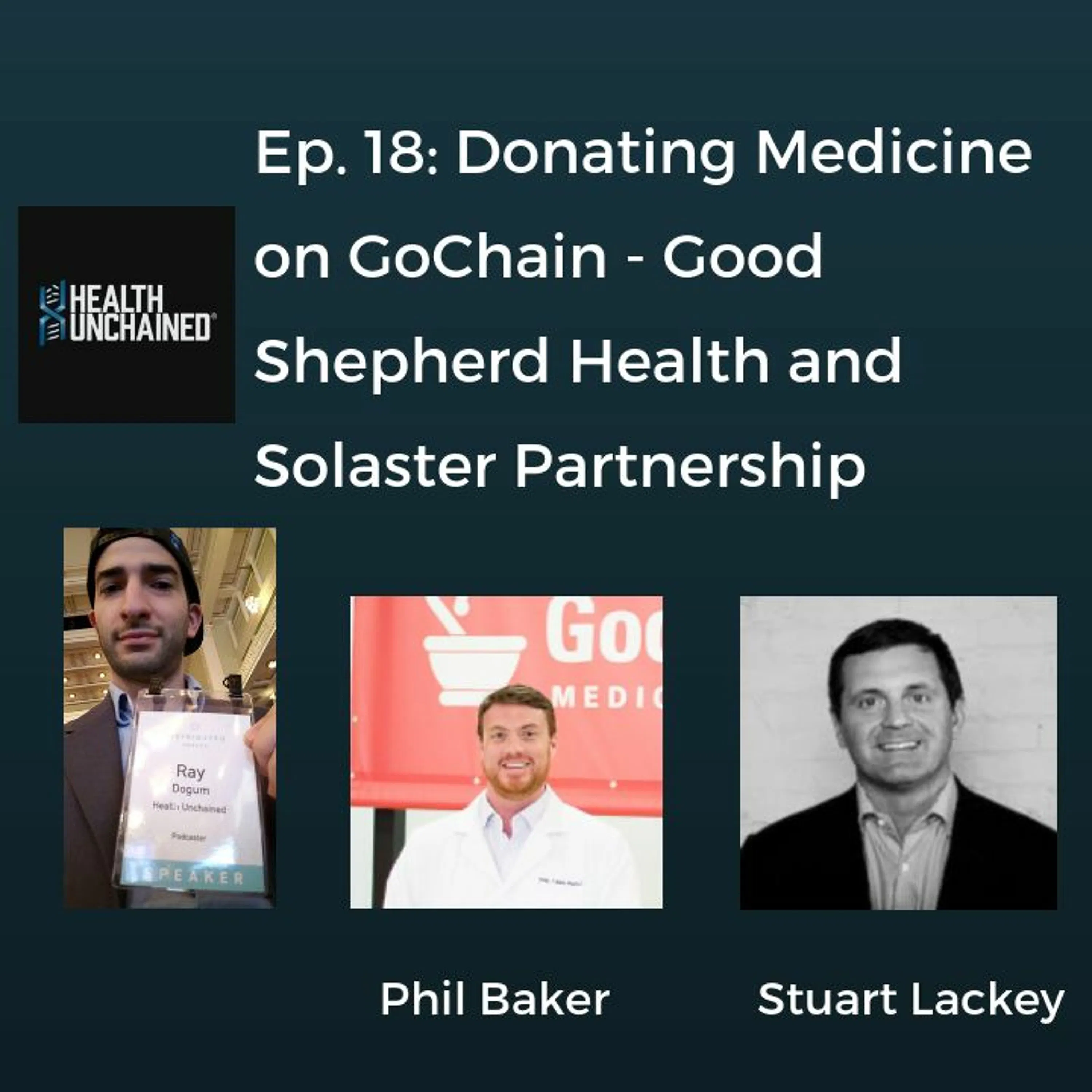
Ep. 18: DH Event - Donating Medicine on GoChain - Good Shepherd Health and Solaster Partnership
Phil Baker (PharmD) – Founder, Good Shepherd Health | Founder, CEO at Remedichain. https://www.linkedin.com/in/philbakerpharmacist/ Stuart Lackey - Co-Founder, CEO at Solaster. Medical Device commercialization expert. https://www.linkedin.com/in/stuart-lackey-34105a13/ Links: goodsheprx.com remedichain.com solaster.io •Pharmacy drugs (primarily oral chemotherapies) can be donated to Good Shepherd Health who will give them to low-income people •Solaster using Go-chain – GO-70 interoperability standard •Working successfully with government to change drug donation laws •1st day - $40,000 worth of medicine were donated. 1st week - $100,000 of medicine were donated. •Focusing on building a strong network of drug supply and demand on the Remedichain platform •New partnerships opportunities are welcome
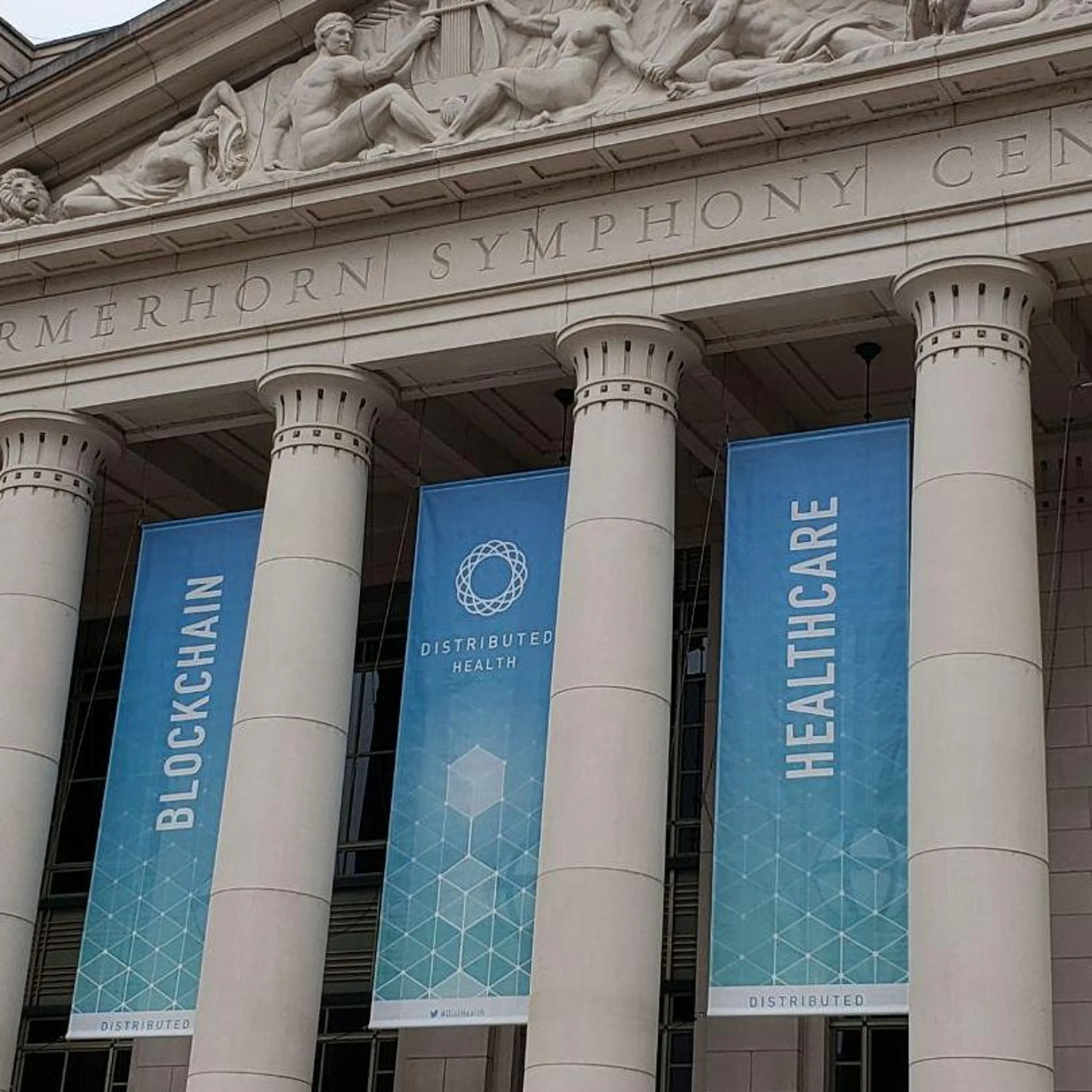
Ep. 16: Distributed Health 2018 - Mini-interviews
Distributed Health 2018 mini interviews 1. Kamal Obbad – CEO of Nebula Genomics (https://www.nebula.org/) 2. Tyler Penrod – CTO at Recovery Unplugged (https://www.recoveryunplugged.com/) 3. Jason O’Meara - Senior Director of Architecture at Quest Diagnostics discussing the Synaptic Alliance (https://www.synaptichealthalliance.com/) 4. Teresa J. Walker – Law Firm Management Guru and COO of Waller Lansden Dortch & Davis, LLP (http://www.wallerlaw.com/) 5. Cory Pitt – Personal Digital Spaces 6. David Boswell – Developer/Director of Ecosystem at Hyperledger Linux Foundation 7. Himanshu Verma – CEO of Consilx (http://www.consilx.com/) 8. Jason Bierly, CPA - Senior Tax Manager at Aprio (https://www.aprio.com/) 9. Najib Ben Brahim – CEO Telehealth Management LLC (https://www.telehealthmgt.com/) 10. JC Crawford – Networking Sales Specialist (Tennessee) Citrix (https://www.citrix.com/) 11. Khrys Hatch - Capital Formation Research Coordinator at Launch Tennessee (https://launchtn.org/) 12. Dominique Hurley – VP, Strategic Partnerships and Innovation at HealthVerity (https://healthverity.com/) 13. Dr. Tal Rapke – Founder and CEO of ScalaMed (Winner of Distributed Health 2018 Investor Pitch Competition) (https://www.scalamed.com/)

Ep. 15: Health Policy, Events, and Governance - Helen Disney (Founder of Unblocked Events)
Announcement: I will be in downtown Nashville, TN Nov 4-6 for the Distributed Health conference- https://health.distributed.com/ Helen Disney is the CEO and Founder of Unblocked, a hub for Blockchain events, education and information. She was listed in Innovate Finance’s 2016 Women in Fintech Powerlist and referred to by Barclays as a “Blockchain guru”. Unblocked Events Homepage - https://unblockedevents.com Healthcare Unblocked London - Nov 9, 2018 - https://unblockedevents.com/events/healthcare-unblocked-2018/ Conference Topics include: o Can Blockchain help save costs and reform the NHS? o Building a Decentralised Healthcare Identity o Digital service records, analytics and actionable insights for medical devices and equipment o The Disrupting Convergence of Blockchain, AI & Healthcare o Preventive medicine and longevity - what role can blockchain play? o What are the new business models being enabled by the rise of tokenisation? Show Notes • What is Unblocked Events and why did you start it? • Different verticals in the blockchain including healthcare, energy, creative content sharing • Helen co-authored two books on healthcare: IMPATIENT FOR CHANGE: European Attitudes To Healthcare Reform, 2004 | POLES APART: Eastern European Attitudes To Healthcare Reform, 2005 • Lack of patient agency in the existing healthcare system • Actionable data insights and patient centered experience is still not on par with the consumer experiences with other industries • Bi-lateral relationship with stakeholders in the healthcare ecosystem • Obstacles and challenges faced in setting up conference events • Bitcoin and blockchain adoption trends • Decentralized jurisdictions and governance system like the Decenturion State can change the way we interact with our government - https://decenturion.com/ • How will the government and healthcare will work together to drive public policy in a decentralized world? • Security using blockchain to enable provenance of data used in artificial intelligence systems • Blockchain as a substrate for our future global economy • Skepticism around individually owned patient records • What would you consider to be your biggest mistake and what did you learn from it? News Corner: Upcoming Health IT events 1. Beverly Hills Health IT Summit November 8 - 9, 2018 Beverly Hills, CA This is the final event for the Health IT summit series which is partnership between Renowned Healthcare Informatics and KLAS Enterprises (KLAS) where they offer exclusive education sessions to educators, providers, government officials, vendors, and consultants. https://vendome.swoogo.com/2018-BeverlyHills 2. Playing with FHIR – An ONC Developer Workshop November 27 - November 28 Washington, DC The Workshop seeks to catalyze new ideas and approaches to using FHIR to solve interoperability issues. The workshop event is free and open to anyone who’s interested in playing with FHIR https://www.healthit.gov/news/events/playing-fhir-onc-developer-workshop 3. BLOCKCHAIN HEALTH IT SUMMIT December 5-6, 2018 San Diego, California "Utilizing Blockchain to Transform Healthcare Systems and Business Practice" The Blockchain Health IT Summit will offer key insight on the future of blockchain business models in healthcare, and how this disruptive technology will go on to innovate healthcare delivery for years to come. http://rscouncil.org/blockchainhealthit/ • Guest episodes mentioned about decentralized government from Ray’s other podcast PFL with Stephanie and Luis: https://pflpodcast.com/2018/03/10/ep-51-decentralized-voting-with-sandra-miller-from-democracy-earth/ • https://pflpodcast.com/2018/03/20/ep-52-borderless-nation-states-with-bitnation-founder-susanne-tarkowski-tempelhof/

Ep. 14: H.S. Students Build Delphus - A Decentralized Clinical Research Platform (Founding Team)
On September 22 and 23rd 2018, high school students- Kevin Liu (CTO), Kunal Sharda (CEO), Will Hemond (COO)won first place in a DoraHacks hackathon with Delphus which is a decentralized clinical trial management platform. This episode features the 3 inspiring co-founders of the Scintilating team. Remember to follow me on Twitter to stay up-to-date on all things healthcare/blockchain and follow me on Instagram where you can find pictures of the hackathon and the winning team. • Introduction of the team • Experience with Hackathons • How did you get interested in the research process and clinical trials? • Audit trails in clinical trials is becoming more important • Improving the clinical research documentation process • Brief mention of Scintillating’s other ideas for projects- QueCoin, LitCoin, AddictCoin • Delphus is on Ethereum Testnet • ERC721 (DELPH) is used as reputation tokens to provide proof of identity • ERC20 (COM) holders will serve as committee verifiers • Delphus governance structure is modeled off of MakerDAO and Dai • StableCoin Collateralization Ratio explained • Team’s first programming language • User experience and Internet browser compatibility • Blockchain encryption methods • Using Protonmail’s encryption library • Complying with HIPAA regulations • Team dynamics explored and the “get it done” mentality • Team Favorites – Elon Musk, Mozilla, Jeff Bezos • Scintillating company homepage: https://scintillating.us/ • Delphus platform homepage: https://delph.us • Discord channel: https://discordapp.com/invite/Xst7TR3 • Email: [email protected] Blackberry has announced that it will begin to tackle one of the biggest challenges in the healthcare industry: leveraging healthcare endpoints to improve paitent outcomes while ensuring security and data privacy. And how does it expect to do that? The company will use it’s network operation center to power a decentralized digital ledger provided by ONEBIO, OneBio is Swiss based blockchain company which aims to build a peer-to-peer marketplace for biodata. Additionally, it will leverage it’s blackberry Spark communications platform to connect, protect, and manage smart devices in hospitals and clinics. For more info on this partnership, check out the episode show notes. https://www.techrepublic.com/article/blackberrys-new-blockchain-tools-could-boost-security-for-medical-iot https://www.ecnmag.com/news/2018/10/blackberry-offers-secure-sharing-data-all-healthcare-things https://www.onebio.io/

Ep. 13: Health Cost Sharing Models – Dr. Gordon Jones (President and COO) – Universal Health Coin
Universal Health Coin was one of the books that actually inspired me to start this podcast. So it was a great pleasure to have the author of the book as a guest on the show. Dr. Gordon Jones (President and COO) – Universal Health Coin (UHX) Gordon's LinkedIn: https://www.linkedin.com/in/drgordonjones/ • Apache adventures and the US Army Airborne Division, and SC National Guard | Co-author of universal health Coin with Courtney Jones • Entrepreneur in Residence at Startup life incubator - StartupLife Incubator in Augusta, GA: https://startuplife.theclubhou.se/ (Register your startup before October 8, 2018) • What’s the most frustrating problem in healthcare? • Inception of Universal Health Coin with Courtney Jones • BUCAH: Blue Cross, United, Cigna, Aetna, Humana are the largest healthcare insurance companies which control much of the healthcare industry, along with the government. • Health Cost Sharing Organizations (HCSO) is a semi-unregulated health coverage plan that individuals and families can join as community members (commonly faith-based organizations) • UHX blockchain technology pivots from ETH to NEO to Stellar • Positive experiences with IBM collaborations and the Think Conference • Using IdentityMind for KYC/AML processes and soon to use Sovrin (identity management) • Partnership with Teledoc to provide telehealth services to UHX users • How do you protect patient privacy? • Nancy Kassebaum co-sponsored HIPAA- meant initially for health data portability not privacy. • Which healthcare industry stakeholders will benefit the most from blockchain technology? • Tokenomics of healthcare and how users will interact with UHX. • Future marketing plans for UHX will not boast blockchain or cryptocurrencies, advertising will be focused on health cost sharing and more affordable healthcare. • Healthcare provider shortage due to wasted time performing data entry work. • Philosophy about end of life care • Roadmap – design and build the platform, build the decentralized health exchange and decentralized token exchange Universal Health Coin Homepage: https://uhx.io/ Universal Health Coin book: https://medium.com/@uhctoken/universal-health-coin-9518ca3769cf Decision to use Stellar: https://www.linkedin.com/pulse/comparative-assessment-neo-eth-stellar-dr-gordon-jones/ “Blockchain Movement”: https://choon.co/artists/gordonjones

Ep. 12: Connecting to EHR Data - Philip Parker (COO Coral Health)
This episode is with Philip Parker, Chief Operating Officer, from Coral Health. Coral Health is based in Vancouver Canada and has been building their app with user experience and data interoperability as their focus. They want to bring personalized medicine to the patient via blockchain and SMART on FHIR protocols. •SMART (Substitutable Medical Apps, Reusable Technology) on FHIR (Fast Healthcare Interoperability Resources) protocols •Blockchain benefits •Working with Patient Advocacy groups •Prior Authorization process is wasteful and can be improved with data interoperability between payers and providers. •CoverMyMeds streamlines the medication PA process, electronically connecting providers, pharmacists and plan/PBMs. CoverMyMeds was acquired by McKesson Corporation in 2017 •$1.3 trillion annual healthare spending in US may be categorized as wasteful or of no value to patients- admin complexity, fraud, abuse, poor coordination. •Adverse effects from drug to drug interactions is a major cause of hospital admissions •As a company using a permissioned blockchain, what do you think are some advantages of using a public blockchain? •What does personalized medicine mean to you? •Importance of Longitudinal health data •Many clinical trial recruitment is still being done with train station advertisements- very inefficient/ineffective/expensive •Observational/Longitudinal studies can be drastically improved with a platform like Coral Health Links: Homepage: https://mycoralhealth.com/ Access to the app: https://medium.com/@mycoralhealth/introducing-coral-health-records-the-easiest-way-to-access-control-your-health-records-on-apple-5335127f2fbe For early access to test app, email: [email protected] FHIR Index: https://www.hl7.org/fhir

Ep. 11: Healthcare Decentralization - Dr. James Todaro (CEO MedCredits)
In this episode, I speak with Dr. James Todaro – co-founder and CEO of MedCredits about Decentralization and his experience in the healthcare and blockchain community. Show Notes: • Medcredits Origins • Advantages and disadvantages of decentralization in healthcare • Hippocrates app - Tele-dermatology as the first available service in beta • Token Curated Registry(TCR) used to create a decentralized global physician registry • Investor speculation and competitive token sale environment • Permissioned blockchains • How has your medical school training helped you in your endeavor with MedCredits? • Artificial Intelligence • Shortage of healthcare providers • Can you share some of the competitive pressures you are feeling in this space right now? What other blockchain companies are trying to do what you are doing? • Technology adoption takes time especially in healthcare MedCredits beta application: https://medium.com/medcredits/get-paid-to-test-the-hippocrates-physician-ui-dfffacaa29c0 Learn about TCR: https://medium.com/medcredits/a-token-curated-registry-for-occupational-licensing-6ada7c43df4e New Corner: Mount Sinai Health System is looking to take a lead role in finding ways that healthcare can use emerging blockchain solutions. The New York-based integrated delivery system has launched the Center for Biomedical Blockchain Research to solve healthcare challenges using technology that underlies the Bitcoin cryptocurrency and provides a data structure that can be timed-stamped and signed using a private key. https://www.healthdatamanagement.com/news/mount-sinai-creates-center-for-biomedical-blockchain-research

Ep. 10: Genetics Marketplace Ethics - Dr. David Koepsell (CEO Encrypgen)
In this episode, we talk about genomic data ownership and privacy ethics with David Koepsell, lawyer, author, and philosopher. http://davidkoepsell.com/ Check out the Encrypgen Market Demo - https://marketdemo.encrypgen.info/ Show Notes • Introduction of David’s background • Brief journey into blockchain • Patenting genes and ownership of personal data • Origins of Encrypgen - value proposition to upload individual genetic information securely on a research marketplace • Multichain, used by Encypgen, is built specifically for permissioned blockchain and satisfies the requirements of GDPR • Importance of Individual Metadata to make Genetic information valuable • Search capability of the genetic data and metadata • Value of genotyping and sequencing • The cost of sequencing one human genome has gone down from over $100M in 2001 to under $1000 today. • Challenging ICO Offering experience • How will Encypgen generate revenue? • Genomic Data Markeplace • How will the value and price of a person’s genetic change over time? • 23andme surveys and the collection of phenotypic data • Research Impact of the study of Epigenetics • Data Validation and accuracy • We will need multiple generations of genetic data to bring us tons of new insights about humans and health. • Genes are not your destiny • Ethical considerations • Breaking Bad and Philosophy - the book • Community building and importance of community support • David’s Upcoming event dates and locations- (https://www.healthfurther.com/ Nashvile, TN Aug 28-29), (https://www.eventbrite.com/e/the-exponential-healthcare-conference-tickets-47599097181 Newport, CA Oct 10) GINA Act - https://www.eeoc.gov/laws/statutes/gina.cfm News Corner - A subsidiary of Pornhub called Tube8 has entered into a partnership with Vice Industry Token. https://thenextweb.com/hardfork/2018/08/17/pornhub-tube8-blockchain-cryptocurrency/

Ep. 9: Decentralized Whole Genome Sequencing (George Church – Nebula Genomics)
George Church, professor at Harvard & MIT, co-author of 480 papers, 130 patent publications & one book "Regenesis", originally published in 2012. His contributions have enabled nearly all advancements in “next generation” DNA sequencing methods, he’s cofounded over 20 companies and he was listed as one of TIME’s 100 most influential people of 2017. Also considered the father of synthetic biology. George M. Church - http://arep.med.harvard.edu/gmc/ Nebula Genomics - https://www.nebulagenomics.io/ Veritas Genetics - https://www.veritasgenetics.com/ Show Notes • Nebula Genomics origins and Veritas Genetics traction • Genotyping vs. Medical grade whole genome sequencing – prices, value, and utility • Data ownership of personal genomes • Personal Genome Project is an open source/open access collaboration to share genomic and phenotypic information with researchers • 3 Axes: How close to useful medical genome (technically); who controls it (self or corporate); how useful on a day-to-day basis (understandability and interactivity). • Genome sequencing technology adoption and Seat-belts • What scientific and social problems are you most concerned or obsessed with today? • Aging Reversal • Human life extension limitations and perceptions • How Genome sequencing is like the internet back in the late 1980s. • Genome editing risks and biohacking ethics • Equitable distribution of gene editing technology among all the people require lower cost • What’s more important- Information Systems R&D or microbiology wet-lab experiments? How dependent are they on each other? • How did you first hear about blockchain technology? • Personal Genetics Education Project - PGed.org • Cambrian explosion of blockchains • Exploring possibilities of genomic research • What is the basis of consciousness? • George’s favorite scientists Quick Quote: Decoding the human genome sequence is the most significant undertaking that we have mounted so far in an organized way in all of science. I believe that reading our blueprints, cataloguing our own instruction book, will be judged by history as more significant than even splitting the atom or going to the moon. -Francis S. Collins [Director of the National Institute of Health (NIH)] News Corner 23andMe announces $300M deal for your DNA with giant drug company GSK - https://www.digitaltrends.com/cool-tech/23andme-gsk-drugs/

Ep. 8: Securing Health Data – Vasja Bocko (CEO Iryo)
In this episode, I had the chance to speak with Vasja Bocko, founder and CEO of Iryo, an early stage healthcare IT company from Slovenia. We discuss the IRYO’s journey so far and the importance of permissioning private health data using blockchain technology. IRYO runs on the EOS network and is focused on creating an open-sourced EHR platform with zero-knowledge encryption. I apologize in advance for the sound quality of parts of this recording, there were periods of technical difficulty but we made it through and I think there’s plenty to take away in this episode. Show Notes Introduction of Vasja Bocko and origins of Iryo. Iryo is focusing on interoperability, data toxicity, data ownership. Data toxicity refers to companies and organizations holding health data as toxic assets because they risk data breaches. Personal health records and Iryo Research Portal. How is the data stored on the mobile device and the cloud? Using ZeroPass to ensure recoverability of your private keys (https://www.zeropass.io/). Choosing EOS as Iryo’s foundational blockchain network. Risks of moving healthcare data from centralized systems to distributed networks? What kind of devices will be used to store private keys in the future? Clinical institutions stake tokens– spam protection, institutions would include organizations such as hospitals, clinics and research institutes. In case of emergency escrow mechanism. How does is fit into clinician workflow? Iryo is working to be compliant with OpenEHR standards. Lack of incentives for existing Health IT to adopt open standards because their clients get locked-in to using their platform. OpenEHR (UK based - https://www.openehr.org/) vs. HL7/FHIR standards (primarily US based - https://www.hl7.org/fhir/) SNOMED - Systematized Nomenclature of Medicine (Clinical Terms) – is a standardized, multilingual vocabulary of clinical terminology that is used by physicians and other health care providers for the electronic exchange of clinical health information. (https://www.snomed.org/) AI and Machine learning methods – analyzing in place. Integrating with Medical/Health devices. Preserving anonymity and privacy of healthcare data. ICO decisions and crypto market sentiment. Iryo platform traction in the market. Iryo partners with NGO called Walk With Me organization to provide IT infrastructure to refugee camps in the Middle East (https://medium.com/iryo-network/announcing-the-first-deployment-of-the-iryo-system-improving-healthcare-for-refugees-bee8c441e7e6) News Corner: On July 5, 2018 - The International Journal of Health Geographics published an editorial titled Geospatial blockchain: promises, challenges, and scenarios in health and healthcare. Article: https://ij-healthgeographics.biomedcentral.com/articles/10.1186/s12942-018-0144-x Links Website: Iryo.io ICO: Iryo.network Vasja’s email address: [email protected] Iryo Telegram Group: https://t.me/IRYOnetwork Iryo Medium: https://medium.com/iryo-network

Ep. 7: Unleashing the Value of Healthcare Data - Katherine Kuzmeskas (CEO SimplyVital Health)
We discuss the origins of SV Health and the challenges she faces bringing new technology into the slow-moving healthcare industry. Their featured platform HealthNexus is a globally HIPAA compatible protocol and forked from the ethereum blockchain. Kat is Health Unchained’s first female guest and I would certainly encourage other women entrepreneurs to get involved with building these new types of distributed business models in healthcare. SimplyVital Health is hiring. Check out the show notes for more details about the episode and a few cool links related to the show. Show Notes Teach for America experience at the Texas/Mexico border Teaching nutrition and diabetes management as a 7th grade teacher Changing career paths Incorporating SimplyVital Health in Delaware SV Health is equity backed by multiple Venture Capitalists Receipt hash function creates an audit trail to track the interaction of the providers with the each other and the patient to prove care coordination. Creating a healthcare safe blockchain protocol Open-source key pair system foundation Why did you fork the ethereum blockchain? Two reasons: Proof-of-traction is needed in healthcare and there are more developers with ethereum based coding skills Creating the permissioned blockchain to comply with HIPAA and attract healthcare institutions Opportunity in Clinical trials research needs better data access just like the rest of healthcare Regulatory challenges in the blockchain space and difficulty understanding the value of tokens Blockchain bad actors and maintaining your integrity What has your experience been like as a woman CEO and do you think there have been any disadvantages or advantages being a woman in this field? What advice would you give to women who may be interested in this new field of architecting trust with technology? Existing products and traction with users/developers Patient data is super valuable, case in point, Henrietta Lacks cell lines (https://www.scientificamerican.com/article/5-ways-henrietta-lacks-changed-medical-science/New Hampshire). Dangers of selling data as your business model (https://hbr.org/2017/06/to-survive-health-care-data-providers-need-to-stop-selling-data) Ontario experimenting with open access to residents’ healthcare data (https://qz.com/1246042/ontario-is-releasing-its-residents-personal-health-data-to-eager-tech-companies/) Data producers, analyzers, and quality control. Creating a marketplace for patients to share data with pharmaceutical companies. Entrepreneurship fundamentals are still critical to be successful with blockchain technology. Decision to use telegram only as an announcement channel. If it’s not too personal, what would you consider to be your biggest mistake? Embracing failure to grow stronger with experience. Lack of good healthcare data access is a business issue not a technology issue. Health Information Exchanges don’t work because of lack of trust and business. News Corner: SimplyVital Health, the Boston-based blockchain healthcare company has joined with The Cool Kids to bring SimplyVital's open source Key Pair System to identify the highest healthcare impact opportunity in the Philippines. https://www.prnewswire.com/news-releases/filipino-company-picks-health-nexus-blockchain-protocol-to-fix-healthcare-nationwide-300666767.html Links: https://www.simplyvitalhealth.com/ https://www.linkedin.com/in/katherinekuzmeskas/ https://gitter.im/ https://github.com/Health-Nexus

Ep. 6: Bridging Healthcare Silos - Dr. Michael Kaldasch (CEO Aimedis)
This week’s guest is Dr. Michael Kaldasch, CEO of Aimedis, in Germany. I want to quickly thank my previous guest Girisha Fernando from DIGIPHARM for connecting me with Dr. Kaldasch. Aimedis is a startup trying to build a comprehensive healthcare ecosystem that can store your health records, interact with providers using video chat, and a social media community. They are using blockchain technology to facilitate better health data access and establish trust for patients and providers. I think they have large goals to accomplish and it certainly won’t be easy but as you’ll hear in the episode, health care institutions prefer an all-in-one product for them to actually want to adopt them in their workflow. Towards the end, we also got into a bit of a philosophical conversation about fiat money, greed, and the perception of value. Although it is still early for Aimedis, it sounds like they are making good strides in the German and Asian marketplace with their 5 hospital chain partners using version 1. Show Notes: How did you get the idea to start with Aimedis? Previous experience for Dr. Michael Kaldasch included TheHealthNet which was built in 2013 and had over 10,000 patients. Aimedis Proposed Use cases: Social Media Interaction, Patient Record access, Medical Service Provider Action History, Lab and specialized procedure records, Medical service provider credentials, Telemedicine delivery support. Aimedis has been rolled out to 5 hospital chains in Europe and Asia. There are about 25,000 patients that are in version 1 of Aimedis platform already. Competition - Medicalchain and Mediblock Breaking down data silos and the importance of collaboration for blockchain projects. Aidmedis has raised $2.5 million during their pre-sale round. ICOs and Financing the project to attract high quality talent. Innovation in the United States vs. Europe. Stress in the Emergency Room as a doctor. What makes your life happy and fulfilled? What was your biggest mistake? Philosophical considerations regarding the value of money and basic human needs. AimedisTelegram group: https://t.me/aimedistoken Website: https://aimedis.com/ Quote reference: https://www.quora.com/What-do-you-think-Henry-Ford-was-referring-to-when-he-said-It-is-well-enough-that-people-of-the-nation-do-not-understand-our-banking-and-monetary-system-for-if-they-did-I-believe-there-would-be-a-revolution-before-tomorrow-morning

Ep. 5: Better Pharma Access and Pricing - DIGIPHARM
In this episode, I spoke with the Swiss-based DigiPharm team who are trying to tackle some of healthcare’s most challenging problems, specifically in the pharmaceutical pricing and clinical trial space. Both the CEO, Ahmed Abdulla, and the COO, Girisha Fernando are co-founders of DigiPharm and have spent parts of their careers working at the 2nd largest global pharmaceutical company by revenue, Roche. Ahmed recently joined the Centre for Trade Facilitation and Electronic Business, part of the United Nations Economic Commission for Europe as an blockchain expert in healthcare. Zach Daniels, DigiPharm’s CTO, also joins us from Denver, CO and he spoke about the specifics of DigiPharm’s anticipated technology. I apologize in advance for the sound quality of parts of this recording, there were periods of technical difficulty but we made it through and gets better as the conversation unfolds. Introduction of the DigiPharm team and company. History at Roche Pharmaceuticals. DigiPharm was one of the Pfizer Healthcare Hub top 10 finalists. Trying to frame the problem being solved in one sentence. Using smart contracts to deliver outcome-based agreement. Importance and increased use of real world evidence. ICO landscape. Swisscom partnership provides Digipharm with the necessary development resources. Offering patients better access to life-saving drugs that are still in clinical trials. Using dynamic pricing to let patients pay for the value they actually receive from a drug. Project Timeline. DigiPharm Website: www.digipharm.ch/ Telegram group: t.me/digipharm News Corner https://www.forbes.com/sites/forbestechcouncil/2018/06/08/how-blockchain-and-ai-can-help-pharma-focus-on-innovation-rather-than-advertising/2/

Ep. 4: Evolution of Medical Records - Dr. Richard Gibson (Health Record Banking Alliance)
In this episode, we dove really deep into medical records. I know our guests from episode 1 and 3 were also involved with medical records but this guest is truly an expert on how medical records have evolved ever since the mandatory transition for providers to move medical records from paper to digital. Show Notes: What does Health Record Banking Alliance do? Why is it us taking so long to easily access useful medical records? Richard explains how family caregivers can benefit directly from the access to loved one’s health records. Health Record Banking Alliance Principles Self-diagnosis on the internet and its dangers. Apple health – consumers and developers. General Data Protection Regulation (GDPR) and privacy concerns. User interface ease of use and consumer demand. How can blockchain create a trusted environment to share medical and health information? Health outcomes depend on our behavior and the potential for using micropayments to incentivize patients to choose healthy options. Working with federal regulators to encourage data sharing among patients. Providers and payers manage data according to HIPAA. Giving advice using medical records is something the FDA monitors carefully. Access to the vital health information is difficult in some populations, especially in developing countries. Who are the stakeholders in the health record marketplace? Self-diagnosis and treatment using the internet can be valuable but possibly dangerous. Micropayments using blockchain technology offer a way to incentivize data sharing and promote active and healthy lifestyle. Permission based data sharing can help solve transparency concerns. Provider fear of misdiagnosis still exists. Unstructured data- The patient story is more than the data collected in medical records. Complete medical record on one 5x7 Index card in 1984. Europeans spend more on social care than healthcare than America but the total amount of money spent on both social and health care are about the same in each country. The result is that Europeans actually have better health outcomes. End of life care and special directives. Trusting blockchain vs trusting a brand. http://www.healthbanking.org/executivedirector.html https://www.linkedin.com/in/richardgibsonmdphd/ News Corner: https://www.apple.com/newsroom/2018/06/apple-opens-health-records-api-to-developers/ On June 4th, Apple announced that it opened up its Health Record API (application programming interface) to developers so that they can build 3rd party apps that can easily and securely pull health record data directly from Apple users (with their permission of course).

Ep. 3: Improved Access to Medical Records - Dr. Abdullah Abeyatti (CEO Medicalchain)
UK based electronic health records Pilot with Groves Medical Group Benefits of international medical consultations using cryptocurrencies Telemedicine technology Hospitals, non-profit, universities as Guardians of data The importance of having access to medical records for a surgeon Working at the NHS as a clinical doctor Why healthcare industry is a laggard in technology adoption? Touch Surgery using augmented reality to train surgeons and improve patient results Prevention is better than treatment Who will be primary users? MyClinic.com is Medicalchain’s new telemedicine service that is being piloted with the Grove Medical Group in London, offering over 30,000 patients the ability to connect with their provider on a video platform. https://medicalchain.com/en/ https://myclinic.com/ News Corner: https://medium.com/medicalchain/medicalchain-announces-a-partnership-with-the-groves-medical-group-london-98c30372998b

Ep. 2: Pharma Supply Chain Tracking using BlockRx - Darryl Glover (iSolve CCO)
Tracking drugs after they’ve left the manufacturer has traditionally been an afterthought. Pharmaceutical companies now want to use downstream post-delivery data to improve their products and ensure quality. Healthcare regulators would like to see better management of drugs throughout the entire drug life cycle. Identifying counterfeit drugs is a huge global challenge and the pharma industry is still struggling to find a trustworthy solution. In this episode, Darryl Glover (Chief Clinical Officer, iSolve) shares his insight on how their project, BlockRx , can help certify provenance of drugs using permissioned/private blockchains with Intel’s Hyperledger Sawtooth and Microsoft’s Coco Framework. Guest email: [email protected] https://www.blockrx.com/ Health Unchained New Corner: https://www.bloomberg.com/news/articles/2018-04-30/can-blockchain-fix-the-opioid-epidemic-intel-wants-to-find-out

Ep. 1: Consumer-owned Health Records – Raj Sharma (Health Wizz CEO)
Electronic file cabinet on your phone Medical record ownership How blockchain can verify provenance of medical data Consumer first adoption as a strategic decision not hospital systems consortiums Origins of Health Wizz (acquisition of KreateIoT) and Omcoin tokens Wearable data and digital health identity Using the ethereum blockchain for trading digital healthcare assets and reward tokens New technology adoption challenges in the healthcare industry Integrating blockchain with APIs How does Health Wizz differ from other medical records blockchain companies? Earning tokens for winning local health challenges – But why? Amazon’s potential entry into healthcare Better user experiences similar to Waze UPort as an identity layer - https://www.uport.me/ What are the initial reactions from new users and potential investors? How will Health Wizz generate revenue? Interoperability with FHIR https://www.hl7.org/fhir/ and S.M.A.R.T. https://smarthealthit.org/ Three big tidal waves of healthcare innovation – 1. Consumer awareness of data ownership. 2. Opening up the data from electronic health records. 3. Emergence of easier-to-use technologies Health Wizz participated in 2017 Consensys Conference NYC competition. They will be attendees in 2018. https://www.healthwizz.net/ https://www.linkedin.com/in/rajsharmar/