
HDTV and Home Theater Podcast
843 episodes — Page 1 of 17
Podcast #1271: Consumer Reports HDTV Ratings
Podcast #1270: 2026 Network TV Season/Series Premieres
Podcast #1269: Is Your LG Smart TV Listening to You? and Dolby AC4
Podcast #1268: Ara's New Setup First Impressions
Podcast #1267: Nick Brown and Smith Freeman of SVS Sound
Podcast #1266: Ara's New Setup
Podcast #1265: Garage Doors - AV Receivers - Atmos in the Family Room
Podcast #1264: Family Room - 5.1 vs 7.2 what makes sense?
Podcast #1263: 2026 Value Electronics TV Shootout
Podcast #1262: What is on the Home Theater Horizon
Podcast #1261: What If Cable & Satellite Providers Exit Traditional Linear TV Business
Podcast #1260: Why Are Netflix Top Shows Losing Viewers?
Vacation Message
Podcast #1259: Clever Spinoffs to Our Favorite TV Shows
Podcast #1258: Netflix: The Best Single Streaming Service to Keep in 2026
Podcast #1257: Apple TV from Apple's WWDC 2026
Podcast #1256: How Much Do Audio Speakers Cost to Build?
Podcast #1255: Tips to Get the Most Out of Your GoogleTV and Scientific Proof Expensive Cables are a Waste
Podcast #1254: Review - WiiM Amp Multiroom Streaming Amplifier
Podcast #1253: Are the Low Cost Matter Compatible Devices From Ikea Worth It?
Podcast #1252: Broadcast Network Renewals and Cancellations for the Next TV Season
Podcast #1251: The Most Effective ways to Circumvent Smart TV Spying
Podcast #1250: Smart TVs Spy on What You Watch and Profit From Your Data
Podcast #1249:Five Underrated Home Theater Gear Picks Under $500
Podcast #1248: Why does anyone still need a physical satellite TV service?

Podcast #1247: What Specs Matter and What Don't When Buying a New HDTV
On this week's show we go beyond the hype to tell you what specs matter most, what specs are mere marketing hype, and we give you some tips for buying your next HDTV. We also read your emails and take a look at the week's news. News: The price of Netflix is set to go up for all users New VIZIO smart TVs to require a Walmart account The latest Matter update improves camera streaming Other: Why Did TV Manufacturers Stop Using 8K Panels? What Specs Matter and What Don't When Buying a New HDTV Last week the Brightside Home Theater Podcast did a panel discussion on the real factors that shape picture quality. Check it out when you have a chance, it's very informative (Beyond Resolution: The Real Factors That Shape Imaging). So this week we are piggybacking on their discussion to tell you what specs matter most, what specs are mere marketing hype, and we give you some tips for buying your next HDTV. Specs That Matter Most Panel Technology (OLED vs. Mini-LED/QLED): Not really a spec as much as a technology but it is important for making the right decision for your room. This is the single biggest factor to consider. Choosing the right panel really matters. It directly affects how sharp, colorful, and lifelike the picture looks in your room — whether you're watching movies in the dark or enjoying sports during the day. Which technology you choose depends on what and where you watch TV. OLED (including QD-OLED): Perfect blacks, high contrast, excellent viewing angles, and natural motion. Great for dark rooms and movies. Newer 2026 OLEDs are much brighter than older ones so if you are watching sports don't count this out. Just make sure you buy one of the brighter panels like the LG G5/G6 series, Panasonic Z95B, and the BRAVIA 8 II. Mini-LED/QLED: Much brighter overall (can exceed 2,000–3,000+ nits), better for bright rooms with lots of ambient light. Good contrast with enough dimming zones, but blacks aren't as deep as OLED. Choose based on your room: OLED for controlled lighting, Mini-LED for bright rooms. Brightness (Peak HDR nits): Real measured peak brightness in HDR content (especially small bright areas like highlights). Higher is better for HDR pop and visibility in bright rooms (1,000+ nits is solid; 2,000+ is excellent). Full-screen brightness also matters but is less advertised. Ignore vague "ultra bright" claims—look for review-tested numbers. Contrast & Local Dimming (for LCD/Mini-LED TVs): Native contrast ratio (higher is better). Number and quality of local dimming zones (more zones = better control, less blooming). OLED skips this entirely with per-pixel lighting. Poor dimming creates distracting halos. HDR Support: Dolby Vision, HDR10+, HDR10, and HLG. Dolby Vision and HDR10+ are dynamic (scene-by-scene adjustments) and preferred over basic HDR10. Most good TVs support multiple formats now. Refresh Rate (Native Panel Rate): 120Hz native is the sweet spot for most people—smooths sports, reduces blur in action, and supports 4K@120Hz from PS5/Xbox/PC. 144Hz or 165Hz is a bonus for high-end gaming. 60Hz is fine for casual viewing but noticeable in fast content. Gaming Features (if you game): HDMI 2.1 ports (at least 2–4 for full bandwidth), VRR (Variable Refresh Rate: freesync/g-sync compatible to eliminate tearing), ALLM (Auto Low Latency Mode), low input lag ( Smart Platform & Ports: Easy-to-use OS (Google TV, webOS, Tizen) with app support. Enough HDMI 2.1 ports and eARC for soundbars. If you use a Set Top Box The platform really doesn't matter. But make sure you have enough ports for all your connections. Screen Size & Viewing Distance:Our policy has always been. Buy the biggest TV you can afford based on selecting a panel that meets the other specs we have discussed. We have yet to meet someone who told us they wished they bought a smaller TV. If you have been listening to our podcast for a while this information is nothing new to you. But what about the marketing hype specs? What can you ignore? The following sound impressive on boxes but deliver little real benefit or are greatly exaggerated. Marketing Hype (Often Overhyped or Misleading) "240Hz," "480Hz," or "Motion Rate" numbers: Most 4K TVs top out at 120Hz native panel refresh. Higher "effective" or "motion" rates use software interpolation (fake frames). These are mostly marketing—real gains beyond 120Hz are small for most content. Motion Smoothing / "Soap Opera Effect" Features (TruMotion, Motionflow, etc.): Adds fake frames to make 24fps movies look like video. Many people hate it for ruining cinematic look. Curse the day this feature was developed! Dynamic Contrast Ratio (e.g., 1,000,000:1 or higher): Measured with aggressive backlight pulsing or scene changes—doesn't reflect real performance. Focus on native contrast or local dimming quality instead. Manufacturers inflate these wildly. 8K Resolution: Almost no native 8K content exists. 4K is still the standard; upscaling to 8K adds little visible benefit on normal sizes and costs much mor

Podcast #1246: The Next Big Thing In Home Automation
On this week's show we countdown 10 Underrated TV Shows You Should Be Watching from an article at Screen Rant. and we do a deep dive into the Next Big Thing in Home Automation. Plus we read your emails and take a look at the week's news. News: Netflix making key change in how it releases TV seasons New Apple TV and HomePod Mini Remain 'Ready' to Launch Samsung Has Reportedly Restarted Work On OLED-Busting 'QNED' TV Tech Denon expands its multi-room speaker lineup Other: Full AWALL MicroLED Sports Bar with 108" Jumbotron! The Next Big Thing In Home Automation We have had a running gag that whatever the year, it was the "Year" of Home Automation. Today, we can say confidently that home automation is mainstream and with Matter hitting it's stride, it's easier than ever to automate your house regardless of which ecosystem you prefer. That got us wondering, what is the next big thing in home automation. Unless you have been living under a rock you have to believe it's AI. The market will shift toward truly proactive, AI-driven intelligent homes that anticipate needs rather than just respond to commands. This builds on several maturing trends we saw at CES as well as recent developments. The smart home is moving beyond basic connectivity (like voice commands or app control) into homes that "learn" your habits, predict routines, and act autonomously—while staying off the cloud for privacy and speed. This may be the end of "human programming" for automations, replaced by AI housekeepers or butlers that handle lighting, temperature, security, cleaning, and energy without constant input. Key drivers and elements include: Advanced AI and predictive automation — AI now powers mood-adaptive lighting, weather-aware thermostats from companies like Ecobee, security cameras that reduce false alarms via better object recognition, and robotic vacuums and lawn mowers that handle tasks proactively. Homes adjust ambiance, clean up pet messes autonomously, and optimize energy based on your patterns and external factors. Matter standard reaching maturity — After years of buildup, Matter is now "real". It enables seamless cross-brand compatibility, local control, and faster adoption of advanced features like energy management. This eliminates much of the old "Do you support Homekit, Google, or Echo" question, making unified ecosystems practical without protocol envy. Enhanced presence sensing and conversational AI — mmWave sensors and improved occupancy detection enable privacy-focused automation where lights and security adjust based on who's home without requiring cameras everywhere. Voice assistants evolve into more natural, butler-like interactions for complex control. Rise of innovative, affordable brands and robots — Beyond big names, companies like Aqara, SwitchBot, Ecobee, and others deliver creative, budget-friendly sensors, locks, and full systems. Robotic cleaners and other helpers are smarter and more autonomous. Overall, 2026 feels like the year smart homes stop being a collection of gadgets and become an invisible, adaptive companion—focused on convenience, energy savings, security, and wellness without the hassle of constant tweaking. If you're building or upgrading, prioritize Matter-compatible devices with strong local AI capabilities via Home Assistant, SmartThings, or other local hubs for future-proofing.

Podcast #1245: Set Top Boxes - From Niche Devices to Major Ecosystems
On this week's show we take a walk down memory lane and look at how the Set Top Boxes we all take for granted evolved from niche Netflix-focused or iTunes-centric devices to broad ecosystems. We also read your emails and take a look at the week's news. News: Hisense TVs Force Owners to Watch Intrusive Ads TCL now can't call some of its TVs 'QLED' TCL launches two new 163-inch 4K microLED TVs in China, starting at $36,000 Short-form video dominates Gen Z digital consumption Other: 9 Brilliant Hi-Fi "Failures" | Awesome Disasters! Set Top Boxes - From Niche Devices to Major Ecosystems Here's a chronological timeline of major set-top streaming boxes: Roku, Apple TV, Amazon Fire TV, and Google (Chromecast, Android TV/Google TV devices). These devices evolved from basic media extenders to full smart platforms with app stores, 4K/HDR support, voice remotes, and integration with services like Netflix, YouTube, Prime Video, and more. 2007–2008: Early Pioneers 2007 (January announcement, March release): Apple TV (1st generation) — Apple's first set-top box, initially focused on syncing content from iTunes (40GB/160GB HDD models), supporting up to 720p. It was more of a media extender than a pure streamer at launch. 2007 The original Vudu Box (BX100) was released in the fall of 2007, serving as an early internet video-on-demand set-top box for purchasing and renting movies. It was known for its 250 GB hard drive and unique scroll-wheel remote. Vudu discontinued this hardware in 2010 to focus on apps for smart TVs and other devices.> 2008 (May): Roku (1st generation, originally "Roku Netflix Player" or DVP N1000) — The first dedicated streaming box, launched in partnership with Netflix for its "Watch Instantly" service. It marked the start of affordable, channel-based streaming. 2010–2012: Maturing Platforms 2010 (September): Apple TV (2nd generation) — Major shift to a smaller, puck-like design running a variant of iOS, focused on streaming from iTunes and rentals (no HDD, app-like interface). 2012 (March): Apple TV (3rd generation) — Updated model with 1080p support; a minor refresh (Rev A) came in 2013. 2013–2014: Dongle Era and Amazon Enters 2013 (July): Google Chromecast (1st generation) — Revolutionary low-cost HDMI dongle ($35) for casting from phones/tablets/browsers; simple, no full interface or remote. 2014 (April): Amazon Fire TV (1st generation) — Amazon's entry as a set-top box with voice remote, Alexa integration potential, and app ecosystem (initially focused on Prime Video). 2015–2016: Upgrades and 4K 2015 (September): Google Chromecast (2nd generation) — Improved design and performance; also launched Chromecast Audio (audio-only variant, later discontinued). 2015 (October): Apple TV (4th generation, later called Apple TV HD) — Big leap to tvOS with App Store, Siri Remote, games, and third-party apps. 2016 (November): Google Chromecast Ultra — First 4K/HDR-capable Chromecast. 2017–2018: 4K Becomes Standard 2017 (September): Apple TV 4K (1st generation) — Added 4K, HDR10, Dolby Vision, and Dolby Atmos. 2017 (October): Amazon Fire TV (3rd generation set-top box) — 4K model with Alexa Voice Remote. 2018 (June): Amazon Fire TV Cube (1st generation) — Hands-free Alexa speaker-integrated set-top box. 2018 (October): Google Chromecast (3rd generation) — Updated HD model. 2019–2020: Android TV/Google TV Shift 2019–2020: Various Amazon Fire TV Stick iterations (4K models in 2018/2019/2020) dominate budget streaming. 2020 (September): Chromecast with Google TV (4K) — Major change: full Google TV interface (based on Android TV), voice remote, app store; moved away from pure casting dongle. 2021–2022: Refinements 2021 (May): Apple TV 4K (2nd generation) — A15 Bionic chip, improved remote (no clickpad issues), more storage options. 2022 (September): Chromecast with Google TV (HD) — Budget 1080p version of the 2020 model. 2022 (November): Apple TV 4K (3rd generation) — HDMI 2.1, Thread support, faster performance. 2023–2024/2025: Current Era and Google Rebrand 2023–2024: Ongoing Amazon Fire TV updates (e.g., Fire TV Cube 3rd gen in 2022/2023, new Sticks). 2024: Roku Ultra (2024 model) — Latest high-end Roku with improved processing. 2024: Google TV Streamer (4K) — Replaced the Chromecast name; full set-top box form factor with Google TV, Ethernet, more storage, and smart home hub features (ending the classic Chromecast dongle line after 11 years and 100M+ units sold). This timeline shows the progression from niche (Netflix-focused or iTunes-centric) to broad ecosystems competing on apps, performance, voice control, and integration. Roku emphasized neutral channel access, Apple focused on the premium ecosystem, Amazon on Prime/Alexa, and Google on casting then full smart TV interface. By 2025–2026, most support 4K/HDR, Dolby Atmos, and thousands of apps.

Podcast #1244: Why are Radio Stations Disappearing?
On this week's show we look into why terrestrial radio stations are disappearing. We also read your emails and take a look at the news. News: LG reveals US pricing for 2026 C6 and G6 OLED TVs 19 Years Ago This Month, Apple Released the Apple TV Other: Matter Products for Professionals Why are Radio Stations Disappearing? A growing number of commercial AM and FM radio stations in the US are shutting down or surrendering their licenses. Over the past decade through late 2025, about 342 AM stations disappeared—a 7% drop—while commercial FM stations fell by 112, or roughly 2%. This decline stems from shrinking ad revenue, fierce competition from streaming services and podcasts, and changing listener habits, especially among younger people who prefer on-demand audio. Many owners face financial strain, leading to closures of underperforming signals, with one major radio group even declaring bankruptcy recently. AM stations suffer extra challenges like signal interference and new cars skipping AM tuners. While noncommercial FM stations are actually growing, the trend signals trouble for traditional over-the-air commercial radio, potentially reducing local broadcasting in communities. Reasons for the shift: Declining Advertising Revenue - Commercial radio (especially in smaller markets) face shrinking spot ad revenue with national and local ad markets declining as well. Cumulus shut down underperforming stations to cut costs and avoid bankruptcy. High operational expenses (utilities, maintenance, talent) make some stations unviable. Shift Away from AM Radio - The AM band has seen the most closures. In 2024, the U.S. lost 61 AM stations; trends continued into 2025–2026 with further declines down to around 4,300–4,400 licensed AM stations. Reasons include: Poor sound quality (static, interference from electronics/EVs). Competition from clearer FM, streaming, podcasts, and satellite radio. High costs and low listenership/confidence in the band. Some stations surrender licenses due to expensive repairs or lack of viability. Electric vehicles removing AM tuners (due to motor interference) has accelerated concerns about access. FM has been more stable or growing in noncommercial/religious sectors, but commercial FM has also seen some losses. Competition from Digital Alternatives - Traditional radio listenership has declined due to Podcasts, streaming services (Pandora, Spotify, Apple Music), and on-demand audio drawing audiences away—especially younger listeners. Changes in commuting patterns post-COVID reduced in-car radio listening. With fewer daily commuters there are less people tuning into morning drive time radio shows. The rise of digital platforms has fragmented audiences and ad dollars.

Podcast #1243: Set Top Box Shootout
On this week's show we have a shootout between four set top boxes and we try to determine which one is best for you. We also read your email and take a look at the week's email. News: Netflix Walks With A Cool $2.8 Billion Breakup Fee: Who Gets What In New Paramount-WBD Merger Proposal Viewers Continue To 'Struggle' With Sports Program Discovery Samsung Wallet's 'Digital Home Key' lets me use my phone to open my doors Set Top Box Shootout On last week's show, in response to a news story, Ara asked why would someone use a FireTV set top box over ones from Apple, Google, or Roku. So for this week we decided to do a comparison of them all and try to identify who each product would benefit the most. For this comparison we looked at the Apple TV 4K (latest 3rd-gen model from 2022, still current), Google TV Streamer (the modern successor to Chromecast with Google TV), Roku (focusing on high-end like Roku Ultra or Streaming Stick 4K), and Amazon Fire TV (focusing on popular models like Fire TV Stick 4K Max or Cube). All support 4K HDR streaming including Dolby Vision, major apps (Netflix, Disney+, etc.), and voice remotes. In a nutshell, the differences come down to your ecosystem, interface, performance, ads, and price. Apple TV 4K Price range: ~$129–$149 (64GB Wi-Fi or 128GB Wi-Fi + Ethernet). Key specs: A15 Bionic chip (fast/smooth), Wi-Fi 6, optional Ethernet, Dolby Vision/Atmos/HDR10+, Thread smart home hub, USB-C Siri Remote. Pros: Premium, ad-free high performance interface with fast app loading. Excellent integration with Apple ecosystem (iPhone, iPad, Mac, AirPlay, Apple TV+, Fitness+, Arcade). Superior picture/audio quality, privacy focus (less tracking), and acts as a smart home hub. Great for gaming (Apple Arcade) and high-end home theater setups. Cons: Most expensive option. Less neutral—prioritizes Apple content/services. Fewer "free/ad-supported" channels compared to rivals. Best for: Apple users and those wanting a premium, ad free experience. Google TV Streamer Price range: ~$90–$100 (Buy Now). Key specs: Powerful processor (faster than old Chromecast), 32GB storage, Wi-Fi 6, Ethernet, Dolby Vision/Atmos, Google Home/Matter smart home support, hands-free options in some setups. Pros: Intuitive, personalized interface with excellent content discovery/search across services. Strong Google ecosystem integration (YouTube, Nest, Google Assistant, synced watchlists). Good performance/speed, supports cloud gaming, and broad app support. Balanced neutral approach. Cons: Some ads and recommendations can feel cluttered. More expensive than basic sticks but cheaper than Apple. Interface may prioritize Google content slightly. Best for: Google/Android users or those wanting smart recommendations and smart home features. Roku (Ultra or Streaming Stick 4K) Price range: ~$30–$100 (Buy Now). Key specs: Fast quad-core processor (in Ultra), Wi-Fi 6, Ethernet (Ultra), Dolby Vision/Atmos/HDR10+, rechargeable Voice Remote Pro (Ultra), broad smart home compatibility. Pros: Simple, neutral, user-friendly interface with huge app/channel selection (including tons of free/ad-supported content). No heavy ecosystem bias—treats all services equally. Often the most affordable high-quality options; great search/universal watchlist. Compatible with Alexa, Google, Apple Home; highly popular among cord-cutters. Cons: Can feel slower on lower-end models compared to premium rivals. Some ads on home screen. Less "smart home hub" depth than Apple/Google. Best for: Most people—especially beginners or those wanting value and neutrality. Amazon Fire TV (Fire TV Stick 4K Max or Cube) Price range: ~$25–$60 Sticks (Buy Now) to ~$100+ Cube (Buy Now). Key specs: Fast processor/Wi-Fi 6E (Max), Dolby Vision/Atmos, Alexa voice, Ambience mode, Ethernet (Cube). Pros: Very affordable, especially on sale. Quick performance and deep Amazon Prime integration (Prime Video priority). Excellent Alexa/smart home control (Ring, Echo, etc.). Good app support and features like live TV guides. Cons: Heavy ads and Prime content promotion (can feel pushy/cluttered). Interface prioritizes Amazon ecosystem over neutrality. Privacy concerns with more tracking. Best for: Amazon Prime members or Alexa/Echo households on a budget. Overall, Roku wins for broad appeal and value, while we give the nod to the Apple TV 4K for premium quality, and the Google TV Streamer excels for smart features. Choose based on your ecosystem (Apple/Google/Amazon) or if you want neutral/no-fuss just go with Roku.

Podcast #1242: A New Standard for HDTV
On this week's show Braden is on vacation but don't worry! We still have a show for you. Ara reads your emails and takes a look at the week's news. He also takes a look at an article in CNET that claims: The LG Evo AI G5 OLED is the new standard for TVs. News: Amazon is finally rolling out some much-needed upgrades to Fire TV New TV before 'RAMageddon'? Prices expected to rise Others: Take Over Tuesday: Featuring Buzz Schneider of the 1980 Miracle Team 1980miraclemonument.org Home Theater Geeks: Sacramento Sanctuary Sacramento Sanctuary - Home Theater of the Month Interview! The LG Evo AI G5 OLED the New Standard for TV OLED TVs have consistently delivered the best picture quality in our head-to-head tests -- with the best shadow detail, contrast, color and black levels. Yet, there is one thing LCD-based TVs have always done better: sheer brightness. That is, until the 2025 LG G5 came along. Finally, OLED can reclaim its place at the top of the TV technology leader board with a model that performs brilliantly in almost every single respect. Maybe the forthcoming LG G6 will be even better? Full article here… PROS Highest brightness of any OLED TV yet Stunning image quality Best color accuracy of every TV in 2025 CONS Brightness boost not visible in all content Remote is not as good as previous versions Expensive

Podcast #1241: Expensive Audio Wires are Bananas!
On this week's show we review the Aqara FP2 Presence Sensor and ask are expensive audio wires bananas? We also read your emails and take a look at the week's news. News: Netflix is about to stop working on some older smart TVs and consoles Another Cable TV Network Announces It Will Shut Down in April Broadband Usage Jumps by 9.9% in Q4 Peacock Strikes Gold With Outsized Olympics, Super Bowl Audiences Other: Neil Blanchard "transmission line"Designs Aqara FP2 Presence Sensor Review The Aqara Presence Sensor FP2 (Buy Now $83) is a game-changer for smart home enthusiasts. Its standout feature is the ability to divide a room of 40㎡ or ~430 sq ft into multiple (up to 30) distinct zones using advanced mmWave radar technology. This allows for some really cool home automations like triggering kitchen lights when someone enters the boundary. This effectively allows one sensor to act like up to 30 allowing personalized scenes based on exact positions far beyond what standard motion sensors can do. Features: 𝐌𝐮𝐥𝐭𝐢-𝐙𝐨𝐧𝐞 𝐃𝐞𝐭𝐞𝐜𝐭𝐢𝐨𝐧 - monitor areas up to 40㎡ (430 sq ft). Create up to 30 zones (e.g., sofa, bed, desk) and assign custom automations to each. 𝐌𝐮𝐥𝐭𝐢-𝐏𝐞𝐫𝐬𝐨𝐧 & 𝐅𝐚𝐥𝐥 𝐃𝐞𝐭𝐞𝐜𝐭𝐢𝐨𝐧 detect up to 5 people at the same time and trigger different scenarios and automation. Ultra-high Precision with More Privacy You can define interference areas in the application, exclude objects such as plants, curtains, or pets, and set the filter height to ignore fan movement, ensuring that human presence is accurately detected. With an IPX5 waterproof rating, FP2 is also ideal for humid environments like bathrooms. Multi-Ecosystem Support The Aqara Presence Sensor is exposed as multiple sensors to HomeKit, Alexa, Google Home and Home Assistant. Built-In Light Sensor & Local Automations The Aqara FP2 has a built-in light sensor, which provides greater flexibility and enjoyment when creating lighting automations (Only available in Aqara Home, HomeKit, and IFTTT). I set one up in the family room which has line of sight to the kitchen. For the review I set up two zones, one in the family room and one in the kitchen. It's straightforward to do in the Aqara app. Once you set up a zone you name it and it appears as a new sensor in your preferred automation app. If there is motion in the zone you just defined the sensor moves to the triggered state. In my house the lights in the kitchen dim to 40% at 8:45PM. Now when someone goes into the kitchen after 8:45PM the light goes to 100% until they leave. And the response is almost instantaneous. The sensor connects to your home via bluetooth so no wonky wifi issues either. Highly recommended for anyone wanting precise, creative control! However the price is a little on the steep side. Expensive Audio Wires are Bananas! Quite a few years ago there was a post at Audioholics that was eventually picked up by members of AVS forum that showed in blind testing, audiophiles could not tell the difference in sound quality between expensive speaker wire and coat hangers. This was back in 2008 and most of the links are dead but we will include what we can at the end of this post. This week we received an email from a listener, Ray, pointing us to an article by Tom's Guide which piggybacks on this concept. A moderator (username "Pano") on the diyAudio forum conducted a blind listening experiment to test whether audiophiles could distinguish audio signals passed through unconventional "conductors" versus standard copper wire. The test compared four recordings of the same audio track. While not exactly the same as the original Audioholics experiment. The results are pretty astonishing. This is how the recordings were made: Direct/original CD file. Sent through ~180 cm of professional audio copper wire. Sent through ~20 cm of wet mud connected by 120cm of old microphone cable soldered to US pennies. Sent through a ~13 cm banana connected by the microphone cable and US Pennies. Results: Participants listened to sound clips in a blind ABX-style format and attempted to identify differences or match them to the original. Listeners (experienced audiophiles and forum members) could not reliably tell the difference between the signals, even when comparing high-end copper wire to absurd alternatives like a banana or wet mud. The experiment creator noted: "The mud should sound perfectly awful, but it doesn't," highlighting the unexpected lack of audible degradation. Explanation for results: All tested materials (including wet mud and banana) had sufficiently low resistance for short lengths to pass the audio signal with minimal measurable or audible alteration at typical speaker-level or line-level voltages; resistance differences were too small to impact perceptible sound quality in the setup. The article frames this as evidence challenging extreme audiophile claims about expensive cables/speaker wires making significant audible differences, as even highly conductive everyday/organic
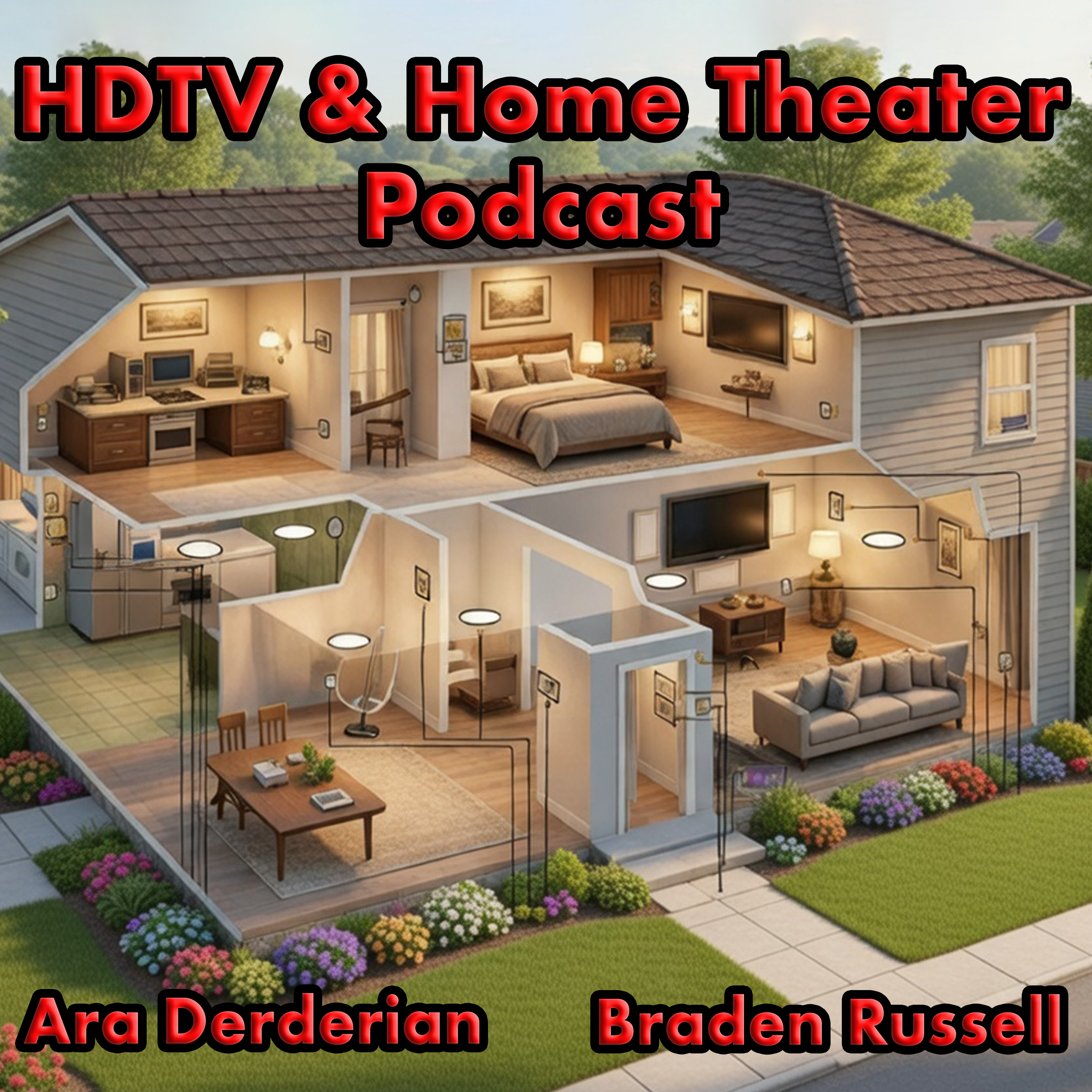
Podcast #1240: Ara's New Home Design (Network, Smart Home, and AV)
On this week's show we discuss the details of Ara's new home's layout offering his perspectives on his choices for network, home theater, whole home audio and smart home functionality. We also read your emails and take a look at the week's news. News: Kodak Luma 500 - Review Launch date, channel list for YouTube TV sports plan revealed Sony, the pioneer of Blu-ray Disc recorders, to pull plug on sales Price concerns remain the leading reason for streaming cancelations Other: IKEA Smart Home Without Dirigera: Homey Pro, Home Assistant, HomeKit, Google, Alexa & Aqara Ara's New Home Design (Network, Smart Home, and AV) Last week Ara was out in Franklin TN meeting with electricians and security contractors to prewire his house with everything he needs to make adding smart home devices and A/V a snap. So what did he do? But first an email from longtime listener Jorge Beltran with some recommendations. Jorge's email Guys: I am listening to the latest episode on a train delay in freezing NJ. I heard the question about sound bar vs 3.1 system vs full surround. I advocate that if money permits and a remodel situation allows it, I would significantly recommend trying to install 5.1, 7.2, or you name it. I have a full theater with 11.2 in the basement that we enjoy and I adore. But we keep watching more and more in the family room next to the kitchen for whatever reason. And I do enjoy a lot having a surround setup there too and kept adding to it (it was pre wired on a remodel). There was a high WAF in that room, so I went with in-walls for fronts and in-ceiling for rear surround and a couple more for front ATMOS. Yes, the surrounds and ceiling speakers are not at the ideal locations but they really, really add to the experience, even for the super bowl ambiance. A friend of mine just upgraded his whole house and used KEF on-walls, very thin, good looking, placed a bit higher and almost looked like a decoration in a more contemporary home. The wife gave them a big approval. I checked after looking at my wife's face but are out of my price range. For you Ara, another friend, a latin party guy, installed 6 speakers on vaulted ceilings in the family room next to a kitchen and surrounded by windows, and they work really great. Thus, my vote for Ara is to add ceiling speakers on his vault for surround effects. Ask the builder to wire them and box them out like a traditional speaker and place them on the rafters. You build so many speaker boxes already, this one can be made of MDF. Even better, build your own speaker out of parts, install it on the rafters just below the sheetrock, add a grill and you have the best sounding and looking in-walls ever. Last one, a builder friend just added in walls / in ceilings that go behind the sheetrock. I have not seen them yet. No excuses gents. Sending a CafPow for the extra spackle. Jorge Ara's Setup Wifi and Network decision - Ubiquiti Dream Wi-Fi 6 $350 & Ubiquiti Networks UniFi 7 Pro Access Point (POE) $180 Cameras, doorbell, motion sensors - Aqara 4MP Camera Hub G5 Pro PoE $190 & Aqara Smart Doorbell Camera G410 $130 & Aqara Presence Sensor FP2, mmWave Radar Wired Smart Motion Sensor $58 Light switches - Lutron Caseta Original Smart Dimmer Switch Kit w/ Hub $115. I am only having the company install one or two, I will do the rest as I learn our new routine and decide which switches need automation. I will make use of lamp modules as I prefer those types of lights to recessed lights. Whole Home Audio - Ara to build/buy speakers and connect to the network via ethernet cables using WiiM Amp: Multiroom Streaming Amplifier $300 TV and Home Theater - For the family room I will use a large format TV with a soundbar. Right now I am leaning towards Sonos Beam Gen 2 and their wireless subwoofer (Sonos Sub 4 $760). For my theater in an upstairs den I will do a traditional setup with atmos. It will consist of an UST, Receiver, and 7.1.2 speakers. Eventually I will build out a more formal theater in the basement. If I live long enough LOL No traditional Cable RG6
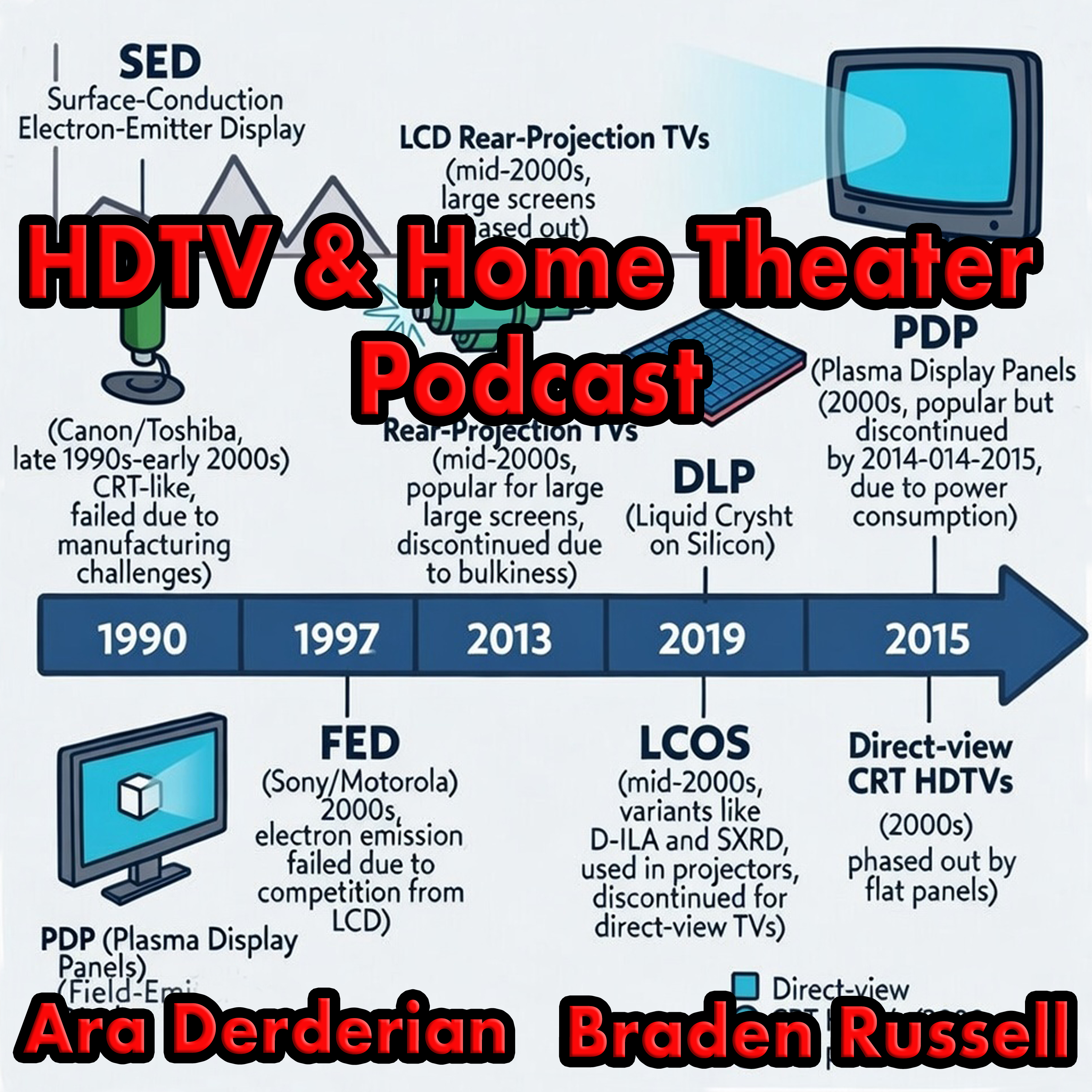
Podcast #1239: HDTV Display Technologies That Are No Longer With Us
On today's show we look at HDTV Display Technologies that are no longer with us. Some had a short run and some never made it to the market. We also read your emails and take a look at the week's news. News: LG pulls the plug on 8K OLED and 8K LCD TVs Apple's home hub could finally arrive this spring with a rather unique design Roku is Testing a New Home Screen With A New Look Google Home update brings more automation controls HDTV Display Technologies That Are No Longer With Us Over the 21 years we have been doing the show we have seen numerous HDTV display technologies come and go. Some never made it to market and some had a good run but were eventually beat out by something better. These technologies competed during the transition from bulky CRTs to flat panels, but most lost out as LCD, later becoming LED-backlit LCD, then OLED, became dominant for reasons like cost, scalability, picture quality improvements, and manufacturing ease. Technologies That Were Proposed/Demonstrated but Never Commercially Released to Consumers SED (Surface-Conduction Electron-Emitter Display)Developed primarily by a Canon and Toshiba joint venture starting in the late 1990s/early 2000s. It was essentially a flat-panel evolution of CRT technology using electron emitters for each pixel, promising CRT-like motion handling, deep blacks, high contrast, fast response times, and low power in a slim form factor. Prototypes were shown around 2005–2007 with impressive demos. Why it didn't make it: Repeated delays due to manufacturing challenges (high production costs, difficulty scaling/vacuum sealing), patent disputes, and aggressive price drops in LCD/plasma panels. Then by 2009–2010, LCD had become too dominant and cheap; Canon officially froze consumer SED development in 2010, shifting any remaining efforts to niche professional uses. FED (Field-Emission Display)Similar to SED and sometimes grouped together or seen as a precursor/variant. FED used field-emission electron sources (like microtips) for CRT-style performance in a flat panel. Demonstrated in prototypes in the 2000s by companies like Sony and Motorola. Why it didn't make it: Development took too long; manufacturing complexity and yield issues made it unviable. It was overtaken by faster-scaling plasma and then LCD/OLED technologies before reaching mass production. Technologies That Reached the Market but Were Discontinued DLP (Digital Light Processing) Rear-Projection TVsUsed Texas Instruments' DMD (digital micromirror device) chips to reflect light, often with a color wheel for sequential color (or pricier 3-chip versions). Popular in the mid-2000s for large-screen (50–70+ inch) HDTVs from brands like Samsung, Mitsubishi, RCA, and Toshiba, offering good brightness, no burn-in, and sharp images at competitive prices. Why discontinued: Bulky depth (even if thinner than CRT rear-projection), lamp replacements needed, rainbow artifacts (on single-chip models), poor off-angle viewing, and vulnerability to ambient light. As flat-panel LCD and plasma prices fell dramatically in the late 2000s, consumers preferred slim, wall-mountable designs. Rear-projection DLP TVs largely vanished by around 2010. LCOS (Liquid Crystal on Silicon) / Variants like D-ILA (JVC) and SXRD (Sony)A reflective microdisplay tech using liquid crystals on a silicon backplane, often in rear-projection or some front-projection setups. Offered excellent contrast, deep blacks, and smooth motion (better than early LCDs). Available in HDTVs from JVC, Sony, and others in the mid-2000s. Why largely discontinued for direct-view TVs: High cost, manufacturing complexity, and lower brightness compared to emerging flat panels. Rear-projection versions suffered the same bulkiness issues as DLP. While LCOS survives today in high-end projectors mostly in JVC and Sony home theater models, it never scaled to mainstream direct-view flat-panel HDTVs and was eclipsed by LCD advancements. Plasma Display Panel (PDP / Plasma TVs)Used ionized gas (plasma) cells to create light, excelling in black levels, contrast, color accuracy, wide viewing angles, and no motion blur. Very popular for HDTV in the 2000s from Panasonic, Pioneer, Samsung, and LG. Why discontinued: High power consumption, heat generation, heavier panels, burn-in risk (though mitigated later), and difficulty scaling to 4K efficiently/cost-effectively. As LCD/LED prices dropped with better brightness, efficiency, and no burn-in, plasma couldn't compete economically. Production fully ended around 2014–2015. Other Notable Mentions LCD Rear-Projection TVs — Used transmissive LCD panels; suffered from similar bulk and light issues as DLP; discontinued early-mid 2000s. Direct-view CRT HDTVs — The original standard; fully discontinued by the late 2000s/early 2010s due to size, weight, and inefficiency. Key Reasons Technologies Fail in HDTV Market Regardless of how good a display technology is, the following will keep it from the mass market: Cost & Manufacturing Yield: Tec

Podcast #1238: Free Streaming Perks
On today's show we go through the top streamers and how you can get their services for free or reduced price. We also read your emails and take a look at the week's news. News: YouTube TV launching new plans, better multiview in 2026 Free TV startup Telly only had 35,000 units in people's homes last fall Netflix added nearly half a million subs thanks to NFL games UFC Defends Ad-Heavy Paramount+ Debut Free Streaming Perks With the cost of streaming constantly going up the HT Guys are here to try and save you money. Almost all streamers offer some sort of discount via perks through Credit Cards, Cable and TV Providers, or Mobile Phone plans. On today's show we go through the top streamers and how you can get their services for free or reduced price. Neflix T-Mobile: Netflix on Us is included with many of their higher-tier unlimited plans. It provides Netflix Standard with Ads for free. Other carriers occasionally bundle it, but T-Mobile is currently the most consistent and prominent in the US. Xfinity (Comcast): Adding their "StreamSaver" bundle ($15/mo) includes Netflix Standard with Ads alongside Peacock Premium with ads and Apple TV+. Similar occasional perks appear with Spectrum, Verizon Fios, or others during promotions, but they're not guaranteed long-term. Peacock Instacart+ If you subscribe to Instacart+ about $99/year, you can get Peacock Premium included at no extra cost. Xfinity Internet customers on Gigabit or higher plans can get up to 2 years of Peacock Premium free. Xfinity NOW TV streaming service subscribers get Peacock Premium included. Xfinity Rewards members (especially higher tiers like Diamond/Platinum) can claim Peacock Premium as a perk at no extra cost. Walmart+ membership often bundles Peacock Premium for free as part of the subscription benefits. Promotional deals or bundles — These pop up from time to time, and can save money. Student/Young Adult discounts — heavily reduced about $5.99/month for students via verification or young adult offers. AppleTV+ When you buy a new iPhone, iPad, Mac, or Apple TV 4K, you get 3 months of Apple TV+ free. Apple One bundle trial — Plans start around $19.95/month (Individual) after the trial, making Apple TV+ effectively part of a discounted bundle compared to subscribing separately. T-Mobile (US) — With qualifying Magenta or Magenta MAX plans, you can get Apple TV+ included at no extra cost. Some carriers (like Verizon or others in the past) have occasionally bundled Apple TV+ free or discounted with phone plans, but T-Mobile is the most consistent. Peacock + Apple TV+ bundle — In some regions, you can bundle Apple TV+ with Peacock for around $14.99/month (saving over 30% compared to separate subscriptions). Paramount+ Walmart+ subscribers ($12.95/month or $98/year) get Paramount+ Essential (the ad-supported plan) included at no extra cost. You can choose between Paramount+ Essential or Peacock Premium (with ads) as a streaming benefit. DirecTV (top-tier/Ultimate packages) may offer complimentary Paramount+. Other providers like Hulu (as a Paramount+ with SHOWTIME add-on) sometimes have free trials or bundled access for eligible subscribers. Verified U.S. military members get 50% off any plan for life (via SheerID verification). This is a permanent discount. Teachers Discount — Teachers may get 50% off any plan. Hulu Eligible U.S. service members, veterans, and families can get 25% off Hulu (With Ads) through The Exchange (shopmyexchange.com). Select T-Mobile plans include ad-supported Hulu for free. Some plans also bundle Netflix or other services. This can make Hulu effectively $0 if you already have or switch to a qualifying plan. Occasional promotions from American Express Platinum and some other credit cards may offer free access to Hulu, Disney+, or HBO/Max bundles, but these are niche and time-limited. Bundles for Disney+, ESPN+ and Hulu start around $9.99–$12.99/mo can save from $5 to $15 when compared to separate subscriptions. ESPN+ Verizon: Select Unlimited 5G plans include the Disney+, Hulu, and ESPN Bundle (often Disney+ Premium, Hulu with ads, and ESPN Select with ads) at no extra charge. T-Mobile: Offers Hulu "ON US" with select plans, but ESPN+ inclusion is less direct—some bundles or promotions tie in Disney/Hulu/ESPN elements. It's more Hulu-focused, but check T-Mobile's streaming perks for any ESPN-related deals. Other carriers like AT&T may have occasional streaming bundles—verify your plan. Provider-included access: If you have cable/satellite/streaming TV services like DIRECTV, Fubo, Hulu + Live TV, Spectrum, Verizon FiOS, Cox, etc., you may get ESPN Unlimited or Select access included. Disney+ | Hulu Bundle - see above Disney+ Verizon: Several eligible Unlimited mobile plans (or certain home internet plans) include the Disney Bundle for free or at no extra cost. Disney+ | Hulu Bundle - see above Some cards (e.g., American Express Blue Cash Everyday) offer statement credits toward Disney+/Hulu (up to $7/month or similar). HB
Podcast #1237: Ranking Smart TV OSes and There Will Never Be a New 'Seinfeld'
On this week's show we look at Smart TV OS rankings according to BGR.com and we ask the question if there will ever be a show like Seinfeld again. We also read your email and take a look at the week's news. News: Sony and TCL Are Teaming Up to Make TVs Paramount+ - THE PRICE OF YOUR PLAN IS CHANGING Broadcast Remains the Most Powerful Platform for Reaching NFL Audiences SVS 3000 R|Evolution Series Smart TV OS Rankings The article Every Major Smart TV OS Ranked Worst To Best Based On User Reviews ranks eight major smart TV operating systems based on user reviews and comments from sources like Best Buy, Reddit, and cross-referenced with expert sites like RTINGS. The focus is on real user experiences regarding performance, app availability, bugs, ads, usability, and overall satisfaction — emphasizing that the OS heavily impacts whether a TV feels premium or frustrating. Ranking (from worst #8 to best #1): 8. VIDAA (used on Hisense TVs): Simple and snappy for basics like Netflix/YouTube, but severely limited app library (missing Stremio, Spotify, major music apps); no Android app support; frequent freezes especially on larger screens (>40 inches); users call it "horrible" and feel like a "dumb" TV. 7. VIZIO OS (formerly SmartCast): Great hardware/value (e.g., affordable 120Hz gaming TVs), but plagued by instability, bugs, frequent problematic updates, ad-pushing, and odd behaviors; many users recommend external streaming sticks over built-in OS. 6. Samsung Tizen: Fast and smooth on high-end models (e.g., S95D OLED), but laggy/slow on older/lower-end sets (button delays of seconds, freezes); heavy ads and unwanted TV Plus channels; users describe UI/Smart Hub as "extremely laggy" and "awful." 5. Fire OS (Amazon Fire TVs): Solid Alexa integration and budget appeal, but very ad-heavy (Prime Video promotions dominate); sluggish performance (1-2 second app launch delays); shifting toward new Vega OS (Linux-based, no sideloading). 4. Google TV: Strong content aggregation, smart home features (Google Gemini), intuitive when hardware is good (excellent on Sony models); can feel cluttered for casual users; performance varies greatly by TV brand/hardware (flawless on premium, weaker on budget). 3. Roku OS: Highly reliable, straightforward, and user-friendly (great for non-tech users); minimal ads/recommendations; rock-solid stability (compared to a "Toyota Camry"); dated/basic interface is the main downside. 2. LG webOS: Smooth, colorful, and easy navigation (Magic Remote point-and-click shines); supports Apple HomeKit/AirPlay 2/Chromecast; kind to non-tech-savvy users; praised for looking premium; downside is increasing home screen bloat/ads/full-screen menus (since 2024) plus screensaver ads. 1. Apple tvOS (via Apple TV device, not built into TVs): Near-perfect — zero lag, no ads, ultra-fluid 4K UI; standout features like InSight (real-time show info), automatic subtitles, Enhance Dialogue (AI vocal clarity); users rave about "super fast responsiveness" and call it underrated; main caveat is needing a separate (pricey) Apple TV box/streamer There Will Never Be a New 'Seinfeld We found a Wall Street Journal opinion piece titled "There Will Never Be a New 'Seinfeld'" which argues that a cultural phenomenon like Seinfeld cannot emerge again in the current media landscape. The show was massively popular and broadly talked about around the "water-cooler" the day after it aired nationally on NBC. The author (Mary Julia Koch) opens with a personal anecdote about young women at a dinner party casually mentioning shows they've watched that others haven't heard of, highlighting how fragmented viewing habits have become due to the explosion of streaming platforms and content choices. The central thesis is that the conditions that made Seinfeld a universal hit in the 1990s are gone forever: Media fragmentation — In the broadcast TV era, there were only a handful of channels, so millions watched the same shows at the same time, creating shared cultural references and conversations. Today, with countless streaming services (Netflix, Hulu, Max, etc.), on-demand viewing, and niche content, audiences are siloed and rarely overlap on the same program. Shift from mass appointment viewing to individualized consumption — No single show can achieve the same cultural penetration or "event" status when people watch on their own schedules and devices. Loss of common cultural touchstones — This makes it impossible for a new sitcom to become the kind of generational, quotable, everyone-knows-it phenomenon that Seinfeld was. Think about the movies and TV shows we watched in the 80s. We all watched the same stuff. It was either in the theater or on TV. So if I quoted Caddy Shack, all my friends knew what I was talking about and laughed. The piece laments that while there are still great comedies and talented creators, none will replicate Seinfeld's unique role in society because the technological and viewing ecosystem has permanently changed. This
Podcast #1236: 2026 CES Award Winners
On this week's show we have compiled a list of home theater and home automation/smart home products that received notable awards or honors at CES 2026. News: Amazon has started automatically upgrading Prime members to Alexa Plus Apple Reveals 'Record-Breaking' Year For Apple TV And Other Services Bears vs. Packers on Prime Video sets streaming record 2026 CES Award Winners Samsung S95H (OLED TV with enhanced brightness, anti-burn-in art display, wireless features) Awarded Best TV or Home Theater (CNET) and Winner in Home Theater category (ZDNET/CNET Group awards). Samsung Music Studio 5 (Compact smart speaker with artistic design, Wi-Fi/Bluetooth connectivity for whole-home audio) Winner in Best Audio category (CNET) and Winner in Audio category (ZDNET/CNET Group awards). Samsung 140" Micro LED - The Samsung 140" Micro LED TV creates a seamless, immersive 3D-like experience by using AI to extend on-screen content onto innovative Micro LED Mirror bezels that blend with the image. When not in use, it folds in half via a hidden hinge to function as an elegant art frame, eliminating the traditional "black box" appearance and blending beautifully into home décor. CES 2026 Best of Innovation in Video Displays KLIPSCH THE 9S II - The Klipsch The 9s II powered speakers feature Onkyo audio processing and an updated Tractrix horn for wide dispersion and precise clarity, while supporting both two-channel music and Dolby Atmos content with versatile connectivity including AirPlay 2, USB-C, HDMI, and XLR inputs.They include Dirac Live auto-room calibration and deliver exceptional sound quality, though the pair carries a premium price of $2,399. Tom's Guide Best Audio LG H7 FlexConnect soundbar (Dolby Atmos soundbar with modular FlexConnect surround extension to any TV, part of LG Sound Suite) Best Audio category (CNET). LG W6 (Ultra-thin "wallpaper" OLED TV, flush wall mount, bright display, supports Dolby Atmos FlexConnect) Best TV or Home Theater category (CNET). LG CLOiD - The LG CLOiD is a wheeled household robot that connects to LG ThinQ smart appliances and uses its two arms, cameras, sensors, and voice recognition to autonomously handle tasks like loading laundry, folding clothes, organizing the fridge, tidying up, running errands, and assisting with cooking. By learning the user's routines, understanding context and emotions, and proactively acting with gestures, voice, and expressions, it reduces household labor and enhances quality of life and emotional well-being. 2026 Honoree in Smart Home Hisense 116UXS (Massive 116-inch mini-LED TV with advanced RGB + cyan backlight for wide color gamut) Highlighted in Best TV or Home Theater category (CNET) and CES 2026 Best of Innovation in Video Displays Hisense 163MX The Hisense 163MX is the world's first 163-inch MicroLED TV to use a four-primary RGBY (QuadColor) pixel design, which adds a yellow subpixel to achieve 95% BT.2020 color coverage—a 5% improvement over traditional RGB MicroLED systems. This self-emissive technology delivers perfect blacks, infinite contrast, precise brightness control, and stunning visual quality in any lighting without a backlight. 2026 Best of Innovation in Video Displays. Samsung EdgeAware AI Home - processing sounds, videos, and data from Samsung and third-party devices locally on your Samsung tech to generate detailed event summaries, contextual recommendations, and health insights displayed on your TV—all without sending private data to the cloud. It detects 12 distinct sounds (like running water or breaking glass), provides actionable suggestions such as launching telemedicine for persistent coughing or triggering emergency services for intrusions/fires, and enables fast AI-driven searches for moments like "doorbell rang." 2026 Honoree in Smart Home Doma Intelligent Door - Doma is pioneering secure home intelligence by integrating advanced technology directly into the front door, starting with keyless entry, intruder protection, and real-time awareness of activity inside and around the home. Founded by the team behind August and Yale smart locks, it delivers a holistic system that elevates the home experience, monitors health and safety, senses surroundings, and takes personalized actions to provide true peace of mind. 2026 Honoree in Smart Home Roborock Saros Rover (Advanced two-legged/smart robot vacuum with stair-climbing, AI navigation for multi-level homes) Winner in Smart Home category (ZDNET/CNET Group awards). AQARA U400 - Thanks to its use of Ultra Wide Band (UWB) technology, it can sense when you (and your iPhone or Apple Watch) are approaching your door, and will unlock it automatically. No fuss. And, the technology is good enough that it can recognize if you're merely walking past your door rather than to it, or if you're inside, rather than outside your house. Tom's Guide Best Smart Lock JBL Tour One M3 Smart Tx JBL Tour One M3 Smart Tx delivers all the powerful features of the Tour One M3 headphones such as world class
Podcast #1235: CES 2026
On this week's show we look at the annual Consumer Electronics Show inLas Vegas Nevada. In years past there was more for us home theater fans but we still find some cool products that will eventually find their way into our homes. News: More than 60% of audiences use TV as primary streaming device Which sports will Netflix have in 2026? LG Key Highlights Return of the Wallpaper OLED TV (LG OLED evo W6) — LG revived its iconic ultra-thin "Wallpaper" design after a multi-year hiatus. The W6 is just 9mm thick, fully wireless (with a separate connection box up to 10 meters away), uses Hyper Radiant Color Technology for improved brightness and colors, and supports features like art display via Gallery+ service. It's marketed as reflection-free and significantly brighter than average OLEDs. New OLED Lineup — Including the brighter flagship G6 (up to 20% brighter than the G5 with Primary RGB Tandem 2.0 panels and reduced reflections), split C6 series (with varying tech tiers), and claims of the world's first TVs supporting 4K 120Hz cloud gaming with low-latency controllers. Micro RGB evo TV — LG's first flagship Mini-LED TV with Micro RGB technology for vastly expanded color range and brightness, available in large sizes including the "world's largest" Micro RGB LCD TV, the 130-inch R95H. Gallery TV — A direct competitor to Samsung's The Frame, with anti-glare screens and curated art modes (designed with museum input). CLOiD Home Robot — A standout AI-powered housekeeper robot demoed on stage. It performs complex chores like folding laundry, loading/unloading dishwashers, preparing simple meals (baking croissants), and coordinating with connected appliances for a "Zero Labor Home" vision. LG Sound Suite (with Dolby) - Includes the H7 soundbar, optional M7/M5 wireless surround speakers, and W7 subwoofer. Allows free placement of speakers; the system auto-configures channels for optimal immersion, solving a major pain point in traditional wired or rigidly positioned Atmos setups.Hands-on reports highlighted its ease for real-world living rooms, delivering expansive sound without cables or furniture rearrangement. Samsung Key Highlights World's first 130-inch Micro RGB TV (): The largest in their Micro RGB lineup, featuring next-generation color accuracy (100% Rec.2020 coverage), bold new design, HDR10+ ADVANCED support, Eclipsa Audio, and AI enhancements like conversational search, proactive recommendations, AI Football (Soccer) Mode Pro, and integrations with Microsoft Copilot and Perplexity. AI Soccer Mode delivers a more exciting gameday experience through AI-driven picture and sound tuning to stadium-level quality. AI Sound Controller Pro lets you raise or lower the volume of the crowd, commentary, or background music, providing a personalized listening experience for TV shows and movies. Users can simply make verbal requests, and any TV equipped with VAC – which includes Micro LED, Micro RGB, OLED, Neo QLED, Mini LED and UHD TV – contextually carries out those requests. Expanded Micro RGB TV lineup: New sizes including 55-, 65-, 75-, 85-, 100-, 115-inch models, alongside upgrades to Neo QLED and OLED TVs The Freestyle+ portable projector: An upgraded AI-powered version with improved brightness, support for projecting on uneven surfaces (walls, ceilings, corners, curtains), and smarter entertainment features. New audio products: Music Studio 5 and 7 wireless speakers (Bluetooth/Wi-Fi, unique designs), and soundbars like the HW-QS90H (all-in-one 7.1.2 with Quad Bass Woofer system). Broader AI focus: Enhanced experiences in home appliances (e.g., Bespoke AI), TVs, and ecosystem integration. Press releases Sony No major announcements were made regarding Sony's traditional consumer products, such as new Bravia TVs, headphones, cameras, or PlayStation hardware. Sony's focus shifted toward the future of mobility and software-defined vehicles. TCL Key Highlights X11L SQD-Mini LED TV - as its 2026 flagship. It features new "SQD-Mini LED" technology (Super Quantum Dot Mini-LED), emphasizing superior color accuracy and performance. Features 10,000 Nits, 20,000 dimming zones, 100% coverage of BT.2020 color gamut. Available initially in 98-inch and 85-inch sizes (75-inch later), with launches starting as early as January 2026. Some who have seen it are saying it rivals Micro RGB TVs from competitors like Samsung and LG, potentially challenging OLED in brightness and contrast. A65K Design Series soundbar — A compact 3.1.2-channel Dolby Atmos model with Bang & Olufsen tuning and wireless subwoofer. Hisense Key Highlights RGB MiniLED evo Technology — Hisense introduced an evolved version of its RGB MiniLED backlight system, which adds a fourth primary color to improve accuracy and fill spectral gaps (especially in the 500-600nm range) for more natural and vibrant colors. This debuts in the flagship 116UXS large-screen TV, positioned for premium cinematic home viewing. Expanded RGB MiniLED Lineup — The company is bringing RGB M
Podcast #1234: Happy New Year!
Happy New Year from the HT Guys!
Podcast #1233: The Streamable Awards
On this week's show we look at the streamable awards and we read your emails and look at the week's news. News: Matter 1.5 is arriving in Samsung SmartThings Why Gen Z and Gen Alpha are feasting on TV comfort food Other: Wireless Carplay Adapter Report: Gen Z Helping To Keep Cinemas Alive - Dark Horizons The Streamable Awards Let's be honest, being a cord-cutter in 2025 wasn't for the faint of heart. If you felt like you needed a spreadsheet to track which app housed your favorite shows or a law degree to understand why the sports you wanted to watch were blacked out, you weren't alone. This was the year that the industry seemingly threw everything at the wall — dizzying rebrands, the demise of standalone apps, and the aggressive return of the "bundle" — to see what would stick. It was chaotic, expensive, and often frustrating, but the pressure also forced a level of innovation we haven't seen in streaming for nearly a decade. Full article: The Streamable Awards: Recaping streaming's best and worst in 2025
Podcast #1232: Large Format TV vs Projector
On this week's show DJ Briggs from Brightside Home Theater fills in for Braden who is away on business. We ask DJ to give us his opinion on using a large format TV as a replacement for a projector. We also read your emails and take a look at the week's news. News: LG will debut its first Micro RGB television at CES Local ABC, CBS, FOX, & NBC Stations Are Demanding Up to a 50% Price Hike for Cable TV Customers WBD board recommends rejection of Paramount's takeover bid Other: YouTube TV Wants to Unbundle the Cable Package That Streamers Were Meant to Kill in the First Place Tailwind Meross Garage Door Opener HT Guys Amazon List Swapping a projector for a 100" TV Jon Taylor recently purchased a TCL 98QM7K (2025 model, QD-Mini LED QLED with Google TV) during Black Friday for $1,999.99 (50% off the $3,999.99 retail price). After using it for a couple of weeks in his basement home theater (replacing an older 82" Samsung and supplementing a projector setup), he shares highly positive impressions. Key Highlights: Size and Installation: The 98" screen is enormous and immersive. Delivery and installation (included from Best Buy) went smoothly, though modifications to basement stairs were needed to fit the massive box. Picture Quality: Exceptional deep blacks (best non-OLED he's seen, rivaling his old Panasonic plasma), vibrant colors, and strong contrast. Upscaling of lower-resolution content (720p/1080p from cable, Blu-ray, streaming) is excellent. 4K sources, including Ultra HD Blu-ray and YouTube, look stunning with minimal motion blur. Performance Across Sources: Built-in Google TV streaming: Clear and smooth. Roku Premier: Deep blacks and popping colors. Standout: Apple TV 4K shines brightest, leveraging Dolby Vision for an incredibly vivid, "popping" image—far superior to non-Dolby Vision devices on his previous Samsung. Gaming and Features: 144Hz refresh rate delivers outstanding performance with low motion lag. Fun feature: Displays four simultaneous 48" screens for NFL Sunday Ticket on YouTube TV. Observations: Large size exposes weaknesses in poor cable signals (fixed by rerouting). He notes TCL (and Hisense) are seriously challenging premium brands (Samsung, LG, Sony) with high-end specs at budget prices, earning praise from reviewers like RTINGS.com. Jon historically preferred established brands for reliability but now sees TCL/Hisense as the new value leaders, similar to how Samsung/LG rose decades ago. He recommends checking out the latest high-end TCL models, especially for large sizes where premium brands were too expensive for him. He's also considering switching from Verizon Fios to a streaming TV service to cut costs. Overall, Jon is thrilled with the TV's performance and value, calling it a "force to be reckoned with."
Podcast #1231: Mail Bag
On this week's show we come back after taking a week off and read your emails and take a look at the week's news. News: Netflix Officially Announces a Deal to Buy Warner Bros. Discovery & HBO Max For $82.7 Billion Paramount makes $108bn all-cash bid for Warner Bros. Discovery Kaleidescape Launches Mini Terra Prime Movie Server Other: HT Guys Amazon Lists Listener Emails On this week's show we read your emails. The following are links that are discussed on the show. Brady's 98" TV Dilemma - Samsung 98" Class - DU9000D Series - 4K UHD Smart TV | Costco $1800 vs Sony 98" Class BRAVIA 5 Mini LED 4K UHD Smart Google TV (2025) K98XR50 - Best Buy $5000 Eric's recommendation for The Chair Company. Scott's email about connecting your set top box correctly - Your Apple TV Is Probably Plugged Into The Wrong HDMI Port - Here's Why - BGR and The Reason Why Amazon Basics Tech Is So Cheap and Hisense 116-Inch UX Series RGB-MiniLED 4K UHD HDR Google Smart TV(116UX, 2025) $20,000 Mark's solution for Chamberlain dropping support for Google Home, Apple Home, and Amazon A-Lady. Chamberlain blocks smart home integrations with its garage door openers — again Smart Garage Door Opener – ThirdReality And we finish the main part of this episode with Joe's app recommendation A Cool New Cord Cutting App: Multiview for Apple TV and Android / Google TV link to the app here ->Multiview App Stick around after the show to hear Ara's solution to the College Football playoff!
Podcast #1230: Matter Update
This week Ara is on vacation and rather than skip a show we go back to May of 2022 where we looked at a panel discussion about teh then new automation framework Matter. We play for you that discussion and then Braden and I discuss that current state. Emails and news will return next week.
Podcast #1229: Second Screen Viewing
On this week's show we look at the phenomenon of watching a little screen while simultaneously watching a big screen. We also read your emails and take a look at the week's news. News: New data shows ESPN, Fox One both over 2 million subscribers Get Disney+ and Hulu for a combined $5 per month for 12 months Second Screen Viewing The phrase "Second Screen Viewing" is when a person watches TV and simultaneously uses a secondary device like a smartphone, tablet, or laptop to engage with content related (or unrelated) to what's on the TV. On this week's show we will focus on the "unrelated" aspect Second Screen Viewing and how it is affecting what you watch on your TVs Second-screen behavior has become a common companion to TV viewing allowing viewers to engage in social TV by live-tweeting or posting reactions on platforms like X (Twitter), Instagram, or TikTok—especially during live sports, reality TV voting, or award shows—while following conversations through hashtags like #SuperBowl or #TheBachelor. But what we will be really focusing on today, many people simply multitask with unrelated activities—scrolling social media, texting, gaming, or working—while the TV plays in the background. So what are the TV producers doing about this phenomenon? Simplifying Content for "Background" or "Half-Attention" Viewing Producers are increasingly designing shows that don't require undivided focus, reducing the risk of viewers abandoning content if they glance away. This includes "dumbing down" narratives to accommodate distractions like social media scrolling. Streamlined Storytelling - Streamers like Netflix instruct showrunners to create "second screen enough" scripts—simple plots, minimal complex dialogue, and easy-to-follow arcs that allow viewers to dip in and out without confusion. For instance, Justine Bateman, a writer-director, reported notes from streamers emphasizing that "the viewer's primary screen is their phone," so shows avoid twists that demand full attention. This approach has sparked debate. Critics argue it stifles creativity, turning TV into "background noise" rather than compelling drama, but it boosts retention metrics for casual viewers. Integrating Interactivity and Social TV Features - To pull attention back to the main screen (or extend engagement), producers build in real-time elements that encourage phone use tied to the show, fostering community and loyalty without full distraction. Companion Apps and Voting: Apps sync with broadcasts for polls, stats, or exclusive content. Dancing with the Stars added in-app voting and a "Star Panel" rating system in 2024, letting fans score performances live—boosting participation without leaving the TV. Similarly, Love Island (ITV Studios) uses apps for couple-voting, turning second screens into engagement hubs. So basically, TV producers aren't eliminating second screens; they're evolving with them and dumbing down what you watch on an expensive 75" "Secondary" screen. Commentary How about this for an idea? Make compelling content! My wife and two daughters are constantly on their phones when we watch TV together. You know when they aren't? When watching high quality shows that require your attention. Examples include, Last Frontier and Lone Wolf. Shows like Survivor (and don't get me started on how they ruined that show) barely require 20% of your attention. The fact is, it's easier to dumb down content for people who are obsessed with their smart phones than it is to make compelling content. Yes, streaming has opened the door to way more content but unfortunately most of it is not worth watching. And I know I am right in this assessment because studies show 70-90% of viewers engage in second screen viewing regularly.
Podcast #1228: Black Friday 2025
On this week's show we find you the best Black Friday deals for your home theater, well at least at the time of recording. We also read your emails and take a look at the week's news. News: YouTube TV and Disney reach agreement to restore channels Disney+ and Hulu near 200 million combined subscribers New Study Finds 38% Of Respondents View TV With Speaker Sound Off Content Discovery Still a Challenge for Streamers Other: ONKYO - Adding Internet Radio Stations Bright Side Home Theater MOVEMBER MEGA RAFFLE 2025 Movember Raffle — Bright Side Home Theater Black Friday 2025 Each year we go through the Black Friday ads from various stores and list items. It's a long list and can be tedious to listen to. So this year we decided to search out what we thought were the best deals on various items for your Home Theater and Smart Home. This year many retailers are not releasing their sales until the last minute and since we are recording one week before Black Friday our list may be missing a few items that pop up later. But here is our early list of things we think you will be interested in: The standout deal for the largest screen size at the lowest price is the 98-inch TCL Q Series 4K QLED Google TV at Walmart for $998 (down from $1,798, saving $800). This is a 2025 model with premium features like 144Hz refresh rate, Dolby Vision HDR, Dolby Atmos audio, and Google TV smart platform—making it ideal for movies, gaming, and streaming without breaking the bank under $1,000. Hisense has a slightly more expensive model that hits that magic 100" mark. The 100-inch Hisense QLEDs (priced between $1,000–$1,200) delivers the biggest diagonal size for the cheapest absolute dollar amount right now. Deals can fluctuate or sell out quickly, so check often and lock in your price. The Best soundbar deal with dolby ATMOS we have seen so far is the Samsung HW-Q990D 11.1.4-Channel Soundbar System at $1,000 (save $1,000 off $2,000 MSRP) at Best Buy. It's praised as the "best Dolby Atmos soundbar system" for its massive scale, precise 3D sound, and gaming features (4K/120Hz HDMI). At 50% off, it outperforms pricier competitors in value and power (656W total). If you want something more compact, the JBL Bar 1300X ($1200) edges it for portability. The Govee Holiday sale starts November 20th at Amazon. We don't know what the savings will be but Ara owns some Govee light strips and is very pleased with them. They support Matter and can be installed permanently outdoors. The best deal on a Samsung high end TV is the Samsung S95F OLED for 2025, known for being bright, vivid colors, deep blacks, and excellent motion handling, this TV is ideal for bright rooms or mixed use. It includes the NQ4 AI Gen2 processor for 4K upscaling, four HDMI 2.1 ports, and Tizen OS with free channels and cloud gaming. Current Black Friday deal: 65" for $2,298 at Amazon (save $700 from $2,998)—matches the all-time low. There are 77 and 83 inch models for $3500 and $5000 respectively. The Best Deal on high end wireless speakers the Kef LS50 Wireless II ($2000) is more than a high-performance loudspeaker; it's the perfect all-in-one speaker system, streaming from any source thanks to wireless compatibility with AirPlay 2, Google Cast and more, plus wired connections for your TV, games console and turntable. Great sound, no strings attached. If you are looking for a gift for the Home Theater enthusiast in your life, and that may mean you buy it for yourself. Check out The Home Theater Store. They are running a black friday sale on seating, decor, and accessories. Some examples include popcorn machines starting at $40 and going all the way up to $2000. With savings up to $600. They also have sound panels normally priced at $750 on sale for $500. The Best deal on the Ring Battery Doorbell is $50 at Amazon. And as long as we are here. THis deal is crazy! Two Blink Mini 2 Home Security & Pet Cameras with HD video, color night view, motion detection, two-way audio, and built-in spotlight for $28! The best overall deal on an OLED TV is the LG 77" C5 Series OLED evo AI 4K UHD Smart webOS TV (2025 model) at $1,999.99 at Bestbuy (down from $3,699.99—a $1,700 savings, or 46% off). The LG OLED evo C5 is powered by the next-gen Alpha 9 Gen8 AI Processor —exclusively made for LG OLED—for ultra-realistic picture and sound along with boosted brightness for luminosity and high contrast, even in well-lit rooms. Dolby Vision for extraordinary color, contrast and brightness, plus Dolby Atmos for immersive sound you can feel all around you. FILMMAKER MODE allows you to see films just as the director intended. Packed with gaming features, the LG OLED evo C-Series comes with everything you need to win like a 0.1ms response time, native 120Hz refresh rate, with VRR for PC gaming and four HDMI 2.1 inputs. AWOL Vision LTV-3000 Pro 4K Laser Projector, (I found a better deal at Amazon after we recorded. $2300!!) has a compact ultra-short-throw (UST) model that transforms any wall or table into
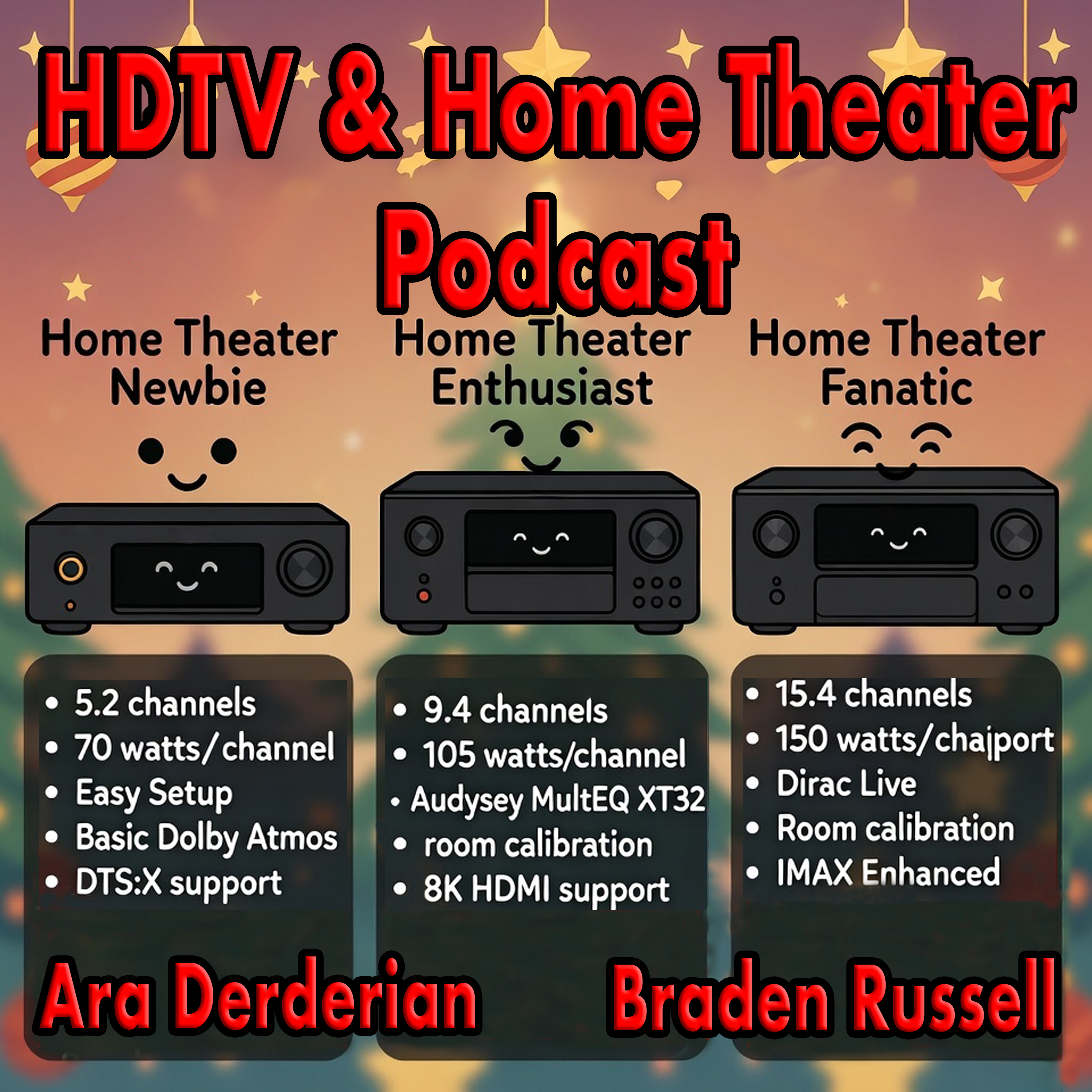
Podcast #1227: Best AV Receivers for Newbies, Enthusiasts, and Fanatics
On this week's show we look at alternatives to YouTube TV for sports fans. We also look at AV Receivers for Home Theater Newbies, Enthusiasts, and Fanatics. And like always, we start with your emails and take a look at the week's news. News; Ikea's new low-cost line is a huge win for Matter and your smart home Middle-Aged Viewers Power YouTube Long-Form Content Paramount+ announces next round of price increases YouTube TV Subscribers Increasingly Irate Over Disney Blackout Other: LINOVISION POE Over Coax EOC Converter LINOVISION EOC Transmitter and Camera Outdoor Universal Mount Box NCIS promo Brady Darvin's first tattoo in honor of Morton Darvin to raise money for Veterans Legal Institute Please support Movember and enter to win great prizes from Bright Side Home Theater Movember Raffle — Bright Side Home Theater Best AV Receivers for Newbies, Enthusiasts, and Fanatics It's getting close to Black Friday and you may want to upgrade your home theater system for the Holidays and you are wondering what AVR should I consider. Well the HT Guys have done the homework for you. We breakout our picks in the following three categories: Home Theater Newbie (entry-level, under $600—simple setup, basic features), Home Theater Enthusiast (mid-range, $800–$2,000—balanced performance and expandability), and Home Theater Fanatic (high-end, $3,000+—audiophile-grade power and advanced processing). To simplify we stuck with Denon. Although we have used AVRs from Onkyo, Sony, Marantz, Pioneer, and Yamaha in our theaters, we chose Denon because of their reliability, relative price/performance ratio, and excellent room calibration features. Category Pick Price Channels Power (W/ch) Home Theater Newbie Denon AVR-S570BT $449 5.2 70 Home Theater Enthusiast Denon AVR-X3800H $1799 9.4 105 Home Theater Fanatic Denon AVR-A1H $7199 15.4 150 Home Theater Newbie: Denon AVR-S570BT If you're new to home theater or upgrading from a soundbar, this AVR keeps things simple but includes the key features. It supports 5.2 channels for basic surround sound and passes 4K video from your set top box or game consoles. Audyssey auto-calibration checks your room and adjusts the sound for you with minimal intervention by you. Users like its clear, balanced audio in small to medium rooms, so movie soundtracks are improved without complicated setup. The Denon AVR-S570BT has an Amazon rating of 4.3 stars out of 5 by over 1600 users. Home Theater Enthusiast: Denon AVR-X3800H Enthusiasts get a great mix of power and features with the X3800H's 9 amplified channels that include support for 5.2.4 Dolby Atmos. The upgraded Audyssey MultEQ XT32 fine-tunes the sound for your room, making bass and dialogue clearer and more powerful. You will notice an improvement over the Newbie System system in clarity and and it has more features including six HDMI 2.1 ports that support 8K and 4K at 120Hz gaming with VRR and ALLM. HEOS lets you stream music wirelessly from services like Spotify. It's also good for music, with support for high-resolution audio. One small downside: it's bulkier than slimmer models. It's ideal for expanding your system without breaking the bank. The Denon AVR-X3800H has an Amazon rating of 4.4 stars out of 5 by almost a 1000 users. Home Theater Fanatic: Denon AVR-A1H Audiophiles and home theater fans will love this top-of-the-line receiver. It handles up to 15.4 channels (powers 15 at once) for big setups like 9.1.6 Dolby Atmos or Auro-3D. It puts out 150 watts per channel with clean, powerful sound, using high-current amps and ESS Sabre DACs for high-res audio up to 24-bit/192kHz. It includes advanced room calibration with optional Dirac Live or Audyssey, plus IMAX Enhanced for movie-theater quality. All seven HDMI inputs support 8K at 60Hz or 4K at 120Hz, and there are analog inputs for turntables. It's overkill for small rooms but will shine in a dedicated theater delivering realistic, immersive sound. Downsides: expensive and uses a lot of power. The Denon AVR-A1H has an Amazon rating of 5 stars out of 5 by 5 users.
HDTV Rewind Episode #15: Your email and News
On this episode of the Rewind show we go back to November 12, 2010 where we read your emails, look at a news story or two.
Podcast #1226: What is Automatic Content Recognition (ACR)?
On this week's show we have an essay from one of our listeners on why he wants to stick with his DVR over streaming. We also take a deep dive into Automatic Content Recognition and how to turn it off on your smart TVs. As usual we also read your emails and take a look at the week's news. News: Disney pulls channels from YouTube TV as carriage deal expires DIRECTV now offering the Disney Bundle free to select customers TV Set-Top Box Losing Market Dominance Please support Movember and enter to win great prizes from Bright Side Home Theater Movember Raffle — Bright Side Home Theater Swimming against the Stream - An essay from Jorge Beltran I know I will sound old and swimming against current, but I would like to go back to my world where we had our cable subscriptions, DVR and Netflix. Simple, vs having to manage 5-7 subscriptions to watch what we want at a cost we can pay. The proliferation of streaming services is turning out to be a way for content owners to extract more value from customers and significantly increase the amount of work customers have to do to find and track the content we want to watch. Even sports. Furthermore, it has backfired to content producers, with less opportunity to monetize content, driving them to look for economies of scale again. I follow or used to follow La Liga, Premier League Soccer, ski, college football, and formula 1 racing. Back in the day I knew what channel carried all of these sports on my cable line up, would set it to record on my DVR and done. I could watch it when I wanted and where I wanted since I could access my DVR from anywhere but the plane. Netflix was just growing and buying "older" content from the major networks and allowed us to binge watch old series we had missed. Some new exclusive content was coming out and that made paying the 10 - 12 $/mo a good value. Fast forward to today: The best games of Premier League have been taken off the over the air or regular cable channels are now behind a Paramount or someone else's paywall. Why am I going to pay for access to content that is mostly CBS that I can get over the air?. Worst of all, you can not skip commercials when you stream this content nowadays. You can't DVR the content and skip the commercials. I have lost track of who is now airing La Liga, but last time I checked was behind some other streamer. Fubo has a lot of soccer but is now super expensive too. Conclusion: I have stopped following La Liga and Premier League. My enthusiasm for good Futbol has gone down tremendously. I turned my eyes to college football and Formula 1. The worst part is that now I fear the same is going to happen with College Football, moving from free over the air or in basic cable channels to some exclusive need-to-pay streaming service. You guys praised Formula 1 going to Apple. I dread it!!! I do not pay for Apple TV(plus or not plus) and I catch Formula 1 over ESPN. Does it mean I will have to drop ESPN, that gives me other content and add AppleTV? If I were an NFL fan I would have lost it. Some content is on Amazon, other in the different networks or streamers. I do not know how much you have to pay to be able to watch the NFL consistently. Call me old school. I still have a cable service that gives me the right to HBO, ESPN, Fox, and the likes. I can watch and record all the related content in Hulu from the major networks. I only keep paying for Netflix that I see as a premium channel (like paying for HBO back in the day). Rationale - we get a lot of exclusive content there. I only keep the Disney/Hulu bundle cause it comes free with my wireless bill. And Amazon Prime (now with commercials) free for the shipping. But I barely watch Primer or Hulu cause I can't stand the commercials! In a world with many streamers, the economies of scale enjoyed by bundling content in cable packages have been lost and thus it costs more per viewer for content owners to create and distribute given the less # of eyeballs. Yes, it sounds counter intuitive, but that translates into higher bills for consumers, through different bills but when you add it all up, it has to be more expensive, no way around it. The positive is more content and innovation for sure. You can definitely find more quality content. But I foresee more partnerships coming to allow the industry to benefit from economies of scale and be able to distribute the cost of expensive content through more subscribers / viewers. Or they will have to continue to increase our subscription bills. I listened to an interview recently with a Hollywood producer detailing how cost efficient they have to be nowadays to be able to turn a profit on content produced given the lower number of ultimate viewers. This is a good thing, do not get me wrong. But my point is we are coming full circle and a lot of inefficiencies have been introduced in the content value chain and made the experience more time consuming and difficult for viewers in the process. I think the industry has shot itself o
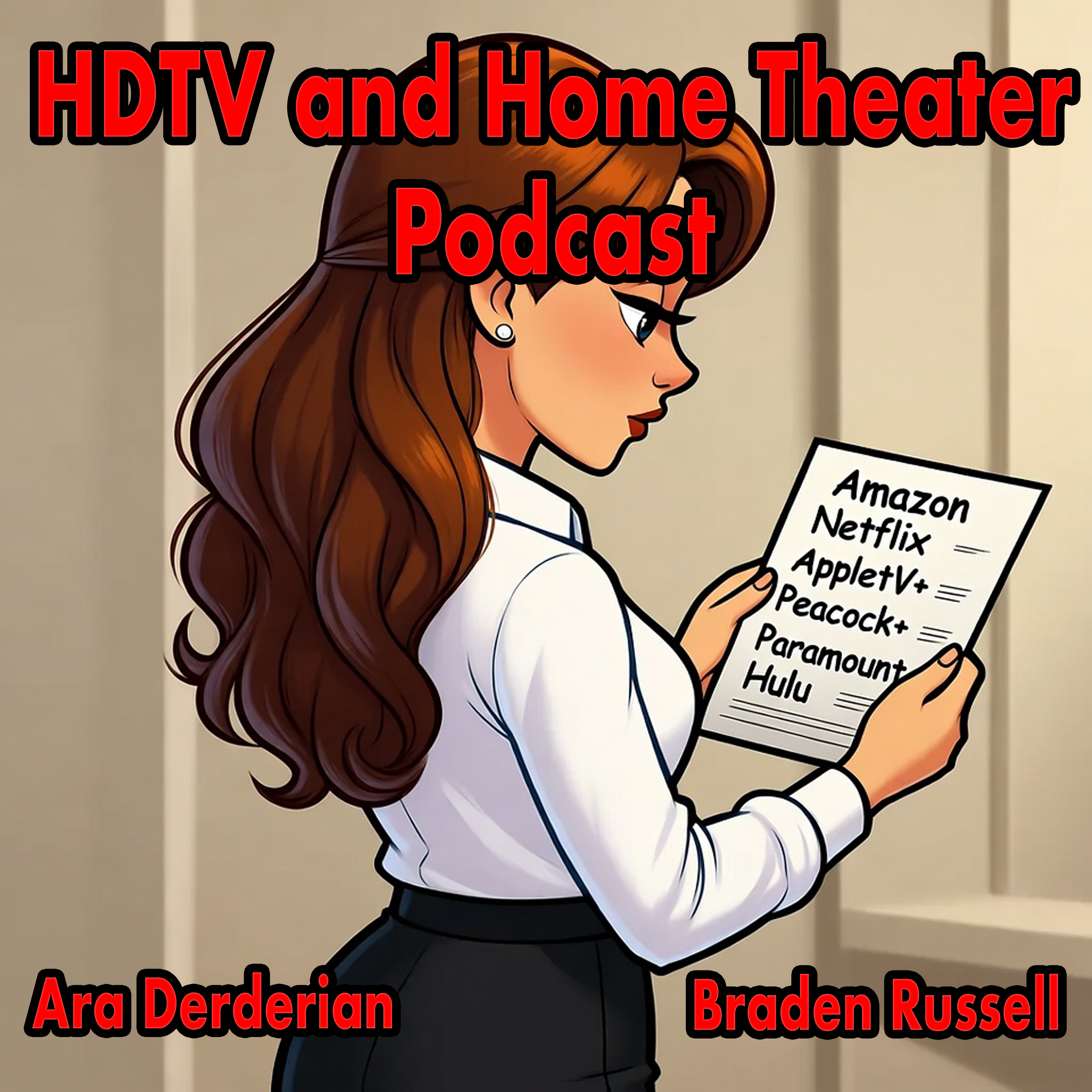
Podcast #1225: Top User Rated Original Movies per Streamer
On this week's show we identify the top IMDB user rated original movies per streamer. We also read your emails and take a look at the week's news. News: Classic TV props fetch $3.17M Netflix feature lets you decide what happens next, live 'High Potential' Is First 10 p.m. Drama to Hit No. 1 For the Fall Since 'ER' in 1999 Other: Explaining the magic yellow first-down line · The 42 Frndly TV Your Smart TV's HDMI Port Is Spying On You! The Last Frontier Top User Rated Original Movies per Streamer Last week we ran down the top streamer's price histories and at one point I (Ara), said that Amazon really didn't have many movies worth watching but since it came included with Prime shipping who cares. So this week I wanted to see what Amazon Original Movies were available and how they rated on IMDB. This did not include TV series like Reacher, Terminalist, etc. I just wanted to see if there was something I was missing. Then I expanded it to all the streamers we talked about last week and thus we created a list of the highest rated original movies from each streamer as rated by viewers on IMDB. Note the list goes from lowest to highest. Paramount+ Hunger Ward (2020) with a rating of 7.1/10. This short documentary, directed by Skye Fitzgerald, explores the Yemeni Civil War's famine through the work of two female health workers at therapeutic feeding centers for malnourished children. It premiered on Paramount+ in 2021 and was nominated for an Academy Award for Best Documentary Short Subject. Hulu Good Luck to You, Leo Grande (2022) with a rating of 7.2/10 based on over 34,000 user votes. Directed by Sophie Hyde and starring Emma Thompson as a widowed retiree exploring her sexuality with a young sex worker (Daryl McCormack), it's a witty and intimate comedy-drama praised for its honest take on aging, desire, and vulnerability. Peacock Psych 3: This Is Gus (2021) with a rating of 7.5/10 based on over 5,500 user votes. This comedy-mystery TV movie, directed by Steve Franks, serves as the third installment in the Psych film series and follows fake psychic detective Shawn Spencer (James Roday Rodriguez) and his best friend Burton "Gus" Guster (Dulé Hill) as they investigate Gus's bride-to-be's past amid wedding chaos, all while Lassiter (Timothy Omundson) faces career uncertainty. It's praised for its sharp humor, heartfelt moments, and nostalgic callbacks to the original USA Network series. Netflix Marriage Story (2019) with a rating of 7.9/10 (from over 380,000 votes). Directed by Noah Baumbach, this poignant drama follows a stage director (Adam Driver) and his actress wife (Scarlett Johansson) as they navigate a grueling divorce, exploring the emotional toll on their family and creative lives. It received critical acclaim for its sharp screenplay, authentic performances, and raw depiction of marital breakdown, earning six Oscar nominations including Best Picture. Apple TV+ Wolfwalkers (2020) with a rating of 8.0/10 based on over 43,000 user ratings. This animated fantasy adventure, directed by Tomm Moore and Ross Stewart, follows a young hunter's daughter who befriends a girl from a wolf-shifting tribe in 17th-century Ireland. It stands out for its hand-drawn animation, themes of friendship and freedom, and cultural folklore elements, earning an Oscar nomination for Best Animated Feature. Amazon Prime The Handmaiden (2016) with a rating of 8.1/10 from nearly 195,000 votes. Directed by Park Chan-wook and adapted from Sarah Waters' novel Fingersmith, this erotic psychological thriller is set in 1930s Japanese-occupied Korea. It follows a con artist, a pickpocket disguised as a handmaiden, and a wealthy heiress in a tale of seduction, betrayal, and revenge told across three perspectives. Amazon Studios acquired U.S. distribution rights after its 2016 Cannes premiere, making it an exclusive Prime Video original. Its high rating comes from praise for its intricate plot, stunning visuals, and strong performances by Kim Min-hee, Kim Tae-ri, and Ha Jung-woo. For comparison, other top Amazon originals include Manchester by the Sea (7.8/10), Sound of Metal (7.7/10), and The Big Sick (7.5/10).
Podcast #1224: Streaming Price Hikes: A Historical Look
On this week's show we look at the streamers and their pricing history. Are they keeping up with inflation or are they seeing how far they can keep raising prices. We also read your emails and take a look at the week's news. News: Apple TV Revs Up to Compete, For Real, In Streaming 86 Years Ago NBC Made History with First Televised Pro Football Game in 1939 HBO Max raises prices on all plans while WBD reevaluates future Other: Roomie Remote Streaming Price Hikes: A Historical Look Netflix Netflix has raised prices multiple times since launching its streaming service in 2007, with increases tied to content investments and competition. The service now offers four tiers: ad-supported Standard with Ads, Basic (ad-free, one screen), Standard (ad-free, two screens), and Premium (ad-free, four screens, 4K). Below is a summary of U.S. monthly prices for the most popular tiers (Standard and Premium) over time. Year Date Standard Plan Premium Plan Notes 2010 Launch (streaming-only) $7.99 N/A Basic streaming plan introduced. 2011 Feb $7.99 N/A No change. 2014 May $8.99 N/A First major streaming hike. 2015 N/A $9.99 $11.99 Introduction of HD tier. 2017 Oct $10.99 $13.99 Subtle rollout. 2019 Jan $12.99 $15.99 Basic introduced at $8.99 (discontinued 2023). 2020 Oct $13.99 $17.99 Response to content costs. 2022 Jan $15.49 $19.99 Largest hike at the time. 2023 Oct N/A N/A Ads tier launched at $6.99. 2024 Jan $15.49 $22.99 Basic discontinued. 2025 Jan $18.00 $25.00 All plans increased; ads tier to $8.00. Prices are monthly in USD; annual options offer ~17% savings. Current as of October 2025. Note - $8 in 2010 is worth approximately $11.57 in October 2025 Disney+ Launched in 2019 at a competitive $6.99/month, Disney+ has seen nearly annual increases, often bundled with Hulu/ESPN+. It now has two main tiers: ad-supported Basic and ad-free Premium. Prices reflect U.S. monthly rates for standalone Premium (most common). Year Date Basic (Ads) Premium (Ad-Free) Notes 2019 Nov (Launch) N/A $6.99 Single ad-free tier. 2020 N/A N/A $6.99 No change. 2021 Jan N/A $7.99 First hike. 2022 Dec $7.99 $10.99 Ads tier introduced. 2023 Oct $7.99 $13.99 Bundle prices also rose. 2024 Oct $9.99 $15.99 Ads tier up $2. 2025 Oct $12.99 $17.99 All plans up $2–$3; annual Premium $169.99. Annual billing saves ~16% (e.g., Premium $139.99/year in 2024). Bundles start at $9.99/month with Hulu/ESPN+. Note - $7 in 2019 is worth approximately $9 in October 2025 dollars Hulu Hulu, launched in 2007, has fluctuated prices but stabilized post-Disney acquisition (2019). It offers ad-supported, ad-free, and Live TV tiers. Focus here on on-demand plans (most subscribed). Year Date Ad-Supported Ad-Free Notes 2007 Launch $9.99 N/A Early ad-free only. 2010 N/A $7.99 $7.99 Ads tier introduced. 2014 N/A $7.99 $11.99 Ad-free split. Sept 2015 2018 N/A $7.99 $15.99 Live TV at $39.99. 2019 Jan $5.99 $11.99 Promo drop to $5.99 ads. 2021 Oct $6.99 $12.99 $1 increase both. 2022 Oct $7.99 $14.99 $1 hike. 2023 Oct $7.99 $17.99 Ad-free up $3. 2024 N/A $9.99 $18.99 Further increases. 2025 Oct $11.99 $18.99 Ads up $2; bundles up $2–$7. Annual ad-supported: $79.99 (2023) to $119.99 (2025). Live TV starts at $82.99/month. Note - $10 in 2007 is worth approximately $15.19 in October 2025 dollars. Amazon Prime Video Prime Video is bundled with Amazon Prime (shipping/music perks), launched 2006. Standalone option added in 2016. Prices reflect full Prime membership (includes Video); standalone is $8.99/month ad-supported. Year Date Monthly Prime Annual Prime Notes 2005 Launch N/A $79 Video added later. 2007 N/A N/A $79 No change. 2011 N/A N/A $79 Video streaming begins. 2014 N/A N/A $99 First major hike. 2018 N/A $12.99 $119 Monthly option emphasized. 2022 Feb $14.99 $139 Post-pandemic increase. 2024 Jan $14.99 $139 Ads introduced; ad-free +$2.99. 2025 N/A $14.99 $139 No change; standalone $8.99. Prime Video alone: $8.99/month (ads) or $10.99 (ad-free). 200M+ Prime members globally. HBO Max (formerly Max (formerly HBO Max)) Launched 2020 as HBO Max ($14.99 ad-free), rebranded Max in 2023. Frequent hikes focus on premium content. Tiers: Basic (ads), Standard (ad-free, 1080p), Premium (4K). Year Date Basic (Ads) Standard (Ad-Free) Premium (4K Ad-Free) Notes 2020 May (Launch) N/A N/A $14.99 Single ad-free tier. 2021 Jun $9.99 N/A $14.99 Ads tier added. 2023 Jan $9.99 $15.99 $19.99 First hike post-rebrand. 2024 Jun $9.99 $16.99 $20.99 $1 increases. 2025 Oct $10.99 $18.49 $22.99 $1–$2 hikes; annual Premium $229.99. Annual saves ~17% (e.g., Premium $199.99 in 2024). Bundles with Disney+/Hulu at $16.99/month. Note - $15 in 2020 is worth $18.72 in 2025 dollars Paramount+ Evolved from CBS All Access (2014). Rebranded 2021 with tiers: Essential (ads) and Premium (ad-free + Showtime). Sports/live TV drive hikes. Year Date Essential (Ads) Premium (Ad-Free + Showtime) Notes 2014 Oct (CBS All Access) $5.99 $9.99 Launch. 2017 N/A $5.99 $9.99 No major change. 2018 N/A $5.99 $9.99 Stable. 2021 Mar (Rebra