Harvard Divinity School
507 episodes — Page 6 of 11
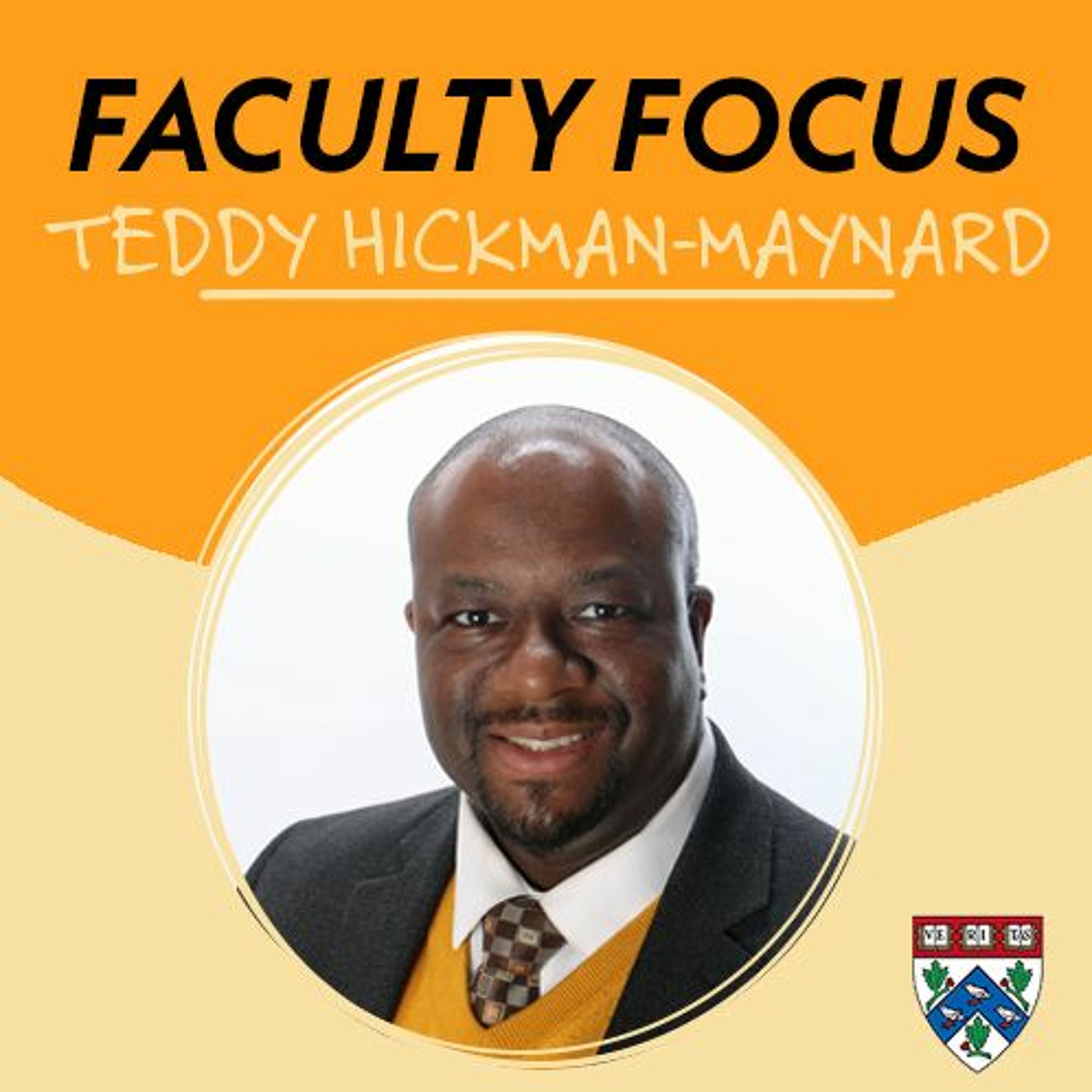
Faculty Focus: Teddy Hickman-Maynard on Preparing Future Leaders Who Seek Peace and Justice
Associate Dean for Ministry Studies Teddy Hickman-Maynard talks about preparing future leaders, innovative teaching, and trauma theology. Faculty Focus is a special new podcast series from Harvard Divinity School, where we speak with HDS professors about their courses and research interests. Full episode transcript: https://hds.harvard.edu/news/2022/10/17/faculty-focus-teddy-hickman-maynard-preparing-future-leaders-peace-justice Learn more about HDS: https://hds.harvard.edu/ Music track: "Old Dog New Tricks"; Extreme Music Limited
Leading Towards Justice: Intersections of Religion, Ethics, and Government
This Leading Toward Justice webinar features panel discussions spotlighting alumni impact in the world and the ways alumni leverage their HDS training while working in secular or public professions. This session will discuss the critical importance of ethical practices and religious literacy in government and public service fields. Moderated by Susan O. Hayward, MDiv ’07, associate director for the Religious Literacy and the Professions Initiative (RLPI) at Harvard Divinity School Panelists: Gary Burrill, MDiv ’91: Parliamentary Member, Nova Scotia House of Assembly Jacqueline Y. Collins, MPA ’01, MTS ’03: State Senator of Illinois, Assistant Majority Leader Usra Ghazi, MTS ’15: Foreign Service Officer, U.S. Department of State Kelly Raths, MDiv '05: Former Assistant Director, Oregon Department of Corrections This event took place on October 3, 2022 Learn more: https://rpl.hds.harvard.edu/news/leading-toward-justice-hds-alums-discuss-intersections-religion-ethics-and-government Full transcript: https://rpl.hds.harvard.edu/news/2022/12/1/video-leading-towards-justice-intersections-religion-ethics-and-government
Teaching and Learning about Sikhism with Simran Jeet Singh
Writer and human rights activist Simran Jeet Singh, MTS '08, discusses his new book, The Light We Give, and his ongoing work as a public scholar and educator on Sikhism and religious pluralism. Event participants discussed the intersections between Singh’s work, public understanding about Sikhism, and Religion and Public Life approaches to teaching and learning about religion. This discussion focused on educators working with students from 7th grade through college. This event took place on September 29, 2022. Learn more: https://rpl.hds.harvard.edu/ Full transcript: https://hds.harvard.edu/news/2022/9/29/video-teaching-and-learning-about-sikhism-simran-jeet-singh-lunchtime-conversation
Transcendence and Transformation, Take Two
Harvard Divinity School and the Center for the Study of World Religions host this panel discussion to inaugurate the second year of the CSWR's “Transcendence and Transformation” initiative, hosted by Director Charles M. Stang. The panel features the initiative's newest post-doctoral fellows and research associates as well as discussions of the history of “shamanic” healing practices in Central Asia; how best to teach embodied contemplative practices in the classroom; early Christian controversies over allegorical interpretation of the Bible, and universal salvation; the neuroscience of contemplative Christian prayer; and the "Great Resurrection" in Nizari Isma'ilism. This event took place on October 3, 2022. Learn more: https://cswr.hds.harvard.edu/ Full transcript: https://hds.harvard.edu/news/2022/10/3/video-transcendence-and-transformation-take-two
Ethical Scholarship: Gender, Religion, & Difference—Women's Studies in Religion Panel 2022
Presented by the Women’s Studies in Religion Program, these five new and one returning research associates for 2022-23 shared their thoughts on the ethical responsibility of scholars to be engaged in the study of gender. This event was held August 24, 2022. A full transcript can be found on the WSRP website: https://wsrp.hds.harvard.edu/news/2022/10/06/video-ethical-scholarship-gender-religion-difference-womens-studies-religion-panel Learn more: https://wsrp.hds.harvard.edu/
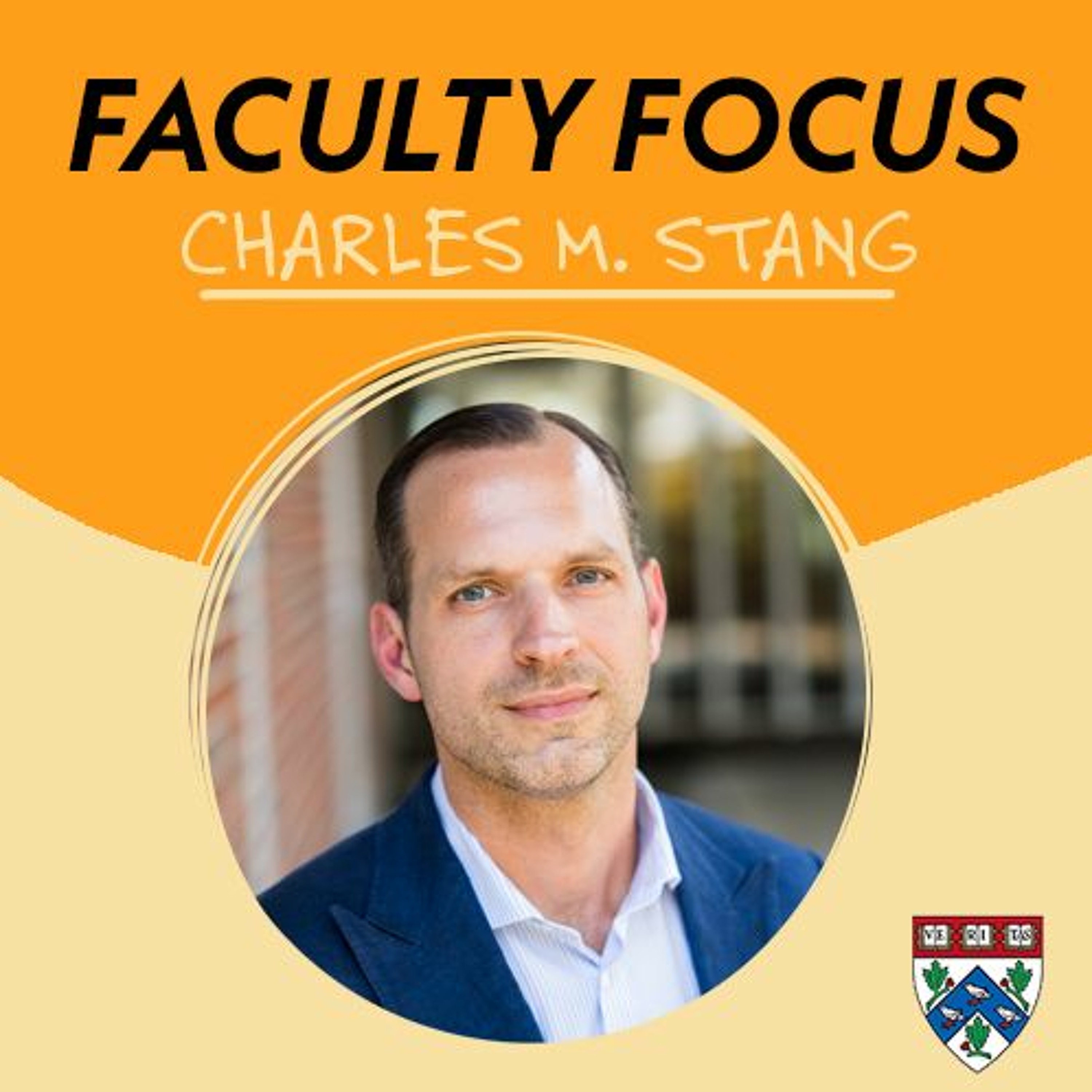
Faculty Focus: Charles Stang on Why 'Dune' Makes for Good Academic Inquiry
In this first episode of Faculty Focus, HDS Professor Charles M. Stang discusses psychedelics and spirituality, early Christianity and demonology, and why Dune makes for good academic inquiry. Faculty Focus is a special new podcast series from Harvard Divinity School, where we’ll speak with HDS professors about their courses and research interests. Full transcript of this episode available on the HDS website: https://hds.harvard.edu/news/2022/10/3/faculty-focus-charles-stang-why-dune-makes-good-academic-inquiry Learn more about HDS: https://hds.harvard.edu/ Music track: "Old Dog New Tricks"; Extreme Music Limited
Earth Bound: Welcoming a New Artwork by Ramona Peters
Harvard Divinity School and the Swartz Hall Art Committee celebrate the unveiling of "Earth Bound," an original creation by artist and Mashpee Wampanoag tribal member Ramona Peters. The ceremony included remarks by HDS Dean David N. Hempton, Peters, Mashpee Wampanoag Historic Preservation Officer David Weeden, and others. "Earth Bound," is an ahkuhq or cooking vessel, which will have a permanent home on display inside Harvard Divinity School’s Swartz Hall. The work was commissioned by HDS and the Swartz Hall Art Committee, with support from the Harvard Culture Lab Innovation Fund. This event took place September 19, 2022. Visit the HDS website for a full transcript: https://hds.harvard.edu/news/2022/09/29/video-earth-bound-welcoming-new-artwork-ramona-peters Learn more: https://hds.harvard.edu/about/history-and-mission/ramona-peters-earth-bound
HDS 2022 Convocation: "Legacies of Slavery: Bondage and Resistance"
Harvard Divinity School marked the opening of the 2022-23 academic year with its 207th Convocation. Harvard Radcliffe Institute Dean Tomiko Brown-Nagin delivered the address, titled "Legacies of Slavery: Bondage and Resistance." Brown-Nagin chaired the Presidential Initiative on Harvard and the Legacy of Slavery, which issued its report earlier this year. The ceremony included a welcome from HDS Dean David N. Hempton, an introduction by Tracey E. Hucks, Victor S. Thomas Professor of Africana Religious Studies at HDS and Suzanne Young Murray Professor at Harvard Radcliffe Institute, music by Aric Flemming, MDiv ’19, and Christopher Hossfeld, director of music and ritual at HDS, and readings by HDS students Ahmaad Edmund and Siana Monet. The event was held September 1, 2022. Visit the HDS website for a full transcript: https://hds.harvard.edu/news/2022/09/29/video-hds-2022-convocation-legacies-slavery-bondage-and-resistance Learn more: https://hds.harvard.edu/
Univitalism and American Law
Curiously, the English language lacks a word for “the belief that human beings only live once.” In this talk, Professor Steven Arrigg Koh discussed this long-held belief in the United States, prevalent amongst those with both sacred and secular views. “Univitalism” (the term coined by Professor Koh to describe this phenomenon) is so common that it is assumed by American Jews, Christians, Muslims, atheists, and agnostics alike—and is thus implicitly or explicitly integral to the reasoning of many U.S. legal and political decisionmakers. By contrast, a significant minority of Americans and many in Eastern societies subscribe to a “multivitalist” worldview, wherein individuals are reborn. This event took place February 18, 2022. Learn more: https://rpl.hds.harvard.edu/home
Expressions of Sumoud in Palestinian Higher Education
What is the role of Palestinian universities in the struggle for freedom and justice? Rana Khoury, Religion, Conflict, and Peace Initiative Fellow and Vice President for Development at Dar Al-Kalima University, shares her exploration of developing a dedicated curriculum and the experience of Dar Al-Kalima University in shaping Palestinian students as cultural activists. Khoury is in conversation with Hilary Rantisi: Associate Director of the Religion, Conflict, and Peace Initiative at Harvard Divinity School. This event took place April 26, 2022. Learn more: https://rpl.hds.harvard.edu/programs/religion-conflict-peace
Yom Ha’atzmaut and the Colonization of American Judaism
In conversation with Daniel Boyarin, Rabbi Brant Rosen interrogated the ways that Zionist hegemony is expressed through the Yom Ha’atzmaut (Israeli Independence Day) that has become a staple on the American Jewish holiday calendar, projecting themes of militarism, colonialism, and empire on to sacred religious tradition. He also presented an alternative framing of this day as a religious observance – one that expresses remembrance, repentance, and reparations. Presenters: Brant Rosen: Topol Fellow at RCPI; Rabbi, Tzedek Chicago In conversation with: Prof. Daniel Boyarin: Caroline Zelaznik Gruss and Joseph S. Gruss Visiting Professor in Talmudic Civil Law at Harvard Law School (2021-2022) Moderator: Atalia Omer: Professor of Religion, Conflict, and Peace Studies at the Kroc Institute for International Peace Studies at University of Notre Dame and T. J. Dermot Dunphy Visiting Professor of Religion, Violence, and Peacebuilding and Senior Fellow in Conflict and Peace at Harvard Divinity School This event took place April 19, 2022. Learn more: https://rpl.hds.harvard.edu/programs/religion-conflict-peace
Psychedelics, Spirituality, and a Culture of Seekership
Sixty years ago on Good Friday, a famous experiment took place at Boston University's Marsh Chapel conducted by Harvard Divinity School student Walter Pahnke, where he tried to answer the question: Do psychedelic drugs occasioned mystical experiences? In 2022, conversations about the connections between psychedelics, science and medicine, and spirituality are again top of mind, from Harvard and the academy to research hospitals and beyond. In this episode, Harvard Divinity School student Paul Gillis-Smith speaks to scholar J. Christian Greer about the impact of the “Marsh Chapel Miracle,” what role psychedelics might play in the future of religion, and why, he says, there’s potential for great harm, but reasons to be hopeful, too. Full transcript: https://hds.harvard.edu/news/2022/05/12/psychedelics-spirituality-culture-seekership
HDS Reorientation and Common Conversation Closing Session
Our year-long, intentional engagement with our Common Read text, "Red Nation Rising: From Bordertown Violence to Native Liberation," by Nick Estes, Melanie K. Yazzie, Jennifer Nez Denetdale, and David Correia, concluded with a powerful session with all four authors who engaged in conversation with HDS faculty, staff, and students. Dean Teddy Hickman-Maynard, Dean Steph Gauchel, and MDiv candidates Rebecca Mendoza Nunziato and Emma Thomas explored the themes of this urgent text with the authors and discussed ways our community can respond to their call to advance the work of decolonization and Native liberation at Harvard and beyond.
Author Discussion: "We God's People: Christianity, Islam and Hinduism in the World of Nations"
Jocelyne Cesari, J. Dermot Dunphy Visiting Professor of Religion, Violence, and Peacebuilding, discussed her recent publication, "We God's People: Christianity, Islam and Hinduism in the World of Nations" with David F. Holland and Ousmane Kane. This event took place on April 21, 2022. Learn more: https://cswr.hds.harvard.edu/
2022 Billings Preaching Prize Competition
Each spring, the Office of Ministry Studies organizes the Billings Preaching Prize Finals, an annual preaching competition open to second- and third-year MDiv students. Congratulations to MDiv candidate Mauricio Bruce, the 2022 Billings Preaching Prize Competition winner, and to finalists Sharon Christner and Erica Williams for their incredible talents. The finals were held during Noon Service on April 20 in Williams Chapel. The event also featured a reading from Carolyn Beard, the Massachusetts Bible Society scripture reading winner, and jessica young chang, the non-scripture reading winner.
Set it Off Symposium
Spiritual leader, human rights activist, and grassroots organizer Erica Williams’ project for the MRPL was to launch the “Set It Off Movement” which is aimed at ending the dehumanization, destruction, and death-dealing of poor Black women in America. The movement was inspired by the 1996 film Set It Off, which follows four Black women friends in Los Angeles, California, who plan to execute a bank robbery—each doing so for different reasons—to achieve better for themselves and their families. This event took place on April 26, 2022. Learn more: https://rpl.hds.harvard.edu/
Islamic Self-Help, Gendered Anxieties, and Racial Capitalism in Singapore
Nurhaizatul Jamil, Visiting Assistant Professor of Women's Studies and Islam and 2021-22 Women's Studies in Religion Program Research Associate, delivered the lecture, "Islamic Self-Help, Gendered Anxieties, and Racial Capitalism in Singapore." This event took place on April 12, 2022. Learn more: https://wsrp.hds.harvard.edu/
Leading Toward Justice: Intersections of Religion, Ethics, and Journalism
In this webinar, speakers showcased the unique impact of Divinity School alumni in the world, discussing the critical importance and need for ethical practices and religious literacy in the field of journalism today. This event took place on April 27, 2022. Learn more: https://rpl.hds.harvard.edu/
Signs of Your True Voice: First Words, Breakthroughs, Trust, and Transformation
As writers and poets, we often wonder: who is this porous and gullible and hungry person writing my poems, who is feeding her and is she for real? Is it truly me who wrote this? Is that my story, my voice? Why don’t I sound like myself—or worse, why does my self sound…not quite right? These questions can be painful, discouraging, silencing. Let’s move beyond them and go deeper into the real mysteries, the useful ones, the ones that help us write and propel us further into our journey as writers. In this talk, Brenda Shaughnessy examined why some “first words” last, what trusting your voice means, and how inchoate feelings can be transformed into art. This event took place on April 19, 2022. Learn more: https://cswr.hds.harvard.edu/
Annual Stendahl Symposium
A yearly tradition at HDS, the Stendahl Symposium honors the memory of former professor Krister Stendahl, who tirelessly sought to repair fractions between Jews and Christians, supported the ordination of women, and pushed for the full inclusion and participation of women and minority voices in academia and interfaith work. Each year, the symposium carries Stendahl’s legacy forward by presenting student papers centered around the topic of “Conversations Across Religious Boundaries.” This year's symposium centered the political nature of Stendahl's legacy by engaging the following subtheme: "Solidarity, Resistance, and Liberation In and Through Religious Difference." This event took place on April 19, 2022.
Techgnosis Today
Erik Davis’ first book, the celebrated "Techgnosis: Myth, Magic, and Mysticism in the Age of Information," was published almost twenty-five years ago. Still in print, this cult classic of media studies continues to inform conversations about technology, consciousness, and new digital expressions of religion and esotericism. In this Gnoseologies event, speakers discussed Davis’ intellectual trajectory, the relevant lessons of 1990s "cyberdelia," and how techgnostic themes continue to inform our era of AI, post-truth polarization, the simulation hypothesis, and the explosion of digital occultism, from Insta-witches to TikTok “reality shifters." This event took place on April 13, 2022. Learn more: https://cswr.hds.harvard.edu/
Decolonize Now: A Conversation about Radical Imagination and Justice in Israel/Palestine
Since the signing of Oslo, or the Declaration of Principles, in 1993, the question of Palestine has been rammed into the constricting paradigms of statehood and diplomatic negotiations. The peace process framework not only eschewed the consequential dimension of power from the question of Palestine but limited its possible futures by reducing it to a matter of, at best, equitable partitions. This conversation aimed to peel back those debilitating frameworks to consider how other approaches like anti-racism, feminism, and anti-imperialism could help overcome restrictive binaries and lead to decolonial futures. This event took place on April 6, 2022. Learn more: https://rpl.hds.harvard.edu/programs/religion-conflict-peace
Walking Through the Twilight: A Visual Exploration of Contemporary Jewish Anti-Occupation Activism
Walking Through the Twilight is a photographic exploration of American Jewish activism in solidarity with Palestinians against the Israeli military occupation. The project explores the interplay between Jewish religious identity and activism, discussing issues of identity, faith, and action. This event took place on April 12, 2022. Learn more: https://rpl.hds.harvard.edu/programs/religion-conflict-peace
Your First Heart is Not in Your Chest: An African Indigenous Interrogation of the ‘Divine Feminine’
The resurgence of the “divine feminine” as a discursive concept and framework in religious studies and in popular practice in Europe and the United States, raises the question of the salience of the concept in African Religions. In this talk, drawing from ethnographic research with Luba women whose religious practice informs their positionality in war, Georgette Mulunda Ledgister demonstrated the African indigenous orientation towards un-gendered expressions of religion that allow practitioners to transcend the strictures and the structures of gender. This event took place on April 11, 2022. Learn more: https://cswr.hds.harvard.edu/
Healing from Extremism: How Community Members Can Help Loved Ones Exit Hate
What drives people to join hate groups? And when they decide to leave, what comes next? "Healing from Extremism" was a panel event featuring former extremists, chaplains, and current Parents for Peace staff who work on the front lines of de-radicalization work. The panel and Q&A were moderated by Susie Hayward, Associate Director of the Religious Literacy and the Professions Initiative at Harvard Divinity School. This event took place on April 11, 2022. Learn more: https://rpl.hds.harvard.edu/programs/religious-literacy-professions
Ways of Knowing through the Changing Landscapes of Esoteric Art
For many years esoteric and occult practices in art have been sidelined as marginal and even taboo within art historical discourses. However, the recent cultural explosion of interest in esotericism and the occult is redefining the contributions of esotericism to the development of visual art, particularly from the late nineteenth century onward. In this illustrated talk and conversation, Dr. Amy Hale explored how our understanding of artists’ esoteric practice shapes the conversation between art, artists, and the audience. This event took place on March 30, 2022. Learn more: https://cswr.hds.harvard.edu/
A Home for the Human Spirit: Cultural Activism and the Moral Imagination in the Inherit Art Project
This presentation chronicled the evolution of the collaborative art exhibition, "Ye Shall Inherit the Earth & Faces of the Divine." The exhibition, featuring works of artists from the African Diasporic and Palestinian exilic communities, attempts to gesture towards some commentary about both the universality and specificity of conversations ranging from human rights, human dignity, and artistic production-as-a practice of resistance. Follow the Inherit exhibition on Instagram @inherit_exhibit22. This event took place on March 29, 2022. Learn more: https://rpl.hds.harvard.edu/programs/religion-conflict-peace
Paranthropology: The Anthropology of the Paranormal
What is the paranormal? How can we make sense of out-of-the-ordinary experiences? How can we study the paranormal—anthropologically? In this talk, Dr. Jack Hunter and Dr. Giovanna Parmigiani discussed the anthropology of the paranormal. This event took place on March 23, 2022. Learn more: https://cswr.hds.harvard.edu/
To Eat Alone Is to Die Alone: A Voyage into the Lives of Seeds and Their Communities
In this talk, Vivien Sansour shared excerpts of her upcoming autobiographical book weaving a poetic narration of people, plants, and other food stories from Palestine to South America, taking us on her journey of establishing the Palestine Heirloom Seed Library and the projects that resulted from it. Professor Bahhur explored how stories inform our political and social realities on a global level and how they can be catalysts for a new conversation about indigenous knowledge and spirituality. This event took place on March 22, 2022. Learn more: https://rpl.hds.harvard.edu/programs/religion-conflict-peace
Words Surviving Siege and War: Poems from Gaza
This event featured seven poets from Gaza-Palestine who in May 2021 were working to submit their poems to "Peripheries" while under Israeli attacks. Five of the poets write in Arabic while two, the co-editors of the special folio in 2021, are bilingual poets, writing in Arabic and English. The poets include Mosab Abu Toha, Tayseer Abu Odeh, Nasser Rabah, Waleed Al-Akkad, Hamed Ashour, Ne’ma Hasan, and Mona Al-Mosaddar. This event took place on March 21, 2022. Learn more: https://cswr.hds.harvard.edu/
Assessing Domestic US Religious Politics’ Impact on Foreign Policy
On February 24-25, a convening of Religion and Public Life and the Schar School of Policy and Government at George Mason University brought together a small group of scholars and activists to assess the normative frameworks that shape how U.S. foreign policy thinks about the role of religion in world affairs. This public follow-up event, moderated by Peter Mandaville, George Mason and Georgetown Universities, and Susie Hayward, Religion and Public Life, featured several workshop participants as they shared insights and recommendations generated from the February discussion about how religion can be reimagined in policy and activist responses to meet the challenges of the present day. This event took place on March 4, 2022. Learn more: https://rpl.hds.harvard.edu/
The Troubled Everyday in/of Gaza: Restoring Agency and Creative Possibility
This event is part of the RCPI Fellows' Spring Series, "Disrupting Injustice and Promoting Moral Imagination in Israel/Palestine." Conflict and Peace Fellows at Religion and Public Life (RPL) talk about their projects illuminating transnational solidarities, reimagining Jewish identity, Palestinian steadfastness (Sumoud), and cultivating moral imagination and creative possibilities for a just peace in Israel/Palestine. Salem Al-Qudwa, RCPI Fellow and Architect, in conversation with Sara Roy, Senior Research Scholar at the Center for Middle Eastern Studies at Harvard University. Salem Al-Qudwa showcased his work focusing on community and people with an emphasis on ethics, social injustice, and architecture in conflict zones such as the Gaza Strip. He also introduced his work on gender and in-between spaces exploring barriers, exploitation, and the relationship of widowed women to space and architecture. Co-sponsored by The Middle East Forum at the Center for Middle Eastern Studies at Harvard. This event took place on March 8, 2022. Learn more: https://rpl.hds.harvard.edu/programs/religion-conflict-peace
The Writing of Wisdom: Divine Sophia in Russia
“The Writing of Wisdom: Divine Sophia in Russia” is part of the CSWR’s new initiative, “Transcendence and Transformation". In this presentation, Judith Deutsch Kornblatt analyzed ancient icons of Divine Wisdom along with many other influences on the pivotal religious philosopher and poet Vladimir Solovyov and, through him, on his heirs in Russian religious thought in the 20th century. This event took place on March 10, 2022. Learn more: https://cswr.hds.harvard.edu/
Weather Reports: The Climate of the Future
This conversation is part of a ten-week series of online conversations with poets, writers, public servants, theologians, biologists, scholars, and activists who are engaged in the spiritual reckoning and awakening surrounding climate collapse, sacred land protection, and planetary health. Kim Stanley Robinson’s thriller "The Ministry for the Future" (2020) is science fiction that reads as hard-edged journalism. With short chapters and a myriad of characters, Robinson creates a kaleidoscope of perspectives on a global climate collapse coming in 2025. Bill McKibben writes “In Kim Stanley Robinson’s anti-dystopian novel, climate change is the crisis that finally forces mankind to deal with global inequality.” At heart an optimist, Robinson lays out a possible path to move forward with faith in what we can create together in a post-capitalist world. Respondent: Sarah Dimick, Assistant Professor of English, Harvard University This event took place on November 22, 2021. Sponsored by: Harvard Divinity School, The Constellation Project, The Center for the Study of World Religions, Religion and Public Life at HDS, Theasophie Teas, and the Planetary Health Alliance.
Putin's Unholy War
Vladimir Putin's invasion and war on Ukraine is a crisis. It's a crisis that is unfolding before our very eyes across social media and cable and online news, and it's more than just a political crisis, though that's likely what most of us are hearing about. Putin's war is crisis of humanity. It's a crisis of conscience … and it's a crisis with deep religious ties. I'm Jonathan Beasley, and in today's episode of the Harvard Religion Beat, I'm speaking with Sean Eriksen about the religious connection to Putin's war on Ukraine. Sean is a graduate student at the Davis Center for Russian and Eurasian Studies at Harvard University, specializing in contemporary Russian national identity and regime ideology. Sean is originally from Australia. He holds degrees in law and international relations, and he's lived in Kyiv, Ukraine, and has travelled throughout the former Soviet Union. Full episode transcript: https://hds.harvard.edu/news/2022/03/10/putin-unholy-war
Leading Toward Justice: Intersections of Religion, Ethics, and Humanitarian Action
Virtual Voices of Divinity is an ongoing conversation series that showcases the unique impact of HDS alumni in the world. This talk featured Palwasha Kakar, MTS ’04, Interim Director of Religion and Inclusive Societies at US Institute of Peace, Rick Santos, MTS ’92, President and CEO at Church World Service, and Karen Tse, MDiv ’00, Founder and CEO of International Bridges to Justice. This event took place on March 1, 2022. Learn more: https://hds.harvard.edu/alumni-friends
Breaking Walls: Historical and Contemporary Mizrahi Feminist Struggles for Israel/Palestine Housing
In this talk, Sapir Sluzker Amran and Dr. Yali Hashash explored the role of powerful civic grassroots movements in Israel/Palestine that center feminist-queer-class-race intersectionality and solidarity while challenging secular liberal thinking about feminist leadership. They discussed the role of alternative and community archives by showcasing feminist activism from the 1950s onwards and highlighting Mizrahi feminist struggles for housing in Israel/Palestine. This event took place on March 1, 2022. Learn more: https://rpl.hds.harvard.edu/home
Divining the Feminine in Tibet: Saga & Sādhana of Yeshe Tsogyal
Yeshe Tsogyal, the leading female presence of Tibet, appears in two distinct genres of literature, autobiographical and ritual practice texts (sādhana). In this talk, Anne Carolyn Klein/Rigzin Drolma drew on recent practice texts related writings to conclude that this sādhana is at core a conversation about one’s own relation to a divine feminine, which gradually reveals a wholistic divine, a non-binary writ large, that is nonetheless fully feminine in image and metaphor. This event took place on February 28, 2022. Learn more: https://cswr.hds.harvard.edu/transcendence-and-transformation
Accidental Deification: A Conversation with Anna Della Subin
Ever since Columbus reported he was hailed as "a celestial being" in 1492, stories of unexpected apotheoses have haunted the modern age. From Haile Selassie to Prince Philip, men unwittingly turned divine have much to reveal about empire, race, and the relationship between politics and divinity, as HDS alumna Anna Della Subin argues in her recent book "Accidental Gods". In conversation with Charles M. Stang, she explored how deification has been both a means of liberation and a way to sanctify oppression; how accidental gods are present in the canonical texts of comparative religion; and how myths of European explorers mistaken for “white gods” imbued whiteness with a divinity still entrenched today. This event took place on February 17, 2022. Learn more: https://cswr.hds.harvard.edu/
Gut and Other Knowledges in Religions of the African Diaspora
n this talk, Dr. Elizabeth Pérez discussed practices of embodied knowledge production and transmission in such Afro-Diasporic religions as Cuban Lucumí, Haitian Vodou, and Brazilian Candomblé. In conversation with CSWR Research Associate Dr. Giovanna Parmigiani, she connected the insights from her first book on sacred food preparation with current scholarship on gut feelings, knowing, and beings in Black Atlantic traditions. “Gut & Other Knowledges in Religions of the African Diaspora” is part of the CSWR’s new initiative, “Transcendence and Transformation." This event took place on February 23, 2022. Learn more: https://cswr.hds.harvard.edu/transcendence-and-transformation-events-calendar
Peril to Democracy: Racism and Nationalism in America
Annual Greeley Lecture for Peace and Social Justice The after-effects of the 1/6 Insurrection continue to reverberate across America. Since that fateful and disturbing day, pushbacks against the teaching of race in America, abortion rollbacks, and Covid denialism have swept across the country. What has been the role of evangelical Christianity in fueling these issues? Anthea Butler, Geraldine R. Segal Professor in American Social Thought and Chair of Religious Studies at the University of Pennsylvania, examined the historical antecedents of Evangelical beliefs and political action leading up to today’s troubling times, and the prospects for the future of religion, peace, and political action in America, in her lecture. This event took place on February 10, 2022. Learn more: https://cswr.hds.harvard.edu/
Shared Resistance and Solidarity: A (Re)Newed Paradigm
In this event, Religion, Conflict, and Peace Initiative Fellow Oriel Eisner, activist Neomi-Nur Zahor, and journalist Basil al-Adraa discussed their experience engaging in immersive solidarity work and shared resistance in the last year as a part of a renewal of efforts in joint struggle against the Occupation. This event took place on February 15, 2022. Learn more: https://rpl.hds.harvard.edu/programs/
Safe, Sacred, Free: Queer Movements and Religious Spaces
Heather R. White, Visiting Assistant Professor of Religion and Gender and Queer Studies and 2021-22 Women's Studies in Religion Program Research Associate, delivered the lecture, "Safe, Sacred, Free: Queer Movements and Religious Spaces." This event took place on February 15, 2022. Learn more: https://wsrp.hds.harvard.edu/
Negation, Not-knowing, and the Dark in Brazilian and Cuban Creole Forms of Religion
Diana Espírito Santo is associate professor of social anthropology at the Pontificia Universidad Católica de Chile. In this lecture, she examined the ambiguous, dark spaces of paradox from the point of view of two distinct ethnographic sites: Brazil and Cuba, with Umbanda and creole espiritismo respectively. In exploring the various vignettes—of a self that must forget itself in order to retain its mode of conscious trance in Brazil, of the impossibility of knowing one’s spirits in a multiplying metamorphic cosmos in Cuba, both signaling the general breakdown of reality and its knowability—she thought through an interstitial, in-between, impossible logic, and called out the gaps in scholarly approach premised on the notion that knowledge is there to be grasped, with the right techniques. This event took place on February 16, 2022. Learn more: https://cswr.hds.harvard.edu/transcendence-and-transformation
When Boston Banned Christmas
Did you know that Christmas was illegal in Massachusetts from 1659 to 1681, and anyone caught celebrating the holiday would be subject to a fine of 5 shillings? And who was responsible for canceling Christmas? Was it pagans, or liberal policymakers, or the anti-religious? Nope, it was one of the most pious groups of people at the time: the Puritans. "Puritans abided by what's sometimes been called the regulative principle of Biblicism, which is that not only do you need to do what the Bible enjoins you to do, but you should avoid establishing, as practices of spiritual significance, things that the Bible does not expressly endorse," says HDS Professor David F. Holland. “And so the absence of Christmas in scripture was the primary source of the kind of Puritan concern about it and condemnation of it.” But there was also another big reason for the ban, namely that Christmas had a tradition of being a time of social disorder, similar to Carnival. And that disorder, drunkenness, irreverence, and often sexual licentiousness, was something Puritans found unacceptable. Even though anti-Christmas sentiment and culture was still very much prevalent in New England until the mid-nineteenth century, Christmas became a national holiday in 1870 thanks to one particular phenomenon. “What really kind of gives Christmas it's propriety or its legitimacy in the culture of New England is the rise of a kind of cult of domesticity in the early nineteenth century and what some scholars have referred to as the birth of childhood,” says Holland, “the recognition of childhood as a distinctive stage of human development that deserves a certain kind of indulgence and a certain kind of happiness.”
The Climate of Consciousness
This conversation was part of the fall 2021 series "Weather Reports: The Climate of Now." The featured speaker was writer Michael Pollan. Michael Pollan has been educating us with illuminating prose on “the botany of desire” for a very long time. He discusses his latest book "This Is Your Mind On Plants" and his landmark bestseller "How To Change Your Mind: What the New Science of Psychedelics Teaches Us About Consciousness, Dying, Addiction, Depression, and Transcendence." Pollan’s call for change, restoration, and resiliency may be the very thing we need to bolster our consciousness in the midst of climate collapse. Respondent: Charles Stang, director of the Center for the Study of World Religions About this event series: "Weather Reports: The Climate of Now" is a ten-week series of online conversations with poets, writers, public servants, theologians, biologists, scholars, and activists who are engaged in the spiritual reckoning and awakening surrounding climate collapse, sacred land protection, and planetary health. Environmentalist, author, and HDS Writer-in-Residence Terry Tempest Williams will lead conversations concerning our response to climate chaos: How might we recast this a time of meaning rather than despair? How do arts and activism combine to let us see possibility instead of pessimism? Where do we find the strength to fully face all that is breaking our hearts?
The Climate of Grief
This conversation was part of the fall 2021 series "Weather Reports: The Climate of Now." The featured speaker was poet Victoria Chang. Victoria Chang writes in her New York Times Notable Book of 2020, Obit, “I always knew that grief was something I could smell. But I didn’t know that it’s not actually a noun but a verb. That it moves.” After the deaths of her parents, she refused to write elegies; instead, Chang wrote poetic obituaries of the beautiful, broken world that surrounds her (many see them as love letters). How does poetry illuminate this time of uncertainty? How do we embrace grief and not look away from all that is breaking our hearts? What we thought was a pause is now a place, and grief is part of this place. Respondent: Jorie Graham, Poet, Harvard English Department About this event series: "Weather Reports: The Climate of Now" is a ten-week series of online conversations with poets, writers, public servants, theologians, biologists, scholars, and activists who are engaged in the spiritual reckoning and awakening surrounding climate collapse, sacred land protection, and planetary health. Environmentalist, author, and HDS Writer-in-Residence Terry Tempest Williams will lead conversations concerning our response to climate chaos: How might we recast this a time of meaning rather than despair? How do arts and activism combine to let us see possibility instead of pessimism? Where do we find the strength to fully face all that is breaking our hearts?
The Climate of Compassion for all Beings
This conversation was part of the fall 2021 series "Weather Reports: The Climate of Now." The featured speaker was Janet Gyatso, Hershey Professor of Buddhist Studies and Associate Dean for Faculty and Academic Affairs at Harvard Divinity School. We are not the only species that lives and loves and grieves on this planet. Janet Gyatso focuses on the phenomenology of being not just among humans but with all other sentient beings. How we can cultivate the capacity to have such experiences, in ways that might reform our ethical and spiritual practices? How might compassion and an understanding toward animals heighten and mirror reciprocal relationships toward each other. What does it mean not only to be human, but one species among many? About this event series: "Weather Reports: The Climate of Now" is a ten-week series of online conversations with poets, writers, public servants, theologians, biologists, scholars, and activists who are engaged in the spiritual reckoning and awakening surrounding climate collapse, sacred land protection, and planetary health. Environmentalist, author, and HDS Writer-in-Residence Terry Tempest Williams will lead conversations concerning our response to climate chaos: How might we recast this a time of meaning rather than despair? How do arts and activism combine to let us see possibility instead of pessimism? Where do we find the strength to fully face all that is breaking our hearts?
The Climate of Relationships and Intersectionality
This conversation was part of the fall 2021 series "Weather Reports: The Climate of Now." The featured speakers were climate activist Morgan Curtis, MDiv '24, and brontë velez, Black-latinx transdisciplinary artist. Morgan Curtis and brontë velez discuss the intersectionality of race, class, gender, and climate collapse, and how seeing the world whole through the lens of relationships creates communities of care rather than conflict. They consider what reparations might look like on behalf of racial justice and justice for the Earth, and why it is critical to find a radical, intergenerational, diverse and dynamic dialogue that calls for a global paradigm shift. Respondent: Melissa Wood Bartholomew, Associate Dean for Diversity, Inclusion, and Belonging at Harvard Divinity School About this event series: "Weather Reports: The Climate of Now" is a ten-week series of online conversations with poets, writers, public servants, theologians, biologists, scholars, and activists who are engaged in the spiritual reckoning and awakening surrounding climate collapse, sacred land protection, and planetary health. Environmentalist, author, and HDS Writer-in-Residence Terry Tempest Williams will lead conversations concerning our response to climate chaos: How might we recast this a time of meaning rather than despair? How do arts and activism combine to let us see possibility instead of pessimism? Where do we find the strength to fully face all that is breaking our hearts?
The Climate of Sacred Land Protection
This conversation was part of the fall 2021 series "Weather Reports: The Climate of Now." The featured speaker was Gwich’in activist Bernadette Demientieff. Bernadette Demientieff, Executive Director of the Gwich’in Steering Committee, discusses why sacred land protection matters to indigenous communities. Learn how her community in Alaska is standing strong to protect the Arctic National Wildlife Refuge—Coastal Plain from becoming an oil and gas reserve. “Our identity is non-negotiable,” she says. “We will never sell our culture and our traditional lifestyle for any amount of money.” About this event series: "Weather Reports: The Climate of Now" is a ten-week series of online conversations with poets, writers, public servants, theologians, biologists, scholars, and activists who are engaged in the spiritual reckoning and awakening surrounding climate collapse, sacred land protection, and planetary health. Environmentalist, author, and HDS Writer-in-Residence Terry Tempest Williams will lead conversations concerning our response to climate chaos: How might we recast this a time of meaning rather than despair? How do arts and activism combine to let us see possibility instead of pessimism? Where do we find the strength to fully face all that is breaking our hearts?