322. The 6 Principles of Resilient Behavior | Robin Kelson | Good Seed Company
GREEN Organic Garden Podcast · Jackie Marie Beyer
Audio is streamed directly from the publisher (pdst.fm) as published in their RSS feed. Play Podcasts does not host this file. Rights-holders can request removal through the copyright & takedown page.
Show Notes
Friday • June 12, 2020
Recently Robin Kelson from the Good Seed Company was on the Beauty of Conflict Podcast
- What disruptive change is and why it can be a good thing.
- How we can tap into the intelligence and resilience in our bodies.
- What six behaviors we need to become more resilient.
- How we can thrive in the aftermath of the coronavirus.
- Why collaboration and cooperation are crucial to our existence.
- Why engaging the prefrontal cortex will enable us to be more resilient.
- Why we, as humans, are not as individual or unique as we might think!
I can't believe we didn't see each other at Free The Seeds. I was downstairs trying to promote the Organic Oasis Guidebook. I have been so busy. School got out and my goal was to clean for 3 days and be done at noon today for this podcast and then relax before I start my new job for Gregg Clunis of Tiny Leaps on Monday. I have been listening to my new favorite podcast the Clutterbug!
Get your copy of the Organic Oasis Guidebook and get started building your own earth friendly garden today!
Tell us a little about yourself.
Sure! I have worn many hats among them as a biochemist and attorney with an expertise in intellectual property law so I come with that background, and I have always been really interested in what constitutes resiliency, although I didn't call it that back then.
I got interested in what was the core of what I saw about 30 years ago an epidemic of chronic disorders in our culture
physical bodies and impacts on our bodies. I didn't understand it, and I couldn't get any satisfaction from the
- western
- medical
- chemical
scientific approach
I looked into it, i’ve led lots of
- creating soil enhancements
- re-nourishing the soil
- now as the owner of the Good Seed Co that sells heirloom seeds adapted to our region in montana where we live and particularly in the
selecting and saving and sharing seeds for common use
without eating we are not nourished and we don’t keep the species going
I’m also a co-executive director of AEROMT
just metal to the petal particularly in response to the covid epidemic and it's impact on the food system in Montana, all the work so many of our organizations have been doing on resiliency and sustainability
every single Montanan has ben impacted by it
opportunity to regrow our own food supply
1950 we grew about 70% of our own food and now it's down to about 7%
a little bit about me
in my journey as you mentioned
a curiosity about resiliency
examples that exist in nature. I have been studying that because it intrigues me for 30 years. I have been talking about it recently from my own perspective there's some really good systems for developing a resiliency. I call it
developing resiliency intelligence.
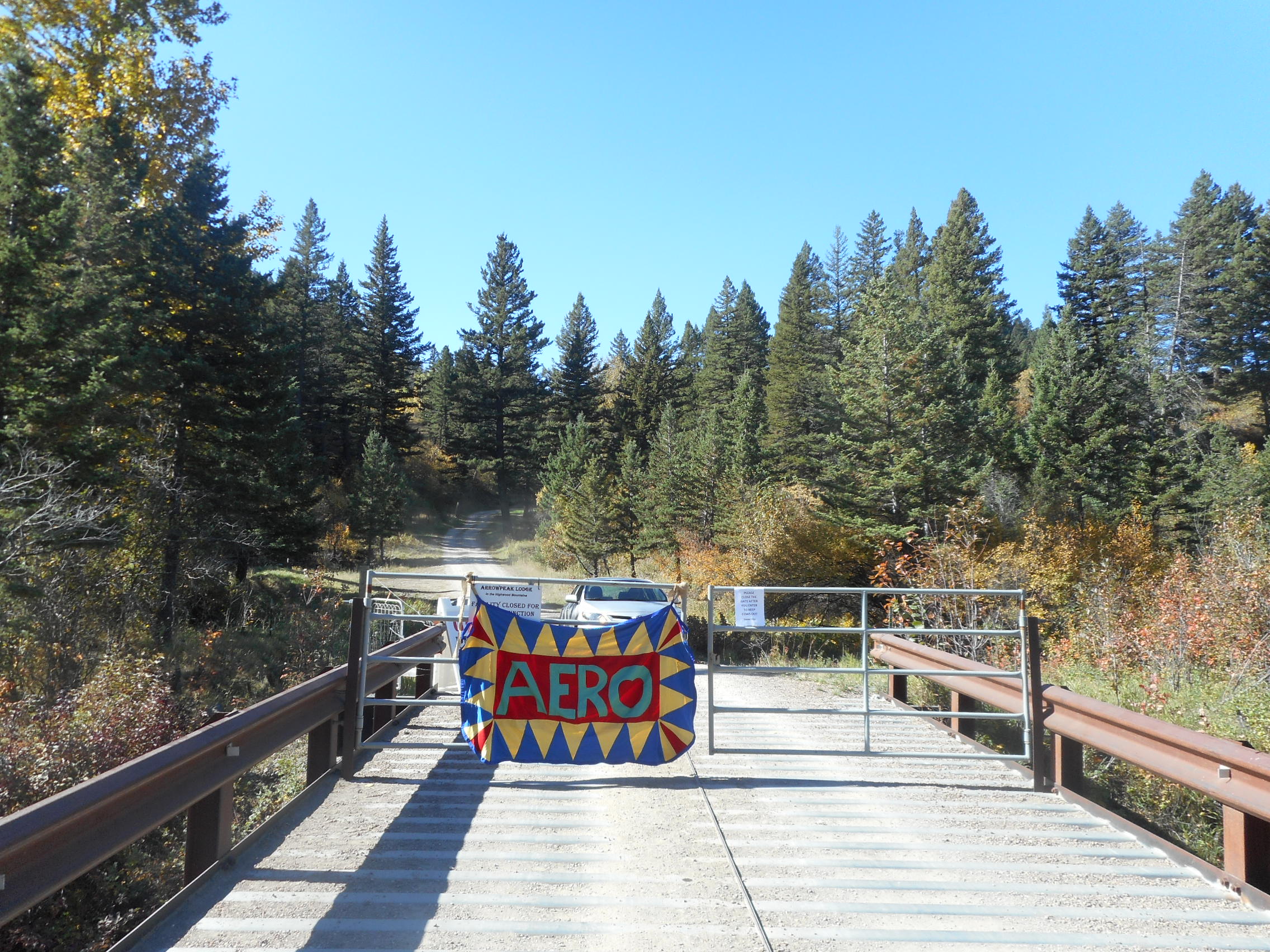
I didn't really hear the term resiliency till you and I went to the AERO workshop back in 2017? 2018?
i think it’s good to start by defining sustainability and lets look at one in nature
they are 2 different terms and both have a place
a sustainable system is one that can keep going over time! The more then the inputs to the system are locally accessible and renewable the more sustainable that system!
So let's look at a farm and what they need in order to grow food they need seeds
- nourishment for the soil
- power source
- water underground to power the well
if they save their own seed that means their seeds are locally accessible and renewable. As long as they keep growing and saving them, that’s a sustainable activity.
If they make their own compost and use worm castings of that nature that's locally accessible and renewable as opposed to buying chemical fertilizer that comes from Canada by way of Texas that' s just not sustainable it's not local.
The third would be if your power for your waterfall is local accessible renewable
it's not dependent on getting access to gas or fuel
If you had an electric tractor or it was powered by biodiesel and plants that you grow
So that's the definition of sustainable
The definition of Resilient
ability to be responsive and move through disruptive change
Disruptive change is defined as unpredictable and having high risk associated it
In the natural world it refers to shifts of tech plates
- tsunamis
- meteor that hit the planet
- ice age
All of those are disruptive changes, not really predictable - maybe the ice age was predictable but you know what I am saying, you don’t have the opportunity to plan for it
We usually look at
- high impact
- high risk
as a negative
disruptive change can be positive
If you win the lottery you go from making $2500/month to
has high risk and high impact it's really impossible to plan.
I like to say when the first baby shows up at your house but there's absolutely no way to prepare for a new person in your life.
definition
resiliency
this intelligence
stems from an understanding that systems in nature, nature’s been around along time
species and systems that are still around today
they are by definition resilient,
they have survived and able to adapt to lots of examples of distributive change if we look at them we have some opportunities to say what is it they are doing that has supported their capacity to be resilient and how can we apply that to humans of all the species
we're kind of the youngest kids on the block by a long shot
that's the conversation and that’s the opportunity
I like the way you talk about the baby because that makes it sound more tangible.
the reasons I talk about this
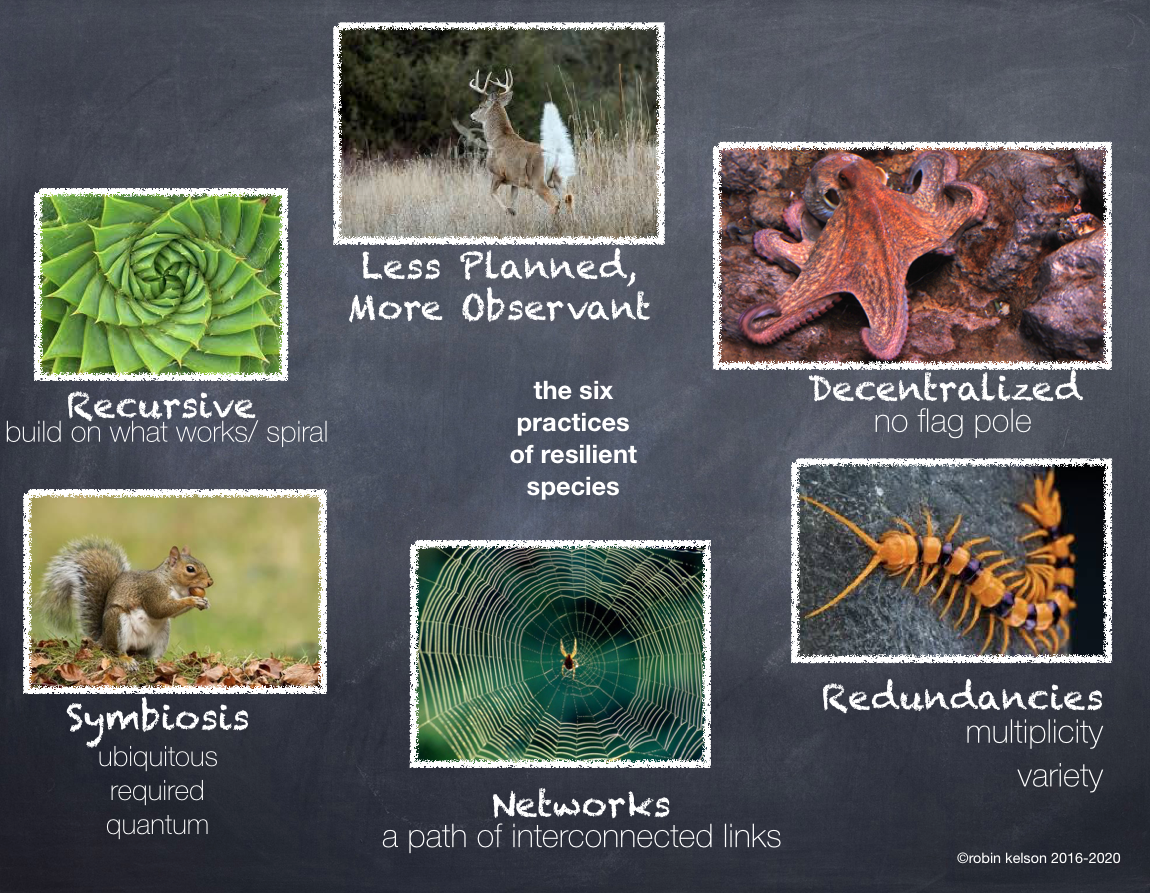
6 principles of resilient behavior
if you will that have been extracted by really smart people
this work has come from lots of people
- biophysicists
- chemists
- biologists
- mathematicians
looking at the evolutionary record and the ecological record
A lot of this is taken from and synthesized from a book
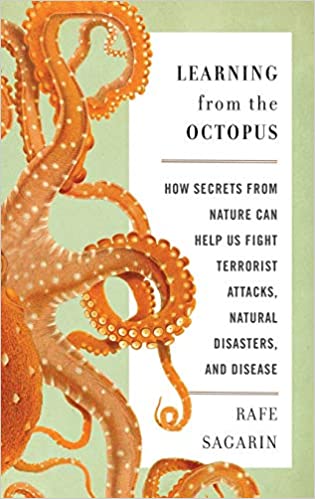
Learning From the Octopus: How Secrets from Nature Can Help Us Fight Terrorist Attacks, Natural Disasters, and Disease
an extraordinary human being no longer with us unfortunately, did a great job of applying it in the concept of national security
How to make our country more secure he did this right after 9/11
in our personal lives
our communities
obviously with relationship with the planet
fractal you can scope it up or scope it down everything I am telling you, where you can see it applied within a system in a body, or a country or a planet it's all the same.
And agriculture is a really big part of it!
I want to start by saying this. We have a tendency to think ourselves that way as the youngest kids on the block, but the reality of it is, that almost every part of our system that makes us up as human beings is really ancient and well established system
- circulatory system
- immune system
- ocular system
- metabolic system
all of them they are taken from other species that came before us, so they have all that intelligence and resiliency built into them
pre-frontal cortex is our executive function, all of the thinking
planner
logically
serially
puts things into a stacked order
phenomenally successful at creating things, you see all the things we have created. I am not dissing our pre-frontal cortex, is the youngest part of us, the way we think doesn’t the rest of our body does
The opportunity is to teach to the part of us that does all the thinking, more holistically if you're are willing to accept this, more maturely.
I am going to walk you through the 6 principles to send
very quickly
not in any particular order
the order I talk about them
Resilient systems don’t try to plan for the unexpected or for disruptive change
too many different ways it can happen and disruption by definition means you can’t plan so why spend any time doing that, it doesn't mean don't try to plan, planning is good it has its place. But instead,
what resilient systems do it means they have put time and energy to be observant to unexpected changes in the environment and to be responsive to it.
An example I like, you think of a herd of deer white tailed deer, they aggregate as a herd, if one of them hears a noise that is unexpected, ears are fine tuned, they can feel vibrations intensely, if they hear something unusual white tail goes up and they see it and everybody scatters.
That is a way to respond to unexpected change.
So an example in our bodies is an example with the immune system:
Imagine I’m putting my hand, can’t see the gate
- I get a splinter or something
- I cut my finger
- immediately have this immune system set up
- the antibodies in the immune system are just waiting to see if something happens and then a series of events goes into motion
unexpected event
the next thing is that resilient systems respond to disruptive change
ability to be decentralized
autonomy to take care of that systems to take care of the unexpected event
nothing has to run up a flagpole
with my cut finger in a fraction of a second the nerve endings, I immediately get signal, pain happens, series of chemical send platelets to the cut to patch up the hole, and antibodies to see if antigen needs to get eaten or some adrenaline if I need to move quickly, but all sorts of things that don’t engage brain, until the point I look at until i put water on this, before I think, if I had to coordinate the nerve endings, I'd probably bleed out
decentralized
the ability to
decentralized you are giving autonomy to all the different systems
- common goal
- common agreement
- common purpose
all my systems are in agreement that the goal is to keep me alive so I can procreate and produce progeny to keep the species going, that's the common goal
so in nature, there’s lots of examples, there’s a really cool one if you ever saw finding Dori, that was the sequel in finding memo, there was this octopus who can camouflage himself in the drop of the hat.
octopi can camouflage themselves to become part of the environment around them, it happens by chromophore on each of their arms that couldn’t be organized by a central thought process
- less planning
- decentralization is key
- redundancies
Redundancy. Resilient systems have redundancy built in
number of
2 copies of DNA
plants have 3-4 copies
if something happens to one gene you only need one copy of the gene in the body to move forward
key to why we are able to be who we are today in our immune system, we don't have one anti-body, we have 5 classes of antibodies
cell type
we don't have one kind of immune system we have 2. One in the blood stream that comes out of our blood cells and another in the thymus
lots of redundancy built into our systems
in the natural world of centipedes who have 100 feet can probably lose up to 15% of them and be ok, IDK if they actually need all 100 and still be able to move across great and allow some of them to be lost over the course of their lifetimes.
That's the first 3
that’s the
networks
the fastest way to communicate information and change which is a pathway of interconnected links how we communicate everything
- electronically
- chemically
- neurologically
- how all biological systems work
When you're thinking about business or your life think networks most effective way to effect change
symbiosis
if you want to experience transformational change or impact, you must participate and engage other
- people
- components
- you can't do it all by yourself
- no species on the planet
most anyone or thing can maximize it's impact by him or herself is additive it's only when you engage and participating with others that you can get exponential change which is essential for resiliency
impact
- around the world
- in multiple niches
- in multiple environments
That's key
These are things we are not doing right?
What’s interesting, it is what we do in a crisis if you think about what we did
- after Katrina
- or after covid here
So many examples of neighbors stepping up and helping out and using networks
when we go into fear
- structural level
- higher political levels
We contract and constrict trying to plan out how to prevent and
non resilient behaviors
governmental level we might have had a higher positive impact in response to covid if we had been more of an invitation for
- participation between states
- more organized way of learning from what other countries who were experiencing covid before us
- participating with them etc
it’s very common at the structural level that we can constrict and go into fear
Not just in the US it's a very common response to disruptive change
we
said and wrote his book was the way we responded to 9/11 which actually just didn’t have the impact it intended to have I can go down that road but that's not why we are here
last thing I will say last before we get into ag key to resilient systems is that they are recursive is it learns along the way
leans into what works, thinking about just impacting what didn’t work
disruptive change and how to respond to it you have to realize it's a learning along the way
make change in response to what works
You can actaually graph this out how nature has done this over time and every example of a spiral is leaning into the yes if you will
Fibonacci spiral is a graphical expression of learning into the yes
being adaptive is being willing to learn along the way
that's key. None of this is black and white, I'm not saying only one is being good.
I feel like one thing you are going to tell us is part of being key to being healthy to begin with and having a strong immune system.
sure making food choices that speak to your well being
All of that is part of it, keeping all your systems working well
the other thing I will say is that the way our mind works particularly when we are in fear ~ good bad way of thinking ~ that’s not the way resiliency works
Let's take an example from the food growing world
We have now moved into an approach to ag that is driven by monocultures one of the things we learn when you start growing monocultures is you have disrupted a whole system of organisms that knew how to work together and we're in a relationship to the soil and we are learning.
a new relationship with the soil
we're learning so much
- elegant
- intelligent
- far more complex than anyone thought
start mono-cropping you start to get impacts to the quality you grow
- call those weeds
- pests or bugs
our mindset os we'll just get
- rid of it,
- just kill it
- while we just developments
Spend gobs of money getting rid of that what we don't want,
billions of dollars later
mindset has been promoted at a corporate and government level
It worked for 4-5 years or 5-10 years it worked over time
Let's just look at glyphosate
Glyphosate is just one of many, many chemcials
within the first 5 years it was a godsend for farmers they didn’t have to deal with weeds, how fabulous!
Didn't have to
in our binary world, they’ve come back
they’ve
- make it stronger
- cocktail
We're still in a binary mindset
So if you go down under the soil and look at it from the plant’s point of view, this chemical that is being applied to the plant root or soil, if you look at it from the prospect of the pant or the soil organism
that’s just a disruptive event, nothing more or less, then what will they do?
They will say, I have to work with this, it's a new change to my environment, so they will think, I will work with this so the species will survive
made up of lots of systems within it
that’s what shows up 3-4 years later, we have glyphosate weeds, they have adapted
does not matter
- what you do
- what we as humans to “kill” these organisms
- they will just adapt
- too many systems built into them
Instead what would be appropriate would be to work with them
- permaculture
- regenerative agriculture
- all that intelligence of system agriculture comes from
illusion and non-functional approach to think we have the skill set to get rid of any other system that has been around millions of years longer then us
do you have any questons?
I was thinking well what do we do, but is that what we do is practice permaculture and regenerative ag systems?
What we do is shift our thinking to one of, to think I as a human know more
We used to think soil was just something brown, maybe tilth or something, but we did not have...