
Good Fire
67 episodes — Page 2 of 2
S1 Ep 9Aboriginal Women and Caring for Country in NSW, Australia with Vanessa Cavanagh
I think when most people imagine a firefighter they picture a man. Women, it would seem, are still trying to shake the stigma of historical gender roles. Across the colonized world these gender roles have created a mold through which we all perceive and think about our world. Vanessa is trying to break that mold. Through her own life experiences climbing the ladder of the western fire model, as well as through her research, Vanessa has great perspective and insight into the importance of women in cultural fire. Episode highlight In this podcast, Vanessa Cavanagh shares her journey as an Aboriginal woman in cultural burning and firefighting. Resources Vanessa Cavanagh: https://scholars.uow.edu.au/display/vanessa_cavanagh Sponsors The Canadian Partnership for Wildland Fire Science Support from: ● California Indian Water Commission ● Firesticks Alliance Indigenous Corporation Quotes 1.01.23 - 1.01.32: “We never know all the answers, it’s always just an ongoing experience and … that’s the work and the process where we're trying to change as we go along.” Takeaways Reconciliation (1.45) Vanessa is passionate about maintaining her mother tongue from the Bundjalung country in New South Wales. On the shoulders of other women (5.55) Vanessa shares her career journey, and how fire forms a part of the belief systems that were founded on a relationship with the land. The role of women in cultural burning (13.47) Vanessa acknowledges that gender roles do come into effect at work, and encourages more space for Aboriginal women in her cultural burning research. The social dynamics of gender (22.07) In Vanessa’s experience, “Indigenous men working in cultural burning have always promoted the position of Aboriginal women’s roles in cultural burning”. Cultural change (28.45) Vanessa points out how people are more open to learning from Aboriginal knowledge and land management practices today. Change is uncomfortable (31.57) Vanessa states that since social structures promote the privilege of one group, they become resistant to change. It takes energy and political effort to change the dominant narrative. Celebration of learned individual success (38.59) Vanessa considers maintaining her connection with the community as one of the reasons people find her inspiring. Lifelong learning and teaching (46.01) In her workshops, Vanessa finds that people are excited and eager to learn about Aboriginal fire when given the opportunity to engage with it. Three-pronged approach (52.04) Vanessa outlines the 3 questions she is seeking to address in her Ph.D. within an Indigenous methodological approach: 1) How do Aboriginal women engage in cultural burning in New South Wales? 2) How do Aboriginal women want their knowledge and narratives of cultural burning to be presented and shared? 3) Are there barriers or challenges to the full participation of Aboriginal women in cultural burning that can be addressed through policy implementation or development? If yes, how can those be developed to help assist more participation? Knowledge sharing opportunity (55.17) Vanessa has developed a huge network through her work in the national parks’ annual meetings of Aboriginal staffers and had women approaching her about burning when she shared her Ph.D. topic. If you liked this podcast, please check out YourForest podcast too, rate and review it on Instagram and Facebook and tag a friend, and send your feedback and comments to [email protected].
Season 1 | Episode 8 | Good Fire Podcast
S1 Ep 8Fire Ecology and Indigenous Knowledge with Frank Lake
Wildfire management has long been the domain of colonial governments. Despite a rich history of living with, managing, and using fire as a tool since time immemorial, Indigenous people were not permitted to practice cultural fire and their knowledge was largely ignored. As a result, total fire suppression became the prominent policy. With the most active force of natural succession abruptly halted, Indigenous communities suffered as the land changed. Today, western society has recognized the ecological problem a lack of fire has created, however, the cultural impact has been largely ignored. Frank Lake has spent a great deal of time contemplating the role of Indigenous people in fire management, and he has some great insight into how we can begin to change fire management for the benefit of all people. Episode highlight In this podcast, Vanessa Cavanagh shares her journey as an Aboriginal woman in cultural burning and firefighting. Resources Vanessa Cavanagh: https://scholars.uow.edu.au/display/vanessa_cavanagh Sponsors The Canadian Partnership for Wildland Fire Science Support from: ● California Indian Water Commission ● Firesticks Alliance Indigenous Corporation Quotes 1.01.23 - 1.01.32: “We never know all the answers, it’s always just an ongoing experience and … that’s the work and the process where we're trying to change as we go along.” Takeaways Reconciliation (1.45) Vanessa is passionate about maintaining her mother tongue from the Bundjalung country in New South Wales. On the shoulders of other women (5.55) Vanessa shares her career journey, and how fire forms a part of the belief systems that were founded on a relationship with the land. The role of women in cultural burning (13.47) Vanessa acknowledges that gender roles do come into effect at work, and encourages more space for Aboriginal women in her cultural burning research. The social dynamics of gender (22.07) In Vanessa’s experience, “Indigenous men working in cultural burning have always promoted the position of Aboriginal women’s roles in cultural burning”. Cultural change (28.45) Vanessa points out how people are more open to learning from Aboriginal knowledge and land management practices today. Change is uncomfortable (31.57) Vanessa states that since social structures promote the privilege of one group, they become resistant to change. It takes energy and political effort to change the dominant narrative. Celebration of learned individual success (38.59) Vanessa considers maintaining her connection with the community as one of the reasons people find her inspiring. Lifelong learning and teaching (46.01) In her workshops, Vanessa finds that people are excited and eager to learn about Aboriginal fire when given the opportunity to engage with it. Three-pronged approach (52.04) Vanessa outlines the 3 questions she is seeking to address in her Ph.D. within an Indigenous methodological approach: 1) How do Aboriginal women engage in cultural burning in New South Wales? 2) How do Aboriginal women want their knowledge and narratives of cultural burning to be presented and shared? 3) Are there barriers or challenges to the full participation of Aboriginal women in cultural burning that can be addressed through policy implementation or development? If yes, how can those be developed to help assist more participation? Knowledge sharing opportunity (55.17) Vanessa has developed a huge network through her work in the national parks’ annual meetings of Aboriginal staffers and had women approaching her about burning when she shared her Ph.D. topic. If you liked this podcast, please check out YourForest podcast too, rate and review it on Instagram and Facebook and tag a friend, and send your feedback and comments to [email protected].
Season 1 | Episode 7 | Good Fire Podcast
S1 Ep 7Interior Fire Keepers Workshop in Merritt BC, Canada: Second live recording with Pierre Kruger
More Fire Stories from Fire Keeper Pierre Kruger. These live recordings are a great way to try and understand some indigenous perspectives when it comes to the role of fire in our natural world. Episode highlight In this episode, Pierre Krueger, a traditional fire-keeper and Penticton Indian Band Elder, debriefs about a cultural burn that was done at the workshop. Resources An Indigenous burning story featuring Pierre Krueger: https://thenib.com/prescribed-burn-forest-fires/?fbclid=IwAR1eAANy5RBrRSdqBd-gojxUefSjMNbDsgmmL2UVMP5cVFGT19LlYeJ4IfA Sponsors The Canadian Partnership for Wildland Fire Science Support from: ● California Indian Water Commission ● Firesticks Alliance Indigenous Corporation Quotes 13.58 - 14.15: “We have a responsibility. If someone knew what I know or any of my family knows, they could be billionaires within 2 years because they’d exploit our knowledge.” Takeaways Burn debrief (1.55) Pierre brought his own tools for the cultural burn but says that he would have preferred to wait a few days because it was not dry enough to burn. Every year is different due to the seasons and that affects the window of burning available. He normally tests the grass and does a clean burn. “Everyone gets a chance at everything” (3.48) Pierre’s mother looked at burning as an act of togetherness and encouraged everyone to participate to the best of their ability. Burning is also an act of communication, as animals would be forewarned to clear the areas to be burned. Safety is the fire-keeper’s responsibility (7.47) Pierre believes firefighters have a lot to learn from his family’s way of fire-keeping since their practice has never seen a fire go astray. He shares instances of using fire to regulate the cultivation, and how food made him and his brother strong enough to run 115 miles a day! Land and water (13.19) Pierre wants to teach cultural burning to the youth and other people who care for Mother Earth, to help clean the waterways. His people know how to spot the streams which are drinkable, and they consider it their responsibility to inform others if they find a bad stream to avoid. Weather whisperers (17.35) Pierre shares how his family has the ability to control the weather and sees great possibility in others learning this art to make a difference to the environment. He narrates an incident when his mother created a 100-foot circle of protection around them to keep the rain away. If you liked this podcast, please check out YourForest podcast too, rate and review it on Instagram and Facebook and tag a friend, and send your feedback and comments to yourforestpodca
Season 1 | Episode 6 | Good Fire Podcast
S1 Ep 6Fire and Water in California, USA with Don Hankins
Cultural burning is important for many reasons, from berry production to habitat creation it promotes sustainable ecosystems and communities. Water is one giant part of that equation. What is the connection between fire and water? How can burning more or less often, higher or lower intensities, affect water quality and fish habitat? Don Hankins has studied these questions and has answers for us. Episode highlight In this podcast, Don Hankins, President of the California Indian Water Commission, talks about the connection between fire and water. Resources California Indian Water Commission: https://ciwcwater.org/ Sponsors The Canadian Partnership for Wildland Fire Science Support from: ● California Indian Water Commission ● Firesticks Alliance Indigenous Corporation Quotes 20.03 - 20.14: “In Indigenous ways of thinking, we’re not just thinking about ourselves; we’re connecting to our ancestors and we are connecting down to generations unborn.” Takeaways Don’s journey (01.22) Don is Plains Miwok and has been involved in fire restoration and research for more than 20 years, informed by his understanding of community needs. Rekindling fire (06.33) Don speaks about how they have been bringing local tribes to re-engage with fire and regenerate interest by creating a learning lab. Reliving fire stories (14.18) Don highlights the importance of the fire stories he was taught since they teach about tools to start and tend a fire and Indigenous fire laws. Safety first (19.35) Don has been taught that fire-keeping is an obligation handed down to Indigenous peoples at the time of creation, “to care for and tend to our landscape”. Fire and water (22.51) Within Indigenous knowledge systems, there is an inherent relationship between water and fire. An important aspect of Don’s knowledge system is the ability of a burn to bring rain. Risk mitigation (31.47) Don points out that the context of the knowledge base, the seasons chosen for burning, the objectives of a burn and fire laws distinguish Indigenous burning from agency burning. Ecological grief (35.48) Don describes the ecological grief that countless generations of Indigenous peoples experience. This land is our land (43.12) Don believes that agencies have a responsibility to uphold Indigenous peoples’ rights to steward their lands, and shares how tribes are reclaiming their rights to the land. Care of the land (45.47) Don shares that caring for the land is a cultural obligation for Indigenous peoples. Following Indigenous laws is important to live sustainably on the land. Healing powers of burning (47.27) As a fire/burn boss, Don says his knowledge is not acknowledged by agencies. When he takes any group of people to burn, he shares his knowledge of techniques and tools. Universal cultural fire (59.15) Don believes in the power of Indigenous peoples developing their own standards and qualifications for fire practice that champion Indigenous sovereignty. Carrying the torch (1.03.48) Don delineates the difference between the way Indigenous peoples and agencies perceive fire. He hopes to pass cultural burning responsibilities to the next generation. If you liked this podcast, please check out YourForest podcast too, rate and review it on Instagram and Facebook and tag a friend, and send your feedback and comments to [email protected]
Season 1 | Episode 5 | Good Fire Podcast
S1 Ep 5Interior Fire Keepers Workshop in Merritt BC, Canada with Nklawa
This episode features stories from Fire Keeper Nklawa. He provides insight helping people to better understand burning and it’s importance from a cultural perspective. Resources A history of fire featuring Nklawa: https://prescribedfire.ca/history-of-fire/ Sponsors The Canadian Partnership for Wildland Fire Science Support from: ● California Indian Water Commission ● Firesticks Alliance Indigenous Corporation Quotes 21.36 - 21.43: “The benefits far outweigh the bad part about… [the fire].” Takeaways Fire legend (1.49) Nklawa’s people from the Okanagan believed that early people were more instinctual like animals. He narrates the story of how the creator gave all animals jobs to prepare for the coming of humans during the winter. Coyote was sent first, and he asked the Elders about the fire which was being protected by fire monsters at the top of a mountain. The tale of the tails (4.55) Coyote scouted the mountain till he saw the opportunity to steal the clay bowl of fire. As he ran with the bowl, the tip of his tail hit the clay pot and caught fire. That is why coyotes have a white-tipped tail. As Coyote got tired, he passed the clay pot to Possum, whose entire bushy tail caught fire as he ran. That is why possums don’t have hair on their tails. How people were gifted fire (9.55) Possum passed the clay pot to Squirrel, who ran with it on its back till he felt the clay pot burning his back. He stopped and brought his tail up to cover the spot, which is why squirrels have upright tails. When the squirrel got tired, he threw the clay pot to Wood, who swallowed the fire. The fire monsters tried everything to retrieve fire from him, but couldn’t. Coyote then took Wood to the human village and showed them how to get fire from Wood, so they were not cold. Indigenous relationship with fire (14.22) Nklawa shares that until 200 years ago, people respected fire and were not afraid of it. He highlights the contrast between how fire was lit in the past to protect forests and resources, and how people are viewing putting out fires today as a way to do so. Indigenous peoples look at fire as a resource to replenish and cleanse the land. Forest as a shared resource (18.45) Nklawa says the food and medicines the forest provided made it economically viable for his people. He believes consultation with traditional people is missing from land management today. Forests need to be looked at as a shared resource for everyone to take what they need. If you liked this podcast, please check out YourForest podcast too, rate and review it on Instagram and Facebook and tag a friend, and send your feedback and comments to [email protected].
Season 1 | Episode 4 | Good Fire Podcast
S1 Ep 4Firesticks Alliance in Australia with Oliver Costello
For generations, since colonization, authority over the land and how to manage it has been held firmly by colonial governments, despite that land being sustainably managed for thousands of years prior to European contact by Indigenous peoples. Firesticks is an organization that aims to change the system and create more opportunities for Indigenous lead fire management. A more inclusive management system serves multiple purposes, benefiting all walks of life from indigenous to non-Indigenous peoples, as well as a more sustainable landscape. Resources Firesticks: https://www.firesticks.org.au/about/ Sponsors The Canadian Partnership for Wildland Fire Science Support from: ● California Indian Water Commission ● Firesticks Alliance Indigenous Corporation Quotes 31.10 - 31.20: “You develop all these safety mechanisms for risk management, and risk management is important. Our people had risk management too - it was called knowledge and they used it”. Takeaways Cultural burning (01.24) Oliver is a Bundjalung man from Northern New South Wales. He sits on the board of Firesticks Alliance Indigenous Corporation, which began as a way to bring the community together using fire and building recognition around cultural fire management. Right fire (06.00) Oliver speaks about how Aboriginal fire knowledge was lost due to colonization, but that assets and values can be used to create possibilities for the future. He thinks of fire as a tool to understand what the land teaches and how to support the relationship with the land. Teaching the right way to burn (12.38) Oliver talks about the reach of Firesticks, with fire workshops being conducted in different parts of Australia. This helps to engage agencies to understand regulation and policies and engage with cultural burning. The response and outcomes have mostly been positive. Build confidence and relationships (23.09) Oliver acknowledges that there is some tension between the Aboriginal communities and the agencies. Indigenous community mentorship and recognition of Indigenous knowledge through the cultural connection to the land are the pillars of Firesticks’ approach. Cultural Learning Pathways (29.01) Oliver shares how ancestral knowledge has been lost over the years, but that there is an opportunity for Aboriginal youth to lead the way. Firesticks aims to work with people who are connected with their ancestors and are present and aware of ways to burn to manage risks. Healthy country, healthy people (38.00) Oliver emphasizes the relationship of people to the land - the more you engage with the land, the more you are rewarded - physically, mentally, spiritually, and culturally. “You don’t take more than you give” (42.20) Oliver urges listeners to tune into the land to do what is healthy for the land as well as for the people. He believes mismanagement of land is killing the land, and that resources are finite. Fire teaches us patience and presence (51.56) Oliver feels inspired meeting people through the increasing number of fire workshops, learning about the different languages and traditions of the other Nations. If you liked this podcast, please check out YourForest podcast too, rate and review it on Instagram and Facebook and tag a friend, and send your feedback and comments to [email protected].
Season 1 | Episode 3 | Good Fire Podcast
S1 Ep 3Interior Fire Keepers Workshop in Merritt BC, Canada with Pierre Kruger
Indigenous people have a rich history of working with and understanding fire. Pierre Kruger remembers a time when burning was common and has countless stories describing the lessons learned. This is the first of three Fire-Keeper stories we will release during the course of this podcast series. These stories consist of traditional knowledge and describe an understanding of fire that may be different from what some have come to understand.In this podcast, Pierre Krueger remembers a time when burning was common and has countless stories describing the lessons learned. ResourcesAn Indigenous burning story featuring Pierre Krueger: https://thenib.com/prescribed-burn-forest-fires/?fbclid=IwAR1eAANy5RBrRSdqBd-gojxUefSjMNbDsgmmL2UVMP5cVFGT19LlYeJ4IfA SponsorsThe Canadian Partnership for Wildland Fire ScienceSupport from:● California Indian Water Commission● Firesticks Alliance Indigenous CorporationQuotes3.19 - 3.24: “Fire is like a snowflake; there ain’t no two fires the same.” TakeawaysFire safety (02.11)Pierre Krueger’s family members have been fire-keepers for over 10,000 years. He narrates the story from the 60s when Pierre and his uncle surveyed the land during a wildfire to ensure safety and saved the lives of 70 to 100 settler firefighters by cutting down the trees that could have spread the fire. The journey of a fire-keeper (8.04)Pierre shares that the first lesson in Indigenous burning is how to light a fire with what is available in the short window for burning. Safety is the most important consideration in burning because losing one’s life from burning has impacts on reincarnation, he says. He highlights that fire-keepers are also responsible for taking care of the garden (mountains, valleys and water bodies). Understanding fire (10.39)Pierre recalls that in the 60s to the 80s, Indigenous peoples “were the best firefighters around”. They were dropped from moving helicopters onto steep hills since they were trained, experienced and knowledgeable in what needed to be done to control a wildfire. He explains the many reasons that fires are created - real estate, road development, clear-cutting - and how cleaning up after a fire is important.“We don't have a fear of fire” (13.17)A few years ago, Pierre and his son took a forest fire crew out to the forest and lit the backfire at their request. When the wind came in, Pierre warned the crew not to go ahead, but they didn’t listen and it led to casualties on the crew. Good firefighting “takes time and common sense”, he states. He has invited the Penticton firefighting unit to learn how to understand fires from the experience of the Indigenous peoples so that they don’t fear fire. Fire-keeping in his blood (16.56)Pierre was taught how to be a fire-keeper from childhood, with the ability to call on the weather being an important part of the teachings. He laments that the practice is slowly being lost because the younger generation is “becoming tunnel-visioned”. His vision is to teach many people about fire-keeping so that they can use technology to work with their enhanced knowledge and understanding of fire.If you liked this podcast, please check out YourForest podcast too, rate and review it on Instagram and Facebook and tag a friend, and send your feedback and comments to [email protected].
Season 1 | Episode 2 | Good Fire Podcast
S1 Ep 2Burning on territory in Victoria, Australia with Trent Nelson and Tim Kanoa
Cultural burning exists around the world. This week we spoke with Trent Nelson and Tim Kanoa about the huge forward strides they have taken to get cultural burning back on the landscape on the other side of the globe, in Australia. We discuss the deep cultural ties to burning, what has been lost, and what can be gained by having it back on the land. We could learn a lot from their experience. Resources Native Title: https://www.ag.gov.au/legal-system/native-title RSA: https://djadjawurrung.com.au/galka-our-organisation/#recognition-settlement-agreement Cultural Landscape: https://whc.unesco.org/en/list/1577/ The Victorian Traditional Owner Cultural Fire Strategy: https://www.ffm.vic.gov.au/fuel-management-report-2018-19/statewide-achievements/cultural-fire-strategy Sponsors The Canadian Partnership for Wildland Fire Science Support from: ● California Indian Water Commission ● Firesticks Alliance Indigenous Corporation Quotes 18.02 - 18.08: When the world evolves, so does the culture… If we didn’t evolve as a culture, we wouldn’t be the longest living culture in the world.” 25.31 - 25.36: “It’s not just about burning the landscape, it's about healing your people as well.” Takeaways Get to know Trent and Tim (5.29) Trent is Yorta Yorta and Dja Dja Wurrung. He works in land management with the parks agency. Tim is from Gunditjmara First Nation and works for the environment department. Trent’s history of cultural burning (07.46) Trent believes that continuing the custom of cultural burning is a way of paying respect to their ancestors. Fire was brought back to the landscape of their nation 3 years ago. Tim’s history of cultural burning (16.27) For Tim’s nation, fire means many different things. He speaks of the diversity in Aboriginal groups in their languages and customs. Native Title (25.41) Tim talks about Native Title in Australia which protects the Aboriginal peoples' rights and interests to their land that derive from traditional laws and customs. Fire as a positive force (32.20) Tim emphasizes the importance of communication between non-Aboriginal people and Aboriginal peoples. Fire has become a positive tool for people to connect. “Nothing is lost” (36.05) Trent says that even though Aboriginal peoples' way of living in society has been disrupted, the knowledge of using fire still lies with them. Cultural protocols (40.48) Trent shares that cultural protocols are carried in their hearts as passed down through generations. They now invite Elders to every burning site to take their permission. Respect fire (48.08) Trent laments that even though fire gives us life and is an important part of ceremony, it has been viewed as a fearful threat. Collaborative governance (54.06) The state government of Victoria is committed to Aboriginal self-determination and to achieving a treaty with the Victorian Aboriginal community. RSA (57.12) Trent expounds on the Recognition and Settlement Agreement in Victoria. He and Tim narrate how Aboriginal fire management is being restored through advocacy work. Aboriginal cultural landscape (1.11.30) Tim explicates how fire has helped Aboriginal mobs by registering the Aboriginal cultural landscape with UNESCO. If you liked this podcast, please check out YourForest podcast too, rate and review it on Instagram and Facebook and tag a friend, and send your feedback and comments to [email protected]
S1 Ep 1Welcome to Good Fire
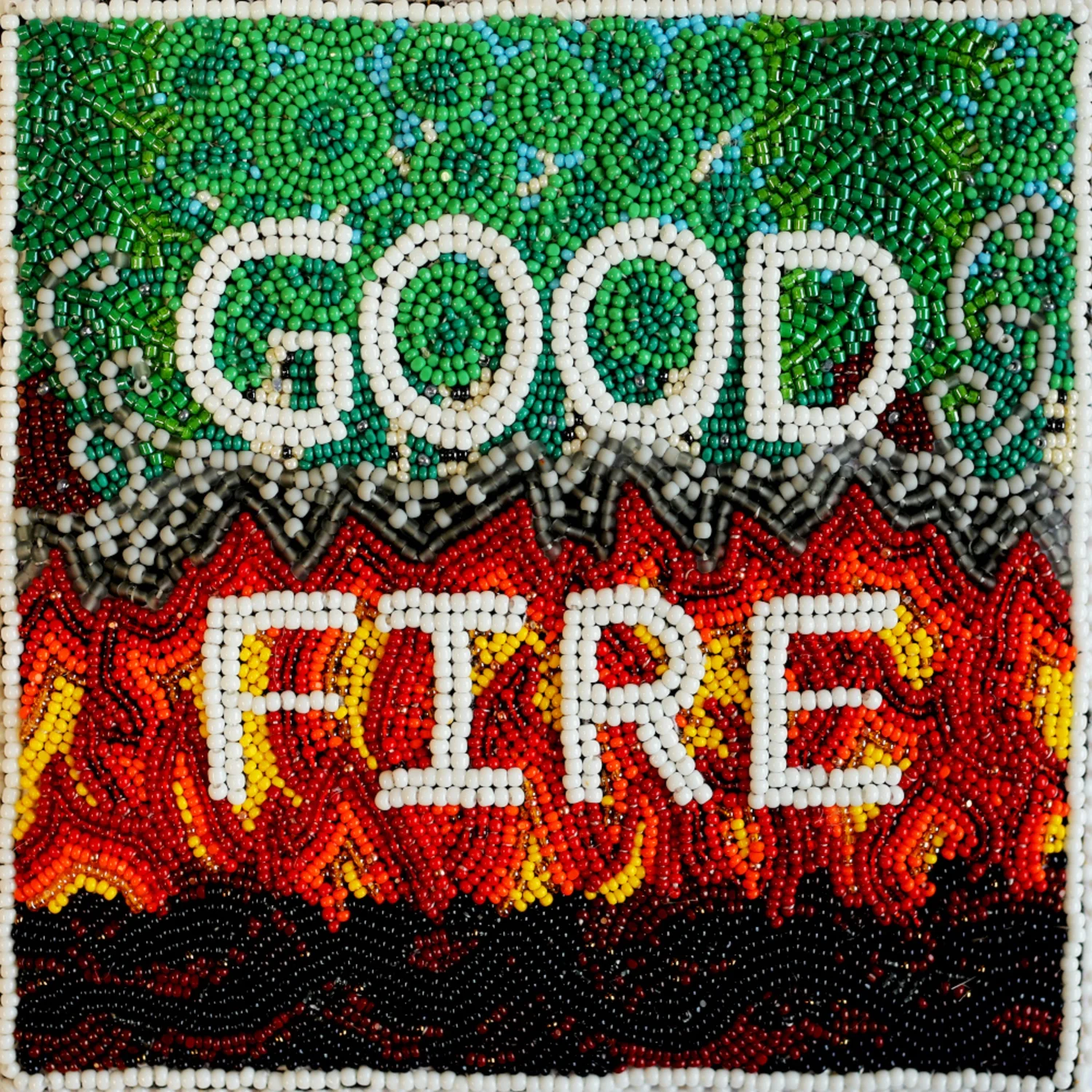
Wildfire is often portrayed in the media as being ‘destructive’ and ‘catastrophic’. In this podcast we explore the concept of fire as a tool for ecological health and cultural empowerment by Indigenous people around the globe. Good Fire is a term used to describe fire that is lit intentionally to achieve specific ecological and cultural goals. Good fire is about balance. Quotes 04.06 - 4.21: “Any time you talk to an elder about good fire, it’s about cleaning up the landscape, about using fire as a tool and also as something that sustains their culture so that they can live in that area.” 13.06 - 13.22: “Our role is … given down from the creator, to look after the earth, to steward the earth… So if you can’t do that, it basically takes away who you are as a person… Why are you here, then, if you can’t look after your territory or your land?” Takeaways What is good fire? (01.04) Amy, a fire research scientist, is Métis from Northern Alberta, currently living in Treaty 6 territory. She differentiates good fire, the fire the forest needs, from wildfires, which are dangerous and threaten people’s health, safety and property. Many Indigenous nations use fire as a tool, serving a cultural, subsistence and safety purpose. How good fire helps (03.05) Amy explains that good fire earns its name because it is used “to get rid of the dead trees, dry grass, things that can contribute to a bad fire”. She states that bringing back good fire can reduce the risk of wildfire. The history of fire exclusion (5.37) When settlers first came to Indigenous lands, they were terrified by the fires that damaged timber and watersheds. However, Indigenous people have been conducting regular repeated intervals of low-intensity burning to maintain and steward the land. “You are never going to defeat wildfires” (09.53) Amy believes that aiming to get rid of wildfire is unnatural. She finds that Indigenous people burn for many more reasons than reducing fuel risk - they do it to restore the health of forests and communities. The fight for fire (11.33) Indigenous communities are aware of the positive effects of controlled burning and are committed to safeguarding the land through good fire. Amy shares examples from different Indigenous cultures where burning is considered a familial responsibility. A sharing circle on fire (15.05) Amy wanted to create the Good Fire podcast to learn from Indigenous peoples around the world who work in Indigenous fire management. She speaks about the different aspects of fire management from Indigenous and western perspectives. Keep the fire burning bright (19.32) Amy hopes this podcast inspires listeners to seek out Indigenous firekeepers and Elders in the community to learn about the environment around them. She looks at this podcast as a way to share what fire means to Indigenous peoples and to bring good fire back. If you liked this podcast, please rate and review it on your podcast app. Send your feedback and comments to [email protected] or [email protected]