
Good Fire
67 episodes — Page 1 of 2
Season 3 | Special Live Episode | Good Fire Podcast
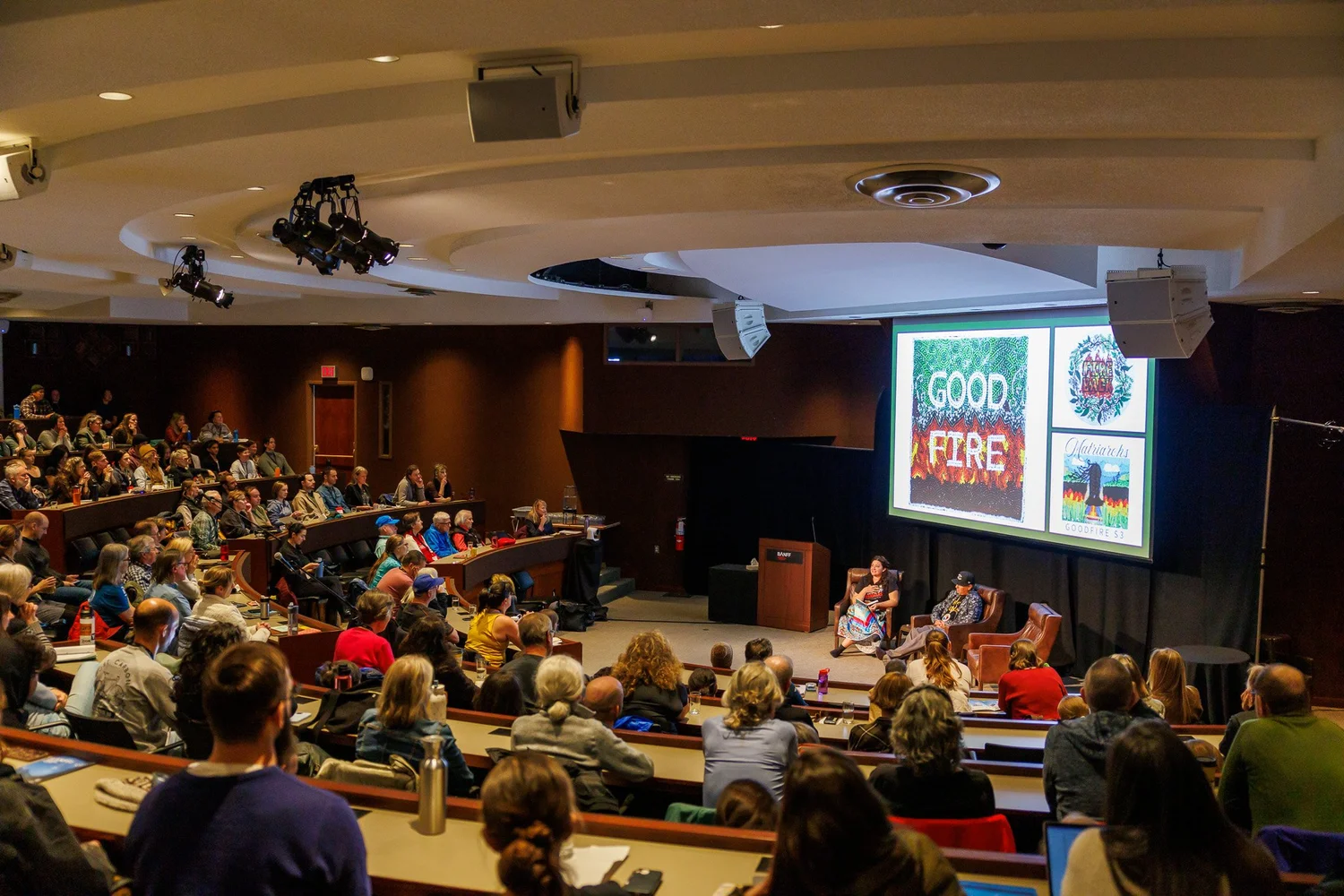
Reigniting Relationships: Indigenous Fire Stewardship and Community Resilience
🔥 Reigniting Relationships: Indigenous Fire Stewardship and Community Resilience with Amy Cardinal Christianson, Alvin First Rider and Jordan MelogranaGood Fire Podcast — Special Live EpisodeThis episode of Good Fire was recorded in front of a live audience of 300 people at the Fire and Ice Symposium during the Banff Centre Mountain Film and Book Festival, on Treaty 7 territory. What unfolds is not just a conversation about fire, but a gathering of stories—about land, memory, responsibility, and the work of rebuilding relationships that were deliberately broken.Resources Video from this episode: Reignition: Bringing Good Fire Back to the Land Alvin First RiderJordan MelogranaBanff Centre Mountain Film and Book FestivalIndigenous Leadership InitiativeBlood Tribe Land ManagementBlock by Block CreativeKainai Nation ignites the first Indigenous fire guardians program in CanadaReigniting Cultural Burning with the Blood Tribe Fire GuardiansShow NotesHost Dr. Amy Cardinal Christianson (Métis, Treaty 8) is joined by Alvin First Rider of the Blood Tribe (Blackfoot Confederacy), along with visual storyteller Jordan Melograna from the Indigenous Leadership Initiative. Together, they reflect on Indigenous fire stewardship as a living practice—one rooted in sovereignty, cultural continuity, and care for future generations.Listeners are invited into a deeper understanding of good fire: fire as a gift, a teacher, and a tool for healing. Alvin shares how fire and bison have always shaped Blackfoot grasslands, and how restoring these relationships is both ecological work and an expression of Indigenous self-determination. From Fire Guardian programs on the Blood Reserve to community-led wildfire training in the North, the episode highlights how Indigenous Nations are reclaiming fire on their own terms—despite legal, financial, and colonial barriers that remain firmly in place.The conversation also explores how fire stewardship is year-round work. It includes winter planning, community education, youth training, and storytelling—long before flames ever touch the ground. Through lived examples, the episode challenges dominant narratives that frame fire only as disaster, replacing fear with knowledge, preparedness, and respect.A powerful thread throughout the episode is storytelling itself. Jordan reflects on the responsibility of documenting cultural fire in ways that are accountable to community, emphasizing co-authorship, consent, and long-term relationships over extraction. These stories—shared freely—are meant to shift public understanding, counter misinformation, and make visible the calm, collective, and deeply intentional nature of cultural burning.At its heart, this episode is about hope. While there is grief for the landscapes altered by fire exclusion and climate change, there is also determination and possibility. Indigenous fire stewardship is not a relic of the past—it is happening now, led by communities who know their lands intimately and are working every day to restore balance.Fire does not have to be something we fear. When practiced with care, knowledge, and respect, it can help heal the land—and our relationships with it.
Season 3 | Episode 9 | Good Fire Podcast

S3 Ep 9Fire In Our DNA with Elizabeth Azzuz and Margo Robbins
Good Fire Podcast by Amy Cardinal Christianson and Matthew KristoffStories of Indigenous fire stewardship, cultural and social empowerment, and environmental integrityFire In Our DNA with Elizabeth Azzuz and Margo RobbinsEpisode highlightIn this episode, Elizabeth Azzuz and Margo Robbins talk about restoring cultural fire in their tribal territory and across the world.ResourcesCultural Fire Management CouncilElizabeth AzzuzMargo RobbinsThe California Endowment: Building Healthy CommunitiesIndigenous Peoples Burning Networkhttps://www.elementalfilm.com/“Firelighters: Fire is Medicine” movie https://www.youtube.com/watch?v=AskCYsXWKpA&t=1sSponsorsCanada WildfireIndigenous Leadership InitiativeQuotes05.06 - 5.27: “Fire has an amazing effect on not just the land and the health of the land and the resources that it produces but it is in fact a way to bring health back to our communities.” 05.57 - 06.07: “Fire is one of the ways to reconnect us to the land around us and our ancestors and our cultural lifeways.” 19.00 - 19.05: “It seems like, oftentimes, women are the movers and shakers in the community.” TakeawaysMeet Elizabeth Azzuz (1.45)Elizabeth Azzuz is a Yurok Tribe member, a descendent of the Karuk Tribe and has ties to the Metis Nation as well. She began burning at age 4 when her grandfather decided to teach her after watching her play with matches. She’s always loved what fire can do to restore the environment and provide food, medicine and basket materials. She takes great joy in training younger generations to carry this knowledge forward. Meet Margo Robbins (02.57)Margo Robbins is the executive director of Cultural Fire Management Council (CFMC) and is a member of the Yurok Tribe. As a basket weaver, she saw the tradition dying out because of regulations preventing cultural burning on their land, which is required to reproduce new single shoots of hazel needed for weaving the frames of baskets. She was about to become a grandmother and wanted her grandchildren to be carried in traditional baskets. So, she conveyed this to The California Endowment.Loss of cultural identity (04.32)As a CFMC cofounder, Margo realized that many young Indigenous people are losing their connection to their identity as Yurok people, which manifests in unhealthy behaviours like using drugs and alcohol. She emphasizes that working with fire is in their DNA as a people and their true calling. Before working in fire, she worked in the school system and used to include information on fire in her lessons as well. Now her focus is on restoring the land and helping other tribal people reclaim their fire traditions as well.“We didn’t take no for an answer” (07.44)Margo marvels at how the fire-creation stories of many different tribes have a lot in common. Margo had just finished her first burn in CFMC when she met Elizabeth who also expressed interest in joining. She narrates the story of how CFMC came to be, and how they have worked to make cultural burning possible now. They knew the dangers of fuel buildup and so recruited volunteers, developed a partnership with Nature Conservancy and conducted community training sessions to be allowed to burn. Dual win (12.45)After several years of burning on a volunteer basis, CFMC finally received a million-dollar wildfire prevention grant through CAL FIRE in 2019. With limited burn windows and specific burn schedules, they also did home protection and roadside clearance to provide full-time jobs to the employees. They chose places rich in cultural resources to burn so that they could provide “important cultural resources for the community while also providing wildfire protection in an area that is rated as extremely high fire risk”.“A place that will be ours” (15.00)Elizabeth shares that they recently purchased 140 acres for CFMC, a unit they have burned on a few times before, which is also close to Margo’s home. She is excited about the possibility of the first Indigenous fire training facility in California. Having their own space means they don’t have to borrow Tribal facilities, and they can bring on more staff. The two buildings that the property comes with have been assigned for training and parking fire engines, respectively. Comfort in their territory (17.56)Elizabeth believes the longevity and stability of the organization come from the women in the tribal community, evident in the common thought processes shared in the board meeting conversations. Margo quips about how they have had to shift gears many times to bring the training center dream to fruition. They built CFMC based on learnings from other organizations but created partnerships and terminology to cater to the needs and sensibilities of the Yurok people specifically. “Happy and joyful” (23.23)It makes Elizabeth happy to see the organization grow and expand in a natural way. Margo explains how they balance the needs of the government along with those of the tribes in doing a cult
Season 3 | Episode 8 | Good Fire Podcast

S3 Ep 8The Power of Fire and Memory with Lisa Shepherd and Paul Courtoreille
The Power of Fire and Memory with Lisa Shepherd and Paul Courtoreille Episode highlightIn this episode, Lisa Shepherd and Paul Courtoreille share personal memories and cultural insights into fire’s role within Métis traditions. From childhood experiences to modern applications, they discuss fire's ability to connect communities, heal the land, and preserve Métis heritage.ResourcesLisa ShepherdMétis Nation of AlbertaParks Canada Indigenous ConnectionsMétis CrossingRocky Mountain House National Historic Site SponsorsCanada WildfireIndigenous Leadership InitiativeQuotes1.07.33 - 1.07.09: “In order for us to gain back that which was almost disappeared, we need to be able to live in our truth, which… means… being able to recognize the land is in us... it’s where we come from, it’s what we are made up of.”TakeawaysA Journey to Reclaim Language and Culture (4.33)Lisa introduces herself, acknowledging her Métis and Italian heritage. While she didn’t grow up speaking Cree, she is now learning it to reclaim her cultural roots. Lisa expresses the importance of integrating language into daily life, not just for herself but for her children and future generations. This reconnection is part of her broader goal as a Métis artist to revitalize cultural practices and traditions lost due to colonization.Childhood Memories of Cultural Burns (6.14)Lisa shares a childhood memory of participating in a cultural burn at four years old. She vividly describes walking alongside the fire, stepping on flames, and watching it roll across the grass. This moment stands out as a formative experience, showing the unity of her community and fire’s life-giving role. Paul adds his perspective, recalling how fire was integral to his family’s life for ceremonies, cooking, and traditional healing, as taught by his grandfather, a medicine man.Fire as the “Little Fire Within Us” (8.14)Paul describes fire as part of all life, comparing it to the mitochondria within our cells that produce energy. He reflects on his upbringing in the Gift Lake Métis Settlement, where fire was central to both practical and spiritual life. He emphasizes how deeply fire is connected to the Métis worldview, symbolizing energy, connection, and renewal.Language and Fire’s Cultural Connection (11.19)Paul explores linguistic ties between Cree words and fire, explaining how the language reflects fire’s cultural significance. While Cree lacks root words, its descriptive nature ties fire to various concepts and practices, deepening its role within Métis traditions.Displacement and the Loss of Knowledge (15.44)Lisa discusses the historical displacement of Métis people from Jasper National Park in 1907. This forced removal disrupted traditional practices, cutting off communities from their land and cultural knowledge. She recounts efforts by Parks Canada to reconnect with Indigenous communities and foster truth-telling about these historical injustices. Lisa highlights the complex expectations placed on Métis people, who are often expected to retain Indigenous knowledge despite the colonial disruptions that made it difficult to do so.Fire as the Heartbeat of the Community (19.14)Lisa reflects on the metaphorical “fire in the belly” that drives Métis people to reclaim their traditions and language. She emphasizes that humans are not separate from nature but deeply intertwined. Connecting with the land and engaging in cultural practices helps restore this sense of unity and well-being.Including Children in Fire Practices (25.45)Lisa shares how her son participated in a recent cultural burn, documenting the experience through photography. She notes the importance of involving children in fire practices to demystify its role and teach them how fire can renew and heal the land. Lisa believes that hands-on experiences help children understand the responsibility and respect required when working with fire.Watching Fire Come to Life (28.50)Lisa describes how observing the movements of fire during a cultural burn, including the spiralling patterns of smoke, deepened her appreciation for its spirit and vitality. These firsthand experiences, she explains, cannot be replicated through imagination alone—they require presence and connection to the land.Revitalizing Practices Through Art and Storytelling (33.00)Lisa speaks about creating a children’s book that teaches the sacred relationship between fire and land. The project began with an image of a rabbit she envisioned during a brainstorming session. Through intricate beadwork and storytelling, she sought to illustrate fire’s positive role while ensuring the book remained engaging and accessible for children.The Challenges of Fire Stewardship Today (39.16)Paul reflects on his experience as a trapper and his deep understanding of the land and its interconnected ecosystems. He shares how modern practices and environmental changes, such as diminishing food sources for muskrats, have impacted traditional ways of life. Lisa emphasizes th
Season 3 | Episode 7 | Good Fire Podcast

S3 Ep 7Survivorship into Thrivorship with Ryan Reed
Good Fire Podcast by Amy Cardinal Christianson and Matthew KristoffStories of Indigenous fire stewardship, cultural and social empowerment and environmental integritySurvivorship into Thrivorship with Ryan ReedEpisode highlightIn this episode, Ryan Reed talks about how the younger generations are leading the way into the future with a move away from fire suppression and into fire generation to protect the environment.ResourcesRyan ReedFireGeneration CollaborativeFirefighters United for Safety, Ethics and EcologyON FIRE: The Report of the Wildland Fire Mitigation and Management CommissionModernizing Wildfire Safety and Prevention Act of 2024SponsorsCanada WildfireIndigenous Leadership InitiativeQuotes13.12 - 13.32: “We can't create something without including or… centering around Indigenous communities as… there are so many statistics that point towards Indigenous communities or management in the Indigenous hands really shows a profound impact… not only just for the landscape but for the communities who depend on those landscapes.”30.18 - 30.29: “It’s really to show other folks… how important it is to… know who you are and where you come from and how… important that is to be proud of that.”58.07 - 58.20: “We’re a generation that we’re proud to be Indigenous… and our ancestors never had that opportunity to be proud of who they are and so it’s a responsibility of ours… to carry on with that.”TakeawaysMeet Ryan Reed (02.33)Ryan grew up on Karuk land, but is from the Karuk, Hupa and Yurok tribes in Northern California, and grew up immersed in different ceremonies and traditional cultural practices. He cherishes and values being part of the country, the community and the ceremonies. He completed his undergraduate degree from the University of Oregon and is currently pursuing a postgraduate degree in Forestry at UC Berkeley.“The closest truth on earth is our ceremonies” (04.27)Ryan used to be a wildland firefighter for the US Forest Service but decided to step away from fire suppression. He is also honoured to be a Karuk medicine person who comes from a long lineage of medicine people. He grew into learning the role and significance of fire in his community to manage resources and ceremonies. He looks forward to rejuvenating and revitalizing cultural practices to share their benefits and uphold the responsibilities to the earth.Creating pathways for younger generations (07.25)Ryan translates policies with the help of colleagues and friends to help create space and awareness of how Indigenous people can lead the way. Ryan is most proud of being the cofounder and program director of FireGeneration Collaborative, an organization that empowers marginalized and younger generations within fire policy with Indigenous leadership at the forefront to find climate solutions. They have spoken to government decision-makers to generate conversations and include youth. Living in reciprocity (13.33)Ryan’s life reflects the impact of living in reciprocity, and he works to bring Indigenous people and marginalized non-Indigenous people on the frontlines of the climate crisis or wildfire issues together to build a paradigm-shifting coalition. He has received funding and support to invest in creating spaces to change policies with younger generations who want to fight the discrimination and cultural erasure of Indigenous communities in the white male-dominated fire suppression world. “Enough is enough” (16.40)Ryan shares how his generation has decided to take matters into their own hands and look into the future, “not for just the generations, but also the non-human souls and entities we have on our landscapes”. Firefighters United for Safety, Ethics and Ecology sponsors his work and he finds that organic connections made in the fire world, especially mentors, help overcome the growing pains of running the organization and cultivating their position in this space.Modernizing wildfire safety (20.17)Ryan is heavily involved as a committee member in the Northwest Forest Plan and is proud of the role FireGeneration played in conversations with the Wildland Fire Commission to share their perspectives, language and policy recommendations, which focus on empowering younger generations through education. To have the space and access to increase awareness in the early days is inspiring for younger generations to streamline their focus.Feeding the mind, body and soul with a traditional diet (23.37)“Growing up in a community that was socioeconomically deprived but culturally wealthy, we had a lot of knowledge and understanding of how our culture meshed with concepts of sustainability and holistic management of ecosystem services”, Ryan notes, but Indigenous people have not received the benefits of the advocacy they do to protect the environment for the benefit of all. He hopes to see a move from the environmental destruction his parents’ generation saw to sustainability in his communities.Intergenerational trauma (28.49)Ryan beli
Season 3 | Episode 6 | Good Fire Podcast

S3 Ep 6Indigenous Wisdom in Climate Care with Rachael Cavanagh and Melinda Adams
Good Fire Podcast by Amy Cardinal Christianson and Matthew KristoffStories of Indigenous fire stewardship, cultural and social empowerment and environmental integrityIndigenous Wisdom in Climate Care with Rachael Cavanagh and Melinda AdamsEpisode highlightIn this episode, Rachael Cavanagh and Melinda Adams talk about the role of Indigenous fire stewards in managing climate change.ResourcesRachael CavanaghMelinda M.AdamsSolastalgia to Soliphilia: Cultural Fire, Climate Change, and Indigenous HealingON FIRE: The Report of the Wildland Fire Mitigation and Management CommissionIndigenous Fire Data Sovereignty: Applying Indigenous Data Sovereignty Principles to Fire ResearchSponsorsCanada WildfireIndigenous Leadership InitiativeQuotes20.51 - 20.56: “Our law is still in the land and it’s in all of the stories that have been passed down to us by our Elders.” 40.27 - 41.08: “It comes back to our relationship. Us as First Nations people or Indigenous people, we have a very respectful relationship with fire, but then if you look at non-Indigenous people… everything is from fear… If you look at the language they use, it’s… suppression and it’s firefighting and… all of their language is based around reactionary responses whereas if you talk to Indigenous people across the globe, it’s all about care. We come from a place of care and guardianship, and this is our obligation.” Takeaways“Cultural obligations as guardians and custodians” (03.19)Rachael Cavanagh is a Minjungbal woman from the Bundjalung/Yugambeh Nations of South East Queensland and Northern New South Wales. Rachael’s family name means ‘the wind’, and she runs a consulting business working with First Nations people across Australia to change the narrative around caring for the land using First Nations-led cultural environmental practices. She plays a large role in “bringing back cultural fire practices as well as reintroducing women as the caretakers of our waterways”. Her work also involves bringing children along, and is the cultural curriculum creator of the first bilingual school in New South Wales which will be a fully cultural immersion school. “How to be a better relative, good human and good ancestor” (06.10)Melinda is a member of the N’dee San Carlos Apache Tribe in what is present-day Arizona and is an Assistant Professor at the University of Kansas. She got her PhD from the University of California, Davis, where she spent a lot of time with cultural fire practitioners and continues to do so in the second year of her work. She believes that all Indigenous people have a relation with fire, whether historical or through reclaiming practices now. She is very vocal about how Western science is only now catching up with the ecological benefits of cultural fire practices, and gives a platform to others to voice their climate plans.Culture and caring for country (10.24)Fire for Racheal’s community is the role of the matriarch, so she has always taken her daughters along for cultural burns. Her older daughter can now independently lead a burn. “We live in a society where our kids still have to maintain the Western ways of doing things”, she laments, but her family prioritizes cultural burning to care for the land as much as she does, even when the education system doesn’t understand why children must lead the solutions. Inclusivity of several generations (13.44)Melinda’s son would accompany her on burns in California and would learn from Elder practitioners. California is a fire rich place and her son belongs to a tribe native to California, so she moved here to help him establish a connection with his lineage. However, burn windows are changing and it is important to have a commitment to the land so Elders and children can be invited out to the land to care for it. “This is a generation that is going to pay the consequence of a lot of climate decisions that were made without them in mind”, she notes.Breaking colonial constructs (17.44)Rachael explains how women were rarely seen in the broader fire network of 250 tribes revitalizing cultural fire practices in Australia. Different tribes have subgroups that have different law systems, protocols and processes around fire, but more women have been coming along to a point where women-only workshops are organized to make them feel culturally safe to have conversations and share fire stories. This helped the women see their role in the cultural fire practices. She feels lucky to have had her female ancestors teach her about fire as cultural and environmental.The environment is our kin (23.40)Rachael observes that even though fire is the key to bring together, it’s the conversations that heal. They share knowledge and stories, and discuss specific solutions. The 2019-2020 fires in Australia have been an added impetus to advocate for putting people back in the forests, which Indigenous people have been advocating for since colonization. While the government is still resistant, localized pa
Season 3 | Episode 5 | Good Fire Podcast

S3 Ep 5Accomplices: Special Episode with Alex Zahara
Accomplices: Special Episode with Alex ZaharaEpisode highlightIn this episode, Alex Zahara talks about how a non-Indigenous person can be a good ally and accomplice to Indigenous peoples in Canada.ResourcesAlex ZaharaUR Pride Center CaseAccomplices Not Allies: Abolishing the Ally Industrial ComplexPollution is ColonialismMohawk InterruptusWe Are FireNatasha CaverleyBreathing Fire into Landscapes that Burn: Wildfire Management in a Time of AlterlifeOtherwise Worlds: Against Settler Colonialism and Anti-Blackness by Tiffany Lethabo KingTreaty Land Sharing NetworkCentering Indigenous voices: The role of fire in the Boreal Forest of North AmericaSponsorsThe Canadian Partnership for Wildland Fire ScienceIndigenous Leadership InitiativeQuotes 17.44 – 17.52: “This is actually the first time in Canadian history when the Notwithstanding Clause was used to suppress the charter rights of children.” 22.42 - 22.48: “These attacks… on trans rights are also an attack on Indigenous rights.” 1.14.54 - 1.15.10: “When I’m thinking about how do I be a settler and how do I… settle, I do think that there are ways of… living together in a way that doesn’t emphasize conquest and that just emphasizes… sharing.” TakeawaysThe gathering place (06.06)Alex Zahara is a non-Indigenous researcher in Kistahpinanihk, which means the Great Meeting Place, also known as Prince Albert in Treaty 6 territory, the Metis Homeland and the Homeland of the Dakota. He works out of the Northern Forestry Centre as a fire research scientist for the Canadian Forest Service and believes his location informs his research approach. Prince Albert, located along the northern Saskatchewan River is where prairies and agricultural land in the south roll into boreal forests in the north, giving summer thunderstorms and fire, and has been home to many First Nations.A place of community (10.30)As a settler, Alex often thinks about what his role is in Indigenous fire stewardship. “I have a lot of obligations to people who have been here before and currently, and… [I am] also folded into different agreements that were already in place”, he notes. As a gay man, he also thinks about others in the queer community, so being a settler for him means centering two-spirit and trans people, especially in the light of recent anti-trans legislation. As a researcher, he wrestles with accusations on teachings in the light of parent rights, with only some gender ideologies being aligned with inherent human and treaty rights.Misgendering and outing (13.09)Alex explains how the legislation came to be, when Planned Parenthood pamphlets were left in a Saskatchewan classroom containing inappropriate information. The following week, the government pot forth new legislation banning third parties from teaching sex education and restricting gender pronoun use, making it mandatory for people under 16 to get parental consent to go by a different gender or pronoun in the classroom. Without parental consent, teachers and classmates are then forced to misgender, which leads to negative health outcomes, while an outing could be dangerous for some. Taking away children’s rights (15.34) The University of Regina Pride Center requested an injunction on the legislation that required gender-diverse youth to either remain misgendered or be outed, since it is likely to cause irreparable harm. While it was first accepted, Saskatchewan used the Notwithstanding Clause, allowing them to overwrite certain aspects of the Charter of Rights and Freedoms. This clause was added when the constitution was created since some provinces wouldn’t sign up for it without one. Alberta followed and has proposed medical restrictions too. Prince Albert, where Alex is from, is 50% Indigenous, including 2-Spirit people.Violation of 2-Spirit Rights (19.25)Alex highlights that being 2-Spirit is an Indigenous right, so the usage of the Notwithstanding Clause is being disputed because it cannot be used to suppress Indigenous rights. Treaty agreements, especially in Treaty 6, include the right to healthcare, which includes having access to medical support. The provincial government is also obligated to upload the inherent rights to cultural expression. However, the gender ideology being professed by the government is a binary nuclear family, which doesn’t align with Indigenous cultural worldviews. Reclaiming Indigenous culture (21.37)Alex finds it heartening going to Pride celebrations and observing Indigenous youth exercise their right to be 2-Spirit peoples, “which is particularly important after residential schools, where… rigid gender ideologies were enforced on people”. He acknowledges that folks from Prince Albert Pride have been working hard to put statements out and organize activities for advocacy, emphasizing how this is an Indigenous rights issue along with being a queer rights issue. He laments that the cis-white men understanding of queer rights is limited to marriage, whereas there are
Season 3 | Episode 4 | Good Fire Podcast

S3 Ep 4Existence Is Resistance with Tiffany Joseph
Good Fire Podcast by Amy Cardinal Christianson and Matthew KristoffStories of Indigenous fire stewardship, cultural and social empowerment and environmental integrityExistence Is Resistance with Tiffany JosephEpisode highlightIn this episode, Tiffany Joseph talks about native Indigenous plants and their ability to heal the ecosystem.ResourcesTiffany JosephXAXE TENEW SACRED LAND SOCIETYCommunity Profile: W̱SÁNEĆ’s ŚW̱,XELOSELWET Tiffany JosephPollinator PartnershipThe Story of SEMSEMÍYE by Tiffany JosephThe Cowichan Sweater: Our Knitted LegacySponsorsCanada WildfireIndigenous Leadership InitiativeQuotes13.19 - 13.41: “Anytime we are on the land, you have to have good thoughts and feelings, so anytime you light a fire, you have to be in that prayerful mindset, and being in a prayerful mindset really means having that abundance of positivity within your heart and your mind.” 21.54 - 22.27: “Settlers, they are hungry for culture basically and really they need to find their own roots… they have to… trace their English or Celtic origins, whatever it is, and connect with that, so I found that eagerness to work with fire with us… came from… a hungry place of not having their own cultures.”TakeawaysCamera Lady (03.12)Tiffany is of Sḵx̱wu7mesh and W̱SÁNEĆ ancestry. Coast Salish Nations' protocol is to introduce their family when they introduce themselves to help others connect with them easily. She finds it important to introduce both her parents and grandparents, as well as her children, because while her parents and grandparents are the reason she came into the world, her children are the reason she stays. Her Indigenous nickname, ŚW̱, XELOSELWET, stands for ‘camera lady’, and she has a certificate in Indigenous independent filmmaking from Capilano University. A field of blue (05.41)Tiffany began learning about Indigenous plants and restoration work in 2014 when she participated in the ‘Growing Our Futures’ program in SȾÁUTW̱. All the Indigenous participants recognized those plants as their Indigenous medicines, and reflect fondly on being able to learn about them. She began doing land restoration in 2015 and is focused on that work, specifically camas, whose bright blue colour made a field look like a sea to a visiting botanist. Camas is a food staple whose meadows used to cover the entire landscape from Beecher Bay First Nation to Southern Vancouver Island. Indigenous territory (08.49)Tiffany laments that colonizers looked at the rich fertile lands, which was tended to make abundant meadows of camas, as theirs to steal. They operated under the ‘Terra nullius’ mindset wherein land was considered unoccupied unless occupied by a Christian even though there were thousands of Indigenous people living here. They considered the land wild even though the meadows were tended with controlled burns. The mighty oak used to be a companion plant to camas which grew stronger with controlled burns, and the falling branches and leaves fertilized the soil for the camas.“We are all connected” (11.24)Tiffany explains that the Indigenous ancestors learned that by burning the mighty oak leaves, their high acidity could be transformed into proper nutrients needed for the soil, which was clay. While the colonizers believed nothing could grow in the clay, the Indigenous peoples “grew enough camas to make it look like an ocean” and had the greatest biodiversity of any ecosystem in BC. She emphasizes the importance of having good thoughts and feelings, how having a prayerful mindset gives rise to abundant outcomes, and how everything is connected - the mind, heart, and all kinds of people. Fire is life (18.34)Tiffany finds that settlers don’t apply Indigenous knowledge in caring for the land, whereas Indigenous peoples have ancient wisdom that helps them anticipate the needs of the land better. However, she celebrates that Parks Canada has recognized traditional knowledge of fire as valid in land management. She discusses the considerations around holding burns near burial cairns, with some groups having always done it and some having reservations about doing so. She reflects that many people do not have a relationship with fire due to past experiences, but they can have a spiritual relationship with fire.The settler mindset is fear-based (27.05)Through restoration work, Tiffany has learned about an invasive plant called scotch broom, with yellow flowers and big seed pods. She found the old method of pulling out the plants ineffective and suggested a controlled burn to Parks Canada, followed by digging out seed banks using machinery. They were able to find many native plants in the soil. Indigenous people have always cared for all life, but the colonial mindset looks at humans as inherently selfish and only capable of harming the land. She finds that the colonial violence inflicted upon Indigenous lands and people has led to fear of humans.Land back (32.19)Tiffany does not want to live in fear of what people can d
Season 3 | Episode 3 | Good Fire Podcast

S3 Ep 3The Social Dynamics of Fire Management with Vanessa Luna-Celino
Good Fire Podcast by Amy Cardinal Christianson and Matthew KristoffStories of Indigenous fire stewardship, cultural and social empowerment and environmental integrityThe Social Dynamics of Fire Management with Vanessa Luna-CelinoEpisode highlightIn this episode, Vanessa Luna-Celino talks about how community-based fire management is the way to sustaining forests.ResourcesVanessa Luna-CelinoVanessa’s WebsiteDocumentary - Farmers and Fire: Local efforts in dealing with wildfires in PeruForbidden fire and the potential role of community-based fire management in the Peruvian AndesSponsorsCanada WildfireIndigenous Leadership InitiativeQuotes16.20 - 16.23: “Not every person in these peasant communities interacts with fire in the same way. There are of course power relationships and power dynamics; there are different needs of fire.” 29.57 - 30.12: “Part of my research also has to do with understanding the different narratives of what to do with fire and the role of fire in the landscape and for rural wellbeing.” TakeawaysMeet Vanessa Luna-Celino (02.58)Vanessa recently completed a PhD in Interdisciplinary Ecology from the University of Florida. She studied biology in her hometown, Lima, Peru, and then became interested in the social dimensions of conservation. Her PhD focussed on community-based fire management in the Peruvian Andes. She points out that with climate change, wildfires have become more commonplace in Peru. But with large populations living in the Andean and coastal regions, wildfires pose a threat.The people of the land (05.26)Vanessa has been working with communities who see annual wildfires ranging from 10 to 500+ hectares. While these fires may not be large, the territory they emerge in has been occupied for millennia, starting with the Inca empire to present- day Indigenous and mestizo (a mix of European and Indigenous descent) farmers. Most of this high Peruvian Andean landscape is filled with rural communities, called campesino communities, that collectively own and manage the land. Indigenous communities of Peru (8.20)Peru has a population of more than 30 million people, with a few million in the Andean region. The Indigenous groups who live in the south of the Andes are the Aymara and Quechua. In the Amazonian region, more than 60% of the territory has over 50 Indigenous groups, some only with a population of 500-1000 who speak their Indigenous language. The Indigenous group that has the most inhabitants in the country are the Quechua, who have been a part of Vanessa’s research.Finding Fire (09.22)Vanessa worked as a biologist at a biological station for many years in the Peruvian Andes and Amazon. Sometimes, a fire in the Quechua community on one side would spread into the national park on the other side and into the 600 hectares of biological station land, and she observed a complex relationship between the Indigenous Quechua group and the firefighters and park rangers, with farmers and cultural burning being blamed. She then began studying the cultural aspects of Indigenous peoples using fire.Complex dimensions of fire use (12.57)Vanessa was part of the Tropical Conservation and Development Program at the University of Florida which encourages researchers to partner with local communities, training them in a group on collaboration, conflict management, and Indigenous rights. She went back to her Indigenous coworkers and the surrounding community at the biological station with curiosity, wanting to simply begin her research by spending time with them and observing their approaches to and practices of fire. Differences in community practices (15.32)Vanessa considers herself blessed to have had the funding and time to spend a month each in every community over 3 fire seasons. She observed that different community members interact with fire in different ways, with farmers in remote areas using fire more than the ones in the main village. The community members slowly became more open when talking to Vanessa about their practices, once they understood she was there to learn and not instruct. The pros and cons of elevated farms (17.19)Vanessa found that rural areas need to use more fire due to the elevation and highly rugged landscape. These communities traditionally took advantage of the elevation differences to grow their traditional crops, with over 100 varieties of potatoes, and grapes and corn. Elevated farms that are surrounded by vegetation that has overgrown are the most vulnerable to having runaway fires, and it’s harder for them to access help to put out those fires. Approaches to fire (20.15)Vanessa notes that while Indigenous communities do use fire for rituals on a small scale, they don’t use it to manage the land. They learnt to use fire in their farms from the Spanish for agricultural purposes, to renew grass or get rid of residue. What is seen today on the farms is a blend of Indigenous and European agricultural practices. Communities see
Season 3 | Episode 2 | Good Fire Podcast

S3 Ep 2We Are Fire People with Jessica Angel
Good Fire Podcast by Amy Cardinal Christianson and Matthew KristoffStories of Indigenous fire stewardship, cultural and social empowerment and environmental integrityWe Are Fire People with Jessica AngelEpisode highlightIn this podcast, Jessica Angel talks to Amy Cardinal Christianson and Vikki Preston about being an Indigenous trans woman bringing back fire to her Nation. ResourcesJessica AngelEcostudies Institutehttps://fusee.org/fusee/indigenous-cultural-burning-crew-returns-good-fire-to-oregons-willamette-valleyDocket 234 FundsSponsorsThe Canadian Partnership for Wildland Fire ScienceIndigenous Leadership InitiativeQuotes23.30 - 23.33: “The best teacher when it comes to working with fire is fire.” 33.19 – 33.23: “Some good smoke is part of preventing a larger quantity of bad smoke down the road.”56.02 - 56.28: “It’s been really interesting to… show up with this zeal for fire as… an Indigenous trans woman… because, let me tell you, the fire world is stacked against Indigenous peoples and more so stacked against Indigenous women. It isn’t even beginning to crack open… trans people let alone… trans people who are Indigenous or Black or POC or BIPOC in some way.”TakeawaysMeet Jessica Angel (07.59)Jessica is an Indigenous trans woman, a cultural fire practitioner and an enrolled member of the Chinook Indian Nation. Until recently, she worked at Ecostudies Institute in Olympia, Washington. She now works to approach cultural Indigenous fire from a community perspective. Her Nation recently had their second ever prescribed fire since colonization, and she found it a different experience to attend it as an individual as opposed to with an organization or agency. “How do you be a good steward of your land using fire in the 21st century?” (11.43)Jessica became involved in Indigenous fire over three years ago. She got her FFT-2 qualification to become a basic wildland firefighter, but believes it is a big barrier to Indigenous peoples being able to participate in burning on their land, since the certification is required by many agencies. She is a founding member of the all-Indigenous cultural burn crew, The Wagon Burners. They have had many burning sessions over Oregon and Washington and are planning how to continue operations into the future.Burning to protect endangered species (14.34)Jessica shares that Ecostudies Institute workson land where there was some good fire till the 20th century, after which it was turned into a joint military and air force base, where there are radioactive materials to this day. The detonation activity and the weaponry are not positive for the endangered plant diversity. Ecostudies Institute was able to step in and create agreements to allow prescribed fire, helping kill invasive species and protect the endangered ones.Fire is the best teacher (19.30)As an Indigenous person, Jessica experiences cognitive dissonance being around men with guns, given the history of the US Government participating in the genocide of Indigenous peoples all across the USA. As a young person involved in fire, she feels privileged to have access to a lot of knowledge and many teachers and the ability to burn often. It’s interesting to her to compare the perspectives of academicians with those who have hands-on experience with fire.Connection to fire (24.58)Jessica credits her grandmother for her journey into the world of fire. Her grandmother would burn on her farm in Oregon with tall flames. She believes that Chinook peoples are “just beginning our revitalization of fire practices”. She recalls a training session she attended to help make the FFT-2 certification more culturally appropriate, and a burn which made her realize she wanted to work in cultural fire for the rest of her life.Cultural burning (30.22)Jessica shares that when her mother was a child, many non-native farmers burned on their fields, but because it was uncoordinated, the smoke became an issue and many strict regulations had to be put into place. This then presented a huge barrier to Indigenous farmers who wanted to burn, especially in the short burning windows they had. While burning is part of Indigenous culture and history, Jessica jokes about how that tendency manifests in burning other things.Recognizing unceded lands (34.40)Jessica feels privileged to be part of a group of Chinook peoples helping to get fire back on the land now. The Chinook Indian Nation is not one of the 500 Tribes that have federal recognition in the USA. However, they are “celebrating a victory and a step forward with the decision to recognize us as the inheritors of these Docket 234 funds”, says Jessica, recognizing them as heirs to their own ancestry and territory. Last year, they were able to return fire to West End Island, an important fishing spot.Reciprocity is required (39.40)“You have to be in an intentional give and take relationship with the land”, Jessica states. She finds that the “settler mindset of… taming nature” gets in the w
Season 3 | Episode 1 | Good Fire Podcast

S3 Ep 1Healing Trauma Through Burning with Vikki Preston and Monique Wynecoop
Good Fire Podcast by Amy Cardinal Christianson and Matthew KristoffStories of Indigenous fire stewardship, cultural and social empowerment and environmental integrityHealing Trauma Through Burning with Vikki Preston and Monique WynecoopEpisode highlightIn this podcast, Vikki and Monique talk about the role of Indigenous women in fire and the path to bringing fire back on the land. ResourcesAssociation for Fire Ecology 10th International Fire Ecology and Management CongressVikki PrestonMonique WynecoopJessica Conradhttps://www.hcn.org/issues/55-1/indigenous-affairs-wildfire-what-if-indigenous-women-ran-controlled-burns/https://yff.yale.edu/speaker/monique-wynecoop-atsugewi-mountain-maiduhttps://www.youtube.com/watch?v=vK77EWDJeoUSponsorsThe Canadian Partnership for Wildland Fire ScienceIndigenous Leadership InitiativeQuotes42.41 – 42.46: “There is a place for me, and it doesn’t need to be in the system that’s not working.”50.06 – 50.16 “It’s our journey as… mothers and matriarchs and leaders to make sure we are protecting the younger future generations.”TakeawaysMeet Vikki Preston (02.14)Vikki is from the Karuk Tribe and has lived in rural Orleans, California for most of her life. She works as the Cultural Resource Technician for the Department of Natural Resources of the Karuk Tribe. Being at the Association for Fire Ecology 10th International Fire Ecology and Management Congress has been made more significant for her due to the “strong native presence”. Growing up Indigenous, she used to listen to basket weavers talking about fire being a big part of “the lived experience of being Indigenous”. As a basket weaver herself, she is constantly connected to the importance of fire in her culture.Meet Monique Wynecoop (05.59)Monique is Pit River/Mountain Maidu on her mother’s side and Italian American on her father’s. Her ancestors are always on her mind, and she has been educating her children and family about residential schools. She has worked for the forest service for 16 years now and takes pride in working in the same profession as her father did his whole career. She is excited to be working with the Bureau of Indian Affairs as Tri-Regional Fire Ecologist for the Northwest, Alaska, and Rocky Mountain Regions so that she can help the tribes in those areas access the resources they need for fire and fuels management, and cultural burning. Rebuilding the relationship between the land and community (08.18)For the last 16 years, Monique has been living in the ancestral territories of her children’s father’s tribe, the Spokane Tribe. “I’m at that point in my life where I want to be the matriarch I needed”, she notes, and works to teach the children by example. She was contacted by Dr. Melodi Wynne, the Food Sovereignty manager for Spokane Tribal Network and the Spokane Tribe, to work on the Food Sovereignty Garden for the Spokane Tribe. She helps communicate how fire is important for food sovereignty which in turn is essential for community wellness.“Delayed justice” (11.04)Vikki emphasizes the importance of Indigenous women being at the forefront of telling the stories of their community. Monique shares how it is her moment to tell the stories that her mother or great aunt were not able to share either due to the trauma or fear, to help deliver justice for her ancestors. Vikki continues to be inspired to work in fire so that no woman in her community is made to feel small. She encourages women to speak up, especially the younger generation. Monique tries to give herself the same advice she gives her children - to not apologize for speaking the truth.Indigenous fire management (16.34)Vikki appreciates working with strong women like Jessica Conrad, who has done some amazing work in wildlife and fire and reinforces the role Indigenous women play in protecting land, cultural resources and community. The work they do for wildland fires in culturally relevant areas for the Karuk Tribe, speaking up and having a say, is important in the face of outside management teams using suppression tactics that the tribe doesn’t agree with. Now, their cutting tribe goes to the forest with tribal representatives and heritage consultants on the ground to ensure better processes.“Don’t stop being the way you are” (20.41)Vikki is often the only Indigenous woman in a fire camp and feels judged; she does not like to see other people experience that feeling of being unwelcome. “Sometimes it’s about being someone, someone else can feel supported by”, she explains. She finds it important to have someone who can help you overcome the negativity in the fire world. She shares a negative experience she had with other firefighters on a recent TREX (prescribed fire training exchange). Her father, who has been in fire his whole life, told her, “They are never going to accept you but don’t stop being the way you are”, which allowed her to step into a leadership role at Karuk’s Women’s TREX.The canoe journey (24.36)Vikki talks about how th

Learning Fire with Charity Battise
We’re Back! Good Fire Season 3 is officially coming your way! This is a short teaser episode to let you all now we have finally finished recording.Charity Battise is a young Indigenous Fire Steward learning their craft. Amy and Charity met at the Indigenous Peoples Burning Network Event and they talked about Charity’s work with her Nation. Charity is a part of the Alabama Coushatta Tribe of Texas and part of the Nature Conservancies Indigenous Peoples Burning Network.
Season 3 Teaser 2 | Good Fire Podcast

Good Fire Season 3 Teaser
Good Fire Podcast by Amy Cardinal Christianson and Matthew KristoffStories of Indigenous fire stewardship, cultural and social empowerment and environmental integrityEpisode highlightJoin Amy Cardinal Christianson and Matthew Kristoff as they give a sneak peek at what to expect in Good Fire’s third season.ResourcesCanada’s record-breaking wildfires in 2023: A fiery wake-up callIntentional Fire Podcast by Vikki PrestonSponsorsThe Canadian Partnership for Wildland Fire ScienceQuotes12.20 - 12.35: “We can’t change the weather… and we can’t change the climate at the moment, but there are things that we can do and one of those is changing the fuel that’s available to burn and the vegetation that you can burn… and one of the ways to do that is through good fire.” TakeawaysWomen are the backbone of good fire (01.36)Amy wants to focus the third season of the Good Fire podcast on matriarchs. After attending an Indigenous Women’s fire training event in the USA, she was inspired to see 30 women come together from different First Nations to deliberate how fire affects their communities. An Elder shared with her that the women in a community direct the men to go out and burn.Burns, burning and burnout (04.56)Amy is a Research Scientist with the Canadian Forest Service but has recently been on secondment with Parks Canada as an Indigenous Fire Specialist. This year has seen unprecedented fires across Canada. Canada has depended on help from other countries, and firefighters are feeling burnt out. 15.2 million hectares in Canada burnt this year (08.28)Amy hopes that practicing good fire will alleviate the strain on firefighting and reduce their risk on the job. She highlighted that years of fire exclusion have led to runaway wildfires. An opportunity for a reset (13.17)Amy highlights that even though fires were frequent before this land was colonized, tree rings indicate they were not as intense as they are now. Elder Joe Gilchrist shared with Amy that these wildfires are a good opportunity to reset overgrown forests for cultural burning.Reducing the requirement of resilience (18.19)Amy praises how the Chief and Council Little Red River Cree Nation and the community of Fox Lake have responded to the fires by building homes and supporting community members. However, she is saddened by the resilience they have had to show and hopes to see progress in external fire management. Guest wish list (23.20)Amy hopes to have Vikki Preston on the podcast, but her community is also impacted by the fire. Her podcast, Intentional Fire invites guests from Vikki’s Nation to talk about how they use good fire.Indigenous stewardship (24.46)Amy believes that Indigenous knowledge keepers needn’t seek permission to perform cultural burning on their lands. She pushes for policies and regulations to be re-examined so that land can be cared for in a way that is in line with Indigenous knowledge.
Season 3 Teaser 1 | Good Fire Podcast
Season 2 | Episode 10 | Good Fire Podcast

S2 Ep 10The Abundance Will Be Forever with Victor Steffensen and Ado Webster
Good Fire Podcast by Amy Cardinal Christianson and Matthew KristoffStories of Indigenous fire stewardship, cultural empowerment and environmental integrityThe Abundance Will Be Forever with Victor Steffensen and Ado WebsterEpisode highlightIn this podcast, Victor Steffensen and Ado Webster reflect on their experiences as Indigenous fire-keepers.ResourcesFire Country: How Indigenous Fire Management Could Help Save Australia by Victor SteffensenVictor and Ado’s BiosLooking After Country with Fire: Aboriginal Burning Knowledge With Uncle KuuGreat Land by MulongSponsorsThe Canadian Partnership for Wildland Fire ScienceSupport from:● California Indian Water Commission● Firesticks Alliance Indigenous CorporationQuotes10.52 - 10.56: “We’re not governed by anyone but ourselves and by our culture and by our country.” TakeawaysRediscovering culture, discovering oneself (3.55)Ado has recently begun working with Firesticks in the capacity of an employee, and loves working in an Aboriginal cultural environment where “the knowledge is safe, the sharing is safe and people are safe”. For the landscape and the people (9.00)Ado thrives on the cultural exchange that takes place between Nations as part of his work now, something colonization deprived his community of. He is passionate about helping children access culture freely. Work that heals (14.40)Victor notes that working with the country helps liberate Aboriginal peoples from stereotypes that they are not hardworking. Work that heals the land for the future inspires youth to do the right thing to enhance their connection with the land. “Climate change is mother nature telling us to change” (19.17)Victor laments that the negative messaging in the media makes us feel helpless against climate change. He brings attention to the disasters humans have lived through, and that this can also be salvaged by “doing the good work”. When you care for the country, it cares back (28.23)Ado reassures that cultural burning is safe, which is why many go barefoot for a cultural burn. He feels a sense of oneness with all inhabitants of the land, and disagrees with preferential protective equipment for humans but not for the other animals. Fire, language and country (33.11)Ado narrates how Victor demonstrated to Ado’s Nation, his knowledge of the land that applies across different territories. Victor adds that landscapes have many similarities in values, and bringing the country back is the missing piece in reviving cultural knowledge. Let us do it our way (38.48)Ado speaks about the National Indigenous Fire Workshop they conducted for nations across Australia, where they did a cultural burn which lasted 13 days. Not having burned due to colonization has changed the landscape, and is causing sickness in the forests. The whole world gets affected (47.33)Ado says that knowledge opens up minds with the truth but it makes it more difficult to tolerate the wrong things being done. Everyone was impacted by the large bushfires in Australia, and he feels strongly about people experiencing the benefits of cultural burning. Send in your comments and feedback to the hosts of this podcast: [email protected] and [email protected].
Season 2 | Episode 9 | Good Fire Podcast

S2 Ep 9Celebrating Success with Victor Steffenson and Ado Webster
Episode highlightIn this podcast, Victor Steffenson and Ado Webster talk about cultural burning in Australia and the work Firesticks is doing to promote it. ResourcesFire Country: How Indigenous Fire Management Could Help Save Australia by Victor SteffensenLooking After Country with Fire: Aboriginal Burning Knowledge With Uncle Kuuby Victor and Sandra SteffensenCool Burning SponsorsThe Canadian Partnership for Wildland Fire ScienceSupport from:● California Indian Water Commission● Firesticks Alliance Indigenous CorporationQuotes17.02 - 17.09: “Fear is… one of the biggest problems… in the world today and… a lot of that comes from ignorance.”TakeawaysAdo and Victor (6.10)Adrian, known as Ado, was born in Naora (Nowra) and considers himself fortunate to have grown up in his community and culture. Victor, a descendant of the Tagalaka clan from North Queensland, is the Lead Fire Practitioner at Firesticks, a filmmaker, musician and author. Baby steps to progress (9.14) Victor wrote a children’s book as a way of getting back to the arts using storytelling to reactivate culture and landscape connections and change society while having fun. Listen to the country (16.58)Victor finds it alarming that people fear fire, but takes solace in Indigenous knowledge, which focuses on the right way of doing things and provides a positive solution. Ado’s father realized that forests were deteriorating because Indigenous peoples had not been allowed to manage them. “Learning not through science, but through spirit” (24.10)Ado has learnt from his Elders about nature and realizes that this knowledge is only recently being discovered by non-Indigenous people. “Fire is good for us as people” (33.40)Victor notes that the insights of the Indigenous cultures are shifting the culture of the country as a whole, evolving into a nature-based one, where people can move from fear of fire to a connection to the land. Fire and sustainability (39.50)Victor and his team are working on creating a training model leading to a certified diploma to factor in lived experience for those who can demonstrate and manage the work practically. “We need to work together” (50.24)Victor believes that the work they have been doing in education to further cultural, environmental and economic development has been supported by Mother Nature. It has also made the country take notice of the work the Aboriginal peoples are doing, and recognize the need to support this work. “It’s all about doing the right thing” (54.43)Victor recommends being inclusive, making people comfortable and respecting them and their place to work together towards sustainability. He urges people to take action towards nature, and not be limited by barriers of time or money. Send in your comments and feedback to the hosts of this podcast via email: [email protected] and [email protected].
Season 2 | Episode 8 | Good Fire Podcast

S2 Ep 8Good Fire in Guyana with Kayla de Freitas and Nicolas Cyril
Good Fire Podcast by Amy Cardinal Christianson and Matthew KristoffStories of Indigenous fire stewardship, cultural and social empowerment, and environmental integrityGood Fire In Guyana with Kayla de Freitas and Nicholas CyrilEpisode highlightIn this episode, Kayla and Nicholas talk about the cultural burning practices in Guyana.ResourcesSRDCKayla De-FreitasSponsorsThe Canadian Partnership for Wildland Fire ScienceSupport from:● California Indian Water Commission● Firesticks Alliance Indigenous CorporationQuotes41.54 - 42.04: “So much of that knowledge about fire and fire use and farming, hunting, is learned by doing and by living there and living that life.”TakeawaysFire since time immemorial (04.02)Nicholas has worked for 10 years at SRDC as a part-time researcher. He explains that fire in his territory has always been used and continues to be used for various reasons. The changing face of fire (10.55)Kayla’s research focus is the changing practices of Indigenous fire management and local fire governance.Timeless wisdom, current realities (13.17)Kayla describes who was interviewed for her research study and the regional fire management plan. Indigenous land rights (17.17)Nicholas notes that Indigenous peoples are allowed to burn in the villages. Kayla adds that Indigenous communities can make their own rules concerning resource governance. Towards the creation of a fire policy (19.35)The Indigenous communities in South Rupununi are working to create a local fire policy appropriate to their landscape. Burning season (23.46)Kayla highlights the seasonal fire calendar that the district council uses and a collection of interview responses on putting fire on the landscape. Beyond fire (25.53)Kayla shares how enriching it has been to work with Indigenous communities alongside Nicholas, learning about the landscape, experiencing hospitality and developing connections. Bringing fire back (33.46)Nicholas mentions how management of fire is changing in the communities to a direct style where the council makes decisions for the community. Valuing Indigenous knowledge (35.52)Nicholas speaks about how people are moving away from the traditional way of life. Kayla comments on how Indigenous knowledge was erased by settlers, but is being reclaimed. Following in the ancestor’s footsteps (41.40)Nicholas delineates the process of a burn, when traditional knowledge is relied upon. Kayla laments that the government only pays lip service to Indigenous knowledge and practices. The sum of the parts (49.44)Kayla narrates how fire management plans are being updated in consultation with Indigenous groups, and how opt-in arrangements work for their lands. Looking ahead (54.25)Nicholas says the Indigenous communities are mindful of burning in the right seasons and work with nature’s cycles. He describes how burning assists animals in breeding. Preventing brain drain (1.04.57)Kayla mentions that the SRDC is creating opportunities for trained Guyanese people to stay in the country and serve the community. Nicholas’ work with SRDC is inspired by the desire to keep Indigenous knowledge alive and affirm Indigenous land rights.
Season 2 | Episode 7 | Good Fire Podcast

S2 Ep 7Fire Futures with Indigenous Researchers
Good Fire Podcast by Amy Cardinal Christianson and Matthew KristoffStories of Indigenous fire stewardship, cultural and social empowerment, and environmental integrityEarly Career PanelEpisode highlightThis episode is a recording of a session at the IAWF Fire & Climate conference in Pasadena CA, featuring early career researchers who are re-kindling cultural burning. ResourcesInternational Association of Wildland FireSponsorsThe Canadian Partnership for Wildland Fire ScienceSupport from:● California Indian Water Commission● Firesticks Alliance Indigenous CorporationQuotes16.25 - 16.29: “Indigenous people don’t need us to speak on their behalf, they can speak on their own behalf.”Takeaways“In a good way” (05.02)Melinda Adams, San Carlos Apache Tribal member, and PhD candidate at UC Davis, shares how agency representatives took a step away from fire suppression in one of the first CalFire cultural fire workshops at Cache Creek Conservancy in Woodland, CA.The benefits of cultural fire (06.42)Melinda narrates how the burn was concentrated on restoring tule, an ecologically and culturally significant plant. This highlights how cultural fire is important for long-term carbon storage, water holding potential and cultural reunification. Collaboration, consultation and consent (07.57)Melinda hopes for burning to take place with Indigenous peoples, to undo the impacts of colonialism and unburden future generations from climate change.Good relations (11.11)Carly Dominguez is of Indigenous Mexican heritage. Her work with cultural fire is inspired by her desire to improve water health. Fire has always been good (13.30)Carly is being trained through the Indigenous cultural burn network. “Fire has a special place in my heart” (17.41)Deniss Martinez is a Ph.D. candidate at UC Davis. Learning from local Indigenous communities helped her reconnect with her Indigenous roots and relearn fire. Getting stuff done (19.54)William Madrigal Jr., or Will, is associated with Climate Science Alliance, a nonprofit based in San Diego that supports and collaborates with Indigenous tribes in addressing climate change disparities. Facing climate change (22.19)Nina Fontana is a postdoctoral researcher at the University of California, Davis in collaboration with the USGS Southwest Climate Adaptation Science Center. Relationships over acres (26.10)Deniss observes that when relationships are built and in place, more equitable decision-making takes place during a crisis. Trust takes time (30.57)Carly suggests approaching practices and policies with openness and Nina advises including the community in all aspects of the project from the beginning. Researching back to life (35.59)Melinda notes that Indigenous peoples conducting research helps move their initiatives and collaborations forward. She is excited about young people getting involved in burning and the openness of other researchers to this learning.“We have to have hope” (40.16)As a native person whose ancestors survived so much, Melinda believes it is her duty to lead with hope. “Connection brings me hope” (43.22)Understanding the traditional way humans can fulfil our responsibilities to the following seven generations gives Will hope for a better future. Nina finds hope in hearing about species coming back to landscapes.
Season 2 | Episode 6 | Good Fire Podcast

S2 Ep 6Cultural Fire in California with Don Hankins
Good Fire Podcast by Amy Cardinal Christianson and Matthew KristoffStories of Indigenous fire stewardship, cultural empowerment and environmental integrityUpdate: Cultural Fire in California with Don HankinsEpisode highlightIn this podcast, Don Hankins talks about new developments around cultural burning in California and his hopes for the future. ResourcesCalifornia’s Strategic Plan for Expanding the Use of Beneficial FireSponsorsThe Canadian Partnership for Wildland Fire ScienceSupport from:● California Indian Water Commission● Firesticks Alliance Indigenous CorporationQuotes24.52 - 24.53: “We definitely have to connect culture to fire.”TakeawaysCultural torch bearers (01.52)Don is Plains Miwok from the central valley of California’s Sacramento-San Joaquin Delta. He believes that due to the wildfires in California, initiatives are taking place that recognize the place of Indigenous fire. Revitalizing cultural fire (4.37)Various policy barriers - access to land and funding and permission to burn using traditional laws - are being addressed through the creation of a tribally chartered non-profit organization to support learning, advance policy efforts and act as a refunding and redistribution entity. Building and empowering the youth (07.16)Don looks to the youth to carry Indigenous knowledge of fire into the future and seeks young people from his Nation to mentor. Knowledge holders training the youth to understand the cultural reasons for burning, read the landscape and maintain culture will enable the youth to step into decision-making roles and policy arenas. Enabling cultural burning (11.49)Don speaks about California Bill SB 332 which allows certified burn bosses and cultural burners to burn, and that if they meet certain conditions, they shall not be liable for any fire suppression or other costs otherwise recoverable for a burn. Spreading like good fire (16.05)Don also speaks about California Bill AB 642 which primarily codifies the definitions of cultural fire and incentivizes agencies to work with cultural burners to implement plans and enable Indigenous stewardship. Cultural fire progress (20.21)Don lists some challenges to advancing cultural fire - the criteria for declaring someone trained and the sensitivities around tribal sovereignty for that declaration. If someone is not exposed to cultural fire training, errors in the process could occur. Learning from fire (23.42)Don shares that if you are gentle with fire and approach it in a good way, you can learn from it, or you can learn the lessons the hard way. Thinking about the reasons for burning helps look for learning opportunities in burning. Don’s approach to burning changes according to the requirement, but praying and acknowledging the land is always a part of it. Send in your comments and feedback to the hosts of this podcast via email: [email protected] and [email protected]. If you liked this podcast, please check out YourForest podcast too, rate and review it on Instagram, Twitter and Facebook and tag a friend, and send your feedback and comments to [email protected].

S2 Ep 5Fire In Zimbabwe with Ntando Nondo
Good Fire Podcast by Amy Cardinal Christianson and Matthew KristoffStories of Indigenous fire stewardship, cultural and social empowerment, and environmental integrity Episode highlightIn this episode, Ntando Nondo talks about Indigenous land stewardship and fire management practices in Zimbabwe.ResourcesNtando Nondo’s ProfileSouthern Africa Fire Network (SAFNET)SponsorsThe Canadian Partnership for Wildland Fire ScienceSupport from:● California Indian Water Commission● Firesticks Alliance Indigenous CorporationQuotes42.08 - 42.16: “If there is a fire, you better use the little water you have to save your property.” TakeawaysFire management strategies (05.49)Ntando shares that the fire management plan involves protecting the ecological regions depending on the amount of rainfall received, the wildlife living in the region and the kind of farming done there. The many uses and sources of fire (12.45)For Indigenous peoples, fire is the primary source of energy and a cultural entity. Wildland fires can be started by a locomotive, electrical faults, or lightning.Good fire (19.30)Ntando explains that previously, communities were in charge of fire management on their own lands but fire now has regulations associated with it. They do their burning in designated areas ahead of the fire season, to reduce the fuel available to burn and reduce fire intensity. Indigenous partnership with the government (25.58)The 15+ Indigenous groups in Zimbabwe manage their lands on a day-to-day basis in consultation with the government. Coming together to avert disasters (33.39)Zimbabwe is a member of the Southern Africa Fire Network (SAFNET), a voluntary organization that shares strategies on fire management and developments across borders using remote sensing to alert neighbouring countries. Beating the fires (39.26)Ntando describes a fire beater as a wooden stick of 1.5m to 2m with a 40 X 60 cm piece of rubber on one end used to beat the fire grounds to remove oxygen from the fire. They also use sprayers, sprinklers and other tools to disperse chemicals and water. Prepare for the worst, expect the best (43.29)Ntando recalls the 2010 fire in the Midlands province lasted for 3 days, killing 7 elephants and several donkeys and domesticated animals. Fire breaks allow for effective demarcation of lands and timely fire management before the entire community is affected. Fire then and now (47.01)Ntando observes that fire used for indoor purposes like cooking or cultural ceremonies continues, but fire outside the home or in agriculture is restricted, especially during Zimbabwe’s fire season from 31st July to 31st October. He envisions consulting with Indigenous communities on fire management so that the fire can continue to play a central role in their culture. The future of fire (55.06)Satellite technology and remote sensing can be helpful in presenting a graphical summary of the success of fire management plans and inform further refinements to the plan. Send in your comments and feedback to the hosts of this podcast via email: [email protected] and [email protected].
Season 2 | Episode 4 | Good Fire Podcast

S2 Ep 4Cultural Safety with Joe Gilchrist and Natasha Caverley
Good Fire Podcast by Amy Cardinal Christianson and Matthew KristoffStories of Indigenous fire stewardship, cultural empowerment and environmental integrityCultural Safety with Joe Gilchrist and Natasha CaverleyEpisode highlightIn this podcast, Joe Gilchrist and Natasha Caverley talk about how Indigenous and Western ways of knowing can come together to bring cultural burning back on the land a study exploring cultural safety of Indigenous wildland firefighters in Canada. ResourcesJoe Gilchrist describes how fire has changed the landscapeNatasha Caverley of Turtle Island ConsultingGiving Voice to Cultural Safety of Indigenous Wildland Firefighters in CanadaRevitalizing Cultural BurningSponsorsThe Canadian Partnership for Wildland Fire ScienceSupport from:● California Indian Water Commission● Firesticks Alliance Indigenous CorporationTakeawaysSparking passion (04.16)Joe began firefighting at age 15 and became a squad boss in 1991 in Merritt. He narrates the travels and training they did, and how his experience firefighting and cultural burning for plant health helped him. Glowing embers (11.55)Natasha is the President of Turtle Island Consulting and was part of a specialized team funded by the BC Ministry of Forests to work with First Nations that were dealing with the mountain pine beetle infestation. Two-eyed seeing approach (18.28)Joe outlines the wages and structure of the crews involved in firefighting, as well as the demanding schedules of firefighters. Natasha’s work has been to formally capture such anecdotes from a national perspective. Cultural safety (31.37)Joe wants to share his experience and lessons learned as a firefighter but has always been a doer more than a talker. Natasha realized that Indigenous peoples do not feel safe accessing quality services in wildland firefighting as well. Systemic racism (41.06)Joe looks back at the systemic racism he faced as a firefighter and recounts instances when the Indigenous firefighters were tested through difficult tasks and their firefighting style was mocked. The best way to work is to have fun (50.20)Joe was diagnosed with PTSD in 1994 from the exhaustion of always having to be available or on standby as a firefighter. He informs that PTSD can affect anyone, can be hard to fight on one’s own, and warrants professional help, as difficult as it is to ask for. Wildland firefighting as a career choice (01.05.05)Joe believes knowledge of the land, its inhabitants, the wind patterns on the land, and the way fire burns through it are important requirements to be a firefighter. He is working with some universities to add an Indigenous perspective to the learning. Cultural burning needs to come back (1.14.30)Natasha is working with Amy in Saskatchewan to curate promising practices to bring fire back on the land by interviewing Elders and fire-keepers. Joe is inspired to continue making connections with knowledge keepers and Elders and share his knowledge in firefighting with others. Send in your comments and feedback to the hosts of this podcast via email: [email protected] and [email protected].
Season 2 | Episode 3 | Good Fire Podcast

S2 Ep 3Fire and Carbon with Russell Myers Ross and William Nikolakis
Episode highlightIn this episode, Russell Myers Ross and William Nikolakis speak about the work of the Gathering Voices Society on revitalizing traditional fire management in Tsilhqot’in Territory and the potential around carbon offsets.ResourcesRussell Myers Ross’ StoryWilliam Nikolakis’ ProfileGathering Voices SocietyThe North Australian Indigenous Land and Sea Management Alliance Ltd (NAILSMA)Intact FoundationWildfire governance in a changing world: Insights for policy learning and policy transferGoal setting and Indigenous fire management: a holistic perspectiveSponsorsThe Canadian Partnership for Wildland Fire ScienceSupport from:● California Indian Water Commission● Firesticks Alliance Indigenous CorporationTakeawaysValuing Indigenous knowledge and experience (7.59)Will created the Gathering Voices Society to support “a stewardship model, where First Nations manage the land in ways that are consistent with their values for their own goals and their own ways”. Practical action (10.54)Will shares that their goal is to support the community by employing people for the fire programs, and they are guided by their motto to learn by doing. Cultural burning can involve everyone in the community, not just firefighters, to begin seeing fire as a friend.Learning by doing (14.58)Will met Russ at a governance conference in 2015. They hosted Victor Steffensen in 2018 for knowledge exchange on different ways of practising cultural burning which led to them doing their first spring burn in 2019. Balancing benefits, mitigating effects (25.07)Even though many people hold misconceptions about cultural burning, Russ knows that the benefits will be visible in due time, and healthy land can be enjoyed by all. The community has been excited about reconnecting to the land and the energy is infectious. 2017 wildfires (33.52)The Gathering Voices Society has secured funding to finance the fire stewardship in Russ’ community. Russ speaks about the aftermath of the 2017 wildfires and the hope for development and education in this space ever since. Changing the world, one fire at a time (42.37)Will and Russ discuss the different tools used in cultural burning. Other communities are looking to him for inspiration on land management today. Will is working towards compiling scientific evidence of the validity and importance of this practice.Carbon (48.56)Will talks about working with NAILSMA, where they witnessed the growth of well-documented formal Indigenous fire programs that are groundbreaking in understanding the effect of fire across the landscape.Passing on the torch (54.46)Russ states that piloting the program in the community was important to measure practicality and interest, and they are now planning on how it can be expanded. He envisions this work to be intergenerational, keeping the community immersed in the knowledge. Send in your comments and feedback to the hosts of this podcast via email: [email protected] and [email protected].
Season 2 | Episode 2 | Good Fire Podcast

S2 Ep 2Cultural Fire Ceremony with Ron Goode
Good Fire Podcast by Amy Cardinal Christianson and Matthew KristoffStories of Indigenous fire stewardship, cultural empowerment and environmental integrityEpisode highlightIn this episode, Ron W. Goode talks about his journey stewarding the land using fire and the importance of ceremony. ResourcesRon Goode’s ProfileTribal-Traditional Ecological Knowledge SponsorsThe Canadian Partnership for Wildland Fire ScienceSupport from:● California Indian Water Commission● Firesticks Alliance Indigenous CorporationQuotes46.26 - 46.29: “Your voice is not carrying but you keep singing”. TakeawaysLiving on the land (4.37)Ron is the Tribal Chairman of the North Fork Mono Tribe. He describes how his grandparents were born before the land was colonized, and his grandmother lived just off the land beyond the age of 100. Understanding nature (7.24)Ron points out that there are 10,000 meadows in the Sierra Nevada mountain ranges in California, where wild animals and humans coexist. They also have natural medicines they prepare and trade. Tending the garden (16.12)Ron laments that mega-fires have increased the canopy of the forest so much that rain does not reach the roots of trees, and what does hit the floor, runs off. Thinning the forest thus plays an important part in keeping the forest healthy. The right way to do a cultural burn (23.34)Ron is mindful to burn using the right techniques, in the right area and during the right season. A cultural burn will not burn the root system, but a wildfire does. Cultural resources are the brush (31.37)When Ron does a burn, he has a vision of what the landscape will look like a few years from now, and what harvest will be ready. “We don’t do anything that is not spiritual first” (40.23)Working on the landscape means making an offering to Mother Earth and all its inhabitants. Ron shares that when an offering is made from the spirit, all of nature responds well to it. Fire is ceremonial (49.43)Ron explains that cultural fire is called ceremonial fire because it begins with a prayer or song. They have been successfully burning on the land with no real accidents.Consultation is the way forward (56.21)The California government has been charged with creating a strategic plan for natural resources and is hiring a tribal liaison for each tribe. However, consultation becomes complicated with the hiring of non-tribal liaisons who do not have a connection to the tribe. “I’m burning for the sustainability of our culture” (1.00.39)Ron burns with the intention to sustain his culture first and then to contain wildfires and improve biodiversity. Take care of your backyard (1.10.20)Ron shares his experiences with Aboriginal leaders in Australia, exchanging knowledge and cultural guidance. Send in your comments and feedback to the hosts of this podcast via email: [email protected] and [email protected].
Season 2 | Episode 1 | Good Fire Podcast

S2 Ep 1Cultural Fire Is Back with Bhiamie Williamson
Hosted by Amy Cardinal Christianson, and Matthew Kristoff. Amy is a Métis woman from Treaty 8 territory, currently living in Treaty 6, and a research scientist with the Canadian Forest Service, Natural Resources Canada. Matthew grew up in Treaty 8 territory and now lives in Treaty 6. He is a forester in the province of Alberta, Canada and the creator of YourForest Podcast.Episode highlightIn this podcast, Bhiamie Williamson discusses the connection of Indigenous peoples to the land, and how cultural burning is a way to preserve the environment and cultural heritage. ResourcesStrength from perpetual grief: how Aboriginal people experience the bushfire crisisRoyal Commission into National Natural Disaster ArrangementsSponsorsThe Canadian Partnership for Wildland Fire ScienceSupport from:● California Indian Water Commission● Firesticks Alliance Indigenous CorporationQuotes12.00 - 12.10: “There is so much trauma in our communities, people have never had the opportunity, I feel, to kind of pick themselves up and dust themselves off from colonization.”TakeawaysFire is a shared resource (5.58)As an Aboriginal child growing up in Australia surrounded by his culture, Bhiamie “always had a love for country”. He studied environmental and political sciences at university, and discovered the benefits of cultural burning. Land is at the center of healing (11.26)Bhiamie points out that fire plays an important role in Indigenous healing practices. Cultural burning can also prevent wildfires, thus preventing the trauma of losing ancestral lands.Sharing the load (19.04)Bhiamie has written an article that has inspired governments and agencies to provide trauma-informed support to Aboriginal peoples after natural disasters.The land is a living museum (24.42)Bhiamie informs that Aboriginal peoples have connections to land, and the animals, trees, stones, and petroglyphs are all part of the cultural heritage. “The best form of protecting is prevention” (30.22)Bhiamie recommends engaging Indigenous peoples in emergency management and prevention conversations which can help in high-pressure conditions. “Think ahead and be happy to be unsettled” (38.37)Bhiamie comments on the impacts of colonization and “centuries of oppression”, and the need to overturn it. True reconciliation (46.59)Bhiamie expresses his preference to have Indigenous peoples design their own emergency management programs across different lands in Australia.Children of the future (59.19)A majority of the Aboriginal population is young, which brings up the need to provide educational and developmental support along with family and social support. “It’s just not good enough to ignore us anymore” (1.02.37)Bhiamie observes that even when Indigenous peoples are invited to share their opinion, they are marginalized, with tokenized opportunities that contain the impact they can have. Indigenizing masculinity (1.08.41)Bhiamie’s Ph.D. research is on Indigenous men and masculinity, exploring masculinity from an Indigenous perspective. “You can call that decolonization, I just call that common sense” (1.14.13)In Bhiamie’s opinion, the first step to decolonization is to employ Indigenous peoples in senior roles. Land justice and repossession by Indigenous peoples, as well as cultural burning to manage climate change, are the next steps. You can get in touch with the hosts of this podcast via email: [email protected] and [email protected].

Season 2 Teaser and How To
Another teaser, and some advice from Amy for those that want to get involved! Resources Canada Wildfire: https://www.canadawildfire.org/ Firesticks Alliance Australia: https://www.firesticks.org.au/ Coalition of Prescribed Fire Councils: http://www.prescribedfire.net/ Prescribed Fire Training Exchanges: https://www.conservationgateway.org/ConservationPractices/FireLandscapes/HabitatProtectionandRestoration/Training/TrainingExchanges/Pages/Upcoming-Training-Exchanges.aspx TREX Prescribed Fire Training Exchange Facebook Group: https://www.facebook.com/TREXprescribedfiretrainingexchange/ The right to burn: barriers and opportunities for Indigenous-led fire stewardship in Canada: https://www.facetsjournal.com/doi/10.1139/facets-2021-0062 Current Barriers to the Expansion of Cultural Burning and Prescribed Fire in California and Recommended Solutions: https://karuktribeclimatechangeprojects.com/good-fire/
Season 2 Teaser 2 and How To | Good Fire Podcast
We're Back - Good Fire Season 2 Teaser
https://www.canadawildfire.org/https://www.firesmartcanada.ca/product/blazing-the-trail-celebrating-indigenous-fire-stewardship/#:~:text=Blazing%20the%20Trail%3A%20Celebrating%20Indigenous%20Fire%20Stewardship%20is%20designed%20for,and%20senior%20community%20managers%2Fadministrators.
Season 2 Teaser 1 | Good Fire Podcast
Season 1 | Episode 10 | Good Fire Podcast
S1 Ep 10Cultural Fire in Brazil and Venezuela with Jay Mistry
The final episode of the Good Fire Podcast is an incredible conversation that helps to try and summarize some of the ideas we have discussed over the last 10 episodes. Jay Mistry has been working with and doing research in South America with Indigenous peoples for years, and she has a great perspective on many of the issues we have discussed. We talked about the role of cultural fire in Brazil and Venezuela, indigenous lead fire programs, and the challenges with colonial governments and how we can start to shift the conversation. Thank you for listening, we hope to bring you more episodes in the future. Episode highlight In this podcast, Jay Mistry talks about cultural fire in Brazil and Venezuela, Indigenous-led fire programs, and challenges with colonial governments. Resources Jay Mistry: https://pure.royalholloway.ac.uk/portal/en/persons/jay-mistry(21cb3408-1419-4ec2-9b70-bcf46c0bfac4).html Sponsors The Canadian Partnership for Wildland Fire Science Support from: ● California Indian Water Commission ● Firesticks Alliance Indigenous Corporation Quotes 30.58 - 31.07: “Fire is not just a tool but it’s actually part of people’s culture as well and it’s actually quite linked into every… bit of their culture.” Takeaways Fire used differently in different ecosystems (01.27) Though Jay had set out to study the effects of fire on vegetation, her research led her to the Indigenous peoples who conducted cultural burning, and their practices in the savannas. Changing the fire paradigm (8.48) Jay recalls that due to the strong focus on firefighting and fire prevention, Indigenous burning in Brazil was not well-received in the 90s, and in some cases, it still isn’t. Making the case for Indigenous fire management (14.10) Jay and Bibiana Bilbao of Simón Bolívar University in Venezuela have organized discussion groups and trust workshops for Indigenous peoples, government and academics. Creating a safe space (20.33) Jay highlights that the key to success in their workshops was that the Indigenous peoples trust them due to their long-term relationship. The importance of Indigenous fire management in preventing climate change (26.23) Jay speaks about a workshop held in Venezuela which brought Indigenous leaders to look at how Indigenous fire management could inform climate change mitigation policies. Learning from Indigenous knowledge (35.07) Jay cites a UN report that states that we must learn from Indigenous peoples’ sustainable practices, which can prevent the mass extinction of biodiversity. Community and solutions (40.24) Jay suggests adopting a positive and inquisitive approach in learning from local people how they practice conservation and natural resource management. Paving the way forward with reconciliation (45.25) Jay and her colleagues have received a grant to create an international Centre for Wildfires, Environment and Society to research global wildfires. Our land, our rights (49.48) Jay notes that since Indigenous knowledge is tied to the land, land tenure and land rights become important considerations to maintain biodiversity and reduce greenhouse gases. Collective connectedness (54.46) Jay has observed that Indigenous peoples “see themselves completely connected” as a collective, with the physical and spiritual ecosystems within nature. You can get in touch with the hosts of this podcast via email: [email protected] and [email protected]. If you liked this podcast, please check out YourForest podcast too, rate and review it on Instagram and Facebook and tag a friend, and send your feedback and comments to [email protected].