
Global Dispatches -- World News That Matters
1,181 episodes — Page 5 of 24
How the International Federation of the Red Cross is Using Innovative Financing to Fund Disaster Response and Preparedness
If you are a regular listener to the podcast and reader of our associated Global Dispatches newsletter, you know that I believe one of the most important issues in the world today is the growing gap between humanitarian needs and the funding available to meet those needs. Climate change and conflicts are causing a surge in the number of people around the world who require a modicum of humanitarian aid to survive. Yet, funding has not kept pace. Far from it. The gap is large and growing. In response to this pressure, one of the largest and oldest international humanitarian organizations, the International Federation of the Red Cross and Red Crescent, is trying something new. While they still rely on traditional donors, mostly wealthier Western countries, they are also experimenting with innovative financing schemes. This includes using insurance in novel ways and exploring how to issue bonds or sell carbon credits to fund their humanitarian work. Joining me to discuss how the IFRC is approaching these complex financial instruments is Nena Stoiljkovic, IFRC's Under Secretary General for Global Relations and Humanitarian Diplomacy. We kick off by discussing why climate change is driving up the costs of humanitarian response and the IFRC's new program to support climate-resilient communities before diving into a longer conversation about the novel ways in which the IFRC plans to finance that, along with its regular disaster response.
What Happened at the Recent Sudan Peace Talks
In mid-August, the United States and Switzerland hosted peace talks for Sudan's warring parties. The talks took place outside Geneva at a time when the conflict was exacting a massive toll on the civilian population of Sudan. Just as the talks were getting underway, the UN confirmed a famine in a massive IDP camp in Darfur. Meanwhile, over 10 million people have been displaced by the fighting, making it the largest humanitarian crisis in the world by the numbers. There have been some attempts at international mediation, none of which have stuck. Over the summer, the newly appointed U.S. Special Envoy for Sudan, Tom Perriello, began laying the groundwork for these talks in Switzerland, which only recently concluded. There is obviously still no ceasefire in Sudan, but according to my guest today, Cameron Hudson, Senior Fellow in the Africa Program at the Center for Strategic and International Studies, the talks nonetheless did achieve important progress on getting humanitarian aid to beleaguered populations.
An NGO Leader in Afghanistan Explains the Delicate Process of Engaging the Taliban on Women's Rights
Ever since the fall of Kabul to the Taliban three years ago, I have periodically checked in with my guest today, Zuhra Bahman. She is the Afghanistan Country Director for Search for Common Ground, an NGO focused on peacebuilding. When the Taliban toppled the Afghan government and asserted control in Kabul, Zuhra Bahman happened to be out of the country on a business trip. However, she was determined to return, and she did. As she explained in our previous conversations, she felt an obligation to influence the direction of her country under Taliban rule, improve the lives of women and girls, and promote local peacebuilding efforts. In our conversation today, I ask her: Has she been successful? More broadly, Zuhra Bahman explains how consistent engagement with the Taliban authorities has led to some incremental gains, and she argues why the international community ought to deal directly and consistently with the Taliban.
MPox is a Global Health Emergency, Again
On August 14th, the World Health Organization declared MPOX a "Public Health Emergency of International Concern." This is the highest level of alarm that the WHO can issue to confront a public health crisis, and it was triggered in response to a rapidly spreading outbreak in Central Africa. As my guest, Dr. Eric Toner, explains, this MPOX outbreak is different from the one two years ago due to the fact that this new strain of the virus is both more deadly and more transmissible. Dr. Eric Toner is a senior scholar at the Johns Hopkins Center for Health Security. He explains the differences between the strains and what we know so far about how MPOX is spreading within Central Africa and, more recently, to other continents. We have a lengthy discussion about how to contain the outbreak, which includes deploying effective vaccines. However, the problem is that the supply is limited and controlled by just a handful of vaccine manufacturing companies.
Will Somaliland Get International Recognition?
In 1991, Somaliland declared independence from Somalia, but no country has yet to accept Somaliland's sovereignty. That, however, may soon change. On January 1st, Ethiopia and Somaliland entered into a memorandum of understanding that includes Somaliland leasing a coastline and port to landlocked Ethiopia, and in return, Ethiopia would be the first country in the world to formally recognize Somaliland's independence. When news of the MOU came to light earlier this year, it sent shockwaves throughout the Horn of Africa. Somaliland is in the north of Somalia, with a long coastline on the Gulf of Aden and bordering Ethiopia and Djibouti. It has many of the trappings of a state, including its own currency and governing institutions. It is a multiparty democracy and far more stable and less violent than Somalia. Somalia, however, still claims Somaliland—and every country in the world formally considers Somaliland to be part of Somalia. This move by Ethiopia threatens to upend this consensus of the last three decades. Joining me from Hargeisa, the capital of Somaliland, is Guleid Ahmed Jama, a lawyer and researcher. We kick off by discussing Somaliland's unique history before having a long conversation about this Ethiopia deal and what comes next.
The UN Reveals the Latest Trends in World Population
Every two years, since 1951, the United Nations has compiled data and estimates about the world's population. These are contained in a report called World Population Prospects, which provides our best estimates about global population and demographic trends. The latest edition of World Population Prospects was released in June, and joining me today is one of the people responsible for putting this report together. John Wilmoth is Director of the Population Division at the UN Department of Economic and Social Affairs. He last joined us two years ago after the previous iteration of this report was released. We will discuss what has changed, or not, from the estimates of two years ago, why we should be paying attention to rapidly aging populations in East Asia, and what we mean by the "demographic dividend" that many countries in Africa are poised to harness.
Is Africa's Debt Crisis a Threat to International Security? | Live from the Aspen Security Forum
I caught up with Ndidi Okonkwo Nwuneli at the Aspen Security Forum in mid-July. She is the new President and CEO of the One Campaign, which advocates on behalf of global development, justice, and equal rights, with a particular focus on Africa. I was interested in speaking with her at a major conference dedicated to international security precisely because African security issues are often far from the top concerns of the American foreign policy community. One of the big challenges facing many African countries today is how heavily indebted they are. Many African countries these days are spending far more money servicing debts than on their own economic and social programs. Ndidi Okonkwo Nwuneli explains that this already has international security implications and is bound to get worse unless something changes. We discussed how we can change the narrative around Africa in general and why including Africa in conversations about global security will become increasingly imperative in the future.
Venezuela's Stolen Election
The July 28th national elections in Venezuela were supposed to usher in a new era of democracy after 25 years of Chavismo rule. Back in October, President Nicolas Maduro agreed to free and fair elections and, in return, had some US sanctions lifted. He quickly reneged on that deal, barred a popular opposition leader from running, and engaged in other election-related shenanigans. Still, Venezuelans voted in massive numbers, rallying around a lesser-known opposition candidate named Edmundo Gonzalez. But hours after the polls closed, Nicolas Maduro claimed victory, a position backed up by his hand-picked national electoral body. Crucially, Venezuelan authorities have not released a full accounting of the election results, including a paper trail that Venezuela's voting systems use to verify results. This has led to widespread and credible accusations that Venezuela's election was stolen. On the line with me from Caracas is Phil Gunson, a senior analyst for the Crisis Group. We recorded our conversation on August 1st amidst profound political uncertainty in Venezuela. He explains what happened in the lead-up to and immediate aftermath of the elections and how this situation may evolve.
What Might a Kamala Harris Foreign Policy Look Like?
Kamala Harris did not have an extensive foreign policy track record before becoming Vice President. And as Vice President, she did not assume much of a foreign policy portfolio during the Biden Administration. So what could we expect from a Kamala Harris foreign policy? How might it be the same as or different from Joe Biden's foreign policy? And if Harris becomes President, who might assume senior foreign policy roles, such as Secretary of State and National Security Advisor? Joining me to discuss these questions and more is Alexander Ward, a national security reporter who starts at the Wall Street Journal next week and author of The Internationalists: The Fight to Restore American Foreign Policy After Trump, a vital book that tells the story of the first two years of the Biden Administration's foreign policy. We kick off by discussing what role, if any, Harris played in the two major events that Alexander Ward details in his book: the American withdrawal from Afghanistan and Russia's invasion of Ukraine. We then discuss what sort of foreign policy vision can be deduced from Kamala Harris' time as Vice President and Senator from California.
How NOT to Defeat the Houthis in Yemen
On July 19th, the Houthis launched a drone that struck an apartment building in Tel Aviv, killing an Israeli. This was a long-range, sophisticated drone and marked the first time the Houthis successfully struck Israeli soil. Israel responded with airstrikes against the Port of Hodeida, in the Houthi-controlled part of Yemen. The Houthis are the de facto rulers of most of Yemen, including the capital Sanaa and the main port city, Hodeida. About a month into the Gaza war, the Houthis—who are part of the so-called Axis of Resistance that includes Hamas and Hezbollah—began attacking civilian commercial vessels in the Red Sea. The US has led an international mission to protect those ships in the Red Sea and deter Houthi attacks by striking targets in Yemen. At the time, many Yemen experts, including my guest today, Alex Stark, warned that bombing the Houthis would not deter them—and would likely only embolden the group. This escalation against Israel proved her right. Alex Stark is an associate policy researcher at Rand who wrote a prescient article in Foreign Affairs some months ago titled "Don't Bomb the Houthis." In our conversation, Alex Stark explains why this attack on Israel was such an escalation, provides some broader context in which the Houthis decided to launch their Red Sea attacks, and offers perspective on how this latest escalation may evolve. Please support our work by purchasing a subscription at https://www.globaldispatches.org/
Bangladesh on the Brink
Bangladesh is roiled in the most intense protests and domestic upheaval in decades. The protests began peacefully by students objecting to a quota system for government jobs, in which government jobs are mostly reserved for those who fought in the 1971 war for independence and their descendants. That quota system was in place for years, then it was substantially revoked only to be re-instated by Bangladesh's high court in a ruling last month. This sparked protests which turned violent when a pro-government student group attacked the protesters. The government of Sheikh Hasina has since enacted a brutal crackdown, imposing curfews, blocking the internet, and authorizing security forces to shoot on sight anyone breaking curfew. This crackdown by Sheikh Hasina is the latest example of her turn to authoritarianism, a trend that has been accelerating in recent years. My guest today, Ali Riaz, is a Distinguished Professor at the Department of Politics and Government at Illinois State University and the President of The American Institute of Bangladesh Studies. We kick off discussing the quota system and the genesis of these protests before having a long conversation about how economic stagnation after a period of rapid growth, combined with corruption and an authoritarian turn, has created the volatile situation we see in Bangladesh today.
Alsu Kurmasheva is an American Journalist Detained in Russia
Alsu Kurmasheva was visiting her ailing mother in Russia when she was detained by the authorities and had her passports confiscated. She is a journalist for Radio Free Europe/Radio Liberty, and her arrest immediately raised alarms that, like the Wall Street Journal's Evan Gershkovich, yet another American journalist has been targeted and wrongfully detained in Russia. However, unlike the wrongful detention of Evan Gershkovich, Alsu Kurmasheva's case is far less known. My guest today is Pavel Butorin, Alsu's husband and also a journalist for Radio Free Europe/Radio Liberty. He explains what happened to Alsu and his ongoing efforts to secure her release from a Russian jail.
Can Iran's New President Lower the Temperature in the Middle East?
On May 19th, a helicopter crash in Iran killed President Ebrahim Raisi and several top government officials. This forced new presidential elections, and on July 5th, Masoud Pezeshkian defeated his more hardline opponent and is now Iran's president-elect. Pezeshkian comes from the reformist faction of Iranian politics, but real power still lies in the hands of unelected clerics, none more so than Supreme Leader Ayatollah Khamenei. Still, this election will have an impact on Iran's relationship with the outside world, including the West. Joining me to explain the international implications of Masoud Pezeshkian's election is Sina Toossi, a senior nonresident fellow at the Center for International Policy. We discuss what we mean by "reformist" in the context of Iranian politics, which leads into a broad conversation about the kinds of changes we might see in Iranian domestic and foreign policy as Pezeshkian takes the reins of government from a hardline faction that has been dominant for the last several years.
How the UK Elections Will Shape Britain's Global Development and Foreign Policy
The Labour Party won an overwhelming victory in the recent elections in the United Kingdom. Keir Starmer is now Prime Minister, ending 14 years of Conservative rule in the UK. So what does this mean for Britain's foreign policy? Can we expect any major changes to Britain's relationship with the world? Joining me to discuss the foreign policy implications of the UK elections is Jason Pack, host of the Disorder Podcast. We have an extended discussion about the new Foreign Secretary, David Lammy, who Jason Pack argues will have an outsized role in shaping UK foreign policy in the years to come. This includes reorienting and reinvigorating Britain's once-vaunted global development programs. "The Lammy Doctrine" New Statesmen The Disorder podcast: https://linktr.ee/disorderpod
China Holds Its Biggest Political Event of the Year | Anja Manuel
From July 15th to the 18th, the Chinese Communist Party is holding a gathering known as the Third Plenum. This is a highly anticipated political event, as Xi Jinping and party officials are expected to announce key economic reforms intended to spur the Chinese economy. For the past several years, especially since COVID, the Chinese economy has been lagging. According to my guest today, Anja Manuel, executive director of the Aspen Security Group, this is largely because Xi has prioritized regime security over economic growth. We kick off by discussing what the Third Plenum is and have a broad conversation about the economic and political context in which this meeting is occurring. We also discuss the broader geopolitical implications of a slowing Chinese economy and what that means for competition between the US and China. Finally, Anja Manuel previews the Aspen Security Forum, which kicks off on July 16th. This is a significant foreign policy and national security gathering that I've had the pleasure of attending for the past few years. https://www.globaldispatches.org/SaveUs
In The South China Sea, Water Gun Fights Risks Nuclear Escalation
A rather bizarre incident recently occurred in the South China Sea off the coast of the Philippines. On June 17th, the Chinese Coast Guard clashed with Philippine naval vessels en route to resupplying a stranded Philippine ship on a formation known as the Second Thomas Shoal. This desolate shoal is very much in the territorial waters of the Philippines, but China nonetheless claims it as Chinese sovereign territory. The Chinese have routinely harassed Philippine ships in the area, but on June 17th, the Chinese Coast Guard attacked the Philippine naval vessels with water cannons, swords, and axes in the most violent incident of its kind in years. This kind of escalation risks drawing in the United States due to the longstanding Mutual Defense Treaty between the United States and the Philippines, which obliges the US to come to the defense of the Philippines. This has the potential to draw the US and China into direct conflict. My guest today is Prashanth Parameswaran, founder of the ASEAN Wonk newsletter and fellow at the Wilson Center. We kick off by discussing what exactly happened during the June 17th incident before having a broader conversation about the dynamics in which this territorial dispute in the South China Sea draws the US and China closer to conflict--and how to escape that trap.
How Sudan Became the Worst Food Crisis in the World
On June 27th, a group of food security experts from the United Nations and major international relief agencies known as the Integrated Food Security Phase Classification (IPC) released devastating new data on hunger in Sudan. Their data shows that over 755,000 people are experiencing catastrophic levels of food insecurity. This means that there are almost no coping mechanisms left, and people are starving to death. Those experiencing this extreme level of food insecurity are spread throughout several regions; it is not localized to just one part of the country. The cause is conflict. In April last year, a full-scale civil war erupted between the Sudanese Armed Forces and the paramilitary Rapid Support Forces. The food system in the country, including farmlands and trading routes, has been destroyed. Meanwhile, international humanitarian relief is being obstructed by the warring parties and not reaching people in need in sufficient numbers. My guest today, Dr. Oliver Kiptoo Kirui, is a Research Fellow with the International Food Policy Research Institute (IFPRI). He recently conducted a large wartime household survey of food security in every region of Sudan. We discuss his findings in detail, as well as what can be done to reverse the massive food crisis gripping the country. The war does not look like it will end anytime soon, so in the midst of conflict, what can be done to limit deaths from starvation and widespread hunger?
Protests and a Major Political Turning Point in Kenya
On Tuesday, June 25, Kenyan protesters stormed parliament in Nairobi in scenes reminiscent of the January 6 siege of the U.S. Capitol. However, unlike January 6, police responded violently, and at least six people were killed. The protests had been ongoing for days as the Kenyan parliament moved on a finance bill that would increase taxes for ordinary Kenyans in unusual ways. Like many countries in Africa, the government of Kenya faces an extreme level of debt and was looking for new sources of revenue to service its debt payments while also keeping the government functioning. Following the protests, President William Ruto said he would no longer pursue this taxation bill. While protests in Kenya are hardly unusual, what makes this protest movement so unique, according to my guest today, Brian Obara, is that it was not organized along ethnic, tribal, or even class divides. Rather, it was youth-led and broad-based -- and that could signal a profound change in Kenyan politics. Brian Obara is a Kenyan lawyer, media professional, and columnist for The Star, a daily newspaper in Nairobi. We kick off by discussing what was in this ill-fated Finance Bill that so agitated Kenyans. We then discuss what transpired in the protests and what this episode suggests for the future of politics in Kenya.
Can UN Peacekeepers in Lebanon Stop a War Between Israel and Hezbollah? | To Save Us From Hell
The situation in Southern Lebanon is extremely precarious. Israel is positioning more and more military assets along its northern border, while Hezbollah continues its near-daily attacks on Israeli targets from Lebanon and has threatened an all-out war. Caught in the middle are about 10,000 United Nations peacekeepers. The United Nations Interim Mission in Lebanon (UNIFIL) has more peacekeepers deployed per square kilometer than any other UN peacekeeping mission in the world. These peacekeepers have helped avert an all-out war between Israel and Hezbollah in the past, but tensions are very high right now. If conflict is averted, it may be due to the off-ramp to continued escalation between Hezbollah and Israel that UNIFIL provides. On the other hand, if Israel and Hezbollah decide to escalate, there's little these peacekeepers can do to stop them. The lead segment of our second episode of To Save Us From Hell explains the role of UNIFIL in managing conflict between Israel and Hezbollah since 2006 and why some diplomats are considering expanding UNIFIL to prevent a new devastating war in the region. On the flipside, we also discuss what would happen to these 10,000 Blue Helmets if they get caught in the middle of a war between Israel and Hezbollah. Our second segment focuses on a summit this week between Taliban officials and representatives of about 30 governments and international institutions, convened in Doha under UN auspices. This meeting is somewhat controversial and has earned reprobation in some circles for the fact that no Afghan women will be represented. Finally, we share an excerpt of our interview with Courtney Fung, an academic who studies Chinese diplomacy and its approach to the United Nations. This is a 15-minute excerpt of our full 40-minute interview that is available to our paying supporters. The interview covers China's evolving relationship to the UN, including how the policies and strategies it pursues are changing as it becomes a more robust global power. To Save Us From Hell is listener-powered. Please support our work through your paid subscription: https://www.globaldispatches.org/SaveUs
Why Burkina Faso is the World's Most Neglected Crisis | Jan Egeland
Since 2019, Burkina Faso has been in a state of near-constant conflict. Extremist groups control or occupy large swaths of the country—about 40-50% according to some estimates. Meanwhile, the government is extremely unstable and has been toppled by a succession of military coups. The military government in power today is generally hostile to the same Western powers that have historically supported the people of Burkina Faso with humanitarian and development assistance. My guest today, Jan Egeland, is the president of the Norwegian Refugee Council, a large international humanitarian NGO. Each year, the NRC publishes a list of what it considers the most neglected humanitarian emergencies on the planet, and this year, the crisis in Burkina Faso tops the list. Jan Egeland recently returned from Burkina Faso, and in our conversation, he explains why the humanitarian crisis there is so challenging and what can be done to make Burkina Faso less neglected by the international community.
What Russia's New Pact With North Korea Means for the United Nations | Debut of "To Save Us From Hell," Our New Podcast About the UN
This is the debut of "To Save Us From Hell," our new weekly chat show about the United Nations. "To Save Us From Hell" is a project of Global Dispatches and features weekly conversations between co-hosts Mark Leon Goldberg and Anjali Dayal about the latest news and happenings around the United Nations. They discuss the implications of Vladimir Putin's visit to North Korea for the UN, recent progress on Gaza and Sudan at the Security Council, and who should replace the outgoing top UN humanitarian official, Martin Griffiths. To Save Us From Hell is a project of Global Dispatches and is supported entirely through the paid subscriptions of our supporters. You can access a discounted subscription here: https://www.globaldispatches.org/SaveUs To Save Us From Hell is available on Apple Podcasts, Spotify and everywhere you get your podcasts. Go here to learn more: https://www.globaldispatches.org/s/to-save-us-from-hell
What Snap Elections in France Mean For Europe and the World
Elections for the European Parliament saw sweeping gains for far-right parties in Germany and France. It was in France that these election results led to the surprising—and very daring—decision by Emmanuel Macron to dissolve parliament and call for snap elections. The first round of these legislative elections will be held on June 30th. Macron is facing a challenge from the far-right National Rally, a party that used to be known as the National Front, which was founded by the Nazi-adjacent Jean-Marie Le Pen and is now led by his daughter, Marine Le Pen. These elections could lead to the far right winning enough seats in the French parliament to lead the government. On the line to discuss the European Parliament elections in general and the results in France is Art Goldhammer, a senior affiliate at the Center for European Studies at Harvard. He explains the political dynamics leading up to these snap elections, and we have a long conversation about the implications for Europe should France be led by the hard-right National Rally.
How Will a Chastened Narendra Modi Lead India?
India's election was supposed to be a coronation for Narendra Modi. Instead, he got a comeuppance. India is, of course, the world's largest democracy, and after a nearly month-long election season, the final results were declared in early June. Narendra Modi and his political party, the BJP, fared much worse than expected. They secured far fewer seats in the Lok Sabha, the parliament, than anticipated, and now Modi and the BJP will have to form a coalition government after losing an outright majority. On the line to discuss the election results and what they mean for Indian politics and foreign policy going forward is Michael Kugelman, director of the Wilson Center's South Asia Institute and also the deputy director of the Wilson Center's new Indo-Pacific program. As Michael Kugelman explains, the outcome of this election suggests a growing skepticism among the Indian public of Modi's brand of Hindu nationalism and the authoritarian tendencies he's embraced.
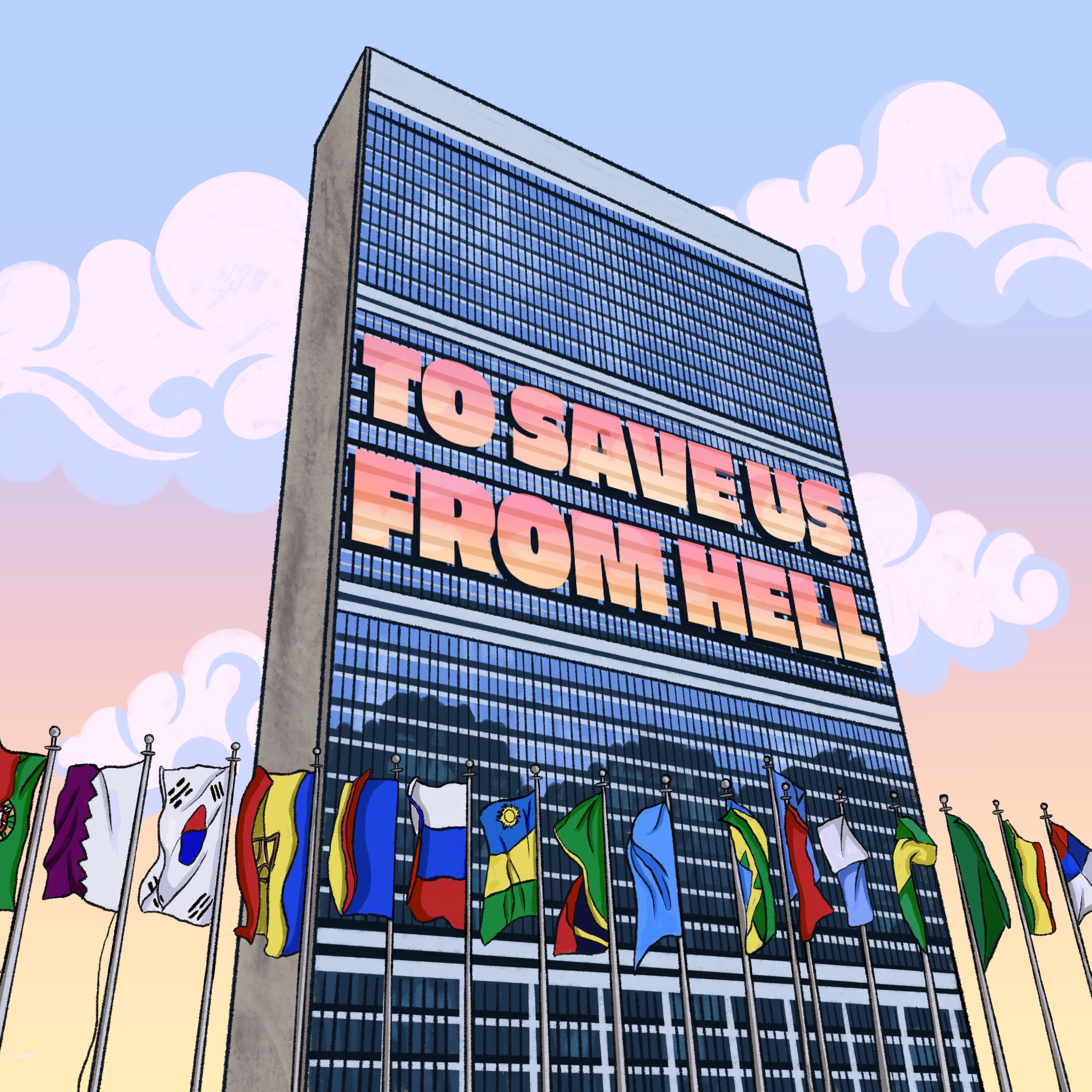
Introducing: "To Save Us From Hell," Our New Podcast about the United Nations!
"To Save Us From Hell" is a new weekly chat show about the United Nations. Each week, two veteran UN watchers break down the latest news from the United Nations, giving our audience insights into what is driving the agenda at UN headquarters and in its operations around the world. Co-host Mark Leon Goldberg is a veteran journalist who's the editor-in-chief of UN Dispatch and founder of Global Dispatches. He's covered the UN for nearly 20 years. Anjali Dayal is a Professor of International Relations at Fordham University who's written widely about the UN and teaches students about its intricacies. They are teaming up for this one-of-a-kind podcast that will launch in the middle of June. For full access to the show at a discounted price, please visit GlobalDispatches.org: https://www.globaldispatches.org/SaveUs
Are We Really Close to a Ceasefire Deal in Gaza?
On Friday, May 31, President Biden made a surprising announcement about a ceasefire deal between Israel and Hamas. Biden laid out the terms of this three-phased cessation of hostilities and said that this deal was proposed by Israel and sent to Hamas. The optics of a U.S. president making public what he said was an Israeli proposal made many people question whether or not Israel was fully behind this deal. Meanwhile, Biden aimed much of his remarks at Hamas, urging them to accept this ostensibly Israeli deal. At the time of recording, Hamas has neither accepted nor rejected this proposal. My guest today is Joel Braunold, managing director of the S. Daniel Abraham Center for Middle East Peace. We kick off by discussing what is included in this ceasefire agreement before having a long conversation about the reactions and responses to the Biden announcement by Hamas and Israel. We spend a good deal of time discussing some of the motivations behind Hamas' approach to a ceasefire deal and the complex domestic politics in Israel surrounding this deal. Check out our new weekly podcast about the United Nations! https://www.globaldispatches.org/s/to-save-us-from-hell
Mexico's Most Violent Election
Claudia Sheinbaum will be the next President of Mexico. In national elections on June 2, the protégé of President López Obrador and former Mayor of Mexico City won a landslide victory, earning nearly 59% of the vote. She is a former climate scientist and will be the first woman and the first person of Jewish origin to lead the overwhelmingly Catholic country. But beyond the presidency, there were over 20,000 positions at all levels of government up for election, and it was in these state and local elections that things turned violent. Very violent. This was by far the bloodiest election in Mexico's history, with over 30 candidates assassinated during the campaigning. My guest today, Falko Ernst, is the senior analyst for Mexico at the International Crisis Group. As he explains, this election-related violence is a product of criminal gangs competing for control, influence, power, and wealth. We kick off by discussing Claudia Sheinbaum's background and her unique approach to violent crime as mayor of Mexico City. We then discuss the dynamics that led to violence in the lead-up to these elections and what can be done to disrupt criminal gangs' sway over local politics in Mexico.
A Prison Camp for Islamic State Fighters in Syria is a Humanitarian Disaster and Security Challenge
After the Islamic State was largely defeated on the battlefields of northern Syria in 2019, thousands of fighters and their families were placed in detention facilities in the region. By far the largest of these detention camps is Al Hol, which at its peak held over 70,000 people from several dozen countries. Today, over 50,000 people live in Al Hol, which is essentially an open-air prison. The vast majority of people living there are children. My guest today, Sarhang Hamaseed, is the director of Middle East Programs at the United States Institute of Peace and is intimately involved with efforts to help repatriate families currently stranded in this prison camp. When we caught up, he had recently returned from Iraq, working on programs to support the reintegration of Iraqi families in Al Hol. In our conversation, Sarhang Hamaseed explains why this festering prison camp in northern Syria is both a humanitarian and security crisis that deserves broader international attention.
How a Novel Solution in Global Development Came To Life
Some of the most heavily indebted countries in the world are also the ones most vulnerable to climate-induced natural disasters. When a hurricane, cyclone, or massive drought hits a country, officials can be faced with the choice of either servicing their debts or paying for disaster recovery. As the pace and scale of natural disasters increase due to climate change, some policy entrepreneurs have introduced the idea of including so-called "Pause clauses" in loan agreements that would enable the country to suspend debt payments for a period of time as it recovers from a natural disaster. The best-known champion of this idea is the Prime Minister of Barbados, Mia Mottley. This was her signature proposal in a suite of reforms to international financing policies for climate-vulnerable countries known as the Bridgetown Initiative. My guest today, Michael Sheldrick, tells the story of how Pause Clauses went from an idea on paper to a policy now widely implemented by the World Bank in his new book: "From Ideas to Impact: A Playbook for Influencing and Implementing Change in a Divided World." Michael Sheldrick is a co-founder of Global Citizen and devotes a chapter of his book to the successful implementation of Pause Clauses. (The book covers much more than Pause Clauses, but it is what we focus on in our conversation today because it is such a good example of policy entrepreneurship in the face of a seemingly intractable problem.) From Ideas to Impact: A Playbook for Influencing and Implementing Change in a Divided World https://gtly.to/4X3iZoma5
Why Georgia's Foreign Agents Law Undermines Democracy and Human Rights
Over the past several weeks, hundreds of thousands of people in the Republic of Georgia have taken to the streets to protest against a law making its way through parliament that would force many NGOs to register as foreign agents. The law is modeled on similar measures in Russia that led to the near wholesale criminalization of pro-democracy and human rights civil society groups. This move in Georgia's parliament is being pushed through by a political party led by an oligarch who made his fortune in Putin's Russia. It is also happening at the same time as Georgia is seeking to establish closer ties with the West and join the European Union. On the line to discuss what this law actually says, how it may impact Georgia's future, and human rights inside Georgia is Denis Krivosheev, Deputy Director for Europe & Central Asia at Amnesty International.
Everything You Want to Know About the ICC Case Involving Israel and Hamas
On Monday, May 20th, the Chief Prosecutor of the International Criminal Court, Karim Khan, applied for arrest warrants for three senior Hamas leaders and for Israeli Prime Minister Benjamin Netanyahu and his Defense Minister Yoav Gallant. The Hamas leaders include the top official in Gaza, Yahyah Sinwar, Hamas' military commander Muhammad Deif, and Ismail Haniyeh, the Qatar-based political leader of Hamas. These three men were charged with crimes related to the October 7th attack and their treatment of hostages in captivity. On the Israeli side, Netanyahu and Gallant were charged with war crimes and crimes against humanity, including using starvation as a method of warfare. For those of you who subscribe to the Global Dispatches Newsletter, you'll know that I've been expecting this shoe to drop since November, when Karim Khan first warned Hamas and Israeli officials that his office has jurisdiction in relation to this conflict. Well, this ICC action has now happened, and on the line with me to discuss what these applications for arrest warrants mean and where this ICC case may be headed next is Mark Kersten. He is an assistant professor of criminal justice and criminology at the University of the Fraser Valley who specializes in International Law. He's also a senior consultant at the Wayamo Foundation. I daresay you will not find a more informed conversation about the ICC from any other podcast out there. To support our work, please become a paying supporter at Global Dispatches at: https://www.globaldispatches.org/
Why Can't More Humanitarian Aid Get to Gaza?
For humanitarian professionals, people whose job it is to deliver aid in conflict and disaster zones, Gaza is unique. Unlike other crises that suffer from lack of attention, the situation in Gaza is a top priority for governments around the world. Accordingly, there is no shortage of aid available to stem the crisis, which in some parts of Gaza has crossed the famine threshold. Rather, it is distributing the aid that has become the challenge, both in terms of getting the aid through Israeli inspections and, once in Gaza, getting the aid to where people need it most. My guest today, Jeremy Konyndyke, is the President of Refugees International and a veteran humanitarian professional who served as head of USAID's Office of Foreign Disaster Assistance from 2013-2017. We kick off discussing why humanitarian groups, the United Nations, and the Biden administration are so concerned about a full-scale Israeli assault on Rafah in southern Gaza. We then discuss the propriety of a humanitarian pier the US is constructing off the coast of Gaza and why the crisis in Gaza is so different from other humanitarian crises around the world. We conclude our conversation with an important discussion of the crisis in Darfur, and specifically the complicity of the United Arab Emirates in supporting a genocidal paramilitary.
How Civil Society is Contributing to the UN's Summit of the Future
Thousands of delegates gathered in Nairobi, Kenya, last week for the UN Civil Society Conference. The gathering was dedicated to the upcoming Summit of the Future, a major UN conference in September intended to reform and revitalize the UN and the multilateral system. The Nairobi civil society conference was an important opportunity for advocates, the NGO community, and other interested parties to help shape the outcome of the Summit of the Future. On the line to discuss with me what happened at the Nairobi conference and to explain more broadly the role of civil society as we approach the Summit of the Future is Lili Nkunzimana, United Nations representative at the Baha'i International Community's New York Office. We also discuss the current state of play of the intergovernmental negotiations over the Pact for the Future, which is the outcome document for September's summit. Today's episode is produced in partnership with the Baha'i International Community, an NGO that represents the worldwide Baha'i community at the UN and other international forums, where it says that recognizing humanity's interconnectedness is key to a shared global future. This episode is part of a series on the Summit of the Future. The previous episode in this series was published in January and can be found on http://www.GlobalDispatches.org. NB. "The inputs for the New Agenda for Peace were in December 2022, not December 2023 as stated int he episode."
Why Human Development is Flatlining
Each year, the United Nations Development Program produces the Human Development Report. This is a compilation of country-level data around education, health, and economic security that aspires to give a more holistic understanding of a country's development beyond economic indicators alone. UNDP has been putting this Human Development Report together for decades, and while some countries would sometimes register advances or declines in the so-called Human Development Index, the global trend was always one of unrelenting progress. Until COVID. The COVID years resulted in global declines along the human development indicators for reasons explained by my guest today, Pedro Conceicao, Director of the Human Development Report Office at the United Nations Development Program. As Pedro Conceicao explains, the most recent report shows that, globally, the Human Development Index is registering progress, but that progress is not as sharp as it was prior to COVID. We discuss this trend and much more about the Human Development Report.
What's the future of UNRWA? The Struggle for Balance in Gaza's Aid Operations | Inside Geneva
This is a special preview of the Inside Geneva podcast, available wherever you get your podcasts. Recently UNWRA, the UN's refugee agency for Palestinians, has been facing scrutiny of what exactly their role is in the current Israel-Hamas conflict. Many people around the world hadn't heard of UNRWA before this conflict - so what is it exactly, why was it founded, and does it need to continue? Journalist Imogen Foulkes takes a deep dive, talking to UNRWA chief Philippe Lazzarini, Israeli diplomat Nina Ben-Ami, Jan Egeland of the Norwegian Refugee Council, and Louis Charbonneau of Human Rights Watch. Inside Geneva is produced by Swissinfo, a multilingual public service media based in Switzerland.
A Genocidal Massacre is Looming in Darfur
El Fasher is the largest city in Sudan's Darfur region. It is also one of the few major cities in Darfur that has not fallen to the paramilitary Rapid Support Forces (RSF) during the civil war that broke out last year. However, an attack on El Fasher seems imminent. The RSF has surrounded the city and is laying siege to it. The United States, the United Nations, and key players around the world are urging against this impending attack, but it's unclear whether the RSF will be deterred. There are deep concerns for the fate of at least 800,000 people trapped in El Fasher, given that the RSF is a genocidal militia. The RSF is the re-branded Janjaweed Militia, which carried out the Darfur genocide 20 years ago. Since the full-scale civil war in Sudan began in April 2023, the RSF has reprised many of its genocidal tactics, targeting non-Arab ethnicities in Darfur for annihilation. My guest today is Mutasim Ali, Legal Advisor at the Raoul Wallenberg Centre for Human Rights. The Wallenberg Centre recently published a report compiling evidence that genocide is ongoing in Darfur, with the RSF perpetrating it against non-Arab groups. We discuss at length how they came to this conclusion. Mutasim Ali is also from El Fasher, so we talk about the looming RSF assault on the city and what, if anything, can be done to prevent this attack. Sudan represents the largest humanitarian crisis in the world. This episode is part of our ongoing series on the atrocities in Darfur and the civil war in Sudan, which is receiving scant media attention despite the sheer scale of this ongoing calamity. Please support our work by becomming a paying supporter of the show: https://www.globaldispatches.org/
Bird Flu is Now Spreading in Dairy Cattle. Are Humans Next?
H5N1, otherwise known as Avian or Bird Flu, has been around for a long time. Mostly, the virus has been passed among wild birds, but there have also been sporadic outbreaks in poultry flocks. Now, the virus has spread to dairy cattle and, in at least two cases, from cattle to people. This has experts in pandemic prevention on high alert. Dairy workers come in close contact with cattle, raising concerns that the virus could mutate in such a way that it can be transmitted not only from animals to people but also from human to human. Joining me to discuss the risk that H5N1 could become a virus capable of human-to-human transmission, and what can be done to prevent that, is Robyn Alders. She is an honorary professor with the Development Policy Center at the Australian National University and a member of the Lancet Commission on the Prevention of Viral Spillover. We begin by discussing the history of H5N1 before delving into the current outbreak among dairy herds. Alders also explains why addressing the root cause of these outbreaks requires a fundamental shift in how we approach food systems.
The United Kingdom and Rwanda Enter a Dangerous Pact for Refugees and Asylum Seekers
The Parliament of the United Kingdom has passed a controversial new law that would allow the government to deport asylum seekers to Rwanda. Under the so-called "Safety of Rwanda" bill, the Rishi Sunak government has pledged to send migrants from the UK to Rwanda, where their asylum claims would be processed. However, is Rwanda actually safe? My guest today, Sally Hayden, is a journalist who has reported extensively on migration and refugee issues. Last month, she was barred from entering Rwanda due to her prior reporting on the plight of refugees who had been sent to Rwanda as part of a separate, but similar, European Union program. Sally Hayden is the author of "My Fourth Time, We Drowned: Seeking Refuge on the World's Deadliest Migration Route," which won the prestigious Orwell Prize. In our conversation, Sally Hayden discusses her previous reporting on refugees in Rwanda and explores how this new UK bill fits into Europe's increasingly harsh policies towards refugees and asylum seekers.
How The New American Aid Package for Ukraine Will Impact the War
American aid is on its way to Ukraine. This week, Congress passed a $95 billion foreign aid bill that includes about $60 billion for Ukraine. This aid had been stalled for months, mostly due to Republican intransigence in the House of Representatives. But now, the funding is being released, and according to my guest today, it will have a significant impact on the battlefield in Ukraine. Evelyn Farkas is the Executive Director of the McCain Institute and served as the Deputy Assistant Secretary of Defense for Ukraine, Russia, and Eurasia during the Obama administration. We discuss the influence this new aid package will have on the trajectory of the conflict and why its timing is critical. Farkas recently returned from Ukraine, where officials told her they were bracing for a new summer offensive by Russia.
Can A United Nations Treaty to Curb Plastic Pollution Make it to the Finish Line?
Diplomats are gathering in Ottawa this week for the latest round of negotiations on a treaty to end plastic pollution. Back in 2022, 175 countries agreed to develop a legally binding agreement on plastic pollution by 2024. This meeting in Ottawa is the penultimate round of negotiations and a critical moment in the long effort to curb the environmental damage caused by the rampant production and use of plastic today. On the line with me to discuss what these negotiators hope to achieve and some of the key obstacles in the way of a robust treaty on plastic pollution is Erin Simon, Vice President and Head of Plastic Waste and Business at the World Wildlife Fund. We kick off discussing the problem of plastic pollution before having a broader conversation about these treaty negotiations. This includes a conversation about some key diplomatic stumbling blocks preventing the adoption of a treaty on plastic pollution.
Iran, Israel and A Perilous Moment in the Middle East
On April 1st, Israel launched airstrikes on an Iranian diplomatic compound in Damascus, killing seven Iranian officials, including a very senior general. Iran responded with a massive drone attack on Israel, marking the first time that Iran directly attacked Israeli soil. All this is happening, of course, in the context of the conflict in Gaza. My interview guest Dalia Dassa Kaye is a Senior Fellow at the UCLA Burkle Center for International Relations and a Fulbright Schuman Visiting Scholar at Lund University. She has done extensive research and writing on the mechanics of armed conflict escalation in the Middle East, which we discuss in the context of this current crisis. We kick off discussing the recent series of events since April before having a broad conversation about the dynamics of escalation between Israel and Iran. This includes the potential that the United States becomes more deeply dragged into this conflict in the Middle East.
Sudan's Most Horrible Year
On the one year anniversary of the outbreak of civil war, Sudan is the largest humanitarian crisis in the world today. On April 15, 2023, fighting spread from Khartoum to other parts of the country, including Darfur, where the conflict took on ugly ethnic dimensions, potentially leading to genocide. Over 8 million people have been displaced, and the UN is warning of famine in parts of the country. My interview guest today, Kholood Khair, is the founder and director of Confluency Advisory, a think-and-do tank formerly based in Khartoum. She explains how the conflict has evolved over the last year and why the humanitarian crisis is as dire as ever. In our conversation, we spend a lot of time discussing potential ways out of this crisis, which thus far have been elusive. Kholood Khair explains: How the conflict in Sudan began. How the conflict has changed over the last year. Why the conflict is becoming more complex and harder to solve the longer it lasts What the international community, including the United States, can do to better support a peace process. Please support our ongoing efforts to cover undercovered global stories by becoming a paid supporter of Global Dispatches on Substack or Apple Podcasts https://www.globaldispatches.org/
Can The UN Agency for Palestinian Refugees Survive?
The United Nations Relief and Works Agency, better known as UNRWA, was established in 1949 to support Palestinians displaced during the first Arab-Israeli war. Today, it provides services and humanitarian relief to nearly 6 million Palestinians in Jordan, Lebanon, Syria, the West Bank and of course Gaza. There has always been some tension between Israel and UNRWA, but since the October 7th attacks and the Israel war in Gaza, Israeli leaders have sought to dismantle UNRWA all together and the United States seems to be a willing partner in this effort. Following accusations that 12 out of UNRWA's 13,000 staff in Gaza took part in the October 7 attacks, the United States suspended funding for UNRWA and many other key donors followed suit. This funding suspension took place even as UNRWA's humanitarian relief networks in Gaza are widely regarded as irreplaceable. To the extent that aid is reaching besieged populations in Gaza, it is UNRWA facilitating the deliveries. My interview guest today, Jonathan Lincoln is a former United Nations official who served as a Senior Coordination Officer at the Jerusalem office of the UN Special Coordinator for the Middle East Peace Process, where he worked on aid in the West Bank and Gaza. He is now the interim Director of the Center for Jewish Civilization at Georgetown University's School of Foreign Service. He recently wrote a piece in Foreign Affairs about the necessity of UNRWA and the need for reforming the agency which inspired this interview.
Turkey's Surprising Election Results Puts Erdogan on Notice
On March 31st, Turkey held local elections across 81 provinces. These elections took place less than a year after national elections cemented President Erdogan and his AK Party's hold on power, which he had been consolidating for nearly 20 years through democratic backsliding. But these elections were different -- very different. Erdogan's AKP suffered huge defeats across the country, perhaps none more impactful and symbolic than the AKP's crushing loss in the Istanbul Mayoral race. As my guest today, Lisel Hintz, explains, these may have been local elections, but the results show a growing nationwide opposition to Erdogan and his authoritarian leadership style. Lisel Hintz is an Assistant Professor of International Relations at Johns Hopkins University School of Advanced International Studies. We kick off by discussing the implications of the election results before delving into a lengthy conversation about Istanbul's mayor, who is emerging as a prominent national leader challenging Erdogan.
Colombia's Largest and Richest Criminal Armed Group is Getting Stronger
The Gaitenistas, otherwise known as the Gulf Clan, are Colombia's largest and richest criminal armed group. They formed nearly 20 years ago but have gained considerable strength since Colombia's landmark 2016 peace agreement with the Leftist FARC guerrilla group. Today, The Gulf Clan controls much of Colombia's Atlantic coast and is a key player in drug trafficking and migrant smuggling. All the while, they use coercive tactics to control the population. My guest today, Elizabeth Dickinson, is Senior Analyst for Colombia at the International Crisis Group and author of a recent report on this group. In our conversation, she explains how this group emerged to become such a potent force in Colombia today and why it is thus far upending President Gustavo Petro's efforts to secure a so-called Total Peace for all of Colombia. The Crisis Group report.
How "Xi Thought" Shapes Chinese Foreign Policy
Xi Jinping has dramatically reshaped China since coming to power in 2012. He is now effectively a leader for life, and throughout his time in power, he has molded Chinese politics and society to his own ideological predilections. Understanding this ideology, known as "Xi Thought," is crucial for comprehending how China perceives its role in the world today. Steve Tsang, the director of the China Institute at SOAS University of London and co-author with Olivia Cheung of the new book "The Political Thought of Xi Jinping," provides a thorough analysis of the development and application of Xi's political ideology and its impact on China domestically and in its international relations. We begin by discussing why understanding Xi Thought matters for comprehending China today. We then explore some of the key tenets of this ideology before engaging in a detailed conversation about an ancient Chinese imperialist ideology that Xi is reviving for the modern world.
The Geopolitics of English
Podcast guest Rosemary Salomone is the Kenneth Wang Professor of Law at St John's University School of Law and author of the book "The Rise of English: Global Politics and the Power of Language." The book takes readers around the world to show the political, social and cultural implications of English having been firmly established as the Lingua Franca. We kick off discussing how English became the dominant global language. We then discuss how reactions against the dominance of English are shaping domestic and international politics in interesting and sometimes unusual ways.
What New Legislation to Ban Tik Tok Tells Us About US-China Relations Today
In Mid-March the U.S. House of Representatives overwhelmingly passed a bill that would effectively ban Tik Tok in the United States. Tik Tok's parent company, Byte Dance, is Chinese. This bill would force Byte Dance to sell Tik Tok to an American buyer or else the app would no longer be available in the United States. President Biden has said he'd sign this bill into law, but at the moment the legislation is stalled in the Senate. My guest today Kaiser Kuo argues that these anti-Tik Tok measures are emblematic of a "moral panic" around China that is increasingly taking hold among American policy makers. He is the host of the Sinica Podcast and after discussing our views on whether or not the US should ban Tik Tok, we discuss the broader geopolitical context in which a move like this is being contemplated.
Why Gender Equality Advocates Are Playing Defense at the UN Commission on the Status of Women
The Commission on the Status of Women concludes this week at the United Nations. CSW, as it is known, is one of the major annual events at UN headquarters, second only to the opening of the UN General Assembly in September. But unlike UNGA, it rarely gets much media attention, at least not the kind of attention commensurate for a diplomatic gathering of its size. Joining me to explain the key debates and discussion from the 68th Commission on the Status of Women is Michelle Milford Morse, Vice President for Girls and Women Strategy at the United Nations Foundation. We kick off with a long conversation about the unique diplomatic dynamic surrounding international debates and discussions on gender equality--including why after years of progress, advocates for gender equality are now playing defense. We then discuss some of items that were on the agenda at CSW this year.
Why Haiti is Descending Deeper into Crisis
The security and humanitarian situation in Haiti has gone from bad to worse over the last several days. The country, ensnared in an enduring crisis following the 2021 assassination of President Jovenel Moïse, now faces a critical juncture as violence led by gang coalitions escalates and state authority wanes. Amid this chaos, Prime Minister Ariel Henry signaled his intent to step down, agreeing to a transitional governing council. Meanwhile, a Kenya-lead prospective police mission under UN authorization remains in limbo, highlighting the urgency for immediate intervention to prevent further collapse. Renata Segura, Deputy Director for Latin American and the Caribbean for the International Crisis Group, sheds light on Haiti's descent into chaos. This includes a recent surge in gang conflict which saw a temporary alliance aiming to confront the state's governance structures. This gang alliance has led to an unprecedented level of turmoil, targeting police stations, airports, and causing mass jailbreaks. Segura explains where this crisis may be headed next, and what the international community can do to prevent the crisis from getting even worse. Key Takeaways: Haiti has entered a heightened state of crisis following a gang coalition that directly challenges state authority. Prime Minister Ariel Henry has agreed to transfer power to a transitional council composed of various Haitian political and civil society groups. The United Nations Security Council's multinational support mission, led by Kenya, is critical but currently faces significant challenges in deployment. Renata Segura emphasizes the importance of swiftly addressing the violence in Haiti before the state potentially fails completely. There is discussion around the prospect of integrating gangs into the political framework as a means to de-escalate conflict.
How to Limit the Threat of "Killer Robots" and Autonomous Weapons That Are Changing Warfare
Artificial Intelligence is changing warfare. Fully autonomous weapons that can make their own decisions about what to target or whom to kill are already in limited use today. But the pace of development of AI suggests that these so-called "Killer Robots" may become more and more common in future armed conflicts. Meanwhile, the speed at which new AI technology is coming online far exceeds the ability of the international community to come up with guardrails that might place controls on fully autonomous weapon systems. Guest Paul Scharre is the Executive Vice President and Director of Studies at the Center for a New American Security. He is the award-winning author of Four Battlegrounds: Power in the Age of Artificial Intelligence. We kick off by discussing what we mean by autonomous weapons before having a longer conversation about what the future holds for AI in warfare, nuclear security, and how to secure sensible regulations on autonomous weapons and military uses of AI. Paul Scharre in Foreign Affairs