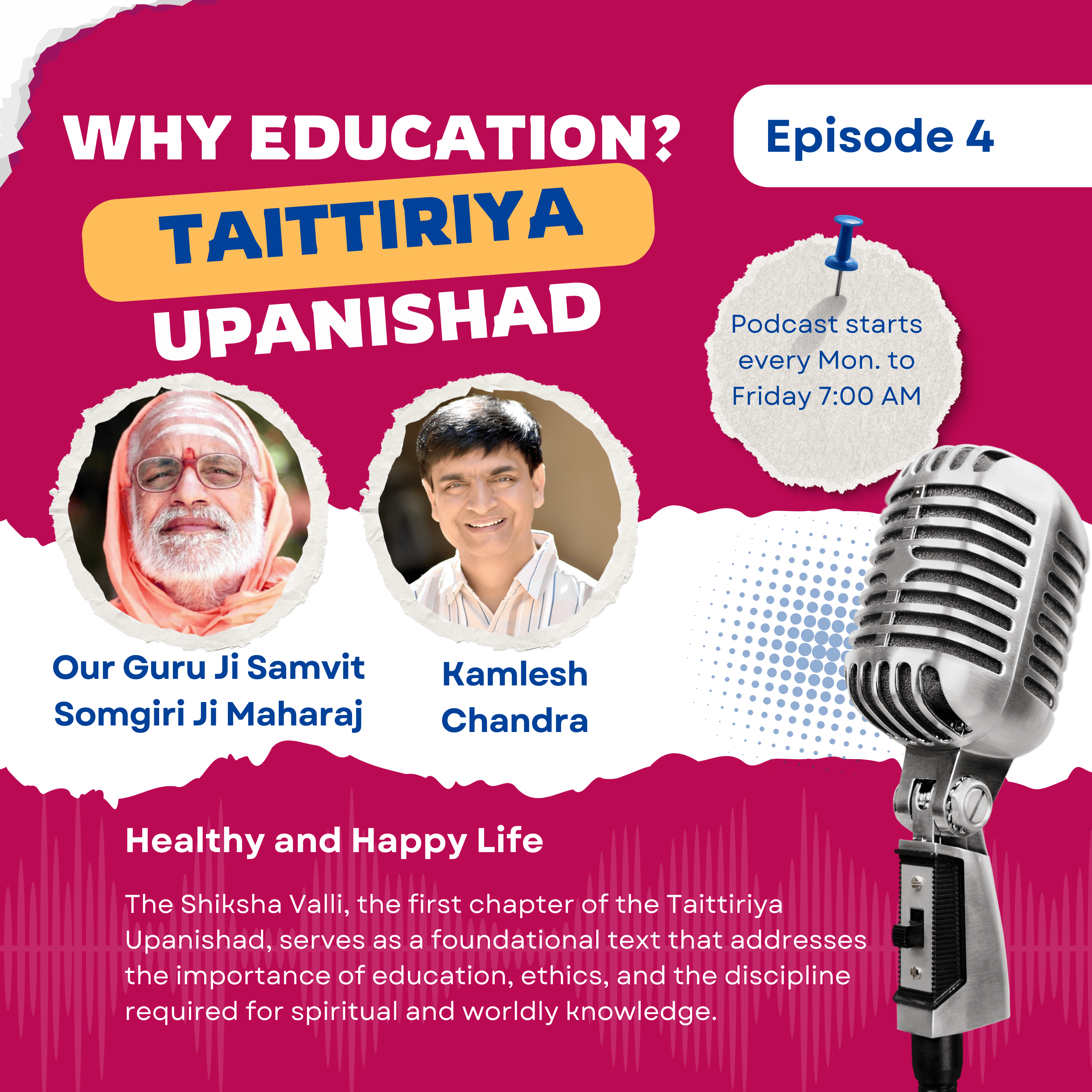
Audio is streamed directly from the publisher (anchor.fm) as published in their RSS feed. Play Podcasts does not host this file. Rights-holders can request removal through the copyright & takedown page.
Show Notes
The Upanishad offers a comprehensive framework for ethical living, often seen as a "graduation address" for students completing their period of formal learning. These guidelines are succinctly encapsulated in a series of exhortations:
- "Satyam vada": Speak the truth.
- "Dharmam chara": Practice righteousness.
- "Matṛ-devo bhava": Regard your mother as a deity.
- "Pitṛ-devo bhava": Regard your father as a deity.
- "Āchārya-devo bhava": Regard your teacher as a deity.
- "Atithi-devo bhava": Regard the guest as a deity.
These instructions serve as a moral compass, guiding individuals to live with integrity, respect, and gratitude toward the people and forces that shape their lives.
The ultimate aim of education, as highlighted in the Shiksha Valli, is to transcend material understanding and realize the unity between the individual self (Atman) and the universal reality (Brahman). This realization is the culmination of a life dedicated to learning, ethical living, and self-discipline.