
GeriPal - A Geriatrics and Palliative Medicine Podcast
414 episodes — Page 4 of 9

Ep 264Why is working with adolescents and young adults so hard? Abby Rosenberg, Nick Purol, Daniel Eison, & Andrea Thach
I haven't worked with many adolescents and young adults (AYA, roughly teens to twenties). But when I have, I find that they're often some of the hardest patients to care for. Why? We talk about why it's so hard with Abby Rosenberg (chief of PC at DFCI and Boston Childrens), Nick Purol (clinical social worker at DFCI and Boston Childrens), Daniel Eison (pediatric PC doc and co-host of PediPal). We are grateful to Andrea Thach (PC doc at Sutter East Bay) for bringing this topic to our attention and for asking questions as a guest host. Here are just a few of the explanations for why it's so hard: They are closer in age to some of us (younger clinicians). Countertransference hits hard. There's an in-between space between adolescence and adulthood - and there's something that we identify with in that in-between space, tugging at our heart strings Everyone has been a teenager. Everyone has lived through their early 20s. Every member of the interdisciplinary team. Adolescence and young adulthood is a romanticized time of life in our culture. We remember bucking the rules, figuring out who you are, hair on fire, feeling invulnerable, trying to figure out who you are - and now those adolescents are stuck in the hospital, with doctors and parents telling them what to do, having their autonomy crushed by the medical institution, realizing they're not invulnerable. We talk about these issues and more - what resources to leverage, how to cope as a team. We in geriatrics and adult palliative care clinicians have so much to learn from our colleagues in pediatrics - and though many of these lessons are specific to adolescents and young adults - many of the lessons are valuable for the care of patients in older life stages. Links to resources for working with AYA, from Nick Purol): The Courageous Parents Network has a wealth of information/resources/videos/articles on many overlapping issues and topics related to caring for children/adolescents/young adults with serious illness (from both the provider and clinician perspective): https://courageousparentsnetwork.org Courageous Parents Network Empowering parents caring for children with serious illness through video, shared community, professional guidance, and palliative care. You are Not Alone. courageousparentsnetwork.org Voicing My Choices is a wonderful tool for discussing goals/wishes and introducing advance directives in the context of serious illness. It's based off 5 Wishes and validated for AYA through direct feedback from the population: https://store.fivewishes.org/ShopLocal/en/p/VC-MASTER-000/voicing-my-choices The Oxford Textbook of Palliative Social Work has several chapters relating to working with AYA (either due to family illness or their own), with many psychosocial clinicians in our field contributing: https://www.amazon.com/Oxford-Textbook-Palliative-Social-Work/dp/0197537855 Same is true for the Interdisciplinary Pediatric Palliative Care Textbook: https://www.amazon.com/Interdisciplinary-Pediatric-Palliative-Joanne-Wolfe/dp/0190090014/ref=sr_1_1?crid=33YG2UAKDZ8DO&keywords=interdisciplinary+pediatric+palliative+care&qid=1682288312&s=books&sprefix=interdisciplinary+pediatric+palliative+car%2Cstripbooks%2C101&sr=1-1&asin=0190090014&revisionId=&format=4&depth=1 -@AlexSmithMD

Ep 263GeriPal Special: Hopes and Worries for Hospice and Palliative Care
We have a special extra podcast this week. During the last AAHPM - HPNA meeting in Montréal, we went around asking attendees what one thing that they are most worried about and one thing they are most hopeful for when thinking about the future of our field. We couldn't fit everyone's responses in but came up with the big themes for questions and edited them into this weeks podcast / YouTube video. Eric and Alex DISCLAIMER While we filmed in Montreal during the Annual Assembly, all opinions expressed in this podcast are independent of AAHPM and HPNA, or the Annual Assembly. Furthermore, direction to external websites is not an endorsement from AAHPM or HPNA, or the Annual Assembly. Palliative Care the Next Generation: How the Service May Grow and Evolve https://hospicenews.com/2023/04/14/palliative-care-the-next-generation-how-the-service-may-grow-and-evolve/ AccentCare, a portfolio company of private equity firm Advent International, is another example. The company has expanded its palliative care services through partnerships with hospitals and other managed care providers, according to AccentCare CEO Stephan Rodgers. "We've got a very large palliative care practice," Rodgers told PCN. "What we've seen to make it really work is you either have to be in the hospital, where we've taken over palliative care in the hospital, or you have to be contracted with managed care and get it at some kind of risk, because community-based palliative care is very difficult to make operate right now from a profitable [perspective]."
Ep 262Aging and Homelessness: Margot Kushel
In 1990 11% of homeless persons were older than 50. Today half are over age 50. Today we talk with Margot Kushel about how we got here, including: That sense of powerlessness as a clinician when you "fix up" a patient in the hospital, only to discharge them to the street knowing things will fall apart. Chronic vs acute homelessness What is the major driver of homelessness in general? What is the major driver of the increase in older homeless persons? Why do we say "over 50" is "older" for homeless persons, why not 65? To what extent is the rise of tech in San Francisco to blame for our local rise in homelessness? What are the structural factors and individual factors that contribute to homelessness? How has the history of redlining and the federal tax subsidy of wealthy (mostly white) people in the form of a mortgage interest deduction contributed to racial inequalities in homelessness? What can we do about it? What are the highest yield interventions and policy changes? What should we call it - homeless or unhoused? We were fortunate to make it to the end of this podcast before Margot lost power. It's storming again in the Bay Area at the time we record this. So much harder than for the older homeless people on the streets with no power to lose. A mad world out there (song hint). Key references: -Margot Kushel's UCSF Grand Rounds -JAMA IM paper on mortality among older homeless persons -NEJM perspective arguing that interventions to address homelessness shouldn't be evaluated on cost savings. -@AlexSmithMD

The importance of social connection: Julianne Holt-Lunstad, Thomas Cudjoe, & Carla Perissinotto
Social connections impact our health in profound ways, whether it is the support we receive from family and friends in navigating serious illness, the joy from shared social activities, or connecting with our community. Experiencing social isolation, the objective lack of contact with friends, family, or the community, or loneliness, the subjective feeling of lacking companionship or feeling left out, may be signs that our overall social life is struggling. But, should we as clinicians care about the social lives of our patients? Are there meaningful ways of assessing loneliness and social isolation in clinical settings and connecting patients with interventions? How can public health and policy experts address these needs, particularly in light of the COVID-19 pandemic which turned our social lives upside down? On today today's podcast, we are joined by guest host and UCSF geriatrician Ashwin Kotwal as we welcome three renowned scholars in the field: 1) Dr. Julianne Holt-Lunstad, Professor of Psychology and Neuroscience at Brigham Young University, an international expert on loneliness, social isolation, and social interventions, who has served on the National Academy of Sciences committee on social isolation and loneliness and advised the UK Loneliness Campaign, 2) Dr. Thomas Cudjoe, Assistant Professor of Medicine at Johns Hopkins University, who has conducted groundbreaking work on the measurement of social isolation and mechanisms of impact on health, and 3) Dr. Carla Perissinotto, Professor of Medicine at UCSF, who has pioneered the clinical and policy approach to addressing loneliness and social isolation. We talk about: Their personal and clinical inspiration for studying loneliness and social isolation, and hurdles encountered in bringing these needs to the clinical world. The Listening "EAR" approach that simplifies assessment of loneliness and social isolation in clinical settings, and other practical pointers. Check out some of their recent work, including: Dr. Holt-Lunstad's and Dr. Perissinotto's powerful perspective piece in the New England Journal of Medicine which provides a clinical framework for addressing loneliness and social isolation. Dr. Cudjoe's recent work demonstrating the impact of social isolation on dementia risk, populations at risk, and how our social lives "getting under our skin." Dr. Kotwal's work showing how social isolation impacts end-of-life health care use, including hospice and acute care. We touch briefly on (and build on) topics discussed in prior podcasts such as loneliness during the pandemic. Tune in to hear Alex's acoustic rendition of Outkast's Hey Y'All! -Ashwin Kotwal

Ep 260RCT of Chaplaincy: Lexy Torke, Karen Steinhauser, LaVera Crawley
Do we need an RCT to establish the worth of chaplaincy? Einstein once said, "Everything that can be counted does not necessarily count; everything that counts cannot necessarily be counted." A friend of GeriPal, and prior guest, Guy Micco commented today that we need an RCT for chaplaincy is like the idea that the humanities need to justify their value in medical training: "It's like being told to measure the taste of orange juice with a ruler." On the other hand, all of our guests agree that chaplains are often the most vulnerable to being cut from hospital and health system budgets. These studies are important. Today we have a star-studded lineup, including Lexy Torke of Indiana University, who discusses her RCT of a chaplaincy intervention for surrogates of patients in the ICU, published in JPSM and plenary presentation at AAHPM/HPNA. To provide context, we are joined by Karen Steinhauser, a social scientist at Duke who has been studying spirituality for years (and published one of the most cited papers in palliative care on factors considered important at the end of life, as well as one of my favorite qualitative papers to give to research trainees). We are also joined by LaVera Crawly, a physician turned chaplain, now VP of Spiritual Care at Common Spirit Health (and author of another of my favorite and most cited papers on palliative care in the African American Community). We dive into the issues of measuring spirituality, chaplaincy, the need for an expanded vocabulary around spirituality, spiritual assessments, spiritual history, LaVera's journey from physician to chaplain (listen to her compelling answer to the magic wand question at the end). For further context, please check out our prior podcast on spirituality, and this discussion of the RCT by Lexy that I helped moderate for Transforming Chaplaincy. Thanks to my son Kai for playing the guitar part in 5/4 with strange chords on Riverman by Nick Drake! -Alex

Ep 258Storytelling in Medicine: A Podcast with Liz Salmi, Anne Kelly, and Preeti Malani
Two weeks ago on the GeriPal podcast we talked about why and how to write for the general public. This week we've invited three guests to share their stories about storytelling that's written for healthcare providers. The first guest is Liz Salmi. Liz wrote a fabulous perspectives piece in the NEJM titled "Deciding on My Dimples" which talks about her experience as a patient doing shared decision making during neurosurgery for resection of an astrocytoma. In addition to this being a fascinating story, Liz brings in a great perspective as a patient, advocate, researcher, and a punk rocker. Our second guest is a recurring star of GeriPal, Anne Kelly. She just published an essay for JAMA Piece of My Mind titled "The Last Visit". In this piece Anne describes her experience with the expressions of love she and her mother shared in the last days of her mothers life. Lastly, but certainly not least, we've invited Preeti Malani. Preeti is the editor for JAMA's Piece of My Mind section. We've asked Preeti to come on to describe what happens behind the curtain when evaluating these stories, including what makes those few that get accepted stand out. We've also love to hear from you on twitter and facebook your own experiences writing for the medical world (and please include links!)
Ep 258Is Hospice Losing Its Way: A Podcast with Ira Byock and Joseph Shega
In November of 2022, Ava Kofman published a piece in the New Yorker titled "How Hospice Became a For-Profit Hustle." Some viewed this piece as an affront to the amazing work hospice does for those approaching the end of their lives by cherry picking stories of a few bad actors to paint hospice is a bad light. For others, this piece, while painful to read, gave voice to what they have been feeling over the last decade - hospice has in some ways lost its way in a quest of promoting profit over care. On today's podcast, live from the American Academy of Hospice and Palliative Medicine Annual Meeting, we invite two thought leaders in the field, Ira Byock and Joseph Shega, to discuss among other things: Is hospice losing its way? Is there a difference between for-profit and not-for-profit when it comes to quality of care? What is our role as hospice and palliative care providers in advocating for high-quality hospice care? If you are interested in signing the position statement "Core Roles and Responsibilities of Physicians in Hospice Care", click here. For a deeper diver into these issues, check out some of the following links: Ira's Stat new article "Hospice care needs saving" GeriPal's episode on the growing role of private equity in hospice care Acquisitions of Hospice Agencies by Private Equity Firms and Publicly Traded Corporations. JAMA IM 2021 Hospice Acquisitions by Profit-Driven Private Equity Firms. JAMA Health Forum. 2021 Association of Hospice Profit Status With Family Caregivers' Reported Care Experiences. JAMA IM 2023 A shout-out to my NPR episode on 1A titled the "State of Hospice Care" DISCLAIMER While we filmed in Montreal during the Annual Assembly, all opinions expressed in this podcast are independent of AAHPM and HPNA, or the Annual Assembly. Furthermore, direction to external websites is not an endorsement from AAHPM or HPNA, or the Annual Assembly. ---------------------------

Ep 257Writing for the Lay Public: Rosanne Leipzig and Louise Aronson
So you want to write a book. So you want to write a book! So…you want to write a book?!? Today we talk with two geriatricians: Rosanne Leipzig, author of Honest Aging: An Insider's Guide to the Second Half of Life; and Louise Aronson, author of Elderhood: Redefining Aging, Transforming Medicine, and Reimagining Life. (You can hear our prior podcast on Louise's book here). We talk with them about writing for the lay public, including: Why write a book for the lay public? Why write about aging? Was there pushback from publishers (hint: hell yes) What terms to use to describe the "old age" time period? How did they start writing a book? How do you find time to write and also be doctors and academic professors? Revisions and working with editors Writing an Op Ed - how to start, what to write, where to send it TheOpEdProject as a resource for learning more We look forward to the books and op-eds our listeners will write! In all seriousness, you don't actually have to want to write a book to be interested in this podcast. You don't have to want to play professional basketball to appreciate The Last Dance, which documents the final season of Michael Jordan with the Chicago Bulls. These are inherently interesting interviews because the motivations, process, and struggle of monumental undertakings are interesting in and of themselves. Enjoy! -@AlexSmithMD
Ep 256Psychedelics - reasons for caution: Stacy Fischer, Brian Anderson, Theora Cimino
Psychedelics are having a moment. Enthusiasm is brimming. Legalization is moving forward in several states, following the lead of Oregon and Colorado. FDA is considering approval, shifting away from Schedule I restrictions, paving the way for use in clinical practice. Potential use in palliative care, chronic pain, and for mood disorders is tantalizing. Early data on efficacy in patients with anxiety and demoralization are promising. Research is exploding. Two of our guests today, Stacy Fischer and Brian Anderson, are involved in large multicenter trials of psychedelics for patients with advanced cancer (Fischer) or life-limiting illness (Anderson). Theora Cimino conducted an observational study (publication in the works) of marginally housed/homeless persons many of whom had experience with psychedelics. And yet there are reasons for caution. In our prior podcast with Ira Byock on psychedelics in 2019 we talked primarily about the potential of psychedelics. Today we largely focus on reasons for caution, including: We know almost nothing about psychedelics in older adults - only about 1% of patients in published trials were older adults, much less older adults with multiple chronic conditions, multiple medications, and frailty. Bree Johnston and Brian Anderson wrote a terrific summary of the evidence (or lack thereof) in older adults. There is a marked lack of diversity in published trials. Most participants are White and well-resourced. Psilocybin, the most commonly used psychedelic, increases heart rate and blood pressure, which may potentially lead to cardiovascular events. The efficacy of psychedelics without therapy, and the impact of variations in therapy type, training, duration, is unknown. Ethical issues, including colonization of psychedelics by big pharma. Psychedelics have been used by communities around the globe for hundreds of years (or more). We cover these issues and more in today's podcast. Note, I butchered the chorus on the YouTube version - please listen to the podcast for my souped up version with drums and bass! -@AlexSmithMD
Gabapentinoids - Gabapentin and Pregabalin: Tasce Bongiovanni, Donovan Maust and Nisha Iyer
Gabapentin is the 10th most prescribed drug in the United States and use is increasing. In 2002, 1% of adults were taking gabapentinoids (gabapentin and or pregabalin). By 2015 that number increased to 4% of US adults. There are a lot of reasons that may explain the massive increase in use of these drugs. One thing is clear, it is not because people are using it for FDA approved indications. The FDA-approved indications for gabapentin are only for treating patients with partial seizures or postherpetic neuralgia. However, most gabapentin prescriptions are written off-label indications. On today's podcast we talk all about the Gabapentinoids - Gabapentin and Pregabalin - with Tasce Bongiovanni, Donovan Maust and Nisha Iyer. It's a big episode covering a lot of topics. First, Nisha, a pain and palliative care pharmacist, starts us off with discussing the pharmacology of gabapentin and pregabalin, including common myths like they work on the GABA system (which is weird given the name of the drug). Tasce, a surgeon and researcher, reviews the use of gabapentin in the perioperative setting and the research she had done on the prolonged use of newly prescribed gabapentin after surgery (More than one-fifth of older adults prescribed gabapentin postoperatively continue to take it more than 3 months later). Donovan discusses the growth of "mood stabilizers/antiepileptics" (e.g. valproic acid and gabapentin), in nursing homes, particularly patients with Alzheimer's disease and related dementias. This includes a JAGS study recently published in 2022 showing that we seem to be substituting one bad drug (antipsychotics and opioids) with another bad drug (valproic acid and gabapentin). Lastly, we also addressed a big reason for the massive uptake of gabapentinoids: an intentional and illegal strategy by the makers of these drugs to promote off-label use by doing things like creating low-quality, industry-funded studies designed to exaggerate the perceived analgesic effects of these drug. This long and sordid history of gabapentin and pregabalin is beautifully described in Seth Landefeld and Mike Steinman 2009 NEJM editorial. I could go on and on, but listen to the podcast instead and for a deeper dive, take a look at the following articles and studies: Gabapentin in the Perioperative setting: Prolonged use of newly prescribed gabapentin after surgery. J Am Geriatr Soc. 2022 Perioperative Gabapentin Use in Older AdultsRevisiting Multimodal Pain Management JAMA IM. 2022 Effect of Perioperative Gabapentin on Postoperative Pain Resolution and Opioid Cessation in a Mixed Surgical Cohort. JAMA Surgery 2018 Gabapentin and mood stabilizers in the Nursing Home Setting: Antiepileptic prescribing to persons living with dementia residing in nursing homes: A tale of two indications. JAGS 2022 Trends in Antipsychotic and Mood Stabilizer Prescribing in Long-Term Care in the U.S.: 2011-2014 JAMDA 2020 Efficacy of Gabapentinoids: Gabapentinoids for Pain: Potential Unintended Consequences. AFP 2019 Gabapentin for chronic neuropathic pain in adults. Cochrane Database of Systematic Reviews Review. 2017 The Illegal Marketing Practices by Pharma promoting ineffective: The Neurontin Legacy — Marketing through Misinformation and Manipulation NEJM 2009 Narrative review: the promotion of gabapentin: an analysis of internal industry documents. Annals of IM. 2006
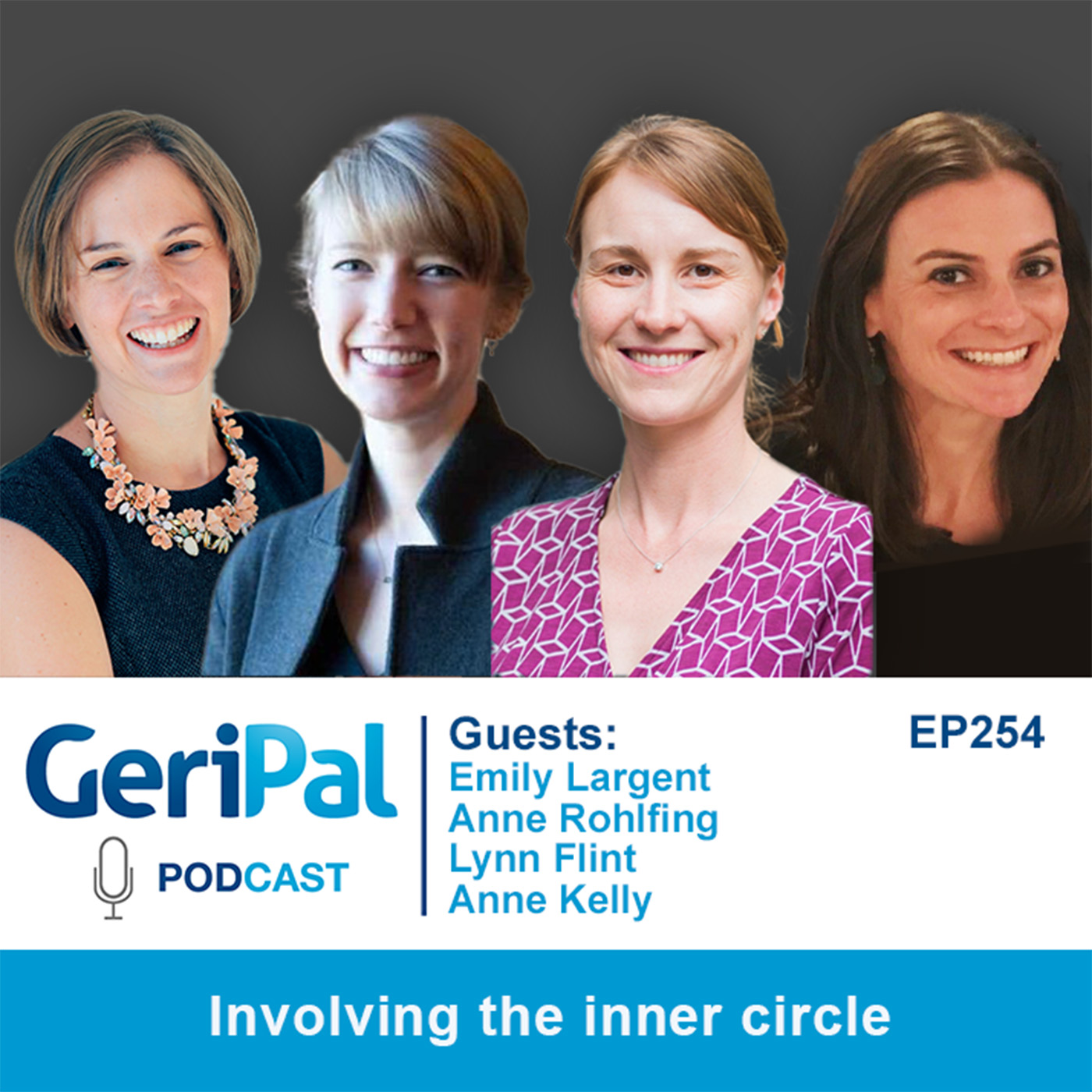
Ep 254Involving the inner circle: Emily Largent, Anne Rohlfing, Lynn Flint & Anne Kelly
You know when you walk out of a patient's room and have that sense, "This isn't going to go well." The patient is sick and getting sicker, and refuses to let you talk with family or other members of her inner circle. Should you stop at "no?" Today we talk with Anne Rohlfing, Lynn Flint, and Anne Kelly, authors of a JGIM article on the reasons we shouldn't stop at "no." We owe it to the patient to explore the reasons behind the "no," commonly not wanting to be a burden to their family. In such cases, we owe it to the patient to use persuasion, for example, "I hear that you don't want to be a burden. And I'm worried that there may come a time when you have trouble making decisions for yourself. We will have to reach out to your daughter then to help with decisions. Imagine her hearing for the first time that you're sick, that you're hospitalized, that you're in the ICU, and that you can't make your own decisions? That's a huge amount of news all at once. It would help her to prepare if we could start talking with her now." We also talk with Emily Largent, a bioethicist and former ICU nurse, who argues in a Hastings Center Report for an expanded vision of patient consent. Consent is often viewed as "all or nothing" for any specific decision. Emily and colleagues have argued for a wider view of consent that continues to involve patients whose consent may fall in the gray zone - able to express some goals and values, hopes and fears - but not able to think through the complexities of a major decision. I'd hazard that maybe half the patients I care for at the intersection of geriatrics and palliative care fall in the gray zone. Emily's expanded notion of consent is grounded in the concept of "relational autonomy." Relational autonomy was was first introduced to bioethics by feminist scholars, who observed that most people do not make decisions as isolated islands. Rather, most of us live and make decisions in relationship to one another. Emily's notion also borrows from pediatric bioethics, in which parents can look to young children for assent and input on decisions, empowering them to some extent. Invoking this principle, Emily argues for an expanded role for patients in the gray area and their inner circle working together along a spectrum of cooperative decision-making. My favorite line from Emily's paper: "Geriatric assent has not been widely adopted in clinical care, but bioethicists should advocate for this, as adoption of partial-involvement strategies can prolong the period in which individuals are (appropriately) engaged in decisions about their health care." Enjoy! -@AlexSmithMD

Ep 253The Angry Patient: A podcast with Dani Chammas and Keri Brenner
Think about the last time a patient yelled at you in anger. How did you react? The last time this happened to me I immediately went on the defensive despite years of training in serious illness communication skills. Afterwards, I thought there must be a better way. Well on today's podcast we invite two of our favorite palliative care psychiatrists, Dani Chammas and Keri Brenner, to teach us about going beyond simple communication skills like naming the emotion when interacting with the angry patient (see our podcast on avoiding the uncanny valley for a deeper dive into the dangers of becoming too rote and scripted). As Keri put it in the podcast, we must go beyond "a hammer and a nail" philosophy to approaching anger by developing a toolkit for anger that is vast and varied. Dani and Kery present three steps for interacting with an angry patient: Look within: What is this anger bringing up in me? How is this anger making me feel, think, and react? Ask why: What is underneath the anger for this particular patient? Creating a "formulation" for the patient Act mindfully: Decide what can we do, and how we can respond therapeutically (and no there is no mnemonic for this step) Here are some other great references we discussed in the podcast: Shalev D, Rosenberg LB, Brenner KO, Seaton M, Jacobsen JC, Jackson VA. Foundations for Psychological Thinking in Palliative Care: Frame and Formulation. J Palliat Med. 2021;24(10):1430-1435. doi:10.1089/jpm.2021.0256 Rosenberg LB, Brenner KO, Jackson VA, et al. The Meaning of Together: Exploring Transference and Countertransference in Palliative Care Settings. J Palliat Med. 2021;24(11):1598-1602. doi:10.1089/jpm.2021.0240 Brenner KO, Rosenberg LB, Cramer MA, et al. Exploring the Psychological Aspects of Palliative Care: Lessons Learned from an Interdisciplinary Seminar of Experts. J Palliat Med. 2021;24(9):1274-1279. doi:10.1089/jpm.2021.0224 Groves JE. Taking care of the hateful patient. N Engl J Med. 1978;298(16):883-887. doi:10.1056/NEJM197804202981605 What's in the Syringe?: Principles of Early Integrated Palliative Care And for those interested in other podcast we did with Dani and Keri, check out the following: Therapeutic Presence in the Time of COVID Improving Serious Illness Communication by Developing Formulation What is Emotional PPE?

Ep 252What can we learn from simulations? Amber Barnato
Amber Barnato is an expert in simulation studies. A health services researcher and palliative care physician, Amber lauds the ability of simulation studies to isolate one variable in a study. For example, we spend the first half talking about a RCT simulation study of clinician verbal and non-verbal communication with a seriously ill patient with cancer. In one room the physician under study interacts with a white patient-actor, and in another room interacts with a Black patient-actor. They found no differences in verbal communication, but clear differences in non-verbal rapport building communication: physicians stood farther away, crossed their arms, didn't touch the Black patient as frequently. Amber tells the moving story of how these findings led a clinical colleague, her chief, to question and change his behavior. Of note, we talked about implicit bias in depth in this podcast with Kimberely Courseen. As we've written about on GeriPal when we were a blog (a decade ago!) these simulation studies can be used to study language, such as patient or surrogate choices when we use the terms "allow natural death" vs "do-not-resuscitate." This change in framing is a nudge, more evidence that the choices we make to use one phrase or another, or the order in which we present options, are all nudges that influence patient choice - listen to our podcast on the ethics of nudging with Jenny Blumenthal-Barby and Scott Halpern for more. Additional links to simulation studies: https://www.atsjournals.org/doi/full/10.1513/AnnalsATS.201411-495OC https://journals.lww.com/ccmjournal/Abstract/2011/07000/A_randomized_trial_of_the_effect_of_patient_race.9.aspx https://www.liebertpub.com/doi/full/10.1089/jpm.2015.0089 https://www.ncbi.nlm.nih.gov/pmc/articles/PMC3687021/ https://journals.sagepub.com/doi/pdf/10.1177/0272989X14522099 Theoretical underpinnings: https://home.csulb.edu/~cwallis/382/readings/482/nisbett%20saying%20more.pdf

Ep 251Books on Becoming A Better Mentor (and Better Person): Bob Arnold
Sometimes you read a book and get a flash of insight - that "ah ha!" moment - about yourself and the ways you interact with others. That happened to me when reading "Range: Why Generalists Triumph in a Specialized World." It helped me to understand and justify my interest in (this won't surprise you) EVERYTHING related to geriatrics or palliative care. Also hat tip to Matthew Growdon for recommending the book. Today we talk with Bob Arnold, who has a long list of recommendations for books that have the potential to generate an "ah ha!" moment. The podcast is ostensibly focused on becoming a better mentor, but as you'll hear, we discuss techniques that can help you cope with anxiety, stress, your spouse…the list goes on. In reality, insights from these books can help you be a better teacher, a more curious person, as well as a better mentor or mentee. Bob urges you to buy these books from your local bookstore. To that end, we're not including links with the titles below. Please shop locally. As a bonus, Lauren Hunt, frequent guest on GeriPal, heard we recorded this podcast and wanted to add a couple books to Bob's list (she saw Bob give a talk about these books at the NPCRC Foley retreat). Her list will strongly resonate with women in academics. See below for Lauren's two additions to Bob's list, with her personal commentary. Enjoy! -@AlexSmithMD Bob's booklist: Lori Gottlieb, Maybe You Should Talk to Somebody: A Therapist, Her Therapist, and Our Lives Revealed Ethan Kross, Chatter: The Voice Inside Our Head, Why It Matters, and How to Harness It Eric Barker, Plays Well With Others: The Surprising Science Behind Why Everything You Know About Relationships Is (Mostly) Wrong Stephanie Foo, What My Bones Know: A Memoir of Healing From Complex Trauma Jennifer L. Eberhardt, Biased: Uncovering the Hidden Prejudice That Shapes What We See, Think, and Do Claude M. Steele, Whistling Vivaldi: How Stereotypes Affect Us and What We Can Do Marcus Buckingham, Nine Lies About Work: A Freethinking Leader's Guide to the Real World Marshall Goldsmith, What Got You Here Won't Get You There Adam Grant, Give and Take: Why Helping Others Drives Our Success David Epstein, Range: How Generalists Triumph in a Specialized World Douglas Stone, Thanks for the Feedback: The Science and Art of Receiving Feedback Well Douglas Stone, Difficult Conversations: How to Discuss What Matters Most Kerry Patterson, Crucial Conversations: Tools for Talking When Stakes Are High Kerry Patterson, Crucial Accountability: Tools for Resolving Violated Expectations, Broken Commitments, and Bad Behavior Anne Lamott, Bird by Bird: Some Instructions on Writing and Life James Clear, Tiny Changes, Remarkable Results, Atomic Habits: An Easy & Proven Way to Build Good Habits & Break Bad Ones Michael Bungay Stanier, The Coaching Habit: Say Less, Ask More & Change the Way You Lead Forever Peter Bergman, You Can Change Other People: The Four Steps to Help Your Colleagues, Employees--Even Family--Up Their Game Doug Lemov, The Coach's Guide to Teaching Doug Lemov, Teach Like a Champion 2.0: 62 Techniques That Put Students on the Path to College Doug Lemov, Practice Perfect: 42 Rules for Getting Better at Getting Better From Lauren: The Secret Thoughts of Successful Women: Why Capable People Suffer from the Impostor Syndrome and How to Thrive in Spite of It by Valerie Young I was inspired to read this book after reading a post on the 80,000 hours blog. I had heard of course heard of imposter syndrome in the past but I didn't make the connection to myself until I read this article and saw my thoughts printed on the page. You would think that after several years of a number of career successes, the imposter syndrome would have abated for me, but rather I found it getting worse! I thought that I should know more of what I was doing by this point in my career, but instead I often felt like I had no idea what I was doing! So I came across this book and found it very helpful. Young defines people who have imposter syndrome as those who have a "persistent belief in their lack of intelligence, skills, or competence. They are convinced that other people's praise and recognition of their accomplishments is undeserved, chalking up their achievements to chance, charm, connections, and external factors. Unable to internalize or feel deserving of their success, they continually doubt their ability to repeat past successes." I certainly related to the point that instead of successes alleviating feelings of fraudulence, the opposite happens, because it increases pressures to uphold one's reputation. The pressures can be intense, leaving one wondering if it's all worth it, and prompting fantasies of leaving the charade behind. One thing I really liked about this book is that it places the imposter syndrome into the context of a patriarchal, misogynistic, racist society and organizations that create cultures that cultivate self-doubt (ahem academia). Imposter syndrome is a rationale

On Racism & Ageism: Ramona Rhodes, Sharon Brangman, Tim Farrell, and Nancy Lundebjerg
The Covid epidemic laid bare two major structural issues. First, Black and Latinx persons experienced much higher rates of mortality than other groups. Second, as we discussed in last week's podcast, older adults, particularly those in nursing homes, were far more likely to die than younger individuals. These are structural issues because the fundamental causes of these issues were not biological issues, they were social. These worse outcomes were not due to differences in genes, they are due to structural racism and ageism. In today's podcast we talk about the intersection of racism and ageism. We use the Covid pandemic and lack of diversity in trials for recently approved Alzheimer's drugs aducanumab and (to a lesser extent) lecanemab as springboards for discussion. Our guests Tim Farrell, Ramona Rhodes, and Nancy Lunderbjerg wrote an article in JAGS on this issue, and Sharon Brangman wrote a separate JAGS article on the need to achieve diversity in study populations. In a third piece, Ramona Rhodes wrote about efforts to improve diversity, equity, and inclusion at JAGS (in the journal itself, including content and editorial leadership). The article was titled, "Change is coming" - which also gives you a hint as to today's song request. One final note: at the start of today's podcast we thank one of our generous donors, Meg Wallhagen, and ask her why she donated to GeriPal. A prior guest on GeriPal, Meg is a tireless advocate and researcher for hearing impairment issues affecting older adults. She has a study that is open to recruitment for any adult - hearing impaired or not - please see the blurb below to learn more and participate. Enjoy! -@Alex Smith From Meg Wallhagen: The Federal Drug Administration (FDA) now allows hearing aids to be sold Over-the-Counter (OTC-HAs) to adults with mild to moderate hearing loss. We – Meg Wallhagen from UCSF and Nick Reed from John Hopkins University - are interested to learn what people like you know about OTC-HAs and if you would consider buying them. The survey should only take about 10-20 minutes to complete. If you are willing to consider taking the survey, please click on the following link to learn more. https://ucsf.co1.qualtrics.com/jfe/form/SV_9ZbReHYH72m82gK
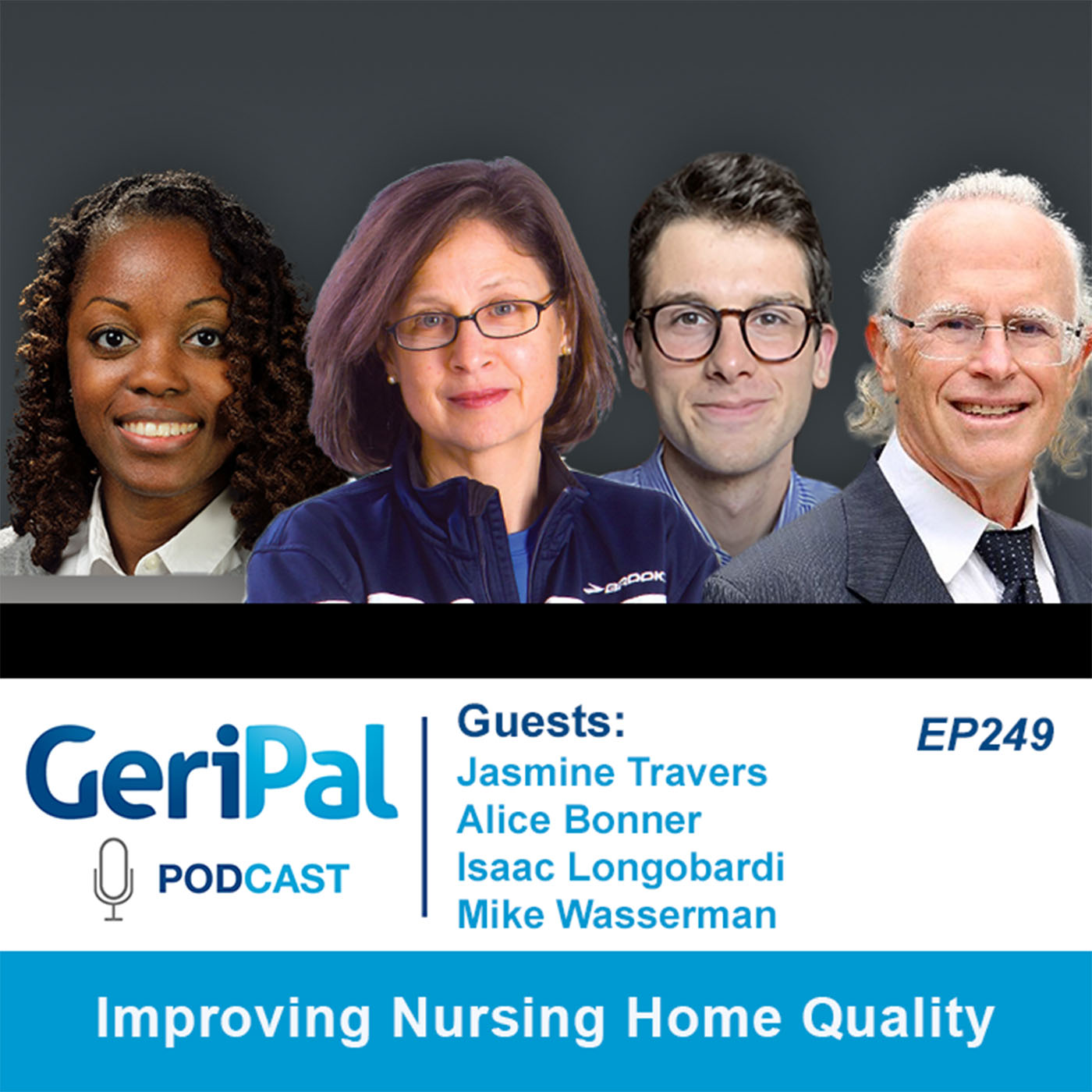
Ep 249Improving Nursing Home Quality: Jasmine Travers, Alice Bonner, Isaac Longobardi, and Mike Wasserman
In April 2022, the National Academies of Sciences, Engineering and Medicine (NASEM) issued a report on how the United States delivers, regulates, finances, and measures the quality of nursing home care. It's massive with over 600 pages detailing everything from the history of nursing home care in the United States to the latest issues that nursing homes have had to face with COVID-19. On today's podcast we invited Jasmine Travers, Alice Bonner, Isaac Longobardi, and Mike Wasserman to talk about the report. Jasmine was one of the committee members for the NASEM report, and Alice and Isaac are chairing and directing a coalition called Moving Forward tasked with taking the goals identified in the NASEM report and identifying specific and practical initiatives, test concepts, and promote their adoption for lasting improvements. We could have gone on for a couple hours for this podcast, but alas time ran out. But if you want to learn more, check out these links: The report by NASEM titled "The National Imperative to Improve Nursing Home Quality" The website for the Moving Forward We will also link to the JAGS articles co-authored by seven committee members that focus on specific recommendations of the NASEM report when they get published (stay tuned).

Ep 248Improving Hospital Care for Older Adults through Acute Care for Elders (ACE Units): A Podcast with Kellie Flood and Stephanie Rogers
Acute Care for Elders (ACE Units) have been around for over a quarter of a century. Randomized trials of ACE units date back to 1996 when Seth Landefeld and colleagues published a study in NEJM showing that they improve basic activities of daily living at discharge and can reduce the frequency of discharge to long-term care institutions. But if ACE units are so great, why do so few hospitals have them? On today's podcast we talk about ACE units with geriatricians Kellie Flood and Stephanie Rogers. They recently published a paper in JAGS looking at the current landscape of ACE units in the US. In the podcast we go over these issues and more: What are ACE units and what structural elements go into them (see the picture below for a nice summary)? Which patients are eligible to go to an ACE unit? What are the benefits of an ACE unit? If ACE units are so great, why are they not so common? What does the future look like for ACE units and how does it differ (if at all) from Age Friendly Health Systems? If you want to do a deeper dive in ACE units, check out some of the following articles: The original NEJM paper on ACE units from 1996 Kellie Flood's paper in JAMA IM showing that not only ACE units deliver better care, but also help with the hospitals bottom line

Ep 247Conscientious Provision of MAID and Abortion: Robert Brody, Lori Freedman, Mara Buchbinder
Today's podcast may be a stretch for our listeners. Please stick with us. No matter what your position on medical aid in dying (I'm ambivalent) or abortion (I'm pro-choice), this is a bioethics podcast, and I hope that we can all agree that the ethical issues at stake deserve a critical re-think. All three of today's guests are well established bioethicists. Let me start by quote/paraphrasing one of today's guests, Mara Buchbinder, who puts her finger on the issue we talk about today: "Typically when we think about conscience in medical ethics we think about it in terms of a negative claim of conscience, where a clinician refuses (or objects) to provide care. But what we know from my research and those of others, people also articulate a positive claim of conscience: they feel compelled to provide a service - whether it's abortion provision or medical aid in dying - because of a deeply held conviction that this is the right thing to do." I'll continue by quoting Lisa Harris, who wrote in the NEJM: Bioethicists have focused on defining conditions under which conscientious refusals are acceptable but, with rare exceptions, have neglected to make the moral case for protecting the conscientious provision of care. Indeed, there is a real asymmetry between negative duties (to not do something) and positive duties (to do something) and, accordingly, between negative and positive claims of conscience. Violations of negative claims are considered morally worse than violations of positive ones.However, as bioethicist Mark Wicclair argues, the moral-asymmetry thesis does not provide adequate ethical justification for current conscience law, which protects only conscience-based refusals. Moral integrity can be injured as much by not performing an action required by one's core beliefs as by performing an action that contradicts those beliefs. Lisa was writing about providing abortion care, but she just as easily could have been writing about providing medical aid in dying in states where it is illegal. Today we wrestle with this issue of conscientious provision. We start by talking with Robert Brody, an internist who recalls physicians helping patients die during the height of the AIDS epidemic in San Francisco. Robert was first asked by one of his own patients for assistance in dying in 1991, far before aid in dying was legalized in California in 2016. Robert went on to be the founding chair of the board of Compassion and Choices, the major national advocacy organization for medical aid in dying. Today, medical aid in dying is legal in some 10 states, and illegal in others. Also today, in the wake of the Supreme Court's recent Dobbs decision, some 13 states ban abortion. To examine how clinicians might act in the face of such bans, we turn to Lori Freedman, who wrote a book about clinicians (primarily Ob-Gyn's) who work in Catholic Hospitals. She describes the "workarounds" these clinicians used to skirt the rules in order to provide reproductive care for women. We talk about the parallels between these issues at the beginning and end of life, and areas in which these parallels fall apart. For example, Jack Kevorkian excepted, clinicians have not been prosecuted for providing aid in dying in states where it is illegal. In contrast, there is a justified fear of prosecution of providing abortion care in states where it is illegal. It took contemplation on a bike ride to put my finger on why I "wrestle" with the notion of conscientious provision. On the one hand, when I hear of Ob-Gyn's in Catholic Healthcare systems using "workarounds" to provide reproductive care, I'm standing up and cheering on the inside. On the other hand, when I hear of workarounds to assist patients to die, or even euthanize them, I worry that we've gone back to a time when the doctor or nurse knows best - and should be morally permitted to do whatever they think is right, according to their conscience. Do we really trust all doctors and nurses so far? Would you, with your parents, trust any doctor or nurse to make such life or death decisions, regardless of the law? There have to be limits to conscientious provision, just as there are limits placed on conscientious objection. In conscientious objection, there are general rules, such as: the patient must be given time to seek a clinician who is willing to provide the treatment; and clinicians can only object to specific treatments under specific circumstances. And yet, I worry about explicitly creating ethical rules for conscientious provision. Ought we, in bioethics, create ethical rules for providing care that is illegal? Who will follow them, and what would be their incentive for doing so? Would such ethical guidelines foster or feed suspicion of the motivations of bioethics? We could have talked for hours. We may reconvene for another podcast as we see how these issues continue to unfold. Oh life. It's bigger. It's bigger than you and you are not me. -@AlexSmithMD Many links: Mara Buchbinder's
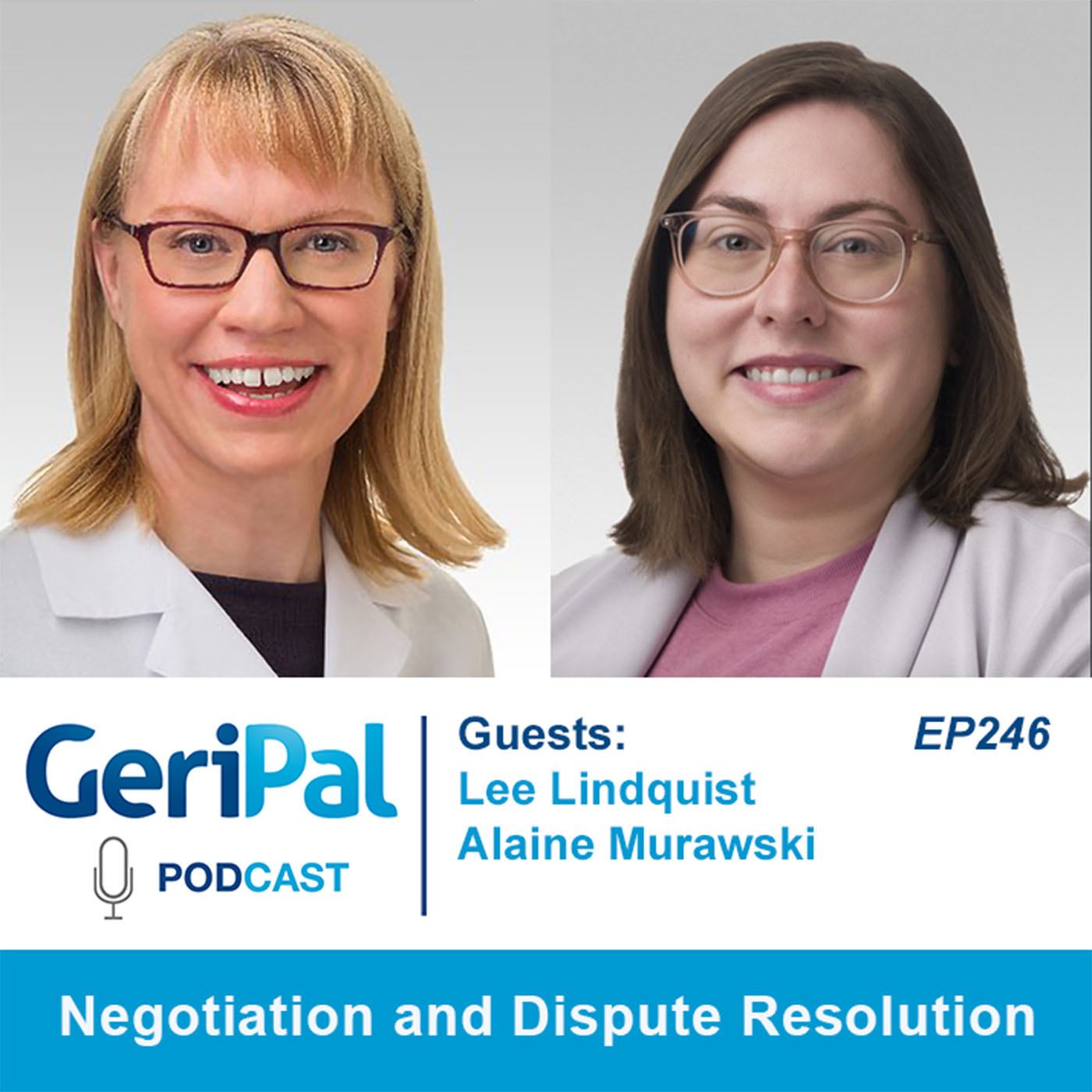
Ep 246Negotiation and Dispute Resolution: A Podcast with Lee Lindquist and Alaine Murawski
From discussing "taking away the keys to the car" for a cognitively impaired older adult to decisions to limit life sustaining treatments at the end of life, conflict and disagreement permeate everything that we do in medicine. How well though are we taught to handle conflict and disagreement? I'd say not well as I don't think I've ever received a formal talk on the issue. On today's podcast we take a deep dive into the topic of Negotiation and Dispute Resolution training with Lee Lindquist and Alaine Murawski. We've had Lee on before to talk about her Plan your Lifespan project. We invited her back along with Alaine to talk about their work around negotiation training, including their work on NegotiAge, an online, AI based training intervention designed to teach negotiation skills to caregivers. For an ever deeper dive into the subject of negotiation and dispute resolution, check out the following links (and for any caregivers interested in participating in the randomized clinical trial of the NegotiAge training, feel free email the NegotiAge Research Team at [email protected]): Getting to Yes: Negotiating Agreement without Giving In by Roger Fisher, William Ury, and Bruce Patton Getting Past No: Negotiating in Difficult Situations by William Ury Negotiation Training for Case Managers to Improve Older Adult Acceptance of Services. Prof Case Manag. 2021 Training Hospitalists in Negotiations to Address Conflicts with Older Adults around Their Social Needs. Geriatrics. 2020 Conflicts Experienced by Caregivers of Older Adults With the Health-Care System. Journal of Patient Experience. December 2020 Dealing with conflict in caring for the seriously ill: "it was just out of the question". JAMA 2005

Ep 245Is it time for geriatricians to get on board with lecanemab? Jason Karlawish and Ken Covinsky
We've talked at length on prior podcasts about the failures of aducnumab, Biogen, and the FDA's decision to approve it. But wait, there's a shiny new anti-amyloid drug, lecanemab! (No it's not just the French version of Aducanumab). In an article in the NEJM (a published article this time, wonder of wonders!) lecanemab was shown to slow the rate of cognitive decline by 0.45 points on an 18 point cognitive scale compared to placebo. Wow! Wow? Wait, what? On today's podcast we talk with Jason Karlawish, who we've had on previously talking about his book The Problem of Alzheimer's and with Aaron Kesselhim, to discuss FDA approval of Aducanumab, as well as frequent guest and host Ken Covinsky. They debate today's central question: is it time for geriatricians to get on board with lecanemab? Along the way we address: Is this degree of slowed cognitive decline meaningful to patients or care partners? What about the burdens, risks, and harms? Every 2 week visits for infusions, regular monitoring for brain swelling and bleeding, case report level risk of death? Did the study do enough to address issues of inclusion and diversity by age, race and ethnicity, and multimorbidity? What does this study say about the amyloid hypothesis? Should the FDA approve, and under what conditions? Their answers may surprise you. As a preview of final thoughts at the end of the episode, Ken and Jason agree that the FDA should approve lecanemab conditional on a post-approval monitoring system and public access to study data, geriatricians should be prepared to have thoughtful conversations with patients about the risks and benefits of lecanemab in view of their values and priorities, and ultimately, that geriatricians should be open to prescribing it. Wow! The times, they are a changin. -@AlexSmithMD

Ep 244Storycatching: Podcast with Heather Coats and Thor Ringler
Eric and I weren't sure what to call this podcast - storytelling and medicine? Narrative medicine? We discussed it with today's guests Heather Coats, palliative care NP-scientist, and Thor Ringler, poet. It wasn't until the end that the best term emerged - storycatching. Because that really is what this is about. Clinicians "catching" patient life stories. What's in a story? Well, as we learned, everything. Our patients aren't "the 76 year old with heart failure in room 202," as Heather Coats astutely noted. They're people, and what makes us people if not our life's stories? Our loves, our triumphs, our failures, our work, our families. Thor Ringler helped start the My Life My Story project at the Madison VA in Wisconsin. It's since spread to over 70 VAs. VA "gets" the importance of storytelling in medicine, without the need for reams of research to back it up. As Thor notes, capturing patient stories has face validity as positively impacting the patients who share their stories and have them documented, and for the clinicians who get to truely and deeply know their patients in far greater depth than "what brought you to the hospital?" Heather Coats is hard at work establishing the evidence base for the power of capturing patient stories in healthcare settings, for those health systems that need a little more convincing. Wonderful work. Enjoy! Many links: VA Presents: My Life, My Story: George: A Voice To Be Heard on Apple Podcastshttps://podcasts.apple.com/us/podcast/id1529359511?i=1000489683280 Every Veteran has a story. Our mission is to help them tell it.https://www.va.gov/wholehealth/mylifemystory/ My Life, My Story: VA's healthcare improvements through deliberate storytelling - YouTubehttps://www.youtube.com/watch?v=fpzgVlExS20&ab_channel=VeteransHealthAdministration Storytelling Helps Hospital Staff Discover The Person Within The Patienthttps://www.npr.org/sections/health-shots/2019/06/08/729351842/storytelling-helps-hospital-staff-discover-the-person-within-the-patient A few data based publication links from Person-Centered Narrative Intervention Program of Research: Unpacking characteristics of spirituality through the lens of persons of colour living with serious illness: The need for nurse-based education to increase understanding of the spiritual dimension in healthcarehttps://onlinelibrary.wiley.com/doi/abs/10.1111/jocn.16055 Integration of Person-Centered Narratives Into the Electronic Health Record: Study Protocolhttps://pubmed.ncbi.nlm.nih.gov/32740306/ Bennett, C.R., Shive, N., Coats, H. (2020). What Mattered Then, Now, and Always: Illness Narratives From Persons of Color. Journal of Hospice and Palliative Nursing, 22 (5):392-400/ PMID: 32740304https://pubmed.ncbi.nlm.nih.gov/32740304/ Coats, H., Meek, P., Schilling, L., Akard, T., Doorenbos, A. (2020). Connection -- The Integration of a Person-Centered Narrative Intervention into the Electronic Health Record: An implementation study. Journal of Palliative Medicine, 23 (6) https://www.ncbi.nlm.nih.gov/pmc/articles/PMC7249456/ Coats, H., Crist, J., Berger, A., Sternberg, E., & Rosenfeld, A. (2015). African American elders' serious illness experiences: Narratives of "God did," "God will," and "Life is better." Qualitative Health Research. doi:10.1177/1049732315620153. PMID: 26701962https://journals.sagepub.com/doi/abs/10.1177/1049732315620153. Narrative Methods Textbook referenced in podcastNarrative Methods for the Human Sciences A few Dignity Therapy- Harvey Max Chochinov links https://dignityincare.ca/en/about-us.html About us - Dignity in Carehttps://dignityincare.ca/en/about-us.html Research Team - Dignity in Carehttps://dignityincare.ca/en/research-team.html Other links: Curiosity by Faith Fitgeraldhttps://www.acpjournals.org/doi/full/10.7326/0003-4819-130-1-199901050-00015 Eric's blog post on Dignity Therapy from 2011https://geripal.org/study-of-dignity-therapy-on-distress/

Ep 243Transforming the Culture of Dementia Care: Podcast with Anne Basting, Ab Desai, Susan McFadden, and Judy Long
What would it take to transform dementia care? While a lot of hope and money is being put into new monoclonal amyloid antibodies like lecanemab, the evidence is that while they are great in reducing amyloid in the brain for those with early Alzheimer's disease, the effects are at best modest in slowing down the decline in cognition and function (more to be said on that in an upcoming podcast). In order to truly transform dementia care we need to think much broader than the amyloid hypothesis. So on today's podcast we invite four brilliant individuals to talk about their perspective on how to change how we as a society and health care system partner with individuals with dementia. These amazing guests include: Susan McFadden, PhD, retired professor emerita (psychology and gerontology) at the University of Wisconsin, Oshkosh, an experienced researcher and practitioner in the field of dementia, and creator of the Fox Valley Memory Project. Her most recent book is Dementia Friendly Communities: why we need them and how we can create them Anne Basting, PhD, a MacArthur Genius Grant awardee and professor (English/Theatre), University of Wisconsin, Milwaukee. She created TimeSlips which we talk about in our podcast. Her most recent book is Creative Care: a revolutionary approach to dementia and elder care Abhilash Desai, MD, geriatric psychiatrist, adjunct associate professor in the department of psychiatry at University of Washington School of Medicine, and poet! He wrote a book titled "Psychiatric consultation in long term care" that has a strengths based approach to staging dementia (how cool is that) Judy Long, MDiv, BCC, palliative care chaplain and educator at UCSF and caregiver. She directs UCSF MERI's patient, family, and clinician support with classes and consultation on resiliency, well-being, and grief. We discuss the importance of viewing individuals with dementia from a lens of resilience, the importance of creative engagement (as noted in Anne and Susan's wonderful article on this subject), the role of collaborative care, and what we can do to improve inclusivity for individuals with dementia in our community and health care systems.

Ep 242Assisted Living Communities: Podcast with Sheryl Zimmerman, Kenny Lam, and Ken Covinsky
Assisted Living Communities (no longer preferable to call them Assisted Living Facilities, as we learned on the podcast) are…what, exactly? That's the central question on today's podcast. The problem is the tremendous heterogeneity in services offered and quality of care. If you've seen one Assisted Living Community you've seen one Assisted Living Community. To address this question, we talk with Sheryl Zimmerman, author of a recent study in JAMA Network Open that used a Delphi process to ascertain what experts thought were the essential services an Assisted Living Community should offer to residents. The experts settled on a range of key services, from more palliative care focused (e.g. end of life care and advance care planning) to more geriatrics focused (e.g. toenail trimming) to things in between (e.g. staff training in person centered care). The problem, as Kenny Lam and Ken Covinsky, authors of an accompanying editorial, state on the podcast: there is an inherent tension between the motives of the corporations that own most Assisted Living Facilities (profit) and the ideal services offered in Assisted Living Facilities. We additionally firmly establish that the song How to Save a Life by the Fray was a product of the aughts (2005, to be exact), not the 90's ): Enjoy! -@AlexSmithMD (still on Twitter at present)

Ep 241Loss, Grief, and Wellness Debriefings: A Podcast with Matt Loscalzo, Vickie Leff, and Craig Blinderman
Health care professionals are human, and as humans we experience loss both in and out of work. You'd imagine though that our professional expertise and experiences in helping patients and families cope with loss and grief would be helpful in managing our own personal losses. Turns out, it's maybe not. That was the lesson I learned from reading a new book edited by Matt Loscalzo along with Marshall Forstein called "Loss and Grief: Personal Stories of Doctors and Other Healthcare Professionals". It's a collection of personal stories of a small number of health professionals, including Craig Blinderman and Susan Block, who have been struck by personal illness and loss. On today's podcast, we've invited Matt Loscalzo and Craig Blinderman to talk about their book and the process they used to create these stories, which all stood out for their openness in talking about things that we as healthcare professionals often keep so very private. We also brought in Vickie Leff to talk about the work she does with Wellness Debriefings. These debriefings create a safe outlet for health care professionals to talk about the feelings resulting from their work. Vickie worked with CAPC to create tools, including a facilitator guide, to encourage clinicians and their organizations to adopt debriefings. So take a listen and check out some of these resources for healthcare provider loss, grief, and wellness: Loss and Grief: Personal Stories of Doctors and Other Healthcare Professionals Dates & registration info about debriefings offered by CAPC The CAPC Debrief Facilitator Training Manual we developed: PDF Download. Jared Rubensteins' "Token of Appreciation" video A great website for dealing with loss and grief: refugeingrief.com SPONSOR: This episode of the GeriPal Podcast is sponsored by UCSF's Division of Palliative Medicine, an amazing group doing world class palliative care. They are looking for physician faculty to join them in the inpatient and outpatient setting. To learn more about job opportunities, please click here: https://palliativemedicine.ucsf.edu/job-openings

Ep 240New Prognostic Models for Older Adults: Alex Lee, James Deardorff, Sei Lee
Dr. Faith Fitzgerald once quipped that prognostic modeling is the "punctilious quantification of the amorphous." She has a point. Prognosis is inherently uncertain. As Alex Lee says on our podcast today, all prognostic models will be wrong (in some circumstances and for some patients); our job is to make prognostic models that are clinically useful. As Sei Lee notes, the argument for developing prognostic models has won the day, and we increasingly use prognostic scores in clinical decision making. What makes prognostic models for mortality different from models used for anticoagulation or risk of renal injury? James Deardorff replies that there is something inherently different about predicting mortality. Death is different. For some reason clinicians who might be perfectly comfortable using an anticoagulation risk calculator might be skeptical of a mortality risk calculator (see this recent terrific JAMA IM study from Nancy Shoenborn on this issue). And yet, the only thing that may be worse than a prognostic calculator is a clinician relying solely on their clinical intuition. Today our guests Alex Lee, James Deardorff, and Sei Lee, talk to us about the uses, limitations, and clinical use cases for prognostic models. As a springboard for this conversation we discuss new prognostic models developed to predict (simultaneously) mortality, disability, and mobility impairment (Alex Lee first author, JAGS) and mortality for people with dementia residing in the community (James Deardorff first author, JAMA IM). Both new models are now available and free to use on ePrognosis. And Sei and Eric reminisce about slow dancing to "Forever Young" by Alphaville in their teenage years. Enjoy! -AlexSmithMD

Ep 239Demystifying the Role of HHS and ASPE in Guiding Federal Aging Policy and Priorities with Dr. Tisamarie Sherry
The Department of Health and Human Services helps to guide billions of dollars in investment and direction in research, policy, and health care. The Assistant Secretary for Planning and Evaluation (ASPE), within the HHS, is the principal advisor to the Secretary of HHS on health policy, ranging from legislation to strategic planning to research. How does this relate to aging policy and research? How does coordination occur between the federal, state and local level in aging health policies? And, who within ASPE guides aging policy and connects policy to every day health challenges experienced by patients and clinicians? On today today's podcast, we are joined by guest host and UCSF geriatrician Ashwin Kotwal as we welcome Dr. Tisamarie Sherry (Deputy Assistant Secretary for the Office of Behavioral Health, Disability, and Aging Policy (BHDAP), appointed by the Biden administration). This office is tasked with providing aging policy research and recommendations within ASPE, including long term care and the National Alzheimer's Project Act. Dr. Sherry shares her expertise in aging health policy and helps us make sense of the role of her Office and how she coordinates with the multitude of federal agencies aligned around the goal of advancing aging research, policy, and health. For the policy buffs and policy newbies out there, we hope this podcast is an essential primer to government in action. We talk about: The structure of federal agencies and how they coordinate Priorities of the National Alzheimer's Project Act, and the unique role of ASPE and BHDAP in guiding the agenda and long-term goals The recent focus on nursing facilities and long term supportive services during the pandemic, along with key gaps How HHS and ASPE solicit input from clinicians, community leaders, and older adults and how much it impacts policy decisions (spoiler alert: this involvement is CRUCIAL) How to make your voice heard and get involved We also touch briefly on topics discussed in prior podcasts such as loneliness and federal responses to the pandemic in relation to long-term care. Tune to hear Alex's rendition of 'With a Little Help from My Friends'! - Ashwin Kotwal, MD, MS
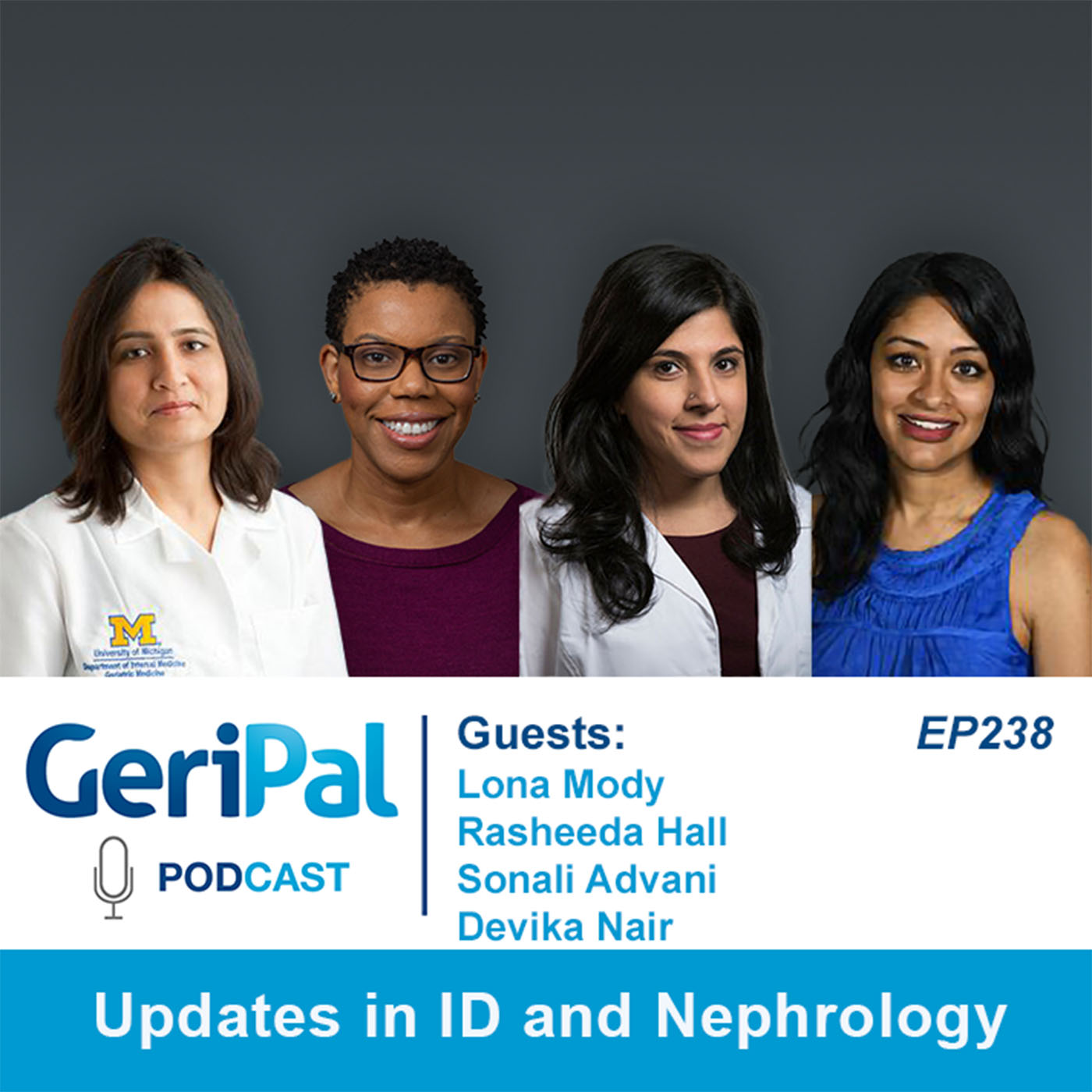
Ep 238Updates in ID and Nephrology: Lona Mody, Rasheeda Hall, Devika Nair, Sonali Advani
When I'm on service these days there is inevitably a moment when a resident says "Patient so-and-so is on X" - and I have absolutely no idea what X is. Modern subspecialist practice advances at such a remarkably rapid pace, it can be hard to keep up. In this context, we're excited to hear from infectious disease experts and nephrologists about updates in the care of older adults. Sonali Advani and Lona Mody talk about their recent JAGS article highlighting three recent articles that every clinician caring for older adults should be aware of in the treatment of infectious diseases (hint: I've never finished a course of antibiotics, and maybe your patients don't need that full course either). Devika Nair and Rasheeda Hall talk about their JAGS article highlighting updates from nephrology in the care of older adults, including a link to this new eGFR calculator that does NOT include race. We have a discussion about the decision to remove race, a social construct, from clinical risk calculators (though I'm not 100% sold that race should always be removed - if removal is likely to worsen disparities for example - at least until a superior race-blind calculator can be developed). These articles are part of a new series called Clin-Star Corner, a new series in JAGS that reviews practice changing articles in the care of older adults. And yeah, they made me sing a Miley Cyrus song…(but not this hilarious parody about UTIs). Enjoy! -@AlexSmithMD
Ep 237Evidence-Based Messaging for Serious Illness Care: A Podcast with Tony Back and Marian Grant
Earlier this year palliative care was the correct response to the following clue on the game show Jeopardy: From a Latin word for "to cloak", it's the type of care given to seriously ill patients to provide comfort without curing What struck me most was not that palliative care was a question, nor that it made it seem that palliative care isn't provided alongside care directed at curing, nor was it that hospice was the first buzzed in response, but it was that palliative care was the $2000 question in the Double Jeopardy round! The fact that palliative care was the hardest of questions told me that we have a massive messaging problem in our field. So what do we do about it? Well, on today's podcast we talk with Marian Grant and Tony Back, who with support form the John A Hartford Foundation and the Cambia Health Foundation, have done a deep dive into the research on layperson perceptions of palliative care, hospice, and advance care planning. The result is a new toolkit to help us fix our messaging & engage the public: seriousillnessmessaging.org Questions we talk about include: What do we know about the public's perception of palliative care, hospice, and advance care planning? What's wrong with the "pictures of hands clasping each other" as our palliative care meme? How can we bring in marketing strategies into our public messaging? Don't palliative care clinicians already know how to explain things with empathy? Why is this different from clinical communication skills? If we avoid talking about death, is it just contributing to the public death denial that is rampant in American culture? Related Links Public Perceptions of Advance Care Planning, Palliative Care, and Hospice: A Scoping Review https://www.liebertpub.com/doi/full/10.1089/jpm.2020.0111 Public Messaging for Serious Illness Care in the Age of Coronavirus Disease: Cutting through Misconceptions, Mixed Feelings, and Distrust https://www.liebertpub.com/doi/full/10.1089/jpm.2020.0719 Effective Messaging Strategies: A Review of the Evidence. Communicating to Advance the Public's Health: Workshop Summary https://www.ncbi.nlm.nih.gov/books/NBK338333/

Ep 236Advanced Pain Management in Cancer: Janet Abrahm
Have you had difficulty managing a particular type of cancer pain? For me it's radiation induced mucositis/esophagitis. Janet Abrahm is one of the world's experts in pain and symptom management for patients with cancer joins us to talk about (among other things): Ketamine for hyperalgesia and allodynia, how to treat dissociative side effects Lidocaine: worth the hype? Strengths and weaknesses of buprenorphine for cancer pain Fentanyl patch: often missed issues Hypnosis: uses and how to get training via the American Society of Clinical Hypnosis Janet is the author of the 4th edition of the book Comprehensive Guide to Supportive and Palliative Care for Patients with Cancer, along with co-authors Molly Collins and BR Daubman. This book is terrific, truly comprehensive, and is a go to resource for when I'm "stuck" taking care of patients with cancer. And yes, this would be a great one for CME. Eric and I are working on it…maybe by 2023? Finally, can you believe this is our 236th podcast and, I believe, the first request for the Grateful Dead?!? Enjoy! -@AlexSmithMD
Ep 235Avoiding the Uncanny Valley in Serious Illness Communication: Josh Briscoe
Have you ever had that moment when talking to a patient, when you realized that the phrase you just uttered, which you've uttered a hundred times before, came out rote and scripted? Maybe some phrase you learned from a prominent podcast or VitalTalk? And in response, the family or patient looked at you like you were from another planet? Yeah, I've been there too. Josh Briscoe, our guests on today's podcast, argues that you've entered the Uncanny Valley. In robotics, the Uncanny Valley is that strange almost-human-but-not-quite territory in which humanoid appearing robots repulse us with their close yet still "off" appearance. Coming off as rote and scripted during a serious illness conversation can have a similar off-putting impact on patients and families. Today we talk with Josh about how to anticipate and avoid the uncanny valley. And talk about times when we've fallen into it. Key message: Listen to the music. All the time. ;) Links: -Uncanny Valley post on Josh's fantastic substack Notes from a Family Meeting -Anticipatory corpse book mentioned several times on the podcast -GeriPal post about teaching using YouTube (some links are old and don't work, but you get the idea, I recently gave a spontaneous talk to the palliative care fellows and was able to find the video snippets) -Ira Byock's 4 things that matter most -@AlexSmithMD

Ep 234Aortic Stenosis, TAVRs, and Code Status: A Podcast with Gwen Bernacki and Ashok Krishnaswami
Transcatheter aortic valve replacement (TAVR) has revolutionized the treatment of valvular heart disease for patients with severe aortic stenosis, a condition that affects one in ten adults older than the age of 80. The rates of TAVR have also risen dramatically in the last decade. In 2019, the number of TAVRs exceeded surgical aortic valve replacement (SAVR) in the US for the first time. On today's podcast we talk with two amazing cardiologists and researchers - Gwen Bernacki and Ashok Krishnaswami - about TAVRs in the elderly, including what it is, who gets it, and what the outcomes and complications look like after the procedure. We also discuss Gwen and Ashok's mixed-method study in the Journal of the American Geriatrics Society (JAGS) where they interviewed TAVR coordinators across California and Washington State about how code status is managed within their programs, and compared programs according to their policies to assess differences in outcomes. What they found was fascinating: Most programs require that DNR status be temporarily rescinded for the procedure. The time required before DNR was reinstated varied substantially among programs (38% 30 days post-discharge). Gwen and Ashok want to make it clear how thoughtful interventionists are about this topic for their patients — as this is very very challenging on a daily basis for them. They also advocate for having more great minds at the table to help move the field forward (including geriatric and palliative care specialists!) Here are more resources if you want to take a deeper dive into the subject: Geriatric and Palliative Care Specialists as Valued Members of the Multidisciplinary Heart Team. The American Journal of Medicine 2022 The medically managed patient with severe symptomatic aortic stenosis in the TAVR era: Patient characteristics, reasons for medical management, and quality of shared decision making at heart valve treatment centers. PLoS ONE 2017 Beyond the Do-not resuscitate Order: An Expanded Approach to Decision-making Regarding Cardiopulmonary Resuscitation in Older Surgical Patients. Anesthesiology 2021
Ep 233Prolonged Grief Disorder: Holly Prigerson
Holly Prigerson recalls the moments in which she started investigating prolonged grief disorder. She recalls being "a social scientist [Holly] in room a full of psychiatrists," who recognized a diagnostic gap in people experiencing profound and potentially harmful grief far after the death of a loved one. This led her on a remarkable journey. Holly has accumulated mountains of evidence for the diagnosis of prolonged grief disorder as a specific condition primarily notable for a yearning over a year after the death. Prolonged grief is associated with increased risk of suicide and other negative health outcomes. This accumulation of data over her career led ultimately to the inclusion of Prolonged Grief Disorder first in the ICD, then in the DSM-V. And yet, despite mountains of evidence, Holly has taken a tremendous amount of heat for this work. "Everyone has experienced grief, which makes everyone the expert." Today we offer Holly a chance to answer her critics, including assertions that: Grief is love; how can love be wrong? Pathologizing grief leads to overmedicalization of a natural condition Prolonged grief disorder is a tool made for the pharmaceutical industry Prolonged grief disorder does not account for cultural variation in mourning practices Along the way we talk about other related studies Holly has conducted, including a validation of DABDA - Elizabeth Kubler Ross's famous stages of grief. And a song choice from the great lyricist Tom Waits. Enjoy! -@AlexSmithMD
Ep 232Social Workers as Leaders on Palliative Care Teams: A Podcast with Barbara Jones
In day-to-day practice, It's hard to imagine providing excellent hospice or palliative care services without access to a team social worker. Social workers augment a team's ability to provide whole-person care, often aiding to identify and meaningfully address the wide variety of challenges and unmet needs faced by individuals and families facing serious illness. But are we really taking full advantage of ALL social workers have to offer our field? On today's podcast, we are talking with Barbara Jones – a national hospice and palliative care social work leader whose many accolades include being a founding member of the Social Work in Hospice and Palliative Care Network (SWHPN), a Professor of Direct Social Work Practice and Associate Dean for Health Affairs at the Steve Hicks School of Social Work at UT Austin. Barbara highlights social workers' inherent leadership qualities and tasks us to consider whether our own team and organizational structures are allowing for optimal social work engagement and influence. Whether in direct practice or in research and academia, we should work together to help Hospice and Palliative Care Social Work meet its full potential. by: Anne Kelly, LCSW, APHSW-C
Ep 231Private Equity Gobbling Up Hospices plus Hospice and Dementia: Melissa Aldridge, Krista Harrison, & Lauren Hunt
Two major shifts are transforming the landscape of hospice. First, private equity firms are gobbling up hospices. As Melissa Aldridge, a health services researcher and former banker explains, we should be very concerned. Private equity firms try to turn companies as profitable as possible within 3-5 years. Thus, they have little in the way of long term vision for hospices, instead focused on cutting costs and maximizing profits. Second, Hospice was originally designed for patients with advanced cancer, but the fastest growing admitting diagnosis is dementia. People with dementia make up about half of hospice admissions. And yet, we know little about the clinical experience of people with dementia in hospice. Krista Harrison found, to her surprise, that caregivers of people with dementia who died rated hospice as well as similar patients without dementia who died on hospice. And yet, disenrollment from hospice, either due to patient/family revoking the benefit or stabilization of illness (extended prognosis) is remarkably high for people with dementia among some hospices. In fact, as Lauren Hunt found, the average likelihood that a person will be disenrolled from one hospice vs. another is two. In other words, which hospice you enroll in has a tremendous influence on whether you're going to be disenrolled from hospice, which often feels to patients and families like being expelled. And I had a blast playing Take the Money and Run! -@AlexSmithMD

Ep 230Palliative Care Pioneer: Susan Block
Today we have the honor of interviewing Susan Block, MD, one of the pioneering leaders in the fields of palliative care, particularly psychosocial aspects of palliative care. Susan led the Project on Death in America's Faculty Scholars program, used her dual training in internal medicine and psychiatry to shine a light on psychosocial aspects of palliative care, and founded the Department of Psychosocial Care at the Dana Farber Cancer Institute and Brigham and Women's Hospital. We talk with Susan about how far the field has come, from early days when the attending physician would decide which patients were DNR and place a black "no code" dot in the chart. We talk about challenges facing the field today. In particular, she reminds us that when we think about the most challenging of our patient encounters, they almost always involve a complex psychosocial dynamic, and this has received far less attention than communication and symptom management issues. We delighted to be joined by Brian Block, pulmonary/critical care faculty at UCSF and frequent guest host on GeriPal…and also nephew to Susan. -@AlexSmithMD Links: -PDIA Faculty Scholars Program -Serious Illness Conversation Guide podcast -Therapeutic presence in the time of covid podcast
Ep 229Deprescribing Super Special Part II: Podcast with Elizabeth Bayliss, Ariel Green, and Kevin McConeghy
A year ago we did our first "Deprescribing Super Special". Today we are coming back for more (or less given the content), talking about the following articles with their lead authors: First up, we talk with Ariel Green about her article in JAMA Network on preferred phrases a clinician may use to explain why they should reduce or stop the medication. My take home from this is that while the most preferred explanation for deprescribing statins and sedative-hypnotics is one focused on the risk of side effects, we also need to individualize it to the patient and the medication that they are taking. Next up, we chat with Liz Bayliss about her JAMA IM article that studied whether increasing awareness about deprescribing prior to primary care visits can reduce the use of potentially inappropriate long-term medications for individuals with cognitive impairment. While the study was largely negative, it does bring up important implications about how we should think about deprescribing in older adults (added bonus too - all of the resources used in the study can be found on the US Deprescribing Research Network website). Lastly, we talk with Kevin McConeghy about one deprescribing intervention that was hugely successful, although somewhat atypical. Kevin's study looks at a period of time in the COVID pandemic when a large multistate nursing home provider created a "nonessential medication on hold" (NEMOH) policy in order to conserve critical nursing resources and PPE, and to limit exposure risk for residents by reducing unnecessary contact. Although the policy was not originally envisioned as a deprescribing intervention, 54% of held medications were discontinued. That's huge! While it's unlikely this will be repeated, we talk about lessons we can learn from this natural experiment.

Ep 228Palliative care for cancer: Podcast with Jennifer Temel and Areej El-Jawahri
We are fortunate today to interview two oncologists whose research has catapulted palliative care forward: Jennifer Temel, author of the landmark NEJM study on early outpatient palliative care for patients with advanced lung cancer; and Areej El-Jawahri, author of the landmark JAMA article on inpatient palliative care for patients with blood cancers undergoing stem cell transplant. Jennifer's study is most widely known for the "kicker" - not only did it improve quality of life, palliative care was associated with a couple months longer survival. Areej's study is remarkably novel in that it is, to our knowledge, the first study of palliative care during curative treatment. We cover a huge amount of ground today, including: Jennifer's reaction when she unblinded the study and found that palliative care was associated with prolonged life Differences between inpatient and outpatient palliative care for cancer What's in the secret sauce of palliative care? (hint: coping) What's the right dose of palliative care? Do we need separate palliative care models for each cancer? What is next for these two? Celine Dion Additional links: Editorial on Areej's study Palliative care in lung and GI cancers GeriPal post on qualitative study of the Temel RCT GeriPal post on "fast food" style palliative care in chronic critical illness JAMA paper on remote symptom monitoring in cancer
Ep 227Time to stop driving? Podcast with Emmy Betz and Terri Cassidy
The science of balancing safety and independence of older drivers has come a long way. Some key points from our podcast today with Emmy Betz (emergency physician-researcher) and Terri Cassidy (occupational therapist and certified driving rehab specialist) include: It's no longer gouache to say "taking away the keys" - which sound punitive and risks infantilizing Instead the new lingo is "driving retirement" Driving retirement can be a process, similar to a harm reduction model, in which the activity is not eliminated all together but restricted to minimize harm: e.g. driving only during the day, or avoiding freeways. A JAGS randomized trial demonstrated that a free online tool that assess readiness to stop driving helped older drivers with the difficult decision about driving cessation. Often the work of the certified driving rehab specialist is to assess the older drivers goals, assess prognosis for driving, and help the family navigate discussions around driving cessation (hmmm…sounds like an approach to family meetings). There is a dearth of Certified Driving Rehab Specialists: 12 for the entire state of Colorado! We learned this and much more, and I had a great time making engine noises singing the Woody Guthrie song "driving in my car." Additional Links: (A to Z – under driving)https://decisionaid.ohri.ca/cochsystem.html (OT programs)https://www.ncbi.nlm.nih.gov/pmc/articles/PMC4347878/ An Advance Directive for When Driving Becomes Unsafehttps://geripal.org/an-advance-directive-for-when-driving/ ADED (Association for Driver Rehabilitation Specialists)https://www.aded.net/search/custom.asp?id=2046

Ep 226What Lessons Have We Learned from the First COVID Surges? A Podcast with Jim Wright & Darrell Owens
"Imagine that you are the medical director of a large (>150 bed) nursing home. Two-thirds of the patients in the home now have COVID-19. Seventeen of your patients are dead. The other physicians who previously saw patients in the nursing home are no longer coming to your facility because you have COVID positive patients. You're short on gowns and facemasks. You're short on nurses and nurse aids so now you have to help deliver meals." This was the opening paragraph that I wrote in March of 2020 when introducing a podcast we did with Dr. Jim Wright, the medical director at Canterbury Rehabilitation and Healthcare Center in suburban Richmond. That was his literally his life during those spring months of 2020 and it scared the hell out of me. Lucky, Jim and many others like him were willing to come on to our podcast those first several months of the pandemic and share their experiences and lessons learned caring for COVID positive patients and their family members. On today's podcast, we look back to those early months of the pandemic and look forward to the future. We invited Jim back with us along with Darrell Owens, DNP, MSN, who is the head of palliative care for the University of Washington's Northwest campus. For those who didn't listen to our podcast with Darrell, when most of us were still trying to figure out what COVID was, he created an on call 24/7 palliative care service to have goals of care conversations with elderly patients in the emergency department under investigation for COVID, and also established an admitting inpatient palliative care service at his hospital for patients on exclusively comfort measures. What I loved about this March 2020 podcast was that Darrell pushed us to think differently: "Expect that it's not business as usual. Very first thing, you're going to have to do things differently, so be open to that. Be totally open-minded. Now the old, "We're not an admitting service or we don't do that and we don't do this," don't start with what you don't do. Start with what you can do, what's your capacity. So take a walk down memory lane with us and hear from both Darrell and Jim where they think we are going.

Ep 225Exploring the Nature of Chronic Pain with Haider Warraich
On today's podcast we welcome back Haider Warraich to talk about pain. Now this may surprise our frequent listeners as we have had Haider on before to talk about heart failure as well as palliative inotropes, so why are we having him come on to talk about pain? . Well, Haider has an intimate relationship with pain, having experienced chronic pain himself and now having dove deep into the latest research on pain for his new book The Song of Our Scars: The Untold Story of Pain. We discussed the nature of pain, what makes chronic pain different from acute pain, what's the difference between proprioception, pain, and suffering, and so much more. So take a listen and if you are up for it, check out some of Haider's other books including Modern Death: How Medicine Changed the End of Life and State of the Heart: Exploring the History, Science, and Future of Cardiac Disease.
Ep 224Dementia and high risk surgery: Joel Weissman and Samir Shah
You have a patient with dementia severe enough that she cannot recognize relatives. She falls and breaks her hip. Should she have an operation, and risk the pain, potential complications, and attendant delirium associated with the operation? Should she be treated non-operatively, with aggressive symptom management? A huge part of this decision rests on (1) her previously stated wishes, values, and goals (prior to the onset of dementia); and (2) the outcomes of surgery for patients with dementia. In today's podcast we talk with surgeon Samir Shah and Health Services Researcher Joel Weissman about a pair of JAGS articles they published on the outcomes of high risk surgery and advance care planning among persons with dementia. Toward the end we get to hear from Samir about how he would approach decision making for a patient such as the above patient, and from Joel Weissman about what's to be done about the pressure and incentives our health system exerts to operate, operate, operate. -@AlexSmithMD
Ep 223How to discuss stopping screening: Mara Schonberg
Cancer screening is designed to detect slow growing cancers that on average take 10 years to cause harm. The benefits of mammography breast cancer screening rise with age, peak when women are in their 60s, and decline thereafter. That is why the American College of Physicians recommendation regarding mammography for women over age 75 is: In average-risk women aged 75 years or older or in women with a life expectancy of 10 years or less, clinicians should discontinue screening for breast cancer. Today we talk with Mara Schonberg, who has been tackling this issue from a variety of angles: building an index to estimate prognosis for older adults, writing about how to talk with older adults about stopping screening, a randomized trial of her decision aid, and how to talk to older adults about their long term prognosis. In the podcast she gives very practical advice with language to use, and references her decision aid, which is available on ePrognosis here. Mara keeps working at it, and the more she works, the closer we are to fine. -@AlexSmithMD

Ep 222Managing Urinary Symptoms and UTI's in Older Adults: A Podcast with Christine Kistler and Scott Bauer
There are a lot of old myths out there about managing urinary tract symptoms and UTI's in older adults. For example, we once thought that the lower urinary tract was sterile, but we now know it has its own microbiome, which may even provide protection against infections. So giving antibiotics for a positive urine culture or unclear symptoms may actually cause more harm than good. On today's podcast, we are gonna bust some of those myths. We've invited some very special guests to talk about the lower urinary tract - Christine Kistler and Scott Bauer. First, we talk with Christine, a researcher and geriatrician from the University of North Carolina, who recently published a JAGS article titled Overdiagnosis of urinary tract infections by nursing home clinicians versus a clinical guideline. We discuss with her how we should work-up and manage "urinary tract infections" (I've added air quotes to "UTI" in honor of Tom Finucane's JAGS article titled "Urinary Tract Infection"—Requiem for a Heavyweight in which he advocated to put air quotes around the term UTI due to the ambiguity of the diagnosis.) Then we chat with Scott Bauer, internist and researcher at UCSF, about how to assess and manage lower urinary tract symptoms in men. We also discuss Scott's recently published paper in JAGS that showed that older men with lower urinary tract symptoms have increased risk of developing mobility and activities of daily living (ADL) limitations, perhaps due to greater frailty phenotype.

Ep 221Who should get Palliative Care? Kate Courtright
In the US, geriatrics "grew up" as an academic profession with a heavy research base. This was in part due to the tremendous support of the National Institute on Aging. Clinical growth of geriatrics programs has lagged academic research, despite the rapid aging of the population. Palliative care, in contrast, saw explosive growth in US hospitals. In contrast to geriatrics, the evidence base for palliative care lagged clinical growth, in part because palliative care has no centralized "home" at the National Institutes of Health. The National Palliative Care Research Center (NPCRC)and Palliative Care Research Cooperative (PCRC)were founded in part to meet this need. Today we interview Kate Courtright, a critical care and palliative care physician-researcher who conducts trials of palliative care. Kate's journey is in a way emblematic of the lack of centralized funding for palliative care: she's received funding from three separate NIH institutes, the NPCRC, and been involved in the PCRC. We talk with Kate about how despite how far we've come in palliative care research, we still don't have answers to some fundamental questions, such as: Who should get specialized palliative care? Should eligibility and access be determined by clinician referral? By diagnosis? By prognosis? By need? If we move away from clinician referrals as the means by which people get access, how do we keep the clinicians engaged, and not enraged? Can nudges help? (see our prior podcast on Nudges with Jenny Blumenthal-Barby and Scott Halpern) When should people get palliative care? What does "early" really mean? We can't possibly meet the needs of all people with newly diagnosed serious illness How do we move from efficacy (works in highly controlled settings) from effectiveness (works in real world settings? What's the role of implementation science? What is a pragmatic trial? What outcomes should we measure? We cover a lot of ground! Working on a mystery. Going wherever it leads. Runnin down a dream… -@AlexSmithMD

Ep 220What We Now Know About COVID Prevention and Treatment: A Podcast with Monica Gandhi
We are two and a half years into the COVID pandemic. We've lived through lockdowns, toilet paper shortages, mask mandates, hospital surges where ICU's overflowed, a million COVID deaths, prolonged school closures, development and roll out of novel vaccines, an explosion of social isolation and loneliness, and the invention of the "zoom meeting." But what have we really learned over this seemingly endless pandemic other than how to make a quarantini? Well, on today's podcast we invite Monica Gandhi to sum up the evidence to date about how best to prevent getting COVID (or at least the severe outcomes of the disease) and how to treat it, including the role of Paxlovid in symptomatic disease. Monica Gandhi is a professor of medicine and associate division chief of HIV, Infectious Diseases, and Global Medicine at UCSF & San Francisco General Hospital. In addition to her research publications, she is a prolific writer both on social media and on media outlets like the Atlantic and the Washington Post. Some call her an optimist or maybe a pragmatist, but I'd call her someone who inherently understands the value in harm reduction when it's clear harm elimination just ain't gonna happen. So take a listen and if you want a deeper dive into some of the references we discuss on the podcast, here is a list: Medscape article on how "COVID-19 Vaccines Work Better and for Longer Than Expected Across Populations, Including Immunocompromised Individuals" Stat news article about variants/COVID becoming more predictable A good twitter criticism of the CDC 1 in 5 COVID survivors have long COVID study NIH study about long COVID published the day before in Annals of Internal Medicine Evusheld and how it works against BA4 and BA5 Our World in Data COVID graphs

Ep 219Should we prioritize the unvaccincated for treatment? Govind Persad and Emily Largent
It's been a while since we've done a Covid/bioethics podcast (see prior ethics podcasts here, here, here, and here). But Covid is not over and this pandemic keeps raising challenging issues that force us to consider competing ethical considerations. This week, we discuss an article by bioethicists Govind Persad and Emily Largent arguing that the NIH guidance for allocation of Paxlovid during conditions of scarcity. They argue that the current guidelines, which prioritize immunocompromised people and unvaccinated older people on the same level, should be re-done to prioritize the immunocompromised first, and additionally move up older vaccinated individuals or vaccinated persons with comorbidities. The basis of their argument is the ethical notion of "reciprocity" - people who are vaccinated have done something to protect the public health, and we owe them something for taking that action. Eric and I attempt to poke holes in their arguments, resulting in a spirited discussion. To be sure, Paxlovid is no longer as scarce as it was a few months back. But the argument is important because, as we've seen, new treatments are almost always scarce at the start. Evusheld is the latest case in point. Sometimes, you can't always get what you want… -@AlexSmithMD
Ep 218Rethinking Opioid Conversions: Mary Lynn McPherson and Drew Rosielle
A patient is on morphine and you want to convert it to another opioid like hydromorphone (dilaudid). How do you do that? Do you do what I do, pull out a handy-dandy opioid equianalgesic table to give you a guide on how much to convert to? Well on today's podcast we invited Drew Rosielle on our podcast who published this Pallimed post about why opioid equianalgesic tables are broken and why we shouldn't use them, as well as what we need to move to instead. But wait, before you throw out that equianalgesic table, we also invited Dr. Mary Lynn McPherson, PharmD extraordinaire who published this amazing book, Demystifying Opioid Conversions, 2nd Ed., which advocates for an updated, wait for it… equianalgesic table! Oh boy, what should we do? Should we throw out the equianalgesic table like some are advocating we do with advance directives (see here), or should we just modernize it for the times with updated data? Listen to this spicy podcast with these wonderful guests to make up your own minds (I'm sticking with the equianalgesic table for now). If you want to take a deeper dive into some of the references, here you go: Pallmed Post on why "Opioid Equianalgesic Tables are Broken" Pallimed post on "Simplifying Opioid Conversions" Dr. Akhila Reddy and colleagues study looking at converting hospitalized cancer patients from IV hydromorphone to PO morphine, PO hydromorphone, or PO oxycodone. Our previous podcast with Mary Lynn titled "All the Questions You Had About Opioids But Were Afraid To Ask"
Ep 217Palliative Care in India: M.R. Rajagopal
In today's podcast we talk with Dr. Rajagopal (goes by "Raj"), one of the pioneers of palliative care in India. Raj is an anesthesiologist turned palliative care doctor. He is also author of the book, "Walk with the Weary: Lessons in Humanity in Health Care," and was featured in this Atlantic article. Raj is the founder of Pallium, an organization dedicated to improving palliative care throughout India. We are joined by guest-host Tom McNally, a rehab and pediatric palliative care doc at UCSF. In this podcast, we cover a great deal of ground, including: Early challenges Dr. Raj faced in pain management: access to opioids, corruption, a system that doesn't see addressing suffering as a priority Prognosis communication and the subtle ways we may communicate it without intention Social pain and loneliness Community-based palliative care networks Raj's reflections on the state of palliative care in the US How definitions bind us, for example the division between chronic pain and palliative pain in much of the US Ways listeners can learn more and contribute (see this link in the US) Because the song request was the short theme-song for Pallium, I recorded it two ways. The intro is the upbeat guitar driven version. The outro is the synthesizer (new toy!) slowed down version. Enjoy! -@AlexSmithMD

Ep 216Hearing Loss in Geriatrics and Palliative Care: A Podcast with Nick Reed and Meg Wallhagen
Think about the last time you attended a talk on communication skills or goals of care discussions. Was there any mention about the impact that hearing loss has in communication or what we should do about it in clinical practice? I'm guessing not. Now square that with the fact that age-related hearing loss affects about 2/3rd of adults over age 70 years and that self-reported hearing loss increases during the last years of life. Screening for addressing hearing loss should be an integral part of what we do in geriatrics and palliative care, but it often is either a passing thought or completely ignored. On today's podcast, we talk to Nick Reed and Meg Wallhagen about hearing loss in geriatrics and palliative care. Nick is an audiologist, researcher, and Assistant Professor in the Department of Epidemiology at Johns Hopkins Bloomberg School of Public Health. Meg is a researcher and professor of Gerontological Nursing and a Geriatric Nurse Practitioner in the School of Nursing at UCSF. We talk with Nick and Meg about: Why hearing loss is important not just in geriatrics but also for those caring for seriously ill individuals How to screen for hearing loss Communication techniques we can use when talking to individuals with hearing loss The use of assistive listening devices like pocket talkers and hearing aids Their thoughts on the approval and use of over the counter hearing aids If you want to take a deeper dive into this subject and read some of the articles we discussed in the podcast, check out the following: Hearing Loss: Effect on Hospice and Palliative Care Through the Eyes of Practitioners COVID-19, masks, and hearing difficulty: Perspectives of healthcare providers Association of Sensory and Cognitive Impairment With Healthcare Utilization and Cost in Older Adults Over-the-counter hearing aids: What will it mean for older Americans? Addressing Hearing Loss to Improve Communication During the COVID-19 Pandemic
Ep 215Comics and Humor in Palliative Care: A Podcast with Nathan Gray
Comics. Cartoons. Graphic Novels. Graphic Medicine. I'm not sure what to title this podcast but I've been looking forward to it for some time. Heck, I'm not even sure to call it a podcast, as I think to get the most out of it you should watch it on YouTube. Why, because today we have Nathan Gray joining us. Nathan is a Palliative Care doctor and an assistant professor of Medicine at Johns Hopkins. He uses comics and other artwork to share his experiences in palliative care and educate others about topics like empathy and communication skills. His work has been published in places like the L.A. Times, The BMJ, and Annals of Internal Medicine. We go through a lot of his work, including some of the comics you can see on our blog post. However if you want to take a deeper dive, check out his website "The Ink Vessel" or his amazing twitter feed which has a lot of his work in it.