GD POLITICS
151 episodes — Page 2 of 4
Why Everyone Is Worried About Lonely Men
If you’ve spent time reading think pieces on the internet during the past handful of years, you might have come across the following ideas: first, that American men are suffering from a loneliness epidemic and, second, that conservatives are happier than liberals.If you aren’t familiar with these takes, then you probably aren’t online enough to experience the sad loneliness of the American male liberal, so please carry on as you were. I joke, I joke.In any case, these ideas have caught on enough that friend of the pod Lakshya Jain — a machine learning engineer by day and head of political data at The Argument in his spare time — wanted to do more research into what differences actually exist across the political spectrum and between men and women.In this episode, he breaks down what he found and also gets into his latest research on affordability and whether Americans are lying to pollsters about how much they read. This is a public episode. If you'd like to discuss this with other subscribers or get access to bonus episodes, visit www.gdpolitics.com/subscribe
How Today Resembles The Run-Up To WWI
This is a free preview of a paid episode. To hear more, visit www.gdpolitics.comThe full episode is available to paid subscribers. Once you become a paid subscriber, you can connect your account to your preferred podcast player here.Depending on who you ask, we’re either living through a moment that feels totally unprecedented or alarmingly familiar.Today’s guest argues it’s alarmingly familiar: great powers jostling for influence, nationalism on the rise, trade and technology turning into weapons, and festering conflicts with the potential to spiral.In his new book, “The Coming Storm: Power, Conflict, and Warnings from History,” Yale historian Odd Arne Westad compares today’s geopolitical landscape to the decades leading up to World War I.A hundred-plus years ago, the world looked modern, interconnected, and — at least to many people — too prosperous and rational for a major war. Then, in a matter of weeks, a localized conflict became a continent-wide crisis that ended in 40 million casualties.The percentage of people alive today who have experienced great power conflict is vanishingly small, and after 80 years of great power peace, it can be easy to think of the prospect as far-fetched. Westad argues that this, too, may be a similarity to the early 20th century.Today we talk about those similarities and differences and what lessons we can learn.
Democrats Clash in Illinois, Crowd California, and Eye Iowa
This is a free preview of a paid episode. To hear more, visit www.gdpolitics.comThe full episode is available to paid subscribers. Once you become a paid subscriber, you can connect your account to your preferred podcast player here.On today’s episode, we open up the mailbag for an overdue round of listener questions — and you had some great ones! You asked whether Democrats might be locked out of the California governor’s race, who might win the heated primary in Illinois’ 9th Congressional District, and whether Iowa is actually in play for Democrats. You also had some more philosophical questions, like whether the Republican and Democratic parties will still exist in 2040 and what strategically is the best path forward for the GOP. Continuing a past theme, you also asked why Zohran Mamdani’s favorability rating is so high and what we expect turnout to look like in 2026.As a reminder, paid subscribers can share questions in the paid subscriber chat, which we’ll prioritize, and you can also reach me with questions on social media or by email at [email protected].
What Is The Endgame In Iran?
We are entering our thirteenth day of the war in Iran, and we’ve been getting conflicting signals about how long it might last and what the end goal actually is.At the start, it seemed the goal was regime change. President Trump called on Iran’s forces to lay down their arms and for civilians to revolt, saying the operation could last four to five weeks.Since then, Trump has also called for Iran’s unconditional surrender, and Secretary of State Marco Rubio framed the goal of the conflict as destroying Iran’s ballistic missile capabilities, missile production factories, and navy.On Monday, Trump said the war was ahead of schedule and “very complete, pretty much.” The same day, the Department of War said, “we have only just begun to fight.” On Tuesday, Democratic senators emerged from a briefing telling the press they were concerned about the likelihood of the U.S. putting boots in the ground in Iran.Meanwhile, the economic repercussions of the conflict and the near closure of the Strait of Hormuz, have rippled across the globe, amping up the stakes of the war.To borrow an analogy from a friend of the podcast, there is an awful lot of noise surrounding the operation. Today we are going to try to find the signal. Where do things stand? What are the upside and downside risks? And what are the possible outcomes?Joining me to do that is Mara Karlin, professor at the Johns Hopkins School of Advanced International Studies. She served in national security roles for six U.S. secretaries of defense and most recently served as Assistant Secretary of Defense for Strategy, Plans, and Capabilities under President Biden. This is a public episode. If you'd like to discuss this with other subscribers or get access to bonus episodes, visit www.gdpolitics.com/subscribe
Trump’s Iran Gamble Gets More Expensive
We are officially in the second week of the war with Iran and the fallout is intensifying.President Trump now says the goal is Iran’s unconditional surrender. Meanwhile, Iran’s clerics have appointed Ali Khamenei’s hardline son as the new Supreme Leader, suggesting surrender is unlikely for now.Fifteen countries have become involved in the conflict in some way, the number of U.S. service members killed has risen to seven, and the number of deaths in Iran is estimated to be more than 1,200.Markets have fallen around the world as the likelihood of this being a short, contained operation is fading. Perhaps most notably oil prices have gone vertical. They reached $120 a barrel overnight and were at about $100 a barrel at the time we recorded the podcast.That compares with $55 a barrel in December and $65 a barrel just before the war. The average price of gas nationally has shot up 50 cents per gallon in just a week and now sits at about $3.50 per gallon.Last week Congress declined to rein in Trump’s authority in the conflict, but that doesn’t mean the domestic politics of the matter are settled. Not by a long shot. With me to discuss the unfolding politics here at home is Gabe Fleisher, author of the “Wake Up To Politics” newsletter. This is a public episode. If you'd like to discuss this with other subscribers or get access to bonus episodes, visit www.gdpolitics.com/subscribe
A 2028 Republican Primary Draft (Live!)
This is a free preview of a paid episode. To hear more, visit www.gdpolitics.comThe full episode is available to paid subscribers. Once you become a paid subscriber, you can connect your account to your preferred podcast player here.The war in Iran has set off a civil war within the Republican Party over whether the military adventurism of Trump’s second term is America first or America last. As one indication, Megyn Kelly kicked off her podcast on Monday (one of the most popular right-wing shows in the country) with withering criticism of Trump’s decision. Her first guest, Marjorie Taylor Greene, suggested it could lead her to stop voting.On Tuesday, Texas’s incumbent senator, John Cornyn, managed to fight his primary merely to a draw with scandal-plagued Ken Paxton after spending a record $70 million. Further down the ballot, once rising star Rep. Dan Crenshaw lost his primary outright. The tensions within the GOP, at least at the elite level, are already at a rolling boil. So what happens when Trump — a force helping to hold both parties’ coalitions together — leaves the scene?That is the question I attempted to answer, alongside friends of the podcast Nate Silver and Clare Malone, at a live show Wednesday night at the Comedy Cellar in New York City. Joined by a rowdy, sold-out crowd, we hosted our first-ever 2028 Republican primary draft. We even got a West Village audience to applaud for Tucker Carlson. (If you missed our Democratic primary draft from January, I encourage you to check it out!)We also discussed the political consequences of the big news stories of the day: the results in Texas on both sides of the aisle, the expanding war in the Middle East, and a torrent of attention-grabbing AI news. Plus, we opened the mics and answered audience questions.
Bombs In Tehran, Ballots In Texas
Looking for nerdy yet irreverent coverage of the Texas primaries Tuesday night?! We’ll be live streaming with friends of the pod beginning at 7:30pm ET on March 3rd. Join us at the link here.We were originally planning on dedicating today’s whole episode to the kickoff of the 2026 primary calendar with Tuesday’s elections in Texas, North Carolina and Arkansas. However, if I’ve learned anything hosting the GD POLITICS podcast, it’s to be flexible — we might end up at war.The U.S. and Israel struck Iran beginning on Saturday, killing Iran’s supreme leader. Iran responded, attacking Israel, U.S. military assets, and civilian targets in the Gulf States. Hezbollah in Lebanon has also joined the fighting.As of the time of our recording, the back-and-forth bombing is continuing and there are more questions than answers about what will happen next. Will there be a revolution in Iran? Will it be successful? What would the current regime staying in power look like? How wide could the conflict spread and how long could it last?I’m sure those are questions we’ll contend with in the future. Today we are going to kick things off with how the American public views the conflict and how politicians are reacting.Then we will move on to Tuesday’s primaries. The blockbuster races are the Republican and Democratic Senate primaries in Texas. I’ve covered a lot of these races in my day and I can’t remember the last time I saw polling as contradictory as what we’re seeing in the race between Jasmine Crockett and James Talarico in Texas. We’ll also touch on some of the House primaries worth keeping an eye on Tuesday night.Joining me is director of data at FiftyPlusOne, Mary Radcliffe, and deputy editor of Inside Elections, Jacob Rubashkin. This is a public episode. If you'd like to discuss this with other subscribers or get access to bonus episodes, visit www.gdpolitics.com/subscribe
Trump Proposes Little In Longest-Ever State Of The Union
President Trump offered strikingly few proposals in the longest State of the Union address ever delivered and what he did offer was not particularly heavy on legislation or ambition. Instead, he leaned into conflict with the Democrats in the chamber and highlighted stories from guests in the audience that often included graphic details. Friends of the podcast Mary Radcliffe and Nathaniel Rakich joined this throwback late-night reaction episode to discuss this and much more. This is a public episode. If you'd like to discuss this with other subscribers or get access to bonus episodes, visit www.gdpolitics.com/subscribe
Have We Achieved The Goldilocks Economy?
Today’s episode turned out to be serendipitous. Last Friday, I’d been planning to speak with Harvard economist Jason Furman, Obama’s top economic advisor, about the recent flood of economic data: the jobs report and revisions for the past year, inflation data, GDP growth, trade balances, consumer sentiment, and more.There was one piece of data I did not expect we’d be getting in advance of our conversation: the Supreme Court’s decision on President Trump’s emergency tariffs. Friday morning, the Court struck them down in a 6-3 decision, concluding that the power to enact such broad tariffs lies with Congress.So, on today’s episode, we begin with the latest tariff news and then widen the lens to the broader economy, including Furman’s suggestion that we may have achieved the first indisputable “soft landing” in postwar American history: bringing inflation under control without triggering a recession. This is a public episode. If you'd like to discuss this with other subscribers or get access to bonus episodes, visit www.gdpolitics.com/subscribe
Rick Perry on the Texas Primary, Psychedelics, and His Debate 'Oops'
Subscribe to GD POLITICS wherever you listen to podcasts. The video version of this interview is available here.My favorite interviews with politicians happen when they’ve run their last race and can reflect candidly on their time in office and the complexities of politics and the world. Today you’re going to hear such an interview with former governor of Texas and former secretary of energy Rick Perry.We begin by talking about the heated Senate primary in Texas. The former governor has thrown his support behind incumbent Sen. John Cornyn and doesn’t shy away from criticisms of Attorney General Ken Paxton or the Democratic side.We then turn to a more personal topic: Perry’s experience with the psychoactive drug ibogaine and his advocacy for its use in treating things like addiction, PTSD, brain trauma, and cognitive decline. It may seem like a counterintuitive position for a social conservative, and we get into that.We end by talking about the moment during the 2012 GOP primary debate when Perry forgot the name of one of the agencies he intended to shutter as president — the Department of Energy. It became something of a viral moment at the time, but in this interview we talk about what was going on in his personal life, which he describes as the most difficult six months of his life. This is a public episode. If you'd like to discuss this with other subscribers or get access to bonus episodes, visit www.gdpolitics.com/subscribe
Is It Time To Freak Out About AI?
Heads up: We have a live show scheduled for Wednesday, March 4 at the Comedy Cellar in New York City! After a rowdy live 2028 Democratic primary draft last month, Nate Silver, Clare Malone, and I will tackle the Republican side of the ledger. Grab tickets here!If you’ve been enjoying your long weekend, I apologize for the potentially panic-inducing content of today’s episode.We seem to be in something of freakout moment over artificial intelligence. In particular, several viral posts have been making the rounds on social media from people who work in AI warning about what’s coming.Mrinank Sharma, an AI safety researcher at Anthropic, quit last week and published a letter saying the “world is in peril” and that we need to wise up.Zoe Hitzig, an economist at OpenAI, also quit and wrote a New York Times op-ed criticizing how ChatGPT is implementing ads, suggesting the company could use people’s private motivations to manipulate them.Matt Shumer, the CEO of an AI startup, wrote a viral post on Twitter called “Something Big Is Happening,” comparing this moment in AI to what February 2020 felt like for COVID.As far as markets are concerned, software stocks have fallen 15 to 30 percent over the past month in reaction to new AI developments in coding.On today’s episode, I talk to John Burn-Murdoch, a columnist and chief data reporter at the Financial Times. He’s been using data to track AI’s effects on the world so far, particularly when it comes to work.Also, in case AI panic isn’t enough for one episode, John’s been doing a lot of work tracking democratic backsliding in the U.S. and around the world. So, fittingly for Presidents’ Day, we get into his research on that, and ask whether these two sources of anxiety — AI and democratic backsliding — might be connected in some way. This is a public episode. If you'd like to discuss this with other subscribers or get access to bonus episodes, visit www.gdpolitics.com/subscribe
Epstein Fallout, The Shutdown Fight, And Gallup's Goodbye
This is a free preview of a paid episode. To hear more, visit www.gdpolitics.comThe full episode is available to paid subscribers. Once you become a paid subscriber, you can connect your account to your preferred podcast player here.Also, heads up: We have a live show scheduled for Wednesday, March 4 at the Comedy Cellar in New York City! After a rowdy live 2028 Democratic presidential primary draft last month, Nate Silver, Clare Malone, and I will tackle the Republican side of the ledger. You can get tickets here.We’ve got a lot to talk about! In fact, I think this is our first-ever emergency edition of “Good Data, Bad Data, or Not Data.” Gallup announced this week that, after 88 years in the field, it will stop tracking Americans’ approval and disapproval of presidents. Its final approval rating for President Trump was just 36 percent.Gallup may no longer be asking how Americans feel about the president, but plenty of pollsters still are and that will be useful for two topics we’re discussing today: the showdown over Department of Homeland Security funding and the political fallout from the Epstein files.We’ve also got election news to check in on. The Democratic primary in New Jersey’s 11th District has become a microcosm of Democratic Party drama. A little-known progressive organizer won the primary after an AIPAC-backed group spent $2 million attacking a moderate, pro-Israel former congressman. Yes, you read that correctly.Susan Collins also formalized her bid for a sixth term in the Senate this week, which means another chance for us to talk about the 2026 race for control of the chamber. Plus, friend of the pod Mary Radcliffe did a deep dive into whether support for Trump is crashing among young men. She’s with me to discuss it all, along with Washington Post senior data scientist Lenny Bronner.
The Texas Senate Primaries Get Messy
Heads up: We have a live show scheduled for Wednesday, March 4 at the Comedy Cellar in New York City! Nate Silver, Clare Malone, and I will share our reactions from the Texas primaries and much more. You can get tickets here.Primary season is starting with a bang in just three weeks. Texans will decide which Democrat and Republican they’d like to see face off in a potentially competitive Senate election this fall.Arkansas and North Carolina will also head to the polls on March 3, but few contests across the country compare to the matchups in Texas. On the Democratic side, the race is primarily between state Rep. James Talarico and U.S. Rep. Jasmine Crockett. On the Republican side, it’s incumbent Sen. John Cornyn, state Attorney General Ken Paxton, and U.S. Rep. Wesley Hunt.Both primaries feature some similarities: a better-funded, more mild-mannered establishment favorite on one side — Talarico and Cornyn — and a more bombastic presence known for riling up the base on the other — Crockett and Paxton. Of course, there are plenty of differences, too, which we’ll get into. For one, the Republican primary appears likely to head to a runoff.All of this comes shortly after a special state Senate election in historically Republican Tarrant County resulted in a 30-percentage-point swing to the left. Democrat Taylor Rehmet won by 14 points in a district Trump carried by 17. That gives Democrats some hope in their pursuit of winning a Senate race in Texas for the first time since 1988, though there’s plenty of disagreement within the party over what that path might look like.Today, we take a look at both Senate primaries in Texas, as well as the broader political environment in the state at a time when one of Republicans’ biggest success stories — gains with Latino voters — looks seriously imperiled. With me to do that is Patrick Svitek, a political reporter who has long covered Texas at The Texas Tribune and the Houston Chronicle and most recently covered national politics at The Washington Post. This is a public episode. If you'd like to discuss this with other subscribers or get access to bonus episodes, visit www.gdpolitics.com/subscribe
How Trump Could Interfere With The 2026 Midterms
This is a free preview of a paid episode. To hear more, visit www.gdpolitics.comThe full episode is available to paid subscribers. Once you become a paid subscriber, you can connect your account to your preferred podcast player here.On Monday’s episode we began to set the table for the 2026 midterms. Today we acknowledge that there’s something of a bull threatening all the fine china we’ve just laid out. Pardon the strained metaphor.Put bluntly, the 2026 midterms will be the first nationwide federal election with Trump as president since 2020, when he pushed to overturn the results. Some recent developments have already caused a tea cup or two to wobble. I promise I’m done with the metaphor now.This week, on Dan Bongino’s podcast, Trump suggested that Republicans move to nationalize elections in 15 unnamed states and later reiterated his push from behind the Resolute Desk at a bill signing ceremony. Last week, in an unusual move, the FBI raided a Fulton County elections office, seizing 2020 ballots and other voting records.In the background of all of this, starting last year, the Department of Justice began requesting full voter rolls with private voter information from states, in an apparent attempt to create a national voter file.Trump has also issued executive orders attempting to change the elections process nationally, including that all ballots be received by the time polls close on Election Day and that Americans show government-issued proof of U.S. citizenship when they register to vote. For what it’s worth, he has also quipped about canceling the election, something he can’t do, and about ending mail voting.Concerned about losses at the midterms, state Republicans, at Trump’s request, have already pursued mid-decade gerrymandering to try to buttress their majority. Trump’s latest comments about nationalizing elections came after a Democrat won a state Senate seat in Tarrant County, Texas, by over-performing Trump’s win in 2024 by 30 percentage points.It doesn’t take a detective to put these pieces together. A president who has a record of only accepting election results when he wins is concerned about Republican losses at the midterms. He has told Republicans himself that he doesn’t want the ensuing consequences, which would be Democratic investigations into his administration. In an attempt to prevent that, Trump may sow doubt in the results in 2026 or try more serious interventions.Today we dig into what that could look like and detail the ways American elections are designed to be resilient. After all, it’s not one bull in one china shop. There are more than 9,000 jurisdictions administering elections nationwide and no matter what Trump says, the constitution charges the states with running elections.With me to discuss it all is Nathaniel Rakich, managing editor at Votebeat, and Jessica Huseman, editorial director of Votebeat. Votebeat is a nonprofit newsroom that covers voting and election administration.
The Early Math Of The 2026 Midterms
This is our start-of-the-year, table-setting episode for the 2026 midterms. A flood of January news pushed it back, but the clock is now ticking. The primaries begin in just four weeks.Republicans begin with control of the House by the slimmest of margins. To flip the chamber, Democrats would need to gain five seats. Republicans have a safer margin in the Senate, where Democrats would need to gain four seats, but in much redder territory than in the House.In polls that ask Americans if they prefer Democrats or Republicans to control Congress, Democrats lead by five percentage points on average. When it comes to the president’s approval rating, Trump is at net -14, a rating that puts him just slightly below where Biden was at this point in his own historically unpopular presidency.High-quality polling from the New York Times also shows that President Trump has given up his gains and then some with the voters who powered his popular vote victory in 2024 — a group that tended to be younger, lower propensity and less white than Republicans’ past coalitions.History is clear about the challenges for Republicans. The incumbent party has lost seats in the House in 20 of the last 22 midterms elections, with an average loss of 32 seats.With me to set the table are two friends of the pod: Jacob Rubashkin, deputy editor of Inside Elections and Leah Askarinam, elections reporter at the Associate Press. This is a public episode. If you'd like to discuss this with other subscribers or get access to bonus episodes, visit www.gdpolitics.com/subscribe
A 2028 Democratic Primary Draft (Live!)
This is a free preview of a paid episode. To hear more, visit www.gdpolitics.comThe full episode is available to paid subscribers. Once you become a paid subscriber, you can connect your account to your preferred podcast player here.Democrats are gearing up to turn the page on the Trump presidency and some 2028 hopefuls will likely announce their intentions by year’s end. At least a half-dozen candidates are, for all intents and purposes, already running.Will California Gov. Gavin Newsom be able to ride the wave of his current support for the next two years or is he cresting now? Will voter outrage and a consolidation of the left flank of the party power New York Rep. Alexandria Ocasio-Cortez to the head of the pack or will a moderate prevail? And who is even likely to run in the first place?In a live 2028 Democratic primary draft at the Comedy Cellar in New York City, Nate Silver, Clare Malone and I debated those questions and many more. (Make sure to reply in the comments with who had the best roster!)As a heads up, we began the night on a more somber note, discussing Alex Pretti’s killing in Minneapolis and whether it is likely to serve as a turning point in our current political moment. As we moved to the draft, we got a little competitive and plenty silly. This is the second Democratic primary draft we’ve done on the GD POLITICS podcast. If you’d like to look back at our previous picks, you can do that here.
Is Alex Pretti's Killing A Turning Point?
Call this something of an emergency podcast. I’d planned on airing an episode setting the table for the 2026 midterms today. We’re going to save that for another day, because on Saturday a federal immigration officer in Minneapolis shot and killed Alex Pretti, a 37 year-old Veterans Affairs hospital ICU nurse.It’s the second killing by a federal immigration officer in Minneapolis in less than three weeks — the first being Renee Good, a 37 year-old mother, who was shot while impeding traffic as part of a protest.We’ll get into some of the details of what happened on Saturday, but I think it’s fair to say the public, many lawmakers, and even some Republicans have lost patience with the Trump administration’s immigration enforcement tactics.In both killings in Minneapolis, the Trump administration rushed to brand Good and Pretti as domestic terrorists and fabricated events despite the shootings being visible in multiple videos. While there was plenty of pushback among Democrats, Independents and the press in the case of Good, this time a handful of Republicans, including the NRA, have joined that pushback as well.As listeners well know, it’s going to take a minute before we can fully understand the impact of this weekend on American politics, but we’ll share what we know at this moment. With me to do that is head of research at FiftyPlusOne, Mary Radcliffe, and managing editor at Votebeat, Nathaniel Rakich. This is a public episode. If you'd like to discuss this with other subscribers or get access to bonus episodes, visit www.gdpolitics.com/subscribe
Judging Trump 2.0 By His Own Standards
Trump has now been back in office for a year. To help make sense of the past twelve months, on Tuesday I hosted a live Substack conversation with friend of the pod and author of the Wake Up To Politics newsletter, Gabe Fleischer.We began by assessing Trump’s accomplishments and failings by the standards he set at the beginning of his second term. We also discussed how Americans have reacted and took a closer look at the areas where Trump’s new assertions of presidential power have been allowed to stand and where they’ve been batted down.One of the themes of the conversation was that there’s often so much going on that it can be hard to actually follow a single story from beginning to end. We try to tie up some of those loose ends where possible. This is a public episode. If you'd like to discuss this with other subscribers or get access to bonus episodes, visit www.gdpolitics.com/subscribe
We Answer Your Questions On Independents, Never Trumpers, And Zohran Mamdani
I hope everyone had a nice long weekend! Today’s episode is part two of our mailbag episodes, focusing on some of the more esoteric questions that listeners asked.Part one focused on current events. If you’re curious about how the public is reacting to the surge in ICE activity, possibility of military intervention in Iran, or the politicization of the Department of Justice, I encourage you to listen to that as well.Today we answer your questions, including: Are high profile politicians able to effectively rebrand? Why were polls noticeably better for Democrats right after the 2025 elections? What does it mean that there are a record number of independents in America? And who are the Republicans in polls that say they don’t approve of Trump — Never Trumpers, or people who voted for him and have since soured? We even share some career advice at one listener’s request.Joining me to dig through the mailbag is Lenny Bronner, senior data scientist at the Washington Post. A reminder to submit your own questions on Substack, on social media, or at [email protected]. This is a public episode. If you'd like to discuss this with other subscribers or get access to bonus episodes, visit www.gdpolitics.com/subscribe
We Answer Your Questions On ICE, Iran, And The Senate
This is a free preview of a paid episode. To hear more, visit www.gdpolitics.comThe full episode is available to paid subscribers. Once you become a paid subscriber, you can connect your account to your preferred podcast player by following the directions here.I like to say that this podcast is driven by three principles: curiosity, rigor and a sense of humor. You, dear listeners, share those qualities, certainly when it comes to curiosity.I collected all the questions you submitted since we last recorded a mailbag episode at the end of November and even if I just limited us to the best ones, we’d be looking at a three hour podcast at least.I didn’t want to let your questions go unanswered, so I decided to sort them into two categories and we are doing two mailbag episodes. The theme of the first is current events and the second is esoteric political questions. Next week we’ll go esoteric; today we are doing current events and there’s a lot to discuss.There’s the ICE surge in Minneapolis, shooting of Renee Good and related protests, the federal investigation of Fed Chair Jerome Powell, major protests in Iran and threats of military action by President Trump, Democrat Mary Peletola is running for Senate in Alaska, the White House met with Denmark and Greenland, and there’s the story that was the only thing anyone could talk about just last week: Venezuela.We seem to be cycling between a different major headline just about every hour and with me to help make sense of it all is dear friend of the pod and senior data scientist at the Washington Post, Lenny Bronner.Also, a couple quick updates: 1) Our live show on January 27th is sold out. We can’t wait to see you there! Paid subscribers will get a recording of the show after the fact. 2) Our seasonal merch shop is going away at the end of the month, so get your merch at gdpolitics.com/merch. 3) A reminder to submit your own questions on Substack, on social media, or at [email protected].
Can A Former Republican Win Georgia For Democrats?
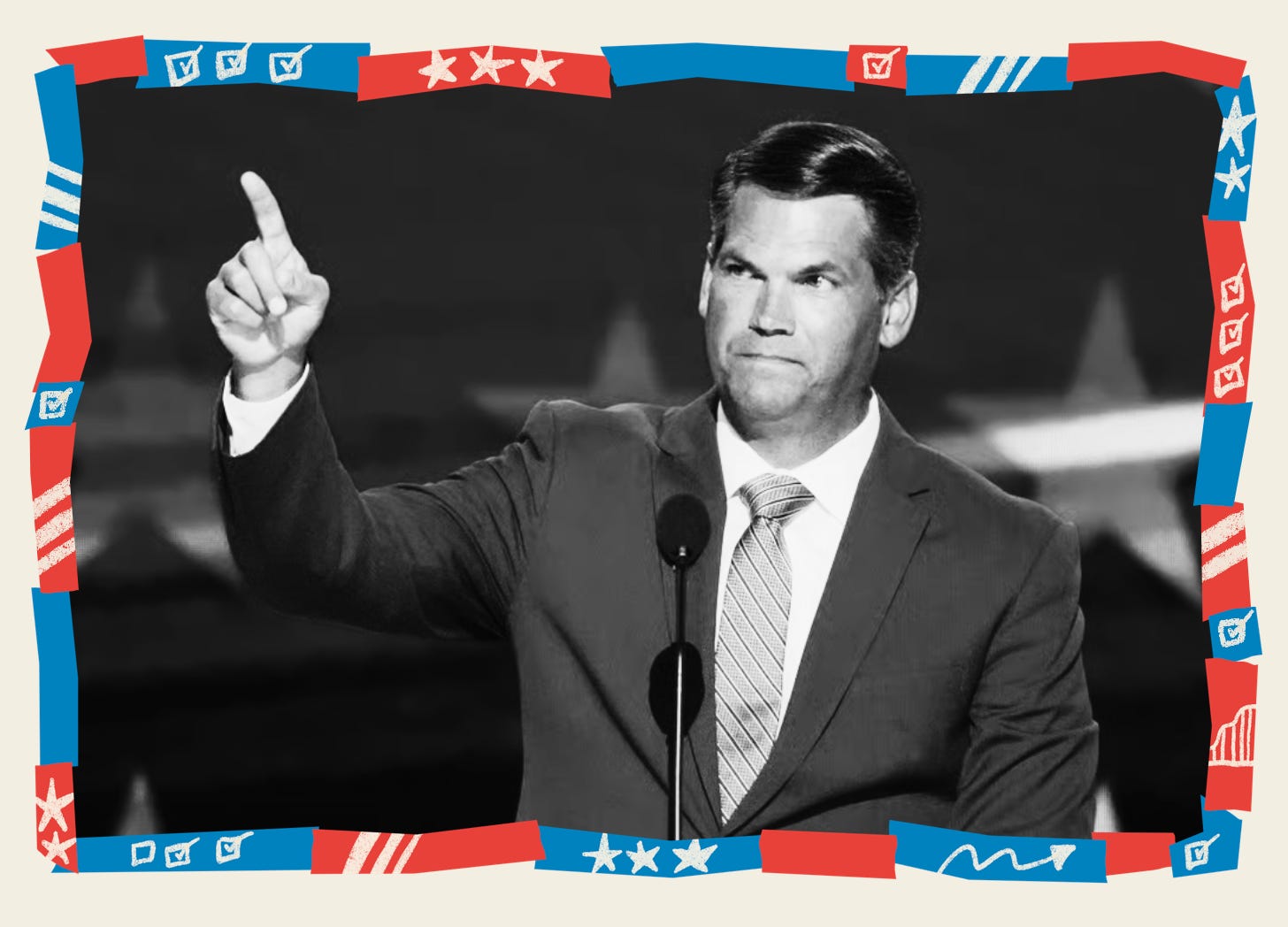
Heads up: Our first live show of 2026 is scheduled for Tuesday, January 27th at the Comedy Cellar in New York City! Nate Silver, Clare Malone, and I are recording a live 2028 Democratic Primary draft. You can get tickets here.We are less than two months away from the start of the midterm primary calendar. Things will kick off in Arkansas, North Carolina, and Texas on March 3rd. We’re going to have plenty of coverage of those elections throughout the year and, of course, heading into the big election in November. You should expect a table setting episode in your feeds before too long.On today’s episode we hear from one of the more unique candidates running this cycle: Geoff Duncan, the former Republican lieutenant governor of Georgia, who is now running for governor as a Democrat.He began his political career as a Republican in the state legislature and then served as lieutenant governor alongside current Governor Brian Kemp from 2019 to 2023. He became better known on the national scene after the 2020 election, as one of a number of Republicans in the state who pushed back strongly against Trump’s attempts to overturn the results in Georgia.He chose not to run for reelection in 2022, endorsed Kamala Harris in 2024 and formally became a Democrat last year. Now he’s running for governor in a Democratic primary field that includes former Atlanta mayor, Keisha Lance Bottoms, and former DeKalb County CEO, Michael Thurmond.On the Republican side, Lieutenant Governor Burt Jones is competing against Secretary of State Brad Raffensberger, who notably rejected Trump’s request that he “find 11,780 votes” in 2020.Democrats have not won the governor’s mansion in Georgia since 1998, so will this be the year they do it? And will Geoff Duncan be the one to try? This is a public episode. If you'd like to discuss this with other subscribers or get access to bonus episodes, visit www.gdpolitics.com/subscribe
How Denmark Sees Trump’s Greenland Threats
I said on Monday’s podcast that we all needed to get a bigger imagination, so here we are. Let’s talk about Greenland.After capturing Venezuelan President Nicolas Maduro and his wife over the weekend, the White House’s focus seems to have turned to the Danish territory of Greenland.It’s the largest island in the world, roughly the size of Western Europe, with a population of just 56,000. Denmark colonized it in the 18th century and today it’s a semi-autonomous part of the Danish Kingdom.According to President Trump, we “need” it. Trump advisor Stephen Miller told CNN this week, “obviously, Greenland should be part of the United States.” He went on to say, “nobody’s going to fight the United States militarily over the future of Greenland.”Reportedly, Marco Rubio told members of Congress that Trump actually wants to buy Greenland and that this posturing is a negotiation tactic, but White House press secretary Karoline Leavitt released a statement on the subject saying that, “utilizing the U.S. Military is always an option at the Commander in Chief’s disposal.”Democrats have rejected the Greenland idea and many Republicans, in a rare break from Trump, have as well. Among Americans, the idea of acquiring Greenland is 30 to 45 percentage points underwater and 85 percent of Greenlanders also reject it.For Denmark’s part, Prime Minister Mette Frederiksen said in a statement to “stop the threats” and that, “the U.S. has no right to annex one of the three countries in the Danish Kingdom.” She also said an attack would end NATO.Denmark has a population of 6 million with about 16,000 active military personnel. The U.S. military, for its part, has 1.3 million active personnel. Denmark is also a longtime U.S. ally. They were one of only four European countries to invade Iraq alongside the U.S.I wanted to get a perspective on Trump’s threats from inside the Danish national security community, so joining me on today’s episode is Peter Viggo Jakobsen, professor in the Department of Strategy and War Studies at the Royal Danish Defense College in Copenhagen. This is a public episode. If you'd like to discuss this with other subscribers or get access to bonus episodes, visit www.gdpolitics.com/subscribe
How Americans View U.S. Involvement in Venezuela
Heads up: Our first live show of 2026 is scheduled for Tuesday, January 27th at the Comedy Cellar in New York City! Nate Silver, Clare Malone, and I are recording a live 2028 Democratic Primary draft. You can get tickets here.If you listened to the end of our 2025 time capsule episode, you heard me say that I might have to put a disclaimer at the top of the episode because we invaded Venezuela in between when we recorded the podcast and when we published it. Well, that didn’t quite happen, but we weren’t so far off.Early Saturday morning the U.S. launched a series of strikes on Venezuela, captured President Nicolás Maduro and his wife Cilia Flores, and brought them to New York, where Maduro was indicted in 2020 and Flores was added to an updated indictment.It’s an uncertain moment for Venezuela and American policy towards the country. President Trump said during his Saturday press conference, “We’re going to run the country until such time as we can do a safe, proper and judicious transition,” without giving much more detail than that.He suggested that Venezuelan Vice President Delcy Rodríguez would comply with U.S. demands under threat of further military action, though Rodríguez subsequently referred to the U.S. intervention as illegal armed aggression and stated that Maduro remains the president of Venezuela.There are plenty of questions about the legality of Trump’s approach to Venezuela, the internal dynamics of the country and how this compares to past American foreign intervention. We covered a good amount of that in our December 18th episode titled “Is Venezuela The Next Iraq?” and I encourage folks to listen to that if they haven’t already.In today’s episode, Nathaniel Rakich and Mary Radcliffe join me to discuss how Americans are already reacting to U.S. involvement in Venezuela and how it could reverberate politically from here. In classic fashion, we also dissect some questionable uses of data, including tracking of pizza orders near the Pentagon and alleged insider trading on online betting markets. This is a public episode. If you'd like to discuss this with other subscribers or get access to bonus episodes, visit www.gdpolitics.com/subscribe
The 10 Numbers That Defined 2025
This is a free preview of a paid episode. To hear more, visit www.gdpolitics.comHappy almost new year! 2025 has been a big year for this GD podcast. It’s the year of our birth, of course, but we didn’t stop there. We hosted live shows, got rebranded, created merch, and even made some news. An enormous thank you to everyone who joined us this year 🙏. You made this all possible.2025 was also a big year for America. We began our semiquincentennial year, for the second time ever a U.S. president was inaugurated to a nonconsecutive term. The country also got a rebrand of sorts. There’s more gold detailing on the walls these days and the East Wing no longer exists.A lot more happened, but I don’t want to give away today’s episode. To mark the end of 2025 we are building a time capsule and filling it with numbers that represent the year in politics. I asked friends of the podcast Nathaniel Rakich and Mary Radcliffe to choose five numbers each they’d like to place in the capsule. I also have plenty of numbers of my own. The bad news is that only 10 numbers fit in the time capsule, so we have to duke it out to see who gets their way. We also shared new year’s resolutions for the two parties and ourselves in 2026.As a sneak preview, here are the 10 numbers we settled on, without any indication of what they represent. See if you can guess!
'Roman Empire' Elections Part 2
This is a free preview of a paid episode. To hear more, visit www.gdpolitics.comThis is the second installment of “Roman Empire” elections, in which friends of the podcast Jacob Rubashkin and Leah Askarinam join me to discuss the elections that we just can’t stop thinking about. If you missed the first installment, definitely start there. We talked about the 2000 election (of course), the crazy turn of events that indirectly resulted in Glenn Youngkin becoming the governor of Virginia, and the even crazier turn of events that links the election of Barack Obama to the reboot of Star Trek.Today the fun doesn’t stop. We discuss the nomination of Andrew Johnson at the Republican convention of 1864 (he ended up taking the oath of office blackout drunk), the story of the only dead person in U.S. history to win an Senate race, and how the Republican party might be different today if Mitt Romney won the presidency in 2012.Today’s episode is for paid subscribers and will cut off shortly for free subscribers. If you are not a paid subscriber, now is a great time to upgrade! If you are a paid subscriber, thank you! Sit back, relax, and enjoy the show.

'Roman Empire' Elections Part 1
In 2022, a Swedish influencer told her followers on Instagram to ask the men in their lives about the Roman Empire. Her instinct was that men, for some reason, have plenty of thoughts about the ancient civilization. She turned out to be correct.The suggestion led to a proliferation of videos on social media of women asking men how often they think about the Roman Empire. For some men, it was daily. For others, weekly.(This is the part where I admit that as a teenager I got a large SPQR henna tattoo on my forearm, although technically those are the initials of the Roman Republic, not the Roman Empire, and with that distinction, I am probably already telling on myself.)In any case, a meme was born. What began as a question of how often men think about the Roman Empire, morphed into the idea that any topic that occupies an inordinate amount of one’s mental space is one’s own personal Roman Empire.For example, someone might say their Roman Empire is 2003-era pop culture or The Titanic. You can quickly fall down a Reddit rabbit hole where people share obsessions as wide ranging as women’s bible studies groups and Chicago’s alleyways.Now that I’ve got all of the Boomers who listen to this podcast up to speed (hi, dad), you have the context for today’s episode, which is “Roman Empire elections.” Not elections that happened in the Roman Empire (which, again, wouldn’t be possible because the start of the empire marked the end of representative government), but instead American elections that take up an inordinate amount of our mental space.Dear friends of the podcast Leah Askarinam, Jacob Rubashkin and I came up with this idea while we were recording a different podcast a while back, so this week we are actually indulging. Part 2 will publish Tuesday, December 23rd for paid subscribers. This is a public episode. If you'd like to discuss this with other subscribers or get access to bonus episodes, visit www.gdpolitics.com/subscribe
Is Venezuela The Next Iraq?
This is a free preview of a paid episode. To hear more, visit www.gdpolitics.comThe full episode is available to paid subscribers. Once you become a paid subscriber, you can connect your account to your preferred podcast player by following the directions here.On Monday’s podcast, while we were talking about shifting political landscapes, I quipped that perhaps by the midterms we would be at war with Venezuela. If you keep up with the news coming out of the Caribbean, it seems like it could be a lot sooner than that.Things appear to be escalating quickly. The U.S. has launched 26 strikes in the Caribbean and Eastern Pacific since early September, killing 99 people, per tracking at the New York Times.The stated goal of the strikes has been to stop drug traffickers that the Trump administration has labeled terrorist organizations, but there are questions about the legality of the strikes, as well as questions about whether the goal is really to put pressure on Maduro with the hopes of ousting him.Speaking of pressure, last week the U.S. seized an oil tanker off the coast of Venezuela, and this week President Trump announced a “complete blockade” on sanctioned oil tankers going to and from Venezuela. This comes closer to threatening the lifeblood of the Venezuelan economy. Venezuela holds the world’s largest proven oil reserves and oil makes up 90-95 percent of its export revenue.The U.S. has also deployed military assets to the region capable of land strikes and disabling Venezuela’s defenses and Trump has said he’s authorized covert CIA operations in the country.To better understand the unfolding conflict with Venezuela, I invited on Michael O’Hanlon on today’s podcast. He’s the Phil Knight Chair in Defense and Strategy at the Brookings Institution and author of the forthcoming book To Dare Mighty Things: U.S. Defense Strategy Since the Revolution.
The Obamacare Subsidy Cliff Is Here
The politics of healthcare are again front and center in Washington. Last week, Senate Democrats’ proposal to extend the enhanced Affordable Care Act subsidies for three years failed to get 60 votes, as did a Republican proposal that would end the subsidies but provide direct payments to some Americans to cover healthcare costs.Monday, December 15th is also the last day for enrollment in insurance that begins January 1st on the ACA marketplace. All that is a long way of saying that the cake appears mostly baked. Healthcare coverage costs will rise dramatically for millions of Americans next year and many will opt out of coverage altogether.A bipartisan group is still holding out hope of coming to some compromise, but if that does happen it will likely be after Americans have already started to feel those costs. So what exactly will the impact be and what do Americans think about it? On today’s podcast we dig into the data.We also take a broader look at President Trump’s approval rating and the recent claim from a friend of the pod that, “Trump’s Approval Ratings Are Low Again. This Time It Might Matter.” Plus we discuss Indiana Republicans’ rejection of an effort to gerrymander their state. Is it a story about redistricting or is it really a story about the power limitations of a lame duck president? And is that a leading question?Joining me on the podcast to keep me honest are Mary Radcliffe, head of research at FiftyPlusOne, and Nathaniel Rakich, managing editor at VoteBeat. This is a public episode. If you'd like to discuss this with other subscribers or get access to bonus episodes, visit www.gdpolitics.com/subscribe
Can Any Democrat Flip Texas?
This is a free preview of a paid episode. To hear more, visit www.gdpolitics.comThe full episode is available to paid subscribers. Once you become a paid subscriber, you can connect your account to your preferred podcast player by following the directions here.Democratic Rep. Jasmine Crockett has jumped into the Texas Senate primary with just three months to go until Election Day. She’s controversial, at times outright offensive, and gets the cable news part of her party very excited. She also appears to be leading in early primary polling. (Sound familiar?) So, is the candidate The Atlantic is calling “a Democrat for the Trump era” up to the task of flipping Texas? Frankly, is any Democrat up to the task?On today’s podcast we take a look at how 2026 primaries are shaping up around the country in both the House and Senate. Beyond Texas, we check in on the latest in Maine, Michigan, and Georgia and debate whether the dividing lines are mainly generational, ideological, or just a fighter mentality. We also look at the results of recent elections in Miami and Tennessee where Democrats over-performed.Lastly, a case at the Supreme Court this week considers how much money the political parties should be able to spend in coordination with candidates. Should the relatively low caps be kept in place or should the flood gates be opened? With me to talk about it all is Deputy Editor of Inside Elections Jacob Rubashkin.
How The UK Became Ungovernable
If you are tired of hearing about how messy American politics are, today I’m offering you a reprieve. You’re going to hear about how messy British politics are.Last week I was in London, exploring the city and speaking with journalists, friends and strangers alike about life in Britain. I visited a couple newsrooms and toured parliament during Prime Minister’s Questions. The big news of the day was the Labour government’s budget proposal and, despite their largest majority in nearly 30 years, Labour seems to be facing challenges on all sides.If American politics can feel disappointing or frustrating, wait till you hear Prime Minister Keir Starmer’s approval rating: net -52 percentage points. By comparison President Trump, facing his own second term low of net -14 points, looks utterly popular.Today we get into the challenges facing the Labour party and much more – the rise of the populist Right in the UK and Europe, relations with the US, and yes, people are still talking about Brexit.To do this I reassembled the team from the dearly departed Talking Politics podcast. The former hosts, Helen Thompson and David Runciman, used to join me on the also departed FiveThirtyEight Politics podcast during the height of the Brexit drama. Think of this as the ghosts of two podcasts past.Helen Thompson is a professor of political economy at Cambridge and author of the book “Disorder: Hard times in the 21st Century.” David Runciman is an honorary professor of politics at Cambridge and the host of the “Past Present Future” podcast. This is a public episode. If you'd like to discuss this with other subscribers or get access to bonus episodes, visit www.gdpolitics.com/subscribe
Is America Really 11 Nations?
This is a free preview of a paid episode. To hear more, visit www.gdpolitics.comThe full episode is available to paid subscribers. Once you become a paid subscriber, you can connect your account to your preferred podcast player by following the directions here.Oftentimes when we talk about what divides the United States we talk about things like education, race, gender, or class. My guest today makes the argument that there’s something else fundamental at play, stretching back hundreds of years, to well before the founding of the country: the regional cultures that were developed by the people who settled America.It may seem like a stretch to say that after waves of immigration and internal migration, technological and social change, that the pilgrims, quakers, aristocrats, and pioneers are still culturally with us. But Colin Woodard argues that you can’t actually understand our contemporary politics and the fights we’re having without that context.In his previous book “American Nations” he laid out what he described as the 11 different “nations” – or culturally distinct regions – within America. In his new book “Nations Apart” he looks at the political and social differences across them on everything from voting, to health outcomes, to gun violence.He also discusses what kinds of common narratives have united us in the past and what might work again today based on public opinion research. Colin is the director of Nationhood Lab at the Pell Center for International Relations and Public Policy at Salve Regina University.
Celebrity Politicians, Dummymandering, And The Texas Primary
If everything is going to plan, I am on vacation this week. Fear not! I have recorded podcasts ahead of time so you’ll still have two episodes this week. However, don’t be surprised if something crazy has happened in the world and you don’t hear it mentioned in conversation. I haven’t forgotten, it’s just that whatever crazy thing we are now dealing with had not yet happened when the podcasts were recorded. If past is prologue, hold onto your seats, the news cycle rarely behaves while I’m away.Today we are opening up the mailbag to sort through our backlog of listener mail. Listeners have been sending in great questions lately! As a reminder, you can always share your questions in the paid subscriber chat at gdpolitics.com. You can also send questions to [email protected] and reach me via the usual social media channels.On today’s episode we discuss the power of celebrity in politics, the possibility of the Democratic presidential primary moving to a ranked choice voting system in 2028, the state of the Republican Texas Senate primary, and much more. With me to do it all is friend of the podcast and data scientist at the Washington Post, Lenny Bronner.P.S. — I am currently in London for a combination of work and fun. Feel free to use the channels above to share any recs! This is a public episode. If you'd like to discuss this with other subscribers or get access to bonus episodes, visit www.gdpolitics.com/subscribe
Mamdani Is In, Marjorie Is Out
Even in our topsy turvy political world, last Friday stood out as one for the books. President Trump seemed to embrace New York City mayor-elect Zohran Mamdani, complimenting his underdog victory, saying he thinks “he’s going to do some things that are going to be really great,” and even smilingly saying that it’s ok if Mamdani calls him a fascist.Just hours later, one of Trump’s formerly fiercest defenders, Marjorie Taylor Greene, announced that she will resign from Congress in the new year, after disagreements with Trump led him to brand her “Marjorie Traitor Greene” and threaten support for a primary opponent against her. This all would have been hard to dream up just a couple months ago, but does it say anything meaningful about our politics?On today’s episode we also check in on the state of gerrymandering around the country after a federal panel of judges struck down Texas’s new map designed to add five seats to Republicans’ ranks in the House. If it stands, in a turn of fate, Democrats could end up being the net winners of the ongoing mid-decade redistricting spat. That decision now heads to the Supreme CourtAnd finally, Happy Thanksgiving week! Have you heard of the pre-Thanksgiving dinner “cousin walk?” It’s apparently when the younger members of the family get stoned before sitting down for turkey. The idea has become popularized online and the Wall Street Journal even called it a “full-blown commercial holiday,” with dispensaries reporting the second biggest sales of the year for “Green Wednesday.” (Second to 420). But is this all coming at a time when Americans are turning against marijuana?With me to discuss it all are two dear friends of the pod: head of research at FiftyPlusOne, Mary Radcliffe, and managing editor of Votebeat, Nathaniel Rakich. This is a public episode. If you'd like to discuss this with other subscribers or get access to bonus episodes, visit www.gdpolitics.com/subscribe
How AI Could Upend American Politics
This is a free preview of a paid episode. To hear more, visit www.gdpolitics.comThe full episode is available to paid subscribers. Once you become a paid subscriber, you can connect your account to your preferred podcast player by following the directions here.I was at a conference earlier this week giving a talk about politics. These things can be kind of fun. I get up on a stage, do my song and dance, and show folks a bunch of charts.As I was getting into the elevator, one of the attendees stepped in beside me and I asked him how he was enjoying the conference. He sighed and said, “Well, everything is about AI. Even the sessions that are supposed to be about other things end up being about AI.”His comment struck me because that’s what so many topics can feel like these days, whether it’s the workplace and economy, social media and entertainment, our own homes and vehicles, or even matchmaking and intimacy — and of course politics and geopolitics.Some of the political debates over AI have faded into the background as the Trump administration’s laissez-faire approach to regulation has set the tone in Washington and Democrats have had little to no power to challenge it, if they wanted to. But it’s probably a good bet that political debates over the role of Artificial Intelligence in society won’t remain in the background for long.Recently AI stocks have been in pullback mode and chatter about a bubble has reemerged. “Is it a blip, a dip, a pullback or the beginning of the end?” reads one headline. And lately, hardly a day goes by without another company announcing a reduction in its white collar job force.Polling also suggests Americans are somewhere between skeptical and pessimistic about the future of AI. They see it as doing more harm than good when it comes to people’s ability to think creatively, have meaningful relationships with each other, and make difficult decisions. And importantly, this is not an area where Americans are highly polarized along party lines either.The combination of those two things: the possibility of a crisis or displacement in which AI is seen as central and the lack of clear party divisions means that the new technology may be in a unique position to reshape politics.That is the topic of today’s episode with David Byler, public opinion researcher and VP at National Research Group. We also get into questions about the use of AI in polling and a “Good Data, Bad Data, or Not Data?” question from a listener.
Is The MAGA Coalition Coming Apart?
When President Trump became the first Republican in 20 years to win the national popular vote in 2024, one Republican pollster was in a position to say: “I told you so.”Patrick Ruffini, the co-founder of Echelon Insights, had written a book the year prior titled, “Party of the People: Inside the Multiracial Populist Coalition Remaking the GOP.”He wrote, “The Republicans used to be seen as the party of wealthy elites and the Democrats the party of blue collar workers—and now that’s being turned upside down. Because of this, the ‘demography is destiny’ ideas of eternal Democratic majorities never materialized. And now it’s Republicans who are on offense with voting blocs who represent a decisive majority of the country.”He went on to say, “Contrary to the media myths, the old divisions that separated Americans politically and in other ways by race and ethnicity are gradually fading. This is what’s making Republicans competitive in areas they never dreamed of winning before.”This was hard to deny in 2024. Republicans made decisive gains with voters of color and young voters, with eye-popping rightward shifts in places like Florida, Texas and the urban Northeast.But if Trump’s already souring polling this year hadn’t been reason for pause, this fall’s elections certainly were. As we discussed on last week’s podcast, in New Jersey, there appeared to be something of a snap back amongst Hispanic and young voters to coalitions resembling the 2020 election.In light of that, I invited Patrick Ruffini on the podcast to talk about the ever-shifting American political coalitions. He joined me to discuss his book on the forbearer to this podcast, but this was his first time on GD POLITICS. We also discussed his work at Echelon Insights highlighting the diversity of opinion that sits below the polarized red/blue surface of American politics. This is a public episode. If you'd like to discuss this with other subscribers or get access to bonus episodes, visit www.gdpolitics.com/subscribe
A 2025 Election Post-Mortem
This is a free preview of a paid episode. To hear more, visit www.gdpolitics.comThe full episode is available to paid subscribers. Once you become a paid subscriber, you can connect your account to your preferred podcast player by following the directions here.The news cycle is quickly moving beyond last week’s elections. There’s the end of the shutdown, the Jeffrey Epstein emails, new candidates jumping into the 2026 primaries, and the release of Robyn’s first single in seven years (that one is for the gays). Pretty soon much of our electoral attention will be focused on the midterms.Before we say goodbye to the 2025 elections, I wanted to do a post-mortem with the advantage of more data and less sleep deprivation. So, today we are focusing on some of the fundamental questions of the election, in particular: who, where, and why. The demographic and geographic breakdown of the vote and the issues driving voters.We compare what we saw in 2025 to past elections, discuss what is means for 2026, and answer listener questions about the results. At the end we also get to some of the other things going on in the world, namely those Jeffrey Epstein emails and the raging battle over what kind of candidates the parties should be running if they want to win at the midterms.With me for our 2025 election post-mortem is Lakshya Jain, head of political data at The Argument, Linley Sanders, polls and surveys reporter at the Associated Press, and Lenny Bronner, data scientist at the Washington Post.
Who Won The Government Shutdown?
It appears that the longest government shutdown in American history is coming to an end.On Sunday night, eight members of the Senate Democratic Caucus joined Republicans in advancing a deal that would fund the government through January. It would also fund programs related to agriculture, military construction, and the legislative branch for most of 2026.What Democrats got in return is a promise to vote on the enhanced Obamacare subsidies in December, a reversal of government layoffs made during the shutdown, continued funding of the Government Accountability Office, and maintaining the office’s ability to sue the Trump administration.All eight of the senators who voted with Republicans are not up for reelection in 2026 and Democratic leadership criticized the deal, along with plenty of other Democratic lawmakers. So, in the end, which party came out on top?That’s the story we begin with and we also dig into how Washington is reacting to last week’s elections and the latest news from the Supreme Court. With me to do it is Gabe Fleisher, author of the Wake Up To Politics newsletter and friend of the podcast.P.S. We now have GD merch! You can find hats, tees, and totes here. This is a public episode. If you'd like to discuss this with other subscribers or get access to bonus episodes, visit www.gdpolitics.com/subscribe
Democrats Had A Great Night
Democrats swept the bigs races across the country on Tuesday night and many of the not-so-big races as well. They over-performed their polls in Virginia and New Jersey and Zohran Mamdani may be on track to secure an outright majority in the mayoral election in New York City. The victory for Proposition 50 in California was also resounding.In this late-night edition of the GD POLITICS podcast, Mary Radcliffe, Nathaniel Rakich, and Lenny Bronner joined me (after a five hour livestream, no less) to break down the results of the evening and what they do or don’t portend for future races. This is a public episode. If you'd like to discuss this with other subscribers or get access to bonus episodes, visit www.gdpolitics.com/subscribe
Election Eve 2025 Live At The Comedy Cellar
This is a free preview of a paid episode. To hear more, visit www.gdpolitics.comThe full episode is available to paid subscribers. Once you become a paid subscriber, you can connect your account to your preferred podcast player by following the directions here.Happy Election Day! Last night Nate Silver, Clare Malone and I gathered with a sold-out crowd at the Comedy Cellar in New York City to share out final pre-election takes, discuss the latest political controversies and take on audience members in a game of “Guess What Americans Think.”We discussed the wildly divergent polls in the New York City mayoral race, how we expect the results to play into the Democrats 2024 post-mortem, and what it could mean for national politics if New York City has a Democratic Socialist mayor.In a round of “Hot Take Hat,” we discussed the demolition of the East Wing, Graham Platner’s Nazi tattoo, Trump’s suggestion that the Senate scrap the filibuster, and more.During “Guess What Americans Think,” Nate and Clare competed against the audience to gauge how Americans feel about topics like the government shutdown, the National Guard in American cities, and the amount of money being wagered on political betting sites in the 2025 elections. We also answered incisive questions from the audience.Remember to tune in to the GD POLITICS livestream of election night beginning at 7 pm ET at gdpolitics.com.
Election Night 2025: What To Watch And When
We now have GD merch! You can find hats, tees, and totes here.Election Day 2025 is just about upon us. In a matter of hours New York City will elect a new mayor, Virginia and New Jersey will elect new governors, and California will decide whether to gerrymander its congressional maps. Millions of Americans across the country will also cast ballots in local elections.We’ve got a lot cooking at the GD POLITICS pod, so let me share the game plan. Today’s podcast is a tick tock of what to expect on election night: when the polls close, what races we’ll be watching, what data we’ll have, and what time we might get race calls.Monday night we have an election eve live show at the Comedy Cellar in New York City. It’s officially sold out and I look forward to seeing some of you there! Paid subscribers can expect to get a recording of that in their feeds Tuesday morning (so smash that paid subscriber button!).On election night, I’ll be live streaming at gdpolitics.com alongside some of your GD POLITICS faves starting at 7pm Eastern Time – Lenny Bronner, Nathaniel Rakich, Mary Radcliffe, Jacob Rubashkin, with some other guests stopping by. Wednesday morning we’ll have a reaction podcast in the feed.Hold on to your seats, folks! This is a public episode. If you'd like to discuss this with other subscribers or get access to bonus episodes, visit www.gdpolitics.com/subscribe
Does Zohran Mamdani Have A Majority Coalition?
Two election week updates to start: First, we have a live show coming up at the Comedy Cellar in New York City with Nate Silver and Clare Malone on election eve, November 3rd. There are a few tickets left, so grab ‘em and join us!Second, I’ll be live-streaming on election night, November 4th, alongside some of your GD POLITICS faves. Think of this as friends having an election watch party that you’re invited to. Assuming we make it to midnight, it will also be my birthday, so don’t be surprised if you see a glass of wine or birthday shots. Grab your favorite beverage and join us starting at 7pm ET at gdpolitics.com.I’m first going to apologize to listeners who don’t care about New York City politics, because that’s what today’s entire episode is about. Though I wouldn’t skip just yet; I promise it will be interesting.For our New York-minded friends (or people who just get a kick out of Democratic Party drama) today is your day! We are just five days out from a New York mayoral election that has been nothing if not attention grabbing, and, in its own special way, reflective of the complicated city the next mayor will govern.Let’s begin with the spark notes version of the past 8 months…It all started with incumbent mayor Eric Adams switching his party identification to Independent, acknowledging that his corruption scandals and relationship with President Trump would prevent him from winning renomination in a Democratic primary.Then, there was the assured primary victory for the also scandal-plagued three term-governor of New York, Andrew Cuomo, which, of course, was not assured after all. Thirty-three year old Democratic Socialist assemblyman Zohran Mamdani won the primary by 13 points, after making the cost of living his defining issue.Cuomo vowed to continue on as an Independent, while the Democratic establishment remained wary of endorsing Mamdani. Mamdani’s past statements about defunding the police, globalizing the intifada, and more – which hadn’t gotten much play during the primary – came to the fore.But while Mamdani has struggled to reach 50 percent support in the polls, anti-Mamdani forces haven’t had much luck either. The scandals and lack of charisma that plagued Cuomo in the primary, haven’t gone away. Curtis Sliwa, the – perhaps you could say – odd ball Republican candidate, who’s been a debate favorite for his old-school New York zingers, has wallowed in the teens. Though he told the press he’d only drop out if a Mack Truck hit him and he couldn’t be resuscitated in the ICU.While incumbent mayor Eric Adams did drop out after polling in the high single digits, his endorsement of Cuomo hasn’t made up the difference for Cuomo. Throughout all of this, Democratic leader Hakeem Jeffries and New York Governor Kathy Hochul have concluded, like just about everyone, that Mamdani will win the election and that they are better off endorsing.A similar conclusion about the inevitability of Mamdani from business leaders, online bettors, and political analysts alike hasn’t stopped the candidates from a brawl down the final stretch. For my part, I’ve spent more than one November in Wisconsin, and the political ads in the city right now are next level.So that gets us to where we are today. To elaborate much more, joining me is Michael Lange, the author of the newsletter “The Narrative Wars”. The big question now facing Mamdani is whether he can win an outright majority of New York City voters. The answer will shape his likely tenure. This is a public episode. If you'd like to discuss this with other subscribers or get access to bonus episodes, visit www.gdpolitics.com/subscribe
A Guide To 2025's Statewide Elections
We have a live show coming up on November 3rd at the Comedy Cellar in New York City with Nate Silver and Clare Malone. Come join us for a rowdy election eve!We are one week away from Election Day 2025, so this week we’re zooming in on the biggest contests of the year. Today it’s Virginia, New Jersey, and California. Later in the week we’ll take a detailed political tour of New York City’s vastly different neighborhoods.In Virginia, Democrat Abigail Spanberger currently leads Republican Winsome Earle-Sears in the race for Governor by an average of 8 points. Underneath that top line number there’s plenty of variation, with recent polls ranging from a 5 point lead to a 13 point lead for Spanberger. The Attorney General’s race, in which Democrat Jay Jones has had to apologize for text messages that promoted political violence, is significantly closer.Meanwhile in New Jersey, Democrat Mikie Sherill leads Republican Jack Ciattarelli by 6 points on average. Most polls there have shown a mid-single digit race. In the legislatures in both states, Democrats appear assured to maintain their majorities or grow them.We also take a look at areas of Virginia and New Jersey that could give us and indication of how different parts of the electorate are reacting to Trump 2.0. There are the wealthy Northern Virginia and Northern Jersey suburbs, large Latino communities also in northern Jersey, and large Black communities in Hampton Roads, Virginia.If you stick around until the end, we also get to the latest Graham Platner polling in Maine.With me to do it all is Chaz Nuttycombe, executive director of State Navigate, which covers state-level politics around the country from a data perspective, and Mary Radcliffe, who also works at State Navigate and runs the new polling aggregation site FiftyPlusOne. This is a public episode. If you'd like to discuss this with other subscribers or get access to bonus episodes, visit www.gdpolitics.com/subscribe
What Does Political Moderation Actually Mean?
This is a free preview of a paid episode. To hear more, visit www.gdpolitics.comThe full episode is available to paid subscribers. Once you become a paid subscriber, you can connect your account to your preferred podcast player by following the directions here.Shortly after I launched this podcast, I had a guest on who caught folks attention. Her name was Joan C. Williams, a law professor at UC San Francisco, and she joined me to talk about her new book, “Outclassed: How the Left Lost the Working Class and How to Win Them Back.”She spoke straightforwardly about why the cultural values of America’s liberal elites and working class are different. As she said, working class values reflect working class lives. And she described how a strict adherence to elite values by Liberals creates challenges for a Democratic Party in pursuit of a majority coalition. After all, less than 40 percent of American adults have a college degree.It turns out that Joan became something of a listener to this GD podcast herself. A few weeks ago, she sent me an email saying that she listened to an episode I did about whether there are electoral advantages to being moderate. She told me she had just written an op-ed in the Boston Globe about what politicos mean when they talk about moderation, and that there are many different types of so-called moderation, not all of which have the same electoral advantages.I told her to come back on the podcast and talk to me about it and that’s what we’re doing today. And speaking of liberal elitism, Joan joins me from Siena, Italy where she has been writing about class divides from the 13th century and how they relate to our class divides today.
Democrats' Bid To Unseat Susan Collins Takes Shape
We have a live show coming up on November 3rd at the Comedy Cellar in New York City with Clare Malone and Nate Silver. Come join us for a rowdy election eve!Maine Democrats have themselves a primary contest between the current governor Janet Mills and former Marine and oyster farmer Graham Platner in their bid to oust Senator Susan Collins next year. On its face, it looks like a battle for the soul of the party, though Platner’s recently resurfaced comments on Reddit could disrupt his momentum.On today’s podcast we take a look at the contours of that race and what’s at stake in the Voting Rights Act case at the Supreme Court. Nate Cohn at the New York Times is calling it the “case that could hand the House to Republicans.”We also get some updates on the 2025 elections, which are just two weeks away. It’s debate season and we’ve now seen gubernatorial debates in Virginia and New Jersey and a meme generating mayoral debate in New York City. Think parade politics, bodega orders, and New Yorkers’ favorite kind of virtue signaling: subway ridership.With me to discuss it all is reporter at the Associated Press Leah Askarinam and chief elections analyst at Decision Desk HQ Geoffrey Skelley. This is a public episode. If you'd like to discuss this with other subscribers or get access to bonus episodes, visit www.gdpolitics.com/subscribe
Steven Pinker On The Coordination Game Of Politics
A question that political analysts often ask is whether something is “breaking through.” Is a piece of information reaching the masses? And is it not just the case that everyone knows it, but does everyone know that everyone else knows it too.Did we all see that Super Bowl ad? Did we all see that political gaffe? Or as today’s guest would put it: Is it common knowledge?When people know that something is known or believed by others, it can change human behavior. Think about the watershed moment that President Biden’s 2024 debate caused. Polling already showed that a majority of Americans – even a majority of Democrats – believed Biden was too old for the job. The debate didn’t so much change the facts, as it made it obvious that everyone else knew them too.Or think about the many Democratic voters in the 2020 primary who wanted to vote for the candidate they believed others would vote for. In an instance like that, simply publishing polling results can influence who voters might support.This is a phenomenon that shapes electoral politics, but it extends well beyond that, to stock market bubbles and bursts and online mob behavior. With me on today’s podcast to break it down is Steven Pinker. He’s a psychology professor at Harvard University and author of many books, the latest of which is, “When Everyone Knows That Everyone Knows . . . Common Knowledge and the Mysteries of Money, Power, and Everyday Life.” This is a public episode. If you'd like to discuss this with other subscribers or get access to bonus episodes, visit www.gdpolitics.com/subscribe
How Will The Shutdown End?
Today’s episode focuses on something that few Americans and seemingly even few lawmakers in Washington are particularly preoccupied by: the fact that the government is shut down. Given the lack of urgency, how will it actually end?After that, we have something of a grab bag of topics. We talk about the axis of conflict that Democrats are hoping to wage the midterms on, that video of Democratic candidate for California governor Katie Porter bombing an interview that wasn’t even particularly hostile.We also look at some polling on free speech and political violence that should give folks cause for optimism, and the legal questions at play in President Trump’s attempts to send the National Guard to American cities.This is a conversation that Gabe Fleisher and I had last week on Substack Live. Gabe is the author of the newsletter Wake Up To Politics, which he started writing at the age of nine, so he’s got quite a wealth of knowledge.Relatively little has changed in shutdown negotiations since we chatted, except one note that Trump announced that members of the military will continue being paid despite the shutdown. They otherwise would miss their first paycheck on Wednesday, October 15. This is a public episode. If you'd like to discuss this with other subscribers or get access to bonus episodes, visit www.gdpolitics.com/subscribe
Elections To Watch In 2025
This is a free preview of a paid episode. To hear more, visit www.gdpolitics.comA heads up that this is your last chance to get 20% off an annual subscription to the podcast. Our first-ever discount, offering paid subscriptions for just $5/month, ends at the end of this week.Paid subscribers get access to a second weekly podcast, access to the paid subscriber chat, and recordings of live shows like our upcoming live show on November 3rd. I hope you’ll join the crew!We are less than a month away from Election Day 2025 and today we have a primer on the key races to watch.There are technically elections all over the country, in 32 states, including contests for school board, city council, sheriff and more, plus referenda of all kinds. But the real blockbuster races are the gubernatorial and legislative races in New Jersey and Virginia, the mayoral race in New York City, and the redistricting ballot initiative in California. Call it the revenge of the coasts!The New York City race, as you might have heard, is a rematch between former governor Andrew Cuomo and state assemblyman Zohran Mamdani, with perennial Republican candidate Curtis Sliwa along for the ride.In New Jersey, Democrats are starting to get angsty as the governor’s race between Democrat Mikie Sherrill and Republican Jack Ciattarelli looks to be a single digit race, maybe even a low single digit race.In Virginia, while the governor’s contest looks like an easier bet for Democrats than historically bluer New Jersey, that hasn’t stopped a spate of scandals from disrupting some of the down ballot statewide races.And lastly, the California fight over redistricting – Prop 50 – is already the third most expensive ballot measure in state history, with $215 million in spending as of the first week of October. The polling looks somewhat positive for Democrats hoping to gerrymander the state, but polling in such an irregular race can be tricky.With me to dive into all of this is deputy editor of Inside Elections Jacob Rubashkin.
Why Americans Blame Republicans For The Government Shutdown
We are currently offering our first-ever discount on paid subscriptions. Right now, an annual subscription is 20% off, meaning you’ll become a paid subscriber for just $5/month. Paid subscribers get access to a second weekly podcast, including recordings of live shows like our upcoming live show on November 3rd.The government has now been shut down for 6 days and there’s no clear end in sight, let alone any palpable urgency to reach that end. During past government shutdowns, there has at least been the sense that lawmakers are earnestly trying to find a path forward. Why not this time? Perhaps we need not look any further than the polls.The bulk of polling suggests Americans blame Republicans more than Democrats for the shutdown, so Democrats aren’t feeling pressure to fold. Historical polling also suggests that the party making the demands that provoke the shutdown – in this case Democrats – are eventually seen as responsible and fold after achieving little to no policy concessions. Given that, Republicans probably aren’t feeling the pressure to compromise either.Today we dig deeper into those surveys and try to get a sense of where things might go from here. We also focus on a couple other polls that have attracted attention recently. (Yes, it’s a polling heavy day, so grab that calculator and put on those stats nerd glasses. I promise it will be fun 🤓)The New York Times released its first national poll since April, following months of newsworthy developments and political rancor, resulting in… wait for it… no discernible change in how Americans view Trump and Democrats.There’s also a new poll out of Pennsylvania showing that Democratic Senator John Fetterman is a relatively popular figure in the state. Just one important footnote: he is 20 points underwater with his own party’s voters and 40 points above water with Republicans. So is his approach a roadmap for other Democrats to win over Republican voters or a one way ticket to a primary challenge and an ouster from Washington?With me to discuss it all are friends of the podcast Mary Radcliffe and Lenny Bronner. This is a public episode. If you'd like to discuss this with other subscribers or get access to bonus episodes, visit www.gdpolitics.com/subscribe
Live At The Comedy Cellar With Nate Silver And Clare Malone
This is a free preview of a paid episode. To hear more, visit www.gdpolitics.comWe are currently offering our first-ever discount on paid subscriptions. Right now, an annual subscription is 20% off, meaning you’ll become a paid subscriber for just $5/month. Paid subscribers get access to a second weekly podcast, including the audio and video from live shows like the one above and our upcoming live show on November 3rd.Today’s episode is a live taping of the podcast with Nate Silver and Clare Malone at the Comedy Cellar in New York City. The video version is available here.During the taping, we discuss the strategy involved in a government shutdown (it hadn’t happened at the time of the recording, but we predicted that it would come to pass). We also introduce a new segment called, “Hot Take Hat.” There was so much news to discuss that we couldn’t decide which stories to cover, so we left it to chance. As a result, we discuss the NYC mayoral race, gerrymandering, vaccines, Fed independence, and more.Lastly, we play a game of “Guess Which Comedian Said This.” It was not lost on us that we were recording the podcast in something of a sacred place for comedians, during a time when the government is challenging First Amendment principles. To mark the significance, we compete — along with the audience — to identify which comedian is responsible for some audacious excerpts of political satire.We wrap up with some very thoughtful questions from members of the audience, ranging from free speech to Trump’s energy policy.

Which Party Will Win America’s Workers?
The Left has long claimed the mantle of the party of working people. As recently as last decade, Democrats posted twenty point margins with union households. In the Trump era, the Right has posed a significant challenge to that identity. In 2024, Harris won union households by just 8 points, though as union membership has declined, that may not be the most apt measurement. Lower and middle income people have also shifted decidedly to the right.The stories that the two parties tell when trying to win over workers have variations, but generally go something like this: American workers have gotten the short end of the stick over the past half-century, as globalization and free trade have taken root, manufacturing has been hollowed out, and wages have stagnated. The Left includes blame for greedy corporations and union busting and the Right includes blame for mass migration and regulation.The majority of American adults are “working people,” and so there’s plenty of political power in claiming them as core to your coalition. That is the focus of today’s podcast. According to the data, how are workers doing and what do they think of the politicians who say they’re serving them?With me to discuss is John Lettieri, co-founder and president of the Economic Innovation Group, a bipartisan think tank. They put together plenty of economic research, including a recent poll of American workers, which they did with Echelon Insights. This is a public episode. If you'd like to discuss this with other subscribers or get access to bonus episodes, visit www.gdpolitics.com/subscribe