Gaia's Call
86 episodes — Page 2 of 2
PART ONE: “What Is Climate Change… Really?”
This is something different.Today, I’m stepping out from behind the keyboard and onto the metaphorical red dot—sharing a short TED-style talk that I hope will stir something deeper than statistics or news headlines ever could.This first video asks a simple but powerful question:What if climate change isn’t the problem—but a symptom of something upstream?This talk is a labor of love, distilled from years of writing, reflection, and the One Cause journey. I’ve long dreamed of sharing it on an actual TED stage—but whether or not that happens, I believe this message matters now.If it resonates with you, please consider sharing it—and if you feel moved, you can even recommend me to TED using this link. I’d be honored.Next week, I’ll share Part Two—where we shift from crisis to regeneration.For now, take a breath, and let’s explore what happens when we stop treating symptoms… and start asking better questions.Watch Part One above, then let me know your thoughts. This is a public episode. If you'd like to discuss this with other subscribers or get access to bonus episodes, visit wbradfordswift.substack.com/subscribe
Flow in Groups: Unlocking the Collective Current of Change
A Real-Life Story of Group Flow in ActionIn 2017, a small group of young climate activists began meeting in living rooms and local libraries to tackle a question that burned in their hearts: What if we actually treated the climate crisis like the emergency it is? What if we organized with urgency, heart, and purpose?This was the birth of the Sunrise Movement, a now-national force for climate justice. Their mission? To stop climate change and create millions of good jobs in the process. But their real secret sauce wasn’t just smart organizing or slick messaging. It was flow.They trained together. Sang together. Sat in circles and listened deeply. They moved not just with purpose, but with rhythm—and when they acted, it often felt electric, like riding a wave together.And here’s the key: they still are. The movement continues to evolve, drawing in new generations and inspiring local hubs to act in community. From pushing the Green New Deal into the public conversation to supporting climate champions for office, their actions ripple outward—powered by the synergy of shared flow.“When we sync our minds in pursuit of a higher purpose, we become capable of more than we ever imagined—together.” — inspired by Mihaly CsikszentmihalyiIf this story about collective flow and climate action inspires you, pass it on. Let’s ripple this forward. The world needs more of us moving together.What Is Group Flow (And Why It Matters Now)?That’s what we’re exploring today—what happens when a group of people steps beyond coordination and into flow. Because while most movements begin with passion, it’s flow that helps them sustain and scale. And in a time like ours, when the stakes are as high as they’ve ever been—for our climate, our future, and our children—it’s not enough to act. We must learn to act together, with grace, coherence, and power.When psychologist Mihaly Csikszentmihalyi first described “flow,” he was talking about that deeply immersive state where we lose track of time, feel fully engaged, and operate at our best. Think of a musician lost in the rhythm, or a surfer riding the perfect wave. But what happens when a group reaches that state—when they ride the wave not alone, but as one?Steven Kotler, one of the leading voices on the science of flow, calls this “group flow.” It’s that magic moment when conversation sparks without friction, ideas build on each other naturally, and action feels effortless and alive. But flow doesn’t appear by accident. It shows up when the conditions are right: shared risk, novelty, full embodiment, and a commitment to being fully present. Sound familiar? It should—because these are also the very qualities the climate crisis is inviting (and requiring) us to embody.We are, collectively, facing an unprecedented challenge. The risk is enormous. The terrain is unfamiliar. And the future will demand deep presence, creativity, and courage. It’s the perfect—if daunting—set-up for flow, if we’re willing to step into it together.In many ways, the Earth herself is calling us into flow.This is where the Four Great Truths of the One Cause movement come alive.The Four Great Truths—The Pillars of Group FlowFlow begins with Interconnectedness. When we drop the illusion that we’re separate—from one another or from the Earth—we soften into trust. And trust is the riverbed that flow runs through. We become less concerned with who’s right and more focused on what’s possible.Flow expands through Sufficiency. When we believe we don’t have enough—time, money, energy—fear tightens our grip. But when we come from a place of “enoughness,” our creativity breathes. Every voice matters. Every gesture counts. Even silence becomes sacred.Reciprocity nourishes flow. It’s not about give or take—it’s the dance of give and take. Flow blossoms when we feel both seen for what we offer and honored for what we receive. It’s an ecosystem of mutuality.And finally, Stewardship gives flow direction. When our goal is larger than ourselves—when we’re moving on behalf of life—ego steps back and purpose leads. We’re not jockeying for position. We’re rowing in the same direction, toward a future that’s calling us all.Of course, we must also be aware of what blocks the current.Which of these truths speaks loudest to your family or classroom?Join the chat and tell us what keeps you grounded—and what invites flow.The Four Great Untruths That Disrupt FlowThe Great Untruths we’ve inherited—ideas like “we are separate from nature,” or “more is always better”—act like boulders in the stream. They create eddies of scarcity, comparison, and burnout. A group chasing performance metrics over purpose may work harder, but it rarely flows. A group that believes technology alone will save us may stay busy but disconnected.Flow, by contrast, is intimate. Embodied. Present. And it thrives not on notifications or spreadsheets, but on breath, ritual, and relationship.So how do we create this magic in our families, schools, or communities?How to Create
The Tipping Point for Change: How Movements Take Root and Regenerative Futures Take Hold
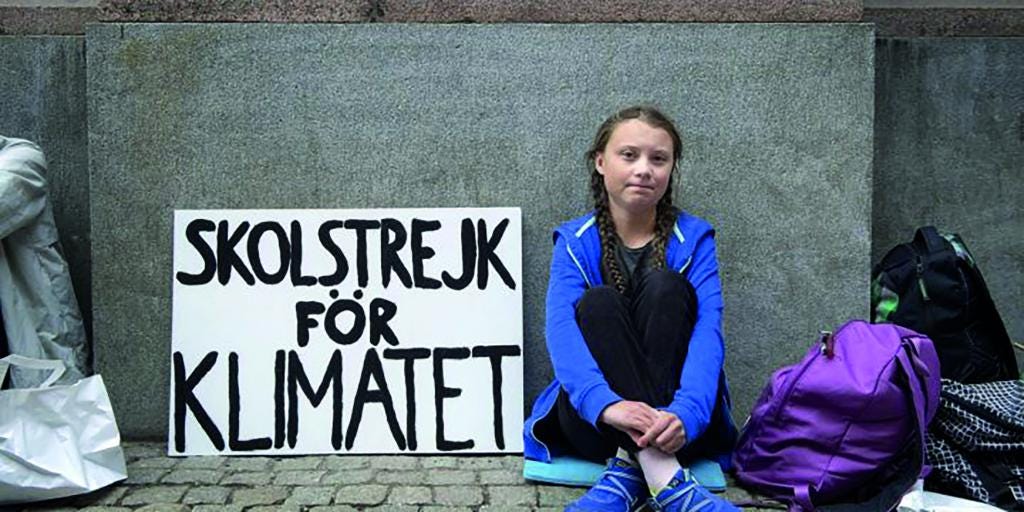
A True Story That Sparked a MovementIn 2019, residents of the small French town of Ungersheim made global headlines. Facing the twin threats of climate change and economic instability, the town embarked on a radical experiment: transition to local resilience. With strong leadership and grassroots participation, they transformed their food system to rely on local, organic agriculture, drastically reduced energy usage through solar investment and building retrofits, and built up local employment by emphasizing sustainability and community well-being over GDP growth.This real-world shift—dubbed "The Happy Degrowth"—became a model for other communities across Europe. At first, the changes seemed modest—planting school gardens, shifting to shared electric transport—but as more people joined in, a tipping point was reached. The town’s entire culture and economy began to orbit around regeneration.What began with a few citizens pulling weeds and dreaming bigger became an international signal of possibility—a real-life demonstration that resilience doesn’t have to wait for permission. It can begin in a backyard, a school, or a town square—wherever people gather to reimagine what’s possible together.Ungersheim showed us what it looks like when small groups lead with clarity, courage, and community—and the ripples they set in motion can reach around the world.What Are Social Tipping Points?In physics, a tipping point is the critical moment when an object in balance shifts and topples. In society, it’s the moment when a once-fringe idea suddenly becomes mainstream.According to Damon Centola’s research at the University of Pennsylvania, it takes just 25% of a group adopting a new behavior or belief to create a cascade of change. But it’s not about virality or influencers. It’s about complex contagions—ideas that require reinforcement, credibility, and social proof from multiple connections before they take root.Unlike a virus, a belief isn’t caught just by seeing it once. We need to see it coming from people we trust. Repeatedly. In different contexts. That’s what builds belief—and tips a society.“For behaviors that require coordination, credibility, and legitimacy, change needs social reinforcement,” Centola writes. “It needs multiple exposures from multiple sources.”This is a radical departure from the old myth of the single viral video or lone celebrity activist. Change doesn’t flow from the center out—it radiates from the edges inward, via wide, redundant bridges in our social networks.The Role of Grassroots MovementsLet’s be honest—big change rarely starts at the top. It usually starts in a school hallway, a community kitchen, or an online comment thread. It starts with people who are fed up, lit up, and willing to step up.Greta Thunberg didn’t start with a UN speech. She started with a hand-painted sign and a refusal to attend school on Fridays. Rosa Parks didn’t launch the civil rights movement from a stage. She sat down because she was tired. And tired of giving in.Grassroots movements work because they are embodied. They’re rooted in place, in pain, in urgency. And because they grow from real relationships, they have staying power.The Mothers Against Drunk Driving (MADD) movement began in grief, but its impact was seismic. In the 1980s, they changed not only laws but attitudes—because they refused to stop telling their stories and organizing others to act.And that’s the key: It’s not just about what you do, it’s about what you inspire others to do, too.Have you ever stood up for something at school or in your neighborhood and seen others follow your lead? That’s the ripple effect in action.Early Adopters and the Power of the EdgeOne of the most powerful myths we can debunk is that change comes from the most connected, most charismatic, or most credentialed.Real change often starts on the periphery.Early adopters are those brave enough to go first—not because they want to be seen, but because they’ve seen something worth believing in. They live on the edge of existing norms, and it’s from that edge that they can see new possibilities most clearly.In his book, Change: How to Make Big Things Happen, Centola explains how change doesn’t need influencers—it needs reinforcement. Wide bridges, not lone spotlights.In the climate world, this might look like:* A small-town mayor starting a composting initiative.* A family deciding to convert their lawn into a food forest.* A teacher rewriting the curriculum to include climate justice.One action. A few followers. Then many. Then a shift.The first penguin to dive into the water might seem brave—or foolish—but they’re the ones who show the rest it’s safe to follow.Storytelling as a CatalystFacts inform. Stories transform.Movements thrive when they’re driven by story. Not just numbers, but narratives. Not just stats, but symbols.Why do we remember The Story of Stuff? Why does Greta’s lone strike stick with us? Because these stories are simple, human, and emotional. They don’t
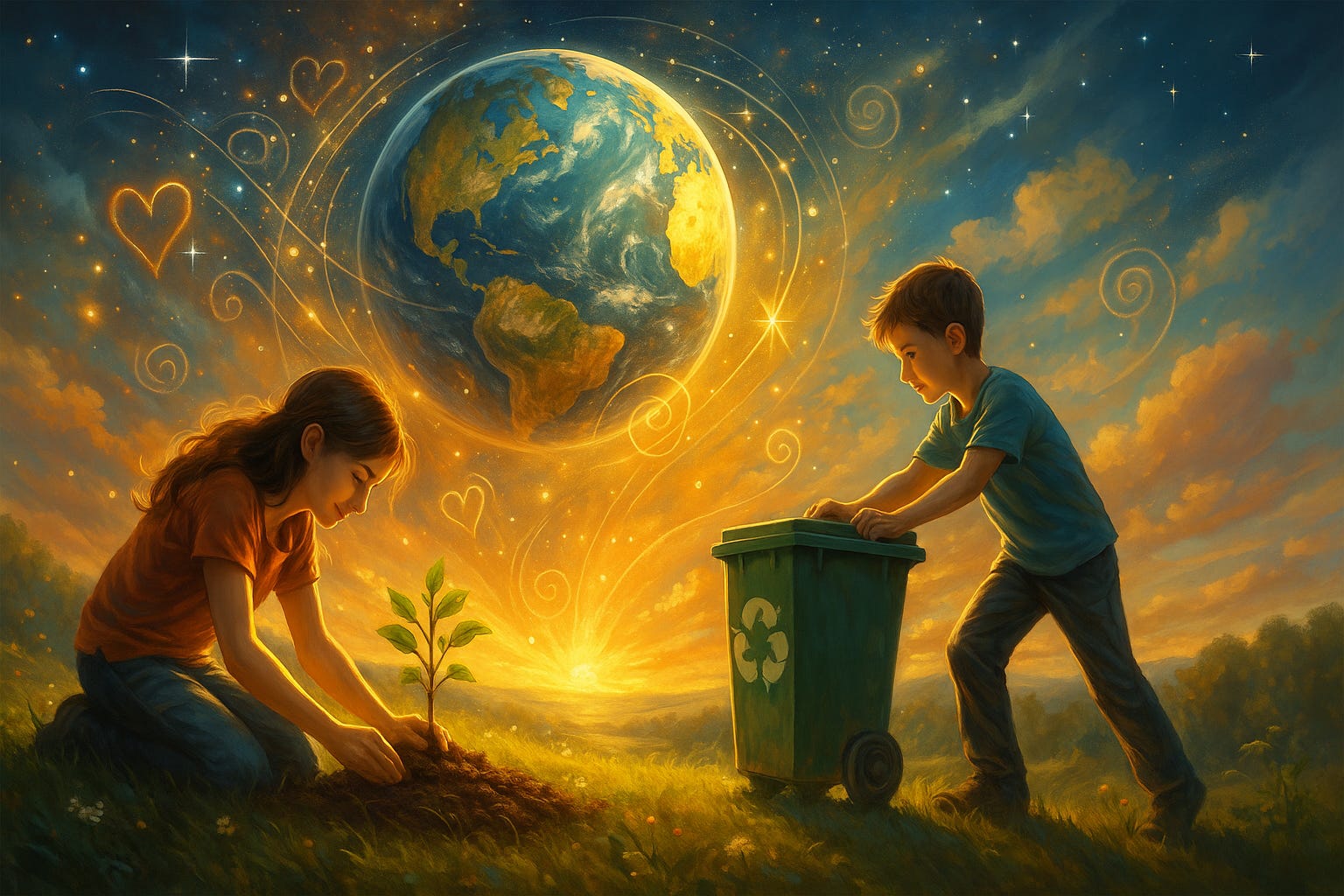
Unlocking Flow: Tapping Into Your Inner Eco-Guardian Superpower
Have you ever been so immersed in something you love that time disappeared? Maybe while playing music, sketching a new idea, building something with your hands—or even just wandering in nature, totally focused and free. That feeling of energized ease, where you’re at your best and most creative, has a name.It’s called Flow.Psychologist Mihaly Csikszentmihalyi and later peak performance expert Steven Kotler describe Flow as a state of optimal experience—where skill meets challenge, attention becomes laser-focused, and everything else fades away. It’s not just about productivity. It’s about passion, purpose, and possibility.And for young Eco-Guardians in training, Flow isn’t a luxury. It’s a necessity.Why Flow Matters NowLet’s be honest: creating a regenerative future isn’t going to happen by accident. It requires creativity, resilience, and focus in the face of massive challenges. The kind of focus that can feel hard to find in a world full of distractions, burnout, and crisis fatigue. That’s why learning how to access Flow—especially during your most meaningful work—is one of the most powerful skills you can develop.Flow isn’t just for athletes or artists. It’s for anyone ready to show up fully in their life and take meaningful action. It’s your eco-guardian superpower.Flow is how young people like Boyan Slat envisioned removing plastic from the oceans and built The Ocean Cleanup. https://theoceancleanup.com/boyan-slat/ It’s how students across the world have launched school-wide zero-waste programs, started regenerative gardens, and turned grief for the planet into focused, inspired action.The Four Ingredients of Flow (and the Science Behind It)If you want to enter Flow more often, you’ll need to create the right conditions. Thankfully, research shows there are a few key elements that consistently show up. Steven Kotler, in his books The Rise of Superman and The Art of Impossible, describes Flow as a "state of consciousness where we feel and perform our best." He also identifies 22 flow triggers—conditions that optimize our access to this state.Here are four foundational ones:* Clear Goals – You know exactly what you’re trying to accomplish. Goals direct your attention and create a target for your efforts.* Immediate Feedback – You can tell if you’re on track or need to adjust, creating a tight feedback loop that sustains engagement.* Challenge-Skill Balance – You're stretching yourself just beyond your current abilities—not too easy, not too hard. This sweet spot ignites curiosity and determination.* Focused Attention – You’re fully immersed. Distractions fall away. Neurobiologically, this often corresponds to what scientists call "transient hypofrontality"—a temporary down-regulation of the prefrontal cortex, which silences the inner critic and quiets self-doubt.Kotler writes: “Flow is as close to magic as we get.” It enhances creativity, speeds up learning, and improves well-being. Athletes use it to break records. Innovators use it to solve problems. And young Eco-Guardians can use it to regenerate the future.For younger readers: Flow is like a river. When you know where you’re headed, and you’re giving your full focus, you can ride the current with power and grace.What Gets in the WayOf course, life isn’t always flowing. Stress, self-doubt, and constant pings from our phones can all block us from entering this state. But here’s a secret: even those obstacles can become fuel. When you face a challenge that matters to you—and meet it with courage—you can flip the script.That’s why so many young changemakers describe the moment they “came alive” as one filled with challenge and purpose. They weren’t waiting for perfect conditions. They showed up. They started. And Flow found them.And it’s not just young changemakers. I experienced this myself in a deeply personal way. In 2021, I was diagnosed with prostate cancer—a jarring and unexpected moment that shook me to the core. But here’s what I’ve discovered in the four years since (as I now celebrate four years of good health as of June 1, 2025): that diagnosis became a powerful pivot point. It forced me to re-evaluate how I was living. I embraced a primarily plant-based diet, which not only supports my healing but is also gentler on the Earth. I prioritized self-care—especially sleep—and began paying deeper attention to my body’s rhythms.The result? More Flow. In my writing. In my coaching. In how I show up each day with renewed energy and purpose. That moment of disruption became a gateway to alignment. Sometimes the biggest obstacles carry within them the seeds of our most aligned and fulfilling future.Flow in ActionZak, Ra-Kit, and Sampson’s First Eco-AdventureNear the end of Dominion Over All, just after Zak realizes he and Angus have made a crucial mistake by traveling to New York instead of Brazil, the story hits its darkest moment. But instead of crumbling under the pressure, the Eco-Guardian team rises to meet the challenge—embodying the essence of F
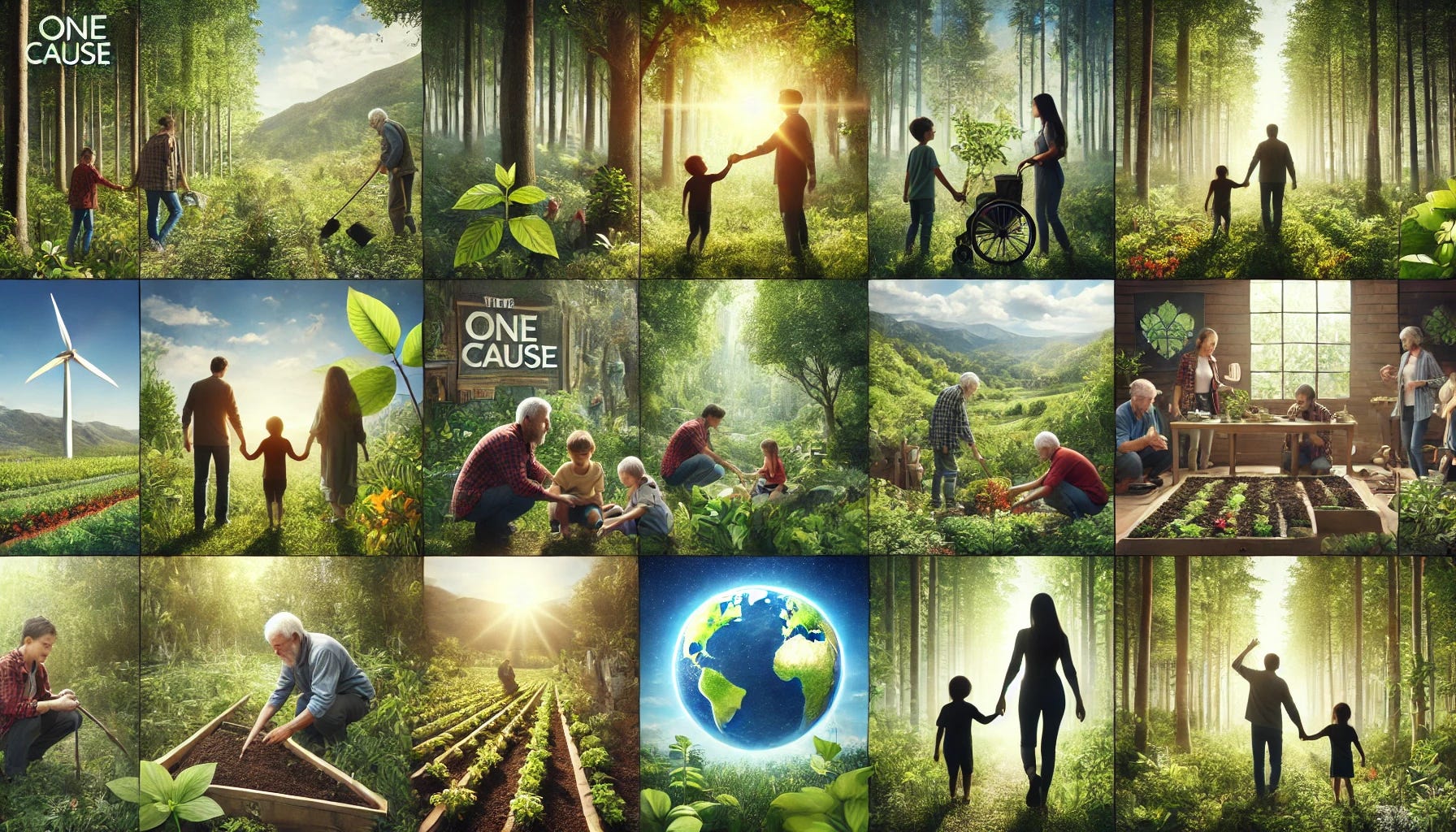
Becoming a People of the Beloved Earth
How one simple question about a backyard weed revealed a radical new story—and a path toward regenerative living for eco-conscious families.What if our culture wasn’t built on conquest, consumption, or control—but on love?In this special feature from the upcoming One Cause book, we explore the concept of Priya Culture—a regenerative, reverent, and relational way of living. It might just be the key to remembering what the Earth has always known and shared with us…if we’d only been listening.A Whisper from the WeedsI never expected a weed to whisper the name of a culture.But that’s what happened—well, sort of—during a conversation about ground-ivy (aka creeping Charlie), a plant known for its persistence and its tendency to spread in places gardeners might not want it.I was wondering whether to let it run wild in our future food forest. It wasn’t a strictly botanical question. It was one of relationship. Of invitation.And then, something clicked. Or maybe it bloomed.As I reflected on the nature of this tenacious plant—uninvited but not unwelcome—I asked ChatGPT what to make of it. And from that thread of inquiry, a new word emerged:Priya — Sanskrit for beloved. Dear one. That which is cherished.Instant resonance. It wasn’t just a pretty word. It felt like the name of something I’d been circling around for quite some time. The kind of culture we could be creating. The kind of future the Earth has always loved.I took it into meditation. I listened. I remembered.And what came back was this:Priya Culture is not something new. It’s something ancient and sacred that’s trying to be remembered.This article is about that remembering.What Is Priya Culture?Priya Culture is a conscious, regenerative way of life rooted in love, reverence, and reciprocity with all beings.It invites us to live as if the Earth were our beloved—not a commodity, not a resource, not a backdrop—but a sacred partner in the great dance of life.It asks us not to abandon progress, but to redefine it.Not to feel guilty, but to walk with grace.It’s not about perfection. It’s about participation. Alignment. Intimacy.A Priya Culture is one where we:* See the sacred in the soil.* Listen to the wind like it has something to say (because it does).* Understand that compost is not waste but alchemy.It’s both mystical and practical. Rooted in the rhythms of nature. Guided by story. Held in community.Core Values of Priya Culture* Sacred Interconnection – All beings are woven into a web of mutual belonging.* Sufficiency as Sacred – Enough is a feast. Simplicity is a form of devotion.* Reciprocity over Extraction – Giving back sustains the whole.* Stewardship, Not Ownership – The Earth is not a possession, but a trust.* Belovedness of All Beings – Every creature and element is kin.* Intergenerational Wisdom – Children, elders, ancestors, and future ones all have a voice.* Living by Story and Ritual – We remember who we are through ceremony, through myth.* Regeneration as Default – Healing is the fruit of right relationship.Myth: The First Rememberers(This short myth serves as emotional anchoring—a timeless remembering from a village that could have been ours.)Long before asphalt covered the ground and clocks governed the day, there was a time when humans and Earth spoke the same language. Not just of words, but of water and wind, fire and seed. In that time, the people lived in circles, not straight lines. They measured time by the moon’s changing face and the migration of birds. And they remembered: all life was kin.In one such village—nestled where the river bent like a cradle and the trees whispered lullabies into the sky—a child named Amani was born. Her name meant peace, but her arrival stirred a different feeling. She did not cry at birth, nor open her eyes for three days. The midwives were worried. But the village elder, a woman with hair like owl feathers and hands stained with healing herbs, simply smiled.“She is listening,” the elder said. “She is remembering.”When Amani finally opened her eyes, the villagers swore they saw a reflection of stars—not just the night sky, but ancient starlight, the kind that shines from the inside out.As she grew, Amani did not speak much. But animals came to her. Plants leaned toward her. And when she walked barefoot, the earth seemed to hum beneath her feet. While other children played games of chase and pretend, Amani sat by the river with her grandmother, learning the songs of stones.One day, the rains stopped. The river thinned. The crops failed. The elders gathered to pray, to dance, to plead. Still, no clouds came. The people began to forget. They blamed one another. They turned their backs on the rituals. They spoke of leaving the land.That night, Amani had a dream. In it, she stood in a desert where nothing grew. A voice, older than time, whispered:“You have forgotten the Way of Belovedness.”She woke before dawn, walked to the village square, and lit the ceremonial fire that had not burned in many seasons. Then,
On the Cusp of Change
I know I’ve been a bit obsessed with caterpillars and butterflies lately but here’s one more story about them which was written months ago as part of this One Cause series. Also, don’t miss two new feature being premiered today: one intended to encourage more connection and conversations within this community, and a second one especially designed for young ones being premiered today.Now, imagine a caterpillar. It spends its days munching leaves, living a life it’s perfectly suited for, never questioning its place in the world. In fact, they develop a voracious appetite. For example, a monarch caterpillar can eat 200 times its weight in milkweed leaves. Some species even gain 20% of their body weight in an hour.Then one day, something shifts. It stops eating, forms a chrysalis, and begins a transformation so radical that it emerges as a butterfly—a creature almost unrecognizable from what it once was. This process, metamorphosis, isn’t just an extraordinary feat of nature. It’s a powerful metaphor for the moment we find ourselves in as a planet, a people, and a generation.Right now, the world is in its chrysalis phase. The old ways of thinking, living, and being are breaking down. The stories we’ve relied on for centuries—stories of separation, domination, and consumption—are crumbling under the weight of their consequences. It’s messy. It’s uncomfortable. And it’s absolutely necessary.A New Story EmergesFor centuries, we’ve lived by a story of separation—a story that says: “I am me, and you are you. Nature is out there, and we are here. What happens to the Earth doesn’t affect me.” It’s a story that has allowed us to clear forests, pollute rivers, and fill the skies with carbon without stopping to think about the consequences. But as the world shifts, another story is emerging—a story of connection, of interbeing.This concept of interbeing is eloquently discussed by Charles Eisenstein, Bayo Akomolafe, and Alnoor Ladha in their trialogue, On the Cusp: A Trialogue About the Shift. They remind us that everything is connected. The air we breathe, the water we drink, the food we eat—it all ties us to the Earth and every other living being on it. For a long time, this idea might have seemed abstract, but now it’s becoming tangible. We see it in the way pollution travels across oceans, in the way climate change affects ecosystems thousands of miles apart, and in the way a single tree can support an entire web of life.For young readers, think about the last time you planted a seed, recycled a bottle, or simply paused to notice the birds outside your window. Whether you realized it or not, you were practicing interbeing. You were part of the story of connection.But here’s the thing about stories—they don’t just exist. They’re created, told, and retold. And every single one of us has a role in shaping this new story.Embracing the ChrysalisThe chrysalis phase of metamorphosis is a messy, mysterious process. Inside that cocoon, the caterpillar essentially dissolves into goo before reforming as a butterfly. It’s a time of profound change, and frankly, it looks a bit chaotic.Sound familiar?Our world is experiencing its own chaos. The climate crisis, social inequities, political divides—it can all feel overwhelming. But what if, instead of fearing this mess, we embraced it as part of our transformation? What if we saw it as an opportunity to imagine new possibilities and let go of old ways that no longer serve us?Eisenstein, Akomolafe, and Ladha suggest that uncertainty isn’t something to solve; it’s something to explore. When we step into the unknown, we open the door to creativity and discovery. For young readers especially, this idea might hit home. Growing up is its own kind of chrysalis phase. You’re figuring out who you are, what you believe, and how you want to show up in the world. And just like the caterpillar, you don’t have to have it all figured out yet. The beauty of uncertainty is that it allows you to grow into someone you might never have imagined.Crisis as CatalystHere’s the truth: the challenges we face are immense. The planet is warming, species are disappearing, and ecosystems are unraveling. But here’s another truth: Crises are often the birthplace of transformation.In nature, a forest fire can look like devastation. But in the ashes, seeds that have waited years for sunlight finally have the chance to grow. Similarly, the crises we face today can clear the way for new ideas, systems, and ways of living. It’s not easy, but it’s possible.In their trialogue, the three thinkers explore how moments of crisis often ignite transformation. These moments create openings for rebuilding—not just to what was, but to something better. For example, during the pandemic, people around the world discovered just how interconnected we are. Communities rallied together to support one another, and cities saw cleaner air as cars sat idle. These glimpses of change remind us that even in the hardest times, there’s potential
Trimtabs of Transformation
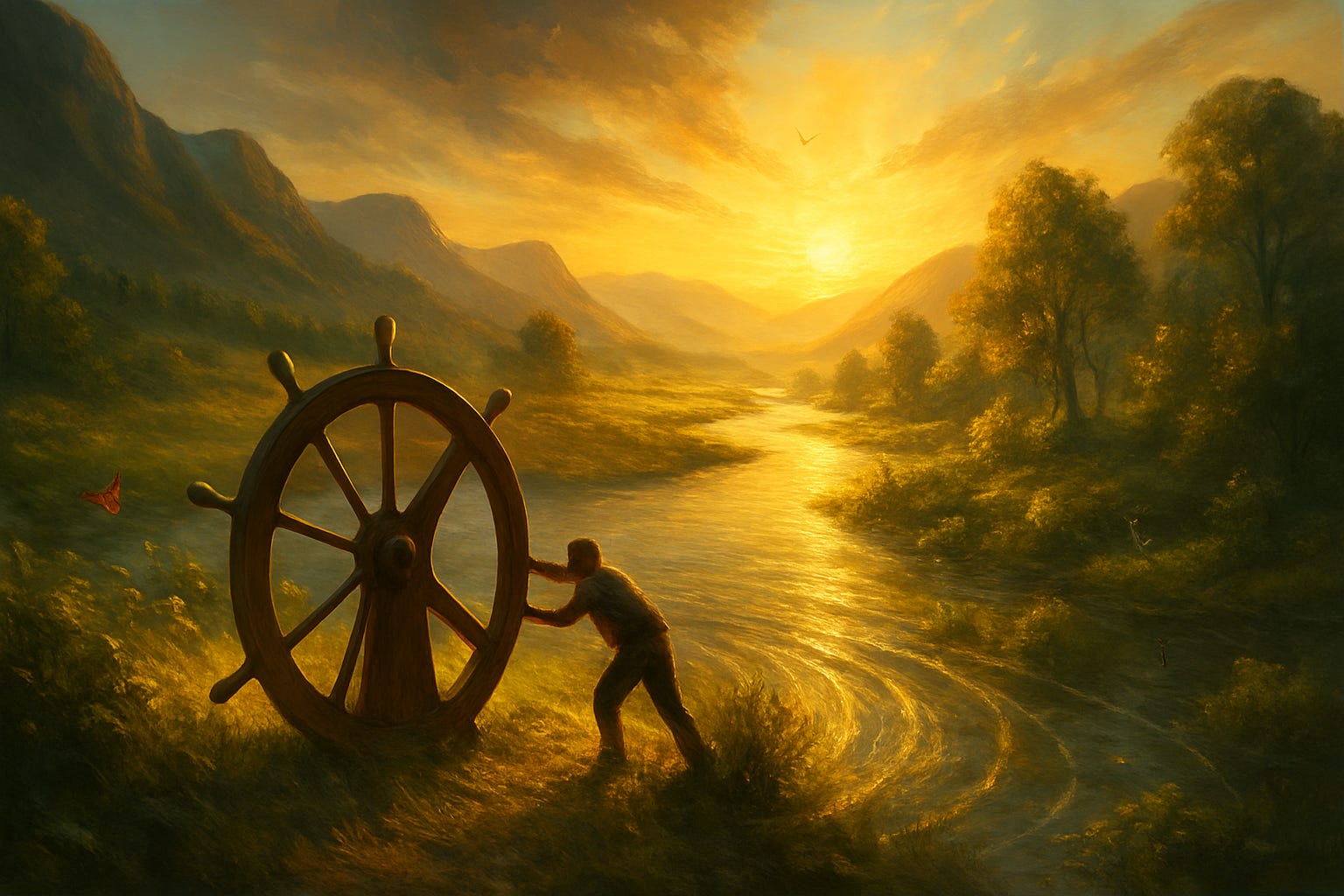
Are You Ready to Become a Trimtab in Your Life?If you’ve ever seen an oil tanker or a massive ship, you might wonder: how does something so immense ever change direction? It turns out, the answer lies in a small, often-overlooked component called a trimtab. A trimtab is a tiny rudder attached to the main rudder of the ship. While small, it plays an outsized role in steering the entire vessel.By adjusting the trimtab, a tiny hydrodynamic force is created. This force makes it easier for the main rudder to turn, which in turn allows the ship to pivot more effectively. In essence, the trimtab provides leverage, enabling a massive ship to change course with minimal effort. Without it, maneuvering something so large would be nearly impossible.This little piece of nautical engineering became a life metaphor for one of my greatest heroes, Buckminster Fuller. Fuller was an inventor, visionary, and relentless advocate for systems thinking—seeing how interconnected parts shape the whole. He believed that even the smallest, most intentional actions could create ripples of change far beyond their immediate scope. So much so that he had the word TRIMTAB engraved on his tombstone.Why? Because Fuller saw the trimtab as a symbol of hope and responsibility. It reminds us that we don’t have to overhaul the entire system singlehandedly to make a difference. By being thoughtful and strategic—by focusing on the points of leverage—we can steer even the most unwieldy systems toward positive change.Trimtabs in ActionThink about this: Rosa Parks refusing to give up her bus seat might seem like a small action. But that moment became a trimtab, amplifying the civil rights movement and steering the course of history. Greta Thunberg sitting outside the Swedish parliament with a hand-painted sign became a trimtab, catalyzing a global climate strike.The trimtab isn’t the end goal—it’s the small, strategic action that sets larger changes in motion. And often, we don’t know ahead of time which of our actions will become trimtabs. That’s part of the mystery—and the magic.But when we act from a place of alignment—with our values, with the Four Great Truths—we increase the likelihood that our ripples become waves.The idea of a trimtab resonates deeply with the mission of One Cause. Tackling the Climate Crisis might seem overwhelming—it’s a global ship, after all, with the weight of centuries of harmful systems and habits. But what if this movement, this book, and the conversations it sparks could act as a trimtab? What if it’s the small shift that helps humanity pivot toward a more regenerative and sustainable course?You Could Be a TrimtabThe beauty of the trimtab metaphor is that it’s not reserved for visionaries or global movements. Each of us can be a trimtab in our own way. It might be through a conversation that changes someone’s perspective, a decision to live more sustainably, or even by supporting larger efforts that align with our values.Here are a few examples of small beginnings that turned into powerful trimtabs:* In Washington, D.C., what began as one neighborhood compost project grew into the Community Compost Cooperative Network, managing over 50 local sites and processing up to 50 tons of organic waste each month. A tiny shift in one backyard rippled out to a city-wide sustainability model. (Learn more)* In Queensland, Australia, a few high school students at Emmaus College sparked a change by launching a simple school-wide clothing swap. Their small action expanded into a culture shift around sustainable fashion education among peers. (Read the story)* What started as a small backyard garden in Des Moines, Iowa, became Sweet Tooth Farm, supplying thousands of pounds of food annually and pioneering a community compost pickup service. A personal project that filled a public need. (Explore more)* Seed Savers Exchange began when a few everyday gardeners in Iowa shared heirloom seeds with one another. Today, they preserve over 25,000 plant varieties, protecting biodiversity across the country. A humble trade turned into a heritage-preserving powerhouse. (Visit their site)* Across the UK, teen-led groups like SwopItUp began by organizing clothing swaps in schools. Their efforts blossomed into a national campaign that combines youth leadership with climate awareness. (Check them out)* In India, a local seed-saving effort among female farmers grew into Vanastree, a collective that now empowers rural women through sustainable agriculture and biodiversity protection. It started with a seed—and a circle of care. (More here)* Quietly but powerfully, families around the world are switching to credit unions and ethical banks that refuse to fund fossil fuel projects. A small change in where they bank is sending ripples through the financial system. (Find out how)These may seem small—but they’re placed at points of leverage. They are trimtabs.As Buckminster Fuller put it:"Call me trimtab."Trimtabs in My Own LifeI’ve started to notice a few tr
From Truth to Practice
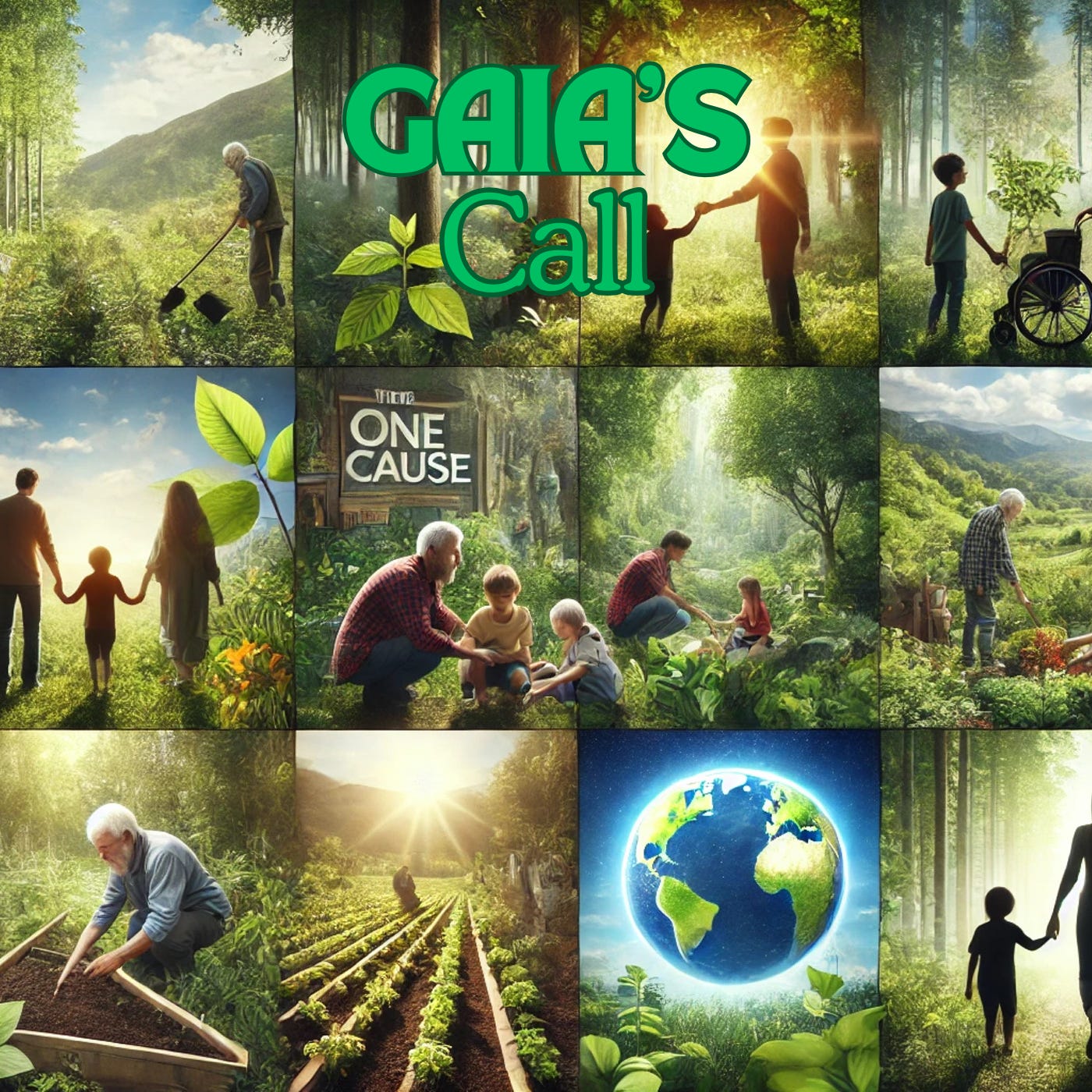
I slept well last night—which feels like a small miracle these days. (How about you?) I woke with a renewed sense of clarity. It’s time to write the next One Cause article. But not just another installment. This one feels different. More urgent. More personal.We’ve walked together through the Four Great Truths over the past month. Each one revealing a facet of the deeper story we’re living into:* Interconnection: Everything is connected. Every action matters.* Sufficiency: There is enough—when we remember we are enough.* Reciprocity: Life thrives through give and give.* Stewardship: We are caretakers, not controllers, of this living Earth.But what happens when these aren’t just ideas we believe in… but truths we live? Remember, we started with the Be, Do, Have On Purpose Perspective Model. That who we are (which includes our beliefs both individually and collectively) shape what actions we see possible to take, which gives us our results.So, what happens when we replace the 4 Great Untruths with the 4 Great Truths, and equally important, we move from the head to the heart—to our hands?Synergy of Truths: A Regenerational LifestyleSomething powerful happens when these truths converge—not in theory, but in practice.Synergy starts to amp up our results: Truth x Truth x Truth x Truth doesn’t just equal a better world but a regenerative future.This synergy leads to what we might call a regenerational lifestyle—a way of being where care replaces consumption, collaboration replaces competition, and purpose becomes as vital as breath. It reshapes how we relate… how we raise children… how we vote, shop, garden, spend time, and tell stories. And most importantly, it calls us home to what matters.We begin to reclaim our role as imaginal cells—the agents of transformation inside the chrysalis of this collapsing civilization. (More on that metaphor in a future article!)It’s a lifestyle we’re just beginning to remember. In fact, many haven’t yet been introduced to such a possibility which is why I am encouraging you to share this article/podcast and the One Cause movement with others.We’re creating a movement to a new regenerative future and way of life so please share this article. It’s a simple action of ‘reciprocity.’Do the Great Untruths Just Disappear?Here’s the rub: The Great Untruths don’t vanish overnight. After all, we’re surrounded by a culture shaped by them. So, they linger. They whisper. They try to seduce us back into old patterns:* “You’re on your own.”* “More is better.”* “Take whatever you want.”* “Control is everything.”But every time we act from the Great Truths, we weaken the grip of those old myths. We realize that we’re never completely alone but always connected to nature and others. We embrace the truth that we have enough as we learn how to share, and that we’re more mindful of the resources nature is ready to share with us as we grow into being stewards of the earth — Eco-Guardians-in-training.Earth Listening Circles: From Insight to ActionThis is why Earth Listening Circles matter. Not just as events, but as practices.In fact, your first Circle might be just you. One person. Sitting with the Earth. Listening. Asking, “What would you have me know?”It reminds me of something my first coach taught me long ago:Insight + Action = Growth & Development.That’s what Earth Listening Circles offer: a sacred space to receive insight—from the land, from your heart, from the living world—and then to act on it. And with each action shaped by the Great Truths, a regenerative future begins to emerge. Living It: Our Story from the Loving HomesteadHere on our little mountain homestead in North Carolina, we’re doing our best to live these truths.Last week, our grandson Logan came for a full-day adventure with Grand-dude and Grandma. It wasn’t a formal lesson—but as we planted seedlings together, I introduced him to a new word: reciprocity.He’s four. That’s a big five syllable word, and he got it. With muddy hands and wide eyes, he started to grasp that what we give to the Earth comes back to us in ways both delicious and profound.Recently during our first Earth Listening Circle, I scouted some wild blackberry canes at Highland Lake Cove. My friend, who owns the land, welcomed me to dig a few up. Those berry plants will soon join the growing food forest we’re cultivating here at home. Reciprocity scores again.And our larger family dream is coming closer too: Amber, Justin, Logan, and little Piper joining us to co-create an intergenerational haven we’re calling the Loving Homestead.We’re not doing it perfectly. But we’re doing it together. And that, to me, is what living the Four Great Truths looks like.Real-Life Ripples: Beyond Our BackyardLiving the Four Great Truths doesn’t require a perfect plan. It just takes a willingness to try. We’re not alone in this. Here are just a few ways others are living into these truths:* A public school in Oregon transformed its lawn into a pollinator corridor—inviting bees, butterf
The Fourth Great Truth — Stewardship
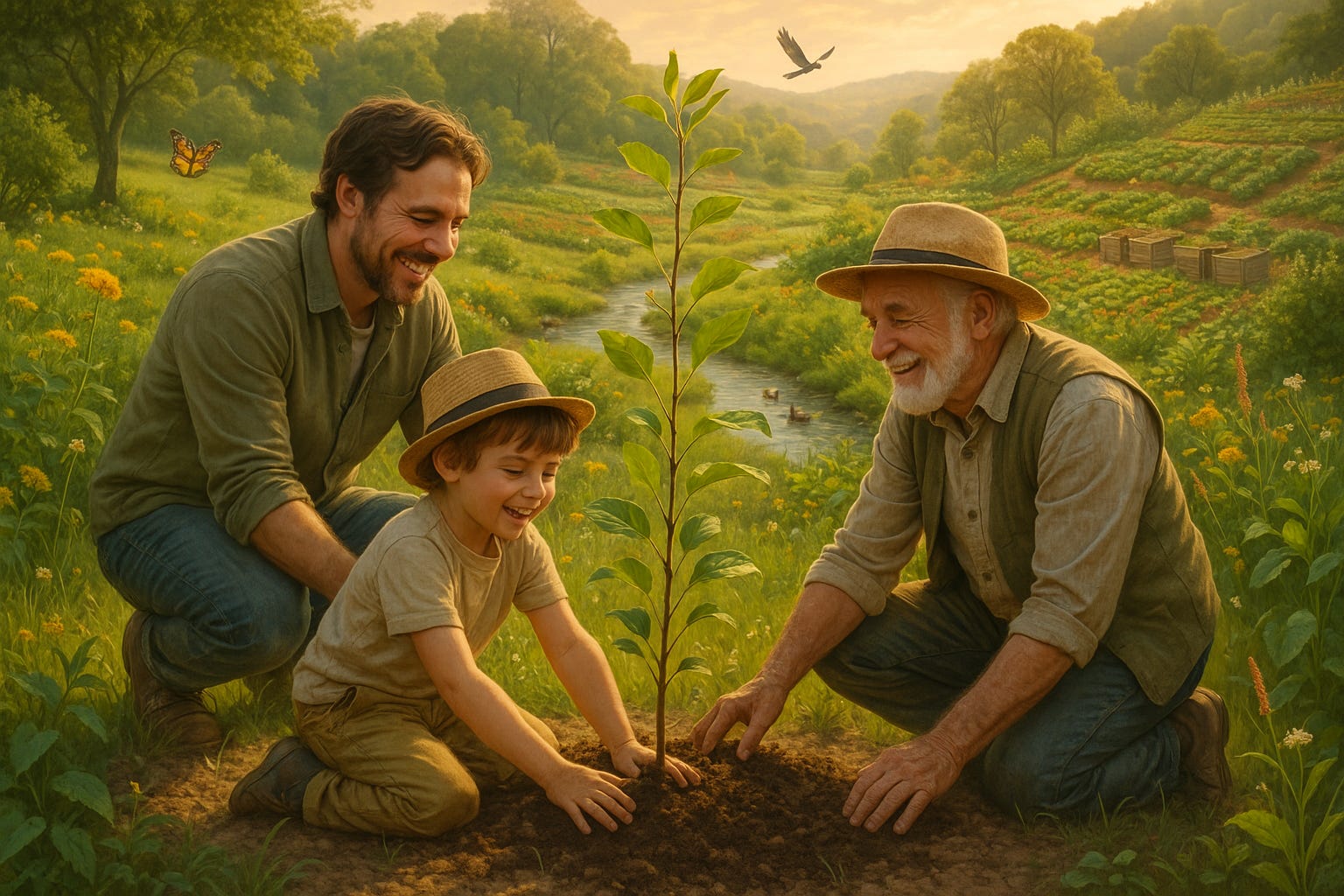
From Domination to StewardshipBack in 2011, when I first began writing Dominion Over All—the eco-fantasy novel that launched the Zak Bates Eco-Adventure series—I opened with two quotes that have stayed with me ever since:“God said, Let us make man in our image, after our likeness: and let them have dominion over the fish of the sea, and over the fowl of the air, and over the cattle, and over all the earth, and over every creeping thing that creepeth upon the earth.” — Genesis 1:26That then begged this question:“But what does ‘dominion’ really mean? It is traditionally interpreted as ‘to subdue’ or ‘to rule over.’ When taken to an extreme, it can include oppression and exploitation. However, an exploited planet Earth does not leave humanity richer. Perhaps there is a deeper, more sustainable aspect of dominion that includes a sense of service to one’s fellow creatures and even a compulsion to protect those who cannot protect themselves.” — The Christian Science MonitorNow, whether or not you come from a Christian background, the idea of “dominion” as permission to dominate the Earth has been baked into many modern cultures and systems. But what if that interpretation was never the original intention?The Hebrew word translated as “dominion” in Genesis 1:26 is רָדָה (radah). While often rendered as “rule over,” its usage in scripture is layered. In some passages, radah refers to harsh rule, but in others—like Psalm 72—it reflects compassionate leadership and protective care.Even more revealing, Genesis 2:15 uses two different Hebrew words—abad and shamar—to describe the human role in Eden: “to work [serve] it and to keep [protect] it.”So from the very beginning, it seems our role wasn’t to control or exploit the Earth, but to care for it with reverence. To be stewards—not masters.And that brings us to the Fourth Great Truth.GT#4: Humanity as Stewards, Not MastersThe Fourth Great Truth tells us that our purpose on Earth is not to dominate nature but to care for it. We are not its overlords—we are its guardians. True leadership, true greatness, is about serving life, not exploiting it.This directly challenges one of the Four Great Untruths: the myth that “Technology Will Save Us.” Technology is a tool—but it is how we use it, and to what end, that defines its value.All around the world, we are witnessing a quiet revolution:* The global rewilding movement is bringing life back to landscapes—reintroducing native species, restoring watersheds, and creating wildlife corridors that reconnect fragmented habitats. These efforts support both biodiversity and climate resilience. Learn more about rewilding here.* Regenerative farmers are learning to grow food in ways that heal the land—enriching soil, protecting pollinators, increasing biodiversity, and even sequestering carbon. Their practices are a hopeful alternative to the extractive model of industrial agriculture. Explore regenerative farming practices.* Communities are rising to protect rivers, plant forests, and bring back traditional knowledge in service of renewal. From citizen-led river cleanups to forest guardianship programs led by Indigenous groups, people are rediscovering their place in nature’s web. See stories of grassroots restoration.And in the realm of imagination, in Dominion Over All, young Zak Bates and his wise, flying dog companion Sampson, alongside the last living magic cat Ra-Kit, learn that being a leader isn’t about controlling others. It’s about protecting what matters—especially those who cannot protect themselves. Their adventures take them deep into the heart of ecosystems in peril, where their courage and humility allow them to serve as bridges between human and animal worlds. They don’t save the world by force. They help it heal through partnership, listening, and love.And that’s what this truth calls us to now. Not to save the world. But to help it thrive.What if being a hero wasn’t about saving the world—but about helping it thrive?That’s a question I hope every reader will carry with them.Living the Great TruthsStewardship is not a lofty ideal. It is a daily practice—a way of walking through the world with awareness, humility, and care.And it starts close to home.Here are a few small steps we can take:* Start a compost pile or community garden.* Support local regenerative farmers who grow food in ways that restore the Earth.* Choose purchases that give back more than they take—businesses that support reforestation, fair trade, or ocean cleanup.* Spend time with young people outdoors. Teach them how to care, how to listen to the land, how to feel part of the great web of life.The Ripple Effect: Even the smallest actions have power. One school that plants pollinator gardens. One family that turns their lawn into habitat. One teenager who organizes a clothing swap instead of buying fast fashion.It matters. You matter.The Green Family Weaves It TogetherOne sunny Saturday in early spring, the Green family gathered in their backyard, glov
Earth Day Irony - An Earth Day Special Alert
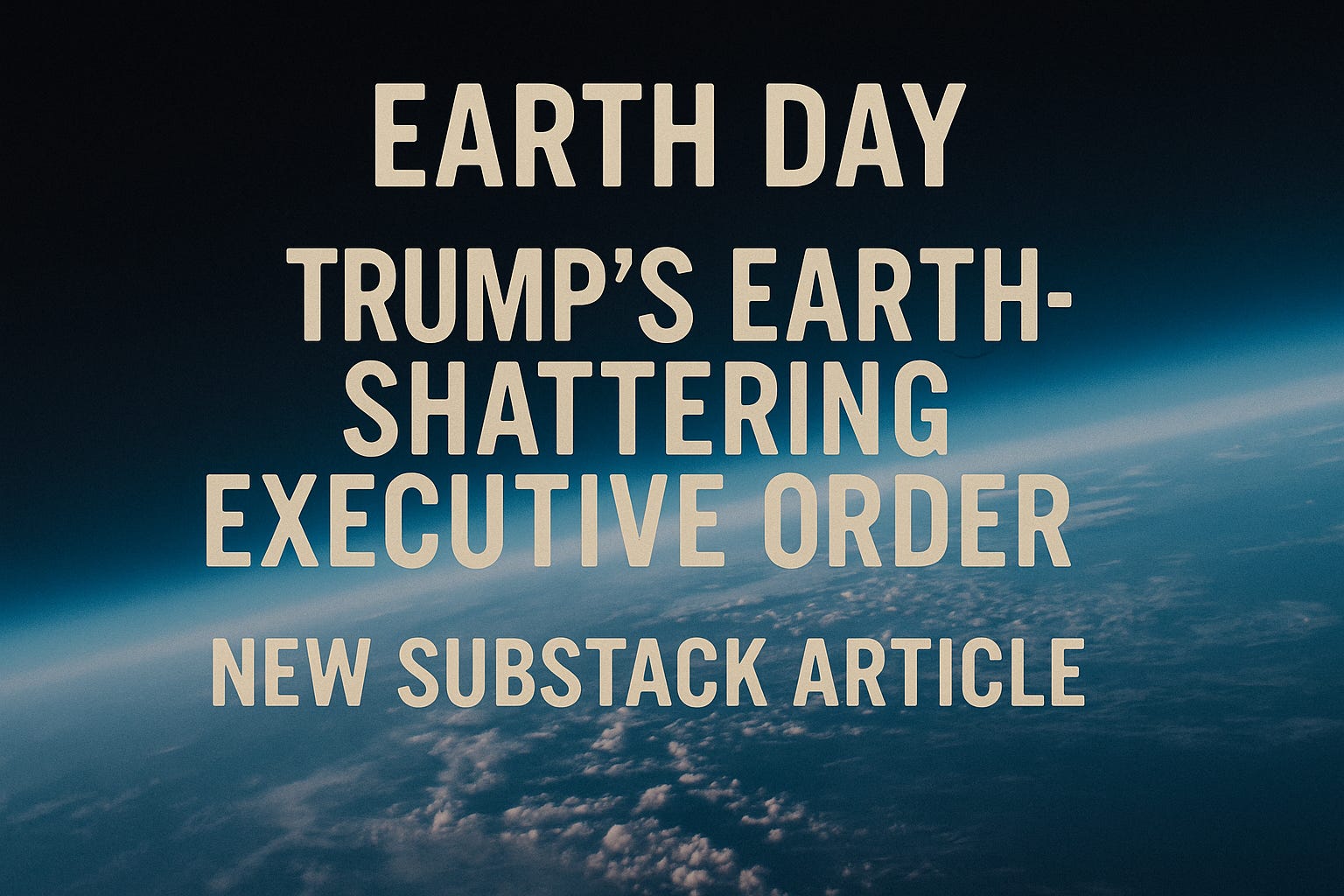
Today is Earth Day.A day that for decades has been about honoring the Earth. About planting trees, cleaning up rivers, hosting school fairs, and pretending for just a moment that we’re all aligned around something so obvious it shouldn’t even need saying: this is our only home. Let’s protect it.But today, on Earth Day 2025, I find myself not just planting seeds of hope—but fighting to keep the very soil from being sold out beneath our feet.Because this year, Earth Day arrives just days after a devastating Executive Order was signed by President Trump—an act so sweeping in scope and so cold in its consequences that it may mark a point of no return for life as we know it.Let’s be clear about what this order does: It declares that unless environmental protections from the past century are explicitly re-approved—one by one—they will simply expire. Gone. Not voted out. Not repealed. Just vanished by default.Let that sink in: The Endangered Species Act? Sunset. The Marine Mammal Protection Act? Gone. The Migratory Bird Treaty Act? Nullified. The Bald and Golden Eagle Protection Act? History. The very laws that brought the bald eagle, gray wolf, California condor, and hundreds of others back from the brink will disappear into a legal void unless reauthorized by the very agencies now pressured to do the opposite.This is not deregulation. This is ecological euthanasia.And while the language of the order speaks of "innovation," "prosperity," and "modernizing energy policy," the result is painfully clear:Unleash American Energy = Unleash American Extraction.The Earth is not a warehouse to be looted. It is a living, breathing web of life—and that web is being torn apart at the exact moment we need it most.I’ll be honest. It’s hard to write and read this today. I’m angry. I’m exhausted. And I’m grieving.I’m grieving not just for the creatures whose fates hang in the balance, but for my two young grandchildren, Logan and Piper. They are 4 and 2 years old—still small enough to see magic in a butterfly, a bird’s nest, or a whale’s tail. And unless something changes, they may grow up in a world where those wonders are memories of a broken age their grandfather tried—and failed—to protect.This isn’t policy. This is suicide with a legal signature.We are living through a metacrisis—a convergence of ecological collapse, economic instability, cultural fragmentation, and spiritual disconnection. But this Executive Order? It accelerates every part of it. It doesn’t just ignore the climate crisis. It pours gasoline on it and strikes a match.And here’s what’s almost as chilling as the order itself:Where is the outrage? Why is this not front-page news? Why isn’t every network broadcasting emergency coverage? Why are we not seeing hundreds of thousands of people filling the streets in protest on Earth Day of all days?Have we already given up? Or have we been hit with so many of these Four Great Untruths-style gut-punches that we no longer recognize when we’re being dealt a fatal blow?Is this silence fatigue? Or resignation? Or just the dull ache of a collective nervous system that's been overloaded one too many times?Whatever the cause, the silence is deafening—and dangerous.So what do we do on Earth Day, when it feels like the Earth itself has been put on death row?We don’t give up. We sound the alarm. We speak the truth. We refuse to normalize insanity.Because the moment we go quiet is the moment the looters win.And even now—especially now—there is power in our refusal.Let this Earth Day be a turning point. Let it be the day we declare: We will not let our children grow up in a world where puffins and porpoises, wolves and whales, and the very laws that protect them are all extinct.Call your representatives. Take to the streets. Join or start an Earth Listening Circle. Say what must be said, even if your voice shakes.Because if there’s still breath in our lungs and love in our hearts, then it’s not too late.Not yet.And that, my friends, is the fragile spark of hope I carry today.Let’s fan it into flame.—BradP.S. If you want to read the Executive Order for yourself, it’s publicly available on the White House website here: https://www.whitehouse.gov/presidential-actions/2025/04/zero-based-regulatory-budgeting-to-unleash-american-energy/P.S.S. On a happier note, today’s pictures are the Loving Homestead first official act as my son-in-law and I plant three semi-dwarf apple trees. One more step forward in creating a regenerative future for generations now and those yet to be born. This is a public episode. If you'd like to discuss this with other subscribers or get access to bonus episodes, visit wbradfordswift.substack.com/subscribe
Facing the Metacrisis: A New Substack Mini-Series
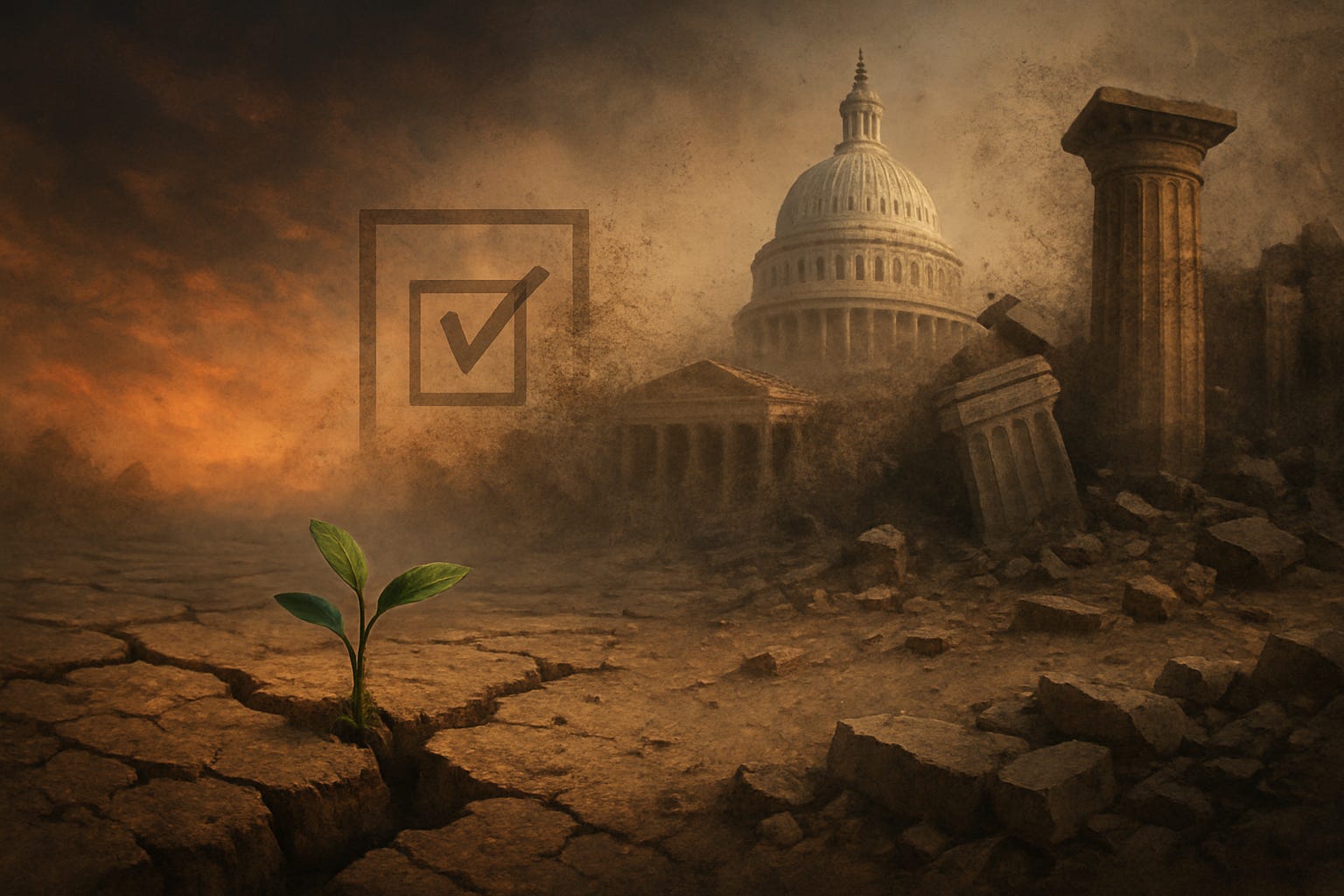
PrologueOver the past few weeks, I’ve found myself writing with more raw urgency, a deeper honesty, and a renewed commitment to speaking the truth about the world we find ourselves in. What I hadn’t fully realized—until now—is that these recent pieces weren’t just one-offs. They were the beginning of a new arc.Today, I’m officially naming that arc: Facing the Metacrisis.The term metacrisis points to more than just a ‘really big problem.’ It refers to the convergence and interlinking of multiple existential threats—ecological, political, cultural, economic, technological, and spiritual. While some call it the polycrisis, civilizational collapse, or even the long emergency, the idea is the same: what we face is not a single issue but a breakdown of the systems that once held modern life together. And beneath that breakdown is a breakdown in our thinking, our worldview, and our relationship with the Earth.This series will run alongside my main One Cause series and may or may not find its way into the final One Cause book. But the call to write these reflections has become too loud to ignore.We are living through a convergence of crises—climate, politics, economy, culture, meaning, and spirit—all feeding and amplifying each other. That convergence is what many now call the metacrisis.We need to face it. Not just with information, but with imagination. Not just with outrage, but with purpose.So far, the series includes:* Before Collapse: Choosing to Be Part of the Great Turning (April 2, 2025)* Can I Be Fierce? Wrestling with Politics and Purpose (April 9, 2025)* Can We Face the Truth Without Losing Hope? (April 19, 2025)And now, the fourth installment...Losing at the Wrong GameFacing the Metacrisis — Entry #4Like many of you, I’ve been watching with heartbreak and frustration as cracks in the foundation of American democracy widen. Friends are posting in fear, outrage, and grief—not just about one candidate or election, but about the very soul of our country.I get it. I feel it too.And yet… there’s another layer of truth I feel called to name.Yes, we are watching democracy collapse—or at least convulse—but what if the system we’re fighting to preserve isn’t capable of carrying us forward? What if even a return to "normal" isn’t a path to regeneration, but a return to extractive economics, ecological blindness, systemic injustice, and spiritual disconnection?We’re fighting to win a system that may no longer be the right game.What if the very rules we’re defending were designed for a different world—one that no longer exists?This may sound theoretical, but it’s not. On April 9, 2025, the current U.S. administration issued an Executive Order that effectively dismantles decades of environmental protections through what’s being called Zero-Based Regulatory Budgeting. This move doesn’t just signal a shift in policy—it’s a signal flare from the metacrisis itself. A deepening collapse of our societal immune system. I’ll be sharing more about this Executive Order and what it means in an upcoming article. But for now, let’s keep going.What if “business as usual” will end up in the loss of all that we hold most dear?The Deeper GameDemocracy as we’ve known it—especially in the U.S.—was forged in an age of colonization, patriarchy, and infinite growth economics. It was never built for a post-carbon, ecologically interdependent, spiritually pluralistic civilization.To be clear: I’m not arguing for giving up on justice, agency, or participation. Quite the opposite. But we must recognize that saving the system may not be enough—because the system itself was part of the problem.As Manda Scott noted in her recent Accidental Gods podcast episode, even a return to “traditional democracy” doesn’t get us to the root. We need new political imaginations that:* Prioritize bioregional stewardship and local resilience* Use deliberative, consensus-driven assemblies (like citizens’ councils or Wisdom Circles)* Recognize nature as a stakeholder, not a resource* Value inner development, not just GDP or voter turnoutThese aren’t utopian dreams. They’re already being prototyped—in Indigenous governance models, in climate adaptation networks, and in experiments like Doughnut Economics, Deep Democracy, and the Wellbeing Economy Alliance.So rather than simply fighting for what was, what if we:* Mourn the loss of what we thought democracy could be* Acknowledge its limits* And start building what comes nextHope Isn’t in the System. It’s in Us.Hope doesn’t live in headlines. And it doesn’t live in the systems that brought us here. It lives in us—in our courage to grieve what’s dying, and our willingness to imagine what could be born.The metacrisis is real. But so is the possibility that we can meet it with depth, dignity, and courage.Not by pretending it’s all okay. And not by clinging to a dying order.But by becoming the kind of humans this moment asks for:* Grounded in purpose* Rooted in place* Connected across generations* Willing to build—and re

Can We Face the Truth Without Losing Hope?
Preface: An Invitation to CourageBefore we begin, a word of care. What follows may be difficult to read or hear. It speaks to truths that are often ignored because they’re uncomfortable, confronting, or heartbreaking. But it’s precisely because these truths are real and pressing that they deserve our full attention.This is not a doomsday message. It’s a call to consciousness. A challenge to step beyond denial or despair, and instead stand with open eyes and an open heart in the middle of what’s unfolding.Because when we see things clearly—as they are, not as we wish them to be—we awaken the power to choose a different path. And that choice, made together, is how a regenerative, life-honoring future becomes possible.The Time for Soft Words Has PassedThe fires in our mountains, the storms wrecking our coastlines, the shrinking windows of food security and freshwater—these aren’t just warnings. They are symptoms of a sick planet pleading for our attention and loving care. Of a civilization built on Great Untruths: that we are separate from nature, that more is always better, that we can take without giving back, and that infinite growth is possible on a finite planet.Dr. Rupert Read, a climate philosopher and former Extinction Rebellion leader, recently said: "It’s not five minutes to midnight. It’s five minutes past. We are already in the age of consequences."The global temperature threshold of 1.5 degrees Celsius has already been breached. But what does that mean, really? Dr. Read explains it like this: "Twenty years ago, the excess heat trapped in our atmosphere was the equivalent of three Hiroshima bombs per second. Now, it’s twelve."Let that sink in. Twelve Hiroshima bombs worth of heat every second.This is not business as usual. This is not a future crisis. It is now. It is us.A Civilization on the Edge — The Five Faces of the MetacrisisWhile the climate crisis may be the most visible, it's only one part of a larger unraveling. Many thinkers—from Ken Wilber and Robb Smith to Andrew Harvey and Sherri Mitchell—speak of a metacrisis: an interwoven, systemic breakdown that spans multiple domains of our civilization.Here’s one way to understand its five primary dimensions:* Ecological CollapseClimate change, biodiversity loss, ocean acidification, soil depletion, and pollution are not isolated problems—they’re signs that the Earth’s life-support systems are in critical condition.* Economic FragilityOur global economy runs on debt, inequality, and extractive growth. As Ray Dalio warns, we’re witnessing a breakdown in monetary systems and a widening class divide.* Political DisintegrationPolarization, authoritarianism, and institutional mistrust are eroding democracies worldwide. The social fabric is fraying, and compromise is viewed as weakness.* Spiritual & Cultural CrisisDisconnection from meaning, purpose, and one another is producing despair, addiction, and anxiety. We’ve lost a shared story that can unite us beyond consumption and competition.* Technological DisruptionAI, surveillance, and digital overload are reshaping society faster than our wisdom can keep up. Acceleration without integration is breeding chaos and collapse.And in nearly every one of these domains, we see the fingerprints of a deeper problem: not just unsustainable systems, but insufficient consciousness.Beyond Awareness: A Call for Integral ConsciousnessKen Wilber’s Integral Model reminds us that real change must address all four quadrants of human experience: the internal and the external, the individual and the collective. In other words, we can’t simply throw technology at the crisis. We must evolve our thinking, our systems, our cultures, and ourselves.Consciousness matters. And the next civilization—if we are to have one—will need leaders who can hold complexity, embrace paradox, and act with clarity, compassion, and courage.As Wilber has long said: All worldviews contain some truth, but none contain all the truth. The move toward integrative, pluralistic thinking is not a luxury. It is a necessity.The Turning Point: A Great Choice Before UsWe will transform. The only question is: how?The metaphor of the caterpillar becoming a butterfly has never felt more timely. When the caterpillar has consumed all it can and begins to dissolve inside its cocoon, it looks like death. But within that dark breakdown, imaginal cells begin to awaken. At first they are attacked by the old immune system. But slowly they recognize each other, connect, and begin to form a new being—a butterfly.This isn’t just poetic. It’s biological. And it's metaphorically exact for our moment.Each of us can choose to be one of those imaginal cells. Agents of transformation—often unrecognized, often resisted—who carry the DNA of the future.We need a conscious, loving, grounded spiritual uprising. Not against the old world, but for the new one. A civilization that honors life, embraces reciprocity, and understands that our true strength is in community, compassion, and
The Four Great Truths – A Sacred Blueprint (Part 3)
What If the Secret to Abundance Is What We Give Away?In Part One, we explored Interconnectedness—how we are not separate from nature, but woven into its web. In Part Two, we looked at Sufficiency, and saw how our world is not defined by lack, but by our ability—or inability—to recognize what we already have.Now we come to the Third Great Truth: Reciprocity. If we are part of a living system… if that system already holds enough… then the question becomes: What is our role within it? The answer, we believe, is found in this simple but transformative principle: Life thrives on mutual exchange.The Truth of ReciprocityReciprocity is not a new idea. It’s the oldest one of all. It’s how life has always worked. The sun shines, and plants grow. The plants feed the animals. The animals fertilize the soil. Everything gives. Everything receives. And the cycle continues.But somewhere along the way, we forgot. We built a civilization around taking—not giving. Extracting, not replenishing. Using up, not restoring. And this Great Untruth—that the Earth’s resources are infinite and ours to take—has brought us to the brink.Want a quick reminder of how this truth lives in you? Try inhaling... and then just keep inhaling. Really, pause for a moment and give it a try. Tough, isn’t it? Because the very design of your body insists on reciprocity. You must exhale to inhale again. You receive life—and then you give life back. So does the planet. So does every living system.Reciprocity is the medicine. It is how we restore balance. It is how we make things right again…not overnight but over time. Why This Truth MattersWe are not in crisis simply because we take from the Earth. We are in crisis because we’ve stopped giving back. And like any system where the outflow exceeds the inflow, we’re running on empty—ecologically, socially, even spiritually.But reciprocity—when practiced—reawakens the cycle of life. And life, when honored, responds. We witnessed this globally during the early days of the COVID pandemic. When our human systems slowed down, the Earth responded almost immediately. Skies cleared. Wildlife returned. Carbon levels dipped. Waters ran cleaner. As heartbreaking as that time was, it offered a glimpse of how responsive, how alive, this planet truly is—and how quickly it can heal when given the chance.Where We See This Truth in ActionLet’s zoom in on some beautiful, tangible expressions of reciprocity in our world today.Agroforestry & Regenerative FarmingIn once-depleted lands across Africa, South America, and even here in the U.S., farmers are ditching chemical-heavy monoculture and returning to ancient, reciprocal methods. They plant trees alongside crops. They rotate animals and compost. They restore the soil instead of stripping it bare.In these systems, everything feeds everything else. Yields rise. Soil holds more water. Biodiversity returns. It’s farming that gives back—and the land, in turn, gives more generously than ever before.The Rewilding MovementIn Yellowstone, when wolves were reintroduced after decades of absence, something miraculous happened. The elk populations, no longer unchecked, moved differently. Trees began to regrow. Birds and beavers returned. Riverbanks stabilized. The land remembered itself.This is the power of letting nature lead. Of recognizing that our role isn’t domination—it’s participation. We can give back not just by planting, but sometimes by stepping aside and allowing life to flourish again.Biochar & Soil Regeneration – Michael Smith’s GPHMichael Smith’s Growth Power House (GPH) project brings ancient wisdom into modern form. Biochar—made by burning organic matter in a low-oxygen environment—sequesters carbon, holds moisture, and regenerates tired soil. As Garth Wells points out in his 2023 article, Regenitech and the Sustainable Powerhouse, “Michael Smith has effectively created a supercharged closed-loop greenhouse, burning waste with gasification and using waste gas to grow algae and run a generator with a biochar byproduct that is a superfood for soil.”This simple biochar substance, once used by Indigenous farmers in the Amazon, is now being used to restore degraded land around the world. Waste becomes resource. Carbon becomes life. That’s reciprocity in action.A Lesson from the Wild with the Eco-Guardian TeamTess crouched in the shadow of a fallen tree, running her fingers through the soft, rich earth. Zak and the rest of the Eco-Guardians stood nearby, watching her with curiosity.“This forest is alive,” she said. “Not just in the way we think—plants and animals and insects—but in the way it gives back to itself.”Zak tilted his head. “You mean the trees?”Tess nodded. “And the fungi. And the insects. And the birds. Everything here is part of a cycle. When one tree dies, it becomes food for the next generation. When leaves fall, they feed the soil. Even what seems like waste becomes wealth.”She stood and brushed her hands off on her pants. “Humans forgot that. We got so good at
Can I Be Fierce Without Becoming the Enemy? Wrestling with Politics in a Time of Collapse
Hey friends, it’s Brad here.Today’s post isn’t part of the One Cause series, least not directly. In other words, it’s unlikely to end up in the book. It’s one of those pieces that came from a restless moment in my heart—and maybe you’ve had a few of those yourself lately.I want to talk about something I think many of us may be struggling with:How do we show up politically in this time of unraveling—without losing our center, our soul, or our sanity?Because I’ve been wrestling. And I think it’s time I brought that wrestling out into the circle.April 5 Protest & Emotional RealityThis past Saturday, I was one of about 1,200 folks gathered in my hometown for a protest against the continued dismantling of climate protections and democratic norms under the Trump administration. The energy was powerful. The people were passionate. The signs were clever, the chants strong.But on the inside, I felt torn.Part of me wanted to yell louder, to join in with that surge of righteous anger that so many were riding. But another part of me… pulled back.It wasn’t because I don’t care.It’s because I care so damn much, and I’m trying to grow into a different consciousness—a regenerative, integral, wholeness-seeking worldview. And yet, there I was… drifting back into the very thing I’ve spent decades trying to outgrow: That old “us versus them” energy—the kind that feels like it gives us strength but really just reinforces the walls we’re trying to tear down. From that arose a question.The Core Question – Can I Be Fierce and Still Whole?Here’s the question I came home with:Can I stand fiercely for what’s right… without making someone else the enemy?Can I oppose the policies that are wrecking the planet, denying people their rights, and stoking hatred—without falling into hatred myself?Can I protest from a place of sacred alignment instead of spiritual fragmentation?And what does that even look like?Turning to the Integral Lens – A Wider ViewThis is where the Integral perspective I’ve studied and lived with for years has been such a gift—and such a challenge. For those unfamiliar, Integral Theory teaches that people and cultures evolve through different worldviews (or collective levels of consciousness):* From power-driven (Red) to rule-bound (Amber),* To success-focused (Orange), to care-and-equality-focused (Green),* And then—if we’re lucky—to Teal and Turquoise, where we start seeing systems, interdependence, and even sacred wholeness.And Trumpism, whether we like it or not, is a mash-up of earlier stages: Red power plays, Amber nationalism, and Orange greed run amok.But here’s the twist: Raging against it from a purely Green place doesn’t work.Because Green can become tribal too—just with better hashtags and more compost.Integral invites us to transcend and include.To honor our outrage, but not let it harden our hearts.To see our opponents not as monsters—but as people caught in an outdated operating system.The Tension – My Personal RubNow, let me be honest: That’s damn hard sometimes.Because when I see what’s being done to our forests and animals, to our children’s future, to truth itself…it feels like evil. It looks like a system that deserves to be burned down, not integrated.So how do I act from that place of clear-eyed truth…without becoming what I’m opposing?How do I avoid turning righteous indignation into spiritual self-righteousness?A New Political Path – My RecommitmentHere’s what I’ve come to, and what I’m recommitting to right now:* I will still march when it matters. And I will march with presence and heart-centeredness, not just passion.* I will speak truth to power. And I will do so with fierce love, not reactive anger.* I will vote. I will write. I will organize. And I will do so from a place rooted in my virtues—creativity, perspective, honesty, and a deep spiritual trust in life’s unfolding.* And I will invite others into circles of listening to nature, not echo chambers. Because it’s time for conversations that stretch us—not just validate us.So, if you’ve been struggling with this too…If you feel torn between the call to resist and the pull to heal…If you’ve felt the weight of the world and wondered how to hold it all without breaking— You’re not alone.You are part of a growing community of people trying to live the future now.Trying to midwife a culture that doesn’t yet exist—but must, if we’re to survive and thrive.So here’s my invitation:Let’s be regenerative activists—not just reactors.Let’s be sacred warriors, not soldiers of ideology.Let’s be the bridge—not the battleground.There’s still time.There’s still beauty.And there’s still a role for each of us to play.So I’ll keep writing. I’ll keep listening. I’ll keep standing—for the Earth, for each other, and for a future that calls us to something better.And I hope you’ll walk with me.With fierce love and humble strength,Brad This is a public episode. If you'd like to discuss this with other subscribers or get access to bonus episodes, visit wbradfordswi

Live with Brad Swift & Teresa Romain
Thank you to everyone who tuned into my live video! Join me for my next live video in the app.Unleashed - W. Bradford Swift is a reader-supported publication. To receive new posts and support my work, consider becoming a free or paid subscriber. This is a public episode. If you'd like to discuss this with other subscribers or get access to bonus episodes, visit wbradfordswift.substack.com/subscribe

Live with Brad Swift & Teresa Romain
Thank you to everyone who tuned into my live video! Join me for my next live video in the app. This is a public episode. If you'd like to discuss this with other subscribers or get access to bonus episodes, visit wbradfordswift.substack.com/subscribe
The Four Great Truths – A Sacred Blueprint (Part Two)
In Part One, we explored the first of the Four Great Truths: Interconnectedness—the understanding that we are not separate from nature but woven into its very fabric. If we truly accept this truth, it leads us naturally to the second: Sufficiency.Because if we are all part of a deeply connected, living system, then the idea that there isn’t enough to go around simply doesn’t make sense.Let’s start with a familiar example—your own body. Think about how the human body functions as a self-regulating, cooperative living system. Your heart doesn’t hoard blood. Your lungs don’t store oxygen for themselves. Nutrients, oxygen, and information circulate through the body—each part receiving exactly what it needs to thrive. When one part is out of balance or starts taking too much, the whole system suffers. But when everything works in harmony, there is enough for all. That’s sufficiency in action.Yet, here we are—trapped in a system that runs on scarcity thinking. We are told that more is always better, that success is about accumulation (you know, the myth that the person with the most toys wins), that competition is the only way to survive. And what has this led to? Overconsumption, inequality, and environmental collapse.But what if Sufficiency was not just a possibility, but the natural order of things? What if the real problem isn’t a lack of resources, but how we think about and distribute them?The Truth of Sufficiency: There Is Enough When We Remember How to ShareThe Earth is abundant. It provides everything we need to survive and thrive. Every day, the sun delivers more energy to the Earth than we could possibly use. Plants grow, water cycles, ecosystems regenerate.Consider the Amazon rainforest—often called the lungs of the planet. It produces oxygen, absorbs carbon dioxide, and supports one of the richest webs of biodiversity on Earth. Or coral reefs, teeming with life, supporting species diversity and feeding millions. Nature has always known how to provide.The problem isn’t the planet—it’s the way we’ve structured our systems.Modern economic models are built on the assumption of infinite growth, which forces us into a mindset of constant scarcity. Gross National Product (GNP) is our primary measure of success. But GNP doesn’t tell us how healthy our ecosystems are, or how equitable our society is. It just tells us how fast we’re growing—often at the expense of everything else.To keep the economy “growing,” we create debt—both financial and ecological. Globally, we’ve borrowed from future generations, amassing trillions in national debt and degrading the environment with the assumption that more production and more consumption will eventually fix everything. But it hasn’t. And it won’t.Where We See This Truth in ActionIf we look beyond the dominant economic model, we can see examples of sufficiency in action all around us—real people, real communities proving that we already have enough when we stop hoarding and start sharing.The Buy Nothing MovementThe Buy Nothing Project began in 2013 when two friends, Rebecca Rockefeller and Liesl Clark, launched a simple experiment: What if people stopped buying new things and started sharing what they already had—locally, person-to-person?From that seed of an idea, a global movement grew. Today, Buy Nothing groups exist in thousands of neighborhoods around the world, connecting people not through commerce, but through generosity and trust.A few years ago, Ann and I decided it was time to begin reducing the amount of stuff we had accumulated over the years. We had seen firsthand how overwhelming it was for her and her siblings to sort through her mother’s belongings after she passed—and how much ended up in the landfill.That’s when we discovered our local Buy Nothing Facebook group. Since then, as we continue our “purposeful purging,” we’ve become known in the group as a bit of a rockstar couple—for giving away really good stuff. And let me tell you, it feels great to know these items are going to someone who can use and appreciate them, rather than sitting unused or being thrown away.Doughnut Economics: Redesigning the Economy Around SufficiencyEconomist Kate Raworth proposes a powerful visual model for redefining success: the Doughnut. The inner ring of the doughnut represents the minimum standards for a good life—things like clean water, food, education, health care, housing, and social equity. The outer ring represents the ecological ceiling—the boundaries we must not overshoot if we want to maintain a healthy planet.Between those two rings is the “safe and just space for humanity.” That’s the sweet spot. Not too little, not too much. Just enough.Doughnut Economics doesn’t just reject the growth-at-all-costs model—it offers an actionable alternative grounded in balance, sufficiency, and shared well-being.Minimalism & The Slow Living MovementAll over the world, people are waking up to the realization that more stuff doesn’t equal more happiness. The Minimalist moveme

Before Collapse: Choosing to Be Part of the Great Turning
The time for soft words has passed.The fires in our mountains.The storms wrecking our coastlines.The shrinking windows of food security and clean water.These aren’t just warnings.They’re symptoms—of a planet pleading for our attention and loving care. They are the trembling voice of a living Earth caught in a fever dream, asking us to wake up.They are the consequences of a civilization built on the lie—the Great Untruth—that we are separate from nature. That infinite growth is possible on a finite planet. That we can take without giving back and survive.We know better. And if we didn’t before, we do now.As Dr. Rupert Read says in Truth to Action: The Transformation the Climate Crisis Requires, a powerful conversation hosted by The Way Forward: Regenerative Conversations, we are already in the early stages of collapse. Not decades away. Not something we can leave for the next generation. It’s happening now.Read offers the chilling metaphor: if midnight is the point of no return, we are at five past midnight. Which means the future we thought we had time to plan for is already changing underneath us.But here’s the deeper truth: it’s not too late for transformation. Not if we act. Not if we speak. Not if we stop pretending and start choosing. And that begins by facing the truth—not with panic, but with love and courage.Because as Read reminds us, awareness alone isn’t enough. A climate majority that understands the crisis doesn’t guarantee we’ll do what’s necessary. Silence still dominates our public conversations. Especially in communities like mine, communities of relative comfort and privilege, where the illusion of “business as usual” still lingers in the air.I’ve come to see that silence—our failure to speak honestly with our neighbors, our children, our leaders—isn’t neutrality. It’s complicity. And the cost of that silence is far too high.That’s why I’m choosing to act locally. To bring this conversation home, in a way that’s grounded in community and heart.One of the ways I’m doing that is through Earth Listening Circles—simple, powerful gatherings where we can pause the noise of everyday life and really listen. To the Earth. To each other. To what’s shifting around and within us.These Circles are not about blame or shame. They’re about courage. About feeling what’s been buried. About grieving what we’re losing—and rediscovering the agency we still have. They’re a space to make sense of this moment and to imagine what comes next.I’ll be weaving in what I call the Four Great Truths from the One Cause project—especially the truths of Interconnectedness and Stewardship. Because the more we understand how deeply woven into nature we are, the more natural it becomes to care. To take responsibility. To begin again.In parallel, my wife Ann and I have been exploring what it means to respond to this moment in how we live. We’ve started to reimagine our home, not just as a shelter, but as a model—what we’re calling a “Loving Homestead.” A small-scale, relational, resilient experiment in living more simply, regeneratively, and interdependently.We’re still discerning what it will look like and who it may include. But we know this: whether the global systems succeed or collapse, we’ll need community. We’ll need each other. And we’ll need values strong enough to guide us when certainty falls away.The deeper question we’re holding is: Do we keep pretending the world will stay the same, or do we prepare—body, heart, and soul—for what’s coming?To pretend is to choose the default path—the slow, grinding collapse of systems that can’t sustain themselves. To prepare, to respond with heart and intention, is to shape something different: a life of meaning, connection, and service, even if it’s harder, even if it asks more of us. It’s the path of joy through truth.This moment also calls us to speak. Especially to those we love.Read’s words echo in my heart: “There’s still time to choose transformation before collapse. But the window is narrow.”That’s not doom-mongering. That’s love in action. And speaking it clearly—with our children, our neighbors, our communities—is one of the most radical acts we can commit.During another recent webinar hosted by The Aspen Chapel titled How Do We Respond to the Time We’re Living Through?, I was shaken and stirred by a story shared by Andrew Harvey, one of the speakers.Harvey recalled a conversation between Winston Churchill and his granddaughter, Edwina Sandys. She had asked her grandfather what leadership looks like in impossible times.Churchill replied that real leadership requires four things:* To face the extremity of the danger without illusion, false hope, or magical thinking.* To be brave enough to tell the truth, even if it costs you love or approval.* To call on others to draw on their deepest courage, wisdom, and joy.* And perhaps most powerfully, to evoke a vision—an exalted goal—so compelling that people are willing to risk everything to help bring it forth, even if it may nev
The Four Great Truths – A Sacred Blueprint (Part One)
I used to believe that humanity was on an inevitable collision course with destruction. The news, the science, the endless stream of crises—it all seemed to point in one direction. Collapse.But then, something shifted.It wasn’t a moment of naive optimism. It wasn’t ignoring the facts. It was a realization—a deep, resounding knowing—that we are not doomed.We have what we need. In fact, we’ve always had it.For the past several chapters, we’ve been breaking down the Great Untruths—the lies that have shaped civilization and led us to this tipping point. But dismantling what’s broken is only the first step.Now, we turn toward what comes next.If the Great Untruths led us astray, the Four Great Truths provide the way home.And here’s the paradox: they are both ancient and new.Remembering What Was Never Truly LostAt first, the Four Great Truths felt like revelations—something emerging from this moment in history. But the deeper we looked, the clearer it became. These truths have always been known.They are embedded in Indigenous traditions. They are reflected in the natural world. They have been whispered in spiritual teachings, echoed in scientific discoveries, and lived by those who never lost their connection to life’s deeper rhythms.But modern civilization forgot them.Now, as the old systems crumble, these truths are re-emerging, offering a sacred blueprint for those ready to step forward and co-create the future.So, what are they?The Four Great TruthsThe Four Great Truths offer a way of seeing—and being—that directly counters the Great Untruths. They are not just ideas. They are principles to live by, foundations for a thriving world.1. Interconnectedness: All life is interconnected, and human well-being is intrinsically linked to the health of the planet. We’ll look at this one in more depth in just a minute.2. Sufficiency: There is enough for everyone when resources are used wisely and shared fairly.3. Reciprocity with Nature: Our relationship with nature should be one of mutual care, where we give back as much as we take.4. Humanity as Stewards, Not Masters: Humanity’s role is to care for the Earth, not dominate it.Interconnectedness – We Are Nature, Not Separate From ItHumanity is not separate from the natural world—we are woven into its fabric. For too long, we’ve acted as if we exist apart from nature, as if it’s something we can manipulate, extract from, and control without consequence. But the deeper reality is that everything—our breath, our bodies, the food we eat, the water we drink—is intricately connected to the rest of life on this planet.Where We See This Truth in ActionThis truth is not new. Indigenous cultures across the world have always known it. The Lakota people have a phrase, Mitákuye Oyás’in, which translates to “all my relations.” It is not a metaphor. It is a lived understanding that every tree, river, animal, and person is part of an interconnected whole. The decisions we make—how we treat the land, how we treat each other—ripple outward. There is no such thing as an isolated action.Science is finally catching up to what these traditions have long taught. The “Wood Wide Web,” the underground network of fungi that connects trees and allows them to communicate, is one example. Scientists have discovered that trees send nutrients to weaker trees in their network, that mother trees recognize and nurture their own offspring, that forests are not just a collection of individual trees but a deeply connected community. What if we saw ourselves this way, too? What if our survival and thriving depended on recognizing and nurturing those connections?This awareness is also guiding modern movements. Regenerative agriculture is restoring soil health by working with nature instead of against it. Biomimicry—designing human systems by learning from nature’s intelligence—is creating more sustainable cities, energy systems, and economies. Everywhere we look, the truth of interconnection is being rediscovered.The Obstacle Becomes the WayThere’s something else we need to acknowledge. Recognizing interconnectedness isn’t just about understanding the beauty of nature’s design—it’s about realizing that the obstacles in our way are actually guiding us forward.Ryan Holiday’s The Obstacle Is the Way draws from the wisdom of Marcus Aurelius, reminding us that what blocks our path often is the path. The moment we shift our perception and see the challenges before us as opportunities for growth, we begin to move through them with clarity and resilience.What does this mean for us? It means that every crisis—the environmental destruction, the economic instability, the polarization—these are not just barriers. They are signposts, pushing us toward deeper integration with the natural world, forcing us to remember that we are part of something greater. They are the necessary friction that strengthens us as individuals and as a society.A Lesson from the WildZak crouched at the base of an enormous tree, brushing away the d
Interlude of Inspiration: The Evolution of Truth
The Four Great Truths didn’t arrive all at once. They weren’t handed down from on high, fully formed and immutable. They emerged—gradually, organically, like the first shoots of a seedling breaking through the soil.At first, we thought of them as counterpoints to the Great Untruths, as simple corrections to the damaging narratives that had guided civilization for too long. But as we wrote, reflected, and explored, something deeper revealed itself: these truths are not just an intellectual framework; they are part of a greater unfolding. They are alive. They are evolving.And so are we.Truth is Alive, Not StaticIn A Post-Truth World: Politics, Polarization, and a Vision for Transcending the Chaos, Ken Wilber explores how humanity’s consciousness evolves over time. He shows how old paradigms, once useful, eventually become rigid and limiting—giving way to new, broader perspectives that integrate what came before.Our world is in the middle of such a transformation right now.We see the symptoms of this shift everywhere: the breakdown of institutions, the deepening of political and ideological divides, the crumbling of old certainties. It feels chaotic, disorienting—because it is. The old paradigm is dissolving. A new one has yet to fully emerge.Wilber calls for an Integral approach—one that weaves together wisdom from past eras while transcending their limitations. He argues that instead of swinging between extremes (modernism vs. postmodernism, progress vs. tradition, science vs. spirituality), we must evolve beyond polarization and into a more expansive, inclusive way of being.This is exactly what we’ve been discovering as the Four Great Truths continue to take shape.The Paradox of the Great TruthsAt first glance, the Four Great Truths might seem new, something emerging for the first time in history. And yet, they are deeply consistent with the ancient wisdom of Indigenous cultures, spiritual traditions, and nature-based ways of living.This is the paradox: while the GTs feel like they are emerging, they are also a return to something we once knew. The wisdom of Interconnection, Sufficiency, Reciprocity, and Stewardship has been present in Indigenous traditions for millennia, yet modern civilization largely abandoned these truths in pursuit of control, extraction, and domination.Now, as the consequences of this old worldview come crashing down around us, we find ourselves rediscovering what was never truly lost.We Are Living the Evolution of the GTsAt first, the GTs seemed like simple counterpoints to the GUTs—just a “better way” to think about our relationship with the world. But as we went deeper, we saw that they weren’t just ideas; they were invitations to transformation. They were pointing toward something more profound than a new way of thinking. They were showing us a new way of being.This is how creation works. Whether it’s the evolution of life, the expansion of human consciousness, or the birth of a movement, things rarely arrive fully formed. They emerge, change, adapt.And sometimes, evolution happens faster than we think possible.History is full of moments where the status quo persisted for centuries—until suddenly, everything changed. The Renaissance. The Industrial Revolution. The fall of apartheid. The rapid acceptance of LGBTQ+ rights in parts of the world. Transformation isn’t always slow; sometimes, it accelerates. And right now, at this moment in history, we are being called to evolve—fast.Humanity is being asked to move from an old way of being, rooted in separation and domination, into a new way of being, grounded in interconnection and stewardship.This is what the Four Great Truths are really about.How Truth EvolvesWilber teaches that new paradigms don’t simply erase the old ones; they include them, integrating their wisdom while letting go of what no longer serves. This is how we must approach the shift from the Great Untruths to the Great Truths.The old worldview—the one rooted in the 4 GUTs—wasn’t all bad. It gave us certain advancements, structures, and insights. But it also led to deep imbalances. Now, we must transcend it, keeping what is wise while discarding what is destructive.Consider these examples:* The rise of scientific rationalism helped humanity escape superstition and make incredible discoveries. But when taken to an extreme, it led to disconnection from the sacredness of life and the mechanization of the natural world.* Capitalism, at its best, has encouraged innovation, lifted people out of poverty, and rewarded creativity. But in its unchecked form, it has exploited people and ecosystems in pursuit of endless growth.The task before us is not to reject everything that came before, but to integrate its wisdom while discarding what no longer serves.Personal Transformations: My Own Shifts in WorldviewAs I reflect on this evolution, I realize I’ve had my own moments where everything I believed shifted. Two experiences stand out:* Landmark Worldwide, 1988 – This was the momen
A Cosmic Perspective: Earth, the Sacred Cradle of Life
What if Earth is the only place in the entire cosmos where life exists?For decades, scientists have scanned the stars, listening for distant signals, searching for signs of intelligent civilizations. Telescopes have peered into the vast unknown, mapping a vast number of galaxies, each filled with countless stars and planets. And yet, so far, we have found nothing—not a whisper of life, not a flicker of consciousness beyond our own.And so we must ask: What if Earth is not just another planet, but the rarest phenomenon in the universe?A Living Miracle in a Vast, Silent UniverseIn the grand cosmic scale, we are a tiny blue speck orbiting a rather ordinary star. And yet, within this speck, the impossible has happened: life emerged. Not just microbes clinging to survival, but forests that breathe, rivers that sing, creatures that dance, and humans who dream, love, and create.If life were common—if the universe teemed with civilizations—perhaps our carelessness could be excused. But so far, it seems we are alone. That makes this world not just special, but sacred.Gaia: More Than Just a Rock in SpaceSome might say Earth is just a rock, no different from the lifeless planets that orbit distant stars. But they fail to see the intelligence woven into nature, the wisdom of ecosystems, the way this planet has nurtured and sustained life for over four billion years.The Gaia Hypothesis, first proposed by scientist James Lovelock, suggests that Earth itself is a self-regulating, living system. The atmosphere, the oceans, the forests—everything interacts in a delicate balance to sustain life. It is as if Gaia herself breathes, adjusting, evolving, and ensuring that life continues.If we accept this, then we are not separate from nature—we are part of it. We are not mere visitors to Earth; we are Earth, conscious of itself.The Fermi Paradox: Do Civilizations Destroy Themselves?If the universe is so vast, then where is everyone?This is the question at the heart of the Fermi Paradox—if intelligent life is common, why haven’t we found any evidence of it? Some scientists propose a chilling answer: perhaps civilizations do arise—but they don’t last.Maybe they reach a certain point—a technological tipping point—and self-destruct. Maybe they consume their planet’s resources too quickly, or their greed and divisions lead to collapse.Maybe they, too, failed to recognize that their world was sacred.What If Earth Is Our Final Warning?If no one else has survived long enough to make contact, perhaps this is our moment of reckoning.We are at the crossroads—one path leads to destruction, the other to regeneration.Will we follow the civilizations that burned too brightly and faded too soon?Or will we be the first species to wake up in time—to see our planet not as a resource to be exploited, but as a living miracle to be protected?If there is a Cosmic Intelligence, a God, a great unfolding mystery, what does it mean that this planet—out of trillions—is the only one bursting with life?What if Earth was uniquely designed—whether by divine hands or cosmic chance—to be the cradle of life?What if we, humans, were meant to be not conquerors of nature, but its stewards?What if our greatest purpose isn’t to escape to Mars, but to learn how to live in harmony with the paradise we’ve already been given?A Walk in the Future That Honors This TruthImagine a world that has embraced this sacred responsibility.* Cities breathe with green spaces, their rooftops alive with plants, their streets shaded by trees.* Oceans thrive, no longer choked with plastic, but teeming with whales, dolphins, and coral reefs that glow with vibrant color.* Schools teach reverence for life, not just facts and figures. Children grow up knowing that every breath they take is a gift from the trees, that their well-being is tied to the well-being of all life.* The economy shifts from endless consumption to regeneration—every product designed to nourish the Earth instead of depleting it.In this world, we don’t just survive—we flourish.All of this begins with a shift in consciousness.The Eco-Guardian Team ReflectsAs the Eco-Guardian Team gazes up at the stars, Zak asks, “Do you think there’s anyone else out there?”Tess tilts her head. “If there is, they’re being awfully quiet.”Iya, tracing the constellations with her finger, says, “Maybe we were given something rare—something other civilizations didn’t understand in time.”Ra-Kit stretches, her tail flicking thoughtfully. “Or maybe… we’re the ones meant to be the first. The ones who get it right.”The fire crackles as they fall into silence, each feeling the weight of that possibility.What if the greatest adventure of all isn’t waiting beyond the stars… but right here, in our hands?Instead of seeing ourselves as masters of Earth, what if we saw ourselves as its devoted caretakers?What if every tree, every river, every creature was seen not as a resource, but as a fellow traveler in this grand cosmic mystery?What if we understood that p
Interlude of Inspiration: The Power of a Chosen Future
Decades ago, as Ann and I were preparing to get married, my boss, Pontish Yeramyan, a remarkable woman and the founder of Gap International, gave me a challenge:“Take a walk with your dog and really be with the predictable future of your marriage.”At the time, I had two divorces behind me, and Ann had one. Statistically speaking, the odds were not in our favor. The predictable future, based on our past, was clear: things would get hard, resentments would build, and one or both of us would eventually walk away. Another marriage would fail.I did as Pontish suggested. As I walked, I let myself fully confront that future—what it would feel like to live through another breakdown, to see another relationship dissolve, to fail yet again at what mattered most. It wasn’t an easy walk. But it was a necessary one.Because here’s the thing: Once we fully acknowledge the predictable future, we gain the power to choose another one.And that’s exactly what Ann and I did. Instead of being resigned to repeating history, we created a new unpredictable future—one based on partnership, commitment, and growth.This year, we celebrate our 35th wedding anniversary.The Predictable Future of Our WorldRight now, humanity stands at a similar crossroads.If we look honestly at our trajectory—our dependence on fossil fuels, our destruction of ecosystems, our widening inequalities—the predictable future is bleak. It’s a world where extreme weather becomes the norm, where forests continue to vanish, where water and food become scarce, and where the most vulnerable suffer first and most. It’s a world where we deepen our separation—from nature, from each other, and even from our own purpose.If we do nothing, this is where we are headed.But just like that walk I took years ago, if we’re willing to truly see this predictable future, we can choose another one.Choosing the Unpredictable FutureOne Cause is about stepping out of the predictable future and creating something entirely new.It’s about shifting from the 4 Great Untruths that have shaped our world—separation, excess, exploitation, and blind faith in technology—to the 4 Great Truths that can heal it: interconnectedness, sufficiency, reciprocity, and stewardship.What if, instead of a world defined by competition and depletion, we built one grounded in collaboration and regeneration?What if our children and grandchildren grew up in a world where clean air and water weren’t luxuries, where forests thrived, where communities flourished—not at the expense of others, but alongside them?What if we chose a future where we don’t just survive, but thrive?It won’t happen by accident. And it won’t happen by waiting for someone else to do it for us.But it can happen—if we make that choice.Your Walk ForwardI invite you to take a walk of your own.Find a quiet place and let yourself be with the predictable future of our planet, our society, and our very species. Really see it, feel it, and sit with it. Then, ask yourself:What would an unpredictable, chosen future look like?And most importantly…What’s one step you can take today to start walking toward it?Why not take just a moment and share that unpredictable future with this community.Because the future isn’t written. We are writing it now.Let’s make it a story worth telling.Brad(Eco-Author, Grand-Dude, and Co-Creator of One Cause)P.S. A Call to Play Full OutI credit much of my understanding of this distinction—the predictable future vs. the future we create—to the work of Landmark Worldwide, whose ontological approach to transformation shaped my life in ways I’m still discovering over three decades after being introduced to Landmark’s work by my first coach, Judy Billman.One of Landmark’s greatest lessons is that transformation doesn’t happen by accident—it happens by declaration.So, consider this an invitation. A challenge. A call to play full out.We don’t have to passively walk into the predictable future of destruction, disconnection, and despair.We can create the future we want—a regenerative, abundant, harmonious world where all life thrives.The only question is: Are we willing to do what it takes?And if so…What’s the first step you’ll take today? Maybe it will include sharing One Cause with some of your loved ones? That would be cool!We’re creating a collaborative community of Eco-Guardians-in-training. Won’t you join us by subscribing as either a free or paid member? This is a public episode. If you'd like to discuss this with other subscribers or get access to bonus episodes, visit wbradfordswift.substack.com/subscribe

From Overwhelm to Purpose:
I’ve been sick these past few days—nothing serious, just one of those stubborn bugs that knocks you off your feet for a bit. But something about being physically run down made it harder to keep my usual perspective, to hold onto the bigger picture. Instead, I found myself staring straight into the turbulence of the world and feeling... lost.The weight of everything—the climate crisis, political chaos, the sheer scale of the transformation that must take place—felt impossible. The truth is, I’d been carrying around an unconscious assumption: that this next phase of human evolution is going to be unbearably hard, filled with suffering, and that it will likely remain this way for the rest of my life, maybe even worse for those I love.Sitting with that realization was sobering. No wonder I was feeling depleted. I’d unknowingly written a script in my mind about what this era had to be.And then something shifted. It wasn’t a thunderbolt revelation, more like the slow opening of a door. What if it ain’t necessarily so? What if, instead of an era of suffering, this could be the most meaningful, purposeful, and even exciting time to be alive?What if I get to say?Reframing the Moment We Are InAs I lay in bed, exhausted but reflective, I thought about the One Cause framework—the Great Untruths (GUTs) and the Great Truths (GTs)—and something clicked.We’ve spent so much time exposing the GUTs—the myths that have led us to this crisis point—and countering them with the GTs, the deeper truths that point to a different way forward. But what I was struggling with wasn’t just about knowing those truths intellectually. It was about how I personally experience this moment in history.And that’s where Ken Wilber’s Integral Model came back into focus.The four quadrants of human experience tell us that transformation isn’t just about changing systems (exterior world) but also about how we see, think, and feel (interior world). If I believe this time is primarily about suffering, then my experience of it will be filled with struggle, resignation, and despair. But if I believe this time is about stepping into my highest purpose, then this could be the most rewarding chapter of my life.And isn’t that the ultimate lesson of the upper-left quadrant—the inner game of transformation?A Shift in Perspective: From Crisis to CallingI realized that I have a choice:I can see this moment as a slow-motion catastrophe, a downward spiral from which there is no escape. Or, I can see it as a sacred responsibility, an opportunity to bring my wisdom, creativity, and purpose to help guide this transition.I am not just a 75-year-old man who has benefited from an unsustainable system. I am also a storyteller, a wisdom-keeper, a bridge-builder. And what an honor it is to live at a time when those gifts are needed more than ever.If I accept that, then this isn’t a time to despair—it’s a time to rise.And the same is true for all of us.How Do We Move Forward?This is where I start to wonder—is there a Fifth Great Truth trying to emerge?If the first four GTs laid the foundation—Interconnectedness, Sufficiency, Reciprocity, Stewardship—then perhaps what comes next is the bridge to action. Maybe it’s something about how we show up, how we embody these truths, how we move from knowing to doing.Maybe it’s about Courage—how we step forward even when we don’t have all the answers. Maybe it’s about Emergence—how we trust that the future is co-created in real-time, not pre-determined. Maybe it’s about Purpose—how we each claim our role in this transition.I don’t have the answer yet. But what I do know is this: we are not powerless in this moment.I started this reflection in overwhelm, wondering if the scale of change ahead was too vast to comprehend. And I end it with a renewed understanding: I don’t have to see the whole path. I just have to take the next step.And that step is before us now.An InvitationI’d love to hear from you.* Have you ever caught yourself thinking that this moment in history is only about hardship and struggle?* What happens when you consider the idea that this might be the most purposeful time to be alive?* And what do you think? If there were a Fifth Great Truth, what would it be?Let’s explore this together. This is a public episode. If you'd like to discuss this with other subscribers or get access to bonus episodes, visit wbradfordswift.substack.com/subscribe
The Great Unraveling & The Great Awakening
We are shaped by the stories we believe. They influence how we see ourselves, how we treat each other, and how we relate to the Earth. Stories can be invisible cages, reinforcing the Great Untruths (GUTs) and keeping us trapped within cycles of separation, scarcity, and struggle.But stories can also be keys—opening doors to new ways of being, thinking and acting in our daily lives. Right now, humanity is at a crossroads. We can keep telling the same old divisive stories—that we are separate from nature (and from each other), that competition is the only way to survive, that growth must be endless, and that technology will save us. Or, we can write new ones.The Wounds of the Old StoriesBefore we move forward, we need to acknowledge the harm of the old narratives—not as a way of getting stuck in blame, but as a way of understanding what needs to heal.Think about the most damaging stories that have been embedded in our world:* Nature is something to conquer, not something we belong to.* Progress means taking more, growing more, having more—no matter the cost.* There is not enough for everyone, so we must compete and hoard resources.* Technology will eventually fix everything, so we don’t have to change how we live.These stories have justified deforestation, overconsumption, inequality, and environmental destruction. They have divided us from the Earth and from each other—convincing us that survival means domination rather than collaboration.But here’s the truth: We are not bound by these stories.New Stories Are EmergingAll over the world, people are telling different stories—stories that bring people together instead of dividing them. Stories of regeneration, reciprocity, and radical possibility. Since the idea to start this One Cause series back in late November, 2024, I’ve been so inspired to learn that there are many other people ready to create a new paradigm of possibilities even as the old dysfunctional one continues its death throes. Here are some examples of the new stories:Story #1: Indigenous Land Stewardship RevitalizedAcross North America and other countries, Indigenous nations are reclaiming their ancestral lands—not just as a political act, but as a return to a different story about humanity’s role. (#LandBack) From the Yurok Tribe’s restoration of the Klamath River to Australia’s Aboriginal fire management practices, these communities are proving what happens when we live by reciprocity rather than extraction.Story #2: The End of the Infinite Growth Economy?For centuries, the Gross Domestic Product (GDP- the total value of all goods and services produced in a country during a specific period of time) growth story has driven our economies—at the cost of human and ecological well-being. But today, Doughnut Economics and post-growth movements are rewriting that story. Cities like Amsterdam and Brussels are embedding these ideas into policy, proving that thriving doesn’t require endless expansion.Story #3: The Youth Who Refuse to Play by the Old RulesFrom climate strikes to mutual aid networks, young people today are rejecting the narrative that their future is already doomed. Instead of falling into despair, they are creating new ways to live, learn, and organize—embracing values of sustainability, equity, and collective care.These stories disrupt the Great Untruths and lay the groundwork for a new paradigm: the Great Truths.How Do We Become Storytellers of a New World?If old stories have shaped the world we have now, then new stories must shape what comes next. But what does it take to create those stories?First, we must recognize our role as co-creators.Stories don’t come from nowhere. They come from what we say, what we do, and what we choose to believe.Second, we must practice telling different stories. What happens when we start saying (and acting accordingly):* We are part of nature, not separate from it.* Sufficiency is possible when we share wisely.* We can give back as much as we take.* Humanity’s role is not to dominate the Earth but to be stewards of it.Third, we must embody these stories. A story only becomes real when people live it.Imagine waking up in a world where these truths have already shaped society. What would it feel like? What would it sound like? What choices would we make differently?We are about to step into that vision—into the 4 Great Truths—but first, we must say yes to the invitation to leave the old stories behind.What’s Next? The Sacred BlueprintWe have spent time unpacking the 4 Great Untruths—the stories that have divided us, separated us from the Earth, and led to crisis after crisis.Now, we begin a new leg of the journey:The 4 Great Truths—not just as ideas, but as the foundation for a thriving world.A Sacred Blueprint for how we move forward.A vision so clear and compelling that we can already feel it calling us forward.In the next installment, we’ll step fully into that vision—not just by describing it, but by experiencing it together.The story of separation i

A Thank-You Note to President Trump... And a Wake-Up Call for Democracy
I had an unsettling thought over the weekend. What if the real reason democracy is slipping away isn’t because of corruption or political polarization or misinformation—but because we, the people, have just become too lazy to care? Maybe we don’t really want the responsibility of governing ourselves anymore. Maybe we’d rather just hand it all over to someone like Trump—someone who tells us we don’t have to think, we don’t have to decide, we don’t have to engage, because he’ll take care of it for us.When I shared this with my wife, Ann, she had a different perspective. “It’s not laziness,” she said. “It’s resignation. People have given up because they know the system doesn’t work for them. They’ve been beaten down by a government that seems to serve only the wealthy and powerful, and they’ve realized they have almost no influence over it. It’s not that they don’t care—it’s that they no longer believe their participation will make a difference.”Maybe we’re both right. Maybe the truth is some toxic mix of the two—resignation feeding complacency, complacency reinforcing resignation, until we find ourselves exactly where we are now: a nation deeply divided, uncertain of its future, and flirting with authoritarianism.And that’s why I think Donald Trump deserves our thanks. Not for his leadership. Not for his policies. But for making it undeniably clear that freedom and democracy are not free. They require an investment. Not another campaign contribution, but something more valuable: our time and our attention. Not just during elections, but regularly—like brushing our teeth if we want to keep them.A Short Thank-You Note to Donald TrumpDear Mr. Trump,Thank you for waking us up. Thank you for making it painfully obvious that democracy doesn’t run on autopilot. You have shown us that when we disengage, the loudest, most self-serving voices fill the void. You have demonstrated that if we don’t actively participate, the system will default to serving those who crave power above all else.You have made it clear that we must choose between passive resignation and active responsibility. And for that wake-up call, we owe you our gratitude.Sincerely,We the PeopleThe Realization That Changed EverythingLike many people, I’ve had fleeting thoughts over the years: Maybe I should run for office. Maybe I should do more. But just as quickly, my mind would produce a thousand reasons why that’s a bad idea. Politics is messy. It’s exhausting. It’s corrupt. I wouldn’t stand a chance.But here’s the thing—we don’t all have to become politicians. That’s never been the point of democracy. The point is that we must become responsible and caring citizens. Radical idea, right? (Yes, that’s sarcasm.) But somehow, in the daily noise of our lives, we’ve forgotten it.The question is: What does responsible citizenship look like? And more importantly, how do we make it part of our daily lives, so that democracy doesn’t just survive but thrives?Bringing the One Cause Perspective to DemocracyFor those unfamiliar, One Cause is a framework for understanding and solving the biggest crises facing humanity—not just climate change, but the deep, systemic patterns of thought that have led us here. It’s based on two core ideas:* The Four Great Untruths (4 GUTs): The false beliefs that have shaped human civilization and caused immense destruction.* The Four Great Truths (4 GTs): The alternative principles that can guide us toward a regenerative, sustainable future.Let’s apply these to democracy:The Four Great Untruths in Politics:* Separation: We are divided. We must fight to win. My side vs. your side.* Scarcity: There’s not enough for everyone, so we must hoard power and resources.* Unquestioned Growth: Winning at all costs is more important than the well-being of the whole. (And that includes our species as well as nature and Earth)* Domination: Leadership is about control, not service or stewardship.Sound familiar? These are the foundations of our current political dysfunction—the driving forces behind gridlock, corruption, and the erosion of trust. These are the Great Untruths that have led us to the brink of this existential crisis of humankind.The Four Great Truths as a Path Forward:* Interconnection: We are not separate. Democracy only works when we recognize our shared fate.* Sufficiency: We don’t need to hoard power. A thriving society provides enough for all when we remember how to share.* Reciprocity: Leadership should be about service, the giving and receiving that support and care for all.* Stewardship: Democracy is something we must tend to, not something to exploit.When we shift from the Four Great Untruths to the Four Great Truths, democracy transforms from a battleground into a living system—one that requires care, participation, and a long-term vision.What Comes Next: The Investment We Must MakeSo, if democracy is like brushing our teeth, what does that daily habit look like? Here are some small but meaningful ways we can reinvest in it:✅
No Buy Friday: A Day to Reclaim Our Power (and Maybe, Just Maybe, Our Sanity)
I have a confession.My family and I love the convenience of Amazon. And we’re not alone. Our downstairs neighbor? Same story. The Amazon trucks have a well-worn path to our doorstep, practically part of the neighborhood scenery. There have been days when packages arrived before I even remembered ordering them—like some kind of modern-day magic.And yet…There’s something unsettling about how automatic it’s become. The one-click purchases, the never-ending stream of cardboard boxes, the sense that more is always just a tap away. That itch to buy, to accumulate, to solve an inconvenience with a shiny new thing—where does it come from? And more importantly, what would happen if we just… stopped?On February 28, 2025, thousands of people will participate in No Buy Friday, a 24-Hour Economic Blackout designed to challenge the grip of consumer culture. For one day, we opt out. We refuse to feed the machine that tells us our happiness is just one more purchase away.But this isn’t about deprivation. It’s about liberation.Because No Buy Friday isn’t just about not buying—it’s about pausing. Reflecting. Reconnecting.It’s about asking: What actually makes me happy? What truly adds value to my life?It’s also about breaking free from some deeply ingrained cultural myths—what I call the Great Untruths (GUTs)—that have shaped our economy, our environment, and our very sense of self.The Lies We’ve Been Sold (And Why It’s Time to Opt Out)The world we live in wasn’t designed for sufficiency or sustainability. It was built on myths—stories that benefit corporations but rarely serve us or the planet.Take a look at these four Great Untruths (GUTs) and see if they sound familiar:"We Are Separate from Nature" (GUT #1)We act as if we’re floating above the natural world, rather than deeply intertwined with it. Every time we buy something—whether it’s a gadget, a t-shirt, or a bottle of shampoo—we rarely stop to think about where it came from, what it’s made of, or where it will go when we’re done with it.But nothing we consume is separate from nature. Every product started as raw materials extracted from the Earth. Every discarded item will outlive us in a landfill (or the ocean).What if, instead of shopping, we spent No Buy Friday reconnecting with nature? A walk in the woods, barefoot in the grass, breathing in the air and realizing that this, this, is what we’ve been consuming to sustain our lives all along."More Is Always Better" (GUT #2 – The Core Theme of No Buy Friday)This is the one that gets us every time. The lie that happiness is just one more purchase away. That we need the next upgrade, the latest fashion, the flashiest new gadget.But when has that ever actually worked?How many times have we bought something we thought would change our lives, only for it to end up gathering dust? How often do we fall into the dopamine trap of “Buy Now” and then feel… nothing?Instead of chasing “more,” what if we spent this day being grateful for what we already have? What if, instead of scrolling through sales, we took an inventory of all the things in our life that already bring us joy?"The Earth’s Resources Are Infinite" (GUT #3)We shop like there’s an endless supply of everything—water, trees, minerals, labor. We throw things away like “away” is an actual place.But the truth is, we are living on a planet with limits. Every unnecessary purchase contributes to waste, pollution, and depletion. The more we take, the less we leave for future generations.What if, instead of shopping, we used this day to restore rather than consume? Repair something. Donate something. Or simply sit with the understanding that enough is already here."Technology Will Save Us" (GUT #4)We’ve been sold the idea that the right invention, the next innovation, the perfect “green” solution will fix everything. But tech can’t save us from a mindset of excess and exploitation. No amount of “sustainable” products will make up for a system built on infinite growth on a finite planet.Real change starts when we stop looking for an external fix and start shifting how we live.Which brings us to the Great Truths—the ideas that can help guide us into a different kind of future.Introducing the Great Truths (GTs): A Sneak PeekSaying no to corporate-driven consumerism is just the first step. The real shift comes when we start embracing The Great Truths—principles that reconnect us with what actually matters.We’ll be exploring these deeply in upcoming One Cause articles—follow along here:https://wbradfordswift.substack.com/t/1-causeHere’s a glimpse:GREAT TRUTH #1: Interconnectedness – We Are Nature—Not Separate, But OneGREAT TRUTH #2: Sufficiency – There Is Enough—When We Remember How to ShareGREAT TRUTH #3: Reciprocity – Reciprocity Is the Law of LifeGREAT TRUTH#4: Stewardship – Humanity’s Role Is to Care, Not ControlNo Buy Friday is a chance to live these truths, even if just for a day.How to Make No Buy Friday a Day of Gratitude & Reconnection* Commit to Not Buying Anything from
One Cause Part 4.2: The Tech Savior Myth
It’s comforting to think that somewhere out there, a brilliant invention is about to solve the world’s biggest problems. Electric cars will halt climate change. Carbon-capturing machines will erase our emissions. Geo-engineering will shield us from the sun’s fury. But what if our faith in technology is itself a trap? What if the real solution isn’t in a miracle gadget but in the way we live and the systems we build?What if we realized that technology is a tool but not our savior?In this installment of One Cause, we tackle the fourth Great Untruth: the dangerous belief that technology alone will save us. By rethinking our relationship with innovation, we can ensure that technology becomes a tool for regeneration, not an excuse for inaction.The Great Untruth #4: Technology Will Save UsWhile technology offers exciting possibilities, it often fails to address systemic issues like waste and overconsumption. As we explore the limits of technological solutions, let’s consider how deeper systemic changes, like embracing circular economies, can work alongside innovation to create real change.Here’s the tricky part: while technology is a powerful tool, it can’t replace systemic change. For example, electric vehicles reduce emissions compared to gas-powered cars, but mining for lithium—the metal used in their batteries—comes with its own environmental and social costs. Entire ecosystems are disrupted, water sources are depleted, and local communities often face harmful working conditions. It’s not about rejecting technology but using it wisely, alongside deeper shifts in how we live and consume.Naomi Klein on the Limits of InnovationIn This Changes Everything, Naomi Klein warns of the dangers of placing blind faith in technological fixes. She writes, “The ‘free market’ ideology of our time, enforced by governments and global institutions, is not compatible with the actions required to avert climate catastrophe.” Relying solely on market-driven innovation risks deepening inequality and environmental harm. Klein argues that the real solutions require systemic change—not just shiny new gadgets.Kate Raworth echoes this sentiment in Doughnut Economics, urging us to focus on regenerative systems rather than over-reliance on technological fixes. She advocates for circular economies, where materials are reused and recycled rather than discarded.This aligns with the poignant question raised by environmental advocate Julia Butterfly Hill: "Where is away? When you think about it, there’s really no such thing." Hill’s words remind us that our concept of disposal—whether tossing a plastic bottle or scrapping an old gadget—is an illusion. The waste doesn’t vanish; it simply moves to another place, often becoming someone else’s problem or harming ecosystems far removed from our daily lives.Claire Eamer, in her book What a Waste!: Where Does Garbage Go?, takes this idea further, exploring the journey of our garbage and challenging us to think critically about the systems that perpetuate waste. Eamer’s work highlights the importance of questioning not only where our waste goes but how we can redesign systems to minimize waste in the first place.Imagine if every product was designed with its entire lifecycle in mind—from creation to repurposing…you know, just like nature does. In nature, nothing is wasted, everything becomes part of a continuous cycle. Leaves that fall to the forest floor decompose and nourish the soil, which, in turn, feeds new life. This circular system of renewal offers a blueprint for how humanity could reshape its relationship with resources, embracing principles that work with nature rather than against it.Expanding on Nature’s Systems as Circular Models:Nature’s circularity is not just efficient; it’s regenerative. For example:* Forest Ecosystems: Dead leaves decompose into rich humus, providing nutrients for new plants to grow. This cycle of decay and renewal ensures the forest thrives over centuries.* Coral Reefs: Coral polyps build structures that become home to countless species, each contributing to the ecosystem’s health. Even when coral dies, it forms the foundation for new growth.* Rivers and Streams: As water flows through landscapes, it nourishes plants, carves pathways, and eventually returns to the ocean—only to rise again as rain in an endless loop.These systems don’t just sustain life; they enrich it. Imagine if our economic and industrial systems mimicked this approach: designing products that biodegrade safely, creating manufacturing processes that recycle materials endlessly, and ensuring energy use comes from renewable sources that replenish themselves.Nature shows us what’s possible when we prioritize regeneration over exploitation. It’s not just a dream—it’s a roadmap for survival.At our “Loving Homestead,” we’ve made it a priority to minimize waste and repurpose wherever possible. Organic waste from the kitchen is composted to enrich our garden soil, while cardboard finds a second life eithe
One Cause Part 4.1: The Myth of Infinite Resources
This installment of One Cause explores the third Great Untruth: the dangerous myth that the Earth’s resources are infinite. By exposing the stories that drive overconsumption and exploitation, we can begin to rewrite a narrative of balance, stewardship, and regeneration.The Great Untruth #3: The Earth’s Resources Are InfiniteWe live as though the planet has endless resources—an untruth that’s dangerously easy to believe. Water flows from our taps without pause, electricity lights up our homes at the flip of a switch, and forests feel far away from the world of desks and screens. But the truth is, these resources are finite, and we’re using them faster than the Earth can replenish.For instance, over 15 billion trees are cut down each year. Think about that number for a moment. That’s 15 billion lives—each one a carbon sink, a home for wildlife, a part of a larger ecosystem—gone. This deforestation impacts the air we breathe, the climate we depend on, and countless species that once thrived in these forests.The imbalance becomes even more stark when we look at the numbers. Humans now make up about 36% of the biomass of all mammals on Earth, while our domesticated livestock—primarily cattle and pigs—constitute about 60%. Wild mammals? They account for just 4%. Let that sink in: the animals we’ve domesticated to feed our consumption vastly outnumber the wildlife that used to roam freely, pointing to how deeply we’ve bought into this untruth.Kate Raworth’s Doughnut Economics reminds us that this untruth isn’t just about physical resources—it’s about redefining what we consider “enough.” She argues that our obsession with GDP growth has blinded us to the fact that true prosperity must balance meeting human needs within planetary limits. Imagine if our “inner doughnut” ensured everyone had access to basic necessities while our “outer doughnut” protected Earth’s vital systems. This framing invites us to shift from overconsumption to sufficiency, from exploitation to stewardship.In This Changes Everything, Klein takes it a step further, stating, “What the climate needs to avoid collapse is a contraction in humanity’s use of resources; what our economic model demands to avoid collapse is unfettered expansion.” This tension isn’t theoretical; it’s the battleground on which our future will be decided. Klein’s insights challenge us to rethink not only our consumption patterns but the very systems that drive them.And the cost isn’t just in the lives of animals or trees—it’s in the quality of our soil, the purity of our water, and the stability of our climate. For example, large-scale livestock farming contributes around 11% of global greenhouse gas emissions. It also consumes vast amounts of water and land, often at the expense of natural ecosystems and biodiversity.Signs of Hope and a Call to ActionDespite the gravity of this untruth, there are signs of change. The global push to reduce single-use plastics, reforestation projects, and community-driven conservation efforts show that when people recognize the limits of resources, they can act.But real transformation begins at home. What small change could you make in your own life to honor the planet’s limits? Perhaps it’s being mindful of your water use, choosing local and sustainable foods, or supporting organizations that protect wild spaces. Every action, no matter how small, pushes back against this untruth and helps create a world where balance, not excess, becomes the norm.What’s Next?While addressing the myth of infinite resources is crucial, there’s another narrative that shapes our actions in profound ways: our belief that technology will save us. In the next installment, we’ll unpack this Great Untruth and explore what it truly means to innovate wisely.Stay tuned for Part 4.2: The Tech Savior Myth.Brad (Eco-author and Eco-Guardian in training)P.S. Thank you for joining us on this journey to explore the stories that shape our lives—and the future of our planet. What stories do you see around you that need to change? Share your thoughts by commenting, and if this resonates with you, please share it with your friends and family.Let’s grow this community of Eco-Guardians in training! If you haven’t already, subscribe to follow the series. Together, we can write a new story.It’s past time to change the narratives that shape our lives. Join the conversation by subscribing today than sharing this article with someone you love. Thanks This is a public episode. If you'd like to discuss this with other subscribers or get access to bonus episodes, visit wbradfordswift.substack.com/subscribe
A Grand-Dude’s Do-Over
Introducing Interludes of InspirationIn the One Cause series, we tackle some of the most profound and often challenging topics—examining the stories, systems, and behaviors that have led us to our current crossroads. But navigating these truths can be confronting and even overwhelming. That’s where Interludes of Inspiration come in. These short side trips are here to ground us, remind us of what’s possible, and offer moments of reflection and encouragement. They’re opportunities to take a breath, find inspiration, and move forward with renewed clarity and purpose.Interlude of Inspiration: A Do-Over for Us AllHave you ever wished for a do-over? A chance to revisit something you didn’t quite get right or an opportunity to pour yourself into something that truly matters? Do-overs aren’t just for games or childhood squabbles—they’re a profound part of life, a reminder that it’s never too late to change course and create something meaningful.For me, the concept of a do-over resonates deeply as I step into my role as Logan and Piper’s “Grand-dude.” Being their grandfather isn’t just about spoiling them or showing up for birthdays—it’s about being present, sharing the lessons life has taught me, and helping them see the world as a place of wonder, connection, and responsibility. It’s a second chance to engage with life more fully, and maybe even help shape a better future for the ones I love most.But this isn’t just about me. It’s about all of us, especially those of us in the Baby Boomer generation. We’ve lived through transformative decades—civil rights movements, environmental awakenings, the rise of technology—and now, as elders, we stand at a unique crossroads. We’re being invited to embrace the greatest do-over of all: the chance to help rewrite humanity’s story.Consider this from Dr. John Izzo of The Way Forward Regenerative Conversations Podcast: “One of the things that is so important to understand is in the developed world, we will be the largest, most highly educated, wealthiest, and longest lived group of elders in human history. So as a percentage of population, we will be in the developed world the largest number that has ever been of older people still alive in human history…and wealthier, will live longer, and have more opportunity to make a difference.”What Is a Do-Over?A do-over is an opportunity to revisit, reimagine, and recreate. It’s not about erasing the past but about learning from it and making better choices moving forward. Whether it’s reconnecting with family, revisiting a neglected dream, or advocating for a cause we believe in, a do-over is a powerful act of renewal.For Baby Boomers, this do-over comes with both challenges and incredible potential. Many of us grew up in a world that celebrated progress at any cost—more technology, bigger cities, faster everything (i.e. we bought into the four Great Untruths previously outlined). But now, we’re seeing the cracks in that narrative as they turn into tectonic fissures. We’ve witnessed the toll it’s taken on the planet, on communities, and on ourselves. The good news? It’s not too late to shift gears. It’s time for a generational do-over. A Grandparent’s Do-OverAs a parent, I often felt the pressure of time, work, and responsibility. I did my best, but there were moments I wished I could have slowed down, listened more, or been more present and patient. Now, as Logan and Piper’s Grand-dude, I have that chance. We plant seeds together—literal and metaphorical—and I share stories about nature, about the importance of kindness, and about the small choices that ripple outward to create big change.Some of my favorite moments with my grandkids are sitting on the couch with Logan on one side and Piper on the other as I read them books, often about an assortment of animals, or other aspects of the miracles of nature, subtly teaching them that we are nature, not separate from it—planting seeds that may take years to sprout.Elders as Wisdom-KeepersIn many Indigenous cultures, elders are revered as wisdom-keepers and guides. They pass down stories, traditions, and values, ensuring that each generation learns from the experiences of those who came before. But in much of modern Western culture, we’ve lost that reverence. As Baby Boomers, we have an opportunity to reclaim it—not through control, but through mentorship and storytelling.What wisdom do you have to share with the young people in your life? Maybe it’s a lesson about resilience, or a story about how you overcame a challenge. Maybe it’s simply showing them how to plant a tree or cook a meal from scratch. These small acts are seeds of connection and care, and they matter more than we realize.Let’s face it. We cannot depend upon our educational systems to prepare our children or grandchildren for the future that lay ahead. The current system is not designed for that. It’s designed to train them to be cogs in the great mechanism of progress and unbridled capitalism. So, it’s up to us, the parents
One Cause: You are Integral to this Movement of Movements for a Thriving Future
The next episode of One Cause will be coming this Friday as usual. However, I felt this was too important to wait. This is a special announcement about how you can actively be part of this growing movement.Let me start by acknowledging you—those of you who read, engage with, and reflect on the One Cause series. Your curiosity, your concern, and your commitment to exploring new ways of thinking about our place in the world are exactly what this movement is all about.But let’s take this one step further. You are not just readers. You are collaborators, co-creators, and changemakers. And today, I want to invite you into an even more active role in this growing movement.So what is this movement?At its core, One Cause is about shifting the way we think, feel, and act in relation to the Earth. It’s also one way this Grand-Dude is out to leave a more inhabitable planet for his grandkids, Logan and Piper. It’s about moving beyond fear, resignation, or confusion about climate change and stepping into the role of Eco-Guardians-in-training—those who are committed to re-learning how to live in harmony with the planet and inspiring others to do the same.My ideal readers are eco-conscious families with young members between the ages of 10-25. This isn’t an exclusive group, but I believe young people are at the heart of the change we need for the choices we make today will define the world they inherit. And parents, grandparents, aunts, uncles, mentors, and educators—we are all part of this. It is up to us to shape the next generation of Eco-Guardians and guiding them toward a future that is thriving, regenerative, just, and spiritually fulfilling.If you are a parent (or was ever a child), you know our actions speak far more loudly than our words, and it’s especially powerful when our words and actions are in alignment with each other.Your Role in This MovementYou are here because something in this work resonates with you. Maybe you already see yourself as an active participant in building a regenerative future, or maybe you’re just beginning to step onto this path. Either way, I want to ask you for something simple yet powerful:Take 15-30 seconds to share the One Cause series.Each time you share an article, forward a newsletter, or mention One Cause to a friend, you help grow this community. You help bring this message to people who may be looking for exactly this kind of perspective—a way to take action and feel hopeful about the future.Think about the people in your life—Who do you know who might find value in this series? * A parent? * A teacher? * A young person looking for purpose? * A grandparent concerned about the world their grandkids will inherit?If this work speaks to you, chances are you know others who would also benefit from it. I invite you to be an ambassador of this movement.Join the conversation. Share the vision. Help grow the movement.So, your mission, should you choose to accept ithttps://wbradfordswift.substack.com/t/1-causeTo make it even easier, here’s a simple message you can copy, adapt, and send via email, text, or social media:Suggested Message to Share:"Hey [Friend’s Name], I just discovered One Cause—a thought-provoking series about rethinking our relationship with the Earth and creating a regenerative future. It’s inspiring, action-oriented, and well worth checking out. I think you’d really appreciate it! Here’s the link: https://wbradfordswift.substack.com/t/1-cause"We are not observers of change—we are the co-creators of a new story for humanity and the Earth. Let’s keep going.And here are a couple more pics of my beautiful grandkids.Join the Movement of Movements - Become a free or paid subscriber. Let’s go - we have humanity to save. This is a public episode. If you'd like to discuss this with other subscribers or get access to bonus episodes, visit wbradfordswift.substack.com/subscribe
One Cause Part 3: Breaking the Spell of Separation
Today in the third installment of One Cause: Rethinking Our Relationship with Nature to Create a Thriving Future we’ll explores the cultural narratives—our collective stories—that have sustained and perpetuated the Great Untruths (GUTs). Through myths, media, education, and societal norms, these stories have shaped our worldview, deepening the Gap between humanity and a regenerative future. By understanding these divisive stories, we can begin rewriting them with narratives of connection, collaboration, and transformation. So, let’s get started.Zak Bates and Tess Barkley sat quietly on a hillside overlooking what once was a vibrant, thriving forest, now a barren urban sprawl. The silence between them felt heavy, weighed down by the view. Tess broke it, her voice soft but tinged with frustration. “Humans tell themselves stories to make sense of the world. But somewhere along the way, the stories stopped serving the Earth and started destroying it.” She gestured toward the gray, lifeless horizon. How do you change a story that everyone believes?” (By the way, if you’re new to my writing, Zak and Tess are two of my fictional characters that appear in my eco-fiction and head up the Eco-Guardian team. We’ll be hearing from them throughout this series.)Zak glanced at her, thoughtful, his brow furrowing as he tried to answer. Finally, he said, “Maybe you start by asking who’s telling the story… and why.”Their conversation lingered in the air as they watched the wind carry dust across the empty landscape, setting the stage for this exploration of the power of stories: how they shape our reality and why rewriting them is essential.The Power of StoriesStories have always been the threads that weave our understanding of the world. They tell us who we are, what matters, and how we should live. But stories are not neutral; they can guide us toward harmony, or lead us astray.Take a moment to think about a campfire. It’s warm, inviting, and brings people together, but if untended, it can spark a wildfire. Stories function much the same way. When rooted in balance and wisdom, they can inspire us to care for each other and the planet. But when shaped by fear, greed, or disconnection, they can divide us and justify harm.For much of human history, stories celebrated our connection with nature. Indigenous myths often spoke of balance and reciprocity—an understanding that humans are one part of a vast, interdependent web of life. But as civilizations expanded, these narratives shifted. Take, for example, the biblical idea that humans have dominion over the Earth. This story placed humans above nature, fostering an attitude of control and exploitation.I still remember my journey to the Ecuadorian rainforest in 2022. Walking among towering trees, hearing the symphony of life all around me, I felt something shift within. Indigenous guides spoke of their belief that every tree, every stream, every creature is alive and sacred. It was a reminder of the stories we’ve forgotten, and it deepened my commitment to rewriting the story of humanity’s relationship with the Earth.The Stories That Perpetuate the Gap"Words do not label things already there. Words are like the knife of a carver: they free the idea, the thing, from the general formlessness of the outside." —Attributed to the Inuit People Stories don’t just describe our reality—they create it. The narratives we tell ourselves about nature and progress influence everything: our beliefs, our actions, and the world we shape as a result. Many of these cultural stories, however, are rooted in what I call the Great Untruths (GUTs). (A reminder: this is a phrase and distinction I borrowed from Gret Lukianoff and Johnathan Haidt, authors of The Coddling of the American Mind: How Good Intentions and Bad Ideas Are Setting Up a Generation for Failure.)“While many propositions are untrue, in order to be classified as a Great Untruth, an idea must meet three criteria:1. It contradicts ancient wisdom (ideas found widely in the wisdom literatures of many cultures).2. It contradicts modern psychological research on well-being.3. It harms the individuals and communities who embrace it.” These untruths perpetuate a disconnect between humanity and nature, driving us further from the regenerative future we need to build.The Great Untruth #1: We Are Separate from NatureThis untruth tells us that humans are somehow above and apart from nature—a perspective that’s deeply ingrained in many cultural stories. Wilderness is often portrayed as something to be conquered, as if the natural world exists only to serve human ambitions. This mindset has shaped countless actions, from clearing forests for agriculture to draining wetlands for urban expansion.Think of how history lessons describe “taming the land” or how films like The Revenant show nature as an adversary, harsh and hostile. These stories make it harder to see ourselves as part of the natural world, woven into its fabric.But here’s a contrasting thou
Part 2: The Problem of Climate Change
We are living in a time of profound consequence, where the existential crisis of climate change looms larger every day. It is not simply another problem on a long list of human challenges; it is the issue that underpins and exacerbates nearly all others. Social injustices, economic instability, immigration challenges—all are interconnected with the climate crisis. Yet, our political and societal focus often diverts us toward these individual symptoms, ignoring the root of the issue.Here’s the paradox: the climate crisis itself is not the cause of our troubles. It is the effect—the result of centuries of collective actions. To truly address it, we must understand its origins through a lens I call the “On Purpose Perspective.”The "On Purpose Perspective": A New Way of SeeingThe On Purpose Perspective asks us to view the climate crisis not simply as a problem to be fixed, but as a profound opportunity to reimagine our place in the world. This perspective stems from three interconnected domains of life:* Being (our experience of being human).* Doing (our actions).* Having (the results of those actions).The Feedback Loop of Life:In today’s world, most people focus their energy on the doing-having cycle. We act (do) to accumulate more possessions, achievements, or status (have). However, what often gets overlooked in this cycle is being—the foundational state where we connect with purpose, meaning, and our interdependence with all life.The Role of Being in Climate ChangeThe climate crisis exists in the domain of having—it is the result of unsustainable actions, many which are labeled as consumerism (doing), which are, in turn, driven by our collective state of being. Our choices reflect how we see ourselves and our relationship to the Earth. When this foundational "being" is shaped by fear, disconnection, and a scarcity mindset, it leads to harmful patterns of consumption and exploitation.Zak Bates’ Reflection:"It’s like trying to fix a broken branch without realizing the tree’s roots are poisoned," Zak says in one of his early adventures. "If we don’t heal the roots, the tree won’t survive."Introducing the Eco-Guardian TeamAs we embark on this journey together, you’ll be hearing from Zak Bates and his Eco-Guardian Team—an extraordinary group dedicated to protecting the planet and inspiring others to do the same. Zak, a teen zookeeper, is joined by Ra-Kit, a wise and magical cat; Sampson, the loyal and spirited flying dog; Iya, an empathic youth connected to ancient wisdom; Tess, a bold advocate for harmony with nature; and Argos, a visionary thinker from beyond the ordinary (Yes, he’s also a dog but don’t tell him that). Their insights and stories will help us explore what it means to live with purpose and create a regenerative future.The True Root Cause: Our Collective BeingOur actions (doing) and their results (having) are shaped by our collective being—our shared thoughts, emotions, and beliefs. Unfortunately, for centuries, humanity’s collective being has been dominated by Great Untruths—erroneous beliefs that distort our relationship with the world.Drawing inspiration from The Coddling of the American Mind by Greg Lukianoff and Jonathan Haidt, we can define a Great Untruth by three criteria:* Contradicts Ancient Wisdom.* Contradicts Modern Psychological Research.* Harms Individuals and Communities.Let’s explore the Four Great Untruths at the heart of the climate crisis.The Four Great Untruths* We Are Separate from Nature* Contradiction: Indigenous cultures teach interconnectedness, while modern science confirms the interdependence of all life.* Harm: This belief justifies domination and exploitation, leading to environmental destruction.* Eco-Guardian Insight: Ra-Kit reminds us, “Everything is connected. When one strand of the web of life is cut, the whole web is weakened.”* More Is Always Better* Contradiction: Simplicity and sufficiency have been hallmarks of ancient wisdom, while psychology shows that more possessions do not increase happiness beyond a certain point.* Harm: Overconsumption depletes finite resources and deepens inequality.* Eco-Guardian Insight: Sampson quips, “If you always chase more, you never enjoy what you have.”* The Earth’s Resources Are Infinite* Contradiction: Ancient wisdom emphasizes balance, and science highlights the rapid depletion of soil, water, and biodiversity.* Harm: This belief fuels unsustainable practices that jeopardize future generations.* Eco-Guardian Insight: Iya shares that her people in the Amazon believe every resource taken must be returned in some way.* Technology Will Save Us* Contradiction: While wisdom traditions stress responsibility, modern solutions often over-rely on unproven technologies.* Harm: Delays systemic change and creates overconfidence in quick fixes.* Eco-Guardian Insight: Tess asks, “What if the best innovation isn’t a machine, but rediscovering how to work with nature?”The Problem with Problem-SolvingAnother wise man, Albert Einstein once
Our Loving Homestead - Day 1, January 13, 2025
This is a public episode. If you'd like to discuss this with other subscribers or get access to bonus episodes, visit wbradfordswift.substack.com/subscribe
PART 1: The Climate Crisis Is Not What You Think
Introduction: The Origin Story of 1 CauseWhat if the Climate Crisis isn’t the problem we think it is? What if it’s not simply about carbon emissions, deforestation, or rising seas—but a symptom of something far deeper, embedded in how we see the world and our place in it?This is the question at the heart of One Cause—a project, a book, and a purpose-driven journey that I believe could transform how we approach not just the Climate Crisis but life itself.As we step into 2025—a year ripe for renewal and recommitment—I invite you to join me in exploring the root causes of our disconnection from nature and the extraordinary opportunity we have to create a future of connection, collaboration, and regeneration.This article is the first in a series dedicated to uncovering the deeper truths behind the Climate Crisis and how we can shift from a mindset of problem-solving to one of future-creating. Together, we’ll explore the root causes, the transformative potential of Great Truths, and how we can each take meaningful action to create a sustainable, enriching future for all life on Earth.The Spark of a RevelationEvery meaningful journey begins with a spark, and mine came from an unexpected connection. While exploring eco-fiction communities online, I discovered Marla Lise’s work on Substack and her Eco-Chapter on Skool.It felt like finding a kindred spirit. Marla’s posts and the conversations within her community resonated deeply with me—like puzzle pieces falling into place. I felt an electric sense of possibility, as if the Universe was nudging me toward something greater.Then, on the morning of November 29, 2024, came the dream.The Dream That Changed EverythingI’m not one to put much stock in dreams, but this one hit me like a bolt of lightning. In the dream, I was at a meeting—political, perhaps—where people were practicing what to say while canvassing. A woman leading the group interrupted, her voice ringing with conviction:"That’s it. That’s what we need to focus on."Her words ignited something in me. When it was my turn to speak, I felt an overwhelming wave of emotion as I said:"I’ve had such a great year… no, a great life. And I’m terrified that my grandchildren, Logan and Piper, won’t have the same opportunity because of the Climate Crisis."The fear in my voice was raw, but so was the clarity. This wasn’t an ordinary dream. It was a call to action, and that call has stayed with me ever since.The Birth of One CauseAs I reflected on the dream, I realized something profound.The Climate Crisis is not the cause—it’s the effect.It’s the result of centuries of actions, shaped by a deeper root cause: our collective belief that we are separate from nature. It’s about how we, as a species, see ourselves in relation to the Earth.For centuries, humanity has operated under the illusion of separation—dominating, exploiting, and controlling nature for short-term gain. This mindset has driven our systems, our behaviors, and ultimately, our crisis. If we want to address the Climate Crisis, we must start with the source.One Cause begins here—with the work of transforming how we think, feel, and act as a species.Why This MattersI’ve lived a life of purpose and Eudaimonic Joy [LINK]. But as I look at my grandchildren, Logan and Piper, I feel an undeniable responsibility. They deserve more than a livable planet—they deserve a thriving one, filled with the beauty and abundance I’ve been privileged to experience.As we will explore more deeply in a later article, this isn’t about fixing what’s broken. It’s about creating something new. It’s about shifting from a mindset of separation to one of connection, from domination to collaboration, and from fear to possibility.Over the coming months, this series will delve into:* The root causes behind the Climate Crisis and how they shape our actions.* The Great Truths that can guide us toward a regenerative, harmonious future.* Practical steps each of us can take to bridge the gap between the world we have and the world we want to create.Through stories, insights, and actionable ideas, we’ll explore not just how to address the symptoms but how to transform the systems—and ourselves.The new year of 2025 is the perfect time for this journey—to reflect, to renew, and to recommit—to ourselves, to each other, and to the Earth.The Climate Crisis is much more than an environmental issue. It’s a call to awaken, to connect, and to act. It’s an opportunity for each of us to become heroes, visionaries, and collaborators in shaping a thriving future.An Invitation to TransformationIf you join me on this journey through One Cause, know that this is an opportunity for transformation at both the personal and collective level. I know I have already started experiencing that myself and yes, it’s not all that comfortable. Moving beyond our comfort zone never is. By the end of this journey, it is my intention that something profound will have shifted within us. Not just in our understanding, but in the very
Calling All Co-Creators of Change
To all my readers, both those who’ve been with me for a while and those who are just finding their way here: welcome! This is the beginning of something new and deeply important—a series dedicated to exploring how we can transform our relationship with the Earth and each other. I envision One Cause as more than just a Substack series which will evolve into a book. I see it as a movement, an invitation to rethink the stories we live by, and a call to action for everyone who dreams of a thriving, regenerative world.This series will be your introduction to the themes, stories, and strategies at the heart of One Cause. Whether you’re a parent, mentor, or young reader, there’s something here for you. Together, we’ll explore not just what’s wrong with the way things are but what’s possible when we begin to write a new narrative—one rooted in connection, collaboration, and care.To the parents, grandparents, teachers, and mentors reading this: THANK YOU! Your presence in the lives of young people makes such a difference. This series is about tackling the challenges of our planet; but more than that, it’s about creating a movement of empowerment, one where young people are supported to step into their roles as leaders of a regenerative future. You are their guides, their sounding boards, and often their biggest champions.This book is for them—but it’s also for you.For decades, we’ve told ourselves stories about our place in the world, and many of those stories no longer serve us. We’ve separated ourselves from nature, believing we are above it rather than a part of it. We’ve bought into the idea that more is always better, that the Earth’s resources are limitless, and that technology will save us from our own mistakes. These stories have shaped the systems and cultures that now threaten our planet.But stories can change. And when they do, they have the power to reshape our world. And I say it’s time to make that change. Game on!As a parent or mentor, you’re in a unique position to help rewrite those stories. Your role isn’t to lecture or enforce—it’s to model, to collaborate, and to create opportunities for young people to discover their power. Sometimes that looks like planting a tree together. Sometimes it’s sharing your own challenges and failures to show that learning is a lifelong process. Sometimes it’s just listening.David Yeager, PhD, whose work in 10 to 25 inspired much of the approach in this series, talks about “wise feedback”—a balance of high expectations and strong support. It’s about believing in someone’s ability to grow and backing that belief with guidance and encouragement. That “growth mindset” is so important, especially now. That’s what we’re inviting you to bring to this journey.This series will offer you ideas, stories, and tools to spark conversations with the young people in your life. It’s designed to inspire action, not just understanding. Because the truth is, we can’t wait for the next generation to grow up to start making a difference. They’re ready now. And with your support, they can lead the way.Your Time to RiseTo the young readers: you are the reason this series was written. The future of our planet depends on bold, creative, and compassionate thinkers like you. I know, no pressure, right? But really, we’re in this together for as the saying goes, “there is no plan(et) B.”Want a simple action that will nudge us forward? Share this post forward. Movements are more fun with friends.The world is facing some big challenges right now. You probably know that already. But here’s something you might not hear enough: you have the power to make a difference. You don’t have to wait until you’re older, richer, or more experienced. The change starts with you, right here, right now.This series will guide you through some of the stories we’ve all been told—stories that keep us disconnected from nature, from each other, and even from ourselves. These stories aren’t your fault, but they’re your challenge to overcome. One of the first steps is to identify these disempowering untrue stories. This isn’t always easy because they’ve become the water we all swim in. But here’s the good news—the story of humanity isn’t finished yet. And the next chapter? That’s up to you…well, really all of us.You’re not alone in this. Throughout this series, you’ll meet the Eco-Guardian Team, a group of young heroes like you who are stepping up to protect the planet. Led by Zak Bates, Tess Barkley, and Iya, they’re learning to challenge the harmful narratives they’ve inherited and create new ones rooted in connection, collaboration, and courage. You’ll hear their stories, their struggles, and their triumphs. And along the way, you’ll find your own place in this journey.You’ll also meet the Greens family, an ordinary household grappling with what it means to live sustainably in a world that often pushes against it. Sarah and Daniel, the parents, are navigating how to model eco-conscious values while managing everyday cha
Calling All Eco-Conscious Family Members Ready to Become Eco-Guardians
Have you ever felt the quiet hum of purpose when you add to your compost bin, plant a tree, or teach your kids to marvel at the beauty of a sunrise? Have you wondered if these small, everyday actions are enough? What if they’re not just enough—they’re the foundation of something bigger? Something world-changing?Let me introduce you to a vision. It’s a call to action for every eco-conscious family member out there—parents, kids, grandparents, teachers, librarians, coaches, mentors—all hands on deck. Together, we have the power to go beyond awareness and step into a bold new role: Eco-Guardians.But first, let’s start with where we are today.What is an Eco-Conscious Family?An eco-conscious family is more than just a household that composts, repurposes items, and drives a hybrid car (although those are great starts). It’s a family that:* Chooses to see themselves as part of a larger whole, deeply connected to nature and each other.* Actively teaches and models care for the Earth—whether that’s through conserving water, planting pollinator-friendly gardens, or encouraging kids to use reusable lunch containers.* Has multigenerational wisdom to draw on, with grandparents sharing stories of simpler times and children reminding us of their unfiltered wonder at the world.It’s not a family that’s perfect or does everything right. It’s a family that tries, that shows up every day to make choices that align with their values.Imagine the Greens, a fictional family you’ll meet in the upcoming One Cause series. They’re your neighbors, your friends—maybe they’re you. Busy parents working hard to make ends meet, a teenage son constantly on his phone, a ten-year-old daughter learning about the climate crisis in school. They’re joined by two loving grandparents who live nearby and pitch in wherever they can. Like many of us, they’re doing their best.Their routines reflect their eco-consciousness in small but meaningful ways:* Packing school lunches in reusable containers.* Walking or biking when possible.* Composting food scraps.* Reading books that inspire connection with nature—like The Lorax or Braiding Sweetgrass. (Maybe even the Zak Bates Eco-Adventure series books.)* Choosing experiences over possessions, like camping trips that cultivate a love for the outdoors.But being eco-conscious is just the beginning. The time has come to move beyond awareness and into action. The time has come to become Eco-Guardians.Why Now? All Hands on DeckThe planet is calling. The rising seas, burning forests, and melting glaciers are not distant tragedies—they’re urgent alarms. And it’s not just about the planet; it’s about us. Our children. Our grandchildren. The generations that will either thrive or struggle based on what we do today.It’s time to channel our eco-consciousness into more meaningful action. It’s time for all hands on deck.Being an Eco-Guardian means taking responsibility for our shared future. It means:* Turning knowledge into action.* Moving from individual efforts to collective impact.* Stepping into leadership—not just for ourselves, but for the communities and ecosystems we’re part of.Let me give you an example. My wife, Ann, took the Pachamama Alliance’s Game Changer Intensive a few years ago. That experience inspired her to start a Repair Café in Henderson County, NC—an international movement that brings people together to fix broken items instead of discarding them. Through this simple but powerful initiative, she’s helping reduce waste and strengthen community connections.That’s what it means to move from eco-consciousness to being an Eco-Guardian. It’s action.(By the way, I’ve registered to retake the Game Changer Intensive for my third time. It’s that impactful, so let me know if you’d be interested in taking it with me. One of the coolest things about it is their tuition arrangement. You pay at the end based on the value you received and what fits your budget.) Let me know if you’re interested in knowing more about the Game Changer Intensive or want to share anything else from this article.Join the Journey: One CauseStarting January 3rd, I’ll be launching the One Cause series here on Substack—a journey into the deeper truths behind the climate crisis and how we, as families and communities, can step into the role of Eco-Guardians. Along the way, you’ll meet a cast of fictional (or are they?) characters from my eco-adventure stories:* Zak Bates: A teenager thrust into the role of an Earth ambassador.* Ra-Kit & Sampson: A wise feline with magical powers and her flying dog companion who together with Zak makes up the Eco-Adventure team.* Tess Barkley and Argos: A young girl and her fiercely loyal canine companion who first appears in book one of my eco-fiction series, Eco-Guardians: The Awakening.* Iya and her Shaman Grandfather: Keepers of ancient wisdom from the Amazon who appear in Rainforest Shaman, my eco-fantasy inspired by my own spiritual journey to the Ecuadorian Amazon Rainforest. * Luk Bates: Zak’s older