PLAY PODCASTS
Future Knowledge

Future Knowledge

Future Knowledge explores the intersection of technology, culture, and information policy with leading authors, scholars, and experts.

Internet Archive & Authors Alliance · Internet Archive

30 episodesEN

Show overview

Future Knowledge launched in 2025 and has put out 30 episodes, alongside 1 trailer or bonus episode in the time since. That works out to roughly 20 hours of audio in total. Releases follow a fortnightly cadence.

Episodes typically run thirty-five to sixty minutes — most land between 36 min and 50 min — and the run-time is fairly consistent across the catalogue. It is catalogued as a EN-language Society & Culture show.

The show is actively publishing — the most recent episode landed 2 weeks ago, with 11 episodes already out so far this year. Published by Internet Archive.

Episodes
30
Running
2025–2026 · 1y
Median length
40 min
Cadence
Fortnightly

From the publisher

Future Knowledge explores the intersection of technology, culture, and information policy with leading authors, scholars, and experts. From copyright and open access to AI and digital preservation, we discuss the big issues shaping knowledge and creativity in the digital age. This podcast is brought to you by the Internet Archive and Authors Alliance.

Latest Episodes

View all 30 episodes

Preserving the Web in the Age of AI

May 6, 202649 min

Vanishing Culture

Apr 29, 202637 min

Data Cartels

Apr 22, 202639 min

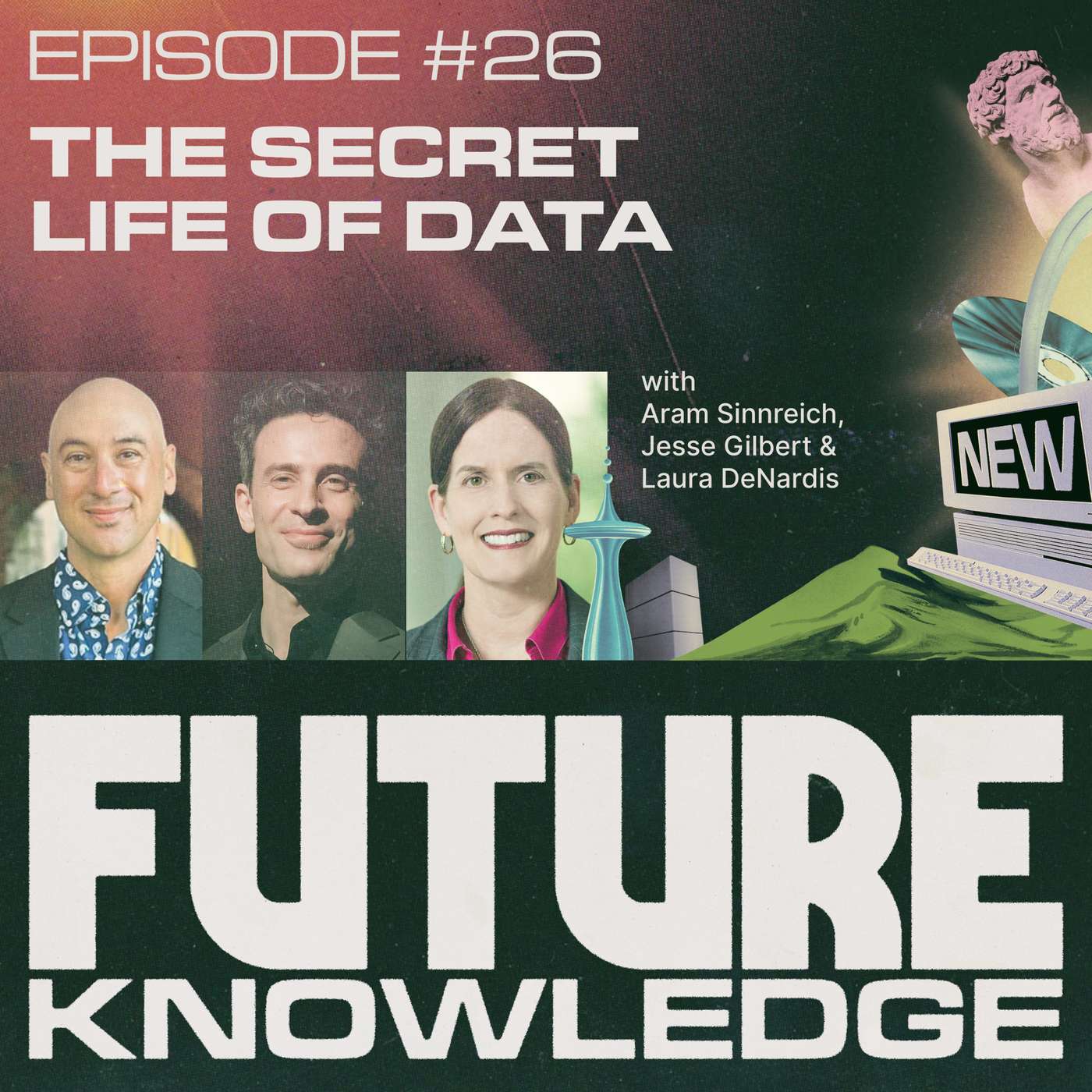
Ep 26The Secret Life Of Data

In The Secret Life of Data, authors Aram Sinnreich and Jesse Gilbert explore how the information we generate every day—email addresses, phone numbers, browsing habits, even biometric data—circulates through vast digital systems that shape our lives in ways we rarely see. Their book examines the hidden infrastructures of data collection, surveillance, and algorithmic decision-making, revealing how these systems influence culture, power, and identity in a networked world. Internet governance scholar Laura DeNardis speaks with Sinnreich and Gilbert.Grab your copy of The Secret Life of Data: https://mitpress.mit.edu/9780262048811/the-secret-life-of-data/This conversation was recorded on 4/18/2024. Watch the full video recording at: https://archive.org/details/the-secret-life-of-dataCheck out all of the Future Knowledge episodes at https://archive.org/details/future-knowledge
Apr 8, 202640 min

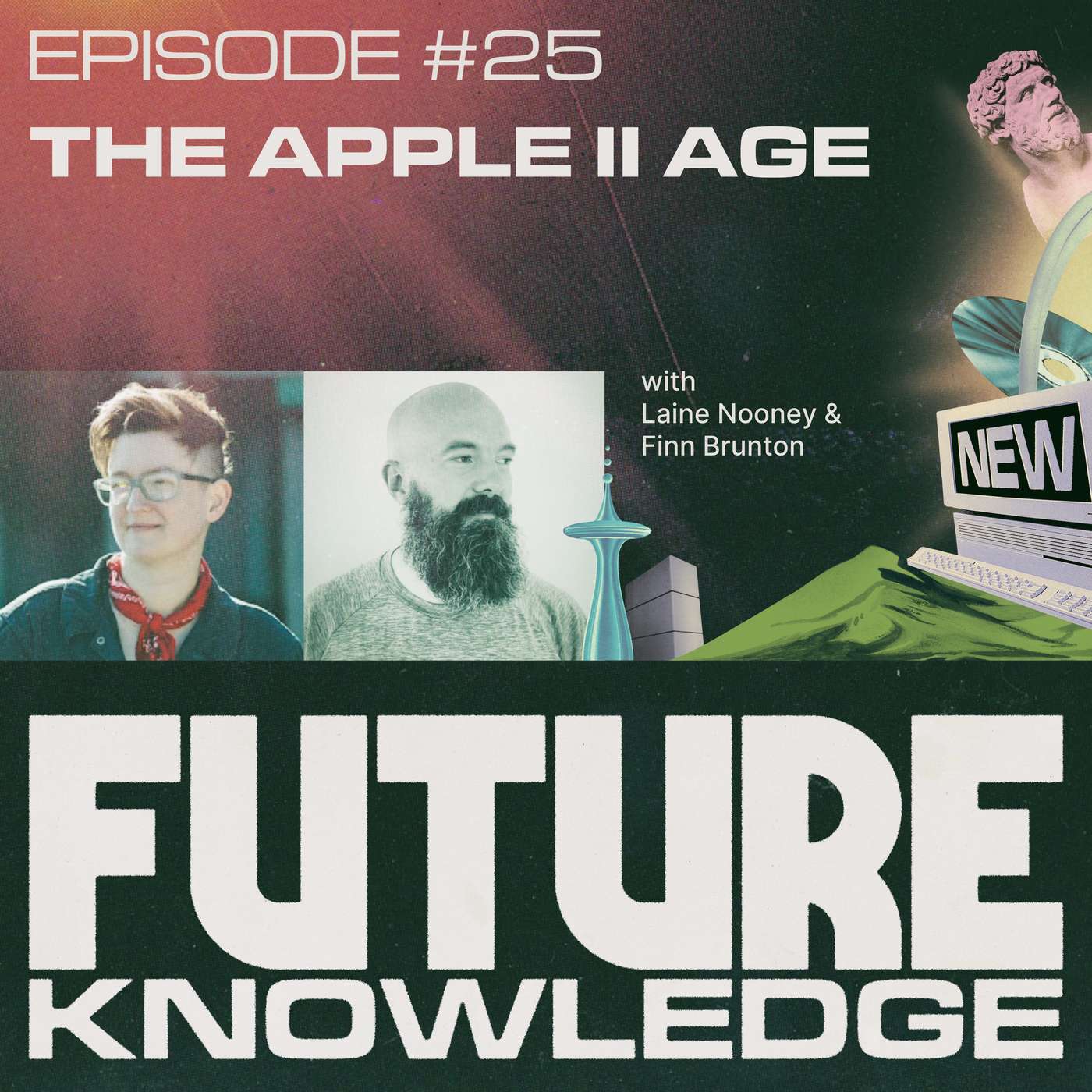
Ep 25The Apple II Age

In The Apple II Age, historian Laine Nooney tells the story of the computer that helped launch Apple, and reshape personal computing. Introduced in 1977, the Apple II became a cultural phenomenon not just because of its hardware, but because of the vibrant software ecosystem that grew around it, from classroom staples like The Print Shop to early games and creative tools that defined a generation’s first encounters with computers. Historian Finn Brunton speaks with Nooney about how the Apple II helped create the culture of personal computing and the broader historical impact of this influential machine.Grab your copy of The Apple II Age: https://press.uchicago.edu/ucp/books/book/chicago/A/bo195231688.htmlThis conversation was recorded on 7/13/2023. Watch the full video recording at: https://archive.org/details/the-apple-ii-ageCheck out all of the Future Knowledge episodes at https://archive.org/details/future-knowledge
Apr 1, 202658 min

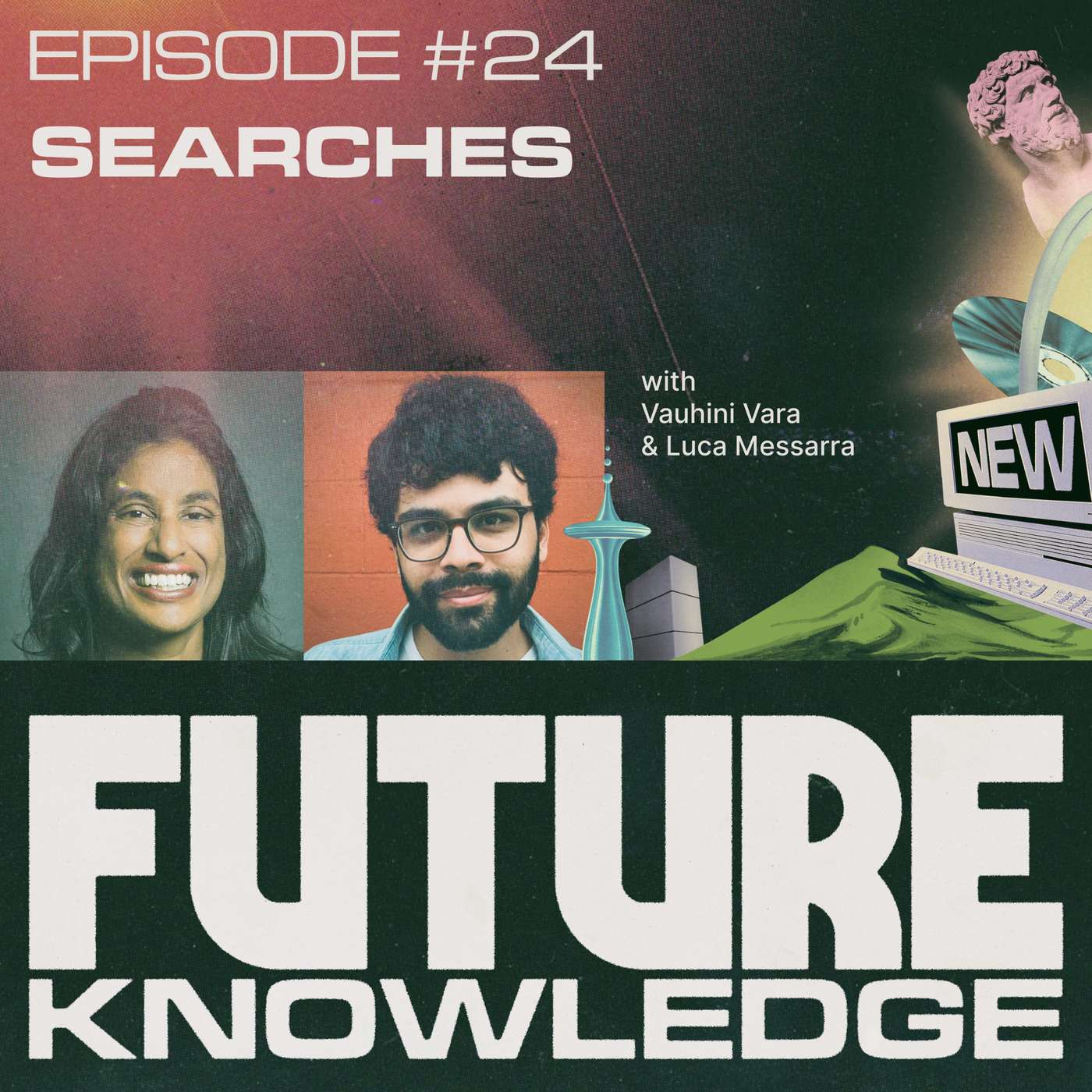
Ep 24Searches

In Searches: Selfhood in the Digital Age, journalist Vauhini Vara explores how the technologies we use to understand the world—search engines, social platforms, and now AI systems—are also reshaping how we understand ourselves. Drawing from her own experience using chatbots to write about her sister’s death, Vara reflects on what happens when our most human questions, memories, and emotions are filtered through systems designed to analyze and monetize them. Humanities scholar Luca Messarra speaks with Vara about the promises and limits of machine understanding.Grab your copy of Searches: Selfhood in the Digital Age: https://www.vauhinivara.com/searchesThis conversation was recorded on 2/26/2026. Watch the full video recording at: https://archive.org/details/searches-book-talk Check out all of the Future Knowledge episodes at https://archive.org/details/future-knowledge
Mar 25, 202643 min

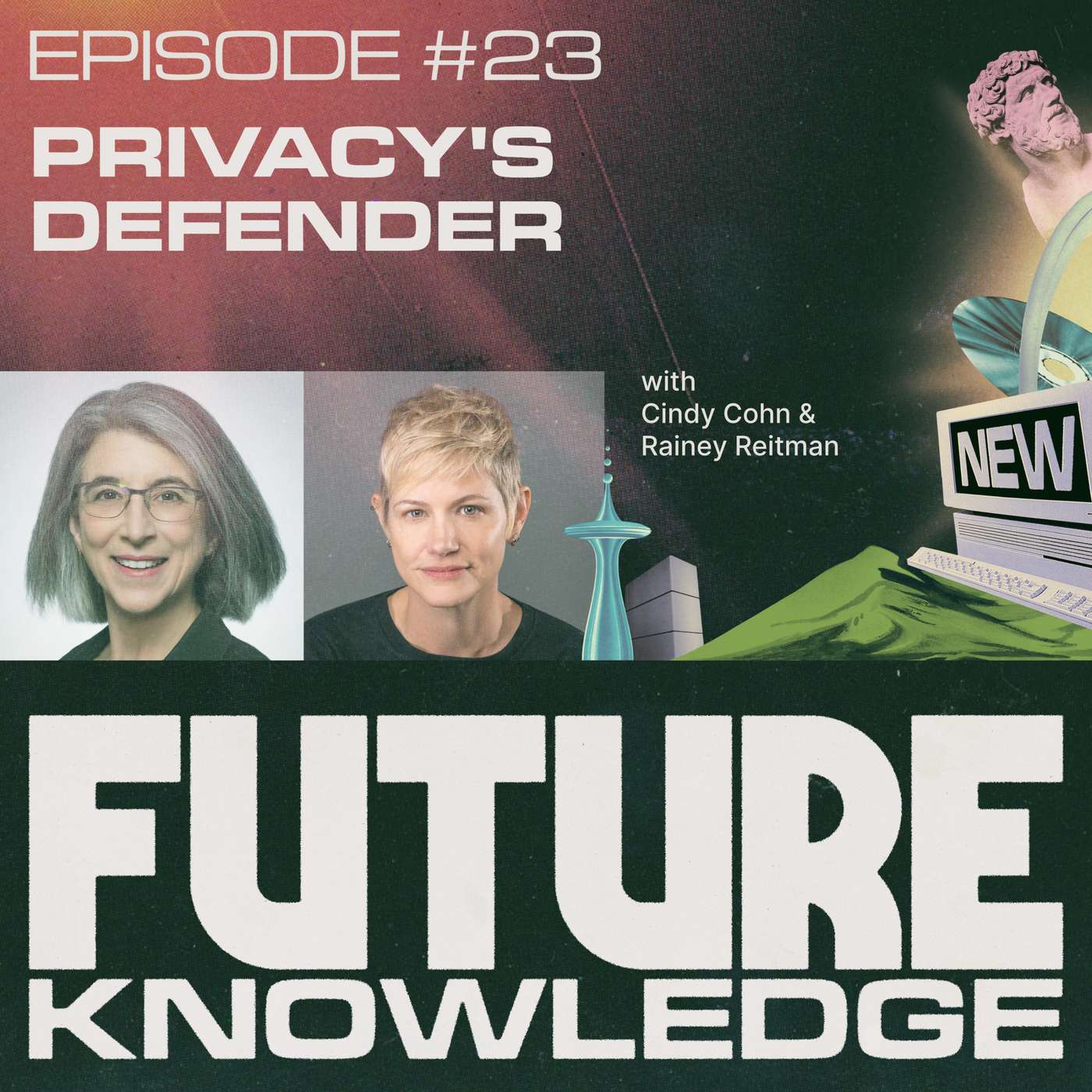
Ep 23Privacy's Defender

For more than three decades, Cindy Cohn, the executive director of the Electronic Frontier Foundation (EFF) has been at the center of the fight to protect privacy, free expression, and innovation online—taking on the NSA’s mass surveillance programs, defending encryption, and pushing back against efforts to weaken digital security in the name of safety. In her new book, Privacy's Defender, she reflects on the landmark cases that shaped the modern internet, the values that guide EFF’s work, and why privacy is not about hiding wrongdoing, but about preserving human autonomy and democracy in a networked world. Rainey Reitman, co-founder of the Freedom of the Press Foundation, leads our conversation.Grab your copy of Privacy's Defender: https://mitpress.mit.edu/9780262051248/privacys-defender/ This conversation was recorded on 02/23/2026.Check out all of the Future Knowledge episodes at https://archive.org/details/future-knowledge
Mar 11, 202634 min

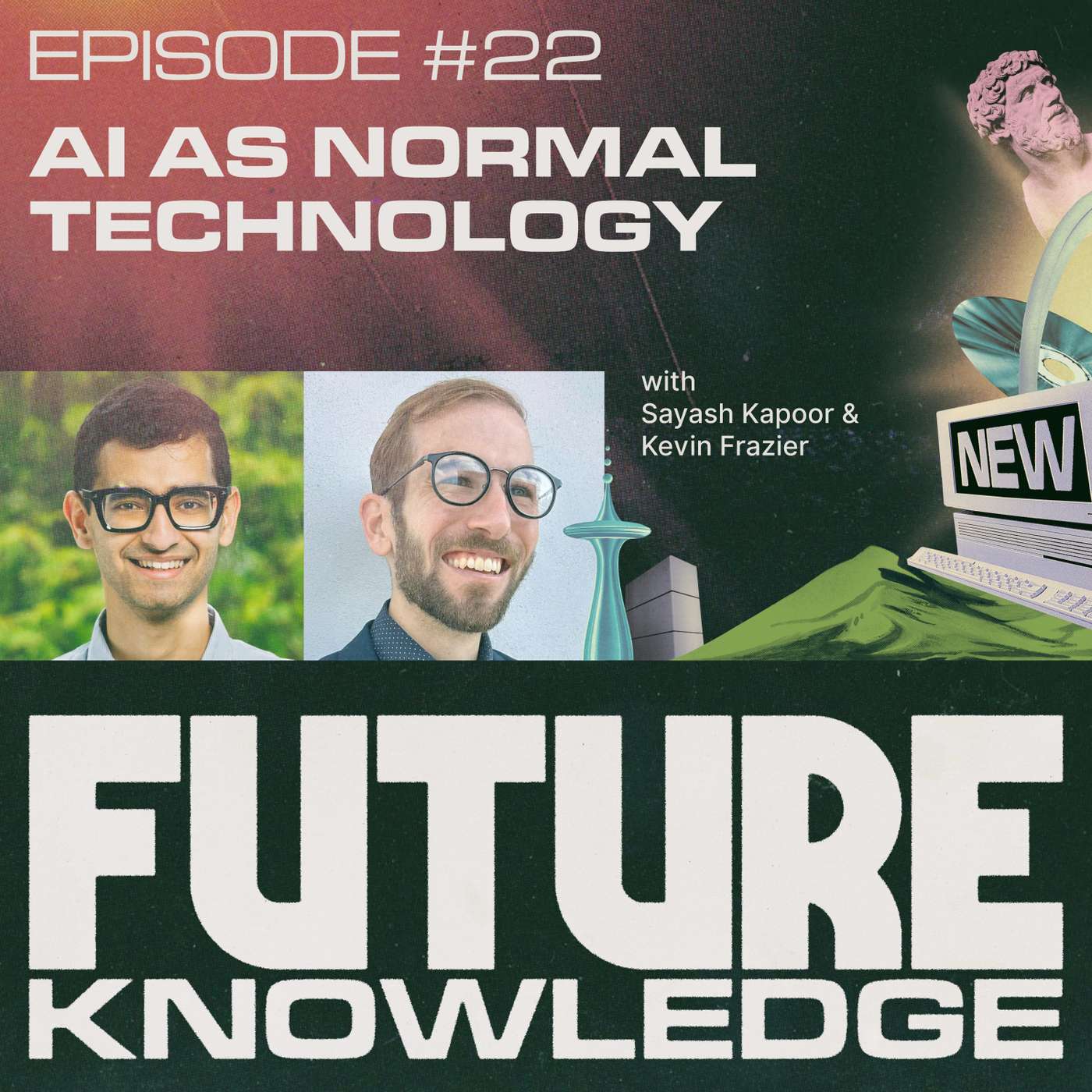
Ep 22AI As Normal Technology

Computer scientist Sayash Kapoor joins legal scholar Kevin Frazier to discuss “AI as Normal Technology,” the paper he co-authored with Arvind Narayanan, arguing that artificial intelligence is not an apocalyptic superintelligence or miraculous cure-all, but a powerful, ordinary technology shaped by human institutions and incentives. Kapoor challenges today’s AI hype and panic, urging us to see AI less as destiny and more as infrastructure—and to focus on governance, accountability, and public benefit.Grab your copy of AI as Normal Technology: https://knightcolumbia.org/content/ai-as-normal-technologyThis conversation was recorded on 01/29/2026. Watch the full video recording at: https://archive.org/details/ai-as-normal-technology Check out all of the Future Knowledge episodes at https://archive.org/details/future-knowledge

Feb 25, 202650 min

Ep 21The Catalogue Of Shipwrecked Books

Author Edward Wilson-Lee joins Brewster Kahle to uncover the astonishing true story behind The Catalogue of Shipwrecked Books. Wilson-Lee chronicles the adventures of Hernando Colón, who sailed with his father Christopher Columbus before setting out to build a library of everything ever printed—a quest marked by shipwreck, mutiny, and the relentless pursuit of knowledge.Grab your copy of The Catalogue Of Shipwrecked Books from The Booksmith: https://www.booksmith.com/book/9781982111403 This conversation was recorded on 6/28/2022. Watch the full video recording at: https://archive.org/details/book-talk-the-catalogue-of-shipwrecked-booksCheck out all of the Future Knowledge episodes at https://archive.org/details/future-knowledge

Feb 11, 202637 min

Ep 20Publishing Beyond the Market

For years, the open access movement has promised a more equitable world for scholarship. But as more of our publishing infrastructure is shaped—or captured—by commercial incentives, a harder question keeps surfacing: if knowledge is openly available but controlled by the same market forces as before, has anything truly changed?In Publishing Beyond the Market, Samuel Moore challenges us to rethink open access from the ground up. Guiding our conversation is Heather Joseph, the executive director of SPARC.Grab your copy of Publishing Beyond the Market: https://library.oapen.org/handle/20.500.12657/105971This conversation was recorded on 12/04/2025. Watch the full video recording at: https://archive.org/details/publishing-beyond-the-market Check out all of the Future Knowledge episodes at https://archive.org/details/future-knowledge

Jan 28, 202641 min

Ep 19Walled Culture

While major recording artists are sued for alleged plagiarism and most creators earn pennies for their work, media industry profits continue to soar. Libraries face mounting barriers to providing access to ebooks—often while being sued by the very publishers whose books they buy. In this episode of Future Knowledge, tech and culture writer Glyn Moody discusses his book Walled Culture: How Big Content Uses Technology and the Law to Lock Down Culture and Keep Creators Poor. Moody traces how copyright laws designed for a world of physical scarcity have been repurposed for the digital age—creating legal and technical “walls” that restrict access to knowledge, limit creativity, and overwhelmingly benefit large media corporations over creators and the public. Joining the conversation is Maria Bustillos, writer and editor at the Brick House Cooperative.Grab your copy of Walled Culture: https://walledculture.org This conversation was recorded on 11/10/2022. Watch the full video recording at: https://archive.org/details/book-talk-walled-cultureCheck out all of the Future Knowledge episodes at https://archive.org/details/future-knowledge

Jan 14, 202634 min

Ep 18The Public Domain

What do jazz, gene sequences, and the World Wide Web have in common? They all reveal what’s at stake when our cultural commons shrinks. In this episode, James Boyle, author of The Public Domain, joins Molly Shaffer Van Houweling to explore why the public domain is essential for creativity, innovation, and a healthy information ecosystem. From surprising case studies to the “range wars” of the digital age, Boyle explains how expanding intellectual property rights can stifle culture—and what it will take to protect the commons we all depend on.This conversation was recorded on 12/18/2025. Watch the full video recording at: https://archive.org/details/the-public-domain Check out all of the Future Knowledge episodes at https://archive.org/details/future-knowledge

Dec 31, 202551 min

Ep 17What Does 1 Trillion Web Pages Sound Like?

For this special holiday episode, we’re celebrating the Internet Archive’s milestone of 1 trillion web pages archived with something a little different: live music created just for the occasion.Join us for conversations with composer Erika Oba, composer Sam Reider, and cellist Kathryn Bates of the Del Sol Quartet, recorded around The Vast Blue We, the concert held at the Internet Archive to honor our shared digital memory. Two new commissions premiered that night: Oba’s “Blue Lights” and Reider’s “Quartet for a Trillion,” both written to capture the wonder and scale of the open web—and brought to life by Del Sol Quartet. Oba later reconfigured “Blue Lights” for a solo performance during The Web We’ve Built celebration.In this episode, you’ll hear brief conversations with the artists about their creative process, followed by recordings from the performance itself. A short, reflective holiday release that celebrates collaboration, imagination, and what we can build together.Check out all of the Future Knowledge episodes at https://archive.org/details/future-knowledge

Dec 24, 202553 min

Ep 16The Open Web at a Crossroads: A Conversation with Vint Cerf, Brewster Kahle, Cindy Cohn & Jon Stokes

What made the early web so thrilling, and how do we reclaim that spirit today? In this special episode, recorded at Georgetown University’s historic Riggs Library, leaders who helped build the internet and those fighting for its future come together to chart a path forward.Featuring Brewster Kahle (Internet Archive), Vint Cerf (Google), Cindy Cohn (EFF), and Jon Stokes (Ars Technica), and moderated by Luke Hogg of the Foundation for American Innovation, this conversation looks back at the web’s origins to imagine what a truly open, innovative, and empowering internet could still become.This conversation was recorded on 10/27/2025. Watch the full video recording at: https://archive.org/details/wayback-to-the-future-celebrating-the-open-webCheck out all of the Future Knowledge episodes at https://archive.org/details/future-knowledge

Dec 17, 20251h 3m

Ep 15Enshittification

E

The internet wasn’t ruined by accident—it was ruined on purpose. In this episode, Cory Doctorow joins us to break down enshittification, his term for the slow, deliberate process that transformed an open, vibrant web into something extractive, frustrating, and increasingly hostile to users. Doctorow explains how platform lock-in, predatory business models, and concentrated corporate power hollowed out the digital spaces we rely on—and, more importantly, how we can build an internet that serves people again.Note: This episode contains strong language.Grab your copy of Enshittification: https://craphound.com/shop/This conversation was recorded on 11/21/2025. Watch the full video recording at: https://archive.org/details/cory-doctorow-2025 Check out all of the Future Knowledge episodes at https://archive.org/details/future-knowledge

Dec 3, 202534 min

Ep 14Music and Copyright in the Era of Taylor Swift

In this conversation, Michael Menna and Anjali Vats unpack how copyright law really works for musicians outside the mainstream. While stars like Taylor Swift make headlines for reclaiming their masters, countless “fringe musicians” navigate a system that often privileges profit over creativity. Together, Menna and Vats examine the gap between copyright’s ideals and its realities—exploring how power, access, and inequity shape who benefits from the music economy and what a fairer future might look like.Read Michael Menna's paper, "The Fringe Musician, the 360 Deal, and a New Look at Copyright and Competition in Music": https://digitalcommons.law.uga.edu/jipl/vol32/iss1/3/ Read Anjali Vats' paper, "Owning Your Masters (Taylor’s Version): Postfeminist Tactical Copyright and the Erasure of Black Intellectual Labor": http://www.anjalivats.com/wp-content/uploads/2023/05/Vats_Ch-48_Owning-Your-Masters_Scans_pp552-573.pdfThis conversation was recorded on 09/11/2025.Check out all of the Future Knowledge episodes at https://archive.org/details/future-knowledge

Nov 19, 202541 min

Ep 13Building and Preserving the Web: A Conversation with Sir Tim Berners-Lee and Brewster Kahle

Sir Tim Berners-Lee, inventor of the World Wide Web, and Brewster Kahle, founder of the Internet Archive, chat with Lauren Goode of Wired about the rise of the web, its continuing and explosive impact on society, and the importance of preserving the web for our cultural history.This conversation was hosted at The Commonwealth Club of California in San Francisco on 10/9/2025.Check out all of the Future Knowledge episodes at https://archive.org/details/future-knowledge

Nov 5, 202546 min

Ep 12Wayback Machine at 1 Trillion

In 1996, the web was still young—a chaotic, creative frontier built one page at a time. That same year, the Internet Archive set out to preserve it all. Nearly three decades later, that audacious goal has reached a generational milestone: 1 trillion web pages preserved.Co-hosts Chris Freeland (Internet Archive) and Dave Hansen (Authors Alliance) talk with Mark Graham, director of the Wayback Machine, about how this vast public archive came to be—and what 1 trillion captures mean for humanity’s collective memory.This conversation was recorded on 10/16/2025.Check out all of the Future Knowledge episodes at https://archive.org/details/future-knowledge

Oct 22, 202538 min

Ep 11After Disruption

Author Trevor Owens joins media scholar Shannon Mattern to discuss his book, After Disruption: A Future for Cultural Memory. Together, they explore how libraries, archives, and museums can reclaim their role in shaping a just and sustainable digital present. Owens argues that cultural memory institutions—long “disrupted” by tech-sector ideologies—must chart their own course forward by centering values of maintenance, care, and repair, ensuring that the future of memory is built on belonging and connection rather than burnout and loss.Grab your copy of After Disruption: https://press.umich.edu/Books/A/After-Disruption3 This conversation was recorded on 9/25/2025. Watch the full video recording at: https://archive.org/details/after-disruptionCheck out all of the Future Knowledge episodes at https://archive.org/details/future-knowledge

Oct 8, 202535 min

Ep 10Music Copyright, Creativity, and Culture

How does copyright shape the music we love—and influence how it's made, distributed, and reimagined? In this episode, Jennifer Jenkins, author of Music Copyright, Creativity, and Culture, is joined by legal scholar James Boyle for a conversation about how copyright law influences everything in our modern world from sampling and streaming to remix culture, and what that means for creators. Grab your copy of Music Copyright, Creativity, and Culture: https://global.oup.com/academic/product/music-copyright-creativity-and-culture-9780190945930This conversation was recorded on 4/10/2025. Watch the full video recording at: https://archive.org/details/music-copyright-creativity-and-cultureCheck out all of the Future Knowledge episodes at https://archive.org/details/future-knowledge

Sep 24, 202541 min
CC-BY