Freedom Friday
Sharif El-Mekki, Ed Post, Chris Stewart · Ed Post
Show overview
Freedom Friday launched in 2023 and has put out 28 episodes in the time since. That works out to roughly 30 hours of audio in total. Releases follow a fortnightly cadence.
Episodes typically run an hour to ninety minutes — most land between 57 min and 1h 7m — and the run-time is fairly consistent across the catalogue. The publisher flags most episodes as explicit, so expect adult themes or strong language throughout. It is catalogued as a EN-language Education show.
The catalogue appears to be on hiatus or wound down — the most recent episode landed 1.8 years ago, with no new episodes in over a year. The busiest year was 2024, with 24 episodes published. Published by Ed Post.
From the publisher
Brightbeam CEO, Chris "Citizen" Stewart and Sharif El-Mekki, CEO of the Center for Black Educator Development bring you an hour closer to freedom every week as we fight to better educate our children.
Latest Episodes
View all 28 episodes
Ep 26Teaching Is a Revolutionary Act
EComrade Chris and Ismael Jimenez discuss the evolving role of teachers as activists in the face of increasing educational regulations. They explore the importance of networking among educators, the need for accessible resources in social studies, and the intersection of civics and current events in education. The discussion also touches on the potential for community-driven folk schools to fill gaps in traditional education, the importance of practical skills for future preparedness, and a critical assessment of the current state of activism and its challenges. They discuss the importance of connecting with global Blackness and Africa, the challenges of anti-Blackness in multiracial contexts, and the complexities of Latino identity. The conversation emphasizes the need for solidarity, collective power, and education to navigate the historical and contemporary struggles faced by Black communities.
Ep 27The Reality of Fighting for Black Children
EChris, Sharif and Ish cover the implications of recent lawsuits that threaten educational initiatives and funding for Black individuals, emphasizing the need for collective action and strategic planning to combat these challenges. The episode covers the historical context of Black resistance and the importance of funding independent organizations that advocate for equity. It also highlights the cultural shifts within the Black community and the necessity of fostering a collective identity to address systemic issues. Chris, Sharif and Ish discuss the importance of Black scholarship in advocating for educational equity and highlight the significance of defending Black educational programs and pipelines.
Ep 28Thinking Critically About Public School Success
EChris Stewart and Sharif El-Mekki discuss implore us to think critically about public schools in the United States. They share insights from their visits to Montessori schools, highlighting the benefits of student-centered learning environments. They discuss the impact of charter schools on public education, and the role of choice in improving educational outcomes. They highlight public school success stories, the significance of diverse leadership, and the need for empowerment among Black educators. The discussion also emphasizes the importance of networking and community building, as well as the necessity for fellowship among educators to drive future initiatives.
Ep 29Diddy's Freak-offs, Eric Adams, Marcellus Williams, and Black Leadership
EChris, Ish, and Sharif discuss the case of hip hop mogul P. Diddy, exploring the implications for the music industry and its impact on youth culture. They delve into the darker aspects of the industry, discussing corruption and exploitation. The conversation also covers the indictment of Mayor Eric Adams and the case of Marcellus Williams, who was executed despite evidence pointing to his innocence, highlighting the failures of the justice system and the need for authentic leadership. The episode concludes with a call to action for more grassroots efforts in education and community building, emphasizing the importance of literacy and awareness in the fight for justice and equality.
Ep 24We Need to Talk About School Shootings
EChris, Ish, and Sharif discuss the issue of school shootings in the United States. They explore the cultural and societal factors that contribute to these incidents, including gun culture, access to firearms, mental health, and the devaluing of life. They also examine the role of law enforcement and the challenges of addressing gun violence in urban communities. The conversation highlights the need for comprehensive solutions that address the root causes of these shootings and prioritize the safety and well-being of students. The conversation explores different perspectives on how to address the problem, including the labeling of young offenders as 'killers' and the need for a balance between justice and understanding. They also touch on the role of the NRA, the importance of investing in prevention and support services in schools, and the need to create safe and inclusive environments for all students.
Ep 23The Truth About Social Media Activism and Education (Ft. Conscious Lee)
EConscious Lee, an educator and social media influencer, discusses his journey in education and the power of using social media platforms to educate a wider audience. He shares how his love for education began in the classroom, and highlights his experience as a debater, where he broke history as part of first black debate team to go undefeated at the national debate tournament. He emphasizes the importance of debate in developing critical thinking and communication skills. and discusses the challenges he faces as a black educator, including backlash and attacks on social media. He emphasizes the importance of being a loud learner and seeking knowledge from various sources. The conversation concludes with reflections on the power of education and the importance of finding the right educators for individual learning styles.

Ep 22Black Folks Can’t Rely on These Schools To Do Right (Ft. Dr. Charles Cole, III)
EDr. Charles Cole III tells us about his insightful report, 'Oakland 2023 24: Proficiency Over Pageantry.' They address the significant disconnect between grades and actual proficiency levels among students, with a particular focus on the Black community's struggle to access quality education. Dr. Cole underscores the necessity of community involvement, agency, and self-reliance, urging parents and communities to actively partake in their children's educational journey.The discussion highlights the systemic issues within the education system, the dangers of inflated grades, and the collective responsibility needed to ensure all children achieve meaningful educational outcomes. By encouraging awareness, navigation, and community duty, Dr. Cole's insights provide a roadmap for addressing educational disparities and fostering systemic change.
Ep 21What Makes a Good School?
ELet's explore the essential elements of a great school and why everything from safety and cultural inclusivity, to overall educational design are so important, Chris and Sharif delve into the impact of school policies on childhood, the role of educators in shaping a positive learning environment, and the need for age-appropriate education on historical injustices. The discussion also emphasizes the importance of thoughtful planning and a student-centered approach. The conversation covers the importance of culturally safe and inclusive education, the impact of teachers on students' experiences, and the need for cross-cultural learning. It also addresses the concepts of racism, white supremacy, and anti-blackness, emphasizing the need for a more human-centered approach to education. Let us know in the comments, what makes a good school in your mind?
Ep 20The Truth About Curriculum in Our Schools
EBrightbeam CEO, Chris "Citizen" Stewart and Ismael Jimenez, Director of Social Studies Curriculum for the School District of Philadelphia, explore the importance of high-quality curriculum in education. The conversation covers the issue of teachers sourcing curriculum from unreliable websites and the need for better quality control. The role of parents in monitoring curriculum and engaging in conversations with teachers is emphasized. Chris and Ismael also highlight problems with bad curriculum, such as the lack of guidance or reliance on biased perspectives. Humanizing education and focusing on pedagogical skills are identified as key factors in improving curriculum quality. The conversation delves into the importance of effective teaching, the need for teacher support and professional development, and the challenges of curriculum and "indoctrination."
Ep 19What You Need To Know about Malcolm X
EMalcolm X was born 99 years ago last weekend. In this powerful conversation, Ish, Sharif, and Chris delve into his multi-faceted legacy, debunking myths, and exploring his enduring influence on black thought, activism, and the quest for racial justice. From his early years and evolving views to the misconceptions surrounding his stance on violence and separatism, the conversation offers a nuanced examination of Malcolm X's contributions and the global resonance of his message. The discussion also touches on contemporary issues, drawing parallels between Malcolm's teachings and modern-day challenges in the black community, emphasizing the importance of self-love, critical consciousness, and education in the ongoing struggle for freedom.
Ep 18The Truth About the Teaching Profession
EChris, Ismael, and Sharif are here to talk all things teachers and teaching. The guys debunk myths and discuss the challenges and realities of the profession. This episode highlights the lack of preparation provided by teacher preparation programs and the need for better training. The conversation also touches on the importance of diversity in the teaching profession and the need to be honest with aspiring teachers about the challenges they may face with things like unstable leadership. Chris, Ish and Sharif note the importance of supporting teachers and the need for an educated citizenry.
Ep 17The Conversation We Need To Have About Education
EThe culture wars in education continue to rage, but Chris and Sharif are here to break down what we should actually be focusing on when it comes to setting up the next generation for academic success. In this episode of Freedom Friday, they discuss the importance of strong, well-prepared teachers and the need for ongoing support and development. They touch on the science of teaching and learning, and the need for a focus on student achievement. Chris and Sharif emphasize the need for a cohesive and research-based approach to curriculum adoption and assessment practices and a address the issue of broken pathways in education. It's time to focus on a more equitable, outcome-focused system. Join us.
Ep 16What They Don’t Want You To Know About Public Education
EChris, Sharif, and Ismael explore the historical roots and evolution of public education in the United States. They discuss the origins of public education, racist foundations of educational psychology and the impact of white supremacist ideologies on the development of education in the United States. The conversation also highlights the contributions of Black educators and leaders who created schools that combined self-reliance and intellectual development. The conversation explores the impact of icons like W.E.B. Du Bois and Booker T. Washington on black education. Finally, the guys talk about the compliance-driven nature of the education system and whether or not we are fostering critical thinking in the classroom.
Ep 15The Truth About Diversity, Equity, and Inclusion
EDiversity, equity, and inclusion (DEI) is currently under attack. Chris, Sharif, and Ismael break down DEI, its origins in corporate culture, and why those on the right are so focused on attacking it. The guys examine the limitations and challenges of DEI, as well as the role of equity in addressing systemic barriers. The conversation highlights the need for representation and the ongoing struggle for racial justice and equality. The conversation touches on expensive DEI consultants, "overwoke" DEI programs, and highlights the need for clear goals and progress in these conversations.TakeawaysDEI programs are being targeted and attacked by right-wing think tanks, threatening progress in racial equality. DEI has its roots in corporate culture and can be seen as an insurance policy against racial discrimination lawsuits. Equity is an essential component of DEI, aiming to interrupt systemic barriers and create a more just society. When used in schools, these programs should have clear goals and measurable progress to avoid becoming ineffective and costly. The business of DEI consulting can sometimes prioritize profit over meaningful change, leading to skepticism about its effectiveness. DEI can be a part of the ongoing struggle for liberation, and its effectiveness depends on pushing for systemic change and exploiting opportunities for progress.
Ep 14The Secret Program the Government Doesn’t Want You To Know About
ETakeawaysCOINTELPRO was a covert and often illegal program initiated by the FBI in 1956 and officially ended in 1971. It targeted civil rights organizations, Black Power movements, communist and socialist organizations, feminist groups, and more.The tactics used by COINTELPRO included surveillance, infiltration, discrediting, and disrupting targeted organizations. They would send inflammatory letters, create divisions within groups, and use media manipulation to sow discord and mistrust.The exposure of COINTELPRO in 1971 by activists who broke into an FBI office revealed the extent of the program's operations. However, many of the rules put in place to prevent similar abuses have been rolled back, and modern technologies and tactics continue to be used to disrupt and undermine social justice movements.Understanding the history and impact of COINTELPRO is crucial for recognizing its modern-day applications and the need for continued vigilance in protecting civil rights and social justice movements. Conspiracy and surveillance have been used to target and undermine Black leaders and movements throughout history.Staying vigilant and informed is crucial in navigating a world where misinformation and manipulation are prevalent.The pursuit of knowledge and learning in secret can empower individuals to challenge oppressive systems and work towards liberation.
Ep 13We Need To Talk About AI in Education
EChris, Sharif, and Ismael discuss the potential impact of artificial intelligence (AI) on education, especially in the context of black education. They highlight the need for proper training and development for educators and the importance of critical thinking in using AI effectively. The crew also discusses concerns about AI accuracy, bias, and the potential for AI to replicate societal inequalities, while exploring practical applications of AI in education, such as using AI to access and analyze research. The conversation concludes with a discussion on the future of AI and the need for a balance between embracing AI and maintaining human expertise.
Ep 12Black History Month Ends and Black Future Year Begins
EThe conversation discusses an indictment of America and the role of education in understanding the true history of the country. It emphasizes the need to hold people accountable and focus on political power. The conversation also highlights the power of unions in organizing and creating change.The guys discuss the potential of technology, and the importance of education in advancing the cause of justice. They also discuss the concept of interest convergence and the strategy of single issue voting. The conversation concludes with a call to reframe Black History Month as a year-long commitment to accountability and progress.TakeawaysSpeaking truth to power and holding our people accountable is crucial.Understanding the true history of America is important in recognizing its flaws.Unions play a significant role in organizing and creating change. Organizing and education are powerful tools for advancing justice.Technology can be a neutral tool, but its use must be guided by critical thinking and a nuanced understanding of its potential impact.Black History Month should be reframed as a year-long commitment to accountability and progress.

Ep 11Afrofuturism: Cultural Grounding, Black Arts, and Technology (Ft. Stokley)
EStokley Williams, best known simply as "Stokley" is a Grammy-nominated, billboard chart-topping artist who keeps his tie to the culture strong, embracing the spirit of "Sankofa" or looking back to the past as we move to the future. Stokley joins Chris and Sharif to discuss the importance of Afrofuturism and the power of the arts in the black community. He talks about his formative years and cultural background growing up in Minnesota, with Black educator activists for parents. Stokley discusses the influence of African culture on his music the importance of education, passing down cultural knowledge, and parenting in the modern context. The episode highlights the need for cultural centers and the impact of technology on parenting. Stokley shares his unique journey and the importance of Black education in his life. He emphasizes the need to encourage creativity and exploration in children. Stokley is a GRAMMY-nominated vocalist, songwriter, producer, and multi-instrumentalist who has worked with artists including Prince, Whitney Houston, Janet Jackson, Snoop Dogg, H.E.R. and more. He’s known best as the lead singer and drummer for legendary R&B group Mint Condition. In 2017, Stokley embarked on a new solo journey with the release of his debut album Introducing Stokley which produced two #1 singles “Organic” and “Level," and his second solo album, "Sankofa" includes the billboard #1 hit "She."
Ep 10What They Don’t Want You to Know About U.S. Presidents
ESummaryWhat is the significance of the American presidency to the Black community? What about to our society as a whole? Let's explore the delusion of revering presidents and the need for truth-telling in education. As "President's Day" approaches, this Freedom Friday conversation highlights the dark history of presidents and the importance of teaching the complexities of American history. The discussion touches on the luxury of ignorance and the concept of dual consciousness. Chris, Sharif, and Ismael explore the American consciousness and hypocrisy, the challenges of parenting and teaching ethics, the mythology and reality of the American presidency, and the responsibility of the governed.TakeawaysPresident's Day should be an opportunity for truth-telling and teaching the context of the day.Teaching the dark history of presidents is essential to understanding the complexities of American history.Ignorance is a luxury that perpetuates the delusion of revering presidents and ignoring the truth.Dual consciousness, the coexistence of two distinct mental states, is a psychological condition that reflects the American problem. The cure for dual consciousness lies in resisting it through education, information, and connecting the dots. Being conscious of one's own hypocrisies is the first step towards change.Parenting and teaching should involve creating a space for children to question and engage in conversations about the world.
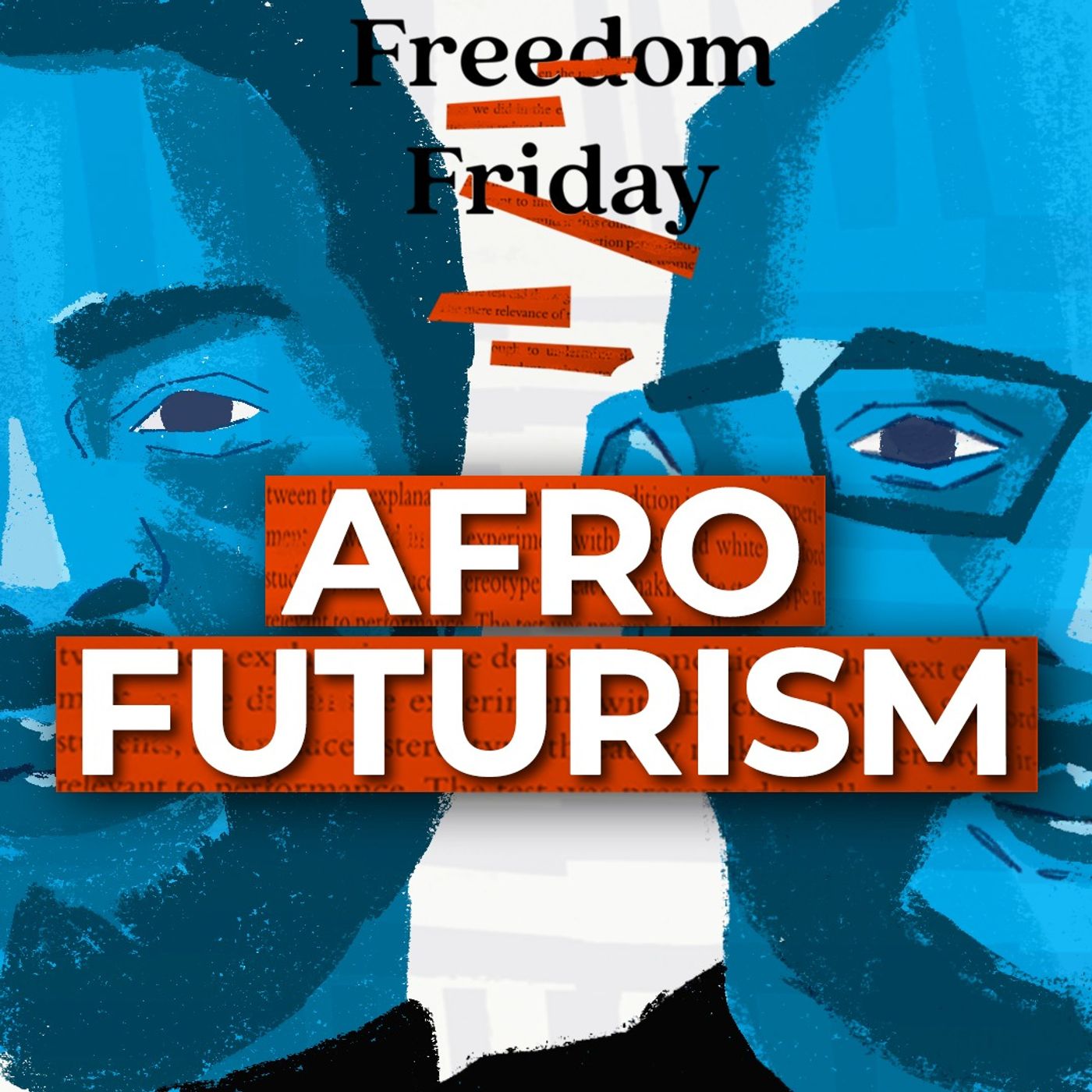
Ep 9Radically Reimagining a Black Future
EIt's time to reimagine what a powerful Black future will look like. Chris and Ismael delve into the importance of Afro-futurism as well as the role of Afro-pessimism in understanding our current situation. The conversation also examines the dilemma faced by Black individuals in choosing between joining the existing system or pursuing liberation. It highlights the need for radical imagination and the role of youth in shaping a different future. The discussion touches on the need to create imaginative and free educational experiences for our children. The challenges of implementing alternative education models and the impact of traditional education on black children are also discussed. The importance of embracing black rage and a full range of emotions is also discussed.