
Show overview
Free The Seed! launched in 2018 and has put out 14 episodes in the time since. That works out to roughly 9 hours of audio in total. Releases follow a monthly cadence.
Episodes typically run thirty-five to sixty minutes — most land between 34 min and 46 min — and the run-time is fairly consistent across the catalogue. None of the episodes are flagged explicit by the publisher. It is catalogued as a EN-US-language Education show.
The catalogue appears to be on hiatus or wound down — the most recent episode landed 6.8 years ago, with no new episodes in over a year. The busiest year was 2019, with 10 episodes published. Published by Open Source Seed Initiative.
From the publisher
This podcast is for anyone interested in the plants we eat – farmers, gardeners and food curious folks – who want to dig deeper into where their food comes from. In each episode, we hear the story of a variety that has been pledged as open-source from the plant breeder that developed it
Latest Episodes
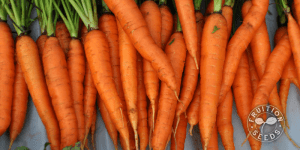
S3E4 Dulcinea Carrot- Free The Seed! Podcast
Episode four of the third season of Free the Seed! the Open Source Seed Initiative podcast Do you have questions about OSSI, intellectual property rights, or plant breeding that you would like answered on this show? Please share them with us through our listener survey at http://bit.ly/FreetheSeedsurvey This podcast is for anyone interested in the plants we eat – farmers, gardeners and food curious folks who want to dig deeper into where their food comes from. It’s about how new crop varieties make it into your seed catalogues and onto your tables. In each episode, we hear the story of a variety that has been pledged as open-source from the plant breeder that developed it. In this episode, we’ll be talking about carrot breeding in general, and two breeding projects in particular. First, Claire and Irwin will tell us about the Open Source Seed Initiative-pledged carrot breeding populations that they’ve developed at University of Wisconsin-Madison. They’ll explain how the UW-Madison Goldman Lab is able to speed up the seed production process to fit it into one single year using greenhouses and vernalization chambers. Then we’ll hear from Petra about the project to develop ‘Dulcinea’, a new variety offered by Fruition Seeds, which Irwin and Claire have collaborated on. And all three of our guests will weigh in on the basic steps of any carrot breeding project.       Left: Dr. Claire Luby (Photo credit: Matthew Dillon)                  Right: Dr. Irwin Goldman (Photo credit: Matthew Dillon) Petra Page-Mann with freshly-dug ‘Dulcinea’ roots (Photo credit: Lisa Barker)                    Left: Carrot flower-heads (umbels!) (Photo credit: Claire Luby)  Right: Carrot seed head (Photo credit: Claire Luby)   Left: Pollination cages in the field (Photo credit: Claire Luby)Right: Carrot root evaluation in the Goldman Lab (Photo credit: Claire Luby)  Wisconsin Open Source Composite Nantes-population that was used as the parent material for the ‘Dulcinea’ project Episode links For folks wanting to get in touch with Irwin about potential future carrot breeding project collaborations, here is the Goldman Lab’s website:  https://goldman.horticulture.wisc.edu/ If you’d like to use the market classes as a starting point for a breeding project of your own, you can find information about procuring seed on the OSSI website. https://osseeds.org/seeds/ You can purchase seed of ‘Dulcinea’ from Fruition Seeds at https://www.fruitionseeds.com/, or get in touch with Petra at petra(at) fruitionseeds.com for purchasing larger quantities of ‘Dulcinea’. The next Organic Seed Growers Conference, which Petra mentioned, is happening in February 2020. You can register through: https://seedalliance.org/2019/registration-open-for-the-10th-organic-seed-growers-conference/ The Organic Farm School, which Petra mentioned, and which has been producing seed of ‘Dulcinea’, is located on Whidbey Island in Washington State. https://organicfarmschool.org/ Nathaniel Thompson’s farm is Remembrance Farm, in Trumansburg, NY. https://remembrancefarm.webs.com/ Organic Seed Alliance’s carrot seed production guide: https://seedalliance.org/publications/carrot-seed-production-quick-reference/ [gdlr_button href=”https://osseeds.org/wp-content/uploads/2019/12/S3E4_Dulcinea_Transcript.pdf” target=”_self” size=”medium” background=”#5dc269″ color=”#ffffff”]Download the Transcript[/gdlr_button] Free the Seed!Transcript for S3E4: ‘Dulcinea’ Carrot  Rachel Hultengren: Welcome to the fourth and final episode of the third season of Free the Seed!, the Open-Source Seed Initiative podcast that tells the stories of new crop varieties and the plant breeders that develop them. I’m your host, Rachel Hultengren. This podcast is for anyone interested in the plants we eat – farmers, gardeners and food curious folks – who want to dig deeper into where their food comes from. It’s about how new crop varieties make it into your seed catalogues and onto your tables. In each episode, we hear the story of a variety that has been pledged as open-source from the plant breeder that developed it. Dr. Claire Luby and Dr. Irwin Goldman will be returning as guests today, and they are joined by Petra Page-Mann. Dr. Irwin Goldman is a faculty member in the Department of Horticulture at the University of Wisconsin-Madison, where he has taught and led research in plant breeding for the past 26 years. His breeding program focuses on carrot, onion, and table beet.   Dr. Claire Luby conducted her PhD research at the University of Wisconsin-Madison in the Goldman Lab, and was the first Executive Director of the Open Source Seed Initiative.  Petra Page-Mann is the co-founder of Fruition Seeds, based in Naples, New York. Having grown up in h
S3 Ep 3S3E3 Festivity Sweet Corn- Free The Seed! Podcast
Episode three of the third season of Free the Seed! the Open Source Seed Initiative podcast This podcast is for anyone interested in the plants we eat – farmers, gardeners and food curious folks who want to dig deeper into where their food comes from. It’s about how new crop varieties make it into your seed catalogues and onto your tables. In each episode, we hear the story of a variety that has been pledged as open-source from the plant breeder that developed it. In this episode, host Rachel Hultengren talks with Jonathan Spero of Lupine Knoll Farm about ‘Festivity’, an open-pollinated multi-colored sweet corn that he developed. Jonathan Spero Ears of ‘Festivity’ at milk stage, showing variation in color intensity. Dried mature ears of ‘Festivity’ The field prepared for planting during a year when Jonathan did ear-to-row selection Episode links – You can purchase seed of ‘Festivity’ from Siskiyou Seeds, Restoration Seeds, or by emailing Jonathan through the Lupine Knoll Farm website: http://www.lupineknollfarm.com/ – GRIN system https://npgsweb.ars-grin.gov/gringlobal/search.aspx – Breed Your Own Vegetable Varieties, Dr. Carol Deppe – Seed to Seed, Suzanne Ashworth Show Survey Let us know what you think of the show! Free the Seed! Listener Survey: http://bit.ly/FreetheSeedsurvey [gdlr_button href=”https://osseeds.org/wp-content/uploads/2019/11/S3E3_Festivity_Transcript.pdf” target=”_self” size=”medium” background=”#5dc269″ color=”#ffffff”]Download the Transcript[/gdlr_button] Free the Seed! Transcript for S3E3: ‘Festivity’ Sweet Corn Rachel Hultengren: Welcome to Episode 3 of Season 3 of Free the Seed!, the Open Source Seed Initiative podcast that tells the stories of new crop varieties and the plant breeders that develop them. I’m your host, Rachel Hultengren. This podcast is for anyone interested in the plants we eat – farmers, gardeners and food curious folks – who want to dig deeper into where their food comes from. It’s about how new crop varieties make it into your seed catalogues and onto your tables. In each episode, we hear the story of a variety that has been pledged as open-source from the plant breeder that developed it. ——————————————————————————————————————– Rachel Hultengren: Our guest today is Jonathan Spero, of Lupine Knoll Farm in southwestern Oregon. His plant breeding work focuses on open-pollinated sweet corn, which he has been working on since 2001. On his farm of about 5 acres, Jonathan also breeds kale, broccoli, sugar beets and a few other vegetables. He was a member of the Board of Directors of the Open Source Seed Initiative from 2014-2018. Jonathan and I will be talking about ‘Festivity’, a multi-colored sweet corn. Hi Jonathan – thanks for joining us! Jonathan Spero: Hello, Rachel. Glad to be here. Rachel Hultengren: I’m excited to get to talk about this new sweet corn that you’ve developed. And maybe we can start by having you just describe ‘Festivity’ for us. What does it look like? Jonathan Spero: ‘Festivity’ is multi-colored, in that it has not only white and yellow but blue and red kernels. It has just a blush of color at the milk stage, that is, eating stage. But as the plants mature, they become more darkly colored like what we call an ornamental corn, sometimes. But it’s a sweet corn. Rachel Hultengren: Mmhmm. So take us back to the beginning. How did you get started on this, and what was your goal with it? Jonathan Spero: Well, the original goal was a multi-colored sweet corn. The colors are generally phytonutrients, or this is my premise, and therefore corn with color is more healthy than corn that’s just white. And so this was my initial purpose. I had tasted some multi-colored sweet corn that others have attempted, and thought we could create something that is sweet, open-pollinated, sugary-enhanced and has multiple colors. Rachel Hultengren: Has that been studied before, whether sweet corn that is more colorful has more vitamins that are important to human health? Jonathan Spero: Well, I’m working on a premise. I mean, there are… I read about a program trying to convince people in a certain part of Africa that yellow corn was good to eat. That they believed that white corn only was good for humans. The yellow corn, of course, has nutrients that protect the eyes. I don’t know what some of these are. I’m going to work on the assumption that these are phytonutrients, that in general you’re going to get more out of a corn that has more color to it. Rachel Hultengren: Mmhmm. That’s interesting. How did you approach this project with that goal? Jonathan Spero: How did I approach the project? Well, the first year
S3E2 Dakota Tears Onion- Free The Seed! Podcast
Episode two of the third season of Free the Seed! the Open Source Seed Initiative podcast This podcast is for anyone interested in the plants we eat – farmers, gardeners and food curious folks who want to dig deeper into where their food comes from. It’s about how new crop varieties make it into your seed catalogues and onto your tables. In each episode, we hear the story of a variety that has been pledged as open-source from the plant breeder that developed it. In this episode, host Rachel Hultengren talks with David Podoll of Prairie Road Organic Farm about ‘Dakota Tears’, an open-pollinated yellow-skinned, firm-fleshed storage onion that he developed. David Podoll ‘Dakota Tears’ onion Episode links – Prairie Road Organic Seed  https://www.prairieroadorganic.co/ Show Survey Let us know what you think of the show! Free the Seed! Listener Survey: http://bit.ly/FreetheSeedsurvey [gdlr_button href=”https://osseeds.org/wp-content/uploads/2019/11/S3E2_DakotaTears_Transcript.pdf” target=”_self” size=”medium” background=”#5dc269″ color=”#ffffff”]Download the Transcript[/gdlr_button] Free the Seed! Transcript for S3E2: ‘Dakota Tears’ Onion Rachel Hultengren: Welcome to Episode 2 of Season 3 of Free the Seed!, the Open Source Seed Initiative podcast that tells the stories of new crop varieties and the plant breeders that develop them. I’m your host, Rachel Hultengren. This podcast is for anyone interested in the plants we eat – farmers, gardeners and food curious folks – who want to dig deeper into where their food comes from. It’s about how new crop varieties make it into your seed catalogues and onto your tables. In each episode, we hear the story of a variety that has been pledged as open-source from the plant breeder that developed it. My guest today is David Podoll of Prairie Road Organic Farm. David is a founding member of the Northern Plains Farm Breeding Club, and has worked with his brother and sister-in-law, Dan and Theresa Podoll, on Prairie Road Organic Seed varieties. Prairie Road Organic Seed is located in North Dakota, and focuses on breeding and carrying varieties that thrive in the Northern Plains of the US and under organic conditions. We’ll be talking about ‘Dakota Tears’, an open-pollinated, yellow-skinned, firm-fleshed storage onion, that David has been working on for the past few decades. Rachel Hultengren: Hi David, welcome to Free the Seed! David Podoll: Good morning, Rachel. Rachel Hultengren: So let’s get started by having you describe ‘Dakota Tears’ for us. What makes it a unique onion? David Podoll: Well, unique in the sense that there are a few open-pollinated varieties out there. It’s hard to find a good OP variety in a catalogue today. Other than that, how it’s unique is that it’s unique in the same way that every variety is unique. It has the fingerprints of whoever was the breeder and selector of it, and… Rachel Hultengren: And just to clarify, an open-pollinated variety is in contrast to a hybrid, which is a uniform variety because all of the individuals are genetically identical, whereas an open-pollinated variety is a variety where it’s a population of individuals that are very similar genetically and looking in the field, but are not identical in their genetics. David Podoll: Right. I mean, open-pollinated varieties have a wider genetic base, or they should, and that gives them more ability to adapt. Rachel Hultengren: Mmhmm. Are there aspects of your growing conditions in North Dakota or your management that influence what makes for a good onion on your farm? David Podoll: Well, I don’t know if there’s anything in particular that makes for a good onion. When I started out, I was looking for something that would keep real well, because we wanted to eat as much as we could from our farm and garden. And so I wanted something that would store a long time through the winter in common storage. And um… How I started was I was thinking, “Okay, what in the garden can I save seed from and improve it for our climate here in the northern plains?” Many varieties up to that point had been bred for other climates. We tended to be drier and hot summers, so I wanted stuff that was drought-hardy. And we had short seasons so it had to fit in with the season and still produce good quality. In short, I wanted something that was really tough. I wanted something that would endure. And so I started saving seed on any number of things in the garden, and I was completely ignorant about any requirements for seed saving. And in the case of ‘Dakota Tears’, at first I just tried to save Downing Yellow Globe, to save seed from it. I wasn’t thinking about any particular further breeding project. So I took a dozen bulbs, or 20 bulbs and planted them in the garden. I figured, “Well that’s all I need, they produce a lot of seed.” I grew maybe, seven, eight, nine hundred bulbs a year, and I could get a lot more tha
S3E1 South Anna Butternut- Free The Seed! Podcast
Episode one of the third season of Free the Seed! the Open Source Seed Initiative podcast This podcast is for anyone interested in the plants we eat – farmers, gardeners and food curious folks who want to dig deeper into where their food comes from. It’s about how new crop varieties make it into your seed catalogues and onto your tables. In each episode, we hear the story of a variety that has been pledged as open-source from the plant breeder that developed it. In this episode, host Rachel Hultengren talks with Edmund Frost of Twin Oaks Seed Farm and Common Wealth Seed Growers about ‘South Anna Butternut’, a downy-mildew resistant winter squash that he developed. Edmund Frost 2014 Variety Trial, (‘Seminole Pumpkin’ x ‘Waltham’)F3 on top, ‘Waltham’ on bottom Taste test from 2017 Virginia Association for Biological Farming conference Episode links – Learn more about Common Wealth Seed Growers’ research at http://commonwealthseeds.com/research/ – Organic Seed Alliance’s “Grower’s Guide to Conducting On-Farm Variety Trials”: https://seedalliance.org/publications/growers-guide-conducting-farm-variety-trials/ – Information on the patent on using the PI197088 cucumber for downy-mildew resistance breeding: https://patents.google.com/patent/US9675016 – Carol Deppe’s Books: https://www.amazon.com/Carol-Deppe/e/B001K80VOQ%3F Show Survey Let us know what you think of the show! Free the Seed! Listener Survey: http://bit.ly/FreetheSeedsurvey [gdlr_button href=”https://osseeds.org/wp-content/uploads/2019/10/S3E1_SouthAnna_Transcript.pdf” target=”_self” size=”medium” background=”#5dc269″ color=”#ffffff”]Download the Transcript[/gdlr_button] Free the Seed! Transcript for S3E1: ‘South Anna Butternut’ Rachel Hultengren: Welcome to Episode 1 of Season 3 of Free the Seed!, the Open Source Seed Initiative podcast that tells the stories of new crop varieties and the plant breeders that develop them. I’m your host, Rachel Hultengren. This podcast is for anyone interested in the plants we eat – farmers, gardeners and food curious folks – who want to dig deeper into where their food comes from. It’s about how new crop varieties make it into your seed catalogues and onto your tables. In each episode, we hear the story of a variety that has been pledged as open-source from the plant breeder that developed it. Rachel Hultengren: Our guest today is Edmund Frost. Edmund is an organic farmer and seed activist based in Louisa, Virginia. He focuses on several aspects of Southeast regional seed work, including seed production, plant breeding, variety trials research, and variety preservation. Edmund runs a small seed company called Common Wealth Seed Growers, and co-manages seed production at Twin Oaks Seed Farm. We’ll be talking today about ‘South Anna Butternut’ – a butternut squash that Edmund has been working on for the past 9 years. Hi Edmund – welcome to Free the Seed! Edmund Frost: Hi Rachel, it’s good to be here. Rachel Hultengren: So I’d like to start by talking about the impetus for this project. The primary trait of interest with ‘South Anna’ is its resistance to downy mildew, a fungus-like disease that affects plants in the squash family. So I’m curious – what was the process of deciding that this was a project you wanted to take on? did you talk with other farmers or gardeners that told you that this was something they needed, or was it personal experience that mainly drove that decision? Edmund Frost: So I started the project in 2011, quite a while ago now, and it was based on experiences of having Cucurbit crops that died from downy mildew. We had cucumbers, winter squash, melons and other crops especially in 2010 and 2009 that did really badly from downy mildew, so it was really on my radar from that. And I guess in 2010 we had a ‘Seminole Pumpkin’ seed crop that did quite well despite the downy mildew pressure. So I noticed that, and I was excited about it, and the next year I thought, ‘Well, I’m growing some butternut, just some ‘Waltham Butternut’ for produce, and why don’t I just plant some ‘Seminole (Pumpkin)’ plants next to it?’ So that’s really how I got started, was I just grew the two varieties together and let them cross. And I didn’t know a whole lot about plant breeding at that point, but that’s how it started. Rachel Hultengren: So I’d like to ask you how you decided on ‘Waltham’ and to describe the ‘Seminole Pumpkin’ a little bit more in just a minute, but maybe you can tell us a bit about downy mildew. So what does it look like if a field of cucumbers or squash is infected with that disease? Edmund Frost: So downy mildew, unlike powdery mildew which shows up as a white powder that’s very visible on the leaves before the plant starts to die from it, downy mildew can just look like the leaves just shriveling up and dying. You don’t nec
Announcing Season 3!
Hi everyone! I’m here to let you know that Free the Seed! is returning soon for its third season. This time around, I’ll be talking with plant breeders Edmund Frost, David Podoll, and Jonathan Spero about butternut squash, onions, and sweet corn. Irwin Goldman and Claire Luby will be joined by Petra Page-Mann for a more in-depth conversation about carrot breeding and about collaborations that have come out of the University of Wisconsin-Madison’s OSSI-pledged carrot populations. Free the Seed! is now on Spotify, and you can subscribe there, or wherever you get your podcasts. Please consider telling a friend about the show, and look for the first episode later this fall. Thanks for listening!
S2E4 The Dwarf Tomato Project – Free The Seed! Podcast
Episode four of the second season of Free the Seed! the Open Source Seed Initiative podcast This podcast is for anyone interested in the plants we eat – farmers, gardeners and food curious folks who want to dig deeper into where their food comes from. It’s about how new crop varieties make it into your seed catalogues and onto your tables. In each episode, we hear the story of a variety that has been pledged as open-source from the plant breeder that developed it. In this episode, host Rachel Hultengren talks with Patrina Nuske Small and Craig LeHoullier about the Dwarf Tomato Project, a collaborative, all-volunteer tomato breeding project. We discuss how the project came about, the benefits and challenges of having an all-volunteer team, and the pleasant surprises of plant breeding. Patrina Nuske Small; ‘Uluru Ochre’ Craig LeHoullier; ‘Dwarf Sweet Sue’ (photo credit: Paul Fish) Episode links – To learn more about the Dwarf Tomato Project and find information about buying seeds of the dwarf tomato varieties that have come out of the project, check out the project’s website: https://www.dwarftomatoproject.net/ – Craig LeHoullier’s website: https://www.craiglehoullier.com/dwarf-tomato-breeding-project – Seed Savers’ Exchange: https://www.seedsavers.org/ – Tomatoville Gardening Forums: http://tomatoville.com/ Let us know what you think of the show! Free the Seed! Listener Survey: http://bit.ly/FreetheSeedsurvey Free the Seed!Transcript for S2E4: The Dwarf Tomato Project Rachel Hultengren: Welcome to episode four of the second season of Free the Seed!, the Open Source Seed Initiative podcast that tells the stories of new crop varieties and the plant breeders that develop them. I’m your host, Rachel Hultengren. In this episode, I talk with Craig LeHoullier and Patrina Nuske Small, the co-creators of the Dwarf Tomato Project, the “first all-volunteer world-wide tomato breeding project in documented gardening history”. We discuss how the project came about, the benefits and challenges of having an all-volunteer team, and the pleasant surprises of plant breeding. Patrina Nuske Small began gardening in her 50’s after graduating from Flinders University in South Australia, realizing that it was time to get away from research and spend more time outside in the fresh air. Patrina is currently based in New South Wales. Dr. Craig LeHoullier followed a 25 year career in pharmaceuticals with an ongoing writing career that includes Epic Tomatoes and Growing Vegetables in Straw Bales. He maintained a parallel obsession with gardening, first with heirloom tomatoes, then with amateur breeding. Craig joined Seed Savers Exchange in 1986, and serves as an adviser to the Exchange for tomatoes. Craig is based in Raleigh, North Carolina. Rachel Hultengren: Patrina, Craig, welcome to the show! Patrina Nuske Small: Thanks, Rachel! Craig LeHoullier: Thank you very much, Rachel – it’s an absolute delight to be able to do this today. Rachel Hultengren: Craig, maybe you can start by briefly telling us about the Dwarf Tomato Project. What is the project, and what are its goals? Craig LeHoullier: The project is huge, fascinating, endlessly surprising. To put it all in a sentence, the goal of the Dwarf Tomato breeding project was to offer to the gardening community the largest possible selection of interesting, delicious tomato plants that can be grown by space-challenged gardeners, while at the same time provide a fascinating project for those wishing to become involved in to experience. And in that respect, I think we haven’t only checked all the boxes we set out to check, but we’ve checked boxes that we never thought we were going to check. Rachel Hultengren: Patrina, how did the project get started, and when did it get started? Patrina Nuske Small: In 2005, I was searching the internet for gardening information because I really needed to, like I say, get outside in the fresh air and get away from books. And I found a tomato forum, and I thought that was really odd, how you could have a whole forum on tomatoes. And once I was in there, I found out so many interesting things. And Craig was one of the main posters, and one day he pointed out that we’ve got, you know, thousands of heirloom varieties of tomato, but the dwarf category is just so limited to, usually, small red tomatoes. And wouldn’t it be great if we could just do some crosses with heirlooms and dwarfs? And I thought that sounded like a really fun thing to do. And I thought, “Right. I’m going to grow some dwarfs next season, and I’m growing some heirloom varieties, and I’m going to have a go at crossing some tomatoes.” And I loved biology in high school, so it was a really fun thing for me to do. And I was successful, and we started off with eight crosses, which we named after [Snow White and] the Seven Dwarfs, and we added another one called Witty, because we needed to have names for the hybrids for ease of refe
S2E3 Rozette Potato- Free The Seed! Podcast
Episode three of the second season of Free the Seed! the Open Source Seed Initiative podcast This podcast is for anyone interested in the plants we eat – farmers, gardeners and food curious folks who want to dig deeper into where their food comes from. It’s about how new crop varieties make it into your seed catalogues and onto your tables. In each episode, we hear the story of a variety that has been pledged as open-source from the plant breeder that developed it. In this episode, host Rachel Hultengren spoke with Bill Whitson about ‘Rozette’, a new potato variety that Bill developed and pledged as open-source. Be sure to check out Bill’s blog post about selecting ‘Rozette’, which includes more photos of the candidate lines that he considered during the project: https://www.cultivariable.com/potato-the-story-of-rozette/ Bill Whitson ‘Ozette’ potato tubers; ‘Ozette’ flower; minitubers from true seed of ‘Ozette’; first generation of ‘Rozette’ (Photo credit: Bill Whitson) Episode links – Visit the Cultivariable website to purchase true potato seeds and tubers. (Please note that Cultivariable is taking a break from selling tubers this year in order to focus on growing clonal crops from tissue culture, so ‘Rozette’ will likely be available next in 2020). – Kenosha Potato Project http://kenoshapotato.com/ – Slow Food Ark of Taste https://www.fondazioneslowfood.com/en/slow-food-presidia/makah-ozette-potato/ – Carol Deppe’s Breed Your Own Vegetable Varieties Let us know what you think of the show! Free the Seed! Listener Survey: http://bit.ly/FreetheSeedsurvey Free the Seed! Transcript for S2E3: Rozette Potato Rachel Hultengren: Welcome to episode three of the second season of Free the Seed!, the Open Source Seed Initiative podcast that tells the stories of new crop varieties and the plant breeders that develop them. I’m your host, Rachel Hultengren. Every episode we invite a plant breeder to tell us about a crop variety that they’ve pledged to be open-source. My guest today is Bill Whitson. Bill is the owner of Cultivariable, an experimental nursery on the central coast of Washington state. He breeds a large number of minor crop species, but focuses on the Andean root and tuber crops mashua, oca, ulluco, yacon, and potato. In the past ten years, he has released 37 new varieties belonging to nine species and all varieties released since 2013 have been OSSI pledged. ——————————————————————————————————————- Rachel Hultengren: Hi Bill – welcome to the show! Bill Whitson: Hi Rachel, thanks for having me! Rachel Hultengren: Yeah, we’re really excited to get to chat today! So we’ll be talking about your potato breeding, and specifically about a variety you’ve just released, ‘Rozette’, but first maybe we could take a broad view to start, and then focus in. So let’s talk about the natural history of potatoes. Where in the world are potatoes from, and how long have they been cultivated there? Bill Whitson: So we don’t really know how long potatoes have been cultivated, but they originated in the highlands of the central Andes, so think southern Peru and Bolivia. And they were probably first domesticated something like 10,000 years ago. And those landraces and lines of potatoes are now a distinctive group known as ‘Andean potatoes’, or Solanum tuberosum andigenum, which are varieties that are primarily adapted to grow in short-day photoperiods. So what that means is that they don’t produce tubers until the daylength falls to 12 hours or less. And that’s because they evolved near the equator, where the day length changes very little. And this is a common feature you see in tropical plants. That’s kind of an inconvenient feature if you’re growing away from the equator, where the daylength changes a lot. Because, for example, in North America we don’t have a 12 hour day length until fall. So about September 22nd is when we get to that point. So if you’re waiting on potatoes to produce tubers until September 22nd, there are very few climates where that’s going to work out well for you. The plants are going to be killed by frost, or they’re going to be drowned in the field by rains, so there are a lot of problems to that. But there was a branch of potatoes that was established later – we’re not sure exactly when, probably several thousand years after they were domesticated in the Andes – in coastal Chile. And those became the [Tuberosum] group of potatoes, that over time adapted to the differing daylengths in coastal Chile and became capable of tuberizing under any length of day, so we call those day-neutral potatoes. And those, then, became the basis of the modern potato. So we don’t exa
S2E2 Lofthouse-Oliverson Landrace Muskmelon – Free The Seed! Podcast
Episode two of the second season of Free the Seed! the Open Source Seed Initiative podcast This podcast is for anyone interested in the plants we eat – farmers, gardeners and food curious folks who want to dig deeper into where their food comes from. It’s about how new crop varieties make it into your seed catalogues and onto your tables. In each episode, we hear the story of a variety that has been pledged as open-source from the plant breeder that developed it. In this episode, host Rachel Hultengren spoke with Joseph Lofthouse about his process of landrace breeding to develop varieties locally-adapted to the harsh conditions of his farm in northern Utah, and about the ‘Lofthouse-Oliverson Landrace Muskmelon’, a variety that came out of that breeding work. Joseph Lofthouse Episode links Find seeds of ‘Lofthouse-Oliverson Landrace Muskmelon’ on Joseph’s website. Free the Seed! Listener Survey: http://bit.ly/FreetheSeedsurvey —————————————————————————————————————————————— Free the Seed! Transcript for S2E2: ‘Lofthouse-Oliverson Landrace Melon’ Rachel Hultengren: Welcome to episode two of the second season of Free the Seed!, the Open Source Seed Initiative podcast that tells the stories of new crop varieties and the plant breeders that develop them. I’m your host, Rachel Hultengren. Every episode we invite a plant breeder to tell us about a crop variety that they’ve pledged to be open-source. My guest today is Joseph Lofthouse. Joseph farms in Northern Utah, where harsh growing conditions can make farming a challenge. We talk about how he has addressed this challenge through his plant breeding work, and Joseph describes ‘landrace breeding’, the process by which he develops genetically-diverse crop varieties that are particularly suited to his farm. Rachel: Hi Joseph – welcome to Free the Seed! Joseph Lofthouse: Hi! Thank you, Rachel and food-curious folks. Rachel: So I’d like to start by painting a picture for listeners of your farm in Utah and the conditions there. Where in Utah are you, and what’s the weather like through the growing season? Joseph: So I am in northern Utah, in Cache Valley, in a village called Paradise. And my growing conditions during the summer are desert conditions with intense sunlight in the daytime and intense radiant cooling at night. Super-low humidity, and I irrigate once a week. Rachel: And how long have you been farming there? Joseph: My family’s been growing in the same farm for 150 years, and I’ve been doing that my whole life as well, except for when I went away to the big city to work for a career, and then I came back home. Rachel: I understand that when you came back home, you found that the conditions that you were growing in, it limited what you were able to grow. I’m curious – what did you try that at first just wasn’t successful? Joseph: So a lot of crops, if I just buy something out of a seed catalogue, about half the varieties I buy that way will just plain old fail. And some things, like cantaloupe or watermelon, might be like 95% failures. Some things like turnips – any turnip that I plant is going to do well here. But the longer season crops, or the warmer weather crops, are hit-or-miss. Rachel: What are the aspects of your growing area that are the hardest for crops to tolerate? Joseph: Well, for warm- weather crops, it’s the radiant cooling at night. And for leafy greens, it’s the low humidity, because we might have 5% humidity in the evenings. And that leads to bitter lettuce and bitter spinach and bitter kale. Rachel: How cold does it get, with that radiant cooling at night? Joseph: We have about, sometimes, a 40 degree temperature change between the highs in the day and the lows at night. And the radiant cooling on the surface of the leaf, probably adds another- or subtracts another 10 degrees from that. Rachel: So that can get pretty chilly for a warm-weather crop. Joseph: Mmhmm. One of the tomato varieties that does really well for me folds its leaves up at night so that it doesn’t get exposed to intense radiant cooling so bad. Rachel: Hm. Yeah, that’s interesting. So different crop varieties will have different traits that make them more or less susceptible to those harsh conditions. Joseph: Mmhmm. Rachel: When you came back from the big city and got started farming there, was there much seed production or plant breeding happening in the region? Joseph: I don’t know of any seed production or plant breeding that’s happening in my valley, other than what I’m involved in. Mostly my community just gets a glitzy seed catalogue and buys a variety out of there. A lot of my community will buy varieties from humid climates, and then they get here and they do
S2E1 Gypsy Queens – Free The Seed! Podcast
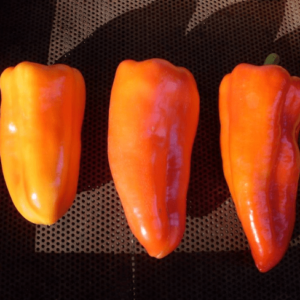
Episode one of the second season of Free the Seed! the Open Source Seed Initiative podcast This podcast is for anyone interested in the plants we eat – farmers, gardeners and food curious folks – who want to dig deeper into where their food comes from. It’s about how new crop varieties make it into your seed catalogues and onto your tables. In each episode, we hear the story of a variety that has been pledged as open-source from the plant breeder that developed it. In this episode, host Rachel Hultengren spoke with Andrew Still of Adaptive Seeds and the Seed Ambassadors Project about his work in seed-saving, open-pollinated variety maintenance and the process of what he refers to as ‘dehybridization’. Their conversation focuses on ‘Gypsy Queens’, a variety of pepper that Andrew developed and pledged to be open-source. Andrew Still Episode links Find Gypsy Queens seed at the Adaptive Seeds website. Learn more about the: Seed Ambassadors Project: www.seedambassadors.org/. Northern Organic Vegetable Improvement Collaborative (NOVIC): http://eorganic.info/novic/ Culinary Breeding Network: https://www.culinarybreedingnetwork.com/ Episode glossary Hybrid: a variety produced by the intentional crossing two distinct, stable parental lines or varieties. Commercially available hybrid varieties are generally highly uniform (individuals in the population will all have the same characteristics) because the individuals are all highly genetically similar. (Hybrid varieties are also often referred to as F1-hybrids.) F1: the first-generation progeny (offspring) of a parental cross. The ‘F’ stands for ‘filial’. F2: the second generation progeny of a parental cross. Produced by saving self-pollinated seed from F1 plants. F3: the third generation progeny of a parental cross. Produced by saving self-pollinated seed from F2 plants. Open-pollinated variety: a population wherein the seed from individuals that have been crossed with other individuals of the same population will produce progeny that are characteristically similar to those parents and the population in general. Off-type: an individual plant whose characteristics do not fit the variety description. Rogue: remove from the field individual plants are diseased, or that either don’t fit with the variety description (if the individual is a member of a well-defined variety) or the project goals (if part of a plant breeding project) in order to keep them from contributing genetic material to the next generation (i.e. so that seeds aren’t saved off them). —————————————————————————————————————————————— Free the Seed! Transcript for S2E1: Gypsy Queens Rachel Hultengren: Welcome to episode one of the second season of Free the Seed!, the Open Source Seed Initiative podcast that tells the stories of new crop varieties and the plant breeders that develop them. I’m your host, Rachel Hultengren. If you’re new to the podcast, consider checking out previous episodes from our first season. If you’d like to learn more about the Open Source Seed Initiative’s history and mission, I talk with Dr. Irwin Goldman and Dr. Claire Luby in episode 2 about intellectual property rights in crops. In this episode, I spoke with Andrew Still of Adaptive Seeds and the Seed Ambassadors Project about his work in seed-saving, open-pollinated variety maintenance and the process of what he refers to as ‘dehybridization’. Our conversation focuses on ‘Gypsy Queens’, a variety of pepper that Andrew developed and pledged to be open-source. Early in the interview, Andrew mentions the Culinary Breeding Network and NOVIC, the Northern Organic Vegetable Improvement Collaborative. We’ll have links to both their websites in our show-notes. Rachel: Hi Andrew – welcome to the show! Andrew Still: It’s good to be here! Rachel: Thanks so much for taking the time. I’m excited to get to talk about ‘Gypsy Queens’. We haven’t highlighted a pepper yet, so it’ll be great to hear about pepper breeding generally, and the specifics of this variety and your process. Maybe we could start with you describing ‘Gypsy Queens’ for us – what does this pepper look like if you had it on a plate in front of you? Andrew: It’s kind of a Hungarian type, or eastern European sweet pepper. It’s a medium sized bell in a way, but it also has an elongated shape, so it’s kind of intermediate between a bell pepper and an Italian ‘Corno di Toro’ type pepper. It was kind of a cool process of pulling it out of a famous variety, I guess you could say, called ‘Gypsy’, which was a sweet pepper hybrid from Petoseed that a lot of farmers in the Pacific Northwest found quite helpful and really, really good to grow in our not-so-hot climate. It always performed well, and one of the main
Announcing Season 2 – Free The Seed! Podcast
Announcing Season 2 of Free the Seed! the Open Source Seed Initiative podcast We’re excited to announce that we’ll be producing a second season of Free the Seed!, the podcast that tells the stories of where plant varieties come from. We’ve had great responses from the first season, and we want to thank you all for listening! It’s been a fun journey to make these episodes, and we’re excited to have the chance to do some more. In the new season, host Rachel Hultengren will be talking to four more plant breeders about their projects in developing new open-source pepper, tomato, melon and potato varieties. These episodes will be released sometime in late winter or early spring – we hope you’ll join us then. Subscribe to Free the Seed! wherever you get your podcasts. Has listening to Free the Seed! inspired you to start a plant breeding project of your own, or to learn more about the vegetable varieties you eat? In preparation for releasing the second season, we’d love to hear your feedback about the podcast, and we’re asking listeners to fill out a quick survey for us. It’s brief, only ten questions, and should only take a few minutes. Thanks in advance for taking the time to share your thoughts! Share your thoughts with us through our brief listener survey!
04 Popeye Spinach – Free The Seed! Podcast
Episode four of Free the Seed! the Open Source Seed Initiative podcast This podcast is for anyone interested in the plants we eat – farmers, gardeners and food curious folks – who want to dig deeper into where their food comes from. It’s about how new crop varieties make it into your seed catalogues and onto your tables. In each episode, we hear the story of a variety that has been pledged as open-source from the plant breeder that developed it. This episode is a little different from the previous episodes; instead of a moderately uniform, finished variety, Rachel Hultengren will be talking with Don Tipping of Seven Seeds Farm about a diverse spinach population that he has pledged to be open-source. ‘Popeye’, which is available through Don’s seed company, Siskiyou Seeds, has been selected for traits that are important to farmers in southern Oregon, where Don’s farm is located. In addition to the details of the breeding work behind ‘Popeye’, Don shared his thoughts on broader topics relevant to the future agricultural system to which he hopes to contribute. Find Popeye Spinach seed here at the Siskiyou Seeds Website Don Tipping ‘Popeye’ spinach going to seed. (Credit: Don Tipping) ‘Popeye’ spinach growing in the field. (Credit: Don Tipping) [gdlr_button href=”https://osseeds.org/wp-content/uploads/2019/01/S1E4_Popeye_Transcript.pdf” target=”_self” size=”medium” background=”#5dc269″ color=”#ffffff”]Download the Transcript[/gdlr_button] Free the Seed!Transcript for S1E4: Popeye Spinach Rachel Hultengren: Hello and welcome to Free the Seed! This podcast is for anyone interested in the plants we eat – farmers, gardeners, and food-curious folks – who want to dig deeper into the story of where their food comes from. It’s about how new crop varieties make it into your seed catalogues, and onto your tables. In each episode, we hear the story of a variety that has been pledged as open-source from the plant breeder that developed it. I’m your host, Rachel Hultengren. This episode is a little different from the previous episodes; instead of a moderately uniform, finished variety, we’ll be talking with Don Tipping of Seven Seeds Farm about a diverse spinach population that he has pledged to be open-source. ‘Popeye’, which is available through Don’s seed company, Siskiyou Seeds, has been selected for traits that are important to farmers in southern Oregon, where Don’s farm is located. In addition to the details of the breeding work behind ‘Popeye’, Don shared his thoughts on broader topics relevant to the future agricultural system to which he hopes to contribute. A heads-up about some of the sound quality – when I spoke with Don, he was out in his fields, and you’ll hear the wind blowing by a bit. Our conversation started with Don explaining that his farm isn’t in a prime spinach seed growing region of the US, and how that inspired him to breed spinach. —————————————————————————————————————————————— Don Tipping: I live in SW Oregon, which is known as the ‘banana belt’ of Oregon, because we have hot dry summers and cool moist winters. So a bit of a Mediterranean climate but perhaps a little more extreme in the winters. So typically spinach is grown as a spring and fall crop, just because it doesn’t do well in the heat we have here. But in early May, when spring spinach crops would be growing, it can easily get up into the 90’s which is not ideal spinach growing weather. So we hadn’t produced a whole lot of spinach seed after we learned when we did grow spinach for a few seed companies on commercial contracts that we were just not in the right area to be growing spinach because when it gets hot the plants bolt quickly and it doesn’t have the time to build the stature to produce a good seed head. So ‘Popeye’ really started a bit as a learning experiment and a challenge to that notion of ‘should we only grow seed in the area of the country or the world where it’s most well suited’, which is the industrial model, I would say, that we breed for a particular market and we only grow the crop in the area where we can maximize production. So ‘Popeye’ was a bit of an experiment to see, “Well, can we disprove that? Can we grow a better spinach for our area by breeding one here, for our conditions and pests and diseases and so forth?” Rachel Hultengren: The first step in the experiment to see if he could create a better spinach for southern Oregon by breeding spinach in southern Oregon was to create what Don referred to as a “synthetic variety” by using many varieties as founders of a single population. Don Tipping: It’s a way of getting a bunch of genetics in one varie
03 Hyper Red Rumple Waved Lettuce – Free The Seed! Podcast
Episode three of Free the Seed! the Open Source Seed Initiative podcast This podcast is for anyone interested in the plants we eat – farmers, gardeners and food curious folks – who want to dig deeper into where their food comes from. It’s about how new crop varieties make it into your seed catalogues and onto your tables. In each episode, we hear the story of a variety that has been pledged as open-source from the plant breeder that developed it. In this episode, host Rachel Hultengren talks with Frank Morton of Shoulder to Shoulder Farm about his lettuce variety, ‘Hyper Red Rumple Waved’, and about his journey in breeding lettuce, from salad to seed. Frank and his wife Karen are the originators of Wild Garden Seed, a farm-based organic seed company based in the Pacific Northwest, and Frank has pledged as open-source not only ‘Hyper Red Rumple Waved’, but all of the varieties and breeding populations that he has developed. Find ‘Hyper Red Rumple Waved’ lettuce seed here at the Wild Garden Seed’s Website. Frank Morton Lettuce florets (Credit: Rachel Hultengren) [gdlr_button href=”https://osseeds.org/wp-content/uploads/2019/01/S1E3_HyperRedRumpleWaved_Transcript.pdf” target=”_self” size=”medium” background=”#5dc269″ color=”#ffffff”]Download the Transcript[/gdlr_button] Free the Seed! Transcript for S1E3: Hyper Red Rumple Waved Lettuce Rachel Hultengren: Welcome to Free the Seed! I’m your host, Rachel Hultengren. This podcast is for anyone interested in the plants we eat – farmers, gardeners and food curious folks – who want to dig deeper into where their food comes from. It’s about how new crop varieties make it into your seed catalogues and onto your tables. In each episode, we hear the story of a variety that has been pledged as open-source from the plant breeder that developed it. We’ll be talking today with Frank Morton of Shoulder to Shoulder Farm about his lettuce variety, ‘Hyper Red Rumple Waved’, and about his journey in breeding lettuce, from salad to seed. Frank and his wife Karen are the originators of Wild Garden Seed, a farm-based organic seed company based in the Pacific Northwest, and Frank has pledged as open-source not only ‘Hyper Red Rumple Waved’, but all of the varieties and breeding populations that he has developed. —————————————————————————————————————————————— Rachel Hultengren: Hi Frank, welcome to the show. Frank Morton: Hi Rachel, thanks for inviting me. I’m glad you’re doing these podcasts. Rachel Hultengren: Yeah, thanks for being with us today. So maybe you could describe ‘Hyper Red Rumple Waved’ for us? Frank Morton: Okay. Well, it’s an upright leaf lettuce. It’s sort of a romaine shape, but it doesn’t form a dense heart. It’s very dark red, the leaves are puckered and savoyed. The margins of the leaves are wavy, that is the edge of the leaf is not smooth, but it’s sort of ruffled. It has good downy mildew resistance. I’ve gotten a lot of reports about its cold hardiness, and it’s a lettuce that, I don’t know, I think we introduced it about twenty years ago. So I’ve had to sort of refresh my memory about just it a little bit; it’s a lot of lettuces back there. Rachel Hultengren: So it sounds like it’s been a while since it was released, but remembering back, how did you decide to take on this project of developing a new variety? Frank Morton: Well, you sort of have to get back to where I was in terms of my farming life at the time. During that period of time, Karen and I were salad green growers, and we grew salads sort of on subscription for restaurants. It was sort of like a CSA, which is to say a restaurant was signed up for a certain amount of salad each week. And we would ship salad from our farm using UPS trucks and Fed Ex and the USPS and we would ship salad to… well we’re in Oregon here, but we would ship salad to Seattle, to Portland, Boston, Washington DC, Philadelphia, NYC… Rachel Hultengren: That’s quite a reach! Frank Morton: It was quite a reach. We did that for about 18 years or so. And during that period of time, I was learning about plant breeding as I was doing this salad thing. I’m really an accidental plant breeder. Lettuce sort of showed me what plant breeding was about. I saw my first off-type lettuce in a seed flat in 1983. Rachel Hultengren: What does that mean, for a seedling to be ‘off-type’? Frank Morton: Well, I had started saving seed for myself as soon as I started farming. And I had saved some seeds in 1982 from a variety called Green Salad Bowl. And one day in 1983,  I saw one red plant in the middle of all these green plants. And I had planted thousands of these seeds at this point. And here in
02 About Open Source Seed – Free The Seed! Podcast
Episode two of Free the Seed! the podcast of the Open Source Seed Initiative. This podcast is for anyone interested in the plants we eat – farmers, gardeners and food curious folks – who want to dig deeper into where their food comes from. It’s about how new crop varieties make it into your seed catalogues and onto your tables. In each episode, we hear the story of a variety that has been pledged as open-source from the plant breeder that developed it. In this second installment, host Rachel Hultengren interviews Dr. Claire Luby and Dr. Irwin Goldman, two of the co-founders of the Open Source Seed Initiative. We’ll discuss the importance of genetic diversity in plant breeding, the evolution of intellectual property rights as they apply to plants, and the efforts of the Open Source Seed Initiative to maintain fair and open access to plant genetic resources. Dr. Irwin Goldman is a faculty member in the Department of Horticulture at the University of Wisconsin-Madison, where he has taught and led research in plant breeding for the past 26 years. His breeding program focuses on carrot, onion, and table beet. Dr. Claire Luby conducted her PhD research at the University of Wisconsin-Madison in the Goldman Lab, and was the first Executive Director of the Open Source Seed Initiative. Dr. Irwin Goldman Dr. Claire Luby [gdlr_button href=”https://osseeds.org/wp-content/uploads/2019/01/S1E2_OSSI_Transcript.pdf” target=”_self” size=”medium” background=”#5dc269″ color=”#ffffff”]Download the Transcript[/gdlr_button] Free the Seed!Transcript for S1E2: Open Source Seed Initiative Rachel Hultengren: Hello and welcome to Free the Seed! This podcast is for anyone interested in the plants we eat – farmers, gardeners, and food-curious folks – who want to dig deeper into the story of where their food comes from. It’s about how new crop varieties make it into your seed catalogues, and onto your tables. I’m your host, Rachel Hultengren. In this episode, we’ll be joined by Dr. Claire Luby and Dr. Irwin Goldman, two of the co-founders of the Open Source Seed Initiative. We’ll discuss the importance of genetic diversity in plant breeding, the evolution of intellectual property rights as they apply to plants, and the efforts of the Open Source Seed Initiative to maintain fair and open access to plant genetic resources. Dr. Irwin Goldman is a faculty member in the Department of Horticulture at the University of Wisconsin-Madison, where he has taught and led research in plant breeding for the past 26 years. His breeding program focuses on carrot, onion, and table beet. Dr. Claire Luby conducted her PhD research at the University of Wisconsin-Madison in the Goldman Lab, and was the first Executive Director of the Open Source Seed Initiative. —————————————————————————————————————————————— Rachel Hultengren: Thanks for joining us today! Maybe we can start pretty broadly – what is the OSSI, for folks who have never heard of it before? Claire Luby: So the Open Source Seed Initiative… it is a project to basically liberate plant varieties from the constraints of IP rights and facilitate sharing and exchange of crop varieties amongst plant breeders and amongst farmers and gardeners. Rachel Hultengren: For those who maybe aren’t familiar with intellectual property as it relates to plants and might be familiar with patents for things like electronics or other physical invented objects, Irwin maybe you could tell us a bit about the brief history of IP as it relates to plants? Irwin Goldman: Sure, yeah, and I think you know I’ve been fortunate to have a front row seat in that. I’ve been involved in plant breeding first as a student and now as a faculty member for the last 35 years or so. And during that time, I’ve watched seeds go from something that you would just freely send to somebody, anybody who requested your germplasm… Rachel Hultengren: When you say ‘germplasm’, what does that word mean? Irwin Goldman:  Yeah, so, germplasm would be the raw material that the breeders are using to develop something. So it’s their seeds, but it could be cuttings, it could be, you know if they were breeding a vegetatively propagated species. But just their raw material, let’s say the unique material that they’re using to improve a particular crop. We would share that quite freely in the early days and in the late 80’s and into the 90’s, there became a much greater interest in controlling those seeds and controlling those genetics. And some of that can be controlled by tools like the Plant Variety Protection certificate, which is available through the government, and is an instrument that allows the breeder to essent
01 Goldini Zucchini – Free The Seed! Podcast
Welcome to the first episode of Free the Seed! the podcast of the Open Source Seed Initiative. In this first installment, host Rachel Hultengren interviews Carol Deppe about her work developing Goldini Zucchini. This podcast is for anyone interested in the plants we eat – farmers, gardeners and food curious folks – who want to dig deeper into where their food comes from. It’s about how new crop varieties make it into your seed catalogues and onto your tables. In each episode, we hear the story of a variety that has been pledged as open-source from the plant breeder that developed it. In this episode we’ll talk with Dr. Carol Deppe about her OSSI-pledged variety ‘Goldini Zucchini’. Oregon plant breeder Carol Deppe holds a PhD in Genetics from Harvard University, and focuses on developing superbly flavorful, organic-adapted, open-source crops for human survival for the next thousand years, and in teaching others to do the same. Find seeds of ‘Goldini Zucchini’ through Fertile Valley Seed at www.caroldeppe.com. Dr. Carol Deppe [gdlr_button href=”https://osseeds.org/wp-content/uploads/2019/01/S1E1_GoldiniZucchini_Transcript.pdf” target=”_self” size=”medium” background=”#5dc269″ color=”#ffffff”]Download the Transcript[/gdlr_button] Free the Seed! Transcript for S1E1: Goldini Zucchini Rachel Hultengren: Hello and welcome to Free the Seed! This podcast is for anyone interested in the plants we eat – farmers, gardeners, and food-curious folks – who want to dig deeper into the story of where their food comes from. It’s about how new crop varieties make it into your seed catalogues, and onto your tables. I’m your host, Rachel Hultengren. On this podcast, we’ll hear from plant breeders the stories of how they developed new cultivars that fit the specific needs of farmers and eaters, and why they pledged those varieties to the Open Source Seed Initiative. In this episode we’ll talk with Dr. Carol Deppe about her OSSI-pledged variety ‘Goldini Zucchini’. Oregon plant breeder Carol Deppe holds a PhD in Genetics from Harvard University, and focuses on developing superbly flavorful, organic-adapted, open-source crops for human survival for the next thousand years, and in teaching others to do the same. —————————————————————————————————————————————— Rachel Hultengren: Hi Dr. Deppe, welcome to the show, and thanks so much for being with us today! Carol Deppe: We’ll have fun, I’m sure. Rachel Hultengren: I’m looking forward to it. So today we’re going to be talking about your OSSI-pledged variety ‘Goldini Zucchini’. And maybe we can start by telling me a bit about the variety – what do you highlight in the catalogue description? Carol Deppe: Well, this variety is unusual in a lot of ways. For one, I bred it not just as a really delicious summer squash, but it’s also great as a drying squash, and I’ll talk a little more about what I mean by that. But that means that you can produce a long-storing winter staple from your summer squash patch as well as a summer squash. And for reasons completely non-obvious to me, it also turned out to have spectacular flavor raw. That’s really unusual, because when people say that some squash is good raw, I figure that, you know, it’s edible raw. That’s not the same as being good raw. Basically, the variety got its start when I was reading a book called Buffalo Bird Woman’s Garden. And this was about the agriculture of the Hidatsa Indians in the Upper Midwest. And from this book, I learned that the main way that the Indians ate squash – other than just eating it as summer squash – but their main long storing staple was not the mature fruit, it was dried slices of squash that were harvested at the summer squash stage. That was big news to me, but as I thought about it it made a lot of sense, because the Indians didn’t have good storage space or conditions to store a whole lot of dried squash some place. But they did have good storage conditions for stuff that was completely dry, like dried fruits and vegetables, and dried meat, for example. But at any rate, I thought, ‘Well, this is neat.’ And the book described exactly how to make the slices, and how thick they should be, and this whole process of how the Indians did it.  They had special knives; they had special racks and strings and trays, and drying platforms and so forth. But just for starters, I said ‘Well, let me just find out whether I like dried squash.’ Rachel Hultengren: Right. Carol Deppe: So for that, all I needed for that was the same dehydrator that I dry seeds in. And I could just slice the slices however thick I wanted them, and dry them. And it turns out that actual