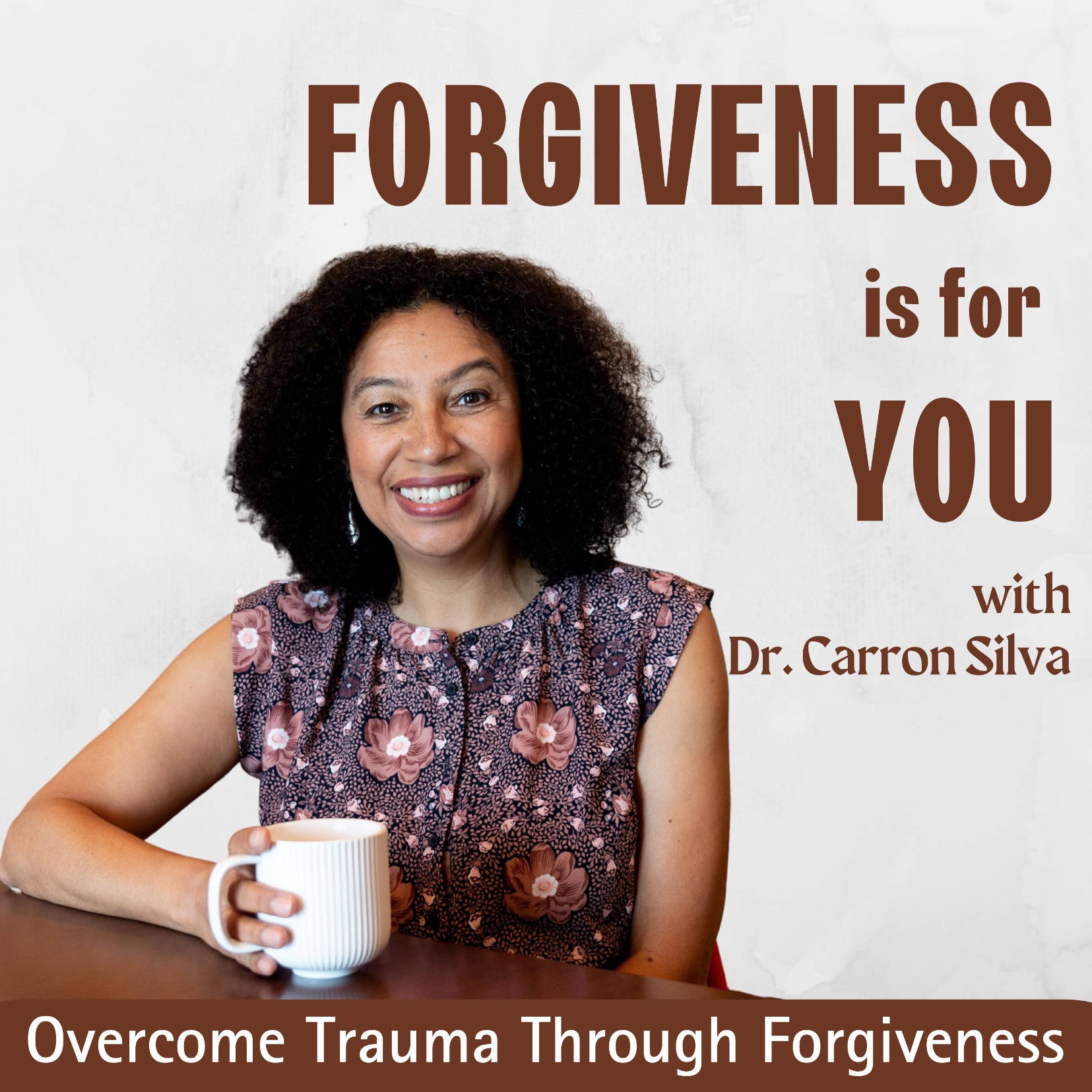
Forgiveness Is For YOU - Overcome Trauma Through Forgiveness
140 episodes — Page 3 of 3
Ep 40S1E39 Forgiving and Praying For Yourself with Justin Veazey
Friends, In this episode, my guest Justin Veazey, an IT consultant and father of seven, and I delve into the complexities of praying for oneself. Justin shares his journey of overcoming the hesitation to pray for himself and how it has deepened his trust in God. We discuss the challenges of self-love, the misconceptions around it, and the importance of recognizing one's own value. We explore how self-forgiveness plays a crucial role in this process and how it aligns with loving others as oneself. Join us as we unpack practical steps to start praying for yourself, the significance of the Surrender Novena, and the transformative power of prayer in overcoming personal struggles and fostering a forgiving heart. Whether you struggle with self-forgiveness or find it hard to pray for your needs, this episode offers valuable insights and encouragement to help you on your journey to a more forgiving and fulfilling life. Surrender Novena Receive a free PDF 5 Forgiveness Myths Busted when you sign up for my weekly newsletter. Sign up for my 5 Days to Forgiveness Self-Guided Mini-Audio Retreat. Need someone to help you forgive in a shame-free, nonjudgmental space? Let's chat! Check out this Brochure to learn more about my work. Note: Opinions expressed by guests on this podcast are their personal opinions and do not necessarily represent those of the host. The host understands that guests have the right to freedom of expression. If the Forgiveness is for YOU podcast resonates with you, please rate, share on social media, write a review, and subscribe. Apple Podcasts Link: https://podcasts.apple.com/us/podcast/forgiveness-is-for-you-overcome-trauma-through-forgiveness/id1721956839 How to write a review on Apple Podcast App Open Apple Podcast App Search for Forgiveness is for You: Overcome Trauma… Click on the SHOW, not the episode Scroll all the way down to “Ratings and Reviews” Click on “Write a Review” Podcast Editor: Dr. Carron Silva Cover Art Designer: Dr. Carron Silva Music Provided by: Kode M @kodemaster90 Thank you, and remember Friend, Forgiveness is for YOU!
Ep 39S1E38 Healing Hearts through Unbound Prayer with Deanna Bartalini
Friends, In this episode, I sit down with Deanna Bartolini, an experienced Unbound Prayer Minister, to delve into the transformative power of Unbound Prayer Ministry. Through heartfelt stories and personal experiences, Deanna shares how this unique prayer practice has brought profound healing to many, including herself. We discuss the importance of forgiveness, the role of the intercessor, and how Unbound Prayer can help release burdens and foster spiritual freedom. Deanna also provides insights into the five keys of Unbound Prayer and explains how listeners can access this ministry or become prayer ministers themselves. Join us for an inspiring conversation that underscores the importance of faith, healing, and the transformative power of prayer. Don't miss out on this opportunity to learn how to let go of past hurts and embrace the freedom that Jesus offers. Deanna Bartalini's Links: Website: https://livenotlukewarm.com/ Instagram: https://www.instagram.com/deannabartalini/ Facebook: https://www.facebook.com/LiveNotLukewarm 4 Ways to Pray with Scripture when you sign up for my newsletter: https://subscribepage.io/bqmnCS?fbcli Connect with Dr. Carron Need someone to help you forgive in a shame-free, nonjudgmental space? Let's chat! Check out this Brochure to learn more about my work. Receive the 5 Forgiveness Myths Busted PDF when you sign up for my weekly newsletter. Sign up for my 5 Days to Forgiveness Self-Guided Mini-Audio Retreat. Note: Opinions expressed by guests on this podcast are their personal opinions and do not necessarily represent those of the host. The host understands that guests have the right to freedom of expression. If the Forgiveness is for YOU podcast resonates with you, please rate, share on social media, write a review, and subscribe. Apple Podcasts Link: https://podcasts.apple.com/us/podcast/forgiveness-is-for-you-overcome-trauma-through-forgiveness/id1721956839 How to write a review on Apple Podcast App Open Apple Podcast App Search for Forgiveness is for You: Overcome Trauma… Click on the SHOW, not the episode Scroll all the way down to “Ratings and Reviews” Click on “Write a Review” Podcast Editor: Dr. Carron Silva Cover Art Designer: Dr. Carron Silva Music Provided by: Kode M @kodemaster90 Thank you, and remember Friend, Forgiveness is for YOU!
Ep 38S1E37 Ignatian Prayer Practices with Kylie Hein
Friends, In this episode, Prayer Warrior, Spiritual Director, and Mindset Coach, Kylie Hein, shares her journey with Ignatian spirituality, revealing how the spiritual exercises of St. Ignatius of Loyola can guide us in healing and forgiveness. Discover the significance of contemplative and mental prayer, the practice of the daily Examen, and how imaginative prayer can place us in the Gospel scenes to deepen our connection with God. Whether you’re struggling to forgive others or yourself, this episode offers practical insights and spiritual tools to help you on your journey. Tune in to learn how to cultivate a deeper sense of trust in God's plan for your life and find freedom from the burdens of resentment and anger. Reference Links: IG: @kyliemhein email: [email protected] Website: www.kyliemhein.com Free Daily Examen: https://kyliemhein.kartra.com/page/home Podcast: https://podcasts.apple.com/us/podcast/63-forgive-yourself-with-dr-carron-silva/id1675778101?i=1000660187617 About Ignatian Spirituality: https://rb.gy/wsf8tg Next Steps: Receive a free PDF when you sign up for my weekly newsletter. Sign up for my 5 Days to Forgiveness Self-Guided Mini-Audio Retreat. Need someone to help you forgive in a shame-free, nonjudgmental space? Let's chat! Check out this Brochure to learn more about my work. Note: Opinions expressed by guests on this podcast are their personal opinions and do not necessarily represent those of the host. The host understands that guests have the right to freedom of expression. If the Forgiveness is for YOU podcast resonates with you, please rate, share on social media, write a review, and subscribe. Apple Podcasts Link: https://podcasts.apple.com/us/podcast/forgiveness-is-for-you-overcome-trauma-through-forgiveness/id1721956839 How to write a review on Apple Podcast App Open Apple Podcast App Search for Forgiveness is for You: Overcome Trauma… Click on the SHOW, not the episode Scroll all the way down to “Ratings and Reviews” Click on “Write a Review” Podcast Editor: Dr. Carron Silva Cover Art Designer: Dr. Carron Silva Music Provided by: Kode M @kodemaster90 Thank you, and remember Friend, Forgiveness is for YOU!
Ep 37S1E36 The Power of Prayer in Forgiveness: Practical Insights for Personal Growth
Friends, During July we explored mourning loss in the forgiveness process. You heard interviews with Mama Jane, who struggled with fertility, Dr. Abby Jorgensen, who supports families experiencing perinatal loss, and Paige McLemore, whose sister was tragically murdered. Forgiveness involves loss, but it also brings hope, accessible through prayer. In August, we will delve into various forms of prayer and devotion, focusing on inner healing prayer to soften our hearts towards self-forgiveness and forgiving others. In today's episode, we explore what prayer is, different types of prayer, and their importance in the forgiveness process. We start with the definition of prayer and I share my earliest memories of prayer involving my grandmother, teaching me the Gentle Jesus prayer and the Our Father in Afrikaans. I discuss two postures of praying—mental or silent prayer (contemplative prayer) and vocal prayer. Additionally, I explore four prayer intentions: blessing and adoration, petition, intercession, and thanksgiving. Prayer is crucial in the forgiveness process. Without prayer, we're like a compass without a needle. Reference Links: https://www.etymonline.com/word/prayer https://mgoretti.org/mgstory Next Steps: Receive a free PDF when you sign up for my weekly newsletter. Sign up for my 5 Days to Forgiveness Self-Guided Mini-Audio Retreat. Need someone to help you forgive in a shame-free, nonjudgmental space? Let's chat! Check out this Brochure to learn more about my work. Disclaimer: Opinions expressed by guests on this podcast are their personal opinions and do not necessarily represent those of the host. The host understands that guests have the right to freedom of expression. If the Forgiveness is for YOU podcast resonates with you, please rate, share on social media, write a review, and subscribe. Apple Podcasts Link: https://podcasts.apple.com/us/podcast/forgiveness-is-for-you-overcome-trauma-through-forgiveness/id1721956839 How to write a review on Apple Podcast App Open Apple Podcast App Search for Forgiveness is for You: Overcome Trauma… Click on the SHOW, not the episode Scroll all the way down to “Ratings and Reviews” Click on “Write a Review” Podcast Editor: Dr. Carron Silva Cover Art Designer: Dr. Carron Silva Music Provided by: Kode M @kodemaster90 Thank you, and remember Friend, Forgiveness is for YOU!
Ep 36S1E35 Navigating Perinatal Loss with Dr. Abby Jorgensen
*Content Warning* Infant and Childbirth loss. Friends, In this week's episode, I delve into the delicate topic of perinatal loss with bereavement doula and sociology professor, Dr. Abby Jorgensen. Discover how Dr. Jorgensen helps families navigate the process of forgiveness, and the complex emotions that accompany such profound loss. We explore her unique role in supporting parents through the stages of grief, providing both emotional and practical support. Dr. Jorgensen shares her journey into this field, the intersection of her sociological expertise with her doula work, and the importance of validating grief in our society. Learn about the resources available for grieving families, the role of siblings in the mourning process, and how men can also find space to grieve. Dr. Jorgensen offers insights into the nuances of grief support, emphasizing the need for compassion and understanding in the face of loss. Whether you are seeking to understand grief better or looking for support, this episode provides valuable perspectives and resources to help navigate the difficult journey of perinatal loss. Dr. Abby Jorgensen's Links and Offers: To gain more bereavement support skills: What’s a bereavement doula? - bereavementdoulas.com Haven Bereavement Doula Q&A series in October: Bereavement doula q&a Trainings: Trainings - bereavementdoulas.com A Catholic Guide to Miscarriage, Stillbirth, and Infant Loss: Compassionate Answers to Difficult Questions: Jorgensen, Abigail: 9781646802395: Amazon.com: Books Abby the Sociologist Doula – Childbirth education, birth doula, and bereavement doula services that are science-based and faith-informed Next Steps: Receive a free PDF when you sign up for my weekly newsletter. Sign up for my 5 Days to Forgiveness Self-Guided Mini-Audio Retreat. Need someone to help you forgive in a shame-free, nonjudgmental space? Let's chat! Check out this Brochure to learn more about my work. Note: Opinions expressed by guests on this podcast are their personal opinions and do not necessarily represent those of the host. The host understands that guests have the right to freedom of expression. If the Forgiveness is for YOU podcast resonates with you, please rate, share on social media, write a review, and subscribe. Apple Podcasts Link: https://podcasts.apple.com/us/podcast/forgiveness-is-for-you-overcome-trauma-through-forgiveness/id1721956839 How to write a review on Apple Podcast App Open Apple Podcast App Search for Forgiveness is for You: Overcome Trauma… Click on the SHOW, not the episode Scroll all the way down to “Ratings and Reviews” Click on “Write a Review” Podcast Editor: Dr. Carron Silva Cover Art Designer: Dr. Carron Silva Music Provided by: Kode M @kodemaster90 Thank you, and remember Friend, Forgiveness is for YOU!
Ep 35S1E34: I Forgave My Sister's Murderer
Friend, This week I welcome Paige McLemore, Middle School Principal and Forgiveness Ministry Founder, who shares her remarkable journey of forgiving her sister Lee's murderer after 20 years of wrestling with hatred. Paige opens up about her life before and after the tragedy, the immense grief and anger she faced, and how she eventually found peace and joy through her obedience to Christ. She discusses the transformative power of forgiveness, not just for others, but also for oneself, and how it led to a life filled with love, grace, and purpose. This episode is a heartfelt conversation that dives deep into the emotional and spiritual challenges of forgiveness, and how Paige's unwavering faith in God guided her to a place of healing and ministry. Tune in to hear Paige's inspiring testimony and learn about the profound impact of forgiveness on her life and others. Links for Paige McLemore: Paigemclemore.com Book: Remembering Lee: The Noblest Revenge is to Forgive FB: Paige McLemore Instagram: Lpaiges TiKtok: @paigemac70 Paige Mclemore Ministries If this podcast resonates with you, please rate, share on social media, write a review, and subscribe. Sign up for my 5 Days to Forgiveness Self-Guided Mini-Audio Retreat. Let's CHAT about how you can move toward forgiveness with me as your coach. Receive a free PDF when you sign up for my weekly newsletter. Note: Opinions expressed by guests on this podcast are their personal opinions and do not necessarily represent those of the host. The host understands that guests have the right to freedom of expression. Remember Friend, forgiveness is for YOU! Apple Podcasts Link: https://podcasts.apple.com/us/podcast/forgiveness-is-for-you-overcome-trauma-through-forgiveness/id1721956839 How to write a review on Apple Podcast App Open Apple Podcast App Search for Forgiveness is for You: Overcome Trauma… Click on the SHOW, not the episode Scroll all the way down to “Ratings and Reviews” Click on “Write a Review” Podcast Editor: Dr. Carron Silva Cover Art Designer: Dr. Carron Silva Music Provided by: Kode M @kodemaster90
Ep 34S1E33 Navigating Infertility with Mama Jane Snyder
*Content Warning* This episode contains mature content not intended for persons under the age of 18. Friends, In this episode, I am joined by Mama Jane Snyder, a fertility awareness instructor and Catholic Mindset Coach. Together, we explore the emotional and spiritual challenges of infertility, emphasizing the importance of forgiveness and self-compassion. Jane shares her journey through seven years of infertility and how she now supports couples in similar situations. We discuss the unitive and procreative aspects of marriage, the cultural silence around infertility, and the impact of faith in navigating these challenges. This episode offers valuable insights for both men and women, encouraging a deeper understanding and compassion for those facing infertility. Join us as we delve into the complexities of infertility, the significance of charting, and the power of trusting in God's plan. This heartfelt conversation is a beacon of hope and support for anyone struggling with infertility or seeking to understand it better. Mama Jane's website: https://www.wisdomwellnesscoaching.net/home/ Relevant Links: https://www.who.int/news-room/fact-sheets/detail/infertility https://www.factsaboutfertility.org/wp-content/uploads/2014/09/SymptoThermalPEH.pdf https://www.vatican.va/content/paul-vi/en/encyclicals/documents/hf_p-vi_enc_25071968_humanae-vitae.html https://www.factsaboutfertility.org/wp-content/uploads/2017/12/BillingsPEH_REV3.pdf If this podcast resonates with you, please rate, share on social media, write a review, and subscribe. Sign up for my 5 Days to Forgiveness Self-Guided Mini-Audio Retreat. Connect with me HERE to connect via phone or Zoom. Receive a free PDF when you sign up for my weekly newsletter. Note: Opinions expressed by guests on this podcast are their personal opinions and do not necessarily represent those of the host. The host understands that guests have the right to freedom of expression. Remember Friend, forgiveness is for YOU! Apple Podcasts Link: https://podcasts.apple.com/us/podcast/forgiveness-is-for-you-overcome-trauma-through-forgiveness/id1721956839 How to write a review on Apple Podcast App Open Apple Podcast App Search for Forgiveness is for You: Overcome Trauma… Click on the SHOW, not the episode Scroll all the way down to “Ratings and Reviews” Click on “Write a Review” Podcast Editor: Dr. Carron Silva Cover Art Designer: Dr. Carron Silva Music Provided by: Kode M @kodemaster90
Ep 33S1E32 Grief, Betrayal and Healing in Forgiveness
Friends, In this episode, we delve into the complex emotions surrounding forgiveness, particularly in the aftermath of betrayal and deep personal loss. My exploration is framed by personal reflections on a former colleague's shocking conviction for sexual assault on minors, a person I worked closely with for 14 years. This experience has led me to reflect deeply on grief, identity, and the forgiveness process. I compare grieving stages to phases of forgiveness, drawing from Bowlby and Parkes’ Four Phases of Grief Model, and use personal anecdotes and insights into how to navigate through these emotional phases. I remind listeners that forgiveness is a deeply personal and transformative journey requiring acknowledgment of grief and a commitment to healing. I highlight the resilience of the human spirit in overcoming betrayal and finding hope through forgiveness. Resource Links: https://www.dictionary.com/browse/bereavement https://www.ncbi.nlm.nih.gov/books/NBK507885/ https://www.colorado.edu/ova/four-phases-grief-grieving-loss-loved-one If this podcast resonates with you, please rate, share on social media, write a review, and subscribe. To be considered as a guest on this podcast, please book an appointment using this LINK To schedule an initial coaching session with Dr. Carron, Click this CALENDAR LINK Sign up for my 5 Days to Forgiveness Self-Guided Mini-Audio Retreat. Receive a free PDF when you sign up for my weekly newsletter. Note: Opinions expressed by guests on this podcast are their personal opinions and do not necessarily represent those of the host. The host understands that guests have the right to freedom of expression. Apple Podcasts Link: https://podcasts.apple.com/us/podcast/forgiveness-is-for-you-overcome-trauma-through-forgiveness/id1721956839 How to write a review on Apple Podcast App Open Apple Podcast App Search for Forgiveness is for You: Overcome Trauma… Click on the SHOW, not the episode Scroll all the way down to “Ratings and Reviews” Click on “Write a Review” Podcast Editor: Dr. Carron Silva Cover Art Designer: Dr. Carron Silva Music Provided by: Kode M @kodemaster90 on Fiverr.com Remember Friend, Forgiveness is for YOU!
Ep 32S1E31 The Price of Revenge: A Scientific and Biblical Perspective
In this podcast episode, I explore the concept of revenge through scientific research and Catholic teachings. I begin by examining the contrast between a heart of stone, hardened by experiences of injustice, and a heart of flesh, capable of forgiveness and love. Drawing from the Catechism of the Catholic Church and psychological research, I discuss how revenge impacts individuals psychologically and spiritually, often leading to further harm rather than healing. The episode emphasizes the transformative power of forgiveness, highlighting its role in restoring inner peace and aligning oneself with God's compassion. Ultimately, it encourages listeners to embrace forgiveness as a path to healing and reconciliation, echoing the promise of a renewed heart and freedom through divine grace. References: Carlsmith, K.M, Gilbert, D.T., Wilson, T.D, (2008) The Paradoxical Consequences of Revenge https://dtg.sites.fas.harvard.edu/CARLSMITH,%20WILSON,%20&%20GILBERT%20%282008%29.pdf The Catechism of the Catholic Church Article 3: Man’s Freedom https://www.vatican.va/archive/ENG0015/__P5N.HTM If this podcast resonates with you, please rate, share on social media, write a review, and subscribe. Sign up for my 5 Days to Forgiveness Self-Guided Mini-Audio Retreat. Connect with me HERE to connect via phone or Zoom. Receive a free PDF when you sign up for my weekly newsletter. Note: Opinions expressed by guests on this podcast are their personal opinions and do not necessarily represent those of the host. The host understands that guests have the right to freedom of expression. Remember Friend, forgiveness is for YOU! Apple Podcasts Link: https://podcasts.apple.com/us/podcast/forgiveness-is-for-you-overcome-trauma-through-forgiveness/id1721956839 Podcast Editor: Dr. Carron Silva Cover Art Designer: Dr. Carron Silva Music Provided by: Kode M @kodemaster90
Ep 31S1E30 From Gratitude to Forgiveness with Amy Latino
**Content Warning!** This episode contains mature content. Friends, in today's episode, I delve into the powerful connection between gratitude and forgiveness with my special guest, Amy Latino. A devoted wife, homeschooling mom, and entrepreneur, Amy shares her compelling story of growing up with a father who struggled with his own traumas, leading to a strained relationship filled with emotional neglect and abuse. Despite these challenges, Amy reveals how a moment of gratitude for the gift of life led her to a profound sense of forgiveness for her father, years after his passing. We explore the generational wounds, the impact of parental shortcomings, and how Amy's gratitude practice became a transformative tool in her journey toward forgiveness. This episode also touches on the complexities of forgiving within the context of systemic injustices and personal traumas. Join us as we uncover the healing power of gratitude and the importance of never giving up on the pursuit of forgiveness, no matter how difficult it may be. This conversation is filled with insights and hope for anyone struggling with forgiveness. Amy Latino’s Links: https://www.facebook.com/amy.benoit1 Dish It Out Private FB Group https://www.facebook.com/groups/1278175459500138/ IG: @dishitout_0 If this podcast resonates with you, please rate, share on social media, write a review, and subscribe. Want more free content? Sign up for my weekly newsletter. Sign up for my 5 Days to Forgiveness Self-Guided Mini-Audio Retreat. Connect with me HERE to connect with me via phone or Zoom. Note: The opinions expressed by guests on this podcast are their personal opinions and do not necessarily reflect the opinions held by the host. This podcast honors each guest's journey toward forgiveness and recognizes that each person expresses their struggle uniquely. Remember Friend, forgiveness is for YOU!
Ep 30S1E29 A Legacy of Love with Theresa Eppich
In this episode, Canadian Teresa Eppich, a fifth-grade teacher and author of the book A Legacy of Love, How a Holocaust Survivor Inspired Me to Live with Greater Freedom and Purpose shares the profound impact of her decade-long friendship with Eva Olsson, a Holocaust survivor who has touched countless lives with her message of resilience, love, and forgiveness. Eva's incredible journey from surviving the Holocaust to becoming a celebrated author and speaker is a testament to her unyielding spirit and dedication to spreading hope. Teresa discusses how Eva's life and teachings have transformed her own perspective, emphasizing the importance of gratitude, love, and choosing to forgive despite unimaginable hardships. Join me and Teresa as we explore the powerful themes of justice, forgiveness, and the enduring legacy of Eva Olsson. This episode is a moving tribute to Eva's legacy and a reminder of the crucial importance of remembering history to ensure it is never repeated. Don't miss this inspiring conversation that highlights the radical courage of forgiveness and the transformative power of love. Links: A Legacy of Love, How a Holocaust Survivor Inspired Me to Live with Greater Freedom and Purpose: https://www.amazon.com/Legacy-Love-Holocaust-Survivor-Inspired-ebook/dp/B0CVQYYD5G Theresa Eppich Contact Info Email: [email protected] Instagram @cherishedjoyfulhearts Eva Olsson: Holocaust Survivor https://www.facebook.com/p/Eva-Olsson-100063557193414/ If this podcast resonates with you, please follow, subscribe, write a review, share the link with a friend, take a screenshot, and share it on your social media. Join my weekly newsletter HERE. Sign up for my 5 Days to Forgiveness Self-Guided Mini-Audio Retreat. Connect with me HERE as your Christian Life Coach. I will hold space for you as a witness to your story and help you rebuild your life after trauma. Remember Friend, Forgiveness is for You.
Ep 29S1E28 Navigating Faith: Avoiding the Trap of Spiritual Bypassing
In this episode, I explore the concept of spiritual bypassing, a term coined by Clinical Psychologist John Welwood in the 1980s. I discuss how spiritual practices can sometimes be used to avoid facing unresolved emotional issues and trauma, particularly in the context of religious observance. Drawing from personal experiences and biblical references, I delve into the dangers of disordered religiosity and how it can hinder true forgiveness, spiritual growth, and healing. Join me as I uncover ways to cultivate a genuine relationship with God that embraces suffering and leads to holistic healing. References: John Welwood: Spiritual Bypassing https://en.wikipedia.org/wiki/Spiritual_bypass Religiosity Etymology https://www.etymonline.com/word/religiosity Want more free content? Sign up for my email newsletter. Check out my 5 Days to Forgiveness Self-Guided Mini-Audio Retreat. Connect with me HERE as your forgiveness coach. I will hold space for you as a witness to your story and help you rebuild your life after trauma. If this podcast resonates with you, please follow, subscribe, write a review, share the link with a friend, take a screenshot, and share it on your social media. Remember Friend, Forgiveness is for You.
Ep 28S1E27 Taking Ownership in the Forgiveness Process
In this episode, I celebrate the milestone of 5,000 downloads and express my deepest gratitude. The episode takes inspiration from a listener's struggle with forgiveness, expanding on a discussion that began in episode 24 with Hannah Dustman. The episode also encourages reflection on the role one may take in conflicts and the tendency to self-blame. Listener's comment: I was floored by the description of Phlegmatic tendencies as I checked off every box! I think Hannah kind of hit on another aspect I was acknowledging about myself in that a lot of times I find myself not only trying to acknowledge what part I am responsible for in any type of relationship fracture, but I tend to look for ways to take it all on and remove any responsibility from the other person. It’s probably the conflict avoider in me. But I can see the truth that it makes the process of “forgiveness” (I use quotes because sometimes I feel like a person doesn’t necessarily need me to forgive as much as I need to “get over” something) take longer. Refusing to allow my emotional reactions to real experiences, even if they haven’t yet entirely worked through reason, have their moment in the light takes a lot of work and maybe it’s the self-imposed work I resent more than any perceived hurt from another person. I interpret the statement "get over it" as an invitation to explore underlying unhealed wounds, possible power dynamics, and abdicated responsibilities. I prompt listeners to question the power differentials within themselves and in their relationships. Listeners are urged to recognize and value their emotional reactions to circumstances and give them the time and consideration they deserve. Drawing wisdom from St. Paul’s teachings in Romans Chapter 7, I end on a hopeful note, reassuring listeners that they have the power to work through forgiveness. If this podcast resonates with you, please follow, subscribe, write a review, share the link with a friend, take a screenshot, and share it on your social media. Join my weekly newsletter HERE. Sign up for my 5 Days to Forgiveness Self-Guided Mini-Audio Retreat. Connect with me HERE as your Christian Life Coach. I will hold space for you as a witness to your story and help you rebuild your life after trauma. Remember Friend, Forgiveness is for You.
Ep 26S1E26 Sacred Wounds: Family, Faith & Forgiveness with Claudine Noel
In this episode, I have a heartfelt conversation with Claudine Noel, Board-certified physician, Life Coach, Catholic convert, and the editor of the transformative book, Sacred Wounds, Stories of Redemption, Healing, and Growth. We delve into the complex themes of family, faith, forgiveness, and the unique experiences and challenges faced by immigrants. This episode offers valuable insights into forgiveness, faith, and healing, it's a must-listen for anyone on the path of personal growth and healing. The conversation stresses the indispensable role of forgiveness in the healing journey. We discuss challenges in identifying personal wounds to heal and understanding prevailing patterns and traumas we've inherited. We emphasize the importance of forgiveness in letting go of past painful experiences, thereby initiating true healing and growth. The episode concludes with an exploration of how forgiveness, intertwined with faith, can trigger personal transformation and growth. It encapsulates our book's essence, 'Sacred Wounds', vividly portraying the stunning metamorphosis that can arise from suffering. Links for Claudine Noel: Sacred Wounds Book website: www.sacredwoundsbook.com https://www.femininegeniuscoaching.com/ Join my weekly newsletter HERE Sign up for my 5 Days to Forgiveness Self-Guided Mini-Audio Retreat. Connect with me HERE as your forgiveness coach. I will hold space for you as a witness to your story and help you rebuild your life after trauma. If this podcast resonates with you, please follow, subscribe, write a review, share the link with a friend, take a screenshot, and share it on your social media. Remember Friend, Forgiveness is for You.
Ep 24S1E25 Navigating Forgiveness as a Melancholic with Tiffany Haller
This insightful episode of the "Forgiveness is for You" podcast ushers you into the intricacies of forgiveness for people with a melancholic temperament through the challenge-filled journey of Tiffany Haller, a resilient mother working through her forgiveness amidst marital separation. With Dr. Silva's guidance, uncover the unique struggles melancholics face while aiming to forgive, be it their introspective nature, sensitivity, or tendency towards rumination. Further, she enlightens you on their fears and barriers, such as high expectations, vulnerability fear, and lack of closure, which often make forgiving oneself a daunting task. Discover the helpful strategies that Dr. Silva suggests to tackle these tough challenges, predominantly self-awareness, self-compassion, journaling, and focusing on personal growth. Also, learn ways to release resentment and harness the transformative power of forgiveness for individual healing and growth. In an emotional heart-to-heart with Tiffany, witness her recount the real-world struggles and victories of a melancholic coming to terms with forgiveness. Her narrative of dealing with self-judgment, decision-making issues, and understanding of her offenders' actions unfolds the realities a melancholic faces while seeking forgiveness through self-awareness. In this meaningful conversation, delve deeper into the significance of emotional processing and faith integration on the forgiveness journey. Tiffany reveals how her faith plays a crucial part in aiding her emotional processing, sharing the cathartic release that comes from navigating demanding relationships, high personal expectations, and post-divorce ramifications. Make your way through a profound discussion about the specific strengths within every person's character design and emotional perspectives, unveiling the potential for transformation by acknowledging and expressing emotions spiritually. Realize the crucial role of self-compassion and how difficult emotions can be processed and released with patience, time, and divine grace. Tune in to this episode to gain essential insights on leveraging faith for personal growth and understand how to nurture a forgiving heart capable of overcoming even the toughest challenges. Let's embark on this inspiring journey together. Find Tiffany Haller under the Ask A Coach Tab at www.catholiccoaching.com Take the Temperaments Test. Get 50% OFF with coupon code MARYSMONTH on my 5 Days to Forgiveness Self-Guided Mini-Audio Retreat. Connect with me HERE as your Christian life coach. I will hold space for you as a witness to your story and help you rebuild your life after trauma. Join my weekly newsletter HERE. If this podcast resonates with you, please follow, subscribe, write a review, share the link with a friend, take a screenshot, and share it on your social media. To Leave an Apple Podcast Review: 1. Go to the search bar and search for Forgiveness is for YOU: Overcome Trauma through Forgiveness 2. Click on the podcast thumbnail and click on the middle tab: Reviews 3. Scroll down to “Write a Review” 4. Write a short review. 5. Tap a star to rate. 6. Hit Send. Remember Friend, Forgiveness is for You.
Ep 25S1E24 A Single Phlegmatic's Struggle with Forgiveness
This episode features a heart-to-heart conversation with Hannah Dustman, a single woman who grapples with her phlegmatic disposition and the process of forgiving. Through Hannah's personal experiences and candid reflections, listeners are offered a glimpse into the unique path to forgiveness undertaken by a phlegmatic individual. Hannah’s story is a testament to the delicate balance between preserving peace and addressing issues calling for forgiveness. This podcast episode is a thought-provoking exploration for anyone wishing to learn how temperament types impact the path to forgiveness, or for those desiring a greater understanding of their own forgiveness journey. Much focus is given to themes of self-understanding, personal reflection, conflict resolution, and embracing vulnerability. Hear firsthand, the host's battle with rumination and second-guessing, particularly within her own singlehood experiences. Imbued with wisdom and candor, this episode is certain to appeal to anyone navigating personal relationships, internal conflicts and forgiveness, particularly individuals on a faith journey. Join us as we delve into the intricate relationship between phlegmatic temperament and forgiveness, uncovering their interconnectedness amidst spiritual battles and emotional struggles. Connect with Hannah Dustman: https://www.metanoiacatholic.com/rc/hannah-dustman Don't know your temperament? Take the Temperaments Test. Get 50% off with Coupon Code MARYSMONTH on my 5 Days to Forgiveness Self-Guided Mini-Audio Retreat. Connect with me HERE as your forgiveness coach. I will hold space for you as a witness to your story and help you rebuild your life after trauma. If this podcast resonates with you, please follow, subscribe, write a review, share the link with a friend, take a screenshot, and share it on your social media. To Leave an Apple Podcast Review: 1. Go to the search bar and search for Forgiveness is for YOU: Overcome Trauma through Forgiveness 2. Click on the podcast thumbnail and click on the middle tab: Reviews 3. Scroll down to “Write a Review” 4. Write a short review. 5. Tap a star to rate. 6. Hit Send. Remember Friend, Forgiveness is for You.
Ep 27Bonus Episode: Mom's Day Musings
Happy Mother's Day! In this bonus episode, I share a story of my family and how Mother's Day has changed over time. I also remind moms that it's OK to make mistakes and that we are all human and forgiven. If this podcast resonates with you, please follow, subscribe, write a review, share the link with a friend, take a screenshot, and share it on your social media. Sign up for my 5 Days to Forgiveness Self-Guided Mini-Audio Retreat. Connect with me HERE as your forgiveness coach. I will hold space for you as a witness to your story and help you rebuild your life after trauma. Remember Friend, Forgiveness is for You.
Ep 23S1E23 A Choleric Mom's Journey to Self-Forgiveness
In this insightful podcast episode, we plunge deep into the psyche of the choleric temperament. We unravel nuances of anger and the therapeutic strength of forgiveness, through the lens of a choleric. The guest, Catherine Johnson, a Catholic Mindset Coach and mother, engages in a candid conversation about her battles with rage, mom guilt, and her path to forgiveness. The podcast emphasizes understanding the choleric person's tendencies like direct communication, boundary-setting, and the propensity to set aside resentment for personal growth. It shines a light on obstacles commonly faced by cholerics when attempting to forgive, such as a reluctance to vulnerability, impatience, obstinacy, fear of exploitation, and empathy deficit. It further provides constructive approaches for cholerics to steer towards forgiveness, such as emotional recognition, conflict root identification, empathy exercises, assertiveness, and ego subdual. In a particularly stirring segment, the mother takes us through her struggle of dealing with guilt, shame, and the arduous road to self-forgiveness. Her powerful insights teach us about genuine apologies to the child and the cruciality of self-pardon. The discussion gracefully transitions into how humility plays a crucial role in admitting our transgressions and in seeking forgiveness, from ourselves and those we hurt. Whether you identify with the choleric temperament or are intrigued by this personality type's perspective on anger and forgiveness, this podcast will undoubtedly offer you valuable learnings and reflections. With a blend of vulnerability, humility, emotional intelligence, and an appropriate understanding of boundaries, this compelling episode presents a universal lesson in forgiveness that everyone can learn from. Catherine Johnson's Links: Catherine Johnson – Emotional Resilience for Catholic Moms (cjjcoaching.com) Catholic Parenting Coach | Catherine Johnson (@catherine.j.johnson) • Instagram photos and videos Take the Temperaments Test. Sign up for my 5 Days to Forgiveness Self-Guided Mini-Audio Retreat. Connect with me HERE as your forgiveness coach. I will hold space for you as a witness to your story and help you rebuild your life after trauma. If this podcast resonates with you, please follow, subscribe, write a review, share the link with a friend, take a screenshot, and share it on your social media. To Leave an Apple Podcast Review: 1. Go to the search bar and search for Forgiveness is for YOU: Overcome Trauma through Forgiveness 2. Click on the podcast thumbnail and click on the middle tab: Reviews 3. Scroll down to “Write a Review” 4. Write a short review. 5. Tap a star to rate. 6. Hit Send. Remember Friend, Forgiveness is for You.
Ep 22S1E22 A Sanguine's Journey of Healing and Redemption
In this enlightening episode, delve deep into the sanguine temperament and its relationship with forgiveness. Explore the intrinsic qualities of Sanguines, their optimism, tendency to avoid conflict, and how these traits impact their journey towards forgiveness. Listen as our sanguine host shares her personal experiences, providing an intimate perspective on sanguine forgiveness and the challenges it presents. Engage in a candid discussion with Marty Thompson, a Catholic Mindset Coach, Father, and self-identified sanguine. Gain insight into his battle with addiction, the healing power of forgiveness, and the crucial role it played in his journey towards sobriety. Learn the strategies for practicing forgiveness as a sanguine, from acknowledging and processing emotions to setting boundaries and practicing self-care. Marty elaborates on his decade-long struggle with alcohol, drugs, and pornography, laying bare the transformative impact of the 12-step recovery program on his life. Discover how forgiveness was not just instrumental in overcoming his fear of rejection and alienation, but also in the repair and formation of healthier relationships. Listen as Marty reveals how he channels the power of his storytelling to support others on their path to recovery and forgiveness. In this soul-stirring episode, not only the Sanguines but anyone grappling with forgiveness can find valuable lessons. Immerse yourself in Marty's poignant tale of self-discovery, redemption, and healing. Explore the path towards forgiveness that not only leads to sobriety but also to spiritual growth and healing. Tune in, relax, and allow Marty’s story to inspire and guide you on your own journey of forgiveness and healing. For those interested, details on how to reach Marty and join his mission are provided towards the end of the episode. Take the Temperaments Test Marty Thompson's Link: https://acad.metanoiacatholic.com/members/21627979 Sign up for my 5 Days to Forgiveness Self-Guided Mini-Audio Retreat. Connect with me HERE as your forgiveness coach. I will hold space for you as a witness to your story and help you rebuild your life after trauma. If this podcast resonates with you, please follow, subscribe, write a review, share the link with a friend, take a screenshot, and share it on your social media. Remember Friend, Forgiveness is for You.
Ep 21S1E21 Who You Are Is How You Forgive
We all have a certain way of being, what psychologists call a personality type. There are hundreds of personality tests designed to determine what makes you tick. In this episode, I discuss one approach to understanding personality: The Temperaments. I will be discussing their origin, and what they are. In the next four episodes, I will go into depth about how each temperament might show up in the forgiveness process. Click HERE to discover your temperament. References: The Four Temperaments by Rev. Conrad Hock If this podcast resonates with you, please rate and subscribe. Write a review, share the link with a friend, take a screenshot, and share it on your social media. Sign up for my 5 Days to Forgiveness Self-Guided Mini-Audio Retreat. Connect with me as your forgiveness guide at HERE I will hold space for you as your Christian Life Coach as you work through your pain and rewrite your story. Remember Friend, Forgiveness is for You.
Ep 20S1E20 Understanding Love, Forgiveness and Divine Design
Welcome to Episode 20 of the Forgiveness is for YOU Podcast. Today I talk about LOVE. What is love? What is self-love and what does it all have to do with forgiveness? What does it mean to love God with all our heart, mind, soul, and strength, and to love our neighbor as ourselves? I explore the answers to these questions through the lens of the Theology of the Body and invite you to contemplate that who you are is how you forgive. I contend that our primary caregivers influence our image of God, which could pose a challenge to the commandment to love God. But what if our understanding of love determined our relationship with God instead? If this podcast resonates with you, please follow, subscribe, write a review, share the link with a friend, take a screenshot, and share it on your social media. Sign up for my 5 Days to Forgiveness Self-Guided Mini-Audio Retreat. Schedule a free 30-minute Discovery CALL with me as your forgiveness coach. I will hold space for you as a witness to your story and help you rebuild your life after trauma. Produced by: Dr. Carron Silva Music by Kode M.
Ep 19S1E19 Finding Beauty in the Broken with Heather Gaffney
"No matter how ugly things get, there is always a way to find beauty in the broken." That is what my guest on this episode, Heather Gaffney, believes and so beautifully exemplifies through her story as a survivor of domestic violence. Heather shares her forgiveness process of herself and her ex-husband in a kind, loving, and open way that feels genuine and inspiring. Heather Gaffney is an author, podcaster, and YouTuber. She is the host of the Warrior Words podcast and the Beauty in the Broken YouTube channel. Guest Bio: Heather has a Master’s Degree in Education and is the mother of two young adult children. She is a domestic abuse survivor, breast cancer survivor, and autism advocate. Her favorite things include caramel coffee drinks, good books, sappy movies, the colors of nature, and spending time with the Master Artist in prayer. You can reach Heather at: https://subscribepage.io/pearlsofwisdom Link to her podcast Warrior Words: https://podcasts.apple.com/us/podcast/warrior-words-stories-of-hope-lessons-learned/id1725674975 IG: @mywarriorwords Facebook: @heathergaffneyauthor If this podcast resonates with you, please follow, subscribe, write a review, share the link with a friend, take a screenshot, and share it on your social media. Sign up for my 5 Days to Forgiveness Self-Guided Mini-Audio Retreat. Schedule a free 30-minute Discovery CALL with me as your forgiveness coach. I will hold space for you as a witness to your story and help you rebuild your life after trauma. Produced by: Dr. Carron Silva Music: Acid Jazz by Kode M Remember Friend, Forgiveness is for You.
Ep 17S1E18 From Bitterness to Joy with Steve Silva
Welcome to Episode 18! In this last episode on emotions in the forgiveness process, my best friend and husband of almost 32 years, Steve Silva, shares his thoughts about the emotion of bitterness and how it can be redeemed. We talk about the difference between bitterness and sorrow and his process of forgiving me for emotional injuries in our marriage. If this podcast resonates with you, subscribe, write a review, share the link with a friend, take a screenshot, and share it on your social media. Lent is here and now is the perfect time for my 5 Days to Forgiveness Self-Guided Mini-Audio Retreat. Connect with me HERE as your forgiveness coach. I will hold space for you as a witness to your story and help you rebuild your life after trauma. Remember Friend, Forgiveness is for You.
Ep 18S1E17 Is Making Amends Atonement?
Welcome to Episode 18 of the Forgiveness is for You Podcast. Today, I make a distinction between two concepts people around the world contemplate as we enter into Holy Week: Making amends and atonement. These concepts, if I may, are central to the act of forgiveness. One is utterly dependent on our own strength, and the other is only possible by the grace of God. I refer to the Alcoholics Anonymous 12-Step Recovery Program’s directive to make a list of persons harmed and make amends. I trace the etymology of amends and atonement and their application to lived experience. The episode ends with an exhortation to explore forgiveness through the lenses of making amends and atonement. If this podcast resonates with you, please follow, subscribe, write a review, share the link with a friend, take a screenshot, and share it on your social media. Sign up for my 5 Days to Forgiveness Self-Guided Mini-Audio Retreat. Connect with me HERE as your forgiveness coach. I will hold space for you as a witness to your story and help you rebuild your life after trauma. Grab your Free Gift at www.drcarron.com Remember Friend, Forgiveness is for You.
Ep 16S1E16 You First! 5 Steps to Overcome Pride in Forgiveness
In today's episode, I define pride in the context of forgiveness. Pride is like two sides of a coin, heads or tails, virtue or vice. If pride stops at the pleasure or satisfaction we experience for an accomplishment that required great sacrifice, or a level of intimacy we achieved in a relationship, or recognition for a job well done, but doesn’t become the measure by which we measure others, then pride is a virtue. From a Judeo-Christian perspective, pride is considered a capital sin, a sin that “begets” or gives rise to other sins. Pride is not OK because it blocks the graces God wants to bestow on us to live in the truth of our experience and the gift of freedom from bondage to the offender. We cannot change what happened to us, but we can change our disposition toward what happened and toward God, the offender, and the people in our lives. We can choose to show up as a victor or victim. If we choose to indulge in prideful thoughts and actions, we are more likely to show up as a victim. References: Catechism of the Catholic Church The Merriam-Webster Dictionary St. Thomas Aquinas on Humility Resources: Surrender Novena Litany of Humility If this podcast resonates with you, please hit subscribe below. Write a review, share the link with a friend, take a screenshot, and share it on your social media. Sign up for my 5 Days to Forgiveness Self-Guided Mini-Audio Retreat. Connect with me HERE as your forgiveness coach. I will hold space for you as a witness to your story and help you work through the pain. Remember Friend, Forgiveness is for You.
Ep 14S1E15 Overcoming Resentment in the Forgiveness Process
In today’s episode, I discuss the power of resentment in the forgiveness process and offer 10 steps for overcoming it. The definition of resentment comes from an article, From Ressentiment to Resentment as a Tertiary Emotion by Warren D. TenHouten published in 2018 in the Review of European Studies Volume 10, No 4. TenHouten claims that resentment is not a primary or secondary emotion, but a tertiary emotion, “whose primary emotional components are anger, surprise and disgust, and whose secondary components are contempt, shock and outrage.” Resentment is a conglomerate of emotions. I refer to a study by Almeida and Cunha on the physical effects of resentment and mention Dr. Caroline Leaf's work on processing emotions. Forgiveness is as much about mastery of our own emotions as it is about using our will in the decision to forgive. Forgiveness requires a level of maturity that allows us to recognize when our emotions are running the show, and when we are using reason to guide our actions. When resentment is driving our behavior, it’s time to take a step back and become private investigators. Get to the thoughts underneath, challenge them; decide on a course of action that produces the result you want. I hope that the result you want is healing and forgiveness. If this podcast resonates with you, please hit subscribe below. Write a review, share the link with a friend, take a screenshot, and share it on your social media. Sign up for my 5 Days to Forgiveness Self-Guided Mini-Audio Retreat. Connect with me HERE as your forgiveness coach. I will hold space for you as a witness to your story and help you work through the pain and rebuild your life. Remember Friend, Forgiveness is for You.
Ep 15S1E14 Encounter the Joyful Unknown with Monica Herber
In today’s episode, I welcome my first Guest, Monica Herber. We talk about Monica and her husband’s adoption of a child with profound disabilities and their journey through forgiveness to joyful living. Click on this LINK for a picture of Monica's family. Monica is the founder of The Joyful Unknown LLC, Speaker, and Certified Catholic Mindset and Marriage Coach. Her passion is to help individuals and married couples learn the tools needed to choose joy in the midst of suffering. Monica guides clients into joyful living while helping them cope with losses due to tragedy, devastating diagnoses, or life-altering events. As a proud adoptive mom of a child with profound disabilities, a survivor of infertility, and a happily married wife of 15 years, she knows how to stop settling for mere survival and start enjoying the abundance of God’s resurrection life. Monica’s website: www.thejoyfulunknown.com. Email: [email protected] If this podcast resonates with you, please hit subscribe below. Write a review, share the link with a friend, take a screenshot, and share it on your social media. Sign up for my 5 Days to Forgiveness Self-Guided Mini-Audio Retreat. Connect with me HERE as your forgiveness coach. I will hold space for you as a witness to your story and help you work through the pain. Remember Friend, Forgiveness is for You.
Ep 13S1E13 Pockets of Joy in the Midst of Suffering
In this episode, I discuss how we can make ourselves receptive to joy amid our suffering and how we can use our suffering for the good of others. I discuss the four levels of Happiness in Fr. Robert Spitzer’s book, Finding True Happiness and give three tips for how to cultivate receptivity to joy: 1. Stop, 2. Drop and 3. Rock & Roll. I mention the song Jerusalema as one of my favorites to dance to when I am opening myself up to receive joy. I refer to the Laughing Jesus image and wonder what Jesus' laughter sounds like. We can have joy in the midst of suffering. If this podcast resonates with you, please rate and subscribe. Write a review, share the link with a friend, take a screenshot, and share it on your social media. Sign up for my 5 Days to Forgiveness Self-Guided Mini-Audio Retreat. Connect with me as your forgiveness guide at HERE. I will hold space for you as your Christian Life Coach as you rebuild your life after trauma. Join me for a Virtual Forgiveness Retreat on March 13 & 14 7-9 pm EST. Register at www.drcrron.com. Remember Friend, Forgiveness is for You.
Ep 12S1E12 Overcoming Shame in the Forgiveness Process
In this episode, I discuss the emotion of shame, the third core emotion we might experience in the forgiveness process. In recent history, shame researcher Brene Brown has made headlines around the world as she exposed this gnarly emotion and its effects on the human psyche and relationships. I focus not so much on the research but speak directly to shame concerning the forgiveness of self. I explain the Christian understanding of the origin of shame and talk about what happens in the mind when we experience shame. Finally, I give tips on how to develop the courage to become vulnerable, and to have empathy for ourselves in the process of self-forgiveness. If this podcast resonates with you, please rate and subscribe. Write a review, share the link with a friend, take a screenshot, and share it on your social media. Sign up for my 5 Days to Forgiveness Self-Guided Mini-Audio Retreat. Connect with me as your Christian Life Coach HERE. I will hold space for you as you rebuild your life. Remember Friend, Forgiveness is for You.
Ep 11Eww that's disgusting! 5 Ways to Approach Disgust in the Forgiveness Process
Disgust is an oft-overlooked emotion in the healing of trauma and deciding to forgive. Moral disgust is the reaction to a physical reaction towards a person who violated the moral code, such as sexual, verbal, or physical abuse and betrayal in a relationship. If we are to forgive ourselves, we will need to take a good, hard look at how disgust is showing up in our thoughts and is manifested in our bodies. When disgust is internalized, we have a visceral reaction to our own thoughts, emotions, and actions. When disgust is externalized, we hyperfocus on one or two aspects of the offender and define them as a “disgusting person” based on their behavior. Recognize that feeling disgust is part of the healing journey and you are not wrong for feeling it toward yourself or the other person. It’s a natural reaction to a moral injustice. Avoid judging yourself for feeling disgusted. References: Pope St. John Paul II Theology of the Body If this podcast resonates with you, please subscribe. Write a review, share the link with a friend, take a screenshot, and share it on your social media. Sign up for my 5 Days to Forgiveness Self-Guided Mini-Audio Retreat. Connect with me HERE as your forgiveness guide. I will hold space for you as your Christian Life Coach as you work through your pain to a new you. Remember Friend, Forgiveness is for You.
Ep 10S1E10 Emotions in Forgiveness: Anger
It’s important to understand how our emotions can help us heal or keep us stuck in unforgiveness. In this episode, I talk about the role of anger in the forgiveness process. I make the distinction between the state of anger and the emotion of anger. We can allow ourselves to be in a state of anger, but not for too long. When we allow the emotion of anger to morph into a state of being, we become an angry person and our tendency toward sin increases. We can allow ourselves to experience the emotion of anger and decide to use that emotion to move us toward healing. Emotions are neutral, they are neither good nor bad. They just are. It’s what we do with them that matters. Our senses receive information and engage our imagination which informs our thoughts and leads to emotions, which can be governed by our will. Anger’s motivation is a desire for justice, but I can show up vicious or virtuous in my anger. If my anger compels me to take action towards a good, then it’s tempered by reason. If I understand that my anger is righteous and forgiveness is for me, not the offender, my anger can help me move forward to co-create a new reality with Christ. If this podcast resonates with you, please subscribe/follow. Write a review, share the link with a friend, take a screenshot, and share it on your social media. Sign up for my 5 Days to Forgiveness Self-Guided Mini-Audio Retreat. Connect with me as your forgiveness guide at www.drcarron.com. I will hold space for you as your Christian Life Coach as you work through your pain and rewrite your story. Sign up HERE for a discovery call. Remember Friend, Forgiveness is for You.
Ep 9S1E9 Is Retelling My Trauma Story Helpful or Harmful?
In this episode, I examine how our thoughts, words, and actions in unforgiveness can result in sin that we may not even be aware of committing. I also caution against advice I was given in the early stages of my recovery from sexual abuse. The advice I got was to retell my story in all the minute detail to anyone who would listen, with the understanding that validation cures trauma. However, with each retelling of my stories, I was strengthening the neural networks in my brain that held the trauma. I was making myself sicker by reliving the trauma with each retelling. We know now about neuroplasticity and the ability to form new neural networks through mind-body modalities in addition to the healing we receive through our relationship with God. As the term neuroplasticity indicates, our brains are not static, what we think and believe and how we behave as a result can change, and with it, the structures in the brain that hold those thoughts and memories can also change. We can’t change the circumstances, but we can change our thoughts and behavior about the circumstances to help us move through the pain to a healthier version of ourselves. I also sinned against God in how I retold my stories and formed judgments about my offenders, failing to see how my judgments hardened my heart in unforgiveness. By recognizing which sins I was committing, I was able to take full responsibility for how to respond rather than react to my trauma and make space for God to heal me. If this podcast resonates with you, please hit subscribe below. Write a review, share the link with a friend, take a screenshot, and share it on your social media. Connect with me as your forgiveness guide at www.drcarron.com. I will hold space for you as your Christian Life Coach as you work through your pain and rewrite your story. Sign up HERE for a discovery call. Not ready for coaching? Sign up for my 5 Days to Forgiveness Self-Guided Mini-Audio Retreat. Email me at [email protected] to schedule a speaking engagement at your church or small faith-sharing group. Remember Friend, Forgiveness is for You.
Ep 8S1E8 Is Loving Our Enemies Forgiveness?
In this episode, I am tackling the belief that “good” Christians have to forgive because God tells us to love our enemies. But is loving the same as forgiving? So many Christians who are still in the process of working through forgiveness get trapped in unhealthy relationships because they feel guilty about not loving their enemies as Jesus exhorts us to do in Matthew 5: 43-45. Victims are often strongly encouraged to re-engage in relationships with offenders as their Christian duty to forgive. I challenge two concepts in this belief, (1) what it means to be a “good” Christian and (2) what it means to love our enemies. It is well and good to have standards, but when we start to define Christianity by a set of rules instead of a relationship with our triune God, we are missing the boat. It’s time to get back to basics. Drop the “good” in front of Christian and sit at the foot of the Master, Jesus Christ. In Luke 18 v. 19, the rich official calls Jesus a good teacher, and He responds, “Why do you call me good? No one is good but God alone.” We cannot earn grace. Forgiveness heals us and it frees us, but it has to be an act that is done in freedom and never under duress. Making someone believe that they somehow don’t make the cut as a “good Christian” to get them to forgive is manipulative and should stop. The love that Jesus refers to in Matthew 5: 43-45 is agape love, the love that God infuses into our hearts when we are in a relationship with Him. It’s the love that Saint Paul refers to in 1 Corinthians 13 that bears all things. Jesus gives us a way to express that love by saying, “...pray for those who persecute you” Simply put, praying for our enemies is loving them. Do we need to be in a close relationship with someone when we pray for them? Absolutely not. Are we supposed to tolerate behavior that insults our inherent dignity? NO. Jesus himself stated in Matthew 18:6, “Woe to the one by whom the stumbling block comes” about those who would tempt us to sin” What Jesus is asking of us here is to follow his lead and be merciful. But what does being merciful mean? It doesn’t mean we have to submit to manipulation or abuse. We can love from a distance. If you are in a situation where harm has been perpetrated against you, and you feel guilty for not having forgiven the offender and pressure from others to forgive, know this. You have free will. God respects your free will. He will never ask you to do something He has not already allowed His Son to suffer and redeem. If this podcast resonates with you, please hit subscribe. Write a review, share the link with a friend, take a screenshot, and share it on your social media. Connect with me as your forgiveness guide at www.drcarron.com. I will hold space for you as your Christian Life Coach as you work through your pain and rewrite your story. Sign up HERE for a discovery call. Not ready for coaching? Sign up for my 5 Days to Forgiveness Self-Guided Mini-Audio Retreat. Email me at [email protected] to schedule a speaking engagement at your church or small faith-sharing group. Remember Friend, Forgiveness is for You.
Ep 7S1E7 How to Say, "I'm Sorry" and Mean It
Today’s episode is about how we learn to forgive, what we can do to unlearn some bad forgiveness habits, and how to make a sincere apology. We are social beings and human brains develop in community. From a very young age, we observe how adults in our homes behave toward one another. We copy their behavior, but we are also directly impacted when we are instructed to do as they say. How we learn to forgive has a direct impact on our relationships throughout life. Forgiveness requires words and actions. Some of us believe that if they say they’re sorry without actually owning what they are sorry for it should be OK so relationship issues never get resolved and we end up with what marriage and family therapist Dr. John Gottman calls perpetual problems. We can tap into the graces we receive through the Sacraments and allow Christ to enter into the places where we need to forgive and be forgiven. A sincere apology does not contain any conditions, most especially the conjunction “if”. It shouldn’t put the victim on the defensive or leave room for doubt. For example, Don’t say, I’m sorry IF I did X. The truth is, I did what you did, and it impacted someone else negatively. Instead, say something like I did X to you, and I can see how much it hurts you, and I am sorry. What can I do to make it better? Describe in sufficient detail what you did so that the victim feels validated in their experience, but not so much detail that the victim re-experiences the injury. Allow the victim to respond to the apology in the way they feel is appropriate without trying to control the outcome. If this podcast resonates with you, please hit subscribe. Write a review, share the link with a friend, take a screenshot, and share it on your social media. Connect with me as your forgiveness guide at www.drcarron.com. I will hold space for you as your Christian Life Coach as you work through your pain and rewrite your story. Not ready for coaching? Sign up for my 5 Days to Forgiveness Self-Guided Mini-Audio Retreat. Email me at [email protected] to schedule a speaking engagement at your church or small faith-sharing group. Remember Friend, Forgiveness is for You.
S1 Ep 6S1E6 Self Forgiveness & Internal Family Systems
In today’s episode, I discuss how Internal Family Systems Therapy is one way to uncover the parts of ourselves that carry blame and shame in our unforgiveness of self. Forgiving ourselves is in line with the second commandment, to love our neighbor as ourselves. Loving ourselves as God loves us requires fully accepting who He created us to be. We cannot extend to others what we cannot do for ourselves. Shame and blame are tango partners in keeping us stuck in unforgiveness of self. When it comes to forgiving ourselves, we must be ready, willing, and able to face, love, and accept the parts of us that carry the shame attached to the memory of what transpired. Internal Family Systems Therapy, developed by Dr. Richard Schwartz, might help identify the parts of us that need to be relieved of shame and blame in the process of forgiveness. I share a personal story of a protective part of me that caused the rupture of a lifelong friendship. I read the entry Right Judgment story in my book With You Always: A Journey with Jesus Self-forgiveness means we allow ourselves to be fully seen and known and let go of the shame and guilt we feel about our actions. If this podcast resonates with you, please subscribe. Write a review, share the link with a friend, take a screenshot, and share it on your social media. Connect with me as your forgiveness guide at www.drcarron.com. I will hold space for you as your Christian Life Coach as you work through your pain and rewrite your story. Not ready for coaching? Sign up for my 5 Days to Forgiveness Self-Guided Mini-Audio Retreat. Email me at [email protected] to schedule a speaking engagement at your church or small faith-sharing group. Remember Friend, Forgiveness is for You.
Ep 5S1E5 What Forgiveness Is Not
Today’s episode, What Forgiveness Is Not, is the fourth in a four-part series called Understanding Forgiveness. In today’s episode, I discuss what forgiveness is not. Forgiveness is not a one-time event we have to do it over and over and over sometimes for years before we can actually say that we have forgiven the person. Forgiveness not for the offender, it is for you, to set your heart free from holding on to the emotional bonds and the memory that you have connected to the offender. Forgiveness is not accountability for someone else. We may never be able to hold the offender accountable. They might not even be aware that they've done anything wrong to us, so the possibility of holding them accountable may not always be available. Forgiveness also does not erase the consequences for myself or the offender. If we need to ask for forgiveness, that other person may never want to speak to us, see us, or have anything to do with us ever again. In contrast, we may never receive justice. We do have a responsibility to pursue criminal justice if we are aware that the person is still causing harm, especially to protect minors. Forgiveness is not forgetting or erasing the memories of what happened to us. Forgiveness is not reconciliation. We may never have the opportunity to reconcile with the other person and we may not want to reconcile. There are exceptions. We can have reconciliation with that part of us that was hurt. It can be healed and integrated into our whole being. We can also have reconciliation with God. Forgiveness is also not a disempowered state. When we decide to forgive, we're taking back our power and that gives us more agency over how we are going to interact with that person and that's where boundaries come in. Forgiveness is not dehumanizing the other person. When we forgive, we have to broaden our view to perceive that person in their entirety because God created that person or those people and he did not create them as a monster or an entity that doesn't have full human dignity. This concludes our four-part series, Understanding Forgiveness. I hope you will join me next episode as we explore how who we are impacts how we forgive. If this podcast resonates with you, please subscribe. Write a review, share the link with a friend, take a screenshot, and share it on your social media. Connect with me as your forgiveness guide at www.drcarron.com. I will hold space for you as your Christian Life Coach as you work through your pain and rewrite your story. Sign up HERE for a discovery call. Not ready for coaching? Sign up for my 5 Days to Forgiveness Self-Guided Mini-Audio Retreat. Email me at [email protected] to schedule a speaking engagement at your church or small faith-sharing group. Remember Friend, Forgiveness is for You.
Ep 4S1E4 What Forgiveness Is Part 3
Today’s episode is the third in a four-part series called Understanding Forgiveness. In today’s episode, I discuss seven more distinct characteristics of forgiveness. Forgiveness requires supernatural love – what we call agape love. This is the type of love with which God loves us and is made available to us through participation in the Sacraments. Forgiveness frees us to love more abundantly. Forgiveness is an opportunity to reconcile ourselves with God. The Catechism of the Catholic Church # 2844 states that forgiveness is "...a high point of Christian prayer. Forgiveness also bears witness that, in our world, love is stronger than sin…Forgiveness is the fundamental condition of the reconciliation of the children of God with their Father and of men with one another." Forgiveness is the fulfillment of the first and second commandments, to love God and to love our neighbor as ourselves. Premature forgiveness blocks healing. Before true forgiveness can happen, there is work to be done. “The survivor must first develop a full understanding of the moral questions of guilt and responsibility and reconstruct a system of belief that makes sense of her undeserved suffering…” (Judith Herman, M.D., Trauma and Recovery: The aftermath of Violence from domestic abuse to political terror). The victim must first determine what belongs to whom in order not to take on any guilt, shame, or residual consequences that belong to the perpetrator. Forgiveness requires humility. A major roadblock to forgiveness is pride. Humble forgiveness recognizes that we are all human, all have sinned and fall short of the glory of God (Romans 3:23 ESV). We recognize that we are created equal in dignity, and only God knows the whole story. Forgiveness requires goodwill – the desire to do God’s will in everything, forgiving the offender with a pure heart. God’s will is for me to forgive so that He can in turn forgive me freely. When I am lacking in goodwill, I may not desire to forgive someone because it seems like my life is so much worse off than theirs. I want them to suffer the same way that I am suffering. It’s a constant battle within my own heart to let go and let God heal me. Forgiveness can be vengeful when we use it as a form of manipulation to get the offender to do what we want them to do. We are willing to forgive, but only if certain conditions exist. I forgave you for doing X so you should do Y for me and an unhealthy, unequal dynamic ensues in the relationship. This type of false forgiveness creates a superficial relationship where trust is compromised. Forgiveness becomes a weapon or a shield with which I am willing to protect myself at all costs. It sets up a cycle of offense and false forgiveness. We cannot truly extend forgiveness to others if we cannot first forgive ourselves. Forgiveness of self requires self-compassion, self-love, not in a self-centered way, but in the way that God loves us, unconditionally. Self-forgiveness is often the most difficult act of the will we can engage in. I will be devoting an entire future episode to forgiveness of self. This concludes our episodes on what forgiveness is. I hope you will join me next episode to learn more about what forgiveness is NOT. If this podcast resonates with you, please hit subscribe below. Write a review, share the link with a friend, take a screenshot, and share it on your social media. Connect with me as your forgiveness guide at www.drcarron.com. I will hold space for you as your Christian Life Coach as you work through your pain and rewrite your story. Sign up HERE for a discovery call. Not ready for coaching? Sign up for my 5 Days to Forgiveness Self-Guided Mini-Audio Retreat. Email me at [email protected] to schedule a speaking engagement at your church or small faith-sharing group. Remember Friend, Forgiveness is for You.
Ep 3S1E3 What Forgiveness Is Part 2
Today’s episode is the second in a four-part series called Understanding Forgiveness. In today’s episode, I discuss four more characteristics of forgiveness. Forgiveness is our own responsibility. If we wait for the offender to ask for forgiveness first, we may never have an opportunity to forgive. Waiting for the offender to show remorse is surrendering our power and agency to the offender. Forgiveness is allowing God to help us walk through the pain of the forgiveness process. Instead of moving away, it’s moving toward the thoughts and emotions that are rooted in the wound or past painful experience, what I call the pain story, and asking God/Jesus to accompany us there. You can have a three-part conversation with Jesus as you move toward him in your pain. First, tell him what happened. Jesus, so and so did this to me. Then tell him how you feel. I feel betrayed, brokenhearted, sad, furious, angry resentful, whatever you are feeling. Then ask him what you need. Jesus, I need you to help me through this. I need you to help me figure out a way to move forward. I need you to help me learn how to forgive this person. He hears all our prayers. Sit with Him for a while. He's patient, and he can take all of your emotions. Jesus is the Divine Physician. He has already suffered every imaginable wound we have suffered and He is with us in the present moment, waiting for us to invite him into our pain story. He knows our sorrow. We can trust in that. Forgiveness is being willing to acknowledge the offender’s right to moral justice. Moral justice is the justice that belongs to Christ Himself. This is the hardest saying. God sees the heart of the person who committed the act, and only He knows the whole story. This doesn’t mean that we can’t desire and pursue criminal justice. Forgiveness is allowing God’s grace to flow through us to the other person, making us their intercessor. The Catechism of the Catholic Church #2843 states, It is not in our power not to feel or forget the offense, but the heart that offers itself to the Holy Spirit turns injury into compassion and purifies the memory in transforming hurt into intercession. Our forgiveness may be what softens the heart of our offender, whether they are in a relationship with us or not. Pope St. John Paul II and President Ronald Reagan both forgave the men who attempted to kill them. Both perpetrators showed remorse afterward. St. Pope John Paul II taught us that the suffering we face in our pain story can be redemptive if we unite our suffering to Christ on the cross. This, my friends, is a gift we as Christians can treasure. If this podcast resonates with you, please hit subscribe below. Write a review, share the link with a friend, take a screenshot, and share it on your social media. Connect with me as your forgiveness guide at www.drcarron.com. I will hold space for you as your Christian Life Coach as you work through your pain and rewrite your story. Sign up HERE for a discovery call. Not ready for coaching? Sign up for my 5 Days to Forgiveness Self-Guided Mini-Audio Retreat. Email me at [email protected] to schedule a speaking engagement at your church or small faith-sharing group. Remember Friend, Forgiveness is for You.
Ep 2S1E2 What Forgiveness Is Part 1
Today’s episode What Forgiveness Is, Part 1 is the first in a four-part series called Understanding Forgiveness. In today’s episode, I discuss four distinct characteristics of forgiveness. Forgiveness is an act of the will. We decide if, when, and how we will forgive. Jesus never forces us to forgive. He equips us with the ability to forgive through the free gift of grace to fill our hearts with forgiveness. The more we forgive, the more we will be forgiven. When we struggle with forgiveness, our prayer can simply be, Lord, I want to forgive, please help my unforgiveness. Forgiveness is an ongoing or iterative process. We have to do it over and over in some instances, even for weeks, months, or years, depending on the situation. When we can tell the story of the pain without reliving it, we will know that we have finally forgiven the offender. Forgiveness is adaptive. With each act of forgiveness, we become someone new. We adapt ourselves to a new reality in which our ties to the offender are no longer keeping us emotionally bound. We now have space to pay attention to those parts that were overshadowed by the pain of unforgiveness. Forgiveness may also involve a grieving process for the loss of who we were meant to be or the life that we were meant to have. The harm that was done to us could have physical, mental, and emotional consequences that last a lifetime. As you've listened to me talk about forgiveness today, I hope that you can see that forgiveness is multifaceted. There is no one way to do it. Although it is an act of the will, there is a process that leads up to that decision to forgive. When we are wounded, those parts of us that are wounded tend to be disintegrated from our whole selves. And once we can work through that disintegration and heal those wounds, we can get to a place where we can decide to extend forgiveness to the person or people who have harmed us. In the next two episodes, I will continue to discuss what forgiveness is and following that, I will be talking about what forgiveness is not. If this podcast resonates with you, please subscribe below. Write a review, share the link with a friend, take a screenshot, and share it on your social media. Connect with me as your forgiveness guide at www.drcarron.com. I will hold space for you as your Christian Life Coach as you work through your pain and rewrite your story. Sign up HERE for a discovery call. Not ready for coaching? Sign up for my 5 Days to Forgiveness Self-Guided Mini-Audio Retreat. Email me at [email protected] to schedule a speaking engagement at your church or small faith-sharing group. Remember Friend, Forgiveness is for You.
Ep 1S1E1 Forgiveness Is For You Podcast Welcome!
Hello Forgiver, In this very first episode of the Forgiveness is For You Podcast, I explain why I believe that forgiveness is the ultimate path to healing from any kind of trauma. I include a brief history of my background as a South African immigrant and my own healing through forgiveness from various traumas. I hope that my story will inspire you to explore the role that forgiveness can play on your own path to interior freedom. In the next four episodes, I will debunk common myths about forgiveness and help you begin contemplating how you can integrate forgiveness into your life. If this podcast resonates with you, please subscribe. Share the link with a friend, take a screenshot, and share it on your social media. Connect with me as your forgiveness guide at www.drcarron.com. I will hold space for you as your Christian Life Coach as you work through your pain and rewrite your story. Not ready for coaching? Sign up for my 5 Days to Forgiveness Self-Guided Mini-Audio Retreat at www.drcarron.com. Check out my website for how you can bring me to speak to your church or small faith-sharing group Remember Friend, Forgiveness is for You.