PLAY PODCASTS
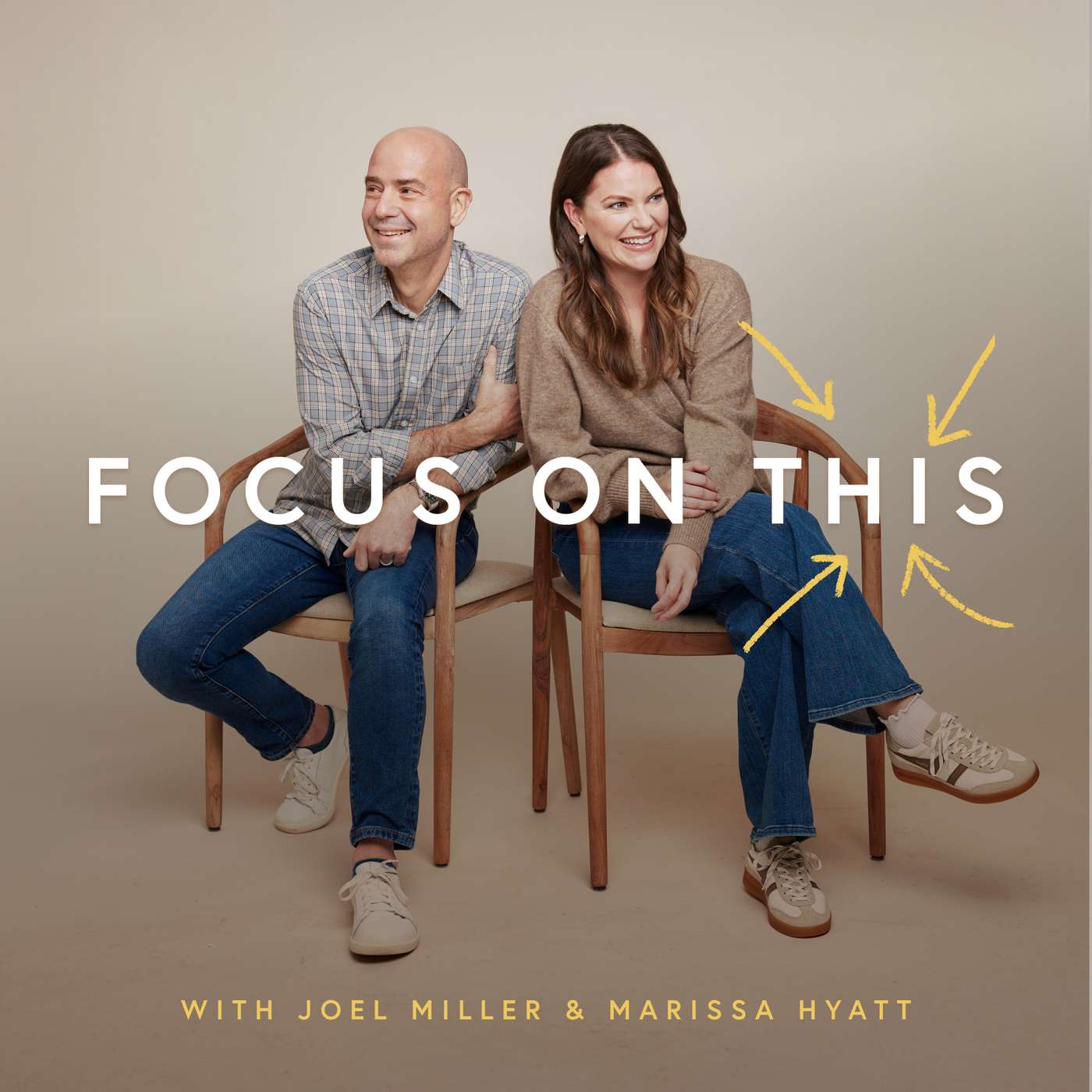
Focus on This

Focus on This

Start loving Mondays.

Full Focus · Michael Hyatt

315 episodesEN

Show overview

Focus on This has been publishing since 2019, and across the 7 years since has built a catalogue of 315 episodes, alongside 2 trailers or bonus episodes. That works out to roughly 160 hours of audio in total. Releases follow a weekly cadence.

Episodes typically run twenty to thirty-five minutes — most land between 26 min and 33 min — and the run-time is fairly consistent across the catalogue. None of the episodes are flagged explicit by the publisher. It is catalogued as a EN-language Business show.

The show is actively publishing — the most recent episode landed 6 days ago, with 16 episodes already out so far this year. The busiest year was 2021, with 60 episodes published. Published by Michael Hyatt.

Episodes
315
Running
2019–2026 · 7y
Median length
30 min
Cadence
Weekly

From the publisher

Start loving Mondays! Join Marissa & Joel each week for practical strategies, weekly rhythms, and honest insights to help you slow down, show up, and live intentionally. Based on the proven Full Focus methods used in the Full Focus Planner™, each episode offers habits, mindset shifts, and real support so you can quiet the noise, follow through, and build a life that feels good to live. Ready to focus on what really matters?

Latest Episodes

View all 315 episodes

SUMMER REPLAY:  The Power of Constraints: Do Less, Achieve More

Jun 1, 202636 min

What's Ahead This Summer

May 25, 202623 min

What to Do When Life Hits the Fan?

May 18, 202641 min

The Question That Cuts Through Everything

May 4, 202631 min

The Human Superpower That's Making Life Harder

Apr 27, 202625 min

Procrastination: The Dungeons & Dragons Edition

Apr 20, 202642 min

Gremlins!

Announcement for April 6th & April 13th episodes

Apr 6, 20263 min

Ep 296Work Is Never Finished (So Stop Waiting for It to Be)

Work is never really finished—so if you're waiting for the to-do list to run dry before you close your laptop, you'll be there all night. In this episode, Joel and Marissa tackle one of the most common struggles inside the Full Focus community: how to actually end your workday. From the always-on culture of remote work to the dopamine hit of checking dashboards after hours, the pulls are real. But so is your agency. With the right ritual and a few intentional shifts, you can stop letting work bleed into the rest of your life.Key TakeawaysWork Doesn't Have a Natural Finish Line. Unlike a project with a clear deliverable, the workday as a whole never truly ends—there's always another email, another task, another initiative. That means you have to decide when done is, rather than waiting for it to arrive on its own.Remote Work Has Erased the Built-In Boundary. The commute home used to signal the transition. Now, work lives in your pocket 24/7, and every time you open your laptop (even for personal reasons), it's staring you in the face. Awareness of this is the first step toward protecting your evenings.Overwork Is Often a Symptom, Not the Problem. If you can't seem to stop before 7pm, the real issue is probably something upstream—unclear priorities, an inability to delegate, or projects that need to be eliminated altogether. Ask why you're overworking, not just how to stop.Schedule the Shutdown. Block the last 30 minutes of your workday on your calendar. Review your Daily Big Three, check email and Slack, capture any open loops in your planner, and set up tomorrow in advance. If your calendar is booked to the final minute, you'll never actually shut down on time.Your Body Doesn't Clock Out When You Do. Physiological arousal outlasts the workday. Even when the work hours are technically over, your nervous system is still running. You need a deliberate transition—a walk, a change of clothes, dimmed lights, a warm drink—to signal to your brain and body that the day is done.Watch on YouTube at: https://youtu.be/O6Kiahpv9nYThis episode was produced by Sarah Vorhees Wendel of VW Sound

Mar 30, 202646 min

Ep 295The Deeper Problem with Distractions

You know what distracts you. But do you know why? In this episode, Joel and Marissa dig into the real source of distraction—and it's not your phone, your boss, or the pile of laundry calling your name. Nearly half the time, we're interrupting ourselves. The good news: once you understand what’s driving your distraction, you can actually do something about it. Less white knuckling, more momentum.Key TakeawaysYou Are the Biggest Distraction. Research shows we self-interrupt about 49% of the time. External interruptions get the blame, but the real culprit is usually us—reaching for something easier the moment things get hard.Your Brain Is Optimizing for Easy. Distraction spikes when tasks get difficult, boring, or tedious. That pull toward Instagram or your inbox isn't laziness; it's your brain chasing a dopamine hit over a delayed reward.Design Your Environment to Win. Willpower runs out, especially as the day wears on. The smarter play is to remove temptations before they become a choice: turn off the phone, close the door, change your Slack status, and tell your team in advance when you're going dark.Lower the Bar to Raise Your Output. Making the hard thing more enjoyable is often more effective than trying to make yourself tougher. Temptation stacking, time-bounded work sessions, and background music might feel like cheating, but they’re actually strategic.Frustration Tolerance Is a Muscle. And like any muscle, you can build it. Every time you acknowledge that something is hard or boring and do it anyway, you're making it a little easier to do the next hard thing. That’s the essence of maturity: doing something you don’t like to get a result you do like.A Real Break Is Productive. Distraction is sometimes your brain's way of signaling it's spent. A 10-minute walk, a snack, or even a bath beats scrolling social media—and you'll come back sharper for it.Watch on YouTube at: https://youtu.be/Ozw8NflvpRwThis episode was produced by Sarah Vorhees Wendel of VW Sound

Mar 23, 202637 min

Ep 294Want to Succeed? Stop Thinking About Your Goal

What if the fastest way to reach your goals is to stop fixating on the finish line? In this episode, Marissa and Joel explain why goal-obsession leads to discouragement, procrastination, and rigidity — and why progress actually accelerates when you focus on the process. Nine times out of ten, you'll get further when you focus on the next right thing.Key TakeawaysThe Game Isn’t the Score. If you stare at the “scoreboard” of your goal, you lose focus on the next play—the only thing you can actually control—and miss out on the satisfaction of feeling yourself grow.Progress Happens in the Present. A compelling vision can motivate you to change, but it's what you do right now that determines whether that vision becomes reality.Excellence is Better Than Success. The happiness of the moment you achieve a goal is fleeting. Becoming the kind of person who lives in alignment with your values and pursues hard things—that’s always satisfying.Plan Your Next Play. Use your Weekly Big 3 and Daily Big 3 to let your goal inform today's actionable next step. Then, do it.Goals Can Change (And That’s a Win). As you move, clarity increases. Sometimes the goal you start with isn’t the goal you need.Watch on Youtube at: https://youtu.be/QUvWUgkc3RoThis episode was produced by Sarah Vorhees Wendel of VW Sound

Mar 16, 202634 min

Ep 293Spring Clean Your Life (for Your Sanity)

Spring is a natural reset—and not just for your junk drawer. In this episode, Marissa and Joel explore what it looks like to spring clean your life by removing what’s creating friction: too many goals, overly complicated routines, and nagging clutter that drains your attention. They talk about why subtraction often beats addition, how to build habits you can keep when life gets messy, and how a single clean-up win can create a ripple effect of momentum.Key TakeawaysSubtraction is a Growth Strategy. When you want a better life, your instinct is probably to add more tools, more rules, and more effort. But subtraction often creates faster relief and better results.Fewer Goals = Better Progress. Trying to chase six priorities at once usually leads to shallow progress and burnout. Limiting yourself to a small number of goals isn’t quitting—it’s choosing focus now so you can win over time.Pick the Goal that “Tips the Row.” A domino-style goal (or “push goal”) has an outsized effect on everything else. Find the priority that makes other goals easier—or makes them unnecessary.Stop Hyper-Optimizing Your Rituals. If your morning ritual only works when nothing goes wrong, it won’t last. Sustainable rhythms start with real constraints: the time and energy you reliably have.Use a Ceiling + Floor for Habits. Your ceiling is the ideal version (when everything goes right). Your floor is the version you can keep on a hard day. When you define both, you protect consistency—and consistency beats intensityClean One Squeaky Wheel. Choose one physical or digital space that’s quietly nagging you (a drawer, a chair pile, a desktop, an inbox) and restore order. Closing one loop can give you immediate mental bandwidth back.Watch on YouTube at: https://youtu.be/Qbvuzn3bDAoThis episode was produced by Sarah Vorhees Wendel of VW Sound

Mar 9, 202638 min

Ep 292Breaking Out of “Busy” (Planning 2.0 Pt. 2)

Do your weeks feel overstuffed—even when you’re trying to be intentional? In part two of this series, Marissa and Joel finish their conversation on Elizabeth Stanley’s Planning 2.0 (from Widen the Window) and get extremely practical: they break down how to use the Ideal Week as a “time budget” that creates margin, lowers stress, and helps you work with your energy instead of fighting it. You’ll learn how to build buffer for real life, knock out the nagging tasks that quietly tax your brain, and batch your work so your days stop feeling like mental pinball.Key TakeawaysExpect the Unexpected. Planning 2.0 doesn’t assume life will unfold perfectly. It anticipates that things will go sideways—and intentionally builds in room to absorb the impact.Margin Is Strategic. Planning 2.0 treats interruptions, transitions, and basic human needs as part of the design, not evidence that the plan failed.“Squeaky Wheels” Quietly Undermine You. Clutter, unfinished chores, lingering repairs, and small tolerations drain mental bandwidth in the background. Capturing them in writing and scheduling time to address them restores both order and confidence.Batch by Energy. When your day ricochets between deep work, meetings, and admin tasks, your brain pays a switching cost. Grouping similar work together protects focus and helps you finish with strength.The Ideal Week Is a Flexible Template. Think of it as a reusable map for the season you’re in. Revisit it quarterly, and let it guide your decisions—without turning it into a rigid rulebook.ResourcesIdeal Week PDFWiden the Window by Elizabeth StanleyWatch on YouTube at: https://youtu.be/Lv4DvAaIb9IThis episode was produced by Sarah Vorhees Wendel of VW Sound

Mar 2, 202650 min

Ep 291Moving From Anxiety to Peace (Planning 2.0 Pt. 1)

How do we cope with an unpredictable world? Most of us overplan—rehearsing scenarios and bracing for every outcome—and then wonder why we feel anxious.In this episode, Marissa and Joel contrast Planning 1.0 (fear-driven contingency planning) with Planning 2.0 (intentional, flexible planning rooted in clarity). Drawing on Elizabeth Stanley’s research, they show how the Weekly Preview helps you move out of survival mode and into focused action.If you’ve ever felt behind before the week begins, this conversation will help you replace rumination with a plan you can trust.Key TakeawaysAnxiety Feels Productive—But Isn’t. Catastrophizing and contingency planning can give you a sense of control, but they don’t create meaningful progress. Planning 1.0 keeps you stuck in a narrow window of tolerance, where you’re only okay if everything goes according to plan.Plan When You’re Calm. You make better decisions when you’re regulated and clear-headed. That’s why the Weekly Preview works best when done before the week begins—on Friday, Sunday, or early Monday—so you’re looking at the week, not scrambling inside it.If Everything is Important, Nothing Is. You can’t fit everything into one week. Making real progress requires real tradeoffs. The Weekly Preview forces the question:What will I say no to so I can say yes to what matters most?Rest is a Strategy, Not a Reward. If you don’t plan for rest and rejuvenation, you default to survival mode. And survival mode shrinks your capacity to think clearly and act strategically.The Weekly Preview is the Pause You Need. It’s your opportunity to step back and shape the week with intention instead of urgency. You can’t control everything—but you can clarify what matters most and decide when you’ll move it forward. (That’s the kind of flexible plan that actually brings peace.)Watch on YouTube at: https://youtu.be/UQjcqX24CEkThis episode was produced by Sarah Vorhees Wendel of VW Sound

Feb 23, 202644 min

Ep 290Your Energy Audit: Why Your Days Feel Harder Than They Should

You can’t manufacture more time—but you can restore and expand your energy. In this episode, Marissa and Joel explore the “time-energy paradox” and why so many productivity strategies backfire by leaving you exhausted. They unpack three major energy drains and share practical strategies to give your mind and body more opportunities for truly restorative rest.Key TakeawaysTime Is Fixed. Energy Isn’t. You can’t add hours to your week, but you can bring better energy to the hours you already have.Screens Often Masquerade as Rest. Streaming and scrolling feel like “checking out,” but they overstimulate your brain. Instead? Get outside (trust us).Try Walking Meetings. When you can, take a meeting by phone and go for a walk. Less screen time, more oxygen, better energy.Information Overload Has a Cost. We’re not built to process constant updates, endless content, and every crisis on-demand. Consuming less information today is one of the simplest ways to have more energy tomorrow.Protect Sleep (For Real). Sleep is how your body and brain restore. Many people chronically undersleep, then wonder why everything feels harder than it should.Make Bedtime More Attractive. If there’s nothing attractive about your bedtime routine, you’ll resist sleep. Design a calming, simple, enjoyable rhythm you actually look forward to.Run an “Energy Experiment.” Don’t overhaul your life. Pick one change for one week (earlier bedtime, outdoor breaks, screen cutoff time) and see what happens.Watch on YouTube at: https://www.youtube.com/watch?v=3zL4lWd_fakThis episode was produced by Sarah Vorhees Wendel of VW Sound

Feb 16, 202647 min

Ep 289Your Worst Productivity Habit (It Isn’t Your Phone)

Most people blame their phones for their lack of productivity, but the real culprit is sneakier: overestimation. In this episode, Marissa and Joel unpack why we consistently plan for best-case scenarios and then spiral when real life doesn’t cooperate. You’ll learn how overestimating your capacity, self-control, productivity, and ability to “catch up” creates unnecessary stress, erodes trust, and drains your resources. Most importantly, they’ll show you how to set up a game you can actually win.Key TakeawaysPlan for Reality, Not Best-Case Scenarios. We build days around “perfect conditions,” then feel behind by lunch. Assume interruptions, limited energy, and real-life constraints—and plan accordingly.Stop Overbooking Your Capacity. If your calendar has no margin, exhaustion is inevitable. Build buffers for transitions, downtime, and breaks so your day can breathe.Use Your Ideal Week to Set Pace, Not Max Output. The Ideal Week isn’t “How much can I cram in?” It’s “How do I work and live at my best?” Include recovery time and whitespace.Assume Self-Control Drops as the Day Goes On. Discipline is finite. The later it gets (and the more drained you are), the easier it is to binge, scroll, snack, or procrastinate. In response, design your environment to support your discipline instead of relying on it.Give Everything More Time Than You Think. The planning fallacy hits everyone. Add cushion so you finish more consistently. Practically, plan 150–200% of the time you think it will take.Make Room for “Stuff I Forgot to Plan For.” Surprises aren’t exceptions—they’re normal. Create a weekly block for the tasks and problems that inevitably pop up.Let the Daily Big 3 Keep You Grounded. Your Ideal Week is the vision. The Daily Big 3 is the reality check. If you’re not finishing, choose smaller targets and rebuild momentum.Watch on YouTube at: https://youtu.be/EdW89LAMJ90This episode was produced by Sarah Vorhees Wendel of VW Sound

Jan 26, 202646 min

Ep 288Work with Your Season, Not Against It

Would you plant flowers in December—or plan a ski trip in June? Probably not. But many of us do the equivalent with our goals: we try to force outcomes that don’t match our actual capacity, energy, or reality. In this episode, Marissa and Joel walk through five “seasons” you may find yourself in—sowing, fallow, tending, pruning, and harvest—plus the hidden danger in each one and the most effective response. You’ll also learn seven distinct kinds of rest and how to use the Weekly Preview to identify your season and take the right next step.Key TakeawaysThe Year is Full of Seasons. There’s a natural ebb and flow to life, not just nature. Acting like it’s spring when you’re actually in winter won’t help you. Name the season you’re in and orient around what’s true right now, not what the New Year says.Sowing Season: Choose Focus Over Frenzy. When you’re ready to start new opportunities, the danger is starting too many things while motivation is high. The fix: pick one or two goals that actually move the needle and let the rest wait.Fallow Season: Rest on Purpose. After a sprint (or a crisis), your system needs recovery. Choose the kind of rest you actually need—physical, mental, sensory, creative, emotional, social, or spiritual.Tending Season: Reconnect to Vision. Don’t let “business as usual” make you forget why you started. Keep your why in view so you don’t drift off course.Pruning Season: Prevent Ineffectiveness. Just like plants, we become less fruitful when we’re trying to do too much at once. Pruning helps you create margin and center your energy where it can have the greatest effect.Harvest Season: Choose Boundaries (Fight FOMO). Momentum is great—overextension isn’t. Decide what must happen now, what can wait, and when the sprint ends.Align Your Plans and Your Season. During your Weekly Preview, name your season, watch for its danger signs, and plan your week accordingly. Work with the grain, and you’ll get fewer splinters.Watch on YouTube at: https://youtu.be/QpzDeHQIjmwThis episode was produced by Sarah Vorhees Wendel of VW Sound

Jan 19, 202640 min

Ep 287Your Essential Year-End Reset

2025 probably didn’t go according to plan—and that’s exactly why it’s worth paying attention to. In this episode, Marissa and Joel walk you through a simple reflection process for the last 11 months: naming what worked, facing what hurt, and deciding what you actually want to carry into 2026. You’ll learn how to work with your brain’s negativity bias, complete the stress cycle in your body, reframe regret as a helpful signal, and distill the year into a handful of lessons you can build on.Key TakeawaysStart with What Worked. Brain dump the last 11 months and name your wins—at work and at home. Use your camera roll and planner as prompts to remember moments you’d otherwise overlook. Let those checkmarks and snapshots remind you: it wasn’t all bad.Don’t Waste the Bruises. List what didn’t go well—disappointments, losses, and the “mixed bag” moments. Instead of reliving them, acknowledge what happened, name the emotions, and ask what still needs to be grieved or processed so you’re not dragging raw hurt into 2026.Pay Attention to Avoidance. Notice the projects, tasks, or conversations you kept procrastinating. Treat that dread as data: Is this a skills gap, a misfit task you shouldn’t own, or something that needs to be rethought entirely? Avoidance is often a clue about what needs to change next year.Let Regret Invite a Do-Over. Treat regret as an “open loop,” not a verdict. If something from 2025 still nags at you, ask, “What unfinished business is this pointing to?” Look for one concrete action—an apology, a boundary, a new habit—that lets you close the loop instead of carrying it forward.Distill the Year into a Few Core Lessons. Turn all of this into simple statements you can act on, like: “My days go best when I start with a plan,” or “I can’t love well when I’m out of balance.” Those lessons become your guardrails and fuel as you design your goals and rhythms for 2026.Watch on YouTube at: https://youtu.be/hdmL3mfAyrcThis episode was produced by Sarah Vorhees Wendel of VW Sound

Dec 8, 202544 min

Ep 286Do Less and Enjoy More During the Holidays

The holidays can feel like a sprint with a suitcase. Marissa and Joel show you how to lighten the load with four concrete moves: define non-negotiables, eliminate what doesn’t matter, delegate what doesn’t require you, and (yes) procrastinate strategically. You’ll get scripts, shortcuts, and a Not-To-Do list for creating breathing room—at work and at home.Key TakeawaysName Your Non-Negotiables. Brain dump everything for December, then identify the items that truly must happen. Accept that not everything will get done—and choose what will.Run the “Everything Must Go” Sweep. Cancel or reschedule recurring meetings, low-value check-ins, and nice-to-have socials. If it can be an email (or nothing), make it one.Resign as Chief Everything Officer. At home: potluck the menu, batch one meaningful gift for everyone, use gift bags, outsource a couple dishes, trade childcare. At work: hand off distinct slices of projects, hire a contractor for time-sinks, and coach for skill—not constant review.Procrastinate on Purpose. Push arbitrary deadlines to January. Ask, “What part truly must happen now—and what can wait?” Renegotiate timelines for excellence, not exhaustion.Keep Self-Care Simple. Downshift to minimums that maintain energy (a 20-minute walk, earlier lights-out, simplified meals). Save the “perfect routine” for January.Watch on YouTube at: https://youtu.be/dQpOs_bTd9gThis episode was produced by Sarah Vorhees Wendel of VW Sound

Dec 1, 202549 min

Ep 285The Gratitude Advantage

As we head into Thanksgiving (in the United States), Joel and Marissa get practical about gratitude—the tiny habit that expands your perspective, steadies your pace, and strengthens relationships. From a coffee-cup thought experiment to a one-line script you can use today, you’ll learn how gratitude fuels goal-pursuit, patience, and team trust.Key TakeawaysSee the Hidden Team. AJ Jacobs’ experiment widens your lens for the work that goes into a single cup of coffee, from baristas to farmers, drivers, even road-line painters. Gratitude makes interdependence visible—fast.Scarcity Shrinks, Gratitude Expands. Scarcity tightens and isolates. Gratitude opens possibility and connection. Choose the bigger frame.Use the Script. Turn everyday encounters into bright spots by acknowledging the importance of the work of those serving you. Try: “Thank you for choosing your profession.” You’ll change the atmosphere (and often the outcome).Make It a Planner Habit. Use the Weekly Preview’s blank pages for a running gratitude list. Log “wins” and your Daily Win through a gratitude lens—not just achievement.Results You Can Feel. Gratitude has a measurable impact on our success and relationships. It boosts engagement, trust, and goal progress—and even increases financial patience.Practice in Real Time. Shouldering something inconvenient? Reframe with gratitude (“What might this be protecting me from?”) and watch your state shift.Resources:Thanks a Thousand by AJ JacobsWatch on YouTube at: https://youtu.be/fAfPHbnoANwThis episode was produced by Sarah Vorhees Wendel of VW Sound

Nov 24, 202534 min

Ep 284Time Wasters Stealing Your Focus

Most stalled days aren’t about willpower—they’re about constant context-switching. In this episode, Marissa Hyatt and Joel Miller break down the science of interruptions, how internal distractions amplify them, and practical ways to protect your best hours. Expect notification triage, deep-work tactics, and a saner way to take breaks that actually refuel you.Key TakeawaysName the Real Culprit. It’s not laziness—it’s interruptions. Expect hits that derail you every 3–11 minutes, costing 20–30 minutes to fully refocus. How will you plan accordingly?The Difference Matters. Interruptions are external; distractions are internal. You can’t stop every ping, but you can stop taking the bait.Cut Notifications Ruthlessly. Turn off non-essential alerts across phone and laptop. Use Focus/Do Not Disturb so only true emergencies break through.Signal Deep Work Windows. Tell people when you’re dark and when you’re back: set Slack/Teams status (e.g., “Deep Work — back at 1:00 pm”) and stick to it.Remove Temptation. Delete or block high-hook apps/sites during work blocks (tools like Freedom help). Make distraction harder than staying on task.Sprint, Then Breathe. Work in focused sprints and replace “digital smoke breaks” with 3–5 minutes outside to reset your brain without derailing momentum.Protect Uphill Work. Tackle your Big 3 (creative/strategic) when you’re freshest; save downhill tasks like email/Slack for lower-energy windows.Watch on YouTube at: https://youtu.be/TIPbksG9_wIThis episode was produced by Sarah Vorhees Wendel of VW Sound

Nov 17, 202535 min
© 2025