Floor is Rising
160 episodes — Page 2 of 4
Jehan Chu - Unicorn - Crypto OG and Trad Art OG
S1 Ep 55Jehan Chu - Unicorn - Crypto OG and Trad Art OG
https://www.floorisrising.com/jehan-chu-nft-investing/ On today’s episode SabreTooth and Kizu are joined by special guest Jehan Chu. Jehan is Chairman and Founder of Kinetic, a crypto VC firm, as well as Chairman and co-Founder of Social Alpha Foundation. Because of his background as an art dealer and his early involvement in NFTs, Jean is a perfect guest for the show. Jehan’s interest in NFTs began through investing in Decentraland. His firm Kinetic was the first blockchain VC in Hong Kong and one of the earliest in Asia when they got started in 2016. Kinetic were seed investors in Decentraland, the first decentralized metaverse, in 2017. The company did much research on digital value and how it converted to real world real estate fundamentals and investment strategies. Jehan began his career as a front end developer before he was recruited by Sotheby’s, and transferred to Hong Kong in 2006. Two years later, he left the company and became an art dealer and advisor immersed in the contemporary art world. He identifies the three major pillars of art collecting: the critical importance of the artwork, the work’s market position and your personal relationship to it. These principles serve the same framework when applied to NFTs. Jehan became interested in crypto in 2013 and left the art world professionally in 2016, when he founded Kinetic. Jehan considers PFPs to be collectibles, representative of community, self expression and membership, rather than fine art. While NFTs are creative and artistic, he doesn’t consider them to be art themselves. He reveals that the context for fine art is missing in the NFT space, because the NFT space is far too generalized, and the conflict between both sides is a result of misunderstanding on both ends. The institutions of fine art have been around for many years and are unlikely to be overrun now. Aside from influencer signaling, price is the only other reference for the value of an NFT. As more PFPs come into play, engagement and commitments of communities often drop. As a result, the NFT world is on a very weak foundation. There needs to be a broader understanding of the cultural significance of NFTs to bridge the gap between NFTs and art. Elaborating on the tension between crypto artists and artists just joining the space who have made a name for themselves otherwise, Jehan reveals the world of NFT is not filled with artists, but designers. There must be education in the art schools to understand the tools and concepts of the NFT medium. As today’s episode draws to a close, Jehan highlights a few of his favorite artists in the space. Thanks for listening and don’t forget to subscribe and leave us a review! Timestamps: 0:44 - Introducing Jehan Chu. 1:23 - How Jehan got into the world of NFTs. 3:13 - The contemporary art world as a backdrop for NFTs 9:06 - Art vs PFPs 17:58 - What constitutes value for PFPs? 19:50 - Tension between traditional artists and crypto artists. 26:41 - Graphic design in the NFT world. 31:38 - Jehan’s favorite artists. 24:43 - Thanks to Jehan for joining us today Tags: NFT, cryptocurrency, art, design, art dealer, jehan chu, social alpha foundation, crypto, VC firm, kinetic, decentraland, blockchain, blockchain VC, hong kong, asia, seed investors, investing, metaverse, digital assets, cryptokitties, art world, traditional art world, front end developer, sotheby’s, contemporary art, art career, art collectors, PFPs, fine art institutions, cryptopunk, digital art Links:Connect with <a href="https://www.linkedin.com/in/jehanchu/details/experience/" rel="noopener noreferrer"...
Pixelord - Music NFTs and being an NFT artist in Russia
S1 Ep 54Pixelord - Music NFTs and being an NFT artist in Russia
https://www.floorisrising.com/pixelord/On today’s episode, SabreTooth and Kizu welcome guest Pixelord, whose decade-long music career has in the past year expanded into work with NFTs. Pixelord considers himself an audiovisual artist, bringing together music and images, and has been both collaborating on NFT ventures with fellow artists and developing his own NFT collection. He joins the podcast today to share about his background and art, his entrance into and thoughts on the NFT space, and how his identity as a Russian individual shapes his experience. As the conversation begins, Pixelord overviews his recent move into the NFT space before diving more deeply into the dynamics of the transition through the lens of his nationality. He appeals to both Russian and more international, English-speaking audiences, but he found his audience shifted when he entered the world of NFTs. After all, the world of his music and that of NFTs naturally draw different crowds. Pixelord's music has long drawn audiences - many of them Russian - who resonate with his "vaporwave" aesthetic. The aesthetic is rooted in Pixelord's Russian heritage, and carries darker, dystopian, and melancholic vibes. The music incorporates a fusion of styles, but they are generally united by a sense of surreal nostalgia. NFTs, on the other hand, catch the attention of artists, collectors, and people looking to make a profit. Conversations surrounding NFTs tend to take place on Twitter, and are international in nature (and so carried out in English). NFT buyers are mostly American and European, with Asian buyers also gaining a prominent place in recent days. The big collectors are not Russian, and the Russian art scene has simply not been very well penetrated by NFTs (or even use of Twitter!) at this point. Russians looking to access art have their own ways of doing so, and often would not have the money to spend on NFTs even if they were interested in doing so. Moving forward, SabreTooth, Kizu, and Pixelord discuss the current NFT market. At this point, music NFTs have not been given as much attention as visual NFTs. While Pixelord notes that there is mixing of visual and musical components within NFTs, he also explains why he expects the presence of music in NFTs to grow and how he anticipates it will be incentivized. In the visual space, many collectors have collected NFTs for the appreciation of value, but for music, this has not been the case. Already, Pixelord sees other incentive systems in place and expects them to develop further; these systems, he says, include the ability to buy a music copy to sell later when a musician gains prominence, the option to buy a component of the rights to music, and the chance to work in musical collections (as Pixelord is doing now with his small collection of handmade NFTs). As the conversation wraps up, Pixelord shares a few of his favorite artists to spark listeners' interest in and exploration of NFTs.Thanks for listening and don’t forget to subscribe and leave us a review! Timestamps: 0:31 - Introduction to this episode and today's guest, Pixelord 2:42 - Pixelord offers thoughts on how his audience has changed.5:48 - His "vaporwave" aesthetic11:36 - His work has different receptions across Russian and other audiences.14:14 - Why has the NFT market not penetrated Russia more?19:04 - The conversation shifts to the topic of music NFTs.21:58 - Many collectors collect visual NFTs for the appreciation of value.26:43 - Pixelord's small collection of NFTs and his favorite artistsTags: NFT, music, collaboration, Russia, visual, audiovisual, audience, English-speaking, artist, collector, profit,...
How to find investible NFTs - Business Times SG interview
S1 Ep 53How to find investible NFTs - Business Times SG interview
https://www.businesstimes.com.sg/lifestyle/nfts-finding-the-diamonds-among-the-dudsInterviewed for the article in Business Times above, full interview belowhttps://www.floorisrising.com/diamonds-among-duds/NFTs: Finding the diamonds among the duds10/03/2022 - 18:25EXACTLY one year ago, a non-fungible token (NFT) artwork sold for US$69 million to a Singapore-based technopreneur. Since then, the NFT space has ballooned from a US$2 million market into a US$25 billion one, showed figures from market tracker DappRadar.With millions of cartoon apes and pixellated characters to choose from, how do you find the best NFTs to hold or flip? Are there tools to select investment-grade NFTs? Is there even such a thing as investment-grade NFTs when many cultural establishments, such as museums, steer clear of them?We speak with three experts who have been watching the space from the beginning:Clara Che Wei Peh is an art curator best known for curating the groundbreaking NFT exhibition at Fine Art Storage Services in Le Freeport in 2021. She is also the founder of the Discord group NFT Asia, a community for Asian NFT artists with over 3,600 members.Kizu (not his real name) is a Singapore art critic who has written for Wall Street Journal, ArtAsiaPacific, and other titles. While he's well-known in Singapore's art circles, he prefers to use the pseudonym Kizu when he co-hosts the NFT podcast Floor Is Rising.His fellow co-host, Sabretooth (also not his real name), is a serial technopreneur who calls himself "a professional NFT collector". His publicly accessible NFT wallet contains over 1,000 NFTs.(The interviews were conducted separately. But in the interest of brevity and clarity, they are merged here and edited to reflect the range of responses.)Q: How does one pick investment-grade NFTs if one intends to hold them for long or flip them quickly?Clara: Everyone has different criteria for buying NFTs they wish to hold. Some people would look at the reputation of the creative team and the artwork itself, whether the project has the potential to scale up and deliver value over time. Value can come in different forms - it could be, for example, a game that's really enjoyable; it could be further airdrops or tokens that can bring utility.I think a lot of people would agree that you should look for projects you genuinely like. But if you're looking to flip something, you probably have to look at the hype that project has built for itself on the various media platforms.However, what I've just described are the criteria for collectible NFTs. It's also important to state the distinction between collectible NFTs versus fine-art NFTs, because the markets for these look different. For fine-art NFTs, it's really about artists that you believe in and want to invest in over time.Sabretooth: NFTs are such a new investment category that there is no consensus on what is an investment-grade NFT. There are huge portions of the population who think every NFT is a bubble or scam. And it's tough to call something investment-worthy if it has not been through multiple bull and bear markets, and survived.And so, I look for things that have shown some kind of longevity in the market, even if the...
MIchael Gord - Renting virtual land for fun and profit

S1 Ep 52MIchael Gord - Renting virtual land for fun and profit
https://www.floorisrising.com/michael-gord-metaverse-landlord/https://twitter.com/FloorisRising/status/1501128443903156226
Kaloh - Generative art thought leader
S1 Ep 51Kaloh - Generative art thought leader
https://www.floorisrising.com/kaloh/https://www.kaloh.xyz/
Christian Ogier - Art Market Manipulations and NFTs
S1 Ep 50Christian Ogier - Art Market Manipulations and NFTs
Notes to come;https://www.floorisrising.com/art-market-manipulations/https://www.sepia.fr/
Mitchell Chan - What does "The institutions are coming" actually look like in NFTs?
S1 Ep 49Mitchell Chan - What does "The institutions are coming" actually look like in NFTs?
Show notes Here;https://www.floorisrising.com/mitchell-chan/
Les Borsai - NFT fund - How he invests in NFTs
S1 Ep 48Les Borsai - NFT fund - How he invests in NFTs
https://www.floorisrising.com/les-borsai-nft-fund/
PolyAnnie – First? Adult content NFT Creator

S1 Ep 47PolyAnnie – First? Adult content NFT Creator
Notes here.https://www.floorisrising.com/polyannie-porn-nfts/
Artist – Robness – How meme culture became NFT culture
S1 Ep 46Artist – Robness – How meme culture became NFT culture
Longer notes to come - @robnessofficial - how meme culture became NFT culture - Which celebs coming in to NFTs are doing it the "right way". Why the secret anon drops that happened on #hicetnunc. WHY #ROBNESS TWEETS ALL CAPS ALL THE TIME?
Collector: Carlini8 NFT OG – NFT Boxes – Purrnelopes
S1 Ep 45Collector: Carlini8 NFT OG – NFT Boxes – Purrnelopes
New Episode - OG NFT degen @carlini8Nexplains how his personal philosophy on NFTs which led to his split with #PranksyNFT and leaving #NFTBoxes to start #purrnelopescc.
Sutu, Neonz &amp; Metaverse
S1 Ep 44Sutu, Neonz & Metaverse
New episode - @sutu_eats_fliesjoins us to discuss #NEONz and the #Sutuverse, an indie metaverse he's creating in opposition to VC and corporate funded metaverses. We also talk politics and the time he was denied entry to the US cos of TRUMP? o
Introduction to NFTs – Q&amp;A – FAQ – Part 2
S1 Ep 43Introduction to NFTs – Q&A – FAQ – Part 2
How can we classify the different works and styles within crypto art and NFTs?We tend to think of the major art styles (impressionism, abstract expressionism, surrealism, etc.) as they relate to a visual structure or language. For crypto art this understanding has been somewhat alighted. In a way we can think of PFP projects as their own style because visually there is something in common, they work as a personal likeness or avatar. That being said most are just jpegs and not necessarily art that has been enabled by the blockchain.Generative art however produces a certain aesthetic due to how that work is generated by code which could (somewhat) be classified as a NFT art style. Good examples of this would be OG artists like Eric Paul Rhodes or Tyler Hobbs, specifically his Fidenza series. In these cases, because of the algorithmic mechanism which is medium-native to crypto art, there are stylistic similarities which Kizu feels would classify as a major art style within NFT art.Beyond this we also have things such as illustration or painting, which could be used as classifiers but these come from a time before crypto art and we can not really view or classify them in the same way. Moreover, those are merely techniques, which can be helpful for ranking skill level, but in the end that doesn’t really get to the point of why we classify art.While Kizu and Sabretooth both acknowledge their level of cynicism, they bring up the idea that ultimately, art being classified is a biproduct of the market. Sabretooth talks about how collectors will buy a certain artists and then look for a narrative in which to place these artists. The reason being that, works are worth more if they are part of something bigger than just the work itself. Sabretooth finds that overall this effort has been unsuccessful in the sense that they have not been powerful enough to break through to the traditional art world. He gives the example of Beeple who has sold for ridiculous amounts of money, has a large fan base in the crypto community, but is not accepted by traditional art people.Kizu talks about the use of of Punks as profile pics or RTFKT sneakers and the signaling of value in the metaverse, how we communicate, the transactions, etc. to point out that there is a narrative and it is about the money. He also draws a comparison between the NFT space and the art world of the 90s where, art from the developing world got recognized because there was a movement to promote these artists. It wasn’t really about their style or aesthetic rather their background and what they stood for.What’s up with music in the NFT space?Many major DJs are launching projects and that’s not a surprise as DJs and NFTs are both on the cutting edge of popular culture. Despite this, Sabretooth notes that music has stopped being the cutting edge of niche subcultures. Minority expressions don’t start in music anymore. There are cheaper or more viral ways such as creating a tiktok account. Because it has somewhat lost its power due to these mentioned elements Sabretooth feels that NFTs are ahead of music in creating subcultures and thus he is not as interested in the topic.Could NFTs and smart contracts replace traditional contracts in business and real estate?The idea of tokenizing real world assets has existed since 2016, it has not yet taken off nor does Sabretooth think it will. The reason why brings us to look at what is called the oracle problem - how do you bring data from off the blockchain on the blockchain and still have it be trustworthy? Especially in the case of real estate or other tangible items, the question moves to – if someone steals your NFT do they now own your house? The answer is generally,...
Introduction to NFTs – Q&amp;A – FAQ – Part 1
S1 Ep 42Introduction to NFTs – Q&A – FAQ – Part 1
Part 1/2 - Newbie interview episode with Meta, the podcast assistant, find her on TwitterTime Stamps[00:32 – 4:38] Meta asks what websites to use for references, specifically sites like RaritySniper and Rarible. Sabertooth says if you need to use these type of websites, you probably don’t know enough about that project to be investing in it. For kizu, the analysis is useful in an objective comparison. Sabertooth disagrees and says it is actually subjective. He also warns to check out the business model for those sites. [4:38 – 6:52] Sabertooth says that he doesn’t personally use any websites for educational purposes and recommends that you simply listen to Floor is Rising for the info you need regarding trends, projects, etc. Continuing, he does says that a helpful way to get more information is by looking at wallets. Using the example of CryptoPunks he says, check out what wallets have Punks then see what other NFTs that wallet owns. By this you will see patterns and transactions.[6:52 – 11:55] Meta asks about the distinction between the different marketplaces. Sabertooth notes that it is helpful to break them down in to categories of primary and secondary sale. Primary examples would be; SuperRare, NiftyGateway, Foundation, async.art, NewWorld, etc. In these cases the artist is minting a particular work and you buy directly from him via listing or auction. Secondary sale sites include; OpenSea,Rarible, Zora, and you would buy from collectors. These previously mentioned pertain to Ethereum. Hic et Nunc is different, it is on Tezos. Every blockchain (Solana, Terra, Dfinity) has an NFT ecosystem and thus its own marketplace. Most NFTs are on Ethereum but Tezos and Solana would be the next up.Kizu recommends, especially for those from the traditional art world, to check out some of the NFT gallery spaces for a more curated experience. One he likes, that was even mentioned by Kenny Schachter, is FeralFile. Kizu says that on there you can even find OG artist like <a...
Artist – 10/x – Jon Burgerman – Talent scouted by Nifty Gateway
S1 Ep 41Artist – 10/x – Jon Burgerman – Talent scouted by Nifty Gateway
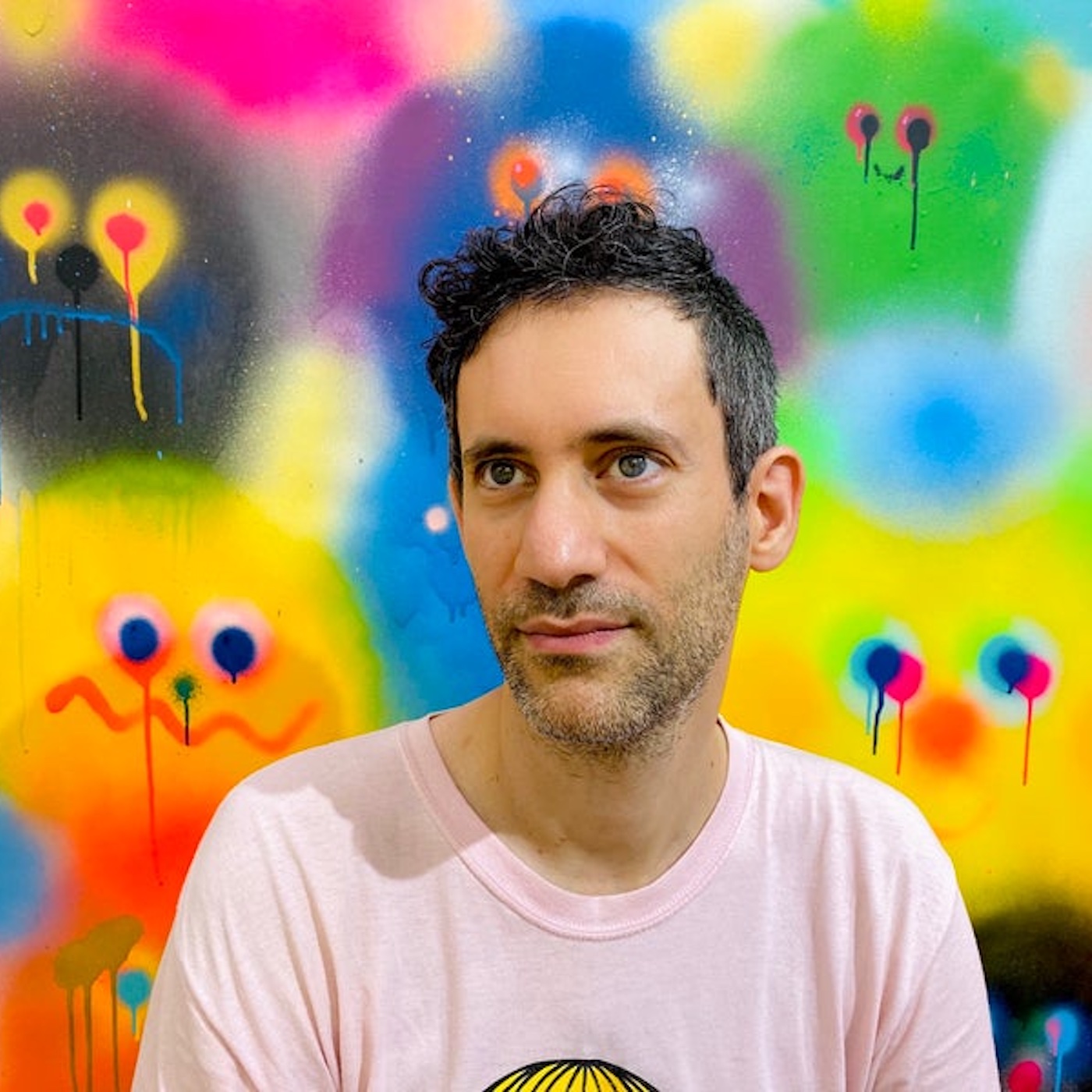
Jon BurgermanJon’s websiteSocial MediaTwitter - @jonburgerman Instagram - Jon Burgerman FacebookYoutube: Jon BurgermanShopBurgerPlexArt listed onNifty Gatewayhttps://superrare.com/jonburgermanFoundationTime Stamps[1:01 – 3:41] Jon was introduced to NFTs in 2019-2020 when he was approached by Nifty Gateway (founded by Griffin Cock Foster and Duncan Cock Foster and later acquired by Gemini run by Tyler Winklevoss and Cameron Winklevoss) to drop NFTs on the then new platform. He began working on NFTs in the spring of 2020. The first drop sold out quickly. Jon credits this with giving him a lifeline in the pandemic when everything else was being cancelled and closing down. [4:40 – 6:34] Jon doesn’t know why Nifty Gateway contacted him early on, but says they saw his work in other forms, and imagined it would work on their platform. Jon has a traditional background, but his work has existed across different mediums over the years, including digital stickers and wearables for @PlayStation Home.[7:35 – 10:26] Jon says his career is like a pizza with each slice it’s own medium (painting, books, etc) but as a whole it’s complete. His advice is to make your work and put it out there. Once you make something, people see your concept and how your work would look. People are looking for good work and good artists - it’s important to make your work discoverable.[10:45 – 12:36] When working in different mediums, Jon leans into what that medium can do that others can’t. With NFTs he likes that you can interact with people, build up collections and have drops. The goal of the work is the same, just different outlets for creativity that are distributed in different mediums.[13:45 – 15:12] Jon is still adapting to the community aspect of NFTs. It’s a time investment to keep up with the social aspect of the NFT community using channels like Twitter and Discord. This is a different skill set and a different kind of art will emerge from it.[15:28 – 16:17] Collectors of Jon’s NFTs are different from collectors of physical works. In 2020 early adopters were buying NFTs, but there is still skepticism and a long way to go for mainstream acceptance. Many of Jon’s physical collectors aren’t interested in NFTs.[16:49 – 19:49] Jon discusses the blurred lines between collectors and artists with the engagement thru social...
Artist – 9/x – RubenFro – VFX master
S1 Ep 40Artist – 9/x – RubenFro – VFX master
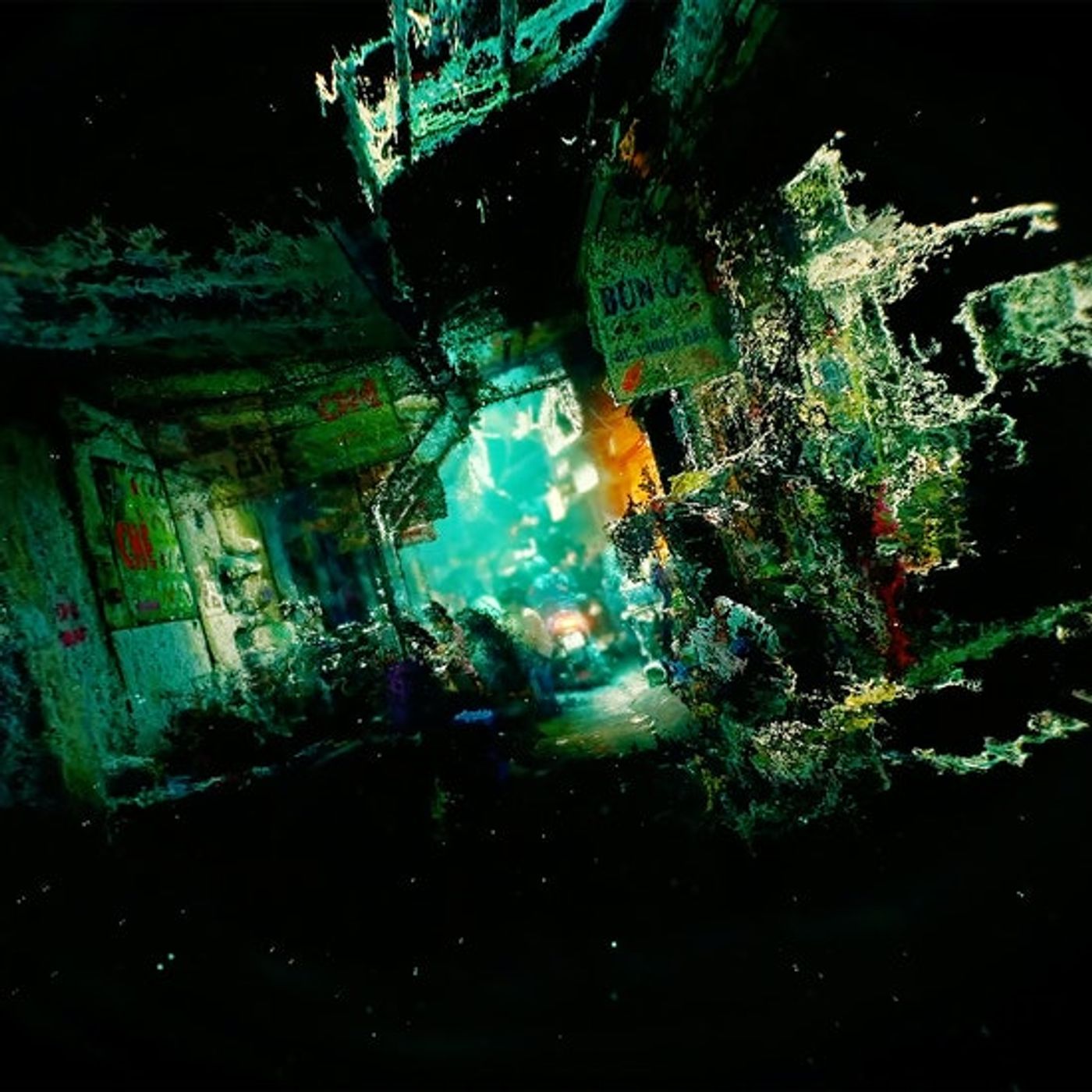
RubenFroRuben’s websiteSocial MediaTwitterFacebookInstagramVideosYouTubeVimeoArt listed onobjkt.comFoundationSuperRareShowtime NFTKalamintDAT CollectionsHenextAudio TracksSoundcloudTime Stamps[0:58 – 1:23] Ruben’s first experience with NFTs was March 2021. He was working on the @pussyrrriot music video Panic Attack and they released an NFT collectible of the music video divided into four parts.[1:32 – 1:48] Ruben is Italian and moved to Tokyo 15 years ago to work in software development and was doing that until 2 years ago.[1:53 – 3:10] Ruben has always been fascinated by interactive installations. Two years ago he went to France to do an installation. Inspiration came from Rhizomatiks and @daitomanabe. Installations work was small but grew. Stopped when the pandemic hit. A year ago started doing more video art, but plans to go back to interactive art. [3:14 – 5:47] Ruben discusses his process. He uses @unity for 3d art and started looking into point cloud. He got into using Unity more and going deeper and built his framework with shaders he built in Unity. He uses photogrammetry mixed with 360 photography to capture large areas. This allowed him to move into large areas to record the streets of large cities. He built tools to process footage using his framework and shaders to create the interactive installation.[6:07 – 8:25] In January 2020 Ruben worked on a project in Vietnam that fascinated him and realized he enjoyed this more than creating apps. He decided to focus on video art and music videos. He then worked with Acronym and @ASUS_ROGNA for short films. He started his visual effects company. He is happy choosing his projects to connect with artists such as Pussy Riot and @DEATHPACT[8:45 – 10:08] His most recent footage is from Vietnam. He’s more attracted to his footage from Vietnam than his scans from Tokyo. Ruben hasn’t had requests for his videos to be stereotypical Japanese. He’s had freedom to explore and use scans from everywhere. [10:44 – 11:50]...
A.I. - 1/x - Does Botto dream of electric sheep?

S1 Ep 39A.I. - 1/x - Does Botto dream of electric sheep?
Episode interview with some of the Botto team (choobie, Mario Klingemann, Simon Hudson) find their Twitter or more info on their websiteTime Stamps[0:55 – 3:16] Mario is the artist behind and the project and he has been doing generative, algorithmic and AI art for about 20 years. He says that at some point when dealing with these mediums you start to wonder, can I pass this last step of choosing and learning to a machine?With blockchain taking off in 2018, Mario felt that this could be the time for this project, but he couldn’t do it alone. So he built a team to help him with the other side of things.[3:16 – 6:37] Kizu asks about decentralized art and other movements where artists were so engaged with the community. Mario laughingly states that he would never use the term decentralized art and that for him the most question for him is, if a machine can reach true autonomy. He feels that, if possible, decentralized systems and DAOs are the tools that would allow the machine to do . Right now they are still working to get to a level where the machine could be so autonomous that it could make its own decisions, even fire/hire people. For now, Botto is still in a toddler phase, the AI needs help making decisions, and that’s why the community of stakeholders is so important. [6:37 – 10:04] Simon started as a member of the community then decided to get more involved. Simon elaborates on the idea of decentralized governance and DAOs - the emerging subtleties of structures and principles that are needed to uphold them.Simon was working in AI for the past five years and became fascinated with Mario’s work back in 2016. He was drawn to the idea of open, community oriented sourcing as a way to train AI as a reflection of taste. And within that, crypto as a great tool for getting the value to loop back to that same community. [10:04 – 13:30] Sabretooth notes that Botto is using GPT3 neural network which is widely used in other NFT projects such as Pak’s LostPoets, he asks about the feedback loop and how the experiment evolves to be more autonomous over time. Mario comments that Botto uses GPT3 for the description generation and that for the image Botto uses VQGAN + CLIP. Botto is a prompt miner, each image is generated from prompts. Botto finds good prompts which then produce interesting forms (aesthetic or mental). Botto is constantly producing new fragments, about 3-4k every week, it then selects about 350 out of that week which get added to the voting pool. Botto pre-curates what the community sees and that process is influence from previous voting. This trains the model to mimic the voting behavior.[13:30 – 17:34] The other way that the feedback comes in is that when particular images or topics receive more popular results, Botto will examine those areas for new ideas rather than generating new prompts. Botto is also built to...
Artist - 8/x - Dalek - Return of the Space Monkey
S1 Ep 38Artist - 8/x - Dalek - Return of the Space Monkey
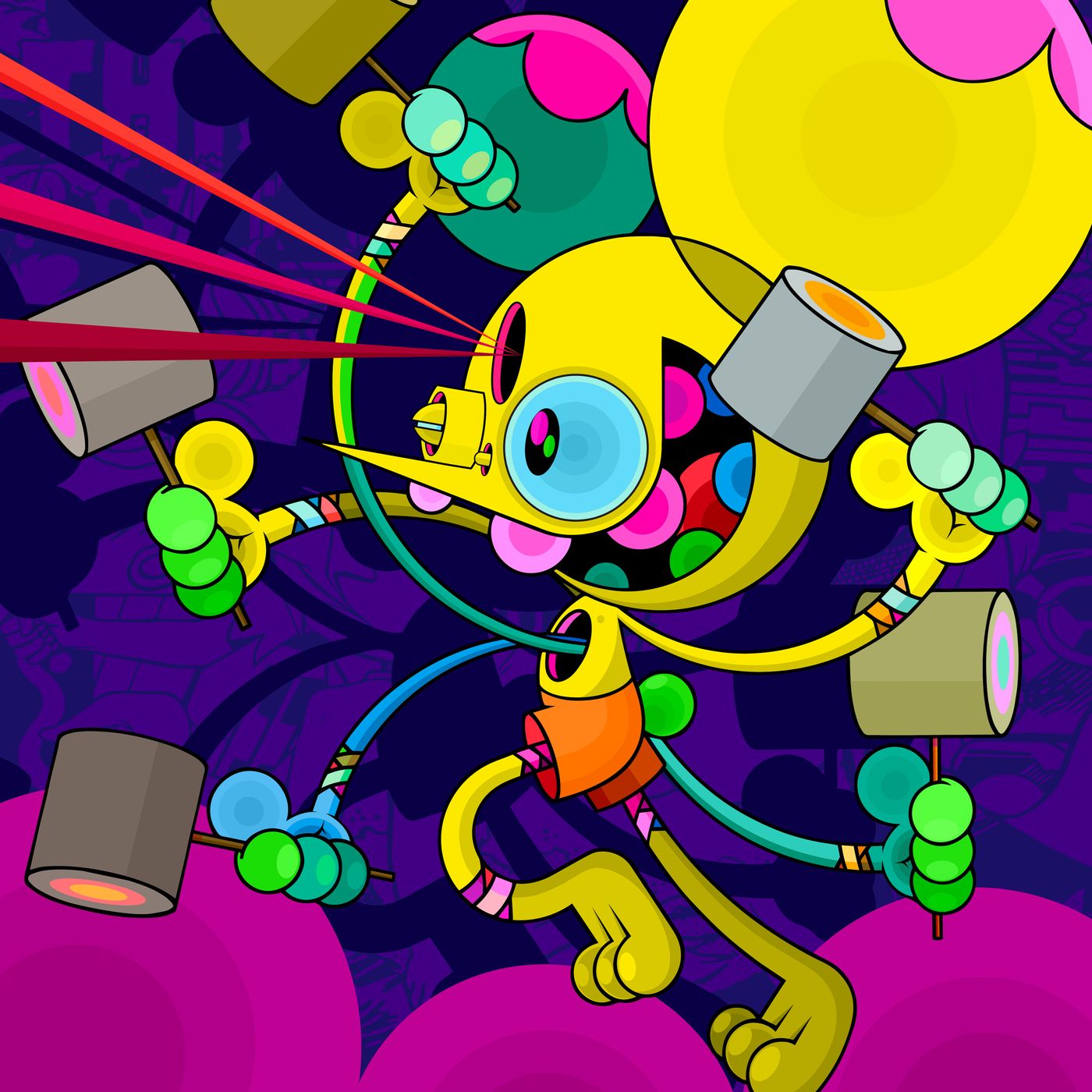
Dalek’s websiteSocial MediaTwitter - @DALEKSPACEMONKYInstagram - dalek2020Art listed onOpenSeaHic Et NuncTime Stamps[0:55 – 2:41] Dalek was introduced to NFTs by his friend, @lurklovesyou, who told him about @hicetnunc2000 on @tezos. Lurk told him that it was easy, no gas, cheap to mint, and easy to put work out. Lurk set up a clubhouse Dalek joined with @mumbot and @_sampierson and other artists. Dalek liked the community aspect.[3:01 – 9:29] Dalek got into anime and comic book culture going to high school in Japan. He was into punk rock and early hip hop such as RunDMC, @KurtisBlow1, @DJFlash4eva, SugarHill Gang. He moved to Chicago and got into graffiti in the early 90s. TD who ran Undercover Magazine and Kaws were big influences on Dalek. He moved to California and met and was mentored by Chris Cycle and Mike Giant, Greg Carroll. This was the era of Twist, Amaze, REVOK, @Saber. Kris Markovich convinced him to move to San Diego where he met @OBEYGIANT, the founder of Obey, who introduced him to printmaking and stickers, and taught him to use Illustrator. Dalek did group shows with @new_image_art curated by Rich Jacobs and included Mark Gonzales, @TempletonEd, Chris Johansen, and Barry McGee. He says he still didn’t know how to be a professional artist. He moved to New York to take a step toward becoming a professional studio artist. When he saw @takashipom’s paintings the first time, he knew that’s what he wanted to do. He reached out to Murakami and started working for him.[11:45 – 13:54] Dalek says artists were interested in certain aspects of Japanese pop culture. Some artists like KAWS, Stash and Futura would go to Japan, but Dalek was more focused on being in New York and learning. He was spending time with Brian McGinnis, and @steveESPOpowers, and anyone he could. His experience with Marakami wasn’t so much about what he was painting, he was way more interested in the technical aspects.[14:19 – 18:58] Dalek discusses his relationship with his <a href="https://opensea.io/DALEK" rel="noopener...
Trad art crossover - 2/x - Christian Andersen - Michael Jeppesen - Trad Art Gallerists turned NFT marketplace
S1 Ep 37Trad art crossover - 2/x - Christian Andersen - Michael Jeppesen - Trad Art Gallerists turned NFT marketplace
Christian’s Social MediaFacebookInstagramMichael websiteSocial MediaInstagramLinkedInTwitterJune Art Fair websiteSocial MediaFacebookInstagramTwitter[1:11 - 4:01] Christian was introduced to NFTs when Michael approached him with the idea of bringing NFTs to the JuneArt Fair. With the emergence of NBA Top Shot and Beeple he saw a need for something for the established art world. Michael said you could have NFTs created by artists of the caliber of Jeff Koons and NFTs collectors wouldn’t know who it was. Michael wanted a place more in line with the old fashioned art world where art is curated and JuneArt came from this.[4:27 - 6:52] Michael says there is a difference between the traditional artists and crypto artists. Generative art projects may look interesting, but mostly sell because people want to make money. Bored Apes and Crypto Punks are interesting from a cultural perspective, but not as art works. Vice Magazine has linked NFTs to a generation. Michael credits the internet with the ability for anyone to use OpenSea and other platforms to publish.[7:34 - 8:45] Michael says you can look at NFTs or a medium or a scene. The scene is 99% generative art. Michael and Christian look at NFTs as a medium. They work with renowned galleries for JuneArt that have artists working to make new and interesting art. NFTs are an opportunity to take art further.[9:18 - 12:07] Michael discusses how the traditional art world is internal with small groups vs the large groups of the crypto community. The benefit of the large crypto communities is it’s more accessible and provides the ability to create awareness for art. That creates the possibility to build your own large audience which hasn’t been possible for many in the old fashioned art world. With more accessibility this may lead to more advanced art.[12:08 - 13:21] Christian talks about galleries opening online viewing rooms(OVRs) to sell physical art digitally....
Artist - 7/x - Olive Allen - Drop OG

S1 Ep 36Artist - 7/x - Olive Allen - Drop OG
Website: https://oliveallen.com/ Linktr.ee https://linktr.ee/oliveallenOlive’s websiteSocial MediaTwitterFacebookInstagramArt listed onOpenSeaNifty GatewaySuperRareChristie’s onlineTime Stamps[1:02 – 2:32] Olive got into NFTs in 2017 after learning about Crypto Kitties. She delved deeper when she travelled to Asia and heard about ERC 721s. Olive played the game Fortnight in those days and had the idea that it would be great if she could trade skins she held in the game and give those virtual items a status. This gave her the idea for her startup company, Decadent.[2:49 – 5:04] Decadent was an early version of marketplaces that exist today. The idea was a marketplace to exchange virtual objects such as game items, art, music, film aviators, and more. Olive moved to Silicon Valley and met with VCs to raise money and faced resistance to investing in crypto. She thinks she had bad timing. She decided to focus more on being a creator vs a company founder which tied her up with administrative tasks with less time for being creative. She moved back to New York in 2019.[5:19 – 6:48] Olive’s career took off when she was 17 living in New York and creating as a traditional painter. At that time she was in a group show that was critically acclaimed. She wanted to be more innovative and create something remarkable. She always felt tech was the future. 13 Dreadful and Disappointing Items was the first drop in the history of the NFT space. This drop got the attention of Duncan Cock Foster and Griffin Cock Foster at Nifty Gateway.[7:27 – 9:31] Olive thinks the NFT world is about assets and the traditional/fine art world is a tiny facet of that. She says artists have explored technology, but crypto art is more of a movement. She believes the world needs a critic or curator to define this for the bigger art world to better understand it. For now people are acquiring and selling to prepare for the bear market. [9:32– 11:13] Olive was at Art Basel and <a href="https://nagel-draxler.de/exhibition/breadcrumbs/" rel="noopener noreferrer"...
Artists - 6/x - A.L Crego - GIF maxi
S1 Ep 35Artists - 6/x - A.L Crego - GIF maxi
Episode interview with A L Crego, find his Twitter and some of his works at MakersPlaceTime Stamps [1:11 – 4:23] For Crego, NFTs were a natural step and it was as far back as 2014 that he started to use the internet as his canvas. Originally he moved to crypto more for protection than sales. By 2019 he was contacted by MakersPlace to be a new artist on the platform (where he now curates). Connecting more with the NFT scene happened once Crego joined Twitter. Crego clarifies that his work is actually not generative and that he does it by hand, frame by frame. That people are often confused even as to what a GIF is, despite it existing for 34 years now. [4:23 – 13:56] Regarding underrated artist, Crego feels that most of the artist who started digital art are underrated. His position comes from noting that many people in the crypto scene only look to those who are on Twitter and ignore those artist like Pi-Slices, Kidmograph, Glitch Black, and Etienne Jacob who were doing digital art long before on places like Tumblr. He finds it painful when people call him and above mentioned artist as emergent. Crego goes on to talk about his dissonance towards social media and the business of NFTs as a whole. [13:56 – 17:49] Crego has coined the term GIFtilism as a homage to Impressionist pointillism. Crego explains; what the point was to traditional art is now what the square or pixel is in digital art. He goes on to make a correlation between comics and GIFs; while comics were originally not taken seriously they have evolved into a high form of literature and he feels that GIF art now being sold on the blockchain also has the room to evolve into something of more value. [17:49 – 21:43] Looking to the importance of a pixel, Kizu brings up Murat Pak’s sale of a single pixel for $5 million. For Crego, he respects Pak’s work (and even did a similar piece) but finds it to be a bit repetitive. Crego first got into GIF art as he saw that it was a space that could still be improved. That many of the artist in the space moved on to produce video art but that he stayed with GIFs because he found them to be a powerful tool. He sees the repetitive loop of a GIF as the visual equivalent of a Tibetan mantra. [21:43 – 26:48] Kizu asks about Crego to elaborate on his views regarding the psychology and philosophy behind GIFs. Crego says that GIFs are the most human format. That our memories work as GIFs. Crego felt limited in photography (mentions Cartier Bresson for his ability to capture motion in a still shot). Says poorly made photo animations are like the autotune of GIFs. For Crego, time is what gives art value, not money.In a digital world where almost everything is free, what has value is what calls your attention… and GIFs and motion call your attention, especially if done in a hypnotic perfect loop where the eye can not detect point A from point B.[26:48 - 31:51] Sabretooth asks Crego about his artistic...
Artists - 5/x - Lawrence Fuller - Poet, Actor
S1 Ep 34Artists - 5/x - Lawrence Fuller - Poet, Actor
Episode interview with Laurence Fuller, find his Twitter @LaurenceFuller and check out some of his works on his websiteTime Stamps[0:48 – 2:06] Laurence got into crypto in 2017. In 2020 when blockchain got one of its first big use cases in NFTs, Laurence felt connected enough to start speaking up about his interest in crypto. [2:06 – 3:10] Kizu congratulates Laurence on his screenplay, Modern Art, which won the “Best Adapted Screenplay” award at the Burbank Film Festival last year. The film was based on his father, Peter Fuller who started, Modern Painters, a magazine that Kizu has previously written for. [3:10 – 5:12] Laurence talks about his father who was a controversial figure in the art scene of the time due to his outspoken love for beauty during the avant-garde movement which favored more experimentalism.[5:12 – 6:58] Caught in the Hollywood ecosystem of labor, Laurence felt disconnected from his journey as an artist. Researching his father drew him back to a sense of connection. During this research he also was inspired by the sense of community that used to exist within the art world. This is also why Laurence loves NFTs, because he feels that it embodies these values of community and belonging.[6:58 – 10:36] Sabretooth notes that Laurence’s works, which combine poetry with neo-classical imagery set in motion, is very different from other NFTs. Laurence says that he was first inspired by his friend Sima Jo and their collaborations. He then started posting those works on social media but notes there wasn’t really an audience. With the NFT space he feels there is finally a niche for video art. [10:36 – 13:20] Inquiring about what Laurence thinks his father’s position would be on NFTs, it comes out that Laurence will be playing the role of David Hockney in a HBO series (due to having the best Yorkshire accent). Hockney, who was one of Laurence’s father’s favorite artists, has been really negative in his position on NFTs. Laurence feels that this is likely due to how they are portrayed in mainstream media and says that this how many people are forming their views toward the scene. [13:20 – 19:25] Discussing the recent shutdown of Hic et Nunc (HEN), Laurence says he was drawn to HEN because it was a way for him to create his own world. He laments its termination but will now mint his works on objkt. Laurence goes on to talk about how objkt.com started as objkt.bid and was used as an auction site for HEN pieces. Now Objkt are doing their own minting (using Tezos) and have even created a music platform with Quincy Jones. Some of the catalogue will include John Legend, Whitney Houston, <a...
RTFKT x Takashi Murakami - Chris Le - Clonex
S1 Ep 33RTFKT x Takashi Murakami - Chris Le - Clonex
Episode interview with Chris Le, find his Twitter @clegfx and check out his new avatar project dropping soon CloneXTime Stamps[0:33 – 1:11] Chris is the co-founder of Studio RTFKT and soon dropping CloneX, a collaboration with Takashi Murakami.[1:16 – 8:40] Chris has worked in all forms of entertainment some of the artists e has worked with include; Anderson Paak, NAS, and Rick Ross. From music industry to film he has done it all but always with an emphasis in visual effects (CGI or VFX background) then moved into game skins. Chris developed a lot of skins for the Steam Workshop Platform. In his view skins are the same concept as NFTs. He then had the idea to put these skins on sneakers and was introduced to Benito through his friend Brock Hofer (Hyperbeast). From there they teamed up with Zaptio to create a digital sneaker brand that could be forged for physicals.They got funded in 2019 by Galaxy Digital then later by GFR Fund and RTFKT launched in 2020. They returned to NFTs in late 2020 with their release of Cyber Sneaker on Superman.[8:40 – 11:35] For Kizu he sees a lot of overlap between Chris and Murakami’s background. Starting in fashion, then later moving into the hip-hop industry (Murakami’s colaborations: LVMH, Supreme, Off-White, Kanye West, Ben Baller & Drake)Chris responds that he only works with people he is a fan of and that their backgrounds (Chris, Zapatio, Ben & Murakami) all aligned, almost as if it were meant to happen. [11:57 – 13:04] The collaboration came about after the guys at RTFKT did an interview with Forbes Japan after which Murakami reached out with a DM of emojis. The rest is...
NFT Collectors 5/x - Denzuul - Accidental NFT influencer through shitposting
S1 Ep 32NFT Collectors 5/x - Denzuul - Accidental NFT influencer through shitposting
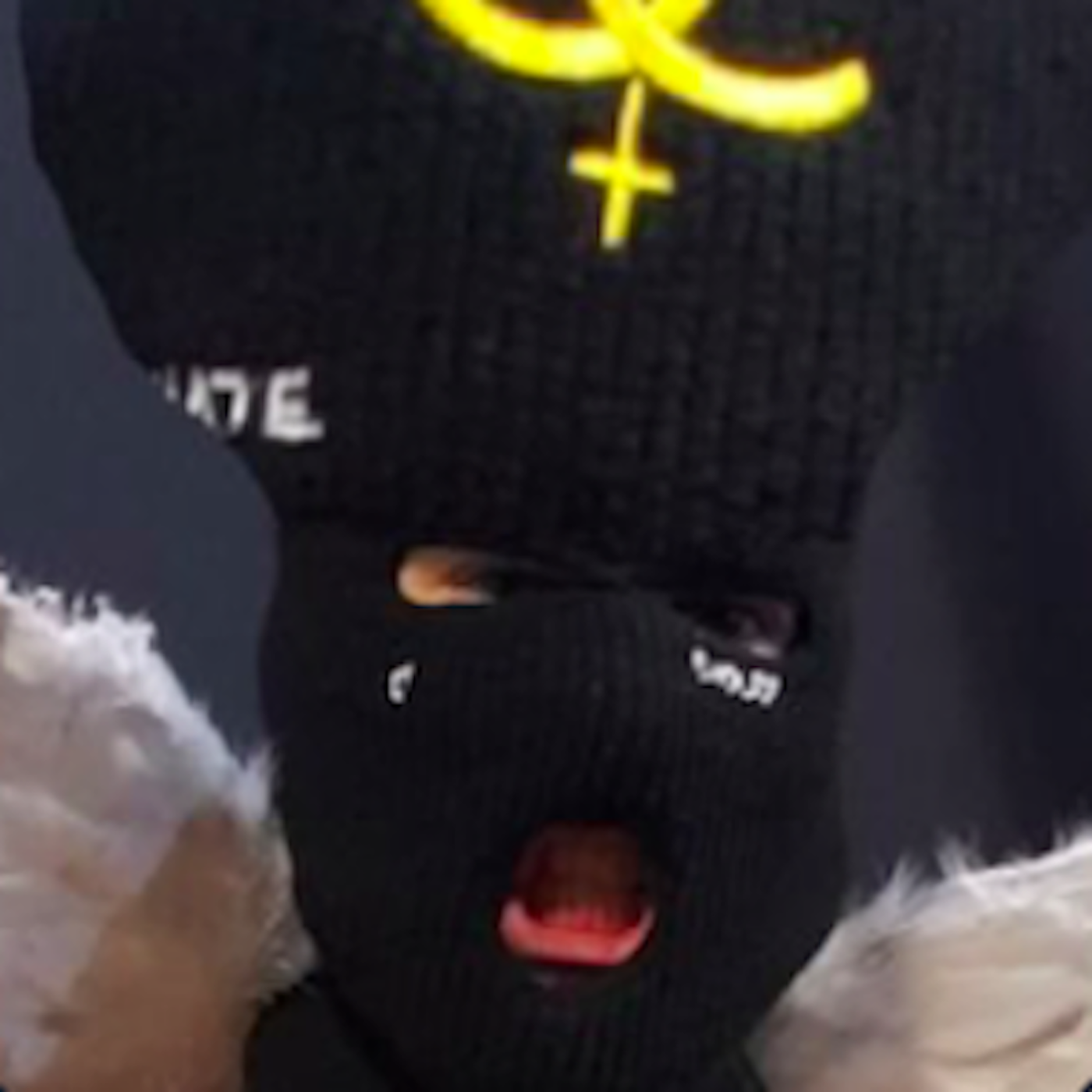
Episode interview with Denzuul, find his Twitter @Denzuul[0:53 – 4:50] Denzuul bought bitcoin as far back as 2011, started to really get into it by 2015. Last year (2020) noticed investment potential of NFTs and from there fell in love with the art side of things.When Denzuul started off with NFTs he thought projects like Kitties and Punks were dumb. Aesthetically he still doesn’t quite get it but, understanding the technology and community behind these projects his respect and understanding has grown. [4:50 – 7:00] Kizu also agrees that the meme and PFP projects do not do much for him aesthetically which brings up the question, why are these projects so popular?Sabretooth points out that crypto is, at its core, antagonistic (towards Wall Street or traditional finance). NFTs inherited this antagonism and thus also look to undermine the traditional art world and its values. That is the point or the greatness of it.[7:00 – 8:26] Kizu talks about the identifying factors of the G’Evol project, and what elements people might identify with. Denzuul denies involvement in the project and states that he is merely a huge fan. That when he first saw a baby in a ski mask, he felt it was tru;y different from other projects and there was something there he identified with.[8:59 – 10:53] Sabretooth notes that, people come into the NFT space usually because they are attracted to the money that can be made but that this often evolves into a deeper love for the art. Denzuul finds that what actually moved him to feel more connected to the scene was shit posting. This was what brought him to really love the scene. [10:53 – 12:45] Denzuul was always a shit poster, even back in the crypto scene. He used to have multiple personas, he now almost exclusively focuses on Denzuul profile. [12:45 – 14:41] Denzull thinks that if Ethereum doesn’t come out with the 2.0 version in the next year or two, that they will start loosing the NFT market, but not their DeFi market. He thinks that art doesn’t have the same need for security as finance. That it is not worth paying $400 per transaction for the extra security and that HEN will take their place if they don’t fix issues around gas fees.[14:41 – 16:19] Denzuul says that gas fees were really high in spring/summer of 2021. Felt the need to buy JPEGs but couldn’t afford to on ETH so he started to move to HEN. From there he kept finding great projects and got hooked. Now he owns over 1000 works on HEN.[16:19 – 18:00] Sabretooth points out that we’re in an NFT bear market. Denzuul feels this will probably last until the end of the year, but says that it’s a good thing since you can’t have a market that is always rising. As crypto goes up, it is natural trader psychology that people will want to hold on to their crypto as apposed to NFTs. Thinks that it may be a rough 6 months but that looking to the long haul he’s still really bullish on NFTs. [18:03 – 19:00] Denzuul’s favorie artists on HEN are, <a href="https://twitter.com/tokblokk?lang=en" rel="noopener...
Artists - 4/x - Vimal Chandran - Indofuturism pioneer
S1 Ep 31Artists - 4/x - Vimal Chandran - Indofuturism pioneer
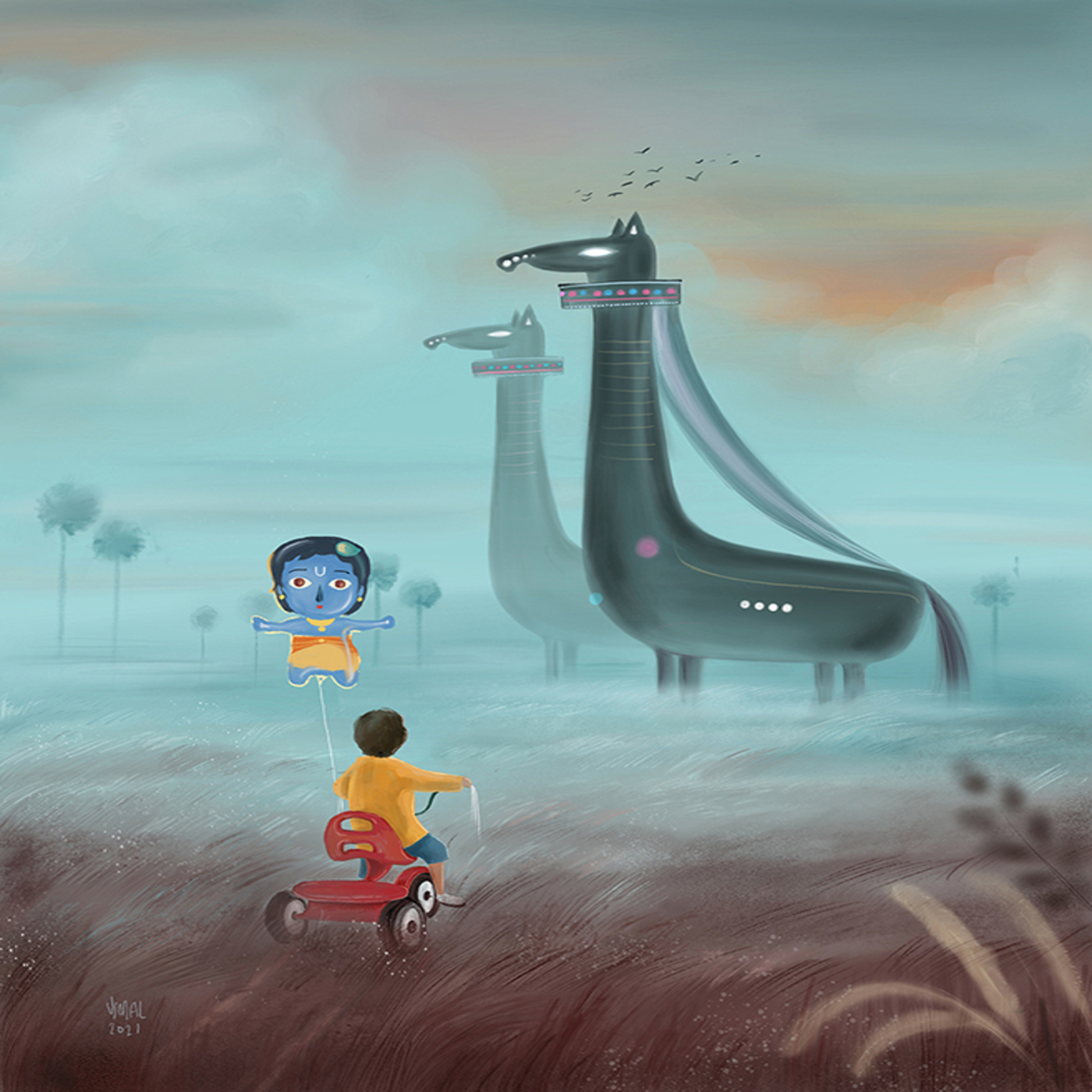
Episode interview with Vimal Chandran, find his Twitter and Instagram https://vimalchandran.com/Time Stamps[0:51 - 2:55] Sabretooth starts by asking Vimal how he started with NFTs. Vimal learned about the large profits artists were making through NFTs in February 2021, specifically the Beeple $69m sale. Since then he has been exploring and learning about NFTs, crypto, and bitcoin.[2:56 - 5:44] Sabretooth asks Vimal what his move to NFTs means for his art. Vimal started with watercolor illustrations as a kid and moved to digital art in 2012. He started with a Wacom tablet and drawing in Photoshop. When holding an exhibition, people preferred physical work though. He was split between his traditional artwork for a profit and digital for personal use. It was revolutionary for him to discover NFTs. This allowed him to make a career out of digital art and not just client work.[5:45 - 9:21] Vimal has much of his work within the Indian market. Sabretooth is inquiring if his work will go beyond Vimal’s traditional client base. Vimal focuses on storytelling that comes from the area where he lives. For his NFTs, he focused on global and futuristic. He sees his pieces as reaching a global audience. While everyone may not understand the traditional intricacies of Indian culture, the Scifi movement and his execution reaches far beyond. [9:58 - 13:54 ] Vimal’s series that he is dropping on WazirX and Foundation is a narrative about the issues happening around him. Vimal grew up in Kerala, a region of India with many folk stories. It also has an inclination towards art. Growing up he would read a Sci Fi comic distributed by the Soviet embassy and moved to Bangalore in 2005. Vimal then started to explore these two very different environments. He calls it Indo Futurism. It is a genre that even Bollywood hasn’t explored. [13:54 - 16:43 ] Sabretooth asks Vimal to explain how he is balancing his design work, gallery and NFT career, and cultivating his social media. Vimal started in 2005 with Facebook and how he started with brands reaching out to him. He believes that there is a different audience on social media than NFTs. He feels like he is starting from scratch again within the NFT space, but wants to continue to complete more of his own artwork in the future. Vimal has reduced his client base and will continue to focus on NFTs. He wants to be known for mixing indian culture with Sci Fi and connecting to a global audience. [16:44 - 21:40] Due to India’s policies towards crypto, many Indian’s felt the need to use pseudonyms. Sabretooth believes that there are a lot more Indians in crypto than people realize. Sabretooth asks Vimal about his personal experience of the Indian community who are in NFTs. Vimal agrees that there are a lot of people in India in NFTs and it is becoming more popular. It is especially popular for the younger generations even though everyone is talking about cryptocurrencies. He does not believe the government will ban it because they will not be able to ban it. Vimal thinks that they will be part of the global blockchain movement. [21:41 - 21:40] While it is a tough question for Vimal to answer, his favorite artist is a South African painter <a href="https://art21.org/artist/william-kentridge/" rel="noopener noreferrer"...