
Financial Modeler's Corner
152 episodes — Page 2 of 4

How Excel AI Agents Like Rosie Work for FP&A Tasks but Fail at Building Models with Giles and Ian
Note: This episode was recorded and scheduled for release before the recent announcement that Rosie AI is shutting down.In this episode of the ModSquad series on Financial Modeler’s Corner, host Paul Barnhurst is joined by modeling experts Ian Schnoor and Giles Male to evaluate Rosie AI, a new tool that integrates with both Excel and Google Sheets. Together, they test its capabilities in building financial models, solving complex FP&A tasks, and performing real-world use cases. They push Rosie through a series of tests, from basic formula creation to building full three-statement models, and discuss where it excels, where it needs improvement, and its potential future in the world of financial modeling.Expect to LearnHow Rosie AI performs in real-world financial modeling tasksThe strengths and weaknesses of Rosie in building models and formulasKey insights into how AI tools are evolving in financial modelingThe importance of knowing how to validate AI-generated modelsHow Rosie compares with other AI tools and traditional financial modeling techniquesHere are a few quotes from the episode:“AI can’t replace the need for modelers to understand the logic, but it can help speed up certain tasks.” - Giles Male“If you know what you’re doing, these tools can save you time. If you don’t, you need to double-check everything.” - Ian SchnoorFollow Ian Schnoor:LinkedIn - https://www.linkedin.com/in/ianschnoor/Follow Giles Male:LinkedIn - https://www.linkedin.com/in/giles-male-30643b15/Rosie AI: https://www.askrosie.ai/In today’s episode: [02:23] - Excel Turns 40[07:29] - Microsoft’s AI Agent vs. Modeling Tools[16:18] - Exploring Rosie’s Website and Features[25:35] - Real-World FP&A Test: Trial Balance Summary[35:53] - Deferred Revenue Schedule Test[50:54] - Detecting Inconsistent Formulas in Financial Models[01:00:53] - Testing Rosie AI on a Five-Year Forecast Model Build[01:08:31] - Final Thoughts: Where AI Helps and Where It Doesn’t

Testing Excel AI Software Tracelight on Excel Esports, Financial Modeling and FP&A with Ian And Giles
Disclaimer: This episode is best experienced in video format. Since we’re testing new tools like Tracelight, the visuals add valuable context and make everything much clearer. We highly recommend watching the video for the full experience.In this episode of the ModSquad series on Financial Modelers’ Corner, host Paul Barnhurst is joined by modeling experts Ian Schnoor and Giles Male to evaluate Tracelight, a new Excel-based modeling tool. Together, they explore how well it performs across real-world use cases in FP&A, Excel eSports, and corporate finance. From auditing balance sheets to solving Excel battle cases and building five-year forecast models, the ModSquad puts Tracelight through a comprehensive test to assess what it gets right, what it gets wrong, and where it still needs improvement.Expect to LearnHow Tracelight performs across different financial modeling scenariosThe impact of LLM selection and prompt design on tool outputWhere Tracelight excels, and where it falls short, in building models and running checksHow Excel eSports challenges expose strengths and weaknesses in formula logicWhen these tools can save time, and when they create more workHere are a few quotes from the episode:"If you don't know your stuff, you're going to learn the wrong things; or worse, think it's right when it’s not." - Giles Male"The best Excel modellers aren’t the fastest, they’re the most thoughtful."- Ian Schnoor Follow Ian Schnoor:LinkedIn - https://www.linkedin.com/in/ianschnoor/Follow Giles Male:LinkedIn - https://www.linkedin.com/in/giles-male-30643b15/Tracelight: https://tracelight.ai/In today’s episode: [02:22] - Tracelight Overview & Positioning[09:46] - Giles vs. Excel eSports Battle Case[18:00] - Reviewing Tracelight’s Logic and Output[28:04] - Advanced Test: Championship-Level Modeling[33:59] - AI Tools and the Learning Curve[41:49] - Deferred Revenue Schedule Test[56:26] - Why Doesn’t the Balance Sheet Balance?[1:02:21] - Fixing Balance Sheet Errors Using Cloud Opus[1:316:00] - Episode Wrap-Up and Final Thoughts

Introducing the ModSquad: Testing AI Financial Modeling Tools, So you Don't Have To... with Ian and Giles.
In this special launch episode of The Mod Squad, host Paul Barnhurst is joined by co-hosts Giles Male and Ian Schnoor to explore the evolving intersection of artificial intelligence and financial modeling. Together, they introduce a new podcast series, The ModSquad, designed to test AI tools built for financial modelers, FP&A professionals, and analysts. The trio shares their excitement, cautious optimism, and the pressing questions they hope to answer through hands-on experimentation with cutting-edge tools that promise to transform the modeling landscape. Paul, Giles, and Ian bring decades of combined experience across FP&A, corporate finance, Excel training, and financial modeling accreditation. This introductory episode sets the tone for a candid, unscripted, and deeply analytical journey into the practical realities of AI in finance.Expect to LearnWhy AI won't replace financial modelers, but will transform the way they workHow AI tools are being developed to serve finance professionals specificallyThe importance of judgment, communication, and scoping in effective modelingWhat The Mod Squad plans to test: from three-statement models to Excel esportsHow to prepare your career for the AI revolution in modelingHere are a few quotes from the episode:“Just because it looks cool doesn’t mean it gives you a finished product.” - Giles Male“Modeling is just as much the journey as it is the destination.” - Ian SchnoorFollow Ian Schnoor:LinkedIn - https://www.linkedin.com/in/ianschnoor/Follow Giles Male:LinkedIn - https://www.linkedin.com/in/giles-male-30643b15/In today’s episode: [01:21] - Introduction of the Episode[04:57] - Why This Series? Helping Modelers Cut Through the AI Noise [09:14] - Fear & Job Security: Will AI Replace Financial Modelers? [14:14]- The Human Element in Modeling: Judgment, Communication, Scoping [21:03] - Series Format: Tools We’ll Test & Why [26:03] - Testing Assignments: Who’s Doing What? [29:03] - FP&A Use Cases Paul Will Explore [35:21] - What to Expect: Raw Prompts, Real Results [36:52] - Closing: Why This Series Matters & How You Can Engage

Financial Modeling for Finance Pros to Fix Real-World Mistakes Using Balance Sheets - Scott Strachan
In this episode of Financial Modeler’s Corner, host Paul Barnhurst speaks with financial modeling expert Scott Strachan about the role of financial models in business planning and decision-making. Scott shares lessons from over 30 years of experience in accounting, consulting, private equity, and corporate finance. The discussion covers the importance of modeling for startups, the problems with annual models, the risks of overrelying on EBITDA, and how the FMI certification has helped him stay sharp in a changing industry. Scott Strachan is a Chartered Accountant and Chartered Financial Modeler who has worked across the UK, the Arabian Gulf, and now serves clients in Qatar and London. He has built and reviewed complex financial models for deals worth hundreds of millions of dollars, and now contributes to the Financial Modeling Institute as a content developer and exam writer. Scott is known for applying practical thinking to modeling and helping bridge the gap between theory and real-world execution.Expect to LearnWhy annual models are often inappropriate for startups and small businessesThe difference between one-time-use models and those built for regular updatesHow poor modeling leads to funding gaps and business failureWhy EBITDA can be misleading in deal evaluationHow preparing for the CFM exam can improve your modeling skillsHere are a few quotes from the episode:“A model is just an appendix to a business plan. If you don’t understand your market or product, no model will save you.” - Scott Strachan“EBITDA is a fantasy land metric. It ignores reality and tells you what you want to hear, not what you need to know.” - Scott Strachan“Every business fails because of bad management, and that often starts with not modeling your cash needs properly.” - Scott StrachanFollow Scott:LinkedIn - https://www.linkedin.com/in/scott-strachan-ca-a795851a4/?utm_source=share&utm_campaign=share_via&utm_content=profile&utm_medium=ios_appFollow Paul: Website - https://www.thefpandaguy.com LinkedIn - https://www.linkedin.com/in/thefpandaguyYouTube - https://www.youtube.com/@thefpandaguyFollow Financial Modeler's Corner: LinkedIn Page- https://www.linkedin.com/company/financial-modeler-s-corner/?viewAsMember=true Newsletter - Subscribe on LinkedIn -https://www.linkedin.com/build-relation/newsletter-follow?entityUrn=7079020077076905984Sign up for the Advanced Financial Modeler Accreditation Today and receive 15% off by using the special show code ‘Podcast’. Visit https://bit.ly/497oAqW and use the code “Podcast” to save 15% when you register. In today’s episode: [01:20] - Scott’s Background & Career in Modeling[06:26] - Why Annual Models Often Fall Short[09:11] - Why Startups Need Monthly Models[13:54] - Working Capital Mistakes in Startups[17:59] - Disposable vs. Ongoing Models[26:37] - Thoughts on EBITDA and Adjusted EBITDA[33:31] - Why Models Don’t Replace Business Fundamentals[40:25] - Excel Shortcuts and Modeling Habits[42:43] - Rapid Fire: Modeling Preferences[45:58] - Final Advice & How to Reach Scott

Why Finance Students Must Learn Discipline Before AI Replaces Their Jobs with David Stangeland
In this episode of Financial Modeler’s Corner, Host Paul Barnhurst sits down with David Stangeland, a finance professor at the University of Manitoba, to talk about teaching financial modeling, how students learn best, and the tools that have changed over the years, from PV tables to Excel. David shares what he's learned from more than 30 years in the classroom, why planning is so important in modeling, and how he uses real money investing through a student-managed fund to teach hands-on skills. He also talks about the value of the FMI curriculum, the role of judgment in modeling, and why he still learns something new every time he teaches. David has been teaching at the University of Manitoba’s Asper School of Business since 1991. He has a PhD from the University of Alberta and is both a CPA and a CMA. His research focuses on corporate governance and performance and has been published in top finance journals. He’s co-authored two corporate finance textbooks and currently advises the school’s $2.8 million student-managed investment fund.Expect to LearnThe most common mistakes students make when building modelsHow Excel helps students better understand what they're doingWhy structure and layout matter in a financial modelThe importance of combining modeling with real-world contextHow the FMI curriculum is used in teaching valuation and asset managementHere are a few quotes from the episode:“There’s no one right answer in valuation. It’s about making good assumptions and thinking through your logic to build a credible story.” - David Stangeland“Don’t think you know it all. Always be open to learning and improving. That mindset will take you further than any formula.” - David Stangeland“Spreadsheets aren’t going anywhere. Whether it’s Excel or something else, that flexible grid is still the best way to work with data.” - David StangelandFollow David:LinkedIn - https://www.linkedin.com/in/david-stangeland-phd-cpa-cma-b-comm-29773946/?originalSubdomain=caFollow Paul: Website - https://www.thefpandaguy.com LinkedIn - https://www.linkedin.com/in/thefpandaguyYouTube - https://www.youtube.com/@thefpandaguyFollow Financial Modeler's Corner: LinkedIn Page- https://www.linkedin.com/company/financial-modeler-s-corner/?viewAsMember=true Newsletter - Subscribe on LinkedIn -https://www.linkedin.com/build-relation/newsletter-follow?entityUrn=7079020077076905984Sign up for the Advanced Financial Modeler Accreditation Today and receive 15% off by using the special show code ‘Podcast’. Visit https://bit.ly/497oAqW and use the code “Podcast” to save 15% when you register. In today’s episode: [02:03] - David’s Background[06:36] - Love for Teaching[10:05] - Starting with NPV Tables[13:54] - From Calculators to Excel[22:20] - Teaching with Three-Model Framework[27:54] - Current Projects Outside Teaching[33:19] - Modeling Standards Followed[35:20] - Favorite Lookup Function[37:18] - Advice for Aspiring Modelers

From Classic Cars to Aircraft: The Art of Modeling Distressed Companies with Vaughan Grandin
In this episode of Financial Modeler’s Corner, host Paul Barnhurst welcomes Vaughan Grandin, Managing Director and Head of Financial Modeling at Teneo. They discuss his experiences building financial models in distressed situations, the importance of empathy in working with clients, and provide examples of complex models, including those from the airline, aircraft leasing, and classic car dealership industries.Vaughan Grandin is the Managing Director and Head of Financial Modeling at Teneo in London. He is a Chartered Accountant with the South African Institute of Chartered Accountants and has more than 20 years of experience in corporate advisory, finance, and restructuring. He leads Teneo’s financial modelling team, which supports clients and other advisory teams by creating reliable models for distressed companies, transactions, and stakeholder analysis.Disclaimer: All examples and stories shared in this video are from Vaughan Grandin’s previous roles and do not reflect his current employer.Expect to LearnWhy empathy matters in financial modelingHow to approach modeling in distressed situationsThe role of entity priority models and circular referencesKey principles for building robust financial modelsLessons from real-world modeling cases across industriesHere are a few quotes from the episode:“Empathy is a word I think about a lot in modeling, especially in distressed situations.” - Vaughan Grandin“A good model should be able to take whatever inputs you give it and actually use them to solve a problem.” - Vaughan Grandin“In distressed situations, time pressure is real; sometimes, a company only has weeks of cash left.” - Vaughan GrandinFollow Vaughan:LinkedIn - https://www.linkedin.com/in/vgrandin/?originalSubdomain=ukCompany - https://www.teneo.com/person/vaughan-grandin/Follow Paul: Website - https://www.thefpandaguy.com LinkedIn - https://www.linkedin.com/in/thefpandaguyYouTube - https://www.youtube.com/@thefpandaguyFollow Financial Modeler's Corner: LinkedIn Page- https://www.linkedin.com/company/financial-modeler-s-corner/?viewAsMember=true Newsletter - Subscribe on LinkedIn-https://www.linkedin.com/build-relation/newsletter-follow?entityUrn=7079020077076905984Sign up for the Advanced Financial Modeler Accreditation Today and receive 15% off by using the special show code ‘Podcast’. Visit https://bit.ly/497oAqW and use the code “Podcast” to save 15% when you register. In today’s episode: [03:22] - Model Horror Stories [06:52] - Empathy in Modeling [07:55] - Inside Teneo’s Team [12:50] - Classic Car Dealership Model [21:16] - Modeling in Distressed Situations [27:56] - Managing Complexity [32:07] - Aircraft Leasing During COVID [40:31] - Six Elements of Robust Modeling [46:51] - Rapid-Fire Excel Q&A [53:45] - Closing Reflections

Why Spreadsheets Will Stay, but Financial Modeling Workflow and Version Control Must Be Rebuilt with Matt Lee
In this episode of Financial Modeler's Corner, host Paul Barnhurst is joined by Matthew Lee, Co-Founder and CEO of Nummo, a software tool built to help analysts and bankers build financial models more efficiently. Matt explains why he started the company after years in investment banking and as a CFO, and what he sees as the real opportunities and limits of automation in financial modeling. The conversation covers the pressure of dealing with work, common modeling mistakes, and where tools like Nummo can help speed things up without replacing analysts. Matt also shares thoughts on what makes a good model and why hands-on understanding still matters most.Matt is the Co-Founder and CEO of Nummo, an AI co-pilot for financial modeling that he wished he had during his time in finance. Before Nummo, Matt worked as an investment banker at Lazard, helping to execute sell-side and buy-side M&A deals totaling around $6 billion in enterprise value. He also served as CFO at a digital product studio, overseeing financial planning for emerging tech products launched by Fortune 500 firms and early-stage ventures. With over 40,000 hours in Excel, Matt built Nummo to deliver a banker-grade modeling platform that runs fully on-device, maintains cell-level accuracy, and automates workflows like DCFs, LBOs, comps, and fairness opinions.Expect to LearnWhy financial models still need human inputWhere tools like Nummo can improve modeling workflowsWhy version control and hidden hard codes cause major issuesHow to balance automation with accuracy and narrativeWhy it’s critical to never outsource your understanding of a modelHere are a few quotes from the episode:We’re about 30% of the way there. AI can help, but it can’t yet build a fully detailed, nuanced model.” - Matthew Lee“Even with automation, you still need to check for hidden hard codes and make sure your model tells the right narrative.” - Matthew Lee“Formatting, standardization, and QA are where AI is already adding value today.”- Matthew LeeFollow Matthew:LinkedIn - https://www.linkedin.com/in/matthew-m-lee/Company - https://www.nummo.xyz/Follow Paul: Website - https://www.thefpandaguy.com LinkedIn - https://www.linkedin.com/in/thefpandaguyYouTube - https://www.youtube.com/@thefpandaguyFollow Financial Modeler's Corner: LinkedIn Page- https://www.linkedin.com/company/financial-modeler-s-corner/?viewAsMember=true Newsletter - Subscribe on LinkedIn -https://www.linkedin.com/build-relation/newsletter-follow?entityUrn=7079020077076905984Sign up for the Advanced Financial Modeler Accreditation Today and receive 15% off by using the special show code ‘Podcast’. Visit https://bit.ly/497oAqW and use the code “Podcast” to save 15% when you register. In today’s episode: [02:28] - Matt’s background[03:54] - Worst modeling mistakes[06:24] - What Nummo is and how it works[11:10] - Biggest Challenge in M&A Transactions[15:34] - Building models that tell a story[28:23] - How workflows are changing[31:53] - Favourite Excel Shortcut[39:44] - Rapid fire: Excel habits and preferences[45:35] - Final Question & Episode

How Finance Modelers and Professionals Align Stakeholders and Support M&A Success with Morten
In this episode of Financial Modeler's Corner, host Paul Barnhurst is joined by Morten Lykke Pedersen, a seasoned financial expert and Partner at Deloitte, where he leads the financial modeling division within the Strategy, Risk, and Transaction Advisory group. Morten discusses his extensive experience in mergers and acquisitions (M&A), strategic financial modeling, and how financial models can empower businesses to make informed, data-driven decisions. He also shares insights on the importance of collaboration during the modeling process, tips for ensuring client engagement, and the role of financial models in presenting a company’s equity story.Morten Lykke Pedersen, CFA, CFM, is a financial expert with over a decade of experience. He specializes in mergers and acquisitions (M&A), providing strategic insights that empower businesses to optimize their strategies through forecasting and risk assessment. Morten's career spans notable roles, including his tenure at PwC, where he managed valuation and modeling services. At Deloitte, Morten is dedicated to guiding businesses through complex transactions and strategic initiatives, helping them navigate industry dynamics and execute transformative transactions successfully. He holds a CFA charter and certifications in financial modeling, and his educational journey includes advanced degrees from Aarhus University, Saint Mary’s University, and the CFA Institute.Expect to LearnThe critical role of collaboration in transaction modelingHow to build financial models that communicate a company’s story and manage riskThe importance of scenario analysis in M&A transactionsWhy financial models should reflect business realities, not just numbersHow formal training programs, like the Chartered Financial Modeler (CFM), can elevate modeling skills and team capabilitiesHere are a few quotes from the episode:“Financial modeling is about understanding the business, not just crunching numbers.” - Morten Lykke Pedersen“A financial model should only do what it’s supposed to do, keep it simple and fit for purpose.” - Morten Lykke Pedersen“It’s not about the formulas; it’s about making sure the people who own the numbers understand what’s going on in the model.” - Morten Lykke PedersenFollow Morten:LinkedIn - https://www.linkedin.com/in/mortenlykkepedersen/?originalSubdomain=dkCompany - https://www.linkedin.com/company/deloitte/Follow Paul: Website - https://www.thefpandaguy.com LinkedIn - https://www.linkedin.com/in/thefpandaguyYouTube - https://www.youtube.com/@thefpandaguyFollow Financial Modeler's Corner: LinkedIn Page- https://www.linkedin.com/company/financial-modeler-s-corner/?viewAsMember=true Newsletter - Subscribe on LinkedIn-https://www.linkedin.com/build-relation/newsletter-follow?entityUrn=7079020077076905984Sign up for the Advanced Financial Modeler Accreditation Today and receive 15% off by using the special show code ‘Podcast’. Visit https://bit.ly/497oAqW and use the code “Podcast” to save 15% when you register. In today’s episode: [02:16] - Guest Background[03:43] - Worst Model Horror Story[07:58] - Client Engagement[11:52] - Conveying Company Value[13:35] - Supporting Assumptions with Data[21:11] - The CFM Journey with Morten's Team[31:19] - Favorite Excel shortcut.[32:14] - The Number One Career Lesson[33:39] - Rapid-Fire Questions[37:38] - Final Advice

The 40th Anniversary of Excel: Unlocking the fascinating History, Easter Eggs, Excel humor, and more
In this episode of Financial Modeler's Corner, host Paul Barnhurst celebrates the 40th anniversary of Microsoft Excel, a tool that has revolutionized the financial modeling industry and many others. Paul explores Excel’s fascinating history, its evolution over four decades, and shares interesting facts, hidden Easter eggs, and fun surprises that Excel enthusiasts will appreciate. From the first graphical interface to modern-day features like dynamic arrays, this episode showcases how Excel has shaped the way we work and how it continues to be an essential tool for financial modelers.Expect to LearnThe fascinating origin story of Excel and its early days on the Mac.Fun facts about Excel’s features, including its secret limitations and quirky surprises.Excel's functionality has evolved over the years to include over 500 functions.Hidden Easter eggs and games that were embedded in older versions of Excel.Creative and unique Excel projects, including games and pixel art, showcase the limitless possibilities within Excel.Here are a few quotes from the episode:"The first version of Excel only had 150 functions, and now we’re up to 516! That’s quite a leap over 40 years." - Paul Barnhurst"Sometimes, the most creative projects come from using Excel in ways you never thought possible, like pixel art or creating a full video game." - Paul Barnhurst"The tool of choice for modelers is Excel, and it has a lot more to offer than meets the eye." - Paul BarnhurstFollow Paul: Website - https://www.thefpandaguy.com LinkedIn - https://www.linkedin.com/in/thefpandaguyYouTube - https://www.youtube.com/@thefpandaguyFollow Financial Modeler's Corner: LinkedIn Page- https://www.linkedin.com/company/financial-modeler-s-corner/?viewAsMember=true Newsletter - Subscribe on LinkedIn-https://www.linkedin.com/build-relation/newsletter-follow?entityUrn=7079020077076905984Sign up for the Advanced Financial Modeler Accreditation Today and receive 15% off by using the special show code ‘Podcast’. Visit https://bit.ly/497oAqW and use the code “Podcast” to save 15% when you register. In today’s episode: [02:17] - 16 Fun Facts About Excel[08:11] - Excel's Evolution[14:58] - Excel Easter Eggs[16:55] - Excel Jokes to Lighten the Mood[19:13] - Epic Excel Creations: Stunning Art[23:11] - Wrapping Up and Final Thoughts

Three-Statement Modelling for FP&A Pros to Avoid Complex Builds & Forecast Errors with Chris Reilly
In this republished episode of the Financial Modeler’s Corner, host Paul Barnhurst revisits the intricate world of financial modeling with returning guest Christopher Reilly. The conversation centers around what is necessary to build robust financial models, highlighting the importance of three-statement models and cash flow forecasting. The episode is filled with practical insights, advanced techniques, and professional experiences that underscore the significance of simplicity, accuracy, and best practices in financial modeling.Christopher Reilly is a seasoned financial modeler with extensive experience in consulting, private equity, and financial modeling education. Starting his career during the financial crisis, Chris worked on high-profile bankruptcies such as Lehman Brothers and Rescap. His journey took him from a senior analyst role at Hilton Worldwide to a middle-market private equity firm, and eventually led to founding his own financial modeling education business. Today, he focuses on teaching and building financial models, with his work being featured by Wharton Online, Wall Street Prep, and LinkedIn Learning, among others.Expect to Learn:The importance of simplicity in financial models and how over-complicating can hinder their effectiveness.Practical steps and considerations for building robust three-statement financial models.Tips for auditing models to ensure accuracy and integrity.How to use advanced Excel functions and shortcuts to enhance modeling efficiency.Insights into the role of AI in financial modeling and how it may shape the future of the profession.Here are a few quotes from the episode:“All models are wrong, some are useful, and if it’s too complicated, it’s not useful.” - Chris Reilly“AI won’t replace modelers, but it will complement us by improving assumption accuracy and reducing bias.” - Chris Reilly“Use the BASE structure: Beginning, Addition, Subtraction, Ending, it’s the easiest way to audit support schedules.” - Chris ReillyFollow Christopher:Website - https://www.financialmodelingeducation.com/LinkedIn - https://www.linkedin.com/in/chris-reilly-mission-capital/ Follow Paul: Website - https://www.thefpandaguy.com LinkedIn - https://www.linkedin.com/in/thefpandaguy YouTube - https://www.youtube.com/@thefpandaguyFollow Financial Modeler's Corner: LinkedIn Page- https://www.linkedin.com/company/financial-modeler-s-corner/?viewAsMember=true Newsletter - Subscribe on LinkedIn-https://www.linkedin.com/build-relation/newsletter-follow?entityUrn=7079020077076905984Sign up for the Advanced Financial Modeler Accreditation Today and receive 15% off by using the special show code ‘Podcast’. Visit https://bit.ly/497oAqW and use the code “Podcast” to save 15% when you register. In today’s episode: [02:13] - Horror Story[03:46] - Why simple models are most effective[04:52] - Christopher’s career journey[08:07] - Passion for teaching financial modeling[11:31] - Why finance pros need 3-statement modeling[14:13] - Getting started with a 3-statement model[26:18] - Setting Up the Financial Plumbing[32:01] - Tips for error checks & model integrity[38:26] - Must-know Excel formulas & functions[46:16] - How AI may shape financial modeling[49:13] - Chris Reilly’s Financial Modeling Courses

How FP&A Teams Turn Confusing Budgets into Strategic Tools That Drive Alignment with Sarah Schlott
In this episode of Financial Modeler’s Corner, host Paul Barnhurst welcomes Sarah Schlott, founder of The Schlott Company. Sarah shares her perspective on why financial models often fail, not because of bad math, but because they don’t reflect how real businesses work. She talks about what it takes to earn trust as a finance partner, how to clean up messy data without losing momentum, and the importance of getting the right people involved in the process. Sarah and Paul also dive into how finance teams can shift from reactive number-crunchers to proactive business partners that bring clarity and confidence to decision-making.Sarah Schlott is a strategic finance leader with over 18 years of experience guiding companies through growth, M&A, and operational change. She’s worked across corporate finance, forecasting, budgeting, and reporting infrastructure. Sarah is the founder of The Schlott Company, where she helps founders bring order to financial chaos. Her approach blends classic FP&A with modern tools and a deep understanding of real-world business dynamics. She believes finance should bring clarity, not confusion.Expect to LearnWhy overly complex models usually create more confusion than insightWhat it means to be “battle-tested” as a finance leaderHow to build models that reflect business reality, not just spreadsheetsWhat to do when the data is unreliable or inconsistentWhy involving department heads early leads to better models and better outcomesHere are a few quotes from the episode:"When you’re constantly fighting about the numbers, you’re not ready to present the model." - Sarah Schlott"If the people who own the numbers don’t see themselves in the model, you should probably just chuck it." - Sarah Schlott"Stop being the cop. Be the radio tower that keeps everything aligned." Sarah SchlottFollow Sarah:LinkedIn - https://www.linkedin.com/in/sarahschlott/Website - http://www.sarahgschlott.com/Company - https://theschlottco.com/Follow Paul: Website - https://www.thefpandaguy.com LinkedIn - https://www.linkedin.com/in/thefpandaguyYouTube - https://www.youtube.com/@thefpandaguyFollow Financial Modeler's Corner: LinkedIn Page- https://www.linkedin.com/company/financial-modeler-s-corner/?viewAsMember=true Newsletter - Subscribe on LinkedIn-https://www.linkedin.com/build-relation/newsletter-follow?entityUrn=7079020077076905984Sign up for the Advanced Financial Modeler Accreditation Today and receive 15% off by using the special show code ‘Podcast’. Visit https://bit.ly/497oAqW and use the code “Podcast” to save 15% when you register. In today’s episode: [01:53] - Introduction to Sarah Schlott[03:14] - Worst Model Horror Story[07:48] - Founding The Schlott Company[10:19] - Experience Needed to Go Fractional[14:53] - Building Finance That Brings Calm, Not Confusion[17:28] - How to Work with Messy Data[20:58] - Pressure Testing Financial Models[28:04] - Finance as a Radio Tower, Not a Traffic Cop[39:39] - Rapid-Fire: Excel Tools and Modeling Styles[43:37] - Wrapping Up and Final Thoughts

An AI Excel Tool for Finance Teams to Speed Up DCFs and Scenario Modelling with Nico Christie
In this episode of Financial Modeler’s Corner, host Paul Barnhurst welcomes Nico Christie, co-founder of Fundamental Research Labs and creator of Shortcut, the superhuman Excel agent. Nico shares insights into his fascinating journey, from being a professional athlete to leading groundbreaking AI projects. Together, they explain how AI is revolutionizing financial modeling and making Excel smarter than ever before. Nico also discusses his work at Fundamental Research Labs, where they aim to build digital humans using AI, and the development of Shortcut, which aims to streamline the way we use Excel for financial modeling tasks. Nico Christie is the co-founder of Fundamental Research Labs and the CEO of Shortcut, a cutting-edge AI tool designed to supercharge Excel. Nico’s diverse background spans professional athletics, corporate finance, and AI research. His work at Fundamental Research Labs focuses on building AI that mimics human-like qualities, such as emotional experiences and consciousness. Nico has a passion for both technology and the real-world applications of AI in tools like Excel, making complex tasks faster and more intuitive.Expect to LearnHow Shortcut is revolutionizing Excel for financial modeling with AI.The process behind building digital humans at Fundamental Research Labs.Nico’s journey from professional dunker to AI innovator.How AI tools like Shortcut are transforming the financial modeling landscape.Insights on the future of AI in Excel and the response from companies like Microsoft.Here are a few quotes from the episode:"I just think Excel is the most beautiful design software ever created by humans." - Nico Christie"The goal of the company is to build digital humans, giving AI all of the fundamental human qualities, not just intelligence." - Nico Christie"People who were initially afraid of AI are no longer afraid once they see how it can be used in software engineering." - Nico ChristieFollow Nico:LinkedIn - https://www.linkedin.com/in/nicochristie/Twitter - https://x.com/nicochristie Follow Paul: Website - https://www.thefpandaguy.com LinkedIn - https://www.linkedin.com/in/thefpandaguyYouTube - https://www.youtube.com/@thefpandaguy Follow Financial Modeler's Corner: LinkedIn Page- https://www.linkedin.com/company/financial-modeler-s-corner/?viewAsMember=true Newsletter - Subscribe on LinkedIn-https://www.linkedin.com/build-relation/newsletter-follow?entityUrn=7079020077076905984Sign up for the Advanced Financial Modeler Accreditation Today and receive 15% off by using the special show code ‘Podcast’. Visit https://bit.ly/497oAqW and use the code “Podcast” to save 15% when you register. In today’s episode: [02:15] - Introduction to Nico Christie[02:38] - Worst Model Horror Story[06:32] - Upcoming Projects and Exciting Roadblocks[09:14] - The Journey to Dunking[17:21] - The Power of Excel's Top Buttons[20:17] - Reviewing vs. Starting from Scratch[21:38] - Struggles with Formatting in Model Reviews[32:35] - The Impact of AI Tools on the Profession[37:26] - Favorite Excel Shortcut[39:54] - Financial Models as Decision-Making Tools[42:34] - Wrapping Up

The Truth About Project Finance for Modelers to Avoid Complexity & Build Impact with Patrick Daguet
In this episode of Financial Modeler's Corner, host Paul Barnhurst sits down with Patrick Daguet, a seasoned finance professional, educator, and structured finance expert for a thoughtful and inspiring conversation about the real-world side of financial modeling. With over four decades in the industry, Patrick shares what he's learned from years of building models, working on massive infrastructure deals, and teaching the next generation of finance professionals. From navigating the challenges of project finance to celebrating those satisfying “balance sheet balances” moments in the classroom, Patrick offers a grounded, practical perspective on how modeling works beyond the spreadsheet.Patrick is the President of Sharklets, a training company specializing in CFA, FRM, and CAIA prep, and a Senior Professor at IÉSEG School of Management. With a background in structured finance, infrastructure projects, and model design, he bridges academic rigor with practical experience. He has helped train thousands of finance professionals across the globe and continues to lead CFM study groups. Patrick’s love for teaching is matched by his real-world expertise, having worked on major infrastructure deals, including France’s national stadium.Expect to LearnWhy financial models should be treated as decision-making tools, not just math.What makes project finance models more complex than corporate ones.The real-world impact of financial models, from runways to stadiums.How teaching has shaped Patrick’s understanding of modeling.Why lifelong curiosity is the key to staying relevant in finance.Here are a few quotes from the episode:“A financial model is a decision tool that incorporates all the information necessary to form your own judgment." - Patrick Daguet"I fell into teaching when people told me I had a talent for explaining the complex clearly." - Patrick Daguet"You are sentenced to lifelong learning when you choose a career in finance." - Patrick DaguetFollow Patrick:LinkedIn - https://www.linkedin.com/in/patrickdaguet/Email - [email protected] Paul: Website - https://www.thefpandaguy.com LinkedIn - https://www.linkedin.com/in/thefpandaguyYouTube - https://www.youtube.com/@thefpandaguyFollow Financial Modeler's Corner LinkedIn Page- https://www.linkedin.com/company/financial-modeler-s-corner/?viewAsMember=true Newsletter - Subscribe on LinkedIn-https://www.linkedin.com/build-relation/newsletter-follow?entityUrn=7079020077076905984Sign up for the Advanced Financial Modeler Accreditation Today and receive 15% off by using the special show code ‘Podcast’. Visit https://bit.ly/497oAqW and use the code “Podcast” to save 15% when you register. In today’s episode: [01:59] - Guest Intro: Patrick’s Background[03:34] - Modeling Horror Story[07:28] - Defining a Financial Model[08:46] - Lifelong Learning & Certifications[11:58] - Passion for Project Finance[14:39] - Favorite Project: Stade de France[17:58] - Challenges in Project Finance Models[24:59] - Transition to Teaching[31:30] - CFM Study Groups & Community[37:20] - Excel Tools & Rapid Fire Round[45:12] - Closing Advice & Takeaways

How Financial Modelers Rely on Memorability, Not Accuracy, to Get Ahead in Excel with Finance Bro
In this episode of Financial Modeler's Corner, host Paul Barnhurst invites "Your Average Finance Bro," for a light-hearted and humorous conversation about financial modeling. The episode takes a comedic spin on the often serious world of finance, diving into the importance of Excel, the art of building memorable models, and even how Excel proficiency can play a role in dating. Expect a mix of fun and insight, with Finance Bro offering his unconventional wisdom about financial modeling, presenting with confidence, and making your work stand out in the finance world.Your Average Finance Bro, is a renowned figure in the financial modeling world. He has built a reputation not just for his financial modeling skills but also for his humorous take on the profession. He's a self-proclaimed founder of Goldman Sachs, inventor of the discounted cash flow model, and someone who has been involved in some of the most memorable (and fictional) moments in finance history. Finance Bro brings a fun and unconventional approach to the world of finance, often blending humor with expert insights.Expect to LearnThe importance of memorability in financial modeling and how it can impact your career.Why Excel continues to dominate financial modeling and how Finance Bro contributed to its popularity.The lighter side of financial modeling, including hilarious pranks and Excel jokes.How to present financial models with confidence, even if the numbers are questionable.The essential skills and mindset needed for financial modelers to stand out, especially in high-pressure situations.Here are a few quotes from the episode:"Memorability is extremely important in financial modeling. If you screw up, people will remember that forever." - Your Average Finance Bro"The ability to present a model is more important than the model itself." - Your Average Finance Bro"If you can't teach someone how to build a model, you’re not teaching them anything at all." - Your Average Finance BroFollow Finance Bro :LinkedIn - https://www.linkedin.com/in/your-average-finance-bro/Instagram - https://www.instagram.com/youraveragefinancebro/?hl=enWebsite - linktr.ee/financebroYouTube - youtube.com/@youraveragefinancebroFollow Paul: Website - https://www.thefpandaguy.com LinkedIn - https://www.linkedin.com/in/thefpandaguyYouTube - https://www.youtube.com/@thefpandaguyFollow Financial Modeler's Corner LinkedIn Page- https://www.linkedin.com/company/financial-modeler-s-corner/?viewAsMember=true Newsletter - Subscribe on LinkedIn-https://www.linkedin.com/build-relation/newsletter-follow?entityUrn=7079020077076905984Sign up for the Advanced Financial Modeler Accreditation Today and receive 15% off by using the special show code ‘Podcast’. Visit https://bit.ly/497oAqW and use the code “Podcast” to save 15% when you register. In today’s episode: [02:57] - Guest's Background[04:33] - Becoming a Strong Financial Modeler[06:27] - Defining Financial Modeling[09:20] - What to Do When Your Model Breaks[14:14] - Why Excel Dominates Over Google Sheets[17:46] - Circular References vs. Leg Day[19:28] - Favorite Code Words[24:40] - Favorite Industry to Model[26:07] - Rapid Fire Section[28:38] - Favorite Lookup Function[29:51] - Closing Thoughts

How Students Master Financial Modeling and Bridge the CFA Practical Skills Gap with Stephen Horan
In this episode of Financial Modeler’s Corner, host Paul Barnhurst welcomes Dr. Stephen Horan to discuss the fundamentals of financial modeling, the challenges and rewards of teaching finance, and how curiosity and simplicity are central to both education and professional modeling. Dr. Horan draws on his extensive experience as a finance professor and former Managing Director at CFA Institute, offering unique insights into the intersection of academia, practical modeling, and credentialing.Dr. Stephen is a finance professor at UNC Wilmington and former Managing Director at the CFA Institute. He has over 30 years of experience in academia and industry, has authored award-winning research, and co-wrote Strategic Value Investing, featured on Warren Buffett’s reading list. His work bridges theory and practice in finance education. Dr. Horan is also a sought-after speaker and serves on editorial boards for leading finance journals.Expect to LearnWhat makes a model readable and useful and why fundamentals matter.How to teach financial modeling in a way that’s active and practical.The difference between book knowledge and real-world application in finance.Insights into CFA Institute’s evolution toward practical skills and global relevance.The mindset and skills students need to transition from learning to doing.Here are a few quotes from the episode:"Curiosity is the skill I had to learn and it’s the one that’s helped me most in my career." - Stephen Horan"Give someone the experience of building a model and solving problems. That’s the real education." - Stephen Horan"The ability to explain how you built a model is more powerful in an interview than listing courses on a résumé." Stephen HoranFollow Stephen:LinkedIn - https://www.linkedin.com/in/stephenhoranphd/Twitter - http://twitter.com/StephenHoranCFAFollow Paul: Website - https://www.thefpandaguy.com LinkedIn - https://www.linkedin.com/in/thefpandaguyYouTube - https://www.youtube.com/@thefpandaguyFollow Financial Modeler's Corner LinkedIn Page- https://www.linkedin.com/company/financial-modeler-s-corner/?viewAsMember=true Newsletter - Subscribe on LinkedIn-https://www.linkedin.com/build-relation/newsletter-follow?entityUrn=7079020077076905984Sign up for the Advanced Financial Modeler Accreditation Today and receive 15% off by using the special show code ‘Podcast’. Visit https://bit.ly/497oAqW and use the code “Podcast” to save 15% when you register. In today’s episode: [02:07] - Guest Introduction [04:19] - Modeling Horror Story [10:41] - Bridging Theory and Practice [13:31] - Power of Teaching [17:55] - Learning by Modeling [26:23] - CFA Institute Insights [35:07] - Favorite Excel Shortcut [39:36] - Rapid Fire Round [46:02] - Final Thoughts and Contact

Building a Practical Financial Modeling Course for students focused on sustainability with Michael & Janice
In this episode of Financial Modeler’s Corner, host Paul Barnhurst speaks with Janice Shade and Michael Tapia about the intersection of sustainability, financial modeling, and education. They share the behind-the-scenes creation of a unique MBA course focused on sustainable finance and modeling at Bard College. The episode dives into horror stories from the modeling trenches, highlights the challenges of teaching complex topics in an accessible way, and explores the future of financial education and tools.Janice is a systems entrepreneur and finance educator with over 30 years of experience. She has worked with both for-profit and nonprofit ventures, focusing on democratic access to capital and economic justice. Janice is also the author of Moving Mountains and teaches finance at Bard’s MBA in Sustainability program. Michael transitioned from the fitness industry into sustainable finance. With an MBA in Impact Finance from Bard, he co-developed and co-taught a financial modeling course that incorporates ESG data and sustainability into traditional financial analysis. Michael is passionate about inclusive, community-driven investment strategies and financial education.Expect to LearnWhat makes a financial model “fit for purpose”, and why complexity isn’t always better.How financial modeling can support sustainability and social impact.Tips for teaching finance to non-finance students and building curriculum from the ground up.The importance of scenario and sensitivity analysis in forecasting.Practical insights on bridging theory and hands-on financial modeling in academia.Here are a few quotes from the episode:"Finance shouldn't feel mystical or exclusive, our goal is to make it approachable and relevant." - Janice Shade"As a former trainer, I saw how performance metrics drove change. Now I see capital can do the same, if used with purpose." - Michael Tapia"Forecasting is hard, and no forecast is ever right. We're just trying to make it less wrong." - Janice ShadeFollow Janice:LinkedIn - https://www.linkedin.com/in/janice-shade/Website - https://innovatecapital.org/teamFollow Michael:LinkedIn - https://www.linkedin.com/in/michael-tapia-Follow Paul: Website - https://www.thefpandaguy.com LinkedIn - https://www.linkedin.com/in/thefpandaguyYouTube - https://www.youtube.com/@thefpandaguyFollow Financial Modeler's Corner LinkedIn Page- https://www.linkedin.com/company/financial-modeler-s-corner/?viewAsMember=true Newsletter - Subscribe on LinkedIn-https://www.linkedin.com/build-relation/newsletter-follow?entityUrn=7079020077076905984Sign up for the Advanced Financial Modeler Accreditation Today and receive 15% off by using the special show code ‘Podcast’. Visit https://bit.ly/497oAqW and use the code “Podcast” to save 15% when you register. In today’s episode: [02:29] - Introduction of Janice and Michael[07:20] - Worst Financial Model[14:04] - Defining a Financial Model[15:18] - Story Behind the MBA Modeling Course[22:43] - Janice’s Key Takeaways from First Cohort[29:34] - Michael’s Course and Podcast Episodes[42:45] - Favourite Shortcut in Excel[43:47] - Creative Excel Uses[47:32] - Rapid Fire Section

CFM Certification Tips for Financial Modelers to Pass Without 100 Hours with Carolina Lago
In this episode of Financial Modeler’s Corner, host Paul Barnhurst and co-host Carolina Lago explore their experiences with financial modeling and the Advanced Financial Modeler (AFM) certification. They discuss the value of these certifications, the challenges of studying for them, and how these programs can improve financial modeling skills. They also provide helpful tips and insights into preparing for the Chartered Financial Modeler (CFM) certification.Carolina is a financial modeling and FP&A specialist with over 20 years of experience. She holds the Advanced Financial Modeler (AFM) certification from the Financial Modeling Institute (FMI) and is working toward the Elite Certified Financial Modeler (CFM) credential. Carolina is passionate about teaching financial modeling and helping professionals use financial models to make better strategic decisions. Her workshops focus on best practices, scenario analysis, and providing businesses with the tools needed to navigate financial challenges.Expect to LearnThe definition of a financial model and how to differentiate it from other types of business models.Tips for studying for the AFM and CFM certifications, including managing time effectively and balancing models as you work.Carolina’s experience preparing for the AFM and how to build financial models quickly under pressure.The importance of practice in financial modeling and how to improve speed and efficiency.The differences between the AFM and CFM certifications and why both are valuable for financial modelers.Here are a few quotes from the episode:"Even if I don’t pass the first time, I will have already succeeded by learning new techniques and improving my skills." - Carolina Lago"You need to be resourceful and think quickly when preparing for the CFM. It’s about adapting to complexity in multiple areas." - Carolina Lago"A financial model is anything that has inputs, calculations, and outputs, but at the same time answers a business question." - Carolina LagoFollow Carolina:LinkedIn - https://www.linkedin.com/in/s-carolinalago?originalSubdomain=chWebsite - carolinalago.comCourse Tactic On-Demand: https://tacticfinancial.com/financial-model-for-you/newsletter: https://pages.tacticfinancial.com/thetacticalroomFollow Paul: Website - https://www.thefpandaguy.com LinkedIn - https://www.linkedin.com/in/thefpandaguyYouTube - https://www.youtube.com/@thefpandaguyFollow Financial Modeler's Corner LinkedIn Page- https://www.linkedin.com/company/financial-modeler-s-corner/?viewAsMember=true Newsletter - Subscribe on LinkedIn-https://www.linkedin.com/build-relation/newsletter-follow?entityUrn=7079020077076905984Sign up for the Advanced Financial Modeler Accreditation Today and receive 15% off by using the special show code ‘Podcast’. Visit https://bit.ly/497oAqW and use the code “Podcast” to save 15% when you register. In today’s episode: [08:03] - What is a Financial Model?[12:52] - Fun Use of Excel in Personal Life[17:06] - Learning About FMI[24:41] - Toughest Area in AFM Preparation[28:19] - Advice for AFM Exam[38:07] - CFM Difficulty and Value[42:36] - Broken Spreadsheet Joke[44:56] - Wrapping Up the Episode

How Finance Professionals Can Grow with Excel, Avoid Automation Traps, and Build a Brand with Jon Acampora
In this episode of Financial Modeler's Corner, host Paul Barnhurst sits down with Jon Acampora to discuss the ever-evolving world of financial modeling, focusing on Excel. Jon shares about the importance of creating user-friendly models and the impact of Excel Esports on financial modeling skills. The conversation covers best practices for building efficient models, lessons from Excel competitions, and how new technologies like Power Query and AI are shaping the future of modeling.Jon is the founder of Excel Campus, a Microsoft MVP, and an expert in helping Excel users simplify and automate their workflows. With over 600,000 YouTube subscribers, Jon is passionate about making Excel both fun and efficient. He’s also a regular commentator for Excel Esports competitions, where Excel professionals compete to solve complex modeling challenges in real time. Jon’s mission is to help people leverage Excel to boost productivity and creativity, making financial modeling more accessible and enjoyable.Expect to LearnThe importance of building financial models that are easy for others to understand and use.Jon's take on the role of Excel Esports in advancing modeling skills and fostering creativity.How Power Query can save you hours of data processing time in Excel.Why financial modelers should focus on simplicity and automation rather than over-complicating their models.Insights into the future of financial modeling with the integration of Python and AI tools.Here are a few quotes from the episode:“AI is great at generating code, but it’s the human creativity that still leads the way.” - Jon Acampora“As an Excel professional, it's important to make models that others can easily work with, even if they don't have the same technical skills you do.” - Jon Acampora“If you want to be great at Excel, you have to understand that learning never stops. There’s always something new to discover.” - Jon AcamporaFollow Jon:LinkedIn - https://www.linkedin.com/in/jonacampora/YouTube - https://www.youtube.com/user/ExcelCampusWebsite - https://www.excelcampus.com/Follow Paul: Website - https://www.thefpandaguy.com LinkedIn - https://www.linkedin.com/in/thefpandaguyYouTube - https://www.youtube.com/@thefpandaguyFollow Financial Modeler's Corner LinkedIn Page- https://www.linkedin.com/company/financial-modeler-s-corner/?viewAsMember=true Newsletter - Subscribe on LinkedIn-https://www.linkedin.com/build-relation/newsletter-follow?entityUrn=7079020077076905984Sign up for the Advanced Financial Modeler Accreditation Today and receive 15% off by using the special show code ‘Podcast’. Visit https://bit.ly/497oAqW and use the code “Podcast” to save 15% when you register. In today’s episode: [03:45] - Horror Story [08:50] - Defining Financial Models [11:55] - From Accounting to Excel Business [18:42] - Competing in Excel Esports [21:27] - What Jon Enjoys About Announcing [27:36] - Advice for Aspiring Excel Competitors [37:43] - Memorable Teaching Moment [42:43] - Favourite Excel Shortcut [45:12] - Rapid Fire Section

Excel SIM Method for Finance Students to Master Three Statement Models Fast with Drew Blazsik
In this episode of Financial Modeler’s Corner, host Paul Barnhurst sits down with Drew Blazsik to dive into the evolving world of financial modeling in academia. Drew brings a fresh perspective on how students can better grasp complex concepts using structured, interactive learning. The conversation touches on practical teaching methods, the common pitfalls students face, and why blending creativity with structure is key to mastering the three-statement model.Drew Blazsik is an assistant professor at Adrian College, where he teaches finance and economics. With over a decade of teaching experience at institutions like the University of Toledo and Lourdes University, Drew has a passion for connecting academic finance theory with real-world applications. He is also the creator of the Structured Immediate Method (SIM), an innovative teaching tool designed to help students master financial modeling skills in a dynamic and engaging way. Drew hosts the Faith and Finance Podcast and runs the Logos and Markets YouTube channel, where he explores financial modeling, economic theory, and more.Expect to LearnCommon mistakes students make in financial modeling and how to avoid them.How Drew’s Structured Immediate Method (SIM) enhances student learning.Why learning Python is crucial for modern financial modelers.The impact of gamification and interactive learning on mastering financial concepts.Drew's take on the future of financial modeling in the age of AI.Here are a few quotes from the episode:“Once you understand how to create a financial model, it all clicks and makes finance come together.” - Drew Blazsik“AI is awesome for creativity, but it starts with you, the human, being creative.” - Drew Blazsik“The SIM method helps students get instant feedback, which improves their learning and engagement.” -Drew BlazsikFollow Drew:LinkedIn - https://www.linkedin.com/in/drewblazsik/YouTube - https://www.youtube.com/drewblazsikFollow Paul: Website - https://www.thefpandaguy.com LinkedIn - https://www.linkedin.com/in/thefpandaguyYouTube - https://www.youtube.com/@thefpandaguyFollow Financial Modeler's Corner LinkedIn Page- https://www.linkedin.com/company/financial-modeler-s-corner/?viewAsMember=true Newsletter - Subscribe on LinkedIn-https://www.linkedin.com/build-relation/newsletter-follow?entityUrn=7079020077076905984Sign up for the Advanced Financial Modeler Accreditation Today and receive 15% off by using the special show code ‘Podcast’. Visit https://bit.ly/497oAqW and use the code “Podcast” to save 15% when you register. In today’s episode: [04:15] - Student Modeling Mistakes[09:07] - Defining Financial Models[12:08] - Teaching Finance vs. Economics[18:21] - Course Feedback[36:27] - Unique Excel Model[39:04] - Excel Shortcuts[42:44] - Financial Models in Decision Making[45:40] - Importance of Python[50:39] - Last Question

The Financial Failures in Startups for Founders to Fix Bad Data and Build Profit with Alyona Mysko
In this episode of Financial Modeler’s Corner, Alyona Mysko shares her journey from a PwC auditor to a fintech founder creating FuelFinance, a no-code financial planning tool tailored for startups and small businesses. She discusses common financial modeling challenges faced by first-time founders, the complexities of the manufacturing and fashion industries, and the importance of simplifying financial models for better decision-making. Alyona emphasizes the power of effective communication and scenario planning, helping entrepreneurs and modelers make sense of numbers to drive business success.Alyona Mysko is the Founder and CEO of FuelFinance, a fintech startup delivering no-code financial planning tools designed specifically for startups and small businesses. With a professional background starting as an auditor at PwC, Alyona transitioned into financial analysis and fractional CFO roles before launching her own company. She brings deep expertise in financial modeling and a passion for simplifying complex financial data to empower founders and entrepreneurs. Expect to LearnHow Alyona’s audit background influenced the creation of a finance platform for startupsWhy first-time founders struggle with financial modeling and how second-time founders differThe complexity behind manufacturing and fashion business models and modeling nuancesThe importance of simplified dashboards focusing on key metrics for decision-makingWhy communication and storytelling in financial modeling is essential for impactHere are a few quotes from the episode:“Finance is just like fuel for a business. If you understand your numbers, you can go fast.” - Alyona MyskoFirst-time founders don’t know what they don’t know. Second-time founders know to start with the financial model.” - Alyona Mysko“Communication is 50% of your success as a financial modeler.” - Alyona MyskoFollow Alyona :LinkedIn - https://www.linkedin.com/in/alyona-mysko/Website - https://fuelfinance.me/Follow Paul: Website - https://www.thefpandaguy.com LinkedIn - https://www.linkedin.com/in/thefpandaguyYouTube - https://www.youtube.com/@thefpandaguyFollow Financial Modeler's Corner LinkedIn Page- https://www.linkedin.com/company/financial-modeler-s-corner/?viewAsMember=true Newsletter - Subscribe on LinkedIn-https://www.linkedin.com/build-relation/newsletter-follow?entityUrn=7079020077076905984Sign up for the Advanced Financial Modeler Accreditation Today and receive 15% off by using the special show code ‘Podcast’. Visit https://bit.ly/497oAqW and use the code “Podcast” to save 15% when you register. In today’s episode: [02:31] - The Story Behind FuelFinance[06:00] - Aylona’s Background[11:03] - Industry-Specific Modeling Challenges[18:14] - Cross-Functional Realization[23:57] - Revenue vs. Cash Flow Realities[28:14] - Balancing Model Simplicity[35:11] - Key Career Lesson[39:41] - Rapid Fire Section
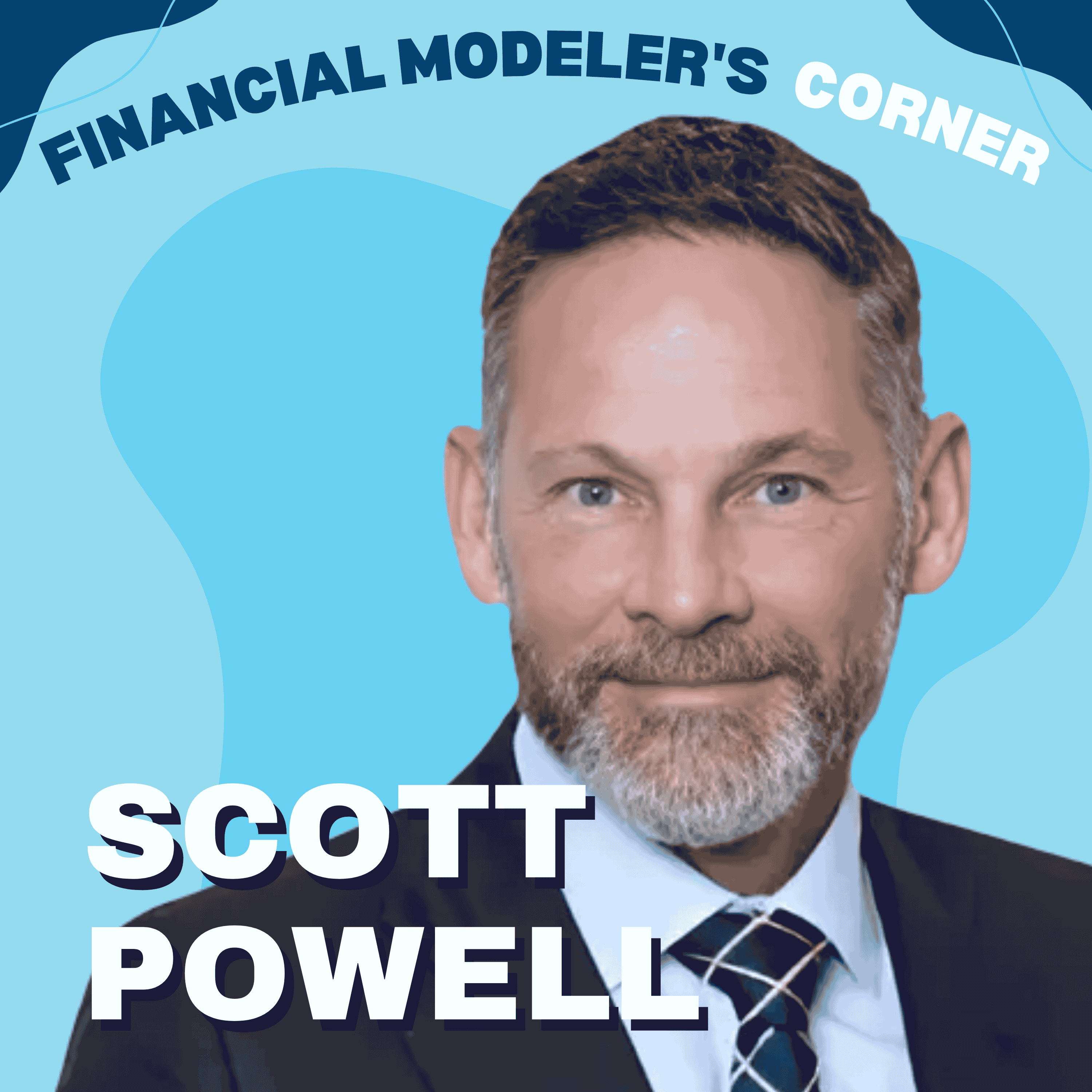
How To Simplify Complex Financial Models And Save Time with Scott Powell
In this episode of Financial Modeler’s Corner, host Paul Barnhurst sits down with Scott Powell, co-founder and board member of the Corporate Finance Institute (CFI), to discuss the principles and pitfalls of financial modeling. The conversation centers around how overcomplication, legacy models, and misused functions can undermine even the most polished models, and how thoughtful planning, stakeholder consideration, and service-oriented teaching can significantly enhance modeling effectiveness.Scott Powell brings over 25 years of global experience in corporate finance education and financial modeling. He is a founding member of the Corporate Finance Institute, where he has led the creation of impactful learning tools and courses. Based in Vancouver, Canada, Scott has worked with major financial institutions worldwide and is deeply passionate about practical finance education and the power of financial literacy to transform lives.Expect to Learn:Why financial models often fail and how to avoid those pitfalls.The importance of balancing technical precision with stakeholder usability.How teaching and empathy enhance modeling skills.Key Excel techniques and when to avoid overengineering.Scott’s insights into using AI and advanced Excel tools to stay current.Here are a few quotes from the episode:"Every time you're in Excel, try to learn just one new thing. In a year, you're going to have learned a ton." - Scott Powell"If you open your model three days later and can’t understand what you did, then you made it too complex." - Scott Powell"Don’t start building your model until you understand the end goal and the user’s needs." - Scott PowellScott’s thoughtful and service-driven approach makes this episode a must-listen for anyone in the world of financial modeling. His real-world stories, practical Excel strategies, and emphasis on simplicity offer powerful insights. Whether you’re building your first model or refining your 100th, Scott’s advice will help you level up. A valuable guide for modelers who want to build with purpose and clarity.Follow Scott :LinkedIn - https://www.linkedin.com/in/scott-powell-cpa-fca-fmva-84baa71/overlay/photo/Website - corporatefinanceinstitute.com Company - learningstrategiesgroup.comFollow Paul: Website - https://www.theFP&A ndaguy.com LinkedIn - https://www.linkedin.com/in/theFP&A ndaguy YouTube - https://www.youtube.com/@theFP&A ndaguyFollow Financial Modeler's Corner LinkedIn Page- https://www.linkedin.com/company/financial-modeler-s-corner/?viewAsMember=true Newsletter - Subscribe on LinkedIn-https://www.linkedin.com/build-relation/newsletter-follow?entityUrn=7079020077076905984Sign up for the Advanced Financial Modeler Accreditation Today and receive 15% off by using the special show code ‘Podcast’. Visit https://bit.ly/497oAqW and use the code “Podcast” to save 15% when you register. In today’s episode: [01:14] - Welcome and Guest Intro[03:00] - Model Horror Story[10:09] - Founding CFI[14:13] - Memorable Teaching Moments[16:30] - Starting a Model[21:28] - Technical vs. Soft Skills[24:20] - Advice for Trainers[30:23] - Keeping Up with Excel[39:44] - Fun with Excel[41:18] - Rapid Fire Round[47:21] - Final Thoughts and Wrap-Up

How Financial Modeling Errors in Real Estate and Biotech Cost Analysts Millions with Narek Grigorian
In this episode of Financial Modeler's Corner, host Paul Barnhurst talks with Narek Grigorian, a seasoned financial modeler and investment professional with deep experience across real estate, energy, and biotech sectors. Narek shares candid stories about the worst financial model he ever worked on, one that looked polished but was fundamentally flawed, missing key components like taxes, depreciation, and tenant turnover. He explains how these mistakes can mislead decision-makers and why it’s critical to understand not just the numbers but also the assumptions behind them.Narek Grigorian currently works at US Capital Global, a global investment banking firm focused on real estate and energy projects, particularly in the lower to middle market space. He holds degrees from Georgetown University and the University of Maryland and brings a passion for financial modeling, innovation, and teaching. Narek believes that while all models are inherently imperfect, they still provide valuable guidance, if built with thoughtful assumptions and continual refinement.Expect to Learn:Why can you never fully trust a model just because it looks polished.The critical real estate assumptions that are often overlooked, like tenant turnover and escalating costs.How to approach energy modeling with real-time data inputs and complex variables.Why biotech models are uniquely challenging due to regulatory and clinical uncertainties.Tips and shortcuts Narek uses in Excel to make modeling faster and more reliable.Here are a few quotes from the episode:““The toughest part is you have the wardrobe of clothes but have to create the person.” - Narek Grigorian“Power Query and Power BI are essential tools for modern financial modelers.” - Narek Grigorian“Vacancy rates and market growth assumptions are the most common pitfalls in real estate models.” - Narek GrigorianNarek’s practical and approachable style makes this episode valuable for anyone involved in financial modeling whether you’re just starting out or have years of experience. His clear advice on key assumptions, Excel techniques, and industry-specific challenges offers useful takeaways to help you create more accurate and effective models.Follow Narek :LinkedIn - https://www.linkedin.com/in/narek-grigorian-8869a7254/Follow Paul: Website - https://www.thefpandaguy.com LinkedIn - https://www.linkedin.com/in/thefpandaguy YouTube - https://www.youtube.com/@thefpandaguyFollow Financial Modeler's Corner LinkedIn Page- https://www.linkedin.com/company/financial-modeler-s-corner/?viewAsMember=true Newsletter - Subscribe on LinkedIn-https://www.linkedin.com/build-relation/newsletter-follow?entityUrn=7079020077076905984Sign up for the Advanced Financial Modeler Accreditation Today and receive 15% off by using the special show code ‘Podcast’. Visit https://bit.ly/497oAqW and use the code “Podcast” to save 15% when you register. In today’s episode: [01:12] - Welcome To The Episode [06:00] - About Narek and US Capital Global[08:25] - Market Outlook: Inflation, Tariffs, and Stagflation[10:33] - Narek’s Journey from Armenia to the US[14:49] - Favorite Industry to Model: Energy[17:42] - Real Estate Modeling Insights[25:34] - Common Mistakes in Real Estate Models[27:19] - Biopharma and Modeling Challenges[31:42] - Excel Shortcuts and Tools[38:22] - Power Query, Power BI, and Future of Excel[44:18] - How to Connect with Narek and Closing

A Finance Horror Story: The Currency Conversion Catastrophe with Lauren Pearl
In this special episode of Financial Modeler's Corner, host Paul Barnhurst is joined by CFO and startup finance educator Lauren Pearl for a storytelling session that’s equal parts funny and terrifying. They walk through “The Currency Catastrophe,” a true finance horror story about a global company, a junior analyst, and a massive mistake involving currency conversions. As the story unfolds, Paul and Lauren react, unpack what went wrong, and share their own war stories from years working in finance.Lauren Pearl is a CFO, startup advisor, and finance educator who specializes in helping early-stage companies build strong financial foundations. With a career that spans startups, venture-backed firms, and a stint in top-tier management consulting, Lauren brings a unique blend of strategic thinking and practical execution. She's also known for her hands-on approach to teaching financial modeling and startup finance through courses, content, and mentorship.Expect to Learn:What happens when you skip currency conversion in a global revenue allocation.Why getting the basics right is just as important as the big strategy.How one mistake can ripple across budgets, teams, and trust.The value of transparency and ownership is when something goes wrong.Why it’s crucial to put checks in your models, especially when currencies are involved.Here are a few quotes from the episode:“The finance department was such a dumpster fire, it created cloud cover for the mistake.” - Lauren Pearl“Modelers: always put currency checks in your spreadsheets. This stuff happens more than you think.” - Paul Barnhurst“Apologize and overcorrect. That’s the CFO playbook when you make a mistake.” - Lauren PearlLauren and Paul share a story every finance professional can relate to, a small mistake that snowballs into something much bigger. Whether you’re new to finance or have been around the block, this episode is a reminder of why fundamentals matter and how a little humor can help you get through even the most stressful moments. If you've ever cringed at your own spreadsheet or scrambled to fix a report before a meeting, you'll feel right at home.Follow Lauren :LinkedIn - https://www.linkedin.com/in/laurenepearl/Website - https://www.laurenpearlconsulting.com/link-listFollow Paul: Website - https://www.thefpandaguy.com LinkedIn - https://www.linkedin.com/in/thefpandaguy YouTube - https://www.youtube.com/@thefpandaguyFollow Financial Modeler's Corner LinkedIn Page- https://www.linkedin.com/company/financial-modeler-s-corner/?viewAsMember=true Newsletter - Subscribe on LinkedIn-https://www.linkedin.com/build-relation/newsletter-follow?entityUrn=7079020077076905984Sign up for the Advanced Financial Modeler Accreditation Today and receive 15% off by using the special show code ‘Podcast’. Visit https://bit.ly/497oAqW and use the code “Podcast” to save 15% when you register. In today’s episode: [00:00] - Trailer[01:43] - Welcome & Intro to the Horror Story [03:01] - Meet Lauren Pearl[06:07] - The Story of the Currency Catastrophe[09:54] - When Meetings Could Just Be Emails[13:52] - Accounting Chaos and Rising Tension[16:59] - The Currency Blunder Uncovered[20:00] - Why the Mistake Mattered So Much[24:33] - Quiet Fixes and Avoiding Fallout[27:34] - Paul’s Own Finance Mishap[30:13] - Lauren’s Pricing Error [34:19] - Final Lessons for Modelers [35:07] - Closing Thoughts

Why Most Financial Models Fail for FP&A Pros to Build Business-Aligned Models with Maria Zlobina
In this episode of Financial Modeler’s Corner, host Paul Barnhurst welcomes Maria Zlobina, a finance professional with over a decade of experience in Big Four audit, FP&A, and business partnering roles across the US, Australia, and Russia. The conversation explores the importance of understanding the purpose behind financial models, the challenges of inheriting others’ models, and the value of continual learning in finance. Maria also shares insights into the Advanced Financial Modeler certification, her passion for efficiency, and her experience navigating the world of financial modeling.Maria, who has a rich background in financial modeling, discusses her journey in the finance industry, her love for continuous learning, and her adventures living in different countries. She offers practical advice for modelers and professionals, including tips on making financial models dynamic, understanding the business context, and utilizing the right tools like Power BI and XLOOKUP. Maria also touches on her passion for languages and learning, sharing how her diverse experiences contribute to her success as a financial modeler.Expect to Learn:Why financial models are critical for decision-making and how to avoid common pitfallsThe importance of understanding the context and objectives behind a modelTips for inheriting and improving existing financial modelsThe benefits of continuous learning, both professionally and personallyInsights on dynamic financial models and best practices for forecasting Here are a few quotes from the episode:"The magic of financial modeling isn’t in the model itself, but in how it helps guide decisions." - Maria Zlobina"It’s not about creating the perfect model, but the model that gives the best insight for decision-makers." - Maria Zlobina"The best financial models don’t just answer one question; they provide a range of answers." - Maria ZlobinaIn this insightful episode, Maria Zlobina emphasizes the importance of dynamic financial models and understanding the business context behind them. She highlights the value of continuous learning and staying curious to improve as a financial modeler. With practical advice on overcoming challenges in modeling and working with stakeholders, Maria reminds us that great models support better decision-making. Follow Maria :LinkedIn - https://www.linkedin.com/in/maria-zlobina-afm-4642576b/Follow Paul: Website - https://www.thefpandaguy.com LinkedIn - https://www.linkedin.com/in/thefpandaguy YouTube - https://www.youtube.com/@thefpandaguyFollow Financial Modeler's Corner LinkedIn Page- https://www.linkedin.com/company/financial-modeler-s-corner/?viewAsMember=true Newsletter - Subscribe on LinkedIn-https://www.linkedin.com/build-relation/newsletter-follow?entityUrn=7079020077076905984Sign up for the Advanced Financial Modeler Accreditation Today and receive 15% off by using the special show code ‘Podcast’. Visit https://bit.ly/497oAqW and use the code “Podcast” to save 15% when you register. In today’s episode: [01:13] - Introduction to the Episode [03:52] - Worst Financial Model[06:37] - The value of continuous learning[10:24] - That One Defining Moment[13:09] - From Curiosity to Certification[17:49] - Starting with the Goal in Modeling[25:17] - Transparency in Modeling[31:07] - XLOOKUP Time Saver[34:24] - Rapid-fire questions[38:16] - AI and Tools in Modeling[43:56] - Final thoughts on modeling

How FMI and Ian Schnoor Are Helping Financial Professionals Build Better Models Around the Globe
In this episode of Financial Modeler’s Corner, host Paul Barnhurst welcomes Ian Schnoor, Executive Director of the Financial Modeling Institute. The conversation focuses on the growing role of financial modeling in uncertain markets, the expanding reach of FMI, and the importance of structure, clarity, and accreditation in building better business decisions. Ian shares practical insights from his global work, recent collaborations, and lessons from building multiple businesses.Ian Schnoor is the Executive Director of the Financial Modeling Institute (FMI), the only organization offering globally recognized financial modeling accreditation. He founded The Marquee Group, which was acquired by Training the Street in 2023. Ian has trained thousands of professionals in modeling, valuation, and Excel. He teaches at Queen’s University, holds a CFA charter, and began his career in investment banking with Citigroup and BMO. He’s focused on raising the standard of modeling across the world through education and certification.Expect to Learn:Why financial modeling is essential during market volatilityHow FMI is earning global recognition from top firmsThe impact of adding financial modeling to the CFA programInsights from FMI’s expansion into China and IndiaThree principles for building a successful businessA creative use of Excel to solve a real-world inventory challenge Here are a few quotes from the episode:“A good model helps you ask the right ‘what if’ questions, not deliver perfect answers.” - Ian Schnoor“The true purpose of a model is to give decision-makers confidence in uncertain times.” - Ian Schnoor“Getting the AFM means you’ve shown up, done the work, and proved your skills under pressure.” - Ian SchnoorIan Schnoor shared powerful insights on the role of modeling in today’s uncertain world.He emphasized clarity, structure, and the value of accreditation in building trust and better decisions. His global work is helping elevate modeling into a true professional discipline. A strong reminder that great models lead to great leadership.Follow Ian Schnoor:LinkedIn - https://www.linkedin.com/in/ianschnoor/?originalSubdomain=caWebsite - https://fminstitute.com/Follow Paul: Website - https://www.thefpandaguy.com LinkedIn - https://www.linkedin.com/in/thefpandaguy YouTube - https://www.youtube.com/@thefpaguy8376 Follow Financial Modeler's Corner LinkedIn Page- https://www.linkedin.com/company/financial-modeler-s-corner/?viewAsMember=true Newsletter - Subscribe on LinkedIn-https://www.linkedin.com/build-relation/newsletter-follow?entityUrn=7079020077076905984Sign up for the Advanced Financial Modeler Accreditation Today and receive 15% off by using the special show code ‘Podcast’. Visit https://bit.ly/497oAqW and use the code “Podcast” to save 15% when you register. In today’s episode: [01:27] - Welcome back to the Episode [04:04] - Financial modeling during market volatility [08:01] - Updates from FMI and its global growth [11:47] - Accreditation and why it matters [16:41] - Partnerships in China and India [22:02] - Excel World Cup and the global community [24:22] - CFA Institute collaboration [28:23] - Global expansion stories [32:34] - Three principles for business success [37:23] - Real-life Excel project: Baby blanket logistics [42:48] - Rapid-fire: tools and trends in modeling [47:37] - Final advice for modelers

How Startup Founders Can Build Investor Ready Models to Win VC Trust with Arta Ramaj
In this episode of Financial Modeler’s Corner, host Paul Barnhurst welcomes Arta Ramaj, co-founder of 360 Finance, for a discussion into the real-world challenges and nuances of financial modeling. Arta shares her journey from a geography degree to a thriving career in finance and entrepreneurship. Together, they explore the art and science of building robust financial models, the entrepreneurial mindset, and the evolving role of finance as a strategic business partner.Arta Ramaj is the co-founder of 360 Finance, a boutique consultancy specializing in financial modeling, FP&A, and finance system implementations for private equity and venture-backed companies. With a background in private equity and a passion for bridging financial data with strategic execution, Arta brings a unique entrepreneurial perspective to the finance world. She’s dedicated to creating investor-ready financial solutions and scaling businesses through dynamic, data-driven insights.Expect to Learn:How Arta transitioned from studying geography to founding a financial consulting firm.The critical importance of structure and design in financial modeling.Key strategies for building "investor-ready" financial models.The role of soft skills and storytelling in becoming a great finance business partner.Why simplifying assumptions and focusing on key metrics are essential for early-stage modeling success.Here are a few quotes from the episode:“If you're scaling and your finance function isn't solid, you're really scaling on shaky foundations." - Arta Ramaj”Credibility and clarity are the north stars for building investor-ready financial models." - Arta Ramaj“Modeling for a startup is often more about flexibility and storytelling than creating a perfect spreadsheet." - Arta RamajArta Ramaj gave us a fascinating look into the world of financial modeling for startups and private equity-backed businesses, showing how structure, clarity, and strategic insight shape high-impact financial decision-making. Her experiences revealed how finance principles, business partnering skills, and storytelling all intersect to build trust with investors and stakeholders. From building investor-ready models to navigating the entrepreneurial journey, this episode showcased the critical role financial modelers play in driving growth, strategic planning, and value creation.Follow Arta:LinkedIn - https://www.linkedin.com/in/artaramaj/Website - https://www.three6ixtyfinance.comFollow Paul: Website - https://www.thefpandaguy.com LinkedIn - https://www.linkedin.com/in/thefpandaguy YouTube - https://www.youtube.com/@thefpaguy8376 Follow Financial Modeler's Corner LinkedIn Page- https://www.linkedin.com/company/financial-modeler-s-corner/?viewAsMember=true Newsletter - Subscribe on LinkedIn-https://www.linkedin.com/build-relation/newsletter-follow?entityUrn=7079020077076905984Sign up for the Advanced Financial Modeler Accreditation Today and receive 15% off by using the special show code ‘Podcast’. Visit https://bit.ly/497oAqW and use the code “Podcast” to save 15% when you register. In today’s episode: [01:04] - Welcome to the Episode[03:21] - Horror Financial Model Story[07:02] - From Geography to Finance[11:33] - Love for FP&A and Business[14:26] - Starting 360 Finance[17:46] - Why Finance Gets Overlooked[23:32] - Building Investor-Ready Models[29:27] - The Financial Modeler as a Therapist[35:14] - Fun with Excel and Wedding Modeling[38:20] - Career Advice and Final Tips

Litigation Risk Modeling for Finance Professionals with David Perla
In this episode of Financial Modeler’s Corner, host Paul Barnhurst (aka The FP&A Guy) welcomes David Perla, Vice Chair of Burford Capital and a pioneering voice in the legal finance industry. David discusses how financial modeling plays a central role in evaluating and funding high-stakes litigation, offering a behind-the-scenes look at how his team monetizes legal risk with structured financial strategies. From managing long litigation timelines to leveraging Monte Carlo simulations and AI tools, David shares how Burford builds sophisticated models to guide investment decisions and mitigate risk. David Perla has an extraordinary background at the intersection of law, entrepreneurship, and finance. He’s a former president of Bloomberg Law, co-founder of legal outsourcing pioneer Pangea3 (acquired by Thomson Reuters), and was named a top 50 innovator by The American Lawyer. At Burford Capital, David is helping reshape how the legal world accesses and deploys capital.Expect to Learn:What legal finance actually is and how it worksHow Burford structures deals and evaluates legal riskThe modeling techniques used to forecast legal outcomesWhy Monte Carlo simulations are central to their underwriting processHow AI is used (and misused) in legal financeHere are a few quotes from the episode:“Behavior that’s irrational but predictable? We can model that. Idiosyncratic behavior? We avoid it.” - David PerlaModeling helps us decide not only how to price a deal, but how to structure incentives.” - David PerlaEverything we do depends on modeling.” - David PerlaDavid Perla gave us a fascinating look into the world of legal finance and how modeling plays a critical role in managing complex litigation risk. His knowledge revealed how finance principles, AI tools, and human judgment all intersect in this unique investment space. From non-recourse funding to Monte Carlo simulations, this episode showcased the depth of modeling required in high-stakes legal decision-making.Follow Dave:LinkedIn - https://www.linkedin.com/in/davidperla/Website - https://www.burfordcapital.com/Follow Paul: Website - https://www.thefpandaguy.com LinkedIn - https://www.linkedin.com/in/thefpandaguy YouTube - https://www.youtube.com/@thefpaguy8376 Follow Financial Modeler's Corner LinkedIn Page- https://www.linkedin.com/company/financial-modeler-s-corner/?viewAsMember=true Newsletter - Subscribe on LinkedIn-https://www.linkedin.com/build-relation/newsletter-follow?entityUrn=7079020077076905984Sign up for the Advanced Financial Modeler Accreditation Today and receive 15% off by using the special show code ‘Podcast’. Visit https://bit.ly/497oAqW and use the code “Podcast” to save 15% when you register. In today’s episode: [01:12] - Welcome to the episode[03:37] - Defining Legal Finance[04:53] - Typical Legal Finance Timeline[07:56] - Structuring Deals with Non-Recourse Funding[11:17] - Modeling Risk with Monte Carlo Simulations[16:32] - High-Stakes Legal Deal Sizes[21:34] - Predictable vs. Rational Behavior in Modeling[26:02] - Data Transparency in Insurance vs. Legal Finance[32:31] - Tools of the Trade: Excel, Python & More[39:44] - Future of Excel, AI, and Model Confidence[41:32] - Strategic Decision-Making and Wrap-Up

The Real Cost of Trump’s Tariffs for Pricing Teams with Karan Sood
In this special episode of Financial Modeler's Corner, host Paul Barnhurst (aka The FP&A Guy) welcomes Karan Sood, a global pricing expert with over a decade of experience in revenue management and pricing strategies. Karan shares his knowledge on the impact of tariffs on global trade and pricing models. He talks about the complexities of tariffs, offering advice on how businesses can effectively manage the financial implications and adapt their pricing strategies during these uncertain times. Karan discusses the importance of collaboration across departments and creating flexible models that can quickly adjust to changing market conditions.Karan Sood is a global pricing expert and the Director of Sales Operations with a wealth of experience overseeing revenue management for over $6 billion across a wide range of industries. He is passionate about using pricing as a powerful tool to drive profitability and improve business performance. Karan has worked across industries including automotive, digital marketing, consumer goods, and more, developing pricing strategies that create real business value.Expect to Learn:How tariffs impact different industries and pricing strategies.Why a one-size-fits-all approach to tariffs is flawed and the importance of tailored strategies.The role of cross-functional collaboration in managing tariff impacts.How to create flexible pricing models that can quickly adjust to shifting market conditions.The importance of transparency with customers when adjusting prices due to tariffs.Here are a few quotes from the episode:"Every industry is different; you can’t use the same assumptions for all goods under tariffs." - Karan Sood"Stay calm, don’t make decisions too quickly. Information is constantly changing." - Karan Sood"The key to managing tariffs is creating a flexible pricing model that can adapt quickly to new developments." - Karan SoodKaran Sood shared meaningful strategies for managing the complexities of tariffs in today’s global trade environment. His advice to stay calm, work collaboratively, and prioritize flexibility in pricing models is invaluable for finance professionals looking to navigate the challenges posed by tariffs. By emphasizing the importance of cross-departmental communication and transparency with customers, Karan offers actionable steps that can help businesses succeed in a volatile market.Follow Karan:LinkedIn - https://www.linkedin.com/in/soodkaran/?originalSubdomain=caWebsite - https://substack.com/@karansoodFollow Paul: Website - https://www.thefpandaguy.com LinkedIn - https://www.linkedin.com/in/thefpandaguy YouTube - https://www.youtube.com/@thefpaguy8376 Follow Financial Modeler's Corner LinkedIn Page- https://www.linkedin.com/company/financial-modeler-s-corner/?viewAsMember=true Newsletter - Subscribe on LinkedIn-https://www.linkedin.com/build-relation/newsletter-follow?entityUrn=7079020077076905984Sign up for the Advanced Financial Modeler Accreditation Today and receive 15% off by using the special show code ‘Podcast’. Visit https://bit.ly/497oAqW and use the code “Podcast” to save 15% when you register. In today’s episode: [02:08] - Introduction of Episode[03:05] - Karan’s Journey into Pricing[06:45] - The Global Impact of Tariffs[12:05] - Why One-Size-Fits-All Doesn’t Work[16:00] - Managing the Impact of Tariffs[20:04] - Building Flexible Pricing Models[23:09] - Transparency with Consumers[28:46] - Short-Term vs. Long-Term Strategy[34:34] - Cross-Department Collaboration[39:06] - Book recommended by Karan

Startup vs. Corporate Financial Models & How To Build Each For Maximum Strategic Impact - Carl Olson
In this episode of Financial Modeler's Corner, host Paul Barnhurst (aka The FP&A Guy) welcomes Carl Olson, a seasoned finance leader with over two decades of experience in FP&A, consulting, and startup finance. Carl discusses the nuances of financial modeling in both startups and large companies, sharing war stories, practical frameworks, and the lessons learned from building models that drive real business decisions. Whether it's simplifying startup forecasts or navigating layers of corporate planning, Carl emphasizes the importance of context, communication, and staying aligned with business partners.Carl Olson is a finance consultant and strategic advisor with more than 20 years of experience in FP&A, startup modeling, and enterprise finance. His background includes roles at Jamba Juice, Yelp, Unity, and several startups. Carl specializes in building operating and strategic models, guiding fundraising efforts, and helping businesses link financial modeling to real-world execution.Expect to Learn:How financial models differ for startups vs. large companiesWhy listening to business partners is essential for model effectivenessHow to test assumptions when historical data is limitedThe danger of over-automation in modelingWhat makes a model usable vs. impressiveHere are a few quotes from the episode:“If your sales model shows unrealistic rep productivity, that’s a red flag.” - Carl Olson“Meet your business partners where they are, not where you want them to be.” - Carl Olson“Use industry benchmarks, but know your secret sauce.” - Carl OlsonCarl Olson shared honest and practical insights from years of building financial models across startups and large companies. He reminded us that the real value of a model comes from how well it supports decision-making and helps the team move forward. His approach to keeping things simple, clear, and business-focused is something every finance professional can learn from.Follow Carl:LinkedIn - https://www.linkedin.com/in/olsoncarl/Follow Paul: Website - https://www.thefpandaguy.com LinkedIn - https://www.linkedin.com/in/thefpandaguy YouTube - https://www.youtube.com/@thefpaguy8376 Follow Financial Modeler's Corner LinkedIn Page- https://www.linkedin.com/company/financial-modeler-s-corner/?viewAsMember=true Newsletter - Subscribe on LinkedIn-https://www.linkedin.com/build-relation/newsletter-follow?entityUrn=7079020077076905984Sign up for the Advanced Financial Modeler Accreditation Today and receive 15% off by using the special show code ‘Podcast’. Visit https://bit.ly/497oAqW and use the code “Podcast” to save 15% when you register. In today’s episode: [01:12] - Introduction of Episode[02:02] - Carl’s Worst Modeling Experience[06:43] - Rebuilding a Model from Scratch[10:36] - Startup vs. Corporate Modeling[12:57] - Big Data to Startup Forecasting[15:09] - When Mistakes Go Unnoticed[22:42] - Finding Gaps Through Modeling[29:41] - Using Excel for Personal Life[30:47] - Carl’s Favorite Excel Shortcuts[33:32] - Rapid Fire: Tools, Preferences, and Advice[36:24] - Avoiding the VBA Trap and Growing in Your Career[40:38] - Carl’s Closing Advice for Financial Modelers

Financial Modeling in Retail, managing Insolvency & How Finance Can Master Cash Flow - Dave Hallwood
In this episode of Financial Modeler's Corner, host Paul Barnhurst is joined by Dave Hallwood, a finance director and certified financial modeler, for a practical and candid conversation about real-world modeling in the retail industry. From managing day-to-day operations in a fast-growing fashion retail group to navigating insolvency and restructuring, Dave shares the hard-earned lessons that have shaped his approach to modeling, decision-making, and leadership. Dave Hallwood is the Finance Director of a group of independent fashion retailers in the UK. After spending years in retail and hospitality management, Dave transitioned into finance in his 30s, becoming a fellow of ACCA and earning his Certified Financial Modeler (CFM) designation from the Financial Modeling Institute. With a passion for practical financial modeling, Dave has built and managed models for nearly every scenario a small retailer can face, from budgeting and forecasting to store openings, closings, and insolvency planning. Expect to Learn:How to model retail cash flow when weather drives salesThe importance of simplicity and storytelling in financial modelsWhat it’s like to manage an insolvency and restructure a businessWhy Dave believes gut instinct still plays a big role in decision-makingHow Dave uses modeling to support store openings, closures, and growthPractical advice for switching into a finance career later in lifeHere are a few quotes from the episode:"Financial models help guide the business, but people and relationships still make it work.""The best decision is often a balance between what the model says and what feels right.""No matter how great the numbers look, if your gut says no, listen."Dave Hallwood shares what it’s really like to model for a retail business. From managing cash flow swings to making tough calls during insolvency, he brings a grounded, real-world perspective. Dave reminds us that models should support decisions, not replace them. It’s a must-listen for anyone juggling numbers and navigating uncertainty.Follow Dave:LinkedIn - https://www.linkedin.com/in/david-hallwood-fcca-cfm-87270449/Follow Paul: Website - https://www.thefpandaguy.com LinkedIn - https://www.linkedin.com/in/thefpandaguy YouTube - https://www.youtube.com/@thefpaguy8376 Follow Financial Modeler's Corner LinkedIn Page- https://www.linkedin.com/company/financial-modeler-s-corner/?viewAsMember=true Newsletter - Subscribe on LinkedIn-https://www.linkedin.com/build-relation/newsletter-follow?entityUrn=7079020077076905984Sign up for the Advanced Financial Modeler Accreditation Today and receive 15% off by using the special show code ‘Podcast’. Visit https://bit.ly/497oAqW and use the code “Podcast” to save 15% when you register. In today’s episode: [01:31] - Welcome to the episode[03:45] - Inheriting a messy Excel model[06:17] - Why Dave switched careers in his 30s[10:13] - Life as a finance lead in retail[14:16] - Forecasting cash flow in a seasonal business[18:54] - How to model each store differently[26:58] - Lessons from an insolvency and business rescue[32:59] - Why Dave supports the FMI community[40:01] - Horizontal or Vertical Modeling Preferences[42:23] - Gut vs. model: what really drives decisions[44:36] - Closing Reflections with Dave

Financial Modelers Simplify Spreadsheets to Reduce Errors and Succeed in 2025 with Myles Arnott
In this episode of Financial Modeler's Corner, host Paul Barnhurst welcomes Myles Arnott, co-founder of Full Stack Modeller and founder of Clarity Consultancy Services. Myles shares his 25+ year journey in Excel, his philosophy of keeping things simple, and how structured design and tools like Power Query have transformed his approach to modeling. He also opens up about taking the FMI Advanced Financial Modeler (AFM) exam and co-building a global modeling community.Myles Arnott is a CMA-qualified accountant, Excel trainer, and fractional finance director. He leads Clarity Consultancy Services and co-founded Full Stack Modeller, a platform built to provide finance professionals with a full toolkit of modern Excel and modeling skills. Myles blends operational finance experience with teaching, making complex modeling concepts accessible through real-world insights and practice.Expect to Learn:The power of simplicity in model designHow to effectively prepare for the AFM examBest practices for managing data flow in ExcelWhy Power Query is one of Excel’s most powerful toolsHow Full Stack Modeler is helping professionals level up in financeThe value of designing with clarity and reviewing with confidenceMyles’s journey from complex automation to clean, intuitive spreadsheetsHere are a few quotes from the episode:Spreadsheet risk skyrockets when models are messy and undocumented.”- Myles Arnott“If your data flows are poor, your insights will be too.”- Myles Arnott“Power Query changed everything for how we manage data in Excel.”- Myles ArnottIn this episode, Myles Arnott shares how clarity, consistency, and structure create better financial models. He emphasizes the importance of design thinking, simplifying complexity, and continuously developing your skills. Whether you're preparing for the AFM or just want to clean up your modeling, Myles’s advice will guide you toward modeling excellence.Follow Myles:LinkedIn - https://www.linkedin.com/in/mylesarnott/Website - https://www.fullstackmodeller.com/Follow Paul: Website - https://www.thefpandaguy.com LinkedIn - https://www.linkedin.com/in/thefpandaguy YouTube - https://www.youtube.com/@thefpaguy8376 Follow Financial Modeler's Corner LinkedIn Page- https://www.linkedin.com/company/financial-modeler-s-corner/?viewAsMember=true Newsletter - Subscribe on LinkedIn-https://www.linkedin.com/build-relation/newsletter-follow?entityUrn=7079020077076905984Sign up for the Advanced Financial Modeler Accreditation Today and receive 15% off by using the special show code ‘Podcast’. Visit https://bit.ly/497oAqW and use the code “Podcast” to save 15% when you register. In today’s episode: [01:39] - Episode Introduction[02:49] - Worst Financial Model Mistakes [07:55] - Leadership and AFM[13:26] - Balancing Under Exam Pressure[19:17] - Full Stack Origins[23:01] - MVP Antics and Office Fun[27:04] - Simplifying Systems and Processes[31:13] - Power Query Tips[36:37] - Career Lessons Learned[46:09] - Advice to Aspiring Modelers

How Excel Transformed a Beginner into a 9 Million Follower Educator with Emma Chieppor
In this episode of Financial Modeler’s Corner, host Paul Barnhurst welcomes Emma Chieppor, founder of Excel Dictionary, a social media-driven Excel education platform with over 9 million followers. Emma shares her journey from being an actuary to becoming one of the most influential Excel educators online. She discusses the power of Excel, the challenges of running a business, and how short-form content transformed Excel learning for millions.Emma Chieppor started her career as an actuary before launching Excel Dictionary, a platform dedicated to providing quick and practical Excel tips. Through social media, Emma has built a massive following by sharing 30-second Excel tutorials. Her expertise has helped professionals worldwide enhance their Excel skills efficiently.Expect to Learn:How Emma transitioned from actuary to Excel influencerThe challenges of learning Excel while starting a corporate job during COVIDWhy pivot tables in financial models can be a nightmareHow Emma grew her social media following to over 9 million in less than a yearThe most underrated Excel shortcuts that can save hours of workHere are a few quotes from the episode:“I had never really used Excel before my first job, so I had to teach myself from scratch.”There’s no secret formula for social media. Just post good content and stay consistent.”“If you’re learning Excel, repetition and practice are key.”In this episode, Emma Chieppor shared her journey from actuary to Excel influencer, emphasizing consistency, hands on learning, and creativity in Excel. She highlighted the power of shortcuts, automation, and social media in making Excel more accessible. Excel is more than a tool; it is a platform for innovation and efficiency. Keep learning, stay curious, and master the skills that set you apart!Follow Emma Chieppor :LinkedIn - https://www.linkedin.com/in/emma-chieppor-excel-dictionary-261444235/Website - https://excel-dictionary.com/Follow Paul: Website - https://www.thefpandaguy.com LinkedIn - https://www.linkedin.com/in/thefpandaguy YouTube - https://www.youtube.com/@thefpaguy8376 Follow Financial Modeler's Corner LinkedIn Page- https://www.linkedin.com/company/financial-modeler-s-corner/?viewAsMember=true Newsletter - Subscribe on LinkedIn-https://www.linkedin.com/build-relation/newsletter-follow?entityUrn=7079020077076905984Sign up for the Advanced Financial Modeler Accreditation Today and receive 15% off by using the special show code ‘Podcast’. Visit https://bit.ly/497oAqW and use the code “Podcast” to save 15% when you register. In today’s episode: [01:30] - Introduction to the episode[03:09] - Worst Financial Model Mistakes – Avoiding Pivot Tables[06:43] - Emma’s Background from an Actuary to an Excel Star[09:03] - How COVID Led to the Creation of Excel Dictionary[13:04] - Emma’s Journey to One Million Plus Followers[17:49] - The Importance of Consistency in Content Creation[28:23] - Rapid-Fire Excel Questions on Excel Features

Why Law Firm Revenue & Cash Flow Forecasting Is a Nightmare (and How to Solve It) with Sean Mooney
In this episode of Financial Modeler’s Corner, host Paul Barnhurst (aka The FP&A Guy) welcomes Sean Mooney, a senior financial consultant specializing in automated financial modeling for professional services. Sean shares his journey from accounting to financial modeling, the challenges of revenue forecasting for law firms, and the power of Excel automation. Sean Mooney is the founder of SJ Finance, a consultancy specializing in financial modeling automation for professional services firms. With 12+ years of executive finance experience in the UK and Australia, Sean has built financial models that have helped businesses secure millions in funding. He is an expert in Power Query, Excel automation, and M&A financial modeling, helping companies save up to 75% of reporting time through smart automation.Expect to Learn:How Sean transitioned from accounting to financial modelingThe role of Power Query in automating financial modeling processesKey revenue forecasting challenges in law firms and service businessesWhy scenario planning is critical for financial modelsHow financial modeling influences business strategy and decision-makingHere are a few quotes from the episode:“Law firms have long cash cycles, so tracking work-in-progress (WIP) is absolutely critical.”“Debt financing can sometimes be a better alternative to private equity, but many business owners don’t realize that.”“The biggest risk in a financial model? A black hole of stagnant WIP that never turns into revenue.”In this episode, Sean Mooney shared his expertise on how automation, Power Query, and strong forecasting techniques can transform financial models from static spreadsheets into dynamic decision-making tools. He advises financial modelers to stress-test their models, embrace automation, and always keep learning.Follow Sean:LinkedIn - http://www.linkedin.com/in/sean-mooney-sjfCompany - https://sjfinance.co.uk/Follow Paul: Website - https://www.thefpandaguy.com LinkedIn - https://www.linkedin.com/in/thefpandaguy YouTube - https://www.youtube.com/@thefpaguy8376 Follow Financial Modeler's Corner LinkedIn Page- https://www.linkedin.com/company/financial-modeler-s-corner/?viewAsMember=true Newsletter - Subscribe on LinkedIn-https://www.linkedin.com/build-relation/newsletter-follow?entityUrn=7079020077076905984Sign up for the Advanced Financial Modeler Accreditation Today and receive 15% off by using the special show code ‘Podcast’. Visit https://bit.ly/497oAqW and use the code “Podcast” to save 15% when you register. In today’s episode: [01:24] Introduction to the Episode[06:55] Sean’s Passion for Financial Modeling [09:45] Guiding Clients on Financial Decisions [15:30] Revenue Forecasting for Law Firms[24:38] The Potential of Power Query [30:04] Sean’s Favorite Excel Shortcuts & Tips [31:39] Excel Nerd Moment[34:18] Rapid-Fire Questions[37:53] Final Advice for Financial Modelers

Building Better Biotech Financial Models and Managing Valuation Risk with Frank David
In this episode of Financial Modeler’s Corner, host Paul Barnhurst (aka the FP&A Guy) sits down with Frank David, an expert at the intersection of corporate strategy, clinical medicine, and biotech research. They discuss the unique challenges of financial modeling in the biopharma industry, the importance of understanding patient populations, and how drug development strategy influences financial decision-making.Frank David is the Founder and Managing Director of Pharmagellan, a consulting firm specializing in biotech financial modeling and valuation. With a background as a physician scientist, Frank has extensive experience advising biopharma teams and investors. He also teaches at Tufts University and is the lead author of The Pharmagellan Guide to Biotech Forecasting and Valuation and The Pharmagellan Guide to Analyzing Biotech Clinical Trials.Expect to Learn:The unique challenges of financial modeling in biotech and pharma.Why "small percent of a big market" is a flawed valuation approach.How patient segmentation impacts drug development strategy.The importance of risk-adjusted modeling and scenario planning.How financial modeling supports strategic decision-making in biotech investments.Here are a few quotes from the episode:"Most early-stage biotech entrepreneurs don’t realize they need to think about who their patients actually are and what alternative treatments exist.""In drug development, forecasting is about managing uncertainty, not predicting exact numbers.""The clinical strategy and commercial strategy in biotech are so intertwined that modeling them separately can be misleading."This episode explored the complexities of biotech financial modeling. Frank shared why traditional financial modeling approaches don’t always work in the biotech industry and how strategic decision-making relies heavily on understanding patient needs, regulatory pathways, and risk assessment.Follow Frank:LinkedIn - https://www.linkedin.com/in/frank-s-david/Company - https://www.pharmagellan.com/Email - [email protected] - https://a.co/d/gf8SwzIFollow Paul: Website - https://www.thefpandaguy.com LinkedIn - https://www.linkedin.com/in/thefpandaguy YouTube - https://www.youtube.com/@thefpaguy8376 Follow Financial Modeler's Corner LinkedIn Page- https://www.linkedin.com/company/financial-modeler-s-corner/?viewAsMember=true Newsletter - Subscribe on LinkedIn-https://www.linkedin.com/build-relation/newsletter-follow?entityUrn=7079020077076905984Sign up for the Advanced Financial Modeler Accreditation Today and receive 15% off by using the special show code ‘Podcast’. Visit https://bit.ly/497oAqW and use the code “Podcast” to save 15% when you register. In today’s episode: [01:14] - Introduction to the Episode[02:02] - Meet Frank David [04:17] - Financial Modeling Horror Story [09:38] - Understanding Biotech Financial Models[13:57] - Biotech Forecasting and Valuation[18:15] - Where to Start When Analyzing a Drug Project [24:52] - Risk-Adjusted Modeling in Biotech [32:01] - Advice for Modelers in Biotech [40:56] - Fun & Rapid-Fire Questions[49:32] - How to Connect with Frank David

Financial Modeling Frameworks to Build Error-Free Models In Excel Using SIMPLE Method
In this episode of Financial Modeler's Corner, host Paul Barnhurst sits down with Babatope Agbeyo, a corporate trainer with extensive experience in financial modeling, Excel, and valuation. Babatope shares about his "SIMPLE" modeling framework, experiences in financial advisory at Deloitte, and lessons from training over 3,000 professionals globally. He also discusses his passion for keeping financial models structured, logical, and error-free.Babatope Agbeyo is a financial modeling expert and corporate trainer who has worked across multiple industries, including telecom, manufacturing, oil & gas, and tech. With experience at Deloitte and D Brown Consulting, he has reviewed and audited countless financial models, refining his approach through his "SIMPLE" modeling framework. Babatope is a certified AFM and FMVA and is passionate about making financial modeling more structured and effective.Expect to Learn:The importance of keeping financial models simple and structuredBabatope’s SIMPLE modeling framework and how it improves modeling efficiencyCommon financial modeling mistakes and how to avoid themHow to effectively audit financial models using the PAINS approachThe best industries for financial modeling and which ones are the most challengingHere are a few quotes from the episode:"A great financial model should be modular, meaning each calculation block is distinct and easy to read.""Most errors I find in financial models come from poor calculations and linking mistakes.""A well-structured financial model should be easy to read, navigate, and troubleshoot."Financial modeling isn't just about crunching numbers, it's about telling a story with data, making informed decisions, and ensuring accuracy at every step. Babatope’s SIMPLE framework and PAINS approach remind us that clarity and structure are just as important as technical skill. If you’ve ever struggled with a model that just wouldn’t balance, or spent hours troubleshooting an error, this episode is a must-listen. Follow Babatope:LinkedIn - https://www.linkedin.com/in/babatopesamuelagbeyo/Email - [email protected] Paul: Website - https://www.thefpandaguy.com LinkedIn - https://www.linkedin.com/in/thefpandaguy YouTube - https://www.youtube.com/@thefpaguy8376 Follow Financial Modeler's Corner LinkedIn Page- https://www.linkedin.com/company/financial-modeler-s-corner/?viewAsMember=true Newsletter - Subscribe on LinkedIn-https://www.linkedin.com/build-relation/newsletter-follow?entityUrn=7079020077076905984Sign up for the Advanced Financial Modeler Accreditation Today and receive 15% off by using the special show code ‘Podcast’. Visit https://bit.ly/497oAqW and use the code “Podcast” to save 15% when you register. In today’s episode: [01:18] Introduction to the Episode[03:39] Financial Modeling Horror Story[05:28] Lessons from Working with David Brown [07:15] What It’s Like Working at Deloitte [09:48] The SIMPLE Framework [14:06] The Art of Teaching Financial Modeling[16:16] Preparing for the AFM Exam [21:16] The PAINS Approach to Auditing Models [24:20] Excel Shortcuts & Unique Modeling Use Cases [26:08] Biggest Career Lesson [28:58] Rapid-Fire Questions [33:38] Final Advice [34:46] Where to Connect with Babatope

Financial Modeling Insights for Startups Seeking Venture Capital with Andres Klaric
In this episode of Financial Modeler’s Corner, host Paul Barnhurst welcomes Andres Klaric, the co-founder and co-CEO of Fuse. In their conversation, Andres discusses common financial modeling mistakes, how startup models differ from corporate M&A models, and what investors truly look for when evaluating projections. He also shares firsthand experiences on navigating the fundraising process, balancing work ethic with personal life, and the strategic approach to scaling a company.Andres Klaric is the co-founder and co-CEO of Fuse, a next-generation loan origination system designed to streamline lending for financial institutions through self-serve customization, a low-code API builder, and personalized agent portfolios. Andres shares his journey from investment banking and private equity to launching a fintech startup that’s reshaping loan origination. He provides insights into financial modeling for startups, securing venture capital, and the critical lessons he’s learned from Wall Street.Expect to Learn:The biggest mistakes and horror stories in financial modeling.How startup financial models differ from corporate M&A models.The key factors venture capitalists look for in startup projections.Lessons from private equity and investment banking that shaped Andres as a CEO.The art of balancing complexity and simplicity in financial modeling.Here are a few quotes from the episode:“The biggest mistake in startup modeling? Overcomplicating things when simple assumptions will do.”“Modeling for investors and modeling for internal operations are two completely different things.”“A bad financial model won’t kill your startup, but a bad go-to-market strategy will.”This episode with Andres Klaric was packed with insights on financial modeling, fundraising, and the lessons learned from both Wall Street and the startup world. From the importance of keeping financial models simple to navigating investor expectations, Andres provided a masterclass on startup finance and strategic thinking. Hard work, strategy, and the ability to adapt will always outweigh an over-engineered spreadsheet. Follow Andres:LinkedIn - https://www.linkedin.com/in/andresklaric/Company: https://www.fusefinance.com/Follow Paul: Website - https://www.thefpandaguy.com LinkedIn - https://www.linkedin.com/in/thefpandaguy YouTube - https://www.youtube.com/@thefpaguy8376 Follow Financial Modeler's Corner LinkedIn Page- https://www.linkedin.com/company/financial-modeler-s-corner/?viewAsMember=true Newsletter - Subscribe on LinkedIn-https://www.linkedin.com/build-relation/newsletter-follow?entityUrn=7079020077076905984Sign up for the Advanced Financial Modeler Accreditation Today and receive 15% off by using the special show code ‘Podcast’. Visit https://bit.ly/497oAqW and use the code “Podcast” to save 15% when you register. In today’s episode: [02:59] - Worst Financial Model Horror Stories[08:57] - The Journey to Founding Fuse[11:53] - Lessons from Wall Street[18:07] - Financial Modeling for Startups[23:05] - How VCs Evaluate Startup Models[25:06] - Fundraising Strategies & Finding the Right Investors[32:07] - Rapid-Fire Financial Modeling Q&A[42:34] - Final Advice & Closing Thoughts

The Role Of Financial Modeling In Investing With Author Of "Why Does The Stock Market Go Up?" Brian Feroldi
In this episode of Financial Modeler’s Corner, host Paul Barnhurst sits down with financial educator and author Brian Feroldi. They discuss the fundamentals of stock investing, financial modeling, and how to identify high-quality companies. Brian shares insights from his investing journey, his investing checklist, and his thoughts on valuation, competitive advantages, and the role of financial models in investment decisions.Brian Feroldi is a financial educator, investor, and author dedicated to demystifying the stock market. With nearly two decades of investing experience, Brian has written over 3,000 articles on stocks, personal finance, and investing. His best-selling book “Why Does the Stock Market Go Up?” explains market fundamentals in simple terms. Through his YouTube channel, social media presence, and educational content, Brian helps investors make smarter decisions by focusing on business quality, valuation, and long-term investing strategies.Expect to Learn:Why financial models depend on good assumptions and how they can be manipulatedThe biggest mistakes investors make and how to avoid themHow Brian analyzes financial statements and what metrics he prioritizesThe five key types of competitive advantages (EMOTs) in businessHow to build an investing checklist to guide stock selectionHere are a few quotes from the episode:“When I invest, I’m looking for businesses that can outperform even the most bullish expectations.”“Understanding where a company is in its business lifecycle is critical to valuation.”“The biggest mistake people make is using the wrong valuation model for the wrong type of company.”Brian’s emphasis on having a structured investing checklist, focusing on competitive advantages, and choosing the right valuation method for the right stage of a company’s lifecycle highlights the importance of strategy over speculation. If you're looking to improve your investing game, start by educating yourself, refining your process, and remembering that patience often wins the race. Follow Brian:LinkedIn - https://www.linkedin.com/in/brianferoldi/Website - https://www.brianferoldi.com/Email - [email protected] - https://www.youtube.com/brianferoldiytBook - https://a.co/d/3gS5JZLFollow Paul: Website - https://www.thefpandaguy.com LinkedIn - https://www.linkedin.com/in/thefpandaguy YouTube - https://www.youtube.com/@thefpaguy8376 Follow Financial Modeler's Corner LinkedIn Page- https://www.linkedin.com/company/financial-modeler-s-corner/?viewAsMember=true Newsletter - Subscribe on LinkedIn-https://www.linkedin.com/build-relation/newsletter-follow?entityUrn=7079020077076905984Sign up for the Advanced Financial Modeler Accreditation Today and receive 15% off by using the special show code ‘Podcast’. Visit https://bit.ly/497oAqW and use the code “Podcast” to save 15% when you register. In today’s episode: [01:02] - Introduction to Guest Brian Feroldi[06:35] - Brian’s Investing Journey and Early Mistakes[10:19] - Brian’s Checklist for Evaluating Companies[15:41] - The Financial Statement Analysis[20:24] - Competitive Advantages (EMOTs)[29:50] - Advice to Begin Investing in the Market[31:20] - Common Investor Mistakes [33:51] - Valuation Models & Growth Cycles [41:36] - Final Advice & Book Recommendations [42:55] - Where to Find Brian

Discover How Financial Modelers Are Using Copilot and ChatGPT with Global Expert Kenny Whitelaw-Jones
In this episode of Financial Modelers Corner, host Paul Barnhurst, aka The FP&A Guy, looks into the transformative impact of Artificial Intelligence on financial modeling. The discussion explores how AI is reshaping the industry, the challenges and opportunities it brings, and what financial modelers can expect in the coming years.Kenny Whitelaw-Jones who is the founding partner at Gridlines joins the show. As a leading expert in project finance modeling, Kenny has played a pivotal role in shaping financial modeling standards globally. With over a decade of experience training blue-chip clients and developing complex models, he brings invaluable insights into how AI is poised to revolutionize financial modeling.Expect to Learn:How AI is expected to significantly impact financial modeling, with Kenny's recent industry survey.The current limitations of AI tools like ChatGPT in financial modeling and where they excel.How project finance modeling differs from other types of financial modeling, and why Kenny finds it exciting.The importance of soft skills and communication in the evolving role of financial modelers.The future skills financial modelers will need to stay ahead in an AI-driven world.Here are a few quotes from the episode:"In the future, the routine tasks will be automated, and modelers will focus more on strategic, value-adding activities.""Being a good modeler isn’t just about Excel skills. It’s about interpreting data and communicating results effectively.""The change AI brings is inevitable because as soon as we can imagine it, someone will figure out how to make it happen."As AI continues to evolve, it's clear that financial modeling is on the brink of a major transformation. Kenny Whitelaw-Jones shared not just the technical impacts we can expect from AI, but also how the role of financial modelers will shift toward strategic thinking, business interpretation, and effective communication. While tools like ChatGPT and Copilot are making waves, it’s the human element that will remain irreplaceable.Follow Kenny:LinkedIn - https://www.linkedin.com/in/kennywhitelawjones/Website - https://www.gridlines.com/Email - [email protected] Paul: Website - https://www.thefpandaguy.com LinkedIn - https://www.linkedin.com/in/thefpandaguy YouTube - https://www.youtube.com/@thefpaguy8376 Follow Financial Modeler's Corner LinkedIn Page- https://www.linkedin.com/company/financial-modeler-s-corner/?viewAsMember=true Newsletter - Subscribe on LinkedIn-https://www.linkedin.com/build-relation/newsletter-follow?entityUrn=7079020077076905984Sign up for the Advanced Financial Modeler Accreditation Today and receive 15% off by using the special show code ‘Podcast’. Visit https://bit.ly/497oAqW and use the code “Podcast” to save 15% when you register. In today’s episode: [01:46] – Meet Kenny Whitelaw-Jones[02:35] – The Worst Financial Model Encountered[05:43] – Why Project Finance and Renewables?[10:04] – Survey for AI in Financial Modeling[14:58] – ChatGPT vs. Copilot [18:57] – Excel Innovations & the Future of Modeling [22:34] – The Future of Financial Modeling with AI[26:50] – Soft Skills & the Evolving Role of Financial Modelers[33:51] – Rapid-Fire Round[40:51] – Life Beyond Financial Modeling[43:48] – Final Thoughts & How to Connect with Kenny

Named Ranges and External Links Fixes for Finance Professionals to Build Accurate Models - Joel Steendam
In this episode, host Paul Barnhurst aka The FP&A Guy looks into Excel expertise with Joel Steendam. Joel shares his global experiences, technical know-how, and practical advice to improve Excel proficiency and financial modeling outcomes. Their conversation covers Excel tools, design principles, and the importance of curiosity and cultural awareness in professional success.Joel Steendam is a global Excel expert and educator with a passion for helping professionals create better financial models. As a key member of PerfectXL, he develops software to improve spreadsheet quality, mitigate risks, and promote best practices in Excel. With a multicultural background and years of experience in financial modeling, Joel blends technical expertise with a deep understanding of how culture influences collaboration and problem-solving.Expect to Learn:Worst financial models and how to fix common spreadsheet issues.Why named ranges and documentation are essential in financial modeling.How Joel’s multicultural upbringing has shaped his professional approach and success.Practical advice on staying curious and learning new Excel skills.The role of tools like PerfectXL in auditing and improving spreadsheet quality for financial modeling.Here are a few quotes from the episode:"Even best practices, when misused, can have a massive negative impact on Excel models.""PerfectXL’s tools focus on mitigating risks and improving model quality by emphasizing structure and consistency.""If you build something on Monday that you don’t understand by Wednesday, you’re not building the right thing."Joel Steendam shared his expertise on improving Excel models, staying curious, and navigating the challenges of financial modeling. Financial models are powerful decision-making tools, but they’re only as effective as their structure and design allow them to be. Joel provided invaluable lessons for both beginners and experienced modelers on structure, documentation, and tools.Follow Joel:LinkedIn - https://www.linkedin.com/in/joel-steendam/Website - https://www.perfectxl.com/Follow Paul: Website - https://www.thefpandaguy.com LinkedIn - https://www.linkedin.com/in/thefpandaguy YouTube - https://www.youtube.com/@thefpaguy8376 Follow Financial Modeler's Corner LinkedIn Page- https://www.linkedin.com/company/financial-modeler-s-corner/?viewAsMember=true Newsletter - Subscribe on LinkedIn-https://www.linkedin.com/build-relation/newsletter-follow?entityUrn=7079020077076905984Sign up for the Advanced Financial Modeler Accreditation Today and receive 15% off by using the special show code ‘Podcast’. Visit https://bit.ly/497oAqW and use the code “Podcast” to save 15% when you register. In today’s episode: [01:49] - Introduction and Meet the Guest[02:49] - Horror Stories in Financial Models[04:28] - Key Takeaways from Bad Models[06:45] - Joel’s Global Background[10:18] - PerfectXL and Best Practices in Excel[14:56] - Staying Updated on Excel[18:03] - Advice for Beginners in Excel[29:14] - Balancing Excel’s Flexibility and Risks[36:12] - Fun Projects in Excel[38:38] - Rapid-Fire Questions[48:26] - Final Advice for Financial Modelers

Master The Secrets for Building Better Financial Models with The Co-founder of CFI - Tim Vipond
In this episode of Financial Modeler’s Corner, host Paul Barnhurst sits down with Tim Vipond who is a seasoned finance professional and co-founder of the Corporate Finance Institute (CFI). They discuss financial modeling nightmares, strategy’s vital role in modeling, and the importance of avoiding shortcuts. Tim also shares his unique entrepreneurial journey and offers practical advice for improving modeling and strategic decision-making.Tim Vipond began his career as an investment banking analyst and later transitioned to wealth management, corporate development, and e-commerce finance. As the co-founder of the Corporate Finance Institute, Tim has trained over 2 million students and introduced practical certifications that reshape how finance professionals develop their skills. Tim’s blend of financial expertise, entrepreneurial spirit, and focus on strategy makes him a compelling guest for this conversation.Expect to Learn:How to avoid and learn from common financial modeling mistakes.Why aligning financial models with business strategy is critical.The journey of building the Corporate Finance Institute and insights into e-learning success.The role of assumptions, execution, and scenario analysis in effective modeling.Tim’s advice on combining unique skills to propel your career.Here are a few quotes from the episode:“Never take shortcuts in your modeling. It’s tempting when you’re under pressure, but those shortcuts will come back to bite you later.”“Combining two or more unique skills is the best way to get significantly ahead in your career. It’s where you stand out and add the most value.”“Many scenarios in models are not grounded in strategy. Thoughtful, realistic scenarios tied to strategic goals are what add real value.”Tim Vipond highlighted the interplay between technical mastery and strategic insight in financial modeling. Tim provided actionable advice on avoiding pitfalls, validating assumptions, and connecting models to overarching business goals. His emphasis on skill stacking and execution underpins the value of continuous learning and adaptation in a rapidly evolving field.Follow Tim:LinkedIn - https://www.linkedin.com/in/timvipond/Website - https://vipond.com/Company - https://corporatefinanceinstitute.com/Follow Paul: Website - https://www.thefpandaguy.com LinkedIn - https://www.linkedin.com/in/thefpandaguy YouTube - https://www.youtube.com/@thefpaguy8376 Follow Financial Modeler's Corner LinkedIn Page- https://www.linkedin.com/company/financial-modeler-s-corner/?viewAsMember=true Newsletter - Subscribe on LinkedIn-https://www.linkedin.com/build-relation/newsletter-follow?entityUrn=7079020077076905984Sign up for the Advanced Financial Modeler Accreditation Today and receive 15% off by using the special show code ‘Podcast’. Visit https://bit.ly/497oAqW and use the code “Podcast” to save 15% when you register. In today’s episode: [02:53] Financial Modeling Horror Stories[06:03] Building the Corporate Finance Institute[11:18] The Role of Strategy in Modeling[19:07] Execution and Modeling Feasibility[22:11] Scenarios and Sensitivity Analysis[30:52] Tim’s Favorite Investments and Skill Stacking[34:48] Unique Modeling Stories[36:06] Rapid Fire Questions[41:14] Closing Thoughts and Advice

Why Losing My Dream Job Made Me the FP&A Tools Expert with Paul Barnhurst
In this special solo episode of Financial Modeler’s Corner, host Paul Barnhurst, known as the FP&A Guy, takes the spotlight to share his personal journey from a corporate financial analyst to an influential voice in financial modeling and FP&A. This episode is packed with career highlights, trends in financial modeling, and a mix of humor to kick off the new year.With over a decade of experience in corporate FP&A, Paul is a Microsoft MVP, a globally recognized trainer, and the founder of several successful podcasts. His personal story exemplifies persistence, continuous learning, and the value of building a personal brand.Expect to Learn:The career journey of Paul Barnhurst of creating a thriving business and gaining global recognition.Key lessons in financial modeling, including best practices in designing effective models.Trends shaping financial modeling and analytics for 2025, including the role of AI.Practical advice on building a personal brand and leveraging LinkedIn to grow professionally.A lighter side of finance with Paul’s humorous take on financial and Excel-related jokes.Here are a few quotes from the episode:"When I started my own business, I didn't have everything figured out, but I believed in taking the leap and figuring it out along the way.""The ability to build a personal brand is a career game changer, especially for financial professionals.""If you’re not having fun with what you do, find ways to bring your personality into your work—it makes all the difference."Paul Barnhurst takes us on a journey through his career by highlighting the lessons he’s learned and the challenges he’s faced. With light humor and practical advice, Paul inspires listeners to embrace growth, take risks, and build their own paths to success.Follow Paul: Website - https://www.thefpandaguy.com LinkedIn - https://www.linkedin.com/in/thefpandaguy YouTube - https://www.youtube.com/@thefpaguy8376 Follow Financial Modeler's Corner LinkedIn Page- https://www.linkedin.com/company/financial-modeler-s-corner/?viewAsMember=true Newsletter - Subscribe on LinkedIn-https://www.linkedin.com/build-relation/newsletter-follow?entityUrn=7079020077076905984Sign up for the Advanced Financial Modeler Accreditation Today and receive 15% off by using the special show code ‘Podcast’. Visit https://bit.ly/497oAqW and use the code “Podcast” to save 15% when you register. In today’s episode: [01:13] - Introduction and Context[02:14] - The Early Career Struggles[04:50] - The Pivot to FP&A[06:24] - Building Financial Modeling Expertise[08:44] - Starting His Own Business[15:54] - Career in Financial Modeling[17:24] - Humor and Fun[20:06] - Trends for 2025[25:43] - Rapid Fire Financial Modeling Opinions[28:14] - Closing Remarks

AI vs. Human Insights in Financial Modeling to Build Accurate Models for Decision-Making
In the second part of "The Great Debate," expert financial modelers from around the globe discuss controversial and thought-provoking questions about the art and science of financial modeling. The discussion focuses on the enduring relevance of Excel, the role of AI and Power BI in shaping the future of modeling. This episode highlights the nuances, complexities, and future of financial modeling as a discipline.This episode features Giles Male, co-founder of Full Stack Modeler and an Excel MVP, Will Wardle, an independent financial modeler with over two decades of experience, Carolina Lago, founder of Classic Financial, specializing in FP&A and financial restructuring for SMEs, Hedieh Kianyfard, a project finance expert from Iran, known for her practical solutions to complex modeling challenges, Oz du Soleil, a YouTube star and Excel MVP, renowned for his engaging tutorials and insights, Rishi Sapra, a former accountant turned Power BI advocate, and David Brown, a seasoned financial modeler with 27 years of experience, excelling in blending Excel with Power BI.Expect to Learn:The role of circular references in financial models.Why named ranges in Excel can either simplify or complicate financial models.The impact of AI on the future of financial modeling.How Power BI complements financial modeling by enhancing data visualization and storytelling.The debate on the most important financial statement and how it informs decision-making.Here are a few quotes from the episode:"Dynamic arrays offer huge improvements, and we should aspire to use them more effectively as a community." - Giles Male"A three-statement model is the universal language of finance, connecting operations and strategy for decision-making." - Carolina Lago"Power BI complements financial models by adding context, automation, and storytelling, making it a must-learn tool." - Rishi SapraThis episode of The Great Debate offers a lively exploration of financial modeling. The expert panelists highlight how financial modeling combines art and science, requiring technical mastery, critical thinking, and creativity. The discussions underscored the importance of balancing simplicity with complexity, leveraging technology without losing sight of foundational principles. Follow Giles:LinkedIn - https://www.linkedin.com/in/giles-male-30643b15/Follow Will:LinkedIn - https://www.linkedin.com/in/will-wardle-3396259/Follow Carolina:LinkedIn - https://www.linkedin.com/in/s-carolinalago/Follow Hedieh :LinkedIn - https://www.linkedin.com/in/hediehkianyfard/Follow Oz:LinkedIn - https://www.linkedin.com/in/ozdata/Follow Rishi:LinkedIn - https://www.linkedin.com/in/rsaprano/Follow David:Website - https://www.dbrownconsulting.net/Follow Paul: Website - https://www.thefpandaguy.com LinkedIn - https://www.linkedin.com/in/thefpandaguy YouTube - https://www.youtube.com/@thefpaguy8376 Follow Financial Modeler's Corner LinkedIn Page- https://www.linkedin.com/company/financial-modeler-s-corner/?viewAsMember=true Newsletter - Subscribe on LinkedIn-https://www.linkedin.com/build-relation/newsletter-follow?entityUrn=7079020077076905984Sign up for the Advanced Financial Modeler Accreditation Today and receive 15% off by using the special show code ‘Podcast’. Visit https://bit.ly/497oAqW and use the code “Podcast” to save 15% when you register. In today’s episode: [01:23] - Introduction to the Panel[05:51] - Circular References in Models[10:14] - The Use of VBA[14:55] - Dynamic Arrays Debate[19:57] - Named Ranges in Excel[24:50] - Will Excel Ever Die?[33:43] - Can AI Build Models?[37:56] - Should Modelers Learn Power BI?[53:28] - Most Important Skill for Modelers[57:40] - Closing Remarks

How to Simplify Data Integration for Finance Teams with Adam Rakich
In this episode, host Paul Barnhurst talks about data integration, focusing on how finance professionals can streamline data processes and optimize workflows. The conversation also explores the balance between spreadsheets and specialized tools in financial modeling. He provides practical guidance for professionals navigating data challenges in the modern financial landscape. Adam Rakich is an experienced professional in financial planning and analysis (FP&A) software and data integration solutions. With career spanning tools like Adaptive Insights, OneStream, and DataBlend, Adam brings a unique perspective on how accountants and finance teams can leverage technology to overcome data-related inefficiencies.Expect to Learn:Why assumptions in financial models can make or break their reliability.The key factors that determine when to move from spreadsheets to planning tools.How to make data integration less intimidating for finance professionals.Practical solutions for accessing data across multiple systems, including API usage and hybrid approaches.Insights into the evolving role of Excel and Google Sheets in modern financial modeling.Here are a few quotes from this episode:“Spreadsheets are not multi-user, and anyone trying to make them that way is spending more time than they should.” - Adam Rakich“For fractional CFOs, marketplaces like Zero and QuickBooks can be lifesavers with cost-effective integrations.” - Adam Rakich“Every small automation reduces time and errors, even if the entire process can’t be automated.” - Adam RakichAdam Rakich shares the challenges and opportunities in data integration and financial modeling. He offers practical solutions to approach data integration without fear, and the evolving roles of tools like Excel, Google Sheets, and APIs.Follow Adam:LinkedIn - https://www.linkedin.com/in/rakich/Business User’s Guide to Data Integration - https://a.co/d/5xSL3g4Follow Paul: Website - https://www.thefpandaguy.com LinkedIn - https://www.linkedin.com/in/thefpandaguy YouTube - https://www.youtube.com/@thefpaguy8376 Follow Financial Modeler's Corner LinkedIn Page- https://www.linkedin.com/company/financial-modeler-s-corner/?viewAsMember=true Newsletter - Subscribe on LinkedIn-https://www.linkedin.com/build-relation/newsletter-follow?entityUrn=7079020077076905984Sign up for the Advanced Financial Modeler Accreditation Today and receive 15% off by using the special show code ‘Podcast’. Visit https://bit.ly/497oAqW and use the code “Podcast” to save 15% when you register. In today’s episode: [01:30] – Introduction to the Episode[07:18] – Adam’s Career Journey[09:38] – Moving Beyond Spreadsheets[16:56] – Why Data Integration Matters[21:03] – Common Methods of Accessing Data[32:35] – SQL vs. Modern Tools[37:46] – The Business User’s Guide to Data Integration[44:32] – Rapid-Fire Questions[52:47] – Closing Thoughts

How Excel Competitions Transform Data Professionals into Experts Using Power Query and VBA
In this episode of Financial Modeler’s Corner, host Paul Barnhurst aka The FP&A Guy talks about the electrifying world of Excel Esports at the Financial Modeling World Cup (FMWC) in Las Vegas. This special episode captures the energy and innovation of the event, showcasing interviews with top competitors, including Excel MVPs and data enthusiasts, while exploring how Excel competitions push the boundaries of modeling expertise.The episode features Josh Aharonoff: Microsoft MVP, "Your CFO Guy," specializing in dynamic financial modeling and consulting. David Fortin: Excel expert, Microsoft MVP, and creator of the World of Warcraft-themed FMWC case study. Jaq Kennedy: UK-based actuarial consultant and Excel enthusiast, sharing personal stories and insights from the event. Amber Johnson: Industrial engineer turned Excel champion, known for her creative modeling approach.Expect to Learn:Insights into the competitive world of the Financial Modeling World Cup and the role of Excel Esports.Unique perspectives on the creative use of Excel, from real-world modeling to themed case studies.How Excel innovations like Power Query, dynamic arrays, and VBA are transforming data work.Personal journeys of Excel enthusiasts and their favorite tips and tools.Why participating in competitions like FMWC can rapidly enhance your financial modeling skills.Here are a few quotes from this episode:"I’ve spent 24 years working in Excel, and competing here has tripled my knowledge in just two years." - Jaq Kennedy"Competing is less about beating others and more about seeing how much you’ve improved." - Amber Johnson"Creating a case with input from Blizzard Entertainment was surreal—it brought my gaming passion into Excel." - David FortinThe Financial Modeling World Cup is a celebration of creativity, community, and growth. Events like these provide an experience of learning from the best in the field, or simply embracing the love of Excel. Follow Josh:LinkedIn - https://www.linkedin.com/in/joshaharonoff/Website - https://www.yourcfoguy.com/Follow David:LinkedIn - https://www.linkedin.com/in/david-fortin-cpa-816b20b5/Website - https://linktr.ee/PiggybankaccountantFollow Jaq:LinkedIn - https://www.linkedin.com/in/jaqkennedy/Follow Amber:LinkedIn - https://www.linkedin.com/in/ambernjohnsonwmu/Follow Paul: Website - https://www.thefpandaguy.com LinkedIn - https://www.linkedin.com/in/thefpandaguy YouTube - https://www.youtube.com/@thefpaguy8376 Follow Financial Modeler's Corner LinkedIn Page- https://www.linkedin.com/company/financial-modeler-s-corner/?viewAsMember=true Newsletter - Subscribe on LinkedIn-https://www.linkedin.com/build-relation/newsletter-follow?entityUrn=7079020077076905984Sign up for the Advanced Financial Modeler Accreditation Today and receive 15% off by using the special show code ‘Podcast’. Visit https://bit.ly/497oAqW and use the code “Podcast” to save 15% when you register. In today’s episode: [01:27] - Introduction and Event Overview[03:39] - Interview with Josh Aharonoff and David Fortin[10:12] - Horror Stories and Excel Lessons[12:25] - Excel Preferences [23:04] - Interview with Jaq Kennedy[30:14] - Rapid Fire with Jaq[33:27] - Interview with Amber Johnson[42:22] - Closing Thoughts and FMWC Invitation[43:02] - Giles Male's Anthem

Transforming Excel Competitions into Million-Dollar Events with Andrew Grigolyunovich
This episode takes you to the heart of the Financial Modeling World Cup (FMWC) 2024, hosted at the HyperX Gaming Arena in Las Vegas. Known as the "Excel Esports Championship," this unique event blends competitive financial modeling with the energy of live sports entertainment. From electric arenas to engaging case competitions, discover how Excel enthusiasts and world-class modelers push the boundaries of what's possible in financial modeling.This episode features an exceptional lineup of guests, including Andrew Grigolyunovich, founder of the Financial Modeling World Cup and a pioneer in turning financial modeling into an esport; Michael Jarman, the 2024 FMWC World Champion known for his innovative modeling techniques and leadership at Operis; Giles Male, a commentator and self-proclaimed “Most Humble MVP”. Klinsmann Langhanz, founder of FMWC Brasil and a passionate advocate for Excel training and community-building; and appearances from Danielle Stein Fairhurst and Jaq Kennedy.Expect to Learn:How the FMWC is transforming financial modeling into an exciting esport.Insights from top modelers on preparing for high-pressure competitions.The role of networking and community in fostering innovation and growth in the Excel world.Practical advice for improving financial modeling skills through competitions.Behind-the-scenes from the HyperX Arena, including hilarious moments.Here are a few quotes from this episode:"Financial modeling competitions make you better at work and expand your career horizons." - Andrew Grigolyunovich"The FMWC community is about helping each other, not tearing each other down." - Giles Male"The unthinkable becomes possible when you network and collaborate." - Klinsmann LanghanzWith the Financial Modeling World Cup 2024, we've seen how Excel has grown from a business tool to the centerpiece of a thriving global community. From the inspiring vision of Andrew Grigolyunovich to the insights of world champion Michael Jarman, this event celebrates the art, science, and camaraderie of financial modeling.Follow Andrew:LinkedIn - https://www.linkedin.com/in/andrewgrig/Company - https://fmworldcup.com/Follow Michael:LinkedIn - https://www.linkedin.com/in/michael-jarman-excel/Email: [email protected] Giles:LinkedIn - https://www.linkedin.com/in/giles-male-30643b15/Follow Danielle:LinkedIn - https://www.linkedin.com/in/daniellesteinfairhurst/ Follow Klinsmann: LinkedIn - https://www.linkedin.com/in/klinsmann-langhanz/Follow Paul: Website - https://www.thefpandaguy.com LinkedIn - https://www.linkedin.com/in/thefpandaguy YouTube - https://www.youtube.com/@thefpaguy8376 Follow Financial Modeler's Corner LinkedIn Page- https://www.linkedin.com/company/financial-modeler-s-corner/?viewAsMember=true Newsletter - Subscribe on LinkedIn-https://www.linkedin.com/build-relation/newsletter-follow?entityUrn=7079020077076905984Sign up for the Advanced Financial Modeler Accreditation Today and receive 15% off by using the special show code ‘Podcast’. Visit https://bit.ly/497oAqW and use the code “Podcast” to save 15% when you register. In today’s episode: [00:01:42] - Host Paul Barnhurst sets the stage[00:03:59] - A recap of the event's atmosphere[00:07:13] - Interview: Andrew Grigolyunovich[00:12:14] - Vision for the Future of FMWC[00:22:54] - Creating FMWC Case Studies[00:34:13] - Michael Jarman's Journey[00:49:50] - Commentary with Giles Male[00:56:22] - Jaq Kennedy and Danielle Stein Fairhurst [00:58:24] - Interview: Klinsmann Langhanz[01:08:38] - Closing Thoughts
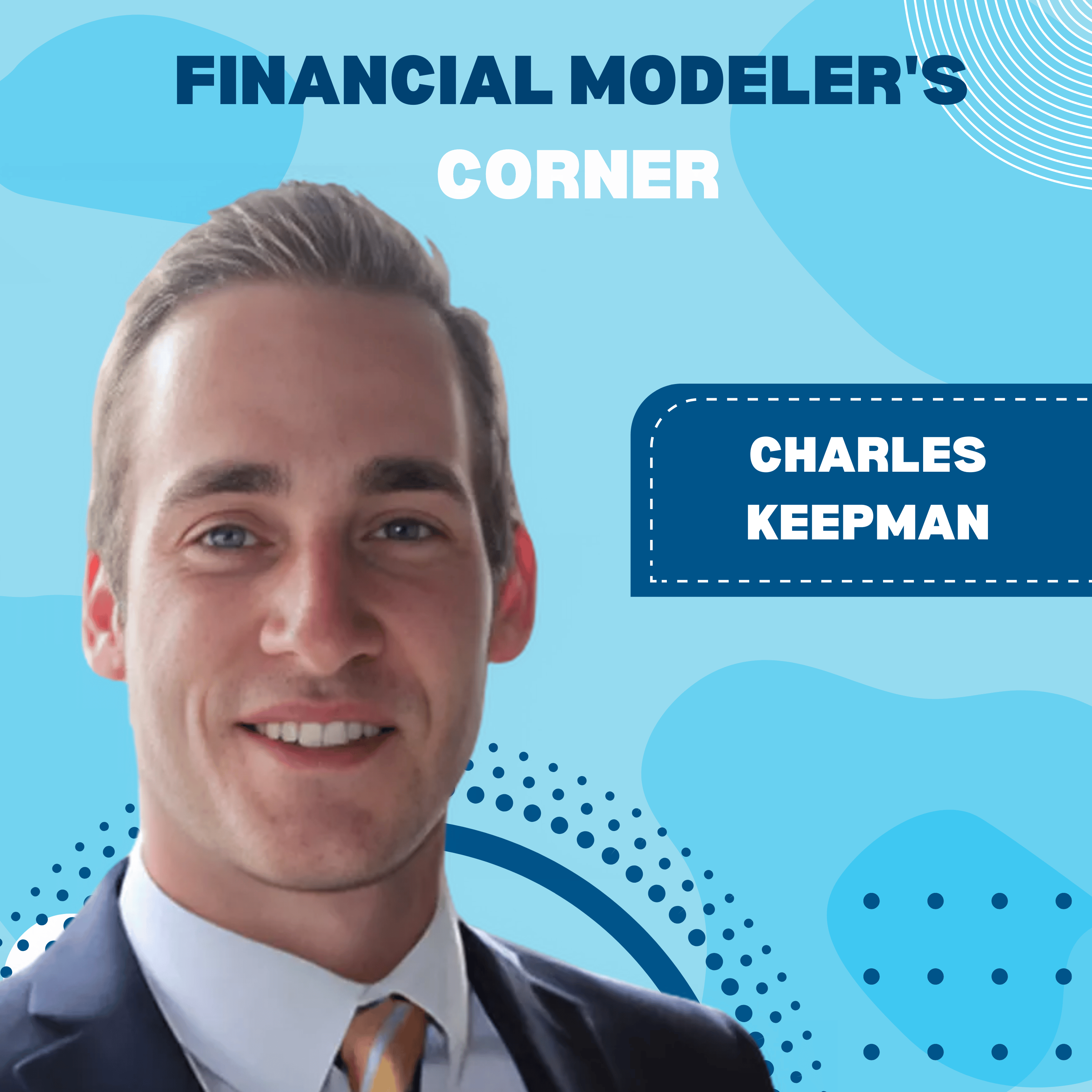
Excel Hacks for Financial Modelers to Simplify Valuations and Save Hours with Charles Keepman
In this episode of Financial Modelers Corner, host Paul Barnhurst (aka The FP&A Guy) welcomes Charles Keepman, a seasoned financial modeler and valuation expert, to discuss the intricacies of financial modeling, best practices, and common pitfalls. They explore real-world scenarios, discuss the value of creating dynamic models, and delve into the art of valuing companies, focusing on how different industries and stages of business impact modeling strategies.Charles Keepman has spent years honing his skills in financial modeling, starting at Ernst & Young and later working at Economics Partners (now Ryan Valuation). With deep expertise in business valuation, Charles currently applies his modeling skills to help clients make strategic financial decisions. His career trajectory has been shaped by his passion for creating efficient and dynamic financial models that help businesses make informed, data-driven decisions.Expect to Learn:Key principles for building auditable, easy-to-follow financial models.Insights into business valuation: when to use different approaches like DCF, asset, and market-based methods.The role of qualitative factors in valuation and how they can drastically influence outcomes.The role of Excel and financial modeling software in today’s fast-paced financial world.Why simplicity often trumps complexity in financial modeling, and how to strike the right balance.Here are a few quotes from Charles Keepman:"I think AI will have a profound effect on financial modeling, but we need to make sure it’s auditable and understandable.""Financial models are great tools, but the true value lies in understanding the assumptions behind them.""You can get stuck in analysis paralysis if you overcomplicate your models with too many variables."From emphasizing the importance of simplicity and clear assumptions to his preference for using tools like XLOOKUP over complex formulas, Charles provides a wealth of practical advice. His perspective on AI in financial modeling highlights the balance between leveraging technology and maintaining human judgment, ensuring that models remain accurate and useful.Follow Charles:LinkedIn - https://www.linkedin.com/in/charles-keepman-58766a40/Follow Paul: Website - https://www.thefpandaguy.com LinkedIn - https://www.linkedin.com/in/thefpandaguy YouTube - https://www.youtube.com/@thefpaguy8376 Follow Financial Modeler's Corner LinkedIn Page- https://www.linkedin.com/company/financial-modeler-s-corner/?viewAsMember=true Newsletter - Subscribe on LinkedIn-https://www.linkedin.com/build-relation/newsletter-follow?entityUrn=7079020077076905984Sign up for the Advanced Financial Modeler Accreditation Today and receive 15% off by using the special show code ‘Podcast’. Visit https://bit.ly/497oAqW and use the code “Podcast” to save 15% when you register. In today’s episode: [01:24] - Introduction to Charles Keepman[02:03] - The "Worst Financial Model" Horror Story[05:57] - A Rundown of Charles’ Career[09:04] - The Favorite Part of Financial Modeling[14:53] - The Most Unique Uses of Excel in Personal Life[17:26] - Valuing a Company: The First Steps[21:43] - The Most Unique Business Models[23:41] - Excel vs. Deal Work[27:03] - The Simplicity vs. Complexity Debate[32:49] - Excel's Evolution: Favorite Features[36:20] - Rapid Fire Segment[45:27] - Final Advice and Closing

The Great Debate on AI, Excel, and the Future of Financial Modeling
In this special debate episode, host Paul Barnhurst aka The FP&A Guy is joined by an all-star panel of modeling experts to tackle some of the most contentious questions in the financial modeling world. This lively discussion promises insights, entertainment, and plenty of surprises as the panelists bring their expertise and humor to the table. Together, they bring decades of experience, fresh perspectives, and a shared passion for the art and science of financial modeling.The powerhouse panel of financial modeling experts include: Derek Baker, FP&A professional and co-founder of the FP&A Hub; Lance Rubin, CEO of Model Citizen and Chief Excel Officer at Excel Cloud; Diarmuid "Dim" Early, founder of Early Days Consulting; Craig Hatmaker, retired founder of Beyond Excel and advocate for modern modeling techniques; Dr. David Brown, finance professor at the University of Arizona and founder of the Microsoft Excel Collegiate Challenge; Danielle Stein Fairhurst, Sydney-based financial modeling trainer, author, and Microsoft MVP; Ian Bennett, leader of PwC's global financial modeling practice and Master Financial Modeler; and Craig Thompson, former investment banker now innovating in software at Aleph. Expect to Learn:Why financial models are (or aren’t) the ultimate decision-making tool for businesses.The role of Excel in the future: is it here to stay, or will it be replaced by emerging technologies?Power BI, Power Query, and Python in financial modeling—are they worth learning?Controversial techniques: the debate on circular references and dynamic arrays.Whether AI will eventually replace human modelers—and how soon.Here are a few quotes from the episode:"Excel’s modern tools, like Power Query and lambdas, are setting the stage for AI to change how we build models." - Lance Rubin"AI can process data, but it lacks the creativity and business acumen needed for financial modeling." - Danielle Stein Fairhurst"Excel is the foundation of the financial system, and its adaptability ensures it will last for years to come." - Dr. David BrownFrom the future of Excel to the role of AI, the importance of financial statements, and the tools that modelers should master, this episode explored the evolving landscape of financial modeling.Follow Derek:LinkedIn - https://www.linkedin.com/in/derek-d-baker/Follow Lance:LinkedIn - https://www.linkedin.com/in/financial-modelling/Follow Diarmuid:LinkedIn - https://www.linkedin.com/in/diarmuidearly/Follow Craig H:LinkedIn - https://www.linkedin.com/in/craig-hatmaker-4449879/Follow David:Website - https://www.davidclaytonbrown.com/Follow Danielle:LinkedIn - https://www.linkedin.com/in/daniellesteinfairhurst/Follow Ian:LinkedIn - https://www.linkedin.com/in/ianrbennett/Follow Craig T:LinkedIn - https://www.linkedin.com/in/cfthompson/Follow Paul: Website - https://www.thefpandaguy.com LinkedIn - https://www.linkedin.com/in/thefpandaguy YouTube - https://www.youtube.com/@thefpaguy8376 Follow Financial Modeler's Corner LinkedIn Page- https://www.linkedin.com/company/financial-modeler-s-corner/?viewAsMember=true Newsletter - Subscribe on LinkedIn-https://www.linkedin.com/build-relation/newsletter-follow?entityUrn=7079020077076905984Sign up for the Advanced Financial Modeler Accreditation Today and receive 15% off by using the special show code ‘Podcast’. Visit https://bit.ly/497oAqW and use the code “Podcast” to save 15% when you register. In today’s episode: [01:42] - Introduction to the Episode[04:16] - The Debate Battle Starts [07:12] - Should Financial Modelers Learn Python?[11:15] - Dynamic Arrays vs. Traditional Models[16:52] - Will Excel Ever Die?[20:55] - Should Financial Modelers Learn Power BI?[26:21] - Will AI Build Financial Models?[32:09] - Circular References: Useful or Evil?[39:27] - VBA in Financial Models[44:41] - Number One Corporate Decision Making Tool[52:58] - Which Financial Statement is Most Important? [59:50] - Conclusion and Audience Poll

How Aligning Strategy with Modeling Transforms Corporate Deals with Sean Corcoran
In this episode of Financial Modelers Corner, Paul Barnhurst aka The FP&A Guy dives deep into the intersection of corporate development and financial modeling, focusing on mergers and acquisitions (M&A). Sean Corcoran, a seasoned expert with over 20 years in corporate development, shares his insights on navigating complex transactions, building effective financial models, and driving strategic growth through acquisitions.Sean Corcoran is the Head of Corporate Development at DigiCert and has an illustrious career spanning Fortune 50 companies, private equity-backed ventures, and public firms. With experience leading over 60 acquisitions worth billions, Sean has a comprehensive understanding of the M&A lifecycle, strategic planning, and financial modeling.Expect to LearnWhy simplicity and strategy are vital in corporate development financial models.Common pitfalls in financial models and how to avoid them.The importance of aligning strategic intent and integration during acquisitions.How FP&A professionals can transition into corporate development roles.The evolving tools and techniques in M&A due diligence and decision-making.Here are a few quotes from Sean Corcoran:"Culture is one of the key criteria for successful acquisitions; the only way to assess it is to spend time with the prospective target.""A strategic partnership often evolves into an acquisition when both sides see value and alignment.""From a corporate development perspective, simplicity is king when building financial models.""AI is starting to play a role in M&A, especially in reviewing contracts and highlighting potential red flags."From understanding the nuances of culture in acquisitions to navigating the challenges of carve-outs and earnouts, this episode offers an insightful conversation that highlights the complexity and opportunity within corporate development and the critical role of financial modeling.Follow Sean:LinkedIn - https://www.linkedin.com/in/sean--corcoran/Follow Paul: Website - https://www.thefpandaguy.com LinkedIn - https://www.linkedin.com/in/thefpandaguy YouTube - https://www.youtube.com/@thefpaguy8376 Follow Financial Modeler's Corner LinkedIn Page- https://www.linkedin.com/company/financial-modeler-s-corner/?viewAsMember=true Newsletter - Subscribe on LinkedIn-https://www.linkedin.com/build-relation/newsletter-follow?entityUrn=7079020077076905984Sign up for the Advanced Financial Modeler Accreditation Today and receive 15% off by using the special show code ‘Podcast’. Visit https://bit.ly/497oAqW and use the code “Podcast” to save 15% when you register. In today’s episode: [01:19] - Introduction to the Episode and Guest[05:37] - Sean’s Background and Career Journey[08:09] - Key Lessons from M&A Experience[12:43] - Responsibilities in Corporate Development[17:10] - Favorite Deals and Lessons Learned[21:37] - Building Effective Financial Models[30:11] - Ensuring Alignment in Financial Modeling[34:36] - Lessons from a Career in Corporate Development[37:39] - Rapid-Fire Questions[42:59] - Closing and Networking

Excel Problem-Solving Strategies for Financial Modelers to Build Robust Models with Liam Bastick
In this engaging episode of Financial Modelers Corner, host Paul Barnhurst, aka "The FP&A Guy," sits down with Liam Bastick, Managing Director of Sum Product and a highly respected figure in financial modeling and Excel expertise. Known for his complex modeling work, quirky sense of humor, and love for a good challenge, Liam shares insights into the nuances of financial modeling, discusses his favorite Excel tips, and reveals his fascination with the evolving role of AI in modeling. Liam Bastick is a seasoned corporate trainer, author, and financial modeling expert, with a focus on Excel, Power BI, and AI applications. With a career that includes awards like Microsoft’s Most Valuable Professional and the inaugural Lifetime Achievement, international recognition, and extensive teaching, Liam provides listeners with both practical advice and fascinating anecdotes from his career.Expect to Learn:Excel optimization tips and learn how to effectively use Quick Access toolbar Circular references and financial modeling horror story insightsChallenges and advantages of modeling in Power BIHow AI is changing financial modeling and what the future might holdLiam’s approach to problem solving to stay at the forefront of innovationHere are a few quotes from Liam Bastick:“The best tip I can give is to put the tools you use most often on the Quick Access toolbar. It’s underused but incredibly helpful.”“If you've got circular references in your model, you’re already on thin ice. They can lead to wrong answers and complete chaos.”“With AI, you can do the front-end and back-end work in financial modeling, but it’s still not there yet for the mechanics in the middle.”In this insightful episode, Liam Bastick shared his passion for financial modeling, bringing both humor and depth to complex topics in Excel, Power BI, and AI. His reflections on adaptability, continuous learning, and challenging the limits of traditional tools serve as powerful reminders for anyone in finance or data analysis. Follow Liam:Website - https://www.sumproduct.com/LinkedIn - https://www.linkedin.com/in/liam-bastick-73a39114/Follow Paul: Website - https://www.thefpandaguy.com LinkedIn - https://www.linkedin.com/in/thefpandaguy YouTube - https://www.youtube.com/@thefpaguy8376 Follow Financial Modeler's Corner LinkedIn Page- https://www.linkedin.com/company/financial-modeler-s-corner/?viewAsMember=true Newsletter - Subscribe on LinkedIn-https://www.linkedin.com/build-relation/newsletter-follow?entityUrn=7079020077076905984Sign up for the Advanced Financial Modeler Accreditation Today and receive 15% off by using the special show code ‘Podcast’. Visit www.fminstitute.com/podcast and use the code “Podcast” to save 15% when you register. In today’s episode: [01:52] – Introduction to guest Liam Bastick[03:44] – Liam’s Modeling Horror Stories[08:32] – Liam’s Professional Journey and Challenges[14:17] – Running a Business and Reinvention[16:05] – Discussing AI’s Impact on Financial Modeling[20:39] – Books and Teaching Tips[35:50] – Rapid Fire: Excel Best Practices[46:57] – Advanced Modeling Techniques and Final Tips[54:16] – Contact Information and Wrap Up

Why Skills & Storytelling Matter More Than Degrees in Financial Modeling – Rachit Jain
In this insightful episode of Financial Modelers Corner, host Paul Barnhurst (aka The FP&A Guy) welcomes financial modeling expert Rachit Jain. They delve into the nuances of financial modeling, exploring the art of building accurate, reliable models and the importance of critical thinking and lifelong learning in finance. Rachit shares real-world horror stories from his early career, reflects on the challenges of predictive modeling, and emphasizes the human elements that make models truly effective.Rachit Jain is a seasoned financial modeler with extensive experience in finance, auditing, and quantitative modeling. Having worked with firms like Hewlett Packard and Deloitte, Rachit brings a wealth of knowledge on creating models that inform decision-making and avoid critical pitfalls. His expertise spans FP&A, data science, and quantitative finance, making him an authority on building dynamic, real-world financial models.Expect to Learn:How to build trust in financial models through transparency and sound designWhy critical thinking and communication skills are crucial in financial modelingRachit’s career journey and his transition from audit to financial modelingThe role of data science in enhancing financial modeling capabilitiesStrategies for applying financial modeling in personal decision-makingHere are a few quotes from Rachit Jain:"The first step in financial modeling is critical thinking – you need to know what you want to achieve before you start building.""In financial modeling, curiosity is everything. It’s what drives you to improve and learn beyond the basics.""Before starting in financial modeling, understand what part of FP&A suits your skills. Not everyone is a ‘numbers person,’ and that’s okay."In this episode, Rachit Jain highlights financial modeling as both an art and science, emphasizing the importance of accuracy, clarity, and storytelling. Rachit’s approach shows that great financial modeling goes beyond numbers; it requires curiosity, critical thinking, and a balance between simplicity and sophistication.Follow Rachit:LinkedIn - https://www.linkedin.com/in/jainrachit1008/Follow Paul: Website - https://www.thefpandaguy.com LinkedIn - https://www.linkedin.com/in/thefpandaguy YouTube - https://www.youtube.com/@thefpaguy8376 Follow Financial Modeler's Corner LinkedIn Page- https://www.linkedin.com/company/financial-modeler-s-corner/?viewAsMember=true Newsletter - Subscribe on LinkedIn-https://www.linkedin.com/build-relation/newsletter-follow?entityUrn=7079020077076905984Sign up for the Advanced Financial Modeler Accreditation Today and receive 15% off by using the special show code ‘Podcast’. Visit www.fminstitute.com/podcast and use the code “Podcast” to save 15% when you register. In today’s episode: [01:15] - Introduction to the Episode and Guest[05:26] - Rachit’s Background and Career Path[09:00] - Advice for Transitioning to Financial Modeling[11:01] - Lifelong Learning in Finance[13:17] - Financial Modeling as a Way of Thinking[18:15] - Unique Applications of Financial Modeling[22:23] - Building Models for Decision Making Process[26:57] - The Intersection of Data Science and Financial Modeling[33:40] - Rapid-Fire Financial Modeling Preferences[38:53] - Closing Advice and Wrap Up