Film Trace
131 episodes — Page 2 of 3
S11 Ep 1Asteroid City (2023) and The Fabelmans (2022)
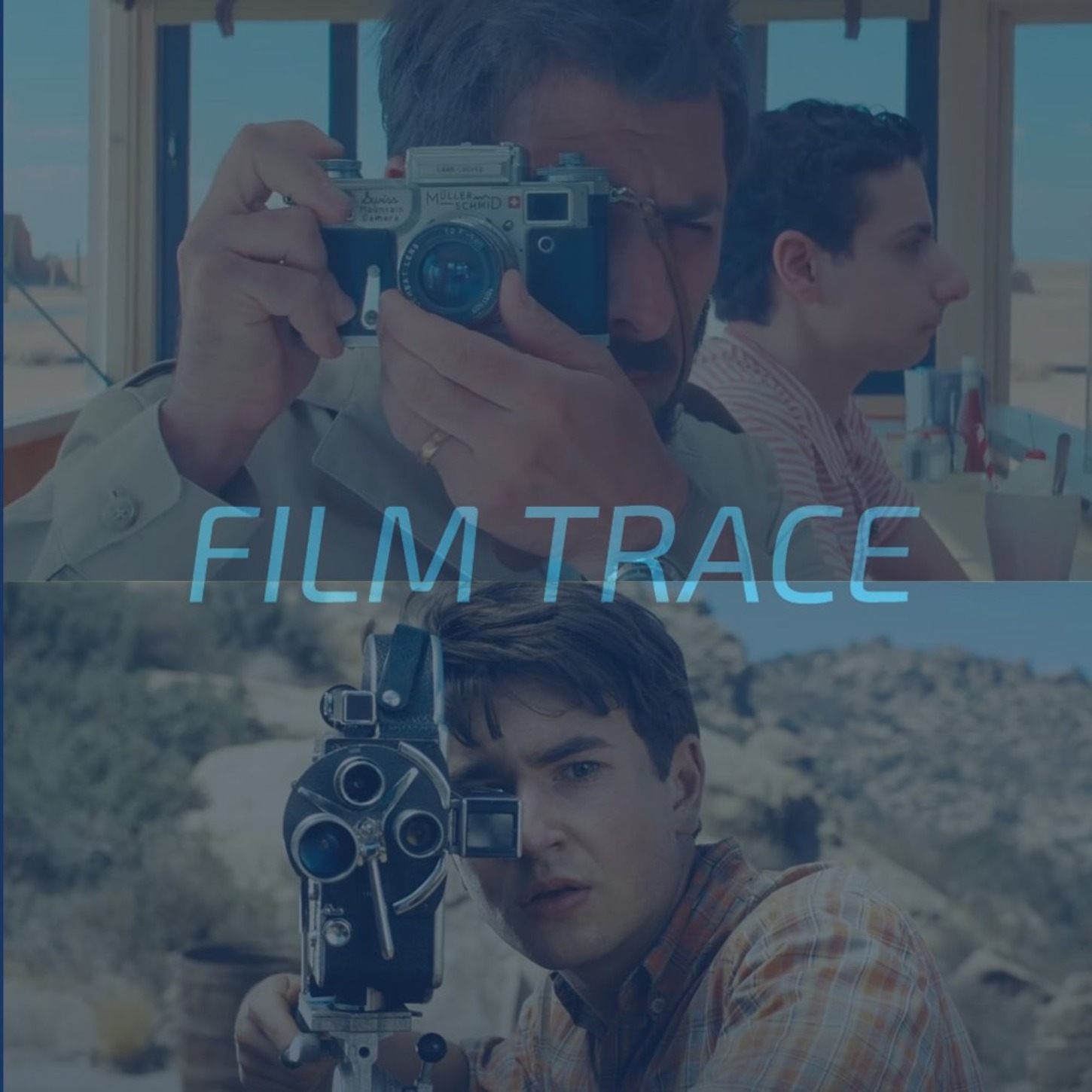
In the first episode of our new cycle Set in the 1950s, we take a look at Wes Anderson's new film, Asteroid City (2023). Both Chris and I are devout Wes Anderson fans, and covering Asteroid City was really the impetus for this cycle's theme. As we have traversed this cycle, we are seeing how the 1950s setting can be used in a variety of ways with varying degrees of historical richness. Wes, quite predictably, uses the Eisenhower years as mostly set dressing for his story of grief and isolation out in the red desert. Of course the film looks gorgeous and is filled to the brim with exquisite detail, but the film does deviate significantly from the typical Anderson film. Here the meta impulse is greatly indulged with a play running intertwined within the main narrative. The film has become quite divisive even amongst Wes Anderson aficionados. A great counterpoint to Asteroid City is Steven Spielberg's autobiographical The Fabelmans (2022). Both works are about directors turning the lens inwards. Whereas Anderson deconstructs his own style and voice into a kaleidoscope of detail and paratexts, Spielberg lends his own story a hyperrealism he often evoked in his most classic work. Both films are honest reflections.Note: This podcast was recorded and produced during the 2023 WGA and SAG-AFTRA strike. Without the labor of writers and actors currently on strike, Asteroid City and The Fabelmans would not exist. Support the artists who make the art you love.
S10 Ep 6In Cold Blood (1967) and Compulsion (1959)
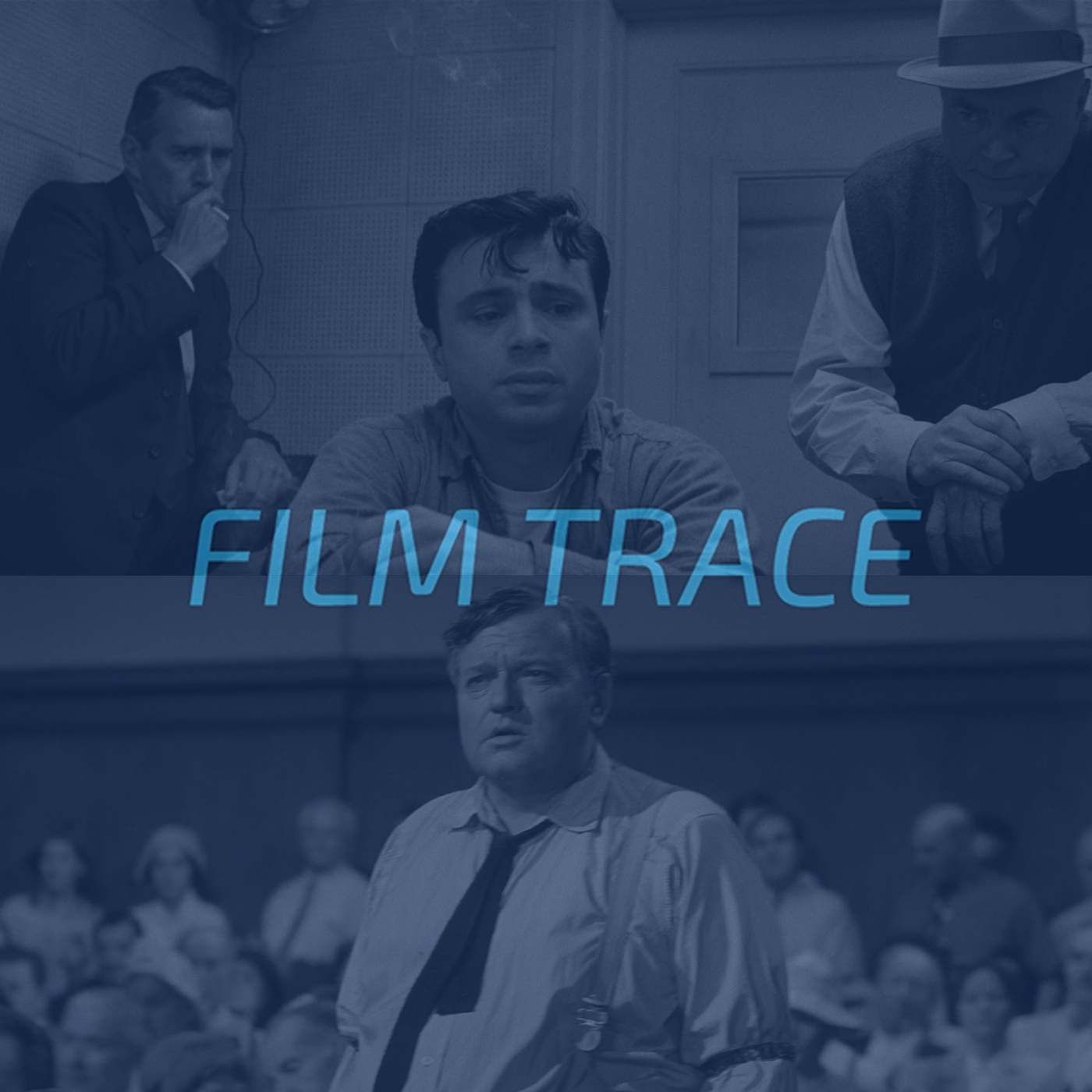
The sixth and finale film in our Stranger Than Fiction cycle is Richard Brooks' true crime magnum opus, In Cold Blood (1967). Often overlooked by the infamy of its origin source, In Cold Blood enormous value as a film: the beautiful and stark cinematography of Conrad Hall (who went on to shoot Butch Cassidy and the Sundance Kid and Road to Perdition), the unsettling and rapturous performances of leads Robert Blake and Scott Wilson, the surgical plotting and execution of Richard Brooks. It sits snugly inbetween the post-war studio system and the auteur anarchism of the 1970s. Despite these creative high marks, In Cold Blood could be a thesis statement for this cycle: exploitation and true life film are inseparable. The moral weight of retelling this grisly murder of a family by two drifters is too much for the film, even with its progressive anti-death penalty ideology. But we find interest and discourse in the cracks and fissures of great art. Perfection in film would be a negation of the medium. For our chaser film, we trace the lineage of true crime back to Compulsion (1959), a mess of a film that is salvaged by wonderful performances from Orson Welles, Diane Varsi, Dean Stockwell, and the truly creepy Bradford Dillman.
S10 Ep 5Dog Day Afternoon (1975) and Straight Time (1978)
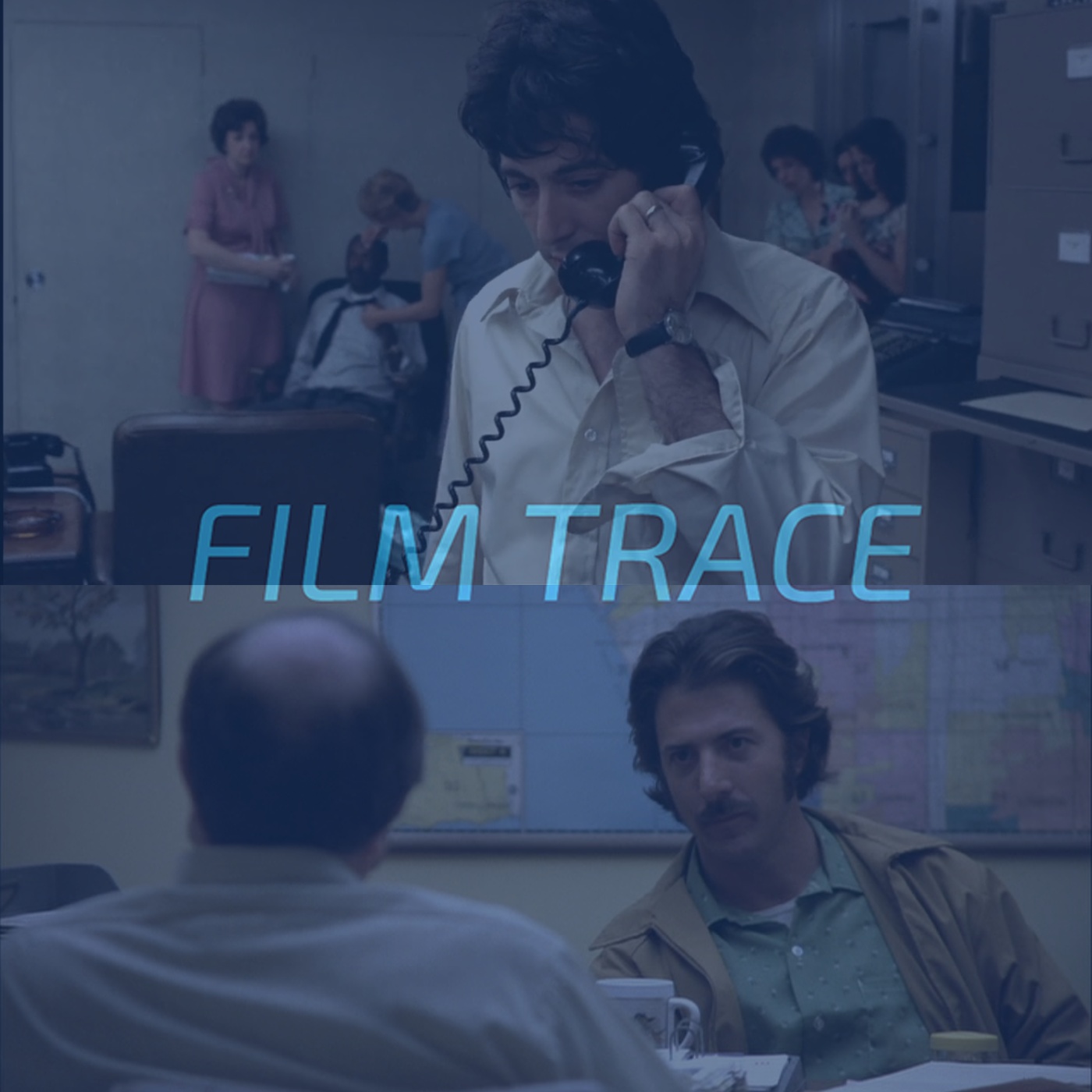
The fifth film in our Stranger Than Fiction cycle is Sidney Lumet's provocative bank heister, Dog Day Afternoon (1975).Special Guest: Good friend of the show and dedicated film nerd, Riley. Dog Day Afternoon is certainly a film you hear about before you ever see it. The film has had a stellar reputation since its release in the mid 1970s. It is considered one of Sidney Lumet's most important and best films. As we approach the film's 50th anniversary, we reappraised both what is on the screen and what happened in real life, not all of which is easy to reconcile with the aura of prestige surrounding the film. As we explore about how true life overlaps with fiction, Dog Day Afternoon becomes hornet's nest of contradiction, exploitation, and high art craftsmanship. Featuring stellar performances from Al Pacino and John Cazale, we face the question that always arises when great stories are told about terrible people: can we separate art from reality?For our chaser film, we reclaim a lost 70s classic, Straight Time. Dripping in 70s malaise and alienation, Dustin Hoffman plays a man on the edge of all things prudent.
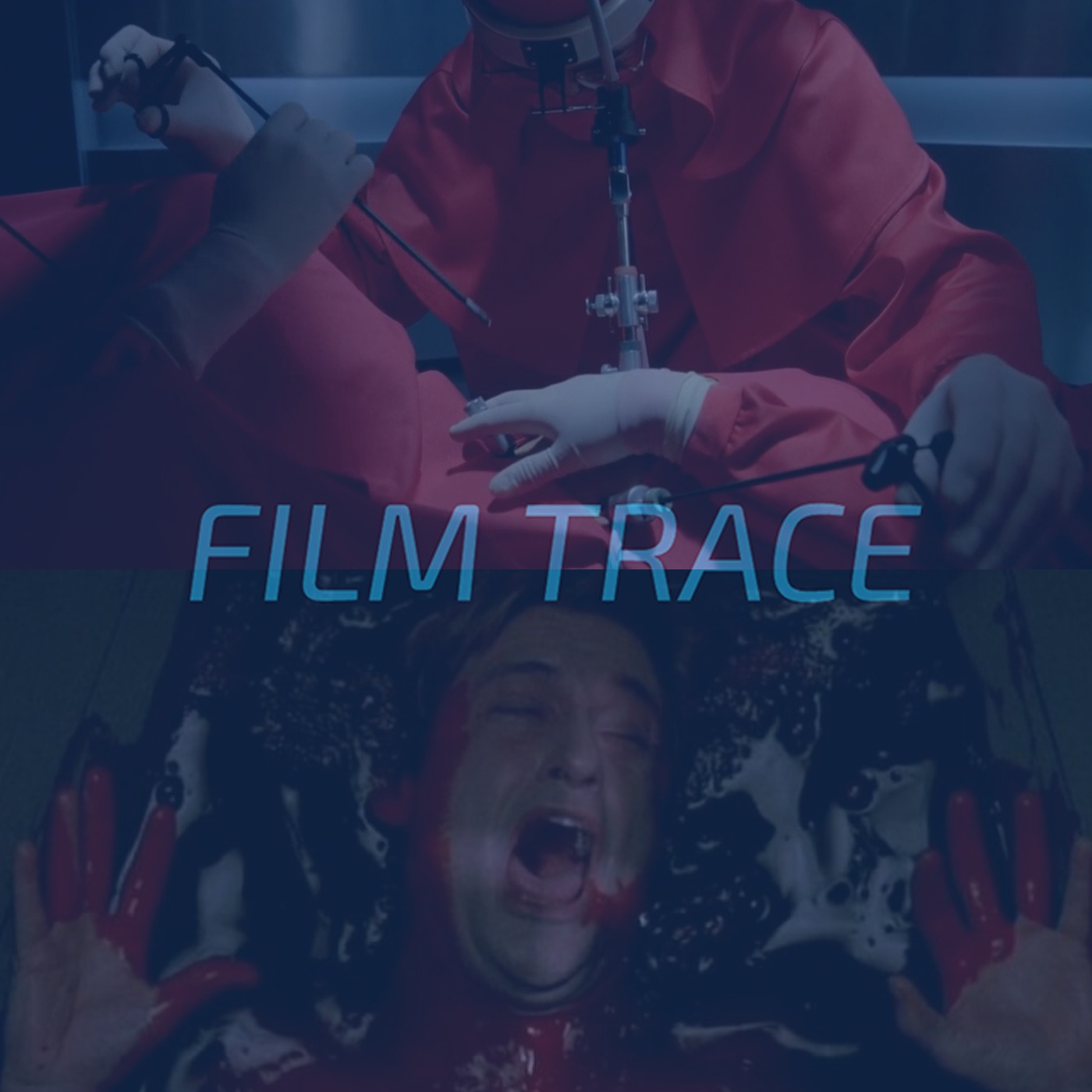
S10 Ep 4Dead Ringers (1988) and The Serpent and the Rainbow (1988)
The fourth film in our Stranger Than Fiction cycle is David Cronenberg's deep trip twin thriller, Dead Ringers (1988). Special Guest: Rob from the awesome Smoke & Mirrors PodcastDavid Cronenberg was evicted from his home after his early film, Shivers, sent shockwaves through the Toronto intelligentsia. Cronenberg has always been an outsider with a deft ability to contort himself into the good graces of the monied class over his now fifty year career. Dead Ringers is one of his most grounded works but it is also one of his most confounding. The film closely follows the journalistic essays written about the life and death of twins Stewart and Cyril Marcus. As Cronenberg himself said, “The art of The Fly was to make the fantasy absolutely real, whereas the challenge here was to make the realistic seem fantastic.” But by the end, even Jeremy Irons' spectacular performance can't quite conjure the truth that lies between the tragedy of these twin brothers.For our chaser film, we dissect Wes Craven's ballsy attempt to adapt a notorious account of real life zombies in Haiti, The Serpent and the Rainbow (1988).
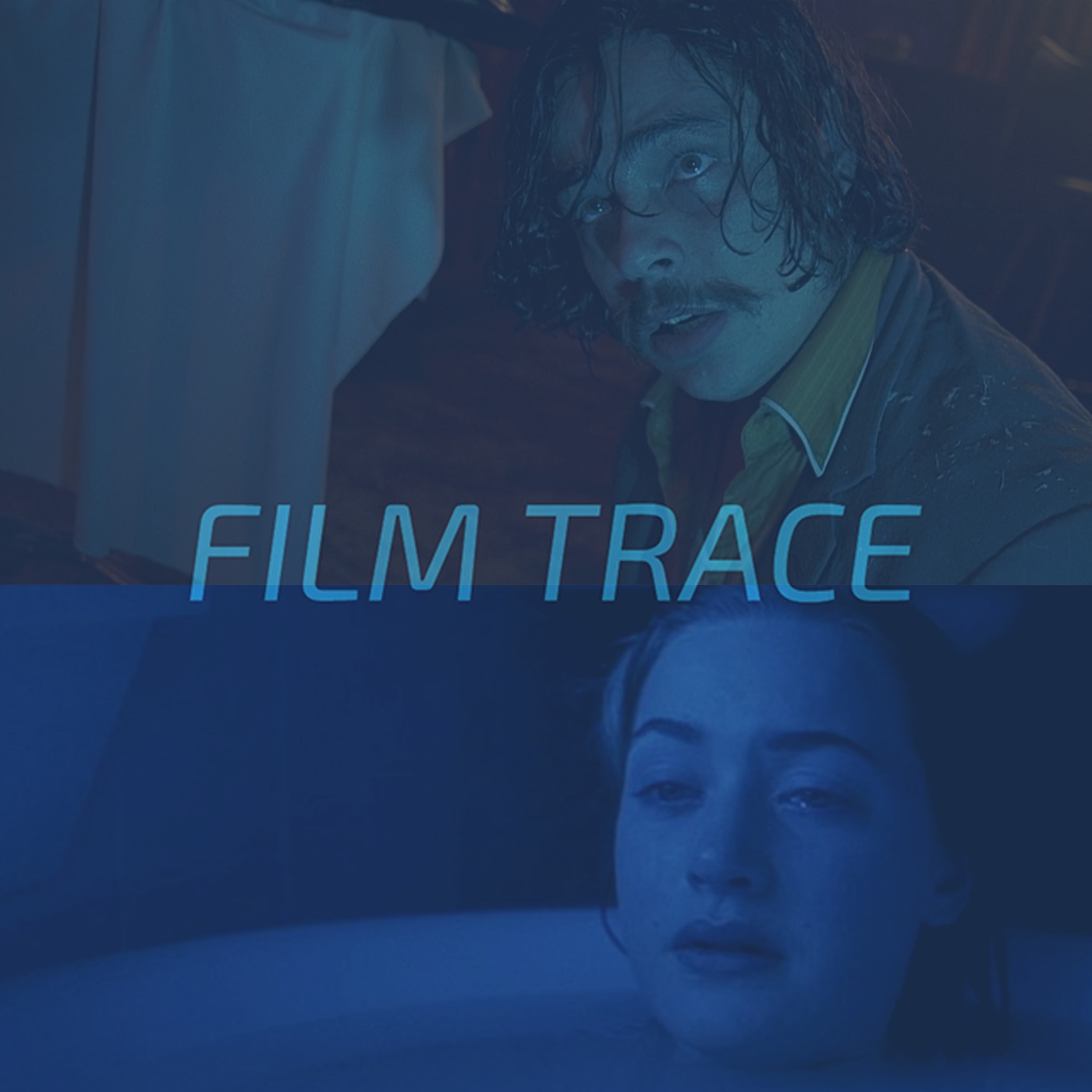
S10 Ep 3Fear and Loathing in Las Vegas (1998) and Heavenly Creatures (1994)
The third film in our Stranger Than Fiction cycle is Terry Gilliam's visual extravaganza, Fear and Loathing in Las Vegas (1998).Special Guest: The crew from There Are Too Many Movies podcast - Chris Collins, Josh Rodriguez, and Alex Wilshin.Hunter S. Thompson was the paradigm of Stranger Than Fiction journalism. He helped create the entire genre of creative nonfiction by telling the world what he saw we his own two eyes instead of assuming some fake omniscient third person perspective, also known as "reporting." Terry Gilliam saddled up with Johnny Depp and Benicio del Toro to bravely attempt an adaptation of Thompson's classic work of gonzo. It fails spectacularly, but the film is absolutely a high mark in visual experimentation. Not for nothing, Gilliam captures altered perception in a way never done before or since. It's too bad the film mostly misses the moral and political polemics underneath the book's narcotic blatherings. For our chaser film, we travel to the fourth dimensions with Peter Jackson's wonderfully macabre Heavenly Creatures (1994).
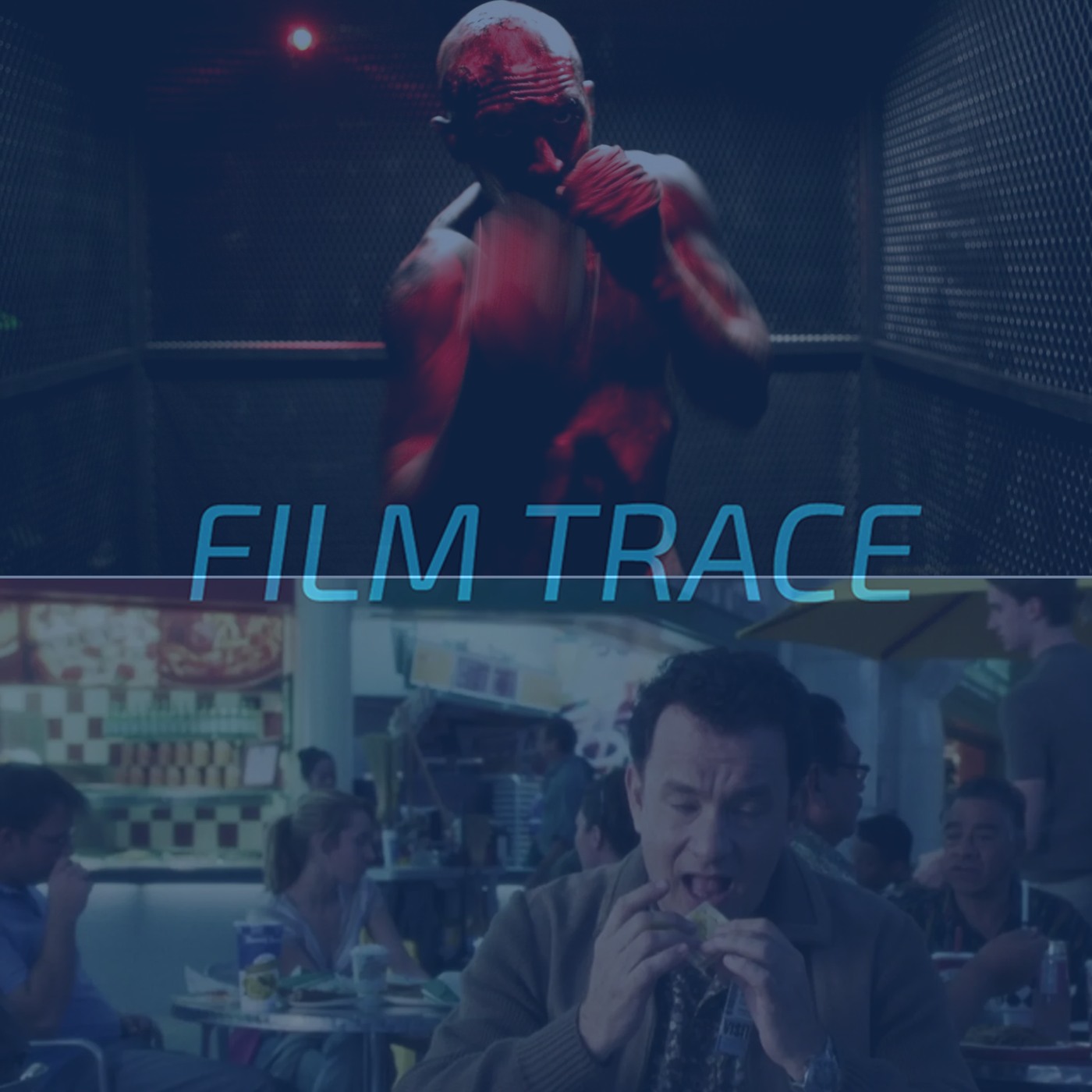
S10 Ep 2Bronson (2008) and The Terminal (2004)
The second film in our Stranger Than Fiction cycle is Nicolas Winding Refn's left field take on bio pics, 2008's Bronson.Special Guest: Katey Stoetzel is co-founder and TV Editor for InBetweenDrafts. She hosts the “House of the Dragon After Show” podcast and can be read on various other places like Inverse and Screen Speck. Refn's conspicuous filmmaking style lends itself well to the crazy and violent life of Charles Bronson aka Britain's "most violent prisoner." Shot as a performance art piece rather than a narrative film, Bronson was certainly a calling card for both Refn and the magnificent lead performance of Tom Hardy. Looking back on the film some fifteen years later, the boldness feels oversaturated and worn, like an overly compressed mp3. It blasts loud, but the dynamic range is so blown out that little emotional timbre is left. Especially troubling is the tightrope Refn chooses to snap in two instead of traverse. Refn claims he is making a movie about man he knows nothing about. Charles Bronson is a real person who did very awful things to real people. Refn gives us a barometer with which to measure the level of exploitation that true life films can conjure. Here lies the bottom.For our chaser film, we lounge with Tom Hanks and Steven Spielberg in 2004's The Terminal, a comfy mid-aughts dramedy filled with max schmaltz and min edge.
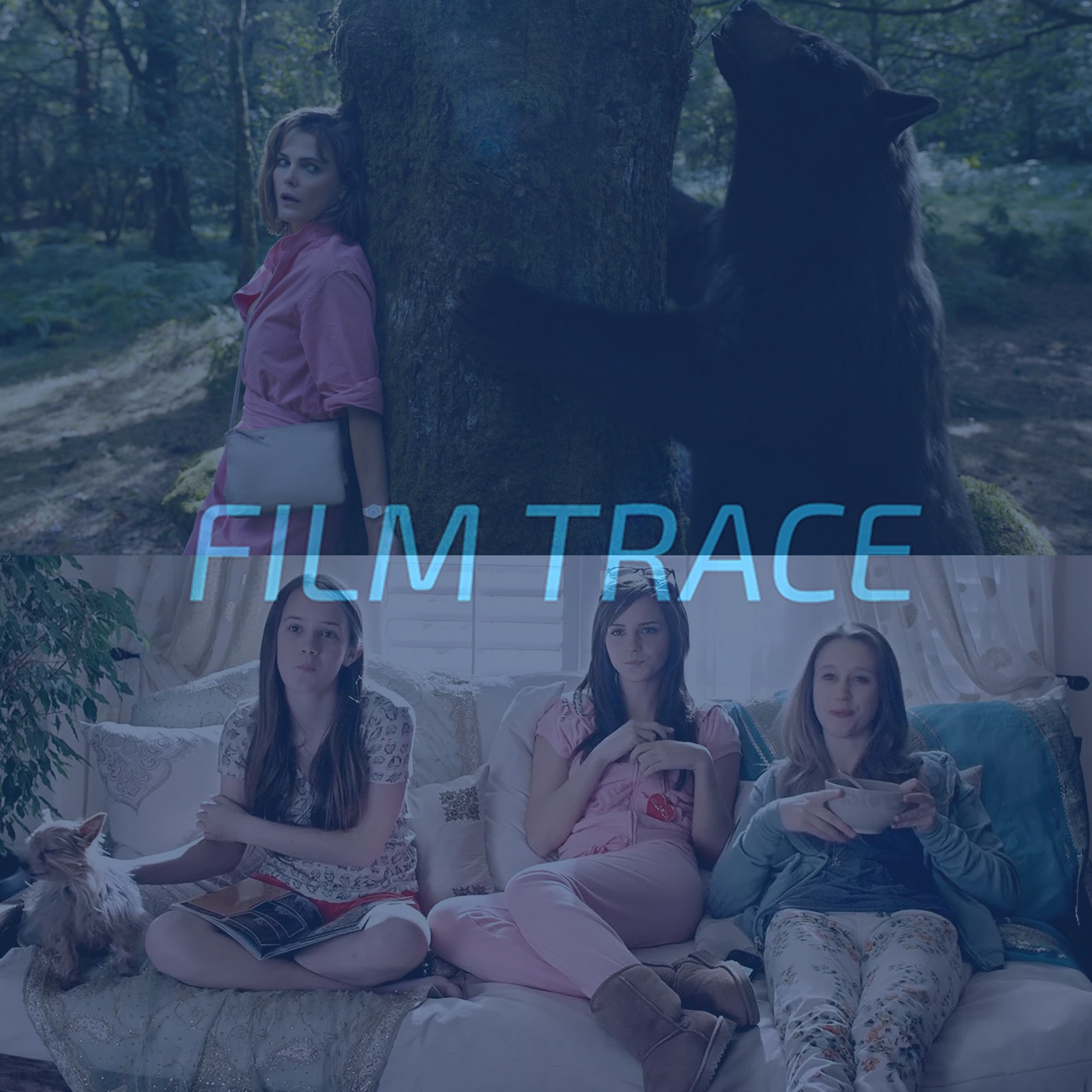
S10 Ep 1Cocaine Bear (2023) and The Bling Ring (2013)
The first film in our new Stranger Than Fiction cycle is Elizabeth Bank's gonzo misfire, Cocaine Bear (2023).Elizabeth Banks is an almost household name who likes to stay busy as an actor, producer, film director, and now gameshow host. While prolific, the quality of her output has been uneven. Her 2019 film Charlie's Angels spectacularly bombed, and Banks, always the press whisperer, jumped on the grenade and blamed sexism. Here she returns to the director's chair for a loosely true concept about a bear who eats a lot of cocaine. Clearly a joke by people who are too well connected to truly fail, Cocaine Bear is tonal salmagundi: black comedy, creature feature, coming of age, postmodern pastiche. None of it really lands beyond the basic concept of bear being turnt up on coke. Considering the large production budget and the talented people involved, the final result is an embarrassment. For our chaser film, we discuss The Bling Ring, Sofia Coppola's blasé docudrama of young thieves obsessed with celebrity consumption. Despite its glassy surface, Coppola suggests a deeper abyss lies below.
S9 Ep 9Bones and All (2022) and Her (2013)
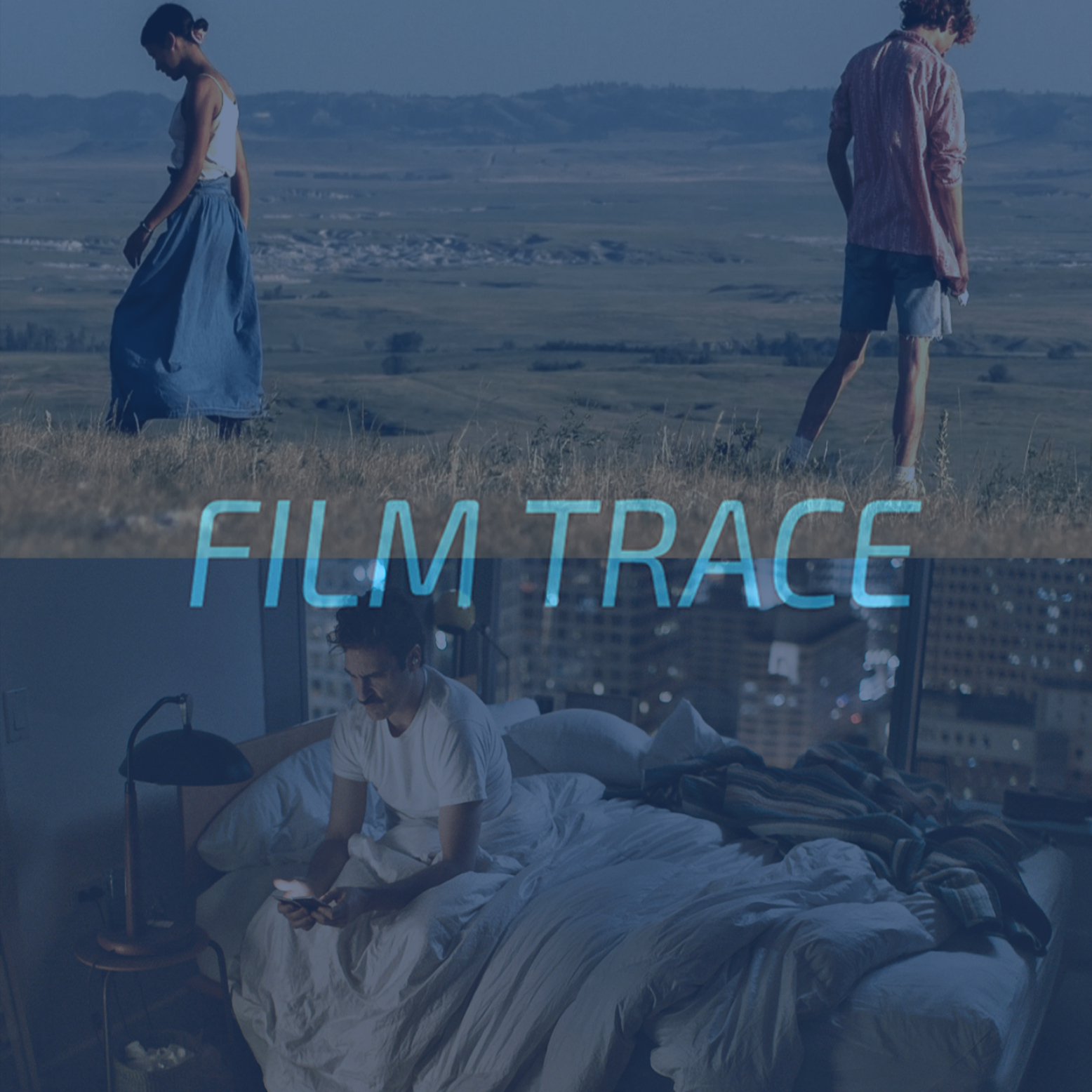
The sixth and final film in our Risqué Romance cycle is Luca Guadagnino's meatlovers romance, Bones and All (2022).Coming off his break out art-house hit Call Me by Your Name (2017) and his wonderfully bizarre remake of Suspiria (2018), Luca Guadagnino rejoined with white hot Timothée Chalamet to adapt this young adult novel about the ills of eating human flesh. The book, a vegan polemic, is translated here by Luca with his normal grace, poise, and naturalism. Joining Chalamet is the splendid performance of Taylor Russell as the two young lovers crisscross the eastern half of the US. Also strangely a 1980s period piece, Bones and All becomes a gumbo of genre, style, and tone. It doesn't really work, but there is a joy in the experience of trying to make sense of it all. Mark Rylance shows up to piss off Chris and for me to fall in love again.For our chaser film, we reconnect with Her (2013), a techno-romance that captured the thirty something zeitgeist of the late Obama years as we became soulmates with our iPhones.
S9 Ep 8Top 5 Behind The Scenes Dramas in Film (2022)
We decided to do an end of the year show for 2022. Life has been hectic so we haven't been able to post on our normal schedule, and we have a longer break coming up before Season 10 of Film Trace kicks off. So we decided to do a one-off show to give the people what they want: Drama!Chris and Dan present the top five behind the scenes dramas in film for 2022. The goal of our show is to tell the listener the story of how a film came to be. Sometimes everything goes right, and we get Top Gun: Maverick. Sometimes it doesn't go right and we get Morbius. The successes are fun to talk about but the abject failures are truly delicious. Join us as we trace the lives of five films that face planted in 2022.

S9 Ep 5Brokeback Mountain (2005) and Secretary (2002)
The fifth film in our Risqué Romance cycle is Ang Lee's western romance, Brokeback Mountain (2005) Special Guest: Amanda Jane Stern - writer, actor, and producer from New York City. She wrote, produced, and starred in the new erotic thriller Perfectly Good Moment, soon to be playing at a film festival near you!When Brokeback came out in the mid-Aughts, it was supported by effuse buzz and whispered homophonic jokes. This was not unlike the release of The Crying Game in the early 90s. Both films were from smaller studios and gained traction due to their misperceived salaciousness. Looking back on Brokeback, the film's reputation is bizarre and totally ill-fitting. The film is a quiet and slow mediation on how love blossoms quickly but then withers for decades only to constantly reemerge through turned soil, like a perennial bud. Its loss to Crash at the 2006 Oscars for Best Picture feels more and more criminal with every passing year. Brokeback Mountain is one of Ang Lee's enduring masterpieces alongside Crouching Tiger, Hidden Dragon.For our chaser film, we reexamine the 2002 film Secretary, which felt like a slight curiosity on release but plays totally differently now. Very much a hidden gem.
S9 Ep 4Bound (1996) and Poison Ivy (1992)
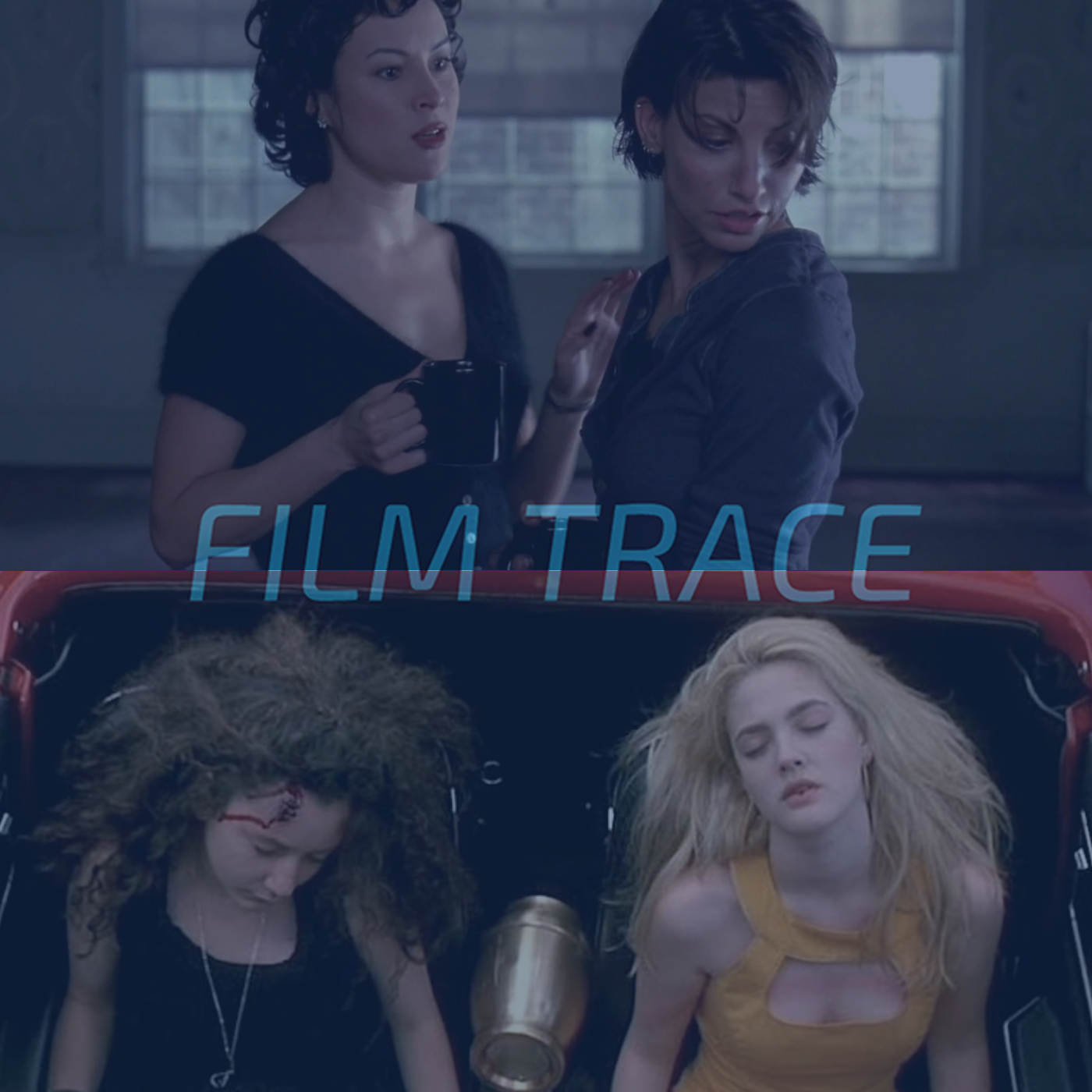
The fourth film in our Risqué Romance cycle is Lana and Lily Wachowski's debut film, Bound (1996).Like the Wachowskis' more successful and canonical sophomore effort, The Matrix, Bound both works wonderfully on its own as a playful lesbian-centered noir and as a challenge to the WWII-era subgenre, as well as modern crime films writ large, to reconsider and deconstruct masculinity and femininity alike. Essentially a chamber drama with Hong Kong action-inspired flair, its lead performances from the still-underrated Jennifer Tilly and Gina Gershon leap off the screen with ferocity while also retaining a delicate sense of intimacy. The supporting cast, including reliable Wachowski mainstay Joe Pantoliano and a magnetically maniacal turn from Christopher Meloni, fleshes out the film's ahead-of-its-time graphic novel pulp sensibility too. The whole affair comes off as not just risqué but downright revolutionary.For our chaser film, we discuss the trashy erotic thriller Poison Ivy (1992). Directed by exploitation master Roger Corman protégé Katt Shea and largely a footnote of the decade's offerings, its queer undertones and Lolita riffing merit discussion, not to mention the fact that it somehow spawned three direct-to-video sequels.Dan is off this episode, but joining Chris in his absence is the insightful and talented freelance film writer and frequent Little White Lies contributor Lillian Crawford.
S9 Ep 3Valley Girl (1983) and My Beautiful Laundrette (1985)
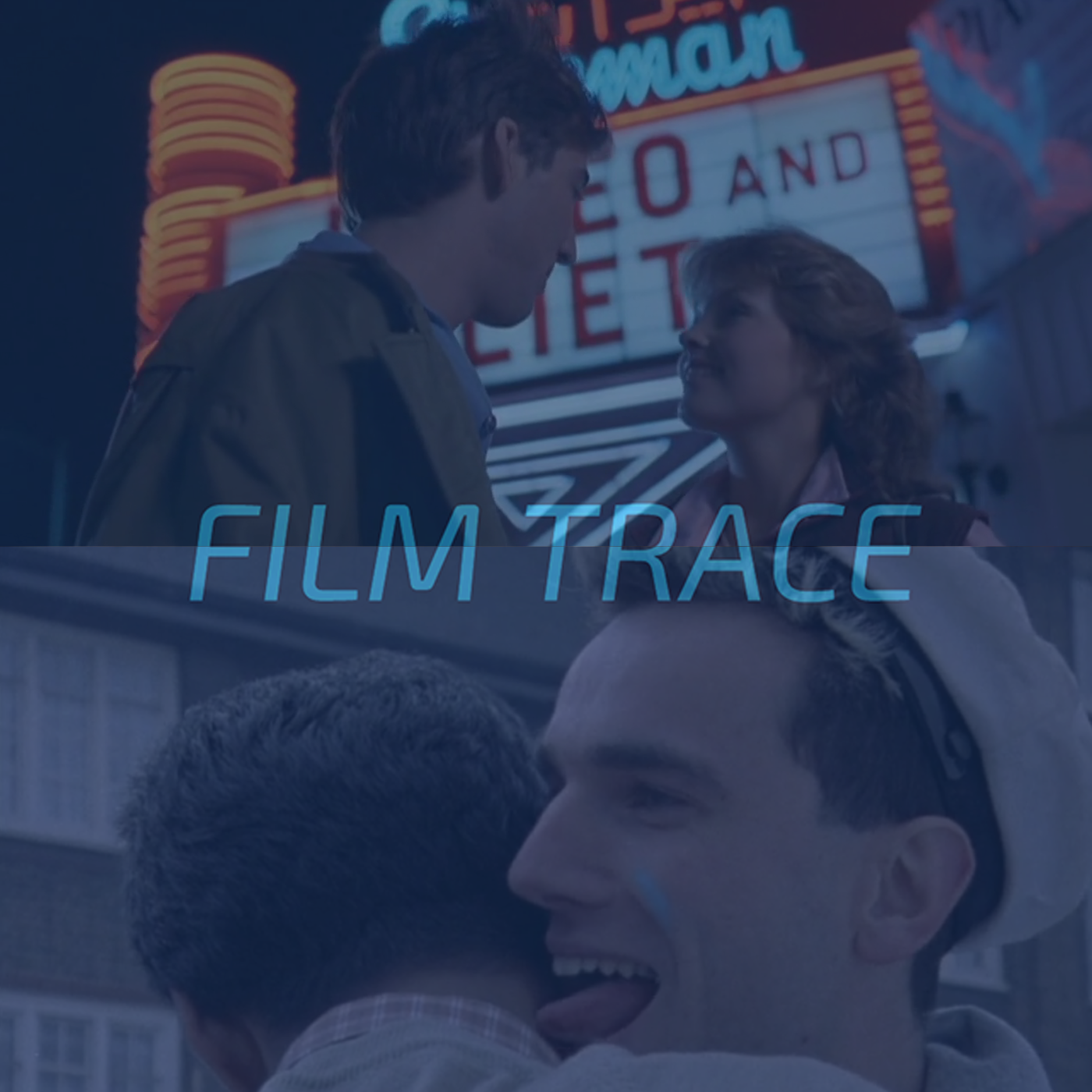
The third film in our Risqué Romance cycle is the small yet delightful, Valley Girl (1983).Valley Girl, the paradigm of an indie film, transcended its own means of production to become an oddly dismissed 80s mall romcom. As one reviewer aptly stated, the influence of Valley Girl was so massive that it's hard to watch it without feeling a sense of deja vu. Helmed by Martha Coolidge, who went on to direct the classic Real Genius and to become the president of the DGA, Valley Girl features Nicolas Cage in his breakout lead role. Coolidge placated the indie studio's grindhouse expectations while at the same time deftly producing one of the more authentic 1980s romance films.For our chaser film, we explore My Beautiful Laundrette (1985), a homosexual love story that plays down any risque notions. Written by a playwright, this gem of Britain's Channel 4 glows brightly despite its three decades of age.
S9 Ep 2Badlands (1973) and Harold and Maude (1971)
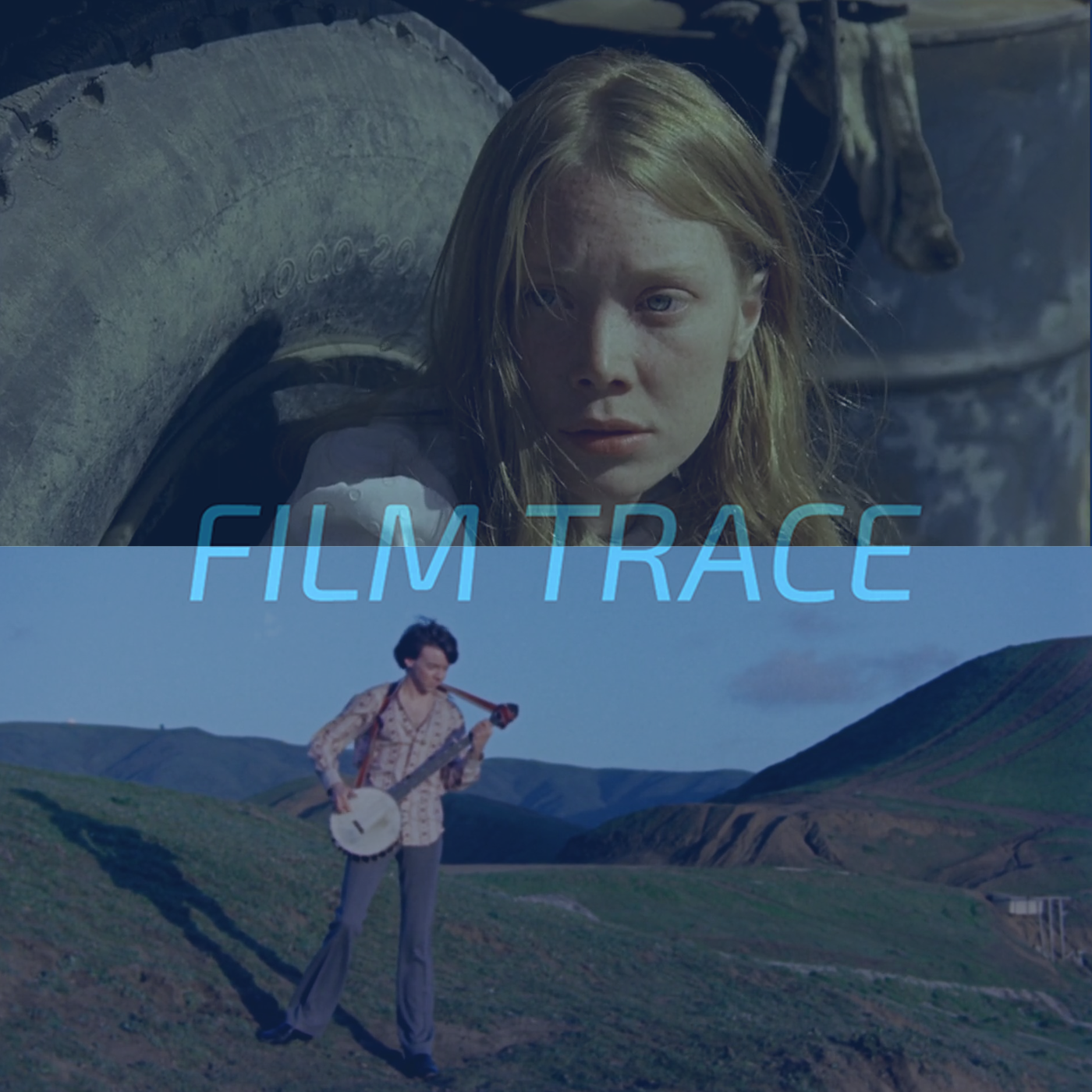
The second film in our Risqué Romance cycle is Terrence Malick's debut film, Badlands (1973)Loosely based on the real-life murdering spree committed by Charles Starkweather and Caril Ann Fugate in the late 1950s, Badlands quickly steers clear of true crime tropes and traditional story structure. While Terrence Malick is at his least idiosyncratic here, the vibe and flow of the film are resolutely unique and unexpected. Perhaps the strange pacing and narrative focus should have been expected from a Hollywood outsider who nearly got his Ph.D. studying the existential philosophy of Martin Heidegger. The fully colored lens through which Malick displays the violent journey of Kit and Holly (Martin Sheen and Sissy Spacek) has not been drained of its vibrancy despite being fifty years old. The film shows how fame can easily dislocate the guttural horror of violence, a sophisticated message that has only strengthened over the decades. For our chaser film, we discuss the twee-influence of Harold and Maude (1971). The gender roles are reversed in this March-December romance, and we debate how this alteration affects the whimsy that props up this pitch-black comedy.
S9 Ep 1Lolita (1962) and A Taste of Honey (1961)
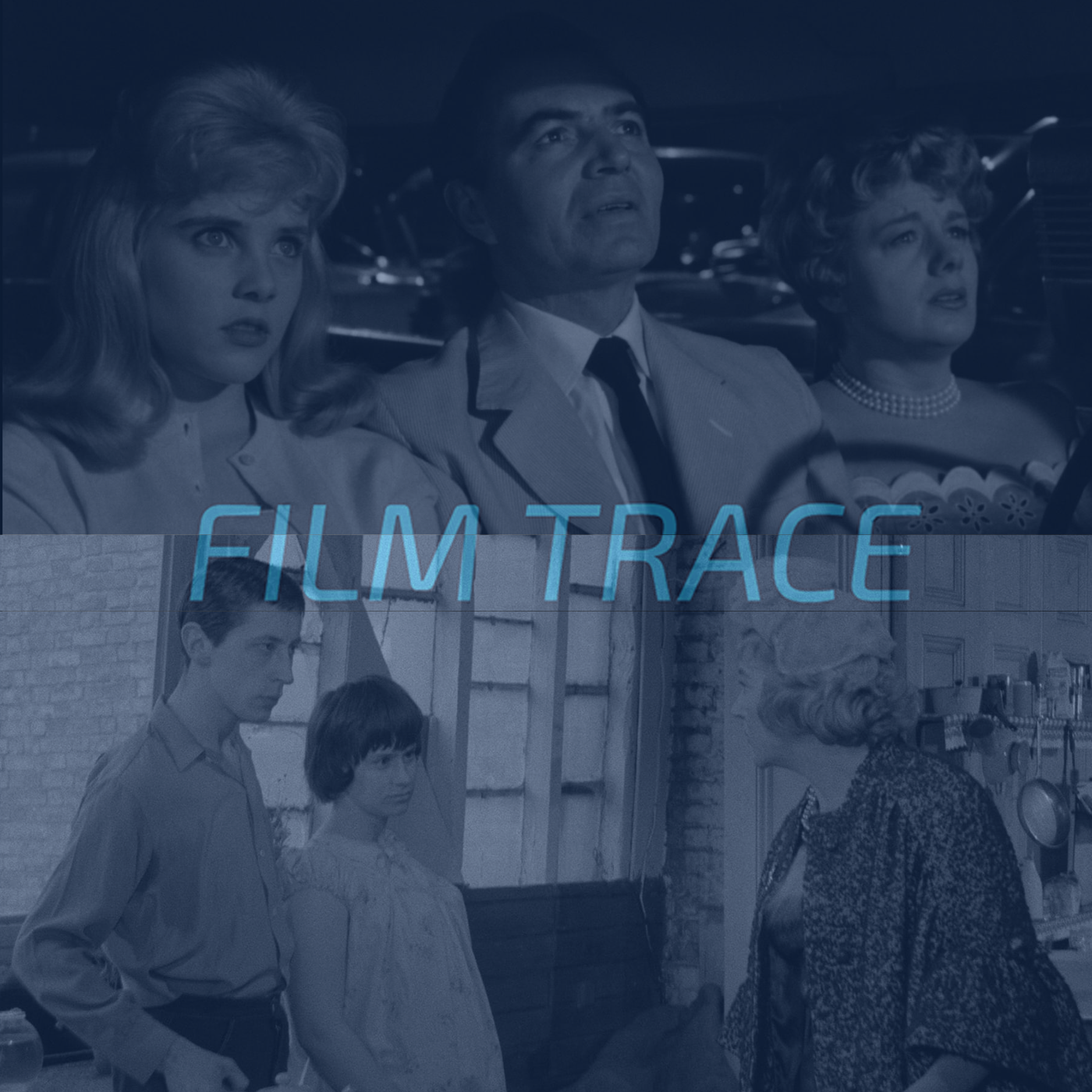
The first film in our Risqué Romance cycle is Stanley Kubrick's infamous Lolita (1962).We start out this new season by tiptoeing through the minefield that is Lolita, a notorious film adaptation of the even more notorious novel by Vladimir Nabokov. It is hard to fathom that housewives and bankers were reading Lolita on the subway in the 1950s, but that is how popular this novel was during the Eisenhower years. This classic unfilmable novel is bizarrely translated by Kubrick, which greatly aggravates the problematic nature of the story. Chris and I debate whether we could even call this a romance film. For our chaser film, we discuss an often-overlooked kitchen sink drama from England, A Taste of Honey (1961). Where Lolita stumbles all over the place trying to say something profound, Honey says it with the smallest of glances and touches.
S8 Ep 6Branded to Kill (1967)
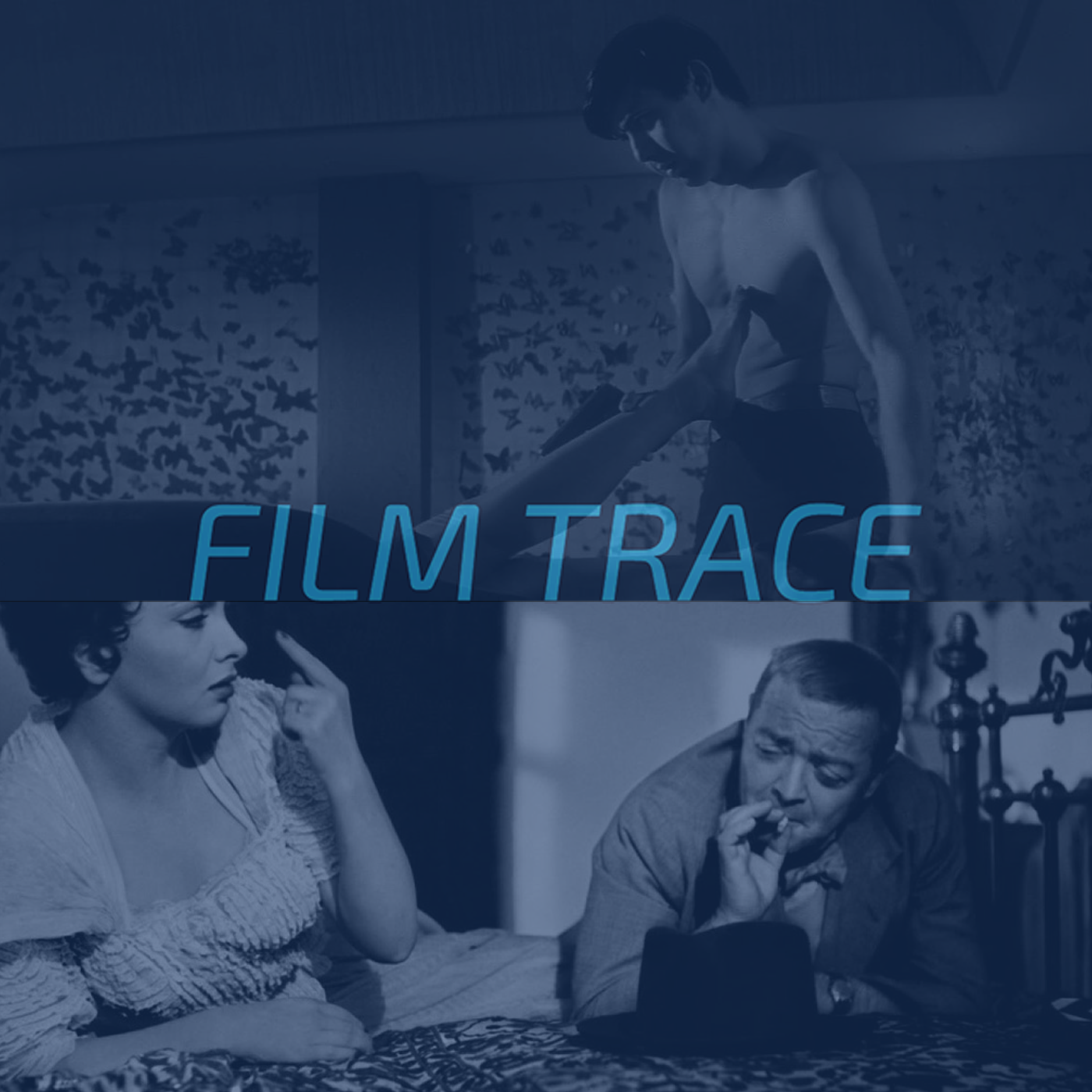
The sixth and final film in our Absurdist Action cycle is Seijun Suzuki's masterpiece, Branded to Kill (1967)When we decided to do Absurdist Action as the theme of this cycle, we both struggled to find a starting point. Over-the-top action movies were the lingua franca of 1980s American cinema, and we had dozens of Reagan-era films to choose from as an origin. But as we tried to trace the theme back further, things became quite murky: Kung Fu, James Bond, Micheal Cimino, heist movies, cop movies, military shoot 'em ups. Chris wisely choose this yakuza B movie as our starting point, and it rings incredibly true to the theme.The undercurrent that connects Bullet Train to Bad Boys to 48 Hrs can be seen clearly in Seijun Suzuki's surrealist gonzo hitman film. Branded to Kill was shot in 25 days and edited in the three days before it was released. It was a factory film. The studio hated it and fired Suzuki. It was mostly unseen outside of Japan until the late 1990s when it was released on home video. Branded To Kill is a fever dream that runs solely on poetic logic. It is definitely absurd, and intoxicatingly provocative. Explicit sex, epic violence, and free verse plotting make this the missing link of Absurdist Action films. For our chaser film, we beat back the current of modern cinema to explore Beat the Devil (1953), a lark from John Huston and Truman Capote that became kitsch for the coastal elite set.
S8 Ep 5Thunderbolt and Lightfoot (1974)
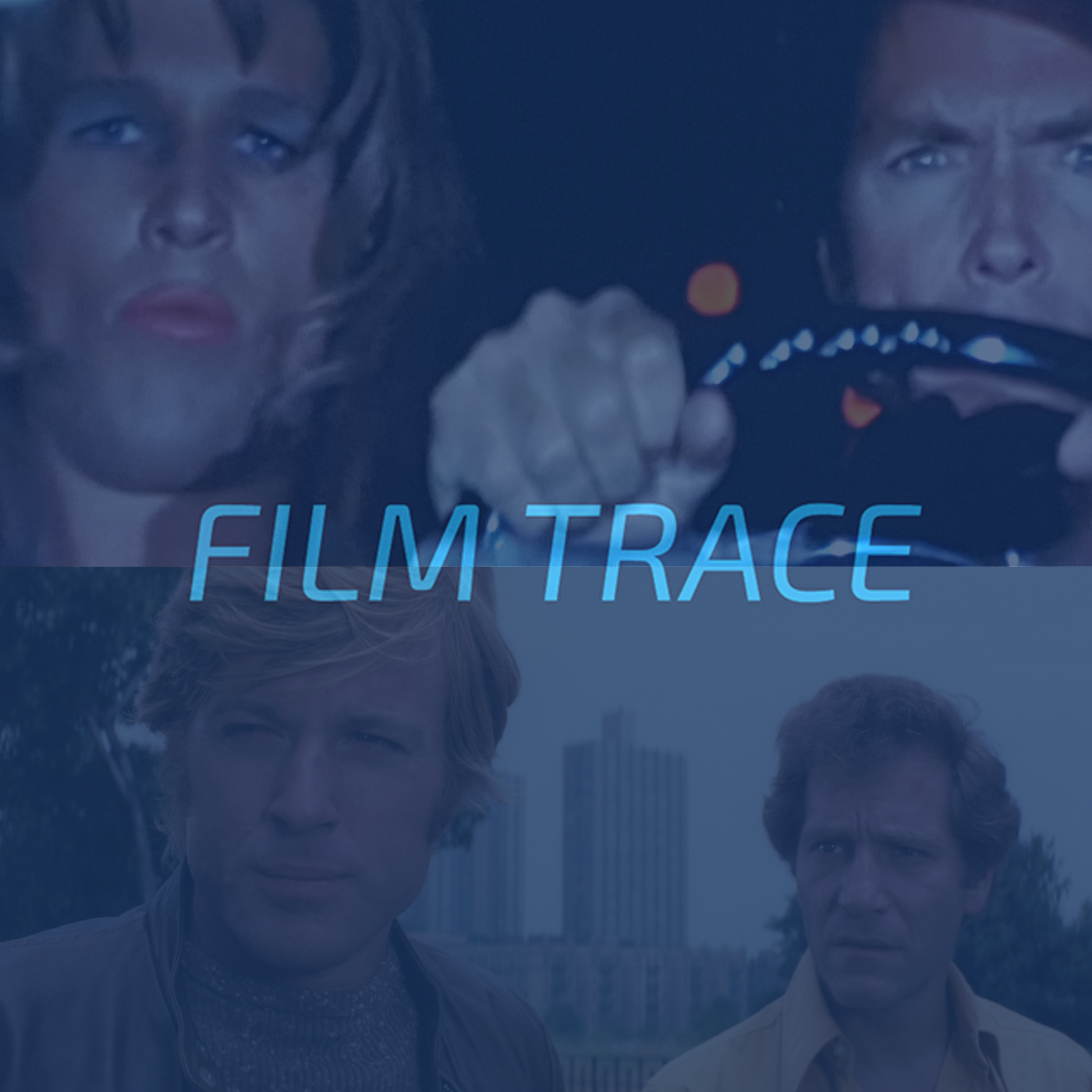
The fifth film in our Absurdist Action cycle is Michael Cimino's wonderful debut, Thunderbolt and Lightfoot.Special Guest: Daniel Malone from the great ‘You Talkin’ to Me?’ film podcastMichael Cimino will forever be a mystery. He seemingly appeared out of nowhere with Thunderbolt and Lightfoot in 1974 after winning favor with Clint Eastwood by punching up the script for his Dirty Harry flick Magnum Force. Cimino followed up his debut with The Deer Hunter (1978), arguably a masterpiece. He then came crashing down with the infamous Heaven's Gate (1980), arguably another masterpiece that was saddled with a supernova budget and an anathematic critical response. Within a single decade of working in Hollywood, Michael Cimino became a notorious and beguiling legend. Thunderbolt is a finely chiseled yet indecipherable clue to the persistent enigma of Cimino. Here the men are resolutely stoic yet desperate for connection, the landscape is brutal but intoxicatingly gorgeous, and America is both wide open and falling apart at the seams.For our chaser film, we scope out The Hot Rock (1972), an ensemble heist movie that juggles folly, irony, and low stakes.
S8 Ep 448 Hours (1982)
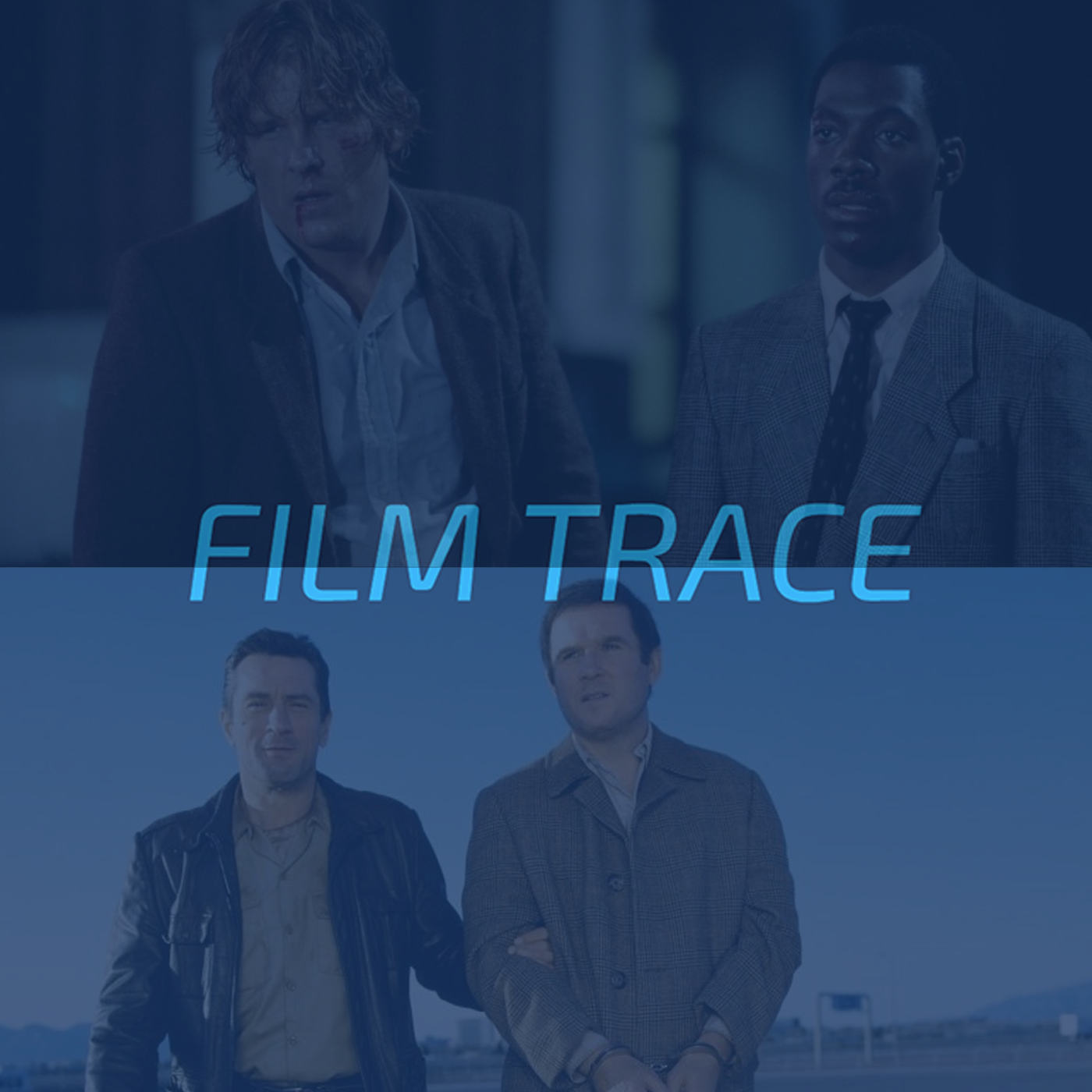
The fourth film in our Absurdist Action cycle is Walter Hill's buddy cop paradigm, 48 Hours.Special Guest: Ryan Hendricks, friend of the show and Hollyweird insiderThe buddy cop movie would not exist without 48 Hours. Ironically, the buddies involved aren't both cops. Third pick Eddie Murphy has his breakout role here playing a convict put on temporary release for forty-eight hours to help track down a cop killer. Nick Nolte is a grizzled detective tasked with wrangling Murphy as they criss-cross a sleazy 1980s San Francisco. Time perhaps has not been kind to 48 Hours. The incessant side quest of Murphy looking for "trim" and the blatant racism highlight the inescapable and ignominious realities of late 20th century America.For our chaser film, we go the distance with Midnight Run (1988), an oddly underappreciated showcase for Charles Grodin and a stoic De Niro.
S9 Ep 3Bad Boys (1995)
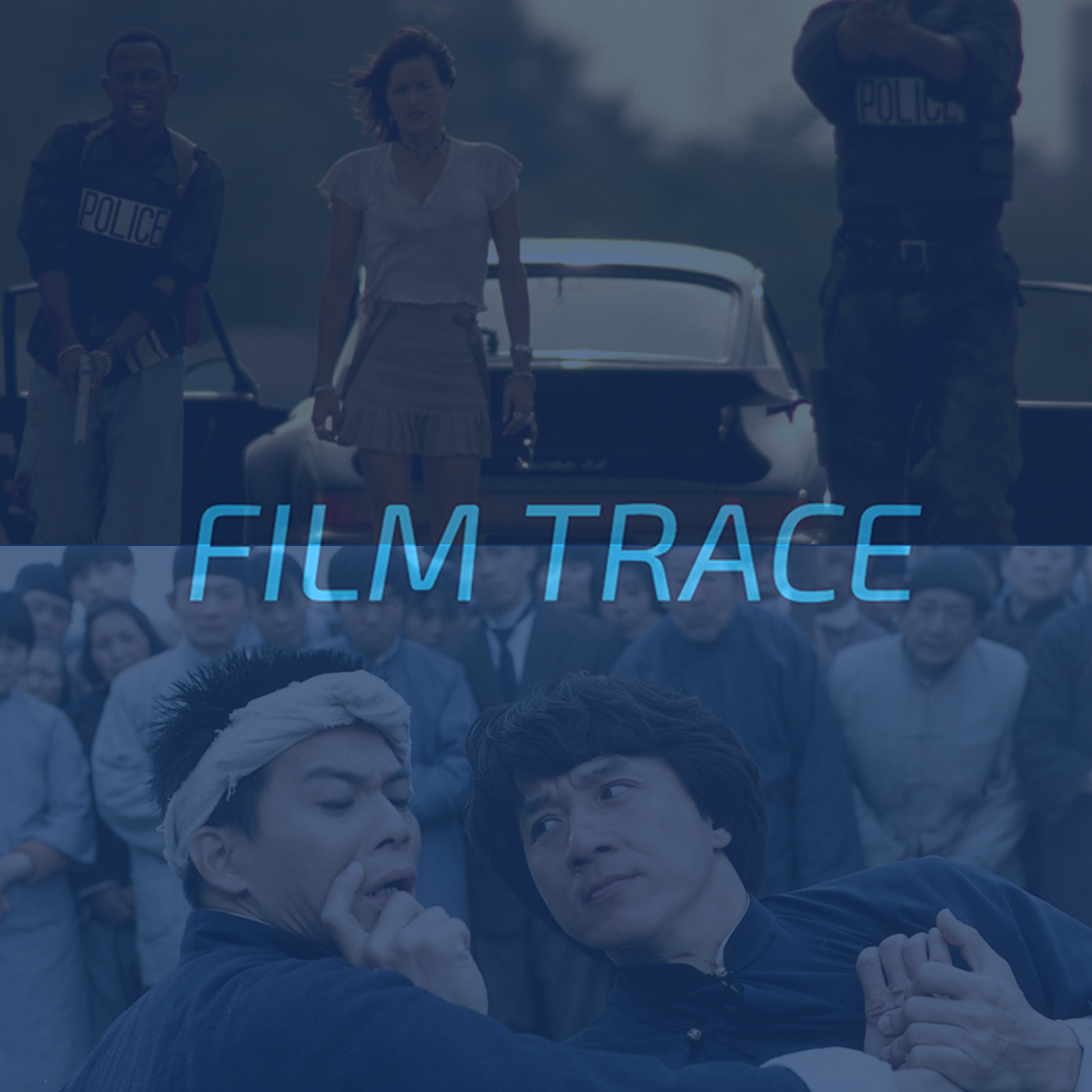
The third film in our Absurdist Action cycle is Michael Bay's debut, the paradigm of absurd action movies, Bad Boys.Special Guest: Harry Mackin from the fantastic Trylove Podcast. Bayhem has its own origin story. Shot with a small budget and jerry-rigged script, Michael Bay exploded into the multiplex with this longshot buddy cop movie. Originally meant as a vehicle for SNL all-rounders, Dana Carvey and Jon Lovitz, Bad Boys was saved by the snappy and kinetic duo of Martin Lawerence and Will Smith. Michael Bay planted his flag in modern cinema here with a brute-force style. He may have single-handily reduced the average shot length of action movies to below three seconds.For our chaser film, we shift to Hong Kong for The Legend of Drunken Master aka Drunken Master II (1994). Harry helps us with our kung-fu history, and we reminisce about the lost art of physical fight scenes.
S8 Ep 2Hot Fuzz (2007)
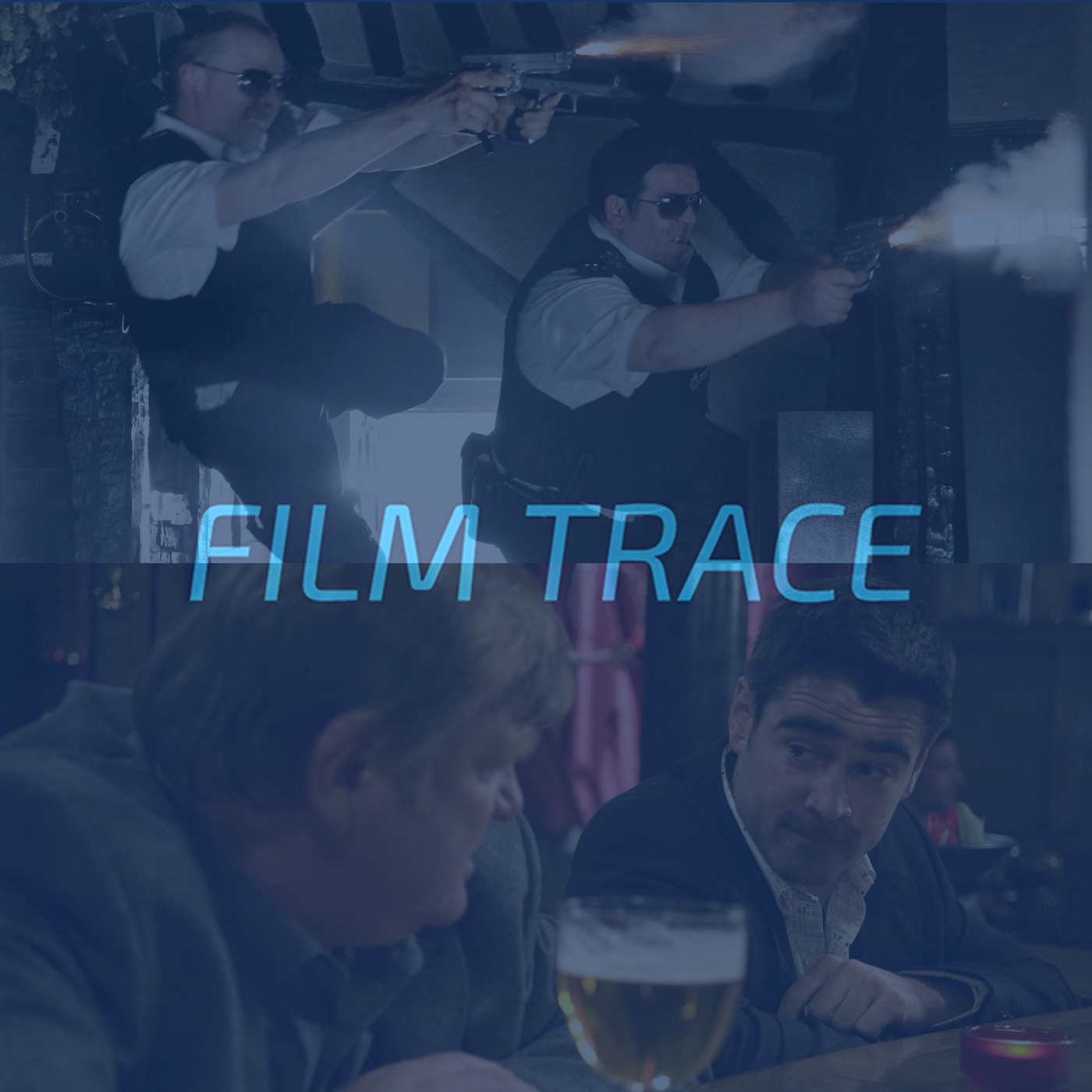
The second film in our Absurdist Action cycle is Edgar Wright's iconic action comedy, Hot Fuzz.Special Guest: Max Covil, Rotten Tomato Approved Film Critic from the great It's the Pictures podcast and newsletter.If Edgar Wright is an auteur, then Hot Fuzz could easily be his calling card. This hyper-rewatchable UK export plays dual roles as both a great action movie as well as a meticulous satire of action movies past. Here we get textbook Wright: ping pong dialogue, spastic quick cuts, bite-size montages, brilliant soundtracking, joke per cut quotas, and indigenous English humour. It is the high point of the Cornetto Trilogy and perhaps is rivaled only by Scott Pilgrim as Wright's best film.For our chaser film, we visit In Bruges (2008) to decipher the allegory within the pitch black lilt of Martin McDonagh's Irish comedy.
S8 Ep 1Bullet Train (2022)
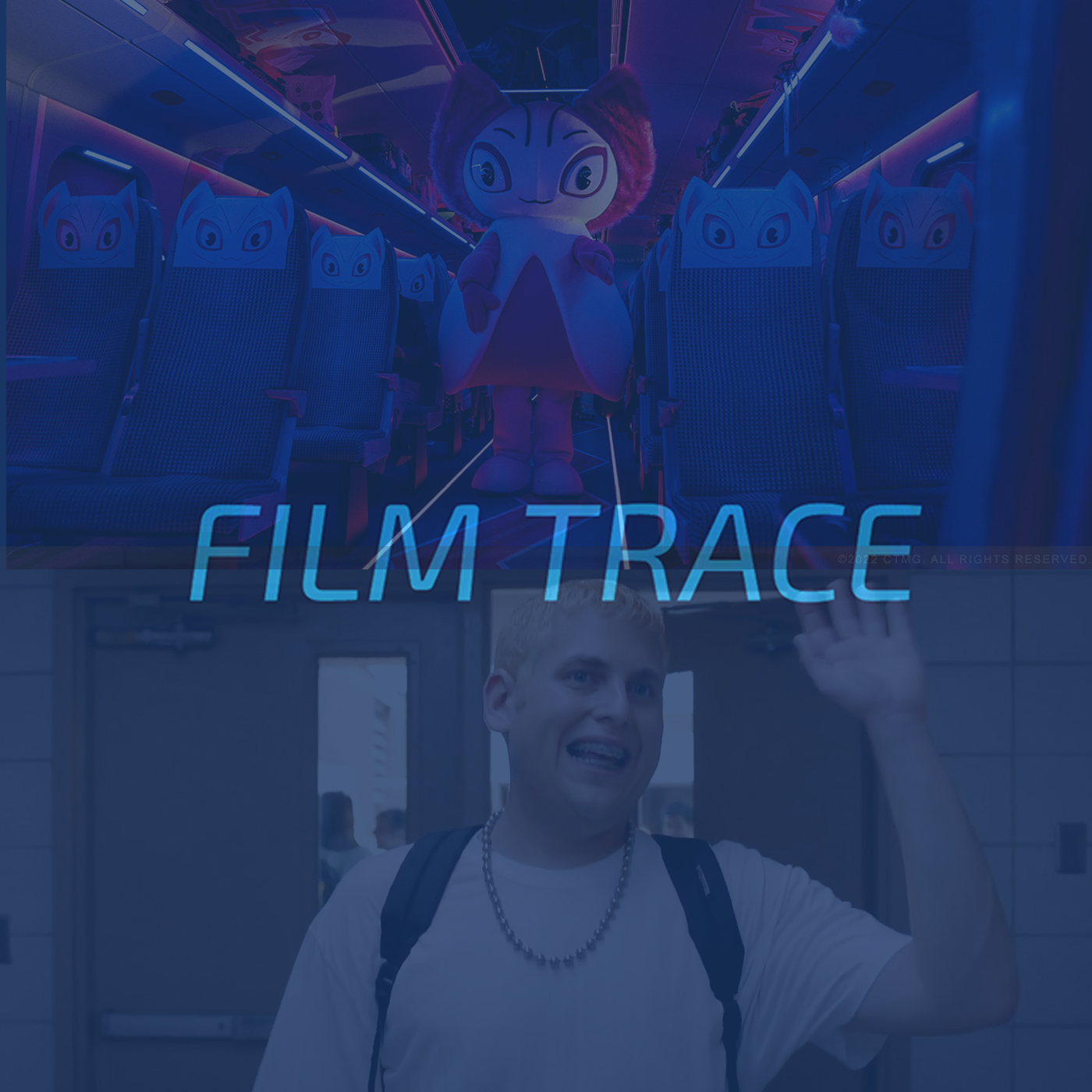
A New Cycle Begins! The first film in our Absurdist Action cycle is the rock 'em sock 'em 2022 release, Bullet Train.The action comedy is a delicate balance. Too much comedy and the stakes feel too low. Too little and the tone becomes muddled. Bullet Train attempts to walk this fine line and stumbles into an abyss of tedium right from the start. Brad Pitt is a loosey-goosey hitman who is tasked with finding a briefcase amongst other assassins aboard a high-speed train in Japan. Former stuntman, David Leitch, takes the helm and the results are decidedly mixed. While some sequences sparkle with visual pizzazz and charm, much of the incessant bombast falls flat and the final result is a drowsy affair.For our chaser film, we revisit the highly successful 21 Jump Street (2012), the early 2010s Lord and Miller requel calling card.
S7 Ep 6Frenzy (1972)
The sixth and last film in our Existential Thriller cycle is Alfred Hitchcock's farewell to London, the macabre and dissociated Frenzy.Upon release, Frenzy was widely seen as a return to form for Hitchcock, but it has developed a rather odd reputation since its release fifty years ago. This gritty serial killer romp through Covent Garden has been cited as a forerunner to the bleaker side of thrillers we have seen in spades over the last three decades. But as we unpeel the layers, a more insidious ideology quickly becomes apparent. The misogyny is deafening, and the dim view of humanity soaks deeper than cynicism. Hitchcock was an angry man near the end of his life, and Frenzy is his rage-filled swan song. For our chaser film, we survey Wait Until Dark (1967), a pulpy psychological thriller starring Audrey Hepburn with a career-best performance from a young Alan Arkin.
S7 Ep 5Sorcerer (1977)
The fifth film in our Existential Thriller cycle is William Friedkin's grim and precise Sorcerer (1977).Released in the shadow of Star Wars and Friedkin's own masterpiece, The Exorcist, this bizarre down-and-out adventure film was a total financial failure. Critics didn't much like it either. But time has a funny way of shuffling the deck, and Sorcerer has found itself with a lucky draw. Film critics, nerds, and aficionados have reclaimed Sorcerer as a lost masterpiece. But some at Film Trace are skeptical. Is the Letterboxd set being hyperbolic or was Friedkin's fatalistic road trip movie really a high mark of the auteur golden age? For our chaser film, we transverse the wobbly Deathtrap (1982) and try to plot its bewildering narrative convulsions.Special Guest: The Mikes from Forgotten Cinema, a podcast for forgotten films that deserve a second chance.
S7 Ep 4The Crying Game (1992)
The fourth film in our Existential Thriller cycle is Neil Jordan's infamous 1992 political enigma, The Crying Game (1992).A film's notoriety can easily mute or distort what is actually on the screen. The Crying Game is an interesting and rich movie that was unfortunately overwhelmed by its own infamy. The film's US distributor, Miramax, decided to start a sly whisper campaign to create controversy surrounding a plot twist in the film. The hush-hush angle worked wonders and the film became a smash hit in America. The popularity of the film along with Miramax's carnival barker campaign masked Neil Jordan's layered and fiery script as well as the immense and historic performance of Jaye Davidson. The film deserves a deep reconsideration outside the cultural confines of the atavistic early 90s.For our chaser film, we untangle the narrative tendrils of David Mamet's oft-passed-by House of Games (1987). Special Guest: Natasha Alvar, film editor at Cultured Vultures and Rotten-Tomato Approved film critic.
S7 Ep 3The Game (1997)
The third film in our new Existential Thrillers cycle is David Fincher's Norcal mindbender, The Game (1997)David Fincher is one the most powerful and popular auteurs working in film and tv today. We revisit what has strangely and wrongly become one of his minor works. Fincher teamed up with Micheal Douglas in the pre-Fight Club days to concoct this highly entertaining yet perplexing thriller. The audience is effectively thrust into the chaos unfolding around the protagonist as his palatial life begins to crumble. By the end, it feels like you have been on a theme park ride, or rather, you have been taken for a ride. The much scoffed-at ending perfectly fits the kaleidoscopic tone of the proceeding ninety minutes. This is genre work gone mad.For our chaser film, we regrettably reexamine Christopher Nolan's Insomnia (2002). What an absolute trudge of a film. Thankfully our broteur whisperer, Molly, helps us decipher this broodfest. Special Guests: Great friend of the show Molly is back!

S7 Ep 2Michael Clayton (2007)
The second film in our new Existential Thrillers cycle is Tony Gilroy's aughtie classic, Michael Clayton (2007).On paper, Michael Clayton probably seems like a taut legal thriller played to the middle-aged set, a John Grisham movie with the latest A-Listers. Tony Gilroy chose a much different path by crafting a cerebral thriller infused with corporate nihilism and existential longing. Clooney plays Clayton as a formerly charming bagman who stayed too long at the party. He is stranded and saddled with financial debt, vertiginous self-doubt, and severe moral failing. Clayton is living in what Jean-Paul Sartre would call bad faith. He must face the immediate danger all around him while also breaking free from his calcified moral will. A seemingly small film greatly amplified by Gilroy's impeccable craftsmanship and brilliant performances from Tilda Swinton, Tom Wilkinson, and George Clooney.For our chaser film, we grapple with The Hunt (2012), a Danish film detailing how hearsay can become an avalanche that can bury anyone's life. Created before cancel culture was a thing, The Hunt offers a rather intense refutation of how groups pass judgment.Special Guests: Tommy Thevenet & Tim Sestito from the great Haven't Scene It: A Movie Podcast
S7 Ep 1Men (2022)
The first film in our new Existential Thrillers cycle is Alex Garland's bizarre and bold Men (2022).Alex Garland has quietly made himself into one of the more exciting filmmakers of the A24 set. The former novelist turned screenwriter turned auteur exploded onto the arthouse scene with his first film Ex Machina (2014). The success of that film led to his major studio debut Annihilation (2018). The spectacular failure of that film led him back to the indie world where we find him with Men. What starts out as a woman-alone thriller transforms into a formalist nightmare, for all parties involved. Garland shoots for the stars, but where does he actually land?For our chaser film, we pursue Yorgos Lanthimos' The Killing of a Sacred Deer (2017). While less conspicuous than our main film, Deer has deep and twisted roots that slowly reveal themselves in this glacial thriller.
S6 Ep 6The Last House on the Left (1972)
The sixth and final film in our Self-Aware Horror cycle is the landmark exploitation film, The Last House on the Left (1972). Made off the proceeds of a successful pornographic film, this genuinely gonzo horror film sparked the careers of two kings of horror, Wes Craven and Friday the 13th creator, Sean Cunningham. On the surface, this rape-revenge exploitation film plays it straight: shock, rape, murder, revenge. But beneath the schlock is an avant-garde rip current that is essentially a middle finger to American Exceptionalism, a canary in the coalmine for a desiccated and fraying empire. This is a bizarre juxtaposition that never really settles right in your stomach. What is depicted vs what you feel seems separated by a grand canyon of satire, which is why we chose this as our final film in our Self-Aware Horror series.For our chaser film, we try to decipher The Fearless Vampire Killers (1967). It is a lark, a common parody, or is there something more going on in Roman Polanski's first major studio film. The year after Vampire came out, modern horror began with The Night of Living Dead. We try to decide whether Vampire Killers was a harbinger or an anachronism.
S6 Ep 5Creepshow (1982)
The fifth film in our Self-Aware Horror cycle is 1982's mashup of George Romero and Stephen King, Creepshow. Creepshow is an anthology horror film created as an hommage to the trashbin mid-century comic series, EC Comics. Romero and King grew up with EC Comics and its twisted tales of the macabre. Here the comic's ghastly ethos is distilled into five different segments starring big names of the time: Hal Holbrook, Adrienne Barbeau, Ted Danson, Leslie Nielson, and Stephen King himself. The film's particular mixture of gore, faux-naif satire, and moral comeuppance feels quite out of place today, a little Molotov mocktail aimed at the classic bogeyman of 1950's social conformity. Special Guest: Max from the lively and fun Galaxy Of Film podcast. For our chaser film, we face the music with House (1977). This bizzaro historical curio works the exact opposite of Creepshow. House feels like it could have been made yesterday: absurdist surrealism horror of a hipster vein. One suspects the t-shirts inspired by the film are more popular and seen than the film itself.

S6 Ep 4Dead Alive (1992)
The fourth film in our Self-Aware Horror cycle is 1992's gonzo horror splatterfest Dead Alive aka Braindead Dead Alive is a shocking film for a variety of reasons, but perhaps most astonishing is that it came from the same man who helped create the most recognized and beloved films of the last 20 years. Peter Jackson became famous for the Lord of the Rings and Hobbit film series. They exist alongside the Star Wars and MCU films as some of the most popular global cinema ever made. But Jackson started out where most young aspiring filmmakers do, in the free-for-all low-budget haven of horror. It was there that Jackson developed as a great filmmaker. Dead Alive was his first masterpiece, a zombie comedy masquerading as a bizarre period piece that devoured all notions of good taste with its insatiable appetite for blood, guts, and pus. Beautifully deranged. Special Guest: Brian Eggert, RT approved film critic of Deep Focus Review For our chaser film, we had no other choice than Evil Dead 2 (1987). Two of the best horror comedies ever made, back to back. We talk at length about how comedy and horror overlap, and how they work together to tickle and titillate a piquing audience.
S6 Ep 328 Days Later (2002)
The third film in our Self-Aware Horror cycle is 2002's zombie renaissance 28 Days Later 28 Days Later reanimated the zombie subgenre of horror, which had been left for dead and maligned where it always had been. Yes, technically speaking, the infected in the film are not zombies. But they might as well be. Zack Snyder's Dawn of the Dead remake came a couple of years later in 2004 and helped pushed the zombie genre fully into the mainstream where it stayed for the next 18 years. The highly popular tv series, The Walking Dead, is finally ending this year after twelve years on the air and two spin-off series with more to come. Zombies don't die. While director Danny Boyle and writer Alex Garland have attempted to play down the zombie connection, 28 Days Later plays like an intricate and explosive hommage to George Romero's original Dead trilogy. Shot entirely on early digital video recorders, the film maintains a late 90s early 2000s look that is post analog but Pre HD. Even less appealing than the film's digital graininess is its cynical depiction of humanity as the last vestiges of the civilized world fall away. It is a nightmare that feels all too true and relevant to today's world. Special Guest: Good friend of the show, Riley, who is our resident Wes Craven scholar. For our chaser film, we have chosen 1997's Scream 2, the slasher thrill ride that came out less than a year after the original. Craven and Williamson are back here with the mainline cast and a tight story that somehow doesn't tarnish the first film. Often cited as one of the best horror sequels, Scream 2 is now 25 years old, so perhaps it is time to question its lauded status?
S6 Ep 2The Cabin in the Woods (2012)
The second film in our Self-Aware Horror cycle is the 2012 postmodern bonanza The Cabin in the Woods. What happens when the Post-Scream style of ironic horror goes past the event horizon? The infamous Joss Whedon teamed up with Drew Goddard to create this send-up of the horror genre. The Cabin in the Woods is in many ways the paradigm of self-aware horror. It doesn't really work unless you are a horror fan and you can easily translate the winks and homage. Unlike the straight parody of Scary Movie, The Cabin in the Woods tries to move the genre past the shadow of the Scream 90s and reboot 2000s, but we are unsure of its success. Special Guest, Evan Crean from Spoilerpiece Theatre, helps ups dissect this endpoint of horror film. Or was it really just the beginning of a new era? All three of us grapple with Whedon's sullied legacy, and how the artist behind the story can deeply color our interpretation of the messages both intended and unintended. For our chaser film, we have chosen 2007's Teeth, a mostly forgotten indie horror comedy that bites down hard on the vagina dentata myth. Written and directed by famous artist Roy Lichtenstein's son Mitchell Lichtenstein, this small film did get a lot of praise and hype back when it was premiered. It won the Special Jury Prize at Sundance in 2007, but it sadly sat on the shelf for a year and was released DOA in Jan 2008.
S6 Ep 1Scream (2022)
We are back! We are doing something different this season of Film Trace. Instead of covering new and old films at random, we are choosing a theme for each group of episodes. Our first theme is Self-Aware Horror. First up in our Self-Aware Horror cycle is Scream 5 aka Scream 2022. We are both huge Scream fans, so we felt like we had to do a deep dive on this requel. I hate that term, and we discuss why in this episode. What does it mean to make a love letter film? Are requels progressive or regressive? The Scream series has been surprisingly strong when compared to other horror series, but where can it go on the 5th film, coming out 26 years after the original. The surviving gang is all back with some fresh blood as leads, but it all feels like a theme park version of the original. It looks and sounds the same, but it just feels different, off even. Also new this season, we are doing a 2nd film at the end of the episode as a chaser. In this episode, we wash down the requel swill with the peppy and perky slasher romp, Happy Death Day (2017).
S5 Ep 9The French Dispatch (2021) and The Royal Tenenbaums (2001)
A Wes Anderson double-header to close out Season 5 of Film Trace. Chris and I return to our roots as teenage film nerds. Wes Anderson was our first love as budding cinephiles, and despite the tumultuous last 20 years (Darjeeling anyone), we still get a jolt of excitement with every new Anderson film. The French Dispatch is Anderson's first portmanteau film, and the results are whimsically mixed as expected. We also cover one of Wes's best films, The Royal Tenenbaums as it hits the 20-year mark. The snowglobe world of Royal has aged incredibly well. It is a rich literary yarn woven of the finest pure cinema fibre, dyed millennial pink of course. Joining us for the Season 5 Finale is Harry from the Trylove podcast, an awesome podcast dedicated to the wonderful The Trylon Cinema in Minneapolis.
S5 Ep 8The Cable Guy (1996)
At the height of Jim Carrey's fame in the mid 1990s, this bizarre pitch-black comedy was released as a summer blockbuster. The Cable Guy is a historical and creative anomaly, especially for millenials old enough to have seen it in the theater. For the last twenty-five years, we have all been trying to piece together and understand the strange feelings this movie put inside of us. The genre here is a white-out blend of gross-out buddy comedy, media satire, and exrotic thriller. The Cable Guy is truly the ideal film for Film Trace. It is so full of contradictions, oscliating successes and failures, that we can't help but try to make sense of this absurd attempt by the Frat Pack to parody The Hand That Rocks the Cradle. In what world could this possibly make sense besides our own? Special Guest: Great podcasters and friends of the show, Brigitte and Mark
S5 Ep 8We Need to Do Something (2021)
As the box office finally begins to be resuscitated, albeit largely with the help of the comic book movie crowd, straight-to-streaming films now seem to either cater to cinematic schlock addicts or art film dorks, and the latest from the IFC Midnight imprint, We Need to Do Something, falls in a strange but intriguing gray area between the two. The first feature narrative from director (and known indie producer) Sean King O'Grady, scripted and based on a novella by up-and-comer Max Booth III, the bottle episode-style story of a dysfunctional family stuck in a bathroom after a mysterious storm is as fun as it is disturbing. But, as the saying goes, perhaps there were script problems from day one. Whether it be characters that seem to serve no other function than a vehicle for body horror or plot contrivances that distract more than they entertain, how does a small project like this with an uncompromising and borderline disgusting vision (arguably to a fault) wind up available to everyone with a Hulu subscription? And where does it go from here besides the annals of scary movie obscurity?

S5 Ep 7Children of Men (2006)
Let's get bummed. Back in 2006, the USA was deep in the 2nd term of George Bush II, aka the idiot king, and his 2nd Iraq war was raging. As a leftist, it felt like a total nightmare, but Alfonso Cuarón heard our cries. His Children of Men, a bleak dystopian manifesto, landed mostly with a thud when it was carelessly released on Christmas Day in 2006. A stellar cast helmed by Clive Owen and gorgeous cinematography via Emmanuel Lubzeki couldn't save this holiday humbug from financial failure. Accordingly, Children of Men instantly became a cult film among the Letterboxd set. Academics, film nerds, and art house scenesters all raved about the one-shots, the world-building, and the nihilism that mirrored their own. But how has that effuse praise aged after the Great Recession, Trump, and Covid. Has Cuarón's bleak vision been blurred by unstoppable climate change, social anarchy, and the new rise of fascism or has it merely been burned into our collective lens? Special Guest: Friend of podcast and Hollywood Insider, Ryan, joins us to discuss this sad boy opus.
S5 Ep 5Home Sweet Home Alone (2021)
Is nostalgia poison? It felt nearly impossible to avoid cynicism while watching this new Home Alone film, the 6th film in the series unceremoniously shipped off to Disney Plus. The critical response has been contemptuous. The audience reaction has been mutinous. But we can't help but wonder, how would a movie like this actually succeed with critics and audiences? Corporate reboots and fanboyism are not as diametrically opposed as we have been led to believe. Home Sweet Home Alone is a cash-in, but what film isn't? Most wide-release films are made by billion dollar companies. They are products meant to turn a profit. Yet the bellicose reaction to Home Sweet Home Alone suggests a willful naivete amongst critics and viewers. Fanboys doth protest too much?

S5 Ep 4Body Heat (1981)
Put on your finest linen sports coat and/or effortless flowy sundress. Pack a handkerchief as well. This week we tackle the moistest noir seared onto film, 1981's Body Heat. We take exotic thrillers for granted now, but before Fatal Attraction and Basic Instinct, we had Body Heat, a steamy take on the classic noir Double Indemnity. Palm Beach Florida and its fictionalized incessant humidity take center stage alongside William Hurt and Kathleen Turner in a voyeuristic exploration of how our sex and death drives often intermingle. Sparks fly between Hurt and Turner while a motley crew of supporting players, a tap-dancing Ted Danson and frenzied Mickey Rourke, shuffle around a paint-by-numbers plot that nonetheless simmers until finally reaching a boil in the finale. Joining us this week is erotic thriller expert and great friend of the show, Molly.

S5 Ep 3Paranormal Activity: Next of Kin (2021)
When Paranormal Activity came out in 2007, old school ads showing actual audience members jumping in their seats in night-vision green theaters gave the whole thing a real gimmick feel. The Blair Witch Project wasn't the first found footage movie ever made, but it was by far the best (still is) when it came out in 1999. Paranormal Activity felt a little johnny-come-lately, but the masses didn't care. They ate it up for years. Jason Blum, the horror maestro, kept greenlighting 5 million budget sequels and getting 100 million back. Would you stop? So we find ourselves 14 years later with the Paranormal series now at seven films, a little horror version of the MCU. Paranormal Activity: Next of Kin is not really found footage and it's not really a Paranormal Activity movie, but it does have Amish devil worshipers. It has more in common with Blair Witch (documentary film team explores rural America) than the other PA films. But instead of embracing that gonzo style, it aims more for a polished pov adventure. It feels a little like an old Sega VR game but just in HD. This low art mishmash of genre and technique should not work at all. But one of us thinks there is still some gold in the barren mines of the Paranormal Activity franchise. Listen to find out who is the Gus Chiggins.

S5 Ep 2Young Adult (2011)
Juno landed like an atom bomb. Diablo Cody's zeitgeist script mixed with the chemistry of Elliot Page and Micheal Cera became a cultural phenomenon in the winter of 2007-8. Millennial hipsters and their boomer parents, along with everyone in between, flocked to see this little slice of plucky Midwestern smarm. Cody's script won an Oscar, and Juno was nominated for Best Picture. Diablo Cody was supernova, but this began to fade as her follow-up Jennifer's Body stumbled at the box office in 2009. Here we have her 3rd script and 2nd film with Reitman, 2011's Young Adult starring the motley crew of Charlize Theron, Patton Oswalt, and Patrick Wilson. The film is almost unclassifiable: black comedy or doomed romance or domestic horror. Cody's dark script with Reitman's lowkey direction creates an uncanny valley between pity and empathy. Young Adult is Diablo Cody's very personal nightmare about what might have been, and we attempt to psychoanalyze her distraught fever dream.
S5 Ep 1Halloween Kills (2021)
Where did it all go wrong? The Halloween films have been an uneven mess since John Carpenter forsook his creation back in the 1980s. Much like the Nightmare on Elm Street series, nothing quite touches the original. Halloween Kills is the 2nd film in the newest Halloween trilogy (its 3rd reboot no less), which will culminate in the finale Halloween Ends next year. All the right elements are in place here: Curtis is back, horror maestro Jason Blum is producing, Carpenter and son are making music, indie journeyman David Gordan Greene is at the helm with Danny McBride scribing. The first film was a huge hit and the 2nd best performing slasher film ever at the box office. Why then is this sequel such a god-awful mess? Almost everything goes wrong in this textbook case of sequelitis. Completely forgetting the strong emotional narrative of the first film, Halloween Kills lists from zany to brooding until it capsizes in a preachy mob violence scene. The only joy to be had from this shipwreck of a film is figuring out what caused the disaster by piecing together its creative debris.
S4 Ep 10Toy Soldiers (1991)
Dust off that clear plastic case to find a BASF video on the inside with the handwritten title "Toy Soldiers" on the spine. It is hard to trace the cult status of the 1991 teenage action flick Toy Soldiers, but it might have something to do with young women bootlegging the movie during free HBO weekends. Or perhaps, it is so hokey and anchored to the awkward cultural transition from the 1980s to 90s that it acts as a living time capsule to our misremembered youth. Tiger Beat meets Commando sounds great on paper: young studs for the ladies and gory violence for the maladapted boys. But it plays out more like a deranged afterschool tv special where the hero gets mp5'd and the lesson is that breaking rules is the only way to battle international terrorism. A direct line to Guantomo Bay no doubt. Joining us this week is first-time watcher and great friend Brigitte from the awesome Screen Time: A Quarantine Podcast. Without nostalgia clouding her judgement, what is the verdict: gonzo cult classic or vapid 90s trash?
S4 Ep 9Ride the Eagle (2021)
The pandemic film has mostly become a term of derision. Filmmakers rushed to stay busy as the entire industry shut down, and we were subject to claustrophobic diary vomit (Malcolm & Marie) and pretentious claptrap (Songbird). Even the good pandemic films, like Host, felt underwhelming. On paper, Ride the Eagle reads like a bored creative's first draft of lil indie film: Nick from New Girl, a dead mother, a dog, a literal quest for redemption. But it plays out as a small labor of love shot in 10 days with a highly riffed script written between two friends. It manages to avoid the pitfalls of both indie films and pandemic films. It feels small but not light, sad but not maudlin, joyful but not manic. It moves forward like a hiker in the woods: determined yet indolent. Join us as we trace the life of the best pandemic film out there, Ride the Eagle
S4 Ep 8Donnie Darko (2001)
In October 2001, only a month after the 9/11 terrorist attacks, a bizarro coming-of-age film was dumped in 58 theaters to die. Donnie Darko's trailer prominently featured a plane engine falling from the sky into a suburban bedroom, crushing an empty bed. It was terrible timing, but it is hard to say if Donnie Darko would have ever done well at the box office. It is one of the strangest films released in the early Aughts. Donnie Darko is an intoxicating mixture of nerdy genres, 80s vibes, and wing nut ideas that has become a touchstone for older millennials (us). Adding to the cult mythology of Darko, Richard Kelly has all but disappeared from filmmaking after being unable to live in the shadow of his own masterpiece. We try to unravel the mystery of how a small indie film became a cultural icon and how it continues to mystify younger generations. Special Guest: Great friend Molly joins us to discuss this canonical film of our young adulthood. We relive the first time and revisit how Donnie Darko has never let us go. Join us as we trace the life of the Donnie Darko from conception (white boy blues) to production (speed shoot by a greenhorn) to release (Chris Nolan begging studio execs) to reception (DOA but DVD late bloomer)
S4 Ep 7Fear Street Trilogy (2021)
Great art can often seem to appear out of nowhere. It can also be hidden in genre and forms that don't always carry the clout of prestige. A trilogy of straight-to-streaming slasher films is not exactly where a film scholar would go to find depth or richness. Yet, the farther we dug into the Fear Street trilogy, the more we tended to find. The experimental release strategy of three feature films being released over three weeks on Netflix doesn't sound that radical. But the final results created a sweet spot between the boldness of film and the strong narrative skeleton of television. Leigh Janiak has created something special with the Fear Street trilogy, and we hope what she accomplished isn't lost in the daily dump of new streaming content. Join us as we trace the life of the Fear Street trilogy from conception (Fox News exec wants an MCU for horror) to production (shot back to back over 6 months) to release (theatrical scuttled for Netflix 3 weeks rollout) to reception (critically praised, widely watched, but will it be remembered?)
S4 Ep 6An American Werewolf in London (1981)
Did we just cancel John Landis? Of course not, how could we! It's the 40th anniversary of his groundbreaking horror classic, An American Werewolf in London. We celebrate the great: Rick Baker's astonishing practical effects, Griffin Dunne's career-defining performance as a slowly decaying best friend, and Landis's ability to balance and blend extreme gore with witty humor. We also look at what has not aged so well over the last four decades: the stilted dialogue nicked from a porn set, the empty fantasy that Jenny Agutter plays, and the brick wall ending that is more a whimper than a howl. At the end of the day, An American Werewolf in London is a definitive film, worthy of study and scorn alike. Special Guests: Chris, Josh, and Alex from the hilarious and fun There Are Too Many Movies podcasts. Join us as we trace the life of An American Werewolf in London from conception (the sophomoric mind of a 20-year-old Landis) to production (loosey-goosey - see the Twilight Zone deaths) to release (a big hit for the newly minted Polygram Pictures) to reception (part of the horror film cannon)
S4 Ep 5No Sudden Move (2021)
What are we to do with Steven Soderbergh? His prolific cinematic output is matched only by his recalcitrant refusal to stay in a single lane, style, or medium. Maybe we should rethink the term auteur as Soderbergh defines and transcends the term at the same time. His work has no signature other than you feel his presence in every shot and cut. With No Sudden Move, Soderbergh dives back into the heist genre, but this time leaning into the hard-boiled noir vibe of the 1950s and excising any sense of playfulness and joy. The irony is gone here, and this will make you love or hate the film depending on your predilections. A wonderful cast and production design are filtered through vintage lenses and a script by the guy behind Men in Black and the Bill and Ted series. It's pretty odd, but ultimately the film feels at home in the Soderverse. Join us as we trace the life of No Sudden Move from conception (A Don Cheadle vehicle) to production (strict covid precautions) to release (straight to SVOD) to reception (film nerds yes, everyone else snoozes)

S4 Ep 450/50 (2011)
I'm with Cancer. That was the original name of this cancer comedy that somehow got produced in the early 2010s. Joseph Gordon-Levitt and Seth Rogen pilot this wobbly feature towards a miraculous smooth landing. It is a genre paella where you can pick out the best bits and scrape off the rest: still funny boorish chauvinist improv humor from Rogen, Levitt staring into the middle distance, Bryce Dallas Howard trying to outact her shrew character, a hilarious support group of character actors with cancer, Anjelica Huston outshining the entire cast with a single glance. Ultimately, this black comedy is a tight rope walk that actually makes it from end to end without doubling over into the narrative abyss. That feat alone is worth the watch. Special Guest: Blaine Andrews from the very cool Critically Aroused podcast, where they watch movies cold to avoid getting skewed by the critics. Really fun listen! Join us as we trace the life of 50/50 from conception (nothing sells like a cancer memoir) to production (rehearsed improv) to release (break-even at worst) to reception (a low key highly adored film)
S4 Ep 3The Conjuring: The Devil Made Me Do It
James Wan just wanted to make a fun haunted house movie when he accidentally launched a 2 billion dollar cinematic universe with The Conjuring in the summer of 2013. Wan is a modern horror master. Saw, Insidious, and the entire Conjuring Cinematic Universe are all his spawn. His creative spark has begotten us 8 CCU films in less than 8 years. Here we have the 3rd mainline Conjuring film starring the pillars of the CCU, Patrick Wilson and Vera Farmiga as the real-life paranormal investigators, Ed and Lorraine Warren. What has the CCU accomplished and where does it go from here? How has its factory model of filmmaking suppressed or supported creativity within the horror genre? Join us as we trace the life of The Conjuring: The Devil Made Me Do It from conception (a very real murder blamed on the devil) to production (Wan passing baton to Chaves) to release (covid pushed to day and date release) to reception (give the people what they want)
S4 Ep 2One Fine Day (1996)
One Fine Day is a time machine back to the 1990s Rom-Com boom. It was a simpler time: you got ink on your hands while reading the newspaper, people talked into large grey bricks called cell phones, and all women, regardless of age or relationship status, were supposed to flirt aggressively with George Clooney. We dive deep into the inner workings of romantic comedies with our special guest, Michelle Hsu from the great Rom Com Weekly podcast. We try to figure out why romantic comedies have disappeared from the movie theater over the last decade but have proliferated on Netflix. Are those halcyon days of the 90s behind us? Join us as we trace the life of One Fine Day from conception (written by a couple of nobodies) to production (40 different NYC locations) to release (DOA holiday movie, a week after Jerry Maguire) to reception (Millenials getting nostalgic)