
Festival of Dangerous Ideas
131 episodes — Page 2 of 3
American Decadence (2022) | Nick Bryant, Ruth Ben-Ghiat, Geraldine Doogue & Adam Tooze
While we've all watched the rise of the US in our lifetimes, its recent decline has been a hot topic of conversation – with ballooning inequality, military overreach, gun violence and police shootings, the great recession, and a dramatic slide into decadence and division provided by recent politics and structures of power. While the idea of a slightly less-powerful America might be attractive to many countries tired of US dominance, can we reach the conclusion that America has reached a of tipping point into irreversible decline? One of the BBC's finest foreign correspondents, Nick Bryant has covered some of the most momentous events of our times, the attacks of September 11, the war in Afghanistan, the Asian tsunami, the election of Barack Obama and the presidency of Donald Trump. Historian and author Ruth Ben-Ghiat is an expert commentator on fascism, authoritarian leaders, and propaganda — and the threats these present to democracies today. Author of the #1 Amazon bestseller Strongmen and over 100 op-eds and essays in CNN, The New Yorker, and The Washington Post, she brings historical perspective to her analyses of current events. Geraldine Doogue is an Australian journalist and radio and television presenter, best known for her work with ABC RN Saturday Extra which specialises in foreign policy, regional issues and agenda-changing commentators. Prize-winning historian, writer and economic commentator, Adam Tooze combines deep historical expertise with up to date economic analysis to answer questions about current and future political power and economical shifts that could be used to navigate in our dynamic contemporary world.

Adam Tooze (2022) | F=Fail
The 21st century was supposed to be better than this. As we confront the impacts of climate change, wars old and new, the pandemic and its aftermath, and a dangerously fragile global financial system, it's time to ask 'Why can't we get our act together and solve the issues that matter?' As we find ourselves dealing with a multitude of challenges that we predicted would arrive, but seem unable to prevent, acclaimed historian Adam Tooze looks back to see a better future. Prize-winning historian, writer and economic commentator, Adam Tooze combines deep historical expertise with up to date economic analysis to answer questions about current and future political power and economical shifts that could be used to navigate in our dynamic contemporary world. Tooze teaches at Columbia University where he is the Kathryn and Shelby Cullom Davis Professor of History and the Director of the European Institute.
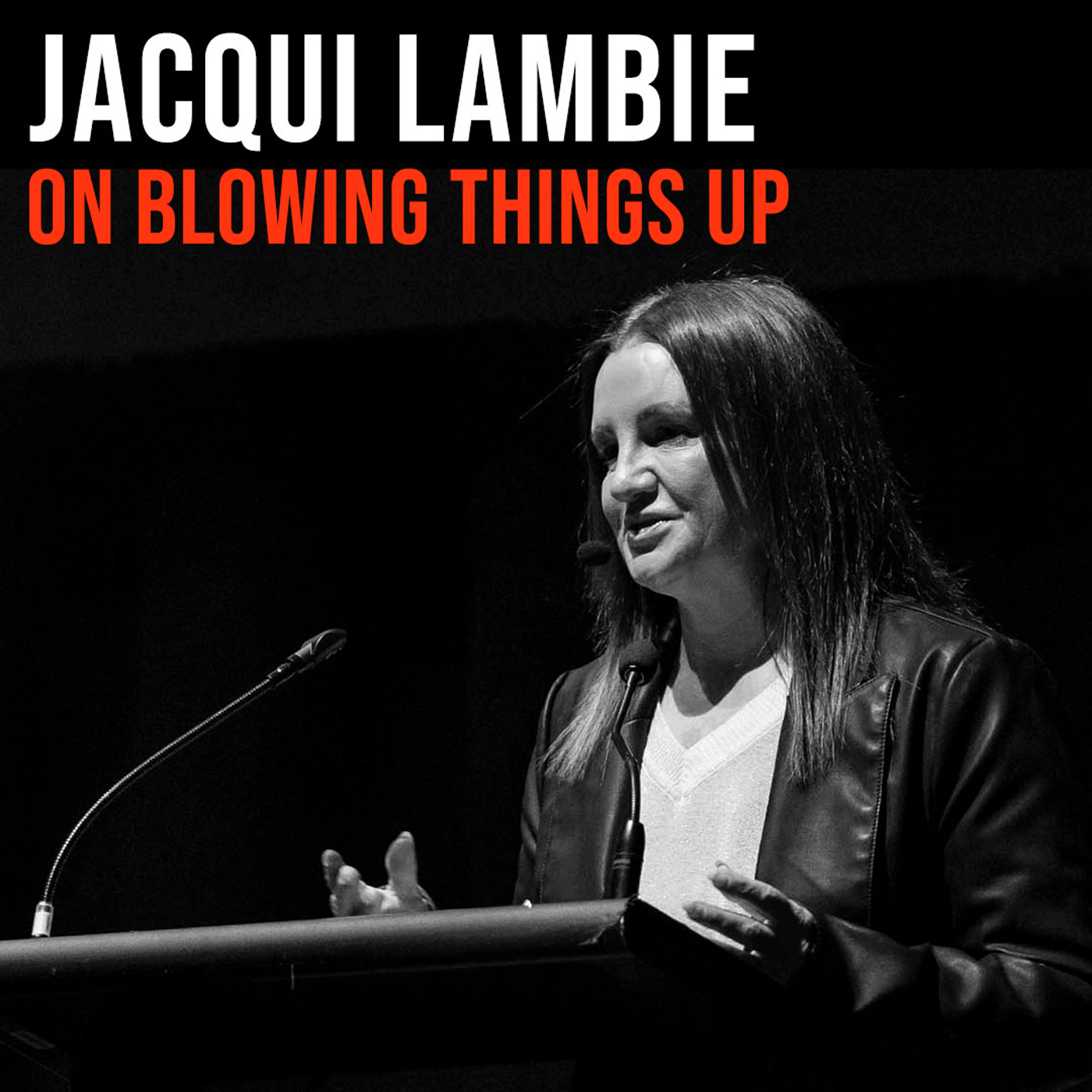
Jacqui Lambie (2022) | On Blowing Things Up
EKnown as one of the most fierce and outspoken politicians in the country, Jacqui Lambie does not hold back. Not with her opinion, her work ethic, or her convictions. And she's done the unthinkable, for a politician, she's changed her mind and admitted to it. Rising to public office with the Palmer United Party in 2013, she quickly struck out on her own in 2014 as an independent for Tasmania in the Senate. Lambie, an Aboriginal Tasmanian who served in the Australian Army, has fought hard for welfare recipients, veterans and families affected by ice addiction, speaking compellingly on these issues from personal experience. Senator Lambie is anything but predictable and has come dangerously close many times to bursting the Canberra bubble. Expect candid frankness on Australia's socio-political landscape and where Lambie sees us heading in this opening address for FODI 2022.

Masha Gessen & Tom Switzer (2014) | Putin
It's been over 30 years since the fall of the Berlin Wall and the dissolution of the Soviet Union and 22 years since Vladimir Putin came to power. Now in the throes of a Ukraine invasion, the Russian regime combats any conflict with an utter disregard for internal opposition and external western pressure. From the inside, fighting Putin is the only option for Russian activists. From the outside, what are the strategic options for western countries against this authoritarian superpower? Do military action or economic sanctions work? Or do we need to consider less orthodox approaches? In this talk from 2014, in the wake of Russia's annexation of Crimea and the shooting down of MH17, Russian journalist & activist Masha Gessen and foreign policy analyst Tom Switzer test different ideas on how to deal with Putin.

Jesse Bering (2012) | We Are All Sexual Perverts
EWe may not want to admit it, but there is a spectrum of perversion along which we all sit. Whether it's voyeurism, exhibitionism, or your run-of-the-mill foot fetish, we all possess a suite of sexual tastes as unique as our fingerprints—and as secret as the rest of the skeletons we've hidden in our closets. In his 2012 talk Jesse Bering humanises so-called deviants while at the same time asking serious questions about the differences between thought and action. He presents us with a challenge: to understand that our best hope of solving some of the most troubling problems of our age hinges entirely on the amoral study of sex. Jesse Michael Bering is an American psychologist, writer, and academic.

FODI: The In-Between | 08.5 | Endtropy | B-Side
A playerless piano performs a repeating piece of music in which every note of a scale is played on every beat of the bar. The melody is absorbed into chaos, as the words of Noami Klein and Waleed Aly speak of our interconnectedness and entanglements. Produced by The Festival of Dangerous Ideas, The Ethics Centre and Audiocraft.
FODI: The In-Between | 08 | Waleed Aly & Naomi Klein | Our entanglements have been exposed
On the precipice of a new age, what are the forces that will bring us together, and what is driving us apart? Simon Longstaff sits between Waleed Aly and Naomi Klein as they discuss the decline of meta-narratives in society and politics, reconciling coloniser and Indigenous histories and narratives, and trends of hyper-individualism and conspiracy. Neither are wholly optimistic nor pessimistic about the future that lies ahead. Waleed Aly is a broadcaster, lawyer, academic and Walkley Award-winning journalist. Naomi Klein is an award-winning journalist, New York Times bestselling author and Senior Correspondent for The Intercept. Produced by The Festival of Dangerous Ideas, The Ethics Centre and Audiocraft.

FODI: The In-Between | 07.5 | Revivification | B-Side
CellF is a cybernetic musician and the world's first neural synthesiser, created by Perth-based artist and researcher, Guy Ben-Ary. Its 'brain' is made of biological neural networks bio-engineered from the artist's own cells, that grow in a petri dish and control in real time its 'body' – an array of synthesizers that play music live with human musicians. Revivification is a short piece that responds to S.Matthew Liao and John Rasko's discussion. Produced by The Festival of Dangerous Ideas, The Ethics Centre and Audiocraft.

FODI: The In-Between | 07 | S. Matthew Liao & John Rasko | Immortality, fraud and the future of the human species
From the ancient tale of Gilgamesh to Mary Shelly's Frankenstein, the dream of immortality has long captured the imagination of writers and scientists. But how close are we to conquering death? In a conversation moderated by Simon Longstaff, neuro-ethicist S. Matthew Liao speaks with stem cell-researcher John Rasko about the age of regenerative medicine, the heroes and fraudsters of the past, and the reality of a distant future where genetic engineering helps humans to colonise future planets. S. Matthew Liao is a philosopher specialising bioethics. John Rasko is an Australian clinical haematologist, pathologist and scientist, pioneering in the application of adult stem cells and genetic therapies. Produced by The Festival of Dangerous Ideas, The Ethics Centre and Audiocraft.

FODI: The In-Between | 06.5 | Tongues | B-Side
Tongues is an explicit, potent musical manifesto, exploring having your voice taken away, in response to Roxane Gay and Kate Manne's discussion. Tongues is written and performed by Tanya Tagaq, a Canadian Inuk improvisational singer, avant-garde composer, bestselling author, and Saul Williams, Sumach Valentine, Jesse Zubot; published by Songs of Six Shooter B (SOCAN), Martyr Loser King (ASCAP), Warp Music Limited (PRS/ASCAP), Jesse Zubot (SOCAN). Courtesy of Six Shooter Records Inc. Produced by The Festival of Dangerous Ideas, The Ethics Centre and Audiocraft.

FODI: The In-Between | 06 | Roxane Gay & Kate Manne | The mild terror of publishing feminist cultural criticism
Roxane Gay and Kate Manne speak to this moment in time, the nature of progress, and their hopes and fears for the future. In a conversation moderated by Ann Mossop, they discuss modern feminism, online communication and social media, and the "lean white male" bodies that history has centred over those that exist on the periphery. Roxane Gay is a contributing opinion writer for The New York Times. Kate Manne is a philosopher and associate professor at the Sage School of Philosophy at Cornell University. Produced by The Festival of Dangerous Ideas, The Ethics Centre and Audiocraft.

FODI: The In-Between | 05.5 | Semi-Autonomous | B-Side
A text-generating AI that has been trained with FODI transcripts speaks in conversation with a deepfake AI about violence, conspiracy theories and what it means to be human. Our FODI-trained AI was created using Max Woolf's simplified version of OpenAI's Generative Pre-trained Transformer 2 (GPT-2) and Google Colab; Max has created a tutorial so that anyone can train an AI model for free. Semi-Autonomous is a response to Joanna Bourke and Toby Walsh's discussion. Produced by The Festival of Dangerous Ideas, The Ethics Centre and Audiocraft.

FODI: The In-Between | 05 | Joanna Bourke & Toby Walsh | Killer robots and the human construction of war
By the year 2062, it is predicted that we will have built machines that are as intelligent as humans. Modern weapons will become more autonomous, machines will further infiltrate our daily lives, and the way we think of humanity will be permanently altered. To understand what lies ahead and learn from our past, Ann Mossop sits between Joanna Bourke and Toby Walsh in a conversation about the future of AI, killer robots and what it means to be human. Joanna Bourke is a historian, academic and professor of History at Birkbeck, University of London, and a Fellow of the British Academy. Toby Walsh is a leading researcher in Artificial Intelligence, ARC Laureate Fellow and Scientia Professor of AI at UNSW and CSIRO Data61, and adjunct professor at QUT.

FODI: The In-Between | 04.5 | The Dancer | B-Side
Recording art for a post-human world, a machine attempts to describe a human dance. The piece responds to Eleanor Gordon-Smith and Slavoj Žižek's discussion, the power of words to create reality, and the experience of emotion between the digital or artificial and what we take as 'real'. Produced by The Festival of Dangerous Ideas, The Ethics Centre and Audiocraft.

FODI: The In-Between | 04 | Eleanor Gordon-Smith and Slavoj Žižek | The age of doubt, reason and conspiracy
Against the pillars of Enlightenment, how can we make sense of conspiracy theories, tribalism, and deepening divisions between our beliefs? In a conversation moderated by Simon Longstaff, Eleanor Gordon-Smith and Slavoj Žižek discuss the proliferation and saturation of knowledge, the rise of conspiracy theories, and whether or not the Age of Enlightenment is coming to an end. Eleanor Gordon-Smith is a philosopher and radio producer currently at Princeton University, where she is a Graduate Fellow of the University Centre for Human Values. Slavoj Žižek is a Slovenian philosopher and cultural theorist. Produced by The Festival of Dangerous Ideas, The Ethics Centre and Audiocraft.

FODI: The In-Between | 03.5 | Within Salt | B-Side
During Sydney's most recent lockdown, sound artist Alexandra Spence submerged a 15 minute-long piece of cassette tape in seawater. The cassette tape contained a field recording of waves, and a recording of Alex's voice offering a non-definitive, and non-hierarchical list of things found in the Pacific Ocean. The resulting physical deterioration of the magnetic tape and degradation of the audio recording can be heard in this composition. 'Within Salt' is a short piece that responds to Lee Vinsel's take on entropy and the breaking down of technology, along with Tyson Yunkaporta's words on the importance of story and of preserving nature over data. Produced by The Festival of Dangerous Ideas, The Ethics Centre and Audiocraft.
FODI: The In-Between | 03 | Lee Vinsel & Tyson Yunkaporta | A gradual decline into disorder
Lee Vinsel and Tyson Yunkaporta speak with Ann Mossop about the passing age, apocalypses, and the cyclical nature of eras. Their conversation is anchored in language: both speak of systems, entropy, the roles of maintainers or custodians, and the machines and languages of capitalism. Tyson explains entropy by connecting an incident of Aboriginal people spearing Dutchmen centuries ago to the modern-day experiences of colonialism, and Lee speaks of entropy as the natural breaking down of systems. Lee Vinsel is an associate professor of Science, Technology, and Society at Virginia Tech. Tyson Yunkaporta is an Aboriginal scholar, founder of the Indigenous Knowledge Systems Lab at Deakin University in Melbourne. Produced by The Festival of Dangerous Ideas, The Ethics Centre and Audiocraft.

FODI: The In-Between | 02.5 | Anthropocene | B-Side
We hear the recorded sound of the invisible electromagnetic landscape that humans created unintentionally, allowing us to tune in to what our environment has to endure. Against a backdrop, we hear the voices of anonymous FODI listeners, recording their hopes and fears for the future of humanity, and a poem by Sylvie Barber and Simon Longstaff. Anthropocene is a response to Sam Mostyn and Peter Singer's discussion.

FODI: The In-Between | 02 | Sam Mostyn & Peter Singer | We have failed to protect those who don't yet exist
A conversation between business sustainability advisor Sam Mostyn and moral philosopher Peter Singer, moderated by Simon Longstaff. Sam and Peter discuss the role of business in sustainability and climate action, the discrepancies between our values and monetary donations for global aid, and the ethics of responsibility we have toward the generation of humans who don't yet exist. They touch on how the pandemic has highlighted gender and class divisions, along with the significance of community and care. Sam Mostyn is a businesswoman and sustainability adviser, with a long history of executive and governance roles across business, sport, climate change, the arts, policy, and NFP sectors. Peter Singer is an Australian moral philosopher, best known for his work on Animal Liberation and writings about global poverty. Produced by The Festival of Dangerous Ideas, The Ethics Centre and Audiocraft.

FODI: The In-Between | 01.5 | Light Shines | B-Side
Sydney-based writer Tasnim Hossain records her written take on the meandering histories of Enlightenment discussed by Joya Chatterji and Stephen Fry, and the experimental sounds of the first known recordings of the human voice. Music is composed from sounds found in the archives of firstsounds.org, and recordings taken from a museum of mechanical music (fairgroundfollies.com). Produced by The Festival of Dangerous Ideas, The Ethics Centre and Audiocraft.

FODI: The In-Between | 01 | Joya Chatterji & Stephen Fry | There is no beginning
In a conversation moderated by Simon Longstaff, historians Joya Chatterji and Stephen Fry discuss whether the age of Enlightenment is truly coming to an end. They share varying Enlightenment narratives that cross geographical, cultural and class borders and challenge the attempt to define an era of history as linear, with a definitive start and end point. Joya Chatterji is a Professor of South Asian History. Stephen Fry is an English actor, screenwriter, author, playwright, journalist, poet, comedian, television presenter and film director. Produced by The Festival of Dangerous Ideas, The Ethics Centre and Audiocraft.
FODI: The In-Between | Trailer
trailerFODI: The In-Between is an audio time capsule recording this moment in time. It asks: Are we in-between two eras? And if so, what does this mean about the past and the future? 8 conversations between 16 of the world's biggest thinkers, featuring Stephen Fry, Roxane Gay, Waleed Aly, Peter Singer, Sam Mostyn, Slavoj Žižek, Naomi Klein and more . Accompanied by 8 short creative sound responses to the themes that will be released alongside each conversation. Two new episodes dropping weekly. Subscribe now to join us at the in-between. Produced by The Festival of Dangerous Ideas, The Ethics Centre and Audiocraft.

Elizabeth Pisani (2014) | Corruption Makes the World Go Round
When it comes to good governance, conventional wisdom has it that less corruption would translate into more economic growth, a healthier body politic and reduced likelihood of conflict. But what if this isn't always the case? Although there are cases where corruption has promoted conflict, in other instances it has helped restore peace in a country. A more nuanced and less ideological view of "corruption" is needed if countries are to fight graft without undermining peaceful co-existence. Elizabeth Pisani is a London-based journalist and epidemiologist, best known for her work on HIV/AIDS.
A.C. Grayling (2015) | Bad Education
A.C. Grayling says "to read is to fly". The distinguished philosopher who has dedicated his life to examining knowledge believes we need a revolution in education. But many of us grapple with the question: what is education for? And is this the right question to ask? A.C. Grayling is a distinguished philosopher notable for his ability to make philosophy relevant to contemporary readers and audiences. He is Master of the New College of the Humanities, and a Supernumerary Fellow of St Anne's College, Oxford. Associated with the new atheism movement and is sometimes described as the 'Fifth Horseman of New Atheism', he has written and edited more than 30 books on philosophy and other subjects.

Don't Trust the Scientists (2016) | Tim Flannery, Alok Jha, Natasha Mitchell & Lee Vinsel
In our current state of the world, are scientists the new gods? Do we increasingly rely on science to solve our problems, and are we stretching the scientific method to mystique? If we can't trust scientists, is it possible to still trust science? Tim Flannery is a scientist and one of Australia's leading writers on climate change. Alok Jha is the science correspondent for ITV News in the UK. Natasha Mitchell is a multi-award winning journalist and presenter of flagship ABC Radio National programs. Lee Vinsel is an Assistant Professor of Science and Technology Studies at Stevens Institute of Technology.

Chris Berg (2015) | Nanny State
If we don't think our fellow citizens are capable of making the right choices about what they eat and drink, why do we think they are capable of voting? Since researcher Chris Berg presented this 2015 FODI talk, this question rings eerily true to what many individuals are experiencing today. Who is best placed to make the decisions for us – we the people, or the state? Chris Berg is a Senior Fellow at the Institute of Public Affairs, where he specialises in civil liberties, the political economy of regulation, and media and technology policy.
Erwin James (2013) | A Killer Can Be a Good Neighbour
When someone commits a crime, we want them punished. If wrongdoers go to prison more often and for longer, everyone seems happy. But we live in a system where people do eventually come out of prison and rejoin the community. And this is where what has happened to them in prison really starts to matter. If prisons are a rank breeding ground for recidivism, where drug use is unchecked and non-violent offenders are initiated into the criminal world, do you want someone who has spent time there living near you? Or would you rather see them going straight back to jail? As incarceration rates grow, if we want anyone who has been to jail to have a chance in life, maybe we need to look at a different approach – the kind of prison model that could make a killer a good neighbour. Erwin James is a convicted murderer and Guardian journalist. James was released in August 2004 having served 20 years of a life sentence. Chaired by journalist Hamish Macdonald.
Gender Doesn't Matter (2016) | Jesse Bering, Raewyn Connell Cordelia Fine & Elizabeth Anne Riley
With more people coming out as gender fluid, transitioning or on a spectrum of gender identity, it's clear the biological constraints of gender today have loosened. But how do we deal with enduring gender-based social inequality and injustice? Will we ever get to a point in society where gender doesn't matter? Jesse Bering is an award-winning science writer, psychologist, and academic. Raewyn Connell is one of Australia's leading social scientists. She is best known internationally as a sociologist of gender and a pioneer of research on masculinities and best known in Australia for work on class inequality and social justice in education. Cordelia Fine is an Associate Professor at Melbourne Business School, University of Melbourne. Her popular science book, Delusions of Gender: The Real Science of Sex Differences was described "required reading for every neurobiology student, if not every human being." Elizabeth Anne Riley, PhD is a Sydney-based counsellor, academic & clinical supervisor specialising in gender diversity.
Satyajit Das (2016) | The Bill Is Due
Today the human race faces existential challenges. Our prosperity has been built on unsustainable economic and environmental practices — but our social and political processes seem incapable of fixing anything. Why are we unable to even acknowledge the truth of our predicament? Chaired by Rebecca Huntley. Satyajit Das is a former financier. He anticipated the 2008 financial crisis and has been prescient in outlining subsequent developments. In September 2014, Bloomberg included him as one of the 50 most influential people in international finance.

Lionel Shriver (2016) | Break A Rule A Day
When you're on a bicycle at a red light with no car or pedestrian in sight, do you still wait for the green? Do you obey every single law? Surely fearful compliance with every niggling regulation defies the much-vaunted "freedom" that is the premise of democracy. Maybe that's what drives our fascination with film and fiction criminality: we envy renegades. Is breaking a rule a day better than an apple for your health? Lionel Shriver is an American author and journalist, living in the United Kingdom. Her novel We Need to Talk About Kevin won the Orange Prize for Fiction in 2005. She writes frequently for the Wall Street Journal, The Guardian and The Independent.
Little Bad Thing Trailer
If you've been enjoying our deep dive festival sessions you might want to check out bite sized conundrums in Little Bad Thing, the new podcast from The Ethics Centre. True stories about the things we wish we hadn't done. Smart, dark, wry, and surprising, this is a show for anyone who's made a big decision or regretted a small one. Search for Little Bad thing and subscribe.

The End Of The World As We Know It (2014) | Tim Flannery, Elizabeth Kolbert, Steven Pinker & Jaan Tallinn
What does the future hold? A reign of world peace with stunning medical breakthroughs conquering death, illness and disease? Or a world where human beings have destroyed the web of living things and put our own existence at risk by playing with science we don't fully understand? Must we think in terms of these extremes to create a positive future or prevent disaster? Join a panel of brilliant optimists and pessimists to understand some of the amazing risks and opportunities that lie before us. Tim Flannery is an Australian scientist, activist, author and editor of over twenty books, former Chief Scientist at the federal Climate Commission, and currently leader of the independent Climate Council. Elizabeth Kolbert is an American environmental journalist and author. She is a staff writer at the New Yorker and the author of several books, including Field Notes from a Catastrophe and The Sixth Extinction: An unnatural history. Steven Pinker is an experimental psychologist and one of the world's foremost writers on language, mind, and human nature. He is currently Johnstone Family Professor of Psychology at Harvard University and his most recent book is The Better Angels of Our Nature: Why violence has declined. Jaan Tallinn is a founding engineer of Skype and Kazaa, a co-founder of personalised medicine company MetaMed, and a co-founder of the Centre for Study of Existential Risk at Cambridge.
Helen Joyce (2015) | The Right To Die
Why is the right to doctor-assisted dying supported by so many and legal for so few? Helen Joyce became international editor of The Economist in January 2014 having previously served as International Education Editor and Sao Paulo bureau chief. Before joining The Economist she worked as editor of Plus, an online magazine about maths published by the University of Cambridge, and was founding editor for The Royal Statistical Society's quarterly magazine, Significance.
Edward Snowden (2020) | Surveillance States
Edward Snowden has been condemned as a traitor and celebrated as a patriot. In his mind, he is simply a man of good conscience who has followed in the footsteps of family members who have faithfully served the people and Constitution of the USA since the War of Independence. This was the motivation behind his revelation of US secrets. Governments are now armed with technology that enables them to pry into every aspect of our lives…all in the name of security. Snowden asks us to consider the possibility that we may have more to fear from our own governments than from any external threat – and that our liberties have already been lost.
Marcia Langton (2020) | Dangerous Fictions
No one has a monopoly on truth when it comes to the past and present lives of Australia's Indigenous peoples. Conservatives tend to deny that Indigenous peoples should have special status in the Constitution. Progressives tend to turn a blind eye to the profound dysfunction that plagues so many Indigenous communities – and refuse to accept that Indigenous people want and deserve all of the benefits of the modern world. Marcia Langton is a fearless truth-teller who challenges the dangerous orthodoxies of a society that seems incapable of making peace with the truth of its own past.

Eric Schlosser (2015) | Nuclear Delusions
Why has humanity still not worked out how to make nuclear weapons safe? As an investigative journalist, Eric Schlosser continues to explore subjects ignored by the mainstream media and gives a voice to people at the margins of society. He's followed the harvest with migrant farm workers in California, spent time with meatpacking workers in Texas and Colorado, told the stories of marijuana growers and pornographers and victims of violent crime, gone on duty with the NYPD Bomb Squad, and visited prisons throughout the US. His most recent book, Command and Control (2013), examines the efforts of the military, since the atomic era began during World War II, to prevent nuclear weapons from being stolen, sabotaged, or detonated by accident. Command and Control was a New York Times Notable Book, a Time Magazine Top 10 Nonfiction Book, was a finalist for the 2014 Pulitzer Prize (History) and also received the Gold Medal Award (Nonfiction) from the 2013 California Book Awards.
Lydia Cacho (2014) | Slavery Is Big Business
In the West, slavery is often seen as a dark part of the colonial past. Although it's illegal in all countries, it remains alive and well—and is growing dramatically. Impervious to recession, it forms a thriving part of the globalised sex industry run by organised crime. International trafficking of women and children for sex is a multi-billion dollar business that won't be anywhere near 'abolition' until those who make money from its operations and buy its services think again about what being complicit in slavery means. Lydia Cacho is an award-winning investigative journalist, writer and activist. Her reporting focuses on violence against women in her home country of Mexico. Her latest book is Slavery Inc.: The untold story of international sex trafficking.

Lee Vinsel (2016) | Innovation Fetish
Is innovation overvalued? It is the dominant ideology of our era. But what if building, maintenance and repair prove much more important to our daily lives than the vast majority of technological innovations? Co-founder of The Maintainers, a research group focused on maintenance, repair, infrastructure and mundane labor, Lee Vinsel is an Assistant Professor of Science and Technology Studies at Stevens Institute of Technology. His research focuses on science and technology policy, and his first book examines the history of government regulation of the automobile in the United States, from the birth of the internal combustion engine to the Google Car. His work has been featured in The Atlantic, The Guardian, Le Monde, Fortune and the Australian Broadcasting Corporation.

Sarai Walker (2015) | Radical Fat Acceptance
One of the last bastions of acceptable discrimination is against fat people. Health arguments reinforce the social and cultural pressure to avoid fatness at all costs. But is it possible to imagine things differently and help women to escape from the complex web of body image, food and weight concerns? Sarai Walker received her MFA in creative writing from Bennington College. As a magazine writer, her articles have appeared in Seventeen and Mademoiselle. She served as an editor and writer for Our Bodies, Ourselves, before moving to London and Paris to complete a PhD. Her first novel, Dietland, was published in 2015, and takes on the beauty industry, gender inequality and our weight loss obsession.
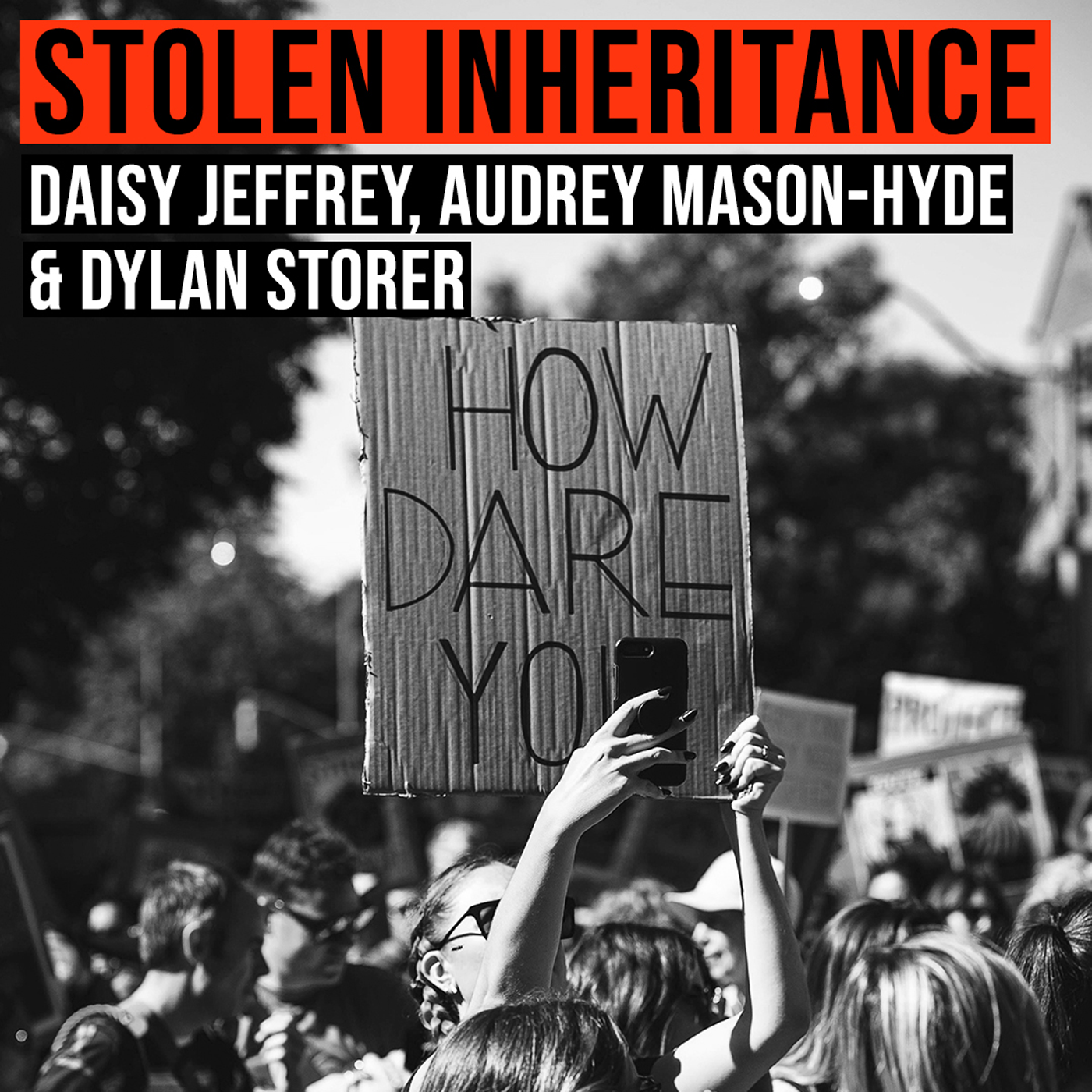
Daisy Jeffrey, Audrey Mason-Hyde & Dylan Storer (2020) | Stolen Inheritance
With 'normal' education on hold, a mountain of public debt, high levels of long-term unemployment and the mental health effects of isolation yet to fully emerge, the legacy of COVID-19 disproportionately falls on the shoulders of one demographic above all others … the nation's youth. Hear from three of Australia's most dynamic youth voices as they discuss present and future concerns. These young voices deserve a seat at the table, given it's their future with which we keep gambling with. Daisy Jeffrey is a National Organiser of School Strike For Climate Change. She is working with school and university students across the world who are asking politicians to take our future seriously. Audrey Mason-Hyde is an activist, poet & public speaker. In 2017, Audrey created a talk for TedX Adelaide about their experience of gender. Dylan Storer is a young journalist that grew up in the remote Kimberley region of Western Australia. He's passionate about equity, justice and youth leadership on the issues of our time.
Claire Wardle & Ariel Bogle (2020) | Misinformation is Infectious
As lockdowns and quarantines continue, some of us may feel like we're losing our grip on reality. Misinformation and conspiracy theories spread worldwide and algorithms continue to serve up our own custom-made versions of the internet. Are we just a few lines of code away from being a conspiracy theorist? Hear about technology's role in the spread of COVID-19 related misinformation and how the most damaging culprits are simple voice notes and text messages. Conspiracy theories have gone mainstream. Can you spot them? Claire Wardle is a leading expert on user generated content, verification and misinformation. She is co-founder and director of First Draft, the world's foremost nonprofit focused on research and practice to address mis- and disinformation. Ariel Bogle is an award-winning technology reporter at the Australian Broadcasting Corporation (ABC).

Matt Beard, Eleanor Gordon-Smith, Bryan Mukandi (2020) | The Ethics of the Pandemic
In stripping away so much of ordinary life, the COVID-19 pandemic has revealed a lot about us – not all of it pretty. It's also confronted us with brutal ethical choices. Who deserves to be saved when you're running out of ventilators? How much are we willing to give up so others can get by? Who gets to decide and what beliefs are shaping their decisions? Step back from the day-to-day dilemmas of the pandemic to understand the crucial lessons and hidden costs of our choices. Matt Beard is an Australian moral philosopher at The Ethics Centre and a regular writer on philosophy and ethics. Eleanor Gordon-Smith is a writer and radio broadcaster working at the intersection of academic ethics and the muddy chaos of life between real humans. Bryan Mukandi is an academic philosopher and health humanities researcher, with a background in the practice of medicine in a resource-poor, sub-Saharan African context.
David Sinclair and Norman Swan (2020) | Ageing Is A Disease
COVID-19 has highlighted the particular vulnerability of the aged. However, as we find out more about the ageing process, we are uncovering new ways to treat it. One revolutionary approach is to look at ageing as a disease and tackle its causes. With breakthroughs in genetics and emerging technologies, scientists have been able to make animals live longer. If this works on humans as well, will we hold the keys to postponing ageing and keep major diseases like Alzheimer's and cancer at bay? David A. Sinclair, Ph.D. is one of the world's most famous scientists and entrepreneurs, best known for understanding why we age and how to reverse it. He is a New York Times bestselling author and a tenured Professor of Genetics, Blavatnik Institute, Harvard Medical School, co-Director of the Paul F. Glenn Center for the Biology of Aging Research at Harvard, Professor and Head of the Aging Labs at UNSW, Sydney, and an honorary Professor at the University of Sydney.

Alicia Garza & Stan Grant (2016) | Why Black Lives Matter
#BlackLivesMatter has become the call to action for a generation of US human rights activists to denounce the violence and prejudice still experienced by African Americans. In the wake of the violent deaths of African Americans George Floyd, Trayvon Martin, Michael Brown, Eric Garner and many others call for change is insistent and consistent. So what does need to change in politics, in the media and in everyday lives to transform race relations and ensure justice and recognition for all? Introduced by news and political journalist, Stan Grant. Alicia Garza is an American civil rights activist and writer known for co-founding the international Black Lives Matter movement.
Jennifer Rayner (2016) | Generation Less
Why are young people worse off than their parents? Why is the gap between older and younger Australians – in terms of work, wealth and wellbeing – growing wider? Is Australia cheating the young? Jennifer Rayner was born into aspirational Australian suburbia during the Hawke years and came out of age in the long boom of the Howard era. Her lifetime tracks the yawning inequalities that have opened up across the Australian community in the past 30 years. She has worked as a federal political adviser, an international youth ambassador in Indonesia and a private sector consultant. She holds a PhD from the Australian National University.
Michael Wesley (2015) | Feudal World
Globalism is a Western construct which may not survive in its current form. Asia's rising powers are starting to look past global institutions to construct alternatives which could see what we know as the global community become obsolete. Michael Wesley deconstructs our current realities as finite as "just because globalism is so basic to how we live doesn't mean it's inevitable and here to stay". Michael Wesley is a Professor of National Security at the Australian National University. He is currently the Director of the Coral Bell school of Asia Pacific Studies in the college of Asia and the Pacific at the ANU. He consults extensively for the Australian government. His latest book Restless Continent: Wealth, Rivalry and Asia's New Geopolitics was released in 2015.

S. Matthew Liao (2013) | Engineer Humans to Stop Climate Change
The latest science suggests that it is too late to prevent human-induced climate change. Technological optimists are now turning their minds to mitigation through techniques of geo-engineering, like giant space mirrors or seeding the oceans with iron to prompt carbon-absorbing algal blooms. But projects to alter the entire planet will expose all life to massive risk. So, why not address the source of the problem and engineer humans to reduce our environmental impact and adapt? Genetic engineering could make us smaller or reduce our appetite for meat. Doses of Oxytocin could make us more sympathetic and cooperative. Such possibilities are criticised as extreme, but are they any more so than re-engineering the planet? S. Matthew Liao is a professor of philosophy at New York University.
Mona Eltahawy (2011) | Hypocrisy Rhymes With Democracy
Recorded in 2011 and the beginning of the Arab Spring, Mona Eltahawy reflects on the hunger for freedom and democracy unleashed within Arab populations living under dictatorship. This is considered alongside questions about whether Saudi Arabia's oil makes Western support for freedom and democracy melt away, and whether the west can't afford to prefer Arab democrats to Arab dictators. Mona Eltahawy is an award-winning columnist and international public speaker, renowned for her commentary on the 'Arab Spring'.
Alok Jha (2016) | Water Wars
Will we run out of water – and if so, when? Will the Earth suffer? Explore how water drives modern conflict and is not about to stop. Alok Jha is the science correspondent for ITV News in the UK. Before that, he did the same job at The Guardian for a decade, where he wrote news, features, comment and presented the award-winning Science Weeklypodcast. He has also reported live from Antarctica and presented many TV and radio programmes for the BBC. Alok's latest book The Water Book looks into water, a profoundly strange substance that defies the normal rules of chemistry, and how it has shaped the Earth, it's life and our civilisation.

Slavoj Žižek (2011) | Let Us Be Realists and Demand the Impossible
In the late 90s, political theorists, economists and politicians were talking confidently about the "end of history" and the undisputed triumph of liberal "democratic" capitalism. Communism was written off as dead and buried. But after 9/11, the GFC, the Arab Spring, and the protests spreading over Europe, the ideological gloss of capitalism may be beginning to fade. If the alternative is Putin's muscular Tsarism or China's authoritarian capitalism, then renovating the idea of communism may matter profoundly. For philosophical rock star and brilliant iconoclast Slavoj Zizek, it is something that we should demand, no matter how impossible it seems. The only true utopia today is that things can go on indefinitely the way they are.