Feet In 2 Worlds
102 episodes — Page 2 of 3
Ep 47Black Immigrants in the Whitest State
Black residents in Maine make up 2% of the state’s population, but they’re twenty times more likely to get COVID than white Mainers. We hear from two members of the state’s African diaspora — Lewiston councilwoman Safiya Khalid and civil liberties attorney Michael Kebede — about the history of African migration to Maine and how they were transformed by the killings of George Floyd and Breonna Taylor.
Ep 46Call Your Elders: Hugs from Here
After the U.S., India has the highest number of coronavirus cases in the world. New York City-based Ramaa Reddy calls her 93-year-old aunt Indira in Bangalore to see how she’s doing.
Ep 45Call Your Elders: A Letter to Italy
When Covid-19 hit Italy in April, Italian immigrants Sara and Maria were stuck in San Francisco. So the neighbors began reminiscing about all the things — music, bread, Neapolitan scenery — that home meant to them.
Ep 44Rosa’s Story: Undocumented and Unemployed in the Pandemic
Rosa — an undocumented Mexican immigrant who cleans hotel rooms in Phoenix — lost her income just a few weeks into the coronavirus pandemic. But she quickly fought back. Reporter Maritza L. Félix tells us her story.
Ep 43Call Your Elders: Cooking with Philip and Niki
Philip and Niki Zias are Greek immigrants living on Long Island. When they first moved to Queens in the 1960s, their home was filled with music, food, and laughter. On this Call Your Elders segment, their granddaughter Anna pays them a visit.
Ep 42The Home Clock
When New York City became the epicenter of the coronavirus pandemic, Brooklyn-based producer Beenish Ahmed struggled over whether to visit her parents in Ohio or stay put. Her parents — a landlord and hairdresser who immigrated from Pakistan in the ‘70s — begged her to come home. When Beenish finally decided to go in May, she recorded that journey, and the discoveries she made about her family’s relationship to America.
Ep 41Call Your Elders: Staying at Home with the Barraus
In our first Call Your Elders conversation, Haitian-American producer Florence Barrau-Adams checks in on her parents, Monique and Eric, to see how they’ve been making the best of quarantine.
Ep 40Should I Stay Or Should I Go?
When the coronavirus hit the United States, two immigrants — Heeja and Elsa — wrestled with the same question: should I remain in America, despite the flawed U.S. response, or return to my home country? Having sought a better life in the United States, both women are rethinking their ideas of America and arriving at different conclusions.
Ep 39Feet In 2 Worlds Presents: A Better Life?
"A Better Life?" is a new podcast produced by Feet in 2 Worlds exploring how COVID-19 has changed immigrants’ lives and challenged their ideas about the promise of America. Coming August 20th, the show features the work of journalists who are immigrants or the children of immigrants.
Ep 38Food Postcards from Detroit
Feet in 2 Worlds has partnered with public radio station WDET to award fellowships to four journalists covering food, immigrant culture and communities of color in Metro Detroit. Their first audio postcards are sound-rich snapshots of people and places in the Motor City's diverse food landscape.
Ep 37The Taste of Longing
For many of us food is the most evocative way to recall different times and places. For almost 20 years the only way Yewande Komolafe could connect with her homeland of Nigeria was through food. Food shaped Yewande's profession, and it also gave her a unique perspective on the experiences of other immigrants in the U.S.
Ep 36Saving Pearl River Mart
For decades New York’s Pearl River Mart was the place to go for Chinese goods. Pearl River wasn’t just a department store, it was a cultural landmark. Then in 2016, after 40 years in business, the store closed. But its faithful customers and its founders weren't ready to let go. Michelle Chen tells the story of her family’s store: from its origins at the cusp of the Cold War, through economic ups and downs, to how Pearl River revived itself in the new millennium for the next generation of consumers.
Ep 35Dreaming of Damascus
Yara and her family were forced to flee Syria and gained asylum in the US though they never had dreams of living in America. They long for the life they loved in Damascus, but they must make a home in this new place. That's hard enough without the constant reminders that they're not fully welcome here.
Ep 34A Grandmother-Granddaughter Bond that heals 50 years of family separation
People immigrate for different reasons -- economic insecurity, political instability, or the simple desire to see another part of the world. But when they leave their home country, they're usually leaving someone behind. Most immigrants know the challenge of keeping connections with their families. Some may be separated from their loved ones for years, straining those relationships. Nathan Yardy tells us how one family's ruptured bonds spanned generations, and what it took for those wounds to heal.
Ep 33Challenges to Sanctuary Policies Put New Focus on IDNYC
More than a million New Yorkers carry a municipal ID, issued by the city. The ID NYC program was launched in January 2015 to help undocumented immigrants and others unable to obtain other forms of government identification. City officials point to the program as an important aspect of New York’s sanctuary policies for immigrants without legal papers. But the strident anti-immigrant policies of the Trump administration are creating new challenges for the municipal ID. Rosalind Tordesillas has the story.
Ep 32My Hijab, My Body - The Journey of a Tattooed Yemeni Feminist
“When I first took [the hijab] off, I felt it was such an elaborate performance, but after two or three months, I’m so quick with it, I’m like a little ninja, you’ll be shocked how fast I do it, I remember a woman looked at me and was like ‘did I just see this girl?'” Reporter Tahini Rahman produced our story about how a young Muslim woman struggles to reconcile being the person she wants to be and the woman her parents want her to be.
Ep 31India Home
When Americans talk about what they admire most about immigrants - and yes, many Americans do admire immigrants - one thing they point to is how elderly people are supported in cultures from other parts of the world. India Home is a group of community centers throughout the borough of Queens set up to support South Asian seniors. Alex Wynn and Sruti Penumetsa are graduate students at The New School in New York. They visited India Home and found that the centers create a sense of community among a very diverse group of senior citizens.
99 Cent Store
Sometimes it takes an outsider to see things that the rest of us take for granted in our daily lives. Tiu Wu is a graduate student from China studying sociology at The New School in New York City. When he looked around his neighborhood in Brooklyn he noticed an unusual number of 99-cent stores. These Chinese-owned discount shops all seemed to be selling the same merchandise and competing for the same customers. How can they all survive, he wondered? At first, Tiu had a hard time getting store-owners to talk. He finally found one store where the woman behind the cash register agreed to answer his questions. She introduced him to a world full of surprises. This story was produced as part of the Telling Immigrant Stories course at The New School.
Goalllll! The Changing Face of Ice Hockey
Ask most people to name a sport that’s popular with immigrants and they might say soccer or baseball. These are global sports with famous players making big money, yet all you need for a pick-up game is an empty lot, a ball, and for baseball, a stick to hit that ball with. Now what about ice hockey? Yes, ice hockey. Long associated with nordic countries, Russia and North America - in other words cold places - ice hockey is gaining a following among immigrants from Asia and Latin America. Shagana Ehamparam comes from a Sri Lankan family in Toronto, and she is very familiar with the allure of ice hockey. She went looking for other immigrants who have embraced the sport that requires an ice rink, skates, sticks, a puck, and a lot of padding.
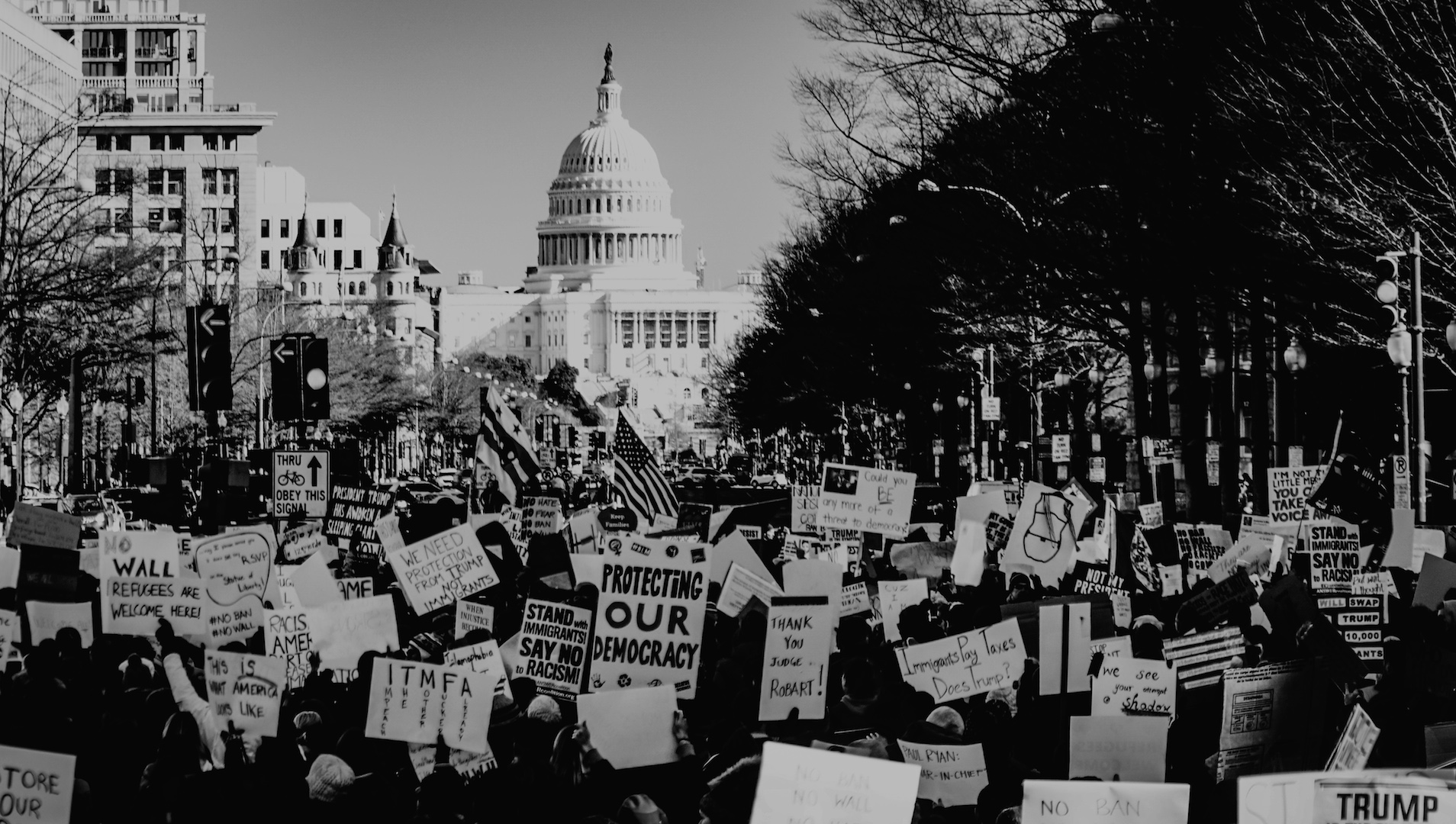
How Safe is a Sanctuary City?
The legal challenges facing communities that protect immigrants.
Young Immigrants Confront the Outcome of the 2016 Election
Fear and dread have swept through immigrant communities following Donald Trump’s election as president. Trump has promised to immediately deport 2 to 3-million undocumented immigrants once he takes office, and since Election Day the nation has seen a dramatic increase in hate crimes aimed at Muslims and immigrants, widely thought to be inspired by Trump’s anti-immigrant and anti-Muslim rhetoric. In response, a growing number of cities, college campuses and religious institutions have declared themselves to be sanctuaries for undocumented immigrants. Some states – notably California and New York – have said that they will resist Trump’s immigration policies. But no one really knows what will happen when Trump takes office. Feet in 2 Worlds invited a group of young immigrants to talk about their fears and their hopes as the new administration takes shape.
FI2W Dream City: My Body Remembers What Happened
As a witness to war and brutality in her native Bosnia, and then as a refugee, Mersiha Mesihovic found solace and a means of creative expression in dance. Despite the wounds of separation from home and family, Mersiha had all the skills to be a great dancer. But the way she moved became an obstacle. When she arrived in New York (via Sweden and Los Angeles), Mersiha found a way to harness the emotional power of her memories. Her unique approach to movement has attracted other dancers and led her to form Circuit Debris, a dance company which explores her approach to physical storytelling. Now, Mersiha is confronting the trauma of her past and her struggle for self-liberation in a solo dance piece called BosnianBorn *She is a Refugee Star*.
Ep 1Fi2W Dream City: "Esther"
In the past few years, a growing number of undocumented youth brought to the United States as kids, often called “Dreamers,” have become immigration activists. Feet In Two Worlds reporter Shiva Bayat introduces us to Esther, who in many ways embodies this immigrant experience. For one, she “came out” publicly. But what is typical about Esther’s story stops right there, and instead, she takes us to some unexpected places.
Fi2W Dream City: “Look What I Brought You”
For Filipino immigrants, the ritual of packing gift boxes, known in Tagalog as balikbayan, nurtures family relationships tested by time and distance. In this podcast, Rosalind Tordesillias explores the meaning of balikbayan and how it’s changed for Filipino immigrants today.
Fi2W Podcast: Raising Trilingual Children
In this podcast, Janie Shen and Shadi Garman delve into the challenges immigrant parents face when raising trilingual children. We'll hear from Professor Xiao-Lei Wang; Micky Wu, a Taiwanese multilingual teacher at My Mini Hands; and Kseniya Schneider, a Belarusian mother who is raising her son to speak Russian, Hebrew and English.
Fi2W Dream City: "Reunion"
Imagine moving to America and starting a new life with your family: nice home, better schools, new friends. But just when you begin to thrive, the secret you’ve been hiding suddenly gets out, and you find yourself thrown out on the streets, alone.
FI2W Dream City: "A Cairo State of Mind"
In this episode, Shiva Bayat introduces us to Belal Fadl, a man many consider one of the important voices of the revolutionary movement in Egypt. Now he’s in New York, another artist striving to make it in the one of the cultural capitals of the world. But Cairo and its preoccupations are never far behind.
FI2W Dream City: “Mona Escapes”
In this episode of our new podcast series, a Filipina domestic worker escapes from harsh conditions and blossoms as an activist and an artist in New York City.
FI2W Podcast: Reporting on Religion and Faith in Immigrant Communities
As part of Feet In Two Worlds' online magazine focusing on religion and faith in immigrant communities, we wanted to get a sense of what it’s like to report on religion for immigrant audiences for whom faith is an integral part of who they are and how they see themselves. FI2W Executive Producer John Rudolph speaks with Reem Nasr, one of the hosts of the radio show Muslim State of Mind on WBAI in New York; and Martyna Starosta, a video journalist with the Jewish Daily Forward about how they report on topics around identity and faith to communities who are dealing with these issues in a new country.
FI2W Podcast: A movement in flux
A movement that was once monolithic has become fragmented, with some activists abandoning the fight for comprehensive immigration reform altogether while others focus instead on local-level relief. In this podcast Fi2W Executive Producer John Rudolph and former editor Von Diaz talk with Thanu Yakupitiyage, the Communications Coordinator for The New York Immigration Coalition (NYIC) who runs a group for undocumented youth in New York. Listen to their conversation about why many undocumented youth are shifting focus, and what it could mean for the movement.
FI2W Podcast: US Citizenship for Today's Immigrants
When it comes to citizenship for today's immigrants, the ground is shifting. Many immigrants who could become citizens, don't. Others say citizenship is less important for those who are undocumented, compared to obtaining legal status that would protect them from being deported. On this podcast, FI2W Executive Producer John Rudolph talks with Julissa Gutierrez of the National Association of Latino Elected Officials, and Mark Lopez, Director of Hispanic Research at the Pew Center about immigrants' changing attitudes towards citizenship.
FI2W Podcast: Am I White Enough?
In this podcast we discuss the process of skin bleaching in immigrant communities, and the reasons why people do it.
FI2W Podcast: Impact of African immigrants in Bronx, NY
Africans are now the second largest immigrant community in the Bronx, and their influence on the borough's economy and culture is growing.
FI2W Podcast: Kaya Natin!
On this podcast, sounds and stories from Kaya Natin!, a literary benefit organized by Filipino American writers for survivors of Typhoon Haiyan at the Asian American Writers Workshop.
FI2W Podcast: Mexican students in NYC
Mexicans are one of the fastest rising groups in New York, but Mexican young people have the highest dropout rate of any group in the New York City public schools. On this podcast, we discuss the causes of this trend and the efforts to reverse it.
FI2W Podcast: Sound System Culture
This week, Marcela Gara discusses sound system parties in NYC.
FI2W Podcast: Needle and Thread
On this podcast, Feet in 2 Worlds contributors, Carmel Pryor and Tatiana Galzy take a look at a new generation of designers and the rising influence of Chinese immigrants on American fashion.
FI2W Podcast: African and Caribbean Women’s Attitude Towards Hair
In this podcast, FI2W’S Miranda Shafer and Sally Nnamani talked to immigrant black women from Africa and the Caribbean, to understand how they express their shifting identities in their different hair styles.
FI2W Podcast: What's In An Accent?
FI2W reporter Sara Loscos talks with actresses who are trying to lose their accents, and others who think sounding Latina is actually a career asset.
FI2W Podcast: Julia Hettich
On this podcast, Fi2w correspondent Julia Hettich talks to industry insiders who fight for the rights of the dishwashers, the busboys and the servers in the city's best restaurants.
FI2W Podcast: Helle Anderson
On this podcast, an immigrant stands in Grand Central Terminal and re-imagines New York, if history had taken a different course.
FI2W Podcast: Forgotten Foods
This week, and interview with the creator of Forgotten Foods of NYC.
FI2W Podcast: African Cuisine in NYC
This week, FI2W Editor Aaron Leaf talks about where to get African cuisine in New York City.
FI2W Podcast: Remembering Srini
This week, a story by FI2W contributor Ramaa Reddy Raghavan.
FI2W Podcast: Phillip Kisubika
For the son of African immigrants, a cab ride in Boston becomes a journey into the world his parents left behind in Uganda. Phillip Kisubika has his story.
FI2W Podcast: Killing the American Dream
Frequent FI2W contributor and senior political reporter for La Opinión Pilar Marrero comes on the podcast to discuss her new book Killing the American Dream: How Anti-Immigration Extremists are Destroying the Nation.
FI2W Podcast: The Surge of Latino Voters in Arizona
This week, journalist and film-maker Valeria Fernandez talks to FI2W's John Rudolph about how young Latino political organizers are trying to effect change on the local and state levels in Arizona.
FI2W Podcast: How the Latino Vote Could Determine the Next President of The United States
This week, FI2W's John Rudolph is joined by Chung-Wha Hong from the NY Immigration Coalition and Mark Hugo Lopez of the Pew Hispanic Center.
FI2W Podcast: Lowriders
This week, Veronica Zaragovia describes a group of women in San Antonio who are reinventing lowrider culture as a family activity.
FI2W Podcast: Mariachi Academy
This week, an interview and live performance with Queens-based father-son musicians Ramon Ponce Sr. and Jr., co-founders of Mariachi Academy of New York.