
Fatal Conceits Podcast
Investment insight and analysis each month as we sit down with a member of Bill Bonner's private research team to discuss the pressing issues of the day. From high finance to lowly politics, irrational markets and international real estate, great wine and classical books, nothing is off the table in these freewheeling discussions. New episodes every Sunday.
Bonner Private Research
Show overview
Fatal Conceits Podcast has been publishing since 2021, and across the 4 years since has built a catalogue of 32 episodes. That works out to roughly 20 hours of audio in total. Releases follow a roughly quarterly cadence.
Episodes typically run thirty-five to sixty minutes — most land between 32 min and 47 min — though episode length varies meaningfully from one episode to the next. None of the episodes are flagged explicit by the publisher. It is catalogued as a EN-language Business show.
The catalogue appears to be on hiatus or wound down — the most recent episode landed 1.4 years ago, with no new episodes in over a year. The busiest year was 2022, with 26 episodes published. Published by Bonner Private Research.
From the publisher
A podcast about mobs, markets and manias. Each week, Joel Bowman sits down with a member of Bill Bonner's private research team to discuss the pressing issues of the day. From high finance to lowly politics, irrational markets and international real estate, great wine and classical books, nothing is off the table in these freewheeling discussions. New episodes every Sunday. www.bonnerprivateresearch.com
Latest Episodes
View all 32 episodes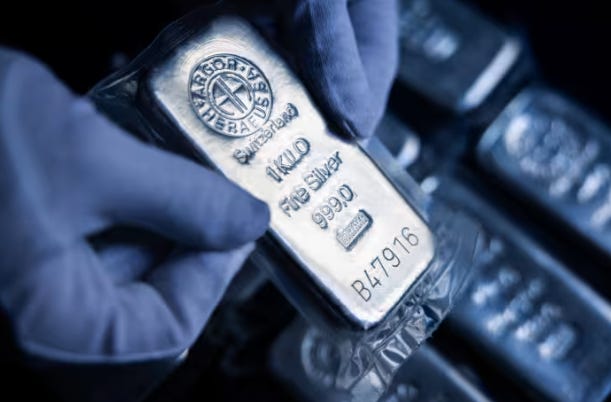
Private Briefing on Silver, with Rick Rule
This is a free preview of a paid episode. To hear more, visit www.bonnerprivateresearch.comTuesday, May 6th, 2025Laramie, WyomingWell this is awkward. Yesterday, on short-notice, I had a 45-minute Private Briefing with BPR stalwart Rick Rule. It was, by popular demand, almost entirely about silver (we did talk about the gold/oil ratio at the very end). Why awkward?Because Barron’s published an article this morning on the very first question I…

The Mar-a-Lago Accords and Gold
Tuesday, February 18th, 2025Laramie, WyomingEarlier today I hosted a live call with Matt Smith from Doug Casey’s Crisis Investing. During the chat, the gold price made an intra-day high of over $2,950/oz. Later in the chat, Matt made the case for why gold could go as high as $21k/oz.Why? How? When? What should you do next?All good questions!You can click on the video above to watch (I’m having a transcript made as well, but wanted to send you this as soon as possible). Here’s a breakdown of the key topics we covered, with timestamps so you can jump to what matters most to you.Timestamps & Major Topics[00:00:00] Kicking things off – Matt and I set the stage for the conversation.[00:01:00] A little about Matt – If you don’t know his background, here’s a quick rundown: entrepreneur-turned-regenerative cattle farmer in Uruguay, working with Doug Casey, and a big believer in getting geographically unlinked from centralized systems.[00:02:00] What is regenerative farming? – How Matt runs 250 head of cattle with zero external inputs, and why this model matters in today’s world.[00:04:00] The Mar-a-Lago Accords – Trump’s team has a real plan to reset the monetary system. It’s not just talk. We break down what’s coming and what it means for you.[00:07:00] Why they want to devalue the dollar – Trump’s people think the dollar is way too strong, making U.S. exports uncompetitive. Their solution? Drive it lower. Here’s how they’re doing it.[00:11:00] Will this actually work? – Whether they pull it off or not, the fact that they’re even trying is a game-changer.[00:13:00] Gold’s role in the reset – Trump’s team isn’t stupid. They know gold is key to restoring faith in the financial system. We go deep into how they might use it.[00:16:00] What’s really in Fort Knox? – Elon Musk and Rand Paul want an audit of U.S. gold reserves. If it turns out the gold isn’t there (or if there’s way more than expected), what happens next?[00:18:00] Gold’s breakout – Is this rally the start of something huge, or just another head fake? Spoiler: this one looks real.[00:21:00] Infrastructure & energy – Trump wants to rip out the regulatory roadblocks and supercharge energy and AI. This could be the biggest infrastructure buildout since the 1950s.[00:26:00] Mining stocks – They’ve been dirt cheap and ignored for years. That’s starting to change. Here’s why it’s a massive opportunity.[00:28:00] The final gold bull market? – Doug Casey has called this the last great gold boom before gold gets re-monetized. If he’s right, this is your last chance to play it.[00:33:00] The risks no one talks about – Even if Trump’s team pulls this off, does it just lead to an even bigger, more centralized government? We dig into it.[00:38:00] Redeemability – Will this new system actually let people redeem dollars for gold, or is it just another illusion?[00:41:00] The China model? – Trump’s approach has a lot in common with China’s industrial strategy. Is that where we’re heading?[00:45:00] Wrapping up – Everything’s about to change. Are you ready for it?Bottom LineGold’s on the move. There are reasons why. But there are a lot of dots to connect. And the picture they make isn’t entirely clear. This call with Matt helped us understand some of what’s happening, what to expect next, and most importantly, what you should do with your money now. Enjoy!DanPS Matt and Doug Casey collaborate on Crisis Investing. As a courtesy to Bonner Private Research subscribers—and because Bill and Doug go way back as friends—they’ve set up a special offer for BPR readers who want to subscribe. You can do so here. And if you enjoyed the video, let me know. We’ll do more in the future. This is a public episode. If you'd like to discuss this with other subscribers or get access to bonus episodes, visit www.bonnerprivateresearch.com/subscribe

MN Gordon on the California Exodus
Welcome to Episode #78 of the Fatal Conceits Podcast…They’re sometimes called “California refugees.” But they hail from New York and Illinois, too… You’ll find them in sleepy little towns in Florida… Texas… Arizona… Nevada… and across the sunbelt… basically anywhere that doesn’t suffer oppressive taxation, creeping government, woke school curriculums, high crime, homelessness, drug epidemics…The pandemic didn’t birth this trend, but it sure did accelerate it. Presently, California is losing about 370,000 people per year, a record rate. In today’s program we’re joined by MN Gordon, editor and publisher of the Economic Prism newsletter and former California native. Earlier this year, Mr Gordon packed up his family and headed east to find his own American Bolt Hole. We begin today’s discussion with his fascinating story… then talk about Opendoor - as both an idea and a company - and what’s next for real estate in the US. Please enjoy our discussion and leave your own comments and ideas regarding the best places in the US to live below…Cheers,Joel BowmanP.S. For those inclined to read rather than listen, please find a lightly edited (for clarity) transcript below…Thank you for reading Bonner Private Research. This post is public so feel free to share it.TRANSCRIPT:Joel Bowman:All right. Well, welcome back, dear listeners, to the Fatal Conceits Podcast. As you know, by now, it's a show about money, markets, mobs, and manias, not necessarily in that order. If you've not already done so, please head over to the Bonner Private Research substack page. You can find us at bonnerprivateresearch.substack.com, where there are now hundreds of articles on everything from high finance to lowly politics and everything in between. There's plenty of research reports there, of course, by our macro analyst, Dan Denning and investment director, Tom Dyson, as well as plenty of Bill Bonner's daily musings. You won't find them anywhere else.And in addition, of course, there are many more conversations just like this on the Fatal Conceits Podcast. Grab that at the tab on the top of the page. And speaking of which, I'm delighted today to welcome a newcomer to the show. Mr. MN Gordon is the Editorial Director and Publisher of the Economic Prism Newsletter. I'll provide a link in the transcript to this, so you can head on over there. In particular, check out the library. You'll find plenty of usual suspects from Messrs. Hayek to Hazlitt to Mises, and all the rest of those free market oriented kind of gentleman. So, without further ado, Mr. MN Gordon, welcome to the program.MN Gordon:Hey, Joel. Morning. Thanks for having me on.Joel Bowman:Yeah, not a problem. Not a problem. Now, we've got so much to talk about, as is the case whenever we sit down these days. We had the remarks from Mr. Powell yesterday. There's real estate to discuss, credit markets, the dollar, on and on. But one thing I wanted to start with here is a story I read over on your Economic Prism website, and I think it's really instructive. I think a lot of people in America are thinking along these lines at the moment, and that is your exodus story from California. Why don't you just kick us off by telling us a little bit about how you got out of the Sunshine Tax State?MN Gordon:Yeah, you bet. Yeah, I'm a native of Southern California, born and raised there and worked for many years there in my career. And over the years, it just became more and more intolerable of a place to be. Certainly, the high taxes and wacky politics have always been a part of California, but it really turned ugly or just more and more intolerable during the COVID lockdown that had taken place.And my wife and my kids, we were just eager to get out and try something else and look for a place that maybe has a lighter touch from the government, more favorable tax policies, lower cost of living. So, we certainly found that in Knoxville, Tennessee. We moved out here in July, so we've been here for several months and we're really enjoying it so far. Really, really liking the green and wet conditions, not being in perpetual drought...Joel Bowman:Must be a nice change.MN Gordon:It is a nice change, for sure. And yeah, certainly more of a freedom feel here, no state tax, and lower cost of living, so it's turning out to be a really great move for us.Joel Bowman:Fantastic. Yeah, my wife and I were just in Austin, Texas a couple of months back and ran randomly into a group of people who referred to themselves as "California refugees." There are these pockets of similar people, it seems like, all around the country, in Austin, in other states. You guys looked at a few other places, Arizona, Nevada, Texas, Florida, but none of them floated your boat for various reasons. What was your criteria?MN Gordon:Yeah. That's right. I think for us, it was really finding that lower cost of living, finding somewhere that had very good access to nature. I grew up at the beach and really connected with the beach in my youth and

Vitaliy Katsenelson on Real Estate, Real Value and having "Soul in the Game"
Welcome to Episode #77 of the Fatal Conceits Podcast... In today’s conversation, I’m joined by author, value investor, student of life and editor of the popular ContrarianEdge newsletter, Mr. Vitaliy Katsenelson. I’ve been reading Vitaliy’s work, on and off, for over a decade now. In fact, we used to publish his columns and market insights occasionally in The Daily Reckoning, a publication I managed for Bill Bonner back in the 2000s, in what seems like another lifetime...Vitaliy describes himself as “Born in Russia, Made in America,” a distinction we talk about during our conversation. He’s also a professor of finance, CEO of Investment Management Associates and a keen world traveler. Over the course of an hour or so, I asked Vitaliy about his insights into the beleaguered American housing market, what the Fed hath wrought for the US economy at large, the challenges facing bottom up value investors like himself and where to for stock markets over the short and medium term. We also talk about his newly published book, Soul in the Game - The Art and Meaning of Life.Please enjoy - and share! - my conversation with Vitaliy Katsenelson, below...Cheers,Joel BowmanTRANSCRIPT:Joel Bowman:All right, well, welcome back to another episode of the Fatal Conceits podcast, dear listener. If you've not already done so, please head over to our Substack page. You can find us at BonnerPrivateResearch.Substack.com, where we have hundreds of articles, research reports, and many more conversations just like this on the Fatal Conceits podcast tab at the top of the page, where we talk about everything from high finance to lowly politics and everything in between.It is my pleasure today to welcome a gentleman to the show whose work I've been reading on and off for years, and as we were just talking about before we pressed record here, our email correspondence has gone back over a decade, so it'll be great to connect again. Vitaliy Katsenelson is the author of Contrarian Edge. Head over to his website there. He's got plenty of excellent material, mostly about investing, but a few life lessons in there, some political musings, lots of travel stuff. He's also the author of two investing books, Active Value Investing, and the Little Book of Sideways Markets, and most recently, a book that I hope we get to chat about today, Soul in the Game: The Art of a Meaningful Life.So, first of all, Vitaliy, welcome to the Fatal Conceits podcast. I feel like it's long overdue.Vitaliy Katsenelson:I know, Joel, it's a pleasure. Thank you. We're looking forward to it.Joel Bowman:Outstanding. And as we were also just mentioning, if this background looks familiar, you were recently on a podcast with Anya Leonard, who runs the Classical Wisdom website. We sit about 10 feet away from each other. Being husband and wife, we share a home office, so if this is a little bit of deja vu...Vitaliy Katsenelson:Absolutely. Yeah. No, that's still there.Joel Bowman:All right, so there's lots of stuff I want to get to, Vitaliy. You covered such a wide breadth of subject matter in your musings, and again, people should head over to Contrarian Edge to check out your work there. But for readers who are just coming upon your work for the first time, I think they might be interested just in a bit of a Vitaliy origin story, because it's a very interesting one. You put it as “Born in Russia, Made in America,” which I thought was a very entertaining juxtaposition. How did you make that journey and come to that distinction?Vitaliy Katsenelson:Yeah, so today I live in Denver, and I have a wife and three kids, and I run a value investment firm, IMA, and I also write, and I wrote several books, but I write articles all the time. And by the way, we have a Substack as well, so you can just look for my name on Substack. You can subscribe to the articles.Joel Bowman:I'll put all the links to these links in the transcript.Vitaliy Katsenelson:Perfect. Yeah. But I was born in Russia and I moved, my whole family moved to the United States in December, 1991. What's interesting about this, actually, I was not living in Russia. I was living in the Soviet Union, and then literally a month later it stopped, it ceased to exist. The reason we moved to Denver, because my father's youngest sister left Moscow in 1979, and she moved to Brighton Beach. If you watch Moscow on the Hudson, that movie basically describes her life.Joel Bowman:Wow. Okay.Vitaliy Katsenelson:And then she married the Rabbi, and Rabbi had a synagogue in Cheyenne, Wyoming, out of all places, which is, I don't know if there are any Jewish people there, but yeah, that's a different conversation. But anyway, she invited us over. There was an organization that does a lot of good things, actually, not just for Jewish people, called Jewish Family Services. They were in Denver. So my aunt decided that it was better for us to move to Denver than to Cheyenne, Wyoming, and I keep thanking my aunt every day just for that decision alone.J

Dan Denning on The Fed's Dilemma
And now for some more Fatal Conceits…Welcome to Episode #76 of the Fatal Conceits Podcast, dear listener, a show about money, markets, mobs and manias. All eyes were on the Jay Powell’s Fed this week, specifically the chairman’s remarks following the much-expected 75-basis point rate hike. Word was that the central bank will “continue to do what needs to be done to get the job done." Actually, they were JP’s exact words. “The job” to which Mr. Powell refers is, of course, to get inflation back to the 2% range. What does that mean for stocks and the dollar in the near term? What does it spell for America’s already-toppy housing market, the pillar of middle-class wealth? And how will gold respond? The Midas Metal popped more than $50 on Friday. (Silver was up even more, doubling gold’s advance in percentage terms.) For answers and insights, I spoke with Bonner Private Research’s macro man, up in Laramie, Wyoming, Mr. Dan Denning. Over 45 mins or so, we covered all of the above, plus BPRs Trade of the Decade, the coming Winter Catastrophe, 2022 Redux, and why you should panic now (in an orderly fashion, of course) and beat the rush. Please enjoy our conversation and, as always, like, comment and share our work with friends and family far and wide. Cheers,Joel BowmanThank you for reading Bonner Private Research. This post is public so feel free to share it.TRANSCRIPT: Joel Bowman:All right, well welcome back to another Fatal Conceits podcast, dear listener, a show about money markets, mobs and manias. If you have not already done so, please head over to our Substack page. You can find us at bonnerprivateresearch.substack.com with hundreds of daily articles now on everything from high finance to lowly politics and a ton of in-depth research reports, many of which were authored by none other than my guest today, Bonner Private Research's, macro man up in Laramie, Wyoming, Dan Denning. Dan, welcome to the show. How do you do, mate?Dan Denning:I'm doing all right. It's dark and cold and gloomy here in Laramie as winter approaches, but that's kind of how it feels like in markets right now, so I suppose that's appropriate.Joel Bowman:Yeah, exactly. We're talking off camera just now and you were firing off emails this morning at around 5:00 AM. I'm imagining it was still well below freezing at that point up there?Dan Denning:Yeah, it was supposed to snow this week, but it hasn't, which is good and it's been nice and sunny, but it has been something we've been paying attention to both behind the scenes and when we're writing to the readers, because as it gets colder in the US, we're dealing with this 32% drawdown in the strategic petroleum reserve and then these reports of impending or possible diesel shortages so you're kind of trying to separate what's fact from fake, I suppose, and go beyond what's in the news reports to see if it's actually impacting truckers and travel prices and things like that. So we, Bill, last year, penned a winter catastrophe and we had bad winter last year, but I think it could be worse this year and as you know, because you're organizing it, we're going to address that in early December.Joel Bowman:Yeah, that's December 13 for our readers, listeners and viewers, I guess now that we're doing this on YouTube, but I'll pop a link down below where you can get some more information about registering for that event. As you mentioned, Dan, we're doing a bit of behind the scenes work just to get that all organized. It's going to be the 2022 Winter Catastrophe Redux, which will be more well attended than our first one, given that it was the inaugural event and we had just a few hundred readers on that very first call with Byron King and Rick Rule, but yeah, as you mentioned, the second one looks to be shaping up to be quite the event. Of course, it's the kind of thing that you don't want to be right about, a coming winter catastrophe, but that looks like what's on the plate anyway.So let's start at the beginning, Dan, because we're talking on Thursday the 3rd of November, and of course the big news this week was yesterday's Federal Reserve meeting where Powell & Co. hiked rates by the expected 75 basis points, but I guess it was what followed that hike that kind of got markets a little spooked. We saw a 500 or so point drop in the Dow after Mr. Powell's remarks yesterday. I'm just going to read a quick quote here from the Fed Chairman in which he says "The question of when to moderate the pace of increases is much less important than the question of how high and how long to keep monetary policy restrictive." He said, adding that "It was very premature to discuss when the Fed might pause its increases." Was this more or less in line with what you and Tom had expected and what does it mean for both stocks and the dollar in the near term in your view?Dan Denning:Yeah, I think the answer to the first question is definitely. The market, whether you use the future's market for interest rate expectations

Robert Marstrand on the Britshow
And now for some more Fatal Conceits…“I mean, look, you seriously couldn't make this stuff up and it really is banana republic stuff, frankly. It's embarrassing and they just need to get a grip.” ~ Robert Marstrand on the sorry state of British politics.Welcome to another episode of the Fatal Conceits podcast, dear listener. In this conversation, Episode #75, we catch up with UK-born investor and fellow Argentine resident, Robert Marstrand. Following his career as an investment banker at UBS, where he worked out of London, Zürich and Hong Kong, Robert joined forces with Nigel Farage to create UK Independent Wealth, a financial research service aimed at helping folks in the UK reclaim their financial independence. (Find out more about his work here.)Over the course of a half hour or so, Rob takes us through the Shakespearean tragi-comedy that has been the past few months in UK politics… from the ousting of Boris Johnson… to Liz Truss’s spell as the shortest serving Prime Minister in the nation’s history… to the unelected appointment of Rishi Sunak… (or is it, as President Biden has it, “Rashi Sanuk”?)Thrills and SpillsAs with all such soap operas, there’s plenty of betrayals, backstabbing and upsets along the way… from the death of a monarch to generation-high inflation to plenty of turmoil in the markets, including a near catastrophe in the UK bond market… and a very embarrassing situation for the Bank of England itself…As always, feel free to leave your comments below and to share this episode with friends on both side of The Pond. Cheers,Joel BowmanThank you for reading Bonner Private Research. This post is public, so feel free to share it with Kings and Queens alike... This is a public episode. If you'd like to discuss this with other subscribers or get access to bonus episodes, visit www.bonnerprivateresearch.com/subscribe

Bill Bonner on Ben Bernanke's Bubbles
And now for some more Fatal Conceits…“I think those people at the Nobel Committee must have a sense of humor,” quipped Bill Bonner, in response to the questionable judgement that resulted in Ben Shalom Bernanke being awarded the Nobel Prize for economics earlier this week. “They're either very dumb or very cynical,” Bill continued. “And I'm not sure which it is because, if you remember that time, Ben Bernanke was wrong about everything. And no major issue came to him that he was not wrong about.”Alas, 14 years after Mr. Bernanke’s preposterous “we may not have an economy on Monday morning” speech, in which he presented one of the most galling false dichotomies of the modern era (pass this unprecedented – and lately unread – stimulus bill… or the sky will fall), and we are now reaping the whirlwind of his profligacy.Over the course of a half hour or so, Bill shared with us his thoughts on the end of the Age of Abundance, the reason our current financial predicament differs greatly from what Volcker faced in the ‘70s (Hint: It begins with D and rhymes with “regret”) and why those born after 1980 cannot know, first hand, what a return to the “Old Normal” will entail…All that and plenty more on Ep #74 of the Fatal Conceits podcast. Please enjoy and, if you have a moment, share with a friend…Also, if you’re interested in purchasing some of Bill’s wine, which we talk about towards the end of the episode, their Tacana 2020 vintage is now available to select buyers. The first half of the allotment (reserved for the Bonner Wine Partnership’s private Tacana buyer’s list) sold out in a day. The rest probably won’t be around for long, so if you want to grab a few bottles… for the cellar or the bunker… don’t dilly-dally. More information here: And for those of you who are less audio-inclined, you’ll also find a full transcript of today’s interview, below. Until next time…Cheers,Joel BowmanThank you for reading Bonner Private Research. This post is public so feel free to share it.TRANSCRIPT:Joel Bowman:Welcome back to another episode of the Fatal Conceits Podcast dear listener. It's the show, as you know, about money markets, mobs and manias. If you have not already done so, please head on over to our Substack page. You can find us at bonnerprivateresearch.substack.com. On that page, you'll be able to find hundreds now of essays authored by today's guest, Bill Bonner, in the daily section. We've got plenty of research reports from Dan Denning and Tom Dyson. And of course, many more conversations like this under the Fatal Conceits Podcast tab at the top of the page. So without further ado, I think you can probably see in your screen there, framed by gilted cornices, remnants of a bygone era of abundance, Mr. Bill Bonner, welcome to the show. How do you do sir?Bill Bonner:Thank you Joel. It's a pleasure to be with you.Joel Bowman:You're up there in Baltimore at the moment, that's correct?Bill Bonner:In Baltimore. And you're right, it is the bygone remnants of an ancient civilization. Baltimore was by the way, the richest city in America in say the early 19th century because it had such a great harbor. And it was also connected, through the Cumberland Gap, it was connected to the whole Ohio Valley and all that area over there on the other side of the Appalachian Mountains. So it was a big important port for people coming from Europe and a big important port for people making mostly food things that they exported it to Europe. And people got rich. And movies from say the 1920s or so, maybe a little bit later, they will frequently have a rich person as somebody from Baltimore. And that all seems so unlikely now. It's hard to even imagine.Joel Bowman:To be rich like a Baltimorean is like to be rich like an Argentine.Bill Bonner:Same thing.Joel Bowman:Exactly. And I'm racking my brain here, but how on earth were they able to get rich without ESG governance and diversity boards and equity programs…?Bill Bonner:That was before the foundation of the Federal Reserve. I mean, how did they know what interest rates to charge? They were building in the early 19th century here in Baltimore. They had huge factories. They made things, made things that they exported out of profit. How did they know how to do that without the feds showing them what interest rates to charge and so on, without the Fed printing money to stimulate them? Nobody stimulated them at all. They were stimulated by the desire to make money I guess. And they did quite well with it in that. But now we have, thank God, we have the Fed to stimulate the economy when it's needed to support the stock market when it seems to be falling and to provide us with the interest rates that we need. How they know what interest rates we need has never been clarified. But that's one of mysteries of the Fed.Joel Bowman:Yes, we certainly couldn't rely on the market for any, shall we say, “self stimulation”?Bill Bonner:NoJoel Bowman:Top down only. Speaking of which, that dovetails into news

Byron King on Europe's Energy Nightmare
And now for some more Fatal Conceits…When the Nord Stream pipelines were sabotaged last week (Sept. 26), we immediately fired off an email to energy and resource investor, geopolitical expert and all round man of letters, Byron King. Regular listeners (and readers) will recognize Byron as the man who called out “Germany’s Energy Stalingrad” during our Winter Catastrophe summit. That was back in December of 2021, when European technocrats were still guffawing over suggestions that their green pipe dreams and over-reliance on Russian gas might present some problems in the near future…Fast forward to… well, the near future… and lo! Energy prices have gone parabolic on the continent as nations scramble to “weaponize” every strategic advantage they have, be they cubic feet of gas, global supply chains or greenbacks…Byron responded almost immediately… despite the fact that he was at the time kicking rocks deep in the heart of Mexico’s Sierra Madre mountain range on a mining expedition. We caught up with Byron as soon as he landed back in the US to get his take on what’s happening over in Europe, and what it could mean for folks on both sides of the Atlantic as ol’ General Winter enters the fray.We hope you enjoy the conversation…Cheers,Joel BowmanHost of the Fatal Conceits PodcastThank you for reading Bonner Private Research. This post is public, so feel free to share it with comrades and compatriots alike...Joel Bowman:Well, welcome back to another episode of the Fatal Conceits Podcast, dear listener, a show about money, markets, mobs and manias, not necessarily and certainly not always in that order. If you haven't already done so, please head over to the Substack page, at BonnerPrivateResearch.substack.com. There, you can sign up for plenty of daily articles from Bill Bonner. We also have lots of research reports courtesy of Dan Denning and Tom Dyson, and of course, many more episodes and conversations just like this under the Fatal Conceits podcast tab at the top of the page.It's my pleasure to welcome back to the show today a long-time friend. Mr. Byron King is an energy and resource expert, the editor of the Lifetime Income Report, and all-round man of letters. Mr. King, welcome back to the show, sir. How do you do?Byron King:I'm doing very well. Greetings, thank you. And thank you, everyone out there who's watching, listening, reading the transcript, whatever. Appreciate it.Joel Bowman:Always a pleasure to have you on, Byron. I always feel like you've probably forgotten more about whatever our given subject is than I may ever know. So, thanks again for taking the time. You and I were catching up on the state of the world recently while you were on tour down in a rock-and-mineral-kicking expedition of some sort, down in the heart of Mexico. How was your trip and what did you find?Byron King:Oh, well, thank you for even bringing it up. Yeah, I went to the legendary Sierra Madre of Central Mexico. Most people, when they think of Sierra Madre, they think, “Oh yeah, the Humphrey Bogart movie, The Treasure of the Sierra Madre, where these desperados are out there and they're fighting over gold and whatever, and in the end, everybody kills everybody else and the gold dust blows away in the wind.” It's a real morality tale there. But there really is a Sierra Madre, and it is a really, really rugged range of mountains in Central Mexico, pretty much just south of Texas. And it extends, oh, I don't know, 800, 900 miles south. There's the Gulf Coast of Mexico, then there's the Pacific Coast of Mexico, and then there's this big mountain range in the middle, and that's the Sierra Madre.And it is an extension of the Rocky Mountains, and it is filled with minerals, and people have been mining great stuff there for literally 500 years. And I visited a company, I'll just name the name because it's a publicly-traded company. It's a nice company, Avino, A-V-I-N-O, silver and gold. And they are, I think, the oldest mine, you might say, in possibly the Western Hemisphere. The mine was found by the Spanish, Portuguese. I mean, the Native Americans, they were digging ore even before that. I mean, that's how the Incas got their gold and all that.But in 1558, Cortés, who burned his ships, and his conquistadors were making their way across the Sierra Madre. No maps, no nothing, just native guides, looking for whatever is over the next hill. And one night, they were camped out and somebody literally spilled the wine. I mean, they'd knocked over a bucket of wine or whatever. And everybody was mad because, "Hey, dude, you spilled the wine, man."Joel Bowman:Party foul.Byron King:Yeah, terrible. The next morning, they wake up, the sun is coming up, and they look where the wine had spilled, and there's elemental native silver just sort of cropping out from the ground there. And it was like, "Whoa. We spilled the wine, and God graced us with silver." So, they named the place Avino, as in vino being wine. But then Avino in Spanish means “it

Doug Casey on America's Rude Awakening
And now for some more Fatal Conceits…“Let me take this opportunity to antagonize those of our listeners that I haven’t already antagonized…”There are some people who go out of their way to appease others, to say what they think the majority wants to hear, to mollycoddle their audience and make nice with anyone they meet so as not to ruffle any feathers. Doug Casey is not that person. Whether on the prospect of civil war at home… “It seems that Americans have broken into two groups; the red people and the blue people. And they don’t like each other. In fact, they actually hate each other.”The war in eastern Europe… “A border conflict between two sh!thole countries…”Central banking…“An idiotic institution which should be abolished…”College education…“Worthless degrees of indoctrination…”The fate of the US Dollar as the world’s reserve currency…“I think that half or three-quarters of the world’s countries are going to find alternatives to the dollar and the Swift payment system. And this is going to devastate America.”Western European leaders…“The people running these western European countries are all died-in-the-wool, dogmatic socialists; they’re nothing nobodies.”Or discussing what he calls the “Greater Depression,” in which he expects the average American is in “for a very rude awakening”… “You’re going to have a lot more people living in their cars and under bridges. This is serious.”Doug doesn’t waste time mincing words. Listen in as we discuss all of the above, including what Doug’s doing with his own money and practical ways he sees to minimize what’s coming down the pike. Thank you for reading Bonner Private Research. This post is public so feel free to share it, especially with the easily offended...We also spoke at length about Doug’s novels, the High Ground Series, which he co-writes with Dr. John Hunt. With Speculator, Drug Lord and Assassin behind them, the pair are gearing up for the next (and possibly most provocative) title: Terrorist. Catch up on the series here. We hope you enjoy the conversation…Cheers,Joel BowmanHost of the Fatal Conceits PodcastTRANSCRIPT:Joel Bowman All right, welcome back listener to another episode of the Fatal Conceits podcast, the show about money, markets, mobs and manias. If you haven't already done so, please head over to our substack page. You can find us at bonnerprivateresearch.substack.com.There you'll find hundreds of articles and everything from high finance to lowly politics, plenty of research reports, and of course more conversations just like this under the "Fatal Conceits Podcast" tab at the top of the page.I'm delighted today to welcome to the show, I think for the first time, although we've spoken many times in private and all around the world, my friend Mr. Doug Casey. For those few of you who are not familiar with his work, Doug is the original International Man having written the book on the subject. He writes over at internationalman.com. He is also the author along with John Hunt of "The High Ground" series books including "Speculator," "Drug Lord," and "Assassin" which I hope we get to talk about in due course. And every Friday he has the "Doug Casey's Take" podcast. So, that's another avenue for Doug to vent his many opinions, and we're happy to have him on the show today. Doug, welcome to the Fatal Conceits podcast.Doug Casey It is a pleasure to be here with your Joel. It's unfortunately all too rare to have an intelligent conversation these days. Certainly not with the locals in any area. I think that's one of the problems that a lot of the people that listen to your podcast, and mine, have is that they don't have anybody intelligent locally to talk to, who they can disclose their philosophical and political views to without starting an argument. And I think that's where a lot of our listeners come from.Joel Bowman Yeah, that's a really good place to start, I think. I know that you're holed up stateside at, we'll call it an "undisclosed location" at the moment, but I'm wondering if your current experience is resonant with the last time I spent in the U.S, which was just a couple of months ago. I don't think, after having been back and forth to the United States for twenty years, and having lived there for some years in the interim period, I've experienced a more on edge kind of political climate where everybody, and this is running the gamut of the political spectrum, both on the right and the left, seemed to be just at a hair trigger on any given subject, rushing to be offended in any way possible. Is that similar to your experience at present?Doug Casey Yes, exactly. It seems that Americans have broken into two groups, they red people and the blue people, and they don't like each other. In fact, they actually hate each other. That rant that Biden gave on, I think it was September 1st, where he had a black background with heavy red overlay and the two Marines in the background. All of this is unprecedented for a political speech in the U.S.

Federico Tessore - Lessons from the Fin del Mundo
And now for some more Fatal Conceits…In today’s episode, we welcome serial entrepreneur, investor, author and founder and CEO of Inversor Global , Sr. Federico Tessore. Over the past two decades, Fede has built his financial research business into one of the most successful in the Spanish speaking world (don’t worry… the conversation is in English), with hundreds of thousands of readers across multiple countries up and down Latin America and in Europe. His massively popular #FedeTessoShow channel on Youtube has almost a quarter of a million subscribers, whom Fede guides through the ins and outs of investing in complex markets around the world. We sat down in person with Fede at his office here in Buenos Aires to discuss investing during hyperinflation and political uncertainty, something he knows up close and personally, as well as his excellent book, Argentine Power: How to Return to being the Richest Country in the World (Spanish language). You can find Fede’s writings here on Substack where he writes Pasaporte Inversor or follow him here on Twitter.So please, pull up a chair and enjoy our conversation with Sr. Tessore today… and don’t forget to share our show with friends in both the English and Spanish speaking worlds.Saludos!Joel BowmanHost, the Fatal Conceits PodcastThank you for reading Bonner Private Research. This post is public so feel free to share it.TRANSCRIPT:Joel BowmanWelcome back to another episode of The Fatal Conceits Podcast, dear listener, it's a show about money, markets, mobs and manias. Not necessarily and not always in that order. If you haven't already done so, please head over to our Substack page. You can find us at bonnerprivateresearch.substack.com, and there you'll find hundreds of articles on everything from high finance to lowly politics, plenty of research reports, and of course, more conversations like this under The Fatal Conceits Podcast tab at the top of the page. It's my pleasure today to welcome, in person actually, down here in Argentina's Capital of Buenos Aires, a good friend of mine, a serial entrepreneur, renowned investor, an author, a podcaster, a communicator, a man who wears many hats, Mr. Federico Tessore. Welcome to the show, mate. How are you doing?Federico TessoreThank you. Thank you, Joel. Nice to be here.Joel BowmanI thought we might start out, just for listeners who maybe are unfamiliar with your work in the English-speaking world, how it was that you got started in investment research, in opening up these businesses in multiple jurisdictions, multiple countries, as we were just speaking about off camera, and how you got to know Bill Bonner in the first place.Federico TessoreYeah, well, it's a long story but I will try to make it short and fun. When I was a kid, my father was a businessman here in Argentina and he was a very risky businessman and his businesses went up and down very, very quickly. So I grew up in a very financially unstable home. So sometimes we have two houses and we go on vacations to Punta del Este, that you know that's a very nice place here. And some other years we didn't have vacations and we only have one house and one car. So a lot of volatility in my early life. So from when I finished school, I decided to study economics and business and started to work in investments in a local brokerage firm. Then I used to work at Citibank, the local branch of Citibank, when the crisis of 2002 came here in Argentina. That was totally crazy.People lost all their savings suddenly. People have money in their banks and suddenly that money was disappeared or didn't have value. So I was there working at the local bank and it was a terrible, terrible experience. But at the same time, I discovered that there were a lot of people here in Argentina that were very successful in their businesses and they knew how to make money but they didn't know anything about investments. And the banks in general with all the research that they produced it was very difficult, very technical. So a lawyer or a small businessman, it was impossible to understand. So in 2002, I decided to leave the bank because suddenly Citibank decided to close their sector that helped Argentinians to invest abroad. I think I was 25, 26 and there I rented an office in Plaza San Martin, that you know is in downtown Buenos Aires, used to be a very nice area and I decided to help my former customers of Citibank to invest their money abroad. In the US and Europe mainly.And I launched in 2002 a newsletter by email. The email was very new at that stage, 2002. It was called Global Investor. Inversor Global, in Spanish, as a marketing tool to try to have more customers and give a better service. And in 2004, I decided to leave that business because I thought that I didn't have a very good competitive edge in comparison with banks that were returning to the country after the crisis. And I decided to create a magazine, like a print magazine, with real paper at that moment, that was sold in the K

Chris Mayer talks Deals from Hell, Reveries with Rousseau and his own take on General Semantics
Welcome to another Fatal Conceits Podcast. In today’s episode, we’re joined by our good friend and regular favorite on the show, Christopher Mayer. Long time listeners will know Chris as the portfolio manager and co-founder of the Woodlock House Family Capital Fund, which he began with Bill Bonner back in 2018. Chris is also a published author who just released his latest book, Dear Fellow Time-Binder: Letters on General Semantics, which you can find here. His blog, in which he ruminates about life, markets and “this thing we call investing” is considered essential reading around the Bonner Private Research office. Check that out, here.In today’s conversation, we take an unhurried stroll through Chris’s library and get his take on Jean-Jacques Rousseau’s Reveries of a Solitary Walker, Robert Bruner’s Deals From Hell, the latest Buckminster Fuller biography and plenty more besides. Please enjoy and feel free to share our work with fellow readers, thinkers and solitary ramblers…Cheers,Joel BowmanThank you for reading Bonner Private Research. This post is public so feel free to share it.TRANSCRIPT:Joel Bowman: All right. Welcome back to another episode of the Fatal Conceits podcast, dear listener, a show about money, markets, mobs, and manias, not necessarily in that order. If you haven't already done so, please check out our sub stack. You can find us at bonnerprivateresearch.substack.com. And on the site there you'll find hundreds of articles on everything from high finance to lowly politics and everything in between including, of course, many more conversations just like this one under the Fatal Conceits podcast tab at the top of the page. Today, we're delighted to welcome back to the show long time friend of Bonner Private Research and the portfolio manager of Woodlock House Family Capital Fund, which he co-founded with Bill Bonner back in 2018. A good friend of mine, Mr. Christopher Mayer. Welcome to the show, mate. How do you do?Christopher Mayer: I am well. Thank you for having me on, always good to talk to you.Joel Bowman: Yeah, absolutely. You're in a new place up in Maryland?Christopher Mayer: Yeah. I live in Mount Airy now. It's a nice little town, very green, lots of golf courses around. It's open, it's nice. I like it here.Joel Bowman: Good stuff, mate. We were speaking just before we hit the record button here and I told you that I would be remiss if I didn't at least throw out one financial question at the very top of the segment here. I guess what everybody wants to know is, after our June lows, we've had a 20 odd percent bounce in the S&P, what many would consider to be the classical definition of a bear market rally. Is this something that, first of all, you agree with? And secondly, does it concern you, as somebody who's in it for the long term and more focused on individual stock selection?Christopher Mayer: Yeah. Well, everybody wants to know the unknowable, right? Is this the bottom or we have more to fall or are we off and running? I don't look at it that way. I'm focused more on the individual companies I own. And I have to say, this is probably one of the easiest bear markets I've been in yet because I have now second quarter reports in hand for all my companies except one, and they're all firing on all cylinders. I mean, if you just looked at the financial statements, you wouldn't see any cause for concern. You'd be surprised that the stocks were down at all. So I think times like this are an opportunity. What's remarkable, I suppose, is the swiftness of this decline. So we're through August, this is the fifth worst start for the S&P 500, going back to 1928. So that's historically interesting and that ...Joel Bowman: Anything interesting happened around 1928-29 or there abouts?Christopher Mayer: Yeah. People like to make different comparisons, and it doesn't have to be catastrophe. I saw somebody on Twitter had put out charts where they said one for the bulls, one for the bears. And they had set up the decline that we see now and matched it up perfectly with '07, '08. But then someone else, they had matched up perfectly with another market where it went straight up. So, when do that kind of data mining you can find the pattern to make whatever argument you want to make, but they're all different in different ways.And this one feels different in that way, in that the underlying performance of companies so far is strong and there are pockets of the market that are weak. Of course, if some of the retailers have disappointed and banks earlier, didn't do so well, but by and large things seem to be holding up pretty good. So I'm not concerned. I think this is an opportunity for sure. And if you have any kind of time horizon, five years at least, I think you're going to do pretty good while picking up some things today.Joel Bowman: When we spoke for your segment on Bill's round table, which we recorded, I guess, maybe a month or so ago, you mentioned of course that with the benefit of hindsi

Dan Denning on Where to From Here?
Welcome back to the Fatal Conceits podcast, a show about money, markets, mobs and manias… not necessarily in that order. In today’s episode, we’re joined by Bonner Private Research’s macro analyst, Mr. Dan Denning, who’s been monitoring the markets from his “fortress of solitude” up on the high plains of Laramie, Wyoming. After the worst first six months for stocks in half a century… the worst market for bonds in over two centuries… and the worst for a standard, 60-40 portfolio in… ever, we wanted to get Dan’s take on where he thinks we’re headed from here.We talk fed hikes, inflation, jobs, housing, energy, BPR’s “trade of the decade” and the looming threat of China’s imploding housing market… and all in (just) under half an hour!For the less audio-inclined, there’s a full transcript of the show (lightly edited for clarity) below. Otherwise, happy listening…Cheers,Joel BowmanThank you for reading Bonner Private Research. And welcome to our new listeners! Just so you know, this post is public, so feel free to share it with friend and foe alike...Joel Bowman: All right. Well, welcome back to another episode of the Fatal Conceits podcast, dear listener, dear viewer, as it were, if you're joining us on the YouTube channel. If you haven't already done so, please head over to our Substack page. That's bonnerprivateresearch.substack.com. By now, you'll be able to catch hundreds of articles from myself, Dan Denning, Bill Bonner, and Tom Dyson, about everything from high finance to lowly politics, and plenty more in between.There's plenty of research reports up there as well and also many more conversations just like this, which you'll find under the Fatal Conceits podcast tab at the top of the page. I'm delighted to welcome back our in-house macro analyst Mr. Dan Denning, who joins us today from the high plains of Laramie. Dan, how are you doing?Dan Denning: Yeah, good. It's been a busy couple of weeks, but still blazing hot summer here, so no complaints.Joel Bowman: As I sit here shivering in my sweater at four degrees Celsius. Mate, you and I were just speaking before we jumped on the recording here, we should make a special mention to a lot of new readers who have just joined us over the past few weeks or the past month. Welcome if you're joining us for the first time. I thought we might start with just getting up to speed with where we've been both with the project and with the markets for the first half of this year.I think most of our readers probably know the basic setup. Worst first six months for stocks in half a century, inflation at a 40-year high, worst first six months for the bond market maybe ever, and likewise for a balanced portfolio. Do you want to just catch us up to where we are now, eight months-ish into the new year? I know we've had a bit of a bounce of the June lows. There's talk about whether or not that's a bear market bounce or the road to recovery. Where do you map us at this juncture?Dan Denning: Yeah. I think that's the right question because there's the price action in the market and then there's the big picture. Taking our lead from Bill, we always start with the big picture, which is taking over decades, not just months or weeks or even years. From that point of view, not much has changed since the first half of the year or really since we started in January.That forecast or that prediction, if you will, is that the markets were extremely overvalued, mostly as a result of interest rates that had been left way too low for way too long. Then we expected lots of inflation because of both the fiscal policy, which is to say the stimulus spending from commerce. Then the support that the Fed gave to markets, which translated into higher consumer prices.There were a few other complicating factors like the result of the pandemic lockdowns and their impact on the supply chain. That is a really important story for investors ,that the de-globalization that the pandemic has kicked off is probably going to push inflation higher or keep it higher for longer than we think the stock market expects. But it was almost inevitable that after such a terrible first half of the year, you would get some sort of recovery or bounce in markets.Really the important question is, is that the end of the bear market, or is it a bear market bounce or a rally? I think our view, and I speak for Tom as the investment director and Bill as well, is that it falls pretty squarely within the definition of a bear market rally, which is easy to say academically, because you can look at it and say, "Well, the S&P is up by almost 20% from the June lows." Some of the more aggressive growth-oriented indices and stocks like Apple, the NASDAQ, they're up more than that.These are really challenging moves for investors looking at the long term, because in the short term you feel like I'm missing out and maybe I'm wrong, but from our point of view, nothing has changed technically or fundamentally to suggest that the primary trend in

TRANSCRIPT: Byron King on Russia, Energy and Gold - Part II
And now for some more Fatal Conceits…Last week we brought you Part I of our conversation with Harvard trained geologist and natural resources expert, Byron King. There was a lot on the table for discussion.For instance…Have you noticed news from the Ukraine seems to have dwindled over recent weeks? What was once non-stop, wall-to-wall coverage now garners comparatively little attention. Of course, there are other issues at hand… like inflation at a four-decade high… the worst start to the year for stock markets in half a century… and for bond markets in over 200 years… And now, we learn that the US has registered two consecutive quarters of negative GDP… the common definition for a recession, and the one practically everyone who follows the economy at all still uses. But all that doesn’t mean the impacts of the war – and the west’s response to it – are not working their way through the system. In fact, the knock-on effects for international energy markets, global supply chains and even sovereign currencies could hardly be overstated. As usual, Byron had plenty of insights on all of the above, and more. (If you missed Part I of our conversation, you can catch up here.)In Part II of the discussion, we pick up the action with the idea of a “methane-backed ruble.” That is, what happens if and when Mr. Putin decides he wants to back his national currency, which is stronger today than it was before the first tank rolled across the Ukrainian border, with Mother Russia’s vast energy reserves? What does that do to the heretofore assumed petrodollar hegemony? Might Japan, almost entirely dependent on foreign energy (mostly from Russia), be forced to settle its contracts in Russian rubles? What are the other BRICS nations (Brazil, India, China and South Africa) thinking, as they stand by and watch the weaponization of the US dollar? Might an alternative to the petrodollar begin to look attractive to them?There’s so much to cover, from the war itself to Russian military supplies, the unipolar verses multipolar political landscape, the philosophy of Eurasianism and much, much more…You can listen to the entire episode by simply hitting play above or downloading the Substack app (see the little headphones button there to listen in). Oh, and if you like what you hear, please help us spread the word by sharing this episode with comrades and enemy combatants alike, right here…For Bonner Private Research members, there’s a full transcript, lightly edited for clarity, below the paywall and on our Substack Page. If you’re not already a subscriber, but would like to enjoy the many benefits that come with membership, you can sort that out right here.We hope you enjoy the show…Cheers,Joel BowmanJoel Bowman:Welcome back to another Fatal Conceits Podcast, dear listener. A show about money, markets, mobs, and manias. Not necessarily in that order, of course. If you haven't already done so, please feel free to check us out on Substack. You can find us at bonnerprivateresearch.substack.com. There, you'll find hundreds of articles on everything from high finance to lowly politics, plenty of in-depth research reports, and of course, many more conversations like this under the Fatal Conceits Podcast tab at the top of the page.In part one of my conversation with Byron King, which we published last week, he and I spoke about the ongoing war in the Ukraine and what that means for international energy markets. Specifically, Germany's coming "energy Stalingrad." We also looked at what a decade or more of under investment in the real, stuff-based economy means for us today. That's everything from a lack of real investment in research and development through to a paucity of human capital. And we spoke about the ongoing financialization of the Western economies and what that might look like in reverse, during a de-globalization phase. If you haven't already done so, you can check out part one of my conversation with Byron King. Again, that's on our Substack page at bonnerprivateresearch.substack.com. In today's episode, we bring you part two of my conversation with Byron. We pick up the action while we're wondering about the potential of a gold and/or methane backed ruble. What impact might that have on global markets and, of course, the long enjoyed petrodollar hegemony. Might all that be coming to an end? I also ask Byron where he sees markets headed for the back half of the year and ask what he's doing personally with his own investments. There's all that, and plenty more, on the table in today's conversation. I invite you to please enjoy it after the break. Getting back to the money underpinning all of this, Byron, I asked you back in May about the possibility of a golden/gaseous ruble. You called it a methane-backed ruble, I think. How has that played out now? You mentioned, obviously, Putin playing his hand with the energy markets. What developments are you seeing along the lines of a potential bifurcation of global monetary systems and so

Byron King on Russia, Energy and Gold - Part II
And now for some more Fatal Conceits…Last week we brought you Part I of our conversation with Harvard trained geologist and natural resources expert, Byron King. There was a lot on the table for discussion.For instance…Have you noticed news from the Ukraine seems to have dwindled over recent weeks? What was once non-stop, wall-to-wall coverage now garners comparatively little attention. Of course, there are other issues at hand… like inflation at a four-decade high… the worst start to the year for stock markets in half a century… and for bond markets in over 200 years… And now, we learn that the US has registered two consecutive quarters of negative GDP… the common definition for a recession, and the one practically everyone who follows the economy at all still uses. But all that doesn’t mean the impacts of the war – and the west’s response to it – are not working their way through the system. In fact, the knock-on effects for international energy markets, global supply chains and even sovereign currencies could hardly be overstated. As usual, Byron had plenty of insights on all of the above, and more. (If you missed Part I of our conversation, you can catch up here.)In Part II of the discussion, we pick up the action with the idea of a “methane-backed ruble.” That is, what happens if and when Mr. Putin decides he wants to back his national currency, which is stronger today than it was before the first tank rolled across the Ukrainian border, with Mother Russia’s vast energy reserves? What does that do to the heretofore assumed petrodollar hegemony? Might Japan, almost entirely dependent on foreign energy (mostly from Russia), be forced to settle its contracts in Russian rubles? What are the other BRICS nations (Brazil, India, China and South Africa) thinking, as they stand by and watch the weaponization of the US dollar? Might an alternative to the petrodollar begin to look attractive to them?There’s so much to cover, from the war itself to Russian military supplies, the unipolar verses multipolar political landscape, the philosophy of Eurasianism and much, much more…You can listen to the entire episode by simply hitting play above or downloading the Substack app (see the little headphones button there to listen in). Oh, and if you like what you hear, please help us spread the word by sharing this episode with comrades and enemy combatants alike, right here…For Bonner Private Research members, there’s a full transcript, lightly edited for clarity, below the paywall and on our Substack Page. If you’re not already a subscriber, but would like to enjoy the many benefits that come with membership, you can sort that out right here.We hope you enjoy the show…Cheers,Joel Bowman This is a public episode. If you'd like to discuss this with other subscribers or get access to bonus episodes, visit www.bonnerprivateresearch.com/subscribe

Byron King on Russia, Energy and Gold - Part I
And now for some more Fatal Conceits…In today’s episode of the Fatal Conceits podcast, we speak with energy and resources expert and Harvard-trained geologist, Mr. Byron King. In Part I of our conversation, Byron gives us his impressions of the recent PDAC miner’s conference up in Toronto, explains why “revenge travel” is turning airports into zoos and digs into all the resources that you didn’t even know came from Russia… but that the world will have a tough time doing without nevertheless. We also talk about Russia’s relationship with China, the west’s continuing underinvestment in human capital, the financialization of our once great economies and plenty more besides.This Fatal Conceits podcast episode is public, so feel free to share it with goldbugs, geopolitics nerds and energy nuts alike...It’s always a pleasure speaking with Byron, a man with a deep understanding of military history, geopolitics and all the various processes that go into inventing, building and transporting the “stuff” we depend on to keep the world’s engines running. Please enjoy our conversation with Byron King and look out for Part II this time next week.Cheers,Joel BowmanP.S. Members can find a transcript of the show, lightly edited for clarity, below. If you are not already a paid up member of Bonner Private Research, but would like to access the many resources available to subscribers, you can join us today, right here…Joel Bowman:Welcome back to another Fatal Conceits Podcast, dear listener, a show about money, markets, mobs and manias, not necessarily in that order. If you haven't already done so, please be sure to head over to our Substack page at bonnerprivateresearch.substack.com. There you'll find plenty of articles numbering now in the hundreds, maybe the thousands on everything from high finance to lowly politics, and of course, many, many more conversations just like this one under the Fatal Conceits Podcast tab.Today, I'm delighted to welcome back to the program a long-time favorite of the Bonner Private Research readership. He's someone I've known for many, many years: Mr. Byron King. He's a prolific writer, a Harvard-trained geologist, a renowned energy and resources expert, and among the most popularly requested guests on this show. Byron, it's a pleasure to welcome you back to the show.Byron King:Well, hello. And it is a pleasure to be with you. Thank you.Joel Bowman:Byron, just before we jumped on the recording here, we were talking a little bit about the ease of traveling around the world, flitting from one continent to the other. And I know it's been a lot in the news lately and potentially this ease of travel may become a relic of the past if energy markets continue to go the way that they're going. But before we get to everything that's happening in Europe and everything that's happening globally, I want to just catch up with your travel.Since we last spoke back in May, you were up at the PDAC miner's conference up in Toronto. You sent us at Bonner Private Research, a couple of choice pics of the place. It looked more like maybe a rock concert than a mining show. It was mobs. Give us your impressions from the front lines of the heavy diggers.Byron King:Yes, the Prospectors and Developers Association of Canada, which is PDAC, P-D-A-C, is an annual mining conference. Usually, it's one of the biggest in the world. The last time they had one was in March 2020, literally just days before the world shut down. They did not do it in 2021. In 2022, they were going to schedule it in March, but because of sort of residual COVID reasons, they moved it to June.Now, there are a couple of interesting points there. Usually, the PDAC Conferences is in March because that's a time of year in the Northern hemisphere when a lot of people are not out in the field exploring. The winter is just ending, snows are melting, things are muddy, mucky, you can't get around. So traditionally, that was when all the miners could come down into the big evil city and get together and have their conference. Well, they moved it to June because of COVID, so that created some issues because a lot of people would rather be out in the field working in June and catching the good weather, the good field season.So fewer people showed up on the technical end, a lot of the geologists, a lot the engineers and what have you were out in the field. Now management tended to show up and they actually liked it because they said, "It means that my geologists aren't here and nobody can poach them away from us."Joel Bowman:Very good.Byron King:Because there's a shortage of people in the industry. It's not a COVID thing. It is just a demographic issue that after all these years of under-investment, when you say under-investment, we're not pouring money into new mines and equipment, all that.It also means you're not hiring people, and so when the young people go to college or university, they say, "Oh, gee, where can I get a job? Well, I'm not going to go into the m

Fatal Conceits with Charlie Morris
Dear Listener,It’s been a wild year in the world of finance… and no place more so than in Bitcoinlandia. When we spoke to today’s guest, back in February of 2021, Bitcoin had just crested the $40k mark. It since rallied to $60k… plummeted to $30k… catapulted to $70k… and collapsed back to where it is now, somewhere in the low $20k zone. We begin today’s conversation with Charlie Morris on the subject of volatility. If Bitcoin aspires to be a viable, non-dollar asset, how important is stability in the market? We also ask him about BOLD, his Bitcoin/Gold index designed as a dollar inflation hedge, plus his outlook for stocks, his take on the Fed’s dilemma and plenty more.So sit back, relax and enjoy our conversation with Mr. Charlie Morris.Cheers,Joel BowmanThank you for reading Bonner Private Research. This post is public so feel free to share it with Goldbugs and Crypto Nerds alike...P.S. Be on the lookout for a full transcript of this discussion over the next few days… We’ll let you know when it’s posted ~ JB This is a public episode. If you'd like to discuss this with other subscribers or get access to bonus episodes, visit www.bonnerprivateresearch.com/subscribe

Fatal Conceits Podcast with Ronan McMahon
In this week’s Fatal Conceits Podcast, we’re joined by globetrotting editor of the Real Estate Trend Alert, Ronan McMahon... If the past few years have taught us anything, it’s that the “new normal” is unlikely to look anything like the “old normal.” That goes for the financial world as much as it does the job market and practically everything else about the way you live, work and even spend your leisure time. The “Great Covid Interruption” (and the governments’ responses to it) accelerated a nascent trend away from congested, overpriced, high-crime metropolises toward remote work and retirement destinations… many of them overseas. Just as Californians and New Yorkers are ditching their overtaxed, over-regulated, over-mandated home states in record numbers, opting for relaxed and rural alternatives, so too are Americans and Europeans in general looking beyond their own borders, wondering…“Could I enjoy the same – or even better – lifestyle on the Riviera Maya… or Los Cabos… or Portugal’s wild Costa de Prata? And could I do so… for a fraction of the cost?”With inflation biting big time at home… and self-serving politicians looking to tighten the screws further on honest, working folk… maybe it is time to look for a better way?We caught Ronan mid-migration, en route from Mexico’s Baja Peninsula to his summer residence in Ireland. What this man doesn’t know about international real estate opportunities is simply not worth knowing. So whether you’re looking to invest some time and/or money abroad… or you just want to escape the rat race for an hour and imagine yourself on a white sandy beach with a margarita and a good book, this episode of the Fatal Conceits Podcast is for you…Saludos!Joel BowmanP.S. For readers interested in learning more about Ronan’s work, you can access a 100% risk free trial of his Real Estate Trend Alert service for 90 days, right here…As always, go right ahead and drop any comments… including YOUR favorite overseas destination (and why it is so)… in the section below. Also, feel free to share our humble podcast with globetrotting friends and desk-bound foes alike, here…TRANSCRIPT:Joel Bowman:Welcome to the Fatal Conceits Podcast dear listener, a show about money, markets, mobs, and manias, not necessarily in that order. If you're a first time listener or you are joining us once again, please do head over to our substack page, that's at bonnerprivateresearch.substack.com. There you'll be able to find hundreds of articles and research papers on everything from high finance to lowly politics, and plenty more besides, including many discussions under the fatal conceits podcast section, just like this. And for today's episode, I'm delighted to welcome back. One of my very favorite guests, a long time personal friend and friend of the Bonner Private Research family, a man with I think possibly the coolest job title in the world that is International Real Estate Scout. Please welcome Mr. Ronan McMahon. How do you do sir?Ronan McMahon:Joel, lovely to be here as always, doing good.Joel Bowman:Fantastic. Now mate, last time you and I spoke, if you'll recall on this podcast, I was in your sometimes hometown of Cabo San Lucas on the Baja peninsula in Mexico. And you were in, I guess, one of your other sometimes homes on Portugal's west coast. Where do we find you today?Ronan McMahon:I'm talking to you today from an Airbnb in Guadalajara-Joel Bowman:Of course, you are.Ronan McMahon:Of all Places. I did just to kind lower the sexiness of it. I'm not quite beachfront. I'm looking out at beautiful flowering, Hacienda trees, but I'm making my way east, my eastward migration from Cabo San Lucas to Ireland to Portugal is underway.Joel Bowman:Okay. Yeah, we were mentioning just before going on air here, that we're both in the midst of packing for our seasonal migrations. For listeners who are unfamiliar with your no air condition and no heating rule that you've imposed upon your life, do you want to give us your migratory pattern of an International Real Estate Scout?Ronan McMahon:Absolutely Joel. So the maybe starting where I'm now in terms of this block of the year, summer is in Ireland. I'm Irish as you well know, I like to take that high summer in Ireland where we've got these long summer days until 10:30, 10:45 at night, everything is green, everything is beautiful. The weather can be okay. It can be mixed. I don't really mind if it's rainy because I'm coming from sunny, Mexico, and I've got my fix of sun. Then typically both shoulder seasons, spring and fall. I like to be in Portugal. It's actually the silver coast that stretch of coast, north of Lisbon, amazing big wide, long sandy beaches, kind of wild Atlantic weather, but it's warm and it's pleasant and I'm right on a beautiful beach and on a great ocean front golf course in Praia del Rey, and got wide open spaces, great food, really, really special place to spend time.And then my winters are in my home in Cabo, San Lucas, Mexico. So there again,
Fatal Conceits Podcast with Dan Denning
In this week’s Fatal Conceits Podcast we are joined by Bonner Private Research’s own macro man, Dan Denning... When we last touched base with Dan, back in late March, markets were enjoying (what hindsight now reveals was) something of a bear market bounce off their mid-month lows. But Dan was not convinced. He warned that “The Generals” (mega-cap S&P 500 stocks) were poised to beat a disorderly retreat… dragging the broader markets lower as investors “re-evaluated and repriced the future.”Fast-forward to this week and we see the Dow down 9%… the S&P off 13%… and the Nasdaq lower by almost 20%… just since that powwow. No surprise then that we were keen to get Dan’s insights on the state of play today… from Mr. Powell’s reappointment at the Fed to the greenback’s relative strength against foreign fiat currencies over the past month… to his outlook on gold and the Bonner Private Research asset allocation strategy in general. We’ve got all that and more to get to today, in Episode #65 of your Fatal Conceits Podcast. Please enjoy…Cheers,Joel BowmanP.S. If you’re not already receiving all of Dan’s premium research - including his weekly Friday market notes, plus research reports like the BPR Asset Allocation Strategy and the upcoming Dollar Report - make sure you get access to it all here. Good for what ails ya.Thank you for listening to this episode of the Fatal Conceits Podcast - A show about money, markets mobs and manias. This one is public, so please feel free to share it, with market leaders and followers alike…TRANSCRIPT: Joel Bowman:Welcome to the Fatal Conceits Podcast, dear listeners, a show about money markets, mobs, and manias... not necessarily in that order. My name is Joel Bowman. I'm coming to you from the literal and geographical end of the world down here in Argentina. If this is your first time listening, please head over to our Substack page. That's at bonnerprivateresearch.substack.com where you can check out 100s of articles on everything from high finance to lowly politics, and also plenty of research reports and market notes many of which are penned by my guest today, Mr. Dan Denning. Dan, welcome from the high plains of Laramie. How are you doing?Dan Denning:Good. Thank you. It's nice to see you again.Joel Bowman:Well, I don't know if you know this, Dan, but just in preparation for our discussion today, the last time that you and I recorded a conversation for this show was at the very end of March, which now in retrospect looks a bit like a bear market trap for those of us who are following the money off the March lows. And I just went back and did the math since our last recorded discussion. The Dow is down 9%. The S&P is down 13%. The Nasdaq, almost 20%. And during that conversation, you were warning that "the generals" may be beating a disorderly retreat. That turns out to have been a very prescient call. What did you know then that others were not predicting... And where do we lay now?Dan Denning:Yeah. I remember that conversation. And I guess to be fair-minded, I probably didn't say anything different then than I haven't been saying for the last three to five years. So, I don't want to be one of those guys that say, See, I told you so, and people say, Yeah, but it's the whole stop clock thing. But I would say that the overall thesis for Bill and I, and Tom Dyson had bought in Bonner Private Research and it has been now for well for a while, is that if you looked at all the traditional metrics for valuation in the stock market, not at the company level, but at the market level, they all were historically massively overvalued.So, the price of sales ratio on the S&P500 was over three. The market cap to GDP ratio for US stocks was over, it may have been over 200 at one point on the Nasdaq, but it was certainly well over the historic average of 80 and was closer to 150. And on an earning basis, too, if you looked at Robert Schiller's specifically adjusted price, earnings ratio, stocks were expensive.And then, there were other indicators that we used and have used over the years like margin debt, that show that when liquidity is available and interest rates are low, stock prices are very high and risk or growth assets become, as they say on Wall Street, elevated. So, we've been saying that for a long time and they just kept going up. So, that didn't make them less risky though.So, I think what happened and what's happened since you and I last talked is, one, there's been a discussion of higher interest rates, which definitely affects the pricing of growth assets, but more broadly, people have been thinking about the future and saying, "Well, maybe the next 10 years are not going to be as great as the last 10." And that shift in sentiment has been coupled with changes in liquidity.And that's probably the big thing for investors to realize is that when liquidity starts to thin out or dry up in financial markets, then it generally means lower prices for everything. And that means not just gro

Fatal Conceits Podcast with Byron King
In this week’s Fatal Conceits Podcast, we are joined by long time friend of the Bonner Private Research group, Mr. Byron King... A Harvard-trained geologist, ex navy pilot and nuclear weapons expert, Byron lends us his unique insights into the unfolding situation in the Ukraine… including sanctions blowback, the bifurcation of the global monetary system, a gold/methane-backed ruble… and what it all mean for the US and Europe. We also touch on the continued erosion of trust in America’s once-great institutions in the wake of the Supreme Court leak, why inflation is here to stay, where the stock market is headed from here… and what individuals can do to avoid the fallout. It’s always a pleasure catching up with Byron. We hope you enjoy this conversation, a transcript of which will be available – gratis – on the website (or below)…Please feel free to drop your comments in the section below and to share it with friend and foe alike. Cheers,Joel BowmanHost of The Fatal Conceits PodcastThank you for reading Bonner Private Research. This post is public so feel free to share it.“[T]hat's not central banking. That's band-aiding a hemorrhaging, suppurating compound fracture of a wound. It's a sucking chest wound and you're giving the patient an aspirin saying, ‘I hope you feel better.’ Doesn't work.” ~ Byron King, geologist and editor, Lifetime Income Report TRANSCRIPT:Joel Bowman:All right. Well, welcome back to the Fatal Conceits Podcast, dear listeners, a show about money, markets, mobs, and manias. If you haven't already checked out our Substack page, please feel free to do so, where you can sign up for our daily e-letter. We have hundreds of articles on the sites there, covering everything from lowly politics to high finance and everything else in between. Of course, you'll find research reports and more conversations just like this one. That's bonnerprivateresearch.substack.com. And now, today, I'm very, very excited to welcome our special guest, longtime friend of the show and of the Bonner Private Research family, Byron King. Byron, welcome to the show, mate. How are you doing?Byron King:Very well. Thank you, Joel. It's a pleasure to be here. And hello to all of our Bonner Private researchers out there who subscribe and make it all possible. Thank you.Joel Bowman:Yeah, outstanding. Mate, as you and I discussed over a couple of emails before we scheduled today's show, there's so many things that I want to get your insights and expertise on, not least of which the unfolding situation on the Eurasian steppe. We've got supply chain issues to talk about, we've got inflation heating up, there's market meltdowns, there's all kinds of things going on here. But I thought just out the gate, worth speaking the day after Federal Reserve Chairman Jerome Powell's announcement of his 50 basis point rate hike, which, for those at home paying attention, puts the Fed a long way behind the curve with regards to real inflation, which, pick a number, is running anything from 8.5% officially to maybe some multiple of that, depending on how you calculate it. Markets, I'm just looking at right now, are awash in red this morning after a brief window of optimism yesterday afternoon. Byron, what's your take, 24 hours in?Byron King:Well, I wasn't surprised to see the 50 basis point raise. It was telegraphed well in advance. But if you want to see central banking, that's not central banking. That's band-aiding a hemorrhaging, suppurating compound fracture of a wound. It's a sucking chest wound and you're giving the patient an aspirin saying, "I hope you feel better." Doesn't work. You want to see central banking? Look what the Russian Central Bank did two months ago when the sanctions hit. The conflict started in Ukraine they jacked up their interest rates in Russia to 20%. Bam, just like that. That was their way of saying to the world, "You might not like us. You might not like what we're doing and you're putting sanctions on us and kicking us out of SWIFT and everything else, but our rule book is still a valuable item and we're going to pay you 20% for the rubles. And oh, by the way, we're going to buy gold based on rubles."Joel Bowman:Right.Byron King:You want to see central banking, that's central banking. What we saw yesterday is just American politicking. And it's the same silliness that we've seen in monetary policy and so much of everything else that passes for policy in America these days. We have an ungovernable country run by people who don't know how to govern and a lot of people who don't want to be governed. Where does that leave us?Joel Bowman:Right. Something of an ineptocracy at hand here. What would the Fed have to do, in your opinion, to kind of “pull a Volcker,” if you will, and stand strong behind its currency? What would it have to do to get out ahead of the curve and send a strong enough signal to the market that it was serious about protecting the integrity of the greenback?Byron King:Well, if they did pull a Volc

Rob Marstrand on Inflation and Capital Controls
“So there are a lot of lessons to be learned here about how governments can really clamp down. So when their policies and their central bank policies are failing, they'll try all sorts of tricks to stop people protecting themselves. You've got to essentially try and get ahead of them.”~ Robert Marstrand, Investment Director for UK Independent WealthEd. Note: Learn more about Rob’s work at Fortune and Freedom, right hereTRANSCRIPT:Joel Bowman:All right. Welcome back to the Fatal Conceits podcast. A show about money, markets, mobs, and manias. Not necessarily in that order. If you haven't done so already, and you're just tuning in for the first time, please head over to our Substack page, that's at bonnerprivateresearch.substack.com, where you'll find plenty more articles on everything from high finance to lowly politics. And of course, many more conversations just like this. I'm joined in the studio, actually here in Buenos Aires today, with my good friend and long term Argentine expat, I guess, Robert Marstrand. Welcome Rob.Robert Marstrand:Hi Joel. Well, great to see you, as always. Joel and I, usually when we're sharing time, tends to be over a fat steak and a glass or two of the local Malbec, but here we are in a studio.Joel Bowman:Yeah, indeed. We might have to take a rain check on that meal until later in the day. Mate, first of all, you were telling me just before we got on air here about your trip in a kind of a lunatic taxi. And it struck me that was somewhat metaphorical for some of the topics we're going to talk on today. So give us a little bit of your backstory with regards to arriving here. What would it have been 15 years ago or something like that?Robert Marstrand:Yeah. Well, I actually immigrated here in 2008. As your listeners can probably guess, I hail from the UK originally. I'm English from South East England place called Sussex. My first time in Argentina was in 2002, which was an interesting time because it was just after, or almost actually in the middle of a massive financial crisis. So Argentina defaulted on its debt and had a massive two thirds currency devaluation around that time, so the peso collapsed against the dollar. I still have a pair of boots by the way, I bought it back then, August 2002. I bought a pair of ankle boots. They cost me the grand total of $20. And it's still going strong.Joel Bowman:How much was that in pesos at the time? Because that's obviously collapsed.Robert Marstrand:Well, I suppose by that point it would've been about 60 pesos.Joel Bowman:Right. And how much did you pay for your taxi ride in this morning? Just so readers can get an idea of how much the peso has collapsed.Robert Marstrand:Well, my what should have been a 10 minute taxi ride that took five minutes because I was being driven by a maniac, and that I believe probably had a rigged meter that bumped up the price, cost me about 300 pesos, which is about $1.50.Joel Bowman:Right.Robert Marstrand:It should have been about a buck.Joel Bowman:Right. So you've got completely ripped off and had to throw in an extra couple of quarters. Mate, you and I share a lot of articles, just regarding what's happening in current affairs, both down here in Argentina and in your home country, mine, and in the US. An article, a wall street journal article came across our collective desk within the past couple of weeks describing what I think may turn out to be the kind of inflationary ghost of America's future, or maybe even the future of many Western nations, that are just now seeing inflation tick up to once in a generation highs, depending on how you measure it. But for the Argentines, where we currently have an official inflation rate of over 50% right now, it strikes me that the people here have been dealing with this for... Goodness knows how long they have adapted, they've anti-fragelized themselves to some extent. How do you see having lived here for the past 15 years, the people of Argentina adapting to this... what for many people would be a completely foreign and very, very out of whack economy?Robert Marstrand:Yeah. Well, I'd say when I arrived here in 2008, inflation was about 15% a year, one, five. And it's just gone up and up and up since then. So it's never had low inflation since I've been here. I forget the long term average, but it's some monstrous number, because they had high pre-inflation back in the 80s and so forth. Look, all the stuff that happens here, borrowing money you can't afford to pay back, printing money like crazy from the central bank, it's happening in the US and across Europe, for that matter. It's something I write about and look at quite a lot, if you look at US bank deposits, since just before the pandemic started, so let's say February 2020, US bank deposits are up about 35%, 40%. So in just over two years, the economy is more or less the same in size, in terms of volume.It went down during the pandemic and came back. Guess what? You get inflation. Well, guess what? We hav