Farmerama
199 episodes — Page 2 of 4
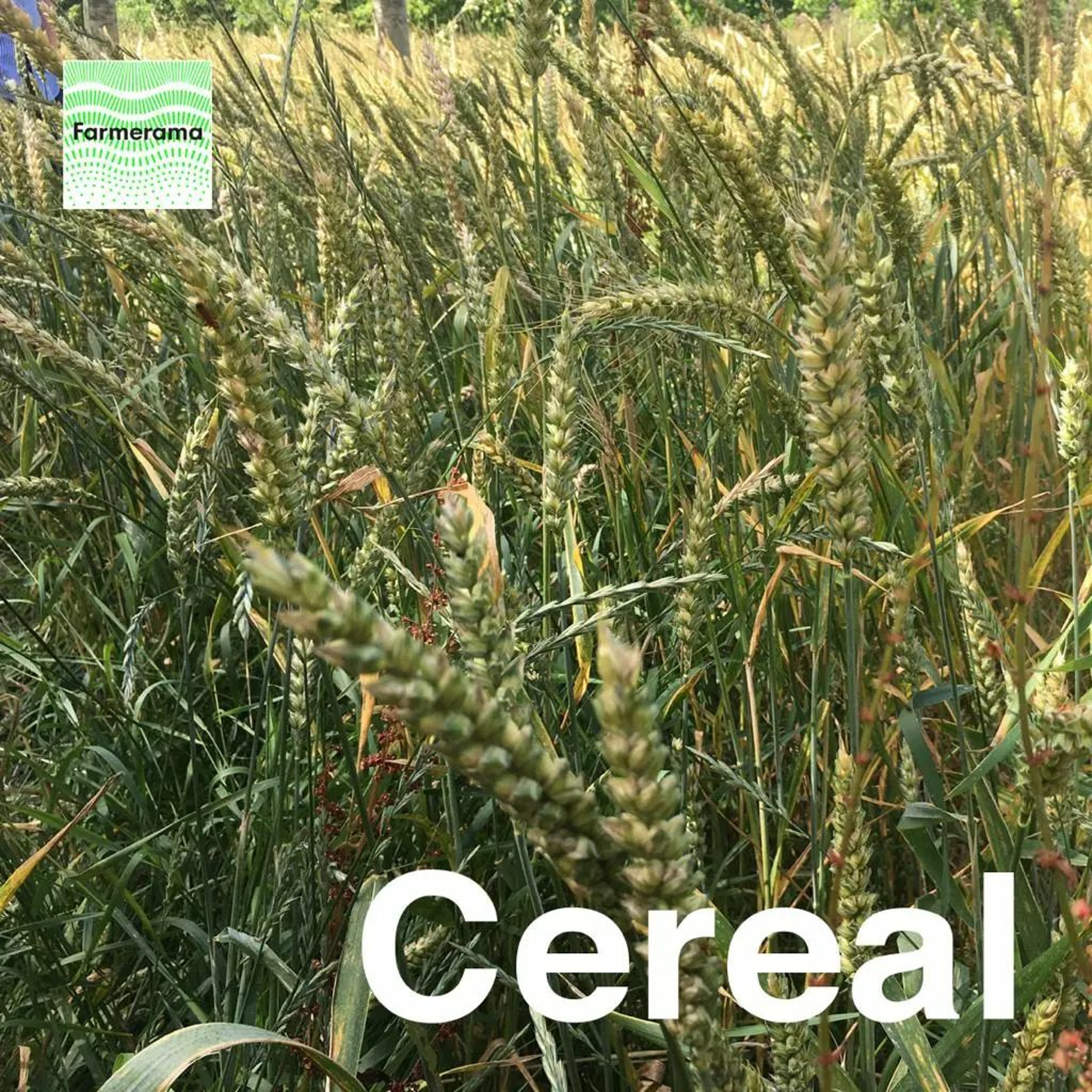
‘Cereal’ bonus episode: Fintan Keenan
This is a bonus Cereal episode featuring an extended interview with Fintan Keenan, a regenerative grain farmer, miller and mill designer living in Denmark. Fintan features in episode 4 of Cereal: “The Miller is Missing”. Abby Rose spoke to Fintan at PX+ festival. Fintan tells us about his innovative hybrid stone/roller mill – which allows millers to produce a huge range of flours while retaining the whole grain – and shares his vision of what it will take to rebuild local grain economies around the world. If you haven’t listened to our Cereal series yet, we’d really encourage you to check it out. Listen here: www.farmerama.co/about/cereal You can find Fintan Keenan on Twitter: www.twitter.com/fintankeenan And on Instagram: www.instagram.com/fintankeenan
‘Cereal’ bonus episode: Mungoswells Malt and Milling
This is a bonus Cereal episode featuring an extended interview with Angus McDowall and Alison Campbell of Mungoswells Malt and Milling in East Lothian, Scotland. Angus and Alison feature in episode 4 of Cereal: “The Miller is Missing”. In this episode, Angus explains how he – accidentally! – came to be milling the grain he grows on his 550-acre farm, and Alison gives us a tour of their very unusual Swiss Army flour mill. If you haven’t listened to our Cereal series yet, we’d really encourage you to check it out. Listen here: www.farmerama.co/about/cereal Find out more about Mungoswells Malt and Milling, and where to buy their flour, at www.mungoswells.co.uk
Cultivating Justice: Episode 6
Welcome to Cultivating Justice! Our 6-part series in collaboration with Land In Our Names (LION) and Out on the Land (OOTL, part of The Landworker’s Alliance) which weaves together interviews, conversations, music and reflections from Black people, people of colour, trans people, queer people and women, on their relationships with land, growing, and identity. In the final episode of this series, our producer, Katie Revell, hosts alongside LION’s Sam Siva and OOTL’s Hester Russell, who add their reflections to the pieces throughout the episode. First, psychotherapist and grower Srikanth Narayanan shares their thoughts about the fluid ways in which we can see our relationship with land, other living creatures, plants and the natural environment. They discuss how to reconnect with the natural world as something that is not outside of us, and how trauma can be addressed and healed through our relationships to land. Next, Farmerama’s Dora Taylor and Abby Rose talk about a dissertation that Dora wrote about Black farmers in the UK. The dissertation explores the relationships between the cultural practices of Black farmers and the mainstream agroecological movement. Abby and Dora unpick themes of racial identity, the use of language around agroecological methods, and the importance of centering joy. Towards the end of the episode, we hear from our chorus of voices, who reflect on home, belonging and rurality. And finally, Sam Siva shares an emotive visioning piece, inviting us to imagine the world that we are working towards, one that centres queer, anti-racist and reparative frameworks, challenges systems of oppression, and fundamentally changes the structural experiences of marginalised groups. We also hear a re-worked traditional folk song, and a performance piece by artist Sin Wai Kin. The first two zines from the Cultivating Justice project, ‘TransPlants’ and ‘Gourds, Banjos and Calalloo’, are available to order now here, on LION’s website. The Cultivating Justice podcast series is made by Abby Rose, Dora Taylor, Katie Revell, Nadia Mehdi, Sam Siva, and Hester Russell. This episode featured contributions from Srikanth Narayanan, Dora Taylor and Sam Siva; reflections from Philomena de Lima, Maymana Arefin, Sasha, a.k.a. MindYourOwnPlants, Dani Foster, Tinisha Williams, Anna Barrett, and Nancy Winfield; music by Eggclab 7 and Bianca Wilson, a.k.a. Island Girl; along with performance art by Sin Wai Kin. Our series music is by Taha Hassan, and our artwork is by @Blkmoodyboi. Thank you to our funders, Farming the Future and the Roddick Foundation. And a massive thank you to everyone who’s contributed in any way! Visit landworkersalliance.org.uk/cultivating-justice to find out more.
Cultivating Justice: Episode 5
Welcome to Cultivating Justice! Our 6-part series in collaboration with Land In Our Names (LION) and Out on the Land (OOTL, part of The Landworker’s Alliance) which weaves together interviews, conversations, music and reflections from Black people, people of colour, trans people, queer people and women, on their relationships with land, growing, and identity. Our host for episode 5 is Marcus MacDonald – Land in Our Names member, grower, tour manager and organiser. Marcus takes us on an auditory journey centring on the banjo, and we learn why this instrument is intricately connected to Black culture, food growing and justice. We sit in on a banjo lesson with Marcus and his friend and teacher Bianca Wilson, aka Island Girl. They play together, chat about country music, and discuss the history of the banjo, including how this instrument from African and Caribbean culture became mainstreamed in white culture throughout Europe and the United States. Marcus talks about how growing gourds to make banjos has become an important part of his cultural identity. Next, we hear from Hannah Mayree – grower, herbalist and founder of the Black Banjo Reclamation Project, which aims to re-appropriate Black culture by returning banjos, instruments of African origin, to the descendants of their original makers. Hannah talks to us about how the project works, and how growing gourds to build banjos can be an immensely healing practice. The Cultivating Justice podcast series is made by Sam Siva, Katie Revell, Hester Russell, Dora Taylor, Abby Rose and Nadia Mehdi. This episode featured conversations with Marcus Macdonald, Bianca Wilson and Hannah Mayree. Our series music is by Taha Hassan. Our artwork is by @Blkmoodyboi. Thank you to our funders, Farming the Future and the Roddick Foundation. And a big thank you to everyone who’s contributed in any way! Visit landworkersalliance.org.uk/cultivating-justice/ to find out more.
Cultivating Justice: Episode 4
Welcome to Cultivating Justice! Our 6-part series in collaboration with Land In Our Names (LION) and Out on the Land (OOTL, part of The Landworker’s Alliance) which weaves together interviews, conversations, music and reflections from Black people, people of colour, trans people, queer people and women, on their relationships with land, growing, and identity. Episode 4 is hosted by Hester Russell and Zoe Miles, who are both from Out on the Land (OOTL), and also involved in an emerging grower’s union. In this episode, we hear more of Jass Butt and Hari Byles’s music made from recordings inside a wormery and a compost heap in East London. We also hear another clip from a a performance by artist Sin Wai Kin, commissioned by the Queer Ecologies collective. Our chorus of voices returns, reflecting on the relationships and congruences between plants and queerness. We also hear from Natalie Tamburrini, who talks about her experience of working on a farm as an autistic person as part of a project called Eco Talent, and shares her ideas on how to make farms – and workplaces in general – more just, accessible and inclusive. She shares part of an open letter she has written to neurotypical society. Then, we chat with Maggie Cheney of Rock Steady Farm in upstate New York. They discuss how they are centering care in their work on the farm, and consider how this could be a way of queering our approach to landwork. The Cultivating Justice podcast series is made by Sam Siva, Katie Revell, Hester Russell, Dora Taylor, Abby Rose and Nadia Mehdi. This episode featured conversations with Natalie Tamburini and Maggie Cheney; reflections from our chorus of voices – Tinisha Williams, Sasha, a.k.a. MindYourOwnPlants, Dani Foster, Dav Singh, Anna Barrett, and Nancy Winfield; clips from a performance by Sin Wai Ki mixed for the Microbe Disco and a piece from Jass Butt and Hari Byles. Our series music is by Taha Hassan. Our artwork is by @Blkmoodyboi. Thank you to our funders, Farming the Future and the Roddick Foundation. And a big thank you to everyone who’s contributed in any way! Visit landworkersalliance.org.uk/cultivating-justice/ to find out more. Hester and Zoe referenced an emerging growers’ union they are involved. Here Hester has shared a bit more information about it and links to get in touch if you are interested: “A union of landbased employees has been forming since the start of 2022. New name tbc! Together we aim to provide support for grievances, counter isolation, increase the accountability of employers, fight for better standards and to build power and solidarity across the landworking and other union movements. See our full aims here. https://docs.google.com/document/d/1RiJO5UekAXOeGPxKBnhGyjaACnWq8HeWM_-K5uBfyiU/edit?usp=drivesdk This union is still very young and welcomes any landbased worker who is not an employer or a manager to join our conversations. At the moment we are conducting a workers enquiry as well as forming and strengthening our group processes. Join us on discord to say hi and find out more https://discord.gg/FH9QAS42WD“
Cultivating Justice: Episode 3
Welcome to Cultivating Justice! Our 6-part series in collaboration with Land In Our Names (LION) and Out on the Land (OOTL, part of The Landworker’s Alliance) which weaves together interviews, conversations, music and reflections from Black people, people of colour, trans people, queer people and women, on their relationships with land, growing, and identity. Episode 3 is hosted by LION’s Sam Siva and Farmerama’s Dora Taylor. In this episode, we dig into the practices and meanings around callaloo, a plant that’s commonly used in Caribbean food, and can also be grown in the UK. Glenda Trew is a workshop facilitator, community grower and gardener who lives in London. She talks to us about: teaching callaloo growing to growers from Lewisham’s Ital Garden; her personal history and connection to the plant; and the importance of being able to access culturally appropriate crops. We also join Sam and Dora in Sam’s kitchen as they cook some callaloo dishes together. As they cook, eat and swap recipes, they chat about the links between food, growing, history and their own identities. The Cultivating Justice podcast series is made by Sam Siva, Katie Revell, Hester Russell, Dora Taylor, Abby Rose and Nadia Mehdi. This episode featured conversations with Glenda Trew, Dora Talyor and Sam Siva and banjo music by Bianca Wilson aka Island Girl. Our series music is by Taha Hassan. Our artwork is by @Blkmoodyboi Thank you to our funders, Farming the Future and the Roddick Foundation. And a big thank you to everyone who’s contributed in any way! Visit landworkersalliance.org.uk/cultivating-justice/ to find out more.
Cultivating Justice: Episode 2
Welcome to Cultivating Justice! Our 6-part series in collaboration with Land In Our Names (LION) and Out on the Land (OOTL, part of The Landworker’s Alliance) which weaves together interviews, conversations, music and reflections from Black people, people of colour, trans people, queer people and women, on their relationships with land, growing, and identity. Episode 2 is hosted by Assistant Producer Nadia Mehdi and Farmerama’s Abby Rose. Woven throughout we are taken to the fields, pots and allotments of the chorus of land-based practitioners. We hear from Maymana Arefin, a community gardener, spoken-word poet, and artist. They talk to us about their cultural connections to growing, as well as speaking about a series of foraging walks that they help run with Misery Party - a mental health and harm reduction collective - called “Misery Medicine, Plant Magic”, which focus on healing for Black people, and people of colour. We dip into a clip from a performance by Turner Prize nominated artist Sin Wai Kin (this is the first of a few clips we will hear from them across the series). It was commissioned by the Queer Ecologies collective as part of their Microbe Disco. The piece mixes Sin Wai Kin's original sounds and poetry with music from the Butterfly Lovers violin concerto, and recordings from oceans and compost piles. We also hear a field recording by Amu Gibbo, taken by a canal in London. Sam Siva of Land In Our Names (LION) digs into the experiences and wisdom of community gardener, beekeeper and proud South Londoner Carole Wright. We tune into their conversation at Carole’s community garden where they chat about liberation through healing, building resilient communities, and the ways that access to land and the living world are key to this. The Cultivating Justice podcast series is made by Sam Siva, Katie Revell, Hester Russell, Dora Taylor, Abby Rose and Nadia Mehdi. This episode featured conversations with Maymana Arefin and Carole Wright; reflections from our chorus of voices – Tinisha Williams, Sasha, a.k.a. MindYourOwnPlants, Dani Foster, Dav Singh, Anna Barrett, and Nancy Winfield, along with Maymana Arefin; clips from a performance by Sin Wai Kin mixed for the Microbe Disco and field recordings by Amu Gibbo. Our series music is by Taha Hassan. Thank you to our funders, Farming the Future and the Roddick Foundation. And a big thank you to everyone who’s contributed in any way! Visit landworkersalliance.org.uk/cultivating-justice/ to find out more.
Cultivating Justice: Episode 1
Welcome to Cultivating Justice! Our 6-part series in collaboration with Land In Our Names (LION) and Out on the Land (OOTL, part of The Landworker’s Alliance) which weaves together interviews, conversations, music and reflections from Black people, people of colour, trans people, queer people and women, on their relationships with land, growing, and identity. Episode 1 is hosted by OOTL’s Hester Russell and LION’s Sam Siva. Woven throughout we are taken to the fields, pots and allotments of a chorus of land-based practitioners. We are treated to a sound piece ‘Eating your castings’ by Jas Butt and Hari Byles, made up of sounds that were recorded inside a wormery and a compost heap in an urban nature reserve in East London. We hear from Paula Gioia about the organising work happening in Europe on issues relevant to LGBTQIA+ landworkers, as well as the roots of European Coordination Via Campesina (ECVC)’s gender and sexuality articulation, and their Embracing Rural Diversity report. We drop in on a conversation between Sam Siva and Professor Corinne Fowler, recorded shortly after their keynote session at the ORFC22 on Land, Race and Empire. They discuss how systems of oppression are rooted in land ownership, issues around access to rural spaces for BPOC and people living in cities, and how to truly decolonise regenerative agriculture. The Cultivating Justice podcast series is made by Hester Russell, Abby Rose, Dora Taylor, Katie Revell, Nadia Mehdi and Sam Siva. This episode featured conversations with Paula Gioia and Corinne Fowler. Reflections from Sasha aka MindYourOwnPlants, Dani Foster, Dav Singh, Tinisha Williams, Nancy Winfield, Srikanth Narayanan and Philomena de Lima and music by Jas Butt – a.k.a. Guest and Hari Byles, as well as Bianca Wilson, a.k.a. Island Girl. Our series music is by Taha Hassan. Thank you to our funders, Farming the Future and the Roddick Foundation. And a big thank you to everyone who’s contributed in any way! Visit https://landworkersalliance.org.uk/cultivating-justice/ to find out more.
75: ‘Biology first’ regen, Black British farmers and the miller-to-baker relationship
This month, our first stop is UK Grain Lab, a gathering in Nottingham of farmers, millers, bakers and scientists who are building a new grain system for the UK. We speak to baker Kate Hamblin and miller David Howell about their close working relationship Next, we head to Aotearoa New Zealand, and hear from Jake Clarke, the head farmer at Organic Market Garden - or OMG - a model farm set up by For the Love of Bees in Tāmaki Makaurau Auckland Finally, we share a preview from our upcoming series, Cultivating Justice. We've been working on the series in partnership with Land in Our Names and the Landworkers' Alliance's Out on the Land Group, with the first episode due to be launched next month. In this snippet, Abby speaks to Farmerama's own Dora Taylor about her Masters research on the experiences of Black farmers in the UK.
74: Foodshed, Agroecological coaching and the regenerative mindset
This month we hear from three practitioners about what it takes to transform minds and hearts. Firstly we hear from Bea Alvarez, Climate Resilience Projects & Outreach Coordinator at Carbon Sink Farms and Foodshed in San Diego County, California abouut how collaborations between multiple farmers and indigenous landholders have built a new vision for the food and farming system there. Clare Hill at FAI Farms tells us about her journey, moving towards a regenerative farming system and we hear from Nicole Masters about the CREATE program and what it takes to train people so they can coach others on a regenerative journey. We’re very grateful to those of you that support us and allow us to bring you these stories every month. Even the smallest contribution makes a big difference to us. If you'd like to become a supporter, visit patreon.com/Farmerama
73: Chilean natural cider, the Regen Platform and biodynamic whiskey
This month we have voices on three continents. We begin talking to Juani Lisboa, part of a natural cider-making collective in Chile - Agricola sin Patrones - who are working to support more diverse rural ecosystems. Then our co-creator Abby Rose puts her Vidacycle hat on and talks to agroecologist Nicole Masters about a powerful new tool they worked on together - the Soilmentor Regen Platform - which uses the 10 Regen Indicators to help farmers learn from their in-field observations. And finally we hear from two people working closely with Bruichladdich Distillery on Islay. Richard Gantlett at Yatesbury House Farm supplies the distillery with biodynamic barley, and Christy MacFarlane works in their comms department. She shares about the distillery's work with growing landrace barley on the Hebridean Islands where they are based. Episode Links: Agricola sin Patrones https://www.instagram.com/agricola_sinpatrones/ Nicole Masters x Vidacycle = the Soilmentor Regen Platform https://www.integritysoils.co.nz/ https://soils.vidacycle.com/ Richard Gantlett, Yatesbury House Farm https://yatesbury.wixsite.com/yatesbury Bruichladdich Distillery https://www.bruichladdich.com/
72: new food media, herbal CSAs and regenerative supporting blockchain
This month we hear about the new food and farming media and how the two are becoming ever closer, we head to a medicinal CSA and we end with a technology that may be part of our toolkit for a regenerative future. This episode of Farmerama was made by Jo Barratt, Abby Rose and Olivia Oldham. A big thanks to the rest of the Farmerama team Katie Revell, Fran Bailey, Annie Landless, Eliza Jenkins and Dora Taylor. Our theme music is by Owen Barratt. We’re very grateful to those of you that support us and allow us to bring you these stories every month. Even the smallest contribution makes a big difference to us. If you'd like to become a supporter, visit patreon.com/Farmerama Links: Vittles https://vittles.substack.com/ @vittleslondon Jonathan Nunn @demarionunn Earthlight Herbs: https://www.earthlight.uk/ Regen Network : https://www.regen.network/token/
71: Continuous Cropping, Land For Who and the Magic of Woodchip
In this month’s episode, we bring you three conversations with farmers and researchers who spoke at this year’s Oxford Real Farming Conference. First, we hear from John Letts - a wheat grower and crop developer living in Buckinghamshire, known for growing heritage grains. He joins us to explain Continuous cropping, something that got a lot of attention this year at the ORFC. Next, we speak to Frances Northrop, who works for the New Economics Foundation and is an associate fellow specialising in local economies. Frances talks to us about a project she worked on last year called 'Land for Who'. She also explores the concept of 'new municipalism' - a global political movement that is all about ordinary citizens claiming power in their local and city governments - and how this relates to land. Finally, we catch up with Ben Raskin to talk about his new book.‘The Woodchip Handbook’ delves into the magic and potential of woodchip not only as a mulch but also as a way of building soil health and fertility through beneficially increasing the fungal content of the soil. This episode of Farmerama was made by Jo Barratt, Abby Rose and Olivia Oldham. A big thanks to the rest of the farmerama team - Katie Revell, Annie Landless, Eliza Jenkins, Fran Bailey and Dora Taylor.
70: Resilient grapes, Soil insight and Aotearoa farm tour
This month we hear about more resilient grape varieties and growing grapes in the UK from new grower Victoria Vine Lizard, we are offered a mind bending new way of understanding what soil is from Rothamsted research scientist Andy Neal and you can sit back and relax as we take you on a farm tour on the other side of the world with Greg Hart of Mangarara Station in Aotearoa New Zealand. It’s been a long year and we don’t know about you, but here at the Farmerama team we are pretty exhausted. We wanted to say thank you to all of you, the Farmerama listeners and people out there doing the work to build a more ecological and just farming future for all of us. We know this isn’t easy but we really appreciate you and it’s an honor to all be in this together. May 2022 bring beauty to you all. We’re very grateful to those of you that support us and allow us to bring you these stories every month. Even the smallest contribution makes a big difference to us. If you’d like to become a supporter, visit patreon.com/Farmerama
69: COP 26: Glasgow growing, participatory action research and migrant worker solidarity
This month, we’re heading to Glasgow to bring you three stories from the fringes of the COP26 conference. We’ll hear from Tenement Veg about the challenges of growing food in Scotland’s largest city. We’ll highlight Nourish Scotland’s involvement at the conference, and speak to Warami Jackson and Marlon Opigo, two participants in Feedback’s “participatory action research”- an innovative and inclusive project researching young people’s experience of the food system. We’ll visit the Landworkers’ Alliance’s agroecology hub, and speak to the LWA’s Catherine McAndrew about the urgent call for solidarity with migrant workers. This episode of Farmerama was produced by Katie Revell, Olivia Oldham and Abby Rose. We’re very grateful to those of you that support us and allow us to bring you these stories every month. Even the smallest contribution makes a big difference to us. If you’d like to become a supporter, visit patreon.com/Farmerama Links: ‘Young Seeds for your Thoughts: Towards a Just Food System’. www.youtube.com/watch?v=HNkYxX90O7Y
68: Commoners in Cumbria and collective landscape restoration in Spain
This month we speak to Cumbrian sheep farmer and celebrated author James Rebanks about the collective discovery of aligned interests of farmers as they are regenerating their landscapes together. And Abby has visited, Erica ten Broeke, Landscape Manager at Commonland, a Dutch NGO that bring a holistic approach to landscape restoration as initiator, catalyst and enabler of large-scale, long-term restoration initiatives. This episode of Farmerama was made by Jo Barratt, Abby Rose and Olivia Oldham. A big thanks to the rest of the Farmerama team Katie Revell, Fran Bailey, Annie Landless, Eliza Jenkins and Dora Taylor. Our theme music is by Owen Barratt. We’re very grateful to those of you that support us and allow us to bring you these stories every month. Even the smallest contribution makes a big difference to us. If you'd like to become a supporter, visit patreon.com/Farmerama Links: James Reanks @herdyshepherd1 La Junquera lajunquera.com/ Common Land https://www.commonland.com/
67: Fibre farming, Ugandan permaculture and rain-fed regeneration in Spain
This month we begin with a story from Rosie Bristow, MSc student of Fashion and Textile Management based at Phantassie Organic Farm in Scotland. We learn from Rosie about a farm to fashion project she’s pioneering as part of her studies, to prototype a UK textile economy in collaboration with George Young at Fobbing Farm in Essex. Next, we head to Uganda, where we hear from Noah Ssempijja of YICE (Youth Initiative for Community Empowerment), a social enterprise focused on providing smallholder farmers access to regenerative farming technique. Finally, we hear from Alfonso Chico Gusman and Yanniek Schoonhoven of La Junquera, who are experimenting with rain-fed regenerative techniques on their mixed farm in the arid mountains of southern Spain. La Junquera’s influence extends beyond the farm, with training initiatives such as the Regenerative Academy which offers education to the wider community as well as research collaborations with different universities bringing research to the farm. We will be hearing more from La Junquera over the next few months, as they are a great example of the power of collective action to build on the regenerative movement! This episode of Farmerama was made by Jo Barratt, Abby Rose and Olivia Oldham. A big thanks to the rest of the Farmerama team Katie Revell, Fran Bailey, Annie Landless, Eliza Jenkins and Dora Taylor. Our theme music is by Owen Barratt. We’re very grateful to those of you that support us and allow us to bring you these stories every month. Even the smallest contribution makes a big difference to us. If you'd like to become a supporter, visit patreon.com/Farmerama Links: Rosie Bristow @straw_into_gold YICE Uganda https://twitter.com/YICEUganda La Junquera https://lajunquera.com/ Regeneration Academy https://www.regeneration-academy.org/
Landed part 4: Places of possibilities
So if, as it turns out, the family farm is a colonial concept, what are the alternatives? And if we’re to address the tangled mess of challenges we’re faced with – the climate emergency, biodiversity loss, farmer burnout, food inequality and the need for reparations – then perhaps we need to be thinking not at the scale of the individual farm, but of the entire landscape. In this final episode, Col explores the patchwork of pre- and post-colonial land relations that already exist across Scotland. He learns more about the tried and tested model of crofting that still exists in parts of the Highlands, as well as Scotland’s community right-to-buy legislation, and asks whether, together, these could be part of a broader strategy to rethink land ownership and tenure, and even our relationship to land more broadly. In the end, Col concludes that it’s not the case that the family farm is no longer relevant – it’s just that on its own, it’s not enough to deal with what the future has in store. Instead, the family farm must come to understand itself as part of a much broader landscape – one made up of a kaleidoscope of different understandings of, and approaches to, what it means to be Landed. Landed is produced by Col Gordon and Katie Revell, with Executive Producer Abby Rose. Our Project Manager is Olivia Oldham. Huge thanks to Josina Calliste for her guidance and input and to Sarah Nicholas for all her help and support. Thanks also to Jo Barratt. The music for Landed is by Dagger Gordon and Col Gordon. This episode featured Marian Bruce, Helen O’Keefe, Patrick Krause, Calum MacLeod, Adam Calo, Will Frazer and Emma Whitham. Funding for the project was provided by the funding platform Necessity. Farmerama is committed to keeping all our episodes free, and to paying our team a living wage. To do so, we rely on support from you, our community of listeners. If you’d like to help us make more podcasts, you can become a Patron at patreon.com/farmerama.
Landed part 3: Colonial connections
In Part 2, farmer’s son Col Gordon explored the ways in which the colonisation of Highland Scotland destroyed a rich pre-colonial culture and relationship to the land. But in Part 3, he learns that the story of Scotland as the victim of colonial practices is just one part of a much bigger narrative. The Highlands is one of the least racially diverse parts of the UK, and it would be easy to think of the area as far removed from the UK’s grim colonial history – a place where racial justice and reparations have no direct relevance. But, as Col discovers, this would be far from the truth. Col traces the connections – some indirect, others very concrete – between the rural landscape he grew up in and global patterns of displacement, exploitation and enslavement. To dig deeper, he speaks with Josina Calliste, co-founder of Land in Our Names (LION) – a Black-led, grassroots collective committed to reparations in Britain by connecting land and climate justice with racial justice – and explores what it means to be a person of colour in rural Scotland today. Landed is produced by Col Gordon and Katie Revell, with Executive Producer Abby Rose. Our Project Manager is Olivia Oldham. Huge thanks to Josina Calliste for her guidance and input and to Sarah Nicholas for all her help and support. Thanks also to Jo Barratt. The music for Landed is by Dagger Gordon and me, Col Gordon. This episode featured David Alston, Josina Calliste, Iain MacKinnon, Srik Narayanan and Philomena de Lima Funding for the project was provided by the funding platform Necessity. Farmerama is committed to keeping all our episodes free, and to paying our team a living wage. To do so, we rely on support from you, our community of listeners. If you’d like to help us make more podcasts, you can become a Patron at patreon.com/farmerama
Landed part 2: Re-storying the landscape
Over the last 250 years, Gaelic culture in the Highlands of Scotland has experienced what academic Iain MacKinnon refers to as “cultural devastation”. For farmer’s son, Col Gordon, the forced displacement of people during the Highland Clearances, and the dismantling of Gaelic language and traditions, are best understood through the lens of colonisation. Now, only small pockets of Gaelic culture remain, detached from the conditions and ways of life that they evolved in. In this episode, Col learns about the pre-colonial attitudes of the Gaels towards the land, investigating the question of what came before the family farm. What he finds is a system based on community and collective work, with a yearly migration to the hillside “shieling” to graze the cattle and rejuvenate the spirit. Above all, what he finds is a fundamentally different way of relating to the land – an understanding that people belong to the land, not the other way around. Could a revival of these “indigenous” practices, and these relationships to the land, provide a route forward? And, if so, how might we “re-indigenise” in an open and inclusive way? Landed is produced by Col Gordon and Katie Revell, with Executive Producer Abby Rose. Our Project Manager is Olivia Oldham. Huge thanks to Josina Calliste for her guidance and input and to Sarah Nicholas for all her help and support. Thanks also to Jo Barratt. The music for Landed is by Dagger Gordon and Col Gordon.

Landed part 1: The family farm
“What if we’ve been getting this wrong?” Col Gordon is a farmer’s son from the Scottish Highlands. After a decade away, he’s finally returned to the place that he loves: his family farm. Now, he’s eager to start realising his vision for an agroecological future: a future in which rural areas are alive with culture, many more people work on the land, farms operate in sympathy with nature, and nutritious food is available to everyone in society. But now that he’s back, Col’s starting to wonder whether this vision can be achieved within the existing family farm model. Increasingly, it seems the odds are stacked against farms like his. Many are struggling to survive, let alone to employ people and deliver good food affordably to local communities. As older farmers retire without succession plans, and their land is amalgamated into large industrial operations, the future of the small family farm looks pretty bleak. As he wrangles with all of this, Col stumbles across something that throws his vision – and his very understanding of farming – into doubt. What does it mean to say that “The family farm is a colonial concept”? And might this jarring idea be the key to understanding the problem – as well as its potential solutions? Landed is produced by Col Gordon and Katie Revell, with Executive Producer Abby Rose. Our Project Manager is Olivia Oldham. Huge thanks to Josina Calliste for her guidance and input and to Sarah Nicholas for all her help and support. Thanks also to Jo Barratt. The music for Landed is by Dagger Gordon and me, Col Gordon.
66: Ecosystem agriculture, the probiotic turn and regenerative flower growing
This month we are introduced to the importance of ecosystem architecture by a forest ecologist and winegrower. We hear from two researchers investigating a shift in how we understand our relationship with the natural world - from one where humans are in control, to one where we work with other life-forms and biological processes to build human and ecosystem health. And we finish hearing one grower’s experience of implementing regenerative techniques on her flower farm.
65: Community farm investment, Naked Oat Mylk and Palestinian fair trade
This month we start with a fond farewell to internationally renowned water specialist Professor Tony Allen, most noted for his pioneering work on the concept of virtual water. We’ll hear a conversation with him from 2017 about the OurField Project. We then hear from the Kindling Trust. They work on a range of projects that model a fairer, more responsible, ecologically restorative food system, and are opening up an opportunity to invest in their new farming endeavours in Manchester. Next, farmer John Turner introduces us to a new vision of dairy farming- a vegetarian dairy farm producing cow’s milk alongside innovative naked oat mylk. Tiger and Float are making this oat mylk, using the naked oats that John is growing. Finally we meet Mohammed Ruzzi, a fair trade farmer in Palestine, who talks to us about the role of regenerative farming and the Zaytoun cooperative in supporting a better life for Palestinian farmers.
64: Dung beetles, herbal medicine, hydrology and soil carbon
This month, we learn from an entomologist in Wiltshire about the importance of dung beetles in our farming systems. We hear how a medical herbalist in London is bringing people together to care for and heal each other and a soil microbiologist shares how restoring hydrological cycles is vital in mitigating the climate crisis and how the soil carbon sponge is core to that.
63: Indian farmers’ protests, the Forever Flock and Biopriming
63: Indian farmers’ protests, the Forever Flock and Biopriming by Farmerama
62: ORFC 2021
This month we invite you to join us as we take a dip into some of the key sessions at the recent Global Oxford Real Farming Conference, where Farmerama were official media partners again this year. We hear from two women lawyers in Aotearoa New Zealand who tell us about how a river and a forest have been given legal personhood. Then, we hear how an economic think-tank and a London CSA have worked together to understand the community benefits of localised routes to market and local organic food. Next, we head to Cape Town to hear about food justice from two women working at a farming cooperative. Finally, we hear from an indigenous seedkeeper and leader in Turtle Island (the United States) about cultivating ancestral brilliance and regenerative economies.
61: Fine Fleeces, Pasture Cropping and Land in Commons
It’s good to be back this month with a collection of conversations with farmers who are building a more ecological future. We begin at Whistlebare Farm learning how raising sheep and goats ecologically results in wool that’s extra special – all because of good work going on in the soil. We head to France, to Andy Cato’s farm, to hear about his regenerative learning journey, and discover how he’s putting that learning into practice here in the UK. And finally, we’re in Germany, where the Kulturland Cooperative has created an innovative funding model bringing farmland back into common ownership, and securing it for generations to come.
"Who feeds us?" Episode 6: Looking back and moving forward
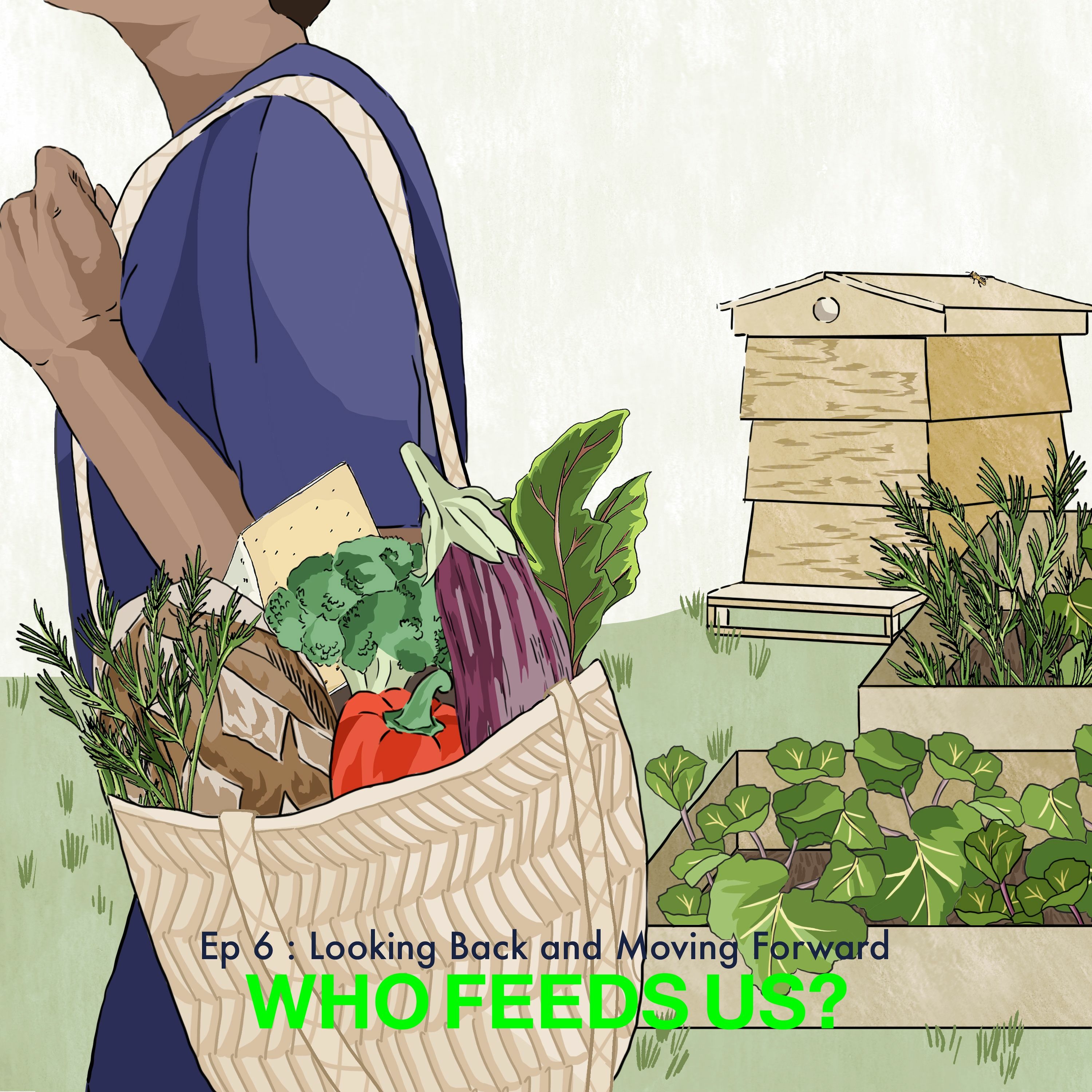
In this final episode, we revisit some of the people we’ve heard from throughout the series. We tease out some common threads that bind these apparently disparate voices together – threads such as reverence, gratitude, sovereignty, dignity and abundance. We hear more about what these people have learnt over the course of this year, their visions for resilient, localised food economies... and how they see the future of who feeds us. It is clearer than ever: Food is not just a question of calories. Food is nourishment for the body and soul. Food is about community, culture and our relationship with each other and with the Earth. We are all part of the food system. The journey ahead – towards a truly resilient, humane and nourishing food system, a food system rooted in abundance – that journey is complicated, and it will most likely be bumpy. But this series is an invitation to embrace that complexity, to dive into it, to seek out and connect with those who feed us. After all – food doesn’t come from shelves. Food comes from the soil, the sea – and the hands of people. This is who feeds us. Featuring: Skye Gyngell: https://springrestaurant-shop.co.uk/ Jane Scotter: http://fernverrow.com/ Salma & Khalil Attan: https://www.bushwoodbees.co.uk/ // https://www.youtube.com/channel/UCVrsm10F2zp_KO26MBCGRUw Ursula Myrie: https://www.adira.org.uk/ Angus Buchanan-Smith: https://www.the-free-company.com/ Dee Woods: https://granvillecommunitykitchen.wordpress.com/ Dr Lisa Palmer: https://www.bcu.ac.uk/social-sciences/sociology/staff/lisa-palmer Muhsen Hassanin: https://abrahamshalalmeat.com/ Abigail Holsborough: https://www.brixtonwindmill.org/ Rosy Benson: www.fieldbakery.com/ Lynda McFarlane: https://veganvybes.co.uk/ Farmerama.co Producers: Jo Barratt, Katie Revell, Abby Rose, Suzie McCarthy Additional interview: Lovejit Dhaliwal Series Executive Producers: Jo Barratt, Katie Revell, Abby Rose Community Collaborators: Cathy St Germans, Zain Dada, Andre Reid Project Manager: Olivia Oldham Artwork: Hannah Grace www.hgraceoc.com/ Music: Michael O'Neil PR & Comms: Fran Bailey, Kate Lam, Elma Glasgow, Nancy Brownlow Who Feeds Us? is possible thanks to the Farming the Future COVID Response Fund. We’re very grateful to The A Team Foundation, the Roddick Foundation, Thirty Percy and the Samworth Foundation for providing the funds to make this project happen.
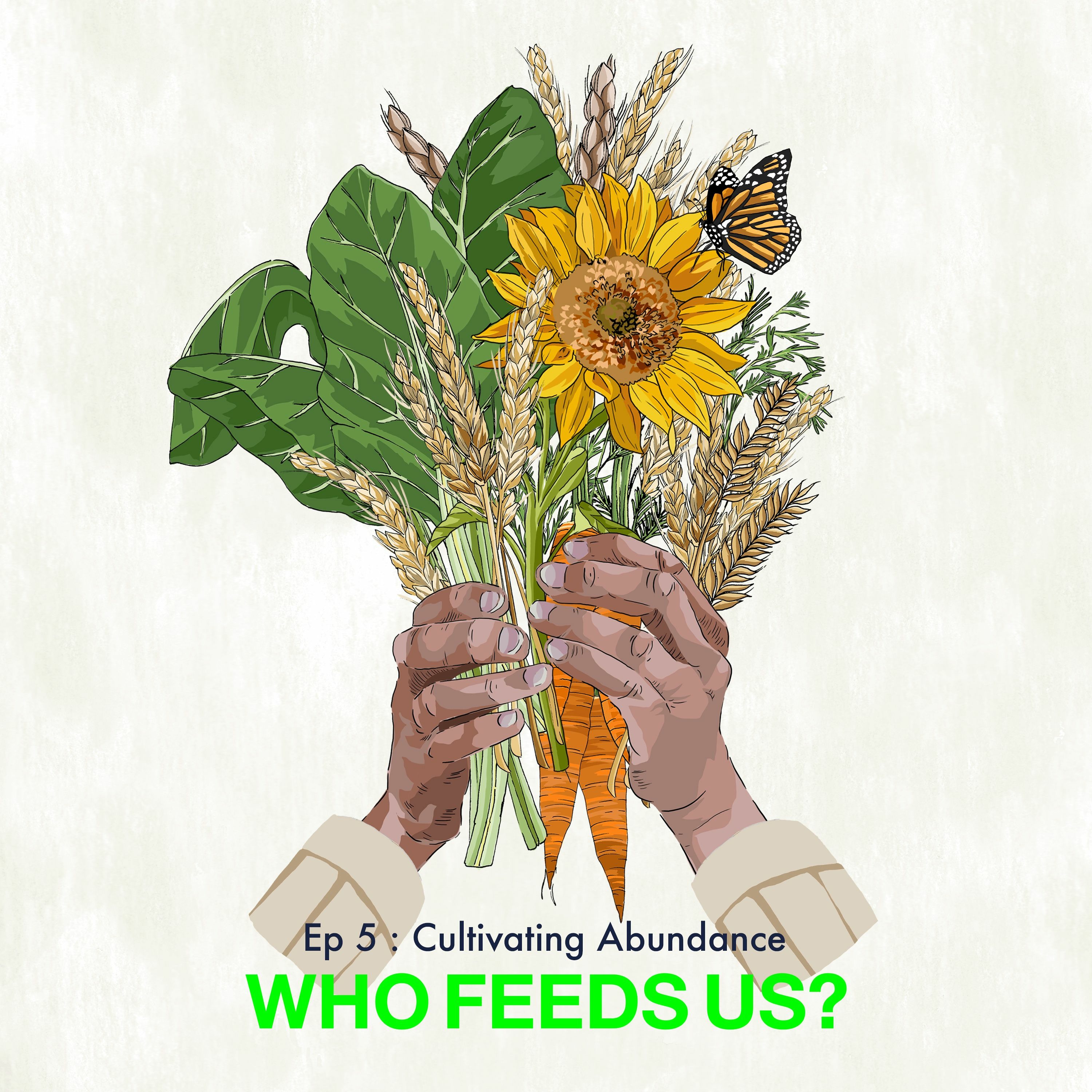
"Who feeds us?" Episode 5: Cultivating abundance
In this episode, we visit one region – the West Midlands – to explore how the pandemic has highlighted connections between the local and the global, the present and the past...and between food, health, community and identity. What can we learn from this time about the experiences, the resources and the needs of individuals and communities in the UK – and, in particular, communities of African descent? How can having access to land, to green space and growing space, “feed” us in multiple ways – physical, emotional and spiritual? Does being together in growing spaces allow the experience of abundance and the ability to share in that? Featuring: Lynda McFarlane: https://veganvybes.co.uk/ Dr Lisa Palmer: https://www.bcu.ac.uk/social-sciences/sociology/staff/lisa-palmer Andre Reid: https://kiondo.co.uk/ Farmerama.co Producer: DeMarkay Williams Executive Producers: Jo Barratt, Katie Revell, Abby Rose Community Collaborator: Andre Reid Project Manager: Olivia Oldham Artwork: Hannah Grace www.hgraceoc.com/ Music: Michael O'Neil PR & Comms: Fran Bailey, Kate Lam, Elma Glasgow, Nancy Brownlow Who Feeds Us? is possible thanks to the Farming the Future COVID Response Fund. We’re very grateful to The A Team Foundation, the Roddick Foundation, Thirty Percy and the Samworth Foundation for providing the funds to make this project happen.
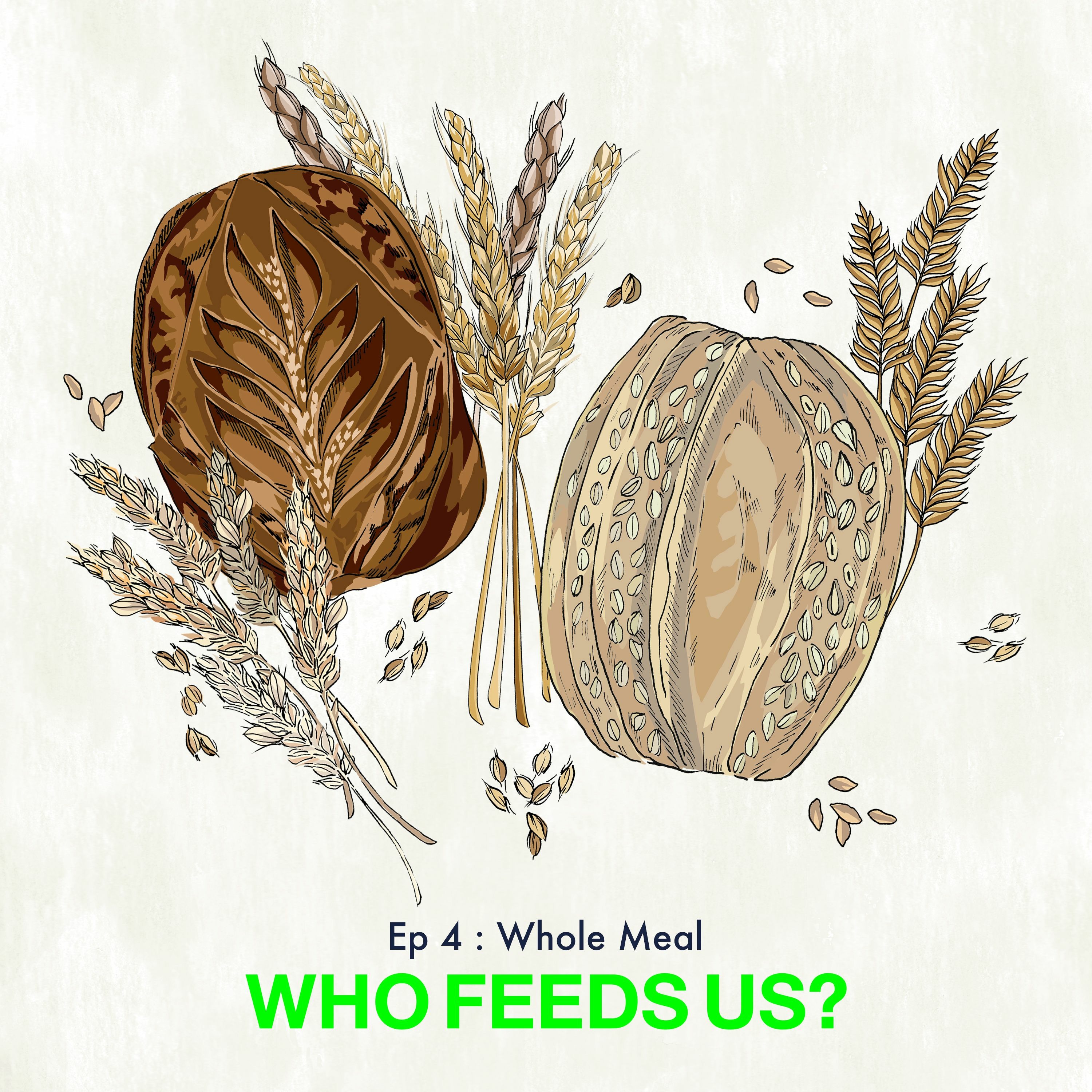
"Who feeds us?" Episode 4: Whole meal
At the start of lockdown, as supermarket shelves were cleared of flour, people who might not otherwise have thought to seek out a local bakery – let alone a local mill – started to do just that. In this episode, we’ll hear about how this sudden upsurge in demand presented a huge challenge for these small-scale bakers and millers – but it was a challenge they met with enthusiasm and ingenuity, as well as a deep sense of responsibility to their communities. At one time, pretty much every town and village had its own flour mill, driven by wind or water. Today, across the whole of London, just one working windmill remains – Brixton Windmill. It’s a unique heritage site with a rich educational programme. But as lockdown began, the mill became much more than a historic curiosity – and its volunteers found themselves providing a vital service to the local community. Meanwhile, bakers across the country, from the city of Bristol to the highlands of Scotland, were baking nourishing loaves for the people who needed them most. These bakers and millers, many of whom have spent the last few years investigating the connections between the bread, the mills, the farms that produce the grain, and, crucially, the soil in which that grain grows, are engaged in building a better system – one that looks very different to the one that produces most of the bread we eat in the UK today. When inflexible, centralised supermarket supply chains buckled, join us to learn how they were able to carry on producing flour, baking bread and feeding people – thanks to the localised, adaptable, human-scale infrastructure they’re part of. How can we grow that infrastructure? How can we all become part of a more resilient, equitable, efficient and enjoyable bread system? How can we help local millers stock local takeaways with bread baked with their flour? How can we help people to understand that, if they care about good bread, they also have to care about healthy soil? And how can we make sure that we celebrate everyone involved in making our bread – and that we listen to what they have to say? Featuring: Abigail Holsborough: https://www.brixtonwindmill.org/ Rosy Benson: https://www.fieldbakery.com/ Rosie Gray: http://www.revivingfood.co.uk/ Farmerama.co Producer: Dave Pickering Executive Producers: Jo Barratt, Katie Revell, Abby Rose Community Collaborators: Cathy St Germans, Col Gordon Project Manager: Olivia Oldham Artwork: Hannah Grace www.hgraceoc.com/ Music: Michael O'Neil PR & Comms: Fran Bailey, Kate Lam, Elma Glasgow, Nancy Brownlow Who Feeds Us? is possible thanks to the Farming the Future COVID Response Fund. We’re very grateful to The A Team Foundation, the Roddick Foundation, Thirty Percy and the Samworth Foundation for providing the funds to make this project happen.
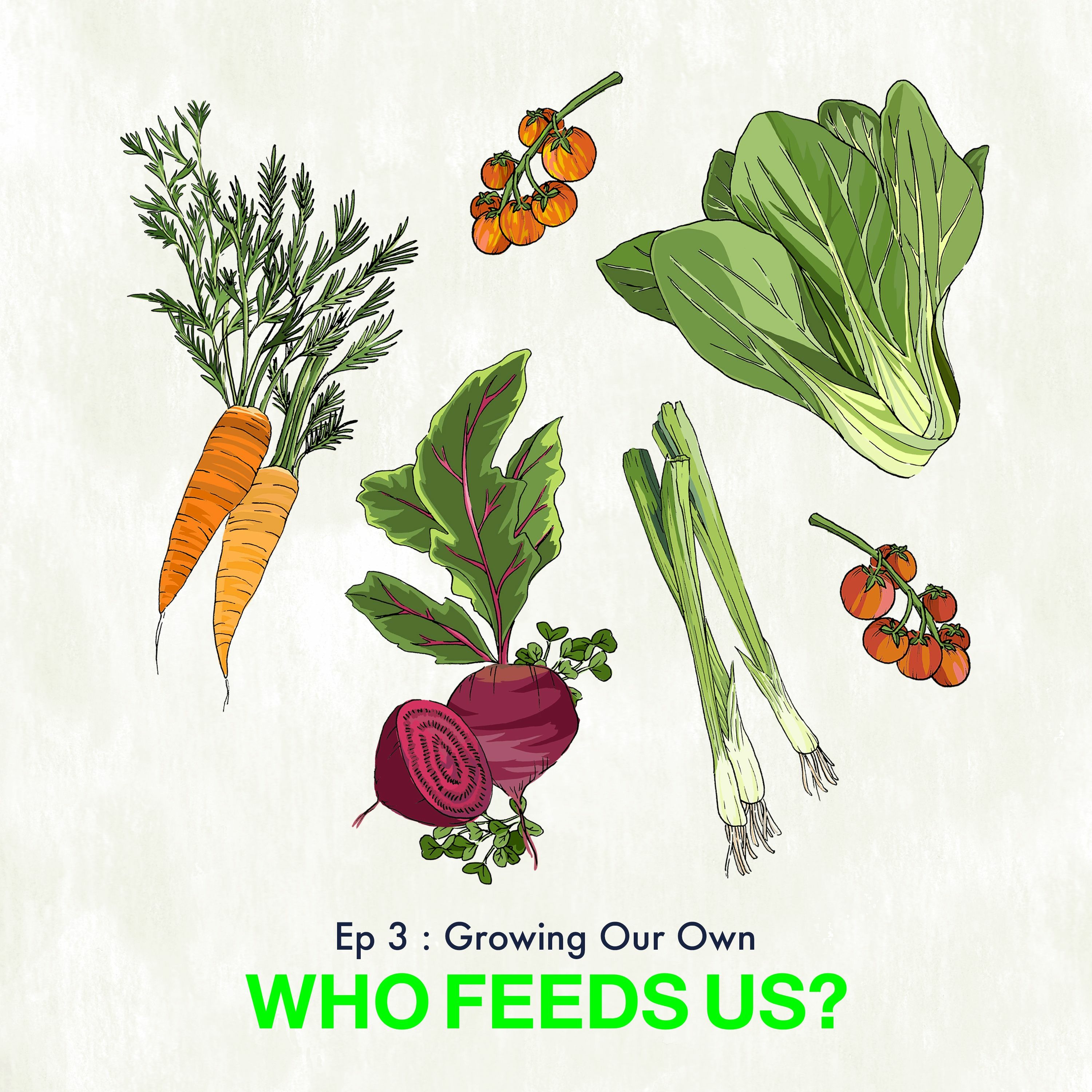
"Who feeds us?" Episode 3: Growing our own
As lockdown came into effect, and supermarkets struggled to restock their fruit and vegetable aisles, the idea of “growing your own” took on a new significance. In towns and cities across the UK, those of us lucky enough to have access to gardens or balconies – even if we’d never grown anything before – suddenly started looking for compost, tools, and seeds. Many of us discovered, perhaps for the first time, the joy of eating freshly picked, homegrown fruit and veg. It’s a joy that you just don’t get when you bite into something that’s been harvested unripe on the other side of the world, flown across oceans to be processed somewhere else, then eventually picked up from a supermarket chiller here in the UK – maybe weeks later. But, to grow your own food, the first thing you need are seeds. For millennia – for the vast majority of our agricultural history, in fact – farmers saved their own seed. Over time, plants adapted to the specifics of the area they were growing in, and local varieties emerged. But when seed companies developed F1 hybrids, which can’t be harvested and re-sown year after year, things changed. The genetics of these hybrids are too unstable – there’s no knowing how your crop will turn out. So farmers and growers reliant on F1 hybrids have to buy their seeds every single year. By saving and sharing open-pollinated seed, farmers and growers – and communities – are helping make sure our food supply can withstand the shocks of climate change. And, they’re also reclaiming collective control of the seeds we all depend on to feed ourselves – ensuring that we all have access to those seeds, even during a crisis – like a pandemic. Featuring: Astrid Guillabeau: Neville Portas: https://nodiggitygdns.wordpress.com/ Dee Woods: https://granvillecommunitykitchen.wordpress.com/ Helene Schulze: https://www.seedsovereignty.info/ Farmerama.co Producer: Alice Armstrong Executive Producers: Jo Barratt, Katie Revell, Abby Rose Community Collaborators: Andre Reid, Dhelia Snoussi Project Manager: Olivia Oldham Artwork: Hannah Grace www.hgraceoc.com/ Music: Michael O'Neil PR & Comms: Fran Bailey, Kate Lam, Elma Glasgow, Nancy Brownlow Who Feeds Us? is possible thanks to the Farming the Future COVID Response Fund. We’re very grateful to The A Team Foundation, the Roddick Foundation, Thirty Percy and the Samworth Foundation for providing the funds to make this project happen.
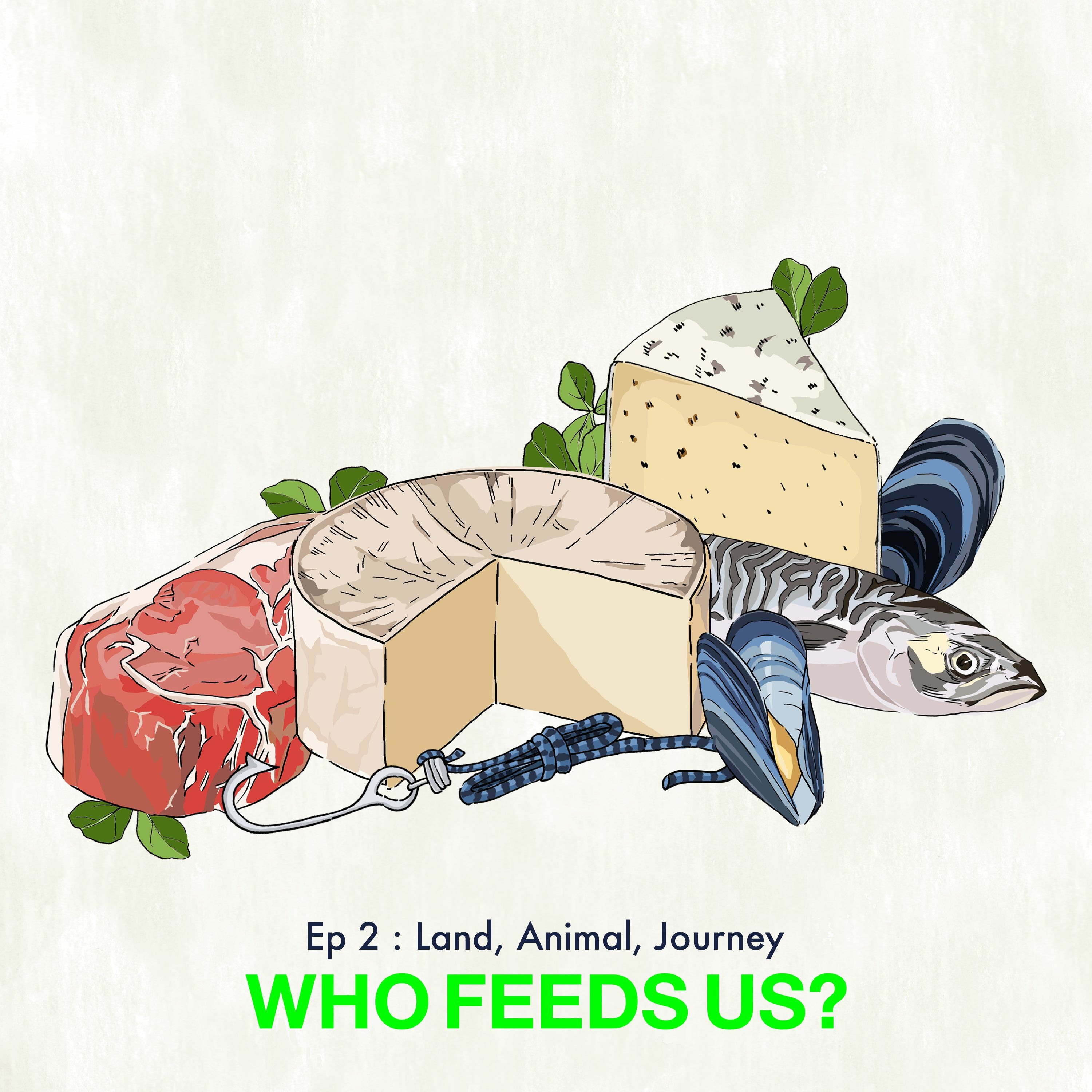
"Who feeds us?" Episode 2: Land, animal, journey
American poet and farmer Gary Snyder writes of the interconnectedness and interdependence of the food chain. He says, “To acknowledge that each of us at the table will eventually be part of the meal is not just being ‘realistic.’ It is allowing the sacred to enter and accepting the sacramental aspect of our shaky temporary personal being.” In this episode, we explore the ways in which a growing consciousness is developing around food, based on ideas of reverence, and gratitude. How have the people who care for the animals that feed us – both in life and in death – changed during this time of crisis? How has the way they understand the future of food been altered by the pandemic, and their own responses to it? How do they see their own place in that future? Who Feeds Us? is a celebration of these key workers, a thank you and a call to action – so we don’t forget just how ‘key’ they are. Featuring: Dean Wright: https://www.ballyliskofarmagh.com/ Muhsen Hassanin: https://abrahamshalalmeat.com/ John Martin Tulloch: https://www.tasteofshetland.com/producers/island-fish-shetland-ltd Farmerama.co Producer: Phil Smith Executive Producers: Jo Barratt, Katie Revell, Abby Rose Community Collaborators: Zain Dada, Col Gordon, Fern Towers Artwork: Hannah Grace https://www.hgraceoc.com/ Music: Michael O'Neil Project Manager: Olivia Oldham PR & Comms: Fran Bailey, Kate Lam, Elma Glasgow, Nancy Brownlow Who Feeds Us? is possible thanks to the Farming the Future COVID Response Fund. We’re very grateful to The A Team Foundation, the Roddick Foundation, Thirty Percy and the Samworth Foundation for providing the funds to make this project happen.
"Who feeds us?" Episode 1: The hungry gap
As the COVID-19 lockdown hit the UK in early 2020, our nation suddenly looked very different. Supermarket shelves were empty and, for the first time in most people's lives, we started to question how we were going to feed ourselves, and our families. Almost overnight, localised food systems went from being niche fantasies to a vital source of sustenance for many people around the country. But who – and what – made up those localised food systems? Where did this sudden burst of community provision come from? In this episode we hear from four very different corners of the food system. From people supplying high-end restaurants to people on the frontlines of emergency food response. They all share what the lockdown meant for them and their communities, as well as how what they are doing helps feed us every day – the strength of close farm-restaurant relationships, the difficulties dairy farmers have faced in the last few decades, the health benefits of local honey, and the need for culturally appropriate food. All of these stories begin to hint at what a food system woven with dignity might look like. This is only part 1; we will be meeting each of these people again in the final episode to hear their visions for the future and what’s next for those who feed us. As we learn in many different ways throughout this series: Food is not just a question of calories. Food is nourishment for the body and soul. Food is about community, culture and our relationship with each other and with the Earth. We are all the food system. Interviews with Skye Gyngell https://springrestaurant-shop.co.uk/ Jane Scotter http://fernverrow.com/ Angus Buchanan-Smith https://www.the-free-company.com/ Salma & Khalil Attan ttps://www.bushwoodbees.co.uk/ // https://www.youtube.com/channel/UCVrsm10F2zp_KO26MBCGRUw Ursula Myrie https://www.adira.org.uk/ Farmerama.co Producer: Suzie McCarthy Executive Producers: Jo Barratt, Katie Revell, Abby Rose Additional Interviews: Lovejit Dhaliwal Community Collaborators: Cathy St Germans, Zain Dada, Col Gordon Artwork: Hannah Grace www.hgraceoc.com/ Music: Michael O'Neil PR & Comms: Fran Bailey, Kate Lam, Elma Glasgow, Nancy Brownlow Who Feeds Us? is possible thanks to the Farming the Future COVID Response Fund. We’re very grateful to The A Team Foundation, the Roddick Foundation, Thirty Percy and the Samworth Foundation for providing the funds to make this project happen.
60: Regenerative Cheesemakers, Brixton Windmill, Food & Development and Tractors
This month, we hear how some artisan cheesemongers are starting to embrace regenerative farming. We give you a sneak peek at of one of the producers featured in our new series, Who Feeds Us?. We learn about a new course investigating the complex links between food and development, and finally we hear from a long-time farmer who has some clever tips on how to be resourceful with machinery. This month’s episode is supported by Treedom - a platform that makes it easy to support a farmer in Africa or South America to plant a tree. When you buy a tree with Treedom you’re financing farmers to plant trees as part of small agroforestry systems, and providing the local know-how and support to ensure those trees have the best start in life and truly benefit the farmers, their communities and the soil. Once you buy a tree you can also follow its journey online. Since they started in 2010, Treedom have planted over a million trees. Let’s green the planet. Website: go.treedom.net/rh5f Instagram: www.instagram.com/treedom_trees/ Facebook: www.facebook.com/treedomtrees/ Youtube: www.youtube.com/channel/UC4LB9MIGsvGknvcSzA9Affg
59: Upland restoration, agroforestry in Kenya and the language of regeneration
This month we explore an innovative model for ecological restoration in the uplands that’s a combination of rewilding and regenerative farming techniques. We head to Kenya to hear about tree planting with farmers there and why the future is bright. And we end up in Los Angeles speaking to a gardener who is reckoning with the words we use and proposing a new approach to the language of regeneration. This month’s episode is supported by Treedom - a platform that makes it easy to support a farmer in Africa or South America to plant a tree. When you buy a tree with Treedom you’re financing farmers to plant trees as part of small agroforestry systems, and providing the local know-how and support to ensure those trees have the best start in life and truly benefit the farmers, their communities and the soil. Once you buy a tree you can also follow its journey online. Since they started in 2010, Treedom have planted over a million trees. Let’s green the planet. Website: go.treedom.net/rh5f Instagram: www.instagram.com/treedom_trees/ Facebook: www.facebook.com/treedomtrees/ Youtube: www.youtube.com/channel/UC4LB9MIGsvGknvcSzA9Affg
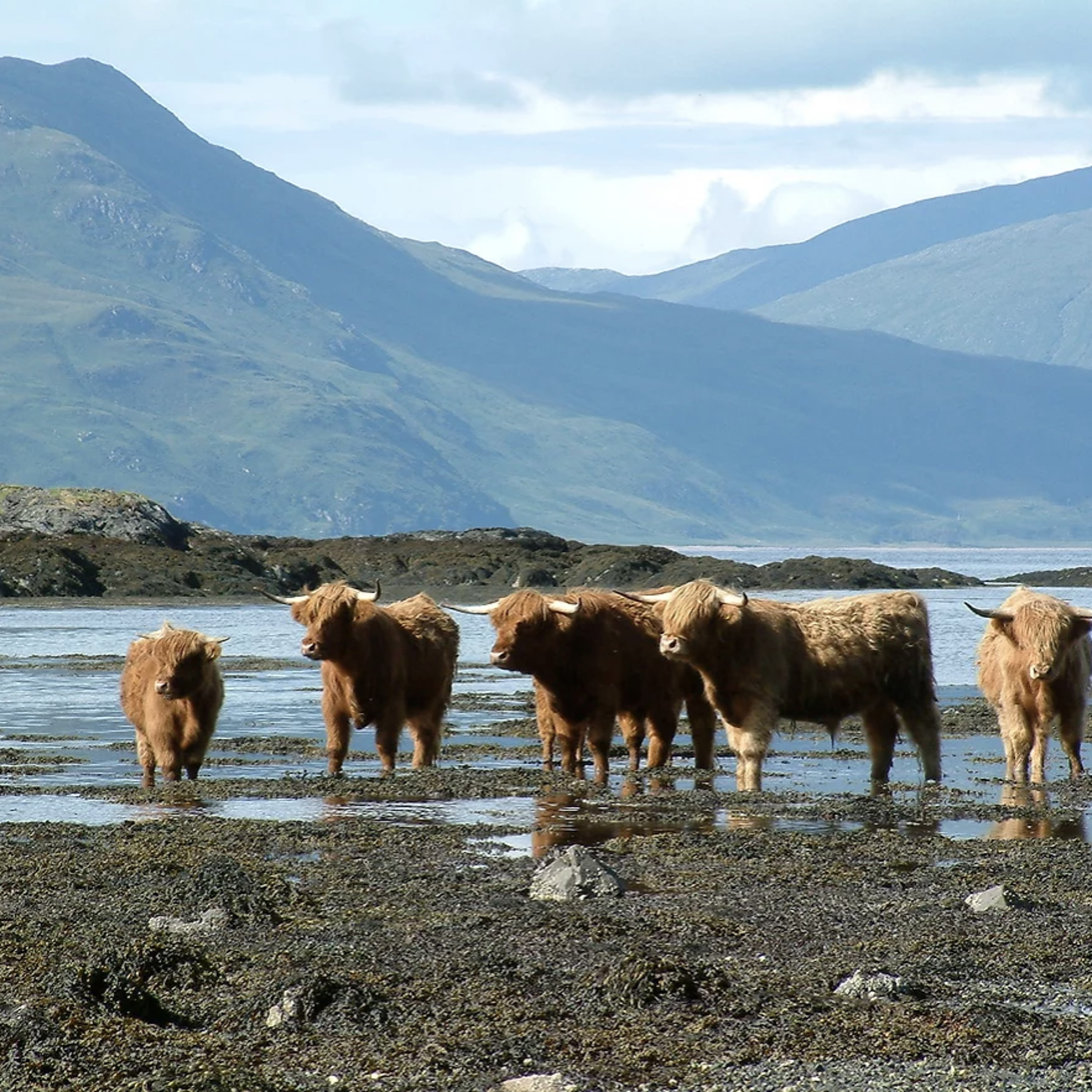
Shorts: Roger Dixon-Spain, Lismore, Scotland
Roger Dixon-Spain farms with his wife, Gilly, on Lismore, a 10-mile long island in the Inner Hebrides, just off the west coast of Scotland. Roger spent most of his life as a conventional farmer in Cambridgeshire, before a series of chance events led him to Lismore – and to a radically different approach to farming. Here, Roger traces that journey, introduces us to the concept of “holistic land management”, and explains how he and Gilly are building a viable business on marginal land – as well as preparing the ground for the next generation of farmers. Find out more about Roger, Gilly and their work at www.lismoregrassfedbeefandlamb.co.uk. Roger recently gave a webinar titled “Starting my Life’s Work at 70” – available here: https://www.youtube.com/watch?v=DcpZ1net3f0&feature=youtu.be
58: Cooperative land, holistic management, FMNR and the secret life of insects
This month, two new farmers share their experience of getting land through the Ecological Land Cooperative, and tell us why having a stake in the land is so crucial. Then, we hear from a farmer on a small Scottish island about moving from conventional agriculture to a more holistic way of farming, and making a living from marginal land. We learn how a simple system of nurturing chopped down trees back to life is restoring soils and supporting rural communities in Uganda. And, finally, a naturalist shares his research into insect migrations – and tells us why they’re so important to agriculture. This month’s episode is supported by Treedom - a platform that makes it easy to support a farmer in Africa or South America to plant a tree. When you buy a tree with Treedom you’re financing farmers to plant trees as part of small agroforestry systems, and providing the local know-how and support to ensure those trees have the best start in life and truly benefit the farmers, their communities and the soil. Once you buy a tree you can also follow its journey online. Since they started in 2010, Treedom have planted over a million trees. Let’s green the planet. Website: http://go.treedom.net/rh5f Instagram: https://www.instagram.com/treedom_trees/ Facebook: https://www.facebook.com/treedomtrees/ Youtube: https://www.youtube.com/channel/UC4LB9MIGsvGknvcSzA9Affg
57: Fibreshed UK, Chestnuts, The Edible Schoolyard and Welsh poetry
This month we bring you an inspirational farmer who’s helping to build a more resilient local textile economy through Fibreshed UK. We hear about a project reintroducing a one-time staple crop – chestnuts – into the Southern United States. We learn how The Edible Classroom is bringing regenerative agriculture into schools, cafeterias and community kitchens, and we finish in Wales with a poem that speaks to the heart of rewilding. Featuring: Gala Bailey Barker Ranan Sokoloff Angela McKee Brown Sam Robinson Poetry by Megan Elenid Lewis
56: The Bowhouse
In this special episode, we visit the Bowhouse, a food hub in the East Neuk of Fife, Scotland. The East Neuk is a coastal region dotted with picturesque fishing villages and blessed with fertile volcanic soils. But – as is the case in much of the UK – very little of the food produced here is destined for direct local consumption. The Bowhouse is changing that by creating opportunities for local producers to reach customers, grow their businesses, and collaborate. We hear from founder Toby Anstruther, Market and Events Manager Rosie Jack, and some of the many producers who’ve found a home at the Bowhouse. At the end of the episode, we’ll get an update from Rosie Jack on how the Bowhouse has been affected by the pandemic, and how it’s adapted to ensure customers can still access local food – and that producers still have a route to market.
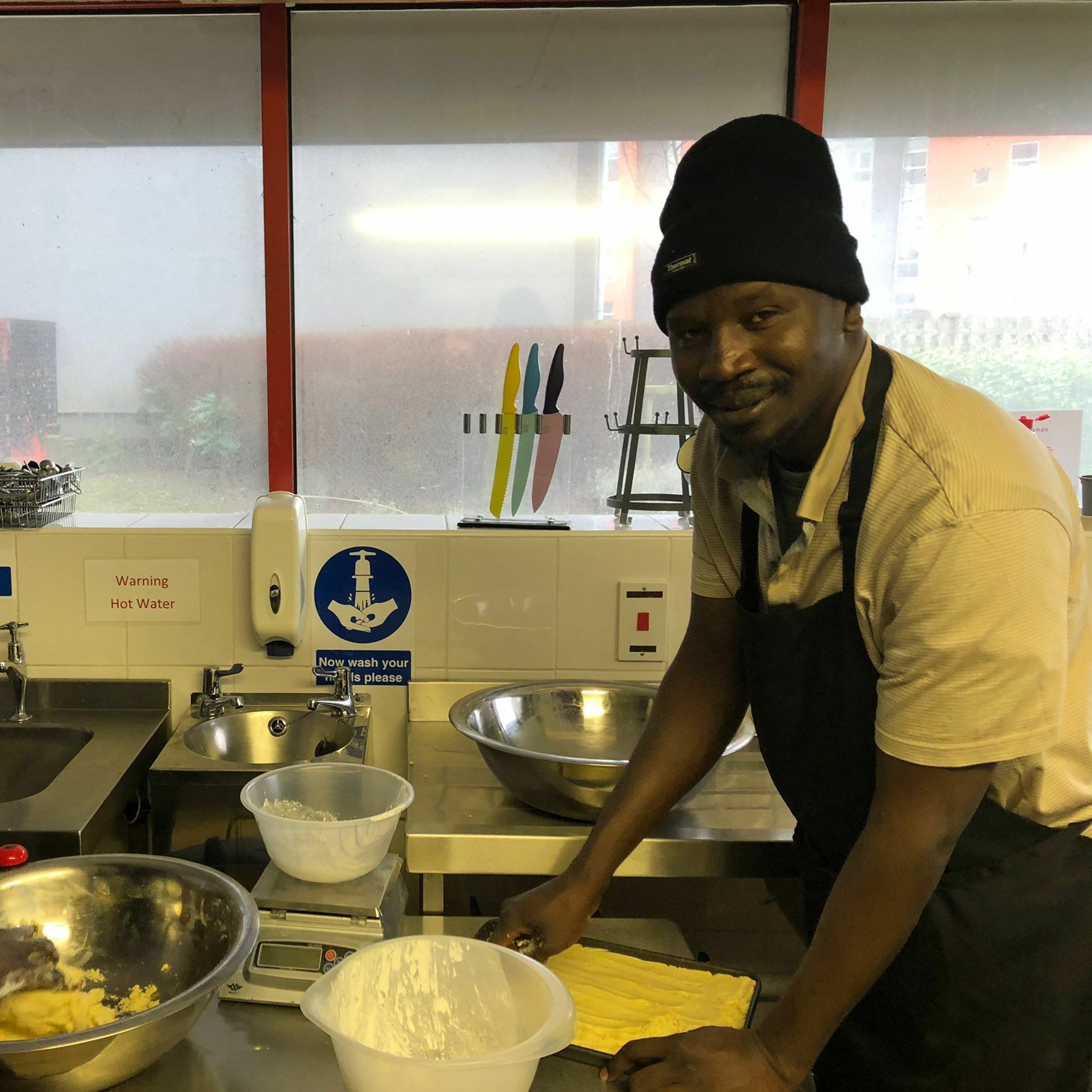
'Cereal' Bonus Episode: High Rise Bakers
A *bonus* episode following on from our 6 part series, 'Cereal': uncovering the hidden truths behind our bread and the people who are building a new grains movement. This episode dives deeper into the work of High Rise Bakers: community bakers creating delicious nutritious bread in a shared kitchen on the ground floor of a high rise flat in The Gorbals area of Glasgow. High Rise Bakers were featured in episode 5 of 'Cereal' where we heard that bread is not just money, bread is nourishment, deliciousness, companionship, connectedness, pride, politics. If you enjoy this episode then definitely listen to the full Cereal series which was released on Farmerama from mid-Nov to the end of Dec 2019. 'Cereal' shows that the radical changes that bread has undergone are revealing of much wider truths about our relationships with food, to farmers, with the land, the environment, and with each other. If you eat food, you have a stake in this story. Please listen, share, review and subscribe, and support the farmers and food producers instigating change. All episodes can be found on Soundcloud and all podcasting platforms. And if you’d like to support Farmerama, visit patreon.com/farmerama. This bonus episode of Cereal is produced and edited by Katie Revell, with support from Abby Rose and Jo Barratt. Our theme music is by Owen Barratt. Photo Credit: High Rise Bakers, Glasgow
55: Enlightened agriculture, sustainable economies, and regenerative businesses
As we bring this episode to you, we know that the Coronavirus pandemic is putting many of the farmers and growers out there are under more pressure than ever to provide food for your local communities and to rapidly find new markets for your produce – all whilst being concerned with the health of those around you. So we wanted to take a moment to say as ever we and so many others are grateful for all the work you do: thank you - Farmerama is made for you! This month, we go back to the Oxford Real Farming Conference (ORFC) one last time, this time to focus on the economic system and ask the question: what form does our economy need to take if we want to support a regenerative farming future? To start helping us answer this question, we hear from biologist, author and co-founder of the ORFC Colin Tudge, who helps us understand today’s dominant economic paradigm, and shares his vision for an economy that supports regenerative farming. Next, we speak to Tony Greenham, a finance professional, economist, sustainability consultant and Executive Director at South West Mutual, who explains how, in his view, the economy has failed us and what he thinks a more sustainable economy might look like. We share some of the final episode of CEREAL, the 6-part series we released at the end of last year, to illustrate how everything Colin and Tony spoke about is embedded in our food systems, including in our bread. Two of the key characters in CEREAL were baker and regenerative retailer at Small Food Bakery, Kimberly Bell, and Fred Price, farmer at Gothelney Farm. They both run regenerative businesses that produce food to nourish people, bring joy, promote healthy lifestyles and build communities. We hear from them about what shifting towards regenerative business and a regenerative economy means to them. This episode of Farmerama was made by Abby Rose, Louis Hudson and Hanna Soderlund. With me Jo Barratt and Katie Revell. We’re extremely grateful to our Patreon supporters, who help us make the show. If you'd like to support Farmerama, visit patreon.com/Farmerama. Community support is provided by Hanna Soderlund, Fran Bailey, Annie Landless, Eliza Jenkins and Olivia Oldham. Our theme music is by Owen Barratt.
54: Land reform, stewardship, community ownership and land justice
This month’s episode brings more inspiring stories from the Oxford Real Farming Conference. We hear from a former MEP about UK land reform, learn about land stewardship in Scotland, talk to a community owned family farm, and chat about land justice and the future of land ownership in the UK. We also share an exciting new opportunity for you to get involved in a shared land-ownership model.
53: Storytelling, Nutrient Density, Fashion and Community Farms
This month, we bring you the first of 3 special episodes focusing for the most part on stories from the Oxford Real Farming Conference, or ORFC. This year, we were delighted to be the ORFC’s official media partner. So, fresh from the conference, we hear about the role of myth-making and storytelling in building the regenerative farming movement and we learn about a new initiative to put nutrient density at the heart of good food and farming. Then, we hear from a young fashion designer about her innovative accessory collections re-awakening our connections between fashion and farming. And we have an urgent call for councils across the UK to recognise the value of real farming.
Shorts: The Herdsman
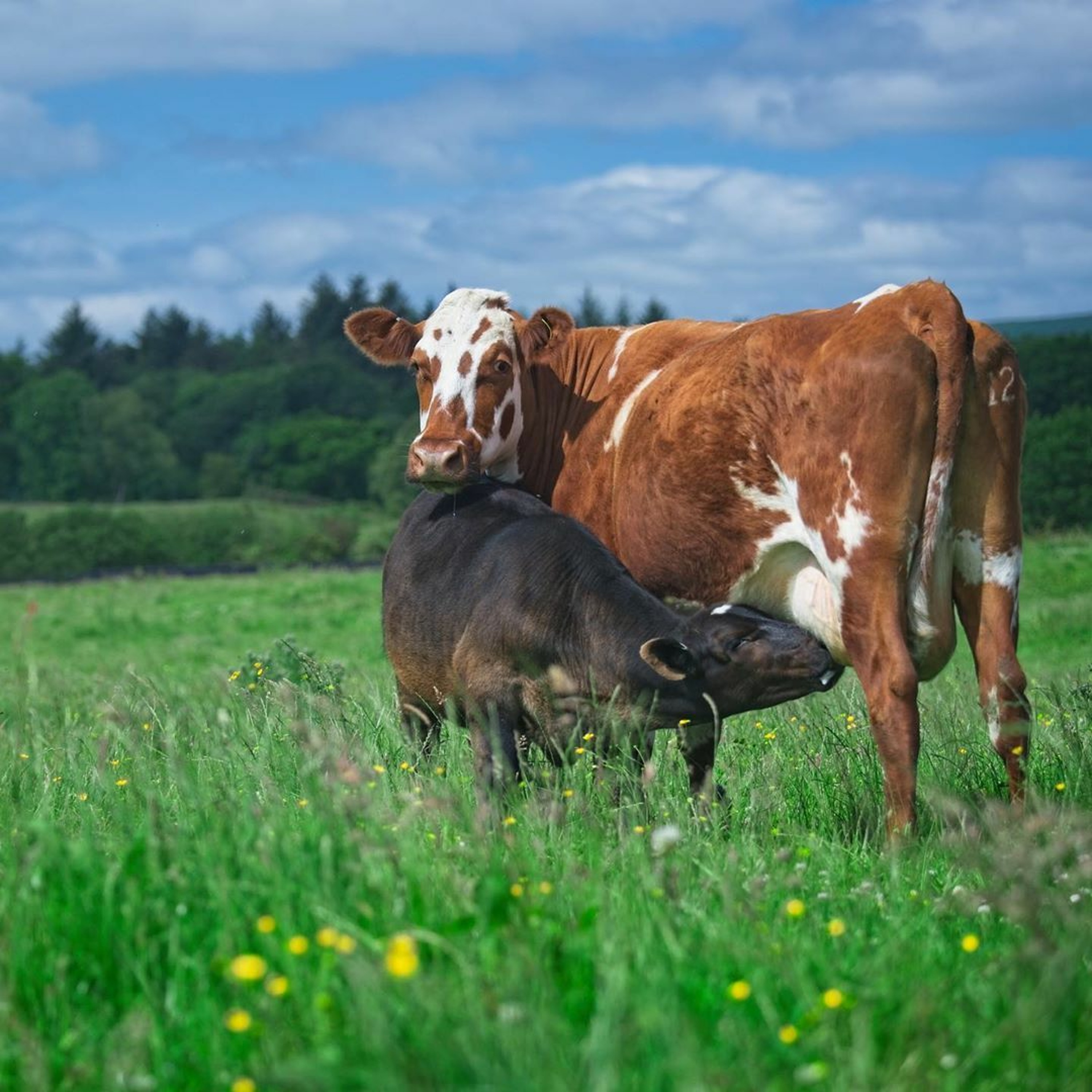
At ORFC in 2020, Georgia shared a story called ‘The Herdsman’, a true story which shows what cheap food is doing to the land, the animals and the people involved in its production. Georgia shares the story here for Farmerama Georgia talks about the role of myth-making and storytelling in building the regenerative farming movement in Episode 53 of Farmerama https://georgiawingfieldhayes.org/ https://twitter.com/georgiawingers?lang=en-gb https://www.theethicaldairy.co.uk https://www.instagram.com/theethicaldairy/?hl=en Photo used is from the ethical dairy's instagram feed.
52: Oxford Real Farming Conference, social justice & land, new forms of land ownership
As the new decade dawns we bring you stories of hope and diversity from the Oxford Real Farming Conference. We hear from black farmers and growers who are working with the land to bring social justice and connection to their communities. We also hear from a long time landowner in the UK about building new ownership structures to bring the land back into community. Throughout the episode there are songs and themes that weave the conference together.
Shorts: Norwich Farmshare December 2019
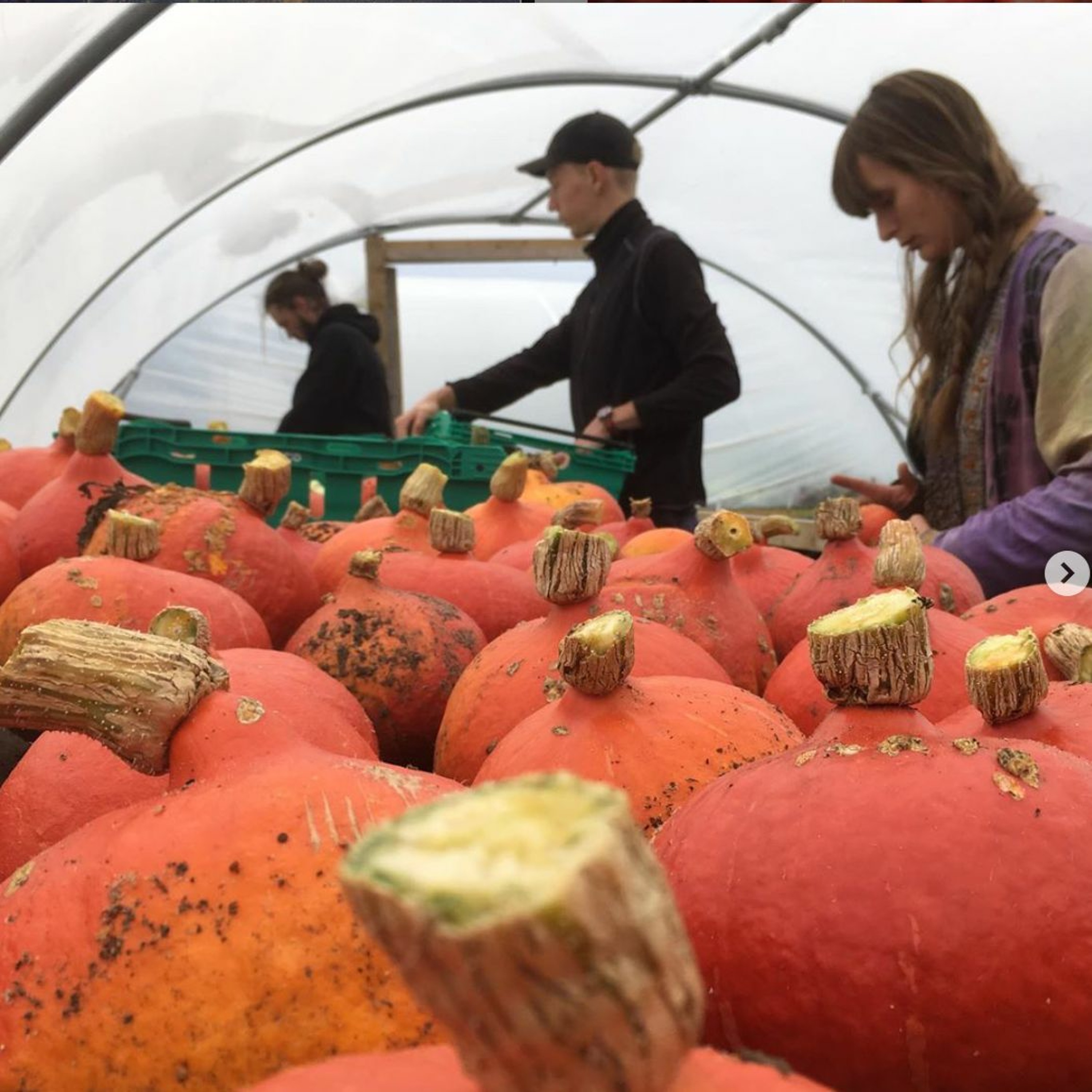
Regular contributor Joel Rodker continues to share his experiences working at Norwich Farmshare. This week he’s talking reflecting on the experiences of contributing to the CSA with other volunteers and members. Reporting: Joel Rodker Editing: Louis Hudson https://www.instagram.com/norwich_farmshare/ https://www.norwichfarmshare.co.uk/
‘Cereal’ Episode 6: Grain futures
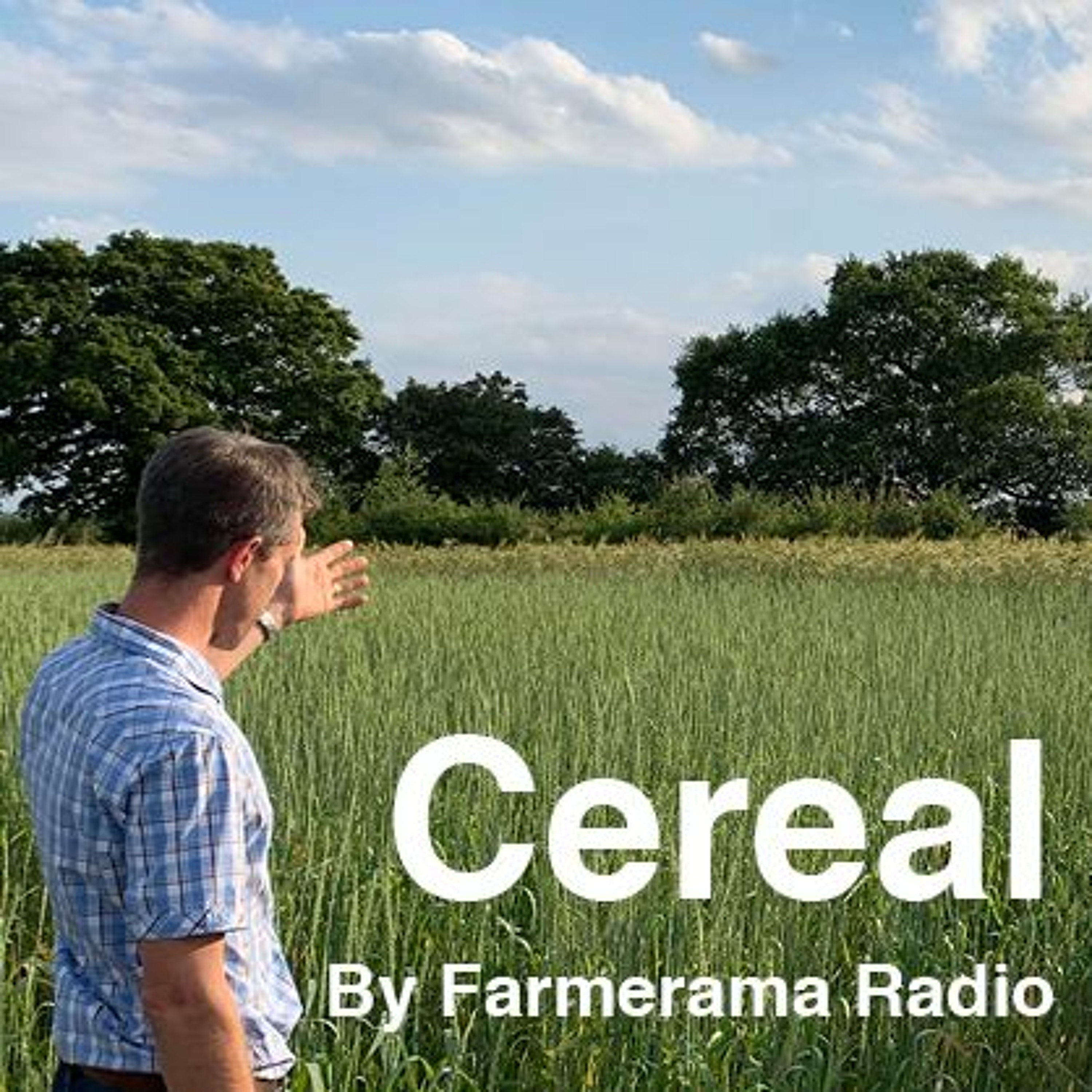
We are the bread system. If you eat bread – or any grains – you are part of it. So how can we all get involved, and what can we do to usher in the new grains movement to build joy, nutrition and resilience in all of our communities? In this final episode, we explore what a more efficient, nutritious, regenerative and joyful bread system might look like. We hear some of the ways people are coming together and building networks to strengthen the movement in the UK and further afield. It’s clear that in this beautifully complex, entangled system, even just a conversation can spark much wider change. This is a story of hope and a blueprint that has the potential to cause reverberations far beyond bread. It turns out that bread is political – and you, too, can take a stand for the world you want to live in. This might be our final episode of Cereal, but it isn’t the end – it’s just the beginning! Join the new grains movement. Talk to your local bakers, seek out local millers, thank your farmers, be open-minded, be curious. A huge thank you to everyone who’s contributed to Cereal. As well as the voices you hear in this episode, many more conversations have helped to shape the series. Thanks to Andrew Whitley (Scotland the Bread), Kim Bell (Small Food Bakery and UK Grain Lab), Mark Lea (Greenacres Farm), Fred Price (Gothelney Farmer), Steven Jacobs (Organic Farmers & Growers), Ben MacKinnon (E5 Bakehouse), Anne Parry (Felin Ganol), Rupert Dunn (Torth y Tir), Josiah Meldrum (Hodmedods), Tomaso Ferrando (University of Antwerp) and Fintan Keenan. Thanks also to the Lost Revellers and everyone who came to the Nottingham Cereal launch harvest party and lent their voices to make the Flour Ambassador's Pledge. This series was made possible thanks to the generosity of the Roddick Foundation. Please listen, share, review and subscribe, and support the farmers instigating change. All six episodes can be found on Soundcloud and all podcasting platforms. And if you’d like to support Farmerama, visit patreon.com/farmerama. Cereal is produced and edited by Katie Revell, with support from Abby Rose and Jo Barratt. Suzie MacCarthy and Hanna Söderlund also worked on the series. Our theme music is by Owen Barratt. Voices: Andrew Whitley, co-founder of the Real Bread Campaign, and Scotland the Bread Kimberley Bell, founder Small Food Bakery, Nottingham Steven Jacobs, Business Development Manager, Organic Farmers and Growers Ben MacKinnon, founder E5 Bakehouse, London Anne Parry, Felin Ganol Watermill, Wales, and Welsh Grain Forum Rupert Dunn, Torth y Tir Community-Supported Peasant Bakery, Wales Josiah Meldrum, co-founder Hodmedods Mark Lea, Greenacres Farm, Shropshire Fred Price, Gothelney Farm, Somerset Tomaso Ferrando, Bread as a Commons Fintan Keenan, farmer, miller and engineer, Denmark/Ireland
‘Cereal’ Episode 5: The best thing since sliced bread? Unsliced bread
The UK is the fifth largest economy and has some of the cheapest bread in the world - is that something to be proud of, or is it a convenient outcome of a system that prioritises shareholder profit, fobs off economically deprived people with poor quality food, and throws away a third of what it produces? It’s so ingrained in us that cheap food is better for everyone, but in this episode we ask you to stop and really think - are we supporting a system that is efficient for lining the pockets of a few, whilst impoverishing everyone else? What if the real cost is our collective health, and the health of the planet? Bread is not just money, bread is nourishment, deliciousness, companionship, connectedness, pride, politics. In this episode we hear from bakers up and down the UK who are redefining the value of bread. Bakers who are making a stand for their communities and the planet. Bakers from some of the most economically deprived areas who are bringing meaning, intention and joy to their baking. Bakers who are being recognised for their craft and sharing the benefits with their local communities. This is about food networks, not food chains -- this is about reaching true efficiency that takes into account the whole system (health, environment, waste, community, joy), not just the financial balance sheet. The radical changes that bread has undergone are revealing of much wider truths about our relationships with food, to farmers, with the land, the environment, and with each other. If you eat food, you have a stake in this story. Voices: Chris MacCormack, Govanhill bread man Theo Laffargue, Riverside Bakery, Stirling, Scotland Ben MacKinnon, E5 Bakehouse, London Catriona Milligan, High Rise Bakers,The Gorbals, Glasgow Rupert Dunn, Torth y Tir, Wales Kimberley Bell, Small Food Bakery, Nottingham
‘Cereal’ Episode 4: The miller is missing
Last year the majority of wheat grown in the UK went to feed animals. And of the wheat that did become flour in our homes and bakeries, most of that flour had to have nutrients added back into it - by law - because it was almost nutritionless by the time it came out of the mill. In episode 4 we ask how did the milling process lead us to producing flour with almost no nutritional value? And why would the majority of the wheat grown in the UK go to animal feed? We meet millers around the UK who are doing things differently, providing flour with terroir, flour that is fresh and filled with nutrition, using locally grown heritage varieties that are benefiting people and planet. The radical changes that bread has undergone are revealing of much wider truths about our relationships with food, to farmers, with the land, the environment, and with each other. If you eat food, you have a stake in this story.
'Cereal', Episode 3: Farms produce food
Intensive chemical (or conventional) farming systems can be incredibly efficient in perfect conditions, but in a global climate emergency this method of farming is out of date. We hear how soil health, biodiversity and regenerative farming are enabling farmers to move to a new system of farming that is nutritious for humans and the land. What is the experience of farmers growing the wheat, that’s ground to flour, that makes our bread? We explore why farmers are moving away from intensive chemical systems to more ecological approaches, why farmers are reclaiming their autonomy, detaching themselves from exploitative commodity markets, re-building connections with seed breeders, millers, bakers, and consumers – and once again finding reasons to celebrate diversity and distinctiveness. The radical changes that bread has undergone are revealing of much wider truths about our relationships with food, to farmers, with the land, the environment, and with each other. If you eat food, you have a stake in this story.