
Faith & Finance
705 episodes — Page 13 of 15

Ep 386The Value of Moms
“She looks well to the ways of her household and does not eat the bread of idleness. Her children rise up and call her blessed; her husband also, and he praises her.” - Proverbs 31:28The True Value of MotherhoodAs we approach Mother's Day, it's a great time to reflect on mothers' immense value to our lives, beyond their immeasurable emotional and spiritual support. While it's clear that a mother's contributions are priceless, have you ever wondered what the monetary value of a mother's work might be?Recent data from Salary.com helps put this into perspective, revealing that if motherhood were paid like a traditional job, the average stay-at-home mom would earn an annual base salary of around $185,000. This figure accounts for her myriad roles—from Chief Financial Officer to Nurse and Educator. When you factor in potential bonuses, overtime, and hazard pay that a top employee might earn in the corporate world, this figure could easily surpass $200,000!Working moms, too, work a staggering 54 hours a week managing home duties on top of their professional responsibilities. Whether in the workforce or full-time at home, moms perform a labor of love that would command a hefty salary in any other context.Yet, the discussion about the value of mothers isn't just about financial compensation; it's also deeply rooted in spiritual and moral values. The Fifth Commandment, "Honor your father and mother," (Exodus 20:12) underscores the importance of recognizing and respecting parents, ranking it alongside commandments against stealing and murder. This commandment highlights the significance of family and the sacred act of honoring those who gave us life.So as we celebrate Mother’s Day, let's remember that honoring our mothers isn't just a once-a-year event but a lifelong commitment. It’s about more than just cards and flowers; it's about recognizing their daily sacrifices, respecting their contributions, and loving them unconditionally. After all, their role in our lives is beyond any price tag.On Today’s Program, Rob Answers Listener Questions:I have some plans from companies where I no longer work. One is with the same company; the other is one I had rolled into a Wells Fargo plan. I had heard on Christian radio about this company that helps you invest in places where it keeps your nest egg safe by using call options. And I'm curious about that option versus annuities versus some other option and what makes sense.My husband passed away over 10 years ago and I was left with maybe I have left from the inheritance of $150,000. Five years ago, I put $40,000 in a CD, and the CDs are almost up. And then I have $100,000 sitting in a savings account making zero interest because it's in a savings account. And what can you advise me on if I'm 65?I'm a 75-year-old widow, and I own my home, which is worth about $350,000 to $400,000. I heard you talk about high-yield accounts without locking your money into a CD, and I wanted to ask about that. I have about $175,000 in CDs, cash, and other assets.Resources Mentioned:Bankrate.comHow Much is a Mom Really Worth? The Amount May Surprise You (Study by Salary.com)Rich Toward God: A Study on the Parable of the Rich FoolFind a Certified Kingdom Advisor (CKA) or Certified Christian Financial Counselor (CertCFC)FaithFi App Remember, you can call in to ask your questions every workday at (800) 525-7000. Faith & Finance is also available on Moody Radio Network and American Family Radio. You can also visit FaithFi.com to connect with our online community and partner with us as we help more people live as faithful stewards of God’s resources. Hosted by Simplecast, an AdsWizz company. See pcm.adswizz.com for information about our collection and use of personal data for advertising.

Ep 385What the Cross Reveals About Generosity With Art Rainer
What would you say is the most generous act of all time? If you said “The Cross,” you’d be correct.Jesus gave His life so we may spend eternity with Him. We must only have faith in Him as our Lord and Savior to receive this gift. Art Rainer joins us today with thoughts on what the Cross reveals about generosity. Art Rainer is the founder of the Institute for Christian Financial Health and Christian Money Solutions. He is a regular contributor here at Faith & Finance and the author of “Money in the Light of Eternity: What the Bible Says about Your Financial Purpose.”In Matthew 27, we read how the unfathomable became reality. God sent his only Son, Jesus, to the world. While on earth, he lived sinless, doing what no human could ever do on their own. Yet, he was condemned to die on the cross. Christians can’t look at the cross without seeing radical generosity. The blood-stained wood reminds us of the greatest gift ever given. It shows us what genuine, biblical generosity looks like. Five Lessons About Generosity From The CrossBiblical generosity is not deserved. No human has ever deserved what we read about in Matthew 27. The Bible is evident on this matter. Romans 3:23 says, “For all have sinned and fall short of the glory of God.”Biblical generosity should be a priority. God did not give us his leftovers. John 3:16 tells us, “For God so loved the world that He gave his one and only Son, that whoever believes in him shall not perish but have eternal life.” God gives us His one and only, His first and best. God leads us in the first fruits principle in Proverbs 3:9 and throughout Scripture.Biblical generosity should be sacrificial. A sacrifice occurs when something desirable and beneficial is given up. Jesus’ sacrifice was astonishing not only because he was unjustly executed but also because he took on the wrath of God for all sins—past, present, and future. It is an act truly unfathomable to the human mind.Biblical generosity should reflect God’s generosity. God is a generous God; throughout Scripture, we see God’s generosity on full display. God’s generosity is no more evident than when He sent His Son to earth as our sacrificial lamb.Biblical generosity impacts eternity, and the cross certainly did. When we give, individuals may hear about and put their faith in Christ because we chose to live with open hands. It’s an incredible honor.What is a Christian Financial Counselor (CertCFC)?Christian Financial Counselors help individuals and couples discover and pursue God’s design for money. They guide them in making wise financial decisions, building sound financial habits, and increasing their biblical financial literacy.If you’re looking for a Christian Financial Counselor (CertCFC) to help you with your finances, go to FaithFi.com and click “Find A Professional.” To learn more about becoming a Certified Christian Financial Counselor (CertCFC), visit ChristianFinancialHealth.com. On Today’s Program, Rob Answers Listener Questions:I had about $630,000 in my 401k, which I took out of the market just before the pandemic and put in a safe fund. I'm still deciding whether to return to the market or leave it in the safe fund, which yields about 1.3%. I plan to retire in about two years when I'll be 70 and start collecting my Social Security benefits. What do you recommend I do with the money in my 401k—get back into the market or leave it in the safe fund?Resources Mentioned:The Institute For Christian Financial HealthChristian Money SolutionsBecome A Certified Christian Financial Counselor (CertCFC)Rich Toward God: A Study on the Parable of the Rich FoolFind a Certified Kingdom Advisor (CKA) or Certified Christian Financial Counselor (CertCFC)FaithFi App Remember, you can call in to ask your questions every workday at (800) 525-7000. Faith & Finance is also available on Moody Radio Network and American Family Radio. You can also visit FaithFi.com to connect with our online community and partner with us as we help more people live as faithful stewards of God’s resources. Hosted by Simplecast, an AdsWizz company. See pcm.adswizz.com for information about our collection and use of personal data for advertising.
Ep 384Should Christians Vote with Their Investments? With Jerry Bowyer
In Matthew 10:16, Jesus called us to be wise as snakes and gentle as doves. But can we be gentle and wise when standing up for biblical principles and our voting rights as investors?It’s the annual shareholder meeting season for public corporations, meaning companies will hear about their policies from investors. Jerry Bowyer joins us today with a biblical perspective on corporate engagement.Jerry Bowyer is the President of Bowyer Research and our Resident Economist here at Faith & Finance. He is the author of “The Maker Versus the Takers: What Jesus Really Said About Social Justice and Economics.” You can also read his insightful columns for World News Group. When you work with corporations and voting shares, are you helping Christians stand up for their “rights” in some way?Christians can advocate for their rights as corporate shareholders by putting shareholder proposals on the ballot if they own $2,000 worth of shares for three years. This enables them to speak at the annual meeting or delegate that to somebody else and present their questions and cases to the CEOs and executives. Through shareholder activism and proxy voting, there is a great deal of ability to "speak to kings" or address corporate leadership.How does proxy voting work and how can it impact a company?Proxy voting works similarly to how voting works for citizens. As shareholders, investors get to vote for members of the board of directors, just like citizens vote for members of Congress or the president. As shareholders, investors can attend the annual meeting and speak up if they own just one or even a fractional share, similar to how citizens can go to town hall meetings to voice their opinions.What are some differences in how one engages a corporation vs. a government agency?When engaging with government funds as investors, they are on the "our side" as the investor. They help governments engage properly when they are company investors, just like individuals invest through 401ks, ETFs, etc. Governments have a fiduciary obligation to invest for retirees' good and vote in a way that benefits them. With corporations, the engagement is more about holding them accountable and encouraging them to focus on their core business rather than politics or social issues.On Today’s Program, Rob Answers Listener Questions:I just read the book “Home Equity and Reverse Mortgages: The Cinderella of the Baby Boomer Retirement” by Harlan Accola and have decided to move forward to do that, too. I contacted my bank, and they don’t offer that service. Do you have any suggestions? In Virginia, specifically Richmond, are there banks that do this?My house loan is only in my husband's name, and I would like to know if I should put my name on it or leave it as is.I will be 65 in June and don't want to work until I fully retire. My job is gratifying but very stressful. I have no credit card bills or anything additional to the mortgage or car payment. My car payment is about $400 monthly, and I still owe about $18,000. Would it be in my best interest to take my additional monthly commission checks, typically put in savings, and put that toward paying the car off?Resources Mentioned:Home Equity and Reverse Mortgages: The Cinderella of the Baby Boomer Retirement by Harlan AccolaMovement MortgageRich Toward God: A Study on the Parable of the Rich FoolFind a Certified Kingdom Advisor (CKA) or Certified Christian Financial Counselor (CertCFC)FaithFi App Remember, you can call in to ask your questions every workday at (800) 525-7000. Faith & Finance is also available on Moody Radio Network and American Family Radio. You can also visit FaithFi.com to connect with our online community and partner with us as we help more people live as faithful stewards of God’s resources. Hosted by Simplecast, an AdsWizz company. See pcm.adswizz.com for information about our collection and use of personal data for advertising.
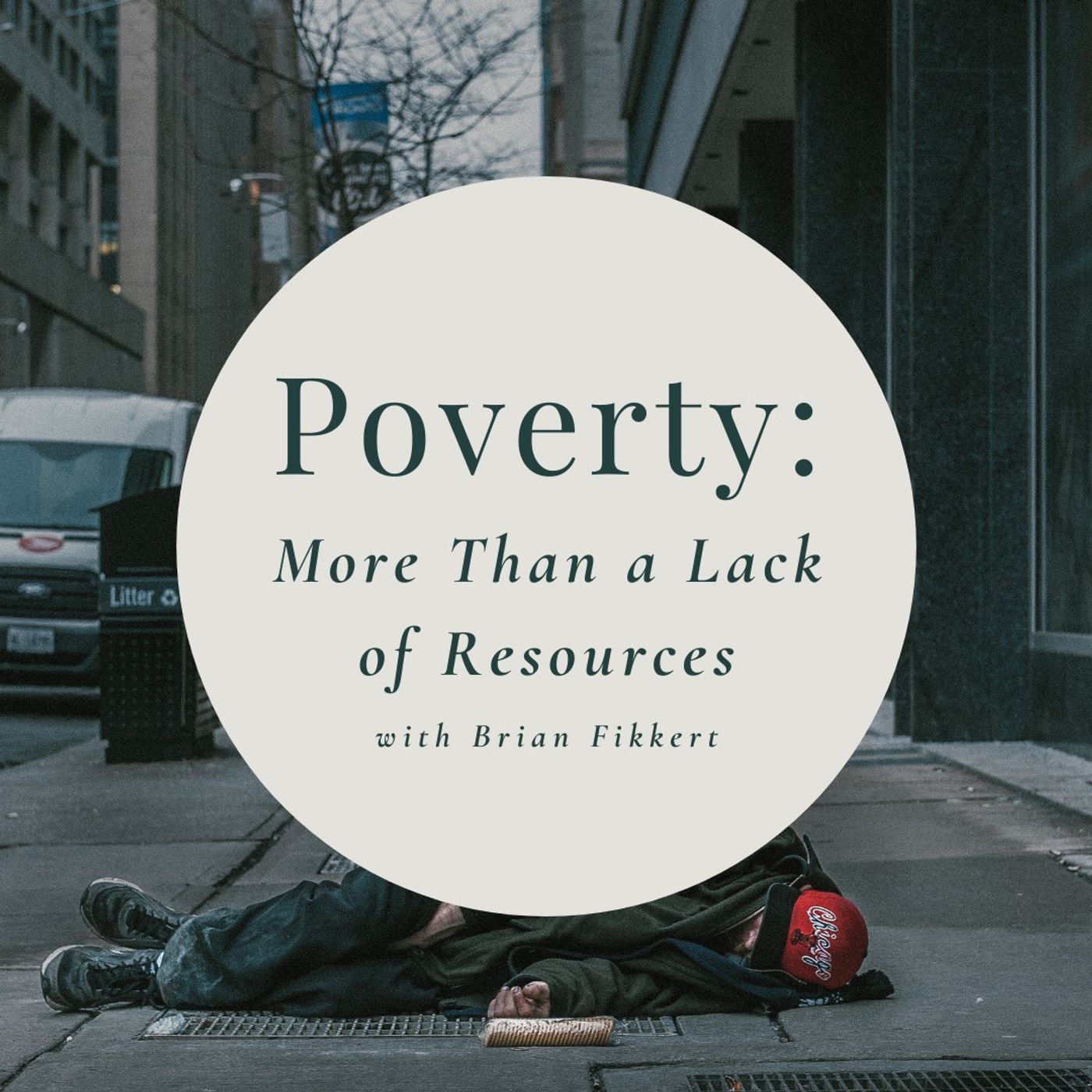
Ep 383Poverty: More Than a Lack of Resources With Brian Fikkert
The dictionary defines poverty as having little or no money or possessions…and no means of getting them. That definition of poverty is undoubtedly true, as far as it goes, but is there more to poverty than a lack of resources? Brian Fikkert certainly thinks so and joins us today to discuss it. Brian Fikkert is a Professor of Economics and Community Development and the Founder and President of the Chalmers Center for Economic Development at Covenant College in Lookout Mountain, Georgia. He is also the co-author of the best-selling book, “When Helping Hurts: How To Alleviate Poverty Without Hurting The Poor…And Yourself”. In his book, Brian describes how the Allied powers established the World Bank to rebuild a shattered Europe after World War II. How can that lesson inform us about treating poverty today?While pumping money into Europe was successful, pumping money into developing regions of Africa, Asia, and Latin America afterward did not have as good results. This shows that while surface issues like lack of infrastructure may look the same, the underlying conditions are often very different, and we need to consider those underlying conditions when addressing poverty.The World Bank then surveyed impoverished people, and the results were surprising.What did the results reveal? They were shocked to find that the answers people gave were things like "I feel less than human, I feel shame, I lacked dignity, I don't feel like I'm part of the team, I feel like I'm ignored by society, I feel like I have no voice no agency." This showed the World Bank that impoverished people experience poverty in more social, psychological, and even spiritual ways related to their sense of self and place in the world, rather than just in material terms of lacking resources.Why are definitions so important?They are crucial because if you misdiagnose what's wrong with someone, you can give them the wrong treatment and make them worse instead of better. If you go to the doctor and they misdiagnose the problem, they may prescribe something that doesn't address the underlying cause and could worsen the condition. If we define poverty incorrectly when trying to help people, we may treat symptoms rather than causes, making the situation worse. Defining poverty accurately is crucial for understanding and effectively addressing the root issues.How can Christians do a better job of caring for the poor rather than simply sending money or giving material things? By taking a relational approach, you can help solve problems that can’t be solved with just money. Christians must walk with people in poverty in highly relational ways that help them rediscover their dignity, sense of self, and relationships with others and God. This involves walking with them over time, not just quick fixes. We can also support organizations that work effectively with the poor and seek human flourishing by promoting the common good. On Today’s Program, Rob Answers Listener Questions:I own real estate. Should I pay my tithes out of the gross income I receive, or should I pay them after all the bills have been paid? I've been wrestling with this question for a while. I have some answers, but I just wanted to touch base and get some assistance.Resources Mentioned:When Helping Hurts: How to Alleviate Poverty Without Hurting the Poor . . . and Yourself by Brian Fikkert and Steve CorbettHelping Without Hurting in Church Benevolence: A Practical Guide to Walking with Low-Income People by Brian Fikkert and Steve CorbettThe Chalmers CenterRich Toward God: A Study on the Parable of the Rich FoolFind a Certified Kingdom Advisor (CKA)FaithFi App Remember, you can call in to ask your questions every workday at (800) 525-7000. Faith & Finance is also available on Moody Radio Network and American Family Radio. You can also visit FaithFi.com to connect with our online community and partner with us as we help more people live as faithful stewards of God’s resources. Hosted by Simplecast, an AdsWizz company. See pcm.adswizz.com for information about our collection and use of personal data for advertising.

Ep 382Are You Buying into Busyness?
May brings a flurry of activities—graduations, sports playoffs, and school events—that, while meaningful, can also lead to overwhelming stress. In our busy world, it's easy to get caught up in the hustle, often driven by societal pressures to do more, buy more, and be everywhere at once.Colossians 2:8 reminds us not to be swayed by the "hollow and deceptive philosophy" that glorifies materialism over spiritual values. We are often misled into thinking that accumulating possessions or filling our calendars is the path to fulfillment. However, these beliefs only bring chaos and stress, not peace.To combat this, the Bible offers clear guidance. Jesus, in John 14:6, states He is "the Way, the Truth, and the Life," emphasizing that true contentment comes from following Him, not from material wealth. Scriptures like Proverbs 23:5 and Psalm 31 encourage us to focus on spiritual richness rather than worldly allure.Proverbs 3:5–6 advises us to trust in the Lord and not lean on our own understanding, promising that this faith will direct our paths. Jesus taught us not to worry about daily needs but to prioritize spiritual pursuits, as stated in Matthew 6. He assures us that all else will follow by seeking God's kingdom first.So, in this busy month, take a moment to step back from the frenzy. Talk to the Lord, engage with His word, and recalibrate your priorities. By focusing on what's truly important, you can navigate May with peace and purpose.On Today’s Program, Rob Answers Listener Questions:I wanted to give a praise report. For many years I had not paid my income taxes due to an addiction, but after getting clean I was learning biblical principles of giving and tithing. I was convicted by Scripture to pay my taxes and get right with the IRS, so I called the program for advice. They connected me with a certified Christian accountant who helped me pay off my current taxes, and now we are working on a payment plan to take care of the back taxes over time. I am so thankful to God for restoring me and helping me align my finances with His Word through the ministry of Faith and Finance.I have been paying on a life insurance policy for over 40 years. Recently, the premiums have been increasing a lot each month, and I'm not sure why. On top of that, the insurance company is saying I owe them another $385 and I've been paying on time all these years. I would like someone on the program to help explain whether I owe that money or am current on my payments. I'm confused about my policy and could use help figuring out what's going on from a financial professional I can trust.I'm seeking advice on how much reserve churches and nonprofits should keep on hand. As someone who manages a church's finances, I want to ensure we have enough to cover unexpected expenses, but I don't want to hold onto too much.Resources Mentioned:Master Your Money: A Step-by-Step Plan for Experiencing Financial Contentment by Ron BlueChurch Cash Reserves - How Much Is Enough? (Article by Dan Busby and Michael Martin - ECFA)Rich Toward God: A Study on the Parable of the Rich FoolFind a Certified Kingdom Advisor (CKA)FaithFi App Remember, you can call in to ask your questions every workday at (800) 525-7000. Faith & Finance is also available on Moody Radio Network and American Family Radio. You can also visit FaithFi.com to connect with our online community and partner with us as we help more people live as faithful stewards of God’s resources. Hosted by Simplecast, an AdsWizz company. See pcm.adswizz.com for information about our collection and use of personal data for advertising.

Ep 381A Break for Home Sellers? With Dale Vermillion
The summer home buying season is straight ahead. Will sellers get a break on real estate commissions?The National Association of Realtors recently shocked the industry by dropping its 6% sales commission. What does that mean for home sellers this summer? Dale Vermillion fills us in today.Dale Vermillion is the author of Navigating the Mortgage Maze: The Simple Truth About Financing Your Home. This book covers everything you need to know about securing a mortgage—all from a biblical perspective.Industry watchers say this National Association of Realtors settlement will change how people buy houses. What is this settlement about?It’s about a lawsuit that the National Association of Realtors (NAR) settled regarding real estate commissions. Traditionally, commissions have been around 6% (3% to the buyer's agent and 3% to the seller's agent), but the lawsuit argued this controlled pricing. The settlement will require NAR to remove language requiring the seller to pay the buyer's agent commission, allowing buyers to negotiate commissions independently.Did the National Association of Realtors set that commission, or was it a suggestion? The 6% commission was a suggestion that had come out of NAR, but it had been in place for so long that there was a lot of back and forth about it over the years. The NAR did not officially set the commission percentage. If commissions were always negotiable, how would this settlement change things?It will give buyers and sellers more negotiating power when working with agents because commissions have always been negotiable but many agents don't negotiate them. It will directly affect buyer's agents, who must work harder to earn their commission. It may also affect agents who only sell one or two houses per year, as they may decide it's not worth it anymore. But it likely won't affect full-time agents. Some buyer's agents may become listing or dual agents to have more control over both sides of the transaction.On Today’s Program, Rob Answers Listener Questions:How do you know how much you need at retirement? My husband is 55 and planning on working for another 10 to 15 years, while I'm 57.I just inherited about $102,000, sitting in the bank. I've had it for about a month, and I don't know how to invest it or how I could earn an income from it. I'm currently unemployed since I had to take care of my husband, who was ill. We have a minor daughter. What advice do you have for how I could invest this money?Should I pull some money out of our IRA to put into our savings as an emergency fund? We have about $125,000 in an IRA but don't have much savings. My husband is retired and I work part-time.Resources Mentioned:Navigating the Mortgage Maze: The Simple Truth About Financing Your Home by Dale VermillionRich Toward God: A Study on the Parable of the Rich FoolFind a Certified Kingdom Advisor (CKA)FaithFi App Remember, you can call in to ask your questions every workday at (800) 525-7000. Faith & Finance is also available on Moody Radio Network and American Family Radio. You can also visit FaithFi.com to connect with our online community and partner with us as we help more people live as faithful stewards of God’s resources. Hosted by Simplecast, an AdsWizz company. See pcm.adswizz.com for information about our collection and use of personal data for advertising.

Ep 3806 Big-Time Money Wasters
Okay, before we get into the specific money wasters, there’s a general principle you should be aware of…if you’re buying things that provide only a temporary sense of satisfaction, you’re probably wasting money. It doesn’t matter what it is—if it’s unnecessary and you grow bored with it, it was a waste of money. Check your closets for examples.I’m not saying you should take a “vow of poverty.” The Lord wants us to enjoy the resources He’s given us, but that must be tempered by the principle that we’re merely stewards and must use His resources wisely.Of course, we live in a culture that promotes spending. It’s a big problem. One survey showed that the average adult spends around $1,500 monthly on non-essentials. No wonder so many Americans are living paycheck to paycheck. Imagine what that kind of money would do if put into savings or invested for retirement.Let’s look at our 6 money wasters for today…and what you can do about them.The first is one of the biggest—but also one of the easiest to fix—not preparing meals. It’s okay to eat out occasionally…but too often it’s just for convenience and unnecessary. A restaurant-prepared meal will cost you three times what you would pay for the same meal cooked at home.Money-waster number two…upgrading your smartphone when a new one comes out. For example, the iPhone 15 could cost as much as $1,600…or lock you into a long contract if your carrier provides it. Eventually, a smartphone will have to be replaced…but the longer you delay upgrading…the more money you keep in your pocket. This year’s red hot phone is next year’s discount model. And you have to ask how smart your phone needs to be. Most of us don’t use the features we have now. Okay, number three…Clothing is another biggie. Wearing the latest fashion is expensive. By some estimates, the average American spends nearly $2,000 a year on clothing. And in a few months, whatever you buy will probably be out of fashion. Clothes wear out and need to be replaced…so you must include that in your budget … but those spending decisions should be practical … not a way to boost your ego.Money waster number four … buying lottery tickets. The ads say “You can’t win if you don’t play,” but that’s nonsense. You definitely will win if you don’t play. You’ll get to keep your money. You have better odds of being hit by lightning twice than winning the lottery. Plus, you don’t want to participate in something that disproportionately hurts the poor. A Bankrate report found that low-income households spend as much as 13% of their income on lottery tickets—far more than higher-income earners.Okay, number five…extended warranties…especially for automobiles. It’s now a $40 billion-a-year industry…and just an expensive form of insurance you probably won’t need.So, instead of buying an extended warranty, do your homework to ensure you’re buying a quality item. Most will have an adequate manufacturer’s warranty anyway. Then, ensure you have enough money in your emergency fund to cover any necessary repairs.And our number six big money waster is … your cable or streaming package. If you’re still paying for cable, it could be as much as $200 monthly for Internet and TV. Do you need 568 channels?More and more folks are dropping cable and satellite TV and using only streaming apps, but even there, you can waste a lot of money. A survey by FinanceBuzz showed that a quarter of households have at least three more streaming apps than they did two years ago…and one in 10 reported having no idea how much they’re spending on streaming.So keep track of what you’re watching, and if you’re not getting your money’s worth from an app, drop it. That’s one great thing about streaming apps—no service contract, so you can drop it anytime.Okay, those are your 6 big-time money wasters. We hope you find this helpful.On Today’s Program, Rob Answers Listener Questions:My 19-year-old daughter is looking to purchase a car and has found one she likes with low mileage. She has also had a mechanic inspect it. My husband and I thought the daughter should put down half on the car instead of paying in total to help establish credit, but I wanted to ask if that was the best approach. I have around $9,000 in two retirement accounts, about $18,000. However, they want to withhold 20% plus fees to withdraw it, which would be around $2,200 from each account. Is this normal? I need the cash reasonably quickly.I have around $135,000 in retirement accounts that will mature in July. Do you have any advice on what I should do with that money? I'm 69 years old and mostly living off of social security right now, with little savings but not much.I will be 68 in September and have lived off my savings for the past year. I know how much I spent in that time. I started taking my Social Security benefits, but now want to wait. I have about $42,000 in savings, my house and cars are paid off, I have around $260,000 in an IRA, and another $105,000 in a guaranteed annuity paying 4%. Would su

Ep 379Debt Repayment Or Giving? With Ron Blue
Malachi 3:10 says, “Bring the full tithe into the storehouse, that there may be food in my house. And thereby put me to the test, says the Lord of hosts, if I will not open the windows of heaven for you and pour down for you a blessing until there is no more need.” God isn’t just telling us to test Him with our giving—He’s challenging us to test Him. “Do it and see what I will do.” Why do you think many Christians are reluctant to do this?Many Christians are reluctant to test God with their finances because of greed. Greed is when we envy what others have or want something we don't have. This greed leads to a fear of lack and insufficient money if they prioritize giving over other expenses. Giving should come first to recognize God's ownership and break the power of money over our lives. God doesn’t promise to make us wealthy because we give generously. When you give, you need to give up ownership of the money and what happens to it after that is up to God. God does not promise that he will return the money multifold. People sometimes mistakenly attach that expectation to giving, but God does not explicitly promise wealth or return on investment in the act of giving.If I’m In Debt, Should I Decrease My Giving?The answer to that begins with a principle or a truth. The truth is this: God owns it all and is interested in it. If I believe that God owns it all, and it says that in many places in Scripture, God owns it all, it's all his. The earth and everything in it are the Lord's. He created it. If he owns it, and I'm a steward or a manager, I make a biblical decision every time I spend money. I'm making a stewardship decision, a scriptural decision. So if I'm paying off debt, I'm using God's money to pay off debt. If I tithe, I'm using God's money to tithe. He gave it to me. So we can begin by saying that from a scriptural standpoint, there's no difference in using God's money, whether I pay off debt or give because it all belongs to him. When you make giving your highest priority, you begin to set the right priorities for your money.Suppose you're in a crisis where you can't give and pay off debt, get some counsel. Get some accountability. If you reduce your giving to pay off debt, it needs to be under a plan and with accountability. The best accountability is to go to your pastor and say, “This is what I'm thinking of doing. Will you hold me accountable to it?” Do you agree with this decision so that you will eventually get out of debt? If you're using your giving dollars to get out of debt because you're in a crisis, do it with accountability and a plan—don't just do it.On Today’s Program, Rob Answers Listener Questions:Can the RMD amount from an inherited IRA be taken from any of the account's assets, including stocks? What are the tax implications of taking more than the RMD amount from an inherited IRA?What are the tax implications of inheriting annuities and Roth IRAs from your parents? My parents had annuities as investments that were closed out and put into a trust after they passed away. I’m unsure how the taxes work in this situation, and I was told my children may have to pay some taxes.Should I pay my home mortgage or use my savings to buy a new vehicle? I may need to sell my home and move in with an aging parent in a year or two.Would it be okay to leave my deferred compensation of around $15,000 in the account and use it as a burial plan for my husband and me when needed? I don’t need the money currently to live on. Also, should I keep the money invested in stocks, or is there a better option given that I’m 65?Resources Mentioned:Rich Toward God: A Study on the Parable of the Rich FoolFind a Certified Kingdom Advisor (CKA)FaithFi App Remember, you can call in to ask your questions every workday at (800) 525-7000. Faith & Finance is also available on Moody Radio Network and American Family Radio. You can also visit FaithFi.com to connect with our online community and partner with us as we help more people live as faithful stewards of God’s resources. Hosted by Simplecast, an AdsWizz company. See pcm.adswizz.com for information about our collection and use of personal data for advertising.

Ep 378Advantages of Online Banking
The Difference Between Online Banking and Online BanksThese days, you can do online banking with almost any brick-and-mortar bank or credit union, although features and services will undoubtedly vary from one financial institution to another.Of course, online banks have no brick-and-mortar branches. They’re online-only, except for the ATM networks they use, all transactions with them are online. Okay, that’s the difference between online banks and online banking, but the reality is, that difference is getting smaller and smaller. The online features of brick-and-mortar banks do rival anything that online-only banks have.Still, some folks are wondering if we will not need brick-and-mortar banks someday. We’re probably a long way from that. People still need services only brick-and-mortar banks can provide, like businesses depositing coins and currency. You can’t do that online.The Effects of Online BankingThere are still 77,500 bank branches in the U.S., which sounds like a lot, but it’s 12,500 fewer than five years ago. As more and more people do their banking online, traditional banks need fewer branches. You’ve probably noticed some of them closing in your area. We’ll probably always need brick-and-mortar banks—just fewer of them.So, with both online banks and online banking, it doesn’t matter where the bank is, and it also doesn’t matter where you are. You can do almost everything that needs to be done on your computer or smartphone. Now that’s convenient. Don’t ever use public Wi-Fi for your banking or any financial transaction. It’s too easy for hackers to steal your personal information.Now, there’s another massive advantage of online banking that few people think about. It doesn’t matter where the financial institution is; you can select any bank or credit union for your banking needs.You may have chosen a particular bank because they have many branches or even one branch conveniently located along your way home from work. Direct deposit long ago removed the need to stop and deposit a paycheck, but now you can deposit any check with your smartphone.Is there much of a difference between banks? Aren’t they all pretty much the same? Actually, no.Wouldn’t it be great to know that your financial institution supports Christian values making a positive change in the world and providing excellent service? Wouldn’t you want it to prioritize people over profit? Profit is not bad, but it can’t be the only priority.Stewardship is about 100% of what God gives us, not just the 10% in the offering plate. What if you could find and support faith-based institutions to help Christ's followers live and give more abundantly? Online banking can give you faith-aligned options once you choose an institution that aligns with your values. There are many great faith-aligned banks and credit unions available today. One example is Christian Community Credit Union, an underwriter of this program. Christian Community Credit Union (CCCU)CCCU offers online banking that can be accessed from anywhere in the country. It’s a great example of how our banking decisions can positively impact the kingdom. CCCU has donated over $6 million to ministry and mission projects in the U.S. and worldwide. And they’re using banking to leverage the money their members deposit with them to help construct new church buildings, expand ministries, and help Christian business owners thrive.If you’re looking for a faith-based banking solution that aligns with your beliefs and values, I’d encourage you to consider Christian Community Credit Union. Plus, each account is insured for up to $250,000 by ASI. You can find out more at JoinChristianCommunity.com. That’s JoinChristianCommunity.com.On Today’s Program, Rob Answers Listener Questions:My daughter was recently in an accident which resulted in a lawsuit of $250,000. She is 50 years old, has no savings plan, and is in a quandary currently. She’s supposed to meet with the lawyers next week and has been told that they will instruct her to take this money as an annuity, which we know nothing about. How would you instruct her going forward? My mom passed away in 2021 and left money in a trust for each of her children, but she made me the trustee of that trust. One of my brothers has always struggled financially so his portion is left with special considerations to be given annually, no more than a certain amount so that it will last in case he needs it. Sadly, it’s created some relational stress because he continually asks for more than my mom wants me to give him. Because of this, he has stopped speaking to me and I’m wondering if I should turn it over to a banker to improve our relationship.My wife is a business owner and she is 51 years old. She wonders if it’s too late to get some retirement in an account for her and which company you recommend. My father is 88 years old and in good health. My mom died about 4 months ago and my father wants to protect his home which is worth between $350,000 - $400,000. He

Ep 377It's Not About The Money
God Owns EverythingNow, to be sure, the message that God owns everything—and we don’t—is something we need to hear repeatedly. That’s probably why the Bible repeats this teaching several times.Job needed reminding. Job 38:1-5 reads, “Then the Lord answered Job out of the whirlwind and said: ‘Who is this that darkens counsel by words without knowledge? Dress for action like a man; I will question you, and you make it known to me. Where were you when I laid the foundation of the earth? Tell me, if you have understanding. Who determined its measurements—surely you know!’” Psalm 24:1-2 tells us, “The earth is the Lord’s and the fullness thereof, the world and those who dwell therein, for he has founded it upon the seas and established it upon the rivers.And of course, Colossians 1:16 reads, “For by him all things were created, in heaven and on earth, visible and invisible, whether thrones or dominions or rulers or authorities—all things were created through him and for him.”This is a message that we need to hear constantly. It frees us from getting too attached to our money and possessions because they’re not our money and possessions—they belong to God.Putting Things Into PerspectiveYou may have heard the story about the believer who took this to heart. He’d saved and saved to buy a new car, but soon after taking possession, he got into a fender bender. But he didn’t get upset. He shrugged it off and thought, “I wonder why God wanted His car to get in an accident?”That would undoubtedly be difficult, but it makes things much easier if you think of yourself only as a steward and not an owner. Okay, we’ve got stewardship covered, but what about that deeper meaning in these verses?For that, we need to consider the larger passage of Psalm 50— verses 10 through 15:“For every beast of the forest is mine, the cattle on a thousand hills. I know all the birds of the hills, and all that moves in the field is mine. If I were hungry, I would not tell you, for the world and its fullness are mine. Do I eat the flesh of bulls or drink the blood of goats? Offer to God a sacrifice of thanksgiving, and perform your vows to the Most High, and call upon me in the day of trouble; I will deliver you, and you shall glorify me.”The psalmist is warning Israel that they’ve become legalistic with their sacrifices. They had come to put value on the sacrifices and, by extension, themselves.God already owns the beasts of the forest and the cattle on a thousand hills— indeed all the cattle on all the hills. He owns all creatures wild and tamed, the fowls in the mountains and beasts of the fields.That said, how could He possibly be impressed with the burnt offerings of the Israelites? They were just giving him back a tiny bit of what He already owned— and then patting themselves on the back for it.Nonetheless, God did require Israel to make those sacrifices to cover sin and something else temporarily. Note verse 14 again: “Offer to God a sacrifice of thanksgiving, and perform your vows to the Most High.”This verse gives us the context we need to put things in perspective. That passage and others like it are about giving and our hearts' attitude. They’re not about legalism and checking boxes. Galatians 2:16 reads, “We know that a person is not justified by works of the law but through faith in Jesus Christ … by works of the law no one will be justified.”Cultivating An Attitude Of GratitudeWhen we give purely out of gratitude— expecting nothing and taking no pride in it— and certainly not to earn our way into heaven— only then are we giving Him the loyalty of our hearts.God is a spiritual being. What use does he have for earthly things? None, of course. He wants our hearts. He wants us to worship him in spirit and truth.Our tithing and gifts must only be tributes to our gratitude for what He has already given us—not just material things but the priceless gift of His Son Jesus Christ for our eternal salvation.We must search our hearts to ensure we give for the right reason because He is the most High God. He sees right through us— and takes no pleasure in giving that isn’t joyful and done out of gratitude.2 Corinthians 9:7 teaches, “Each one must give as he has decided in his heart, not reluctantly or under compulsion, for God loves a cheerful giver.” On Today’s Program, Rob Answers Listener Questions:I’m looking to invest as a hobby. I’m already invested in different companies with well-diversified portfolios, so this would be outside of that. I’m looking at investing about $100 a month and wanted to know if you had any recommendations. I’m approaching 65 years old and will soon be able to withdraw just shy of $70,000 from my 401(k). I am seeking advice on investing this money to create wealth. I recently heard that the government will do away with cash in December. How are we to plan for that? My friend in Colorado is single and desperately needs cash flow. She has equity in her home and I wanted to know if she would qualify for a reverse mor
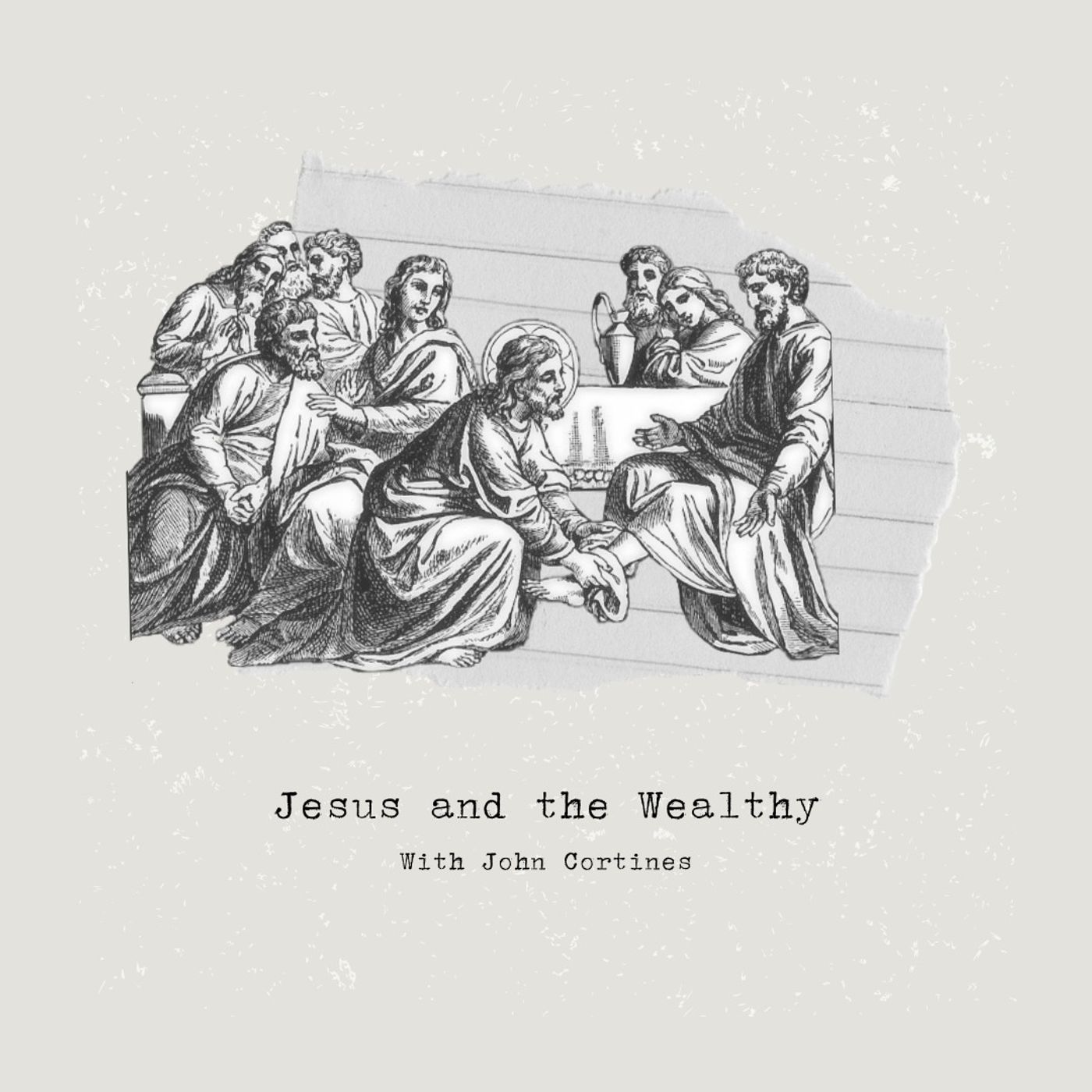
Ep 376Jesus and the Wealthy With John Cortines
At the most recent Kingdom Advisors Conference, John shared an incredible story about some friends of his and an inheritance decision they made:“I’ve got some friends who are a super sharp young couple in their 30s. His Father shared that he was about to give them a vast, multi-million-dollar inheritance. Amazing! But they had been reflecting carefully on money and faith for months.They said, ‘We are so grateful for this, but we’re already OK. And if we got this money, we’d start to rely on the shifting sands of this money for our security, instead of the firm foundation of Christ.’Long story short, they worked with his Dad to use that money to advance God’s Kingdom through giving. I was blown away by that decision.”Three Ways That Jesus Interacted With Wealthy PeopleSo, if we go through the four Gospels and find the times Jesus interacted with a wealthy person, it happened a lot. He had a pretty unique pattern, and it was three things:LoveInvitationChallengeSo for us, in our wealth today, Jesus loves us, invites us, and challenges us. Jesus said You can’t serve God and money. Money promises us Pleasure, Possessions, Protection, and Position, but it can’t give us those things. We have to look for God to get them eternally and in truth. Is Jesus challenging us to sell our possessions and give everything to the poor?While he might ask us to do that, this is the only time Jesus tells anyone to sell it all in Scripture.Zacchaeus gave away half of his wealth, Peter left his boats, and Nicodemus, after the crucifixion, spent a fortune on the burial spices for Jesus, gaoing public with his faith.The beauty is that it will look different for each of us as we read Scripture carefully and listen for the guidance of the Holy Spirit. But we can be sure God will challenge us to mobilize our wealth in this world to bless people and to bring Him glory.How can we use our wealth to honor God and bless others?We want to invite them into a deeper, right relationship with God and others. There are four areas where we can do this:Family: Caring for those we are responsible for is godly and right.Generosity: Scripture is clear we’re called to invest money into God’s Kingdom work.Hospitality: In today’s isolated culture, opening your home and sharing meals with people is a radical and good step.Employment (if you own a business): God calls many of us to employ others in good jobs in healthy, God-honoring work environments.When we use our wealth for the benefit of others, it makes us richer spiritually. God is with us in that.How can people can learn more about biblical generosity?There’s a great ministry that works closely with Kingdom Advisors. It's called Generous Giving, and its video stories of Christian givers could greatly encourage anyone. Going to GenerousGiving.org, you can find dozens of sermons, stories, and resources to encourage you.On Today’s Program, Rob Answers Listener Questions:I'm retired and have a 401(k) from a previous employer from about 15 years ago. Should I take that 401(k) and move it into an IRA to have more control over it?I have about $50,000 with Vanguard in an IRA account and another $20,000 in a 401(k). Up until about three years ago, I made good money with Vanguard in my IRA account, but in the last three years, I've gone nowhere with my investments in a targeted retirement account. I would gain a little bit and lose a little, and that's all it would do. So I put it all into a money market account, but I wanted to know if you had any suggestions, like what type of account I could put it into to start making some gains.I have a Social Security Question for my sister who turned 60 in December. Her husband passed away about eight years ago, but she's still working full-time. Can she collect on her husband's Social Security in whole or part where she's still working?My husband passed in 2016 and at the time, we had an 18-year-old and a 25-year-old. A couple of years ago, before everything went crazy during the pandemic, I was able to refinance my house to get a lower rate. My house has a rate of 3.75%, and at the time, I thought I was helping my children by putting their names on the deed during the refi. However, I've been hearing a lot about capital gains taxes, what will happen to them, in the event of my passing, and if the house is evaluated at more than what we paid for. I just don’t want to put them in a situation where they will owe a lot of money. Was I wrong for doing that? If so, can I reverse it with little or no problem simply by paying to have it reversed?Resources Mentioned:True Riches: What Jesus Really Said About Money and Your Heart by John Cortines and Gregory BaumerGod and Money: How We Discovered True Riches at Harvard Business School by John Cortines and Gregory BaumerGenerousGiving.orgSound Mind InvestingRich Toward God: A Study on the Parable of the Rich FoolFind a Certified Kingdom Advisor (CKA)FaithFi App Remember, you can call in to ask your questions every workday at (800)
Ep 375Managing Chronic Financial Anxiety With Steve Cuss
The Playbook for Chronic AnxietyIt's generated by assumptions, expectations, false beliefs, and false needs. So, if we can uncover false needs, we can learn to die to them and relax into God's sovereignty. This is a compelling way to grow in our relationship with faith. We can use our anxiety triggers to open our souls up to God's presence. What is an assumption you hold about yourself that's unreasonable? If you’re a perfectionist, almost every assumption you hold about yourself is unreasonable. Think about it. When was the last time you looked at your work and said, "That was well done." Perfectionism is always chasing a carrot we can never reach. It’s a treadmill to nowhere. Anxiety has a competing gospel. The idea out of all of the gospels is that this is the only gospel where God pays and the human benefits. In every other belief system, the human pays and the god benefits.If you think about ancient sacrifice systems, even in the Roman Empire and the Egyptian Empire back in the days of Moses, humans paid, and the gods benefited. In the Roman Empire, Caesar Augustus's nickname was the son of god and the most profound confession of faith in Rome was Caesar is lord. And along come Luke and Paul, and they say, "Nope."The people paid and paid, and Caesar got all the benefits. For perfectionists, this message will free you when you realize that perfectionism is a gospel that makes you pay for its benefits.The Treadmill To NowhereGod is not asking you to be perfect. God is asking you to be human-sized. You're expecting yourself to be perfect. You are living out of a gospel of self. Whether you’re a perfectionist or a people pleaser, you’ll realize you can never please people enough because it is forever a carrot out of reach. Or a treadmill with no end in sight. Chronic anxiety is like a personal trainer tapeworm. If you’ve ever had a tapeworm, you usually don’t even know you have it because they are so small and feed off your energy. That’s how they grow. That's what anxiety does. It grows by consuming you, and like perfectionism or people pleasing, it puts you on a treadmill to nowhere. As you run, it’s pushing the incline and go-faster buttons into burnout, and you're not getting anywhere. God doesn’t want us to be anxious, especially about finances. We need only to be faithful stewards and trust Him to provide because He always does.On Today’s Program, Rob Answers Listener Questions:My husband recently retired from the military with over 20 years of service and received a small VA pension in his retirement. I work full time and we can live off of that so he was lucky enough to find employment in his field. We're excited that he'll be getting that income but right now, we have $47,807 left on our mortgage, which is at 2.5% interest. I recently completed my doctorate and to do that I had to take out three student loans whose interest rates vary from 5.2%, 6.6%, and 6%. I owe $45,032. So, where do we start the income he'll get from his employment?I'm 69 years old and bought a 20-year life insurance term 20 years ago. I also had the cash surrender value option and now that the 20 years is up, I've got a check for $16,945 from the life insurance company. But when I saw what they were doing, I should have been getting $17,600. So I called them up and asked where the rest of the money was. They said that I automatically went into extended-term insurance when mine canceled out. After reading the fine print, I called them a month before this term insurance was supposed to be canceled and stopped the check so they couldn't get money out of the account anymore. I also told them to cancel this policy as of the date, and they still got the extra $514.22 for the extended term. Have you heard of that before?Some family members are overwhelmed financially and have a lot of credit card debt. Is there a credit counseling agency that you recommend?Resources Mentioned:Being Human with Steve Cuss (A Podcast by Christianity Today)The Expectation Gap: The Tiny, Vast Space between Our Beliefs and Experience of God by Steve CussNew York State - Department of Financial ServicesRich Toward God: A Study on the Parable of the Rich FoolFind a Certified Kingdom Advisor (CKA)FaithFi App Remember, you can call in to ask your questions every workday at (800) 525-7000. Faith & Finance is also available on Moody Radio Network and American Family Radio. You can also visit FaithFi.com to connect with our online community and partner with us as we help more people live as faithful stewards of God’s resources. Hosted by Simplecast, an AdsWizz company. See pcm.adswizz.com for information about our collection and use of personal data for advertising.

Ep 374Powerful Financial Tips With Sharon Epps
The Power of TrustProverbs 3:5-6 says: “Trust in the Lord with all your heart and lean not on your own understanding; in all your ways submit to him, and he will make your paths straight.”This establishes our role as stewards and God as the owner, which gives us the freedom to look to Him for His plans for our money and not worry about our plans.The Power of FocusThe power of focus is to ask God what the next thing He would have us do is and to focus on that one thing until we progress on it before moving to the next. Proverbs 4:25 says, “Let your eyes look directly forward, and your gaze be straight before you.”Proverbs 16:3 also says, to “Commit your work to the Lord, and your plans will be established.”Research shows we can't multitask, so focusing on one goal at a time is essential.The Power of PrioritiesWe can think of financial priorities for the "live, give, grow” pie, starting with the 10/10/80 principle—give 10% first, save/grow 10%, and use the remaining 80% for living expenses. Prioritize giving first, then growing, then living expenses. The big priorities within living are housing, transportation, and food, and we should keep those to less than half of our take-home pay.The Power of PlanningWe must spend money on purpose by making a plan on paper or digitally before each month begins. We recommend using a budgeting app like FaithFi to digitally allocate money to "envelopes" each month for planned expenses. Proverbs 27:23 tells us to “Know well the condition of your flocks, and give attention to your herds,”Larry Burkett popularized the envelope system in the past, and even digitally savvy couples sometimes find it helpful to use cash envelopes to control their spending in some categories better.The Power of CashIf you only use cash, you can’t easily go into debt. Proverbs 21:20 reminds us, "Precious treasure and oil are in a wise man's dwelling, but a foolish man devours it.”Proverbs 22:7 also says, “The rich rules over the poor, and the borrower is the slave of the lender.”The Power of Decision-MakingGod’s Word teaches that we can always go to Him when unsure of what to do.James 1:5 tells us, “If any of you lacks wisdom, let him ask God, who gives generously to all without reproach, and it will be given him.”Here is a flowchart approach to decision-making, asking questions like if the expense is essential, whether it will help or hurt financial goals, whether it can wait, and whether there are less expensive options:Is this expense essential for our family’s survival?Will this purchase help my financial situation?Will this purchase hurt my financial situation?Will this purchase move me toward meeting my financial goals?Can we wait to incur this expense?Is there a less expensive alternative?On Today’s Program, Rob Answers Listener Questions:When I had my first baby, I had an attorney draft a will. Now I'm finding all of this about probate. My youngest is 18, and I am looking to see what I can do instead of having a will because of probate court. I made sure all my accounts had beneficiaries, and I'm looking to get my house title transferred upon death. What would you advise for that? How can I eliminate that will since it doesn't apply anymore? My kids are older and other people that I put in there I no longer want to be in there. Medicare has notified me that they automatically provide prescription or drug coverage, so they gave me a new card. However, I already have Blue Cross Blue Shield coverage, which works fine, but I would have to opt out of what Medicare provides. I started to opt out of what Medicare provided but wanted your feedback since they already provided it. Do you have any thoughts? Resources Mentioned:Rich Toward God: A Study on the Parable of the Rich FoolFind a Certified Kingdom Advisor (CKA)FaithFi App Remember, you can call in to ask your questions every workday at (800) 525-7000. Faith & Finance is also available on Moody Radio Network and American Family Radio. You can also visit FaithFi.com to connect with our online community and partner with us as we help more people live as faithful stewards of God’s resources. Hosted by Simplecast, an AdsWizz company. See pcm.adswizz.com for information about our collection and use of personal data for advertising.

Ep 373Shoes Make Hope Shine With Shawn Spurrier
What does Buckner Shoes for Orphan Souls do? They are Buckner International's largest humanitarian aid project. Their mission is to follow Jesus' example by serving vulnerable children, families, and seniors. One way they do that is through partnerships like Buckner Shoes for Orphan Souls, where they come alongside believers in churches, businesses, and families throughout the U.S. to provide new shoes for children worldwide. Why are shoes important for health, education, and opportunity, especially in underdeveloped countries?Children can't go to school without shoes in many countries where they work, so Buckner promotes education by providing that gift. Additionally, wearing shoes makes many foot-borne illnesses in some communities entirely preventable. Many of the shoes they distribute also allow Buckner ministries to meet and come alongside children and families in their community, providing redemptive ministry for them.How do shoes pave the way for sharing the Gospel?Every pair of shoes is an opportunity to directly connect with the child and let them know they're loved, cared for, and not forgotten by us or God. Additionally, every pair of shoes will have an encouraging note to them, often expressing the love of Christ for them.Every pair of shoes is often the start of a relationship between the recipient and Buckner ministries where Christ-centered redemptive ministry is being done.How can people get involved with Buckner Shoes for Orphan Souls?GiveShoesToday.orgEvery $15 will provide a pair of shoes for a child worldwide, giving them further opportunities in education, healthcare, and, most importantly, the hope of the Gospel. On Today’s Program, Rob Answers Listener Questions:My wife and I want to purchase our first home in about a year. We are a single-income family: I work, and she stays and homeschools our four children. Would it be a good idea to have her listed on the mortgage when it's time to get our mortgage? Or would it be better to keep her off? I don't want her to be responsible for something happening to me. I would like your opinion on that.I had a couple of garage sales on our block this weekend. Both neighbors are selling their homes and my daughter and her husband love my neighbor's home. They got married in June last year when they got their condo. They want to buy this cute, humble home, jump from the condo, and maybe get this first home, but both are fortunate to be college-educated and are doing okay. One was late on several car payments so their credit score wouldn't be too good. Unfortunately, they need a cosigner so they asked me if I would be willing to do that. What do you think about this and more importantly, what does the Bible say about this?I have a 457 retirement plan, and my beneficiary is my wife. If something should happen to me, she would get the money, but I was wondering since she doesn't have any retirement income set up, if she would be able to roll it over so she could make it her retirement savings so that she wouldn't get hit so hard on the taxes?I contacted a Christian credit counselor because I have about $9,000-$10,000 in credit card debt. They were able to break it down so that I could afford the payments, but I'm curious how that will look in the eyes of a lender for future financing. I am looking to purchase a home within the next year, which may negatively impact how a lender views me. My husband passed away over 10 years ago and I was left with about $150,000 from the inheritance. I put about $40,000 into a CD five years ago, and the five years are almost up. I have about $100,000 sitting in a savings account making zero interest because it's in a savings account and I wanted to know what you can advise me on it. I'm 65 years old, so I don't want to do anything with a high risk, but it's just sitting there and not making anything.Resources Mentioned:GiveShoesToday.orgBankrate.comRich Toward God: A Study on the Parable of the Rich FoolFind a Certified Kingdom Advisor (CKA)FaithFi App Remember, you can call in to ask your questions every workday at (800) 525-7000. Faith & Finance is also available on Moody Radio Network and American Family Radio. You can also visit FaithFi.com to connect with our online community and partner with us as we help more people live as faithful stewards of God’s resources. Hosted by Simplecast, an AdsWizz company. See pcm.adswizz.com for information about our collection and use of personal data for advertising.

Ep 372Cut Your Healthcare Costs With Lauren Gajdek
What options and rates do Christian Health Ministries offer?CHM is not health insurance, but medical cost-sharing, and nonprofit, enabling us to keep member costs down. CHM shares 100% of eligible medical bills, over $10 billion since its founding in 1981. Here are some of the plan costs to start (for individuals):Bronze, $92 per unit, per month Silver, $138 per unit, per monthGold, $240 per unit, per monthSenior Share, $115 per unit, per monthHow is being a member of Christian Healthcare Ministries more flexible than most health insurance plans?CHM members are not limited to a provider network. They can go to any doctor or hospital if the treatment is eligible according to CHM guidelines. This gives members more flexibility and control over their healthcare than typical health insurance plans.Where does CHM’s ministry concept originate?CHM draws its concepts from the New Testament, where the Book of Acts says that all the believers pooled their resources together and shared what they had. So, CHM practically does that nowadays with medical costs. The spiritual component of what they do is vital to CHM, as they also pray for each other and send cards and emails of encouragement. It is an excellent example of the body of Christ serving one another.Where can people get more information?chministries.org/faithfiOn Today’s Program, Rob Answers Listener Questions:I've been through over a decade of financial abuse, so I'm starting off having to reestablish with a low income. Are there any investment opportunities with a smaller amount that I can receive returns on, keeping some and then reinvesting the other? Also, do you have any other ideas for someone with a low income?I'm considering retiring to get my money out of the company I work for now, but I don't know how much the government will take because I'm not 65 yet. Is there a cut-off where they don't take anything?When I was stationed in Fort Polk and Fort Hood and bought houses, we had insurance that covered me if something happened to me, and the house would be paid for. I can't find those insurance policies anymore. Do you know of a resource that can help me track those down?Resources Mentioned:Christian Healthcare MinistriesNational Association of Insurance CommissionersRich Toward God: A Study on the Parable of the Rich FoolFind a Certified Kingdom Advisor (CKA)FaithFi App Remember, you can call in to ask your questions every workday at (800) 525-7000. Faith & Finance is also available on Moody Radio Network and American Family Radio. You can also visit FaithFi.com to connect with our online community and partner with us as we help more people live as faithful stewards of God’s resources. Hosted by Simplecast, an AdsWizz company. See pcm.adswizz.com for information about our collection and use of personal data for advertising.

Ep 371To Be Rich Toward God Pt. 2 With Carolyn Calupca
What does it mean to be Rich Toward God?It doesn't mean just giving money and possessions away. Anyone can do that. And the spiritual ramifications are different depending on your heart. But Jesus is inviting us to set our hearts on an imperishable inheritance. So here's the context, a man from the crowd asks Jesus to settle an inheritance dispute, and Jesus deflects that question. He gets to the heart of the issue by telling a parable about man's greed and envy, not just the man who asked the question or had the issue, but ours. So this parable is about a rich man who poured his whole heart into accumulating and essentially worshiping his wealth and died before he could enjoy it. So obviously, perishable worldly inheritance is a false solution.Where can we find more about this imperishable inheritance? 1 Peter 1:3-9 talks about our inheritance as believers, which calls it imperishable, undefiled, and unfading. And here are a few things the passage says about our inheritance. It includes a living hope in Christ, which is an eternal hope. Because we have the mind and spirit of Christ, we can also have joy amid trial. And then we have our genuine faith, which it says is more precious than gold. The result of faith in Jesus Christ is what we long for, and that's the salvation of our souls and abundant life. That's our imperishable inheritance.How should Christians view wealth?The Bible isn’t saying that money is evil and it’s not even saying that wealth is evil. There is nowhere in Scripture that condemns someone for being rich. Money is just a tool, it’s a matter of the heart. God’s concern is with the use of money and your attitude towards money, not the amount. Is wealth dangerous?It definitely can be when it becomes our priority. Paul David Tripp once said, “Money is one of God’s good creations, but this good thing becomes a bad thing for you when it becomes a ruling thing. You simply cannot serve the King of Kings and have acquisition of wealth as the organizing dream of your heart.”So what is Jesus inviting us into?Jesus is inviting us to set our hearts on imperishable things. Jesus is calling us to make him the desire of our hearts every moment of every day. He's asking us to surrender our lives our plans and our finances to him, to allow Him to be our ultimate treasure. Jesus invites us to say that God is our abundance now and we have an imperishable inheritance in heaven. That's good news for everyone!You can get a copy for personal study or several copies for everyone in your Bible study group to experience together. Visit FaithFi.com/rtg to purchase Rich Toward God today. On Today’s Program, Rob Answers Listener Questions:My mom is an 85-year-old widow who lives with my sister. In 2009, my dad had enough strokes that my mom realized that she couldn’t take care of the whole house by herself. So after that, my older sister built an addition to her house and they moved in after that. My dad then passed away in 2013 and now she is a widow and now my sister is charging her rent to live in that addition of her home. I’m wondering if that is biblically acceptable. We want to put money into an existing 529 plan that our son has for their children. Do I get a tax break from it or do they get the tax break from our donation? We have a life insurance policy that is ending, and we can cash it out or roll it into a whole life policy. We also have other adequate life insurance, so we were just wondering if there is a way to put that money into a savings account for that expenditure that wouldn’t be painful for taxes, with a child going to college in about a year. I’m about to be 71 years old and I’ve been taking some monthly income from my IRA, which was based on high-dividend stocks. But as of late, I’m afraid the stocks are a little too volatile for my comfort level so my financial advisor suggested I go with a GMIC annuity that pays 7%. Should this be something I look into? I’ve always felt wrong about annuities so I just wanted to hear your thoughts.Resources Mentioned:SavingForCollege.comRich Toward God: A Study on the Parable of the Rich FoolFind a Certified Kingdom Advisor (CKA)FaithFi App Remember, you can call in to ask your questions every workday at (800) 525-7000. Faith & Finance is also available on Moody Radio Network and American Family Radio. You can also visit FaithFi.com to connect with our online community and partner with us as we help more people live as faithful stewards of God’s resources. Hosted by Simplecast, an AdsWizz company. See pcm.adswizz.com for information about our collection and use of personal data for advertising.

Ep 370Must-Have Financial Skills for Young Adults
Must-Have Financial SkillsThe first “skill” is an attitude. The Bible says God owns everything, as in Psalm 24:1, “The earth is the Lord’s, and everything in it, the world, and all who live in it.” Understand that nothing belongs to you, even you. You are a manager of God’s resources, which should change your perspective on money and material things.The number two financial skill you’ll need is planning. “A dream without a plan is just a wish,” they say. And wishes won’t buy you a house. The fundamental planning tool we recommend is a budget, otherwise known as a “spending plan.” A budget keeps track of your income, giving, and spending, and gives you a picture of your progress towards meeting your financial goals. Download the free FaithFi app to get started.The following fundamental financial skill everyone needs is work! Maybe your dad always told you that “Money Doesn’t Grow on trees!” Annoying as that was, it’s the truth. So, start at the bottom if you have to, work hard, and develop your resume!Colossians 3:23 and 24 see the key to successful work: “Whatever you do, work at it with all your heart, as working for the Lord, not for men, since you know that you will receive an inheritance from the Lord as a reward. It is the Lord Christ you are serving.”The next skill is to open and manage a bank account. Then, make sure you develop habits of giving and saving from every paycheck. Watching your balance increase will encourage you to stick to your plan. Keeping track of your bank balance will also help you understand your limits. You can’t spend what isn’t there.The following skill will also help you understand your limits. Learn about credit. Don’t fall into the trap of believing that a credit card equals permission to spend all you want. Instead, keep track of your balances, pay your balances in full every month, and watch your credit score.Another essential financial skill you’ll need is an understanding of investing, including types of investments, risk, and return. Check out the great information at SoundMindinvesting.org.Finally, admit you don’t know it all and learn where to go for solid financial advice. As Proverbs 15:22 says, “Without counsel plans fail, but with many advisers, they succeed.” Visit faithfi.com and click on the “Community” tab to chat online about your money questions. Or, ask someone you trust, who knows about finances, to help you.Now more than ever, young adults need financial skills to succeed in the “real world”. Our challenge to our bright and hopeful “Gen Z” generation is to pursue a firm faith and financial literacy. On Today’s Program, Rob Answers Listener Questions:My house is paid for, but I am considering moving and wondering if I can borrow from my 401(k) instead of going to the bank and getting a loan.We have some stock that we want to sell and we want it to go to a charity so that we don’t have to pay taxes. How can we do that? I called in about an HSA vs. a traditional health care plan for my family and now we’re a family of six. I’m the only one who works as my wife is home with the four kids and we ended up picking the HSA to max it out financially. Six or seven years later, we’ve been maxing it out, and now I’ve rolled it over to an online investment brokerage. It’s still an HSA, but now I can put it into CD’s at 5% interest or in an index fund, so I just wanted to thank you for the advice and wisdom.Resources Mentioned:Movement MortgageNational Christian FoundationFidelityCharles SchwabRich Toward God: A Study on the Parable of the Rich FoolFind a Certified Kingdom Advisor (CKA)FaithFi App Remember, you can call in to ask your questions every workday at (800) 525-7000. Faith & Finance is also available on Moody Radio Network and American Family Radio. You can also visit FaithFi.com to connect with our online community and partner with us as we help more people live as faithful stewards of God’s resources. Hosted by Simplecast, an AdsWizz company. See pcm.adswizz.com for information about our collection and use of personal data for advertising.

Ep 369Busy Mom’s 4 Steps To Spiritual Balance With Crystal Paine
The 4-Step Process For How Busy Moms (Or Stay-At-Home Dads) Can Get Control Of Their TimePrayStarting our day in a posture of prayer and reliance on the Lord instead of trying to white-knuckle our way through life in our strength changes how we approach life. We feel a lot less stressed and more at peace, and it helps us focus our energy on those things that truly matter in Eternity. This can look like quick flare prayers we shoot up throughout the day when we feel overwhelmed, aren’t sure how to approach something, or just feel extra tired or weary.PrioritizeIn the book, Crystal outlines what she calls the 6x2 Priority System. She has six Priority Areas around which she wraps her time and life, but she only picks two to focus on per day and then rotates the ones she focuses on. So, instead of trying to do all the things every day, she just intentionally spends time on two areas. For instance, that might look like an at-home date with your spouse (Marriage Priority Area) and coffee with a friend (Friendships Priority Area). The next day, it might be spending extra time decluttering and catching up on tasks at home (Home Priority area) and having a game night with the kids (Kids Priority area).PlanCrystal suggests writing down everything you need to do or remember (even tiny things) in a Google calendar as an all-day task and assigning it to a day by which it needs to be done. Then, every night before bed, write out a handwritten Time-Blocked To-Do List with everything mapped out for the next day. It’s like a budget but for your time. PrepA successful day begins the night before. One way to make your day run much more smoothly is to take 30 minutes before going to bed to pick up the house quickly, figure out what to do for breakfast, make lunches, get bags and backpacks ready and set out by the door and lay out everyone’s clothes for the morning. The difference this makes in our mornings and the rest of the day is incredible.On Today’s Program, Rob Answers Listener Questions:I’ve been unemployed since February of this year and have been applying to numerous positions with various companies. All I’ve gotten is one in-person interview and a few phone interviews, but beyond that, there is nothing else. I want to find out what mistakes I’m making in this stage of the job search as I’m worried about my employability. I’m a retired military serviceman who currently has TRICARE and doesn’t qualify for an HSA because of the type of insurance I have. Am I correct in that?I’m confused about tithing. I received an inheritance about 10 years ago, and before I deposited it into my account, I tithed the full amount. After that, I put the money in an annuity to give me an income stream when I retired. My question is, do I tithe on the income I receive, or has that already been tithed on?Resources Mentioned:The Time-Saving Mom: How to Juggle a Lot, Enjoy Your Life, and Accomplish What Matters Most by Crystal PaineMoneySavingMom.comCareer DirectNail Your Next Job Interview: Faith & Finance EpisodeRich Toward God: A Study on the Parable of the Rich FoolFind a Certified Kingdom Advisor (CKA)FaithFi App Remember, you can call in to ask your questions every workday at (800) 525-7000. Faith & Finance is also available on Moody Radio Network and American Family Radio. You can also visit FaithFi.com to connect with our online community and partner with us as we help more people live as faithful stewards of God’s resources. Hosted by Simplecast, an AdsWizz company. See pcm.adswizz.com for information about our collection and use of personal data for advertising.

Ep 368The Risk of Playing It Too Safe With Mark Biller
What is the risk of playing it too safe? That does seem like a bit of a riddle, but we can start to make sense of it by first exploring a behavioral phenomenon called “loss aversion.” Researchers have found that most people feel the pain of losing money roughly twice as strongly as the joy of gaining money. To say it again clearly: losses feel twice as bad as gains feel good. This naturally causes many people to be “loss averse” and try to avoid losses, sometimes to such a substantial degree that it undermines their long-term goals. One of the trickiest parts of investing is taking enough risk to meet your long-term goals without taking more risk than necessary. There are very tangible steps we can take to reduce or mitigate risk—things like maintaining an emergency savings fund to minimize the risk of a financial emergency, such as a job loss or an unexpected major expense. When it comes to investing, diversifying your holdings rather than putting all your eggs in one basket is an example. Can someone be too risk-averse? Sometimes, we actually increase our long-term risk by playing it too safe. One example is young people not investing aggressively enough, letting the opportunity for long-term compounding slip away.This is ironic because young people are often stereotyped as inherently bold risk-takers. We read stories about them buying meme stocks, Bitcoin, and other risky investments. But the broad research on Gen Z — adults ages 27 or younger — doesn’t back that up. A recent national study found that Gen Zers are the least financially confident generation and 57% think savings accounts are the best way to invest their money. Most financial pros would agree that savings accounts are an extremely conservative choice for those with several decades of investing time ahead of them.Even the next age demographic, the Millennials (ages 28 to 43), appear to be surprisingly risk-averse. A different Schwab study last year found that Millennials were especially interested in bonds. Bonds are generally the favorite of retirees, not 28-to-43-year-olds. These surveys indicate that younger investors are arguably too loss-averse and are making investing choices that are likely to impair their ability to build long-term wealth significantly. It’s fair to point out that previous generations didn’t have that same inclination when they were younger and less experienced investors. There’s a disconnect between making a safe 5% in a savings account or bond today and not recognizing the impact inflation is likely to have on that relatively low rate of return. Young people should target the higher returns of stocks over the decades they’re saving for retirement so they can grow the purchasing power of their savings at a faster rate than inflation over the course of their careers. What are you seeing with new retirees? Retirees often fall into the same trap. A 65-year-old new retiree who has all her retirement savings in cash told us she could live just fine on Social Security and the $450 she took out of her retirement savings each month. When we asked how long her savings would last if she kept taking out $450 each month, she knew the answer immediately—a little more than 25 years.She had run the numbers and thought she was in good shape. But she isn’t because she failed to factor in the rising cost of living. Because of inflation’s corrosive power, $450 will buy far less in the future than it does today. That means her standard of living will decline steadily as the years pass. That investor doesn’t want to take any risk. But ironically by playing it so safe, they aren’t just risking the possibility of financial trouble down the road, they’re guaranteeing it.How do we prevent that from happening?Investors normally need to accept some degree of risk to prepare for the future. That typically means maintaining at least some exposure to stocks even after retirement age, because these days, a person needs to plan for a retirement that could last 20 to 30 years. Dialing in that “not too much risk, but just enough” balance is tricky. A good financial advisor or a service like Sound Mind Investing can really help a person figure out an appropriate level of risk and translate that into a portfolio of stock and bond investments. We’re not a big fan of annuities in most cases, but in the case of the new retiree previously discussed, even an extremely conservative step like buying an annuity with an inflation rider would likely provide her with a higher monthly income while also locking in some inflation protection. So, there are usually things that can be done, as long as a person recognizes the risk of playing it too safe. What is a better approach in a situation like this?Mark typically desires SMI investors to have a closer to a 50-50 blend of stocks and bonds as they hit retirement age. If the numbers work, a conservative investor like this might be able to reduce that to 20 to 30% in stock mutual funds or ETFs, with most of the rest

Ep 367When You’re Treated Unfairly
What To Do When You’re Treated UnfairlyMoney is often the issue when we interact with others, and it’s a powerful motivator to strike back when we feel we’re being mistreated. Losing money we feel we deserve to have can make us feel bitter.But Hebrews 12:15 tells us, “See to it that no one fails to obtain the grace of God; that no ‘root of bitterness’ springs up and causes trouble, and by it many become defiled.”We live in a fallen world filled with fallen people, and we’ll all experience mistreatment at one time or another.It’s important to remember that you’re one of those fallen people, too. Your first instinct might be to lash out against someone who’s mistreating you, but that is not a biblical response to mistreatment. Instead, look to Christ as your model. No one suffered more injustice and mistreatment than Jesus.In 1 Peter 2:20-22, the apostle tells us how a Christian should respond to mistreatment. It reads, “When you do good and suffer for it you endure, this is a gracious thing in the sight of God. For to this you have been called, because Christ also suffered for you, leaving you an example, so that you might follow in his steps. He committed no sin, neither was deceit found in his mouth.”That’s a high bar to reach, but Peter tells us how to respond like Christ to injustice in verses 23 and 24. “When he was reviled, he did not revile in return; when he suffered, he did not threaten, but continued entrusting himself to him who judges justly. He himself bore our sins in his body on the tree, that we might die to sin and live to righteousness.”Responding Like ChristTrusting God to work for good in all your affairs is the key to responding like Christ to injustice.Psalm 37:4-6 says, “Delight yourself in the Lord, and he will give you the desires of your heart. Commit your way to the Lord; trust in him, and he will act. He will bring forth your righteousness as the light, and your justice as the noonday.”One of the most significant examples of a Christ-like response to injustice is found in Genesis and the story of Joseph. He was first sold into slavery by his brothers, then wrongly accused by Potiphar’s wife and thrown into prison.Yet Joseph never reacted ungodly to injustice. He even went on to save his brothers and all of Israel when famine struck. Joseph trusted God, who eventually used Joseph’s mistreatment in a powerful way. God tests us the same way when we suffer injustice. He expects us to respond like Christ.This doesn’t mean that we must quietly accept every injustice that comes our way. It’s not unbiblical to state your case in truth and love; the result must be left to God.On Today’s Program, Rob Answers Listener Questions:My husband and I just sold our home, and we’re close to retirement age. My husband is almost 70 and would like to retire in July, and I’m only working part-time. What we want to know is what would be a prudent amount to reinvest in another home.We have about $420,000 in retirement, and my employer contributes 14% regardless, so we’ve been adding 10% extra to that for as long as we’ve been employed. We have no debt, but we owe $154,000 on our home, and I’m wondering if it would be better just to take that extra 10% every month and pay off our home.Resources Mentioned:Rich Toward God: A Study on the Parable of the Rich FoolFind a Certified Kingdom Advisor (CKA)FaithFi App Remember, you can call in to ask your questions every workday at (800) 525-7000. Faith & Finance is also available on Moody Radio Network and American Family Radio. You can also visit FaithFi.com to connect with our online community and partner with us as we help more people live as faithful stewards of God’s resources. Hosted by Simplecast, an AdsWizz company. See pcm.adswizz.com for information about our collection and use of personal data for advertising.

Ep 3668 Springtime Maintenance Tips
Here at FaithFi, we always want to help you manage your time, talent and treasure. And make no mistake—do-it-yourself preventive maintenance is a wise use of all three of those gifts you received from God. The more time and talent you have, the less of your treasure you’ll have to use to get things done. But if you don’t have the physical ability or know-how to do any of the chores on our list, it’s also wise to hire someone to do them.Now, of course, we always use the Bible as our ultimate guide, and Proverbs 14:23 tells us, “In all toil there is profit, but mere talk tends only to poverty.” That means we’d better get started with our list!So first up, Inspect your outdoor air conditioning unit to make sure it’s ready for summer. Look for debris inside and around the unit. Leaves and other material can collect over the winter and could cause damage when the system kicks on.Of course, it’s also wise to have a qualified heating and cooling contractor clean the coils and service the outside unit—and that’s not a D-I-Y project. An annual maintenance checkup to clean coils, change filters and possibly add coolant can add years of service to the unit. Definitely worth having done.Next up, take a look at the roof. You may be able to do this from the ground and we’d recommend that, if possible. Did you lose any shingles over the winter? If you spot damage, you can call in a professional roofer to make repairs.You may also want to start saving a little each month toward a new roof. They do wear out, and these days can cost anything from $7,000 to $15,000 or more, depending on the size of your house. Set up a separate savings account that can earn interest until your roof needs replacement.Our next spring maintenance chore can’t be done from the ground—inspect for loose, leaky, or clogged gutters around the house. You’ll need to get on a ladder for this one, so if you’re not comfortable and careful doing that, again, it’s better to hire someone. It’s important to have this done, though, because drainage problems can lead to water entering your basement or crawlspace, causing further damage. If the gutters are only clogged, you can try removing the debris from the ground with one of those hose attachments shaped like a candy cane. Various models sell online for $15 to $115. Anytime you can avoid getting on a ladder, it’s best to do it.Next, check around the yard and next to the foundation for low areas. They can fill with spring rains and also threaten to flood the house. You can fill them with soil and spread grass seed there to eliminate the problem.You should also test your outside faucets for freeze damage. How do you do that, you ask? It’s pretty simple, actually. Just put your thumb firmly over the faucet opening and then turn on the water. If you can stop water from coming out of the faucet, the pipe inside your home is probably ruptured from freezing. Turn the water off immediately and replace the entire faucet unit. Unless you’re very handy, you’ll probably have to call a plumber for that one.By the way, if you’re wondering why the pipe inside your house wasn’t leaking all winter, it’s because the actual shut off valve for the faucet is in the pipe a foot or more inside the house. That prevents flooding if the pipe closest to the outside wall is ruptured.Okay, here’s a spring maintenance project you may not have thought of. If you stacked firewood for heating over the winter on your deck or otherwise near your home, it’s time to move it. You don’t want it close to the house over the summer when termites and carpenter ants get busy. Move the wood farther away, or stack it away from the house to begin with, so you don’t have to move it in the spring.Here’s another one, especially if you live in the north where moisture is constantly freezing and thawing. That can cause cracks in your concrete patio, sidewalk and driveway, so inspect those areas and fill any cracks with cement filler or silicone caulk. Otherwise, they’ll just keep growing and widening every winter.And one last spring maintenance project— prepare your lawn mower to sally forth and slay grass for another season. Do a walk around inspection and tighten or repair outside components on the mower, such as handles, grass chutes and wheels. Then change the spark plug and oil, and inspect air, oil and fuel filters. Replace as needed.Next, sharpen or replace the blades as needed…and finally fill the tank with fresh ethanol-free fuel. Ethanol is terrible for small engines and will dramatically short the life of the carburetor, so avoid that.Okay, those are your spring maintenance tips. We hope they help you to have an enjoyable summer season. Remember, you can call in to ask your questions every workday at (800) 525-7000. Faith & Finance is also available on Moody Radio Network and American Family Radio. You can also visit FaithFi.com to connect with our online community and partner with us as we help more people live as faithful stewards of God’s res
Ep 365Rich Toward God: True Abundance
The Danger Of CovetousnessCovetousness is what happens when you see someone else’s possessions and want them for yourself. It’s part envy and part greed, and completely sinful. But what’s so dangerous about that kind of desire?Well, like any sin, its first effect is to draw you away from a right relationship with God. Envy can also destroy your relationships with other people. When you’re zeroing in on getting and keeping what you want, you’re putting your fleshly desires in God’s place. Selfishness obliterates your ability to love God and other people. One problem with a materialistic mindset is that you start to believe “more is always better”, and you never have enough. Ultimately, covetousness is just a treadmill of frustration and desire. In Ecclesiastes, King Solomon calls it “chasing after the wind.” Jesus warns his followers against this sin, but he also gives them-–and us-–the key to a better way of living: “One’s life does not consist in the abundance of his possessions”.In other words, you won’t find lasting satisfaction in getting more stuff. Material things just can’t give you the life you crave. So, what kind of abundance does produce life?”Finding Fulfillment In GodAs Luke 12 recounts, Jesus gives the answer in a story we know as “The Parable of the Rich Fool”. He tells of a rich man who is so enamored of his possessions that he decides to tear down his storehouses and build bigger ones, promising himself a long and relaxing retirement.Before the rich man can fulfill his selfish dreams, God comes to him and says, “You fool! This very night your life will be demanded from you. Then who will get what you have prepared for yourself?” Jesus’s next words serve as a warning, but also a promise for those who “have ears to hear”: “This is how it will be with whoever stores up things for themselves but is not rich toward God.”As always, Jesus is addressing the hearts of his followers. He knows we live in a physical world, surrounded by desirable things. But God created men and women for more than just temporary worldly pleasures and achievements. According to Ecclesiastes 3:11, He has also set eternity in the human heart.What we really want, at our core, is abundant life. What we want is God Himself. To possess a relationship with the Lord is to be full of His abundance – to be “rich toward God”.Here’s what Jesus says about this in John 10:9. “I am the door. If anyone enters by me, he will be saved and will go in and out and find pasture. The thief comes only to steal and kill and destroy. I came that they may have life and have it abundantly.”Experiencing God’s AbundanceThroughout the New Testament, and specifically in the Parable of the Rich Fool, Jesus urges us to take the focus off “me” and “my stuff” and put it where it belongs–on Him. True abundance comes from a personal, intimate relationship with God, through Christ.In John 15:5 Jesus confirms this: “Whoever abides in me and I in him, he it is that bears much fruit, for apart from me you can do nothing.”The tragedy of the Rich Fool is not that his life was cut short…but that he was looking for abundance in all the wrong places. In his pride and greed, he gave up the opportunity to abide in God and serve others. He failed to choose a life that was eternally “rich toward God”. Instead, he pursued a foolish life that was rich toward himself. So, are you experiencing abundant life? If not, here’s what you can do right now to turn things around: First, get things right between you and the Lord. Surrender your life to Christ. Here’s the promise from John 1:12 “to all who did receive him, to those who believed in his name, he gave the right to become children of God”When your desires are getting in the way, and pride and envy are making you miserable, tell the Lord about it and ask for his help. 1 John 1:9 says, “If we confess our sins, he is faithful and just and will forgive us our sins and purify us from all unrighteousness.”Another action you can take to experience God’s abundance is to read God’s Word. Check out a Bible reading app like Bible Project, Read Scripture, or Through the Word. Or just pick up a Bible and read the Gospel of John. Finally, find a body of believers who can encourage you and hold you accountable. The Christian life was never meant to be lived alone!Today's topic was drawn from our new study guide entitled Rich Toward God. We'd like to invite you to get a copy for personal study, or get copies for everyone in your Bible study group to experience it together. Go to FaithFi.com to learn more.On Today’s Program, Rob Answers Listener Questions:I’m looking to buy a property for business use and I’m wondering if I could use my 401(k) funds without penalty to make that purchase? I’m getting ready to retire since I’m 62 years old and have multiple 401(k) accounts. Should I combine those or keep them separate?A good Christian friend of mine is in a lot of debt. I’ve tried so long to get this friend to see how great it is to be debt

Ep 364Lending to Family and Friends
Relational Effects Of Lending MoneyProverbs 22:7 reads, “The borrower becomes slave to the lender.” Lending money can hurt a relationship. And that can happen whether you lend the money or not. You’re “between a rock and a hard place,” and it seems like either way, someone may end up resentful.There are really only three things that can happen and only one of them is good: If you decide not to lend the money, the other person could be upset. If you do lend the money and the other person doesn’t repay it, you’ll probably be upset.It’s only the third possibility that makes everyone happy: You lend the money, and the borrower pays it back. But consider carefully why they asked to borrow in the first place. They may not be able to repay the loan if they’re already in bad shape financially, for whatever reason.Fortunately, God’s Word gives us guidance here. What does the Bible say? First, God’s Word tells us to help those in need…lending money if necessary. Deuteronomy 15:8 says, “You shall open your hand to him and lend him sufficient for his need, whatever it may be.”Turning to the New Testament, in the Sermon on the Mount, Matthew 5:42, Jesus says, “Give to the one who asks you, and do not turn away from the one who wants to borrow from you.”And finally, a verse that might make you think the only proper response is to lend money to a family member, in particular, is 1 Timothy 5:8, which reads, “But if anyone does not provide for his relatives, and especially for members of his household, he has denied the faith and is worse than an unbeliever.”So should you always lend money when asked?Not at all. The above Scriptures imply a couple of things: First, there must truly be a need. And second, that lending the money would actually help the borrower and not simply allow that person to make more unwise financial decisions. Here Scripture has more to say:Proverbs 13:11 warns about one possible outcome of lending money. It reads, “Wealth gained hastily will dwindle, but whoever gathers little by little will increase it.” Getting a loan is often the “easy way out.”Maybe the borrower tells you the loan would be a “lifeline”—which it may be. But it’s also “easy money” and the borrower may not appreciate the effort it takes to create that wealth. When you have to work hard for something…you tend to want to hold onto it.Hard work produces character and wisdom. Proverbs 21:20 reads, “Precious treasure and oil are in a wise man's dwelling, but a foolish man devours it.”How can I discern a real need?So before you get out the checkbook, think carefully about whether there’s a real need. You also have to be sure that lending the money will actually help the borrower. Here are some questions to ask yourself:Can the borrower repay the loan? If there’s not sufficient income or ability, promises to repay will come to nothing.Then ask, what shape will you be in if the money isn’t repaid? If you can’t afford to lose it, you can’t afford to lend it.Then ask, can you help in another way? If the person needs money to repair a car for example—could you give rides to work until they’ve saved enough for repairs?And last, ask yourself, can you make the money a gift instead of a loan? That way you’re not expecting it to be paid back, so you can’t be disappointed and your relationship won’t suffer. But again, only do that if you can afford it and the gift doesn’t encourage more financial mismanagement.Finally, If you do decide to lend the money, draw up a written agreement—even if you’re lending to a family member. When something’s in writing, it clarifies things and makes it known who’s responsible for what and when.The loan agreement should specify the amount, interest rate if any, payment structure and collateral, if any. That will help eliminate misunderstandings later on. You can find lots of promissory note templates online. Just fill in the blanks.One final thought if you end up lending the money—make preserving the relationship your priority. Be prepared to forgive the loan if it keeps the relationship intact. But that’s only possible if you have the ability to lose it in the first place.So those are some things to consider before lending money to a family member or friend, based on God’s Word.On Today’s Program, Rob Answers Listener Questions:My former mortgage company transferred my mortgage over to a new company and then a few months later, I received a letter in the mail from my former mortgage company that there was a breach in their system. Some of my information was taken from their system and they wanted to set me up with free monitoring from Kroll. I just wanted to make sure that this was a legitimate company that I should share my information with before I do so. My wife has not worked in over 30 years since we’ve had children but she did have employment prior to that. Will she be able to collect any social security at 65 on her own or will it only be a spousal benefit? I know you generally don’t recommend that people pay f

Ep 363The Scoop On Annuities With Mike Miller
What is the main problem with any investment that guarantees returns, such as annuities?They’re always a tradeoff. Guarantees come with a cost. Typically, the lower the risk, the lower the return. What does the Bible say about this?You won’t find the word “annuities'' in the Bible, but there is a biblical principle to guide us on this topic. The Parable of the Talents found in Matthew 25 reveals that one of the servants buried his talent in the ground. The master asked why he did that and the servant said he was afraid, and the master was displeased.All too often, annuities are marketed and purchased based on fear. What should we look out for?If a salesperson is ONLY selling annuities, rather than a full suite of investment options, that’s a potential problem. If he or she only has a square peg to sell, they’ll always try to sell a square peg, regardless of whether the hole is a square, a circle, or a triangle. Also, if an annuity salesperson is trying to get you to put a large percentage of your money into an annuity? If so, watch out! It’s always a good idea to diversify. And do you feel like someone is trying to sell it because it's in your best interest? … or because they’re trying to win a contest? Listen to those spirit checks if you feel like they’re not acting in your best interest. There are three different types of annuities: Fixed, Indexed, and Variable. Fixed annuities do have some advantages in an era of elevated interest rates. You usually get a higher guarantee than in other types of annuities, at least for a period of time. Variable annuities have a higher potential upside, but a higher potential downside as well. Indexed annuities are a product where you really need to understand the guarantee and proposal. It's difficult to understand what the guarantee really is because there is risk involved that may not be apparent. Indexed annuities look good in brochures but once you "bite into it," it can disappear like cotton candy. It's important to understand how the annuity works and whether you will actually make money if the market goes up.Whatever the annuity, it always makes your money less liquid and available. And if you’re going to leave that money alone for a long period of time, why not invest in the things the insurance companies are investing in (the market)? Just take a long-term approach and diversify properly. There are some limited situations in which an annuity makes sense. That could be a situation in which you’ve exhausted other investment options. Seek out a Certified Kingdom Advisor (CKA®) if you want to evaluate annuities for your needs.On Today’s Program, Rob Answers Listener Questions:I’m an 82 year-old widow and live on a very low income of just over $1,000 a month. I have a little bit of savings in case of car problems but I feel really lost when it comes to my finances. The only thing I own is my home. However, I need to know how to make out a will and an estate plan but I can’t afford an attorney or lawyer. Is there someone out there who can help me with all of this?I’ve got a 401(k) in the previous company that I worked for that has around $2,000 in it. I’ve been really wanting to change it so that it’s invested in a biblically sound company and they’re telling me that I can’t do that because it was set up through my company that I work for. I was just wondering if I need to pull the money out and reinvest it in an IRA or something so I can have more control over where it goes?Resources Mentioned:Freewill.comLegalzoom.comAmerican Red CrossRich Toward God: A Study on the Parable of the Rich FoolFind a Certified Kingdom Advisor (CKA)FaithFi AppFidelityCharles Schwab Remember, you can call in to ask your questions every workday at (800) 525-7000. Faith & Finance is also available on Moody Radio Network and American Family Radio. You can also visit FaithFi.com to connect with our online community and partner with us as we help more people live as faithful stewards of God’s resources. Hosted by Simplecast, an AdsWizz company. See pcm.adswizz.com for information about our collection and use of personal data for advertising.

Ep 362Financial Options for Seniors with Harlan Accola
Why do reverse mortgages still have a bit of a PR problem? Many people are not aware that federal regulations were put in place in 1988 to address issues with the product and protect consumers. However, some bad players still gave the product a bad reputation by taking advantage of vulnerable seniors in the past.Now there are new laws and safeguards by the FHA for widows to be protected and financial assessments to assure someone can afford taxes and maintenance which are recent within the last 10 years or so to eliminate problems in the program.How is a HECM (Home Equity Conversion Mortgage) reverse mortgage similar to a Swiss Army knife? There are so many different ways to use them. Just like a Swiss army knife has multiple tools, reverse mortgages can be used for various purposes beyond just being a loan of last resort. This is in contrast to many people's perception that reverse mortgages are only designed for people who are broke.How can a reverse mortgage help keep your Medicare premiums low? A reverse mortgage can help keep Medicare premiums low because the money received from a reverse mortgage is not considered taxable income. It does not generate a 1099 or W-2 form like withdrawing money from other retirement accounts might. Since the reverse mortgage funds are not reported as income, it does not count towards calculating the "IRMAA (Income-Related Monthly Adjustment Amount)" that can cause Medicare premiums to increase substantially for some seniors. Taking money from a reverse mortgage avoids this unexpected Medicare premium increase.How could a reverse mortgage help with Long-Term Care?It can provide funds to keep long-term care insurance policies in force if rising premiums would otherwise cause someone to cancel their policy when they may need it.It can be used as a line of credit that seniors can tap into in the future to pay for long-term care costs like home care, rather than being forced to move to a more expensive nursing home.Harlan's parents were able to use funds from their reverse mortgage to pay for home care so his mother with Alzheimer's could stay at home, which was better for her condition, rather than moving to a nursing home.Can a reverse mortgage actually keep you in your house?Yes! A reverse mortgage can help keep seniors in their homes. While paying off a mortgage eliminates the monthly principal and interest payment, homeowners still have costs like property taxes, insurance, maintenance, and homeowners association fees that increase over time. A reverse mortgage can provide funds to pay these ongoing costs and allow seniors to stay in their homes rather than feeling pressure to sell and move to a less expensive area, which may involve capital gains taxes. The equity in their home can be used to cover rising costs and keep seniors in the place they want to live.How can people get more information?Movement.com/FaithEmail them directly at [email protected] Today’s Program, Rob Answers Listener Questions:I have a retirement plan through my workplace but I also have a 401(k) that has about $70,000 in it. I haven’t contributed to that for the past three years but I’m just wondering what I should do with that? Should I just leave it there and never touch it or should I move it?My mother left a home to my sister and I and it was a Quitclaim deed that was written up about 30 years ago and never changed. My family needs the equity out of this home because I still have a mortgage on my house, a car that’s dying, and kids that are in college. I’m trying to find a way to pull the equity out of this house but since my sister and I own it together, I’m not sure how to do that. I’d hate to force a sale and cause them to move out.Resources Mentioned:Use Your Home To Stay At Home (A Brochure from The National Council on Aging)Home Equity and Reverse Mortgages: The Cinderella of the Baby Boomer Retirement by Harlan AccolaMovement MortgageRich Toward God: A Study on the Parable of the Rich FoolFind a Certified Kingdom Advisor (CKA)FaithFi App Remember, you can call in to ask your questions every workday at (800) 525-7000. Faith & Finance is also available on Moody Radio Network and American Family Radio. You can also visit FaithFi.com to connect with our online community and partner with us as we help more people live as faithful stewards of God’s resources. Hosted by Simplecast, an AdsWizz company. See pcm.adswizz.com for information about our collection and use of personal data for advertising.

Ep 361How Much Is Enough?
So, how much is enough for Christians?If you’re just starting out, or struggling financially, “How much is enough?” might seem like a silly question. The bottom line for you is that you just need more money at the moment! Why should you think about “how much is enough” when you hardly have anything? And what if you’re at the other end of things? If you’re approaching retirement, you might be thinking about the size of your nest egg. But why put a limit on accumulating money and possessions? Based on these two examples, the definition of “enough” seems to depend on what stage of life you’re in. Well, let’s look at what the Bible has to say about what’s “enough”. In Luke 12:15, Jesus says, “Watch out! Be on your guard against all kinds of greed; life does not consist in an abundance of possessions.” Jesus is making a rather unexpected statement: Getting more money is never the goal, no matter how old you are. Jesus As The Source Of LifeThe desire of every human heart is for life, which means satisfying, abundant, purposeful existence. So, when Jesus says “life does not consist in an abundance of possessions,” he’s pointing away from money as the source of life, and to something else.That something else is Himself. Here’s what Jesus says:John 11:25-26 - “Jesus told her, ‘I am the resurrection and the life; whoever believes in me, even if he dies, will live, and everyone who lives and believes in me will never die.’”John 14:6 - “I am the way, and the truth, and the life. No one comes to the Father except through me.”John 10:10 - “I came that they may have life and have it abundantly.”So, our deepest needs for relationship and purpose are met in Christ. He is enough. But what about the things we need to survive, day to day? Well, believers in Christ serve a God who promises to “meet all our needs according to the riches of his glory in Christ Jesus.” (Philippians 4:19)Trusting God For Daily NeedsIn Matthew 6, Jesus reminds his followers not to be anxious about food, or clothing, or shelter. “Look at the birds of the air; they do not sow or reap or store away in barns, and yet your heavenly Father feeds them. Are you not much more valuable than they?”This means… you will always have enough of what you need to live, and you can trust God to know what that is. Anything beyond that is a gift.Following Jesus means acknowledging God’s sovereignty and his ownership of everything. As the Holy Spirit works in your heart, your motivation to accumulate gradually changes from self-centered to God-centered.With Jesus as Lord of your life, your idea of “enough” begins to change, too…because you’re trusting God to meet your needs…and your desires start to line up with what God wants. You will begin to “desire less” of worldly things, and “more” of Christ.All this is part of the miraculous heart-change that happens when God gets hold of you. So, while the worldly person is asking, “How can I get more?”, the Christian asks, “How can I love God more?”As a loving Father, God not only provides for daily needs, but he provides satisfying Kingdom work for his children to do. James 1:7 says, “Everygood and perfect gift is from above, coming down from the Father of the heavenly lights”. Out of gratitude and a desire to be more like Jesus, we look for ways to serve others with what God has provided. “For we are his workmanship, created in Christ Jesus for good works, which God prepared beforehand, that we should walk in them.” - Ephesians 2:10So, consider this…“How much is enough?” may actually be the wrong question. For believers, the real question is, “Who is enough?” Following Christ is the way to peace, joy and abundant life.No matter what your financial situation is, ask God to change your heart. He will change your desire for accumulation…into a desire for less stuff and more Jesus. The rest will fall into place.On Today’s Program, Rob Answers Listener Questions:I collect Social Security Disability and I was wondering if I should stop that and go straight to Social Security or is there a way I can receive both? My wife and I are debt-free minus our mortgage. I’m maxing out my retirement account right now and have sufficient funds in my savings account for an emergency fund. Should we start aiming at paying our house off early? I have a neighbor who wants to buy 20 feet of a property I own which I’m willing to do, but I have no concept of how to determine a fair market value for the property. And I also don’t know how to determine the implications for income tax on this transaction. I have a question regarding donations to 501(C)3 organizations where I gave in the month of December. The reason I’m confused is that the bill doesn’t come due on my credit card until January. So which year is the gift tax-deductible for? I have about $12,000 in credit card debt and I’m wondering if I should transfer it over to a new credit card that offers 0% interest for 21 months or go with a personal loan with a lower interest rate. Thoughts? Resour

Ep 360Estate Planning for Blended Families With Valerie Hogan
It All Starts With CommunicationCommunication is crucial for estate planning in blended families, highlighting the importance of being open, transparent, and truthful. While this may be difficult at times, it's essential for bringing issues to the forefront, suggesting that effective communication is the foundation for addressing the unique challenges blended families face in estate planning.How do blended families with different goals work it out?When spouses in blended families have different goals, they should prioritize seeking understanding and compromise. Seek first to understand and then to be understood, emphasizing the value of asking questions like "tell me more about that" to gain insight into the other person's perspective. When disagreements become particularly challenging, involve a third party for neutral counsel. This approach aims to help spouses find common ground, or at least agree to respect and support their separate goals, fostering unity and cooperation.The Importance Of Meeting The Needs Of Both FamiliesIt’s important to have at least some common goals between the two families, emphasizing that it's ideal for all parties to be pulling in the same direction. There may be separate goals but it’s crucial that these not be in opposition to each other. The aim is for the families to work together on shared goals, and if there are individual goals, both spouses should be supportive of them. This approach facilitates a process where peace can be made with having separate goals, ensuring that efforts are collaborative rather than divisive.What are some of the issues or sticking points that blended families commonly run into?One major issue is the division of attention and resources among children from previous relationships versus those from the current relationship. This can lead to feelings of being overlooked or undervalued, particularly among older children who may fear being left out or disinherited. Additionally, blended families often face challenges stemming from different levels of wealth, assets, and experiences brought into the union by each partner. These differences can create conflicts over how to integrate and manage such varied financial backgrounds and expectations within the family.The goal of estate planning in blended families is to achieve unity and honor God in the process. It’s important to address the unique challenges blended families face, such as managing different goals between spouses, ensuring all children feel valued, and integrating various financial backgrounds. The aim is to find a balance that meets the needs of both families involved, fostering an environment where all members can agree and make peace with their financial decisions and estate planning, ultimately honoring their shared values and beliefs.On Today’s Program, Rob Answers Listener Questions:My mom’s estate is split into two pieces and we're currently in probate as we navigate the details of the distribution of all her assets. However, my question is that I’m getting a lot of paperwork during this process and the lawyer handling the probate process is asking me to forfeit my right to an audit of her estate. Is that normal? Do lawyers do this a lot? I just didn’t want to sign something before knowing what I was signing. Do I need to hire an attorney to help me translate all of the lawyer talk I’m running into?On my Roth 401(k), do I have to pay taxes on it? I’m about to retire in a few months and just want to make sure I don’t draw funds too early. I’m wondering if I should pay off our mortgage. There is a $70,000 balance left on it with a 3% interest rate but I still have several years before I want to retire so I just wanted to know if that was the best thing to do with that money. Is Social Security Disability considered taxable and is also considered income? Resources Mentioned:Wise Women Managing Money: Expert Advice on Debt, Wealth, Budgeting, and More by Valerie Neff Hogan, JD and Miriam NeffRich Toward God: A Study on the Parable of the Rich FoolFind a Certified Kingdom Advisor (CKA)FaithFi App Remember, you can call in to ask your questions every workday at (800) 525-7000. Faith & Finance is also available on Moody Radio Network and American Family Radio. You can also visit FaithFi.com to connect with our online community and partner with us as we help more people live as faithful stewards of God’s resources. Hosted by Simplecast, an AdsWizz company. See pcm.adswizz.com for information about our collection and use of personal data for advertising.

Ep 359Will Your Career Path Be Enough To Retire? With Ron Blue
Albert Einstein is credited with saying that the power of compounding is the eighth wonder of the world, and “He who understands it, earns it; he who doesn’t, pays it. And Ron Blue shares a story for us about a couple who apparently understood this very well.“I received a call from my 30-something-year old son awhile back. He’d been married for some time and he is a teacher and his wife Ann was a teacher. And his question to me was, “Dad,” he said, “You know, Ann and I are just teachers and we're just never going to have enough, probably, to ever retire.So I said, well, Tim, tell me a little bit about your financial situation. And what he said to me was truly amazing! They have never ever used credit card debt. They didn't have any car loans. They had a home mortgage and they had a savings account and their savings account was maybe 30-thousand. I don't remember the exact amount. And the reason they had a savings account I think is significant. It’s that when they both worked, they saved one of the salaries. They wanted to save one of the salaries prior to having children. Not only did they save that money, but it taught them to live on one salary. And so they had some money in savings that, quite frankly, for a 30 year old couple, put them in phenomenal financial shape.”How Did They Do It? Well, it’s not rocket science and you don’t need to be Einstein to appreciate compound earnings, which is what this is all about. Ron later remarked that “Tim shared with me that they were contributing to their 403b plan the maximum amount and that was another four or $5000 a year. So they were not spending everything that was coming in and they were saving for the future. And I said to him, Tim, do you realize that if you continue to save $1000 or $2000 or $3000 a year, what that's going to grow into over the next 35 or 40 years when you plan on retiring?I said my guess is that it'll grow to probably at least a million or even more dollars. And when I looked at the compounding charts, I realized that just saving $1000 a year out of his salary, or out of their salary and putting it towards retirement, he was going to have enough to retire on. However, just like Tim and Ann, you have to make that commitment. They had chosen a lifestyle that was relatively small compared to what the world said that he could afford.Another example is my wife’s Aunt. She died without marrying and when she died, she left a considerable amount of money. She had stayed in one home over her whole working life. She never even owned a car because she could walk to work. The reason she had enough for retirement was that she hadn't spent it on consumptive items early on.”What To Do If You’re Worrying About Saving For Retirement? Whether or not you have enough for retirement is really not a function of your income as much as it is a function of the expenses. If you can live below your income and if you can avoid spending consumptively, then given enough time, you are probably going to have enough for retirement. And that starts with a spending plan that keeps your spending less than your income.On Today’s Program, Rob Answers Listener Questions:A little over two years ago, my husband passed away and my CPA said that if nothing changes with my finances anytime soon, I won’t have to worry about filing taxes anymore. I initially heard that and wanted to see if you could provide some confirmation about whether or not that could be true. I have a question about capital gains on the sale of a home. Am I correct in figuring out the basis that you take what you received on the sale of the home and you subtract what you paid initially and that forms a basic part of the basis for how you calculate the capital gains tax? Currently I’m in the Florida Drop System for retirement since I’m a government worker. I’ve got about $180,000 set aside in a credit union for savings and was earning 3.5% interest on a variable rate, but now it’s earning close to 2.75%. I didn’t know if it would be a good idea to move that money or some of that money to somewhere different to see if I could earn more money during this time. What are your thoughts? I’m hearing some new teaching recently that tells me that we’re not under the law anymore and therefore aren’t required to tithe anymore. According to the New Testament, they are saying we are called to give according to what we have decided in our heart. What do you think? Resources Mentioned:BankrateRich Toward God: A Study on the Parable of the Rich FoolFind a Certified Kingdom Advisor (CKA)FaithFi App Remember, you can call in to ask your questions every workday at (800) 525-7000. Faith & Finance is also available on Moody Radio Network and American Family Radio. You can also visit FaithFi.com to connect with our online community and partner with us as we help more people live as faithful stewards of God’s resources. Hosted by Simplecast, an AdsWizz company. See pcm.adswizz.com for information about our collection and use of

Ep 358College Majors Are Not Created Equal
The Financial Impact of College EducationGoing to college is a financial decision, second only to buying a house. More specifically, it’s an investment decision. Will it pay off? Perhaps the most important factor determining that is whether you graduate with a degree. Fail to do that, and any money you spend, or borrow, for college, will likely be money down the drain in terms of future earnings.The good news is that data just released by the Federal Reserve Bank of New York shows that earning a college degree is still financially worthwhile—generally speaking. The data shows that recent college grads working full time earn about $25,000 a year more than those with only a high school diploma.The catch is, they have to be working. That means majors chosen by college grads must give them skills that managers are willing to pay for.Another study by the American Educational Research Journal shows that engineering and computer science degrees give the highest rate of return on dollars spent for education. They’re followed by business, health, math, and science majors.So for example, those with a bachelor degree in engineering can expect to start out at around $80,000 a year, and significantly higher with a master’s degree. The highest paid engineers working on aircraft, satellites, bridges and other infrastructure can earn several hundred thousand dollars a year. One catch, though, you have to be really good at math.Meanwhile, computer systems managers make, on average, a bit over $140,000, but can earn significantly more than that depending on the level of complexity and responsibility with the job.Managing Student Loan DebtThe study also showed that education, humanities and arts majors ranked the lowest in return on investment. Now, to be clear, we’re not telling you to avoid those fields if that’s where your passion lies. But college is expensive, and it’s important to know the earning potential of any major you’re considering, especially if you’re borrowing to attend college.U.S. Census Bureau data shows a median salary of around $53,000 for degrees in Family and Consumer Services and Fine Arts … and $55,000 for degrees in Elementary education and Social work. If that’s where you’re headed, you’ll need to watch your expenses like a hawk, and borrow as little as possible.Now consider that according to the National Education Association, teachers with student loan debt owe an average of $56,000. We’ll take that with a grain of salt because the NEA exists to advocate for higher teacher salaries, but if that figure is even close to accurate, it shows the difficulty many teachers have in paying back their student loans—when they only make that much in a year.Remember, college is an investment, so always consider how long it will take to pay back your student loans on the salary you can expect to get with your major. Obviously, the less you borrow, the faster that will be. But also, the higher the salary, the faster you’ll get out of the red and into the black.Perhaps the ultimate example of that is the emergency room physician. That person will leave medical school with an average of $215,000 in student loan debt, according to the Education Data Initiative. That sounds like an awful lot, and it is, but consider that the median salary of an emergency room physician is now $350,000 a year. A doctor will almost certainly pay off student loan debt before a teacher.But again, we’re not telling you not to become a teacher or social worker if you feel that’s your Godly calling. Just do everything you can to minimize your student loan debt. That’s good advice regardless of the major you choose.Remember Proverbs 22:7— just 15 words that you need to memorize: “The rich rules over the poor, and the borrower is the slave of the lender.”Practical Advice for Future StudentsSo, take as many Advanced Placement classes as possible. Get a part time job in high school and college and put your earnings toward tuition. But perhaps the most productive use of your time will be applying for scholarships.Set up a scholarship application assembly line and apply for dozens of them. It will pay off, but it takes time and effort. The greatest gift you can give yourself is to graduate from college with little or no debt. That way, you’ll hit the ground running when you take on the world as a new grad.On Today’s Program, Rob Answers Listener Questions:I have an investment property that I’m planning to sell, but at the same time after I sell that, I was planning on paying off a mortgage at my primary residence. I was wondering if there are any tax advantages to doing that? I’m 71 and still working. I’m a widow and have my husband’s pension and my own social security that I’m drawing from so I’m in a good place with my income. I’m trying to play catch-up on my retirement to prepare for that and I max out my 401(k) and I’m doing fine there. Does it make sense if I take $7,000 out of savings to lump sum into an IRA before April 15th so that it co

Ep 357Which God Will You Choose?
Historical Context and Modern ImplicationsAfter crossing the Jordan into the promised land, the Israelites fought the battle of Jericho. Joshua was their leader, and the Lord gave them the victory. In Joshua 24, the general reminds his people of God’s faithfulness to them at Jericho and through their history. He ends by making that memorable statement of faith: “As for me and my household, we will serve the Lord.”As Christians in a non-Christian culture, we are also called to take a stand. We can either choose to serve the gods of this world, or the Lord. It’s not easy for us, and it wasn’t easy for the Israelites. There were temptations everywhere to serve other Gods. That’s why Joshua reminds the people over and over, “Do not be afraid; do not be discouraged. Be strong and courageous.”In the New Testament, Paul echoes Joshua’s call to the Israelites in 1 Corinthians 16:13: “Be on your guard; stand firm in the faith; be courageous; be strong.” It takes courage, determination, and trust in the Lord to withstand the worldly desires and impulses that assault us every day.Facing Today's False GodsSo, what are some of the false gods we deal with today? Larry Burkett used to say that a false god is “anything that detours our commitment to God”. So, anything you focus on, depend on, or put your trust in other than the Lord is a false god, or an idol. Let’s look at a few of today’s idols:Financial Security can become an idol. You might be depending on your retirement plans, savings accounts, and investment income to see you through, but financial security won’t save you in the end.Another false god is government provision. Do you expect welfare programs, federal relief checks, or government handouts to meet your needs? These are only temporary fixes. God is your ultimate provider. For some folks, power is what they trust. Personal status, reputation, and financial influence might seem desirable, but these don’t have the power to bring peace.Another idol you’ll see everywhere is the idea of personal autonomy. “I did it my way” seems empowering. “Follow your own desires” looks appealing, and “I deserve this” feels right, but all of these represent a world view that puts you on the throne of your life. Selfishness and pride are sins that leave no room for the Lord.It’s possible to be strong in a worldly way, either physically, or by sheer human determination. But I don’t think that’s what Joshua meant when he challenged his people to “be strong and courageous”. True strength is defined by its source, and when the Lord is your source, your strength is from him. Our faith in God is our trust in him to be our strength in times of need.As it says in Psalm 20, God’s people can “rise up and stand firm”, because “we trust in the name of the Lord our God.” But what if you don’t choose to serve the Lord?Well, the consequences of trusting in false gods are severe. Throughout God’s word you’ll find warnings against bowing down to idols. Israel suffered God’s judgment many times for their unfaithfulness. On the other hand, there are many benefits to trusting the Lord instead of false gods.A Call To Choose ChristOne benefit is a closer walk with Christ. Following biblical principles in your financial choices means you’re listening closely to what God wants for you, reading His Word and trusting Christ to lead you. When you invite God into this important area of your life…you’ll begin to understand 1 Timothy 6, “godliness with contentment is great gain.”Another benefit that comes with trusting God in your finances is peace. When your financial choices are made “in Christ”, the result is peace, because God is in control. As it says in Romans 8:6, “The mind governed by the flesh is death, but the mind governed by the Spirit is life and peace.”While worldly desires and attitudes will lead people astray, pursuing God’s way in your financial life can bring spiritual growth. 1 Peter 2:1-3 gives this advice: “Like newborn babies, crave pure spiritual milk, so that by it you may grow up in your salvation, now that you have tasted that the Lord is good.”Another benefit to trusting God in your financial life is the blessing of generosity. When we give…willingly and generously…we are acknowledging God’s lordship over everything. 1 Chronicles 29:14 says, “…For everything is from you, and we only give you what we have received from you.” You can make your financial decisions according to God’s principles…or according to secular, worldly ideas. Like Joshua, you must “choose for yourself this day whom you will serve.” We pray that you will choose to serve Christ, and trust the Lord with everything.On Today’s Program, Rob Answers Listener Questions:I rolled over my previous annuity to a F&G annuity about two years ago. The way it was presented to me was that I was supposed to make some money and sadly it hasn’t grown at all. So I didn’t know whether to try to roll it into something else or what. I also have the ability to take out $20,000 a year

Ep 356Good Friday Reflections
It's appropriate during this Easter season to reflect on the big picture of our Christian faith. Sometimes we just have our noses to the grindstone, so to speak, and we can lose sight of why we’re here and how much God has done for us!You know, whether you’re in a season of prosperity, or facing hardships, you have to remember that God is still on the throne and that your circumstances haven’t caught Him by surprise. His plan for the redemption of humankind is still on track.The Significance of Jesus’ SacrificeOf course, on Easter Sunday, Christians everywhere will rejoice in the resurrection of Christ…who conquered death and made a way to restore our relationship with God. But sometimes in that celebration … we might forget why Jesus had to die in the first place. The fact is, humankind is completely corrupted by sin. The rebellion that stains our hearts says, “I can choose for myself what is right and wrong, I don’t need God.” God’s Word confirms our sin nature.Job 15:16 declares that man is "abominable and corrupt," one who "drinks injustice like water". 1 Kings 8:46 quotes Solomon saying, "there is no one who does not sin". The apostle John warns in 1 John 1:8 that "If we say we have no sin, we deceive ourselves". God’s Word in both the Old and New Testaments makes it very clear that sin has a price. God’s Law requires that those who break it be punished and that the punishment should be terrifying … an eternity in Hell.Hebrews 9:22 says, “... without the shedding of blood there is no forgiveness.” And Romans 6:23, “For the wages of sin is death, but the free gift of God is eternal life in Christ Jesus our Lord.”Sin separates us from a holy God, so mankind needed someone sinless to do what we couldn’t do for ourselves – pay the price, which is death. In his love and mercy, God met our need by sending his only son to die in our place. Jesus, who is God made Man— took our sins upon Himself and carried them to the cross. His blood paid for our sins.The good news in this familiar story is that it doesn’t end with a cross and a grave.Gratitude, Joy & GenerosityOn Good Friday, we commemorate the love of God in sending His son to pay for our sin. We mourn with his followers who knelt at the foot of the cross in grief for their loss. And then there’s Easter. On Easter we celebrate the victory of the resurrection! Jesus rose from the dead, conquering death once and for all. In John 11:25 Jesus said, “I am the resurrection and the life. The one who believes in me will live, even though they die; and whoever lives by believing in me will never die.” So, we thank God for our present circumstances – good or bad – and His continued provision. But we must also have a deep sense of gratitude for God’s sacrificial love. We can also live in joyful hope of eternity because of His resurrection. Thanks to Jesus, our debt is stamped “paid in full,” and our relationship with the Lord is restored forever.As you contemplate the amazing love of God today, ask yourself this: how can you put your gratitude for Christ’s sacrifice into action?I believe one of the best ways is by keeping your eyes and ears open for opportunities to help those around you who may be suffering. Ask God to show you those in your church and the wider community who might need your help.God’s Word repeatedly tells us to help others in need. Look at Galatians 6:2, “Bear one another's burdens, and so fulfill the law of Christ.”It can be difficult to be generous when your finances seem uncertain, but we know that giving breaks the power of money over us, so it’s the perfect antidote for our financial fears and anxieties. Giving is also a source of joy, because of the promise of heaven. Jesus experienced joy in his sacrifice, and we can experience it in ours. Hebrews 12:2 says, “For the joy set before him he endured the cross, scorning its shame, and sat down at the right hand of the throne of God.”Christians should act differently than non-believers … and now is the perfect time to show just how different we can be … as we reflect God’s love in a broken and confused world. Matthew 5:16 says, “In the same way, let your light shine before others, that they may see your good deeds and glorify your Father in heaven.”So, with gratitude, joy, and generosity … that’s how we should respond during this Easter season and beyond. On Today’s Program, Rob Answers Listener Questions:I have several investment properties in Florida but since the rates are so high right now, I haven’t been able to invest in others at the moment. Currently, I have money in high-yield savings accounts but are there any other investment vehicles you recommend while we wait for rates to go down? I heard about this program recently that allows you to consolidate debt while paying 0% interest. I’m 70-years-old and have about $25,000 in debt and would like to find out more information about how to get started. I’ve been working at a company for 4 years now and have been investing about $300 a month i

Ep 355When To Take Social Security With Eddie Holland
What should folks consider when making this decision?People should consider the following when deciding when to take Social Security benefits:Understanding that if they take benefits before full retirement age, they will be subject to a reductionDelaying past full retirement age means receiving an annual increase of 8% called a delayed retirement creditCash flow needs if retiring and replacing incomePaying down debtIncreasing charitable givingHealth and longevity in the family (impacting how long benefits may need to last)Legacy goals and inheritance, as Social Security benefits can't typically be passed on while portfolio assets can beIncome taxes, as Social Security could be subject to tax depending on other incomeOn Today’s Program, Rob Answers Listener Questions:Should I take $15,000 from my 401k to pay for home repairs like a furnace and AC replacement?Can I deduct the value of my own labor for maintenance and repairs on a rental property that I own? If I’ve invested in companies in the past who do things that I don’t agree with, am I ethically responsible for the things they do with that money?If I have a long term care plan for myself but not my husband, would that mean that Medicaid can take away all of our land and properties if he needed to be placed in a nursing home?Resources Mentioned:Christian Credit CounselorsNerdwalletFind a Certified Kingdom Advisor (CKA)FaithFi App Remember, you can call in to ask your questions every workday at (800) 525-7000. Faith & Finance is also available on Moody Radio Network and American Family Radio. You can also visit FaithFi.com to connect with our online community and partner with us as we help more people live as faithful stewards of God’s resources. Hosted by Simplecast, an AdsWizz company. See pcm.adswizz.com for information about our collection and use of personal data for advertising.
Ep 354Wisdom About Work from Proverbs 31
When it comes to work ethic, there’s nobody we like better–aside from Jesus, of course–than the woman described in Proverbs 31. We don’t know her name, but her actions and attitudes are worth studying and imitating…no matter what kind of work you do.A Biblical Work Ethic From Proverbs 31First, a note about Proverbs. It’s part of the “wisdom literature” found in the Old Testament. We refer to Proverbs a lot, since there are many nuggets of financial truth there. Proverbs 31 is the final chapter, and the description of the “woman of noble character” is written as a poem, with each line beginning with a different letter of the Hebrew alphabet.Proverbs 31:10 introduces the “woman of noble character” who is “worth more than rubies”, because she sets the standard for trustworthiness and generosity towards her husband and all those around her. She’s also a top-notch businesswoman.Here are some of the characteristics that make the Proverbs 31 woman such a great example of a biblical work ethic.First, she “works with eager hands”. She has a positive attitude towards work, knowing that diligence can produce many benefits.Next, verse 15 tells us, “She gets up while it is still night; she provides food for her family…” The Bible makes it clear that providing for your family is a primary responsibility. She takes it very seriously.The Proverbs 31 woman is also a careful entrepreneur. In verse 16 “She considers a field and buys it…with the fruit of her hands she plants a vineyard.” So, part of the biblical work ethic involves expertise – gaining useful skills and using them for the benefit of your family and community. In verse 17, “She sets about her work vigorously; her arms are strong for her tasks”. Living and working well requires persistence and determination. You don’t reach your goals just sitting around watching YouTube! Proverbs 31 also offers us a picture of generosity in verse 20: “She opens her arms to the poor”. This woman of character is so successful in her work…that she is able to be generous with her surplus. Are you working just for yourself, or so you can help others also? Next, “…she speaks with wisdom…” in verse 26. A person of noble character uses their experience and authority to teach others. To put it another way, this woman’s work ethic is the “water that raises all boats”, because everyone benefits from her industry. It comes as no surprise in verse 27 that “she does not eat the bread of idleness”. It’s pretty clear that a biblical work ethic means NOT being lazy!Well, that’s an impossibly impressive resume, but I think the most important quality of a woman of noble character is that she follows and honors the Lord. Verse 30: “Charm is deceitful, and beauty is vain, but a woman who fears the Lord is to be praised”. She serves God first, and all her success springs from this priority.The Importance Of RestYou might look at this biblical portrait of a godly worker and wonder how she does it all. She’s running a farm, marketing her products, teaching, mentoring, and taking care of a household at the same time. I think we have to understand that this is a portrait of virtue at work…not a blueprint for what you have to do next week.Another point I’d like to make here is about “rest”. It might not look like the Proverbs 31 woman got much of that…but her success points to the fact that she did know when to go and when to stop.God does call us to work – for His Kingdom, for our families, and for the community – with the same commitment we see in the Proverbs 31 woman. We work to pay the bills, to give, to save, and to invest, as she did. It’s part of how God has made us. But work isn’t all there is. We need to rest sometimes, too.Perhaps you find things moving too fast in your life. Working late nights and weekends might seem necessary, but burning the candle at both ends is ultimately unproductive. You’ll find that exhaustion leaves no energy for the most important things –time with the Lord and relationships with others. You don’t have to go full throttle all the time. But if you are feeling overwhelmed, be comforted by the words of Jesus in Matthew 11:28: “Come to me, all you who are weary and burdened, and I will give you rest.”We can learn a lot from the Proverbs 31 woman about what it means to live with personal and financial integrity. I encourage you to read Proverbs 31 today and consider how you can apply a biblical work ethic to your life and work.On Today’s Program, Rob Answers Listener Questions:What are the differences between prepaid cards and credit cards? How does that compare to a secured credit card? I’ve come into about $20,000 recently and I’m trying to figure out how to best invest it. What are your suggestions? I’m currently on Federal Workers Comp and I’m wondering if I’ll be able to draw social security when that time comes if I’m still on Workers Comp. I have a friend who has not paid her taxes for five years. How would that affect her children’s inheritance and what steps can
Ep 353Facing Financial Disappointment
Disappointment is inevitable, but discouragement is a choice.People love to look into the future. We all have hopes, and dreams, and expectations about what we want our life to be. So, we make plans. Plans to save, serve, build a family, work, travel, learn, grow…you name it. Planning is part of what it takes to make our dreams come true. And there’s nothing wrong with planning. Planning is an important part of being a good steward of whatever God has entrusted to you.But here's the problem. Our plans don’t always succeed. Dreams fail. Expectations go unmet. And then, disappointment happens…maybe more than we want to admit.Perhaps you invested your savings…but now inflation is killing your returns.Or you worked hard to start a business, but it still isn’t making a profit.You planned for your marriage to last…only to experience an expensive divorce.Maybe you’ve been working towards that promotion…but someone else got the job.Or, you planned to have a big nest egg when you retire…but health issues have reduced your savings.And then there’s always the disappointment of finding your adult child living in your basement when you thought they were going to be financially independent.How Do You Handle the Disappointments and Unmet Expectations You Face?Financial disappointments can cause some people to shake their fist at God and lose faith. Others might become discouraged, depressed or apathetic. Sometimes, disappointment leads to broken relationships. Stress and anxiety are common responses when our plans fail. In fact, the more important we think something is, the more upset we are when our expectations aren’t met.It’s not sinful to feel disappointed. But your reaction to disappointments can become sin if you’re not careful. According to God’s word, discouragement, anger, unforgiveness, bitterness, and fear are all sinful attitudes. Ephesians 4:31 warns about them: “Let all bitterness and wrath and anger and clamor and slander be put away from you.”So, you can respond to disappointment with discouragement, anger, fear, or apathy…or you can take a more positive approach…realizing that unmet expectations are often God’s way of leading you in a new direction. Just look at how many disappointed people there are in the Bible, and see how God worked in their lives.Like Sarah and Hannah, who couldn’t have children. Or Joseph, whose brothers sold him into slavery. Or imagine how Jesus must have felt when Judas betrayed him. But the Lord had amazing plans for these unmet expectations: Sarah and Hannah ultimately had children who changed the world. Joseph saved his people. Jesus saved us all.Here’s another thought: Your response to the disappointments in your own life can be a powerful witness to those around you. Maybe this isn’t the way you thought your life would turn out…but God can use your unmet expectations…for your good and his glory.A Godly Approach To Financial DisappointmentsWhen life doesn’t go your way, it’s common to look for someone to blame. Instead, ask God to help you forgive the people who’ve hurt you. Begin to pray for the strength to live through your difficult circumstances. In addition, recognize that it may be time to let go of your expectations, and ask God to show you his plans. People and circumstances are unreliable, but Hebrews 13:8 reminds us that Jesus is the same yesterday and today and forever. The Lord is always loving, faithful, and just.The bottom line? God never fails. You can trust him, even in the midst of your deepest disappointments, when big expectations come to nothing, and people let you down. God will make a way for you every time. It might not be what you expect, but it will be good. Hold on to what’s true, from Romans 8:28: we know that in all things God works for the good of those who love him, who have been called according to his purpose.The late Charles Stanley, a faithful preacher of God’s truth for many years, said this about disappointment: “Disappointment is inevitable. But to become discouraged, there's a choice I make. God would never discourage me. He would always point me to himself to trust him.”On Today’s Program, Rob Answers Listener Questions:I am 75 and my husband is 76 and we are retired. Recently we went to one of the marketplaces for our supplemental health insurance coverage and while there, the agent recommended that we get this hospital benefit that would pay extra money should we ever be hospitalized. It sounded good at first but now as I’m second guessing it, I’m not sure if it was timely or wise. Any thoughts? I’m calling on behalf of my brother who is in about $40,000 in credit card debt with about a 30% interest rate. He makes about $900 a week and his minimum payments are about $1300 a month. He’s looked at bankruptcy as well as national debt relief programs, do you have any ideas on how he can realistically pay down this debt? I’m 65 years old and financially secure. I want to do something for my grandson who will be two years old in August. Howe

Ep 352Handling Economic Uncertainty with Brandon Sieben
“Trust in the Lord with all your heart, and do not lean on your own understanding. In all your ways acknowledge him, and he will make straight your paths.” - Proverbs 3:5-6Why are people so worried about the economy these days?Part of the issue is concern about a number of factors, including the upcoming US election, high inflation, high interest rates, and various geopolitical issues like what's happening with China/Taiwan, Ukraine, and the Middle East.How are people dealing with this uncertainty?Uncertainty for many people leads to fear, especially for those on a fixed budget or struggling financially.Fear can cause people to become either indecisive with money or take ill-advised financial risks by forgetting whose money they are stewarding.How do you help people who are struggling with economic uncertainty? Get back to the basics and focus on the things that are within our control. Pray and ask God for insight on ways you can trust Him more in your finances.Look to Scripture for guidance, such as Deuteronomy 8 which talks about God's purpose for us in times of crisis, and 1 Corinthians 7:7 which discusses God's role in providing and our responsibility to obey his commands regarding finances.On a practical level: tightening budgets, reducing spending, paying down debt, and building emergency funds during uncertain times helps tremendously as well.What about someone who might not be thinking about the future at all?There could be an opposite issue - if their investments are doing well and markets have recovered, there could be some greed or pride setting in where they think "I did this."Stay balanced, remain committed to your financial plan, and most of all, stay humble.Deuteronomy 8:18 reminds us that it is God who gives the power to get wealth, not ourselves.What resources would you recommend for those who want to trust God more in their finances during times of economic uncertainty? Compass has partnered with YouVersion to provide a series of short, topical Reading Plans to help you learn, apply, and multiply what the Bible says about money and possessions.On Today’s Program, Rob Answers Listener Questions:Because of the devaluation of the dollar with the BRICS situation right now and the implications that may have for our 401(k) accounts, what can I invest in or look at to protect us from losing our money? Should we invest in gold or other things so that we don’t lose anything?What resources can you point me towards if I’d like to lead a small group at my church on the subject of managing finances God’s way?What are the differences between a TSP and a Roth IRA? Are there differences in how you can use the money or when you can take it out?My husband recently passed away and he was always a very good steward of our finances. I don’t have a house payment or any other bills, but I have a very large sum of money that has come to me after his death. Everything else we had prior to his death has been invested and I don’t know if I should be investing in annuities or take that money and split it up. What should I do with it?Resources Mentioned:Building Your Finances God’s Way: A Financial Discipleship Study (Compass)Wise Women Managing Money: Expert Advice on Debt, Wealth, Budgeting, and More by Miriam Neff and Valerie Neff Hogan, JD, CFP®Find a Certified Kingdom AdvisorFaithFi App Remember, you can call in to ask your questions every workday at (800) 525-7000. Faith & Finance is also available on Moody Radio Network and American Family Radio. You can also visit FaithFi.com to connect with our online community and partner with us as we help more people live as faithful stewards of God’s resources. Hosted by Simplecast, an AdsWizz company. See pcm.adswizz.com for information about our collection and use of personal data for advertising.

Ep 351Preparing Your Child for College and Beyond
CONSIDERING THE FUTURE POST-HIGH SCHOOLRob discusses the pressure high school seniors and their parents face concerning post-secondary education and emphasizes the importance of aligning educational choices with financial realities. He stresses the goal of avoiding college debt through early savings, exploring scholarships, and considering alternatives to a four-year college, such as technical schools, online courses, and military service.Financial planning for education should begin early, incorporating discussions about affordability and scholarships.Exploring educational alternatives can provide viable paths that align with career goals and financial constraints.Completing the FAFSA is essential for all college-bound students to assess eligibility for financial aid, regardless of expected qualification. PREPARING FOR THE COLLEGE TRANSITIONTransitioning to college is a significant step for students and parents alike. Rob advises parents to discuss with their children the costs and values of education, the importance of academic success, available school resources, and the necessity of budgeting and managing credit responsibly. He also highlights the importance of instilling moral and financial values as students step into greater independence.Understanding the cost-value ratio of education and encouraging part-time employment can foster responsibility.Academic success is closely tied to career opportunities, emphasizing the importance of educational achievements.Discussing budgeting and credit card use is crucial to prevent financial missteps during college years. NAVIGATING POST-COLLEGE TRANSITIONS AND BOOMERANG KIDSRob touches on the challenges young adults face in transitioning to the workforce and the reality of "boomerang kids" who return home due to economic pressures. He cites statistics indicating an increase in multigenerational households and suggests ways to make this arrangement work, such as sharing household expenses, setting clear expectations, and encouraging financial independence.Letting go is a necessary part of parenting, allowing children to grow into independent adults.Trusting in God's care for their children can ease parents' concerns during these transitions, fostering faith and resilience in the face of change. ON TODAY’S PROGRAM, ROB ANSWERS LISTENER QUESTIONS:I'm interested in making additional payments to my mortgage and wondering if making small extra payments monthly has the same impact as making a larger yearly principal-only payment.I'm looking to invest $20,000 for my grandson's future and want something hands-off and tax-efficient, considering mutual funds or indexes.I'm 69 years old with about $300,000 in a 401(k) and am considering an annuity with a lifetime benefit. I'm also concerned about long-term care options as I have no children and am divorced.I'm 72, still working, and have a Thrift Savings Plan. I'm wondering if I'm required to take the Required Minimum Distribution (RMD) while I'm still employed. RESOURCES MENTIONED:Principal Reduction CalculatorFind a Certified Kingdom AdvisorSchwab Intelligent PortfoliosNational Christian Foundation Remember, you can call in to ask your questions most days at (800) 525-7000. Faith & Finance is also available on the Moody Radio Network as well as American Family Radio. Visit our website at FaithFi.comwhere you can join the FaithFi Community, and give as we expand our outreach. Remember, you can call in to ask your questions every workday at (800) 525-7000. Faith & Finance is also available on Moody Radio Network and American Family Radio. You can also visit FaithFi.com to connect with our online community and partner with us as we help more people live as faithful stewards of God’s resources. Hosted by Simplecast, an AdsWizz company. See pcm.adswizz.com for information about our collection and use of personal data for advertising.

Ep 347Exploring the Parable of the Rich Fool
So is the one who lays up treasure for himself and is not rich toward God.” Luke 12:21Chad Clark is Executive Director here at FaithFi, and over the last several months our team has been working on a brand new 4-week study on the Parable of the Rich Fool called Rich Toward God. INTRODUCTION TO THE "RICH TOWARD GOD" STUDYThe "Rich Toward God '' study emerges from FaithFi’s mission to equip Christians with tools and resources for integrating faith with financial decisions, aiming to help believers see God as their ultimate treasure. The parable of the rich fool serves as an ideal starting point, prompting us to contemplate what it truly means to be "rich toward God."The study seeks to explore the integration of faith and financial decisions.It aims to inspire Christians to see God as their most valuable treasure.The parable of the rich fool is used as a foundational narrative to examine concepts of true wealth in God's eyes. EXPLORATION OF KEY THEMES IN THE STUDYThe "Rich Toward God" study delves into the historical and biblical context of the parable, emphasizing the importance of understanding the backdrop against which Jesus shared this teaching. It unpacks several key themes:1. True Abundance: Investigating the biblical perspective on abundance, contrasting worldly accumulation with spiritual wealth.2. Pride and Prosperity: Examining how the rich fool's pride in his possessions offers a mirror for personal reflection on our attitudes towards wealth and success.3. Uncertainty of Tomorrow: Addressing the tension between planning for the future and acknowledging life's unpredictability, emphasizing reliance on God rather than wealth.4. Being Rich Toward God: The study culminates in exploring what it means to prioritize God above all else, storing up treasures in heaven rather than on earth.Each theme encourages deep personal reflection and group discussion, offering a strong understanding of the parable's teachings. PRACTICAL APPLICATION AND USAGE OF THE STUDYDesigned for versatility, the "Rich Toward God" study is suitable for individual use, couples, families, or small groups. Its structure facilitates personal devotion, family discussions, or community learning, making it accessible and applicable to a wide audience.Encourages application in various settings: personal study, family time, or small groups.Designed to foster personal growth, communal learning, and spiritual reflection. ON TODAY’S PROGRAM, ROB ANSWERS LISTENER QUESTIONS:I'm coming into a significant inheritance and am considering setting up a donor-advised fund to manage my charitable giving more efficiently and want to understand how it works and its advantages.I'm contemplating selling 20 feet of my property to a neighbor and need guidance on determining fair market value, tax implications, and legal steps for properly severing and selling this parcel of land.At 48, I'm considering withdrawing money from my Roth IRA to buy a new car due to high loan interest rates, but I'm concerned about losing out on future tax-free growth and whether this is a wise financial decision. RESOURCES MENTIONED:National Christian Foundation for setting up a donor-advised fund.Remember, you can call in to ask your questions most days at (800) 525-7000. Faith & Finance is also available on the Moody Radio Network as well as American Family Radio. Visit our website at FaithFi.comwhere you can join the FaithFi Community, and give as we expand our outreach. Remember, you can call in to ask your questions every workday at (800) 525-7000. Faith & Finance is also available on Moody Radio Network and American Family Radio. You can also visit FaithFi.com to connect with our online community and partner with us as we help more people live as faithful stewards of God’s resources. Hosted by Simplecast, an AdsWizz company. See pcm.adswizz.com for information about our collection and use of personal data for advertising.

Ep 350Hospitality as Generosity With Sharon Epps
WHAT DOES BIBLICAL HOSPITALITY LOOK LIKE IN TODAY'S CULTURE?Sharon reflects on the biblical instruction to show hospitality, emphasizing its relevance beyond traditional notions of entertaining. Hospitality is an act of generosity and kindness, extending warmth and generosity to both guests and strangers alike. This understanding encourages us to reconsider hospitality as acting as God's ambassadors.Hospitality transcends formal dining and embraces the simple, generous reception of others.It's an expression of generosity, serving as a means to fulfill our role as ambassadors for Christ.Personal experiences underscore the profound impact hospitality can have during challenging times, illustrating its power to provide support and comfort. HOW DOES 'UNREASONABLE HOSPITALITY' TRANSFORM EXPERIENCES?Drawing inspiration from Will Guidara's book "Unreasonable Hospitality," Sharon highlights how exceeding expectations in hospitality can create memorable and personalized experiences. Guidara's approach to making every guest feel like a VIP through tailored service and attention to detail serves as a model for extending hospitality that goes beyond what seems sensible, focusing on celebrating others and recognizing their uniqueness."Unreasonable Hospitality" involves stretching the limits to provide a remarkable experience.It's about making guests feel celebrated and special, not through extravagant means but through thoughtful, personalized attention.This approach fosters a mindset of celebrating the smallest details that contribute to making someone feel valued and cared for. WHAT ARE THE OUTCOMES OF EXTENDING 'UNREASONABLE HOSPITALITY'?Embracing unreasonable hospitality leads to several positive outcomes, including demonstrating love in recognizable ways, fostering selflessness, creating a safe and calm environment, deepening fellowship, and filling us with joy. Sharon underscores how such hospitality aligns with our inherent design to give and receive joy through acts of kindness and generosity.Shows love in a manner that is palpable and meaningful to each individual.Encourages selflessness and generosity, moving beyond self-interest to cater to the needs of others.Provides a rare safe space in today's culture, allowing for genuine expression and comfort. CHALLENGE FOR EMBRACING UNREASONABLE HOSPITALITYSharon challenges listeners to consider how they can use their unique gifts to meet the specific needs of others. This challenge prompts us to think creatively about how we can share our talents, interests, and resources in ways that uniquely benefit those around us, further extending the reach and impact of hospitality in our communities.Encourages reflection on how personal gifts can be utilized to serve others in meaningful ways.Suggests identifying common interests or needs that can serve as a basis for extending hospitality.Motivates individuals to act on opportunities to share and serve, reinforcing the connection between hospitality and generosity. ON TODAY’S PROGRAM, ROB ANSWERS LISTENER QUESTIONS:As a 57-year-old nearing retirement with a portfolio heavily invested in stocks, I'm contemplating how much to shift into safer investments like government bonds or T-bills to rebalance my 401(k).I need dental work totaling $5,500 and am considering different payment methods since the dentist requires upfront payment, but I want to avoid high-interest healthcare credit cards.At 99 years old, my mother is still paying for life insurance, and I'm wondering whether it's necessary to continue those payments or if there are more practical options regarding her burial expenses and potential cash value of the policy.As a 64-year-old "solo ager" or "elder orphan" without dependents, I'm setting up my estate plan but struggle to find a Power of Attorney for property management, considering a lawyer or a corporate trustee as potential solutions. Remember, you can call in to ask your questions most days at (800) 525-7000. Faith & Finance is also available on the Moody Radio Network as well as American Family Radio. Visit our website at FaithFi.comwhere you can join the FaithFi Community, and give as we expand our outreach. Remember, you can call in to ask your questions every workday at (800) 525-7000. Faith & Finance is also available on Moody Radio Network and American Family Radio. You can also visit FaithFi.com to connect with our online community and partner with us as we help more people live as faithful stewards of God’s resources. Hosted by Simplecast, an AdsWizz company. See pcm.adswizz.com for information about our collection and use of personal data for advertising.

Ep 349Your Pre-Retirement Checklist With Mark Biller
Mark Biller is Executive Editor at Sound Mind Investing, a longtime underwriter of this program. WHAT IS THE IMPORTANCE OF A RETIREMENT PLANNING CHECKLIST?Comparing retirement planning to a preflight checklist underscores the critical importance of preparation. Just as pilots meticulously ensure the safety of their flight, individuals approaching retirement need to assess various aspects of their financial life to ensure a smooth transition into retirement. This analogy highlights the need for thoroughness and attention to detail in retirement planning, especially for those within a decade of their planned retirement date.A retirement planning checklist serves as a comprehensive review to ensure all financial aspects are in order for a secure retirement.Such preparation is crucial for a safe transition to a post-paycheck lifestyle, minimizing potential financial turbulence.The checklist approach encourages individuals to address and rectify any financial concerns well before retirement, promoting peace of mind. HOW DO YOU DETERMINE YOUR INTENDED RETIREMENT AGE?Setting an intended retirement age is the foundational step in retirement planning. This decision, while seemingly straightforward, involves complex considerations including personal health, job satisfaction, income needs, and eligibility for health insurance benefits. It’s a deeply personal choice that requires introspection, prayer, and discussion, particularly for those in a partnership.Choosing a retirement date involves weighing personal preferences, financial readiness, and health considerations.It’s advisable to seek divine guidance and engage in open discussions with a spouse to align on future expectations.Retirement age, while influenced by societal norms, should ultimately reflect one’s unique life circumstances and aspirations. WHAT FACTORS INFLUENCE THE REALISM OF YOUR RETIREMENT AGE?A notable gap often exists between the age people intend to retire and when they actually do, primarily due to unforeseen health issues or family obligations. Despite many workers aiming to retire past 65, reality shows a majority retire earlier. This discrepancy emphasizes the importance of flexible retirement planning, accounting for potential early retirement due to health declines or caregiving responsibilities.Statistics reveal a disparity between expected and actual retirement ages, suggesting many are overly optimistic about working into their late 60s.Planning for an earlier retirement age than desired can provide a financial safety net, allowing for adjustments if circumstances change.Acknowledging the unpredictability of future health and caregiving needs is crucial in setting a realistic retirement timeline. WHY IS ESTIMATING A RETIREMENT BUDGET CRUCIAL?Developing a retirement budget involves estimating future expenses and income to ensure financial stability in retirement. This task can be complex, as certain costs may decrease (e.g., commuting expenses) while others, like healthcare or leisure activities, might increase. Understanding these shifts is vital for creating a budget that reflects the changing nature of expenses through the retirement years.Accurately estimating retirement expenses is critical for financial planning, acknowledging that some costs will decrease while others may rise.It’s important to consider the evolving nature of retirement expenses, from active early years to potentially more sedentary later years, and plan for healthcare costs accordingly.Regularly revisiting and adjusting the retirement budget is recommended to reflect real-world spending and income changes. THE SIGNIFICANCE OF BEING DEBT-FREE AT RETIREMENTAchieving a debt-free status by retirement significantly enhances financial freedom and reduces stress. This goal includes paying off mortgages, car loans, and any other debts. A debt-free retirement simplifies cash flow management, allowing for a focus on living expenses and leisure activities without the burden of debt repayments.Eliminating debt before retirement is crucial for optimizing retirement income and minimizing financial stress.Strategies such as accelerated mortgage payments can ensure debt obligations are fulfilled before retirement, offering peace of mind.Being debt-free enhances the ability to enjoy retirement fully, with more resources available for travel, hobbies, and unforeseen expenses. ON TODAY’S PROGRAM, ROB ANSWERS LISTENER QUESTIONS:At 31, having had several jobs with different retirement benefits, I'm struggling to keep track of all my money and wonder if I should get a financial advisor to help with a financial plan and investment strategy.Owning multiple properties in different states, I'm considering how best to leave them to my children and wonder if a will or a trust would be more appropriate for efficient wealth transfer. Remember, you can call in to ask your questions most days at (800) 525-7000. Faith & Finance is also available on the Moody Radio Network as well as American Fam

Ep 348Do Investors Care About Faith-Based Investing? With Shaun Morgan
Shaun Morgan is the Director of Product Marketing at Eventide Asset Management, an underwriter of this program. IS THERE A NEED TO REBRAND "FAITH-BASED INVESTING"?Shaun Morgan discusses the ambiguous understanding of "Faith-Based Investing" among investors who consider faith important in their lives. Eventide's survey reveals that terms like "Values-Based Investing" and "Faith-Based Investing" often lead to neutral or unfamiliar responses, suggesting a gap in communication and understanding.The term "Faith-Based Investing" does not resonate strongly with many, even those who prioritize their faith.A survey indicates a general lack of awareness and understanding about investing terms related to faith and values.Neutral responses to these terms suggest a need for clearer definitions and more effective communication. WHAT INSIGHTS DID THE SURVEY PROVIDE ABOUT INVESTORS' PREFERENCES?The survey unearthed significant preferences among investors for companies aligned with their values, particularly regarding unethical practices. A substantial majority expressed willingness to divest from companies involved in objectionable activities, such as profiting from pornography or exploiting child labor.Many respondents were unaware of terms like "Faith-Based Investing," yet showed a clear preference for ethically aligned investments.Specific concerns, such as exploitation and unethical business practices, elicited strong reactions and a willingness to act.The feedback suggests a latent demand for investment options that are more closely aligned with personal and ethical values. HOW DO INVESTORS FEEL ABOUT CHANGING FINANCIAL ADVISORS FOR VALUE ALIGNMENT?Surprisingly, a significant portion of investors indicated they would change financial advisors to access investments that align with their values. This willingness underscores a substantial gap in the current advisory landscape, where many advisors may not adequately address their clients' desires for values-aligned investing.A notable percentage of investors would consider switching advisors for better alignment with their values.The survey revealed that many advisors do not discuss values-based or faith-based investing options with their clients.This finding suggests a strong, unmet demand for financial advice that incorporates personal values and ethical considerations. WHAT ARE THE KEY TAKEAWAYS FOR FINANCIAL ADVISORS?The survey offers critical insights for financial advisors on approaching the topic of values-based and faith-based investing with their clients. It highlights the importance of not assuming clients are familiar with these concepts and suggests that engaging in meaningful conversations about values in investing can deepen client relationships.Financial advisors should proactively discuss values-aligned investing options with their clients.There is a significant educational gap among both investors and advisors regarding faith-based and values-based investing.Advisors who address this gap and actively engage clients on values-aligned investing may enhance client satisfaction and loyalty. CONCLUSIONThis survey gives us insight into how advisors can talk to investors about "faith-based" or "values-based" investing. Overall, Eventide figured out that these terms carry a lot more weight when you describe what they mean.But people DO care about what they are investing in, and advisors can really show that they care about their clients by having these conversations with them. DISCLOSURE: Based on a survey of 1,479 respondents who self-identified as committed Christians (defined as having a Christian faith that is important in their life), ages 30+, with a minimum $100K investable assets or $75K household income. 54% of respondents indicate they have a financial advisor. 62% of respondents who have a financial advisor would be willing to change financial advisors in order to get access to investments that align with their values. The survey was conducted by Pinkston, on behalf of Eventide, in October 2023. Third-party sources referenced herein have not been independently verified, nor is Eventide affiliated with any third-parties referenced, unless otherwise noted. Eventide has not independently verified the accuracy or completeness of third-party information. There can be no assurances that the information is accurate or complete. The information is subject to change without notice. ON TODAY’S PROGRAM, ROB ANSWERS LISTENER QUESTIONS:I'm 73, raising my 8-year-old granddaughter, and want to know the best way to grow the money left by my parents for her college, considering a 529 or other options.I'm retired with my husband, and we've been saving cash; I'm concerned about the potential for a digital dollar and what it means for our savings.At 65 and nearing retirement, my wife and I are debt-free, and I'm wondering if we still need life insurance. RESOURCES MENTIONED:Saving for CollegeSchwab Intelligent PortfoliosFaithFiSound Mind Investing Remember, you can call i

Ep 346Materialism: Putting “Things” in Their Place
THE DANGER OF MATERIALISM AND FINDING CONTENTMENT IN GODMaterialism contradicts God's plan for His people by prioritizing the love of material things over loving God. This attitude can hinder our relationship with Him and rob us of peace. The Bible, in Ecclesiastes 2:11, warns us of the futility in pursuing material wealth, emphasizing that everything is meaningless without God. LIE #1: LIFE IS BETTER WITH MOREThis mindset leads to an endless cycle of discontentment as no amount of wealth can truly satisfy.Ecclesiastes 5:10 states that those who love money will never have enough, illustrating the emptiness of materialism.Contentment is the biblical answer to this lie, as Hebrews 13:5 urges us to be content with what we have, reminding us of God's constant presence and provision. LIE #2: YOU MUST KEEP UP WITH OTHERSThe desire to match others' possessions is a trap that leads to envy and unhappiness.Matthew 6:33 advises seeking God's kingdom first, assuring that our needs will be met when we prioritize Him over worldly desires.True peace comes from knowing Jesus and finding satisfaction in His righteousness rather than in material possessions. LIE #3: IT'S UNFAIR WHEN OTHERS HAVE MOREBlaming others for one's circumstances combines discontentment with a lack of personal responsibility.First John 3:22 reminds us that God blesses obedience and a life pleasing to Him, offering an alternative to the self-pity associated with materialism.Trusting God to provide for our needs helps us overcome feelings of unfairness related to others' wealth. A HEALTHY PERSPECTIVE ON MATERIAL POSSESSIONSWhile desiring things is not inherently sinful, it's crucial to maintain a healthy attitude towards money and possessions.Differentiating between wants and needs allows for responsible spending and reliance on God for provision.Implementing a spending plan and waiting on purchases can shift desires and help distinguish between necessities and luxuries.Material possessions are part of life, but our desires for them reflect the condition of our hearts. Avoiding materialism involves prioritizing our relationship with God and finding contentment in His promises and provision. ON TODAY’S PROGRAM, ROB ANSWERS LISTENER QUESTIONS:My sister is contesting our parents' will, which leaves everything to me. I've been financially burdened by legal fees and my cancer diagnosis. I'm trying to find a way forward but feel lost and my faith is shaken.I'm interested in buying land but don't have the cash available. I have substantial retirement savings, and my financial advisor suggested using a portion of it without major consequences. I'm seeking advice on whether this is a wise move considering my retirement plans. RESOURCES MENTIONED:Find a Certified Kingdom AdvisorFaithFi App Remember, you can call in to ask your questions most days at (800) 525-7000. Faith & Finance is also available on the Moody Radio Network as well as American Family Radio. Visit our website at FaithFi.comwhere you can join the FaithFi Community, and give as we expand our outreach. Remember, you can call in to ask your questions every workday at (800) 525-7000. Faith & Finance is also available on Moody Radio Network and American Family Radio. You can also visit FaithFi.com to connect with our online community and partner with us as we help more people live as faithful stewards of God’s resources. Hosted by Simplecast, an AdsWizz company. See pcm.adswizz.com for information about our collection and use of personal data for advertising.

Ep 345To Be Rich Toward God Pt. 1 With Carolyn Calupca
Carolyn Calupca on the program was a long time senior producer at Crown Financial Ministries where she worked closely with Larry Burkett for many years. She’s now a frequent contributor here at Faith and Finance and the author of our new 4-week study guide, Rich Toward God: A Study on the Parable of the Rich Fool. WHAT IS THE HISTORICAL CONTEXT OF THE PARABLE OF THE RICH FOOL?Jesus delivers this parable in 33 AD, during a time of significant political and spiritual tension in Judea under Roman rule. As Jesus moves toward Jerusalem for the last time, he attracts a large following, drawn by his authoritative teaching and miraculous deeds. Amidst his teachings on judgment and preparation, an individual interrupts to seek Jesus' mediation in a familial inheritance dispute.The setting is marked by societal unrest and anticipation for spiritual guidance.Jesus' teachings captivate thousands, highlighting his unique authority and the miracles he performs.The request for arbitration on an inheritance matter presents a moment of personal concern amidst broader spiritual teachings. WHY IS THE PARABLE OF THE RICH FOOL RELEVANT TODAY?Jesus' teachings are timeless, addressing the core issues of the human heart, which remains unchanged. The parable of the rich fool is particularly poignant in today's materialistic society, where the accumulation of possessions often overshadows spiritual richness.The human heart's condition and its inclinations have remained constant throughout history.Modern society mirrors the parable’s theme with its focus on accumulating material wealth.Jesus' message challenges individuals to examine the true source of satisfaction and richness in life. WHAT DOES IT MEAN TO BE 'RICH TOWARD GOD'?Being rich toward God entails prioritizing a relationship with God over material wealth and possessions. Unlike the rich fool, who focused solely on his earthly treasures, being rich toward God means acknowledging His sovereignty and utilizing His blessings to serve others rather than oneself.Treasuring God above all material possessions and successes.Recognizing and giving credit to God for all blessings, contrasting the rich fool's self-centeredness.Utilizing God's resources to serve others, highlighting a shift from self-service to serving God and community. HOW CAN THE STUDY "RICH TOWARD GOD" HELP GOD'S PEOPLE?The study "Rich Toward God" encourages introspection on personal values and priorities, guiding individuals toward a deeper understanding of what truly satisfies the soul. It asks probing questions about one's deepest needs, the pursuit of abundance, and the journey to becoming rich toward God.Encourages self-examination of one's deepest needs and sources of true satisfaction.Guides individuals on a reflective journey to discover how to become genuinely rich toward God.Offers practical questions and insights to facilitate personal spiritual growth and reevaluation of life's priorities. ON TODAY’S PROGRAM, ROB ANSWERS LISTENER QUESTIONS:I'm considering a reverse mortgage for my home valued at $200,000 and want to know if I qualify and the benefits.I want to place an alert on inherited property to be notified if someone tries to sell it or use it as collateral.I have my savings sitting in cash within a Fidelity account after losing money during the pandemic. I'm 71 and need to know about required minimum distributions for this year.As newlyweds living debt-free in a tiny house, my husband and I are looking for advice on saving for a larger home to start our family, considering our modest beginnings and desire for financial literacy. RESOURCES MENTIONED:FidelityBankrate for emergency savings tips.FaithFi App for tracking monthly expenses and budgeting. Remember, you can call in to ask your questions most days at (800) 525-7000. Faith & Finance is also available on the Moody Radio Network as well as American Family Radio. Visit our website at FaithFi.comwhere you can join the FaithFi Community, and give as we expand our outreach. Remember, you can call in to ask your questions every workday at (800) 525-7000. Faith & Finance is also available on Moody Radio Network and American Family Radio. You can also visit FaithFi.com to connect with our online community and partner with us as we help more people live as faithful stewards of God’s resources. Hosted by Simplecast, an AdsWizz company. See pcm.adswizz.com for information about our collection and use of personal data for advertising.

Ep 344What’s In Your Health Care Directive?
THE IMPORTANCE OF A HEALTH CARE DIRECTIVE IN ESTATE PLANNINGA Health Care Directive, also recognized as a living will, Medical Directive, or Durable Health Care Power of Attorney, is an indispensable legal document outlining your medical care preferences when you're unable to communicate. It plays a critical role in estate planning, ensuring your medical and end-of-life wishes are honored. KEY COMPONENTS OF A HEALTH CARE DIRECTIVE:Understanding Its Purpose: A Health Care Directive specifies your wishes for medical treatment, end-of-life care, and the handling of your remains, eliminating uncertainty for your family during difficult times.Choosing an Agent: Select a trusted individual, whether a family member or a friend, to act on your behalf, ensuring your healthcare decisions are respected if you're incapacitated.Specifying Your Wishes: Clearly articulate your medical treatment preferences, end-of-life care, and post-mortem arrangements, providing clarity and preventing potential conflicts among family members.Communicating With Your Family: Openly discuss your Health Care Directive with your family, explaining your decisions to ensure understanding and reduce the likelihood of disputes. BIBLICAL PERSPECTIVES ON PLANNING AND WISDOM:The concept of a Health Care Directive aligns with Biblical teachings on wisdom, stewardship, and preparing for the future. Proverbs 13:22 states, "A good person leaves an inheritance for their children’s children.” A Health Care Directive is a practical expression of this wisdom, ensuring that your healthcare wishes are known and respected, ultimately serving as a form of inheritance by providing peace and guidance to your loved ones. THE PROCESS OF CREATING A HEALTH CARE DIRECTIVE:- Step 1: Select an agent who understands your values and wishes.- Step 2: Detail your medical treatment preferences and end-of-life care decisions.- Step 3: Discuss your directive thoroughly with your agent and family to ensure your wishes are understood and can be faithfully executed. CONCLUSION:Creating a Health Care Directive is an act of wisdom and stewardship, reflecting careful planning for the future. It ensures that your values and desires regarding medical treatment and end-of-life care are upheld, providing peace of mind for you and your loved ones. As followers of Christ, we are called to manage God's gifts wisely, and preparing a Health Care Directive is a responsible step in honoring that calling. ON TODAY’S PROGRAM, ROB ANSWERS LISTENER QUESTIONS:I'm debating whether to roll my TSA into a 403(b) and if a 403(b) is considered an annuity.I have $1,000 to invest and want to know the best place to grow it, considering I already have an emergency fund and retirement savings.At 77 years old, I'm contemplating selling my property in East Texas and am concerned about how capital gains tax will affect me.My FICO score dropped from "excellent" to "very good," and I'm unsure why this happened and if I should be concerned.I'm trying to exit a timeshare that we've sunk a lot of money into, including a large fee to a company promising to help us get out, but we're still waiting for resolution. RESOURCES MENTIONED:Edward JonesSound Mind InvestingAnnualCreditReport.comTUG - Timeshare Users Group Remember, you can call in to ask your questions most days at (800) 525-7000. Faith & Finance is also available on the Moody Radio Network as well as American Family Radio. Visit our website at FaithFi.comwhere you can join the FaithFi Community, and give as we expand our outreach. Remember, you can call in to ask your questions every workday at (800) 525-7000. Faith & Finance is also available on Moody Radio Network and American Family Radio. You can also visit FaithFi.com to connect with our online community and partner with us as we help more people live as faithful stewards of God’s resources. Hosted by Simplecast, an AdsWizz company. See pcm.adswizz.com for information about our collection and use of personal data for advertising.

Ep 343Trusting God with Your Money Matters
SPIRITUAL BOTTOM LINE OVER FINANCIAL CONCERNS:The true "bottom line" for believers in Jesus is our identity in Christ, providing us peace and assurance that our sins are paid for, as highlighted in the hymn "Jesus paid it all." This foundational truth encourages believers to rest in God's role as protector and provider, alleviating worries about financial matters. SCRIPTURAL ENCOURAGEMENTS AGAINST WORRY:Matthew 6: Jesus teaches not to worry about material needs, emphasizing God's provision for all creation, thus underscoring our value and God's care for us over our material concerns. Numbers 23:19: Highlights God's unchangeable and trustworthy nature, contrasting human unreliability with God's steadfast promise-keeping. Romans 8:31: Reminds us of God's omnipotence and support. Nothing can stand against us when God is on our side. EXAMPLES OF GOD'S PROTECTION AND POWER:2 Kings 6: The story of Elisha and his servant illustrates God's overwhelming power and protection, revealing that divine forces always outnumber and outmatch earthly challenges. CONCLUSION: TRUST IN GOD'S PROVISION:As followers of Christ, we're encouraged to shift focus from our financial insecurities to the reliability and strength of our God, ensuring peace and confidence. Our financial bottom line is secondary to our spiritual standing in Christ, offering an opportunity to deepen our trust in God's provision and care. ON TODAY’S PROGRAM, ROB ANSWERS LISTENER QUESTIONS:My 16-year-old daughter spends all her earnings on gifts for friends and pets; how can I guide her towards better financial habits without taking control of her money?I inherited a condo with my siblings and need to buy them out. Is it wise to withdraw from my 401(k) to pay them or try to get a loan, given the condo's age and owner occupancy level?Considering the performance of precious metals versus stocks in recent years, would it be wise to allocate more of my investment portfolio to precious metals?I have a dormant 401(k) from a past employer and will soon receive an Army Reserve retirement check. Should I roll the 401(k) into an IRA or Roth IRA, and how should I manage it? RESOURCES MENTIONED:Open Hands FinanceMovement MortgageFind a Certified Kingdom Advisor Remember, you can call in to ask your questions most days at (800) 525-7000. Faith & Finance is also available on the Moody Radio Network as well as American Family Radio. Visit our website at FaithFi.comwhere you can join the FaithFi Community, and give as we expand our outreach. Remember, you can call in to ask your questions every workday at (800) 525-7000. Faith & Finance is also available on Moody Radio Network and American Family Radio. You can also visit FaithFi.com to connect with our online community and partner with us as we help more people live as faithful stewards of God’s resources. Hosted by Simplecast, an AdsWizz company. See pcm.adswizz.com for information about our collection and use of personal data for advertising.

Ep 342Will or Trust or Both?
WILL BASICS:A will is a simpler document that names an executor and beneficiaries.It must go through probate court and becomes public record, potentially delaying heirs' access to assets.Drafting a will through an estate attorney is recommended to minimize probate delays, typically costing around $500. TRUST BASICS:Trusts manage assets both before and after death, bypassing probate and keeping transactions private.Types include revocable (living) and irrevocable trusts, with the former being alterable during the grantor's lifetime.Trusts can designate a successor trustee to manage assets if the grantor becomes incapacitated, ensuring continuity and privacy. KEY REASONS FOR A WILL:Designating a guardian for minor children to avoid court-appointed guardianships.Disinheriting individuals or managing how minors receive assets.A will only takes effect after death, whereas a trust operates both during the grantor's life and after. ADVANTAGES OF A TRUST:Avoids probate, keeping estate management private and efficient.Allows for immediate successor trustee management if the grantor is incapacitated.Provides specific management of assets for minors or those deemed incapable of responsible financial management. CONCLUSION:Both a will and a trust may be necessary for comprehensive estate planning, especially for those with minor children or a preference for privacy and control over asset distribution. Consulting with a state attorney, preferably with a Certified Kingdom Advisor designation for alignment with Christian values, is advised for drafting these essential documents. ON TODAY’S PROGRAM, ROB ANSWERS LISTENER QUESTIONS:My husband wants to sell our house in Florida for a profit, invest some in stocks, and live on the rest with our Social Security in North Carolina, but I'm concerned about moving and leaving my elderly parents.I have savings in a credit union and am considering moving to a regular bank to see my money grow; I'm looking for advice on making this transition effectively.Is it advisable to leave my wife's 401(k) with her former employer, where it's invested in a target retirement fund, or should we move it to an IRA with a similar investment strategy? RESOURCES MENTIONED:Find a Certified Kingdom AdvisorBankrateChristian Community Credit Union Remember, you can call in to ask your questions most days at (800) 525-7000. Faith & Finance is also available on the Moody Radio Network as well as American Family Radio. Visit our website at FaithFi.comwhere you can join the FaithFi Community, and give as we expand our outreach. Remember, you can call in to ask your questions every workday at (800) 525-7000. Faith & Finance is also available on Moody Radio Network and American Family Radio. You can also visit FaithFi.com to connect with our online community and partner with us as we help more people live as faithful stewards of God’s resources. Hosted by Simplecast, an AdsWizz company. See pcm.adswizz.com for information about our collection and use of personal data for advertising.
Ep 341LLC vs. C-Corp vs. S-Corp for Your Business
LLC, or Limited Liability Company. This business structure protects you from personal responsibility for the company’s debts or liabilities. An LLC gives you protection from debt collectors and lawsuits involving the company, just as a corporation would. But unlike a corporation, the LLC allows what’s called “flow through” for tax purposes. The LLC doesn’t pay corporate income taxes. The company’s profits and losses (or deductions) are passed on to the members of the LLC. With an LLC it’s easier to set up than a corporation . An LLC may have to be dissolved if a member dies or files for bankruptcy. The ownership or equity stake of an LLC cannot be publicly traded. But for many folks starting a business, forming an LLC is a great way to get started.C-corp … the C-corp is different from LLC as it does not allow a “flow through” treatment of profits and losses for tax purposes. A C-corp is subject to corporate income taxation. A C-corp requires you to hold annual meetings and have a board of directors that’s voted on by shareholders. A benefit to a C-corp is that it lives beyond the life of an individual owner, since they have many owners called shareholders. C-corp also allows for passive income for the shareholdersS-corp … This structure has the best features of both the LLC and the C-corp. The S-corp provides you with liability protection, but also allows you to pass profits and losses directly to shareholders, so you’re only taxed once.The S-corp avoids the double taxation inherent in the C-corp. Filing as an S corp can also reduce personal income taxes for the business owners, by characterizing money they receive from the business as salary or dividends to owners. Those are the advantages and disadvantages of the 3 most common company structures … just in case you’re thinking about starting your own business one day. On today’s program, Rob also answers listener questions:Jordan from Florida has investments with Fidelity and Vangaurd, and he wants to know which one is better.Sherilynn from Idaho recently was widowed and has sold a house and bought another cheaper one and wants to know what is the best way to invest her funds.Ann in Akron is looking for a used car and wondering if this is a better time to buy.Dora has a small ira, and would like to give some to her church, and is curious about the qualified charitable distributions. Remember, you can call in to ask your questions most days at (800) 525-7000. Also, visit our website at FaithFi.com where you can join the FaithFi Community, and give as we expand our outreach. Remember, you can call in to ask your questions every workday at (800) 525-7000. Faith & Finance is also available on Moody Radio Network and American Family Radio. You can also visit FaithFi.com to connect with our online community and partner with us as we help more people live as faithful stewards of God’s resources. Hosted by Simplecast, an AdsWizz company. See pcm.adswizz.com for information about our collection and use of personal data for advertising.
Ep 340Preparing for the Inevitable
PLANNING FOR THE FUTURE AND ESTATE PLANNINGProverbs 13:16 highlights the importance of acting with knowledge in all aspects of life, including the preparation for inevitable events like death. This preparation involves legal, financial, and personal readiness to ensure your wishes are honored and your loved ones are cared for. IMPORTANCE OF UPDATED WILLS AND DIRECTIVESHaving updated wills is critical to ensure your wishes are followed after your death, with legal powers of attorney and health care directives being equally important.An estate attorney is necessary to prepare these documents, representing an essential investment in your family's future well-being. PREPARING FOR YOUR MEMORIAL SERVICE OR FUNERALOrganizing instructions for your memorial service or funeral is a considerate way to help your family and friends start the grieving process, ensuring your wishes are respected. CREATING ESSENTIAL LISTSCompile a list of all your financial accounts, including bank accounts, investments, credit cards, mortgages, retirement accounts, outstanding loans, and pensions, and keep this list updated.Make a list of contacts who need to be informed about your death, including family, friends, financial institutions, government agencies, and any other organizations you're associated with. UPDATING BENEFICIARY DESIGNATIONSRegularly update the beneficiary designations on all your accounts to ensure they align with your current wishes. ENSURING ACCESS TO IMPORTANT DOCUMENTSEnsure someone you trust knows where to find all your important documents, ideally making this information accessible to your spouse if you're married. JOINT OWNERSHIP AND TRANSFER ON DEATH ARRANGEMENTSWork with an estate attorney to arrange for major assets to be owned jointly or transferred upon death to avoid probate and secure assets for the survivor's use. ADVICE FOR MARRIED COUPLESBoth spouses should understand the family finances to avoid leaving the surviving spouse in the dark in the event of the other's death.Each spouse should have a credit card in their own name to ensure access to credit after one spouse's death.Plan for the surviving spouse's income, considering potential lifestyle changes due to reduced income, and understand the implications for Social Security benefits upon a spouse's death. THE IMPORTANCE OF COMMUNICATIONOpen communication about financial matters with your spouse and, if appropriate, with your children or other family members is crucial to ensure everyone knows what to expect. SPIRITUAL PERSPECTIVEYou and I can’t know when the Lord will call us home, but we do know where home is. Philippians 3:20 reminds us that “our citizenship is in heaven, and from it we await a Savior, the Lord Jesus Christ.” Our job is to be ready. ON TODAY’S PROGRAM, ROB ANSWERS LISTENER QUESTIONS:I'm 76, on Supplemental Security Income, and interested in finding affordable life insurance options to cover funeral expenses and potentially support my daughter.I've been managing our family budget with spreadsheets since the 1980s, but I'm concerned my wife won't be able to manage it if I pass away. Can you recommend a simpler system?I have three retirement accounts totaling $100,000 and am considering rolling them into a Roth IRA for better investment options, despite potential tax implications.My tax preparer is requesting a photocopy of my Social Security card. Is it safe to provide it to him?After hearing advice on your show, I took responsibility for a debt I owed, despite being advised I could walk away due to its impact on my public aid. I want to share how your guidance inspired me to fulfill my obligations. RESOURCES MENTIONED:NerdWallet:NerdWalletUS News and World Report: Best Burial Insurance of 2024FaithFi appSound Mind Investing or FaithFi.com for articles on Roth vs. traditional IRA. Remember, you can call in to ask your questions most days at (800) 525-7000. Faith & Finance is also available on the Moody Radio Network as well as American Family Radio. Visit our website at FaithFi.comwhere you can join the FaithFi Community, and give as we expand our outreach. Remember, you can call in to ask your questions every workday at (800) 525-7000. Faith & Finance is also available on Moody Radio Network and American Family Radio. You can also visit FaithFi.com to connect with our online community and partner with us as we help more people live as faithful stewards of God’s resources. Hosted by Simplecast, an AdsWizz company. See pcm.adswizz.com for information about our collection and use of personal data for advertising.
Ep 339Right Financial Lifestyle for a Christian With Ron Blue
WHAT DOES IT MEAN TO LIVE A CHRISTIAN LIFESTYLE WITH REGARDS TO MONEY?Living a Christian lifestyle with money involves having the right attitude towards it, regardless of the amount one possesses. This perspective transcends the amount of wealth and focuses on the heart and obedience to God's principles on financial management.It's about the attitude and obedience rather than the amount of wealth.Lifestyle controversies often stem from misunderstandings of biblical teachings on wealth.True obedience involves aligning one's financial decisions and lifestyle with biblical convictions. HOW CAN WE INTERPRET THE BIBLICAL RANGE OF WEALTH AND POVERTY?The Bible presents a wide spectrum of financial statuses among believers, from extreme wealth to significant poverty. Key lessons from these narratives emphasize the believers' heart posture and faithfulness in stewardship, rather than the material wealth itself.Scripture showcases both wealthy individuals and those living in poverty, focusing on their faithfulness and heart posture towards God.The widow's mite is highlighted not for her poverty but for her willingness to give all she had, demonstrating an attitude of complete trust and surrender to God.Wealth or poverty is not inherently righteous or sinful; the focus is on one's attitude and actions with what they are given. IS THE PROSPERITY GOSPEL A BIBLICAL MODEL FOR A CHRISTIAN LIFESTYLE?The prosperity gospel, which often misinterprets scripture to equate faithfulness with material wealth, is not supported by biblical teachings. The true biblical model emphasizes forgiveness, contentment, and stewardship over material gain.The prosperity gospel misuses scriptures, such as Luke 6:38, which in context, speaks about forgiveness rather than financial blessings.True biblical prosperity is found in spiritual richness and obedience to God's commands, including living a life marked by forgiveness and generosity. WHAT SCRIPTURES OFFER GUIDANCE ON THE APPROPRIATE FINANCIAL LIFESTYLE FOR BELIEVERS?First and Second Timothy provide clear guidance on a Christian's approach to finances, emphasizing the importance of provision for one's family, enjoyment of God's blessings with a giving heart, and contentment regardless of one's financial state.Believers are called to provide for their families, enjoy God's blessings, and live in contentment.Paul's teachings in Philippians show that contentment in Christ transcends financial status, focusing on trust and strength found in God rather than material wealth.A Christian's financial lifestyle is marked by obedience, stewardship, and a heart aligned with God's purposes, rather than the pursuit of wealth for its own sake. WHAT ARE THE CHARACTERISTICS OF A CHRISTIAN FINANCIAL LIFESTYLE?A Christian financial lifestyle is characterized by provision for one's family, enjoyment of God's gifts within the context of giving, and contentment with what one has, as instructed in First and Second Timothy and Hebrews.Provision, enjoyment, and contentment are key elements of a Christian financial lifestyle.These principles guide believers to focus on what truly matters: faithfulness in stewardship, generosity, and a heart content with God's provision.The biblical model does not prescribe a specific spending or saving percentage but encourages a prayerful and obedient approach to financial management, seeking God's wisdom and guidance in all things. ON TODAY’S PROGRAM, ROB ANSWERS LISTENER QUESTIONS:I discovered an unknown American Express account on my credit report from 2017 that I did not open. What steps should I take to address this issue?I'm nearing retirement and currently contribute 5% to my 401k. Should I increase my contribution to 25-30% to maximize it before I retire?I recently inherited a non-qualified annuity and was given only two options for distribution. Is it possible to leave the annuity in for the life term, and how can I find out more about this?My father gave us a timeshare many years ago, which we no longer want. After failing to exit the timeshare through paid services, we were advised legally to just stop paying the maintenance fee. Is there another solution? RESOURCES MENTIONED:FTC article: What To Know About Credit Freezes and Fraud AlertsRemember, you can call in to ask your questions most days at (800) 525-7000. Faith & Finance is also available on the Moody Radio Network as well as American Family Radio. Visit our website at FaithFi.comwhere you can join the FaithFi Community, and give as we expand our outreach. Remember, you can call in to ask your questions every workday at (800) 525-7000. Faith & Finance is also available on Moody Radio Network and American Family Radio. You can also visit FaithFi.com to connect with our online community and partner with us as we help more people live as faithful stewards of God’s resources. Hosted by Simplecast, an AdsWizz company. See pcm.adswizz.com for information about our collection and use of personal data for advertising.
Ep 338Understanding ABLE Accounts With Matt Syverson
Matt Syverson is a Certified Financial Planner and Certified Kingdom Advisor in Overland Park, Kansas. He’s also a specialist in helping families understand and set up ABLE accounts. WHAT ARE ABLE ACCOUNTS AND HOW DO THEY COMPARE TO 529 EDUCATION SAVINGS ACCOUNTS?ABLE accounts, akin to 529 education savings accounts in terms of contributions and tax treatments, are designed to assist individuals with disabilities by allowing for the accumulation of resources without affecting their eligibility for government assistance.ABLE accounts, initially referred to as 529A plans, are intended for individuals with disabilities, allowing them to save beyond the typical asset limits set by government assistance programs.These accounts enable the saving of funds for a broad range of needs beyond just educational expenses, providing a more flexible financial support system for people with disabilities. WHO IS ELIGIBLE FOR AN ABLE ACCOUNT, AND WHAT ARE THE CONTRIBUTION LIMITS?ABLE accounts are specifically for individuals receiving or eligible for Supplemental Security Income (SSI) due to a disability onset before age 26, with annual contribution limits matching the federal gift tax exclusion amount.Eligibility for ABLE accounts extends to individuals with significant disabilities with an onset before age 26, who are recipients of or qualify for SSI, allowing for a greater financial cushion without risking their SSI benefits.The annual contribution limit to an ABLE account is set at $18,000, aligning with the annual gift tax exclusion, enabling families and the individual to contribute without tax penalties and without affecting the individual’s SSI asset limits. HOW DO ABLE ACCOUNTS AFFECT SSI BENEFITS, AND WHAT ARE QUALIFIED DISABILITY EXPENSES?ABLE accounts do not count towards the SSI $2,000 asset limit, and funds can be used for a wide array of disability-related expenses without impacting SSI benefits, offering significant flexibility and financial relief.Contributions to ABLE accounts and the savings therein do not affect an individual’s eligibility for SSI as long as the account balance stays below $100,000, thus providing a secure means to save and support disability-related needs without jeopardizing SSI benefits.Qualified disability expenses are broadly defined, covering any costs related to living with a disability, including but not limited to housing, education, healthcare, and personal support services, thereby offering a versatile tool for financial planning and care. HOW ARE ABLE ACCOUNTS MANAGED AND WHAT ARE THE INVESTMENT OPTIONS?ABLE accounts are state-sponsored, similar to 529 plans, with investment options ranging from aggressive to conservative portfolios, as well as offering FDIC-insured options with debit card access for day-to-day expenses.Each state sponsors its own ABLE program, with only a few exceptions; individuals can choose to open an account in any participating state, often guided by the specific features and benefits offered by each state’s plan.Investment options within ABLE accounts vary, allowing for tailored investment strategies according to the beneficiary’s needs and risk tolerance, including the possibility of a portion being allocated to a checking-like account with FDIC insurance for immediate needs.ABLE National Resource Center:able nrc.org ON TODAY’S PROGRAM, ROB ANSWERS LISTENER QUESTIONS:I have a 401k from a previous employer and a portable pension; I'm wondering if I can roll these over into an existing IRA Roth, or if I need to consolidate them into a new IRA.My daughter is looking to buy a house or land and pay cash, but someone suggested delayed financing to get her cash back and then get a mortgage; I'm trying to understand what that is.We have a family business and are currently with a credit card processing company that does not share our Christian values. We are looking for recommendations on credit card processing companies that might be more aligned with our values. RESOURCES MENTIONED:Inspire InsightChristian Community Credit Union Remember, you can call in to ask your questions most days at (800) 525-7000. Faith & Finance is also available on the Moody Radio Network as well as American Family Radio. Visit our website at FaithFi.comwhere you can join the FaithFi Community, and give as we expand our outreach. Remember, you can call in to ask your questions every workday at (800) 525-7000. Faith & Finance is also available on Moody Radio Network and American Family Radio. You can also visit FaithFi.com to connect with our online community and partner with us as we help more people live as faithful stewards of God’s resources. Hosted by Simplecast, an AdsWizz company. See pcm.adswizz.com for information about our collection and use of personal data for advertising.

Ep 33730 Years of Faith-based Investing With Chad Horning
1 Corinthians 10:31: “So, whether you eat or drink, or whatever you do, do all to the glory of God.” Chad Horning is the president of Praxis Mutual Funds, an underwriter of this program and one of the oldest faith-based mutual funds in the country. WHAT DOES "FAITH BASED INVESTING" MEAN TO PRAXIS?At Praxis, Faith Based Investing is all about letting your faith guide your investment decisions. It's not just about smart money moves; it's about aligning those moves with your Christian principles. This approach is key for those looking to ensure their investments reflect their values.The idea here is to let your faith lead the way in how you invest.Praxis champions the integration of faith and finances, aiming for your investments to mirror your values.Essentially, the goal is to align your investments with your Christian values seamlessly. HOW HAS FAITH BASED INVESTING EVOLVED OVER 30 YEARS?Initially, it focused on avoiding investments in industries that conflicted with Christian ethics. Now, it's grown to include proactive impact through investments, like engaging in shareholder advocacy and investing in community projects. This evolution marks a shift from merely avoiding harm to actively doing good.It started with steering clear of certain sectors.Today, it’s about positive actions, making a real impact through where you invest.Activities like international microfinance and expanding affordable housing exemplify this proactive stance. WHAT'S THIS "DISTANCE FROM THE ACTUAL BUSINESS" CONCEPT?This refers to the modern form of investing through stocks and mutual funds, where direct involvement in business operations isn't the norm. Despite this, the foundational Christian command to love one's neighbor as oneself still applies, guiding investors to choose businesses that uphold these values, even from afar.Modern investing often means less direct involvement with businesses.The principle of loving your neighbor still informs investment choices.This wisdom encourages investment in businesses that respect and uphold neighborly love. HOW HAVE FAITH BASED INVESTORS PERFORMED OVER THE YEARS?You might wonder if prioritizing values over returns means sacrificing financial performance. Fortunately, the landscape has evolved significantly, offering a broad spectrum of faith-oriented investment options that don't compromise on returns. This growth means investors can remain true to their values without sacrificing financial success.Prioritizing values doesn't mean sacrificing returns.The variety of faith-oriented investment options has expanded significantly.It’s entirely possible to support your family’s financial goals while making a positive impact. WHAT'S ON THE HORIZON FOR FAITH BASED INVESTORS?Looking forward, the industry is set to continue its evolution, offering an even wider range of products that cater to diverse Christian values and expressions. This expansion means investors can expect more opportunities to invest in ways that truly reflect their faith, from supporting ethical businesses to focusing on social justice.Expect more diverse faith-based investment products in the future.A convergence of interests between faith-based and traditional investors is likely, focusing on ethical business practices.The future promises a broad spectrum of options catering to various expressions of Christian faith. ANY WORDS OF ENCOURAGEMENT FOR THOSE CONSIDERING FAITH BASED INVESTING?Faith Based Investing is a viable and impactful approach that you can adopt. When meeting with your financial advisor, consider discussing how to integrate your faith with your investment portfolio. The increasing number of advisors familiar with this approach is a positive trend, offering more support for those looking to invest according to their values.Faith Based Investing is not only possible but impactful.Discuss integrating faith into your investment strategy with your financial advisor.The growing familiarity of advisors with Faith Based Investing means more support for aligning your investments with your values. ON TODAY’S PROGRAM, ROB ANSWERS LISTENER QUESTIONS:I'm retiring soon and noticed my Social Security projection doesn't include earnings for 2023; will filing for Social Security before filing my 2023 taxes affect my monthly check amount?After inheriting some money, I'm looking for advice on how to invest it or put it in a safe spot to help it grow, considering we're already doing well with our current finances and have an emergency fund. Remember, you can call in to ask your questions most days at (800) 525-7000. Faith & Finance is also available on the Moody Radio Network as well as American Family Radio. Visit our website at FaithFi.comwhere you can join the FaithFi Community, and give as we expand our outreach. Remember, you can call in to ask your questions every workday at (800) 525-7000. Faith & Finance is also available on Moody Radio Network and American Family Radio. You can also visit FaithFi.com to connect with