Evolve Move Play Podcast
141 episodes — Page 3 of 3
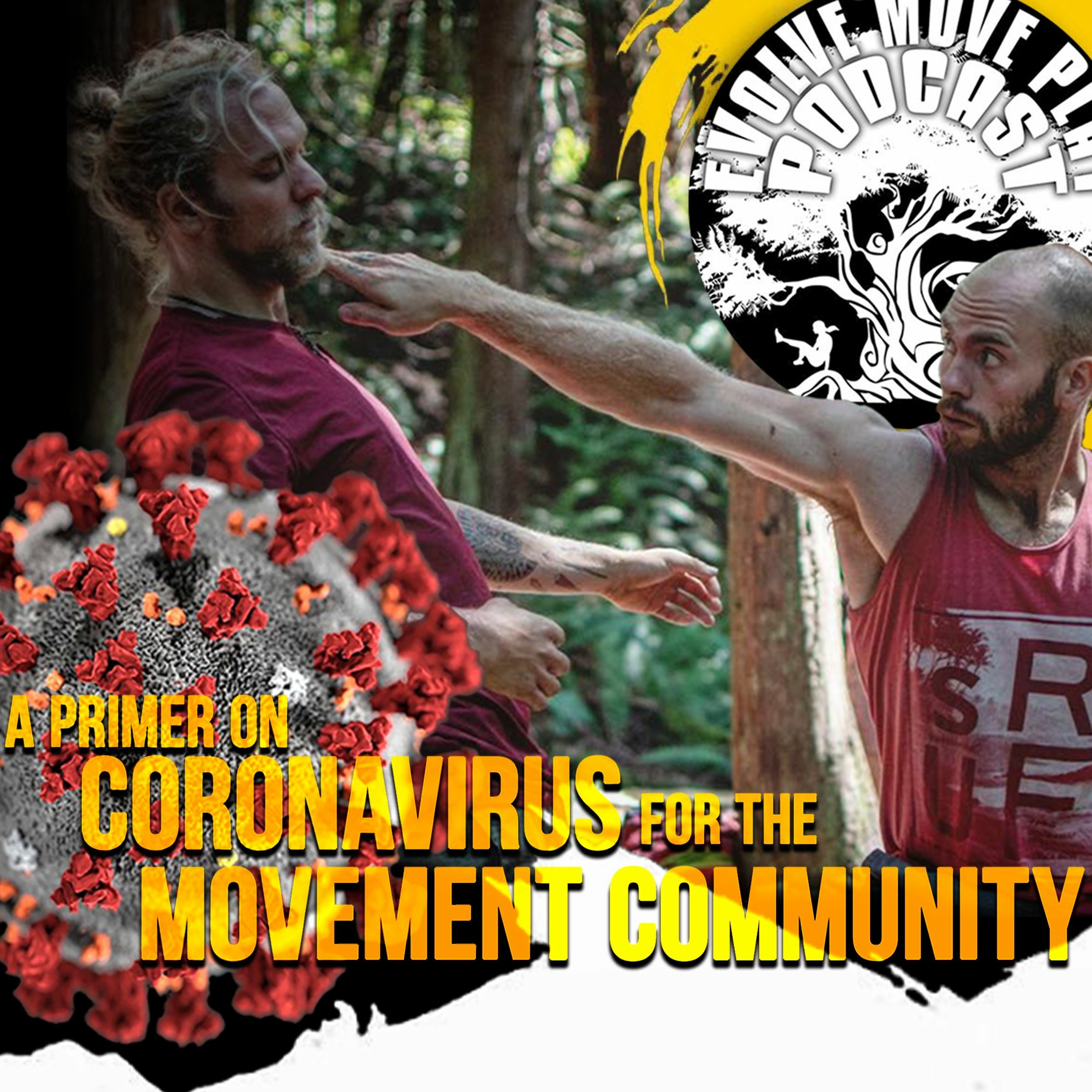
A Primer on Coronavirus for the Movement Community: EMP Podcast 42
The coronavirus is spreading across the globe and those of us in the movement community are going to play a vital role in the health and safety of our communities. Here's what you should know and do to help get through this epidemic! 👍 Liked it? Like it! ♥️ Loved it? Subscribe! (if you haven't already) ------------------------------ As movement professionals, the threat of a pandemic like this one can understandably be hard to come to terms with. We make our living bringing people together to work towards a healthier and happier community. It's how we feed our families. So when something like this happens, it can be easy to want to dismiss or ignore what's happening because the implications it may have on our livelihoods is serious. For those of us who work in gyms and studios, who train and teach martial arts, dance, parkour, weight lifting and so on, a virus that spreads so easily from person to person through contact and close proximity puts our passions and our professions at risk. But the risk of burying our heads in the sand and ignoring the threat could be much, much higher. ➡️ See full notes on the companion blog: https://www.evolvemoveplay.com/coronavirus-movement-community/ ------------------------------ ✅ Join our Natural Parkour Online Membership! 📩 Join now: https://evolvemoveplay.thrivecart.com/inp50 ------------------------------ ⛰️ Nature Immersion and Movement Retreats: Nothing can take you deeper into a truly alive movement practice than one of our very exclusive movement retreats! We take only 20 people per retreat and there is no other experience like it in the movement world! ✅ Check it out and Consider Applying Here: https://courses.evolvemoveplay.com/retreats?utm_medium=organic_social&utm_source=youtube&utm_campaign=retreat_rtts_2020 ------------------------------ 🕰️ SCHEDULE New Podcasts are uploaded every Monday. Bonus Showreels and Instructionals will be uploaded mid-week. So make sure to Subscribe and hit the Notification bell to be notified when videos go live! 🌳 Evolve Move Play helps students cultivate the best version of themselves through practices of movement, mindfulness, nature connection and community. We reconnect them to the most meaningful aspects of life and help them cultivate their character via online courses, and retreats. These topics cover development of body integrity, body to environment, body to object and body to body practices unified with mindfulness, nature connection, dialoguing and other community practices. ------------------------------ 👤 VISIT US ONLINE - EMP Website: https://www.evolvemoveplay.com - Instagram: @RafeKelly http://www.instagram.com/rafekelley/ - Facebook: @RafeKelleyMovement https://www.facebook.com/RafeKelleyMovement/ - Twitter: @rafekelley https://twitter.com/rafekelley - YouTube Subscribe: https://www.youtube.com/user/Faelcind?sub_confirmation=1 - Become a Patron: http://www.patreon.com/rafekelley 🎙️ Evolve Move Play Podcast: https://www.evolvemoveplay.com/learn/?utm_medium=organic_social&utm_source=youtube&utm_campaign=podcast_promotion ------------------------------ #EvolveMovePlay #Coronavirus #Covid19 #MovementCommunity #Epidemic #Pandemic #Movement #NaturalMovement #MartialArts #Hygiene #Health #Virus #EMPPodcast
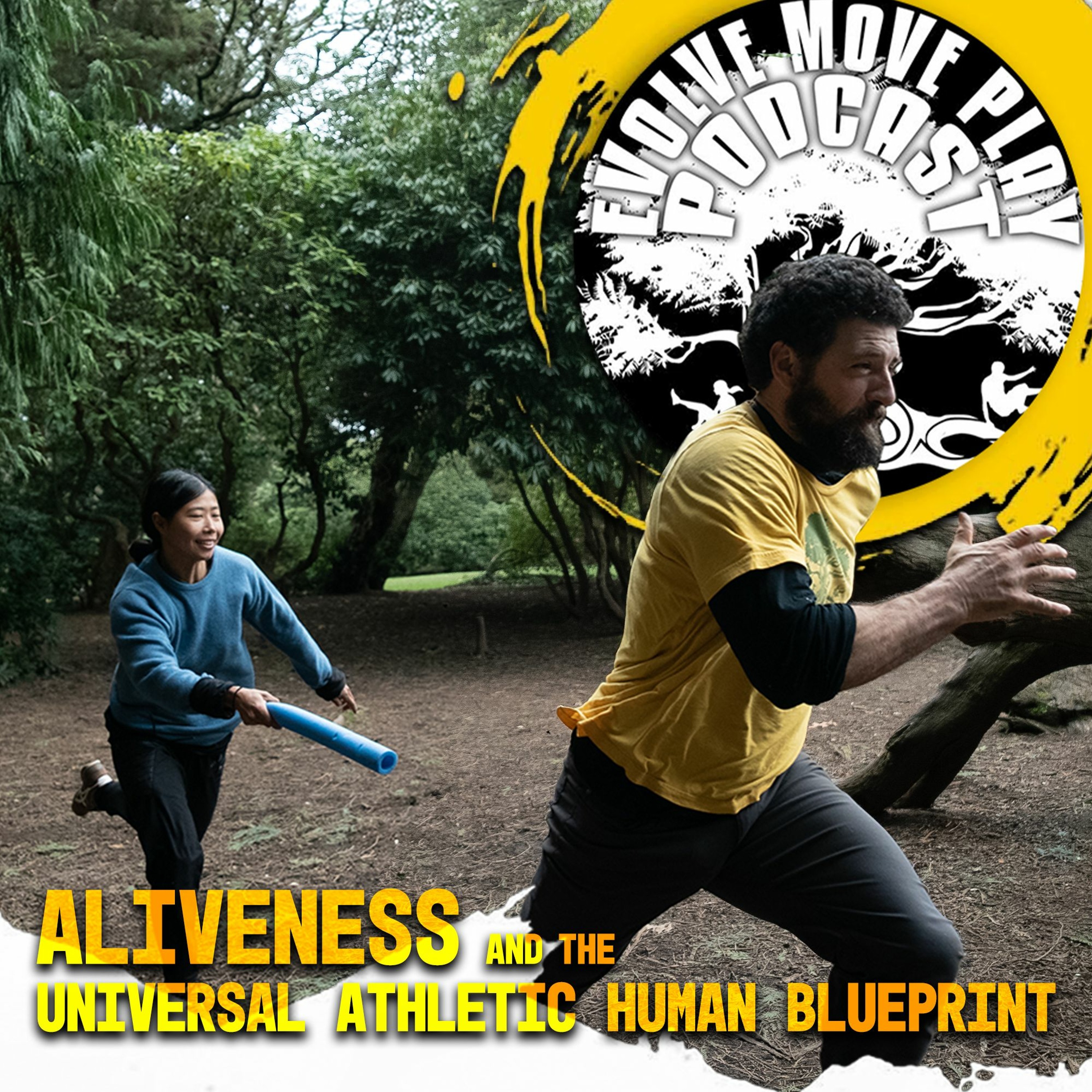
Aliveness and the Universal Athletic Human Blueprint: EMP Podcast 41
The way you train directly affects the way you perform and the way you live. Are you stuck training dead patterns and irrelevant drills? Let's take a look at how you can breathe some life into your practice! 👍 Liked it? Like it! ♥️ Loved it? Subscribe! (if you haven't already) ------------------------------ 🗒️ SHOW NOTES 00:00 - Intro 04:30 - Aliveness in Martial Arts 11:38 - Parkour, Gymnastics, Track & Field 23:24- Team Sports and the Constraint Led Approach 29:33 - Constraints, Affordances, and Perception & Action Coupling 34:58 - Playing the Game 39:54 - Variability 44:24 - The Natural Athlete 55:14 - Outro Fundamentally all sports are based on some combination of being able to move effectively through the environment, being able to throw, catch, carry, strike and manipulate objects, and being able to work cooperatively with or competitively against other humans or animals. Training physical qualities in isolation will never provide the complete set of perceptual motor skills that provide an optimal base for adaption to any athletic task. However, a combination of elements from parkour, Mixed Martial Arts, and team sports, taught primarily in natural environments and using a constraint lead approach to teaching absolutely can. ➡️ See full notes on the companion blog: ADD CURRENT BLOG LINK HERE ------------------------------ ✅ Join our Natural Parkour Online Membership! 📩 Join now: https://evolvemoveplay.thrivecart.com/inp50 ⛰️ Checkout our Nature Immersion and Movement Retreats: https://courses.evolvemoveplay.com/retreats?utm_medium=organic_social&utm_source=youtube&utm_campaign=retreat_rtts_2020 ------------------------------ 🕰️ SCHEDULE New Podcasts are uploaded every Monday. Bonus Showreels and Instructionals will be uploaded mid-week. Make sure to Subscribe and hit the Notification bell to be notified when videos go live. 🌳 Evolve Move Play helps students cultivate the best version of themselves through practices of movement, mindfulness, nature connection and community. We reconnect them to the most meaningful aspects of life and help them cultivate their character via online courses, and retreats. These topics cover development of body integrity, body to environment, body to object and body to body practices unified with mindfulness, nature connection, dialoguing and other community practices. ------------------------------ 👤 VISIT US ONLINE - EMP Website: https://www.evolvemoveplay.com - Instagram: @RafeKelly http://www.instagram.com/rafekelley/ - Facebook: @RafeKelleyMovement https://www.facebook.com/RafeKelleyMovement/ - Twitter: @rafekelley https://twitter.com/rafekelley - YouTube Subscribe: https://www.youtube.com/user/Faelcind?sub_confirmation=1 - Become a Patron: http://www.patreon.com/rafekelley 🎙️ Evolve Move Play Podcast: https://www.evolvemoveplay.com/learn/?utm_medium=organic_social&utm_source=youtube&utm_campaign=podcast_promotion ------------------------------ #EvolveMovePlay #Movement #NaturalMovement #Parkour #MMA #MartialArts #TeamSports #ConstraintLedApproach #Coaching #Teaching #Aliveness #PerceptionAndAction #MotorLearning #EcologicalDynamics #Play #OptimalPerformance #EMPPodcast
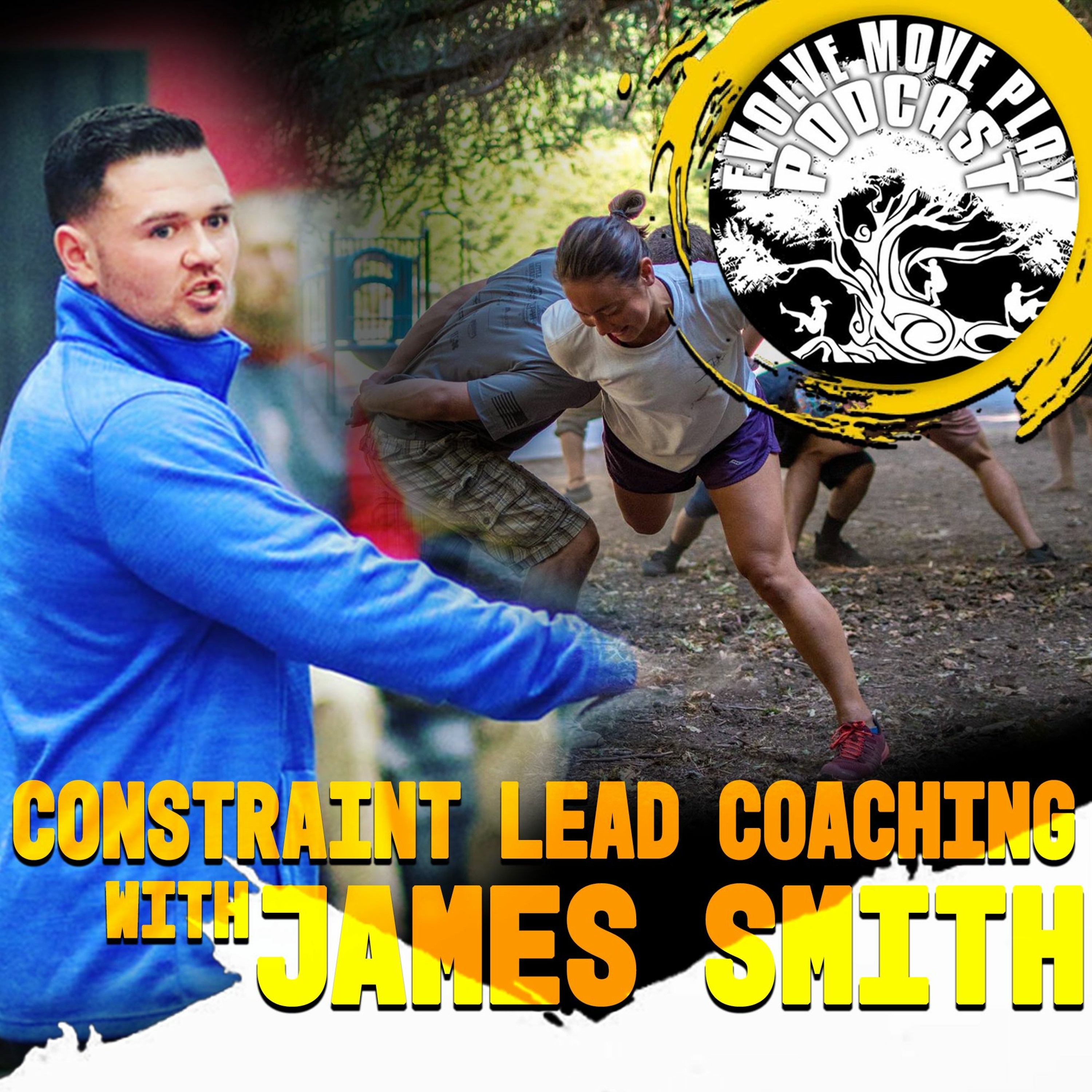
Constraint Lead Coaching With James Smith: EMP Podcast 40
Are you a movement coach looking to revolutionize the way you train your students? Using a constraint lead approach is a surefire way to improve skill acquisition and overall engagement in your program. Check it out! 👍 Liked it? Like it! ♥️ Loved it? Subscribe! (if you haven't already)and don't forget to share! ------------------------------ 🗒️ SHOW NOTES 00:00 - Intro 02:53 - Input and Output 10:27 - Do No Harm 19:23 - Open and Closed Skills 27:33 - The Power of Task Constrained Learning and Aliveness 41:50 - Balancing General and Specific Training 50:42 - Kids and Unstructured Play 59:32 - Designing Structured Play 01:30:41 - When to Isolate Skill Work 01:37:28 - Developing the Aerobic Base As coaches, creating task constrained environments and developing our awareness of when to step in and teach, or step away and let the students self organize their learning, allows us to streamline our athletes skill acquisition. James Smith is the owner of The U of Strength in Tyngsboro, MA. There he’s using the power of task constrained coaching to help athletes of all ages and skill levels improve their physical abilities and problem solving capacities. We recently found his Instagram page and immediately saw strong correlations between his methods and how we’re teaching natural movement at Evolve Move Play. ➡️ See full notes on the companion blog: https://www.evolvemoveplay.com/constraint-coaching-james-smith-podcast-40/ ------------------------------ ✅ Join our Natural Parkour Online Membership! 📩 Join now: https://evolvemoveplay.thrivecart.com/inp50 ⛰️ Checkout our Nature Immersion and Movement Retreats: https://courses.evolvemoveplay.com/retreats?utm_medium=organic_social&utm_source=youtube&utm_campaign=retreat_rtts_2020 ------------------------------ 🕰️ SCHEDULE New Podcasts are uploaded every Monday. Bonus Showreels and Instructionals will be uploaded mid-week. Make sure to Subscribe and hit the Notification bell to be notified when videos go live. 🌳 Evolve Move Play helps students cultivate the best version of themselves through practices of movement, mindfulness, nature connection and community. We reconnect them to the most meaningful aspects of life and help them cultivate their character via online courses, and retreats. These topics cover development of body integrity, body to environment, body to object and body to body practices unified with mindfulness, nature connection, dialoguing and other community practices. ------------------------------ 👤 VISIT US ONLINE - EMP Website: https://www.evolvemoveplay.com - Instagram: @RafeKelly http://www.instagram.com/rafekelley/ - Facebook: @RafeKelleyMovement https://www.facebook.com/RafeKelleyMovement/ - Twitter: @rafekelley https://twitter.com/rafekelley - YouTube Subscribe: https://www.youtube.com/user/Faelcind?sub_confirmation=1 - Become a Patron: http://www.patreon.com/rafekelley 🎙️ Evolve Move Play Podcast: https://www.evolvemoveplay.com/learn/?utm_medium=organic_social&utm_source=youtube&utm_campaign=podcast_promotion Learn More About James: Instagram: @TheUofStrength Website: https://www.theuofstrength.com/ ------------------------------ #EvolveMovePlay #EMPPodcast #JamesSmith #TheUofStrength #TaskConstrainedLearning #MotorLearning #Coaching #TeamSports #Movement #NaturalMovement #Parkour #Play #DynamicSystems #EcologicalDynamics #EMP #MoveLikeaHuman
Parkour As Therapy With Kasturi Torchia: EMP Podcast 39
Think parkour is all about big jumps and flashy tricks? What if we told you it could lead to a deeper understanding of yourself, your community, and the way you approach hurdles in your life? 👍 Liked it? Like it! ♥️ Loved it? Subscribe! (if you haven't already) ------------------------------ 🗒️ SHOW NOTES 00:00 - Intro 05:44 - Kasturi’s History 11:48 - The Therapeutic Practice 31:50 - Why Am I Here? 40:28 - Life and Sport 55:35 - The Parkour Counter Culture 01:11:51 - Costs and Benefits 01:21:21 - Integrating the Practice 01:30:48 - The Duty to Care 01:38:08 - The Group and the Individual By undertaking a movement practice we are better able to shape ourselves, our community, and our world to fit our hopes and dreams. At the same time it helps us improve our ability to accept and overcome adversity when it inevitably finds its way into our lives. This is a driving force behind Evolve Move Play, and it’s why we reached out to Kasturi Torchia to have her join us on the podcast today. Kasturi is founder of Esprit Concrete where they are combining coaching parkour/Art Du Deplacement, psychological theory, and intervention to empower people to nurture a sense of personal responsibility in the hope that they will then strive to give back to society. ➡️ See full notes on the companion blog: https://www.evolvemoveplay.com/parkour-as-therapy-ktorchia-episode-39/ ------------------------------ ✅ Join our Natural Parkour Online Membership! 📩 Join now: https://evolvemoveplay.thrivecart.com/inp50 ⛰️ Checkout our Nature Immersion and Movement Retreats: https://courses.evolvemoveplay.com/retreats?utm_medium=organic_social&utm_source=youtube&utm_campaign=retreat_rtts_2020 ------------------------------ 🕰️ SCHEDULE New Podcasts are uploaded every Monday. Bonus Showreels and Instructionals will be uploaded mid-week. Make sure to Subscribe and hit the Notification bell to be notified when videos go live. 🌳 EMP helps students cultivate the best version of themselves through practices of movement, mindfulness, nature connection and community. We reconnect them to the most meaningful aspects of life and help them cultivate their character via online courses, and retreats. These topics cover development of body integrity, body to environment, body to object and body to body practices unified with mindfulness, nature connection, dialoguing and other community practices. ------------------------------ 👤 VISIT US ONLINE - EMP Website: https://www.evolvemoveplay.com - Instagram: @RafeKelly http://www.instagram.com/rafekelley/ - Facebook: @RafeKelleyMovement https://www.facebook.com/RafeKelleyMovement/ - Twitter: @rafekelley https://twitter.com/rafekelley - YouTube Subscribe: https://www.youtube.com/user/Faelcind?sub_confirmation=1 - Become a Patron: http://www.patreon.com/rafekelley 🎙️ Evolve Move Play Podcast: https://www.evolvemoveplay.com/learn/?utm_medium=organic_social&utm_source=youtube&utm_campaign=podcast_promotion Learn More About Kasturi: Twitter: https://twitter.com/ktorchia Website: https://www.espritconcrete.com/
Applying Ecological Dynamics to Physical Education with Peter Verdin: EMP Podcast 38
In our last three podcast episodes, we’ve gone a long way towards explaining why it’s important for humans to approach motor learning and skill acquisition from a standpoint of ecological dynamics. The human organism is an incredibly complex system of systems and for millions of years we’ve learned skills primarily by means of environmental necessity. If a problem or an opportunity arises, our survival could hinge on our ability to adapt and overcome the situation. This adaptability is one of our greatest powers and it exists in us to this day. Compared to this, the advent of instructors, coaches and learning facilities is relatively new to us. While coaching and instruction are invaluable at certain times and certain places, it is a major mistake when we abandon task constrained learning and unstructured play. Unfortunately this isn’t how the vast majority of our modern physical education programs approach movement and motor learning. The emphasis on competitive team sports and reductionist fitness training has constricted the scope of what can be achieved and developed through movement practice. While everyone is affected by this, it is especially damaging to children. As young children, the vast majority of fundamental skills and abilities are learned through play. When kids are allowed to play on their own, they not only develop physical capacities like strength, balance, and coordination, they also are learning social skills like negotiation, communication, self inhibition, altruism, and empathy. This kind of play is also highly therapeutic and important for regulating anti-social behavior. Yet we are seeing more and more restrictions on both the amount and the types of play that kids are given access to. Schools are consistently cutting down on recess time, creating strict anti-risky play rules, and funneling more, younger kids into organized competitive team sports. As this problem persists, we’re seeing the damages more and more clearly as children grow into adults who are highly adverse to social situations, unable to take risks, unable to regulate aggression, and who are socially emotionally illiterate. At EMP we believe that one of the most important things we can work towards is a complete restructuring of the physical education system. That’s why we are so excited to have Peter Verdin as a guest on the Evolve Move Play Podcast today. Peter is a host at The Other Literacies Podcast, and he’s also a movement engineer at Future Public Schools where he is using principles from parkour, natural movement, and ecological dynamics to build a better physical education system for his elementary school aged students. His work is proving that with the right knowledge and experience, you can implement an effective program for instructing 30+ student classes in a manner that is engaging and congruent with the natural learning systems we have hardwired into our bodies and minds. SHOW NOTES 00:00 - Intro 04:07 - The Other Literacies 15:38 - Movement Nutrition 20:58 - Play Literacy 33:09 - Structured and Unstructured Play 48:13 - Social Emotional Learning 01:03:04 - The Task Constrained Curriculum 01:12:15 - The History of Physical Education
Creating Movement Problem Solvers With Shawn Myszka: EMP Podcast 35
SHOW NOTES 00:00 - Intro 03:44 - Shawn’s Background 08:05 - Teaching Without Teaching 11:26 - What is Ecological Dynamics? 17:38 - Scaling Complexity, Manipulating Constraints 30:54 - The Zone of Optimal Challenge 35:24 - The Performance is the Screen 39:34 - Aliveness 46:57 - Task Constrained Learning 50:16 - Zooming In and Zooming Out 54:48 - Attention, Intention and Calibration 1:15:01 - Balancing Extrinsic and Intrinsic Attention 1:25:23 - Becoming Movement Problem Solvers How do humans learn to move? Be it in sports, fitness, trade skills, performance arts or just everyday life, the process of acquiring skill in movement is something that we all must go through. For decades now it seems like the most widely adopted method of motor learning has been to apply a reductionist mindset to skill acquisition. The idea is to improve our movement by practicing isolated component skills with the hopes of perfecting patterns that can then be integrated back into the bigger picture task. For instance, if you wanted to get better at playing basketball you might individually practice free throws, three pointers, lay ups, etc… with the goal of having perfect form on every repetition. If you want to learn parkour, you might have an instructor give you detailed explanations of each vault: how to angle your hands, where to jump from, what each foot is doing at the beginning, middle and end of the vault, where your eyes are trained, your breathing, etc… The problem is that this approach doesn’t address the variability of context and constraint. In a real game of basketball, no two shots will be under the same conditions, and the number of possible conditions to shoot from is far too vast to practice each individually. Even further, this method is directly at odds with how humans actually develop motor skill because it tends to rely on the prefrontal cortex which is great for organizing propositional knowledge but ineffective for performing skillful, adaptive movement. Perhaps you’ve experienced “paralysis by analysis”: freezing up or being unable to act as a result of trying to mentally organize and process too many individual component actions.. As it turns out, it is far more effective to gain movement skill by engaging in tasks built around complex problem solving. It's fairly obvious if you think about it. As babies, we don’t learn to locomote because of our parents detailed instruction of contralateral crawling patterns. We learn to crawl because we need to solve the problem of not being able to play with that interesting thing on the other side of the room. The process of solving that problem, and other problems like it, ingrains those movement solutions into us and before long we are solving new problems to reach things that are higher up which opens the doors to climbing and moving bipedally. So how do we apply this process of learning to our own movement practice, or even to the practice of elite level athletes? Well on today’s episode of the Evolve Move Play Podcast we’ve got Shawn Myszka joining us to talk about just that. His work has centered around using ecological dynamics to improve not just how top NFL players move, but how they utilize their capacities for attention and intention to become better problem solvers on the field. If you’ve been to one of our retreats, you’ve most likely heard us talk about how it’s not patterns that are important, but solutions. By training at the highest level of complexity possible to achieve our goals and implementing a task based constraint approach to learning, we can effectively tap into our innate motor learning systems and streamline the process of skill acquisition. We really enjoyed having Shawn on the show and hope to have him back soon. Let us know what you think in the comments below and don’t forget to like, share and subscribe! Learn more about Shawn at: Twitter: @movementmiyagi Online: emergentmvmt.com
Mapping The Evolve Move Play Method With John Vervaeke: EMP Podcast 36
We believe that the practice of movement is more than learning neat tricks and improving our physical aesthetics. While those things are great, what we are aimed at is a practice that goes beyond just the physical and improves as many aspects of our lives as possible. Movement is essentially an expression of the self— the body-mind organism that we are. It is how we interact with and experience literally everything going on within and around us. Our connections to the environment, to others, and to ourselves immediately affect the quality of our lives. If you are constantly unhappy with your own actions, scared of the world around you, and being alienated by your peers, cultivating a sense of purpose can be incredibly difficult to do. Building an ecology of practices that strengthen these relations gives us a better chance to create the life we want for ourselves. We can find affordances in our environment that nurture us and give us opportunities for learning and growth. We learn how to communicate and form bonds with people to expand our network of support. We begin to live according to our vision and, through continual work and incremental progress, gain a stronger sense of self respect and self trust. Johns work is tightly woven around this idea of creating a sense of meaning, but one of the biggest criticisms of his work is that it can be abstract. Sure, we should live more meaningful lives, but what are the real world, physical actions that bring about that result? John’s work has resonated deeply with us at EMP and we feel there is a way to make the ideas and principles concrete, and we’ve been working hard on mapping out how to put all of these concepts into actual practice. The purpose of today's episode is not so much to interview John, but rather to present our map of practices to him for the sake of getting some dialogue and feedback on how congruent they are to his teachings. We hope you enjoy this conversation and we’d be happy to hear what questions or comments you have. Keep an eye out in the future for more interviews and conversations with John, and don’t forget to go check out his lecture series “Awakening from the Meaning Crisis” on YouTube. SHOW NOTES 00:00 - Intro 03:48 - Pillar Practices 09:08 - The Physical Philosopher 18:11 - The EMP Roadmap 33:32 - The Archetypes 47:22 - Embodied Sacredness 58:34 - Jitsu vs Do 1:04:13 - The Power of Dialogue
Learn Like a Human: EMP Podcast 35
It might seem obvious, but it’s incredibly important to understand that humans are complex. Not only are we physically complex, but we’re cognitively, emotionally, and socially complex as well. This is in big part because we must survive in a world that is just as mind numbingly complex as we are and, often times, directly hostile towards us. Existing amidst this complexity has required that we become a versatile and adaptive system of systems that is properly equipped to recognize, understand, and solve an incalculable number of emergent problems or tasks. Our capacity for self organization and skill acquisition is staggering, but as our technological strength grows our world becomes more reliant on computers and machines. As a result, we have made the mistake of adopting patterns of teaching and learning that, while they might make sense from an engineers standpoint, are actually at odds with how humans most effectively learn. I would wager that most of you reading this have experienced a time where an instructor has overwhelmed you with too much information, over-correction of mistakes, or improper cuing— resulting in you actually coming away from the lesson more frustrated and less skillful. Why does this happen? It might seem sensible that having a clear understanding of each individual step, or having a high frequency of technical correction would result in faster progress, but because of how our brains are structured that’s not the way we optimally learn, especially in terms of applicable motor skills. So if you are going to learn natural movement, or any other skill, it’s important to understand just how humans naturally learn. What are the principles that allow students to self organize and generate robust and reliable movement solutions? Today’s episode of the EMP Podcast will have you join in on a lecture from last year’s Autumn Retreat where Rafe broke down the science and structure behind Evolve Move Plays method of teaching. This is an insightful and fascinating talk for anyone, teacher or student, who wants to avoid the frustrations of improper instruction and gain a firmer understanding of how to tap into our natural super powers of learning and applying movement skills. So check it out and let us know below what your experiences have been with learning or teaching movement. How do you facilitate student growth, or what struggles regularly show up with your practice? We want to hear your stories! SHOW NOTES 00:00 - Intro 03:43 - Explicit and Implicit Knowledge 10:36 - The Ill Defined Problem of Human Movement 22:04 - Non Linear Learning 28:33 - Relevance and Affordances 34:05 - Constraints and Cuing 45:44 - Four Levels of Motor Control 54:42 - The EMP Pedagogy
The Heroic Journey, Parkour and Jordan Peterson: EMP Podcast 34
If a picture is worth a thousand words, then a story is worth countless lessons. Each person who listens to a tale can see it freshly from the frame of their own life experiences and glean from it a level of wisdom that may have never been otherwise captured. More so, because we continually grow and gain new insights throughout the course of our lives, as we return to these stories time and again we find that they offer us new wisdom that we hadn’t been ready to receive before. John Vervaeke speaks of this as being a kind of sacredness; a relationship between person and narrative that affords an inexhaustible fount of insight and discovery. Throughout history and across cultures, the most prevalent theme humans have been sharing with one another is the epic struggle between order and chaos. It is a universal truth that life begets conflict and that the most admirable trait a person can aspire to is the ability to face the challenges of their life head on. To us, movement practice is a path towards that aim. It is a lifelong road that leads us from the “unbearable present” to the “ideal future”. A daily commitment to becoming the self we most admire. Today Rafe is going to revisit the stories he told on our last podcast episode and tie them back into the frame of movement practice. He will explain how these concepts of order, chaos and the heroic journey can be powerful tools to aid us on our own path of self transformation. SHOW NOTES 00:00 - Intro and Forward 02:35 - Movement and the Heroic Journey 04:44 - Rafe’s History 11:54 - Congruent Principles 15:50 - Order, Chaos and the Heroic Practice 22:24 - The Dragon, The Slayer and The Tamer 33:17 - The Dark and Light of the Archetypes 37:04 - Parkour and the Parched Kingdom LINKS [2 Heroic Conflicts] https://www.evolvemoveplay.com/the-heroic-quest-emp-podcast-33/ [Roughhousing] https://www.evolvemoveplay.com/do-you-remember-roughhousing/ [The Self Worth Esteeming] https://www.evolvemoveplay.com/the-self-worth-esteeming/
The Heroic Quest: EMP Podcast 33
Have you ever sat down by a campfire and listened with rapt attention to a well-told tale? Before we had books, video games and movies this was our most important form of entertainment. Stories are more than just a means of entertainment though, they are an ancient and integral part of the human experience. 44,000 years ago, early humans were etching figures of heroic hunters and mighty beasts onto cave walls in Indonesia. In 1800 BC the epic of Gilgamesh was being scribed onto clay tablets in ancient Mesopotamia. More recently the Harry Potter series has sold over 500 million copies worldwide and last year total box office revenue in North America amounted to $11.89 billion. It’s not hard to understand why the power of storytelling is held so close to our hearts. Stories make sense of the world. They allow us to see life through the eyes of another. They guide us to insight, deepen our understanding, and increase our chances of survival in a dangerous and hostile universe. Of all the tales told around the globe, the most familiar archetypal story is the heroic journey; a characters epic quest to confront the chaotic darkness of the world and restore order and security to their people. In today’s episode of the EMP Podcast, you will join Rafe by the campfire at this summers Return to the Source as he shares the stories of Saint George and the Dragon and King Martel of Odd. These stories, reflect ancient themes of heroism, but what do they signify to you? Let me know if these stories spoke to you and if so how do you feel they might give insight in to movement practice? Tell us in the comments below! SHOW NOTES 00:00 - Intro 01:00 - Announcements 02:49 - Saint George and the Dragon 10:09 - The King of Odd 17:00 - Outro SUPPORT US www.evolvemoveplay.com www.patreon.com/rafekelley
The Why, What and How of Evolve Move Play: EMP Podcast 32
What does movement mean to you? Is it just a fun pastime? Maybe you use it as a tool to reach certain health markers or become more attractive? Is it a grueling obligation or some form of punishment you put yourself through to make up for unhealthy life choices? Whatever it may be, chances are you’ve been conditioned to view movement in some light that doesn’t capture the ways it can truly serve you, your community and your environment as a whole. At Evolve Move Play we’ve taken on the sizeable task of reawakening people to the power and purpose of a dedicated human movement practice. We’ve found that movement is not only a source of physical nourishment, but mental, social, and emotional nourishment as well. Through trial and error, extensive studies, experimenting and testing our theories, we’ve been able to build a sound framework around what we practice, how we practice, and most importantly, WHY we practice. In this piece, and the accompanying video, we’re going to give you a look at those three elements and the way we conceptualize the key components of our practice.
Moving Beyond Mindfulness with Mark Walsh: EMP Podcast 31
Greetings everybody and welcome back to the Evolve Move Play Podcast! We’ve taken a bit of time off to focus on running retreats and releasing our Natural Parkour Online Course. It will be a few weeks before we are ready to get the podcast running again full steam but we decided to offer this special episode the celebrate the release of our friend Mark Walsh's book Embodiment. Find that book here https://www.amazon.com/Embodiment-Moving-mindfulness-Mark-Walsh/dp/1916249221 For our 31st episode we have the one and only Mark Walsh of Embodied Yoga Principles joining us to talk about his new book “Embodiment: Moving Beyond Mindfulness”. This is his third time visiting us on the podcast, and if you didn’t catch his last two appearances, I highly recommend that you go listen to those first to get a real solid idea of just what embodiment is and why it is so important for those of us working towards our most heroic selves. This episode we will talk at length about how to conceptualize our practices and how to layer in elements of EYP to take our self development to the next level. We also talk about the dark side of peak experiences and address the problem of habitual state seeking in ourselves and our students. So give it a listen and let us know what you think in the comments below! SHOW NOTES 00:00 - Intro 00:58 - Recap & Marks Book 06:58 - Fitting the Pieces Together 13:08 - Optimizing Your Practice 18:53 - Putting EYP to Work 32:50 - Sacrifice 39:34 - The Shadow Side of Peak Experience 47:43 - Getting Free From State Seeking 53:06 - Fantasy, Sci-fi, and Ukranian Wife Deathmatches LEARN MORE www.theembodimentbook.com www.embodiedyogaprinciples.com SUPPORT US www.evolvemoveplay.com www.patreon.com/rafekelley Thanks everyone, and happy moving! -The EMP Team
Aaron Cantor Interviews Rafe: EMP Podcast 30
We recently held our 2019 Return to the Source seminar and by all accounts it was the best event we’ve put on to date. What started years ago as a three day parkour seminar in nature has blossomed and evolved into an event that time and time again brings people together and reconnects them to core components that make life feel more meaningful. This year we were joined by Aaron Cantor, an incredible coach and friend who’s been on the podcast before. He was both a participant and a facilitator at Return to the Source, and it was an absolute joy to have him present to share his stories, movement, humor and support. Not to mention also leading the group in a wonderful dance party on the final night. After the event we sat down to film an interview for the podcast, but decided to make this one a little special and let Aaron ask all the questions. Where did Evolve Move Play start, how did it get to where it is now, and where do we intend to go? What’s the aim of EMP and how do we go about achieving it? How do we determine what’s valuable and who do we look to for inspiration in this vast and chaotic world of beliefs, dogma, misinformation, and mystery? Aaron does a great job as guest interviewer; we share some laughs along the way and it was a valuable means of processing and articulating the deeper insights from the event. SHOW NOTES 00:00 — Intro 04:29 — Return to the Source Recap 12:19 — Moving in Nature 16:05 — Rafe’s Why 21:06 — Chaos, Order, and Connecting to Nature 28:00 — The Ecology of Evolve Move Play 47:16 — Sources of Influence 51:27 — Algorithms and Heuristics 1:01:12 — What Happens After You Die? 1:06:05 — Culture and Value 1:13:17 — The Future TRAIN WITH US EMP Autumn Retreat (Oct 3-6) https://www.evolvemoveplay.com/ev_event/autumn-retreat-2019/ EMP San Francisco Experience (Sept 14-15) https://www.evolvemoveplay.com/ev_event/evolve-move-play-san-francisco/ EMP Los Angeles Experience (Sept 21-22) https://www.evolvemoveplay.com/ev_event/evolve-move-play-los-angeles/ BECOME A PATRON https://www.patreon.com/rafekelley
Playing With Movement With Todd Hargrove: EMP Podcast 29
RETURN TO THE SOURCE AUTUMN RETREAT! Oct 3-6th https://www.evolvemoveplay.com/ev_event/autumn-retreat-2019/ TODAY'S EPISODE Motivation seems to be a big problem. The cost of being a member at your average gym is about $60 a month yet every year about 5.1 million Americans end up wasting a total of around $1.8 billion in unused gym memberships. It’s a strange statistic if you think about it. We all know that movement is vital in maintaining a healthy body and brain. We know that positive lifestyle improvements are good for mitigating stress and anxiety, increasing brain function, reducing the risk of diseases, and can make us less susceptible to injuries. Meanwhile, we are bombarded by marketing that idolizes those who are fit and healthy. Our movies, our television shows, the people we follow on social media... all make it clear that having a strong, fit-looking body brings great social reward and probably loads of self respect and confidence. To add to it, we even have state of the art facilities staffed with professional exercisers ready to measure us, build dietary plans and workout routines, taking all the thinking and studying out of the equation for us. With all of this help, being our most heroic and sexy selves should be pretty easy. Yet… we still don’t go to the gym. As it turns out, the human mind and body is an incomprehensibly complex thing. There’s a lot more going on than what can be adequately addressed through the reductionist method. Movement is much more than just an obligatory chore to meet society's expectations or to punish oneself for past poor decisions. Movement, in its truest sense, is a means of expression and connection that can actively imbue our lives with meaning and profound experiences. The motivations and methods described above generally ignore this fact, opting instead to create an environment that, shuns playing, stifles creative problem solving, poo poos self expression, and asserts that no pain equals no gain. While this is enough to get people to shell out money for a membership, it seems to be insufficient in keeping people engaged and motivated for very long. In today’s episode of the Evolve Move Play Podcast, our good friend Todd Hargrove is back to talk about his new book “Playing with Movement: How to Explore the Many Dimensions of Physical Health and Performance”. It turns out that if we really want to get the most out of our movement and become the best versions of ourselves, we would do well to step away from our habit of viewing the body as a machine, perceiving play as pointless, and seeing movement solely as a form of work. When we begin playing more, we tap into inherent motivations and are far more likely to engage in the activities that nurture us. So buckle up and join us on this conversation. Along the way we’ll also talk with Todd about intention and attention, dynamic systems, and what differentiates work from play. So take a look and let us know what you think! SHOW NOTES 00:00 - intro 02:37 - The Importance of Play 06:49 - Complex and Complicated Problems 16:37 - Layers of Movement Interlude 20:42 - Direction of Attention 27:09 - Top Down, Bottom Up 30:13 - Attention and Intention 24:07 - What is Dynamical Systems? 39:39 - Work and Play 49:52 - Community 53:33 - Make Your Movement Meaningful LEARN MORE https://www.bettermovement.org SUPPORT US https://www.evolvemoveplay.com https://www.patreon.com/rafekelley
The Transformative Power of Chaos with Jozef Frucek: EMP Podcast 28
Heisenberg's uncertainty principle asserts that we are always operating in a state of limited understanding. No matter how many variables we take into consideration, no matter how long we worry and fret, we can never have all the data since the amount of data in any given situation is infinite. At the same time, however, humans have minds that are incredibly good at finding patterns, understanding cause and effect, and creating storylines that lead to places of deeper understanding and profound meaning. We tend to love solving puzzles and tracing our fingers along the lines of maps. We thirst for knowledge and understanding and truth. Every human finds themselves in an ancient dance between order and chaos and while many of us may have natural inclinations towards one end or the other, there is an undeniable power in being able to harness the strengths of both. Can we establish enough order and discipline to prepare ourselves for the rigors of survival while never losing the sense of awe and mystery that imbues our existence with moments of wonder and magic? Can we find room in our minds and hearts for science and spirit, freedom and fealty, machination and mystery? In today’s episode of the Evolve Move Play Podcast, we are talking with Jozef Frucek and much of our conversation will cover how this dance emerges not just in our movement practices, but also in our lives at large. Throughout the course of our unfolding stories, can we stand deliberately in the face of chaos, even if it means we might fall, make mistakes, or be proven wrong? Can we be steadfast in our discipline so that our efforts may benefit ourselves, our families, and our communities from now into the future? Is there a way to practice both sides of the coin in your daily life? Join us in our conversation and feel free to leave your thoughts and questions in the comments section. Thanks everyone, and happy moving! -The EMP Team SHOW NOTES 00:00 - Intro 02:04 - Meditations on Meditation 09:26 - A Sustainable Approach 21:54 - Borders: Maps vs Territory 28:00 - Selecting the Challenge 33:13 - Articulation and Mystery 38:43 - The Body is Poetry 46:40 - Thinking Critically 51:16 - Being and Becoming, Knowledge of an Egg 59:42 - Complex vs Complicated Problems 01:06:48 - Reciprocal Realization 01:11:35 - Finding Your Own Way LEARN MORE fightingmonkey.net SUPPORT US www.patreon.com/rafekelley www.evolvemoveplay.com
Finding Balance with Soisci Porchetta: EMP Podcast 27
“To me, ultimately martial arts means honestly expressing yourself… Now it’s very difficult to do. It is easy for me to put on a show and be cocky... I can make all kinds of phony things and be blinded by it. Or I can show you some really fancy movement. But to express oneself honestly, not lying to oneself, and to express myself honestly, now that my friend is very hard to do. “ -Bruce Lee In this podcast we’ve talked a lot about the process of building an ecology of practices around becoming our most heroic selves. As I said in the last episode’s description: the things we choose to do require that we invest our time, money, and energy in order to absorb the lessons that are given. Often times the huge investment that we put into our practice of choice can bias us towards believing that there’s no need for other practices, that our one discipline has it all and is superior to all the rest. We can tie our egos into the practice to the point where we see ourselves as products of the school in which we train, we are “climbers” we are “karate-ka” we are “bodybuilders”, etc… This is a sneaky and often devastating trap that can not only cut us off from the myriad benefits of other disciplines, but can actually stifle and smother our individuality and our ability to honestly assess, express and obtain that which we need. In today’s episode of the Evolve Move Play Podcast, we have the wonderful Soisci Porchetta joining us to talk about her process of self discovery and transformation and how she’s taking lessons she has learned from her many disciplines and putting them together to help herself and her students find their path of continual growth. Along the way we’re going to discuss how to determine what students need for improvement, how to find intrinsic sources of motivation and reward, and the role that the ego plays in self transformation. So enjoy the show and as always, leave us a comment, share, like, and subscribe. You can also give us a rating and a review on iTunes. If you would like to personally support the show, head on over to www.patreon.com/rafekelley to become a patron, or hit up www.evolvemoveplay.com and see if we’re coming to your neck of the woods. Thanks everyone, and happy moving! -The EMP Team SHOW NOTES 00:00 - Intro 02:07 - Isolate, Integrate, Improvise 18:18 - Practice Prescription 28:39 - Soisci’s Class Structure 36:55 - Balance 50:18 - Digging Deeper 59:06 - Connectivity, Intrinsic v. Extrinsic Reward 01:09:46 - Movement and the Body Brain Connection 01:19:50 - Meaning and Relevance 01:31:17 - Tempering the Ego LEARN MORE www.humanpatterns.net
A Road Map To Self Transformation With Mark Walsh - EMP Podcast 26
In this complex and chaotic world, there are an endless array of hobbies, past times, disciplines and studies that can be woven into the tapestry of our lives and choosing the ones that are capable of enriching our existence in the most broadly applicable ways can be an incredibly daunting task. The fact of the matter is that whatever we choose to do carries with it the weight of our time and commitment. Because we devote considerable portions of our lives to these practices it’s worth considering how they develop our character - which requires that we honestly consider how we want or need our character to be developed. Mark Walsh is an embodiment teacher who has made the structure of self transcendence a core focus of his work and he’s joining us today to provide some deep insight into how we can live more embodied lives and truly get the most out of the practices we pursue. In this episode we will detail the paths and pitfalls of both generalist and specialist training, how to determine the efficiency or redundancy of our efforts, how to analyze our strengths and weaknesses and fall in love with the process of self cultivation. Each person has their own story, rich with passions, fears, wins, losses, loves and lamentations. There will never be a one size fits all algorithm to becoming the best and truest versions of ourselves, but there are guidelines that one can apply to better direct themselves toward an ecology of practices that best fits their incredible journey. When we live and move with the passion that comes from intentionally creating a better story for ourselves, our families and our communities, we plant seeds that sprout a deeper sense of meaning and connection, and that will bear the fruit of a life well lived. Enjoy the discussion, and please remember to like, share, subscribe and leave us a comment below. You are a part of this amazing community and we love to hear your stories, so tell us how you like the episode and let us know how you are utilizing your practices to enrich your lives. Thanks everyone and happy moving! -The EMP Team SHOW NOTES 00:00 - Intro 01:53 - Sports and Character 05:47 - Practice vs. Applications 18:25 - The Two Traps 24:32 - A Guide to Choosing Your Journey 31:48 - Balancing the Methods 43:50 - Falling in Love 49:51 - Stacking Practices and Priorities 57:04 - The Elements of Character 01:00:08 - Analyzing Rafe 01:06:06 - Summing it Up LEARN MORE Making Yoga Meaningful E-Book - www.embodiedyogaprinciples.com/yoga-ebook The Embodiment Podcast - embodiedfacilitator.com/the-embodiment-podcast Mark’s YouTube - www.youtube.com/user/IntegrationTraining SUPPORT US evolvemoveplay.com patreon.com/rafekelley
How to Solve Problems and Cultivate Wisdom with John Vervaeke: EMP Podcast 25
***Listen to our first conversation with John Vervaeke https://podcasts.apple.com/us/podcast/meaning-crisis-role-movement-practice-john-vervaeke/id1349557801?i=1000434529380 *** As living, thinking creatures, we are constantly faced with problems that must be solved in order to survive and thrive, but have you stopped to think about how do we do it? In the infinite set of variations on how we can act and interact with the world, how do we decode what information is relevant and zero in on actions that yield the results we desire? In our second episode with John Vervaeke we are going to spend a good amount of time unpacking the incredible intricacies of decision making and give you a basic framework for understanding how to differentiate between the types of problems you face and the strategies that will lead you towards effectively solving them. As we’ve covered in many of our podcasts, one of the core issues that we face in movement and in life is the ability to orient to chaos and act, then weigh the results of our actions and apply that which we learned to future efforts. Once we begin to understand the nature of the problems we face and how we can improve our ability to face them, it’s important to structure an ecology of practices around developing our tools of perception and action. Through this process we begin to take an active and empowered role in building ourselves and connecting to the world around us. We cover this and a lot more ground in this episode, so grab a pen and paper and be sure to join in on the conversation in the comments section below. We want to hear your insights and questions and please remember to like, share, and subscribe! We will surely be having John back on the podcast sometime in the near future as well as tons of other insightful thinkers and movers, so hit that notification button to stay in the loop! Also we currently have two spots open for our Return to the Source retreat. They are going to go quick, so if you’d like to know more about how to reserve your spot, message us at [email protected] Thanks everyone, and happy moving! -The EMP Team SHOW NOTES 00:00 - Intro 04:10 - Grounding the Meaning Crisis 17:48 - Relevance Realization 34:45 - The Problem with Problems 46:37 - Rationality Vs Intelligence and Logic 01:00:32 - Integration to Cultivate Wisdom 01:08:34 - Redefining Revolution 01:23:51 - Ecology of Practice 01:39:05 - Generalization v Specialization 01:48:22 - A Method of Moving Forward LEARN MORE johnvervaeke.com youtube.com/johnvervaeke SUPPORT US evolvemoveplay.com patreon.com/rafekelley
Exploring Technical Development in Parkour with Ryan Ford: EMP Podcast 24
One of the biggest difficulties in progressing as an athlete is deciding on how to structure a training program to best meet the goals that they have set out for themselves. It requires an honest assessment of many different factors such as physical, mental, and emotional capabilities and a firm understanding of how the body and mind work to enhance and sustain performance. Many athletes deal with a lot of frustration around hitting plateaus while many of them struggle to incorporate training routines that are often too complicated or poorly designed to offer any real benefit. Today we are stepping away from the philosophical content and diving into the nuts and bolts of technical development for parkour and movement practitioners. If you’re interested in learning how to take your skill, strength, speed, and subsequent training practices to the next level, our guest Ryan Ford is one of the foremost thinkers on the subject. In our conversation we’re going to talk about practices that beginners should orient themselves towards and ways that they can scale more advanced movements down to their level to streamline their development. We will also dive into what sets athletes apart at the highest levels of skill and how to zero in on and strengthen the attributes that are lagging behind. In addition we will talk about how to figure out which movements will give you the most bang for your buck depending on your individual limitations. So you might want to grab a pad and a pen and jot down notes for this one. Like always, if you have any questions drop them in the comments section below and don’t forget to like, share, and subscribe. We also would love to have you rate and review the show on iTunes! Also, as mentioned in the intro, we have a few open spots available for this year’s Return to the Source seminar. If you want to know more about that, follow this link here ---> https://www.evolvemoveplay.com/ev_event/return-to-the-source-2019/ 00:00 - Intro 02:12 - Ryan’s History & Practice 08:47 - Classes, Coaching, and Programming 13:11 - Scaling Movements and Progress Carryover 22:00 - Strength Training and Track & Field 27:52 - Load, Explode, & Drive 39:30 - Injury Resilience 45:41 - Prescribing Strength 54:47 - Examining Speed 01:01:25 - Flow Learn More https://parkouredu.org/ https://apexmovement.com/ IG: @ryanmford Support Us www.evolvemoveplay.com www.patreon.com/rafekelley
Reconnecting to the Way of Parkour With Thomas Couetdic: EMP Podcast 23
“...the sea's only gifts are harsh blows and, occasionally, the chance to feel strong. Now, I don't know much about the sea, but I do know that that's the way it is here. And I also know how important it is in life not necessarily to be strong but to feel strong, to measure yourself at least once, to find yourself at least once in the most ancient of human conditions, facing blind, deaf stone alone, with nothing to help you but your own hands and your own head...” -an excerpt from 'Bear Meat' by Primo Levi. The sport of parkour has spent the last decade spreading like wildfire across the globe. We see it in television, movies, and video games. Training facilities are cropping up in nearly every major city and parkour's top athletes and teams usually have tens of thousands (or up to millions) of followers and subscribers on social media. Like anything else that experiences an explosive rise in popularity and public access, parkour has gone through some drastic changes since the days of it's humble conception. While the physicality and technical skill of the athletes have been improving exponentially, many of the most beneficial and crucial components of parkour have been largely neglected. Today we talk with Thomas Couetdic who began his parkour practice in the very early days alongside Stephane Vigroux and David Belle. Back then, the goal was total self cultivation, a dedicated pursuit of antifragility across all domains. Whether it was working on extreme endurance, cold tolerance, combative situations, or jumping from rooftop to rooftop, the chief aim was to become comfortable with facing the uncomfortable, and in doing so, create a deeper sense of self trust, meaning and purpose in their lives. This is the soul of parkour that is accessible to all people, you may never kong vault or hit a roof gap, but whether you're a world class athlete or dealing with a lifelong disability, the process of facing adversity and transcending limitations can be owned and practiced at every level. So enjoy the conversation and don't forget to like, subscribe, share, and shoot us a comment down below. Also please leave us a rating and a review! SHOW NOTES 00:00 - Intro 02:53 - The Strength in Honesty 09:33 - Be Strong to be Useful 15:31 - Philosophy of Challenge 21:56 - The Early Days 28:06 - Defining Strength 34:10 - Jutsu and Do 44:22 - Our Summary 59:20 - Applying the Lessons Outside of Parkour SUPPORT US www.patreon.com/rafekelley www.evolvemoveplay.com Thanks everyone and happy moving! -The EMP Team
The Ecology of Self Transformation with Simon Thakur: Evolve Move Play Podcast 22
Humans are complex and so is the world through which we navigate. Often times the things we don't pay attention to have an astounding influence on our ability to accomplish our goals and grow as individuals. Subtleties in how we breathe, how we stand, how we move, how we think, how we perceive ourselves, others, or our environment, all coalesce to either help or hinder our efforts in sport and in life. Today we are beginning a conversation with Simon Thakur about how we can change the way we practice the powerful subtleties of our selves so that we can more effectively become the people we want to be. We will be talking about the ecology of practice ranging from meditation and contemplation to specific physical disciplines and how to determine the scope of value that they can offer to us on our personal journeys. We also touch on why the game of Capoeira inherently creates students that learn skills faster and why divorcing the movements from the game tends to negate those results. This is a brief episode that will lay some groundwork for future conversations with Simon. We are looking forward to having him back because we have a ton of material to cover that we think you'll get a lot out of. So sit back and enjoy! Don't forget to leave a comment, subscribe, and share with your friends. SHOW NOTES 00:00 - Intro 03:18 - Teaching how to Learn 11:57 - Ecology of Practice 23:53 - The Why 35:33 - Attraction and Avoidance 44:16 - Transforming the Self 53:37 - Capoeira & The Limits of Systematization LEARN MORE www.ancestralmovement.com SUPPORT US www.patreon.com/rafekelley www.evolvemoveplay.com Thanks everyone, and happy moving! -The EMP Team
A Taste for the Struggle with Saza Sevo: Evolve Move Play Podcast 21
What makes a practice sustainable? What is it that enables someone to devote years of effort and intention to a study? What keeps the fires of motivation stoked and fueled throughout the trials and tribulations of our lives? Finding the answers to those questions is an important and very personal process that can only be walked by the individual who searches; however there is something to be said about the capacity for evolution that is held within the practice itself and the person who studies it. Humans are wildly curious, adaptable, and innovative with a boundless capacity for growth. When we can get past our fixations on comfort, aesthetics, or competitive superiority we can set our aim towards a process of continual learning. We abandon many of the fears associated with failure and begin to seek the limits of our capabilities so that we may expand them. This state of being requires a practice that reflects our own complexities and layers of potential depth; one that will grow with us and offer new and profound lessons no matter how far we progress. Saza Sevo is a firm example of someone who has grown and evolved along with their movement practice. In this week's episode of the Evolve Move Play Podcast we dive into his story and hear how his passion for movement and self cultivation lead him from a humble childhood in a war torn nation to becoming an entrepreneur and highly respected coach in the international parkour community. While you listen, see if you recognize correlations between his enthusiasm, his devotion, and your own. Ask yourself if you are oriented towards the most meaningful goals and if your practice can offer you a limitless path towards attaining them. SHOW NOTES 00:00 - Intro 01:45 - Saza's Journey pt 1 10:36 - Changing Times 23:18 - Saza's Journey pt 2 27:40 - Group & Solo Practice 40:37 - Becoming a Teacher 46:29 - Training w/the Masters 54:16 - A Taste for Struggle 01:04:44 - Saza's Practice 01:11:37 - Rise of the Gym Culture 01:17:21 - Training in Nature 01:24:17 - Saza's Classes 01:28:16 - Roles of the Coach 01:41:42 - Tounge Parkour & Where to Learn More LEARN MORE https://skochypstiks.com/ https://www.youtube.com/user/pkzvrk www.evolvemoveplay.com Thanks everyone, and happy moving! -The EMP Team
Creating Stronger Communities With Play and Parkour: EMP Podcast Ep 20 with Caitlin Pontrella
This week on the Evolve Move Play Podcast we are very excited to have Caitlin Pontrella with us to discuss the importance of play in facilitating learning, developing physical, social & emotional capabilities, and building strong, inclusive communities. We feel this is a topic of paramount importance; as our society moves forward into an age of higher productivity and relationships become more and more built upon a platform of technology, we are gradually seeing the practice of creative, unstructured free play being left by the wayside as rates for anxiety and depression continue to rise. Play is not only where we naturally develop physical capacities like strength, stability, speed, coordination, etc... it's also where we develop our ability to solve problems, communicate with peers, negotiate, and learn empathy. Losing something so incredibly important to us is a real problem which is why it's great to have Caitlin on to talk about her extensive experience on the subject and to discuss what we can do to reunite with our play drive so that we can live as fully and freely as possible. OTHER TOPICS/SHOW NOTES 00:00 - Intro 02:35 - Respecting the Process 07:49 - Emotional Literacy and Empathy 17:10 - Play v. Performance 22:46 - The Four Types of Players 26:58 - Crossfit & Parkour, Exercise & Movement 31:21 - Parkour for Risk Management 36:31 - Meaning and Internal/External Validation 39:21 - Avoiding the Confidence Trap and Building Internal Motivation 52:08 - Constraints for Games & Newcomers 01:00:23 - Building Community 01:05:15 - Examining Hierarchy 01:11:48 - Jam Etiquette 01:17:36 - Caitlins Books 01:22:00 - Contact and Events CAITLINS BOOK LIST: 1) Play - Stuart Brown 2)Deep Play - Diane Ackerman 3)Love Where You Live - Peter Kageyama LEARN MORE www.caitlinpontrella.com www.artofretreat.com SUPPORT US www.patreon.com/rafekelley www.evolvemoveplay.com Thanks everyone, and happy moving! -The EMP Team
Exploring the Outer Limits of Parkour with Callum Powell: EMP Podcast 19
Parkour is a sport that, in many ways, is still in it's infancy. The practice only began gaining traction in the late 90's & early 00's yet, in the short time since, we have seen an incredible surge of young athletes performing feats that previously had only been seen in elite gymnastics competitions. Many of these athletes have gleaned their knowledge and skills only by watching internet videos and devoting their free time to practicing with friends at their local spots. The internet has played a surprisingly powerful role in this sudden spike of popularity and skill. YouTube and Instagram feed fuel to the fire of parkour practitioners around the world and of all the pages that are devoted to the practice, Storror has risen above all the rest. Even if you don't know who Callum Powell and the rest of the Storror team are, chances are you would recognize some of their films which highlight their amazing technical abilities and penchant for jumping rooftop gaps hundreds of feet in the air. We are really excited to have Callum on the podcast to talk about what it means to be on the leading edge of the sport of parkour and how he tackles the process of exploring what is physically and mentally possible, while maintaining an acceptable level of safety, responsibility, and sustainability along the way. So check it out, then don't forget to like, subscribe, share, and hit up the comments section to be a part of the conversation. SHOW NOTES 00:00 - Intro 01:38 - Storror's Beginnings 07:44 - What Sets Storror Apart 14:48 - Big Jumps 21:19 - Risk v. Danger 29:05 - Responsible Roof Culture 37:18 - The Edges of Our Limits 43:33 - Hucking Shit & Social Media 50:10 - Quantum Leaps in Skill 56:18 - Aliveness 59:27 - Successful Failure 01:08:32 - Weight Lifting and Programming 01:19:21 - Contact Info & Outro LEARN MORE www.youtube.com/StorrorBlog Storror.com IG: @Storror @CallumStorror SUPPORT US www.evolvemoveplay.com www.patreon.com/rafekelley
Facing Failure and Finding Freedom with Amos Rendao: EMP Podcast 18
For most people, the prospect of failure is highly intimidating. It's uncomfortable and usually comes with some sort of consequence that can drastically alter our lives or the way we view ourselves. Commonly the approach is to try and avoid failure altogether and stick to things that are comfortable and as non-threatening as possible. The problem with this ends up being that life is uncontrollable, and so long as we are people who are striving for things, the chance of failure is always looming. What if we looked at this problem differently though? What if instead of avoiding failure, we faced it? What if we practiced falling down, getting rejected, coming up short just enough to learn how to do it gracefully and without catastrophe? What if we removed our fear of failure and replaced it with understanding and confidence instead? It's interesting to think of how far we might go towards achieving the things we set out to do. On this week's episode of The Evolve Move Play Podcast, we talk with Amos Rendao. Amos is an owner of Apex Movement and ParkourEDU who has developed a training practice to help athletes learn to fall and abstain from injury called Parkour Ukemi. He also has been researching aliveness and application in parkour with his Parkour Randori practice. He's an amazing coach and thinker, is incredibly fun to talk with, and has one hell of a chase story. So sit back and enjoy our conversation with Amos Rendao, and while you're at it, hit like, subscribe, and leave us a review on iTunes OTHER TOPICS 00:00 - Intro 01:37 - Interview Start 04:33 - Parkour Ukemi 10:03 - Antifragility, Danger V. Risk 13:43 - Finding Freedom Through Failure 18:23 - Technical Falling: Martial Arts v Parkour 34:40 - Amos' Why 40:34 - Recovery 48:56 - Blending Methods 58:04 - Dance & Parkour 01:02:23 - Finding Human Limits 01:05:46 - Parkour Randori 01:11:38 - The Chase 01:25:12 - Contact Amos/Learn More AMOS' LINKS www.parkouredu.org www.amosrendao.com www.apexmovement.com SUPPORT US patreon.com/rafekelley www.evolvemoveplay.com
The Meaning Crisis and the Role of Movement Practice with John Vervaeke: EMP Podcast 17
The society we live in today is the safest and most prosperous society that has ever existed on the planet. The likelihood of dying due to illness, murder, or starvation have dramatically plummeted in the last 100 years. More people are being lifted out of abject poverty now than ever before, while the everyday technologies we hold in our hands grant us the full extent of human knowledge and entertainment with just the tap of a finger. Yet, there’s a problem. Anxiety, depression, PTSD, adolescent suicide, and many other mental health ailments have skyrocketed in the last decade. In this age of prosperity, humans are feeling more disconnected from themselves and their communities, more detached from the natural world, and are having incredible difficulty finding a sense of meaning in their lives. This week on the Evolve Move Play Podcast we are very excited to have with us John Vervaeke, a cognitive psychologist/scientist at the University of Toronto who has made it his mission to understand and remedy the meaning crisis; and it just so happens that the way we look at our movement practice may play a key role in developing our ability to transcend the bullshit and find the meaning we are striving for in life. So grab a pad and pen, sit back, and get ready to take a trip into the realm of our cognitive psychology to see how the very mechanisms that make us susceptible to bullshit also provide us the ability to transcend ourselves, tap into flow states, and maybe even find enlightenment while we're at it. TOPICS COVERED: 00:00 - Intro 02:12 - Interview Start 03:19 - The Meaning Crisis 08:44 - The Many Ways We Learn 14:36 - Relevance Realization 25:30 - JV's Core Points 30:18 - Bullshit 36:13 - Connection & Coherence 41:06 - The Death of God and Self Trancendance 45:40 - Updating our Systems 52:33 - The Role of Movement Practice 01:07:43 - "Don't tell me what you believe, tell me what you practice" 01:11:28 - Reclaiming Sacredness 01:18:38 - Flow, Nutrition v. Stimulation 01:25:38 - Modal Confusion 01:32:13 - Hope 01:35:16 - Resources and Book List JOHN'S BOOK LIST: “Zombies in Western Culture: A 21st Century Crisis” - Chris Mastropietro, Filip Miscevic, John Vervaeke "What is Ancient Philosophy?" - Pierre Hadot "Platonic Mysticism" & "Perennial Philosophy" - Arthur Versluis "The Kyoto School: An Introduction" - Robert Carter "Religion and Nothingness" - Keiji Nishitani "Flow" - Mihaly Csikszentmihalyi "Trying Not to Try: The Ancient Art of Effortlessness and the Surprising Power of Spontaneity" - Edward G. Slingerland LEARN MORE @ youtube.com/johnvervaeke www.johnvervaeke.com SUPPORT US @ www.patreon.com/rafekelley www.evolvemoveplay.com Also don't forget to like, subscribe, and leave a review for us on iTunes. Thanks a lot everyone! Happy moving! -The EMP Team
Exploring Intuition and Rationality with Marcello Palozzo: Evolve Move Play Podcast Episode 16
"The tao that can be told is not the eternal tao. The name that can be named is not the eternal name. The nameless is the mother of all things. The named gives rise to the 10,000 things." -Tao Te Ching In today's episode of the Evolve Move Play Podcast we speak with Marcello Palozzo, a parkour athlete and movement coach who has been dedicated to the process of self mastery and exploration for over a decade. The core of Marcello's practice does well to embody the opening verse of the Tao Te Ching. Movement is a vast and complex entity that offers endless opportunities for insight, improvement, and self development to those who possess the humility, curiosity, and dedication to the lifelong journey. With our highly rational minds and our tendencies towards reductionist ideals, it can be easy to fall into the trap of specialization and to become highly invested in practices that are inherently limited in their scope of potential value. Marcello has avoided this pitfall and developed a practice that constantly pushes him to evolve his physical, cognitive, and emotional capabilities. His movement has become a personal laboratory for building character. In addition to being a high level parkour athlete and coach, he makes time for climbing and free soloing, exploring and moving through a wide variety of environments from the deep forest to rooftops to subterranean waterways. He works closely with the Ido Portal team and holds a Master of Science in Strength and Conditioning at St. Mary's University. Everything he learns in his studies then makes its way into the programming he creates for his hundreds of students around the world. This philosophy of continual study and exploration, balancing practice based evidence and evidence based practice, balancing intuition and rationality - all to develop the truest and most heroic version of ones being, is central to Evolve Move Play and it is a pleasure to speak at length with Marcello who is independently forging his own path along the same principals. Other topics we cover this week are: 01:00 - Introductions 03:41 - Marcello's Practice 08:30 - Shortcutting the Experience 12:10 - Intuition & Rationality 23:16 - Balancing the Practice 31:24 - Marcello's Philosophy 46:51 - Aliveness 55:50 - Epistemic Humility 1:03:26 - Marcello's Model 1:12:26 - Fear 1:27:06 - The Role of Physical Development 1:44:50 - Flow Thanks for listening, everyone! To learn more about Marcello, go check out his website at www.marcellopalozzo.com and follow him on FB/IG @palozzo.marcello. Also don't forget to subscribe, like and share. Then head on over to www.patreon.com/rafekelley to support the podcast and ensure that our future productions are the highest quality possible. Happy moving, everyone! -The EMP Team
The Power of Stories with Aaron Cantor: Evolve Move Play Podcast Episode 15
On this week's episode of the Evolve Move Play podcast we talk with Aaron Cantor, an embodiment and movement teacher who has spent the last 15 years creating and sharing his Primal Practice. Over the course of an hour and a half we speak at length about using the incredible power of story telling to enrich our abilities to teach, learn, and live. The art of telling stories is ancient. The Epic of Gilgamesh is the oldest recorded piece of literature, dating back to 2700 BC, and in it are common archetypes that have been found in myth and legends all over the world, which suggests that variants on The Heroes Journey predate writing by thousands of years. The fact that humans are deeply connected to and dependent on stories is further exemplified by the costs of the average feature film budget. Most films run between $70 and $90 million, but the blockbusters can soar into the hundreds of millions, hitting as high as $425 million in the case of James Cameron's Avatar. As instructors, one of the best ways we can convey complex layers of information and meaning to our students is through effective story telling. Utilizing common archetypal themes and characters to represent struggles and journeys that are central to the human experience will almost always hit closer to home than reciting plain raw data or statistics. Aaron has been using stories to deepen his students connection to their peers, their movement, and their personal processes of discovery and progress. Come with us as we discuss those stories, as well as the search for meaning, embodiment, intention, awareness, and more.
Parkour for all ages: EMP episode 14 with Julie Angel
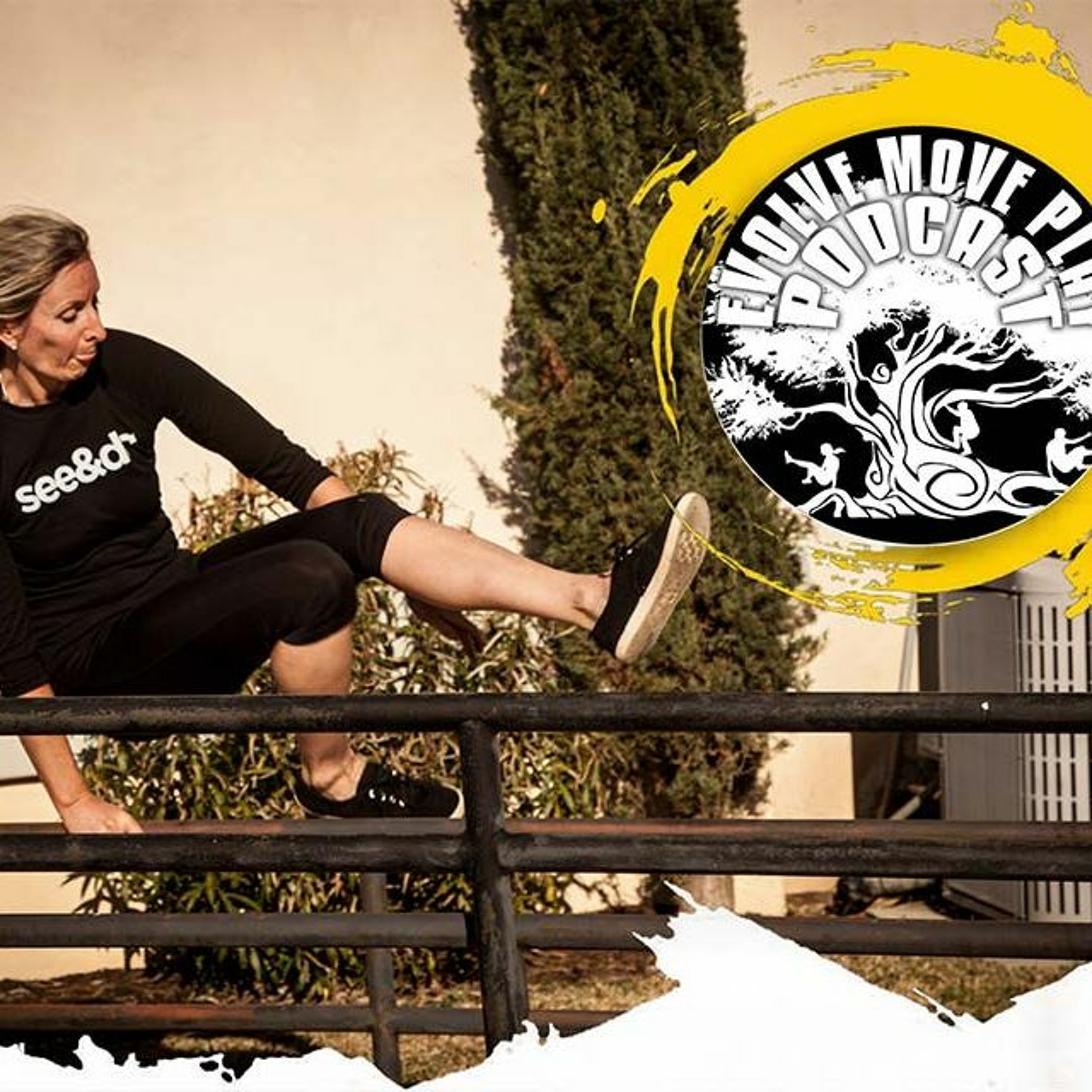
One of the most common questions I get from people who are interested in taking on the practice of parkour is “Am I too old for this?” Always the answer is no. Parkour is for everyone. It’s the practice of moving our bodies more gracefully and efficiently through complex environments, which is exactly what our bodies are evolved to do. I understand that it can be easy to watch parkour videos on YouTube of young athletes jumping between skyscrapers, or performing olympic-level acrobatics over concrete, and come away feeling like it’s a dangerous fringe sport reserved for adrenaline junkies. The fact is that this extreme element of parkour is but one branch of a much larger tree, and to denounce the practice in its entirety based on that branch would be similar to refusing to drive your own car because you saw a dangerous looking NASCAR race. This is one reason why we are excited to release our fourteenth episode of the Evolve Move Play Podcast featuring our good friend Julie Angel. If you don’t know Julie, she is a documentary filmmaker, author, instructor, and all around amazing leader/advocate for parkour and the movement community. Her films have over 16 million views online. Her book “Breaking The Jump” is a must-read for anyone interested in the history and origins of parkour, and her company See&Do is committed to teaching sustainable, parkour-based movement practices to people from all walks of life. As someone who started parkour later in life, dealing with fear, anxiety, and self doubt while finding her place in the international community, she is a bright example of how movement can change and empower each and every one of us. Julie is a delightful person to talk with and I think you’ll really enjoy hearing the stories of her experiences and her unique thoughts on what movement and parkour offer for improving health and quality of life for people of all ages and abilities. So go check it out, and while you’re at it, don’t forget to like, share and subscribe to our page. We also have a Patreon that helps us to create more high quality content for our ever growing community of heroic movers. To become a patron, visit www.patreon.com/rafekelley You can find more from Julie at JulieAngel.com and See-Do.com
Evolution, broken solutions, and the problem of updating with Razib Khan
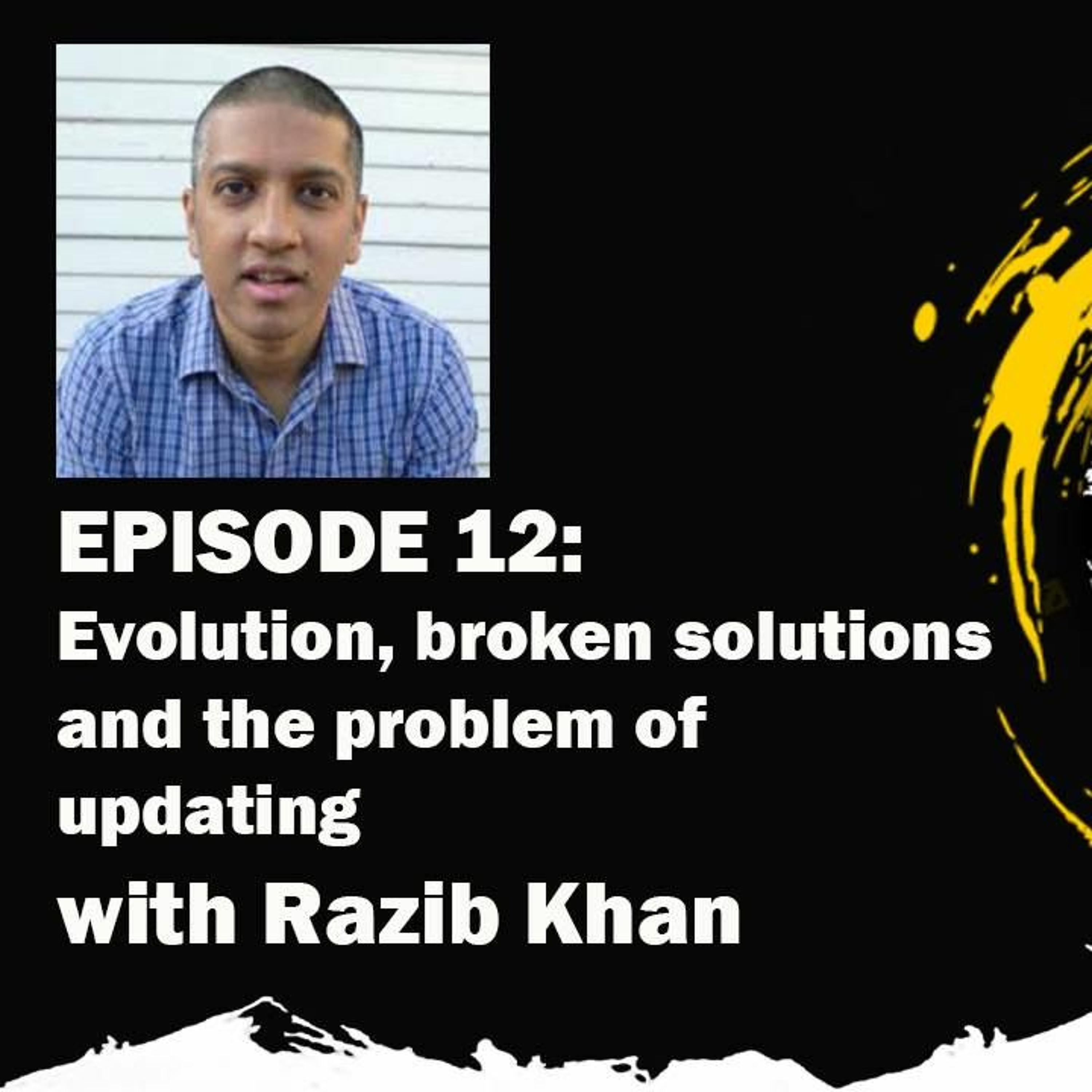
In this episode of the Evolve Move Play Podcast, well known genetics, evolution and history blogger Razib Khan is my guest, I have been following Razib's work since 2005 and he has been a major influence in understanding Evolution and Genetics in depth. In this interview I specifically wanted to review the ideas around how evolution can produce broken solutions, or break useful adaptions when selective pressures are high. This is topic of huge relevance in our current world of exponential technology change I think you guys will get a lot out of it. If you want to suppor these podcasts, please support us on patreon. https://www.patreon.com/rafekelley
What is Embodiment training with Mark Walsh
This week my guest is Mark Walsh teacher of the Embodied yoga principles and embodied facilitator course. We dive deep into the intersection between, somatics, movement based therapy, yoga and martial arts and what embodiment training is all about.
Jozef Frucek Interview 1
Check out all our podcasts at www.evolvemoveplay.com/evolve-move-play-podcast Jozef Frucek is of the most inspirational movement teachers I have encountered and Fighting Monkey is an incredible practice. He was on fire in this interview. We were all over the place with too many ideas thrown out to track completely. Fighting Monkey and Evolve Move Play are very similar conceptually and contain many similar elements, with the differences arising partially from our different movement backgrounds, as well as our personalities and philosophies. One of the key ideas in movement practice and indeed in life is the balance between form and formlessness. When we create order and structure we give ourselves a scaffolding to work from and a goal to work towards but we constrain our options, constrain what we can perceive, how we can act. Conversely, with formlessness the potential is limitless but direction is difficult. The biggest difference between FM and EMP seems to be in the balance found here. The Fighting Monkey practice leans towards formlessness, to the way of having no way, whereas EMP focuses more on trying to articulate an optimal structure. This theme I think runs through our whole conversation, while touching on many specific aspects of practice and movement philosophy. Specific topics covered include: 1. The balance between the movement practice and bringing in new elements 2. Jozef’s 40/60 rule 3. What is the right “why” for movement practice 4. Heroism and meaning 5. Effective and efficient practice vs. diversity and variability 6. How to develop creativity in movement practice 7. The Heroic archetype and The Iliad and Odyssey, balancing Achilles vs. Odysseus 8. Why you should listen to other people less and listen and to yourself more 9. How we need space and time to allow the development of a practice 10. Jozef’s teachers and background 11. The importance of rhythm; my approach to conceptualization of rhythm for parkour and Jozef’s ideas on how to develop rhythm 12. Why we need to start with improvising, with acting out the thing we want to do 13. Why you want to be a street rat not a lab mouse 14. Specialization vs. general movement practice 15. Longevity and motivation 16. Why the game is more important than the tricks 17. Key things to study to support your movement practice
Breaking the Jump with Stephane Vigroux EMP Ep. 8
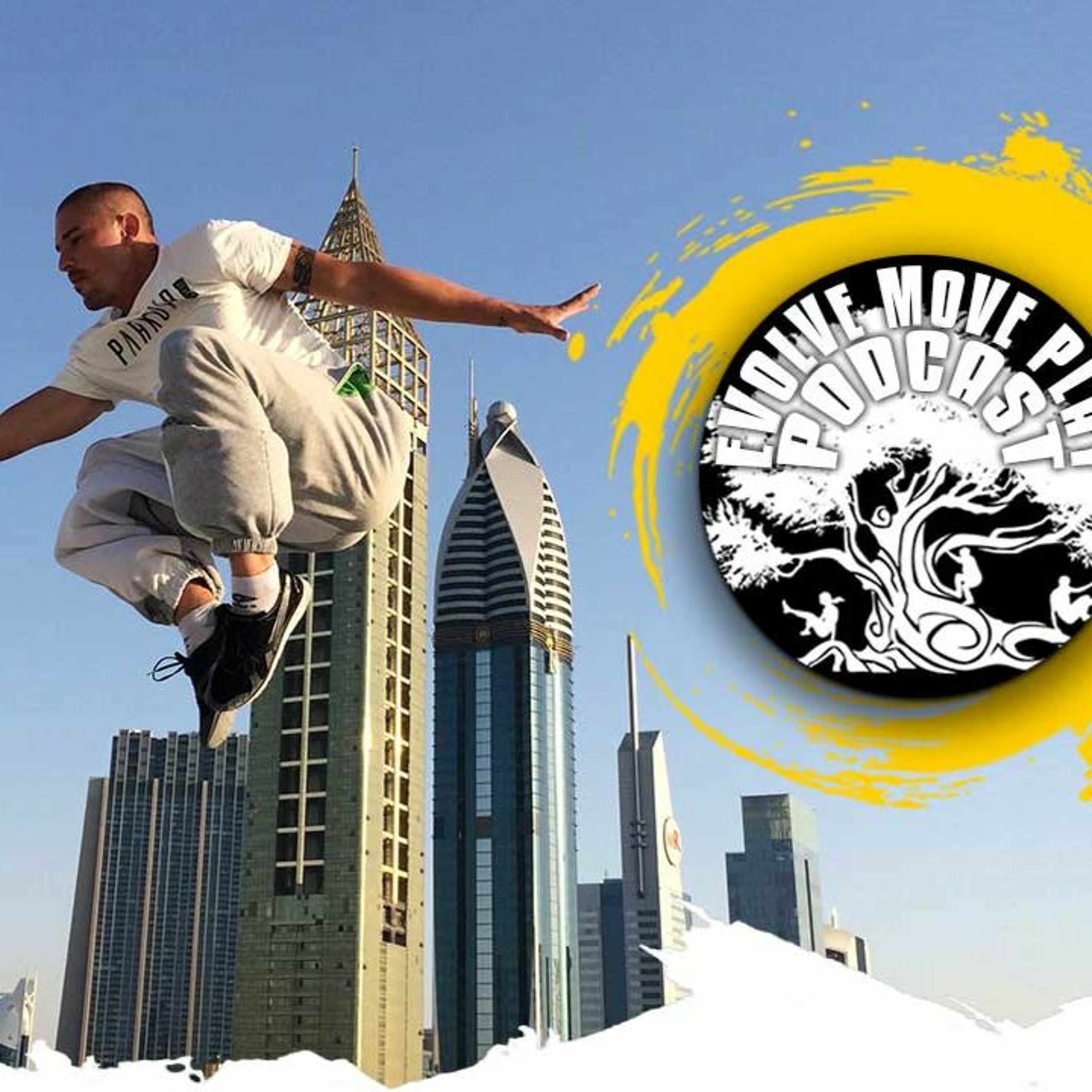
Stephane Vigroux can speak to this personally, in 2001 right before parkour exploded into mainstream consciousness Stephane tore his knee during a shoot for Nike. This was one of the earliest commerical shoots for parkour and at that time Stephane was one of the top athletes on the orginal Traceurs team. The Traceurs were the team David Belle had founded after leaving the Yamakasi. Stephane had been training day and night with David for years attaining an incredible level, but on that day he did not listen to his body telling him it was done he took a jump he knew he should not and tore his ACL, the surgery was badly done and had to be redone. He was unable to train and largely abandoned by his friends in the traceurs. It took years for Stephane to fully recover but he did! He regained his level began training with Williams Belle and the Yamakasi and then co-founded Parkour Generations the first group to popularize parkour coaching on a global scale and who reintroduced the Yamakasi to the global community. Currently Stephane is the director of Parkour DXB which is bringing parkour to Dubai. In this episode we dig deep into. 1. The history of parkour 2. What parkour is 3. How it evolved 4. How it was once a much broader approach to movement 5. How parkour is way of seeking truth and uncovering your own charecter 6. The why of training 7. How to overcome big challenges through the breaking the jump process A. Feeling the call of the jump B. Assessing the jump C. Feeling the Fear D. Overcoming the fear E. Deciding F. Acting 8. How to know your aligned in taking a jump and in your life 9. How to overcome your fear 10. The concept of task based training & why it is important in movement training Mentioned in the episode Julie Angel's The Monkey is Back https://www.youtube.com/watch?v=q4mZf... Julie Angels Breaking the Jump https://www.amazon.com/Breaking-Jump-... Parkour DXB http://www.parkour.ae/ Parkour Generations http://parkourgenerations.com/
Power, Choice and Virtue: With Rory Miller
"There is no better way to keep good people weak, then to tell them they will magically become bad people if become powerful."" This weeks podcast features a second sit down with celebrated self defense author Rory Miller. In this episode we dig deep into. 1. The problem of orienting effectively as finite creature in an infinite world. 2. How we evolved to be powerful 3. Why our education systems are set up to prevent us from becoming strong 4. Why we need to become powerful to be virtuous 5. Principles based training 6. Social scripts why we need them how the limit us and how to step out of them to achieve your goals 7. And the balance between the lizard, monkey and human brain and whether reasons or emotion and intuition are our greatest guides.
Movement Ecology with Katy Bowman.
Last week we introduced our new podcast season with discussion of nutrition from a brain based perspective focused on food but looking at how products in general hijack our reward centers. This week we are looking at nutrition and the problems of the modern world from the perspective of movement, bio-mechanics and movement ecology with Katy Bowman! Katy Bowman has been a huge influence on my thinking about natural movement, so it was pleasure to get a chance for a quick discussion during the Ancestral Health Symposium this year. Enjoy the interview and please share your thoughts and questions below.
The Neuroscience of overeating, with Stephane Guyenet: EMP Podcast Ep. 6
Why do we get fat? Why do we overeat? Many people think it’s because of too many carbs, others claim it’s due to much fat. The answer is more complicated and it has implications that stretch far beyond diet. We get fat in large part because modern industrialized foods are designed to hijack our reward systems and create addictive responses. So says our first podcast guest of the new EMP podcast season Dr. Stephan Guyenet. Dr. Guyenet is the author of The Hungry Brain: Outsmarting the Instincts that Make Us Overeat, and is in my opinion the foremost public expert on the neuroscience of overeating. The food reward hypothesis that Stephan and I discuss in this episode has implications far beyond what to eat and how to manage your weight. It also helps us understand some of the main mechanisms behind the mismatch between our modern lives and our evolved nature. If you understand how the food industry has hijacked our reward system for profit, you can begin to see how this basic principles applies to many aspects of modern life and is one of the many reasons we are suffering despite historically unmatched level of affluence.
EMP Podcast With Simon Thakur
Simon Thakur is one of my absolute favorite thinkers in natural movement. It was an honor and pleasure to recently get the chance to teach with and learn from him we sat down and recorded a few days after a camp he runs that I guest coached at. Topic covered include The importance of the deep time evolutionary perspective on human movement What neurobiology tells us about how the brain adapts to movement and meditation The importance of story telling and myth to physical practice. The Worm, Fish, and Lizard layers to human movement.
EMP Podcast With Tom Weksler
Enjoy this great conversation with amazing mover and movement thinker Tom Weksler. One of my favorite interviews so far. Lots to think about in the art of coaching and self cultivation that was brought up here. Concepts covered include Minimalism in teaching The Wabi Sabi Concept The consilience of modern scientific approaches to training with Zen and Taosist concepts The roll of dance in movement culture
EMP Podcast with Rory Miller
This one is going to be controversial. Like it or not violence was major feature of human evolution, to understand ourselves and the movement capacities we have its a vital thing to study and few people have seen as deeply into that world as Rory Miller. He has been huge influence on my understanding of violence human nature and movement for 10 years and it was an amazing pleasure to interview and train with him. Our apologies for the poor sound quality one of mic's wasn't work we thought the content was worth sharing anyways.
The long body with Frank Forencich: EMP podcast episode 3
Frank Forencich of Exuberant Animal was one of the really early influential thinkers on applying the evolutionary paleo perspective to movement practice, one of the first great play advocates and great author.
EMP Podcast #1 - Kelly And Juliet Starrett
We are super excited to share our first ever Evolve Move Play podcast featuring Kelly Starrett and Juliet Starrett. We had an awesome discussion on how to balance natural movement and formal movement practice in a modern life and much much more.