
Everything is Somewhere Podcast
The American Surveyor · Spatial Media LLC
Show overview
Everything is Somewhere Podcast has been publishing since 2024, and across the 2 years since has built a catalogue of 41 episodes, alongside 4 trailers or bonus episodes. That works out to roughly 30 hours of audio in total. Releases follow a monthly cadence.
Episodes typically run thirty-five to sixty minutes — most land between 31 min and 54 min — though episode length varies meaningfully from one episode to the next. None of the episodes are flagged explicit by the publisher. It is catalogued as a EN-US-language Society & Culture show.
The show is actively publishing — the most recent episode landed 4 days ago, with 15 episodes already out so far this year. Published by Spatial Media LLC.
From the publisher
From the rope stretchers of ancient Egypt to ubiquitous satellite precision, geospatial technology has ever been the bedrock of the constructed world and of civilization itself. Your host, land surveyor and infrastructure writer Angus Stocking, engages in regular conversation with today's location experts to determine exactly where, in space and time, we find ourselves today. Location, location, location; it's not just real estate, it's everything and, Everything is Somewhere.
Latest Episodes
View all 41 episodes#34 - Ben Ernst and Kenyon Mossberg
#33 - Amanda Manos
EiS Short: Endless Cornfield
#32 - Tony Bauer and Ofri Lehmann
EiS Short: The Game & the Game
#31 - Pete Kelsey
EiS Short: A Perfect Circle
#30 - Frank Artmont
#29 - Anna Riling

EiS Short: Temporary Autonomous Zone
bonusThe late and mostly unlamented anarchist philosopher, Peter Lamborn Wilson, under the pseudonym Hakim Bey, wrote extensively about the pirate utopias of the 18th century and from them derived the concept that he labeled temporary autonomous zones. If you were at the Solstice party at my place a few summers back, you were in a rather excellent temporary autonomous zone or TAZ. The party was temporary in that it had a beginning and an end. If you showed up on the wrong night, you weren't in a TAZ, you were SOL. It was a zone, taking place entirely within the boundaries of my particular parcel. And most importantly, it was autonomous. Within the temporal and spatial boundaries of the party, you hopefully experienced a suspension of certain laws, a relaxing of legal, cultural, and even physical restraints. Perhaps you felt free to drink or smoke more than you usually do, or to give free rein to a flirtatious alter ego, or to talk and sing in an unusually loud voice. Perhaps, like me, you became convinced that you could dance, despite past experience to the contrary.

Ep 28#28 - Phil Lundman and Henri Kinson
In this episode Angus talks with Petersen Products' Phil Lundman and design engineer Henri Kinson about the strange, high‑stakes world of inflatable plugs and custom mechanical solutions for pipelines and critical infrastructure. We start with the company's roots in a Danish immigrant's drain‑cleaning tool and follow its evolution into a design‑build shop that routinely solves one‑off problems for industrial and municipal clients around the world. Along the way, Phil and Henri walk through a dramatic underwater project at the Hanahan Water Treatment Plant, where divers installed a folding, seven‑foot bulkhead 50 feet below the surface to protect millions of dollars in assets. We also get into NASA rocket‑fuselage stress tests, offshore energy platforms, and what it takes — in software, fabrication capability, and rigorous testing — to ship devices that simply cannot fail under pressure.

EiS Short: On Petrarch's Ascent
bonus689 years ago, in April, the Italian poet now known as Petrarch climbed Mont Ventoux in Provence. By the standards of recreational hikers in my home state, Colorado, it wasn't much of a climb—Mont Ventoux is just a little over 6,200 feet, and Petrarch was done with his climb well before dinner. But by the standards of his day, the climb was apparently sensational. In a widely-published letter he wrote about the ascent, Petrarch claimed to be the first person since antiquity to climb a mountain solely for the view—that is, the first person to climb a mountain not for work, or exploration, or conquering, or to glorify God, or for any practical reason, but simply… because he wanted to. This self-absorbed focus on his own wellbeing was a revolutionary act in an age still ruled by the Church, so revolutionary that many scholars today point to Petrarch's springtime hike as the beginning of what we now call the Renaissance.
Ep 27#27 - Nate Dang and Kevin Grover
In this episode, Angus talks with Nate Dang of Accurate Surveying & Mapping and Kevin Grover, Head of Customer Success at Looq AI, about pushing reality capture into everyday surveying. They walk through an award‑winning project on a historic opera house in Soldier, Idaho, where Nate deliberately skipped the total station and combined Looq's handheld QCAM imagery with GNSS and drone data to deliver survey‑grade results. The conversation explores hardware and workflow, how Looq's imagery‑only approach compares to lidar, where AI actually adds value, and why dense, intelligent photo‑based datasets can finally make photogrammetry practical for "bread and butter" topo and design jobs. It is a nuts‑and‑bolts look at turning R&D into reliable production work.

EiS Short: Houston, We Have a Problem
bonusAt the conclusion of a long series of curious circumstances—which is to say, my life—I found myself stuck in traffic, for hours, in Houston, on my way to a conference devoted to high-tech land surveying equipment. Such conferences are more exciting than they sound—they'd almost have to be wouldn't they?—and I find them inspiring; the speakers at these events look around at our crumbling world, at the failing infrastructure and dwindling resources, and they see… business opportunity. They believe that technology is equal to the challenge, that new knowledge will keep pace with the Horsemen of Armageddon, and even pull ahead a bit.

Ep 26#26 - David Seamon
In this wide-ranging conversation, Angus talks with geographer and phenomenologist David Seamon about the life, work, and legacy of architect and thinker Christopher Alexander. Seamon, editor of the long-running journal Environmental and Architectural Phenomenology, explains what phenomenology is, why "lifeworld" and "natural attitude" matter, and how these ideas illuminate Alexander's quests for wholeness, life, and genuine beauty in the built environment. The two dig into Alexander's evolving methods—from A Pattern Language and The Production of Houses to The Nature of Order and the Japanese Eishin campus—probing both their power and their limits. Along the way, Seamon contrasts phenomenology with systems theory, discusses Henry Bortoft, Edmund Husserl, and others, and offers a candid, affectionate critique of Alexander's style, process, and publishing choices. The episode closes with Seamon's thoughts on place-making, climate, and why Alexander's work may be "for the future" more than for our present moment.
Ep 25#25 - Walker Larson
In this epsiode, Angus enjoys a wide-ranging conversation with writer and cultural critic Walker Larson. The two discuss Walker's journey from teaching literature and history at a classical academy to becoming a full-time freelance writer, novelist, and author of the Substack newsletter The Hazelnut. From there, the discussion dives into Walker's article "A Case for Beauty in Our Cities," exploring why so much modern architecture and infrastructure feels sterile or ugly compared to older European cityscapes, and how that connects to deeper questions about human nature, spirituality, and the body–soul composite. Angus and Walker talk about Bauhaus, Brutalism, new urbanism, and specific projects like the Guatemalan development Cayalá, as well as the influence of thinkers like Christopher Alexander, Aristotle, Aquinas, C.S. Lewis, and others. The conversation closes with a candid exchange about Catholicism, technology, AI, and what genuine human flourishing might require today.
Ep 24#24 - Michael Daoud and Aleksandar Jevremovic
In this conversation, Michael Daoud and Aleksandar Jevremovic discuss the significant digital transformation of the Santa Barbara County Surveyor's Office. They explore the challenges faced with paper-based processes and the innovative solutions implemented to streamline operations. The discussion highlights the impact of technology on efficiency, customer service, and the future of surveying in the community.

EiS Short: Four Corners
bonusThe Four Corners Monument, marking the common corner of four southwestern states, can seem perverse and arbitrary, memorializing nothing more than 4 invisible lines coming to a point in desolate country. There is little to do: no rides, no museums, just a few booths selling food and trinkets and the monument itself, a metal disk encased in a massive wheel of imported granite. And yet we do come, by the thousands, driving hundreds of miles out of our way and paying three bucks to stand on the smooth bronze disk, tie our shoes in four states at once, have our picture taken and then… well, nothing; buy some fry bread, perhaps, and then get back in the car and drive to somewhere else. It resembles a pilgrimage, a Southwestern Hajj, a ritual journey to be completed at least once in every American's life.
Ep 23#23 - Yodan Rofe
In this episode, Angus talks with returning guest Yodan Rofe about Christopher Alexander's four‑volume magnum opus, The Nature of Order, and its impact on architecture, teaching, and daily life. Rofe, who studied and worked closely with Alexander, explains how early work on pattern language led to the deeper geometric and experiential insights developed in The Nature of Order. The conversation explores ideas such as the 15 properties of living structure, the "mirror of the self," and the challenge of talking about life and transcendence in built environments without slipping into abstraction. Rofe also describes his "Building Beauty" program, where students engage Alexander's work through seminars, studios, and real construction, and how this education can reshape how they see cities, infrastructure, and their own role in making a more livable world.
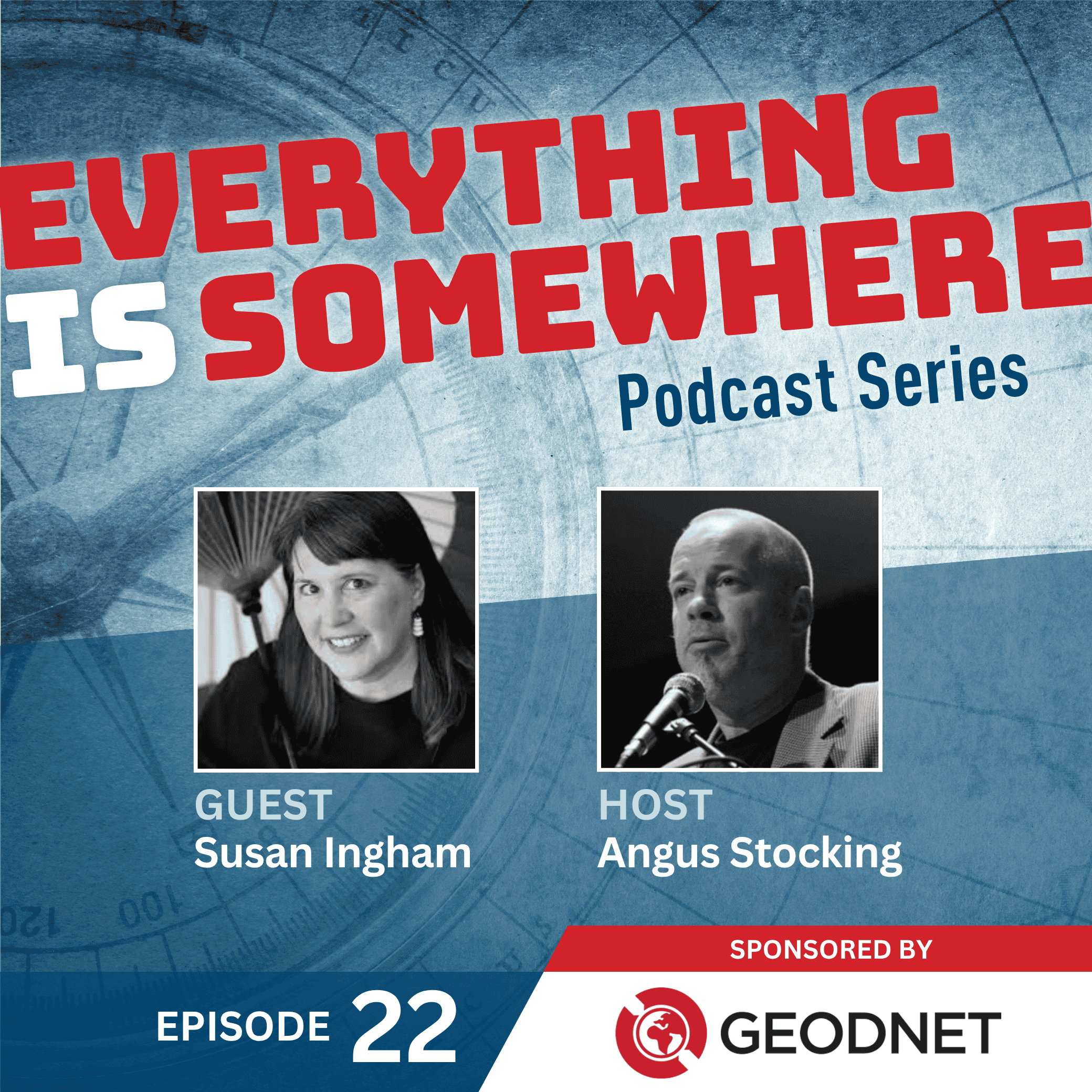
Ep 22#22 - Susan Ingham
In this episode, Angus welcomes Seattle architect and Building Beauty faculty member Susan Ingham for a deep, practical conversation about the living structure at the heart of Christopher Alexander's work. Susan recounts the serendipitous lecture that drew her back to Berkeley to study with Alexander and Hajo Neis, and how those methods now guide her residential practice—from one-to-one site mock-ups to pattern-based design that uncovers clients' real needs. She explains how shared feelings of coherence and calm can be made tangible, starting with hand-made objects, improving a single room, and then unfolding a home by placing the garden first—an approach anchored in Pattern 104: Site Repair. Angus and Susan also explore what surveyors can contribute to site-centered design, the pedagogy of Building Beauty's studio and Nature of Order courses, and why small, well-judged changes to everyday environments measurably improve well-being. It's an inspiring, common-sense tour of Alexandrian practice for designers, builders, and curious citizens alike.