Equine Assisted World with Rupert Isaacson
65 episodes — Page 1 of 2
The Fairy Forest: Nature, Story & Horses in Child Psychotherapy | Krisztina Molnar of ÉletrevaLÓ Gyermekekért Alapítvány, Debrecen, Hungary | EAW 63
An Autism Mom's Data on 70+ Horse Boy Sessions | Laila Rahmatian | EAW 62
From Horse Theft to Horse-Facilitated Healing: Carolina Lockwood's 30-Year Evolution in Patagonia | Carolina Lockwood of Alquimia Equina, Bariloche, Argentina | EAW 53
100 Children, No Bookings—and Nobody Turned Away | Helen Picha | EAW 60
From Homelessness to Alternative Education Pioneer | Nicola Hepburn | EAW 60
Miniature Horses, Memory Care, and the Neuroscience of Connection | Sanaa Pharayra of Romeo Roadshow | EAW 59
The Compton Cowboys: Healing Racial Trauma with Horses | Louis Hook & Kansas Carradine | EAW 58
Art, Prison, and the Path to Freedom | Russell Craig | EAW 57
Horses, Dementia, and the Science of Connection | Paula Hertel & Nancy Schier Anzelmo of Connected Horse, with Kansas Carradine | EAW 56
Your Horse Can Feel Your Heartbeat | Kansas Carradine | EAW 55
What Happens After the Horse? Neuroscience Tools for Home & Beyond | Kim Barthel & Leana Tank | EAW 54
Horses Don't Lie to Veterans | Jane Strong | EAW 53
Curiosity Over Fear: Building Resilience in Horses and Humans | Kira Julius | EAW 52
Ep 51From Problem Horse to Professional Practice: What Trauma Teaches Us About Training | Petra Vlasblom of 2Moons.nl, Netherlands | EAW 51
Petra Vlasblom is a Dutch horse behavior specialist based in the Netherlands, founder of 2Moons, and one of Europe's most sought-after trainers for problem horses — particularly in the high-stakes world of elite sport horses. She came to the profession not through a traditional equestrian route, but as a former graphic designer from the city who fell in love with an "unrideable" horse that nobody else could manage, and whose path to becoming a professional was shaped as much by personal crisis as by equine knowledge.What makes Petra's story and her work unusual is the degree to which her own life has mirrored the horses she works with. Her first horse, Two Moons — still alive today — broke her arm, dislocated her hip, and ultimately catalyzed years of deep personal work. A later riding accident broke her neck and forced a four-month recovery period that fundamentally changed how she listens: not with her head, not with her heart, but with her gut. That shift is now at the core of everything she teaches.In this conversation, Rupert and Petra cover the full arc of her journey — from a childhood with no horses and a career in graphic design, to buying an impossible horse on a whim in Belgium, to running a professional school for horse behavior in France, to the neck injury that changed everything. They go deep on her methods for trailer loading, her framework for reading horse body language at the moment of decision, her "software install" philosophy for training both horse and owner, and what she believes all therapeutic equine programs need to address around herd dynamics and horse wellbeing. The conversation closes with a shared invitation: Petra and Rupert will be running a joint workshop in the Netherlands in June 2026 — details at https://longridehome.com/events.If you want to support the show, you can do so at Patreon: https://www.patreon.com/LongRideHome🔍 What You'll Learn in This Episode How a horse that no professional trainer could ride became the catalyst for Petra's entire career — and what that says about the horses that come to therapeutic programs as "donations"Why Petra distinguishes between listening to the heart versus listening to the gut — and why the gut is the more reliable guide for both horse and human practitionersHow to read the precise moment a horse is making a mental decision during trailer loading: what to look for in the eyes, ears and head carriage, and why forcing that moment produces a dangerous animal in transitWhy Petra's trailer loading method involves letting the horse exit freely after going in voluntarily — and how this counterintuitive step produces lasting compliance versus temporary complianceHow the "software install" metaphor helps owners understand why training the horse without training the owner always fails — and how Petra uses this framing to set up her client education eveningsWhat the rehab of a problem horse offers as its own form of therapy — for people returning from military service, abuse, or chronic anxiety — and why Rupert's programs use prospective therapy horse rehabilitation as a standalone treatment modalityWhy the chronic use of stabled horses in therapeutic settings creates specific stress and behavioral problems, and what practical solutions — including "crazy time" and companion animals — can address these without large financial outlayHow Petra's approach differs from classical natural horsemanship in one key respect: the horse is not asked to make the wrong thing harder, but to make a genuine, uncoerced choiceWhat a broken neck, a dislocated hip, and a broken arm taught Petra about the difference between professional obligation and gut instinct — and how running on exhaustion impairs even experienced practitioners' ability to read horses accuratelyWhy Petra now requires all horse owners to attend a three-hour education evening before she will train their horse — and what changed in her success rate when she introduced that conditionHow self-disconnection — particularly through overwork and screen-based living — undermines a handler's ability to connect with a horse, and what both Rupert and Petra suggest as entry-level solutions for practitioners facing this🎤 Memorable Moments from the Episode[00:01:00] Rupert introduces Petra — the Dutch problem-horse specialist he first saw in action with a nervous horse at one of his retreats[00:06:10] Petra describes the moment she saw Two Moons in Belgium: eight years old, "very dangerous, very untrainable" — and fell in love immediately[00:11:00] "I thought with my love, everything will be okay" — Petra on what happened next, and why she spent a lot of time in hospitals[00:15:06] The big accident: Petra describes breaking her neck after seven weeks of back-to-back teaching, arriving exhausted, and ignoring her gut[00:38:03] The shift after the neck break: from running on obligation to listening to intuition — the lesson she took from four months in a harness[00:56:34] Rupert describes watching Petra
Ep 50Urban Horses, Hidden Access & Equine Therapy in the City | Lucy Dillon of ChildVision Dublin | EAW 50
In this episode of Equine Assisted World, Rupert Isaacson speaks with Lucy Dillon, who runs the equine unit at ChildVision in Drumcondra — right in the center of Dublin, Ireland.ChildVision (formerly St. Joseph’s School for the Blind) provides services for children and young people with visual impairments and complex needs. Unlike most equine‑assisted programs located in rural areas, Lucy’s program operates in the middle of a major city — serving populations who would otherwise have little or no access to horses.Lucy shares the realities of running an urban equine therapy program: balancing horse welfare with limited space, designing programs for children with visual impairment and multiple disabilities, and maintaining high standards of horsemanship within a therapeutic setting.The conversation explores Lucy’s path through traditional British horse training, riding schools, equine education, and professional qualifications before transitioning into therapeutic work. She discusses how the structure and discipline of classical horsemanship become essential foundations for safe and effective equine‑assisted programs.Together, Rupert and Lucy examine how horses support children with sensory and neurological challenges, how urban equine programs can remain sustainable, and why good horsemanship remains the backbone of any meaningful therapeutic practice.If you want to support the show, you can do so at Patreon: https://www.patreon.com/LongRideHome🔍 What You’ll Learn in This EpisodeHow Lucy Dillon built and now leads the equine unit at ChildVision in DublinWhat makes an urban equine therapy program fundamentally different from rural centersHow children with visual impairments experience horses and equine environmentsWhy horses can support sensory integration and body awareness in visually impaired ridersHow to design equine programs for children with multiple disabilities and complex needsWhy strong horsemanship foundations are essential in therapeutic ridingHow Lucy’s background in traditional British riding schools shaped her approach to therapy workThe importance of horse welfare when programs run in limited urban spaceHow urban programs provide access for communities who would otherwise never encounter horsesWhy therapeutic programs must balance clinical needs with genuine horse knowledgeHow equine units operate within larger educational and medical institutionsThe daily logistical realities of maintaining horses in a city environmentWhy joy, fun, and relationship with the horse remain central to therapeutic outcomes🎤 Memorable Moments from the Episode[00:00:44] Introducing Lucy Dillon and the ChildVision equine unit in central Dublin[00:05:31] Lucy’s early path through British horse training and equine education[00:13:04] Working in traditional riding yards before moving toward therapy work[00:22:40] How horses help children with visual impairments experience movement and space[00:34:10] Designing equine programs for children with multiple disabilities[00:46:18] Why strong horsemanship matters inside therapeutic riding programs[01:02:14] Managing horse welfare and logistics inside a city‑based equine facility[01:15:22] The realities of maintaining horses for therapy in a dense urban environment[01:32:40] Why access to horses matters for children growing up in cities[01:47:12] What makes equine‑assisted work sustainable over the long term📚 Contact, Projects, and Resources MentionedLucy Dillon – ChildVision Equine Unit (Dublin) Search: Lucy Dillon ChildVision Dublin https://childvision.ie/what-we-do/equine-assisted-activities/New Trails Learning Systems – Horse Boy Method, Movement Method & Takhin Equine Integration https://ntls.coRupert Isaacson / Long Ride Home https://rupertisaacson.comPatreon Support https://www.patreon.com/LongRideHome🌍 Follow UsLong Ride Home https://longridehome.com https://facebook.com/longridehome.lrh https://instagram.com/longridehome_lrh https://youtube.com/@longridehomeNew Trails Learning Systems https://ntls.co https://facebook.com/horseboyworld https://instagram.com/horseboyworld https://youtube.com/newtrailslearningsystems📊 Affiliate DisclosureLinks to books and products may include affiliate tracking. We may earn a commission if you make a purchase, at no extra cost to you. Thank you for supporting the show.
Ep 49Grief, Horses & the Sacred Present: Love, Loss and Resilience with Karla Brahms | Equine Assisted World 49
In this deeply personal and wide‑ranging episode of Equine Assisted World, Rupert Isaacson speaks with longtime colleague and friend Karla Brahms of Wellenreiter in the Odenwald, Germany — a region steeped in myth, forest, and living horse culture.What begins as a conversation about equine‑assisted practice unfolds into an intimate exploration of grief, love, resilience, and the sacred role horses play in helping humans navigate life’s darkest passages.Karla shares her evolution from decades of forest‑based therapeutic riding with children into her current work integrating NIG (Neuro‑Imaginative Gestalt) constellation methods with horses. Through spontaneous drawing, embodied awareness, and equine presence, she helps clients access inner wisdom beyond intellectual processing.The conversation then turns to the death of her husband, musician Jan, and the profound grief that followed. Karla speaks openly about ritual, laying out the body at home, identity loss, and how horses — through presence, warmth, and simple being — helped her remain anchored in the present.This episode explores what modern culture has lost around death and ceremony — and how horses may help us reclaim a more honest, embodied relationship with grief.If you want to support the show, you can do so at Patreon: https://www.patreon.com/LongRideHome🔍 What You’ll Learn in This EpisodeHow Karla integrates forest‑based horsemanship with therapeutic workWhat NIG (Neuro‑Imaginative Gestalt) is and how drawing with the non‑dominant hand accesses embodied insightHow horses interact during constellation processes and reflect emotional statesWhy standing on symbolic drawings creates somatic awareness and shifts perspectiveThe role of the “meta position” and third‑person dialogue in therapeutic workHow horses respond to grief, exhaustion, and emotional truth in clientsWhy allowing horses to say “no” builds deeper reliability and trustHow herd stability, lifestyle, and environment influence therapeutic safetyWhat grief does to identity — and why losing a partner means losing the “we” as wellWhy ritual, washing and laying out the body, and conscious farewell matterHow animals help regulate grief through presence and daily responsibilityWhy grief is not only about death, but also about identity shifts, diagnosis, relocation, and life transitionsHow creative acts (like knitting, drawing, or movement) can become grief ritualsWhy asking “why” is less helpful than learning to trust the unfolding🎤 Memorable Moments from the Episode[00:00:44] Introducing Karla Brahms and the magical forest setting of the Odenwald[00:05:20] “Follow the child” — why forest‑based work restores nervous systems[00:09:58] Discovering constellation work and integrating horses into NIG practice[00:18:50] A yawning horse reveals hidden exhaustion in a client[00:27:39] “They’re not only carrying our bodies — they’re carrying our souls.”[00:43:00] The importance of solid horsemanship behind therapeutic freedom[00:53:38] When horses leave the herd — and how grief changes equine behavior[01:11:00] Jan’s passing and the sacred act of laying out the body at home[01:16:40] Losing the “we” — identity shifts in widowhood[01:27:00] The taboo of grief in modern culture[01:55:25] Knitting as ritual — creating a seven‑meter “snail shell” through grief[02:04:25] Letting go of “why” and choosing trust instead[02:10:23] Celebrating love and life through the annual forest reggae gathering📚 Contact, Projects, and Resources MentionedKarla Brahms – Wellenreiter (Odenwald, Germany) Search: Karla Brahms Wellenreiter https://wellenreiter.deNew Trails Learning Systems – Horse Boy Method, Movement Method & Takhin Equine Integration https://ntls.coRupert Isaacson / Long Ride Home https://rupertisaacson.comPatreon Support https://www.patreon.com/LongRideHome🌍 Follow UsLong Ride Home https://longridehome.com https://facebook.com/longridehome.lrh https://instagram.com/longridehome_lrh https://youtube.com/@longridehomeNew Trails Learning Systems https://ntls.co https://facebook.com/horseboyworld https://instagram.com/horseboyworld https://youtube.com/newtrailslearningsystems📊 Affiliate DisclosureLinks to books and products may include affiliate tracking. We may earn a commission if you make a purchase, at no extra cost to you. Thank you for supporting the show.
Ep 48Rescue as Relationship: Horses, Trauma & Second Chances with Christine Doran | Equine Assisted World Ep 48
In this grounded and deeply moving episode of Equine Assisted World, Rupert Isaacson speaks with Christine Doran, founder of Triple H Ranch in the Chicago area — a rare ecosystem that combines a full‑scale horse rescue with equine‑assisted work for humans.Christine shares how her path into this work began as a teenager through a moment of spiritual clarity, and how that calling evolved into more than two decades of frontline work with abused, neglected, and discarded horses. Rather than separating rescue from therapy, Christine describes an integrated model where horses are not “fixed and then used,” but supported as whole beings whose own healing journey becomes part of the therapeutic relationship.Together, Rupert and Christine explore what it means to witness suffering without becoming hardened, how faith, humility, and structure play a role in sustainable rescue work, and why some of the deepest lessons in equine‑assisted practice come from horses with the hardest pasts.This episode is an honest look at abuse that still exists in modern America, the quiet heroism of long‑term rescue work, and the possibility of creating true second chances — for horses and for people.If you want to support the show, you can do so at Patreon: https://www.patreon.com/LongRideHome🔍 What You’ll Learn in This EpisodeHow Christine’s calling into equine‑assisted work began at age sixteenWhy Triple H Ranch combines horse rescue with therapeutic programmingWhat real horse neglect and abuse still look like in the U.S. todayHow rehabilitating horses and humans can be part of the same ecosystemWhy patience, time, and humility are essential in rescue‑based programsHow faith and purpose sustain long‑term frontline animal welfare workWhat horses with traumatic pasts can teach practitioners about trustThe ethical responsibilities involved in turning rescued horses into partners 🎤 Memorable Moments from the Episode[00:00:44] Rupert introduces Christine and the rescue‑plus‑therapy model of Triple H Ranch[00:02:14] Christine recounts asking for a “large flashing sign” about her life’s purpose[00:03:16] Discovering how horses were used to help heal troubled youth[00:55:00] Faith, calling, and what sustains people in long‑term rescue work[01:03:01] Why true rescue means changing systems — not just saving individual horses[01:11:54] Facing real abuse and neglect without becoming numb or hardened[01:28:14] The cumulative toll of neglect — and why it’s still hidden in plain sight[01:41:44] Burnout, moral injury, and the cost of witnessing suffering over decades[01:59:00] What “second chances” actually require — for horses and for humans📚 Contact, Projects, and Resources MentionedTriple H Ranch (Chicago area): https://www.hhhranchil.org/New Trails Learning Systems – Horse Boy Method, Movement Method & Takhin Equine Integration https://ntls.coRupert Isaacson / Long Ride Home https://rupertisaacson.com🌍 Follow UsLong Ride Home https://longridehome.com https://facebook.com/longridehome.lrh https://instagram.com/longridehome_lrh https://youtube.com/@longridehomeNew Trails Learning Systems https://ntls.co https://facebook.com/horseboyworld https://instagram.com/horseboyworld https://youtube.com/newtrailslearningsystems📊 Affiliate DisclosureLinks to books and products may include affiliate tracking. We may earn a commission if you make a purchase, at no extra cost to you. Thank you for supporting the show.
Ep 47Creating New Stories Together: Horses, Grief, Theater & Belonging with Betsy Kahl | EP 47
What if the core of equine‑assisted work isn’t a method, a certification, or a discipline — but the shared act of creating a new story together?In this wide‑ranging and deeply human conversation, Rupert Isaacson speaks with Betsy Kahl — senior PATH instructor, social worker, horsewoman, and long‑time collaborator in the Horse Boy and Takhin Equine Integration work. Drawing on decades of experience across therapeutic riding, classical dressage, social work, and the performing arts, Betsy reflects on where equine‑assisted practice has come from, where it is now, and where it may need to go next.Together, Rupert and Betsy explore the often‑unspoken layers beneath equine‑assisted work: grief and loss, belonging and exclusion, the tension between mainstream systems and lived wisdom, and the role horses play in helping humans keep moving when life threatens to stall. From theater arts and role‑playing to adaptive riding, veterans’ work, and the quiet intelligence of in‑hand training, this episode weaves together disciplines that are too often kept apart.Rather than arguing for a single approach, this conversation invites practitioners, riders, and listeners to reflect on what unites all good equine work — care for the horse’s wellbeing, respect for individual capacity, and the courage to remain present in uncertainty. It is a dialogue about humility, creativity, and the radical idea that healing — for horses and humans alike — is relational.If you work with horses and people, or if horses have helped you navigate grief, transition, or identity, this episode offers both grounding and challenge.If you want to support the show, you can do so at Patreon: https://www.patreon.com/LongRideHome🔍 What You’ll Learn in This EpisodeHow therapeutic riding, classical dressage, social work, and theater intersect in equine‑assisted practiceWhy horses help humans move through grief without getting stuck in the pastHow theater arts and role‑play create safe containers for emotional processingWhat it means to “create a new story together” in equine‑assisted workWhy horse welfare is foundational to human safety and healingHow loss — of people, horses, or dreams — shapes equine relationshipsThe difference between siloed systems and integrated horse culturesWhy belonging matters for practitioners as much as for participantsHow in‑hand work can remain a lifelong anchor when riding changesWhat equine‑assisted fields can learn from humility, improvisation, and presence🎤 Memorable Moments from the Episode[00:02:51] Betsy introduces her background bridging PATH, dressage, and social work[00:07:02] Growing up with horses who taught lessons, jumped, and worked in adaptive programs[00:12:37] From theater arts to social work: learning to listen, respond, and stay present[00:22:37] Shakespeare, non‑speaking students, and performance as a safe container[00:31:00] The arena as a stage — and why presence matters more than perfection[00:39:02] Creating new stories together across disciplines and populations[00:48:50] Veterans, classical systems, and horses as co‑creators[01:09:00] Equine welfare as the shared ground beneath all methods[01:25:00] Grief, aging horses, and continuing the story when things change[01:34:00] Why horses help humans keep moving through loss[01:36:00] Belonging, inclusion, and the future of equine‑assisted work📚 Contact, Projects, and Resources MentionedBetsy Kahl – Wonder Horse Ranch Email: [email protected] Trails Learning Systems – Horse Boy Method, Movement Method & Takhin Equine Integration https://ntls.coRupert Isaacson / Long Ride Home https://rupertisaacson.com🌍 Follow UsLong Ride Home https://longridehome.com https://facebook.com/longridehome.lrh https://instagram.com/longridehome_lrh https://youtube.com/@longridehomeNew Trails Learning Systems https://ntls.co https://facebook.com/horseboyworld https://instagram.com/horseboyworld https://youtube.com/newtrailslearningsystems📊 Affiliate DisclosureLinks to books and products may include affiliate tracking. We may earn a commission if you make a purchase, at no extra cost to you. Thank you for supporting the show.
Ep 46Animals as Relatives: Native Wisdom, Trauma & Healing with Brandy Tomhave | EAW 46
In this powerful and far‑reaching episode of Equine Assisted World, Rupert Isaacson speaks with Brandy Tomhave, Executive Director of the Native American Humane Society and an enrolled member of the Choctaw Nation.This conversation goes far beyond animal welfare. Together, Rupert and Brandy explore how animals—especially dogs and horses—serve as bridges between cultures, as carriers of medicine, and as essential companions in communities shaped by historical trauma, systemic neglect, and extraordinary resilience.Brandy shares her journey from decades of Native American legal advocacy into animal welfare, describing how colonial systems, poverty, and misunderstood cultural differences have deeply affected both people and animals on reservations. She explains why animal wellness cannot be separated from human wellbeing, and how concepts like relationality, balance, generosity, and One Health have long existed in Indigenous cultures.From the lived realities of reservation life to the ethical challenges of modern animal rescue, from horses as cultural relatives to dogs as potential lifelines in communities facing suicide and mental health crises, this episode invites listeners to rethink what it truly means to be humane.This is a conversation about humility, listening, ambiguity, and the radical idea that being a “good relative”—to animals and to each other—might be the most important work we can do.If you want to support the show, you can do so at Patreon: https://www.patreon.com/LongRideHome🔍 What You’ll Learn in This EpisodeWhy Native American identity is political and sovereign—not racialHow colonial trauma affects animals as well as peopleWhy many “rescued” reservation dogs were never abandonedHow dogs and horses function as spiritual, emotional, and cultural relativesWhat “One Health” really means from an Indigenous perspectiveWhy poverty‑based narratives often do more harm than goodHow animals can act as bridges between divided human communitiesThe ethical tensions around wild horses, land use, and survivalWhy animal welfare systems must be culturally groundedWhat it means to be a “good relative” in animal‑assisted work🎤 Memorable Moments from the Episode[00:03:12] Brandy explains Native American sovereignty and why it shapes everything else[00:08:45] The Flagstaff shelter visit that changed Brandy’s life[00:16:16] The historical parallel between removing children and removing dogs[00:19:00] Why animal wellness is one of the few areas free from federal control[00:25:33] Dogs and horses as ambassadors between cultures[00:35:00] Relationality: animals as relatives, not property[00:39:02] The link between animal abuse and future human violence[00:44:31] Animals as companions in communities facing suicide and trauma[00:51:28] “Be a good relative” as a guiding principle[01:02:08] What animal‑assisted practitioners worldwide can learn from Native wisdom📚 Contact, Projects, and Resources MentionedNative American Humane Society https://nativeamericanhumanesociety.orgNew Trails Learning Systems – Horse Boy Method, Movement Method & Takhin Equine Integration https://ntls.coRupert Isaacson / Long Ride Home https://rupertisaacson.com🌍 Follow UsLong Ride Home https://longridehome.com https://facebook.com/longridehome.lrh https://instagram.com/longridehome_lrh https://youtube.com/@longridehomeNew Trails Learning Systems https://ntls.co https://facebook.com/horseboyworld https://instagram.com/horseboyworld https://youtube.com/newtrailslearningsystems📊 Affiliate DisclosureLinks to books and products may include affiliate tracking. We may earn a commission if you make a purchase, at no extra cost to you. Thank you for supporting the show.
Ep 45Why Learning Stops When Curiosity Is Lost | Katja Mehlhorn | EAW 45
In this episode of Equine Assisted World, Rupert Isaacson speaks with Katja Mehlhorn — psychologist, academic, and founder of Horse Kids Groningen in the Netherlands. Katja bridges two worlds that rarely meet: university‑level research and deeply embodied, nature‑based equine‑assisted practice.From her early work in PATH programs in the United States to building a highly individualized, child‑led practice on a Dutch farm, Katja shares how curiosity, movement, imagination, and horse welfare shape everything she does. Together, Rupert and Katja explore how neuroplasticity, safety, and play support learning in children who struggle with anxiety, school refusal, autism, and social‑emotional challenges.This conversation ranges widely — from teaching maths through Formula One role‑play on horseback, to helping traumatized clients rebuild self‑worth by caring for horses, to using landscapes, wildlife, foraging, and even horse poo as gateways to regulation and learning. Along the way, Katja reflects on leaving a secure university career to grow her farm‑based work, and on what the equine‑assisted field must do to stay ethical, relevant, and humane.If you want to support the show, you can do so at Patreon: https://www.patreon.com/LongRideHome🔍 What You’ll Learn in This EpisodeHow curiosity and play create safety and open the brain for learning Why following the child matters more than following a protocol How movement and balance activate neuroplasticity through the vestibular system Ways to introduce maths, numbers, and academics without fear or pressure How horses provide emotional feedback when children cannot verbalize Why horse welfare, fitness, and variety of work are essential in equine‑assisted programs How in‑hand and classical groundwork benefit both horses and humans Why nature, foraging, animals, and landscape are powerful therapeutic tools How rescue horses paired with at‑risk youth can transform both What equine‑assisted practice can offer to struggling schools and post‑COVID students🎤 Memorable Moments from the Episode[00:03:35] Katja describes her first experiences volunteering at a PATH center and witnessing profound changes in children[00:09:18] Using Formula One racing games on horseback to gently reintroduce maths and numbers[00:16:00] Teaching balance through playful exercises inspired by weighted “Russian doll” toys[00:18:38] The role of vestibular activation in long‑term learning and neuroplasticity[00:27:01] Reading horses’ calming and stress signals to understand what children cannot express[00:32:57] Integrating fitness, trick training, and in‑hand work into therapy sessions[00:40:17] How helping horses heal can rebuild self‑worth in traumatized clients[00:43:00] Research findings from Brook Hill Farm showing improved school outcomes for at‑risk youth[00:50:55] Using landscape, imagination, wildlife, and foraging to reconnect children with nature[01:21:12] Why longer sessions allow children time to truly arrive and regulate📚 Contact, Projects, and Resources MentionedKatja Mehlhorn / Horse Kids Groningen https://katjamehlhorn.nlHorse Boy Method, Movement Method & Takhin Equine Integration https://ntls.coLong Ride Home / Rupert Isaacson https://rupertisaacson.com🌍 Follow UsLong Ride Home https://longridehome.com https://facebook.com/longridehome.lrh https://instagram.com/longridehome_lrh https://youtube.com/@longridehomeNew Trails Learning Systems https://ntls.co https://facebook.com/horseboyworld https://instagram.com/horseboyworld https://youtube.com/newtrailslearningsystems📊 Affiliate DisclosureLinks to books and products may include affiliate tracking. We may earn a commission if you make a purchase, at no extra cost to you. Thank you for supporting the show.
Ep 44When the Healer Burns Out: Burnout, Menopause & Sustainability in Equine Therapy | Suzie Latchford of Heal With Horses | EAW 44
In this episode of Equine Assisted World, Rupert Isaacson speaks with Suzie Latchford, founder of Heal With Horses in Ontario, Canada — a long‑running equine‑assisted program working with autistic children, families, and communities in a demanding four‑season climate.Suzie shares how Heal With Horses grew organically over more than fifteen years, often without a clear roadmap, and what that growth revealed about sustainability, invisible structure, horse welfare, staff leadership, and practitioner wellbeing. What begins as a conversation about weather and logistics becomes a deeply honest exploration of burnout, menopause, identity, delegation, and the hidden costs of purpose‑driven work.Rather than presenting easy answers, this episode offers lived experience from someone who has stayed in the work long enough to feel its strain — and to find ways through it. From following the child and respecting nature‑led limits, to building mobile animal programs and planning for succession, Suzie reflects on what it really takes to keep equine‑assisted work ethical, human, and sustainable over decades.If you want to support the show, you can do so at Patreon: https://www.patreon.com/LongRideHome🔍 What You’ll Learn in This EpisodeHow following the child builds communication and trust before any therapeutic goals are imposedWhy nature‑based limits — weather, seasons, and animals — can support regulation better than rigid schedulesWhat invisible structure looks like in real equine‑assisted programs, and why it mattersHow long‑term practitioners experience burnout, including emotional, physical, and hormonal factorsWhy delegation, staff leadership, and succession planning are essential for program survivalHow mobile animal programs extend equine‑assisted work into seniors’ homes, schools, and community spacesWhat sustainable horse welfare looks like in cold climates through herd living and 24/7 turnout🎤 Memorable Moments from the Episode[00:01:40] Suzie reflects on the unplanned beginnings of Heal With Horses and how Horse Boy Method shaped her early direction[00:06:53] Navigating winter cancellations, financial strain, and client expectations in extreme Canadian weather[00:16:26] A clear, lived example of “following the child” through imagination, animals, and choice[00:32:37] Suzie speaks candidly about burnout, depression, and losing joy in work she once loved[00:40:00] An open discussion about menopause, identity loss, and rebuilding self‑trust[00:50:00] How stepping back allowed younger staff to step up — and why delegation matters[01:25:24] The mobile animal program: bringing pigs, goats, and bunnies into nursing homes and universities[01:41:00] Redefining success beyond money, productivity, and traditional metrics📚 Contact, Projects, and Resources MentionedHeal With Horses (Canada) https://healwithhorses.caHorse Boy Method, Movement Method & Takhin Equine Integration https://ntls.coLong Ride Home / Rupert Isaacson https://rupertisaacson.com🌍 Follow UsLong Ride Home https://longridehome.com https://facebook.com/longridehome.lrh https://instagram.com/longridehome_lrh https://youtube.com/@longridehomeNew Trails Learning Systems https://ntls.co https://facebook.com/horseboyworld https://instagram.com/horseboyworld https://youtube.com/newtrailslearningsystems📊 Affiliate DisclosureLinks to books and products may include affiliate tracking. We may earn a commission if you make a purchase, at no extra cost to you. Thank you for supporting the show.
Ep 43Healing at Full Gallop: Trick Riding, Roman Riding & the Power of Movement with Celisse Barrett | EP 43
In this episode, Rupert Isaacson speaks with Celisse Barrett — a practitioner whose work blends equine‑assisted therapy, movement‑based regulation, and full‑scale equestrian spectacle. From trick riding, vaulting, and Roman riding to using these same performance skills day‑to‑day with clients, Celisse shows how horses become partners in confidence‑building, trauma recovery, coordination, and empowerment.Rather than separating therapy from performance, Celisse explains how showmanship, rhythm, choreography, and playful challenge help clients — including neurodivergent and special‑needs riders — access balance, focus, and self‑belief. The conversation moves through her personal journey, her training roots, her safety framework, and the way she shapes a space where horses and humans learn together.If you want to support the show, you can do so at Patreon: https://www.patreon.com/LongRideHome🔍 What You’ll Learn in This Episode• How Celisse integrates trick riding, vaulting, Roman riding, and performance skills into therapeutic work• Why movement, choreography, and physical challenge help clients regulate and build confidence• How she creates a safety culture that allows playful risk without compromising wellbeing• The role of rhythm, balance, and co‑movement in trauma recovery• How horses teach authenticity and emotional truth in both performance and therapy• Ways Celisse adapts her show‑based techniques to different personalities and needs• What long‑term practice has taught her about sustainability, joy, and preventing practitioner burnout• How equestrian spectacle can become a tool for empowerment, identity, and belonging🎤 Memorable Moments from the Episode• [00:03:00] Celisse describes the first time she realized trick‑riding skills could help a client regulate and connect.• [00:10:00] A young rider discovers unexpected confidence through a simple performance‑style exercise.• [00:25:00] Rupert and Celisse talk about balancing "spectacle" with safety — and why fun, when done right, is protective.• [00:36:00] Breaking down how movement and balance training with a young horse transfers directly into client work.• [00:50:00] Celisse explains how co‑movement and rhythm help clients rebuild trust in their own bodies.• [01:20:00] A discussion about choreography, creativity, and how Roman riding principles translate into real therapeutic outcomes.• [01:36:00] How performance‑style exercises unlock emotional breakthroughs in riders who struggle with traditional approaches.📚 Contact, Projects, Thinkers, and Ideas Mentioned• Equestrian Chaos: https://www.equestrianchaos.com https://www.instagram.com/equestrianchaos/?hl=enhttps://www.facebook.com/EquestrianChaos/• Horse Boy Method, Movement Method & Takhin Equine Integration – https://ntls.co• Long Ride Home – https://longridehome.com • Rupert’s Programs and Shows: https://rupertisaacson.com📲 Follow UsLong Ride HomeWebsite: https://longridehome.comFacebook: https://facebook.com/longridehome.lrhInstagram: https://instagram.com/longridehome_lrhYouTube: https://youtube.com/@longridehomeNew Trails Learning SystemsWebsite: https://ntls.coFacebook: https://facebook.com/horseboyworldInstagram: https://instagram.com/horseboyworldYouTube: https://youtube.com/newtrailslearningsystems📊 Affiliate DisclosureLinks to books and products may include affiliate tracking. We may earn a commission if you make a purchase, at no extra cost to you. Thank you for supporting the show.
Ep 42From Corporate to Compassion: How Troy Shaw Built New Leaf Triangle | Ep 42
✨ “Fun is the foundation of transformation. Once people laugh, anything becomes possible.” – Troy Shaw✨ “Clichés are cliches because they’re true – when you make horses healthier and happier, you make humans healthier and happier, too.” – Rupert IsaacsonWhat happens when a corporate manager swaps the boardroom for the barn? In this heartwarming episode, Rupert Isaacson speaks with Troy Shaw, co-director of New Leaf Triangle in Leicestershire, UK — a thriving equine-assisted education and therapy center that grew from one family’s leap of faith into a nationally respected program. Alongside his wife Lorraine, Troy left behind the security of a corporate job to create a place where play, laughter, and horses transform lives.Troy shares the story of how New Leaf Triangle began in 2014 with just a few students and a handful of horses, and how it evolved into a multi-site program supporting young people with autism, emotional challenges, and special educational needs. From fun and dress-up sessions that unlock neuroplasticity to serious discussions about risk, horse welfare, and staff training, this episode explores how joy and rigor can coexist in equine-assisted work.If you’ve ever wondered how to make a sustainable living doing meaningful work with horses, or how to bring more fun and authenticity into your sessions, this conversation is for you.If you want to support the show, you can do so at Patreon: https://www.patreon.com/LongRideHome🔍 What You’ll Learn in This Episode:• How Troy and Lorraine Shaw left corporate life to build New Leaf Triangle from scratch ([00:03:00])• The power of fun, silliness, and play in equine-assisted learning ([00:32:00])• How to gain credibility and funding through professionalism and paperwork ([00:17:00])• Why risk, laughter, and resilience are essential parts of therapy ([01:03:00])• How to build horses that are confident, bombproof, and emotionally balanced ([00:50:00])• The importance of matching horse and human personalities ([00:54:00])• What makes a great equine-assisted staff culture – and how to train it ([00:43:00])• The value of authenticity and humor in building resilience ([01:27:00])• How to grow an equine-assisted business without losing joy ([01:52:00])🎤 Memorable Moments from the Episode:• Rupert and Troy reminisce about the night New Leaf Triangle was born over dinner in Soho ([00:24:00])• The family who rediscovered communication through laughter on horseback ([00:11:00])• Why leading with laughter creates safety and connection ([00:33:00])• How dressing up as pirates, cowboys, or highwaymen becomes real therapy ([01:14:00])• Troy’s candid reflections on leaving behind a pension for purpose ([00:09:00])• The horses that teach emotional intelligence – and the humans who learn from them ([00:55:00])📚 Contact, Projects, Thinkers, and Ideas Mentioned:• New Leaf Triangle – https://newleaftriangle.co.uk• Lorraine and Troy Shaw – Co-directors, New Leaf Triangle• Horse Boy Method, Movement Method & Takhin Equine Integration – https://ntls.co🌍 See All of Rupert’s Programs and Shows:Website: https://rupertisaacson.com📲 Follow Us:Long Ride HomeWebsite: https://longridehome.comFacebook: https://facebook.com/longridehome.lrhInstagram: https://instagram.com/longridehome_lrhYouTube: https://youtube.com/@longridehomeNew Trails Learning SystemsWebsite: https://ntls.coFacebook: https://facebook.com/horseboyworldInstagram: https://instagram.com/horseboyworldYouTube: https://youtube.com/newtrailslearningsystems📊 Affiliate Disclosure:Links to books and products may include affiliate tracking. We may earn a commission if you make a purchase, at no extra cost to you. Thank you for supporting the show.
Ep 41How Science Proves the Healing Power of Horses: Dr. Pebbles Turbeville and the Horses and Humans Research Foundation | Ep 41
What happens when curiosity meets compassion and data meets horsemanship? In this inspiring episode, Rupert Isaacson speaks with Dr. Pebbles Turbeville, CEO of the Horses and Humans Research Foundation (HHRF) — an organization that funds groundbreaking studies proving the power of horse-human interactions. For nearly two decades, HHRF has legitimized and advanced the field of equine-assisted services through rigorous, peer-reviewed research, helping programs worldwide access funding and credibility.Pebbles shares the foundation's origins, from founder Molly Sweeney's question of how horses help humans to the global network of researchers and practitioners now carrying that torch. Together, she and Rupert explore the science behind equine-assisted therapy, innovative studies linking brain scans to equine activity, and the growing focus on equine well-being — because healing must go both ways.If you’re in the equine-assisted world, this episode is your guide to the data, ethics, and compassion shaping the future of our field.If you want to support the show, you can do so at Patreon: https://www.patreon.com/LongRideHome✨ “When we make horses healthier and happier, we make humans healthier and happier, too.” – Dr. Pebbles Turbeville✨ “Research legitimizes what we do. It helps the world see that playing with ponies is powerful medicine.” – Rupert Isaacson🔍 What You’ll Learn in This Episode:How Horses and Humans Research Foundation began — and the story of founder Molly Sweeney ([00:03:00])How HHRF’s Shark Tank-style grant process ensures integrity and safety in research ([00:08:00])The challenges of funding equine-assisted research and why quality control matters ([00:10:00])Highlights of HHRF-funded studies, including brain mapping in therapeutic riding ([00:27:00])How horses’ well-being is now central to research — and what the Five Domains model means ([00:34:00])Why fitness, enrichment, and emotional health matter for therapy horses ([00:38:00])How HHRF bridges research and real-world application through free webinars ([00:45:00])The organization’s upcoming conference and equine well-being initiatives ([00:47:00])Innovative grants focused solely on equine welfare ([00:50:00])The role of emotional intelligence and kindness in both horse and human learning ([01:05:00])How collaboration, not competition, will shape the future of the equine-assisted world ([01:25:00])🎤 Memorable Moments from the Episode:The volunteer who changed everything: how one woman’s curiosity built a global research movement ([00:03:00])Pebbles on the irony of how hard it is to give away money – and what makes a great grant applicant ([00:10:00])The first study to measure both human and horse brain activity ([00:27:00])How understanding horse behavior and enrichment prevents burnout and aggression ([00:36:00])The power of the Five Domains: nutrition, environment, health, behavior, and mental state ([00:34:00])Rupert’s reflection on how emotional control and empathy are rooted in horsemanship ([01:06:00])Why interdisciplinary collaboration is the key to advancing the whole field ([01:25:00])📚 Contact, Projects, Thinkers, and Ideas Mentioned:Horses and Humans Research Foundation (HHRF) – https://horsesandhumans.orgDr. Pebbles Turbeville – CEO, Horses and Humans Research FoundationDr. Molly Sweeney – Founder, HHRFDr. Steven Peters – Keynote Speaker, HHRF Conference 2026Dr. Helen Sharp – Research collaborator and educatorDr. Beth Lanning, Baylor University – Neuroscience-based equine studiesChristina Wilkins – Equitation Science & Five Domains CourseSquare Peg Foundation – https://www.squarepegfoundation.orgHorse Boy Method, Movement Method & Takhin Equine Integration – https://ntls.co🌍 See All of Rupert’s Programs and Shows: Website: https://rupertisaacson.com📲 Follow Us:Long Ride HomeWebsite: https://longridehome.comFacebook: https://facebook.com/longridehome.lrhInstagram: https://instagram.com/longridehome_lrhYouTube: https://youtube.com/@longridehomeNew Trails Learning SystemsWebsite: https://ntls.coFacebook: https://facebook.com/horseboyworldInstagram: https://instagram.com/horseboyworldYouTube: https://youtube.com/newtrailslearningsystems📊 Affiliate Disclosure: Links to books and products may include affiliate tracking. We may earn a commission if you make a purchase, at no extra cost to you. Thank you for supporting the show.
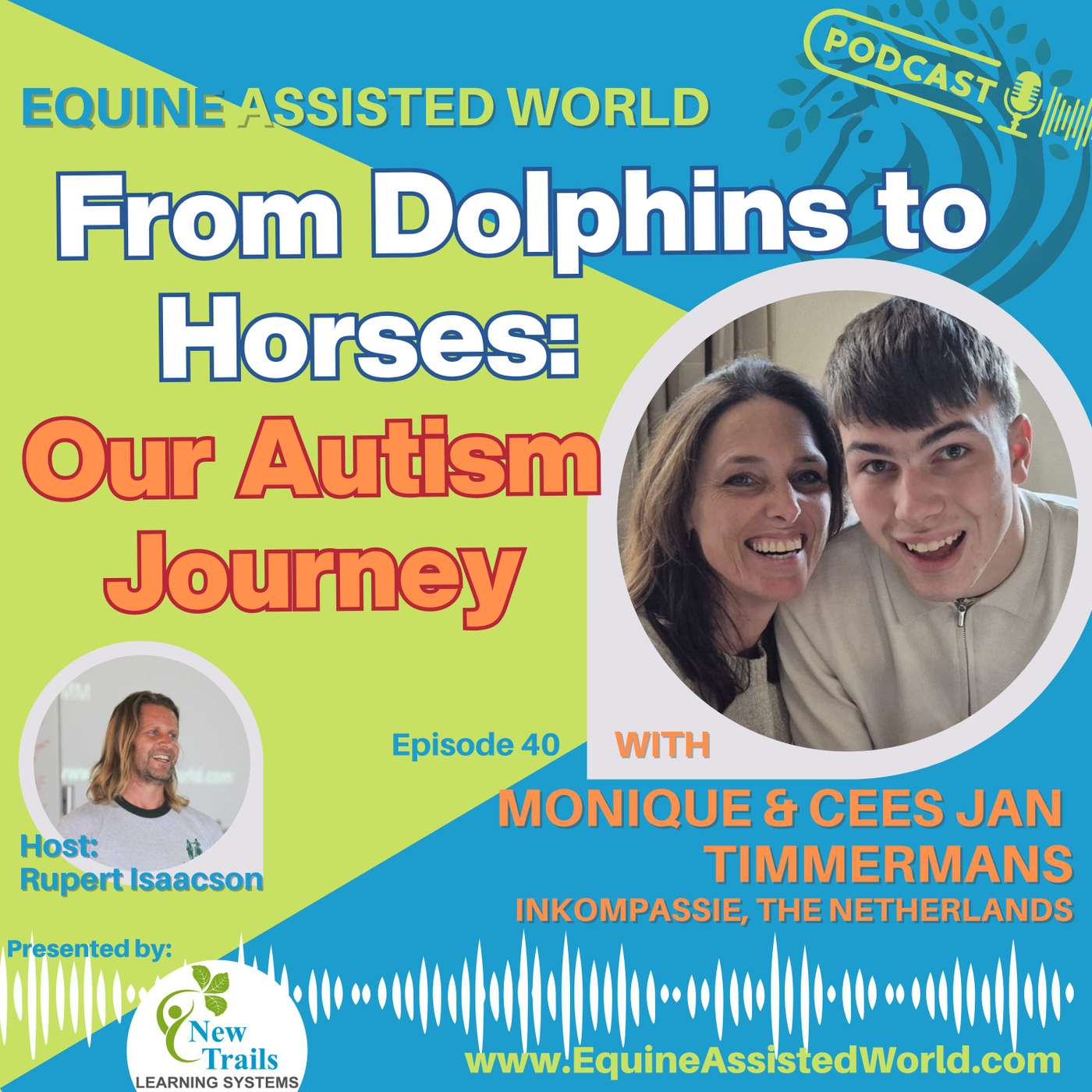
Ep 40Autism, Dolphins & Horses: A Family’s Journey of Healing and Compassion | EP 40 with Monique Timmermans
What happens when autism transforms not just a child’s life, but an entire family’s purpose? In this heartwarming episode of Equine Assisted World, Rupert Isaacson speaks with Monique and Cees Jan Timmermans from the Netherlands about their son Stan’s remarkable journey — from dolphin therapy in Curaçao to finding peace and communication through horses.Monique, founder of InKompassie, shares how her family’s experience with autism inspired her to build a holistic equine-assisted practice that helps other families find balance, regulation, and hope. Together with her husband Ian, she reflects on the lessons they’ve learned about parenting, partnership, and letting go of expectations while embracing the beauty of the present moment.From dolphins to horses, deep pressure to patience, and family dynamics to neuroplasticity — this episode explores how compassion, movement, and nature can rewire both brain and heart.If you want to support the show, you can do so at Patreon: https://www.patreon.com/LongRideHome✨ “When you look with compassion — at your child, your partner, and yourself — healing begins.” – Monique Timmermans✨ “Stu does things when he is ready. You can’t push it; you just have to recognize the moment.” – Ian Timmermans🔍 What You’ll Learn in This Episode:How dolphin therapy unlocked communication and calm for Stan ([00:18:00])The sensory connection between body awareness, regulation, and emotion ([00:06:00])Why involving the whole family is key to successful equine-assisted sessions ([00:05:15])The origins and meaning behind Monique’s practice name, InKompassie ([00:11:25])How horses help children with autism reconnect with their bodies and emotions ([01:01:00])Teaching academic skills like math and reading through movement and horses ([01:04:00])The neuroscience behind movement, nature, and neuroplasticity ([00:42:00])How Monique helps parents find regulation and perspective through horses ([00:59:00])Lessons from 20 years of parenting: acceptance, patience, and unconditional love ([01:20:00])🎙️ Memorable Moments:Stan’s breakthrough moments during dolphin therapy in Curaçao ([00:19:00])Discovering that compassion begins with the self — after a hospital scare ([00:12:00])Watching Stan find peace and joy with horses at home ([00:45:00])How Monique’s practice evolved from personal healing to community support ([00:48:00])“When everyone was like Stan, it would be a beautiful world.” – Monique ([01:37:02])Ian on balance, respect, and partnership in parenting a special needs child ([01:22:15])The importance of letting go of expectations and embracing what is ([01:34:19])📚 Contact, Projects & Resources Mentioned: Monique Timmermans – InKompassie (Equine-Assisted Practice, Netherlands) – https://inkompassie.nl Dolphin Therapy Center – Curaçao Dolphin Therapy & Research Center (CDTC) Temple Grandin – Author, Autism Advocate Horse Boy Method Horse Boy Method, Movement Method & Takhin Equine Integration – https://ntls.co🌍 See All of Rupert’s Programs and Shows: Website: https://rupertisaacson.com📲 Follow Us: Long Ride HomeWebsite: https://longridehome.comFacebook: https://facebook.com/longridehome.lrhInstagram: https://instagram.com/longridehome_lrhYouTube: https://youtube.com/@longridehomeNew Trails Learning SystemsWebsite: https://ntls.coFacebook: https://facebook.com/horseboyworldInstagram: https://instagram.com/horseboyworldYouTube: https://youtube.com/newtrailslearningsystems📊 Affiliate Disclosure: Links to books and products may include affiliate tracking. We may earn a commission if you make a purchase, at no extra cost to you. Thank you for supporting the show.
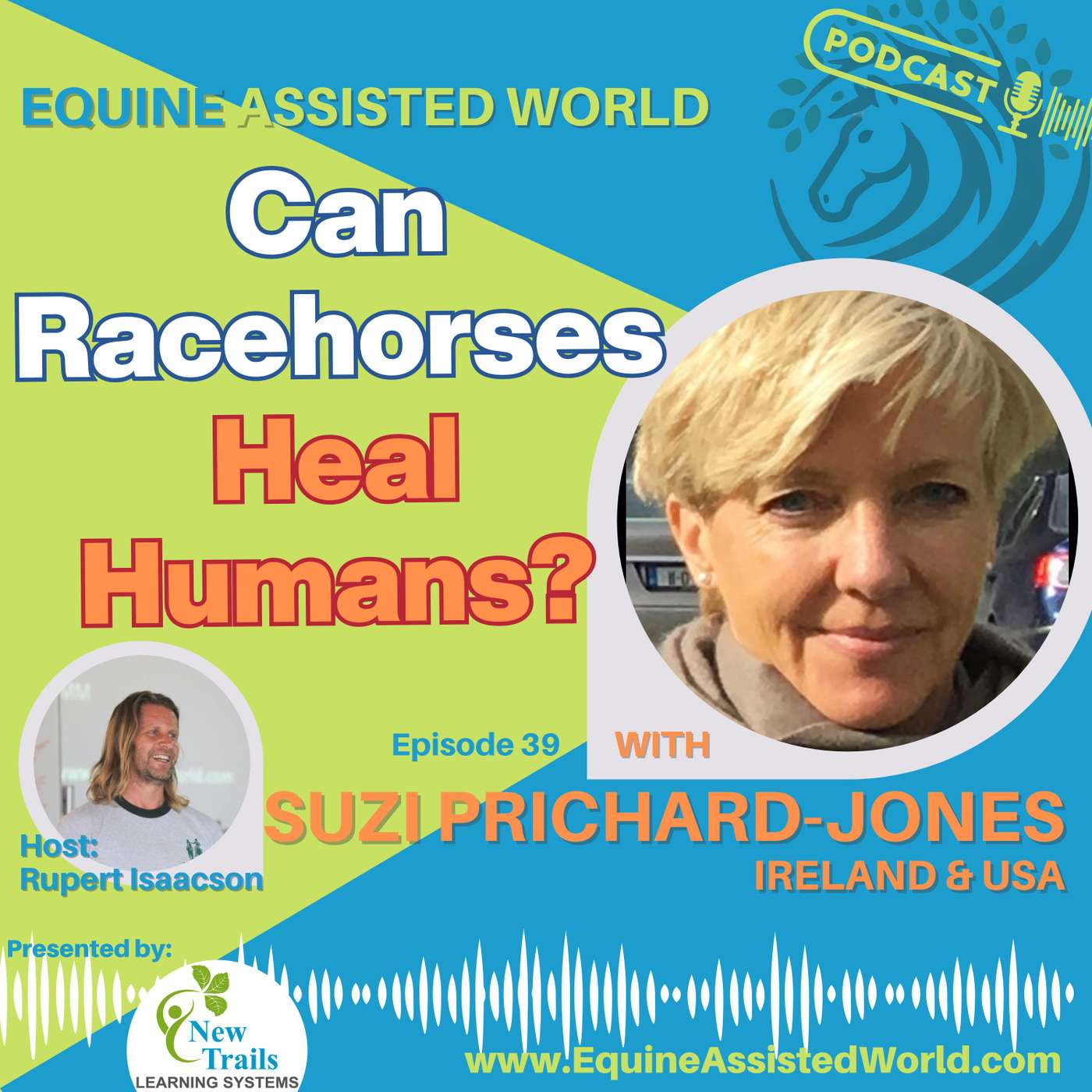
Ep 39Saving the Thoroughbred: Suzi Pritchard-Jones on Racehorse Welfare & Their Role in Equine-Assisted Work | EP 39
When most people think of the Thoroughbred industry, they picture racing, speed, and high stakes. But what happens to these horses after the finish line? And could their intelligence, courage, and sensitivity make them perfect partners in equine-assisted work?✨ “It’s a win-win situation for the equine-assisted world and for the Thoroughbred world — an opportunity to give back to society in a meaningful way.” – Suzi Pritchard-Jones✨ “Any living creature is made up of energy. Unless you can express that energy, it gets bottled up and becomes destructive.” – Suzi Pritchard-JonesIn this compelling episode, Rupert Isaacson speaks with Suzi Pritchard-Jones — a breeder and advocate working to bridge the gap between the racing world and the equine-assisted community. Suzi shares her vision for a more humane future for Thoroughbreds, both during their careers and beyond, where welfare, horsemanship, and second careers in therapy and education take center stage.From Ireland to Florida to the UK, Suzi is pushing for change within an industry often misunderstood and criticized, championing transparency, accountability, and empathy for one of the world’s most athletic and misunderstood breeds. Together, she and Rupert explore how Thoroughbreds — once the engine of civilization — can once again serve humanity through healing, learning, and connection.If you want to support the show, you can do so at Patreon: https://www.patreon.com/LongRideHome🔍 What You’ll Learn in This Episode:Why Thoroughbreds deserve a second chance — and how their traits suit equine-assisted work ([00:06:00])The evolution of the racing industry — from owner-breeders to syndicates — and how that affects welfare today ([00:18:00])How misconceptions about “hot” Thoroughbreds persist, and what really defines their temperament ([00:22:00])How better horsemanship could transform the racing world ([00:28:00])Inside prison programs using retired racehorses to teach empathy and responsibility ([00:39:00])Creating unity between equine-assisted practitioners and the racing establishment to secure funding and respect ([01:00:00])How the in-hand Takhin method can help retrain racehorses and improve balance, confidence, and soundness ([01:17:00])Rediscovering the origins of the Thoroughbred — from the Barley Turk to modern breeding concerns ([01:23:00])Why equine-assisted practitioners must explain the science behind their work to earn support ([01:42:00])How the Newmarket Pony Academy and Autism & Racing initiatives are paving the way for social change ([01:45:00])🎙️ Memorable Moments from the Episode:Suzi recalls growing up riding out racehorses in Ireland and learning trust over dominance ([00:05:00])The lightbulb moment: seeing Thoroughbreds used in therapy for veterans at Ville, France ([00:15:00])The evolution of the racing industry and its changing relationship with welfare ([00:18:00])How better horsemanship and “crazy time” for horses can prevent frustration and burnout ([00:28:00])Thoroughbreds and prisons: how touch, empathy, and hope transform both horses and inmates ([00:40:00])Creating transparency and accountability in racing welfare programs ([00:48:00])The challenge of funding and uniting the equine-assisted field ([01:00:00])How the in-hand Takhin method builds balance, confidence, and soundness in ex-racehorses ([01:17:00])Rediscovering the origins of the Thoroughbred — from the Barley Turk to modern breeding concerns ([01:23:00])The Newmarket Pony Academy and Autism & Racing initiatives leading social change ([01:45:00])📚 Contact, Projects, Thinkers, and Ideas Mentioned:Suzi Pritchard-Jones – Author of Barley: The Thoroughbred’s Ticking Time Bomb: https://amzn.to/492f7DdInternational Forum for the Aftercare of Racehorses (IFAR) – https://www.internationalracehorseaftercare.comThoroughbred Retirement Foundation – https://www.trfinc.orgThoroughbred Aftercare Alliance – https://www.thoroughbredaftercare.orgHorseback UK – https://www.horseback.org.ukSquare Peg Foundation – https://www.squarepegfoundation.orgNewmarket Pony Academy – British Racing School, UKAutism & Racing – Initiative founded by Bobby Beavers, UKHorse Boy Method, Movement Method & Takhin Equine Integration – https://ntls.co🌍 See All of Rupert’s Programs and Shows: Website: https://rupertisaacson.com📲 Follow Us:Long Ride HomeWebsite: https://longridehome.comFacebook: https://facebook.com/longridehome.lrhInstagram: https://instagram.com/longridehome_lrhYouTube: https://youtube.com/@longridehomeNew Trails Learning SystemsWebsite: https://ntls.coFacebook: https://facebook.com/horseboyworldInstagram: https://instagram.com/horseboyworldYouTube: https://youtube.com/newtrailslearningsystems📊 Affiliate Disclosure:Links to books and products may include affiliate tracking. We may earn a commission if you make a purchase, at no extra cost to you. Thank you for supporting the show.
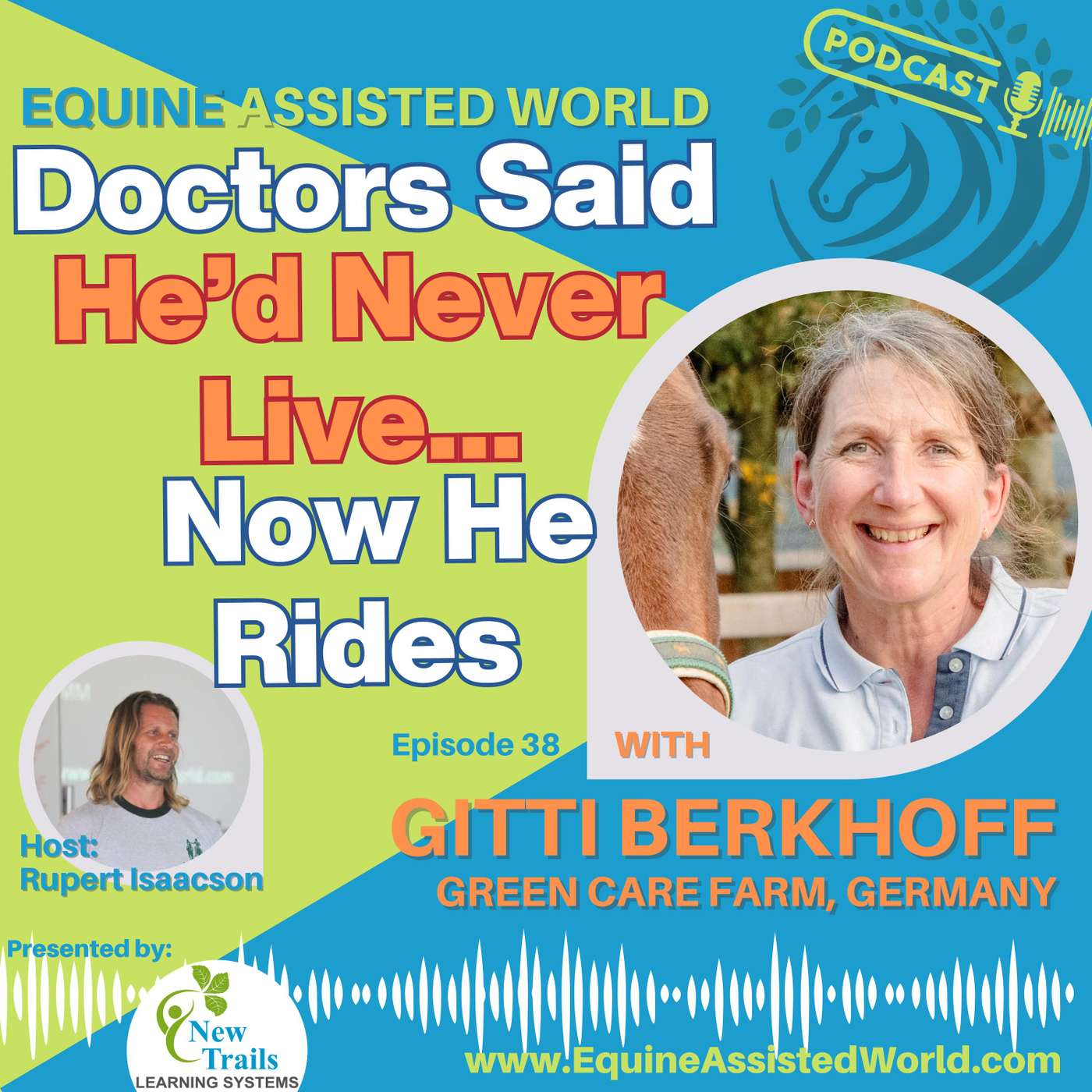
Ep 38Doctors Said He’d Never Live… Now He Rides - From Survival to Joy: Gitti Berkhoff on Horses, Healing & Germany’s Green Care Farms | EP 38
When doctors advised abortion after a devastating prenatal diagnosis, Gitti and Henrich Berkhoff chose a different path. Their son Julian was born with spina bifida and hydrocephalus, enduring multiple life-threatening surgeries. Against all odds, Julian not only survived but thrived—becoming a rider, public speaker, and inspiration.Out of this journey, Gitti built one of Germany’s most innovative equine-assisted programs, blending neuroscience, horsemanship, and joy. From wheelchair fox hunting to pillow fights on horseback and even toilet-brush “microphone” interviews, her farm is a living testament to humor, creativity, and resilience.Now, as she and her husband bring equine-assisted therapy to the German parliament, Gitti shares how horses, family, and a belief in joy over suffering reshaped her life—and how they can reshape equine therapy itself.If you want to support the show, you can do so at Patreon: https://www.patreon.com/LongRideHome✨ “If you have something that makes you happy and you share it, then it grows. That gives you energy.” – Gitti Berkhoff✨ “If you are not consciously creating joy, you may be unconsciously creating suffering.” – Rupert Isaacson🔍 What You’ll Learn in This Episode:Choosing life: why Gitti and Henrich refused abortion despite grim medical predictions ([00:03:00])Julian’s early years—nine surgeries, brain infections, and the fight for survival ([00:09:00])The role of prayer, resilience, and one unforgettable moment of recognition ([00:14:00])From nurse to horsewoman: how Gitti’s medical background shaped her practice ([00:21:00])Building an “active stable” and preparing horses far beyond typical therapy standards ([00:29:00])Why play, rebellion, and humor matter more than therapy ([00:33:00])Pillow fights, toilet-brush games, and fishing thistles—turning frustration into joy ([00:35:00])Green Care farming: integrating agriculture, nature, and equine work ([00:56:00])Bringing animals into schools after trauma and conflict ([01:05:00])Validation, empathy, and the art of truly believing what children and dementia patients feel ([01:13:00])Taking equine-assisted work to the German parliament with David Doyle ([01:22:00])🎙️ Memorable Moments from the Episode:A doctor cries when baby Julian shows he can recognize faces—proof his brain is working ([00:15:00])Handing her child over for surgery with a fever of 41°C, not knowing if he’d survive ([00:16:20])Discovering Horse Boy Method in 2017 and deciding to go all the way to Texas for training ([00:07:00])Children on horseback “hunting” their parents with toilet brushes full of water ([00:36:00])Turning burdock weeds into an Olympic sport of “fishing” from horseback ([00:41:00])Installing an old toilet in the sandpit to help autistic kids laugh at and overcome toilet fears ([00:43:00])A schoolboy tells Gitti after a farm day: “This was the best day of my life.” ([01:07:00])Preparing to bring equine-assisted programs before the German parliament ([01:23:00])📚 Contact, Projects, Thinkers, and Ideas Mentioned:Gitti Berkhoff – Hof Berkhoff / Green Care Farm Hof Berkhoff: https://greencarefarm.de/David Doyle & Liskennett Farm, Ireland – pioneering government-backed equine-assisted workTemple Grandin – autism advocate and authorThe Horse Boy, The Long Ride Home, and The Healing Land – books by Rupert IsaacsonHorse Boy Method, Movement Method & Takhin Equine Integration – https://ntls.co🌍 See All of Rupert’s Programs and Shows:Website: https://rupertisaacson.com📲 Follow Us:Long Ride HomeWebsite: https://longridehome.comFacebook: https://facebook.com/longridehome.lrhInstagram: https://instagram.com/longridehome_lrhYouTube: https://youtube.com/@longridehomeNew Trails Learning SystemsWebsite: https://ntls.coFacebook: https://facebook.com/horseboyworldInstagram: https://instagram.com/horseboyworldYouTube: https://youtube.com/newtrailslearningsystems📊 Affiliate Disclosure:Links to books and products may include affiliate tracking. We may earn a commission if you make a purchase, at no extra cost to you. Thank you for supporting the show.
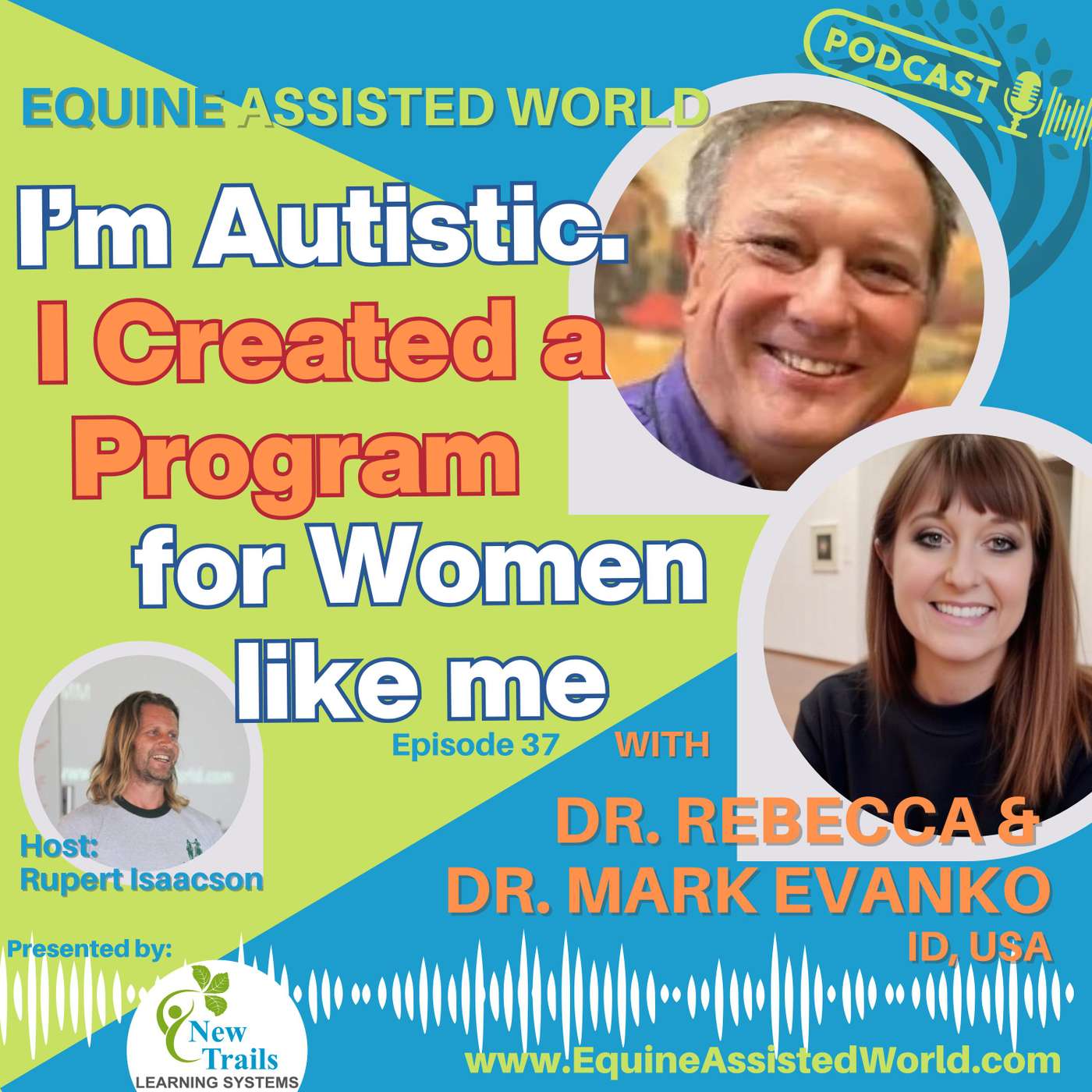
Ep 37Autistic Voices in Equine Therapy: Dr. Rebecca Evanko on Female Autism & Wilder Wood | Ep 37
From a childhood marked by abandonment in Australia to building a groundbreaking equine-assisted program in New Mexico, Dr. Rebecca Evanko’s story is one of resilience, survival, and transformation. Joined by her husband, physician Dr. Marc Evanko, the two share how their own neurodivergence—autism and ADHD—shaped Wilder Wood Equine Therapy, a program centering female autism and authentic connection with horses.Together they discuss the creation of WRADIANCE©, a new diagnostic tool designed by autistic women for autistic women, and their unique counseling model that blends equine interaction with trauma-informed, neurodivergent-led support.✨ “For the first time, I said to myself: I’m not a problem. I’m autistic. I think differently.” – Dr. Rebecca Evanko✨ “There’s nothing wrong with either operating system—Android or Apple. They both work. It’s just different.” – Dr. Marc EvankoIf you want to support the show, you can do so at Patreon: https://www.patreon.com/LongRideHome🔍 What You’ll Learn in This Episode:Growing up autistic, obsessed with horses, and left alone at 15 in rural Australia ([00:04:00])Surviving homelessness, finding mentors, and building resilience through horses ([00:06:00])Misdiagnosis, masking, and why female autism is so often overlooked ([00:10:00])Meeting Marc, ADHD as both challenge and superpower, and their shared love of horses ([00:21:00])Why true classical dressage informed their horse work at Wilder Wood ([00:27:00])Creating equine therapy and counseling programs rooted in lived autistic experience ([00:48:00])How WRADIANCE© was developed: 900+ narratives from autistic women worldwide ([00:57:00])The limitations of “gold standard” diagnostic tools and why WRADIANCE© is different ([01:00:00])Grief, tribe, and the importance of community for autistic women ([01:17:00])Joy as the opposite of suffering—and the role of horses in bringing it back ([01:53:00])🎙️ Memorable Moments from the Episode:Riding her horse through mist at 2 a.m. as a teen left alone in Queensland ([00:05:00])A kitchen accident leading Rebecca back to horses at age 52 ([00:27:00])Marc’s ADHD metaphor: starting to rake leaves, ending up at Home Depot, forgetting the rake ([00:32:00])Discovering that most autism programs weren’t designed by autistic people ([00:48:00])The “aha” moment: interviews don’t work—written narratives reveal female autism ([00:57:00])Women saying after WRADIANCE©: “I feel so heard. I feel so seen.” ([01:04:00])Why masking makes girls “fly under the radar” until adolescence melts them down ([01:12:00])The concept of learned helplessness vs. finding survival strategies ([01:45:00])Horses as partners in teaching self-reliance, not helplessness ([01:52:00])Rebecca’s memoir Joy—naming what she found on the other side of suffering ([01:53:00])📚 Projects, Thinkers, and Ideas Mentioned:Joy – Memoir by Dr. Rebecca Evanko https://amzn.to/4meH0uPWilder Wood Equine Therapy – https://wilderwoodequinetherapy.orgThe WRADIANCE© Protocol – female autism diagnostic tool in clinical trials https://wilderwoodequinetherapy.org/the-wradiance-instrument-and-protocol/Temple Grandin – Autism advocate, professor, and authorMovement Method & Horse Boy Method – https://ntls.co🌍 See All of Rupert’s Programs and Shows:Website: https://rupertisaacson.com📲 Follow Us:Long Ride Home:Website: https://longridehome.comFacebook: https://facebook.com/longridehome.lrhInstagram: https://instagram.com/longridehome_lrhYouTube: https://youtube.com/@longridehomeNew Trails Learning Systems:Website: https://ntls.coFacebook: https://facebook.com/horseboyworldInstagram: https://instagram.com/horseboyworldYouTube: https://youtube.com/newtrailslearningsystems📊 Affiliate Disclosure:Links to books and products may include affiliate tracking. We may earn a commission if you make a purchase, at no extra cost to you. Thank you for supporting the show.
Ep 36Resilience, Mules & Pediatric Wisdom: Dr. Mark Uranga on Community, Horses & Healing | EP 36
Episode Title:Guest Introduction:(If you want to support the show, you can do so at Patreon: https://www.patreon.com/LongRideHome)“Being attuned to hesitation is what allows for finding the next step.” – Dr. Mark UrangaIn this episode of Equine Assisted World, Rupert Isaacson is joined by Dr. Mark Uranga, a pediatrician from Boise, Idaho, with deep Basque roots and a lifelong connection to horses and mules. Blending his medical expertise with his equestrian experience, Dr. Uranga explores how resilience, community, and attunement shape both childhood development and equine-assisted practices.From the cultural heritage of the Basque people to the sure-footed wisdom of mules, this conversation dives into what resilience really means, why attunement is vital in pediatrics and horsemanship, and how nature and equines offer healing pathways beyond clinical walls.✨ What You’ll Learn in This Episode:Basque traditions of tribal upbringing and resilience (Starts at 00:05:00)The difference between authoritarian vs. authoritative parenting (Starts at 00:23:00)How attunement with children and horses builds trust (Starts at 00:38:00)Why mules embody persistence, safety, and discernment (Starts at 00:42:00)The role of stubbornness vs. flexibility in human growth and horsemanship (Starts at 00:51:00)The mammalian caregiving system and why nurture drives resilience (Starts at 01:35:00)Why doctors should “prescribe nature” alongside medicine (Starts at 01:46:00)🌟 Memorable Moments from the Episode:“A comfortable child is a more reliable patient.” (00:04:00)On Basque childhood: “An 8-year-old carrying an 8-month-old — that’s resilience in practice.” (00:08:00)“Authoritative parenting provides the framework — without the conflict of authoritarianism.” (00:26:00)The mule’s pause as a model for resilience: “Their sense of self-preservation keeps us safe.” (00:47:00)“Being attuned to hesitation is what allows for finding the next step.” (00:59:00)On magic and awe: “We’re still monkeys on horses, moved by the mystery of it all.” (01:20:00)Why every pediatrician should spend time in nature-based learning environments (01:51:00)🤝 Connect with Dr. Mark Uranga:🎙️ Podcast: The Kid Wrangler (Spotify)📧 Email: [email protected]🌐 Warm Springs Care Farm (Boise, ID): https://www.warmspringscarefarm.org/🌐 See All of Rupert’s Programs and Shows:Rupert Isaacson: https://rupertisaacson.comEquine-Assisted Programs: https://newtrailslearning.com📲 Follow Us:Long Ride HomeFacebook: https://facebook.com/longridehome.lrhInstagram: https://instagram.com/longridehome_lrhYouTube: https://youtube.com/@longridehomeNew Trails Learning SystemsWebsite: https://ntls.coFacebook: https://facebook.com/horseboyworldInstagram: https://instagram.com/horseboyworldYouTube: https://youtube.com/newtrailslearningsystems🧺 Affiliate Disclosure:Some links may be affiliate links. If you purchase through them, we may receive a commission at no additional cost to you. Thank you for supporting the show!
Ep 35Healing Horses, Healing Humans: Dr. Janet Varhus on Ulcers, Posture & Equine Well-Being | EP 35
In this episode of Equine Assisted World, Rupert Isaacson sits down with Dr. Janet Varhus, DVM—a veterinarian whose decades of practice bridge old-school horsemanship, holistic care, and cutting-edge therapies like acupuncture, fascia release, and low-level laser treatment. From endurance riding roots to working alongside Linda Tellington-Jones, Dr. Varhus offers a rare, practical roadmap through the complex world of equine health.Together, they explore ulcers, fascia, posture, contaminated feeds, and how barns can combine tradition with holistic practices to keep therapy horses sound, safe, and thriving.If you want to support the show, you can do so at Patreon: https://www.patreon.com/LongRideHome✨ What You’ll Learn in This Episode:Why posture reveals hidden health issues (Starts at 00:29:00)The role of ulcers in behavior, stress, and performance (Starts at 00:33:00)Glyphosate in grain feeds and what to do about it (Starts at 00:34:00)Herbs and natural remedies for ulcers and liver health (Starts at 00:54:00)Low-level lasers: how they heal nerves, trauma, and chronic injuries (Starts at 00:57:00)Why companionship and enrichment matter as much as feed and shelter (Starts at 01:19:00)The difference between movement, enrichment, and true exercise for horses (Starts at 01:20:00)How to give horses choice, voice, and options for play (Starts at 01:32:00)🌟 Memorable Moments from the Episode:Janet on diagnosing ulcers with acupressure and laser points (00:17:00)Why “I see you” is her starting point with every horse (00:29:57)Why at least half of horses she sees suffer from ulcers (00:33:12)The dangers of glyphosate in grain feeds—and humic acid as a solution (00:37:39)How low-level lasers cut healing time in half for horses, dogs, and even people (01:13:00)Living in a barn with her horses: “They come in for coffee with my husband.” (01:38:06)🤝 Connect with Dr. Janet Varhus, DVM:Email: [email protected]🌐 See All of Rupert’s Programs and Shows:Rupert Isaacson: https://rupertisaacson.comEquine-Assisted Programs: https://newtrailslearning.com📲 Follow Us:Long Ride HomeFacebook: https://facebook.com/longridehome.lrhInstagram: https://instagram.com/longridehome_lrhYouTube: https://youtube.com/@longridehomeNew Trails Learning SystemsWebsite: https://ntls.coFacebook: https://facebook.com/horseboyworldInstagram: https://instagram.com/horseboyworldYouTube: https://youtube.com/newtrailslearningsystems🧺 Affiliate Disclosure: Some links may be affiliate links. If you purchase through them, we may receive a commission at no additional cost to you. Thank you for supporting the show!
Ep 34Let Them Work: Temple Grandin on Real Healing for Autism & Anxiety | Ep 34 Equine Assisted World
In this essential episode of Equine Assisted World, Rupert Isaacson sits down with Dr. Temple Grandin, one of the world’s most influential voices on autism, sensory processing, and practical approaches to learning and healing. Together, they explore how therapeutic riding centers can do more than just offer horse time—they can create whole environments of sensory safety, meaningful skill-building, and community resilience.Dr. Grandin shares her personal experiences growing up autistic, her early fears and breakthroughs, and the real-life tools that helped her thrive—tools that every equine program can apply. From using turn-taking games to stimulate speech to setting up repair shops and greeter stations to build confidence and career readiness, this episode is a blueprint for any equine-assisted center aiming to have deeper impact. If you want to support the show, you can do so at Patreon: https://www.patreon.com/LongRideHome ✨ What You’ll Learn in This Episode:The Power of Observation & Following the Child (Starts at 01:00)How Rupert adapted Temple's three-step approach to help his nonverbal sonWhy nature and movement are essential for sensory integrationEquine Interaction & Sensory Patterns (Starts at 04:00)The three ways autistic kids respond to animalsWhat PET scans and OTs show about rhythm, balance, and the cerebellumWhy nature and gardens still matter even without horsesEarly Intervention with Church Play & Library Play (Starts at 07:00)Why many children can't afford to be on waitlistsTurn-taking games and imitation as entry pointsHow to tap into local retirees to fill gaps in early interventionTheory of Mind & Naturalistic Learning (Starts at 08:30)Flapping, spinning coins, and making daisy chains as foundational social engagementHow structured tasks lead to intellectual developmentHigh Expectations with Support (Starts at 14:00)Accommodating without overprotecting: ferry horns and dessert rulesWhy selling candy and hosting parties mattered for both Temple and Bill GatesPractical Skills, Tools & Trades (Starts at 20:00)From coat hangers to glue guns: the neuroscience of hands-on learningHow fixing things builds brains and self-worthRebuilding the Workshop Culture (Starts at 28:00)Why shop class should return to therapeutic barnsVisual thinkers vs. math thinkers: all kinds of brains need tactile trainingUsing retired mechanics, carpenters, and engineers as mentorsStructured Responsibility Around the Barn (Starts at 34:00)Real tasks: mucking, grooming, feeding, building stallsHow responsibility leads to confidence and safety awarenessSocial Skills Training through Greeting & Selling (Starts at 43:00)Simulating cookie sales, greeter roles, and party host behaviorControlled exposure to rejection and resilience buildingJob Skills, Routine & Community Integration (Starts at 51:00)Creating modern equivalents of paper routes with local volunteersWhy non-family bosses matter for skill-buildingTap into senior centers to address budget shortfallsThe Cost of Screen Time & the Value of Movement (Starts at 54:00)How too much tech stunts developmentWhat real-world vestibular tasks do for brain growthCognitive, Motor & Emotional Growth Through Challenge (Starts at 59:00)The science behind tool use, play, and heavy workBalancing boards, swings, and walking rails in arenas and homesMedication, Anxiety & Exercise (Starts at 67:00)Temple's 40-year experience with antidepressantsWhy burst exercise helps more than walkingHow low-dose meds plus movement can regulate fear systems🌟 Memorable Moments from the Episode:Temple's method for helping kids tolerate scary noises like vacuum cleaners (01:34:00)How she visualizes responsibility: "Put the lid down and turn the latch." (01:36:22)Why greeting guests at parties was as important as riding horses (01:37:38)Temple's go-to back pain trick: "Look at the ceiling beams." (01:05:00)🤝 Connect with Dr. Temple Grandin: Website: https://www.templegrandin.com Books: Thinking in Pictures, Visual Thinking, The Autistic Brain, and more🌐 See All of Rupert’s Programs and Shows: Rupert Isaacson: https://rupertisaacson.com Equine-Assisted Programs: https://newtrailslearning.com📲 Follow Us: Long Ride HomeFacebook: https://facebook.com/longridehome.lrhInstagram: https://instagram.com/longridehome_lrhYouTube: https://youtube.com/@longridehomeNew Trails Learning SystemsWebsite: https://ntls.coFacebook: https://facebook.com/horseboyworldInstagram: https://instagram.com/horseboyworldYouTube: https://youtube.com/newtrailslearningsystems🧺 Affiliate Disclosure: Some links may be affiliate links. If you purchase through them, we may receive a commission at no additional cost to you. Thank you for supporting the show!
Ep 33Building a Culture of Equine Well-Being – With Melissa Connor of Renew TRC | Ep 33 Equine Assisted World
In this inspiring episode of Equine Assisted World, Rupert Isaacson sits down with Melissa Connor, Executive Director of Renew Therapeutic Riding Center in Holland, Michigan. Recorded just weeks after Rupert visited the center, this conversation highlights what it takes to create a truly horse-centered therapeutic program—where equine well-being is as prioritized as human healing.Melissa shares her decades-long journey through the equine-assisted services field, how she shaped a program with excellence in horse care, and the practical systems Renew uses to maintain a thriving herd of 22 horses. From rider conditioning and pasture management to financial sustainability and healthy organizational culture, Melissa offers a rare, transparent view into what truly ethical equine-assisted work looks like behind the scenes. If you want to support the show, you can do so at Patreon: https://www.patreon.com/LongRideHome ✨ What You’ll Learn in This Episode:Creating a Culture of Equine Well-Being (Starts at 01:00)Why therapeutic horses deserve the same quality of care as competition horsesHow listening to horses and honoring their vocation sets the foundationThe importance of movement, friendship, and forage (the three F’s)Evolving Out of the "Donated Horse" Mentality (Starts at 09:00)Melissa’s early experiences with horses in VirginiaWhy therapeutic programs shouldn’t accept broken-down or unsuitable horsesHow to reframe our value system when it comes to horses in serviceSetting Standards for Horse Acceptance & Retirement (Starts at 20:00)How Renew handles free leases and vet care capsWhy written agreements and ongoing owner relationships are criticalWhat happens when retirement is needed—but the owner steps backToplines, Thriving, and Conditioning (Starts at 29:00)Rupert’s reaction to seeing three glowing, fit therapy horsesThe conditioning system at Renew: riding, groundwork, and professional lessonsWhy not all conditioning needs to involve riding—and how Teke work will integrateTime Management & Staff Structure (Starts at 37:00)How Renew blocks out weekly time for horse conditioningUsing shared digital logs and notes to communicate across staffWhy excellence in horsemanship is a hiring priorityFinding Skilled Riders for Conditioning (Starts at 41:00)Where and how Renew recruits advanced, balanced ridersWhy setting the bar high helps attract the right peopleBuilding a team of instructors with both equestrian and teaching skillsTurning Horses Out—Even in Michigan Winters (Starts at 47:00)How Renew designed their pastures and shelter for 24/7 turnoutThe mental and physical benefits of herd life and freedom to moveManaging blankets, individualized care, and daily wellness checksFunding a High-Standard Therapeutic Program (Starts at 56:00)Renew’s journey from a small leased parcel to a built-from-scratch facilityStrategies that work: storytelling, Chamber of Commerce, and Rotary clubsWhy inviting donors to the farm changes everythingCommunity Culture, Conflict & Longevity (Starts at 1:10:00)How Renew fosters staff cohesion, continued education, and joy at workMelissa’s perspective on conflict resolution and non-toxic leadershipBuilding systems that ensure sustainability beyond one leaderThe Future of Equine Assisted Services (Starts at 1:33:00)Why mentorship is urgently needed in our fast-growing fieldRecruiting not just horse people, but professionals in governance and financeMelissa’s dream: long-term impact and positive life change with every ride🌟 Memorable Moments from the Episode:Rupert’s reaction to seeing perfect toplines on therapy horses (29:00)Why “the barns are for humans, not horses” (07:00)Melissa’s powerful response to someone offering broken equipment (14:00)The reality of owners not reclaiming their horses after years in service (22:00)One donor’s lunch meeting that became the start of Renew’s land purchase (1:05:00)🤝 Connect with Melissa Connor & Renew TRC: Website: https://renewtrc.org Facebook: https://facebook.com/renewtrc Instagram: https://instagram.com/renewtrc🌐 See All of Rupert’s Programs and Shows: Rupert Isaacson: https://rupertisaacson.com Equine-Assisted Programs: https://newtrailslearning.com📲 Follow Us: Long Ride Home Facebook: https://facebook.com/longridehome.lrh Instagram: https://instagram.com/longridehome_lrh YouTube: https://youtube.com/@longridehomeNew Trails Learning Systems Website: https://ntls.co Facebook: https://facebook.com/horseboyworld Instagram: https://instagram.com/horseboyworld YouTube: https://youtube.com/newtrailslearningsystems🧺 Affiliate Disclosure: Some links may be affiliate links. If you purchase through them, we may receive a commission at no additional cost to you. Thank you for supporting the show!
Ep 32Misery Is Optional – Redefining Softness, Structure & Anxiety with Mark Rashid & Crissi McDonald | Ep 32 Equine Assisted World
In this thought-provoking follow-up episode of Equine Assisted World, Rupert Isaacson reunites with legendary horseman Mark Rashid and clinician-author Crissi McDonald. This time, the conversation shifts deeper into the internal landscapes of both horse and human, exploring what it really means to be soft—without losing structure.From navigating low-level panic and reframing anxiety, to understanding when pressure is productive and when it breaks us, Mark and Crissi offer powerful insights not only for horse people, but for anyone seeking a more peaceful way of being in the world. Broadcasting from Happy Dog Ranch in Colorado, they also share how kindness, community, nature, and play are essential ingredients in creating meaningful transformation.(If you want to support the show, you can do so at Patreon: https://www.patreon.com/LongRideHome )✨ What You’ll Learn in This Episode:The Paradox of Softness & Anxiety (Starts at 01:00)Why striving for softness can trigger anxietyMark's pressure scale (0 to 10) and self-regulation in real timeHow internal tension blocks horse-human communicationSpeed Bumps and Nervous System Awareness (Starts at 08:00)Crissi explains the compounding stress of modern lifeWhy we don’t need to always be calm—and how to ride the nervous system waveThe idea of setting stress aside just long enough to connectWhen Softness Meets an Unready Horse (Starts at 13:00)What to do when your horse is not in a soft stateThe art of doing what you can do instead of forcing what you can’tPressure vs. Anxiety (Starts at 25:00)How pressure can lead to problem-solving, while anxiety leads to shutdownA lesson in reframing stress as “just an event, not an emergency”Why “Misery is Optional” became a clinic mottoHow We Live Matters (Starts at 31:00)Crissi’s 20-year journey toward balance: food, sleep, connection, movementThe surprising role of creativity (like watercolor and photography) in emotional regulationClinic Structure That Feels Like Freedom (Starts at 36:00)Daily dojo sessions: breath, safety, and playful presenceGiving students permission not to ride—and why that sets the tone for learningLetting laughter and safety replace performance pressureNature, Tribe & the Horse-Human Herd (Starts at 42:00)Designing Happy Dog Ranch to support exploration, not confinementThe unseen structure that holds clinics togetherHow horses themselves teach people, especially when given time and spaceSoftness With Structure (Starts at 52:00)Why softness without structure isn’t softness at allRain contact, feel, and feedback loops in real timeMark’s practical metaphors: the coffee cup, the skeleton, and invisible teaching momentsBuilding Confidence Without Force (Starts at 1:10:00)How support teams guide riders back from the edge of overwhelmLetting people grow without letting them get lostKindness as Framework (Starts at 1:20:00)The radical idea that a clinic structure can be kind—not punishingWhy many riders unconsciously argue with happinessThe ripple effects of affirming "You're okay. Your horse is okay."Reclaiming Tribe & Breaking the Misery Habit (Starts at 1:30:00)The loneliness epidemic in the horse world—and how clinics become familyMark and Crissi’s reminder: We get good at what we practice—even if it’s unhappinessWhy being of service to horses and humans might be the simplest cure for anxiety🌟 Memorable Moments from the Episode:"Misery is optional"—what it means and how it reshapes learning (25:00)Mark’s coffee cup metaphor for structured softness (1:00:00)How “crazy time” with horses taught Rupert to prioritize play and energy release (23:00)Why one rider’s fear melted just by being told she didn’t have to ride (37:00)When anxiety isn’t really anxiety—it’s just too much pressure without strategy (26:00)🤝 Connect with Mark Rashid & Crissi McDonald: Mark's Website: https://markrashid.com Crissi’s Website: https://crissimcdonald.com Books by Mark Rashid: Considering the Horse: Tales of Problems Solved and Lessons Learned: https://amzn.to/3GbhmrKFinding the Missed Path: The Art of Restarting Horse: https://amzn.to/44e47i2A Journey to Softness: In Search of Feel and Connection with the Horse: https://amzn.to/44c0KIjFor the Love of the Horse: Looking Back, Looking Forward: https://amzn.to/4lkx8zDBooks by Crissi McDonald: Rising From the Sea (North to Home Book 3): https://amzn.to/3ZL864hContinuing The Ride: Rebuilding Confidence from the Ground Up: https://amzn.to/40iZUsfThe Clock in the Water (North to Home): https://amzn.to/40gmv8NGetting Along with Horses: An Evolution in Understanding: https://amzn.to/4k4E8zs🌐 See All of Rupert’s Programs and Shows: Rupert Isaacson: https://rupertisaacson.com Equine-Assisted Programs: https://newtrailslearning.com📲 Follow Us: Long Ride Home Facebook: https://facebook.com/longridehome.lrh Instagram: https://instagram.com/longridehome_lrh YouTube: https://youtube.com/@longridehomeNew Trails Learning Systems Website: https://ntls.co Facebook: https://facebook.c
Ep 31Softness, Safety, and the Horse-Human Connection with Mark Rashid & Crissi McDonald | Ep 31
In this episode of Equine Assisted World, Rupert Isaacson welcomes renowned horseman Mark Rashid and equine clinician and author Crissi McDonald. Broadcasting from their home in Estes Park, Colorado, this inspiring duo shares how softness, internal awareness, and individual connection form the core of their horsemanship and life philosophy.From Aikido to equine-assisted work, from storytelling to trauma-informed approaches, and from photo artistry to martial principles, Mark and Crissi reveal a unique path that blends kindness, discipline, and intuition in equal measure. With over 30 years of experience and thousands of horses and people taught, they bring a powerful perspective for anyone working in the equine-assisted world—or simply seeking a more compassionate way to be with horses.✨ What You’ll Learn in This Episode:The Foundation of Softness (Starts at 02:00)Why Mark and Crissi focus on internal softness rather than just soft hands.The legacy of Mark's mentor, Walter, and how it shaped his entire approach.From Martial Arts to Horsemanship (Starts at 08:00)How Mark found the feeling of "softness" in Aikido after years of searching.Why blending energy instead of resisting it helps both horses and people.Crissi's Journey Through Horsemanship (Starts at 14:00)How Crissi moved from harsh training environments to seeking gentleness.The transformational impact of attending her first clinic with Mark.Principles Over Systems (Starts at 24:00)Why Mark and Crissi prioritize principles over rigid techniques.How flexibility and attunement create better outcomes for horse and rider.Observing Patterns & Recognizing Limits (Starts at 33:00)What years of working with thousands of horses taught them about common dilemmas.How inbreeding and neurodivergence manifest in equine behavior and learning.Premarin Foals, Mustangs & Genetic Quirks (Starts at 42:00)The challenges of working with inbred or neurologically atypical horses.What to do when a horse can’t retain information—and how to support them.Softness in the Rider: Letting Go of Tension (Starts at 55:00)How most riders carry too much tension—and how that affects the horse.Why riding with less muscle builds communication and feel.Bridging Aikido, Horsemanship, and Teaching (Starts at 1:06:00)How Mark developed Aibado—Aikido for horse people.The value of practicing feel, balance, and response before teaching technique.Photography, Nature, and Perspective (Starts at 1:17:00)How Crissi uses photography as a mindfulness and self-care practice.The role of creativity in staying grounded while helping others.Gratitude, Storytelling & Emotional Safety (Starts at 1:28:00)How telling the right story at the right time can build trust and safety.Why gratitude is a powerful nervous system regulator for educators and clients alike.🌟 Memorable Moments from the Episode:Why Mark insisted on the title "Considering the Horse" over "Consider the Horse" (22:00)How Crissi's clinic experience made her realize she "knew nothing" — and loved it (18:00)Mark's metaphor of building guitars like building trust with a horse (1:19:00)Why many horses and people carry too much tension—and what to do about it (56:00)The story of Banjo, the inbred horse who could trail ride but not retain lateral work (41:00)🤝 Connect with Mark Rashid & Crissi McDonald:Mark's Website: https://markrashid.comCrissi’s Website: https://crissimcdonald.com Books by Mark Rashid: Considering the Horse: Tales of Problems Solved and Lessons Learned: https://amzn.to/3GbhmrKFinding the Missed Path: The Art of Restarting Horse: https://amzn.to/44e47i2A Journey to Softness: In Search of Feel and Connection with the Horse: https://amzn.to/44c0KIjFor the Love of the Horse: Looking Back, Looking Forward: https://amzn.to/4lkx8zDBooks by Crissi McDonald: Rising From the Sea (North to Home Book 3): https://amzn.to/3ZL864hContinuing The Ride: Rebuilding Confidence from the Ground Up: https://amzn.to/40iZUsfThe Clock in the Water (North to Home): https://amzn.to/40gmv8NGetting Along with Horses: An Evolution in Understanding: https://amzn.to/4k4E8zs🌐 See All of Rupert’s Programs and Shows:Rupert Isaacson: https://rupertisaacson.comEquine-Assisted Programs: https://newtrailslearning.com📲 Follow Us:Long Ride Home: https://longridehome.com Facebook: https://facebook.com/longridehome.lrh Instagram: https://instagram.com/longridehome_lrh YouTube: https://youtube.com/@longridehomeNew Trails Learning Systems Website: https://ntls.co Facebook: https://facebook.com/horseboyworld Instagram: https://instagram.com/horseboyworld YouTube: https://youtube.com/newtrailslearningsystems🧺 Affiliate Disclosure: Some links may be affiliate links. If you purchase through them, we may receive a commission at no additional cost to you. Thank you for supporting the show!
Ep 30One Acre Wonders – Outdoor Schooling, Autism Support, and Equine Wisdom with Catherine Ward & Nicole Jones | Ep 30 Equine Assisted World
In this episode of Equine Assisted World, Rupert Isaacson speaks with Catherine Ward and her daughter Nicole Jones of One Acre Farm in Texas. Together, they’ve built a thriving outdoor farm school and equine-assisted program on just a single acre—proving that miracles don’t require massive land, just massive heart.From backyard chickens to neurodiverse farm school, from ABA burnout to Montessori inspiration, and from homeschooling to creating a whole new educational paradigm, Catherine and Nicole share how they blend horsemanship, autonomy, and science to create a truly inclusive, joy-filled learning environment.Discover how they overcame lawsuits, personal tragedy, and cultural bias to build something profoundly impactful—and how you can, too.📚 What You’ll Learn in This Episode:Starting Small: How One Acre Became a Movement (Starts at 01:00)The origin of One Acre Farm and why location doesn’t limit transformation.Why their first class was on raising backyard chickens.From ABA to Montessori to Movement Method (Starts at 06:00)Nicole’s early experience with ABA and why it didn’t sit right.Discovering Montessori and how it changed her educational path.Faith, Loss, and Resilience: Catherine’s Personal Journey (Starts at 14:00)How growing up wealthy and then losing everything shaped her.Finding strength through grief and rediscovering purpose in education.Transition from Public School to Homeschooling (Starts at 24:00)Catherine’s decision to homeschool and build a lifestyle of faith and connection.What autonomy looked like in their homeschool setting.Neurodiversity, Animals, and Movement Method (Starts at 33:00)Why ABA didn’t work—and how Horse Boy and Movement Method did.The power of swinging, manure, and goat poop for emotional regulation.The Science of Belonging: From Chickens to Compass Skills (Starts at 44:00)Building trust, confidence, and cognitive growth through nature.Why letting kids lead creates powerful learning moments.The Curriculum in Action: Real Academics in a Farm School (Starts at 56:00)How they teach long division, reading, and geography through farm chores.Montessori flexibility and real-world applications.Emotional Intelligence and Social Development (Starts at 1:08:00)How children learn to navigate social dynamics and resolve conflict.Why mixed-age groups foster natural mentorship.Infrastructure and Burnout Prevention (Starts at 1:22:00)Turning living rooms into classrooms and avoiding mission drift.The challenge of staffing and seasonal demand.Mentorship, Consulting, and Creating New Campuses (Starts at 1:35:00)Helping others start their own programs with land/educator pairings.The vision for a “thousand One Acre Farms” worldwide.From Mobile Education to Legacy Building (Starts at 1:47:00)The story of the mobile petting barn and education trailer.What Catherine and Nicole want to leave behind for future educators.🌟 Memorable Moments from the Episode:Why kids who “failed” at preschool thrived at One Acre Farm (46:00)Catherine's powerful visual for neuroplasticity: getting to Dallas without I-45 (1:27:00)When Nicole knew Rupert was speaking "right to her soul" (1:33:00)"Let kids do dangerous things carefully"—why risk builds resilience (1:47:00)Pumpkin smashing as science, therapy, and fun—all in one (1:50:00)🤝 Connect with One Acre Farm:Website: https://oneacrefarmtx.com Email: Catherine Ward – [email protected] | Nicole Jones – [email protected] Phone & WhatsApp: +1 832-860-4756 Facebook: https://www.facebook.com/oneacrefarmtxSee All of Rupert’s Programs and Shows: 🌐 Rupert Isaacson: https://rupertisaacson.com💻 Equine-Assisted Programs: https://newtrailslearning.comFollow Us:Long Ride Home📘 Facebook: https://facebook.com/longridehome.lrh📸 Instagram: https://instagram.com/longridehome_lrh🎥 YouTube: https://youtube.com/@longridehomeNew Trails Learning Systems🌐 Website: https://ntls.co📘 Facebook: https://facebook.com/horseboyworld📸 Instagram: https://instagram.com/horseboyworld🎥 YouTube: https://youtube.com/newtrailslearningsystems🧺 Affiliate Disclosure: Some links may be affiliate links. If you purchase through them, we may receive a commission at no additional cost to you. Thank you for supporting the show!
Ep 29Healing in the Herd – Military Recovery, Youth Empowerment, and Equine Wisdom with HorseBack UK | Ep 29 Equine Assisted World
In this episode of Equine Assisted World, Rupert Isaacson speaks with Emma Hutchinson and Jay Hare of HorseBack UK, a groundbreaking charity based in the Scottish Highlands. Originally developed to support military veterans recovering from physical and emotional trauma, HorseBack UK now works across diverse populations including at-risk youth and refugee communities.Jay shares his powerful personal journey as a Royal Marine commando who lost his leg and facial identity in combat—and found healing through horses. Emma walks us through the origins and growth of HorseBack UK, how they built their eclectic, nature-based programs, and how their holistic approach integrates horsemanship, bushcraft, mentorship, and leadership.From PTSD recovery to ADHD support, herd dynamics to leadership development, this episode reveals how horses, nature, and community can reforge identity, restore dignity, and create lasting change.📚 What You’ll Learn in This Episode:Jay’s Story: Trauma, Recovery, and the Call to Serve (Starts at 02:00)How combat injuries reshaped Jay’s life and led him to horses.Finding identity and peace through horsemanship and service.Why HorseBack UK Was Born (Starts at 12:00)From breeding quarter horses to becoming a sanctuary for wounded soldiers.How a bonfire with friends turned into a national charity.Healing Through Community, Nature, and Horses (Starts at 18:00)Creating programs that combine horse work, bushcraft, archery, and more.Why trust and shared struggle forge powerful therapeutic outcomes.Empathy Over Expertise: Mentorship at the Core (Starts at 29:00)How lived experience fuels transformation and mentorship.Training veterans to mentor others on their healing path.Youth Empowerment Through Herd Dynamics (Starts at 34:00)Teaching empathy, emotional regulation, and leadership through horses.Why alpha energy, structure, and bushcraft work wonders for troubled teens.Equine Wisdom: Personality Pairing and Groundwork (Starts at 44:00)Matching horses and humans for emotional resonance and learning.Using liberty, groundwork, and bareback riding for connection over control.Nature as Classroom: Bushcraft, Breathwork, and Belonging (Starts at 51:00)Why outdoor environments restore brain function and build confidence.From breath syncing with horses to building shelters and herbal string.Sustainable Systems: How to Fund, Staff, and Grow (Starts at 1:04:00)Strategies for working with councils and local authorities.The genius of part-time mentorship and community collaboration.Creating a Professional Field: Regulation and Standards (Starts at 1:11:00)The Human Equine Interaction Register (HEIR) and the move toward best practices.How to join or learn from their evolving network.🌟 Memorable Moments from the Episode:Jay recalls sneezing his prosthetic eye into a salad and how humor helped him heal (13:00)Why ADHD is not a deficit—it’s a superpower for problem-solving and leadership (22:00)A Shetland pony as the confidence-building bridge for military giants (1:28:00)How Emma’s 3-year-old daughter assumed everyone had prosthetic legs (1:33:00)"Horses don’t care about your medals, degrees, or scars. They meet you in the moment."🤝 Connect with Us:Contact HorseBack UK: 🌐 Website: https://www.horseback.org.uk 📘 Facebook: https://www.facebook.com/horsebackuk 📷 Instagram: https://www.instagram.com/horseback_ukSee All of Rupert’s Programs and Shows: 🌐 Rupert Isaacson: https://rupertisaacson.com 💻 Equine-Assisted Programs: https://newtrailslearning.comFollow Us:Long Ride Home 📘 Facebook: https://facebook.com/longridehome.lrh 📷 Instagram: https://instagram.com/longridehome_lrh 🎥 YouTube: https://youtube.com/@longridehomeNew Trails Learning Systems 🌐 Website: https://ntls.co 📘 Facebook: https://facebook.com/horseboyworld 📷 Instagram: https://instagram.com/horseboyworld 🎥 YouTube: https://youtube.com/newtrailslearningsystems🧺 Affiliate Disclosure: Some links may be affiliate links. If you purchase through them, we may receive a commission at no additional cost to you. Thank you for supporting the show!
Ep 28Your Brain, Your Way: Curiosity, Neurodiversity, and Healing with Dr. Chantel Prat | EP 28 Equine Assisted World
In this episode of Equine Assisted World, Rupert Isaacson sits down with Dr. Chantel Prat—a neuroscientist, psychologist, linguist, and horsewoman. Dr. Prat teaches at the University of Washington and is the author of The Neuroscience of You, a groundbreaking book that examines how every brain is different and what that means for our lives, relationships, and learning processes.Rupert and Chantel dive deep into individual brain differences, the neuroscience of curiosity, attention, and empathy, and how equine-assisted practices can benefit from this knowledge. From mirror neurons to movement, nature, and neurodivergence, this episode explores how understanding our brains can transform education, therapy, leadership, and horsemanship.📚 What You’ll Learn in This Episode:The Neuroscience of Individuality (Starts at 02:00)Why one-size-fits-all brain models fall short.How your brain builds reality from bite-sized inputs and past experience.Rewiring How We Think About Intelligence (Starts at 06:00)Moving beyond deficit-based views of learning and attention.Understanding the trade-offs and strengths of different brain types.The Trouble with Normal: Education, Economics, and Brain Diversity (Starts at 14:00)Why school systems misunderstand how brains actually learn.The mismatch between economic systems and human neurodiversity.Curiosity, Creativity, and Collaboration (Starts at 17:00)How diversity of thought increases innovation and team success.Cultivating workplace cultures that support different kinds of brains.Mirror Neurons and Theory of Mind (Starts at 24:00)What mirror neurons really are—and what they aren’t.Understanding empathy, imitation, and their relevance in equine work.Making Implicit Social Cues Explicit in Therapy (Starts at 34:00)Strategies for working with people who experience the world differently.The power of observation and simplification in building empathy.Movement, Nature, and Attention (Starts at 41:00)Why nature and motion restore brain function and emotional regulation.The importance of soft focus, rhythm, and the outdoors for learning.The Brain and Attention: Not a Deficit, Just Different (Starts at 45:00)The real neuroscience behind ADHD and attention struggles.Why labeling differences as disorders is often inaccurate and harmful.Curiosity as the Ultimate Learning State (Starts at 58:00)The PACE model: Predict, Assess, Curiosity, Explore.Why psychological safety is key to curiosity and learning.Medication, Diagnosis, and the Developing Brain (Starts at 1:17:00)The complexity of medicating kids for attention or behavior.Centering the child's experience in therapeutic decisions.Plasticity, Psychedelics, and States of Consciousness (Starts at 1:29:00)What dreams, serotonin, and neuroplasticity tell us about brain healing.The difference between natural and artificial brain interventions.🌟 Memorable Moments from the Episode:"The brain is not broken. It’s just doing its job in a noisy world."Why nature isn’t a distraction—it’s the optimal learning environment (42:00)Curiosity increases dopamine and accelerates learning (1:02:00)Movement and rhythm unlock creativity and cognitive restoration (44:00)Reframing ADHD as adaptive in hunter-gatherer societies (50:00)A playdate with mom: the best definition of successful training (1:25:00)🤝 Connect with Us:Contact Dr. Chantel Prat: 🌐 Website: http://www.chantelprat.com/Books by Chantel Prat: 📘 The Neuroscience of You: How Every Brain Is Different and How to Understand Yours – https://amzn.to/3YJ4TBQSee All of Rupert’s Programs and Shows: 🌐 Rupert Isaacson: https://rupertisaacson.com 💻 Equine-Assisted Programs: https://newtrailslearning.comFollow Us:Long Ride Home 📘 Facebook: https://facebook.com/longridehome.lrh 📸 Instagram: https://instagram.com/longridehome_lrh 🎥 YouTube: https://youtube.com/@longridehomeNew Trails Learning Systems 🌐 Website: https://ntls.co 📘 Facebook: https://facebook.com/horseboyworld 📸 Instagram: https://instagram.com/horseboyworld 🎥 YouTube: https://youtube.com/newtrailslearningsystemsAffiliate Disclosure: Links to books and products may include affiliate links, meaning we may earn a commission if you make a purchase through these links. This does not affect the price you pay and helps support the podcast.
Ep 27Beyond Crime: Healing Trauma, Restoring Humanity with Leana Tank | Ep 27 Equine Assisted World
In this episode of Equine Assisted World, Rupert Isaacson sits down with Leana Tank, an occupational therapist from Grand Rapids, Michigan, and an accomplished horsewoman specializing in equine-assisted services and behavioral health. Leana works with individuals at the extreme end of the mental health continuum—people coming from psychiatric hospitals and the criminal justice system, many diagnosed with schizophrenia, cognitive impairments, autism, and complex trauma.Through her radical acceptance, sensory-based therapy, movement integration, and nature-centered approaches, Leana redefines how we think about healing, trauma, and society's marginalized populations. Her work invites us to reconsider the humanity, sensitivity, and resilience of individuals often deemed "other."📘 What You’ll Learn in This Episode:Meeting the Margins: Understanding Leana's Population (Starts at 02:00)Why those labeled as "monsters" are often society's most sensitive souls.The profound failures of social support systems and how they shape lives.Radical Acceptance as a Therapeutic Tool (Starts at 06:00)How releasing judgment creates real avenues for healing.Why dismantling assumptions is crucial to genuine human connection.The Impact of Psychosis, Brain Injury, and Trauma (Starts at 15:00)Psychosis versus premeditation: how cognitive states influence behavior.Brain injury, trauma, and the thin line that separates "us" from "them."The Transformative Power of Movement and Nature (Starts at 29:00)Why nature is the most accessible and effective healing environment.How movement and rhythm regulate the nervous system.Occupational Therapy for the "Invisible" Population (Starts at 43:00)Supporting adults with serious mental illness through practical, embodied therapies.The role of sensory integration, cooking, and daily activities in recovery.Safety, Risk, and Working Without Fear (Starts at 54:00)How Leana assesses safety when taking clients into community spaces.Why authoritarian approaches escalate crises—and how she avoids them.Building Healing Environments: Indoors and Out (Starts at 1:03:00)The overlooked importance of aesthetics, art, and comfort in institutional settings.Creating sensory-friendly spaces that foster connection and resilience.Resilience Through Horses: Personal and Professional Lessons (Starts at 1:19:00)How Leana’s young horse taught her about boundaries, patience, and attunement.Transferring lessons from horsemanship to healing human trauma.Attunement and the Power of Radical Listening (Starts at 1:24:00)How true attunement—"listening with your whole body"—becomes medicine.Mirroring nervous system states to bring clients back to themselves.The Future: Supporting Staff, Scaling Healing (Starts at 1:56:00)Why staff education in attunement and trauma-informed care is essential.How small shifts in environment, training, and nature access could transform mental health systems.🌟 Memorable Moments from the Episode:"They are not what they've done."The surprising safety of working with people society labels as dangerous (29:00)Why taking clients to Lake Michigan and cooking meals together brings more progress than clinical interventions (44:00)The critical difference between healing and cure (41:30)The "poison plant" metaphor for understanding trauma and sensitivity (2:07:00)Radical acceptance as the doorway to true change (2:03:00)🤝 Connect with Us:See All of Rupert’s Programs and Shows:🌐 Rupert Isaacson: https://rupertisaacson.com💻 Equine-Assisted Programs: https://newtrailslearning.comFollow Us:Long Ride Home📘 Facebook: https://facebook.com/longridehome.lrh📸 Instagram: https://instagram.com/longridehome_lrh🎥 YouTube: https://youtube.com/@longridehomeNew Trails Learning Systems🌐 Website: https://ntls.co📘 Facebook: https://facebook.com/horseboyworld📸 Instagram: https://instagram.com/horseboyworld🎥 YouTube: https://youtube.com/newtrailslearningsystems
Ep 26Healing Hidden Wounds and Trauma in Northern Ireland through Equine Assisted Services with Dr. Helen Sharp | EP 26 Equine Assisted World
In this episode of Equine Assisted World, Rupert Isaacson sits down with Dr. Helen Sharp, an equine journalist, academic, and co-founder of Groundwork EAS—an equine-assisted charity on the border between Northern Ireland and the Republic of Ireland. A leading voice in both equine media and trauma-informed equine work, Dr. Sharp brings a unique blend of artistry, horsemanship, and therapeutic insight to everything she does.She writes for The Irish Field and Farmers Journal, and her career spans journalism, community arts, equine bodywork, and academic research. She holds a PhD and has a background in sculpture and performance art, with her creative and research work shown around the world. As co-director of Groundwork, she serves veterans, trauma survivors, and neurodivergent individuals through programs that fuse nature, horses, and compassionate partnership.This powerful conversation traces her extraordinary journey from the Hebrides to heroin recovery, from performance art to equine-assisted leadership, and why horses continue to be the greatest teachers of all.📘 What You’ll Learn in This Episode:The Origins of Groundwork EAS (Starts at 03:00)How Helen and co-founder Fiona Butchart launched the charity on a Northern Irish estate.The unique collaboration with Brooke House, a veterans' mental health charity.Why equine-assisted services are critical in a region with some of the UK’s highest mental health rates.Inside the Program: Grounding, Grooming, and Gentle Touch (Starts at 06:44)How Groundwork uses nonclinical space, tea rituals, and horsemanship to support healing.What a 10-week program looks like—from grooming to obstacle courses.The power of soft, tactile interaction and its effect on hypervigilance and aggression.Memorable Story: A Veteran’s Breakthrough with Breathing (Starts at 13:00)A former RUC officer transforms his relationship with anger through breathwork and horse partnership.How working with horses improved his family life.Breaking the Silence: Domestic Violence and Equine Healing (Starts at 19:35)A stroke survivor finds calm and confidence through grooming a yearling.How horse-human connection opens doors that talk therapy alone can’t.Childhood on the Edge: From the Hebrides to Horses (Starts at 23:03)Helen’s wild childhood on a remote Scottish island with no horses.How early life near the sea shaped her sensitivity and resilience.Art, Heroin, and Healing (Starts at 35:00)Helen shares openly about her past heroin addiction, recovery, and a near-death experience.How a vivid overdose changed her life trajectory—and deepened her compassion.Why this history helps her serve people in trauma without judgment.The Role of Routine, Ritual, and Horses in Recovery (Starts at 57:31)Why even intravenous drug use can mimic the grounding people seek in horses.The link between tactile connection and nervous system regulation.From Performance Art to Journalism (Starts at 01:00:00)Helen’s unexpected path from swinging off anchors in Belarus to writing for Horse & Hound and The Irish Field.Why writing was always at the center of her self-expression.Creating Change: Groundwork’s Model and the Power of the Broodmare (Starts at 01:16:00)How Helen uses young stock and broodmares to reflect complex family dynamics.Why one teenage girl found her voice by learning to speak clearly to a horse.The Future of Equine-Assisted Services in Ireland (Starts at 01:29:00)Helen’s vision for integrating equine-assisted work into the national healthcare system.Why collaboration—not competition—is key to the future of the sector.Lessons learned from the global Seen Through Horses campaign: https://horsesformentalhealth.org/seen-through-horses/✨ Memorable Moments from the Episode:“The hands can heal what the mind can’t.” (10:17)A veteran realizing that slowing down with his horse prevents family arguments (18:00)How grooming a yearling helped a stroke survivor regain stability (21:00)Helen’s overdose experience and the voice that saved her life: “You have a great brain” (38:00)“Frivolity is not the opposite of seriousness—it’s a form of joy.” (1:03:14)How observing a colt helped a mother process her teenage son’s behavior (1:26:00)🤝 Connect with Dr. Helen Sharp & Groundwork:Groundwork Equine-Assisted Services: https://groundworkeas.orgThe Irish Field (Helen’s journalism): https://www.theirishfield.ieSee All of Rupert’s Programs and Shows:🌐 Rupert Isaacson: https://rupertisaacson.com🎧 Podcast Archive: https://lfrf.transistor.fm💻 Equine-Assisted Programs: https://newtrailslearning.comFollow Us:Long Ride Home📘 Facebook: https://facebook.com/longridehome.lrh📸 Instagram: https://instagram.com/longridehome_lrh🎥 YouTube: https://youtube.com/@longridehomeNew Trails Learning Systems🌐 Website: https://ntls.co📘 Facebook: https://facebook.com/horseboyworld📸 Instagram: https://instagram.com/horseboyworld🎥 YouTube: https://youtube.com/newtrailslearningsystemsTune in to this remarkable conversation with Dr. Helen Sharp for a
Ep 25Dr. Megan McGavern on Reclaiming Hope, Creating Saving Her Son, and Changing Medicine from Within | Ep 25
In this episode of Equine Assisted World, Rupert Isaacson speaks with Dr. Megan McGavern, a board-certified physician in Physical Medicine and Rehabilitation. Megan shares the powerful story behind the founding of C.H.A.T.S.—Creative, Holistic, Adaptive, Therapeutic Solutions—and how it was born out of both professional insight and personal necessity.When her son Cole faced significant challenges, and medical professionals told her to accept that he might never regain functionality, Megan refused to give up. Drawing on her medical training, clinical experience, and deep intuition as a mother, she created C.H.A.T.S. as a space where children like Cole could thrive. C.H.A.T.S. is not about traditional therapy or horseback riding—it is about building relationship, regulation, and readiness to learn through purposeful, adaptive, equine-based engagement.What sets Megan apart is her ability to take science-based, evidence-backed practices—like Movement Method—and integrate them meaningfully into both therapeutic and clinical settings. After traveling to New Trails to learn Movement Method and Horse Boy Method firsthand from Rupert Isaacson, Megan returned home and applied what she had learned with her son Cole. The profound changes she witnessed led her to establish C.H.A.T.S. as a nonprofit organization. From there, she worked to bring Movement Method into the medical establishment, eventually helping to launch a neuroscience conference focused on the approach and its clinical applications.What You’ll Learn in This Episode:From Despair to Innovation: A Mother’s Mission (Starts at 01:45)The moment Megan was told to “accept the loss” regarding her son Cole’s future.Why she decided to go beyond traditional care models.The founding of C.H.A.T.S. and how it gave Cole a new chance at life.Movement Method and Medical Practice (Starts at 20:10)How Megan found the Movement Method and incorporated it into her work.Practical ways she’s brought it into institutional and clinical settings.The role of science—not mysticism—in shaping her therapeutic philosophy.C.H.A.T.S. in Action (Starts at 32:40)What makes C.H.A.T.S. distinct from other equine-assisted programs.Why it's focused on adaptability, safety, and authentic connection.How Megan uses observation, relationship, and responsiveness to meet each child’s needs.The Dual Role: Mother and Medical Professional (Starts at 48:15)How personal experience reshaped her understanding of care.Advice for professionals who want to do more—but don’t know how.Why being present often matters more than having all the answers.Memorable Moments from the Episode:Megan recounts hearing that her son might never regain function (04:02).The turning point where C.H.A.T.S. took form in response to Cole’s needs (11:50).Integrating Movement Method into medical care (24:35).A reflection on letting go of "being the expert" to simply be present (53:20).Connect with Dr. Megan McGavern: 🌐 C.H.A.T.S. Website: https://chats757.com 📘 Facebook: https://www.facebook.com/coleshorsetherapySee All of Rupert’s Programs and Shows: 🌐 Rupert Isaacson: https://rupertisaacson.comFollow Us: Long Ride Home 📘 Facebook: https://facebook.com/longridehome.lrh 📸 Instagram: https://instagram.com/longridehome_lrh 🎥 YouTube: https://youtube.com/@longridehomeNew Trails Learning Systems 🌐 Website: https://ntls.co 📘 Facebook: https://facebook.com/horseboyworld 📸 Instagram: https://instagram.com/horseboyworld 🎥 YouTube: https://youtube.com/newtrailslearningsystemsTune in to this grounded and powerful conversation with Dr. Megan McGavern to learn how clinical science, determined parenting, and adaptive equine approaches are reshaping what's possible for children and families facing big challenges.
Ep 24Warwick Schiller on Attunement, Connection, and Trust in Horsemanship | EP 24 Equine Assisted World
In this episode of Equine Assisted World, Rupert Isaacson sits down with Warwick Schiller, renowned horseman and creator of Attuned Horsemanship. Warwick is widely recognized for his transformative approach to horse training, which focuses on attunement, connection, and creating a sense of safety for the horse. Through his Journey On Podcast and extensive teaching, Warwick has helped thousands of riders and trainers understand the deeper layers of horsemanship and how true awareness changes everything.Together, Rupert and Warwick explore the concept of attunement—how being truly present and aware influences both horses and people. They discuss how small, subtle shifts in attention can have profound effects on behavior, trust, and emotional regulation. They also dive into sleep deprivation in horses, the power of following rather than controlling, and what it really means to develop a deep partnership with an equine partner.What You’ll Learn in This Episode:Understanding Attunement and Connection (Starts at 02:20)The definition of attunement and why it matters in horsemanship.How attunement applies to both horses and people.Warwick’s journey to understanding deep connection.The Role of Awareness in Building Trust (Starts at 16:10)The difference between “trusting you won’t hurt me” and “trusting your awareness to keep me safe.”How observing small signals from your horse builds trust over time.The science behind attunement and safety in mammals.The Power of Giving Up Control (Starts at 36:27)Why giving up control doesn’t mean losing control.How allowing horses to make choices increases connection.Exercises for developing attunement by matching steps and mirroring behavior.How Sleep Deprivation Affects Horses (Starts at 56:10)Why some horses struggle with sleep deprivation and what it means.How Warwick accidentally helped a sleep-deprived horse by simply listening.The connection between feeling safe and being able to sleep.Integrating Attunement into Riding and Training (Starts at 1:14:22)Why training should be about awareness, not just technique.The role of breath and relaxation in riding.How to ensure your horse is mentally and emotionally present before asking for movement.Practical Tools for Creating Attunement in Everyday Training (Starts at 1:36:27)Simple ways to start building attunement today.The “look where they look” technique and why it’s so powerful.How mirroring movement builds trust and awareness.Memorable Moments from the Episode:The story of the Mustang who overcame bolting through attunement (12:03).How giving a horse space to “say no” transformed its willingness (45:36).The unexpected link between sleep deprivation and emotional regulation in horses (1:04:00).The revelation that attunement and safety go hand in hand (1:42:38).Why trust is built on recognizing and repairing ruptures in connection (1:44:17).Connect with Warwick Schiller:📌 Learn More & Courses: https://warwickschiller.com 🎥 Video Library: https://videos.warwickschiller.com 🎙️ Podcast: Journey On Podcast 📘 Facebook: https://facebook.com/WarwickSchillerAttunedHorsemanship 📸 Instagram: https://instagram.com/warwickschillerSee All of Rupert’s Programs and Shows:🌐 Rupert Isaacson: https://rupertisaacson.com Follow Us:Long Ride Home📘 Facebook: https://facebook.com/longridehome.lrh📸 Instagram: https://instagram.com/longridehome_lrh🎥 YouTube: https://youtube.com/@longridehomeNew Trails Learning Systems🌐 Website: https://ntls.co📘 Facebook: https://facebook.com/horseboyworld📸 Instagram: https://instagram.com/horseboyworld🎥 YouTube: https://youtube.com/newtrailslearningsystemsTune in to this inspiring conversation with Warwick Schiller to rethink your approach to horsemanship and connection!
Ep 23Mary Wanless on Rider Biomechanics, Flow, and Feel | Equine Assisted World EP 23
In this episode of Equine Assisted World, Rupert Isaacson sits down with Mary Wanless, a pioneer in the field of rider biomechanics. For decades, Mary has been at the forefront of reshaping how we understand equestrian training by focusing on the physics and physiology of riding. With a background in physics and a deep curiosity about what truly makes a great rider, Mary has worked to demystify the biomechanics of effective riding. Her methods help riders of all levels develop a clearer understanding of their own bodies and how they interact with their horses.Mary shares her insights into postural restoration, neurology in riding, the importance of feedback loops in instruction, and the crucial role of feel in equestrian training. This episode is packed with wisdom that will transform the way you approach riding and teaching.What You’ll Learn in This Episode:The Science of Rider Biomechanics (Starts at 02:20)How Mary's background in physics shaped her approach to riding.Why traditional riding instruction often fails to communicate the "how."Understanding postural restoration and its impact on riding: https://www.posturalrestoration.com/Understanding the Neurology of Riding (Starts at 16:10)The significant neurological connection between the hands and the brain—and why this leads riders to overuse their hands.The lack of neurological connection between the pelvis and the brain and how that affects balance and control.How the body’s fascial system (as explored in Anatomy Trains by Thomas Myers) influences rider biomechanics: https://amzn.to/4ibrGgNBridging the Gap Between Language and Experience (Starts at 36:27)How to verbalize the unspoken "feel" of great riding.The importance of the student-teacher feedback loop.The challenges of translating elite rider intuition into teachable concepts.The Core Foundations of Effective Riding (Starts at 56:10)How to align your body for maximum effectiveness.Why bearing down and breathing correctly is fundamental.The importance of allowing the foot to rest rather than pressing.The Role of Flow in Riding (Starts at 1:14:22)Flow state as the key to riding success.The connection between flow and joy.Why elite riders unconsciously access flow—and how you can, too.Training Tools and Resources for Riders (Starts at 1:36:27)The Balloon Breathing Exercise and how it creates quietness in the mind: https://www.youtube.com/watch?v=VDbm8LxfzaIDeveloping feel through systematic, science-based methods.How groundwork supports better biomechanics under saddle.Memorable Moments from the Episode:The revelation that "feel" can be taught (12:03).Why cutting out the student-teacher feedback loop is detrimental to learning (45:36).The connection between breathing, bearing down, and core stability (1:04:00).A deep dive into why postural restoration matters for every rider (1:42:38).The surprising realization that joy is a subset of flow, and flow is the key to great riding (1:44:17).Connect with Mary Wanless: 📌 Learn More & Courses: https://mary-wanless.com📘 Online Training: https://dressagetraining.tv📕 Books:Ride With Your Mind Essentials https://amzn.to/439QEcc *Ride With Your Mind Clinic https://amzn.to/43hgqvnRider Biomechanics https://amzn.to/3D8j5wuSee All of Rupert’s Programs and Shows: 🌐 Rupert Isaacson: https://rupertisaacson.comFollow Us: Long Ride Home📘 Facebook: https://facebook.com/longridehome.lrh📸 Instagram: https://instagram.com/longridehome_lrh🎥 YouTube: https://youtube.com/@longridehomeNew Trails Learning Systems🌐 Website: https://ntls.co📘 Facebook: https://facebook.com/horseboyworld📸 Instagram: https://instagram.com/horseboyworld🎥 YouTube: https://youtube.com/newtrailslearningsystemsTune in to this enlightening conversation with Mary Wanless to revolutionize your approach to riding and training!

Ep 22Exploring TTouch with Robyn Hood: Connection, Communication, and Equine Well-being | Ep 22 Equine Assisted World
Robyn Hood, sister of Linda Tellington-Jones and a leading figure in the development of the Tellington TTouch Method, joins Rupert Isaacson in this insightful episode. Robyn has dedicated her life to refining and teaching TTouch, a revolutionary approach to working with horses, dogs, and other animals that fosters trust, connection, and healing. In this conversation, she delves into the origins of TTouch, its impact on equine well-being, and practical techniques that horse owners and equine-assisted practitioners can integrate into their work. Whether you're looking to deepen your relationship with your horse or explore a more mindful approach to training, this episode is filled with wisdom and practical insights. Learn more about Robyn’s work here: https://learn.ttouch.ca | https://ttouch.comWhat You’ll Learn in This Episode:The Origins and Philosophy of TTouch (Starts at 02:31)How Robyn and Linda developed TTouch.The inspiration behind the method and how it differs from traditional equine bodywork.Understanding the nervous system’s role in movement and behavior.Key TTouch Techniques for Equine Well-being (Starts at 16:03)The Clouded Leopard touch and why it’s a cornerstone of TTouch.The importance of gentle, mindful contact in building trust.How to identify and respond to equine tension and discomfort.Body Wraps and Their Impact on Equine Balance (Starts at 36:27)What body wraps are and how they work.How they help horses with proprioception, relaxation, and postural awareness.Practical applications for therapy horses and performance horses alike.TTouch for Enhancing Human-Equine Communication (Starts at 56:02)How to interpret subtle equine body language.Why intention matters in touch and training.How TTouch principles apply to groundwork and riding.Cross-Species Applications of TTouch (Starts at 1:14:22)How TTouch benefits dogs, cats, and even zoo animals.The surprising effects of touch on emotional regulation in animals.How to introduce TTouch to a new animal safely.The Role of TTouch in Equine-Assisted Therapy (Starts at 1:36:27)How TTouch helps therapy horses stay physically and emotionally sound.Why the well-being of the horse is just as important as the well-being of the client.Best practices for integrating TTouch into equine-assisted work.Memorable Moments from the Episode:How horses in equine-assisted therapy programs communicate their stress and how TTouch can help (12:03).The unexpected link between equine tension and emotional trauma (30:18).A fascinating case study on how body wraps helped a horse with chronic anxiety (49:52).The importance of mindful observation in horse training (1:07:15).How horses mirror human emotions and what that means for equine practitioners (1:22:40).The transformative effects of TTouch on performance horses, including those competing at the highest levels (1:48:15).Connect with Robyn Hood & Tellington TTouch:📌 Learn More & Courses: https://learn.ttouch.ca📘 Official Website: https://ttouch.com📘 Facebook: https://facebook.com/TellingtonTTouchMethodSee All of Rupert's Programs and Shows:🌐 Rupert Isaacson: https://rupertisaacson.comFollow Us:Long Ride Home📘 Facebook: https://facebook.com/longridehome.lrh📸 Instagram: https://instagram.com/longridehome_lrh🎥 YouTube: https://youtube.com/@longridehomeNew Trails Learning Systems🌐 Website: https://ntls.co📘 Facebook: https://facebook.com/horseboyworld📸 Instagram: https://instagram.com/horseboyworld🎥 YouTube: https://youtube.com/newtrailslearningsystems
Ep 21Exploring Equine Balance with Shea Stewart: Mitochondria, Quantum Biology, and Equine Well-being | Ep 21 Equine Assisted World
Shea Stewart, renowned craniosacral therapist and founder of Equine Balance (https://www.equinebalance.net), joins Rupert Isaacson in this enlightening episode to explore the intersections of quantum biology, mitochondrial health, and equine-assisted practices. With a wealth of knowledge in human and equine well-being, Shea unpacks the impact of natural light, electromagnetic fields, structured water, and movement on health. Whether you’re an equine-assisted practitioner, horse owner, or someone seeking to optimize your well-being, this conversation is packed with transformative insights. Learn more about Shea here: https://www.equinebalance.net/about-us/What You’ll Learn in This Episode:The Role of Craniosacral Therapy in Human and Equine Health (Starts at 04:44)How Shea’s journey into craniosacral therapy began.The impact of craniosacral therapy on the nervous system, fascia, and overall well-being.Understanding Mitochondrial Health and Energy Production (Starts at 17:54)Why ATP is essential.How equine-assisted practitioners can optimize mitochondrial function for themselves and their horses.How Lighting Affects Equine and Human Well-being (Starts at 28:42)The disruption of circadian rhythms by artificial lighting.Practical solutions for barns and therapeutic settings.The Power of Natural Light and Circadian Rhythms (Starts at 42:45)Importance of exposure to natural sunlight for sleep, mood, and energy regulation.Grounding, Electromagnetic Fields, and Their Effects (Starts at 56:02)How EMFs impact mitochondrial function.How to create healthier spaces for horses and clients.Cold Exposure and Seasonal Well-being (Starts at 1:14:22)The benefits of cold exposure.How it connects to vitamin D production, inflammation reduction, and resilience.Memorable Moments from the Episode:The connection between quantum biology and equine-assisted therapy (12:03).How light exposure affects neurotransmitters like serotonin and melatonin (30:18).A discussion on why fly masks and blankets can impact mitochondrial function (49:52).The surprising ways equine-assisted therapy helps regulate brain activity (1:07:15).Why turning off WiFi at night can improve equine and human sleep quality (1:22:40).Practical strategies for optimizing barn lighting to support equine well-being (1:36:27).Contact Shea Stewart📌 Equine Balance (https://www.equinebalance.net)📘 Facebook (https://facebook.com/equinebalance)See All of Rupert's Programs and Shows🌐 Rupert Isaacson (https://rupertisaacson.com)Follow Us:Long Ride Home📘 Facebook (https://facebook.com/longridehome.lrh)📸 Instagram (https://instagram.com/longridehome_lrh)🎥 YouTube (https://youtube.com/@longridehome)New Trails Learning Systems🌐 Website (https://ntls.co)📘 Facebook (https://facebook.com/horseboyworld)📸 Instagram (https://instagram.com/horseboyworld)🎥 YouTube (https://youtube.com/newtrailslearningsystems)
Ep 20Healing Through Horses and Nature with Norunn Kogstad: Psychotherapy, Equine Welfare, and the Joy of Belonging | Ep 20 Equine Assisted World
Norunn Kogstad, a Norwegian psychotherapist and psychiatrist, is the visionary behind Lundehagen, a therapeutic center that blends psychotherapy, equine-assisted therapy, and exceptional horse welfare practices. With decades of experience and a deep passion for human and equine well-being, Norunn has created a sanctuary where healing, connection, and joy thrive. Her unique approach integrates relational therapy and cutting-edge practices that transform lives for both people and horses.In this inspiring conversation, Norunn shares her journey, her philosophy of equine care, and how fostering joy and belonging can heal emotional wounds.What You’ll Learn in This Episode:The Foundation of Equine-Assisted Psychotherapy (Starts at 0:47):Norunn explains what psychotherapy is, its historical evolution, and why horses play such a vital role in this healing process.Joy and Belonging Through Horses (Starts at 15:20):Discover how Norunn’s childhood experiences in nature with horses shaped her vision for Lundehagen and inspired her to create a space where clients and horses connect deeply.Relational and Conflict-Focused Therapy (Starts at 28:50):Learn about the therapeutic techniques used at Lundehagen, emphasizing relationships, empathy, and addressing self-defeating patterns.Holistic Horse Welfare Practices (Starts at 45:15):Norunn shares Lundehagen’s approach to ensuring the physical and emotional well-being of their horses, including the importance of choice and variety in their daily lives.Creating Joyful Therapy Sessions (Starts at 1:01:10):Hear real-life examples of how equine-assisted therapy fosters joy and resilience in clients, with horses as active participants in the process.The Intersection of Neuroscience and Equine Therapy (Starts at 1:18:40):Explore the science behind how horses respond to humans’ subtle signals and the profound impact this has on emotional regulation and healing.Memorable Moments from the Episode:Norunn’s reflections on finding belonging in the mountains with her first Icelandic pony (16:40).Insights into the importance of allowing horses to opt out of sessions and how this empowers both horses and clients (46:20).A touching story about a chaotic client finding peace and joy during an equine therapy session (1:02:35).Norunn’s discussion on the role of physical conditioning and classical dressage in equine-assisted therapy programs (1:10:15).Contact Norunn Kogstad🌐 Website: https://lundehagen.no📧 Email: mailto:[email protected] All of Rupert's Programs and Shows🌐 https://rupertisaacson.comFollow Us:Long Ride Home🌐 Website: https://longridehome.com📘 Facebook: https://facebook.com/longridehome.lrh📸 Instagram: https://instagram.com/longridehome_lrh🎥 YouTube: https://youtube.com/@longridehomeNew Trails Learning Systems🌐 Website: https://ntls.co📘 Facebook: https://facebook.com/horseboyworld📸 Instagram: https://instagram.com/horseboyworld🎥 YouTube: https://youtube.com/newtrailslearningsystems
Ep 19Ep 19: Kim Barthel - Relationship Matters
Healing Through Connection with Kim Barthel: Neuroscience, Safety, and the Power of RelationshipsKim Barthel is an award-winning occupational therapist, international speaker, and bestselling author whose work integrates neuroscience, trauma therapy, and relational healing. With over 40 years of experience, she specializes in supporting individuals with trauma, neurodivergence, and developmental challenges. Through her company, Relationship Matters, Kim emphasizes the critical role of safety and connection in fostering personal growth and resilience.In this episode of Equine Assisted World, Rupert Isaacson dives into a transformative conversation with Kim, exploring her expertise in neuroscience, trauma, and the healing power of relationships. Kim shares profound insights into how emotional safety, attunement, and the body’s natural wisdom guide people toward healing and empowerment.What You’ll Learn in This EpisodeKim’s Background and Journey (Starts at 00:02:57)Kim discusses her early career as an occupational therapist and her pioneering work in sensory integration and neuroscience. She highlights her path from a love of movement to becoming a global leader in trauma and relational healing.Understanding Emotional Safety and Connection (Starts at 00:10:45)Kim explains the science behind emotional safety and its role in neuroplasticity. She offers practical tools for therapists and equestrians to create trust and foster growth.The Role of Horses in Healing (Starts at 00:20:04)Kim shares her experiences with equine therapy, emphasizing how horses act as powerful facilitators of movement, connection, and relational healing.The Importance of Attunement (Starts at 00:42:45)Kim shares real-life examples of how attunement creates opportunities for healing, highlighting its importance when working with trauma and neurodivergence.Kim’s Work with Indigenous Communities (Starts at 01:20:04)Kim reflects on her work with Canada’s indigenous communities, focusing on reconnecting with cultural wisdom and integrating land-based learning to support healing and education.How to Address Shame in Trauma Work (Starts at 01:35:45)Kim discusses practical tools to help individuals navigate shame, explaining how sensory integration and compassionate attunement can transform self-beliefs.The Power of Somatic Practices (Starts at 01:40:30)Kim explains the benefits of somatic practices, such as the "Butterfly Tap," to help individuals ground themselves and reconnect with their bodies.Memorable Moments from the EpisodeKim recalls her first encounter with Temple Grandin, where Temple’s insights into sensory processing profoundly shaped her work (00:11:02).Rupert reflects on his time with Kalahari Bushmen, drawing parallels between their parenting approaches and the need for emotional safety in equine therapy (00:26:00).Kim discusses the interplay of neuroscience and movement, exploring how the brain creates new pathways through repetition and sensory input (00:30:00).Kim shares a moving story about a Ukrainian veteran navigating trauma and resilience during the early days of the conflict (01:19:00).Rupert and Kim explore how humor acts as a bridge to connection, allowing both clients and practitioners to find relief and authenticity during difficult moments (01:25:15).Kim reflects on the significance of self-regulation for practitioners, emphasizing the value of authenticity and self-awareness in trauma work (01:47:00).Contact Kim BarthelWebsite: http://www.kimbarthel.caFacebook: http://www.facebook.com/KimBarthelOTRInstagram: http://www.instagram.com/KimBarthelOTRYouTube: http://www.youtube.com/@labyrinthjourneysSee All of Rupert’s Programs and ShowsRupert Isaacson's Programs and Shows: http://www.rupertisaacson.comFollow UsLong Ride HomeWebsite: http://www.longridehome.comFacebook: http://www.facebook.com/longridehome.lrhInstagram: http://www.instagram.com/longridehome_lrhYouTube: http://www.youtube.com/@longridehomeNew Trails Learning SystemsWebsite: http://www.ntls.coFacebook: http://www.facebook.com/horseboyworldInstagram: http://www.instagram.com/horseboyworldYouTube: http://www.youtube.com/newtrailslearningsystems
Ep 18Ep 18: Linda Tellington Jones - Tellington TTouch
Linda Tellington-Jones, a pioneer in equine welfare and therapeutic riding, is best known for the Tellington TTouch Method. A globally celebrated horsewoman, author, and teacher, Linda has spent decades redefining equine care, integrating holistic techniques that enhance horse and rider communication. Her unique methods, which blend science, compassion, and creativity, have transformed practices in equestrian care and therapeutic settings worldwide.In this inspiring conversation, Linda shares her lifetime of wisdom on equine well-being, human and horse emotional healing, and the role of gratitude and joy in achieving optimal health.What You’ll Learn in This Episode:The Foundation of Equine Welfare (Starts at 0:46): Linda discusses the importance of gratitude and recognizing the individuality of horses, emphasizing how these practices elevate both horse welfare and human-horse relationships.The Science of Cellular Wisdom (Starts at 13:05): Drawing from years of experience and studies, Linda explores the cellular intelligence within horses and humans, explaining how TTouch methods enhance physical and emotional healing.Practical Applications of TTouch (Starts at 29:34): Learn how Tellington TTouch techniques like "the lick of the cow's tongue" and "tarantulas pulling the plow" help horses overcome physical challenges like back pain and stiffness.Enhancing Equine Assisted Programs (Starts at 45:20): Discover how gratitude, art, music, and sensory exercises transform equine-assisted therapy for clients and horses, creating a joyful and healing environment.Rehabilitating Therapy Horses (Starts at 1:02:15): Linda shares strategies for incorporating therapeutic rehabilitation into equine-assisted programs, using real-life examples of transforming "crocked" horses into thriving partners.The Connection Between Gratitude, Joy, and Healing (Starts at 1:20:50): Learn how gratitude fosters joy, and how both emotions play a crucial role in physical and mental well-being for both humans and horses.Memorable Moments from the Episode:Linda’s reflections on gratitude as a starting point for equine care and healing (1:15:30).Insights into the power of light touch in activating the parasympathetic nervous system and fostering deep connection (29:50).A fascinating story about releasing fear through the "lick of the cow's tongue" technique (1:01:45).Linda’s innovative use of tools like Beamer Blankets and LifeWave pain patches to aid in equine rehabilitation (33:20).Resources and Further Reading:LifeWave Pain Patches: https://www.lifewave.comMan on His Nature by Sir Charles Sherrington: https://amzn.to/3DpIy4hMolecules of Emotion by Dr. Candace Pert: https://amzn.to/3P9wffmHeartMath EMWave and Heart Coherence Tools: https://www.heartmath.com/emwave/Robert Monroe and the Monroe Institute: https://www.monroeinstitute.orgHeartMath Podcasts: https://www.heartmath.com/addheartpodcast/The Song of the Cell: An Exploration of Medicine and the New Human by Siddhartha Mukherjee: https://amzn.to/4gsCoz0Center for Attitudinal Healing: https://www.ahinternational.orgThe Book of Ho'oponopono by Ulrich Dupree: https://amzn.to/3DtjvgZTellington TTouch Training: https://ttouch.comLearn TTouch Courses: https://learn.ttouch.caLFRF Podcast with Linda Tellington-Jones: https://ntls.co/podcastContact Linda Tellington-Jones 🌐 Website: https://ttouch.comSee All of Rupert's Programs and Shows 🌐 https://rupertisaacson.comFollow Us: Long Ride Home🌐 Website: https://longridehome.com📘 Facebook: https://facebook.com/longridehome.lrh📸 Instagram: https://instagram.com/longridehome_lrh🎥 YouTube: https://youtube.com/@longridehomeNew Trails Learning Systems🌐 Website: https://ntls.co📘 Facebook: https://facebook.com/horseboyworld📸 Instagram: https://instagram.com/horseboyworld🎥 YouTube: https://youtube.com/newtrailslearningsystems
Ep 17Ep 17: Alex Northover - Making Momentum
Empowering Education and Healing Through Horses with Alex NorthoverAlex Northover is the director of Making Momentum CIC, a community interest company in Cheshire, UK, that provides alternative education and therapeutic services for children and young people. With a background as a science teacher and extensive experience in equine-assisted methods, Alex merges academic learning, nervous system regulation, and interactions with horses to create transformational opportunities. Her innovative approach focuses on child-led learning, trauma-informed care, and movement-based education, offering life-changing support for children struggling in traditional education settings.In this episode of Equine Assisted World, Rupert Isaacson speaks with Alex about her journey from teaching to building Making Momentum, the role of horses and other animals in therapeutic education, and her inspiring work with children dealing with trauma and school non-attendance.What You’ll Learn in This EpisodeAlex’s Journey to Making Momentum (Starts at 1:00)Alex shares her journey from being a science teacher to founding Making Momentum, where she combines her passion for education, horses, and trauma-informed care to create impactful programs.The Role of Horses in Emotional Regulation (Starts at 6:00)Horses, goats, and even chickens play a key role at Making Momentum, helping children with nervous system regulation and fostering emotional growth.Child-Led and Movement-Based Learning (Starts at 15:30)Alex discusses how tailoring education to each child’s interests and incorporating movement-based methods lead to breakthroughs in learning and emotional resilience.Teaching Academic Concepts with Horses (Starts at 25:00)Alex explains how she uses equine interactions to teach subjects like math and science, demonstrating how these methods engage children in innovative ways.Addressing Emotionally Based School Non-Attendance (EBSNA) (Starts at 33:15)Alex highlights the importance of understanding EBSNA as a response to trauma rather than defiance and shares success stories of helping children rediscover joy in learning.Memorable Moments from the EpisodeAlex reflects on the challenges of working with school-refusing children and how emotionally based non-attendance stems from trauma (33:15).A heartwarming story about a child who used horses to regulate emotions and ultimately pass their GCSEs on the farm (42:00).The impact of incorporating personal interests—like Pokémon and French—into education, making learning fun and engaging for children (25:45).Alex shares her own journey of growing up horse-obsessed, working in riding schools, and building a lifelong connection to horses (49:30).Rupert and Alex discuss the importance of co-regulation with horses and the role of oxytocin in helping children achieve emotional balance and success (56:15).Contact Alex Northover🌐 Website: https://www.makingmomentum.co.uk📧 Email: [email protected]📘 Facebook: https://www.facebook.com/makingmomentumcheshire📸 Instagram: https://www.instagram.com/making_momentum/See All of Rupert's Programs and Shows🌐 https://rupertisaacson.comFollow UsLong Ride Home🌐 Website: https://longridehome.com📘 Facebook: https://facebook.com/longridehome.lrh📸 Instagram: https://instagram.com/longridehome_lrh🎥 YouTube: https://youtube.com/@longridehomeNew Trails Learning Systems🌐 Website: https://ntls.co📘 Facebook: https://facebook.com/horseboyworld📸 Instagram: https://instagram.com/horseboyworld🎥 YouTube: https://youtube.com/newtrailslearningsystems
Ep 16EAW 16 Christine Dickson - On The Path Coaching
Transforming Lives with Christine Dickson: Trauma, Trust, and the Wisdom of HorsesChristine Dickson is an international speaker, mentor, clinical hypnotherapist, IEMT Advanced Practitioner, and Equine Coach who helps people let go of negative past memories and build a creative and connected life of purpose and abundance. Her clients describe the work as transformational and have gone on to create the life of their dreams. She lives in the Los Angeles area with her horses, dog, and cats.In this episode of Equine Assisted World, Rupert Isaacson sits down with Christine to explore how her diverse expertise combines to guide clients through healing and personal growth. Christine shares her journey of overcoming adversity, her unique approach to equine-assisted coaching, and how horses serve as powerful mirrors for transformation.What You’ll Learn in This EpisodeChristine’s Background and Approach (Starts at 1:00)Christine discusses her diverse background, starting as a clinical hypnotherapist in 2004 and later becoming an advanced IEMT practitioner and equine coach. She explains how her modalities, combined with equine-assisted coaching, provide unique tools for addressing trauma and fostering personal growth.The Impact of Childhood Conditioning (Starts at 12:45)Christine explains how childhood experiences, particularly in families with addiction or personality disorders, shape subconscious patterns. She highlights the profound effects of hypervigilance, empathy, and the struggle to cultivate self-awareness and healthy boundaries.How Horses Facilitate Healing (Starts at 23:10)Christine shares how horses act as mirrors for our emotions and behaviors, helping clients gain clarity and insight. By observing and projecting onto horses, clients can identify and address patterns in their own lives.Reclaiming Authenticity Through Transformation (Starts at 31:45)Christine describes her personal journey of overcoming adversity, rediscovering herself, and creating a life aligned with her values. Her work focuses on empowering clients to break free from subconscious programming and step into a thriving, authentic life.A Unique Approach to Equine-Assisted Coaching (Starts at 41:20)Christine highlights the wisdom of horses in facilitating healing, emphasizing their ability to guide clients naturally. Her approach involves creating a safe, non-judgmental space for clients to interact with horses and uncover deep insights.Memorable Moments from the EpisodeChristine reflects on the subconscious patterns formed in childhood and how they drive behavior into adulthood (12:45).The story of Christine rediscovering herself after financial hardship and personal challenges, using tools like The Artist’s Way (31:00).How a simple visit to a barn as a child sparked her connection to horses, leading to her passion for equine-assisted coaching (22:00).Rupert and Christine discuss the transformative power of projecting emotions onto horses as a way to gain clarity (25:45).Christine highlights the wisdom of horses and their natural ability to guide healing without needing rigid frameworks (41:20).Christine shares a powerful client story about someone finding their voice after years of feeling silenced, thanks to equine-assisted sessions (1:34:00).A deep dive into the concept of "radical self-compassion" and how it allows individuals to navigate trauma and self-healing (1:40:15).Rupert and Christine discuss the interconnectedness of the human nervous system with horses, offering insights into how non-verbal communication fosters trust and healing (1:48:00).Christine opens up about overcoming a difficult childhood shaped by addiction in her family, explaining how those early experiences fueled her empathy and understanding in her work with clients (1:55:30).Christine courageously opens up about her experience with prosecution and jail, reflecting on how this period of immense personal challenge forced her to confront her own pain and rebuild her life with clarity, authenticity, and purpose (1:55:30).Contact Christine🌐 Website: https://www.onthepathcoaching.net📧 Email: [email protected]📘 Facebook: https://www.facebook.com/ChristineDicksonOnThePath📸 Instagram: https://www.instagram.com/onthepath_mentor/See All of Rupert's Programs and Shows🌐 https://rupertisaacson.comFollow UsLong Ride Home🌐 Website: https://longridehome.com📘 Facebook: https://facebook.com/longridehome.lrh📸 Instagram: https://instagram.com/longridehome_lrh🎥 YouTube: https://youtube.com/@longridehomeNew Trails Learning Systems🌐 Website: https://ntls.co📘 Facebook: https://facebook.com/horseboyworld📸 Instagram: https://instagram.com/horseboyworld🎥 YouTube: https://youtube.com/newtrailslearningsystemsDive into this heartfelt conversation filled with transformative stories and practical insights. Don’t forget to subscribe, review, and share!
Ep 15Ep 15: Sheryl Barto - Smiling Goat Ranch
From PR to Horses: The Story of Smiling Goat Ranch with Sheryl BartoIn this transformative episode of Equine Assisted World, Rupert Isaacson sits down with the remarkable Sheryl Barto, founder of Smiling Goat Ranch in Carbondale, Colorado. Sheryl shares her deeply personal and inspiring journey, shaped by her son James, who is on the autism spectrum, and her lifelong love for horses. Discover how Sheryl built Smiling Goat Ranch into a haven for children, families, and individuals navigating autism, trauma, and life's many challenges—all while integrating horses, mountain sports, and ranch life in a holistic and life-changing way.What You’ll Learn in This EpisodeSheryl's Personal Journey (Starts at 2:00)Sheryl grew up with a deep connection to horses, spending her youth showing Ponies of the Americas (POAs) and exploring the countryside on horseback. Despite her dream of becoming a horse trainer, life initially took her on a different path—earning a journalism degree and building a successful career in PR. But when her son James was diagnosed with autism at age 10, Sheryl began to uncover a new purpose: helping others through the healing power of horses and nature.The Birth of Smiling Goat Ranch (Starts at 16:30)Founded in 2015, Smiling Goat Ranch offers equine-assisted therapy, classical horsemanship, and activities like mountain sports and ranch work. Sheryl’s approach is profoundly influenced by her experiences as an autism mom, her classical horse training skills, and her belief in the therapeutic connection between humans and animals. The ranch serves not only children with autism but also individuals dealing with trauma and those searching for connection and belonging.The Name and the Heart of the Ranch (Starts at 24:00)The ranch's name, Smiling Goat, reflects the joy and character of its early residents: three pygmy goats named Nelly, Lester, and Hubert. These quirky and lovable animals became symbolic of the warmth and playfulness that permeates the ranch, which now includes a range of animals and activities designed to meet people where they are—whether they connect best with horses, goats, mountain trails, or even wildflowers.The Role of Classical Dressage and Yoga (Starts at 32:15)Sheryl delves into the profound parallels between yoga and classical dressage, noting how both disciplines cultivate strength, balance, and harmony. She explains how classical dressage training helps horses develop the muscular and mental fitness needed to carry two riders, which is central to their work with autistic children and other special-needs clients.A Community Effort and a Lifelong Mission (Starts at 41:20)Building Smiling Goat Ranch was a community-driven endeavor. Sheryl recounts how local organizations like Roaring Fork Leadership and University of Denver students helped her create internships, housing, and infrastructure that make the ranch a sustainable and welcoming environment for families and visitors.Horse Boy Inspiration (Starts at 52:45)Sheryl describes the life-changing moment she first encountered Rupert Isaacson’s Horse Boy Method, witnessing its transformative impact on autistic children. This led her to train extensively with Rupert and incorporate Horse Boy principles into her ranch’s programs. From using horses to teach subjects like math and geography to understanding the vital connection between humans and animals, Sheryl’s philosophy blends evidence-based science with deep compassion and creativity.The Power of Belonging and Connection (Starts at 1:04:00)Smiling Goat Ranch provides more than therapy—it fosters a sense of community and belonging. Through internships, working student programs, and recreational therapy, the ranch creates opportunities for connection and growth, not just for its clients but for the broader community.Memorable Moments from the EpisodeSheryl explains how growing up with her pony Supreme and a veterinarian father shaped her deep connection to animals and their healing power.The story of James’s autism diagnosis and how it inspired Sheryl to advocate for inclusivity and understanding in schools and beyond.The magic of Smiling Goat Ranch, where horses, goats, and even wildflowers play a role in the therapeutic process.The critical role of classical horsemanship in creating physically and emotionally balanced horses capable of supporting the ranch’s unique therapy programs.How Smiling Goat Ranch’s programs evolved to include not only equine therapy but also mountain sports, ranch work, and recreational therapy.Contact Sheryl🌐 Smiling Goat Ranch📧 [email protected] All of Rupert's Programs and Shows🌐 https://rupertisaacson.comFollow UsLong Ride Home🌐 Website📘 Facebook📸 Instagram🎥 YouTubeNew Trails Learning Systems🌐 Website📘 Facebook📸 Instagram🎥 YouTube