Energy Capital Podcast
114 episodes — Page 2 of 3

Energy Scarcity
Either the Texas grid is highly reliable, or the sky is falling.Spoiler alert: bet against the latter.A June report from the Texas Reliability Entity (which has federal statutory responsibility to report on Texas’ grid risks) shows that the ERCOT grid is increasingly reliable. That’s mostly because of solar and battery storage additions to the state’s energy portfolio.It also directly contradicts a report from President Trump’s Department of Energy, released about a week later, which said Texas faces a severe and shocking likelihood of outages every year — including this year.Meanwhile, in the real world, ERCOT expects to approach record peak demand next week. Again, thanks to the state’s booming solar and storage resources, ERCOT forecasts that we’ll have 35 more gigawatts than we need when demand peaks.What gives?Solar and Storage Is Powering the GridIn its report, the Texas Reliability Entity writes:The Region’s reliability performance remains strong while navigating [many] challenges. … The Region’s resources managed extended high summer peak periods in 2024 (as in recent years), helped by new solar generation and energy storage. Annual energy production increased (alongside renewable generation output and peak renewable penetration levels) to meet projected peak loads. As a result, the Region did not experience any Energy Emergency Alerts related to insufficient responsive reserves in 2024 [emphasis added].Yes, no matter what anti-energy politicians or activists say or believe, Texas’ abundant solar and battery storage resources are helping meet our booming demand. But don’t just take the word of the entity whose one job is to ensure Texas grid reliability …ERCOT CEO Pablo Vegas told the ERCOT Board just last month, “The risk of emergency events during [peak demand] periods is shrinking, dropping from over 10 percent a year ago to under 1 percent.”Vegas — again, the CEO of ERCOT — also said, “The peak in the summer, of course, is in the afternoon at the peak heat, when air conditioning load is at its highest. Solar energy is very well suited to help support that.”And the Chairman of the Public Utility Commission of Texas, Thomas Gleeson, said much the same late last year: “Solar and storage are key for reliability in this state,” Gleeson said. “We need them to be successful.”He added that solar and storage “saved us this summer.” He was speaking of 2024; it’s almost certain to be true this summer as well.Yet President Trump’s Department of Energy reached a very different conclusion – thanks to deeply flawed assumptions and methodology.What the DOE got wrongFirst and foremost, the DOE assumes that only “Tier 1” energy generation projects will be built over the next six years. These are projects that are so far along that they’re almost certain to be completed. Texas has about 29 gigawatts-worth of them (see graphic below).The thing is, Texas has added 50% more than that to the ERCOT grid in just the last four years.There are 112 gigawatts-worth of projects — nearly four times as much as is in Tier 1 — in Tiers 2 and 3, just waiting to graduate. The DOE assumes that none of that will get built.Unfortunately, the DOE report comes on the heels of the catastrophic new federal budget law (the apparently unironic “Big, Beautiful Bill”) that was designed, especially with subsequent executive actions, to hobble renewable energy projects in Texas and around the country.Maybe that’s the reason for the DOE’s pessimism about the Texas grid: it’s like a doctor mocking the health of a patient after cutting off the patient’s medicine.The DOE report seems to describe a state of energy scarcity that the administration and Congress have created. Given the regulatory uncertainty they’ve injected into the process, a shortage of Tier 2 and Tier 3 projects might become a self-fulfilling prophecy.The graphic below is from the North American Electric Reliability Corporation’s (NERC’s) Long-Term Reliability Assessment, published in December last year. It shows more than 100 gigawatts of generation in Tiers 2 and 3. It also shows steadily rising reserve margins — the amount of supply in excess of demand represented in the blue bars — as additional Tier 2 and 3 capacity is brought online.But because the President has directed the Treasury Department to make it as hard as possible to qualify for tax credits, many of these projects won’t get built to service rapidly rising load growth.They’re literally creating energy scarcity in place of energy abundance.What We Talk About When We Talk About CoalWhy would the administration make such a big bet on such dubious numbers?The clear implication is that officials are scrounging for excuses to force inefficient coal and gas plants to keep running, no matter how bad they are for consumers and grids. As Princeton energy modeler Wilson Ricks told Canary Media: “This report seems designed from the ground up to justify keeping coal plants open with emergency orders.”Of course, old coal plants
Nuclear Goes Modular to Meet AI Demand with Aalo's Matt Loszak
This is a free preview of a paid episode. To hear more, visit www.texasenergyandpower.comIn this episode of the Energy Capital Podcast, I sat down with Matt Loszak, co-founder and CEO of Aalo Atomics, a startup based in Austin, Texas, that’s reimagining how we build nuclear energy. 🎧 Listen to the first 15+ minutes for free, and if you’re a paid subscriber and want to listen in Apple Podcasts or Spotify, just connect your private Substack …
Shape Load Perfectly, Inject Energy Optimally with Sonnen's Blake Richetta
We’re on the verge of one of the biggest energy shifts in decades: the increasing use of demand side resources.They’re often referred to as Virtual Power Plants, or VPPs. Add together thousands of rooftop solar installations and home batteries and you reach levels of power equal to medium sized power plants. They add power capacity, can provide key grid support in ancillary services, and give consumers uninterrupted power during outages of any kind.Unfortunately, the budget bill passed yesterday by the Senate would make this much harder. (We talked about the bill and its implications but we recorded on June 23 before we knew how bad it would actually be.)VPPs are already working in Texas, and started to gain momentum. This week on the Energy Capital podcast, I spoke with Blake Richetta, CEO of Sonnen USA, and one of the most forward-thinking leaders in the clean energy world. We broke down what’s happening in Texas, why the rest of the country isn’t paying attention, and what’s at stake if we get this wrong.The Big Idea: Solar Alone Isn’t Enough. Batteries Make It Work.Blake lays it out clearly: The economics of rooftop solar by itself don’t work very well. You need a battery to make the math work.At midday, solar power is often so abundant it’s not worth much on wholesale markets. But during the evening — when people are getting home, turning on ACs, cooking, watching TV and the sun is setting — prices rise.A battery allows you to store cheap solar and sell it when it matters most. As Blake put it, that allows you to shape load perfectly and inject energy optimally. It’s not only a savings strategy; it’s also a boon to grid reliability.And if thousands of homes do this together? You’ve got a power plant, one that’s already connected, decentralized and closest to load, and can scale to solve some really difficult locational problems on the grid.What’s a VPP, and Why Are Texas Homeowners Getting One for No Upfront Cost?This isn’t theoretical. This is live in Texas.Sonnen and their Texas partner, SOLRITE, have already deployed over 3,000 residential batteries into a fully operational Virtual Power Plant. Here’s what makes it different:* A zero-upfront-cost offer for homeowners* 40 kWh, 9.6kW battery storage system: bigger than what most homes get* A locked-in energy rate (~12¢/kWh with a small escalator), generally lower than market prices* The ability to participate in grid services without even noticingTexans get resilience and savings. The grid gets flexibility and stability. The model works.Key Takeaways* Batteries unlock the real value of solar: economically and operationally.* Texans want energy independence and resilience to extreme weather events, and this model delivers it.* Competitive markets enable this kind of innovation in Texas in a way other states can’t match.* The grid gets stronger when consumers get stronger.* The President and Congress are poised to significantly slow down what Texans are doing.What Comes NextSonnen and SOLRITE are betting big on a Texas-led VPP revolution. But there’s still work to do:* Unlocking distribution-level grid value (like locational value and deferred infrastructure costs)* Expanding ADER pilot (aggregated distributed resource) programs* Supporting U.S.-based battery manufacturing to reduce foreign dependency* Ensuring that federal policy doesn’t kill the momentum just as it starts to scale.Texans remember what it feels like when the power goes out. VPPs offer a smarter, cleaner, more resilient future, without needing to sacrifice freedom or reliability.We finally have the technology.We finally have the market model.Now we need the political will to help Texans strengthen themselves and strengthen the grid, too.Energy Capital is produced by ClarityForge Studios.Timestamps00:00 – Introduction03:00 – How Sonnen helped develop Virtual Power Plants and paired solar w/ storage06:00 – Using Texas’ competitive market to make VPPs available for $0 upfront cost12:00 – Consumers’ cost to get a VPP through a retailer and a “VPA”17:00 – How VPP economics work for Sonnen and its partners (hint: it’s the batteries)19:30 – The market is sending signals for “firming” right now22:00 – The resiliency benefits of solar & storage, advantages over generators26:00 – Grid following vs. grid forming batteries for backup power32:00 – ADER pilot in Texas, grid services from VPPs33:30 – Fundamental goal: shape load perfectly and inject energy optimally37:00 – The potential to monetize the distribution value of VPPs and ADERs41:00 – How Distribution System Planning using DERs could lower costs45:00 – Tapping into locational and temporal value of distributed energy51:00 – Why some utilities make the leap to VPPs and tap the value of DERs55:00 – How vertically integrated utilities in Texas could benefit from VPPs57:30 – Implications of federal budget bill on residential DERs (as of June 23)1:02:00 – How market value can, in time, replace tax credits1:03:30 – sonnen’s manufacturing in Americ
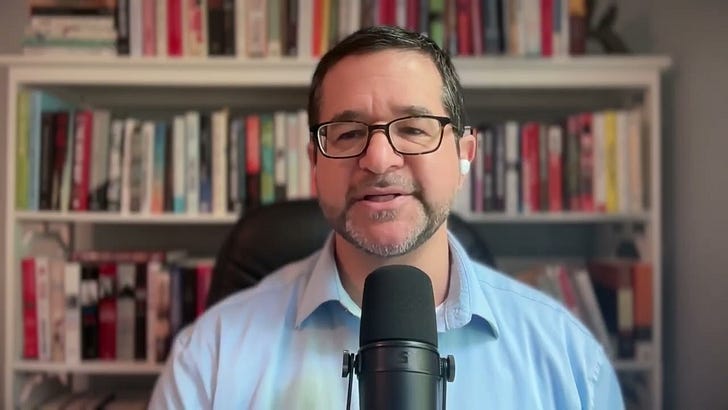
Shortcast: Solar Jobs Are Not "Fentanyl Jobs"
Anti-energy crusaders have a lot of facts wrong. I’ll break that down in this video. They’re also personally insulting the hard-working men and women in the renewable energy industry, calling solar jobs “fentanyl jobs.” They should apologize to the hard-working Americans helping to make our grid stronger every day.The ERCOT CEO told the Board earlier this week that solar and storage has strengthened our grid. Our risk of an energy emergency went from 16% one year to ago to 0.5% this year “because of the contributions of new resources on the grid.” Those resources are solar & storage. I show all of this in the video, which you can also watch on YouTube. I also covered a couple of the biggest problems haters of renewable energy and storage have: (1) They can’t credibly deny the benefits of renewables and storage, and (2) Where’s the alternative power going to come from if you limit renewables and storage?We have rising demand. If Congress lessens supply, what happens to prices?I wrote recently about how abruptly ending the clean energy tax credits will hurt our efforts to win the AI race and is actually Energy Submission to China. I also wrote about how short-sighted energy policy will raise costs, causing Energy Inflation for consumers of all kinds. The best way to handle the clean energy tax credits is a predictable ramp down of the tax credits — not a cliff.What You’ll Learn in This Episode:* How Texas slashed outage risk by 95% thanks to solar and battery storage* Why gas is not the fastest way to add power even though some people continue to falsely insist it is* How fossil fuel companies are using renewables to cut costs* The simple math of supply, demand, and rising prices without a credible backup plan📺 Watch on YouTube:Why It Matters:* Demand is up 25% since 2021: rapid growth not seen since the ’60s* Without tax credits, supply tightens, prices go up, and grid reliability suffers* Gas turbines aren’t coming fast enough, nuclear is years awaySeriously, over the next 4-5 years, where is the power going to come from if not from wind, solar, and storage? It’s not a rhetorical question and they can’t answer it. They’ve said LNG power plants, but those don’t exist. They’ve said nuclear but that’s 2030’s at best. They’ve said gas plants, but good luck getting a turbine.Final ThoughtIf policymakers want to kill clean energy incentives, they need a plan to replace the power. Because without one, consumers will pay more, grid reliability will suffer, and elected officials will face a backlash.Energy Capital is produced by ClarityForge Studios. This is a public episode. If you'd like to discuss this with other subscribers or get access to bonus episodes, visit www.texasenergyandpower.com/subscribe
Shortcast: "Energy Inflation"
This is the read-aloud version of my June 26 article, now on YouTube & the Energy Capital PodcastI don’t usually record readings of my articles, but I made an exception for this one.If Congress passes the budget bill as is, it would spike energy costs for families and businesses and cause serious economic harm.So I sat down and read the piece aloud with a few added thoughts and commentary as I went.Watch on YouTubeRead the original article hereWhat you’ll get in the episode:* Why “leveling the playing field” leaves out 100+ year old coal, oil, and gas subsidies (aren’t they mature industries at this point?)* How a $300 increase per household could be heading for your utility bills* What the real consequences of a 60-day cliff would be (I explain it in plain English)* Why this is really about consumers and voters, more than renewables, which will get built anyway, but they’ll cost more… which is probably why so many people oppose ending the clean energy tax credits.This is more than just a policy argument, it’s a warning. And a reminder that what Congress chooses in the next few days and weeks will show up on bills, ballots, and balance sheets.If you want to understand what’s at stake, and how we got here. Give it a listen.Thanks for being part of this.Energy Capital is produced by ClarityForge Studios. This is a public episode. If you'd like to discuss this with other subscribers or get access to bonus episodes, visit www.texasenergyandpower.com/subscribe

The End of Solar & Battery Manufacturing in America?
The U.S. was finally catching up.After decades of watching solar manufacturing develop overseas, mostly in China, the Inflation Reduction Act gave domestic producers a fighting chance. Texas responded in a big way. New factories broke ground. OCI and its sister company, Mission Solar, prepared to launch a full supply chain operation in San Antonio, including the rare addition of cell manufacturing, one of the most critical (and missing) links in our solar economy.Now? All of it hangs in the balance.I sat down with Sabah Bayatli, President of OCI Energy, for one of the most urgent and clarifying conversations we’ve had on this podcast. If Congress moves forward with budget as it passed the House, it could wipe out hard-won progress in U.S. energy independence and kill manufacturing momentum.This is not only an energy and economic issue, but also a national security issue. We covered:What the IRA Actually Did for Solar ManufacturingBefore the Inflation Reduction Act (IRA), manufacturers in the U.S. were forced to make short-term bets, never knowing if tax credits would last. That’s a terrible way to plan billion-dollar infrastructure investments. The IRA changed that. By giving developers and manufacturers a 10-year time horizon, it triggered a surge in U.S. supply chain planning.Sabah put it simply: You can’t invest in manufacturing without a longer time horizon.* The 45X tax credit provided per-unit production incentives.* Developers got extra credit for using U.S. made solar panels, creating demand.* Factories started popping up, especially in Texas, where low power prices make large-scale manufacturing viable.Now, that long-term signal is under threat.What’s in the “Big Beautiful Bill” That Could Undo It AllSabah broke it down for us: the current House version of the bill would eliminate developer tax credits by 2028, with an abrupt cliff 60 days after enactment. And while the latest Senate version is slightly better, it’s still a cliff:* Full credit in 2025* Drops to 60% in 2026* 20% in 2027* Zero by 2028The manufacturing credit technically stays, but if developers lose the adders for domestic content, American manufacturers lose their market. DC’s Math Doesn’t Add UpEveryone agrees: the deficit matters. But what’s often missing in DC is that you can’t shrink your way out of the deficit, you have to grow out of it.Growth means:* Domestic manufacturing jobs* Local tax bases* Energy independence* Lower-cost powerI covered that in much greater depth here:Energy Capital is produced by ClarityForge Studios.Timestamps* 00:00 – Introduction & opening context* 01:45 – What is OCI Energy?* 03:30 – OCI’s origin story in San Antonio* 5:00 – The elephant in the room: the impact of the not-so-beautiful bill* 10:00 – Investment signals leading to solar module and solar cell manufacturing* 13:00 – Manufacturing tax credits (45X)* 15:00 – The need for low cost power to spur economic growth to lower the debt* 20:00 – Lost cost power in ERCOT is attracting manufacturing of all kinds* 23:00 – Supply chain issues across the power sector* 25:30 – The need for moderate, durable policymaking, gradual ramp of incentives* 31:00 – The retention of the manufacturing tax credit won’t necessarily help* 34:00 – Where panels used in America are manufactured (hint: not China)* 38:00 – The need to communicate national security implications* 41:00 – To grow our economy, and reduce our debt, we need a lot more power (see chart discussed in this segment in Resources section below)* 44:45 – How to design Foreign Entities of Concern (FEOC) provisions well* 52:00 – Texas policy and the recently concluded legislative session* 54:45 – Is there a future for solar and battery manufacturing in America?* 58:30 – What could the Senate do to grow American manufacturing* 1:00:30 – Final thoughts, closing remarksResourcesInformation about Sabah and OCI* OCI Energy* Mission Solar* The chart Sabah sent me after he read Energy Submission:Discussed in the Episode:‘City of San Antonio Solar Development Plan. April 2012. H.R. 1, One Big Beautiful Bill Act (Dynamic Estimate). Congressional Budget Office (CBO).TranscriptDoug Lewin (00:05.426)The solar manufacturing renaissance in America, and particularly in Texas, is very much at risk as Congress considers a budget bill that would end solar incentives and clean energy manufacturing incentives. Welcome to the Energy Capital Podcast. I'm your host, Doug Lewin. My guest this week was Sabah Bayatli. He's the president of OCI Energy. OCI Energy is both an IP and a project developer throughout the U.S. installing solar and storage, but also a manufacturer through their sister company, Mission Solar. And Sabah told me that that manufacturing plant, which currently produces modules and was getting ready to expand to cell production with 800 Texas jobs, is at risk and will not proceed if the bill in Washington passes in its current form.We talked about that and a whole lot of other things both related to the bill, but
Economic Eclipse: Congress Tries to Block the Sun with SEIA's Sean Gallagher & Daniel Giese
Texas is adding solar at a faster pace than any other state. Solar and storage are powering Texas’ manufacturing renaissance, creating jobs, and lowering customers’ bills; even the state’s oil and gas sector is an eager consumer of solar power.And renewables are also pumping tens of billions of dollars into local — mostly rural — economies in the form of landowner payments and tax payments. We’re on track to add another 8-10 gigawatts in 2025, after adding about that much in 2024.In this week’s episode, I sat down with Sean Gallagher, Senior Vice President of Policy at the Solar Energy Industries Association (SEIA), and Daniel Giese, SEIA’s Director of State Affairs for Texas. We unpack the forces behind this record-breaking growth and what could help keep it going — as well as what could stop it in its tracks.The federal budget bill would cripple the boom. Texas is seeing historic levels of investment, in large part because of the 10-year certainty provided by the IRA. These tax credits are bringing down capital costs, reducing risk, enabling longer-term project planning, and driving investments in solar manufacturing.As Sean points out, this policy clarity has helped drive a wave of new solar and battery projects. And Texas is leading the pack, thanks to our land availability, pro-development bent, and robust demand growth.But the same projects that are thriving today could be lost tomorrow if federal tax policy changes too abruptly.Policy risk is rising. And it’s already hurting deployment.Federal tariffs. Delays in domestic manufacturing. A growing push in some counties to ban solar outright. It’s all adding up. SEIA recently reported that more than 5 GW of solar capacity in Texas was delayed or canceled just this spring due to trade policy and market uncertainty.Add in the threat of repealing or rolling back the IRA, and the fragility of this moment becomes clear. Developers aren’t panicking, but they are cautious. And that’s enough to slow the pace of deployment at exactly the wrong time.Storage is the backbone of reliability and we’re just getting started.Storage is no longer a “nice-to-have.” It’s essential. It’s one of the main reasons ERCOT’s summer grid outlook improved from a 12% chance of outages in 2023 to less than 1% this year.Daniel and Sean both emphasized how solar + storage is becoming the new standard and how distributed storage, especially, can help strengthen resilience while reducing strain on transmission.If Texas wants to keep growing solar and maintain reliability, batteries aren’t optional. They’re the glue that binds the new grid together.Final thoughtsThe clean energy transition is already underway, but the friction between policy and politics on the one hand and markets and technology on the other, is starting to slow it down.Texas has the fundamentals to lead the next chapter of America’s energy story: land, load, labor, and sun. But the national and state-level decisions we make in the next two years about policy, infrastructure, and transparency will determine whether we keep that lead or fall behind.This conversation with SEIA was timely given all the activity in Austin and Washington DC. Timestamps and relevent links are below.This was a free episode but your contributions support this podcast and the newsletter. If you’re already a subscriber, thank you! If you’re not yet a subscriber, please become one today and please recommend the pod to friends, family, and colleagues. The Texas Energy and Power Newsletter is a reader-supported publication. To receive new posts and support my work, consider becoming a paid subscriber.Timestamps* 00:00 – Introduction* 02:00 – Breaking down the recent Texas legislative session* 03:30 – Rural benefits of renewables, why some legislators vote against their districts* 07:00 – How Texas rates nationally on solar & storage* 8:30 – Solar’s meteoric rise in Texas* 11:00 – Good bills that passed in the recent legislative session* 13:30 – How industry supported bills addressing recycling, consumer protection* 15:45 – The federal budget bill and its potential impact on manufacturing* 18:00 – Data center and AI companies’ support for renewable energy* 20:00 – Without solar & storage, the economy will slow* 23:00 – Winning the competition w/ China for electricity supply chain dominance* 27:30 – The three incentives that support domestic manufacturing* 29:30 – The impacts of the budget bill on Texas* 34:00 – Grid operators and regulators say we need continued solar development* 37:00 – Where will tax credits go from here* 39:00 – Problems with the budget bill: abrupt end of tax credits instead of ramp and Foreign Entities of Concern (FEOC)* 44:00 – Prospects for residential solar / distributed generation in Texas* 46:00 – Initiatives SEIA will be engaged with at the PUC* 48:00 – Support for solar power and SEIA’s call to action & how to get involved ResourcesGet Involved: Solar Powers AmericaSEIA Resources* Solar and Storage Industry Statement on P
The Senate Should Not Surrender
On Wednesday, I published Energy Submission, a piece on how the U.S. is at risk of abandoning the battle for 21st economic supremacy as China accelerates its energy dominance. I recorded this podcast episode to go a little deeper into the consequences of the House-passed reconciliation bill and what we risk losing if we dismantle the tools driving the energy future. It’s available on YouTube with full charts and visualsEnergy isn’t just one issue among many, it’s a foundational issue. In what the IEA has dubbed the Age of Electricity, if we don’t have enough of it, we enter the economic race to power the future with one arm tied behind our backs. That’s what makes the House-passed budget reconciliation bill so dangerous: it guts the clean energy incentives that are powering our present and could power our future. It dismantles the Inflation Reduction Act’s momentum just as the world is moving into a new industrial era, one that will be defined by who has enough affordable electricity to fuel growth.Let’s zoom out.Globally, energy investment is booming. In 2024, $3 trillion was invested in energy. Two-thirds of that ($2 trillion) is going into clean power: wind, solar, nuclear, storage, and efficiency. Only $1 trillion is going into coal, oil, and gas. China, in particular, is accelerating at breakneck speed, building 277 gigawatts of solar in 2024 alone. To put that into perspective, that’s more clean energy in one year than the entire installed capacity of Texas’s grid (~180GW).Meanwhile, the U.S. is considering a bill that would eviscerate the progress we’ve made. It would slash the tax credits that have driven private investment into renewables, energy storage, and domestic manufacturing, just as that investment is beginning to deliver. More than 270 clean energy factories have been announced since the IRA passed. If this bill becomes law, many of them will be canceled outright.This isn’t theoretical. Projects are already being canceled in Texas due to market uncertainty. This bill pours cold water on an area where the U.S. has been gaining ground in manufacturing, jobs, and grid reliability.And it’s happening just as we’re entering a new age of electricity demand. AI data centers, robotics, industrial electrification, and electric vehicles are pushing power use higher than it’s been in decades. Even Elon Musk is warning that we could see electricity shortfalls by next year.You cannot meet 21st-century energy demand with 20th-century thinking. And yet, that's exactly what some policymakers are trying to do by doubling down on fossil fuel exports, suggesting "LNG power plants" (which aren’t a thing) are going to power our grids, and pretending we can drill our way to abundance while dismantling the tools that are actually scaling our grid.In fact, LNG export facilities consume massive amounts of power, up to 700 megawatts each. If you want to power exports and data centers, and still have enough for people to use in their homes, you need a vastly more flexible, modern grid.That means a diversified portfolio: wind, solar, storage, gas, geothermal, advanced nuclear, and demand-side solutions. It means better transmission planning, smarter markets, and policies that attract investment rather than repel it.This isn’t just about clean energy anymore. Clean energy is now simply energy. It’s about competitiveness, reliability, affordability and national security.While we debate whether clean energy tax credits are “too generous,” China is becoming the world’s first electrostate, a nation that doesn’t just consume energy, but manufactures and exports the infrastructure to produce it. China isn’t waiting for the market to figure it out. They’re building fast, and they’re controlling and locking up global supply chains along the way.The U.S. still has the innovation advantage. We lead in software, in AI, in energy entrepreneurship. But without enough power to run it all, that advantage becomes a bottleneck. As David Friedberg put it recently, energy abundance is necessary for every other kind of abundance. Without it, AI, biotech, and automation all stagnate.This reconciliation bill would deepen that bottleneck and cut off any hope of growing our way out of our deficit.We cannot cut our way to energy dominance. We have to build.If you care about growth, if you care about leadership, if you care about national security, you should care about energy policy. And if you care about energy policy, this bill should concern you.We need the Senate to fix what the House broke. The tools are there. The economics are clear. The stakes couldn’t be higher.Timestamps* 00:00 – Introduction* 01:30 – China’s energy dominance by the numbers* 03:00 – What is an Electrostate? China's strategy to be the first* 04:30 – Some Republicans’ preference to surrender clean energy dominance to China* 06:00 – Doug Burgum on the All-In Podcast* 09:00 – Debunking the “LNG Power Plant” Myth* 14:00 – All-In Podcast: If the Senate fix the House bill,
"It's Easier to Build Here," Texas Energy After the 89th Legislature with Claire Hao
This is a free preview of a paid episode. To hear more, visit www.texasenergyandpower.comThe Texas legislative session just wrapped. As always, energy was front and center. And once again, there were sweeping efforts to pass bills that would limit energy development in Texas.🎧 Listen to the first 25+ minutes for free, and if you’re a paid subscriber and want to listen in Apple Podcasts or Spotify, just connect your private Substack feed. H…
Solutions Over Theatrics with Texas House Energy Resources Chairman Drew Darby
With just ten days left in the legislative session, a lot of attention is (rightfully) focused on bad bills. But some lawmakers are pushing forward thoughtful, future-focused energy policy and Chairman Drew Darby is at the forefront.For this episode, I sat down with Chairman Darby, a West Texas Republican and Chairman of the House Energy Resources Committee, to talk about what an energy-secure Texas really looks like and how we get there.We covered a wide range of topics: from his 50-year career in oil and gas law, including getting started during the oil crisis of the 1970s, to the centrality of energy not just to his district but for the whole state, to what it’ll take to build a grid that keeps up with the state’s growth.Chairman Darby makes a strong case for all-of-the-above energy policy. Solar, wind, and batteries? Absolutely. Oil and gas? Also yes. Nuclear, geothermal, demand flexibility, transmission upgrades? Yes, yes, yes, and yes. As Darby, a former UT football player under legendary Coach Darrell Royal, put it: if you want to win, you need a full team, not just one kind of player on the field.We talked about:* Why solar + storage projects are already transforming his district, including one project near his hometown that charges and discharges batteries up to six times a day* How renewable projects support school districts, landowners, and local governments in rural Texas* The dangers of the many anti-energy development bills this session* How House Bill 3069 would help fix the transmission approval process and reduce costly congestion across the ERCOT grid* Why House Bill 3970 and Senate Bill 6 offer complementary approaches to large flexible loads and why Texas needs a clear path forward now* How abundant energy, including small modular nuclear reactors, can help solve our water challenges* And what it means to be a pragmatic conservative working across geographies and many other divides to put solutions above ideologyWe also discussed the danger of overregulation and the need for regulatory certainty: Do we really believe in market forces or don’t we?”If you care about grid reliability, economic development, or the future of rural Texas, this conversation is worth your time. Chairman Darby brings experience, insight, and a level-headed approach that’s too often missing from the energy debate.If you enjoyed this episode, please share it and consider becoming a paid subscriber to get access to full archives, Grid Roundups, paid-only podcast episodes, and more. Timestamps0:00 Intro3:00 Chairman Darby’s background, West Texas roots6:00 The boom-bust of the oil industry during his career8:00 The fracking revolution making the Permian the center of the oil-producing world10:00 The rise of renewables in Texas, particularly in West Texas, and12:00 Using the best of each resource, integrating diverse resources and getting the most out of each14:00 Creating a good investment environment for Texas15:30 Texas’ water problems and how abundant energy can help solve them18:00 Treating “produced water” and the symbiotic relationship with oil and renewables23:00 Examples of renewable and storage projects in Chairman Darby’s district, benefits to landowners27:00 Fixing Texas’ transmission planning and construction to avoid reliability problems30:00 Reducing congestion charges, currently $2 billion annually, “generic transmission constraints”31:30 Geothermal in Texas using techniques from the oil and gas industry34:45 Large load flexibility and blending SB 6 and HB 3970 together38:00 Saying “yes, if” to large loads, reducing energy peaks, filling in energy valleys41:00 Do we believe in markets or not?43:00 Finding common ground and solutions47:30 Pragmatism over ideologyResourcesEnergy Capital Podcast Episodes* Texas' Load Growth Challenges – And Opportunities, with Arushi Sharma Frank* How Load Flexibility Could Unlock Energy Abundance with Tyler Norris* Geothermal’s Moment with Jamie Beard* Drilling for Geothermal Power and Storage with Cindy Taff * New Nuclear in Texas, with Doug Robison and Dr. Rusty Towell* Rural Texans Speak Against Senate Bill 819The Texas Energy and Power Newsletter Grid Round Ups* Large Loads at the Lege – Grid Roundup #40* Peak Performance – Grid Roundup #58* ERCOT CEO: “We Need All Resources” – Grid Roundup #56Related Technologies* Texas Geothermal Energy Alliance* Texas Nuclear Alliance* ERCOT Transmission Planning Reports* ERCOT Load Forecast Dashboard* DOE Office of Geothermal TechnologiesReports and Analysis* Aurora Energy Research – Renewables Restriction Study* Aurora Energy Research – Demand Flexibility StudyLegislation Mentioned* House Bill 3069 (Transmission Planning)* House Bill 3970 (Large Load Interconnection)* Senate Bill 6 (Large Load Reliability)* Senate Bill 2627 (Texas Energy Fund)* House Bill 3240 (Geothermal Policy Council)* Senate Bill 1656 (Permitting Reform)TranscriptDoug Lewin (00:05.484) Welcome to the Energy Capital Podcast. I'm your host, Doug Lewin. Humans
Powering the Next Texas Economic Miracle with Glenn Hamer
AI data centers. Semiconductor fabs. Oil and gas electrification. Desalination. Rising population. Texas is booming and it needs massive amounts of electricity to fuel that growth.We’re already using more power than ever. ERCOT projects demand will grow by 60,000 megawatts in just five years. That would be like adding the current peak demand of California on top of Texas. But instead of clearing the path for new energy development, some would slow it down — and slow down the economy with it.This week, I spoke with Glenn Hamer, President and CEO of the Texas Association of Business, about why that’s such a dangerous idea and what we should be doing instead.We covered a lot: AI, nuclear, oil and gas, battery storage, export economics, and why Texas must build all forms of energy faster, not slower. But at the center of our conversation was this core truth: You can’t grow an economy if you’re starving it of power.Glenn made the case that Texas has always led on energy of all kinds. Republican leaders including George W. Bush and Rick Perry helped launch Texas’s wind and solar boom. Now we need to keep going with an all-of-the above strategy that includes solar, wind, gas, nuclear, geothermal, and batteries all playing a role.He also talked about the economic impact renewables have had in rural Texas, particularly in areas with no oil or gas, which now has another source of income: wind and solar leases. TAB’s study with Aurora Energy Research shows what’s at risk. Blocking new renewable projects would raise electricity prices and increase the chances of rolling outages.And it’s not just about supply. Texas is also leaving money on the table by underinvesting in demand-side innovation. In a second TAB study, Aurora found:* $87/year in savings per household, even for non-participants in demand response* Over $400/year in savings for households that switch from resistance heating to heat pumps* Significant peak reduction potential from data centers and other large energy usersThere’s a reason the oil and gas industry, manufacturers, chemical producers, and data centers are all calling for more supply and smarter policy. Texas doesn’t have a red-versus-blue energy divide, we have a build-versus-block problem.We also talked about the growing energy demands of artificial intelligence. Glenn made a powerful point: AI is a national security issue. If we want to win the AI race, and we must, we need to power that innovation here in the U.S., and especially in Texas. There are already grids in other states telling data centers “don’t come here.” If we pass restrictive energy bills, Texas could be next.AI data centers require massive, stable energy supplies. The only way to deliver that is through scale and speed. That means yes to an all-of-the-above energy strategy. Texas is one of the few states that can handle this level of growth. But only if we keep saying yes.Texas became the energy capital of the world by being the best place to build. Let’s not become the place that starts saying no.📩 If you liked the episode, share it and consider becoming a paid subscriber. You’ll get access to all full episodes, Grid Roundups, and more.Timestamps00:00 – Introduction02:45 – Start of interview: Glenn joins, overview of TAB03:30 – Texas energy leadership: oil, gas, wind, solar, batteries05:30 – Bipartisan legacy of renewables in Texas07:00 – Economic benefits of renewables for rural Texas09:00 – Energy for AI, semiconductors, and oil & gas electrification12:00 – Gas turbine shortage, and how batteries are changing the grid15:00 – Energy growth vs. Texas’ resistance to regulatory overreach17:00 – AI, national security & innovation as core drivers19:00 – Balanced advocacy: renewables, nuclear, batteries, geothermal20:00– Data center growth in Texas & energy infrastructure22:30– LNG exports & cost premiums for low-emission gas26:00 – Desalination & energy, innovation & leadership27:30 – Aurora studies on renewables and demand side management29:30 – Demand-side innovation & response31:30 – House Bill 14 & SMRs: nuclear development as opportunity33:00 – Geothermal innovation & bipartisan support34:00 – Demand-side efficiency and reducing energy waste36:00 – Tariffs, and economic ripple effects, need to lower energy costs37:30 – Support from industrial, tech & business groups38:30 – National security & AI race with China41:00 – Regulatory overreach risks & broad support for energy development 43:00 – Final thoughts: energy export & coalition buildingResourcesGlenn Hamer & TAB* Texas Association of Business* Glenn Hamer on LinkedIn* Glenn’s newsletter on Linkedin: Ham[m]er TimeReports & Studies* Aurora Energy Research – Impact of Restricting Renewables in Texas* Aurora Energy Research – Demand Flexibility and Energy Efficiency Study* Federal Reserve Energy Survey – First Quarter, 2025Related Energy Capital Podcasts* How Load Flexibility Could Unlock Energy Abundance (Tyler Norris Pod) * A Conservative Case for Clean Energy* Geothermal
The Impact of Limiting Renewables in Texas with Olivier Beaufils
Note: The Podcast Recording with Graphs is Here.What would happen if Texas started turning away new wind and solar projects or even retiring some of the capacity we already have?That’s not merely a hypothetical. It’s what several bills that have passed the Texas Senate aim to do. And according to new modeling from Aurora Energy Research, the consequences could be severe: higher prices, increased risk of rolling outages, and weaker reliability at the very moment we need the grid to do more.I sat down with Olivier Beaufils, Head of US Central at Aurora, and a returning guest on the podcast, to walk through the results of their latest two studies. We discussed what it means for Texans: whether you’re a policymaker, utility, industrial operator, or just trying to keep your power bill manageable.In the first study, Aurora modeled scenarios where Texas slows or blocks the addition of new solar and wind. The findings are stark:* By 2035, power prices rise 14% compared to a business-as-usual scenario* By 2050, prices jump 38%* A conservative forecast still shows 400,000–600,000 homes losing power in summer peak conditions due to 2–3 gigawatts of load shed* Delays in thermal generation supply chains mean replacement capacity can’t come online fast enough to close the gapThese results don’t even account for the possible retirement of existing renewables, which SB 715 would accelerate. The second study focused on demand-side solutions like residential demand response, data center flexibility, and energy efficiency upgrades (especially replacing resistance heating with heat pumps). These are often overlooked, but for those looking to strengthen the grid they can dramatically reduce stress on the grid, while saving Texans money.Key findings:* Demand response could save every Texan household $87 per year in conservative estimates, even if they don’t participate* Industrial customers could save $2 million annually under a moderate demand response program* Replacing resistance heat with heat pumps could save households over $400/year * In a Winter Storm Elliott-style event, widespread heat pump adoption could eliminate up to 6 GW of potential load shed; the impact would be bigger in a Winter Storm Uri-like eventTaken together, these studies paint a clear picture: A more diverse, more flexible, and more efficient grid is also a more affordable and more reliable one. We need more of everything, but especially the resources that are fast and scalable.I’m grateful to Olivier and the Aurora team for bringing rigorous analysis to a debate too often shaped by ideology or misinformation. These are exactly the kinds of conversations we need to be having as Texas faces record-breaking load growth and increasingly extreme weather.If you enjoy the podcast, consider subscribing and sharing with a friend or colleague. It helps more people find these conversations and stay informed on what’s really happening with Texas energy.Timestamps00:00 – Introduction & guest reintroduction (Olivier Brochu, Aurora)02:04 – Start of Study 1: Limiting solar and wind in ERCOT06:00 – Supply chain risk & reliability impact of throttling renewables11:00 – Load shedding during heatwaves13:30 – Wholesale power prices and affordability under constraint scenarios16:30 – Impact on customer bills and total system costs20:30 – Clarification: this is not a bill analysis, but a scenario study21:30 – Start of Study 2: Demand-side flexibility & efficiency24:30 – Demand response from residential vs. commercial/industrial users29:00 – Data centers, system peaks & the synergy with residential flexibility32:00 – Price suppression benefits of demand response34:30 – Indirect savings: how even non-participants benefit37:00 – Addressing resistance heating and the efficiency potential41:00 – Heat pumps as a system reliability solution44:30 – System-wide benefits & mitigating winter risk46:30 – Efficiency = cost savings + resilience50:00 – Final thoughts: all-of-the-above strategy & public/private collaboration52:00 – Outro & where to find Aurora’s workResourcesAurora & Team* Aurora Website* Olivier Beaufils - Linkedin * Previous Podcast with Energy CapitalReports & Modeling* Aurora Energy Research: Restricting Renewables Study* Aurora Energy Research: Demand Flexibility Study* ERCOT’s Load Growth ForecastYouTube Channel for DougLewinEnergyMedia Coverage* Houston Chronicle on Anti-Renewables Legislation* Utility Dive on Aurora Modeling - Texas Renewables RestrictionRelated Posts on DougLewin.com* A Time for Choosing (on Senate Bill 819)* The Texas Senate Is a Threat to U.S. Energy Security (Senate Bill 388)* Another Anti-Energy, Anti-Growth Bill Looms (on Senate Bill 715 and House Bill 3356)* A Conservative Case for Clean Energy* How Load Flexibility Could Unlock Energy Abundance* Peak Performance: Grid Roundup #58* Record May Peak Demand Coming Wednesday: Grid Roundup #57* ERCOT CEO says "we need all resources": Grid Roundup #56TranscriptDoug Lewin (00:04.45)Welcome to the En
Texas' Renewable Energy Growth with Suncast's Nico Johnson
Texas has added more new power supply over the last four years than any other state and over 90% of it has been wind, solar, and storage. Today, renewable energy is no longer "alternative" in Texas. It is the backbone of our power grid.At this year’s Intersolar North America conference, I sat down with Nico Johnson, host of the excellent Suncast podcast, for a conversation about how the Texas energy market got here, where it’s headed, and what it means for the future of clean energy across the country.We talked about how Texas’s energy-only market, where the lowest-cost resource gets dispatched without preference for technology, has been critical to the rise of wind, solar, and storage. This growth has helped make electricity cheaper in Texas, helping attract manufacturers and data centers to locate here. And as I discussed recently with Tyler Norris on the pod, if we can successfully tap into flexible demand from these large new loads, we can go even further, helping to integrate more clean energy, strengthen reliability, and lower system costs over time.But Texas’ success is not guaranteed. I shared my concerns about Senate Bill 819, which I discussed in more detail in A Conservative Case for Clean Energy and wrote about in A Time for Choosing. If passed, this bill could impose some of the strictest permitting requirements for renewables in the country, putting future projects and billions in investment at risk. A strong Texas grid depends on continuing to build low-cost, homegrown energy resources, not restricting them.We also explored the rise of distributed energy and microgrids, including a new $1.8 billion program Texas passed to support critical facilities like hospitals and water treatment plants with backup power packages that combine solar, storage, and gas.Throughout our conversation, Nico and I talked about the outdated "us vs. them" framing between oil and gas and clean energy. That divide is breaking down. Oil and gas companies are major consumers of solar and wind, and increasingly storage. They are increasingly players in hydrogen and geothermal projects. As I explored in Geothermal’s Moment with Jamie Beard, technologies like next-generation geothermal could bridge traditional and emerging energy sectors, creating opportunities that expand energy production, not replace it.We also covered:* How battery storage is reshaping ancillary services and market dynamics in ERCOT* Why Texas’s merchant market structure creates both risks and big opportunities for developers* The rapid rise of large-scale rooftop solar and distributed generation* How the Inflation Reduction Act is driving a resurgence in domestic manufacturing* Why Texas’s unprecedented load growth from data centers and factories may help sustain the solar and storage boom, even as arbitrage opportunities tightenThere’s a lot to be excited about and a lot we still need to get right.There is no question that Texas is at an energy crossroads. With smart policies, continued market innovation, and a focus on resilience, we have an opportunity to lead the nation in building an abundant, affordable, and reliable clean energy future.Timestamps* 00:00 – Intro: Doug’s background, Nico’s role, and setting the stage at Intersolar* 05:00 – How oil & gas are embracing renewables and the grid* 06:45 – The market structure that supported robust solar & storage* 8:30 - The second mouse gets the cheese (sorry, California)* 10:30 – Merchant risk & developer incentives in Texas* 13:00 – Can batteries keep winning in ERCOT?* 14:00 – Load growth, data centers & electrification* 16:00 – Policy threats: SB 819 & permitting crackdowns* 20:05 – Vernacular shift: energy expansion vs. transition* 25:00 – Domestic manufacturing & the IRA’s lasting impact* 31:00 – The rise of distributed energy & microgrids* 36:00 – Final reflections & event promotionShow NotesNico Johnson and Suncast* Subscribe to the Suncast Podcast! Great interviews and insights from clean energy leaders across the solar, storage, and renewable energy sectors.* Youtube Channel, Spotify, Apple Podcast* Nico Johnson on Linkedin, Twitter* Profile at Solar Head of StateFurther Reading and Listening* Annual Solar and Storage Installations – SEIA Data – National trends in solar and storage deployments, including Texas’s leadership in new capacity.* How Load Flexibility Could Unlock Energy Abundance (Doug Lewin’s Substack) – Deep dive into why flexible loads and lowest-cost dispatch are key to grid reliability and affordability.* A Conservative Case for Clean Energy (Doug Lewin’s Substack) – Why conservative principles support clean energy expansion in Texas’s competitive market.* Geothermal’s Moment with Jamie Beard (Doug Lewin’s Substack) – How geothermal fits into an all-of-the-above approach to Texas’s energy future.* How Load Flexibility Could Unlock Energy Abundance (Doug Lewin’s Substack) – Deep dive into why flexible loads and lowest-cost dispatch are key to grid reliability and affordability
Texas' Load Growth Challenges – And Opportunities, with Arushi Sharma Frank
Large load growth is one of the most urgent challenges and opportunities for the grid.From data centers to factories to electrified oil and gas operations, demand on the ERCOT grid is expected to soar. If we don’t load forecasting and planning right, we risk higher costs, more outages, and a weaker grid. If we do it right, we can build a more resilient, affordable, and flexible system for decades to come.On this episode of the Energy Capital Podcast, I’m joined by Arushi Sharma Frank, energy policy expert, consultant, and Substack writer, for a wide-ranging discussion about how Texas and other states can rise to meet this moment.Arushi breaks down the four pillars of large load flexibility that can help avoid overbuilding, protect reliability, and strengthen the grid:* Defensive Flexibility: Making sure large loads can ramp up and down smoothly without destabilizing the grid.* Planning and Interconnection Flexibility: Allowing partial firm interconnections so that utilities can overbook capacity more efficiently, just like we already do with generation.* Emergency Flexibility: Enabling operators to call on large loads for grid support during emergencies through dispatchable programs like Controllable Load Resources (CLR).* Self-Limiting Interconnection Rights: Contractually capping how much a load can pull from the grid, with the load providing its own on-site generation or storage to fill the gap.We also talk about why large load forecasting is critical and why the lack of accurate forecasting could compress maintenance windows, strain natural gas plants, and create reliability risks year-round. Another major theme: cost allocation and fairness. Today, large industrial loads have far more tools to lower their transmission costs than residential customers do. As Arushi explains, unless we reform policies like Four Coincident Peak (4CP) rules, residential ratepayers will continue shouldering a disproportionate share of grid costs.We also dive into:* How House Bill 3970 and Senate Bill 6 at the Texas Legislature aim to manage large load interconnections. Plus, how combining the best parts of both bills could create a smarter, faster, fairer system.* Why Texas’s "connect and manage" approach for generation could be adapted to load, allowing faster connections without unnecessary overbuild.* How large data center loads could potentially fund demand-side reductions, like HVAC upgrades and home weatherization, that make the grid stronger and bills lower for everyone.The stakes could not be higher. As we discuss, this isn’t just about transmission lines or interconnection queues. It’s about how we operate the entire system (generation, transmission, distribution, and demand side) as a coherent whole. I wrote more about this systemic view in How Load Flexibility Could Unlock Energy Abundance.If we get it right, we can build an energy system that supports economic growth, national security, and affordability for all Texans. If we get it wrong, we risk bottlenecks, blackouts, and runaway costs.This conversation is one of the most technical we’ve done on the podcast, but it’s also one of the most important. Let me know in the comments if there are any concepts here that need additional explanation.Timestamps* 00:00 – Introduction* 04:00 – Electric grids are vastly underutilized* 08:00 – Managing the peak is crucial, with load flexibility we could have higher capacity factors and lower peaks* 14:00 – Compressed maintenance windows for large outage periods for thermal plants, getting load forecasting right is absolutely necessary* 18:00 – Challenges to transmission & distribution utilities in the high load growth environment* 25:00 – The four pillars of large load flexibility, including grid forming capabilities and frequency support from large loads (very timely post-Spanish blackout)* 32:00 – Connect and manage approach for generators could apply to loads* 34:00 – continuation of four pillars: emergency flexibility, again includes discussion of instantaneous control to restore frequency* 40:00 – SB 6 vs. HB 3970: Legislative proposals currently under consideration* 42:00 – Prioritizing projects based on the shared benefits those projects bring* 47:00 – Speculators “squatting” on prime spots on the grid* 50:00 – Lack of policy structure is holding back signals to data center investors to bring shared benefits to the grid; HB 3970 checks most of the boxes* 54:00 – Reasons why residential and small commercial bills are going higher* 1:01:00 – Data centers without flexibility could purchase demand reductions from residential customers: reduce peak and help affordability* 1:06:00 – Final thoughts & where to find ArushiShow NotesResourcesArushi Sharma Frank* Teach What I Know (Substack) — Arushi’s writing on energy policy, flexibility, and grid modernization.* Article: Flexibility Compact* Article: How Texas Wins the AI Race* Article: Four Pillars of Flexibility* Article: What’s Actually in the Data Center Flexibility Toolb
How Batteries Are Reshaping the Texas Grid with Suzanne Leta
This is a free preview of a paid episode. To hear more, visit www.texasenergyandpower.comBattery technology continues to improve and costs continue to drop, opening up new opportunities and reshaping the grid. And at a time of rapid load growth and massive constraints on natural gas turbine availability, storage is surgingIn this episode, I talk with Suzanne Leta, VP of Policy at Fluence, one of the world’s largest energy storage developers…
Does the Texas Legislature Still Believe in Market Competition?
Last year, ERCOT stunned observers when it projected that electricity demand in Texas could double within five years. That announcement kicked off a wave of meetings, legislative hearings, and proposals. But now?ERCOT’s latest projections say we might need to triple our electric supply.The Texas Energy and Power Newsletter is a reader-supported publication. To receive new posts and support my work, consider becoming a paid subscriber.The driver? A massive wave of industrial electrification and data centers, including artificial intelligence and crypto operations.This is unprecedented growth. And with it comes an urgent question:Can the ERCOT market keep up, or will policymakers get in the way?“I DO think the market structure today is very well suited…”That was ERCOT CEO Pablo Vegas testifying before the Texas House State Affairs Committee on April 9.In response to a question from Rep. Rafael Anchía about whether the market can meet rising demand without heavy government involvement, Vegas was clear:“I do. I think the market structure today is very well suited to support the growth trajectories that we're seeing...”Vegas emphasized that Texas’ light regulatory touch allows capital to flow, deals to be made, and new generation to come online quickly.But at the very same time, lawmakers are advancing bills that directly undermine that market structure, including SB 819, SB 715, HB 3356, and SB 388.These bills would make it harder for new energy generation to come online, just when we need it the most.We need every electronRep. Anchía put it bluntly:“It sounds like we're going to need every electron… from new generation, from conservation or energy efficiency... We need all of it.”Vegas agreed. Yet the legislation moving through the Capitol would limit the very resources that are fastest and cheapest to deploy.Natural gas, for instance, takes years to bring online. Vegas estimated that even under the best conditions, new thermal generation won’t show up until 2029 or 2030.Meanwhile, ERCOT’s mid-range forecast calls for 44 gigawatts of new demand in that same timeframe.If 10 gigawatts of gas shows up by 2030 — an optimistic outlook — where’s the other 34 gigawatts coming from? If you don’t have enough power, your economy can not grow.The answer is already in the marketVegas pointed to a real solution—bilateral contracts between data centers and power developers:“They have the money… they want speed to market… it makes sense that we would see supply develop through that too.”This is market design 101. Buyers and sellers can find each other, strike deals, and build what they need—without governmental interventions into the market and costly mandates.Companies like Meta, Google, Amazon, and OpenAI, and many more, are ready to pay their own way. And if they can be flexible, we can accommodate a whole lot more demand.The solution is baked into the problem.Let the market do what it’s built to do.Do Texas lawmakers still trust markets?This is the core question.If we really believe in competition, then we must resist the urge to rewrite market rules just because some outcomes are inconvenient. In fact, many of the state’s largest generators and industry groups oppose further changes to ERCOT’s structure this session.The more policymakers try to force outcomes, the more they’ll delay them.We’re in a pivotal moment. The ERCOT CEO, the industry, and basic economic logic all point to a clear path: let the market respond to rising demand.That doesn’t mean doing nothing. It means:* Preserving a stable and predictable market environment* Supporting all-of-the-above resource development* Investing in efficiency, transmission, and demand-side solutions to free up headroom on the gridIt also mean rejecting bills that slow progress, raise costs, and create massive regulatory uncertainty.Show Notes: ERCOT Load Growth & Forecasts* ERCOT Presentation to the Board of Directors (also presented to House Committee on State Affairs) - this was the presentation Chairman Anchia and ERCOT CEO were looking at as they talked.* ERCOT 2025 Long-Term Load Forecast Report - Details projections of electricity demand growth, highlighting the impact of data centers and industrial electrification.* ERCOT Load Forecast Overview - Provides access to ERCOT's long-term and mid-term load forecasts, including methodology and historical data.Bills Impacting the ERCOT Market* Senate Bill 819 (SB 819) - Requires wind and solar projects to undergo burdensome new permitting and siting restrictions. This bill would stifle economic growth in rural Texas, where renewables are a key driver of tax revenue and jobs. More on that bill here and here.* Senate Bill 715 (same as House Bill 3356) - Would require generators to procure their own firming capacity, forcing inefficient redundancies and discouraging investment.This bill undermines ERCOT’s competitive market design and adds massive costs to consumers of all kinds.* Senate Bill 388 (SB 388) - Mandates that 50% of
How Load Flexibility Could Unlock Energy Abundance with Tyler Norris
Everyone’s talking about the rise in electricity demand, especially from data centers. However, far too few are talking about what to do about it. In this episode of the Energy Capital Podcast, I sat down with Tyler Norris, a fellow at Duke University’s Nicholas Institute and co-author of a recent study Rethinking Load Growth.What Tyler and his team found is extraordinary: by curtailing just 0.25% to 1% of a data center’s annual load—primarily during the most stressed hours—Texas could add up to 15 gigawatts of new data center load in ERCOT without adding any new capacity. That’s nearly the total demand of the entire city of Houston.Even more striking: 90% of the time, at least half the load would still be retained. It’s not about shutting everything off, it’s about smarter operations during a handful of peak hours. This is exactly what we need as we try to integrate unprecedented load growth. Tyler’s research offers a better way forward.We dove into the details:* The difference between legacy 24/7 data centers and newer AI-focused facilities, which offer greater flexibility.* How heating and cooling loads vary seasonally, and why winter peaks—not summer—are currently the biggest challenge in Texas.* What load factor really tells us about underutilized grid capacity and how ERCOT compares to other U.S. markets.Tyler also explained how even small changes in behavior or technology, just 0.25% to 1% shifts in demand, can unlock massive headroom, especially during those critical winter mornings and summer evenings.We talked policy, too. From ERCOT’s Controllable Load Resource program to proposed emergency response products with 24-hour notice, there’s momentum to better align incentives for large loads that can respond during grid emergencies. Tyler called this “speed-to-power” a key motivator, if data centers can get online faster by offering flexibility, that’s a win for them and the grid.But it’s not just about data centers.Tyler and I also explored how residential winter weatherization, efficient heating upgrades, and demand response on the household level could free up even more capacity for Texas’ growing electricity needs. This builds on ideas I explored in “Texas Needs a Vision for Customer-Side Solutions” where I argued that the most affordable path to reliability includes smarter demand-side management. We will need demand and supply side resources. We also talked about a novel idea in Texas: whether data center operators could pay into programs that reduce peak demand systemwide, benefiting all consumers.Finally, we discussed ERCOT’s national leadership in interconnection performance, outpacing other U.S. grid operators by a wide margin, and why other states should take notice.Tyler’s work is a big deal. It challenges some major assumptions in energy policy and offers a roadmap for smarter, more flexible load integration. As electricity demand soars, this kind of thinking is going to be critical not just for Texas, but across the country.Read the report: Rethinking Load Growth – Nicholas InstituteAs always, thanks for listening and please share this episode if it helps you understand this moment a little more clearly. We’re going to need every tool on the table to build a cleaner, more resilient grid.Timestamps* 00:00 – Introduction & why this matters* 02:00 – Tyler’s background & origin of the study* 04:00 – Takeaways from Rethinking Load Growth* 07:30 – Exactly how much capacity could be freed up in ERCOT * 09:00 – Does flexibility mean complete shut down or something else?* 11:30 – Are data centers truly inflexible?* 16:15 – The ERCOT grid is vastly underutilized in the vast majority of hours in the year* 22:30 – Grid is more underutilized in winter, but peaks could be higher* 25:00 – Residential demand flexibility could free up even more headroom, data centers that are inflexible could pay for residential demand reductions* 30:00 – Solar creating more headroom, reducing loss of load expectation (LOLE) in summer; winter is bigger problem, particularly in the South* 35:00 – Why demand response stalled in the 2010’s* 36:30 – Policy solutions: speed-to-power / speed-to-interconnect for flexible loads and Controllable Load Resources (CLRs) in Texas* 39:00 – “All-of-the-above” for demand side resources* 42:00 – Differentiating types of large loads* 46:00 – Can residential customers benefit from large load growth?* 50:00 – ERCOT’s interconnection success story * 55:00 – DeepSeek & the future of AI efficiency* 58:00 – Final thoughts and what’s next for Tyler’s researchShow NotesResearch & Reports* Rethinking Load Growth (Tyler Norris, Duke University Nicholas Institute)The foundational report explored in this episode. Quantifies how much flexible load (like AI data centers) could be integrated into U.S. power systems.* EPRI Data Center Load Flexibility Initiative - Ongoing research effort exploring demand-side solutions and flexible operation strategies in data centers.Grid & Flexibility Context* Overvie
Rural Texans Speak Against Senate Bill 819
If it passed, Senate Bill 819 would be one of the most damaging energy bills we’ve seen in years. It would slow down Texas’ economy, hitting rural areas the hardest. It’s a direct attack on Texas energy producers and a threat to consumers, landowners, and communities across the state. But don’t take it from me, listen to the witnesses from Armstrong, Nacogdoches, Schleicher, and Tom Green Counties.Two weeks ago, the Senate Business & Commerce Committee held a public hearing on the bill. I’ve watched hearings at the Texas Capitol for more than 20 years, and I’ve never seen this level of public opposition to an energy bill. Over 100 Texans registered their opposition and 50 Texans, from every corner of the state, waited all day to testify in person against the bill. They spoke clearly and urgently: SB 819 is a mistake.This post is free but it’s not free to produce it. Please support the Texas Energy & Power Newsletter with a paid subscription. You’ll get access to the full archives, the Grid Roundups, and select Energy Capital Podcasts, including this one with Jane Stricker of the Houston Energy Transition Initiative. Thank you!The witnesses included ranchers, veterans, landowners, farmers, and local Chamber of Commerce leaders. These are people who live where these projects are actually built and they don’t, as one of the witnesses put it, want Austin to tell them what they can and can’t do with their land. As I wrote in A Time For Choosing, this bill doesn’t just target renewables. It threatens core principles like private property rights, economic freedom, and private investment in Texas infrastructure.Take Armstrong County, a rural region with fewer than 2,000 people. Over the life of its two wind farms and new projects, more than $100 million in revenue will flow to local landowners and school districts. And 90% of the county voted for Donald Trump. In Schleicher County, a county that’s lost more population than almost any other in the U.S., wind and solar have stepped in as oil and gas declined.In Nacogdoches County, a solar lease is helping one family hold onto their land and send their kids to college; it also funds local schools for the whole community. In San Angelo, oil and gas companies are collaborating with renewable developers to build new projects and attract manufacturers and data centers. Michael Looney from the San Angelo Chamber talked about how he was surprised oil and gas companies were working with solar energy developers. This is becoming even more common.These aren’t fringe cases. As I’ve written in Clean Energy Boom Is Already Great for Texas, clean energy projects are already creating jobs, tax revenue, and manufacturing growth across the state.And then there was former Texas Land Commissioner Jerry Patterson. A Republican, veteran, and longtime advocate for gun rights who reminded the committee that renewables have helped keep electricity prices lower in Texas. He warned that bills like SB 819 will drive prices up for consumers and businesses at the exact moment we need more affordable, reliable power.We’ve already seen what happens when we over-rely on volatile gas markets. In Grid Roundup #47, I wrote about how gas price spikes drove up electricity costs for families and businesses—and why renewable energy is one of the best tools we have to stabilize prices.We’re at a crossroads. The state needs more electricity. ERCOT has warned of reliability challenges. Data centers, manufacturers, and residents alike are demanding low-cost power. And yet, instead of focusing on transmission, energy efficiency, and modernizing the grid, we’re wasting precious time on bills that would limit development, raise costs, and hurt the very communities they claim to protect.🎧 I’ll share more audio clips and analysis on the podcast feed, and we’ll also be releasing one-off videos and testimony breakdowns over on our YouTube channel. In the meantime, please share this post, subscribe to the newsletter, and help spread the word about what’s really at stake.As always, thanks for listening and let’s keep working for a better Texas energy future.Timestamps:01:26 - Sen. Menendez & Sen Kolkhorst Exchange02:19 - Navy Veteran: Sean Salas05:53 - Rancher & Farmer: Mike Ollinger (Armstrong County) 07:51 - Farmer Brian Zbylot (Nacogdoches County)10:21 - Conon Emmons, Sen. Sparks, El Dorado (Schleicher County)14:28 - VP Chamber of Commerce, Michael Looney, San Angelo 17:47 - Former Land Commissioner Jerry Patterson Show Notes:Further Reading & Related Posts: * Senate to Hear Another Anti-Energy, Anti-Growth Bill – My preview of the SB 819 hearing, outlining what was at stake before testimony began.* A Free Market, If You Can Keep It – How these proposals conflict with conservative economic principles and market freedom.* To Avoid Power Outages, We Need to Diversify Supply – Why limiting renewable development undermines grid resilience.* More Gas Plants Withdraw From Texas Energy Fund – Notes from the same legislat
Geothermal’s Moment with Jamie Beard
We recorded this episode in front of a packed room at Geothermal House during SXSW, and it couldn’t have been more timely. Energy demand is rising fast. Energy policy is fraught. And into this moment comes geothermal — a resource that’s clean, always-on, right beneath our feet, and dare I say, bipartisan.I sat down with Jamie Beard, the founder of Project InnerSpace, to talk about the opportunity geothermal represents and the unique chance we have to get it right from the start. Jamie is one of the most compelling voices in the energy space, and her message is clear: if we want to move fast on clean energy, we need to recruit the people who know how to drill.That means engaging the oil and gas industry — not as an opponent, but as a partner. As Jamie puts it, “If you want to turn the ship, recruit the sailors.” And in Texas, where drilling is the culture, we have a huge advantage. The workforce is here, the infrastructure is here, and the resource is far better than most people realize.Geothermal is often assumed to be limited to places like California, Kenya, or Iceland. But thanks to recent mapping work, we now know that Texas has significant geothermal potential across much of the state. Texas is also leading on policy, with the best geothermal legislation in the country, according to Beard.We talked about how this industry is being built from the ground up, with oil and gas veterans, startup founders, and policymakers all playing a role to start the Texas Geothermal Energy Alliance (TxGEA), build a legislative agenda, and pass a suite of bills all in under 18 months. That kind of speed is rare in energy and it shows what’s possible when there’s alignment.Jamie and I also talked about something deeper: how geothermal might be one of the few energy solutions that brings people together. It appeals to climate hawks on the left and oil-and-gas energy dominance advocates on the right. It can be described in the language of abundance, emissions-free power, energy security, or innovation — and all of those frames are true.The message is simple: no purity tests — just shared goals. As Jamie said, “If we could just get over ourselves. I get that you're calling this energy security. I call it renewable and emission-free. We both love it… We should do this.”And right now, there’s a window of opportunity. Demand from data centers and AI is skyrocketing, and the companies behind them care more about speed and scalability than price. That makes geothermal’s unique attributes — 24/7 power, co-location potential — especially valuable.If we move quickly, geothermal can scale up during this inflection point and ride its own learning curve, just like shale did a generation ago. But it will take investment, supply chain support, and a lot of new people entering the space.Jamie’s closing message is one I’ll echo: Geothermal needs you. Whether you’re an engineer, entrepreneur, creative, or just curious — this is the time to get involved.In this conversation we cover:* Why geothermal is uniquely suited to meet demand growth* How bipartisan policy wins are accelerating deployment* The intersection of AI, data centers, and dispatchable clean power* How Texas became a testbed for the next generation of geothermalAs always, please like, share, and leave a five-star review wherever you listen to podcasts. Your support helps bring these critical energy conversations to more people.Timestamps:3:00 - How Jamie came to work on geothermal9:00 - Oil and gas industry connections to geothermal15:00 - Geothermal in Texas22:00 - Working across partisan divides27:00 - Learning curves for geothermal are similar to shale drilling30:30 - Data centers and demand33:30 - National security imperatives for geothermal 38:00 - The cost of geothermal power compared to gas40:30 - The turbine crisis and the entrepreneurial opportunity in turbines43:00 - Geothermal needs YOU! “Jump in and try”Shownotes:Project InnerSpace: Pioneering Geothermal InnovationTexas Geothermal Energy Alliance (TexGEA)* Project Innerspace on Twitter, YouTube, and Linkedin* Jamie Beard on LinkedIn* Jamie’s viral TED Talk: The untapped energy source that could power the planet* Wired’s feature on Jamie: To Save the Planet, Start Digging (Wired) * GeoMap™ Beta Release: Project InnerSpace released this interactive tool to serve as a pivotal resource for geothermal prospecting, providing comprehensive data on geothermal resources. Other Podcast Episodes:Drilling for Geothermal Power and Storage with Cindy Taff, Energy Capital Podcast.Catching up with enhanced geothermal. Volts Podcast.The Potential for Geothermal Energy to Meet Growing Data Center Electricity Demand. Rhodium Group.The Future of Geothermal Energy. IEA.Mapping Texas' Geothermal Potential* Geothermal Play Fairway Analysis (GPFA): A Texas/Gulf Coast Case Study: A study conducted in early 2024 applied GPFA methodologies to assess geothermal resources in the Texas Gulf Coast region. The analysis integrates critical risk el
A Conservative Case for Clean Energy with John Szoka
For this episode, I talked with former North Carolina Representative and CEO of the Conservative Energy Network John Szoka. John’s a veteran, a conservative Republican, and businessman. He’s committed to clean energy not despite his conservative principles, but because of them.John is focused on helping policymakers and business leaders understand the economic and national security benefits of clean energy. John talks about renewable energy, batteries, and distributed energy resources in terms of competition, innovation, affordability, security, and local empowerment.We talked about how the United States needs to learn to build again. One major obstacle we kept coming back to was permitting reform. While often overlooked, it’s one of the biggest barriers to building the energy infrastructure we need. Even when there’s alignment on transmission planning and market coordination, projects still get stuck in years-long approval processes. Szoka makes a compelling case that these delays hurt both the economy and the environment—and that streamlining permitting can, and should, be a bipartisan priority.Szoka also shared his perspective on how the U.S. can lead globally by accelerating the deployment of advanced technologies—like next-generation nuclear and high-voltage transmission—while supporting domestic manufacturing and workforce development. It’s a vision grounded in John’s conservative values, aimed at national competitiveness and long-term reliability.We also touched on the Inflation Reduction Act, the growing demand from data centers, and how America can maintain and extend its energy leadership while bolstering its commitment to resilience and innovation. John brings a clear-eyed view of what it means to balance innovation with practicality and how conservative leadership can play a key role in making the energy transition work.At a time when energy debates often get stuck in zero-sum framing, this conversation is a reminder that clean, reliable, and affordable energy isn’t a partisan goal—it’s a national one. We need more people like John: grounded in experience, open to evidence, and focused on what works.As always, thank you for listening, and please share the episode and/or leave us a 5-star review wherever you listen to podcasts. Thank you!Timestamps* 00:00 – Introduction* 02:54 – Szoka’s energy journey * 07:10 – Conservative principles and energy policy* 09:08 – Senate Bill 819 & private property rights* 17:57 – Fighting misinformation in energy policy* 24:07 – Texas vs. other states* 27:30 – All-of-the-above strategy: gas, nuclear, geothermal* 30:45 – Transmission as a national priority * 31:39 - Are we still a nation of builders?* 37:16 – The demand side and energy efficiency* 42:04 – Energy policy & national security overlap* 45:15 – Microgrids & resilience for military bases* 48:35 – Texas’ unique energy landscape* 50:29 – Bipartisanship in action: North Carolina House Bill 951* 57:16 – The Inflation Reduction Act (IRA): a conservative take* 1:03:25 – Final thoughtsShownotesGuest Background* John Szoka – LinkedIn* CEO of Conservative Energy Network * Conservative Texans for Energy Innovation* NC General Assembly - Bills introduced as a Representative Key Legislation & Governance Structures* House Bill 951 (NC): Passed in 2021, this bipartisan legislation required Duke Energy to reduce carbon emissions 70% by 2030 and reach net-zero by 2050. Read the full text of HB 951.Military’s Role in Energy Innovation* Military Microgrids. Microgrid Knowledge.* Joint Base San Antonio: Assuring Energy Security at the Largest Base Organization in the Department of Defense. Ameresco.* U.S. Army Improves Resilience at Fort Cavazos with New Microgrid. Microgrid Knowledge.* Fort Bragg (now Fort Liberty) was cited by Szoka as a leader in adopting energy efficiency and microgrid solutions. Read more about Fort Liberty’s Energy Security Initiatives.* Army’s Net Zero InitiativeBooks and Reports* SUN SHIELD: How Clean Tech & America’s Energy Expansion Can Stop Chinese Cyber Threats. Carnegie Mellon Institute for Strategy & Technology* Superpower: One Man's Quest to Transform American Energy by Russell Gold* Climate of Contempt: How to Rescue the U.S. Energy Transition from Voter Partisanship by David Spence * Podcast: How to Overcome Ideological Divides and the Climate of ContemptTranscriptDoug Lewin (00:00.0)Welcome to the Energy Capital Podcast. I'm your host, Doug Lewin. Today, I'm joined by someone who brings both deep policy and political experience to the energy conversation, the CEO of the conservative energy network, John Soka. He's a rare voice in today's political landscape, committed to clean energy, not in spite of his conservative principles and values, but because of them. John served 10 years in the North Carolina House of Representatives, Doug Lewin (00:35.726)In many different leadership positions, including as the House Republican Conference Leader, Chairman of the Energy and Public Utilities Commit
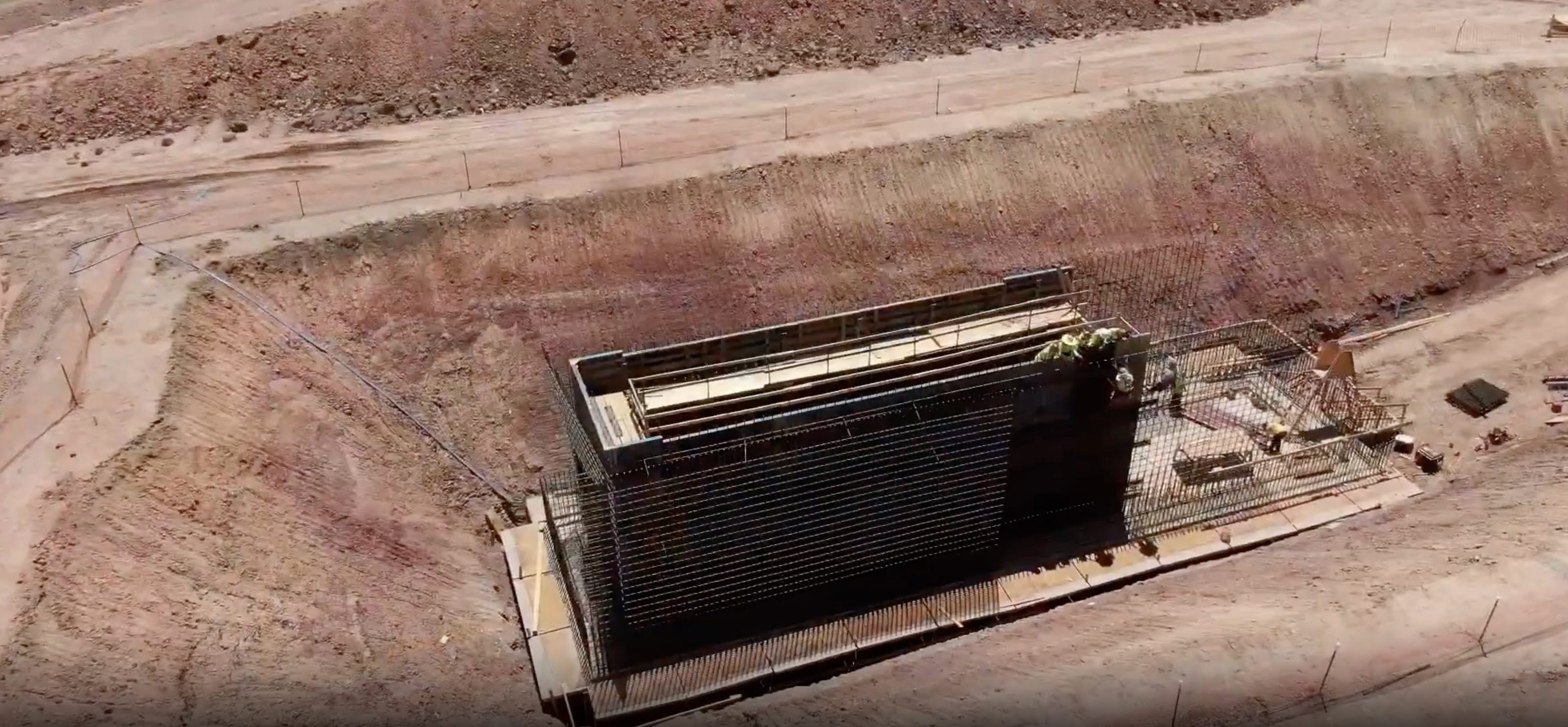
New Nuclear in Texas, with Doug Robison and Dr. Rusty Towell
Texas has long been an energy powerhouse, but the grid is facing unprecedented challenges. Between surging demand from industrial electrification, hotter summers, and data centers and the retirement of aging power plants, we need more advanced firm power sources and we need them fast.In this episode of the Energy Capital Podcast, I sat down with Doug Robison, the founder and president of Natura Resources and former oil and gas executive, and Rusty Towell, founding director for Abilene Christian University's premiere research project called the NEXT (Nuclear Energy eXperimental Testing) Lab. Natura, in partnership with ACU, is pioneering molten salt reactors, a next-generation nuclear technology that promises higher efficiency, greater safety, and the ability to scale quickly.Unlike traditional nuclear plants, which operate at high pressure and require massive containment structures, molten salt reactors run at low pressure, eliminating many of the risks and cost barriers that have made nuclear difficult to scale in the past. As Doug puts it, “Remove pressure, and everything changes.”That’s exactly what Natura is doing in Abilene, where their first 1 MW test reactor is set to go online by 2026-2027 — only the second advanced research reactor ever licensed by the Nuclear Regulatory Commission (NRC). This small-scale demonstration is designed to prove the technology and pave the way for full-scale commercial deployment around 2030.But nuclear isn’t just about electricity, it’s about heat. These reactors operate at twice the temperature of conventional nuclear plants, making them ideal for industrial applications. Texas is a perfect fit for this technology, not just because of its growing energy demand, but because it has the infrastructure, workforce, and industrial needs to scale it rapidly.One of the biggest takeaways from our conversation was how capital, not regulation, has become the biggest bottleneck. The NRC has already issued Natura a construction permit, and the policy landscape is shifting, with bipartisan support at both the federal and state levels for advanced nuclear. However, deploying reactors at scale requires massive investment and as Doug Robison points out, that shift is only just beginning.With demand projections skyrocketing, from AI data centers to large-scale industrial growth to cooling load in increasingly hotter summers, Texas will need every tool available to ensure affordable, reliable, and clean energy. The question isn’t whether nuclear will play a role, it’s how fast we can get there.This is one of the most exciting energy conversations I’ve had, and it’s a must-listen for anyone who wants to understand how nuclear could reshape Texas’ energy landscape.As always, please like, share, and leave a five-star review wherever you listen to podcasts. Your support helps bring these critical energy conversations to more people.Timestamps* 00:00 - Introduction* 02:30 - Natura’s technology, what’s different about a molten salt reactor from the typical high pressure reactors* 08:00 - Timeline to deployments, milestones met so far* 13:00 - Use cases and modularity, size of deployments * 18:30 - Policy in nuclear development & comparative advantages of Texas* 25:00 - Learning curves and cost reductions for nuclear* 31:00 - Exploring molten salt reactor technology with flexibility & scalability* 36:00 - Nuclear’s role in the future of energy demand in Texas* 38:30 - Policy support for nuclear energy * 43:00 - The role of utilities in nuclear energy, and the differences in competitive markets* 47:30 - The Role of subsidies for nuclear energy* 50:00 - The need for incentives and support from DOE’s Loan Program Office* 54:30 - Abilene: A new energy hub* 56:00 - Natura’s mission to improve quality of life, increase energy abundance* 58:30 - Transferability of skills from oil & gas to nuclear, why Landman gives the wrong impression* 1:00:00 - NEXT Lab and the first advanced reactor at a university, it’s in Abilene and it’s really happening. see below:ShownotesSpeakers, Key Projects, and Developments:* Doug Robison - LinkedIn, * Rusty Towell - Linkedin, ACU Website, NRC Website, * Natura Resources Official Website: Explore more about their projects and technological advancements. * Molten Salt Research Reactor (MSR-1) at Abilene Christian University (ACU): The first liquid salt-fueled reactor licensed by the U.S. Nuclear Regulatory Commission (NRC), marking a significant milestone in advanced nuclear research. * Natura Resources' Initiatives: There are two new initiatives, a MSR-100 energy production reactor on the RELLIS Campus at Texas A&M University and an MSR reactor for energy and desalination on the Texas Tech campus. * Texas A&M University Part of Groundbreaking Molten Salt Reactor Project* Texas Tech Partners with Natura, ACU to Advance Cutting-Edge Technology* Updated pathway to Advanced Nuclear Commercial Liftoff. US DOE Loan Programs Office.* Nuclear? Perhaps! David Roberts’ Volts Podcas
Disconnected by Design with Mose Buchele
Every summer, we hear concerns about rolling blackouts. Every winter, we remember the failures of Winter Storm Uri. But how did we get here? What are the biggest risks, what has actually changed, and what still needs to happen?In this episode of the Energy Capital Podcast, I sat down with Mose Buchele, longtime energy and environment reporter at KUT and the host of The Disconnect, a podcast that has taken a deep dive into the history and politics behind the Texas grid.Mose’s reporting has helped shape how Texans understand energy, and in this conversation, we pull from his years of investigative work to connect past decisions to today’s challenges.One of the biggest takeaways from The Disconnect is that Texas’ grid problems didn’t start with Winter Storm Uri. In Season One, Mose and colleagues explored how a combination of regulatory neglect, an isolated grid, and a failure to coordinate gas and electricity markets set the stage for the catastrophe. In Season Two, a fundamental question was asked: Who really controls Texas energy? The deregulated system we have today didn’t happen by accident, it was built by political and economic decisions that benefited certain industries and players. In our conversation, Mose and I discuss who makes money when the grid fails and why Texas has been slow to adopt reforms that would prevent another crisis.But to really understand Texas energy, you have to go even further back. In Season Three, Mose has been unpacking the deep history of natural gas in Texas, starting with the wild stories of oil discoveries and the creation of the Railroad Commission—the agency that still oversees Texas’ oil and gas system today. The decisions that shaped oil and gas policy 100 years ago still influence energy outcomes today. Texas’ decision to keep gas separate from electricity regulation may have made sense in the 1970s, but today, it leaves the grid vulnerable during extreme weather.We also talked about ERCOT’s unique position as an independent grid, separate from the Eastern and Western Interconnections. This independence was originally designed to avoid federal oversight, but in today’s world of skyrocketing demand, extreme weather, and a shifting energy mix, is that strategy still serving Texas well? Should Texas interconnect with the national grid, or are there benefits to maintaining independence?The Texas Energy and Power Newsletter is a reader-supported publication. To receive new posts and support my work, consider becoming a paid subscriber.So where does that leave us today? Mose and I break down what needs to happen next to ensure reliability as Texas faces skyrocketing demand from AI data centers, industrial growth, extreme heat, and population increases. The grid is changing, but is it changing fast enough?Mose’s deep reporting and historical perspective make this a particularly insightful episode. If you want to truly understand how we got here and what happens next, this is an episode you won’t want to miss.As always, please like, share, and leave a five-star review wherever you listen to podcasts. Your support helps bring these critical energy conversations to more people.Timestamps* 00:00 – Introduction* 02:30 – The Disconnect Podcast: the origin and why Texas' energy history* 04:30 – Season 3 focus and “Who is Dad Joiner?” aka The Max Bialystock of Oil* 09:00 – The genesis of the Railroad Commission's and its role in oil regulation* 12:04 – How OPEC learned from the Railroad Commission * 17:00 – Why Texas was the last state to create a public utility commission, the Energy Crisis, and why gas utilities weren’t included in PUC regulation* 28:00 – Historical causes of Winter Storm Uri, and why it was so severe* 32:00 – The difference between “deregulation” to increase competition and lack of regulation of basic public safety* 39:00 – The Midnight Connection and how Texas’ grid was almost connected to the rest of the country* 43:30 – Understanding Black Start: what happens if the entire grid fails* 47:30 – Post-winter storm improvements and ongoing need for improvement* 50:31 – The Disconnect between gas and electric systems, the idea for a “gas desk” * 54:30 - Who profited from Uri? Why is there little to no regulation of intrastate gas monopolies?ResourcesMose Buchele and the The Disconnect Podcast: * Mose Buchele on X and the KUT Website* The Disconnect: Power, Politics and the Texas Blackout (Apple Podcast, Spotify)* Season One: Explores Winter Storm Uri, deregulation, and the grid’s vulnerabilities.* Season Two: Investigates who profits from Texas’ energy system and how market forces shape ERCOT.* Bonus Episode in 2022 with yours truly: The Megawatt You Don’t Use* Season Three: Traces the history of natural gas regulation in Texas and its impact on today’s grid challenges.Winter Storm Uri & Market Failures* The Great Texas Blackout Was Caused by a Failure to Ensure Supplies of Natural Gas, Charles Blanchard, Texas Monthly* Why Gas Failed During Uri – An in-depth Texas
Using AI to Strengthen the Grid with Mary Cleary
What if utilities could see infrastructure failures before they happen? What if grid operators, regulators, and energy companies could harness the power of artificial intelligence to prevent outages?Heat waves, droughts, wildfires, hurricanes, and winter cold snaps are getting more extreme. But as their intensity ramps up, so does computing power, and particularly the capabilities of artificial intelligence.In this episode of the Energy Capital Podcast, I spoke with Mary Cleary, VP, Marketing, Communications & Public Policy at Neara, a company pioneering AI-driven predictive modeling for utilities and grid planners and operators. Their technology is already helping major power providers anticipate and mitigate damage before storms, wildfires, and grid failures occur.We discussed how Neara’s platform builds hyper-detailed digital models of the grid, down to individual poles, wires, and even the exact species of trees near power lines. Using LIDAR scans and AI classification, utilities can create real-time risk maps that help prioritize maintenance, allowing them to proactively prevent outages before they happen rather than reacting after the fact.This technology is already delivering results. In Houston, Neara’s partnership with CenterPoint Energy has cut processes that once took a year and a half down to just a few hours. Rather than relying on slow, manual inspections, utilities can now simulate storm impacts and predict which infrastructure is most vulnerable before a storm makes landfall.AI is also changing the way utilities manage wildfire risk. By analyzing environmental conditions like wind speeds, temperatures, vegetation density, and the age and vulnerability of equipment, Neara’s models help utilities pinpoint the highest-risk areas, allowing for targeted prevention measures instead of costly, broad-stroke fixes.Beyond disaster response, we also explored the role of AI in grid modernization and demand forecasting. With Texas’ rapid energy demand growth, driven in part by AI data centers and industrial expansion, utilities need smarter ways to anticipate and manage electricity needs. Predictive modeling using artificial intelligence is giving them that capability.One of the most fascinating parts of our conversation was how AI can help utilities make more cost-effective investments. Instead of replacing entire sections of aging infrastructure, Neara’s software allows for surgical upgrades—determining exactly which poles need reinforcement, which lines need reconductoring, and where distributed energy resources could provide the most resilience.AI is often discussed as a massive new energy consumer, but as Mary pointed out, there’s far less conversation about how AI can be a critical tool for making the grid more efficient and reliable.This episode provides an exciting look at the future of grid resilience, extreme weather preparedness, and how AI is changing the way we think about energy infrastructure.As always, please like, share, and leave a five-star review wherever you listen to podcasts. Thank you for being part of the conversation!Timestamps00:00 – Introduction: AI, predictive modeling & the future of the grid01:58 – What is Neara? AI-driven modeling for utilities & extreme weather response04:33 – Case study: CenterPoint partnership (Houston’s 27,000 miles of lines)06:30 – How AI interprets LiDAR & optimizes storm recovery09:30 – Reliability vs. Resiliency: Measuring grid performance, customer expectations12:33 – AI disaster modeling: Hurricanes, floods & wildfire case studies15:45 – LiDAR & Dynamic Line Rating (DLR): Unlocking hidden grid capacity18:00 - Could AI help relieve the transmission constraints that contributed to energy emergency on September 6, 2023?20:1 6 – Winter storms & gas infrastructure: Predicting failures before they happen23:00 – Optimizing energy resource placement: AI’s role in siting generation resources24:22 – AI’s next areas of development and limitations & regulatory roadblocks28:00 – Flaws in reliability metrics (SAIDI & SAIFI) & need for predictive benchmarks33:34 – Balancing cost, reliability & AI-driven efficiency36:01 – Effective policy constructs for reliability and resiliency38:24 – AI, Senate Bill 6 & large load growth: The power of micro-solutions43:21 – House Bill 2555 & Texas grid investments: Balancing cost, data & outcomes46:45 – Regulatory innovation & final thoughts on AI-driven transformation48:18 – Conclusion & call to action ShownotesFurther Reading from the Texas Energy & Power Newsletter* You Get What You Pay For: Let’s Pay Utilities for Performance* Large Loads at the Lege: Grid Roundup #40* Texas’ Energy Future: A Conversation with Jimmy GlotfeltyAI-Powered Grid Resilience & Predictive Modeling* Neara’s Website – Explore Neara’s AI-driven platform for grid infrastructure modeling and predictive analytics.* How Neara Uses AI for Utility Infrastructure – Detailed breakdown of Neara’s AI capabilities, including digital twins and predictive risk a
The Energy System We Need with John Arnold
This is a free preview of a paid episode. To hear more, visit www.texasenergyandpower.comNote: We had some minor audio issues in this episode—thanks for bearing with us. The conversation is still clear and well worth the listen. Appreciate your patience!John Arnold is one of the most successful energy traders of all time. He built his career by understanding how systems work, where inefficiencies exist, and how markets respond. Today, as a …
Know Before You Go Solar with Sara DiNatale
Solar energy has the potential to revolutionize Texas’ power grid, lower costs, and provide resilience in extreme weather. But what happens when some companies selling solar systems aren’t playing fair? In this episode of the Energy Capital Podcast, I spoke with Sara DiNatale, an investigative reporter whose in-depth four-part series “In Broad Daylight” for the San Antonio Express-News uncovered disturbing scams from unethical and predatory companies. DiNatale was honored for her work on this series as one of only 15 out of 500 entries to win the George Polk Award for “intrepid, bold and influential” reporting.The series started with a few homeowners’ struggles but quickly exposed a larger pattern — solar systems that weren’t properly installed, homeowners left with massive loan payments for panels that didn’t work, and a lack of consumer protections to hold bad actors accountable. DiNatale detailed how some homeowners were aggressively targeted by door-to-door salespeople, pressured into signing contracts that promised energy savings but often resulted in tens of thousands of dollars in debt for non-working systems.In Austin and San Antonio alone, 18% to 24% of solar installations failed their first inspection, meaning homeowners were left with what one expert called “expensive roof decorations.” Some systems continued to fail on second and third inspections, leaving families with long-term loans for technology that wasn’t even functional.One of the most heartbreaking cases she covered was the Duncan family in Corpus Christi, a low-income, hearing-impaired couple sold a $100,000 system they never should have been sold. Their credit was destroyed and the installer vanished.We also explored how some solar companies operate like multi-level marketing (MLM) schemes, recruiting young salespeople with promises of making six figures, teaching them to target elderly homeowners, and encouraging deceptive sales tactics. Some of these companies even offer cash incentives upfront to make the deal seem more appealing, without disclosing that this money is really just wrapped into the loan.The good news? There are many great solar companies and ethical solar installers in Texas, and there are steps consumers can take to protect themselves. We talked about what consumers should look for. We also discussed legislative fixes, including a requirement that no company gets paid until an installation passes inspection, licensing standards for solar installers, and consumer protection laws to crack down on deceptive financing practices. A bill was filed by Senator Zaffirini at the Texas Legislature (SB 1036) to address many of the problems mentioned by DiNatale.Solar remains one of the most promising energy solutions for Texas, but without proper oversight, these scams could continue to spread — especially as the demand for distributed energy grows.This is an episode you don’t want to miss. If you or someone you know is considering solar, listen before you shop, much less sign any contracts.As always, please like, share, and leave a five-star review wherever you listen to podcasts. Thank you for being a part of this conversation!Time Stamps00:00 - Introduction to the Energy Capital Podcast05:14 - The Importance of Inspections and Approvals07:49 - Real Stories of Victims in the Solar Industry10:26 - Legislative Solutions and Consumer Awareness12:44 - Sales Tactics and Red Flags in Solar Companies18:09 - The Solar Sales Landscape21:47 - Understanding Financing and Dealer Fees29:43 - Consumer Complaints and Industry Accountability30:09 - Positive Actors in the Solar Industry35:09 - Advice for Potential Solar Buyers37:20 - Financial Considerations for Solar Energy Investment38:53 - The Importance of Battery Storage in Solar Systems39:47 - Challenges in the Solar Industry: Trust and Education42:10 - Consumer Protection in the Growing Solar Market44:01 - Regulatory Measures and Licensing in the Solar Industry46:48 - Tracking and Accountability for Solar Sales Practices49:31 - The Need for Consumer Guides and Resources51:52 - Engaging with the Solar Community and ResourcesShow NotesConsumer Protection and Solar Industry Scams* Sara DiNatale’s Four-Part Solar Investigation (San Antonio Express-News) – The full investigative series exposing deceptive solar sales tactics in Texas.* Sara on X (Twitter) * Texas Attorney General’s Consumer Complaints Division – Where Texas residents can report fraudulent solar companies.* US Department of the Treasury Solar Scams Resource – Guides on avoiding deceptive home energy sales tactics.* FTC Consumer Solar Awareness Articles - 1 & 2Grid Reliability and Interconnection Failures* Austin Energy Solar Program –* CPS Energy Solar Information * ERCOT Interconnection Process – How solar systems connect to the grid and what happens when they fail inspections.High-Pressure Sales Tactics and Deceptive Financing* Better Business Bureau (BBB) Solar Complaints – Reports on misleading solar sales practices in Te

A Time for Choosing
In his State of the State speech this week, Governor Abbott acknowledged the obvious: “Our rapidly growing state also needs an increasing supply of electric power.”The Governor didn’t specify what types of energy we need, though he did give an implicit nod to an all-of- the-above approach, including renewables and storage:“We now provide more power than ever before. In the last four years, we increased power by 35%. As a result, Texas ranks No. 1 for electric power generation.”The fact check on this: it’s all true. Texas produces more power than any other state by far, and we added the most power over the last four years — bringing our full nameplate capacity from about 125 gigawatts before 2021’s Winter Storm Uri to an astounding 170 gigawatts today. Moreover, 92% of that 35% increase Gov. Abbott cited is from wind, solar, and storage (75% from solar and storage alone).Yet as the Governor rightly noted, we need more. A lot more.The Texas Legislature is nearly four weeks into its 140-day session, and legislators have a lot of important decisions before them. But there is one threshold choice that could change the trajectory of the state for generations:Will Texas leaders focus their time and attention on building vital energy infrastructure that capitalizes on a once-in-a-generation opportunity to grow our economy? Or will they try to harm the renewable energy and storage that’s supporting the grid, lowering bills, and bringing massive investment to rural Texas?One path will propel Texas’ economy and energy leadership for decades; the latter will leave us poorer and more vulnerable. One would build up our state, the other would tear down a vital industry.It is a time for choosing.The PromiseIn his speech, the Governor rightly prioritized the funding of water infrastructure. The effort to fund a secure water supply is absolutely vital to our state and deserves undivided attention.He also called “for Texas to lead a nuclear renaissance in the United States,” having previously appointed an Advanced Nuclear Reactor Working Group that last year recommended the creation of a fund to support new nuclear reactors and a Texas nuclear industry. This effort should also rightly take up significant legislative focus.In addition to those critical items, the legislature this year also will need time to consider major pieces of legislation dealing with:* Large loads like data centers and how to pay for transmission and other grid costs;* Energy waste reduction to increase reliability, particularly during winter storms;* Consumer protections from predatory solar installers; and* Backup power to ensure that nursing homes, water treatment facilities, fire stations, and other critical facilities have reliable onsite power during and after natural disasters.That’s just a start, and that’s just energy. There's a lot of work to do and not a lot of time to do it — which is precisely why it would be so foolish to spend any time on punitive, anti-energy proposals to tear down our state’s nation-leading renewable energy and battery storage industries, and the 60,000 Texans employed in them.The DangerTexas needs more power, the Governor said. Unfortunately, the legislature is now considering Senate Bill 819, which would strangle the vast majority of renewable energy development in Texas. With rising load growth, inflation, and $30 billion in potential transmission costs, mostly to support Permian Basin oil and gas operations, this is a terrible time to take the lowest-cost resources out of the mix — not that there’d ever be a good time to raise Texans’ electric bills by tens of billions of dollars.If SB 819 (or a similar anti-energy bill) passes, then electricity inflation will skyrocket. Your electric bill will skyrocket. And legislators will never hear the end of it.Supporters will say that such efforts are not about kneecapping renewable energy, but just look at the language below. With SB 819, the preamble asserts the importance of protecting our state’s natural resources and limiting the development of “renewable energy generation facilities,” but somehow never mentions toxic coal ash “ponds” or the mercury, arsenic, selenium, and other poisons they hold. Nor does the bill even mention oil and gas drilling. Wind turbines would have to be more than half a mile from anyone’s property line, while oil rigs would still be allowed right up to the edge of the line and only 100 feet from a state park or school. This is not about protecting natural resources.Remarkably, the bill directly invokes “the police power of the state” to put the nation’s most draconian regulations on private property owners who want to develop renewable energy on their own land — quite an invocation for some supposedly conservative legislators.In a speech known as “A Time for Choosing,” Ronald Reagan said: “What does it mean whether you hold the deed … or the title to your business or property if the government holds the power of life and death over that business
Texas’ Energy Future: A Conversation with Jimmy Glotfelty
This is a free preview of a paid episode. To hear more, visit www.texasenergyandpower.comIn this episode of the Energy Capital Podcast, I had the pleasure of talking with Jimmy Glotfelty, commissioner at the Public Utility Commission of Texas (PUC) from the summer of 2021 through the end of 2024. With decades of experience across the private and public sectors, Jimmy is the rare person who brings both a developer and a regulator’s perspecti…
Wired for Change with Congressman Greg Casar
In this episode of the Energy Capital Podcast, I spoke with Congressman Greg Casar about some of the most pressing challenges and opportunities facing Texas’ energy system. From addressing worker protections during extreme weather to rethinking Texas’ grid structure, our conversation explored a range of ideas championed by the Congressman, including* The Connect the Grid Act: Casar introduced the bill on the three year anniversary of Winter Storm Uri. The bill aims to improve grid reliability by interconnecting ERCOT with the national grid. We explored the positives and negatives of that proposal, including a recent MIT study that found the bill would reduce outages by 40-80% in a system similar to Winter Storm Uri, assuming comparable power plant failures— depending on how many transmission lines are built to interconnect ERCOT. Casar also highlighted the economic benefits, including new revenue opportunities for Texas through clean energy exports. And I asked him about the potential downsides including a lot more regulations before Texas builds more infrastructure. * Balancing permitting reform with consumer protection: While Casar supports streamlined permitting to speed up transmission and clean energy projects, he also emphasized the importance of keeping key consumer protections in place. * Protecting workers in extreme heat: With heat the leading cause of climate-related deaths, Casar discussed the need for federal heat safety standards to protect outdoor workers, including those in construction and delivery services. He pointed to recent preventable deaths as evidence of why this issue demands immediate attention.* Opportunities for workers in the energy transition: Casar also focused on the challenges facing oil and gas workers during the energy transition. Through his American Energy Worker Opportunity Act, he hopes to provide a clear path for fossil fuel workers to transition into high-paying clean energy jobs without sacrificing pay or benefits. This approach prioritizes stability for workers while supporting long-term economic growth. We talked about how, even though Texas is producing more oil and gas than ever before, there are 100,000 fewer oil and gas workers in Texas today than in 2014. This episode and the many I’ve recorded with Republicans, including the one last month with Governor Rick Perry, isn’t about picking sides — it’s about being more curious than judgemental. I hope you’ll listen regardless of your political leanings, and I hope you’ll find this discussion as interesting and thought-provoking as I did.As always, please like, share, and leave a five-star review wherever you listen to podcasts. Thank you for your support!This is a free episode, but many of the episodes, as well as the archives, Grid Roundups, and more are for paid subscribers. Please become one today!The Texas Energy and Power Newsletter is a reader-supported publication. To receive new posts and support my work, consider becoming a free or paid subscriber.Timestamps: 00:00 - Introduction to Congressman Greg Casar06:29 - The Climate Crisis: A Personal and Political Perspective12:51 - The Connect the Grid Act: Addressing Energy Reliability19:28 - Interconnections and the Future of Texas Energy25:37 - Bipartisan Opportunities in the Energy Economy33:50 - Worker Protections in a Changing Climate39:11 - Transitioning Fossil Fuel Workers to Clean Energy JobsShownotes: Grid Interconnections and Reliability* The Connect the Grid Act – Congressman Casar’s proposal to interconnect ERCOT with the national grid, reducing outages and enabling clean energy exports.* MIT Study on Grid Interconnections – Research demonstrating how linking Texas to neighboring grids could have prevented up to 80% of power outages during Winter Storm Uri.* Southern Spirit Transmission Project (Pattern Energy) – Transmission line connecting Texas to the Eastern Interconnect.* Grid United El Paso Project – Connecting ERCOT to the Western Interconnect to expand energy sharing and improve grid flexibility.* The Southern Spirit transmission line could connect Texas grid to the southeast. Will it ever happen?Clean Energy Investments and the Inflation Reduction Act (IRA)* Inflation Reduction Act (IRA) Overview – The largest federal clean energy investment package in U.S. history.* 45X Advanced Manufacturing Tax Credit – Providing incentives for clean energy manufacturing, including solar panels, wind turbines, and batteries.* Clean Energy Investments Dashboard (E2) – Tracks jobs and investments related to clean energy projects spurred by the IRA.* Texas Enterprise Fund – State program that Casar highlighted as a model for attracting clean energy manufacturing.* DOE Loan Programs Office – Supporting financing for large-scale clean energy and grid-related projects.Worker Protections and Climate Safety* American Energy Worker Opportunity Act – Casar’s initiative to transition fossil fuel workers into union-backed clean energy jobs.* Federal Heat Safety St
Leadership and Finding Middle Ground with Governor Rick Perry
In this episode, I had the privilege of sitting down with Governor Rick Perry, the longest-serving governor in Texas history and former U.S. Secretary of Energy. Governor Perry has played a pivotal role in shaping Texas’ energy mix and fostering innovation, and he shared his views both on the current state and on the future of energy.We explored his energy legacy, including the deregulated electric market, Texas’ leadership in wind and solar power, and the critical need for an “all-of-the-above” approach to energy. Governor Perry shared his strong support for nuclear energy, particularly the potential of Small Modular Reactors (SMRs), as well as his vision for leveraging American innovation to export innovative technologies worldwide.The governor also highlighted Texas’ growing water challenges and presented some ideas for addressing the state’s water needs, including the potential for underground canals powered by innovative technologies like SMRs.Our conversation explored:* The meaning of conservatism and the role of government in incentivizing innovation while prioritizing free-market principles;* Lessons from his time in office, including the need to find middle ground;* How bipartisan opportunities, like clean energy manufacturing under the Inflation Reduction Act, can strengthen American competitiveness;* The importance of supporting veterans through plant-based medicine research to address mental health and addiction issues.Governor Perry’s insights are both pragmatic and visionary, reflecting his unique experience at the state and national levels. Whether you're interested in energy policy, water infrastructure, or the intersection of technology and leadership, this episode has something for you.As always, please like, share, and leave a five-star review wherever you listen to podcasts. Thank you for being a listener!Timestamps00:00 - Introduction to Energy Capital Podcast and Governor Perry's Legacy01:45 - Governor Perry's energy legacy and influences06:00 - George Mitchell and the complexity of energy and environmental tradeoffs09:00 - Governor Perry’s support of an all-of-the-above energy strategy, the need to balance growth and sustainability15:00 - The meaning of conservatism and the role of government20:00 - The economic mess and the rise of Republicans the 1980s in Texas24:00 - The potential for nuclear energy in Texas28:00 - Small modular reactors and AI data centers33:00 - Government as a partner, future directions for Department of Energy under Chris Wright and the Trump Administration, potential for exporting American innovation38:00 - The future of the Inflation Reduction Act (IRA), including the 45X manufacturing provisions40:45 - The need to incentivize critical minerals in the US for energy independence and connection to the IRA45:00 - The need for North - South trade within the Western Hemisphere46:30 - The national security need for domestic energy development, including renewable energy48:45 - The Department of Energy and the 17 national laboratories; the possibility for a national lab in Texas (!)52:00 - An out-of-the box water supply strategy54:30 - Epic gubernatorial “butt-chewings” from two billionaires57:30 - Governor Perry’s advocacy for plant-based psychoactive medicinal treatments for veterans to address the veteran suicide epidemicShownotesSmall Modular Reactors (SMRs) and Nuclear Power* NuScale Power – The first U.S.-approved Small Modular Reactor (SMR) design.* X-Energy – Developer of advanced modular nuclear technologies.* Abilene Christian University Nuclear Research – Developing research reactors to advance nuclear technologies.* RELLIS Campus at Texas A&M – Site for advancing SMR deployment and innovation.* Regents submit test-bed proposal to Nuclear Regulatory Commission* DOE Office of Nuclear Energy – Supporting SMR innovation and funding for nuclear development.Energy Policy and Critical Minerals* Round Top Rare Earth Minerals Project: USA Rare Earth – Mining critical minerals, including lithium, cobalt, and rare earths, in West Texas.* Texas Mineral Resources Corp.’s Round Top Project* DOE Loan Programs Office – Federal funding to support clean energy innovation, including SMRs and geothermal.* Title 17 Clean Energy Financing* Inflation Reduction Act (IRA):* 45X Advanced Manufacturing Tax Credit – Incentives for U.S.-based clean energy manufacturing.* Clean Energy Investments Dashboard – Track the 115K clean energy jobs and $131B investments under the IRA.* Texas Enterprise Fund – State program for attracting businesses and job creation* George Mitchell and Hydraulic Fracturing:* Cynthia and George Mitchell Foundation – Continuing Mitchell’s philanthropic and energy work.* Book Recommendation: George P. Mitchell: Fracking, Sustainability, and an Unorthodox Quest to Save the Planet by Loren SteffyWater Policy and Infrastructure* Senator Charles Perry’s Water Plan – Texas Senate Committee on Water.* Resources: Committee’s Interim Report, Rio Grande Guardian, Texan
A Consumer-Led Solar and Storage Revolution with Sunrun CEO Mary Powell
This is a free preview of a paid episode. To hear more, visit www.texasenergyandpower.comIn this episode of the Energy Capital Podcast, host Doug Lewin speaks with Mary Powell, CEO of Sunrun, about the evolving landscape of solar energy in Texas. They discuss the significant growth of solar and storage solutions, the impact of customer-led initiatives, and the importance of energy independence. Powell shares insights on the benefits of solar for both individual customers and the broader grid, addressing common misconceptions about energy storage and the cost shift debate. The conversation also touches on the role of virtual power plants, regulatory challenges, and the future of electrification in homes.
The Tables Are Turned: Becky Klein Interviews Me at the Texas Energy Summit
This week’s episode is a bit different. I’m not hosting the podcast — I’m the guest. During the Texas Energy Summit, former Public Utility Commission Chair Becky Klein turned the tables and interviewed me live, right after a panel of legislators and a keynote from current PUC Chair Thomas Gleeson.In this fast-paced conversation, Becky and I covered a wide range of energy topics, including grid reliability, distributed energy resources, and the untapped potential of energy efficiency. We also discussed my personal journey in the energy field, from working on air quality issues at the legislature to founding an energy efficiency non-profit to working in the energy industry and hosting this podcast.Throughout the interview, I shared my vision for the next 5–10 years of Texas’ power market. I’m optimistic about seeing advancements in geothermal energy, energy efficiency, and heat pump adoption. I also believe we’ll see greater decentralization of power, with more distributed generation and expanded transmission. These changes could lower costs, improve grid reliability, and create a more resilient energy future for Texans.But with opportunities come challenges. Texas lags far behind other states in energy efficiency programs and policies, ranking last among states with efficiency goals. I discussed what needs to change — from improving HVAC and heat pump incentives to rethinking how we value distributed energy resources (DERs) for their resilience benefits.Becky brought her wealth of experience and thoughtful questions to the discussion. We also touched on what excites me most about the energy industry today and my advice for students and young leaders entering this field: ask questions, read widely, and develop a strong personal philosophy.I hope you enjoy this unique episode and the conversation as much as I did. Timestamps and show notes are below.Please like, share, subscribe, and leave a five-star review wherever you get your podcasts — it really helps!Timestamps01:21 - Introduction to Energy Efficiency and Demand Response04:14 - My Journey in the Energy Sector07:25 - Vision for Texas Power Market10:09 - Barriers to Energy Efficiency13:31 - The Role of the PUC in Energy Efficiency16:20 - Current State of Energy Efficiency in Texas19:13 - Technological Innovations in Energy Distribution22:21 - Valuing Resiliency in Energy Systems25:28 - Addressing Energy Affordability and Equity28:20 - Advice for Aspiring Energy Professionals Show NotesBooks:* The Obstacle is the Way by Ryan Holiday* Climate of Contempt by David Spence* Confronting Climate Gridlock by Daniel Cohan Podcasts:* How to Overcome Ideological Divides and the Climate of Contempt, Energy Capital Podcast* The Past, Present, and Future of the Texas Energy Market with Former PUC Chair Becky Klein, Energy Capital Podcast This is a public episode. If you'd like to discuss this with other subscribers or get access to bonus episodes, visit www.texasenergyandpower.com/subscribe
How to Overcome Ideological Divides and the Climate of Contempt
This episode was recorded just three days after the U.S. presidential election. My guest, UT Law Professor David Spence, recently published an exceptional book Climate of Contempt: How to Rescue the U.S. Energy Transition from Voter Partisanship. I believe this book is perfect for this moment and one of the best I’ve read on climate policy—and I read a lot on climate policy.David and I dove into the roots and contributors of America’s current partisan and ideological divides which have grown rapidly over the past few decades. We discussed not only the challenges this divide presents — though we talked about those extensively — but also some possible solutions. David shows how we can bridge these divides, re-establish trust, and find common ground. We also talked about the Inflation Reduction Act and why energy policy could, maybe, be a unifying area in an increasingly polarized landscape.I found this conversation both important and thought-provoking, and I hope you will too. I highly recommend David’s book; it’s a remarkable piece that is particularly relevant now. If you’re interested in the energy transition, the history of energy-related regulations, or want a deeper understanding of our current political landscape, especially as it relates to climate and energy, I think you’ll enjoy this episode as much as I did.As always, please like, share, and leave a five star review wherever you listen to podcasts. Thank you for being a listener. Timestamps2:31 - The major ideas in Climate of Contempt4:06 - How the thesis of the book connects to the outcome of the US presidential election5:54 - Discontent with the status quo in the US8:09 - The depth of the ideological divide in the US13:27 - How to bridge ideological divides and actively listen (and why it’s so challenging)17:51 - Effectiveness of deliberative polling and in-person, offline interactions. The role of media and social media in driving polarization.23:52 - The importance of active listening, education over persuasion, and not being too sure you are right.29:05 - Is energy a place we can find more common ground? Challenges and opportunities. 37:54 - The future of the Inflation Reduction Act 43:31 - Regulatory uncertainty… what happens next?Show NotesClimate of Contempt: How to Rescue the U.S. Energy Transition from Voter Partisanship by David B. SpenceDavid’s website and blogEnergyTradeoffs.comWorks from Katharine Hayhoe”Spirit of Liberty” – speech from Judge Learned HandAdvanced Manufacturing Production tax creditTranscriptDoug LewinDavid Spence, welcome to the Energy Capital Podcast.David Spence Happy to be here, Doug.Doug LewinIt's great to have you here today. You have written what I think is a really remarkable book and I hope it is read widely. I think it is really illuminating for the moment we're in. We'll of course put a link in the show notes so people can find it easily, but it's called Climate of Contempt, the subtitle, How to Rescue the U.S. Energy Transition from Voter Partisanship. We're recording on Friday, November 8th, the Friday just after the reelection of Donald Trump. So I think that this book is even, I thought it was incredibly relevant before the election, I think it's even more so now. Can we just start David with you just explaining the thesis of the book generally, but also in light of the political earthquake that happened this week?David SpenceSure, happy to. So the main point of the book is to try and reintroduce into the popular debate and also parts of the scholarly debate what I think are some underappreciated forces that are driving regulatory politics and, in the case of what we're both interested in, energy transition politics. And that missing element is what I would call the bottom-up forces that are driving what particularly members of Congress, but all elected politicians do. We hear a lot about the top down forces, about how elites are controlling the regulatory process or the policymaking process. And that's part of the story and not an unimportant part of the story, but a really neglected part of the story is how receptive and sensitive elected politicians are to what voters want or more particularly what they don't want. And so politicians work hard to avoid the kind of mistakes that might lose them the next election. And those forces I think are much more important than most people realize. And that's what the book explores and applies to the energy transition.Doug LewinYeah, and so talk about that a little bit in light of this week.David SpenceSure, sure. So we've all seen probably 40 or 50 takes on what happened the other day in the election. In fact, the New York Times alone has had at least 10 different takes depending upon who's doing the writing. And voters' decisions are complicated. They only get to choose one of two choices, but they're motives and reasons for making those choices are varied and complex. And so among the takes we're seeing are takes crediting fears about inflation, racism, sexism,
Innovation at the Grid Edge with DOE's Ram Narayanamurthy
My guest this week is Ram Narayanamurthy, the Deputy Director of the Building Technologies Office at the Department of Energy (DOE) for the last two years. Before joining DOE, he led the buildings program at the Electric Power Research Institute, or EPRI, for a decade. He has 27 patents to his name and has worked extensively with builders, developers, and utilities to scale new technologies that can increase grid reliability, reduce emissions, improve human health, and lower costs.I spoke to Ram about his work on DOE’s Connected Communities program which funds projects to advance grid-interactive, energy-efficient buildings and communities across the nation. Ram and the Building Technologies Office are doing cutting edge research and deployment to increase demand flexibility, a key component to strengthening the grid. We talked about the role AI plays to optimize demand and shift loads to times of day with an abundance of power and use less at peak times. We talked about the importance of building technologies that improve energy efficiency and demand response, particularly in an environment of rapid load growth. I enjoyed learning what this important Office within the Department of Energy is up to and how the technologies they’re piloting with utilities around the country could impact Texas in future years.I hope you enjoy the episode. Timestamps, show notes, and the transcript below. Please don’t forget to like, share, subscribe, and leave a five-star review wherever you get your podcasts.Timestamps2:05 - About the Building Technologies Office3:28 - What does demand flexibility mean in buildings6:41 - Energy optimization and flexibility as energy efficiency9:03 - AI11:55 - The grid edge15:28 - What are Connected Communities? What is the Connected Communities program?17:25 - Examples of Connected Communities; results and lessons learned so far25:27 - Who should orchestrate all these distributed energy resources28:36 - Importance of distribution planning; examples of successful strategies32:38 - Replacing resistance heat36:18 - How do we make sure these technologies and the benefits are actually accessible and affordable to everybody; trickle up vs trickle down strategies for technology access42:51 - How do we make demand flexibility and grid edge more understandable and desirable to the public46:29 - Resilience benefits of Connected CommunitiesShow NotesBuilding Technologies OfficeConnected Communities ProgramFERC and NERC report on Winter Storm UriInformation on HOMES and HEARs (or HEEHRA) programsSeattle City Light Electrification AssessmentEPRI Study Examines Impacts Of Electrification For Seattle City Light | American Public Power AssociationElectrification Strategy - City LightTranscriptDoug LewinRam Narayanamurthy. Welcome to the Energy Capital Podcast.Ram NarayanamurthyThank you, Doug, and it's my honor to be here. Thank you for inviting us over.Doug LewinYeah. Thanks so much for taking time, Ram. Obviously the Building Technologies Office where you sit, is doing some really phenomenal work. Can we just start with kind of a little bit about BTO and its mission? Obviously DOE is a great big agency. There's lots of different areas of endeavor, but tell us a little about the Building Technologies Office.Ram NarayanamurthySo the Building Technologies Office, we are about creating healthy, comfortable, efficient, affordable, resilient, and decarbonized environments for people to live in. We spend 90% of our time in buildings, whether it's for work, whether it's for living, it's our home. We shop in buildings, we learn in buildings. So they're all over us and all around us. Part of the mission of our office is to achieve our long-term energy goals while still making sure that we are providing those healthy and resilient environments for people to live in and work in.Doug LewinPerfect. And looking over the website, you guys kind of break it down into research and development, market stimulation, and codes and standards. And while I don't think you work, and you can correct me in a minute if I'm wrong, you don't work on codes and standards. I do want to make sure the audience understands how important those are. Because we're obviously in an environment, we're on just about every podcast run, we're talking about load growth, right? And having these standards in place, bringing the use of refrigerators and air conditioners and lights down, that makes a big, big difference. But what we want to talk about today is the part of the mission, and I'm reading this little phrase from your website, “enable high performing, energy efficient, and demand flexible residential and commercial buildings.” Can you talk for a minute about what you mean by this demand flexibility?Ram NarayanamurthyPerfect, yeah. So at the Building Technologies Office, we just recently released our national blueprint for decarbonizing the building stock by 2050. When we look at our goals to achieve a net zero economy by 2050, buildings contribu
The Power of Microgrids with Jana Gerber
This is a free preview of a paid episode. To hear more, visit www.texasenergyandpower.comTexas is number one in the United States for many energy-related achievements: wind and solar generation, oil and gas production. But Texas is also the number one state for weather related outages, with nearly 50% more outages over the last 25 years than California. Just within the last four years Texans experienced Winter Storm Uri (2021), an ice storm in Central Texas (2023), and a derecho and Hurricane Beryl (2024). But the frequency and duration of power outages can be managed and reduced through many strategies. One of the quickest and most effective ways to lessen the impact of outages is to have widespread onsite backup power, also called microgrids: interconnected resources like solar panels, gas generators, and batteries that connect directly to homes, facilities, and other sites, allowing them to operate independently from the main grid.My guest this week is Jana Gerber, President of Microgrid North America at Schneider Electric. Schneider Electric is a massive company with over 150,000 employees. Odds are, you’ve got one of their products in your home, but you probably don’t even know it. They make all sorts of electrical equipment and they are a leader in microgrids. Jana has been with Schneider for 20 years and understands the business of backup power as well as anyone out there. During the interview, Jana explained how Schneider’s microgrids work, how the role of the consumer on the grid is evolving away from merely being passive recipient. We talked about the financing methods to get these backup power projects off the ground, challenges in bringing microgrids to scale, the value of resilience, and much more. I hope you enjoy this interview. As always, please like, share, and leave a five star review wherever you listen to podcasts. Thank you for being a listener. Timestamps0:18 - About Schneider Electric and Jana’s background2:14 - What is a microgrid? 6:16 - Where Schneider has deployed and the mix of technologies used for their microgrids11:11 - State of the microgrid market in Texas13:35 - What is a prosumer15:00 - The role of EVs in microgrids17:02 - Schneider Home20:23 - How significant are distributed resource solutions to Schneider’s business now and moving forward22:04 - Financing options26:16 - The challenge of accounting for and valuing resilience30:06 - Small commercial enterprises and microgrids; reducing costs through standardization33:39 - Additional options for tax credits and financing 36:13 - Financing options and tax credits for the residential sector38:03 - Standardization, islanding, and interconnection42:46 - The role of microgrids in managing load growth45:33 - Fuel cells46:42 - Upcoming microgrid conference in TexasShow NotesSchneider ElectricAbout Schneider HomeMicrogrid Knowledge Conference, Dallas, April 15-17, 2025Special Episode with the Chairman of the Texas PUC, Thomas Gleeson (includes discussion of funding for microgrids at critical facilities)LoanSTAR Revolving Loan ProgramHome energy tax credits (including the Energy Efficient Home Improvement Credit and Residential Clean Energy Credit)Microgrid interconnection and cost recovery docket
Resilience for All: Improving Disaster Response and Responsiveness with Dr. Sergio Castellanos
When Hurricane Beryl hit, residents all across Harris County, from every economic status, educational attainment, and racial and ethnic background lost power. But even as the storm destabilized life for almost everyone in the region, the impacts of the storm — and the safety and wellbeing of Houstonians during and after it — have not impacted everyone the same. But it doesn’t have to be this way. The inequities in our disaster response – and our efforts to make communities and infrastructure more resilient to extreme weather – are the result of policy, regulatory, and business choices that can, and should, be changed. To better understand why these inequities persist, and what can be done about them I spoke to Dr. Sergio Castellanos, an Assistant Professor in Civil, Architectural and Environmental Engineering at the University of Texas at Austin and the Primary Investigator at the Rapid, Equitable and Sustainable Energy Transitions, or RESET, Lab. Sergio and the RESET Lab have done extensive research on natural disaster responses in Texas, including a major report, “Enhancing power system resilience to extreme weather events: A qualitative assessment of winter storm Uri”. Timestamps3:20 - About the RESET Lab 4:49 - An overview of RESET’s research into Winter Storm Uri 8:21 - Utilities’ communication challenge during and after extreme weather events14:28 - Strategies for effective communications during outages and mapping social capital17:51 - Are utilities incorporating public feedback? 23:10 - Inequities in both natural disaster responses and deploying resilience solutions; racial divide in residential solar30:53 - Impact of current policies and programs in reducing racial and economic inequities in access to distributed energy resources35:26 - What’s next for the RESET Lab38:38 - Mexico’s incoming president and Sergio’s outlook on energy and climate action in MexicoShow NotesRESET LabEnhancing power system resilience to extreme weather events: A qualitative assessment of winter storm Uri. International Journal of Disaster Risk Reduction (March 2024).A Synthesis and Review of Exacerbated Inequities from the February 2021 Winter Storm and The Risks Moving Forward. Progress in Energy (March 2023). This is a public episode. If you'd like to discuss this with other subscribers or get access to bonus episodes, visit www.texasenergyandpower.com/subscribe
Special Episode with the Chairman of the Texas PUC, Thomas Gleeson
Today's episode is a special one: an interview with Thomas Gleeson, the Chairman of the Public Utility Commission (PUC) of Texas, recorded live on September 20th at the SPEER Industry and Policy Workshop. The PUC oversees ERCOT and the transmission grid, fully regulates the monopoly transmission distribution utilities, and has power and authority over just about every part of the power grid. Chairman Gleeson was appointed Chairman in January; before that, he worked at the PUC for over 15 years, including as the Executive Director for about four years. I enjoyed talking with the Chairman, he’s thoughtful, self effacing, and open to new ideas. As you know, I don’t agree with everything the Commission prioritizes or does and I am sometimes critical of their decisions. So I give Chair Gleeson a lot of credit for agreeing to do this. And, as often happens when people talk, it turns out we agree on a whole lot as well.Chair Gleeson and I spoke about his vision for the grid in 5-10 years, the technologies he’s most excited about, and whether changes are needed in the utility business model. We talked about Winter Storm Uri and what remains to be done to increase reliability and resilience. We also talked about affordability; Gleeson worked on low income assistance programs as a staffer at the PUC a decade ago. Of course, given we were at the SPEER conference, we talked about the importance of demand response and energy efficiency.We also talked about communications and public engagement. The Chairman is focused on making the PUC more accessible to Texans. In fact, the PUC will be in Houston on October 5 for the first PUC meeting with all the commissioners outside of Austin in over a quarter century. We also dug into the Texas Energy Fund and I asked the Chair if the PUC plans to allocate the funding, approved by Texas voters last year, to fund microgrids at critical facilities, an issue that’s become more and more pressing after Hurricane Beryl led to deaths at nursing homes that could’ve benefited from the voter approved funds.This interview was recorded at South-central Partnership for Energy Efficiency as a Resource’s, or SPEER’s, sold-out Industry and Policy Workshop, an annual conference that, if you haven’t been, I highly encourage you to attend next year. You can keep up-to-date about this event, and SPEER’s other work, at their website and on their social media, which we link to in the show notes. I’m trying to keep as many of these podcasts as possible free. To do that, I need your support. If you’re not yet a paid subscriber to the Texas Energy and Power Newsletter and the Energy Capital Podcast, please become one today!Timestamps5:00 - Chair Gleeson’s outlook on the grid for the next 5 to 10 years7:45 - Technologies Chair Gleeson is most enthusiastic about and emphasis on Texas’ “energy expansion”9:30 - Extra High Voltage (EHV) transmission, changes in planning with load growth14:00 - Winter Storm Uri: diagnosis of what went wrong; mistakes after 2011 winter storm outages; and the state’s progress for addressing these issues19:30 - Replacing resistance heat in Texas; heat pumps and energy efficiency26:35 - Targeting energy efficiency programs for low-income Texans; failure of past bill assistance programs and ways to ensure we don’t repeat those failures30:45 - Does Texas need to report utility shut-offs?34:52 - After Hurricane Beryl, does the PUC need to change the way it regulates monopoly utilities? 40:00 - How do you align utility incentives with the financial interests of their customers? 43:45 - Texas Energy Fund and whether the promised 18% will be spent on Backup Power Packages for critical facilities50:26 - Upcoming public hearing in Houston and efforts to make the PUC more publicly accessible54:31 - Audience question: How to get ongoing and expected load growth under control, especially related to crypto mining and data centers 57:37 - Audience question: Integrated resource planning for non-ERCOT utilities1:05:58 - Audience question: Interconnecting ERCOT with other systemsShow NotesSPEER (South-central Partnership for Energy Efficiency as a Resource) websiteSPEER Twitter, Facebook, and LinkedInOffice of Public of Engagement at the Texas Public Utility CommissionHis 93-year-old mom died from heat after Beryl. Her death was preventable. - Houston ChronicleHow to Restructure Utility Incentives: The Four Pillars of Comprehensive Performance-Based Regulation - RMIThe February 2021 Cold Weather Outages in Texas and the South Central United States – FERC, NERC and Regional Entity Staff ReportThis new organization wants to remake PUCs for the energy transition - Charles Hua on the Volts PodcastTexas’ Energy Expansion - Texas 2036TranscriptDoug LewinHe's worked at the commission for 15 years, really understands the commission, understands the ins and outs of policy, and really excited to dig into all of that today. Anything else you want to say by way of introduction Chairman?Chair GleesonNo, I'm exci
Deploy! Unlocking America's Energy and Economic Potential with Jigar Shah
Today's episode is a special recording of my live interview on September 6th in Austin with Jigar Shah, Director of the Department of Energy’s Loan Programs Office (LPO). Previous to LPO, Jigar founded SunEdison and served as president of Generate Capital. He also wrote a book called “Climate Wealth: Unlocking the Impact Economy,” and many of the book’s themes come up in this interview. Jigar also previously hosted the Energy Gang Podcast, which I learned a lot from, and recommend to folks to this day. I loved this conversation with one of the leading thinkers and doers for the past several decades. We talked about the work of the LPO, the surge in manufacturing in the United States, the Inflation Reduction Act, load growth, virtual power plants, batteries, EVs, geothermal, nuclear, hydrogen, and even more. It was a packed hour. This podcast was recorded live at the 2024 Texas Tribune Festival - Texas’ breakout politics and policy event held in downtown Austin. For recaps from this year's recently concluded event and to stay updated on next year's program, visit TribFest.org.I hope you enjoy the episode. Timestamps, show notes, and the transcript are below. Please don’t forget to like, share, subscribe, and leave a five-star review wherever you get your podcasts.Timestamps1:49 About Jigar and Loan Programs Office (LPO)5:27 - The Inflation Reduction Act as industrial policy; national security benefits of onshoring the energy industry9:01 - Load growth17:33 - Virtual Power Plants, batteries, and EVs28:57 - State of nuclear energy35:28 - State of geothermal energy37:47 - Potential for LPO programs in Texas45:16 - Exporting American energy technologies and the potential for further economic growth46:43 - State of vehicle-to-grid and vehicle-to-home technologies49:34 - State of hydrogen51:40 - ERCOT interconnection queue55:33 - What will happen to DOE and EPA programs under a new presidential administration?58:45 - Deploy24Show NotesDepartment of Energy Loan Programs OfficePathways to Commercial Liftoff ReportsDeploy24Nuclear? Perhaps! - A conversation with Jigar Shah, head of DOE's Loan Programs Office - Volts PodcastCreating Climate Wealth: Unlocking the Impact Economy by Jigar ShahThe Energy Gang PodcastTranscriptDoug LewinGood to see you all. My name is Doug Lewin. I'm the host of the Energy Capital podcast. We are recording this for the Energy Capital podcast. The first time on the Energy Capital pod, we've done a live recording. So very excited for this and particularly thrilled that for the first time for a live recording, my guest is Jigar Shah.I think probably everybody who's here knows who he is, but let me just give just a quick introduction as to who Jigar is. In case you don't know, he's the Director of the Loan Programs Office at the Department of Energy. He was the founder of SunEdison, president of Generate Capital. He also wrote a book called “Climate Wealth: Unlocking the Impact Economy”, and we'll talk a little bit about that theme. For years and years, Jigar hosted the Energy Gang, and I think those episodes actually hold up super well. I learned a lot, just listening to that podcast was kind of like an education for me, and I think many, many thousands of other people. So Jigar really is just a huge part of the clean energy economy, and in this role now, at the Loan Program Office (LPO), Jigar has a tremendous opportunity and has been using that opportunity over the last couple years to really accelerate the clean energy economy.So Jigar, if you want to add anything to that by way of introduction, and then maybe let the folks both in the room and for the podcast know just briefly a little history of LPO, and I think most importantly why it matters.Jigar ShahWell, first of all, thank you for having me on, and thanks to the Texas Tribune for putting on this fantastic event. I always meet just fascinating people here, so thank you for that.Look, I think that we in the United States have always been amazing at innovation, right? I mean, DOE is roughly 45 years old. We've got 10,000 engineers, scientists, and experts at work at the national laboratories around the country. And so whether it's solar panels or modern wind turbines or advanced nuclear designs, enhanced geothermal, hydraulic fracturing, all of that stuff really came out of the research mission of the US Department of Energy. And then it sort of happened that the capital markets of the United States just wasn't interested in commercializing much of that. And so a lot of those technologies went overseas to get commercialized, and now we're importing a lot of those technologies back into the country, having someone else make it.So the Loan Programs Office was conceived of in 2005 in the 2005 Energy Act. And the goal of it initially was to help build nuclear plants in the United States. In 2007, we had an additional mandate around helping with fossil technologies and renewable energy technologies. And from 2009 to 2011, it was super busy
Integrating Distributed Energy Resilience Solutions with Arushi Sharma Frank
There aren't many grid strategies that increase reliability, resiliency, affordability, and sustainability. While many strategies may address one or two of these factors – perhaps even three – distributed energy resources uniquely check all four boxes. After Hurricane Beryl, Texans, including policymakers, were left questioning how such a disaster could happen again, especially so soon after Winter Storm Uri. The pain, suffering, and even loss of life were profound and, tragically, avoidable.My guest this week is Arushi Sharma Frank. Arushi is one of the smartest people on energy and energy policy, with a particularly deep expertise in distributed energy resources and virtual power plants. She brings a holistic view of energy systems, energy law, and how distributed solutions fit in with the whole.Arushi is the founder of Luminary Strategies, a DC-based firm advising US and international electric service companies and energy system technology providers. Beyond her national work, Arushi has deep ties to Texas over several energy career positions. She led Tesla's strategic market entry in Texas, when the company launched its first US wholesale and retail energy businesses here from 2020 to 2024. She pioneered various ERCOT frameworks for grid integrated virtual power plants and Tesla Megapack. And she was a key architect in the creation of the PUC’s Texas ADER or Aggregated Distributed Energy Resource pilot in her former role as Task Force Vice Chair. In this episode, Arushi and I explored the rapidly changing landscape of energy storage and its impact on the ERCOT grid. We dove into the nuances of regulatory work and discussed how to meet the resiliency challenges caused by severe storms. Arushi shared her thoughts on how different regulatory structures shape the deployment of distributed solar and energy solutions. And we also got into the expanding role of community solar and storage. I hope you enjoy the episode. Timestamps, show notes, details on events where you can find Arushi this fall, and the transcript are below.Please don’t forget to like, share, subscribe, and leave a five-star review wherever you get your podcasts.The Texas Energy and Power Newsletter is a reader-supported publication. To receive new posts and support my work, consider becoming a free or paid subscriber.Timestamps3:00 - Arushi’s background and her connection to Texas6:00 - Arushi’s mindset for working in regulatory spaces10:00 - How is storage changing the dynamic in the ERCOT grid14:00 - CenterPoint’s response to Beryl; Storm Protection Plans and cross state comparisons21:00 - Vertically integrated utilities vs competitive energy-only market and their relationship to distributed storage and energy being deployed25:30 - Purpose of different plans and their different goals; importance of integrated, grid modernization and distribution infrastructure investment plans34:00 - Continuity of service and passive survivability; top priorities in disaster planning37:30 - How mobile solar and batteries are being implemented as resilience solutions in other places in the US40:20 - Community solar and storage; retail wheeling; PUNs44:00 - Effectiveness of solar plus storage vs diesel or gas generator backups48:30 - Texas Power Promise and the efficacy of requiring a mix of solar, storage, and natural gas for microgrids52:00 - Economic value of resilience and the work of Texas’ ADER Task Force58:00 - Texas is way behind on DERs but there is hope; how underinvestment in distribution grids can be overcomeShow NotesADER filing from Arushi Sharma FrankCraig Moreau, Chief of Emergency Management and Homeland Security, Fayette County, speaking at Clean Energy States Alliance, speaking on his experience with mobile resilient power systems. Teaching Substack: Luminary Strategies Substack: Luminary Strategies: Powering Everywhere with DERs Newsletter; Powering Texas with DERs Newsletter @ArushiSF on Twitter / X Places Arushi will be speaking this fall: Houston Energy & Climate Week 2024 - Sponsored by Greentown Labs: Climatetech Innovation Festival (September 11, 2024 9:30a - Register Here). Houston Energy & Climate Week 2024 - Sponsored by Abundance Institute, Edge Zero: Cleantech Office Hours: VPPs & Distribution Grids (September 11, 2 pm, Register Here). University of Texas: Kay Bailey Hutchinson Energy Center: Power Up Series, Seminar 1, Behind the Scenes at ERCOT, Sept. 17, 2024, Register Here (UT Students). New York Climate Week 2024 - Sponsored by EcoSuite and Mission:Data: Overcoming Clean Energy Friction September 26, 2024 5 pm - Request to Join Here.) DERVOS 2024: Thanks for reading The Texas Energy and Power Newsletter! This post is public so feel free to share it.Transcript:Doug LewinArushi Sharma Frank, welcome to the Energy Capital Podcast. So great to have you. Arushi Sharma FrankThank you, thrilled to be here.Doug LewinWe've been talking about this for a while. Glad we made it happen. You have such a great perspective on the things go
Rooftop Revolution: John Berger on Scaling Distributed Solar in Texas
This is a free preview of a paid episode. To hear more, visit www.texasenergyandpower.comWhat steps do we need to take in Texas to foster growth in this important emerging market? To explore this question, there's no one better than John Berger, founder and CEO of Sunnova Energy. Headquartered in Houston, Sunnova is a leader in residential solar, battery storage and energy management technologies across the US John has been in the industry for about 30 years now, and he understands the value proposition and the barriers to renewable energy and distributed generation as well as anybody. I really enjoyed this episode and I hope you do too. This episode is for paid subscribers only and only the free preview will be listed publicly on podcast apps. To become a premium subscriber, please visit www.douglewin.com/subscribeTimestamps4:03 - Current trends in the power market and how that’s impacting the value of distributed generation and resilience7:49 - Bull vs bear market; changes in the power market in the past 30 years and demand growth12:25 - What policy/regulatory changes needed to grow distributed solar17:11 - Potential for greater competition in distribution and publicly available distribution resource plans, challenges of central planning23:30 - Why is Texas lagging in distributed generation?28:17 - A performance mechanism for microgrids31:06 - Sunnova’s Adaptive Retail Plan with David Energy33:51 - Virtual Power Plants36:05 - Benefits of distributed generation and VPPs to consumers; what’s holding back the growth of VPPs38:52 - How to make solar available and affordable to all 42:03 - Sunnova’s Project Hestia with the Department of Energy44:41 - Impact of Inflation Reduction Act investments on the market 46:57 - Are solar supply chains shifting to the US / North America50:07 - EVs and EV chargingShow NotesSunnovaSunnova’s Adaptive Retail Plan with David EnergyCritics Say CenterPoint CEO’s “Relationship” Influenced $818M Deal For Generators - Texas MonthlyCenterPoint spent $800M on mobile generators. Where are they post-Hurricane Beryl? - Houston Chronicle
Scorched Earth: Understanding the Deadly Impact of Heat with Jeff Goodell
I spoke with Jeff Goodell, the bestselling author of The Heat Will Kill You First: Life and Death on a Scorched Planet, on the dangers of heat waves, especially when in combination with other natural disasters.Timestamps4:12 - Physiological impacts of heat and how to stay safe9:13 - Scale of heat-related deaths and illness12:28 - What is a Hurricane Katrina of heat and how is heat a threat multiplier17:58 - Resilience solutions for heat and extreme weather 23:52 - Maintaining hope in the face of the realities of climate change32:43 - What will happen to frontline climate communities like Houston as climate change continues to exacerbate extreme heat and other weather conditions36:51 - Economic costs of natural disasters41:49 - Need for corporate and political leadership; reimaging how we structure cities and communities; strategies and technologies for mitigation and adaptation50:08 - Climate denialism and climate nihilism 56:51 - Recommended reading and Jeff’s future researchShow NotesThe Heat Will Kill You First: Life and Death on a Scorched Planet by Jeff GoodellBig Coal: The Dirty Secret Behind America's Energy Future by Jeff GoodellThe Water Will Come: Rising Seas, Sinking Cities, and the Remaking of the Civilized World by Jeff GoodellThe Heat Wave Scenario That Keeps Climate Scientists Up at Night - New York Times Op-Ed by Jeff GoodellObama Takes on Climate Change: The Rolling Stone Interview with Jeff GoodellBeryl was the weakest a hurricane could be. Why does it feel like Houston isn't the same? Article from Sarah Smith, Houston ChronicleHeat-related mortality in Europe during the summer of 2022 - Nature Magazine This is a public episode. If you'd like to discuss this with other subscribers or get access to bonus episodes, visit www.texasenergyandpower.com/subscribe
Resilience Through the Storm with Enchanted Rock's Allan Schurr
In the wake of Hurricane Beryl, after millions of Houstonians lost power and at least 36 people died, many of them because they didn’t have AC in the heat following the storm, Texans were once again left with many of the same questions we’ve been asking for the past decade. How do we make sure that the power stays on when a storm hits or disaster strikes? How can our state, rich in all its energy resources, have its electric grid so badly pummeled by a Category 1 storm? When we are faced with the next storm, hurricane, or cold snap, how will we make sure things are different? How can we keep critical facilities powered, vulnerable residents safe, and generally ensure a reliable and resilient grid? For CenterPoint, the utility serving most of the Houston area, the response so far has been a plan to purchase additional generators. This approach has been met with considerable skepticism, given that CenterPoint had already spent $800 million on generators that proved unusable during Beryl — a cost that continues to be borne by their customers.However, there are alternative solutions that can enhance community resilience without breaking the bank. One of the most promising is microgrids. Microgrids consist of interconnected resources like solar panels, gas generators, and batteries that connect directly to homes, facilities, and other sites, allowing them to operate independently from the main grid. Microgrids have been deployed across the state, including in Houston, and customers with microgrids during Beryl had drastically different experiences than others in the city and the region.To learn more about microgrids, and understand how they can help save lives and maintain stability in future storms, I spoke to Allan Schurr, the COO of Enchanted Rock, which has been deploying microgrids for almost 20 years. 100% of Enchanted Rock’s microgrids that were tasked with providing power during the Beryl aftermath were able to do so, including their microgrids at H-E-B stores and distribution centers, which helped ensure many Texans had access to air conditioning, food, and supplies. Allan and I dug in how Enchanted Rock’s microgrids work and what types of customers are currently served by them. We talked about how microgrids can and should be deployed at nursing homes, hospitals and other critical facilities; why the company chose to switch to natural gas generators instead of diesel fuel; the impact of state legislation on microgrid deployment; and how utilities can make it easier for all types of customers to get microgrids. This one is part of a larger series I am doing on the aftermath of Hurricane Beryl focused on microgrids. In the next few weeks, we’ll be releasing short episodes (like this one) interviewing folks working on solar microgrids and storage, understanding the impact of natural disasters on marginalized communities, the importance of DERs, and more.Thank you for being a listener and don’t forget to like, share, and leave a five star review wherever you listen to podcasts.Timestamps3:48 - How Enchanted Rock got started6:14 - What is a microgrid? How does it work?9:12 - Enchanted Rock’s partnership with H-E-B and benefits to the community12:14 - Nursing homes13:07 - Other types of clients that benefit from microgrids14:44 -Generators vs microgrid and Texas Energy Fund legislation for microgrids22:04 - Benefits of microgrids to the overall grid; microgrids as part of Virtual Power Plants26:03 - Winter Storm Uri and Enchanted Rock28:45 - Accessing gas for microgrids during severe winter weather or storms31:15 - Can you have resilience without microgrids?33:53 - How can utilities make it easier for customers to get microgrids35:42 - Enchanted Rock’s Bridge-to-Grid program and microgrids at data centersShow NotesEnchanted RockEnchanted Rock’s Bridge-to-Grid programWhat’s in a name? Preparing for long-duration outages from “anonymous” storms by Allan SchurrHouston’s post-Beryl outages highlight benefits of distributed energy from Canary MediaAfter Hurricane Beryl, Microgrid-Equipped Grocery Stores and Homes Weathered Outages for More Than a Week in Houston from Microgrid KnowledgeCenterPoint spent $800M on mobile generators. Where are they post-Hurricane Beryl? - from the Houston Chronicle This is a public episode. If you'd like to discuss this with other subscribers or get access to bonus episodes, visit www.texasenergyandpower.com/subscribe
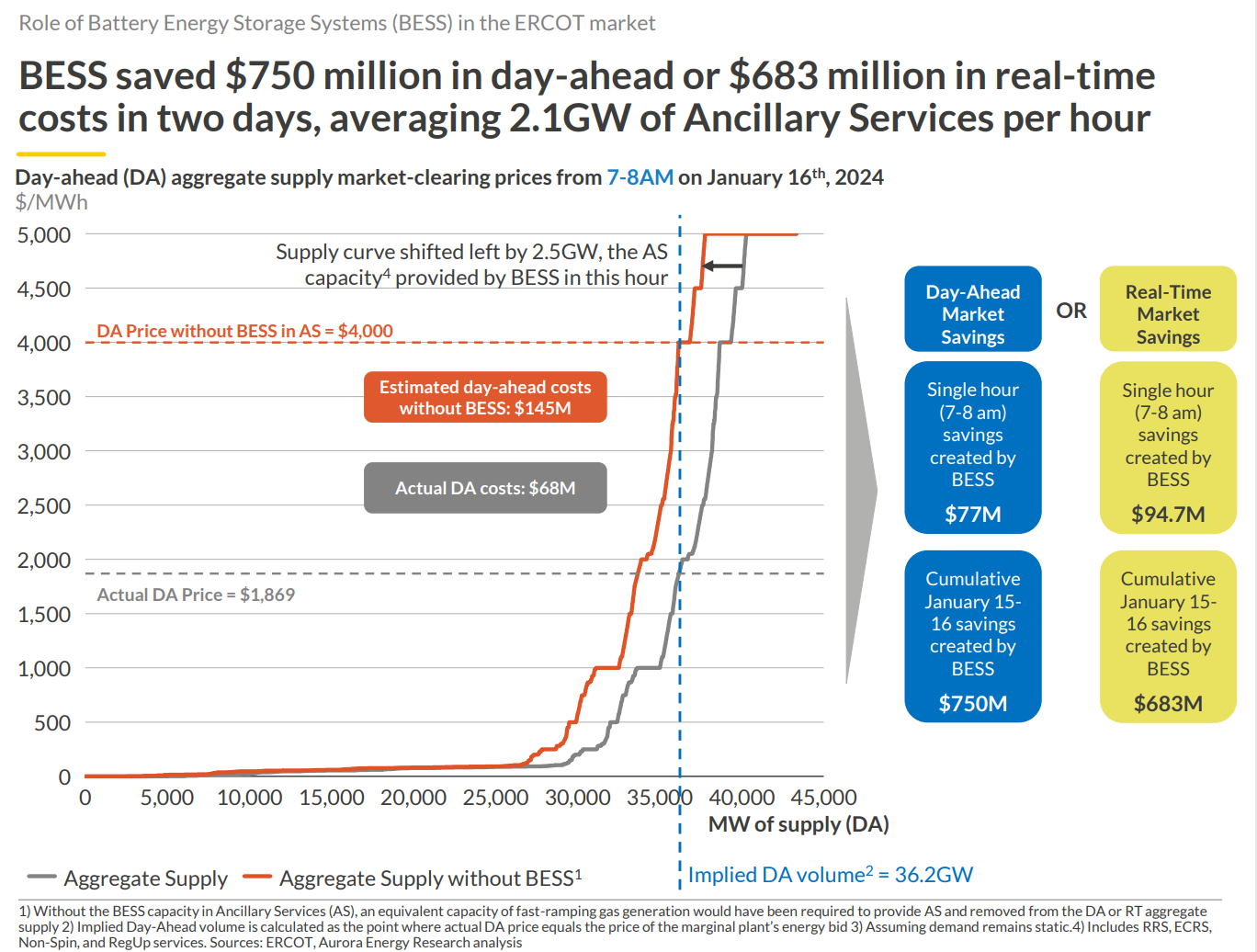
Increasing Stability and Driving Savings: Battery Storage in Texas with Olivier Beaufils
During Winter Storm Heather this past year, battery storage reduced power costs in Texas by $750 million. This finding was only one of many in a report released by Aurora Energy Research this May, “The Role of Battery Energy Storage Systems in the ERCOT Market.” The report is one of the most in-depth analyses to date on the impact of battery storage, which has grown exponentially in Texas over the past decade, even surpassing growth in markets with major battery subsidies. In today’s episode, I’m joined by Olivier Beaufils, one of the report’s primary authors and the lead of the ERCOT Market team at Aurora Energy Research, a company focused on providing power market forecasting and analytics for energy markets around the world.Olivier was gracious enough to go through the key takeaways of the report and break down its findings with me. We discussed how the study calculated system’s savings during Heather, whether these types of savings can be expected in the future, how batteries are pairing with natural gas and renewables in the ERCOT market, the potential of long-duration energy storage, and more. Olivier also detailed what happened in Texas on September 6th – wherein ERCOT called an Energy Emergency Alert level 2, the first time it did that since Winter Storm Uri – and how batteries kept the system running and Texans’ lights on.We recorded this episode prior to Hurricane Beryl's impact on Texas. While we don’t discuss its specific impacts and aftermath here, we are preparing a series of episodes in the coming weeks that will focus on Hurricane Beryl, its effect on Houston, and strategies for improving Texas’s resilience against future hurricanes and extreme weather events. Despite not directly addressing Beryl, this episode remains pertinent to these conversations, particularly as home battery storage systems are crucial tools for community safety and resilience.I learned a lot from this report and from the conversation. After listening, I encourage you to take a look at the report as well; it is free and publicly available. Thank you for being a listener and don’t forget to like, share, and leave a five star review wherever you listen to podcasts.Timestamps3:17 - About Aurora Energy Research4:25 - Summary and key takeaways from Aurora’s Battery Energy Storage Systems in the ERCOT Market report9:02 - Pace in battery storage growth: what spurred it12:18 - How Aurora calculated battery savings during Winter Storm Heather and if this level of savings is typical17:57 - Batteries as ancillary services 21:55 - Shift in scarcity hours in TX, the duck curve, and how batteries are helping solve peak demand challenges28:09 - Findings on peaker plants, natural gas, and the need for flexible resources33:05 - Demand growth37:42 - What happened on September 6th and how batteries kept the system running41:23 - Long duration energy storageShow Notes:Aurora Energy ResearchRole of Battery Energy Storage Systems (BESS) in the ERCOT Market - report from Aurora Energy ResearchEnergy Unplugged Podcast from Aurora Energy Research This is a public episode. If you'd like to discuss this with other subscribers or get access to bonus episodes, visit www.texasenergyandpower.com/subscribe
The Changing Shape of the Grid with Hala Ballouz
I speak to energy experts from all facets of the energy industry and the one thing that keeps coming through in these conversations these days is the need for better planning to deal with rising load growth, extreme weather, higher costs and emissions. As I think about these problems, I try to think of people who I can learn from and that will help my audience understand these issues as well.My guest on the podcast this week, Hala Ballouz, has as much experience with these challenges as anyone I know. She's the president and CEO of Electric Power Engineers (EPE), and she's built a rapidly growing team of over 200 power system engineers and energy professionals with a singular focus, holistically forming the electric grid to enable a resilient, affordable, and carbon-free energy future. Hala envisions a future grid that is decentralized, incorporating microgrids, distributed generation, demand response, grid edge technologies, all enabling consumers to participate in energy markets and contribute to system reliability and resiliency. It's a very compelling and exciting vision and few describe it better than Hala. In our conversation, we talked about the need for better planning to integrate large loads and new supply and demand resources on the grid including AI data centers, but also distributed energy resources and electric vehicles, and other grid edge technologies on the demand side. We explore the challenges and opportunities in building a clean and resilient energy grid, highlighting necessary technology and regulatory innovation needed to address congestion and curtailment issues. Hala also underscores something that isn't often talked about in these kinds of conversations. It's not all technology and technocratic fixes. There's also an increasing importance and significance for stakeholder engagement and the need to redefine reliability and resiliency requirements in ways that are meaningful and understandable to the general public. I really enjoyed this conversation and I can’t wait to hear your thoughts about it. Don’t forget to check the show notes where we have links to Hala’s writing!Timestamps3:48 - Hala’s background, about Electric Power Engineers (EPE), and women in engineering6:20 - Changes to the ERCOT grid in the past 20 years9:40 - Expected loads and opportunities for load shifting 16:11 - What is the grid edge and decentralization of the grid20:04 - Reimagining the grid, bi-directional power flow, and distributed energy sources (DERs)23:35 - What are the barriers for tapping into DERs and increasing reliability and the importance of better grid planning29:27 - Importance of and trends in distribution resource planning, including “8760” analyses34:46 - Optimizing current transmission and planning for the future40:25 - Utilities turning down new loads outside the ERCOT market, how to avoid this in Texas, and challenges to central planning46:47 - Grid enhancing technologies (GETs)48:23 - Storage as a transmission and distribution asset 54:09 - Solving transmission congestion59:01 - Hydrogen1:00:13 - Existing government policies and regulatory structures that need to change for a reliable, clean grid and the importance of stakeholder engagement1:03:26 - Hala’s vision for the grid in 5 to 10 years1:08:13 - The need for strategy to reduce costs and engage ratepayers Show NotesHala’s Engineering Transition NewsletterA Thousand Points of Light by Hala BallouzElectric Power Engineers (EPE) This is a public episode. If you'd like to discuss this with other subscribers or get access to bonus episodes, visit www.texasenergyandpower.com/subscribe
The Past, Present, and Future of the Texas Energy Market with Former PUC Chair Becky Klein (reupload)
This is a free preview of a paid episode. To hear more, visit www.texasenergyandpower.comHi All: We initially distributed this episode on Wednesday. Unfortunately, due to technical issues with Substack, some of our subscribers did not receive it. If you've already downloaded the episode, there's no need to do so again. For those who have yet to receive it, we apologize for the delay and hope you enjoy the episode.To understand what's happening, you have to know how you got there. You need a sense of the history. That's one of the reasons I've enjoyed interviewing past Commissioners and Chairs of the Texas Public Utility Commission (PUC). At the Texas Power Podcast, I interviewed Pat Wood and Barry Smitherman, both former PUC Chairs. Here at Energy Capital, the very first episode I hosted Commissioner Will McAdams, who had just stepped down from the PUC a few weeks prior. These episodes remain incredibly valuable for anyone interested in Texas energy. Today, I have the pleasure of speaking with Becky Klein, who served as a Commissioner on the Public Utility Commission from 2001 to 2002 and as Chair from 2002 to 2004. Her tenure was pivotal as the restructuring of the Texas electricity market, initiated by the legislature in 1999, was being implemented. Becky played a critical role in this transformative period.After leaving the PUC, she served as both Vice Chair and Chair of the Lower Colorado River Authority, which owns several gigawatts of power plants. She is also an active board member for various water utility and energy companies And if all that isn't enough, Becky founded and serves on the board of the Texas Energy Poverty Research Institute (TEPRI), an organization dedicated to reducing Texans’ energy burden and ensuring energy is accessible and affordable for all Texans.There are few people better situated to help understand what's happening today, especially as we grapple with rising demand, a rapidly changing resource mix, evolving market design, technology breakthroughs, an affordability crisis, and much more. During the episode, Becky shared her past work on Texas energy and regulatory matters and her vision for the future of the Texas grid. We discussed her work with TEPRI and considered the challenges and opportunities in the energy transition to alleviate energy poverty. We also explored strategies for ensuring reliable electricity access, enhancing affordability, and the evolving role of oil and gas within the broader energy landscape.This podcast is for paid subscribers only and only the free preview will be listed publicly on podcast apps. For details on how to listen to the full episode on your favorite podcast app, please refer to this information from Substack. If you like the episode, please don’t forget to recommend, like, and share on Substack, Apple Podcasts, Spotify, or wherever you listen. I look forward to hearing your thoughts; don’t hesitate to share them with me and fellow listeners in the comments. Thank you for listening and for being a subscriber! Transcript, show notes, and timestamps are below.Timestamps3:02 - Becky’s background7:26 - How Texas’ market restructuring came to be 8:49 - The central problems facing the Texas grid and the importance of first principles 11:58 - What Becky believes are the principles guiding the ERCOT market today 14:39 - Becky’s views on what caused Winter Storm Uri and how that shapes our energy market and grid goals17:33 - What would are the most important things we can do to improve reliability and affordability23:49 - The need for more clean dispatchable or clean firm resources, energy efficiency, and operational flexibility26:48 - How can the energy transition benefit everyone not just some and the work of the Texas Energy and Poverty Institute (TEPRI)37:17 - What are the metrics we should use to assess the impact of energy efficiency programs for low-income households; Energy Poverty Index41:10 - Should Texas reinstate the System Benefit Fund?45:48 - TEPRI’s new program with the Bransfield Community Development Corporation48:00 - Current and expected trends in oil and gas during the energy transitionShow NotesThe Texas Energy and Poverty Research Institute (TEPRI)2024 Community Voices in Energy Survey – Statewide Report from TEPRIFebruary 2023 Senate Business and Commerce Hearing featuring testimony from former PUC Chair Becky Klein. Her testimony begins at 7:51.Burden of the global energy price crisis on households. Study published in Nature Energy.EIA Energy Insecurity Data
The Past, Present, and Future of the Texas Energy Market with Former PUC Chair Becky Klein
This is a free preview of a paid episode. To hear more, visit www.texasenergyandpower.comTo understand what's happening, you have to know how you got there. You need a sense of the history. That's one of the reasons I've enjoyed interviewing past Commissioners and Chairs of the Texas Public Utility Commission (PUC). At the Texas Power Podcast, I interviewed Pat Wood and Barry Smitherman, both former PUC Chairs. Here at Energy Capital, the very first episode I hosted Commissioner Will McAdams, who had just stepped down from the PUC a few weeks prior. These episodes remain incredibly valuable for anyone interested in Texas energy.Today, I have the pleasure of speaking with Becky Klein, who served as a Commissioner on the Public Utility Commission from 2001 to 2002 and as Chair from 2002 to 2004. Her tenure was pivotal as the restructuring of the Texas electricity market, initiated by the legislature in 1999, was being implemented. Becky played a critical role in this transformative period.After leaving the PUC, she served as both Vice Chair and Chair of the Lower Colorado River Authority, which owns several gigawatts of power plants. She is also an active board member for various water utility and energy companies And if all that isn't enough, Becky founded and serves on the board of the Texas Energy Poverty Research Institute (TEPRI), an organization dedicated to reducing Texans’ energy burden and ensuring energy is accessible and affordable for all Texans.There are few people better situated to help understand what's happening today, especially as we grapple with rising demand, a rapidly changing resource mix, evolving market design, technology breakthroughs, an affordability crisis, and much more. During the episode, Becky shared her past work on Texas energy and regulatory matters and her vision for the future of the Texas grid. We discussed her work with TEPRI and considered the challenges and opportunities in the energy transition to alleviate energy poverty. We also explored strategies for ensuring reliable electricity access, enhancing affordability, and the evolving role of oil and gas within the broader energy landscape.This podcast is for paid subscribers only and only the free preview will be listed publicly on podcast apps. For details on how to listen to the full episode on your favorite podcast app, please refer to this information from Substack. If you like the episode, please don’t forget to recommend, like, and share on Substack, Apple Podcasts, Spotify, or wherever you listen. I look forward to hearing your thoughts; don’t hesitate to share them with me and fellow listeners in the comments. Thank you for listening and for being a subscriber! Transcript, show notes, and timestamps are below.Timestamps3:02 - Becky’s background7:26 - How Texas’ market restructuring came to be 8:49 - The central problems facing the Texas grid and the importance of first principles 11:58 - What Becky believes are the principles guiding the ERCOT market today 14:39 - Becky’s views on what caused Winter Storm Uri and how that shapes our energy market and grid goals17:33 - What would are the most important things we can do to improve reliability and affordability23:49 - The need for more clean dispatchable or clean firm resources, energy efficiency, and operational flexibility26:48 - How can the energy transition benefit everyone not just some and the work of the Texas Energy and Poverty Institute (TEPRI)37:17 - What are the metrics we should use to assess the impact of energy efficiency programs for low-income households; Energy Poverty Index41:10 - Should Texas reinstate the System Benefit Fund?45:48 - TEPRI’s new program with the Bransfield Community Development Corporation48:00 - Current and expected trends in oil and gas during the energy transitionShow NotesThe Texas Energy and Poverty Research Institute (TEPRI)2024 Community Voices in Energy Survey – Statewide Report from TEPRIFebruary 2023 Senate Business and Commerce Hearing featuring testimony from former PUC Chair Becky Klein. Her testimony begins at 7:51.Burden of the global energy price crisis on households. Study published in Nature Energy.EIA Energy Insecurity Data
Turning Waste Into Power: Crusoe's Cully Cavness on Revolutionizing Energy Use at Data Centers
In April, ERCOT's Regional Planning Group published projections that ERCOT's electricity demand may double by 2030 compared to 2021. Initially anticipating a peak demand of about 90 gigawatts by the end of the decade, ERCOT now expects a staggering 152 gigawatts, up from approximately 75 gigawatts at the beginning of the decade. This would mark the largest growth rate in the decade since the post-World War II era. There are many factors driving the surge, but one of the most significant is the rise of Bitcoin mining and AI data centers. The size and speed and scale of AI data center growth that has emerged over the last year has been surprising to say the least, even to close industry observers.However, one company foresaw this trend and built its business model around addressing data center energy needs. That company is Crusoe and on today’s episode I had the pleasure of speaking with Cully Cavness, Crusoe’s co-founder, President, and Chief Operating Officer. He has a robust background in energy and, along with Chase Lochmiller, founded Crusoe in 2018.What sets Crusoe apart is their innovative approach to siting and powering data centers. They locate them near oil and gas drilling operations that have a lot of venting and flaring of methane gas. They also site data centers near constrained renewable developments. This means that they are using energy or power that would otherwise be merely wasted and instead converting it into useful electricity to power data centers. With the example of flaring and venting, this can reduce emissions by as much as 70%.I talked about all of this with Cully and more, including how data centers could be flexible loads, the efficiency of AI chips, reducing emissions through methane flaring. It was a fascinating conversation and I hope you enjoy it.I look forward to hearing your thoughts on this episode and on geothermal energy. Thank you for listening and for being a subscriber!Timestamps2:47 - About Cully and Crusoe8:47 - Crusoe digital flare mitigation (DFM) strategy and how they are reducing emissions14:54 - Crusoe’s digital renewables optimization (DRO), negative pricing, and how Crusoe is managing stranded wind power20:46 - Expected and current loads and load growth from data centers27:45 - Flexibility of data center demand and AI; training vs. inference functions in AI37:36 - Opportunities for greater efficiencies in AI chips40:34 - Trends in carbon accounting; location matching42:52 - Tally’s Law and the Energy Transition49:22 - Cully’s thoughts on needed policy/regulation changes for the energy transitionShow NotesCrusoe Energy Crusoe Careers PageTally’s Law and the Energy Transition by Cully Cavness The Extraction State by Charles BlanchardAI, Data Centers and Energy, Interview with Michael Terrell - Redefining Energy PodcastAI is poised to drive 160% increase in data center power demand - Report from Goldman SachsNuclear? Perhaps! - Interview with Jigar Shah on the Volts PodcastTexas Advanced Nuclear Reactor Working Group at the Texas Public Utility CommissionThe Energy Capital Podcast with Former PUC Commissioner Will McAdams"The Name of the Game is Flexibility," a Conversation with ERCOT's Pablo VegasTranscriptDoug Lewin Cully Cavness, welcome to the Energy Capital Podcast.Cully CavnessThank you so much for having me.Doug LewinReally looking forward to this conversation. Crusoe is really a fascinating company. You guys are doing some really innovative, interesting, and different things. So why don't we start with you, Cully? Tell us a little bit about your background and about Crusoe. Explain to the audience a little bit who you guys are as a company, if you would.Cully CavnessGreat. I'm excited to be here and share a little bit about what we're doing at Crusoe, where we came from, where we're going. In terms of my personal background, I grew up in Denver, Colorado. I went to Middlebury College in Vermont to study and I studied geology and economics thinking I was gonna go into oil and gas. But at Middlebury, anybody who's familiar with the school will know that the climate conversation was a huge theme and a huge focus in that student body. And it made a big impact on me.And so I actually, right after I graduated from college, I was awarded a Thomas Watson Fellowship, which is a program where you're sort of banished from your home country for a year and you get to go study whatever subject you really want to study for that year. And I wanted to think about this sort of morality of energy and the balance between energy and the economy and the environment. And so I was really fortunate to be able to go to Iceland where I worked with a lot of geothermal power and hydro producers. I went to China where I was much closer to coal. And then I went to Spain. I worked with wind and solar developers for the CFO of a large renewables group there. And then I went to Argentina and I worked with a hydroelectric engineer. And I got to really see a pretty broad survey of the glob
Drilling for Geothermal Power and Storage with Cindy Taff
As Texas navigates an era of rapidly rising energy demand, the quest for clean, reliable, and affordable energy sources becomes increasingly critical. Among the many options, there's one resource that hasn't received nearly enough attention: geothermal energy, specifically enhanced geothermal systems (EGS).EGS differs from conventional geothermal energy, which relies on specific geographic conditions found in places like Kenya, Iceland, or the Western United States. Instead, EGS creates permeability and a reservoir deep within the earth using advanced drilling and fracturing techniques. Texas, with its abundant heat and advanced drilling technology, is uniquely positioned to harness this innovative energy source.This week’s guest, Cindy Taff, the CEO of Sage Geosystems — a pioneering enhanced geothermal energy and storage company based in Houston — is the perfect expert to demystify EGS. Sage Geosystems is at the forefront of leveraging technology and expertise from the oil and gas industry to tap into the vast geothermal potential beneath our feet.I was particularly excited to speak with Cindy for two key reasons. First, Sage's geothermal energy storage systems represent a groundbreaking approach to long-duration energy storage. Second, Cindy’s extensive background in the oil and gas industry, combined with her current leadership in geothermal, underscores the significant potential of geothermal energy in Texas. Our skilled workforce is already adept in the necessary processes for developing and managing enhanced geothermal systems, making it a natural extension of Texas’ existing energy expertise.In our conversation, Cindy breaks down the different types of geothermal technologies, explains how Sage’s enhanced geothermal power and storage systems operate, and identifies regions in Texas with the greatest EGS potential. We also explore how the oil and gas industry’s knowledge and investment can support enhanced geothermal systems, the economic benefits of geothermal energy, the steps needed for geothermal to become cost-competitive at a commercial scale, and much more.I look forward to hearing your thoughts on this episode and on geothermal energy. Thank you for listening and for being a subscriber!Timestamps3:01 - About Sage and the different types of geothermal6:43 - Benefits of enhanced geothermal systems (EGS); the limits of traditional geothermal 9:31 - Sage’s Geothermal energy storage systems, explained18:28 - Parts of Texas that are particularly well suited for geothermal20:01 - Induced seismicity is low risk for geothermal; availability of public data22:30 - Low water use from geothermal23:30 - Where Sage is deploying and projects they’re focusing on in the near future27:46 - Intersection of geothermal with oil and gas industry in terms of workforce and business 31:15 - Organic Rankine cycle, explained32:48 - Potential for greater investment in geothermal by oil and gas, as compared to other renewable forms of energy36:01 - Current costs for geothermal power and timeline for reducing its cost curve38:41 - Geothermal and land use; benefits for landowners41:23 - Texas Energy Fund and geothermal44:22 - Power needs for geothermal production and interconnecting operations to the grid47:22 - Major policy and regulatory issues for Sage and geothermal50:22 - The Inflation Reduction Act and geothermal 53:25 - Cindy’s thoughts on where geothermal will be in 10 yearsShow NotesSage GeosystemsThe Future of Geothermal in Texas reportTexas Geothermal Energy Alliance (TXGEA)Southwest Research InstituteBedrock Energy unveils geothermal project that will heat, cool Penn Field office buildingTexNet Earthquake CatalogTranscriptDoug LewinCindy Taff, thanks for being with us and welcome to the Energy Capital Podcast.Cindy TaffThank you, Doug. I appreciate you having me.Doug LewinSo excited to talk about geothermal. This is a topic I love talking about, very bullish on the sort of suite of technologies and particularly excited about Sage Geosystems and keep seeing lots of good news coming out about your company. So excited to dive in, but why don't we just start there actually a little bit. Tell us a little bit about Sage Geosystems. And if you would, Cindy, just kind of explain for the audience, I want to kind of start at a high level about what exactly is enhanced geothermal as it's often called. There's different names for it, but enhanced geothermal systems versus sort of traditional geothermal and there's even like geothermal heating and cooling. Could you just kind of unpack a little bit the different flavors of geothermal and then explain to us kind of where Sage is situated within that?Cindy TaffYeah, no, great, Doug. I appreciate that opportunity. So, Sage, let me start with Sage. Sage is a startup company. We're doing energy storage and geothermal deep in the earth. But to your point, if you look at geothermal generation around the world, which is about 16 gigawatts, it is all from traditional, what they call h
Measuring and Valuing Energy Efficiency and DERs with Carmen Best
One of the hardest things about energy efficiency is measuring it. It's difficult to do, but with increasingly sophisticated software platforms, it's getting easier and more precise. As homes and buildings begin to use more electricity for things like heat pumps and electric vehicles, and as solar and wind power continue to grow, there will be many times a day and most times of the year when it will actually be energy efficient to use more electricity. But at certain times and places, we'll need to use less or even send power from solar and storage, and even the storage in electric vehicles, at homes and businesses back to the grid. My guest this week was Carmen Best, Chief Policy Officer at Recurve, a company working to measure the time and locational benefits of flexible demand in the most rigorous way possible by actually measuring the end use changes and power consumed at the meter. Grid operators and policymakers are increasingly focused on dispatchable generation in Texas, sources they can turn on with a push of a button. But what they should be focused on is not only dispatchable generation, but dispatchable resources of all kinds, including demand side resources.To have confidence in them though, grid operators and utilities have to be confident they're deployed at the right time and in the right place. In this podcast, you'll learn the policies needed to truly scale demand side resources, including energy efficiency, demand response, and solar and storage, and how a leading company in this space is approaching the challenges. Carmen has spent over 20 years working on energy efficiency with much of that time focused on how to evaluate, measure, and verify energy savings.She's one of the leading experts on demand flexibility, energy efficiency, and the policies needed to make sure all demand side resources can contribute to reliability and affordability. I learn something every time I talk to Carmen, and this podcast was no exception. This episode is particularly well timed as today was the deadline for comments in response to the PUC’s energy efficiency questions. I answered some of the questions in this article. You can see the responses of over 20 commenters, including Recurve, here. I look forward to hearing your thoughts about this episode and about measuring and valuing energy efficiency. As always, thank you for listening and for being a subscriber! Transcript, show notes, and timestamps are below.Timestamps4:00 - About Recurve5:00 - The challenge of measuring demand reductions and Recurve’s approach to solving that problem9:32 - How Recurve’s data can be used by system operators to manage distributed resources, improve system reliability, and empower consumers13:41 - The link between energy efficiency and demand response18:57 - How can we be sure energy efficiency delivers value?23:33 - System benefit targets vs. savings targets; how this impacts consumers, costs, and competition.27:42 - Shifting energy efficiency from a utility program to a competitive market35:06 - Using energy efficiency measurement pilots to better determine costs and benefits45:17 - Texas’ ADER (Aggregated Distributed Energy Resource) Task Force; the role and potential of demand-side resources in ancillary services markets52:35 - Utility shutoffs. Challenges and opportunities in programs targeted low-income customers 58:34 - Policies to prioritize to increase reliability and affordabilityShow NotesRecurve FLEXMarketMission:dataSmart Thermostat Pilot filing with the Texas PUCEnergy Efficiency Questions filing with the Texas PUCProject 56517: The energy efficiency docket (here you can see all the responses to the PUC’s questions)The PUC’s Efficiency Questions: A Potential Turning Point for Grid ReliabilityCommunity Voices in Energy Survey: Texas Statewide Report from the Texas Energy and Poverty Research Institute (TEPRI)TranscriptDoug LewinCarmen Best, welcome to the Energy Capital Podcast.Carmen BestThanks for having me, Doug.Doug LewinThanks so much for doing this. I am a big fan of yours and the work you do and of Recurve, have been following Recurve for a long time, but I suspect some of our audience will not yet be familiar with Recurve and what it does. Can you just start us off by talking a little bit about the company and what it does?Carmen BestYeah, sure. So, Recurve is a company that is focused on analytics and we're a software company. And we're contributing to the clean energy future by looking at energy consumption patterns in effect. So, changes in energy consumption are really important to distributed energy resources and demand flexibility. And we kind of got our start in the energy efficiency space. And one of the problems we were trying to solve was having standardized measurement and verification. And that our open source products have kind of evolved to be a broader swath of solutions that include being able to forecast where demand resources are going to be best suited for the grid, be that distribut
Creating a Distributed Battery Network with Zach Dell
For this episode, I had the pleasure of interviewing Zach Dell, who recently launched Base Power Company, the first and only retail electric provider in Texas to offer customers a home battery, monthly energy service, and installation all in one package. This episode demonstrates one of the things I most love about Texas’ competitive energy market. It has its flaws for sure, but we are seeing a lot of innovative offerings. And in that category, Base Power stands out. The goal of Base Power is to essentially operate as a Virtual Power Plant (VPP). When the grid is up and running, the batteries installed in participating homes will improve grid stability and lower costs. And when the grid goes down, these batteries will provide customers with backup power, avoiding outages or, in the case of a major outage like Winter Storm Uri, shortening their magnitude and duration. Just yesterday, ERCOT proposed generation hubs in far flung parts of the state. We should have storage hubs throughout population centers of the state. And the private market, with the right policy and regulatory framework, can drive the investment instead of government. People often forget that with the prominent exception of Winter Storm Uri, the vast majority of outages, over 90%, happened at the distribution level.When increasingly dangerous storms, hurricanes, wildfires hit the distribution grid, no amount of large central station generation will keep the power on; that will take distributed resources located at homes and buildings. Increasingly, homes and buildings will become part of the grid and part of our resource mix. During the interview, Zach and I discussed Base Power and its business model, what Base is offering consumers and how their home battery program works. We spoke about the challenges of entering a highly competitive market and how BASE is unique in its goal to build a distributed network of residential batteries. We also talked about the potential benefits of AI to deploy the batteries, BASE's software for managing the batteries, how current incentives and system costs impact companies working to develop distributed energy resources, the possibilities for reforming or a cut to be more conducive to dispatchable distributed batteries, and much more.If you like the episode, please don’t forget to recommend, like, and share on Substack, Apple Podcasts, Spotify, or wherever you listen. I look forward to hearing your thoughts. Thank you for listening and for being a subscriber! Transcript, show notes, and timestamps are below.Timestamps2:47 - About Base and its battery program6:26 - Why launch a retail electric provider (REP) business in the ERCOT market?8:56 - Initial areas Base serves and status of their rollout 11:26 - The batteries Base uses and their capacity13:19 - How does Base Power’s battery offering compare to other options for home reliability and backup power17:56 - Engaging customers in a competitive market, potential for working with small municipal utilities and co-ops23:42 - Building a distributed network with residential batteries, working in ancillary markets, and reaching low-income households27:59 - Blackouts and batteries31:34 - Challenges encountered in launching Base33:38 - AI’s potential benefits to the grid35:47 - Zach vision for the grid in 5 to 10 years38:28 - How regulatory structures and market incentives impact DER companies 42:25 - Possible regulatory and pricing changes that would benefit DER owners46:06 - Impact of the IRA46:44 - Energy addition rather than transition; rethinking categorizing batteries as supplyShow NotesBase Power WebsiteBase’s Twitter and LinkedInElectric Panel Upgrade Tax CreditElectric Co-Ops and Local Power with John PadalinoDoug LewinZach Dell, welcome to the Energy Capital Podcast.Zach DellThanks Doug, I'm excited to be on.Doug LewinSo excited for this conversation, really excited to learn more about the company. This episode is a little different than most I've done because you're CEO of a startup, a true startup, a few months in, and I'm really intrigued by the company and by your vision. Can you explain for our audience a little bit what Base Power is and how you think it's going to drive change both to the power grid and the power industry and to consumers' experience?Zach DellWell, I'm excited to join you on the podcast, Doug. Thanks for having me. Base is an electricity provider and battery developer in Texas. We started the company to get more storage on the grid faster. When Texans switched to Base, we install a free battery to protect their home from power outages. We own and operate that battery and use it to support the grid when it's up. And when the grid goes down, you get to use the battery to power your home.So really we're bringing home storage to those who can't afford or don't want to pay $20,000 plus for a traditional battery and generator setup. So we charge a $2,000 install fee roughly 10 to 20 times less than a traditional equivalent power home batt
Oil and Gas in the Energy Transition with Jane Stricker
This is a free preview of a paid episode. To hear more, visit www.texasenergyandpower.comIn 2020, at the Annual Meeting of the Greater Houston Partnership – the city’s powerful Chamber of Commerce and economic development organization with a heavy concentration of oil and gas companies – Bobby Tudor, the incoming Chairman of the Board, told the membership: “The oil and gas business is not likely to be the same engine for Houston’s growth over the next 25 years, that it’s been in the past 25 years.” He added further: “We can lead the energy transition. There is fantastic business opportunity for us in this effort; it’s necessary and it’s the right thing to do. Houston is about making things happen, and we can lead this energy transition. We should be driving the discussion… “As any person who follows Texas politics and the political economy of the state, Tudor’s speech signaled a major shift. An organization that represented some of the most influential oil and gas interests in the state made clear it would no longer be fighting the energy transition; instead, it decided to lead it. Following the speech, the Partnership launched the Houston Energy Transition Initiative or HETI to build on traditional energy skills and systems to leverage Houston's industry leadership to accelerate global solutions for an energy-abundant, low-carbon future.My guest today, Jane Stricker, is the Executive Director of the Houston Energy Transition Initiative where she leads a coalition of industry, academia and community partners to ensure 4the long-term economic competitiveness and advancement of the Houston region towards a net-zero emissions future. Prior to joining the HETI, Jane spent over 20 years at BP in a variety of roles and thus has considerable expertise in engaging and transitioning the oil and gas industries. During the interview, Jane and I discussed how the skills, knowledge, and resources from the oil and gas industry – and its workforce – can be leveraged to advance the clean energy transition. We dug into the opportunities for job creation, the need for workforce development and training, the potential and challenges of hydrogen hubs, the importance of engaging and responding to the communities that have been disproportionately harmed by fossil fuels, the necessity of innovation in business models and technology, and much more. This was a great discussion and I hope you enjoy it and learn a lot about Houston’s role, its risks, and its opportunities in the energy transition. This podcast is for paid subscribers only and only the free preview will be listed publicly on podcast apps. For details on how to listen to the full episode on your favorite podcast app, please refer to this information from Substack. If you like the episode, please don’t forget to recommend, like, and share on Substack, Apple Podcasts, Spotify, or wherever you listen. I look forward to hearing your thoughts; don’t hesitate to share them with me and fellow listeners in the comments. Thank you for listening and for being a subscriber! Transcript, show notes, and timestamps are below.Timestamps4:11 - About the Houston Energy Transition Initiative 9:31 - Opportunity and responsibility of Houston in the Energy Transition12:42 - Expertise, knowledge, and skills from the oil and gas industry and how they can be applied to advance clean energy and the energy transition20:18 - Why the Houston area has particular potential for the energy transition and technologies that are especially important23:29 - Hydrogen hubs and the role of hydrogen in the energy transition28:53 - The need for community engagement in the development of hydrogen hubs and the Climate Equity Framework35:14 - The need for innovation in all aspects of the work: business, communications, regulatory, and technology etc.36:41 - Electrifying the Houston region and expected demand growth41:11 - Industrial electrification and its impact on demand growth42:32 - Advanced nuclear44:06 - Collaboration between oil/gas industry and renewables in Houston; opportunities for economic and job growth from renewables48:08 - Reducing scope 1 and 2 emissions with renewables50:19 - Jobs, workforce development, transitioning workers from oil and gas to renewable jobs, and engaging young peopleShow NotesHouston Energy Transition Initiative (HETI)Houston Energy Transition Initiative MembersGreater Houston PartnershipClimate Equity Framework and Toolkit for an Equitable Energy Transition in Greater HoustonPerspective on the Energy Transition Capital of the World: Houston’s Opportunity to Win by Catalyzing Capital Formation - Report from McKinseyThe Oil and Gas Industry in Net Zero Transitions, International Energy Agency reportVideo and transcript of Bobby Tudor’s 2020 speech at the Greater Houston Partnership’s Annual MeetingDistributed Energy Resources and "all-of-the-above" energy solutions with CenterPoint's Jason RyanHow Americans’ attitudes about climate change differ by generation, party and other