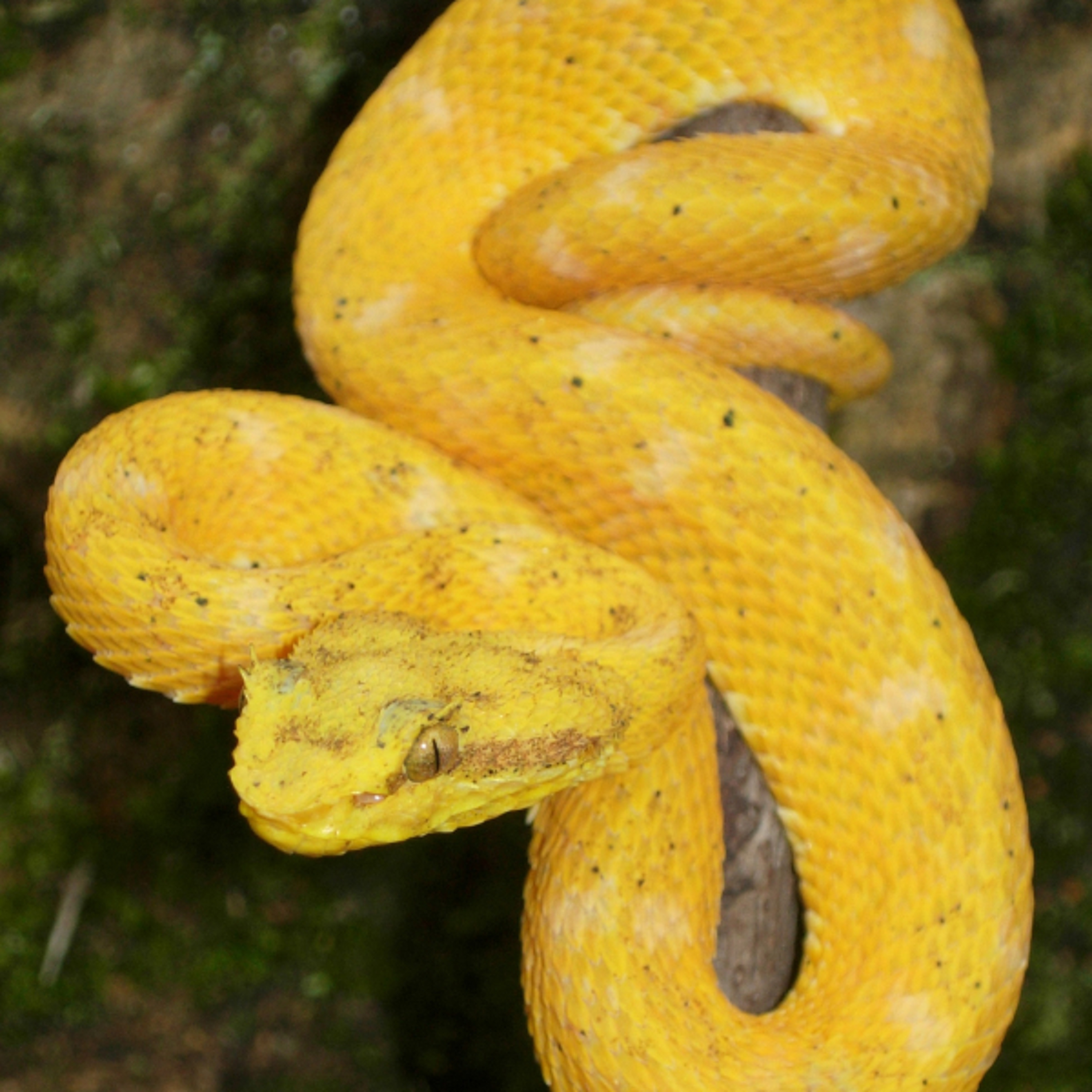
FE: Duncan Irschick talks to Coleman Sheehy on arboreality, gravitational stress & snake tail length
Duncan Irschick talks to Coleman M. Sheehy III a…
June 1, 20154m 59s
Audio is streamed directly from the publisher (feeds.soundcloud.com) as published in their RSS feed. Play Podcasts does not host this file. Rights-holders can request removal through the copyright & takedown page.
Show Notes
Duncan Irschick talks to Coleman M. Sheehy III about how arboreality and the associated gravitational stress on blood circulation have influenced the evolution of tail length in snakes. Since their evolutionary origins about 100 million years ago, snakes have diversified into a wide variety of aquatic, burrowing, terrestrial, and arboreal habitats where they experience various levels of gravitational stress on blood circulation. At the extremes, these stresses range from low to none in fully aquatic species living in essentially “weightless” environments, to relatively high in climbing species, especially arboreal forms specialized for climbing trees. As a result, arboreal snakes exhibit many adaptations for countering the effects of gravity on blood circulation, including relatively tight tissue compartments in the tail. However, patterns of tail length in relation to arboreal habitats and gravity have not been previously studied.
You can read the paper, "The evolution of tail length in snakes associated with different gravitational environments" here:
http://onlinelibrary.wiley.com/doi/10.1111/1365-2435.12472/abstract