
Audio is streamed directly from the publisher (media.blubrry.com) as published in their RSS feed. Play Podcasts does not host this file. Rights-holders can request removal through the copyright & takedown page.
Show Notes
 Since the 1960s, European seed law could best be summarised as “everything not forbidden is compulsory”. There is a common catalogue of registered seed varieties, and only varieties on the list are on sale. With a flat fee for registration, only the most lucrative varieties are registered, which suits big seed companies and tomato growers, but meant that lots of varieties with more niche appeal — for home gardeners or small growers — vanished. The law is now being relaxed a little, allowing trade in seeds of “organic heterogeneous material”. Diversity, to you and me.
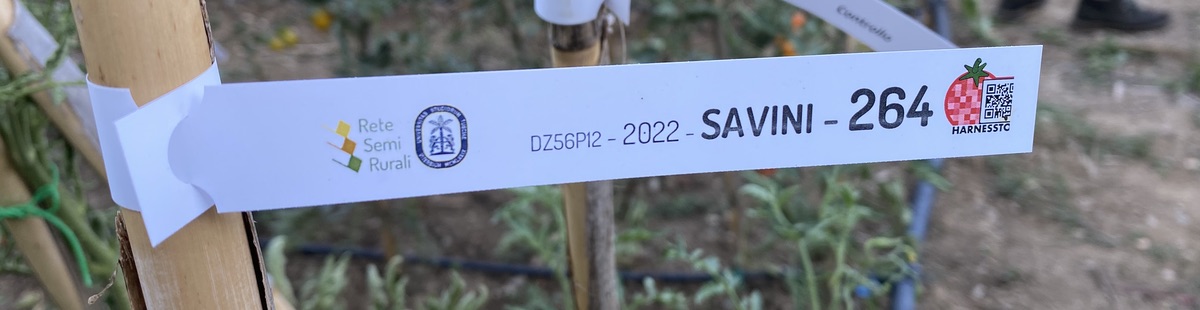
Organic growers and breeders have been preparing to take advantage of their new freedom by creating new, diverse populations, funded by the same EU. I went along to a field day to evaluate the fruits of a programme to breed new varieties of orange tomatoes.
Notes
- Andrea Mazzucato shares his research papers. He also works with Jose Blanca, who told me about Tomatoes: domestication and diversity in April 2022.
- Rete Semi Rurali’s website in Italian.
- I would love to send you to the website of the EU’s Harnesstom project, but as a result of enemy action is has been offline since September 26.
- Two good sources on tomato fruit colour are from Frogsleap Farm and something called the online tomato vine.
- If you are interested in seeds and plant breeding, there are plenty more episodes.
