
Dwarkesh Podcast
Deeply researched interviews
Dwarkesh Patel
Show overview
Dwarkesh Podcast has been publishing since 2020, and across the 6 years since has built a catalogue of 140 episodes. That works out to roughly 230 hours of audio in total. Releases follow a fortnightly cadence.
Episodes typically run over ninety minutes — most land between 1h 6m and 2h 8m — though episode length varies meaningfully from one episode to the next. None of the episodes are flagged explicit by the publisher. It is catalogued as a EN-language Technology show.
The show is actively publishing — the most recent episode landed 4 days ago, with 25 episodes already out so far this year. The busiest year was 2025, with 37 episodes published. Published by Dwarkesh Patel.
From the publisher
Deeply researched interviews www.dwarkesh.com
Latest Episodes
View all 140 episodesAI researchers debate how close we are to recursive self-improvement
Ajeya Cotra – Inside the OpenAI agent swarm that hacked Hugging Face
The rise and fall of agent civilizations
Dylan Patel – Anthropic & OpenAI will have most of the world’s compute by 2028
Ryan Greenblatt – Human level AIs might build runaway superintelligences by 2032
8 Predictions for the Era of Continual Learning
Why smarter AI models could drive up compute prices 10x
Adam Brown – A deep but accessible introduction to general relativity
Grant Sanderson – AI and the future of math
The next big breakthrough will be AIs learning on the job
The data black hole at the center of AI
Ada Palmer – Machiavelli is the most misunderstood thinker of all time
Alex Imas and Phil Trammell – What remains scarce after AGI?
Reiner Pope – Chip design from the bottom up
Eric Jang – Building AlphaGo from scratch
David Reich – Why the Bronze Age was an inflection point in human evolution
Reiner Pope – The math behind how LLMs are trained and served
Jensen Huang – TPU competition, why we should sell chips to China, & Nvidia’s supply chain moat
Michael Nielsen – How science actually progresses
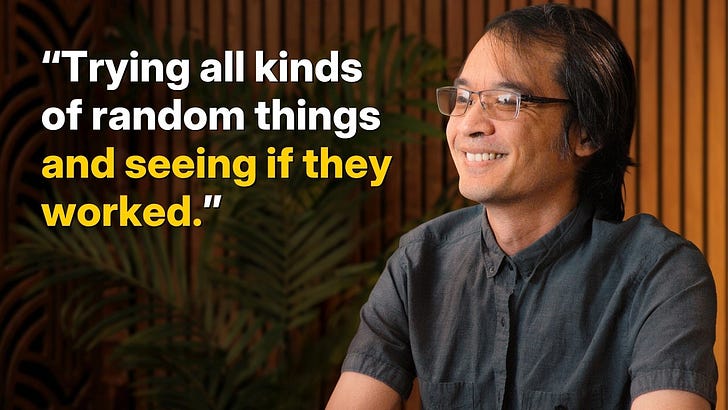
Terence Tao – Kepler, Newton, and the true nature of mathematical discovery
We begin the episode with the absolutely ingenious and surprising way in which Kepler discovered the laws of planetary motion.People sometimes say that AI will make especially fast progress at scientific discovery because of tight verification loops.But the story of how we discovered the shape of our solar system shows how the verification loop for correct ideas can be decades (or even millennia) long.During this time, what we know today as the better theory can actually make worse predictions.And the reasons it survives this epistemic hell is some mixture of judgment and heuristics that we don’t even understand well enough to actually articulate, much less codify into an RL loop. Hope you enjoy!Watch on YouTube; read the transcript.Sponsors- Jane Street loves challenging my audience with different creative puzzles. One of my listeners, Shawn, solved Jane Street’s ResNet challenge and posted a great walk-through on X. If you want to try one of these puzzles yourself, there’s one live now at janestreet.com/dwarkesh.- Labelbox can get you rubric-based evals, no matter your domain. These rubrics allow you to give your model feedback on all the dimensions you care about, so you can train how it thinks, not just what it thinks. Whatever you’re focused on—math, physics, finance, psychology or something else—Labelbox can help. Learn more at labelbox.com/dwarkesh.- Mercury just released a new feature called Insights. Insights summarizes your money in and out, showing you your biggest transactions and calling out anything worth paying attention to. It’s a super low-friction way to stay on top of your business. Learn more at mercury.com/insights.Timestamps(00:00:00) – Kepler was a high temperature LLM(00:11:44) – How would we know if there’s a new unifying concept within heaps of AI slop?(00:26:10) – The deductive overhang(00:30:31) – Selection bias in reported AI discoveries(00:46:43) – AI makes papers richer and broader, but not deeper(00:53:00) – If AI solves a problem, can humans get understanding out of it?(00:59:20) – We need a semi-formal language for the way that scientists actually talk to each other(01:09:48) – How Terry uses his time(01:17:05) – Human-AI hybrids will dominate math for a lot longer Get full access to Dwarkesh Podcast at www.dwarkesh.com/subscribe