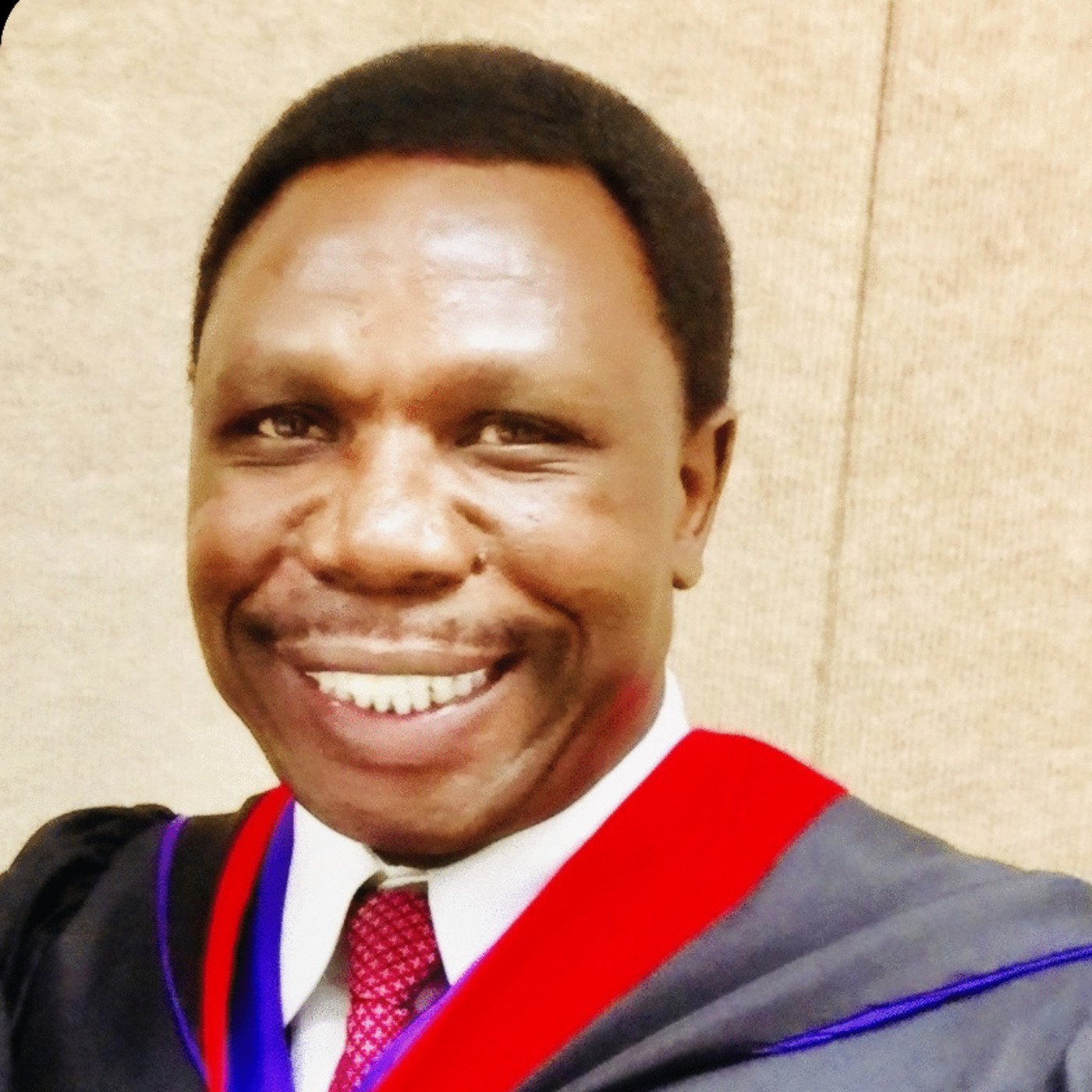
Dr. / Pastor Patrick Nyaga's Podcast
61 episodes — Page 2 of 2
Ep 6Episode 6: Understanding the Apostolic ministerial gift (Part 2).mp3
The four classes of apostles.#1. Jesus the Chief Apostle: Jesus Himself is the Chief Apostle and stands in a class by Himself. We find in Hebrews 3:1 that Jesus is called the Apostle (Verse 22) He is referred to as a High Priest of our profession. He was a "Sent One" from the Father to make atonement for the sins of the world. No other apostle (or sent one) will have that calling. #2. Apostles of the Lamb (Rev. 21:14). These were the twelve apostles who were eyewitnesses of Jesus' life, ministry, death, burial, and resurrection (Acts 1:21,22). This was their purpose - to witness Jesus' earthly ministry and to give testimony of His ministry to the world. No one, not even Paul, could be an apostle in the sense the original twelve were. #3. New Testament Apostles: This includes Paul and Barnabas as in Acts 14:14, The New Testament Apostles also includes several others like: (a) James the Lord's brother (Gal . 1:19).(b) Andronicus and Junia (Rom.16:7).(c) Silvanus and Timotheus (1 Thess. 1:1;2 :6). (d) Two unnamed brethren (2 Cor.8:23).*(e) Epaphroditus (Phil.2:25).* #4. Apostles of Today: It is important to note that there are no foundation-laying apostles today. The foundation has already been laid. The duty of the apostles of today is to build on the foundation already laid by Jesus Christ and by the apostles of the lamb. The work of the modern day apostle also includes founding and establishing local churches in the world; to go into new territory and pioneer churches where there are no churches.
Ep 13Episode 13: How to overcome the spirit of rejection
Many people who have faced rejection and abuse as a child, grow up with unresolved emotional wounds. Rejection causes emotional wounds, which if not cleansed and released, will grow and fester into spiritual wounds (such as unforgiveness, envy, blaming God, jealousy, etc.). Those spiritual wounds open us up to evil spirits which love to take advantage of this opportunity to invade us. The goal of the enemy is to get us built up with emotional baggage inside and negative feelings in our hearts against one another, ourselves, and God.Get your identity from God's Word!It is vital that we base our identity on who we are, upon what God's Word says about us. When we do, we become virtually immune from the devastating and hurtful effects of rejection. God promises never to leave or forsake us, so when our identity is based upon what He says of us, we can be assured that we're not going to face rejection coming from Him.
Ep 1Episode 1: How to deal with ought in your heart
"If thou bring thy gift to the altar, and there rememberest that thy brother hath ought against thee, leave there thy gift before the altar, and go thy way. First be reconciled to thy brother, and then come and offer thy gift." (Matthew 5:23-24, Mark 11:26)God cares how we treat others, especially other children of God. He does not accept worship from anyone who has done wrong to another and has not yet made it right. The greatest commandment is that we should love God with all our hearts and minds, but the second greatest commandment is that we should love our neighbors as ourselves (Matthew. 22:40).
Ep 5Episode 5: Understanding the Apostolic ministerial gift (Part 1)
Apart from the Lord Jesus Christ who is the chief apostle, there are some three main divisions in this apostle realm, which we must remember. Firstly, it is the foundational apostles who wrote the Scripture by inspiration of the Holy Spirit. These apostles lived no more after the first century and there can be no other apostle of this type. Secondly, there were the twelve apostles chosen by the Lord Jesus Himself and sent out in apostolic mission of whom Judas Iscariot became the betrayer of Jesus later and Matthias replaced him by the Lord's sovereign choice through casting lots (Luke 6:12-16; Acts 1:23-26; Prov 16:33). These twelve are unique in their calling that will be given to no other person because these twelve have been chosen to symbolically become the twelve foundations of the wall of the holy city of New Jerusalem. On these twelve foundational apostles, their twelve names will be written on the New City - Jerusalem Walls (Rev 21:14). They are also referred to as "Apostles of the lamb"Thirdly, the apostles who were given to the Church according to (Ephesians 4:11) "The modern day apostles"The word Apostle, is derived from classical Greek word 'apostolos', meaning "one who is sent away, a messenger or ambassador". Christian apostles are messengers sent forth by Jesus specifically to proclaim the Truth (gospel) of the kingdom of God. Example; Apostle Paul even though he was the among called "New Testament Apostles" was specifically called by Jesus to preach to the Gentiles (Gal 1:1, 15-17).
Ep 4Episode 4: Understanding the purpose of the five-fold ministry - The five gifts
Ephesians 4:11-13 — So Christ himself gave the apostles, the prophets, the evangelists, the pastors and teachers, to equip his people for works of service, so that the body of Christ may be built up until we all reach unity in the faith and in the knowledge of the Son of God and become mature, attaining to the whole measure of the fullness of Christ.Five fold ministry exists in the Body to fulfill the three major purposes which can be put together as equipping the church 1.To perfect the saints (train) 2.To edify the church 3.For the work of the ministryNotice; these five gifts - Apostles, Prophets, Evangelists, Pastors and Teachers are purposed to “equip God’s people for works of service…” The only way to equip someone for something is to be a living example of it. You cannot equip a person to serve unless you yourself are a better servant than they are. As Jesus said, “Anyone who wants to be first must be the very last, and the servant of all.” (See Mark 9:35.)
Ep 17Episode 17: How prayer affects our decision making process
James 5:17-18 tells us, “Elijah was a man with a nature like ours, and he prayed earnestly that it would not rain; and it did not rain on the land for three years and six months. And he prayed again, and the heaven gave rain, and the earth produced its fruit.” It wasn’t Elijah’s asking that accomplished this but it was God answering his request because it was his will, He had a purpose in it. God can take away things by our praying and affect people and nations and He can add things and bless them. He can and does miracles for his namesake. Ps.145:18 “the Lord is near to all those who call upon him, to all who call upon him in truth.”
Ep 2Episode 2: Delivering and responding to a prophetic Word (Part 2)
In our last episode (Part 1) of this same message, we discussed about the importance of prophecy in the Body of Christ and also the desired or expected qualities of the person delivering the prophetic Word.In this episode we are discussing about what is expected of the one receiving the prophetic Word. The recipient of the prophetic Word should; 1) Record, read and meditate upon the Word 2) Study the scriptures to confirm the Word given 3) Follow the witness of the Spirit4) Remove all hindrances to receiving the promise 5) Wait patiently upon the Lord 6) Allow God to form character in the process 7) Receive God’s promise in faith “If you have received personal prophecies from the Lord, or your church has received prophetic words, go back and read over them again. If you’ve neglected them, repent and commit yourself to responding in faith instead." “What has the Lord said to you? Begin to say it with Him. Confess it to yourself over and over again. As you confess God’s word to yourself, you will know by the Spirit when it’s time to act on it. “Finally, flow with the authority God has placed over you and in you, and join with others to exercise corporate faith — both for the words given to you and for the words given to the whole congregation."
Ep 3Episode 3: Delivering and responding to a prophetic word (Part 1)
A prophetic word is inspired by God through the Holy Spirit to help bring Christians into a place of maturity. God has set within the Church the ministry of the New Testament prophet with special anointing and authority. Through the manifestation of the Holy Spirit, He has also established the gift of prophecy to communicate not only in the local church, but also to the entire Body of Christ. And as He inhabits the praises and prayer times of His people, He releases the spirit of prophecy to give testimony to the Lordship of Jesus Christ in the earth today! The gift of prophecy is released mainly to admonish or encourage believers. The apostle Paul writes in 1 Timothy 4:14-15, “Do not neglect the gift that is in you, which was given to your through prophecy with the laying on of hands by the council of elders. Put these things into practice, devote yourself to them, so that all may see your progress.” Personal prophecy, as Paul mentions here, is for the up building and encouragement of individual Christians, and of the Church at large. It was true in the First Century, and it is still true in the Twenty-First Century. Prophecies have been given and many get frustrated and confused when they don’t come to pass. Like a seed planted prophecies need to be watered for them to come to pass. Prophecies need to be prayed on. When a prophecy is released it is your duty to declare prayers on it. When a prophecy is given powers and principalities get to work and start going after it. Take time to listen carefully to this teaching and it will bless you..
Ep 19Episode 19: Are you doing God's will His way or your way?
Exodus 2:11-15 (NIV) One day, after Moses had grown up, he went out to where his own people were and watched them at their hard labor. He saw an Egyptian beating a Hebrew, one of his own people. Glancing this way and that and seeing no one, he killed the Egyptian and hid him in the sand. Then next day he went out and saw two Hebrews fighting. He asked the one in the wrong, "Why are you hitting your fellow Hebrew?" The man said, "Who made you ruler and judge over us? Are you thinking of killing me as you killed the Egyptian?" Then Moses was afraid and thought, "What I did must have become known." When Pharaoh heard of this, he tried to kill Moses, but Moses fled from Pharaoh and went to live in Midian, where he sat down by a well. Moses began to assert himself on behalf of his own people.Our Ways Have Consequences.What might have happened if Moses had actually tried to deliver the children of Israel through a human approach? Thousand's and thousand's would have been slain. It already costed Moses 40 years of exile in Midian working as a Shepherd. Moses succeeded when he allowed God to do it His way.God's Ways Are Always The Best.When God delivered the children of Israel there was not one person lost nor any feeble person among them. Psalm 105:37 (NKJV) He also brought them out with silver and gold, and there was none feeble among His tribes. God's ways are indisputably better than our ways, so why do we persist in doing things our own ways rather than God's way.Isaiah 55:8-9 (NKJV) "For My thoughts are not your thoughts, Nor are your ways My ways," says the LORD. "For as the heavens are higher than the earth, so are My ways higher than your ways, And My thoughts than your thoughts.What Jesus told Peter to do probably didn’t make any sense to him, and I doubt that he felt like doing it, but he still did what Jesus said, and he received what was probably the biggest catch of his fishing career.Like Peter, being led by your thoughts, ideas, and emotions won’t bring in a big catch. But when you do what God says quickly, whether it makes any sense to you or not, your blessings will amaze you!
Ep 16Episode 16: Who is Influencing you in your decisions making process?
According to 1Corinthians 2 we have several spirits going on within us or just outside of us. They have a restricted influence over us, but we still must make a choice of whose influence we follow. These three spirits that Paul wrote about to the Corinthians are: The spirit of man, The spirit of the world, The spirit of GodLet’s take a further look into each one of these that Paul writes about.The spirit of man.Who knows the nastiness of our thoughts except for our own spirit, the spirit of man. For the spirit of man is in tune with the things of the flesh. Our spirit senses hunger, thirst and pain and acts accordingly with a response.Anyone who has fasted runs into this fact. We allow the spirit of God to take over, thus yielding our hunger to Him. By this we become an overcomer or overcoming the spirit of man. This is the reason it says in 2 Cor 10:5 that we are to be taking every thought captive and bring it into submission to God with our obedience to what Jesus taught us by word and deed.The spirit of the world. This spirit relies upon what things a man teaches, not the things that God teaches. This would be what Jesus called the traditions of man, which were nailed to the cross (where we should leave them.)
Ep 18Episode 18: Understanding the will of God in decision making
The Bible offers many principles to aid the process of making decisions that honor God. The following list is not exhaustive, but it does represent many teachings of Scripture.First, begin with prayer. First Thessalonians 5:16-18 says, “Rejoice always, pray without ceasing, give thanks in all circumstances; for this is the will of God in Christ Jesus for you.” If we should pray in all situations, we should certainly pray in times of decision-making. As we pray, we ask for wisdom (James 1:5).Second, define the issue. Wise decisions are informed decisions. It is important to understand what options are available. Once the factors are known, options can be further considered and evaluated.Third, seek biblical wisdom. Some decisions become easy, if there is one clear choice consonant with God’s Word. Psalm 119:105 says, “Your word is a lamp to my feet and a light for my path.” When we follow the teachings of God’s Word, He guides our path and provides knowledge to make wise choices.Fourth, seek godly counsel. Proverbs 15:22 says, “Without counsel plans fail, but with many advisers they succeed.” Sometimes, consulting with a friend or family member is enough. At other times, consulting with a pastor or other trusted voice can make the difference between a harmful decision and a helpful one.Fifth, trust the Lord with your decision. In other words, if you’ve made your decision with prayer, sound wisdom and biblical counsel, trust God for the outcome. Proverbs 3:5-6 says, “Trust in the LORD with all your heart, and do not lean on your own understanding. In all your ways acknowledge him, and he will make straight your paths.”Sixth, be willing to admit mistakes and adjust accordingly. In most cases, there is no wisdom in continuing down a wrong path after you have discovered it is wrong. Be willing to admit mistakes or failures and ask God for the grace to change.Seventh, give praise to God for your success. When your decisions result in personal success, the temptation is to believe it is due to your own power, talent, or genius. However, it is God who blesses our efforts and gives strength. “A man can receive only what is given him from heaven” (John 3:27).Recommended Resource: Decision Making and the Will of God by Friesen & Maxson