Double Loop Podcast
161 episodes — Page 2 of 4

Episode 245 - Errors and CVs and Disclosure
Eric Ray and Glenn Langenburg go round and around on the topic of how to disclose errors to defense. Should your errors be listed in your CV? Should they be disclosed to defense automatically? Only on request? They guys finish the episode reading an email from a listener about their experience with QC after an erroneous identification.
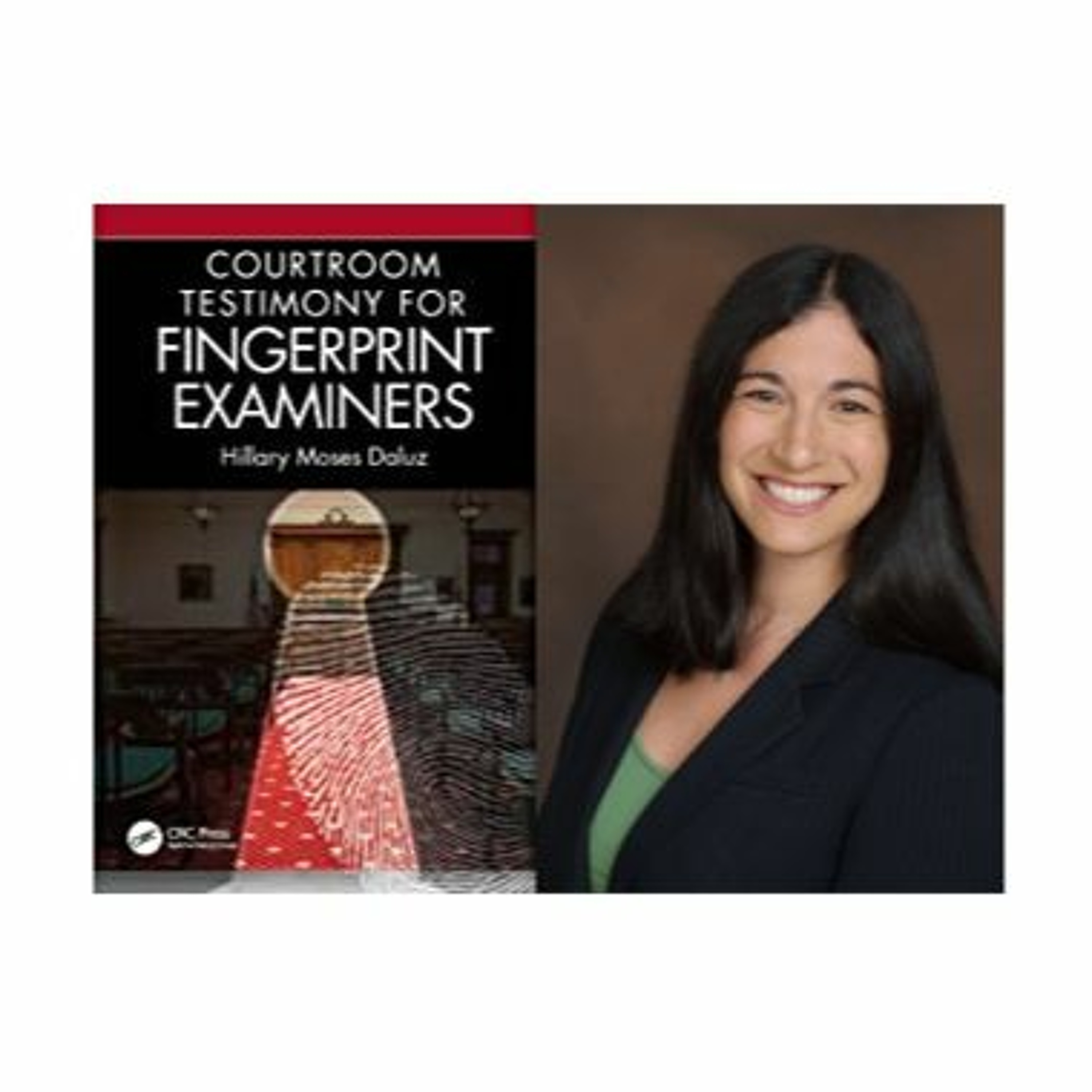
Episode 244 - Hillary Moses Daluz Interview
In this episode, the guys interview fingerprint examiner, multi-book author, and instructor, Hillary Moses Daluz . Hillary discusses her new book "Courtroom Testimony for the Fingerprint Examiner" (CRC Press; 2021). They discuss some of the difficult hot topics that examiners struggle with during testimony and how keep testimony training positive and optimistic.

Episode 243 - New Years Grab Bag
Eric Ray and Glenn Langenburg catch up on a mix bag of topics in the first episode of 2022. Emails on the new conclusion proposal, setups for photography with transmitted light, and the main topic on "qualitative statements". ANAB accreditation requires agencies to include a statistic or a qualitative statement when reporting an association. What does that mean? What qualifies as quantitative? Is this a new thing? Thanks for listening for another year!
Episode 242 - Review of ASB Documents 2021
In this episode, the guys talk about Thanksgiving: Eric’s amazing food preparation and Glenn’s travel to Canada to teach. Eric also gives a plug for Kasey Wertheim’s fingerprint book library that is up for auction. In the main segment, they discuss two of the new ASB proposed standards out for public comment. Specifically, they examine differences with these documents and those proposed by OSAC, noting the pros and cons between the two versions. They discuss the ASB 013 – “Standard for Friction Ridge Examination Conclusions” and ASB 144 – Best Practice Recommendations for the Verification Component of Friction Ridge Examination. Merry Christmas and Happy New Year!

Episode 241 - Blind Proficiency Testing Paper
Eric Ray and Glenn Langenburg discuss the recent paper on Blind Proficiency Testing from the Houston Forensic Science Center: "Latent print quality in blind proficiency testing: Using quality metrics to examine laboratory performance" by Brett O. Gardner, Maddisen Neuman, and Sharon Kelley. The paper describes the results of over two years of blind proficiency testing in the latent print unit. No false positive errors were detected over all samples when the examiners were not aware that they were being tested. The paper also describes the use of LQMetric in measuring the Quality of the sample latent prints. A fantastic paper and a great model for other agencies to imitate.
Episode 240 - Todd Weller returns to discuss inconclusives
The long awaited/dreaded return of the “Dad Joke Intro”! In this episode, Todd Weller (firearms expert) returns to the show to talk to Eric and Glenn about the article on inconclusive decisions by Itiel Dror and Nicholas Scurich [(Mis)use of scientific measurements in forensic science; Forensic Science International, 2020; 2:333-338]. Todd gives his views on how the article mischaracterizes the error rate computations and designs of various firearms studies. The guys try to relate it back to their view on the article and fingerprint studies.

Episode 239 - 2021 IAI Conference
Return with Glenn and Eric to the IAI Conference in Nashville, TN. The guys are joined by Josh Connelly, Kurt Aebersold, JP Rodriguez, and Claudine Carter Pereira. New accuracy studies, open field research, and stat talk. And we're already looking forward to next year's conference in Nebraska!
Episode 238 - Dror and Scurich Article
Glenn Langenburg and Eric Ray review the 2020 article from Itiel Dror and Nicholas Scurich. "(Mis)use of scientific measurements in forensic science" was published in Forensic Science International: Synergy. The article criticizes published accuracy studies in the latent print and firearms disciplines and suggests an alternative method for handling inconclusive decisions and calculating an error rate for the field. The episode details factual errors in almost every part of the article and suggests the real motivation behind these arguments. But first Eric and Glenn read some emails and catch up on our return to conferences.
Episode 237 - Testifying After an Error
Glenn Langenburg and Eric Ray discuss how to testify in court after an error occurs. Examiners nervous about upcoming testimony can find tips whether you made the error or a co-worker made an error and whether it was an erroneous identification or an erroneous exclusion. The court and juries do not expect us to be perfect, and we should claim to be. It's important to be able to discuss the Quality Assurance protocols that our labs have in place. Watch Eric and Glenn compare fingerprints here - https://youtu.be/C5KmM6cAKpk And join us for Wed Happy Hour here - https://discord.gg/b39pp6j
Episode 236 - Mindset Paper (Palms Part Deux!)
In this episode, the guys return for Round 2 with Dr. Heidi Eldridge and Prof. Christophe Champod. This time, they discuss the second paper arising from the palm print black box study (discussed in DLP Episode #234). The focus in this episode is “Mind-set – How bias leads to errors in friction ridge comparisons” by Eldridge, de Donno, and Champod in Forensic Science Int’l 318 (2021). This paper explores how instances of false positives and false negatives may have resulted from cognitive biases and assumptions formed about the latent print during the examination. The authors discuss some of the differences between mindset in false positives versus false negatives. They end the interview with suggestions for breaking mindset and reducing errors. Link to paper: http://dx.doi.org/10.1016/j.forsciint.2020.110545
Episode 235 - Todd Weller Interview
Glenn Langenburg and Eric Ray are joined by Todd Weller to discuss the firearms/toolmarks discipline. Todd was involved in the NY firearms case from Episode 227 and shares his experiences there. The guys then talk through accuracy studies for firearms examiners and similarities and differences between firearms and fingerprints. Lots to cover in an extra-long episode.

Episode 234 - Palm Print Black Box Study
In this episode, Eric and Glenn are joined by Dr. Heidi Eldridge and Prof, Christophe Champod, the authors of "Testing the accuracy and reliability of palmar friction ridge comparisons - A black box study". The guests describe the design, the aims, and the results of the study. We get into discussions about the meaning and usefulness of error rate statistics and confidence intervals from performance studies such as this. Link to the Article (open source): http://dx.doi.org/10.1016/j.forsciint.2020.110457 Link to study results in shinyapp: https://cchampod.shinyapps.io/Results_BBStudy/ Link to confidence interval tools in shinyapp: https://cchampod.shinyapps.io/app_CI/ Link to error rate primer prepared by Champod, Eldridge, Lambert: zenodo.org/record/3734560#.YB8Ki5NKhbt
Episode 233 - GYRO Accuracy Paper
Glenn Langenburg and Eric Ray finally get back on track with a review of a recent article on GYRO markings. "Evaluating the Accuracy and Weight of Confidence in Examiner Minutiae Annotations" was written by Jeremy John and Henry Swofford and published in the JFI. The study measured whether examiners placed minutiae markers on true minutiae using Green, Yellow, and Red markers. It then compared the color choices of examiners against the color choices of the automatic LQMetric and DFIQI algorithms. Eric and Glenn will soon be publishing videos of themselves conducting comparisons, using GYRO, and discussing their similarities and differences. Keep an eye out for those coming soon. Also, the 8pm (ET) Wednesday night virtual Happy Hour continues at https://discord.gg/b39pp6j

Episode 232 - Differing Conclusions Article
Glenn Langenburg and Eric Ray review the newest article from Austin Hicklin, Bradford Ulery, Madeline Ausdemore, and JoAnn Buscaglia. Why do latent fingerprint examiners differ in their conclusions? reviews data from the Black Box, White Box, and Eye Tracking papers, summarizes trends through all of that research, and recommends changes for the fingerprint field.
Episode 231 - Conclusion Scales Article
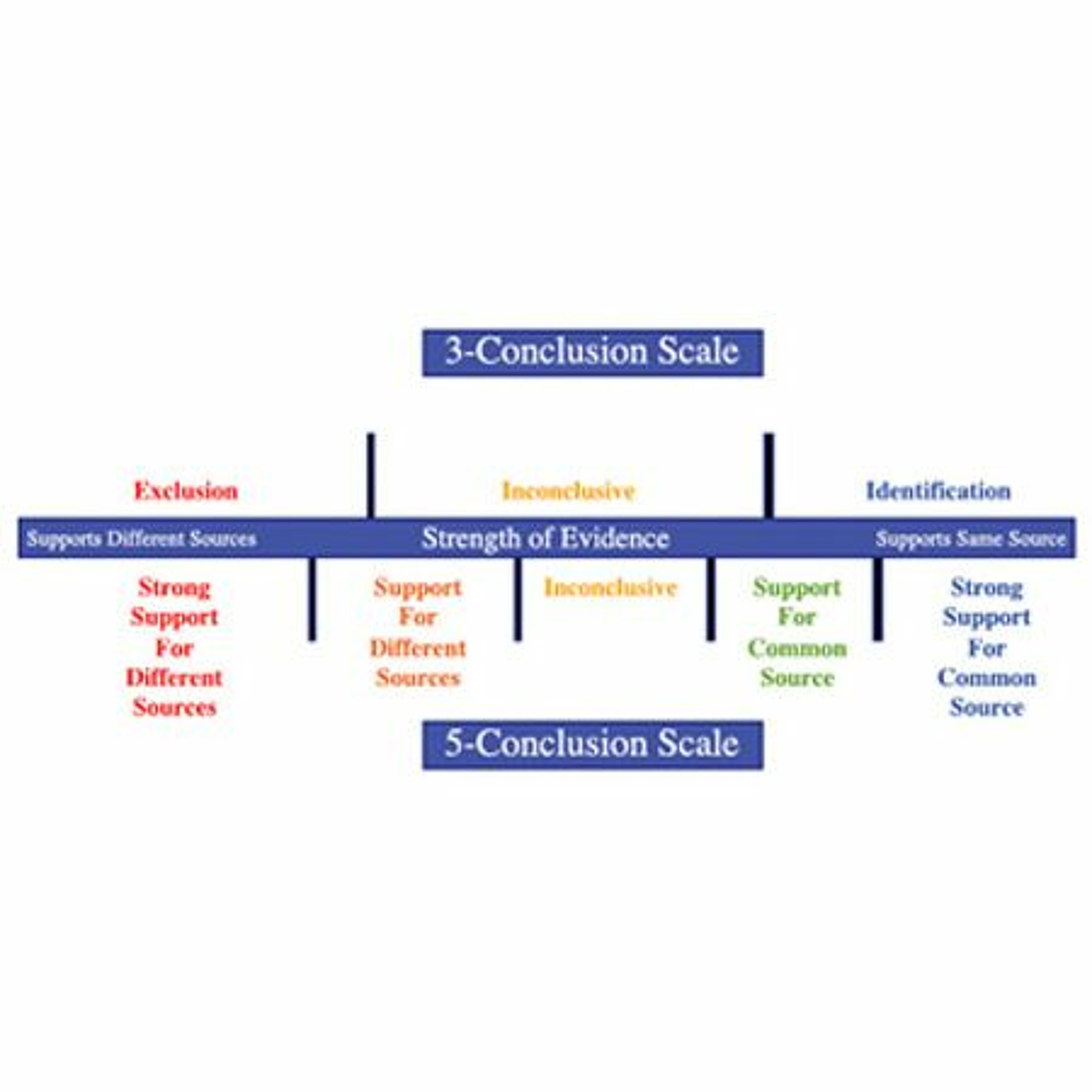
After some Halloween talk, Eric and Glenn discuss this episode’s research article: “The Utility of Expanded Conclusion Scales During Latent Print Examinations” by Carter, Vogelsand, Vanderkolk, and Busey in J Forensic Sciences (online, 2020). This study examines the results of 27 experts who completed 30 comparisons under a 3-point SWGAST scale versus 30 comparisons under a 5-point OSAC scale. The guys discuss error rates, changes in apparent decision thresholds, and the rate of misleading evidence of “support for…” decisions. Article: https://onlinelibrary.wiley.com/doi/abs/10.1111/1556-4029.14298?af=R Interpol Paper Reference: https://www.sciencedirect.com/science/article/pii/S2589871X20300139

Episode 230 - Fingerprint Error Rate in Close Non-Matches
In this Halloween episode, Eric and Glenn discuss a new paper published by Koehler and Liu titled “Fingerprint error rate on close non-matches” (Journal of Forensic Sciences, Sept. 2020). The paper raises a lot of discussion between the guys regarding close non-matches, inconclusives, training, and testimony. They each have a different take on some of the key issues in the paper, but in the end identify what common ground on which they agree.
Episode 229 - Bob Garrett
Glenn Langenburg and Eric Ray pay special tribute this week to a giant in the fingerprint world, Bob Garrett. With the passing of Bob and a few other close friends and colleagues, Glenn and Eric want to look back at the contributions of Bob Garrett in particular. In his single year as president of the IAI, he was instrumental in responding to the NAS Report, addressing the McKie controversy, and moving forward the Standardization II Committee. Please join us in remembering Bob and all of the other friends and colleagues that we've recently lost.
Episode 228 - Knuckle-Crease Daubert Hearing
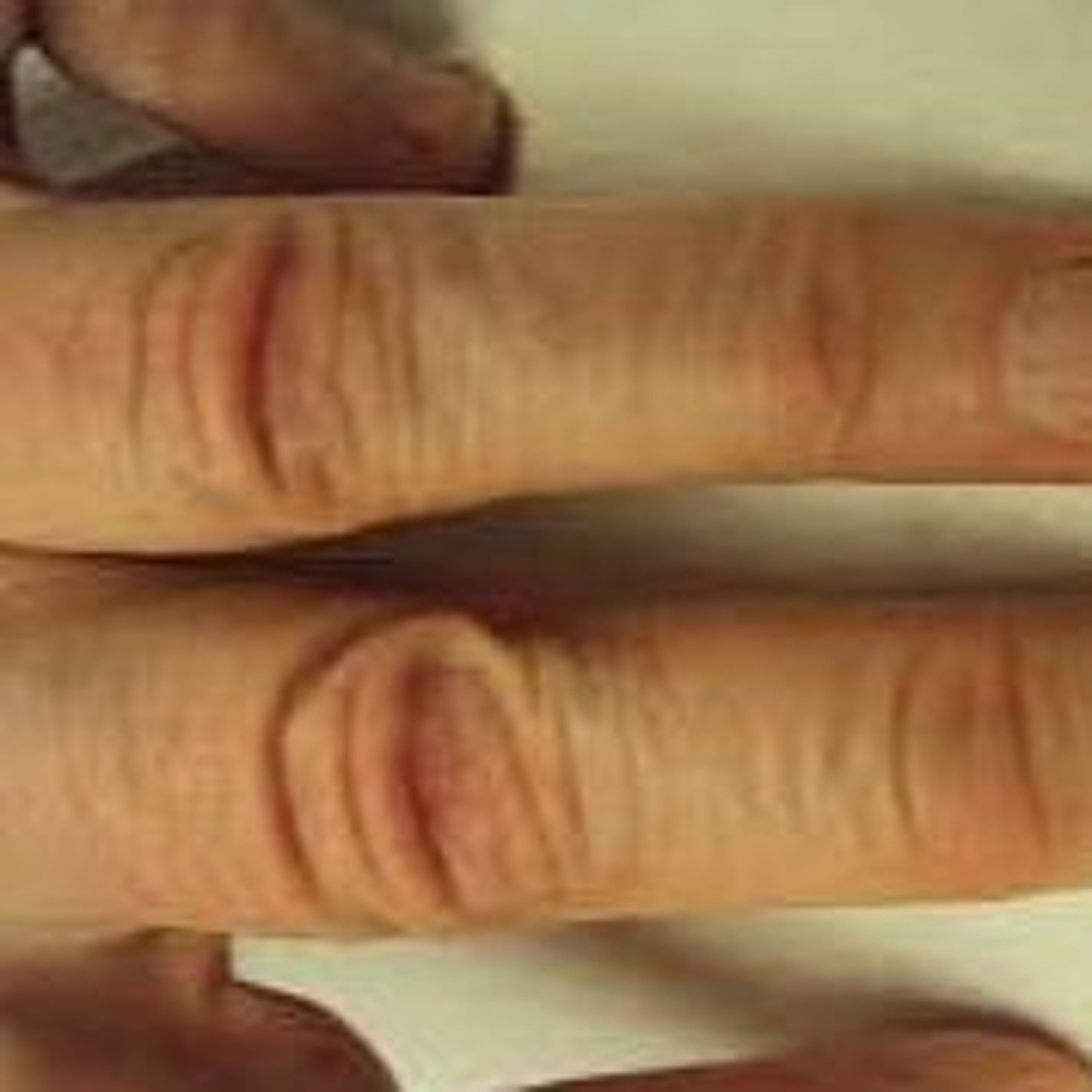
In this episode, Glenn and Eric discuss a recent case Glenn was involved in: a knuckle-crease case. The case had a Daubert hearing in addition to trial testimony for jurors. The guys discuss if non-friction ridge skin associations would meet the Daubert factors. If you were preparing for such a hearing, what research and testing would you need to demonstrate expertise of the expert, or demonstrate reliability of the methods and principles? Does expertise in fingerprints using ACE-V translate to the comparison of non-friction ridge skin or any other objects you might encounter in photographs? Stay tuned…their answers may surprise you!

Episode 227 - NY Firearms Case
Glenn Langenburg and Eric Ray review a recent court decision on firearms testimony. NY v Ross was a recent Frye case where the testimony of firearms examiners was restricted to only class characteristics. Was this a fair decision? Did the judge raise good points? How does this case relate to latent print testimony and latent print accuracy studies? Join us for an hour of fun talk as we dive deep into the nerdy intersection of science and law. https://legalaidnyc.org/wp-content/uploads/2020/07/Ross-Frye-Decision_Full-.pdf

Episode 226 - Best Latent Print Books
Glenn Langenburg and Eric Ray were recently asked which latent print books they recommend the most. This episode they talk through the absolute creme de la creme of fingerprint tomes. New books, old books, green books, blue books. Whether you're developing or comparing ridges, we've got a list of what you need to read. Also make sure to join us Wed nights at 8pm EDT for Virtual Happy Hour at https://discord.gg/b39pp6j
Episode 225 - The Most Dangerous Animal of All Documentary
This week, the guys review and share their reactions to the documentary “The Most Dangerous Animal of All” (produced by Campfire Productions and available now on F/X and Hulu). This is a story about Gary Stewart who believes his father, Earl Van Best, Jr. was the infamous Zodiac Killer in San Francisco in the 1960s/1970s. The series reveals who Gary is and his obsession with the Zodiac. Then it shows all of the extensive evidence that he and his co-author accumulate to prove Earl Van Best was the Zodiac. Glenn and Eric discuss the forensic evidence in this case and share their views and reactions. At approximately 53:00 minutes we give a spoiler alert as the series and this podcast episode take a turn. We highly recommend watching the 4-part documentary first before hearing our views on this case. Discord link (Wed 5-7PM PST) https://discord.gg/b39pp6j Webinars: www.evolveforensics.com
Episode 224 - Forensics in the New Normal
Glenn Langenburg and Eric Ray take a break from normal interviews and research reviews to host a laid-back happy hour discussion on how things have been different in the past few months in forensic crime labs. Carey Hall, Becca Coutant, and Josh Connelly join our discussion that meanders from discussions on web-based training, remote testimony, recent changes to in lab life, and TV recommendations. Our Discord server is at https://discord.gg/b39pp6j. Happy Hour is Wed's at 8pm EDT.
Episode 215 - Aging Latent Prints
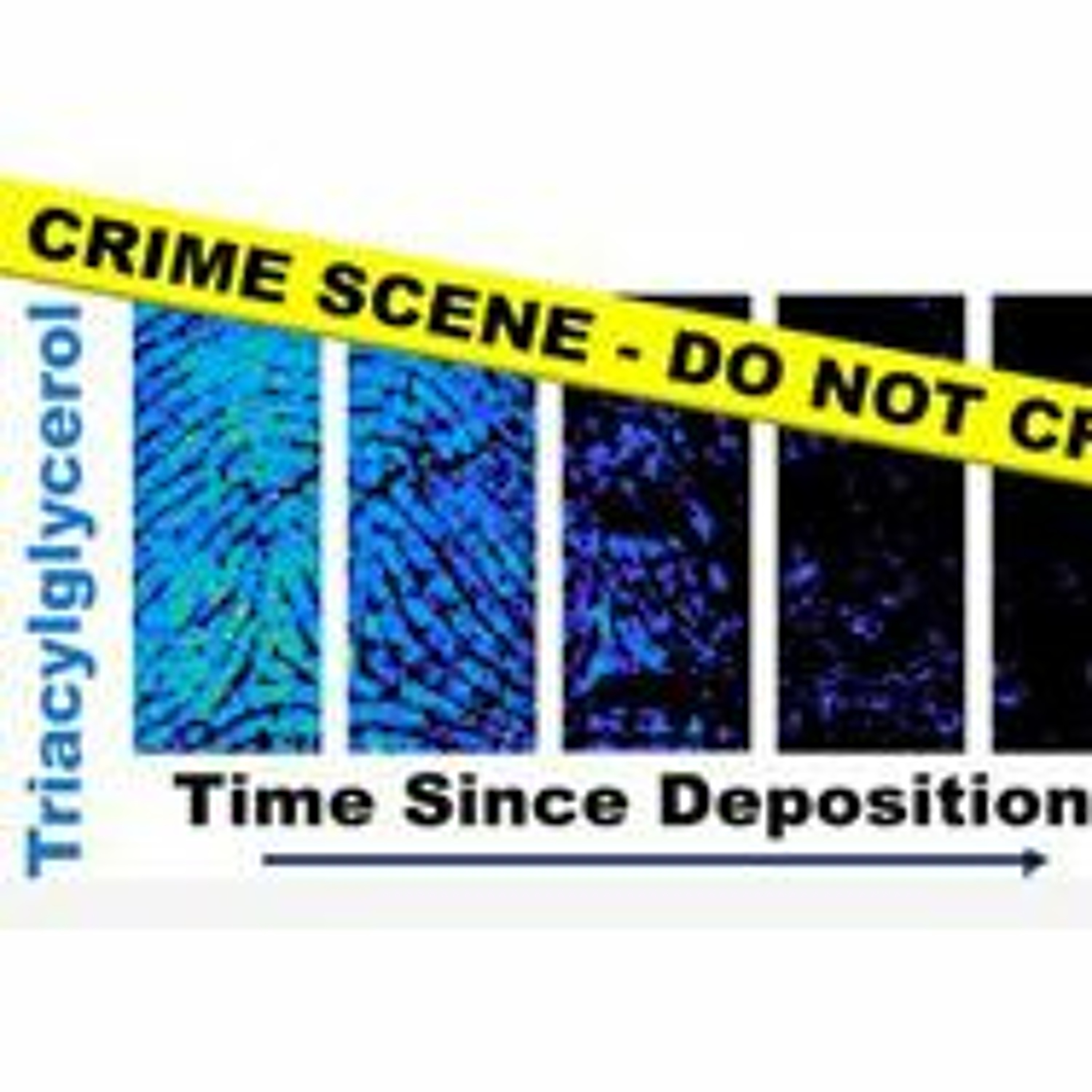
Eric and Glenn wrap up their “activity level series” by discussing two articles (Girod, et al. 2016; and Hinners, et al. 2020) which propose determination of aging of latent fingerprint residue. The techniques use instrumental techniques to identify breakdown products of various fatty components in latent print residue, and use these results to classify whether a latent print is a couple of days old, or older (up to a week or month old depending on the paper). This is a nice finale to the series to explore what the realities and limitations of aging latent prints entails, rather than relying on visual inspection and qualified “consistent with” statements that previous episodes revealed could be misleading or just plain wrong. Glenn also starts the show by relaying a little bit of his experience joining the new NIST/NIJ Human Factors Expert Working Group on DNA mixture interpretation.
Episode 223 - Luke Ryan Interview - Mass Drug Scandal Part 3
In the final and third part of the series on the Massachusetts drug scandals and Netflix documentary, we interview Luke Ryan, the defense attorney featured in the documentary and who represented several of the clients affected by the scandal. Luke described how and why he fought to uncover the truth that was being swept under the rug by the Attorney General’s office. We also discussed a number of other issues that were not shown in the documentary, including deliberate and willful collusion by the drug chemists to mislead the court, the results of a quality audit that occurred, and early signs that drug chemists were engaged in misconduct for years. Luke also shared his views on a number of criminal justice and social issues such as civil forfeitures, the war on drugs, discovery of predicate questions, and field test kits for narcotics. Settle in for a super-sized episode uncovering the unbelievable and fantastic story behind the Netflix documentary and the perfect storm that could allow such behavior to go unchecked for years.
Episode 222 - How to Fix a Drug Scandal Documentary - Part 2
Eric and Glenn finish out their discussion of the new Netflix documentary “How to Fix a Drug Scandal” (2020). In this episode we switch our focus on the dry-labbing of drug tests by Annie Dookhan, and how long it took for those tests and convictions from those test to finally get tossed. The episode concludes with the story of Luke Ryan and his crusade to finally find the evidence that clearly demonstrated that Sonja Farak had been using drugs for years and not just months. Join Glenn and Eric on Discord for virtual Latent Print Examiner Happy Hour, Wednesdays 8-10PM EST (5-7PM PST) during the Shelter in Place orders (discord.gg.b39pp6j).
Episode 217 - Forensic Movie Recommendations during COVID-19
In the wake of COVID-19 and so many of us staying at home, we decided as an April Fools’ Episode to make a list of movies that we enjoy and feature an aspect of forensic science. Eric and Glenn run down our top 10 movies (with two “so bad, they’re good” recommendations) and a few honorable mentions for you to consider while deciding what movies or shows to binge. We also alert listeners at the end to a call for research, regarding a new “verification practices” survey that you can take.
Episode 221 - How to Fix a Drug Scandal Documentary - Part 1
In the first of two episodes, Glenn and Eric discuss Netflix’s “How to Fix a Drug Scandal” (2020), covering the actions and consequences of two Massachusetts drug chemists. In this episode, they mostly focus on the Sonja Farak aspect, who was a drug chemist, addicted to drugs and stealing drugs from her standards cabinet and evidence. The guys discuss the issue of ‘random drug screenings’ of crime lab employees and the lack of other various controls in the U.S. The lack of controls can allow circumstances like this to occur, here and elsewhere, undetected for a long time. They also share some personal experiences from their past related to friends/co-workers with serious drug problems. Also, they remind everyone to join them on Discord for virtual Latent Print Examiner Happy Hour, Wednesdays 8-10PM EST (5-7PM PST) during the Shelter in Place orders (http://discord.gg.b39pp6j).
Episode 220 - Blind QC Research at HFSC
In this episode, Eric and Glenn start the show discussing a few kind emails and reviews of this podcast. They also talk about a weekly social event online—an online Happy Hour on Discord for Latent Print Examiners and friends of the show. In the main segment, the guys review Hundl et al. (2019) “Implementation of a Blind Quality Control Program in a Forensic Laboratory” in the Journal of Forensic Sciences. This research paper discusses the results of introducing over 140 realistic ground truth cases, without the analysts’ awareness that the case is a test case, at the Houston Forensic Science Center (HFSC) in Houston, Texas, over a period of several years. Join other listeners of the Double Loop Podcast for a LPE Happy Hour on Discord, Wednesdays 5-7pm PDT (8-10pm EDT) at https://discord.gg/b39pp6j
Episode 219 - David Camm Case - Part 2
The case against David Camm is about to be turned on its head. Eric Ray and Glenn Langenburg continue the story with a second and third trial and the introduction of a mountain of evidence against a new suspect. The episode concludes with an in-depth discussion on the importance of considering multiple scenarios in bloodstain pattern and all forensic disciplines. It all ties back to our previous discussions of activity level propositions.
Episode 218 - David Camm Case - Part 1
In this multi-part series on the Indiana v. David Camm case, Eric and Glenn review the evidence over multiple episodes. In this first episode they review the evidence of the Prosecution and the first trial. There is discussion regarding latent print evidence, DNA evidence, crime scene reconstruction, medical examiner findings, and blood stain pattern evidence. The blood stain evidence is fairly critical in placing David Camm at the scene of a triple homicide (his wife and two young children).
Episode 216 - OSAC Update and Travel Stories
Glenn Langenburg returns from international travels (just in time) and brings stories from distant lands of England and Minnesota. As the discussion turns to conclusions, Eric Ray brings an update from the OSAC Friction Ridge Subcommittee. Check the NIST OSAC website in the near future for updated versions of Friction Ridge Subcommittee proposed standards.
Episode 214 - Simon Bunter Interview
Glenn Langenburg is joined by Simon Bunter from Keith Borer Consultants to discuss a number of cases where activity level propositions were key factors. Can a print survive after the surface is cleaned? What if the surface is painted over? Simon tells some amazing stories that should make every latent print examiner question the timeline of when a latent print was left on a surface.
Episode 213 - Anouk de Ronde Interview
Eric Ray and Glenn Langenburg are joined by Anouk de Ronde from the Amsterdam University of Applied Sciences to continue the discussion on activity level propositions. Anouk has published on how to construct a logical framework for considering all the information in a latent print to assist in establishing probabilities for competing hypotheses. Did he climb the railing or just lean against it? Was the pillowcase changed or was the pillow pressed down? Just like you wouldn't reach an Identification without looking at each individual minutiae, this framework allows for examination of each data point before making a conclusion on the likelihood of different activity level propositions.
Episode 212 - Activity Level
In this episode Glenn and Eric dig into ‘activity level propositions’, which will start a series of episodes that takes a deep dive into this topic. We lay the groundwork for the topic by discussing fundamental forensic science papers, such as Evett, et al. “The impact of the principles of evidence interpretation on the structure and content of statements” (Science & Justice, 2000) and other works by Cook and Jackson. We highlight the need for formal declaration of propositions regarding ‘source’, ‘activity’, and ‘crime (offense)’ levels. Lastly, we discuss aging (time since deposition) of latent prints and the dangers of these statements based on a visual exam alone. We reference Girod, Ramotowski, et al. “Fingermark age determinations: Legal considerations, review of the literature, and practical propositions” (For Sci Intl, 2016) for important points here. Also Glenn has some news at the beginning of the show to share with Eric regarding DNA.

Episode 211 - OSAC & ASB Update
Eric Ray and Glenn Langenburg get passionate about policies. Stirred up about standards. PO'd about SDO's. After a quick refresher on how NIST, OSAC, AAFS, and ASB fit together in the Standards Development process, Eric and Glenn give an update on the draft standards for latent prints. Where are the standards that we've been waiting for? There was a recent meeting the Friction Ridge group with ASB, and things did not go well for those of us that would like to see the process move forward. While you're waiting for things to move forward, don't forget to check out the Double Loop Podcast merch store at www.doublelooppodcast.com

Episode 210 - Brendan Max Interview
In this episode, Glenn and Eric interview Brendan Max, Chief of the Cook County Public Defender Forensic Science Unit in Illinois. They discuss his new article “Assessing Latent Print Proficiency Tests: Lofty Aims, Straightforward Samples, and the Implications of Non-Expert Performance” (Max, Cavise, and Gutierrez in JFI 2019;69(3)). Brendan shares his views on proficiency tests: are they meaningful? What about verifications in proficiency testing? What does it mean to ‘fail’ a test? How do lawyers and judges view proficiency tests? He describes his basic strategy for litigating forensic evidence and explains why the research in the field of latent prints is so critical. Pay attention towards the end: Eric legitimately stumps Glenn with a great question!
Episode 209 - Friction Ridge Process Map
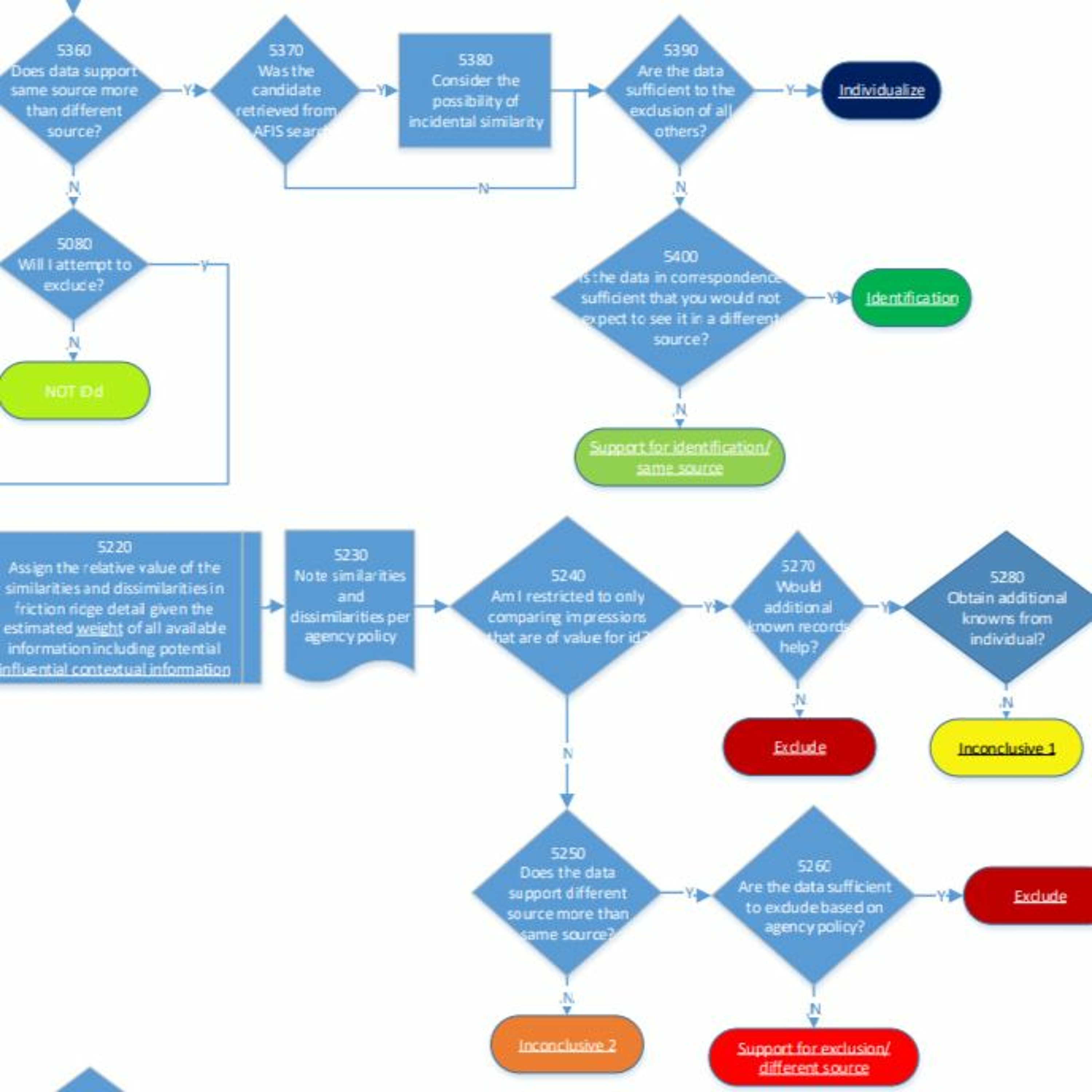
Eric Ray and Glenn Langenburg talk through the latest document out of the OSAC Friction Ridge Subcommttee. Last month they released an updated, and detailed, process map for friction ridge examinations. Follow along by downloading the pdf from the OSAC FRS website, https://www.nist.gov/topics/forensic-science/friction-ridge-subcommittee. Eric and Glenn are also happy to announce the Double Loop Podcast merch store. Go to doublelooppodcast.com, click on the Store tab, and help support the show.
Episode 208 - Review of Conflict Resolution Paper (Montani, et al.)
This episode, the guys review and discuss a paper about resolving conflict resolution from Montani, et al. titled “Resolving differing expert opinions” (Science & Justice 2019). They explore the nuances of the recommendations from the paper and Glenn applied the principles to a recent case and conflict resolution he experienced. But before getting into the paper, Eric gushes some more about his new job and discusses a recent podcast that he guested on (“Stinker Madness”). Glenn also discusses some draft documents available through OSAC and some upcoming changes to OSAC.
Episode 207 - AC Brogdon Interview
Eric Ray starts the show sharing some big news with Glenn Langenburg and the listeners. The guys are then joined by AC Brogdon, president of the California State Division of the IAI for an discussion on the importance of the work that we do. AC shares some stories of his early life, and how those experiences shaped the person that he is and how that continues to inspire and motivate him. It's vitally important for examiners and investigators to remember the victims as they do their work and that it's not just another day at the office for those directly affected by the crime. Part of maintaining that motivation is to recognize that this job comes with unique stress, especially for those collecting and documenting evidence at the crmie scene. Employee assistance programs are available through most agencies to help all of us deal with the terrible things that we can exposed to every day.
Episode 206 - OSAC FRS Standards for Conclusions
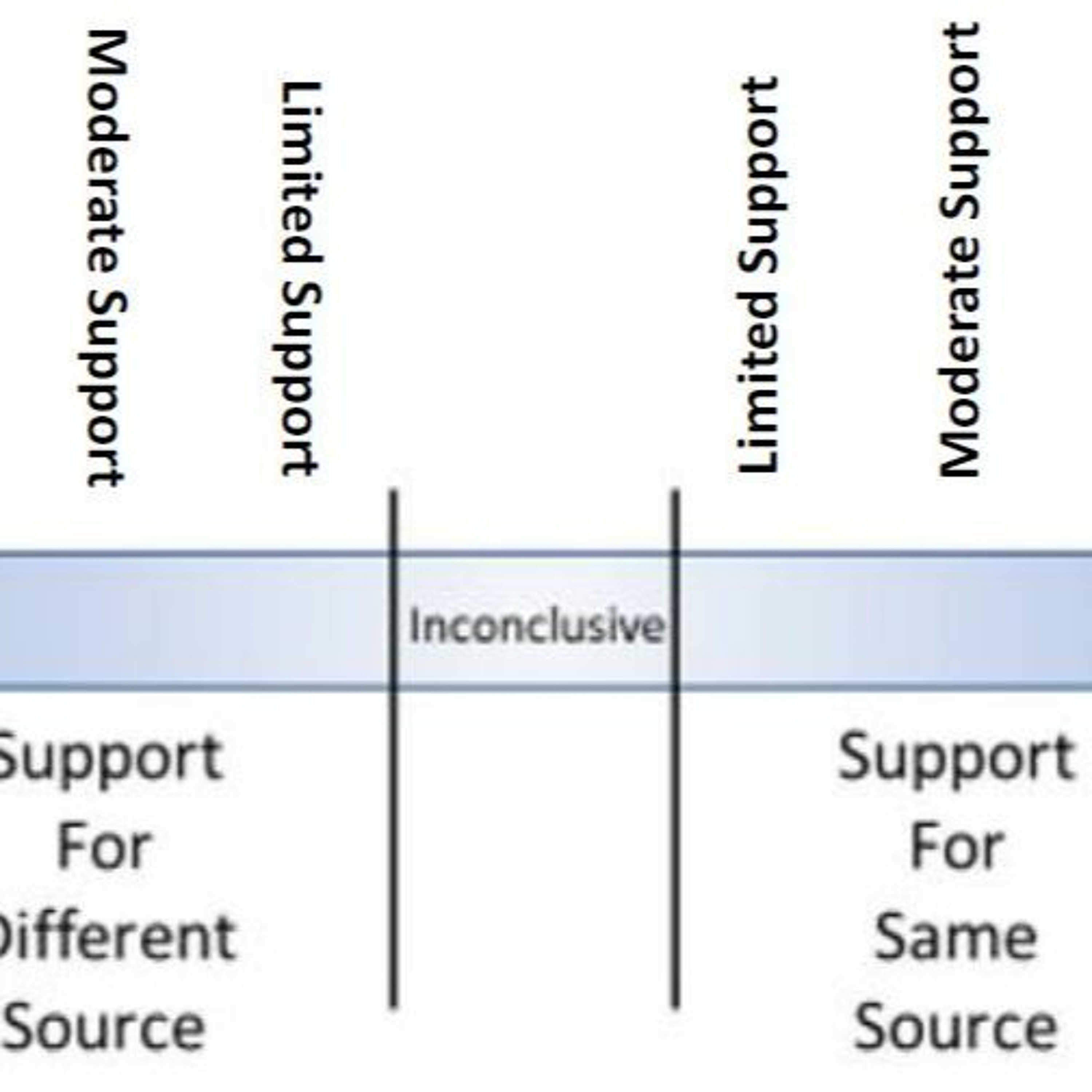
In this episode, Eric and Glenn tackle the 2018 proposed OSAC Friction Ridge Subcommittee (FRS) Standards for Conclusions. They review the entire document and provide the definitions for 5 conclusions: identification, exclusion, inconclusive, and support for same/different sources. They give their thoughts and reactions to these terms and give examples of when they might apply. Glenn discusses an upcoming jury trial where he will be using these terms and how they appear in his reports. Bonus: an unexpected discussion of Downton Abbey! Upcoming classes mentioned at the end. Note: this episode has premium content for our Patreon Supporters.
Episode 205 - PNW Conference Panel
Glenn Langenburg leads a panel discussion (with Eric Ray joining via phone) at the Pacific Northwest Division of the IAI / Northwest Association of Forensic Scientists Joint Conference with guests and Janis Puracal from the Forensic Justice Project and Carey Hall. The panel discussion explores the Janis's history with exonerations, innocence, justice reform, and forensic science and the challenges that face those that have been erroneously convicted. The conversation also explores the challenges that forensic scientists face in these areas and steps that they can take to ensure neutrality and that justice is served. Head to DoubleLoopPodcast.com for more episodes and look through the soon-to-arrive Merch store!
Episode 204 - 2019 IAI Conference
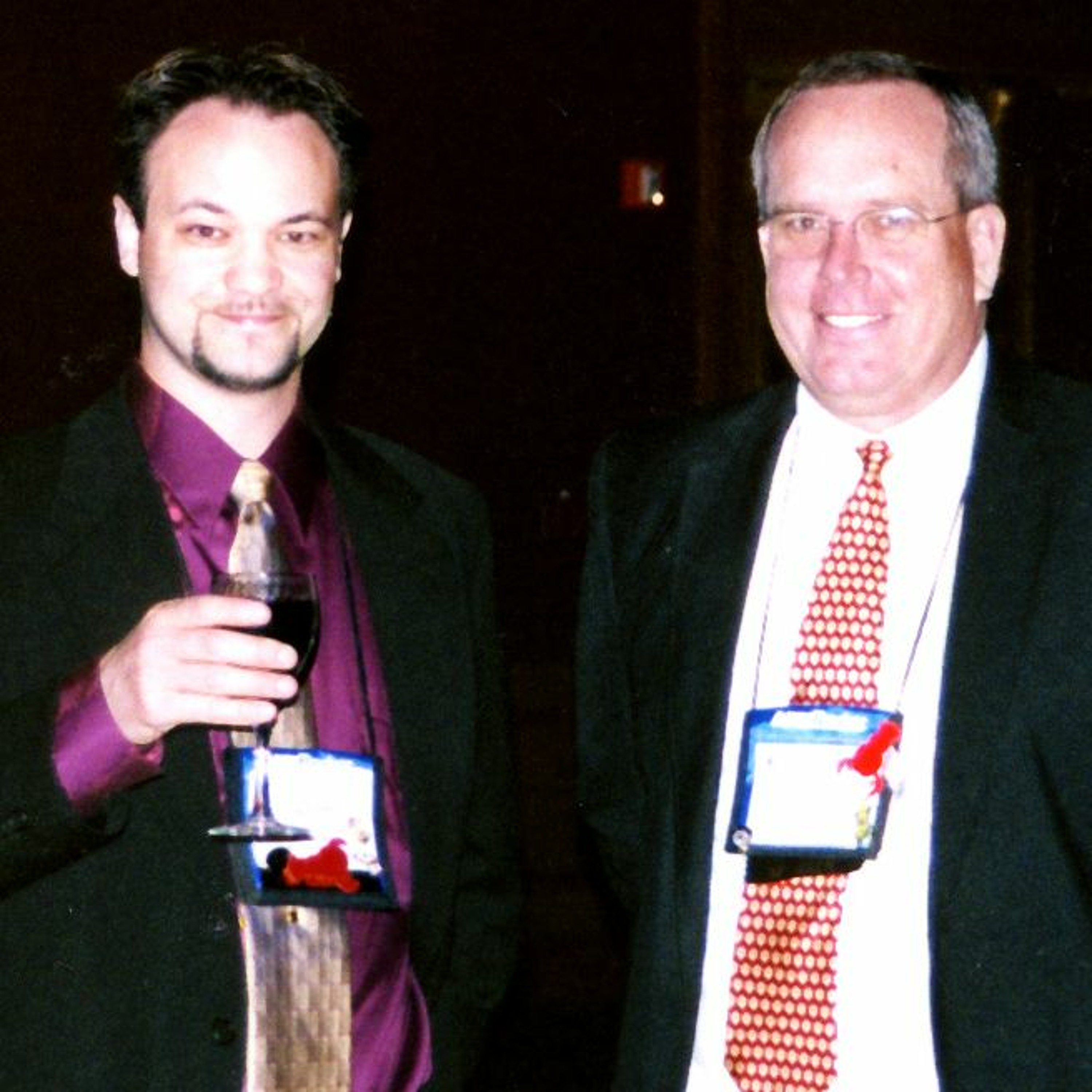
Join Glenn Langenburg and Eric Ray in Reno, NV for the 2019 International Association for Identification conference. We are joined by Becca Coutant, Carey Hall, Nicole Praska, Claudine Carter Pereira, and Jason Jardine and cover a number of topics including limited examinations, defense attorney perspectives, conclusion terminology, blood prints, management, and stats. There's even a little story of Glenn losing his cool and an out-take for the blooper reel. The conference was fantastic, and big thanks to all of the new listeners that we met during the week. To celebrate 200+ episodes, an old photo of Glenn with John Vanderkolk is included.
Episode 203 - FBI Persistency Paper
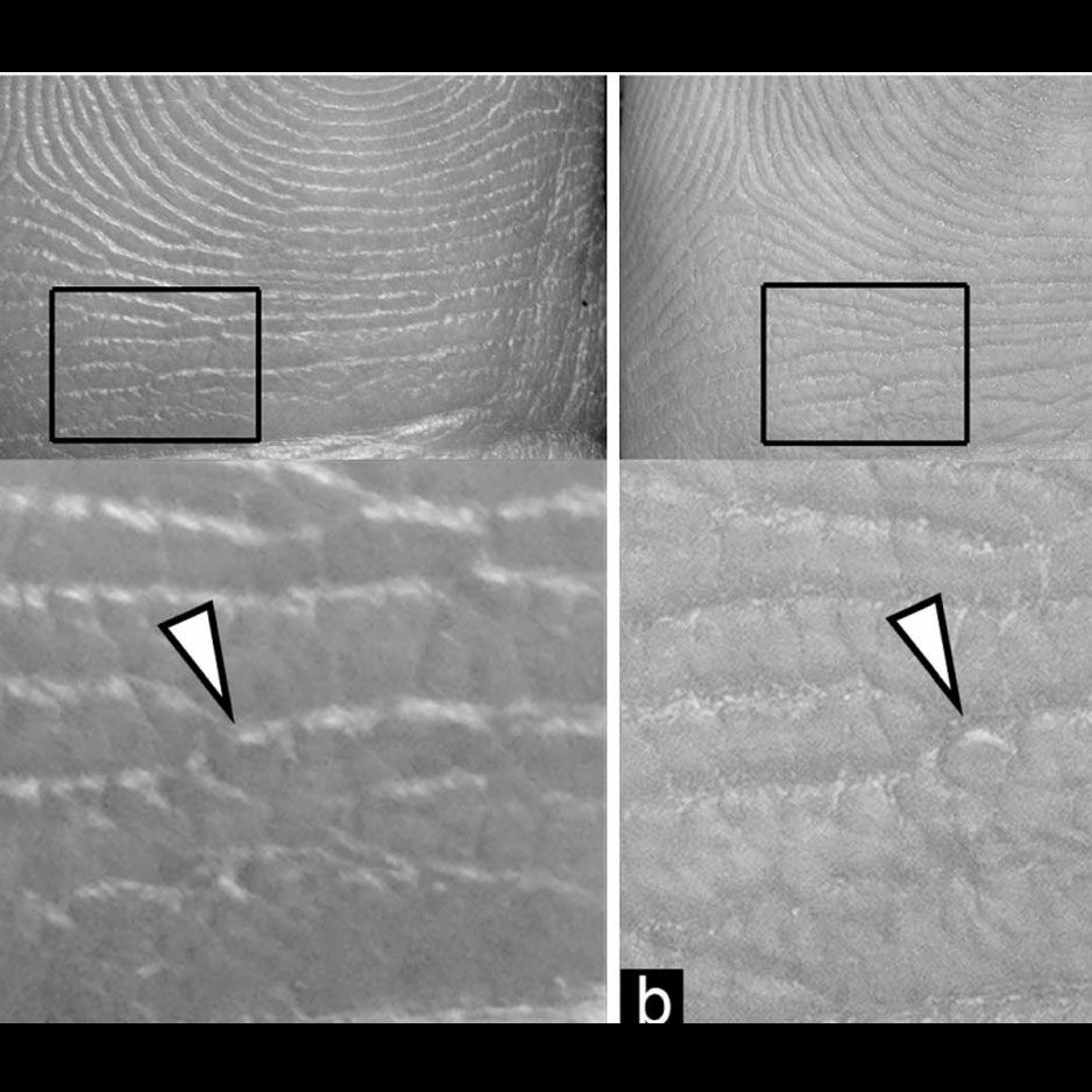
Eric Ray and Glenn Langenburg review a new paper that's been long in the making. "The permanence of friction ridge skin and persistence of friction ridge skin and impressions: A comprehensive review and new results" by Monson, et al. was recently published in Forensic Science International. The paper details the persistence and permanence of 1st, 2nd, and 3rd level detail over multiple years. There are important takeaways from the paper although it isn't quite the level of the FBI/Noblis papers. So let's see what the guys think.

Episode 202 - Idaho Interviews
Eric Ray was recently teaching in Idaho (the ID state) and had the opportunity to sit down with Nick Craven, Katlyn Shelar, Whitney Betzel, and Tara Koho and talk with them about topics ranging from latent print exclusions, AFIS candidate lists, and the future of statistical models. Glenn Langenburg then joins Eric to continue the discussion with some follow-up points and continuing the conversation further into Exclusion policies and requirements, the nature of risk, and a preview on how to use a 5 Conclusion scale.

Episode 201 - Gaze Detection Article
Eric Ray and Glenn Langenburg discuss the new article from Austin Hicklin, Brad Ulery, Tom Busey, and company researching latent print examiners with eye tracking equipment. Gaze behavior and cognitive states during fingerprint target group localization was published in Cognitive Research and examines what we look at and how context plays a huge part in this process. Download the paper online and follow along as we explore a great new paper.
Episode 200 - Michael Whyte Interview
EPISODE 200!!! - Eric Ray and Glenn Langenburg celebrate the big number 200 with an overseas interview with Australian latent print examiner and friend of the show, Michael Whyte. The guys talk forensics down under, some of the travels, teaching, and technology that Michael is involved with and announce DoubleLoopPodcast.com. Check it out, and let us know how we can make it even better.
Episode 199 - Brandon Garrett Interview
Eric and Glenn return from a couple weeks off of crazy travels with a few stories from the road including a "Men Who Love My Little Pony" ("Bronies") cosplay conference. In this episode, the guys sit down for a fantastic interview with Duke Law Professor Brandon Garrett to discuss his and colleagues' recent juror study. The most recent paper provides fingerprint proficiency test results to mock jurors to see how this information may impact their decision making and how reliable they believe fingerprint evidence to be.
Episode 198 - Archie Williams Case
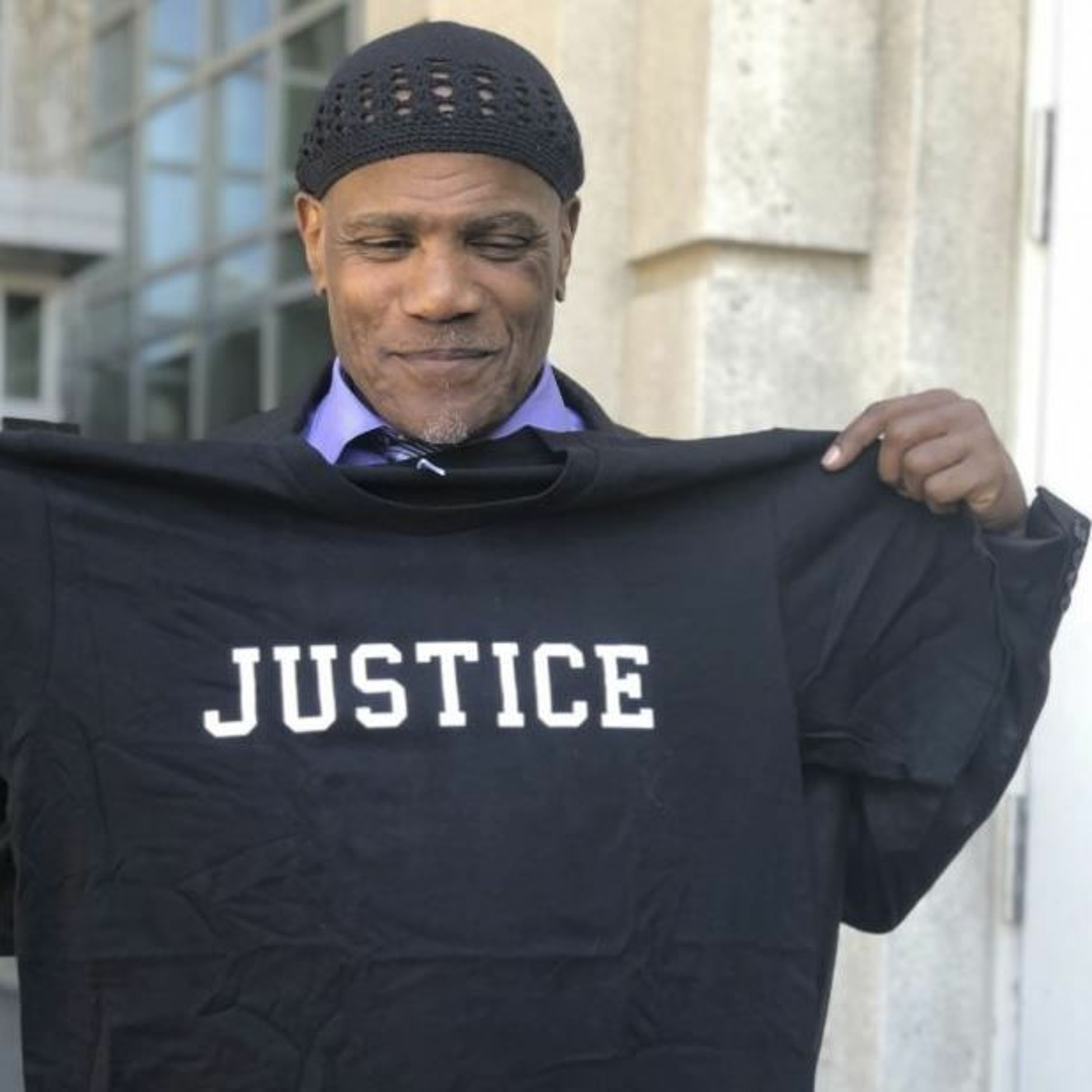
Eric Ray and Glenn Langenburg start the show talking about some exciting new classes that they have developed. Then they discuss which is more correct: 2009 "NRC" Report or "NAS" Report. Finally, they describe the available facts in the recent Archie Williams Innocence Project exoneration case. He was freed after 36 years in prison for rape based on eyewitness identifications, but an AFIS hit now implicates another person.
Episode 197 - Review of Miami-Dade Error Rates
Glenn and Eric start with a brief chat about ethics and the recent JFI letter regarding testing and studies involving human subjects. They then jump into the main discussion on the "Review of Several False Positive Error Rate Estimates for Latent Fingerprint Examination Proposed Based on the 2014 Maimi-Dade Police Department Study" by Madeline Ausdemore, Jessie Hendricks, and Cedric Neumann. The review found that the data best fit a model of two error rates: one for when the true match is not present and one where the true match is one of the individuals presented. The article concludes with follow-up letters to the JFI from Igor Pacheco, Brian Cerchiai, Stephanie Stoiloff, Glenn Langenburg, Jonathan Koehler, Carey Hall, and Brendan Max. This episode is sponsored by GO EVIDENCE.
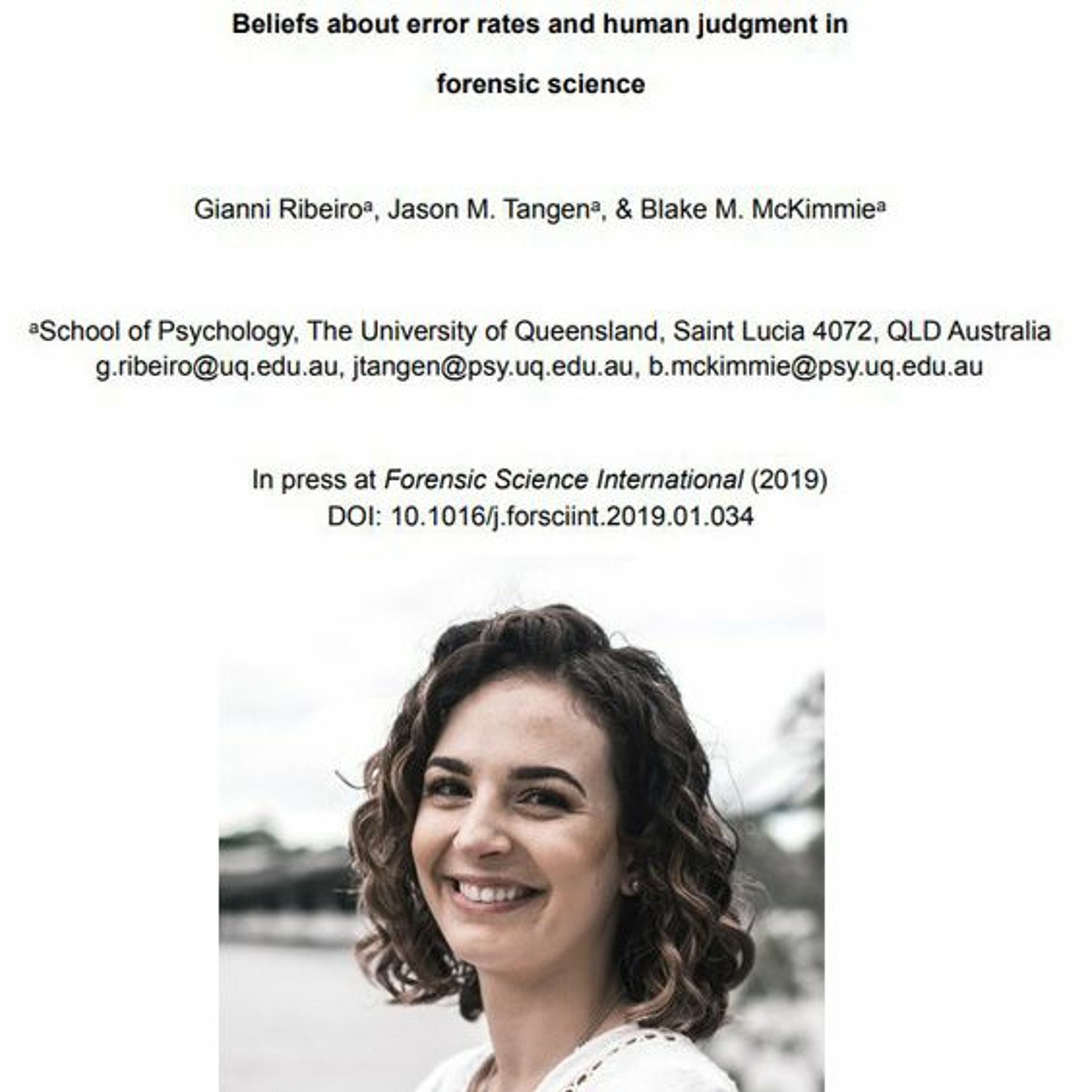
Episode 196 - Gianni Ribeiro Article and Interview
Eric Ray and Glenn Langenburg discuss post-Laura Interview thoughts after last episode's "lay person" interview. They tie in a new paper surveying mock-jurors, published by Gianni Ribeiro from Australia. Later, Gianni calls in from Oz to discuss her research. Oh, and Eric and Glenn both come up with genius ideas this episode.