
Doctor Thyroid
126 episodes — Page 2 of 3

Hypothyroidism⎥Weight Gain, Fatigue, and Sluggishness, with Dr. Alan Farwell from Boston Medical Center
Dr. Alan Farwell is an endocrinologist, Director of the Endocrine Clinics at Boston Medical Center, and Associate Professor of Medicine at Boston University School of Medicine, in Massachusetts. In addition to his extensive academic and clinical activities, Dr. Farwell has been extremely active and served in multiple capacities in the ATA, including as Chair of the Education Committee and the Patient Education and Advocacy Committee, and as a member of the Program Committee and the Website Task Force Publications Committee. He has served two terms on the ATA Board of Directors, is the founding and current Chair of the ATA Alliance for Patient Education. Dr. Farwell has been an Associate Editor and member of the Editorial Board of Thyroid, and since 2009 has been Editor-in-Chief of Clinical Thyroidology for the Public. In this interview, we discuss the following topics: Thyroid surgery and RAI sometimes results in hypothyroidism Most common cause is Hashimoto's disease Explanation of overactive and underactive thyroid Weight gain, dry skin, constipation Very few symptoms unique to hypothyroidism Sleep apnea and being tired all of the time and weight gain. Brain fog and difficulty concentrating Blood tests diagnose hypothyroidism based on TSH levels, when elevated means it is not working too well. Explaining TSH in laymen's terms Normal TSH in the U.S. is .3 to 3.5 Treating for feel rather than a number People with elevated TSH have many of the hypothyroid symptoms, but people with normal TSH levels may also have hypothyroid symptoms Sleep disturbances such as apnea and anemia can be disguised as hypothyroidism Historical explanation of hypothyroidism treatment About 10% of patients do not respond to Levothyroxin Explanation of desiccated thyroid, including pig and cow Dr. Jacqueline Jonklaas, PCORI Grant will look at a study, head to head, Levothyroxin versus desiccated Adding T3 to T4 treatment Discussing Dr. Bianco's research and deiodinases enzyme A discussion of celiac disease and gluten Explanation of auto-immune disorders, where the thyroid is attacked by the bodies own antibodies Physical symptoms of hypothyroidism are goiters, sluggishness, fatigue, dry skin, lateral eyebrows to disappear, the tongue can get thick, puffiness, swelling in legs, face, and around eyes. With proper treatment, these are reversible. NOTES Dr. Antonio Bianco Dr. Jacqueline Jonklaas American Thyroid Association

No Biopsy is 100% Accurate⎥Molecular Testing Gets Close, with Dr. Bridget Brady from Austin Thyroid Surgeons
Dr. Bridget Brady is Austin's first fellowship trained endocrine surgeon. She has a passion for and expertise in disease of the thyroid, parathyroid, and adrenal glands. Since completing her endocrine surgery fellowship in 2006 under Matthias Rothmund, MD, an internationally acclaimed endocrine surgeon, she has performed thousands of thyroidectomies and parathyroidectomies here in Austin. Dr. Brady focuses on a variety of minimally invasive techniques to optimize patients' medical and cosmetic outcomes. Her fellowship training in Germany and experience in Austin have enabled her to specialize in patients with recurrent or persistent disease of the thyroid and parathyroid, including thyroid cancer. She offers complete diagnostic workups including in-office ultrasounds and FNA biopsies of thyroid nodules and lymph nodes. Dr. Brady was named director of endocrine surgery for the new medical school in Austin. She was also recently chosen to teach general surgeons seeking additional training in endocrine surgery. Dr. Brady instructs these endocrine surgeons from the Baylor Scott and White fellowship program. In this episode the following topics are discussed: Austin Thyroid Surgeons sees 30 patients per week with thyroid nodules Up to 80% of US population could have a thyroid nodule(s) less than 5% of Dr Brady's thyroid nodule patients test positive for cancer How relevant is what I don't know won't hurt me in thyroid cancer and biopsies of nodules? BETHESDA system or the middle category, also known as indeterminate For thyroid nodules that are indeterminate, historically a surgery would be performed With molecular testing, surgery can be decreased by up to 50% Afirma molecular testing uses messenger RNA If Afirma comes back suspicious it does NOT necessarily mean it is cancer Insurance covers molecular testing Nest steps for a doctor who would like to incorporate molecular testing Suspicious results with molecular testing can still be benign on final pathology How do you calmly tell a patient they have cancer? NOTES Dr. Bridget Brady Veracyte American Thyroid Association

Pregnancy and Thyroid⎥Hypothyroidism and Hyperthyroidism, with Dr. Angela Leung from UCLA
Dr. Angela M. Leung is an Assistant Professor of Medicine at the UCLA David Geffen School of Medicine and an endocrinologist at both UCLA and the VA Greater Los Angeles Healthcare System. After pursuing her undergraduate studies at Occidental College, Dr. Leung completed her internal medicine residency and endocrinology fellowship training at Boston University School of Medicine. She also studied at the Boston University School of Public Health and obtained a master's degree in Epidemiology. Dr. Leung has particular clinical and research interests in thyroid disorders, and she also sees patients regarding parathyroid and adrenal disorders. She has published widely and lectures frequently on thyroid disease, including hyperthyroidism, hypothyroidism, thyroid nodules, thyroid cancer, and thyroid disease during pregnancy. In this episode, the following topics are explained: Optimizing thyroid health prior to conception Thyroid issues that affect pregnancy Hypothyroid as result of surgery or Hashimotos Hyperthyroidism and pregnancy Adjusting current thyroid treatment, meaning optimizing thyroid levels by adjusting dosage of thyroid medication TSH levels in light of pregnancy Planned pregnancy usually means a dose increase What happens if someone does not get treatment during pregnancy? Hypothyroidism and the fetus Brain development for the fetus Lower IQ scores and hypothyroid in pregnancy CATS study from UK and Italy Iodine and pregnancy Iodine intake prior to pregnancy Armour thyroid and pregnancy Concerns regarding animal derived thyroid replacement TSH levels NOTES Dr. Angela Leung CATS study American Thyroid Association 49: Thyroid and Pregnancy⎥Why It Matters, with Dr. Elizabeth Pearce from Boston University

Thyroid Cancer Is Not Going to Kill You (Papillary), with Dr. Amanda Laird from Rutgers Cancer Institute of NJ
Dr. Amanda Laird, MD is an endocrine surgeon and Chief of Endocrine Surgery at the Rutgers Cancer Institute of New Jersey in New Brunswick, New Jersey. She is currently licensed to practice medicine in New Jersey and New York. She is affiliated with Rutgers Cancer Institute of New Jersey and Rutgers Robert Wood Johnson Hospital. In this interview, Dr. Laird reflects on a decade of treating papillary thyroid cancer patients and reports none have died. In this interview we also explore these questions: Prognosis and what will happen in the long run and quality of life. Surgery complications. Levothyroxine side-effects, including weight gain. Life after surgery and RAI. What causes thyroid cancer. What time of day to take thyroid replacement medication. What blood tests should be ordered and is fasting necessary prior to thyroid lab work. NOTES Amanda Laird, MD American Thyroid Association

Medical Error and Addressing Patient Safety with Dr. Danielle Ofri
Dr. Danielle Ofri is a doctor at Bellevue Hospital in New York City. She is one of the foremost voices in the medical world today, shining an unflinching light on the realities of healthcare and speaking passionately about the doctor-patient relationship. Her newest book is "When We Do Harm: A Doctor Confronts Medical Error." Ofri is a regular contributor to the New York Times and is also the editor-in-chief of the Bellevue Literary Review. She lives in New York City and is determined to get through the Bach cello suites before she kicks the bucket. In this episode: Medical error is the third leading cause of death? After heart disease and cancer. Intended audience for the book? A general audience; lay-public and medical professionals. It is difficult to define a medial error. Starting medication at wrong dose? What errors cause death? This can be vague. Hospitalized patients are different than the general public All sorts of patient harm should be brought to light — shift the medical field to "more safe" should be our goal. Once you are in the patient chair, one loses their strength and power. System flaws: more common error is a qualified professional who is burdened by design flaws — including false alarms. Collaboration and intellectual humility — recognizing we don't know. Patients are sicker and more chronic conditions, mean collaboration helps reduce error. Denmark as an example to error response: acknowledge and apologize. The U.S. malpractice system as part of the problem. Qualifiers of malpractice: harm occurred, doctor was the cause, and consequence was big enough to make the case worthwhile. Who is making the laws about malpractice? Could be an underlining agenda. Recourse for patients: 1. Talk with doctor or nurse. 2. The hospital's patient advocate. 3. Insurance patient advocates. 4. Local Board of Health. 5. Keep notes, and have a paper trail. The system is not designed to get information easy — take advantage of CARES Act. When transparency backfires; if a doctor is treating high risk patients, then their error will be higher. Doctors penalized for spending more time with a patient. The need for silence or time to think. The problem with the "reimbursement" model. Medical error, adverse events, and unintended consequences. Over-treating and over-diagnosis in regard to prostate or thyroid. Statute of limitations. Errors that don't cause harm. Wash your hands and stop and think. Dr. Ofri's Links: Bellevue Literary Review www.danielleofri.com "When We Do Harm: A Doctor Confronts Medical Error" New Yorker Covid Diary Recent events - Dr. Ofri: tinyurl.com/BLRViral Covid Writing Goes Viral: How Literary and Social Media Writing Became a Lifeline during the Pandemic tinyurl.com/ReadingTheBody Reading the Body: Poetry, Dance & Disability Notes CARES Act Hardeep Singh, M.D., M.P.H. Doctor Thyroid Facebook Doctor Thyroid with Philip James Twitter [email protected]
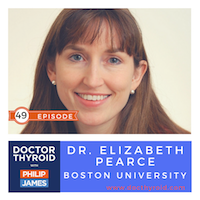
Thyroid and Pregnancy ⎥Why It Matters, with Dr. Elizabeth Pearce from Boston University
In this episode, topics include: Hypothyroidism and hyperthyroidism during pregnancy Pregnant and without a thyroid Avoiding T3 during pregnancy, including concerns with desiccated thyroid If being treated for hypothyroidism already, the importance of upping dose while pregnant Pregnant with auto-immunity Pregnant with Graves' disease The dangers of pregnancy and overt hypothyroidism or hyperthyroidism Three-percent of pregnancies are affected The importance of iodine during pregnancy Dr. Pearce received her undergraduate and medical degrees from Harvard and a masters' degree in epidemiology from the Boston University School of Public Health. She completed her residency in internal medicine at Beth Israel Deaconess Medical Center, and her fellowship in endocrinology at the Boston University Medical Center. She is currently an Associate Professor of Medicine at Boston University School of Medicine. She has served as a member of the board of directors of the American Thyroid Association and is currently on the management council of the Iodine Global Network. She recently co-chaired the ATA's Thyroid in Pregnancy Guidelines Task Force. She was the 2011 recipient of the ATA's Van Meter Award for outstanding contributions to research on the thyroid gland. NOTES Elizabeth Pearce American Thyroid Association

What Do You Do For a Living?⎥Why It Matters, with Dr. Ashok R. Shaha from MSKCC
Dr. Shaha specializes in head and neck surgery, with a particular interest in thyroid and parathyroid surgery. He uses an algorithm of selective thyroid tumor criteria (the size, location, stage and type of cancer, along with the patient's age), to tailor therapy to each individual's circumstances. This can help thyroid cancer patients avoid unnecessary and potentially damaging over-treatment, while still providing the best option for control of their cancer and better quality of life after treatment. Dr. Shaha works very closely with Memorial Sloan Ketterings' endocrinologists to monitor the careful post-treatment hormone balancing necessary for thyroid cancer patients. Many academic hospitals and medical societies worldwide have invited Dr. Shaha to speak on the principles of targeted thyroid surgery and to share his expertise in the treatment of head and neck cancers. In this interview, topics include: The first question a surgeon should ask and why. When talking active surveillance or observation, changing the language to deferred intervention, 'we are going to defer'. Understanding the biology of the cancer The biology of thyroid cancer is a friendly cancer. Anxiety when diagnosed with cancer. Medical legalities — spend a lot of time with patient — and empower patient. Let the treatment not be worse than the disease. Large tumors, more than 4 cm, bulky nodes, voice hoarseness, vocal cord is paralyzed. All circumstances where surgery maybe advocated. If a tumor is benign but there is presence of compressive goiters, or deviation of trachea or swallowing difficulty. Considering the condition of the patient, age, cardiac issues. When voice is critical to the patients livelihood, such as teachers, politicians, and singers. Main three complications of surgery include bleeding, change of voice, calcium problems. Non-academic surgeons. Cancer treatment requires a team: surgeons, anesthesiologist, pre-op, radiologist, pathologist, endocrinologists, oncologists. When wind pipe is involved with tumor. When in surgical business a long time, you become humble no matter how good you are. Family present during consultation. God gave you an organ — you took it away — now you are on a pill — since the surgery its 'just' not the same. When treatment is out of the box — many will not agree with you. How to develop a scale to measure quality of life. To avoid scarring, surgery maybe conducted through the armpit in Korea and Japan. Fibrosis Progress in understanding biology of thyroid cancer only cancer, that there is 98% survival. NOTES: Dr. Ashok R. Shaha RELATED EPISODES: 50: Regarding Thyroid Cancer, Are You a Minimalist or a Maximalist? with Dr. Michael Tuttle from Sloan Kettering 40: New Research Reveals Thyroid Surgery Errors 5x More Frequent Than Reported with Dr. Maria Papaleontiou from Michigan Medicine 42: Flame Retardants Connected to Thyroid Cancer, with Dr. Julie Ann Sosa from Duke University 35: Rethinking Thyroid Cancer – When Saying No to Surgery Maybe Best for You with Dr. Allen Ho from Cedars-Sinai in Los Angeles 21: Diagnosed with Thyroid Cancer and You Say No to Surgery with Dr. Louise Davies 09: Thyroid Cancer Patients Experience Quality of Life Downgrade with Dr. Raymon Grogan and Dr. Briseis Aschebrook from the University of Chicago Medicine 36: 1 in 3 People Die With Thyroid Cancer — Not From with Dr. Seth Landefeld from UAB American Thyroid Association

89: Your Patient 'Type' May Determine Your Thyroid Cancer Treatment → Dr. Michael Tuttle from Sloan Kettering
During this interview, Dr. Tuttle discusses the following points: Challenges of managing thyroid cancer as outlined by the guidelines Scaling back care for insurance-challenged patients, and adopting a plan that gets the same result without needing the expensive tests Desired outcome is survival and no recurrence, a third is for no harm that would be caused by an unnecessary surgery Unwanted side affects of thyroid cancer include nerve damage, parathyroid damage, and infections RAI sometimes has unwanted side affects With technology, ultrasounds and biopsies, we know some cancers do not need to be treated, as they are now being found very early Change in ATA guidelines, low risk cancers can be considered for observation Two different kinds of patient profiles: Minimalist and Maximalist 1cm or 1.5cm? Patient characteristic, ultra sound characteristics, and the medical team characteristics weighs who is the most appropriate for observation 400 active surveillance patients currently at MSKCC Certain parts of the world are harder to offer observation as a treatment due to practicality, examples include Latina America where multi-nodular goiters are common, and Germany still is iodine deficient About Dr. Tuttle, in his words: I am a board-certified endocrinologist who specializes in caring for patients with advanced thyroid cancer. I work as part of a multidisciplinary team including surgeons, pathologists, radiologists, nuclear medicine specialists, and radiation oncologists that provides individualized care to patients treated at Memorial Sloan Kettering for thyroid cancer. In addition to treating patients I am also actively researching new treatments for advanced thyroid cancer. I am a professor of medicine at the Joan and Sanford I. Weill Medical College of Cornell University and travel extensively both in the US and abroad, lecturing on the difficult issues that sometimes arise in the management of patients with thyroid cancer. My research projects in radiation-induced thyroid cancer have taken me from Kwajalein Atoll in the Marshall Islands to the Hanford Nuclear power-plant in Washington State to regions in Russia that were exposed to fallout from the Chernobyl accident. I am an active member of the American Thyroid Association (ATA) and the Endocrine Society. In addition to serving on the ATA committee that produced the current guidelines for the management of benign and malignant nodules, I am also a Chairman of the National Comprehensive Cancer Network Thyroid Cancer Panel, a consultant to the Endocrinologic and Metabolic Drugs Advisory Committee of the FDA, and a consultant to the Chernobyl Tissue Bank. NOTES Listen to Doctor Thyroid American Thyroid Association Dr. Michael Tuttle RELATED EPISODES 35: Rethinking Thyroid Cancer – When Saying No to Surgery Maybe Best for You with Dr. Allen Ho from Cedars-Sinai in Los Angeles 22: Avoiding Thyroid Cancer Surgery, Depending on the Size with Dr. Miyauchi from Kuma Hospital in Kobe, Japan 21: Diagnosed with Thyroid Cancer and You Say No to Surgery with Dr. Louise Davies

36: 1 in 3 People Die With Thyroid Cancer — Not From with Dr. Seth Landefeld from UAB
The USPSTF upholds its 1996 recommendation against screening for thyroid cancer among asymptomatic adults. The USPSTF commissioned the systematic review due to the rising incidence of thyroid cancers against a background of stable mortality, which is suggestive of over-treatment. And in view of the results, the task force concluded with "moderate certainty" that the harms outweigh the benefits of screening. The USPSTF emphasizes, however, that this recommendation pertains only to the general asymptomatic adult population, and not to individuals who present with throat symptoms, lumps or swelling, or those at high risk for thyroid cancer. A global problem The over-diagnosis of thyroid cancer is worldwide. South Korean doctors treated these newly diagnosed thyroid cancers by completely removing the thyroid—a thyroidectomy. People who undergo these surgeries require thyroid replacement hormones for the rest of their lives. And adjusting the dose can be difficult. Patients suffer from too much thyroid replacement hormone (sweating, heart palpitations, and weight loss) or too little (sleepiness, depression, constipation, and weight gain). Worse, because of nerves that travel close to the thyroid, some patients suffer vocal-cord paralysis, which affects speech. Over-diagnosis and over-treatment of thyroid cancer hasn't been limited to South Korea. In France, Italy, Croatia, Israel, China, Australia, Canada, and the Czech Republic, the rates of thyroid cancer have more than doubled. In the United States, they've tripled. In all of these countries, as had been the case in South Korea, the incidence of death from thyroid cancer has remained the same. 1 in 3 people die with thyroid cancer, not of. NOTES As heard on NPR Dr. Seth Landefeld American Thyroid Association RELATED DOCTOR THYROID INTERVIEWS 35: Rethinking Thyroid Cancer – When Saying No to Surgery Maybe Best for You with Dr. Allen Ho from Cedars-Sinai in Los Angeles 22: Avoiding Thyroid Cancer Surgery, Depending on the Size with Dr. Miyauchi from Kuma Hospital in Kobe, Japan 21: Diagnosed with Thyroid Cancer and You Say No to Surgery with Dr. Louise Davies www.docthyroid.com

37: Adding T3 to T4 Will Make You Feel Better? For Some the Answer is 'Yes' with Dr. Antonio Bianco from Rush University
Antonio Bianco, MD, PhD, is head of the division of Endocrinology and Metabolism at Rush University Medical Center. Dr. Bianco also co-chaired an American Thyroid Association task force that updated the guidelines for treating hypothyroidism. Dr. Bianco's research has revealed the connection between thyroidectomy, hypothyroidism symptoms, and T4-only therapy. Although T4-only therapy works for the majority, others report serious symptoms. Listen to this segment to hear greater detail in regard to the following topics: Combination therapy of adding T3 to T4 85% of patients on Synthroid feel fine. Nearly 5% of the U.S. population takes T4 or Levothyroxine, as revealed by the NHANE survey. This means 10 - 15 million Americans. Residual symptoms of thyroidectomy include depression, difficulty losing weight, poor motivation, sluggishness, and lack of motivation. For some, there is no remedy to these symptoms. For others, adding T3 to T4 shows immediate improvement. The importance of physical activity and its benefit in treating depression If we normalize T3 does it get rid of hypothyroid symptoms? Overlap between menopause and hypothyroid symptoms Notes: American Thyroid Association Bianco Lab Bianco Lab on Facebook NHANES Survey The National Health and Nutrition Examination Survey (NHANES) is a program of studies designed to assess the health and nutritional status of adults and children in the United States. The survey is unique in that it combines interviews and physical examinations.

50: Regarding Thyroid Cancer, Are You a Minimalist or a Maximalist? with Dr. Michael Tuttle from Sloan Kettering
Many centers from around the world want to know how Memorial Memorial Sloan Kettering Cancer Center treats thyroid cancer. A key member of the MSKCC is Dr. Michael Tuttle. During this interview, Dr. Tuttle discusses the following points: Challenges of managing thyroid cancer as outlined by the guidelines Scaling back care for insurance-challenged patients, and adopting a plan that gets the same result without needing the expensive tests Desired outcome is survival and no recurrence, a third is for no harm that would be caused by an unnecessary surgery Unwanted side affects of thyroid cancer include nerve damage, parathyroid damage, and infections RAI sometimes has unwanted side affects With technology, ultrasounds and biopsies, we know some cancers do not need to be treated, as they are now being found very early Change in ATA guidelines, low risk cancers can be considered for observation Two different kinds of patient profiles: Minimalist and Maximalist 1cm or 1.5cm? Patient characteristic, ultra sound characteristics, and the medical team characteristics weighs who is the most appropriate for observation 400 active surveillance patients currently at MSKCC Certain parts of the world are harder to offer observation as a treatment due to practicality, examples include Latina America where multi-nodular goiters are common, and Germany still is iodine deficient About Dr. Tuttle, in his words: I am a board-certified endocrinologist who specializes in caring for patients with advanced thyroid cancer. I work as part of a multidisciplinary team including surgeons, pathologists, radiologists, nuclear medicine specialists, and radiation oncologists that provides individualized care to patients treated at Memorial Sloan Kettering for thyroid cancer. In addition to treating patients I am also actively researching new treatments for advanced thyroid cancer. I am a professor of medicine at the Joan and Sanford I. Weill Medical College of Cornell University and travel extensively both in the US and abroad, lecturing on the difficult issues that sometimes arise in the management of patients with thyroid cancer. My research projects in radiation-induced thyroid cancer have taken me from Kwajalein Atoll in the Marshall Islands to the Hanford Nuclear power-plant in Washington State to regions in Russia that were exposed to fallout from the Chernobyl accident. I am an active member of the American Thyroid Association (ATA) and the Endocrine Society. In addition to serving on the ATA committee that produced the current guidelines for the management of benign and malignant nodules, I am also a Chairman of the National Comprehensive Cancer Network Thyroid Cancer Panel, a consultant to the Endocrinologic and Metabolic Drugs Advisory Committee of the FDA, and a consultant to the Chernobyl Tissue Bank. Clinical Expertise: Thyroid Cancer Languages Spoken: English Education: MD, University of Louisville School of Medicine Residencies: Dwight David Eisenhower Army Medical Center Fellowships: Madigan Army Medical Center Board Certifications: Endocrinology and Metabolism NOTES 22: Avoiding Thyroid Cancer Surgery, Depending on the Size with Dr. Miyauchi from Kuma Hospital in Kobe, Japan 21: Diagnosed with Thyroid Cancer and You Say No to Surgery with Dr. Louise Davies 35: Rethinking Thyroid Cancer – When Saying No to Surgery Maybe Best for You with Dr. Allen Ho from Cedars-Sinai in Los Angeles The American Thyroid Association

55: Thyroid Cancer Treatment and Surgery Explained⎥Dr. Gerard Doherty from Harvard Medical School
Dr. Gerard Doherty, an acclaimed endocrine surgeon, is a graduate of Holy Cross and the Yale School of Medicine. He completed residency training at UCSF, including Medical Staff Fellowship at the National Cancer Institute. Dr. Doherty joined Washington University School of Medicine in 1993, and became Professor of Surgery in 2001. In 2002 he became Head of General Surgery and the Norman W. Thompson Professor of Surgery at the University of Michigan, where he also served as the General Surgery Program Director and Vice Chair of the Department of Surgery. From 2012 to 2016, Dr. Doherty was the Utley Professor and Chair of Surgery at Boston University and Surgeon-in-Chief at Boston Medical Center before becoming Moseley Professor of Surgery at Harvard Medical School, and Surgeon-in-Chief at Brigham and Women's Hospital and Dana-Farber Cancer Institute. Dr. Doherty was trained in Surgical Oncology, and has practiced the breadth of that specialty, including as founder and co-director of the Breast Health Center at Barnes-Jewish Hospital. His clinical and administrative work was integral in the establishment of the Siteman Cancer Center at Washington University. Since joining the University of Michigan in 2002, he has focused mainly on surgical diseases of the thyroid, parathyroid, endocrine pancreas and adrenal glands as well as the surgical management of Multiple Endocrine Neoplasia syndromes. He has devoted substantial effort to medical student and resident education policy. His bibliography includes over 300 peer-reviewed articles, reviews and book chapters, and several edited books. He currently serves as President of the International Association of Endocrine Surgeons, Past-President of the American Association of Endocrine Surgeons, Editor-in-Chief of VideoEndocrinology and Reviews Editor of JAMA Surgery. He is a director of the Surgical Oncology Board of the American Board of Surgery. In this episode, the following topics are discussed: Imaging has increased thyroid nodule discovery. Following patients with small thyroid cancer — analogous to prostate cancer. Better followed than treated. Tiny thyroid cancers can be defined by those nodules less than 1/4 inch in size. Less RAI is being used as a part of thyroid cancer treatment. This means, less need to do total thyroidectomy or thyroid lobectomy. Dry mouth and dry eyes are risks to doing RAI. Also, there is risk to developing a second malignancy. Most of the secondary cancers are leukemia. Risks to operation include changes to voice and calcium levels. Thyroid surgery is a safe operation but not risk free. Best question for a patient to ask is, who is my treatment team? The quarterback of treatment team is often the endocrinologist . Cluster of issues can happen after RAI, such as the need to carry water and eye drops for life. For some patients taking thyroid hormone replacement, their blood levels are correct, but still does not feel well on standard treatment protocol. By the end of two weeks, most people go back to what they were doing before surgery with a relatively normal state. Scarring reduction; massage, aloe, Vitamin E. NOTES: American Association of Endocrine Surgeons American Thyroid Association

63: Slow Down and Do Not Rush⎢Thyroid Surgery with a Clear Mind, with Dr. Bryan McIver from Moffitt Cancer Center
Bryan McIver, MD, PhD Dr. McIver contributes to Moffitt Cancer Center almost 20 years of clinical experience in the care of patients with endocrine diseases, specializing in the evaluation of patients with thyroid nodules and thyroid cancer. He has a particular interest in the management of patients with advanced and aggressive forms of cancer and the role of genetic and molecular techniques to improve the accuracy of diagnosis; to tailor appropriate treatment to a patientdisease. Dr. McIver has a long-standing basic research interest in the genetic regulation of growth, invasion and spread of thyroid tumors of all types. His primary research focus is the use of molecular and genetic information to more accurately diagnose thyroid cancer and to predict outcomes in the disease. Dr. McIver received his MB ChB degree from the University of Edinburgh Medical School in Scotland. He completed an Internal Medicine residency at the Royal Infirmary of Edinburgh, followed by a clinical fellowship and clinical investigator fellowship in Endocrinology at the School of Graduate Medical Education at Mayo Clinic in Rochester, MN. Prior to joining Moffitt, he was employed as Professor and Consultant at the Mayo Clinic and Foundation in the Division of Endocrinology & Metabolism. Amongst his most proud accomplishments, Dr. McIver counts his two commitment to education of medical students, residents and fellows; his involvement as a founding member of the World Congress on Thyroid Cancer, an international conference held every four years; and his appointment as a member of the Endowed and Master Clinician Program at the Mayo Clinic, recognizing excellence in patient care. In this episode, the follwoiung By sixty years old, more common to have nodule than not Most nodules are benign When to do a biopsy How to interpret the results of biopsy Advances in thyroid cancer Ultrasound technology advancements Molecular markers Cytopathology categorizations Molecular marker technologies Gene expression classifier Afirma Identifying aggressive cancer Types and sub-types of thyroid cancers Invasive and aggressive thyroid cancers Papillary versus anapestic thyroid cancer Biopsy results in 2 - 3 hours Clinical studies that have transformed thyroid treatment Less aggressive surgery and less radioactive iodine Targeted chemotherapies Immunotherapy The importance of clinical trial environments, or thoughtful philosophy The minimum necessary surgery Do not rush into thyroid cancer surgery NOTES: American Thyroid Association Bryan McIver, MD, PhD Ian D. Hay, M.D., Ph.D. Hossein Gharib, M.D. PAST EPISODES 32: Thyroid Cancer Surgery? The Single Most Important Question to Ask Your Surgeon with Dr. Gary Clayman

76: Is Your Thyroid Surgeon Skilled? 4 Mistakes Resulting from Inexperience, with Dr. James Netterville from Vanderbilt
James L. Netterville, M.D. Mark C. Smith Professor of Head and Neck Surgery, Professor of Otolaryngology Director, Head & Neck Oncologic Surgery Associate Director, Bill Wilkerson Center for Otolaryngology and Communication Sciences Dr. Netterville is the Director of Head and Neck Surgery at Vanderbilt and is an international leading authority of treating head and neck cancer. He is one of the world's experts in the treatment of skull base tumors and has a vast clinical experience. Todays topic's include: Reoccurrence thyroid disease patients in paratracheal, thyroid bed, and cervical lymph nodes Papillary thyroid cancer and subtypes: tall cell, columnar, oncocytic, clear cell, hobnail The extreme importance of the pathologist Facebook is one of the number one sources of referrals The changing landscape of researching physicians PubMed and Index Medicus have replaced the library and medical literature In past 5 years patients are seeking advice from peers and experiences from others Patients have become the bets marketers for physicians versus the institution performing thyroid surgery on professional singers Patients are attached to a doctor and care team, which is often driven by social media Paratracheal region, and difficulty in ultrasound Selective neck dissection The evil remnant: when a surgeon inadvertently leaves thyroid cancer behind Three areas where thyroid cancer reoccurs: where remnant is left behind, hidden paratracheal lymph nodes, Lymph nodes in levels II, III, IV Some surgeons' misperceptions about the effectiveness of RAI as a means to cleaning up poor surgery Doing a thyroid surgery is easy. Doing it right is hard. The importance of finding a surgeon who knows how to do it right Damage to RLN and leaving cancer behind or remnant, is due to inexperience Working around larynx and voice box during thyroid surgery Challenges with the trachea during thyroid surgery Grafting the RLN Grafting the RLN, in line graft, ends of motor nerves and sewing them back to the RLN Thyroid marketing and the term minimally invasive Superior RLN protection Preserving the cricothyroid muscle, especially singers The importance of being a good listener Vetting a surgeon by searching social media or reputation, publications, and volume Is thyroid cancer a cancer or just a nuisance. Chances are it is not going to kill you. Doctors managing their reputation online RAI and killing gross disease fallacy A surgeon's personal brand versus institution branding Online eduction NOTES Vanderbilt Health Vanderbilt-Ingram Cancer Center Thyroid research Funding surgical educational camps in Africa PubMed Index Medicus Aggressive Variants of Papillary Thyroid Carcinoma: Hobnail, Tall Cell, Columnar, and Solid American Thyroid Association

75: Fat, Foggy, and Depressed After Thyroidectomy? You May Benefit From T3, with Dr. Antonio Bianco from Rush University
Antonio Bianco, MD, is the Charles Arthur Weaver Professor of Cancer Research in the Department of Internal Medicine. He is the president of Rush University Medical Group and vice dean for clinical affairs in Rush Medical College. Bianco came to Rush from the University of Miami Health System, where he served as professor of medicine and chief of the Division of Endocrinology, Diabetes and Metabolism. He has more than 30 years of experience in the thyroid field. He has been recognized with a number of national and international awards and membership in prestigious medical societies. A well-rounded investigator in the field of thyroid disease, Bianco led two American Thyroid Association task forces: one charged with drafting guidelines for thyroid research (as chair) and another responsible for developing guidelines for the treatment of hypothyroidism (co-chair). Bianco's research interests include the cellular and molecular physiology of the enzymes that control thyroid hormone action (the iodothyronine deiodinases). He has contributed approximately 250 papers, book chapters and review articles in this field, and has lectured extensively both nationally and internationally. Recently, he has focused on aspects of the deiodination pathway that interfere with treatment of hypothyroid patients, a disease that affects more than 10 million Americans. He directs an NIH-funded research laboratory where he has mentored almost 40 graduate students and postdoctoral fellows. This episode includes the following topics: Thyroid produces thyroxin of T4. T4 is not the biologically active, rather it is T3 T3 is biologically active Transformation of T4 to T3 happens throughs the body Levothyroxine has become the standard of care for treating hypothyroid patients T3 is the biologically active hormone, it could be by giving T4 only we are falling short Evidence based medicine wants to only treat with proven and documented therapy; T3 combination therapy is still not scientifically proven If patient takes T3 in the morning, it peaks about three hours later We have not developed a delivery system to maintain stable T3 levels The most important that we can challenge the pharmacy community is to deliver T3 in a way that it mimics the way it behaves in the human body Surveyed 12,000 patients and the ones on desiccated thyroid have higher QoL compared to those on Levothyroxine I was okay, I had a job, and then I had TT, and from that day forward my life is not the same. Brain fog, and lack motivation We do not yet have evidence proving that combination therapy works, but some patients report improvement to QoL Mood disorders, depression, brain fog, memory loss, and lack of motivation are reported by TT patients T3 combination therapy does not Many symptoms of hypothyroidism is similar to menopause Depression like symptoms, difficult for weight loss, low motivation, less desire for physical activity, brain fog, memory loss are all symptoms patients report post TT Cannot yet yet distinguish between positive effects of T3 and placebo effects Side effects of T3 may include palpitation or sweating Improvement with combination T3 can be immediate, as reported by patients Patients on Levothyroxine most likely to be on statins, beta-blockers, and anti depressants Blood tests for TT patients, taking T3 and not Time of day to take blood tests Time blood sample depending on when patient takes lab work. Ideally 3 or 4 hours after taking the T3 tablet Hypothyroid-like symptoms could be depression There is greater likelihood of depression symptoms for those taking Nearly 5% of the U.S. population takes T4 or Levothyroxine, as revealed by the NHANE survey. This means 10 – 15 million Americans. Levothyroxine is the most prescribed drug in the U.S. NOTES American Thyroid Association Bianco Lab A Controversy Continues: Combination Treatment for Hypothyroidism

90: The Results of 30 Years of Patients Receiving Active Surveillance Instead of Surgery → Dr. Akira Miyauchi from Kuma Hospital in Kobe, Japan
Dr. Akira Miyauchi Professor Akira Miyauchi (Figure 1) is President and COO of Kuma Hospital, Center of Excellence in Thyroid Care, Kobe, Japan. He is a Japanese endocrine surgeon, and a pioneer in active surveillance, and visionary in regard to treatment of thyroid cancer. World renowned researcher, and lecturer. As the associate professor of the Department of Surgery, Kagawa Medical University, he proposed and initiated a clinical trial of active surveillance for low-risk papillary micro cancer in collaboration with Kuma Hospital in 1993. In 2001, he was appointed the President of Kuma Hospital. Since then, he has been keen on the study of evaluating treatments for papillary micro cancer, observation versus surgery. During this episode, the following topics are discussed: Financial burden of surgery versus total cost of active surveillance over ten years. Stretching Exercises for Neck Setting patient expectations prior to FNA to manage anxiety When the laryngeal nerve is severed during thyroid surgery, it can and should be repaired, with proper surgeon skill and training. Rather than being stationery and immobile, patients should practice neck stretching exercise within 24 hours proceeding surgery. There should be no fear about separating the incision. Total cost of surgery is 4.1x the cost compared to the cost of active surveillance. In the U.S., the cost is higher. Incidence versus mortality Worldwide trends related to thyroid cancer Papillary Microcarcinoma of the Thyroid (PMCT) Unfavorable events following immediate surgery Results of research which began in 1993 The current trend in the incidence of thyroid cancer is expected to create an added cost of $3.5 billion by 2030, to the individual and as a society. By providing patient an active surveillance brochure prior to FNA, they are more open to not proceeding with surgery for small thyroid cancer management. Patient voice restores to near normal when repair of laryngeal nerve is done correctly. All surgeons should be executing this to perfection. When doing next stretches one-day post surgery, patients report feeling much better and less pain, even one year after surgery. Protocol for delaying surgery depends on the patient's age. Older patients are less likely to require surgery. 75% of patients will not require surgery for their lifetime. Listen to Doctor Thyroid here! Akira Miyauchi, MD 35: Rethinking Thyroid Cancer ? When Saying No to Surgery Maybe Best for You with Dr. Allen Ho from Cedars-Sinai in Los Angeles 21: Diagnosed with Thyroid Cancer and You Say No to Surgery with Dr. Louise Davies 50: Regarding Thyroid Cancer, Are You a Minimalist or a Maximalist? with Dr. Michael Tuttle from Sloan Kettering PAPERS and RESEARCH Estimation of the lifetime probability of disease progression of papillary microcarcinoma of the thyroid during active surveillance Comparison of the costs of active surveillance and immediate surgery in the management of low-risk papillary microcarcinoma of the thyroid. Incidences of Unfavorable Events in the Management of Low-Risk Papillary Microcarcinoma of the Thyroid by Active Surveillance Versus Immediate Surgery TSH-suppressive doses of levothyroxine are required to achieve preoperative native serum triiodothyronine levels in patients who have undergone total thyroidectomy. Stretching exercises to reduce symptoms of postoperative neck discomfort after thyroid surgery: prospective randomized study. Improvement in phonation after reconstruction of the recurrent laryngeal nerve in patients with thyroid cancer invading the nerve. Listen to Doctor Thyroid here!

92: Treinta años después y más de 5000 pacientes con cáncer papilar de tiroides → y solo dos murieron, con el Dr. Jorge Calvo desde Panama
Dr. Jorge Calvo Lugar de estudio: U. de Panamà, Hospital de la Caja de Seguro Social, Fundaciòn Santa Fe (Colombia) U. Del Norte (Argentina), Sistema Integrado de Salud (Veraguas) Otros estudios: Laparoscopía, Curso de postgrado de Cirugía Gastrointestinal, Curso de postgrado de Cirugía de Cabeza y Cuello En este episodio, se tratan los siguientes temas: ¿Cómo será la vida después de la cirugía? Embarazo después del cáncer de tiroides Parálisis de las cuerdas vocales Las complicaciones incluyen voz e hipo-calcio Sangrado durante la cirugía Tratamiento para hypo-calcium Vitamina D Embarazo y radiación TSH elevada después de la cirugía Problemas de TSH suprimido Número uno de miedo del paciente cuando se le diagnostica cáncer de tiroides y antes de la cirugía 32 años como cirujano tiroideo - cáncer papilar de tiroides Vigilancia activa Tasas de mortalidad del cáncer papilar de tiroides Recurrencia La mejor hora del día para tomar un reemplazo de tiroides Más información: www.doctiroides.com

97: What You Must Know About Hashimoto's Disease with Dr. Brittany Henderson
Brittany Henderson, MD, ECNU is board-certified in internal medicine and endocrinology, with advanced training in thyroid disorders, including Hashimoto's thyroiditis, Graves Disease, thyroid nodules, and thyroid cancer. Originally from Cleveland, Ohio, she graduated in the top 10% of at her class at Northeastern Ohio Medical University, where she received the honor of Alpha Omega Alpha (AOA). She completed her endocrinology fellowship training under a National Institutes of Health (NIH) research-training grant at Duke University Medical Center. She then served as Medical Director for the Thyroid and Endocrine Tumor Board at Duke University Medical Center and as Clinical Director for the Thyroid and Endocrine Neoplasia Clinic at Wake Forest University Baptist Medical Center. Topics discussed in this episode include: How to interpret my thyroid results? Why did I get this? Is it something I did? Thyroid controls nearly all body systems: heart, weight, brain, bowel. Testing and diagnosis: beyond blood-work TSH is the most common check TSH is like the reading of your electric meter: it tells you big picture for a month, not daily — it is not a fluid system, it changes by the hour TSH is not the cure all for reading thyroid health Full thyroid panel: Free T4 and Free T3 is important — highest in morning, lowest around 2p or 3p in the afternoon There is no one size fits all to Hashimoto's — there are different types Blood tests: preparing for lab tests 'Normal' TSH but a patient does not feel normal Normal TSH range is controversial — .5 to 3 TSH is normal — if on thyroid replacement target 1.5 Suppressed TSH Dangers of suppressed TSH for thyroid cancer replacement or those on too much on thyroid replacement — heart failure, osteoporosis T3 symptoms of TSH is kept too low for too long The T4 — T3 relationship T4 is money in savings account — but you cant use it now — T3 is money in your pocket and available now Preferred thyroid replacement — but, issues with synthetic and desiccated The goal — T4 and T3 as stable as possible throughout the day — in light of absorption and interfering food Compounded medications A doctor must listen to the patient Generic levothyroxine and fillers — who is the manufacturer What is better, Nature or Armour? Why do some people do better on various thyroid replacement formulations? Gut biome The environment and thyroid disease Defining leaky gut Avoid foods that gut inflammation thereby worsening auto-immune disease Three food foes: processed foods, sugar, and iodine disruptors Is adrenal fatigue real? Supplements: vitamins and Hashimoto's Nutrients needed to produce thyroid hormone, such as optimizing iron and selenium Anti-inflammatory vitamins and Vitamin A and Vitamin D Anti-oxidant vitamins — Vitamin B1, Vitamin C, and Glutathione What time of day to take to thyroid replacement medication What happens if you miss a day of thyroid replacement hormone? What does an endocrinologist feel about a patient seeing a Naturopath or an integrative medicine specialist? NOTES 57: The Gut⎥Antibiotics Danger, Fixing Inflammation, and Thyroid Health, with Dr. Lisa Sardinia 42: Flame Retardants Connected to Thyroid Cancer, with Dr. Julie Ann Sosa from Duke University Exposure to flame retardant chemicals and occurrence and severity of papillary thyroid cancer: A case-control study. LGR5 is associated with tumor aggressiveness in papillary thyroid cancer. Hedgehog signaling in medullary thyroid cancer: a novel signaling pathway. Dr. Brittany Henderson Facebook, Instagram, and Twitter: @DrHendersonMD, @charlestonthyroid, @hashimotosbook Websites: www.charlestonthyroid.com and www.drhendersonmd.com

82: Hashimoto's Disease and Hypothyroidism and TSH Levels → Dr. Victor Bernet - the Mayo Clinic
Victor J. Bernet, MD, is Chair of the Endocrinology Division at the Mayo Clinic in Jacksonville, Florida and is an Associate Professor in the Mayo Clinic College of Medicine. Dr. Bernet served 21+ years in the Army Medical Corps retiring as a Colonel. He served as Consultant in Endocrinology to the Army Surgeon General, Program Director for the National Capitol Consortium Endocrinology Fellowship and as an Associate Professor of Medicine at the Uniformed Services University of Health Sciences. Dr. Bernet has received numerous military awards, was awarded the "A" Proficiency Designator for professional excellence by the Army Surgeon General and the Peter Forsham Award for Academic Excellence by the Tri-Service Endocrine Society. Dr. Bernet graduated from the Virginia Military Institute and the University of Virginia School of Medicine. Dr. Bernet completed residency at Tripler Army Medical Center and his endocrinology fellowship at Walter Reed Army Medical Center. Dr. Bernet's research interests include: improved diagnostics for thyroid cancer, thyroidectomy related hypocalcemia, thyroid hormone content within supplements as well as management of patient's with thyroid cancer. He is the current Secretary and CEO of the American Thyroid Association. In this episode Dr. Bernet describes that Hashimoto's thyroiditis is an autoimmune condition that usually progresses slowly and often leads to low thyroid hormone levels — a condition called hypothyroidism. The best therapy for Hashimoto's thyroiditis is to normalize thyroid hormone levels with medication. A balanced diet and other healthy lifestyle choices may help when you have Hashimoto's, but a specific diet alone is unlikely to reverse the changes caused by the disease. Hashimoto's thyroiditis develops when your body's immune system mistakenly attacks your thyroid. It's not clear why this happens. Some research seems to indicate that a virus or bacterium might trigger the immune response. It's possible that a genetic predisposition also may be involved in the development of this autoimmune disorder. A chronic condition that develops over time, Hashimoto's thyroiditis damages the thyroid and eventually can cause hypothyroidism. That means your thyroid no longer produces enough of the hormones it usually makes. If that happens, it can lead to symptoms such as fatigue, sluggishness, constipation, unexplained weight gain, increased sensitivity to cold, joint pain or stiffness, and muscle weakness. If you have symptoms of hypothyroidism, the most effective way to control them is to take a hormone replacement. That typically involves daily use of a synthetic thyroid hormone called levothyroxine that you take as an oral medication. It is identical to thyroxine, the natural version of a hormone made by your thyroid gland. The medication restores your hormone levels to normal and eliminates hypothyroidism symptoms. You may hear about products that contain a form of thyroid hormones derived from animals. They often are marketed as being natural. Because they are from animals, however, they aren't natural to the human body, and they potentially can cause health problems. The American Thyroid Association's hypothyroidism guidelines recommend against using these products as a first-line treatment for hypothyroidism. Although hormone replacement therapy is effective at controlling symptoms of Hashimoto's thyroiditis, it is not a cure. You need to keep taking the medication to keep symptoms at bay. Treatment is usually lifelong. To make sure you get the right amount of hormone replacement for your body, you must have your hormone levels checked with a blood test once or twice a year. If symptoms linger despite hormone replacement therapy, you may need to have the dose of medication you take each day adjusted. If symptoms persist despite evidence of adequate hormone replacement therapy, it's possible those symptoms could be a result of something other than Hashimoto's thyroiditis. Talk to your health care provider about any bothersome symptoms you have while taking hormone replacement therapy. NOTES and REFERENCES Request an Appointment Victor Bernet, M.D.

96: Thyroid and Prostate Cancer — Surgery Outcomes Sometimes Worse Than No Surgery — Weighing Risks and Outcomes with Dr. Allen Ho
Allen S. Ho MD is Associate Professor of Surgery, Director of the Head and Neck Cancer Program, and Co-Director of the Thyroid Cancer Program at Cedars-Sinai Medical Center. As a fellowship-trained head and neck surgeon. His practice focuses on the treatment of head and neck tumors, including HPV(+) throat cancers and thyroid malignancies. He leads the multidisciplinary Cedars-Sinai Head and Neck Tumor Board, which provides consensus management options for complex, advanced cases. Dr. Ho's research interests are highly integrated into his clinical practice. His current efforts lie in cancer proteomics, HPV(+) oropharyngeal cancer pathogenesis, and thyroid cancer molecular assays. Dr. Ho has published as lead author in journals that include Nature Genetics, JCO, JAMA Oncology, and Thyroid, and is Editor of the textbook Multidisciplinary Care of the Head and Neck Cancer Patient (Springer 2018). Dr. Ho serves on national committees within the AHNS and ATA, and leads a national trial on thyroid cancer active surveillance (ClinicalTrials.gov ID: NCT02609685). He maintains expertise in transoral robotic surgery (TORS), minimally invasive thyroidectomy approaches, and nerve preservation techniques. Dr. Ho's overarching aim is to partner with patients to optimize treatment and provide compassionate, exceptional care. In this interview — a discussion about Dr. Ho's research; Parallels Between Low-Risk Prostate Cancer and Thyroid Cancer: A Review. Topics include: prostate and thyroid cancer parallels prostate cancer and practical acceptance of active surveillance randomized and followed patients through true active surveillance overall survival, comparing thyroid and prostrate cancer tolerance of risk Older versus younger patient priorities Younger patient thought process Weighing quality of life and risk Hypothyroidism, parathyroidism, laryngeal nerve risk in thyroidectomy… asymptomatic patients being made symptomatic due to treatment Physicians have embraced active surveillance for prostate cancer more than thyroid The patient leans on physician for guidance The Finland study: 17M in U.S. have thyroid cancer Extrapolation — Patients who die of other conditions, in autopsies very small thyroid cancers found in 36% of patients A lot of small cancers that need not be diagnosed The physicians perspective and influencing the active surveillance decision Shared decision making process Terminology… some people choose active surveillance even when nodule is greater than 2cm Jury is still out on what is considered safe size Size and lymph node spread is still being defined Moving away from Gleason system Some cancers are aggressive Some cancers are slow and not lethal Incidental cancers The word cancer or the c word… and shifting away from fear Radiology guidelines The Cedars Sinai active surveillance program 50% of patients who are offered surveillance accept it… which mirrors Japan Alienation of active surveillance patients Anxious, calm, and risk and prioritize risks of surgery Thyroid cancer tends to strike younger patients. Prostrate cancer tends to be older. Prostrate cancer may not improve survival Surgery in thyroid versus prostate is safer Radiation ad toxicity NOTES Parallels Between Low-Risk Prostate Cancer and Thyroid Cancer: A Review 50: Regarding Thyroid Cancer, Are You a Minimalist or a Maximalist? with Dr. Michael Tuttle from Sloan Kettering 89: Your Patient 'Type' May Determine Your Thyroid Cancer Treatment → Dr. Michael Tuttle from Sloan Kettering 77: Broadway Performer Says No to Thyroid Cancer Surgery → Surveillance Instead 87: Is There a Stigma to Choosing Active Surveillance? → Dr. Louise Davies from The Dartmouth Institute Vigilancia activa en el tratamiento del microcarcinoma de tiroides. Dr. Allen Ho

94: Everything You Need to Know About Thyroid Nodules with Dr. Regina Castro from Mayo Clinic
M. Regina Castro, MD is a consultant in the Division of Endocrinology at the Mayo Clinic in Rochester, MN. She is an Associate Professor of Medicine. She is the Associate Program Director for the Endocrinology Fellowship program, and Director of Endocrinology rotation for the Internal Medicine Residency. She is also a member of the Thyroid Core Group at Mayo Clinic. She served from 2009 to 2015 as Thyroid Section Editor for AACE Self-Assessment Program and has authored several chapters on Hyperthyroidism, Thyroid Nodules and thyroid cancer. She has served on various committees of the ATA, including Patient Education and Advocacy committee, the editorial board of Clinical Thyroidology for Patients (CTFP), Trainees and Career Advancement committee and is at present the Chair of the Patient Affairs and Education Committee. She currently serves on the ATA Board of Directors. Her professional/academic Interests: Clinical research related to thyroid nodules and thyroid cancer, clinical care of patients with various thyroid diseases, and medical education. During this interview, the following topics are addressed: What is a thyroid nodule? A lump that could be benign or cancerous The prevalence depends on how you search for them 60% of people in the U.S. will have nodules 90% are benign Sometimes done during routine physical exam Sometimes the patient discovers it Usually is discovered when imaging is done for other reasons — during CT scan Medical history of radiation to head or neck as a child, family history of thyroid cancer, size of nodule, abnormal lymph nodes in the neck Usually patients with a nodule are asymptomatic Best test to look at the nodule is an ultrasound of the nodule Features in the ultra sound determines how suspicious a nodule is A biopsy is ordered based on appearance, if nodules are clearly defined are more likely to suggest they are benign If nodule looks dark or borders are irregular, or increased blood flow within the nodule may cause concern Quality and resolution of thyroid ultra sound is high resolution and provides a clear look Coaching patients through the anxiety through a possible biopsy The majority of nodules can be observed ATA guidelines suggest observation based on the result of the biopsy Suspicious nodules that are less than 1cm are sometimes determined to best observe and not remove Cancer will be in only 5% of biopsies A smaller, low risk cancer should warrant a lesser surgery — and reduce the chance of surgical complications When to remove a nodule even if no cancer? If other structures are being obstructed, such as breathing or swallowing, sometimes surgery relieves symptoms regardless if cancer or not Observation — and follow up recommendations 15% are labeled indeterminate If surgery, surgeon needs to be experienced — many surgeons conducting thyroid surgery are low in experience The Mayo Clinic thyroid cancer team Biopsy results in two hours versus two weeks NOTES The American Thyroid Association Dr. Regina Castro 64: Managing Indeterminate Thyroid Nodules, with Dr. Kimberly Vanderveen from Denver Center for Endocrine Surgery

85: Vigilancia Activa Microcarcinoma en Cancer de Tiroides → Fabián Pitoia, MD, Ph D.
Fabián Pitoia, MD, Ph D. Jefe de la sección tiroides, División Endocrinología Hospital de Clinicas decla universidad de Buenos Aires Sub director de la carrera de medicos especialistas en Endocrinología- hospital de clinicas Docente adscripto de medicina interna. Temas de este entrevista incluye: El tema de hoy es la gestión de la vigilancia activa microcarcinoma ¿qué es el microcarcinoma y qué es la vigilancia activa? Para aquellos que siguen el podcast de Doc Thyroid, es posible que conozcan mi historia, tuve una tiroidectomía y cáncer de tiroides. Cuando escuché la palabra cáncer de mi médico, creó miedo y ansiedad. Pero, ¿la palabra cáncer relacionada con el cáncer de tiroides es diferente? (papilar) ¿Puede decirnos cómo y por qué esto es cierto? Por ejemplo, en comparación con el cáncer de cerebro o el cáncer de páncreas ... ¿Cuántos pacientes con cáncer papilar de tiroides ves un año? ¿Cuántos pacientes con cáncer papilar de tiroides han muerto bajo su cuidado? (La intención de esta pregunta es reducir el miedo en la audiencia sobre la palabra cáncer) Cuéntanos más sobre la vigilancia activa ... es una nueva practica? ¿Y por qué estamos escuchando más sobre esto últimamente? ¿Cómo sabe un paciente si es adecuado para ellos? ¿Cuál es el tratamiento para los pacientes que eligen este tratamiento? ¿Todos los hospitales en América Latina ofrecen vigilancia activa? ¿Cómo puede un paciente encontrar doctores que lo ofrezcan? La Dra. Davies dice que algunos pacientes en su programa dicen sentirse "estúpidos" por dejar el cáncer en su cuerpo. ¿Hay apoyo emocional para aquellos que eligen Vigilancia Activa Microcarcinoma? Dr. Fabian Pitoia
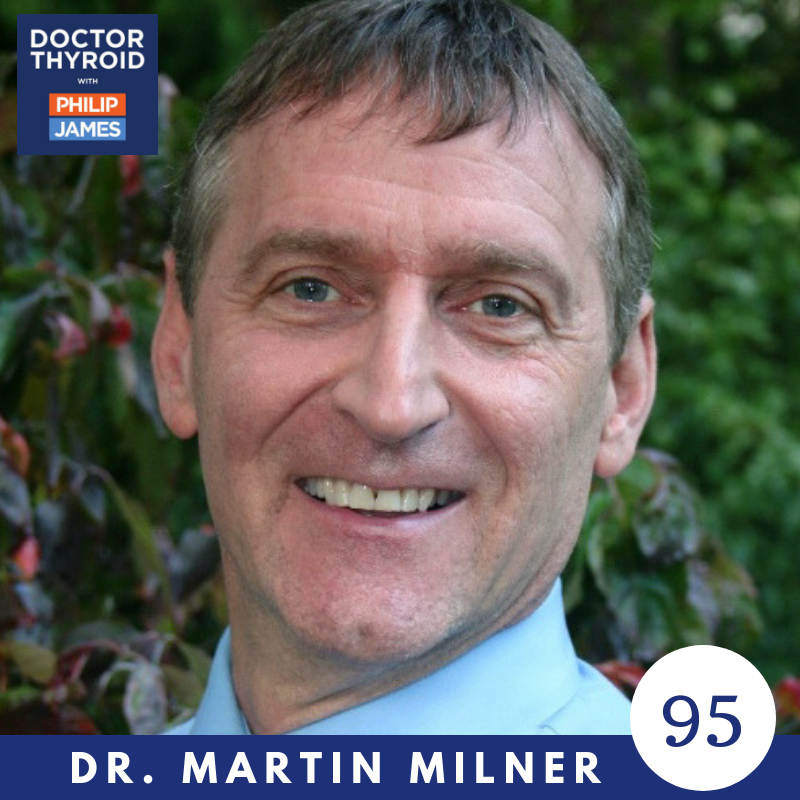
95: Hypothyroidism and Combination Therapy of T3 and T4 with Dr. Martin Milner from Portland, Oregon
Dr. Milner is well published with texts, medical journal articles and studies in cardiology, endocrinology, pulmonology, oncology, and environmental medicine. Dr. Milner calls his practice "integrated endocrinology" balancing all the endocrine hormones using bio-identical hormone replacement and amino acid neurotransmitter precursors. Dr. Milner's articles include treatment protocols for hypothyroidism, "Hypothyroidism: Optimizing Medication with Slow-Release Compounded Thyroid Replacement" was published in the peer review journal of compounding pharmacists, International Journal of Pharmaceutical Compounding. In this interview, the following topics are discussed: Starving in the midst of plenty Slow release T3 and T4 Hypothyroidism Hyperthyroidism or Graves Disease Often RAI leads to hypothyroidism Visiting a naturopath while being treated by traditional endocrinologist TSH suppression for thyroid cancer patients Ordering blood tests of TSH, Free T4, Free T4, and reverse T3 Converting T4 into T3 Slow released T3 Manufactured T3 is not slow release 2005 article was published 150,000 pharmacist in U.S., and about 5,000 are compounding Slow release blends are the same T4 from Synthroid and T3 from Cytomel Slow release agent is hydroxypropyl melanose Side effects of too much T3 or T4 The risk is compounder error or inconsistency Binder sensitivity is another reason for compounding Desiccated thyroid hormone compared to slow release Auto-immune disease and desiccated treatment Overwhelming response to slow release is when patients symptoms of hypothyroidism alleviate A small percentage of people do not do better on slow release Basel body temperatures 96.5 temperature in the morning, and hypothyroid symptoms is a concern in regard to treatment Testing temperature in the morning, ideally done using mercury thermometer How to use temperature testing as an indicator of hypothyroidism Body temp should be over 97.8 first thing in the morning Hypothyroidism will be overweight and difficult to lose weight, and brain fog, sluggish, dry skin, hair loss, Eating well, active, and weight gain Hypoglycemic or adrenal overload and low body temperature High cortisol levels Standard of care of Cytomel in contrast with conventional endocrinologist T3 has a short half life Half life — How long does it take a drug to bring blood levels to normal levels? Half life of T3 is up to 70 days Starving in the midst of plenty with T4 Insurance coverage of slow release T3 — T4 Cost of slow release T3 — T4 is approximately $40 monthly Most important testing for TT patient is checking parathyroid gland status — and their role in calcium function Important to measure calcium for TT patients Caution about soy, broccoli, brussel sprouts, cauliflower, and calcium and thyroid hormone When to thyroid replacement hormone — first thing in the morning, 1 hour before eating, T4 replacement before bed — advantages to more stable levels Slow release, combination therapy, should be taken in the morning Estrogen deficiency Brief summaries of the following symptoms: painful feet, dizziness, fatigue, hair loss, iron deficiency, chronic pain, tyrosine turning into dopamine and then adrenaline, sleep problems and anxiety and hypothyroidism, insomnia and cortisone and adrenaline at nigh and DHEA, cortisol measured throughout the day, muscle spasms, Avoid refined sugar and high amounts of alcohol Drink more water Caution: food and its importance: smoothies and soluble fiber — fiber interacts with nutrients. Avoid this, as it effects absorption of medications Emotional attachment to disease — fixation and complaining without making changes. NOTES International Academy of Compounding Pharmacists 75: Fat, Foggy, and Depressed After Thyroidectomy? You May Benefit From T3, with Dr. Antonio Bianco from Rush University 19: Hypothyroidism – Moving From Fat, Foggy & Fatigued to Feeling Fit & Focused with Elle Russ Hypothyroidism: Optimizing Therapy with Slow-Release Compounded Thyroid Replacement

78: La Palabra Cáncer es Engañosa — No Es Tan Mortal Como Antes, con el Doctor Antonio Hakim desde Bogotá
En esta entrevista hablamos sobre: El nombre del cáncer ha cambiado La tasa de supervivencia con cáncer ha cambiado para mejor La mitad tiene nódulos, muchos de ellos tendrán cáncer 10% de esos tienen cáncer No es necesario operar con todo el cáncer de tiroides 2.5 millones de personas en Colombia tienen cáncer de tiroides No biopsia todos los nódulos ¿Qué es la fobia al cáncer? Lo que no sabemos no nos perjudicará No biopsiar pequeños nódulos tiroideos BETHESDA IV en inconcluso La vida sin tu tiroides cambia tu vida, para peor en la mayoría de los casos A veces ocurre piel seca y peso Problemas de calcio Cambio de voz después de la cirugía de tiroides No todo el cáncer es fatal Dr José A. Hakim -- Manejo quirúrgico actual del cáncer de cabeza y cuello Dr. Antonio Hakim

91: Thyroid Cancer Patients Report Poor Quality of Life After Diagnosis and Treatment → Dr. Aschebrook and Dr. Grogan from UChicago Medicine
The 5-year survival rate for invasive thyroid cancer is 97.9%, and the 10-year survival rate is more than 95%, according to the National Cancer Institute. This leads some people to refer to it as a "good cancer." "The idea behind that 'good cancer' statement is a positive one," said study co-author Raymon Grogan, MD, Assistant Professor of Surgery at the University of Chicago Medicine, in Chicago, IL. "It is physicians trying to make people feel better. But, I think it's had the opposite effect over time." The number of thyroid cancer survivors is rising rapidly due to the combination of an increasing incidence, high survival rates, and a young age at diagnosis, according to Dr. Grogan and co-author Briseis Aschebrook-Kilfoy, PhD, Assistant Research Professor in Epidemiology at the University of Chicago Medicine, who lead the North American Thyroid Cancer Survivorship Study (NATCSS). The incidence of thyroid cancer will double by 2019 and thyroid cancer survivors could soon represent up to 10% of all cancer survivors in the United States, the researchers predicted. But there's a difference between surviving and living happily ever after. Once treatment is over, thyroid cancer survivors then face a high rate of recurrence and an anxiety-filled lifetime of cancer surveillance. When the researchers heard clinic patients express these survival concerns firsthand, they sought to study this poorly investigated area. The investigators recruited 1,174 thyroid cancer survivors whose mean time from diagnosis was 5 years (89.9% were female, average age was 48), and evaluated their quality of life using a questionnaire that assessed physical, psychological, social, and spiritual wellbeing on a 0-10 scale, with 0 being the worst. Survivors of thyroid cancer reported worse quality of life—with an average overall score of 5.56 out of 10—than the mean quality of life score of 6.75 reported by survivors of other cancer types (including colorectal and breast) that have poorer prognoses and more invasive treatments. "I think we all have this fear of cancer that has been ingrained in our society," Dr. Grogan said. "So, no matter what the prognosis is, we're just terrified that we have a cancer. And, I think this [finding] shows that." Thyroid cancer survivors who were younger, female, less educated, and those who participated in survivorship groups all reported even worse quality of life than other study participants. However, after 5 years of survival, quality of life gradually began to increase over time in both women and men, the researchers found. In order to further understand the psychological wellbeing of the growing number of thyroid cancer survivors, the researchers plan to continue to follow this cohort for the long term. NOTES Briseis Aschebrook-Kilfoy Raymon Grogan, M.D., MS, FACS Thyroid cancer patients report poor quality of life despite 'good' diagnosis Why do thyroid cancer patients report poor quality of life despite a high survival rate?

73: The Aggressive Mission to Find Cancer is Going Too Far? with Dr. Gilbert Welch from The Dartmouth Institute
H. Gilbert Welch, MD, MPH An internationally recognized expert on the effects of medical screening and over-diagnosis Dr. Gilbert Welch's work is leading many patients and physicians think carefully about what leads to good health. For Welch, the answer is often "less testing" and "less medicine" with more emphasis on non-medical factors, such as diet, exercise, and finding purpose in life. Welch's research examines the problems created by medicine's efforts to detect disease early: physicians test too often, treat too aggressively, and tell too many people that they are sick. Most of his work has focused on overdiagnosis in cancer screening: in particular, screening for melanoma, thyroid, breast, and prostate cancer. He is the author of three books: Less Medicine, More Health: 7 Assumptions That Drive Too Much Health Care (2015), Overdiagnosed: Making People Sick in the Pursuit of Health(2012), and Should I Be Tested for Cancer? (2006). His op-eds on health care have appeared in numerous national media outlets, including the Los Angeles Times, The New York Times, the Washington Post, and the Wall Street Journal. Welch is a professor of medicine at the Geisel School of Medicine, an adjunct professor of business administration at the Tuck School of Business, and an adjunct professor of public policy at Dartmouth College. He has initiated and taught courses on health policy, biostatistics, and the science of inference. In this episode, the following topics are discussed: overdiagnosis is about how its found, and is a side effect of screening when screening for early forms of cancer some cancer is never going to cause the patient problems some cancer never becomes clinically evident we are looking so hard for cancer, that there is more than is possible birds, rabbits, turtles can't fence in birds or aggressive cancers rabbits you can catch if you build enough fences turtles aren't going anywhere anyway certain organs have a lot of turtles, prostate, lung, thyroid, breast ovedrdiagniosis only occurs when we are trying to look for early forms screening can benefit, but also cause harm breasts, prostate, and thyroid carry a lot of cancers. overcoming cancer phobia, and reducing patient anxiety. the best test is not the one that finds the most cancers, the best test is to find the ones that matter paradigm shift is happening in regard to cancer. liquid biopsies, looking at biomarkers CA125 NOTES H. Gilbert Welch, MD, MPH Less Medicine, More Health: 7 Assumptions That Drive Too Much Health Care (2015) Overdiagnosed: Making People Sick in the Pursuit of Health(2012) Should I Be Tested for Cancer? (2006) Patient Resources American Thyroid Association

93: Has anything changed in the past 50 years of treating thyroid disease? (including thyroid cancer) The answer is yes. → Dr. Leonard Wartofsky from MedStar
Dr. Leonard Wartofsky is Professor of Medicine, Georgetown University School of Medicine and Chairman Emeritus, Department of Medicine, MedStar Washington Hospital Center. He trained in internal medicine at Barnes Hospital, Washington University and in endocrinology with Dr. Sidney Ingbar, Harvard University Service, Thorndike Memorial Laboratory, Boston. Dr. Wartofsky is past President of both the American Thyroid Association and The Endocrine Society. He is the editor of books on thyroid cancer for both physicians and for patients, and thyroid cancer is his primary clinical focus. He is the author or coauthor of over 350 articles and book chapters in the medical literature, is recent past Editor-in-Chief of the Journal of Clinical Endocrinology & Metabolism, and is the current Editor-in-Chief of Endocrine Reviews. In this episode, Dr. Wartofsky discusses the following: Bioavailability versus content of a thyroid replacement tablet, and how it is absorbed. Hypothyroidism causes When is replacement thyroid replacement hormone necessary? The history of replacement thyroid hormone going back to 1891 The early treatment included a chopped up sheep thyroid and served as a 'tartar', often resulting in vomiting Myxedema coma The danger of taking generic T4; are cheaper, larger profit margin, but the content varies. Synthroid versus generic Manufacturing plants in Italy, India, Puerto Rico are known to produce generics Content versus absorption when taking generic T4 An explanation of TSH 1.39 is a healthy TSH level for women in the U.S. Symptoms of hypothyroidism, such as a slow mind, poor memory, dry skin, brittle hair, slow heart rate, problems with pregnancy, miscarriage, and hypertension. Screening TSH levels if contemplating pregnancy T4 is the most prescribed drug in the U.S. Hypothyroidism is common when there is a family history Auto-immune disease is often associated with hypothyroidism An explanation of T3 An explanation of desiccated thyroid The T3 'buzz' Muhammed Ali's overdose of T3 Dangers of too much T3 When to take T4 medication, and caution toward taking mediations that interfere with absorption Coffee and thyroid hormone absorption Losing muscle and bone by taking too much thyroid hormone Taking ownership of your disease NOTES Listen to Doctor Thyroid Related Episode : 37: Adding T3 to T4 Will Make You Feel Better? For Some the Answer is 'Yes' with Dr. Antonio Bianco from Rush University American Thyroid Association Leonard Wartofsky

88: For Some Thyroid Cancer Patients, No Surgery is the Best Treatment → Dr. Allen Ho from Cedars Sinai
Dr. Allen Ho is a fellowship-trained head and neck surgeon who focuses on head and neck tumors, including HPV(+) throat cancers and thyroid malignancies. As director of the Head and Neck Cancer Program and co-director of the Thyroid Cancer Program, he leads the multidisciplinary Cedars-Sinai Head and Neck Tumor Board, which provides consensus management options for complex, advanced cases. Ho's research interests are highly integrated into his clinical practice. His current efforts lie in cancer proteomics, HPV(+) oropharyngeal cancer pathogenesis, and thyroid cancer molecular assays. He has presented his research at AACR, ASCO, AHNS, and ATA, and has published extensively as lead author in journals that include Nature Genetics, Journal of Clinical Oncology, Cancer, and Thyroid. Ho serves on national committees within the ATA and AHNS, and is principal investigator of a national trial on micropapillary thyroid cancer active surveillance (ClinicalTrials.gov ID: NCT02609685). He maintains expertise in transoral robotic surgery (TORS), minimally invasive thyroidectomy approaches, and nerve preservation techniques. Ho's overarching mission is to partner with patients to optimize treatment and provide compassionate, exceptional care. Weighing treatment options for thyroid cancer, with deep consideration for the patient's lifestyle, could become the new norm in assessing whether surgery is the best path. Dr. Allen Ho states, "if a patient is a ballerina or an opera singer, or any other profession that could be jeopardized due to undesired consequences of thyroid cancer surgery, then the best treatment path maybe active surveillance." Undesired consequences of thyroid cancer surgery could be vocal cord paralysis, damage to the parathyroid glands resulting in calcium deficiencies, excessive bleeding or formation of a major blood clot in the neck, shoulder nerve damage, numbness, wound infection, and mental impairment due to hypothyroid-like symptoms. Or in the case of a ballerina, undesired scarring could jeopardize a career. The above risks occur in approximately 10% of thyroid cancer surgeries. Although, some thyroid cancer treatment centers have a much more reduced incidence of undesired consequences, while others much higher. In order to address the above and remove the risk of thyroid cancer surgery, Cedars-Sinai has become the first west coast hospital to launch an active surveillance study as optional treatment for thyroid cancer. The study includes 200 patients from across the country who have chosen the wait and see approach rather than hurry into a surgery that could result in undesired, major life changes. By waiting, this means these patients will dodge the need to take daily hormone replacement medication for the rest of their lives as the result of a thyroidectomy. Other active surveillance research Although this is the first study for active surveillance on the west coast, other studies are ongoing, including Sloan Kettering as directed by Dr. Tuttle, Kuma Hospital in Kobe as directed by Dr. Miyauchi, and the Dartmouth Institute as directed by Dr. Louise Davies. The team Dr. Ho says the "de-escalating" of treatment for thyroid cancer will become the new trend. The active surveillance thyroid cancer team at Cedars-Sinai is orchestrated to the patient's needs, and includes the pathologist, endocrinologist, and surgeon. NOTES Allen Ho, MD Active Surveillance of Thyroid Cancer Under Study 22: Avoiding Thyroid Cancer Surgery, Depending on the Size with Dr. Miyauchi from Kuma Hospital in Kobe, Japan 21: Diagnosed with Thyroid Cancer and You Say No to Surgery with Dr. Louise Davies

84: Diagnosed With Thyroid Cancer? — Stop — Do Not Rush Into Surgery → Dr. Bryan McIver - Moffitt Cancer Center
Bryan McIver, MD, PhD Dr. McIver contributes to Moffitt Cancer Center almost 20 years of clinical experience in the care of patients with endocrine diseases, specializing in the evaluation of patients with thyroid nodules and thyroid cancer. He has a particular interest in the management of patients with advanced and aggressive forms of cancer and the role of genetic and molecular techniques to improve the accuracy of diagnosis; to tailor appropriate treatment to a patientdisease. Dr. McIver has a long-standing basic research interest in the genetic regulation of growth, invasion and spread of thyroid tumors of all types. His primary research focus is the use of molecular and genetic information to more accurately diagnose thyroid cancer and to predict outcomes in the disease. Dr. McIver received his MB ChB degree from the University of Edinburgh Medical School in Scotland. He completed an Internal Medicine residency at the Royal Infirmary of Edinburgh, followed by a clinical fellowship and clinical investigator fellowship in Endocrinology at the School of Graduate Medical Education at Mayo Clinic in Rochester, MN. Prior to joining Moffitt, he was employed as Professor and Consultant at the Mayo Clinic and Foundation in the Division of Endocrinology & Metabolism. Amongst his most proud accomplishments, Dr. McIver counts his two commitment to education of medical students, residents and fellows; his involvement as a founding member of the World Congress on Thyroid Cancer, an international conference held every four years; and his appointment as a member of the Endowed and Master Clinician Program at the Mayo Clinic, recognizing excellence in patient care. In this episode, the follwoiung By sixty years old, more common to have nodule than not Most nodules are benign When to do a biopsy How to interpret the results of biopsy Advances in thyroid cancer Ultrasound technology advancements Molecular markers Cytopathology categorizations Molecular marker technologies Gene expression classifier Afirma Identifying aggressive cancer Types and sub-types of thyroid cancers Invasive and aggressive thyroid cancers Papillary versus anapestic thyroid cancer Biopsy results in 2 - 3 hours Clinical studies that have transformed thyroid treatment Less aggressive surgery and less radioactive iodine Targeted chemotherapies Immunotherapy The importance of clinical trial environments, or thoughtful philosophy The minimum necessary surgery Do not rush into thyroid cancer surgery NOTES: American Thyroid Association Bryan McIver, MD, PhD Ian D. Hay, M.D., Ph.D. Hossein Gharib, M.D. PAST EPISODES 32: Thyroid Cancer Surgery? The Single Most Important Question to Ask Your Surgeon with Dr. Gary Clayman

87: Is There a Stigma when Choosing Active Surveillance? → Dr. Louise Davies from The Dartmouth Institute
The past year has been fascinating and highly fruitful year for Dartmouth Institute Associate Professor Louise Davies, MD, MS. A 2017-2018 Fulbright Global Scholar, Davis spent several months in Japan at the Kuma Hospital in Kobe, Japan, studying the hospital's pioneering surveillance program for thyroid cancer. Davies, the chief of otolaryngology-head & neck surgery-at the Veterans Affairs Medical Center in White River Junction, Vermont, has researched U.S. patients' experiences of monitoring thyroid cancers they self-identify as overdiagnosed, and has found that such patients often feel unsupported, even ostracized. Following her stay in Japan, Davies, who also develops and teaches courses in qualitative research methods in Dartmouth Institute's MPH programs, spent several months in the U.K. at the Health Experiences Research Group (HERG) at Oxford University. There, she learned skills that will help her develop web-based materials to raise public awareness about surveillance, surveillance programs, and overdiagnosis in general. As if the year wasn't packed enough, Davies also visited the site of the Fukushima Daiichi nuclear power plant, site of the 2011 nuclear accident in Japan. Unrelated to her Fulbright work, Davies is a member of an international task force organized through the International Agency for Research on Cancer, a branch of the World Health Organization. The task force will make recommendations on the monitoring of the thyroid gland after nuclear accidents. Learn more about her incredible year and what's next for her research in overdiagnosis! Q: As a practicing physician, how did your interest in overdiagnosis develop? A: My interest in over diagnosis grew from my work with Dr. Gil Welch, dating back to 2004. He was and is a mentor to me, and we developed the work on thyroid cancer together. I have always had an interest in making sure that patients receive care that aligned with their values. The problem of overdiagnosis is particularly intriguing because if people do not understand the concept, they may undergo treatment that, had they understood more about their risks, they might not have elected. Finding ways to solve that problem has been a fascinating focus for me. Q: Is overdiagnosis and/or overtreatment in thyroid cancer on the rise, if so what accounts for this increase? A: Thyroid cancer incidence has more than tripled in the U.S. over the past 30 years. The majority of the increase has been due to the detection of small cancers, which we know exist as a subclinical reservoir in otherwise asymptomatic people. As more attention has been drawn to the problem of overdiagnosis, the rate of increase has slowed, which has been gratifying to see; although it has not stopped completely or reversed. In the most recent national guidelines on the treatment of thyroid cancer (from the American Thyroid Association), there has been a clear suggestion that treatment should be more conservative for the small cancers that are so commonly detected now. It is not yet clear how much of an impact these new guidelines have had on practice patterns. Q: You've studied the experiences of patients who are diagnosed with thyroid cancer but choose not to intervene. What are some of the commonalities you've found? A: The patients who were the first to understand that their small, asymptomatic thyroid cancers picked up incidentally might not need immediate intervention, but instead could be monitored through regular checkups and active surveillance did not receive a lot of support from the medical community. Many managed their cancer by keeping it a secret, which can be stressful in itself, and several stopped getting follow ups-the recommended care if surveillance rather than interventions chosen for a small thyroid cancer. This was a unique group of patients who represented the first people to undertake what is a new and incompletely understood treatment option in the U.S. As such, they are probably more representative of people going against medical convention than thyroid cancer patients who elect to undertake surveillance, per se. Q: What will/have you been looking for when evaluating the surveillance program at Kuma Hospital? How will you combine this with your own U.S. pilot data? My goal in going to Kuma Hospital last fall was to understand more about the active surveillance program they have there. They were the first in the world to run such program and collect data on it, and have been doing so since 1993. I wanted to understand their data on active surveillance in more detail. I wanted to understand the patient experience of being on surveillance, and how the program worked operationally. I was able to do all those things and gathered patient experience data through a survey as well as interviews. I also was lucky to get to spend a fair amount of time in the operating room, where I learned a number of new surgical techniques that will advance my own practice in thyroid surgery. My goal is to rep

86: Que hago si tengo cancer de tiroides? → Dr. Carlos Simon Duque
El Dr. Duque es un Cirujano de Cabeza y Cuello, formado en la Universidad de Miami, actualmente trabaja en el Hospital Pablo Tobon Uribe de Medellin. Al años opera unos 220 pacientes con problemas de tiroides, de estos la mayoría con cancer de tiroides. El Dr. Duque ha escrito un libro titulado !Uuuyy. TENGO CANCER DE TIROIDES¡ (Antes de inciar esta entrevista , me gustaria dejar claro que el fin de esta entrevista es informativo. Muy respetuosamente le solicitaria todos los que se unen a esta entrevista, No hacer preguntas sobre casos personales, o mencionar nombres de personas o medicos tratantes , el fin de estas y otras entrevistas que hago es informar.) Temas de este entrevista uncluye: Que tan común es el cancer de tiroides, de estos cual es el mas común? Cuéntenos un poco sobre el tratamiento con Yodo radioactivo. Como y porque decido escribir un libro sobre cancer de tiroides Cuando se publicara este libro, donde se puede conseguir Quien es un buen cirujano de tiroides, donde puedo buscar un cirujano con experiencia Nodulos de tiroides Libro Uuuyyy tengo cáncer de tiroides Doctor Thyroid Doctor Tiroides Doctor Tiroides con Philip James Dr. Carlos Duque

81: ¡Uuuyyy, TENGO CÁNCER DE TIROIDES!
Doctor Carlos Simón Duque Fisher Médico de la Universidad Pontificia Bolivariana y Otorrinolaringólogo de la Universidad de Antioquia en Medellín, Colombia. Residencia en Otorrinolaringología en la Universidad de Antioquia. Fellowship , Entrenamiento exclusivo en Cirugía de Cabeza y Cuello (1996 a 1998) y posteriormente un Fellowship en Rinología y Cirugía Endoscópica de Senos para nasales (2004 a 2005) ambos en el Departamento de Otorrinolaringología de la Universidad de Miami, USA. En esta entrevista escuchamos del autor y cirujano, Dr. Carlos Duque, que explica los siguientes temas sobre el cáncer de tiroides: Tendencias con cáncer de tiroides La aparición más frecuente de cáncer de tiroides. 150 - 200 cirugías tiroideas cada año. Lo que un paciente con cáncer de tiroides debe esperar si es diagnosticado. Antes de la cirugía, el paciente debe conocer los riesgos, incluida la voz y el calcio Aumento de peso y cirugía de tiroides Después de la cirugía, un paciente a veces tiene síntomas hipotiroideos La mejor hora del día para tomar medicamentos para la tiroides Espere una hora antes de comer después de tomar Levothyroxine Precaución al consumir calcio después de tomar la hormona de reemplazo tiroidal Cómo detectar a un cirujano Cómo recuperarse mejor después de una cirugía de tiroides Radiación después de la cirugía de tiroides Diferencias de tratamiento de un país a otro Cambios en el tratamiento en los últimos años con respecto a la radiación y la cirugía Cómo localizar un buen cirujano de tiroides Información Adicional American Thyroid Association en español Doctor Tiroides pagina web Doctor Tiroides en Facebook Doctor Tiroides Grupo de apoyo Facebook Doctor Carlos Duque Carlos Simón Duque Fisher Libro ¡Uuuyyy, TENGO CÁNCER DE TIROIDES!

68: Diagnosed With Graves' Disease ⎪Then Thyroid Cancer
18 years ago Lorrie was diagnosed with Graves' disease. Then, in 2017 she received a diagnosis of thyroid cancer. In this episode we hear Lorrie describe the following: Papillary thyroid cancer Long delayed pathology results Graves' disease Balancing Graves' disease and a thyroid cancer diagnosis Emotional roller coaster of feeling optimistic and other days of sadness. The feelings and emotions of related to a cancer diagnosis Being careful about the information shared on the Internet and potential negativity Support network and family Nodule size was 1.1 cm, but with history of Graves' disease, she decided to forego active surveillance PATIENT RESOURCES American Thyroid Association

72: [Spanish] La Conexión Entre el Corazón y el Hipotiroidismo. Entrevista con la Dra. Gabriela Brenta de Buenos Aires
Dra. Gabriela Brenta, M.D., Ph.D. Docente de post grado de la Universidad Favaloro y de las carreras de Especialista en Endocrinología así como de Bioquímica Clínica dependientes de Universidad de Buenos Aires. Médica adscripta en el Servicio de Endocrinología y Metabolismo de la Unidad Asistencial Dr. César Milstein de Buenos Aires, Sector Tiroides. Presidente del Comité Científico de la Sociedad Latinoamericana de Tiroides. Miembro del Dpto. de Tiroides de la Sociedad Argentina de Endocrinología y Metabolismo. Su área de investigación clínica abarca el efecto cardiovascular y metabólico de las hormonas tiroides. En esta entrevista, discutimos los siguientes temas: Menos función cardiovascular Hipertensión La conexión entre el funcionamiento del corazón menos y el hipotiroidismo El riesgo cardiovascular Resistencia cardiovascular Mayor colesterol LDL e hipotiroidismo Hipotiroidismo subclínico y riesgo Niveles de TSH Niveles de TSH por encima de 10 Colesterol e hipotiroidismo Riesgo residual y estatinas Mejorando la absorción de T4 Levotiroxina y buen cumplimiento Osteoporosis Niveles altos de colesterol, tomar estatinas y dolores musculares Mujeres que toman estatinas y un mayor riesgo cardiovascular y altos niveles de TSH Altos niveles de TSH, uso de estatinas e inflamación Colesterol y nivel de conexión tiroidea Conexión de diabetes e hipotiroidismo Niveles normales de TSH en pacientes mayores Riesgos con pacientes mayores Recursos Asociación Americana de Tiroides

71: A Patient's Determination to Find Better Treatment for Hashimoto's
In this episode we hear from Doug, and 37 year old, male patient of Hashimoto's. Discussed, are the following topics: Panic attacks Nervous Sweating Can't get out of bed Putting on weight Feeling coldness NP Thyroid® L-Tyrosine Synthroid WP Thyroid WP Thyroid and L-Tyrosine combination therapy High heart rate on T3 ACTH stimulation test TSH as high as 60 T3 suppressing pituitary Experience as a male with Hashimoto's Brain fog Body aches Food and diet NOTES: American Thyroid Association NP Thyroid ACTH stimulation test PubMed Deiodinase polymorphism testing FACEBOOK GROUPS All hormone deficiencies Hypothyroid Men

69: One Cancer, Two Surgeries, and 50 Biopsies
In this episode, we visit with Carla. She had thyroid cancer surgery. During the interview, we discuss: 50 biopsies of the first nodule 5 cm nodule Biopsies RAI Weight gain Support from family NOTES American Thyroid Association 23: You Have a Thyroid Nodule, What Happens Next? with Dr. Regina Castro from The Mayo Clinic 64: Managing Indeterminate Thyroid Nodules, with Dr. Kimberly Vanderveen from Denver Center for Endocrine Surgery

67: Cuando Se Les Dice que Tienen Cáncer de Tiroides → Las Cinco Preguntas Más Comunes de los Pacientes, con el Dr. Eduardo Faure
Dr. Eduardo Faure Especialista en Endocrinología. UBA Médico egresado de la Facultad de Medicina de la Universidad Nacional de Rosario. Especialista en Endocrinología egresado de la Facultad de Medicina de la Universidad de Buenos Aires. Especialista recertificado por AMA (Asociación Médica Argentina) / SAEM (Sociedad Argentina de Endocrinología y Metabolismo) años 2003 y 2009. Realizó su formación como Endocrinólogo en el Servicio de Endocrinología del Complejo Médico PFA Churruca-Visca. Buenos Aires. Argentina. Se sub-especializó en el área de Tiroides. Actualmente se desempeña como Médico de Planta del Servicio de Endocrinología del Complejo Médico PFA Churruca-Visca. Es Jefe de la Sección Tiroides de dicho Servicio. Sus trabajos de investigación se basan fundamentalmente en Tiroides. Fue docente de Fisiología de la Cátedra de Fisiología Humana de la Facultad de Medicina de la Universidad Nacional de Rosario. Es docente de la Carrera de Médicos Especialistas en Endocrinología de la Universidad de Buenos Aires. Es colaborador Docente de la Unidad Docente Hospitalaria "Churruca-Visca" dependiente de la Facultad de Medicina de la Universidad Nacional de Buenos Aires. Fue docente estable de la Carrera de Especialización en Endocrinología Ginecológica y de la Reproducción en la Universidad Favaloro. Es Miembro Activo de las siguientes sociedades: Sociedad Argentina de Endocrinología y Metabolismo y de la Sociedad Latinoamericana de Tiroides. Forma parte del Departamento de Tiroides de la Sociedad Argentina de Endocrinología y Metabolismo. Es invitado por Sociedades Nacionales e Internacionales como disertante en temas relacionados con Tiroides. Ex Director de la Sociedad Latinoamericana de Tiroides (LATS). Chair de la Educational Task Force de la Sociedad Latinoamericana de Tiroides (LATS). Durante este episodio, escuchamos más detalles sobre lo siguiente: Calidad de vida después de la cirugía Complicaciones Riesgo de obesidad ¿Necesitaré quimioterapia? Otros tratamientos relacionados con el cáncer de tiroides que se necesitan? NOTES American Thyroid Association (en Español) 14: When Your Medical Professional Gets Thyroid Cancer with Dr. Aime Franco from University of Arkansas

66: Five Important Things Your Thyroid Surgeon Maybe Not Telling You, with Dr. Akira Miyauchi
Professor Akira Miyauchi (Figure 1) is President and COO of Kuma Hospital, Center of Excellence in Thyroid Care, Kobe, Japan. He is a Japanese endocrine surgeon, and a pioneer in active surveillance, and visionary in regard to treatment of thyroid cancer. World renowned researcher, and lecturer. As the associate professor of the Department of Surgery, Kagawa Medical University, he proposed and initiated a clinical trial of active surveillance for low-risk papillary micro cancer in collaboration with Kuma Hospital in 1993. In 2001, he was appointed the President of Kuma Hospital. Since then, he has been keen on the study of evaluating treatments for papillary micro cancer, observation versus surgery. During this episode, the following topics are discussed: Financial burden of surgery versus total cost of active surveillance over ten years. Setting patient expectations prior to FNA to manage anxiety When the laryngeal nerve is severed during thyroid surgery, it can and should be repaired, with proper surgeon skill and training. Rather than being stationery and immobile, patients should practice neck stretching exercise within 24 hours proceeding surgery. There should be no fear about separating the incision. The most common question asked to Dr. Miyauchi by surgeons from around the world. Total cost of surgery is 4.1x the cost compared to the cost of active surveillance. In the U.S., the cost is higher. By providing patient an active surveillance brochure prior to FNA, they are more open to not proceeding with surgery for small thyroid cancer management. Patient voice restores to near normal when repair of laryngeal nerve is done correctly. All surgeons should be executing this to perfection. When doing next stretches one-day post surgery, patients report feeling much better and less pain, even one year after surgery. Protocol for delaying surgery depends on the patient's age. Older patients are less likely to require surgery. 75% of patients will not require surgery for their lifetime. NOTES Akira Miyauchi, MD American Thyroid Association 35: Rethinking Thyroid Cancer – When Saying No to Surgery Maybe Best for You with Dr. Allen Ho from Cedars-Sinai in Los Angeles 21: Diagnosed with Thyroid Cancer and You Say No to Surgery with Dr. Louise Davies 50: Regarding Thyroid Cancer, Are You a Minimalist or a Maximalist? with Dr. Michael Tuttle from Sloan Kettering PAPERS and RESEARCH Estimation of the lifetime probability of disease progression of papillary microcarcinoma of the thyroid during active surveillance Comparison of the costs of active surveillance and immediate surgery in the management of low-risk papillary microcarcinoma of the thyroid. Incidences of Unfavorable Events in the Management of Low-Risk Papillary Microcarcinoma of the Thyroid by Active Surveillance Versus Immediate Surgery TSH-suppressive doses of levothyroxine are required to achieve preoperative native serum triiodothyronine levels in patients who have undergone total thyroidectomy. Stretching exercises to reduce symptoms of postoperative neck discomfort after thyroid surgery: prospective randomized study. Improvement in phonation after reconstruction of the recurrent laryngeal nerve in patients with thyroid cancer invading the nerve.

65: Thyroid Cancer Does Not Respond to RAI⎢Treatment Options
Ezra Cohen, MD, is a board-certified oncologist and cancer researcher. He cares for patients with all types of head and neck cancers, including esophageal, thyroid and salivary gland cancers. Dr. Cohen is also an internationally recognized expert on novel cancer therapies and heads the Solid Tumor Therapeutics program at Moores Cancer Center. Much of his work has focused on squamous cell carcinomas and cancers of the thyroid, salivary gland, and HPV-related oropharyngeal cancers. As a physician-scientist, he is especially interested in developing novel therapies and understanding mechanisms of sensitivity or resistance; cancer screening; and using medication and other agents to delay or prevent cancer (chemoprevention). He was recently appointed chair of the National Cancer Institute Head and Neck Cancer Steering Committee, which oversees NCI-funded clinical research in this disease. Dr. Cohen is editor-in-chief of Oral Oncology, the most respected specialty journal in head and neck cancer. A frequent speaker at national and international meetings, he has authored more than 120 peer-reviewed papers and has been the principal investigator of multiple clinical trials of new drugs in all phases of development. In this episode, topics include: Drug therapy for patients that fail standard therapy; including surgery and RAI Not all patients have same behavior for their cancer Some cancers are aggressive Not many thyroid cancer patients are affected by this; maybe a few thousand in the U.S., but not tens of thousands What is the treatment protocol for therapy? Lenvatinib or Sorafenib is the treatment for refectory thyroid cancer Lenvatinib tends to be more effective Sorafenib is tolerated by the patient better Other options to consider include, molecular profiling or some thyroid cancers carry mutation that is targetable, or BRAF BRAF inhibitors used with thyroid cancer patients Molecular profiling DNA sequencing Side effects include, what patient will feel and those that appear in blood tests Side effects include fatigue in 60% patients, hand or foot blisters, nausea and vomiting Side effects in blood tests include high blood pressure, increase in liver enzymes, and a reduction in blood counts VEGF receptor CT scans and ultra sounds or thyroglobulin as an indicator that thyroid cancer not responsive to traditional therapy We don't want to make the patient feel worse; the question is when to treat the patient with drug therapy Drug treatment does no cure the disease Holidays from the drug and be rid of side effects When restarting drug, disease responds again Pediatric care Immunotherapy NOTES Ezra Cohen, MD American Thyroid Association

64: Managing Indeterminate Thyroid Nodules, with Dr. Kimberly Vanderveen from Denver Center for Endocrine Surgery
Kimberly Vanderveen, MD is a Colorado native and graduate of Bear Creek High School in Lakewood, CO. She received her bachelor's degree with honors from Muhlenberg College in Allentown, PA. She then earned her medical degree from Northwestern University in Chicago, IL in 2001. Dr. Vanderveen completed her surgical residency at UC-Davis in Sacramento, CA. During her residency, she also obtained a master's degree in Clinical Research and was actively involved in cancer research and education. After her surgical training, Dr. Vanderveen completed a fellowship in Endocrine Surgery at the Mayo Clinic in Rochester, MN. She is knowledgeable in both medical and surgical aspects of endocrine diseases. She specializes in surgery for diseases of the thyroid, parathyroid, adrenal glands and is a high volume neck and adrenal surgeon. In this episode, the following topics are discussed: Two roads of tests: rule out and malignant markers Rule-out tests picks up innocent behavior pattern. Most common is Afirma Malignant markers, or rule-in tests, are useful at determining extent of surgery, and help avoid a second or third surgery. ThyroSeq, ThyraMIR, Rosetta Do patients get both tests? Rule out and behavior? Approximately 15% of FNA's come back indeterminate. Some centers as high as 30% Managing indeterminate nodules when a patient chooses no surgery. Taking into account emotional, financial, and lifestyle goals of the patient. Addressing priorities and goals of the patients should come first. Additional molecular testing, surgery, or active surveillance. Profiling a patient who choose to remove thyroid even if indeterminate — is usually due to fear and the C word. Price of molecular test is $3000 - $6000 NOTES Kimberly Vanderveen, MD American Thyroid Association PAST EPISODES 50: Regarding Thyroid Cancer, Are You a Minimalist or a Maximalist? with Dr. Michael Tuttle from Sloan Kettering 35: Rethinking Thyroid Cancer – When Saying No to Surgery Maybe Best for You with Dr. Allen Ho from Cedars-Sinai in Los Angeles 22: Avoiding Thyroid Cancer Surgery, Depending on the Size with Dr. Miyauchi from Kuma Hospital in Kobe, Japan 09: Thyroid Cancer Patients Experience Quality of Life Downgrade with Dr. Raymon Grogan and Dr. Briseis Aschebrook from the University of Chicago Medicine 08: The Financial Burden of Thyroid Cancer with Dr. Jonas de Souza from The University of Chicago Medicine

62: Treating Thyroid Patients For 40 Years ⇒ Lessons Learned from Two Patients, with Dr. Elaine Kaptein from USC
A native of Saskatchewan, Canada, Dr. Kaptein began teaching at the Keck School of Medicine in the Endocrinology Division in 1977. She became a tenured Professor of Medicine in 1990, a position she currently holds. Dr. Kaptein is a distinguished member of the Western Society for Clinical Investigation, American Society of Nephrology, the Endocrine Society and the American Thyroid Association. An accomplished researcher and lecturer, Dr. Kaptein has been invited to speak on the topics of Endocrinology and Nephrology in such cities as Montreal, Milan, Tel Aviv, Jerusalem, Vienna and Rotterdam, to name a few. In this interview, Dr. Kaptein discusses the need to consider each patient before making treatment decisions. In some cases, this may mean foregoing the removal of cancerous lymph nodes. NOTES American Thyroid Association Dr. Elaine Kaptein

61: Drug Resistant Thyroid Cancer, with Dr. Carmelo Nucera from Harvard Medical School
Carmelo Nucera, M.D., Ph.D., is currently an Assistant Professor at Harvard Medical School, Boston, in the Division of Cancer Biology and Angiogenesis (Department of Pathology), Beth Israel Deaconess Medical Center. Dr. Nucera received his M.D. and Ph.D. in Experimental Endocrinology and Metabolism from Italy. Dr. Nucera is highly driven by an intense desire to make important contributions that will directly benefit patients. Dr. Nucera is strongly committed to make discovery aimed to immediately cure patients that are suffering with aggressive tumors and rare/orphan cancer disease. Dr. Nucera has a clinical background and intensely served patients with fatal human diseases. In this episode, Dr. Nucera discusses a combination drug therapy using vemurafenib and palbociclib represents a novel therapeutic strategy to treat papillary thyroid carcinoma (PTC). NOTES Carmelo Nucera Researchers identify novel therapeutic strategy for drug-resistant thyroid cancers Publication: Thyroid Cancer and resistance to BRAFV600E inhibitors American Thyroid Association

59: No Biopsia es 100% Exacta⎥Exámenes Moleculares son los Mejores, con Dr. Paul Y. Casanova
Dr. Paul Y. Casanova-Romero, M.D., M.P.H., F.A.C.P., F.A.C.E, E.C.N.U, que se unió a Palm Beach Diabetes y Endocrine Specialists en 2012, recibió su grado médico con honores (Summa Cum Laude) y Doctor en Ciencias Médicas (DMSc), de la Universidad de Zulia, la Escuela de Medicina en Venezuela. Posteriormente se unió a la facultad de su Alma Mater y en 1998, el Grupo de Investigación del Programa de Prevención de la Diabetes (D.P.P.) en el Instituto de Investigación de la Diabetes-Universidad de Miami. Completó su posgrado en Medicina Interna y Endocrinología (Jackson Memorial Hospital) y estudios de postgrado en Salud Pública (M.P.H.) con el Premio de Mérito Académico en la Universidad de Miami. Un consultor privado endocrinólogo y orador nacional desde 2006, el Dr. Paul Y. Casanova-Romero de investigación extensa sobre la prevención de la diabetes, trastornos de la tiroides, síndrome metabólico y otros trastornos endocrinos han sido ampliamente publicadas. Sigue colaborando en estudios de investigación en Estados Unidos y Latinoamérica, el más reciente en pruebas moleculares de tiroides. El Dr. Casanova-Romero está certificado por la Junta en Medicina Interna, así como en Endocrinología, Diabetes y Metabolismo. Es miembro del Colegio Americano de Endocrinología (F.A.C.E.) y miembro del Colegio Americano de Médicos (F.A.C.P.). Actualmente es profesor voluntario de medicina en la Universidad de Miami. Dr. Paul Y. Casanova-Romero se especializa en el tratamiento de la enfermedad de la tiroides incluyendo nódulos tiroideos, hipotiroidismo, hipertiroidismo y cáncer de tiroides, enfermedad paratiroidea, diabetes, pre-diabetes, trastornos lipídicos y otros trastornos endocrinos. Él ha estado usando la prueba molecular para la caracterización de los nódulos de la tiroides desde 2010. Él ha satisfecho con éxito los requisitos para la certificación endocrina en el ultrasonido del cuello (ECNU) para realizar la biopsia internamente guiada por ultrasonido de la aspiración de la aguja fina de nódulos de tiroides, de la paratiroides, nodos. Es miembro del panel de membresía de la American Thyroid Association, miembro activo de la Endocrine Society, la Asociación Americana de Endocrinólogos Clínicos, la American Diabetes Association, el American College of Physicians y la National Lipid Association. En esta entrevista hablamos sobre esta temas: ¿Cómo se identifican los nódulos y por qué ocurren? autoexamen o en la oficina del médico La mayoría de los nódulos son benignos pero ocurren porque en mas de 70% de la población ¿Qué tests puede realizar un médico para evaluar el nódulo? Ninguna test es 100% Ultrasonido - qué están buscando en general Que es ojo fina y el proceso general Tests moleculares ¿Qué tipos de resultados se pueden obtener de la citología y qué significan? La mayoria de ojo finas son benigno Maligno o sospechoso de malignidad, todavía tiene la posibilidad de no ser cáncer Los arco iris - 3,4,5 - indeterminate categoria Systema BETHESDA ¿Qué tests adicionales se pueden realizar para resolver los nódulos indeterminados? - Tests moleculares Que son todas los tests moleculares? Y son las mismas? Dr. Casanova prefiere usar test de Afirma, este es por que MAS INFORMACIÓN Dr. Paul Casanova American Thyroid Association (español) La prueba de la expresión génica de Afirma puede reducir cirugías innecesarias del cáncer de tiroides Afirma

57: The Gut⎥Antibiotics Danger, Fixing Inflammation, and Thyroid Health
Dr. Lisa Sardinia is an associate professor in the Pacific University Biology Department. She received a B.S. in Biology from Whitworth College, a Ph.D. in Microbiology from Montana State University and a J.D. from the University of California, Hastings College of the Law. Following graduate school, she was awarded a National Cancer Institute research fellowship at the University of California, San Francisco studying molecular genetics. At Pacific University, she teaches Molecular Biology, Microbiology, Basic Science for Optometry and Human Genetics for Physician Assistants. She has been the recipient of the Thomas J. and Joyce Holce Endowed Professorship in Science and the S.S. Johnson Foundation Award for Excellence in Teaching at Pacific University. In the episode, we discuss: Microbiome Microbes inside the gut Gut microbe biota 95% of serotonin manufactured in gut Dark chocolate and bacteria in your gut Probiotics Prebiotics are food that we eat that has food for good bacteria Soluble fiber Eat food that feeds your gut bacteria Whole grains, black beans, cruciferous vegetables Dark chocolate benefit – the darker the better Most disruptive to gut biome is antibiotics Danger: antibiotics with children Majority of antibiotics given to children under three are for upper respiratory issues, fact is antibiotics do not work for such issues 85% of antibiotics used are given to food sources, and released into the environment including soil and water Danger of consuming emulsifiers Cow's milk US has low gut diversity — more diversity means more resilience Autism and gut connection Resetting your gut microbiota by changing diet The importance of starting kids out with the right food Inflammatory disease is seen less in underdeveloped countries Avoid emulsifiers, additives, and artificial sweeteners NOTES The American Gut Michael Pollan 'Some of My Best Friends Are Germs' An Epidemic of Absence How Emulsifiers Are Messing with Our Guts (and Making Us Fat)

52: Cancer Phobia?⎥Don't Sacrifice Your Thyroid, with Dr. José A. Hakim - Hospital Universitario Santa Fe de Bogotá
Dr. José A. Hakim realiza más de 400 cirugías al año. Es cirujano general. Especialista en cirugía de cabeza y cuello en relación con el cáncer. En este entrevista, hablamos sobre: No todos los cánceres de tiroides deben ser operados. No todos los nódulos tiroideos deben ser biopsiados. La mitad de la población tiene nódulos tiroideos. El 10% de esos nódulos tienen cáncer. En Colombia, 2,5 millones de personas tienen cáncer de tiroides. 15 millones de personas tienen cáncer de tiroides en los Estados Unidos, y lo más probable es que no lo sepan. Los estudios muestran que el 30% de los cadáveres tienen nódulos tiroideos con cáncer. Comprender las repercusiones de hacer una biopsia. Si se trata de un nódulo que no requiere cirugía, incluso si es cáncer, decirle a un paciente esto a veces hace más daño en la forma de estrés emocional que lo que es necesario. No sacrificar una tiroides debido a la fobia. La carga es en el médico para no desencadenar paranoia y estrés en el paciente diciéndoles que "podría" tener cáncer, en el caso de llevar a cabo una biopsia en un nódulo cuando no es necesario. Una tiroidectomía cambia una vida, incluyendo la piel seca, aumento de peso, calcio, pérdida de voz o cambio de voz - estos pueden ser peores que vivir con cáncer de tiroides papilar. ¿Qué necesita ocurrir en la comunidad médica para cambiar el paradigma que no necesitamos para operar en todo el cáncer de tiroides? La patología es la clave para cambiar el paradigma. El cáncer no es igual en todos los casos. Piense en el cáncer de tiroides similar a la vista sobre el cáncer de próstata en los hombres.

48: Innovaciones en el Tratamiento del Cáncer de Tiroides, con el Dr. Hernán Tala desde Santiago, Chile
Dr. Hernán Tala es endocrinólogo de la Clinica Alemana en Santiago, Chile. Su area especialidad incluye cáncer de tiroides avanzado, endocrinologia general, y enfermedades tiroides. Los temas presentados incluyen: Una mejor comprensión de la biología del cáncer de tiroides, y que no todo el cáncer de tiroides es igual. La enfermedad es única en cada paciente. La importancia de entender el perfil del cáncer en cada paciente. Diagnóstico del nódulo. Perfil molecular del nódulo tiroideo. Una pausa en la exploración universal del cáncer de tiroides. Vigilancia activa Menos radiación, o ningún tratamiento de radiación en los casos que anteriormente recibirían radiación La importancia para los médicos de compartir una comprensión universal de la vigilancia activa, por lo que los pacientes obtener una recomendación coherente. Hipotiroidismo en pacientes con tiroidectomía total. El cáncer de tiroides es lento en comparación con otros tipos de cáncer. Qué se requiere para la adopción adicional de la innovación del tratamiento del cáncer de tiroides. Los riesgos de la cirugía de la tiroides. REFERENCIA: Clinica Aleman Dr. Hernán Tala Facebook American Thyroid Association (español) 35: Rethinking Thyroid Cancer – When Saying No to Surgery Maybe Best for You with Dr. Allen Ho 21: Diagnosed with Thyroid Cancer and You Say No to Surgery with Dr. Louise Davies 41: Molecular Profiling and Unnecessary Thyroid Surgeries with Jennifer Kuo from Columbia University

47: Treatment of Thyroid Cancer in Japan, with Dr. Takahiro Okamoto from Tokyo Women's Medical University
This episode is recorded from Boston and the World Congress on Thyroid Cancer, where leading doctors and researchers have gathered to share the latest medical research and trends related to thyroid disease. At the Congress, Dr. Okamoto presented on Thyroid Cancer Guidelines Around the World He helped write the Japanese guidelines on thyroid cancer. He is Professor & Chair of the Department of Surgery at Tokyo Women's Medical University. Key points from this episode include: Most Western countries carry out total thyroidectomies, whereas in Japan, the approach is more conservative with a fundamental practice of hemithyroidectomy whenever possible. By not doing a total thyroidectomy, this allows the patient to not avoid taking thyroid replacement medication. Complete thyroidectomy is conducted when 80-90% of lymph nodes have metastasis. I-131 treatment is decreasing despite cases of cancer increasing For I-131 treatment, patients wait more than 6 months post surgery. When receving I-131 treatment, patients be admitted to hospital for several days. TSH suppression therapy is common in Western countries, whereas in Japan, measures are taken to avoid TSH suppression by not removing all of the thyroid. Normal TSH in Japan is 4.3 or less. Culturally, Japanese patients are typically conservative compared to Western countries. Even high risk patients opt for no TT. In Japan people are less aggressive and more patient as a culture, and this is reflected in their approach to treating thyroid cancer. For medullary thyroid cancer, treatment management differs in japan. In Westerm countries, they receive TT. But, in Japan, if its not familial it is treated with hemithyrodectmy. Only when familial, is it treated with TT. Calcitonin Follicular diagnosis is difficult, benign and malignant is a big issue. Active surveillance is spreading now, the question is why? We must consider the patient's view. Research from Japan focuses on the size of tumor, but must consider patient's view. NOTES Book: Treatment of Thyroid Tumor: Japanese Clinical Guidelines American Thyroid Association RELATED EPISODES 38: Thyroid Surgery? Be Careful, Not All Surgeons Are Equal and Here is Why 35: Rethinking Thyroid Cancer – When Saying No to Surgery Maybe Best for You 6: A Must Listen Episode Before Getting Surgery – Do Not Do It Alone

46: Nerve Monitoring During Thyroid Surgery, with Dr. Özer Makay from Ege University - Turkey
This episode is recorded from Boston at the World Congress on Thyroid Cancer, where thyroid doctors and researchers gathered to share the latest medical research and medical improvements related to thyroid disease. Dr. Özer Makay is an expert in nerve monitoring during thyroid surgery, and has been a guest faculty member in South Korea, Italy, France, the Netherlands, Germany, Belgium and Bulgaria. He has received 17 awards and honors for his scientific studies. He has authored a 300-page book on nerve monitoring during thyroid surgery. This episode covers the following topics: Protecting the recurrent laryngeal nerve (RLN) and superior laryngeal nerve during thyroid surgery. Outcomes of damaging these nerves during surgery include no voice, hoarseness, shortness of breath, problem with drinking water or aspiration, impaired physical exertion with something as simple as climbing a flight of stairs. Why some centers have a higher occurrence of damage during thyroid surgery and include an error rate as high as 10% The cause of the damaged nerve include stretching or traction, and cutting or stitching. How to reduce risk. Is it possible to reattach a cut nerve? Surgeons who are opponents of using a nerve monitor. Pitfalls of using nerve monitoring. Also discussed are thyroid cancer trends in Turkey including: Incidence being in the top 5 in the world. Now the number one cancer for women. Proximity to Chernobyl. Screening and awareness as a reason for the increase. 50% of population has a thyroid nodule.In the words of Dr. Özer Makay Biography: In the words of Dr. Özer Makay I was born in 1974 in the Netherlands. After finishing the primary school there, I completed my secondary and high school educations at Bornova Anatolian High School in Izmir/Turkey. I graduated from Ege University, School of Medicine and started my residency at the General Surgery Department of Ege University, School of Medicine. During my studentship, I did my surgical internship at London King's College Hospital. During my surgical residency, in 2002, I received education regarding "Laparoscopic Surgery" at Free University Hospital, Amsterdam from Prof. Miguel Cuesta and carried out scientific studies there. I had the opportunity to meet with the robotic surgery system here and did use this system at the experimental investigation laboratory. After being a specialist registrar in May 2005, I started to work at the division of "Endocrine Surgery" of the General Surgery Department of Ege University. During my fellowship, I worked under the supervision of Prof. Enis Yetkin, Prof. Mahir Akyıldız and Prof. Gökhan İçöz. During this period, I became the first Turkish surgeon to have the right to get the title "Fellow of European Board of Surgery – div. Endocine Surgery" by passing the "UEMS Board Examination for Endocrine Surgery". At the Ege University, we started the "Laparoscopic Adrenalectomy Programme' in 2008, together with Prof. Dr. Mahir Akyıldız. Besides, the "Robotic Surgery Programme' was launched in 2012. I promoted to "Associate Professor of Surgery" in 2012. I have been invited to become a member of the European Board of Endocrine Surgery Committee. This makes me the first Turkish member of this committee. Besides, I was chosen as "the national representative" of a "European Union Health Project" concerning this area. To date, I own more than 80 national and international publications. Furthermore, I participated in more than 30 national and international scientific meetings as speaker, instructor and guest surgeon. I served as president, scientific secretary or organization/scientific committee member for national and international congresses and meetings. I had been in South Korea, Italy, France, the Netherlands, Germany, Belgium and Bulgaria as guest faculty member. I received 17 awards and honors because of my scientific studies presented during national and international scientific congresses. I speak English, Dutch and German fluently and Spanish at elementary level. My essential areas of interests are "endocrine surgery" and "robotic surgery". As Ege University, we are the most experienced center of our country regarding "robotic adrenalectomy". NOTES Dr. Özer Makay Contact Facebook Publications World Congress on Thyroid Cancer American Thyroid Association

45: Hipotiroidismo - Causas, Síntomas, y Pruebas y Exámenes. Con la Dra. Gabriela Brenta desde Buenos Aires
La glándula tiroides es un órgano importante del sistema endocrino. Está ubicada en la parte anterior del cuello, justo por encima de donde se encuentran las clavículas. La tiroides produce hormonas que controlan la forma como cada célula en el cuerpo usa la energía. Este proceso se denomina metabolismo. Hipotiroidismo es una afección en la cual la glándula tiroides no produce suficiente hormona tiroidea. Esta afección a menudo se llama tiroides hipoactiva. Este episodio Dra. Gabriela Brenta discute sobre hipotiroidismo, las causas, los síntomas, pruebas y exámenes, el tratamiento, pronóstico, posibles complicaciones, y cuándo contactar a un médico. Dra. Gabriela Brenta, M.D., Ph.D. Docente de post grado de la Universidad Favaloro y de las carreras de Especialista en Endocrinología así como de Bioquímica Clínica dependientes de Universidad de Buenos Aires. Médica adscripta en el Servicio de Endocrinología y Metabolismo de la Unidad Asistencial Dr. César Milstein de Buenos Aires, Sector Tiroides. Presidente del Comité Científico de la Sociedad Latinoamericana de Tiroides. Miembro del Dpto. de Tiroides de la Sociedad Argentina de Endocrinología y Metabolismo. Su área de investigación clínica abarca el efecto cardiovascular y metabólico de las hormonas tiroides.

44: Cáncer de Tiroides, con la Dra Ines Califano de Universidad de Buenos Aires
Doctor Califano es Endocrinóloga del Instituto de Oncología AH Roffo, Universidad de Buenos Aires. Es miembro del Departamento de Tiroides de la Sociedad Argentina de Endocrinología y Metabolismo y de la Sociedad Latinoamericana de Tiroides. Es coautora del Consenso Multisocietario Argenino para el Manejo del Cáncer de Tiroides Diferenciado. En esta entrevista, discutimos lo siguiente: ¿Qué es un nódulo? ¿Qué sucede durante ecografia? ¿Qué sucede durante la oja fina? Si es cáncer, ¿siempre hace la cirugía? Si no es cáncer, ¿algunas veces hace cirugía? ¿Qué sucede durante la cirugía? ¿Cuánto tiempo se tarda en recuperarse? ¿Es necesario radioactivo? ¿Qué sucede durante la RAI? ¿Hay efectos secundarios? Dieta especial. Si se elimina mi tiroides, ¿cómo será mi vida después? T4 ¿Cómo elijo al mejor cirujano? ¿Cuáles son los errores médicos que usted ve con más frecuencia y cómo pueden evitarse? ¿A qué hora del día debo tomar mi medicamento para la tiroides?