
Do you really know?
3,412 episodes — Page 69 of 69

What is FGM ?
What is female genital mutilation ? Female genital mutilation (or FGM) is an operation whereby some or all of the external female genitalia are removed, for traditional reasons. Procedures vary across the world, but most commonly the clitoris and labia are cut off using a blade. FGM is illegal in many countries, but still common across the world. In 2016, Unicef estimated that at least 200 million women in 30 countries had been subjected to the practice during their lives. FGM is usually carried out by an older woman, taking on the role of circumciser. The cutting may be done with or without anaesthesia, often using a non-sterile item like a knife, razor, pair of scissors, piece of glass or fingernails. The circumciser partially or completely removes the clitoris, and sometimes the inner labia too. In some cases, the outer labia are sewn closed with the vagina only opened for sexual intercourse when the girl is older. FGM is most commonly practised in Subsaharan Africa and the Middle East. In countries like Somalia, Guinea and Djibouti, it’s estimated that over 90% of women between the ages of 15-49 have been subjected to FGM. A CDC report in 2016 estimated that over 500,000 women in the United States were either at risk of FGM, or already victims. FGM has been carried out for thousands of years actually, since well before Islam or Christianity arrived in the regions in question. Some communities defend the practice, saying it preserves women’s virginity, increases sexual pleasure for men and decreases it for women. Other justifications include saying it is a rite of passage for young girls before they become an adult. See acast.com/privacy for privacy and opt-out information. Learn more about your ad choices. Visit megaphone.fm/adchoices

What is sharenting ?
What is sharenting ? Sharenting is a portmanteau word, made up of “sharing” and “parenting”. It’s used to refer to parents who share photos and videos of their kids on social media. Harmless, you might think, and the practice is becoming more and more common. However, it’s still an area which requires a level of caution. It all starts with a Facebook post around the time of the first ultrasound, announcing the pregnancy. In fact, 30% of children already have an online presence before being born. Then come more pictures when the newborn arrives, a video of the first steps or other happy family moments. All this is generally shared on the parents’ private accounts, or even on dedicated accounts created for the children themselves. 90% of kids have an online presence by the age of 2. It’s true that social media often helps strengthen bonds between loved ones who don’t live together, like long-distance grandparents for example. However, the dangers of sharenting have become more apparent in the last few years. In 2016, The Atlantic published an article on the subject, raising questions about consent, the right to privacy and parent-child relationships. There are direct risks, such as identity fraud, when you share personal information like a child’s name and date of birth online. Posting about family days out could potentially put relatives in danger. Pictures of children undressed could even fall into the hands of pedophile networks. See acast.com/privacy for privacy and opt-out information. Learn more about your ad choices. Visit megaphone.fm/adchoices

What is the No Bra movement ?
What is the No Bra movement ? For women, wearing a bra to support their breasts may seem vital from puberty onwards. However, it’s claimed that bras may in fact be useless or even dangerous, which has led some to promote the No Bra movement. It has been linked to feminism, and isn’t universally accepted or popular. Bras were invented at the end of the 19th century, gradually replacing corsets and revolutionising women’s daily lives. Since then, wearing the undergarment has become an automatic reflex and a rite of passage for girls when they start to develop into young women. Designs have evolved a lot over the years, for example the standard model in the 2000s was padded, making breasts look round and high. Going braless in public would be seen a bit like going out with no panties. t’s been suggested that wearing a bra can weaken the tissue structures known as Cooper’s ligaments, which offer natural support to breasts. It’s a vicious circle. Women need bras because of wearing bras in the first place! French professor Jean-Denis Rouillon takes that point of view even further. He believes bras are bad for health, damaging breast tissue but also restricting bloodflow and lymphatic circulation. Some studies have even found links between excessive bra wearing and breast cancer. Faced with this information, women have created the No Bra movement. See acast.com/privacy for privacy and opt-out information. Learn more about your ad choices. Visit megaphone.fm/adchoices

What is mental load ?
What is mental load ? Mental load, or emotional labour, is a sociological concept often relating to the daily management of a household. Research has shown that within traditional families, the strain of mental load is more often than not taken on by women. It’s become a feminist issue due to this imbalance. Early discussions relating to mental load date back to the 1980s. Sociologists noted how women in heterosexual relationships were often just as busy with managing household tasks or family life, as with their own job. And more so than men, in fact. In theory, homosexual couples should be less affected by the mental load, due to the gendered nature of the issue. But often one partner ends up taking on more mental load than the other, especially when there are big social differences between the two. That could be a difference in salary between the two partners for example. The term mental load has become more widespread in recent years, thanks in no small part to French comic strip creator Emma. She compares the traditional family to a small company, where the woman is a project manager in charge of household tasks. The male partner is simply an underling waiting on orders to carry out. The underling justifies his inaction by saying “You should have asked!” Mental load is a continuous cycle of organising domestic life. Tasks like buying milk, paying utility bills, organizing the kid’s birthday or booking medical appointments always have to be remembered. What’s more, this load by its nature entails invisible additional responsibility. While invisible, it’s definitely stressful and often forces women to make sacrifices when it comes to their social lives. See acast.com/privacy for privacy and opt-out information. Learn more about your ad choices. Visit megaphone.fm/adchoices

What is lyme disease ?
What is lyme disease ? Lyme disease is a vector-borne disease, which means it’s spread by an intermediary. It’s actually the most common of all vector-borne diseases in the northern hemisphere. In the case of lyme disease, the intermediary is an insect called a tick. While ticks are very small, the consequences of the disease are potentially very serious. The number of infections is on the rise and there’s a lot of debate between scientists and patient associations. Ticks are the largest members of the acarine sub-class of arachnids. They measure around a ¼ of an inch on average. They can mostly be found either on the ground or attached to the skin of mammals. In America, blacklegged ticks are the most common culprit when it comes to spreading Lyme disease. They can bite human beings of all ages. The most common areas where this happens is in woods, meadows, parks and gardens. If you’re wondering what time of the year is the most dangerous, it’s generally between the start of spring and the end of autumn. The problem is that the tick population is increasing due to climate change. And therefore so is Lyme disease. Some say that it’s getting diagnosed more efficiently due to greater awareness among doctors and patients. Only a minority of ticks carry the disease. And the risk of getting it after being bitten is only 1-5%. But you have to keep an eye on how the bite develops. The most common and quick symptom would be red rings around the bite. These generally remain for a few days. When the disease is diagnosed and treated quickly, the outlook is good. In around 90% of cases, antibiotics are enough to treat it in 2-4 weeks. But if untreated, it’s a different story. See acast.com/privacy for privacy and opt-out information. Learn more about your ad choices. Visit megaphone.fm/adchoices

What is polyamory ?
What is polyamory ? Polyamory means having romantic or sexual relationships with more than one partner. It differs from the traditional model where two partners have an exclusive relationship and are faithful to one another. However, an important criteria is that all partners involved give their consent to these open relationships. It’s like swinging? Not really. Although the lifestyle does include having sex outside of the established couple, swingers tend to avoid any romantic attachment with their non-marital partners. Being polyamorous means you believe in the right to love more than one person and is therefore totally opposite to monogamy. It’s like polygamy ? That’s not really true either. Polygamy is by definition linked to the custom of marriage, and married life. Often in cultures where polygamy is practised, only the husband is allowed to marry several partners. An essential feature of polyamorous relationships is that all partners have equal rights. To understand polyamory, you need to analyse the concept of traditional loving relationships. Partners believe that they belong to one another and accept giving up their respective freedom. Any external relationship is seen as a threat and feelings of jealousy stem from this model. The thinkers behind polyamory, like Russian revolutionary Alexandra Kollontai, talk about principles such as equality in mutual relationships, the absence of possessiveness, empathy and caring for the well being of others. Therefore, polyamory doesn’t destroy faithfulness. Rather it reinvents it. Being faithful in a polyamorous relationship requires honesty, attentiveness, trust and trustworthiness. See acast.com/privacy for privacy and opt-out information. Learn more about your ad choices. Visit megaphone.fm/adchoices

What are loot boxes ?
What are loot boxes ? Creating video games doesn’t come cheap, and neither does it bring in a whole lot of revenue. At least that’s what game publishers would have you believe. They’re constantly looking for new ways to increase their profits in the long run. Loot boxes are just one example of that. They are virtual items which have been causing a lot of debate in recent years. The controversy really started when Star Wars Battlefront 2 came out in late 2017. There were a lot of disappointed gamers out there, so much so that they called for a full boycott of the game. Having already purchased the game itself, they realised they would have to spend over $2,000 more to unlock its full content. The idea behind loot boxes is simple. You buy a virtual box without knowing what’s inside it. You always get some kind of virtual item in return, you just don’t know how much it will be worth. Gamers are getting fed up with loot boxes. More generally, they’re fed up with the idea of “pay to win”, whereby they are incited to pay in order to have something in the game. Some think loot boxes should be considered a form of gambling and therefore made illegal for minors. It’s true that young people are twice as likely as adults to become addicted to games of chance. There are many risks, such as psychoactive substance use, anxiety, depression, suicidal thoughts, financial losses or a drop in academic performance. See acast.com/privacy for privacy and opt-out information. Learn more about your ad choices. Visit megaphone.fm/adchoices

What are GMOs ?
What are GMOs ? The acronym GMO stands for genetically modified organism. Basically, a GMO is any living thing which has had its genetic material altered by humans. The term is most commonly used talking about crops which are genetically modified in order to be more resistant to pesticides or to improve food quality. Practically speaking, it does increase yield and prevent pests from damaging crops. Maize and soybean are among the plants most commonly linked with GM crops. Of course, genetic engineering techniques can also be used on other kinds of organisms, such as yeasts, for example. The main way of creating GMOs is through gene delivery, whereby foreign DNA material is introduced into host cells. At the end of the process, you get what we call transgenic products. The debate around GMOs is raging among scientists and the general public. Some cite the benefits they offer, like creating new medicines like insulin, being able to harvest land which had previously been unusable, and helping to reduce world hunger. On the other hand, counter-arguments include warnings against overuse of herbicides, the impact on plant life and wildlife, potential health risks for humans and the increase in production costs for farmers. In the United States, there is no particular federal legislation relating to GMOs. Instead, GMOs are regulated according to existing legislation on products. This is pretty favourable compared to other countries. The US is actually the world’s leading producer of genetically modified crops. And 75% of processed foods in the country contain GMO ingredients. See acast.com/privacy for privacy and opt-out information. Learn more about your ad choices. Visit megaphone.fm/adchoices
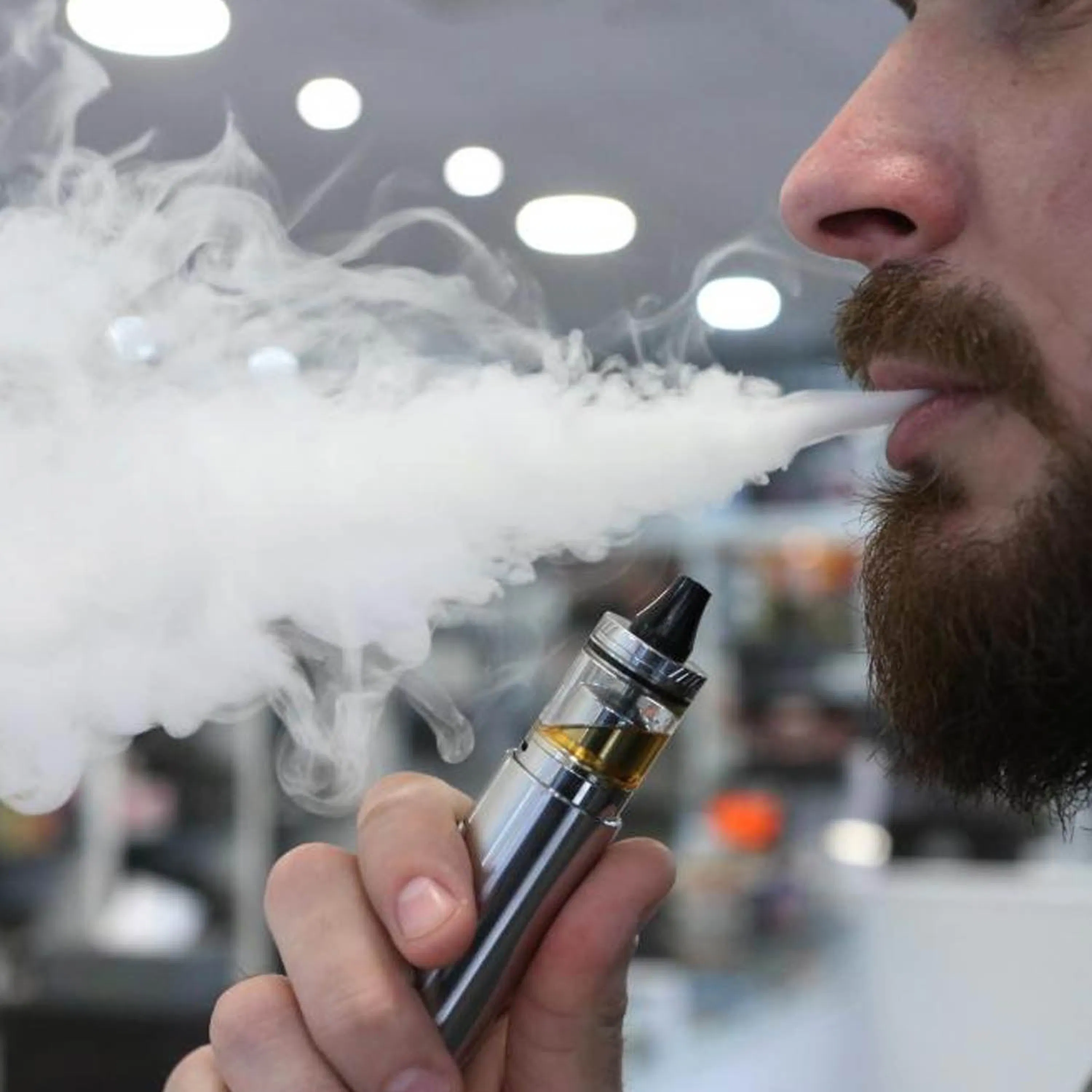
What are e-cigarettes ?
What are e-cigarettes ? An e-cigarette is a vaporizer that simulates smoking without tobacco consumption. A product like this could therefore help smokers to quit. The use of electronic cigarettes is on the rise, while tobacco sales are dropping. But before we get carried away about wiping out tobacco, we should remember that e-cigarettes are not totally risk-free. Smoking an e-cigarette is also known as vaping, as you inhale a vapor instead of cigarette smoke. This lukewarm liquid is made up of water, glycerol, propylene glycol, flavorings and the desired amount of nicotine. As no combustion takes place, e-cigarettes are considered less dangerous than tobacco. For example, the presence of nitrosamines, which are known to be carcinogenic, is reduced by 97% compared to traditional cigarettes. Invented in the early 2000s, e-cigarettes really took off from 2010 onwards. Smokers are attracted by their lack of smell and lower cost. But especially the lower health risks, due to there being no tar or carbon monoxide in the product. Many doctors advise smokers to try e-cigarettes in order to reduce tobacco consumption or completely stop smoking. But e-cigarettes have also come in for criticism. With a wide range of models on sale, and some users creating their own vaping liquid, you can easily end up with a bad-quality product. And most vaping liquids continue to contain nicotine, which is one of the most addictive legal substances out there. There have at least been some studies across the world over the last ten years. A lot of scientists have backed the e-cigarette. Actually, 35% of vapers have successfully quit smoking, so we’re talking about millions of deaths potentially prevented. On the other hand, there has been proof that inhaling vaping liquids can damage immune system cells. Experts have pointed out that flavorings contain chemical substances and ultrafine particles. You’ve got diacetyl for example, which is deemed as toxic when inhaled. You’ve also got the coil that heats the vaping liquid, right. Some devices allegedly give off heavy metals when that happens, like lead, chromium or nickel. So for a while some health organisations had been recommending e-cigarettes to help quit smoking. But then the World Health Organisation comes along and really throws the cat among the pigeons in July 2019. The WHO basically came out advising against using e-cigarettes, saying they are “undoubtedly harmful”. What’s more, they also warned that the tobacco industry has been misinforming the general public on the subject. In the WHO’s opinion, the use e-cigarettes should be regulated around the world. See acast.com/privacy for privacy and opt-out information. Learn more about your ad choices. Visit megaphone.fm/adchoices

What is body positivity ?
What is body positivity ? Body positivity has taken over social media in the last few years. The movement is based on the relationship we have with our bodies, encouraging us to achieve self-acceptance. The drive took off in 1996 thanks to two American women. Elizabeth Scott, a psychotherapist, was contacted by Connie Sobczak, who was victim to an eating disorder at the time. In honour of her dead sister, Sobczak created the Body Positive movement along with Scott. The organisation encourages individuals to change the world, rather than feeling the need to change their bodies . The two founders continue to offer seminars and other group training sessions to this day. Body positivity posts can be found all over Instagram, with hashtags alongside photos of people of all body types and morphologies. Body positivity is first and foremost an ideology, rather than just a collection of photos. The movement helps those with self-image challenges to love their bodies. Getting started is really simple. Stand in front of a mirror and say out loud the things you notice most about your body. Most people mention their supposed flaws before anything positive. A body positive attitude will help you see these “flaws” as qualities and therefore actually appreciate them. The idea is that you say what you like about yourself and show off your flaws, rather than hiding them. This helps us to feel beautiful and love ourselves. Which in turn allows us to overcome fears and break down taboos. Check out the story of breast cancer survivor Ericka Hart for example. She became a body positive symbol by posing topless following breast reconstruction surgery. It turned out that prior to the surgery, she hadn’t been able to find a single photo of a black woman having undergone the same procedure. See acast.com/privacy for privacy and opt-out information. Learn more about your ad choices. Visit megaphone.fm/adchoices

What is begpacking ?
What is begpacking ? Begpacking is a portmanteau word, combining the words ‘begging’ and ‘backpacking’. It essentially means begging in order to fund a journey, and the practice has come in for criticism from many quarters. Begpackers are mainly young Westerners travelling around the world, particularly in Asia. Some offer hugs or play music in exchange for money. Others simply sit in the street behind a sign reading “Help us to travel around the world”. Each begpacker has their own personal situation. Some may be broke, others simply craving further adventures. This somewhat hippy attitude might simply cause a few raised eyebrows in the Western world. But in Asia, it’s really not appreciated by local communities. In New Zealand, Wellington city councillor Brian Dawson spoke out against begpackers eating in local soup kitchens. Dawson said: “It does annoy me that people think it's a way to get around the country on the cheap...There's a huge difference between doing this for a cheap holiday, knowing that afterwards you can return to another lifestyle." Begpackers are seen as ignorant when it comes to cultural differences. In Asian countries, begging is a sign of social failure and only justifiable for people in extreme poverty. For a visitor to beg in order to fund their travel is therefore disrespectful to the country’s own population. Some in South-East Asia take their criticism of the tourism industry even further. They see white tourists as neocolonialists, seeing Asia as an exotic place for their own spiritual awakening. See acast.com/privacy for privacy and opt-out information. Learn more about your ad choices. Visit megaphone.fm/adchoices

What is accelerationism ?
What is accelerationism ? Accelerationism is a radical school of thought, seeking to bring about a postcapitalist society. Accelerationists believe that this aim can be achieved by pushing capitalism past its limits, mainly through technological advances. Contemporary accelerationists include Nick Srnicek and Alex Williams, who created their accelerationist manifesto in 2013. This publication generated a lot of attention and debate in political spheres. In 2015, Srnicek and Williams expanded their manifesto into a monograph entitled “Inventing the Future”. So what makes this new theory any different from other leftist philosophies? Accelerationists believe that traditional left-wing parties are going down the wrong path, continuing to advocate increases to the welfare state. They say the economy is not able to sustain such a policy in the long term. Accelerationists also oppose the ideas of the degrowth movement, which is all about downscaling production and consumption. As the name suggests, accelerationism is about accelerating. Accelerating and going faster than capitalism, in order to overtake it. The theory puts technological advances a t the heart of its political project. We’re talking about artificial intelligence which can limit pollution, robots enabling humans to reduce their time spent working and therefore become emancipated. Technology should therefore not be left in the hands of capitalists, but appropriated and used to increase social justice. Accelerationists therefore don’t see new technologies as being inherently bad. Big data, algorithms and robots can all be adapted to create a new postcapitalist society. See acast.com/privacy for privacy and opt-out information. Learn more about your ad choices. Visit megaphone.fm/adchoices