PLAY PODCASTS
Do you really know?

Do you really know?

2,956 episodes — Page 57 of 60

What is environmental amnesia?

What is environmental amnesia? Thanks for asking! Why are we so slow to become aware of climate change and act against it? The explanation may lie in our brains, which are affected by environmental amnesia. This term was invented in 1999 by American psychologist Peter H. Khan. He theorised that humans were forgetting the history of the environment, or more accurately becoming used to its degradation from generation to generation. Children tend to base their view of what is a “normal” environment on what they experience at a young age. This is true even though in reality they are increasingly growing up in polluted ecosystems. When they grow older, it then becomes difficult to change their viewpoint, as that norm has become their reference point. I guess it’s hard to ‘forget’ something you’ve never seen yourself! Fisheries scientist Daniel Pauly discussed the similar concept of a “shifting baseline syndrome” in 1995. He noted that fishing researchers tended to assess stock based on the norm at the start of their career. That didn’t necessarily take into account that the stock level was already depleted compared to previous generations. Many were unable to accurately identify the baseline population size of how abundant a species of fish was before human exploitation. So why does this happen then? We usually remember the history of our ancestors, from ancient times to the World Wars. That is because we are taught about it at school from an early age, whereas the history of the environment is seldom taught, if at all. In addition, many of us live in urban areas, further and further away from nature. National Trust research published in 2018 showed that UK children play outdoors for an average of 4 hours per week, which is less than half than their parents’ generation. See acast.com/privacy for privacy and opt-out information. Learn more about your ad choices. Visit megaphone.fm/adchoices

Sep 23, 20204 min

What is Amazon deforestation?

What is Amazon deforestation? Thanks for asking! Situated in South America, the Amazon tropical rainforest is home to somewhere between 50 and 70% of the world’s biodiversity, according to the World Wildlife Fund. It stretches across Peru, Colombia, Venezuela, Guyana, Surinam, French Guiana, Ecuador, Bolivia and most of all Brazil, which contains 60% of the Amazon alone. Huge fires are currently ripping through various parts of the rainforest, which could end up being even worse than the 2019 outbreak. This is closely linked to the issue of deforestation. After more than a decade of downward trajectory, Amazon deforestation has risen abruptly in the last two years. We’ve been talking about deforestation in the Amazon for a long time; when did it actually start? Deforestation began in the 1960s, but went up considerably between 1991 and 2003. Several local, national and international factors are to blame. There have been huge peaks in deforestation over the years, while measures taken by former Brazilian President Lula had some impact in slowing the rate in the first decade of the 21st century. In 2009, a Greenpeace report claimed that 80% of the deforested area in Brazil was being used for cattle farming. Soy plantations were also cited as a key problem. Trees are cut down for timber, then the cleared land is used for grazing cattle or cultivating soybeans. In the first six months of 2020, 3000km2 of forest have been cut down.The UN’s Food and Agriculture Organisation has stated that Brazil is the country where the most forest has been lost in the last decade. What has happened since Jair Bolsonaro became head of state in Brazil? Unfortunately, it’s had a real negative impact. When Bolsonaro became President in January 2019, deforestation immediately increased by 54%. And that trend has continued since. Bolsonaro encouraged cattle farmers and miners to ramp up operations in the Amazon. Their deforestation is often illegal, with many accused of deliberately starting fires to free land for their activities. In 2019, exports of beef from the region went up 32%. In addition to destroying biodiversity, deforestation threatens the lives of native tribes living in the Amazon. In 2020, the Brazilian government proposed a draft bill allowing mining and farming to take place on indigenous lands. Human activity and global warming are pushing the situation to a point of no return. Scientists say it may already be too late for the Amazon rainforest to regenerate. A few different scenarios have been outlined. The World Bank claims that 40% of the Amazon will have disappeared by 2050. Meanwhile, the WWF believes it could be as much as 55% by 2030. See acast.com/privacy for privacy and opt-out information. Learn more about your ad choices. Visit megaphone.fm/adchoices

Sep 21, 20204 min

What is transhumanism?

What is transhumanism? Thanks for asking! Transhumanism is all about improving the human condition by enhancing our intellect and physiology. From 2021, billionaire Elon Musk is planning to test brain implants on human beings. With his Neuralink device, he is looking to create an interface to treat and enhance our brains. So is the merging of man and machine just around the corner? The transhumanist movement advocates surpassing our biological limits through technology. That means using tools such as implants or chips to cure illnesses, improve performance and even prevent death. And humans have been dreaming of immortality since time began. Transhumanism is a bit like the digital version of the fountain of youth or the philosopher’s stone. But this time around, it’s not a fantasy - are we really are going to become transhumans? Elon Musk, head of Tesla and Starlink, believes strongly in transhumanism. His Neuralink project promises to create a neural interface which cures epilepsy or Parkinson’s. With time, the aim is to allow our brains to communicate directly with computers. In late August, he introduced a pig called Gertrude at a press demo. The Neuralink brain-machine interface was implanted in her brain, with her brain signals analysed by a computer which could predict her movements. Musk used the occasion to announce that American health authorities had given permission for similar tests on humans to begin in 2021. But beyond PR and marketing, the reality is that Musk himself hasn’t really invented anything. Such techniques have been around for years. One of the first examples dates back to 2006, when scientists helped Matthew Nagle, a young paralysed man, to control a mouse cursor using a chip in his brain! Since then, mind-controlled prosthetic arms and hands have also been developed, sometimes without the need for a brain implant. Thanks to these transhuman inventions, scientists hope to make blind people see again and help paralysed people to walk. See acast.com/privacy for privacy and opt-out information. Learn more about your ad choices. Visit megaphone.fm/adchoices

Sep 19, 20204 min

What is OPEC?

What is OPEC? Thanks for asking! The Organisation of the Petroleum Exporting Countries is an international cartel currently made up of thirteen member states. Over the years, it has played an important role in the global economy, coordinating the petroleum policies of its members. But right now, its influence is waning, due in no small part to the Covid-19 pandemic. OPEC was created in 1960 in Baghdad. At the time, there was a high level of competition between petrol companies, meaning prices were low. The main petrol-producing Arabic countries therefore decided to join forces to rival Western companies. Together, they decided to produce less petrol, forcing prices up as a result. All about supply and demand, huh! And it worked! That’s how founding members Saudi Arabia, Iraq, Iran, Kuwait and Venezuela increased their power on the international scene. By determining petrol prices, they were directly influencing the world economy. OPEC’s actions even led to the first oil crisis in 1973. During the Yom Kippur war, its members decided to stop supplying petrol to allies of Israel. The effect was immediate, with the price of a barrel increasing fourfold in just a few months. Despite this exploit, OPEC member countries haven’t always enjoyed great diplomatic relations between one another. Due to wars and disunity, its influence on petrol prices is more and more limited. OPEC’s current member countries are between them home to over 80% of the world’s proven oil reserves. Wow, they really are the petroleum cartel! And yet combined they only account for 40% of global oil production. That’s because OPEC has serious competition from other countries, in particular the United States. In the last few decades, the US has become the number one petroleum producer in the world. See acast.com/privacy for privacy and opt-out information. Learn more about your ad choices. Visit megaphone.fm/adchoices

Sep 17, 20205 min

What is Novichok?

What is Novichok? Thanks for asking! Novichok is a family of chemical agents which disrupts communication between nerves and muscles. Its name means newcomer in Russian and it was developed in closed laboratories during the Cold War, as part of the Soviet Foliant programme. The international community only discovered the existence of Novichok in the early 1990s, after a Russian chemist revealed the truth about the programme in a Moscow daily newspaper. In early September 2020, Russian opposition leader Alexei Navalny came out of the medically induced coma he had been in for three weeks. Tests carried out at a military laboratory in Germany, where Navalny was hospitalised, showed that he had been poisoned with a Novichok nerve agent. The substance exists in two forms: liquid, which can be mixed into food or drink; and solid, as a powder. Is Novichok poisoning lethal then? Novichoks bind to the acetylcholinesterase enzyme, known as AChE for short. Its role is to break down the acetylcholine neurotransmitter when released into synapses. Symptoms of novichok poisoning can include nausea, spasms, heart failure and respiratory arrest, leading to death through suffocation. The lack of oxygen can quickly lead to significant brain damage. Novichok agents are at least five times as lethal as other chemical agents such as VX or Sarin. Anyone who has been poisoned needs immediate medical attention if they are to survive. In the case of Navalny, he started feeling the effects of the poisoning on August 20th, while on a flight from Siberia to Moscow. He was then quickly evacuated to Berlin in a medical airplane. Although Navalny has now come out of his coma, doctors can’t rule out long-term effects. See acast.com/privacy for privacy and opt-out information. Learn more about your ad choices. Visit megaphone.fm/adchoices
Sep 16, 20204 min

What is negationism?

What is negationism? Thanks for asking! Historical negationism refers to the practice of manipulating historical records to deny that certain events happened, or distort the narrative around them. The term is relatively recent, having been coined by French historian Henry Rousso in 1987, relating to Holocaust Denial. Six million Jews were murdered by the Nazi regime during the Second World War. Holocaust denial is certainly one of the most well-known and common examples of negationism. But similar distortion strategies have been seen relating to other genocides and war crimes across the world. Negationism is a crime in some countries like Germany, while elsewhere the approach is more cautious, due to questions about freedom of speech. Other laws can apply to negationist statements, if they are also of a hateful or discriminatory nature. So what exactly does negationism look like? Techniques include using forged documents to justify an alternative version of events, creating doubt about genuine documents, manipulating statistics and deliberately mistranslating texts. Then you’ve got the destruction of physical evidence through book burning or smashing statues. In the case of Holocaust Denial, some deny the existence of the gas chambers in concentration camps. They downplay the extent of Hitler’s Final Solution, claiming that the Nazis merely deported Jews and didn’t exterminate them. Others recognise that there was mass murder, but put the death toll significantly lower than the accepted figure of 5-6 million. Surveys in recent years have shown there is still a shocking level of Holocaust denial in the 21st century. Just last year, a survey found that 5% of UK adults do not believe the Holocaust took place. In other regions, like Sub-Saharan Africa, Asia, the Middle East and North Africa, awareness levels are much lower. But among those who have heard of the Holocaust, only half or less believe it has been accurately described by history. See acast.com/privacy for privacy and opt-out information. Learn more about your ad choices. Visit megaphone.fm/adchoices
Sep 14, 20204 min

What is the Great Barrier Reef?

What is the Great Barrier Reef? Thanks for asking! The Great Barrier Reef is planet Earth’s largest living structure. It has remarkably rich biodiversity, but is gradually disappearing due to pollution caused by humans. Tourists have been absent from the reef since the beginning of the Covid-19 pandemic. But paradoxically, this isn’t likely to help the situation. The reef is located in the sea off the coast of North-East Australian territory Queensland. Its surface area is larger than that of Italy and it can even be seen from space! In some places the corals can be found several miles underwater; in others just under the surface. According to the Great Barrier Reef Marine Park Authority, the diverse Reef ecosystem is home to 1625 species of fish, including 1400 coral reef species. Then you’ve got over 3000 species of molluscs, 630 species of echinoderm, 14 breeding species of sea snakes, 215 species of birds, six species of marine turtles, 30 species of whales and dolphins, 133 species of sharks and rays, and much more. Among them are many vulnerable and endangered species. Well it sounds like they won’t be there for much longer, if the situation is as bad as I understand? Indeed, the Great Barrier Reef is under threat. It’s estimated that up to half the corals have disappeared in the last few years. One of the biggest dangers to the reef is the crown-of-thorns starfish, which feeds on coral and has few predators. So why are they suddenly invading the Barrier Reef? And what about the tourism? In under 3 minutes, we answer your questions! To listen the last episodes, you can click here: What is cancel culture ? What is the Louise Michel ? What is collapsology? See acast.com/privacy for privacy and opt-out information. Learn more about your ad choices. Visit megaphone.fm/adchoices

Sep 12, 20205 min

What is cancel culture?

What is cancel culture? Thanks for asking! Cancel culture is the popular practice of withdrawing support for an individual or company, to such an extent that they become irrelevant as a result. This is usually due to something the person has done or said that is considered offensive. Cancel culture has become an effective tool for so-called social justice movements, with feminist, antiracist and LGBTQ+ activists incr easingly adopting the tactic. It tends to involve the use of social media to call for a boycott of an individual, who may or may not be a public figure. This online shaming can include fair criticism, insulting and harassment to destroy the person’s reputation. Many have suggested that cancel culture has now gone too far, including former US President Barack Obama. Well, internet users can be very sensitive can’t they? One clumsy tweet and social media goes into a frenzy! And it’s not just present-day tweets that are used as justification for “cancelling” someone. In some cases, posts from many years ago have been dug up, screenshotted and shared all over the internet. The term “clicktivists” is used mostly in a negative way to label those who use social media to shame others online, mainly to boost their own egos. In July 2020, a group of 150 activists, writers and academics called for an end to cancel culture. Part of their open letter, which was published in Harper’s Bazaar magazine, reads as follows: “The free exchange of information and ideas, the lifeblood of a liberal society, is daily becoming more constricted.” J.K. Rowling, Salman Rushdie and Margaret Atwood were among those to put their name to the letter. Cancel culture is all the rage at the moment, isn’t it?! In under 3 minutes, we answer your questions! To listen the last episodes, you can click here: What is collapsology? What is flexitarianism? What is a super-spreader? See acast.com/privacy for privacy and opt-out information. Learn more about your ad choices. Visit megaphone.fm/adchoices

Sep 10, 20204 min

What is the Louise Michel?

What is the Louise Michel? Thanks for asking! The news was broken as an exclusive by the Guardian less than two weeks ago, drawing attention to a crisis which has been getting worse since the start of the Covid-19 pandemic. Famous British street artist Banksy had funded a project to carry out rescue missions in the Mediterannean Sea, which more and more migrants are trying to cross from North Africa to Europe. To do this, he relaunched a former French navy boat, 30 metres long, painted in pink and depicting a young girl with windswept hair, holding out a heart-shaped safety buoy. The name of the boat? The Louise Michel, after the 19th century French anarchist feminist of the same name. Well that’s a fitting name for such a project! On board the Louise Michel are 10 European activists who have significant experience in sea rescue. The NGO vessel is commanded by German captain Pia Klemp, whose ships have saved several thousand people in recent years. An email sent from Banksy to Klemp last year reads as follows: “Hello Pia, I’ve read about your story in the papers. You sound like a badass.” He then offered to buy a boat with the money he had made from his migrant crisis-themed artwork. The plan was carried out secretly between London, Berlin and Spain, so that European authorities would be totally unaware. The boat’s existence only became public knowledge due to having saved 90 people, off the coast of Libya. Some of those survivors had fuel burns and other injuries. The crew carried out a second rescue mission the same night, taking the total number of migrants saved to 220. One person had already died when found on a rubber dinghy. The Louise Michel being able to accommodate a maximum capacity of 120 people, many had to spend several hours on a liferaft deployed alongside. Unable to move their boat, the crew made repeated emergency calls for assistance to Malta and Italy, the closest European countries. Did anyone come to their help? So will the migrants now be sent to a place of safety in Europe? In under 3 minutes, we answer your questions! To listen the last episodes, you can click here: What is collapsology? What is flexitarianism? What is a super-spreader? See acast.com/privacy for privacy and opt-out information. Learn more about your ad choices. Visit megaphone.fm/adchoices
Sep 9, 20204 min

What is collapsology?

What is collapsology? Thanks for asking! Collapsology is the transdisciplinary study of how our industrial civilisation could collapse, and indeed what may come afterwards. Its ideas are gaining in visibility and popularity. The term collapsology is a neologism, having been created in 2015. It was popularised by French authors Pablo Servigne and Raphael Stevens, who that year published a book called How Everything Can Collapse. As far back as 1972, the Meadow Report published by MIT researchers warned of the risks of exponential population and economic growth on a planet where resources are limited. One of the main ideas of collapsology is that human activity is affecting the planet in a negative and lasting way. It is to blame for global warming, a loss of biodiversity and the increase in natural disasters. Well, there’s nothing new in those ideas, really. Collapsologists go even further by linking what Servigne and Stevens call “systemic instabilities''. This refers to the various crises the world is undergoing: Economic, health, environmental, war, democractic, and so on. Worse still, it’s already too late to save the situation. The combined impact would see civilisation as we know it collapse by 2050. Collapsologists say that by then, us humans will be faced with drastic food, water and housing shortages. So we’re all screwed then! In under 3 minutes, we answer your questions! To listen the last episodes, you can click here: What is a super-spreader? What is fan fiction? What is an authoritarian regime? See acast.com/privacy for privacy and opt-out information. Learn more about your ad choices. Visit megaphone.fm/adchoices

Sep 7, 20203 min

What is flexitarianism?

What is flexitarianism? Thanks for asking! Flexitarianism is a portmanteau word combining flexible and vegetarianism. It’s a mostly vegetarian way of eating which nevertheless allows for occasional meat dishes. The aim is to reduce red meat and animal protein consumption, replacing them with high-protein plant foods.This type of diet is becoming increasingly common, and the word flexitarian was added to the Merriam-Webster's Collegiate Dictionary in 2012. So if I understand correctly, being flexitarian is basically being a part-time vegetarian. That’s more or less right. Many people try flexitarianism as preparation for going full veggie. It makes the transition easier, without making you feel like you’re going cold turkey. All foods are allowed. Fruit, vegetables, cereal, dairy products and fats can be eaten every day, along with an occasional serving of meat or fish, when there’s no plant-based alternative. Flexitarians don’t only limit the quantity of meat in their diet. On the occasions they do eat meat, they also pay close attention to where products come from. They may choose to only consume meat and produce that has come from an organic farm, where animals are raised free-range. Sustainability is a key concern, as meat production has a high carbon footprint. It’s estimated that livestock is responsible for 18% of all greenhouse gas emissions. More and more people are avoiding meat, in order to eat more responsibly. But I’ve been eating meat all my life. How am I supposed to know how to cook and eat all these plant-based products? In under 3 minutes, we answer your questions! To listen the last episodes, you can click here: What is a super-spreader? What is fan fiction? What is an authoritarian regime? See acast.com/privacy for privacy and opt-out information. Learn more about your ad choices. Visit megaphone.fm/adchoices

Sep 5, 20204 min

What is a super-spreader?

What is a super-spreader? Thanks for asking! While summer 2020 draws to an end, the COVID-19 pandemic is far from being over. Some European countries are seeing increased infection rates and have reinforced public health measures in anticipation of a second wave. A recent Scottish study suggested that just 10% of those infected could be responsible for 80% of infections. The term super-spreaders has emerged to describe those who spread the virus to a greater number of people than the R0 reproduction rate. So are these 10% to blame for everyone else getting contaminated? It’s not quite that simple. Everything is linked to that R0 rate; the average number of people we infect when we have a contagious disease. Of course if the R0 rate was three, not every single person would have the same level of infectivity - it’s just an average. Some would infect many more than three, and others none at all. So there are other important indicators to take into account. Firstly you’ve got the dispersion factor, which is represented by the K value. This sheds light on how the transmission rate varies. As Dr Adam Kucharski recently told The Guardian: “The general rule is that the smaller the K value is, the more transmission comes from a smaller number of infectious people.” The latest studies suggest that the K value for COVID-19 is between 0.1 and 0.5, which seems to back up the idea that super-spreaders are generating the majority of transmissions. Who are these super-spreaders then? It sounds like children do in fact spread COVID-19 after all? In under 3 minutes, we answer your questions! To listen the last episodes, you can click here: What is fan fiction? What is an authoritarian regime? What is the Istanbul Convention? See acast.com/privacy for privacy and opt-out information. Learn more about your ad choices. Visit megaphone.fm/adchoices

Sep 3, 20204 min

What is fan fiction?

What is fan fiction? Thanks for asking! Fan fiction refers to texts written by a fan using characters or storylines from another existing story, usually a popular novel, series, film or video game. They are also known as fanfics, and in the digital age, the quantity of such works is exploding! Fan fiction has even become recognised as a literary genre, and has created a unique niche for itself in the publishing industry. Fan fictions were first published in the 1960s and 70s. Star Trek fans have long been known for their passionate following. So it’s little surprise that Trekkies came up with the first early such texts in their fanzines. A similar trend emerged around the same time in Japan. Manga fans began producing independently published comics and novels, known as doujinshi. The creation of the internet allowed fan fiction to develop on dedicated sites and forums. The largest online collection can be found at fanfictions.net. The site has over 2.2 million registered users, who write in 40 different languages! What are the common characteristics of fan fiction then? Generally speaking, a piece of fan fiction focuses on one or more characters. The author looks more closely at the character’s personality and psychology. Certain elements of the original story, like the main characters and settings, remain unchanged. This part of the source narrative is referred to as “canon” by fans, which is short for canonical fictional universe. But a fanfic can also take place in an alternative universe, known as an AU. Fan fiction terminology includes an extensive range of genres, subgenres and other jargon terms. For example, slash fiction tells stories about relationships between two characters of the same sex, like Sherlock Holmes and Doctor Watson. The most well-known franchises like Star Wars, Harry Potter and Marvel comics have hundreds or thousands of fanfics. Harry Potter in particular inspired the imagination of fans, with a multitude of alternative endings emerging. How about Voldemort triumphing at the end of the series? Or a love triangle between Harry, Ron and Hermione? It can’t be easy for an unknown writer to make a name for themselves creating fan fiction, right? In under 3 minutes, we answer your questions! To listen the last episodes, you can click here: What is an authoritarian regime? What is the Istanbul Convention? What is OnlyFans? See acast.com/privacy for privacy and opt-out information. Learn more about your ad choices. Visit megaphone.fm/adchoices
Sep 2, 20205 min

What is an authoritarian regime?

What is an authoritarian regime? Thanks for asking! An authoritarian regime is a form of government which monopolises authority and restricts political freedoms. Such regimes have strong central power and little accountability to their population. Authoritarianism is effectively the opposite of democracy. The term has come back into the news of late, with the reelection of Alexander Lukashenko as President of Belarus. He will now serve a sixth consecutive term, having remained head of state since 1994. His regime is considered authoritarian. Indeed, international media often refer to Lukashenko as “Europe’s last dictator”. So what are the characteristics of an authoritarian regime? One that immediately springs to mind is repression. Authoritarian regimes often resort to illegitimate tactics to enforce their power, such as the use of force. Another is how political opponents are, let’s say, ‘controlled’. That’s a euphemism because they are often imprisoned or disappear completely. Political pluralism is restricted and any anti-regime activities are swiftly suppressed. There are no trade unions and no NGOs. And the list goes on and on. Under an authoritarian regime, violating the freedom of the press and locking up journalists are common practice. This happens frequently in countries like China, Iran and Egypt. National television channels are run by the state, with no place for independent media, who often end up in exile from their home country. To enforce censorship, some authoritarian regimes have cut internet access.This was done for a five-day period in Gabon in 2016, after the announcement of President Ali Bongo’s reelection. Meanwhile, other regimes in Kazakhstan, Iraq and Iran have forced citizens to use an internet certificate in order to monitor their browsing activity. Are there many authoritarian regimes in the world today? And why don’t other countries take sanctions against them? See acast.com/privacy for privacy and opt-out information. Learn more about your ad choices. Visit megaphone.fm/adchoices

Aug 31, 20204 min

What is the Istanbul Convention?

What is the Istanbul Convention? Thanks for asking! The Istanbul Convention is an international human rights treaty which was signed in 2011 by 45 European countries. It came into effect in August 2014 and was the first legally binding instrument to establish rules combatting violence against women. Its full name is the ‘Council of Europe Convention on preventing and combating violence against women and domestic violence’. A bit of a mouthful, we think you’ll agree! The Council of Europe is less well-known than the European Union, although it actually predates it, having been founded back in 1949. The organisation has a reputation for promoting the protection of women, due to several campaigns over recent decades. The convention’s main aims are to prevent violence against women from occurring, protect victims and ensure perpetrators are punished. So what exactly is in the convention? Like all European texts, the convention is set out in a specific, structured way. writing sound It has 81 articles and 12 chapters, defining gender violence as a violation of human rights. The preamble states that “violence against women is a manifestation of historically unequal power relations between women and men, which have led to domination over, and discrimination against, women by men and to the prevention of the full advancement of women.” It also clearly sets out the acts and forms of discrimination which could cause physical, sexual, psychological or economic harm to women. So it’s a hugely significant text for countries which have ratified it, so long as they respect it. States have to put in place measures to counter such violence, carry out awareness campaigns and educate their population on gender equality. Why is the Istanbul Convention making headlines now in 2020? In under 3 minutes, we answer your questions! To listen the last episodes, you can click here: What is OnlyFans? What is an oil spill? What is Kairos? See acast.com/privacy for privacy and opt-out information. Learn more about your ad choices. Visit megaphone.fm/adchoices
Aug 29, 20205 min

What is OnlyFans?

What is OnlyFans? Thanks for asking! OnlyFans is a digital content platform which operates on a subscription model. As with social media platforms, when you follow a user, you get access to that person’s content. Since being launched in the UK in 2016, the service has drawn criticism from some quarters. One key difference with other social networks is that it enables content creators to charge fans for access to their images and videos. It’s a whole new way for influencers to make money online. So it’s a bit like a paid version of Instagram is it? Onlyfans subscriptions tend to range from $5 to $50 per month. Once a fan subscribes to an influencer’s account, they can view their content and send them private messages. So the premise is that to see exclusive content, you have to pay. And the rules around what can be published are pretty liberal, compared to Instagram’s strict policy on nudity. In fact, OnlyFans has strong links with the adult entertainment industry, counting many sex workers among its users. Some media outlets have referred to the platform as the ‘Instagram of porn’. Users are allowed to share images of themselves in little or no clothing, and even pornographic videos. And it’s all completely legal, as long as the people in the images are of age. To create an account, you must be over 18 and submit proof of age. But it’s not completely all about nudes. Some musical artists are active on OnlyFans, including rapper Cardi B. What’s in it for them, you might be wondering? Well they can host private shows for their fans and share exclusive footage from the filming of a music video, for example. Fitness coaches also share workout routines and personalised tips. As paying subscribers, the fans are also to some extent customers. So there’s a certain expectation that content creators will regularly deliver new pictures and video clips, to maintain the link with their online community. So why are people talking about OnlyFans at the moment? In under 3 minutes, we answer your questions! To listen the last episodes, you can click here: What is Kairos? What is a sebum cure? What is a caffè sospeso? See acast.com/privacy for privacy and opt-out information. Learn more about your ad choices. Visit megaphone.fm/adchoices
Aug 27, 20204 min

What is an oil spill?

What is an oil spill? Thanks for asking! An oil spill is a form of pollution whereby petrol is released into the sea or ocean due to human activity. This is sometimes accidental, sometimes intentional. In both cases the environmental and social consequences can be disastrous. Just a month ago, a Japanese-owned cargo ship transporting 4,000 tonnes of fuel oil crashed into a coral reef near to the coast of Mauritius. The ship leaked nearly 1,000 tonnes of oil into the pristine waters, which are known for their rich biodiversity. So what is the impact on the planet? An oil spill is a real environmental catastrophe. The oil itself can cause irreversible damage to ecosystems by impacting the whole food chain. News coverage often includes dramatic images of birds or other animals covered in oil. Unable to escape, they generally die of suffocation. Then you’ve also got economic repercussions to consider. A huge effort is required to clean up the coastline, including suspending tourism in the affected area, as well as fishing and aquaculture. Cleanup teams sometimes use chemical products called dispersants. Their purpose is to break down oil into small droplets, clearing it from the water’s surface. This makes it less likely the oil slick will reach the shoreline. But some types have been labelled harmful by environmental organisations, due to their toxic nature. Are there other ways of cleaning up after an oil spill? How do such large-scale disasters come about? And do they happen often? In under 3 minutes, we answer your questions! To listen the last episodes, you can click here: What is Kairos? What is a sebum cure? What is a caffè sospeso? See acast.com/privacy for privacy and opt-out information. Learn more about your ad choices. Visit megaphone.fm/adchoices

Aug 26, 20204 min

What is Kairos?

What is Kairos? Thanks for asking! The ancient Greeks had two words for “time”. The first, Chronos, refers to chronological time which can be clearly measured. Meanwhile Kairos is more about quality. It is used when talking about an “opportune moment”. As the saying goes, timing is everything! It was originally used in science by Hippocrates, who is seen as the father of medicine. He and his students suggested that there were two ways of failing when treating an illness: either taking action too early or too late. Of course in between the two, you have the opportune moment to carry out treatment. In rhetoric, kairos is a strategy based on the timeliness of a line of argument. Aristotle connected it to his rhetorical triangle of ethos, pathos and logos, teaching that in each situation, the right moment will come to use one over the others. So it wasn’t enough to simply express a correct idea. It was considered just as important to state it at the right time. Kairos is therefore also considered a mode of persuasion in rhetoric. In Nicomachean Ethics, Aristotle introduces the notion of kairos to analyse human actions. Taking advantage of kairos is to seize the rare moment when our desires and fate coincide. So how can I make sure I don’t miss out on kairos?! In so far as many of the circumstances which define kairos are external, there are no strict rules on how to benefit from it. Seizing an opportunity isn’t an exact science after all. It requires finesse, flair, intuition and various other qualities. You can sometimes create a situation which allows you to communicate at the opportune time. Some observers have suggested making time for kairos moments on a daily basis, especially in the world of work. Kairos time may help us achieve objectives, reduce burnout and keep us passionate about what we do. Do you have any concrete examples then? In under 3 minutes, we answer your questions! To listen the last episodes, you can click here: What is a caffè sospeso? What is a leap year? What is nudge theory? See acast.com/privacy for privacy and opt-out information. Learn more about your ad choices. Visit megaphone.fm/adchoices
Aug 24, 20204 min

What is a sebum cure?

What is a sebum cure? Thanks for asking! The sebum cure is a natural hair care method, which consists in avoiding shampoo for a given period of time. Certain internet users have taken advantage of self-isolation to try the sebum cure without having to put up with greasy hair in public. So how does it work and is it really effective? Shampoo addicts know for a fact: greasy hair is a true vicious cycle. The greasier it is, the more you wash it, the faster it becomes greasy again. That might have to do with the aggressive nature of some shampoos which irritate the scalp, stimulate sebaceous glands and strip your hair off the sebum that protects the scalp from aggressive factors. So as a way of breaking the cycle of “it gets greasy, I attack it, it gets greasy again” certain influencers promote the sebum cure. The point is quite simple: forget about shampoo for about a month and let your hair get greasy! As you proceed with the cure, it is recommended however to brush your hair daily to remove dust and distribute the sebum evenly along the hair shaft. If you have long hair, in a few weeks the sebum will reach the hair ends and its secretion will self-regulate in a natural way. The hair coated with sebum will be just as well-groomed as if treated with vegetable oils, for example. Proponents of the sebum cure stress the multiple advantages it offers: it facilitates hair growth, makes your hair more voluminous, softer and shinier. Self-isolation comes in handy. Although under different circumstances it’s also possible to go through with the cure by wearing your hair in a bun or putting on an accessory, like a headscarf. And don't forget to brush off the first jerk that comes your way: “Yup, my hair is greasy, do you have a problem with that?” Thirty days later, despite the joy going back to shampoo might bring, it is recommended to opt for a softer kind and take it slow! But is it just a youtuber's trick or does it actually work? In under 3 minutes, we answer your questions! To listen the last episodes, you can click here: What is a caffè sospeso? What is a leap year? What is nudge theory? See acast.com/privacy for privacy and opt-out information. Learn more about your ad choices. Visit megaphone.fm/adchoices

Aug 22, 20204 min

What is a caffè sospeso?

What is a caffè sospeso? Thanks for asking! Caffè sospeso literally translates to English as a ‘suspended coffee’. It’s an Italian tradition whereby cafe customers pay for an extra coffee that will be put aside, for a poor person to claim at a later time. The caffè sospeso idea can be extended to other types of food, and it’s seen a revival in popularity during the Covid-19 pandemic. It’s believed the caffè sospeso tradition was born in Naples’ historic Gambrinus café, around the start of the 20th century. The idea was simple: if a person felt like they had had a lucky day, they would pay for two coffees instead of one. The second ‘suspended’ coffee would later be given to the first poor person who asked for one. And by the way, you can suspend other items too, the concept is not just limited to coffee. It could be a sandwich, bottle of water or pastry for example. Nice idea! Is it only the Italians who are big on solidarity then? A similar principle has existed in Turkish bakeries for centuries, relating to bread. A customer asks for two loaves of bread, and tells the baker the second one is askida ekmek, translating to “bread on a hanger”, or “suspended bread”. Back in Naples and Italy, the tradition slowly became less common, perhaps due to the postwar economic boom, globalisation and ever-expanding tourism. That was the case at least until 2011, when the Mayor of Naples called for a return of the tradition, by creating a dedicated day called the Giornata del caffè sospeso. This development created a buzz on social media, and the practice of ‘paying it forward’ became known in other countries. Many appreciated this show of solidarity. From then onwards, other types of businesses picked up on this in Europe, North America and Asia. So how do we know for sure that what we pay forward actually gets given out to a person in need? In under 3 minutes, we answer your questions! To listen the last episodes, you can click here: What is a leap year? What is nudge theory? What is a showrunner? See acast.com/privacy for privacy and opt-out information. Learn more about your ad choices. Visit megaphone.fm/adchoices
Aug 20, 20204 min

What is a leap year?

What is a leap year? 2008, 2012, 2016, 2020... a leap year comes along every four years, lasting 366 days instead of 365 as you probably know. In a leap year, the shortest month of the year, February, has 29 days instead of 28. So if you’re born on February 29th, you only get to celebrate on that exact date when a leap year occurs. Every other year, you’ll need to decide on which date to celebrate: February 28th or March 1st. Most people opt for the latter out of superstition. People born on February 29th are sometimes known as ‘leaplings’, ‘leapers’ or ‘leap year babies’. Some famous leaplings include rapper Ja Rule, actress Caitlin E.J. Meyer and motivational speaker Tony Robbins. Leaplings should beware the leap year bug, which affects computer systems that are programmed with the rule that a year always has 365 days. Similar issues can affect administrative paperwork. So where did the weird idea of adding an extra calendar day every four years come from? We actually measure time based on planet Earth’s rotations on its own axis and orbits around the sun. The planet takes one day to fully rotate around itself, like a spinning top! It takes a lot longer to complete one full orbit of the sun however, adding up to one year or slightly over 365 days. This is known as a tropical or solar year. That’s right, the duration is over 365 days because a tropical year is never made up of an exact number of days. When the Earth gets back to its starting position after a full orbit, it has rotated 365 times on its own axis, plus an additional quarter-rotation which makes all the difference. If you want to be really precise, you should know that the exact length of a tropical year can vary by up to 30 minutes. We could simply delay the start of every year by a quarter of a day to compensate for the difference. But that would end up affecting the time of day, as well as our system of seasons in a year. So we stick to 365 days, and add an extra day every leap year to best synchronize with our calendar. So how far back was this system created and who decided on it? In under 3 minutes, we answer your questions! To listen the last episodes, you can click here: What is nudge theory? What is a showrunner? What is the anti-mask movement? See acast.com/privacy for privacy and opt-out information. Learn more about your ad choices. Visit megaphone.fm/adchoices
Aug 19, 20205 min

What is nudge theory?

What is nudge theory? Thanks for asking! Nudge theory was developed back in 2008 by future Nobel Prize winner Richard Thaler, along with legal scholar Cass Sunstein. The concept is part of behavioural economics, and uses positive reinforcement to influence groups and individuals. Nudges are small changes to an environment which are simple and inexpensive to put in place. Some of the most well-known examples of nudge theory are rather amusing. The image of a housefly is etched onto each of the urinals in the men’s restrooms at Amsterdam Schiphol airport. But, what happened in Amsterdam? It’s not always easy to aim without a target right?! Well, with this in mind, the housefly experiment was carried out at Amsterdam Schiphol, one of Europe’s busiest airports. Back in the 1990s, the image of a fly was etched on urinals in the airport’s toilets. Simply due to having some form of target caused men to instinctively concentrate on their aim. This in turn reduced unwanted splashes from the urinals. Restroom users rejoiced, as did the Dutch airport’s management, who saw their clean-up costs reduced by 80%! In this specific case, the goal was to use a game to encourage greater cleanliness, without encroaching on users’ freedom of choice. It’s a kind of hidden paternalism, which turned out to be more effective than forceful measures like punishment or guilt-tripping. As it turns out, humans are often less rational creatures than we might think. Another nudge technique involves using painted illusions of speed bumps on pedestrian crossing markings, causing approaching drivers to slow down. These techniques are inspired by behavioural science, a field in which public authorities have only invested fairly recently. Meanwhile marketers have been testing out such ideas for a long time. Are we saying nudges are a form of manipulation? In under 3 minutes, we answer your questions! To listen the last episodes, you can click here: What is the anti-mask movement? What is ammonium nitrate? What is a meme? See acast.com/privacy for privacy and opt-out information. Learn more about your ad choices. Visit megaphone.fm/adchoices

Aug 17, 20204 min

What is a showrunner?

What is a showrunner? The whole world is streaming TV shows and series more than ever before. And yet many of these shows wouldn’t even exist without the role of the showrunner. This person is seen as top of the food chain, and contributes to almost every aspect of production, from the writing room to the filming studio. The all-encompassing showrunner role has been compared to that of an orchestra conductor. It’s best known in the United States, but it’s gaining in popularity elsewhere too. You can't really compare the role of the showrunner to that of a director? Although the showrunner is generally present during filming to exercise creative authority, they often rely on one or more directors. TV shows have a lot of moving parts, with a large team effort needed. The showrunner position is therefore really a mix of creative and managerial responsibilities. They have to make sure everything runs as intended, all the while adhering to the creative vision. Furthermore, the showrunner has the greatest accountability of anyone working on a series. Martin Gero, showrunner for NBC drama Blindspot, has gone on record saying: “The buck stops here...If anything is wrong with the show, the showrunner is to be blamed. We're involved in every creative and financial decision..." Typically, showrunners are credited as “executive producers”. But the role differs from that of a traditional TV producer role, which is more linked with a show’s physical aspects, like cast negotiations and crew hiring. Interestingly, showrunners usually come from a writing background. A typical career path involves working their way up through the writer’s room, from assistant to staff writer to editor and so forth. See acast.com/privacy for privacy and opt-out information. Learn more about your ad choices. Visit megaphone.fm/adchoices

Aug 15, 20204 min

What is the anti-mask movement?

What is the anti-mask movement? Thanks for asking! Since the beginning of the covid-19 pandemic, wearing a face covering has become normalised in many places. But an increasing number of people have come out in opposition of making face masks compulsory. Their main argument is that it’s a breach of individual freedom. Some believe that masks aren’t actually effective, and even question the need for other public health measures like social distancing. Are there really that many anti-maskers out there? There have been protests across many countries, including the USA, Canada, the UK and Germany. The common message is that forcing citizens to wear face masks is oppressive and anti-democratic. On the 2nd of August, 15,000 protesters gathered in Berlin, brandishing placards and wearing T-shirts with slogans such as: “My health, my choice” and “Resistance”. Some conspiracy theorists believe that the coronavirus was simply invented by the media, or blown out of all proportion. Journalists at the scene reported that many participants were anti-vaccine militants, and members of a far-right group were also present. Germany has so far seen a relatively low total of coronavirus deaths, under 10,000 at the time of recording. But citizens from other harder hit countries are also at the forefront of the anti-mask movement. It all started in the United States, taking on political and ideological connotations. Anti-mask messages sprung up and spread quickly on social media, leading to a number of small protests. Similar scenes were seen in the United Kingdom and Canada over the following summer months. And we’ve also seen heads of state criticise the use of face masks? And regardless of people’s views, face coverings have been made compulsory in many places. So how are anti-maskers reacting? In under 3 minutes, we answer your questions! To listen the last episodes, you can click here: What is a meme? What is philanthropy ? What is Globish? See acast.com/privacy for privacy and opt-out information. Learn more about your ad choices. Visit megaphone.fm/adchoices

Aug 13, 20205 min

What is ammonium nitrate?

What is ammonium nitrate? Thanks for asking! The city of Beirut was struck by a violent explosion last week, causing over 150 deaths and injuring thousands. The cause of the disaster in the Lebanese capital was ammonium nitrate. Nearly 3000 tonnes of the substance exploded in a warehouse in the city’s port area. This chemical compound, otherwise known as NH4 N03, is mostly used as an agricultural fertilizer, improving productivity. It’s made by reacting ammonia with nitric acid. Its appearance is similar to that of salt; it’s a crystal-like, odourless white solid. While ammonium nitrate is not flammable itself, it is combustive. It’s mixed with TNT to create explosions in the construction and mining industries. So how did the Beirut explosion come about? Ammonium nitrate doesn’t combust easily, but it has to be stored in the right conditions nevertheless. At a temperature of over 210° C, it decomposes into different gases. This reaction releases a very high quantity of energy, creating a shock wave. So isolating the compound from other flammable products is highly important. Depending on storage conditions, the ammonium nitrate in Beirut may have come into contact with other substances, causing the explosion. Since the incident occurred, a number of shocking videos have surfaced on social media and been picked up by news outlets. They show an orange mushroom cloud, which may be toxic gas nitrogen dioxide. It is particularly harmful for humans, irritating airways in the respiratory system. But it’s still difficult to be sure about the exact circumstances. An investigation should shed light on the security flaws which brought about the catastrophe. How did such a high quantity of ammonium nitrate come to be stored in one location? Has ammonium nitrate caused explosions elsewhere in the past? If the substance is so dangerous, why hasn’t it been banned? In under 3 minutes, we answer your questions! To listen the last episodes, you can click here: What is a meme? What is philanthropy ? What is Globish? See acast.com/privacy for privacy and opt-out information. Learn more about your ad choices. Visit megaphone.fm/adchoices
Aug 12, 20205 min

What is a meme?

What is a meme? Thanks for asking! An internet meme is a viral piece of content which spreads online and is transformed by web users. Memes often grow rapidly, being shared on social media, blogs and by email. Some go viral and become well-known all over the world. Many are somewhat absurd, with no particular meaning or purpose, other than to make people laugh! The word meme first appeared in the 1970s. It was created by British ethologist Richard Dawkins, to explain how ideas replicate, mutate and evolve. The term was reappropriated in the internet age, and even Dawkins himself became a meme, in the new sense of the word! One of the first well-known internet memes dates back to 1996. It’s a video of a 3D dancing baby in a nappy. OK so internet weirdness is nothing new then! These days, a meme is an expression of internet culture. Just log in to Instagram, Twitter or Facebook and you can find the same original image transformed in tens of different ways. It grows and evolves for months, then disappears gradually. And memes aren’t just visual, some well-known audio examples include: the Nyan Cat music, the Simpsons laugh, a Hitler film line, the epic sax guy or the Trololo singer. If most of these sounds mean something to us, it’s because we’ve heard them plenty of times. They’ve been transformed by many creative web users, and are now part of popular culture, especially among millennials. So what causes an idea to become a meme? In under 3 minutes, we answer your questions! To listen the last episodes, you can click here: What is Globish? What is the P-Spot? What is a heatwave? See acast.com/privacy for privacy and opt-out information. Learn more about your ad choices. Visit megaphone.fm/adchoices
Aug 10, 20204 min

What is philanthropy?

What is philanthropy? Thanks for asking! Philanthropy is the feeling which pushes people to help those in need. Most often, it’s manifested by the rich giving to the poor. In times of crisis, like the Covid-19 pandemic, calls for philanthropy are commonplace. It’s almost as if private donations can take on the responsibilities of a state and its public institutions. The concept of charity has existed for a long time, and its philosophies are often associated with religion. While there is somewhat of an overlap, philanthropy is not entirely the same thing. Charity seeks to ease the impact of a social problem, whereas philanthropy looks to address the root cause. Some cite the birth of philanthropy as being during the Age of Enlightenment in Europe. But it really developed in late 19th century America, inspired by newly rich businessmen. The premise is simple: if you have a lot of money and you’re a good person, you should share it; give back to society a little of what it has given you. Let's be real, it's also to have a clean conscience and good reputation, right? It’s also to have a clean conscience and good reputation. By giving, philanthropists can also receive...even more money! A lot of governments support philanthropy by granting tax reductions. In the United States, this figure is 35% of the donation, while in France it goes as high as 60% for companies. Without a doubt, the most well-renowned philanthropists are Bill and Melinda Gates, who donate 2 billion dollars a year through their foundation. Historically they have been the second largest funder of the World Health Organization, just behind the United States of America. Many other philanthropists create their own nonprofit foundations, to donate to causes like healthcare, education and extreme poverty. So is it the rich who are going to help us beat Covid-19? And are the rich taking the place of governments then? In under 3 minutes, we answer your questions! To listen the last episodes, you can click here: What is Globish? What is the P-Spot? What is a heatwave? See acast.com/privacy for privacy and opt-out information. Learn more about your ad choices. Visit megaphone.fm/adchoices

Aug 8, 20204 min

What is Globish?

What is Globish? Thanks for asking! Globish is a simplified version of English. In theory, it enables non-native English speakers to communicate with others anywhere across the planet, but it’s also perceived as a danger to other languages, including English. The Lingua Franca was a similar concept which mixed several Latin languages. Between the 13th and 19th centuries, it was used to do business in ports around the Mediterranean Sea. There’s no doubt that English is the equivalent in this day and age. It allows people all around the world to communicate. Well, at least a form of English. Some have referred to this as simplified English, others talk of “English as a lingua franca”. Another alternative name is Globish, a term which was invented in the 2000s by French businessman Jean-Paul Nerrière. He came up with a method for learning and speaking this form of English, which uses simplified grammar structures and only requires a vocabulary of 1,500 common English words. Do you have any concrete examples and tips? Here's an example. In globish you don’t say “I went to my niece and nephew's party the other weekend and I played the piano”. Rather you say “At the party of my children's brother the other day, I played an instrument with black and white keys”. Depending on the business sector you work on, it may be wise to learn the related industry jargon. There’s no specific accent but you definitely need to work on your pronunciation. The aim isn’t to sound English in particular, but just to be understood. Nerrière says that globish should be spoken slowly; it’s also important to articulate, use short sentences and avoid idioms or jokes. Is there an academy for Globish? In under 3 minutes, we answer your questions! To listen the last episodes, you can click here: What is a heatwave? What is fatphobia? What is a micro adventure? See acast.com/privacy for privacy and opt-out information. Learn more about your ad choices. Visit megaphone.fm/adchoices

Aug 6, 20204 min

What is the P-Spot?

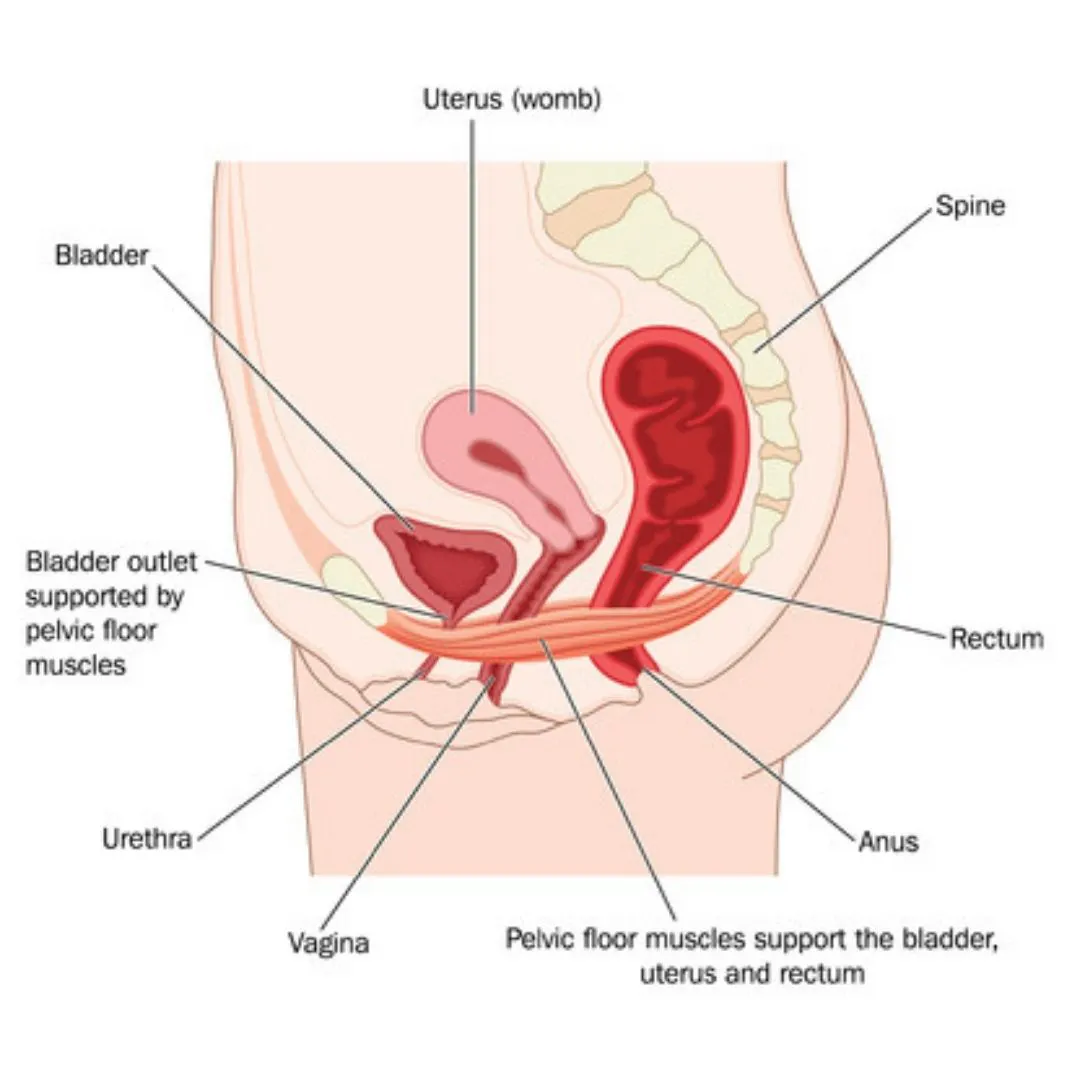
What is the P-Spot? Thanks for asking! Most of the time, when we hear the word prostate, we associate it with cancer. We don’t necessarily know where it’s situated in the male body and even less so its potential as an erogenous zone! Let’s take an anatomy lesson then. The prostate, or male P-spot, is a small gland around the size of a walnut which can be found just below the bladder. It weighs between 20 and 40 grams, growing bigger as a man ages. Its role in the body is to produce the seminal liquid found in semen. This protects sperm from the acidic environment of the female vagina. The easiest way to access the prostate is through the rectum. And many men have discovered it to be a source of sexual pleasure. Why this sexual practice is often rejected by heterosexual men? In our collective subconscious, non-standard sexual practices are often rejected. The traditional expectation is that men are virile. They penetrate women, and aren’t penetrated themselves, even with a finger. But in reality, the idea that prostate play is limited to homosexuals is just a social construct.The prostate is to men what the clitoris was to women for a long time. That is a sexual organ which gives a lot of pleasure, but tends to be forgotten. Many aren’t even aware of its existence. The prostate is a great unknown of male sexuality, cannibalized by the all-powerful penis. It’s also been shown that massage can reduce the risk of prostate cancer, give stronger erections and help those struggling with premature ejaculation. Not to mention the longer and more intense orgasms, felt throughout the body, that can be brought on by prostate stimulation. Finally, there’s no refractory period, unlike with a penile orgasm. So you can have a prostate orgasm and go again shortly after. And you thought only women could have multiple orgasms! So, how does it work then? In under 3 minutes, we answer your questions! To listen the last episodes, you can click here: What is a heatwave? What is fatphobia? What is a micro adventure? See acast.com/privacy for privacy and opt-out information. Learn more about your ad choices. Visit megaphone.fm/adchoices

Aug 5, 20204 min

What is a heatwave?

What is a heatwave? Thanks for asking! We’re experiencing more intense and frequent heatwaves than ever before, and it’s one of the most tangible effects of climate change. These summer periods of extreme heat are a threat to the elderly, children and the poor. To meet the World Meteorological Organization’s definition of a heatwave, the period must last 5 days or longer. The daily maximum temperature must also be at least 5° higher than the average maximum temperature. This means the requirements can vary by region. Some nations have their own definition of a heatwave. For example, the UK’s Met Office uses a system called Heat Health Watch. To determine whether a heatwave is occurring, the maximum daytime temperature and minimum nighttime temperature are compared to regional thresholds. A four-level system is used to score each Local Authority area, with Level 4 being the highest. So what actually causes a heatwave then? Scientifically speaking, heatwaves are the result of trapped air. High-pressure systems force the air downwards, forming a cap over an affected area. This prevents precipitation from forming, leading to a continual buildup of heat. In the Northern Hemisphere, this happens most often in July and August, even if we have now started seeing heatwaves earlier in the year. The problem is that heatwaves have a number of consequences. First of all, think of the environmental impact. They lead to shortages of drinking water, destroy food-producing crops, increase pollution and the risk of forest fires. But there are also direct human health issues. Extreme heat wears out those who are most vulnerable, like the elderly, children or the sick. It can make existing illnesses worse or cause serious heatstrokes. What are the guidelines? Who has the greater risks? In under 3 minutes, we answer your questions! To listen the last episodes, you can click here: What is a micro adventure? What is an eco-friendly beach? What is Blackface? See acast.com/privacy for privacy and opt-out information. Learn more about your ad choices. Visit megaphone.fm/adchoices

Aug 3, 20205 min

What is fatphobia?

What is fatphobia? Thanks for asking! Being overweight is a stigma. While around 13% of the world’s population are obese, they are largely absent from the public limelight and often find themselves the target of mockery or discrimination. Overweight people are humiliated and ostracised throughout their lives, having to put up with regular criticisms about their lifestyle and appearance. This is what’s known as fatphobia, a form of discrimination which can have a harmful effect on those on the receiving end. Fatphobia is often left out of discussions on the struggle against different forms of discrimination. But it nevertheless causes real suffering on a daily basis. It can manifest itself in many different forms. For example assuming that obese people make bad life choices, ranking people according to their weight or claiming they are responsible for how they are. Fatphobia victims often end up believing they have no worth because it’s the message that’s transmitted to them constantly. Putting themselves down in turn affects their self-esteem and quality of life. Sometimes, they isolate from the rest of society or take on unhealthy habits. But why are overweight people rejected to such an extent? Modern Western society has led us to believe that a person’s weight and figure play a major part in how attractive they are. Being obese is therefore equated with ugliness, inferiority and even immorality. Fatphobia has become integrated into the general way of thinking for most people. Even those who aren’t overweight obsess about not putting on extra pounds before the summer holiday season. Online algorithms also seem to now be pre-programmed with fatphobia! A number of plus size influencers have noticed that their posts are censored by social media platforms. This is an example of a phenomenon known as shadow banning. American singer Lizzo accused TikTok of banning clips of her in a bikini, when similar clips of other slimmer women were allowed to remain online. This is the kind of discrimination that can lead to body shaming and increase fatphobia. But whose side are social media on? In under 3 minutes, we answer your questions! To listen the last episodes, you can click here: What is a micro adventure? What is an eco-friendly beach? What is Blackface? See acast.com/privacy for privacy and opt-out information. Learn more about your ad choices. Visit megaphone.fm/adchoices
Aug 1, 20204 min

What is a micro adventure?

What is a micro adventure? Thanks for asking! When you think “adventure”, you most likely think of an exotic destination halfway across the globe. But it’s easy to have an exciting change of scenery close to home, without compromising your carbon footprint. Let’s talk about micro adventures. Micro adventures are generally short, spontaneous and local. They take place outdoors and don’t require a high budget. If there’s one intrinsic rule to the concept, it’s that there are no fixed rules. Covid-19 lockdown measures and travel restrictions have revived the micro adventure concept. It’s a personal and inventive way of experiencing unique moments at walking or cycling distance from where you live. How can we explain the rise of the micro advendures? British adventurer and author Alastair Humphreys was responsible for the rise of the microadventure. The idea is based on a simple principle: within a few miles of your home, there must be some scope for adventure which can be reached through an original means of transport. You just need to change your existing habits. Switch your car or travelcard for a kayak, bike or simply a pair of trainers. Whatever you need to leave home and start your microadventure. With the virus still spreading and a major economic crisis likely to last for some time, there is fair cause for concern about the near future. All the same, after months of Netflix, online yoga classes and homemade bread, you’re no doubt keen to make the most of summer. And a micro adventure could be just the ticket, without needing to travel far, spend a lot of money or make complicated arrangements. What about those of us who struggle to come up with ideas for a microadventure? Is there a risk that the micro adventure could turn into a form of mass tourism? In under 3 minutes, we answer your questions! To listen the last episodes, you can click here: What is an eco-friendly beach? What is Blackface? What is TikTok ? See acast.com/privacy for privacy and opt-out information. Learn more about your ad choices. Visit megaphone.fm/adchoices
Jul 30, 20204 min

What is an eco-friendly beach?

What is an eco-friendly beach? Thanks for asking! For many people, beaches are synonymous with the summer holiday season. Beach holidays have been popular since the second half of the 19th century, and are the archetypal form of mass tourism. With millions of people indulging in such getaways each year, it goes without saying that there’s a significant environmental impact. We regularly get riled when seeing pictures of beaches covered in plastic bottles, or turtles choking on straws. Around 10 million tonnes of waste end up in the ocean each year, with tourism hotspots creating 26% more than other cities. Plastic from bags, packaging and straws are a nuisance and threat to sea animals. Even our swimsuits are made from plastic-based materials like nylon, polyester and spandex. and shed microfibres into the ocean, which can be swallowed by sea animals. Cigarette butts also contain plastic, as well as highly toxic chemical components like nicotine, acetone and benzopyrene. A single butt can contaminate 500 litres of water and can take up to 10 years to decompose. They have long been the most collected waste item on the world’s beaches. Some regions use large sand-cleaning machines to clear waste, but these also have a detrimental effect on certain types of flora and fauna on the beach. Are you saying my new eco-friendly lifestyle isn’t compatible with a beach holiday? A beach holiday can still be compatible with a beach holiday, but only if you pay close attention to a few factors. To simplify things, you can see whether the beach carries the Blue Flag eco-label, which rewards resorts for meeting certain criteria. For example, a beach must have good quality water, be accessible and offer waste sorting. There should also be educational material on display for visitors to learn about environmental issues. There are over 4,000 Blue Flag beaches and marinas across the world. But even choosing a Blue Flag beach doesn’t guarantee you won’t damage the environment. Something as simple as using sunscreen can have a harmful effect. When swimming in the sea, part of the cream washes off. Its chemical constituents can damage corals and prevent other marine life, such as phytoplanktons, from growing. Wait a minute, should we stop using sunscreen then? In under 3 minutes, we answer your questions! To listen the last episodes, you can click here: What is Blackface? What is TikTok ? What is an ecocide? See acast.com/privacy for privacy and opt-out information. Learn more about your ad choices. Visit megaphone.fm/adchoices

Jul 29, 20204 min

What is Blackface?

What is Blackface? Thanks for asking! Blackface is a form of theatre which consists of non-black performers wearing make-up to represent black characters. These depictions were often based on racial stereotypes and caricatures, with exaggerated physical features used to ridicule black people. This form of entertainment rose to popularity in 19th century America. It also became prominent in the UK. Blackface was most common in minstrel shows, which were a medley of singing, dancing, music and comedy scenes. Performers tended to be white, and used greasepaint or shoe polish to make their skin appear darker. The trend gradually disappeared in the second half of the 20th century, being recognised as offensive and racist. But it has come under the spotlight again recently. This is largely due to the Black Lives Matter movement and focus on racial inequality issues, following the death of George Floyd in May. If blackface disappeared years ago, why is it still relevant today? While minstrel shows are thankfully consigned to the past, there have still been many recent instances of white actors portraying black characters in popular culture. The latest rise in collective awareness has led to scenes and entire episodes with blackface depictions being removed from well-known shows. Some examples include The Office, 30 Rock and Scrubs. A number of public figures have had to issue public apologies after past images of them in blackface surfacing. This isn’t just limited to the entertainment industry; even Canadian prime minister Justin Trudeau was found to have worn blackface makeup on multiple occasions for high school talent shows. But isn’t removing blackface episodes just an easy way out? What are the alternative options then? In under 3 minutes, we answer your questions! To listen the last episodes, you can click here: What is an ecocide? What is IQ? What is Fintech? See acast.com/privacy for privacy and opt-out information. Learn more about your ad choices. Visit megaphone.fm/adchoices

Jul 27, 20204 min

What is TikTok?

What is TikTok? Thanks for asking! Social network Tiktok allows users to publish short-form mobile videos. It’s been downloaded over 2 billion times since it was created in 2016, and its influence is growing bigger and bigger. That’s especially true within the music industry. There have been numerous success stories of new artists emerging on TikTok to become internet celebrities. The app has a reputation for being popular with members of Gen Z around the world. And the stats back it up; 70% of users are under the age of 25. With light-hearted features like comedy clips, dance choreographies and lip-syncing, it’s mostly seen as an entertainment app. Indeed, the “OK Boomer” catchphrase first went viral thanks to a TikTok clip. Listen to our previous episode on the subject to find out more! But TikTok has become increasingly political in different ways. Some countries are even considering banning it! It seems like harmless fun - why would anyone want to ban such an app? Much of the controversy stems from the fact that TikTok is owned by a Chinese company; that’s Byte Dance in case you didn’t already know. Countries like India, the United States and Australia suspect TikTok of feeding user data to the Chinese government. Like many mobile apps, TikTok collects information on its users. That includes their location, smartphone model and even the rhythm at which they type. TikTok directors have denied the accusations, but not everyone is convinced. India was first to introduce a ban, a real blow as it was the company’s second largest market after China. Even if the official reasoning is to do with security concerns, there’s also no doubt some countries want to sanction China for some of its foreign policies. Many have referred to the rivalry between China and the US as a New Cold War. It’s arguably in American interest to limit the influence of Chinese tech companies. But the political aspect is not just to do with TikTok’s ownership. Users themselves have begun posting more political content this year. How did TikTok go from dance videos to political activism? What did TikTok users have to do with that? In under 3 minutes, we answer your questions! To listen the last episodes, you can click here: What is an ecocide? What is IQ? What is Fintech? See acast.com/privacy for privacy and opt-out information. Learn more about your ad choices. Visit megaphone.fm/adchoices

Jul 25, 20204 min

What is an ecocide?

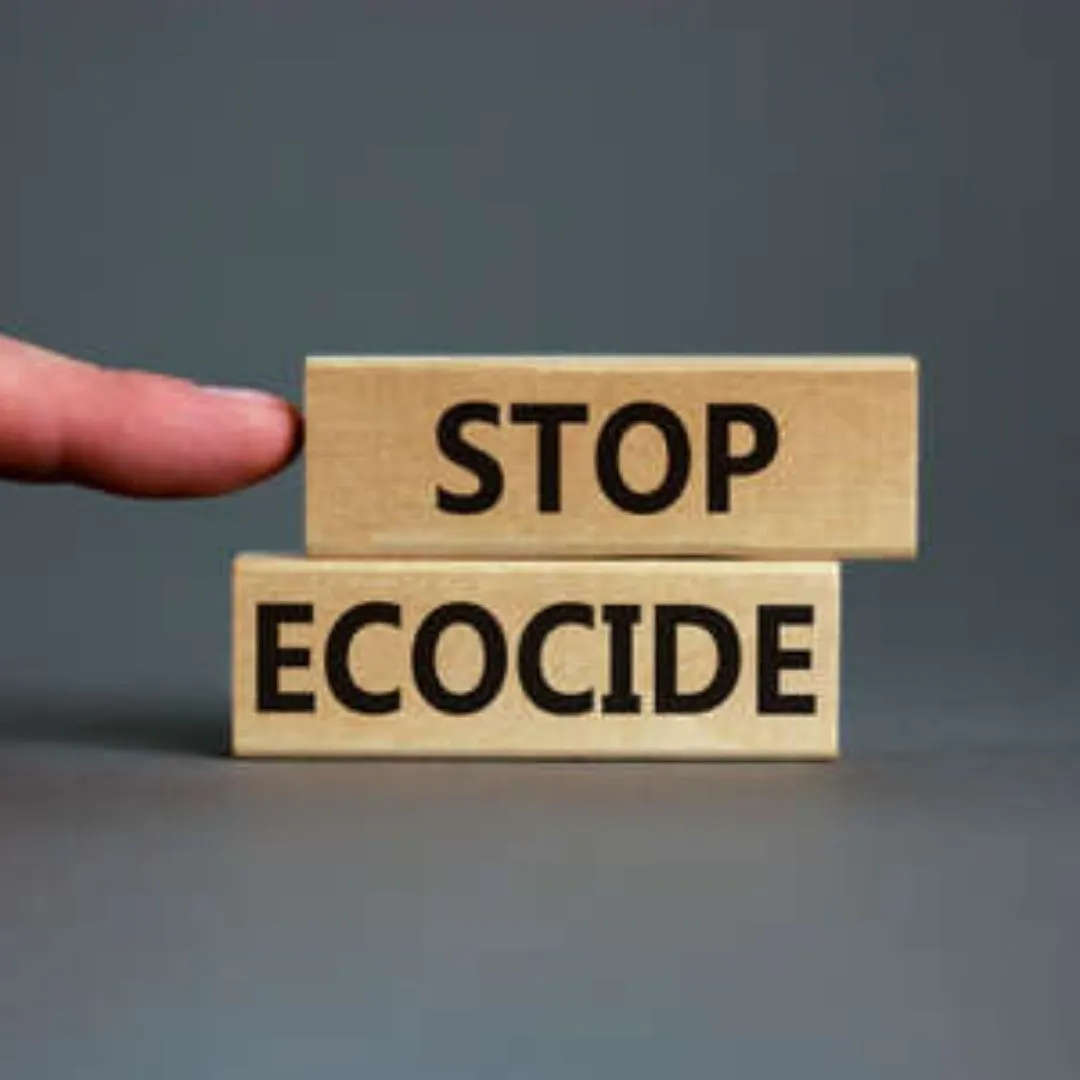
What is an ecocide? Thanks for asking! An ecocide is a term for an act that causes significant damage to the environment or ecosystems. It comes from the Greek word éoikios, meaning home, and the Latin word caedere, meaning kill. In theory individuals, companies and states could be brought to justice for committing such acts. It’s not recognised as a crime in many places, but France is currently looking at passing a law to do just that. The term was first used in the early 1970s in response to strategic deforestation by the American military in Vietnam, carried out with a herbicide called Agent Orange. This was used as a chemical weapon to destroy the forest cover and food resources relied on by Vietnamese guerilla fighters. So what’s caused the French to consider making ecocide a crime? A group of randomly selected French citizens was set up by President Emmanuel Macron in 2019, following regular protests by the gilets jaunes movement. The panel was named the Citizens’ Convention on Climate. Macron said: “We do not include our fellow citizens sufficiently in the transparent, debated construction of the solutions we put forward. So that is the idea behind the Citizens’ Assembly process.” The CCC has been set the task of defining actions to tackle climate change, with the aim of reducing emissions by 40% within the next decade. The ecocide law is one of the group’s key proposals, along with a ban on advertising high carbon footprint products and a tax hike on processed foods. The French Minister for Ecological Transition was first to back the idea of a referendum on the issue. Then President Macron himself announced in late June he would back the law. A referendum could be held as early as next year. Exciting times for environmentalists! What’s going on elsewhere then? In under 3 minutes, we answer your questions! To listen the last episodes, you can click here: What is IQ? What is Fintech? What is GAFAM? See acast.com/privacy for privacy and opt-out information. Learn more about your ad choices. Visit megaphone.fm/adchoices
Jul 23, 20204 min

What is IQ?

What is IQ? Thanks for asking ! IQ stands for intelligence quotient and is a test score which indicates a person’s level of intelligence. Some people are concerned that the average IQ is decreasing in Europe. The abbreviation IQ was coined by German psychologist William Stern in 1912, to name a scoring method for intelligence testing at the University of Breslau. Even before that, humans had long been fascinated with classifying people according to their intelligence. Psychologists still use IQ scores today. The most common form of testing is the Wechsler Adult Intelligence Scale (WAIS). The average is set at 100. Half of all people have a score between 90 and 110; 15% score from 110 to 120; and around 3% have a ‘gifted-level’ IQ of over 130. So, if I got 132, am I brainiac? Now I’m not saying you’re not smart, but your result from GetMyIQIn5Minutes.com might not be the most...reliable. To find out your IQ, you need to consult a psychologist and carry out dozens of exercises to measure cognitive skills like short-term memory, problem solving and visual processing. The whole process takes several hours and it’s not even a given that the psychologist will agree to give you your score. Many parents insist on IQ tests in the hope of discovering that children are gifted, or have high academic potential. In the worst cases, IQ tests are used to pigeonhole children; stupid on one side and gifted on the other. An IQ score alone doesn’t tell the whole story, and can lead to stigmatisation, rather than having any positive effect. Furthermore, IQ doesn’t give any information on emotional or relational intelligence. That’s why some psychologists now refuse to give out results. Nevertheless, it remains a very common indicator. So what evidence is there that IQ levels are dropping? In under 3 minutes, we answer your questions! To listen the last episodes, you can click here: What is Fintech? What is GAFAM? What is stigmergy? See acast.com/privacy for privacy and opt-out information. Learn more about your ad choices. Visit megaphone.fm/adchoices

Jul 22, 20204 min

What is Fintech?

What is Fintech? Thanks for asking! Fintech is an abbreviation of “financial technology” It’s a new business sector which began developing during the 2010s. Fintech companies put technology to the service of financial activity. Finance can now be handled from the palm of our hands. If we forget about the tech part for a minute, we’re talking about the finance sector of traditional banking. Due to their large structures, these companies are somewhat slow to integrate new technologies into their business practices. That’s how new players, with more digital knowhow and innovation, have been able to challenge traditional finance. 2015 was a key year for fintech, with 47 billion dollars invested. When I think finance, I think billions of digits and transactions between New York traders. With or without technology, what’s it got to do with my daily life? Well, we all handle a little bit of finance every day, whether saving up to go on holiday or getting a third pint for your mate who never pays you back. That’s changed since everybody started having a smartphone on them all the time. Fintech allows us to make instant transfers between friends, pay at checkout using our phone and view bank account statements in real time. What about crowdfunding and cryptocurrencies? Do they have anything to do with fintech? In under 3 minutes, we answer your questions! To listen the last episodes, you can click here: What is stigmergy? What is ghosting? What is vitamin D? See acast.com/privacy for privacy and opt-out information. Learn more about your ad choices. Visit megaphone.fm/adchoices
Jul 20, 20204 min

What is GAFAM?

What is GAFAM? Thanks for asking! GAFAM is the acronym used to refer to American tech giants Google, Apple, Facebook, Amazon and Microsoft. Together, they hold five of the six top spots in a listing of the world’s most valuable public corporations. And their products are omnipresent in our daily lives. So why group these five companies together then? Well, they are the most powerful players in the digital economy. Since Apple became the first American company to pass a value of $1 trillion in 2018, they have been followed by Amazon, Microsoft and Google’s parent company Alphabet. Facebook is a little way behind, but it has a global user base of 3 billion people which no other company can match.These five companies preside over most of our online activity. When you’re emailing, watching, calling, posting or buying, chances are you’re using a product from one of the GAFAM companies to do so. What’s not to like about our digital overlords then? And what about tax avoidance? In under 3 minutes, we answer your questions! To listen the last episodes, you can click here: What is stigmergy? What is ghosting? What is vitamin D? See acast.com/privacy for privacy and opt-out information. Learn more about your ad choices. Visit megaphone.fm/adchoices

Jul 18, 20205 min

What is stigmergy?

What is stigmergy? Thanks for asking! Stigmergy is a model of coordination and cooperation which was first observed in social insects, but also appears in human behaviour. It is appealing more and more to project leaders as a kind of open network organisation. Ants communicate by laying pheromones along their path, so that other ants can follow them to food or their colony as needed. This constitutes a system called stigmergy. Similar phenomena are noticed in other species of social insects like termites, which use pheromones to construct large and complex mounds by following a simple decentralized rule. Without communicating directly with one another, they are able to create the appearance of joint decision-making. How the term "stigmergy" was born? The term was coined by French biologist Pierre-Paul Grassé in 1959, referring specifically to behaviour of termites. He defined it as: “Stimulation of workers by the project they are implementing”. The term comes from the Greek words stigma, meaning “mark” or “sign” and ergon, meaning “work” or “action”. It expresses the notion that the actions of an agent leave traces in the environment, signs which are then read by himself and other agents, and which determine their further actions. Under the stigmergy model, individuals communicate among themselves, modifying their environment by means of indirect communication. Their communication is transparent, without any imposed rules. A well-known example is Wikipedia. A person starts writing an article and publishes it. Another user may follow, see if the article needs improvement and make edits if they have further knowledge of the subject area. How does that translate into implementation of a project, for example? In under 3 minutes, we answer your questions! To listen the last episodes, you can click here: What is ghosting? What is vitamin D? What is a near-death experience? See acast.com/privacy for privacy and opt-out information. Learn more about your ad choices. Visit megaphone.fm/adchoices
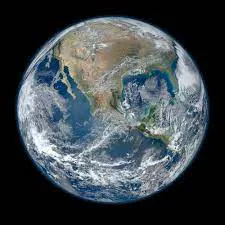
Jul 16, 20204 min

What is ghosting?

What is ghosting? Thanks for asking! Ghosting is a modern slang term for ceasing all communication without any warning or explanation. It’s likely happened to you in the past at some point, and you may well have also ghosted someone yourself! The term was first added to dating jargon in the 2000s, and has become more common with the rise of social media, online dating and casual hookup services. A survey by Elle.com found that half of all men and women had ghosted someone at least once in the past. Meanwhile, only 23% of women and 36% of men had never experienced ghosting in any capacity, either as the ghost or the ghostee. Ghosting can happen in pretty much any kind of relationship, including with family members or as part of a recruitment process. But it’s most commonly talked about with regards to dating. We’re not talking about ignoring someone after one disappointing date, but rather after several dates, or even in the context of an apparently exclusive relationship. All of a sudden, the ghost stops responding. They ignore calls, texts, Whatsapp messages and any other form of communication. As if the ghostee didn't exist! Seems pretty cruel and cowardly! Why do people ghost then? Some mental health professionals view ghosting as a form of emotional cruelty. At best, it confuses the ghostee and at worst it causes them severe distress, which can have a lasting impact on self-esteem. Ghosting comes across as an especially inelegant kind of behaviour, even if the intention isn’t necessarily to hurt the ghostee. It’s been argued that ghosting results from a general decrease in empathy towards relationship partners. Cynics say this is typical of the digital era culture, with selfishness and narcissism all too common. Before getting too judgemental, let’s also recognise that ending a relationship can be uncomfortable at the best of times. You could say that ghosting is the easy way out, and some people certainly do it to avoid conflict. Are there any other alternatives to ghosting? In under 3 minutes, we answer your questions! To listen the last episodes, you can click here: What is vitamin D? What is a near-death experience? What is doomscrolling? See acast.com/privacy for privacy and opt-out information. Learn more about your ad choices. Visit megaphone.fm/adchoices

Jul 15, 20204 min

What is vitamin D?

What is vitamin D? Thanks for asking! Vitamin D was discovered in 1922 by American biochemist Elmer McCollum, who was nicknamed Dr Vitamin by Time Magazine. He found that cod liver oil could still prevent rickets in rats, despite its vitamin A having been removed. From this observation, he deduced that it contained a different substance which he called vitamin D. Why vitamin D is necessary? A sufficient quantity of vitamin D is necessary during early childhood years in order to prevent rickets. In adults, it protects against osteoporosis and the deterioration of bone tissue. It also plays an important part in preventing breast cancer and colon cancer. Vitamin D deficiency increases the risk of hypertension and cardiovascular diseases. According to a study published in the American Journal of Clinical Nutrition, over 1 billion people worldwide are vitamin D deficient. In May 2020, an American study suggested that vitamin D deficiency could increase the risks of complications associated with Covid-19. This was based on data from countries severely affected by COVID-19, like China, France, Germany, Italy and the United States. According to a Dutch study, another vitamin may give you an advantage in fighting the virus, and that's vitamin K. Covid-19 causes coagulation of blood and degrades elastic pulmonary fibres. Whereas vitamin K consumed with food participates in the production of proteins which regulate coagulation. How do we produce or find Vitamin D then? But how does sunblock work then? What about skin colour; does that impact our ability to produce Vitamin D? In under 3 minutes, we answer your questions! To listen the last episodes, you can click here: What is doomscrolling? What is the New Cold War? What is chlordecone? See acast.com/privacy for privacy and opt-out information. Learn more about your ad choices. Visit megaphone.fm/adchoices
Jul 13, 20204 min

What is a near-death experience?

What is a near-death experience? Thanks for asking! American psychiatrist Dr Raymond Moody is considered to be the founding father of studies on near-death experiences, known as NDEs for short. Back in 1975, he was the first to shed light on the phenomenon in his book “Life after life”. In 1991 Dr Moody claimed to have had a near-death experience himself, after attempting suicide. According to him, that provided him with a deeper insight into his work and himself. He claims that “a man who has been a patient himself becomes a better doctor”. When does the near death experience come? Near death experiences are triggered by singular life-threatening episodes when the body is injured as a result of a concussion, a heart attack, asphyxia or a shock, for example. Between 6 and 20% of people who have suffered a coma or a cardiac arrest claim to have lived through a near-death experience. Thanks to improved reanimation techniques, more and more survivors are able to give an account of their extraordinary journey that took place in the first instants of dying.These stories often describe leaving the damaged body behind and visiting a realm beyond our day-to-day life, unrestrained by space or time. Such powerful experiences of mystical nature transform the lives of survivors forever. So what exactly is a near death experience like? What does science have to say on the matter? In under 3 minutes, we answer your questions! To listen the last episodes, you can click here: What is doomscrolling? What is the New Cold War? What is chlordecone? See acast.com/privacy for privacy and opt-out information. Learn more about your ad choices. Visit megaphone.fm/adchoices

Jul 11, 20204 min

What is doomscrolling?

What is doomscrolling? Thanks for asking! The more bad news we hear, the more we tend to get consumed by social media feeds, incessantly scrolling through our apps. Americans have come up with a term for that phenomenon: doomscrolling. Spoiler alert: it’s not the best for your mental health. If you use Twitter, Instagram or Facebook, you definitely know the feeling. You open the app and start scrolling through your feed on autopilot mode, sinking deeper and deeper into the infinity of posts. In the context of an unnerving situation covered by countless posts, it becomes virtually impossible to put your phone away. To describe this phenomenon, the term “doomscrolling” was coined on Twitter in 2018. So why do we doomscroll then? In times of crisis, we feel the need to make some sense out of the world around us. This could be due to current events like the Covid19 pandemic and worldwide antiracism protests. Other scenarios include terrorist attacks and climate change. In order to get information, we turn to the media, which in this day and age often means social media in particular. The problem with social media is that we don't get to pre-select the info we see. It’s impossible for our brain to organize it to create a coherent story. In addition to the fact that the algorithms trap us in a bad news bubble, they force us to stay connected. Lastly, the final trap lies in the endless scrolling. Whereas a newspaper, magazine or TV newscast have a pre-defined end, our social media feeds can simply go on forever! The “mean world syndrome” first described in the 70s implies that, exposed to violent content on TV, we tend to perceive the world as a more dangerous place than it actually is. The same happens when it comes to doomscrolling: the outside world becomes hostile, which can trigger a certain amount of anxiety or worse - depression. Which is why from the very beginning of self-isolation therapists have been warning us against spending too much time checking news feeds. How can we balance this against the need to stay informed? In under 3 minutes, we answer your questions! To listen the last episodes, you can click here: What is chlordecone? What are influencers? What is brand activism? See acast.com/privacy for privacy and opt-out information. Learn more about your ad choices. Visit megaphone.fm/adchoices

Jul 9, 20204 min

What is the New Cold War?

What is the New Cold War? Relations between China and the United States have been deteriorating for years, and the global COVID-19 pandemic isn’t helping. Each country blames the other for the situation and do not hesitate to brandish threats. Some analysts believe a new cold war is upon us. The original Cold War was a period of confrontation between the US and the USSR, between 1947 and 1991. It was marked by the ideological rivalry of communism versus capitalism, each seeking to exert as much global influence as possible. However, the two countries never confronted each other directly, hence the war is referred to as “cold”. Today the term “the new cold war” is often used by experts, editorialists and even political figures. Chinese Foreign Minister Wang Yi, for instance, has suggested that Washington’s attacks pushed China towards a new cold war. Indeed, China and the US are in a geopolitical conflict over issues like Taiwan, Hong Kong and the South China Sea. China is seeking to assert its power; it enjoys a substantial presence in Africa and aims to consolidate its maritime position with the help of the New Silk Road project. Another part of the battle is fought online by hackers looking to access sensitive information. The countries have been at loggerheads for years over allegations of the Chinese government stealing trade secrets from American companies, like Google, Microsoft and Intel. China and the United States are fighting a trade war, too. Americans had introduced punitive customs duties which remained in force until the two countries reached a new agreement in January 2020. But with Covid19 in the picture, tensions have escalated even further. The United States recently withdrew from the World Health Organisation, accusing the agency of supporting China. The US also recently made a formal accusation that China was funding and operating cells of hackers to infiltrate COVID-19 research labs. See acast.com/privacy for privacy and opt-out information. Learn more about your ad choices. Visit megaphone.fm/adchoices

Jul 8, 20204 min

What is chlordecone?

What is chlordecone? Thanks for asking! Chlordecone is a highly toxic pesticide which is known for being an endocrine disruptor. That means it can interfere with hormones and cause disease. It has been described by the World Health Organization as “potentially carcinogenic” and causes liver tumours in lab mice. Although it’s been banned for nearly three decades, it’s still causing controversy in the 21st century. Its prior use led to the poisoning of almost the entire adult population of Martinique and Guadeloupe in the French Caribbean. Many are calling on the French government to take responsibility for this chronic pollution problem. How this polemic begins? Thousands of tonnes of bananas are produced each year in Martinique and Guadeloupe. The banana sector is key to the economy, employing over half of agricultural workers across the two islands. Most of the produce is exported to, and sold in, mainland France. In the early 1970s, plantations were affected by root-boring weevils which attacked the banana plants. So it seemed like good news when it was discovered that chlordecone could be used to eradicate the insects. The farmers likely had no idea how dangerous chlordecone was, but the government really should have known better. Studies on chickens and mice in the 1960s had already proved chlordecone to be poisonous. So is everything OK now, 30 years later? In under 3 minutes, we answer your questions! To listen the last episodes, you can click here: What is brand activism? What is free software? What is speciesism? See acast.com/privacy for privacy and opt-out information. Learn more about your ad choices. Visit megaphone.fm/adchoices
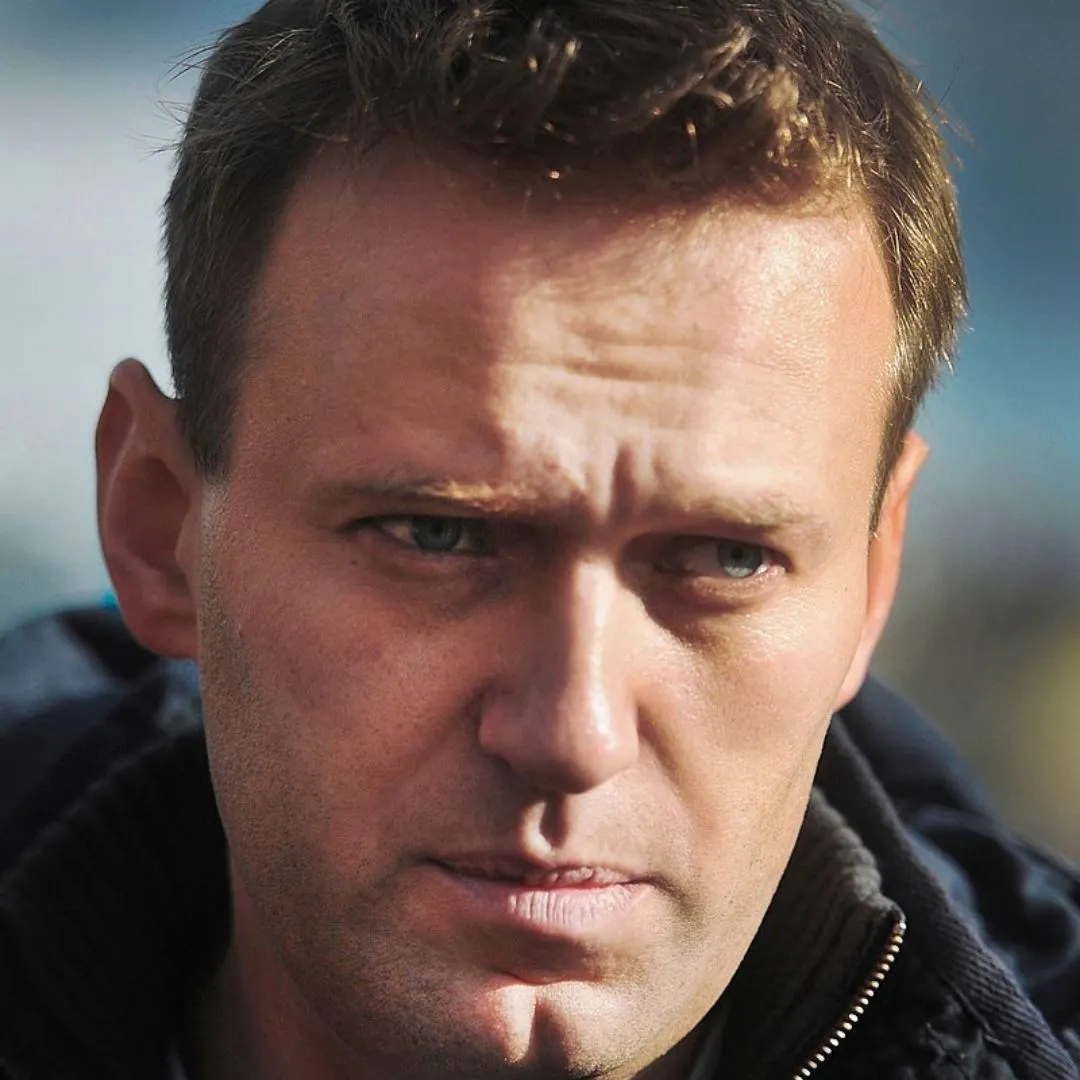
Jul 6, 20204 min

What are influencers?

What are influencers? Thanks for asking! Influencers are people who are capable of impacting consumption habits among their followers on social media. Brands are relying more and more on influencers as part of their communications strategies, but are sometimes duped by fake influencers. You could be forgiven for thinking influencers were invented in the 2010s. In reality, it stems from a theory discussed by sociologists for decades. Until the past decade, we talked about “opinion leadership”, meaning people who had influence on their family, friends or colleagues. This could be giving an opinion on products, brands or celebrities, for example. How does the opinion leadership manifest itself? In the internet age, opinion leadership manifested itself in the form of bloggers. These were generally amateurs who used their websites to share their opinion online, whether it be on a particular niche or wide-ranging subjects. Gradually bloggers ceded their position to influencers on social media, mainly Youtube and Instagram. Influencers tend to be specialised in a certain area of interest, like beauty, fashion, travel, cooking, culture or sports. Indeed, being an influencer has become a career for many in recent years. Brands quickly realised they would need to work together with these opinion leaders, in order to reach certain communities. They spoil their influencers with gifts, trips and VIP event invitations. A study by social media analytics platform Klear found that companies pay nano-influencers an average of $100 for an Instagram post, with that figure rising to $2000 for a celebrity. In under 3 minutes, we answer your questions! To listen the last episodes, you can click here: What is brand activism? What is free software? What is speciesism? See acast.com/privacy for privacy and opt-out information. Learn more about your ad choices. Visit megaphone.fm/adchoices
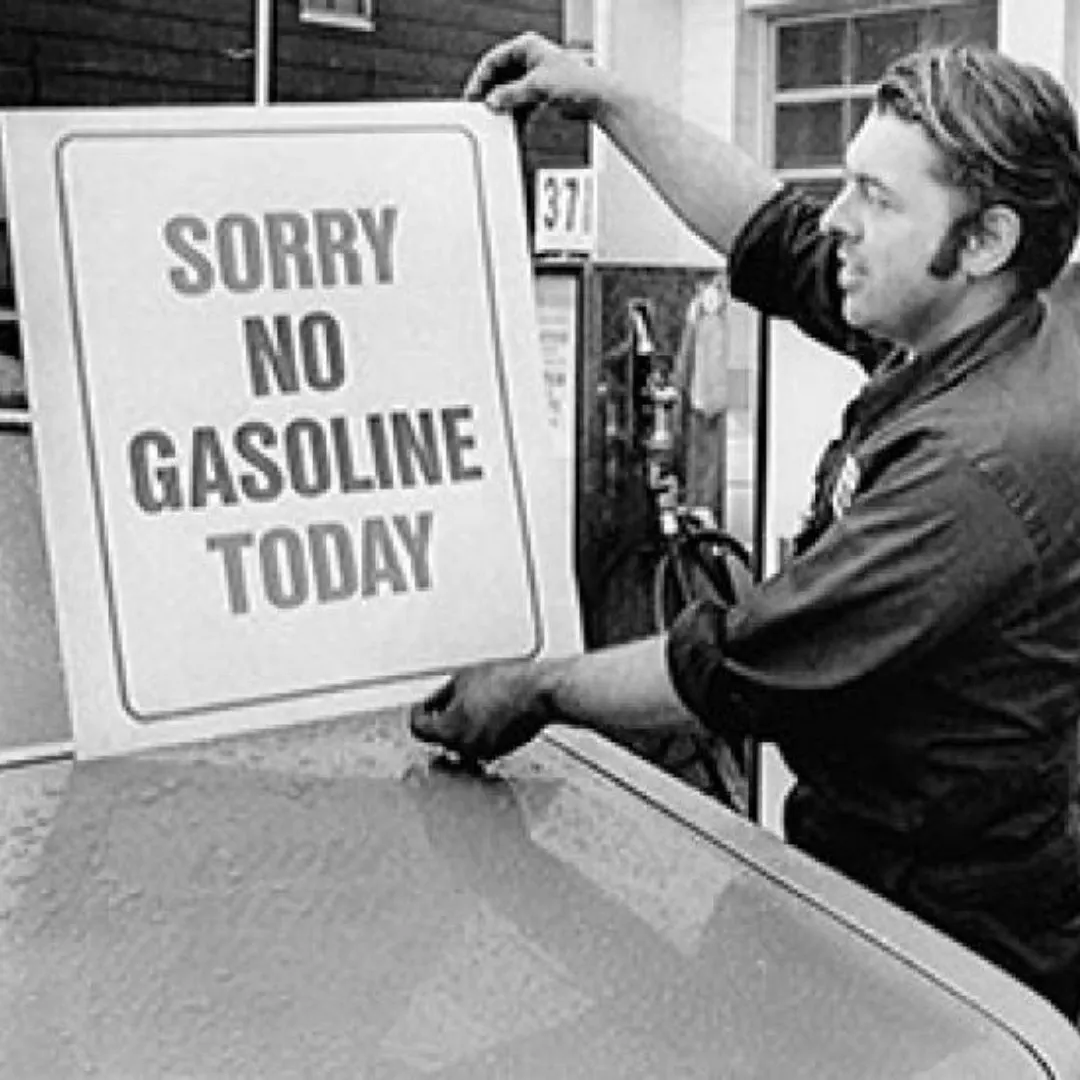
Jul 4, 20203 min

What is brand activism?

What is brand activism? Thanks for asking! Brand activism is when companies seek to have an impact on a social, economic, environmental, or political problem. It’s increasingly common, especially at the moment, but it can have negative consequences. In many cases, companies are called out for being hypocritical when engaging in brand activism. Cynics often see it as opportunistic marketing. Even worse, the company may in fact have a poor track record when it comes to the issue on which they are taking a stance. Why do brands feel like they need to get political then? There are a number of reasons why brands feel like they need to get political. Companies might engage relating to an issue that aligns with their values and vision, for the good publicity it generates or simply to boost their bottom line. Consumers, especially from younger generations, are becoming more and more demanding when it comes to brand activism. This is backed up by studies which show that millennials and members of Gen-Z are likely to choose products from a brand which aligns with their values. Recent weeks have seen a massive increase in brand activism relating to the Black Lives Matter movement against racial violence and injustice. This follows the high-profile killing of black man George Floyd at the hands of the Minneapolis police in late May. Staying silent on racial inequality is no longer an option for brands, with the risk of them being seen as complicit. Companies have been posting powerful messages on social media, announcing seven-figure donations to racial equality charities and making pledges to increase diversity within their own organisations. Adidas has pledged that 30% of its future hires in the USA will be people from black or Latino backgrounds. Amazon has been displaying the Black Lives Matter logo prominently on all its social media platforms, while its CEO shared racist emails he had received from members of the public. Uber Eats announced it would waive delivery fees for orders from black-owned restaurants until the end of the year. That all sounds like it will help equality. So what’s the problem? In under 3 minutes, we answer your questions! To listen the last episodes, you can click here: What is free software? What is speciesism? What is Starlink? See acast.com/privacy for privacy and opt-out information. Learn more about your ad choices. Visit megaphone.fm/adchoices

Jul 2, 20204 min

What is free software?

What is free software? Thanks for asking! Despite what it might sound like, free software isn’t necessarily free of charge. Here, the word is used with regards to liberty, not price. That’s also why it’s sometimes referred to as “libre software”, to avoid any ambiguity. Perhaps more significant than its definition is what free software stands for. It’s a social and political movement which aims to offer software with no trade secrets, and guaranteed free circulation of source code. Some of the most well-known free software applications are the Firefox web browser, OpenOffice and VLC media player. Examples of non-free programs, also described as proprietary software, are Photoshop, iTunes or Microsoft Windows. So what sets free software apart from the rest then? The Free Software Movement was started in the 1980s by former hacker Richard Stallman. Many manufacturers had recently stopped distributing source code and started using restrictive licenses or copyright. This was to prevent competitors from using their software and it became the norm. Stallman announced the GNU project, which consisted of developing a free computer operating system by the same name. The GNU Manifesto set out four essential freedoms that software must have in order to be considered free. Users have to be able to 1) run the program as they wish, for whatever use they wish; 2) study the programme’s source code, and edit it; 3) share exact copies with others; and finally 4) make and distribute edited versions to others. Is it the same as open source? In under 3 minutes, we answer your questions! To listen the last episodes, you can click here: What is speciesism? What is Starlink? What is femicide? See acast.com/privacy for privacy and opt-out information. Learn more about your ad choices. Visit megaphone.fm/adchoices

Jul 1, 20204 min

What is speciesism?

What is speciesism? Thanks for asking! The assumed superiority of humans over all other animals is often unspoken. Without necessarily wishing any harm on animals, we take it for granted that we are more complex beings and therefore have greater moral rights. So much so that most of us are not even aware of the concept of speciesism, which is an increasingly complex ethical issue. Speciesism refers to discrimination based on species membership, and is usually used to describe the assumption of human superiority. In the worst cases, it leads to the exploitation of animals. Some people condemn it as a massive form of bigotry, just like racism or sexism. When did we start talking about speciesism then? The term first appeared around 50 years ago, in a pamphlet written by British psychologist Richard D. Ryder. Ryder was a member of the Oxford Group of intellectuals, who met frequently to discuss animal rights, at the time an emerging concept. But the idea itself has existed for a long time. Aristotle talked about the dominance of men over animals in his work The History of Animals, which is seen as a pioneering work in the field of zoology. Abrahamic religions like Christianity and Judaism have also contributed to spreading speciesism by teaching that animals were created for use by humans. French philosopher René Descartes introduced the animal-machine notion in the 17th century, which had great influence on Western cultures. He argued that animals acted on instinct alone and had no emotions. Meanwhile, humans had a conscience and could think for themselves. According to Descartes, this moral distinction meant humans deserved more rights than animals. This attitude is still widely held in modern society. at least to some extent. If you think about the example of a human child and a dog caught in a fire, most people wouldn’t hesitate in saving the child first. Well that’s true, but it’s a bit of an extreme case, isn’t it? In under 3 minutes, we answer your questions! To listen the last episodes, you can click here: What is Starlink? What is femicide? What is non-binary? See acast.com/privacy for privacy and opt-out information. Learn more about your ad choices. Visit megaphone.fm/adchoices

Jun 29, 20204 min