DNA Today: A Genetics Podcast
409 episodes — Page 7 of 9

Ep 109#109 Shenela Lakhani on Genetic Counseling in Qatar
Shenela Lakhani is the Director of Genetic Counseling and Clinical Engagement for the Center of Neurogenetics at Weill Cornell Medical College, in New York City. In this role she studies the genetics of neurodevelopmental disorders and neurological disease of aging and adulthood. Before this role, she was the first certified genetic counselor in Qatar, a country in the Middle East. Shenela established the profession in the country and promoted genetics within the Middle East by speaking at international conferences. In Qatar she helped to establish high-risk breast cancer screening guidelines and a high-risk gastrointestinal clinic while contributing to local testing and screening guidelines. On this episode we explore what it was like to be the first certified genetic counselor in a country and how she was able to start the profession there and make an impact in public health in Qatar. On This Episode We Discuss: Inspiration and Motivation to Move Across the World Challenges of Starting Genetic Counseling in A New Country Common Genetic Disorders in Qatar Genetic Stigma and Public Perspective of Healthcare Genetic Carrier and Newborn Testing in Qatar Adaptations to Counseling in A Different Country Learn more about Shenela Lakhani on her LinkedIn Profile and Weill Cornell’s Center for Neurogenetics website. Stay tuned for the next new episode of DNA Today on October 24th, 2019. In this special installment my peers Ale Cantu and Catherine Mayo join me to celebrate the 22nd anniversary of the genetics film Gattaca by discussing its relevance today in the field. New episodes are released on the first and third Fridays of the month. See what else we are up to on Twitter, Instagram, Facebook and iTunes. Questions/inquiries can be sent to [email protected].

Ep 108#108 Dr. Becky Winslow on Pharmacogenomics
On this episode Dr. Becky Winslow, a Doctor of Clinical Pharmacy, shares her insight about pharmacogenomics. She is a Clinical Pharmacogenetics Implementation Consortium Member, a Registered Pharmacogenomics Education Provider and a pharmacogenomics implementation specialist as the owner of inGENEious RX, LLC. On This Episode We Discuss: Pharmacogenomics vs Pharmacogenetics Current Understanding of Pharmacogenomics Testing Available General Population Testing Areas of Healthcare Ultized Precision Medicine Approach to Prescriptions Mental Health, Cancer etc. Roadblock to Widespread Use Physicians Ability to Translate Test Results Genetic Counselors Potential Role Future of Pharmacogenomics Check out the first truly anonymous direct to consumer genetic testing company, Secret Sequence. The founders joined me on episode 105 to share about the company and what they offer consumers. For $25 off two or more DNA kits use promo code, “DNAToday” at secretsequence.com. See what else they are up to on Instagram, Facebook, and Twitter. Have questions for them? Give them a ring at 833-Secret3. Stay tuned for the next new episode of DNA Today. New episodes are released on the first Friday of the month with some bonus episode thrown in there. See what else I am up to on Twitter, Instagram, Facebook and iTunes. Questions/inquiries can be sent to [email protected].

Ep 107#107 Eleanor Griffith on Grey Genetics
The genetic podcast crossover series continues with Grey Genetics’ Patient Stories! Host Eleanor Griffith returns as a guest to offer listeners a peek inside her genetic counseling company behind the podcast. Eleanor Griffith is a board certified genetic counselor and the founder of Grey Genetics, a genetic counseling and consulting company. Her clinical experience includes both prenatal and cancer genetics, in both public and private academic hospital settings. She is a member of the Admissions Committee for The Joan H. Marks Graduate Program in Human Genetics at Sarah Lawrence College and a Course Instructor at Sarah Lawrence where she also received her master’s. Eleanor’s previous appearance was on episode 71 of the show back in 2017. She shared her insight on how to have a competitive genetic counseling graduate school application. There are also 2 other episodes of this show (87 and 97) where myself and a panel of other grad school students discuss the application process including the match system, which was brand new for my class. On This Episode We Discuss: Grey Genetics’ Genetic Counseling Services Genetic Counseling Specialities Offered Process from the Patient Perspective. Requirements, Insurance, Self-Pay Genetic Counselor State Licensure for Telehealth Be sure to check out Grey Genetics’ podcast, Patient Stories. Stay updated on Twitter and Instagram. Meet the Grey Genetics network! Learn more about Grey Genetics in this Medium piece. Stay tuned for the next new episode of DNA Today. New episodes are released on the first and third Fridays of the month. See what else I am up to on Twitter, Instagram, Facebook and iTunes. Questions/inquiries can be sent to [email protected].

Ep 106#106 Sano Genetics on Autism Genetics
This episode launches a new series within the show: crossover episodes! I’m teaming up with other genetics podcast to invite hosts of other shows to join me on DNA Today and sometimes I’ll be a guest on their show as well. Kicking off this new series is Dr. Patrick Short, the CEO of Sano Genetics. He is experienced in genomics research with a focus on large-scale genome sequencing projects and rare disorders. Previously he was at the Wellcome Trust Sanger Institute and the University of Cambridge in England. We explore current understandings of genetics of autism and Sano Genetics’s studies. On This Episode We Discuss: Sano Genetics’ for Patients, Consumers and Researchers Eligible Participants For Sano Genetics' Studies Underlying Autism and Mathematical Ability Current Understanding of Autism Genetics Genetic Testing for Autism University of Cambridge’s Autism Research Studies Largest Study of Psychological Sex Differences and Autistic Traits This episode is one part of our conversation, to hear the other half of our conversation check out their podcast, “The Genetics Podcast”. On that episode, Dr. Patrick Short interviews me about genetic counseling and cytogenetics. Stay tuned for the next new episode of DNA Today next week on Friday September 6th. New episodes are released on the first Friday of the month with some bonus episode thrown in there, like this one! See what else I am up to on Twitter, Instagram, Facebook and iTunes. Questions/inquiries can be sent to [email protected]. This summer I was interviewed on a few podcasts including In EyeSight talking about impact social media’s impact on the rare diseases community and on Dr. Mara Karpel’s Your Golden Years sharing about genetic counseling and testing.

Ep 105#105 Secret Sequence on Genetic Privacy
This episode launches Secret Sequence as the new sponsor for the show! Joining me on the episode are the founding team of Secret Sequence, Jason Corbiere and Austin Maier. On This Episode We Discuss Genetic Privacy: - Secret Sequence’s Genetic Testing Kits - Data Security of Genetic Tests - Major Data Breaches - GEDmatch’s Role in Identifying the Golden State Killer - Genetic Information Nondiscrimination Act of 2008 (GINA) - Data Privacy Responsibility of Genetic Testing Companies (DTC and medical grade) - Continued Explosion of Direct To Consumer Genetic Testing (100 million consumers by 2021) - Kira’s Experience with Secret Sequence Genetic Testing Kits For $25 off two or more kits use promo code, “DNAToday” at secretsequence.com. See what else they are up to on Instagram, Facebook, and Twitter. Have questions for them? Give them a ring at 833-Secret3. Stay tuned for the next new episode of DNA Today or go back and listen to over 100 other episodes! New episodes are released on the first Friday of the month with some bonus episode thrown in there. See what else I am up to on Twitter, Instagram, Facebook and iTunes. Questions/inquiries can be sent to [email protected].

Ep 104#104 Genetics of Opioid Addiction
Listeners, I have a big favor to ask from all of you. The Podcast Award nomination season has begun! It’s a people’s choice type of award. In order to be in the running I need listeners like you to nominate the show. DNA Today was nominated back in 2015 and 2016. It would be such an honor to be nominated again. In order to be in the running though, I need 2 minutes of your time. It’s very simple… Go to PodcastAwards.com and enter “DNA Today” for the Science and Medicine category. That’s it! Now this closes July 31st, 2019. Don’t forget, if you can please go nominate the show if you enjoy listening! It really helps to increase visibility so other people can also benefit from learning through the show. Thanks in advance! I really appreciate the support for the show. The Camden Opioid Research Initiative has a three pronged approach as outlined below. 1) A biobank for blood and brain samples taken from people who have died from overdose as well as family members who are interested in donating. 2) A prospective clinical study of chronic pain patients to determine the interplay between genetic and biological risk factors for opioid addiction. 3) A clinical study of people currently being treated for opioid addiction to investigate what treatments work best for different genetic makeups. Three scientists from the project join me: Dr. Stefan Zajic, the scientific lead on the project. Dr. Kaitlan Baston, the director of Addiction Medicine at Cooper University Health Care. Dr. Russ Buono, a Professor of Biomedical Sciences at Cooper Medical School of Rowan University. On This Episode We Discuss: -Types of Genetic Testing for Opioid Susceptibility -Non-Genetic Factors to Opioid Dependence -Brain Biobank of Opioid User Tissues -Brain Differences of Opioid Users -Potential Uses of Opioid Genetic Research Stay tuned for the next new episode of DNA Today. New episodes are released on the first Friday of the month. With a few bonus episodes here and there. See what else I am up to on Twitter, Instagram, Facebook and iTunes. Questions/inquiries can be sent to Kira Dineen at [email protected].

Ep 103#103 Brianne Kirkpatrick on Adoptee Genetic Testing
On This Episode We Discuss: Services WatershedDNA Offers Motivation Behind Writing “The DNA Guide for Adoptees” Differences in Genealogical Research for Adoptees Compared to General Population Preparing to Meet New Biological Family Members Advice for DNA Testing Adoptee Related Searches DNA Testing for Children/Minors to Find Biological Relatives Insight for Adoptee’s Seeking Medical Information via DNA Testing Non-DNA Methods to Search for Lost Biological Relatives My Heritage’s DNA Quest Project for Adoptees Listen to episode #80 with My Heritage’s Rafi Mendelsohn to learn more. Since recording this project has expanded to offer more free kits! Resources for the Adoptee/Donor Community Facebook Groups: DNA Detectives and Adoption Search and Reunion AdopteeRightsLaw.com Look out for our “The DNA Guide For Adoptees” book giveaway in the next couple days on social media (links below)! Stay tuned for the next new episode of DNA Today. New episodes are released on the first Friday of the month. See what else I am up to on Twitter, Instagram, Facebook and iTunes. Questions/inquiries can be sent to Kira Dineen at [email protected].

Ep 102#102 Seth Rotberg on Huntington Disease
Seth Rotberg, a rare disease patient advocate and motivational speaker, joins the show to share his perspective on Huntington Disease (HD). From 2011 – 2015, Seth served on the boards for the HDSA National Youth Alliance (NYA) and HDSA Massachusetts Chapter to continue his efforts in the HD community. He became the President of the HDSA NYA in 2012 and HDSA Massachusetts Chapter in 2013, where he led a group of dedicated volunteers to plan and execute fundraising and educational events. Seth is still an active member of the Huntington Disease community and currently sits on the Board of Trustees for the Huntington’s Disease Youth Organization (HDYO). As a member of the working board, he connects young people to the proper social, emotional, and educational resources needed when coping with HD. His hope is to be a mentor for young people who face adversity by sharing how taking control of his HD journey has given him opportunity, fulfillment, and hope. On This Episode We Discuss: -How Huntington Disease Affects the Body and Mind -Seth’s Journey with Huntington Disease -Seth’s Family’ History and Experience with Huntington Disease -Genetic Testing Process and Seth’s Advice -Importance of a Support System -Inspiration Behind Seth Becoming a Patient Advocate To read and hear more from Seth check out his website, follow him on Twitter, watch his TED Talk and listen to his own podcast, Rare Unplugged. Stay tuned for the next new episode of DNA Today. New episodes are released on the first Friday of the month. See what else I am up to on Twitter, Instagram, Facebook and iTunes. Questions/inquiries can be sent to [email protected].

Ep 101#101 Genetic Counseling Match Day
Happy Genetic Counseling Match Day! Today we are celebrating the genetic counseling graduate program match day by discussing how to prepare and what to expect during the first year. We also provide advice for applicants that didn’t match in this cycle and offer inspiration to apply next round. In a way this is a follow up episode from the application process discussions. If you are thinking about or planning on applying to genetic counseling grad schools check out those episodes. Episode 87 was the first part of this conversation where we discussed how to gather the experience and classes to have a competitive application. We also surveyed over 50 incoming genetic counseling students (enrolling Fall 2018) who went through the last application process, which was also the first time the Match System was used. In episode 97, the panel discussed the second portion of the application cycle: interviews, ranking, and matching. On This Episode We Discuss: Classes to Take to Fulfill Prerequisites before Enrolling Managing the Finances Loans, Financial Aid, Budgeting, and Jobs Extra Steps for International Students Healthcare, Visa, Moving Finding Housing and Roommates First Year Classes Rotations Disability and Genetic Counseling Thesis Student Mentor Program The Panel Karl Krahn is a first year genetic counseling student at Sarah Lawrence College. He earned his BS in Biology from the University of the Fraser Valley in Abbotsford, British Columbia, Canada at the end of 2017. During his undergraduate career, Karl performed research in bioethics at UFV and research on food systems in Nairobi, Kenya at Aga Khan University. He volunteered at a genetic counseling office and was a mentor for his community’s youth mentorship program. His professional interests include, oncology, variant research, and, his personal favourite, the murky waters of how athletic performance is intertwined with genetics. Maria van Noordenne is from British Columbia, Canada. She earned her BS in Psychology (with a Biology focus) and a minor in Statistics, as well as her MS in Cognition and Brain Sciences from University of Victoria in 2017. She spent time her time volunteering at a transition house crisis line and at medical genetics in Victoria General Hospital. She also worked as a crisis counselor at a youth shelter in addition to contracting research projects, including a few months in Nunavut, Canada. She is excited to be completing her first year of genetic counseling at Sarah Lawrence College. Ashlyn Enokian is a first year genetic counseling student from Brighton, Michigan. She earned her BS in Biology and a minor in Criminal Justice from Grand Valley State University in 2017. Her journey into the field of genetic counseling began with advocacy work through Crisis Text Line and Help Pregnancy Crisis Aid. She worked as a genetic counseling assistant in cancer genetics at Saint Joseph Mercy Hospital, pediatric genetics at the University of Michigan, and laboratory genetics at Progenity, Inc. Her professional interests include fertility, neurogenetics, and strategies to increase diversity in the field. She acts as a student representative of Sarah Lawrence College’s Class of 2020 and is a genetics graphic design intern at My Gene Counsel. Kira Dineen hosts DNA Today: A Genetics Podcast (and radio show), which was founded in 2012 and features over 100 episodes interviewing genetic counselors, patient advocates and other genetic experts. The show was nominated in the 2015 and 2016 Podcast Awards. She also hosts other healthcare podcasts including Advancing Dentistry and Insight Says: A Mental Health Podcast. Kira is the Communications Lead at My Gene Counsel, a digital genetic counseling company. She is also a member of National Society of Genetic Counselors’ Digital Ambassador Program (aka #NSGCGenePool). Kira received her in Bachelor's of Science degree in Diagnostic Genetic Sciences with a concentration in Cytogenetics at the University of Connecticut, and has a certification as a cytogenetic technologist. Along with Ashlyn, she is a student representation in Sarah Lawrence College’s Genetic Counseling Class of 2020. Interested in getting in contact with a current student at a specific school? Shoot us an email ([email protected]) and we will work our networks to connect you. Don’t hesitate, we love networking with fellow future genetic counselors! Stay tuned for the next new episode of DNA Today on May 3rd, 2019 with patient advocate and motivational speaker Seth Rotberg who shares his experience with Huntington Disease in honor of awareness month. New episodes are released on the first Fridays of the month and sometimes there are bonus episodes, like this one, on other Fridays! See what else I am up to on Twitter, Instagram, Facebook and iTunes. All questions, comments, and inquiries can be sent to [email protected].
Ep 100#100 Carl Zimmer on Human Heredity
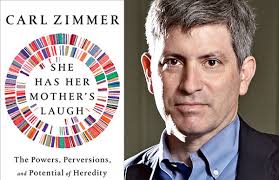
This show is a landmark episode, number 100! I want to sincerely thank all you listeners, new and old, for tuning in. It’s been such a fantastic experience over the last 7 years to share news and interviews with you all and learn along with you. I hope you’ve enjoyed listening to the shows as much as I have have enjoyed recording and producing them. Author Carl Zimmer joins me to discuss new and old hereditary concepts. He writes the Matter column for the New York Times and has contributed to The Atlantic, National Geographic, Time and Scientific America. He has won the Stephen Jay Gould Prize among many other honors for his journalism. Zimmer teaches science writing at Yale University. His books include Parasite Rex, Evolution: The Triumph of an Idea, Microcosm: E. coli and the New Science of Life, and his latest, She Has Her Mother’s Laugh: The Powers, Perversions, and Potential of Heredity which we discuss on this episode. She Has Her Mother’s Laugh has been named the 2018 science book of the year by the Guardian and Amazon. It was also included in 2018 book lists on The New York Times, Publishers Weekly, Kirkus Review, Mental Floss, Science Friday among others. On This Episode We Discuss: Early History of our Understanding of Hereditary Ever Changing Definition of Hereditary Types of Hereditary including Vertical vs. Horizontal Percentage of Shared DNA (or lack thereof) between Relatives Human Interest in Ancestry Learn more about Carl Zimmer on his website and stay updated with his writing by following him on Twitter and Facebook. You can also check out his book, She Has Her Mother’s Laugh on Amazon as well as the book he mentioned, “The Tangled Tree: A Radical New History of Life” by David Quammen. If you are interested in joining a genetic counseling book club check out Book Zebras! Their April book is Resurrection Lily by Amy Byer Shainman who I interviewed back in episode 25 of the show. If you enjoy this show, you might also be interested in the other healthcare podcasts I host and produce, Advancing Dentistry Podcast and Insight Says: A Mental Health Podcast. They are both monthly podcast where I interview experts in their respective fields. Stay tuned for the next new episode of DNA Today on May 3rd, 2019. New episodes are released on the first Friday of the month. See what else I am up to on Twitter, Instagram, Facebook and iTunes. Questions/inquiries can be sent to [email protected].

Ep 99#99 Coriell Institute on Biobanking
Two leaders from the Coriell Institute for Medical Research join the show to discuss biobanking. Nahid Turan, Chief Laboratory Officer, and Alissa Resch, Chief Scientific Officer, lead separate aspects of the Institute scientific efforts. Coriell is known for its impact in the world of biobanking. If you’ve ordered biological materials in the past for research, there’s a good chance you’ve ordered from them before. In its 65 year history, Coriell has partnered with many federal, private and nonprofit organizations, offering expertise in the collection, processing, storage and distribution of biological materials, and in the process built one of the most diverse and important collections of biomaterials in the world. It’s because of their collection that endeavors like the Human Genome Project were possible and that the science of personalized medicine thrives today. On This Episode We Discuss: Definition of Biobanking and Process Sample Tissue and Species Types Number of Samples Disease Representation Approach to Finding Specific Samples Research Access and Shipment Organizations, Institutions and Projects Supplied Including the Human Genome Project and the 1,000 Genomes Project! Managing Big Bio Data To learn more about Coriell head over to their website, specifically their biobanking page. Stay updated with their latest news by following them on Twitter. Stay tuned for the next new episode on April 5th, 2019. This will be the 100th episode of DNA Today! To celebrate I interview Carl Zimmer, a popular science writer for the New York Times and has also contributed to The Atlantic, National Geographic, Time and Scientific America. He has won the Stephen Jay Gould Prize Among many other honors for his journalism. Zimmer teaches science writing at Yale University. His books include Parasite Rex, Evolution: The Triumph of an Idea, Microcosm and his latest, She Has Her Mother’s Laugh which we will be discussing on next month’s episode. So tune back in on April 5th to hear the interview! New episodes are released on the first Friday of the month. See what else I am up to on Twitter, Instagram, Facebook and iTunes. Any questions/inquiries are welcome and can be sent to [email protected].

Ep 98#98 Lydia Seiders on Aplastic Anemia
To celebrate and honor Rare Disease Awareness month (February) Lydia Seiders joins me on the show. She is a volunteer Maryland State Ambassador for NORD, the National Organization for Rare Disorders, through NORD’s advocacy arm the Rare Action Network. Her daughter was diagnosed with aplastic anemia, a form of bone marrow failure. This motivated Lydia to become an Ambassador for NORD. In this role, she leads about 200 network members across the state to raise awareness for approximately 600,000 patients affected by a rare disorder. Lydia leads educational initiatives and develops state-based campaigns to increase patient awareness. She partners with advocates nationwide to act on policy impacting the rare disease community. Lydia also works closely with the Aplastic Anemia and MDS International Foundation and the national bone marrow registry - Be the Match. She assists patients and families globally obtain reputable resources for bone marrow failure. Most recently she began collaborating with RARE Revolution Magazine, a dedicated free rare disease publication. She will help to share in the direction of the Rare Revolution movement. On This Episode We Discuss: Her daughter, known as #EmmaStrong, diagnosis of aplastic anemia Diagnostic journey Aplastic anemia symptoms and cause NIH’s role in Emma’s treatment Current research for aplastic anemia Lydia’s role as a state ambassador for NORD Educational initiatives and campaigns for the rare disease community NORD’s resources for parents and caregivers Advice for parents and caregivers of a loved one with a rare disease Resources Mentioned During The Show: National Organization for Rare Disorders (RareDiseases.org) RareAction.org When signing up, their system will link you to your state’s RAN by your zip code The Aplastic Anemia and MDS International Foundation Maryland’s Rare Action Network Facebook Page RAN is active in all 50 states, listeners can find their state to get involved Be The Match (Emma’s Page) Learn how to join the bone marrow registry Learn more about Emma in this blog post part 1, part 2 and part 3. Stay updated with Lydia by following her on Twitter and connecting with her on LinkedIn. Don’t forget to raise awareness this month (and every month) for rare diseases, especially on Rare Disease Day which is on Thursday, February 28th 2019. Stay tuned for the next new episode of DNA Today on March 1st. New episodes are released on the first Friday of the month. See what else I am up to on Twitter, Instagram, Facebook and iTunes. Questions/inquiries for my guest, Lydia Seiders, or myself can be sent to [email protected]’t hesitate, we love hearing from listeners.
Ep 97#97 Genetic Counseling Grad School Interviews, Ranking, Matching (Part 2)
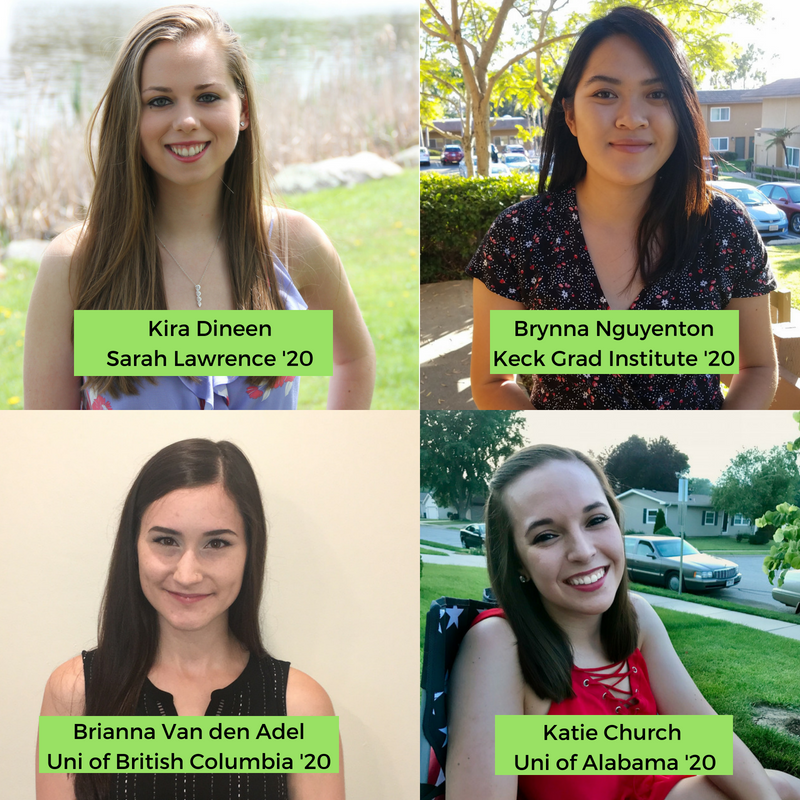
A panel of four incoming genetic counseling graduate schools discuss the application process. This is part two of two podcasts, discussing the second portion of the application cycle: interviews, ranking, and matching. Episode 87 was the first part of this conversation where we discussed how to gather the experience and classes to have a competitive application. We also surveyed over 50 incoming genetic counseling students (enrolling Fall 2018) who went through the last application process, which was also the first time the Match System was used. Their feedback has also been summarized on episode 87’s blog post . We hope prospective and applying students find this summary and these two episodes helpful! On This Episode We Discuss: Overall Application Timeline Schools Applied vs Interviews Invites Received Preparation Strategies for Interviews A Typically Interview Day Schedule Types of Interview Questions Methods to Keep Track of Schools/Interviews How the Match System Works Factors Used to Assess and Rank Programs Reasons for Our Number 1 Pick Match Outcomes The Panel Kira Dineen hosts DNA Today: A Genetics Podcast (and radio show), which was founded in 2012 and features nearly 100 episodes interviewing genetic counselors, patient advocates and other genetic experts. The show was nominated in the 2015 and 2016 Podcast Awards. She also hosts other healthcare podcasts including Advancing Dentistry and Insight Says: A Mental Health Podcast. Kira is the Communications Lead at My Gene Counsel, a digital genetic counseling company. She is also a member of National Society of Genetic Counselors’ Digital Ambassador Program (aka #NSGCGenePool). Kira received her Bachelor's of Science degree in Diagnostic Genetic Sciences with a concentration in Cytogenetics at the University of Connecticut. She is in Sarah Lawrence College’s Genetic Counseling Class of 2020. Brynna Nguyenton is a first year genetic counseling student at The Keck Graduate Institute. She earned her BS in Biology with a minor in Cognitive and Behavioral Neuroscience from San Diego State University in 2016. Brynna’s professional interests include accessible healthcare, neuropsychiatric and cancer genetics, and promoting scientific literacy and education in the community. She is also the lead staff contributor of the genetic counseling blog, Maps and Genes. Outside of genetic counseling, she enjoys thrift shopping, traveling and trying new foods, and spending time outdoors with her Husky/Shepherd puppy, Kenobi. Katie Church is a member of the 2020 Genetic Counseling class from The University of Alabama at Birmingham. Originally from Colorado, in 2017 she graduated with a Bachelors of Science in Biology with minors in Psychology and Spanish from the University of Nebraska-Lincoln. Throughout undergrad she spent time volunteering with adaptive recreation and a domestic violence hotline, helping with research, shadowing various genetic counselors, and staying active in her sorority. Post graduation she worked as a research assistant in a fly genetics lab and a high school cheer coach. Brianna Van den Adel was born and raised in the small northern town of Kitimat, B.C., Canada. She received her Bachelor of Science in Biochemistry & Molecular Biology and Psychology at The University of Northern British Columbia in 2017. With her acceptance into the Master of Genetic Counselling program at The University of British Columbia, she looks forward to completing her degree and working towards introducing the field of genetic counselling to Prince George, and serving the northern communities of British Columbia. Stay tuned for the next new episode of DNA Today on February 1st. As announced last month, the updated 2019 release schedule is new episodes on the first Friday of every month. See what else I am up to on Twitter, Instagram, Facebook and iTunes. Don’t forget to check out the first part of this conversation in episode 87 where we discuss how to gather the experience and classes to have a competitive application. Questions/inquiries about the application process for the four of us can be sent to [email protected]. Interested in getting in contact with a current student at a specific school? Shoot us an email and we will work our networks to try and connect you! Don’t hesitate, we love networking with fellow future genetic counselors. We look forward to seeing some of you at your interviews!

Ep 96#96 Jim Cavan on Backpack Health
Jim Cavan, CEO and President of Backpack Health is featured on this episode. He has great passion for helping healthcare companies tackle systemic problems, and 20 years of executive health research and startup leadership experience. The development of Backpack Health is the result of several key goals of his, including improved access to and control of medical information, and less obtrusive collection of research data. Backpack Health is a mobile and cloud-based app that helps people with chronic, serious and rare health concerns better manage their health journeys. The Backpack Health mission is to empower patients by making it easy for them to access, own and control all their health information to support better health for themselves, their loved ones and their communities. Just like a real backpack, the portable, multimodal, multilingual app allows users to carry around what matters most – their personalized, comprehensive medical information and documents – in one central location. Backpack Health also provides a platform for organizations to engage patients, collect up-to-date data and build communities around the globe. On This Episode We Discuss: How Backpack Health Started Jim’s Role at Backpack Health Backpack Health’s Services for Patients and Caregivers Specific Groups to Benefit Languages and Countries Covered How Users Can Access and Edit Their Information Data Security and Sharing Backpack Health’s Role In Research Patient Advocacy and Resources Learn more on Backpack Health’s website and stay updated with them on Twitter, Facebook, and Instagram. Stay tuned for the next new episode of DNA Today on January 4th, 2019. This episode is part 2 of the discussion about the genetic counseling graduate school application process. In part 1 on episode #87 we discussed preparing for applications, how to apply to programs, and general advice. We also surveyed over 50 incoming students to capture more insight. I will be joined by the same panel of guest who are fellow genetic counseling students and we pick up where we left off by discussing the second half of the application process: interview, rank, and match. The show will be shifting to a new release schedule for 2019 by releasing episodes on a monthly basis on the first Friday of every month. See what else I am up to on Twitter, Instagram, Facebook and iTunes. As always it’s great to hear from listeners, so feel free to send your questions and inquiries to [email protected].

Ep 95#95 Kieger Family on Familial Adenomatous Polyposis
Author Laura Kieger and her son, Dr. Alexander Kieger, share their family’s courageous, century-long struggle with a rare genetic cancer syndrome, Familial Adenomatous Polyposis. Familial adenomatous polyposis is a rare, genetic cancer predisposition syndrome caused by a deletion mutation in the APC gene on chromosome 5. By the age of 40, nearly 99% of untreated patients will develop cancer. This is the dark shadow that has lingered over their family since at least 1911, when Mary Regan Baker was seen at Mayo Clinic in Rochester, Minnesota for symptoms of a disorder that would become commonplace in her descendants. Through deeply touching personal stories of love, heartbreak, and hope, Laura’s book, Summer’s Complaint, explores the meaning of family and how tragic loss leads to the remaking of life in the face of a rare genetic mutation. Laura obtained a Bachelor of Arts degree from the University of Minnesota (Twin Cities) and a Master’s degree in Human Development from St. Mary’s University. Dr. Alexander Kieger is a Vascular and Interventional Radiologist at Vascular Institute of Virginia. He graduated from Drake University with a Bachelor of Arts degree in Biochemistry and Cell and Molecular Biology. He obtained his Doctor of Medicine from Northwestern University’s The Feinberg School of Medicine. Enter the GIVEAWAY on Twitter, Facebook, LinkedIn and Instagram to WIN 1 of 10 signed copies of Summer’s Complaint. The giveaway ends on December 14 at midnight eastern time, and winners will be randomly selected. To be eligible for entry you must have a US shipping address. You can enter giveaways on all social media networks, however a maximum of one copy will be awarded to each person. You can also buy the book directly on Amazon. Learn more about the Keiger family on Laura’s website. Stay updated by following Laura on Twitter and Dr. Alexander Kieger on Twitter and Instagram. Stay tuned for the next new episode of DNA Today on December 21st, I interview the CEO/President of Backpack Health, Jim Cavan. Backpack Health is a mobile and cloud-based app that helps people with chronic, serious and rare health concerns better manage their health journeys. New episodes are released on the first and third Fridays of the month. Can’t wait? There are 94 other episodes to explore in the meantime. See what else I am up to on Twitter, Instagram, Facebook and iTunes. Questions/inquiries can be sent to Kira at [email protected].

Ep 94#94 Legend of Sumeria: A Genetics Graphic Novel
Dr. Biju Parekkadan is a Co-Creator and Scientific Director of the hard science graphic novel, Legend of Sumeria. He is a Professor of Biomedical Engineering with a research lab that specializes in cell and genetic engineering. His discoveries have been published in prestigious journals with patented inventions that have led to the foundation of several companies. He received his bachelor’s degree from Rutgers University and a doctorate from the Harvard-MIT Division of Health Sciences and Technology. In 2012, he was recognized by President Obama with an Early Career Award for Scientists and Engineers, the highest honor bestowed upon young researchers in the country. Dr. Parekkadan’s daily work in biotechnology research and education provides a unique perspective in the creation of the viable science behind Legend of Sumeria. This Episode We Discuss: The Premise of Legend of Sumeria Inspiration to Start the Graphic Novel Autoimmunity on the Molecular/Genetic Level Conveying Scientific Concepts The Current and Future Science Behind Legend of Sumeria Genetic Privacy Future of Gene Therapy Bioethical Issues Raised in Legend of Sumeria Team Behind the Graphic Novel Be sure to check out the graphic novel on their stunning website. Follow them on Twitter and Instagram. Don’t forget to enter the giveaway on their Instagram by commenting on the latest picture what you found interesting on this episode. The first five to follow and comment will win a complementary copy of Legend of Sumeria! Stay tuned for the next new episode of DNA Today in two weeks. The date to be determined as the normal release date overlaps with the National Society of Genetic Counselors Annual Conference. New episodes are typically released on the first and third Fridays of the month. Can’t wait? There are over 90 other episodes to explore in the meantime. See what else I am up to on Twitter, Instagram, Facebook and iTunes. Questions/inquiries can be sent to Kira at [email protected].

Ep 93#93 Team Telomere
Members from Team Telomere (formerly DC Outreach), a community for telomere biology disorders join me for this episode. This panel includes patient advocate Katie Stevens, Dr. Sharen Savage, and Dr. Suneet Agarwal. They provide information and support services to families worldwide who are affected by these disorders, encourage the medical community’s research in finding causes and effective treatments, and facilitate improved diagnosis by educating medical providers. Katie Stevens is the Executive Director of Team Telomere. Her oldest child, Riley, is affected by a telomere disorder. Katie’s goal is to be an advocate and resource. She is also a member of Global Genes Foundation Alliance Advisory Council and a NORD member leader. Dr. Sharon Savage is the Chief of the Clinical Genetics Branch in the Division of Cancer Epidemiology and Genetics at the National Cancer Institute (NCI). She leads clinical, genetic, and epidemiologic studies of individuals and families at high risk of cancer. Dr. Savage’s research program in telomere molecular epidemiology incorporates population-based studies of telomere length and disease with genetic studies of telomere biology. She serves as a Medical Advisor for Team Telomere. Dr. Suneet Agarwal completed his M.D. and Ph.D. training at Harvard Medical School. He is currently an Assistant Professor in Pediatrics at Harvard Medical School, Principal Faculty at the Harvard Stem Cell Institute and Harvard Initiative in RNA Medicine, and Staff Physician in Hematopoietic Cell Transplantation at the Dana-Farber / Boston Children’s Cancer and Blood Disorders Center. Dr. Agarwal's research and clinical work is focused on the mechanisms and treatment of genetic blood disorders. He leads a multi-center bone marrow transplant clinical trial for dyskeratosis congenita, and his lab is working on new therapeutic approaches for telomere diseases. He also serves as a Medical Advisor for Team Telomere. This Episode We Discuss Katie’s Son’s Diagnostic Journey Dyskeratosis Congenita and Telomere Biology Disorder Prevalence Symptoms Age of Onset Associated Genes Diagnosis Process Treatments Latest Research How Team Telomere Helps Affected Families Becoming a Bone Marrow Donor > BeTheMatch.org Stay tuned for the next new episode of DNA Today on November 2nd, 2018. New episodes are released on the first and third Fridays of the month. Can’t wait? There are over 90 episodes to explore in the meantime. See what else I am up to on Twitter, Instagram, Facebook and iTunes. Questions/inquiries can be sent to Kira at [email protected].

Ep 92#92 Dr. Erin Young on Pain Genetics
Dr. Erin Young discusses the role genetics play in pain susceptibilities. She is an Assistant Professor of both the School of Nursing and Genetics and Genomic Sciences at the University of Connecticut. Her career has been focused on studying genetic contributions to pain susceptibility, for which she has published numerous papers sharing her findings. She received her BA at Wesleyan College, and her MA and PhD at Kent State University. She also completed two postdoctoral fellowships, at Texas A&M University and the University of Pittsburgh Center for Pain Research. This Episode We Discuss The Role Genetics Plays in our Experience of Pain Why People have Differences in Pain Responses Genes and Pathways Involved in Pain Environment Factors Affecting Pain Susceptibility Somatic vs. Visceral Pain Behaviors Pain Mechanisms Behind Inflammatory Bowel Disease (IBD) Animals Models Used and Translating Findings to Human Pain Opportunities for Integrating Genetic Analysis into Precision Healthcare Initiatives To learn more about Dr. Erin Young, check out her profile on UCONN’s InCHIP and School of Nursing website. Dive more into her research explore painresearch.uconn.edu and read one of her publications on the topics we discussed, “Genetic Basis of Pain Variability: Recent Advances”. To stay updated with Dr. Young, check out her LinkedIn and Twitter profiles. Stay tuned for the next new episode of DNA Today on October 5th, 2018. New episodes are released on the first and third Fridays of the month. Can’t wait? There are 90 other episodes to explore in the meantime. See what else I am up to on Twitter, Instagram, Facebook and iTunes. Questions/inquiries can be sent to Kira at [email protected].
Ep 91#91 Ellen Matloff on Direct-To-Consumer Genetic Testing
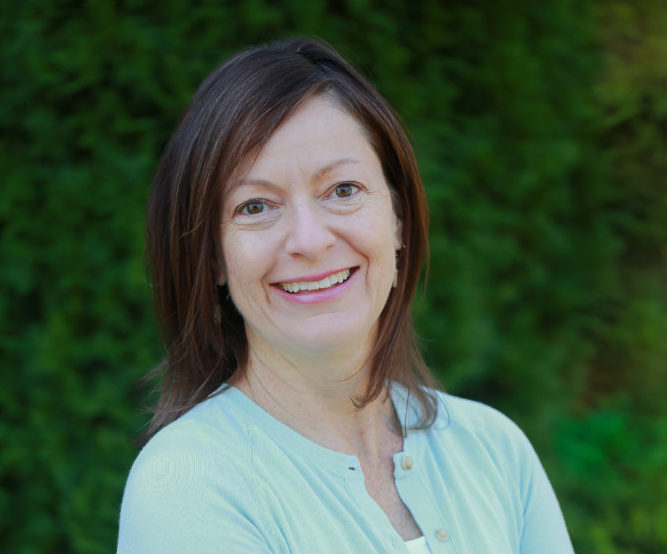
Ellen Matloff is the President and CEO of My Gene Counsel. Ellen is the founder and former director of the Cancer Genetic Counseling Program at Yale School of Medicine. Ellen has authored more than 50 scientific publications in the field, is an established educator, lecturer and media spokesperson and has received national awards for her ongoing patient advocacy efforts. She is an outspoken patient advocate in many areas, most notably as a plaintiff in the 2013 BRCA gene patent case that went before the Supreme Court. This decision has led to drastically lower prices of genetic testing, making it possible for more patients to afford this technology. Ellen is a Forbes.com contributor in the area of genetic counseling, testing, and digital health. As genetic testing became more common and also more complex, she has served as the senior author on several publications since 2010, all documenting errors in the interpretation of genetic test results, from all over the US and Canada. From these experiences, Ellen created My Gene Counsel and its associated digital tools that can be used in parallel with genetic testing to help ensure that results are used accurately and effectively. These tools are scalable, affordable, are available to the consumer immediately, and on their own device, and - importantly - when your genetic test results are reclassified, or medical management recommendations change, you receive a text message or email. Disclaimer, I (host Kira Dineen) also work for Ellen at My Gene Counsel as the Communications Lead. On This Episode We Discuss: Defining direct-to-consumer (DTC) tests Types are available to consumers Difference between medical grade and DTC genetic tests Accuracy of DTC genetic tests What to know before choosing a DTC test Examples of when a DTC test may be more appropriate than a medical grade test and vice versa Why healthcare providers can’t afford to ignore DTC anymore Potential implications of sending a sample to a DTC company Benefits of signing up for My Gene Counsel Check out My Gene Counsel’s website, Twitter, Facebook and LinkedIn pages for more information. Stay tuned for the next new episode of DNA Today on October 19th. New episodes are released on the first and third Fridays of the month. See what else I am up to on Twitter, Instagram, Facebook and iTunes. Questions/inquiries can be sent to Kira at [email protected].

Ep 90#90 Erica Ramos on NSGC
Erica Ramos is the 2018 President of the National Society of Genetic Counselors (NSGC). She builds products, programs and strategy in the genomics and genetic counseling arenas with expertise in rare disease and predictive genome sequencing. Erica is currently director and head of Clinical & Business Development for Geisinger National Precision Health. This Episode We Discuss: Elevator Pitch of Genetic Counseling Ramos’ Career Background Goal of NSGC Ramos’ role as President of NSGC Biggest Challenges in the Genetic Counseling Field 2018 NSGC Professional Status Survey Executive Summary Available to Public 94% of GCs who took part in NSGC’s 2018 professional status survey reported being satisfied with the profession. An average full-time GC earns a salary of $88,000 USD. There are over 4,600 certified GCs in North America, this is an increase of 95% compared to the number just 10 years ago in 2008. There are 43 accredited graduate level training programs in North America. Growth rate of the career between 2016-2026 is 29%, the average for all occupations is 7%. 2017 NSGC Member Benefits, Needs and Satisfaction Survey Annual NSGC Conference, November 2018 in Atlanta, (See you there!) Resources NSGC Provides FindAGeneticCounselor.com AboutGeneticCounselors.com Genetic Counselor and You Webinar Series NSGC Podcast Series: Leading Voices in Genetic Counseling NSGC Digital Ambassadors (aka The Gene Pool) Twitter List with all of us listed For updates from Erica Ramos, follow her on Twitter. And explore some of the resources above that NSGC provides the public. Stay tuned for the next new episode of DNA Today on October 5th, 2018. New episodes are released on the first and third Fridays of the month. Can’t wait? There are 89 other episodes to explore in the meantime. See what else I am up to on Twitter, Instagram, Facebook and iTunes. Questions/inquiries can be sent to Kira at [email protected].

Ep 89#89 Dr. Andrew Ury on Electronic Health Records
Dr. Andrew Ury is the CEO and Founder of ActX, one of the leading companies in electronic health record integrated genomic decision support. He previously founded and was CEO of the first commercial electronic medical record company, Practice Partner. He is also the co-founder of one of the leading practice-based research networks, PPrNet. Dr. Ury helped found and was twice the vice-chair of the Electronic Health Record Assoc (EHRA). He is a graduate of Stanford Medical School. This Episode We Discuss: Definition of Electronic Health Records (EHRs) EHRs History, Evolution and Future Dr. Ury’s Perspective as a Founder of the Technology Current EHR Methods and Systems ActX’s Role in Integrating EHRs in Genomic Decision Support Direct-To-Consumer (DTC) Genetic Testing Focused vs Broad Screening FDA Regulation on DTC Genetic Testing Pharmacogenomics and Testing Future Predictions of Integrated Personalized Medicine and Patients’ Role Want to learn more about ActX? Check out their website, Facebook page, and Twitter account. Stay tuned for the next new episode of DNA Today on September 21st. New episodes are released on the first and third Fridays of the month. Can’t wait? There are 88 other episodes to explore in the meantime. See what else I am up to on Twitter, Instagram, Facebook and iTunes. Questions/inquiries can be sent to [email protected].

Ep 88#88 Ira Pastor on Regeneration
Ira S. Pastor is the CEO of Bioquark, a life sciences company, developing proprietary combinatorial biologics for the regeneration and repair of human organs and tissues. Ira has over 30 years of pharmaceutical experience. He serves as a board member at multiple companies and organizations including RengerAge, the Reanima Project, The World Academy of Medical Science and the World Economic Forum’s Human Enhancement. This Episode We Discuss… Regeneration and repair of human organs and tissues Natural regenerative capability of humans Effect of age Potential role of telomerase Bioquark’s area of focus in regeneration Conditions that could potentially benefit from regeneration research Genetics role in regeneration Research on animals regenerative abilities Growing organs outside the human body and its impact on the organ donor system Somatic reversion and how it differs from other gene therapies Learn more on Bioquark’s website and stay updated by following them on Facebook. Stay tuned for the next new episode of DNA Today on September 7th, 2018. New episodes are released on the first and third Fridays of the month. See what else I am up to on Twitter, Instagram, Facebook and iTunes. Questions/inquiries can be sent to [email protected].

Ep 87#87 Genetic Counseling Grad School Apps (Part 1)
A panel of four incoming genetic counseling graduate schools discuss the application process. This is part one of two podcasts, discussing how to gather the experience and classes to have a competitive application. Early next year (2019) we will also release a follow up episode focusing on the second part of the application process: interviews, ranking and matching. We also surveyed over 50 incoming genetic counseling students (enrolling Fall 2018) who went through the last application process, which was also the first time the Match System was used. Their feedback has been summarized on the blog post with this episode on DNApodcast.com. We hope prospective and applying students find this summary and episode helpful! The Incoming Genetic Counseling Student Panel Kira Dineen hosts DNA Today: A Genetics Podcast (and radio show), which was founded in 2012 and features over 85 episodes interviewing genetic counselors, patient advocates and other genetic experts. The show was nominated in the 2015 and 2016 Podcast Awards. She is the Communications Lead at My Gene Counsel, a digital genetic counseling company. Kira is also a member of National Society of Genetic Counselors’ Digital Ambassador Program (aka #NSGCGenePool). She received her Bachelor's of Science degree in Diagnostic Genetic Sciences with a concentration in Cytogenetics at the University of Connecticut. Kira is excited to be in Sarah Lawrence College’s Genetic Counseling Class of 2020. Brynna Nguyenton will be a first year genetic counseling student at The Keck Graduate Institute. She earned her BS in Biology with a minor in Cognitive and Behavioral Neuroscience from San Diego State University in 2016. Brynna’s professional interests include accessible healthcare, neuropsychiatric and cancer genetics, and promoting scientific literacy and education in the community. She is also the lead staff contributor of the genetic counseling blog, Maps and Genes. Outside of genetic counseling, she enjoys thrift shopping, traveling and trying new foods, and spending time outdoors with her Husky/Shepherd puppy, Kenobi. Katie Church is a member of the 2020 Genetic Counseling class from The University of Alabama at Birmingham. Originally from Colorado, in 2017 she graduated with a Bachelors of Science in Biology with minors in Psychology and Spanish from the University of Nebraska-Lincoln. Throughout undergrad she spent time volunteering with adaptive recreation and a domestic violence hotline, helping with research, shadowing various genetic counselors, and staying active in her sorority. Post graduation she worked as a research assistant in a fly genetics lab and a high school cheer coach. Brianna Van den Adel was born and raised in the small northern town of Kitimat, B.C., Canada. She received her Bachelor of Science in Biochemistry & Molecular Biology and Psychology at The University of Northern British Columbia in 2017. With her recent acceptance into the Master of Genetic Counseling program at The University of British Columbia, she looks forward to completing her degree and working towards introducing the field of genetic counseling to Prince George, and serving the northern communities of British Columbia. On This Episode We Discuss: Overall Application Timeline Cost of our Application Processes Preparation for Applications & Helpful Resources Prerequisites, Extracurricular Activities & Recommended Experiences Finding Genetic Counselors to Shadow Writing the Personal Statements Letters of Recommendation: How Many to Request & Who To Ask Differences Applying as an International Student (Outside US) Deciding Schools: Features to Focus on & Number to Apply to Stay tuned for the next new episode of DNA Today on August 17th. New episodes are released on the first and third Fridays of the month. See what else I am up to on Twitter, Instagram, Facebook and iTunes. Questions/inquiries about the application process for the four of us can be sent to [email protected]. Interested in getting in contact with a current student at a specific school? Shoot us an email and we will work our networks to try and connect you!

Ep 86#86 Dr. Michael Fossel on the Telomere Theory of Aging
Dr. Michael Fossel is the world’s foremost expert on the clinical use of telomerase for age-related diseases. In 1996, he wrote the first book on the telomerase theory of aging, Reversing Human Aging, and has published the sole medical textbook on the topic. Most recently he published The Telomerase Revolution which was named one of the five best science books of the year by the Wall Street Journal. Dr. Fossel earned his PhD and MD from Stanford University, where he taught neurobiology and research methods. He has lectured at the National Institutes of Health and the Smithsonian Institution and has appeared on Good Morning America, CNN, BBC, and NPR among others. He is currently working to bring telomerase to human trials for Alzheimer's disease with his company, Telocyte. On This Episode We Discuss… Telomere theory of aging Age related diseases telomerase potentially prevent/treat Telomerase product effects on cancer prevention Common misconceptions of aging Changing public perspective on the potential of reversing aging Role of family history in longevity Recent aging/telomerase research CRISPR’s use with telomerase Scientifically validation of current anti-aging products Learn more on Michael Fossel’s website. I also recommend his book, The Telomerase Revolution. Stay tuned for the next new episode of DNA Today on August 3rd, 2018. New episodes are released on the first and third Fridays of the month. See what else I am up to on Twitter, Instagram, Facebook and iTunes. Questions/inquiries can be sent to [email protected].

Ep 85#85 Sarah McAnulty on Squids
Sarah McAnulty is a squid biologist and science communicator. She founded Skype A Scientist, matching classrooms with scientists for QnA sessions. Sarah is also a Ph.D. Candidate and Scientist at the University of Connecticut. She studies squids and their symbiosis with bioluminescent bacteria. On This Episode We Discuss: Skype A Scientist Effect ways to communicate science Differences between squid species, which ones Sarah works with Squid research goals The symbiosis relationship between the squid and bacteria Squid’s blood, microbiome, and immune system Sarah’s inspiration to pursue a squid research career Advice/resources for students interested research Sarah is very active on Twitter and Instagram providing squid fun facts, videos, pictures and really everything cephalopod related. She also has a Tumblr, Youtube page and website for even more information. Stay tuned for the next new episode of DNA Today on July 20th, 2018. New episodes are released on the first and third Fridays of the month. See what else I am up to on Twitter, Instagram, Facebook and iTunes. Questions/inquiries can be sent to [email protected].

Ep 84#84 CRISPR Bioethics
In this podcast discussion we peek into the world projected by J.D. Lasica in his new genetics thriller novel, Biohack. We consider and debate a few ethical issues that arise in the book focusing on the potential implications CRISPR has for our future. J. D. Lasica is an author, Silicon Valley entrepreneur and public speaker. He spoke at the United Nations in 2012 about how to use social media to combat global poverty, and he has given talks on four continents. His new book Biohack is a high-tech genetics thriller. Dr. Katie Hasson, is the Program Director on Genetic Justice at the Center for Genetics and Society. She was an assistant professor of sociology and gender studies at the University of Southern California. She has researched and written on reproductive technologies and women’s health. On This Episode We Discuss: The genetics thriller novel Biohack and the bioethical issues it raises Potential scientific advances with CRISPR technology The bioethical implications of those advancements Which countries these advances are most likely to occur The bioethical debate change between PGD embryo selection and CRISPR edited embryo, prior to in vitro fertilization Potential restrictions on which genes can be manipulated, disease related vs physical traits Want to delve further into the bioethics of CRISPR? Check out this article from guest Dr. Katie Hasson about designer DNA not being just for designer babies. Another interesting article that complements our discussion in the podcast is Nathaniel Comfort’s “Can We Cure Genetic Diseases Without Slipping Into Eugenics?” Intrigued by our conversation about a child having three biological parents (this is not science fiction) Leah Lowthrop wrote articles about the impact in the fertility industry and the slippery slope this technique could become. Genetics and Society has many more articles to explore! If you are one of the first ten people to sign up for JD’s J.D.’s Best of Indie email list you will receive a free copy of the “Biohack” ebook plus the Hacked Celebrity Files, a full-color PDF outlining Hollywood celebrities and historical figures targeted by the biotech company in the novel. Can’t wait to see if you have won? Buy the book on Amazon for $1 or read it for free through amazon Kindle Unlimited. Be sure to give both J.D. Lasica and Genetics and Society a follow on Twitter. Stay tuned for the next new episode of DNA Today on July 6th, 2018. New episodes are released on the first and third Fridays of the month. See what else I am up to on Twitter, Instagram, Facebook and iTunes. Questions/inquiries can be sent to [email protected].

#83 Alex Ille on Alzheimer’s Disease
Alexander Ille, the Director of the Genome Cure Organization, joins me on this podcast episode. He received a Bachelors of Science from University of Waterloo and is currently a graduate student at D'Youville College, actively participating in genetic research. He also wrote a book, “The Genome Cure: The Future of Medicine for Alzheimer's, Cancer, Diabetes and more”. Alex founded the Genome Cure Organization in 2016 and is enthusiastic about genomic research and its medical implications. This mission of his organization is to push towards finding cures for a multitude of diseases through the advancement of gene therapy and gene editing. On This Episode We Discuss: Hereditary component of Alzheimer's Disease Prevalence of Alzheimer’s Disease in the populations and how many people affected Treatment options for people with Alzheimer’s Disease Genome Cure Organization’s efforts to make a difference in the Alzheimer’s Disease Recent research published about Alzheimer's The process of researching new treatments and a potential cure Length of phases Funding required Key players/institutions in the research Current clinical trials Ways the public can get involved Learn more about Genome Cure Organization on their website and Instagram. Stay tuned for the next new episode of DNA Today on June 15th, 2018. New episodes are released on the first and third Fridays of the month. See what else I am up to on Twitter, Instagram, Facebook and iTunes. Questions/inquiries can be sent to [email protected].

Ep 82#82 Smith Family Clinic on Whole Genome Sequencing
A panel of guest from Smith Family Clinic for Genomic Medicine in Huntsville, Alabama joins me for this episode exploring the power of whole genome sequencing for patients with undiagnosed diseases. On This Episode We Discuss: Whole genome sequencing (WGS) vs exome sequencing Qualifications for patient to receive WGS Next steps after a “negative WGS” Value of WGS for patients not seeking a diagnosis Hero fund to help families afford testing Predictions of the future use of WGS Genetic counselors role at the clinic Approach to explain testing to patients Next steps for an untreatable/incurable diagnosis Interesting case studies Incidental and secondary findings from WGS Dr. David Bick is a board-certified clinical geneticist and clinical molecular geneticist with over 20 years of clinical experience. He sees patients and families who are struggling with a rare undiagnosed or misdiagnosed disease, and are considering genetic testing - specifically, whole genome sequencing. Carol Aiken is a certified medical practice administrator with the Professional Association of Healthcare Office Management (PAHCOM). She has over 30 years of medical practice administration experience across multiple physician practice specialties and hospitals. Meagan Cochran is a board-certified genetic counselor with clinical experience in pediatrics, adult medicine and genomics. As one of the genetic counselors at Smith Family Clinic she works with patients and families to understand the role of genomic medicine in healthcare and help them to incorporate this new information into their decision making processes. Follow Smith Family Clinic on Twitter, Facebook, Instagram, and visit their website for more information. Stay tuned for the next new episode of DNA Today. New episodes are released on the first and third Fridays of the month. See what else I am up to on Twitter, Instagram, Facebook and iTunes. Questions/inquiries can be sent to [email protected].

Ep 81#81 Irina Brooke on BRCA2
Irina Brooke joins me for this podcast episode. She is an patient advocate with the mission of supporting people with BRCA mutations and educating the public on this testing and how it can empower healthcare decisions. On This Episode We Discuss… Deciding to pursue genetic testing and results Qualifications for having a strong family history of ovarian, breast and/or prostate cancer The risk of passing on a BRCA mutation to a child Males inheriting gene mutations Genetic counseling process and experience Cancer development risk level for people who have BRCA gene mutations Beyond BRCA, additional gene mutations that increases one’s risk for developing cancer Options for preventing and monitoring cancer Recovering from breast cancer Support systems available Getting involved in the patient advocacy community BRCA community terms (previvor, mutantvivor, etc.) Advice to those with family history of cancer and those who have a BRCA mutation Check out Irina’s Instagram, Facebook page, and Facebook group for women in the hereditary breast and ovarian cancer community with mutations (BRCA etc.). She also shares her journey on her website’s blog. Stay tuned for the next new episode of DNA Today on May 18th, 2018. New episodes are released on the first and third Fridays of the month. See what else I am up to on Twitter, Instagram, Facebook and iTunes. Questions/inquiries can be sent to [email protected].

Ep 80#80 Rafi Mendelsohn on DNA Quest for Adoptees
Rafi Mendelsohn is the Director of Public Relations and Social Media at MyHeritage. MyHeritage is the largest family history and DNA company that helps consumers to discover their ethnic origins and find new relatives. Their new pro bono initiative, DNA Quest, is currently helping adoptees and their birth families reunite through genetic testing, which we explore in this podcast episode. This offer is only available through the end of April 2018! Apply today for one of 15,000 free DNA kits. Learn more on MyHeritage's blog. On This Episode We Discuss: -How the project started -Who is eligible and how to apply for this free testing -What is required for the testing -The timeline of the project -The number of people who find their biological relatives through MyHeritage -Information provided in the MyHeritage results -New updates and innovations from My Heritage Don’t forget that April 25th is DNA Day! Check out my episode all about the history of the day and other fun facts. Stay tuned for the next new episode of DNA Today on May 4th, 2018 where I will be interviewing patient advocate Irina Brook about her BRCA2 mutation and hereditary breast cancer. New episodes are released on the first and third Fridays of the month. See what else I am up to on Twitter, Instagram, Facebook and iTunes. Questions/inquiries can be sent to [email protected].

Ep 79#79 Bibaswan Ghoshal on the Human Microbiome
Joining me on this episode is Bibaswan Ghoshal. He is a Senior Bioinformatician at the Lunenfeld Tanenbaum Research Institute of Mount Sinai Health System in Toronto. He has his Master’s of Science in Medicine and finishing his PhD in Bioinformatics, Animal Microbiome and Agriculture from the University of Alberta. On this episode we discuss… The number of microbes in inside us and how they help us Factors/technology that impacted the start of this new field Differences between studying the human microbiome and genome Techniques/technologies used to study the microbiome Human Microbiome Project Healthy microbiomes Factors that affect microbiomes Variations between people’s microbiomes Microbiome research Role of a bioinformatics analyst in microbiome research Learn more about the microbiome through the University of Utah’s free interactive modules. You can follow Bibaswan on Twitter @bibaswanghoshal and read his blog at worldofbiba.wordpress.com. Check out the books Bibaswan recommends during the episode: Brain Maker by Dr. David Perlmutter and I Contain Multitudes by Dr. Ed Yong. Stay tuned for the next new episode of DNA Today on April 20th, 2018 where I will be interviewing Rafi Mendelsohn about a free DNA test for adoptees and biological families to be reunited. It's offered through April through MyHeritage's DNA Quest. New episodes are released on the first and third Fridays of the month. See what else I am up to on Twitter, Instagram, Facebook and iTunes. Questions/inquiries can be sent to [email protected]

Ep 78#78 Pawel Buczkowicz on Gene42
My guest joining me for this podcast episode is Dr. Pawel Buczkowicz. He is the Chief Medical Affairs Officer and the VP of Business Development at Gene42. He received his PhD in cancer genetics and molecular pathology from the University of Toronto. His research has been published in leading medical journals such as Nature Genetics. His discovery of novel mutations in human cancers and their associated clinical correlates, have led to a new World Health Organization classification that was implemented for paediatric gliomas in early 2016. Dr. Buczkowicz is passionate about improving healthcare experiences for both the patient and doctor and believes smart and efficient software will revolutionize the way medicine is practiced. On this episode, we discuss… Gene42’s Products: PhenoTips, PhenoTips Genomics, and OncoTips How clinicians/researchers use electronic health records Future of electronic health records in healthcare Importance of open-source databases Research on Diffuse Intrinsic Pontine Glioma (DIPG) You can follow Dr. Pawel Buczkowicz (@pbuczkowicz) and Gene42 (@gene42inc) on Twitter. Stay tuned for the next new episode of DNA Today on April 6th, 2018 where I will be discussing the human microbiome with Bibaswan Ghoshal! New episode are released on the first and third Fridays of the month. See what else I am up to on Twitter (@DNApodcast) , Instagram(@DNAradio), Facebook (@DNApodcast) and iTunes. Questions/inquiries can be sent to [email protected].

Ep 77#77 Rare Disease Day 2018
February 28th, 2018 was Rare Disease Day! Rare Disease Day is an opportunity to raise awareness for 7,000+ rare diseases and the 30 million Americans who are affected by a rare disease(s). There were events held worldwide to raise awareness. The theme for this year's Rare Disease Day is "Research" and the important role that patients play in gaining an understanding of rare diseases and developing innovative treatments or cures. This year's slogan is "Patients are not only subjects but also proactive actors in research." This episode features a couple interviews with presenters, who I caught up with at the end of the Rare Disease Day event in Hartford, CT in the Legislative Office Building. This specific event is one I have attended for a few years and provides an opportunity for patients, caregivers, medical professionals and industry representatives to come together and educate elected officials about rare diseases, and what it’s like to live with or care for someone with a rare disease in the state. A main focus of the event was newborn screening, including the addition of Pompe Disease and Mucopolysaccharidosis Type 1 (MPS1) for Connecticut. Connecticut covers over 60 diseases, while most other states only cover ~40 diseases. A young man named Hunter Pageau spoke about his extremely rare disease, SMARD, Spinal Muscular Atrophy with Respiratory Distress. SMARD is an aggressive respiratory/neuromuscular disease causing paralysis and inability for patients to breathe on their own. And 1 of only 12 people in the United States, and of 80 worldwide, with SMARD. Being the trailblazer he is, he started YES, the young empowerment society for kids. He is a true inspiration and leader! Going with the theme of this year’s Rare Disease Day, researchers shared how vital funding is to their research and the cascade effect initial funding can have. Stormy Chamberlain, PhD, a researcher at UCONN who focuses on Angelman Syndrome, explained how the Connecticut Stem Cell Research Fund led to NIH funding and partnerships with pharmaceutical companies such as Alexion. Presenting alongside her was Jim Kubicza, a father of a child who has Angelman Syndrome. As a fierce patient advocate, he joined the Angelman Syndrome Foundation to help raise some of this research money. He also shared some aspects of being the father of a child with a rare disease, including the burden of expensive seizure medication, full-time supervision of his son, and fighting for basic needs for his son at school. He shared more in our interview in this episode. There was also a family with a daughter who has Dravet Syndrome. Beth Fox shared about her daughter's 250 unconscious seizures, despite trying multiple different medications, and their battles with her insurance company for coverage. In a cute moment, her daughter joined her at the podium, excited to introduce herself. Jean Kelley also spoke as a patient advocate. Her son Brian has a rare neurological disease called Adrenoleukodystrophy (ALD) for which she started an organization, Brian’s Hope. She shares more during her interview in this episode. Senators and Representatives also spoke about their support for rare diseases including the Connecticut Rare Disease Task Force. This bipartisan group focuses on newborn screening, insurance issues, support services in school systems among other topics. It takes 2.5 billion dollars and 12 years to develop a drug, so we need to give tax credits to companies so they have incentive to come to Connecticut for their research, which then helps the state. It’s fantastic that an event like this can bring legislators into the conversation so we can take action to help families with rare diseases. For more information about Rare Disease please visit NORD’s rarediseases.org and check out the other episodes about rare diseases including previous Rare Disease Days.

Ep 76#76 Amy Sturm on Cardiac Genetic Counseling
To raise awareness for February Heart Month, I am joined by Amy Sturm, a cardiovascular genetic counselor. She has 15 years of experience in cardiovascular genetics, personalized genomics, research, and education. Amy is the Director of Cardiovascular Genomic Counseling and Professor at Geisinger Health System's Genomic Medicine Institute. There she provides leadership for the scaling up of genomic counseling efforts in the MyCode Community Health Initiative. She serves as the President-elect and the Cardiovascular Genetics Expert at National Society of Genetic Counselors (NSGC). Amy also works with The Familial Hypercholesterolemia Foundation and The Sudden Arrhythmia Death Syndromes (SADS) Foundation on their important advocacy work, research, and medical education programs. On this episode, we discuss….. Roles of a cardiovascular genetic counselor Inherited cardiovascular diseases Familial Hypercholesterolemia Long QT Syndrome Red flags for an inherited cardiovascular disorder in a family history Genetic testing including the cascade screening method Preventative treatments for patients with a positive testing Importance of testing children Notifying at-risk relatives of patients To learn more from Amy, follow her on Twitter and read a few of her blog posts below: Am I at Risk for Heart Disease? Familial Hypercholesterolemia: The Common, Inherited Cause of Heart Disease Rarely Talked About Curious about the patient perspective in cardiac genetic testing process with a genetic counselor? One of her patients also wrote about his genetic testing experience guided by Amy. Stay updated on new episodes and activities of DNA Today via Twitter, Instagram, Facebook and iTunes. Questions/inquiries can be sent to [email protected].

Ep 75#75 Eden Lord on My City Med
We are kicking off Rare Disease Month, which leads up to Rare Disease Day (February 28th, 2018). My guest is Eden Lord, Co-Founder and CEO of My City Med. The company is an online health and medical resource site that allows patients to search for a doctor and read reviews, and also connect with non-profit resources and online community support groups. On the show, Eden explains how both patients and physicians can benefit from My City Med’s services and resources. She also provides insight into creating MobiMedQR.com a service that allows patients/caregivers to create a medical profile accessible through QR codes. My City Med and MobiMedQR were inspired by her own family’s needs to navigate the healthcare system. Eden is a mom to kids with rare diseases and during the episode, she shares her role as a caregiver and the journey her family has been through. She is also an advocate pursuing legislation to advance rare disease research. Attend a Rare Disease Day 2018 event! If you are in Connecticut, join me at the two events. The first is Quinnipiac University’s event on their North Haven Campus on 2/27 at 1 pm or an event in Hartford on 2/28 at 8:30 am in the Legislative Office Building. Not in Connecticut? Find a local Rare Disease Day event here.

Ep 74#74 Antonio Maltese on Huntington’s Disease
After having a family history of Huntington's Disease, Antonio Maltese was pre-symptomatically genetically diagnosed with the disease himself. This diagnosis has motivated Antonio to become a fierce patient advocate with big plans to change the future of people with Huntington’s disease. Huntington’s Disease is progressive brain disorder that causes uncontrolled movements, emotional problems, and loss of thinking ability. This neurodegenerative disease is caused by an excess of CAG repeats in the Huntingtin gene (HTT). Unaffected people have this DNA sequence repeated 10 to 35 times. Those that may be affected have 35-39 repeats and those with over 40 repeats will develop Huntington’s Disease. This disease is inherited in an autosomal dominant pattern, meaning if a parent has Huntington’s Disease their child has a 50% chance of inheriting the disease. Antonio shares about his paternal grandmother who had Huntington's Disease and why he decided to pursue genetic testing. The biggest breakthrough in neurodegenerative diseases for 50 years recently occurred, 46 patients had their Huntington genes silenced at the University College London as part of a research study. Antonio I and discuss the impact this could have on Huntington's Disease and other neurodegenerative diseases. Antonio shares the resources he has benefited from including HDBuzz and the blogs where he has collected his research for others: huntingtonsinitiative.blogspot.com and chuffed.org. Don't forget to follow the show on Instagram, Twitter, and Facebook!

Ep 73#73 Jenna Guiltinan on Laboratory Genetic Counseling
Jenna Guiltinan is a laboratory genetic counselor. She received her Master’s in Genetic Counseling from California State University Stanislaus in 2013. Jenna worked at Ambry Genetics as a reporting genetic counselor for over four years. However, she recently left her position at Ambry to pursue a new laboratory position. As a laboratory genetic counselor, she helps interpret and report genetic test results. In this episode we discuss a subfield of genetic counseling, working in the laboratory. Jenna shares how her position differs from a “traditional” genetic counselor who meets directly with patients. She also provides insight on why more genetic counselors are pursuing careers in the laboratory setting. Jenna explains the types of tests run to identify genetic variants and what areas of healthcare utilizes these tests. The data produced from the tests needs to be interpreted, the genetic variants need to be classified. Jenna offers her insight on how much research is needed to support a classification and what a patient can do with this information. Variants of Unknown Significance (VUS) can pose a challenge when interpreting this data. If you would like to hear/read more from Jenna, check out her Twitter and LinkedIn page. She also welcomes student contact and can be found on FindAGeneticCounselor.com along with many other genetic counselors for both students and patients.

Ep 72#72 Megan Maxwell on Genomes2People
Megan Maxwell explains her role as a research genetic counselor. She has experience in clinical, laboratory, sales, educational, and research settings. She is currently a Genetic Counselor Project Manager for The MilSeq Project at Lackland Air Force Base in San Antonio, TX. This research is conducted under the Genomes2People (G2P) Research Program at Brigham and Women’s Hospital, Harvard Medical School, which is focused on the medical, behavioral, and economic implications of translational genomics and personalized genomic medicine, and the Air Force Personalized Medicine Program. Megan earned her BS in Human Biology from University of California, San Diego (UCSD) and her MS in Genetic Counseling from California State University, Northridge (CSUN). If you are interested in finding a genetic counselor as a patient or student, go to findageneticcounselor.com or aboutgeneticcounselor.com to learn more about the field. Stay updated with Megan on Twitter and LinkedIn. And don’t forget to follow my new account on Instagram, @DNAradio.

Ep 71#71 Eleanor Griffith on Genetic Counseling Grad School Applications
Eleanor Griffith, MS, CGC is a board certified genetic counselor and the founder of Grey Genetics, a genetics counseling and consulting company. Her clinical experience includes both prenatal and cancer genetics, in both public and private academic hospital settings. She is the Treasurer of the NYS Genetics Task Force and a member of the Admissions Committee for The Joan H. Marks Graduate Program in Human Genetics at Sarah Lawrence College, where she also received her M.S. in Human Genetics We discussed how students can have a competitive application for genetic counseling graduate schools. Eleanor shares her insight on the components of an application including prerequisites, personal statements, experiences (genetic counseling job shadowing, advocacy, laboratory work, counseling), and letters of recommendation. She provides an overview of what a typical interview day looks like at Sarah Lawrence and more information on what the Sarah Lawrence genetic counseling program specifically provides students. She also talks about her background as an English major, why she pursued genetic counseling and continues to love the profession. Here’s a complete list of all the accredited genetic counseling graduate programs in North America. Students can also find genetic counselors to job shadow and interview at FindAGeneticCounselor.com. Stay updated on Eleanor’s private practice on Instagram, Twitter and Facebook. And don’t forget to follow my new account on Instagram, @DNAradio.

#70 Heather Z on Cowden Syndrome
Heather Z is a patient advocate with two rare brain tumors and a hereditary cancer syndrome called Cowden Syndrome. On this episode she shares her journey from first symptoms, to genetic testing and eventually diagnoses and surgeries. Heather has a PTEN mutation which officially diagnosed with Cowden Syndrome. She offers insight on what she has learned through these challenges including how to helps others with hereditary cancer syndromes and rare diseases. Hereditary cancer syndromes evaluate one's risk to develop certain cancer depending on what mutation they have. For Cowden Syndrome this includes cancer of the breast, thyroid and endometrium (lining of the uterus). Most people with Cowden Syndrome develop hamartomas. These are noncancerous growths found on the skin, mucous membranes (such as the lining of the mouth and nose), and intestines. If you would like to hear/read more from Heather, check out her GoFundMe, blog, Twitter and Instagram.

#69 Jackson Lab’s Forum on Healthcare Innovation
“The Forum on Healthcare Innovation: Technology and the Future of Healthcare Delivery” was hosted by Jackson Laboratories in Farmington, CT on the UCONN Health campus. The conference was full of healthcare professionals and covered genetic testing (including direct-to-consumer), genomics, the microbiome, patient advocacy and healthcare technology. In this episode, I share highlights from some of the presentations including from Francis Collins, the NIH Director. Francis Collins, Director of National Institute for Health, shares that the NIH also stands for hope. Reasons for hope include uncovering life’s foundations, translating discovery into health and moving forward together. Collins gave an overview of the different projects ongoing at NIH, starting with the backstory of the Human Genome Project. A major aspect of the project that has impacted the future of research and healthcare was the data sharing. Every 24 hours, new data collected from the day was uploaded allowing researchers to start using the data in their own research. It would have taken years if the project had waited to release data when it was officially published. This idea of data sharing has increased collaboration between scientist, accelerating the rate of research and development. Collins also shared his excitement around CRISPR, the gene editing technology. From basic research to human trials. This is huge as people often say basic research is not worth the money, but every once in awhile something like this comes along and completely changes the field. CRISPS has already achieved the status of a revolution in medicine and biotechnology. Collins predicts it will cure the first molecular disease, Sickle Cell Disease. The current major NIH project is “All of Us” (formerly Precision Medicine Initiative). Beta launched in May 2017 with a full launch in Spring 2018 where it will ramp up to having over 100 locations. The purpose of the project to accelerate healthcare, specifically for individualized care. Enrolling one million participants is the goal. The term participants is key, as opposed to human subjects, as the patients are considered partners in this journey. Why now? One main reason is the insane drop in the cost of sequencing, in 2004 it costs $22 million to sequence a genome, now in 2017 the cost is $800. “We don’t have a healthcare system, it’s a sickcare system” Collins explained. The more data we can provide showing prevention is more effective than treatment will help us make this transition in our health care approach. Collins also commented on the exciting new field of microbiome research, studying the bacteria that live in and on us. Human Microbiome Project’s mission is to generate resources for comprehensive characterization of the microbiome. It started in 2008 and is now in it’s second phase. George Weinstock, professor at Jackson Laboratories, state there are 754 studies on clincialtrails.gov (as of 10/25/17) that list the microbiome. New genetic sequencing technologies (like Next Generation Sequencing) has driven this field. Research centers around the relationship between disease and the microbiome. The microbiome has additional obstacles when researching, compared to genomics, due to it’s enormous plasticity. Our microbiome changes with our environment, diet etc. One interesting research study mentioned studies Olympic level athletes to find out if there is a “golden microbiome”, so far they have found a bacteria in common with many of these athletes, M. smithii. Another advancement in the field is an FDA approved product produced from microbiome research data, AEObiome’s MotherDirt. It is a body spray that is designed to be compatible with the microbiome of the skin. James Lu, Co-Founder and Senior Vice President of Applied Genomics, Helix, discussed direct to consumer genomics and a few interesting new genetic themed apps (Neanderthal by Insitome, BABYGlimpse by HumanCode). He also talked about emerging platform for participatory research such as Precise.ly, which tracks symptoms and diseases. Lisa Anderson, Co-Founder and Chief Executive Officer of Genome Medical, stressed the potential genetics/genomics medicine has to improve patient outcomes and reduce costs of care, YET it’s not accessible to patients despite the technology existing. Genetic testing is growing 20-25% yearly, however the workforce is only growing by 3%. This gap is continuously growing. Her company aims to reduce this gap by providing real time access to genetic counseling. Anderson also predicts within 5 years every cancer patient will have germline and somatic sequencing. Andrew Ury, Chief Executive Officer and Founder of ActX, explained how direct-to-consumer genetics can be used for a potential screening for drug compatibility (pharmacogenomics). 90% of patients have potential drug genomic interactions. This is especially useful for mental health medications. An announcement/reminder that the first Genetic Counseling Awareness day will

#68 Bo Bigelow on USP7-Related Disorders
Bo Bigelow made national news when he used Reddit and social media to find a diagnosis for the genetic disorder his daughter faces. Those same efforts led him to a researcher who is now investigating the disorder. Bo hosts another podcast “Stronger Every Day” and has written a book of the same name, as well as several novels. He co-founded Maine Rare. He was the State Leader for Rare Disease Day in Maine for NORD (the National Organization for Rare Disorders). He's also a lawyer. The film he produced, "Tess Is Not Alone: A USP7 Story" will be played during the Rare Disease Film Festival in Boston October 2rd through October 3rd. Learn more about USP7-Related Disorders on the Foundation for USP7-Related Disorders on their website. Keep up with Bo and his family by following @BoBigelow and @strongerpodcast on Twitter.

#67 Daniel DeFabio on Disorder: The Rare Disease Film Festival
Daniel DeFabio is co-director of Disorder: The Rare Disease Film Festival. This event is a first of its kind showcasing a myriad of films from around the world that address the challenges of life with a rare disease. The film festival has support from some of the leading organizations in rare disease advocacy -- NORD, Global Genes, The Mighty, RDUF and MassBio. The event is going to be in Boston, MA on October 2nd & 3rd, 2017. Daniel has also written about the rare disorder Menkes Disease for The Mighty. One of these stories won the 2015 Rare Patient Story Award from Global Genes. He made a 12 minute documentary on Menkes Syndrome narrated by Oscar nominee Mary McDonnell. In 2008 he founded the Ballston Spa Film Festival. He was a pioneer of original content online (now called web series) and co-wrote and co-produced the internet's first animated series. He has created videos and motion graphics for American Cinematographer, PBS, bio-techs, hospitals, TNT's “The Closer” and HBO's “Curb Your Enthusiasm”. To keep updated with Disorder: The Rare Disease Film Festival, like them on Facebook.

#66 Dr. Susan Capasso on Genetic Counseling
Dr. Susan Capasso is the Genetic Counseling Program Director at Bay Path University, a new online program graduate level program. She was previously the vice-president of academic affairs, dean of faculty and the chief academic officer of St. Vincent’s College. She received her B.A. at the University of Vermont, M.S. from Georgetown University, and Ed.D. from the University of Hartford. Dr. Capasso is also a licensed and certified genetic counselor and served as a Genetic Counselor at St. Vincent’s Medical Center. In this episode, we discuss aspects of genetic counseling and getting kids excited about STEM fields. Dr. Capasso shares her personal career path into genetic counseling and how this journey differs between genetic counselors. We discuss the skills required to be a genetic counselor and what roles and responsibilities they carry. The episode wraps up with recommendations and advice for those pursuing the field of genetic counseling.

#65 CRISPRed Imprinting Disorders
Over the weekend, geneticists, genetic counselors, professors, researchers and students gathered at the University of Connecticut to learn about a new genetic editing technology that has taken over labs and stolen headlines, CRISPR. UCONN hosted "The Impact of CRISPR on Imprinting Disorders" featuring presentations from Christopher Stoddard, Dr. Marc Lalande, Dr. Stormy Chamberlain, Dr. Michael O'Neill among others. Chris Stoddard, who operates the human genome editing core at UCONN Health, join me on the show to explain CRISPR's origin, how we adapted CRISPR to use it in the lab, and two different CRISPR methods (editing the genome and the epigenome). I highlight other research with CRISPR including to research autism spectrum disorder, Angelman Syndrome and Prader-Willi Syndrome.

#64 Dan Faszczyk on Kolgene
Dan Faszczyk is the Co-Founder and CEO of Kolgene, a platform connecting clinicians with genetic labs around the world. His company streamlines the process of looking for labs, communicating with them and ordering the tests. The demand for genetic testing is growing as more labs are performing a wider variety of tests. KolGene allows physicians access to the global supply of genetic tests while saving them time, money and improving patients’ care. This service enables physicians to offer their patients the most up to date tests available, while saving hours searching through lab’s websites to find them. Kolgene is for genetic tests as Kayak is for hotels; instead of searching for labs the clinicians post a request for a test and let labs extend unique, customized offers and have all those options appear in one screen. For years Dan held executive commercial positions in healthcare with a specialization in genetics. He worked with leading companies and labs from all over the world. His experience and insights led him to found KolGene. To stay updated on Kolgene's developments follow them on Facebook and LinkedIn; be sure to check out their on the app store or Google Play and website too!

#63 Rare Disease Day 2017
Today is Rare Disease Day! I attended the National Organization for Rare Disorders' (NORD) event in Hartford, Connecticut’s Legislative Building. I recap the event and feature two interviews, one with Michelle Cotton, a patient advocate and mom of a child with a rare disease. The other interview is with Representative Dave W. Yaccarino, who spoke to me about the legislation's impact on biotech and Rare Diseases. Some facts about Rare Diseases, 30 million Americans have a Rare Disease which means 1 in 10 people in America are affected. Over half of those with a Rare Disease are children, and about 30% will not survive past 5 years old (NIH). We are aware of over 7,000 rare diseases and continue to discover more every year. Today's event was to raise awareness of Rare Diseases to the public, but most of all to our state legislators as many decision on the state level have major impacts on those in the Rare Disease community. Speakers of the event mentioned in this episode include... Vanessa Proctor, the Executive Director of Global Governmental Affairs at Alexion Professor David Goldhamer, Associate Director of the UCONN Stem Cell Institute Gayle Temkin, Founder of Alyssa’s Angels Fund and mother of child with a glycogen storage disorder Dr. David Weinstein, Glycogen Storage Disorder Program at Connecticut Children’s Medical Center Michelle Cotton, a mother of child with a Fatty Oxidation Disorder (FOD) called SCADD (FODsupport.org) Madison Shaw, Founder of Maddie's Herd Dr. Mustafa Kokhura, Yale Genetics Fran Reed, CureGSD You can learn more about Bill HB6009, An Act to Create a Permanent Rare Disease Advisory Council. Check out DoYourShare.com, a supporting website featuring community stories, an opportunity for those living with a rare disease or those involved in the community to share their story, and ways to get involved in areas ranging from awareness and advocacy to research and donation. Please rate, review and subscribe in iTunes, here's a direct link to the podcast's listing.

S1 Ep 1#62 Cytogenetics Basics
Cytogenetics is the field genetics at a cellular level, which means looking at chromosomes (bundles of DNA). Clinical Cytogeneticist, Charlotte Keith, discusses the areas of testing; acquired and constitutional, which is broken down into prenatal and postnatal. She explains how balanced and unbalanced rearrangements work and talks about a case that explains the concept. Charlotte gives us an UK view of how genetic counseling is incorporated into their genetic testing process and just how complex “informed consent” is when it comes to genetic testing as incidental findings do happen. Direct-to-consumer testing becoming more popular and Charlotte adds in her opinion on these companies and the science behind them. Check out the website Charlotte recommends for understanding chromosome disorders www.rarechromo.org, it has resources for countless syndromes with downloadable pdfs outlining information in laymen’s terms. She also mentions the Deciphering Developmental Disorders (DDD) project and the 100,000 Genomes Project. Charlotte is a Clinical Cytogeneticist from Scotland, providing diagnostic and prognostic genetic testing for NHS (National Health Service) patients.

#61 Wes Wilson on Tumor Progression Epigenetics
Wesley Wilson discusses the epigenetic patterns in tumor progressing. He shares his expertise on pediatric cancer, how epigenetics differs between types of cancer, using epigenetics to diagnosis cancers and how treatment can differ depending on epigenetic patterns identified. Wes also gives an insider's view on the Hacking Health organization and how he contributes in his role. Wesley Wilson is a Canadian molecular biologist, whose work is focused on studying the epigenetics of tumor progression in pediatric brain cancers. He is also an ardent programmer and developer sitting on one of the organizing committees for Hacking Health. Wes founded the online science blog, MostlyScience.com and contributes to ScienceSeeker.org. His writings aim to demystify evidence based medicine.

#60 Dan Donovan on Onevoice
Dan Donovan is the Co-Founder and CEO of Onevoice, a rare disease community building software solution. Onevoice provides a powerful encouragement and knowledge platform for all rare disease stakeholders. It is an all-inclusive collaboration and encouragement space for Patients and Physicians and all the people involved in rare disease — welcoming all who participate in diagnosis, treatment, research, caregiving and advocacy. Onevoice is the first Encourage Media platform – featuring the “+care” button, Sentiment Palette and Encouragement Power. Dan has spent nearly 3 decades in the pharmaceutical industry on both the industry and service sides of the business – first with Pfizer then creating Envision Pharma, which was acquired by United BioSource Corporation. His introduction to the world of rare disease began in 2011 when he was appointed to the Board of Directors and later as Chief Business Officer of Cancer Prevention Pharmaceuticals. Dan is the primary visionary behind the Clear offering.