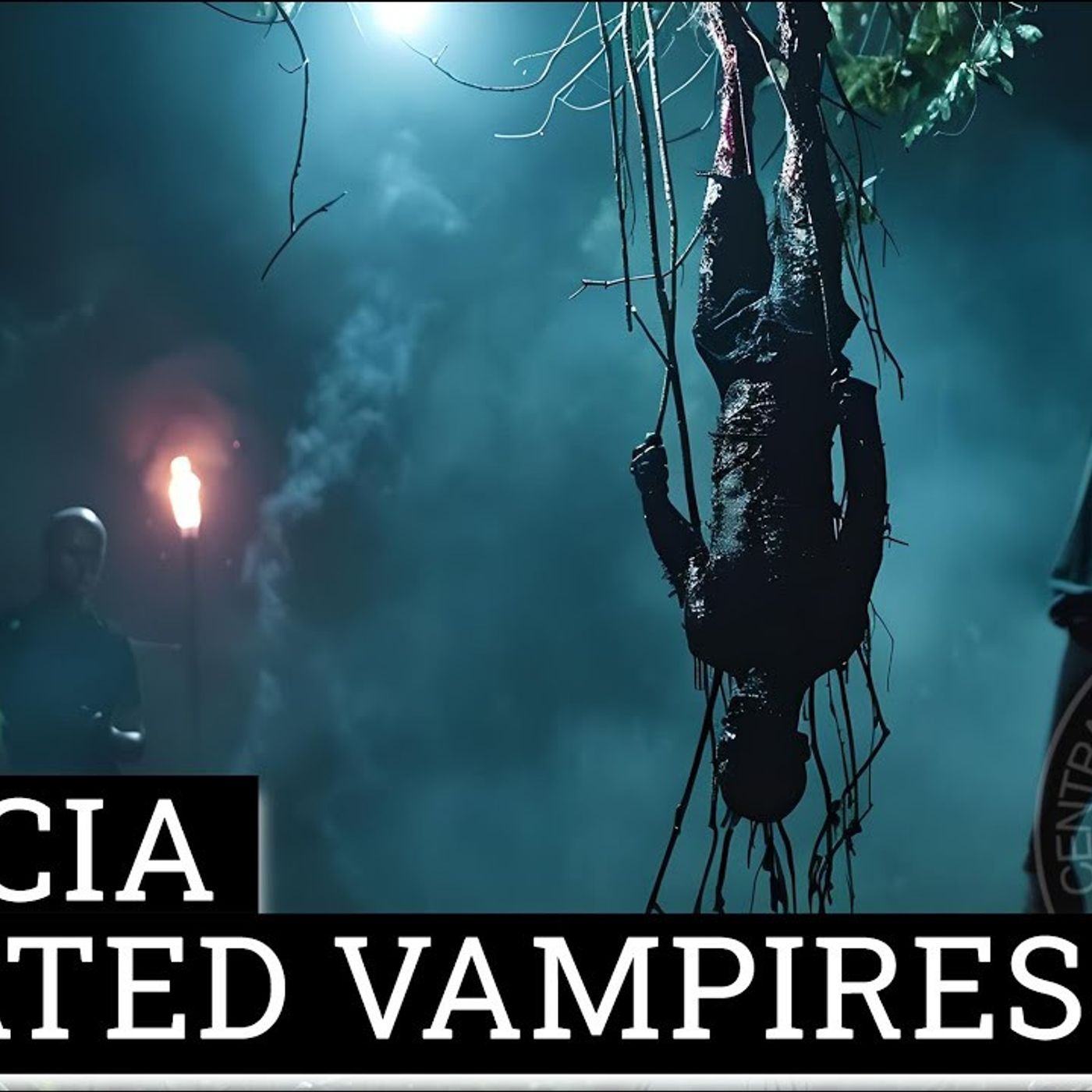
The CIA’s Vampire War: Edward Lansdale and the Birth of Psychological Warfare
Divergent Files Podcast · Divergent Files Podcast
May 20, 202535m 14s
Audio is streamed directly from the publisher (dts.podtrac.com) as published in their RSS feed. Play Podcasts does not host this file. Rights-holders can request removal through the copyright & takedown page.
Show Notes
This episode is produced exclusively for the Divergent Files Podcast.
What if the most powerful weapon in war wasn’t a gun—but belief?
During the Cold War, the CIA didn’t just fight insurgents in the jungles of the Philippines. They fought ghosts. Or at least, they made people believe they did. In this chilling investigation, we uncover the true story of Edward Lansdale, the CIA operative who turned ancient Filipino folklore into a sanctioned psychological weapon—and proved that fear could win wars faster than bullets.
This wasn’t myth-making. It was strategy.
Lansdale’s operations included staged vampire attacks, fabricated hauntings, and ritualized terror designed to exploit deeply held cultural beliefs. Villages were emptied. Insurgents fled without a shot fired. The enemy didn’t just retreat—they broke.
And that success changed everything.
In this episode, we trace how those early psyops campaigns became the blueprint for modern psychological warfare. From Southeast Asia to Vietnam, from leaflet drops to radio broadcasts, and eventually to algorithmic influence and digital narrative control, the tactics evolved—but the objective stayed the same: shape belief before resistance ever forms.
We examine declassified documents, military field manuals, and firsthand accounts that show how psychological operations moved from the shadows into doctrine. We explore how fear is engineered, how narratives are sculpted, and how belief itself became terrain to be captured and controlled.
This isn’t a conspiracy theory.
It’s documented history.
And once you see how effectively belief was weaponized then, it becomes impossible not to recognize the echoes today—in media cycles, information warfare, and the quiet manipulation of perception.
The jungle was just the testing ground.
The real battlefield was always the human mind.
Stay curious. Stay grounded.
And remember… no matter what they tell you, the truth is still out there.
What if the most powerful weapon in war wasn’t a gun—but belief?
During the Cold War, the CIA didn’t just fight insurgents in the jungles of the Philippines. They fought ghosts. Or at least, they made people believe they did. In this chilling investigation, we uncover the true story of Edward Lansdale, the CIA operative who turned ancient Filipino folklore into a sanctioned psychological weapon—and proved that fear could win wars faster than bullets.
This wasn’t myth-making. It was strategy.
Lansdale’s operations included staged vampire attacks, fabricated hauntings, and ritualized terror designed to exploit deeply held cultural beliefs. Villages were emptied. Insurgents fled without a shot fired. The enemy didn’t just retreat—they broke.
And that success changed everything.
In this episode, we trace how those early psyops campaigns became the blueprint for modern psychological warfare. From Southeast Asia to Vietnam, from leaflet drops to radio broadcasts, and eventually to algorithmic influence and digital narrative control, the tactics evolved—but the objective stayed the same: shape belief before resistance ever forms.
We examine declassified documents, military field manuals, and firsthand accounts that show how psychological operations moved from the shadows into doctrine. We explore how fear is engineered, how narratives are sculpted, and how belief itself became terrain to be captured and controlled.
This isn’t a conspiracy theory.
It’s documented history.
And once you see how effectively belief was weaponized then, it becomes impossible not to recognize the echoes today—in media cycles, information warfare, and the quiet manipulation of perception.
The jungle was just the testing ground.
The real battlefield was always the human mind.
Stay curious. Stay grounded.
And remember… no matter what they tell you, the truth is still out there.