PLAY PODCASTS
Divergent Files Podcast

Divergent Files Podcast

173 episodes — Page 1 of 4

Did Extinction Make Human Intelligence Possible? | Mass Extinction, Evolution & Human Survival

Aug 25, 202612 min

They Are Building a Search Engine for Your Life

Aug 22, 202620 min

Something Happened to Humanity We Still Can't Explain

Aug 19, 202613 min

What If We’re Wrong About the Past?

Aug 18, 202613 min

Apophis Exposed Earth’s Most Dangerous Blind Spot | Asteroids, NASA & Planetary Defense

Aug 15, 202621 min

Why Was America's Greatest Ancient City Abandoned? | The Mystery of Cahokia

Aug 13, 202616 min

Forget Atlantis—Earth Has Already Erased Whole Worlds | The Silurian Hypothesis

Aug 11, 202614 min

What If Earth Was Never Humanity's First Home? | Mars, Human Origins & Ancient Planetary Mysteries

Aug 8, 202626 min

Everything Has a Creator... Except This | The Biggest Mystery of the Universe

Aug 6, 202614 min

The Biggest UFO Assumption May Be Completely Wrong | The Crypto-Terrestrial Hypothesis

Aug 4, 202613 min

The Universe Has A Problem Nobody Can Explain | Electric Universe Theory

Jul 31, 202623 min

AI Just Revealed The Pattern In Every Intelligence

Jul 27, 202611 min

Every Civilization May Be Destined to Destroy Itself

Jul 25, 202624 min

Did CERN Open a Door to Another Dimension? | CERN, the Mandela Effect & Modern Physics

Jul 21, 202613 min

Why Does Fighting Poverty Make So Many People Rich?

Jul 18, 202633 min

Did America’s Reality Break Again In 1964?

Jul 8, 202639 min

An Ancient Library Contains Knowledge We Still Can't Explain | Nineveh

Jul 2, 202633 min

Did These Scientists Get Too Close to the Truth About UAPs?

Jun 26, 202650 min

Was the Lost City of Z Really an Amazon Civilization?

Jun 17, 202640 min

What Did the World Do to Michael Jackson?

Jun 14, 202652 min

Japan Airlines 1628: The UFO Case Alaska Couldn’t Explain

Jun 10, 202641 min

What's Hidden on the Far Side of the Moon?

Jun 3, 202642 min

Did Kingship Descend From Above? | The Sumerian King List

Jun 1, 202647 min

Did MK-Ultra Hide Something Even Darker? | Project Monarch

May 27, 202658 min

Göbekli Tepe Should Not Exist

May 21, 202643 min

Is CRISPR Creating the First Designer Humans?

May 18, 202638 min

Are Universities Creating Thinkers… or Followers?

May 12, 202646 min

The Springfield Three: Three Women Vanished From a House That Looked Normal

May 8, 202625 min

The Artemis Rocket Turn Everyone Questions

May 5, 202633 min

What If the War on Drugs Was the Cover Story?

Apr 28, 202650 min

Why Does Déjà Vu Feel So Real?

Apr 21, 202629 min

Every 80 Years, America Breaks—Here's Why
Apr 14, 202645 min

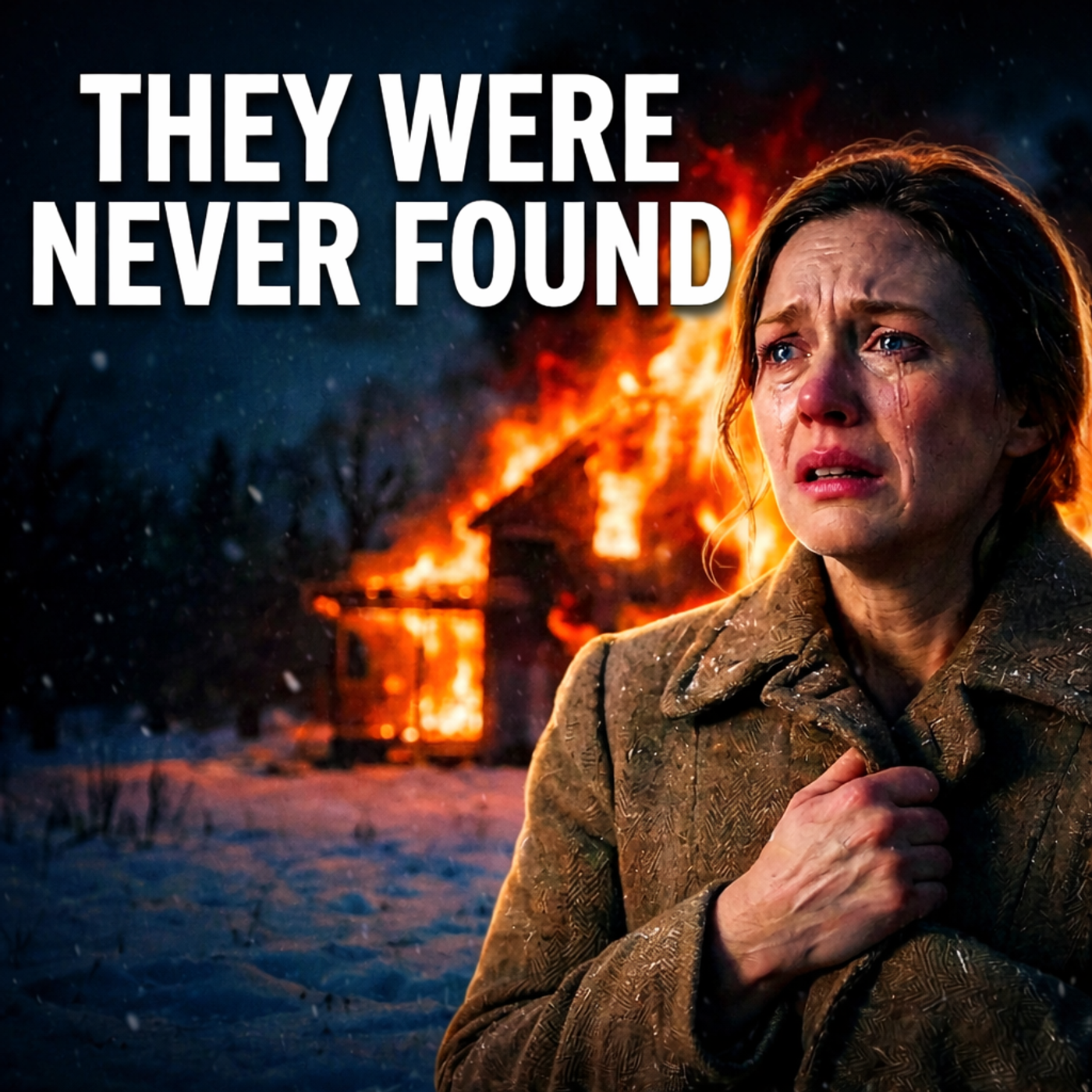
The Sodder Fire: Five Children, No Bodies

On Christmas Eve in 1945, the Sodder family home caught fire in Fayetteville, West Virginia.By the time it was over, five children were said to be dead.But for George and Jennie Sodder, that explanation never held.No remains were clearly recovered. The family’s ladder was missing. The phone line had been cut. Their trucks would not start. The fire response was delayed. Witnesses described strange details in the hours after the blaze. And years later, the family received a photograph that seemed to suggest the story had never ended at all.In this episode of Divergent Shadows, we reconstruct the Sodder Children case from the historical record: the fire, the investigation, the contradictions, the witness claims, and the evidence that kept this case alive long after officials considered it closed. We stay close to what can be documented, and just as importantly, to what never sat right.Then we examine the explanations that followed, from accident and investigative failure to kidnapping, retaliation, and the possibility that the truth was lost almost immediately in the chaos of that night.Because the most unsettling part of the Sodder case is not that a house burned.It’s that the fire was supposed to answer everything...and somehow made less sense the longer people looked at it.Five children vanished after a Christmas Eve fire.The official story survived.The certainty never did.

Apr 10, 202639 min

Why the Most Dangerous Cyberattacks Won't Look Like Movies

What if the real danger isn’t that systems go down?What if the real danger is that they stay up...and keep lying to you.That’s the part most people miss about cyberattacks. It’s not always blackout screens, collapsing planes, or instant nationwide chaos. Sometimes the worst damage starts when the power still flows, the dashboards still update, the alarms stay quiet, and bad data begins moving through the system like it belongs there.In this episode of Divergent Files, we break down how a real cyberattack could disrupt power grids, fuel distribution, communications, banking, transportation, industrial control systems, and supply chains across the United States, not as fiction, but as a mechanical, evidence-first analysis of how modern infrastructure actually works... and how it actually fails.Using real-world incidents like Stuxnet, NotPetya, SolarWinds, and Colonial Pipeline, we examine what cyber warfare, ransomware, supply-chain compromise, and industrial sabotage really look like when they hit systems people depend on every day. Then we pressure-test Leave the World Behind: what it got right about confusion, cascading disruption, and digital fragility, and what it got wrong about synchronized collapse, aviation chaos, and how failure really spreads.Because modern life doesn’t run on steel.It runs on trust.And when that trust breaks, the damage doesn’t always look dramatic at first.It just starts stacking.This is a grounded, truth-first investigation into cyberattacks, critical infrastructure, ransomware, grid vulnerability, and the uncomfortable reality that the most dangerous systems in America may be the ones nobody notices until they start acting strange.Divergent Files is a truth-first investigative podcast for people who want the real mechanics behind the headlines, the fear, and the fiction.

Apr 7, 202638 min

Three Men Vanished from a Sealed Lighthouse | The Flannan Isles Mystery

In December 1900, a relief crew reached the Flannan Isles Lighthouse expecting routine work.Instead, they found a station that should not have been empty.The buildings were still there. The equipment was still there. The system still made sense. But the light had gone dark, the logs had stopped, and the three men assigned to keep the station running had vanished into one of the most unsettling maritime mysteries ever recorded.In this episode of Divergent Shadows, we reconstruct the disappearance of lighthouse keepers James Ducat, Thomas Marshall, and Donald McArthur using the surviving historical record. We follow the timeline, the official reports, the arrival of the Hesperus, and the narrow, frustrating facts that have kept this case alive for more than a century.Then we examine the explanations that followed: rogue waves, emergency rescue attempts, procedural failures, isolation, conflict, and the folklore that rushed in once the facts ran out.Because that’s what makes the Flannan Isles case so hard to shake.Not what was found.What wasn’t.A staffed lighthouse on a remote Scottish island.A failed light.Three missing men.And a record that never quite closes.Divergent Shadows is a story-first series about documented mysteries, historical disappearances, and the cases where the facts remain… but the ending never fully does.

Apr 3, 202614 min

Did the Inca Build Peru… or Inherit Something Much Older?

The Inca built an empire.But what if they didn’t build the oldest things we associate with it?In Peru, the deeper you look, the stranger the stones get.Massive polygonal walls that don’t match later construction.Foundations so precise they look machine-fitted.Sites layered like civilizations were building on top of ruins that were already ancient.Landscapes filled with lines, chambers, skulls, bodies, and questions that never seem to stay settled for long.In this episode of Divergent Files, we investigate whether ancient Peru is being remembered backward.Using archaeology, engineering analysis, historical records, competing interpretations, and the most controversial discoveries tied to Machu Picchu, Sacsayhuamán, Ollantaytambo, the Nazca Lines, Paracas skulls, and the Nazca mummies, we ask a simple question with dangerous implications:What if the Inca inherited more than they built?This is not about blind belief.It’s about following the strongest evidence, the unresolved contradictions, and the repeated pattern that shows up across Peru:The official story explains a lot.But not all of it.And the oldest stones still look like they belong to someone else.Divergent Files explores hidden history, lost civilizations, archaeological anomalies, and the places where the timeline no longer feels complete.

Mar 31, 202657 min

The Dyatlov Pass Incident: Why Does This Case Refuse to Close?

Nine experienced hikers entered the mountains in 1959.They brought the right gear.They knew the terrain.They documented the journey.And then, somewhere in the frozen dark, something went wrong enough to make them cut their way out of their own tent and run into the snow.Some died of exposure.Some did not.And more than sixty years later, the case still resists a single explanation.In this episode of Divergent Files, we reconstruct the Dyatlov Pass Incident through the documented timeline, Soviet search reports, autopsy findings, and the official records that left behind more questions than closure.This is not a paranormal retelling.It’s a historical investigation into a case where the evidence exists… but the logic never fully settles.Because at Dyatlov Pass, the most haunting part isn’t what people imagined.It’s what actually happened.Divergent Files follows the record where it leads — especially when it stops short of an ending.

Mar 27, 202624 min

Why Do So Many Civilizations Remember the Same Flood?

What if humanity remembers a catastrophe history never fully recorded?Long before written history, long before maps, long before modern archaeology, cultures across the world told the same story:The world was warned.The waters came.Most people died.A few survived.And civilization started over.In this episode of Divergent Files, we investigate whether ancient flood myths are more than mythic symbolism. Using evidence from the Younger Dryas, sea level rise, ice core records, paleoclimate science, lost prehistoric coastlines, oral tradition, and early archaeology, we ask a disturbing question:What if these stories are fragments of a real human memory… from the end of the last Ice Age?This is not about proving every flood legend literally happened.It’s about confronting the possibility that the oldest stories on Earth may be carrying something modern history still struggles to admit:That entire worlds may have vanished… and all that survived was the story.Divergent Files explores ancient history, climate catastrophe, lost civilizations, and the places where myth may be remembering more than science has recovered.

Mar 24, 202638 min

Jack Parsons: Brilliant Scientist or Dangerous Occultist?

Jack Parsons helped ignite the American rocket age.He helped build the foundations of JPL and Aerojet. He pushed propulsion science forward. He helped drag humanity toward the stars.Then, in 1946, he and L. Ron Hubbard locked themselves inside one of the strangest ritual experiments in modern American history: the Babalon Working.In this episode of Divergent Files, we follow the real paper trail behind Jack Parsons: rocket engineer, occult practitioner, student of Aleister Crowley, federal person of interest, and one of the most unsettling forgotten architects of the modern world.Using journals, letters, biographies, FBI files, and historical records, we investigate the overlap between rocket science, Thelema, occult ritual, Cold War secrecy, and the violent 1952 explosion that ended Parsons’ life.This is not about proving the supernatural.It’s about confronting a historical fact most people were never taught:One of the men who helped launch the space age also believed ritual could change reality.And if that sounds absurd……history gets worse.Divergent Files explores hidden history, scientific anomalies, declassified records, and the moments where belief, power, and reality stop staying in their lanes.

Mar 21, 202646 min

Are Faster-Than-Light Messages Already Reaching Us?

What if the universe is already sending messages faster than light… and humanity has been too primitive to recognize them?In this episode of Divergent Files, we investigate one of the most disturbing possibilities in modern physics: that information may already be moving beyond the speed limit we were taught could never be broken.Quantum entanglement. Nonlocality. Unexplained cosmic bursts. Declassified research into remote viewing, anomalous cognition, and consciousness. Different fields. Different languages. Same uncomfortable pattern.Something may be traveling farther, faster, and stranger than our current models can fully explain.This is not a claim of proof.It’s a grounded investigation into the science, the anomalies, and the classified edges of research that all point toward the same question:What if the speed of light is not the end of the story… only the edge of what we know how to measure?Divergent Files explores scientific anomalies, hidden systems, declassified programs, and the places where real evidence starts making reality feel unstable.

Mar 17, 202630 min

Are We Living… or Just Surviving the Next Monday?

For most people, life doesn’t disappear all at once.It disappears in weeks.Monday.Tuesday.Wednesday.Push through.Recover.Repeat.And somewhere inside that rhythm, something starts to happen.The years move faster.The memories get thinner.The stress becomes normal.And your strongest years quietly get assigned to survival.In this episode of Divergent Files, we investigate the hidden architecture of the weekly loop: the seven-day rhythm that structures modern work, school, media, money, stress, and time itself.This is not an anti-work rant.It’s not self-help.It’s a grounded examination of why so many people feel like life is speeding up… while freedom keeps getting postponed.We explore how routine compresses memory, why burnout and Monday anxiety may be more real than they seem, and how modern adulthood often places energy first and freedom last.Because the real question may not be whether the week is natural.It’s whether the life built around it is.Divergent Files explores hidden systems, strange patterns, and the overlooked structures shaping modern life.Because sometimes the most powerful trap isn’t the one you can see.It’s the one you call normal.

Mar 15, 202625 min

Operation Highjump: What Was the U.S. Really Doing in Antarctica in 1946?

In 1946, the United States Navy sent one of the largest military expeditions in modern history to Antarctica.Officially, it was a cold-weather training and scientific mission.But the numbers make that explanation harder to accept at face value.Thirteen ships.Nearly 5,000 personnel.Aircraft carriers.Submarines.Long-range aircraft.A massive military footprint deployed to the most remote place on Earth.Then, months before its planned completion, the mission ended early.No single dramatic explanation.No clear public reckoning.Just a large operation… and a story that never quite settled.In this episode of Divergent Files, we examine the documented history behind Operation Highjump, separating rumor, Cold War speculation, and internet mythology from the historical record.Using declassified records, mission logs, naval deployment data, and contemporary reporting, we reconstruct what is known — and pay close attention to what remains strangely incomplete.We examine why the U.S. Navy deployed such a large force to Antarctica in 1946, the role of Admiral Richard E. Byrd, and why the expedition concluded far earlier than expected. We explore what official Navy records say, what they leave ambiguous, and how early Cold War geopolitics shaped the public framing that followed.We also trace how the case evolved into one of the most persistent mysteries of the postwar era — including the later emergence of theories involving Nazi holdouts, advanced technology, UFO encounters, and the deeper symbolic role Antarctica would play in the Cold War imagination.Divergent Files investigates Cold War history, suppressed science, and unresolved events using documented sources, context, and a truth-first lens.

Mar 11, 202644 min

Is the American Dream Dead?

For much of the 20th century, the American promise seemed simple.Work hard.Build a career.Buy a home.Raise a family.And trust that the next generation would climb a little higher than the last.For millions of people, that promise felt real.But what happens when the numbers begin telling a different story?In this episode of Divergent Files, we examine the economic data behind one of the most important questions facing modern society: has the structure of the American Dream quietly changed?Using research from the Bureau of Labor Statistics, the Federal Reserve, the Congressional Budget Office, and long-term mobility studies from Harvard, we walk through how key economic indicators have shifted across the past seventy years.We examine the historical relationship between productivity and wages, and why that relationship began to diverge in the late 1970s. We explore how housing affordability evolved from the postwar era to today, when home prices in many regions have far outpaced income growth.We look at the rise of stock buybacks and corporate financialization, and how the incentives shaping large companies gradually changed. We analyze long-term shifts in economic mobility and why younger generations often face a very different set of financial calculations than their parents and grandparents did.For much of the 20th century, economic growth translated into rising wages and expanding opportunity. Today, the economy continues to grow, but researchers increasingly note that the distribution of that growth has shifted.Because when productivity rises while wages stagnate, when housing costs accelerate faster than income, when debt expands and upward mobility slows, a natural question emerges.Not whether the American Dream disappeared.But whether the rules behind it changed.

Mar 8, 202646 min

The Mary Celeste Mystery: A Crew Vanished Without a Trace

In December of 1872, a merchant vessel was discovered drifting across the Atlantic Ocean.The ship was seaworthy.Its cargo was still secured below deck.Food, supplies, and personal belongings remained exactly where they should have been.But the captain, his family, and every member of the crew were gone.No battle had taken place.No visible damage explained why anyone would abandon a ship still capable of sailing.The vessel was called the Mary Celeste.More than a century later, it remains one of the most famous maritime mysteries ever recorded.In this episode of Divergent Shadows, we reconstruct the documented timeline of the voyage and examine the evidence investigators actually found when the ship was boarded.We follow the journey from New York to Genoa in 1872. We examine Captain Benjamin Briggs, the experienced crew sailing with him, and the cargo of industrial alcohol stored below deck. We review the final entries recorded in the ship’s log near the Azores and what investigators discovered when they first stepped aboard.We also explore the clues that complicated the case: the missing lifeboat, the absent navigation instruments, and the subtle details that suggested the crew left deliberately rather than in panic.From there, we examine the major explanations historians and maritime researchers have proposed over the years — including cargo vapor concerns, mechanical issues with the ship’s pump, navigational miscalculations, weather conditions at sea, and the influence of later fictional retellings that blurred fact with legend.Some explanations are plausible.None answer every question.Rather than speculation, this episode follows the historical record as far as it goes — and stops where the evidence stops.Because the most enduring mysteries are not always the most dramatic ones.Sometimes they’re simply the moments where the facts end… and the silence begins.Welcome to Divergent Shadows, where history, science, and unresolved questions meet careful investigation.

Mar 5, 202619 min

The 1988–2012–2036 Pattern Nobody's Talking About. Is Reality Shifting Again?

Certain years feel heavier in hindsight. 1988, 2012.And now, quietly, attention is drifting toward 2036. It follows a 24-year cycle.Not because of prophecy.Because of patterns.In recent decades, researchers across solar physics, geomagnetism, technological development theory, and infrastructure planning have noticed something unusual: major cultural and technological pivots sometimes align with natural cycles in space and Earth’s magnetic environment.In this episode of Divergent Files, we examine publicly available data surrounding solar activity cycles, geomagnetic fluctuations, long-wave technological acceleration models, and institutional preparedness planning.We explore how coronal mass ejection frequency follows predictable rhythms. How geomagnetic shifts subtly influence infrastructure stress. How technological development tends to cluster in waves rather than straight lines. And how human perception itself shifts during periods of rapid systemic change.We also examine why institutions quietly prepare for rare but high-impact natural events — even when the public conversation remains calm.This is not a prediction episode.It’s a convergence analysis.We separate established science from emerging research. We distinguish correlation from causation. And we examine why certain windows of time feel historically dense — not because reality “reset,” but because multiple systems may have been peaking simultaneously.The real question isn’t whether the world ended in 1988.It’s whether overlapping cycles — natural, technological, and psychological — can amplify one another in ways that make history feel like it’s accelerating.Because if that’s true, then the mid-2030s may not be mystical.They may simply be another intersection point.Divergent Files investigates patterns across history, science, and institutional behavior using documented sources and grounded analysis.No prophecy.No panic.Just perspective.Some years pass quietly.Others reshape the trajectory of everything that follows.

Mar 3, 202645 min

Flight 19: The Day Five Navy Planes Vanished Into the Atlantic

In December 1945, five U.S. Navy training aircraft lifted off from Fort Lauderdale for a routine navigation exercise.The weather was clear.The route was standard.The instructor had flown it before.Within hours, the radio traffic began to shift.Compasses disagreed.Land could not be found.Pilots who believed they were flying west reported nothing but open water.The formation — later known as Flight 19 — never returned.Search crews launched almost immediately. Ships fanned out across the Atlantic. Aircraft flew grid patterns for days. A rescue plane sent to assist vanished during the operation.No confirmed crash site.No debris field.No wreckage recovered.In this episode of Divergent Shadows, we reconstruct the verified timeline using recorded radio transmissions, official Navy reports, and historical aviation records. We examine how navigation works over open ocean, why spatial disorientation can overwhelm even trained pilots, and how small errors compound when visual reference points disappear.We also trace how this event later became absorbed into the mythology of the Bermuda Triangle — and how retellings often blurred the difference between documented record and narrative legend.This is not a ghost story.It’s a case study in uncertainty — the kind that forms when men lose the horizon and instruments stop agreeing.Some aviation mysteries are solved with wreckage.Flight 19 left almost none.Divergent Shadows examines historical events where the evidence exists — but the ending never fully does.

Feb 28, 202613 min

Cicada 3301: The Internet’s Most Mysterious Recruitment — and Who Was Behind It

In January 2012, a simple black image appeared on an obscure corner of the internet.No branding.No explanation.Just a message hidden inside it:“We are looking for highly intelligent individuals.”What followed wasn’t a game.It was a layered cryptographic gauntlet that spanned continents.Known as Cicada 3301, the puzzle combined advanced cryptography, steganography, literature, mathematics, Tor networks, and real-world GPS coordinates. Participants uncovered encrypted files, hidden websites, dead drops placed in cities across multiple countries, and challenges that required serious code-breaking skill — not curiosity, not luck, but technical precision.And then, just as quietly as it appeared, it disappeared.In this episode of Divergent Files, we examine what is verified, what is documented, and what remains unresolved.We break down how the puzzles worked technically — the encryption methods, the hashing techniques, the use of public key cryptography, and the layered obfuscation strategies that filtered participants step by step. We explore why intelligence agencies, cybersecurity firms, and advanced research institutions were immediately compared to it.We analyze the cultural impact on hacker communities and programmers who still reference Cicada as a benchmark of difficulty. We examine historical parallels to real-world recruitment pipelines, cyberwarfare talent scouting, and private cryptographic collectives.And we confront the central question:Why build something this sophisticated… and then vanish?Cicada 3301 is often described as the most complex online puzzle ever created.But the deeper mystery isn’t who solved it.It’s who needed those people.Divergent Files investigates unusual internet history, cryptography, power structures, and documented mysteries through research-first analysis and technical breakdown.Because sometimes the strangest signals aren’t random.They’re invitations.

Feb 25, 202626 min

The Day the Sun Hits Back: Why One Solar Storm Could Break the Power Grid

In 1859, a solar storm set telegraph stations on fire.Operators were shocked. Wires sparked. Auroras lit up skies near the equator.And that was before we built a civilization that runs entirely on electricity.In this episode of Divergent Files, we examine what actually happens when the Sun releases an extreme coronal mass ejection — and how that energy interacts with modern electrical infrastructure.This is not a prediction.It’s not a countdown.It’s physics.We walk through the mechanics of solar storms and geomagnetically induced currents. We explain how extra-high-voltage transformers operate, why they are uniquely vulnerable, and why damage to them is not the same thing as a temporary outage.Because the difference between “the lights flicker” and “the hardware melts” is the difference between days… and years.We examine historical events like the 1859 Carrington Event and later near-misses that came far closer to modern infrastructure than most people realize. We break down how transmission networks function, why replacement transformers cannot be manufactured overnight, and why global supply chains complicate recovery timelines.Then we follow the dependency chain.Water treatment systems.Fuel distribution.Telecommunications.Hospitals.Banking systems.Data centers.All of them depend on a stable electrical backbone.If that backbone fails at scale, recovery is not simply a matter of “turning it back on.”It becomes a logistical, industrial, and societal challenge measured in months to years.This isn’t a fear scenario.It’s a systems explanation — a grounded look at how rare but known natural events interact with a civilization that has never been more electrically dependent.Because the Sun doesn’t care about our infrastructure.And modern society has never experienced a true extreme geomagnetic event while fully electrified.Divergent Files investigates real-world systems, historical records, and scientific mechanisms behind events people rarely think about — until they matter.

Feb 22, 202646 min

Second Civil War? The Last Time Americans Felt This Split, 1861 Followed

In 1860, most Americans didn’t think a civil war was coming.They argued. They polarized. They distrusted each other. They believed the system would hold.It didn’t.In this episode of Divergent Files, we step past headlines and outrage cycles and ask a harder question: are we repeating the structural conditions that precede internal conflict?Not the surface-level noise. The deeper architecture.Civil wars don’t begin with a single spark. They form when pressure builds across systems — economic, cultural, informational, institutional — until the state can no longer mediate reality between competing groups.We examine what the United States actually looked like before 1861, economically and structurally. We explore the concept of “dual societies” existing inside one nation, and how modern political science identifies early-stage civil conflict. We break down economic divergence, elite fragmentation, and the collapse of shared information ecosystems. We analyze erosion of institutional trust, jurisdictional tension between state and federal power, and why modern internal conflict would not resemble 1861 — and why that difference matters.This isn’t fear-mongering.It’s pattern recognition.History shows that collapse rarely announces itself. It feels gradual. Rational. Manageable. Until it isn’t.The question isn’t whether Americans are angry. The question is whether the structural guardrails that prevent fracture are strengthening — or weakening.We don’t predict. We examine.Because once institutional trust erodes past a certain threshold, recovery becomes exponentially harder. And by the time a nation realizes it crossed the line, it’s already on the other side of it.Divergent Files investigates history, power, and systemic pressure points with receipts — not rhetoric.If you want outrage, there are plenty of places to find it.If you want to understand how societies actually break — and how they sometimes pull back from the edge — sit with this one.

Feb 18, 202644 min

Philip K. Dick Predicted the Future — Then the Pattern Kept Repeating

Philip K. Dick’s visions.VALIS.The Exegesis.Science fiction… or something closer to reality?In this episode of Divergent Files, we take a grounded, evidence-first look at one of the most enigmatic writers of the 20th century.Best known for inspiring Blade Runner, Minority Report, Total Recall, and A Scanner Darkly, Philip K. Dick didn’t just imagine dystopian futures. In 1974, after a series of unusual experiences he struggled to explain, he began writing obsessively—filling thousands of pages with philosophical reflections, metaphysical theories, and attempts to decode what he believed was a hidden layer of reality.He called it The Exegesis.Part journal.Part theology.Part cognitive self-interrogation.Inside those pages, Dick explored ideas that would later dominate modern culture:Artificial intelligence.Simulation theory.Surveillance states.Memory manipulation.False realities layered over consensus worlds.So what was happening?A psychological break?A neurological event?Creative intuition decades ahead of its time?Or something stranger that refuses easy labels?This investigation follows documented sources, biographical records, archived manuscripts, interviews, and historical context to separate what is verifiable from what remains speculative.We examine:• Philip K. Dick’s life and the timeline of the 1974 events• The structure and content of The Exegesis manuscripts• VALIS and its connection to Gnostic philosophy• Early conceptual parallels to simulation theory and artificial intelligence• The cultural and political environment of the 1970s• Government records and the paranoia era that shaped his worldview• The psychology of visionary and revelatory experiencesNo mythology.No mysticism added.No dismissive shortcuts either.Just the documented material and the questions that continue to echo decades later.Because the unsettling part isn’t that Philip K. Dick believed reality was unstable.It’s that many of the ideas he wrestled with are now central to modern technological culture.If you’re interested in science fiction history, philosophy of reality, consciousness research, or the intellectual roots of today’s AI-driven world, this case goes deeper than most people realize.Divergent Files is a long-form investigative podcast examining history, science, and unresolved questions through documented sources and careful analysis.Grounded.Receipts-first.No hype.

Feb 14, 202644 min